ABC Family Arquivos Brasileiros de Cardiologia International Journal of Cardiovascular Sciences ABC Heart Failure & Cardiomyopathy ABC Imagem Cardiovascular
Português English
ABC Family
Português English
  • About
    • About ABC Family
    • Internal Regulation
    • Editorial Board
    • Brazilian Society of Cardiology (SBC)
  • Issues
  • SBC Guidelines
  • Content
    • Videos
    • Podcasts
    • News
  • About
    • About ABC Family
    • Internal Regulation
    • Editorial Board
    • Brazilian Society of Cardiology (SBC)
  • Issues
  • SBC Guidelines
  • Content
    • Videos
    • Podcasts
    • News

ABC Family

  • ABC Family
  • Arquivos Brasileiros de Cardiologia
  • International Journal of Cardiovascular Sciences
  • ABC Heart Failure & Cardiomyopathy
  • ABC Imagem Cardiovascular
Search in

No content found.

Journals
Ordering
Article types
Others

  1. Home
  2. Keyword: Troponin
ABC
Letter to the Editor

Troponin-to-Lymphocyte Ratio in ICI Associated Myocarditis: A Useful Marker with Limitations

Gökhan Ceyhun

Dear Editor,

We read with great interest the article by Chen et al. on the prognostic role of the troponin-to-lymphocyte ratio (cTn/ALC) in patients with immune checkpoint inhibitor (ICI) associated myocarditis. This complication, although infrequent, carries a disproportionately high risk of morbidity and mortality among cancer patients receiving immunotherapy. The authors should be commended for exploring a simple and widely available marker that reflects both myocardial injury and immune status. Such an approach is clinically attractive because both troponin and lymphocyte count are routinely measured, inexpensive, and easily standardized. Previous reports have already highlighted the prognostic role of troponin elevation and lymphocyte dynamics in ICI associated myocarditis,– and the integration of these two markers into a composite index is a logical and potentially valuable step forward.

[…]

  • Myocarditis
  • T-Lymphocytes
  • Troponin
Read Full Article
Creative Commons Attribution (CC BY) Creative Commons license
02/03/2026 DOI: 10.36660/abc.20250648i Views 2
Central Illustration
ABC
Original Article

Prognostic Value of Troponin to Lymphocyte Ratio in Patients with Immune Checkpoint Inhibitor-associated Myocarditis

Wanwen Chen et al. Wenhao Zhang Caiyin Luo Junying Cai … Xinqing Lin Chengzhi Zhou Yuwen He

Abstract

Background

Immune checkpoint inhibitor (ICI)-associated myocarditis is a rare but life-threatening immune-related adverse event (irAE). Cardiac troponin (cTn) and absolute lymphocyte count (ALC) have been reported to be associated with ICI-myocarditis.

Objective

We aimed to investigate the prognostic value of the combination of these two features (cTn/ALC ratio) in ICI-associated myocarditis.

Methods

Our center performed a retrospective analysis of 46 patients with ICI myocarditis (cases) and 46 patients without myocarditis after receiving ICI (controls). We obtained data on cardiac enzymes, routine blood parameters, and other clinical biomarkers. Statistical significance was defined as a two-sided α level of 0.05. The association between these covariates and the clinical outcomes of ICI-mediated myocarditis was also tested.

Results

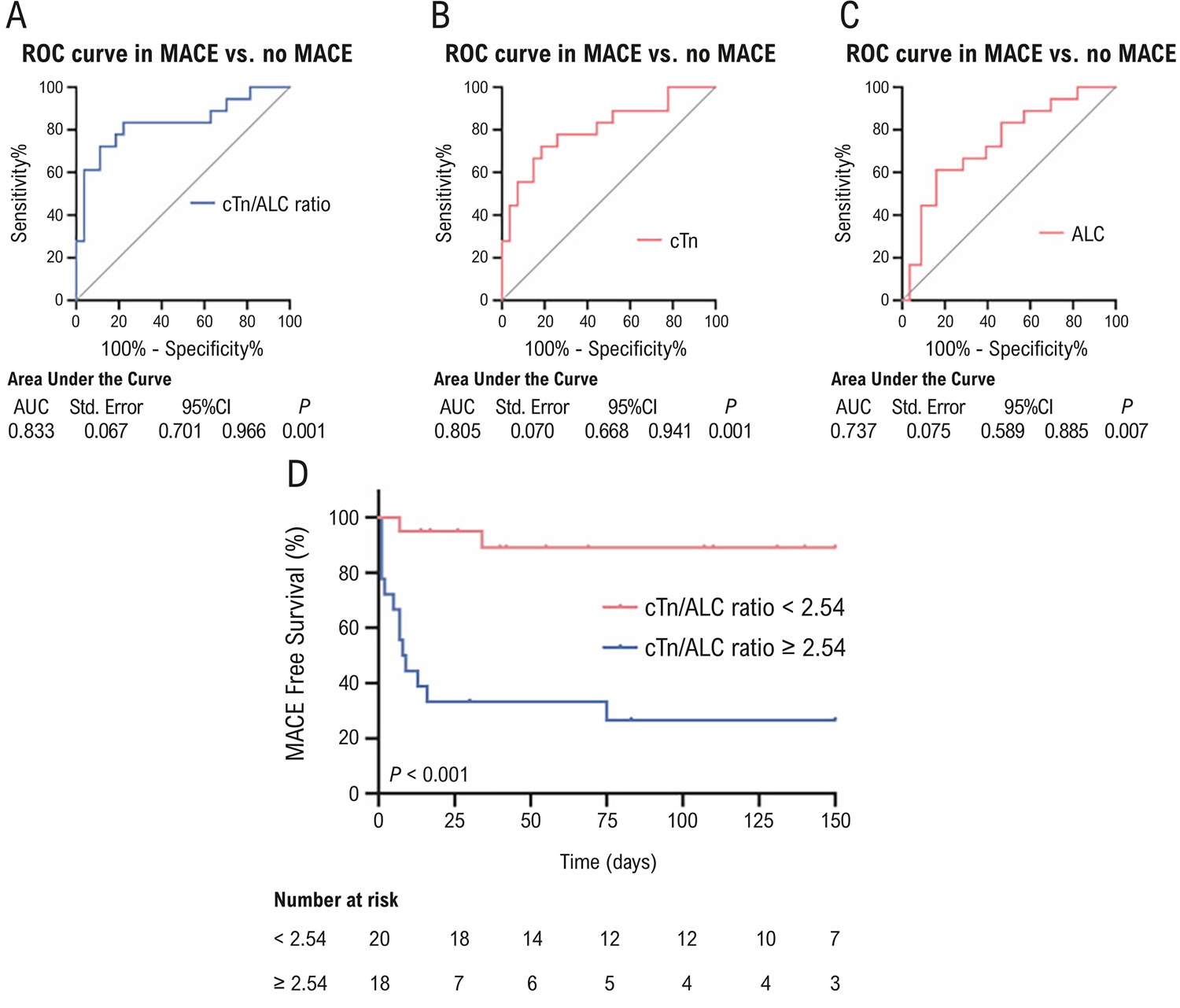
Abnormally elevated cTn (p < 0.001), cTn/ALC ratio (p < 0.001), and decreased ALC (p < 0.001) were observed in patients who developed ICI-myocarditis. The cTn/ALC ratio was associated with the development of severe myocarditis (OR, 5.05; 95% CI, 1.22-20.84; p = 0.025). Survival analysis and Cox regression analysis indicated that a higher cTn/ALC ratio emerged as a significant independent predictor for major adverse cardiac events (MACE) [HR, 5.64; 95%CI, 1.43-22.34; p = 0.014].

Conclusions

An increase in the cTn/ALC ratio was associated with the severity of ICI-myocarditis and could be an effective predictor of poor prognosis in patients with ICI-associated myocarditis.

  • Immune Checkpoint Inhibitors
  • Lymphocyte Count
  • Myocarditis
  • Prognosis
  • Troponin
Read Full Article
Creative Commons Attribution (CC BY) Creative Commons license
18/08/2025 DOI: 10.36660/abc.20250047i Views 1
ABC
Letter to the Editor

High-Sensitivity Troponin in Non-Cardiac Surgery

Can Özkan

Dear Editor,

I read with great interest the article entitled “Addition of High-Sensitivity Troponin to Perioperative Risk Assessment Improves the Predictive Ability of Death in Non-Cardiac Surgery Patients” by Gomes et al. the prevalence of myocardial injury is higher in high-risk patients, including those with cardiovascular, surgical, and clinical risks. They also reported that the occurrence of non-cardiac surgical myocardial injury in the population not considered high-risk cannot be overlooked and leads to high mortality in this population. In long-term follow-up, the prognosis of high-risk patients without myocardial injury is worse compared to high-risk patients without myocardial injury. Some comments may be useful.

[…]

  • Acute coronary syndrome
  • Myocardial Contusions
  • Troponin
Read Full Article
Creative Commons Attribution (CC BY) Creative Commons license
19/08/2024 DOI: 10.36660/abc.20240312i
ABC
Letter to the Editor

Invasive Versus Conservative Management of NSTEMI Patients Aged ≥ 75 Years: Commentary

Sérgio Renato da Rosa Decker et al. Luiza Duarte Pittol Regis Goulart Rosa Marciane Maria Rover

Dear Editor,

In the edition of Arquivos Brasileiros de Cardiologia, Mengjin Hu et al. evaluated the benefit of early invasive strategy for elderly patients with non-ST-elevation myocardial infarction (NSTEMI), concluding that this strategy yields positive results in reducing myocardial infarction, major adverse cardiac events, and urgent revascularization outcomes. However, we have concerns regarding the authors’ claim of superiority and the relevance of the chosen outcomes for this specific population. Firstly, these outcomes (ischemia-driven outcomes) are mostly surrogate endpoints based on troponin levels. To establish the surrogacy of one outcome to another, several factors need to be considered, including biological plausibility, associations in observational studies, and, most importantly, proof of concept through trials where improving the surrogate endpoint also enhances clinical outcomes. In this sense, evidence shows that the association between nonfatal myocardial infarction and all-cause or cardiovascular mortality meets the first two levels; however, a meta-analysis of randomized clinical trials did not establish nonfatal myocardial infarction as a surrogate for all-cause or cardiovascular mortality. Indeed, this is a reproducible relationship in short and long term outcomes; the metanalysis of FRISC-II, ICTUS, and RITA-3 showed that, after five years, early invasive strategy for patients with NSTEMI did not result in reduced mortality despite the benefits seen in ischemia-driven outcomes.

[…]

  • Aged
  • Ischemia
  • Mortality
  • Myocardial Infarction/prevention and control
  • Myocardial Revascularization/surgery
  • Non-ST Elevated Myocardial Infarction
  • Troponin
Read Full Article
Creative Commons Attribution (CC BY) Creative Commons license
04/03/2024 DOI: 10.36660/abc.20230364 Views 2
Figure 1
ABC
Original Article

Myocardial Injury and Prognosis in Hospitalized COVID-19 Patients in Brazil: Results From The Brazilian COVID-19 Registry

Hannah Cardoso Barbosa et al. Maria Auxiliadora Parreiras Martins Jordana Cristina de Jesus Karina Cardoso Meira … Luiz Guilherme Passaglia Manuela Furtado Sacioto Adriana Falangola Benjamin Bezerra Alexandre Vargas Schwarzbold Amanda de Oliveira Maurílio Barbara Lopes Farace Carla Thais Cândida Alves da Silva Christiane Corrêa Rodrigues Cimini Daniel Vitorio Silveira Daniela do Reis Carazai Daniela Ponce Emanuel Victor Alves Costa Euler Roberto Fernandes Manenti Evelin Paola de Almeida Cenci Frederico Bartolazzi Glícia Cristina de Castro Madeira Guilherme Fagundes Nascimento Isabela Vasconcellos Pires Velloso Joanna d’Arc Lyra Batista Júlia Drumond Parreiras de Morais Juliana da Silva Nogueira Carvalho Karen Brasil Ruschel Karina Paula Medeiros Prado Martins Liege Barella Zandoná Luanna Silva Monteiro Menezes Luciane Kopittke Luís César de Castro Luiz Antônio Nasi Maiara Anschau Floriani Maíra Dias Souza Marcelo Carneiro Maria Aparecida Camargos Bicalho Maria Clara Pontello Barbosa Lima Mariana Frizzo de Godoy Milton Henriques Guimarães-Júnior Paulo Mascarenhas Mendes Polianna Delfino-Pereira Raquel Jaqueline Eder Ribeiro Renan Goulart Finger Rochele Mosmann Menezes Saionara Cristina Francisco Silvia Ferreira Araújo Talita Fischer Oliveira Thainara Conceição de Oliveira Carisi Anne Polanczyk Milena Soriano Marcolino

Abstract

Background

Cardiovascular complications of COVID-19 are important aspects of the disease’s pathogenesis and prognosis. Evidence on the prognostic role of troponin and myocardial injury in Latin American hospitalized COVID-19 patients is still scarce.

Objectives

To evaluate myocardial injury as independent predictor of in-hospital mortality and invasive mechanical ventilation support in hospitalized patients, from the Brazilian COVID-19 Registry.

Methods

This cohort study is a substudy of the Brazilian COVID-19 Registry, conducted in 31 Brazilian hospitals of 17 cities, March-September 2020. Primary outcomes included in-hospital mortality and invasive mechanical ventilation support. Models for the primary outcomes were estimated by Poisson regression with robust variance, with statistical significance of p<0.05.

Results

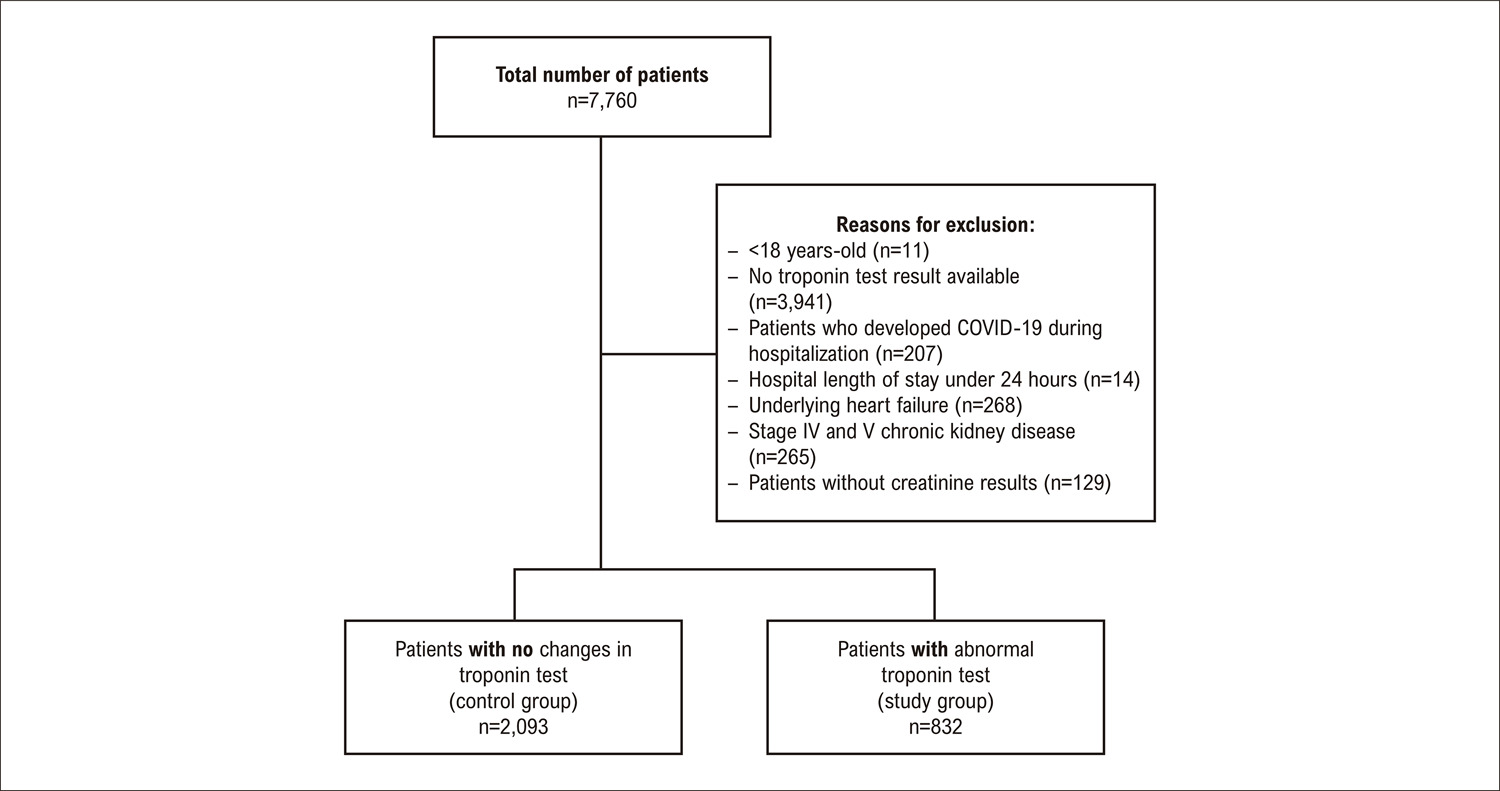
Of 2,925 patients (median age of 60 years [48-71], 57.1% men), 27.3% presented myocardial injury. The proportion of patients with comorbidities was higher among patients with cardiac injury (median 2 [1-2] vs. 1 [0-2]). Patients with myocardial injury had higher median levels of brain natriuretic peptide, lactate dehydrogenase, creatine phosphokinase, N-terminal pro-brain natriuretic peptide, and C-reactive protein than patients without myocardial injury. As independent predictors, C-reactive protein and platelet counts were related to the risk of death, and neutrophils and platelet counts were related to the risk of invasive mechanical ventilation support. Patients with high troponin levels presented a higher risk of death (RR 2.03, 95% CI 1.60-2.58) and invasive mechanical ventilation support (RR 1.87, 95% CI 1.57-2.23), when compared to those with normal troponin levels.

Conclusion

Cardiac injury was an independent predictor of in-hospital mortality and the need for invasive mechanical ventilation support in hospitalized COVID-19 patients.

  • Artificial Respiration
  • Coronavirus infections
  • COVID-19
  • Mortality
  • Troponin
Read Full Article
Creative Commons Attribution (CC BY) Creative Commons license
27/02/2023 DOI: 10.36660/abc.20220151
Figure 1
ABC
Original Article

Does Myocardial Injury Occur After an Acute Aerobic Exercise Session in Patients with Refractory Angina?

Carla Giuliano de Sá Pinto Montenegro et al. Luciana Oliveira Cascaes Dourado Camila Paixão Jordão Marcelo Luiz Campos Vieira … Camila Regina Alves Assumpção Luis Henrique Wolff Gowdak Alexandre da Costa Pereira Carlos Eduardo Negrão Luciana Diniz Nagem Janot de Matos

Abstract

Background

It is unclear whether exercise is safe in patients with more advanced forms of coronary artery disease, such as those with refractory angina (RA).

Objective

We aimed to determine the effect of an acute aerobic exercise session (AAES) on high-sensitivity cardiac troponin T (hs-cTnT) levels in patients with RA.

Methods

This was a longitudinal, non-randomized, and non-controlled clinical study. Participants were recruited from April 2015 to January 2019. On a visual pain scale from 0 to 10, pain rated up to 3 was considered as the top level allowed to continue exercising. We assessed hs-cTnT at baseline and 3 hours after the AAES. The protocol consisted of 5 minutes of warm-up, 30 minutes of continuous aerobic exercise at heart rate corresponding to the anaerobic threshold or angina threshold obtained in the cardiopulmonary exercise testing, and 5 minutes of cooling down. P values less than 0.05 were considered statistically significant.

Results

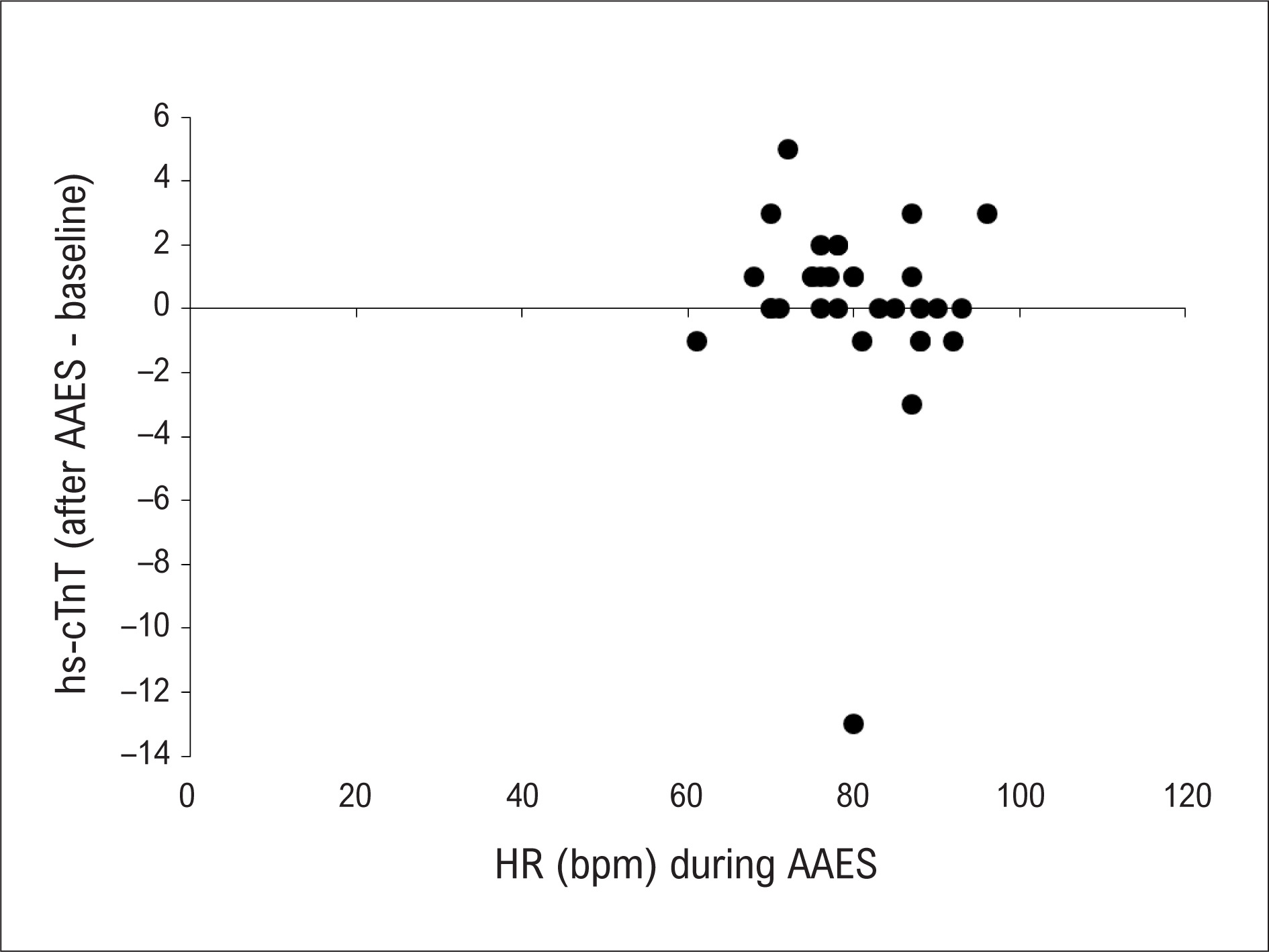
Thirty-two patients with RA were included (61 ± 9 years, 59.4% male). The baseline hs-cTnT concentration was 10.9 ng/L (95% confidence interval: 9.1 to 13.0 ng/L). The hs-cTnT collected 3 hours after the AAES was 11.1 ng/L (95% confidence interval: 9.1 to 13.5 ng/L). No difference occurred in hs-cTnT before and after AAES (p = 0.657).

Conclusions

A single AAES performed at the angina threshold with corresponding visual pain scale did not alter hs-cTnT in patients with RA, suggesting that no significant myocardial injury was elicited by exercising and that this exercise protocol can be considered safe.

  • Angina Pectoris
  • Biomarkers
  • Exercise
  • Troponin
Read Full Article
Creative Commons Attribution (CC BY) Creative Commons license
25/11/2022 DOI: 10.36660/abc.20210564
ABC
Editorial

Troponin – Use it wisely. And as Another Instrument in the Clinic

Ricardo Wang et al. Estevāo Lanna Figueiredo

Acute myocardial infarction (AMI) and stable chronic coronary disease are the main causes of mortality in Brazil. In 2019, it was responsible for more than 170,000 deaths in Brazil. Given its severity, the Cardiology made a great effort to constantly improve the tools for the correct diagnosis to avoid the release of patients with Acute Coronary Syndrome (ACS) and its clinical and legal consequences. They are considered pillars for the diagnosis and a good anamnesis with the characterization of the type of pain, electrocardiographic changes, and biomarkers (mainly troponin).

Biomarkers play an important role in recognizing ACS, and diagnostic algorithms have adapted as they evolve. At first, they were nonspecific markers (e.g., lactic dehydrogenase, oxacetic transaminase, total creatine phosphokinase – CK). Then they evolved to a slightly more specific marker (creatine phosphokinase MB portion) with its difficult criteria: e.g., total CK/MB). Finally, we have an extremely specific marker of myocardial injuries, such as troponin. The evolution of biomarkers has allowed the simplification of chest pain protocols and the reduction of inappropriate discharge of patients with ACS. Due to troponin’s high sensitivity and specificity, in the fourth consensus on the universal definition of myocardial infarction, it was concluded that to establish the clinical diagnosis, an elevation above the 99th percentile of this biomarker was associated with clinical evidence of myocardial infarction ischemia. Given the low cutoff for troponin, there are doubts in this consensus regarding the clinical relevance.

[…]

  • Acute coronary syndrome
  • Biomarkers
  • Epidemiology
  • Mortality
  • Myocardial Infarction
  • Myocardial Ischemia
  • Myocardial Revascularization
  • Prognosis
  • Troponin
Read Full Article
Creative Commons Attribution (CC BY) Creative Commons license
10/06/2022 DOI: 10.36660/abc.20220353 Views 1
Figure 1
ABC
Research Letter

Non-Classical Secretion: A Possible Mechanism to Explain Cardiac Troponin Elevations in the Absence of Acute Myocardial Infarction

Jose Manuel Gonzalez-Rayas et al. Jose Ascencion Hernandez-Hernandez Rosa del Carmen Lopez-Sanchez Ana Lilia Rayas-Gomez Jose Manuel Gonzalez-Yanez

Introduction

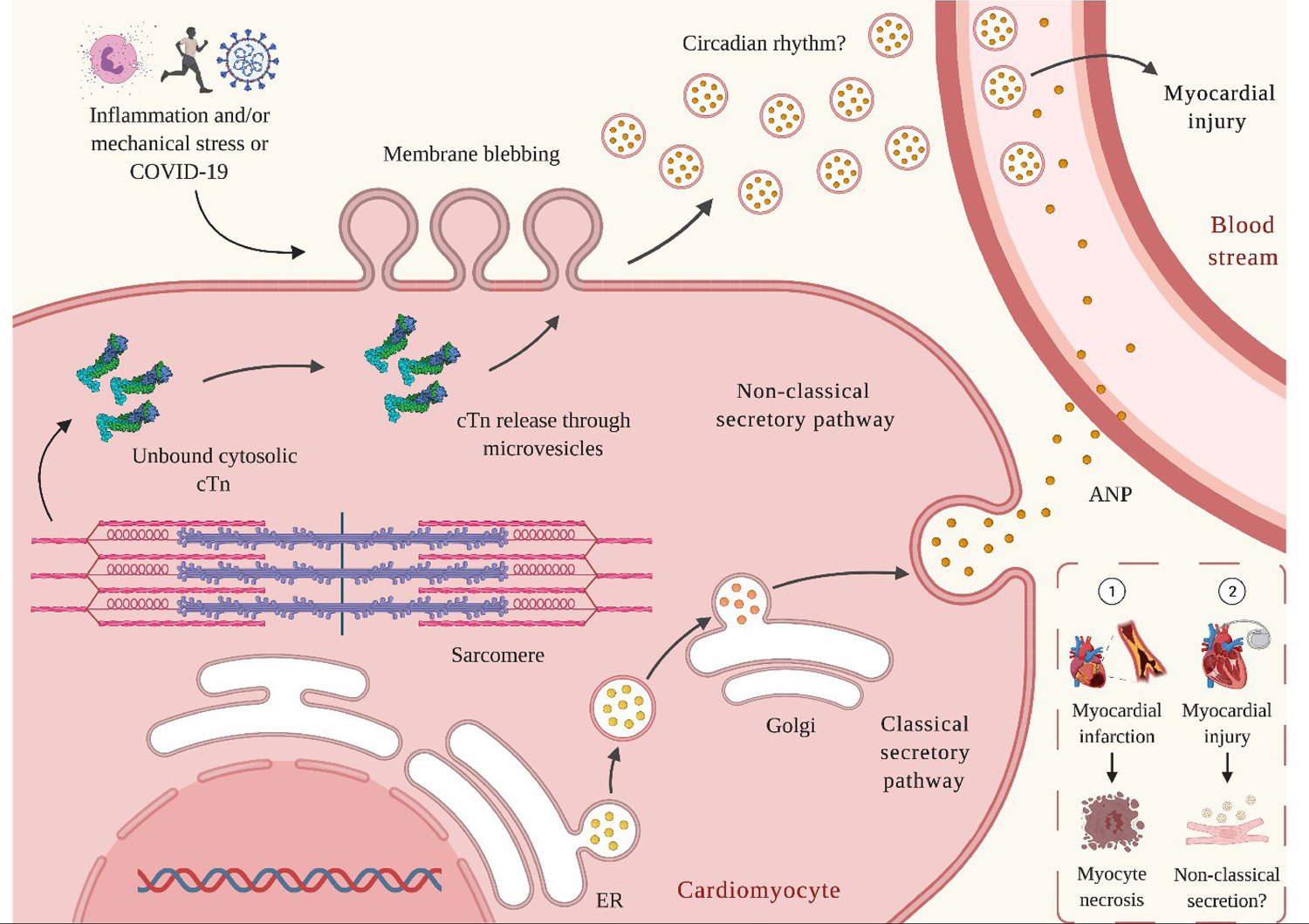
Nowadays, high-sensitivity cardiac troponin (hs-cTn) assays are available for clinical use and are part of the definition of acute myocardial infarction (AMI). , However, troponin elevation is not limited to AMI, since other conditions related to oxygen demand mismatch, direct myocardial damage, increased myocardial strain, systemic processes (i.e. sepsis), neurological disease and renal failure can also result in its increase.Troponin can now also be detected in atypical scenarios, such as in strenuous endurance exercise, rapid atrial pacing, and dobutamine stress echocardiography, as well as in 50% to 100% of healthy subjects. ,

From a physiological point of view, troponin is a protein complex that regulates myofibrillar function, consisting of three subunits: I, T and C. In the case of troponin I and troponin T, there are three different tissue-specific isoforms: fast-twitch skeletal, slow-twitch skeletal and cardiac specific (fsTn, ssTn and cTn).Conversely, TnC has two isoforms, one present in fast-twitch skeletal muscle (fsTnC) and one that expresses in both slow-twitch skeletal and cardiac muscle (ssTnC/cTnC).

[…]

  • exosomes
  • high-sensitivity cardiac troponin assays
  • microvesicles
  • non-classical secretion
  • Troponin
Read Full Article
Creative Commons Attribution (CC BY) Creative Commons license
29/04/2022 DOI: 10.36660/abc.20210518
ABC
Editorial

Interleukin 35 (IL35): A New Biomarker for Coronary Artery Disease?

Gilson Soares Feitosa

In general terms, biomarkers are biologic parameters associated with an illness’s presence and severity. Biomarkers can be detected by several means, including the physical exam and evaluation by laboratory tests or by image.

A more recent and objectively directed definition restricts its realms to a proteic substance – enzyme, hormone or without known function- that relates to health status, indicating a good status of health or disease, thus allowing for diagnosing a given disease, or its severity, or else being a therapeutic target, or serving the purpose of therapeutic guidance, that can be obtained from the blood, urine, saliva or other body fluids or tissues.

[…]

  • Biomarkers
  • Coronary Artery Disease
  • Cytokines
  • Diagnostic Imaging
  • Interleukin 35
  • Troponin
Read Full Article
Creative Commons Attribution (CC BY) Creative Commons license
07/03/2022 DOI: 10.36660/abc.20210991 Views 2
ABC
Editorial

NSTE-ACS at the Emergency: Can You Guess What is Under the Umbrella?

Bruno Rocha et al. Carlos Aguiar

The reasoning behind the often-difficult task of deciding whether, when and how to treat the patient with established Cardiovascular Disease (CVD) might be based on two simple questions: (1) Are we treating an acute event?, and (2) What is my patient at risk of in the future? Whilst the first question implies an expedite straightforward treatment, the second premise depends mostly on risk stratification and, thus, the capability of one to anticipate the likelihood of an event. Withal, the physician often encounters a scenario in which the two questions must be addressed altogether. Accordingly, the response is more likely one of a probability rather than a categorical (yes or no) answer. This is the outline in umbrella diagnoses, as is non-ST segment elevation (NSTE) Acute Coronary Syndromes (ACS).,

There are a multitude of clinical tools in Cardiovascular Medicine– that aid physicians in the decision-making process, often surpassing the “educated guess” in acute settings., However, the use of these tools in NSTE-ACS is particularly challenging for a number of reasons:

[…]

  • Acute coronary syndrome
  • Biomarkers
  • Electrocardiography/methods
  • Myocardial Ischemia
  • Non-ST Elevated Myocardial Infarction
  • Troponin
Read Full Article
Creative Commons Attribution (CC BY) Creative Commons license
06/09/2021 DOI: 10.36660/abc.20210516
Figure 1
ABC
Review Article

Coronavirus Disease 2019 and the Myocardium

José Albuquerque de Figueiredo Neto et al. Fabiana G. Marcondes-Braga Lidia Zytinski Moura André Melo e Silva de Figueiredo … Viviane Melo e Silva de Figueiredo Ricardo Mourilhe-Rocha Evandro Tinoco Mesquita

Abstract

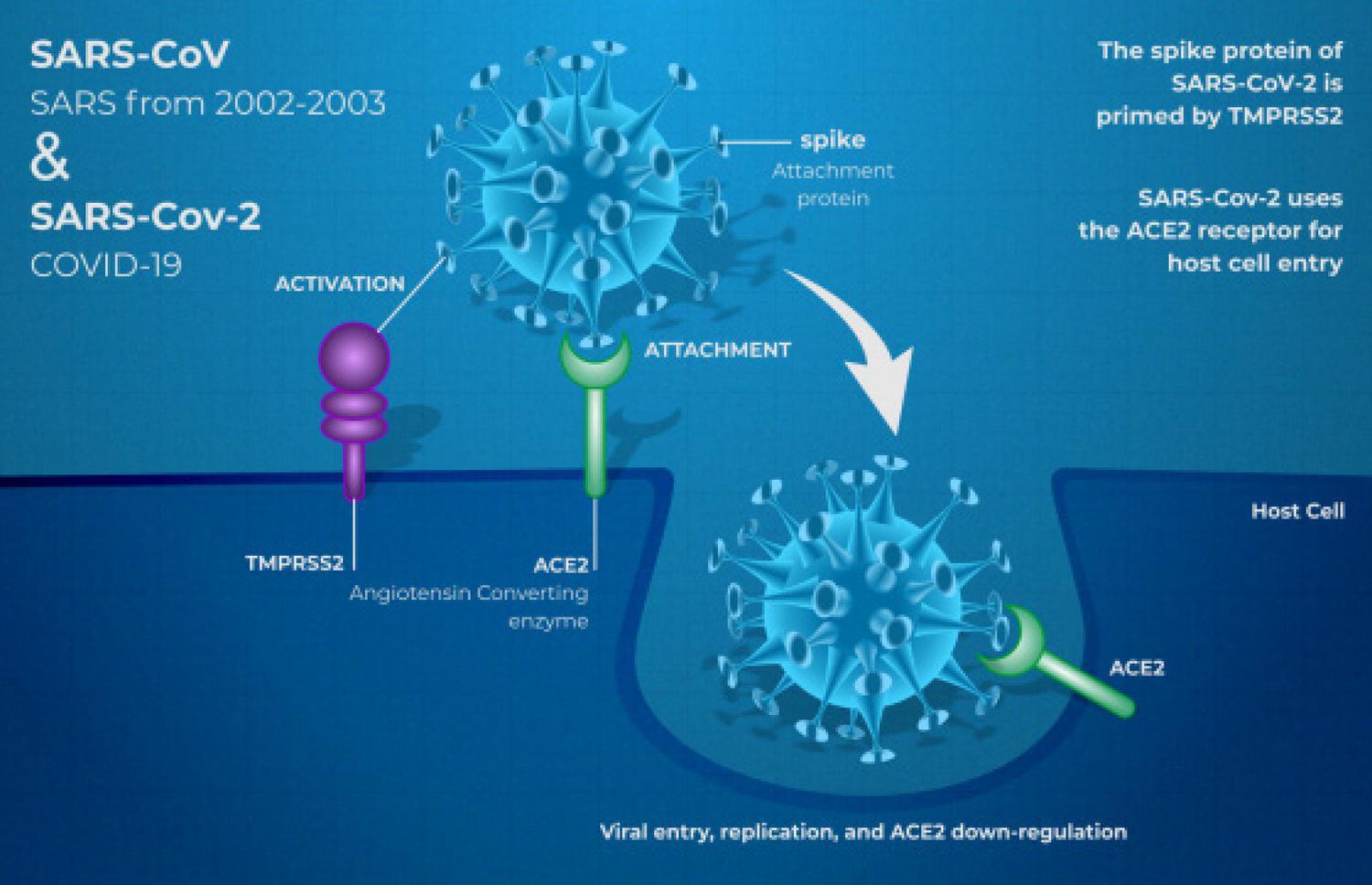
Infection with the coronavirus known as COVID-19 has promoted growing interest on the part of cardiologists, emergency care specialists, intensive care specialists, and researchers, due to the study of myocardial involvement based on different clinical forms resulting from immunoinflammatory and neurohumoral demodulation.Myocardial involvement may be minimal and identifiable only by electrocardiographic changes, mainly increased cardiac troponins, or, on the other side of the spectrum, by forms of fulminant myocarditis and takotsubo syndrome.The description of probable acute myocarditis has been widely supported by the observation of increased troponin in association with dysfunction. Classical definition of myocarditis, supported by endomyocardial biopsy of inflammatory infiltrate, is rare; it has been observed in only one case report to date, and the virus has not been identified inside cardiomyocytes.Thus, the phenomenon that has been documented is acute myocardial injury, making it necessary to rule our obstructive coronary disease based on increased markers of myocardial necrosis, whether or not they are associated with ventricular dysfunction, likely associated with cytokine storms and other factors that may synergistically promote myocardial injury, such as sympathetic hyperactivation, hypoxemia, arterial hypotension, and microvascular thrombotic phenomena.Systemic inflammatory and myocardial phenomena following viral infection have been well documented, and they may progress to cardiac remodeling and myocardial dysfunction. Cardiac monitoring of these patients is, therefore, important in order to monitor the development of the phenotype of dilated myocardiopathy.This review presents the main etiological and physiopathological findings, a description of the taxonomy of these types of cardiac involvement, and their correlation with the main clinical forms of the myocardial component present in patients in the acute phase of COVID-19.

  • Biomarkers
  • Cardiomyopathy, Dilated
  • Coronavirus
  • COVID-19
  • Inflammatory Diseases
  • Myocarditis
  • Myocardium/injuries
  • Pandemics
  • Takotsubo syndrome
  • Thrombotic Microangiopathies
  • Troponin
Read Full Article
Creative Commons Attribution (CC BY) Creative Commons license
03/07/2020 DOI: 10.36660/abc.20200373 Views 2
Figure 1
ABC
Original Article

HEART, TIMI, and GRACE Scores for Prediction of 30-Day Major Adverse Cardiovascular Events in the Era of High-Sensitivity Troponin

Felipe Torralba et al. Alberto Navarro Juan Castellanos-de la Hoz Carlos Ortiz … Alberth Botero Freddy Alarcón Nicolas Isaza Daniel Isaza

Abstract

Background

Multiple scoring systems have been designed to calculate the risk of major adverse cardiovascular events (MACE) in patients with chest pain. There is no data on whether the HEART score outperforms TIMI and GRACE in the prediction of MACE, especially in the era of high-sensitivity troponin assay and in an exclusively Latin-American population.

Objective

To compare the performance of the HEART, TIMI, and GRACE scores for predicting major cardiovascular events at 30 days of follow-up, in patients who consult for chest pain in the emergency department.

Methods

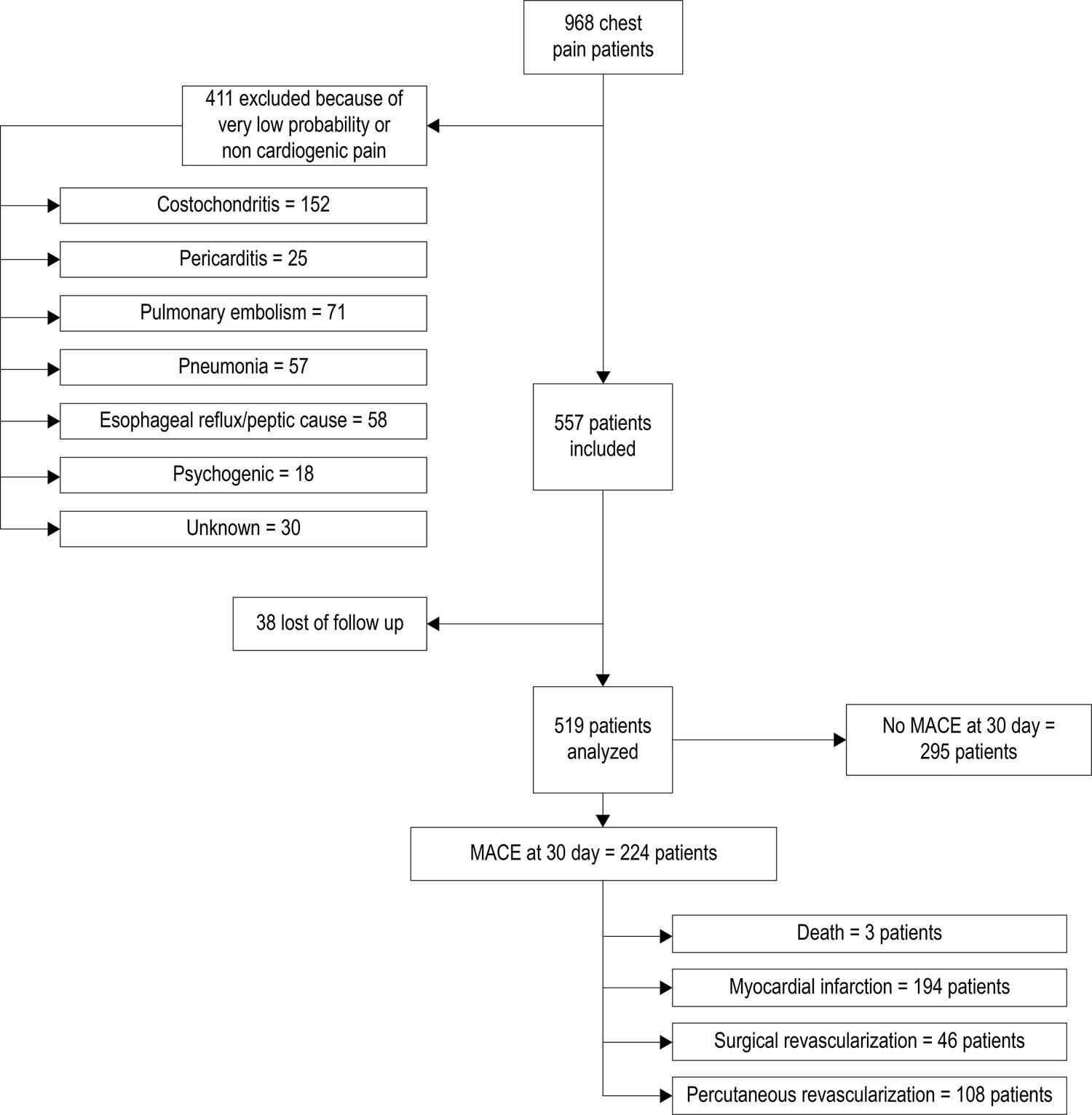
HEART, TIMI, and GRACE scores were analyzed in 519 patients with chest pain at the emergency department. The primary endpoint was the occurrence of MACE within 30 days. The performance of the HEART score was compared with the TIMI and GRACE scores using the DeLong test with p values of 0.05 considered statistically significant.

Results

A total of 224 patients (43%) had MACE at 30 days. The C statistic for the HEART, TIMI, and GRACE score was 0.937, 0.844, and 0.797 respectively (p < 0.0001). A HEART score of 3 or less had a sensitivity of 99.5% and a negative predictive value of 99% to classify low risk patients correctly; both values were higher than those obtained by the other scores.

Conclusion

The HEART score more effectively predicts cardiovascular events at 30 days of follow-up compared to the other scores. High-sensitivity troponins maintain this score’s previously demonstrated superiority. This score offers more precise identification of low-risk patients. (Arq Bras Cardiol. 2020; [online].ahead print, PP.0-0)

  • Cardiovascular Diseases, mortality
  • Chest Pain
  • Forecasting Risk Assessment
  • Myocardial Infarction
  • Myocardial Ischemia
  • Risk Factors
  • Troponin
Read Full Article
Creative Commons Attribution (CC BY) Creative Commons license
13/03/2020 DOI: 10.36660/abc.20190206 Views 1
ABC
Editorial

What is the Role of Two-Dimensional Speckle Tracking Echocardiography in the Diagnosis and Management of Anthracycline-Induced Cardiotoxicity?

Isabela Bispo Santos da Silva Costa et al. Ludhmila Abrahão Hajjar

The increasing number of patients with neoplasms and survivors, has raised the interest of the scientific community in the diagnosis and early management of the effects of neoplasms and/or their treatments on patients. In that scenario, the injury caused to the cardiovascular system belongs to a spectrum and can impair all cardiovascular system structures in a clinically variable way, ranging from asymptomatic forms to cardiovascular death. Most studies on cardiotoxicity have focused on ventricular dysfunction because of its presentation severity and because it is the major cause of late non-oncologic mortality of neoplasm survivors.

In oncologic patients, the drugs most commonly related to ventricular dysfunction are anthracyclines. Recent studies have reported that the damage related to those drugs, if not identified and treated early, evolves continuously from cell injury to ventricular dysfunction. In the past decade, several studies showed that the subclinical detection of cardiotoxicity, by use of biomarkers, such as troponin and BNP, might be an opportunity to prevent cardiovascular injury, allowing for early treatment and more appropriate individualized follow-up.–

[…]

  • Anthracyclines / toxicity
  • Cardiotoxicity
  • Echocardiography
  • Natriuretic Peptides
  • Neoplasms
  • Speckle Tracking
  • Troponin
  • Ventricular Dysfunction
Read Full Article
Creative Commons Attribution (CC BY) Creative Commons license
01/03/2018 DOI: 10.5935/abc.20180047
Figure 1
IJCS
Original Article

Correlation Between the Complexity of Coronary Lesions and High-Sensitivity Troponin Levels in Patients with Acute Coronary Syndrome

Monique Rodrigues Cardoso et al. Delcio Gonçalves da Silva Junior Eduardo Alves Ribeiro Alfredo Moreira da Rocha Neto

Abstract

Background:

Cardiovascular diseases are the leading cause of death in Brazil. Biochemical markers have diagnostic and prognostic importance in acute coronary syndromes (ACSs), with troponin as the preferred biomarker. Studies have already demonstrated a positive relationship between increased levels of high-sensitivity troponin (hsTn) and prognosis. However, few studies have correlated hsTn levels with the complexity of coronary lesions.

Objectives:

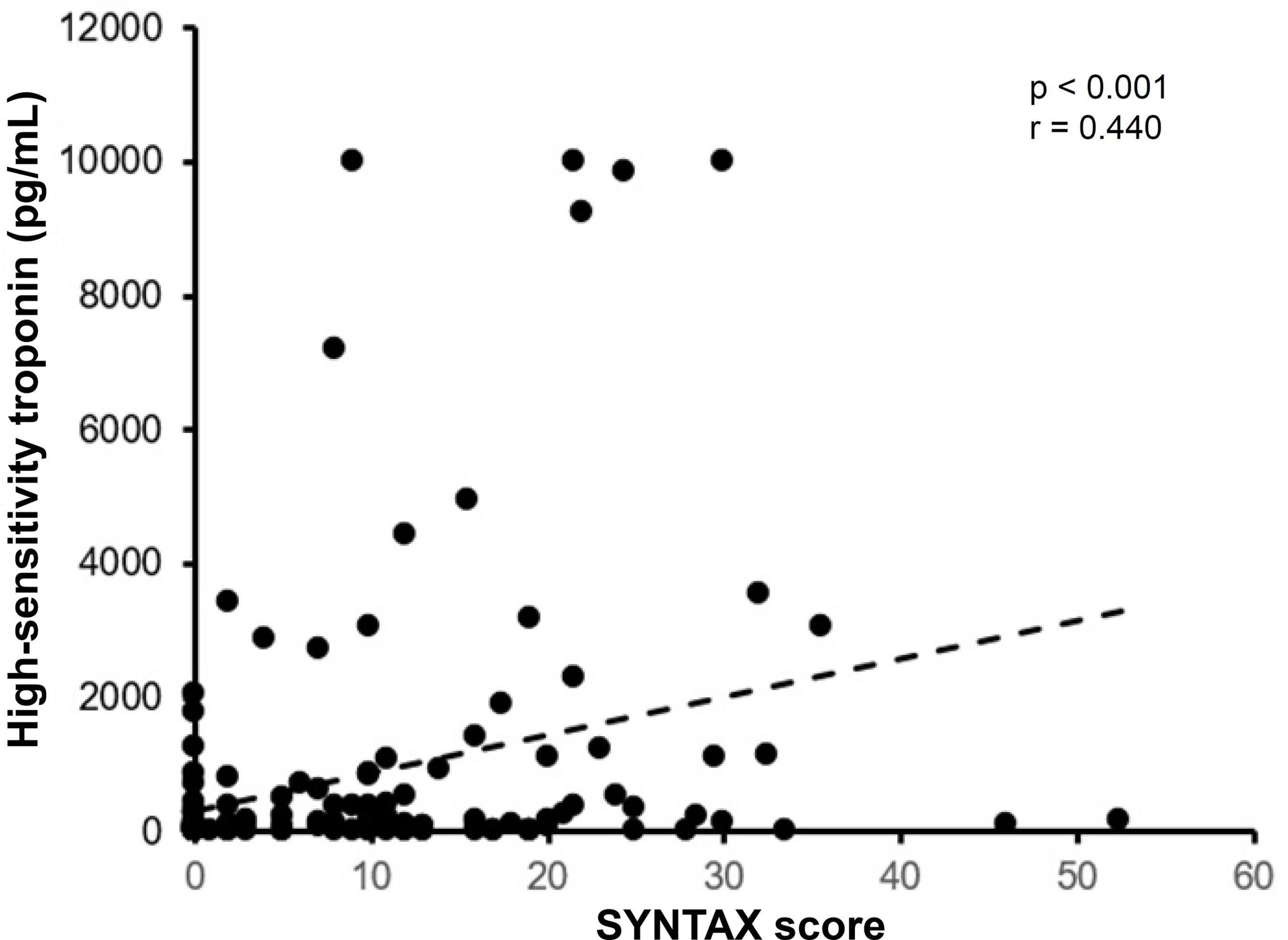
To compare hsTn levels with the complexity of coronary lesions according to the SYNTAX score, and to correlate the levels of this biomarker with the TIMI and GRACE scores in patients with ACS.

Methods:

Retrospective, cross-sectional study with 174 patients with ACS. The correlation between variables was assessed by the nonparametric Spearman’s rank correlation, and statistical analysis was performed by the SPSS program, with a significance level of 5%.

Results:

Mean age was 63 years, and most patients were women (52.9%), hypertensive, non-diabetic and non-smokers. Nineteen percent of the patients had STEMI, 43.1% NSTEMI, and 36.8% unstable angina. Most were in Killip 1 (82.8%). Median hsTn was 67 pg/mL. Median risk scores were 3, 121 and 3 in the TIMI, GRACE and SYNTAX scores, respectively. There was a correlation of hsTn with SYNTAX (p <0.001, r = 0.440), TIMI (p < 0.001, r = 0.267) and GRACE (p = 0.001, r = 0.261) scores.

Conclusion:

A positive linear correlation was found of hsTn levels with the complexity of coronary lesions, and with the TIMI and GRACE clinical scores.

  • Acute coronary syndrome
  • Cardiovascular Diseases, mortality
  • Hospitalization/economy
  • Myocardial Infarction
  • Troponin
Read Full Article
Creative Commons Attribution (CC BY) Creative Commons license
01/01/2018 DOI: 10.5935/2359-4802.20180014 Views 1
Figure 1
ABC
Original Article

A Multivariate Model for Prediction of Obstructive Coronary Disease in Patients with Acute Chest Pain: Development and Validation

Luis Cláudio Lemos Correia et al. Maurício Cerqueira Manuela Carvalhal Felipe Ferreira … Guilherme Garcia André Barcelos da Silva Nicole de Sá Fernanda Lopes Ana Clara Barcelos Márcia Noya-Rabelo

Abstract

Background:

Currently, there is no validated multivariate model to predict probability of obstructive coronary disease in patients with acute chest pain.

Objective:

To develop and validate a multivariate model to predict coronary artery disease (CAD) based on variables assessed at admission to the coronary care unit (CCU) due to acute chest pain.

Methods:

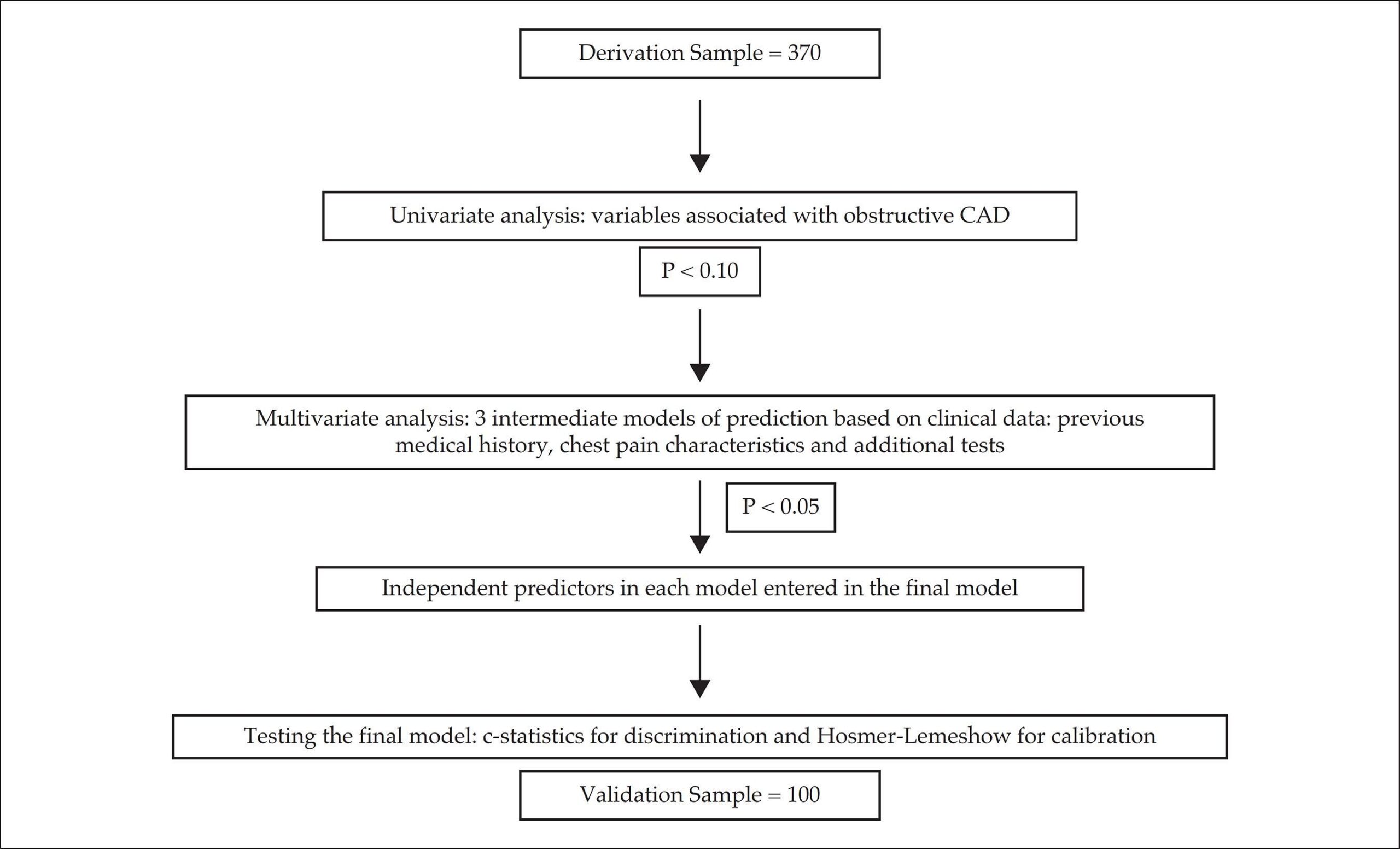
A total of 470 patients were studied, 370 utilized as the derivation sample and the subsequent 100 patients as the validation sample. As the reference standard, angiography was required to rule in CAD (stenosis ≥ 70%), while either angiography or a negative noninvasive test could be used to rule it out. As predictors, 13 baseline variables related to medical history, 14 characteristics of chest discomfort, and eight variables from physical examination or laboratory tests were tested.

Results:

The prevalence of CAD was 48%. By logistic regression, six variables remained independent predictors of CAD: age, male gender, relief with nitrate, signs of heart failure, positive electrocardiogram, and troponin. The area under the curve (AUC) of this final model was 0.80 (95% confidence interval [95%CI] = 0.75 – 0.84) in the derivation sample and 0.86 (95%CI = 0.79 – 0.93) in the validation sample. Hosmer-Lemeshow’s test indicated good calibration in both samples (p = 0.98 and p = 0.23, respectively). Compared with a basic model containing electrocardiogram and troponin, the full model provided an AUC increment of 0.07 in both derivation (p = 0.0002) and validation (p = 0.039) samples. Integrated discrimination improvement was 0.09 in both derivation (p < 0.001) and validation (p < 0.0015) samples.

Conclusion:

A multivariate model was derived and validated as an accurate tool for estimating the pretest probability of CAD in patients with acute chest pain.

  • Chest Pain
  • Coronary Angiography
  • CoronaryArtery Disease
  • Electrocardiography
  • Methods
  • Models Statistical
  • Troponin
Read Full Article
Creative Commons Attribution (CC BY) Creative Commons license
01/04/2017 DOI: 10.5935/abc.20170037
ABC
Original Article

Association between Angiotensin-Converting Enzyme Inhibitors and Troponin in Acute Coronary Syndrome

Luiz Minuzzo et al. Elizabete Silva dos Santos Ari Timerman

Background:

Cardiovascular disease is the leading cause of mortality in the western world and its treatment should be optimized to decrease severe adverse events.

Objective:

To determine the effect of previous use of angiotensin-converting enzyme inhibitors on cardiac troponin I measurement in patients with acute coronary syndrome without ST-segment elevation and evaluate clinical outcomes at 180 days.

Methods:

Prospective, observational study, carried out in a tertiary center, in patients with acute coronary syndrome without ST-segment elevation. Clinical, electrocardiographic and laboratory variables were analyzed, with emphasis on previous use of angiotensin-converting enzyme inhibitors and cardiac troponin I. The Pearson chi-square tests (Pereira) or Fisher’s exact test (Armitage) were used, as well as the non-parametric Mann-Whitney’s test. Variables with significance levels of <10% were submitted to multiple logistic regression model.

Results:

A total of 457 patients with a mean age of 62.1 years, of whom 63.7% were males, were included. Risk factors such as hypertension (85.3%) and dyslipidemia (75.9%) were the most prevalent, with 35% of diabetics. In the evaluation of events at 180 days, there were 28 deaths (6.2%). The statistical analysis showed that the variables that interfered with troponin elevation (> 0.5 ng / mL) were high blood glucose at admission (p = 0.0034) and ST-segment depression ≥ 0.5 mm in one or more leads (p = 0.0016). The use of angiotensin-converting inhibitors prior to hospitalization was associated with troponin ≤ 0.5 ng / mL (p = 0.0482). The C-statistics for this model was 0.77.

Conclusion:

This study showed a correlation between prior use of angiotensin-converting enzyme inhibitors and reduction in the myocardial necrosis marker troponin I in patients admitted for acute coronary syndrome without ST-segment elevation. However, there are no data available yet to state that this reduction could lead to fewer severe clinical events such as death and re-infarction at 180 days.

  • Acute coronary syndrome
  • Angiotensin-Converting Enzyme Inhibitors
  • Troponin
Read Full Article
Creative Commons Attribution (CC BY) Creative Commons license
14/10/2014 DOI: 10.5935/abc.20140155
Prognostic value of high-sensitivity troponin I versus troponin T in acute coronary syndromes
ABC
Artigo Original

Prognostic value of high-sensitivity troponin I versus troponin T in acute coronary syndromes

Luis Cláudio Lemos Correia et al. Fábio L. Sodré José C.C. Lima Michael Sabino … Mariana Brito Guilherme Garcia Mayara Maraux Alexandre C. Sousa Márcia Noya Rabelo J. Péricles Esteves

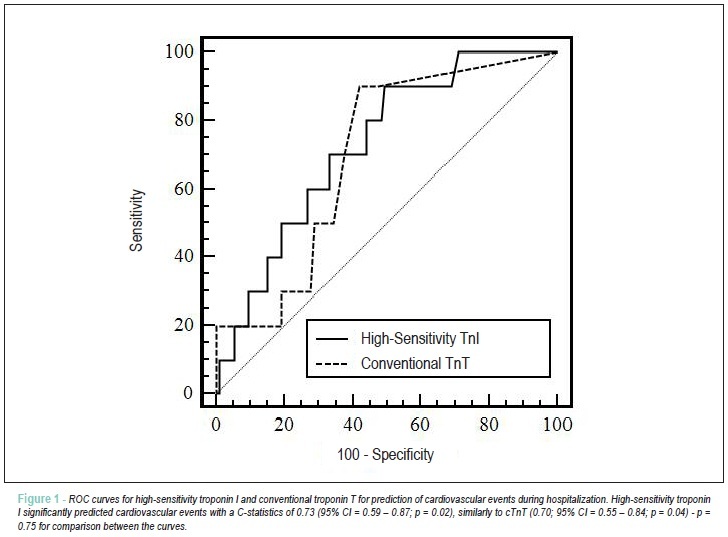
BACKGROUND: Despite superior diagnostic accuracy of high-sensitivity cardiac troponins, their prognostic value has not been validated against conventional cardiac troponins. OBJECTIVE: To test the prognostic value of high-sensitivity cardiac troponin I (hs-cTnI), compared with conventional cardiac troponin T (cTnT) in the setting of non-ST elevation acute coronary syndromes. METHODS: At hospital admission, a plasma sample was collected from 103 consecutive patients with unstable angina or non-ST elevation acute myocardial infarction. In this sample, troponin was measured both by hs-cTnI and cTnT methods. Their prognostic value was compared as to the occurrence of major cardiovascular events, defined as a combination of death, nonfatal acute myocardial infarction or refractory unstable angina during hospitalization. RESULTS: During median hospitalization of 8 days (interquartile range = 5 – 11), the incidence of cardiovascular events was 10% (5 deaths, 3 non-fatal myocardial infarctions and 2 non-fatal refractory anginas). High-sensitivity troponin I significantly predicted cardiovascular events, with a C-statistics of 0.73 (95% CI = 0.59 – 0.87), similarly to cTnT (0.70; 95% CI = 0.55 – 0.84) – P = 0.75. The definition of positive cardiac marker that provided the best prognostic accuracy was hs-cTnI > 0.055 µg/L and cTnT > 0.010 µg/L, with equal sensitivity of 90% and specificity of 52% for both assays. Positive hs-cTnI was associated with 17% incidence of events, compared with 2% in patients with negative hs-cTnI (P = 0.02). CONCLUSION: High-sensitivity troponin I predicts cardiovascular events similarly to conventional troponin T in the setting of non-ST-elevation ACS. (Arq Bras Cardiol. 2012; [online].ahead print, PP.0-0)

  • Acute coronary syndrome
  • Prognosis
  • Troponin
Read Full Article
Creative Commons Attribution (CC BY) Creative Commons license
05/04/2012 DOI: 10.1590/S0066-782X2012005000034 Views 1
ABC
Artigo Original

Influence of gender on the prognostic value of troponin I after elective percutaneous coronary interventions

Julio Cesar Vieira Braga et al. Almir Galvão Vieira Bitencourt Marianna Deway Andrade Roque Aras Junior José Péricles Esteves

OBJECTIVE: To evaluate the association between troponin I concentrations (TnI) in patients submitted to elective percutaneous coronary interventions (PCI) and adverse coronary events (ACE) during a six month follow-up period. METHODS: One hundred and eleven patients who had been submitted to an elective PCI were consecutively selected during a one year timeframe. The patients had stable angina (SA), unstable angina (UA) or silent ischemia (SI) and were asymptomatic for at least 72 hours before the procedure. TnI concentrations were measured between 8 and 24 hours after the PCI. Each patient was contacted by telephone six months later and interviewed regarding ACE which were defined as death, myocardial infarction, new revascularization and recurrent ischemia. RESULTS: Twenty-four patients showed elevated concentrations of TnI (21.6%) after the PCI regardless of clinical characteristics or procedure complications. Those who presented elevated TnI concentrations had higher event rates: 66.7 vs. 42.5% (RR=1.57; CI 95%=1.08-2.28). This risk seems to be higher in the subgroups of females and patients with a previous diagnosis of unstable angina. Multivariate analysis confirmed that gender was the only effect modifying co-variable associated with ACE risk, which is higher for females with elevated TnI concentrations (OR=7.22; CI 95%=1.4 -36.9) and unaltered for males (OR=1.26; CI 95%=0.35-4.55). CONCLUSION: Elevated TnI concentrations were a common occurrence after PCI and is a factor related to the development of ACE in the mid term. However, when adjusted for other variables, this effect is only maintained in female patients.

  • Percutaneous Coronary Intervention
  • Prognosis
  • Troponin
Read Full Article
Creative Commons Attribution (CC BY) Creative Commons license
16/10/2006 DOI: 10.1590/S0066-782X2006001600010 Views 1

How to cite this article

EndNote RIS

Electronic Document Format (Vancouver)

Ceyhun G. Troponin-to-Lymphocyte Ratio in ICI Associated Myocarditis: A Useful Marker with Limitations. Arquivos Brasileiros de Cardiologia 2026;123(1):e20250648.

Electronic Document Format (ABNT)

Ceyhun, Gökhan. Troponin-to-Lymphocyte Ratio in ICI Associated Myocarditis: A Useful Marker with Limitations. Arquivos Brasileiros de Cardiologia, v. 123, n. 1, e20250648, Mar. 2026.

Electronic Document Format (APA)

Ceyhun, G. (2026). Troponin-to-Lymphocyte Ratio in ICI Associated Myocarditis: A Useful Marker with Limitations. Arquivos Brasileiros de Cardiologia, 123(1), e20250648.

Electronic Document Format (ISO)

Ceyhun, Gökhan. Troponin-to-Lymphocyte Ratio in ICI Associated Myocarditis: A Useful Marker with Limitations. Arquivos Brasileiros de Cardiologia [online]. 2026, vol. 123, n. 1, [cited 2026-10-14], e20250648. Available from: <https://journals.cardiol.br/en/article/troponin-to-lymphocyte-ratio-in-ici-associated-myocarditis-a-useful-marker-with-limitations/>. ISSN 0066-782X

EndNote RIS

Electronic Document Format (Vancouver)

Chen W, Zhang W, Luo C, Cai J, Lin X, Zhou C, He Y, et al. Prognostic Value of Troponin to Lymphocyte Ratio in Patients with Immune Checkpoint Inhibitor-associated Myocarditis. Arquivos Brasileiros de Cardiologia 2025;122(8):e20250047.

Electronic Document Format (ABNT)

Chen, Wanwen; Zhang, Wenhao; Luo, Caiyin; Cai, Junying; Lin, Xinqing; Zhou, Chengzhi; He, Yuwen. Prognostic Value of Troponin to Lymphocyte Ratio in Patients with Immune Checkpoint Inhibitor-associated Myocarditis. Arquivos Brasileiros de Cardiologia, v. 122, n. 8, e20250047, Aug. 2025.

Electronic Document Format (APA)

Chen, W., Zhang, W., Luo, C., Cai, J., Lin, X., Zhou, C., & He, Y. (2025). Prognostic Value of Troponin to Lymphocyte Ratio in Patients with Immune Checkpoint Inhibitor-associated Myocarditis. Arquivos Brasileiros de Cardiologia, 122(8), e20250047.

Electronic Document Format (ISO)

Chen, Wanwen and Zhang, Wenhao and Luo, Caiyin and Cai, Junying and Lin, Xinqing and Zhou, Chengzhi and He, Yuwen. Prognostic Value of Troponin to Lymphocyte Ratio in Patients with Immune Checkpoint Inhibitor-associated Myocarditis. Arquivos Brasileiros de Cardiologia [online]. 2025, vol. 122, n. 8, [cited 2026-10-14], e20250047. Available from: <https://journals.cardiol.br/en/article/prognostic-value-of-troponin-to-lymphocyte-ratio-in-patients-with-immune-checkpoint-inhibitor-associated-myocarditis/>. ISSN 0066-782X

EndNote RIS

Electronic Document Format (Vancouver)

Özkan C. High-Sensitivity Troponin in Non-Cardiac Surgery. Arquivos Brasileiros de Cardiologia 2024;121(7):e20240312.

Electronic Document Format (ABNT)

Özkan, Can. High-Sensitivity Troponin in Non-Cardiac Surgery. Arquivos Brasileiros de Cardiologia, v. 121, n. 7, e20240312, Aug. 2024.

Electronic Document Format (APA)

Özkan, C. (2024). High-Sensitivity Troponin in Non-Cardiac Surgery. Arquivos Brasileiros de Cardiologia, 121(7), e20240312.

Electronic Document Format (ISO)

Özkan, Can. High-Sensitivity Troponin in Non-Cardiac Surgery. Arquivos Brasileiros de Cardiologia [online]. 2024, vol. 121, n. 7, [cited 2026-10-14], e20240312. Available from: <https://journals.cardiol.br/en/article/high-sensitivity-troponin-in-non-cardiac-surgery/>. ISSN 0066-782X

EndNote RIS

Electronic Document Format (Vancouver)

Decker SRR, Pittol LD, Rosa RG, Rover MM. Invasive Versus Conservative Management of NSTEMI Patients Aged ≥ 75 Years: Commentary. Arquivos Brasileiros de Cardiologia 2024;120(12):e20230364.

Electronic Document Format (ABNT)

Decker, Sérgio Renato da Rosa; Pittol, Luiza Duarte; Rosa, Regis Goulart; Rover, Marciane Maria. Invasive Versus Conservative Management of NSTEMI Patients Aged ≥ 75 Years: Commentary. Arquivos Brasileiros de Cardiologia, v. 120, n. 12, e20230364, Mar. 2024.

Electronic Document Format (APA)

Decker, S. R. R., Pittol, L. D., Rosa, R. G., & Rover, M. M. (2024). Invasive Versus Conservative Management of NSTEMI Patients Aged ≥ 75 Years: Commentary. Arquivos Brasileiros de Cardiologia, 120(12), e20230364.

Electronic Document Format (ISO)

Decker, Sérgio Renato da Rosa and Pittol, Luiza Duarte and Rosa, Regis Goulart and Rover, Marciane Maria. Invasive Versus Conservative Management of NSTEMI Patients Aged ≥ 75 Years: Commentary. Arquivos Brasileiros de Cardiologia [online]. 2024, vol. 120, n. 12, [cited 2026-10-14], e20230364. Available from: <https://journals.cardiol.br/en/article/invasive-versus-conservative-management-of-nstemi-patients-aged-%e2%89%a5-75-years-commentary/>. ISSN 0066-782X

EndNote RIS

Electronic Document Format (Vancouver)

Barbosa HC, Martins MAP, Jesus JC, Meira KC, Passaglia LG, Sacioto MF, Bezerra AFB, et al. Myocardial Injury and Prognosis in Hospitalized COVID-19 Patients in Brazil: Results From The Brazilian COVID-19 Registry. Arquivos Brasileiros de Cardiologia 2023;120(2):e20220151.

Electronic Document Format (ABNT)

Barbosa, Hannah Cardoso; Martins, Maria Auxiliadora Parreiras; Jesus, Jordana Cristina de; Meira, Karina Cardoso; Passaglia, Luiz Guilherme; Sacioto, Manuela Furtado; Bezerra, Adriana Falangola Benjamin; Schwarzbold, Alexandre Vargas; Maurílio, Amanda de Oliveira; Farace, Barbara Lopes; Silva, Carla Thais Cândida Alves da; Cimini, Christiane Corrêa Rodrigues; Silveira, Daniel Vitorio; Carazai, Daniela do Reis; Ponce, Daniela; Costa, Emanuel Victor Alves; Manenti, Euler Roberto Fernandes; Cenci, Evelin Paola de Almeida; Bartolazzi, Frederico; Madeira, Glícia Cristina de Castro; Nascimento, Guilherme Fagundes; Velloso, Isabela Vasconcellos Pires; Batista, Joanna d’Arc Lyra; Morais, Júlia Drumond Parreiras de; Carvalho, Juliana da Silva Nogueira; Ruschel, Karen Brasil; Martins, Karina Paula Medeiros Prado; Zandoná, Liege Barella; Menezes, Luanna Silva Monteiro; Kopittke, Luciane; Castro, Luís César de; Nasi, Luiz Antônio; Floriani, Maiara Anschau; Souza, Maíra Dias; Carneiro, Marcelo; Bicalho, Maria Aparecida Camargos; Lima, Maria Clara Pontello Barbosa; Godoy, Mariana Frizzo de; Guimarães-Júnior, Milton Henriques; Mendes, Paulo Mascarenhas; Delfino-Pereira, Polianna; Ribeiro, Raquel Jaqueline Eder; Finger, Renan Goulart; Menezes, Rochele Mosmann; Francisco, Saionara Cristina; Araújo, Silvia Ferreira; Oliveira, Talita Fischer; Oliveira, Thainara Conceição de; Polanczyk, Carisi Anne; Marcolino, Milena Soriano. Myocardial Injury and Prognosis in Hospitalized COVID-19 Patients in Brazil: Results From The Brazilian COVID-19 Registry. Arquivos Brasileiros de Cardiologia, v. 120, n. 2, e20220151, Feb. 2023.

Electronic Document Format (APA)

Barbosa, H. C., Martins, M. A. P., Jesus, J. C. , Meira, K. C., Passaglia, L. G., Sacioto, M. F., Bezerra, A. F. B., Schwarzbold, A. V., Maurílio, A. O., Farace, B. L., Silva, C. T. C. A. , Cimini, C. C. R., Silveira, D. V., Carazai, D. R., Ponce, D., Costa, E. V. A., Manenti, E. R. F., Cenci, E. P. A., Bartolazzi, F., Madeira, G. C. C., Nascimento, G. F., Velloso, I. V. P., Batista, J. L., Morais, J. D. P. , Carvalho, J. S. N., Ruschel, K. B., Martins, K. P. M. P., Zandoná, L. B., Menezes, L. S. M., Kopittke, L., Castro, L. C. , Nasi, L. A., Floriani, M. A., Souza, M. D., Carneiro, M., Bicalho, M. A. C., Lima, M. C. P. B., Godoy, M. F. , Guimarães-Júnior, M. H., Mendes, P. M., Delfino-Pereira, P., Ribeiro, R. J. E., Finger, R. G., Menezes, R. M., Francisco, S. C., Araújo, S. F., Oliveira, T. F., Oliveira, T. C. , Polanczyk, C. A., & Marcolino, M. S. (2023). Myocardial Injury and Prognosis in Hospitalized COVID-19 Patients in Brazil: Results From The Brazilian COVID-19 Registry. Arquivos Brasileiros de Cardiologia, 120(2), e20220151.

Electronic Document Format (ISO)

Barbosa, Hannah Cardoso and Martins, Maria Auxiliadora Parreiras and Jesus, Jordana Cristina de and Meira, Karina Cardoso and Passaglia, Luiz Guilherme and Sacioto, Manuela Furtado and Bezerra, Adriana Falangola Benjamin and Schwarzbold, Alexandre Vargas and Maurílio, Amanda de Oliveira and Farace, Barbara Lopes and Silva, Carla Thais Cândida Alves da and Cimini, Christiane Corrêa Rodrigues and Silveira, Daniel Vitorio and Carazai, Daniela do Reis and Ponce, Daniela and Costa, Emanuel Victor Alves and Manenti, Euler Roberto Fernandes and Cenci, Evelin Paola de Almeida and Bartolazzi, Frederico and Madeira, Glícia Cristina de Castro and Nascimento, Guilherme Fagundes and Velloso, Isabela Vasconcellos Pires and Batista, Joanna d’Arc Lyra and Morais, Júlia Drumond Parreiras de and Carvalho, Juliana da Silva Nogueira and Ruschel, Karen Brasil and Martins, Karina Paula Medeiros Prado and Zandoná, Liege Barella and Menezes, Luanna Silva Monteiro and Kopittke, Luciane and Castro, Luís César de and Nasi, Luiz Antônio and Floriani, Maiara Anschau and Souza, Maíra Dias and Carneiro, Marcelo and Bicalho, Maria Aparecida Camargos and Lima, Maria Clara Pontello Barbosa and Godoy, Mariana Frizzo de and Guimarães-Júnior, Milton Henriques and Mendes, Paulo Mascarenhas and Delfino-Pereira, Polianna and Ribeiro, Raquel Jaqueline Eder and Finger, Renan Goulart and Menezes, Rochele Mosmann and Francisco, Saionara Cristina and Araújo, Silvia Ferreira and Oliveira, Talita Fischer and Oliveira, Thainara Conceição de and Polanczyk, Carisi Anne and Marcolino, Milena Soriano. Myocardial Injury and Prognosis in Hospitalized COVID-19 Patients in Brazil: Results From The Brazilian COVID-19 Registry. Arquivos Brasileiros de Cardiologia [online]. 2023, vol. 120, n. 2, [cited 2026-10-14], e20220151. Available from: <https://journals.cardiol.br/en/article/myocardial-injury-and-prognosis-in-hospitalized-covid-19-patients-in-brazil-results-from-the-brazilian-covid-19-registry/>. ISSN 0066-782X

EndNote RIS

Electronic Document Format (Vancouver)

Montenegro CGSP, Dourado LOC, Jordão CP, Vieira MLC, Assumpção CRA, Gowdak LHW, Pereira AC, et al. Does Myocardial Injury Occur After an Acute Aerobic Exercise Session in Patients with Refractory Angina?. Arquivos Brasileiros de Cardiologia 2022;119(5):747-53.

Electronic Document Format (ABNT)

Montenegro, Carla Giuliano de Sá Pinto; Dourado, Luciana Oliveira Cascaes; Jordão, Camila Paixão; Vieira, Marcelo Luiz Campos; Assumpção, Camila Regina Alves; Gowdak, Luis Henrique Wolff; Pereira, Alexandre da Costa; Negrão, Carlos Eduardo; Matos, Luciana Diniz Nagem Janot de. Does Myocardial Injury Occur After an Acute Aerobic Exercise Session in Patients with Refractory Angina?. Arquivos Brasileiros de Cardiologia, v. 119, n. 5, p. 747-753, Nov. 2022.

Electronic Document Format (APA)

Montenegro, C. G. S. P., Dourado, L. O. C., Jordão, C. P., Vieira, M. L. C., Assumpção, C. R. A., Gowdak, L. H. W., Pereira, A. C., Negrão, C. E., & Matos, L. D. N. J. (2022). Does Myocardial Injury Occur After an Acute Aerobic Exercise Session in Patients with Refractory Angina?. Arquivos Brasileiros de Cardiologia, 119(5), 747-753.

Electronic Document Format (ISO)

Montenegro, Carla Giuliano de Sá Pinto and Dourado, Luciana Oliveira Cascaes and Jordão, Camila Paixão and Vieira, Marcelo Luiz Campos and Assumpção, Camila Regina Alves and Gowdak, Luis Henrique Wolff and Pereira, Alexandre da Costa and Negrão, Carlos Eduardo and Matos, Luciana Diniz Nagem Janot de. Does Myocardial Injury Occur After an Acute Aerobic Exercise Session in Patients with Refractory Angina?. Arquivos Brasileiros de Cardiologia [online]. 2022, vol. 119, n. 5, [cited 2026-10-14], pp. 747-753. Available from: <https://journals.cardiol.br/en/article/does-myocardial-injury-occur-after-an-acute-aerobic-exercise-session-in-patients-with-refractory-angina/>. ISSN 0066-782X

EndNote RIS

Electronic Document Format (Vancouver)

Wang R, Figueiredo EL. Troponin – Use it wisely. And as Another Instrument in the Clinic. Arquivos Brasileiros de Cardiologia 2022;118(6):1016-7.

Electronic Document Format (ABNT)

Wang, Ricardo; Figueiredo, Estevāo Lanna. Troponin – Use it wisely. And as Another Instrument in the Clinic. Arquivos Brasileiros de Cardiologia, v. 118, n. 6, p. 1016-1017, Jun. 2022.

Electronic Document Format (APA)

Wang, R., & Figueiredo, E. L. (2022). Troponin – Use it wisely. And as Another Instrument in the Clinic. Arquivos Brasileiros de Cardiologia, 118(6), 1016-1017.

Electronic Document Format (ISO)

Wang, Ricardo and Figueiredo, Estevāo Lanna. Troponin – Use it wisely. And as Another Instrument in the Clinic. Arquivos Brasileiros de Cardiologia [online]. 2022, vol. 118, n. 6, [cited 2026-10-14], pp. 1016-1017. Available from: <https://journals.cardiol.br/en/article/troponin-use-it-wisely-and-as-another-instrument-in-the-clinic/>. ISSN 0066-782X

EndNote RIS

Electronic Document Format (Vancouver)

Gonzalez-Rayas JM, Hernandez-Hernandez JA, Lopez-Sanchez RC, Rayas-Gomez AL, Gonzalez-Yanez JM. Non-Classical Secretion: A Possible Mechanism to Explain Cardiac Troponin Elevations in the Absence of Acute Myocardial Infarction. Arquivos Brasileiros de Cardiologia 2022;118(4):778-82.

Electronic Document Format (ABNT)

Gonzalez-Rayas, Jose Manuel; Hernandez-Hernandez, Jose Ascencion; Lopez-Sanchez, Rosa del Carmen; Rayas-Gomez, Ana Lilia; Gonzalez-Yanez, Jose Manuel. Non-Classical Secretion: A Possible Mechanism to Explain Cardiac Troponin Elevations in the Absence of Acute Myocardial Infarction. Arquivos Brasileiros de Cardiologia, v. 118, n. 4, p. 778-782, Apr. 2022.

Electronic Document Format (APA)

Gonzalez-Rayas, J. M., Hernandez-Hernandez, J. A., Lopez-Sanchez, R. C., Rayas-Gomez, A. L., & Gonzalez-Yanez, J. M. (2022). Non-Classical Secretion: A Possible Mechanism to Explain Cardiac Troponin Elevations in the Absence of Acute Myocardial Infarction. Arquivos Brasileiros de Cardiologia, 118(4), 778-782.

Electronic Document Format (ISO)

Gonzalez-Rayas, Jose Manuel and Hernandez-Hernandez, Jose Ascencion and Lopez-Sanchez, Rosa del Carmen and Rayas-Gomez, Ana Lilia and Gonzalez-Yanez, Jose Manuel. Non-Classical Secretion: A Possible Mechanism to Explain Cardiac Troponin Elevations in the Absence of Acute Myocardial Infarction. Arquivos Brasileiros de Cardiologia [online]. 2022, vol. 118, n. 4, [cited 2026-10-14], pp. 778-782. Available from: <https://journals.cardiol.br/en/article/non-classical-secretion-a-possible-mechanism-to-explain-cardiac-troponin-elevations-in-the-absence-of-acute-myocardial-infarction/>. ISSN 0066-782X

EndNote RIS

Electronic Document Format (Vancouver)

Feitosa GS. Interleukin 35 (IL35): A New Biomarker for Coronary Artery Disease?. Arquivos Brasileiros de Cardiologia 2022;118(2):409-10.

Electronic Document Format (ABNT)

Feitosa, Gilson Soares. Interleukin 35 (IL35): A New Biomarker for Coronary Artery Disease?. Arquivos Brasileiros de Cardiologia, v. 118, n. 2, p. 409-410, Mar. 2022.

Electronic Document Format (APA)

Feitosa, G. S. (2022). Interleukin 35 (IL35): A New Biomarker for Coronary Artery Disease?. Arquivos Brasileiros de Cardiologia, 118(2), 409-410.

Electronic Document Format (ISO)

Feitosa, Gilson Soares. Interleukin 35 (IL35): A New Biomarker for Coronary Artery Disease?. Arquivos Brasileiros de Cardiologia [online]. 2022, vol. 118, n. 2, [cited 2026-10-14], pp. 409-410. Available from: <https://journals.cardiol.br/en/article/interleukin-35-il35-a-new-biomarker-for-coronary-artery-disease/>. ISSN 0066-782X

EndNote RIS

Electronic Document Format (Vancouver)

Rocha B, Aguiar C. NSTE-ACS at the Emergency: Can You Guess What is Under the Umbrella?. Arquivos Brasileiros de Cardiologia 2021;117(2):288-9.

Electronic Document Format (ABNT)

Rocha, Bruno; Aguiar, Carlos. NSTE-ACS at the Emergency: Can You Guess What is Under the Umbrella?. Arquivos Brasileiros de Cardiologia, v. 117, n. 2, p. 288-289, Sep. 2021.

Electronic Document Format (APA)

Rocha, B., & Aguiar, C. (2021). NSTE-ACS at the Emergency: Can You Guess What is Under the Umbrella?. Arquivos Brasileiros de Cardiologia, 117(2), 288-289.

Electronic Document Format (ISO)

Rocha, Bruno and Aguiar, Carlos. NSTE-ACS at the Emergency: Can You Guess What is Under the Umbrella?. Arquivos Brasileiros de Cardiologia [online]. 2021, vol. 117, n. 2, [cited 2026-10-14], pp. 288-289. Available from: <https://journals.cardiol.br/en/article/nste-acs-at-the-emergency-can-you-guess-what-is-under-the-umbrella/>. ISSN 0066-782X

EndNote RIS

Electronic Document Format (Vancouver)

Figueiredo Neto JA, Marcondes-Braga FG, Moura LZ, Figueiredo AMS, Figueiredo VMS, Mourilhe-Rocha R, Mesquita ET, et al. Coronavirus Disease 2019 and the Myocardium. Arquivos Brasileiros de Cardiologia 2020;114(6):1051-7.

Electronic Document Format (ABNT)

Figueiredo Neto, José Albuquerque de; Marcondes-Braga, Fabiana G.; Moura, Lidia Zytinski; Figueiredo, André Melo e Silva de; Figueiredo, Viviane Melo e Silva de; Mourilhe-Rocha, Ricardo; Mesquita, Evandro Tinoco. Coronavirus Disease 2019 and the Myocardium. Arquivos Brasileiros de Cardiologia, v. 114, n. 6, p. 1051-1057, Jul. 2020.

Electronic Document Format (APA)

Figueiredo Neto, J. A. , Marcondes-Braga, F. G., Moura, L. Z., Figueiredo, A. M. S. , Figueiredo, V. M. S. , Mourilhe-Rocha, R., & Mesquita, E. T. (2020). Coronavirus Disease 2019 and the Myocardium. Arquivos Brasileiros de Cardiologia, 114(6), 1051-1057.

Electronic Document Format (ISO)

Figueiredo Neto, José Albuquerque de and Marcondes-Braga, Fabiana G. and Moura, Lidia Zytinski and Figueiredo, André Melo e Silva de and Figueiredo, Viviane Melo e Silva de and Mourilhe-Rocha, Ricardo and Mesquita, Evandro Tinoco. Coronavirus Disease 2019 and the Myocardium. Arquivos Brasileiros de Cardiologia [online]. 2020, vol. 114, n. 6, [cited 2026-10-14], pp. 1051-1057. Available from: <https://journals.cardiol.br/en/article/coronavirus-disease-2019-and-the-myocardium/>. ISSN 0066-782X

EndNote RIS

Electronic Document Format (Vancouver)

Torralba F, Navarro A, Hoz JC, Ortiz C, Botero A, Alarcón F, Isaza N, et al. HEART, TIMI, and GRACE Scores for Prediction of 30-Day Major Adverse Cardiovascular Events in the Era of High-Sensitivity Troponin. Arquivos Brasileiros de Cardiologia 2020;114(5):795-802.

Electronic Document Format (ABNT)

Torralba, Felipe; Navarro, Alberto; Hoz, Juan Castellanos-de la; Ortiz, Carlos; Botero, Alberth; Alarcón, Freddy; Isaza, Nicolas; Isaza, Daniel. HEART, TIMI, and GRACE Scores for Prediction of 30-Day Major Adverse Cardiovascular Events in the Era of High-Sensitivity Troponin. Arquivos Brasileiros de Cardiologia, v. 114, n. 5, p. 795-802, Mar. 2020.

Electronic Document Format (APA)

Torralba, F., Navarro, A., Hoz, J. C. , Ortiz, C., Botero, A., Alarcón, F., Isaza, N., & Isaza, D. (2020). HEART, TIMI, and GRACE Scores for Prediction of 30-Day Major Adverse Cardiovascular Events in the Era of High-Sensitivity Troponin. Arquivos Brasileiros de Cardiologia, 114(5), 795-802.

Electronic Document Format (ISO)

Torralba, Felipe and Navarro, Alberto and Hoz, Juan Castellanos-de la and Ortiz, Carlos and Botero, Alberth and Alarcón, Freddy and Isaza, Nicolas and Isaza, Daniel. HEART, TIMI, and GRACE Scores for Prediction of 30-Day Major Adverse Cardiovascular Events in the Era of High-Sensitivity Troponin. Arquivos Brasileiros de Cardiologia [online]. 2020, vol. 114, n. 5, [cited 2026-10-14], pp. 795-802. Available from: <https://journals.cardiol.br/en/article/heart-timi-and-grace-scores-for-prediction-of-30-day-major-adverse-cardiovascular-events-in-the-era-of-high-sensitivity-troponin/>. ISSN 0066-782X

EndNote RIS

Electronic Document Format (Vancouver)

Costa IBSS, Hajjar LA. What is the Role of Two-Dimensional Speckle Tracking Echocardiography in the Diagnosis and Management of Anthracycline-Induced Cardiotoxicity?. Arquivos Brasileiros de Cardiologia 2018;110(3):229-30.

Electronic Document Format (ABNT)

Costa, Isabela Bispo Santos da Silva; Hajjar, Ludhmila Abrahão. What is the Role of Two-Dimensional Speckle Tracking Echocardiography in the Diagnosis and Management of Anthracycline-Induced Cardiotoxicity?. Arquivos Brasileiros de Cardiologia, v. 110, n. 3, p. 229-230, Feb. 2018.

Electronic Document Format (APA)

Costa, I. B. S. S., & Hajjar, L. A. (2018). What is the Role of Two-Dimensional Speckle Tracking Echocardiography in the Diagnosis and Management of Anthracycline-Induced Cardiotoxicity?. Arquivos Brasileiros de Cardiologia, 110(3), 229-230.

Electronic Document Format (ISO)

Costa, Isabela Bispo Santos da Silva and Hajjar, Ludhmila Abrahão. What is the Role of Two-Dimensional Speckle Tracking Echocardiography in the Diagnosis and Management of Anthracycline-Induced Cardiotoxicity?. Arquivos Brasileiros de Cardiologia [online]. 2018, vol. 110, n. 3, [cited 2026-10-14], pp. 229-230. Available from: <https://journals.cardiol.br/en/article/what-is-the-role-of-two-dimensional-speckle-tracking-echocardiography-in-the-diagnosis-and-management-of-anthracycline-induced-cardiotoxicity/>. ISSN 0066-782X

EndNote RIS

Electronic Document Format (Vancouver)

Cardoso MR, Silva Junior DG, Ribeiro EA, Rocha Neto AM. Correlation Between the Complexity of Coronary Lesions and High-Sensitivity Troponin Levels in Patients with Acute Coronary Syndrome. International Journal of Cardiovascular Sciences 2018;31(3):218-25.

Electronic Document Format (ABNT)

Cardoso, Monique Rodrigues; Silva Junior, Delcio Gonçalves da; Ribeiro, Eduardo Alves; Rocha Neto, Alfredo Moreira da. Correlation Between the Complexity of Coronary Lesions and High-Sensitivity Troponin Levels in Patients with Acute Coronary Syndrome. International Journal of Cardiovascular Sciences, v. 31, n. 3, p. 218-225, Dec. 2017.

Electronic Document Format (APA)

Cardoso, M. R., Silva Junior, D. G. , Ribeiro, E. A., & Rocha Neto, A. M. (2018). Correlation Between the Complexity of Coronary Lesions and High-Sensitivity Troponin Levels in Patients with Acute Coronary Syndrome. International Journal of Cardiovascular Sciences, 31(3), 218-225.

Electronic Document Format (ISO)

Cardoso, Monique Rodrigues and Silva Junior, Delcio Gonçalves da and Ribeiro, Eduardo Alves and Rocha Neto, Alfredo Moreira da. Correlation Between the Complexity of Coronary Lesions and High-Sensitivity Troponin Levels in Patients with Acute Coronary Syndrome. International Journal of Cardiovascular Sciences [online]. 2018, vol. 31, n. 3, [cited 2026-10-14], pp. 218-225. Available from: <https://journals.cardiol.br/en/article/correlation-between-the-complexity-of-coronary-lesions-and-high-sensitivity-troponin-levels-in-patients-with-acute-coronary-syndrome/>. ISSN 2359-4802

EndNote RIS

Electronic Document Format (Vancouver)

Correia LCL, Cerqueira M, Carvalhal M, Ferreira F, Garcia G, Silva AB, Sá N, et al. A Multivariate Model for Prediction of Obstructive Coronary Disease in Patients with Acute Chest Pain: Development and Validation. Arquivos Brasileiros de Cardiologia 2017;108(4):304-1.

Electronic Document Format (ABNT)

Correia, Luis Cláudio Lemos; Cerqueira, Maurício; Carvalhal, Manuela; Ferreira, Felipe; Garcia, Guilherme; Silva, André Barcelos da; Sá, Nicole de; Lopes, Fernanda; Barcelos, Ana Clara; Noya-Rabelo, Márcia. A Multivariate Model for Prediction of Obstructive Coronary Disease in Patients with Acute Chest Pain: Development and Validation. Arquivos Brasileiros de Cardiologia, v. 108, n. 4, p. 304-314, Mar. 2017.

Electronic Document Format (APA)

Correia, L. C. L., Cerqueira, M., Carvalhal, M., Ferreira, F., Garcia, G., Silva, A. B. , Sá, N. , Lopes, F., Barcelos, A. C., & Noya-Rabelo, M. (2017). A Multivariate Model for Prediction of Obstructive Coronary Disease in Patients with Acute Chest Pain: Development and Validation. Arquivos Brasileiros de Cardiologia, 108(4), 304-314.

Electronic Document Format (ISO)

Correia, Luis Cláudio Lemos and Cerqueira, Maurício and Carvalhal, Manuela and Ferreira, Felipe and Garcia, Guilherme and Silva, André Barcelos da and Sá, Nicole de and Lopes, Fernanda and Barcelos, Ana Clara and Noya-Rabelo, Márcia. A Multivariate Model for Prediction of Obstructive Coronary Disease in Patients with Acute Chest Pain: Development and Validation. Arquivos Brasileiros de Cardiologia [online]. 2017, vol. 108, n. 4, [cited 2026-10-14], pp. 304-314. Available from: <https://journals.cardiol.br/en/article/a-multivariate-model-for-prediction-of-obstructive-coronary-disease-in-patients-with-acute-chest-pain-development-and-validation/>. ISSN 0066-782X

EndNote RIS

Electronic Document Format (Vancouver)

Minuzzo L, Santos ES, Timerman A. Association between Angiotensin-Converting Enzyme Inhibitors and Troponin in Acute Coronary Syndrome. Arquivos Brasileiros de Cardiologia 2014;103(6):513-20.

Electronic Document Format (ABNT)

Minuzzo, Luiz; Santos, Elizabete Silva dos; Timerman, Ari. Association between Angiotensin-Converting Enzyme Inhibitors and Troponin in Acute Coronary Syndrome. Arquivos Brasileiros de Cardiologia, v. 103, n. 6, p. 513-520, Oct. 2014.

Electronic Document Format (APA)

Minuzzo, L., Santos, E. S. , & Timerman, A. (2014). Association between Angiotensin-Converting Enzyme Inhibitors and Troponin in Acute Coronary Syndrome. Arquivos Brasileiros de Cardiologia, 103(6), 513-520.

Electronic Document Format (ISO)

Minuzzo, Luiz and Santos, Elizabete Silva dos and Timerman, Ari. Association between Angiotensin-Converting Enzyme Inhibitors and Troponin in Acute Coronary Syndrome. Arquivos Brasileiros de Cardiologia [online]. 2014, vol. 103, n. 6, [cited 2026-10-14], pp. 513-520. Available from: <https://journals.cardiol.br/en/article/association-between-angiotensin-converting-enzyme-inhibitors-and-troponin-in-acute-coronary-syndrome/>. ISSN 0066-782X

EndNote RIS

Electronic Document Format (Vancouver)

Correia LCL, Sodré FL, Lima JC, Sabino M, Brito M, Garcia G, Maraux M, et al. Prognostic value of high-sensitivity troponin I versus troponin T in acute coronary syndromes. Arquivos Brasileiros de Cardiologia 2012;98(5):406-12.

Electronic Document Format (ABNT)

Correia, Luis Cláudio Lemos; Sodré, Fábio L.; Lima, José C.C.; Sabino, Michael; Brito, Mariana; Garcia, Guilherme; Maraux, Mayara; Sousa, Alexandre C.; Rabelo, Márcia Noya; Esteves, J. Péricles. Prognostic value of high-sensitivity troponin I versus troponin T in acute coronary syndromes. Arquivos Brasileiros de Cardiologia, v. 98, n. 5, p. 406-412, Apr. 2012.

Electronic Document Format (APA)

Correia, L. C. L., Sodré, F. L., Lima, J. C., Sabino, M., Brito, M., Garcia, G., Maraux, M., Sousa, A. C., Rabelo, M. N., & Esteves, J. P. (2012). Prognostic value of high-sensitivity troponin I versus troponin T in acute coronary syndromes. Arquivos Brasileiros de Cardiologia, 98(5), 406-412.

Electronic Document Format (ISO)

Correia, Luis Cláudio Lemos and Sodré, Fábio L. and Lima, José C.C. and Sabino, Michael and Brito, Mariana and Garcia, Guilherme and Maraux, Mayara and Sousa, Alexandre C. and Rabelo, Márcia Noya and Esteves, J. Péricles. Prognostic value of high-sensitivity troponin I versus troponin T in acute coronary syndromes. Arquivos Brasileiros de Cardiologia [online]. 2012, vol. 98, n. 5, [cited 2026-10-14], pp. 406-412. Available from: <https://journals.cardiol.br/en/article/prognostic-value-of-high-sensitivity-troponin-i-versus-troponin-t-in-acute-coronary-syndromes/>. ISSN 0066-782X

EndNote RIS

Electronic Document Format (Vancouver)

Braga JCV, Bitencourt AGV, Andrade MD, Aras Junior R, Esteves JP. Influence of gender on the prognostic value of troponin I after elective percutaneous coronary interventions. Arquivos Brasileiros de Cardiologia 2006;87(3):288-93.

Electronic Document Format (ABNT)

Braga, Julio Cesar Vieira; Bitencourt, Almir Galvão Vieira; Andrade, Marianna Deway; Aras Junior, Roque; Esteves, José Péricles. Influence of gender on the prognostic value of troponin I after elective percutaneous coronary interventions. Arquivos Brasileiros de Cardiologia, v. 87, n. 3, p. 288-293, Oct. 2006.

Electronic Document Format (APA)

Braga, J. C. V., Bitencourt, A. G. V., Andrade, M. D., Aras Junior, R., & Esteves, J. P. (2006). Influence of gender on the prognostic value of troponin I after elective percutaneous coronary interventions. Arquivos Brasileiros de Cardiologia, 87(3), 288-293.

Electronic Document Format (ISO)

Braga, Julio Cesar Vieira and Bitencourt, Almir Galvão Vieira and Andrade, Marianna Deway and Aras Junior, Roque and Esteves, José Péricles. Influence of gender on the prognostic value of troponin I after elective percutaneous coronary interventions. Arquivos Brasileiros de Cardiologia [online]. 2006, vol. 87, n. 3, [cited 2026-10-14], pp. 288-293. Available from: <https://journals.cardiol.br/en/article/influence-of-gender-on-the-prognostic-value-of-troponin-i-after-elective-percutaneous-coronary-interventions/>. ISSN 0066-782X

  • About ABC Family
  • Internal Regulation
  • Editorial Board
  • Brazilian Society of Cardiology (SBC)

Issues

SBC Guidelines

  • Videos
  • Podcasts
  • News