ABC Family Arquivos Brasileiros de Cardiologia International Journal of Cardiovascular Sciences ABC Heart Failure & Cardiomyopathy ABC Imagem Cardiovascular
Português English
ABC Family
Português English
  • About
    • About ABC Family
    • Internal Regulation
    • Editorial Board
    • Brazilian Society of Cardiology (SBC)
  • Issues
  • SBC Guidelines
  • Content
    • Videos
    • Podcasts
    • News
  • About
    • About ABC Family
    • Internal Regulation
    • Editorial Board
    • Brazilian Society of Cardiology (SBC)
  • Issues
  • SBC Guidelines
  • Content
    • Videos
    • Podcasts
    • News

ABC Family

  • ABC Family
  • Arquivos Brasileiros de Cardiologia
  • International Journal of Cardiovascular Sciences
  • ABC Heart Failure & Cardiomyopathy
  • ABC Imagem Cardiovascular
Search in

No content found.

Journals
Ordering
Article types
Others

  1. Home
  2. Keyword: Trimetazidine
ABC
Editorial

Allopurinol versus Trimetazidine as Antianginal: A Randomized Clinical Trial

Luiz Antonio Machado Cesar et al. Bruno Mahler Mioto

The first instance of angina pectoris treatment using a drug was described by Professor T Lauder Brunton in 1857 in Edinburgh. Professor Brunton documented patients’ experiences with “intense anxiety of having their chest compressed” and alleviated promptly by amyl nitrite. Almost a century later, Mason et al.elegantly demonstrated the effects of this volatile vasodilator in men in 1965. In addition to its intense vasodilator effects on the arteriolar and venous systems, an intense adrenergic response was elicited by hypotension that followed. The use of organic nitrates started in 1946, followed by beta-blockers (BBs) in the 1960s, establishing them as a basis for preventing or reducing angina episodes and relieving pain using sub-lingual or oral spray formulas of nitrates. A combination of BBs with oral long-acting nitrates was used to avoid angina for many years. Due to its protective effect against ischemia and ventricular arrhythmia, BBs were reinforced as the first-choice antianginal drugs after being tested in patients with acute myocardial infarction (AMI) during the 1980s and 1990s.

The results of the trials,showed a relative reduction of 15–20% in the AMI incidence and cardiovascular mortality during the follow-up period up to 2.5 years. More recently, the COMMIT trial with metoprolol tartrate only reduced mortality by 1%(relative risk). Besides, there are concerns regarding how long the effects shall last, especially in patients with normal left ventricular ejection fraction (LVEF). In patients with chronic coronary syndrome (CCS) and preserved LVEF, no trial tested BBs in the reduction of cardiovascular events. Recently big data registries allowed statistical approaches using propensity scores to test with results that do not support the use of BBs as a preventive measure against mortality or AMI in patients even in those 1 year after AMI., A recently published trialtested metoprolol or bisoprolol after AMI, in patients with normal LVEF; with a median follow-up period of 3.5 years; no advantages were observed regarding mortality or myocardial infarction incidence. Therefore, we need to re-think the widespread use of BBs in CCS. The more recent antianginal drugs include nicorandil, trimetazidine, ivabradine, and ranolazine, which were tested in patients with angina who were already receiving BB therapy.

[…]
  • Allopurinol
  • Controlled Clinical Trial
  • Trimetazidine
Read Full Article
Creative Commons Attribution (CC BY) Creative Commons license
16/09/2024 DOI: 10.36660/abc.20240500i Views 2
Central Illustration
ABC
Original Article

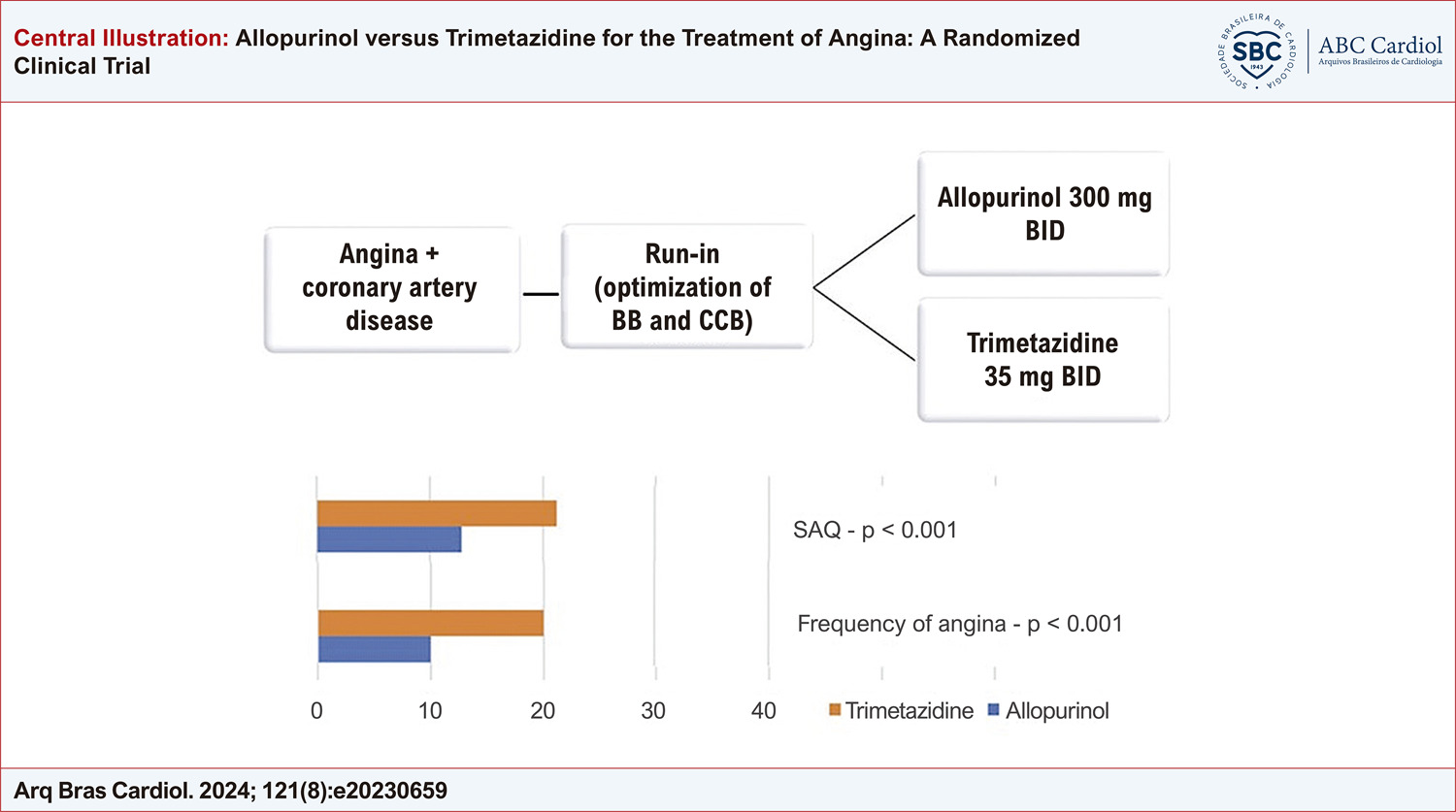
Allopurinol versus Trimetazidine for the Treatment of Angina: A Randomized Clinical Trial

Tainá Viana et al. Rodrigo Morel Vieira de Melo Diogo Freitas Cardoso Azevedo Clara Salles Figueiredo … Gustavo Santana Luanna Mota Damasceno Luisa Latado Ludmila Tambuque Raissa Barreto Luiz Carlos Santana Passos

Abstract

Background

Recently, it was demonstrated that allopurinol, a xanthine oxidase inhibitor, has cardiovascular and anti-ischaemic properties and may be a metabolic antianginal agent option.Objective: The objective of this study was to evaluate the antianginal effect of allopurinol as a third drug for patients with stable coronary artery disease (CAD).

Methods

This was a randomized clinical trial between 2018 and 2020 including patients with CAD who maintained angina despite initial optimization with beta-blockers and calcium channel blockers. The individuals were randomized 1:1 to 300 mg of allopurinol twice daily or 35 mg of trimetazidine twice daily. The main outcome was the difference in the angina frequency domain of the Seattle Angina Questionnaire (SAQ-AF). A probability (p) value < 0.05 was considered statistically significant.

Results

A hundred and eight patients were included in the randomization phase, with 54 (50%) in the allopurinol group and 54 (50%) in the trimetazidine group. Six (5.6%) individuals, 3 from each group, were lost to follow-up for the primary outcome. In the allopurinol and trimetazidine groups, the median SAQ-AF scores were 50 (30.0 to 70.0) and 50 (21.3 to 78.3), respectively. In both groups, the SAQ-AF score improved, but the median of the difference compared to baseline was lower in the allopurinol group (10 [0 to 30] versus 20 [10 to 40]; p < 0.001), as was the mean of the difference in the total SAQ score (12.8 ± 17.8 versus 21.2 ± 15.9; p = 0.014).

Conclusion

Both allopurinol and trimetazidine improved the control of angina symptoms; however, trimetazidine presented a greater gain compared to baseline. Brazilian Registry of Clinical Trials – Registration Number RBR-5kh98y

  • Alopurinol
  • Angina Pectoris
  • Doença Myocardial Ischemia
  • Trimetazidine
Read Full Article
Creative Commons Attribution (CC BY) Creative Commons license
26/08/2024 DOI: 10.36660/abc.20230659i Views 1
Figure 1
ABC
Original Article

Naringin and Trimetazidine Improve Baroreflex Sensitivity and Nucleus Tractus Solitarius Electrical Activity in Renal Ischemia-Reperfusion Injury

Negin Amini et al. Alireza Sarkaki Mahin Dianat Seyyed Ali Mard … Akram Ahangarpour Mohammad Badavi

Abstract

Background:

Nucleus tractus solitarius (NTS) is a brain area that plays a key role in kidney and cardiovascular regulation via baroreceptors impulses.

Objectives:

The aim of this study was to evaluate the effect of naringin (NAR) and trimetazidine (TMZ) alone and their combination on NTS electrical activity and baroreceptor sensitivity (BRS) in renal ischemia- reperfusion (I/R) injury.

Methods:

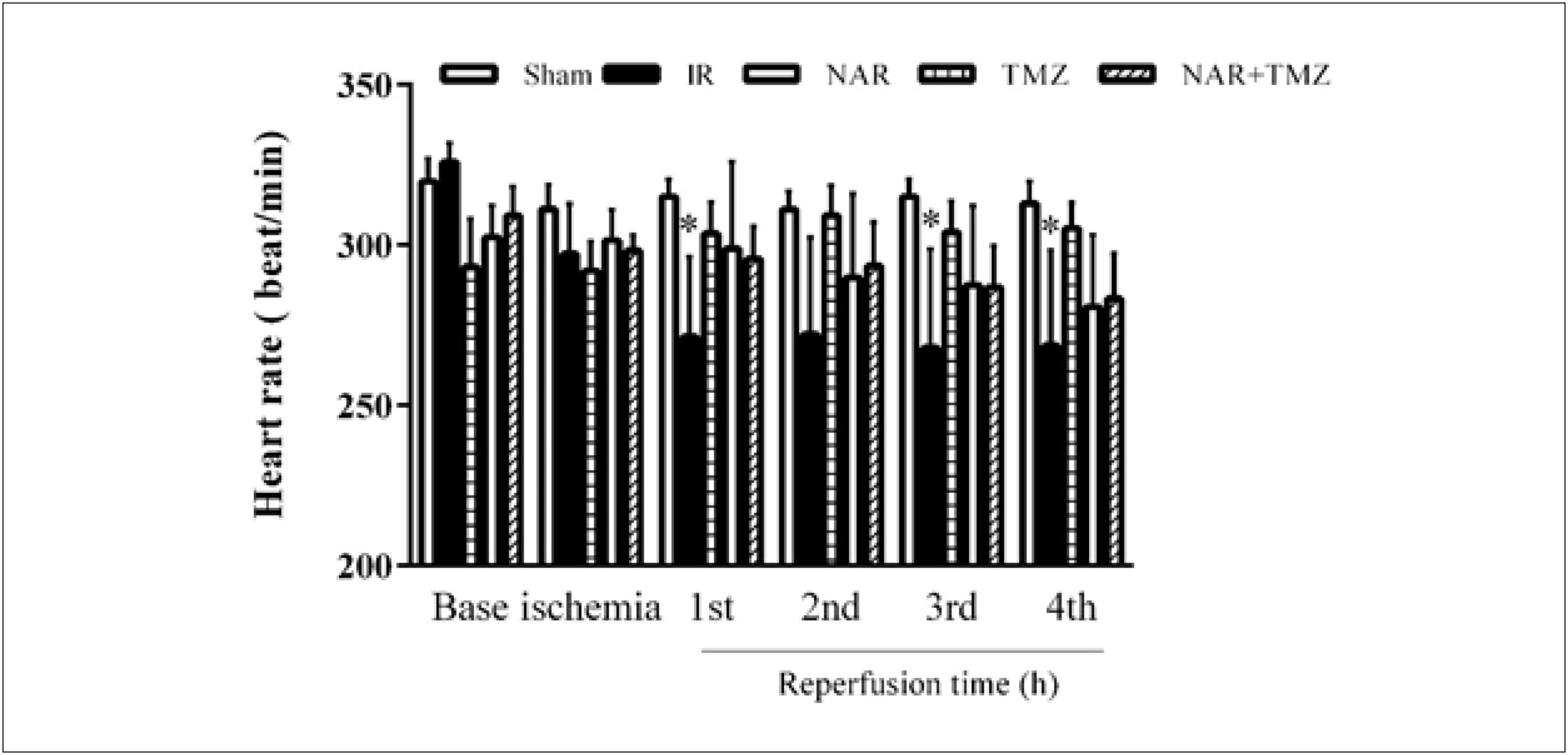
Forty male Sprague-Dawley rats (200- 250 g) were allocated into 5 groups with 8 in each. 1) Sham; 2) I/R; 3) TMZ 5 mg/kg; 4) NAR 100 mg/kg; and 5) TMZ5+ NAR100. The left femoral vein was cannulated to infuse saline solution or drug and the BRS was evaluated. I/R was induced by occlusion of renal pedicles for 45 min, followed by 4 hours of reperfusion. The NTS local electroencephalogram (EEG) was recorded before, during ischemia and throughout the reperfusion. Phenylephrine was injected intravenously to evaluate BRS at the end of reperfusion time. The data were analyzed by two-way repeated measurement ANOVA followed by Tukey’s post hoc test. A p-value <0.05 was considered significant.

Results:

NTS electrical waves did not change during ischemia time, while they significantly decreased during the entire reperfusion time. NTS electrical activity and BRS dramatically reduced in rats with I/R injury; however, administration of NAR, TMZ alone or their combination significantly improved these changes in rats with I/R injury.

Conclusions:

The results showed that I/R injury leads to reduced BRS and NTS electrical activity and there may be an association between I/R and decreased BRS. In addition, NAR and TMZ are promising agents to treat I/R complications.

  • Baroreflex sensitivity
  • Naringin
  • Nucleus tractus solitaries
  • Renal ischemia-reperfusion injury
  • Trimetazidine
Read Full Article
Creative Commons Attribution (CC BY) Creative Commons license
06/09/2021 DOI: 10.36660/abc.20200121 Views 1
ABC
Editorial

Naringin, Trimetazidine and Baroreflex in Renal Ischemia-Reperfusion Injury

Luis Cuadrado Martin

The paper “Naringin and trimetazidine improve baroreflex sensitivity and electrical activity of solitary tract nucleus in renal ischemia-reperfusion injury,” published in this journal, found improvement in baroreflex sensitivity in an acute ischemia/reperfusion kidney injury model in rats treated by naringin and/or trimetazidine.

Trimetazidine and naringin are substances capable of reducing oxidative stress, documented in many situations. Trimetazidine is a drug with anti-ischemic properties, which acts directly on mitochondria and is able to decrease oxidative stress. Naringin is a polyphenol with antioxidant properties present in several citrus fruits.

[…]

  • Flavanones
  • Flavonoids
  • Heart Failure
  • Hypertension
  • Oxidative Stress
  • Renal Reperfusion
  • Trimetazidine
  • Vasodilatador Agents
Read Full Article
Creative Commons Attribution (CC BY) Creative Commons license
06/09/2021 DOI: 10.36660/abc.20210453 Views 1
Trimetazidine and inflammatory response in coronary artery bypass grafting
ABC
Artigo Original

Trimetazidine and inflammatory response in coronary artery bypass grafting

Gerez Fernandes Martins et al. Aristarco Gonçalves de Siqueira Filho João Bosco de Figueiredo Santos Claudio Roberto Cavalcanti Assunção … Francisca Bottino Vieira Alberto Valência Káttia Gerúncio de Carvalho Barbara Jessen

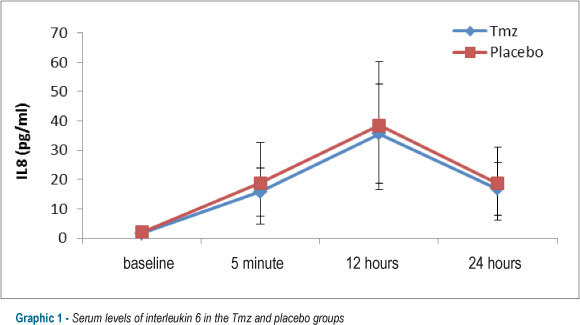
BACKGROUND: Organic inflammatory response is a pathophysiological mechanism present at every coronary artery bypass grafting with extracorporeal circulation (CABG-ECC), the release of inflammatory mediators being one of its defense mechanisms. OBJECTIVE: To assess, in a prospective double-blind randomized and placebo-controlled study, the effects of trimetazidine (Tmz) on the inflammatory response, by using the variation in interleukins 6 and 8, TNF-α, complements C3 and C5, and highly sensitive C-reactive protein (HS-CRP) levels in the pre- and post-operative periods. METHODS: This study assessed 30 patients undergoing CABG-ECC with intermittent hypothermic cardioplegia, and having, at most, mild ventricular dysfunction. The patients were divided into two groups (placebo and Tmz), stratified by echocardiography, and received drug/placebo at the dose of 60 mg/day. Measurements were taken as follows: in the pre-operative period with no drug; on the day of surgery, corresponding to 12 to 15 days on drug/placebo; five minutes after aortic unclamping; 12 and 24 hours after surgery, for interleukins and complements; and 48 hours after surgery, for HS-CRP. RESULTS: No significant difference between the levels of interleukin 8, TNF-α, C3 and C5, and HS-CRP was observed. However, the interleukin 6 levels were significantly lower in the group treated as compared with those in the control group at all time points assessed. CONCLUSION: Trimetazidine proved to be effective only for reducing interleukin 6 in patients undergoing CABG.

  • Inflammation
  • Myocardial Reperfusion
  • Myocardial Revascularization
  • Trimetazidine
Read Full Article
Creative Commons Attribution (CC BY) Creative Commons license
13/07/2012 DOI: 10.1590/S0066-782X2012005000066
Trimetazidine on ischemic injury and reperfusion in coronary artery bypass grafting
ABC
Artigo Original

Trimetazidine on ischemic injury and reperfusion in coronary artery bypass grafting

Gerez Fernandes Martins et al. Aristarco Gonçalves de Siqueira Filho João Bosco de Figueiredo Santos Claudio Roberto Cavalcanti Assunção … Francisco Bottino Káttia Gerúndio de Carvalho Alberto Valência

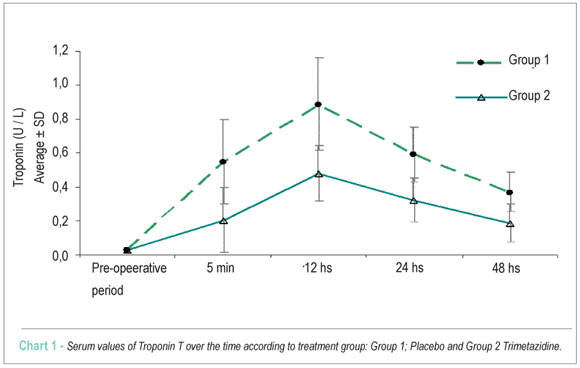
BACKGROUND: The ischemia and reperfusion ischemia is a common physiopathological mechanisms, which has difficult control during Coronary Artery Bypass Grafting (CABG) with cardiopulmonary bypass, the critical moment of which happening by the end of surgery, when there is declamping of aorta and release of hyperoxic radicals causing the injury. OBJECTIVE: Evaluate, in a randomized double-blind prospective study, controlled with placebo, the effects of Trimetazidine (Tmz) on ischemic injury and myocardial reperfusion, identifying the change in plasma markers of a myocardial aggression (troponin T and CPK-MB), and echocardiographic changes of ventricular function. METHODS: We studied 60 patients divided in two groups (placebo and Tmz) with mild ventricular dysfunction at the most, stratified by echocardiography and receiving medication/placebo at a dose of 20 mg/3x/day, starting from 12 to 15 days after pre-operative period up to 5 to 8 days after post-operative period. Troponin T and Cpk-Mb were measured preoperatively without medication, 12 to 15 days of medication/placebo taken five minutes after aortic declamping, and at subsequent 12, 24 and 48 hours. RESULTS: Both Troponin T and Cpk-Mb reached highly significant values (p = 0.0001) in the treated group compared to the control group at the four moments analyzed – 5 min, 12h, 24h and 48h. The echocardiographic variables did not show evolutive changes in each group severally considered and when compared among themselves. CONCLUSION: Trimetazidine was effective in reducing ischemic injury and reperfusion, had no effect on left ventricular function, and no side effects were observed.

  • Myocardial Ischemia
  • Myocardial Reperfusion
  • Myocardial Revascularization
  • Trimetazidine
Read Full Article
Creative Commons Attribution (CC BY) Creative Commons license
29/07/2011 DOI: 10.1590/S0066-782X2011005000079 Views 2
The effects of trimetazidine on heart rate variability in patients with heart failure
ABC
Artigo Original

The effects of trimetazidine on heart rate variability in patients with heart failure

Yilmaz Gunes et al. Unal Guntekin Mustafa Tuncer Musa Sahin

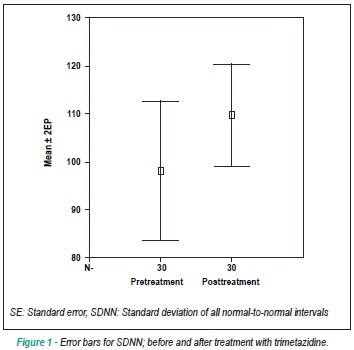
BACKGROUND: Reduced measures of heart rate variability (HRV) have been shown to be related with prognosis in heart failure. Chronic administration of trimetazidine in addition to the conventional therapy has been shown to improve functional class and left ventricular functions of heart failure patients. OBJECTIVE: To assess the effects of trimetazidine on HRV in optimally treated patients with heart failure of ischemic origin. METHODS: Trimetazidine 20 mg three times/day was added to therapy of 30 patients with heart failure being treated with angiotensinogen converting enzyme inhibitors or angiotensin receptor blockers, carvedilol, spironolactone, digitalis and furosemide. The etiology of heart failure was coronary artery disease in all patients. Patients were evaluated with echocardiography and 24-hour heart rate variability analysis before and 3 months after addition of trimetazidine. RESULTS: Mean left ventricular ejection fraction (LVEF) significantly increased after the addition of trimetazidine (33.5±5.1% to 42.5±5.8%, p<0.001). Of the HRV parameters, SDNN (97.3±40,1 to 110.5±29,2 msecs, p=0.049) and SDANN (80.5±29,0 to 98.3±30,5 msecs) were significantly increased after trimetazidine treatment. Baseline SDNN was significantly correlated with baseline LVEF (r=0.445, p=0.023, p=0.008) and the increment in SDNN was correlated with increase in LVEF (r=0.518, p=0.007). CONCLUSIONS: Adding trimetazidine to optimal medical therapy in patients with heart failure of ischemic origin may improve heart rate variability in association with improved left ventricular ejection fraction.

  • Heart Failure
  • Heart Rate
  • Trimetazidine
Read Full Article
Creative Commons Attribution (CC BY) Creative Commons license
13/10/2009 DOI: 10.1590/S0066-782X2009000800014

How to cite this article

EndNote RIS

Electronic Document Format (Vancouver)

Cesar LAM, Mioto BM. Allopurinol versus Trimetazidine as Antianginal: A Randomized Clinical Trial. Arquivos Brasileiros de Cardiologia 2024;121(8):e20240500.

Electronic Document Format (ABNT)

Cesar, Luiz Antonio Machado; Mioto, Bruno Mahler. Allopurinol versus Trimetazidine as Antianginal: A Randomized Clinical Trial. Arquivos Brasileiros de Cardiologia, v. 121, n. 8, e20240500, Sep. 2024.

Electronic Document Format (APA)

Cesar, L. A. M., & Mioto, B. M. (2024). Allopurinol versus Trimetazidine as Antianginal: A Randomized Clinical Trial. Arquivos Brasileiros de Cardiologia, 121(8), e20240500.

Electronic Document Format (ISO)

Cesar, Luiz Antonio Machado and Mioto, Bruno Mahler. Allopurinol versus Trimetazidine as Antianginal: A Randomized Clinical Trial. Arquivos Brasileiros de Cardiologia [online]. 2024, vol. 121, n. 8, [cited 2026-10-14], e20240500. Available from: <https://journals.cardiol.br/en/article/allopurinol-versus-trimetazidine-as-antianginal-a-randomized-clinical-trial/>. ISSN 0066-782X

EndNote RIS

Electronic Document Format (Vancouver)

Viana T, Melo RMV, Azevedo DFC, Figueiredo CS, Santana G, Damasceno LM, Latado L, et al. Allopurinol versus Trimetazidine for the Treatment of Angina: A Randomized Clinical Trial. Arquivos Brasileiros de Cardiologia 2024;121(8):e20230659.

Electronic Document Format (ABNT)

Viana, Tainá; Melo, Rodrigo Morel Vieira de; Azevedo, Diogo Freitas Cardoso; Figueiredo, Clara Salles; Santana, Gustavo; Damasceno, Luanna Mota; Latado, Luisa; Tambuque, Ludmila; Barreto, Raissa; Passos, Luiz Carlos Santana. Allopurinol versus Trimetazidine for the Treatment of Angina: A Randomized Clinical Trial. Arquivos Brasileiros de Cardiologia, v. 121, n. 8, e20230659, Aug. 2024.

Electronic Document Format (APA)

Viana, T., Melo, R. M. V. , Azevedo, D. F. C., Figueiredo, C. S., Santana, G., Damasceno, L. M., Latado, L., Tambuque, L., Barreto, R., & Passos, L. C. S. (2024). Allopurinol versus Trimetazidine for the Treatment of Angina: A Randomized Clinical Trial. Arquivos Brasileiros de Cardiologia, 121(8), e20230659.

Electronic Document Format (ISO)

Viana, Tainá and Melo, Rodrigo Morel Vieira de and Azevedo, Diogo Freitas Cardoso and Figueiredo, Clara Salles and Santana, Gustavo and Damasceno, Luanna Mota and Latado, Luisa and Tambuque, Ludmila and Barreto, Raissa and Passos, Luiz Carlos Santana. Allopurinol versus Trimetazidine for the Treatment of Angina: A Randomized Clinical Trial. Arquivos Brasileiros de Cardiologia [online]. 2024, vol. 121, n. 8, [cited 2026-10-14], e20230659. Available from: <https://journals.cardiol.br/en/article/allopurinol-versus-trimetazidine-for-the-treatment-of-angina-a-randomized-clinical-trial/>. ISSN 0066-782X

EndNote RIS

Electronic Document Format (Vancouver)

Amini N, Sarkaki A, Dianat M, Mard SA, Ahangarpour A, Badavi M. Naringin and Trimetazidine Improve Baroreflex Sensitivity and Nucleus Tractus Solitarius Electrical Activity in Renal Ischemia-Reperfusion Injury. Arquivos Brasileiros de Cardiologia 2021;117(2):290-7.

Electronic Document Format (ABNT)

Amini, Negin; Sarkaki, Alireza; Dianat, Mahin; Mard, Seyyed Ali; Ahangarpour, Akram; Badavi, Mohammad. Naringin and Trimetazidine Improve Baroreflex Sensitivity and Nucleus Tractus Solitarius Electrical Activity in Renal Ischemia-Reperfusion Injury. Arquivos Brasileiros de Cardiologia, v. 117, n. 2, p. 290-297, Sep. 2021.

Electronic Document Format (APA)

Amini, N., Sarkaki, A., Dianat, M., Mard, S. A., Ahangarpour, A., & Badavi, M. (2021). Naringin and Trimetazidine Improve Baroreflex Sensitivity and Nucleus Tractus Solitarius Electrical Activity in Renal Ischemia-Reperfusion Injury. Arquivos Brasileiros de Cardiologia, 117(2), 290-297.

Electronic Document Format (ISO)

Amini, Negin and Sarkaki, Alireza and Dianat, Mahin and Mard, Seyyed Ali and Ahangarpour, Akram and Badavi, Mohammad. Naringin and Trimetazidine Improve Baroreflex Sensitivity and Nucleus Tractus Solitarius Electrical Activity in Renal Ischemia-Reperfusion Injury. Arquivos Brasileiros de Cardiologia [online]. 2021, vol. 117, n. 2, [cited 2026-10-14], pp. 290-297. Available from: <https://journals.cardiol.br/en/article/naringin-and-trimetazidine-improve-baroreflex-sensitivity-and-nucleus-tractus-solitarius-electrical-activity-in-renal-ischemia-reperfusion-injury/>. ISSN 0066-782X

EndNote RIS

Electronic Document Format (Vancouver)

Martin LC. Naringin, Trimetazidine and Baroreflex in Renal Ischemia-Reperfusion Injury. Arquivos Brasileiros de Cardiologia 2021;117(2):298-9.

Electronic Document Format (ABNT)

Martin, Luis Cuadrado. Naringin, Trimetazidine and Baroreflex in Renal Ischemia-Reperfusion Injury. Arquivos Brasileiros de Cardiologia, v. 117, n. 2, p. 298-299, Sep. 2021.

Electronic Document Format (APA)

Martin, L. C. (2021). Naringin, Trimetazidine and Baroreflex in Renal Ischemia-Reperfusion Injury. Arquivos Brasileiros de Cardiologia, 117(2), 298-299.

Electronic Document Format (ISO)

Martin, Luis Cuadrado. Naringin, Trimetazidine and Baroreflex in Renal Ischemia-Reperfusion Injury. Arquivos Brasileiros de Cardiologia [online]. 2021, vol. 117, n. 2, [cited 2026-10-14], pp. 298-299. Available from: <https://journals.cardiol.br/en/article/naringin-trimetazidine-and-baroreflex-in-renal-ischemia-reperfusion-injury/>. ISSN 0066-782X

EndNote RIS

Electronic Document Format (Vancouver)

Martins GF, Siqueira Filho AG, Santos JBF, Assunção CRC, Vieira FB, Valência A, Carvalho KG, et al. Trimetazidine and inflammatory response in coronary artery bypass grafting. Arquivos Brasileiros de Cardiologia 2012;99(2):688-96.

Electronic Document Format (ABNT)

Martins, Gerez Fernandes; Siqueira Filho, Aristarco Gonçalves de; Santos, João Bosco de Figueiredo; Assunção, Claudio Roberto Cavalcanti; Vieira, Francisca Bottino; Valência, Alberto; Carvalho, Káttia Gerúncio de; Jessen, Barbara. Trimetazidine and inflammatory response in coronary artery bypass grafting. Arquivos Brasileiros de Cardiologia, v. 99, n. 2, p. 688-696, Jul. 2012.

Electronic Document Format (APA)

Martins, G. F., Siqueira Filho, A. G. , Santos, J. B. F., Assunção, C. R. C., Vieira, F. B., Valência, A., Carvalho, K. G. , & Jessen, B. (2012). Trimetazidine and inflammatory response in coronary artery bypass grafting. Arquivos Brasileiros de Cardiologia, 99(2), 688-696.

Electronic Document Format (ISO)

Martins, Gerez Fernandes and Siqueira Filho, Aristarco Gonçalves de and Santos, João Bosco de Figueiredo and Assunção, Claudio Roberto Cavalcanti and Vieira, Francisca Bottino and Valência, Alberto and Carvalho, Káttia Gerúncio de and Jessen, Barbara. Trimetazidine and inflammatory response in coronary artery bypass grafting. Arquivos Brasileiros de Cardiologia [online]. 2012, vol. 99, n. 2, [cited 2026-10-14], pp. 688-696. Available from: <https://journals.cardiol.br/en/article/trimetazidine-and-inflammatory-response-in-coronary-artery-bypass-grafting/>. ISSN 0066-782X

EndNote RIS

Electronic Document Format (Vancouver)

Martins GF, Siqueira Filho AG, Santos JBF, Assunção CRC, Bottino F, Carvalho KG, Valência A, et al. Trimetazidine on ischemic injury and reperfusion in coronary artery bypass grafting. Arquivos Brasileiros de Cardiologia 2011;97(3):209-16.

Electronic Document Format (ABNT)

Martins, Gerez Fernandes; Siqueira Filho, Aristarco Gonçalves de; Santos, João Bosco de Figueiredo; Assunção, Claudio Roberto Cavalcanti; Bottino, Francisco; Carvalho, Káttia Gerúndio de; Valência, Alberto. Trimetazidine on ischemic injury and reperfusion in coronary artery bypass grafting. Arquivos Brasileiros de Cardiologia, v. 97, n. 3, p. 209-216, Jul. 2011.

Electronic Document Format (APA)

Martins, G. F., Siqueira Filho, A. G. , Santos, J. B. F., Assunção, C. R. C., Bottino, F., Carvalho, K. G. , & Valência, A. (2011). Trimetazidine on ischemic injury and reperfusion in coronary artery bypass grafting. Arquivos Brasileiros de Cardiologia, 97(3), 209-216.

Electronic Document Format (ISO)

Martins, Gerez Fernandes and Siqueira Filho, Aristarco Gonçalves de and Santos, João Bosco de Figueiredo and Assunção, Claudio Roberto Cavalcanti and Bottino, Francisco and Carvalho, Káttia Gerúndio de and Valência, Alberto. Trimetazidine on ischemic injury and reperfusion in coronary artery bypass grafting. Arquivos Brasileiros de Cardiologia [online]. 2011, vol. 97, n. 3, [cited 2026-10-14], pp. 209-216. Available from: <https://journals.cardiol.br/en/article/trimetazidine-on-ischemic-injury-and-reperfusion-in-coronary-artery-bypass-grafting/>. ISSN 0066-782X

EndNote RIS

Electronic Document Format (Vancouver)

Gunes Y, Guntekin U, Tuncer M, Sahin M. The effects of trimetazidine on heart rate variability in patients with heart failure. Arquivos Brasileiros de Cardiologia 2009;93(2):154-8.

Electronic Document Format (ABNT)

Gunes, Yilmaz; Guntekin, Unal; Tuncer, Mustafa; Sahin, Musa. The effects of trimetazidine on heart rate variability in patients with heart failure. Arquivos Brasileiros de Cardiologia, v. 93, n. 2, p. 154-158, Oct. 2009.

Electronic Document Format (APA)

Gunes, Y., Guntekin, U., Tuncer, M., & Sahin, M. (2009). The effects of trimetazidine on heart rate variability in patients with heart failure. Arquivos Brasileiros de Cardiologia, 93(2), 154-158.

Electronic Document Format (ISO)

Gunes, Yilmaz and Guntekin, Unal and Tuncer, Mustafa and Sahin, Musa. The effects of trimetazidine on heart rate variability in patients with heart failure. Arquivos Brasileiros de Cardiologia [online]. 2009, vol. 93, n. 2, [cited 2026-10-14], pp. 154-158. Available from: <https://journals.cardiol.br/en/article/the-effects-of-trimetazidine-on-heart-rate-variability-in-patients-with-heart-failure/>. ISSN 0066-782X

  • About ABC Family
  • Internal Regulation
  • Editorial Board
  • Brazilian Society of Cardiology (SBC)

Issues

SBC Guidelines

  • Videos
  • Podcasts
  • News