ABC Family Arquivos Brasileiros de Cardiologia International Journal of Cardiovascular Sciences ABC Heart Failure & Cardiomyopathy ABC Imagem Cardiovascular
Português English
ABC Family
Português English
  • About
    • About ABC Family
    • Internal Regulation
    • Editorial Board
    • Brazilian Society of Cardiology (SBC)
  • Issues
  • SBC Guidelines
  • Content
    • Videos
    • Podcasts
    • News
  • About
    • About ABC Family
    • Internal Regulation
    • Editorial Board
    • Brazilian Society of Cardiology (SBC)
  • Issues
  • SBC Guidelines
  • Content
    • Videos
    • Podcasts
    • News

ABC Family

  • ABC Family
  • Arquivos Brasileiros de Cardiologia
  • International Journal of Cardiovascular Sciences
  • ABC Heart Failure & Cardiomyopathy
  • ABC Imagem Cardiovascular
Search in

No content found.

Journals
Ordering
Article types
Others

  1. Home
  2. Keyword: Takotsubo Cardiomyopathy
Figure 1
ABCIC
Case Report

Single Coronary Artery and Stress Cardiomyopathy: An Association Demonstrated by Multimodality Imaging

Marcus Vinicius Silva Ferreira et al. Julia Pereira Afonso dos Santos Tormin Roberto Nery Dantas Jr Roberto Vitor Almeida Torres … Renan Andreos Cordeiro José de Arimateia Batista Araújo Filho Luiz Francisco Cardoso

Case Report

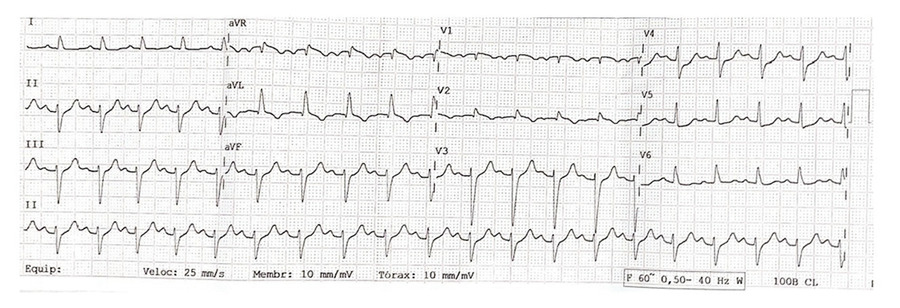
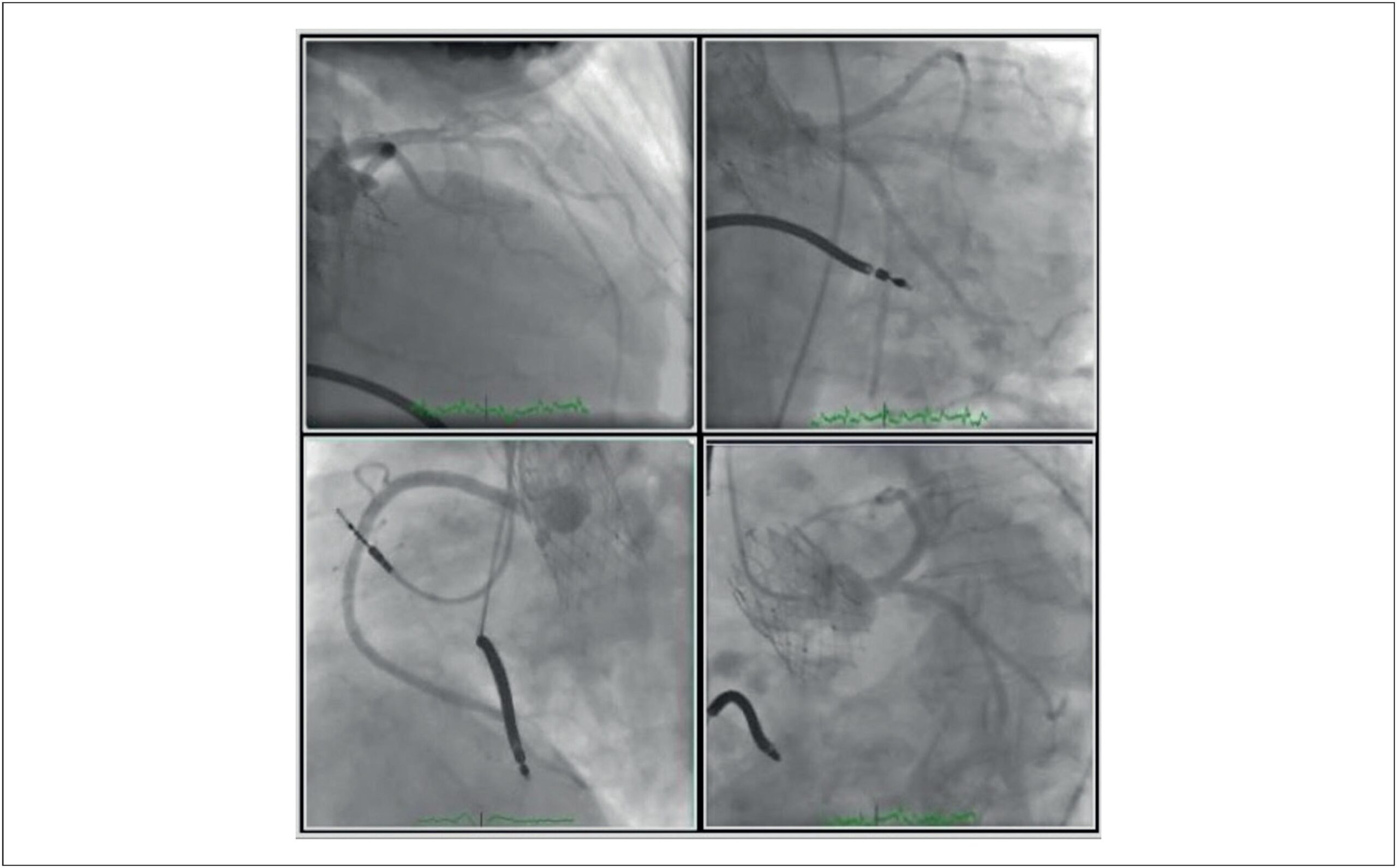
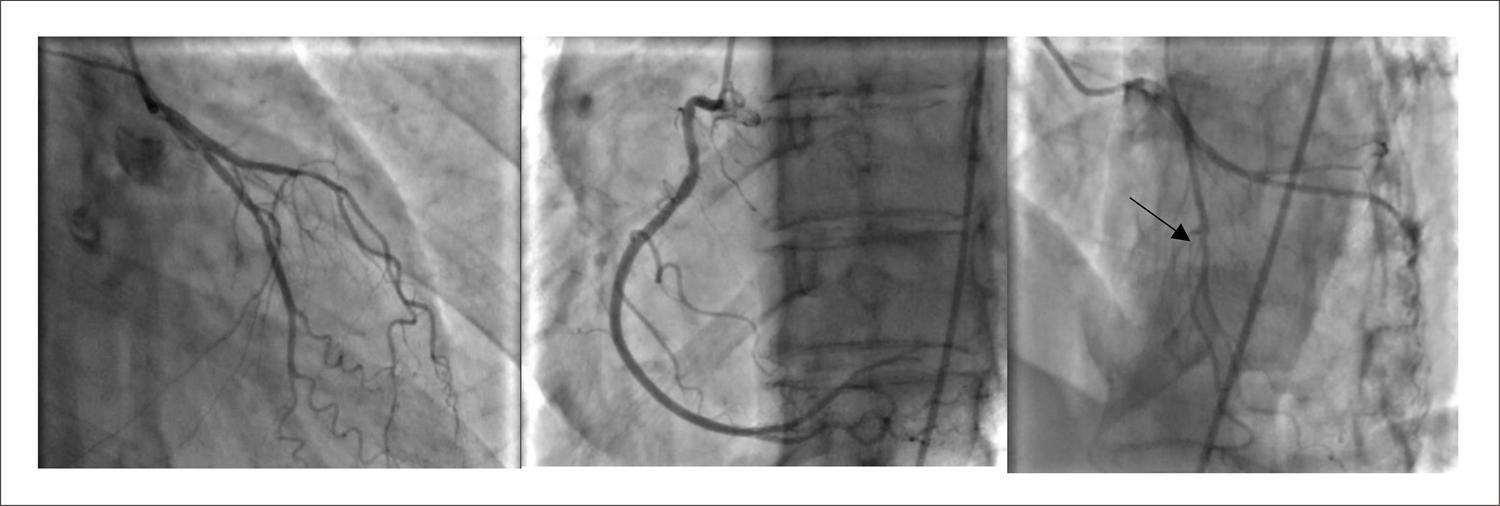
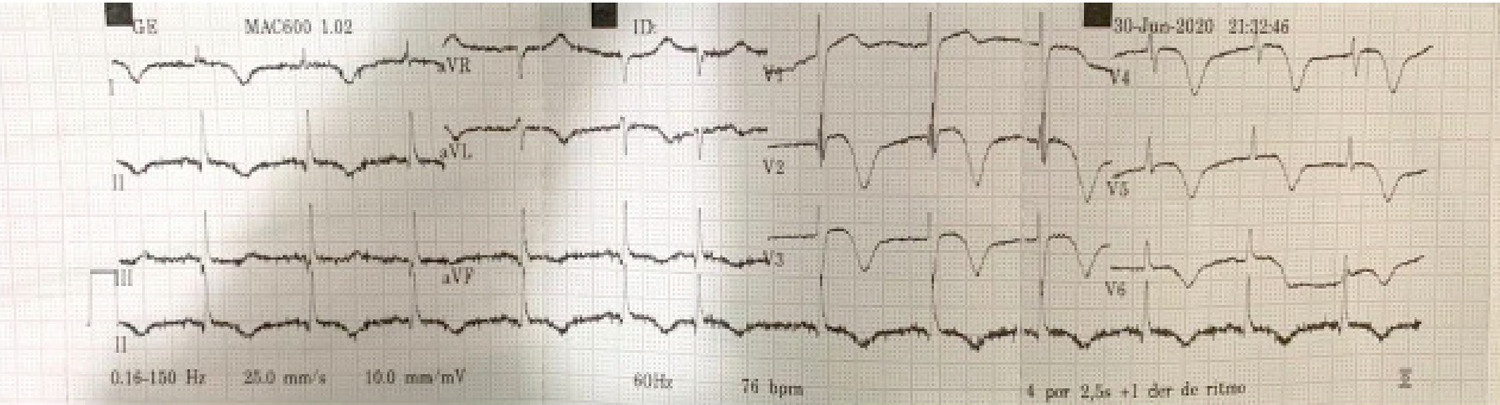
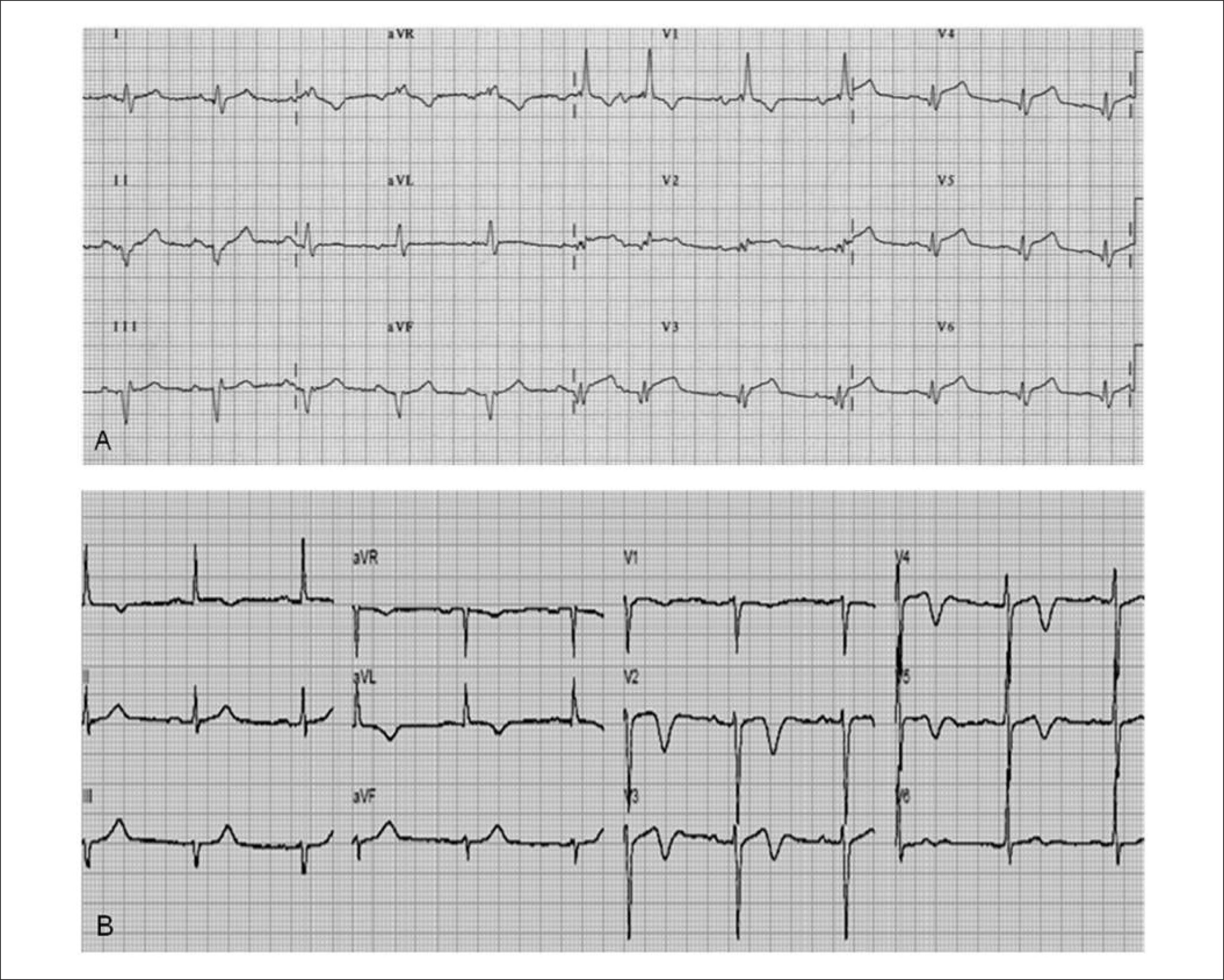
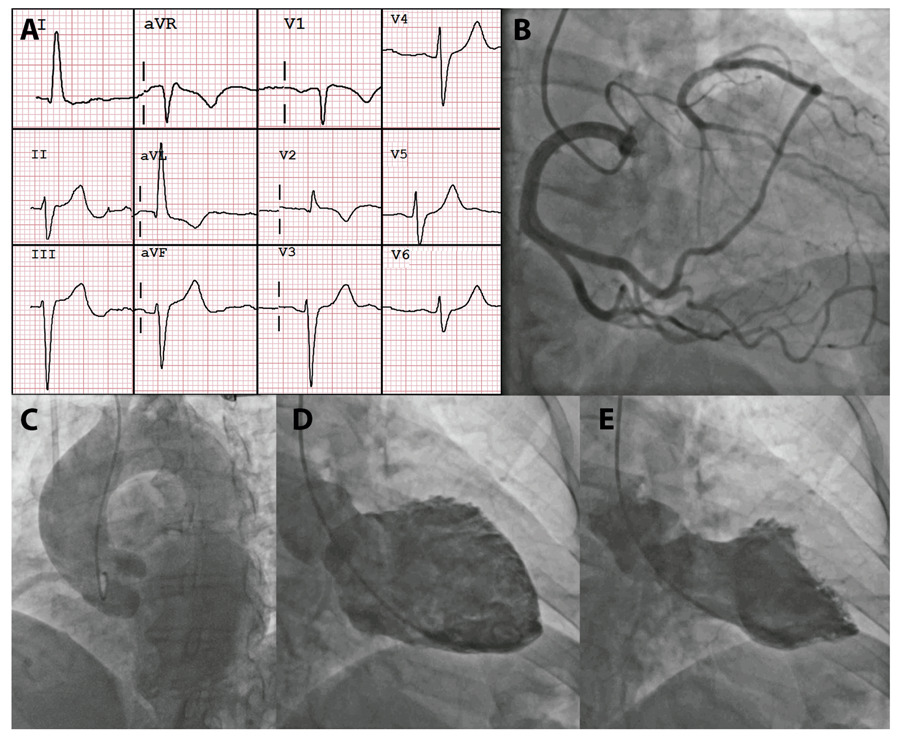
A 58-years-old female patient was admitted with retrosternal chest pain described as a continuous, oppressive tightness that had started two days earlier, after a tooth extraction procedure performed under ineffective local anesthesia. The patient’s past medical history included diabetes, dyslipidemia, and ovarian cancer, and she was receiving aspirin, rosuvastatin, metformin, dapagliflozin, and semaglutide. Physical examination was unremarkable. The chest pain protocol was initiated, and the initial electrocardiogram showed sinus rhythm with left anterior fascicular block, early repolarization in the inferior leads, and T-wave inversion in aVL, V1, and V2 (). The patient received 5 mg of sublingual isosorbide dinitrate, and blood samples were collected for laboratory testing. High-sensitivity troponin T (hs-cTnT) was 171 ng/L, confirming myocardial injury. An initial diagnosis of non–ST-elevation myocardial infarction (NSTEMI) was made, and the patient underwent coronary angiography (CA) for anatomic assessment ( / Video S1).

[…]
  • Coronary Angiography
  • Coronary Vessels
  • Echocardiography
  • Magnetic Resonance Imaging
  • Takotsubo Cardiomyopathy
Read Full Article
Creative Commons Attribution (CC BY) Creative Commons license
17/07/2026 DOI: 10.36660/abcimg.20260023i Views 1
Figure 1
ABC
Case Report

Takotsubo Syndrome in an Adolescent Undergoing Oncological Treatment: A Rare Case Report

Tami Inada et al. Guilherme Santos Marques da Silva Raisa Machado Amaral Edgard Ferreira dos Santos Junior Carlos Eduardo de Barros Branco

Introduction

Takotsubo Syndrome (TTS), or Takotsubo cardiomyopathy, was first described in Japan in 1990 and is characterized by transient and acute dysfunction of the left ventricle, usually with hypokinesia or akinesia of the mid-apical LV segments and hyperkinesia of the basal segments. The resulting morphology, with apical ballooning, resembles an octopus trap (“tako-tsubo”). Despite its symptoms being similar to those of acute coronary syndrome, there is no coronary obstruction, and the ventricular wall motion abnormality usually extends beyond the territory of a single artery.,

Several factors can precipitate TTS, particularly physical triggers (such as severe infections and surgical interventions) and emotional stress. In oncology patients, the incidence is higher, attributed to treatment-related toxicity, subsequent infectious complications, and physical and psychological overload., The literature indicates that oncology patients present higher mortality and more combined major adverse cardiac events when they develop TTS, especially compared to those without a history of cancer.

[…]

  • Adolescent
  • Medical Oncology
  • Takotsubo Cardiomyopathy
Read Full Article
Creative Commons Attribution (CC BY) Creative Commons license
17/04/2026 DOI: 10.36660/abc.20250380i Views 1
Figure 1
ABC
Research Letter

Cardiogenic Shock Due to Inverted-Pattern Takotsubo Syndrome Caused by Pheochromocytoma: Case Report and Literature Review

Pedro Ivo De Marqui Moraes et al. Michell Fayad André Haddad Daniel Bisi de Bôrtoli Valle Luiz Otávio de Oliveira Filho … Mayara da Silva Custódio Dirceu Rodrigues de Almeida

Introduction

Takotsubo syndrome (TTS) is characterized by an acute impairment of myocardial contractility caused by sympathetic hyperstimulation after emotional or physical stress., Apical ballooning is the typical and most common pattern, a feature that gave rise to the classic term described by Sato et al. in 1990, due to its similarity to the historical Japanese octopus trap. Atypical patterns include mid-basal, basal, and focal wall motion abnormalities.

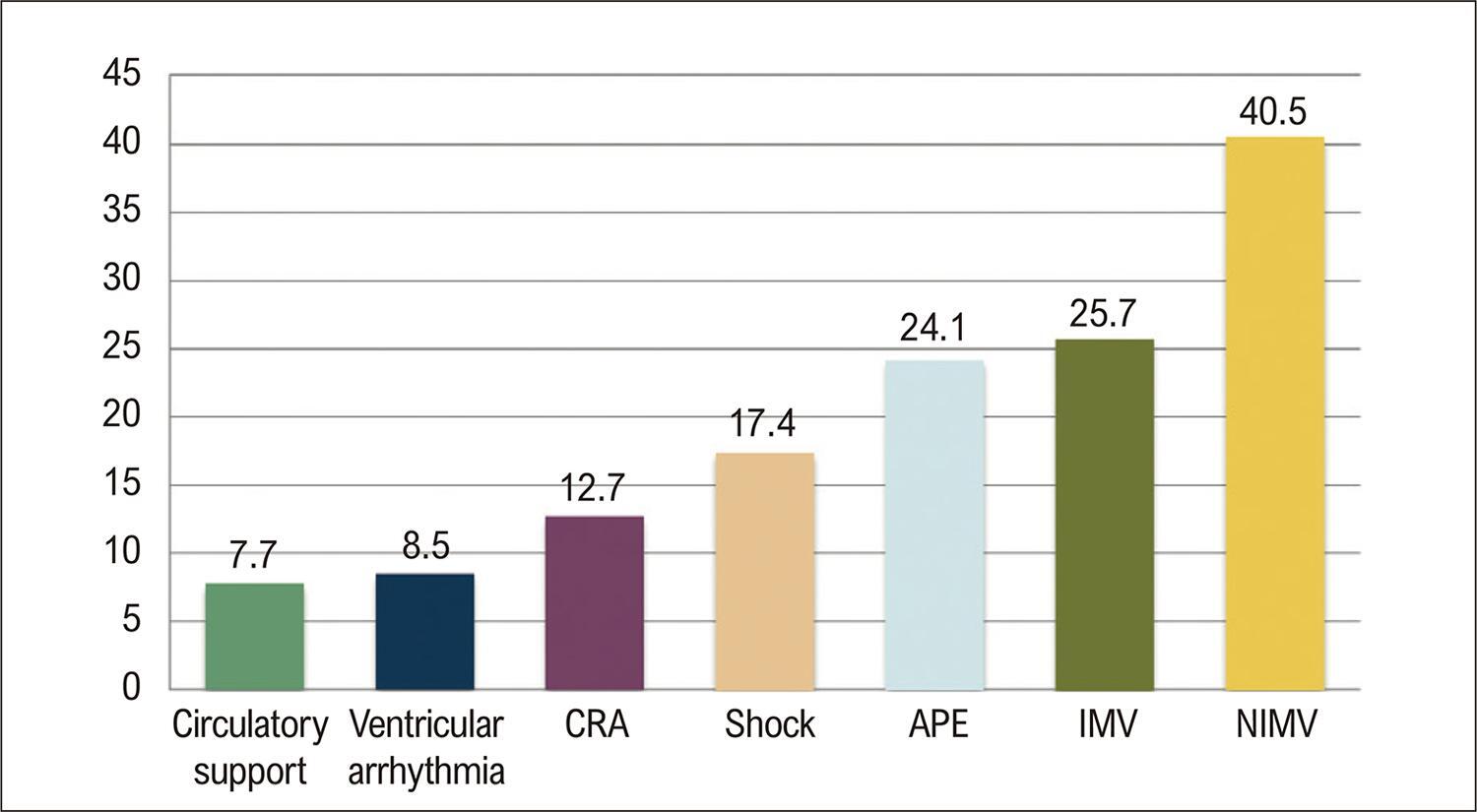
Data from multicenter registries reveal that 1 to 3% of patients suspected of having an acute myocardial infarction (AMI) are alternatively diagnosed with TTS,, and in-hospital mortality rates are comparable to those of patients with AMI and range from 3.2 to 10.6%,– mainly caused by cardiogenic shock or sudden death from ventricular arrhythmias. In contrast to other cardiomyopathies, the ventricular contractility deficit in TTS is transient, and complete recovery usually occurs within days to weeks.

[…]

  • Cardiogenic shock
  • Pheochromocytoma
  • Takotsubo Cardiomyopathy
Read Full Article
Creative Commons Attribution (CC BY) Creative Commons license
23/03/2026 DOI: 10.36660/abc.20250558i Views 3
Figure 1
ABCIC
Case Report

Late Evolution of Takotsubo Cardiomyopathy Following Transcatheter Aortic Valve Implantation

Merve Akbulut Çakır et al. Emirhan Çakır Çağlar Kaya Kenan Yalta

Introduction

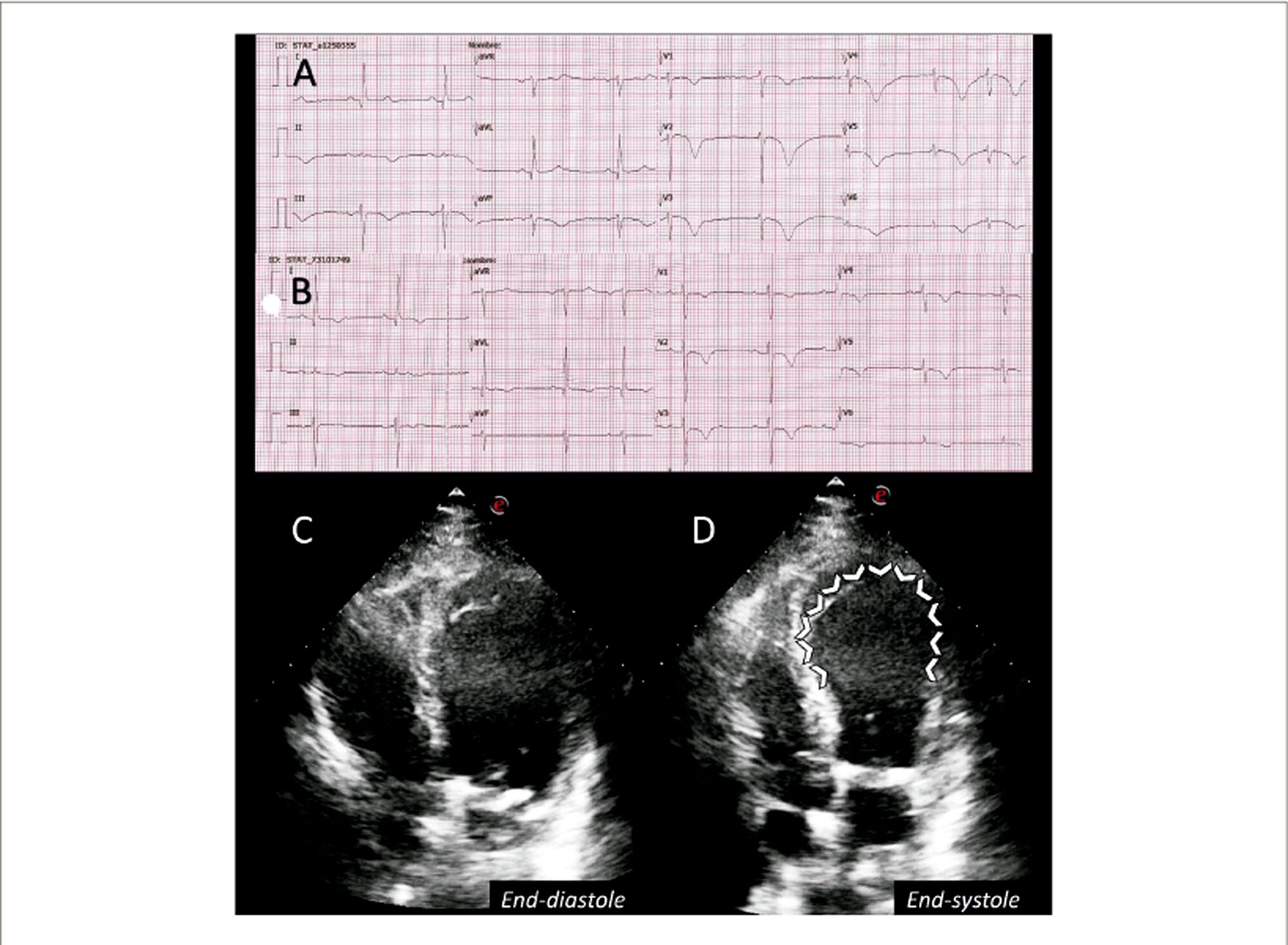
Transcatheter aortic valve implantation (TAVI) is recognized as a first-line treatment for symptomatic patients with advanced aortic stenosis who are at high surgical risk. In inoperable patients with poor prognosis, it carries a risk for complications, such as myocardial infarction due to coronary occlusion, stroke, annular rupture, etc.¹ Takotsubo Cardiomyopathy (TTC) is a syndrome that usually develops in the absence of overt coronary occlusion and signs of alternative diagnosis, including myocarditis. It presents with electrocardiographic changes, increased cardiac biomarkers, and typical echocardiographic findings., In this article, we describe a patient with TTC who previously underwent TAVI and subsequent implantable cardiac defibrillator (ICD) implantation.

[…]

  • Echocardiography
  • Takotsubo Cardiomyopathy
  • Transcatheter Aortic Valve Replacement
Read Full Article
Creative Commons Attribution (CC BY) Creative Commons license
28/03/2025 DOI: 10.36660/abcimg.20240130i
Figure 1
ABCHF
Case Report

Tuberculosis and Atrioventricular Block in a Patient with Takotsubo Syndrome: A Case Report

Viviana Karina Sanchez Albarracin

Case Report

An 83-year-old female patient diagnosed with senile dementia and experiencing unintentional weight loss over the past few months was referred to a tertiary hospital due to complaints of typical chest pain. There is no previous history of cardiovascular diseases.

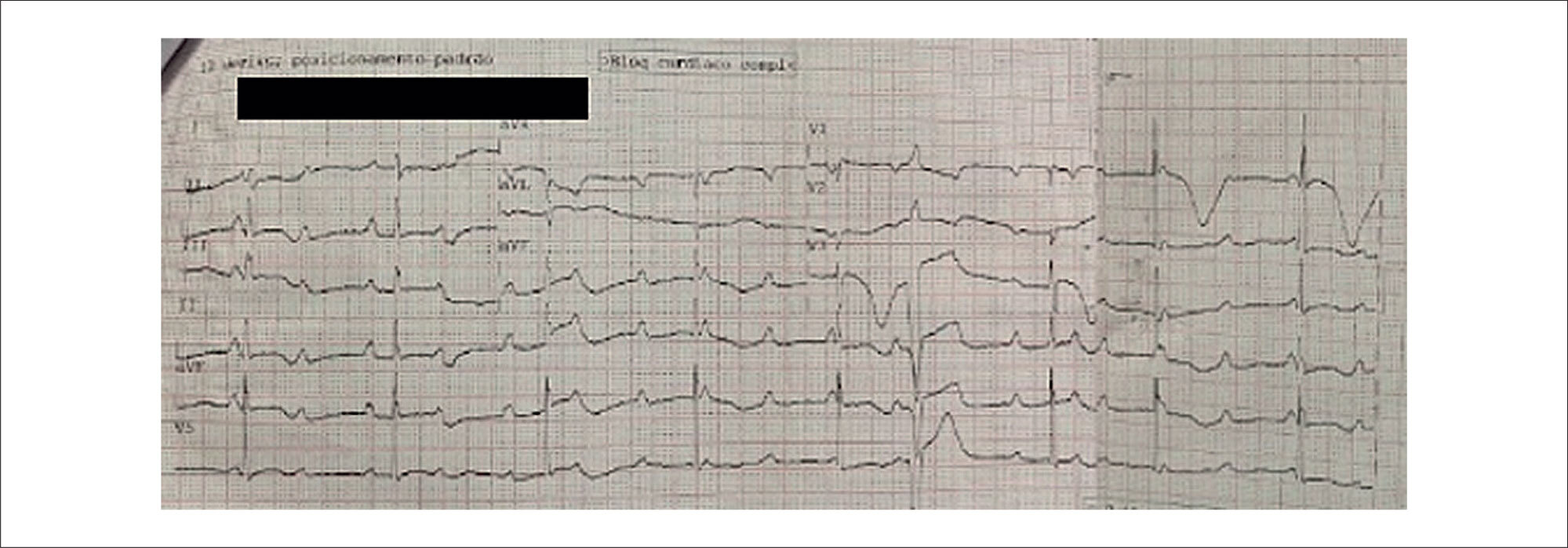
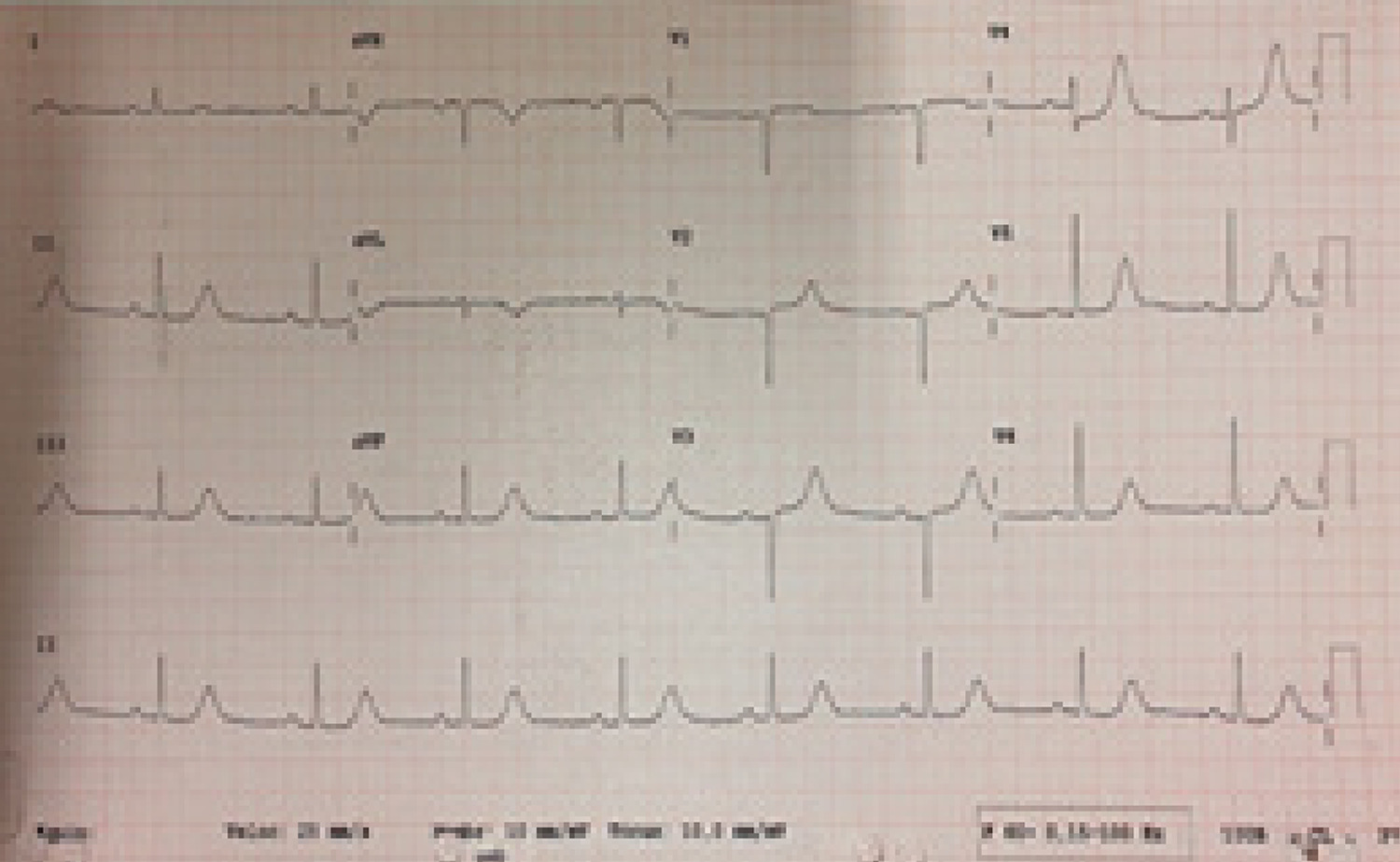
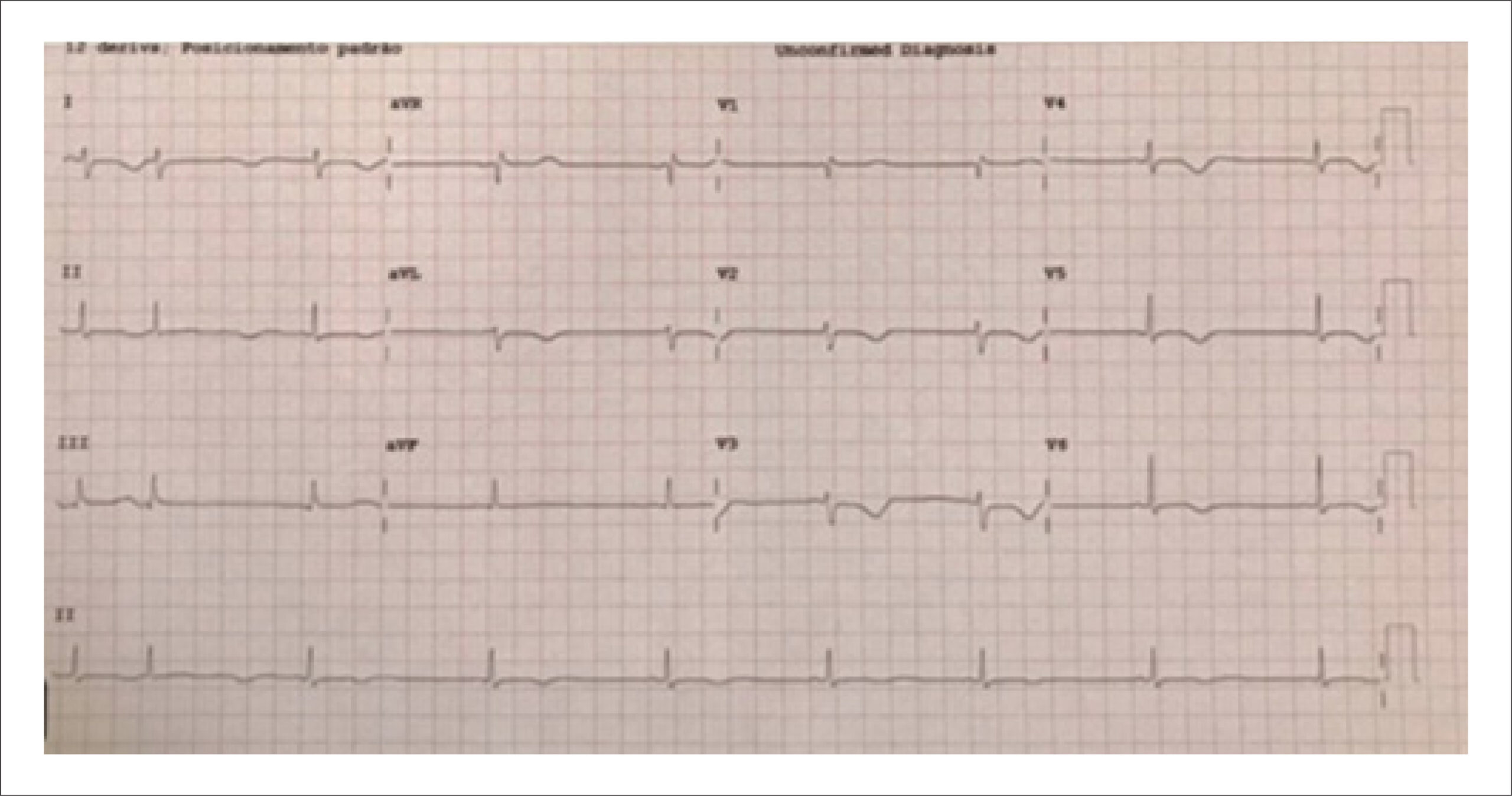
During transport, the patient developed bradycardia, with a heart rate (HR) of 32 beats per minute, and upon arrival at the emergency room, it was observed that she was suffering from complete atrioventricular block () with episodes of non-sustained ventricular tachycardia.

[…]

  • Acute coronary syndrome
  • Atrioventricular block
  • Pulmonary Tuberculosis
  • Takotsubo Cardiomyopathy
Read Full Article
Creative Commons Attribution (CC BY) Creative Commons license
29/10/2024 DOI: 10.36660/abchf.20240031i Views 1
ABCHF
Case Report

Takotsubo Syndrome and its Relationship with Major Depressive Disorder: Case Report

Wanessa Julia da Silva et al. Gabriel Sembeneli Pedro Petiti Arbex Bueno Rafaela Claro Rodrigues … Fernanda Meirelles Gil Flavia Lima Costa Faldoni Claudia Helena Cury Domingos

Introduction

Takotsubo syndrome (TTS) is a medical condition characterized by reversible regional dysfunction of the left ventricle (LV) and/or right ventricle. TTS is often triggered by situations of acute physical or emotional stress. It presents characteristics similar to an acute coronary syndrome (ACS) event, but without coronary abnormality evidenced by exams such as angiography. Furthermore, upon admission, patients with TTS also manifest substantially lower left ventricular ejection fraction (LVEF) values, when compared to those with ACS. Nonetheless, even with these lower levels, the chances of cardiovascular damage are lower, and the restoration of LVEF is more satisfactory.

Although the pathophysiology of TTS is complex and, in part, unknown, studies suggest that exacerbated sympathetic activation, confirmed by increased levels of plasma catecholamines, and adrenergic drugs may precipitate the condition. It predominantly occurs in postmenopausal women. However, it can affect younger women and men, and it is estimated that 1% to 3% of all patients and 5% to 6% of female patients who undergo coronary angiography due to suspected ACS have TTS. Reproductive and hormonal factors and stressful emotional events are associated with greater occurrence of TTS in women, whereas the physical factor is the most frequent agent in men, as well as in patients undergoing chemotherapy treatment.

[…]

  • Depression
  • Mental Disorders
  • Takotsubo Cardiomyopathy
Read Full Article
Creative Commons Attribution (CC BY) Creative Commons license
07/08/2024 DOI: 10.36660/abchf.20240003i Views 1
Figure 1
ABCIC
Case Report

Takotsubo Syndrome in a Critical COVID-19 Patient: Electrocardiographic and Echocardiographic Evolution

Cuitláhuac Arroyo-Rodríguez et al. Alejandra Hernández-Parra

Background

By resembling a Japanese traditional octopus trap, i.e. a takotsubo, Hikaru Sato described the first case of “Takotsubo cardiomyopathy” in a patient without coronary stenosis and end-systolic left ventricular apical ballooning on a cardiac left ventriculography.Takotsubo syndrome (TTS) is a clinical syndrome characterized by an acute and transient left ventricular systolic dysfunction related to an emotional or physical stressful event. COVID-19 is a recognized trigger for TTS, with the possible explanations being the enormous emotional stress caused by the pandemic and the entire spectrum of myocardial damage associated with SARS-COV-2.

[…]

  • COVID-19
  • Echocardiography
  • Takotsubo Cardiomyopathy
Read Full Article
Creative Commons Attribution (CC BY) Creative Commons license
16/05/2024 DOI: 10.36660/abcimg.20240014i Views 2
Figure 1
ABCIC
Case Report

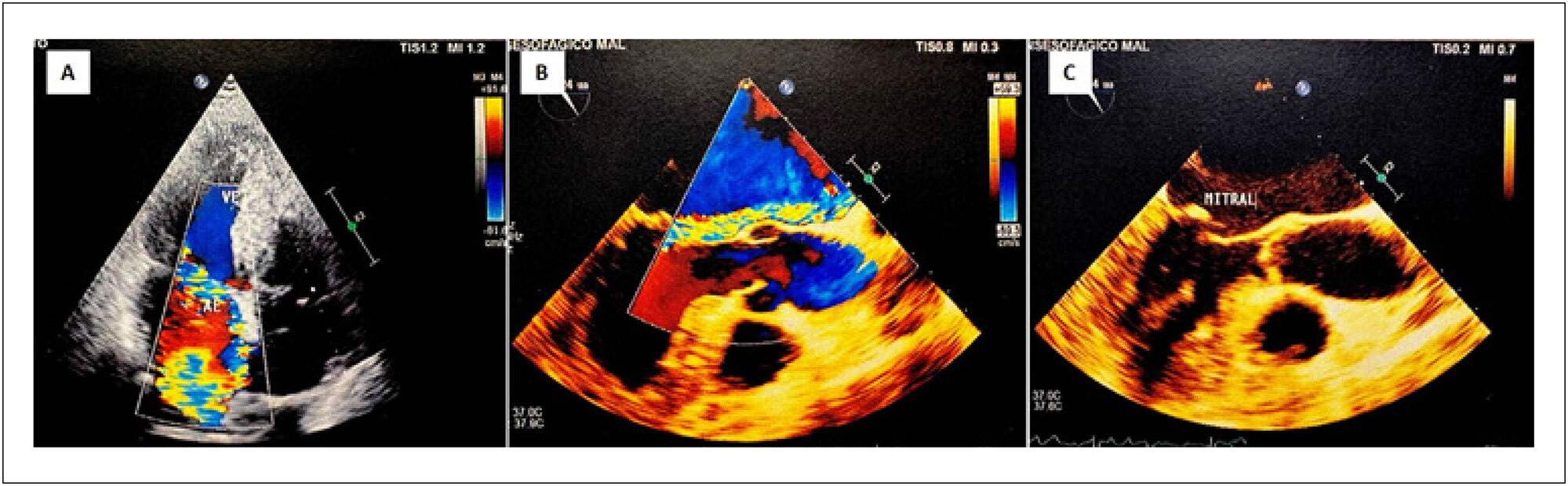
Takotsubo Syndrome After Percutaneous Mitral Valve Repair With Mitraclip®: A Case Report

Anna Luiza Souza et al. Maurício Lopes Prudente Débora Rodrigues Ana Cecília Campos Nogueira Giulliano Gardenghi

Introduction

Takotsubo syndrome (TTS), also known as stress cardiomyopathy or broken heart syndrome, is a condition whose pathophysiology is not well established, but which results from multiple factors that act synergistically in a setting of stress perception and cardiocirculatory response. It was first described in 1990, and the disproportionate and excessive increase in serum catecholamines is known to play a central role in its pathogenesis by favoring the occurrence of complications. Although rare, TTS deserves attention due to its inherent risk of decompensated heart function.,

[…]

  • Case Reports
  • Mitral Valve Insufficiency
  • Takotsubo Cardiomyopathy
Read Full Article
Creative Commons Attribution (CC BY) Creative Commons license
21/12/2023 DOI: 10.36660/abcimg.20230094i Views 1
Figure 1
ABCHF
Review Article

Stress Cardiomyopathy (Takotsubo)

Marcelo Westerlund Montera

Introduction

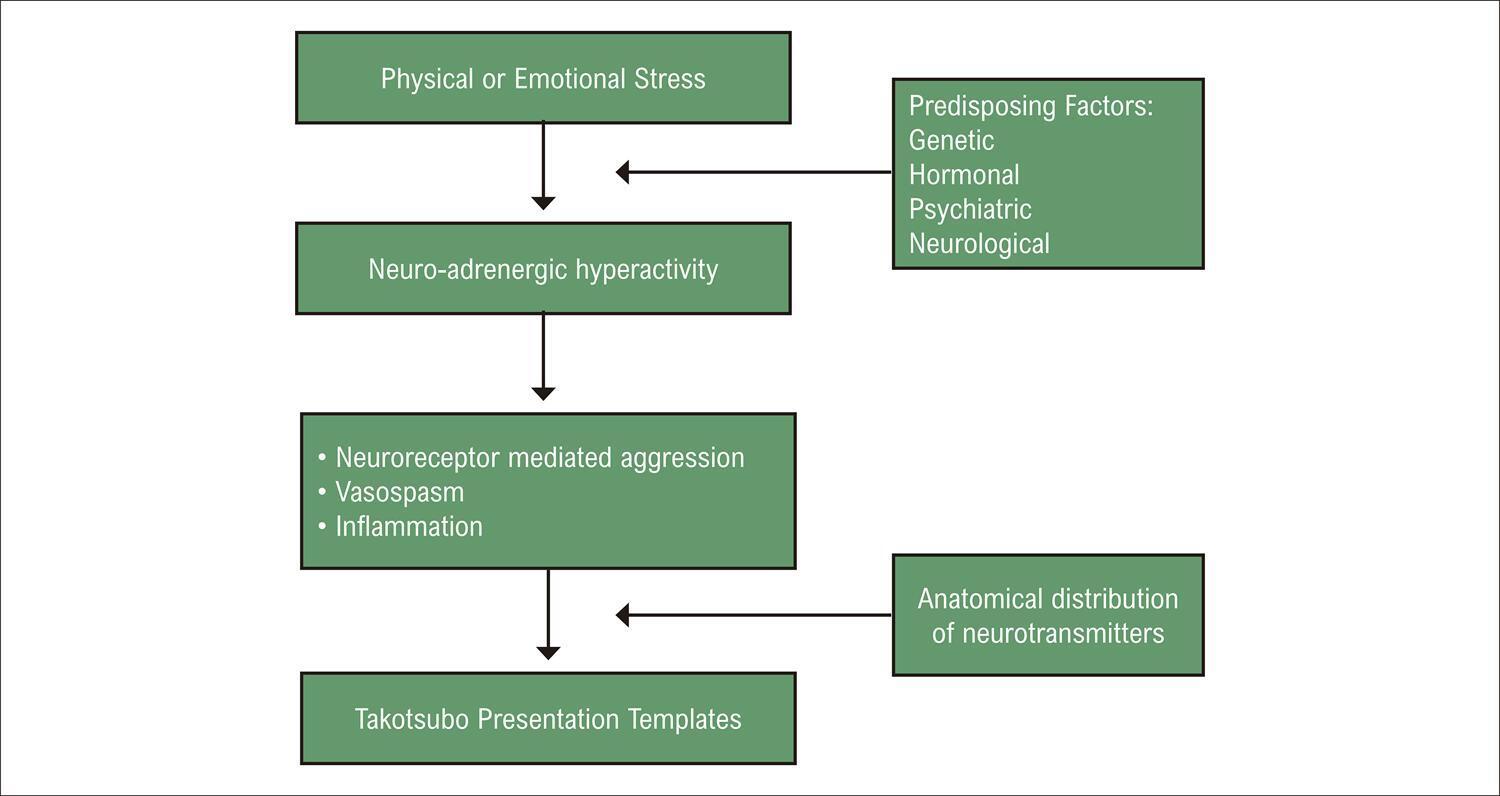
Takotsubo Cardiomyopathy (CT), also known as stress-induced cardiomyopathy, is a reversible syndrome that usually presents as an acute coronary syndrome, especially in postmenopausal women. The pathophysiology involves multiple factors, including coronary vasospasm, microcirculation dysfunction, catecholaminergic aggression, and sympathetic hyperactivity. The diagnosis of the classic presentation is the presence of a segmental alteration in the form of ballooning or dyskinesia in the antero-septo-apical region of the left ventricle, associated with hyperdynamia of the basal segments, in the absence of obstructive coronary disease that justifies this alteration in contraction. Initially, it was believed that CT was a self-limiting condition with a good prognosis; however, it is currently recognized as a pathology with a high rate of complications and high morbidity and mortality in the short and long term. Even though the first description was made more than 30 years ago, in 1990, by Sato, the etiology and pathophysiology are still not fully defined, and we still do not have an international guideline for standardizing diagnosis and treatment.

[…]

  • Neuro-Adrenergic Cardiomyopathy
  • Stress Cardiomyopathy
  • Takotsubo
  • Takotsubo Cardiomyopathy
Read Full Article
Creative Commons Attribution (CC BY) Creative Commons license
19/09/2023 DOI: 10.36660/abchf.20230041 Views 1
Figure 1
ABCIC
Case Report

Takotsubo Syndrome After Mitral Valve Surgery: Multimedia Presentation of a Rare Diagnosis

Adnaldo da Silveira Maia et al. Germano de Sousa Leão Jhonathan Gouveia da Mota Dante Togeiro Bastos Filgueiras … Verônica Noronha Rodrigues Luiz Minuzzo Mario Issa

Introduction

The Takotsubo Syndrome, also known as “broken heart syndrome”, is characterized by a severe and transitory left ventricular dysfunction, with the presence of alterations in the contraction of the basal, medial, or apical segments of the left ventricular walls. The syndrome can be caused by an emotional or physical trigger, or by a combination of both; however, this is not a mandatory criterion for its diagnosis.

This study describes a case of Takotsubo Syndrome after mitral valve surgery to replace the valve with a mechanical prosthesis.

[…]

  • Mitral Valve
  • Takotsubo Cardiomyopathy
  • Ventricular Dysfunction
Read Full Article
Creative Commons Attribution (CC BY) Creative Commons license
10/05/2023 DOI: 10.36660/abcimg.2023362i Views 1
Figure 1
ABCHF
Review Article

Takotsubo Cardiomyopathy in Patients with Cancer

Ariane Vieira Scarlatelli Macedo et al. Gustavo Luiz Gouvêa de Almeida Junior Marília Harumi Higuchi dos Santos Rehder

Abstract

Takotsubo cardiomyopathy (TC) in cancer patients has been predominantly noted as a cardiotoxic complication of oncologic therapy or secondary to catecholamine overload in specific tumors such as pheochromocytomas. The underlying pathophysiological mechanisms that lead to TC are not entirely understood. The diagnosis of TC can be challenging and may be neglected during cancer treatment, given the wide range of cardiotoxic effects of antineoplastic therapies. However, TC in oncology exists more often than formerly assumed, and it should be included in the differential diagnosis by physicians dealing with cancer patients. An increased suspicion is crucial for earlier diagnosis and treatment to improve outcomes. In addition to a risk model strategy identifying those cancer patients with the highest risk of having TC, translational studies are awaited. They would clarify the underlying mechanism of TC, disclose targets for prevention and treatment and determine whether re-exposing the patient to the same or equivalent anticancer agents would be secure and feasible.

  • Cardiotoxicity
  • Neoplasms
  • Takotsubo Cardiomyopathy
Read Full Article
Creative Commons Attribution (CC BY) Creative Commons license
18/12/2022 DOI: 10.36660/abchf.20220083 Views 3
ABCIC
Case Report

Inverted Takotsubo Versus Acute Myocarditis: the Importance of Cardiac Resonance for Differential Diagnosis

Carina Massariol Belinassi et al. Stella de Souza Carneiro Débora Pereira Galvêas Negri Davi Muzi Rios … Murilo Jardim de Carvalho José Augusto Murad

[…]

  • Diagnosis
  • Magnetic Resonance Imaging
  • Takotsubo Cardiomyopathy
Read Full Article
Creative Commons Attribution (CC BY) Creative Commons license
17/12/2021 DOI: 10.47593/2675-312X/20203304eabc93
Figure 1
IJCS
Case Report

Takotsubo Syndrome as a Complication of Mild COVID-19: A Case Report

Jéssica Mayara Oséas et al. William Santos de Oliveira Bruna Aparecida Oliveira Jayson Marcus Miranda … Raissa Gabriela Vieira Barros Nestor Rodrigues de Oliveira Neto

Introduction

As the number of cases of coronavirus disease 2019 (COVID-19) has reached tens of millions worldwide, the understanding of its clinical manifestations has grown. These have been described as a range of systemic repercussions resulting from an interplay between direct organ damage and exaggerated host immune response. , In a descriptive case series study of COVID-19 patients in Wuhan, 44% of patients had either elevated cardiac biomarkers or new changes in electrocardiogram (ECG) and imaging exams, and 34% of all cases had acute heart failure. Systemic diseases with increased adrenergic response may lead to stress cardiomyopathy, or Takotsubo syndrome, which is a rare condition with challenging diagnosis in the course of COVID-19. Herein we present a case of an elderly woman with mild COVID-19 who presented classical features of takotsubo syndrome on the 5th day of illness.

[…]

  • Coronavirus infections
  • Left Ventricular Dysfunction
  • Stress Cardiomyopathy
  • Takotsubo Cardiomyopathy
Read Full Article
Creative Commons Attribution (CC BY) Creative Commons license
20/09/2021 DOI: 10.36660/ijcs.20200398 Views 1
Figure 1
IJCS
Case Report

Cardiac Manifestations Associated With Coronavirus Disease: A Case Report

Gabriela Ribeiro Prata Leite Barros et al. Raphaela Tereza Brigolin Garofo Bernardo Noya Alves de Abreu Adriano Camargo de Castro Carneiro André Luiz Esteves Mendonça

Abstract

This study presents a 47-year-old female patient, with a history of diabetes, who contracted SARS-CoV-2 and exhibited cardiovascular complications.

  • Arrhythmia Cardiac
  • Cardiovascular Diseases/complications
  • Myocardial Ischemia
  • Myocarditis
  • Pandemics
  • SARS-CoV-2, Betacoronavirus
  • Takotsubo Cardiomyopathy
Read Full Article
Creative Commons Attribution (CC BY) Creative Commons license
20/09/2021 DOI: 10.36660/ijcs.20210026 Views 1
Figure 1
ABC
Research Letter

SARS-CoV-2 and Myocardical Injury with ST-Elevation without Coronary Disease

Carolina Ragonetti et al. Enzo Oku Martinazzo Felipe Montesano Fazionato Guilherme Osório Guimarães Ferreira … Milena Piccolo Santana Camila Hartmann

Introduction

Throughout the SARS-CoV-2 pandemic, there have been reports of infection leading to acute myocardial injury, causing worse clinical outcomes. The manifestations can include troponin elevation, imaging exam abnormalities and electrocardiographic changes. Accordingly, ST-segment elevation (STE) acute myocardial injury has been observed in some patients. However, despite the electrocardiogram (ECG) ischemic changes, complementary exams may not show any obstruction, excluding coronary occlusion as the cause of the injury.

[…]

  • Coronary Angiography/methods
  • Coronavirus-19
  • Electrocardiography/methods
  • Myocarditis/complications
  • Pandemics
  • SARS-CoV-2
  • Takotsubo Cardiomyopathy
Read Full Article
Creative Commons Attribution (CC BY) Creative Commons license
06/09/2021 DOI: 10.36660/abc.20201268 Views 2
Figure 1
IJCS
Case Report

Takotsubo Cardiomyopathy and Myocardial Perfusion Image: Unusual Binomial in the Investigation of Acute Coronary Syndrome without Obstructive Lesions

Mathias Silvestre de Brida et al. Raphael Boesche Guimaraes Leonardo Rothlisberger Matheus Patricio

Introduction

Takotsubo cardiomyopathy (TC), also known as broken heart syndrome or stress-induced cardiomyopathy, was primarily described in Japan in 1990, is named after its morphological similarity to the vase used by Asian people to catch octopuses, which has a rounded bottom and a narrow bottleneck. This condition is characterized by transient left ventricular (LV) systolic dysfunction, commonly preceded by physical or emotional stress, mimicking the presentation of acute myocardial infarction. In the present article, we describe a case of TC focusing on its updated approach, highlighting the applicability of myocardial perfusion scintigraphy (MPS) in the acute phase of chest pain and presenting images rarely described in this scenario.

[…]

  • Acute Coronary
  • Chest Pain
  • Takotsubo Cardiomyopathy
  • Ventilation-Perfusion Scan
Read Full Article
Creative Commons Attribution (CC BY) Creative Commons license
16/07/2021 DOI: 10.36660/ijcs.20210015 Views 1
Figure 1
IJCS
Original Article

The Clinical Course of Takotsubo Syndrome Diagnosed According to the InterTAK Criteria

Nelson Henrique Fantin Fundão et al. Henrique Barbosa Ribeiro Carlos de Magalhães Campos Vinicius Bocchino Seleme … Alexandre de Matos Soeiro Marcelo Luiz Campos Vieira Wilson Mathias Jr Ludhmilla Abraão Hajjar Expedito E. Ribeiro Roberto Kalil Filho

Abstract

Background

There has been an increase in the number of cases of Takotsubo syndrome (TTS) and of scientific publications on the theme over the last years. However, little is known about the status of this disease in Brazilian hospitals.

Objective

To assess mortality and major adverse cardiovascular events (MACE) during hospitalization and follow-up of TTS patients seen in a tertiary hospital in Brazil.

Methods

This was a retrospective, observational study on 48 patients. Clinical data, signs and symptoms, complementary tests, MACE and all-cause mortality were assessed on admission and during follow-up. Kaplan-Meier curves were used for analysis of all-cause mortality and risk for MACE at median follow-up. The 95% confidence interval was also calculated for a significance level of 5%.

Results

Mean age of patients was 71 years (SD±13 years), and most patients were women (n=41; 85.4%). During hospitalization, four patients (8.3%) died and five (10.4%) developed MACE. At median follow-up of 354.5 days (IQR of 81.5-896.5 days), the risk of all-cause mortality and MACE was 11.1% (95% CI= 1.8-20.3%) and 12.7% (95% CI= 3.3-22.3%), respectively.

Conclusion

TTS was associated with high morbidity and mortality rates in a tertiary hospital in Brazil, which were comparable to those observed in acute coronary syndrome. Therefore, the severity of TTS should not be underestimated, and new therapeutic strategies are required. Int J Cardiovasc Sci. 2020; [online].ahead print, PP.0-0

  • Acute coronary syndrome
  • Heart Failure
  • Shock, Cardiogenic
  • Takotsubo Cardiomyopathy
  • Ventricular Dysfunction
Read Full Article
Creative Commons Attribution (CC BY) Creative Commons license
06/11/2020 DOI: 10.36660/ijcs.20190133
ABC
Letter to the Editor

Recurrent Takotsubo Cardiomyopathy: A Puzzle Yet to be Solved

Kenan Yalta et al. Caglar Kaya

Reply

First, we thank the authors for the comments regarding our recent article in Arquivos Brasileiros de Cardiologia entitled “Factors Associated with Recurrence in Takotsubo Syndrome: A Systematic Review”. In the letter, the authors made some interesting additional comments regarding the mechanisms of Takotsubo recurrence related to mechanical triggers related to mid-ventricular gradient that may be related to associated hypertrophic cardiomyopathy (HCM) and a second mechanism related to severe adrenergic discharge.

One question they posed was related to the incidence of HCM and hypertensive heart disease in the data we analyzed. Actually, in the original papers that were revised, the authors did not mention HCM or hypertensive heart disease incidence. Some patients with Takotsubo Syndrome (TS) may present with systolic anterior motion of the mitral valve and ventricular obstruction; it is sometimes difficult to determine whether these features are related to TS or associated to HCM or even their combination and the clinic, electrocardiographic and image follow-up may reveal the diagnosis., About the impact of the surgical reconstruction on recurrence, in a brief review of literature we found one article describing a case of ventricular reconstruction in a female who remained with apical aneurism and recurrent embolic events. Therefore, in the case of permanent ventricular outflow obstruction in HCM who has TS, one may consider the indication of the HCM guidelines for surgical intervention.

[…]

  • Recurrence
  • systematic review
  • Takotsubo Cardiomyopathy
  • Takotsubo syndrome
Read Full Article
Creative Commons Attribution (CC BY) Creative Commons license
28/09/2020 DOI: 10.36660/abc.20200140 Views 1
Figure 1
ABC
Editorial

Takotsubo Syndrome, Does it Exist as a Specific Disease?

Bruno Caramelli

The name syndrome combines two Greek roots to describe a condition gathering a group of signs and symptoms existing together in patients. It seems that Avicenna first used it in his 1025 publication “The Canon of Medicine”. In genetics, the use of the name syndrome generally assumes that the underlying cause of the disease is known. On the other hand, in medicine, syndrome refers to conditions both with a known and unknown cause.

Historically, associated signs and symptoms found to be of improbable correlation were eventually known to have an underlying cause responsible for all of them. Even after the cause is unraveled, the original word remains, sometimes with the name of the first describer, and this is probably the reason for the existence nowadays of syndromes with identified and unidentified causes.

[…]

  • Coronary Artery Disease
  • Diagnosis,Differencial
  • Diagnostic,Imaging
  • Takotsubo Cardiomyopathy
  • Ventricular Dysfunction
Read Full Article
Creative Commons Attribution (CC BY) Creative Commons license
28/08/2020 DOI: 10.36660/abc.20200470
Figure 1
IJCS
Brief Communication

Takotsubo Syndrome in the Context of Transmural Acute Myocardial Infarction: Prevalence and How to Differentiate?

João Paulo Soares Costa et al. Luiz Eduardo Fonteles Ritt Rafael Modesto Fernandes Felipe Alvarenga Duarte Campos … Queila Borges Eduardo Sahade Darzé

Introduction

Takotsubo syndrome (TTS) is characterized by transient left ventricular dysfunction culminating in acute cardiac dysfunction. It is frequently preceded by emotional or physical stress.,

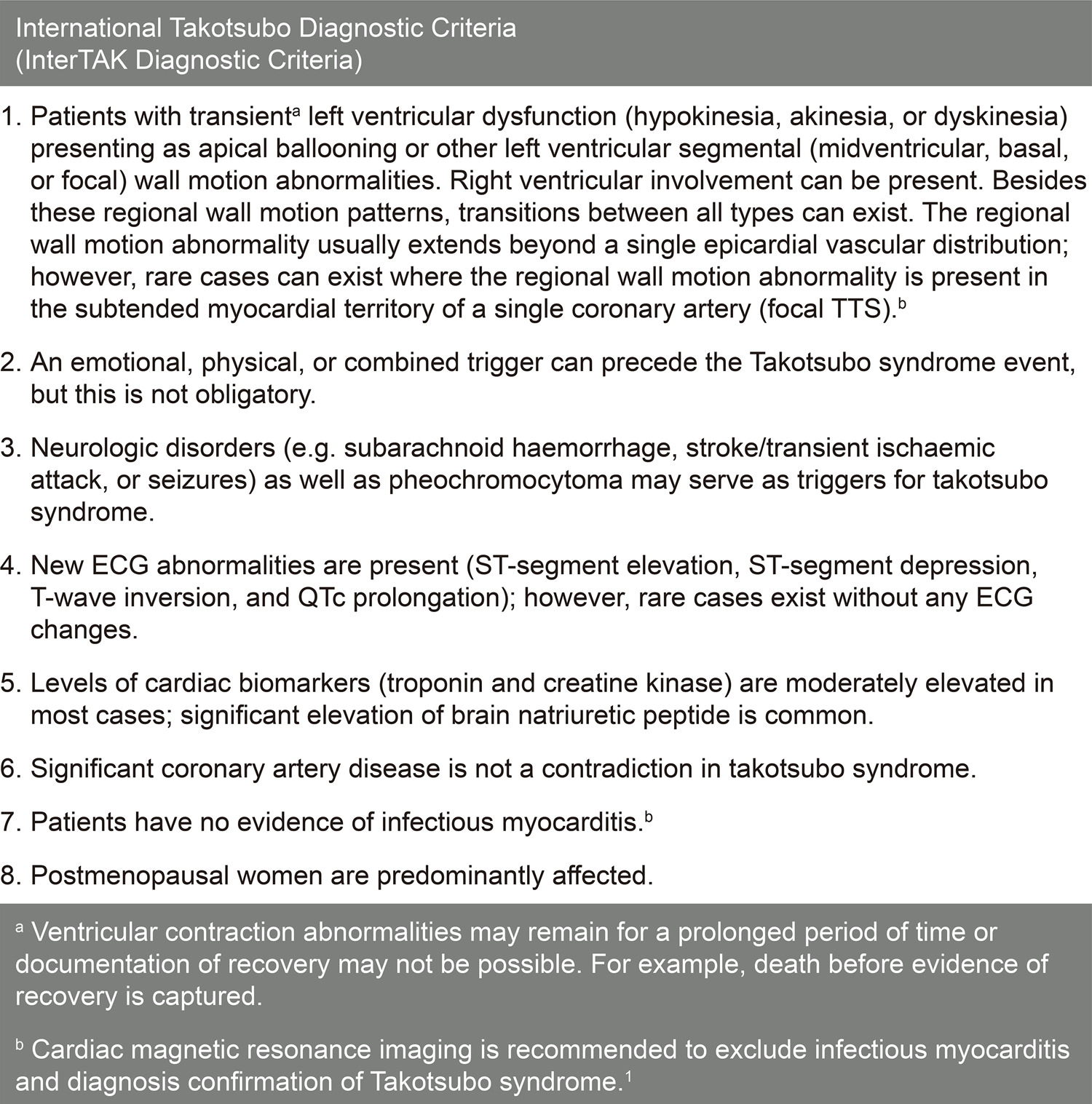
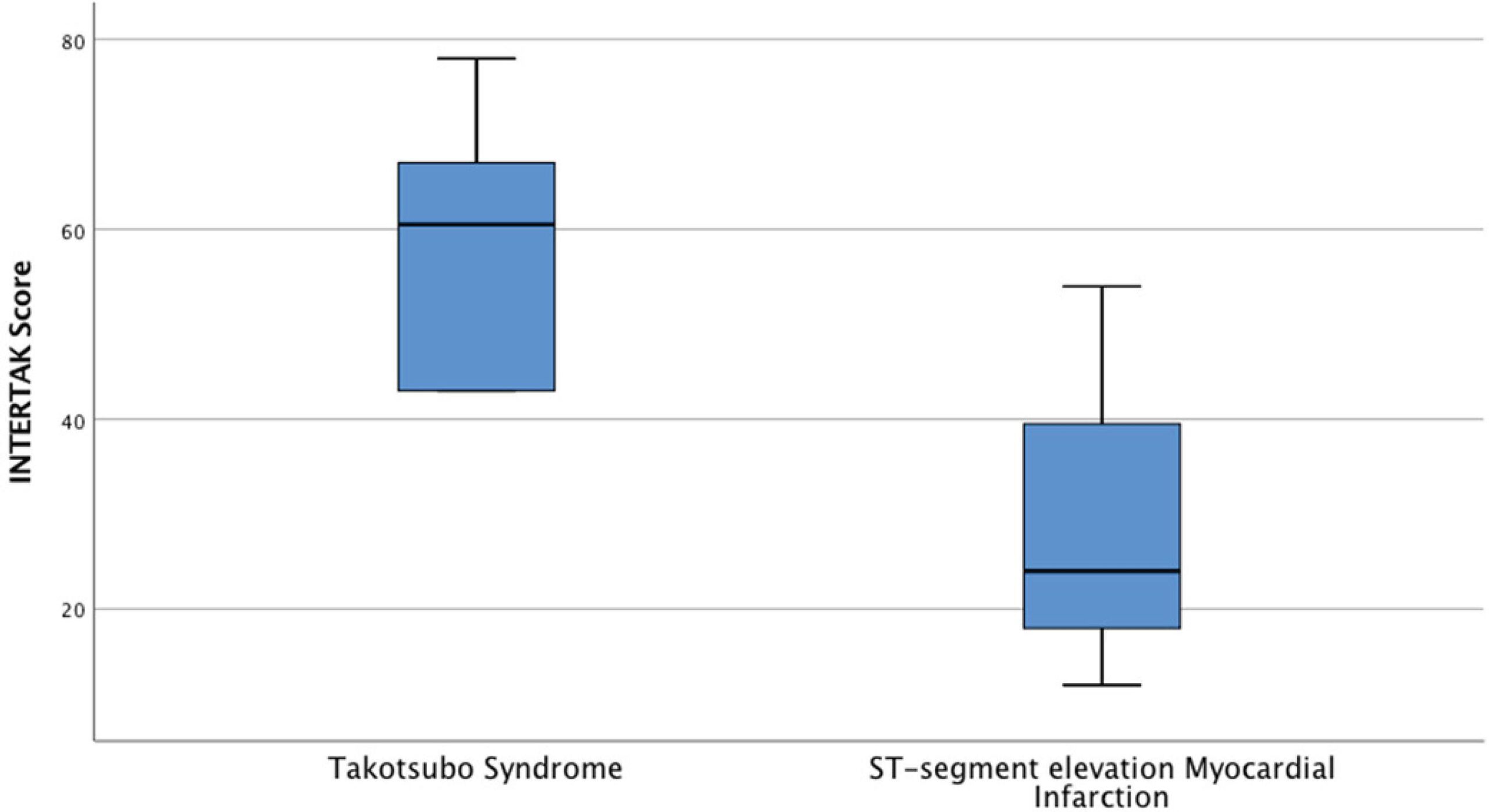
The most common symptoms at presentation are chest pain and dyspnea. Because the presentation of TTS is similar to that of acute coronary syndrome (ACS), the differential diagnosis is difficult, especially from ST-elevation myocardial infarction (STEMI). Absence of coronary artery disease in the affected area must be confirmed to establish the diagnosis of TTS. To facilitate the diagnosis of TTS, the European Society of Cardiology has recently developed the InterTAK diagnostic score, a promising tool that estimates the probability of a TTS event.,

[…]

  • Acute Coronary Syndrome / diagnosis
  • ST Elevation Myocardial Infarction
  • Stress, Physiological
  • Stress, Psychological
  • Takotsubo Cardiomyopathy
  • Ventricular Function, Left
Read Full Article
Creative Commons Attribution (CC BY) Creative Commons license
17/02/2020 DOI: 10.5935/2359-4802.20190080 Views 2
Figure 1
ABC
Original Article

Factors Associated with Recurrence in Takotsubo Syndrome: A Systematic Review

Felipe Alverenga Duarte Campos et al. Luiz Eduardo Fonteles Ritt João Paulo Soares Costa Constança Margarida Cruz … Gilson Soares Feitosa-Filho Queila Borges de Oliveira Eduardo Sahade Darzé

Abstract

Background:

Takotsubo syndrome (TTS) is characterized by a temporary systolic dysfunction of the left ventricle (LV) related to a stressful event. However, the factors associated with its recurrence are still not well established.

Objective:

To analyze the main factors associated with TTS recurrence.

Methods:

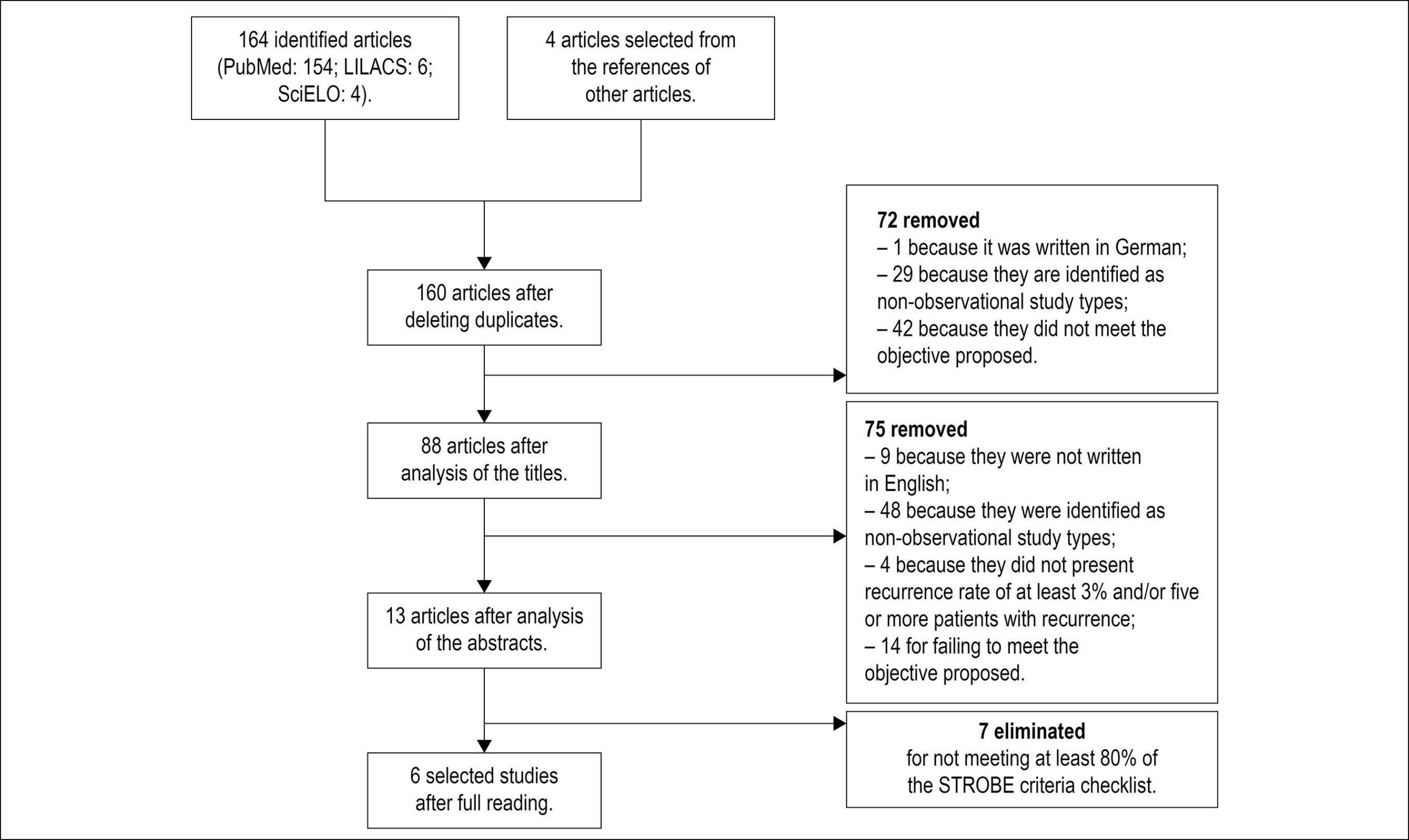
A systematic review was performed using the PRISMA model. Observational studies, published between January 2008 and October 2017, which presented a recurrence rate of at least 3% and/or 5 or more patients with recurrence, and who met at least 80% of the STROBE criteria were included.

Results:

six articles reached the criteria to compose this systematic review. The recurrence rate ranged from 1 to 3.5% per year (global recurrence rate 3.8%). One study associated higher recurrence rate with the female gender, four reported the time between the first and second episodes, one study associated body mass index (BMI) and hypercontractility of the LV middle anterior wall to a higher recurrence rate. No association between recurrence and electrocardiographic changes were determined. Beta-blockers use was not associated with recurrence rates.

Conclusions:

Female gender, time from the first episode of the syndrome, low BMI and midventricular obstruction were reported as potential predictors of TTS recurrence.

  • Recurrence
  • Takotsubo Cardiomyopathy
  • Takotsubo syndrome
Read Full Article
Creative Commons Attribution (CC BY) Creative Commons license
07/02/2020 DOI: 10.36660/abc.20180377
Figure 1
ABC
Artigo Original

Short and Long-Term Outcome of Stress-Induced Cardiomyopathy: What Can We Expect?

Vânia Filipa Andrade Ribeiro et al. Mariana Vasconcelos Filipa Melão Ester Ferreira … Gracieta Malangatana Maria Júlia Maciel

Background:

Stress-induced/Takotsubo cardiomyopathy (TC) is an increasingly recognized diagnostic entity.

Objective:

This study was aimed to assess the prevalence and clinical predictors of short and long-term outcome of patients (pts) diagnosed with TC.

Methods:

We included all consecutive pts admitted in our department, from November 2006 to August 2011, who met the Mayo Clinic criteria for TC diagnosis.

Results:

We evaluated 37 pts (35 women) with a mean age of 63 ±13 years. TC was precipitated by a stressful emotional event in the majority (57%) and chest pain was the most common symptom (89%). Twelve pts (32%) had ST-segment elevation and 15 pts (41%) had T-wave inversion on the electrocardiogram at admission. Severe left ventricular (LV) dysfunction was found in 16 pts (43%) and the mean troponin I level was 2.6±1.8 ng/mL. The in-hospital complication rate was 30%, with cardiogenic shock being the most common situation. Physical stress, severe LV systolic dysfunction and peak brain natriuretic peptide (BNP) were predictors of acute complications. On the other hand, we found no association between peak troponin I and electrocardiographic presentation. Thirty-five pts were followed for a mean time of 482 ± 512 days, without clinic recurrence.

Conclusion:

In our cohort of pts, TC was associated with a high in-hospital complications rate. Physical stress, LV dysfunction and peak BNP could predict acute adverse outcomes.

  • Stress, Psychological
  • Takotsubo Cardiomyopathy
Read Full Article
Creative Commons Attribution (CC BY) Creative Commons license
26/11/2013 DOI: 10.5935/abc.20130228 Views 2
Two-dimensional strain in Takotsubo cardiomyopathy
ABC
Case Report

Two-dimensional strain in Takotsubo cardiomyopathy

Carlos Bellini G. Gomes et al. Gustavo J. Veras

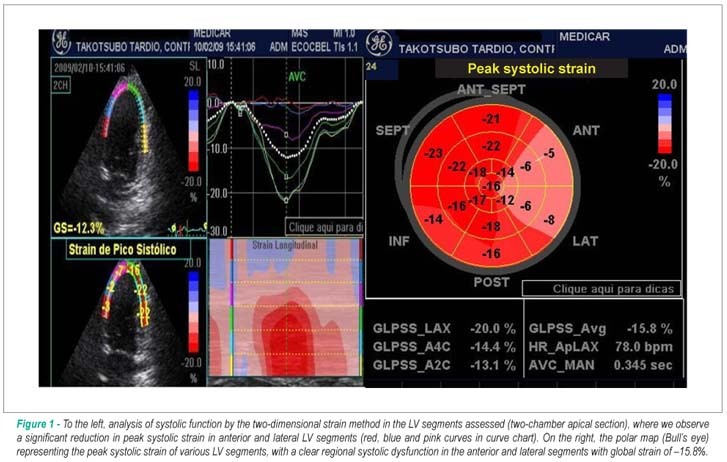
This report presents the late follow-up of a case of Takotsubo cardiomyopathy with good clinical outcome and improved left ventricular global systolic function. However, there was persistence of significant regional longitudinal systolic dysfunction evaluated using a new echocardiographic technique (speckle tracking), with corresponding measures of strain (S) and strain rate (SR). We emphasize the importance of this new method to monitoring this cardiomyopathy, since it identifies patients with persistent systolic dysfunction who will possibly benefit from maintenance of clinical therapy

  • Echocardiography
  • Myocardial Contraction
  • Takotsubo Cardiomyopathy
Read Full Article
Creative Commons Attribution (CC BY) Creative Commons license
10/09/2010 DOI: 10.1590/S0066-782X2010001200023 Views 1

How to cite this article

EndNote RIS

Electronic Document Format (Vancouver)

Ferreira MVS, Tormin JPAS, Dantas Jr RN, Torres RVA, Cordeiro RA, Araújo Filho JAB, Cardoso LF, et al. Single Coronary Artery and Stress Cardiomyopathy: An Association Demonstrated by Multimodality Imaging. ABC Imagem Cardiovascular 2026;39(2):e20260023.

Electronic Document Format (ABNT)

Ferreira, Marcus Vinicius Silva; Tormin, Julia Pereira Afonso dos Santos; Dantas Jr, Roberto Nery; Torres, Roberto Vitor Almeida; Cordeiro, Renan Andreos; Araújo Filho, José de Arimateia Batista; Cardoso, Luiz Francisco. Single Coronary Artery and Stress Cardiomyopathy: An Association Demonstrated by Multimodality Imaging. ABC Imagem Cardiovascular, v. 39, n. 2, e20260023, Jul. 2026.

Electronic Document Format (APA)

Ferreira, M. V. S., Tormin, J. P. A. S., Dantas Jr, R. N., Torres, R. V. A., Cordeiro, R. A., Araújo Filho, J. A. B., & Cardoso, L. F. (2026). Single Coronary Artery and Stress Cardiomyopathy: An Association Demonstrated by Multimodality Imaging. ABC Imagem Cardiovascular, 39(2), e20260023.

Electronic Document Format (ISO)

Ferreira, Marcus Vinicius Silva and Tormin, Julia Pereira Afonso dos Santos and Dantas Jr, Roberto Nery and Torres, Roberto Vitor Almeida and Cordeiro, Renan Andreos and Araújo Filho, José de Arimateia Batista and Cardoso, Luiz Francisco. Single Coronary Artery and Stress Cardiomyopathy: An Association Demonstrated by Multimodality Imaging. ABC Imagem Cardiovascular [online]. 2026, vol. 39, n. 2, [cited 2026-10-14], e20260023. Available from: <https://journals.cardiol.br/en/article/single-coronary-artery-and-stress-cardiomyopathy-an-association-demonstrated-by-multimodality-imaging/>. ISSN 2318-8219

EndNote RIS

Electronic Document Format (Vancouver)

Inada T, Silva GSM, Amaral RM, Santos Junior EF, Branco CEB. Takotsubo Syndrome in an Adolescent Undergoing Oncological Treatment: A Rare Case Report. Arquivos Brasileiros de Cardiologia 2026;123(2):e20250380.

Electronic Document Format (ABNT)

Inada, Tami; Silva, Guilherme Santos Marques da; Amaral, Raisa Machado; Santos Junior, Edgard Ferreira dos; Branco, Carlos Eduardo de Barros. Takotsubo Syndrome in an Adolescent Undergoing Oncological Treatment: A Rare Case Report. Arquivos Brasileiros de Cardiologia, v. 123, n. 2, e20250380, Apr. 2026.

Electronic Document Format (APA)

Inada, T., Silva, G. S. M. , Amaral, R. M., Santos Junior, E. F. , & Branco, C. E. B. (2026). Takotsubo Syndrome in an Adolescent Undergoing Oncological Treatment: A Rare Case Report. Arquivos Brasileiros de Cardiologia, 123(2), e20250380.

Electronic Document Format (ISO)

Inada, Tami and Silva, Guilherme Santos Marques da and Amaral, Raisa Machado and Santos Junior, Edgard Ferreira dos and Branco, Carlos Eduardo de Barros. Takotsubo Syndrome in an Adolescent Undergoing Oncological Treatment: A Rare Case Report. Arquivos Brasileiros de Cardiologia [online]. 2026, vol. 123, n. 2, [cited 2026-10-14], e20250380. Available from: <https://journals.cardiol.br/en/article/takotsubo-syndrome-in-an-adolescent-undergoing-oncological-treatment-a-rare-case-report/>. ISSN 0066-782X

EndNote RIS

Electronic Document Format (Vancouver)

Moraes PIDM, Haddad MFA, Valle DBB, Oliveira Filho LO, Custódio MS, Almeida DR. Cardiogenic Shock Due to Inverted-Pattern Takotsubo Syndrome Caused by Pheochromocytoma: Case Report and Literature Review. Arquivos Brasileiros de Cardiologia 2026;123(2):e20250558.

Electronic Document Format (ABNT)

Moraes, Pedro Ivo De Marqui; Haddad, Michell Fayad André; Valle, Daniel Bisi de Bôrtoli; Oliveira Filho, Luiz Otávio de; Custódio, Mayara da Silva; Almeida, Dirceu Rodrigues de. Cardiogenic Shock Due to Inverted-Pattern Takotsubo Syndrome Caused by Pheochromocytoma: Case Report and Literature Review. Arquivos Brasileiros de Cardiologia, v. 123, n. 2, e20250558, Mar. 2026.

Electronic Document Format (APA)

Moraes, P. I. D. M., Haddad, M. F. A., Valle, D. B. B., Oliveira Filho, L. O. , Custódio, M. S., & Almeida, D. R. (2026). Cardiogenic Shock Due to Inverted-Pattern Takotsubo Syndrome Caused by Pheochromocytoma: Case Report and Literature Review. Arquivos Brasileiros de Cardiologia, 123(2), e20250558.

Electronic Document Format (ISO)

Moraes, Pedro Ivo De Marqui and Haddad, Michell Fayad André and Valle, Daniel Bisi de Bôrtoli and Oliveira Filho, Luiz Otávio de and Custódio, Mayara da Silva and Almeida, Dirceu Rodrigues de. Cardiogenic Shock Due to Inverted-Pattern Takotsubo Syndrome Caused by Pheochromocytoma: Case Report and Literature Review. Arquivos Brasileiros de Cardiologia [online]. 2026, vol. 123, n. 2, [cited 2026-10-14], e20250558. Available from: <https://journals.cardiol.br/en/article/cardiogenic-shock-due-to-inverted-pattern-takotsubo-syndrome-caused-by-pheochromocytoma-case-report-and-literature-review/>. ISSN 0066-782X

EndNote RIS

Electronic Document Format (Vancouver)

Çakır MA, Çakır E, Kaya , Yalta K. Late Evolution of Takotsubo Cardiomyopathy Following Transcatheter Aortic Valve Implantation. ABC Imagem Cardiovascular 2025;38(1):e20240130.

Electronic Document Format (ABNT)

Çakır, Merve Akbulut; Çakır, Emirhan; Kaya, Çağlar; Yalta, Kenan. Late Evolution of Takotsubo Cardiomyopathy Following Transcatheter Aortic Valve Implantation. ABC Imagem Cardiovascular, v. 38, n. 1, e20240130, Mar. 2025.

Electronic Document Format (APA)

Çakır, M. A., Çakır, E., Kaya, , & Yalta, K. (2025). Late Evolution of Takotsubo Cardiomyopathy Following Transcatheter Aortic Valve Implantation. ABC Imagem Cardiovascular, 38(1), e20240130.

Electronic Document Format (ISO)

Çakır, Merve Akbulut and Çakır, Emirhan and Kaya, Çağlar and Yalta, Kenan. Late Evolution of Takotsubo Cardiomyopathy Following Transcatheter Aortic Valve Implantation. ABC Imagem Cardiovascular [online]. 2025, vol. 38, n. 1, [cited 2026-10-14], e20240130. Available from: <https://journals.cardiol.br/en/article/late-evolution-of-takotsubo-cardiomyopathy-following-transcatheter-aortic-valve-implantation/>. ISSN 2318-8219

EndNote RIS

Electronic Document Format (Vancouver)

Albarracin VKS. Tuberculosis and Atrioventricular Block in a Patient with Takotsubo Syndrome: A Case Report. ABC Heart Fail Cardiomyop 2024;4(4):e20240031.

Electronic Document Format (ABNT)

Albarracin, Viviana Karina Sanchez. Tuberculosis and Atrioventricular Block in a Patient with Takotsubo Syndrome: A Case Report. ABC Heart Fail Cardiomyop, v. 4, n. 4, e20240031, Oct. 2024.

Electronic Document Format (APA)

Albarracin, V. K. S. (2024). Tuberculosis and Atrioventricular Block in a Patient with Takotsubo Syndrome: A Case Report. ABC Heart Fail Cardiomyop, 4(4), e20240031.

Electronic Document Format (ISO)

Albarracin, Viviana Karina Sanchez. Tuberculosis and Atrioventricular Block in a Patient with Takotsubo Syndrome: A Case Report. ABC Heart Fail Cardiomyop [online]. 2024, vol. 4, n. 4, [cited 2026-10-14], e20240031. Available from: <https://journals.cardiol.br/en/article/tuberculosis-and-atrioventricular-block-in-a-patient-with-takotsubo-syndrome-a-case-report/>

EndNote RIS

Electronic Document Format (Vancouver)

Silva WJ, Sembeneli G, Bueno PPA, Rodrigues RC, Gil FM, Faldoni FLC, Domingos CHC, et al. Takotsubo Syndrome and its Relationship with Major Depressive Disorder: Case Report. ABC Heart Fail Cardiomyop 2024;4(2):e20240003.

Electronic Document Format (ABNT)

Silva, Wanessa Julia da; Sembeneli, Gabriel; Bueno, Pedro Petiti Arbex; Rodrigues, Rafaela Claro; Gil, Fernanda Meirelles; Faldoni, Flavia Lima Costa; Domingos, Claudia Helena Cury. Takotsubo Syndrome and its Relationship with Major Depressive Disorder: Case Report. ABC Heart Fail Cardiomyop, v. 4, n. 2, e20240003, Aug. 2024.

Electronic Document Format (APA)

Silva, W. J. , Sembeneli, G., Bueno, P. P. A., Rodrigues, R. C., Gil, F. M., Faldoni, F. L. C., & Domingos, C. H. C. (2024). Takotsubo Syndrome and its Relationship with Major Depressive Disorder: Case Report. ABC Heart Fail Cardiomyop, 4(2), e20240003.

Electronic Document Format (ISO)

Silva, Wanessa Julia da and Sembeneli, Gabriel and Bueno, Pedro Petiti Arbex and Rodrigues, Rafaela Claro and Gil, Fernanda Meirelles and Faldoni, Flavia Lima Costa and Domingos, Claudia Helena Cury. Takotsubo Syndrome and its Relationship with Major Depressive Disorder: Case Report. ABC Heart Fail Cardiomyop [online]. 2024, vol. 4, n. 2, [cited 2026-10-14], e20240003. Available from: <https://journals.cardiol.br/en/article/takotsubo-syndrome-and-its-relationship-with-major-depressive-disorder-case-report/>

EndNote RIS

Electronic Document Format (Vancouver)

Arroyo-Rodríguez C, Hernández-Parra A. Takotsubo Syndrome in a Critical COVID-19 Patient: Electrocardiographic and Echocardiographic Evolution. ABC Imagem Cardiovascular 2024;37(2):e20240014.

Electronic Document Format (ABNT)

Arroyo-Rodríguez, Cuitláhuac; Hernández-Parra, Alejandra. Takotsubo Syndrome in a Critical COVID-19 Patient: Electrocardiographic and Echocardiographic Evolution. ABC Imagem Cardiovascular, v. 37, n. 2, e20240014, May. 2024.

Electronic Document Format (APA)

Arroyo-Rodríguez, C., & Hernández-Parra, A. (2024). Takotsubo Syndrome in a Critical COVID-19 Patient: Electrocardiographic and Echocardiographic Evolution. ABC Imagem Cardiovascular, 37(2), e20240014.

Electronic Document Format (ISO)

Arroyo-Rodríguez, Cuitláhuac and Hernández-Parra, Alejandra. Takotsubo Syndrome in a Critical COVID-19 Patient: Electrocardiographic and Echocardiographic Evolution. ABC Imagem Cardiovascular [online]. 2024, vol. 37, n. 2, [cited 2026-10-14], e20240014. Available from: <https://journals.cardiol.br/en/article/takotsubo-syndrome-in-a-critical-covid-19-patient-electrocardiographic-and-echocardiographic-evolution/>. ISSN 2318-8219

EndNote RIS

Electronic Document Format (Vancouver)

Souza AL, Prudente ML, Rodrigues D, Nogueira ACC, Gardenghi G. Takotsubo Syndrome After Percutaneous Mitral Valve Repair With Mitraclip®: A Case Report. ABC Imagem Cardiovascular 2023;36(4):e20230094.

Electronic Document Format (ABNT)

Souza, Anna Luiza; Prudente, Maurício Lopes; Rodrigues, Débora; Nogueira, Ana Cecília Campos; Gardenghi, Giulliano. Takotsubo Syndrome After Percutaneous Mitral Valve Repair With Mitraclip®: A Case Report. ABC Imagem Cardiovascular, v. 36, n. 4, e20230094, Dec. 2023.

Electronic Document Format (APA)

Souza, A. L., Prudente, M. L., Rodrigues, D., Nogueira, A. C. C., & Gardenghi, G. (2023). Takotsubo Syndrome After Percutaneous Mitral Valve Repair With Mitraclip®: A Case Report. ABC Imagem Cardiovascular, 36(4), e20230094.

Electronic Document Format (ISO)

Souza, Anna Luiza and Prudente, Maurício Lopes and Rodrigues, Débora and Nogueira, Ana Cecília Campos and Gardenghi, Giulliano. Takotsubo Syndrome After Percutaneous Mitral Valve Repair With Mitraclip®: A Case Report. ABC Imagem Cardiovascular [online]. 2023, vol. 36, n. 4, [cited 2026-10-14], e20230094. Available from: <https://journals.cardiol.br/en/article/takotsubo-syndrome-after-percutaneous-mitral-valve-repair-with-mitraclip-a-case-report/>. ISSN 2318-8219

EndNote RIS

Electronic Document Format (Vancouver)

Montera MW. Stress Cardiomyopathy (Takotsubo). ABC Heart Fail Cardiomyop 2023;3(1):e20230041.

Electronic Document Format (ABNT)

Montera, Marcelo Westerlund. Stress Cardiomyopathy (Takotsubo). ABC Heart Fail Cardiomyop, v. 3, n. 1, e20230041, Sep. 2023.

Electronic Document Format (APA)

Montera, M. W. (2023). Stress Cardiomyopathy (Takotsubo). ABC Heart Fail Cardiomyop, 3(1), e20230041.

Electronic Document Format (ISO)

Montera, Marcelo Westerlund. Stress Cardiomyopathy (Takotsubo). ABC Heart Fail Cardiomyop [online]. 2023, vol. 3, n. 1, [cited 2026-10-14], e20230041. Available from: <https://journals.cardiol.br/en/article/stress-cardiomyopathy-takotsubo/>

EndNote RIS

Electronic Document Format (Vancouver)

Maia AS, Leão GS, Mota JG, Filgueiras DTB, Rodrigues VN, Minuzzo L, Issa M, et al. Takotsubo Syndrome After Mitral Valve Surgery: Multimedia Presentation of a Rare Diagnosis. ABC Imagem Cardiovascular 2023;36(2):e362.

Electronic Document Format (ABNT)

Maia, Adnaldo da Silveira; Leão, Germano de Sousa; Mota, Jhonathan Gouveia da; Filgueiras, Dante Togeiro Bastos; Rodrigues, Verônica Noronha; Minuzzo, Luiz; Issa, Mario. Takotsubo Syndrome After Mitral Valve Surgery: Multimedia Presentation of a Rare Diagnosis. ABC Imagem Cardiovascular, v. 36, n. 2, e362, May. 2023.

Electronic Document Format (APA)

Maia, A. S., Leão, G. S., Mota, J. G. , Filgueiras, D. T. B., Rodrigues, V. N., Minuzzo, L., & Issa, M. (2023). Takotsubo Syndrome After Mitral Valve Surgery: Multimedia Presentation of a Rare Diagnosis. ABC Imagem Cardiovascular, 36(2), e362.

Electronic Document Format (ISO)

Maia, Adnaldo da Silveira and Leão, Germano de Sousa and Mota, Jhonathan Gouveia da and Filgueiras, Dante Togeiro Bastos and Rodrigues, Verônica Noronha and Minuzzo, Luiz and Issa, Mario. Takotsubo Syndrome After Mitral Valve Surgery: Multimedia Presentation of a Rare Diagnosis. ABC Imagem Cardiovascular [online]. 2023, vol. 36, n. 2, [cited 2026-10-14], e362. Available from: <https://journals.cardiol.br/en/article/takotsubo-syndrome-after-mitral-valve-surgery-multimedia-presentation-of-a-rare-diagnosis/>. ISSN 2318-8219

EndNote RIS

Electronic Document Format (Vancouver)

Macedo AVS, Almeida Junior GLG, Rehder MHHS. Takotsubo Cardiomyopathy in Patients with Cancer. ABC: Heart Failure & Cardiomyopathy 2022;2(4):374-80.

Electronic Document Format (ABNT)

Macedo, Ariane Vieira Scarlatelli; Almeida Junior, Gustavo Luiz Gouvêa de; Rehder, Marília Harumi Higuchi dos Santos. Takotsubo Cardiomyopathy in Patients with Cancer. ABC: Heart Failure & Cardiomyopathy, v. 2, n. 4, p. 374-380, Dec. 2022.

Electronic Document Format (APA)

Macedo, A. V. S., Almeida Junior, G. L. G. , & Rehder, M. H. H. S. (2022). Takotsubo Cardiomyopathy in Patients with Cancer. ABC: Heart Failure & Cardiomyopathy, 2(4), 374-380.

Electronic Document Format (ISO)

Macedo, Ariane Vieira Scarlatelli and Almeida Junior, Gustavo Luiz Gouvêa de and Rehder, Marília Harumi Higuchi dos Santos. Takotsubo Cardiomyopathy in Patients with Cancer. ABC: Heart Failure & Cardiomyopathy [online]. 2022, vol. 2, n. 4, [cited 2026-10-14], pp. 374-380. Available from: <https://journals.cardiol.br/en/article/takotsubo-cardiomyopathy-in-patients-with-cancer/>

EndNote RIS

Electronic Document Format (Vancouver)

Belinassi CM, Carneiro SS, Negri DPG, Rios DM, Carvalho MJ, Murad JA. Inverted Takotsubo Versus Acute Myocarditis: the Importance of Cardiac Resonance for Differential Diagnosis. Arquivos Brasileiros de Cardiologia Imagem cardiovascular 2021;33(4):1-3.

Electronic Document Format (ABNT)

Belinassi, Carina Massariol; Carneiro, Stella de Souza; Negri, Débora Pereira Galvêas; Rios, Davi Muzi; Carvalho, Murilo Jardim de; Murad, José Augusto. Inverted Takotsubo Versus Acute Myocarditis: the Importance of Cardiac Resonance for Differential Diagnosis. Arquivos Brasileiros de Cardiologia Imagem cardiovascular, v. 33, n. 4, p. 1-3, Dec. 2021.

Electronic Document Format (APA)

Belinassi, C. M., Carneiro, S. S., Negri, D. P. G., Rios, D. M., Carvalho, M. J. , & Murad, J. A. (2021). Inverted Takotsubo Versus Acute Myocarditis: the Importance of Cardiac Resonance for Differential Diagnosis. Arquivos Brasileiros de Cardiologia Imagem cardiovascular, 33(4), 1-3.

Electronic Document Format (ISO)

Belinassi, Carina Massariol and Carneiro, Stella de Souza and Negri, Débora Pereira Galvêas and Rios, Davi Muzi and Carvalho, Murilo Jardim de and Murad, José Augusto. Inverted Takotsubo Versus Acute Myocarditis: the Importance of Cardiac Resonance for Differential Diagnosis. Arquivos Brasileiros de Cardiologia Imagem cardiovascular [online]. 2021, vol. 33, n. 4, [cited 2026-10-14], pp. 1-3. Available from: <https://journals.cardiol.br/en/article/inverted-takotsubo-versus-acute-myocarditis-the-importance-of-cardiac-resonance-for-differential-diagnosis/>. ISSN 2318-8219

EndNote RIS

Electronic Document Format (Vancouver)

Oséas JM, Oliveira WS, Oliveira BA, Miranda JM, Barros RGV, Oliveira Neto NR. Takotsubo Syndrome as a Complication of Mild COVID-19: A Case Report. International Journal of Cardiovascular Sciences 2021;35(6):816-9.

Electronic Document Format (ABNT)

Oséas, Jéssica Mayara; Oliveira, William Santos de; Oliveira, Bruna Aparecida; Miranda, Jayson Marcus; Barros, Raissa Gabriela Vieira; Oliveira Neto, Nestor Rodrigues de. Takotsubo Syndrome as a Complication of Mild COVID-19: A Case Report. International Journal of Cardiovascular Sciences, v. 35, n. 6, p. 816-819, Sep. 2021.

Electronic Document Format (APA)

Oséas, J. M., Oliveira, W. S. , Oliveira, B. A., Miranda, J. M., Barros, R. G. V., & Oliveira Neto, N. R. (2021). Takotsubo Syndrome as a Complication of Mild COVID-19: A Case Report. International Journal of Cardiovascular Sciences, 35(6), 816-819.

Electronic Document Format (ISO)

Oséas, Jéssica Mayara and Oliveira, William Santos de and Oliveira, Bruna Aparecida and Miranda, Jayson Marcus and Barros, Raissa Gabriela Vieira and Oliveira Neto, Nestor Rodrigues de. Takotsubo Syndrome as a Complication of Mild COVID-19: A Case Report. International Journal of Cardiovascular Sciences [online]. 2021, vol. 35, n. 6, [cited 2026-10-14], pp. 816-819. Available from: <https://journals.cardiol.br/en/article/takotsubo-syndrome-as-a-complication-of-mild-covid-19-a-case-report/>. ISSN 2359-4802

EndNote RIS

Electronic Document Format (Vancouver)

Barros GRPL, Garofo RTB, Abreu BNA, Carneiro ACC, Mendonça ALE. Cardiac Manifestations Associated With Coronavirus Disease: A Case Report. International Journal of Cardiovascular Sciences 2021;36:e20210026.

Electronic Document Format (ABNT)

Barros, Gabriela Ribeiro Prata Leite; Garofo, Raphaela Tereza Brigolin; Abreu, Bernardo Noya Alves de; Carneiro, Adriano Camargo de Castro; Mendonça, André Luiz Esteves. Cardiac Manifestations Associated With Coronavirus Disease: A Case Report. International Journal of Cardiovascular Sciences, v. 36, e20210026, Sep. 2021.

Electronic Document Format (APA)

Barros, G. R. P. L., Garofo, R. T. B., Abreu, B. N. A. , Carneiro, A. C. C., & Mendonça, A. L. E. (2021). Cardiac Manifestations Associated With Coronavirus Disease: A Case Report. International Journal of Cardiovascular Sciences, 36, e20210026.

Electronic Document Format (ISO)

Barros, Gabriela Ribeiro Prata Leite and Garofo, Raphaela Tereza Brigolin and Abreu, Bernardo Noya Alves de and Carneiro, Adriano Camargo de Castro and Mendonça, André Luiz Esteves. Cardiac Manifestations Associated With Coronavirus Disease: A Case Report. International Journal of Cardiovascular Sciences [online]. 2021, vol. 36, [cited 2026-10-14], e20210026. Available from: <https://journals.cardiol.br/en/article/cardiac-manifestations-associated-with-coronavirus-disease-a-case-report/>. ISSN 2359-4802

EndNote RIS

Electronic Document Format (Vancouver)

Ragonetti C, Martinazzo EO, Fazionato FM, Ferreira GOG, Santana MP, Hartmann C. SARS-CoV-2 and Myocardical Injury with ST-Elevation without Coronary Disease. Arquivos Brasileiros de Cardiologia 2021;117(2):411-4.

Electronic Document Format (ABNT)

Ragonetti, Carolina; Martinazzo, Enzo Oku; Fazionato, Felipe Montesano; Ferreira, Guilherme Osório Guimarães; Santana, Milena Piccolo; Hartmann, Camila. SARS-CoV-2 and Myocardical Injury with ST-Elevation without Coronary Disease. Arquivos Brasileiros de Cardiologia, v. 117, n. 2, p. 411-414, Sep. 2021.

Electronic Document Format (APA)

Ragonetti, C., Martinazzo, E. O., Fazionato, F. M., Ferreira, G. O. G., Santana, M. P., & Hartmann, C. (2021). SARS-CoV-2 and Myocardical Injury with ST-Elevation without Coronary Disease. Arquivos Brasileiros de Cardiologia, 117(2), 411-414.

Electronic Document Format (ISO)

Ragonetti, Carolina and Martinazzo, Enzo Oku and Fazionato, Felipe Montesano and Ferreira, Guilherme Osório Guimarães and Santana, Milena Piccolo and Hartmann, Camila. SARS-CoV-2 and Myocardical Injury with ST-Elevation without Coronary Disease. Arquivos Brasileiros de Cardiologia [online]. 2021, vol. 117, n. 2, [cited 2026-10-14], pp. 411-414. Available from: <https://journals.cardiol.br/en/article/sars-cov-2-and-myocardical-injury-with-st-elevation-without-coronary-disease/>. ISSN 0066-782X

EndNote RIS

Electronic Document Format (Vancouver)

Brida MS, Guimaraes RB, Rothlisberger L, Patricio M. Takotsubo Cardiomyopathy and Myocardial Perfusion Image: Unusual Binomial in the Investigation of Acute Coronary Syndrome without Obstructive Lesions. International Journal of Cardiovascular Sciences 2021;35(4):557-61.

Electronic Document Format (ABNT)

Brida, Mathias Silvestre de; Guimaraes, Raphael Boesche; Rothlisberger, Leonardo; Patricio, Matheus. Takotsubo Cardiomyopathy and Myocardial Perfusion Image: Unusual Binomial in the Investigation of Acute Coronary Syndrome without Obstructive Lesions. International Journal of Cardiovascular Sciences, v. 35, n. 4, p. 557-561, Jul. 2021.

Electronic Document Format (APA)

Brida, M. S. , Guimaraes, R. B., Rothlisberger, L., & Patricio, M. (2021). Takotsubo Cardiomyopathy and Myocardial Perfusion Image: Unusual Binomial in the Investigation of Acute Coronary Syndrome without Obstructive Lesions. International Journal of Cardiovascular Sciences, 35(4), 557-561.

Electronic Document Format (ISO)

Brida, Mathias Silvestre de and Guimaraes, Raphael Boesche and Rothlisberger, Leonardo and Patricio, Matheus. Takotsubo Cardiomyopathy and Myocardial Perfusion Image: Unusual Binomial in the Investigation of Acute Coronary Syndrome without Obstructive Lesions. International Journal of Cardiovascular Sciences [online]. 2021, vol. 35, n. 4, [cited 2026-10-14], pp. 557-561. Available from: <https://journals.cardiol.br/en/article/takotsubo-cardiomyopathy-and-myocardial-perfusion-image-unusual-binomial-in-the-investigation-of-acute-coronary-syndrome-without-obstructive-lesions/>. ISSN 2359-4802

EndNote RIS

Electronic Document Format (Vancouver)

Fundão NHF, Ribeiro HB, Campos CM, Seleme VB, Soeiro AM, Vieira MLC, Mathias Jr W, et al. The Clinical Course of Takotsubo Syndrome Diagnosed According to the InterTAK Criteria. International Journal of Cardiovascular Sciences 2020;33(6):637-4.

Electronic Document Format (ABNT)

Fundão, Nelson Henrique Fantin; Ribeiro, Henrique Barbosa; Campos, Carlos de Magalhães; Seleme, Vinicius Bocchino; Soeiro, Alexandre de Matos; Vieira, Marcelo Luiz Campos; Mathias Jr, Wilson; Hajjar, Ludhmilla Abraão; Ribeiro, Expedito E.; Kalil Filho, Roberto. The Clinical Course of Takotsubo Syndrome Diagnosed According to the InterTAK Criteria. International Journal of Cardiovascular Sciences, v. 33, n. 6, p. 637-647, Nov. 2020.

Electronic Document Format (APA)

Fundão, N. H. F., Ribeiro, H. B., Campos, C. M., Seleme, V. B., Soeiro, A. M., Vieira, M. L. C., Mathias Jr, W., Hajjar, L. A., Ribeiro, E. E., & Kalil Filho, R. (2020). The Clinical Course of Takotsubo Syndrome Diagnosed According to the InterTAK Criteria. International Journal of Cardiovascular Sciences, 33(6), 637-647.

Electronic Document Format (ISO)

Fundão, Nelson Henrique Fantin and Ribeiro, Henrique Barbosa and Campos, Carlos de Magalhães and Seleme, Vinicius Bocchino and Soeiro, Alexandre de Matos and Vieira, Marcelo Luiz Campos and Mathias Jr, Wilson and Hajjar, Ludhmilla Abraão and Ribeiro, Expedito E. and Kalil Filho, Roberto. The Clinical Course of Takotsubo Syndrome Diagnosed According to the InterTAK Criteria. International Journal of Cardiovascular Sciences [online]. 2020, vol. 33, n. 6, [cited 2026-10-14], pp. 637-647. Available from: <https://journals.cardiol.br/en/article/the-clinical-course-of-takotsubo-syndrome-diagnosed-according-to-the-intertak-criteria/>. ISSN 2359-4802

EndNote RIS

Electronic Document Format (Vancouver)

Yalta K, Kaya C. Recurrent Takotsubo Cardiomyopathy: A Puzzle Yet to be Solved. Arquivos Brasileiros de Cardiologia 2020;115(3):590-1.

Electronic Document Format (ABNT)

Yalta, Kenan; Kaya, Caglar. Recurrent Takotsubo Cardiomyopathy: A Puzzle Yet to be Solved. Arquivos Brasileiros de Cardiologia, v. 115, n. 3, p. 590-591, Sep. 2020.

Electronic Document Format (APA)

Yalta, K., & Kaya, C. (2020). Recurrent Takotsubo Cardiomyopathy: A Puzzle Yet to be Solved. Arquivos Brasileiros de Cardiologia, 115(3), 590-591.

Electronic Document Format (ISO)

Yalta, Kenan and Kaya, Caglar. Recurrent Takotsubo Cardiomyopathy: A Puzzle Yet to be Solved. Arquivos Brasileiros de Cardiologia [online]. 2020, vol. 115, n. 3, [cited 2026-10-14], pp. 590-591. Available from: <https://journals.cardiol.br/en/article/recurrent-takotsubo-cardiomyopathy-a-puzzle-yet-to-be-solved/>. ISSN 0066-782X

EndNote RIS

Electronic Document Format (Vancouver)

Caramelli B. Takotsubo Syndrome, Does it Exist as a Specific Disease?. Arquivos Brasileiros de Cardiologia 2020;115(2):217-8.

Electronic Document Format (ABNT)

Caramelli, Bruno. Takotsubo Syndrome, Does it Exist as a Specific Disease?. Arquivos Brasileiros de Cardiologia, v. 115, n. 2, p. 217-218, Aug. 2020.

Electronic Document Format (APA)

Caramelli, B. (2020). Takotsubo Syndrome, Does it Exist as a Specific Disease?. Arquivos Brasileiros de Cardiologia, 115(2), 217-218.

Electronic Document Format (ISO)

Caramelli, Bruno. Takotsubo Syndrome, Does it Exist as a Specific Disease?. Arquivos Brasileiros de Cardiologia [online]. 2020, vol. 115, n. 2, [cited 2026-10-14], pp. 217-218. Available from: <https://journals.cardiol.br/en/article/takotsubo-syndrome-does-it-exist-as-a-specific-disease/>. ISSN 0066-782X

EndNote RIS

Electronic Document Format (Vancouver)

Costa JPS, Ritt LEF, Fernandes RM, Campos FAD, Borges Q, Darzé ES. Takotsubo Syndrome in the Context of Transmural Acute Myocardial Infarction: Prevalence and How to Differentiate?. International Journal of Cardiovascular Sciences 2020;33(1):94-7.

Electronic Document Format (ABNT)

Costa, João Paulo Soares; Ritt, Luiz Eduardo Fonteles; Fernandes, Rafael Modesto; Campos, Felipe Alvarenga Duarte; Borges, Queila; Darzé, Eduardo Sahade. Takotsubo Syndrome in the Context of Transmural Acute Myocardial Infarction: Prevalence and How to Differentiate?. International Journal of Cardiovascular Sciences, v. 33, n. 1, p. 94-97, Feb. 2020.

Electronic Document Format (APA)

Costa, J. P. S., Ritt, L. E. F., Fernandes, R. M., Campos, F. A. D., Borges, Q., & Darzé, E. S. (2020). Takotsubo Syndrome in the Context of Transmural Acute Myocardial Infarction: Prevalence and How to Differentiate?. International Journal of Cardiovascular Sciences, 33(1), 94-97.

Electronic Document Format (ISO)

Costa, João Paulo Soares and Ritt, Luiz Eduardo Fonteles and Fernandes, Rafael Modesto and Campos, Felipe Alvarenga Duarte and Borges, Queila and Darzé, Eduardo Sahade. Takotsubo Syndrome in the Context of Transmural Acute Myocardial Infarction: Prevalence and How to Differentiate?. International Journal of Cardiovascular Sciences [online]. 2020, vol. 33, n. 1, [cited 2026-10-14], pp. 94-97. Available from: <https://journals.cardiol.br/en/article/takotsubo-syndrome-in-the-context-of-transmural-acute-myocardial-infarction-prevalence-and-how-to-differentiate/>. ISSN 2359-4802

EndNote RIS

Electronic Document Format (Vancouver)

Campos FAD, Ritt LEF, Costa JPS, Cruz CM, Feitosa-Filho GS, Oliveira QB, Darzé ES, et al. Factors Associated with Recurrence in Takotsubo Syndrome: A Systematic Review. Arquivos Brasileiros de Cardiologia 2020;114(3):477-83.

Electronic Document Format (ABNT)

Campos, Felipe Alverenga Duarte; Ritt, Luiz Eduardo Fonteles; Costa, João Paulo Soares; Cruz, Constança Margarida; Feitosa-Filho, Gilson Soares; Oliveira, Queila Borges de; Darzé, Eduardo Sahade. Factors Associated with Recurrence in Takotsubo Syndrome: A Systematic Review. Arquivos Brasileiros de Cardiologia, v. 114, n. 3, p. 477-483, Feb. 2020.

Electronic Document Format (APA)

Campos, F. A. D., Ritt, L. E. F., Costa, J. P. S., Cruz, C. M., Feitosa-Filho, G. S., Oliveira, Q. B. , & Darzé, E. S. (2020). Factors Associated with Recurrence in Takotsubo Syndrome: A Systematic Review. Arquivos Brasileiros de Cardiologia, 114(3), 477-483.

Electronic Document Format (ISO)

Campos, Felipe Alverenga Duarte and Ritt, Luiz Eduardo Fonteles and Costa, João Paulo Soares and Cruz, Constança Margarida and Feitosa-Filho, Gilson Soares and Oliveira, Queila Borges de and Darzé, Eduardo Sahade. Factors Associated with Recurrence in Takotsubo Syndrome: A Systematic Review. Arquivos Brasileiros de Cardiologia [online]. 2020, vol. 114, n. 3, [cited 2026-10-14], pp. 477-483. Available from: <https://journals.cardiol.br/en/article/factors-associated-with-recurrence-in-takotsubo-syndrome-a-systematic-review/>. ISSN 0066-782X

EndNote RIS

Electronic Document Format (Vancouver)

Ribeiro VFA, Vasconcelos M, Melão F, Ferreira E, Malangatana G, Maciel MJ. Short and Long-Term Outcome of Stress-Induced Cardiomyopathy: What Can We Expect?. Arquivos Brasileiros de Cardiologia 2013;102(1):80-5.

Electronic Document Format (ABNT)

Ribeiro, Vânia Filipa Andrade; Vasconcelos, Mariana; Melão, Filipa; Ferreira, Ester; Malangatana, Gracieta; Maciel, Maria Júlia. Short and Long-Term Outcome of Stress-Induced Cardiomyopathy: What Can We Expect?. Arquivos Brasileiros de Cardiologia, v. 102, n. 1, p. 80-85, Nov. 2013.

Electronic Document Format (APA)

Ribeiro, V. F. A., Vasconcelos, M., Melão, F., Ferreira, E., Malangatana, G., & Maciel, M. J. (2013). Short and Long-Term Outcome of Stress-Induced Cardiomyopathy: What Can We Expect?. Arquivos Brasileiros de Cardiologia, 102(1), 80-85.

Electronic Document Format (ISO)

Ribeiro, Vânia Filipa Andrade and Vasconcelos, Mariana and Melão, Filipa and Ferreira, Ester and Malangatana, Gracieta and Maciel, Maria Júlia. Short and Long-Term Outcome of Stress-Induced Cardiomyopathy: What Can We Expect?. Arquivos Brasileiros de Cardiologia [online]. 2013, vol. 102, n. 1, [cited 2026-10-14], pp. 80-85. Available from: <https://journals.cardiol.br/en/article/short-and-long-term-outcome-of-stress-induced-cardiomyopathy-what-can-we-expect/>. ISSN 0066-782X

EndNote RIS

Electronic Document Format (Vancouver)

Gomes CBG, Veras GJ. Two-dimensional strain in Takotsubo cardiomyopathy. Arquivos Brasileiros de Cardiologia 2010;95(2):e35-7.

Electronic Document Format (ABNT)

Gomes, Carlos Bellini G.; Veras, Gustavo J.. Two-dimensional strain in Takotsubo cardiomyopathy. Arquivos Brasileiros de Cardiologia, v. 95, n. 2, p. e35-e37, Sep. 2010.

Electronic Document Format (APA)

Gomes, C. B. G., & Veras, G. J. (2010). Two-dimensional strain in Takotsubo cardiomyopathy. Arquivos Brasileiros de Cardiologia, 95(2), e35-e37.

Electronic Document Format (ISO)

Gomes, Carlos Bellini G. and Veras, Gustavo J.. Two-dimensional strain in Takotsubo cardiomyopathy. Arquivos Brasileiros de Cardiologia [online]. 2010, vol. 95, n. 2, [cited 2026-10-14], pp. e35-e37. Available from: <https://journals.cardiol.br/en/article/two-dimensional-strain-in-takotsubo-cardiomyopathy/>. ISSN 0066-782X

  • About ABC Family
  • Internal Regulation
  • Editorial Board
  • Brazilian Society of Cardiology (SBC)

Issues

SBC Guidelines

  • Videos
  • Podcasts
  • News