ABC Family Arquivos Brasileiros de Cardiologia International Journal of Cardiovascular Sciences ABC Heart Failure & Cardiomyopathy ABC Imagem Cardiovascular
Português English
ABC Family
Português English
  • About
    • About ABC Family
    • Internal Regulation
    • Editorial Board
    • Brazilian Society of Cardiology (SBC)
  • Issues
  • SBC Guidelines
  • Content
    • Videos
    • Podcasts
    • News
  • About
    • About ABC Family
    • Internal Regulation
    • Editorial Board
    • Brazilian Society of Cardiology (SBC)
  • Issues
  • SBC Guidelines
  • Content
    • Videos
    • Podcasts
    • News

ABC Family

  • ABC Family
  • Arquivos Brasileiros de Cardiologia
  • International Journal of Cardiovascular Sciences
  • ABC Heart Failure & Cardiomyopathy
  • ABC Imagem Cardiovascular
Search in

No content found.

Journals
Ordering
Article types
Others

  1. Home
  2. Keyword: Myocardial Ischemia
IJCS
Editorial

The Importance of Observational Studies

Paolo Blanco Villela et al. Larissa Franco de Andrade

Discussing coronary artery disease without beginning with the traditional phrase “cardiovascular diseases are the leading cause of death worldwide” becomes challenging – especially because that statement, unfortunately, is no longer sufficient. There is no way to avoid it except by expanding upon it: in addition to leading global mortality statistics, cardiovascular diseases represented the primary cause of disability-adjusted life years (DALYs) in 2023, accounting for 437 million (95% UI: 401–465 million) DALYs worldwide – a 1.4-fold increase compared with 1990.

Naturally, ischemic heart diseases are included in this group and ranked first, with 193 million DALYs in 2023 and an age-standardized mortality rate of 99.8 (89.9–108.4) per 100,000 inhabitants, according to data from the Global Burden of Disease (GBD).

[…]

  • Epidemiology
  • Myocardial Ischemia
  • Observational Study
Read Full Article
Creative Commons Attribution (CC BY) Creative Commons license
07/09/2026 DOI: 10.36660/ijcs.20260130 Views 2
Figure 1
IJCS
Viewpoint

New Insights Into Ischemic Heart Disease in Women: The Central Role of Coronary Microvascular Dysfunction Current Insights, Diagnostic Advances, And Therapeutic Uncertainties

Elizabeth Regina Giunco Alexandre et al. Isabelle Salomão Larissa Neto-Espíndola Rafaela Penalva … Mayara Lídia Da Silva Claudio Tinoco Mesquita

Introduction

This viewpoint discusses emerging evidence and the clinical implications of coronary microvascular dysfunction (CMD) in women, offering a focused perspective on pathophysiologic, diagnostic, and therapeutic features that distinguish ischemic heart disease (IHD) in women from that in men. Beyond summarizing available data, we highlight the growing body of evidence supporting CMD as an important and often underrecognized contributor to ischemic symptoms and cardiovascular risk in women. We emphasize key concepts and ongoing controversies without intending to provide definitive therapeutic recommendations.

Ischemic heart disease (IHD) remains a leading cause of morbidity and mortality worldwide. Recent evidence also highlighted sex-based differences in ischemic pathophysiology and vascular aging in women.

[…]

  • microcirculation
  • Microvascular Angina
  • Myocardial Ischemia
  • Women's Health
Read Full Article
Creative Commons Attribution (CC BY) Creative Commons license
24/07/2026 DOI: 10.36660/ijcs.20250031 Views 1
Major Depressive Disorder and Quality of Life in Patients With Coronary Artery Disease Assessed by Myocardial Perfusion Imaging
ABCIC
Original Article

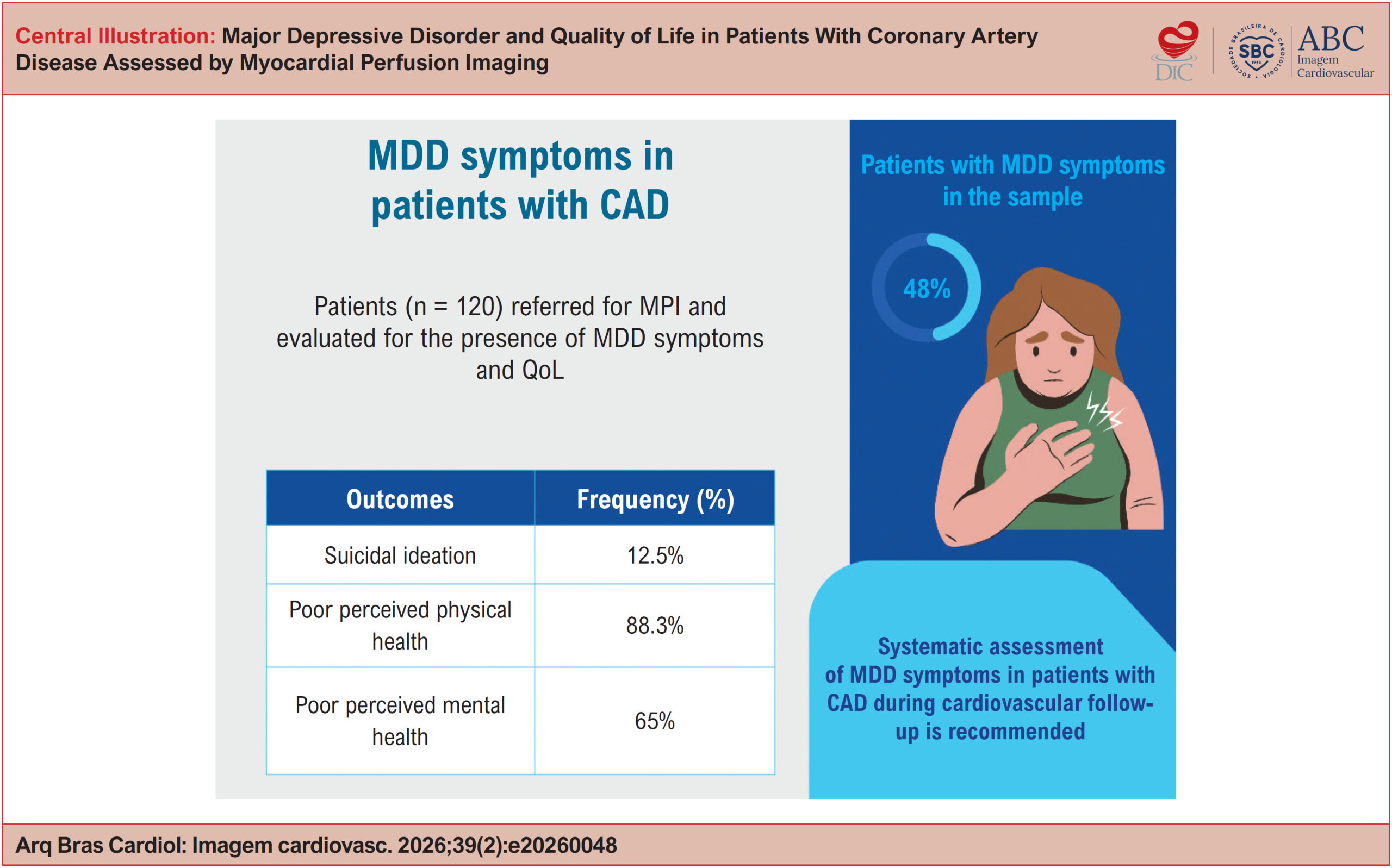
Major Depressive Disorder and Quality of Life in Patients With Coronary Artery Disease Assessed by Myocardial Perfusion Imaging

Guilherme Gonçais Lopes Almeida et al. Gustavo B. Barbirato Valéria de Queiroz Pagnin Daniel Pagnin Cláudio Tinoco Mesquita

Abstract

Background:

Major depressive disorder (MDD) may negatively influence cardiovascular prognosis, increasing the morbidity and mortality of patients with coronary artery disease (CAD). Thus, the psychometric assessment of these individuals may contribute to understanding how mental health impacts the pathophysiology of myocardial ischemia.

Objective:

To evaluate the prevalence of MDD in patients with CAD undergoing stress and rest myocardial perfusion imaging (MPI) using the psychometric instrument Patient Health Questionnaire-9 (PHQ-9). As secondary objectives, to correlate quality of life (QoL) data obtained using the 12-Item Short Form Survey (SF-12) and Positive and Negative Affect Schedule (PANAS) instruments with the presence or absence of myocardial ischemia detected by MPI.

Methods:

The SF-12, PHQ-9, and PANAS questionnaires were administered to 120 consecutive patients referred for MPI for CAD evaluation. The prevalence of MDD was assessed, and the results were correlated with MPI findings and QoL scale scores.

Results:

A high prevalence of MDD was identified (58 cases; 48.3%), with no association with risk factors, age, or MPI findings. A significant rate of suicidal ideation was observed among the evaluated patients (15 cases; 12.5%), in addition to reduced QoL in 88.3% of patients (n = 106), with scores below 50 on the physical SF-12, and in 65% (n = 78), with scores below 50 on the mental SF-12, indicating poor perceived mental health.

Conclusion:

These findings reinforce the need for a multidisciplinary approach in the management of patients with suspected CAD, including systematic mental health assessment, given the opportunities to improve outcomes during patient interactions with the health care system.

  • Major Depressive Disorder
  • Myocardial Ischemia
  • Quality of life
Read Full Article
Creative Commons Attribution (CC BY) Creative Commons license
24/07/2026 DOI: 10.36660/abcimg.20260048i Views 1
IJCS
Editorial

Strengthening Our Understanding of Muscle Metaboreflex Control in Patients with Coronary Artery Disease: (Dis)association Between Physical Fitness and Hemodynamic Responses

André L. Teixeira

Ischemic Heart Disease remains a leading cause of mortality worldwide. In addition to pharmacologic therapy and coronary revascularization, healthy lifestyle interventions such as diet and exercise are essential components of disease management. Although exercise training is a Class I recommendation for patients with ischemic heart disease, physical exertion is not without risk in this population. Indeed, an exercise stress test is a well-established method for inducing myocardial ischemia. Furthermore, patients with ischemic heart disease often exhibit abnormal cardiovascular responses during exercise, which makes exercise prescription both challenging and potentially risky in this clinical population. Therefore, understanding the physiological mechanisms underlying the altered cardiovascular control at rest and during exercise, as well as the cardioprotective effects of exercise training in patients with ischemic heart disease, is critical for improving treatment strategies and optimizing disease management.

The cardiovascular responses to exercise are orchestrated by several integrative neural control mechanisms, including central command, the exercise pressor reflex, the arterial and cardiopulmonary baroreflexes, and the central and peripheral chemoreflexes. The exercise pressor reflex comprises group III and IV skeletal muscle afferents that discharge in response to mechanical deformation (i.e., muscle mechanoreflex) and the accumulation of metabolic by-products of muscle contraction (i.e., muscle metaboreflex)., Inputs from group III/IV afferent fibers synapse within cardiovascular control areas in the brainstem that reflexively decrease parasympathetic and increase sympathetic nerve activity, leading to increased Heart Rate (HR), cardiac output, total peripheral resistance, and arterial blood pressure during exercise., It has been shown that the blood pressure responses to exercise and metaboreflex activation are directly associated with absolute muscle strength in young, healthy adults., Moreover, exercise training-induced improvements in cardiorespiratory fitness can modulate metaboreflex control. Nevertheless, the extent to which the cardiovascular responses to muscle metaboreflex activation are related to markers of physical fitness in patients with Coronary Artery Disease (CAD) is currently unknown.

[…]

  • Cardiovascular System
  • Exercise
  • Myocardial Ischemia
Read Full Article
Creative Commons Attribution (CC BY) Creative Commons license
27/04/2026 DOI: 10.36660/ijcs.20250227 Views 2
Obstructive Sleep Apnea as a Risk Factor for Ischemic Heart Disease
IJCS
Original Article

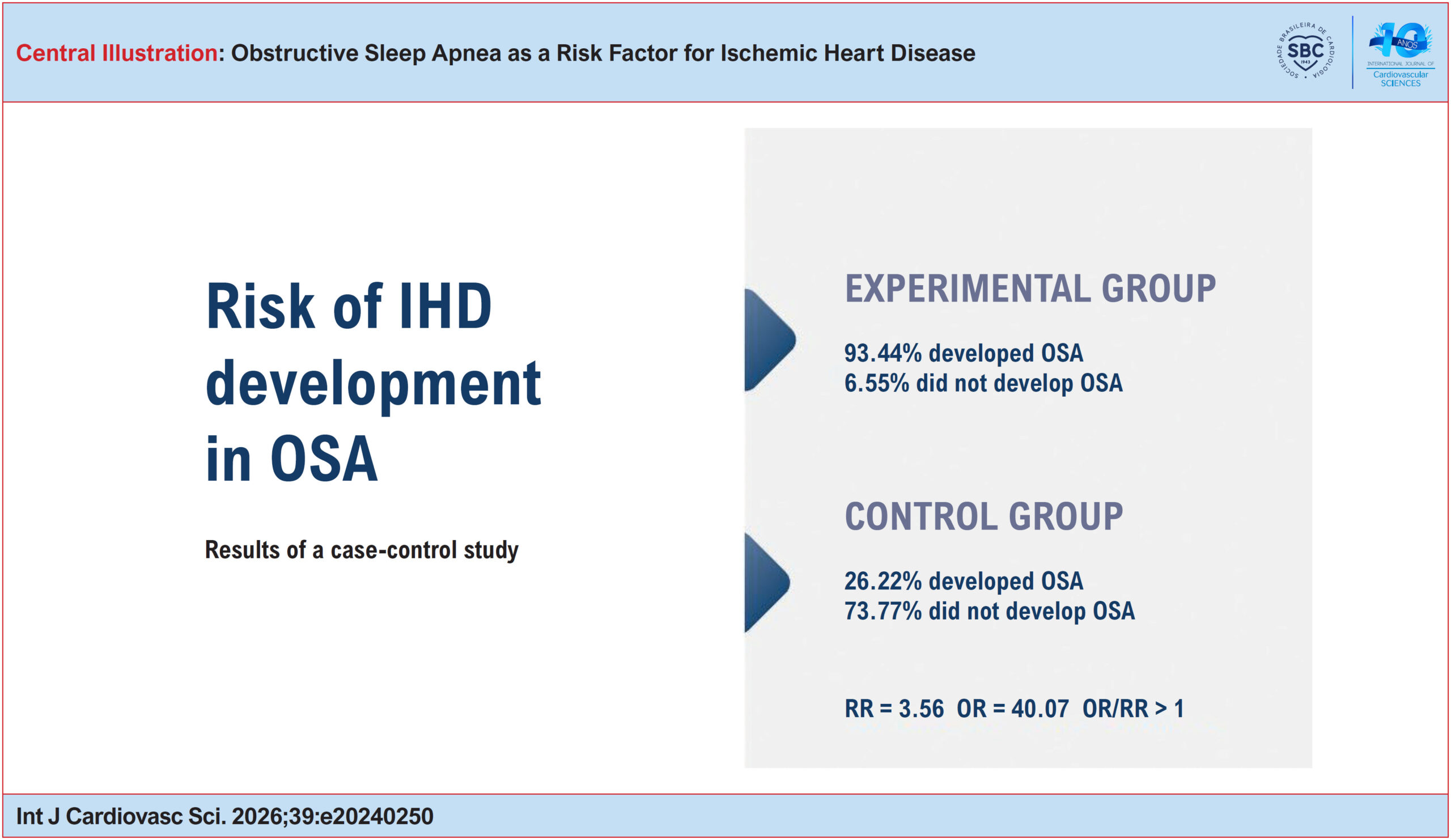
Obstructive Sleep Apnea as a Risk Factor for Ischemic Heart Disease

Soham Samajpaty et al. Alexander Konstantinovich Zhuravlov Emilianovich Dmitrii Ilin Yuriy Sergeivich

Abstract

Background:

Obstructive sleep apnea (OSA) is increasingly recognized as a potential risk factor for ischemic heart disease (IHD), but its role remains underexplored. This study investigated the association between OSA and IHD using a case-control design.

Objectives:

The objective of this study was to establish OSA as a risk factor for developing IHD.

Methods:

A total of 122 participants were recruited and categorized into two groups: patients with a recent history of IHD (< 7 days) (wIHD group, n = 61) and controls without IHD but with hypertension (cIHD group, n = 61). The STOP-Bang questionnaire was used to assess OSA risk, and statistical analyses, including odds ratio (OR), relative risk (RR), and attributable risk (AR), were performed. A significance level of 0.05 was adopted for all statistical analyses.

Results:

Patients in the wIHD group had significantly higher STOP-Bang scores than the control group (p 1). The level of statistical significance was found to be 0.05.

Conclusion:

This study identifies OSA as an important risk factor for IHD, supporting the need for routine OSA screening in cardiovascular risk assessment. Larger studies are needed to further explore this relationship

  • Case-Control Studies
  • Myocardial Ischemia
  • Obstructive Sleep Apnea
  • Risk Factors
Read Full Article
Creative Commons Attribution (CC BY) Creative Commons license
13/03/2026 DOI: 10.36660/ijcs.20240250 Views 2
Association between Cardiovascular Responses to Muscle Metaboreflex and Markers of Physical Fitness in Patients with Coronary Artery Disease
IJCS
Original Article

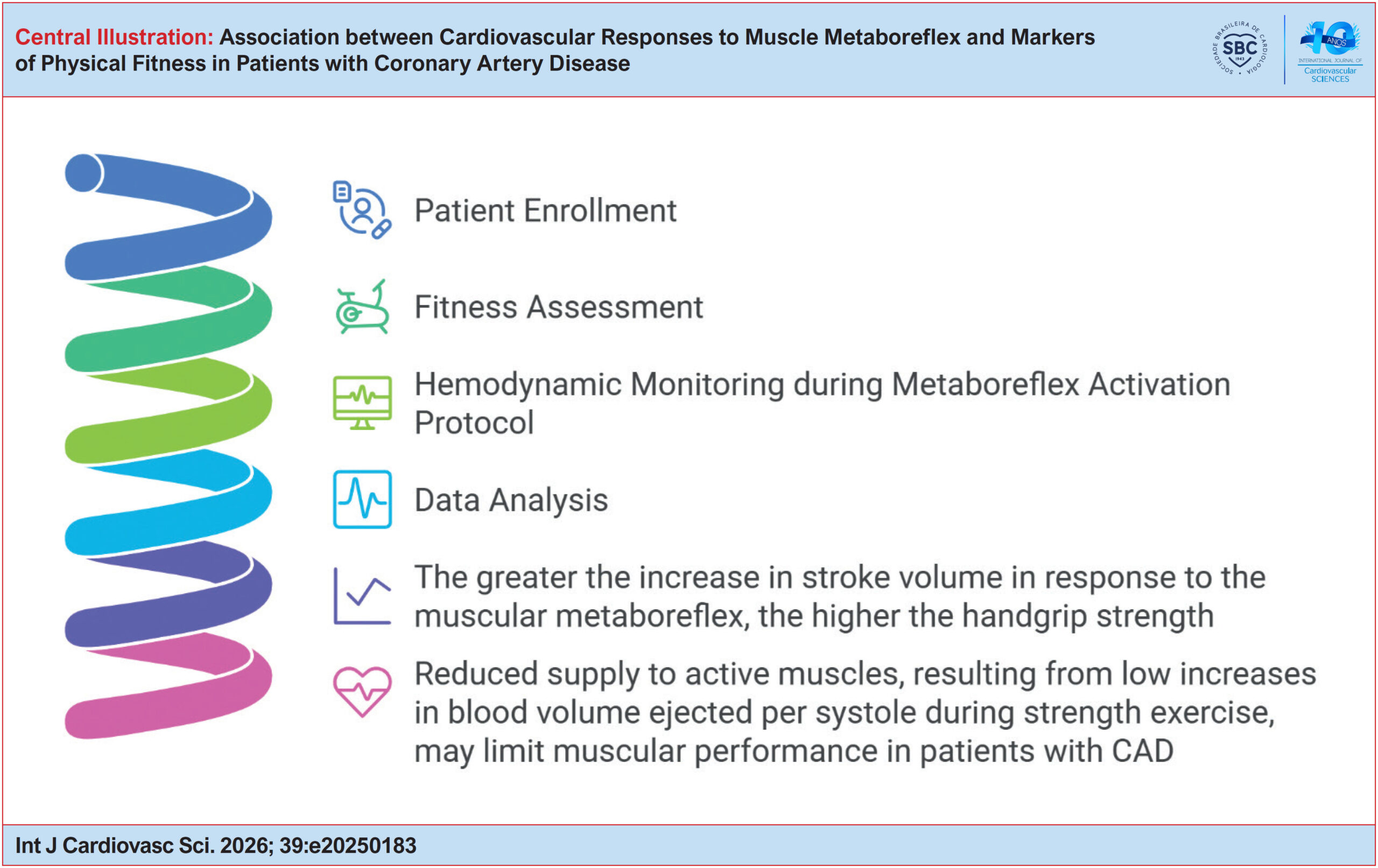
Association between Cardiovascular Responses to Muscle Metaboreflex and Markers of Physical Fitness in Patients with Coronary Artery Disease

Vanessa Cunha de Oliveira Coelho et al. Gabriel da Silva Gama Caio Luan Farias Costa Marcus Vinicius dos Santos Rangel Juliana Borges

Abstract

Background:

The muscle metaboreflex regulates cardiovascular responses during exercise. In patients with coronary artery disease (CAD), this reflex primarily increases blood pressure via sympathetic-mediated vasoconstriction, thereby increasing peripheral vascular resistance (PVR) rather than enhancing stroke volume (SV). This response may result in early fatigue during physical exertion. However, the specific mediators of this response are unclear.

Objective:

To investigate the association between cardiorespiratory and muscle fitness with cardiovascular responses to muscle metaboreflex activation in patients with CAD.

Methods:

Twenty patients underwent an exercise test and a maximal voluntary contraction (MVC) test using handgrip strength. Hemodynamic variables were assessed using photoplethysmography during muscle metaboreflex activation via a post-exercise circulatory arrest (PECA) protocol. Changes (Δ) in mean arterial pressure (MAP), SV, and PVR at rest were used to assess the metaboreflex response.

Results:

Participants (61.7±8.0 years; 28.4±3.9 kg/m²) had a mean VO2max of 31.96±5.70 mL/kg/min, and a MVC of 90.5±21.1 lbs. Metaboreflex activation significantly increased MAP (+14.74±9.56 mmHg, p<0.0001) and PVR (+0.13±0.07 mmHg.s/mL, p<0.0001), but not SV (+1.91±5.54 mL, p=0.13). MVC was directly associated with ΔSV (R=0.54 and p=0.01), but not with ΔMAP (R=0.23 and p=0.31) or ΔPVR (R=-0.10 and p=0.65). In multiple linear regression models adjusted for age and sex, ΔSV emerged as a predictor of MVC (β=+1.37 and p=0.03). Conversely, no significant associations were found between VO2max and ΔSV (R=0.29 and p=0.22), ΔMAP (R=0.14 and p=0.54), or ΔPVR (R=0.05 and p=0.83).

Conclusions:

These findings underscore the association between SV and muscle fitness during metaboreflex activation in patients with CAD.

  • Cardiovascular Physiological Phenomena
  • Exercise Pressor Reflex
  • Exercise Tolerance
  • Myocardial Ischemia
Read Full Article
Creative Commons Attribution (CC BY) Creative Commons license
13/03/2026 DOI: 10.36660/ijcs.20250183
ABC
Case Report

Refractory Angina with Myocardial Ischemia in the Absence of Obstructive Coronary Artery Disease: A Case Report

Filipe Silva Vilela et al. Carla Oliveira Ferreira Bárbara Rocha João Faria … Ana Sofia Fernandes Mónica Dias Inês Conde António Gaspar Carlos Galvão Braga

Introduction

Angina pectoris, the most common symptom of ischemic heart disease, affects approximately 112 million people globally. A large proportion of patients (up to 70%) undergoing coronary angiography because of angina and evidence of myocardial ischemia do not have obstructive coronary arteries, a condition termed INOCA – ischemia with non-obstructive coronary arteries.–

Coronary microvascular dysfunction and epicardial vasospasm, alone or in combination with coronary artery disease (CAD), are adjunctive mechanisms of myocardial ischemia. Discrimination of epicardial coronary artery vasospasm from coronary microvascular dysfunction permits specific and distinct treatment and provides prognostic information to patients and their physicians.

[…]

  • Coronary Vasospasm
  • Microvascular Angina
  • Myocardial Ischemia
Read Full Article
Creative Commons Attribution (CC BY) Creative Commons license
02/03/2026 DOI: 10.36660/abc.20250243i
Safety and Efficacy of Exercise-based Cardiac Rehabilitation in Patients with Refractory Angina
ABC
Original Article

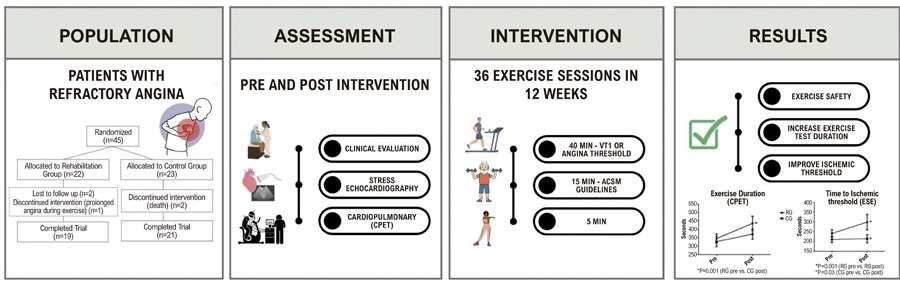
Safety and Efficacy of Exercise-based Cardiac Rehabilitation in Patients with Refractory Angina

Luciana Oliveira Cascaes Dourado et al. Camila Paixão Jordão Marcelo Luiz Campos Vieira Luis Henrique Wolff Gowdak … Carlos Eduardo Negrão Luiz Antonio Machado Cesar Luciana Diniz Nagem Janot de Matos

Abstract

Background

Evidence on the safety and anti-ischemic effects of exercise-based cardiac rehabilitation (ECR) in patients with refractory angina (RA) remains limited.

Objective

To evaluate the safety and efficacy of a 12-week ECR program in patients with RA, focusing on improvements in symptoms, functional capacity, and ischemic burden assessed by exercise stress echocardiography (ESE).

Methods

This was a prospective, single-center, randomized controlled trial evaluating a 12-week ECR program in patients with RA. Forty-five patients were randomized to either the rehabilitation group (RG), receiving ECR, or the control group (CG), receiving medical treatment (MT) alone. Outcomes included mortality, cardiovascular events, anginal symptoms, and parameters from ESE and cardiopulmonary exercise testing (CPET). Statistical significance was set at p < 0.05.

Results

In ESE, exercise duration was significantly greater in RGpost (after ECR) compared to RGpre (before ECR) (∆ = 63.24 ± 19.87 s; p < 0.01). Angina quantification was lower in RGpost than in RGpre, CGpost (after MT alone), and CGpre (before MT alone) (∆ = –1.64 ± 0.48 n, p < 0.01; –3.10 ± 0.97 n, p < 0.01; and –2.73 ± 0.92 n, p = 0.01, respectively). The angina threshold was higher in RGpost than in RGpre and CGpost (∆ = 89.66 ± 33.16 s, p = 0.04; and 111.76 ± 42.25 s, p = 0.04, respectively). Improvement in ischemic burden on ESE was demonstrated by increased time to ischemic threshold in RGpost compared to RGpre, CGpost, and CGpre (∆ = 83.23 ± 21.84 s, p < 0.01; 98.44 ± 35.11 s, p = 0.03; and 109.34 ± 34.00 s, p < 0.01, respectively). In CPET, RGpost showed increased exercise duration (∆ = 104.54 ± 28.09 s, p < 0.01) and distance covered (∆ = 131.23 ± 30.48 m, p < 0.01) compared to RGpre. No significant differences in VO2 were observed between groups. Two patients in the CG group died. One patient in the RG group experienced prolonged angina during training. No significant differences in major cardiovascular events were observed between groups.

Conclusion

The 12-week ECR-program was safe and effective in improving exercise duration, distance covered and ischemic burden on ESE in patients with RA.

  • angina
  • Cardiac Rehabilitation
  • Myocardial Ischemia
Read Full Article
Creative Commons Attribution (CC BY) Creative Commons license
02/02/2026 DOI: 10.36660/abc.20250331i Views 4
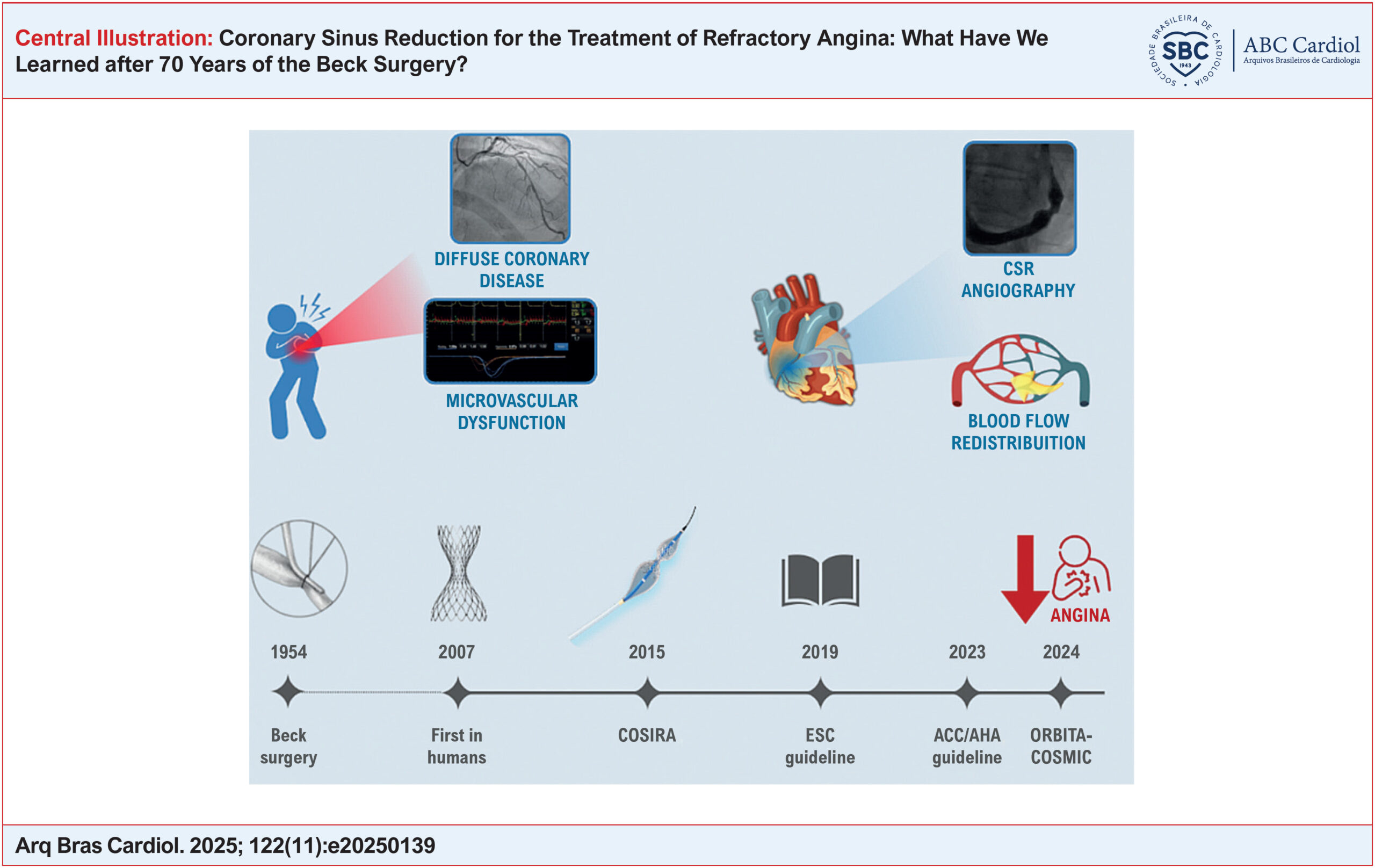
Coronary Sinus Reduction for the Treatment of Refractory Angina: What Have We Learned after 70 Years of the Beck Surgery?
ABC
Review Article

Coronary Sinus Reduction for the Treatment of Refractory Angina: What Have We Learned after 70 Years of the Beck Surgery?

Sara Del Vecchio Ziotti et al. Luciana Oliveira Cascaes Dourado Ranil de Silva Rasha Al-Lamee … Timothy D. Henry Luiz Antonio Machado Cesar Carlos Vicente Serrano Jr. Alexandre Antonio Cunha Abizaid Luis Henrique Wolff Gowdak

Abstract

With the increasing prevalence of chronic coronary syndromes, many patients with extensive atherosclerosis experience uncontrolled angina, even while receiving optimal medical therapy. This is especially true for patients who are not suitable candidates for surgical or percutaneous revascularization. Numerous treatments have been investigated for managing angina pectoris, and in this context, the coronary sinus reducer has emerged as a promising therapeutic option. Since the 1950s, beginning with Beck’s surgery, the coronary venous sinus has been a focal point of research in anti-ischemic therapies.

Significant scientific advances have been made in narrowing the venous sinus in the past two decades. Thanks to technological improvements in minimally invasive procedures and better methods for assessing myocardial blood flow, a new therapeutic option has become available for patients suffering from refractory angina and, possibly, for microvascular dysfunction.

In this review, we aim to examine key concepts related to angina pectoris and myocardial ischemia, highlighting the historical background, pathophysiological rationale, and technical aspects of coronary sinus reduction as a therapy for refractory angina. Additionally, we will explore the scientific evidence from recent decades, as well as identify existing gaps and outline future research directions concerning this emerging treatment.

  • Angina Pectoris
  • Blood Circulation
  • Myocardial Ischemia
Read Full Article
Creative Commons Attribution (CC BY) Creative Commons license
19/01/2026 DOI: 10.36660/abc.20250139i Views 1
Forecasting Ischemic Heart Disease, Stroke, and Peripheral Artery Disease Mortality in Brazil Through 2040: A Bayesian Modeling Approach
ABC
Original Article

Forecasting Ischemic Heart Disease, Stroke, and Peripheral Artery Disease Mortality in Brazil Through 2040: A Bayesian Modeling Approach

Pedro Rafael Vieira de Oliveira Salerno et al. Antoinette Cotton Bruno R. Nascimento Zhuo Chen … Gabriel Tensol Rodrigues Pereira Alexandre A. Abizaid Luis Augusto Palma Dallan Pedro Rafael Salerno Sadeer Al-Kindi Fanny Petermann-Rocha Salil V. Deo

Abstract

Background

Atherosclerotic cardiovascular disease — particularly ischemic heart disease (IHD), stroke, and peripheral artery disease (PAD) — is the leading cause of cardiovascular mortality in Brazil.

Objectives

This study aimed to project mortality trends for IHD, stroke, and PAD in Brazil through 2040.

Methods

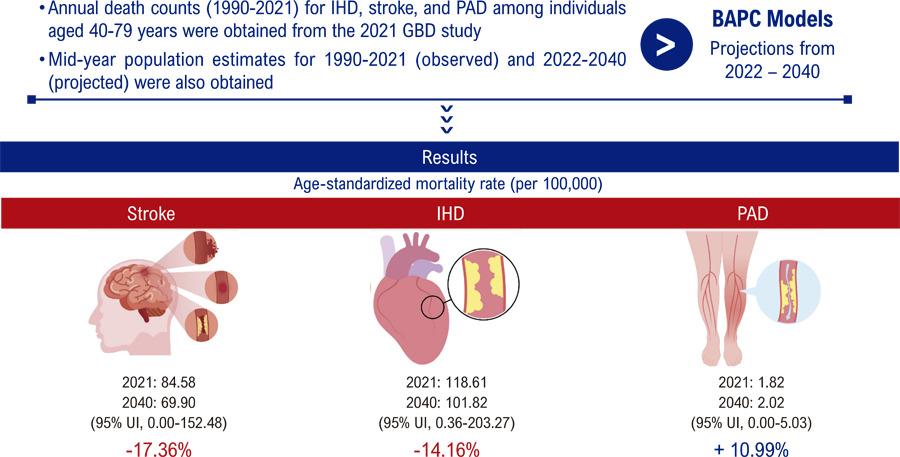
Annual death counts (1990-2021) for IHD, stroke, and PAD among individuals aged 40-79 years were obtained from the Global Burden of Disease (GBD) 2021 study. Mid-year population estimates for both observed (1990-2021) and projected (2022-2040) periods were used. Crude and age-standardized mortality rates were calculated. Bayesian age-period-cohort models were applied to project mortality rates from 2022 to 2040. Relative percentage changes and estimated annual percentage changes (EAPCs) were computed. Projections (per 100,000 population) are reported as medians with 95% uncertainty intervals (UIs), and EAPCs include bootstrap-derived confidence intervals (CIs).

Results

Between 1990 and 2040, Brazil’s population aged 40-79 years is projected to grow by 237.82%. The age-standardized mortality rate for IHD is expected to decline by 14.16% [from 118.61 in 2021 to 101.82 in 2040 (95% UI, 0.36-203.27)] (EAPC: -0.83% [95% CI, -0.84 to -0.83]); and for stroke by 17.36% [from 84.58 to 69.90 (95% UI, 0-152.48)] (EAPC: -1.07% [95% CI, -1.10 to -1.04]). In contrast, PAD mortality is projected to increase by 10.99% [from 1.82 to 2.02 (95% UI, 0-5.03)] (EAPC: 0.45% [95% CI, 0.30-0.59]). Additionally, sex-specific age-standardized mortality rates showed considerable variation. For IHD, rates are projected to decline by 25.31% among men (EAPC: -1.56% [95% CI, -1.57 to -1.55]), while increasing by 4.12% among women (EAPC: 0.14% [95% CI, 0.13-0.16]). Stroke mortality is expected to decrease by 30.00% in men (EAPC: -1.94% [95% CI, -1.96 to -1.91]) and by 4.52% in women (EAPC: -0.33% [95% CI, -0.37 to -0.29]). In contrast, PAD mortality is projected to rise by 14.64% in men (EAPC: 0.55% [95% CI, 0.38 to 0.71]) and by 21.92% in women (EAPC: 0.91% [95% CI, 0.78-1.02]).

Conclusion

While mortality rates for IHD and stroke are projected to decline, PAD mortality is expected to rise — particularly among women — highlighting the urgent need for sex-specific and disease-specific public health interventions.

  • Brazil
  • Mortality
  • Myocardial Ischemia
  • Peripheral Arterial Disease
  • Stroke
Read Full Article
Creative Commons Attribution (CC BY) Creative Commons license
16/01/2026 DOI: 10.36660/abc.20250189i Views 2
ABCHF
Case Report

Reverse Remodeling After Myocardial Revascularization in Severe Ischemic Heart Disease

Bruna Montingelli Espinola Trento et al. Daniela Gourlart Medeiros Maria Eduarda Soares Bizinelli Manuella Macedo Barão Ana Karyn Ehrenfried Freitas

Introduction

Heart failure with reduced ejection fraction (HFrEF), especially of ischemic etiology, is a challenging condition associated with high morbidity and mortality.¹ Patients with HFrEF frequently present with ventricular remodeling and progressive systolic dysfunction, making early identification of significant coronary artery disease (CAD) essential for defining therapy and optimizing prognosis.

Triple-vessel CAD involving the left main coronary artery (LMCA) constitutes a high-risk scenario. Guidelines recommend surgical revascularization in most cases, particularly in the presence of pronounced left ventricular dysfunction.² Evidence from studies such as STICH/STICHES has demonstrated that coronary artery bypass grafting (CABG) combined with optimized medical therapy in patients with ischemic cardiomyopathy and reduced left ventricular ejection fraction (LVEF) promotes improved long-term outcomes, although the perioperative risk remains high, with mortality up to 8.6% in patients with LVEF < 35%.³

[…]

  • Coronary Artery Disease
  • Echocardiography
  • Heart Failure
  • Myocardial Ischemia
  • Myocardial Revascularization
Read Full Article
Creative Commons Attribution (CC BY) Creative Commons license
31/12/2025 DOI: 10.36660/abchf.20250039i Views 1
Social Vulnerability Index and Mortality from Ischemic Heart Diseases and Cerebrovascular Diseases in Brazil from 2000 to 2021
ABC
Original Article

Social Vulnerability Index and Mortality from Ischemic Heart Diseases and Cerebrovascular Diseases in Brazil from 2000 to 2021

José Lucas Bichara et al. Luiz Antônio Bastos Eric Delgado dos Santos Mafra Lino Paolo Blanco Villela Gláucia Maria Moraes de Oliveira

Abstract

Background:

Previous studies have observed a correlation between mortality rates from ischemic heart diseases (IHDs), cerebrovascular diseases (CBVDs), and the Social Vulnerability Index (SVI). However, doubts persist about the association between the overall SVI and its dimensions and mortality stratified by sex, ethnicity, and population clusters.

Objective:

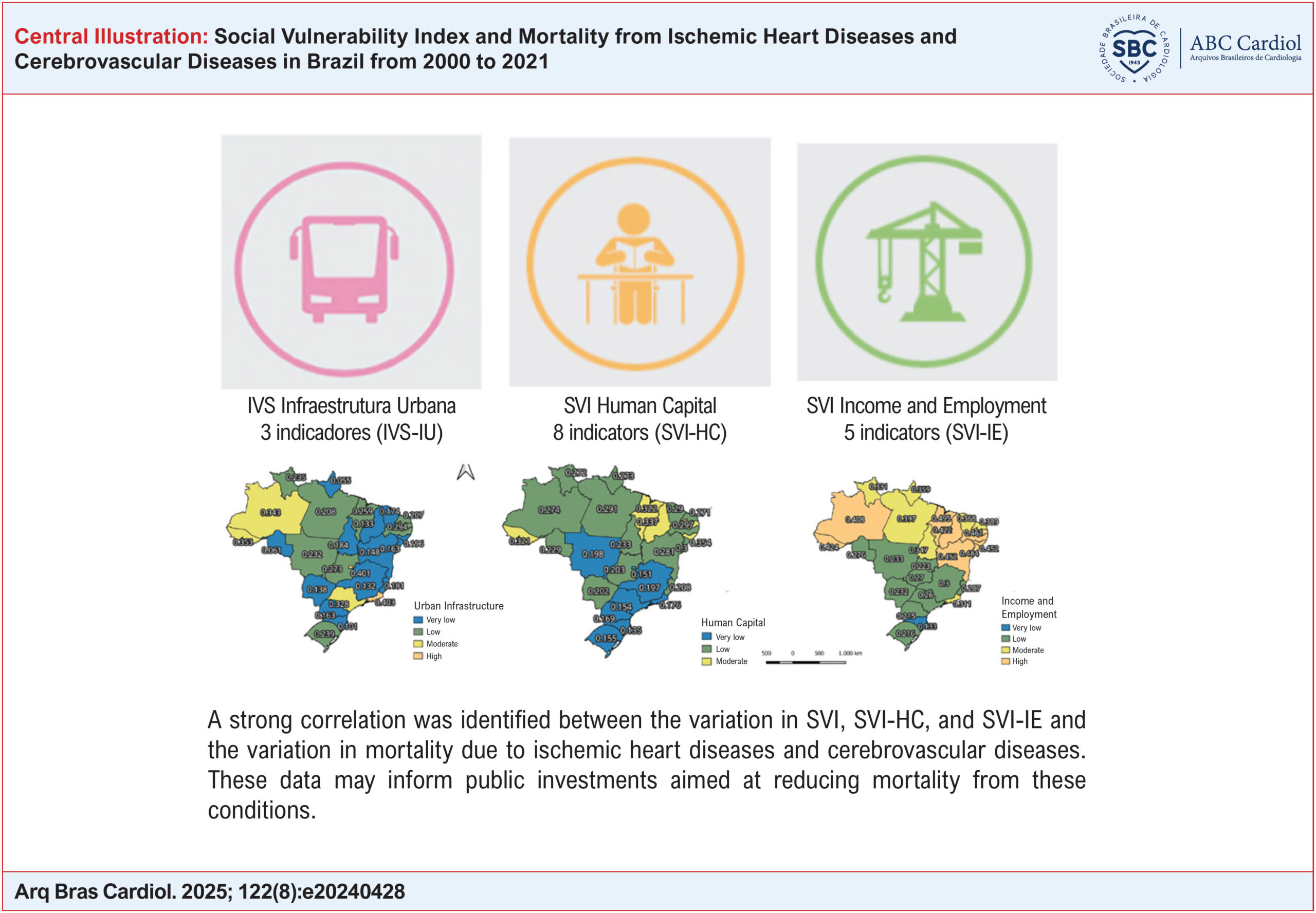
To analyze the evolution of the overall SVI and its dimensions and correlate it with mortality rates due to IHD and CBVD in Brazil and its Federative Units (FUs) from 2000 to 2021.

Methods:

Ecological study of time series of standardized mortality rates (using the direct method with the Brazilian population in 2000) due to IHD and CBVD categorized by age, sex, and FUs between 2000 and 2021, correlated with the SVI and its dimensions. Data on the underlying causes of death were obtained from the Mortality Information System, while SVI data were sourced from the Social Vulnerability Atlas. Spearman correlation (considered significant if p<0.05) was employed to calculate each analyzed stratum.

Results:

The SVI and its Human Capital (SVI-HC) dimension and Income and Employment (SVI-IE) dimension in 2010 showed a strong correlation with variations in mortality rates due to CBVD and IHD (SVI x CBVD: Rho(p)=0.85; SVI x IHD: Rho(p)=0.75; SVI-HC x CBVD: Rho(p)=0.84; SVI-HC x IHD: Rho(p)=0.84; SVI-IE x CBVD: Rho(p)=0.81; SVI-IE x IHD: Rho(p)=0.71). The Urban Infrastructure dimension (SVI-UI) showed a weak correlation with CBVD and IHD, respectively (SVI-UI x CBVD: Rho(p)=0.33; SVI-UI x IHD: Rho(p)=0.25).

Conclusion:

Both SVI-HC and SVI-IE demonstrated strong correlations with variations in mortality rates from IHD and CBVD.

  • Cardiovascular Diseases
  • Cerebrovascular Disorders
  • Epidemiology
  • Myocardial Ischemia
  • Social Vulnerability
Read Full Article
Creative Commons Attribution (CC BY) Creative Commons license
19/09/2025 DOI: 10.36660/abc.20240428i Views 2
Figure 1
ABCIC
Case Report

Assessment of Coronary Flow Reserve by Myocardial Perfusion Scintigraphy using CZT Equipment

Wilter dos Santos Ker et al. Davi Shunji Yahiro Gabriel de Moraes Mangas Isabelle Mendes Rodrigues Salomão … José Augusto Antonio Alves Flor Hugo Matheus Silvestre Vianna Cláudio Tinoco Mesquita

Abstract

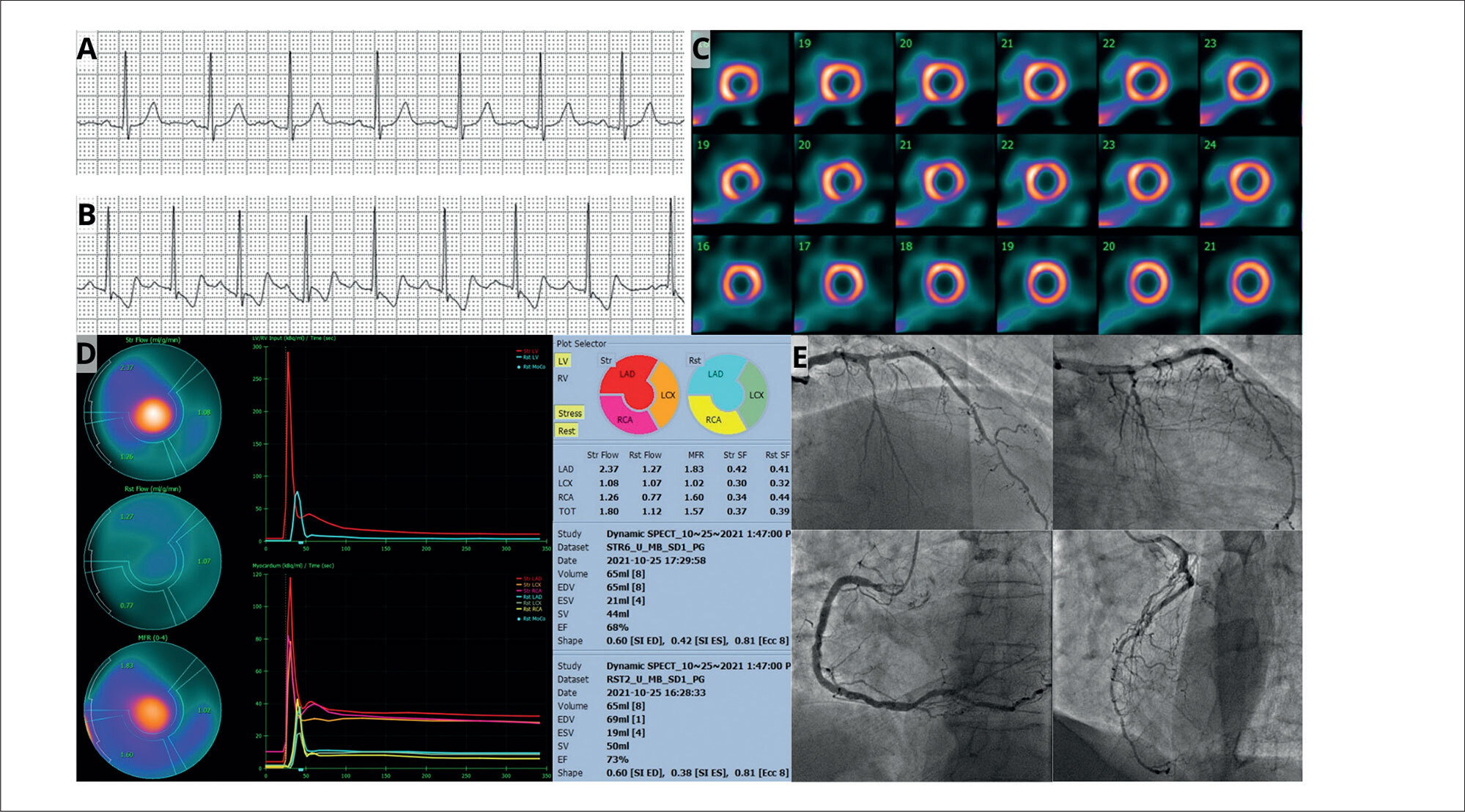
This case report presents a myocardial perfusion analysis in a 67-year-old asymptomatic male patient with known coronary artery disease (CAD) and multiple risk factors. While myocardial perfusion Imaging (MPI) with single-photon emission computed tomography (SPECT) revealed a 5% area of ischemia, the myocardial blood flow quantification assessment in a camera equipped with cadmium-zinc-telluride (CZT) detectors demonstrated a reduced global myocardial flow reserve (MFR) of 1.57. Coronary angiography confirmed extensive multivessel disease, including an 80% stenosis in the left anterior descending artery (LAD) and an occlusion of the circumflex artery (LCx), findings not fully identified by the semi-quantitative SPECT MPI. This case underscores the importance of MFR assessment, particularly using CZT technology, in detecting significant CAD that may be underestimated by traditional SPECT methods. It highlights the potential of dynamic CZT SPECT to provide more comprehensive functional information, enhancing risk stratification and potentially influencing patient management in complex cases of suspected or known CAD.

  • Coronary Artery Disease
  • Myocardial Ischemia
  • Single-Photon Emission-Computed Tomography
Read Full Article
Creative Commons Attribution (CC BY) Creative Commons license
01/07/2025 DOI: 10.36660/abcimg.20250020i Views 1
Figure 1
IJCS
Case Report

ECG's AVR ST elevation Analysis by Perfusion Scintilography in the Context of Myocardial Ischemia

Miriana Basso Gomes et al. Carolina Feijó Bombana Felipe C. Fuchs

Introduction

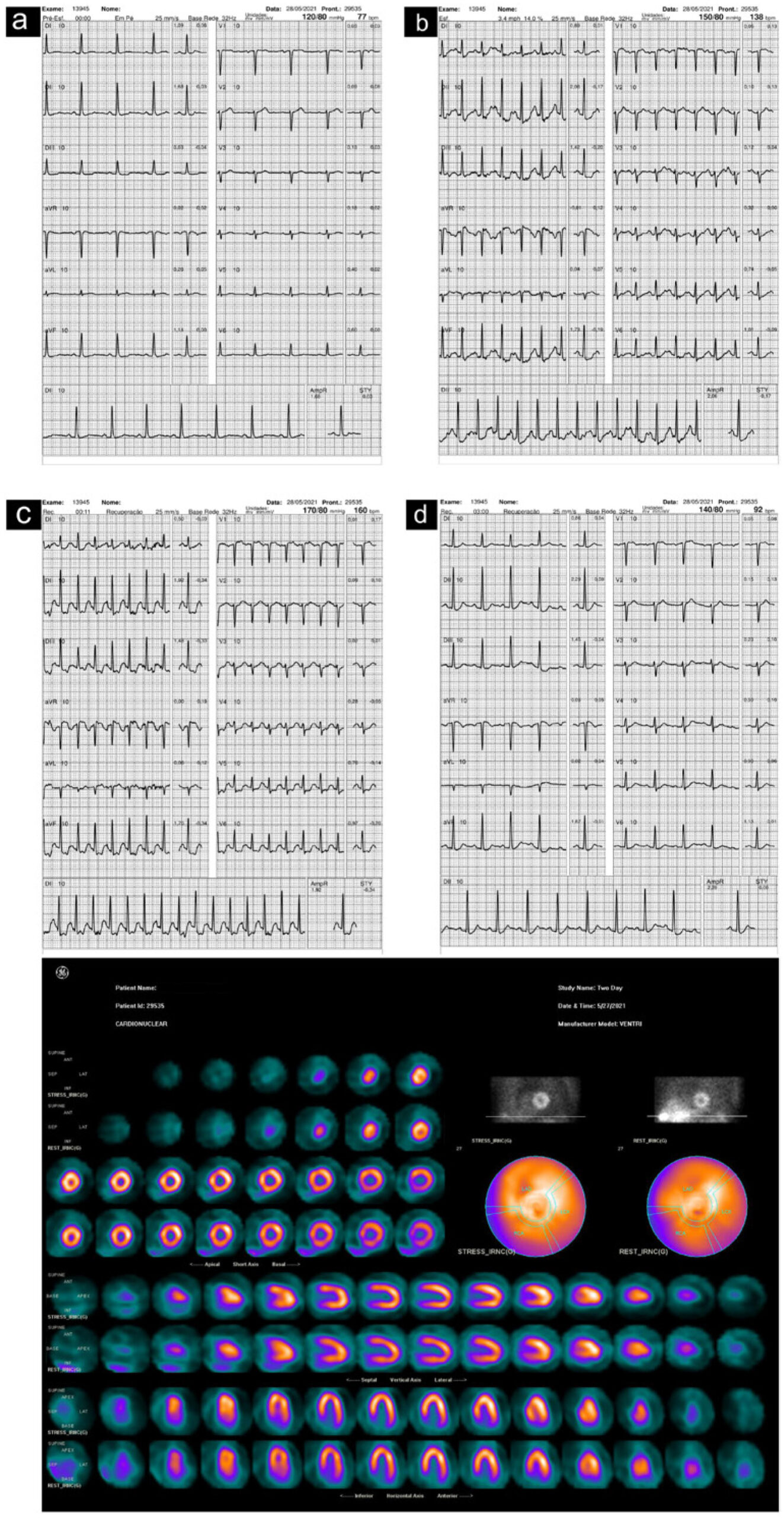
The presence of ST-segment elevation in two or more contiguous leads indicates a current subepicardial lesion that often requires early intervention, either by angioplasty or thrombolytic therapy., ST elevation, only in aVR, may also indicate the presence of an acute infarction. This finding was first made by Wellens et al. However, this is not always true, and physicians should be aware of the details surrounding changes in Right Vector amplification (aVR).

The medical literature has a wide range of articles reporting on the association between ST elevation in aVR during exercise testing and left main coronary artery injury.– However, this concept began at a time when fewer imaging tests and catheterizations were performed. Altered stress tests are a common indication of myocardial scintigraphy, which is why the Nuclear Medicine laboratory is the perfect place to perform this type of analysis. There is now evidence that aVR elevation in this context may not indicate coronary lesions and may be present, for example, in patients with aortic stenosis, hypertrophy and hypoxia..– Since these are stress tests, it is important to analyze the heart rate in which the aVR elevation occurs as well as the pattern of the other leads.

[…]

  • Electrocardiography
  • Exercise Test
  • Myocardial Ischemia
  • Radionuclide Imaging
Read Full Article
Creative Commons Attribution (CC BY) Creative Commons license
11/04/2025 DOI: 10.36660/ijcs.20230080 Views 1
Figure 1
ABC
Research Letter

Coronary-Cavitary Fistula, an Unusual Cause of Heart Failure

Hernán Patricio García Mejía et al. Matheus Carvalho Alves Nogueira Bruno Mahler Mioto Nilson Tavares Poppi … Luiz Antonio Machado Cesar Luhanda Leonora Cardoso Monti Sousa Luís Roberto Palma Dallan

Introduction

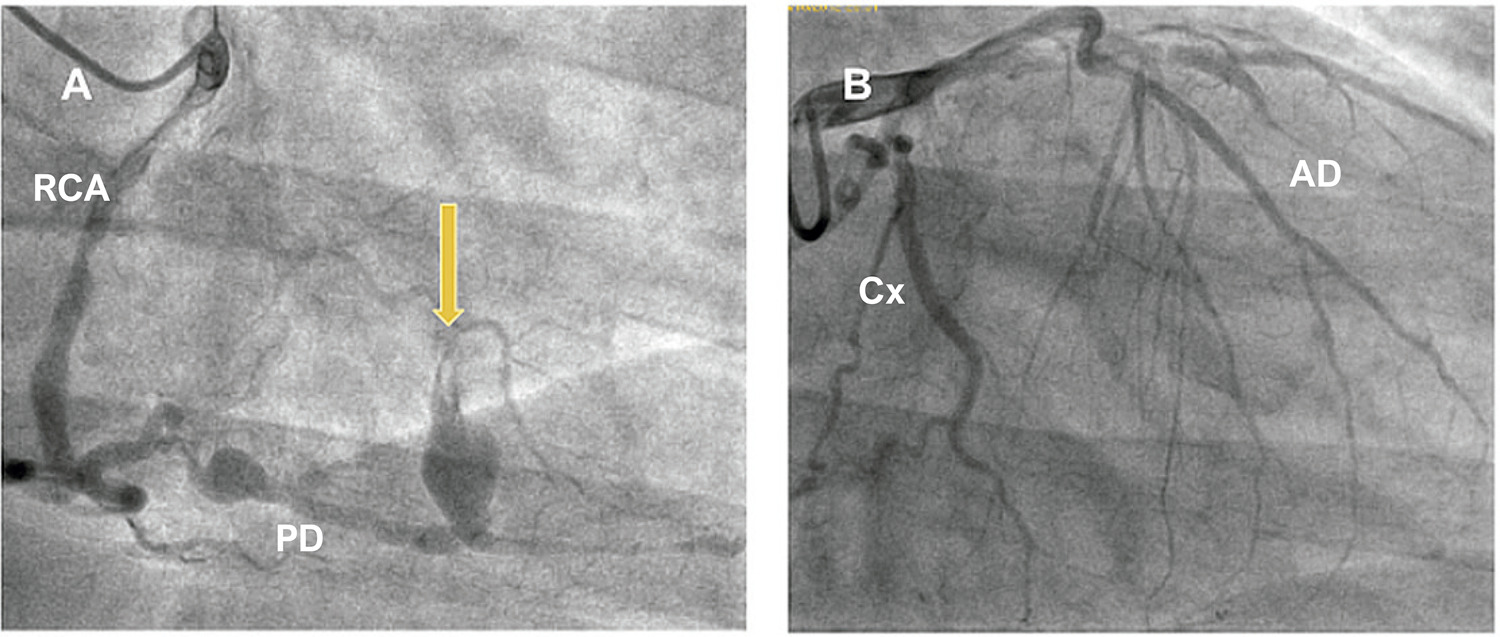
Coronary fistulas (CFs) are defined as a direct anomalous connection between one or more coronary arteries with a large vessel or cardiac chamber. Most CFs drain into a lower pressure system, such as the right ventricle (RV) 40%, right atrium (RA) 26%, pulmonary artery (PA) 17%, coronary sinus 7%, and vena cava 1%. The clinical presentation will depend on the location and volume of the shunt generated by the fistula. Approximately 50% of cases are asymptomatic and, when present, may include dyspnea, palpitations, chest pain, or, in more severe cases, heart failure (HF), acute coronary syndromes, and arrhythmias.,

[…]

  • Coronary Angiography
  • Fistula
  • Heart Failure
  • Myocardial Ischemia
Read Full Article
Creative Commons Attribution (CC BY) Creative Commons license
04/04/2025 DOI: 10.36660/abc.20240809i Views 2
IJCS
Editorial

Myocardial Ischemia and the Emerging Role of Coronary Flow Reserve Quantification

Ana Carolina do Amaral Henrique de Souza

Recent years have seen remarkable advances in nuclear cardiology. The introduction of cardiac positron emission tomography (PET) and the development of cadmium-zinc-telluride (CZT) imaging systems have significantly improved diagnostic accuracy, clinical decision-making, and ultimately outcomes for patients with coronary artery disease (CAD). In this issue, Giubbini and Milan review key concepts related to myocardial ischemia and explore the emerging importance of quantifying coronary flow reserve (CFR) in patients with known or suspected CAD.

PET imaging has become a preeminent modality in the evaluation of ischemic heart disease, providing high diagnostic and prognostic value. PET imaging offers several advantages over other imaging modalities, including low radiation exposure, accurate assessment of left ventricular function and perfusion, and the ability to quantitatively measure myocardial blood flow (MBF) and CFR. CFR is defined as the ratio of exercise MBF to resting MBF and reflects not only obstructive CAD but also diffuse atherosclerosis and microvascular dysfunction (CMD) throughout the coronary system. The ability to measure absolute flow and flow reserve is particularly beneficial in cases of multivessel disease or CMD, complementing traditional perfusion imaging, as both conditions can occur even when perfusion appears normal.

[…]

  • Coronary flow reserve
  • Myocardial Ischemia
  • Positron-Emission Tomography
  • Single-Photon Emission-Computed Tomography
Read Full Article
Creative Commons Attribution (CC BY) Creative Commons license
03/03/2025 DOI: 10.36660/ijcs.20240171 Views 1
Figure 1
ABC
Editorial

The Choice of Antiplatelet Dual Combination in Coronary Artery Disease: Is this Just a Question of Balance between ischemic Burden and Bleeding Risk?

Maria Cristina Almeida et al. Marildes Luiza de Castro Larissa Neto Espíndola

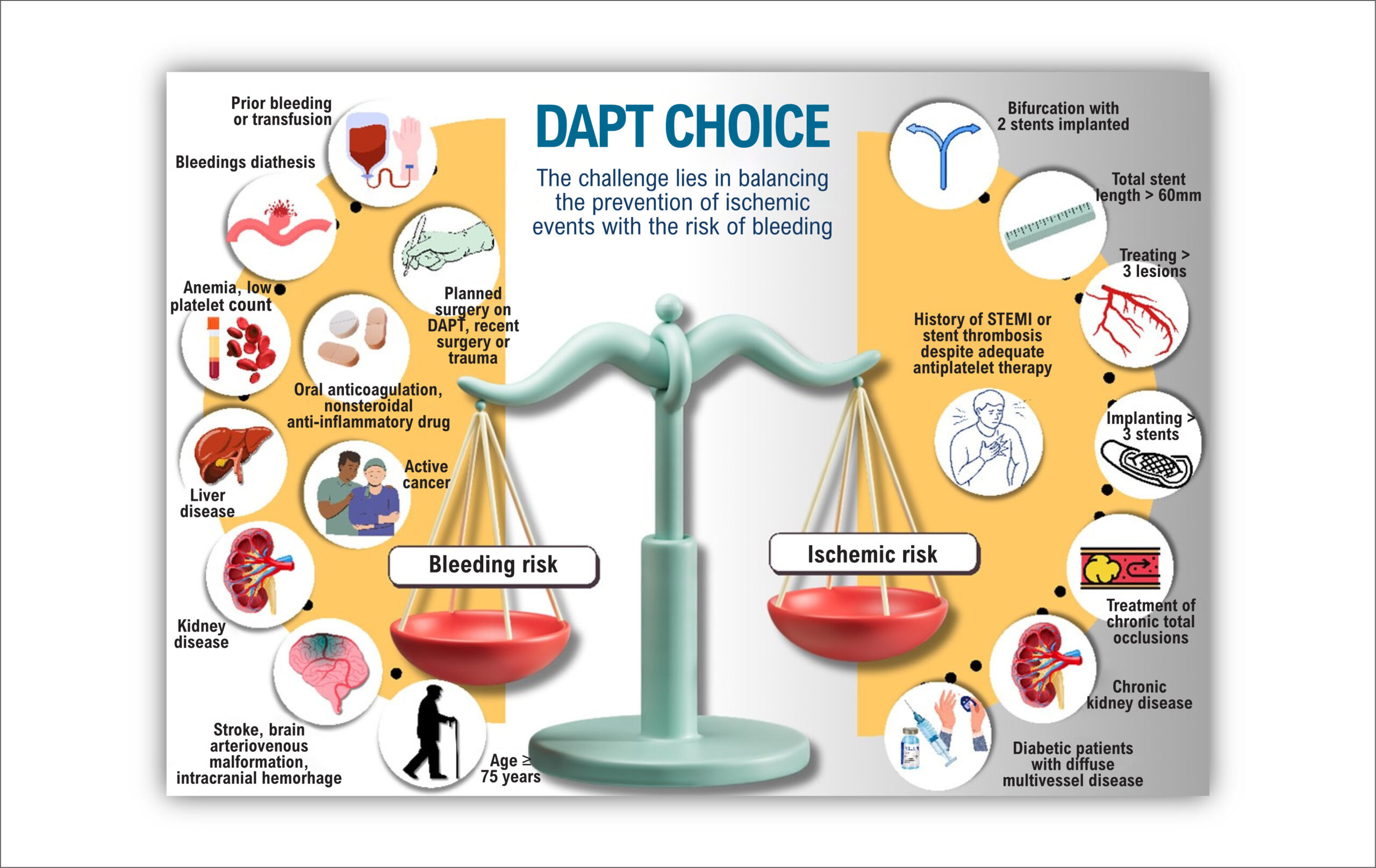
Acute or chronic coronary syndrome is one of the most important threats to public health. Because of structural and/or functional alterations of the coronary arteries and/or microcirculation, it can culminate in disbalance between myocardial demand and blood supply resulting in ischemia.

Primary prevention of acute coronary ischemic events based on lowering the risk of coronary artery occlusion is a very important measurement. Secondary prevention after myocardial revascularization by percutaneous coronary intervention (PCI) with stent is important to reduce the risk of stent thrombosis, ischemic events and myocardial infarction (MI), particularly early after stenting. Many protocols have been studied, but the dual antiplatelet therapy (DAPT) with aspirin plus a potent P2Y12 inhibitor is the current standard of care after PCI.

[…]

  • Dual Anti-Platelet Therapy
  • Myocardial Ischemia
  • stent
Read Full Article
Creative Commons Attribution (CC BY) Creative Commons license
20/01/2025 DOI: 10.36660/abc.20240695i Views 2
Acute Coronary Syndrome in Brazil: Registration of Predisposing Factors and Population Profile in a National Public Reference Cardiological Institute
ABC
Original Article

Acute Coronary Syndrome in Brazil: Registration of Predisposing Factors and Population Profile in a National Public Reference Cardiological Institute

Kaliana Nascimento et al. Hugo Ribeiro Ramadan Bruno Mendonça Baccaro Vinicius Vaz de Sales Bicalho … Italo Menezes Ferreira Louis Nakayama Ohe Vitor Sobreira Souza Santos Fausto Feres Kleber Franchini Ari Timerman Diandro Marinho Mota

Abstract

Background

Acute coronary syndrome (ACS) is one of the leading causes of mortality worldwide. Knowing the predisposing factors is essential for preventing it.

Objectives

To describe the etiological and epidemiological characteristics of the population with ACS admitted to an emergency room in the State of São Paulo.

Methods

The prospective cohort study, based on electronic medical records from a public cardiology institute located in the state of São Paulo, Brazil, describes 5,580 patients hospitalized with ACS between August 2018 and October 2022. The main epidemiological characteristics, the association between confirmed ACS and risk scores, and adverse events during hospitalization and in the 30-day follow-up after hospital discharge were evaluated. The significance level was set at 5%.

Results

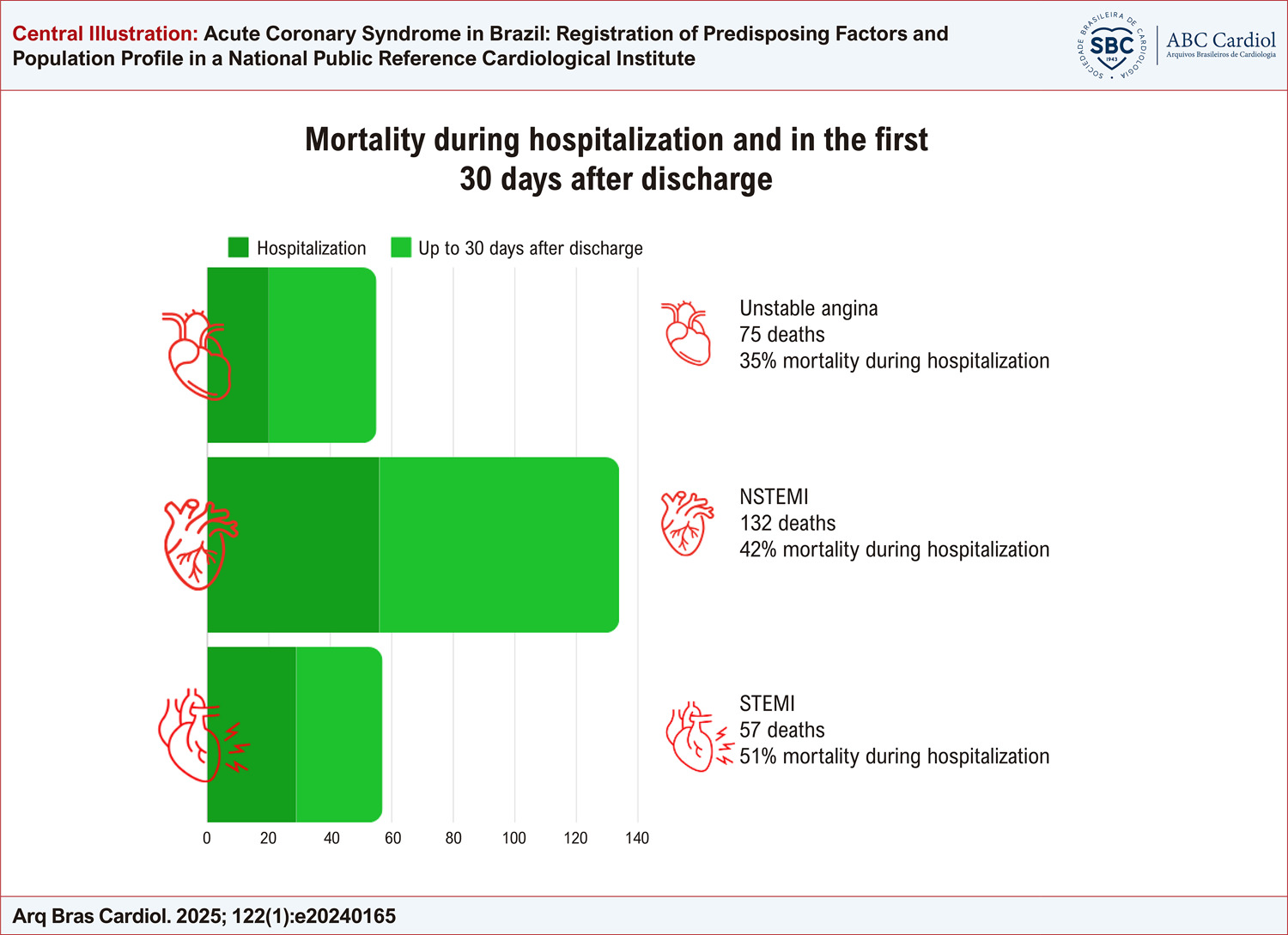
The main factors associated with ACS were hypertension (80.38%), obesity or overweight (72.47%), and previous coronary artery disease (CAD) (59.11%). In the GRACE score, 65.10% were considered low risk, while 81.34% in the TIMI and 71.16% in the HEART were identified as moderate risk. Catheterization represented 84.93% of the diagnostic methods. Clinical treatment was the strategy adopted in 46.47% of the cases. In the 30-day evolution, 3.10% presented major bleeding, 7.86% infarction/reinfarction, 5.55% stroke, and 2.53% evolved to death.

Conclusion

The results of the largest Brazilian ACS registry to date highlight the impact of potentially modifiable risk factors on the occurrence of ischemic events in the local population. The findings may contribute to the development of public policies aimed at preventing and controlling the burden of ischemic disease in the country.

  • Acute coronary syndrome
  • Cardiovascular Diseases
  • Coronary Disease
  • Myocardial Ischemia
Read Full Article
Creative Commons Attribution (CC BY) Creative Commons license
13/01/2025 DOI: 10.36660/abc.20240165i Views 1
Central Illustration
ABCHF
Original Article

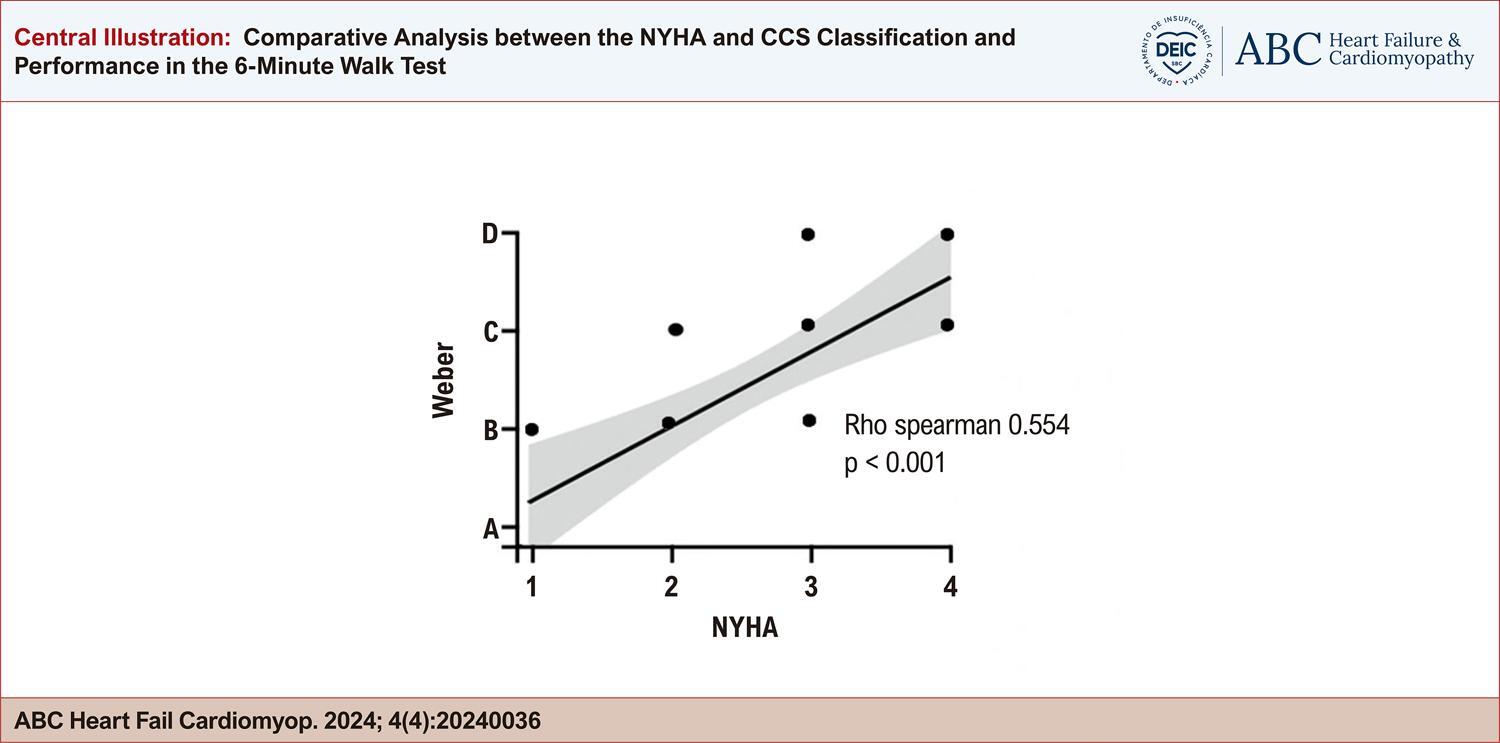
Comparative Analysis between the NYHA and CCS Classification and Performance in the 6-Minute Walk Test

Luiz Carlos Santana Passos et al. Roberval Prado dos Santos Junior Laís Fernanda Duarte Sampaio Clara Sales Figueiredo Caio Rebouças Fonseca Cafezeiro

Abstract

Background

Functional classification is a critical predictor to establish a prognosis for heart failure (HF) and Coronary Artery Disease (CAD). However, recent research has questioned the reproducibility of the New York Heart Association (NYHA) and Canadian Cardiovascular Society (CCS) classifications, and their ability to discriminate patient prognosis at an individual level.

Objective

To investigate the discordance rate between the NYHA/CCS class assigned by the physician during outpatient consultation and the 6-minute walk test (6MWT) performance to refine the assessment of patients with HF/CAD.

Methods

A retrospective cohort study collected data from medical records of patients referred for cardiovascular rehabilitation. The 6MWT was performed with the aim of evaluating the functional capacity and associated symptoms of patients with HF and CAD. The correlation between variables was assessed using the correlation coefficient and agreement was assessed using the kappa coefficient.

Results

A total of 65 patients were selected, with 50.8% male, and a mean age of 57.3 ± 11 years. The median left ventricular ejection fraction was 45%, with 13.8% of patients presenting ischemic cardiomyopathy. Discordance in functional class was observed in 54% of HF patients by NYHA and 55% of angina patients by CCS.

Conclusion

The present study identified discordance between the functional class assigned by the attending physician and that determined by the 6MWT, indicating that NYHA/CCS functional classification and 6MWT provide complementary information that is more accurate when used in concomitance.

  • Heart Failure
  • Myocardial Ischemia
  • Walk Test
Read Full Article
Creative Commons Attribution (CC BY) Creative Commons license
26/12/2024 DOI: 10.36660/abchf.20240036i Views 1
ABC
Editorial

Analysis of Myocardial Flow Reserve Using the CZT Camera. Additional Value to Perfusion and Functional Information in Identifying the Cause of Chest Discomfort

Paola Emanuela Poggio Smanio

Chest discomfort is one of the most common symptoms that often leads people to hospital emergency services. The importance of rapid differentiation between acute cardiac ischemic syndrome secondary to significant obstruction of the coronary arteries (obstructive CAD) and other conditions that also causes chest discomfort promptly is essential.

Many patients are discharged inadvertently and progress to acute events, on the other hand, others remain for several days occupying precious beds in hospital emergency rooms without the cause being cardiological.

[…]

  • Coronary Artery Disease
  • Myocardial Fractional Flow Reserve
  • Myocardial Ischemia
  • Myocardial Perfusion Imaging
Read Full Article
Creative Commons Attribution (CC BY) Creative Commons license
30/09/2024 DOI: 10.36660/abc.20240366i
Safety and Efficacy of Adipose-Derived Mesenchymal Stem Cell Therapy for Ischemic Heart Disease: A Systematic Review
ABC
Original Article

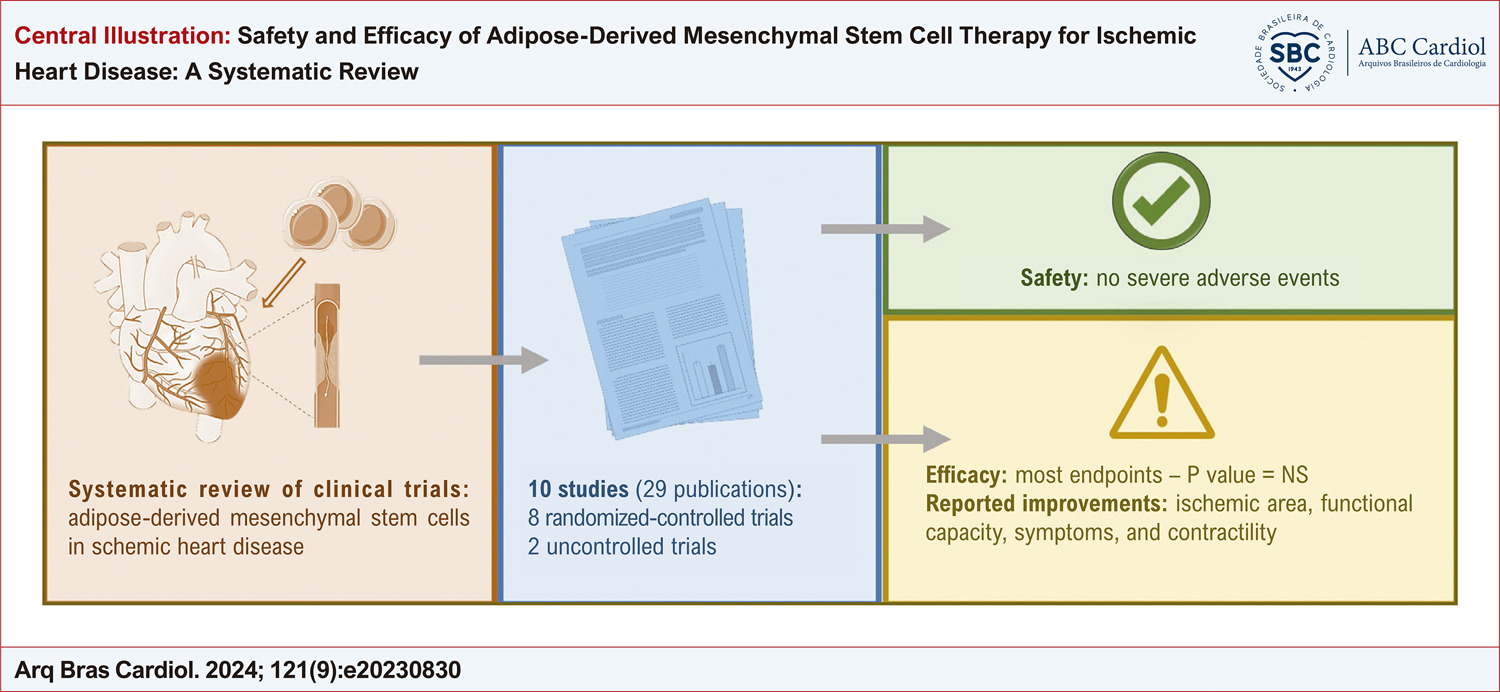
Safety and Efficacy of Adipose-Derived Mesenchymal Stem Cell Therapy for Ischemic Heart Disease: A Systematic Review

Fernando Rabioglio Giugni et al. Melina de Oliveira Valdo Giugni Henrique Trombini Pinesi Fabio Cetinic Habrum … Lígia Nasi Laranjeira Erica Regina Ribeiro Sady Erica Aranha Suzumura Luis Henrique Wolff Gowdak José Eduardo Krieger

Abstract

Background

Cell therapy using adipose-derived mesenchymal stem cells (ADSCs) shows great potential as a treatment for cardiovascular diseases.

Objective

We conducted a systematic review to describe the safety and efficacy of ADSCs in ischemic heart disease.

Methods

We searched PubMed/MEDLINE, EMBASE, Web of Science, CENTRAL, and LILACS (from inception to March 2024) for clinical studies involving ADSCs in patients with ischemic heart disease. We excluded studies involving patients with other types of heart disease, studies using mesenchymal stem cells derived from other tissues, as well as ongoing studies. Two independent reviewers screened the retrieved citations, extracted relevant data, and assessed the risk of bias in the included trials, using the Cochrane Collaboration criteria modified by McMaster University and Methodological Index for Non-Randomized Studies (MINORS). We used a narrative synthesis to present the results.

Results

Ten studies (comprising 29 publications) met our inclusion criteria, including 8 randomized controlled trials and 2 uncontrolled trials. No severe adverse events associated with ADSC therapy were reported. While most efficacy endpoints did not reach statistical significance, there were reports of improved ischemic area, functional capacity, symptoms, and contractility in patients treated with ADSCs.

Conclusions

The findings from our review suggest that ADSC therapy is generally safe for patients with ischemic heart disease. However, further investigation is warranted to confirm its efficacy, particularly with larger clinical trials and in specific conditions where improvements in microcirculation may have a notable impact on clinical outcomes.

  • Cell and Tissue-Based Therapy
  • Mesenchymal Stem Cells
  • Myocardial Ischemia
  • Regenerative Medicine
Read Full Article
Creative Commons Attribution (CC BY) Creative Commons license
16/09/2024 DOI: 10.36660/abc.20230830i Views 2
ABC
Editorial

The Importance of Characterizing Chest Pain in the Management of Unstable Angina

Daniela do Carmo Rassi et al. Aguinaldo Figueiredo Freitas Jr. Salvador Rassi

Unstable angina is a clinical entity of great complexity and whose correct diagnosis is essential for appropriate management. This terminology, unstable angina, tends to fall into disuse. As advocated by the latest European Guideline for the Management of Acute Coronary Syndrome of 2020, it would be encompassed under the name Acute Coronary Syndrome (unstable angina, acute myocardial infarction with and without ST elevation). Its diagnosis is essentially clinical, with nonspecific changes on the electrocardiogram and without plasma elevation of markers of myocardial necrosis.

In Acute Coronary Syndrome, when we have electrocardiographic changes and documentation of myocardial injury, there is already an established approach that would be early catheterization and coronary intervention, if applicable. In the absence of these markers, we do not yet have an established approach.

[…]

  • Acute coronary syndrome
  • Chest Pain
  • Electrocardiography/methods
  • Myocardial Ischemia
  • Peripheral Arterial Disease
Read Full Article
Creative Commons Attribution (CC BY) Creative Commons license
06/05/2024 DOI: 10.36660/abc.20240168i Views 2
ABC
Editorial

Index of Systemic Immunoinflammation and Ischemia in Patients with Non-Obstructive Coronary Arteries

Henrique Tria Bianco

Cardiovascular disease is the leading cause of death worldwide and coronary artery disease (CAD) is the most common type of cardiovascular disease. However, a significant portion of patients who present with characteristic chest discomfort do not demonstrate obstructive CAD, defined as ≥50% stenosis in at least one coronary artery on angiography. These patients are generally diagnosed with non-cardiological conditions, such as gastrointestinal disorders or psychosomatic disorders. It is speculated that coronary vascular dysfunction appears to be the underlying cause of ischemia in a large proportion of these cases. Therefore, standardization of diagnostic criteria for ischemic symptoms due to coronary microvascular dysfunction (CMD) is necessary for further investigation of patients presenting with anginal chest pain consistent with “microvascular angina”.

Historically, the only practical methods available for assessment have been invasive, such as intracoronary Doppler or thermodilution. This probably hindered the objective assessment of CMD in patients presenting with chest pain without obstructive CAD. Thus, treatment has often been studied in imprecise clinical entities such as cardiac syndrome distinct., Furthermore, the lack of consensus on diagnostic criteria and nomenclature has further obscured the evidence that sought to objectively define microvascular angina as a distinct clinical entity.

[…]

  • Chest Pain
  • Coronary Artery Disease
  • Coronary Vessels
  • Myocardial Ischemia
Read Full Article
Creative Commons Attribution (CC BY) Creative Commons license
26/04/2024 DOI: 10.36660/abc.20240081 Views 2
What do Cardiologists Expect Towards Myocardial Viability Assessment
ABCIC
Review Article

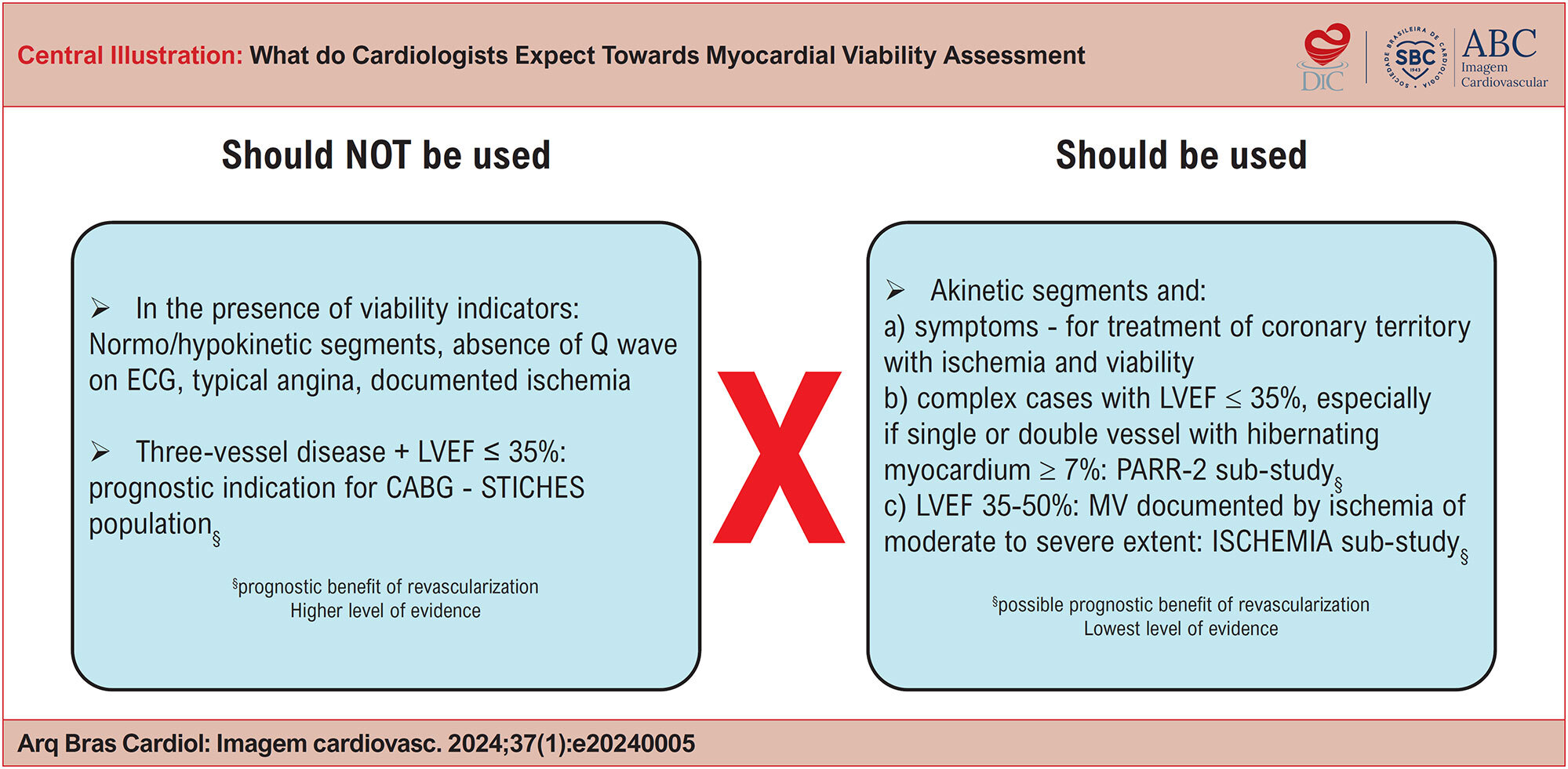
What do Cardiologists Expect Towards Myocardial Viability Assessment

Eduardo Gomes Lima et al. Eduardo Bello Martins Leticia Neves Solon Carvalho Diogo Freitas Cardoso de Azevedo

Within the clinical spectrum of chronic coronary syndrome (CCS), the presence of coronary artery disease (CAD) alongside ventricular dysfunction has long been a focal point due to the lower survival rates seen in this population. Improving survival in these patients, whether through medications or interventions, is a key concern for clinical cardiologists. Previous observational studies suggested that myocardial viability (MV) could influence the effectiveness of revascularization strategies in patients with ventricular dysfunction. Thus, viability assessment became a standard practice in cardiology. Different imaging methods assess viability through different parameters (such as cell membrane integrity, mitochondrial function, glycolytic metabolism, contractile reserve, or evidence of fibrosis), leading to differing sensitivities and specificities. However, recent evidence from large randomized studies does not support the notion that the presence of MV, as determined by various methods, is linked to the prognostic benefit of revascularization. Furthermore, the reduction in mortality observed in these studies was not attributed to the recovery of contractile function but rather to a decrease in fatal heart attacks. As a result, the current role of MV as a decision-making tool for revascularization in patients with CCS and left ventricular dysfunction has diminished. Nonetheless, there are still situations in specialist practice where its use may be warranted, particularly in the context of constructing a comprehensive functional revascularization strategy.

  • Left Ventricular Function
  • Myocardial Ischemia
  • Myocardial Stunning
Read Full Article
Creative Commons Attribution (CC BY) Creative Commons license
28/03/2024 DOI: 10.36660/abcimg.20240005i Views 2

Could not load more articles. Please try again.

How to cite this article

EndNote RIS

Electronic Document Format (Vancouver)

Villela PB, Andrade LF. The Importance of Observational Studies. International Journal of Cardiovascular Sciences 2026;39:e20260130.

Electronic Document Format (ABNT)

Villela, Paolo Blanco; Andrade, Larissa Franco de. The Importance of Observational Studies. International Journal of Cardiovascular Sciences, v. 39, e20260130, Sep. 2026.

Electronic Document Format (APA)

Villela, P. B., & Andrade, L. F. (2026). The Importance of Observational Studies. International Journal of Cardiovascular Sciences, 39, e20260130.

Electronic Document Format (ISO)

Villela, Paolo Blanco and Andrade, Larissa Franco de. The Importance of Observational Studies. International Journal of Cardiovascular Sciences [online]. 2026, vol. 39, [cited 2026-10-14], e20260130. Available from: <https://journals.cardiol.br/en/article/the-importance-of-observational-studies/>. ISSN 2359-4802

EndNote RIS

Electronic Document Format (Vancouver)

Alexandre ERG, Salomão I, Neto-Espíndola L, Penalva R, Silva MLD, Mesquita CT. New Insights Into Ischemic Heart Disease in Women: The Central Role of Coronary Microvascular Dysfunction Current Insights, Diagnostic Advances, And Therapeutic Uncertainties. International Journal of Cardiovascular Sciences 2026;39:e20250031.

Electronic Document Format (ABNT)

Alexandre, Elizabeth Regina Giunco; Salomão, Isabelle; Neto-Espíndola, Larissa; Penalva, Rafaela; Silva, Mayara Lídia Da; Mesquita, Claudio Tinoco. New Insights Into Ischemic Heart Disease in Women: The Central Role of Coronary Microvascular Dysfunction Current Insights, Diagnostic Advances, And Therapeutic Uncertainties. International Journal of Cardiovascular Sciences, v. 39, e20250031, Jul. 2026.

Electronic Document Format (APA)

Alexandre, E. R. G., Salomão, I., Neto-Espíndola, L., Penalva, R., Silva, M. L. D., & Mesquita, C. T. (2026). New Insights Into Ischemic Heart Disease in Women: The Central Role of Coronary Microvascular Dysfunction Current Insights, Diagnostic Advances, And Therapeutic Uncertainties. International Journal of Cardiovascular Sciences, 39, e20250031.

Electronic Document Format (ISO)

Alexandre, Elizabeth Regina Giunco and Salomão, Isabelle and Neto-Espíndola, Larissa and Penalva, Rafaela and Silva, Mayara Lídia Da and Mesquita, Claudio Tinoco. New Insights Into Ischemic Heart Disease in Women: The Central Role of Coronary Microvascular Dysfunction Current Insights, Diagnostic Advances, And Therapeutic Uncertainties. International Journal of Cardiovascular Sciences [online]. 2026, vol. 39, [cited 2026-10-14], e20250031. Available from: <https://journals.cardiol.br/en/article/new-insights-into-ischemic-heart-disease-in-women-the-central-role-of-coronary-microvascular-dysfunction-current-insights-diagnostic-advances-and-therapeutic-uncertainties/>. ISSN 2359-4802

EndNote RIS

Electronic Document Format (Vancouver)

Almeida GGL, Barbirato GB, Pagnin VQ, Pagnin D, Mesquita CT. Major Depressive Disorder and Quality of Life in Patients With Coronary Artery Disease Assessed by Myocardial Perfusion Imaging. ABC Imagem Cardiovascular 2026;39(2):e20260048.

Electronic Document Format (ABNT)

Almeida, Guilherme Gonçais Lopes; Barbirato, Gustavo B.; Pagnin, Valéria de Queiroz; Pagnin, Daniel; Mesquita, Cláudio Tinoco. Major Depressive Disorder and Quality of Life in Patients With Coronary Artery Disease Assessed by Myocardial Perfusion Imaging. ABC Imagem Cardiovascular, v. 39, n. 2, e20260048, Jul. 2026.

Electronic Document Format (APA)

Almeida, G. G. L., Barbirato, G. B., Pagnin, V. Q., Pagnin, D., & Mesquita, C. T. (2026). Major Depressive Disorder and Quality of Life in Patients With Coronary Artery Disease Assessed by Myocardial Perfusion Imaging. ABC Imagem Cardiovascular, 39(2), e20260048.

Electronic Document Format (ISO)

Almeida, Guilherme Gonçais Lopes and Barbirato, Gustavo B. and Pagnin, Valéria de Queiroz and Pagnin, Daniel and Mesquita, Cláudio Tinoco. Major Depressive Disorder and Quality of Life in Patients With Coronary Artery Disease Assessed by Myocardial Perfusion Imaging. ABC Imagem Cardiovascular [online]. 2026, vol. 39, n. 2, [cited 2026-10-14], e20260048. Available from: <https://journals.cardiol.br/en/article/major-depressive-disorder-and-quality-of-life-in-patients-with-coronary-artery-disease-assessed-by-myocardial-perfusion-imaging/>. ISSN 2318-8219

EndNote RIS

Electronic Document Format (Vancouver)

Teixeira AL. Strengthening Our Understanding of Muscle Metaboreflex Control in Patients with Coronary Artery Disease: (Dis)association Between Physical Fitness and Hemodynamic Responses. International Journal of Cardiovascular Sciences 2026;39:e20250227.

Electronic Document Format (ABNT)

Teixeira, André L.. Strengthening Our Understanding of Muscle Metaboreflex Control in Patients with Coronary Artery Disease: (Dis)association Between Physical Fitness and Hemodynamic Responses. International Journal of Cardiovascular Sciences, v. 39, e20250227, Apr. 2026.

Electronic Document Format (APA)

Teixeira, A. L. (2026). Strengthening Our Understanding of Muscle Metaboreflex Control in Patients with Coronary Artery Disease: (Dis)association Between Physical Fitness and Hemodynamic Responses. International Journal of Cardiovascular Sciences, 39, e20250227.

Electronic Document Format (ISO)

Teixeira, André L.. Strengthening Our Understanding of Muscle Metaboreflex Control in Patients with Coronary Artery Disease: (Dis)association Between Physical Fitness and Hemodynamic Responses. International Journal of Cardiovascular Sciences [online]. 2026, vol. 39, [cited 2026-10-14], e20250227. Available from: <https://journals.cardiol.br/en/article/strengthening-our-understanding-of-muscle-metaboreflex-control-in-patients-with-coronary-artery-disease-disassociation-between-physical-fitness-and-hemodynamic-responses/>. ISSN 2359-4802

EndNote RIS

Electronic Document Format (Vancouver)

Samajpaty S, Zhuravlov AK, Dmitrii E, Sergeivich IY. Obstructive Sleep Apnea as a Risk Factor for Ischemic Heart Disease. International Journal of Cardiovascular Sciences 2026;39:e20240250.

Electronic Document Format (ABNT)

Samajpaty, Soham; Zhuravlov, Alexander Konstantinovich; Dmitrii, Emilianovich; Sergeivich, Ilin Yuriy. Obstructive Sleep Apnea as a Risk Factor for Ischemic Heart Disease. International Journal of Cardiovascular Sciences, v. 39, e20240250, Mar. 2026.

Electronic Document Format (APA)

Samajpaty, S., Zhuravlov, A. K., Dmitrii, E., & Sergeivich, I. Y. (2026). Obstructive Sleep Apnea as a Risk Factor for Ischemic Heart Disease. International Journal of Cardiovascular Sciences, 39, e20240250.

Electronic Document Format (ISO)

Samajpaty, Soham and Zhuravlov, Alexander Konstantinovich and Dmitrii, Emilianovich and Sergeivich, Ilin Yuriy. Obstructive Sleep Apnea as a Risk Factor for Ischemic Heart Disease. International Journal of Cardiovascular Sciences [online]. 2026, vol. 39, [cited 2026-10-14], e20240250. Available from: <https://journals.cardiol.br/en/article/obstructive-sleep-apnea-as-a-risk-factor-for-ischemic-heart-disease/>. ISSN 2359-4802

EndNote RIS

Electronic Document Format (Vancouver)

Coelho VCO, Gama GS, Costa CLF, Rangel MVS, Borges J. Association between Cardiovascular Responses to Muscle Metaboreflex and Markers of Physical Fitness in Patients with Coronary Artery Disease. International Journal of Cardiovascular Sciences 2026;39:e20250183.

Electronic Document Format (ABNT)

Coelho, Vanessa Cunha de Oliveira; Gama, Gabriel da Silva; Costa, Caio Luan Farias; Rangel, Marcus Vinicius dos Santos; Borges, Juliana. Association between Cardiovascular Responses to Muscle Metaboreflex and Markers of Physical Fitness in Patients with Coronary Artery Disease. International Journal of Cardiovascular Sciences, v. 39, e20250183, Mar. 2026.

Electronic Document Format (APA)

Coelho, V. C. O., Gama, G. S., Costa, C. L. F., Rangel, M. V. S., & Borges, J. (2026). Association between Cardiovascular Responses to Muscle Metaboreflex and Markers of Physical Fitness in Patients with Coronary Artery Disease. International Journal of Cardiovascular Sciences, 39, e20250183.

Electronic Document Format (ISO)

Coelho, Vanessa Cunha de Oliveira and Gama, Gabriel da Silva and Costa, Caio Luan Farias and Rangel, Marcus Vinicius dos Santos and Borges, Juliana. Association between Cardiovascular Responses to Muscle Metaboreflex and Markers of Physical Fitness in Patients with Coronary Artery Disease. International Journal of Cardiovascular Sciences [online]. 2026, vol. 39, [cited 2026-10-14], e20250183. Available from: <https://journals.cardiol.br/en/article/association-between-cardiovascular-responses-to-muscle-metaboreflex-and-markers-of-physical-fitness-in-patients-with-coronary-artery-disease/>. ISSN 2359-4802

EndNote RIS

Electronic Document Format (Vancouver)

Vilela FS, Ferreira CO, Rocha B, Faria J, Fernandes AS, Dias M, Conde I, et al. Refractory Angina with Myocardial Ischemia in the Absence of Obstructive Coronary Artery Disease: A Case Report. Arquivos Brasileiros de Cardiologia 2026;123(1):e20250243.

Electronic Document Format (ABNT)

Vilela, Filipe Silva; Ferreira, Carla Oliveira; Rocha, Bárbara; Faria, João; Fernandes, Ana Sofia; Dias, Mónica; Conde, Inês; Gaspar, António; Braga, Carlos Galvão. Refractory Angina with Myocardial Ischemia in the Absence of Obstructive Coronary Artery Disease: A Case Report. Arquivos Brasileiros de Cardiologia, v. 123, n. 1, e20250243, Mar. 2026.

Electronic Document Format (APA)

Vilela, F. S., Ferreira, C. O., Rocha, B., Faria, J., Fernandes, A. S., Dias, M., Conde, I., Gaspar, A., & Braga, C. G. (2026). Refractory Angina with Myocardial Ischemia in the Absence of Obstructive Coronary Artery Disease: A Case Report. Arquivos Brasileiros de Cardiologia, 123(1), e20250243.

Electronic Document Format (ISO)

Vilela, Filipe Silva and Ferreira, Carla Oliveira and Rocha, Bárbara and Faria, João and Fernandes, Ana Sofia and Dias, Mónica and Conde, Inês and Gaspar, António and Braga, Carlos Galvão. Refractory Angina with Myocardial Ischemia in the Absence of Obstructive Coronary Artery Disease: A Case Report. Arquivos Brasileiros de Cardiologia [online]. 2026, vol. 123, n. 1, [cited 2026-10-14], e20250243. Available from: <https://journals.cardiol.br/en/article/refractory-angina-with-myocardial-ischemia-in-the-absence-of-obstructive-coronary-artery-disease-a-case-report/>. ISSN 0066-782X

EndNote RIS

Electronic Document Format (Vancouver)

Dourado LOC, Jordão CP, Vieira MLC, Gowdak LHW, Negrão CE, Cesar LAM, Matos LDNJ, et al. Safety and Efficacy of Exercise-based Cardiac Rehabilitation in Patients with Refractory Angina. Arquivos Brasileiros de Cardiologia 2026;122(12):e20250331.

Electronic Document Format (ABNT)

Dourado, Luciana Oliveira Cascaes; Jordão, Camila Paixão; Vieira, Marcelo Luiz Campos; Gowdak, Luis Henrique Wolff; Negrão, Carlos Eduardo; Cesar, Luiz Antonio Machado; Matos, Luciana Diniz Nagem Janot de. Safety and Efficacy of Exercise-based Cardiac Rehabilitation in Patients with Refractory Angina. Arquivos Brasileiros de Cardiologia, v. 122, n. 12, e20250331, Feb. 2026.

Electronic Document Format (APA)

Dourado, L. O. C., Jordão, C. P., Vieira, M. L. C., Gowdak, L. H. W., Negrão, C. E., Cesar, L. A. M., & Matos, L. D. N. J. (2026). Safety and Efficacy of Exercise-based Cardiac Rehabilitation in Patients with Refractory Angina. Arquivos Brasileiros de Cardiologia, 122(12), e20250331.

Electronic Document Format (ISO)

Dourado, Luciana Oliveira Cascaes and Jordão, Camila Paixão and Vieira, Marcelo Luiz Campos and Gowdak, Luis Henrique Wolff and Negrão, Carlos Eduardo and Cesar, Luiz Antonio Machado and Matos, Luciana Diniz Nagem Janot de. Safety and Efficacy of Exercise-based Cardiac Rehabilitation in Patients with Refractory Angina. Arquivos Brasileiros de Cardiologia [online]. 2026, vol. 122, n. 12, [cited 2026-10-14], e20250331. Available from: <https://journals.cardiol.br/en/article/safety-and-efficacy-of-exercise-based-cardiac-rehabilitation-in-patients-with-refractory-angina/>. ISSN 0066-782X

EndNote RIS

Electronic Document Format (Vancouver)

Ziotti SDV, Dourado LOC, Silva R, Al-Lamee R, Henry TD, Cesar LAM, Serrano Jr. CV, et al. Coronary Sinus Reduction for the Treatment of Refractory Angina: What Have We Learned after 70 Years of the Beck Surgery?. Arquivos Brasileiros de Cardiologia 2026;122(11):e20250139.

Electronic Document Format (ABNT)

Ziotti, Sara Del Vecchio; Dourado, Luciana Oliveira Cascaes; Silva, Ranil de; Al-Lamee, Rasha; Henry, Timothy D.; Cesar, Luiz Antonio Machado; Serrano Jr., Carlos Vicente; Abizaid, Alexandre Antonio Cunha; Gowdak, Luis Henrique Wolff. Coronary Sinus Reduction for the Treatment of Refractory Angina: What Have We Learned after 70 Years of the Beck Surgery?. Arquivos Brasileiros de Cardiologia, v. 122, n. 11, e20250139, Jan. 2026.

Electronic Document Format (APA)

Ziotti, S. D. V., Dourado, L. O. C., Silva, R. , Al-Lamee, R., Henry, T. D., Cesar, L. A. M., Serrano Jr., C. V., Abizaid, A. A. C., & Gowdak, L. H. W. (2026). Coronary Sinus Reduction for the Treatment of Refractory Angina: What Have We Learned after 70 Years of the Beck Surgery?. Arquivos Brasileiros de Cardiologia, 122(11), e20250139.

Electronic Document Format (ISO)

Ziotti, Sara Del Vecchio and Dourado, Luciana Oliveira Cascaes and Silva, Ranil de and Al-Lamee, Rasha and Henry, Timothy D. and Cesar, Luiz Antonio Machado and Serrano Jr., Carlos Vicente and Abizaid, Alexandre Antonio Cunha and Gowdak, Luis Henrique Wolff. Coronary Sinus Reduction for the Treatment of Refractory Angina: What Have We Learned after 70 Years of the Beck Surgery?. Arquivos Brasileiros de Cardiologia [online]. 2026, vol. 122, n. 11, [cited 2026-10-14], e20250139. Available from: <https://journals.cardiol.br/en/article/coronary-sinus-reduction-for-the-treatment-of-refractory-angina-what-have-we-learned-after-70-years-of-the-beck-surgery/>. ISSN 0066-782X

EndNote RIS

Electronic Document Format (Vancouver)

Salerno PRVO, Cotton A, Nascimento BR, Chen Z, Pereira GTR, Abizaid AA, Dallan LAP, et al. Forecasting Ischemic Heart Disease, Stroke, and Peripheral Artery Disease Mortality in Brazil Through 2040: A Bayesian Modeling Approach. Arquivos Brasileiros de Cardiologia 2026;122(11):e20250189.

Electronic Document Format (ABNT)

Salerno, Pedro Rafael Vieira de Oliveira; Cotton, Antoinette; Nascimento, Bruno R.; Chen, Zhuo; Pereira, Gabriel Tensol Rodrigues; Abizaid, Alexandre A.; Dallan, Luis Augusto Palma; Salerno, Pedro Rafael; Al-Kindi, Sadeer; Petermann-Rocha, Fanny; Deo, Salil V.. Forecasting Ischemic Heart Disease, Stroke, and Peripheral Artery Disease Mortality in Brazil Through 2040: A Bayesian Modeling Approach. Arquivos Brasileiros de Cardiologia, v. 122, n. 11, e20250189, Jan. 2026.

Electronic Document Format (APA)

Salerno, P. R. V. O., Cotton, A., Nascimento, B. R., Chen, Z., Pereira, G. T. R., Abizaid, A. A., Dallan, L. A. P., Salerno, P. R., Al-Kindi, S., Petermann-Rocha, F., & Deo, S. V. (2026). Forecasting Ischemic Heart Disease, Stroke, and Peripheral Artery Disease Mortality in Brazil Through 2040: A Bayesian Modeling Approach. Arquivos Brasileiros de Cardiologia, 122(11), e20250189.

Electronic Document Format (ISO)

Salerno, Pedro Rafael Vieira de Oliveira and Cotton, Antoinette and Nascimento, Bruno R. and Chen, Zhuo and Pereira, Gabriel Tensol Rodrigues and Abizaid, Alexandre A. and Dallan, Luis Augusto Palma and Salerno, Pedro Rafael and Al-Kindi, Sadeer and Petermann-Rocha, Fanny and Deo, Salil V.. Forecasting Ischemic Heart Disease, Stroke, and Peripheral Artery Disease Mortality in Brazil Through 2040: A Bayesian Modeling Approach. Arquivos Brasileiros de Cardiologia [online]. 2026, vol. 122, n. 11, [cited 2026-10-14], e20250189. Available from: <https://journals.cardiol.br/en/article/forecasting-ischemic-heart-disease-stroke-and-peripheral-artery-disease-mortality-in-brazil-through-2040-a-bayesian-modeling-approach/>. ISSN 0066-782X

EndNote RIS

Electronic Document Format (Vancouver)

Trento BME, Medeiros DG, Bizinelli MES, Barão MM, Freitas AKE. Reverse Remodeling After Myocardial Revascularization in Severe Ischemic Heart Disease. ABC Heart Fail Cardiomyop 2025;5(3):e20250039.

Electronic Document Format (ABNT)

Trento, Bruna Montingelli Espinola; Medeiros, Daniela Gourlart; Bizinelli, Maria Eduarda Soares; Barão, Manuella Macedo; Freitas, Ana Karyn Ehrenfried. Reverse Remodeling After Myocardial Revascularization in Severe Ischemic Heart Disease. ABC Heart Fail Cardiomyop, v. 5, n. 3, e20250039, Dec. 2025.

Electronic Document Format (APA)

Trento, B. M. E., Medeiros, D. G., Bizinelli, M. E. S., Barão, M. M., & Freitas, A. K. E. (2025). Reverse Remodeling After Myocardial Revascularization in Severe Ischemic Heart Disease. ABC Heart Fail Cardiomyop, 5(3), e20250039.

Electronic Document Format (ISO)

Trento, Bruna Montingelli Espinola and Medeiros, Daniela Gourlart and Bizinelli, Maria Eduarda Soares and Barão, Manuella Macedo and Freitas, Ana Karyn Ehrenfried. Reverse Remodeling After Myocardial Revascularization in Severe Ischemic Heart Disease. ABC Heart Fail Cardiomyop [online]. 2025, vol. 5, n. 3, [cited 2026-10-14], e20250039. Available from: <https://journals.cardiol.br/en/article/reverse-remodeling-after-myocardial-revascularization-in-severe-ischemic-heart-disease/>

EndNote RIS

Electronic Document Format (Vancouver)

Bichara JL, Bastos LA, Lino EDSM, Villela PB, Oliveira GMM. Social Vulnerability Index and Mortality from Ischemic Heart Diseases and Cerebrovascular Diseases in Brazil from 2000 to 2021. Arquivos Brasileiros de Cardiologia 2025;122(8):e20240428.

Electronic Document Format (ABNT)

Bichara, José Lucas; Bastos, Luiz Antônio; Lino, Eric Delgado dos Santos Mafra; Villela, Paolo Blanco; Oliveira, Gláucia Maria Moraes de. Social Vulnerability Index and Mortality from Ischemic Heart Diseases and Cerebrovascular Diseases in Brazil from 2000 to 2021. Arquivos Brasileiros de Cardiologia, v. 122, n. 8, e20240428, Sep. 2025.

Electronic Document Format (APA)

Bichara, J. L., Bastos, L. A., Lino, E. D. S. M., Villela, P. B., & Oliveira, G. M. M. (2025). Social Vulnerability Index and Mortality from Ischemic Heart Diseases and Cerebrovascular Diseases in Brazil from 2000 to 2021. Arquivos Brasileiros de Cardiologia, 122(8), e20240428.

Electronic Document Format (ISO)

Bichara, José Lucas and Bastos, Luiz Antônio and Lino, Eric Delgado dos Santos Mafra and Villela, Paolo Blanco and Oliveira, Gláucia Maria Moraes de. Social Vulnerability Index and Mortality from Ischemic Heart Diseases and Cerebrovascular Diseases in Brazil from 2000 to 2021. Arquivos Brasileiros de Cardiologia [online]. 2025, vol. 122, n. 8, [cited 2026-10-14], e20240428. Available from: <https://journals.cardiol.br/en/article/social-vulnerability-index-and-mortality-from-ischemic-heart-diseases-and-cerebrovascular-diseases-in-brazil-from-2000-to-2021/>. ISSN 0066-782X

EndNote RIS

Electronic Document Format (Vancouver)

Ker WS, Yahiro DS, Mangas GM, Salomão IMR, Flor JAAA, Vianna HMS, Mesquita CT, et al. Assessment of Coronary Flow Reserve by Myocardial Perfusion Scintigraphy using CZT Equipment. ABC Imagem Cardiovascular 2025;38(2):e20250020.

Electronic Document Format (ABNT)

Ker, Wilter dos Santos; Yahiro, Davi Shunji; Mangas, Gabriel de Moraes; Salomão, Isabelle Mendes Rodrigues; Flor, José Augusto Antonio Alves; Vianna, Hugo Matheus Silvestre; Mesquita, Cláudio Tinoco. Assessment of Coronary Flow Reserve by Myocardial Perfusion Scintigraphy using CZT Equipment. ABC Imagem Cardiovascular, v. 38, n. 2, e20250020, Jun. 2025.

Electronic Document Format (APA)

Ker, W. S., Yahiro, D. S., Mangas, G. M., Salomão, I. M. R., Flor, J. A. A. A., Vianna, H. M. S., & Mesquita, C. T. (2025). Assessment of Coronary Flow Reserve by Myocardial Perfusion Scintigraphy using CZT Equipment. ABC Imagem Cardiovascular, 38(2), e20250020.

Electronic Document Format (ISO)

Ker, Wilter dos Santos and Yahiro, Davi Shunji and Mangas, Gabriel de Moraes and Salomão, Isabelle Mendes Rodrigues and Flor, José Augusto Antonio Alves and Vianna, Hugo Matheus Silvestre and Mesquita, Cláudio Tinoco. Assessment of Coronary Flow Reserve by Myocardial Perfusion Scintigraphy using CZT Equipment. ABC Imagem Cardiovascular [online]. 2025, vol. 38, n. 2, [cited 2026-10-14], e20250020. Available from: <https://journals.cardiol.br/en/article/assessment-of-coronary-flow-reserve-by-myocardial-perfusion-scintigraphy-using-czt-equipment/>. ISSN 2318-8219

EndNote RIS

Electronic Document Format (Vancouver)

Gomes MB, Bombana CF, Fuchs FC. ECG’s AVR ST elevation Analysis by Perfusion Scintilography in the Context of Myocardial Ischemia. International Journal of Cardiovascular Sciences 2025;38:e20230080.

Electronic Document Format (ABNT)

Gomes, Miriana Basso; Bombana, Carolina Feijó; Fuchs, Felipe C.. ECG’s AVR ST elevation Analysis by Perfusion Scintilography in the Context of Myocardial Ischemia. International Journal of Cardiovascular Sciences, v. 38, e20230080, Apr. 2025.

Electronic Document Format (APA)

Gomes, M. B., Bombana, C. F., & Fuchs, F. C. (2025). ECG’s AVR ST elevation Analysis by Perfusion Scintilography in the Context of Myocardial Ischemia. International Journal of Cardiovascular Sciences, 38, e20230080.

Electronic Document Format (ISO)

Gomes, Miriana Basso and Bombana, Carolina Feijó and Fuchs, Felipe C.. ECG’s AVR ST elevation Analysis by Perfusion Scintilography in the Context of Myocardial Ischemia. International Journal of Cardiovascular Sciences [online]. 2025, vol. 38, [cited 2026-10-14], e20230080. Available from: <https://journals.cardiol.br/en/article/ecgs-avr-st-elevation-analysis-by-perfusion-scintilography-in-the-context-of-myocardial-ischemia/>. ISSN 2359-4802

EndNote RIS

Electronic Document Format (Vancouver)

Mejía HPG, Nogueira MCA, Mioto BM, Poppi NT, Cesar LAM, Sousa LLCM, Dallan LRP, et al. Coronary-Cavitary Fistula, an Unusual Cause of Heart Failure. Arquivos Brasileiros de Cardiologia 2025;122(3):e20240809.

Electronic Document Format (ABNT)

Mejía, Hernán Patricio García; Nogueira, Matheus Carvalho Alves; Mioto, Bruno Mahler; Poppi, Nilson Tavares; Cesar, Luiz Antonio Machado; Sousa, Luhanda Leonora Cardoso Monti; Dallan, Luís Roberto Palma. Coronary-Cavitary Fistula, an Unusual Cause of Heart Failure. Arquivos Brasileiros de Cardiologia, v. 122, n. 3, e20240809, Apr. 2025.

Electronic Document Format (APA)

Mejía, H. P. G., Nogueira, M. C. A., Mioto, B. M., Poppi, N. T., Cesar, L. A. M., Sousa, L. L. C. M., & Dallan, L. R. P. (2025). Coronary-Cavitary Fistula, an Unusual Cause of Heart Failure. Arquivos Brasileiros de Cardiologia, 122(3), e20240809.

Electronic Document Format (ISO)

Mejía, Hernán Patricio García and Nogueira, Matheus Carvalho Alves and Mioto, Bruno Mahler and Poppi, Nilson Tavares and Cesar, Luiz Antonio Machado and Sousa, Luhanda Leonora Cardoso Monti and Dallan, Luís Roberto Palma. Coronary-Cavitary Fistula, an Unusual Cause of Heart Failure. Arquivos Brasileiros de Cardiologia [online]. 2025, vol. 122, n. 3, [cited 2026-10-14], e20240809. Available from: <https://journals.cardiol.br/en/article/coronary-cavitary-fistula-an-unusual-cause-of-heart-failure/>. ISSN 0066-782X

EndNote RIS

Electronic Document Format (Vancouver)

Souza ACAH. Myocardial Ischemia and the Emerging Role of Coronary Flow Reserve Quantification. International Journal of Cardiovascular Sciences 2025;38:e20240171.

Electronic Document Format (ABNT)

Souza, Ana Carolina do Amaral Henrique de. Myocardial Ischemia and the Emerging Role of Coronary Flow Reserve Quantification. International Journal of Cardiovascular Sciences, v. 38, e20240171, Mar. 2025.

Electronic Document Format (APA)

Souza, A. C. A. H. (2025). Myocardial Ischemia and the Emerging Role of Coronary Flow Reserve Quantification. International Journal of Cardiovascular Sciences, 38, e20240171.

Electronic Document Format (ISO)

Souza, Ana Carolina do Amaral Henrique de. Myocardial Ischemia and the Emerging Role of Coronary Flow Reserve Quantification. International Journal of Cardiovascular Sciences [online]. 2025, vol. 38, [cited 2026-10-14], e20240171. Available from: <https://journals.cardiol.br/en/article/myocardial-ischemia-and-the-emerging-role-of-coronary-flow-reserve-quantification/>. ISSN 2359-4802

EndNote RIS

Electronic Document Format (Vancouver)

Almeida MC, Castro ML, Espíndola LN. The Choice of Antiplatelet Dual Combination in Coronary Artery Disease: Is this Just a Question of Balance between ischemic Burden and Bleeding Risk?. Arquivos Brasileiros de Cardiologia 2025;121(11):e20240695.

Electronic Document Format (ABNT)

Almeida, Maria Cristina; Castro, Marildes Luiza de; Espíndola, Larissa Neto. The Choice of Antiplatelet Dual Combination in Coronary Artery Disease: Is this Just a Question of Balance between ischemic Burden and Bleeding Risk?. Arquivos Brasileiros de Cardiologia, v. 121, n. 11, e20240695, Jan. 2025.

Electronic Document Format (APA)

Almeida, M. C., Castro, M. L. , & Espíndola, L. N. (2025). The Choice of Antiplatelet Dual Combination in Coronary Artery Disease: Is this Just a Question of Balance between ischemic Burden and Bleeding Risk?. Arquivos Brasileiros de Cardiologia, 121(11), e20240695.

Electronic Document Format (ISO)

Almeida, Maria Cristina and Castro, Marildes Luiza de and Espíndola, Larissa Neto. The Choice of Antiplatelet Dual Combination in Coronary Artery Disease: Is this Just a Question of Balance between ischemic Burden and Bleeding Risk?. Arquivos Brasileiros de Cardiologia [online]. 2025, vol. 121, n. 11, [cited 2026-10-14], e20240695. Available from: <https://journals.cardiol.br/en/article/the-choice-of-antiplatelet-dual-combination-in-coronary-artery-disease-is-this-just-a-question-of-balance-between-ischemic-burden-and-bleeding-risk/>. ISSN 0066-782X

EndNote RIS

Electronic Document Format (Vancouver)

Nascimento K, Ramadan HR, Baccaro BM, Bicalho VVS, Ferreira IM, Ohe LN, Santos VSS, et al. Acute Coronary Syndrome in Brazil: Registration of Predisposing Factors and Population Profile in a National Public Reference Cardiological Institute. Arquivos Brasileiros de Cardiologia 2025;122(1):e20240165.

Electronic Document Format (ABNT)

Nascimento, Kaliana; Ramadan, Hugo Ribeiro; Baccaro, Bruno Mendonça; Bicalho, Vinicius Vaz de Sales; Ferreira, Italo Menezes; Ohe, Louis Nakayama; Santos, Vitor Sobreira Souza; Feres, Fausto; Franchini, Kleber; Timerman, Ari; Mota, Diandro Marinho. Acute Coronary Syndrome in Brazil: Registration of Predisposing Factors and Population Profile in a National Public Reference Cardiological Institute. Arquivos Brasileiros de Cardiologia, v. 122, n. 1, e20240165, Jan. 2025.

Electronic Document Format (APA)

Nascimento, K., Ramadan, H. R., Baccaro, B. M., Bicalho, V. V. S., Ferreira, I. M., Ohe, L. N., Santos, V. S. S., Feres, F., Franchini, K., Timerman, A., & Mota, D. M. (2025). Acute Coronary Syndrome in Brazil: Registration of Predisposing Factors and Population Profile in a National Public Reference Cardiological Institute. Arquivos Brasileiros de Cardiologia, 122(1), e20240165.

Electronic Document Format (ISO)

Nascimento, Kaliana and Ramadan, Hugo Ribeiro and Baccaro, Bruno Mendonça and Bicalho, Vinicius Vaz de Sales and Ferreira, Italo Menezes and Ohe, Louis Nakayama and Santos, Vitor Sobreira Souza and Feres, Fausto and Franchini, Kleber and Timerman, Ari and Mota, Diandro Marinho. Acute Coronary Syndrome in Brazil: Registration of Predisposing Factors and Population Profile in a National Public Reference Cardiological Institute. Arquivos Brasileiros de Cardiologia [online]. 2025, vol. 122, n. 1, [cited 2026-10-14], e20240165. Available from: <https://journals.cardiol.br/en/article/acute-coronary-syndrome-in-brazil-registration-of-predisposing-factors-and-population-profile-in-a-national-public-reference-cardiological-institute/>. ISSN 0066-782X

EndNote RIS

Electronic Document Format (Vancouver)

Passos LCS, Santos Junior RP, Sampaio LFD, Figueiredo CS, Cafezeiro CRF. Comparative Analysis between the NYHA and CCS Classification and Performance in the 6-Minute Walk Test. ABC Heart Fail Cardiomyop 2024;4(4):20240036.

Electronic Document Format (ABNT)

Passos, Luiz Carlos Santana; Santos Junior, Roberval Prado dos; Sampaio, Laís Fernanda Duarte; Figueiredo, Clara Sales; Cafezeiro, Caio Rebouças Fonseca. Comparative Analysis between the NYHA and CCS Classification and Performance in the 6-Minute Walk Test. ABC Heart Fail Cardiomyop, v. 4, n. 4, 20240036, Dec. 2024.

Electronic Document Format (APA)

Passos, L. C. S., Santos Junior, R. P. , Sampaio, L. F. D., Figueiredo, C. S., & Cafezeiro, C. R. F. (2024). Comparative Analysis between the NYHA and CCS Classification and Performance in the 6-Minute Walk Test. ABC Heart Fail Cardiomyop, 4(4), 20240036.

Electronic Document Format (ISO)

Passos, Luiz Carlos Santana and Santos Junior, Roberval Prado dos and Sampaio, Laís Fernanda Duarte and Figueiredo, Clara Sales and Cafezeiro, Caio Rebouças Fonseca. Comparative Analysis between the NYHA and CCS Classification and Performance in the 6-Minute Walk Test. ABC Heart Fail Cardiomyop [online]. 2024, vol. 4, n. 4, [cited 2026-10-14], 20240036. Available from: <https://journals.cardiol.br/en/article/comparative-analysis-between-the-nyha-and-ccs-classification-and-performance-in-the-6-minute-walk-test/>

EndNote RIS

Electronic Document Format (Vancouver)

Smanio PEP. Analysis of Myocardial Flow Reserve Using the CZT Camera. Additional Value to Perfusion and Functional Information in Identifying the Cause of Chest Discomfort. Arquivos Brasileiros de Cardiologia 2024;121(6):e20240366.

Electronic Document Format (ABNT)

Smanio, Paola Emanuela Poggio. Analysis of Myocardial Flow Reserve Using the CZT Camera. Additional Value to Perfusion and Functional Information in Identifying the Cause of Chest Discomfort. Arquivos Brasileiros de Cardiologia, v. 121, n. 6, e20240366, Sep. 2024.

Electronic Document Format (APA)

Smanio, P. E. P. (2024). Analysis of Myocardial Flow Reserve Using the CZT Camera. Additional Value to Perfusion and Functional Information in Identifying the Cause of Chest Discomfort. Arquivos Brasileiros de Cardiologia, 121(6), e20240366.

Electronic Document Format (ISO)

Smanio, Paola Emanuela Poggio. Analysis of Myocardial Flow Reserve Using the CZT Camera. Additional Value to Perfusion and Functional Information in Identifying the Cause of Chest Discomfort. Arquivos Brasileiros de Cardiologia [online]. 2024, vol. 121, n. 6, [cited 2026-10-14], e20240366. Available from: <https://journals.cardiol.br/en/article/analysis-of-myocardial-flow-reserve-using-the-czt-camera-additional-value-to-perfusion-and-functional-information-in-identifying-the-cause-of-chest-discomfort/>. ISSN 0066-782X

EndNote RIS

Electronic Document Format (Vancouver)

Giugni FR, Giugni MOV, Pinesi HT, Habrum FC, Laranjeira LN, Sady ERR, Suzumura EA, et al. Safety and Efficacy of Adipose-Derived Mesenchymal Stem Cell Therapy for Ischemic Heart Disease: A Systematic Review. Arquivos Brasileiros de Cardiologia 2024;121(9):e20230830.

Electronic Document Format (ABNT)

Giugni, Fernando Rabioglio; Giugni, Melina de Oliveira Valdo; Pinesi, Henrique Trombini; Habrum, Fabio Cetinic; Laranjeira, Lígia Nasi; Sady, Erica Regina Ribeiro; Suzumura, Erica Aranha; Gowdak, Luis Henrique Wolff; Krieger, José Eduardo. Safety and Efficacy of Adipose-Derived Mesenchymal Stem Cell Therapy for Ischemic Heart Disease: A Systematic Review. Arquivos Brasileiros de Cardiologia, v. 121, n. 9, e20230830, Sep. 2024.

Electronic Document Format (APA)

Giugni, F. R., Giugni, M. O. V., Pinesi, H. T., Habrum, F. C., Laranjeira, L. N., Sady, E. R. R., Suzumura, E. A., Gowdak, L. H. W., & Krieger, J. E. (2024). Safety and Efficacy of Adipose-Derived Mesenchymal Stem Cell Therapy for Ischemic Heart Disease: A Systematic Review. Arquivos Brasileiros de Cardiologia, 121(9), e20230830.

Electronic Document Format (ISO)

Giugni, Fernando Rabioglio and Giugni, Melina de Oliveira Valdo and Pinesi, Henrique Trombini and Habrum, Fabio Cetinic and Laranjeira, Lígia Nasi and Sady, Erica Regina Ribeiro and Suzumura, Erica Aranha and Gowdak, Luis Henrique Wolff and Krieger, José Eduardo. Safety and Efficacy of Adipose-Derived Mesenchymal Stem Cell Therapy for Ischemic Heart Disease: A Systematic Review. Arquivos Brasileiros de Cardiologia [online]. 2024, vol. 121, n. 9, [cited 2026-10-14], e20230830. Available from: <https://journals.cardiol.br/en/article/safety-and-efficacy-of-adipose-derived-mesenchymal-stem-cell-therapy-for-ischemic-heart-disease-a-systematic-review/>. ISSN 0066-782X

EndNote RIS

Electronic Document Format (Vancouver)

Rassi DC, Freitas Jr. AF, Rassi S. The Importance of Characterizing Chest Pain in the Management of Unstable Angina. Arquivos Brasileiros de Cardiologia 2024;121(3):e20240168.

Electronic Document Format (ABNT)

Rassi, Daniela do Carmo; Freitas Jr., Aguinaldo Figueiredo; Rassi, Salvador. The Importance of Characterizing Chest Pain in the Management of Unstable Angina. Arquivos Brasileiros de Cardiologia, v. 121, n. 3, e20240168, May. 2024.

Electronic Document Format (APA)

Rassi, D. C., Freitas Jr., A. F., & Rassi, S. (2024). The Importance of Characterizing Chest Pain in the Management of Unstable Angina. Arquivos Brasileiros de Cardiologia, 121(3), e20240168.

Electronic Document Format (ISO)

Rassi, Daniela do Carmo and Freitas Jr., Aguinaldo Figueiredo and Rassi, Salvador. The Importance of Characterizing Chest Pain in the Management of Unstable Angina. Arquivos Brasileiros de Cardiologia [online]. 2024, vol. 121, n. 3, [cited 2026-10-14], e20240168. Available from: <https://journals.cardiol.br/en/article/the-importance-of-characterizing-chest-pain-in-the-management-of-unstable-angina/>. ISSN 0066-782X

EndNote RIS

Electronic Document Format (Vancouver)

Bianco HT. Index of Systemic Immunoinflammation and Ischemia in Patients with Non-Obstructive Coronary Arteries. Arquivos Brasileiros de Cardiologia 2024;121(2):e20240081.

Electronic Document Format (ABNT)

Bianco, Henrique Tria. Index of Systemic Immunoinflammation and Ischemia in Patients with Non-Obstructive Coronary Arteries. Arquivos Brasileiros de Cardiologia, v. 121, n. 2, e20240081, Apr. 2024.

Electronic Document Format (APA)

Bianco, H. T. (2024). Index of Systemic Immunoinflammation and Ischemia in Patients with Non-Obstructive Coronary Arteries. Arquivos Brasileiros de Cardiologia, 121(2), e20240081.

Electronic Document Format (ISO)

Bianco, Henrique Tria. Index of Systemic Immunoinflammation and Ischemia in Patients with Non-Obstructive Coronary Arteries. Arquivos Brasileiros de Cardiologia [online]. 2024, vol. 121, n. 2, [cited 2026-10-14], e20240081. Available from: <https://journals.cardiol.br/en/article/index-of-systemic-immunoinflammation-and-ischemia-in-patients-with-non-obstructive-coronary-arteries/>. ISSN 0066-782X

EndNote RIS

Electronic Document Format (Vancouver)

Lima EG, Martins EB, Carvalho LNS, Azevedo DFC. What do Cardiologists Expect Towards Myocardial Viability Assessment. ABC Imagem Cardiovascular 2024;37(1):e20240005.

Electronic Document Format (ABNT)

Lima, Eduardo Gomes; Martins, Eduardo Bello; Carvalho, Leticia Neves Solon; Azevedo, Diogo Freitas Cardoso de. What do Cardiologists Expect Towards Myocardial Viability Assessment. ABC Imagem Cardiovascular, v. 37, n. 1, e20240005, Mar. 2024.

Electronic Document Format (APA)

Lima, E. G., Martins, E. B., Carvalho, L. N. S., & Azevedo, D. F. C. (2024). What do Cardiologists Expect Towards Myocardial Viability Assessment. ABC Imagem Cardiovascular, 37(1), e20240005.

Electronic Document Format (ISO)

Lima, Eduardo Gomes and Martins, Eduardo Bello and Carvalho, Leticia Neves Solon and Azevedo, Diogo Freitas Cardoso de. What do Cardiologists Expect Towards Myocardial Viability Assessment. ABC Imagem Cardiovascular [online]. 2024, vol. 37, n. 1, [cited 2026-10-14], e20240005. Available from: <https://journals.cardiol.br/en/article/what-do-cardiologists-expect-towards-myocardial-viability-assessment/>. ISSN 2318-8219

  • About ABC Family
  • Internal Regulation
  • Editorial Board
  • Brazilian Society of Cardiology (SBC)

Issues

SBC Guidelines

  • Videos
  • Podcasts
  • News