ABC Family Arquivos Brasileiros de Cardiologia International Journal of Cardiovascular Sciences ABC Heart Failure & Cardiomyopathy ABC Imagem Cardiovascular
Português English
ABC Family
Português English
  • About
    • About ABC Family
    • Internal Regulation
    • Editorial Board
    • Brazilian Society of Cardiology (SBC)
  • Issues
  • SBC Guidelines
  • Content
    • Videos
    • Podcasts
    • News
  • About
    • About ABC Family
    • Internal Regulation
    • Editorial Board
    • Brazilian Society of Cardiology (SBC)
  • Issues
  • SBC Guidelines
  • Content
    • Videos
    • Podcasts
    • News

ABC Family

  • ABC Family
  • Arquivos Brasileiros de Cardiologia
  • International Journal of Cardiovascular Sciences
  • ABC Heart Failure & Cardiomyopathy
  • ABC Imagem Cardiovascular
Search in

No content found.

Journals
Ordering
Article types
Others

  1. Home
  2. Keyword: COVID-19
Arterial Stiffness, Clinical-Functional Outcomes, and Quality of Life in Post-COVID-19 Patients: A Cross-Sectional Study
ABC
Original Article

Arterial Stiffness, Clinical-Functional Outcomes, and Quality of Life in Post-COVID-19 Patients: A Cross-Sectional Study

Bruna Cavon Luna et al. Ana Cristina Lamezon Emilton Lima Junior Lêda Maria Rabelo Silvia Valderramas

Abstract

Background

Arterial remodeling leading to increased arterial stiffness involves mechanisms such as oxidative stress, reactive oxygen species production, neuroendocrine alterations, and genetic predisposition. These processes are also involved in the pathophysiology of COVID-19. However, the relationship between arterial stiffness, hemodynamic parameters, and clinical-functional outcomes in post-COVID-19 patients has not yet been adequately investigated.

Objectives

To investigate arterial stiffness, central and peripheral hemodynamic parameters, functional performance, quality of life, fatigue, dyspnea, and sleep quality in post-COVID-19 patients.

Methods

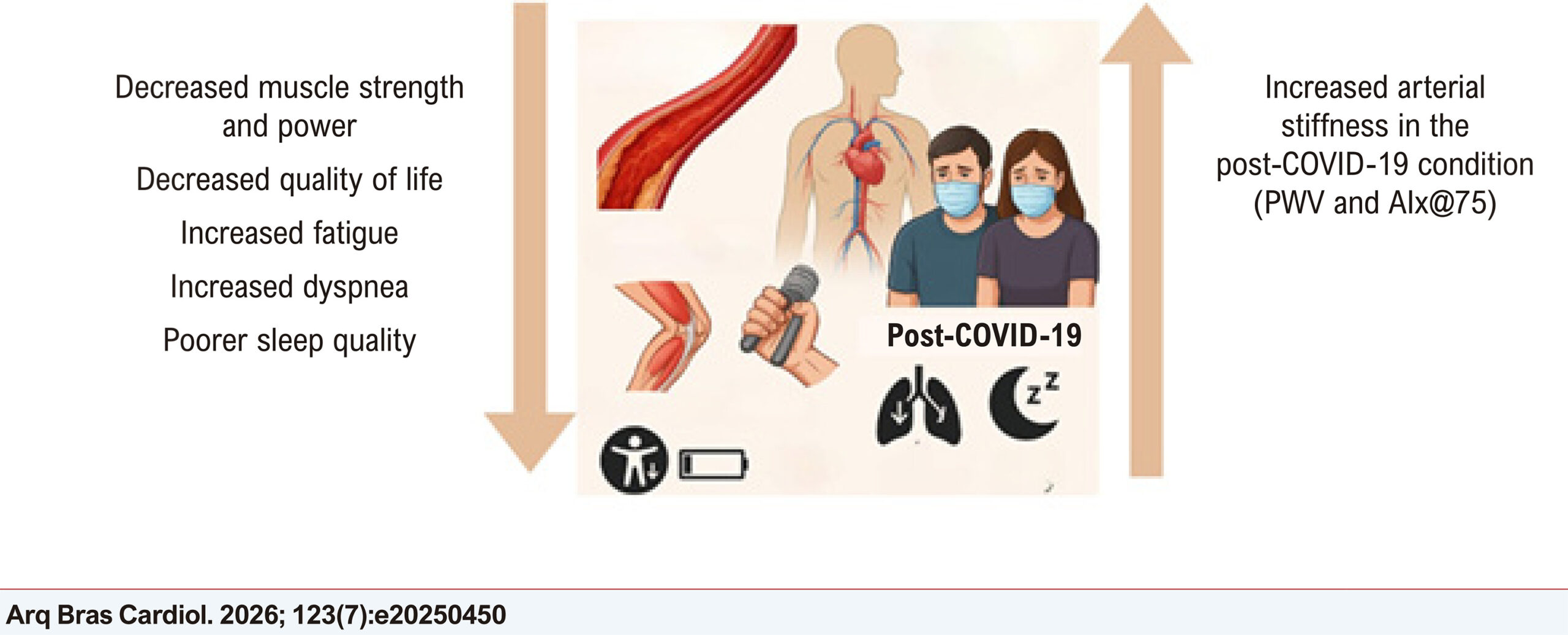
This cross-sectional study was conducted with individuals in the post-COVID-19 group (PCG) and matched individuals in the control group (n = 32). Arterial stiffness was assessed using pulse wave velocity (PWV) and the augmentation index corrected to a heart rate of 75 bpm (AIx@75). Functional performance was evaluated using the five-times sit-to-stand test, handgrip strength, quality of life (assessed with the 12-Item Short Form Survey), fatigue (assessed with the Brazilian version of the Fatigue Severity Scale), dyspnea (assessed with the modified Medical Research Council scale), and sleep quality.

Results

The PCG showed higher PWV values (Δ = 0.80 m/s; 95%CI, 0.08 to 1.52; p = 0.03) and AIx@75 (Δ = 8.34; 95%CI, 2.02 to 14.66; p = 0.01) as well as higher levels of central and peripheral blood pressure. Worse functional performance was observed (Δ = 4.39 s; 95%CI, 2.70 to 6.08; p < 0.01), along with poorer quality of life in the physical component (Δ = −9.35; 95%CI, −12.45 to −6.25; p < 0.01). Fatigue, dyspnea, and sleep quality outcomes were also significantly worse in the PCG. In the adjusted analysis, PWV was independently associated with age and systolic blood pressure, but not with post-COVID-19 status.

Conclusion

Post-COVID-19 patients exhibit greater arterial stiffness, hemodynamic alterations, and poorer clinical-functional performance. However, arterial stiffness appears to be predominantly determined by hemodynamic factors and aging rather than by post-COVID-19 status independently, suggesting that the observed functional impairment results from multifactorial mechanisms.
  • COVID-19
  • Hemodynamics
  • Physical Functional Performance
  • Vascular Stiffness
Read Full Article
Creative Commons Attribution (CC BY) Creative Commons license
03/08/2026 DOI: 10.36660/abc.20250450i Views 1
Cardiovascular Complications in Patients with COVID-19 and Their Relationship with Mortality: An Echocardiographic Perspective
ABCIC
Original Article

Cardiovascular Complications in Patients with COVID-19 and Their Relationship with Mortality: An Echocardiographic Perspective

João Henrique Andrade de Almeida et al. Gustavo Miranda de Azevedo Ferreira Marina de Azevedo Martins Andrade Heloísa Marceliano Nunes Igor Brasil Costa

Abstract

Background:

Echocardiography plays a fundamental role in the diagnosis of cardiovascular diseases related to SARS-CoV-2 infection. Despite prior investigation in the literature, studies focusing on cardiovascular manifestations among patients from the Brazilian Legal Amazon region remain scarce.

Objectives:

To identify cardiovascular complications of COVID-19 in patients admitted to a hospital in the North Region of Brazil and their potential association with mortality.

Methods:

We conducted a retrospective cohort study including 25 medical records of adults diagnosed with COVID-19. These patients were admitted to a hospital in Belém, Pará, in Northern Brazil, between March 2020 and December 2020. Demographic and clinical characteristics, as well as echocardiographic findings, were extracted from the medical records. Statistical analyses were performed adopting a significance level of α < 0.05. The project was approved by the Research Ethics Committee (approval number: 5.540.025).

Results:

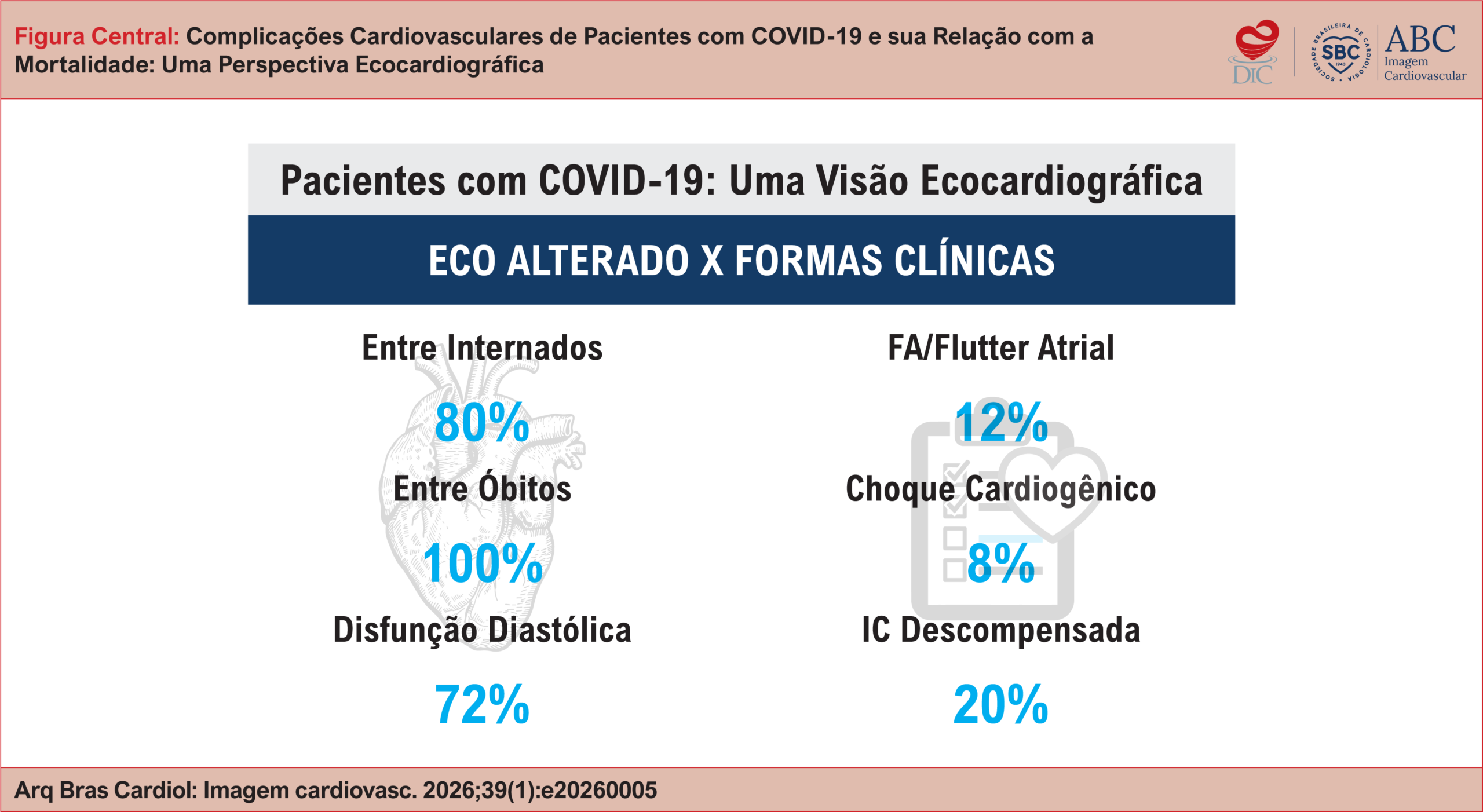
Among the 25 patients, 15 (60%) were male, with a mean age of 69.6 ± 14.4 years. Hypertension (n = 23; 92%) was the most prevalent cardiovascular risk factor, followed by diabetes (n = 11; 44%) and obesity (n = 8; 32%). We detected echocardiographic abnormalities in 20 (80%) individuals, with diastolic dysfunction being the most frequent (n = 18; 72%). All 7 patients who died showed abnormal echocardiography (p > 0.05). Atrial fibrillation or flutter (n = 5; 20%), decompensated heart failure (n = 3; 12%), and cardiogenic shock (n = 2; 8%) were the most common types of cardiovascular involvement.

Conclusions:

An increasing trend in COVID-19 mortality was observed among patients with cardiovascular complications. Nevertheless, the statistical power was limited by the small sample size.

  • Cardiovascular Diseases
  • COVID-19
  • Echocardiography
  • Mortality
Read Full Article
Creative Commons Attribution (CC BY) Creative Commons license
25/05/2026 DOI: 10.36660/abcimg.20260005i Views 3
IJCS
Editorial

The Burden of Cardiovascular Disease in Brazil: Insights From a Decade of Emergency Hospital Admissions

Fernando Yue Cesena

Cardiovascular disease (CVD) remains the leading cause of death both globally and in Brazil., Although cancer has surpassed CVD as the top cause in some countries, projections indicate that CVD will continue to be the primary cause of mortality in Brazil for the decades to come.,

Epidemiological analyses are essential for evaluating current public health strategies and informing future policy decisions. In this issue of the International Journal of Cardiovascular Sciences, an epidemiological study of recent emergency hospital admissions for CVD in Brazil is presented. Using data from the Department of Informatics of the Brazilian Unified Health System (DATASUS), the authors report data from over eight million hospital admissions from 2013 to 2023.

[…]

  • Cardiovascular Diseases
  • COVID-19
  • Epidemiology
  • Hospitalization
Read Full Article
Creative Commons Attribution (CC BY) Creative Commons license
09/01/2026 DOI: 10.36660/ijcs.20250128 Views 1
ABCHF
Letter to the Editor

Impacts of Post-COVID-19 Syndrome on Cardiovascular Autonomic Changes

Pedro Pereira Tenório

Dear Editor,

The article by Davanço et al., entitled “Post-COVID-19 Syndrome and Autonomic Repercussions on Cardiovascular Variables” (ABC Heart Fail Cardiomyop. 2023; 3(3): e20230056), makes an important contribution to understanding the autonomic repercussions of COVID-19 on cardiovascular modulation. This study stands out for addressing an emerging and highly relevant clinical topic by investigating heart rate variability (HRV) parameters in patients with post-COVID-19 syndrome, using robust temporal and spectral domain measures. The methodological rigor, adherence to STROBE guidelines, and adequate characterization of the comparison groups are noteworthy, lending solidity to the conclusions presented.

The correlation between increased parasympathetic indices (RMSSD, HF) and reduced global variability parameters suggests a complex autonomic adaptation, possibly mediated by persistent inflammatory mechanisms— a hypothesis of great pathophysiological value.

[…]

  • COVID-19
  • Inflamação
  • Síndrome de Pós-COVID-19 Aguda
  • Sistema Nervoso Autônomo
Read Full Article
Creative Commons Attribution (CC BY) Creative Commons license
31/12/2025 DOI: 10.36660/abchf.20250028i Views 8
Local Inflammation May Underlie Cardiac Damage in Post-COVID-19 Period
ABCHF
Original Article

Local Inflammation May Underlie Cardiac Damage in Post-COVID-19 Period

Marcio Roberto Moraes de Carvalho et al. Natalia Fonseca Rosário Alice Ramos Carla Rodrigues do Amaral Azevedo … Mario Luiz Ribeiro Guilherme Schittine Bezerra Lomba Evelyn Maciel de Oliveira Rachel V. O’Neill de Souza Mauro Jorge Cabral Castro Jocemir Ronaldo Lugon

Abstract

Background

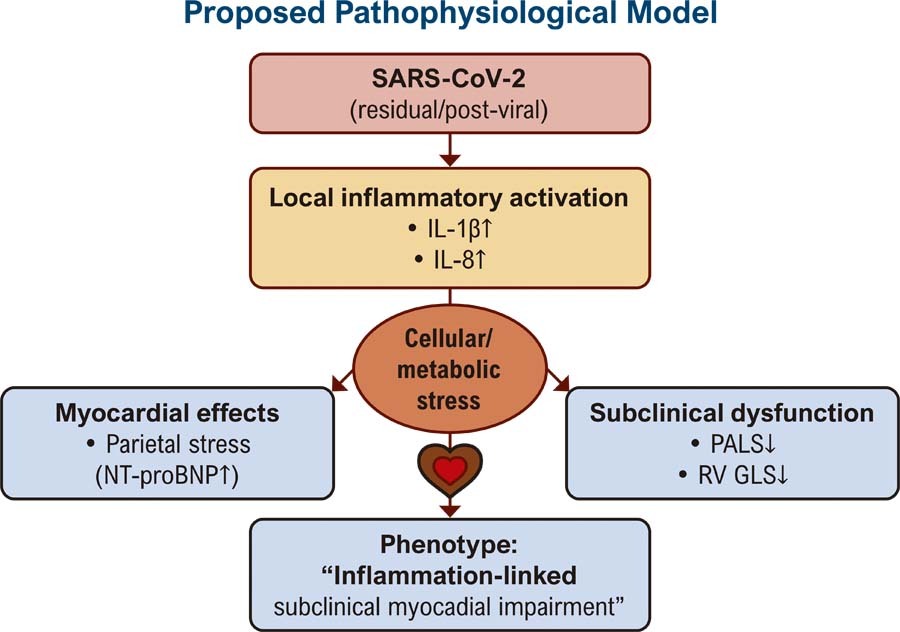
Some patients experience subclinical cardiovascular dysfunction after COVID-19, possibly driven by persistent inflammatory mechanisms that remain incompletely understood. NT-proBNP and GDF-15 have been proposed as biomarkers of myocardial stress and inflammation in this context.

Objectives

To investigate associations between NT-proBNP, GDF-15, inflammatory cytokines, and echocardiographic parameters in patients with Post-COVID-19 Condition (PCC).

Methods

This cross-sectional study included 78 adults followed in a university hospital cohort. Participants were stratified into elevated NT-proBNP (n = 39) and normal NT-proBNP (n = 39) groups. Clinical, laboratory, and echocardiographic variables were assessed, including PALS and RV-GLS. Serum GDF-15 and cytokines were quantified using a multiplex bead assay. ROC curve analysis evaluated the predictive value of GDF-15 for elevated NT-proBNP.

Results

Participants with elevated NT-proBNP had reduced PALS (28.5% vs. 36.7%; p < 0.05), and higher GDF-15 (median 368 vs. 219 pg/mL) and IL-1β levels (2.47 vs. 0.94 pg/mL; p < 0.05). GDF-15 ≥ 519 pg/mL predicted elevated NT-proBNP (AUC = 0.65). Individuals with elevated GDF-15 also showed worse RV-GLS (20.2% vs. 26.9%; p < 0.05) and higher IL-8 levels (p < 0.05).

Conclusions

NT-proBNP, GDF-15, and IL-1β identify subclinical myocardial dysfunction in PCC, supporting a pathophysiological model centered on persistent inflammation and early myocardial remodeling, distinct from classic ischemic pathways.

  • COVID-19
  • Echocardiography
  • Growth differentiation factor 15
  • Inflammation
Read Full Article
Creative Commons Attribution (CC BY) Creative Commons license
31/12/2025 DOI: 10.36660/abchf.20250037i Views 1
IJCS
Editorial

ST-Segment Elevation Myocardial Infarction: Assessment of Quality of Care Before and After the COVID-19 Pandemic

Fernando Oswaldo Dias Rangel

In this article, Tavares et al. comparatively analyze quality indicators of care for 193 patients with ST-segment elevation myocardial infarction (STEMI) and relevant clinical outcomes before and during the COVID-19 pandemic.

An increase in mortality rates associated with cardiovascular diseases was observed in Brazil after the onset of the COVID-19 pandemic. Many patients did not leave their homes to seek hospital care, contributing to increased cardiovascular mortality.

[…]

  • COVID-19
  • Hospital Mortality
  • ST Elevation Myocardial Infarction
Read Full Article
Creative Commons Attribution (CC BY) Creative Commons license
29/08/2025 DOI: 10.36660/ijcs.20250099 Views 1
ST-Segment Elevation Myocardial Infarction Metrics Before and During the COVID-19 Pandemic: Experience from a Brazilian Center
IJCS
Original Article

ST-Segment Elevation Myocardial Infarction Metrics Before and During the COVID-19 Pandemic: Experience from a Brazilian Center

Caio de Assis Moura Tavares et al. Tarso A. D. Accorsi Milena Ribeiro Paixão Tarsila Mota … Fabio Pitta Pedro Alves Lemos Marcelo Franken Karine De Amicis Lima Karen Francine Kohler José Leão de Souza Jr.

Abstract

Background:

The impact of the COVID-19 pandemic on the healthcare of patients with ST-segment elevation acute myocardial infarction (STEMI) in Brazil remains unclear.

Objective:

Provide a descriptive analysis of clinical profiles, time intervals, performance metrics, and outcomes in patients with STEMI before and during the COVID-19 pandemic.

Methods:

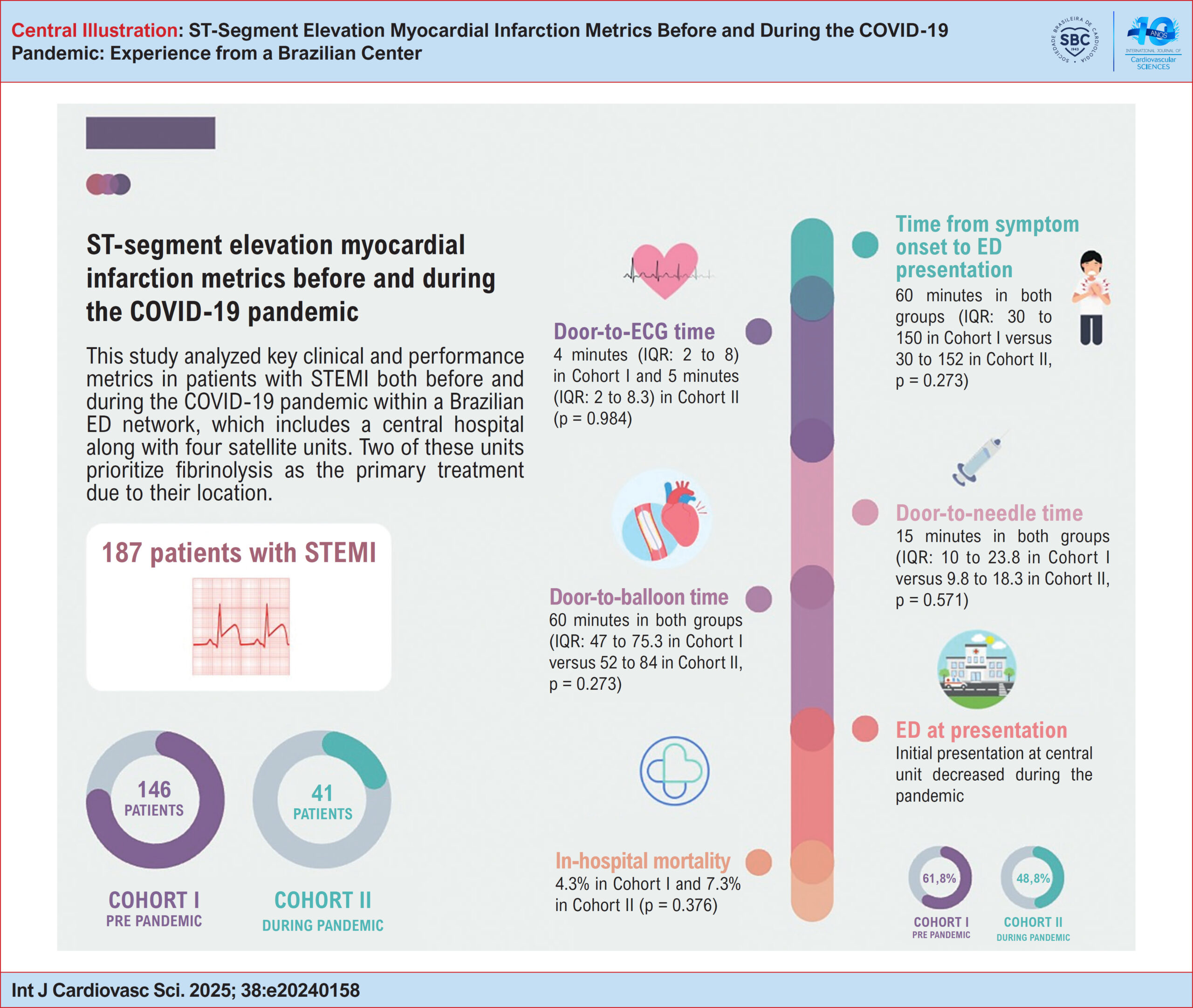
Among a cohort of 193 patients with STEMI diagnosed in five emergency departments within a single Brazilian healthcare network, 187 patients were included between January 2017 and April 2021 and stratified into two cohorts: Cohort I (pre-pandemic, 146 patients) and Cohort II (pandemic, 41 patients). Statistical significance was defined as a two-sided p value < 0.05.

Results:

The mean age of the participants was 62.7 years (standard deviation: 13.2); 83.4% were male, and 86.1% underwent primary percutaneous coronary intervention (PCI). Duration from symptom onset to emergency department presentation was 60 minutes in both cohorts (interquartile range, IQR: 30 to 150 in Cohort I versus 30 to 152 in Cohort II, p = 0.273). Total ischemic time was 132 minutes in Cohort I (IQR: 94 to 222), and 117 minutes in Cohort II (IQR: 76.3 to 185.6) (p = 0.159). The observed STEMI time delays and performance metrics were comparable between groups, with reperfusion rates within the recommended time frame above 90% in both cohorts. Hospital mortality was 3.4% in Cohort I and 7.3% in Cohort II (p = 0.376).

Conclusion:

In the context of the COVID-19 pandemic, within a private healthcare network system in Brazil, this study did not uncover statistically significant disparities in clinical profiles, time intervals, performance metrics, or in-hospital mortality when compared to the pre-pandemic period.

  • Angioplasty
  • COVID-19
  • Fibrinolysis
  • Myocardial Reperfusion
  • ST Elevation Myocardial Infarction
Read Full Article
Creative Commons Attribution (CC BY) Creative Commons license
02/06/2025 DOI: 10.36660/ijcs.20240158 Views 1
Cardiovascular Telerehabilitation: An Alternative for Greater Availability of Cardiovascular and Metabolic Rehabilitation in Brazil
ABC
Viewpoint

Cardiovascular Telerehabilitation: An Alternative for Greater Availability of Cardiovascular and Metabolic Rehabilitation in Brazil

Artur Haddad Herdy et al. Ariella Sebastião Mangia Magnus Benetti

Cardiovascular telerehabilitation – concept

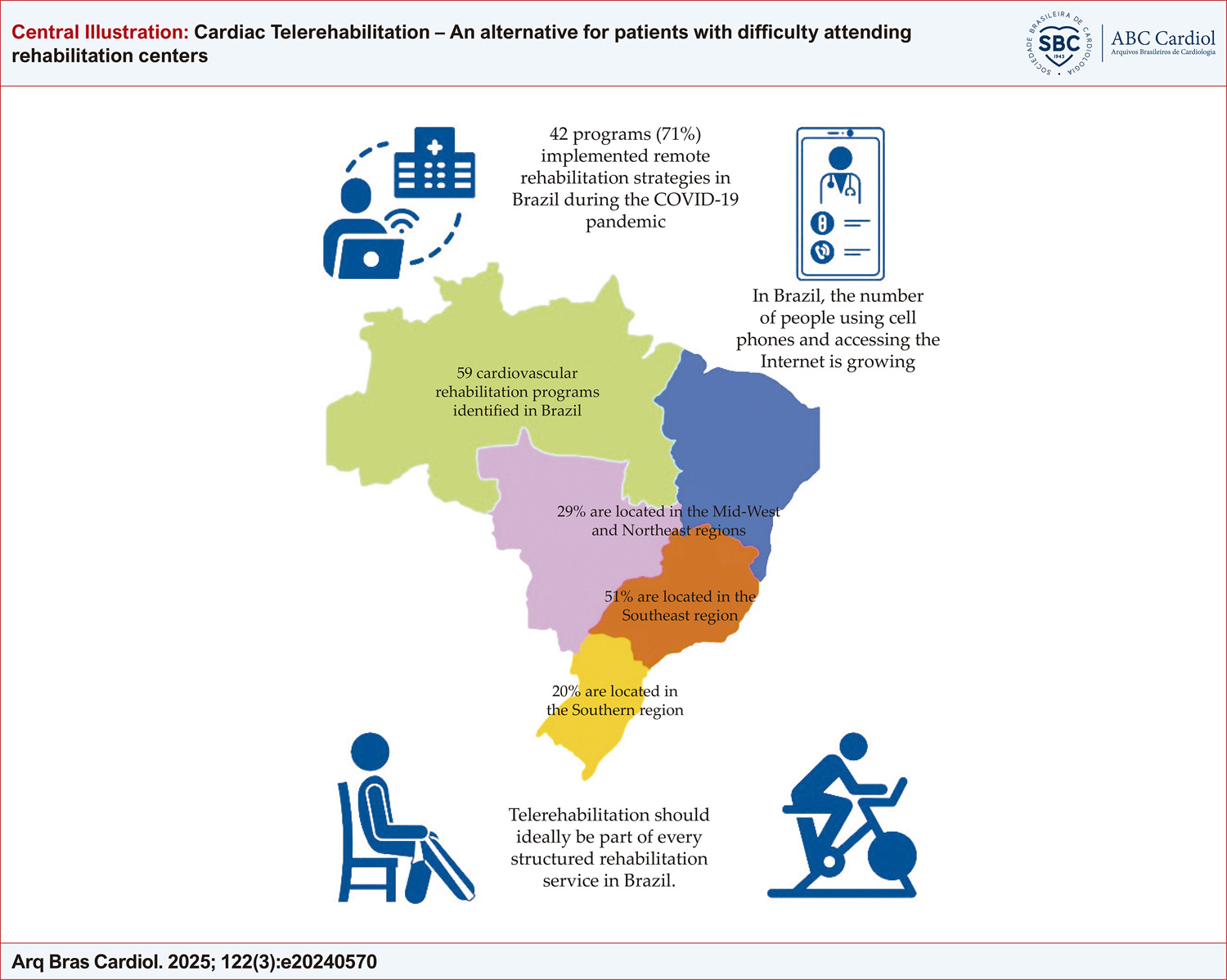
CTR is a program that comprises one or more components of traditional CVR, commonly offered in CVR programs at home or outside a hospital/specialized center environment; it is delivered through digital technology (telemonitoring, e-learning, telecoaching).

Its objective is to manage CVD and improve different physical, emotional, psychological, and social aspects of patients, especially those located in areas with low levels of access, whether due to their place of residence or difficulty in accessing advanced care.,

[…]

  • Cardiac Rehabilitation
  • Cardiovascular Diseases
  • COVID-19
  • Telemonitoring
  • Telerehabilitation
Read Full Article
Creative Commons Attribution (CC BY) Creative Commons license
07/04/2025 DOI: 10.36660/abc.20240570i
Lifestyle and Hypertension in Brazil and Spain
IJCS
Original Article

Lifestyle and Hypertension in Brazil and Spain

Giovanna Lucieri Alonso Costa et al. Jurema Correa Mota Marina Ururahy Soriano de Sousa Flavio Kapczinski … Jose Cervera-Martínez Vicent Balanzá-Martínez Raquel B. De Boni

Abstract

Background:

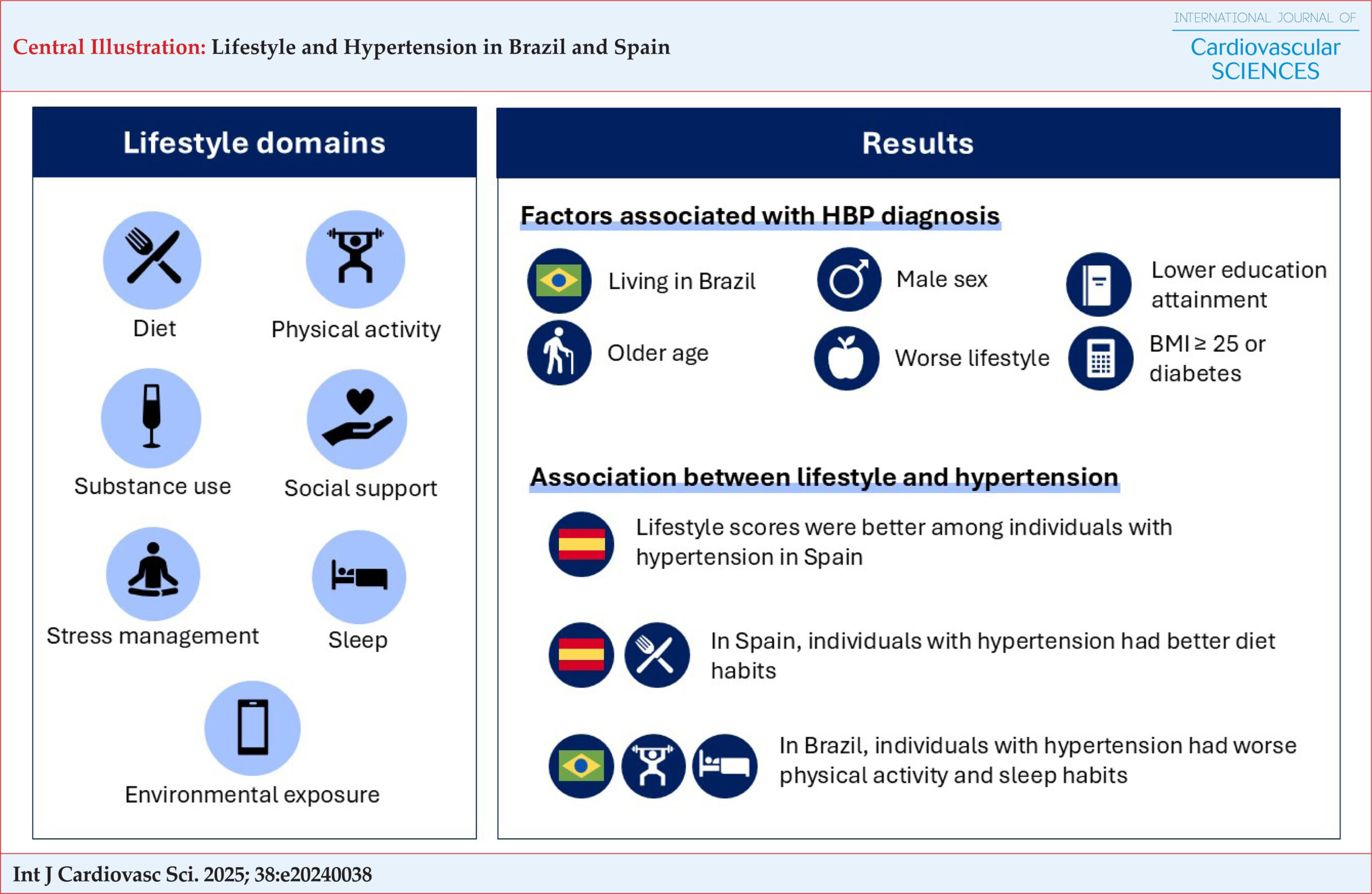
Hypertension is the main risk factor for cardiovascular mortality worldwide. Lifestyle medicine (LM) assesses health through seven domains (diet, physical activity, substance use, sleep, social support, stress management, and environmental exposure), which also include risk factors for hypertension.

Purpose:

To evaluate the association between lifestyle and hypertension in Brazil and Spain.

Methods:

Secondary analysis of data from two web surveys conducted in 2020 in Brazil and Spain, which assessed lifestyle through a multidimensional scale. We enrolled 5224 individuals of both genders, aged > 18 years, living in Brazil and Spain, and with Internet access. The main outcome was a self-reported hypertension diagnosis. We calculated the absolute and relative frequency of the independent variables and evaluated the factors associated with hypertension in logistic regression models.

Results:

76.2% of participants were women, 57.9% were > 42 years old, and 66.9% had finished higher education. Over the last 12 months, 19.6% of Brazilians and 9.2% of Spanish reported diagnosis/treatment of hypertension. Male and older groups living in Brazil, with lower education and worse lifestyles, were more likely to report hypertension. General lifestyle score was not associated with hypertension in Brazil, while hypertensive individuals had better scores in Spain (p < 0.001). Hypertensive individuals had worse lifestyle scores in physical activity (p < 0.05) and sleep (p < 0.05) in Brazil and better diet scores in Spain (p < 0.001). Environmental exposure was better among hypertensive individuals in both countries (p < 0.001). Our results point to cultural and socioeconomic differences between both countries.

Conclusion:

LM is an important strategy for the prevention/treatment of chronic diseases such as hypertension

  • COVID-19
  • Diet
  • Hypertension
  • Life Style
Read Full Article
Creative Commons Attribution (CC BY) Creative Commons license
24/03/2025 DOI: 10.36660/ijcs.20240038 Views 2
Delay Times in Acute Myocardial Infarction Care: Comparison Between Periods Before and During the COVID-19 Pandemic
IJCS
Original Article

Delay Times in Acute Myocardial Infarction Care: Comparison Between Periods Before and During the COVID-19 Pandemic

Layla Pasolini Lott et al. Roberto Ramos Barbosa Rhaaby Rodrigues Muzi Camila Marianelli … Isadora Cardozo Bragatto Valentin Trevizani Neto Glícia Chierici Baptista Eduardo Gomes Vieira Rodolfo Costa Sylvestre Osmar Araújo Calil Renato Giestas Serpa Lucas Crespo de Barros Larissa Novaes Paganini Lucas Martins Frizzera Borges Luiz Fernando Machado Barbosa

Abstract

Background

The success of acute myocardial infarction with ST-segment elevation (STEMI) treatment is time-dependent, requiring prompt access, diagnosis, and immediate medical intervention. The COVID-19 pandemic has significantly impacted the care of patients with STEMI.

Objective

To analyze delay times and clinical outcomes of patients with STEMI undergoing primary percutaneous coronary intervention (PPCI) before and during the COVID-19 pandemic.

Methods

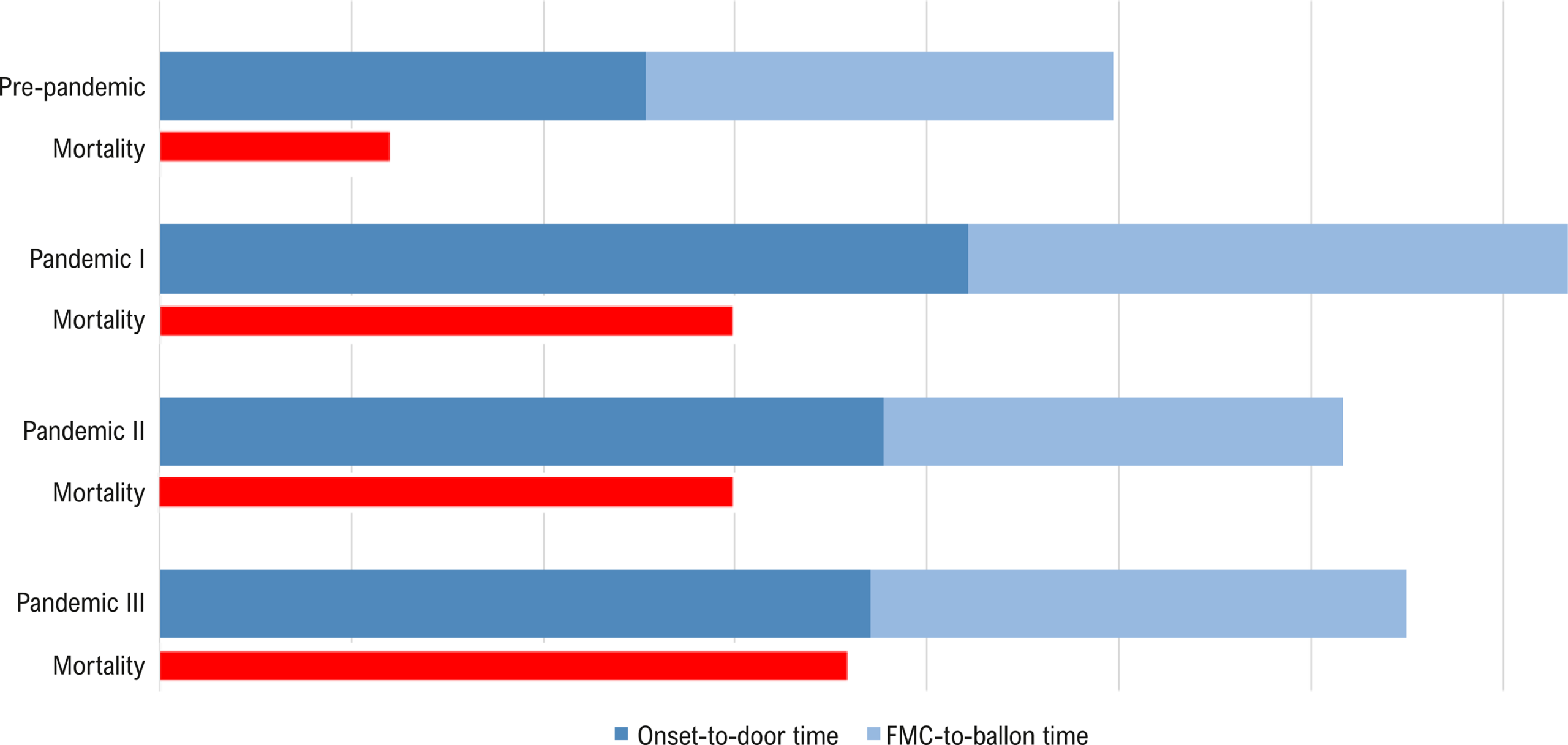
This retrospective observational study included patients with STEMI undergoing PPCI from June 2019 to July 2022. The COVID-19 pandemic period was divided into 3 time groups. Pandemic I referred to the interval from March to August 2020, pandemic II from September 2020 to July 2021, and pandemic III from August 2021 to July 2022. Delay times, clinical characteristics, and in-hospital mortality were analyzed. The chi-square, Fisher’s exact, Student’s t and one-way ANOVA tests were applied, with p values less than 0.05 being considered statistically significant.

Results

Comparing the periods, the total ischemic time to PPCI was 346.3 versus 448.4 versus 398.4 versus 348.4 minutes (p = 0.47); onset-to-door time 253.1 versus 421.1 versus 377.4 versus 370.6 minutes (p = 0.42); first medical contact (FMC)-to-balloon time 243.9 versus 313.0 versus 239.5 versus 279.4 minutes (p = 0.38); and door-to-balloon time 71.8 versus 76.8 versus 58.03 versus 88 minutes (p = 0.9). Mortality significantly increased in pandemic I compared to pre-pandemic (29.4% versus 5.0%, p = 0.01), with a marginal difference compared to pandemic II and III combined (12.2%, p = 0.05).

Conclusion

There was a trend toward increased onset-to-door time and FMC-to-balloon time in STEMI care during the pandemic compared to the pre-pandemic period, although not statistically significant. Higher mortality in STEMI was observed in the first months of the COVID-19 pandemic.

  • COVID-19
  • Mortality
  • Myocardial Infarction
  • Percutaneous Coronary Intervention
Read Full Article
Creative Commons Attribution (CC BY) Creative Commons license
03/03/2025 DOI: 10.36660/ijcs.20240022 Views 1
The Prognostic Impact of Myocardial Deformation Measures in Patients with COVID-19
ABCIC
Original Article

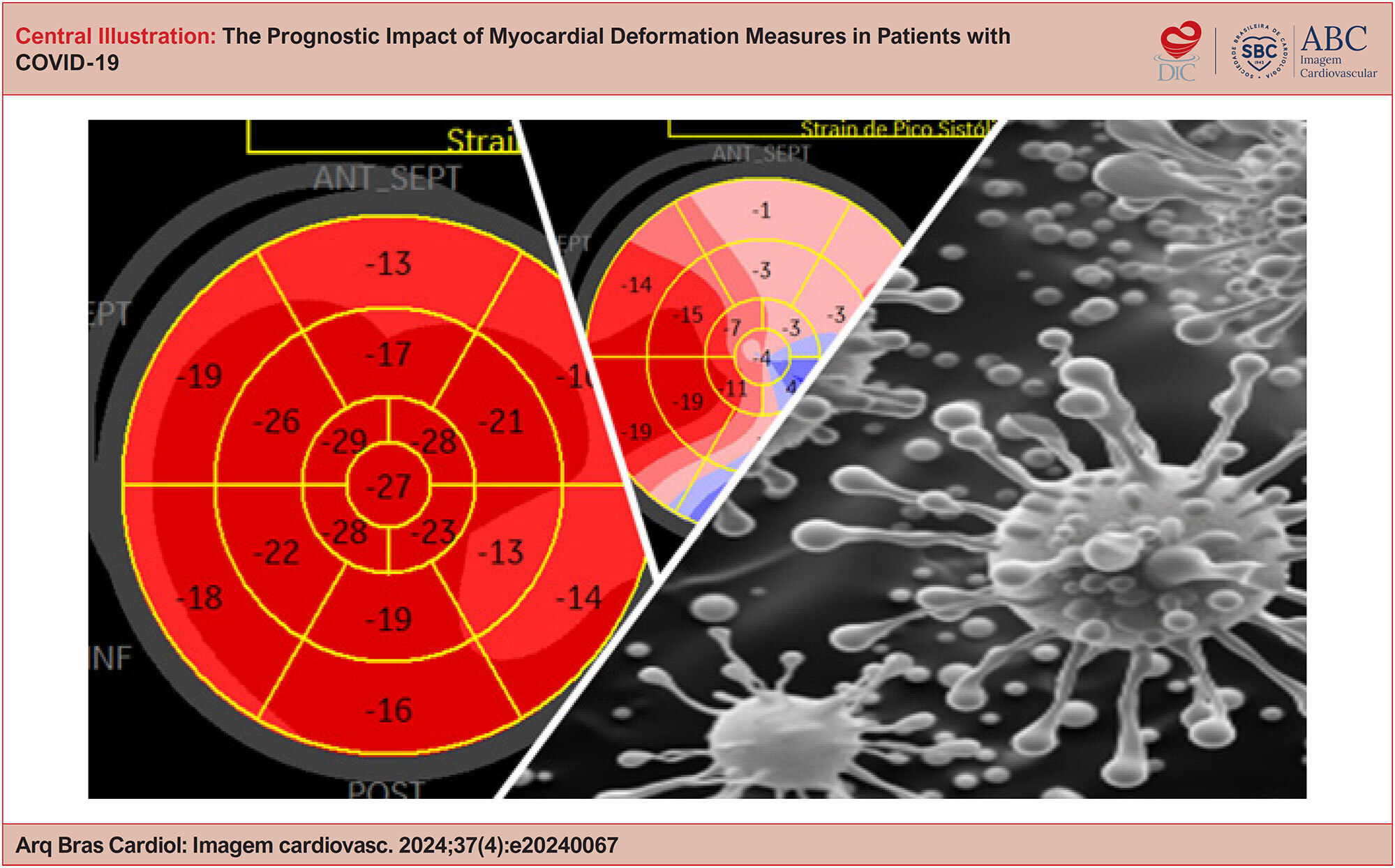
The Prognostic Impact of Myocardial Deformation Measures in Patients with COVID-19

João Giffoni Silveira Neto et al. Marcello de Brito Campos Luiz Mello Marcela de Castro Giffoni … Natanael Arnor da Silva Barros Goveia Antonio Claudio Lucas da Nóbrega Renata R. T. Castro

Abstract

Background:

Cardiovascular involvement in COVID-19 has been extensively studied. Echocardiography is an important technique in identifying cardiac involvement, serving as an excellent tool for prognostic variables.

Objectives:

Analyze the prognostic impact of speckle tracking in analyzing the left ventricle in patients with COVID-19 admitted to intensive care units (ICUs).

Methods:

Patients diagnosed with COVID-19 admitted to the ICU underwent an echocardiographic examination within the first 48 hours of hospitalization and were divided into two groups according to hospital outcome (discharge or death). Conventional echocardiographic data, as well as global longitudinal strain of the left ventricle (LVGLS) and right ventricle (RVGLS) of both groups, were compared using Student’s t test (for continuous variables) or the chi-square test (for categorical variables), considering p < 0.05 as statistically significant.

Results:

The average age was 56 ± 14 years, and the proportion of men and women was similar. The mortality rate was 64%, more frequent in elderly patients and in patients with a higher number of comorbidities. LVGLS revealed lower values in patients who progressed to death, with a cutoff point below −18.1% (sensitivity = 90.4%, specificity = 96.6%) for this outcome, and, after multivariate statistical analysis, it was found to be the only statistically significant echocardiographic variable.

Conclusion:

LVGLS is an important tool in the prognostic analysis of critically patients with COVID-19, offering a new window of possibilities for evaluating these patients.

  • COVID-19
  • Echocardiography
  • Global Longitudinal Strain
Read Full Article
Creative Commons Attribution (CC BY) Creative Commons license
13/12/2024 DOI: 10.36660/abcimg.20240067i Views 1
IJCS
Editorial

COVID-19 and History of Coronary Artery Bypass Surgery

María del Carmen Lacy-Niebla et al. Alfonso Buendia-Hernandez

In this study conducted in Brazil, a group of patients with a history of coronary artery bypass surgery with or without COVID-19 disease was analyzed to determine if their quality of life significantly changed after infection. They observed that patients with a history of COVID-19 infection had a worse quality of life during the four years of follow-up. No significant differences were found in the incidence of acute myocardial infarction, cerebral vascular events or thromboembolism, which is surprising and differs from what was expected.

On March 11, 2019, the World Health Organization declared the COVID-19 disease a pandemic. From that moment on, we believed that COVID-19 mainly affected the respiratory system and that in approximately 20% of patients, the disease was very serious with a high mortality rate. Over time we learned that COVID-19 is a multisystem inflammatory disease that is associated with cardiovascular manifestations. About half of patients hospitalized for COVID-19 have cardiovascular conditions that include coronary heart disease or a history of cerebral ischemic event, and 15-20% of them have complications like myocardial ischemia, heart failure, arrhythmias and dysautonomia.– Patients with previous cardiovascular disease may become unstable when COVID-19 occurs, mainly due to a decrease in myocardial reserve and increase in oxygen consumption and metabolic demands.

[…]

  • Coronary Artery Bypass
  • COVID-19
  • Inflammation
Read Full Article
Creative Commons Attribution (CC BY) Creative Commons license
22/11/2024 DOI: 10.36660/ijcs.20240179 Views 1
ABCHF
Review Article

Impact of COVID-19 on Cardiovascular Outcomes in Patients with Chronic Heart Failure

Luiz Felipe da Silva Magalhães et al. Guilherme Capetini Sant’Anna João Carlos Amorelli Bohrer de Andrade Figueira Humberto Villacorta

Abstract

SARS-CoV-2 infection affects multiple organs and systems, including the cardiovascular system. Cardiovascular complications include myocarditis, pericarditis, acute coronary syndrome, acute heart failure (HF), pulmonary hypertension, right ventricular dysfunction, and arrhythmias. Inflammation is a mechanism that is present in both COVID-19 and HF. The mechanisms of myocardial injury due to COVID-19 include direct damage by the pathogen, hypoxemic stress, endothelial dysfunction with associated thromboembolic phenomena, and effects of systemic inflammatory syndrome. Impaired cardiopulmonary reserve makes patients with chronic HF more susceptible to decompensation during the course of COVID-19. Coronary and pulmonary vascular alterations lead to worse prognosis in relation to ischemic and thromboembolic events. These patients have longer hospital stays, increased risk of mechanical ventilation, and higher mortality.

COVID-19 increases the incidence of cardiovascular complications in the first 12 months after acute infection, including cerebrovascular, arrhythmic, thromboembolic, and ischemic events, in addition to inflammatory heart disease. An increased risk of developing HF with preserved ejection fraction has also been reported. During the 12 months following acute infection, myocardial injury has been associated with persistent symptoms, as well as increased rates of hospital readmission and mortality.

Therefore, HF is related to increased mortality, length of hospital stay, and incidence of complications in patients who are affected by SARS-CoV-2, and individuals with chronic HF who have COVID-19 show a higher rate of events during post-COVID follow-up.

  • COVID-19
  • Heart Failure
  • Prognosis
Read Full Article
Creative Commons Attribution (CC BY) Creative Commons license
18/11/2024 DOI: 10.36660/abchf.20240029i Views 1
IJCS
Viewpoint

Biomarkers and Mononuclear Inflammatory Activity in COVID-19 Survivors

Marcio Carvalho et al. Antonio Lagoeiro

Introduction

COVID-19 has globally impacted 522 million people and caused 6 million deaths, despite the administration of 12 billion vaccine doses. Beyond respiratory effects, the virus has led to complications in the cardiovascular, hematological, and nervous systems, potentially resulting in organ dysfunction and death. Individuals with pre-existing medical conditions such as hypertension, diabetes mellitus, coronary artery disease, heart failure, and chronic kidney disease are associated with worse prognoses. Increased long-term mortality risk is observed, especially in the elderly population, regardless of the acute phase severity.

COVID-19 affects multiple organs beyond the lungs, including various cardiovascular diseases such as myocarditis, acute myocardial infarction, stress cardiomyopathy, arterial and venous thromboembolism, pericarditis, and arrhythmias. The pathophysiological mechanisms include systemic inflammation (cytokine storm), coagulopathy, direct viral invasion, hypoxemia, electrolyte imbalance, and fever.

[…]

  • Biomarkers
  • Cardiovascular Diseases
  • COVID-19
Read Full Article
Creative Commons Attribution (CC BY) Creative Commons license
16/09/2024 DOI: 10.36660/ijcs.20240016 Views 2
A Geoprocessing Approach for Mortality and Social Vulnerability Analysis during the COVID-19 Pandemic
IJCS
Original Article

A Geoprocessing Approach for Mortality and Social Vulnerability Analysis during the COVID-19 Pandemic

Andres Felipe Valencia Rendon et al. Isabela Mendes Volschan Manoella Novais Pereira Wagner Lima Monteiro … Alessandra de Freitas Pimentel Emilia Matos do Nascimento Basilio de Bragança Pereira Glaucia Maria Moraes de Oliveira

Abstract

Background

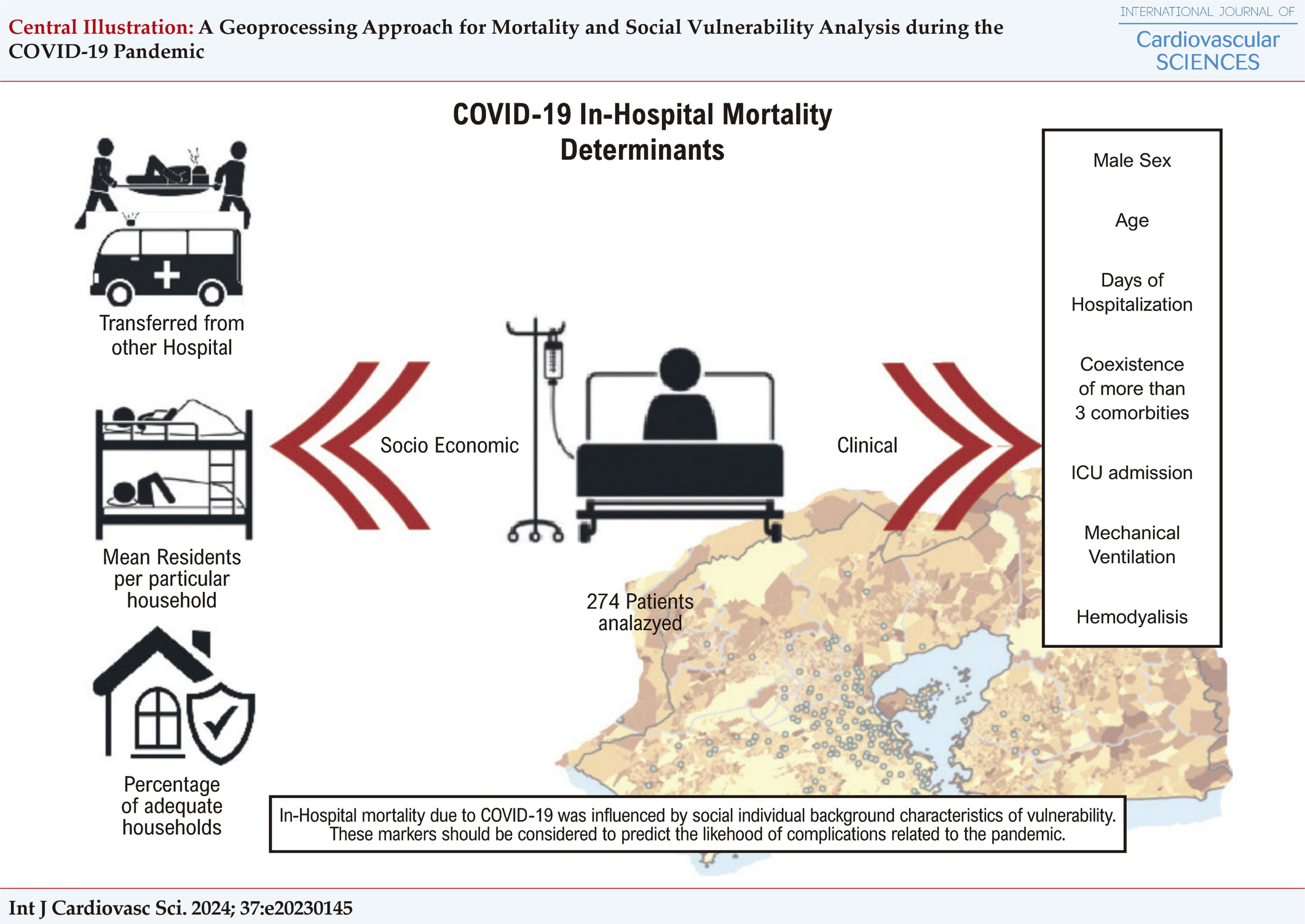
Brazil had high COVID-19 lethality/mortality with multiple social inequalities, where color/race was highly relevant, especially in Rio de Janeiro. Therefore, we hypothesize that COVID-19 hospitalized patients with a highly socially vulnerable background would have more significant in-hospital mortality.

Objective

To analyze the socioeconomic factors of social vulnerability and their association with COVID-19 mortality.

Methods

This work was a prospective study of 274 confirmed adult COVID-19 hospitalized patients in the University Hospital of Clementino Fraga Filho (HUCFF). The clinical features/blood chemistry information were collected from the clinical record. The ArcGIS Pro Software (Esri Gis mapping software, Redlands California-US) and a Python-based algorithm were used to determine in-app/in-map variable management relevance to the socioeconomic variables, inequity markers, and vulnerability. Our study also analyzed the transfers from other primary care institutions to our hospital in order to examine its potential delays in advanced medical care. Logistic regression and ROC curve were used to investigate in-hospital mortality for our statistical analysis. The significance level adopted in the statistical analysis was 5% Results: Male sex, total days of hospitalization, age, having more than three comorbidities, intensive care unit (ICU) admission, hemodialysis, and transfer from other hospitals showed statistical significance. Patients living in low-adequate households (p = 0.030) with high in-house individual agglomeration markers (p = 0.017) and transfers from another Primary Health Care (PHC) institution (p = 0.047) were associated with increased in-hospital mortality, with high ICU admission and mechanical ventilation.

Conclusions

In-hospital mortality due to COVID-19 was influenced by social individual background characteristics of vulnerability. Among other clinical parameters, these markers should be considered to predict the likelihood of complications related to the COVID-19 pandemic.

  • COVID-19
  • Hospital Mortality
  • SARS-CoV-2
  • Social Vulnerability
  • Socioeconomic Disparities in Health
Read Full Article
Creative Commons Attribution (CC BY) Creative Commons license
26/08/2024 DOI: 10.36660/ijcs.20230145 Views 1
Figure 1
IJCS
Original Article

Quality of Life Assessment of Patients Infected With COVID-19 and Prior Coronary Artery Bypass Graft Surgery in Brazil: Four Years Follow-up

Adnaldo da Silveira Maia et al. Matheus Maia Adnaldo Lucas da Silveira Maia Magaly Arrais dos Santos

Abstract

Background

The COVID-19 pandemic has been a worldwide challenge. In patients with coronary artery disease (CAD), previously submitted to coronary artery bypass graft surgery (CABG), such impact should be analyzed.

Objectives

Evaluate the impact on quality of life of COVID-19 infection in patients with prior CABG.

Methods

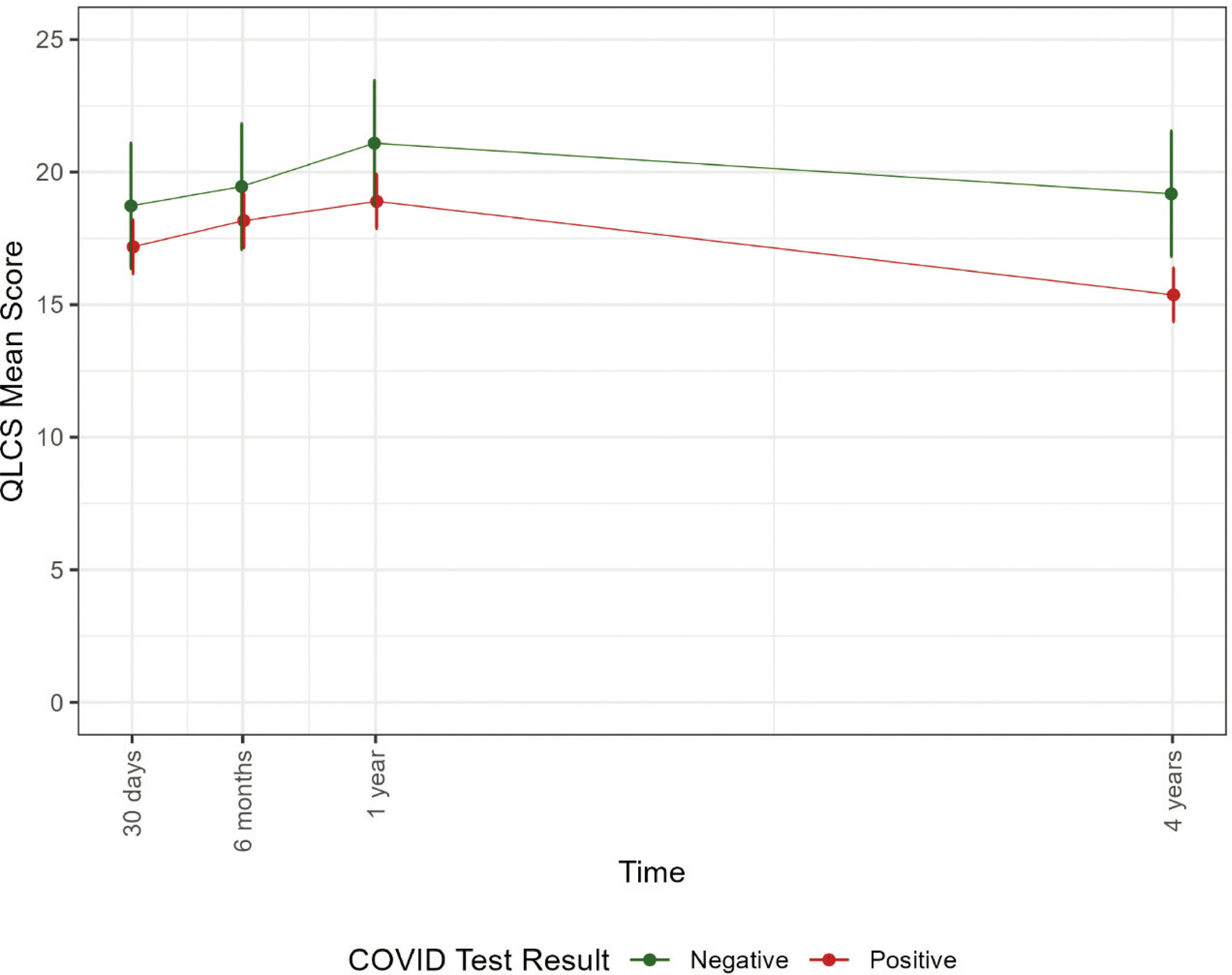
Patients undergoing isolated CABG between July 2016 and July 2017 were enrolled. This is an observational, cross-sectional, prospective study. Patients were divided into two groups: Group (COVID-19) and Group (No-COVID), for analysis of variables. The World Health Organization’s (WHO) definitions of confirmed cases were used to define the diagnosis of COVID-19 infection. Quality of life was assessed using the Quality of Life in Cardiovascular Surgery (QLCS) questionnaire, applied 30 days, 6 months, 1 year, and 4 years after surgery. The primary endpoint was improvement in quality of life at 4 years after CABG. The local ethics committee approved the study. Continuous variables were described by their means and standard deviations (SD). Categorical variables were described using absolute or relative frequencies. The items that make up the quality of life questionnaire were added together to calculate the score. A linear mixed model was used to assess the effect of time on the score. The significance level adopted was 5%. The analyses were carried out using R software, version 4.2.1.

Results

The total sample consisted of 434 patients who underwent isolated CABG; the mean age was 63 years, with a prevalence of males (71%). Among the patients followed up at the 4-year follow-up (115), 60 (52%) were positive according to the WHO’s definitions. After multiple comparisons, there was a statistical difference in quality of life in all periods (P<0.001). Between patients with and without COVID-19, a statistical difference was observed at 1 and 4 years (p = 0.0039).

Conclusion

Patients who underwent CABG and had a history of COVID-19 infection experienced worsening quality of life within 4 years. There was no difference between groups regarding new acute myocardial infarction (AMI), stroke, or hospitalization.

  • COVID-19
  • Myocardial Revascularization
  • Quality of life
Read Full Article
Creative Commons Attribution (CC BY) Creative Commons license
26/08/2024 DOI: 10.36660/ijcs.20230171 Views 1
Heart Failure in Children and Adolescents with Covid-19: A Systematic Review of the Literature
ABCHF
Original Article

Heart Failure in Children and Adolescents with Covid-19: A Systematic Review of the Literature

Lucas Quaresma Martins et al. Gabriel Ribeiro de Souza Daniel Garcia da Gama Alves Kaylane Fernanda Costa de Melo … Paula Cordeiro Aguiar de Almeida Ádria Rayane Lima Cascaes Antonio Maria Zacarias Araújo Monteiro

Abstract

Background:

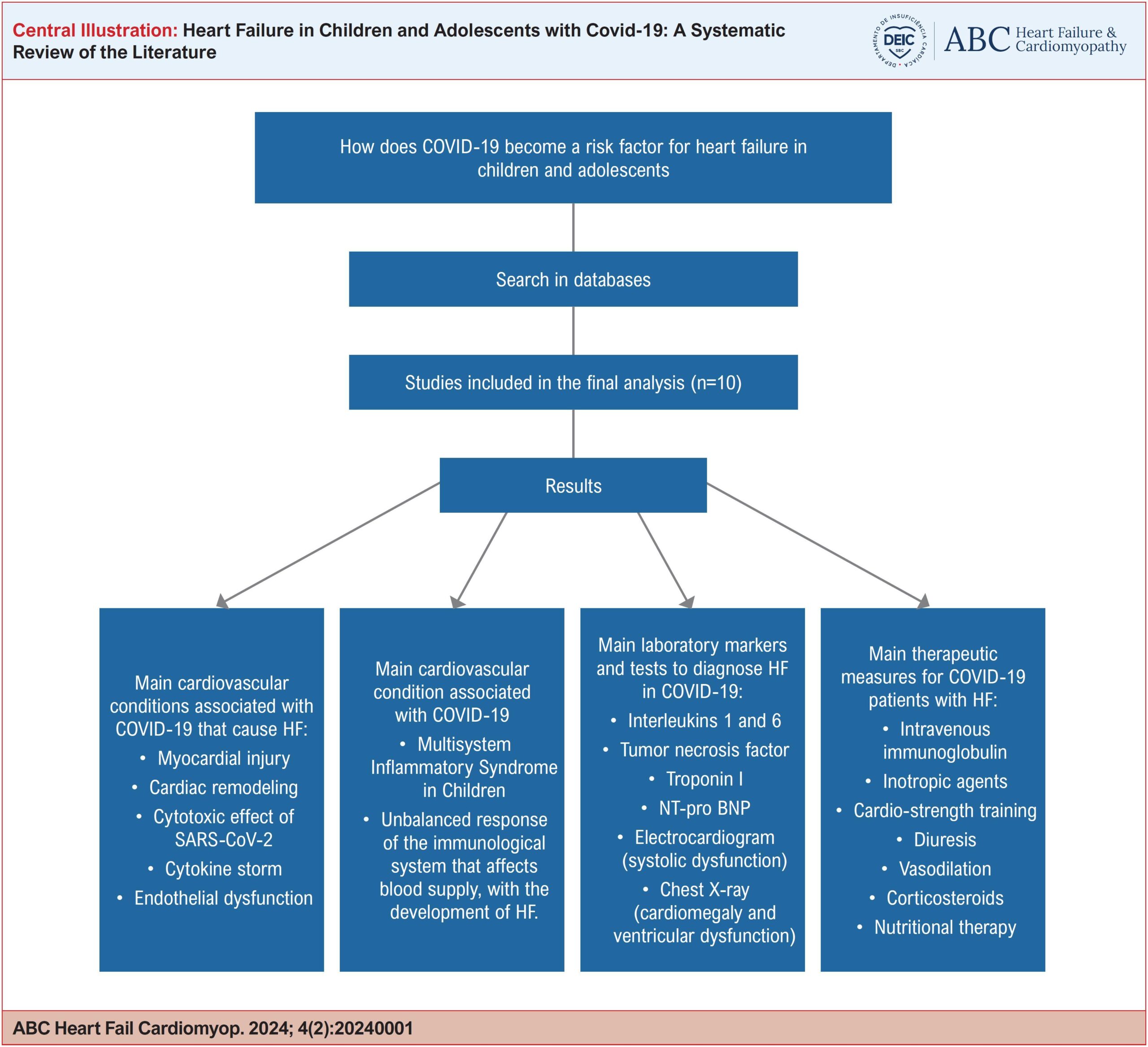
Cardiovascular structural/functional changes caused by COVID-19 may be related to the presence of heart failure (HF), especially in children and adolescents, as the SARS-CoV-2 virus invades cardiomyocytes, leading to cardiac dysfunction.

Objective:

To assess the mechanism by which COVID-19 becomes a risk factor for the development of HF in children and adolescents.

Methods:

This was a systematic literature review of articles indexed in PubMed, BVS and SciELO, following the PRISMA recommendations. DeCS/MeSH descriptors were used in the search.

Results:

A total of 685 studies were identified: 418 in Pubmed, 264 in BVS and three in SciELO. After exclusion of 160 duplicate articles, and analysis of titles and abstracts, 14 articles were read in full, and 10 selected for the final sample. All articles were published between 2020 and 2022; there were 10 cohort studies (eight retrospective and two prospective). Six articles addressed the Multisystem Inflammatory Syndrome in Children (MIS-C), and four articles addressed the reduction in left ventricular ejection fraction in COVID-19 patients.

Conclusions:

Most patients recovered without cardiovascular sequelae, although MIS-C may cause severe systemic failure, which led to death in some studies. More research and more comprehensive studies on this theme are warranted.

  • Adolescent
  • Child
  • COVID-19
  • Heart Failure
  • SARS-CoV-2
Read Full Article
Creative Commons Attribution (CC BY) Creative Commons license
22/07/2024 DOI: 10.36660/abchf.20240001i Views 1
Figure 1
ABCIC
Case Report

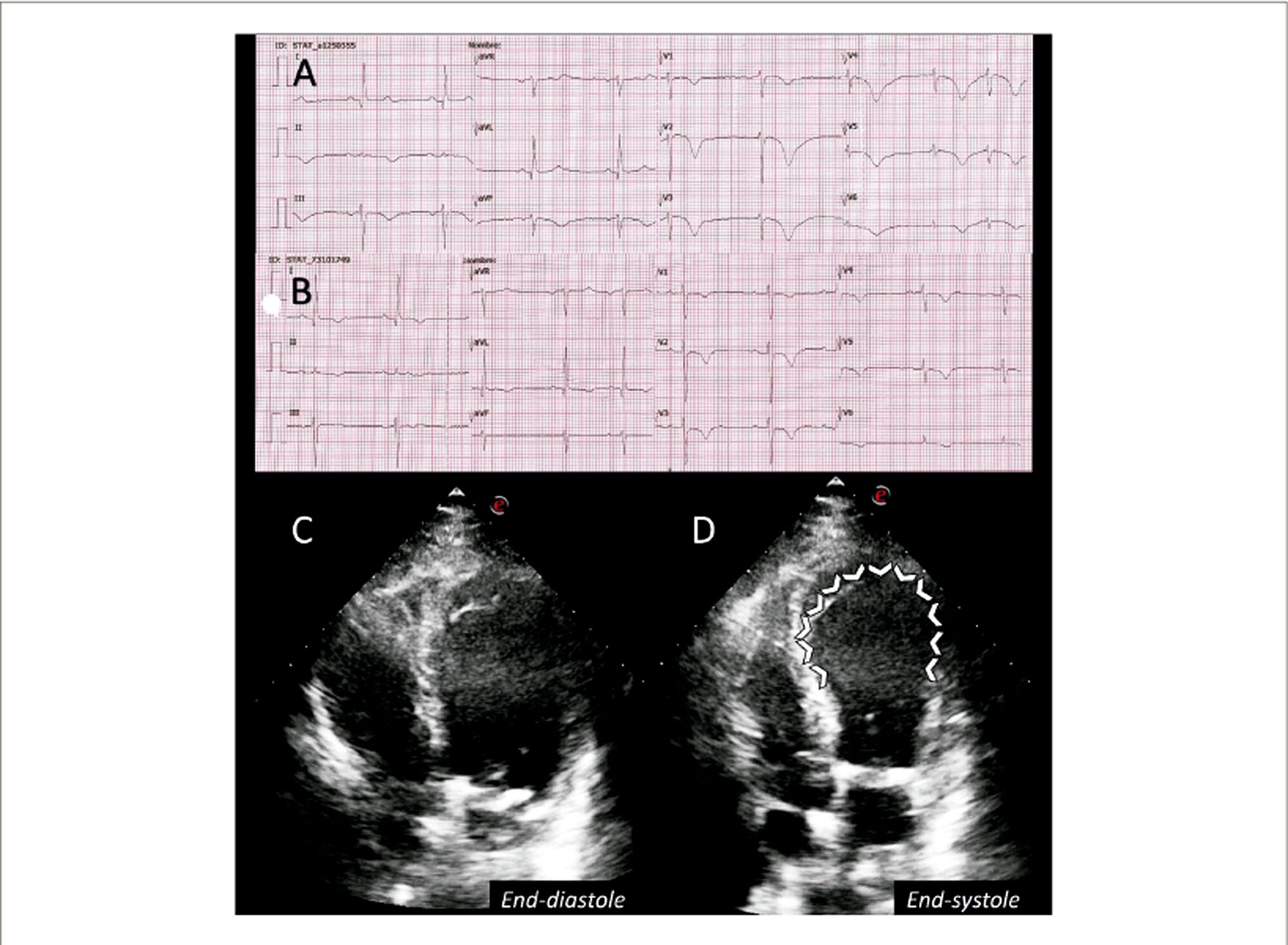
Takotsubo Syndrome in a Critical COVID-19 Patient: Electrocardiographic and Echocardiographic Evolution

Cuitláhuac Arroyo-Rodríguez et al. Alejandra Hernández-Parra

Background

By resembling a Japanese traditional octopus trap, i.e. a takotsubo, Hikaru Sato described the first case of “Takotsubo cardiomyopathy” in a patient without coronary stenosis and end-systolic left ventricular apical ballooning on a cardiac left ventriculography.Takotsubo syndrome (TTS) is a clinical syndrome characterized by an acute and transient left ventricular systolic dysfunction related to an emotional or physical stressful event. COVID-19 is a recognized trigger for TTS, with the possible explanations being the enormous emotional stress caused by the pandemic and the entire spectrum of myocardial damage associated with SARS-COV-2.

[…]

  • COVID-19
  • Echocardiography
  • Takotsubo Cardiomyopathy
Read Full Article
Creative Commons Attribution (CC BY) Creative Commons license
16/05/2024 DOI: 10.36660/abcimg.20240014i Views 2
ABC
Editorial

The Immense Challenge of Searching for the Best Evidence

Luiz Maurino Abreu

To generate the best scientific evidence, it is crucial to follow rigorous research methods, use representative samples, apply appropriate statistical analyses, and ensure peer review in reputable scientific publications. Transparency and replicability are also key. Systematic reviews and meta-analyses aim to summarize a body of available evidence for a given question and provide a high-quality answer.

New situations add variables not previously analyzed, and the COVID-19 pandemic has raised big questions. The urgency to find effective treatments and develop vaccines has encouraged a global mobilization of the scientific community. Contributing factors were: the global health emergency, international mobilization, priority funding sources, greater availability of data networks, and high technology, which stimulated a real race in search of answers. This convergence of factors resulted in an explosion of publications, seeking to better understand the pathophysiology, treatment options, prevention measures, and socioeconomic impacts. As would be expected, in the rush, most of the publications were of poor quality, some of which generated misinformation with serious consequences, as many of these had great repercussions in the media. During the course of the pandemic, numerous guidelines were generated and changed. There were notable discrepancies between different guidelines regarding recommendations on the management of COVID-19 in Brazil.

[…]

  • Anticoagulants
  • Arrhytmias, Cardiac
  • Atrial Fibrillation
  • Coronavirus infections
  • COVID-19
Read Full Article
Creative Commons Attribution (CC BY) Creative Commons license
06/05/2024 DOI: 10.36660/abc.20240106i Views 2
Figure 1
IJCS
Editorial

Lessons Learned from Cardiac Complications of COVID-19 and the Value of the Electrocardiogram

Javier César Barcos et al. Ana G. Múnera Echeverri Adrian Baranchuk

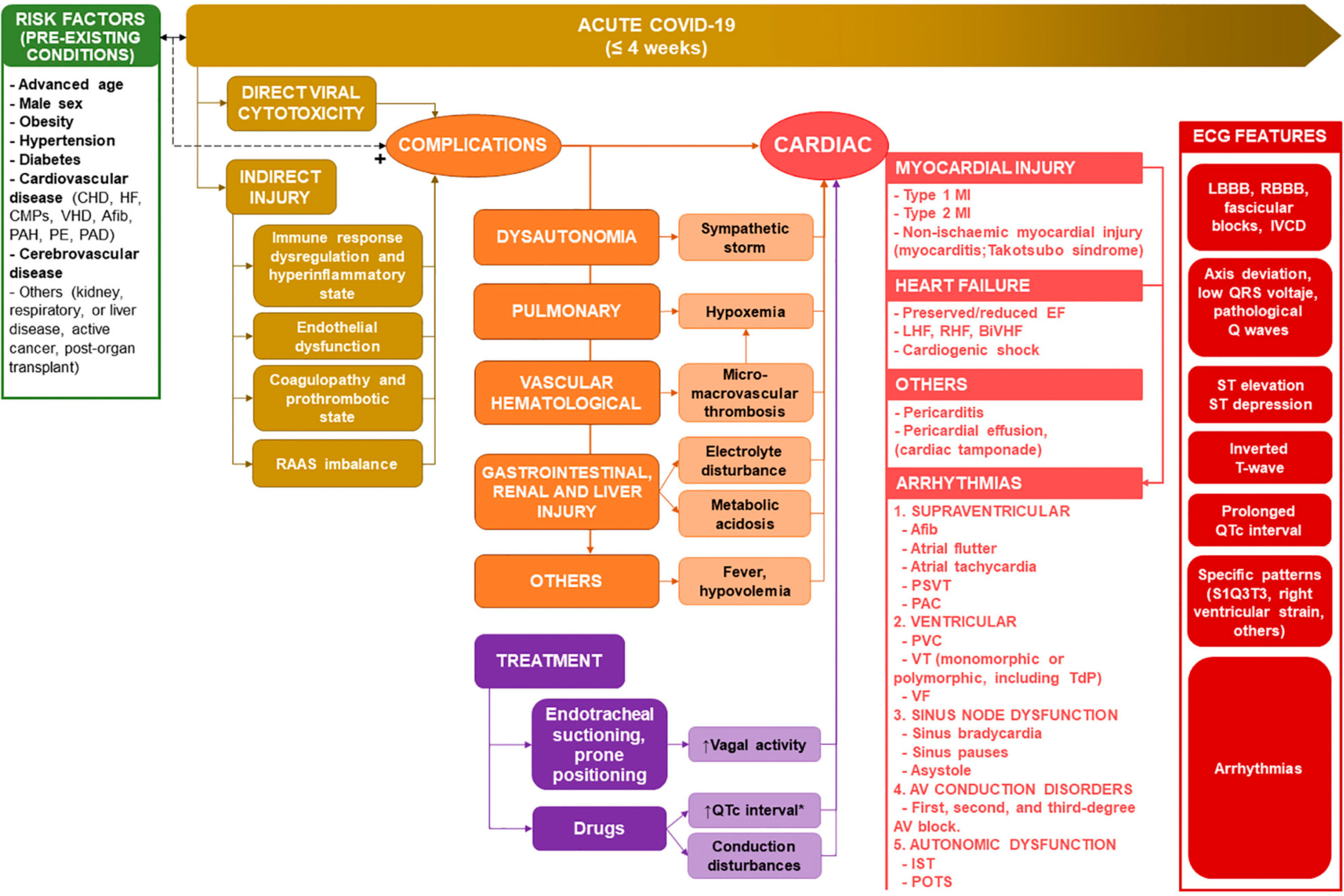
Since the declaration of the coronavirus disease 2019 (COVID-19) pandemic in March 2020, caused by the severe acute respiratory syndrome coronavirus 2 (SARS-CoV-2) virus, much has been learned about the epidemiology, pathophysiology, clinical characteristics, and predictors of poor prognosis. Furthermore, cardiovascular implications have emerged as significant contributors to morbi-mortality. In this sense, the recently published work of Galindes-Casanova et al. reinforces existing evidence on acute COVID-19 infection, cardiac complications, and electrocardiogram (ECG) manifestations.

By the end of 2023, COVID-19 had already caused more than 770 million confirmed cases and 7 million deaths worldwide. The disease is characterized by an acute phase that lasts up to 4 weeks. Symptoms and complications could occasionally extend up to several months, called post-acute COVID-19. The main clinical manifestations are fever and respiratory symptoms. Less commonly, extrapulmonary involvement can also occur, involving different organs and systems secondary to direct and indirect viral damage, the latter through the dysregulation of the immune system, a hyperinflammatory state, endothelial dysfunction, coagulopathy, a prothrombotic state, and an imbalance of the renin-angiotensin-aldosterone system. These complex mechanisms, added to the injury of different organs and the adverse effects of COVID-19 treatments, favor the development of cardiac complications ().

[…]

  • Cardiac Arrhythmias
  • Cardiovascular Diseases
  • COVID-19
  • Electrocardiography
Read Full Article
Creative Commons Attribution (CC BY) Creative Commons license
26/04/2024 DOI: 10.36660/ijcs.20240010 Views 2
Chronic Anticoagulation in Patients with Atrial Fibrillation and COVID-19: A Systematic Review and Meta-Analysis
ABC
Original Article

Chronic Anticoagulation in Patients with Atrial Fibrillation and COVID-19: A Systematic Review and Meta-Analysis

Isabela Landsteiner et al. Jonathan A. Pinheiro Nicole Felix Douglas Mesadri Gewehr Rhanderson Cardoso

Abstract

Background:

Coronavirus disease 2019 (COVID-19) is associated with hypercoagulability. It remains uncertain whether ongoing anticoagulation for atrial fibrillation (AF) in patients who later contract COVID-19 improves clinical outcomes.

Objectives:

To compare chronic oral anticoagulation with no previous anticoagulation in patients with AF who contracted a COVID-19 infection concerning the outcomes of all-cause mortality, COVID-19 mortality, intensive care unit (ICU) admission, and hospitalization.

Methods:

We systematically searched PubMed, Embase, and Cochrane Library for eligible studies from inception to December 2022. We included studies comparing COVID-19 outcomes in patients with versus without prior chronic anticoagulation for AF. Risk ratios (RR) with 95% confidence intervals (CI) were pooled with a random-effects model. The level of significance was set at p < 0.05. Quality assessment and risk of bias were performed according to Cochrane recommendations.

Results:

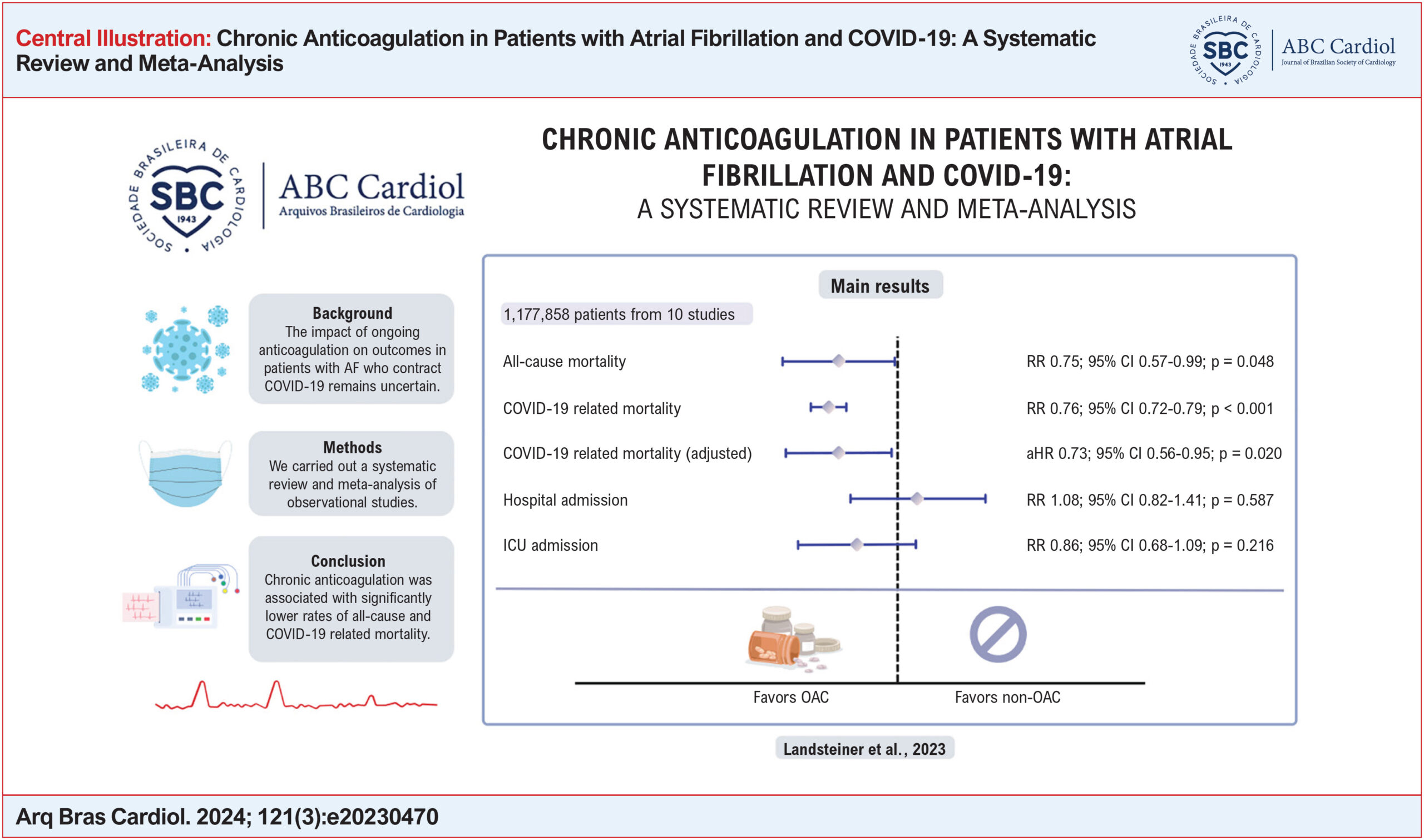
Ten studies comprising 1,177,858 patients with COVID-19 and AF were identified, of whom 893,772 (75.9%) were on prior chronic anticoagulation for AF. In patients with COVID-19, being on chronic anticoagulation for AF significantly reduced all-cause mortality (RR 0.75; 95% CI 0.57 to 0.99; p = 0.048; I = 89%) and COVID-19-related mortality (RR 0.76; 95% CI 0.72 to 0.79; p < 0.001; I = 0%) when compared with no prior anticoagulation. In contrast, there was no difference between groups regarding hospitalization (RR 1.08; 95% CI 0.82 to 1.41; p = 0.587; I = 95%) or ICU admission (RR 0.86; 95% CI 0.68 to 1.09; p = 0.216; I = 69%).

Conclusions:

In this meta-analysis, chronic anticoagulation for patients with AF who contracted COVID-19 was associated with significantly lower rates of all-cause mortality and COVID-19-related mortality as compared with no previous anticoagulation.

  • Anticoagulants
  • Atrial Fibrillation
  • COVID-19
  • Factor Xa Inhibitors
  • Vitamin K
Read Full Article
Creative Commons Attribution (CC BY) Creative Commons license
26/04/2024 DOI: 10.36660/abc.20230470i
Clinical and Laboratory Data Up on Hospital Admission are Predictors of New-Onset Atrial Fibrillation in Patients Hospitalized Due to COVID-19 Pneumonia
ABC
Original Article

Clinical and Laboratory Data Up on Hospital Admission are Predictors of New-Onset Atrial Fibrillation in Patients Hospitalized Due to COVID-19 Pneumonia

Bruno Rustum Andrea et al. Paulo Roberto Benchimol-Barbosa Simone Farah Alexandra Monteiro

Abstract

Background

New-onset atrial fibrillation (NOAF) occurs in patients hospitalized due to COVID-19. It is still unknown whether clinical and laboratory data assessed upon hospital admission have predictive value for NOAF.

Objectives

To analyze, upon hospital admission, variables with predictive potential for the occurrence of NOAF in patients with COVID-19 pneumonia.

Methods

Observational, retrospective, case-control study. Electronic medical reports of consecutive patients, 60 years of age or older, hospitalized due to COVID-19 pneumonia between March 1st and July 15th, 2020, were reviewed. Non-paired Student or chi-squared tests compared variables. A Cox proportional hazard model was employed to identify independent predictors of NOAF. P value < 0.05 was considered statistically significant.

Results

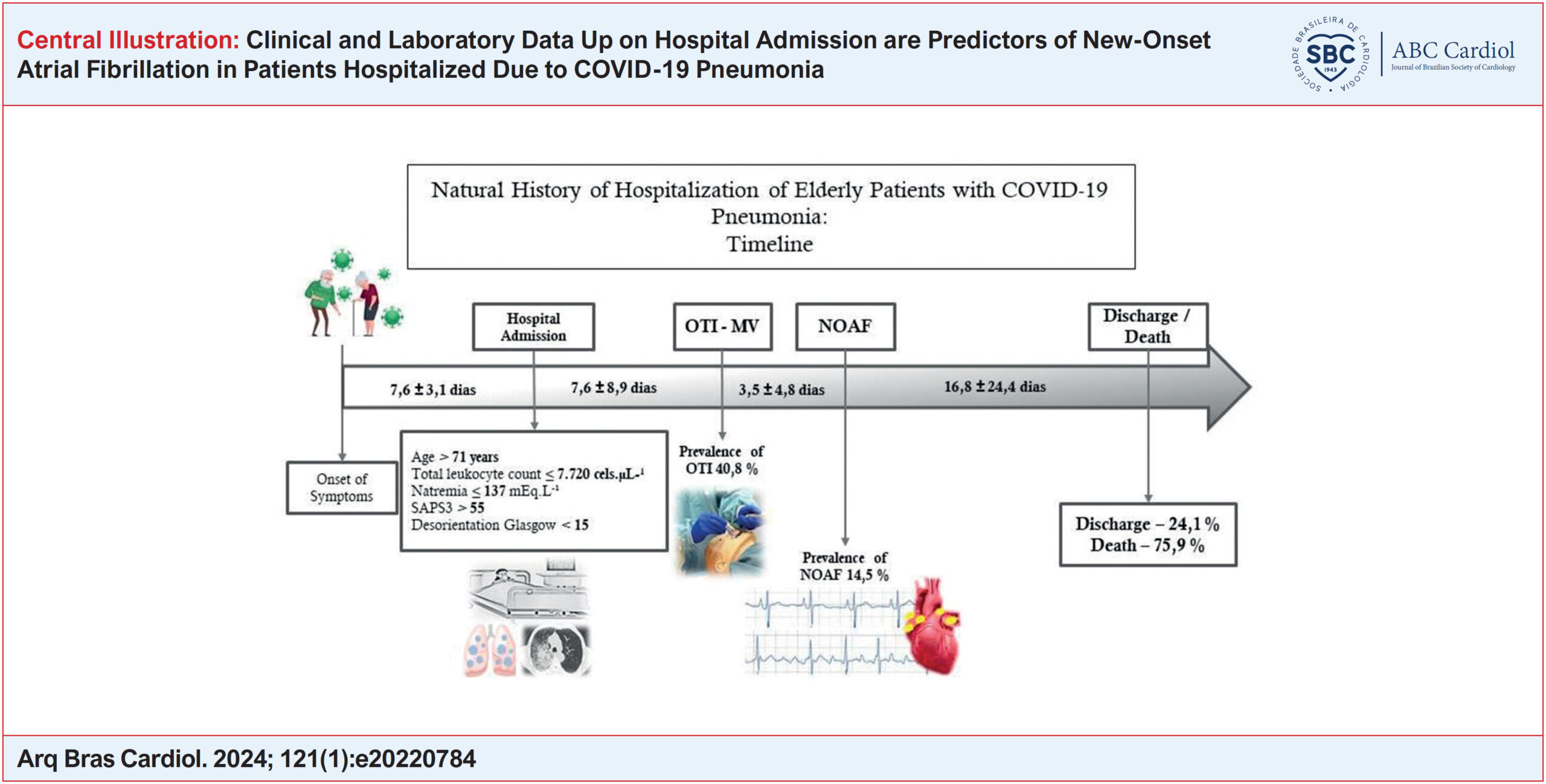
Among 667 patients hospitalized due to COVID-19, 201 (30.1%) fulfilled the inclusion criteria. NOAF was documented in 29 patients (14.4%), composing group 1. Group 2 was composed of 162 patients without NOAF. Ten patients were excluded due to the AF rhythm upon hospital admission. In groups 1 and 2, there were differences in overall in-hospital survival rate (24.1 % vs. 67.9%; p<0.001), length of stay in ICU (11.1 ± 10.5 days vs. 4.9 ± 7.5 days; p=0.004) and need for mechanical ventilation rate (82.9% vs. 32.7%; p 71 y/o (HR=6.8; p<0.001), total leukocyte count ≤ 7,720 cels.μL-¹ (HR=6.6; p 55 (HR=5.6; p=0.002), and disorientation (HR=2.5; p=0.04) on admission were independent predictors of NOAF.

Conclusion

NOAF is a common arrhythmia in elderly hospitalized patients with COVID-19 pneumonia. Clinical and laboratory parameters evaluated on admission have a predictive value for the occurrence of NOAF during hospitalization.

  • Atrial Fibrillation
  • COVID-19
  • Hospitalization
  • Predictive Value of Tests
  • Prognosis
Read Full Article
Creative Commons Attribution (CC BY) Creative Commons license
08/04/2024 DOI: 10.36660/abc.20220784 Views 2
ABC
Editorial

How Can COVID-19 Influence the Evolution of Patients with Acute Coronary Syndromes?

Alexandre de Matos Soeiro

The pandemic caused by the COVID-19 virus has changed the way we view infectious diseases. In a more intense way than in other situations, COVID-19 was from the beginning related to a greater number of thrombotic events, whether in its acute presentation, with pulmonary microthrombi worsening the hypoxia, or even in its late evolution with a large number of pulmonary embolic events. The interface between the endothelium and the coagulation cascade was modified, and different pro-thrombotic mechanisms were deregulated, with elevated expression of tissue factor, CD40, leukocyte adhesion molecules, pro-inflammatory cytokines, thromboxane, and reduced production of nitric oxide. Along with the lungs, the heart is one of the organs most affected by the disease with global involvement, whether myocardial, arrhythmogenic, or coronary.–

Thus, the study presented by Baytugan et al. describes patients with ST-elevation acute coronary syndrome (ST-ACS) with COVID-19, comparing them with the group without COVID-19 in relation to the clinical outcomes found. Some interesting points should be highlighted, including the fact that it takes longer for patients to present themselves to the hospital. This was very common during the pandemic and certainly worsened outcomes related to ACS. It was also observed that patients with COVID-19 were older and had more comorbidities, such as diabetes and chronic obstructive pulmonary disease. Finally, in an incisive and clear way, patients with COVID-19 developed worse outcomes, such as a greater number of stent thromboses, more cardiogenic shock, and higher mortality. A curious fact was the description of higher troponin levels in the COVID-19 group. More simply, we can relate this to the greater diagnostic delay; however, it is worth highlighting the possibility of direct cardiac aggression caused by COVID-19, in addition to the greater thrombotic and inflammatory load that the disease can cause.

[…]

  • Coronavirus infections
  • COVID-19
  • Hospitalization
  • Percutaneous Coronary Intervention/methods
  • Pulmonary embolism
  • ST Elevation Myocardial Infarction
Read Full Article
Creative Commons Attribution (CC BY) Creative Commons license
18/03/2024 DOI: 10.36660/abc.20230888 Views 2
IJCS
Editorial

Can D-dimer be Used as a Marker for Thromboembolic Events in Pediatric Patients With COVID-19?

Thais Rocha Salim et al. Gabriel Porto Soares

D-dimer is a protein resulting from fibrin degradation. It is released into the circulation when clot degradation occurs and is therefore used as a marker for thromboembolic events and fibrinolysis. The main role of D-dimer lies in its negative predictive value for the exclusion of thromboembolic events, when its level is below 500 ng/mL. Because D-dimer functions as an inflammatory marker, various non-thromboembolic situations can contribute to an increase in its level, such as advanced age, pregnancy, postpartum period, neoplasms, renal insufficiency, and sepsis. Age is a crucial factor when considering D-dimer a thromboembolic marker. Healthy populations over 70 years of age have shown a 50% increase in D-dimer levels without correlation with thrombotic or inflammatory events.

During the COVID-19 pandemic, several studies have demonstrated a positive correlation of elevated D-dimer levels, prolonged coagulation time, and low platelet count with mortality from COVID-19.,,,Although D-dimers lack high specificity as a diagnostic tool, they have been widely used as predictors of severity and complications in this setting, given that D-dimer tests are rapid, simple, and low-cost.– However, hyperinflammation caused by SARS-CoV-2 infection can lead to an increase in D-dimer unrelated to thrombosis, which implies its correlation with other tests and caution in interpreting the results.

[…]

  • COVID-19
  • Pediatrics
  • Thromboembolism
Read Full Article
Creative Commons Attribution (CC BY) Creative Commons license
08/03/2024 DOI: 10.36660/ijcs.20230188 Views 1

Could not load more articles. Please try again.

How to cite this article

EndNote RIS

Electronic Document Format (Vancouver)

Luna BC, Lamezon AC, Lima Junior E, Rabelo LM, Valderramas S. Arterial Stiffness, Clinical-Functional Outcomes, and Quality of Life in Post-COVID-19 Patients: A Cross-Sectional Study. Arquivos Brasileiros de Cardiologia 2026;123(7):e20250450.

Electronic Document Format (ABNT)

Luna, Bruna Cavon; Lamezon, Ana Cristina; Lima Junior, Emilton; Rabelo, Lêda Maria; Valderramas, Silvia. Arterial Stiffness, Clinical-Functional Outcomes, and Quality of Life in Post-COVID-19 Patients: A Cross-Sectional Study. Arquivos Brasileiros de Cardiologia, v. 123, n. 7, e20250450, Aug. 2026.

Electronic Document Format (APA)

Luna, B. C., Lamezon, A. C., Lima Junior, E., Rabelo, L. M., & Valderramas, S. (2026). Arterial Stiffness, Clinical-Functional Outcomes, and Quality of Life in Post-COVID-19 Patients: A Cross-Sectional Study. Arquivos Brasileiros de Cardiologia, 123(7), e20250450.

Electronic Document Format (ISO)

Luna, Bruna Cavon and Lamezon, Ana Cristina and Lima Junior, Emilton and Rabelo, Lêda Maria and Valderramas, Silvia. Arterial Stiffness, Clinical-Functional Outcomes, and Quality of Life in Post-COVID-19 Patients: A Cross-Sectional Study. Arquivos Brasileiros de Cardiologia [online]. 2026, vol. 123, n. 7, [cited 2026-10-15], e20250450. Available from: <https://journals.cardiol.br/en/article/arterial-stiffness-clinical-functional-outcomes-and-quality-of-life-in-post-covid-19-patients-a-cross-sectional-study/>. ISSN 0066-782X

EndNote RIS

Electronic Document Format (Vancouver)

Almeida JHA, Ferreira GMA, Andrade MAM, Nunes HM, Costa IB. Cardiovascular Complications in Patients with COVID-19 and Their Relationship with Mortality: An Echocardiographic Perspective. ABC Imagem Cardiovascular 2026;39(1):e20260005.

Electronic Document Format (ABNT)

Almeida, João Henrique Andrade de; Ferreira, Gustavo Miranda de Azevedo; Andrade, Marina de Azevedo Martins; Nunes, Heloísa Marceliano; Costa, Igor Brasil. Cardiovascular Complications in Patients with COVID-19 and Their Relationship with Mortality: An Echocardiographic Perspective. ABC Imagem Cardiovascular, v. 39, n. 1, e20260005, May. 2026.

Electronic Document Format (APA)

Almeida, J. H. A. , Ferreira, G. M. A., Andrade, M. A. M., Nunes, H. M., & Costa, I. B. (2026). Cardiovascular Complications in Patients with COVID-19 and Their Relationship with Mortality: An Echocardiographic Perspective. ABC Imagem Cardiovascular, 39(1), e20260005.

Electronic Document Format (ISO)

Almeida, João Henrique Andrade de and Ferreira, Gustavo Miranda de Azevedo and Andrade, Marina de Azevedo Martins and Nunes, Heloísa Marceliano and Costa, Igor Brasil. Cardiovascular Complications in Patients with COVID-19 and Their Relationship with Mortality: An Echocardiographic Perspective. ABC Imagem Cardiovascular [online]. 2026, vol. 39, n. 1, [cited 2026-10-15], e20260005. Available from: <https://journals.cardiol.br/en/article/cardiovascular-complications-in-patients-with-covid-19-and-their-relationship-with-mortality-an-echocardiographic-perspective/>. ISSN 2318-8219

EndNote RIS

Electronic Document Format (Vancouver)

Cesena FY. The Burden of Cardiovascular Disease in Brazil: Insights From a Decade of Emergency Hospital Admissions. International Journal of Cardiovascular Sciences 2026;38:e20250128.

Electronic Document Format (ABNT)

Cesena, Fernando Yue. The Burden of Cardiovascular Disease in Brazil: Insights From a Decade of Emergency Hospital Admissions. International Journal of Cardiovascular Sciences, v. 38, e20250128, Jan. 2026.

Electronic Document Format (APA)

Cesena, F. Y. (2026). The Burden of Cardiovascular Disease in Brazil: Insights From a Decade of Emergency Hospital Admissions. International Journal of Cardiovascular Sciences, 38, e20250128.

Electronic Document Format (ISO)

Cesena, Fernando Yue. The Burden of Cardiovascular Disease in Brazil: Insights From a Decade of Emergency Hospital Admissions. International Journal of Cardiovascular Sciences [online]. 2026, vol. 38, [cited 2026-10-15], e20250128. Available from: <https://journals.cardiol.br/en/article/the-burden-of-cardiovascular-disease-in-brazil-insights-from-a-decade-of-emergency-hospital-admissions/>. ISSN 2359-4802

EndNote RIS

Electronic Document Format (Vancouver)

Tenório PP. Impacts of Post-COVID-19 Syndrome on Cardiovascular Autonomic Changes. ABC Heart Fail Cardiomyop 2025;5(3):e20250028.

Electronic Document Format (ABNT)

Tenório, Pedro Pereira. Impacts of Post-COVID-19 Syndrome on Cardiovascular Autonomic Changes. ABC Heart Fail Cardiomyop, v. 5, n. 3, e20250028, Dec. 2025.

Electronic Document Format (APA)

Tenório, P. P. (2025). Impacts of Post-COVID-19 Syndrome on Cardiovascular Autonomic Changes. ABC Heart Fail Cardiomyop, 5(3), e20250028.

Electronic Document Format (ISO)

Tenório, Pedro Pereira. Impacts of Post-COVID-19 Syndrome on Cardiovascular Autonomic Changes. ABC Heart Fail Cardiomyop [online]. 2025, vol. 5, n. 3, [cited 2026-10-15], e20250028. Available from: <https://journals.cardiol.br/en/article/impacts-of-post-covid-19-syndrome-on-cardiovascular-autonomic-changes/>

EndNote RIS

Electronic Document Format (Vancouver)

Carvalho MRM, Rosário NF, Ramos A, Azevedo CRA, Ribeiro ML, Lomba GSB, Oliveira EM, et al. Local Inflammation May Underlie Cardiac Damage in Post-COVID-19 Period. ABC Heart Fail Cardiomyop 2025;5(3):e20250037.

Electronic Document Format (ABNT)

Carvalho, Marcio Roberto Moraes de; Rosário, Natalia Fonseca; Ramos, Alice; Azevedo, Carla Rodrigues do Amaral; Ribeiro, Mario Luiz; Lomba, Guilherme Schittine Bezerra; Oliveira, Evelyn Maciel de; Souza, Rachel V. O’Neill de; Castro, Mauro Jorge Cabral; Lugon, Jocemir Ronaldo. Local Inflammation May Underlie Cardiac Damage in Post-COVID-19 Period. ABC Heart Fail Cardiomyop, v. 5, n. 3, e20250037, Dec. 2025.

Electronic Document Format (APA)

Carvalho, M. R. M. , Rosário, N. F., Ramos, A., Azevedo, C. R. A., Ribeiro, M. L., Lomba, G. S. B., Oliveira, E. M. , Souza, R. V. O. , Castro, M. J. C., & Lugon, J. R. (2025). Local Inflammation May Underlie Cardiac Damage in Post-COVID-19 Period. ABC Heart Fail Cardiomyop, 5(3), e20250037.

Electronic Document Format (ISO)

Carvalho, Marcio Roberto Moraes de and Rosário, Natalia Fonseca and Ramos, Alice and Azevedo, Carla Rodrigues do Amaral and Ribeiro, Mario Luiz and Lomba, Guilherme Schittine Bezerra and Oliveira, Evelyn Maciel de and Souza, Rachel V. O’Neill de and Castro, Mauro Jorge Cabral and Lugon, Jocemir Ronaldo. Local Inflammation May Underlie Cardiac Damage in Post-COVID-19 Period. ABC Heart Fail Cardiomyop [online]. 2025, vol. 5, n. 3, [cited 2026-10-15], e20250037. Available from: <https://journals.cardiol.br/en/article/local-inflammation-may-underlie-cardiac-damage-in-post-covid-19-period/>

EndNote RIS

Electronic Document Format (Vancouver)

Rangel FOD. ST-Segment Elevation Myocardial Infarction: Assessment of Quality of Care Before and After the COVID-19 Pandemic. International Journal of Cardiovascular Sciences 2025;38:e20250099.

Electronic Document Format (ABNT)

Rangel, Fernando Oswaldo Dias. ST-Segment Elevation Myocardial Infarction: Assessment of Quality of Care Before and After the COVID-19 Pandemic. International Journal of Cardiovascular Sciences, v. 38, e20250099, Aug. 2025.

Electronic Document Format (APA)

Rangel, F. O. D. (2025). ST-Segment Elevation Myocardial Infarction: Assessment of Quality of Care Before and After the COVID-19 Pandemic. International Journal of Cardiovascular Sciences, 38, e20250099.

Electronic Document Format (ISO)

Rangel, Fernando Oswaldo Dias. ST-Segment Elevation Myocardial Infarction: Assessment of Quality of Care Before and After the COVID-19 Pandemic. International Journal of Cardiovascular Sciences [online]. 2025, vol. 38, [cited 2026-10-15], e20250099. Available from: <https://journals.cardiol.br/en/article/st-segment-elevation-myocardial-infarction-assessment-of-quality-of-care-before-and-after-the-covid-19-pandemic/>. ISSN 2359-4802

EndNote RIS

Electronic Document Format (Vancouver)

Tavares CAM, Accorsi TAD, Paixão MR, Mota T, Pitta F, Lemos PA, Franken M, et al. ST-Segment Elevation Myocardial Infarction Metrics Before and During the COVID-19 Pandemic: Experience from a Brazilian Center. International Journal of Cardiovascular Sciences 2025;38:e20240158.

Electronic Document Format (ABNT)

Tavares, Caio de Assis Moura; Accorsi, Tarso A. D.; Paixão, Milena Ribeiro; Mota, Tarsila; Pitta, Fabio; Lemos, Pedro Alves; Franken, Marcelo; Lima, Karine De Amicis; Kohler, Karen Francine; Souza Jr., José Leão de. ST-Segment Elevation Myocardial Infarction Metrics Before and During the COVID-19 Pandemic: Experience from a Brazilian Center. International Journal of Cardiovascular Sciences, v. 38, e20240158, Jun. 2025.

Electronic Document Format (APA)

Tavares, C. A. M., Accorsi, T. A. D., Paixão, M. R., Mota, T., Pitta, F., Lemos, P. A., Franken, M., Lima, K. D. A., Kohler, K. F., & Souza Jr., J. L. (2025). ST-Segment Elevation Myocardial Infarction Metrics Before and During the COVID-19 Pandemic: Experience from a Brazilian Center. International Journal of Cardiovascular Sciences, 38, e20240158.

Electronic Document Format (ISO)

Tavares, Caio de Assis Moura and Accorsi, Tarso A. D. and Paixão, Milena Ribeiro and Mota, Tarsila and Pitta, Fabio and Lemos, Pedro Alves and Franken, Marcelo and Lima, Karine De Amicis and Kohler, Karen Francine and Souza Jr., José Leão de. ST-Segment Elevation Myocardial Infarction Metrics Before and During the COVID-19 Pandemic: Experience from a Brazilian Center. International Journal of Cardiovascular Sciences [online]. 2025, vol. 38, [cited 2026-10-15], e20240158. Available from: <https://journals.cardiol.br/en/article/st-segment-elevation-myocardial-infarction-metrics-before-and-during-the-covid-19-pandemic-experience-from-a-brazilian-center/>. ISSN 2359-4802

EndNote RIS

Electronic Document Format (Vancouver)

Herdy AH, Mangia AS, Benetti M. Cardiovascular Telerehabilitation: An Alternative for Greater Availability of Cardiovascular and Metabolic Rehabilitation in Brazil. Arquivos Brasileiros de Cardiologia 2025;122(3):e20240570.

Electronic Document Format (ABNT)

Herdy, Artur Haddad; Mangia, Ariella Sebastião; Benetti, Magnus. Cardiovascular Telerehabilitation: An Alternative for Greater Availability of Cardiovascular and Metabolic Rehabilitation in Brazil. Arquivos Brasileiros de Cardiologia, v. 122, n. 3, e20240570, Apr. 2025.

Electronic Document Format (APA)

Herdy, A. H., Mangia, A. S., & Benetti, M. (2025). Cardiovascular Telerehabilitation: An Alternative for Greater Availability of Cardiovascular and Metabolic Rehabilitation in Brazil. Arquivos Brasileiros de Cardiologia, 122(3), e20240570.

Electronic Document Format (ISO)

Herdy, Artur Haddad and Mangia, Ariella Sebastião and Benetti, Magnus. Cardiovascular Telerehabilitation: An Alternative for Greater Availability of Cardiovascular and Metabolic Rehabilitation in Brazil. Arquivos Brasileiros de Cardiologia [online]. 2025, vol. 122, n. 3, [cited 2026-10-15], e20240570. Available from: <https://journals.cardiol.br/en/article/cardiovascular-telerehabilitation-an-alternative-for-greater-availability-of-cardiovascular-and-metabolic-rehabilitation-in-brazil/>. ISSN 0066-782X

EndNote RIS

Electronic Document Format (Vancouver)

Costa GLA, Mota JC, Sousa MUS, Kapczinski F, Cervera-Martínez J, Balanzá-Martínez V, Boni RBD, et al. Lifestyle and Hypertension in Brazil and Spain. International Journal of Cardiovascular Sciences 2025;38:e20240038.

Electronic Document Format (ABNT)

Costa, Giovanna Lucieri Alonso; Mota, Jurema Correa; Sousa, Marina Ururahy Soriano de; Kapczinski, Flavio; Cervera-Martínez, Jose; Balanzá-Martínez, Vicent; Boni, Raquel B. De. Lifestyle and Hypertension in Brazil and Spain. International Journal of Cardiovascular Sciences, v. 38, e20240038, Mar. 2025.

Electronic Document Format (APA)

Costa, G. L. A., Mota, J. C., Sousa, M. U. S. , Kapczinski, F., Cervera-Martínez, J., Balanzá-Martínez, V., & Boni, R. B. D. (2025). Lifestyle and Hypertension in Brazil and Spain. International Journal of Cardiovascular Sciences, 38, e20240038.

Electronic Document Format (ISO)

Costa, Giovanna Lucieri Alonso and Mota, Jurema Correa and Sousa, Marina Ururahy Soriano de and Kapczinski, Flavio and Cervera-Martínez, Jose and Balanzá-Martínez, Vicent and Boni, Raquel B. De. Lifestyle and Hypertension in Brazil and Spain. International Journal of Cardiovascular Sciences [online]. 2025, vol. 38, [cited 2026-10-15], e20240038. Available from: <https://journals.cardiol.br/en/article/lifestyle-and-hypertension-in-brazil-and-spain/>. ISSN 2359-4802

EndNote RIS

Electronic Document Format (Vancouver)

Lott LP, Barbosa RR, Muzi RR, Marianelli C, Bragatto IC, Trevizani Neto V, Baptista GC, et al. Delay Times in Acute Myocardial Infarction Care: Comparison Between Periods Before and During the COVID-19 Pandemic. International Journal of Cardiovascular Sciences 2025;38:e20240022.

Electronic Document Format (ABNT)

Lott, Layla Pasolini; Barbosa, Roberto Ramos; Muzi, Rhaaby Rodrigues; Marianelli, Camila; Bragatto, Isadora Cardozo; Trevizani Neto, Valentin; Baptista, Glícia Chierici; Vieira, Eduardo Gomes; Sylvestre, Rodolfo Costa; Calil, Osmar Araújo; Serpa, Renato Giestas; Barros, Lucas Crespo de; Paganini, Larissa Novaes; Borges, Lucas Martins Frizzera; Barbosa, Luiz Fernando Machado. Delay Times in Acute Myocardial Infarction Care: Comparison Between Periods Before and During the COVID-19 Pandemic. International Journal of Cardiovascular Sciences, v. 38, e20240022, Mar. 2025.

Electronic Document Format (APA)

Lott, L. P., Barbosa, R. R., Muzi, R. R., Marianelli, C., Bragatto, I. C., Trevizani Neto, V., Baptista, G. C., Vieira, E. G., Sylvestre, R. C., Calil, O. A., Serpa, R. G., Barros, L. C. , Paganini, L. N., Borges, L. M. F., & Barbosa, L. F. M. (2025). Delay Times in Acute Myocardial Infarction Care: Comparison Between Periods Before and During the COVID-19 Pandemic. International Journal of Cardiovascular Sciences, 38, e20240022.

Electronic Document Format (ISO)

Lott, Layla Pasolini and Barbosa, Roberto Ramos and Muzi, Rhaaby Rodrigues and Marianelli, Camila and Bragatto, Isadora Cardozo and Trevizani Neto, Valentin and Baptista, Glícia Chierici and Vieira, Eduardo Gomes and Sylvestre, Rodolfo Costa and Calil, Osmar Araújo and Serpa, Renato Giestas and Barros, Lucas Crespo de and Paganini, Larissa Novaes and Borges, Lucas Martins Frizzera and Barbosa, Luiz Fernando Machado. Delay Times in Acute Myocardial Infarction Care: Comparison Between Periods Before and During the COVID-19 Pandemic. International Journal of Cardiovascular Sciences [online]. 2025, vol. 38, [cited 2026-10-15], e20240022. Available from: <https://journals.cardiol.br/en/article/delay-times-in-acute-myocardial-infarction-care-comparison-between-periods-before-and-during-the-covid-19-pandemic/>. ISSN 2359-4802

EndNote RIS

Electronic Document Format (Vancouver)

Silveira Neto JG, Campos MB, Mello L, Giffoni MC, Goveia NASB, Nóbrega ACL, Castro RRT, et al. The Prognostic Impact of Myocardial Deformation Measures in Patients with COVID-19. ABC Imagem Cardiovascular 2024;37(4):e20240067.

Electronic Document Format (ABNT)

Silveira Neto, João Giffoni; Campos, Marcello de Brito; Mello, Luiz; Giffoni, Marcela de Castro; Goveia, Natanael Arnor da Silva Barros; Nóbrega, Antonio Claudio Lucas da; Castro, Renata R. T.. The Prognostic Impact of Myocardial Deformation Measures in Patients with COVID-19. ABC Imagem Cardiovascular, v. 37, n. 4, e20240067, Dec. 2024.

Electronic Document Format (APA)

Silveira Neto, J. G., Campos, M. B., Mello, L., Giffoni, M. C., Goveia, N. A. S. B., Nóbrega, A. C. L. , & Castro, R. R. T. (2024). The Prognostic Impact of Myocardial Deformation Measures in Patients with COVID-19. ABC Imagem Cardiovascular, 37(4), e20240067.

Electronic Document Format (ISO)

Silveira Neto, João Giffoni and Campos, Marcello de Brito and Mello, Luiz and Giffoni, Marcela de Castro and Goveia, Natanael Arnor da Silva Barros and Nóbrega, Antonio Claudio Lucas da and Castro, Renata R. T.. The Prognostic Impact of Myocardial Deformation Measures in Patients with COVID-19. ABC Imagem Cardiovascular [online]. 2024, vol. 37, n. 4, [cited 2026-10-15], e20240067. Available from: <https://journals.cardiol.br/en/article/the-prognostic-impact-of-myocardial-deformation-measures-in-patients-with-covid-19/>. ISSN 2318-8219

EndNote RIS

Electronic Document Format (Vancouver)

Lacy-Niebla MC, Buendia-Hernandez A. COVID-19 and History of Coronary Artery Bypass Surgery. International Journal of Cardiovascular Sciences 2024;37:e20240179.

Electronic Document Format (ABNT)

Lacy-Niebla, María del Carmen; Buendia-Hernandez, Alfonso. COVID-19 and History of Coronary Artery Bypass Surgery. International Journal of Cardiovascular Sciences, v. 37, e20240179, Nov. 2024.

Electronic Document Format (APA)

Lacy-Niebla, M. C., & Buendia-Hernandez, A. (2024). COVID-19 and History of Coronary Artery Bypass Surgery. International Journal of Cardiovascular Sciences, 37, e20240179.

Electronic Document Format (ISO)

Lacy-Niebla, María del Carmen and Buendia-Hernandez, Alfonso. COVID-19 and History of Coronary Artery Bypass Surgery. International Journal of Cardiovascular Sciences [online]. 2024, vol. 37, [cited 2026-10-15], e20240179. Available from: <https://journals.cardiol.br/en/article/covid-19-and-history-of-coronary-artery-bypass-surgery/>. ISSN 2359-4802

EndNote RIS

Electronic Document Format (Vancouver)

Magalhães LFS, Sant’Anna GC, Figueira JCABA, Villacorta H. Impact of COVID-19 on Cardiovascular Outcomes in Patients with Chronic Heart Failure. ABC Heart Fail Cardiomyop 2024;4(4):e20240029.

Electronic Document Format (ABNT)

Magalhães, Luiz Felipe da Silva; Sant’Anna, Guilherme Capetini; Figueira, João Carlos Amorelli Bohrer de Andrade; Villacorta, Humberto. Impact of COVID-19 on Cardiovascular Outcomes in Patients with Chronic Heart Failure. ABC Heart Fail Cardiomyop, v. 4, n. 4, e20240029, Nov. 2024.

Electronic Document Format (APA)

Magalhães, L. F. S., Sant’Anna, G. C., Figueira, J. C. A. B. A., & Villacorta, H. (2024). Impact of COVID-19 on Cardiovascular Outcomes in Patients with Chronic Heart Failure. ABC Heart Fail Cardiomyop, 4(4), e20240029.

Electronic Document Format (ISO)

Magalhães, Luiz Felipe da Silva and Sant’Anna, Guilherme Capetini and Figueira, João Carlos Amorelli Bohrer de Andrade and Villacorta, Humberto. Impact of COVID-19 on Cardiovascular Outcomes in Patients with Chronic Heart Failure. ABC Heart Fail Cardiomyop [online]. 2024, vol. 4, n. 4, [cited 2026-10-15], e20240029. Available from: <https://journals.cardiol.br/en/article/impact-of-covid-19-on-cardiovascular-outcomes-in-patients-with-chronic-heart-failure/>

EndNote RIS

Electronic Document Format (Vancouver)

Carvalho M, Lagoeiro A. Biomarkers and Mononuclear Inflammatory Activity in COVID-19 Survivors. International Journal of Cardiovascular Sciences 2024;37:e20240016.

Electronic Document Format (ABNT)

Carvalho, Marcio; Lagoeiro, Antonio. Biomarkers and Mononuclear Inflammatory Activity in COVID-19 Survivors. International Journal of Cardiovascular Sciences, v. 37, e20240016, Sep. 2024.

Electronic Document Format (APA)

Carvalho, M., & Lagoeiro, A. (2024). Biomarkers and Mononuclear Inflammatory Activity in COVID-19 Survivors. International Journal of Cardiovascular Sciences, 37, e20240016.

Electronic Document Format (ISO)

Carvalho, Marcio and Lagoeiro, Antonio. Biomarkers and Mononuclear Inflammatory Activity in COVID-19 Survivors. International Journal of Cardiovascular Sciences [online]. 2024, vol. 37, [cited 2026-10-15], e20240016. Available from: <https://journals.cardiol.br/en/article/biomarkers-and-mononuclear-inflammatory-activity-in-covid-19-survivors/>. ISSN 2359-4802

EndNote RIS

Electronic Document Format (Vancouver)

Rendon AFV, Volschan IM, Pereira MN, Monteiro WL, Pimentel AF, Nascimento EM, Pereira BB, et al. A Geoprocessing Approach for Mortality and Social Vulnerability Analysis during the COVID-19 Pandemic. International Journal of Cardiovascular Sciences 2024;37:e20230145.

Electronic Document Format (ABNT)

Rendon, Andres Felipe Valencia; Volschan, Isabela Mendes; Pereira, Manoella Novais; Monteiro, Wagner Lima; Pimentel, Alessandra de Freitas; Nascimento, Emilia Matos do; Pereira, Basilio de Bragança; Oliveira, Glaucia Maria Moraes de. A Geoprocessing Approach for Mortality and Social Vulnerability Analysis during the COVID-19 Pandemic. International Journal of Cardiovascular Sciences, v. 37, e20230145, Aug. 2024.

Electronic Document Format (APA)

Rendon, A. F. V., Volschan, I. M., Pereira, M. N., Monteiro, W. L., Pimentel, A. F., Nascimento, E. M. , Pereira, B. B., & Oliveira, G. M. M. (2024). A Geoprocessing Approach for Mortality and Social Vulnerability Analysis during the COVID-19 Pandemic. International Journal of Cardiovascular Sciences, 37, e20230145.

Electronic Document Format (ISO)

Rendon, Andres Felipe Valencia and Volschan, Isabela Mendes and Pereira, Manoella Novais and Monteiro, Wagner Lima and Pimentel, Alessandra de Freitas and Nascimento, Emilia Matos do and Pereira, Basilio de Bragança and Oliveira, Glaucia Maria Moraes de. A Geoprocessing Approach for Mortality and Social Vulnerability Analysis during the COVID-19 Pandemic. International Journal of Cardiovascular Sciences [online]. 2024, vol. 37, [cited 2026-10-15], e20230145. Available from: <https://journals.cardiol.br/en/article/a-geoprocessing-approach-for-mortality-and-social-vulnerability-analysis-during-the-covid-19-pandemic/>. ISSN 2359-4802

EndNote RIS

Electronic Document Format (Vancouver)

Maia AS, Maia M, Maia ALS, Santos MA. Quality of Life Assessment of Patients Infected With COVID-19 and Prior Coronary Artery Bypass Graft Surgery in Brazil: Four Years Follow-up. International Journal of Cardiovascular Sciences 2024;37:e20230171.

Electronic Document Format (ABNT)

Maia, Adnaldo da Silveira; Maia, Matheus; Maia, Adnaldo Lucas da Silveira; Santos, Magaly Arrais dos. Quality of Life Assessment of Patients Infected With COVID-19 and Prior Coronary Artery Bypass Graft Surgery in Brazil: Four Years Follow-up. International Journal of Cardiovascular Sciences, v. 37, e20230171, Aug. 2024.

Electronic Document Format (APA)

Maia, A. S., Maia, M., Maia, A. L. S., & Santos, M. A. (2024). Quality of Life Assessment of Patients Infected With COVID-19 and Prior Coronary Artery Bypass Graft Surgery in Brazil: Four Years Follow-up. International Journal of Cardiovascular Sciences, 37, e20230171.

Electronic Document Format (ISO)

Maia, Adnaldo da Silveira and Maia, Matheus and Maia, Adnaldo Lucas da Silveira and Santos, Magaly Arrais dos. Quality of Life Assessment of Patients Infected With COVID-19 and Prior Coronary Artery Bypass Graft Surgery in Brazil: Four Years Follow-up. International Journal of Cardiovascular Sciences [online]. 2024, vol. 37, [cited 2026-10-15], e20230171. Available from: <https://journals.cardiol.br/en/article/quality-of-life-assessment-of-patients-infected-with-covid-19-and-prior-coronary-artery-bypass-graft-surgery-in-brazil-four-years-follow-up/>. ISSN 2359-4802

EndNote RIS

Electronic Document Format (Vancouver)

Martins LQ, Souza GR, Alves DGG, Melo KFC, Almeida PCA, Cascaes RL, Monteiro AMZA, et al. Heart Failure in Children and Adolescents with Covid-19: A Systematic Review of the Literature. ABC Heart Fail Cardiomyop 2024;4(2):20240001.

Electronic Document Format (ABNT)

Martins, Lucas Quaresma; Souza, Gabriel Ribeiro de; Alves, Daniel Garcia da Gama; Melo, Kaylane Fernanda Costa de; Almeida, Paula Cordeiro Aguiar de; Cascaes, Ádria Rayane Lima; Monteiro, Antonio Maria Zacarias Araújo. Heart Failure in Children and Adolescents with Covid-19: A Systematic Review of the Literature. ABC Heart Fail Cardiomyop, v. 4, n. 2, 20240001, Jul. 2024.

Electronic Document Format (APA)

Martins, L. Q., Souza, G. R. , Alves, D. G. G., Melo, K. F. C. , Almeida, P. C. A. , Cascaes, R. L., & Monteiro, A. M. Z. A. (2024). Heart Failure in Children and Adolescents with Covid-19: A Systematic Review of the Literature. ABC Heart Fail Cardiomyop, 4(2), 20240001.

Electronic Document Format (ISO)

Martins, Lucas Quaresma and Souza, Gabriel Ribeiro de and Alves, Daniel Garcia da Gama and Melo, Kaylane Fernanda Costa de and Almeida, Paula Cordeiro Aguiar de and Cascaes, Ádria Rayane Lima and Monteiro, Antonio Maria Zacarias Araújo. Heart Failure in Children and Adolescents with Covid-19: A Systematic Review of the Literature. ABC Heart Fail Cardiomyop [online]. 2024, vol. 4, n. 2, [cited 2026-10-15], 20240001. Available from: <https://journals.cardiol.br/en/article/heart-failure-in-children-and-adolescents-with-covid-19-a-systematic-review-of-the-literature/>

EndNote RIS

Electronic Document Format (Vancouver)

Arroyo-Rodríguez C, Hernández-Parra A. Takotsubo Syndrome in a Critical COVID-19 Patient: Electrocardiographic and Echocardiographic Evolution. ABC Imagem Cardiovascular 2024;37(2):e20240014.

Electronic Document Format (ABNT)

Arroyo-Rodríguez, Cuitláhuac; Hernández-Parra, Alejandra. Takotsubo Syndrome in a Critical COVID-19 Patient: Electrocardiographic and Echocardiographic Evolution. ABC Imagem Cardiovascular, v. 37, n. 2, e20240014, May. 2024.

Electronic Document Format (APA)

Arroyo-Rodríguez, C., & Hernández-Parra, A. (2024). Takotsubo Syndrome in a Critical COVID-19 Patient: Electrocardiographic and Echocardiographic Evolution. ABC Imagem Cardiovascular, 37(2), e20240014.

Electronic Document Format (ISO)

Arroyo-Rodríguez, Cuitláhuac and Hernández-Parra, Alejandra. Takotsubo Syndrome in a Critical COVID-19 Patient: Electrocardiographic and Echocardiographic Evolution. ABC Imagem Cardiovascular [online]. 2024, vol. 37, n. 2, [cited 2026-10-15], e20240014. Available from: <https://journals.cardiol.br/en/article/takotsubo-syndrome-in-a-critical-covid-19-patient-electrocardiographic-and-echocardiographic-evolution/>. ISSN 2318-8219

EndNote RIS

Electronic Document Format (Vancouver)

Abreu LM. The Immense Challenge of Searching for the Best Evidence. Arquivos Brasileiros de Cardiologia 2024;121(3):e20240106.

Electronic Document Format (ABNT)

Abreu, Luiz Maurino. The Immense Challenge of Searching for the Best Evidence. Arquivos Brasileiros de Cardiologia, v. 121, n. 3, e20240106, May. 2024.

Electronic Document Format (APA)

Abreu, L. M. (2024). The Immense Challenge of Searching for the Best Evidence. Arquivos Brasileiros de Cardiologia, 121(3), e20240106.

Electronic Document Format (ISO)

Abreu, Luiz Maurino. The Immense Challenge of Searching for the Best Evidence. Arquivos Brasileiros de Cardiologia [online]. 2024, vol. 121, n. 3, [cited 2026-10-15], e20240106. Available from: <https://journals.cardiol.br/en/article/the-immense-challenge-of-searching-for-the-best-evidence/>. ISSN 0066-782X

EndNote RIS

Electronic Document Format (Vancouver)

Barcos JC, Echeverri AGM, Baranchuk A. Lessons Learned from Cardiac Complications of COVID-19 and the Value of the Electrocardiogram. International Journal of Cardiovascular Sciences 2024;37:e20240010.

Electronic Document Format (ABNT)

Barcos, Javier César; Echeverri, Ana G. Múnera; Baranchuk, Adrian. Lessons Learned from Cardiac Complications of COVID-19 and the Value of the Electrocardiogram. International Journal of Cardiovascular Sciences, v. 37, e20240010, Apr. 2024.

Electronic Document Format (APA)

Barcos, J. C., Echeverri, A. G. M., & Baranchuk, A. (2024). Lessons Learned from Cardiac Complications of COVID-19 and the Value of the Electrocardiogram. International Journal of Cardiovascular Sciences, 37, e20240010.

Electronic Document Format (ISO)

Barcos, Javier César and Echeverri, Ana G. Múnera and Baranchuk, Adrian. Lessons Learned from Cardiac Complications of COVID-19 and the Value of the Electrocardiogram. International Journal of Cardiovascular Sciences [online]. 2024, vol. 37, [cited 2026-10-15], e20240010. Available from: <https://journals.cardiol.br/en/article/lessons-learned-from-cardiac-complications-of-covid-19-and-the-value-of-the-electrocardiogram/>. ISSN 2359-4802

EndNote RIS

Electronic Document Format (Vancouver)

Landsteiner I, Pinheiro JA, Felix N, Gewehr DM, Cardoso R. Chronic Anticoagulation in Patients with Atrial Fibrillation and COVID-19: A Systematic Review and Meta-Analysis. Arquivos Brasileiros de Cardiologia 2024;121(3):e20230470.

Electronic Document Format (ABNT)

Landsteiner, Isabela; Pinheiro, Jonathan A.; Felix, Nicole; Gewehr, Douglas Mesadri; Cardoso, Rhanderson. Chronic Anticoagulation in Patients with Atrial Fibrillation and COVID-19: A Systematic Review and Meta-Analysis. Arquivos Brasileiros de Cardiologia, v. 121, n. 3, e20230470, Apr. 2024.

Electronic Document Format (APA)

Landsteiner, I., Pinheiro, J. A., Felix, N., Gewehr, D. M., & Cardoso, R. (2024). Chronic Anticoagulation in Patients with Atrial Fibrillation and COVID-19: A Systematic Review and Meta-Analysis. Arquivos Brasileiros de Cardiologia, 121(3), e20230470.

Electronic Document Format (ISO)

Landsteiner, Isabela and Pinheiro, Jonathan A. and Felix, Nicole and Gewehr, Douglas Mesadri and Cardoso, Rhanderson. Chronic Anticoagulation in Patients with Atrial Fibrillation and COVID-19: A Systematic Review and Meta-Analysis. Arquivos Brasileiros de Cardiologia [online]. 2024, vol. 121, n. 3, [cited 2026-10-15], e20230470. Available from: <https://journals.cardiol.br/en/article/chronic-anticoagulation-in-patients-with-atrial-fibrillation-and-covid-19-a-systematic-review-and-meta-analysis/>. ISSN 0066-782X

EndNote RIS

Electronic Document Format (Vancouver)

Andrea BR, Benchimol-Barbosa PR, Farah S, Monteiro A. Clinical and Laboratory Data Up on Hospital Admission are Predictors of New-Onset Atrial Fibrillation in Patients Hospitalized Due to COVID-19 Pneumonia. Arquivos Brasileiros de Cardiologia 2024;121(1):e20220784.

Electronic Document Format (ABNT)

Andrea, Bruno Rustum; Benchimol-Barbosa, Paulo Roberto; Farah, Simone; Monteiro, Alexandra. Clinical and Laboratory Data Up on Hospital Admission are Predictors of New-Onset Atrial Fibrillation in Patients Hospitalized Due to COVID-19 Pneumonia. Arquivos Brasileiros de Cardiologia, v. 121, n. 1, e20220784, Apr. 2024.

Electronic Document Format (APA)

Andrea, B. R., Benchimol-Barbosa, P. R., Farah, S., & Monteiro, A. (2024). Clinical and Laboratory Data Up on Hospital Admission are Predictors of New-Onset Atrial Fibrillation in Patients Hospitalized Due to COVID-19 Pneumonia. Arquivos Brasileiros de Cardiologia, 121(1), e20220784.

Electronic Document Format (ISO)

Andrea, Bruno Rustum and Benchimol-Barbosa, Paulo Roberto and Farah, Simone and Monteiro, Alexandra. Clinical and Laboratory Data Up on Hospital Admission are Predictors of New-Onset Atrial Fibrillation in Patients Hospitalized Due to COVID-19 Pneumonia. Arquivos Brasileiros de Cardiologia [online]. 2024, vol. 121, n. 1, [cited 2026-10-15], e20220784. Available from: <https://journals.cardiol.br/en/article/clinical-and-laboratory-data-up-on-hospital-admission-are-predictors-of-new-onset-atrial-fibrillation-in-patients-hospitalized-due-to-covid-19-pneumonia/>. ISSN 0066-782X

EndNote RIS

Electronic Document Format (Vancouver)

Soeiro AM. How Can COVID-19 Influence the Evolution of Patients with Acute Coronary Syndromes?. Arquivos Brasileiros de Cardiologia 2024;121(1):e20230888.

Electronic Document Format (ABNT)

Soeiro, Alexandre de Matos. How Can COVID-19 Influence the Evolution of Patients with Acute Coronary Syndromes?. Arquivos Brasileiros de Cardiologia, v. 121, n. 1, e20230888, Mar. 2024.

Electronic Document Format (APA)

Soeiro, A. M. (2024). How Can COVID-19 Influence the Evolution of Patients with Acute Coronary Syndromes?. Arquivos Brasileiros de Cardiologia, 121(1), e20230888.

Electronic Document Format (ISO)

Soeiro, Alexandre de Matos. How Can COVID-19 Influence the Evolution of Patients with Acute Coronary Syndromes?. Arquivos Brasileiros de Cardiologia [online]. 2024, vol. 121, n. 1, [cited 2026-10-15], e20230888. Available from: <https://journals.cardiol.br/en/article/how-can-covid-19-influence-the-evolution-of-patients-with-acute-coronary-syndromes/>. ISSN 0066-782X

EndNote RIS

Electronic Document Format (Vancouver)

Salim TR, Soares GP. Can D-dimer be Used as a Marker for Thromboembolic Events in Pediatric Patients With COVID-19?. International Journal of Cardiovascular Sciences 2024;37:e20230188.

Electronic Document Format (ABNT)

Salim, Thais Rocha; Soares, Gabriel Porto. Can D-dimer be Used as a Marker for Thromboembolic Events in Pediatric Patients With COVID-19?. International Journal of Cardiovascular Sciences, v. 37, e20230188, Mar. 2024.

Electronic Document Format (APA)

Salim, T. R., & Soares, G. P. (2024). Can D-dimer be Used as a Marker for Thromboembolic Events in Pediatric Patients With COVID-19?. International Journal of Cardiovascular Sciences, 37, e20230188.

Electronic Document Format (ISO)

Salim, Thais Rocha and Soares, Gabriel Porto. Can D-dimer be Used as a Marker for Thromboembolic Events in Pediatric Patients With COVID-19?. International Journal of Cardiovascular Sciences [online]. 2024, vol. 37, [cited 2026-10-15], e20230188. Available from: <https://journals.cardiol.br/en/article/can-d-dimer-be-used-as-a-marker-for-thromboembolic-events-in-pediatric-patients-with-covid-19/>. ISSN 2359-4802

  • About ABC Family
  • Internal Regulation
  • Editorial Board
  • Brazilian Society of Cardiology (SBC)

Issues

SBC Guidelines

  • Videos
  • Podcasts
  • News