ABC Family Arquivos Brasileiros de Cardiologia International Journal of Cardiovascular Sciences ABC Heart Failure & Cardiomyopathy ABC Imagem Cardiovascular
Português English
ABC Family
Português English
  • About
    • About ABC Family
    • Internal Regulation
    • Editorial Board
    • Brazilian Society of Cardiology (SBC)
  • Issues
  • SBC Guidelines
  • Content
    • Videos
    • Podcasts
    • News
  • About
    • About ABC Family
    • Internal Regulation
    • Editorial Board
    • Brazilian Society of Cardiology (SBC)
  • Issues
  • SBC Guidelines
  • Content
    • Videos
    • Podcasts
    • News

ABC Family

  • ABC Family
  • Arquivos Brasileiros de Cardiologia
  • International Journal of Cardiovascular Sciences
  • ABC Heart Failure & Cardiomyopathy
  • ABC Imagem Cardiovascular
Search in

No content found.

Journals
Ordering
Article types
Others

  1. Home
  2. Keyword: Emergencies
Central Illustration
ABCIC
Review Article

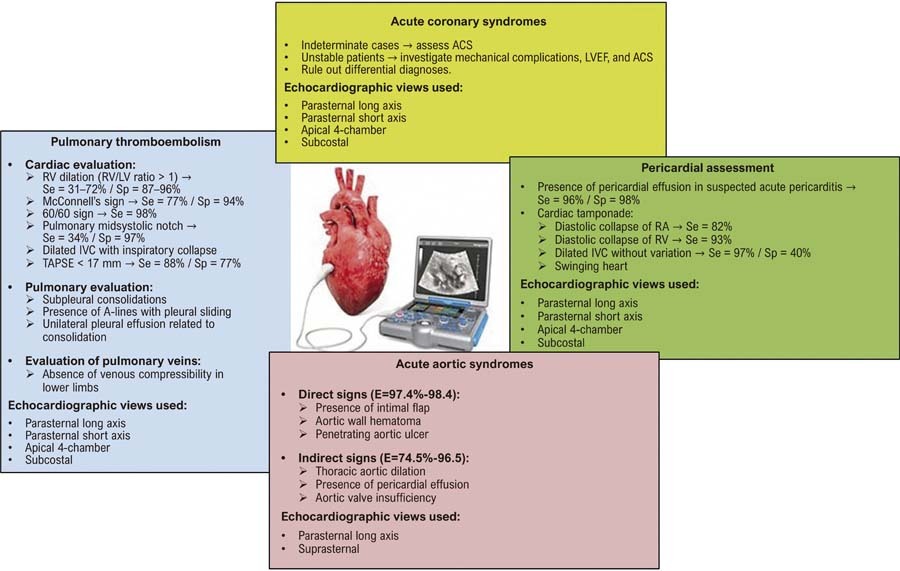
Assessment of Acute Chest Pain in the Emergency Department: How Point-of-Care Ultrasound Can Assist the Cardiologist

Alexandre de Matos Soeiro et al. Lucas Lentini Herling de Oliveira Rômulo Fonseca de Moraes Tatiana de Carvalho Andreucci Torres Leal

Abstract

The use of point-of-care ultrasound (POCUS) in emergency settings is now well established as part of the initial assessment of critically ill patients. In cases of acute chest pain, POCUS plays a significant role in differential diagnosis, helping to reduce diagnostic errors and, most importantly, preventing the discharge of patients with potentially life-threatening conditions. In this context, the main diagnostic considerations include acute coronary syndrome (ACS), pericarditis, pulmonary thromboembolism (PTE), and acute aortic syndromes (AAS). POCUS has proven effective in all of these scenarios and can be widely applied with proper training, both by novice physicians and experienced echocardiographers. This article aims to discuss the key ways in which POCUS can specifically aid in the differential diagnosis of chest pain.

  • Acute coronary syndrome
  • Aortic Dissection
  • Emergencies
  • Pulmonary embolism
Read Full Article
Creative Commons Attribution (CC BY) Creative Commons license
08/10/2025 DOI: 10.36660/abcimg.20250045i
Brazilian Policies and Programs in Urgent and Emergency Care Services in the Context of Cardiovascular Diseases: A Scoping Review
IJCS
Original Article

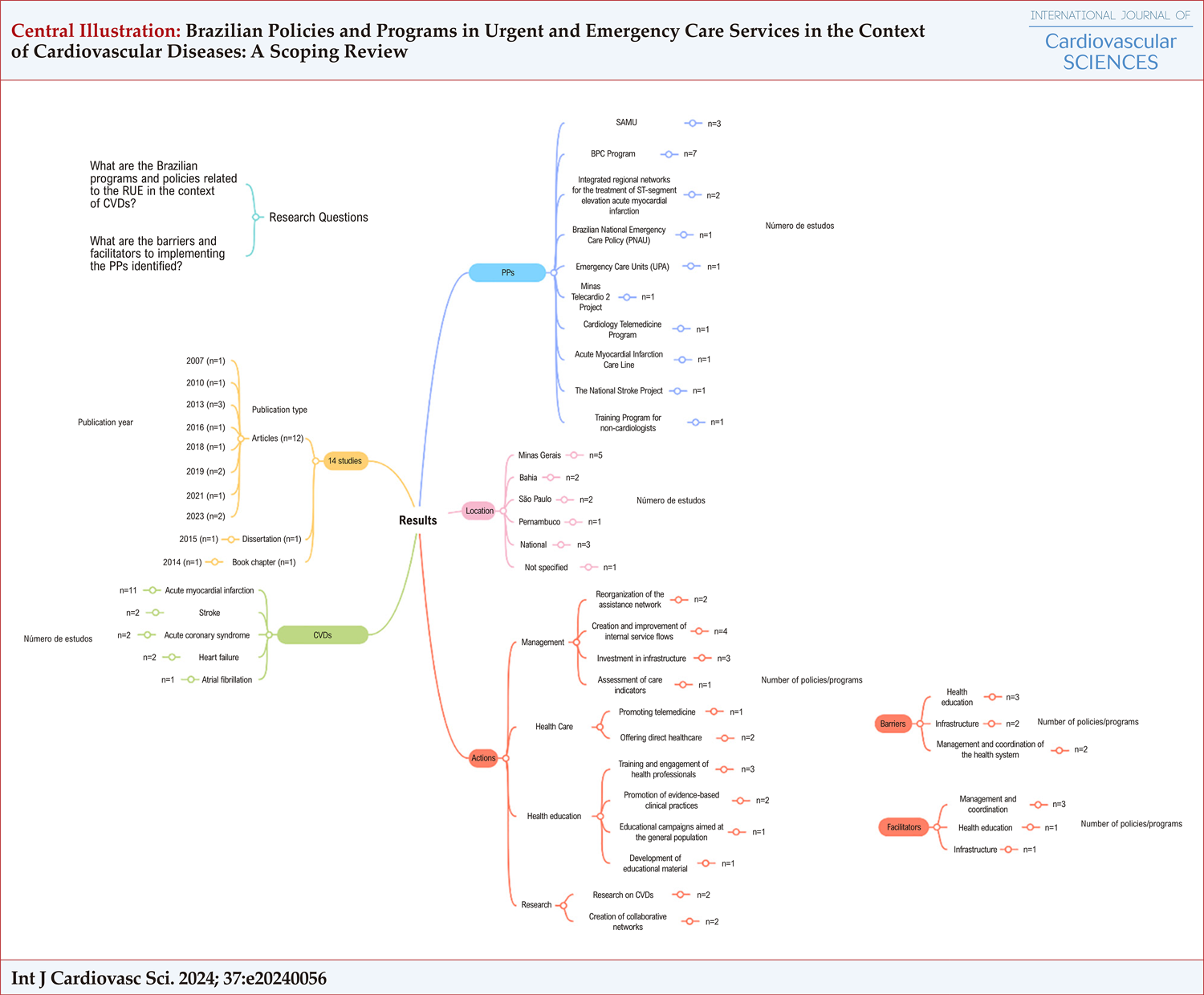
Brazilian Policies and Programs in Urgent and Emergency Care Services in the Context of Cardiovascular Diseases: A Scoping Review

Liza Yurie Teruya Uchimura et al. Cintia de Freitas Oliveira Mabel Fernandes Figueiró Camila Pereira Pinto Toth … Camila Roncon de Lima Patricia Vendramim

Abstract

Introduction

Cardiovascular diseases (CVD) are a major cause of mortality in Brazil, requiring the improvement of healthcare mechanisms that can promote rapid and effective care for patients.

Objectives

To identify and characterize Brazilian policies and programs (PP) regarding urgency and emergency care in the context of CVD.

Method

The scoping review followed recommendations from the Joanna Briggs Institute (JBI). The search for studies was conducted across seven databases. The screening and eligibility steps were performed by reviewers independently, with conflicts resolved by consensus or consultation with a third reviewer. The data extraction was done in a spreadsheet and the information was analyzed and grouped by content similarity.

Results

Through the analysis of 14 studies, a systematic and contextualized understanding was gained regarding 10 PPs implemented in the urgency and emergency network (RUE) for individuals with CVDs. SAMU emerged as the most extensively studied PP, predominantly in the state of Minas Gerais. The diseases most commonly addressed in these studies included acute myocardial infarction (featured in 80% of publications), stroke, acute coronary syndrome, heart failure, and atrial fibrillation. These PP have demonstrated significant improvements in clinical outcomes, particularly in reducing morbidity and mortality rates. The studies also revealed important insights into barriers and drivers related to infrastructure, health education, and system management and coordination.

Conclusion

The evidence gathered provides significant contributions to guide future policy development and improve decision-making in clinical management for cardiologists.

  • Cardiology
  • Cardiovascular Diseases
  • Emergencies
  • Health Policy
Read Full Article
Creative Commons Attribution (CC BY) Creative Commons license
19/08/2024 DOI: 10.36660/ijcs.20240056 Views 1
Figure 1
ABC
Original Article

The Use of the Borg Rating of Perceived Exertion Scale in Cardiopulmonary Resuscitation

Lucia Tobase et al. Heloisa Helena Ciqueto Peres Thatiane Facholi Polastri Sandra Helena Cardoso … Dhieizom Rodrigo Souza Debora Gugelmin Almeida Sergio Timerman

Abstract

Background

A cardiopulmonary arrest is a critical event whose survival rate is related to the quality of resuscitation maneuvers combined with the use of technology. It is important to understand the perception of fatigue during this procedure, aiming to improve the effectiveness of compressions to increase the chances of survival.

Objectives

To apply the Borg rating of perceived exertion scale (Borg scale) to analyze the exertion perceived by nurses during cardiopulmonary resuscitation maneuvers using a feedback device.

Methods

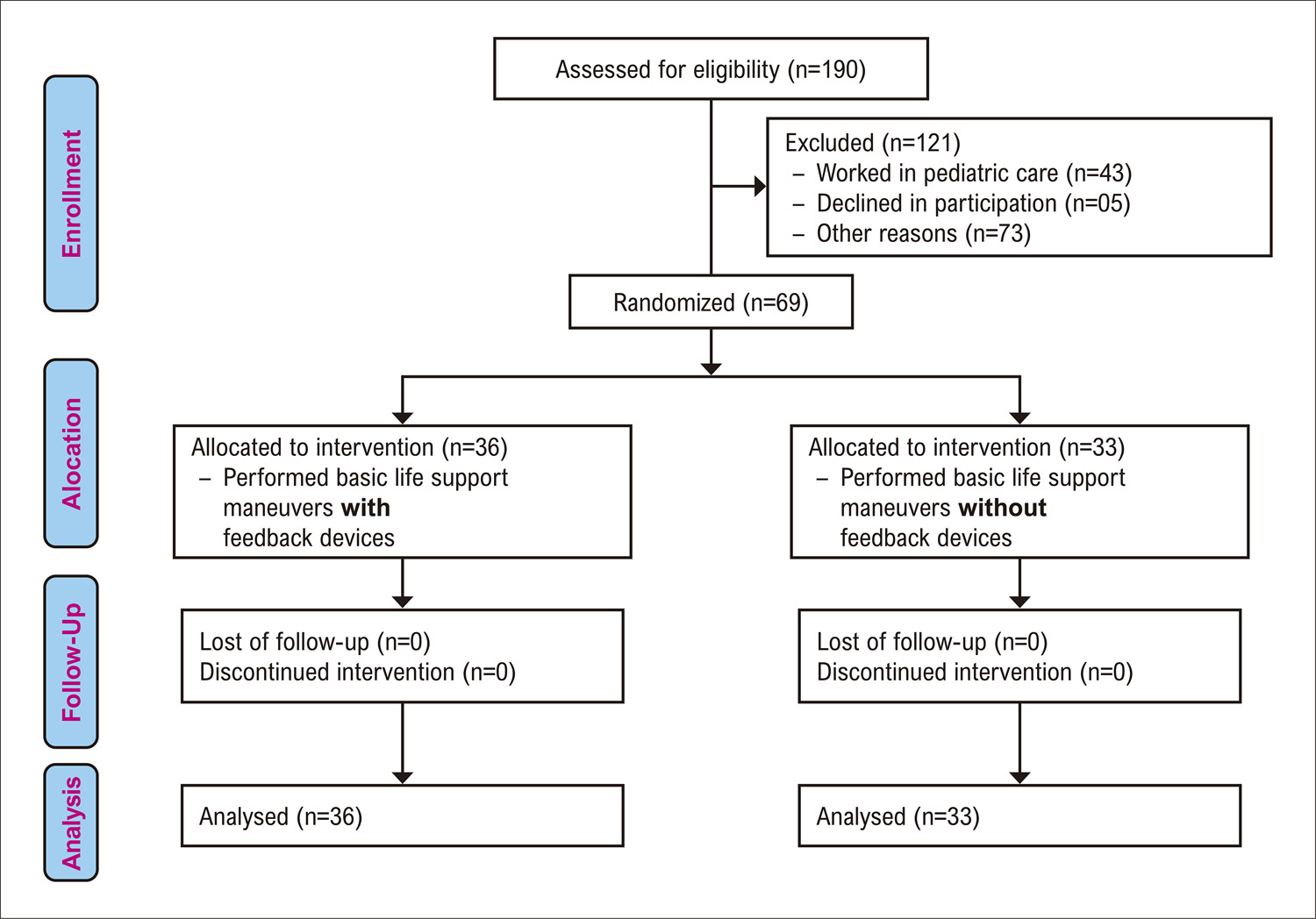
Experimental study with a randomized distribution of nurses in a teaching hospital. Perceived exertion during simulated cardiopulmonary resuscitation with/without a feedback device was assessed using the Borg scale. The statistical significance level of 5% was adopted.

Results

69 nurses working in critical and non-critical adult care units were included. Perceived exertion and heart rate were lower in the intervention group (p<0.001), influenced by the feedback device, with no significant difference between critical and non-critical units.

Conclusions

The Borg scale proved to be adequate for the proposed objectives. The feedback device contributed to lower exertion and heart rate reduction during resuscitation maneuvers. The low cost and ease of application favor its use during training and real-time resuscitation attempts to assess performance using a feedback device to reduce exertion and perception of fatigue. It allows reflection on the intervening factors and resources that can influence the quality of resuscitation attempts and the chances of survival.

  • Cardiopulmonary Resuscitation
  • Emergencies
  • Heart Arrest
  • Nursing Care
  • Physical Exertion
Read Full Article
Creative Commons Attribution (CC BY) Creative Commons license
09/01/2023 DOI: 10.36660/abc.20220240 Views 1
Figure 1
ABCIC
Case Report

Left Ventricular Longitudinal Strain Echocardiogram and Handgrip: A Useful Tool for Detecting Ischemia in the Emergency Room

Ana Paula Torres Guimarães de Freitas et al. Natalia Marcusso Massoni Rodrigo Bellio de Mattos Barretto

Introduction

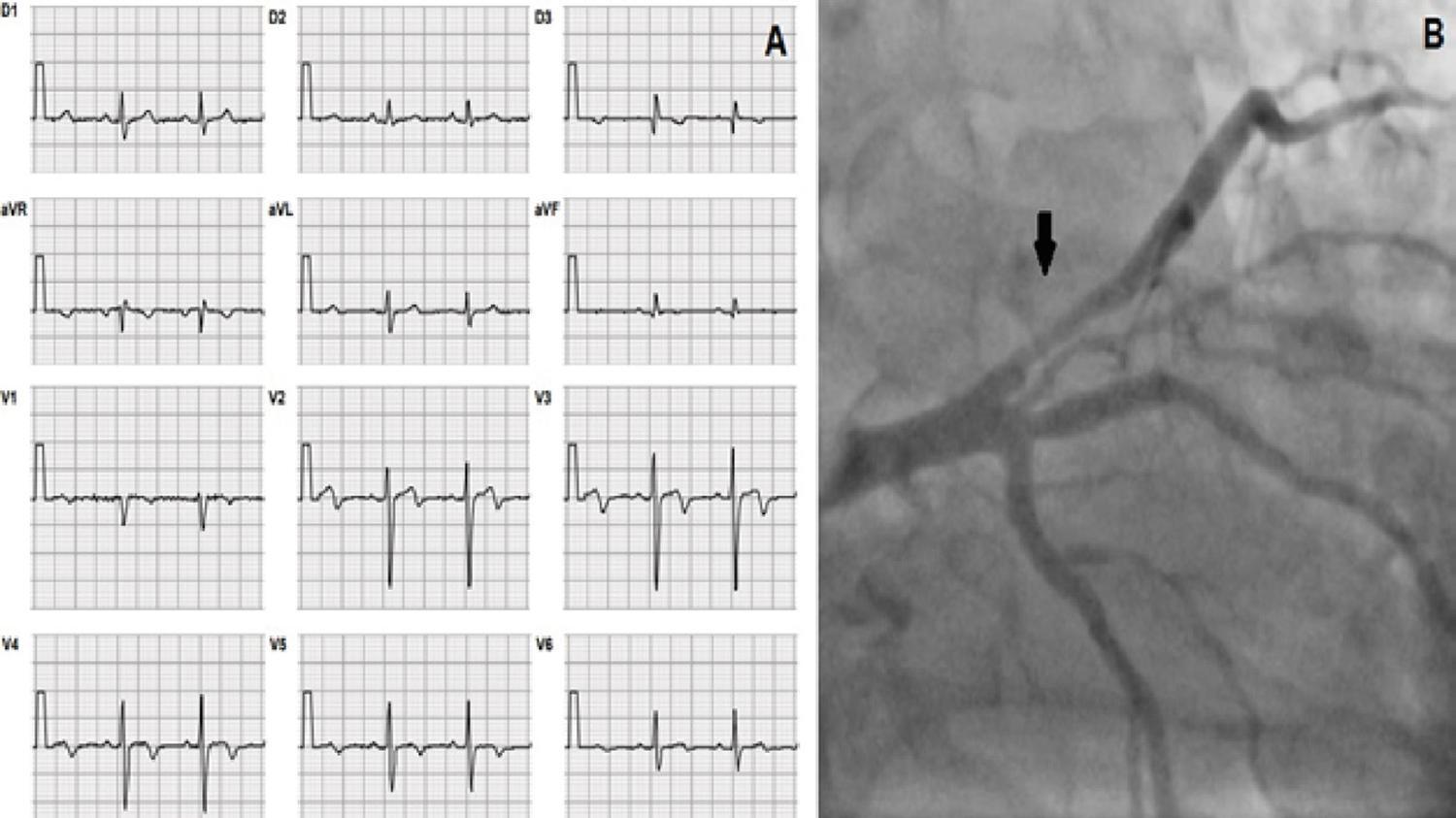
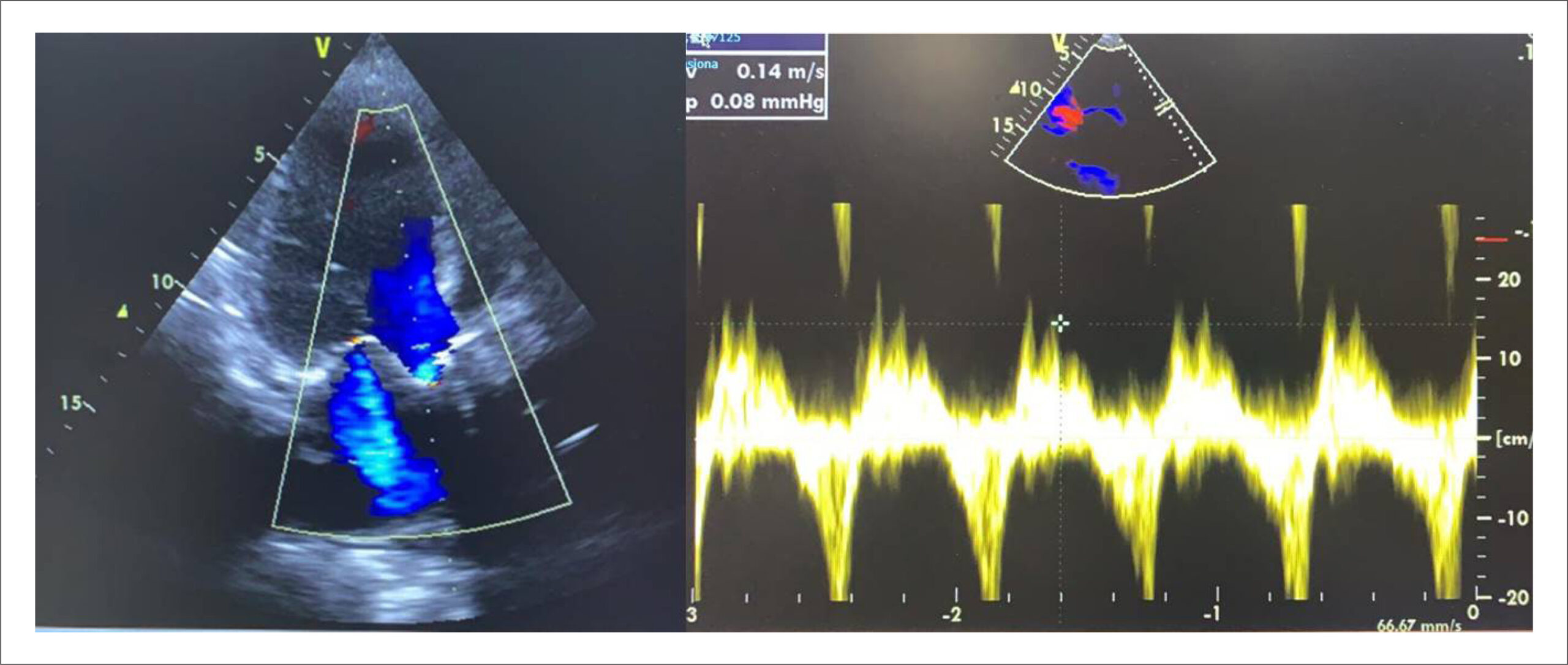
Acute coronary syndrome is among the greatest diagnostic challenges for emergency room physicians. Non-invasive imaging tests such as echocardiography (ECHO) are useful in the etiological diagnosis of chest pain. In cases of suspected ischemia, when electrocardiography (ECG) and myocardial necrosis markers (MNM) are inconclusive, ECHO can be performed at the time of pain or immediately after. The use of advanced techniques such as myocardial deformation analysis (strain) provides greater accuracy in identifying the coronary artery disease territory.

This report describes a case of a patient with chest pain without segmental changes on initial ECHO in the emergency room. Significant coronary artery disease (CAD) changes were evident on additional tools (handgrip, strain, and postsystolic peak) as showed on the subsequent coronary angiography.

[…]

  • Chest Pain
  • Echocardiography
  • Emergencies
  • Strain
Read Full Article
Creative Commons Attribution (CC BY) Creative Commons license
25/03/2022 DOI: 10.47593/2675-312X/20213404eabc238 Views 3
ABCIC
Editorial

New Diagnostic Approach Using D-Dimer and Tomography Angiography in Patients Suspected Acute Aortic Dissection

Alexandre de Matos Soeiro

[…]

  • Aortic Aneurysm/surgery
  • Computed Tomography,Angiography
  • Dimer D
  • Emergencies
  • Fibrin
Read Full Article
Creative Commons Attribution (CC BY) Creative Commons license
20/01/2022 DOI: 10.5935/2318-8219.20180010
Figure 1
ABC
Research Letter

Patient in Cardiorespiratory Arrest – Is it Possible to Perform Transcatheter Aortic Valve Implantation (TAVI) in this Scenario?

Alexandre de Matos Soeiro et al. Francisco Akira Cardozo Patrícia Oliveira Guimarães Marcel Paula Pereira … Paulo Vinícius Ramos Souza Gustavo A. B. Boros Viviane Cordeiro Veiga Samolon Soriano Ordinola Rojas Fernanda Marinho Mangione Salvador André Bavaresco Cristóvão Gustavo Alexandre Dutra Adnan Ali Salman Luiz Eduardo Loureiro Bettarello José Armando Mangione

Introduction

Transcatheter aortic valve implantation (TAVI) is a well-established procedure in reference centers worldwide and is currently accepted as the method of choice in high- and intermediate-risk patients. Although unusual, catastrophic complications can occur before or after its implantation, such as coronary obstruction, rupture of the aortic valve annulus, cardiac tamponade, significant perivalvular insufficiency and prosthesis embolization/displacement.

Data from a recently published North American registry showed that 1,695 patients (2.8%) undergoing TAVI required some type of mechanical circulatory support during hospitalization. It was observed that heart failure, transapical access, respiratory diseases, acute myocardial infarction, cardiorespiratory arrest (CRA) and cardiogenic shock were the factors most frequently associated with the need for mechanical circulatory support.

[…]

  • Aortic Valve
  • Cardiogenic shock
  • Emergencies
  • Heart Arrest
Read Full Article
Creative Commons Attribution (CC BY) Creative Commons license
06/09/2021 DOI: 10.36660/abc.20201097
Figure 1
IJCS
Original Article

Predictors of Hospitalization in Vitamin K Antagonist Users Presenting with Bleeding at the Emergency Department

Alan Fabiani Chiaparini et al. Paola Stefania Bohrer Rabaioli João Vitor Slaviero Cinthia Scatolin Tem-Pass … Hugo Antonio Fontana Filho Iran Castro Eduardo Dytz Almeida Tiago Luiz Luz Leiria

Abstract

Background

Vitamin K antagonists (VKA) are indicated for the prevention of thromboembolic events and reduction of mortality in patients with atrial fibrillation and patients with valvular prostheses. However, their use is associated with bleeding complications and hospitalizations. Predictors of hospital admission for bleeding in these patients are poorly known.

Objectives

To define the predictors for hospitalization of VKA users who seek emergency care due to bleeding.

Methods

Single-center, cross-sectional study, with retrospective analysis of electronic medical records from 03/01/2012 to 02/27/2017. Clinical and laboratory variables were compared between patients who were hospitalized and those who were not. A logistic regression model as used, in which the variables were included using the Backward stepwise method, with a p value of 0.05 as the input criterion, a removal value of 0.20 and a confidence interval of 95%. The p-value was considered statistically significant when <0.05.

Results

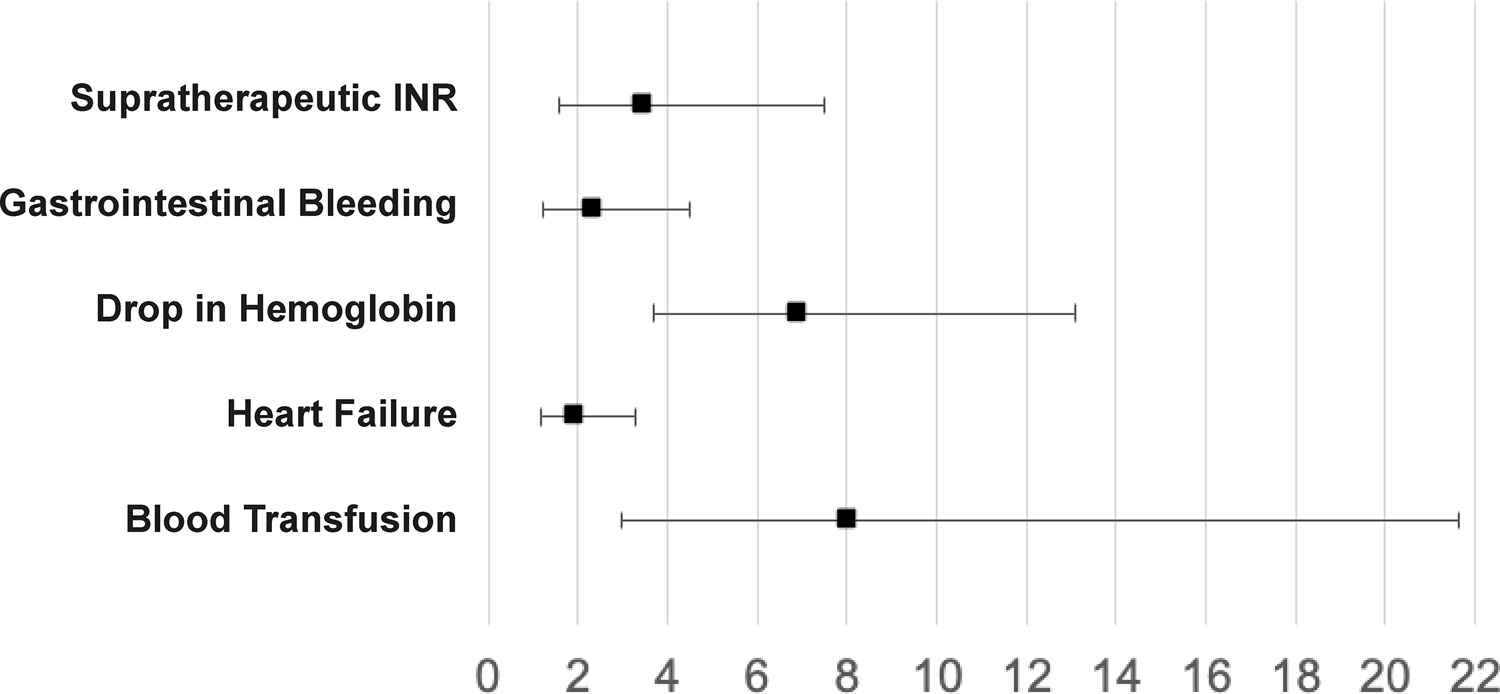
A total of 510 patients with bleeding were included, of whom 158 were hospitalized. Predictors of hospitalization were: INR at supratherapeutic levels (OR 3.45; P <0.01; 95% CI 1.58 – 7.51), gastrointestinal bleeding (OR 2.36; P <0.01; CI 95% 1.24 – 4.50), drop in hemoglobin (OR 6.93; P <0.01; 95% CI 3.67 – 13.07), heart failure (OR 1.96; P 0.01; 95% CI 1.16 – 3.30) and need for blood transfusion (OR 8.03; P <0.01; 95% CI 2.98 – 21.64).

Conclusion

Drop in hemoglobin, heart failure, INR at supratherapeutic levels, gastrointestinal bleeding and need for blood transfusion were associated with hospitalization. Identification of these factors in the initial evaluation would help to define which patients will demand more intensive care.

  • Emergencies
  • Hemorrhage
  • Platelet Aggregation
  • Warfarin
Read Full Article
Creative Commons Attribution (CC BY) Creative Commons license
03/09/2021 DOI: 10.36660/ijcs.20200320 Views 2
ST-Elevation myocardial infarction network: systematization in 205 cases reduced clinical events in the public health care system
ABC
Artigo Original

ST-Elevation myocardial infarction network: systematization in 205 cases reduced clinical events in the public health care system

Ana Christina Vellozo Caluza et al. Adriano H. Barbosa Iran Gonçalves Carlos Alexandre L. de Oliveira … Lívia Nascimento de Matos Claus Zeefried Antonio Célio C. Moreno Elcio Tarkieltaub Cláudia Maria R. Alves Antonio Carlos Carvalho

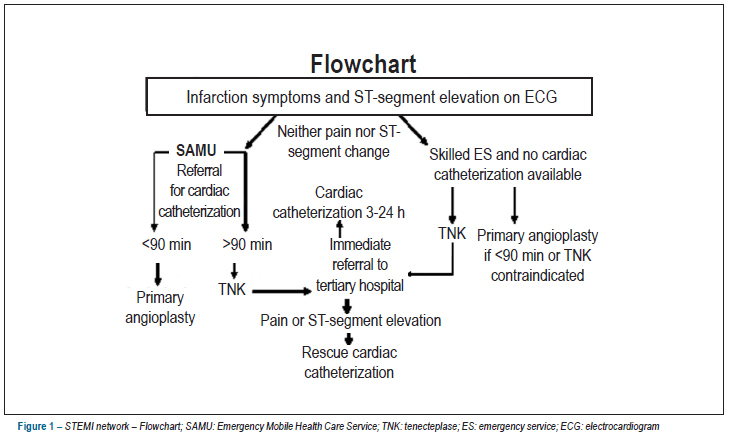
BACKGROUND: The major cause of death in the city of São Paulo (SP) is cardiac events. At its periphery, in-hospital mortality in acute myocardial infarction is estimated to range between 15% and 20% due to difficulties inherent in large metropoles. OBJECTIVE:To describe in-hospital mortality in ST-segment elevation acute myocardial infarction (STEMI) of patients admitted via ambulance or peripheral hospitals, which are part of a structured training network (STEMI Network). METHODS: Health care teams of four emergency services (Ermelino Matarazzo, Campo Limpo, Tatuapé and Saboya) of the periphery of the city of São Paulo and advanced ambulances of the Emergency Mobile Health Care Service (abbreviation in Portuguese, SAMU) were trained to use tenecteplase or to refer for primary angioplasty. A central office for electrocardiogram reading was used. After thrombolysis, the patient was sent to a tertiary reference hospital to undergo cardiac catheterization immediately (in case of failed thrombolysis) or in 6 to 24 hours, if the patient was stable. Quantitative and qualitative variables were assessed by use of uni- and multivariate analysis. RESULTS: From January 2010 to June 2011, 205 consecutive patients used the STEMI Network, and the findings were as follows: 87 anterior wall infarctions; 11 left bundle-branch blocks; 14 complete atrioventricular blocks; and 14 resuscitations after initial cardiorespiratory arrest. In-hospital mortality was 6.8% (14 patients), most of which due to cardiogenic shock, one hemorrhagic cerebrovascular accident, and one bleeding. CONCLUSION: The organization in the public health care system of a network for the treatment of STEMI, involving diagnosis, reperfusion, immediate transfer, and tertiary reference hospital, resulted in immediate improvement of STEMI outcomes.

  • Emergencies
  • Guidelines
  • Myocardial Infarction
  • Quality of Health Care
Read Full Article
Creative Commons Attribution (CC BY) Creative Commons license
09/11/2012 DOI: 10.1590/S0066-782X2012005000100 Views 1
Implementing clinical guidelines on acute myocardial infarction care in an emergency service
ABC
Artigo Original

Implementing clinical guidelines on acute myocardial infarction care in an emergency service

Claudia Caminha Escosteguy et al. Alfredo Brasil Teixeira Margareth Crisostomo Portela Artur Eduardo Cotrim Guimarães … Sheyla Maria Lemos Lima Vanja Maria Bessa Ferreira Claudia Brito

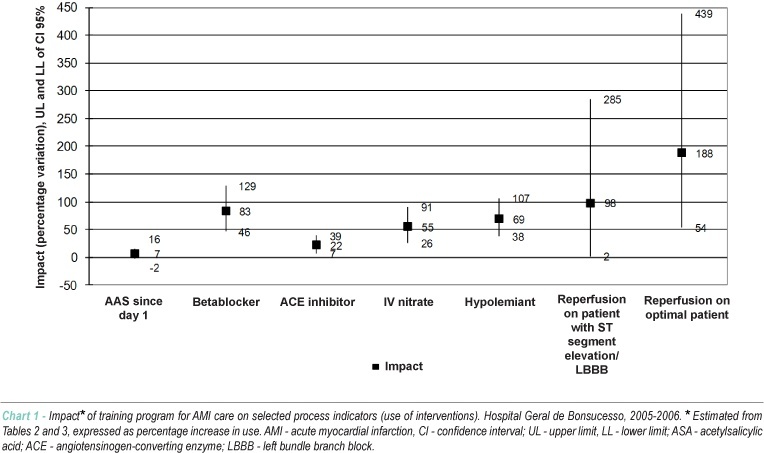
BACKGROUND: The implementation of clinical guidelines on acute myocardial infarction (AMI) care produces better results. OBJECTIVE: To present a multidisciplinary program to implement these guidelines in a large public emergency center and check its impact. METHODS: Evaluation study on health services, with “before and after” type design, to assess the indicators of quality of AMI care before and after implementation of training strategies and to facilitate emergency teams’ acceptance of clinical guidelines. This includes the development of educational and awareness-raising materials and continued supervision. Relative risk estimate (RR) and confidence intervals (95%). RESULTS: Pre-program group, 78 cases of AMI; post-program group, 66 cases of AMI. Most cases were treated only in the emergency room, due to small number of vacancies in the coronary care unit. We observed a significant increase (p<0.05) in the use of various interventions evaluated (process indicators): beta-blockers, 83%; angiotensin-converting enzyme inhibitors, 22%; lipid-lowering agents, 69%; intravenous nitrate, 55%; coronary reperfusion in acute myocardial infarction with ST-segment elevation, 98%. The use of aspirin from the first day of the IAM reached 95.5% of cases. The loss of opportunity of coronary reperfusion in patients with this indication, reduced from 71.4% to 17.6% post-training. CONCLUSION: The program achieved a significant impact and its propagation to other units may contribute to better assist IAM in the public health system.

  • Emergencies
  • Guidelines
  • Health Management
  • Myocardial Infarction
  • Practice guidelines
  • Quality of Health Care
Read Full Article
Creative Commons Attribution (CC BY) Creative Commons license
12/11/2010 DOI: 10.1590/S0066-782X2010005000142 Views 1
The bussola study. Final results, conclusions and proposals
ABC
Original Article

The bussola study. Final results, conclusions and proposals

Antonio Luiz da Silva Brasileiro

OBJECTIVE: To evaluate the use of thrombolytic and acetylsalicylic acid therapies in acute myocardial infarct patients as well as the availability of technical and human resources for the care of these patients in the emergency units of the city of Rio de Janeiro. Additional objectives were the evaluation of the use of primary angioplasty and the level of acceptance of SBC /RJ as an entity responsible for programs of continued medical education. METHODS: Interviews with physicians at 46 emergency units in the city of Rio de Janeiro. RESULTS: Of the 46 emergency units inspected, a policy of encouragement to use thrombolytic therapy was only prescribed in 6.5%. In 1/3 of the public wards no thrombolytic agents were available, and in none of them was access to primary angioplasty regularly available; 45.9% did not offer the minimal conditions required for the handling of cases of acute myocardial infarction; 60% of the physicians on-call (at both public and private emergency units), appeared not to know the importance of the use of acetylsalicylic acid in acute myocardial infarct patients; all physicians interviewed would participate in programs of continued medical education organized by the SBC/RJ. CONCLUSION: The study suggests there was: 1) the low probability of the use of thrombolytic therapy in the majority of the emergency units in of the city of Rio de Janeiro due to the inadequate policy of waiting for the transfer of the patient to coronary or intensive care unit; 2) a low awareness to the importance of early use of acetylsalic acid in acute myocardial infarct; 3) half of the emergency units of the public net do not have the minimal conditions required for the handling of cases of acute myocardial infarction; 4) a high level of credibility exists that would enable the SBC/RJ to set up programs for continued medical education to change the mentality regarding the use of thrombolytic therapy and of acetylsalicylic acid.

  • Emergencies
  • myocardial infarct
  • thrombolysis
Read Full Article
Creative Commons Attribution (CC BY) Creative Commons license
08/01/2002 DOI: 10.1590/S0066-782X2000000900004 Views 1

How to cite this article

EndNote RIS

Electronic Document Format (Vancouver)

Soeiro AM, Oliveira LLH, Moraes RF, Leal TCAT. Assessment of Acute Chest Pain in the Emergency Department: How Point-of-Care Ultrasound Can Assist the Cardiologist. ABC Imagem Cardiovascular 2025;38(3):e20250045.

Electronic Document Format (ABNT)

Soeiro, Alexandre de Matos; Oliveira, Lucas Lentini Herling de; Moraes, Rômulo Fonseca de; Leal, Tatiana de Carvalho Andreucci Torres. Assessment of Acute Chest Pain in the Emergency Department: How Point-of-Care Ultrasound Can Assist the Cardiologist. ABC Imagem Cardiovascular, v. 38, n. 3, e20250045, Oct. 2025.

Electronic Document Format (APA)

Soeiro, A. M., Oliveira, L. L. H. , Moraes, R. F. , & Leal, T. C. A. T. (2025). Assessment of Acute Chest Pain in the Emergency Department: How Point-of-Care Ultrasound Can Assist the Cardiologist. ABC Imagem Cardiovascular, 38(3), e20250045.

Electronic Document Format (ISO)

Soeiro, Alexandre de Matos and Oliveira, Lucas Lentini Herling de and Moraes, Rômulo Fonseca de and Leal, Tatiana de Carvalho Andreucci Torres. Assessment of Acute Chest Pain in the Emergency Department: How Point-of-Care Ultrasound Can Assist the Cardiologist. ABC Imagem Cardiovascular [online]. 2025, vol. 38, n. 3, [cited 2026-10-14], e20250045. Available from: <https://journals.cardiol.br/en/article/assessment-of-acute-chest-pain-in-the-emergency-department-how-point-of-care-ultrasound-can-assist-the-cardiologist/>. ISSN 2318-8219

EndNote RIS

Electronic Document Format (Vancouver)

Uchimura LYT, Oliveira CF, Figueiró MF, Toth CPP, Lima CR, Vendramim P. Brazilian Policies and Programs in Urgent and Emergency Care Services in the Context of Cardiovascular Diseases: A Scoping Review. International Journal of Cardiovascular Sciences 2024;37:e20240056.

Electronic Document Format (ABNT)

Uchimura, Liza Yurie Teruya; Oliveira, Cintia de Freitas; Figueiró, Mabel Fernandes; Toth, Camila Pereira Pinto; Lima, Camila Roncon de; Vendramim, Patricia. Brazilian Policies and Programs in Urgent and Emergency Care Services in the Context of Cardiovascular Diseases: A Scoping Review. International Journal of Cardiovascular Sciences, v. 37, e20240056, Aug. 2024.

Electronic Document Format (APA)

Uchimura, L. Y. T., Oliveira, C. F., Figueiró, M. F., Toth, C. P. P., Lima, C. R. , & Vendramim, P. (2024). Brazilian Policies and Programs in Urgent and Emergency Care Services in the Context of Cardiovascular Diseases: A Scoping Review. International Journal of Cardiovascular Sciences, 37, e20240056.

Electronic Document Format (ISO)

Uchimura, Liza Yurie Teruya and Oliveira, Cintia de Freitas and Figueiró, Mabel Fernandes and Toth, Camila Pereira Pinto and Lima, Camila Roncon de and Vendramim, Patricia. Brazilian Policies and Programs in Urgent and Emergency Care Services in the Context of Cardiovascular Diseases: A Scoping Review. International Journal of Cardiovascular Sciences [online]. 2024, vol. 37, [cited 2026-10-14], e20240056. Available from: <https://journals.cardiol.br/en/article/brazilian-policies-and-programs-in-urgent-and-emergency-care-services-in-the-context-of-cardiovascular-diseases-a-scoping-review/>. ISSN 2359-4802

EndNote RIS

Electronic Document Format (Vancouver)

Tobase L, Peres HHC, Polastri TF, Cardoso SH, Souza DR, Almeida DG, Timerman S, et al. The Use of the Borg Rating of Perceived Exertion Scale in Cardiopulmonary Resuscitation. Arquivos Brasileiros de Cardiologia 2023;120(1):e20220240.

Electronic Document Format (ABNT)

Tobase, Lucia; Peres, Heloisa Helena Ciqueto; Polastri, Thatiane Facholi; Cardoso, Sandra Helena; Souza, Dhieizom Rodrigo; Almeida, Debora Gugelmin; Timerman, Sergio. The Use of the Borg Rating of Perceived Exertion Scale in Cardiopulmonary Resuscitation. Arquivos Brasileiros de Cardiologia, v. 120, n. 1, e20220240, Jan. 2023.

Electronic Document Format (APA)

Tobase, L., Peres, H. H. C., Polastri, T. F., Cardoso, S. H., Souza, D. R., Almeida, D. G., & Timerman, S. (2023). The Use of the Borg Rating of Perceived Exertion Scale in Cardiopulmonary Resuscitation. Arquivos Brasileiros de Cardiologia, 120(1), e20220240.

Electronic Document Format (ISO)

Tobase, Lucia and Peres, Heloisa Helena Ciqueto and Polastri, Thatiane Facholi and Cardoso, Sandra Helena and Souza, Dhieizom Rodrigo and Almeida, Debora Gugelmin and Timerman, Sergio. The Use of the Borg Rating of Perceived Exertion Scale in Cardiopulmonary Resuscitation. Arquivos Brasileiros de Cardiologia [online]. 2023, vol. 120, n. 1, [cited 2026-10-14], e20220240. Available from: <https://journals.cardiol.br/en/article/the-use-of-the-borg-rating-of-perceived-exertion-scale-in-cardiopulmonary-resuscitation/>. ISSN 0066-782X

EndNote RIS

Electronic Document Format (Vancouver)

Freitas APTG, Massoni NM, Barretto RBM. Left Ventricular Longitudinal Strain Echocardiogram and Handgrip: A Useful Tool for Detecting Ischemia in the Emergency Room. Arquivos Brasileiros de Cardiologia Imagem cardiovascular 2022;34(4):eabc238.

Electronic Document Format (ABNT)

Freitas, Ana Paula Torres Guimarães de; Massoni, Natalia Marcusso; Barretto, Rodrigo Bellio de Mattos. Left Ventricular Longitudinal Strain Echocardiogram and Handgrip: A Useful Tool for Detecting Ischemia in the Emergency Room. Arquivos Brasileiros de Cardiologia Imagem cardiovascular, v. 34, n. 4, eabc238, Mar. 2022.

Electronic Document Format (APA)

Freitas, A. P. T. G. , Massoni, N. M., & Barretto, R. B. M. (2022). Left Ventricular Longitudinal Strain Echocardiogram and Handgrip: A Useful Tool for Detecting Ischemia in the Emergency Room. Arquivos Brasileiros de Cardiologia Imagem cardiovascular, 34(4), eabc238.

Electronic Document Format (ISO)

Freitas, Ana Paula Torres Guimarães de and Massoni, Natalia Marcusso and Barretto, Rodrigo Bellio de Mattos. Left Ventricular Longitudinal Strain Echocardiogram and Handgrip: A Useful Tool for Detecting Ischemia in the Emergency Room. Arquivos Brasileiros de Cardiologia Imagem cardiovascular [online]. 2022, vol. 34, n. 4, [cited 2026-10-14], eabc238. Available from: <https://journals.cardiol.br/en/article/left-ventricular-longitudinal-strain-echocardiogram-and-handgrip-a-useful-tool-for-detecting-ischemia-in-the-emergency-room/>. ISSN 2318-8219

EndNote RIS

Electronic Document Format (Vancouver)

Soeiro AM. New Diagnostic Approach Using D-Dimer and Tomography Angiography in Patients Suspected Acute Aortic Dissection. Arquivos Brasileiros de Cardiologia Imagem cardiovascular 2022;31(2):80-1.

Electronic Document Format (ABNT)

Soeiro, Alexandre de Matos. New Diagnostic Approach Using D-Dimer and Tomography Angiography in Patients Suspected Acute Aortic Dissection. Arquivos Brasileiros de Cardiologia Imagem cardiovascular, v. 31, n. 2, p. 80-81, Jan. 2022.

Electronic Document Format (APA)

Soeiro, A. M. (2022). New Diagnostic Approach Using D-Dimer and Tomography Angiography in Patients Suspected Acute Aortic Dissection. Arquivos Brasileiros de Cardiologia Imagem cardiovascular, 31(2), 80-81.

Electronic Document Format (ISO)

Soeiro, Alexandre de Matos. New Diagnostic Approach Using D-Dimer and Tomography Angiography in Patients Suspected Acute Aortic Dissection. Arquivos Brasileiros de Cardiologia Imagem cardiovascular [online]. 2022, vol. 31, n. 2, [cited 2026-10-14], pp. 80-81. Available from: <https://journals.cardiol.br/en/article/new-diagnostic-approach-using-d-dimer-and-tomography-angiography-in-patients-suspected-acute-aortic-dissection/>. ISSN 2318-8219

EndNote RIS

Electronic Document Format (Vancouver)

Soeiro AM, Cardozo FA, Guimarães PO, Pereira MP, Souza PVR, Boros GAB, Veiga VC, et al. Patient in Cardiorespiratory Arrest – Is it Possible to Perform Transcatheter Aortic Valve Implantation (TAVI) in this Scenario?. Arquivos Brasileiros de Cardiologia 2021;117(2):404-6.

Electronic Document Format (ABNT)

Soeiro, Alexandre de Matos; Cardozo, Francisco Akira; Guimarães, Patrícia Oliveira; Pereira, Marcel Paula; Souza, Paulo Vinícius Ramos; Boros, Gustavo A. B.; Veiga, Viviane Cordeiro; Rojas, Samolon Soriano Ordinola; Mangione, Fernanda Marinho; Cristóvão, Salvador André Bavaresco; Dutra, Gustavo Alexandre; Salman, Adnan Ali; Bettarello, Luiz Eduardo Loureiro; Mangione, José Armando. Patient in Cardiorespiratory Arrest – Is it Possible to Perform Transcatheter Aortic Valve Implantation (TAVI) in this Scenario?. Arquivos Brasileiros de Cardiologia, v. 117, n. 2, p. 404-406, Sep. 2021.

Electronic Document Format (APA)

Soeiro, A. M., Cardozo, F. A., Guimarães, P. O., Pereira, M. P., Souza, P. V. R., Boros, G. A. B., Veiga, V. C., Rojas, S. S. O., Mangione, F. M., Cristóvão, S. A. B., Dutra, G. A., Salman, A. A., Bettarello, L. E. L., & Mangione, J. A. (2021). Patient in Cardiorespiratory Arrest – Is it Possible to Perform Transcatheter Aortic Valve Implantation (TAVI) in this Scenario?. Arquivos Brasileiros de Cardiologia, 117(2), 404-406.

Electronic Document Format (ISO)

Soeiro, Alexandre de Matos and Cardozo, Francisco Akira and Guimarães, Patrícia Oliveira and Pereira, Marcel Paula and Souza, Paulo Vinícius Ramos and Boros, Gustavo A. B. and Veiga, Viviane Cordeiro and Rojas, Samolon Soriano Ordinola and Mangione, Fernanda Marinho and Cristóvão, Salvador André Bavaresco and Dutra, Gustavo Alexandre and Salman, Adnan Ali and Bettarello, Luiz Eduardo Loureiro and Mangione, José Armando. Patient in Cardiorespiratory Arrest – Is it Possible to Perform Transcatheter Aortic Valve Implantation (TAVI) in this Scenario?. Arquivos Brasileiros de Cardiologia [online]. 2021, vol. 117, n. 2, [cited 2026-10-14], pp. 404-406. Available from: <https://journals.cardiol.br/en/article/patient-in-cardiorespiratory-arrest-is-it-possible-to-perform-transcatheter-aortic-valve-implantation-tavi-in-this-scenario/>. ISSN 0066-782X

EndNote RIS

Electronic Document Format (Vancouver)

Chiaparini AF, Rabaioli PSB, Slaviero JV, Tem-Pass CS, Fontana Filho HA, Castro I, Almeida ED, et al. Predictors of Hospitalization in Vitamin K Antagonist Users Presenting with Bleeding at the Emergency Department. International Journal of Cardiovascular Sciences 2021;35(1):88-94.

Electronic Document Format (ABNT)

Chiaparini, Alan Fabiani; Rabaioli, Paola Stefania Bohrer; Slaviero, João Vitor; Tem-Pass, Cinthia Scatolin; Fontana Filho, Hugo Antonio; Castro, Iran; Almeida, Eduardo Dytz; Leiria, Tiago Luiz Luz. Predictors of Hospitalization in Vitamin K Antagonist Users Presenting with Bleeding at the Emergency Department. International Journal of Cardiovascular Sciences, v. 35, n. 1, p. 88-94, Sep. 2021.

Electronic Document Format (APA)

Chiaparini, A. F., Rabaioli, P. S. B., Slaviero, J. V., Tem-Pass, C. S., Fontana Filho, H. A., Castro, I., Almeida, E. D., & Leiria, T. L. L. (2021). Predictors of Hospitalization in Vitamin K Antagonist Users Presenting with Bleeding at the Emergency Department. International Journal of Cardiovascular Sciences, 35(1), 88-94.

Electronic Document Format (ISO)

Chiaparini, Alan Fabiani and Rabaioli, Paola Stefania Bohrer and Slaviero, João Vitor and Tem-Pass, Cinthia Scatolin and Fontana Filho, Hugo Antonio and Castro, Iran and Almeida, Eduardo Dytz and Leiria, Tiago Luiz Luz. Predictors of Hospitalization in Vitamin K Antagonist Users Presenting with Bleeding at the Emergency Department. International Journal of Cardiovascular Sciences [online]. 2021, vol. 35, n. 1, [cited 2026-10-14], pp. 88-94. Available from: <https://journals.cardiol.br/en/article/predictors-of-hospitalization-in-vitamin-k-antagonist-users-presenting-with-bleeding-at-the-emergency-department/>. ISSN 2359-4802

EndNote RIS

Electronic Document Format (Vancouver)

Caluza ACV, Barbosa AH, Gonçalves I, Oliveira CAL, Matos LN, Zeefried C, Moreno ACC, et al. ST-Elevation myocardial infarction network: systematization in 205 cases reduced clinical events in the public health care system. Arquivos Brasileiros de Cardiologia 2012;99(5):1040-8.

Electronic Document Format (ABNT)

Caluza, Ana Christina Vellozo; Barbosa, Adriano H.; Gonçalves, Iran; Oliveira, Carlos Alexandre L. de; Matos, Lívia Nascimento de; Zeefried, Claus; Moreno, Antonio Célio C.; Tarkieltaub, Elcio; Alves, Cláudia Maria R.; Carvalho, Antonio Carlos. ST-Elevation myocardial infarction network: systematization in 205 cases reduced clinical events in the public health care system. Arquivos Brasileiros de Cardiologia, v. 99, n. 5, p. 1040-1048, Nov. 2012.

Electronic Document Format (APA)

Caluza, A. C. V., Barbosa, A. H., Gonçalves, I., Oliveira, C. A. L. , Matos, L. N. , Zeefried, C., Moreno, A. C. C., Tarkieltaub, E., Alves, C. M. R., & Carvalho, A. C. (2012). ST-Elevation myocardial infarction network: systematization in 205 cases reduced clinical events in the public health care system. Arquivos Brasileiros de Cardiologia, 99(5), 1040-1048.

Electronic Document Format (ISO)

Caluza, Ana Christina Vellozo and Barbosa, Adriano H. and Gonçalves, Iran and Oliveira, Carlos Alexandre L. de and Matos, Lívia Nascimento de and Zeefried, Claus and Moreno, Antonio Célio C. and Tarkieltaub, Elcio and Alves, Cláudia Maria R. and Carvalho, Antonio Carlos. ST-Elevation myocardial infarction network: systematization in 205 cases reduced clinical events in the public health care system. Arquivos Brasileiros de Cardiologia [online]. 2012, vol. 99, n. 5, [cited 2026-10-14], pp. 1040-1048. Available from: <https://journals.cardiol.br/en/article/st-elevation-myocardial-infarction-network-systematization-in-205-cases-reduced-clinical-events-in-the-public-health-care-system/>. ISSN 0066-782X

EndNote RIS

Electronic Document Format (Vancouver)

Escosteguy CC, Teixeira AB, Portela MC, Guimarães AEC, Lima SML, Ferreira VMB, Brito C, et al. Implementing clinical guidelines on acute myocardial infarction care in an emergency service. Arquivos Brasileiros de Cardiologia 2010;96(1):18-25.

Electronic Document Format (ABNT)

Escosteguy, Claudia Caminha; Teixeira, Alfredo Brasil; Portela, Margareth Crisostomo; Guimarães, Artur Eduardo Cotrim; Lima, Sheyla Maria Lemos; Ferreira, Vanja Maria Bessa; Brito, Claudia. Implementing clinical guidelines on acute myocardial infarction care in an emergency service. Arquivos Brasileiros de Cardiologia, v. 96, n. 1, p. 18-25, Nov. 2010.

Electronic Document Format (APA)

Escosteguy, C. C., Teixeira, A. B., Portela, M. C., Guimarães, A. E. C., Lima, S. M. L., Ferreira, V. M. B., & Brito, C. (2010). Implementing clinical guidelines on acute myocardial infarction care in an emergency service. Arquivos Brasileiros de Cardiologia, 96(1), 18-25.

Electronic Document Format (ISO)

Escosteguy, Claudia Caminha and Teixeira, Alfredo Brasil and Portela, Margareth Crisostomo and Guimarães, Artur Eduardo Cotrim and Lima, Sheyla Maria Lemos and Ferreira, Vanja Maria Bessa and Brito, Claudia. Implementing clinical guidelines on acute myocardial infarction care in an emergency service. Arquivos Brasileiros de Cardiologia [online]. 2010, vol. 96, n. 1, [cited 2026-10-14], pp. 18-25. Available from: <https://journals.cardiol.br/en/article/implementing-clinical-guidelines-on-acute-myocardial-infarction-care-in-an-emergency-service/>. ISSN 0066-782X

EndNote RIS

Electronic Document Format (Vancouver)

Brasileiro ALS. The bussola study. Final results, conclusions and proposals. Arquivos Brasileiros de Cardiologia 2002;75(3):230-4.

Electronic Document Format (ABNT)

Brasileiro, Antonio Luiz da Silva. The bussola study. Final results, conclusions and proposals. Arquivos Brasileiros de Cardiologia, v. 75, n. 3, p. 230-234, Jan. 2002.

Electronic Document Format (APA)

Brasileiro, A. L. S. (2002). The bussola study. Final results, conclusions and proposals. Arquivos Brasileiros de Cardiologia, 75(3), 230-234.

Electronic Document Format (ISO)

Brasileiro, Antonio Luiz da Silva. The bussola study. Final results, conclusions and proposals. Arquivos Brasileiros de Cardiologia [online]. 2002, vol. 75, n. 3, [cited 2026-10-14], pp. 230-234. Available from: <https://journals.cardiol.br/en/article/the-bussola-study-final-results-conclusions-and-proposals/>. ISSN 0066-782X

  • About ABC Family
  • Internal Regulation
  • Editorial Board
  • Brazilian Society of Cardiology (SBC)

Issues

SBC Guidelines

  • Videos
  • Podcasts
  • News