ABC Family Arquivos Brasileiros de Cardiologia International Journal of Cardiovascular Sciences ABC Heart Failure & Cardiomyopathy ABC Imagem Cardiovascular
Português English
ABC Family
Português English
  • About
    • About ABC Family
    • Internal Regulation
    • Editorial Board
    • Brazilian Society of Cardiology (SBC)
  • Issues
  • SBC Guidelines
  • Content
    • Videos
    • Podcasts
    • News
  • About
    • About ABC Family
    • Internal Regulation
    • Editorial Board
    • Brazilian Society of Cardiology (SBC)
  • Issues
  • SBC Guidelines
  • Content
    • Videos
    • Podcasts
    • News

ABC Family

  • ABC Family
  • Arquivos Brasileiros de Cardiologia
  • International Journal of Cardiovascular Sciences
  • ABC Heart Failure & Cardiomyopathy
  • ABC Imagem Cardiovascular
Search in

No content found.

Journals
Ordering
Article types
Others

  1. Home
  2. Keyword: Ethnicity and Health
Figure 1
ABC
Editorial

Electrocardiogram of Brazilian Elite Football Players: Filling a Gap

Ricardo Stein et al. Filipe Ferrari Anderson Donelli da Silveira

Introduction

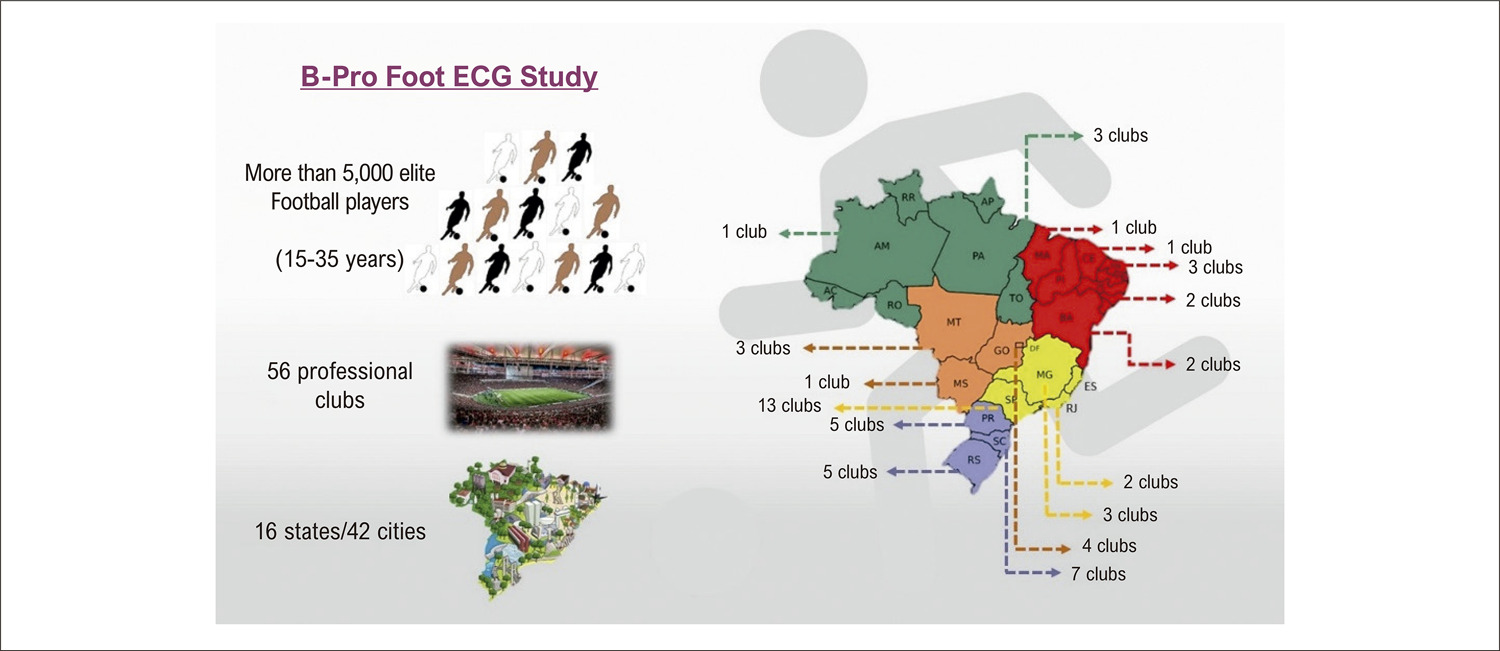
The sudden death of a young, apparently healthy athlete is a tragedy, and the true incidence of sudden cardiac death (SCD) among athletes is controversial. Although estimates from studies in the United States and Europe are limited by various methodological issues, it is known that physical exertion in sports activity and training poses a 2.5 to 4.5 times higher risk of sudden cardiac arrest and SCD in relation to non-athletes and recreational athletes.–On the other hand, a consistent finding across studies is that male athletes have a three to five times higher incidence of SCD than female athletes.

Over the past few decades, much has been discussed about the role of the resting 12-lead electrocardiogram (ECG) in preventing SCD in young athletes. Studies carried out in different parts of the world have been published, and expert consensuses have been developed to standardize a very peculiar type of ECG.–

[…]
  • Athletes
  • Ethnicity and Health
  • Exercise
  • Heart Arrest
  • Mass Sreening
  • Soccer
  • Sudden Cardiac Death
Read Full Article
Creative Commons Attribution (CC BY) Creative Commons license
01/05/2023 DOI: 10.36660/abc.20230090 Views 2
Figure 1
IJCS
Viewpoint

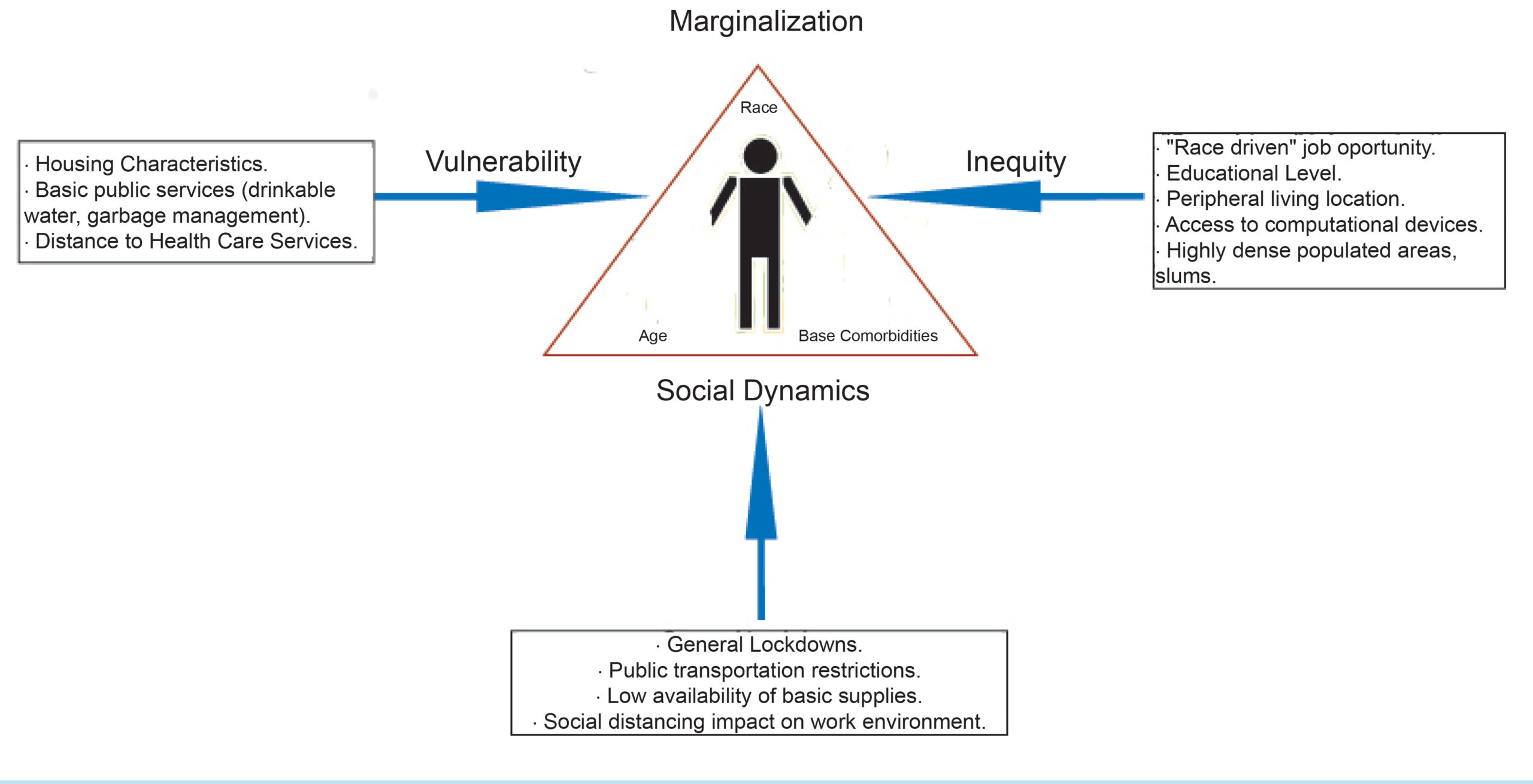
Marginalization, Vulnerability and Economic Dynamics in COVID-19

Andres Felipe Valencia Rendon et al. Isabela Mendes Volschan Manoella de Novais Pereira Alessandra de Freitas Pimentel … Wagner Lima Monteiro Gláucia Maria Moraes de Oliveira

Abstract

COVID-19, caused by the coronavirus family SARS-CoV-2 and declared a pandemic in March 2020, continues to spread. Its enormous and unprecedented impact on our society has evidenced the huge social inequity of our modern society, in which the most vulnerable individuals have been pushed into even worse socioeconomic situations, struggling to survive.

As the pandemic continues, we witness the huge suffering of the most marginalized populations around the globe, even in developed, high-income latitudes, such as North America and Europe. That is even worse in low-income regions, such as Brazil, where the public healthcare infrastructure had already been struggling before the pandemic.

Cities with even more evident social inequity have been impacted the most, leaving the most socioeconomically disadvantaged ones, such as slum residents and black people, continuously inflating the statistics of COVID-19 sufferers.

Poverty, marginalization, and inequity have been well-known risk factors for morbidity and mortality from other diseases. However, COVID-19 has deepened our society’s wound. It is up to us to heal it up. If we really care for the others and want to survive as a species, we must fight social inequity.

  • Brazil
  • Coronavirus-19
  • COVID-19
  • Disaster Vulnerability
  • Ethnicity and Health
  • Population Dynamics
  • poverty
  • Social Marginalization
Read Full Article
Creative Commons Attribution (CC BY) Creative Commons license
03/05/2021 DOI: 10.36660/ijcs.20210029 Views 1
Figure 1
IJCS
Original Article

Spatial Analysis and Mortality Trends Associated with Hypertensive Diseases in the States and Regions of Brazil from 2010 to 2014

Marcos Antonio Almeida-Santos et al. Beatriz Santana Prado Deyse Mirelle Souza Santos

Abstract

Background:

Systemic Arterial Hypertension (SAH) represents the most relevant worsening factor and one of the major risk factors for cardiovascular diseases.

Objectives:

To analyze trends in the mortality rate associated with hypertensive diseases in Brazil from 2010 to 2014, for states as well as regions.

Methods:

An epidemiological study was performed from aggregate data obtained in populational strata. Cartographic data of the Brazilian territory in “shapefile” were provided by IBGE. Records of mortality associated with arterial hypertension were obtained in DATASUS, through notifications filtered by category I.10 of the International Classification of Diseases (ICD-10). The criterion of statistical significance was a two-tailed p-value < 0.05.

Results:

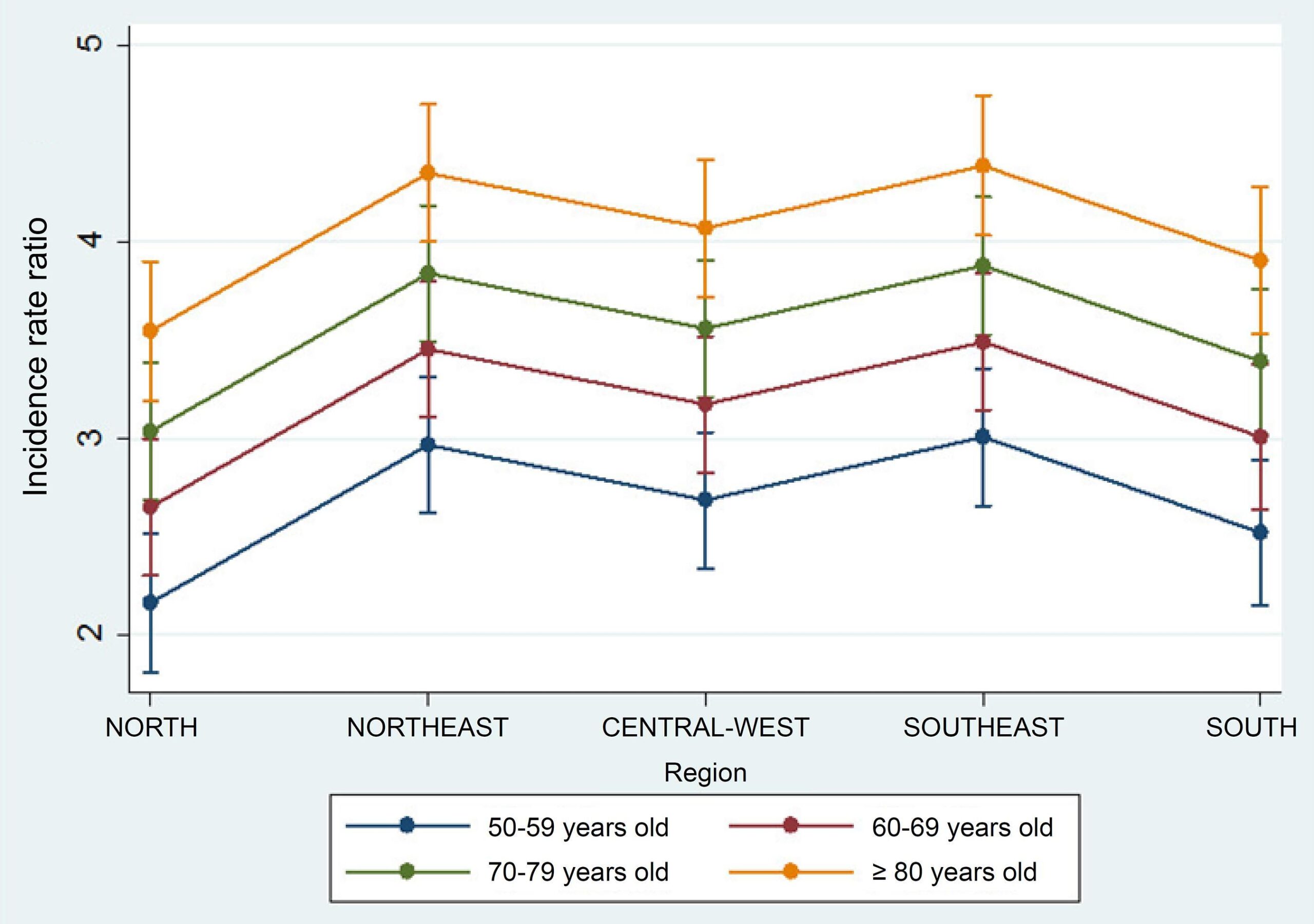
The increase in age was progressively associated with an increase in the mean number of deaths related to hypertensive diseases between the years 2010 and 2014. In the age groups between 50-59 years, 60-69 years, 70-79 years and 80 or more years, the mean and standard deviation for the mortality rate were, respectively: 15.11% (35.35); 24.14% (55.34); 35.07% (81.03) and 57.87% (139.08). The overall mortality rate per 10,000 inhabitants varied between the regions: north (1.25); northeast (2.69); center-west (2.06); southeast (2.48) and south (2.04).

Conclusions:

The mortality rate associated with hypertensive diseases was higher in the southeastern and northeastern states of Brazil, and remained stable between 2010 and 2014. Increased age and brown color were predictors of higher mortality.

  • Cardiovascular Diseases, mortality
  • epidemiologic studies
  • Ethnicity and Health
  • Hypertension / etiology
  • Hypertension/epidemiology
  • Stroke
Read Full Article
Creative Commons Attribution (CC BY) Creative Commons license
01/01/2018 DOI: 10.5935/2359-4802.20180017 Views 1
Figure 1
ABC
Original Article

Prevalence and Phenotypic Expression of Mutations in the MYH7, MYBPC3 and TNNT2 Genes in Families with Hypertrophic Cardiomyopathy in the South of Brazil: A Cross-Sectional Study

Beatriz Piva e Mattos et al. Fernando Luís Scolari Marco Antonio Rodrigues Torres Laura Simon … Valéria Centeno de Freitas Roberto Giugliani Úrsula Matte

Abstract

Background:

Mutations in sarcomeric genes are found in 60-70% of individuals with familial forms of hypertrophic cardiomyopathy (HCM). However, this estimate refers to northern hemisphere populations. The molecular-genetic profile of HCM has been subject of few investigations in Brazil, particularly in the south of the country.

Objective:

To investigate mutations in the sarcomeric genes MYH7, MYBPC3 and TNNT2 in a cohort of HCM patients living in the extreme south of Brazil, and to evaluate genotype-phenotype associations.

Methods:

Direct DNA sequencing of all encoding regions of three sarcomeric genes was conducted in 43 consecutive individuals of ten unrelated families.

Results:

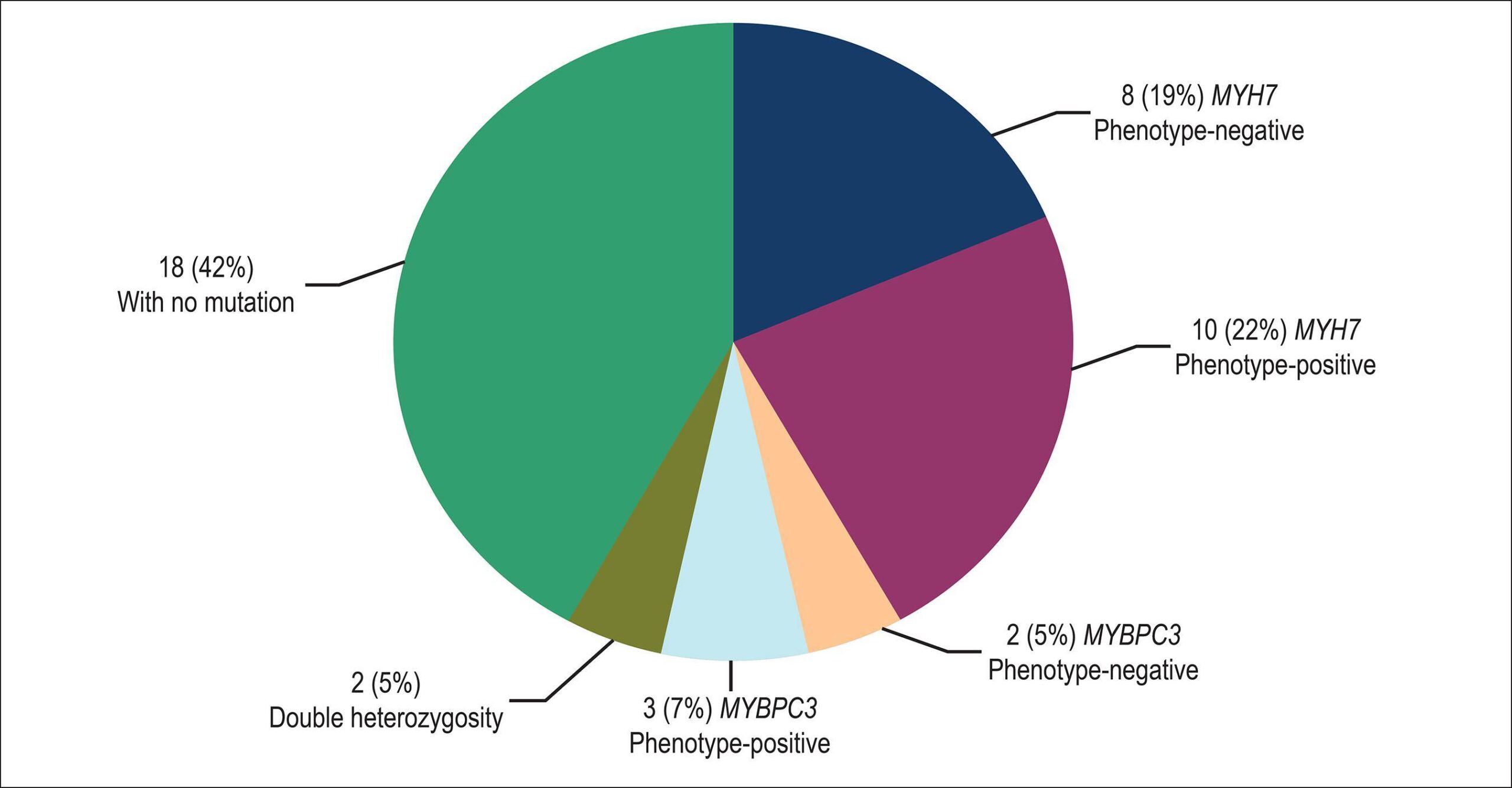
Mutations for CMH have been found in 25 (58%) patients of seven (70%) of the ten study families. Fourteen (56%) individuals were phenotype-positive. All mutations were missense, four (66%) in MYH7 and two (33%) in MYBPC3. We have not found mutations in the TNNT2 gene. Mutations in MYH7 were identified in 20 (47%) patients of six (60%) families. Two of them had not been previously described. Mutations in MYBPC3 were found in seven (16%) members of two (20%) families. Two (5%) patients showed double heterozygosis for both genes. The mutations affected different domains of encoded proteins and led to variable phenotypic expression. A family history of HCM was identified in all genotype-positive individuals.

Conclusions:

In this first genetic-molecular analysis carried out in the south of Brazil, we found mutations in the sarcomeric genes MYH7 and MYBPC3 in 58% of individuals. MYH7-related disease was identified in the majority of cases with mutation.

  • Cardiomyopathy, Hypertrophic
  • Epidemiology
  • Ethnicity and Health
  • Mutation / genetics
  • Sarcomeres
Read Full Article
Creative Commons Attribution (CC BY) Creative Commons license
01/09/2016 DOI: 10.5935/abc.20160133
Genetic polymorphism G894T and the prognosis of heart failure outpatients
ABC
Artigo Original

Genetic polymorphism G894T and the prognosis of heart failure outpatients

Oziel Marcio Araujo Tardin et al. Sabrina Bernardez Pereira Monica Wanderley Monçores Velloso Henrique Miller Balieiro … Bruno Costa Thiago Oliveira e Alves Camila Giro Leandro Pontes Pessoa Georgina Severo Ribeiro Evandro Tinoco Mesquita

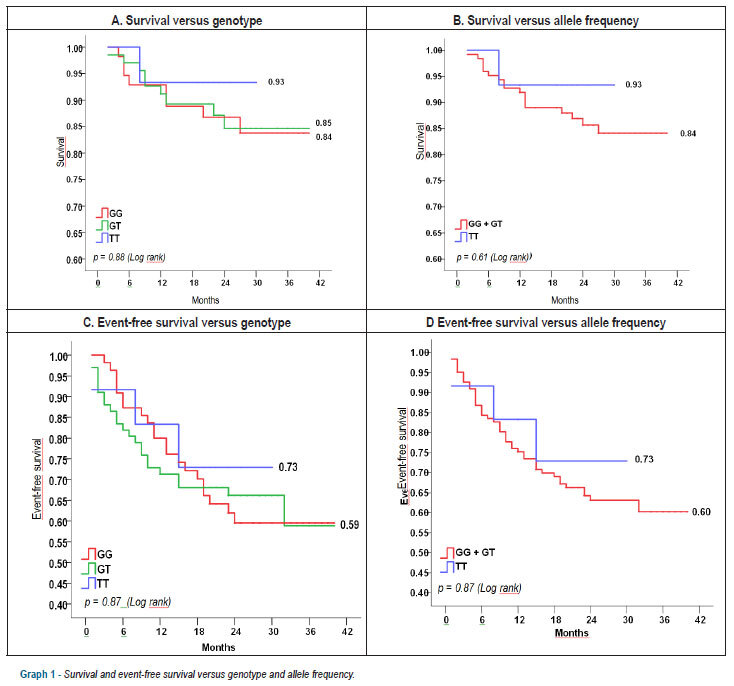
BACKGROUND: Previous studies have analyzed the role of the genetic polymorphism of endothelial nitric oxide synthase on heart failure prognosis. However, there are no studies relating the G894T and heart failure in Brazil. OBJECTIVE: To evaluate the association between G894T GP and the prognosis of a sample of Brazilian outpatients with heart failure. METHODS: Cohort study included 145 patients with systolic heart failure, followed for up to 40 months (mean = 22), at two university hospitals, in the State of Rio de Janeiro. We evaluated the relationship between G894T and the following outcomes: reverse remodeling, improvement in functional class (NYHA), and mortality and hospitalization rates. The diameters of the left atrium and ventricle, as well as the ejection fraction of the left ventricle, were evaluated at baseline and at 6 months to assess reverse remodeling. The improvement in functional class was evaluated after 6 months, and mortality rate and hospitalization were evaluated during follow-up. Race was self-declared. G894T polymorphism was analyzed by polymerase chain reaction and restriction fragment length polymorphism. RESULTS: The genotypic frequencies were GG (40%), GT (48.3%) and TT (11.7%). The allele frequency was guanine (64.1%) and thiamine (35.8%). There were no differences between the genotype or allelic frequencies according to self-declared race, either as baseline characteristics. There was no relationship between genotype or allele frequency and the outcome measures. CONCLUSION: No association was observed between the G894T polymorphism (Glu298Asp) and prognosis in this sample of Brazilian outpatients with systolic heart failure.

  • Ethnicity and Health
  • Heart Failure
  • Nitric Oxide
  • Polymorphism, Genetic
Read Full Article
Creative Commons Attribution (CC BY) Creative Commons license
14/08/2013 DOI: 10.5935/abc.20130167 Views 2

How to cite this article

EndNote RIS

Electronic Document Format (Vancouver)

Stein R, Ferrari F, Silveira AD. Electrocardiogram of Brazilian Elite Football Players: Filling a Gap. Arquivos Brasileiros de Cardiologia 2023;120(4):e20230090.

Electronic Document Format (ABNT)

Stein, Ricardo; Ferrari, Filipe; Silveira, Anderson Donelli da. Electrocardiogram of Brazilian Elite Football Players: Filling a Gap. Arquivos Brasileiros de Cardiologia, v. 120, n. 4, e20230090, Apr. 2023.

Electronic Document Format (APA)

Stein, R., Ferrari, F., & Silveira, A. D. (2023). Electrocardiogram of Brazilian Elite Football Players: Filling a Gap. Arquivos Brasileiros de Cardiologia, 120(4), e20230090.

Electronic Document Format (ISO)

Stein, Ricardo and Ferrari, Filipe and Silveira, Anderson Donelli da. Electrocardiogram of Brazilian Elite Football Players: Filling a Gap. Arquivos Brasileiros de Cardiologia [online]. 2023, vol. 120, n. 4, [cited 2026-10-14], e20230090. Available from: <https://journals.cardiol.br/en/article/electrocardiogram-of-brazilian-elite-football-players-filling-a-gap/>. ISSN 0066-782X

EndNote RIS

Electronic Document Format (Vancouver)

Rendon AFV, Volschan IM, Pereira MN, Pimentel AF, Monteiro WL, Oliveira GMM. Marginalization, Vulnerability and Economic Dynamics in COVID-19. International Journal of Cardiovascular Sciences 2021;34(3):319-23.

Electronic Document Format (ABNT)

Rendon, Andres Felipe Valencia; Volschan, Isabela Mendes; Pereira, Manoella de Novais; Pimentel, Alessandra de Freitas; Monteiro, Wagner Lima; Oliveira, Gláucia Maria Moraes de. Marginalization, Vulnerability and Economic Dynamics in COVID-19. International Journal of Cardiovascular Sciences, v. 34, n. 3, p. 319-323, May. 2021.

Electronic Document Format (APA)

Rendon, A. F. V., Volschan, I. M., Pereira, M. N., Pimentel, A. F., Monteiro, W. L., & Oliveira, G. M. M. (2021). Marginalization, Vulnerability and Economic Dynamics in COVID-19. International Journal of Cardiovascular Sciences, 34(3), 319-323.

Electronic Document Format (ISO)

Rendon, Andres Felipe Valencia and Volschan, Isabela Mendes and Pereira, Manoella de Novais and Pimentel, Alessandra de Freitas and Monteiro, Wagner Lima and Oliveira, Gláucia Maria Moraes de. Marginalization, Vulnerability and Economic Dynamics in COVID-19. International Journal of Cardiovascular Sciences [online]. 2021, vol. 34, n. 3, [cited 2026-10-14], pp. 319-323. Available from: <https://journals.cardiol.br/en/article/marginalization-vulnerability-and-economic-dynamics-in-covid-19/>. ISSN 2359-4802

EndNote RIS

Electronic Document Format (Vancouver)

Almeida-Santos MA, Prado BS, Santos DMS. Spatial Analysis and Mortality Trends Associated with Hypertensive Diseases in the States and Regions of Brazil from 2010 to 2014. International Journal of Cardiovascular Sciences 2018;31(3):250-7.

Electronic Document Format (ABNT)

Almeida-Santos, Marcos Antonio; Prado, Beatriz Santana; Santos, Deyse Mirelle Souza. Spatial Analysis and Mortality Trends Associated with Hypertensive Diseases in the States and Regions of Brazil from 2010 to 2014. International Journal of Cardiovascular Sciences, v. 31, n. 3, p. 250-257, Dec. 2017.

Electronic Document Format (APA)

Almeida-Santos, M. A., Prado, B. S., & Santos, D. M. S. (2018). Spatial Analysis and Mortality Trends Associated with Hypertensive Diseases in the States and Regions of Brazil from 2010 to 2014. International Journal of Cardiovascular Sciences, 31(3), 250-257.

Electronic Document Format (ISO)

Almeida-Santos, Marcos Antonio and Prado, Beatriz Santana and Santos, Deyse Mirelle Souza. Spatial Analysis and Mortality Trends Associated with Hypertensive Diseases in the States and Regions of Brazil from 2010 to 2014. International Journal of Cardiovascular Sciences [online]. 2018, vol. 31, n. 3, [cited 2026-10-14], pp. 250-257. Available from: <https://journals.cardiol.br/en/article/spatial-analysis-and-mortality-trends-associated-with-hypertensive-diseases-in-the-states-and-regions-of-brazil-from-2010-to-2014/>. ISSN 2359-4802

EndNote RIS

Electronic Document Format (Vancouver)

Mattos BP, Scolari FL, Torres MAR, Simon L, Freitas VC, Giugliani R, Matte , et al. Prevalence and Phenotypic Expression of Mutations in the MYH7, MYBPC3 and TNNT2 Genes in Families with Hypertrophic Cardiomyopathy in the South of Brazil: A Cross-Sectional Study. Arquivos Brasileiros de Cardiologia 2016;107(3):257-65.

Electronic Document Format (ABNT)

Mattos, Beatriz Piva e; Scolari, Fernando Luís; Torres, Marco Antonio Rodrigues; Simon, Laura; Freitas, Valéria Centeno de; Giugliani, Roberto; Matte, Úrsula. Prevalence and Phenotypic Expression of Mutations in the MYH7, MYBPC3 and TNNT2 Genes in Families with Hypertrophic Cardiomyopathy in the South of Brazil: A Cross-Sectional Study. Arquivos Brasileiros de Cardiologia, v. 107, n. 3, p. 257-265, Aug. 2016.

Electronic Document Format (APA)

Mattos, B. P. , Scolari, F. L., Torres, M. A. R., Simon, L., Freitas, V. C. , Giugliani, R., & Matte, (2016). Prevalence and Phenotypic Expression of Mutations in the MYH7, MYBPC3 and TNNT2 Genes in Families with Hypertrophic Cardiomyopathy in the South of Brazil: A Cross-Sectional Study. Arquivos Brasileiros de Cardiologia, 107(3), 257-265.

Electronic Document Format (ISO)

Mattos, Beatriz Piva e and Scolari, Fernando Luís and Torres, Marco Antonio Rodrigues and Simon, Laura and Freitas, Valéria Centeno de and Giugliani, Roberto and Matte, Úrsula. Prevalence and Phenotypic Expression of Mutations in the MYH7, MYBPC3 and TNNT2 Genes in Families with Hypertrophic Cardiomyopathy in the South of Brazil: A Cross-Sectional Study. Arquivos Brasileiros de Cardiologia [online]. 2016, vol. 107, n. 3, [cited 2026-10-14], pp. 257-265. Available from: <https://journals.cardiol.br/en/article/prevalence-and-phenotypic-expression-of-mutations-in-the-myh7-mybpc3-and-tnnt2-genes-in-families-with-hypertrophic-cardiomyopathy-in-the-south-of-brazil-a-cross-sectional-study/>. ISSN 0066-782X

EndNote RIS

Electronic Document Format (Vancouver)

Tardin OMA, Pereira SB, Velloso MWM, Balieiro HM, Costa B, Alves TO, Giro C, et al. Genetic polymorphism G894T and the prognosis of heart failure outpatients. Arquivos Brasileiros de Cardiologia 2013;101(4):352-8.

Electronic Document Format (ABNT)

Tardin, Oziel Marcio Araujo; Pereira, Sabrina Bernardez; Velloso, Monica Wanderley Monçores; Balieiro, Henrique Miller; Costa, Bruno; Alves, Thiago Oliveira e; Giro, Camila; Pessoa, Leandro Pontes; Ribeiro, Georgina Severo; Mesquita, Evandro Tinoco. Genetic polymorphism G894T and the prognosis of heart failure outpatients. Arquivos Brasileiros de Cardiologia, v. 101, n. 4, p. 352-358, Aug. 2013.

Electronic Document Format (APA)

Tardin, O. M. A., Pereira, S. B., Velloso, M. W. M., Balieiro, H. M., Costa, B., Alves, T. O. , Giro, C., Pessoa, L. P., Ribeiro, G. S., & Mesquita, E. T. (2013). Genetic polymorphism G894T and the prognosis of heart failure outpatients. Arquivos Brasileiros de Cardiologia, 101(4), 352-358.

Electronic Document Format (ISO)

Tardin, Oziel Marcio Araujo and Pereira, Sabrina Bernardez and Velloso, Monica Wanderley Monçores and Balieiro, Henrique Miller and Costa, Bruno and Alves, Thiago Oliveira e and Giro, Camila and Pessoa, Leandro Pontes and Ribeiro, Georgina Severo and Mesquita, Evandro Tinoco. Genetic polymorphism G894T and the prognosis of heart failure outpatients. Arquivos Brasileiros de Cardiologia [online]. 2013, vol. 101, n. 4, [cited 2026-10-14], pp. 352-358. Available from: <https://journals.cardiol.br/en/article/genetic-polymorphism-g894t-and-the-prognosis-of-heart-failure-outpatients/>. ISSN 0066-782X

  • About ABC Family
  • Internal Regulation
  • Editorial Board
  • Brazilian Society of Cardiology (SBC)

Issues

SBC Guidelines

  • Videos
  • Podcasts
  • News