ABC Family Arquivos Brasileiros de Cardiologia International Journal of Cardiovascular Sciences ABC Heart Failure & Cardiomyopathy ABC Imagem Cardiovascular
Português English
ABC Family
Português English
  • About
    • About ABC Family
    • Internal Regulation
    • Editorial Board
    • Brazilian Society of Cardiology (SBC)
  • Issues
  • SBC Guidelines
  • Content
    • Videos
    • Podcasts
    • News
  • About
    • About ABC Family
    • Internal Regulation
    • Editorial Board
    • Brazilian Society of Cardiology (SBC)
  • Issues
  • SBC Guidelines
  • Content
    • Videos
    • Podcasts
    • News

ABC Family

  • ABC Family
  • Arquivos Brasileiros de Cardiologia
  • International Journal of Cardiovascular Sciences
  • ABC Heart Failure & Cardiomyopathy
  • ABC Imagem Cardiovascular
Search in

No content found.

Journals
Ordering
Article types
Others

  1. Home
  2. Keyword: Running
ABC
Editorial

Beyond Limits: What 366 Consecutive Marathons Reveal about the Human Heart

Fabricio Braga et al. Ricardo Stein

Western culture has always celebrated the pursuit of physical extremes — from ancient epics to modern ultramarathons, endurance has always been more than sport: it is narrative, identity, and defiance of perceived limits. Completing a single marathon already places substantial stress on the cardiovascular, metabolic, and musculoskeletal systems. Doing a Marathon 366 times over 366 consecutive days shifts the focus from physiology to philosophy: Just how far can the human heart truly go?

The case study published in this issue of Arquivos Brasileiros de Cardiologia documents a feat previously unimaginable: a Brazilian amateur athlete completed a full marathon every single day for a year — all under systematic medical supervision. More than a Guinness World Record, this is a real-time exploration of human adaptability. The athlete’s cardiovascular system remained remarkably stable throughout the year, with maximal oxygen uptake (VO2 max), cardiac structure, and biomarkers within physiological ranges, despite the extreme exercise volume.

[…]

  • Athlete's heart
  • Intense Exercise
  • Limits
  • Marathon
  • Running
Read Full Article
Creative Commons Attribution (CC BY) Creative Commons license
04/07/2025 DOI: 10.36660/abc.20250231i
Figure 1
IJCS
Original Article

Electromyographical and Physiological Correlation in Patient with Heart Disease

Renata Luísa Bona et al. Artur Bonezi Carlo M Biancardi Flavio Antonio de Souza Castro Nadine Clausell

Abstract

Background:

Walking is an economic activity, the more efficient the mechanical contribution, the less metabolic energy is necessary to keep walking. Patients with chronic heart failure and heart transplant present peripheral musculoskeletal disorders, dyspnea, and fatigue in their activities.

Objective:

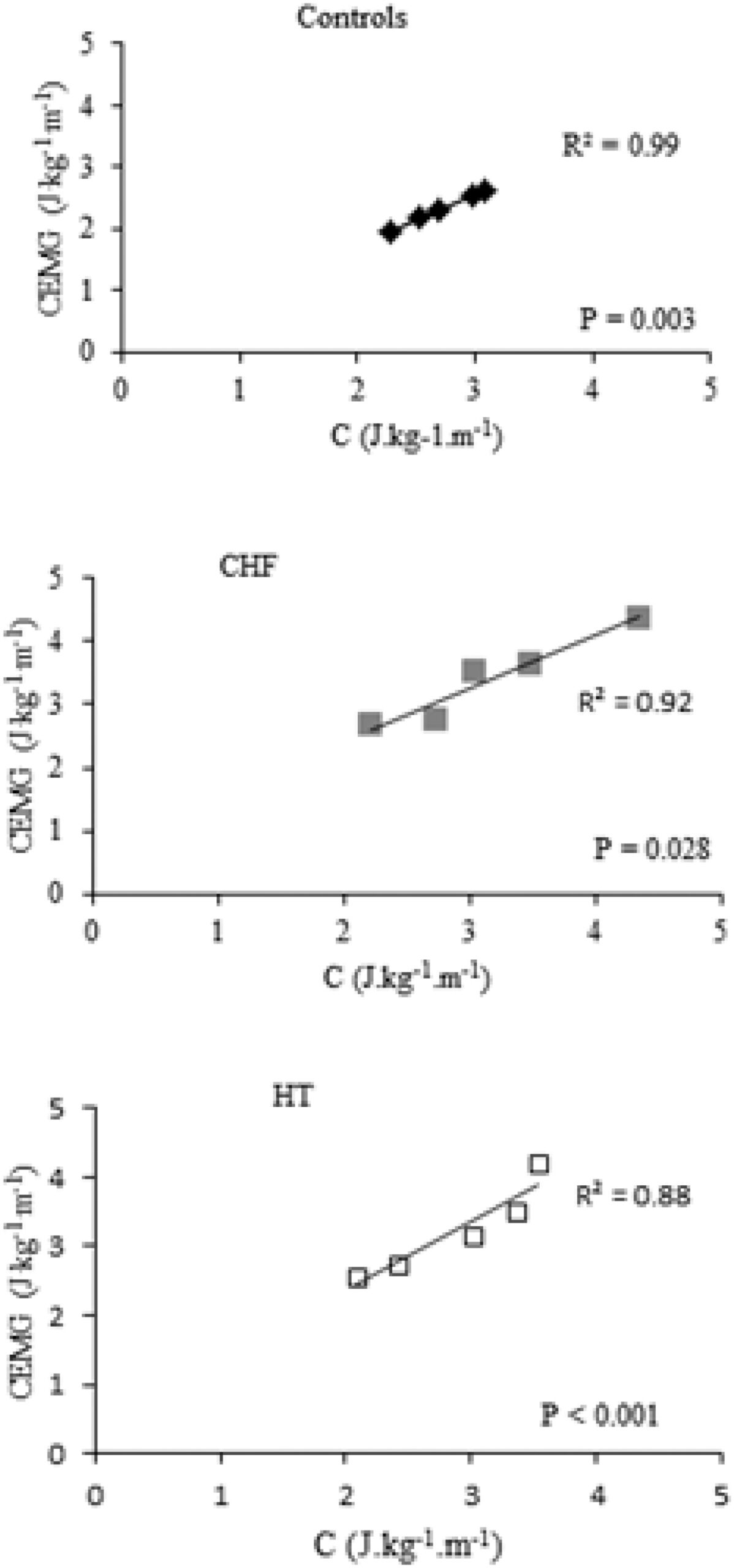
In this scenario, the present study sought to verify the correlations between metabolic and electromyographic variables in chronic heart failure, heart transplant patients, and healthy controls.

Methods:

Regression and correlation between cost of transport and electromyographic cost, as well as correlation between oxygen consumption and muscle coactivation in patients and controls at five different walking speeds have been performed, with alpha = 0.05.

Results:

Strong correlation values (r controls: 0.99; chronic heart failure: 0.92; heart transplant: 0.88) indicate a linear relationship between the cost of transport and electromyographic cost. Oxygen consumption was significantly correlated to muscle activation in all groups.

Conclusion:

These results suggested that dynamic muscle coactivation was an important factor, especially for CHF and HT. These data support the idea that peripheral muscle limitations play an important role in people with CHF and HT. These findings indicate a strong relation between metabolic and electromyographic variables. For chronic heart failure and heart transplant patients, it can help to explain some difficulties in daily activities and aid in physical rehabilitation.

  • Costs and Analysis
  • Electromyographic/methods
  • Gait
  • Heart Failure
  • Heart Transplantation
  • Running
  • Transportation
  • walking
Read Full Article
Creative Commons Attribution (CC BY) Creative Commons license
26/07/2021 DOI: 10.36660/ijcs.20200063 Views 1
Figure 1
ABC
Original Article

Intermittent Fasting Attenuates Exercise Training-Induced Cardiac Remodeling

Priscilla Gois Basilio et al. Ana Priscila Cayres de Oliveira Ana Carolini Ferreira de Castro Marianna Rabelo de Carvalho … Alessandro Moura Zagatto Paula Felippe Martinez Marina Politi Okoshi Katashi Okoshi Gabriel Elias Ota Filipe Abdalla dos Reis Silvio Assis de Oliveira-Junior

Abstract

Background

The effects of non-pharmacological interventions such as calorie restriction and exercise training on health and prevention of cardiovascular diseases have been investigated in clinical and experimental studies.

Objective

To analyze the influence of intermittent fasting and exercise training on functional fitness, glycemia and cardiac remodeling.

Methods

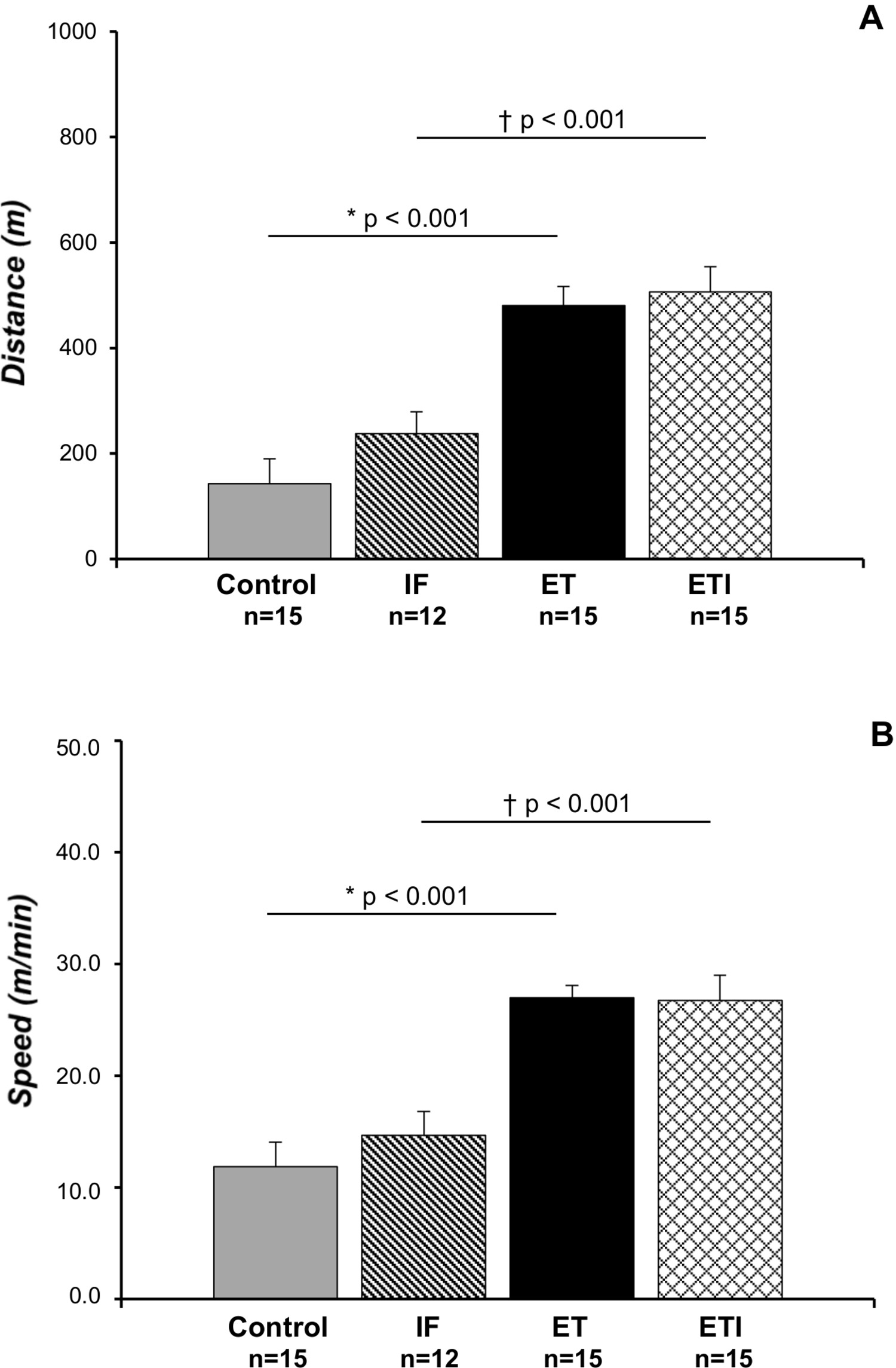
Wistar rats (n=60) were randomly divided into four groups: control, exercise training (ET), intermittent fasting (IF) and exercise training plus intermittent fasting (ETI). Over 12 weeks, control and ET animals were fed daily a standard commercial diet ad libitum , while IF and ETI animals were fed every other day. In addition, the ET and ETI groups were submitted to a running protocol on a treadmill. After this period, functional fitness, nutritional parameters and blood glucose levels were analyzed. In addition to heart morphology, myocardial protein expression of extracellular signal-regulated kinase (ERK) and c-Jun N-terminal kinase (JNK) was assessed by Western-blot. The results were analyzed using two-way ANOVA and Student-Newman-Keuls test. The level of significance considered was 5%.

Results

Exercise training increased functional fitness in the ET and ETI groups and promoted cardiac fibrosis. The combination of intermittent fasting and exercise training resulted in a smaller area under the blood glucose curve and reduced cardiomyocyte cross-sectional area and interstitial collagen fraction in the ETI group compared to ET. ERK and JNK expression levels were similar among groups (p>0.05).

Conclusions

Intermittent fasting is associated with improved glucose tolerance and attenuates cardiac remodeling induced by exercise training (Arq Bras Cardiol. 2020; 115(2):184-193)

  • Calorie Restriction
  • Diet
  • Exercise
  • Glucose
  • Health Promotion
  • Running
  • Ventricular Remodeling
Read Full Article
Creative Commons Attribution (CC BY) Creative Commons license
28/08/2020 DOI: 10.36660/abc.20190349
IJCS
Editorial

Simplicity and Complexity of the Six-Minute Walk Test

José Antônio Caldas Teixeira

The cardiopulmonary exercise testing (CPET) is known to be the gold standard method for the assessment of functional capacity. However, the method is expensive, often not well tolerated by the patients, and may not be a good strategy to evaluate activities of daily living (ADL). Functional tests are indirect method to assess functional status or functional capacity of an individual to perform ADL and meet their metabolic demands. These tests are considered objective measures that can monitor the clinical course of several diseases as well as responses to interventional therapies.

Walking and running tests were originally developed to evaluate and estimate aerobic physical fitness of healthy individuals and correlate it with maximal aerobic power (peak VO2). Balke, in the sixties, followed by Cooper and his 12-minute test, used to evaluate physical performance in healthy subjects, motivated, according to them, by the need of field tests for screening of large populations. These methods showed good correlation with laboratory measurements of aerobic capacity (peak VO2 and anaerobic threshold).

[…]

  • Bronchitis, Chronic
  • Health Status Indicators
  • Heart Failure
  • Reference Standards
  • Running
  • Walk Test
Read Full Article
Creative Commons Attribution (CC BY) Creative Commons license
01/01/2019 DOI: 10.5935/2359-4802.20190012 Views 1
ABC
Editorial

The Nature of Cardiac Remodeling Due to Physical Exercise: More Evidence Towards to the Normal Adaptive Responses of the Heart

Lucas Helal et al. Anderson Donelli da Silveira

Cardiac remodeling due to exercise training overload (the so-called “athlete’s heart”) has been widely investigated since the 70’s and is still acknowledged by the scientific community. To differentiate normal adaptive responses (“benign”) from abnormal ones remains a challenge. Here we address some important issues related to the discussion on cardiac remodeling in exercise, recently revisited by Vidaletti-Silva and colleagues in this issue.

In terms of morphological adaptations, the left atrial and ventricular hypertrophy call attention due to their potential association with the onset of supraventricular tachyarrhythmias and also of ventricular arrhythmias, which may result in undesirable events.

[…]

  • Arrhythmias
  • Atrial Remodeling
  • Blood Pressure
  • Cardiac Remodeling
  • Exercise
  • Exercise Movement Techniques
  • Resistance Training
  • Running
  • Ventricular Remodeling
  • Weight Lifting
Read Full Article
Creative Commons Attribution (CC BY) Creative Commons license
01/12/2018 DOI: 10.5935/abc.20180238
Figure 1
ABC
Original Article

Effects of Chronic Exercise on Endothelial Progenitor Cells and Microparticles in Professional Runners

Célia Regina de Oliveira Bittencourt et al. Maria Cristina de Oliveira Izar Carolina Nunes França Valdir Lauro Schwerz … Rui Manuel dos Santos Póvoa Francisco Antonio Helfenstein Fonseca

Abstract

Background:

The effects of chronic exposure to exercise training on vascular biomarkers have been poorly explored.

Objective:

Our study aimed to compare the amounts of endothelial progenitor cells (EPCs), and endothelial (EMP) and platelet (PMP) microparticles between professional runners and healthy controls.

Methods:

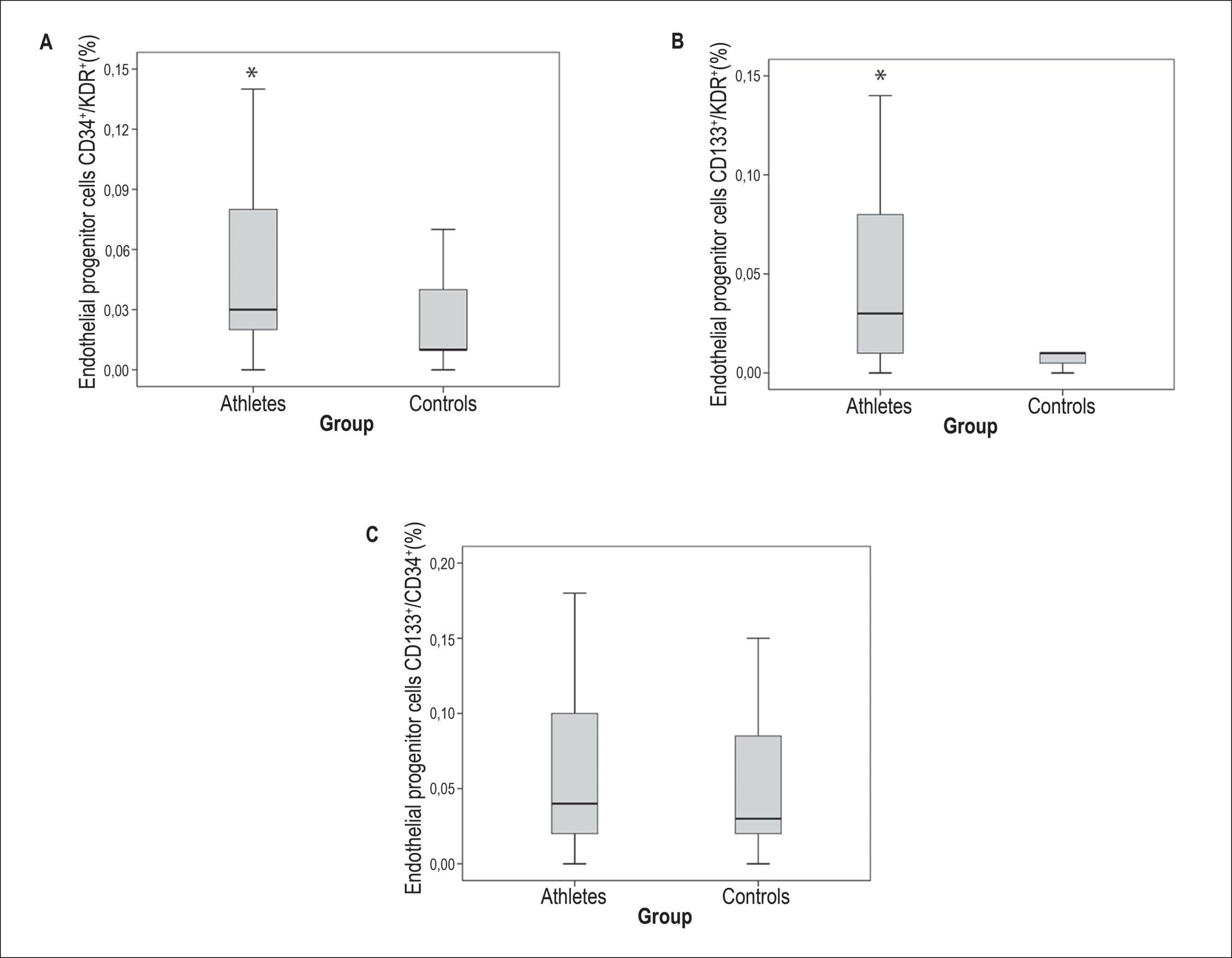
Twenty-five half-marathon runners and 24 age- and gender-matched healthy controls were included in the study. EPCs (CD34+/KDR+, CD133+/KDR+, and CD34+/CD133+), EMP (CD51+) and PMP (CD42+/CD31+) were quantified by flow-cytometry. All blood samples were obtained after 12 h of fasting and the athletes were encouraged to perform their routine exercises on the day before.

Results:

As compared with controls, the CD34+/KDR+ EPCs (p=0.038) and CD133+/KDR+ EPCs (p=0.018) were increased, whereas CD34+/CD133+ EPCs were not different (p=0.51) in athletes. In addition, there was no difference in MPs levels between the groups.

Conclusion:

Chronic exposure to exercise in professional runners was associated with higher percentage of EPCs. Taking into account the similar number of MPs in athletes and controls, the study suggests a favorable effect of exercise on these vascular biomarkers.

  • Athletes
  • Biomarkers
  • Endothelial Progenitor Cells
  • Running
  • Sports
Read Full Article
Creative Commons Attribution (CC BY) Creative Commons license
01/03/2017 DOI: 10.5935/abc.20170022 Views 1
ABC
Viewpoint

Aerobic Exercise and The Heart: Discussing Doses

Claudio Gil Soares de Araújo et al. Claudia Lucia Barros de Castro João Felipe Franca Christina Grüne de Souza e Silva

Preliminary considerations

Free animals have been and will always be active, with confinement or sedentary styles considered unnatural. Humankind, as it is known today, was able to set off from central regions and, through its own means of locomotion (exercise) spread across far areas of the planet. Seeking food and water, running from predators, from childhood to old age, have always been linked to exercise. Indeed, a sedentary lifestyle is very recent in the history of humankind.

Before approaching the theme of exercise and the heart, it is important to conceptualize some terms ()., Among several terms, it is worth highlighting the difference between physical activity and exercise. While both involve movement and/or muscle contraction with energy expenditure, in exercise there is movement intention (physical activity) in a structured and repetitive manner, with the objective of maintenance or optimization of physical conditioning and/or health and/or body aesthetics.

[…]

  • Cardiovascular Diseases
  • Exercise
  • Longevity
  • Prevention
  • Running
Read Full Article
Creative Commons Attribution (CC BY) Creative Commons license
01/03/2017 DOI: 10.5935/abc.20170020
ABC
Original Article

Reduction in Post-Marathon Peak Oxygen Consumption: Sign of Cardiac Fatigue in Amateur Runners?

Ana Paula Rennó Sierra et al. Anderson Donelli da Silveira Ricardo Contesini Francisco Rodrigo Bellios de Mattos Barretto … Carlos Anibal Sierra Romeu Sergio Meneghelo Maria Augusta Peduti Dal Molin Kiss Nabil Ghorayeb Ricardo Stein

Abstract

Background:

Prolonged aerobic exercise, such as running a marathon, produces supraphysiological stress that can affect the athlete’s homeostasis. Some degree of transient myocardial dysfunction (“cardiac fatigue”) can be observed for several days after the race.

Objective:

To verify if there are changes in the cardiopulmonary capacity, and cardiac inotropy and lusitropy in amateur marathoners after running a marathon.

Methods:

The sample comprised 6 male amateur runners. All of them underwent cardiopulmonary exercise testing (CPET) one week before the São Paulo Marathon, and 3 to 4 days after that race. They underwent echocardiography 24 hours prior to and immediately after the marathon. All subjects were instructed not to exercise, to maintain their regular diet, ingest the same usual amount of liquids, and rest at least 8 hours a day in the period preceding the CPET.

Results:

The athletes completed the marathon in 221.5 (207; 250) minutes. In the post-marathon CPET, there was a significant reduction in peak oxygen consumption and peak oxygen pulse compared to the results obtained before the race (50.75 and 46.35 mL.kg-1 .min-1; 19.4 and 18.1 mL.btm, respectively). The echocardiography showed a significant reduction in the s’ wave (inotropic marker), but no significant change in the E/e’ ratio (lusitropic marker).

Conclusions:

In amateur runners, the marathon seems to promote changes in the cardiopulmonary capacity identified within 4 days after the race, with a reduction in the cardiac contractility. Such changes suggest that some degree of “cardiac fatigue” can occur.

  • Exercise
  • Homeostasis
  • Oxygen Consumption
  • Running
  • Sports
  • Ventricular Dysfunction
Read Full Article
Creative Commons Attribution (CC BY) Creative Commons license
12/01/2016 DOI: 10.5935/abc.20150148
Acute effects of prolonged physical exercise: evaluation after a twenty-four-hour ultramarathon
ABC
Original Article

Acute effects of prolonged physical exercise: evaluation after a twenty-four-hour ultramarathon

Daniela Guinther Passaglia et al. Luiz Gustavo Marin Emed Silvio Henrique Barberato Surya Toledo Guerios … Andre Isolani Moser Miguel Morita Fernandes Silva Elissa Ishie Luiz Cesar Guarita-Souza Costantino Roberto Frack Costantini José Rocha Faria-Neto

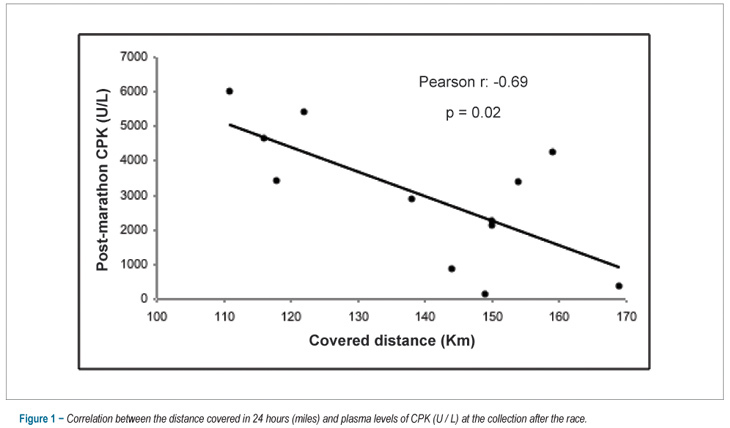
BACKGROUND: The consequences and risks of prolonged physical exercise are not well established. OBJECTIVE: To evaluate the effects of prolonged physical exercise on the participants of a 24-hour ultramarathon race. METHODS: Twenty male runners were selected for evaluation a day before and immediately after the race, where the athletes had to cover the most distance in 24 hours. Clinical, laboratory and echocardiographic data were obtained at both evaluations. RESULTS: Mean distance covered was 140.3 ± 18.7 km. Runners showed weight loss (p < 0.001) and decrease in systolic (p < 0.001) and diastolic (p = 0.004) blood pressure. Hematological changes were compatible with the physiological stress. Plasma levels of creatine phosphokinase strikingly increased post-race (163.4 ± 56.8 vs. 2978.4 ± 1921.9 U/L; p < 0.001) and was inversely correlated with distance covered: those who covered the longest distances showed the lowest CPK levels (Pearson r = 0.69, p = 0.02). After the race, 2 runners showed a slight increase in Troponin levels. One of them also had simultaneous decrease in left ventricular ejection fraction (coronary artery disease was subsequently ruled out). Basal echocardiography assessment had shown LV hypertrophy in one and increased left atrial volume in five runners. After the race, there was a decrease in E/A ratio (p < 0.01). CONCLUSION: Prolonged physical exercise is associated with metabolic and cardiovascular alterations. Cardiac abnormalities found in our study suggest that cardiac fatigue may occur in this specific race modality. The long-term effect of these alterations, while maintaining the routine practice of prolonged strenuous physical activity, is still unknown.

  • Exercise
  • muscle fatigue
  • Physical Exertion
  • Running
Read Full Article
Creative Commons Attribution (CC BY) Creative Commons license
18/12/2012 DOI: 10.1590/S0066-782X2012005000118 Views 1
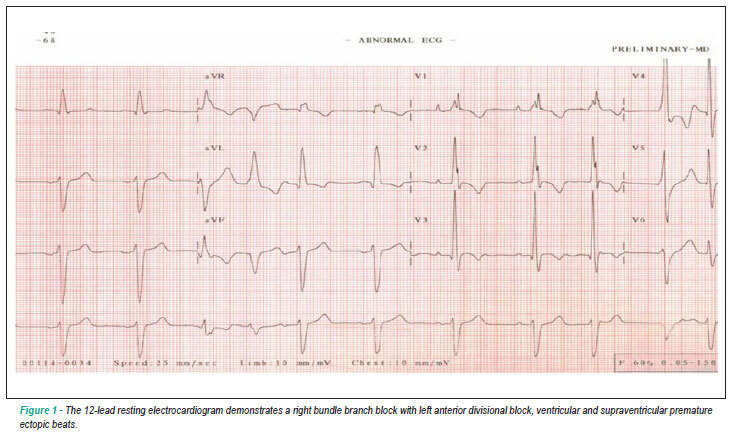
Long distance runner with dilated cardiomyopathy and excellent performance
ABC
Case Report

Long distance runner with dilated cardiomyopathy and excellent performance

Luciana Diniz Nagem Janot de Matos et al. Luciene Ferreira Azevedo Patrícia Chakur Brum Eduardo Argentino Sosa … Martino Martinelli Carlos Eduardo Negrão

CASE REPORT

[…]

  • Athletes
  • athletic performance
  • Cardiomyopathy, Dilated
  • Exercise
  • Running
Read Full Article
Creative Commons Attribution (CC BY) Creative Commons license
04/02/2011 DOI: 10.1590/S0066-782X2011000100017
Different levels of Hsp72 in female rat myocardium in response to voluntary exercise and forced exercise
ABC
Artigo Original

Different levels of Hsp72 in female rat myocardium in response to voluntary exercise and forced exercise

Stéphano Freitas Soares Melo et al. Wellington Lunz Elizabeth Pacheco Batista Fontes Cristina Maria Ganns Chaves Dias … Miguel Araujo Carneiro Júnior Anselmo Gomes de Moura Ricardo Junqueira Del Carlo Antonio Jose Natali

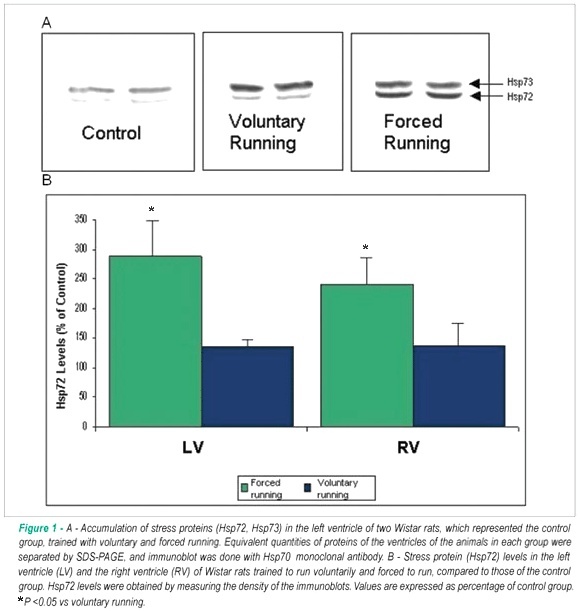
BACKGROUND: Physical exercise induces hemodynamic stress. OBJECTIVE: To evaluate if voluntary running and forced running induced different levels of stress protein (Hsp72) in the myocardium of female Wistar rats. METHODS: Female rats were randomly assigned to the following groups: forced treadmill running group (FR; n= 6), voluntary running group (VR; n=6) and control group (C; n=6). VR group animals had free access to running wheels, and those from FR group underwent a running program on a treadmill (18 m/min, 60 min/day, 5 days/wk) for 8 weeks. Left ventricle (LV) and right ventricle (RV) fragments were collected at sacrifice, and the relative immunoblot contents of stress protein (Hsp72) were determined. RESULTS: VR animals ran on average 4.87 km/wk, and FR rats ran 4.88 km/wk. Animals from VR and FR groups had less body weight gain (p0.05) among VR, FR and C groups (4.54 ± 0.79 mg/g vs 4.94 ± 0.89 mg/g vs 4.34 ± 0.87 mg/g, respectively). FR group animals had levels of Hsp72 (p<0.05) higher than those from VR, both in LV (287.45 ± 35.86 % vs 135.59 ± 5.10 %, respectively) and RV (241.31 ± 25.83 % vs 137.91 ± 45.20 %, respectively). CONCLUSION: Voluntary running and forced running induced different levels of Hsp72 in the myocardium of female Wistar rats.

  • Myocardium
  • Physical activity
  • Rats
  • Running
  • Stress
Read Full Article
Creative Commons Attribution (CC BY) Creative Commons license
06/01/2010 DOI: 10.1590/S0066-782X2009001100004 Views 1
Cardiorespiratory and perceptual responses to walking and running at the same speed
ABC
Artigo Original

Cardiorespiratory and perceptual responses to walking and running at the same speed

Walace David Monteiro et al. Claudio Gil Soares de Araújo

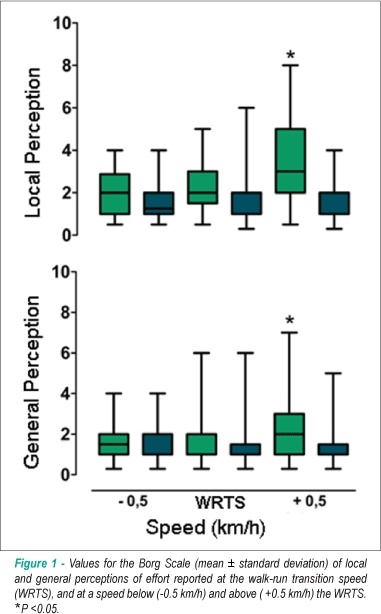
BACKGROUND: It is possible that different forms of locomotion, when carried out at the same speed, may have a distinct influence on the physiological and perceptual responses to exercise. OBJECTIVE: To compare the cardiorespiratory responses and the subjective perception of the effort to walk and run at the same speed, as determined from the walk-run transition speed (WRTS). METHODS: From an initial sample of 453 subjects enrolled in the compulsory military service, 12 young adult men were selected and carefully homogenized as to age, sex, anthropometric characteristics, aerobic condition and experience in a treadmill. In preliminary sessions, the individual WRTS was determined. Thereafter, on three different days, the subjects walked and ran in balanced order, in each of the following speeds: WRTS; WRTS – 0.5 km/h; WRTS + 0.5 km/h, so as to obtain exhaled gases, heart rate (HR) and perception of effort measurements. RESULTS: The protocol for WRTS detection was highly reproducible (r = 0.92, p <0.05). In an intensity of exercise above the WRTS, the perceived effort, the HR, and the ventilatory variables-VE, VO2, VCO2 and R-showed higher values during walking than during running (p 0.05). CONCLUSION: Walking at a speed above the WRTS tends to be more stressful to the subject, from a physiological and perceptual point of view. It seems appropriate to individualize the WRTS and standardize the form of locomotion for determining a more accurate and physiological intensity of the aerobe exercises.

  • Exercise
  • Heart Rate
  • Oxygen Consumption
  • Running
  • walking
Read Full Article
Creative Commons Attribution (CC BY) Creative Commons license
24/11/2009 DOI: 10.1590/S0066-782X2009001000016 Views 1

How to cite this article

EndNote RIS

Electronic Document Format (Vancouver)

Braga F, Stein R. Beyond Limits: What 366 Consecutive Marathons Reveal about the Human Heart. Arquivos Brasileiros de Cardiologia 2025;122(5):e20250231.

Electronic Document Format (ABNT)

Braga, Fabricio; Stein, Ricardo. Beyond Limits: What 366 Consecutive Marathons Reveal about the Human Heart. Arquivos Brasileiros de Cardiologia, v. 122, n. 5, e20250231, Jul. 2025.

Electronic Document Format (APA)

Braga, F., & Stein, R. (2025). Beyond Limits: What 366 Consecutive Marathons Reveal about the Human Heart. Arquivos Brasileiros de Cardiologia, 122(5), e20250231.

Electronic Document Format (ISO)

Braga, Fabricio and Stein, Ricardo. Beyond Limits: What 366 Consecutive Marathons Reveal about the Human Heart. Arquivos Brasileiros de Cardiologia [online]. 2025, vol. 122, n. 5, [cited 2026-10-14], e20250231. Available from: <https://journals.cardiol.br/en/article/beyond-limits-what-366-consecutive-marathons-reveal-about-the-human-heart/>. ISSN 0066-782X

EndNote RIS

Electronic Document Format (Vancouver)

Bona RL, Bonezi A, Biancardi CM, Castro FAS, Clausell N. Electromyographical and Physiological Correlation in Patient with Heart Disease. International Journal of Cardiovascular Sciences 2021;34(6):665-74.

Electronic Document Format (ABNT)

Bona, Renata Luísa; Bonezi, Artur; Biancardi, Carlo M; Castro, Flavio Antonio de Souza; Clausell, Nadine. Electromyographical and Physiological Correlation in Patient with Heart Disease. International Journal of Cardiovascular Sciences, v. 34, n. 6, p. 665-674, Jul. 2021.

Electronic Document Format (APA)

Bona, R. L., Bonezi, A., Biancardi, C. M., Castro, F. A. S., & Clausell, N. (2021). Electromyographical and Physiological Correlation in Patient with Heart Disease. International Journal of Cardiovascular Sciences, 34(6), 665-674.

Electronic Document Format (ISO)

Bona, Renata Luísa and Bonezi, Artur and Biancardi, Carlo M and Castro, Flavio Antonio de Souza and Clausell, Nadine. Electromyographical and Physiological Correlation in Patient with Heart Disease. International Journal of Cardiovascular Sciences [online]. 2021, vol. 34, n. 6, [cited 2026-10-14], pp. 665-674. Available from: <https://journals.cardiol.br/en/article/electromyographical-and-physiological-correlation-in-patient-with-heart-disease/>. ISSN 2359-4802

EndNote RIS

Electronic Document Format (Vancouver)

Basilio PG, Oliveira APC, Castro ACF, Carvalho MR, Zagatto AM, Martinez PF, Okoshi MP, et al. Intermittent Fasting Attenuates Exercise Training-Induced Cardiac Remodeling. Arquivos Brasileiros de Cardiologia 2020;115(2):184-93.

Electronic Document Format (ABNT)

Basilio, Priscilla Gois; Oliveira, Ana Priscila Cayres de; Castro, Ana Carolini Ferreira de; Carvalho, Marianna Rabelo de; Zagatto, Alessandro Moura; Martinez, Paula Felippe; Okoshi, Marina Politi; Okoshi, Katashi; Ota, Gabriel Elias; Reis, Filipe Abdalla dos; Oliveira-Junior, Silvio Assis de. Intermittent Fasting Attenuates Exercise Training-Induced Cardiac Remodeling. Arquivos Brasileiros de Cardiologia, v. 115, n. 2, p. 184-193, Aug. 2020.

Electronic Document Format (APA)

Basilio, P. G., Oliveira, A. P. C. , Castro, A. C. F. , Carvalho, M. R. , Zagatto, A. M., Martinez, P. F., Okoshi, M. P., Okoshi, K., Ota, G. E., Reis, F. A. , & Oliveira-Junior, S. A. (2020). Intermittent Fasting Attenuates Exercise Training-Induced Cardiac Remodeling. Arquivos Brasileiros de Cardiologia, 115(2), 184-193.

Electronic Document Format (ISO)

Basilio, Priscilla Gois and Oliveira, Ana Priscila Cayres de and Castro, Ana Carolini Ferreira de and Carvalho, Marianna Rabelo de and Zagatto, Alessandro Moura and Martinez, Paula Felippe and Okoshi, Marina Politi and Okoshi, Katashi and Ota, Gabriel Elias and Reis, Filipe Abdalla dos and Oliveira-Junior, Silvio Assis de. Intermittent Fasting Attenuates Exercise Training-Induced Cardiac Remodeling. Arquivos Brasileiros de Cardiologia [online]. 2020, vol. 115, n. 2, [cited 2026-10-14], pp. 184-193. Available from: <https://journals.cardiol.br/en/article/intermittent-fasting-attenuates-exercise-training-induced-cardiac-remodeling/>. ISSN 0066-782X

EndNote RIS

Electronic Document Format (Vancouver)

Teixeira JAC. Simplicity and Complexity of the Six-Minute Walk Test. International Journal of Cardiovascular Sciences 2019;32(2):98-9.

Electronic Document Format (ABNT)

Teixeira, José Antônio Caldas. Simplicity and Complexity of the Six-Minute Walk Test. International Journal of Cardiovascular Sciences, v. 32, n. 2, p. 98-99, Dec. 2018.

Electronic Document Format (APA)

Teixeira, J. A. C. (2019). Simplicity and Complexity of the Six-Minute Walk Test. International Journal of Cardiovascular Sciences, 32(2), 98-99.

Electronic Document Format (ISO)

Teixeira, José Antônio Caldas. Simplicity and Complexity of the Six-Minute Walk Test. International Journal of Cardiovascular Sciences [online]. 2019, vol. 32, n. 2, [cited 2026-10-14], pp. 98-99. Available from: <https://journals.cardiol.br/en/article/simplicity-and-complexity-of-the-six-minute-walk-test/>. ISSN 2359-4802

EndNote RIS

Electronic Document Format (Vancouver)

Helal L, Silveira AD. The Nature of Cardiac Remodeling Due to Physical Exercise: More Evidence Towards to the Normal Adaptive Responses of the Heart. Arquivos Brasileiros de Cardiologia 2018;111(6):782.

Electronic Document Format (ABNT)

Helal, Lucas; Silveira, Anderson Donelli da. The Nature of Cardiac Remodeling Due to Physical Exercise: More Evidence Towards to the Normal Adaptive Responses of the Heart. Arquivos Brasileiros de Cardiologia, v. 111, n. 6, p. 782-782, Nov. 2018.

Electronic Document Format (APA)

Helal, L., & Silveira, A. D. (2018). The Nature of Cardiac Remodeling Due to Physical Exercise: More Evidence Towards to the Normal Adaptive Responses of the Heart. Arquivos Brasileiros de Cardiologia, 111(6), 782-782.

Electronic Document Format (ISO)

Helal, Lucas and Silveira, Anderson Donelli da. The Nature of Cardiac Remodeling Due to Physical Exercise: More Evidence Towards to the Normal Adaptive Responses of the Heart. Arquivos Brasileiros de Cardiologia [online]. 2018, vol. 111, n. 6, [cited 2026-10-14], pp. 782-782. Available from: <https://journals.cardiol.br/en/article/the-nature-of-cardiac-remodeling-due-to-physical-exercise-more-evidence-towards-to-the-normal-adaptive-responses-of-the-heart/>. ISSN 0066-782X

EndNote RIS

Electronic Document Format (Vancouver)

Bittencourt CRO, Izar MCO, França CN, Schwerz VL, Póvoa RMS, Fonseca FAH. Effects of Chronic Exercise on Endothelial Progenitor Cells and Microparticles in Professional Runners. Arquivos Brasileiros de Cardiologia 2017;108(3):212-6.

Electronic Document Format (ABNT)

Bittencourt, Célia Regina de Oliveira; Izar, Maria Cristina de Oliveira; França, Carolina Nunes; Schwerz, Valdir Lauro; Póvoa, Rui Manuel dos Santos; Fonseca, Francisco Antonio Helfenstein. Effects of Chronic Exercise on Endothelial Progenitor Cells and Microparticles in Professional Runners. Arquivos Brasileiros de Cardiologia, v. 108, n. 3, p. 212-216, Feb. 2017.

Electronic Document Format (APA)

Bittencourt, C. R. O., Izar, M. C. O., França, C. N., Schwerz, V. L., Póvoa, R. M. S., & Fonseca, F. A. H. (2017). Effects of Chronic Exercise on Endothelial Progenitor Cells and Microparticles in Professional Runners. Arquivos Brasileiros de Cardiologia, 108(3), 212-216.

Electronic Document Format (ISO)

Bittencourt, Célia Regina de Oliveira and Izar, Maria Cristina de Oliveira and França, Carolina Nunes and Schwerz, Valdir Lauro and Póvoa, Rui Manuel dos Santos and Fonseca, Francisco Antonio Helfenstein. Effects of Chronic Exercise on Endothelial Progenitor Cells and Microparticles in Professional Runners. Arquivos Brasileiros de Cardiologia [online]. 2017, vol. 108, n. 3, [cited 2026-10-14], pp. 212-216. Available from: <https://journals.cardiol.br/en/article/effects-of-chronic-exercise-on-endothelial-progenitor-cells-and-microparticles-in-professional-runners/>. ISSN 0066-782X

EndNote RIS

Electronic Document Format (Vancouver)

Araújo CGS, Castro CLB, Franca JF, Silva CGS. Aerobic Exercise and The Heart: Discussing Doses. Arquivos Brasileiros de Cardiologia 2017;108(3):271-5.

Electronic Document Format (ABNT)

Araújo, Claudio Gil Soares de; Castro, Claudia Lucia Barros de; Franca, João Felipe; Silva, Christina Grüne de Souza e. Aerobic Exercise and The Heart: Discussing Doses. Arquivos Brasileiros de Cardiologia, v. 108, n. 3, p. 271-275, Feb. 2017.

Electronic Document Format (APA)

Araújo, C. G. S. , Castro, C. L. B. , Franca, J. F., & Silva, C. G. S. (2017). Aerobic Exercise and The Heart: Discussing Doses. Arquivos Brasileiros de Cardiologia, 108(3), 271-275.

Electronic Document Format (ISO)

Araújo, Claudio Gil Soares de and Castro, Claudia Lucia Barros de and Franca, João Felipe and Silva, Christina Grüne de Souza e. Aerobic Exercise and The Heart: Discussing Doses. Arquivos Brasileiros de Cardiologia [online]. 2017, vol. 108, n. 3, [cited 2026-10-14], pp. 271-275. Available from: <https://journals.cardiol.br/en/article/aerobic-exercise-and-the-heart-discussing-doses/>. ISSN 0066-782X

EndNote RIS

Electronic Document Format (Vancouver)

Sierra APR, Silveira AD, Francisco RC, Barretto RBM, Sierra CA, Meneghelo RS, Kiss MAPDM, et al. Reduction in Post-Marathon Peak Oxygen Consumption: Sign of Cardiac Fatigue in Amateur Runners?. Arquivos Brasileiros de Cardiologia 2016;106(2):92-6.

Electronic Document Format (ABNT)

Sierra, Ana Paula Rennó; Silveira, Anderson Donelli da; Francisco, Ricardo Contesini; Barretto, Rodrigo Bellios de Mattos; Sierra, Carlos Anibal; Meneghelo, Romeu Sergio; Kiss, Maria Augusta Peduti Dal Molin; Ghorayeb, Nabil; Stein, Ricardo. Reduction in Post-Marathon Peak Oxygen Consumption: Sign of Cardiac Fatigue in Amateur Runners?. Arquivos Brasileiros de Cardiologia, v. 106, n. 2, p. 92-96, Jan. 2016.

Electronic Document Format (APA)

Sierra, A. P. R., Silveira, A. D. , Francisco, R. C., Barretto, R. B. M., Sierra, C. A., Meneghelo, R. S., Kiss, M. A. P. D. M., Ghorayeb, N., & Stein, R. (2016). Reduction in Post-Marathon Peak Oxygen Consumption: Sign of Cardiac Fatigue in Amateur Runners?. Arquivos Brasileiros de Cardiologia, 106(2), 92-96.

Electronic Document Format (ISO)

Sierra, Ana Paula Rennó and Silveira, Anderson Donelli da and Francisco, Ricardo Contesini and Barretto, Rodrigo Bellios de Mattos and Sierra, Carlos Anibal and Meneghelo, Romeu Sergio and Kiss, Maria Augusta Peduti Dal Molin and Ghorayeb, Nabil and Stein, Ricardo. Reduction in Post-Marathon Peak Oxygen Consumption: Sign of Cardiac Fatigue in Amateur Runners?. Arquivos Brasileiros de Cardiologia [online]. 2016, vol. 106, n. 2, [cited 2026-10-14], pp. 92-96. Available from: <https://journals.cardiol.br/en/article/reduction-in-post-marathon-peak-oxygen-consumption-sign-of-cardiac-fatigue-in-amateur-runners/>. ISSN 0066-782X

EndNote RIS

Electronic Document Format (Vancouver)

Passaglia DG, Emed LGM, Barberato SH, Guerios ST, Moser AI, Silva MMF, Ishie E, et al. Acute effects of prolonged physical exercise: evaluation after a twenty-four-hour ultramarathon. Arquivos Brasileiros de Cardiologia 2012;100(1):21-8.

Electronic Document Format (ABNT)

Passaglia, Daniela Guinther; Emed, Luiz Gustavo Marin; Barberato, Silvio Henrique; Guerios, Surya Toledo; Moser, Andre Isolani; Silva, Miguel Morita Fernandes; Ishie, Elissa; Guarita-Souza, Luiz Cesar; Costantini, Costantino Roberto Frack; Faria-Neto, José Rocha. Acute effects of prolonged physical exercise: evaluation after a twenty-four-hour ultramarathon. Arquivos Brasileiros de Cardiologia, v. 100, n. 1, p. 21-28, Dec. 2012.

Electronic Document Format (APA)

Passaglia, D. G., Emed, L. G. M., Barberato, S. H., Guerios, S. T., Moser, A. I., Silva, M. M. F., Ishie, E., Guarita-Souza, L. C., Costantini, C. R. F., & Faria-Neto, J. R. (2012). Acute effects of prolonged physical exercise: evaluation after a twenty-four-hour ultramarathon. Arquivos Brasileiros de Cardiologia, 100(1), 21-28.

Electronic Document Format (ISO)

Passaglia, Daniela Guinther and Emed, Luiz Gustavo Marin and Barberato, Silvio Henrique and Guerios, Surya Toledo and Moser, Andre Isolani and Silva, Miguel Morita Fernandes and Ishie, Elissa and Guarita-Souza, Luiz Cesar and Costantini, Costantino Roberto Frack and Faria-Neto, José Rocha. Acute effects of prolonged physical exercise: evaluation after a twenty-four-hour ultramarathon. Arquivos Brasileiros de Cardiologia [online]. 2012, vol. 100, n. 1, [cited 2026-10-14], pp. 21-28. Available from: <https://journals.cardiol.br/en/article/acute-effects-of-prolonged-physical-exercise-evaluation-after-a-twenty-four-hour-ultramarathon/>. ISSN 0066-782X

EndNote RIS

Electronic Document Format (Vancouver)

Matos LDNJ, Azevedo LF, Brum PC, Sosa EA, Martinelli M, Negrão CE. Long distance runner with dilated cardiomyopathy and excellent performance. Arquivos Brasileiros de Cardiologia 2011;96(1):e3-6.

Electronic Document Format (ABNT)

Matos, Luciana Diniz Nagem Janot de; Azevedo, Luciene Ferreira; Brum, Patrícia Chakur; Sosa, Eduardo Argentino; Martinelli, Martino; Negrão, Carlos Eduardo. Long distance runner with dilated cardiomyopathy and excellent performance. Arquivos Brasileiros de Cardiologia, v. 96, n. 1, p. e3-e6, Feb. 2011.

Electronic Document Format (APA)

Matos, L. D. N. J. , Azevedo, L. F., Brum, P. C., Sosa, E. A., Martinelli, M., & Negrão, C. E. (2011). Long distance runner with dilated cardiomyopathy and excellent performance. Arquivos Brasileiros de Cardiologia, 96(1), e3-e6.

Electronic Document Format (ISO)

Matos, Luciana Diniz Nagem Janot de and Azevedo, Luciene Ferreira and Brum, Patrícia Chakur and Sosa, Eduardo Argentino and Martinelli, Martino and Negrão, Carlos Eduardo. Long distance runner with dilated cardiomyopathy and excellent performance. Arquivos Brasileiros de Cardiologia [online]. 2011, vol. 96, n. 1, [cited 2026-10-14], pp. e3-e6. Available from: <https://journals.cardiol.br/en/article/long-distance-runner-with-dilated-cardiomyopathy-and-excellent-performance/>. ISSN 0066-782X

EndNote RIS

Electronic Document Format (Vancouver)

Melo SFS, Lunz W, Fontes EPB, Dias CMGC, Carneiro Júnior MA, Moura AG, Carlo RJD, et al. Different levels of Hsp72 in female rat myocardium in response to voluntary exercise and forced exercise. Arquivos Brasileiros de Cardiologia 2010;93(5):456-62.

Electronic Document Format (ABNT)

Melo, Stéphano Freitas Soares; Lunz, Wellington; Fontes, Elizabeth Pacheco Batista; Dias, Cristina Maria Ganns Chaves; Carneiro Júnior, Miguel Araujo; Moura, Anselmo Gomes de; Carlo, Ricardo Junqueira Del; Natali, Antonio Jose. Different levels of Hsp72 in female rat myocardium in response to voluntary exercise and forced exercise. Arquivos Brasileiros de Cardiologia, v. 93, n. 5, p. 456-462, Jan. 2010.

Electronic Document Format (APA)

Melo, S. F. S., Lunz, W., Fontes, E. P. B., Dias, C. M. G. C., Carneiro Júnior, M. A., Moura, A. G. , Carlo, R. J. D., & Natali, A. J. (2010). Different levels of Hsp72 in female rat myocardium in response to voluntary exercise and forced exercise. Arquivos Brasileiros de Cardiologia, 93(5), 456-462.

Electronic Document Format (ISO)

Melo, Stéphano Freitas Soares and Lunz, Wellington and Fontes, Elizabeth Pacheco Batista and Dias, Cristina Maria Ganns Chaves and Carneiro Júnior, Miguel Araujo and Moura, Anselmo Gomes de and Carlo, Ricardo Junqueira Del and Natali, Antonio Jose. Different levels of Hsp72 in female rat myocardium in response to voluntary exercise and forced exercise. Arquivos Brasileiros de Cardiologia [online]. 2010, vol. 93, n. 5, [cited 2026-10-14], pp. 456-462. Available from: <https://journals.cardiol.br/en/article/different-levels-of-hsp72-in-female-rat-myocardium-in-response-to-voluntary-exercise-and-forced-exercise/>. ISSN 0066-782X

EndNote RIS

Electronic Document Format (Vancouver)

Monteiro WD, Araújo CGS. Cardiorespiratory and perceptual responses to walking and running at the same speed. Arquivos Brasileiros de Cardiologia 2009;93(4):418-25.

Electronic Document Format (ABNT)

Monteiro, Walace David; Araújo, Claudio Gil Soares de. Cardiorespiratory and perceptual responses to walking and running at the same speed. Arquivos Brasileiros de Cardiologia, v. 93, n. 4, p. 418-425, Nov. 2009.

Electronic Document Format (APA)

Monteiro, W. D., & Araújo, C. G. S. (2009). Cardiorespiratory and perceptual responses to walking and running at the same speed. Arquivos Brasileiros de Cardiologia, 93(4), 418-425.

Electronic Document Format (ISO)

Monteiro, Walace David and Araújo, Claudio Gil Soares de. Cardiorespiratory and perceptual responses to walking and running at the same speed. Arquivos Brasileiros de Cardiologia [online]. 2009, vol. 93, n. 4, [cited 2026-10-14], pp. 418-425. Available from: <https://journals.cardiol.br/en/article/cardiorespiratory-and-perceptual-responses-to-walking-and-running-at-the-same-speed/>. ISSN 0066-782X

  • About ABC Family
  • Internal Regulation
  • Editorial Board
  • Brazilian Society of Cardiology (SBC)

Issues

SBC Guidelines

  • Videos
  • Podcasts
  • News