ABC Family Arquivos Brasileiros de Cardiologia International Journal of Cardiovascular Sciences ABC Heart Failure & Cardiomyopathy ABC Imagem Cardiovascular
Português English
ABC Family
Português English
  • About
    • About ABC Family
    • Internal Regulation
    • Editorial Board
    • Brazilian Society of Cardiology (SBC)
  • Issues
  • SBC Guidelines
  • Content
    • Videos
    • Podcasts
    • News
  • About
    • About ABC Family
    • Internal Regulation
    • Editorial Board
    • Brazilian Society of Cardiology (SBC)
  • Issues
  • SBC Guidelines
  • Content
    • Videos
    • Podcasts
    • News

ABC Family

  • ABC Family
  • Arquivos Brasileiros de Cardiologia
  • International Journal of Cardiovascular Sciences
  • ABC Heart Failure & Cardiomyopathy
  • ABC Imagem Cardiovascular
Search in

No content found.

Journals
Ordering
Article types
Others

  1. Home
  2. Keyword: athletic performance
Cardiopulmonary Resilience in Highly Active Individuals: Pre–Post COVID-19 Cardiopulmonary Exercise Testing Analysis
ABC
Original Article

Cardiopulmonary Resilience in Highly Active Individuals: Pre–Post COVID-19 Cardiopulmonary Exercise Testing Analysis

Fabrício Braga et al. Gabriel Espinosa Amanda Monteiro Mauricio Milani … Juliana Paiva Juliana Goulart Prata Oliveira Milani Leandro Franzoni Ricardo Stein Gerson Cipriano Jr. Jonas Lírio Gurgel Ricardo Mourilhe-Rocha

Abstract

Background:

The COVID-19 pandemic has affected millions globally, with persistent impacts extending beyond the acute phase. One such effect is post-COVID (long COVID), characterized by symptoms such as fatigue and exercise intolerance lasting more than 60 days. Although regular exercise is associated with reduced risk of severe outcomes, reports of decreased athletic performance after COVID-19 — even among highly active individuals (HAIs) — have raised concerns regarding the long-term effects on physical health. Cardiopulmonary exercise testing (CPET) is a valuable tool to assess exercise intolerance and to investigate the metabolic and ventilatory consequences of COVID-19.

Objectives:

To evaluate the impact of COVID-19 on cardiopulmonary function in HAIs by analyzing metabolic and ventilatory responses using CPET before and after infection.

Methods:

CPET data were retrospectively analyzed from HAIs of both sexes. Primary outcomes included changes in peak oxygen uptake (O2peak) and ventilatory efficiency (E/CO2 slope). Statistical significance was set at 5% (p < 0.05).

Results:

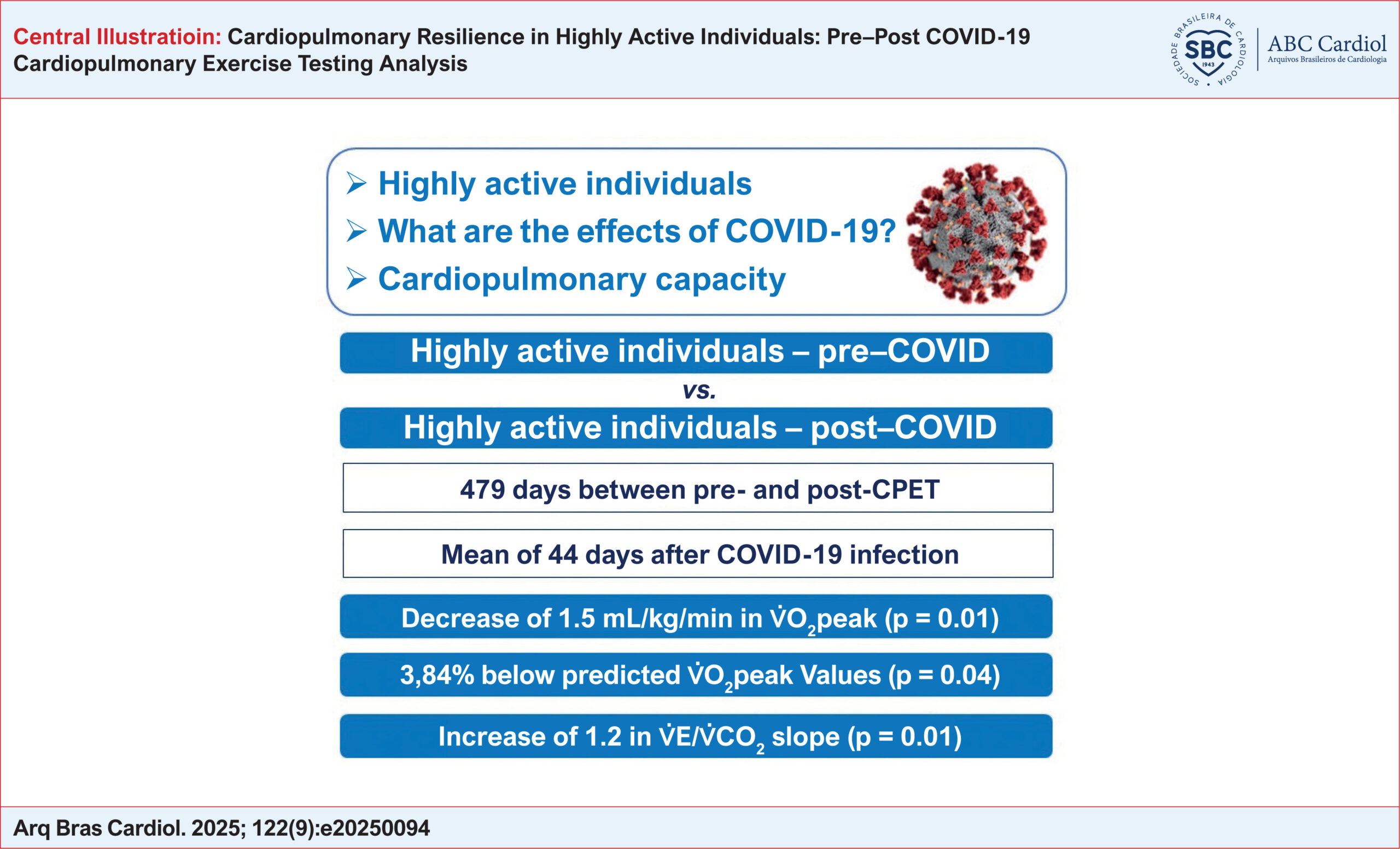
A total of 43 HAIs (72.1% male; 44 ± 10 years) were included. The median interval between CPETs was 479 days, with testing performed a mean of 44 ± 27 days after COVID-19. O2peak decreased by a mean of 1.5 mL/kg/min (p = 0.017), representing a 3.84% reduction in predicted O2peak values (p = 0.045). E/CO2 slope increased by 1.2 (p = 0.017).

Conclusion:

Although HAIs are not immune to the effects of COVID-19, their high baseline physical activity levels appear to confer substantial cardiopulmonary resilience. Only minimal post-infection alterations were observed, which suggests that maintaining fitness may provide protective benefits against long-term sequelae of COVID-19.
  • athletic performance
  • Cardiorespiratory Fitness
  • Exercise
  • Exercise Test
Read Full Article
Creative Commons Attribution (CC BY) Creative Commons license
14/11/2025 DOI: 10.36660/abc.20250094i Views 1
Figure 1
IJCS
Original Article

Cardiorespiratory Optimal Point in Professional Soccer Players: A Novel Submaximal Variable During Exercise

Christina Grüne de Souza e Silva et al. Claudia Lucia Barros de Castro João Felipe Franca Altamiro Bottino … Jonathan Myers Claudio Gil Soares de Araújo

Abstract

Background:

Maximal oxygen consumption (VO2max) and ventilatory threshold (VT) obtained during a cardiopulmonary exercise test (CPX) are used in the evaluation of athletes. However, the identification of these variables may sometimes be unreliable, which limits their use. In contrast, the cardiorespiratory optimal point (COP) is a submaximal variable derived from CPX with objective measurement and prognostic significance. However, its behavior in athletes is unknown.

Objective:

To describe the behavior of COP in professional soccer players and its association with VO2max and VT.

Methods:

VO2max, VT and COP were obtained retrospectively from 198 soccer players undergoing maximal treadmill CPX using ramp protocol. COP was defined as the lowest value of the ventilation/oxygen consumption ratio in a given minute of the CPX. The soccer players were stratified according to their field position: goalkeeper, center-defender, left/right-back, midfielder and forwarder. Continuous variables were compared using unpaired Student t test or ANOVA, or Mann-Whitney test or Kruskal-Wallis test depending on their distribution, and categorical variables were compared using chi-square test. Pearson correlation was used to test the association between COP and other ventilatory variables. A level of 5% was used for statistical significance.

Results:

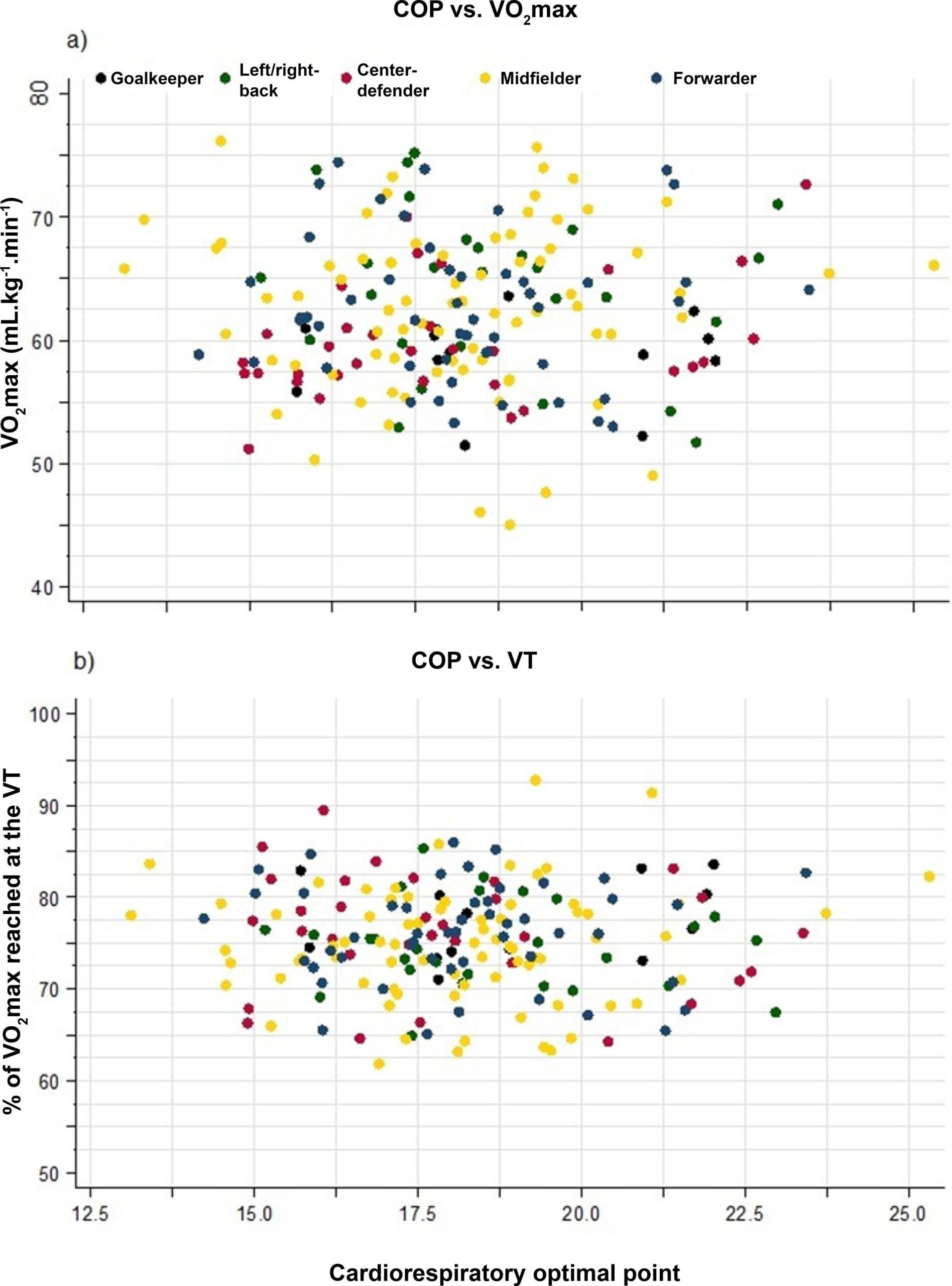
COP (mean ± SD) was 18.2 ± 2.1 and was achieved at a speed 4.3 ± 1.4 km.h-1 lower than that achieved at the VT. While VO2max (62.1 ± 6.2 mL.kg-1.min-1) tended to be lower in goalkeepers (p < 0.05), the COP did not vary according to field position (p = 0.41). No significant association was observed between COP and VO2max (r = 0.032, p = 0.65) or between COP and VT (r = -0.003, p = 0.96).

Conclusion:

COP can be easily determined during submaximal exercise performed with incremental speed in soccer players and does not vary according to the athlete’s field position. The absence of association with VO2max and VT indicates that COP provides distinct and complementary information to these variables. Future studies are needed to determine the practical implications of COP in assessing athletes. (Int J Cardiovasc Sci. 2018; [online].ahead print, PP.0-0)

  • athletic performance
  • Bronchospirometry / methods
  • Exercise
  • Football / trends
  • Spirometry/methods
Read Full Article
Creative Commons Attribution (CC BY) Creative Commons license
11/06/2018 DOI: 10.5935/2359-4802.20180030
IJCS
Editorial

Can Cardiopulmonary Exercise Test Contribute to Train Soccer Players?

Miguel Mendes

Soccer, which draws crowds and moves huge sums of money, has not been dissociated from science, being frequently approached in studies conducted by the academy or upon request of technical teams, aimed at optimizing the sports outcomes.

A training plan is used to prepare for the soccer competition and comprises purely physical, psychological, technical (p. ex.: pass, dribble, feint, leaps) and tactical components. In the preseason and during the competitive season, coaches measure and monitor different variables of the training.

[…]

  • athletic performance
  • Exercise
  • Football / trends
  • Spirometry/methods
Read Full Article
Creative Commons Attribution (CC BY) Creative Commons license
01/01/2018 DOI: 10.5935/2359-4802.20180042
IJCS
Editorial

Is Cardiorespiratory Optimal Point Measured During the Maximal Cardiopulmonary Exercise Test a Relevant Indicator of Sports Performance?

Jari A. Laukkanen

Cardiorespiratory fitness (CRF) is considered the gold standard for assessing aerobic performance among athletes and normal population and has recently been named as a clinical vital sign, being an essential indicator of cardiovascular and pulmonary function. Cardiorespiratory fitness is associated with lower risk of non-fatal and fatal cardiovascular disease (CVD) events, with studies demonstrating a consistent, inverse association between CRF and mortality even after adjustment for the traditional risk factor burden. Additionally, both maximal oxygen consumption (VO2max) and VO2 at ventilatory threshold (VT) have been associated with a reduced risk of adverse health outcomes.,– A literature-based meta-analysis of 33 observational cohort studies has better delineated the relationship of CRF with CVD and all-cause mortality outcomes. However, VO2max and VT are often used to evaluate athletes’ performance and to monitor their training responses. During the cardiopulmonary exercise test (CPX), many variables could be used to assess specific training responses to the cardiovascular, respiratory and musculoskeletal systems based on the analysis of submaximal and maximal responses to a progressively incremental exercise.

Modern CPX systems allow for the analysis of gas exchange at rest, during mild, moderate and maximal exercise levels, and during recovery and yield measures of VO2, carbon dioxide output (VCO2), and ventilation (VE). These advanced computerized systems provide both simple and complex analyses of these data that are easy to retrieve and store, which makes CPX widely available. Oxygen uptake at VT, often referred to as the anaerobic threshold, is a variable assessed at submaximal level of CPX. For majority of healthy individuals, the anaerobic threshold lies at exercise intensities between 50% and 75% of VO2max, while in trained endurance athletes, it can reach intensities as high as 80% of VO2max.

[…]

  • Athletes
  • athletic performance
  • Cardiorespiratory Fitness
  • Exercise
  • Respiratory Function Tests
Read Full Article
Creative Commons Attribution (CC BY) Creative Commons license
01/01/2018 DOI: 10.5935/2359-4802.20180041
Long distance runner with dilated cardiomyopathy and excellent performance
ABC
Case Report

Long distance runner with dilated cardiomyopathy and excellent performance

Luciana Diniz Nagem Janot de Matos et al. Luciene Ferreira Azevedo Patrícia Chakur Brum Eduardo Argentino Sosa … Martino Martinelli Carlos Eduardo Negrão

CASE REPORT

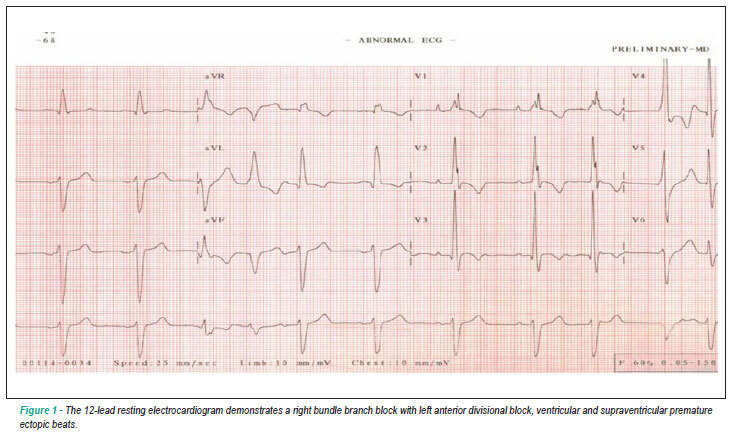
[…]

  • Athletes
  • athletic performance
  • Cardiomyopathy, Dilated
  • Exercise
  • Running
Read Full Article
Creative Commons Attribution (CC BY) Creative Commons license
04/02/2011 DOI: 10.1590/S0066-782X2011000100017

How to cite this article

EndNote RIS

Electronic Document Format (Vancouver)

Braga F, Espinosa G, Monteiro A, Milani M, Paiva J, Milani JGPO, Franzoni L, et al. Cardiopulmonary Resilience in Highly Active Individuals: Pre–Post COVID-19 Cardiopulmonary Exercise Testing Analysis. Arquivos Brasileiros de Cardiologia 2025;122(9):e20250094.

Electronic Document Format (ABNT)

Braga, Fabrício; Espinosa, Gabriel; Monteiro, Amanda; Milani, Mauricio; Paiva, Juliana; Milani, Juliana Goulart Prata Oliveira; Franzoni, Leandro; Stein, Ricardo; Cipriano Jr., Gerson; Gurgel, Jonas Lírio; Mourilhe-Rocha, Ricardo. Cardiopulmonary Resilience in Highly Active Individuals: Pre–Post COVID-19 Cardiopulmonary Exercise Testing Analysis. Arquivos Brasileiros de Cardiologia, v. 122, n. 9, e20250094, Nov. 2025.

Electronic Document Format (APA)

Braga, F., Espinosa, G., Monteiro, A., Milani, M., Paiva, J., Milani, J. G. P. O., Franzoni, L., Stein, R., Cipriano Jr., G., Gurgel, J. L., & Mourilhe-Rocha, R. (2025). Cardiopulmonary Resilience in Highly Active Individuals: Pre–Post COVID-19 Cardiopulmonary Exercise Testing Analysis. Arquivos Brasileiros de Cardiologia, 122(9), e20250094.

Electronic Document Format (ISO)

Braga, Fabrício and Espinosa, Gabriel and Monteiro, Amanda and Milani, Mauricio and Paiva, Juliana and Milani, Juliana Goulart Prata Oliveira and Franzoni, Leandro and Stein, Ricardo and Cipriano Jr., Gerson and Gurgel, Jonas Lírio and Mourilhe-Rocha, Ricardo. Cardiopulmonary Resilience in Highly Active Individuals: Pre–Post COVID-19 Cardiopulmonary Exercise Testing Analysis. Arquivos Brasileiros de Cardiologia [online]. 2025, vol. 122, n. 9, [cited 2026-10-14], e20250094. Available from: <https://journals.cardiol.br/en/article/cardiopulmonary-resilience-in-highly-active-individuals-pre-post-covid-19-cardiopulmonary-exercise-testing-analysis/>. ISSN 0066-782X

EndNote RIS

Electronic Document Format (Vancouver)

Silva CGS, Castro CLB, Franca JF, Bottino A, Myers J, Araújo CGS. Cardiorespiratory Optimal Point in Professional Soccer Players: A Novel Submaximal Variable During Exercise. International Journal of Cardiovascular Sciences 2018;31(4):323-32.

Electronic Document Format (ABNT)

Silva, Christina Grüne de Souza e; Castro, Claudia Lucia Barros de; Franca, João Felipe; Bottino, Altamiro; Myers, Jonathan; Araújo, Claudio Gil Soares de. Cardiorespiratory Optimal Point in Professional Soccer Players: A Novel Submaximal Variable During Exercise. International Journal of Cardiovascular Sciences, v. 31, n. 4, p. 323-332, Jun. 2018.

Electronic Document Format (APA)

Silva, C. G. S. , Castro, C. L. B. , Franca, J. F., Bottino, A., Myers, J., & Araújo, C. G. S. (2018). Cardiorespiratory Optimal Point in Professional Soccer Players: A Novel Submaximal Variable During Exercise. International Journal of Cardiovascular Sciences, 31(4), 323-332.

Electronic Document Format (ISO)

Silva, Christina Grüne de Souza e and Castro, Claudia Lucia Barros de and Franca, João Felipe and Bottino, Altamiro and Myers, Jonathan and Araújo, Claudio Gil Soares de. Cardiorespiratory Optimal Point in Professional Soccer Players: A Novel Submaximal Variable During Exercise. International Journal of Cardiovascular Sciences [online]. 2018, vol. 31, n. 4, [cited 2026-10-14], pp. 323-332. Available from: <https://journals.cardiol.br/en/article/cardiorespiratory-optimal-point-in-professional-soccer-players-a-novel-submaximal-variable-during-exercise/>. ISSN 2359-4802

EndNote RIS

Electronic Document Format (Vancouver)

Mendes M. Can Cardiopulmonary Exercise Test Contribute to Train Soccer Players?. International Journal of Cardiovascular Sciences 2018;31(4):318-9.

Electronic Document Format (ABNT)

Mendes, Miguel. Can Cardiopulmonary Exercise Test Contribute to Train Soccer Players?. International Journal of Cardiovascular Sciences, v. 31, n. 4, p. 318-319, Dec. 2017.

Electronic Document Format (APA)

Mendes, M. (2018). Can Cardiopulmonary Exercise Test Contribute to Train Soccer Players?. International Journal of Cardiovascular Sciences, 31(4), 318-319.

Electronic Document Format (ISO)

Mendes, Miguel. Can Cardiopulmonary Exercise Test Contribute to Train Soccer Players?. International Journal of Cardiovascular Sciences [online]. 2018, vol. 31, n. 4, [cited 2026-10-14], pp. 318-319. Available from: <https://journals.cardiol.br/en/article/can-cardiopulmonary-exercise-test-contribute-to-train-soccer-players/>. ISSN 2359-4802

EndNote RIS

Electronic Document Format (Vancouver)

Laukkanen JA. Is Cardiorespiratory Optimal Point Measured During the Maximal Cardiopulmonary Exercise Test a Relevant Indicator of Sports Performance?. International Journal of Cardiovascular Sciences 2018;31(4):320-2.

Electronic Document Format (ABNT)

Laukkanen, Jari A.. Is Cardiorespiratory Optimal Point Measured During the Maximal Cardiopulmonary Exercise Test a Relevant Indicator of Sports Performance?. International Journal of Cardiovascular Sciences, v. 31, n. 4, p. 320-322, Dec. 2017.

Electronic Document Format (APA)

Laukkanen, J. A. (2018). Is Cardiorespiratory Optimal Point Measured During the Maximal Cardiopulmonary Exercise Test a Relevant Indicator of Sports Performance?. International Journal of Cardiovascular Sciences, 31(4), 320-322.

Electronic Document Format (ISO)

Laukkanen, Jari A.. Is Cardiorespiratory Optimal Point Measured During the Maximal Cardiopulmonary Exercise Test a Relevant Indicator of Sports Performance?. International Journal of Cardiovascular Sciences [online]. 2018, vol. 31, n. 4, [cited 2026-10-14], pp. 320-322. Available from: <https://journals.cardiol.br/en/article/is-cardiorespiratory-optimal-point-measured-during-the-maximal-cardiopulmonary-exercise-test-a-relevant-indicator-of-sports-performance/>. ISSN 2359-4802

EndNote RIS

Electronic Document Format (Vancouver)

Matos LDNJ, Azevedo LF, Brum PC, Sosa EA, Martinelli M, Negrão CE. Long distance runner with dilated cardiomyopathy and excellent performance. Arquivos Brasileiros de Cardiologia 2011;96(1):e3-6.

Electronic Document Format (ABNT)

Matos, Luciana Diniz Nagem Janot de; Azevedo, Luciene Ferreira; Brum, Patrícia Chakur; Sosa, Eduardo Argentino; Martinelli, Martino; Negrão, Carlos Eduardo. Long distance runner with dilated cardiomyopathy and excellent performance. Arquivos Brasileiros de Cardiologia, v. 96, n. 1, p. e3-e6, Feb. 2011.

Electronic Document Format (APA)

Matos, L. D. N. J. , Azevedo, L. F., Brum, P. C., Sosa, E. A., Martinelli, M., & Negrão, C. E. (2011). Long distance runner with dilated cardiomyopathy and excellent performance. Arquivos Brasileiros de Cardiologia, 96(1), e3-e6.

Electronic Document Format (ISO)

Matos, Luciana Diniz Nagem Janot de and Azevedo, Luciene Ferreira and Brum, Patrícia Chakur and Sosa, Eduardo Argentino and Martinelli, Martino and Negrão, Carlos Eduardo. Long distance runner with dilated cardiomyopathy and excellent performance. Arquivos Brasileiros de Cardiologia [online]. 2011, vol. 96, n. 1, [cited 2026-10-14], pp. e3-e6. Available from: <https://journals.cardiol.br/en/article/long-distance-runner-with-dilated-cardiomyopathy-and-excellent-performance/>. ISSN 0066-782X

  • About ABC Family
  • Internal Regulation
  • Editorial Board
  • Brazilian Society of Cardiology (SBC)

Issues

SBC Guidelines

  • Videos
  • Podcasts
  • News