ABC Family Arquivos Brasileiros de Cardiologia International Journal of Cardiovascular Sciences ABC Heart Failure & Cardiomyopathy ABC Imagem Cardiovascular
Português English
ABC Family
Português English
  • About
    • About ABC Family
    • Internal Regulation
    • Editorial Board
    • Brazilian Society of Cardiology (SBC)
  • Issues
  • SBC Guidelines
  • Content
    • Videos
    • Podcasts
    • News
  • About
    • About ABC Family
    • Internal Regulation
    • Editorial Board
    • Brazilian Society of Cardiology (SBC)
  • Issues
  • SBC Guidelines
  • Content
    • Videos
    • Podcasts
    • News

ABC Family

  • ABC Family
  • Arquivos Brasileiros de Cardiologia
  • International Journal of Cardiovascular Sciences
  • ABC Heart Failure & Cardiomyopathy
  • ABC Imagem Cardiovascular
Search in

No content found.

Journals
Ordering
Article types
Others

  1. Home
  2. Keyword: Cardiorespiratory Fitness
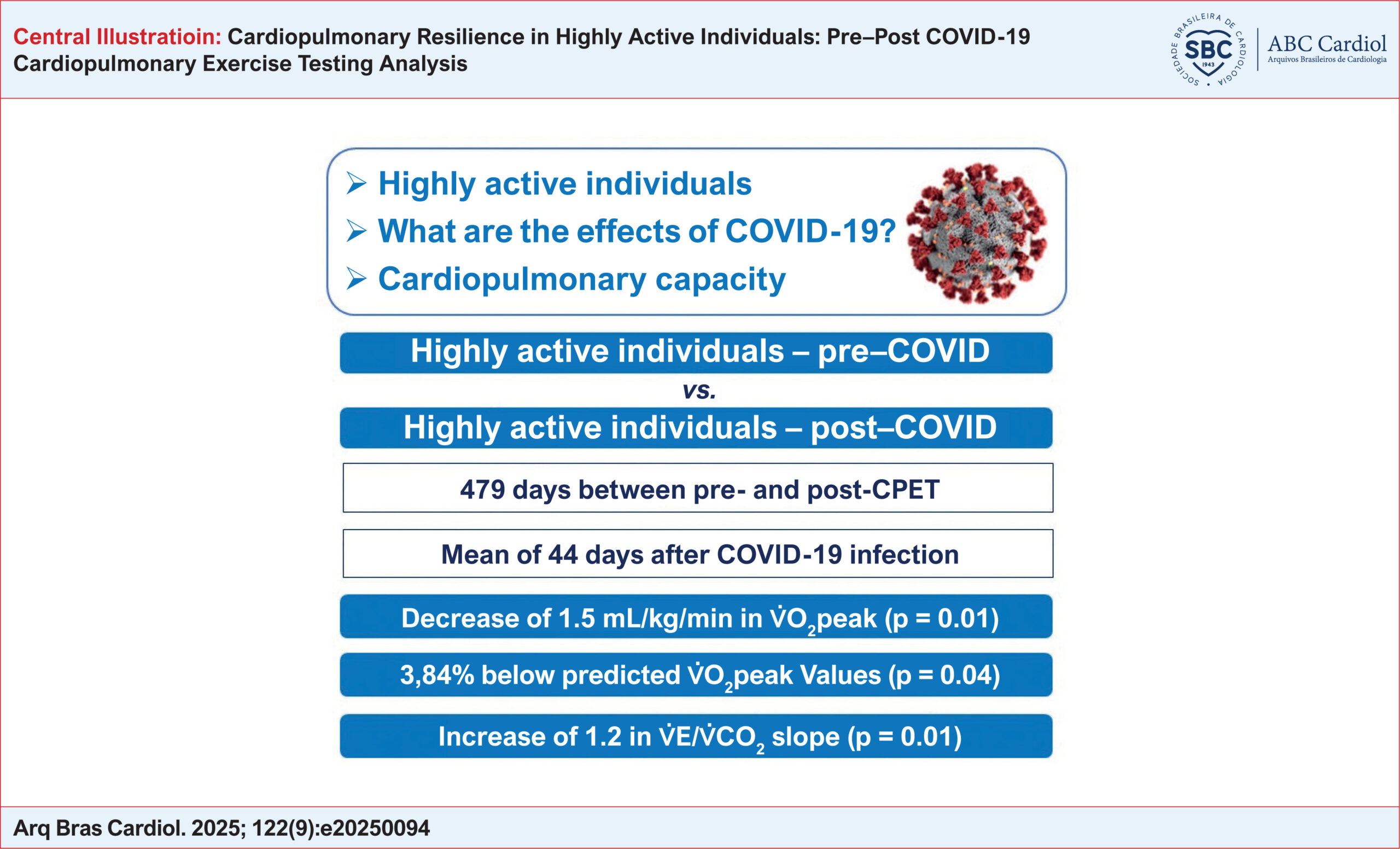
Cardiopulmonary Resilience in Highly Active Individuals: Pre–Post COVID-19 Cardiopulmonary Exercise Testing Analysis
ABC
Original Article

Cardiopulmonary Resilience in Highly Active Individuals: Pre–Post COVID-19 Cardiopulmonary Exercise Testing Analysis

Fabrício Braga et al. Gabriel Espinosa Amanda Monteiro Mauricio Milani … Juliana Paiva Juliana Goulart Prata Oliveira Milani Leandro Franzoni Ricardo Stein Gerson Cipriano Jr. Jonas Lírio Gurgel Ricardo Mourilhe-Rocha

Abstract

Background:

The COVID-19 pandemic has affected millions globally, with persistent impacts extending beyond the acute phase. One such effect is post-COVID (long COVID), characterized by symptoms such as fatigue and exercise intolerance lasting more than 60 days. Although regular exercise is associated with reduced risk of severe outcomes, reports of decreased athletic performance after COVID-19 — even among highly active individuals (HAIs) — have raised concerns regarding the long-term effects on physical health. Cardiopulmonary exercise testing (CPET) is a valuable tool to assess exercise intolerance and to investigate the metabolic and ventilatory consequences of COVID-19.

Objectives:

To evaluate the impact of COVID-19 on cardiopulmonary function in HAIs by analyzing metabolic and ventilatory responses using CPET before and after infection.

Methods:

CPET data were retrospectively analyzed from HAIs of both sexes. Primary outcomes included changes in peak oxygen uptake (O2peak) and ventilatory efficiency (E/CO2 slope). Statistical significance was set at 5% (p < 0.05).

Results:

A total of 43 HAIs (72.1% male; 44 ± 10 years) were included. The median interval between CPETs was 479 days, with testing performed a mean of 44 ± 27 days after COVID-19. O2peak decreased by a mean of 1.5 mL/kg/min (p = 0.017), representing a 3.84% reduction in predicted O2peak values (p = 0.045). E/CO2 slope increased by 1.2 (p = 0.017).

Conclusion:

Although HAIs are not immune to the effects of COVID-19, their high baseline physical activity levels appear to confer substantial cardiopulmonary resilience. Only minimal post-infection alterations were observed, which suggests that maintaining fitness may provide protective benefits against long-term sequelae of COVID-19.
  • athletic performance
  • Cardiorespiratory Fitness
  • Exercise
  • Exercise Test
Read Full Article
Creative Commons Attribution (CC BY) Creative Commons license
14/11/2025 DOI: 10.36660/abc.20250094i Views 1
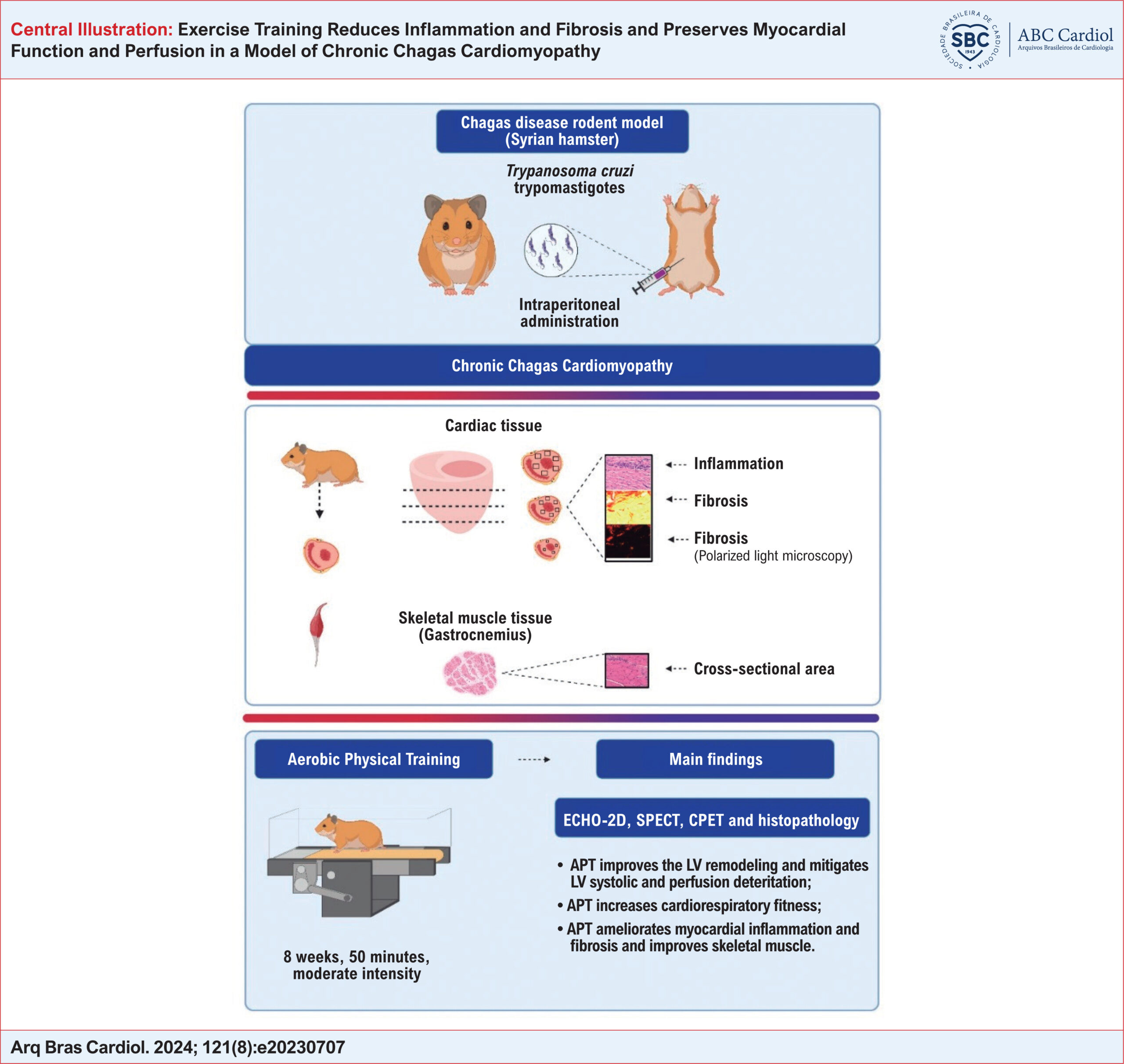
Exercise Training Reduces Inflammation and Fibrosis and Preserves Myocardial Function and Perfusion in a Model of Chronic Chagas Cardiomyopathy
ABC
Original Article

Exercise Training Reduces Inflammation and Fibrosis and Preserves Myocardial Function and Perfusion in a Model of Chronic Chagas Cardiomyopathy

Thayrine R. Damasceno et al. Denise M. Tanaka Enrico F. Magnani Rafael D. B. Oliveira … Danielle A. G. Pereira Ildernandes Vieira-Alves Virginia S. Lemos Jorge M. Cabeza Camila G. Fabricio Alessandra A. Resende Dawit A. P. Gonçalves Gustavo de Oliveira Zanetti Eduardo E. Vieira de Carvalho Marcus V. Simões Luciano F. L. Oliveira

Abstract

Background:

Chronic Chagas cardiomyopathy (CCC) is caused by an inflammatory process induced by Trypanosoma cruzi, which leads to myocarditis with reactive and reparative fibrosis. CCC progresses with myocardial perfusion abnormalities and histopathological events that affect cardiorespiratory fitness (CRF).

Objectives:

We evaluated the effects of aerobic physical training (APT) on myocardial perfusion and on morphological and functional impairments related with inflammation and fibrosis in Syrian hamsters with CCC. As a secondary objective, we analyzed the cross-sectional areas of the skeletal muscle.

Methods:

Hamsters with CCC and their respective controls were divided into four groups: CCC sedentary, CCC-APT, sedentary control and APT control. Seven months after infection, the animals underwent echocardiography, myocardial perfusion scintigraphy and cardiopulmonary exercise testing. Moderate-intensity APT was performed for fifty minutes, five times a week, for eight weeks. Subsequently, the animals were reassessed. Histopathological analysis was conducted after the above-mentioned procedures. The level of significance was set at 5% in all analyses (p<0.05).

Results:

CCC sedentary animals presented worse myocardial perfusion defects (MPD) over time, reduced left ventricle ejection fraction (LVEF) and showed more inflammation and fibrosis when compared to other groups (mixed ANOVA analysis). Conversely, APT was able to mitigate the progression of MPD, ameliorate inflammation and fibrosis and improve CRF efficiency in CCC-APT animals.

Conclusions:

Our study demonstrated that APT ameliorated cardiac dysfunction, MPD, and reduced inflammation and fibrosis in CCC hamster models. Additionally, CCC-SED animals presented skeletal muscle atrophy while CCC-APT animals showed preserved skeletal muscle CSA. Understanding APT’s effects on CCC’s pathophysiological dimensions is crucial for future research and therapeutic interventions.

  • Cardiorespiratory Fitness
  • Chagas Cardiomyopathy
  • Exercise
  • Myocardial Perfusion Imaging
  • Myocarditis
Read Full Article
Creative Commons Attribution (CC BY) Creative Commons license
09/09/2024 DOI: 10.36660/abc.20230707i Views 1
ABC
Editorial

The Right Way to Identify Bad Cardiorespiratory Fitness: Look to the Right

Willian R. Menegazzo et al. Anderson Donelli da Silveira

The right ventricle (RV), previously known as the forgotten ventricle, is progressively gaining attention as a strong indicator of poorer prognosis in heart disease., Besides prognostic implications, RV dysfunction is associated with worse cardiorespiratory fitness (CRF), independently of other anatomic and functional variables., Unfortunately, the current treatment strategies for RV failure do not confer the same clinical and prognostic benefits of the left ventricle (LV) failure,, which limits its management and warrants new treatment strategies.

Ramirez et al. accessed this important topic by studying the RV function on 109 patients with ST-elevation myocardial (STEMI), its association with CRF, and its improvement after cardiac rehabilitation (CR) in a single center in Monterrey, Mexico. Their primary goal was to evaluate the association between RV function and CRF in this population, and the secondary objectives were to analyze the CRF before and after a program of CR in patients with or without RV dysfunction. They evaluated exercise tolerance through cardiopulmonary exercise testing and RV longitudinal function through echocardiographic measurement of the S’ Doppler wave of the tricuspid annulus and the tricuspid annular posterior systolic excursion and RV radial function through RV fractional area change. The population was mainly male gender (83%), with anterior STEMI (55%), median LV ejection fraction of 49%, and normal RV function (90%). They have shown an association and correlation between RV radial and longitudinal dysfunction and CRF before and after CR. The main finding is that RV dysfunction evaluated after STEMI and before CR, being radial or longitudinal, was associated with a lack of improvement of at least 1 Metabolic Equivalent Task after a program of CR (p = 0.028 for RV radial dysfunction and p = 0.008 for RV longitudinal dysfunction). The authors concluded that RV dysfunction in STEMI patients is associated and correlated with poorer exercise capacity and functional class before CR and that CR improved CRF. This helps to identify a subgroup of patients with a higher risk of being symptomatic, with a worse prognosis and possibly better candidates for CR.

[…]

  • Cardiac Rehabilitation
  • Cardiorespiratory Fitness
  • Echocardiography, Doppler/methods
  • Exercise Test/methods
  • Myocardial Infarction
  • Ventricular Dysfunction Right
Read Full Article
Creative Commons Attribution (CC BY) Creative Commons license
27/10/2023 DOI: 10.36660/abc.20230630
ABC
Editorial

Aerobic Exercise Prescription: The Talk Test Rises Over the 6-Minute Walk Test

Márcio Garcia Menezes et al. Vitor Augusto Fronza Leandro Franzoni

Cardiovascular diseases (CVDs) represent a concerning reality, leading to a high morbidity and mortality rate in many countries, with a global total of 18 million deaths. Moreover, these conditions pose substantial economic and social burdens.–

Cardiovascular rehabilitation holds significant promise in benefiting patients with CVDs, with aerobic exercises (AE) as pivotal allies in improving cardiorespiratory fitness, muscular endurance, cardiovascular function, and overall quality of life.– According to the Sociedade Brasileira de Cardiologia, the general recommendation for engaging in physical exercise is 150 minutes per week, distributed across three to five sessions. One of the foremost objectives in cardiovascular rehabilitation is to enhance cardiorespiratory fitness through the incorporation of AE., Furthermore, the judicious practice of physical activity aims to mitigate hypertension, the risk of cardiovascular events, and overall mortality in cardiovascular patients.–

[…]

  • Cardiorespiratory Fitness
  • Cardiovascular Rehabilitation
  • Physical Endurance
  • Quality of life
  • Walk Test
Read Full Article
Creative Commons Attribution (CC BY) Creative Commons license
27/10/2023 DOI: 10.36660/abc.20230636
IJCS
Editorial

Cardiorespiratory Optimal Point: A New Kid in the Block or an Established Star?

Miguel Mendes

Summary

COP researchers have already conducted very important research that must be expanded, including larger and more diverse and better defined populations, with patients around the world, different cardiovascular and non-cardiovascular diseases, tests using a treadmill (more experience with treadmill CPET is needed), and evaluation of the prognostic values of sub-maximal parameters, such as COP and eventually VO 2 at VT1, versus the maximal parameters, such as pVO 2 , VE/VCO 2 slope, and OUES.

A clear answer is needed: Is the information obtained from a submaximal CPET enough, or should it be considered only as an alternative when it is not possible to perform a maximal CPET or when peak VO 2 was not reached?

[…]

  • Cardiopulmonary exercise test
  • Cardiorespiratory Fitness
  • Oxygen Consumption
  • Survival
Read Full Article
Creative Commons Attribution (CC BY) Creative Commons license
20/10/2023 DOI: 10.36660/ijcs.20230124 Views 2
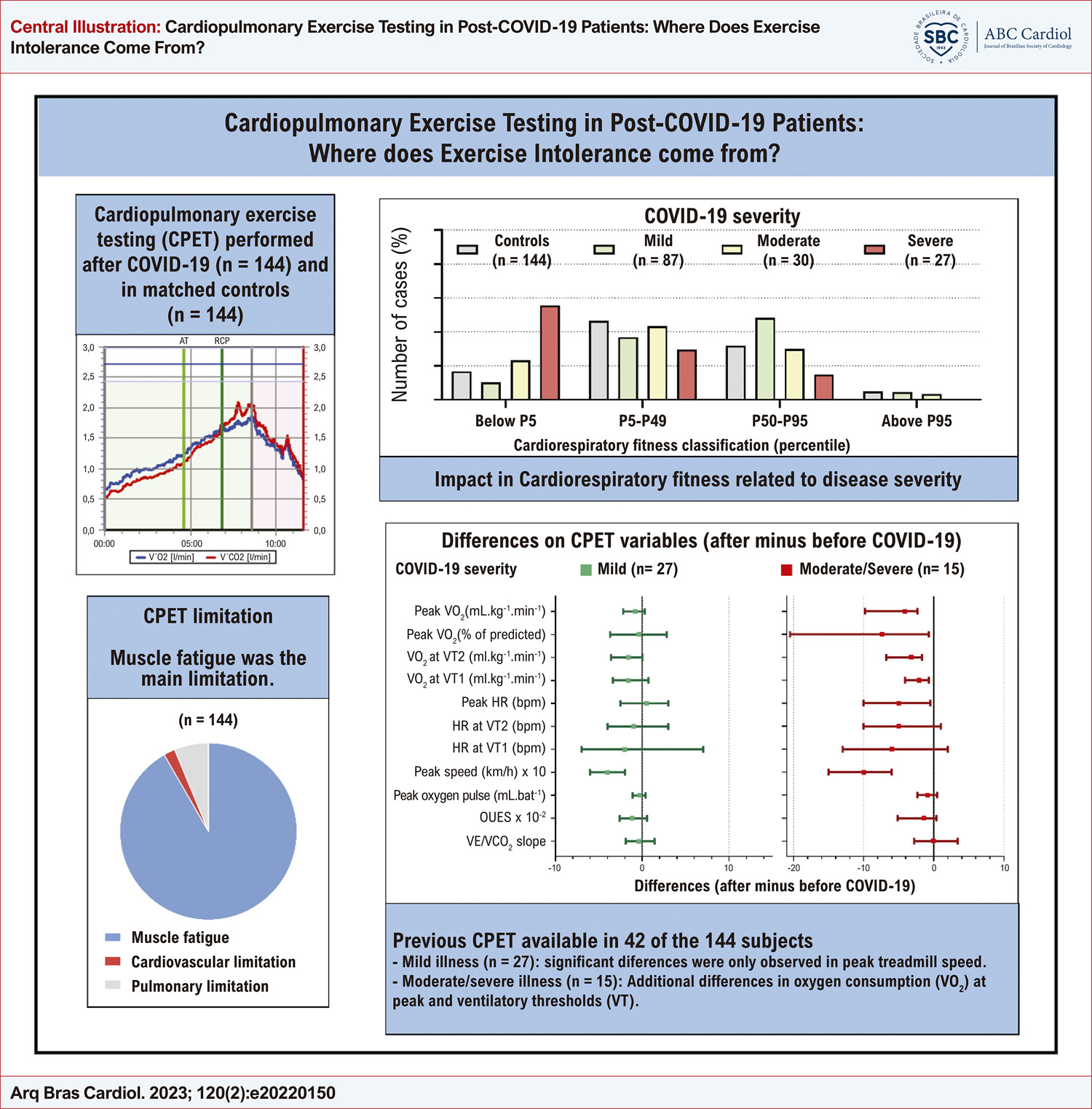
Central Illustration
ABC
Original Article

Cardiopulmonary Exercise Testing in Post-COVID-19 Patients: Where Does Exercise Intolerance Come From?

Mauricio Milani et al. Juliana Goulart Prata Oliveira Milani Graziella França Bernardelli Cipriano Lawrence Patrick Cahalin … Ricardo Stein Gerson Cipriano Jr.

Abstract

Background

Post-COVID-19 exercise intolerance is poorly understood. Cardiopulmonary exercise testing (CPET) can identify the underlying exercise limitations.

Objectives

To evaluate the source and magnitude of exercise intolerance in post-COVID-19 subjects.

Methods

Cohort study assessing subjects with different COVID-19 illness severities and a control group selected by propensity score matching. In a selected sample with CPET prior to viral infection, before and after comparisons were performed. Level of significance was 5% in the entire analysis.

Results

One hundred forty-four subjects with COVID-19 were assessed (median age: 43.0 years, 57% male), with different illness severities (60% mild, 21% moderate, 19% severe). CPET was performed 11.5 (7.0, 21.2) weeks after disease onset, with exercise limitations being attributed to the peripheral muscle (92%), and the pulmonary (6%), and cardiovascular (2%) systems. Lower median percent-predicted peak oxygen uptake was observed in the severe subgroup (72.2%) as compared to the controls (91.6%). Oxygen uptake differed among illness severities and controls at peak and ventilatory thresholds. Conversely, ventilatory equivalents, oxygen uptake efficiency slope, and peak oxygen pulse were similar. Subgroup analysis of 42 subjects with prior CPET revealed significant reduction in only peak treadmill speed in the mild subgroup and in oxygen uptake at peak and ventilatory thresholds in the moderate/severe subgroup. By contrast, ventilatory equivalents, oxygen uptake efficiency slope, and peak oxygen pulse did not change significantly.

Conclusions

Peripheral muscle fatigue was the most common exercise limitation etiology in post-COVID-19 patients regardless of the illness severity. Data suggest that treatment should emphasize comprehensive rehabilitation programs, including aerobic and muscle strengthening components.

  • Cardiorespiratory Fitness
  • COVID-19
  • Exercise Test
Read Full Article
Creative Commons Attribution (CC BY) Creative Commons license
06/03/2023 DOI: 10.36660/abc.20220150 Views 1
Figure 1
ABC
Original Article

Cardiometabolic Risk in Children and Adolescents: The Paradox between Body Mass Index and Cardiorespiratory Fitness

Luciana Tornquist et al. Debora Tornquist Letícia B. Schneiders Silvia I. R. Franke … Jane D. P. Renner Cézane P. Reuter

Abstract

Background

Cardiometabolic risk has been shown to be inversely associated with cardiorespiratory fitness (CRF) and positively associated with body mass index (BMI).

Objective

Our objective was to analyze the association of cardiometabolic risk factors with combined BMI and CRF in schoolchildren from a city in southern Brazil.

Methods

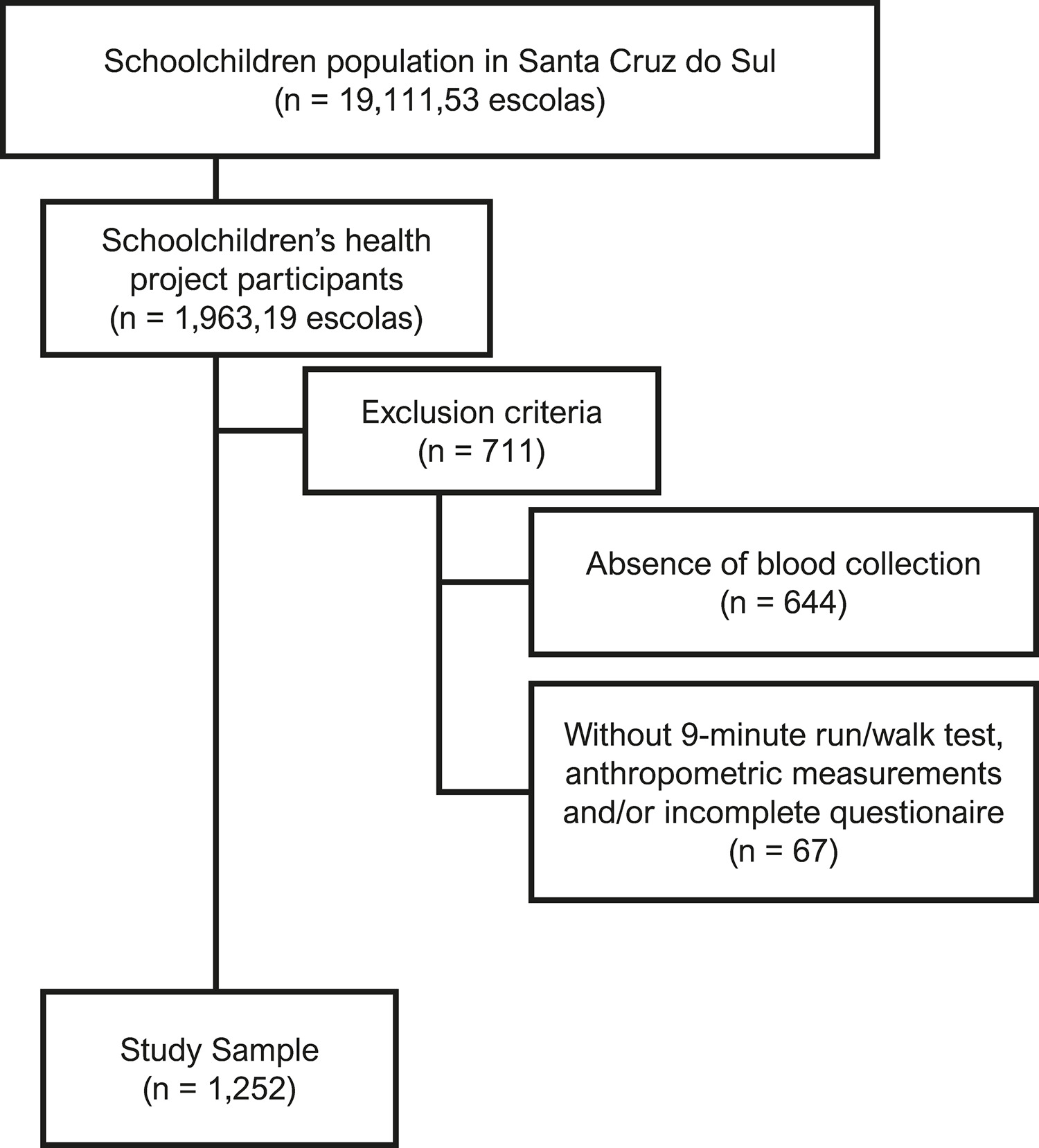
Cross-sectional study with a sample of 1252 schoolchildren aged seven to 17 years. Total cholesterol (TC), HDL-c, LDL-c, triglycerides (TG), systolic (SBP) and diastolic blood pressure (DBP) were evaluated. CRF and BMI were grouped into one variable and the schoolchildren were classified as eutrophic/fit, eutrophic/unfit, overweight-obese/fit, and overweight-obese/unfit. Crude and adjusted analyzes were performed using Poisson Regression and an alpha of 0.05 was adopted.

Results

Overweight-obese and fit schoolchildren showed a prevalence ratio (PR) of 1.50 (1.04 – 2.16) for altered TG, 3.05 (2.05 – 4.54) for elevated SBP, and 2.70 (1.87 – 3.88) for elevated DBP. Overweight-obese and unfit schoolchildren showed a PR for high TC of 1.24 (1.11 – 1.39) and 1.51(1.11 – 2.04) for low HDL levels. In addition, they had a risk of 2.07 (1.60 – 2.69) for altered TG, 3.36 (2.31 – 4.60) for elevated SBP and 2.42 (1.76 – 3.32) for altered DBP.

Conclusion

BMI played a central role in the association with risk and CRF was shown to attenuate the association between risk factors and obesity. Overweight-obese children and adolescents had a higher cardiometabolic risk, but the effect size was larger among the unfit.

  • Adolescent
  • Cardiorespiratory Fitness
  • Child
  • Obesity
  • Risk Factors
  • students
Read Full Article
Creative Commons Attribution (CC BY) Creative Commons license
02/05/2022 DOI: 10.36660/abc.20210593 Views 1
ABC
Editorial

Is the Obesity Paradox in Heart Failure Dependent on Cardiorespiratory Fitness?

Jari A. Laukkanen et al. Setor K. Kunutsor

Heart failure (HF) is a global public health menace which is associated with increased hospitalization, morbidity, mortality and high economic costs. However, HF which has ischemic heart disease as a common underlying disease, is a preventable condition. Cardiorespiratory fitness (CRF) is an index of habitual physical activity levels and is considered the gold standard for aerobic exercise capacity. Cardiorespiratory fitness, an important component of physical fitness and directly measured by peak oxygen uptake (pVO2), and ventilatory efficiency slope (VE/VCO2 slope), has been identified as one of the most important predictors of health outcomes and survival. We have previously reported that directly assessed pVO2 is strongly, independently and inversely related to a lowered risk of cardiometabolic conditions such as HF,, atrial fibrillation,, ventricular fibrillation, diabetes as well as mortality from cardiovascular diseases (CVDs)., Our recent population-based study based on UK Biobank suggests that CRF is a strong risk indicator for mortality and addition of CRF to a conventional risk factor score improved the overall discrimination of mortality risk and, more importantly, the predictive value of CRF varied across levels of some relevant risk factors, including age, sex, and smoking. This is an indicator of the potential of CRF to be a valuable risk assessment tool in clinical practice.

It is well-known that obesity, as measured by body mass index (BMI), is related to the development of cardiovascular outcomes. However, the combined effect of obesity and CRF on the risk of future HF still requires further study. It is of clinical relevance to understand if CRF attenuates the association of obesity with later risk of HF due to other underlying CVDs. The majority of previous studies on higher BMI, other obesity parameters, and HF risk have not taken into account the differences in CRF levels. Though high BMI is a risk factor for HF, there are findings of a non-linear relationship between BMI and CVD outcomes in HF patients which indicates an unusual relationship. In patients with established HF, accumulating evidence suggests that overweight and obese (higher BMI) individuals have improved survival compared to those with normal BMI, a known concept which has been called the “obesity paradox” or “reverse epidemiology”. Some mechanisms have been proposed to explain the HF obesity paradox which includes HF therapy being more effective in obese patients. It has been reported that CRF might play also play a role by either mitigating or negating the “obesity paradox”.,

[…]

  • body mass index
  • Cardiorespiratory Fitness
  • Exercise
  • Heart Failure
  • Hospitalization
  • Morbity and Mortality
  • Obesity
Read Full Article
Creative Commons Attribution (CC BY) Creative Commons license
23/10/2020 DOI: 10.36660/abc.20200522
Figure 1
ABC
Original Article

Impact of Cardiorespiratory Fitness on the Obesity Paradox in Heart Failure with Reduced Ejection Fraction

Rita Ilhão Moreira et al. Tiago Pereira Silva António Valentim Gonçalves Joana Feliciano … Pedro Rio Rui Soares Rui Cruz Ferreira

Abstract

Background:

Higher body mass index (BMI) has been associated with improved outcomes in heart failure with reduced ejection fraction. This finding has led to the concept of the obesity paradox.

Objective:

To investigate the impact of exercise tolerance and cardiorespiratory capacity on the obesity paradox.

Methods:

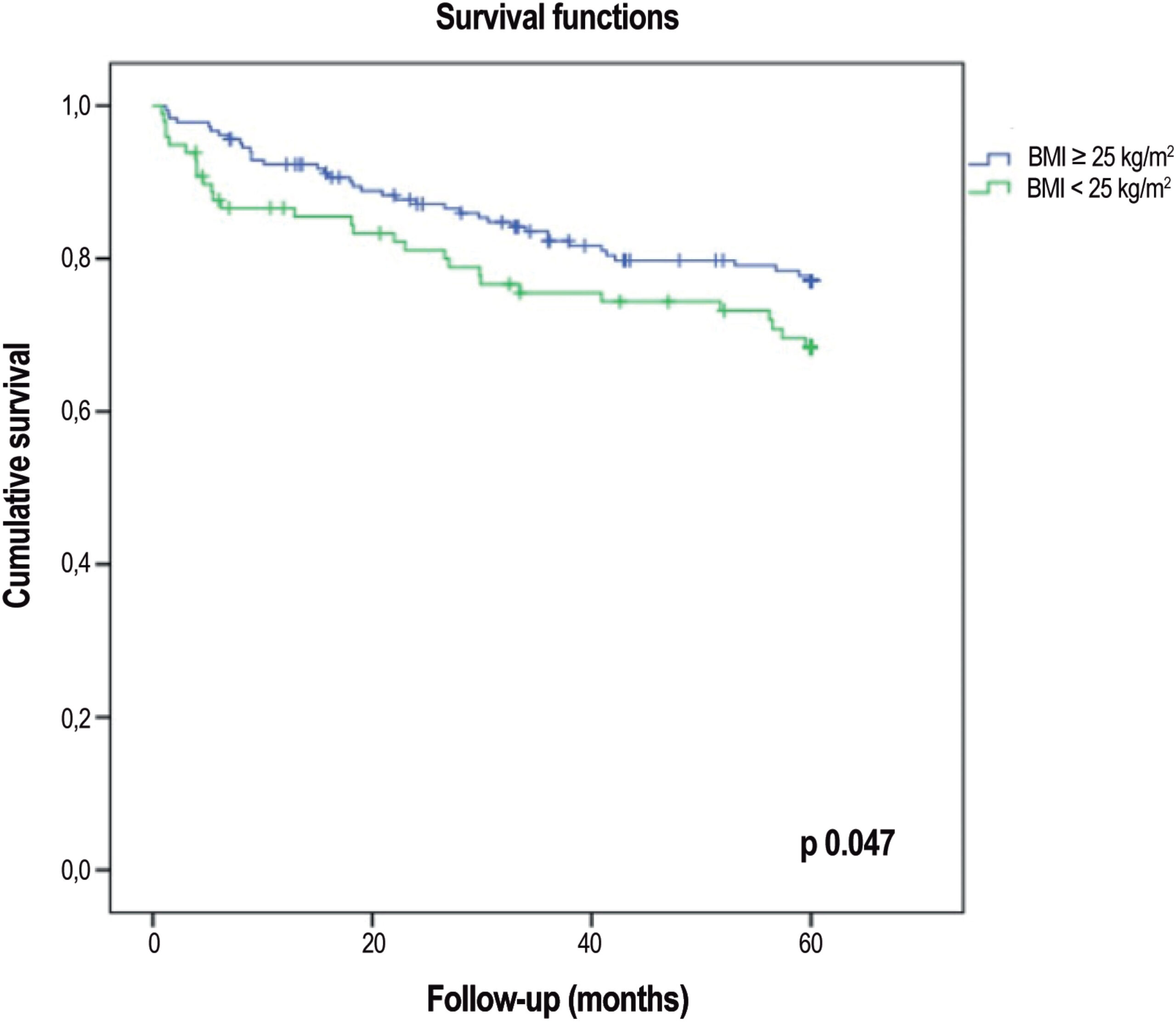
Outpatients with symptomatic heart failure and left ventricular ejection fraction (LVEF) ≤ 40%, followed up in our center, prospectively underwent baseline comprehensive evaluation including clinical, laboratorial, electrocardiographic, echocardiographic, and cardiopulmonary exercise testing parameters. The study population was divided according to BMI (< 25, 25 – 29.9, and ≥ 30 kg/m2). All patients were followed for 60 months. The combined endpoint was defined as cardiac death, urgent heart transplantation, or need for mechanical circulatory support. P value < 0.05 was considered significant.

Results:

In the 282 enrolled patients (75% male, 54 ± 12 years, BMI 27 ± 4 kg/m2, LVEF 27% ± 7%), the composite endpoint occurred in 24.4% during follow-up. Patients with higher BMI were older, and they had higher LVEF and serum sodium levels, as well as lower ventilatory efficiency (VE/VCO2) slope. VE/VCO2 and peak oxygen consumption (pVO2) were strong predictors of prognosis (p < 0.001). In univariable Cox regression analysis, higher BMI was associated with better outcomes (HR 0.940, CI 0.886 – 0.998, p 0.042). However, after adjusting for either VE/VCO2 slope or pVO2, the protective role of BMI disappeared. Survival benefit of BMI was not evident when patients were grouped according to cardiorespiratory fitness class (VE/VCO2, cut-off value 35, and pVO2, cut-off value 14 mL/kg/min).

Conclusion:

These results suggest that cardiorespiratory fitness outweighs the relationship between BMI and survival in patients with heart failure.

  • body mass index
  • Breathing Exercises
  • Cardiorespiratory Fitness
  • Heart Failure
  • Obesity
  • Respiratory Function Tests
  • Stroke Volume
Read Full Article
Creative Commons Attribution (CC BY) Creative Commons license
23/10/2020 DOI: 10.36660/abc.20190337 Views 1
Figure 1
IJCS
Original Article

Physical Activity and Incidence of Atrial Fibrillation – Systematic Review and Meta-Analysis

Daniel Carlos Garlipp et al. Raphael Boesche Guimaraes Simone Louise Savaris Clovis Froemming Junior … Oscar Dutra Tiago Luiz Luz Leiria

Abstract

Background:

The relationship between exercise and atrial fibrillation (AF) is controversial.

Objectives:

To analyze the effects of physical activity on the incidence of atrial fibrillation using systematic review and meta-analysis.

Methods:

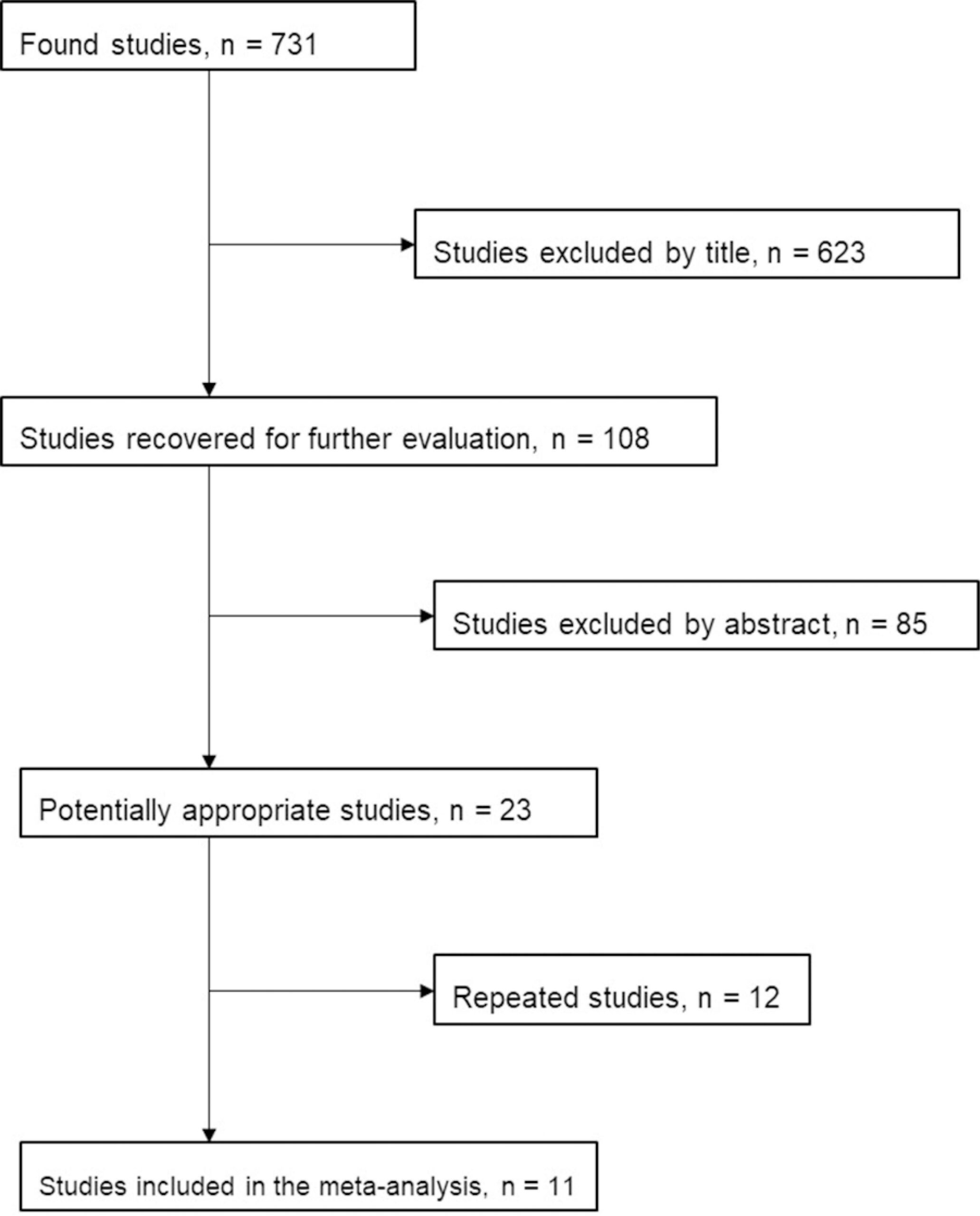
Systematic review and meta-analysis of studies that relate physical exercise and atrial fibrillation. The following databases were searched: PubMed, BVS Saúde and Cochrane. The following descriptors were used: “atrial fibrillation”, “exercise”, “physical activity” and “exercise therapy”. All prospective, retrospective, cross-sectional and cohort studies were investigated. All statistical analyzes were provided using Review Manager 5.3 to provide the mean difference (MD) and relative risk (RR) ratio with 95% confidence intervals (95% CI). The statistical method of heterogeneity index was used to assess heterogeneity. Level of significance was 5%.

Results:

Combined analysis of 11 studies totaling 276,323 participants aged between 12 and 90 years did not suggest a significant increase in AF in individuals submitted to physical exercise (RR = 0.914, 95% CI = 0.833-1.003, heterogeneity: p < 0.001).

Conclusions:

Physical exercise, lato sensu, without stratification by intensity, sex or age does not seem to be associated with an increase of atrial fibrillation.

  • Asthma
  • Atrial Fibrillation
  • Cardiorespiratory Fitness
  • Exercise
  • Exercise Therapy
  • Meta-Analysis as Topic
  • Review
Read Full Article
Creative Commons Attribution (CC BY) Creative Commons license
12/08/2019 DOI: 10.5935/2359-4802.20190055 Views 2
Figure 1
IJCS
Original Article

Classification System for Cardiorespiratory Fitness Based on a Sample of the Brazilian Population

Antonio Eduardo Monteiro de Almeida et al. Igor Rafael Miranda Ferreira Santander Maria Izabel Macedo Campos Jorge René Garcia Arévalo … João Agnaldo do Nascimento Luiz Eduardo Fonteles Ritt Karlyse Claudino Belli Jorge Pinto Ribeiro Ricardo Stein

Abstract

Background:

Peak oxygen consumption (VO2peak) is an important prognostic marker and its classification helps the cardiologist in the therapeutic decision-making process. The most commonly used cardiorespiratory fitness (CRF) classification has not been validated for the Brazilian population.

Objective:

To elaborate a CRF classification using a Brazilian sample and to compare it with the American Heart Association (AHA), Cooper and UNIFESP classifications.

Methods:

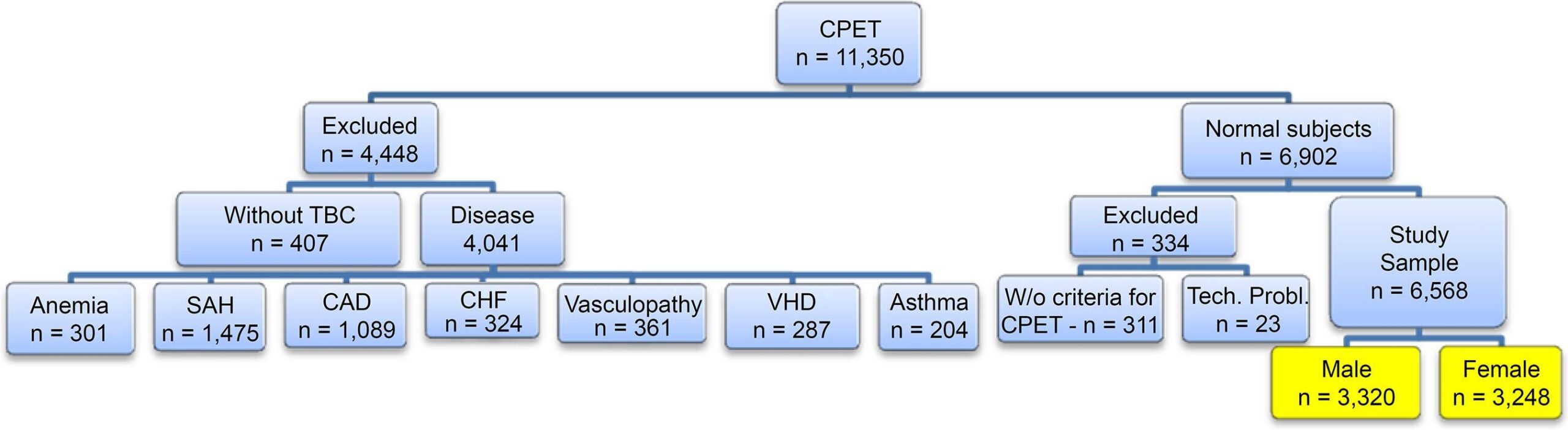
A total of 6,568 healthy subjects were analyzed through cardiopulmonary exercise testing (CPET). They were distributed by sex and the following age groups (years): 7-12, 13-19, 20-79 (per decades) and > 80 years. After measurement of the VO2peak, participants were distributed into quintiles of CRF in very poor, poor, moderate, high and very high (AEMA Table). The CRF classifications by AEMA, AHA, Cooper, and UNIFESP were compared using the Wilcoxon, Kappa and concordance percentages.

Results:

VO2peak presented an inverse and moderate correlation with age considering both sexes (R = -0.488, p < 0.001). All paired comparisons between CRF classification systems showed differences (p < 0.001) and disagreement percentage – AEMA versus AHA (k = 0.291, 56.7%), AEMA versus Cooper (k = 0.220, 62.4%) and AEMA versus UNIFESP (k = 0.201, 63.9 %).

Conclusion:

The AEMA table showed important discrepancies in the classification of CRF when compared to other tables widely used in our setting. Because it was obtained from a large sample of the Brazilian population, the AEMA table should be preferred over other classification systems in our population.

  • Cardiorespiratory Fitness
  • Exercise
  • Exercise Tests
  • Oxygen Consumption
  • Population Health
  • Respiratory Function Tests
Read Full Article
Creative Commons Attribution (CC BY) Creative Commons license
12/08/2019 DOI: 10.5935/2359-4802.20190057 Views 2
IJCS
Editorial

Is Cardiorespiratory Optimal Point Measured During the Maximal Cardiopulmonary Exercise Test a Relevant Indicator of Sports Performance?

Jari A. Laukkanen

Cardiorespiratory fitness (CRF) is considered the gold standard for assessing aerobic performance among athletes and normal population and has recently been named as a clinical vital sign, being an essential indicator of cardiovascular and pulmonary function. Cardiorespiratory fitness is associated with lower risk of non-fatal and fatal cardiovascular disease (CVD) events, with studies demonstrating a consistent, inverse association between CRF and mortality even after adjustment for the traditional risk factor burden. Additionally, both maximal oxygen consumption (VO2max) and VO2 at ventilatory threshold (VT) have been associated with a reduced risk of adverse health outcomes.,– A literature-based meta-analysis of 33 observational cohort studies has better delineated the relationship of CRF with CVD and all-cause mortality outcomes. However, VO2max and VT are often used to evaluate athletes’ performance and to monitor their training responses. During the cardiopulmonary exercise test (CPX), many variables could be used to assess specific training responses to the cardiovascular, respiratory and musculoskeletal systems based on the analysis of submaximal and maximal responses to a progressively incremental exercise.

Modern CPX systems allow for the analysis of gas exchange at rest, during mild, moderate and maximal exercise levels, and during recovery and yield measures of VO2, carbon dioxide output (VCO2), and ventilation (VE). These advanced computerized systems provide both simple and complex analyses of these data that are easy to retrieve and store, which makes CPX widely available. Oxygen uptake at VT, often referred to as the anaerobic threshold, is a variable assessed at submaximal level of CPX. For majority of healthy individuals, the anaerobic threshold lies at exercise intensities between 50% and 75% of VO2max, while in trained endurance athletes, it can reach intensities as high as 80% of VO2max.

[…]

  • Athletes
  • athletic performance
  • Cardiorespiratory Fitness
  • Exercise
  • Respiratory Function Tests
Read Full Article
Creative Commons Attribution (CC BY) Creative Commons license
01/01/2018 DOI: 10.5935/2359-4802.20180041

How to cite this article

EndNote RIS

Electronic Document Format (Vancouver)

Braga F, Espinosa G, Monteiro A, Milani M, Paiva J, Milani JGPO, Franzoni L, et al. Cardiopulmonary Resilience in Highly Active Individuals: Pre–Post COVID-19 Cardiopulmonary Exercise Testing Analysis. Arquivos Brasileiros de Cardiologia 2025;122(9):e20250094.

Electronic Document Format (ABNT)

Braga, Fabrício; Espinosa, Gabriel; Monteiro, Amanda; Milani, Mauricio; Paiva, Juliana; Milani, Juliana Goulart Prata Oliveira; Franzoni, Leandro; Stein, Ricardo; Cipriano Jr., Gerson; Gurgel, Jonas Lírio; Mourilhe-Rocha, Ricardo. Cardiopulmonary Resilience in Highly Active Individuals: Pre–Post COVID-19 Cardiopulmonary Exercise Testing Analysis. Arquivos Brasileiros de Cardiologia, v. 122, n. 9, e20250094, Nov. 2025.

Electronic Document Format (APA)

Braga, F., Espinosa, G., Monteiro, A., Milani, M., Paiva, J., Milani, J. G. P. O., Franzoni, L., Stein, R., Cipriano Jr., G., Gurgel, J. L., & Mourilhe-Rocha, R. (2025). Cardiopulmonary Resilience in Highly Active Individuals: Pre–Post COVID-19 Cardiopulmonary Exercise Testing Analysis. Arquivos Brasileiros de Cardiologia, 122(9), e20250094.

Electronic Document Format (ISO)

Braga, Fabrício and Espinosa, Gabriel and Monteiro, Amanda and Milani, Mauricio and Paiva, Juliana and Milani, Juliana Goulart Prata Oliveira and Franzoni, Leandro and Stein, Ricardo and Cipriano Jr., Gerson and Gurgel, Jonas Lírio and Mourilhe-Rocha, Ricardo. Cardiopulmonary Resilience in Highly Active Individuals: Pre–Post COVID-19 Cardiopulmonary Exercise Testing Analysis. Arquivos Brasileiros de Cardiologia [online]. 2025, vol. 122, n. 9, [cited 2026-10-14], e20250094. Available from: <https://journals.cardiol.br/en/article/cardiopulmonary-resilience-in-highly-active-individuals-pre-post-covid-19-cardiopulmonary-exercise-testing-analysis/>. ISSN 0066-782X

EndNote RIS

Electronic Document Format (Vancouver)

Damasceno TR, Tanaka DM, Magnani EF, Oliveira RDB, Pereira DAG, Vieira-Alves I, Lemos VS, et al. Exercise Training Reduces Inflammation and Fibrosis and Preserves Myocardial Function and Perfusion in a Model of Chronic Chagas Cardiomyopathy. Arquivos Brasileiros de Cardiologia 2024;121(8):e20230707.

Electronic Document Format (ABNT)

Damasceno, Thayrine R.; Tanaka, Denise M.; Magnani, Enrico F.; Oliveira, Rafael D. B.; Pereira, Danielle A. G.; Vieira-Alves, Ildernandes; Lemos, Virginia S.; Cabeza, Jorge M.; Fabricio, Camila G.; Resende, Alessandra A.; Gonçalves, Dawit A. P.; Zanetti, Gustavo de Oliveira; Carvalho, Eduardo E. Vieira de; Simões, Marcus V.; Oliveira, Luciano F. L.. Exercise Training Reduces Inflammation and Fibrosis and Preserves Myocardial Function and Perfusion in a Model of Chronic Chagas Cardiomyopathy. Arquivos Brasileiros de Cardiologia, v. 121, n. 8, e20230707, Sep. 2024.

Electronic Document Format (APA)

Damasceno, T. R., Tanaka, D. M., Magnani, E. F., Oliveira, R. D. B., Pereira, D. A. G., Vieira-Alves, I., Lemos, V. S., Cabeza, J. M., Fabricio, C. G., Resende, A. A., Gonçalves, D. A. P., Zanetti, G. O., Carvalho, E. E. V. , Simões, M. V., & Oliveira, L. F. L. (2024). Exercise Training Reduces Inflammation and Fibrosis and Preserves Myocardial Function and Perfusion in a Model of Chronic Chagas Cardiomyopathy. Arquivos Brasileiros de Cardiologia, 121(8), e20230707.

Electronic Document Format (ISO)

Damasceno, Thayrine R. and Tanaka, Denise M. and Magnani, Enrico F. and Oliveira, Rafael D. B. and Pereira, Danielle A. G. and Vieira-Alves, Ildernandes and Lemos, Virginia S. and Cabeza, Jorge M. and Fabricio, Camila G. and Resende, Alessandra A. and Gonçalves, Dawit A. P. and Zanetti, Gustavo de Oliveira and Carvalho, Eduardo E. Vieira de and Simões, Marcus V. and Oliveira, Luciano F. L.. Exercise Training Reduces Inflammation and Fibrosis and Preserves Myocardial Function and Perfusion in a Model of Chronic Chagas Cardiomyopathy. Arquivos Brasileiros de Cardiologia [online]. 2024, vol. 121, n. 8, [cited 2026-10-14], e20230707. Available from: <https://journals.cardiol.br/en/article/exercise-training-reduces-inflammation-and-fibrosis-and-preserves-myocardial-function-and-perfusion-in-a-model-of-chronic-chagas-cardiomyopathy/>. ISSN 0066-782X

EndNote RIS

Electronic Document Format (Vancouver)

Menegazzo WR, Silveira AD. The Right Way to Identify Bad Cardiorespiratory Fitness: Look to the Right. Arquivos Brasileiros de Cardiologia 2023;120(9):e20230630.

Electronic Document Format (ABNT)

Menegazzo, Willian R.; Silveira, Anderson Donelli da. The Right Way to Identify Bad Cardiorespiratory Fitness: Look to the Right. Arquivos Brasileiros de Cardiologia, v. 120, n. 9, e20230630, Oct. 2023.

Electronic Document Format (APA)

Menegazzo, W. R., & Silveira, A. D. (2023). The Right Way to Identify Bad Cardiorespiratory Fitness: Look to the Right. Arquivos Brasileiros de Cardiologia, 120(9), e20230630.

Electronic Document Format (ISO)

Menegazzo, Willian R. and Silveira, Anderson Donelli da. The Right Way to Identify Bad Cardiorespiratory Fitness: Look to the Right. Arquivos Brasileiros de Cardiologia [online]. 2023, vol. 120, n. 9, [cited 2026-10-14], e20230630. Available from: <https://journals.cardiol.br/en/article/the-right-way-to-identify-bad-cardiorespiratory-fitness-look-to-the-right/>. ISSN 0066-782X

EndNote RIS

Electronic Document Format (Vancouver)

Menezes MG, Fronza VA, Franzoni L. Aerobic Exercise Prescription: The Talk Test Rises Over the 6-Minute Walk Test. Arquivos Brasileiros de Cardiologia 2023;120(9):e20230636.

Electronic Document Format (ABNT)

Menezes, Márcio Garcia; Fronza, Vitor Augusto; Franzoni, Leandro. Aerobic Exercise Prescription: The Talk Test Rises Over the 6-Minute Walk Test. Arquivos Brasileiros de Cardiologia, v. 120, n. 9, e20230636, Oct. 2023.

Electronic Document Format (APA)

Menezes, M. G., Fronza, V. A., & Franzoni, L. (2023). Aerobic Exercise Prescription: The Talk Test Rises Over the 6-Minute Walk Test. Arquivos Brasileiros de Cardiologia, 120(9), e20230636.

Electronic Document Format (ISO)

Menezes, Márcio Garcia and Fronza, Vitor Augusto and Franzoni, Leandro. Aerobic Exercise Prescription: The Talk Test Rises Over the 6-Minute Walk Test. Arquivos Brasileiros de Cardiologia [online]. 2023, vol. 120, n. 9, [cited 2026-10-14], e20230636. Available from: <https://journals.cardiol.br/en/article/aerobic-exercise-prescription-the-talk-test-rises-over-the-6-minute-walk-test/>. ISSN 0066-782X

EndNote RIS

Electronic Document Format (Vancouver)

Mendes M. Cardiorespiratory Optimal Point: A New Kid in the Block or an Established Star?. International Journal of Cardiovascular Sciences 2023;36:e20230124.

Electronic Document Format (ABNT)

Mendes, Miguel. Cardiorespiratory Optimal Point: A New Kid in the Block or an Established Star?. International Journal of Cardiovascular Sciences, v. 36, e20230124, Oct. 2023.

Electronic Document Format (APA)

Mendes, M. (2023). Cardiorespiratory Optimal Point: A New Kid in the Block or an Established Star?. International Journal of Cardiovascular Sciences, 36, e20230124.

Electronic Document Format (ISO)

Mendes, Miguel. Cardiorespiratory Optimal Point: A New Kid in the Block or an Established Star?. International Journal of Cardiovascular Sciences [online]. 2023, vol. 36, [cited 2026-10-14], e20230124. Available from: <https://journals.cardiol.br/en/article/cardiorespiratory-optimal-point-a-new-kid-in-the-block-or-an-established-star/>. ISSN 2359-4802

EndNote RIS

Electronic Document Format (Vancouver)

Milani M, Milani JGPO, Cipriano GFB, Cahalin LP, Stein R, Cipriano Jr. G. Cardiopulmonary Exercise Testing in Post-COVID-19 Patients: Where Does Exercise Intolerance Come From?. Arquivos Brasileiros de Cardiologia 2023;120(2):e20220150.

Electronic Document Format (ABNT)

Milani, Mauricio; Milani, Juliana Goulart Prata Oliveira; Cipriano, Graziella França Bernardelli; Cahalin, Lawrence Patrick; Stein, Ricardo; Cipriano Jr., Gerson. Cardiopulmonary Exercise Testing in Post-COVID-19 Patients: Where Does Exercise Intolerance Come From?. Arquivos Brasileiros de Cardiologia, v. 120, n. 2, e20220150, Mar. 2023.

Electronic Document Format (APA)

Milani, M., Milani, J. G. P. O., Cipriano, G. F. B., Cahalin, L. P., Stein, R., & Cipriano Jr., G. (2023). Cardiopulmonary Exercise Testing in Post-COVID-19 Patients: Where Does Exercise Intolerance Come From?. Arquivos Brasileiros de Cardiologia, 120(2), e20220150.

Electronic Document Format (ISO)

Milani, Mauricio and Milani, Juliana Goulart Prata Oliveira and Cipriano, Graziella França Bernardelli and Cahalin, Lawrence Patrick and Stein, Ricardo and Cipriano Jr., Gerson. Cardiopulmonary Exercise Testing in Post-COVID-19 Patients: Where Does Exercise Intolerance Come From?. Arquivos Brasileiros de Cardiologia [online]. 2023, vol. 120, n. 2, [cited 2026-10-14], e20220150. Available from: <https://journals.cardiol.br/en/article/cardiopulmonary-exercise-testing-in-post-covid-19-patients-where-does-exercise-intolerance-come-from/>. ISSN 0066-782X

EndNote RIS

Electronic Document Format (Vancouver)

Tornquist L, Tornquist D, Schneiders LB, Franke SIR, Renner JDP, Reuter CP. Cardiometabolic Risk in Children and Adolescents: The Paradox between Body Mass Index and Cardiorespiratory Fitness. Arquivos Brasileiros de Cardiologia 2022;119(2):236-43.

Electronic Document Format (ABNT)

Tornquist, Luciana; Tornquist, Debora; Schneiders, Letícia B.; Franke, Silvia I. R.; Renner, Jane D. P.; Reuter, Cézane P.. Cardiometabolic Risk in Children and Adolescents: The Paradox between Body Mass Index and Cardiorespiratory Fitness. Arquivos Brasileiros de Cardiologia, v. 119, n. 2, p. 236-243, May. 2022.

Electronic Document Format (APA)

Tornquist, L., Tornquist, D., Schneiders, L. B., Franke, S. I. R., Renner, J. D. P., & Reuter, C. P. (2022). Cardiometabolic Risk in Children and Adolescents: The Paradox between Body Mass Index and Cardiorespiratory Fitness. Arquivos Brasileiros de Cardiologia, 119(2), 236-243.

Electronic Document Format (ISO)

Tornquist, Luciana and Tornquist, Debora and Schneiders, Letícia B. and Franke, Silvia I. R. and Renner, Jane D. P. and Reuter, Cézane P.. Cardiometabolic Risk in Children and Adolescents: The Paradox between Body Mass Index and Cardiorespiratory Fitness. Arquivos Brasileiros de Cardiologia [online]. 2022, vol. 119, n. 2, [cited 2026-10-14], pp. 236-243. Available from: <https://journals.cardiol.br/en/article/cardiometabolic-risk-in-children-and-adolescents-the-paradox-between-body-mass-index-and-cardiorespiratory-fitness/>. ISSN 0066-782X

EndNote RIS

Electronic Document Format (Vancouver)

Laukkanen JA, Kunutsor SK. Is the Obesity Paradox in Heart Failure Dependent on Cardiorespiratory Fitness?. Arquivos Brasileiros de Cardiologia 2020;115(4):646-8.

Electronic Document Format (ABNT)

Laukkanen, Jari A.; Kunutsor, Setor K.. Is the Obesity Paradox in Heart Failure Dependent on Cardiorespiratory Fitness?. Arquivos Brasileiros de Cardiologia, v. 115, n. 4, p. 646-648, Oct. 2020.

Electronic Document Format (APA)

Laukkanen, J. A., & Kunutsor, S. K. (2020). Is the Obesity Paradox in Heart Failure Dependent on Cardiorespiratory Fitness?. Arquivos Brasileiros de Cardiologia, 115(4), 646-648.

Electronic Document Format (ISO)

Laukkanen, Jari A. and Kunutsor, Setor K.. Is the Obesity Paradox in Heart Failure Dependent on Cardiorespiratory Fitness?. Arquivos Brasileiros de Cardiologia [online]. 2020, vol. 115, n. 4, [cited 2026-10-14], pp. 646-648. Available from: <https://journals.cardiol.br/en/article/is-the-obesity-paradox-in-heart-failure-dependent-on-cardiorespiratory-fitness/>. ISSN 0066-782X

EndNote RIS

Electronic Document Format (Vancouver)

Moreira RI, Silva TP, Gonçalves AV, Feliciano J, Rio P, Soares R, Ferreira RC, et al. Impact of Cardiorespiratory Fitness on the Obesity Paradox in Heart Failure with Reduced Ejection Fraction. Arquivos Brasileiros de Cardiologia 2020;115(4):639-45.

Electronic Document Format (ABNT)

Moreira, Rita Ilhão; Silva, Tiago Pereira; Gonçalves, António Valentim; Feliciano, Joana; Rio, Pedro; Soares, Rui; Ferreira, Rui Cruz. Impact of Cardiorespiratory Fitness on the Obesity Paradox in Heart Failure with Reduced Ejection Fraction. Arquivos Brasileiros de Cardiologia, v. 115, n. 4, p. 639-645, Oct. 2020.

Electronic Document Format (APA)

Moreira, R. I., Silva, T. P., Gonçalves, A. V., Feliciano, J., Rio, P., Soares, R., & Ferreira, R. C. (2020). Impact of Cardiorespiratory Fitness on the Obesity Paradox in Heart Failure with Reduced Ejection Fraction. Arquivos Brasileiros de Cardiologia, 115(4), 639-645.

Electronic Document Format (ISO)

Moreira, Rita Ilhão and Silva, Tiago Pereira and Gonçalves, António Valentim and Feliciano, Joana and Rio, Pedro and Soares, Rui and Ferreira, Rui Cruz. Impact of Cardiorespiratory Fitness on the Obesity Paradox in Heart Failure with Reduced Ejection Fraction. Arquivos Brasileiros de Cardiologia [online]. 2020, vol. 115, n. 4, [cited 2026-10-14], pp. 639-645. Available from: <https://journals.cardiol.br/en/article/impact-of-cardiorespiratory-fitness-on-the-obesity-paradox-in-heart-failure-with-reduced-ejection-fraction/>. ISSN 0066-782X

EndNote RIS

Electronic Document Format (Vancouver)

Garlipp DC, Guimaraes RB, Savaris SL, Froemming Junior C, Dutra O, Leiria TLL. Physical Activity and Incidence of Atrial Fibrillation – Systematic Review and Meta-Analysis. International Journal of Cardiovascular Sciences 2019;32(4):384-90.

Electronic Document Format (ABNT)

Garlipp, Daniel Carlos; Guimaraes, Raphael Boesche; Savaris, Simone Louise; Froemming Junior, Clovis; Dutra, Oscar; Leiria, Tiago Luiz Luz. Physical Activity and Incidence of Atrial Fibrillation – Systematic Review and Meta-Analysis. International Journal of Cardiovascular Sciences, v. 32, n. 4, p. 384-390, Aug. 2019.

Electronic Document Format (APA)

Garlipp, D. C., Guimaraes, R. B., Savaris, S. L., Froemming Junior, C., Dutra, O., & Leiria, T. L. L. (2019). Physical Activity and Incidence of Atrial Fibrillation – Systematic Review and Meta-Analysis. International Journal of Cardiovascular Sciences, 32(4), 384-390.

Electronic Document Format (ISO)

Garlipp, Daniel Carlos and Guimaraes, Raphael Boesche and Savaris, Simone Louise and Froemming Junior, Clovis and Dutra, Oscar and Leiria, Tiago Luiz Luz. Physical Activity and Incidence of Atrial Fibrillation – Systematic Review and Meta-Analysis. International Journal of Cardiovascular Sciences [online]. 2019, vol. 32, n. 4, [cited 2026-10-14], pp. 384-390. Available from: <https://journals.cardiol.br/en/article/physical-activity-and-incidence-of-atrial-fibrillation-systematic-review-and-meta-analysis/>. ISSN 2359-4802

EndNote RIS

Electronic Document Format (Vancouver)

Almeida AEM, Santander IRMF, Campos MIM, Arévalo JRG, Nascimento JA, Ritt LEF, Belli KC, et al. Classification System for Cardiorespiratory Fitness Based on a Sample of the Brazilian Population. International Journal of Cardiovascular Sciences 2019;32(4):343-54.

Electronic Document Format (ABNT)

Almeida, Antonio Eduardo Monteiro de; Santander, Igor Rafael Miranda Ferreira; Campos, Maria Izabel Macedo; Arévalo, Jorge René Garcia; Nascimento, João Agnaldo do; Ritt, Luiz Eduardo Fonteles; Belli, Karlyse Claudino; Ribeiro, Jorge Pinto; Stein, Ricardo. Classification System for Cardiorespiratory Fitness Based on a Sample of the Brazilian Population. International Journal of Cardiovascular Sciences, v. 32, n. 4, p. 343-354, Aug. 2019.

Electronic Document Format (APA)

Almeida, A. E. M. , Santander, I. R. M. F., Campos, M. I. M., Arévalo, J. R. G., Nascimento, J. A. , Ritt, L. E. F., Belli, K. C., Ribeiro, J. P., & Stein, R. (2019). Classification System for Cardiorespiratory Fitness Based on a Sample of the Brazilian Population. International Journal of Cardiovascular Sciences, 32(4), 343-354.

Electronic Document Format (ISO)

Almeida, Antonio Eduardo Monteiro de and Santander, Igor Rafael Miranda Ferreira and Campos, Maria Izabel Macedo and Arévalo, Jorge René Garcia and Nascimento, João Agnaldo do and Ritt, Luiz Eduardo Fonteles and Belli, Karlyse Claudino and Ribeiro, Jorge Pinto and Stein, Ricardo. Classification System for Cardiorespiratory Fitness Based on a Sample of the Brazilian Population. International Journal of Cardiovascular Sciences [online]. 2019, vol. 32, n. 4, [cited 2026-10-14], pp. 343-354. Available from: <https://journals.cardiol.br/en/article/classification-system-for-cardiorespiratory-fitness-based-on-a-sample-of-the-brazilian-population/>. ISSN 2359-4802

EndNote RIS

Electronic Document Format (Vancouver)

Laukkanen JA. Is Cardiorespiratory Optimal Point Measured During the Maximal Cardiopulmonary Exercise Test a Relevant Indicator of Sports Performance?. International Journal of Cardiovascular Sciences 2018;31(4):320-2.

Electronic Document Format (ABNT)

Laukkanen, Jari A.. Is Cardiorespiratory Optimal Point Measured During the Maximal Cardiopulmonary Exercise Test a Relevant Indicator of Sports Performance?. International Journal of Cardiovascular Sciences, v. 31, n. 4, p. 320-322, Dec. 2017.

Electronic Document Format (APA)

Laukkanen, J. A. (2018). Is Cardiorespiratory Optimal Point Measured During the Maximal Cardiopulmonary Exercise Test a Relevant Indicator of Sports Performance?. International Journal of Cardiovascular Sciences, 31(4), 320-322.

Electronic Document Format (ISO)

Laukkanen, Jari A.. Is Cardiorespiratory Optimal Point Measured During the Maximal Cardiopulmonary Exercise Test a Relevant Indicator of Sports Performance?. International Journal of Cardiovascular Sciences [online]. 2018, vol. 31, n. 4, [cited 2026-10-14], pp. 320-322. Available from: <https://journals.cardiol.br/en/article/is-cardiorespiratory-optimal-point-measured-during-the-maximal-cardiopulmonary-exercise-test-a-relevant-indicator-of-sports-performance/>. ISSN 2359-4802

  • About ABC Family
  • Internal Regulation
  • Editorial Board
  • Brazilian Society of Cardiology (SBC)

Issues

SBC Guidelines

  • Videos
  • Podcasts
  • News