ABC Family Arquivos Brasileiros de Cardiologia International Journal of Cardiovascular Sciences ABC Heart Failure & Cardiomyopathy ABC Imagem Cardiovascular
Português English
ABC Family
Português English
  • About
    • About ABC Family
    • Internal Regulation
    • Editorial Board
    • Brazilian Society of Cardiology (SBC)
  • Issues
  • SBC Guidelines
  • Content
    • Videos
    • Podcasts
    • News
  • About
    • About ABC Family
    • Internal Regulation
    • Editorial Board
    • Brazilian Society of Cardiology (SBC)
  • Issues
  • SBC Guidelines
  • Content
    • Videos
    • Podcasts
    • News

ABC Family

  • ABC Family
  • Arquivos Brasileiros de Cardiologia
  • International Journal of Cardiovascular Sciences
  • ABC Heart Failure & Cardiomyopathy
  • ABC Imagem Cardiovascular
Search in

No content found.

Journals
Ordering
Article types
Others

  1. Home
  2. Keyword: military personnel
Figure 1
IJCS
Original Article

Physical Fitness Test (PFT) in Police and Military in Brazil: A Systematic Review

Bráulio Nascimento Lima et al. Renato Silveira de Assis Junior Klebson da Silva Almeida Leandro Borelli de Camargo … Ricardo Pablo Passos Carlos Henrique Prevital Fileni Divaldo Martins de Souza Guanis de Barros Vilela Junior

Abstract

Background

Physical Fitness Tests (PFTs) are part of military routines and are usually administered to applicants for the Brazilian corps member, including the civil police.

Objective

To identify in the literature, scientific articles aimed at assessing physical fitness of police and military personnel in Brazil, using PFTs.

Methods

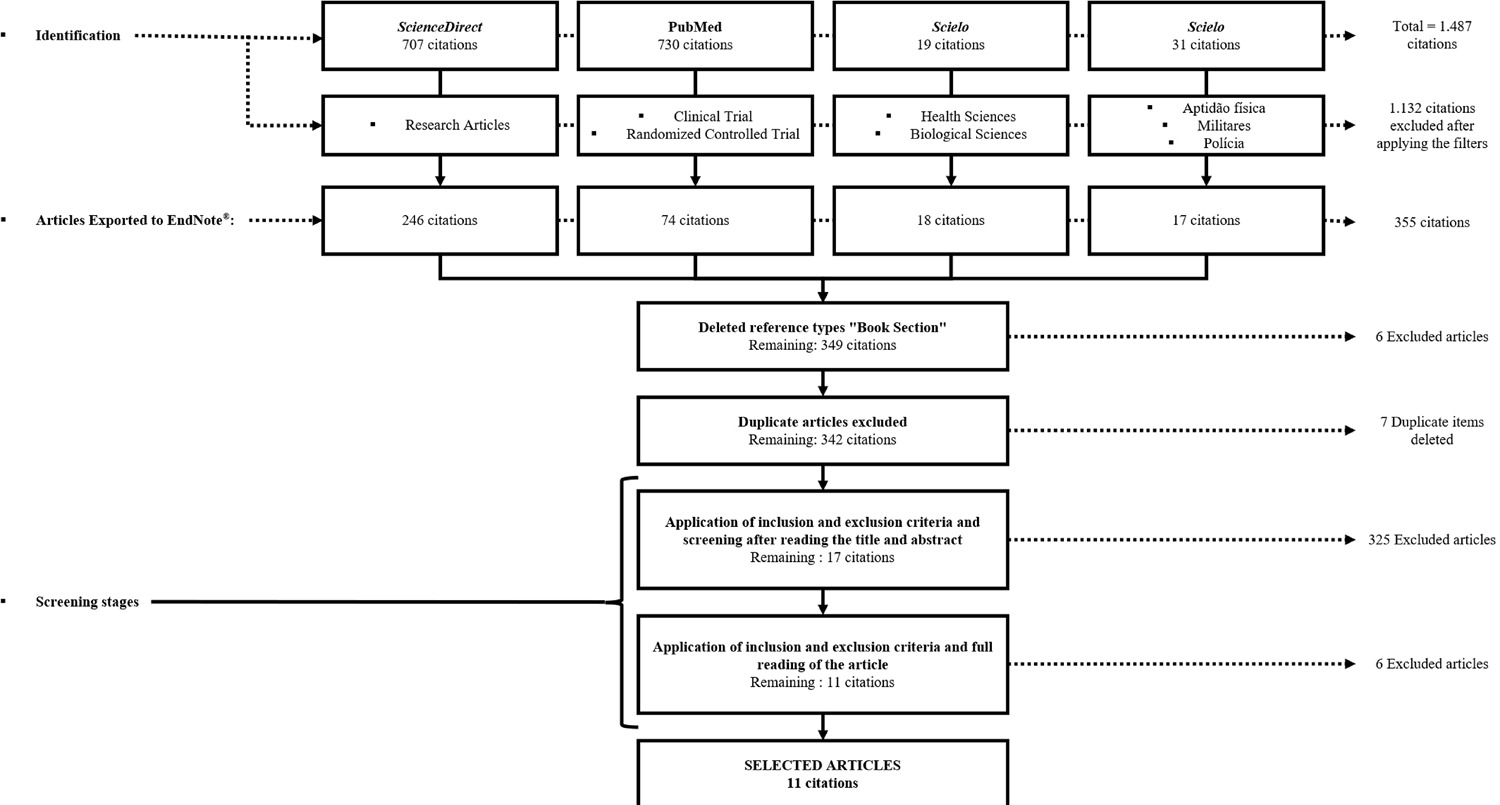
This was a systematic review, using the PRISMA systematization, using the following search keywords “police”, “military”, “physical fitness test” and ” PFT”, in English and Portuguese. The databases used were ScienceDirect, PubMed, BVS (Lilacs) and Scielo. Only original works performed with police and military personnel in Brazil were selected, through the application of inclusion and exclusion criteria.

Results

After the screening process, 11 articles were selected from a total of 1,487.

Conclusions

The data collected from the selected articles suggest that older age is related to a decrease in physical fitness, and better performance in the tests is related to a lower risk of comorbidities. Although high-intensity training improves physical fitness and anthropometric data, it is associated with injury rates; physically active lifestyle is associated with better flexibility.
  • Brazil
  • Exercise Test
  • military personnel
  • Police
Read Full Article
Creative Commons Attribution (CC BY) Creative Commons license
13/12/2021 DOI: 10.36660/ijcs.20200299
Figure 1
IJCS
Original Article

Additional Cardiac Remodeling Induced by Intense Military Training in Competitive Athletes

Paulo Dinis et al. Hélder Dores Rogério Teixeira Luís Moreno … Joselito Mónico Marie Bergman Hanna Lekedal Maria Carmo Cachulo Joaquim Cardoso Lino Gonçalves

Abstract

Background:

Cardiac remodeling depends on the intensity, duration, and training method.

Objective:

To evaluate if the training performed in a Portuguese military special operations troop increases cardiac remodeling in a sample of young individuals who previously practiced competitive sports.

Methods:

A prospective study involving 76 military candidates for military special operations, 45 of whom previously practiced at competitive level (> 10 hours per week). Of these military athletes, only 17 successfully completed the course. The evaluation was performed at 6 months intervals and included a complete clinical history, physical examination, vital signs, anthropometric data and echocardiographic evaluation. Statistical significance was considered when p < 0.05, with a 95% confidence interval.

Results:

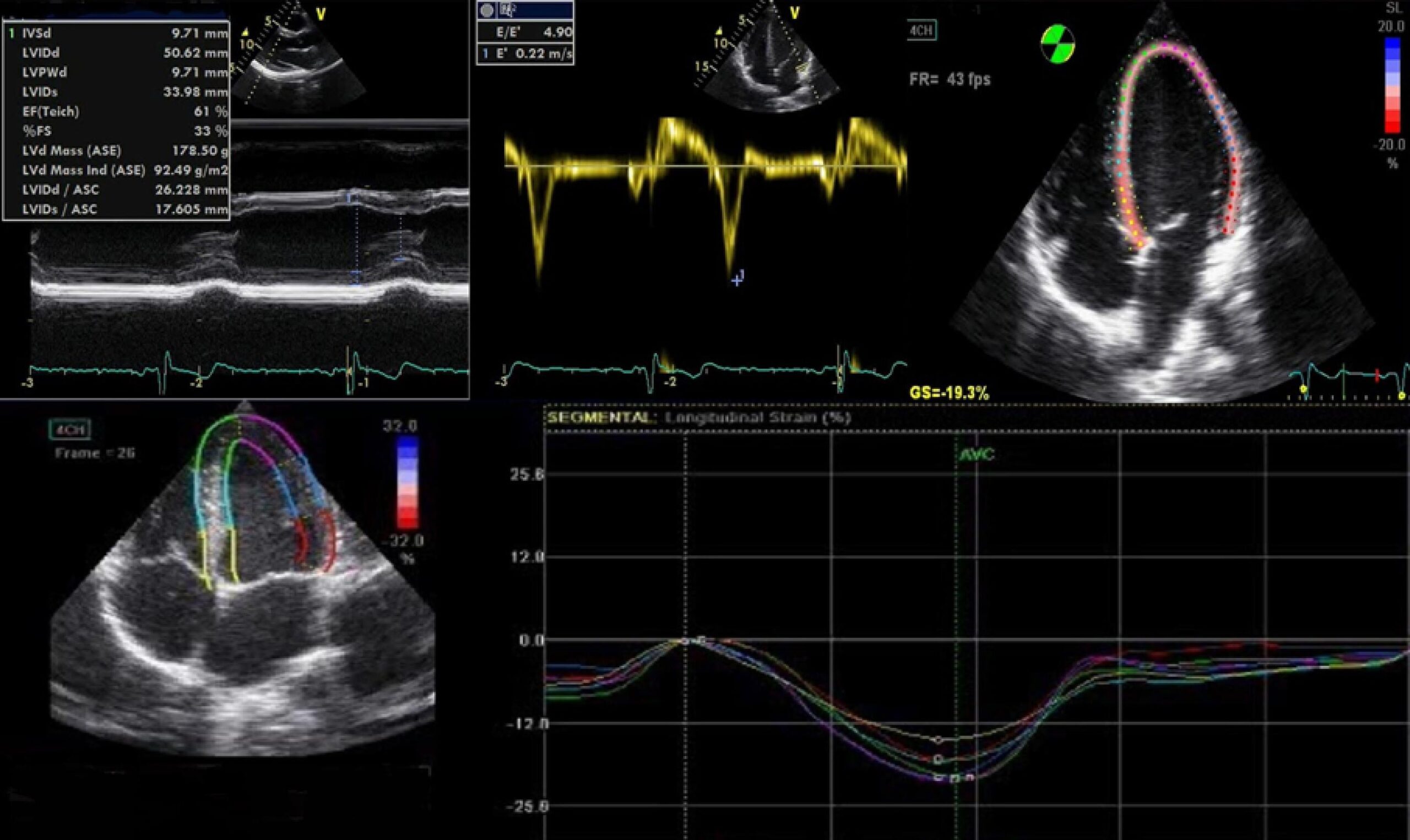
At the end of the course, there was a decrease in the percentage of fat mass (19.1 ± 3.3% vs. 13.1 ± 3.5%; p < 0.01), an increase in the percentage of lean mass (41.3 ± 2.1% vs. 44.4 ± 1.8%; p < 0.01), and decreased systolic and diastolic blood pressure and heart rate. Regarding cardiac remodeling, there was an increase in left ventricular diastolic diameter (49.7 ± 3.2 mm vs. 52.8 ± 3.4 mm; p < 0.01), an increase trend in left atrial volume (27.3 ± 4.5 mL/m2 vs. 28.2 ± 4.1 mL/m2; p = 0.07) and increased left ventricular mass (93.1 ± 7.7 g/m2 vs. 100.2 ± 11.4 g/m2; p < 0.01). Functional variables also changed, with an increase in S' (15 (13-16) cm/s vs. 17 (16-18) cm/s; p < 0,01) and a decrease in left ventricular ejection fraction (60 ± 6% vs. 54 ± 6%; p < 0.01).

Conclusion:

Intense military physical training resulted in additional cardiac remodeling in athletes of competitive level, both structural and functional.

  • Athletes
  • Atrial Remodeling
  • Exercise
  • military personnel
Read Full Article
Creative Commons Attribution (CC BY) Creative Commons license
01/01/2018 DOI: 10.5935/2359-4802.20180012 Views 1
Combination of risk factors for metabolic syndrome in the military personnel of the Brazilian Navy
ABC
Artigo Original

Combination of risk factors for metabolic syndrome in the military personnel of the Brazilian Navy

Filipe Ferreira da Costa et al. Vila Bayma Montenegro Thiago Jambo Alves Lopes Eduardo Caldas Costa

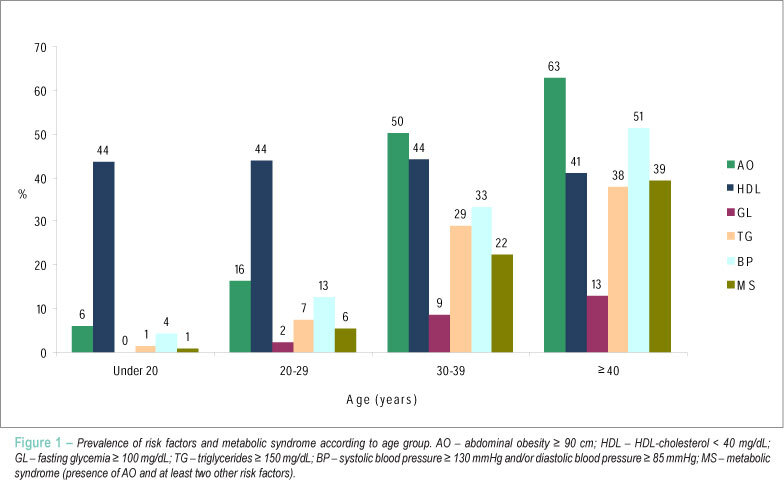
BACKGROUND: Cardiovascular diseases are the major cause of death in the population, and metabolic syndrome (MS) is a clinical condition significantly associated with the increase in morbidity and mortality. OBJECTIVE: To describe the pattern of combination of the risk factors related to the diagnosis of MS in the military personnel of the Brazilian Navy and to identify variables associated with the presence of MS in that population. METHODS: Cross-sectional study involving 1,383 men (18-62 years) assigned to military organizations in the city of Natal, state of Rio Grande do Norte. The criterion proposed by the International Diabetes Association was used for the diagnosis of MS. The ratio between observed and expected prevalence and the respective confidence intervals were used to identify the combinations of risk factors that exceeded that expected for the population. Logistic regression was used to identify variables associated with MS. RESULTS: The prevalence of MS was 17.6%. Approximately one third of the military personnel studied had two or more risk factors for MS. All specific combinations of risk factors for MS that exceeded the expected prevalence had abdominal obesity as one of its components. In the adjusted analyses, age, smoking and physical activity level remained associated with MS. CONCLUSION: Our findings reinforce the constant presence of abdominal obesity in the phenotype of MS. In addition, our data also support the idea that age, smoking and low level of physical activity are independent variables for the occurrence of MS.

  • abdominal
  • Brazil
  • Metabolic Syndrome
  • military personnel
  • Obesity
  • Risk Factors
Read Full Article
Creative Commons Attribution (CC BY) Creative Commons license
27/10/2011 DOI: 10.1590/S0066-782X2011005000113 Views 1
Influence of nutritional status and VO2max on adiponectin levels in men older than 35 years
ABC
Artigo Original

Influence of nutritional status and VO2max on adiponectin levels in men older than 35 years

Eduardo Camillo Martinez et al. Macos de Sá Rego Fortes Luiz Antônio dos Anjos

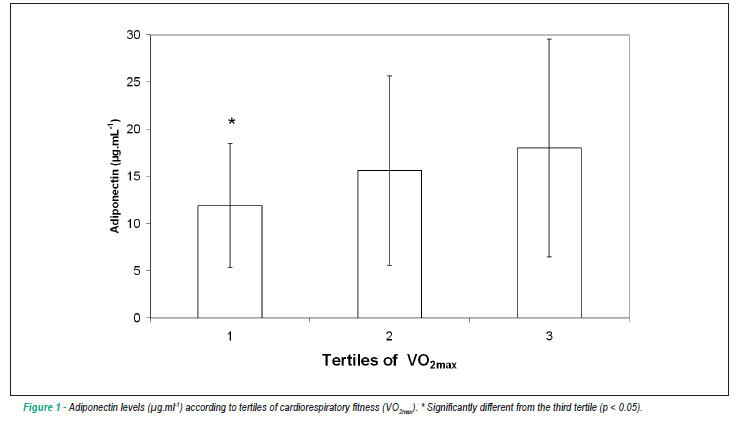
BACKGROUND: Adiponectin is considered an important factor in the pathogenesis of cardiovascular and metabolic diseases, due to its anti- atherogenic and anti-inflammatory properties. Few studies, however, have suggested the existence of a direct association between adiponectin levels and cardiorespiratory fitness and physical activity levels. OBJECTIVE: To verify the influence of the nutritional status and cardiorespiratory fitness on plasma adiponectin levels in adult men. METHODS: A total of 250 subjects, all in active duty in the Brazilian Army (BA), with a mean age of 42,6 ± 4,8 years volunteered to participate in the study. Plasma levels of adiponectin were measured, as well as body mass, height, waist circumference (WC), fat percentage by hydrostatic weighing and VO2max by ergospirometry. A questionnaire was used to obtain the characteristics of the physical training performed by the individuals. RESULTS: The sample showed that 121 (48%) individuals were overweight and 36 (14%) were obese. Moreover, 66 individuals (27%) had a body fat percentage > 25% and 26,7% had a WC > 94 cm. Overweight and obese individuals had significantly lower adiponectin levels than those with an adequate nutritional status. Individuals at the highest tertile of VO2max had higher adiponectin levels than the others. The adiponectin levels were positively correlated with the total weekly physical training time and VO2max and inversely correlated with body mass, BMI and WC. The correlation between adiponectin levels and VO2max did not remain significant after being adjusted for BMI and WC. CONCLUSION: Individuals with better cardiorespiratory fitness and normal nutritional status seem to present healthier levels of adiponectin.

  • Adiponectin
  • military personnel
  • nutritional states
  • Obesity
  • physical fitness
Read Full Article
Creative Commons Attribution (CC BY) Creative Commons license
15/04/2011 DOI: 10.1590/S0066-782X2011005000048

How to cite this article

EndNote RIS

Electronic Document Format (Vancouver)

Lima BN, Assis Junior RS, Almeida KS, Camargo LB, Passos RP, Fileni CHP, Souza DM, et al. Physical Fitness Test (PFT) in Police and Military in Brazil: A Systematic Review. International Journal of Cardiovascular Sciences 2021;35(2):191-20.

Electronic Document Format (ABNT)

Lima, Bráulio Nascimento; Assis Junior, Renato Silveira de; Almeida, Klebson da Silva; Camargo, Leandro Borelli de; Passos, Ricardo Pablo; Fileni, Carlos Henrique Prevital; Souza, Divaldo Martins de; Vilela Junior, Guanis de Barros. Physical Fitness Test (PFT) in Police and Military in Brazil: A Systematic Review. International Journal of Cardiovascular Sciences, v. 35, n. 2, p. 191-201, Dec. 2021.

Electronic Document Format (APA)

Lima, B. N., Assis Junior, R. S. , Almeida, K. S., Camargo, L. B. , Passos, R. P., Fileni, C. H. P., Souza, D. M. , & Vilela Junior, G. B. (2021). Physical Fitness Test (PFT) in Police and Military in Brazil: A Systematic Review. International Journal of Cardiovascular Sciences, 35(2), 191-201.

Electronic Document Format (ISO)

Lima, Bráulio Nascimento and Assis Junior, Renato Silveira de and Almeida, Klebson da Silva and Camargo, Leandro Borelli de and Passos, Ricardo Pablo and Fileni, Carlos Henrique Prevital and Souza, Divaldo Martins de and Vilela Junior, Guanis de Barros. Physical Fitness Test (PFT) in Police and Military in Brazil: A Systematic Review. International Journal of Cardiovascular Sciences [online]. 2021, vol. 35, n. 2, [cited 2026-10-14], pp. 191-201. Available from: <https://journals.cardiol.br/en/article/physical-fitness-test-pft-in-police-and-military-in-brazil-a-systematic-review/>. ISSN 2359-4802

EndNote RIS

Electronic Document Format (Vancouver)

Dinis P, Dores H, Teixeira R, Moreno L, Mónico J, Bergman M, Lekedal H, et al. Additional Cardiac Remodeling Induced by Intense Military Training in Competitive Athletes. International Journal of Cardiovascular Sciences 2018;31(3):209-17.

Electronic Document Format (ABNT)

Dinis, Paulo; Dores, Hélder; Teixeira, Rogério; Moreno, Luís; Mónico, Joselito; Bergman, Marie; Lekedal, Hanna; Cachulo, Maria Carmo; Cardoso, Joaquim; Gonçalves, Lino. Additional Cardiac Remodeling Induced by Intense Military Training in Competitive Athletes. International Journal of Cardiovascular Sciences, v. 31, n. 3, p. 209-217, Dec. 2017.

Electronic Document Format (APA)

Dinis, P., Dores, H., Teixeira, R., Moreno, L., Mónico, J., Bergman, M., Lekedal, H., Cachulo, M. C., Cardoso, J., & Gonçalves, L. (2018). Additional Cardiac Remodeling Induced by Intense Military Training in Competitive Athletes. International Journal of Cardiovascular Sciences, 31(3), 209-217.

Electronic Document Format (ISO)

Dinis, Paulo and Dores, Hélder and Teixeira, Rogério and Moreno, Luís and Mónico, Joselito and Bergman, Marie and Lekedal, Hanna and Cachulo, Maria Carmo and Cardoso, Joaquim and Gonçalves, Lino. Additional Cardiac Remodeling Induced by Intense Military Training in Competitive Athletes. International Journal of Cardiovascular Sciences [online]. 2018, vol. 31, n. 3, [cited 2026-10-14], pp. 209-217. Available from: <https://journals.cardiol.br/en/article/additional-cardiac-remodeling-induced-by-intense-military-training-in-competitive-athletes/>. ISSN 2359-4802

EndNote RIS

Electronic Document Format (Vancouver)

Costa FF, Montenegro VB, Lopes TJA, Costa EC. Combination of risk factors for metabolic syndrome in the military personnel of the Brazilian Navy. Arquivos Brasileiros de Cardiologia 2011;97(6):485-92.

Electronic Document Format (ABNT)

Costa, Filipe Ferreira da; Montenegro, Vila Bayma; Lopes, Thiago Jambo Alves; Costa, Eduardo Caldas. Combination of risk factors for metabolic syndrome in the military personnel of the Brazilian Navy. Arquivos Brasileiros de Cardiologia, v. 97, n. 6, p. 485-492, Oct. 2011.

Electronic Document Format (APA)

Costa, F. F. , Montenegro, V. B., Lopes, T. J. A., & Costa, E. C. (2011). Combination of risk factors for metabolic syndrome in the military personnel of the Brazilian Navy. Arquivos Brasileiros de Cardiologia, 97(6), 485-492.

Electronic Document Format (ISO)

Costa, Filipe Ferreira da and Montenegro, Vila Bayma and Lopes, Thiago Jambo Alves and Costa, Eduardo Caldas. Combination of risk factors for metabolic syndrome in the military personnel of the Brazilian Navy. Arquivos Brasileiros de Cardiologia [online]. 2011, vol. 97, n. 6, [cited 2026-10-14], pp. 485-492. Available from: <https://journals.cardiol.br/en/article/combination-of-risk-factors-for-metabolic-syndrome-in-the-military-personnel-of-the-brazilian-navy/>. ISSN 0066-782X

EndNote RIS

Electronic Document Format (Vancouver)

Martinez EC, Fortes MSR, Anjos LA. Influence of nutritional status and VO2max on adiponectin levels in men older than 35 years. Arquivos Brasileiros de Cardiologia 2011;96(6):471-6.

Electronic Document Format (ABNT)

Martinez, Eduardo Camillo; Fortes, Macos de Sá Rego; Anjos, Luiz Antônio dos. Influence of nutritional status and VO2max on adiponectin levels in men older than 35 years. Arquivos Brasileiros de Cardiologia, v. 96, n. 6, p. 471-476, Apr. 2011.

Electronic Document Format (APA)

Martinez, E. C., Fortes, M. S. R., & Anjos, L. A. (2011). Influence of nutritional status and VO2max on adiponectin levels in men older than 35 years. Arquivos Brasileiros de Cardiologia, 96(6), 471-476.

Electronic Document Format (ISO)

Martinez, Eduardo Camillo and Fortes, Macos de Sá Rego and Anjos, Luiz Antônio dos. Influence of nutritional status and VO2max on adiponectin levels in men older than 35 years. Arquivos Brasileiros de Cardiologia [online]. 2011, vol. 96, n. 6, [cited 2026-10-14], pp. 471-476. Available from: <https://journals.cardiol.br/en/article/influence-of-nutritional-status-and-vo2max-on-adiponectin-levels-in-men-older-than-35-years/>. ISSN 0066-782X

  • About ABC Family
  • Internal Regulation
  • Editorial Board
  • Brazilian Society of Cardiology (SBC)

Issues

SBC Guidelines

  • Videos
  • Podcasts
  • News