Fuat Polat et al. Haşim Tüner Veysi Can Sait Terzi
Abstract
Background
Permanent pacemaker implantation is an established treatment for both sick sinus syndrome (SSS) and atrioventricular block (AVB), yet limited data exist comparing long-term clinical outcomes and cardiac remodeling patterns between these distinct bradyarrhythmic etiologies.
Objectives
To compare three-year clinical outcomes and cardiac structural changes between SSS and AVB patients following permanent pacemaker implantation.
Methods
This retrospective observational study enrolled 192 adult patients (65 SSS, 127 AVB) who underwent pacemaker implantation between January 2018 and December 2020. Demographic data, echocardiographic parameters, pacemaker-recorded data, and clinical outcomes were assessed at baseline, one month, six months, one year, and three years. Primary outcomes included changes in cardiac structure and function, symptomatic improvement, new-onset atrial fibrillation, rehospitalization, and all-cause mortality.
Results
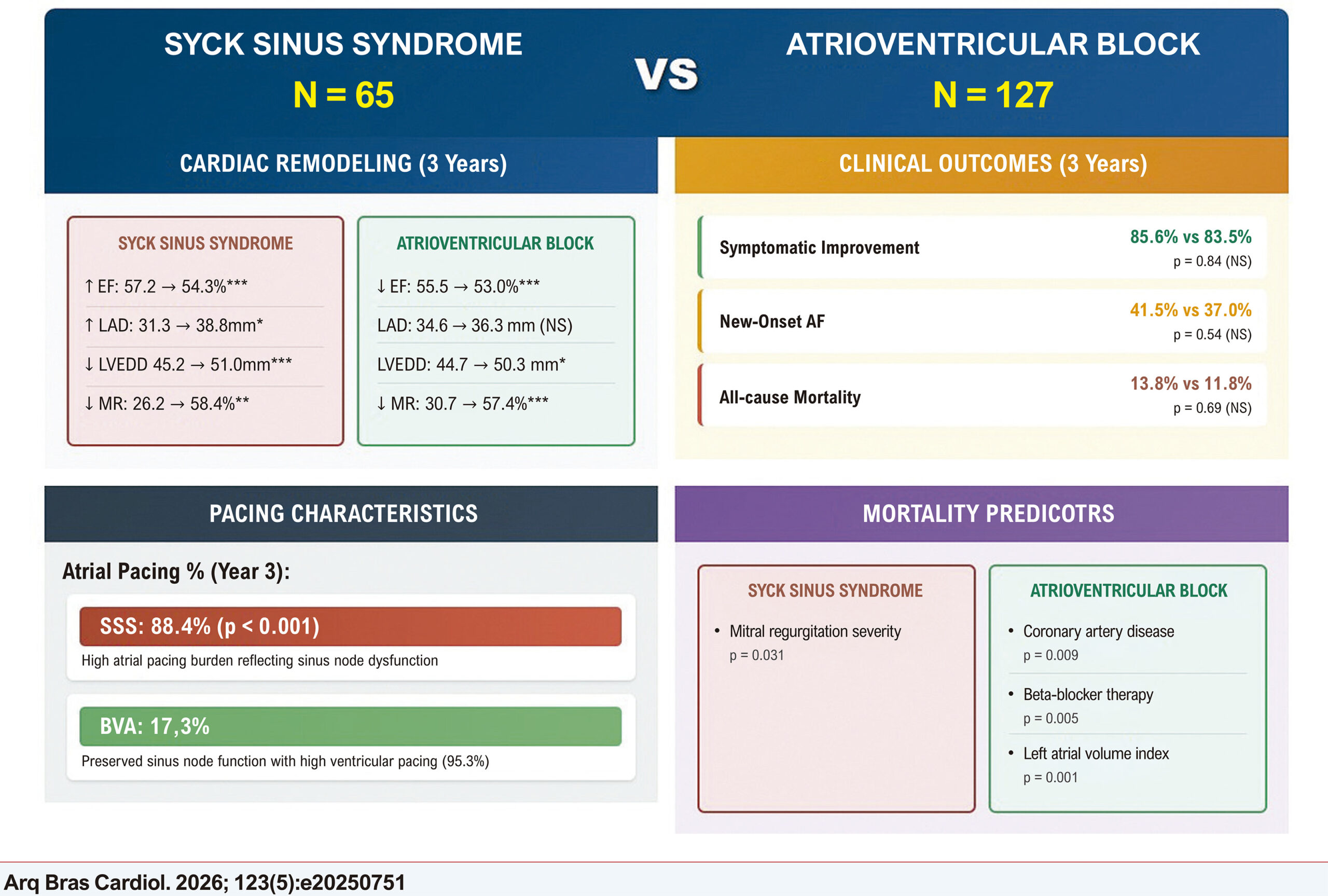
Both groups demonstrated significant declines in left ventricular ejection fraction over three years (SSS: 57.2±6.0% to 54.3±8.3%, p<0.001; AVB: 55.5±7.0% to 53.0±6.8%, p<0.001). Despite similar ventricular dysfunction progression, distinct remodeling patterns emerged: SSS patients exhibited significant increases in left atrial diameter (31.3 to 38.8 mm, p=0.040), left ventricular end-diastolic diameter (45.2 to 51.0 mm, p90%). Symptomatic improvement was comparable (SSS: 85.6% vs. AVB: 83.5%, p=0.84), as were new-onset atrial fibrillation (41.5% vs. 37.0%, p=0.54), rehospitalization (50.8% vs. 58.3%, p=0.38), and all-cause mortality (13.8% vs. 11.8%, p=0.69). Mortality predictors differed: mitral regurgitation severity in SSS versus coronary artery disease, beta-blocker therapy, and left atrial volume in AVB patients.
Conclusions
Despite similar symptomatic benefits and clinical outcomes, SSS and AVB patients demonstrate distinct cardiac remodeling patterns and different mortality predictors, supporting the need for etiology-specific follow-up strategies in pacemaker recipients.