ABC Family Arquivos Brasileiros de Cardiologia International Journal of Cardiovascular Sciences ABC Heart Failure & Cardiomyopathy ABC Imagem Cardiovascular
Português English
ABC Family
Português English
  • About
    • About ABC Family
    • Internal Regulation
    • Editorial Board
    • Brazilian Society of Cardiology (SBC)
  • Issues
  • SBC Guidelines
  • Content
    • Videos
    • Podcasts
    • News
  • About
    • About ABC Family
    • Internal Regulation
    • Editorial Board
    • Brazilian Society of Cardiology (SBC)
  • Issues
  • SBC Guidelines
  • Content
    • Videos
    • Podcasts
    • News

ABC Family

  • ABC Family
  • Arquivos Brasileiros de Cardiologia
  • International Journal of Cardiovascular Sciences
  • ABC Heart Failure & Cardiomyopathy
  • ABC Imagem Cardiovascular
Search in

No content found.

Journals
Ordering
Article types
Others

  1. Home
  2. Keyword: Fractional Flow Reserve
Central Illustration
ABC
Original Article

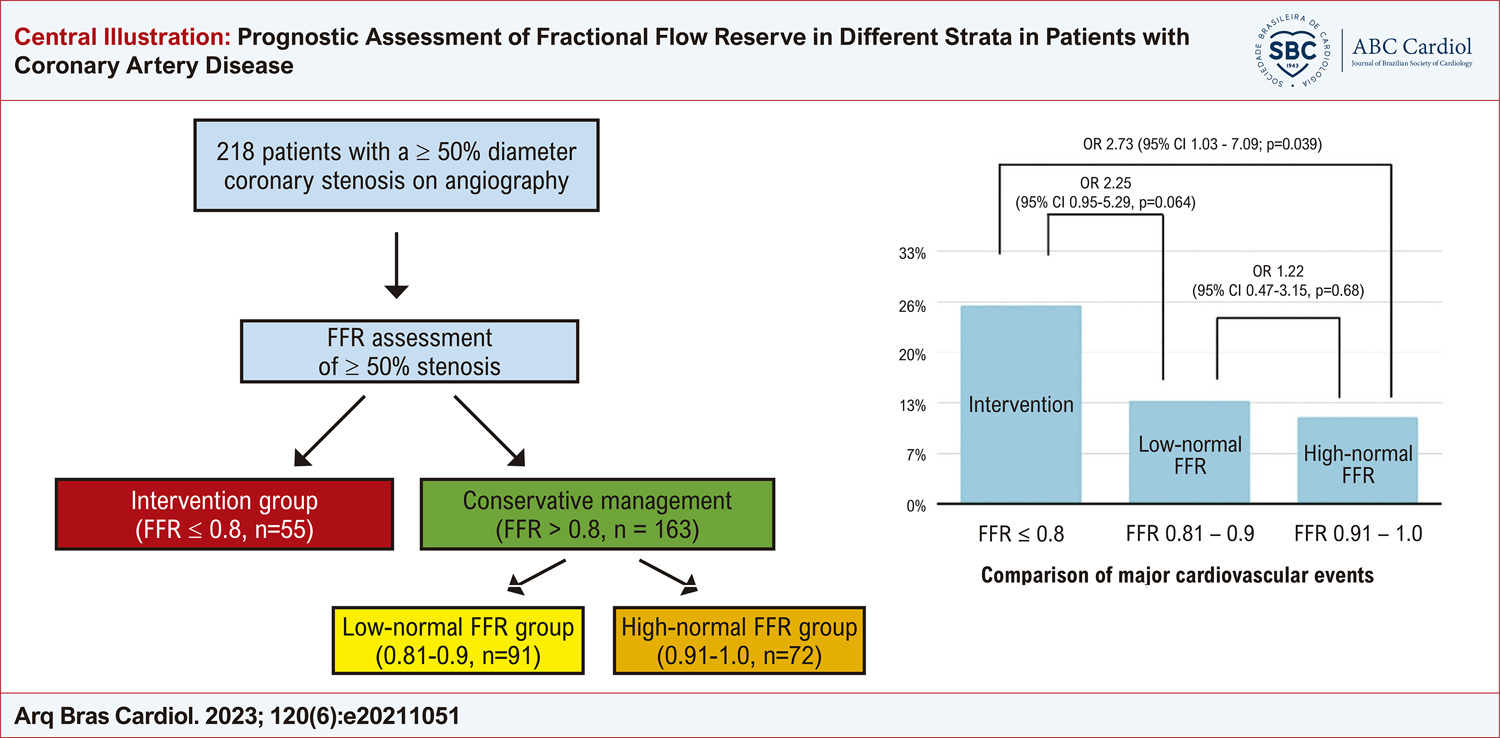
Prognostic Assessment of Fractional Flow Reserve in Different Strata in Patients with Coronary Artery Disease

Denise Pellegrini et al. Paulo R. A. Caramori Ricardo Czarnobai Soccol Ricardo Lasevitch … Gustavo Luís Agostini Alice Dussin Flavio Vinicius Costa Ferreira Mario Bernardes Wagner Luiz Carlos Bodanese

Abstract

Background

There are limited real-world data on the clinical course of untreated coronary lesions according to their functional severity.

Objective

To evaluate the 5-year clinical outcomes of patients with revascularized lesions with fractional flow reserve (FFR) ≤ 0.8 and patients with non-revascularized lesions with FFR > 0.8.

Methods

The FFR assessment was performed in 218 patients followed for up to 5 years. Participants were classified based on FFR into ischemia group (≤ 0.8, intervention group, n = 55), low-normal FFR group (> 0.8-0.9, n = 91), and high-normal FFR group (> 0.9, n = 72). The primary endpoint was major adverse cardiac events (MACEs), a composite of death, myocardial infarction, and need for repeat revascularization. The significance level was set at 0.05; therefore, results with a p-value < 0.05 were considered statistically significant.

Results

Most patients were male (62.8%) with a mean age of 64.1 years. Diabetes was present in 27%. On coronary angiography, the severity of stenosis was 62% in the ischemia group, 56.4% in the low-normal FFR group, and 54.3% in the high-normal FFR group (p<0.05). Mean follow-up was 3.5 years. The incidence of MACEs was 25.5%, 13.2%, and 11.1%, respectively (p=0.037). MACE incidence did not differ significantly between the low-normal and high-normal FFR groups.

Conclusion

Patients with FFR indicative of ischemia had poorer outcomes than those in non-ischemia groups. There was no difference in the incidence of events between the low-normal and high-normal FFR groups. Long-term studies with a large sample size are needed to better assess cardiovascular outcomes in patients with moderate coronary stenosis with FFR values between 0.8 and 1.0.
  • Fractional Flow Reserve
  • Ischemia
  • Outcomes
Read Full Article
Creative Commons Attribution (CC BY) Creative Commons license
19/06/2023 DOI: 10.36660/abc.20211051 Views 2
Figure 1
ABC
Original Article

Adjusting RFR by Predictors of Disagreement, “The Adjusted RFR”: An Alternative Methodology to Improve the Diagnostic Capacity of Coronary Indices

Diego Fernández-Rodríguez et al. Juan Casanova-Sandoval Ignacio Barriuso Kristian Rivera … Imanol Otaegui Bruno García del Blanco Teresa Gil Jiménez Manuel López-Pérez Marcos Rodríguez-Esteban Francisco Torres-Saura Víctor Jiménez Díaz Raymundo Ocaranza-Sánchez Vicente Peral Disdier Guillermo Sánchez Elvira Fernando Worner

Abstract

Background

Cutoff thresholds for the “resting full-cycle ratio” (RFR) oscillate in different series, suggesting that population characteristics may influence them. Likewise, predictors of discordance between the RFR and fractional flow reserve (FFR) have been documented. The RECOPA Study showed that diagnostic capacity is reduced in the RFR “grey zone”, requiring the performance of FFR to rule out or confirm ischemia.

Objectives

To determine predictors of discordance, integrate the information they provide in a clinical-physiological index, the “Adjusted RFR”, and compare its agreement with the FFR.

Methods

Using data from the RECOPA Study, predictors of discordance with respect to FFR were determined in the RFR “grey zone” (0.86 to 0.92) to construct an index (“Adjusted RFR”) that would weigh RFR together with predictors of discordance and evaluate its agreement with FFR.

Results

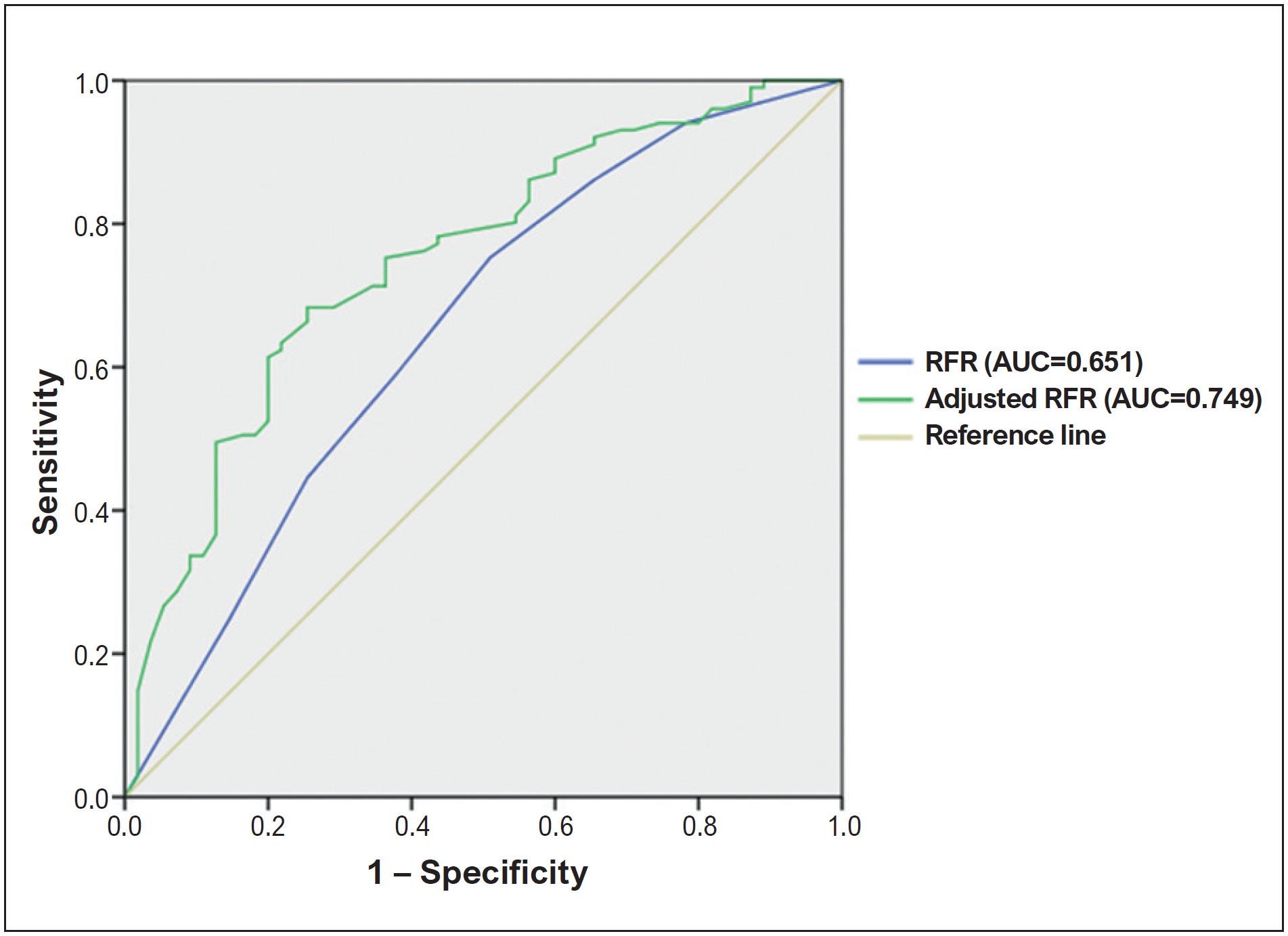
A total of 156 lesions were evaluated in 141 patients. Predictors of discordance were: chronic kidney disease, previous ischemic heart disease, lesions not involving the anterior descending artery, and acute coronary syndrome. Though limited, the “Adjusted RFR” improved the diagnostic capacity compared to the RFR in the “grey zone” (AUC-RFR = 0.651 versus AUC-“Adjusted RFR” = 0.749), also showing an improvement in all diagnostic indices when optimal cutoff thresholds were established (sensitivity: 59% to 68%; specificity: 62% to 75%; diagnostic accuracy: 60% to 71%; positive likelihood ratio: 1.51 to 2.34; negative likelihood ratio: 0.64 to 0.37).

Conclusions

Adjusting the RFR by integrating the information provided by predictors of discordance to obtain the “Adjusted RFR” improved the diagnostic capacity in our population. Further studies are required to evaluate whether clinical-physiological indices improve the diagnostic capacity of RFR or other coronary indices.

  • angina
  • Fractional Flow Reserve
  • Resting Full-cycle Ratio
  • Sensitivity
  • Specificity
Read Full Article
Creative Commons Attribution (CC BY) Creative Commons license
25/11/2022 DOI: 10.36660/abc.20220176
ABCIC
Original Article

Ligation of the Branches of the Anastomosed Internal Thoracic Artery in the Anterior Descending Coronary Artery and the Effect on Flow Velocities and Functional Status of the Graft

José Sebastião de Abreu et al. Tereza Cristina D Pinheiro José Acácio Feitosa Marilia Esther B Abreu … Ana Gardenia L. P Farias Marcia Maria Carneiro Sandra Nívea R Falcão

Summary

Introduction

Modification of internal thoracic artery flow occurs after its anastomosis in the left anterior descending coronary artery.

Objective

To evaluate the effect of ligation of the proximal branches of anastomosed internal thoracic artery flow on the left anterior descending in relation to velocities and coronary flow velocity reserve in patients with left ventricular ejection fraction preserved (> 50%).

Methods

Prospective study of patients with left ventricular ejection fraction > 50% and revascularized. Group I was composed of 25 patients with ligation of the major branches of the internal thoracic artery flow before its anastomosis in the left anterior descending coronary artery, and Group II was composed of 28 patients without ligation. Doppler was recorded at the proximal level of internal thoracic artery flow in the preoperative, early postoperative and 6 months later. The systolic peak velocity and diastolic, and systolic mean velocity and diastolic were measured. Coronary flow velocity reserve was obtained during dobutamine stress echocardiography in postoperative period 6 months later.

Results

In the postoperative, the systolic peak velocity and the systolic mean velocity decreased while increasing the diastolic peak velocity and the diastolic mean velocity in the groups (p < 0.05). From the postoperative to the postoperative period 6 months later, only the diastolic peak velocity modified, occurring its decrease in the groups (p < 0.05). During the dobutamine stress echocardiography, diastolic peak velocity and the diastolic mean velocity increased (p < 0.05) and groups did not differ, however, the systolic peak velocity and the systolic mean velocity increased only in Group II (p < 0.05). The coronary flow velocity reserve of the groups calculated by diastolic peak velocity (Group I = 2.17 ± 0.64 and Group II = 2.28 ± 0.63) and diastolic mean velocity (Group I = 2.27 ± 0.54 and Group II = 2.5 ± 0.79) did not differ.

Conclusion

In patients with preserved left ventricular ejection fraction, the ligation of the large branches of the anastomosed internal thoracic artery flow into the left anterior descending coronary artery does not compromise the coronary flow velocity reserve, but determines limitation in the increase of the systolic velocities. (Arq Bras Cardiol: Imagem cardiovasc. 2018;31(4):231-240)

  • Echocardiography, Doppler/methods
  • Fractional Flow Reserve
  • Internal Mammary-Coronary Artery Anastomosis
  • Mammary Arteries/surgery
  • Myocardial
  • Myocardial Revascularization
  • Stroke Volume
Read Full Article
Creative Commons Attribution (CC BY) Creative Commons license
04/02/2022 DOI: 10.5935/2318-8219.20180049 Views 2
ABC
Editorial

Coronary Slow Flow Phenomenon – Adding Myocardial Fibrosis to the Equation

Filipe Penna de Carvalho et al. Clério Francisco de Azevedo

Initially described more than 40 years ago by Tambe et al., coronary slow flow phenomenon (CSFP) is characterized by delayed contrast medium progression in the absence of obstructive coronary epicardial disease during invasive coronary angiography. CSFP typically affects young male smokers, who often presents with acute coronary syndrome (ACS) or recurrent refractory resting angina requiring hospital admission.– Moreover, life-threatening arrhythmias and sudden cardiac death have also been associated with CSFP.

Despite increased awareness and research, CSFP remains an elusive and poorly understood condition, with many proposed pathogenic mechanisms including endothelial, vasomotor and microvascular dysfunction., Indeed, an abnormal regulation of microvascular tone that occurs only during resting conditions, while coronary flow reserve is within normal range, has been described in CSFP.

[…]

  • Cicatrix, Hypertrophic
  • Endomyocardial Fibrosis
  • Fractional Flow Reserve
  • Heart Failure
  • Magnetic Resonance Spectroscopy
  • Natriuretic-Peptide, C-Type
  • Prognosis
Read Full Article
Creative Commons Attribution (CC BY) Creative Commons license
06/04/2020 DOI: 10.36660/abc.20200187
ABC
Editorial

Invasive Physiological Assessment: From Binary to Continuous

Daniel Chamié et al. Alexandre Abizaid

Described by Pijls et al., in 1993, and based on extensive validation and robust clinical data, fractional flow reserve (FFR) was incorporated into the guidelines of myocardial revascularization to guide the need for revascularization of angiographically intermediate stenosis in patients with stable coronary artery disease (CAD).– The broadest arguments for this decision were: (1) by depicting a complex tridimensional structure as a planar silhouette coronary angiography suffers from well-known limitations, it presents large variability in estimating coronary stenosis severity, and it has low ability in predicting the functional significance of epicardial coronary stenoses, and (2) revascularization in stable coronary artery disease based solely on the severity of luminal narrowing, as determined by coronary angiography, does not improve clinical outcomes as compared to optimized medical treatment or versus revascularization of only physiologically significant lesions.–

The central premise of invasive assessment of coronary physiology is to identify myocardial ischemia with superior spatial resolution (per vessel) compared to non-invasive methods (per territory), aiding in the identification of lesions (and, therefore, patients) that are more likely to benefit from revascularization. However, despite the clinical benefits and guideline recommendations, the FFR uptake in clinical practice remains low (< 10%) in most catheterization laboratories around the globe. Costs, time added to procedures, patient discomfort to hyperemic stimulus or contraindications to adenosine use, as well as difficulties in interpretation of physiological traces in certain anatomic situations (e.g., serial/diffuse stenosis), are some of the reasons for FFR underutilization.

[…]

  • Coronary stenosis
  • Fractional Flow Reserve
  • Myocardial Coronary Artery Disease
  • Myocardial Ischemia
  • Percutaneous Coronary Intervention
  • Risk Factors
Read Full Article
Creative Commons Attribution (CC BY) Creative Commons license
20/03/2020 DOI: 10.36660/abc.20200054 Views 1
IJCS
Viewpoint

Invasive Coronary Physiological Assessment in Symptomatic Middle-Aged Endurance Athletes

Omar M. Issa et al. J. Sawalla Guseh Ignacio Inglessis Aaron L. Baggish

Abstract

Despite the health benefits of routine exercise, coronary artery disease (CAD) is common among older competitive athletes and is an important cause of sudden cardiac death. Athletes with suspected or confirmed CAD routinely undergo conventional coronary angiography involving the performance of invasive coronary physiological assessment using the fractional flow reserve (FFR) or the instantaneous-wave free ratio (iFR). Data defining the role of invasive coronary physiological assessment, while robust in general clinical populations, are untested among older competitive athletes with CAD. The paper discusses the challenges and uncertainties surrounding the use of the FFR and iFR in this unique population with an emphasis on the need for future work to better define this approach.

  • Adult
  • Athletes
  • Circuit Based Exercise/mortality
  • Coronary Angiography/methods
  • Coronary Artery Disease
  • Fractional Flow Reserve
  • Myocardial
  • physical fitness
Read Full Article
Creative Commons Attribution (CC BY) Creative Commons license
12/08/2019 DOI: 10.5935/2359-4802.20190063

How to cite this article

EndNote RIS

Electronic Document Format (Vancouver)

Pellegrini D, Caramori PRA, Soccol RC, Lasevitch R, Agostini GL, Dussin A, Ferreira FVC, et al. Prognostic Assessment of Fractional Flow Reserve in Different Strata in Patients with Coronary Artery Disease. Arquivos Brasileiros de Cardiologia 2023;120(6):e20211051.

Electronic Document Format (ABNT)

Pellegrini, Denise; Caramori, Paulo R. A.; Soccol, Ricardo Czarnobai; Lasevitch, Ricardo; Agostini, Gustavo Luís; Dussin, Alice; Ferreira, Flavio Vinicius Costa; Wagner, Mario Bernardes; Bodanese, Luiz Carlos. Prognostic Assessment of Fractional Flow Reserve in Different Strata in Patients with Coronary Artery Disease. Arquivos Brasileiros de Cardiologia, v. 120, n. 6, e20211051, Jun. 2023.

Electronic Document Format (APA)

Pellegrini, D., Caramori, P. R. A., Soccol, R. C., Lasevitch, R., Agostini, G. L., Dussin, A., Ferreira, F. V. C., Wagner, M. B., & Bodanese, L. C. (2023). Prognostic Assessment of Fractional Flow Reserve in Different Strata in Patients with Coronary Artery Disease. Arquivos Brasileiros de Cardiologia, 120(6), e20211051.

Electronic Document Format (ISO)

Pellegrini, Denise and Caramori, Paulo R. A. and Soccol, Ricardo Czarnobai and Lasevitch, Ricardo and Agostini, Gustavo Luís and Dussin, Alice and Ferreira, Flavio Vinicius Costa and Wagner, Mario Bernardes and Bodanese, Luiz Carlos. Prognostic Assessment of Fractional Flow Reserve in Different Strata in Patients with Coronary Artery Disease. Arquivos Brasileiros de Cardiologia [online]. 2023, vol. 120, n. 6, [cited 2026-10-14], e20211051. Available from: <https://journals.cardiol.br/en/article/prognostic-assessment-of-fractional-flow-reserve-in-different-strata-in-patients-with-coronary-artery-disease/>. ISSN 0066-782X

EndNote RIS

Electronic Document Format (Vancouver)

Fernández-Rodríguez D, Casanova-Sandoval J, Barriuso I, Rivera K, Otaegui I, Blanco BG, Jiménez TG, et al. Adjusting RFR by Predictors of Disagreement, “The Adjusted RFR”: An Alternative Methodology to Improve the Diagnostic Capacity of Coronary Indices. Arquivos Brasileiros de Cardiologia 2022;119(5):705-13.

Electronic Document Format (ABNT)

Fernández-Rodríguez, Diego; Casanova-Sandoval, Juan; Barriuso, Ignacio; Rivera, Kristian; Otaegui, Imanol; Blanco, Bruno García del; Jiménez, Teresa Gil; López-Pérez, Manuel; Rodríguez-Esteban, Marcos; Torres-Saura, Francisco; Díaz, Víctor Jiménez; Ocaranza-Sánchez, Raymundo; Disdier, Vicente Peral; Elvira, Guillermo Sánchez; Worner, Fernando. Adjusting RFR by Predictors of Disagreement, “The Adjusted RFR”: An Alternative Methodology to Improve the Diagnostic Capacity of Coronary Indices. Arquivos Brasileiros de Cardiologia, v. 119, n. 5, p. 705-713, Nov. 2022.

Electronic Document Format (APA)

Fernández-Rodríguez, D., Casanova-Sandoval, J., Barriuso, I., Rivera, K., Otaegui, I., Blanco, B. G. , Jiménez, T. G., López-Pérez, M., Rodríguez-Esteban, M., Torres-Saura, F., Díaz, V. J., Ocaranza-Sánchez, R., Disdier, V. P., Elvira, G. S., & Worner, F. (2022). Adjusting RFR by Predictors of Disagreement, “The Adjusted RFR”: An Alternative Methodology to Improve the Diagnostic Capacity of Coronary Indices. Arquivos Brasileiros de Cardiologia, 119(5), 705-713.

Electronic Document Format (ISO)

Fernández-Rodríguez, Diego and Casanova-Sandoval, Juan and Barriuso, Ignacio and Rivera, Kristian and Otaegui, Imanol and Blanco, Bruno García del and Jiménez, Teresa Gil and López-Pérez, Manuel and Rodríguez-Esteban, Marcos and Torres-Saura, Francisco and Díaz, Víctor Jiménez and Ocaranza-Sánchez, Raymundo and Disdier, Vicente Peral and Elvira, Guillermo Sánchez and Worner, Fernando. Adjusting RFR by Predictors of Disagreement, “The Adjusted RFR”: An Alternative Methodology to Improve the Diagnostic Capacity of Coronary Indices. Arquivos Brasileiros de Cardiologia [online]. 2022, vol. 119, n. 5, [cited 2026-10-14], pp. 705-713. Available from: <https://journals.cardiol.br/en/article/adjusting-rfr-by-predictors-of-disagreement-the-adjusted-rfr-an-alternative-methodology-to-improve-the-diagnostic-capacity-of-coronary-indices/>. ISSN 0066-782X

EndNote RIS

Electronic Document Format (Vancouver)

Abreu JS, Pinheiro TCD, Feitosa JA, Abreu MEB, Farias AGLP, Carneiro MM, Falcão SNR, et al. Ligation of the Branches of the Anastomosed Internal Thoracic Artery in the Anterior Descending Coronary Artery and the Effect on Flow Velocities and Functional Status of the Graft. Arquivos Brasileiros de Cardiologia Imagem cardiovascular 2022;31(4):258-69.

Electronic Document Format (ABNT)

Abreu, José Sebastião de; Pinheiro, Tereza Cristina D; Feitosa, José Acácio; Abreu, Marilia Esther B; Farias, Ana Gardenia L. P; Carneiro, Marcia Maria; Falcão, Sandra Nívea R. Ligation of the Branches of the Anastomosed Internal Thoracic Artery in the Anterior Descending Coronary Artery and the Effect on Flow Velocities and Functional Status of the Graft. Arquivos Brasileiros de Cardiologia Imagem cardiovascular, v. 31, n. 4, p. 258-269, Feb. 2022.

Electronic Document Format (APA)

Abreu, J. S. , Pinheiro, T. C. D., Feitosa, J. A., Abreu, M. E. B., Farias, A. G. L. P., Carneiro, M. M., & Falcão, S. N. R. (2022). Ligation of the Branches of the Anastomosed Internal Thoracic Artery in the Anterior Descending Coronary Artery and the Effect on Flow Velocities and Functional Status of the Graft. Arquivos Brasileiros de Cardiologia Imagem cardiovascular, 31(4), 258-269.

Electronic Document Format (ISO)

Abreu, José Sebastião de and Pinheiro, Tereza Cristina D and Feitosa, José Acácio and Abreu, Marilia Esther B and Farias, Ana Gardenia L. P and Carneiro, Marcia Maria and Falcão, Sandra Nívea R. Ligation of the Branches of the Anastomosed Internal Thoracic Artery in the Anterior Descending Coronary Artery and the Effect on Flow Velocities and Functional Status of the Graft. Arquivos Brasileiros de Cardiologia Imagem cardiovascular [online]. 2022, vol. 31, n. 4, [cited 2026-10-14], pp. 258-269. Available from: <https://journals.cardiol.br/en/article/ligation-of-the-branches-of-the-anastomosed-internal-thoracic-artery-in-the-anterior-descending-coronary-artery-and-the-effect-on-flow-velocities-and-functional-status-of-the-graft/>. ISSN 2318-8219

EndNote RIS

Electronic Document Format (Vancouver)

Carvalho FP, Azevedo CF. Coronary Slow Flow Phenomenon – Adding Myocardial Fibrosis to the Equation. Arquivos Brasileiros de Cardiologia 2020;114(3):552-3.

Electronic Document Format (ABNT)

Carvalho, Filipe Penna de; Azevedo, Clério Francisco de. Coronary Slow Flow Phenomenon – Adding Myocardial Fibrosis to the Equation. Arquivos Brasileiros de Cardiologia, v. 114, n. 3, p. 552-553, Apr. 2020.

Electronic Document Format (APA)

Carvalho, F. P. , & Azevedo, C. F. (2020). Coronary Slow Flow Phenomenon – Adding Myocardial Fibrosis to the Equation. Arquivos Brasileiros de Cardiologia, 114(3), 552-553.

Electronic Document Format (ISO)

Carvalho, Filipe Penna de and Azevedo, Clério Francisco de. Coronary Slow Flow Phenomenon – Adding Myocardial Fibrosis to the Equation. Arquivos Brasileiros de Cardiologia [online]. 2020, vol. 114, n. 3, [cited 2026-10-14], pp. 552-553. Available from: <https://journals.cardiol.br/en/article/coronary-slow-flow-phenomenon-adding-myocardial-fibrosis-to-the-equation/>. ISSN 0066-782X

EndNote RIS

Electronic Document Format (Vancouver)

Chamié D, Abizaid A. Invasive Physiological Assessment: From Binary to Continuous. Arquivos Brasileiros de Cardiologia 2020;114(2):265-7.

Electronic Document Format (ABNT)

Chamié, Daniel; Abizaid, Alexandre. Invasive Physiological Assessment: From Binary to Continuous. Arquivos Brasileiros de Cardiologia, v. 114, n. 2, p. 265-267, Mar. 2020.

Electronic Document Format (APA)

Chamié, D., & Abizaid, A. (2020). Invasive Physiological Assessment: From Binary to Continuous. Arquivos Brasileiros de Cardiologia, 114(2), 265-267.

Electronic Document Format (ISO)

Chamié, Daniel and Abizaid, Alexandre. Invasive Physiological Assessment: From Binary to Continuous. Arquivos Brasileiros de Cardiologia [online]. 2020, vol. 114, n. 2, [cited 2026-10-14], pp. 265-267. Available from: <https://journals.cardiol.br/en/article/invasive-physiological-assessment-from-binary-to-continuous/>. ISSN 0066-782X

EndNote RIS

Electronic Document Format (Vancouver)

Issa OM, Guseh JS, Inglessis I, Baggish AL. Invasive Coronary Physiological Assessment in Symptomatic Middle-Aged Endurance Athletes. International Journal of Cardiovascular Sciences 2019;32(4):326-30.

Electronic Document Format (ABNT)

Issa, Omar M.; Guseh, J. Sawalla; Inglessis, Ignacio; Baggish, Aaron L.. Invasive Coronary Physiological Assessment in Symptomatic Middle-Aged Endurance Athletes. International Journal of Cardiovascular Sciences, v. 32, n. 4, p. 326-330, Aug. 2019.

Electronic Document Format (APA)

Issa, O. M., Guseh, J. S., Inglessis, I., & Baggish, A. L. (2019). Invasive Coronary Physiological Assessment in Symptomatic Middle-Aged Endurance Athletes. International Journal of Cardiovascular Sciences, 32(4), 326-330.

Electronic Document Format (ISO)

Issa, Omar M. and Guseh, J. Sawalla and Inglessis, Ignacio and Baggish, Aaron L.. Invasive Coronary Physiological Assessment in Symptomatic Middle-Aged Endurance Athletes. International Journal of Cardiovascular Sciences [online]. 2019, vol. 32, n. 4, [cited 2026-10-14], pp. 326-330. Available from: <https://journals.cardiol.br/en/article/invasive-coronary-physiological-assessment-in-symptomatic-middle-aged-endurance-athletes/>. ISSN 2359-4802

  • About ABC Family
  • Internal Regulation
  • Editorial Board
  • Brazilian Society of Cardiology (SBC)

Issues

SBC Guidelines

  • Videos
  • Podcasts
  • News