ABC Family Arquivos Brasileiros de Cardiologia International Journal of Cardiovascular Sciences ABC Heart Failure & Cardiomyopathy ABC Imagem Cardiovascular
Português English
ABC Family
Português English
  • About
    • About ABC Family
    • Internal Regulation
    • Editorial Board
    • Brazilian Society of Cardiology (SBC)
  • Issues
  • SBC Guidelines
  • Content
    • Videos
    • Podcasts
    • News
  • About
    • About ABC Family
    • Internal Regulation
    • Editorial Board
    • Brazilian Society of Cardiology (SBC)
  • Issues
  • SBC Guidelines
  • Content
    • Videos
    • Podcasts
    • News

ABC Family

  • ABC Family
  • Arquivos Brasileiros de Cardiologia
  • International Journal of Cardiovascular Sciences
  • ABC Heart Failure & Cardiomyopathy
  • ABC Imagem Cardiovascular
Search in

No content found.

Journals
Ordering
Article types
Others

  1. Home
  2. Keyword: Guidelines as Topic
ABC
Editorial

Implementation of Healthcare Quality Improvement Programs

Felix J. A. Ramires

The incidence and prevalence of cardiovascular disease are increasing worldwide. – This is partly due to population aging and the accumulation of risk factors associated with these diseases. In Brazil, the life expectancy of the population in 2019 was estimated at 76.6 years in a population of 211,652,819 people, assessed by IBGE. In the same year, approximately 12,168,390 hospitalizations were registered in the public healthcare system (in Brazil, SUS) — Ministry of Health — with approximately 1,200,000 due to cardiovascular diseases (10% of the total). In addition, the mortality related to cardiovascular diseases remains high, around 29% of the annual causes of death. Therefore, we observe the great impact of these diseases with regard to the occupation of hospital beds and mortality in Brazil. In this scenario, chronic disease management programs have shown that monitored and multidisciplinary monitoring improves adherence to pharmacological and non-pharmacological treatment determines optimization of therapy, decreases the number of hospitalizations directly related to the disease, promoting an important improvement in the quality of life and reduction of hospital costs. – Brazilian records have shown adherence to extremely low medical guidelines. The reasons for poor performance in implementing clinical guidelines include barriers related to the health system itself, medical commitment and improvement, multidisciplinary involvement and the patient’s own involvement in healthcare. Some studies suggest that about 30%–40% of patients do not receive healthcare according to the current scientific evidence, while 20% or more of the healthcare provided are not necessary or potentially harmful. The strategies developed to optimize adherence to current guidelines have demonstrated success in the management of these patients. This chronic disease management, focused on the quality of evidence-based care, can promote the reduction of clinical events. Some studies on management and quality improvement have shown reduced rates of hospital readmission in 30 days with the adoption of these measures. , Other models, in performance monitoring associated with strategies for implementing guidelines, promote the improvement of healthcare and reduction of outcomes. The encouragement of healthcare and quality measures are heterogeneous in different regions and among Brazilian institutions, resulting in extremely varied outcomes. The association of performance measures, detection of opportunities for improvement and development of strategies to increase adherence to good health practices are fundamental to optimize results.

In this scenario, the development of national protocols and studies on the management of cardiovascular diseases, focusing on the implementation of models and tools to improve the quality of healthcare and implementation of adherence to best practices, has a fundamental role in assessing feasibility and results.

[…]
  • aging
  • Bed Occupancy
  • Cardiovascular Diseases, mortality
  • Cost Savings
  • Drug Therapy
  • Guidelines as Topic
  • Prevalence
  • Quality Improvement
  • Risk Factors
Read Full Article
Creative Commons Attribution (CC BY) Creative Commons license
07/08/2020 DOI: 10.36660/abc.20200679 Views 2
Figure 1
ABC
Viewpoint

Appropriate Use of Diastolic Function Guideline When Evaluating Athletes: It is not Always what it Seems to Be

Carlos Eduardo Suaide Silva

The complete echocardiographic evaluation of the diastolic function has always been a great challenge for cardiologists and sonographers, either because of frequent changes found in every new guideline, due to a great amount of recent information about this complex subject, or because of some confusion created by the guidelines themselves, which are many times contradictory or not explanatory. However, we are moving towards a better understanding of what really happens on this important phase of the cardiac cycle. The last published guideline of 2016, despite presenting some inconsistencies and still not making certain situations clear, clarified several points and corrected some distortions of the previous one.

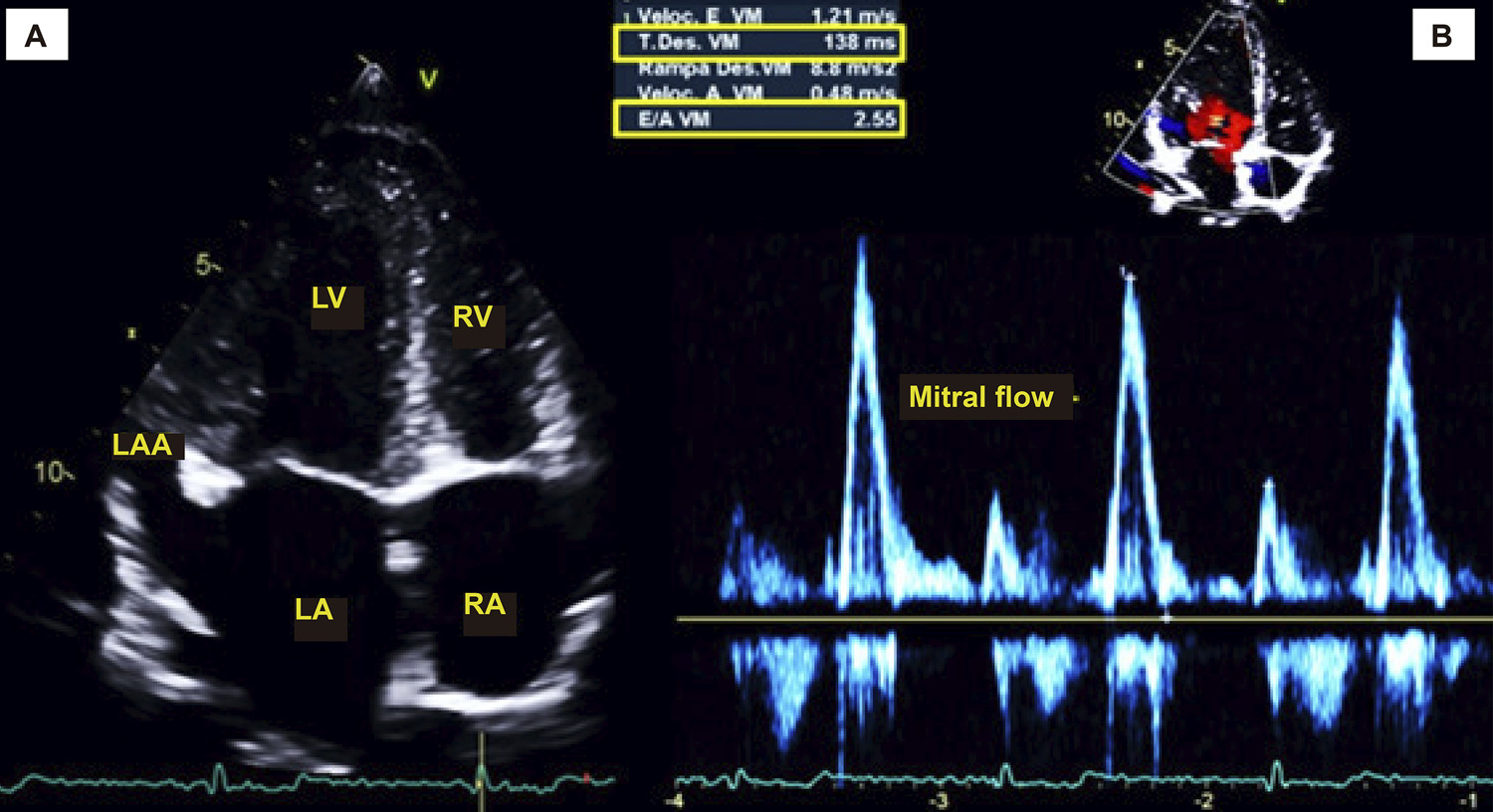
As usual in Medicine, every time we have a paradigm shift or a new clinical entity appears, we pass first through a moment of overdiagnosis followed by some discredit to finally reach a balance with the maturity and the knowledge acquired over time. The same happened with mitral valve prolapse, which showed an incidence of more than 30% in young women in the early 1970s, but nowadays it is known of about 2.5% in both sexes. Ventricular non-compaction and many other diseases followed the same pattern, as well as diastolic disfunction. How many healthy elderly people were diagnosed with mild diastolic disfunction (or grade I) due to presence of E/A inversion on spectral Doppler of the mitral inflow? Almeida et al. tested the impact of using the 2009 guidelines against 2016 for diagnosing diastolic disfunction in 1,000 elderly individuals (over 45 y/o). They found that only 1.4% had some degree of diastolic disfunction according to the 2016 guideline. On the other hand, if the 2009 guideline had been used, this number would rise to 38.2%.

[…]

  • Athletes
  • Diagnostic Imaging
  • Echocardiography/methods
  • Exercise
  • Guidelines as Topic
  • Sports
  • Ventricular Dysfunction
Read Full Article
Creative Commons Attribution (CC BY) Creative Commons license
07/08/2020 DOI: 10.36660/abc.20190689
Figure 1
ABC
Original Article

Implementation of a Best Practice in Cardiology (BPC) Program Adapted from Get With The Guidelines®in Brazilian Public Hospitals: Study Design and Rationale

Fabio Papa Taniguchi et al. Sabrina Bernardez-Pereira Suzana Alves Silva Antônio Luiz Pinho Ribeiro … Louise Morgan Anne B. Curtis Kathryn Taubert Denilson Campos de Albuquerque Bernadete Weber Pedro Paulo Magalhães Chrispim Camila Pereira Pinto Toth Erica Deji Moura Morosov Gregg C. Fonarow Sidney C Smith Jr Angelo Amato Vincenzo de Paola

Abstract

Background

There are substantial opportunities to improve the quality of cardiovascular care in developing countries through the implementation of a quality program.

Objective

To evaluate the effect of a Best Practice in Cardiology (BPC) program on performance measures and patient outcomes related to heart failure, atrial fibrillation and acute coronary syndromes in a subset of Brazilian public hospitals.

Methods

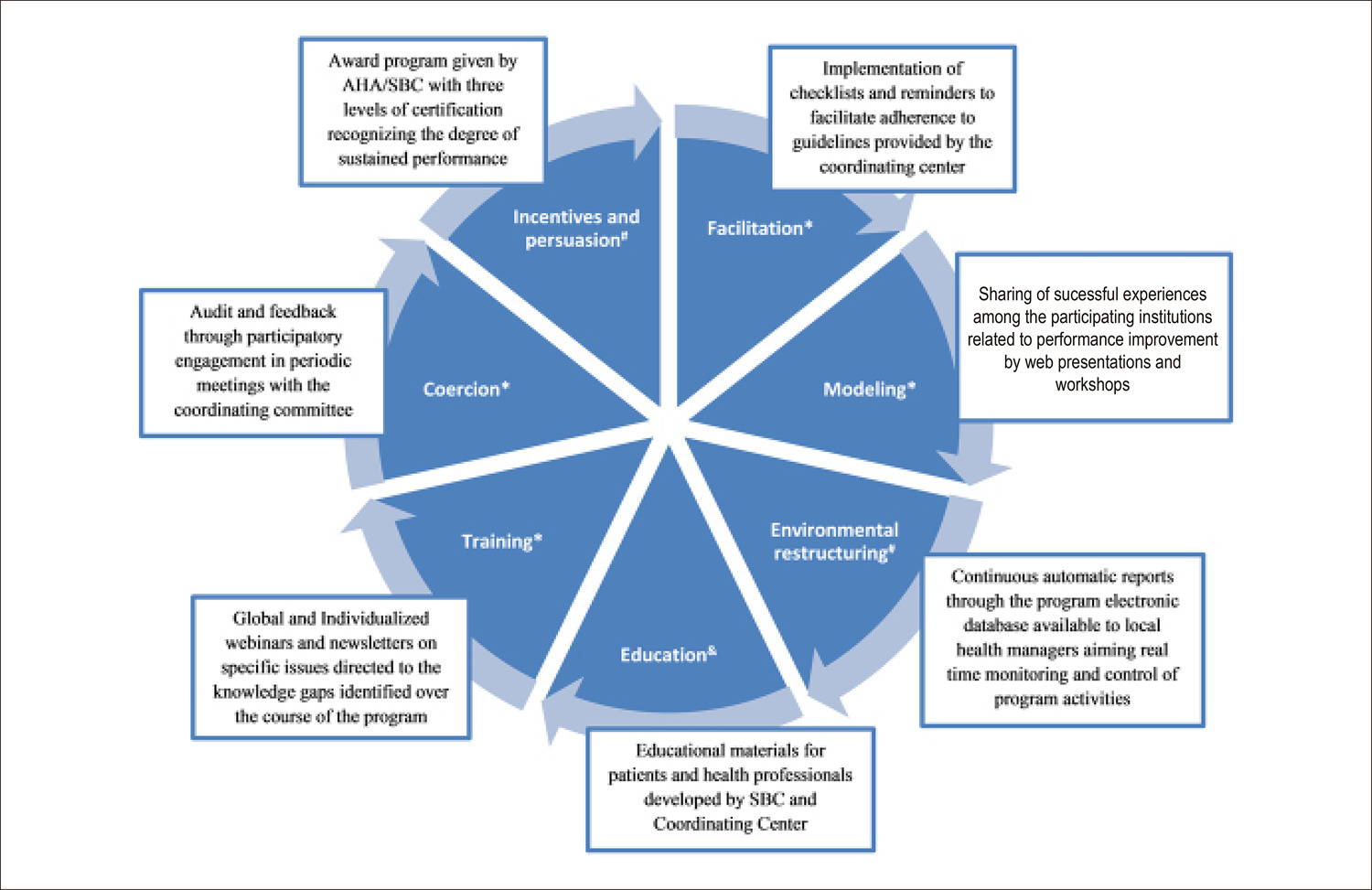
The Boas Práticas em Cardiologia (BPC) program was adapted from the American Heart Association’s (AHA) Get With The Guidelines (GWTG) Program for use in Brazil. The program is being started simultaneously in three care domains (acute coronary syndrome, atrial fibrillation and heart failure), which is an approach that has never been tested within the GWTG. There are six axes of interventions borrowed from knowledge translation literature that will address local barriers identified through structured interviews and regular audit and feedback meetings. The intervention is planned to include at least 10 hospitals and 1,500 patients per heart condition. The primary endpoint includes the rates of overall adherence to care measures recommended by the guidelines. Secondary endpoints include the effect of the program on length of stay, overall and specific mortality, readmission rates, quality of life, patients’ health perception and patients’ adherence to prescribed interventions.

Results

It is expected that participating hospitals will improve and sustain their overall adherence rates to evidence-based recommendations and patient outcomes. This is the first such cardiovascular quality improvement (QI) program in South America and will provide important information on how successful programs from developed countries like the United States can be adapted to meet the needs of countries with developing economies like Brazil. Also, a successful program will give valuable information for the development of QI programs in other developing countries.

Conclusions

This real-world study provides information for assessing and increasing adherence to cardiology guidelines in Brazil, as well as improvements in care processes. (Arq Bras Cardiol. 2020; [online].ahead print, PP.0-0)

  • Acute coronary syndrome
  • Atrial Fibrillation
  • Cardiovascular Diseases/physiopathology
  • Guidelines as Topic
  • Heart Failure
  • Quality Improvement/trends
Read Full Article
Creative Commons Attribution (CC BY) Creative Commons license
07/08/2020 DOI: 10.36660/abc.20190393

How to cite this article

EndNote RIS

Electronic Document Format (Vancouver)

Ramires FJA. Implementation of Healthcare Quality Improvement Programs. Arquivos Brasileiros de Cardiologia 2020;115(1):100-1.

Electronic Document Format (ABNT)

Ramires, Felix J. A.. Implementation of Healthcare Quality Improvement Programs. Arquivos Brasileiros de Cardiologia, v. 115, n. 1, p. 100-101, Aug. 2020.

Electronic Document Format (APA)

Ramires, F. J. A. (2020). Implementation of Healthcare Quality Improvement Programs. Arquivos Brasileiros de Cardiologia, 115(1), 100-101.

Electronic Document Format (ISO)

Ramires, Felix J. A.. Implementation of Healthcare Quality Improvement Programs. Arquivos Brasileiros de Cardiologia [online]. 2020, vol. 115, n. 1, [cited 2026-10-14], pp. 100-101. Available from: <https://journals.cardiol.br/en/article/implementation-of-healthcare-quality-improvement-programs/>. ISSN 0066-782X

EndNote RIS

Electronic Document Format (Vancouver)

Silva CES. Appropriate Use of Diastolic Function Guideline When Evaluating Athletes: It is not Always what it Seems to Be. Arquivos Brasileiros de Cardiologia 2020;115(1):134-8.

Electronic Document Format (ABNT)

Silva, Carlos Eduardo Suaide. Appropriate Use of Diastolic Function Guideline When Evaluating Athletes: It is not Always what it Seems to Be. Arquivos Brasileiros de Cardiologia, v. 115, n. 1, p. 134-138, Aug. 2020.

Electronic Document Format (APA)

Silva, C. E. S. (2020). Appropriate Use of Diastolic Function Guideline When Evaluating Athletes: It is not Always what it Seems to Be. Arquivos Brasileiros de Cardiologia, 115(1), 134-138.

Electronic Document Format (ISO)

Silva, Carlos Eduardo Suaide. Appropriate Use of Diastolic Function Guideline When Evaluating Athletes: It is not Always what it Seems to Be. Arquivos Brasileiros de Cardiologia [online]. 2020, vol. 115, n. 1, [cited 2026-10-14], pp. 134-138. Available from: <https://journals.cardiol.br/en/article/appropriate-use-of-diastolic-function-guideline-when-evaluating-athletes-it-is-not-always-what-it-seems-to-be/>. ISSN 0066-782X

EndNote RIS

Electronic Document Format (Vancouver)

Taniguchi FP, Bernardez-Pereira S, Silva SA, Ribeiro ALP, Morgan L, Curtis AB, Taubert K, et al. Implementation of a Best Practice in Cardiology (BPC) Program Adapted from Get With The Guidelines®in Brazilian Public Hospitals: Study Design and Rationale. Arquivos Brasileiros de Cardiologia 2020;115(1):92-9.

Electronic Document Format (ABNT)

Taniguchi, Fabio Papa; Bernardez-Pereira, Sabrina; Silva, Suzana Alves; Ribeiro, Antônio Luiz Pinho; Morgan, Louise; Curtis, Anne B.; Taubert, Kathryn; Albuquerque, Denilson Campos de; Weber, Bernadete; Chrispim, Pedro Paulo Magalhães; Toth, Camila Pereira Pinto; Morosov, Erica Deji Moura; Fonarow, Gregg C.; Smith Jr, Sidney C; Paola, Angelo Amato Vincenzo de. Implementation of a Best Practice in Cardiology (BPC) Program Adapted from Get With The Guidelines®in Brazilian Public Hospitals: Study Design and Rationale. Arquivos Brasileiros de Cardiologia, v. 115, n. 1, p. 92-99, Aug. 2020.

Electronic Document Format (APA)

Taniguchi, F. P., Bernardez-Pereira, S., Silva, S. A., Ribeiro, A. L. P., Morgan, L., Curtis, A. B., Taubert, K., Albuquerque, D. C. , Weber, B., Chrispim, P. P. M., Toth, C. P. P., Morosov, E. D. M., Fonarow, G. C., Smith Jr, S. C., & Paola, A. A. V. (2020). Implementation of a Best Practice in Cardiology (BPC) Program Adapted from Get With The Guidelines®in Brazilian Public Hospitals: Study Design and Rationale. Arquivos Brasileiros de Cardiologia, 115(1), 92-99.

Electronic Document Format (ISO)

Taniguchi, Fabio Papa and Bernardez-Pereira, Sabrina and Silva, Suzana Alves and Ribeiro, Antônio Luiz Pinho and Morgan, Louise and Curtis, Anne B. and Taubert, Kathryn and Albuquerque, Denilson Campos de and Weber, Bernadete and Chrispim, Pedro Paulo Magalhães and Toth, Camila Pereira Pinto and Morosov, Erica Deji Moura and Fonarow, Gregg C. and Smith Jr, Sidney C and Paola, Angelo Amato Vincenzo de. Implementation of a Best Practice in Cardiology (BPC) Program Adapted from Get With The Guidelines®in Brazilian Public Hospitals: Study Design and Rationale. Arquivos Brasileiros de Cardiologia [online]. 2020, vol. 115, n. 1, [cited 2026-10-14], pp. 92-99. Available from: <https://journals.cardiol.br/en/article/implementation-of-a-best-practice-in-cardiology-bpc-program-adapted-from-get-with-the-guidelinesin-brazilian-public-hospitals-study-design-and-rationale/>. ISSN 0066-782X

  • About ABC Family
  • Internal Regulation
  • Editorial Board
  • Brazilian Society of Cardiology (SBC)

Issues

SBC Guidelines

  • Videos
  • Podcasts
  • News