ABC Family Arquivos Brasileiros de Cardiologia International Journal of Cardiovascular Sciences ABC Heart Failure & Cardiomyopathy ABC Imagem Cardiovascular
Português English
ABC Family
Português English
  • About
    • About ABC Family
    • Internal Regulation
    • Editorial Board
    • Brazilian Society of Cardiology (SBC)
  • Issues
  • SBC Guidelines
  • Content
    • Videos
    • Podcasts
    • News
  • About
    • About ABC Family
    • Internal Regulation
    • Editorial Board
    • Brazilian Society of Cardiology (SBC)
  • Issues
  • SBC Guidelines
  • Content
    • Videos
    • Podcasts
    • News

ABC Family

  • ABC Family
  • Arquivos Brasileiros de Cardiologia
  • International Journal of Cardiovascular Sciences
  • ABC Heart Failure & Cardiomyopathy
  • ABC Imagem Cardiovascular
Search in

No content found.

Journals
Ordering
Article types
Others

  1. Home
  2. Keyword: Cardiac arrest
Extracorporeal Cardiopulmonary Resuscitation for In-Hospital Cardiac Arrest: A Single-Center Experience in Latin America
ABC
Original Article

Extracorporeal Cardiopulmonary Resuscitation for In-Hospital Cardiac Arrest: A Single-Center Experience in Latin America

Lucrecia M. Burgos et al. Leonardo A. Seoane Ana Spaccavento Juan F. Furmento … Juan P. Costabel Rocio C. Baro Vila Maria A. de Bortoli Daniel O. Navia Fernando Piccinini Mariano Vrancic Mirta Diez

Abstract

Background:

Extracorporeal cardiopulmonary resuscitation (ECPR) is the use of extracorporeal membrane oxygenation (ECMO) in patients in whom conventional cardiopulmonary resuscitation measures have failed to achieve a sustained return of spontaneous circulation after cardiorespiratory arrest. Limited information is available in centers in Latin America.

Objective:

To evaluate in-hospital and long-term clinical outcomes of adult patients treated with ECPR after in-hospital cardiac arrest (IHCA) in a high-complexity center in Argentina.

Methods:

A single-center cohort study was performed. Consecutive adult patients who underwent ECPR between 2014 and 2023 were retrospectively analyzed. Witnessed IHCA cases of probable cardiac origin were included.

Results:

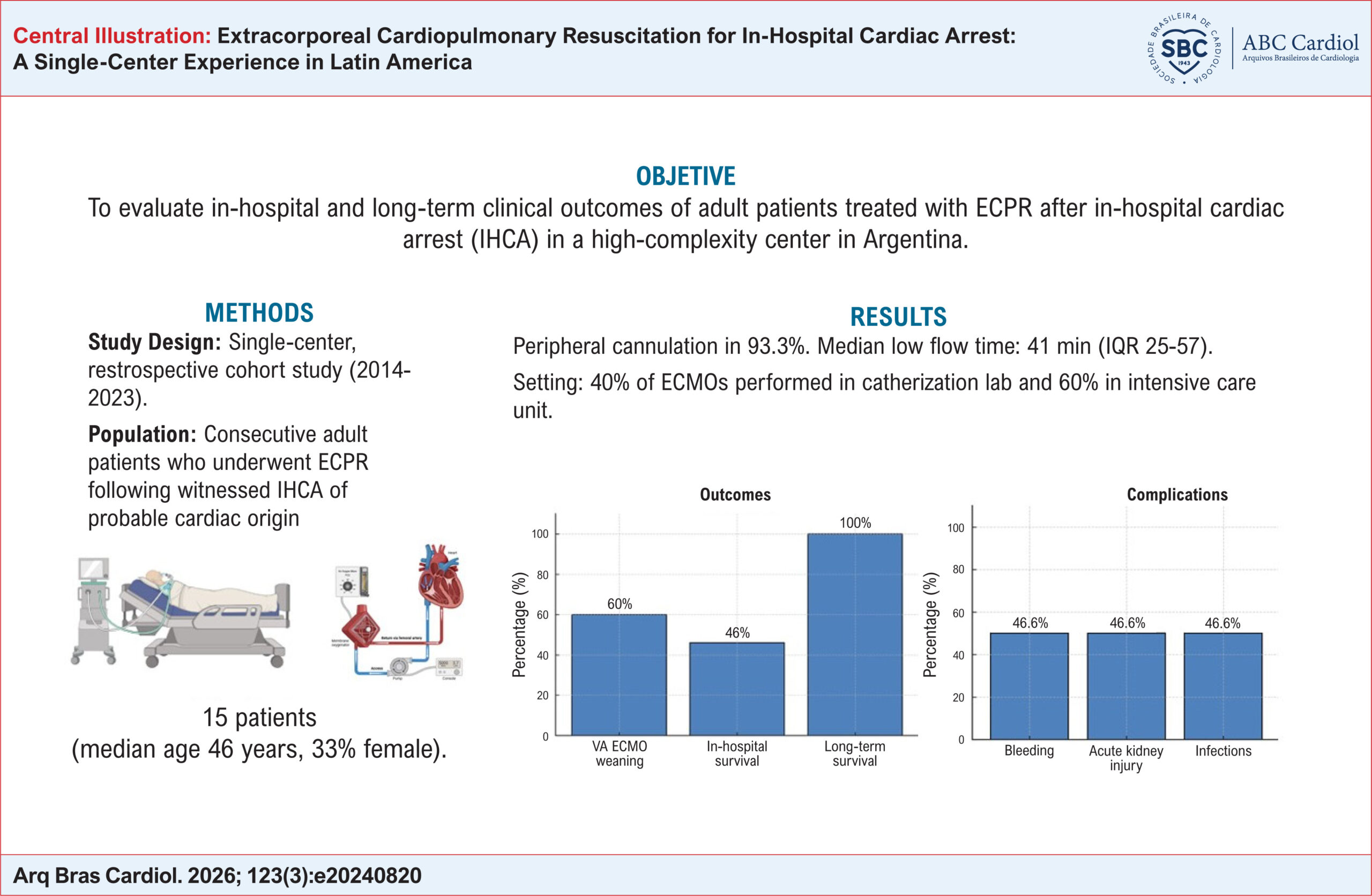
Fifteen patients were included in the analysis, representing 16% of the venoarterial ECMO cases implanted at the center during this period. The median age was 46 years (interquartile range [IQR]: 34 to 57); 33% were female. Cannulation was peripheral in 93.3%, and 66% of ECMO runs were placed with an initial bridging strategy to recovery. The median duration of circulatory support was 5 days (IQR: 2 to 9). Venoarterial ECMO was successfully removed in 60% of patients, and in-hospital survival was 46%. Median follow-up after discharge was 12 months (IQR: 3 to 34), with 100% long-term survival.

Conclusion:

Venoarterial ECMO as a treatment for IHCA in our center demonstrated acceptable survival to hospital discharge and long-term survival. Venoarterial ECMO may be an effective treatment in highly selected patients when conventional therapies fail and may be useful and applicable in a low- and middle-income country with limited access to other circulatory assist devices.
  • Cardiac arrest
  • Cardiopulmonary Resuscitation
  • Extracorporeal Membrane Oxygenation
Read Full Article
Creative Commons Attribution (CC BY) Creative Commons license
11/05/2026 DOI: 10.36660/abc.20240820i Views 1
Figure 1
ABC
Research Letter

Takotsubo Syndrome, Complete Heart Block, and Cardiac Arrest: A Clinical Challenge

Ana Abrantes et al. Catarina Gregório Miguel Raposo Nelson Cunha … Dulce Brito Fausto J. Pinto

Abstract

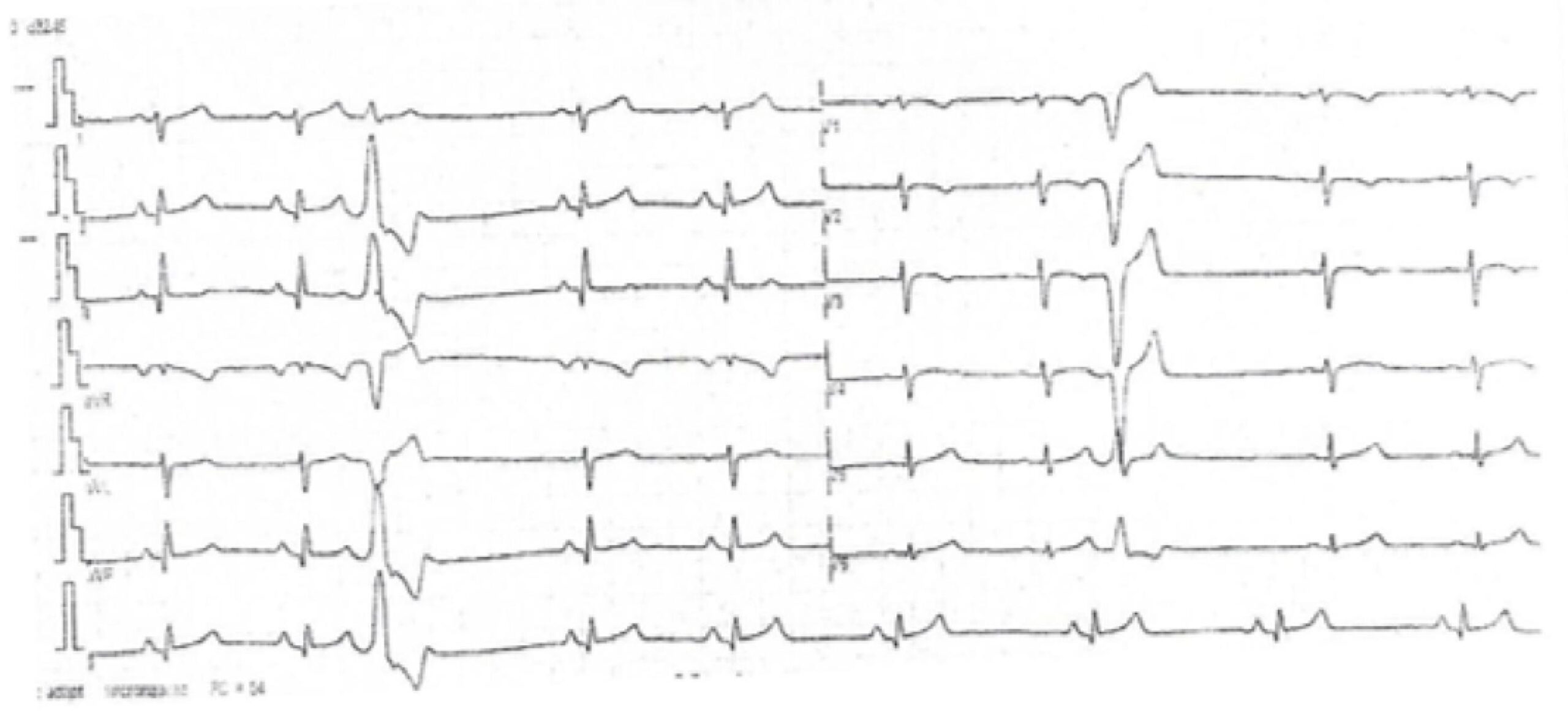
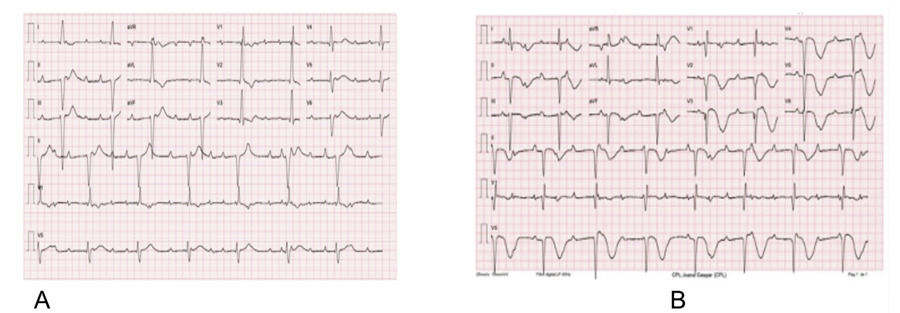
Complete atrioventricular block may be associated with Takotsubo syndrome, and the decision of device implantation in such patients is challenging. We present a case of a 76-year-old woman admitted after out-of-hospital cardiac arrest that was reverted after defibrillation treatment. Post-resuscitation electrocardiogram documented complete atrioventricular block, and echocardiogram revealed severe left ventricular dysfunction with apical ballooning. Coronary angiography excluded coronary artery disease, and Takotsubo syndrome was diagnosed based on clinical and imaging features. Atrioventricular block persisted despite normalization of left ventricular function; therefore, cardiac arrest was considered secondary to a ventricular arrhythmia induced by atrioventricular block, and a pacemaker, rather than an implantable cardioverter-defibrillator, was implanted. During follow-up, complete atrioventricular block persisted, with 99% of ventricular pacing observed upon device interrogation. This case supports that the stress of atrioventricular block may trigger Takotsubo syndrome, which is reinforced by the persistence of conduction abnormalities despite reversal of ventricular defects. Therefore, early implantation of a cardiac device should be carefully considered on a case-by-case basis.

  • Cardiac arrest
  • complete atrioventricular block
  • Pacemaker
  • Takotsubo syndrome
Read Full Article
Creative Commons Attribution (CC BY) Creative Commons license
09/01/2026 DOI: 10.36660/abc.20250245i Views 1
Figure 1
IJCS
Case Report

Cardiopulmonary Resuscitation Induced Consciousness: Case Report

Daniela Aparecida Morais et al. Anselmo Dornas Moura Daniel Claus Fruk Guelfi Cintia Maria Guedes de Moraes Guilherme Augusto Cruz Machado

Introduction

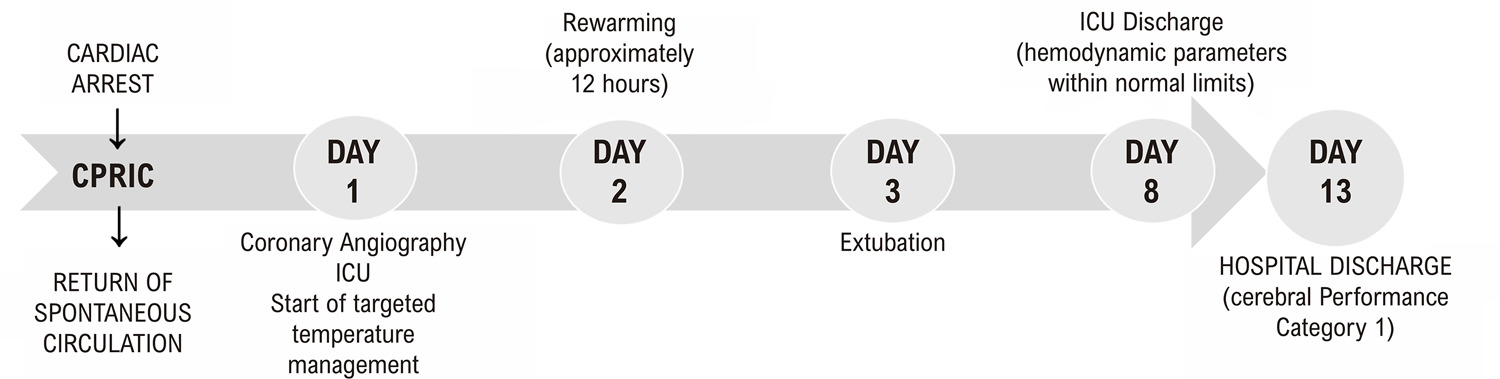
High-quality cardiopulmonary resuscitation (CPR) can generate cerebral blood flow capable of inducing different levels of consciousness in patients. This process, called CPR-induced consciousness (CPRIC), has been reported in the literature.–

The prevalence of CPRIC has been estimated at 0.3% to 0.9%. However, this low prevalence could be attributed to study design or sample size.

[…]

  • Cardiac arrest
  • Cardiopulmonary Resuscitation
  • Cases reports
  • Consciousness
Read Full Article
Creative Commons Attribution (CC BY) Creative Commons license
08/03/2024 DOI: 10.36660/ijcs.20220023 Views 1
Figure 1
IJCS
Case Report

Sudden Cardiac Arrest in Athletes: Do not Miss Suspicious Details

Marta Luísa Braga et al. Paula Dias Mariana Vasconcelos Rui Almeida … Paulo Araújo Maria Maciel

Introduction

Sudden cardiac death (SCD) related to sports activities is an unexpected and rare event, usually occurring in young and apparently healthy athletes. The main cause of SCD in young athletes (< 35 years old) is ventricular arrhythmia (VA) associated with arrhythmogenic disorders (e.g. hypertrophic cardiomyopathy, arrhythmogenic right ventricular cardiomyopathy – ARVC, channelopathies). Some of these conditions can be suspected by routine pre-participation clinical evaluation, while others remain undetectable even after careful screening.– This paper presents the case of a professional athlete with undiagnosed ARVC, whose first manifestation was malignant VA and biventricular dysfunction.

[…]

  • Arrhythmias Cardiac
  • Arrhytmogenic Right Ventricular Dysplasia
  • Athletes
  • Cardiac arrest
  • Physical Endurance
  • Risk Assessment
  • Spots
  • Sudden Death
Read Full Article
Creative Commons Attribution (CC BY) Creative Commons license
12/08/2019 DOI: 10.5935/2359-4802.20190065 Views 1
IJCS
Viewpoint

Sudden Cardiac Death in Sports: Not a Fatality!

Nabil Ghorayeb et al. Clea Simone Sabino de Souza Colombo Ricardo Contesini Francisco, Thiago Ghorayeb Garcia

Abstract

Sudden cardiac death in sports is still controversial. Despite being a rare event, the death of an apparently healthy young athlete causes a major impact on the media. On the other hand, for being a rare event, it is clearly undervalued. Sports preparticipation cardiological assessment is one of the most effective preventive medical actions for professional and amateur endurance athletes. The regular and supervised practice of physical exercise does not kill. We believe that deaths are triggered by excessive physical training and use of drugs, in individuals with not diagnosed or undervalued heart diseases. It is necessary to make health professionals and athletes aware of the athletes’ physiological limits, in addition to preparing the athletes properly when they try to overcome human limits.

  • Cardiac arrest
  • Endurance Exercise
  • Risk Assessment
  • Sports
  • Sudden Death
Read Full Article
Creative Commons Attribution (CC BY) Creative Commons license
01/01/2019 DOI: 10.5935/2359-4802.20180087
ABC
Artigo Original

Permanent Education in BLS and ACLS: impact on the knowledge of nursing professionals

Sandro Gonçalves de Lima et al. Larissa Araripe de Macedo Marcela de Lima Vidal Michel Pompeu Barros de Oliveira Sá

BACKGROUND: The theoretical knowledge and practical skills of the Basic Life Support (BLS) and the Advanced Life Support (ALS) are among the most important determining factors of the cardiopulmonary reanimation success rates. OBJECTIVE: Assess the impact of a permanent training program in BLS and ALS on the knowledge of nursing professionals. METHOD: Cross-sectional study. Population was made of nursing professionals of a tertiary level hospital. Assessments were carried out before and after training. The critical points of the International Liaison Committee on Resuscitation (ILCOR) analysis were addressed. RESULTS: 213 professionals were assessed (76 nurses, 35.7%; 38 assistants, 17.8%; and 99 technicians, 46.7%). Pre-course assessment average grades were statistically different (p<0.001) among assistants (3.25), technicians (3.96) and nurses (4.69). Single professional without kids showed performance significantly superior to married professional with kids (p=0.02 and 0.004 respectively). Pre-training level of knowledge was inversely proportional to the time elapsed since the completion of undergraduate course or technical course. Main deficiencies were related to the initial approach of airways, to post-resuscitation cares and to the external cardiac massage technique. The post-course general average grade was 7.26. Assistants achieved a performance of 131.2%, technicians, of 78.9% and the nurses, of 85%, with no significant statistic difference (p=0.43). CONCLUSION: The permanent training program in BLS and ALS resulted in important increment in the level of knowledge of nursing professionals.

  • advanced cardiac life support
  • Cardiac arrest
  • Cardiopulmonary Resuscitation
  • permanent education
Read Full Article
Creative Commons Attribution (CC BY) Creative Commons license
05/05/2010 DOI: 10.1590/S0066-782X2009001200012 Views 1
In-hospital post-cardiopulmonary-cerebral resuscitation survival prognostic factors
ABC
Artigo Original

In-hospital post-cardiopulmonary-cerebral resuscitation survival prognostic factors

André Mansur de Carvalho Guanaes Gomes et al. Ari Timerman Carlos Alfredo Marcílio de Souza Carlos Maurício Cardeal Mendes … Heitor Portella Póvoas Filho Adriano Martins de Oliveira José Antonio de Almeida Souza

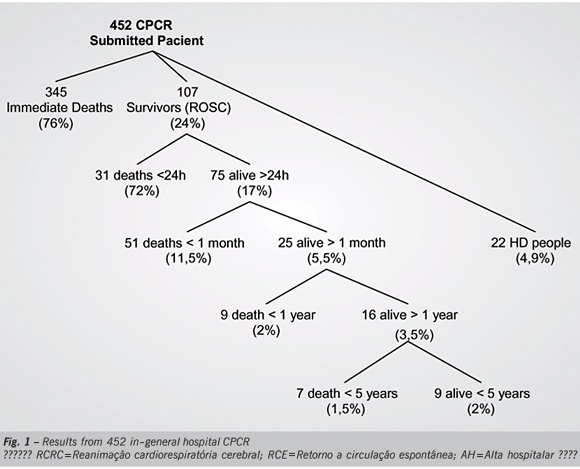
OBJECTIVE: To assess clinical and demographic characteristics of patients who had cardiopulmonary resuscitation and identify short- and long-term survival prognostic factors. METHODS: Four hundred and fifty-two (452) resuscitated patients in general hospitals from Salvador were prospectively assessed through bivariate and stratified analysis in associations between variables and survival curve for a nine-year evolution assessment. RESULTS: Age ranged from 14 to 93 years old, mean of 54.11 years old. Male gender patients prevailed and half of them had at least a base disease. Cardiovascular disease was the responsible etiology in 50% of cases. Cardiac arrest was observed in 77% of cases and only 69% of patients were immediately resuscitated. Initial cardiac rhythm was not diagnosed in 59% of patients. Asystole was the most frequent rhythm (42%), followed by ventricular arrhythmia (35%). Immediate survival was 24% and hospital discharge survival 5%. Cardiac arrest etiology, initial cardiac rhythm diagnosis, ventricular fibrillation or tachycardia as arrest mechanism, pre-resuscitation estimated time lower than or equal to 15 minutes and resuscitation time lower than or equal to 5 minutes were recognized as short-term prognostic factors. Non-administration of epinephrine, being resuscitated in private hospital and resuscitation time lower than or equal to 15 minutes were nine-year evolution survival prognostic factors. CONCLUSION: Data may help healthcare professionals decide when start or stop in-hospital resuscitation.

  • Cardiac arrest
  • Cardiopulmonary Resuscitation
  • general hospitals
  • Prognosis
Read Full Article
Creative Commons Attribution (CC BY) Creative Commons license
07/11/2005 DOI: 10.1590/S0066-782X2005001700006

How to cite this article

EndNote RIS

Electronic Document Format (Vancouver)

Burgos LM, Seoane LA, Spaccavento A, Furmento JF, Costabel JP, Vila RCB, Bortoli MA, et al. Extracorporeal Cardiopulmonary Resuscitation for In-Hospital Cardiac Arrest: A Single-Center Experience in Latin America. Arquivos Brasileiros de Cardiologia 2026;123(3):e20240820.

Electronic Document Format (ABNT)

Burgos, Lucrecia M.; Seoane, Leonardo A.; Spaccavento, Ana; Furmento, Juan F.; Costabel, Juan P.; Vila, Rocio C. Baro; Bortoli, Maria A. de; Navia, Daniel O.; Piccinini, Fernando; Vrancic, Mariano; Diez, Mirta. Extracorporeal Cardiopulmonary Resuscitation for In-Hospital Cardiac Arrest: A Single-Center Experience in Latin America. Arquivos Brasileiros de Cardiologia, v. 123, n. 3, e20240820, May. 2026.

Electronic Document Format (APA)

Burgos, L. M., Seoane, L. A., Spaccavento, A., Furmento, J. F., Costabel, J. P., Vila, R. C. B., Bortoli, M. A. , Navia, D. O., Piccinini, F., Vrancic, M., & Diez, M. (2026). Extracorporeal Cardiopulmonary Resuscitation for In-Hospital Cardiac Arrest: A Single-Center Experience in Latin America. Arquivos Brasileiros de Cardiologia, 123(3), e20240820.

Electronic Document Format (ISO)

Burgos, Lucrecia M. and Seoane, Leonardo A. and Spaccavento, Ana and Furmento, Juan F. and Costabel, Juan P. and Vila, Rocio C. Baro and Bortoli, Maria A. de and Navia, Daniel O. and Piccinini, Fernando and Vrancic, Mariano and Diez, Mirta. Extracorporeal Cardiopulmonary Resuscitation for In-Hospital Cardiac Arrest: A Single-Center Experience in Latin America. Arquivos Brasileiros de Cardiologia [online]. 2026, vol. 123, n. 3, [cited 2026-10-14], e20240820. Available from: <https://journals.cardiol.br/en/article/extracorporeal-cardiopulmonary-resuscitation-for-in-hospital-cardiac-arrest-a-single-center-experience-in-latin-america/>. ISSN 0066-782X

EndNote RIS

Electronic Document Format (Vancouver)

Abrantes A, Gregório C, Raposo M, Cunha N, Brito D, Pinto FJ. Takotsubo Syndrome, Complete Heart Block, and Cardiac Arrest: A Clinical Challenge. Arquivos Brasileiros de Cardiologia 2026;122(11):e20250245.

Electronic Document Format (ABNT)

Abrantes, Ana; Gregório, Catarina; Raposo, Miguel; Cunha, Nelson; Brito, Dulce; Pinto, Fausto J.. Takotsubo Syndrome, Complete Heart Block, and Cardiac Arrest: A Clinical Challenge. Arquivos Brasileiros de Cardiologia, v. 122, n. 11, e20250245, Jan. 2026.

Electronic Document Format (APA)

Abrantes, A., Gregório, C., Raposo, M., Cunha, N., Brito, D., & Pinto, F. J. (2026). Takotsubo Syndrome, Complete Heart Block, and Cardiac Arrest: A Clinical Challenge. Arquivos Brasileiros de Cardiologia, 122(11), e20250245.

Electronic Document Format (ISO)

Abrantes, Ana and Gregório, Catarina and Raposo, Miguel and Cunha, Nelson and Brito, Dulce and Pinto, Fausto J.. Takotsubo Syndrome, Complete Heart Block, and Cardiac Arrest: A Clinical Challenge. Arquivos Brasileiros de Cardiologia [online]. 2026, vol. 122, n. 11, [cited 2026-10-14], e20250245. Available from: <https://journals.cardiol.br/en/article/takotsubo-syndrome-complete-heart-block-and-cardiac-arrest-a-clinical-challenge/>. ISSN 0066-782X

EndNote RIS

Electronic Document Format (Vancouver)

Morais DA, Moura AD, Guelfi DCF, Moraes CMG, Machado GAC. Cardiopulmonary Resuscitation Induced Consciousness: Case Report. International Journal of Cardiovascular Sciences 2024;37:e20220023.

Electronic Document Format (ABNT)

Morais, Daniela Aparecida; Moura, Anselmo Dornas; Guelfi, Daniel Claus Fruk; Moraes, Cintia Maria Guedes de; Machado, Guilherme Augusto Cruz. Cardiopulmonary Resuscitation Induced Consciousness: Case Report. International Journal of Cardiovascular Sciences, v. 37, e20220023, Mar. 2024.

Electronic Document Format (APA)

Morais, D. A., Moura, A. D., Guelfi, D. C. F., Moraes, C. M. G. , & Machado, G. A. C. (2024). Cardiopulmonary Resuscitation Induced Consciousness: Case Report. International Journal of Cardiovascular Sciences, 37, e20220023.

Electronic Document Format (ISO)

Morais, Daniela Aparecida and Moura, Anselmo Dornas and Guelfi, Daniel Claus Fruk and Moraes, Cintia Maria Guedes de and Machado, Guilherme Augusto Cruz. Cardiopulmonary Resuscitation Induced Consciousness: Case Report. International Journal of Cardiovascular Sciences [online]. 2024, vol. 37, [cited 2026-10-14], e20220023. Available from: <https://journals.cardiol.br/en/article/cardiopulmonary-resuscitation-induced-consciousness-case-report/>. ISSN 2359-4802

EndNote RIS

Electronic Document Format (Vancouver)

Braga ML, Dias P, Vasconcelos M, Almeida R, Araújo P, Maciel M. Sudden Cardiac Arrest in Athletes: Do not Miss Suspicious Details. International Journal of Cardiovascular Sciences 2019;32(4):428-32.

Electronic Document Format (ABNT)

Braga, Marta Luísa; Dias, Paula; Vasconcelos, Mariana; Almeida, Rui; Araújo, Paulo; Maciel, Maria. Sudden Cardiac Arrest in Athletes: Do not Miss Suspicious Details. International Journal of Cardiovascular Sciences, v. 32, n. 4, p. 428-432, Aug. 2019.

Electronic Document Format (APA)

Braga, M. L., Dias, P., Vasconcelos, M., Almeida, R., Araújo, P., & Maciel, M. (2019). Sudden Cardiac Arrest in Athletes: Do not Miss Suspicious Details. International Journal of Cardiovascular Sciences, 32(4), 428-432.

Electronic Document Format (ISO)

Braga, Marta Luísa and Dias, Paula and Vasconcelos, Mariana and Almeida, Rui and Araújo, Paulo and Maciel, Maria. Sudden Cardiac Arrest in Athletes: Do not Miss Suspicious Details. International Journal of Cardiovascular Sciences [online]. 2019, vol. 32, n. 4, [cited 2026-10-14], pp. 428-432. Available from: <https://journals.cardiol.br/en/article/sudden-cardiac-arrest-in-athletes-do-not-miss-suspicious-details/>. ISSN 2359-4802

EndNote RIS

Electronic Document Format (Vancouver)

Ghorayeb N, Colombo CSSS, Francisco RC, Garcia TG. Sudden Cardiac Death in Sports: Not a Fatality!. International Journal of Cardiovascular Sciences 2019;32(1):84-6.

Electronic Document Format (ABNT)

Ghorayeb, Nabil; Colombo, Clea Simone Sabino de Souza; Francisco, Ricardo Contesini; Garcia, Thiago Ghorayeb. Sudden Cardiac Death in Sports: Not a Fatality!. International Journal of Cardiovascular Sciences, v. 32, n. 1, p. 84-86, Dec. 2018.

Electronic Document Format (APA)

Ghorayeb, N., Colombo, C. S. S. S., Francisco, R. C., & Garcia, T. G. (2019). Sudden Cardiac Death in Sports: Not a Fatality!. International Journal of Cardiovascular Sciences, 32(1), 84-86.

Electronic Document Format (ISO)

Ghorayeb, Nabil and Colombo, Clea Simone Sabino de Souza and Francisco, Ricardo Contesini and Garcia, Thiago Ghorayeb. Sudden Cardiac Death in Sports: Not a Fatality!. International Journal of Cardiovascular Sciences [online]. 2019, vol. 32, n. 1, [cited 2026-10-14], pp. 84-86. Available from: <https://journals.cardiol.br/en/article/sudden-cardiac-death-in-sports-not-a-fatality/>. ISSN 2359-4802

EndNote RIS

Electronic Document Format (Vancouver)

Lima SG, Macedo LA, Vidal ML, Sá MPBO. Permanent Education in BLS and ACLS: impact on the knowledge of nursing professionals. Arquivos Brasileiros de Cardiologia 2010;93(6):630-6.

Electronic Document Format (ABNT)

Lima, Sandro Gonçalves de; Macedo, Larissa Araripe de; Vidal, Marcela de Lima; Sá, Michel Pompeu Barros de Oliveira. Permanent Education in BLS and ACLS: impact on the knowledge of nursing professionals. Arquivos Brasileiros de Cardiologia, v. 93, n. 6, p. 630-636, May. 2010.

Electronic Document Format (APA)

Lima, S. G. , Macedo, L. A. , Vidal, M. L., & Sá, M. P. B. O. (2010). Permanent Education in BLS and ACLS: impact on the knowledge of nursing professionals. Arquivos Brasileiros de Cardiologia, 93(6), 630-636.

Electronic Document Format (ISO)

Lima, Sandro Gonçalves de and Macedo, Larissa Araripe de and Vidal, Marcela de Lima and Sá, Michel Pompeu Barros de Oliveira. Permanent Education in BLS and ACLS: impact on the knowledge of nursing professionals. Arquivos Brasileiros de Cardiologia [online]. 2010, vol. 93, n. 6, [cited 2026-10-14], pp. 630-636. Available from: <https://journals.cardiol.br/en/article/permanent-education-in-bls-and-acls-impact-on-the-knowledge-of-nursing-professionals/>. ISSN 0066-782X

EndNote RIS

Electronic Document Format (Vancouver)

Gomes AMCG, Timerman A, Souza CAM, Mendes CMC, Póvoas Filho HP, Oliveira AM, Souza JAA, et al. In-hospital post-cardiopulmonary-cerebral resuscitation survival prognostic factors. Arquivos Brasileiros de Cardiologia 2005;85(4):262-71.

Electronic Document Format (ABNT)

Gomes, André Mansur de Carvalho Guanaes; Timerman, Ari; Souza, Carlos Alfredo Marcílio de; Mendes, Carlos Maurício Cardeal; Póvoas Filho, Heitor Portella; Oliveira, Adriano Martins de; Souza, José Antonio de Almeida. In-hospital post-cardiopulmonary-cerebral resuscitation survival prognostic factors. Arquivos Brasileiros de Cardiologia, v. 85, n. 4, p. 262-271, Nov. 2005.

Electronic Document Format (APA)

Gomes, A. M. C. G., Timerman, A., Souza, C. A. M. , Mendes, C. M. C., Póvoas Filho, H. P., Oliveira, A. M. , & Souza, J. A. A. (2005). In-hospital post-cardiopulmonary-cerebral resuscitation survival prognostic factors. Arquivos Brasileiros de Cardiologia, 85(4), 262-271.

Electronic Document Format (ISO)

Gomes, André Mansur de Carvalho Guanaes and Timerman, Ari and Souza, Carlos Alfredo Marcílio de and Mendes, Carlos Maurício Cardeal and Póvoas Filho, Heitor Portella and Oliveira, Adriano Martins de and Souza, José Antonio de Almeida. In-hospital post-cardiopulmonary-cerebral resuscitation survival prognostic factors. Arquivos Brasileiros de Cardiologia [online]. 2005, vol. 85, n. 4, [cited 2026-10-14], pp. 262-271. Available from: <https://journals.cardiol.br/en/article/in-hospital-post-cardiopulmonary-cerebral-resuscitation-survival-prognostic-factors/>. ISSN 0066-782X

  • About ABC Family
  • Internal Regulation
  • Editorial Board
  • Brazilian Society of Cardiology (SBC)

Issues

SBC Guidelines

  • Videos
  • Podcasts
  • News