ABC Family Arquivos Brasileiros de Cardiologia International Journal of Cardiovascular Sciences ABC Heart Failure & Cardiomyopathy ABC Imagem Cardiovascular
Português English
ABC Family
Português English
  • About
    • About ABC Family
    • Internal Regulation
    • Editorial Board
    • Brazilian Society of Cardiology (SBC)
  • Issues
  • SBC Guidelines
  • Content
    • Videos
    • Podcasts
    • News
  • About
    • About ABC Family
    • Internal Regulation
    • Editorial Board
    • Brazilian Society of Cardiology (SBC)
  • Issues
  • SBC Guidelines
  • Content
    • Videos
    • Podcasts
    • News

ABC Family

  • ABC Family
  • Arquivos Brasileiros de Cardiologia
  • International Journal of Cardiovascular Sciences
  • ABC Heart Failure & Cardiomyopathy
  • ABC Imagem Cardiovascular
Search in

No content found.

Journals
Ordering
Article types
Others

  1. Home
  2. Keyword: Soccer
ABC
Viewpoint

Pre-Participation Evaluation in Football: A Strategic Pillar for the 2026 and 2027 World Cups

Ricardo Stein

Two major events on the immediate sporting horizon will redefine the demands of high-performance football: the expanded format of the FIFA World Cup 2026™ and the FIFA Women’s World Cup Brazil 2027™, which symbolizes the consolidation of the sport. In this context, the pre-participation evaluation (PPE) of footballers is no longer just a mandatory clinical protocol, but rather, it plays a central strategic role in athletic performance and career sustainability.

In particular, the 2026 World Cup presents an extreme challenge: 48 teams, 104 matches, and continental travel across the United States, Canada, and Mexico, all within a condensed schedule. Above all, the tournament will be a test of endurance unlike anything in its history. Thus, PPE cannot be limited to traditional cardiological and orthopedic checkups. A continuous, integrated monitoring model is necessary and should include a detailed analysis of the athlete’s workload over the previous 12 months. This analysis aims to identify athletes at the threshold of overload. It also includes an assessment of mental resilience and stress tolerance, which are decisive factors in prolonged, high-pressure competitions. Additionally, biomolecular monitoring is necessary for the early detection of accumulated fatigue and injury risk. This proactive approach is the first line of defense in preparing athletes for a “marathon” where physical integrity is as important as technical ability.

[…]

  • Athletes
  • Soccer
  • Triage
Read Full Article
Creative Commons Attribution (CC BY) Creative Commons license
06/07/2026 DOI: 10.36660/abc.20260084i Views 1
Figure 1
ABC
Editorial

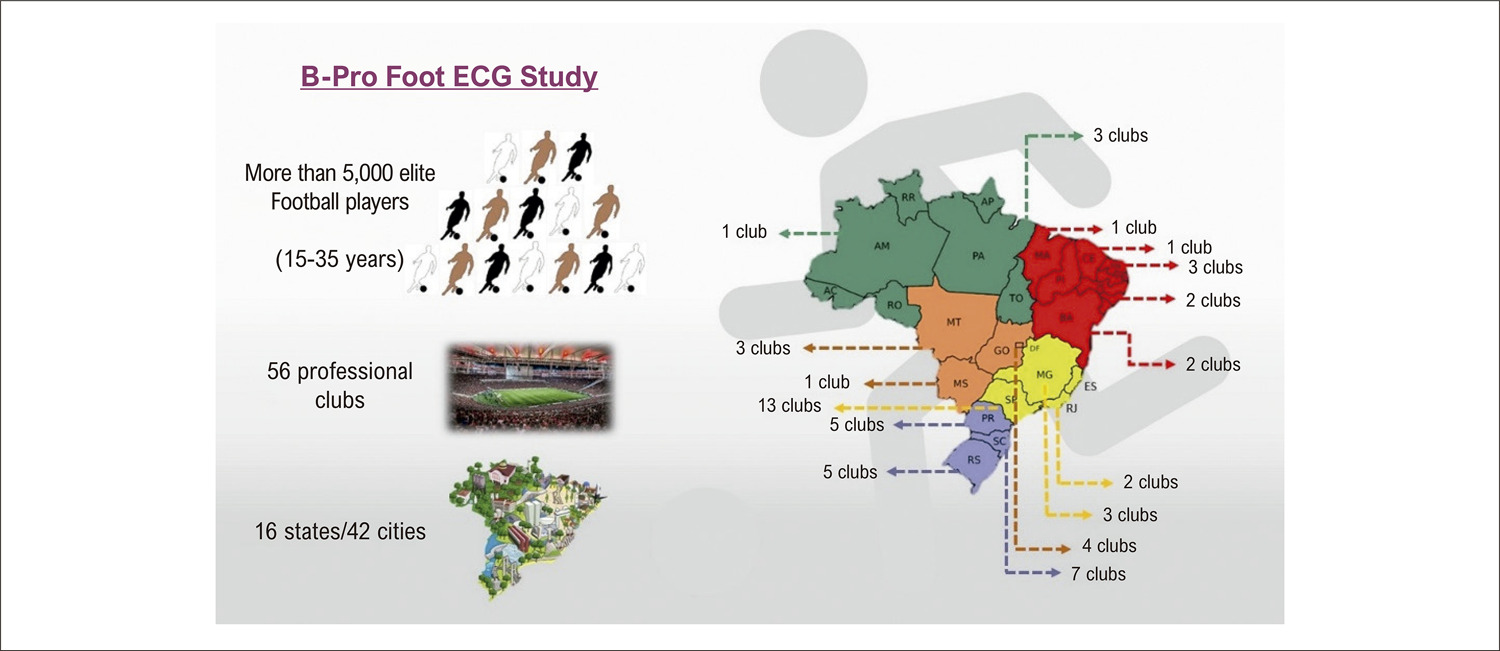
Electrocardiogram of Brazilian Elite Football Players: Filling a Gap

Ricardo Stein et al. Filipe Ferrari Anderson Donelli da Silveira

Introduction

The sudden death of a young, apparently healthy athlete is a tragedy, and the true incidence of sudden cardiac death (SCD) among athletes is controversial. Although estimates from studies in the United States and Europe are limited by various methodological issues, it is known that physical exertion in sports activity and training poses a 2.5 to 4.5 times higher risk of sudden cardiac arrest and SCD in relation to non-athletes and recreational athletes.–On the other hand, a consistent finding across studies is that male athletes have a three to five times higher incidence of SCD than female athletes.

Over the past few decades, much has been discussed about the role of the resting 12-lead electrocardiogram (ECG) in preventing SCD in young athletes. Studies carried out in different parts of the world have been published, and expert consensuses have been developed to standardize a very peculiar type of ECG.–

[…]

  • Athletes
  • Ethnicity and Health
  • Exercise
  • Heart Arrest
  • Mass Sreening
  • Soccer
  • Sudden Cardiac Death
Read Full Article
Creative Commons Attribution (CC BY) Creative Commons license
01/05/2023 DOI: 10.36660/abc.20230090 Views 2
Figure 1
ABC
Original Article

Family History of Hypertension Impairs the Autonomic Balance, but not the Endothelial Function, in Young Soccer Players

Walter Vargas et al. Katya Rigatto

Abstract

Background

The family history of hypertension (FHH) imposes consistent risk for diverse chronic diseases that are accompanied by hypertension. Furthermore, the heart rate variability (HRV) and flow-mediated dilation (FMD) are both related to maximal oxygen uptake (VO2max), and are usually impaired during hypertension

Objective

To compare the autonomic modulation, the endothelial function (EF) and maximum oxygen uptake (VO2max) of young athletes, separated according to their parents’ blood pressure (BP) history, in order to study the influence of their genetic background on those parameters.

Methods

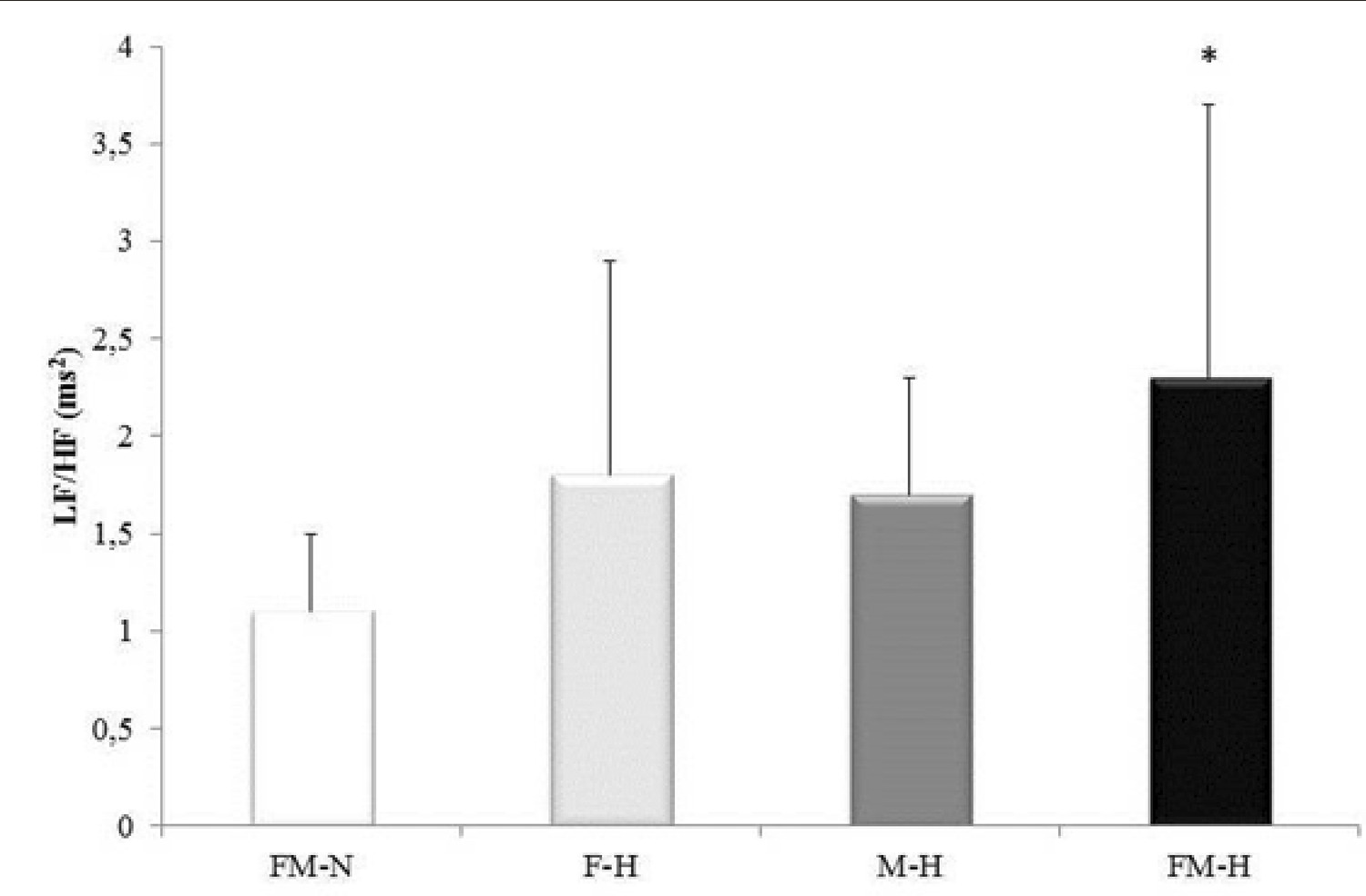
A total of 46 young male soccer players (18±2 years of age) were divided into four groups: 1-normotensive father and mother (FM-N); 2-only father was hypertensive (F-H); 3-only mother was hypertensive (M-H); 4-father and mother were hypertensive (FM-H). Measurements of BP, FMD, HRV and VO2maxwere performed. The significance level adopted in the statistical analysis was 5%.

Results

The standard deviation of normal RR intervals (SDNN; FM-N=314±185; FM-H=182.4± 57.8), the square root of the mean squared differences in successive RR intervals (RMSSD; FM-N=248±134; FM-H=87±51), the number of interval differences of successive NN intervals greater than 50ms (NN50; FM-N=367±83.4; FM-H=229±55), the ratio derived by dividing NN50 by the total number of NN intervals (pNN50; FM-N=32.4±6.2; FM-H=21.1±5.3) and the high (HF; FM-N=49±8.9; FM-H=35.3±12) and low-frequency (LF; FM-N=50.9±8.9; FM-H=64.6±12) components, in normalized units (%), were significantly lower in the FM-H group than in the FM-N group (p<0.05). On the other hand, the LF/HF ratio (ms2) was significantly higher (p<0.05). We found no significant difference between the groups in VO2maxand FMD (p<0.05).

Conclusions

In young male soccer players, the FHH plays a potentially role in autonomic balance impairment, especially when both parents are hypertensive, but present no changes in VO2maxand FMD. In this case, there is a decrease in the sympathetic-vagal control, which seems to precede the endothelial damage (Arq Bras Cardiol. 2020; 115(1):52-58)

  • Athletes
  • Blood Pressure
  • Endothelium/function
  • Heredity/genetics
  • Hypertension
  • Soccer
  • Youth Sports
Read Full Article
Creative Commons Attribution (CC BY) Creative Commons license
07/08/2020 DOI: 10.36660/abc.20180441 Views 2
ABC
Editorial

Heart Rate Variability as an Indicator of Cardiovascular Risk in Young Individuals

Breno Quintella Farah

The autonomic nervous system, which consists of the sympathetic and parasympathetic systems, plays an important role in regulating the functions of several systems in the human body, such as the cardiovascular system. Neural control of the heart is directly related to changes in heart rate and baroreceptor reflex activity, of which oscillation results from environmental stimuli. , These stimuli can lead to heart rate reduction through the parasympathetic nervous system, by decreasing the frequency of sinus node depolarization through the effect of acetylcholine on the cardiac neuroeffector junction. In turn, the sympathetic nervous system promotes an increase in heart rate through the norepinephrine release, which acts through the connection with β-adrenergic receptors, increasing the depolarization rate of the sinus pacemaker. ,

Healthy individuals or athletes, with an intact autonomic nervous system, show a predominance of parasympathetic modulation to the detriment of sympathetic modulation to the heart. On the other hand, in individuals with cardiovascular diseases, such as arterial hypertension, this pattern is reversed, with greater sympathetic modulation and less parasympathetic modulation being observed, which characterizes a picture of cardiac autonomic dysfunction. – This is particularly important, considering that changes in cardiac autonomic modulation and, consequently, in heart rate, can have a direct impact on cardiac output, which can result in BP changes.

[…]

  • Athletes
  • Blood Pressure
  • Endothelial function
  • Heredity/genetics
  • Hypertension
  • Soccer
  • Youth Sports
Read Full Article
Creative Commons Attribution (CC BY) Creative Commons license
07/08/2020 DOI: 10.36660/abc.20200444
World soccer cup as a trigger of cardiovascular events
ABC
Artigo Original

World soccer cup as a trigger of cardiovascular events

Daniel Guilherme Suzuki Borges et al. Rosane Aparecida Monteiro André Schmidt Antonio Pazin-Filho

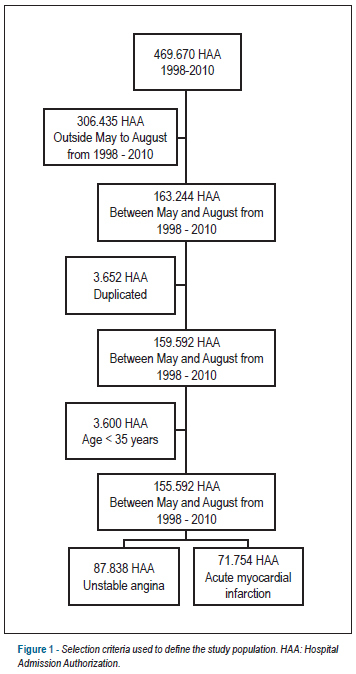
BACKGROUND: Acute coronary syndromes are the major cause of death in Brazil and in the world. External stimuli, known also as triggers, such as emotional state and activity, may generate physiopathological changes that can trigger acute coronary syndromes. Among the studied triggers, the impact of stressful events, such as soccer championships, are controversial in literature and there is no effective data on the Brazilian population. OBJECTIVE: To evaluate the acute effects of environmental stress induced by soccer games of the World Soccer Cup on increased incidence of cardiovascular diseases in Brazil. METHODS: Public data were obtained from the Unified Health System (Sistema Único de Saúde), regarding hospital admissions that had the International Code Disease of acute coronary syndromes from May to August, in 1998, 2002, 2006 and 2010 (155,992 admissions). Analysis was restricted to patients older than 35 years and admitted by clinical specialties. The incidence of myocardial infarction, angina and mortality were compared among days without World Cup soccer games (Group I: 144,166; 61.7 ± 12.3; 59.4% males); on days when there were no Brazil’s soccer team matches (Group II: 9,768; 61.8±12.3; 60.0% males); and days when there were Brazil’s soccer team matches (Group III; 2,058; 61.6±12.6; 57.8% males). Logistic regression was used to adjust to age, gender, population density and number of medical assistance units. RESULTS: The incidence of myocardial infarction increased during the period of World Cup soccer games (1.09; 95%CI = 1.05-1.15) and days when there were Brazil’s matches (1.16; 95%CI = 1.06-1.27). There was no impact on mortality during the Cup (1.00; CI95% = 0.93-1.08) and Brazil’s matches (1.04; 95%CI = 0.93-1.22). CONCLUSION: World Cup soccer games and, specially, Brazil’s matches have an impact on the incidence of myocardial infarction, but not on in-hospital mortality.

  • Acute coronary syndrome
  • Athletes
  • Cardiovascular Diseases
  • Myocardial Infarction
  • Soccer
  • Sport
Read Full Article
Creative Commons Attribution (CC BY) Creative Commons license
14/05/2013 DOI: 10.5935/abc.20130105 Views 1
ABC
Case Report

Atrial septal defect and pulmonary hypertension in professional soccer player

Fernando Bianchini Cardoso et al. Marcos Bianchini Cardoso Roberto Itiro Nishimura Georgiane Crespi Ponta … Gustavo Calado de Aguiar Ribeiro Cledcyson Eloy Costa

This study reports a rare case of late diagnosis of atrial septal defect (ASD) with pulmonary hypertension (PH) through two-dimensional echocardiography (ECHO) in a professional soccer player who resumed high-performance sports activity after surgery.

  • Echocardiography, Doppler
  • Heart Defects, Congenital
  • Heart Septal Defects, Atrial
  • Hypertension Pulmonary
  • Soccer
Read Full Article
Creative Commons Attribution (CC BY) Creative Commons license
10/09/2010 DOI: 10.1590/S0066-782X2010001200024 Views 1

How to cite this article

EndNote RIS

Electronic Document Format (Vancouver)

Stein R. Pre-Participation Evaluation in Football: A Strategic Pillar for the 2026 and 2027 World Cups. Arquivos Brasileiros de Cardiologia 2026;123(4):e20260084.

Electronic Document Format (ABNT)

Stein, Ricardo. Pre-Participation Evaluation in Football: A Strategic Pillar for the 2026 and 2027 World Cups. Arquivos Brasileiros de Cardiologia, v. 123, n. 4, e20260084, Jul. 2026.

Electronic Document Format (APA)

Stein, R. (2026). Pre-Participation Evaluation in Football: A Strategic Pillar for the 2026 and 2027 World Cups. Arquivos Brasileiros de Cardiologia, 123(4), e20260084.

Electronic Document Format (ISO)

Stein, Ricardo. Pre-Participation Evaluation in Football: A Strategic Pillar for the 2026 and 2027 World Cups. Arquivos Brasileiros de Cardiologia [online]. 2026, vol. 123, n. 4, [cited 2026-10-14], e20260084. Available from: <https://journals.cardiol.br/en/article/pre-participation-evaluation-in-football-a-strategic-pillar-for-the-2026-and-2027-world-cups/>. ISSN 0066-782X

EndNote RIS

Electronic Document Format (Vancouver)

Stein R, Ferrari F, Silveira AD. Electrocardiogram of Brazilian Elite Football Players: Filling a Gap. Arquivos Brasileiros de Cardiologia 2023;120(4):e20230090.

Electronic Document Format (ABNT)

Stein, Ricardo; Ferrari, Filipe; Silveira, Anderson Donelli da. Electrocardiogram of Brazilian Elite Football Players: Filling a Gap. Arquivos Brasileiros de Cardiologia, v. 120, n. 4, e20230090, Apr. 2023.

Electronic Document Format (APA)

Stein, R., Ferrari, F., & Silveira, A. D. (2023). Electrocardiogram of Brazilian Elite Football Players: Filling a Gap. Arquivos Brasileiros de Cardiologia, 120(4), e20230090.

Electronic Document Format (ISO)

Stein, Ricardo and Ferrari, Filipe and Silveira, Anderson Donelli da. Electrocardiogram of Brazilian Elite Football Players: Filling a Gap. Arquivos Brasileiros de Cardiologia [online]. 2023, vol. 120, n. 4, [cited 2026-10-14], e20230090. Available from: <https://journals.cardiol.br/en/article/electrocardiogram-of-brazilian-elite-football-players-filling-a-gap/>. ISSN 0066-782X

EndNote RIS

Electronic Document Format (Vancouver)

Vargas W, Rigatto K. Family History of Hypertension Impairs the Autonomic Balance, but not the Endothelial Function, in Young Soccer Players. Arquivos Brasileiros de Cardiologia 2020;115(1):52-8.

Electronic Document Format (ABNT)

Vargas, Walter; Rigatto, Katya. Family History of Hypertension Impairs the Autonomic Balance, but not the Endothelial Function, in Young Soccer Players. Arquivos Brasileiros de Cardiologia, v. 115, n. 1, p. 52-58, Aug. 2020.

Electronic Document Format (APA)

Vargas, W., & Rigatto, K. (2020). Family History of Hypertension Impairs the Autonomic Balance, but not the Endothelial Function, in Young Soccer Players. Arquivos Brasileiros de Cardiologia, 115(1), 52-58.

Electronic Document Format (ISO)

Vargas, Walter and Rigatto, Katya. Family History of Hypertension Impairs the Autonomic Balance, but not the Endothelial Function, in Young Soccer Players. Arquivos Brasileiros de Cardiologia [online]. 2020, vol. 115, n. 1, [cited 2026-10-14], pp. 52-58. Available from: <https://journals.cardiol.br/en/article/family-history-of-hypertension-impairs-the-autonomic-balance-but-not-the-endothelial-function-in-young-soccer-players/>. ISSN 0066-782X

EndNote RIS

Electronic Document Format (Vancouver)

Farah BQ. Heart Rate Variability as an Indicator of Cardiovascular Risk in Young Individuals. Arquivos Brasileiros de Cardiologia 2020;115(1):59-60.

Electronic Document Format (ABNT)

Farah, Breno Quintella. Heart Rate Variability as an Indicator of Cardiovascular Risk in Young Individuals. Arquivos Brasileiros de Cardiologia, v. 115, n. 1, p. 59-60, Aug. 2020.

Electronic Document Format (APA)

Farah, B. Q. (2020). Heart Rate Variability as an Indicator of Cardiovascular Risk in Young Individuals. Arquivos Brasileiros de Cardiologia, 115(1), 59-60.

Electronic Document Format (ISO)

Farah, Breno Quintella. Heart Rate Variability as an Indicator of Cardiovascular Risk in Young Individuals. Arquivos Brasileiros de Cardiologia [online]. 2020, vol. 115, n. 1, [cited 2026-10-14], pp. 59-60. Available from: <https://journals.cardiol.br/en/article/heart-rate-variability-as-an-indicator-of-cardiovascular-risk-in-young-individuals/>. ISSN 0066-782X

EndNote RIS

Electronic Document Format (Vancouver)

Borges DGS, Monteiro RA, Schmidt A, Pazin-Filho A. World soccer cup as a trigger of cardiovascular events. Arquivos Brasileiros de Cardiologia 2013;100(6):546-52.

Electronic Document Format (ABNT)

Borges, Daniel Guilherme Suzuki; Monteiro, Rosane Aparecida; Schmidt, André; Pazin-Filho, Antonio. World soccer cup as a trigger of cardiovascular events. Arquivos Brasileiros de Cardiologia, v. 100, n. 6, p. 546-552, May. 2013.

Electronic Document Format (APA)

Borges, D. G. S., Monteiro, R. A., Schmidt, A., & Pazin-Filho, A. (2013). World soccer cup as a trigger of cardiovascular events. Arquivos Brasileiros de Cardiologia, 100(6), 546-552.

Electronic Document Format (ISO)

Borges, Daniel Guilherme Suzuki and Monteiro, Rosane Aparecida and Schmidt, André and Pazin-Filho, Antonio. World soccer cup as a trigger of cardiovascular events. Arquivos Brasileiros de Cardiologia [online]. 2013, vol. 100, n. 6, [cited 2026-10-14], pp. 546-552. Available from: <https://journals.cardiol.br/en/article/world-soccer-cup-as-a-trigger-of-cardiovascular-events/>. ISSN 0066-782X

EndNote RIS

Electronic Document Format (Vancouver)

Cardoso FB, Cardoso MB, Nishimura RI, Ponta GC, Ribeiro GCA, Costa CE. Atrial septal defect and pulmonary hypertension in professional soccer player. Arquivos Brasileiros de Cardiologia 2010;95(2):38-9.

Electronic Document Format (ABNT)

Cardoso, Fernando Bianchini; Cardoso, Marcos Bianchini; Nishimura, Roberto Itiro; Ponta, Georgiane Crespi; Ribeiro, Gustavo Calado de Aguiar; Costa, Cledcyson Eloy. Atrial septal defect and pulmonary hypertension in professional soccer player. Arquivos Brasileiros de Cardiologia, v. 95, n. 2, p. 38-39, Sep. 2010.

Electronic Document Format (APA)

Cardoso, F. B., Cardoso, M. B., Nishimura, R. I., Ponta, G. C., Ribeiro, G. C. A., & Costa, C. E. (2010). Atrial septal defect and pulmonary hypertension in professional soccer player. Arquivos Brasileiros de Cardiologia, 95(2), 38-39.

Electronic Document Format (ISO)

Cardoso, Fernando Bianchini and Cardoso, Marcos Bianchini and Nishimura, Roberto Itiro and Ponta, Georgiane Crespi and Ribeiro, Gustavo Calado de Aguiar and Costa, Cledcyson Eloy. Atrial septal defect and pulmonary hypertension in professional soccer player. Arquivos Brasileiros de Cardiologia [online]. 2010, vol. 95, n. 2, [cited 2026-10-14], pp. 38-39. Available from: <https://journals.cardiol.br/en/article/atrial-septal-defect-and-pulmonary-hypertension-in-professional-soccer-player/>. ISSN 0066-782X

  • About ABC Family
  • Internal Regulation
  • Editorial Board
  • Brazilian Society of Cardiology (SBC)

Issues

SBC Guidelines

  • Videos
  • Podcasts
  • News