| ABC
ABC Family Arquivos Brasileiros de Cardiologia International Journal of Cardiovascular Sciences ABC Heart Failure & Cardiomyopathy ABC Imagem Cardiovascular
Português English
ABC Family | ABC
Português English
  • About
    • About the Journal
    • Internal Regulation
    • Editors Section
    • Editorial Board
    • History
    • SBC Award
  • Instructions to Authors
    • Guidelines for Publication
    • Editorial Policy
    • Ethics Policy
    • Policy on the Use of Artificial Intelligence
    • Mandatory Publication Form
    • Publication Fee
  • Issues
  • SBC Guidelines
  • Abstracts
    • How to Publish an Abstract Supplement?
    • Supplements from the Brazilian Congress of Cardiology
  • About
    • About the Journal
    • Internal Regulation
    • Editors Section
    • Editorial Board
    • History
    • SBC Award
  • Instructions to Authors
    • Guidelines for Publication
    • Editorial Policy
    • Ethics Policy
    • Policy on the Use of Artificial Intelligence
    • Mandatory Publication Form
    • Publication Fee
  • Issues
  • SBC Guidelines
  • Abstracts
    • How to Publish an Abstract Supplement?
    • Supplements from the Brazilian Congress of Cardiology

ABC Family

  • ABC Family
  • Arquivos Brasileiros de Cardiologia
  • International Journal of Cardiovascular Sciences
  • ABC Heart Failure & Cardiomyopathy
  • ABC Imagem Cardiovascular
Search in

No content found.

Journals
Ordering
Article types
Others

  1. Home
  2. ABC
  3. Issues
  4. 2021, Volume 117, Number 6
Editorial

Can We Pretreat Vein Grafts with Adiponectin to Improve Their Patency?

Maria Cristina de Oliveira Izar et al. Francisco A. H. Fonseca

Saphenous vein graft remains an option for patients with multivessel coronary artery disease,, mainly in individuals with type 2 diabetes. Although artery bypass should offer better patency rates than venous grafts, in many situations, complete revascularization cannot be achieved using solely arterial grafts. Venous graft failure has been associated with cardiovascular outcomes, including mortality., Therefore, there is a need to improve vein graft patency. The mechanisms involved in graft failure include intimal hyperplasia, smooth muscle cell proliferation, and endothelial dysfunction, among others., There have been some attempts to improve the preservation of saphenous vein grafts before implantation.

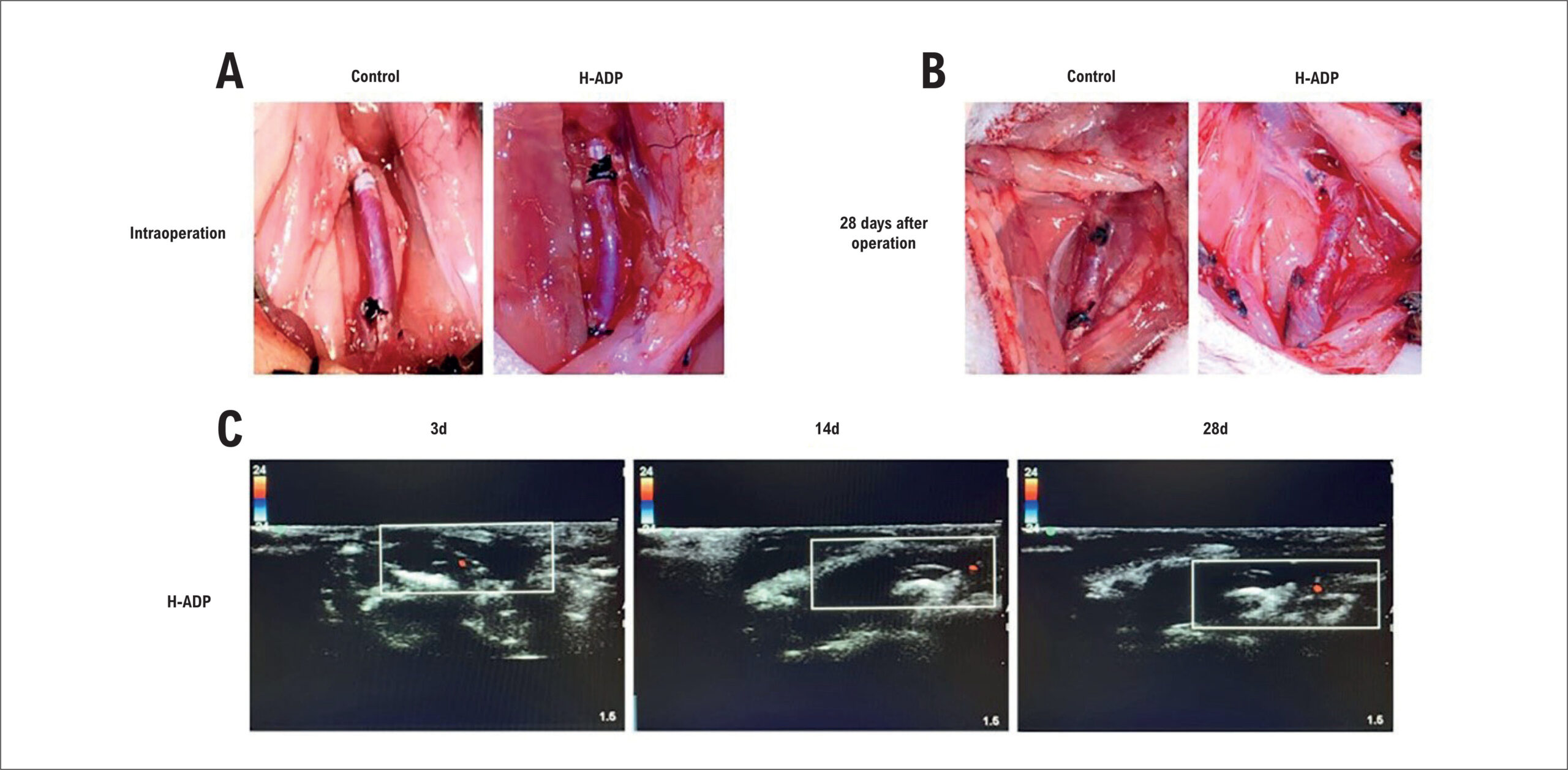
In the experimental study by Zhou et al. the authors used autologous jugular veins implanted as carotid interposition grafts in Sprague Dawley rats. Two groups received adiponectin (2.5 μg and 7.5 μg) applied externally to the vein bypass grafts, suspended in a 30% Pluronic-F127 gel. The other two groups (controls) received vehicle or no treatment (bypass only). At day 3, cell proliferation was significantly lower in adiponectin-treated versus control and vehicle-gel-treated grafts, both in intima and adventitia, whereas expression of VCAM-1 and ICAM-1 was significantly down-regulated in the adiponectin-treated vein grafts in week four. In addition, the treatment of vein grafts with adiponectin-loaded gels reduced intimal, media, and adventitia thickness when compared with the control and vehicle-gel-treated vein grafts at day 28.

[…]
  • Adiponectin/therapeutic use
  • Capillary Permeability
  • Coronary Artery Disease
  • Rats
  • Saphenous Vein
Read Full Article
Creative Commons Attribution (CC BY) Creative Commons license
03/12/2021 DOI: 10.36660/abc.20210902 Views 1
Figure 1
Original Article

Physiology or Angiography-Guided Coronary Artery Bypass Grafting: A Meta-Analysis

José Martins et al. Vera Afreixo Luís Santos Luís Fernandes Ana Briosa

Abstract

Background:

While invasive coronary angiography is considered the gold standard for the diagnosis of coronary artery disease (CAD) involving the epicardial coronary vessels, coronary physiology-guided revascularization represents a contemporary gold-standard practice for the invasive management of patients with intermediate CAD. Nevertheless, the long-term results of assessing the severity of stenosis through physiology compared to the angiogram as the guide to bypass surgery – coronary artery bypass grafting (CABG) are still uncertain. This meta-analysis aims to assess the clinical outcomes of a physiology guided CABG compared to the angiography-guided CABG.

Objectives:

We sought to determine if outcomes differ between a physiology guided CABG compared to an angiography-guided CABG.

Methods:

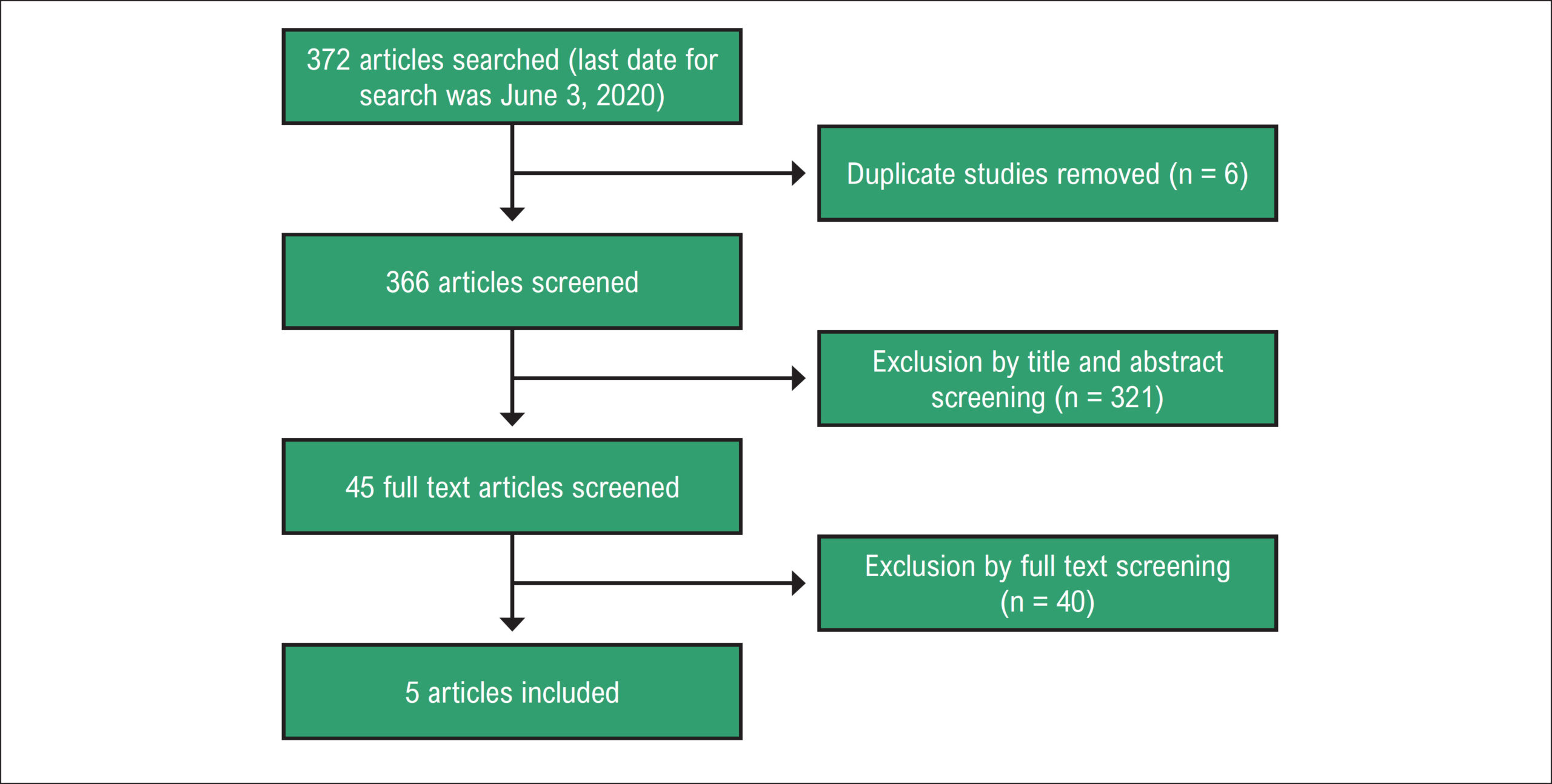
We searched Medline, EMBASE, and the Cochrane Library. The last date for this search was June 2020, and all of the previous studies were included. We conducted a pooled risk-ratio meta-analysis for four main outcomes: all-cause death, myocardial infarction (MI), target vessel revascularization (TVR) and major adverse cardiovascular events (MACE). P-value <0.05 was considered as statistically significant. Heterogeneity was assessed with Cochran's Q test and quantified by the I2 index.

Results:

We identified five studies that included a total of 1,114 patients. A pooled meta-analysis showed no significant difference between a physiology guided strategy and an angiography-guided strategy in MI (risk ratio [RR] = 0.72; 95%CI, 0.39–1.33; I2 = 0%; p = 0.65), TVR (RR = 1.25; 95%CI = 0.73–2.13; I2 = 0%; p = 0.52), or MACE (RR = 0.81; 95%CI = 0.62–1.07; I2 = 0%; p = 1). The physiology guided strategy has 0.63 times the risk of all-cause death compared to the angiography-guided strategy (RR = 0.63; 95%CI = 0.42–0.96; I2 = 0%; p = 0.55).

Conclusion:

This meta-analysis demonstrated a reduction in all-cause death when a physiology guided CABG strategy was used. Nevertheless, the short follow-up period, small sample size of the included studies and the non-discrimination of the causes of death can largely justify these conclusions. Studies with an extended follow-up period of observation are required to draw more robust and definitive conclusions.

  • Angiography
  • Coronary Angiography
  • Coronary Artery Bypass
  • Coronary Artery Disease
  • Coronary Artery/physiology
  • Metanalysis
Read Full Article
Creative Commons Attribution (CC BY) Creative Commons license
03/12/2021 DOI: 10.36660/abc.20200763 Views 1
Figure 2
Original Article

Validation of an Artificial Intelligence Algorithm for Diagnostic Prediction of Coronary Disease: Comparison with a Traditional Statistical Model

Luis Correia et al. Daniel Lopes João Vítor Porto Yasmin F. Lacerda … Vitor C. A. Correia Gabriela O. Bagano Bruna S. B. Pontes Milton Henrique Vitoria de Melo Thomaz E. A. Silva André C Meireles

Abstract

Background:

Multivariate prognostic analysis has been traditionally performed by regression models. However, many algorithms capable of translating an infinity of patterns into probabilities have emerged. The comparative accuracy of artificial intelligence and traditional statistical models has not been established in the medical field.

Objective:

To test the artificial intelligence as an accurate algorithm for predicting coronary disease in the scenario of acute chest pain and evaluate whether its performance is superior to traditional statistical model.

Methods:

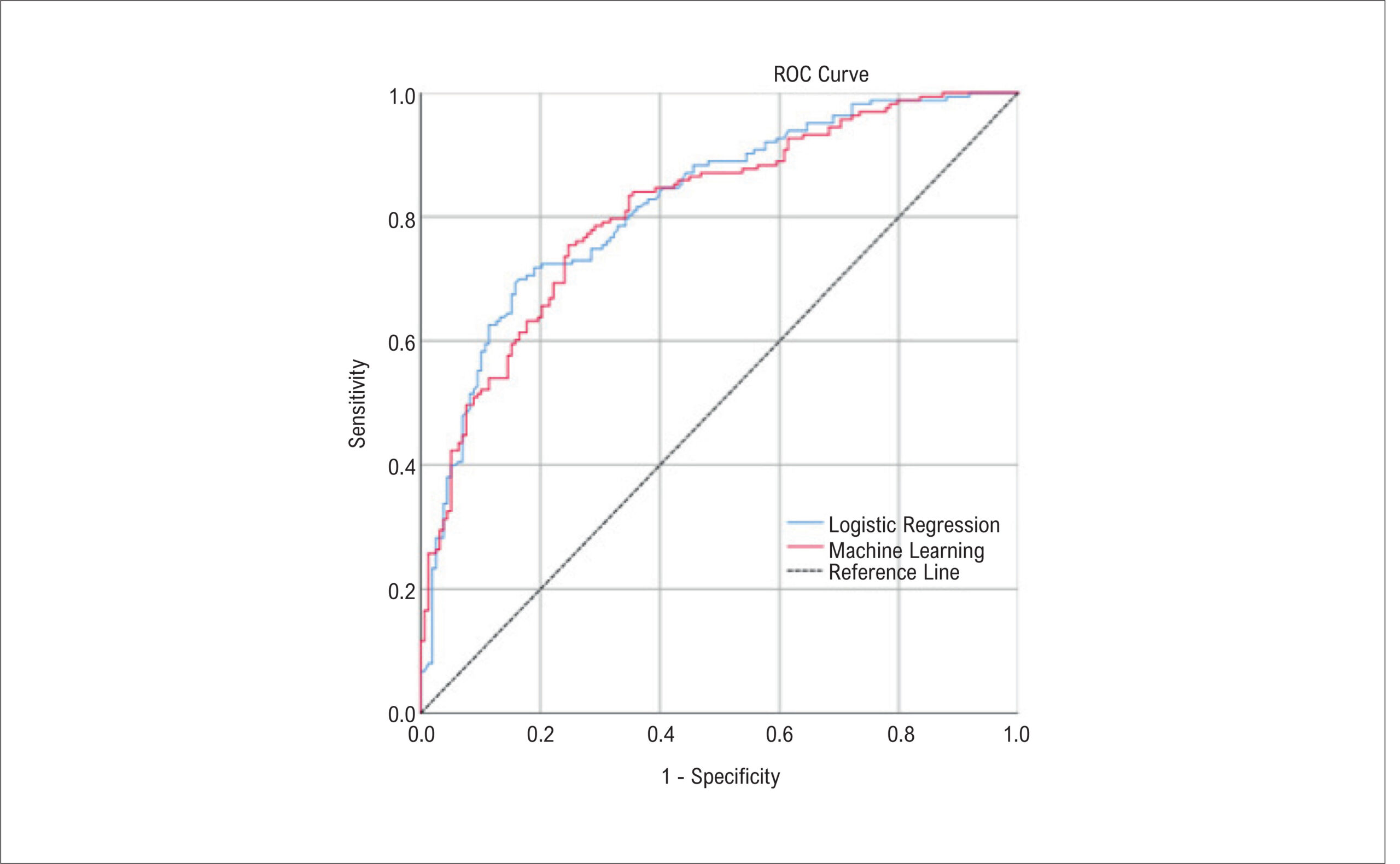
A consecutive sample of 962 patients admitted with chest pain was analyzed. Two probabilistic models of coronary disease were built using the first two-thirds of patients: a machine learning algorithm and a traditional logistic model. The performance of these two predictive strategies were evaluated in the remaining third of patients. The final logistic regression model had significant variables only, at the 5% significance level.

Results:

The training sample had an average age of 59 ± 15 years, 58% males, and a 52% prevalence of coronary disease. The logistic model was composed of nine independent predictors. The machine learning algorithm was composed of all candidates for predictors. In the test sample, the area under the ROC curve for prediction of coronary disease was 0.81 (95% CI = 0.77 – 0.86) for the machine learning algorithm, similar to that obtained in logistic model (0.82; 95% CI = 0.77 – 0.87), p = 0.68.

Conclusion:

The present study suggests that an accurate machine learning prediction tool did not prove to be superior to the statistical model of logistic regression.

  • Artificial Intelligence
  • Coronary Artery Disease/diagnostic
  • Data Interpretacion
  • Statistical
  • Validation Studies
Read Full Article
Creative Commons Attribution (CC BY) Creative Commons license
03/12/2021 DOI: 10.36660/abc.20200302 Views 2
Letter to the Editor

Safety Margin for Plasma Hyperviscosity in Cardiovascular Disease Patients after COVID-19 Vaccination for Thrombosis Prevention

Rujittika Mungmunpuntipantip et al. Viroj Wiwanitkit

Dear Editor,

We read the article entitled “Vaccinating Patients with Heart Disease Against COVID-19: The Reasons for Priority” with great interest. COVID-19 vaccination is accepted as the best way for preventing the disease, but data on its safety are still warranted. An important problem found after COVID-19 vaccination is the rheological change causing intravascular clotting and thrombotic complications. Changes in blood viscosity after COVID-19 vaccination have been confirmed. A vaccine can induced rapid production of antibody, which is a protein that can increase plasma viscosity by an estimated 2.4 centipoise (cP) from normal values in healthy person., The problem might occur if changes in plasma viscosity reach levels above 5 cP, considered a hyperviscosity state.

[…]

  • Margins of Excision
  • Patients
  • Viscosity
Read Full Article
Creative Commons Attribution (CC BY) Creative Commons license
03/12/2021 DOI: 10.36660/abc.20210555 Views 1
Figure 1
Original Article

Adiponectin Prevents Restenosis Through Inhibiting Cell Proliferation in a Rat Vein Graft Model

Yang Zhou et al. Chun Dai Bing Zhang Jianjun Ge

Abstract

Background:

Coronary artery bypass grafting (CABG) continues to be an effective therapy for coronary artery disease patients, but the vein graft is prone to restenosis or occlude. Adiponectin (ADP) is a plasma hormone protein with the function of regulating cell proliferation.

Objective:

This study used two different doses of ADP protein in a rat vein graft model to stimulate vein graft change. The aim of our study was to investigate the effect of ADP on vein graft restenosis.

Methods:

Autologous jugular veins were implanted as carotid interposition grafts through the anastomotic cuff technique in Sprague Dawley rats. Adiponectin (2.5 μg and 7.5 μg) was delivered to the vein bypass grafts in a perivascular fashion, suspended in a 30% Pluronic-F127 gel. No treatment (bypass only) and vehicle loaded Pluronic gel served as controls. Comparisons were made with one-way analysis of variance and a post-hoc test, with p < 0.05 considered significant.

Results:

Cell proliferation (PCNA index) was significantly low in adiponectin-treated versus control and vehicle-gel-treated grafts, both in intima and adventitia, as of day 3 (p < 0.01). VCAM-1 and ICAM-1 evaluated by immunohistochemistry significantly down-regulated in the adiponectin-treated vein grafts in the fourth week (p <0.01). Treatment of vein grafts with adiponectin-loaded gels reduced intimal, media, and adventitia thickness when compared with the control and vehicle-gel-treated vein grafts at day 28 (p < 0.01).

Conclusions:

Our studies provide further support for the potential therapeutic role of adiponectin in modulating vascular injury and repair.

  • Adiponectin
  • Cell Proliferation
  • Hyperplasia
Read Full Article
Creative Commons Attribution (CC BY) Creative Commons license
03/12/2021 DOI: 10.36660/abc.20200761
Figure 1
Original Article

Influence of an Early Mobilization Protocol on the Autonomic Behavior of Patients Undergoing Percutaneous Transluminal Coronary Angioplasty

Bárbara Oliveira Silveira et al. Jade Lara de Melo Graziella Paula de Oliveira Neri Michele Lima Gregório … Moacir Fernandes de Godoy Marilita Falangola Accioly

Abstract

Background:

Recurrence Plots (RP) enable a nonlinear analysis of Heart Rate Variability (HRV) and provide information on the Autonomic Nervous System (ANS).

Objectives:

To evaluate whether early ambulation in patients undergoing Percutaneous Transluminal Coronary Angioplasty (PTCA) influences the quantitative and qualitative components of RP.

Methods:

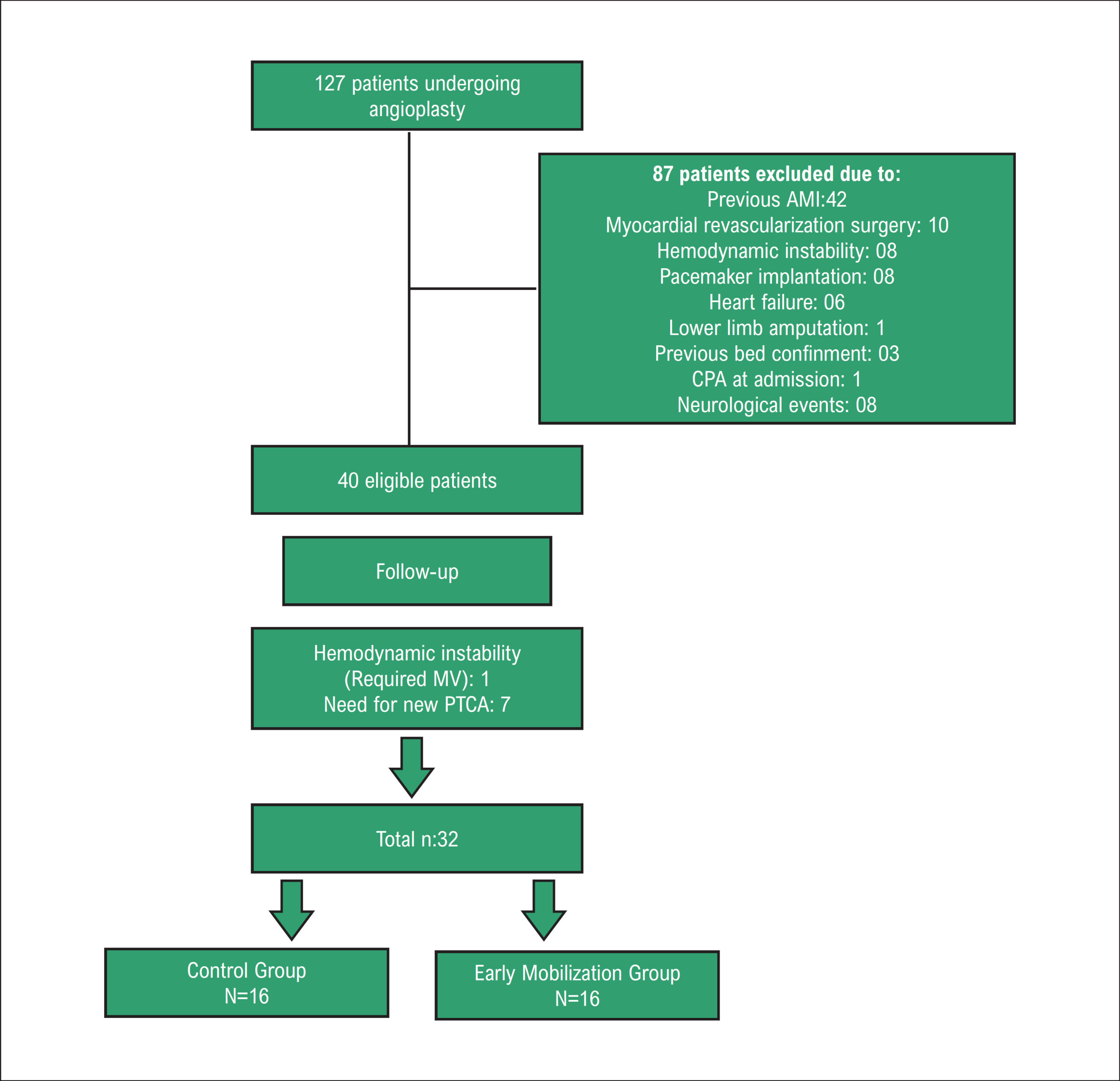
A total of 32 participants who underwent PTCA were divided into a Control Group (CG – no physical exercises) and an Early Ambulation Group (EAG – with physical exercises). Beat-to-beat heart rate was recorded using a heart rate monitor in both groups upon admission and discharge. The linear indices in the time and frequency domains were analyzed, and nonlinear indices were obtained through RP. The Early Ambulation Physical Therapy Protocol began 12-18 hours after PTCA. A two-tailed unpaired t-test was used for comparisons, and p-values < 0.05 were accepted as significant.

Results:

When comparing both groups, upon discharge, EAG showed an increase in SDNN (23.55 ± 12.05 to 37.29 ± 16.25; p=0.042), Triangular Index (8.99 ± 3.03 to 9.66 ± 3.07; p=0.014), and VLF (694.20 ± 468.20 to 848.37 ± 526.51; p=0.004), but without significant changes in the nonlinear evaluation. In addition, in the qualitative analysis of RP, a more diffuse and less geometric pattern was observed in EAG, indicating greater variability, while in CG, an altered and more geometric pattern was noted.

Conclusion:

The Early Ambulation Protocol promotes an improvement in autonomic behavior as evaluated by HRV and by RP, which can thus be considered a useful procedure for better recovery of patients undergoing PTCA.

  • Angioplasty
  • Autonomic Nervous System
  • Cardiovascular Diseases, mortality
  • Early Ambulation/methods
  • Exercise
  • Myocardial Infarction
Read Full Article
Creative Commons Attribution (CC BY) Creative Commons license
03/12/2021 DOI: 10.36660/abc.20200296
Editorial

A New Therapeutic Alternative for the Treatment of Pulmonary Hypertension?

Ricardo J Gelpi

In this issue of the journal Arquivos Brasileiros de Cardiologia, important and original research work on rats is published. The work is important because pulmonary hypertension represents a serious pathology that is very difficult to treat. The only way to relieve patients is lung transplantation, but are very well known the difficulties and limitations of this treatment. The work is also original because a lot has been published about the beneficial effects of copaiba oil, such as its anti-inflammatory action, analgesic effect, and ability to prevent infections and improve the healing process. However, the beneficial effect of copaiba oil on pulmonary hypertension had not been described. In this sense, the group led by Adriane Belló Klein has been working for several years on this important issue of pulmonary hypertension in general,– and the effects of copaiba oil on this particular pathology,, which has made this research group an international benchmark on this theme.

It is important to mention that pulmonary hypertension induced in rats by monocrotaline produces vascular lesions very similar to those found in patients with this pathology., In essence, what the work published in this issue of the journal Arquivos Brasileiros de Cardiologia shows is that the administration of copaiba oil to a group of rats with pulmonary hypertension induced by monocrotaline produces a clear beneficial effect, through the decrease in peripheral blood indicators of oxidative stress, a reduction in pulmonary vascular resistance, and a favorable remodeling of the right ventricle, with a reduction in hypertrophy, which translates into a better systolic function of that ventricle. This finding is very important because it is well known that myocardial hypertrophy is one of the most important causes of heart failure and sudden death. The positive relationship between the degree of hypertrophy and the decrease in oxidative stress shown by the authors is clearly proven in this work by the high r-value obtained when these two variables were correlated. However, and beyond this important correlation, future studies should determine if the beneficial effect on the right ventricle is due to the reduction of oxidative stress or if there is also a direct effect of copaiba oil on myocardial fibers. Perhaps experiments that could be carried out on isolated hearts would make it possible to detect or not a direct impact of this natural agent. In this sense, it is important to mention that the authors of this study also published an interesting work previously where they showed that the administration of copaiba oil decreased apoptosis signals in the hypertrophic right ventricle and attributed the better remodeling to a possible decrease in the apoptosis mentioned above; obviously this same mechanism could be acting in the work that we are commenting now. Nevertheless, here it is important to make some clarifications that may allow a better understanding of what is happening in these hearts with hypertrophy secondary to pulmonary hypertension.

[…]

  • Cardiomegaly
  • Copaiba Oil
  • Cor Pulmonale
  • Fabaceae
  • Heart Failure
  • Hypertension,Pulmonary
  • Lung Transplantation
  • Monocrotaline
  • Oxidative Stress
  • phytotherapy
  • Rats
Read Full Article
Creative Commons Attribution (CC BY) Creative Commons license
03/12/2021 DOI: 10.36660/abc.20210935
Editorial

Artificial Algorithms Outperform Traditional Models in Predicting Coronary Artery Disease

Lutfu Askin et al. Okan Tanrıverdi Mustafa Cetin

Recent clinical recommendations indicate that additional tests for assessing anatomical (extent, severity, morphology) or functional (ventricular function, presence/extent of ischemia) aspects of chronic and symptomatic coronary artery disease (CAD) may be helpful in certain cases. Emergency physicians must determine whether to release the patient, do further non-invasive testing, or perform invasive angiography on patients with acute chest discomfort. Accepting anybody with chest pain may have unintended effects if discharged with unstable coronary disease. The likelihood of obstructive CAD should guide medical decisions. Machine learning (ML) algorithms can supplement the diagnostic and prognostic capabilities of conventional regression methods. The disparity between the applicability of such methods and the outcomes achieved with them was due to the data analysis software platforms used.

ML may use thoracic phase signal features to build final mathematical models that evaluate the existence of severe CAD. Cardiac phase space analysis seems similar to the most widely used functional stress tests and needs little patient time. The 2-year results showed that deep learning fractional flow reserve derived from CT (DL-FFRCT) may be used to guide revascularization, with high cancellation rate and low event rate. A positive DL-FFRCT for tandem lesions was linked with reduced major adverse cardiac events (MACEs) after 2 years. The ML-ischemia risk score (ML-IRS) obtained from quantitative coronary CT angiography enhanced the prediction of future revascularization and may be used to identify individuals who are likely to need revascularization if referred for cardiac catheterization. This machine learning score is linked with invasive fractional flow reserve (FFR) measures, providing external validation across two centers and augmenting clinical risk prediction models.

[…]

  • Algorithms
  • Angiography Coronary CT/methods
  • Artificial Intelligence
  • Coronary Artery Disease
  • Deep Learning
  • Machine Learning
  • Support Vector Machine
Read Full Article
Creative Commons Attribution (CC BY) Creative Commons license
03/12/2021 DOI: 10.36660/abc.20210823 Views 2
Editorial

The Importance of Understanding the Progression of Myocardial Fibrosis in Chronic Chagas Cardiomyopathy

Carlos E. Rochitte

Myocardial fibrosis is one of the most important biological markers of Chagas’ cardiomyopathy and is directly related to the severity of the cardiomyopathy and the stage of the disease. In addition, myocardial fibrosis has prognostic value for major cardiovascular events, with a strong and close relationship with arrhythmic events in these patients.–

Cardiac magnetic resonance (CMR) is the reference imaging method for myocardial fibrosis detection and quantification in many cardiomyopathies, including Chagas cardiomyopathy. Initial studies included patients with Chagas cardiomyopathy at different stages of the disease and clearly demonstrated that the higher the disease severity the larger the amount of myocardial fibrosis. Based on these data and on the natural history of the disease, with progression of left ventricle dysfunction, one could safely infer that myocardial fibrosis progresses with time for any given patient. However, the longitudinal data using CMR in patients with Chagas disease was not available until the publication of the original article in this issue of ABC Cardiol by Santos et al. This is the first study to include data on myocardial fibrosis from two consecutive CMR of the same patient with a relatively long follow-up of 5.4 years. The authors demonstrated an impressive 43% increase of myocardial fibrosis over the follow-up period, which indicates a mean of 7.9% increase per year of myocardial fibrosis detected by CMR.

[…]

  • Chagas Diseases
  • chagasic cardiomyopathy
  • Diagnostic Imaging/methods
  • Endomyocardial Fibrosis
  • Heart Failure
  • Imaging Resonance Magnetic/methods
Read Full Article
Creative Commons Attribution (CC BY) Creative Commons license
03/12/2021 DOI: 10.36660/abc.20210897 Views 1
Editorial

Physiology-guided CABG: Is it Time for Cardiac Surgeons to Incorporate FFR Into Their Practice?

Tannas Jatene et al. Fabrício Ribeiro Las Casas Rogerio Lobo de Andrade Las Casas Vinicius Daher Vaz Alberto de Almeida Las Casas

According to most recent international guidelines on myocardial revascularization, fractional flow reserve (FFR)-guided percutaneous coronary intervention should be considered in patients with multivessel disease. That would include evaluation of all lesions between 40 to 90% diameter stenosis before implanting a stent., The same guidelines suggest prioritizing completeness of revascularization when the decision is made for coronary artery bypass graft surgery (CABG), which means bypassing all lesions >50% diameter stenosis.

In this issue of Arquivos Brasileiros de Cardiologia, Martins et al., approached this paradox with a meta-analysis of five studies and 1,114 patients, comparing physiology-guided CABG and conventional angiography-guided CABG. Although the pooled meta-analysis showed no difference in myocardial infarction and target vessel revascularization rates, a 37% relative risk reduction in all-cause death was associated with physiology-guided CABG.

[…]

  • Coronary Angiography/physiology
  • Coronary Artery Disease/physiopathology
  • Coronary Arteryry Bypass
  • Factional Flow Reserve Myocardial
Read Full Article
Creative Commons Attribution (CC BY) Creative Commons license
03/12/2021 DOI: 10.36660/abc.20210921 Views 1
Editorial

Searching Naturally Occurring Compounds to Treat Hypertension

Diego Santos Souza et al. Danilo Roman-Campos

Cardiovascular diseases (CDs) are the major cause of death worldwide. Impressively, approximately 17.9 million people died from CDs in 2019, representing almost 32% of global deaths. Also, nearly three-quarters of deaths due to CDs occur in low- and middle-income countries, which is a risk factor for Brazilians. There are several underlying mechanisms involved in CDs, and hypertension is a significant contributor. Today, it is thought that about 1.28 billion adults aged 30-79 years have hypertension in the world. Furthermore, it has been estimated that 60–70% of hypertension in adults is attributable to obesity, associated with insulin resistance, dyslipidemia and metabolic syndrome. Also, almost 50% of adults with hypertension are unaware of its condition, and only 20% have hypertension under control.

According to the American College of Cardiology and the American Heart Association, Normal Blood pressure (BP) is considering when Systolic Blood Pressure (SBP) is <120 mm Hg and < 80 mm Hg for diastolic blood pressure (DBP). Elevated BP is considered when SBP is 120-129, and DBP is 140 mm Hg, respectively, or DBP is 80-89 mm Hg or >90 mm Hg, respectively. These values follow the most recent Brazilian guideline to diagnostic hypertension.

[…]

  • Biological Products
  • Cardiovascular Diseases
  • Diet
  • Hypertension
  • Mortality
  • Prevention and Control
  • Rats
  • Sauromatum Gluttatum/therapeutic use
Read Full Article
Creative Commons Attribution (CC BY) Creative Commons license
03/12/2021 DOI: 10.36660/abc.20210869 Views 1
Figure 1
Research Letter

Echocardiographic Findings in Patients with COVID-19 with and without Previous Cardiovascular Disease

Silvio Henrique Barberato et al. Rafael Borsoi Fabio Roston Hudson Laerte Machado Miranda … Pedro Patriota Maria Estefania Otto Adenalva Lima de Souza Beck Anderson da Costa Armstrong João Marcos Bemfica Barbosa Ferreira Ana Cristina Camarozano Letícia Braga Paciello da Silva Marcos Valério Coimbra Resende Marcelo Luiz Campos Vieira Miguel Morita Fernandes-Silva

Introduction

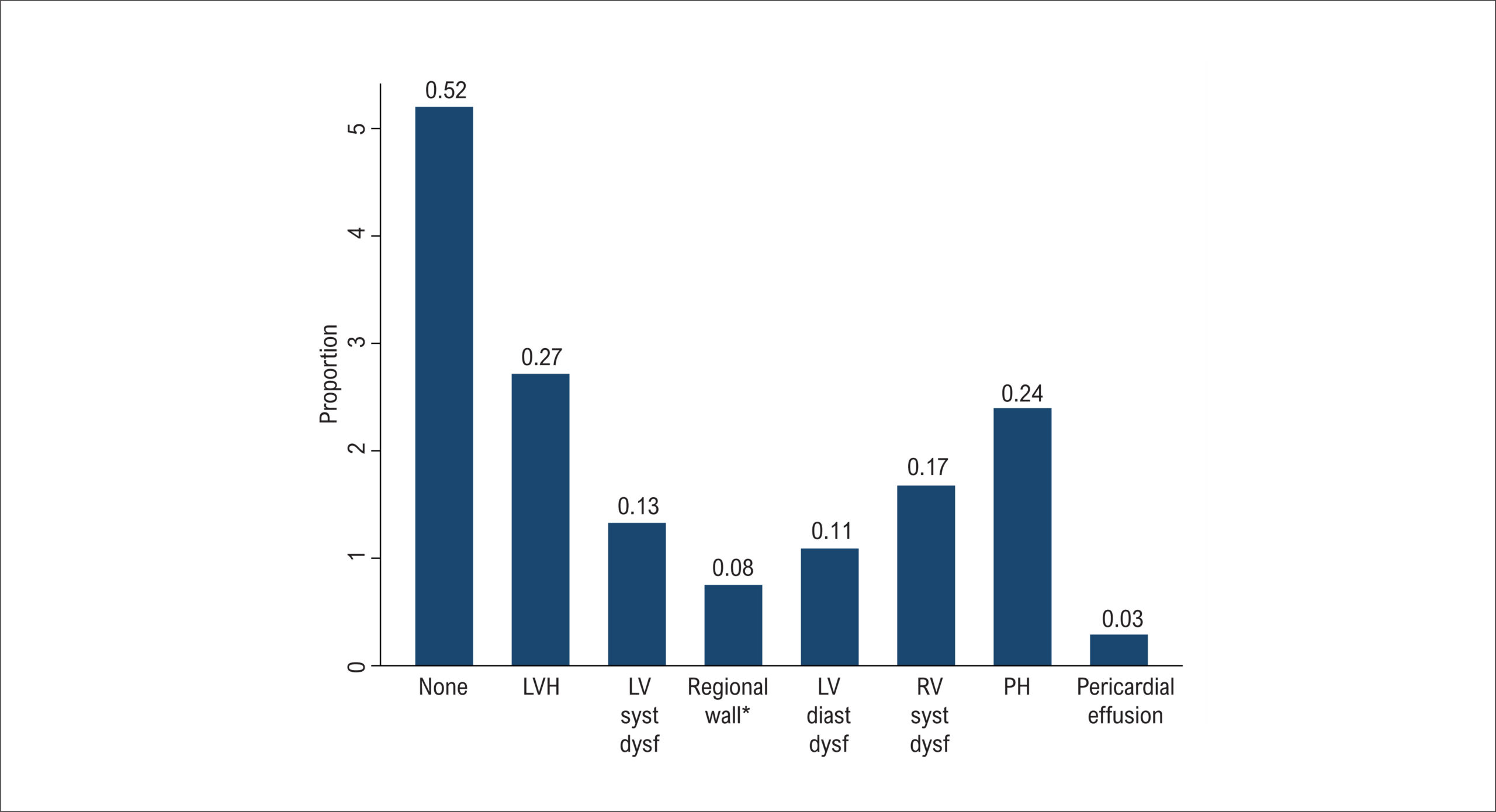
Coronavirus disease-2019 (COVID-19) caused by the severe acute respiratory syndrome coronavirus 2 (SARS-Cov-2) may result in severe respiratory distress and acute cardiac injury. Impaired cardiac function and/or prior cardiovascular disease (CVD) in patients with COVID-19 are associated with worse prognosis. Transthoracic echocardiography (TTE) has a central role in the management of patients, as it provides a crucial assessment of abnormalities in cardiac function and structure that impact on their prognosis and treatment. Studies have reported varied rates of left ventricular (LV) and right ventricular (RV) dysfunction, but it is unclear how often cardiac dysfunction result directly from COVID-19.– We described the prevalence of the main abnormal echocardiographic findings in hospitalized patients with COVID-19 with and without previous cardiovascular disease (CVD) through a real-world, multicenter collaborative study (Brazilian Echocardiography Registry during COVID-19 pandemic, or ECOVID).

[…]

  • Acute Respiratory Syndrome/complications SARS-CoV2/complications
  • Cardiac function
  • Cardiovascular Diseases/complications
  • Comorbidity
  • Coronavirus-19/complications
  • Heart Failure, Echocardiography/méthods
  • Mortality
  • Pandemics
Read Full Article
Creative Commons Attribution (CC BY) Creative Commons license
03/12/2021 DOI: 10.36660/abc.20201300 Views 2
Editorial

Cardioprotection during Chemotherapy: Prospects of Antioxidant Strategies

Thiago Gomes Heck

The concept of oxidative stress, well defined as a situation in which cells, tissues, or the whole body present an imbalance between reactive oxygen species (ROS) and antioxidant defenses in favor of ROS levels, is found in several acute and chronic diseases, including cancer. The equilibrium between ROS production and the ability of cells to avoid oxidative damage is a natural challenge for mammalian species since the energy production by oxidative pathways in mitochondria allows the continuous production of free radical and oxidative molecules. Pharmacological agents may generally use the modulation of oxidative balance to treat some diseases, or oxidative imbalance may represent a side effect of the drugs. Also, we need to keep in mind that oxidative stress caused by environmental (e.g., air pollution) and metabolic (e.g., obesity and diabetes) conditions is also associated with an increased risk of a variety of cancers.

Hyperproliferation of tumor cells is accompanied by high ROS production, but it is well known that cell stress response, antioxidant defenses, and resistance against the cytotoxic effects of chemotherapy is quite different in tumor compared to immune cells and other tissues. Thus, the tumor is able to adapt to conditions of oxidative burden while other cells may not present sufficient self-defense against oxidative damage. The mechanism of tumor self-protection involves increasing the levels of the major non-enzymatic antioxidant defense, glutathione (GSH). As a “hungry” cell, considering the common high-energy demand mainly by glucose uptake, tumors activate glucose-6-phosphate dehydrogenase (G6PD) and reroute glucose metabolism from glycolysis through the oxidative arm of the pentose phosphate pathway (PPP) toward nucleotide synthesis. In turn, the increase in nicotinamide adenine dinucleotide phosphate (NADPH) allows the increase in GSH and other antioxidant systems. Also, at a molecular level, the tumor evocates many transcription factors, including activator protein 1 (AP-1), heat shock factor 1 (HSF1), nuclear factor κB (NF-κB), nuclear factor-erythroid 2 p45-related factor 2 (NRF2), and tumor protein p53, representing a proliferative strategy accompanied by a robust cell stress defense.,

[…]

  • Antioxidants
  • Cardioprotection
  • Drug Therapy
  • Oxidative Stress
  • Resveratrol
Read Full Article
Creative Commons Attribution (CC BY) Creative Commons license
03/12/2021 DOI: 10.36660/abc.20210914 Views 1
Figure 1
Research Letter

A Case Report of Valvular Heart Disease Complicated with a Blood Cyst in Right Atrium. Review of the Literature

Shu Jiang et al. Xiao-Cong Wang Yan-Li Zhang Wei Yu … Li-Ping Pei Yan Ma

Introduction

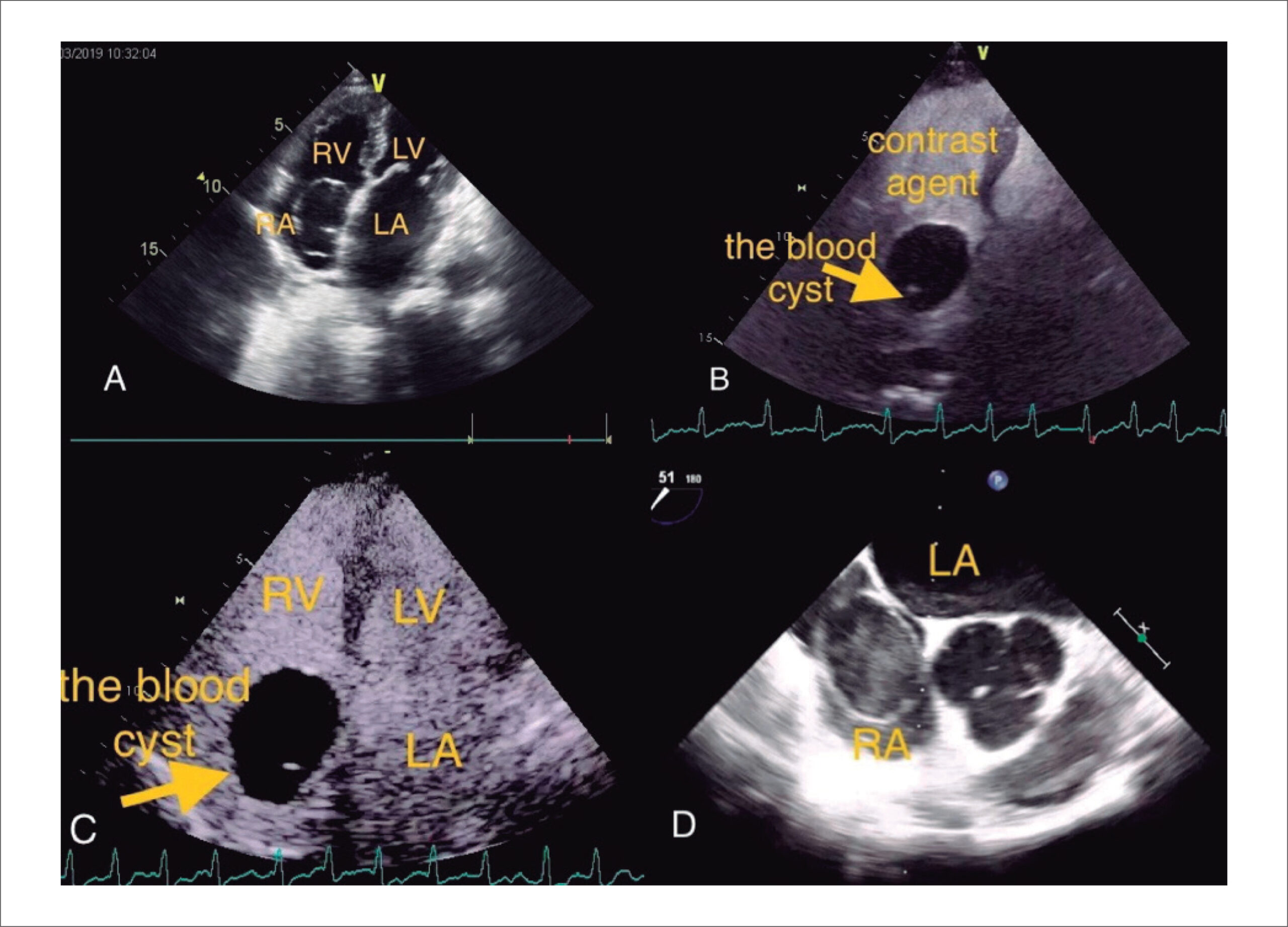
Blood cysts in the heart are often recognized as benign. They usually do not cause clinical symptoms and are often found in infants younger than two months of age. In most cases, blood cysts are attached to cardiac valves or their supporting structures. Cardiac blood cysts in adults are extremely rare, especially in the chambers of the heart. Here, we report a case of valvular heart disease complicated with a blood cyst in the right atrium. Transthoracic echocardiography, contrast echocardiography and esophageal echocardiography were used to examine the patient.

[…]

  • Atrial Function
  • Blood Cysts
  • Cysts/surgery
  • Echocardiography/methods
  • Heart Atria/physiology
  • Heart Valve Diseases
Read Full Article
Creative Commons Attribution (CC BY) Creative Commons license
03/12/2021 DOI: 10.36660/abc.20210063 Views 1
Editorial

Preconditioning in Ischemia-Reperfusion Lesion

Mariana Gatto et al. Gustavo Augusto Ferreira Mota Luana Urbano Pagan Mariana Janini Gomes Marina Politi Okoshi

Ischemic heart disease is characterized by a decrease in myocardial blood flow, which reduces the relationship between oxygen supply and demand. The condition has attracted the attention of the scientific community due to its high incidence, elevated morbidity and mortality, and high therapeutic cost. The treatment primarily relies on myocardial revascularization. Paradoxically, reperfusion and restoration of blood flow can cause additional damage, called myocardial ischemia-reperfusion (IR) injury. Several mechanisms are involved in the IR injury, such as ionic homeostasis change, intracellular calcium transient alteration, metabolic and mitochondrial dysfunction, inflammation, and reactive oxygen species increase., These factors may contribute to an increase in the myocardial necrosis size, post-ischemia heart failure, and death.

First identified in the mid-1980s, ischemic preconditioning is a process whereby repeated application of short periods of ischemia alternating with reperfusion protect the myocardium from longer ischemic insults, therefore reducing the infarction size., The beneficial effect of ischemic preconditioning was shown in angina patients; when evolving to myocardial infarction, they had a smaller infarcted area and a better clinical prognosis than previously asymptomatic patients., Additionally, preconditioning of rats with acute physical stress prior to the IR insult reduced infarct size and improved hemodynamic parameters.

[…]

  • Animal
  • Apoptosis
  • Drug Therapy
  • Myocardial Ischemia
  • Myocardial Reperfusion
  • Physical Conditioning
  • Rats
Read Full Article
Creative Commons Attribution (CC BY) Creative Commons license
03/12/2021 DOI: 10.36660/abc.20210908
Figure 1
Research Letter

Coherent Map for Atypical Atrial Flutter – A Step Forward for the Understanding of the Arrhythmia Mechanism

Pedro A. Sousa et al. Sérgio Barra Mariana Pereira Luís Elvas

Case Presentation

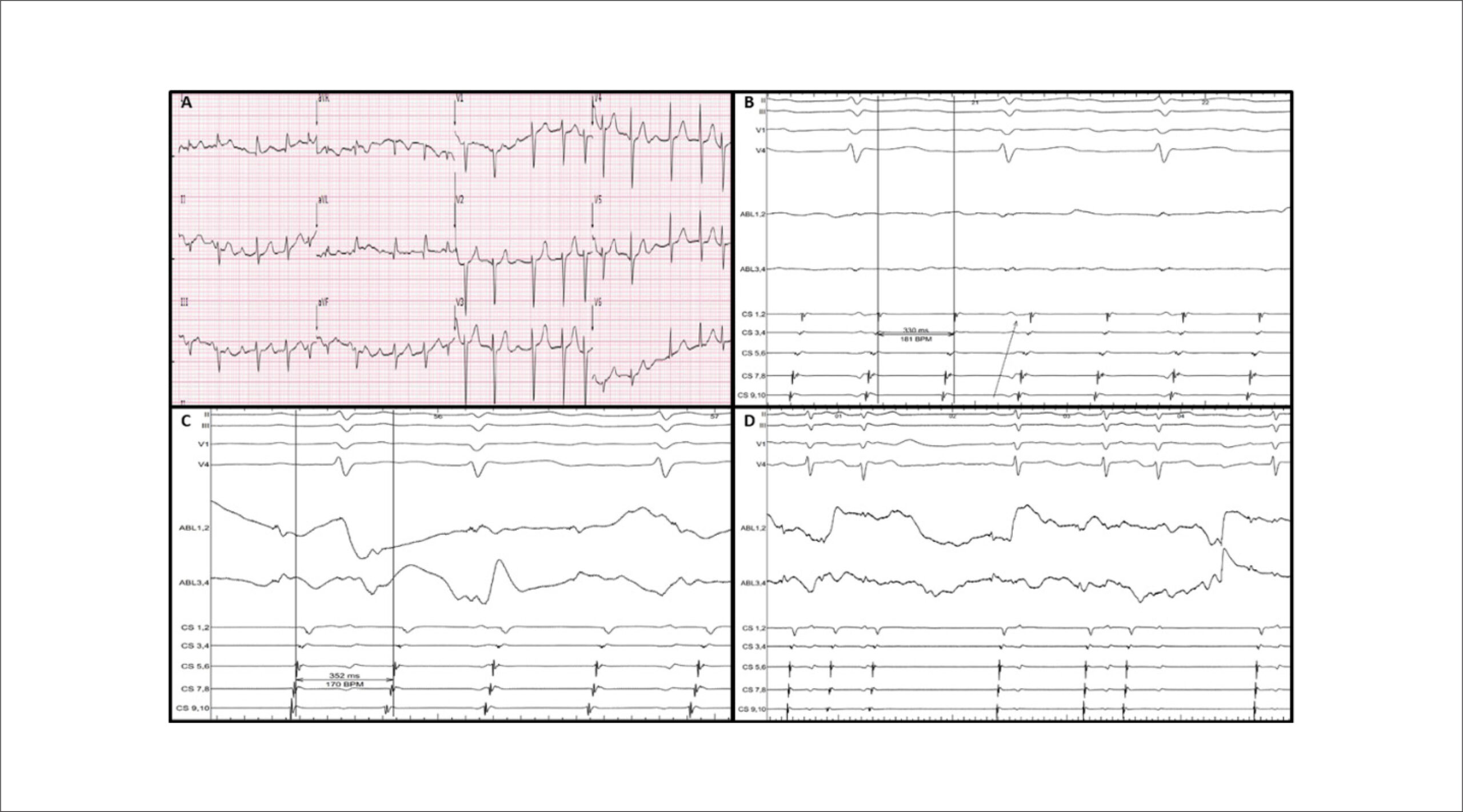
An 86-year-old woman with a previous history of paroxysmal atrial fibrillation was referred for atypical atrial flutter (AFL) ablation. She had never been submitted to catheter ablation before. The transthoracic echocardiogram revealed a left ventricular ejection fraction of 65%, a mildly dilated left atrium (42mm) and moderate mitral regurgitation. The baseline 12-lead ECG exhibited positive F waves in V1 and the lower limb leads, isoelectric F waves in DI and negative F wave in aVL. () Given the earlier concentric activation in the coronary sinus (CS), with a tachycardia cycle length (TCL) of 330ms, () a right atrial (RA) activation map, performed with the PentaRay® catheter, was initially analyzed using the HD Coloring tool (CARTO® 3V7, Biosense Webster, CA, USA). It revealed an earlier activation in the interatrial septum with only 1/3 of the TCL (). A subsequent left atrial (LA) activation map revealed a large area of scar with likely conduction block in almost all of the anterior wall, represented as a white line by the lower threshold Extended Early Meets Late (EEML) feature, and several areas with early local activation time (LAT) points – in the left atrial appendage (LAA), the anterior aspect of the mitral valve (MV) and the roof near the anterior segment of the right superior pulmonary vein (RSPV). It also showed two zones of re-entry as established by the Early Meets Late (EML) feature ( and ). These maps suggested a probable circuit around the right pulmonary veins but did not explain the color activation in the LAA and MV. A new mapping algorithm – Coherent (CARTO® 3V7, Biosense Webster) – unveiled the circuit ( and ). What is the mechanism of this atypical AFL?

[…]

  • Arrhytmias, Cardiac
  • Atrial Flutter/etiology
  • Coherent Mapping
  • Conduction
  • Electrophysiologic Techniques Cardiac/methods
  • HC Coloring
Read Full Article
Creative Commons Attribution (CC BY) Creative Commons license
03/12/2021 DOI: 10.36660/abc.20201311 Views 3
Editorial

Optimizing Treatment for Acute Myocardial Infarction, a Continuous Effort

Ramón Corbalán

Early reperfusion with primary percutaneous coronary intervention (PPCI) or thrombolysis (TL) has decreased the morbimortality from acute myocardial infarction (AMI) in Latin America and worldwide. National and international guidelines recommend reperfusion, using either method, according to its availability at the medical center, for patients admitted within 12 hours of AMI symptom onset.,

PPCI has been shown to be superior to TL, especially when performed at a specialized care center with the infrastructure, staff, and experience necessary to ensure good results and minimize complications.– However, because of the high costs associated with implementing and developing cardiovascular intervention programs, the availability of centers with the capacity to perform this intervention varies by country and even by region within a given country.

[…]

  • Early Reperfusion
  • Education and Training
  • Myocardial Infarction
Read Full Article
Creative Commons Attribution (CC BY) Creative Commons license
03/12/2021 DOI: 10.36660/abc.20210907
Figure 1
Original Article

Cardioprotective Effect of Maternal Supplementation with Resveratrol on Toxicity Induced by Doxorubicin in Offspring Cardiomyocytes

Verônica Bidinotto Brito et al. Leopoldo Vinicius Martins Nascimento Dinara Jaqueline Moura Jenifer Saffi

Abstract

Background

Doxorubicin (DOX) is frequently used to treat many types of cancers, despite its dose-dependent cardiotoxicity. Alternatively, resveratrol is a polyphenol that has shown useful cardioprotective effects in many heart dysfunction models.

Objective

This study investigated whether resveratrol treatment in pregnant rats protects against doxorubicin-induced toxicity in offspring cardiomyocytes.

Methods

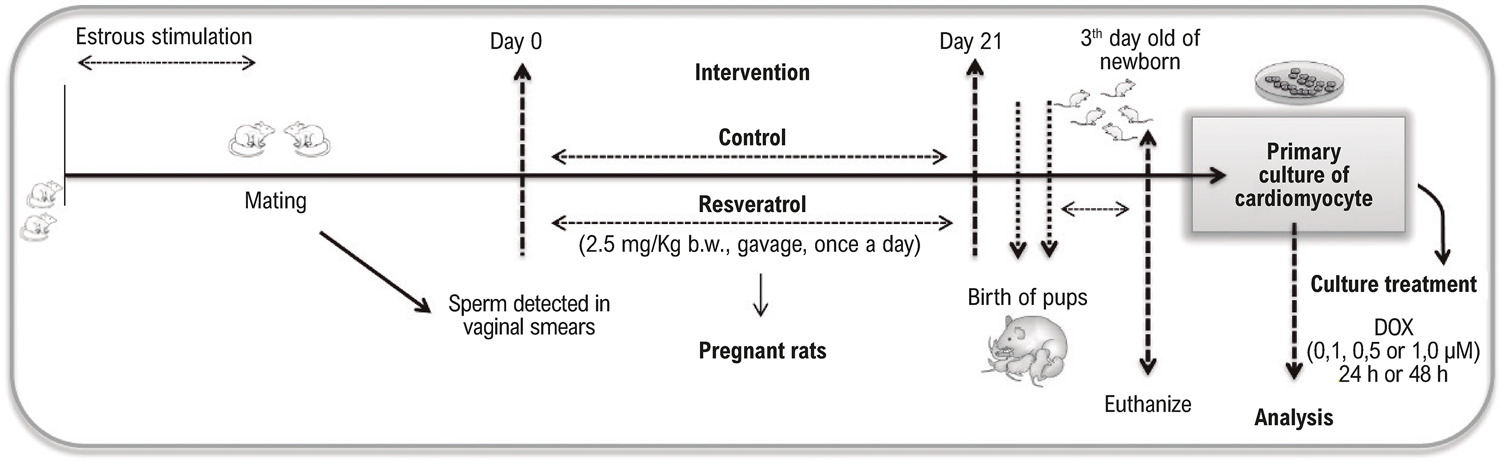
Wistar rats (n=8) were supplemented with dietary resveratrol during pregnancy. Upon the offspring’s birth, hearts (9-11) were used to obtain the primary culture of cardiomyocytes. DOX-induced cardiotoxicity and the effects of resveratrol supplementation were evaluated by oxidative stress markers, such as dichlorofluorescein diacetate oxidation, decrease in the activity of antioxidant enzymes, and oxidation of total sulfhydryl content, in addition to cell viability evaluation, DNA damage generation, and DNA damage repair response. A value of p<0.05 was considered statistically significant.

Results

Neonatal cardiomyocytes from resveratrol supplemented rats exhibiting an increase (p<0.01) in cell viability and lower (p<0.0001) apoptotic/necrotic cells after DOX treatment, which correlates with the activities of antioxidant enzymes and dichlorofluorescein production. Moreover, resveratrol protected cardiomyocytes from DOX-induced DNA damage, showing a decrease (p<0.05) in DNA breaks induced by oxidative stress, evaluated by the activity of DNA-repair enzymes endonuclease III and formamidopyrimidine glycosylase. Supplementation with resveratrol increased (p<0.05) the expression of the repair protein Sirt6 in the cardiomyocytes of the pups.

Conclusion

This research indicates that supplementation with resveratrol during the gestational period has a notable cardioprotective effect on the offspring’s heart against DOX-induced toxicity, which may well be due to its antioxidant function, and the increase in the DNA damage repair response.

  • cardiomyocytes
  • DNA Repair Enzymes
  • Doxorubicin
  • Rats
  • Resveratrol
Read Full Article
Creative Commons Attribution (CC BY) Creative Commons license
08/10/2021 DOI: 10.36660/abc.20200752 Views 2
Figure 1
Original Article

Cardiac Fibrosis and Changes in Left Ventricle Function in Patients with Chronic Chagas Heart Disease

João Bosco de Figueiredo Santos et al. Ilan Gottlieb Eduardo Marinho Tassi Gabriel Cordeiro Camargo … Jacob Atié Sérgio Salles Xavier Roberto Coury Pedrosa Roberto Magalhães Saraiva

Abstract

Background

Chagas heart disease (CHD) is a slow progressing condition with fibrosis as the main histopathological finding.

Objectives

To study if cardiac fibrosis increases over time and correlates with increase in left ventricular (LV) size and reduction of ejection fraction (EF) in chronic CHD.

Methods

Retrospective study that included 20 individuals (50% men; 60±10 years) with chronic CHD who underwent two cardiac magnetic resonance imaging (MRI) with late gadolinium enhancement with a minimum interval of four years between tests. LV volume, EF, and fibrosis mass were determined by cardiac MRI. Associations of fibrosis mass at the first cardiac MRI and changes in LV volume and EF at the second cardiac MRI were tested using logistic regression analysis. P values <0.05 were considered significant.

Results

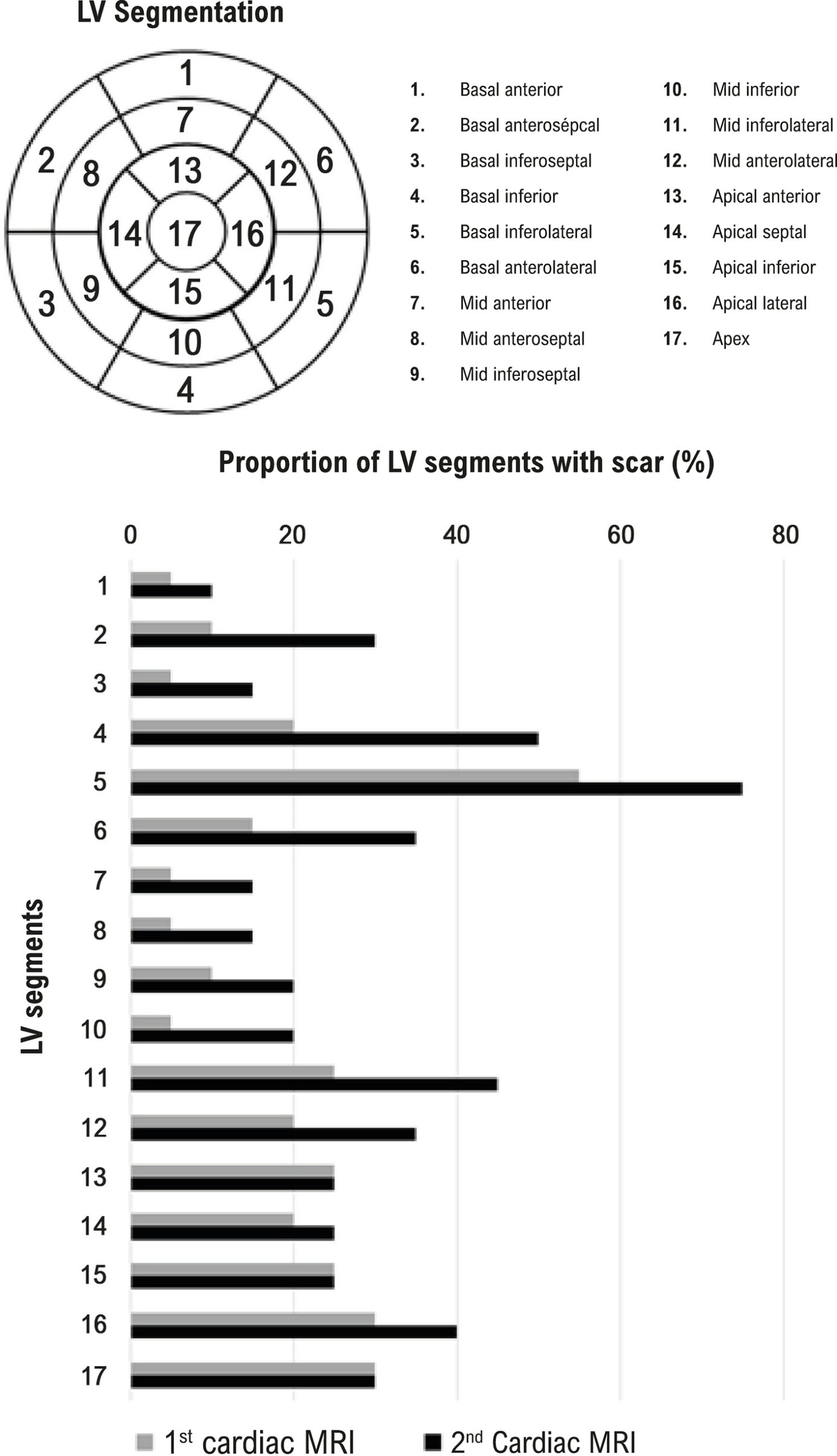
Patients were classified as follows: A (n=13; changes typical of CHD in the electrocardiogram and normal global and segmental LV systolic function) and B1 (n=7; LV wall motion abnormality and EF≥45%). Mean time between cardiac MRI studies was 5.4±0.5 years. LV fibrosis (in %LV mass) increased from 12.6±7.9% to 18.0±14.1% between MRI studies (p=0.02). Cardiac fibrosis mass at baseline was associated with decrease in >5 absolute units in LV EF from the first to the second MRI (OR 1.48, 95% CI 1.03-2.13, p=0.03). LV fibrosis mass was larger and increased between MRI studies in the group that presented decrease in LV EF between the tests.

Conclusions

Even patients at an initial stage of CHD show an increase in myocardial fibrosis over time, and the presence of LV fibrosis at baseline is associated with a decrease in LV systolic function.

  • Chagas Cardiomyopathy
  • Chagas disease
  • Diagnostic Imaging
  • Electrocardiography/methods
  • Endomyocardial Fibrosis
  • Magnetic Resonance Imaging/methods
  • Ventricular Dysfunction, Left
Read Full Article
Creative Commons Attribution (CC BY) Creative Commons license
08/10/2021 DOI: 10.36660/abc.20200597
Figure 1
Original Article

Safety of SF6(SonoVue®) Contrast Agent on Pharmacological Stress Echocardiogram

Rogerio Gomes Furtado et al. Daniela do Carmo Rassi Luciano Henrique Melato Ana Caroline Reinaldo de Oliveira … Paula Meneses Nunes Priscila Elias Baccelli Sara Camila de Oliveira Santos Victor Emanuel Santos Luiz Rassi Junior Colandy Godoy Nunes

Abstract

Background

In 2007, the United States Food and Drug Administration mandated safety reviews of commercially available echocardiographic contrast agents (ECA), following reports of death. During the past years, different studies have proven the safety of ECA, but there have been few studies on SonoVue®.

Objectives

To evaluate the safety of SonoVue® during pharmacological stress echocardiography (PSE), by analyzing the incidence of allergic reactions and comparing groups regarding the appearance of arrhythmia, minor side effects and adverse events.

Methods

In this observational, prospective study, 2346 patients underwent PSE, and they were divided into the following 2 groups: group 1 with ECA (n = 1099) and group 2 without ECA (n = 1247). Patients were evaluated during PSE, at 24 hours, and at 30 days. Statistical significance was defined as p < 0.05.

Results

Group 1 had fewer minor side effects, such as headache (5/0.5% versus 19/1.5%, p = 0.012) and less reactive hypertension (3/0.3% versus 19/1.5%, p = 0.002); fewer arrhythmias, such as ventricular extrasystoles (180/16.4% versus 247/19.8%, p = 0.032) and paroxysmal supraventricular tachycardia (2/0.2% versus 15/1.2%, p = 0.003); and no adverse events, such as acute myocardial infarction (AMI) or death. In group 2, 1 patient had AMI in < 24 hours (1/01%), and there were 2 deaths in < 30 days (2/0.1%). SonoVue®-related urticaria was seen in 3 (0.3%) patients, without anaphylactic reaction.

Conclusion

SonoVue® demonstrated safety during PSE. No cases of death, AMI, or anaphylactic reaction were observed. There was a lower incidence of minor side effects and arrhythmias in the group that received ECA, as well as a low incidence of mild allergic reactions.

  • Echocardiographic Contrast Agent
  • Safety
  • Sonovue®
  • Stress Echocardiogram
Read Full Article
Creative Commons Attribution (CC BY) Creative Commons license
08/10/2021 DOI: 10.36660/abc.20200475 Views 1
Figure 1
Review Article

Crossroads between Estrogen Loss, Obesity, and Heart Failure with Preserved Ejection Fraction

Allan Kardec Nogueira de Alencar et al. Hao Wang Gláucia Maria Moraes de Oliveira Xuming Sun … Gisele Zapata-Sudo Leanne Groban

Abstract

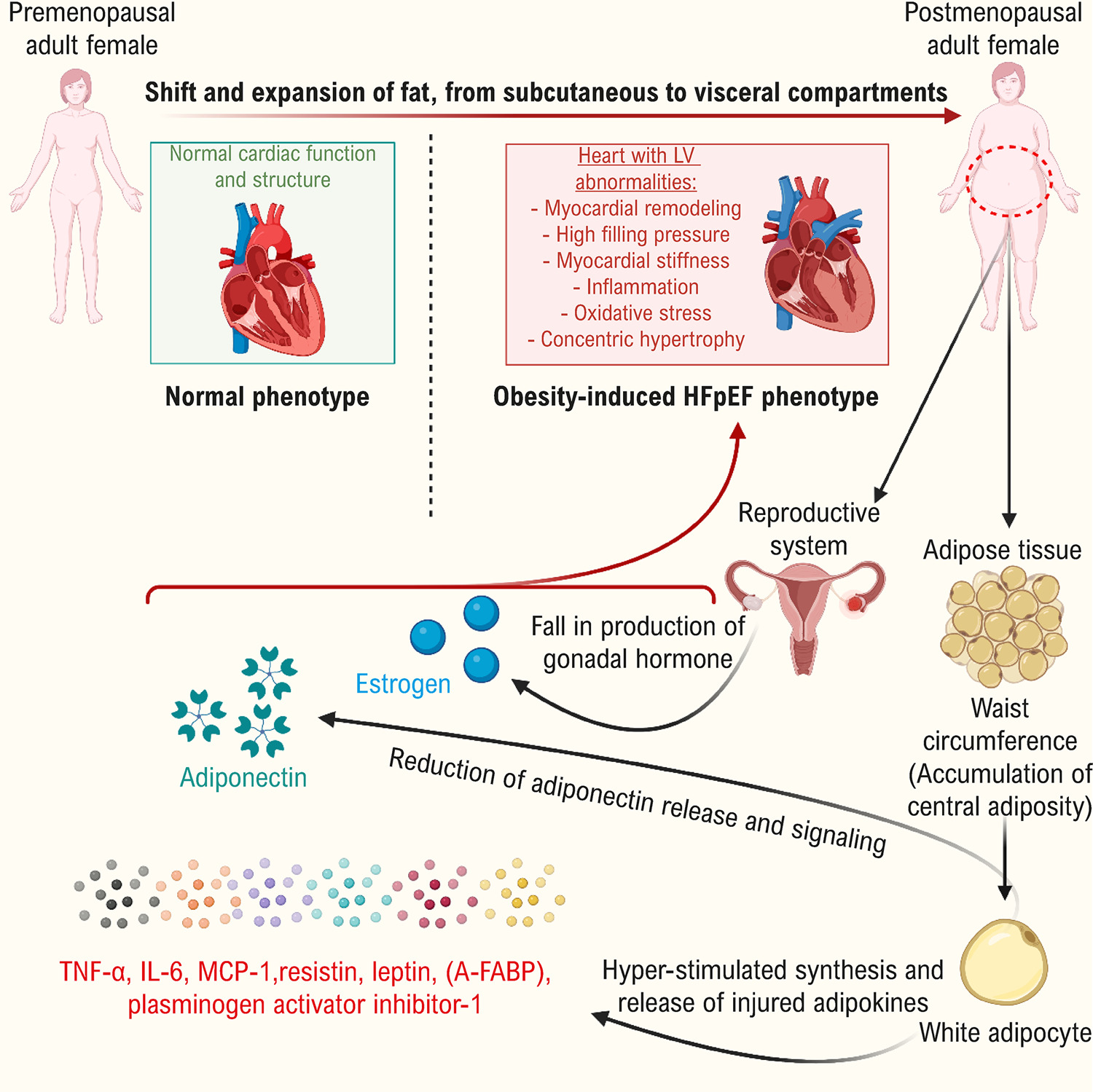
The prevalence of obesity and heart failure with preserved ejection fraction (HFpEF) increases significantly in postmenopausal women. Although obesity is a risk factor for left ventricular diastolic dysfunction (LVDD), the mechanisms that link the cessation of ovarian hormone production, and particularly estrogens, to the development of obesity, LVDD, and HFpEF in aging females are unclear. Clinical, and epidemiologic studies show that postmenopausal women with abdominal obesity (defined by waist circumference) are at greater risk for developing HFpEF than men or women without abdominal obesity. The study presents a review of clinical data that support a mechanistic link between estrogen loss plus obesity and left ventricular remodeling with LVDD. It also seeks to discuss potential cell and molecular mechanisms for estrogen-mediated protection against adverse adipocyte cell types, tissue depots, function, and metabolism that may contribute to LVDD and HFpEF.

  • Adiposity
  • body mass index
  • Echocardiography/methods
  • Estrogens
  • Heart Failure
  • Menopause
  • Obesity
  • Overweight
  • Stroke Volume
Read Full Article
Creative Commons Attribution (CC BY) Creative Commons license
08/10/2021 DOI: 10.36660/abc.20200855
Figure 1
Original Article

Effects of Copaiba Oil in Peripheral Markers of Oxidative Stress in a Model of Cor Pulmonale in Rats

Cristina Campos et al. Patrick Turck Angela Maria Vicente Tavares Giana Corssac … Denise Lacerda Alex Araujo Susana Llesuy Adriane Bello Klein

Abstract

Background

To date, copaiba oil’s systemic effects have never documented in Cor pulmonale induced by monocrotaline.

Objectives

To investigate copaiba oil’s effects in peripheral markers of oxidative stress in rats with Cor pulmonale.

Methods

Male Wistar rats (170±20g, n=7/group) were divided into four groups: control (CO), monocrotaline (MCT), copaiba oil (O), and monocrotaline+copaiba oil (MCT-O). MCT (60 mg/kg i.p.) was administered, and after one week, treatment with copaiba oil (400 mg/kg/day-gavage-14 days) was begun. Echocardiography was performed and, later, trunk blood collection was performed for oxidative stress evaluations. Statistical analysis: two-way ANOVA with Student-Newman-Keuls post-hoc test. P values<0.05 were considered significant.

Results

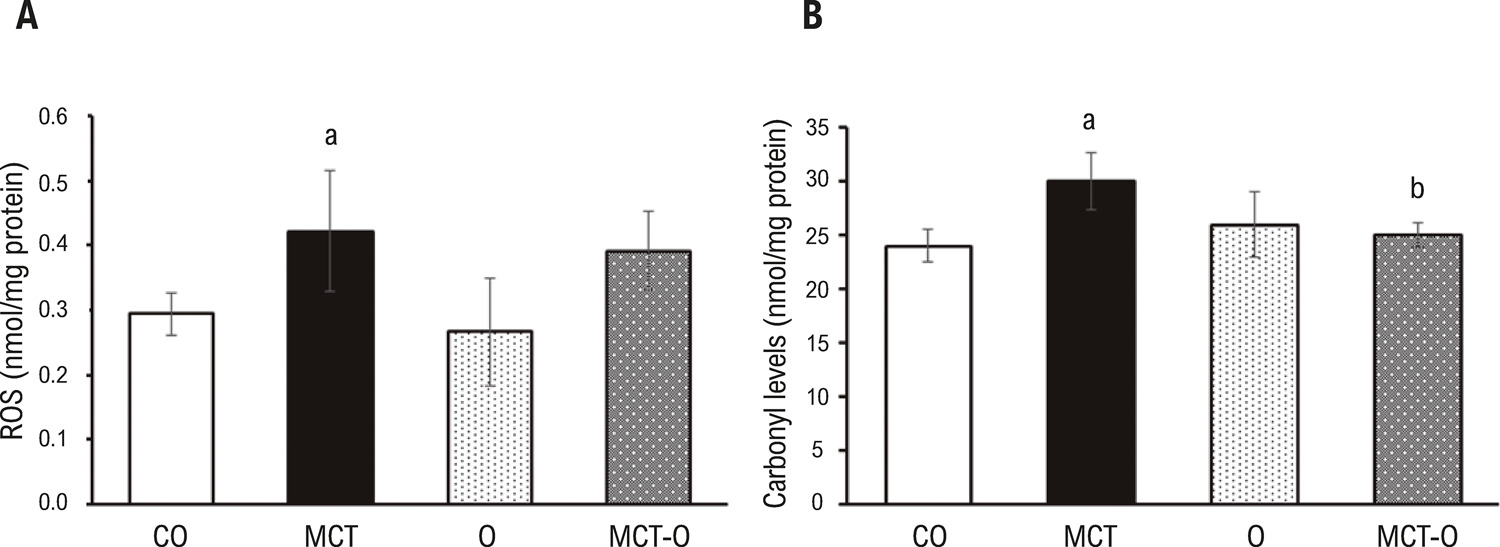
Copaiba oil reduced pulmonary vascular resistance and right ventricle (RV) hypertrophy (Fulton index (mg/mg): MCT-O=0.39±0.03; MCT=0.49±0.01), and improved RV systolic function (RV shortening fraction, %) in the MCT-O group (17.8±8.2) as compared to the MCT group (9.4±3.1; p<0.05). Moreover, in the MCT-O group, reactive oxygen species and carbonyl levels were reduced, and antioxidant parameters were increased in the peripheral blood (p<0.05). Conclusions: Our results suggest that copaiba oil has an interesting systemic antioxidant effect, which is reflected in the improvements in function and RV morphometry in this Cor pulmonale model. Cor pulmonale attenuation promoted by copaiba oil coincided with a reduction in systemic oxidative stress.

  • Copaiba Oil
  • Cor Pulmonale
  • Fabaceae
  • Hypertrophy, Right Ventricular
  • Monocrotaline,Rats
  • Oxidative Stress
  • phytotherapy
Read Full Article
Creative Commons Attribution (CC BY) Creative Commons license
08/10/2021 DOI: 10.36660/abc.20200929 Views 2
Figure 1
Original Article

Dexmedetomidine Preconditioning Reduces Myocardial Ischemia-Reperfusion Injury in Rats by Inhibiting the PERK Pathway

YuJiao Chen et al. Song Cao Hui Chen CunZhi Yin … XinPeng Xu ZaiQun Yang

Abstract

Background

Ischemic heart disease has attracted much attention due to its high mortality rates, treatment costs and the increasing morbidity in the young population. Strategies for reperfusion have reduced mortality. However, reperfusion can lead to cardiomyocyte death and subsequent irreversible myocardial damage. At present, the timely and targeted treatment of ischemia-reperfusion (I/R) injury is often lacking.

Objectives

To evaluate if dexmedetomidine (DEX) has a protective effect in myocardiual I/R and explore the possible mechanism behind it.

Methods

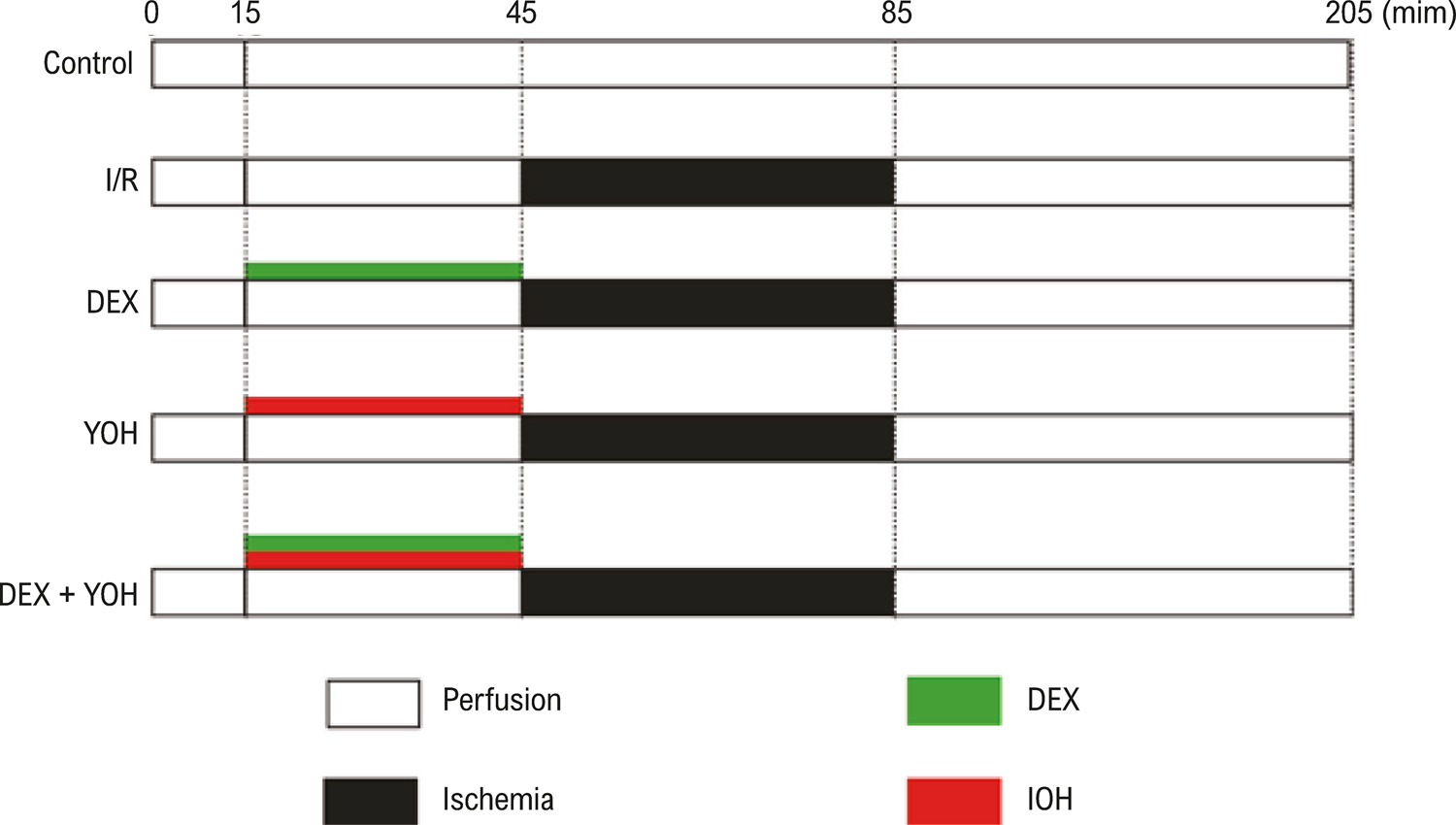
Rat hearts were perfused with a Langendorff perfusion system, and randomly assigned to five groups: control group, perfused with Krebs-Henseleit (K-H) solution for 205 minutes without ischemia; and four test groups that underwent 40 minutes of global ischemia and 120 min of reperfusion. The DEX group, the yohimbine (YOH) group and the DEX + YOH group were perfused with DEX (10 nM), YOH (1 μM) or the combination of DEX and YOH prior to reperfusion, respectively. Cardiac hemodynamics, myocardial infarct size, and myocardial histology were evaluated. The expression of glucose-related protein 78 (GRP78), protein kinase R-like ER kinase (PERK), phosphorylated PERK, eukaryotic initiation factor 2α (eIF2α), phosphorylated eIF2α, activating transcription factor 4 (ATF4), and CCAAT/enhancer-binding protein homologous protein (CHOP) were assessed. P<0.05 was considered to indicate a statistically significant difference.

Results

DEX preconditioning improved the cardiac function of I/R hearts, reduced myocardial infarction, myocardial apoptosis, and the expression of GRP78, p-PERK, eIF2α, p-eIF2α, ATF4 and CHOP.

Conclusions

DEX pretreatment reduced myocardial I/R injury by suppressing apoptosis, which was induced by the PERK pathway.

  • Dexmedetomidine
  • Hipnotics and Sedatives
  • Ischemic Cardiomyopathy/mortality
  • Myocardial Reperfusion
  • Protein Kinases
  • Rats
Read Full Article
Creative Commons Attribution (CC BY) Creative Commons license
08/10/2021 DOI: 10.36660/abc.20200672 Views 1
Original Article

Arterial Stiffness and Left Ventricular Myocardial Function in Children with a Well-Functioning Bicuspid Aortic Valve

Pelin Kosger et al. Tugcem Akin Hikmet Kiztanir Birsen Ucar

Abstract

Background:

Arterial stiffness is an important predictor factor of aortopathy and myocardial remodeling in patients with a bicuspid aortic valve and it might be increased in childhood.

Objective:

To assess the arterial stiffness and left ventricular myocardial function in children with a well-functioning bicuspid aortic valve.

Methods:

Forty-four children with a bicuspid aortic valve and 41 healthy peers with a tricuspid aortic valve were included in this case-control study. Diameters and the related z-scores of the aortic root and ascending aorta were obtained. As for the left ventricular myocardial function, along with the mitral inflow velocities and M-Mode parameters, myocardial velocities and time intervals were assessed with tissue Doppler imaging. A pulse wave analysis was performed by oscillometric device (Mobil-o-Graph). A p value <0.05 was considered significant.

Results:

The left ventricular mass index, mitral inflow A velocity, diameter and z-score of the ascending aorta, and myocardial performance index were significantly higher in patients (p=0.04, p=0.02,p=0.04, p<0.001,and p0.05).

Conclusion:

According to the oscillometric pulse wave analysis, the children with a well-functioning bicuspid aortic valve had similar arterial stiffness to that of the healthy peers. The ascending aorta diameter was established as an independent predictor of left ventricular myocardial function. Arterial stiffness may not be a severe risk factor in pediatric patients without marked ascending aorta dilation.

  • Aortic Stiffness
  • Child
  • Dilatation, Pathologic
  • Myocardial
  • Pulse Wave Analysis
  • Ventricular Function, Left
Read Full Article
Creative Commons Attribution (CC BY) Creative Commons license
20/09/2021 DOI: 10.36660/abc.20200657 Views 1

Could not load more articles. Please try again.

How to cite this article

EndNote RIS

Electronic Document Format (Vancouver)

Izar MCO, Fonseca FAH. Can We Pretreat Vein Grafts with Adiponectin to Improve Their Patency?. Arquivos Brasileiros de Cardiologia 2021;117(6):1189-90.

Electronic Document Format (ABNT)

Izar, Maria Cristina de Oliveira; Fonseca, Francisco A. H.. Can We Pretreat Vein Grafts with Adiponectin to Improve Their Patency?. Arquivos Brasileiros de Cardiologia, v. 117, n. 6, p. 1189-1190, Dec. 2021.

Electronic Document Format (APA)

Izar, M. C. O., & Fonseca, F. A. H. (2021). Can We Pretreat Vein Grafts with Adiponectin to Improve Their Patency?. Arquivos Brasileiros de Cardiologia, 117(6), 1189-1190.

Electronic Document Format (ISO)

Izar, Maria Cristina de Oliveira and Fonseca, Francisco A. H.. Can We Pretreat Vein Grafts with Adiponectin to Improve Their Patency?. Arquivos Brasileiros de Cardiologia [online]. 2021, vol. 117, n. 6, [cited 2026-10-14], pp. 1189-1190. Available from: <https://journals.cardiol.br/en/article/can-we-pretreat-vein-grafts-with-adiponectin-to-improve-their-patency/>. ISSN 0066-782X

EndNote RIS

Electronic Document Format (Vancouver)

Martins J, Afreixo V, Santos L, Fernandes L, Briosa A. Physiology or Angiography-Guided Coronary Artery Bypass Grafting: A Meta-Analysis. Arquivos Brasileiros de Cardiologia 2021;117(6):1115-23.

Electronic Document Format (ABNT)

Martins, José; Afreixo, Vera; Santos, Luís; Fernandes, Luís; Briosa, Ana. Physiology or Angiography-Guided Coronary Artery Bypass Grafting: A Meta-Analysis. Arquivos Brasileiros de Cardiologia, v. 117, n. 6, p. 1115-1123, Dec. 2021.

Electronic Document Format (APA)

Martins, J., Afreixo, V., Santos, L., Fernandes, L., & Briosa, A. (2021). Physiology or Angiography-Guided Coronary Artery Bypass Grafting: A Meta-Analysis. Arquivos Brasileiros de Cardiologia, 117(6), 1115-1123.

Electronic Document Format (ISO)

Martins, José and Afreixo, Vera and Santos, Luís and Fernandes, Luís and Briosa, Ana. Physiology or Angiography-Guided Coronary Artery Bypass Grafting: A Meta-Analysis. Arquivos Brasileiros de Cardiologia [online]. 2021, vol. 117, n. 6, [cited 2026-10-14], pp. 1115-1123. Available from: <https://journals.cardiol.br/en/article/physiology-or-angiography-guided-coronary-artery-bypass-grafting-a-meta-analysis/>. ISSN 0066-782X

EndNote RIS

Electronic Document Format (Vancouver)

Correia L, Lopes D, Porto JV, Lacerda YF, Correia VCA, Bagano GO, Pontes BSB, et al. Validation of an Artificial Intelligence Algorithm for Diagnostic Prediction of Coronary Disease: Comparison with a Traditional Statistical Model. Arquivos Brasileiros de Cardiologia 2021;117(6):1061-70.

Electronic Document Format (ABNT)

Correia, Luis; Lopes, Daniel; Porto, João Vítor; Lacerda, Yasmin F.; Correia, Vitor C. A.; Bagano, Gabriela O.; Pontes, Bruna S. B.; Melo, Milton Henrique Vitoria de; Silva, Thomaz E. A.; Meireles, André C. Validation of an Artificial Intelligence Algorithm for Diagnostic Prediction of Coronary Disease: Comparison with a Traditional Statistical Model. Arquivos Brasileiros de Cardiologia, v. 117, n. 6, p. 1061-1070, Dec. 2021.

Electronic Document Format (APA)

Correia, L., Lopes, D., Porto, J. V., Lacerda, Y. F., Correia, V. C. A., Bagano, G. O., Pontes, B. S. B., Melo, M. H. V. , Silva, T. E. A., & Meireles, A. C. (2021). Validation of an Artificial Intelligence Algorithm for Diagnostic Prediction of Coronary Disease: Comparison with a Traditional Statistical Model. Arquivos Brasileiros de Cardiologia, 117(6), 1061-1070.

Electronic Document Format (ISO)

Correia, Luis and Lopes, Daniel and Porto, João Vítor and Lacerda, Yasmin F. and Correia, Vitor C. A. and Bagano, Gabriela O. and Pontes, Bruna S. B. and Melo, Milton Henrique Vitoria de and Silva, Thomaz E. A. and Meireles, André C. Validation of an Artificial Intelligence Algorithm for Diagnostic Prediction of Coronary Disease: Comparison with a Traditional Statistical Model. Arquivos Brasileiros de Cardiologia [online]. 2021, vol. 117, n. 6, [cited 2026-10-14], pp. 1061-1070. Available from: <https://journals.cardiol.br/en/article/validation-of-an-artificial-intelligence-algorithm-for-diagnostic-prediction-of-coronary-disease-comparison-with-a-traditional-statistical-model/>. ISSN 0066-782X

EndNote RIS

Electronic Document Format (Vancouver)

Mungmunpuntipantip R, Wiwanitkit V. Safety Margin for Plasma Hyperviscosity in Cardiovascular Disease Patients after COVID-19 Vaccination for Thrombosis Prevention. Arquivos Brasileiros de Cardiologia 2021;117(6):1217-8.

Electronic Document Format (ABNT)

Mungmunpuntipantip, Rujittika; Wiwanitkit, Viroj. Safety Margin for Plasma Hyperviscosity in Cardiovascular Disease Patients after COVID-19 Vaccination for Thrombosis Prevention. Arquivos Brasileiros de Cardiologia, v. 117, n. 6, p. 1217-1218, Dec. 2021.

Electronic Document Format (APA)

Mungmunpuntipantip, R., & Wiwanitkit, V. (2021). Safety Margin for Plasma Hyperviscosity in Cardiovascular Disease Patients after COVID-19 Vaccination for Thrombosis Prevention. Arquivos Brasileiros de Cardiologia, 117(6), 1217-1218.

Electronic Document Format (ISO)

Mungmunpuntipantip, Rujittika and Wiwanitkit, Viroj. Safety Margin for Plasma Hyperviscosity in Cardiovascular Disease Patients after COVID-19 Vaccination for Thrombosis Prevention. Arquivos Brasileiros de Cardiologia [online]. 2021, vol. 117, n. 6, [cited 2026-10-14], pp. 1217-1218. Available from: <https://journals.cardiol.br/en/article/safety-margin-for-plasma-hyperviscosity-in-cardiovascular-disease-patients-after-covid-19-vaccination-for-thrombosis-prevention/>. ISSN 0066-782X

EndNote RIS

Electronic Document Format (Vancouver)

Zhou Y, Dai C, Zhang B, Ge J. Adiponectin Prevents Restenosis Through Inhibiting Cell Proliferation in a Rat Vein Graft Model. Arquivos Brasileiros de Cardiologia 2021;117(6):1179-88.

Electronic Document Format (ABNT)

Zhou, Yang; Dai, Chun; Zhang, Bing; Ge, Jianjun. Adiponectin Prevents Restenosis Through Inhibiting Cell Proliferation in a Rat Vein Graft Model. Arquivos Brasileiros de Cardiologia, v. 117, n. 6, p. 1179-1188, Dec. 2021.

Electronic Document Format (APA)

Zhou, Y., Dai, C., Zhang, B., & Ge, J. (2021). Adiponectin Prevents Restenosis Through Inhibiting Cell Proliferation in a Rat Vein Graft Model. Arquivos Brasileiros de Cardiologia, 117(6), 1179-1188.

Electronic Document Format (ISO)

Zhou, Yang and Dai, Chun and Zhang, Bing and Ge, Jianjun. Adiponectin Prevents Restenosis Through Inhibiting Cell Proliferation in a Rat Vein Graft Model. Arquivos Brasileiros de Cardiologia [online]. 2021, vol. 117, n. 6, [cited 2026-10-14], pp. 1179-1188. Available from: <https://journals.cardiol.br/en/article/adiponectin-prevents-restenosis-through-inhibiting-cell-proliferation-in-a-rat-vein-graft-model/>. ISSN 0066-782X

EndNote RIS

Electronic Document Format (Vancouver)

Silveira BO, Melo JL, Neri GPO, Gregório ML, Godoy MF, Accioly MF. Influence of an Early Mobilization Protocol on the Autonomic Behavior of Patients Undergoing Percutaneous Transluminal Coronary Angioplasty. Arquivos Brasileiros de Cardiologia 2021;117(6):1161-9.

Electronic Document Format (ABNT)

Silveira, Bárbara Oliveira; Melo, Jade Lara de; Neri, Graziella Paula de Oliveira; Gregório, Michele Lima; Godoy, Moacir Fernandes de; Accioly, Marilita Falangola. Influence of an Early Mobilization Protocol on the Autonomic Behavior of Patients Undergoing Percutaneous Transluminal Coronary Angioplasty. Arquivos Brasileiros de Cardiologia, v. 117, n. 6, p. 1161-1169, Dec. 2021.

Electronic Document Format (APA)

Silveira, B. O., Melo, J. L. , Neri, G. P. O., Gregório, M. L., Godoy, M. F. , & Accioly, M. F. (2021). Influence of an Early Mobilization Protocol on the Autonomic Behavior of Patients Undergoing Percutaneous Transluminal Coronary Angioplasty. Arquivos Brasileiros de Cardiologia, 117(6), 1161-1169.

Electronic Document Format (ISO)

Silveira, Bárbara Oliveira and Melo, Jade Lara de and Neri, Graziella Paula de Oliveira and Gregório, Michele Lima and Godoy, Moacir Fernandes de and Accioly, Marilita Falangola. Influence of an Early Mobilization Protocol on the Autonomic Behavior of Patients Undergoing Percutaneous Transluminal Coronary Angioplasty. Arquivos Brasileiros de Cardiologia [online]. 2021, vol. 117, n. 6, [cited 2026-10-14], pp. 1161-1169. Available from: <https://journals.cardiol.br/en/article/influence-of-an-early-mobilization-protocol-on-the-autonomic-behavior-of-patients-undergoing-percutaneous-transluminal-coronary-angioplasty/>. ISSN 0066-782X

EndNote RIS

Electronic Document Format (Vancouver)

Gelpi RJ. A New Therapeutic Alternative for the Treatment of Pulmonary Hypertension?. Arquivos Brasileiros de Cardiologia 2021;117(6):1113-4.

Electronic Document Format (ABNT)

Gelpi, Ricardo J. A New Therapeutic Alternative for the Treatment of Pulmonary Hypertension?. Arquivos Brasileiros de Cardiologia, v. 117, n. 6, p. 1113-1114, Dec. 2021.

Electronic Document Format (APA)

Gelpi, R. J. (2021). A New Therapeutic Alternative for the Treatment of Pulmonary Hypertension?. Arquivos Brasileiros de Cardiologia, 117(6), 1113-1114.

Electronic Document Format (ISO)

Gelpi, Ricardo J. A New Therapeutic Alternative for the Treatment of Pulmonary Hypertension?. Arquivos Brasileiros de Cardiologia [online]. 2021, vol. 117, n. 6, [cited 2026-10-14], pp. 1113-1114. Available from: <https://journals.cardiol.br/en/article/a-new-therapeutic-alternative-for-the-treatment-of-pulmonary-hypertension/>. ISSN 0066-782X

EndNote RIS

Electronic Document Format (Vancouver)

Askin L, Tanrıverdi O, Cetin M. Artificial Algorithms Outperform Traditional Models in Predicting Coronary Artery Disease. Arquivos Brasileiros de Cardiologia 2021;117(6):1071-2.

Electronic Document Format (ABNT)

Askin, Lutfu; Tanrıverdi, Okan; Cetin, Mustafa. Artificial Algorithms Outperform Traditional Models in Predicting Coronary Artery Disease. Arquivos Brasileiros de Cardiologia, v. 117, n. 6, p. 1071-1072, Dec. 2021.

Electronic Document Format (APA)

Askin, L., Tanrıverdi, O., & Cetin, M. (2021). Artificial Algorithms Outperform Traditional Models in Predicting Coronary Artery Disease. Arquivos Brasileiros de Cardiologia, 117(6), 1071-1072.

Electronic Document Format (ISO)

Askin, Lutfu and Tanrıverdi, Okan and Cetin, Mustafa. Artificial Algorithms Outperform Traditional Models in Predicting Coronary Artery Disease. Arquivos Brasileiros de Cardiologia [online]. 2021, vol. 117, n. 6, [cited 2026-10-14], pp. 1071-1072. Available from: <https://journals.cardiol.br/en/article/artificial-algorithms-outperform-traditional-models-in-predicting-coronary-artery-disease/>. ISSN 0066-782X

EndNote RIS

Electronic Document Format (Vancouver)

Rochitte CE. The Importance of Understanding the Progression of Myocardial Fibrosis in Chronic Chagas Cardiomyopathy. Arquivos Brasileiros de Cardiologia 2021;117(6):1091-2.

Electronic Document Format (ABNT)

Rochitte, Carlos E.. The Importance of Understanding the Progression of Myocardial Fibrosis in Chronic Chagas Cardiomyopathy. Arquivos Brasileiros de Cardiologia, v. 117, n. 6, p. 1091-1092, Dec. 2021.

Electronic Document Format (APA)

Rochitte, C. E. (2021). The Importance of Understanding the Progression of Myocardial Fibrosis in Chronic Chagas Cardiomyopathy. Arquivos Brasileiros de Cardiologia, 117(6), 1091-1092.

Electronic Document Format (ISO)

Rochitte, Carlos E.. The Importance of Understanding the Progression of Myocardial Fibrosis in Chronic Chagas Cardiomyopathy. Arquivos Brasileiros de Cardiologia [online]. 2021, vol. 117, n. 6, [cited 2026-10-14], pp. 1091-1092. Available from: <https://journals.cardiol.br/en/article/the-importance-of-understanding-the-progression-of-myocardial-fibrosis-in-chronic-chagas-cardiomyopathy/>. ISSN 0066-782X

EndNote RIS

Electronic Document Format (Vancouver)

Jatene T, Casas FRL, Casas RLAL, Vaz VD, Casas AAL. Physiology-guided CABG: Is it Time for Cardiac Surgeons to Incorporate FFR Into Their Practice?. Arquivos Brasileiros de Cardiologia 2021;117(6):1124-5.

Electronic Document Format (ABNT)

Jatene, Tannas; Casas, Fabrício Ribeiro Las; Casas, Rogerio Lobo de Andrade Las; Vaz, Vinicius Daher; Casas, Alberto de Almeida Las. Physiology-guided CABG: Is it Time for Cardiac Surgeons to Incorporate FFR Into Their Practice?. Arquivos Brasileiros de Cardiologia, v. 117, n. 6, p. 1124-1125, Dec. 2021.

Electronic Document Format (APA)

Jatene, T., Casas, F. R. L., Casas, R. L. A. L., Vaz, V. D., & Casas, A. A. L. (2021). Physiology-guided CABG: Is it Time for Cardiac Surgeons to Incorporate FFR Into Their Practice?. Arquivos Brasileiros de Cardiologia, 117(6), 1124-1125.

Electronic Document Format (ISO)

Jatene, Tannas and Casas, Fabrício Ribeiro Las and Casas, Rogerio Lobo de Andrade Las and Vaz, Vinicius Daher and Casas, Alberto de Almeida Las. Physiology-guided CABG: Is it Time for Cardiac Surgeons to Incorporate FFR Into Their Practice?. Arquivos Brasileiros de Cardiologia [online]. 2021, vol. 117, n. 6, [cited 2026-10-14], pp. 1124-1125. Available from: <https://journals.cardiol.br/en/article/physiology-guided-cabg-is-it-time-for-cardiac-surgeons-to-incorporate-ffr-into-their-practice/>. ISSN 0066-782X

EndNote RIS

Electronic Document Format (Vancouver)

Souza DS, Roman-Campos D. Searching Naturally Occurring Compounds to Treat Hypertension. Arquivos Brasileiros de Cardiologia 2021;117(6):1104-5.

Electronic Document Format (ABNT)

Souza, Diego Santos; Roman-Campos, Danilo. Searching Naturally Occurring Compounds to Treat Hypertension. Arquivos Brasileiros de Cardiologia, v. 117, n. 6, p. 1104-1105, Dec. 2021.

Electronic Document Format (APA)

Souza, D. S., & Roman-Campos, D. (2021). Searching Naturally Occurring Compounds to Treat Hypertension. Arquivos Brasileiros de Cardiologia, 117(6), 1104-1105.

Electronic Document Format (ISO)

Souza, Diego Santos and Roman-Campos, Danilo. Searching Naturally Occurring Compounds to Treat Hypertension. Arquivos Brasileiros de Cardiologia [online]. 2021, vol. 117, n. 6, [cited 2026-10-14], pp. 1104-1105. Available from: <https://journals.cardiol.br/en/article/searching-naturally-occurring-compounds-to-treat-hypertension/>. ISSN 0066-782X

EndNote RIS

Electronic Document Format (Vancouver)

Barberato SH, Borsoi R, Roston F, Miranda HLM, Patriota P, Otto ME, Beck ALS, et al. Echocardiographic Findings in Patients with COVID-19 with and without Previous Cardiovascular Disease. Arquivos Brasileiros de Cardiologia 2021;117(6):1207-11.

Electronic Document Format (ABNT)

Barberato, Silvio Henrique; Borsoi, Rafael; Roston, Fabio; Miranda, Hudson Laerte Machado; Patriota, Pedro; Otto, Maria Estefania; Beck, Adenalva Lima de Souza; Armstrong, Anderson da Costa; Ferreira, João Marcos Bemfica Barbosa; Camarozano, Ana Cristina; Silva, Letícia Braga Paciello da; Resende, Marcos Valério Coimbra; Vieira, Marcelo Luiz Campos; Fernandes-Silva, Miguel Morita. Echocardiographic Findings in Patients with COVID-19 with and without Previous Cardiovascular Disease. Arquivos Brasileiros de Cardiologia, v. 117, n. 6, p. 1207-1211, Dec. 2021.

Electronic Document Format (APA)

Barberato, S. H., Borsoi, R., Roston, F., Miranda, H. L. M., Patriota, P., Otto, M. E., Beck, A. L. S., Armstrong, A. C., Ferreira, J. M. B. B., Camarozano, A. C., Silva, L. B. P. , Resende, M. V. C., Vieira, M. L. C., & Fernandes-Silva, M. M. (2021). Echocardiographic Findings in Patients with COVID-19 with and without Previous Cardiovascular Disease. Arquivos Brasileiros de Cardiologia, 117(6), 1207-1211.

Electronic Document Format (ISO)

Barberato, Silvio Henrique and Borsoi, Rafael and Roston, Fabio and Miranda, Hudson Laerte Machado and Patriota, Pedro and Otto, Maria Estefania and Beck, Adenalva Lima de Souza and Armstrong, Anderson da Costa and Ferreira, João Marcos Bemfica Barbosa and Camarozano, Ana Cristina and Silva, Letícia Braga Paciello da and Resende, Marcos Valério Coimbra and Vieira, Marcelo Luiz Campos and Fernandes-Silva, Miguel Morita. Echocardiographic Findings in Patients with COVID-19 with and without Previous Cardiovascular Disease. Arquivos Brasileiros de Cardiologia [online]. 2021, vol. 117, n. 6, [cited 2026-10-14], pp. 1207-1211. Available from: <https://journals.cardiol.br/en/article/echocardiographic-findings-in-patients-with-covid-19-with-and-without-previous-cardiovascular-disease/>. ISSN 0066-782X

EndNote RIS

Electronic Document Format (Vancouver)

Heck TG. Cardioprotection during Chemotherapy: Prospects of Antioxidant Strategies. Arquivos Brasileiros de Cardiologia 2021;117(6):1159-60.

Electronic Document Format (ABNT)

Heck, Thiago Gomes. Cardioprotection during Chemotherapy: Prospects of Antioxidant Strategies. Arquivos Brasileiros de Cardiologia, v. 117, n. 6, p. 1159-1160, Dec. 2021.

Electronic Document Format (APA)

Heck, T. G. (2021). Cardioprotection during Chemotherapy: Prospects of Antioxidant Strategies. Arquivos Brasileiros de Cardiologia, 117(6), 1159-1160.

Electronic Document Format (ISO)

Heck, Thiago Gomes. Cardioprotection during Chemotherapy: Prospects of Antioxidant Strategies. Arquivos Brasileiros de Cardiologia [online]. 2021, vol. 117, n. 6, [cited 2026-10-14], pp. 1159-1160. Available from: <https://journals.cardiol.br/en/article/cardioprotection-during-chemotherapy-prospects-of-antioxidant-strategies/>. ISSN 0066-782X

EndNote RIS

Electronic Document Format (Vancouver)

Jiang S, Wang X, Zhang Y, Yu W, Pei L, Ma Y. A Case Report of Valvular Heart Disease Complicated with a Blood Cyst in Right Atrium. Review of the Literature. Arquivos Brasileiros de Cardiologia 2021;117(6):1202-6.

Electronic Document Format (ABNT)

Jiang, Shu; Wang, Xiao-Cong; Zhang, Yan-Li; Yu, Wei; Pei, Li-Ping; Ma, Yan. A Case Report of Valvular Heart Disease Complicated with a Blood Cyst in Right Atrium. Review of the Literature. Arquivos Brasileiros de Cardiologia, v. 117, n. 6, p. 1202-1206, Dec. 2021.

Electronic Document Format (APA)

Jiang, S., Wang, X., Zhang, Y., Yu, W., Pei, L., & Ma, Y. (2021). A Case Report of Valvular Heart Disease Complicated with a Blood Cyst in Right Atrium. Review of the Literature. Arquivos Brasileiros de Cardiologia, 117(6), 1202-1206.

Electronic Document Format (ISO)

Jiang, Shu and Wang, Xiao-Cong and Zhang, Yan-Li and Yu, Wei and Pei, Li-Ping and Ma, Yan. A Case Report of Valvular Heart Disease Complicated with a Blood Cyst in Right Atrium. Review of the Literature. Arquivos Brasileiros de Cardiologia [online]. 2021, vol. 117, n. 6, [cited 2026-10-14], pp. 1202-1206. Available from: <https://journals.cardiol.br/en/article/a-case-report-of-valvular-heart-disease-complicated-with-a-blood-cyst-in-right-atrium-review-of-the-literature/>. ISSN 0066-782X

EndNote RIS

Electronic Document Format (Vancouver)

Gatto M, Mota GAF, Pagan LU, Gomes MJ, Okoshi MP. Preconditioning in Ischemia-Reperfusion Lesion. Arquivos Brasileiros de Cardiologia 2021;117(6):1145-6.

Electronic Document Format (ABNT)

Gatto, Mariana; Mota, Gustavo Augusto Ferreira; Pagan, Luana Urbano; Gomes, Mariana Janini; Okoshi, Marina Politi. Preconditioning in Ischemia-Reperfusion Lesion. Arquivos Brasileiros de Cardiologia, v. 117, n. 6, p. 1145-1146, Dec. 2021.

Electronic Document Format (APA)

Gatto, M., Mota, G. A. F., Pagan, L. U., Gomes, M. J., & Okoshi, M. P. (2021). Preconditioning in Ischemia-Reperfusion Lesion. Arquivos Brasileiros de Cardiologia, 117(6), 1145-1146.

Electronic Document Format (ISO)

Gatto, Mariana and Mota, Gustavo Augusto Ferreira and Pagan, Luana Urbano and Gomes, Mariana Janini and Okoshi, Marina Politi. Preconditioning in Ischemia-Reperfusion Lesion. Arquivos Brasileiros de Cardiologia [online]. 2021, vol. 117, n. 6, [cited 2026-10-14], pp. 1145-1146. Available from: <https://journals.cardiol.br/en/article/preconditioning-in-ischemia-reperfusion-lesion/>. ISSN 0066-782X

EndNote RIS

Electronic Document Format (Vancouver)

Sousa PA, Barra S, Pereira M, Elvas L. Coherent Map for Atypical Atrial Flutter – A Step Forward for the Understanding of the Arrhythmia Mechanism. Arquivos Brasileiros de Cardiologia 2021;117(6):1212-6.

Electronic Document Format (ABNT)

Sousa, Pedro A.; Barra, Sérgio; Pereira, Mariana; Elvas, Luís. Coherent Map for Atypical Atrial Flutter – A Step Forward for the Understanding of the Arrhythmia Mechanism. Arquivos Brasileiros de Cardiologia, v. 117, n. 6, p. 1212-1216, Dec. 2021.

Electronic Document Format (APA)

Sousa, P. A., Barra, S., Pereira, M., & Elvas, L. (2021). Coherent Map for Atypical Atrial Flutter – A Step Forward for the Understanding of the Arrhythmia Mechanism. Arquivos Brasileiros de Cardiologia, 117(6), 1212-1216.

Electronic Document Format (ISO)

Sousa, Pedro A. and Barra, Sérgio and Pereira, Mariana and Elvas, Luís. Coherent Map for Atypical Atrial Flutter – A Step Forward for the Understanding of the Arrhythmia Mechanism. Arquivos Brasileiros de Cardiologia [online]. 2021, vol. 117, n. 6, [cited 2026-10-14], pp. 1212-1216. Available from: <https://journals.cardiol.br/en/article/coherent-map-for-atypical-atrial-flutter-a-step-forward-for-the-understanding-of-the-arrhythmia-mechanism/>. ISSN 0066-782X

EndNote RIS

Electronic Document Format (Vancouver)

Corbalán R. Optimizing Treatment for Acute Myocardial Infarction, a Continuous Effort. Arquivos Brasileiros de Cardiologia 2021;117(6):1079-80.

Electronic Document Format (ABNT)

Corbalán, Ramón. Optimizing Treatment for Acute Myocardial Infarction, a Continuous Effort. Arquivos Brasileiros de Cardiologia, v. 117, n. 6, p. 1079-1080, Dec. 2021.

Electronic Document Format (APA)

Corbalán, R. (2021). Optimizing Treatment for Acute Myocardial Infarction, a Continuous Effort. Arquivos Brasileiros de Cardiologia, 117(6), 1079-1080.

Electronic Document Format (ISO)

Corbalán, Ramón. Optimizing Treatment for Acute Myocardial Infarction, a Continuous Effort. Arquivos Brasileiros de Cardiologia [online]. 2021, vol. 117, n. 6, [cited 2026-10-14], pp. 1079-1080. Available from: <https://journals.cardiol.br/en/article/optimizing-treatment-for-acute-myocardial-infarction-a-continuous-effort/>. ISSN 0066-782X

EndNote RIS

Electronic Document Format (Vancouver)

Brito VB, Nascimento LVM, Moura DJ, Saffi J. Cardioprotective Effect of Maternal Supplementation with Resveratrol on Toxicity Induced by Doxorubicin in Offspring Cardiomyocytes. Arquivos Brasileiros de Cardiologia 2021;117(6):1147-58.

Electronic Document Format (ABNT)

Brito, Verônica Bidinotto; Nascimento, Leopoldo Vinicius Martins; Moura, Dinara Jaqueline; Saffi, Jenifer. Cardioprotective Effect of Maternal Supplementation with Resveratrol on Toxicity Induced by Doxorubicin in Offspring Cardiomyocytes. Arquivos Brasileiros de Cardiologia, v. 117, n. 6, p. 1147-1158, Oct. 2021.

Electronic Document Format (APA)

Brito, V. B., Nascimento, L. V. M., Moura, D. J., & Saffi, J. (2021). Cardioprotective Effect of Maternal Supplementation with Resveratrol on Toxicity Induced by Doxorubicin in Offspring Cardiomyocytes. Arquivos Brasileiros de Cardiologia, 117(6), 1147-1158.

Electronic Document Format (ISO)

Brito, Verônica Bidinotto and Nascimento, Leopoldo Vinicius Martins and Moura, Dinara Jaqueline and Saffi, Jenifer. Cardioprotective Effect of Maternal Supplementation with Resveratrol on Toxicity Induced by Doxorubicin in Offspring Cardiomyocytes. Arquivos Brasileiros de Cardiologia [online]. 2021, vol. 117, n. 6, [cited 2026-10-14], pp. 1147-1158. Available from: <https://journals.cardiol.br/en/article/cardioprotective-effect-of-maternal-supplementation-with-resveratrol-on-toxicity-induced-by-doxorubicin-in-offspring-cardiomyocytes/>. ISSN 0066-782X

EndNote RIS

Electronic Document Format (Vancouver)

Santos JBF, Gottlieb I, Tassi EM, Camargo GC, Atié J, Xavier SS, Pedrosa RC, et al. Cardiac Fibrosis and Changes in Left Ventricle Function in Patients with Chronic Chagas Heart Disease. Arquivos Brasileiros de Cardiologia 2021;117(6):1081-90.

Electronic Document Format (ABNT)

Santos, João Bosco de Figueiredo; Gottlieb, Ilan; Tassi, Eduardo Marinho; Camargo, Gabriel Cordeiro; Atié, Jacob; Xavier, Sérgio Salles; Pedrosa, Roberto Coury; Saraiva, Roberto Magalhães. Cardiac Fibrosis and Changes in Left Ventricle Function in Patients with Chronic Chagas Heart Disease. Arquivos Brasileiros de Cardiologia, v. 117, n. 6, p. 1081-1090, Oct. 2021.

Electronic Document Format (APA)

Santos, J. B. F., Gottlieb, I., Tassi, E. M., Camargo, G. C., Atié, J., Xavier, S. S., Pedrosa, R. C., & Saraiva, R. M. (2021). Cardiac Fibrosis and Changes in Left Ventricle Function in Patients with Chronic Chagas Heart Disease. Arquivos Brasileiros de Cardiologia, 117(6), 1081-1090.

Electronic Document Format (ISO)

Santos, João Bosco de Figueiredo and Gottlieb, Ilan and Tassi, Eduardo Marinho and Camargo, Gabriel Cordeiro and Atié, Jacob and Xavier, Sérgio Salles and Pedrosa, Roberto Coury and Saraiva, Roberto Magalhães. Cardiac Fibrosis and Changes in Left Ventricle Function in Patients with Chronic Chagas Heart Disease. Arquivos Brasileiros de Cardiologia [online]. 2021, vol. 117, n. 6, [cited 2026-10-14], pp. 1081-1090. Available from: <https://journals.cardiol.br/en/article/cardiac-fibrosis-and-changes-in-left-ventricle-function-in-patients-with-chronic-chagas-heart-disease/>. ISSN 0066-782X

EndNote RIS

Electronic Document Format (Vancouver)

Furtado RG, Rassi DC, Melato LH, Oliveira ACR, Nunes PM, Baccelli PE, Santos SCO, et al. Safety of SF6(SonoVue®) Contrast Agent on Pharmacological Stress Echocardiogram. Arquivos Brasileiros de Cardiologia 2021;117(6):1170-8.

Electronic Document Format (ABNT)

Furtado, Rogerio Gomes; Rassi, Daniela do Carmo; Melato, Luciano Henrique; Oliveira, Ana Caroline Reinaldo de; Nunes, Paula Meneses; Baccelli, Priscila Elias; Santos, Sara Camila de Oliveira; Santos, Victor Emanuel; Rassi Junior, Luiz; Nunes, Colandy Godoy. Safety of SF6(SonoVue®) Contrast Agent on Pharmacological Stress Echocardiogram. Arquivos Brasileiros de Cardiologia, v. 117, n. 6, p. 1170-1178, Oct. 2021.

Electronic Document Format (APA)

Furtado, R. G., Rassi, D. C., Melato, L. H., Oliveira, A. C. R. , Nunes, P. M., Baccelli, P. E., Santos, S. C. O., Santos, V. E., Rassi Junior, L., & Nunes, C. G. (2021). Safety of SF6(SonoVue®) Contrast Agent on Pharmacological Stress Echocardiogram. Arquivos Brasileiros de Cardiologia, 117(6), 1170-1178.

Electronic Document Format (ISO)

Furtado, Rogerio Gomes and Rassi, Daniela do Carmo and Melato, Luciano Henrique and Oliveira, Ana Caroline Reinaldo de and Nunes, Paula Meneses and Baccelli, Priscila Elias and Santos, Sara Camila de Oliveira and Santos, Victor Emanuel and Rassi Junior, Luiz and Nunes, Colandy Godoy. Safety of SF6(SonoVue®) Contrast Agent on Pharmacological Stress Echocardiogram. Arquivos Brasileiros de Cardiologia [online]. 2021, vol. 117, n. 6, [cited 2026-10-14], pp. 1170-1178. Available from: <https://journals.cardiol.br/en/article/safety-of-sf6sonovue-contrast-agent-on-pharmacological-stress-echocardiogram/>. ISSN 0066-782X

EndNote RIS

Electronic Document Format (Vancouver)

Alencar AKN, Wang H, Oliveira GMM, Sun X, Zapata-Sudo G, Groban L. Crossroads between Estrogen Loss, Obesity, and Heart Failure with Preserved Ejection Fraction. Arquivos Brasileiros de Cardiologia 2021;117(6):1191-20.

Electronic Document Format (ABNT)

Alencar, Allan Kardec Nogueira de; Wang, Hao; Oliveira, Gláucia Maria Moraes de; Sun, Xuming; Zapata-Sudo, Gisele; Groban, Leanne. Crossroads between Estrogen Loss, Obesity, and Heart Failure with Preserved Ejection Fraction. Arquivos Brasileiros de Cardiologia, v. 117, n. 6, p. 1191-1201, Oct. 2021.

Electronic Document Format (APA)

Alencar, A. K. N. , Wang, H., Oliveira, G. M. M. , Sun, X., Zapata-Sudo, G., & Groban, L. (2021). Crossroads between Estrogen Loss, Obesity, and Heart Failure with Preserved Ejection Fraction. Arquivos Brasileiros de Cardiologia, 117(6), 1191-1201.

Electronic Document Format (ISO)

Alencar, Allan Kardec Nogueira de and Wang, Hao and Oliveira, Gláucia Maria Moraes de and Sun, Xuming and Zapata-Sudo, Gisele and Groban, Leanne. Crossroads between Estrogen Loss, Obesity, and Heart Failure with Preserved Ejection Fraction. Arquivos Brasileiros de Cardiologia [online]. 2021, vol. 117, n. 6, [cited 2026-10-14], pp. 1191-1201. Available from: <https://journals.cardiol.br/en/article/crossroads-between-estrogen-loss-obesity-and-heart-failure-with-preserved-ejection-fraction/>. ISSN 0066-782X

EndNote RIS

Electronic Document Format (Vancouver)

Campos C, Turck P, Tavares AMV, Corssac G, Lacerda D, Araujo A, Llesuy S, et al. Effects of Copaiba Oil in Peripheral Markers of Oxidative Stress in a Model of Cor Pulmonale in Rats. Arquivos Brasileiros de Cardiologia 2021;117(6):1106-12.

Electronic Document Format (ABNT)

Campos, Cristina; Turck, Patrick; Tavares, Angela Maria Vicente; Corssac, Giana; Lacerda, Denise; Araujo, Alex; Llesuy, Susana; Klein, Adriane Bello. Effects of Copaiba Oil in Peripheral Markers of Oxidative Stress in a Model of Cor Pulmonale in Rats. Arquivos Brasileiros de Cardiologia, v. 117, n. 6, p. 1106-1112, Oct. 2021.

Electronic Document Format (APA)

Campos, C., Turck, P., Tavares, A. M. V., Corssac, G., Lacerda, D., Araujo, A., Llesuy, S., & Klein, A. B. (2021). Effects of Copaiba Oil in Peripheral Markers of Oxidative Stress in a Model of Cor Pulmonale in Rats. Arquivos Brasileiros de Cardiologia, 117(6), 1106-1112.

Electronic Document Format (ISO)

Campos, Cristina and Turck, Patrick and Tavares, Angela Maria Vicente and Corssac, Giana and Lacerda, Denise and Araujo, Alex and Llesuy, Susana and Klein, Adriane Bello. Effects of Copaiba Oil in Peripheral Markers of Oxidative Stress in a Model of Cor Pulmonale in Rats. Arquivos Brasileiros de Cardiologia [online]. 2021, vol. 117, n. 6, [cited 2026-10-14], pp. 1106-1112. Available from: <https://journals.cardiol.br/en/article/effects-of-copaiba-oil-in-peripheral-markers-of-oxidative-stress-in-a-model-of-cor-pulmonale-in-rats/>. ISSN 0066-782X

EndNote RIS

Electronic Document Format (Vancouver)

Chen Y, Cao S, Chen H, Yin C, Xu X, Yang Z. Dexmedetomidine Preconditioning Reduces Myocardial Ischemia-Reperfusion Injury in Rats by Inhibiting the PERK Pathway. Arquivos Brasileiros de Cardiologia 2021;117(6):1134-4.

Electronic Document Format (ABNT)

Chen, YuJiao; Cao, Song; Chen, Hui; Yin, CunZhi; Xu, XinPeng; Yang, ZaiQun. Dexmedetomidine Preconditioning Reduces Myocardial Ischemia-Reperfusion Injury in Rats by Inhibiting the PERK Pathway. Arquivos Brasileiros de Cardiologia, v. 117, n. 6, p. 1134-1144, Oct. 2021.

Electronic Document Format (APA)

Chen, Y., Cao, S., Chen, H., Yin, C., Xu, X., & Yang, Z. (2021). Dexmedetomidine Preconditioning Reduces Myocardial Ischemia-Reperfusion Injury in Rats by Inhibiting the PERK Pathway. Arquivos Brasileiros de Cardiologia, 117(6), 1134-1144.

Electronic Document Format (ISO)

Chen, YuJiao and Cao, Song and Chen, Hui and Yin, CunZhi and Xu, XinPeng and Yang, ZaiQun. Dexmedetomidine Preconditioning Reduces Myocardial Ischemia-Reperfusion Injury in Rats by Inhibiting the PERK Pathway. Arquivos Brasileiros de Cardiologia [online]. 2021, vol. 117, n. 6, [cited 2026-10-14], pp. 1134-1144. Available from: <https://journals.cardiol.br/en/article/dexmedetomidine-preconditioning-reduces-myocardial-ischemia-reperfusion-injury-in-rats-by-inhibiting-the-perk-pathway/>. ISSN 0066-782X

EndNote RIS

Electronic Document Format (Vancouver)

Kosger P, Akin T, Kiztanir H, Ucar B. Arterial Stiffness and Left Ventricular Myocardial Function in Children with a Well-Functioning Bicuspid Aortic Valve. Arquivos Brasileiros de Cardiologia 2021;117(6):1126-33.

Electronic Document Format (ABNT)

Kosger, Pelin; Akin, Tugcem; Kiztanir, Hikmet; Ucar, Birsen. Arterial Stiffness and Left Ventricular Myocardial Function in Children with a Well-Functioning Bicuspid Aortic Valve. Arquivos Brasileiros de Cardiologia, v. 117, n. 6, p. 1126-1133, Sep. 2021.

Electronic Document Format (APA)

Kosger, P., Akin, T., Kiztanir, H., & Ucar, B. (2021). Arterial Stiffness and Left Ventricular Myocardial Function in Children with a Well-Functioning Bicuspid Aortic Valve. Arquivos Brasileiros de Cardiologia, 117(6), 1126-1133.

Electronic Document Format (ISO)

Kosger, Pelin and Akin, Tugcem and Kiztanir, Hikmet and Ucar, Birsen. Arterial Stiffness and Left Ventricular Myocardial Function in Children with a Well-Functioning Bicuspid Aortic Valve. Arquivos Brasileiros de Cardiologia [online]. 2021, vol. 117, n. 6, [cited 2026-10-14], pp. 1126-1133. Available from: <https://journals.cardiol.br/en/article/arterial-stiffness-and-left-ventricular-myocardial-function-in-children-with-a-well-functioning-bicuspid-aortic-valve/>. ISSN 0066-782X

Sede – Rio de Janeiro
Av. Marechal Câmara, 160
3º andar – Sala: 330 – Centro
Rio de Janeiro – CEP: 20020-907
Tel.: (55 +21) 3478-2700
ou (21) 99386-3961
E-mail: revista@cardiol.br

Sede – São Paulo
Alameda Santos, 705 – 11º andar
Cerqueira César | São Paulo
CEP: 01419-001
Tel.: (55 +11) 3411-5500
E-mail: revista@cardiol.br

  • About the Journal
  • Internal Regulation
  • Editors Section
  • Editorial Board
  • History
  • SBC Award

  • Guidelines for Publication
  • Editorial Policy
  • Ethics Policy
  • Policy on the Use of Artificial Intelligence
  • Mandatory Publication Form
  • Publication Fee

Issues

SBC Guidelines

  • How to Publish an Abstract Supplement?
  • Supplements from the Brazilian Congress of Cardiology