ABC Family Arquivos Brasileiros de Cardiologia International Journal of Cardiovascular Sciences ABC Heart Failure & Cardiomyopathy ABC Imagem Cardiovascular
Português English
ABC Family
Português English
  • About
    • About ABC Family
    • Internal Regulation
    • Editorial Board
    • Brazilian Society of Cardiology (SBC)
  • Issues
  • SBC Guidelines
  • Content
    • Videos
    • Podcasts
    • News
  • About
    • About ABC Family
    • Internal Regulation
    • Editorial Board
    • Brazilian Society of Cardiology (SBC)
  • Issues
  • SBC Guidelines
  • Content
    • Videos
    • Podcasts
    • News

ABC Family

  • ABC Family
  • Arquivos Brasileiros de Cardiologia
  • International Journal of Cardiovascular Sciences
  • ABC Heart Failure & Cardiomyopathy
  • ABC Imagem Cardiovascular
Search in

No content found.

Journals
Ordering
Article types
Others

  1. Home
  2. Keyword: Adiposity
IJCS
Editorial

Gender differences in Body Adiposity and Endothelial Dysfunction in Overweight and Obese Individuals with Suboptimal Vitamin D Status

Marcelo Chiara Bertolami

The article by Faria et al. explored anthropometric indices, vascular and autonomic function in obese and overweight individuals with suboptimal vitamin D status.

Obesity has a significant impact on human health through multiple mechanisms. One potential mechanism involves the association between obesity and low vitamin D levels. The authors used advanced techniques to evaluate endothelial function in an overweight and obese population with suboptimal vitamin D levels.

[…]

  • Adiposity
  • Gender Identity
  • Obesity
  • Overweight
Read Full Article
Creative Commons Attribution (CC BY) Creative Commons license
07/08/2026 DOI: 10.36660/ijcs.20260094 Views 1
IJCS
Original Article

Body Adiposity and Endothelial Dysfunction Assessed By Laser Speckle Contrast Imaging in Obese and Overweight Individuals With Suboptimal Vitamin D Status: Sex Differences

Adriana de Castro Carvalho Faria et al. Michelle Rabello Cunha Caroline Lyra Moreira Samanta Souza Mattos … Clara Castro Carvalho Oliveira Faria Leticia Castro Carvalho Oliveira Faria Wille Oigman Mario Fritsch Neves

Abstract

Background:

Low Vitamin D levels are prevalent in obesity and have been linked to adverse cardiovascular and metabolic outcomes.

Objective:

This cross-sectional study aimed to assess anthropometric indices, vascular, autonomic function in obese and overweight individuals with suboptimal vitamin D status.

Methods:

Participants of both sexes, 40-69 years, Body Mass Index (BMI) 25-40 kg/m², were divided into two groups above and under the median vitamin D level (22,6 ng/ml), named Suboptimal (SUB-D) and Lower (LOW-D) vitamin D, respectively. Vascular function was assessed using central hemodynamic parameters (Mobil-O-Graph®), endothelial function (microvascular reactivity; Laser Speckle Contrast Image system), and heart rate variability (Polar® monitor). The groups were compared using an unpaired Student’s t-test, and p-values < 0,05 were considered statistically significant.

Results:

The groups (n = 90) had similar ages and blood pressures. The LOW-D group had a higher body fat percentage (%BF; 29 ± 4 vs. 33 ± 3, p = 0.020) and glycated Hb (5.4 ± 0.4 vs. 5.8 ± 0.4, p = 0.029) in males. Females had higher Visceral Adiposity Index (VAI; 2.33 ± 0.86 vs. 3.32 ± 1.86, p = 0.008) and Lipid Accumulation Products (LAP; 39 ± 23 vs. 63 ± 40, p = 0.005). The LOW-D group showed a lower percentage increase in the area under the curve in post-occlusive reactive hyperemia (%AUC-PORH) (70 ± 30 vs. 55 ± 32%, p = 0.034). Females showed inverse correlation of vitamin D levels and VAI and LAP, and a positive correlation with %AUC-PORH.

Conclusions:

In obese and overweight individuals, lower vitamin D content was associated with higher levels of body adiposity in males. Furthermore, impaired metabolic functions and endothelial dysfunction were related to lower vitamin D levels in females, as in the central illustration.

  • Adiposity
  • Obesity
  • Vitamin D
  • Women
Read Full Article
Creative Commons Attribution (CC BY) Creative Commons license
12/06/2026 DOI: 10.36660/ijcs.20250173 Views 1
Influence of Insertion/Deletion Polymorphism of the Angiotensin Converting Enzyme Gene on Adiposity and Cardiac Function in Patients with Heart Failure
ABC
Original Article

Influence of Insertion/Deletion Polymorphism of the Angiotensin Converting Enzyme Gene on Adiposity and Cardiac Function in Patients with Heart Failure

Marla Darlene Machado Vale et al. Édina Caroline Ternus Ribeiro Ingrid da Silveira Knobloch Ida Vanessa Doederlein Schwartz … Fernanda Sperb-Ludwig Gabriela Corrêa Souza

Abstract

Background

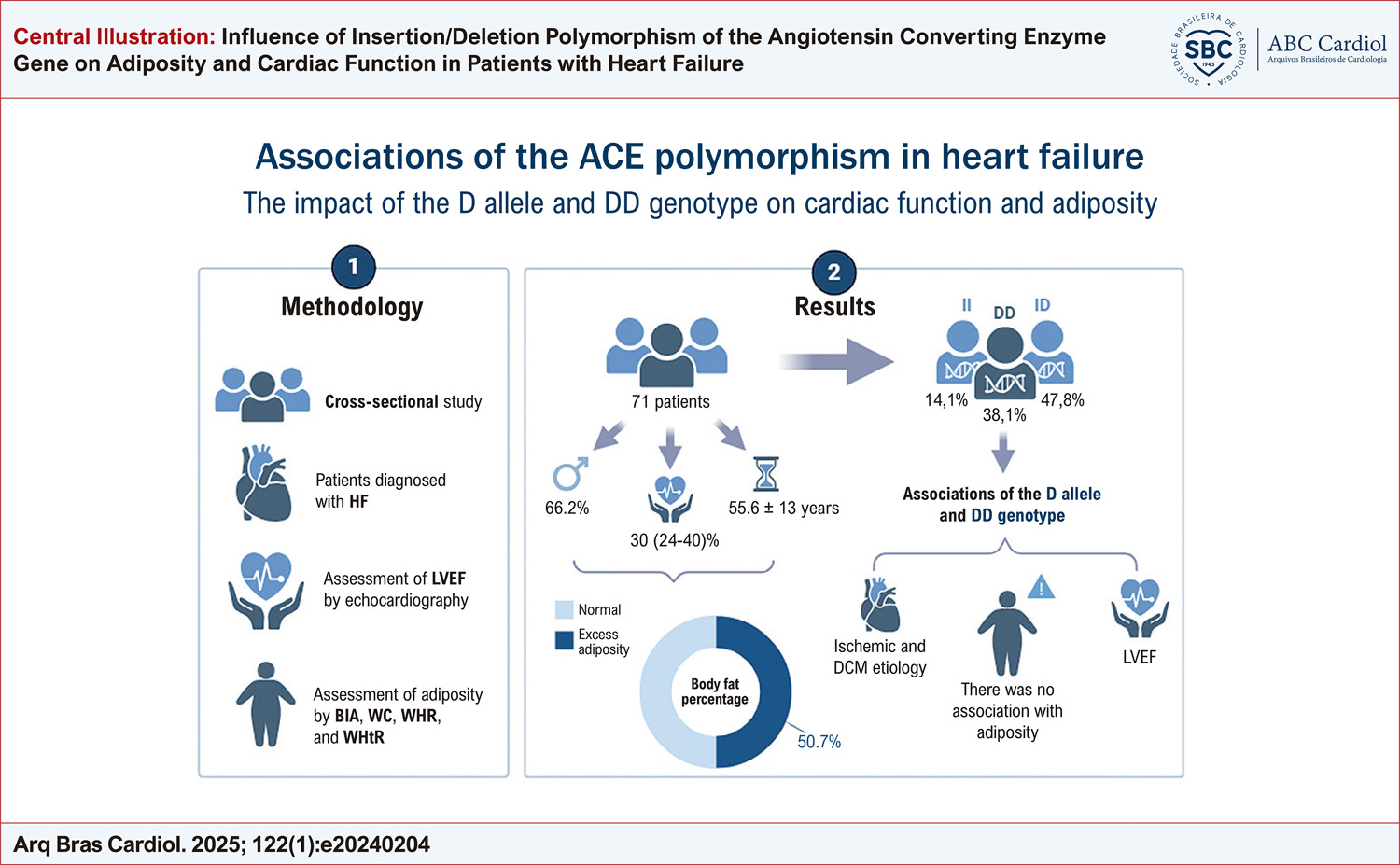
The angiotensin-converting enzyme (ACE) insertion/deletion (I/D) polymorphism (rs4340) is associated with the pathogenesis of heart failure (HF). This polymorphism may contribute to a greater propensity for severe HF and excess weight.

Objective

To evaluate adiposity, cardiac function, and their association with ACE I/D polymorphism in HF patients.

Methods

Cross-sectional study with ambulatory individuals ≥18 years diagnosed with HF. Genetic analysis was performed using polymerase chain reaction followed by agarose gel electrophoresis. Left ventricular ejection fraction (LVEF) was determined by echocardiography. Nutritional status was assessed using body mass index, while adiposity was analyzed using bioelectrical impedance analysis (BIA), waist circumference, waist-to-hip ratio, and waist-to-height ratio. The adopted significance level was 5% (p < 0.05).

Results

Seventy-one individuals were included, with a mean age of 55.8 ± 13.0 years, predominantly male (66.2%), with functional class I and II (90.9%), and a median LVEF of 30% (24-40). The prevalence of overweight was 38%, class I obesity was 23.9%, and class II and III obesity was 12.7%, with 50.7% exhibiting excess adiposity as assessed by BIA. A total of 88 D alleles and 54 I alleles of the ACE gene were identified. Regarding ACE genotypes, 38.1% were DD, 47.8% were ID, and 14.1% were II. In the multivariate analysis, the D allele (DD + ID genotypes versus II) was associated with LVEF (PR 0.995; 95% CI 0.991–1.000; p = 0.048) and with the etiology of HF (dilated cardiomyopathy: PR 1.283; 95% CI 1.039–1.583; p = 0.021). No independent association was found with adiposity.

Conclusion

The presence of the D allele of the ACE polymorphism is associated with LVEF and HF etiology. Despite overweight being prevalent in the sample, no independent associations were found.

  • Adiposity
  • Genetic Polymorphism
  • Heart Failure
Read Full Article
Creative Commons Attribution (CC BY) Creative Commons license
20/01/2025 DOI: 10.36660/abc.20240204i Views 1
Figure 1
ABC
Editorial

Obesity and Risk of Hypertension: A Growing Problem in Children and Adolescents

José Geraldo Mill

Arterial hypertension (AH) affects approximately 30% of adults in Brazil. A previously rare condition in children and adolescents, this situation has been changing given the obesity pandemic currently occurring in this age group.

Primary AH is a complex disease, as its appearance depends on genetic predisposition and factors linked to lifestyle. There is still no robust and easily obtainable genetic score to be used clinically as a predictor of AH. The same does not occur with the lifestyle factors, as it is known that a sedentary lifestyle, obesity, high salt intake and insulin resistance, predisposes to blood pressure increase throughout life.

[…]

  • Adiposity
  • Adolescent
  • Child
  • Exercise
  • Hypertension / genetic
  • Lifestyle
  • Obesity
Read Full Article
Creative Commons Attribution (CC BY) Creative Commons license
06/03/2023 DOI: 10.36660/abc.20220940
ABC
Original Article

Hypertension and Associated Lipid, Glucose, and Adiposity Parameters in School-Aged Adolescents in the Federal District, Brazil

Letícia Rocha Lima et al. Aline Bassetto Okamura Kênia Mara Baiocchi de Carvalho Eliane Said Dutra Vivian Siqueira Santos Gonçalves

Abstract

Background

The prevalence of hypertension and other metabolic disorders has increased in young individuals. However, no representative studies have been conducted in the population of the Federal District, Brazil.

Objective

To estimate the prevalence of hypertension and its association with lipid, glucose, and adiposity markers in school-aged adolescents living in the Federal District.

Methods

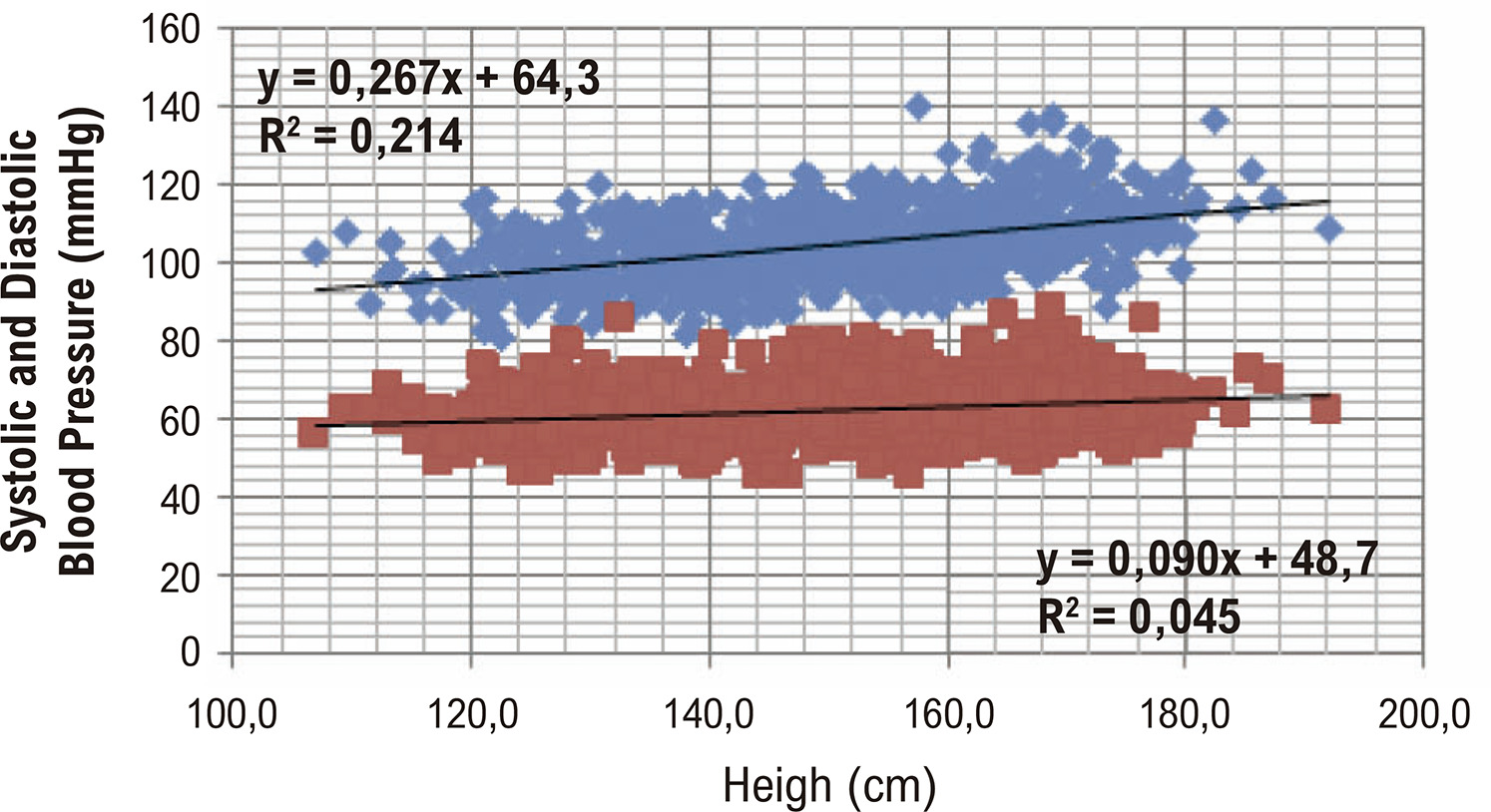
This cross-sectional study included participants of the Study of Cardiovascular Risks in Adolescents (Portuguese acronym, ERICA). Blood pressure, blood glucose, glycated hemoglobin, insulin, homeostatic model assessment for insulin resistance (HOMA-IR), triglycerides, total cholesterol, high-density lipoprotein, low-density lipoprotein, body mass index (BMI), waist circumference, and economic, demographic, and sexual maturity variables were assessed. The data were analyzed in Stata, and the analysis was divided into different stages: descriptive, crude, and adjusted. Significant results were set at p < 0.05.

Results

In total, 1,200 adolescents were included, and their mean age was 14.8 years. The prevalence of hypertension was 8% (95% confidence interval: 6.3; 9.9). Most parameters were associated with blood pressure in crude analysis. In adjusted analysis, glucose, lipid, and adiposity markers maintained the associations, and the highest magnitudes were those of BMI and HOMA-IR.

Conclusion

The study revealed a high prevalence of hypertension in adolescents living in the Federal District, and blood pressure levels were associated with other markers of lipid, glucose, and adiposity profile. The findings indicate the relevance of health surveillance for planning effective actions aimed at reversing this situation and preventing new cases.

  • Adiposity
  • Adolescent
  • Blood Glucose
  • Hypertension
  • Lipids
Read Full Article
Creative Commons Attribution (CC BY) Creative Commons license
07/02/2022 DOI: 10.36660/abc.20201240 Views 1
Figure 1
ABC
Review Article

Crossroads between Estrogen Loss, Obesity, and Heart Failure with Preserved Ejection Fraction

Allan Kardec Nogueira de Alencar et al. Hao Wang Gláucia Maria Moraes de Oliveira Xuming Sun … Gisele Zapata-Sudo Leanne Groban

Abstract

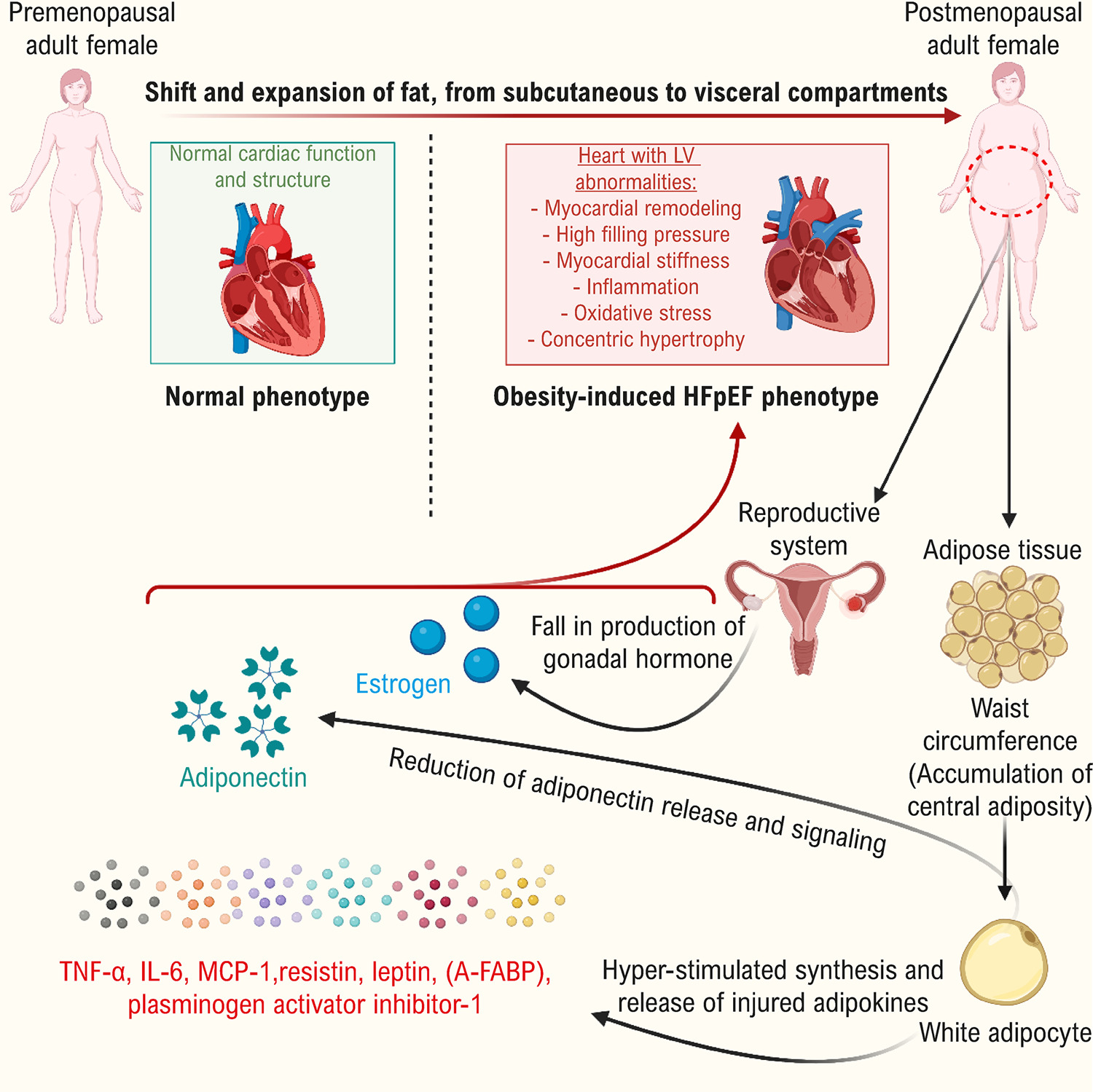
The prevalence of obesity and heart failure with preserved ejection fraction (HFpEF) increases significantly in postmenopausal women. Although obesity is a risk factor for left ventricular diastolic dysfunction (LVDD), the mechanisms that link the cessation of ovarian hormone production, and particularly estrogens, to the development of obesity, LVDD, and HFpEF in aging females are unclear. Clinical, and epidemiologic studies show that postmenopausal women with abdominal obesity (defined by waist circumference) are at greater risk for developing HFpEF than men or women without abdominal obesity. The study presents a review of clinical data that support a mechanistic link between estrogen loss plus obesity and left ventricular remodeling with LVDD. It also seeks to discuss potential cell and molecular mechanisms for estrogen-mediated protection against adverse adipocyte cell types, tissue depots, function, and metabolism that may contribute to LVDD and HFpEF.

  • Adiposity
  • body mass index
  • Echocardiography/methods
  • Estrogens
  • Heart Failure
  • Menopause
  • Obesity
  • Overweight
  • Stroke Volume
Read Full Article
Creative Commons Attribution (CC BY) Creative Commons license
08/10/2021 DOI: 10.36660/abc.20200855 Views 1
Figure 1
ABC
Original Article

Breaks in Sedentary Time and Cardiometabolic Markers in Adolescents

Natália Maria Mesquita de Lima Quirino et al. Alcides Prazeres Filho Arthur Oliveira Barbosa Gerfeson Mendonça José Cazuza de Farias Júnior

Abstract

Background:

The interruption of the time spent in sedentary behavior (breaks) has been associated with better levels of cardiometabolic indicators in the adult population, but in adolescents, further investigations are still needed to confirm these findings.

Objectives:

To analyze the association of the number of breaks per day in sedentary behaviors with cardiometabolic markers and whether it was moderated by nutritional status and excessive time on sedentary behavior in adolescents.

Methods:

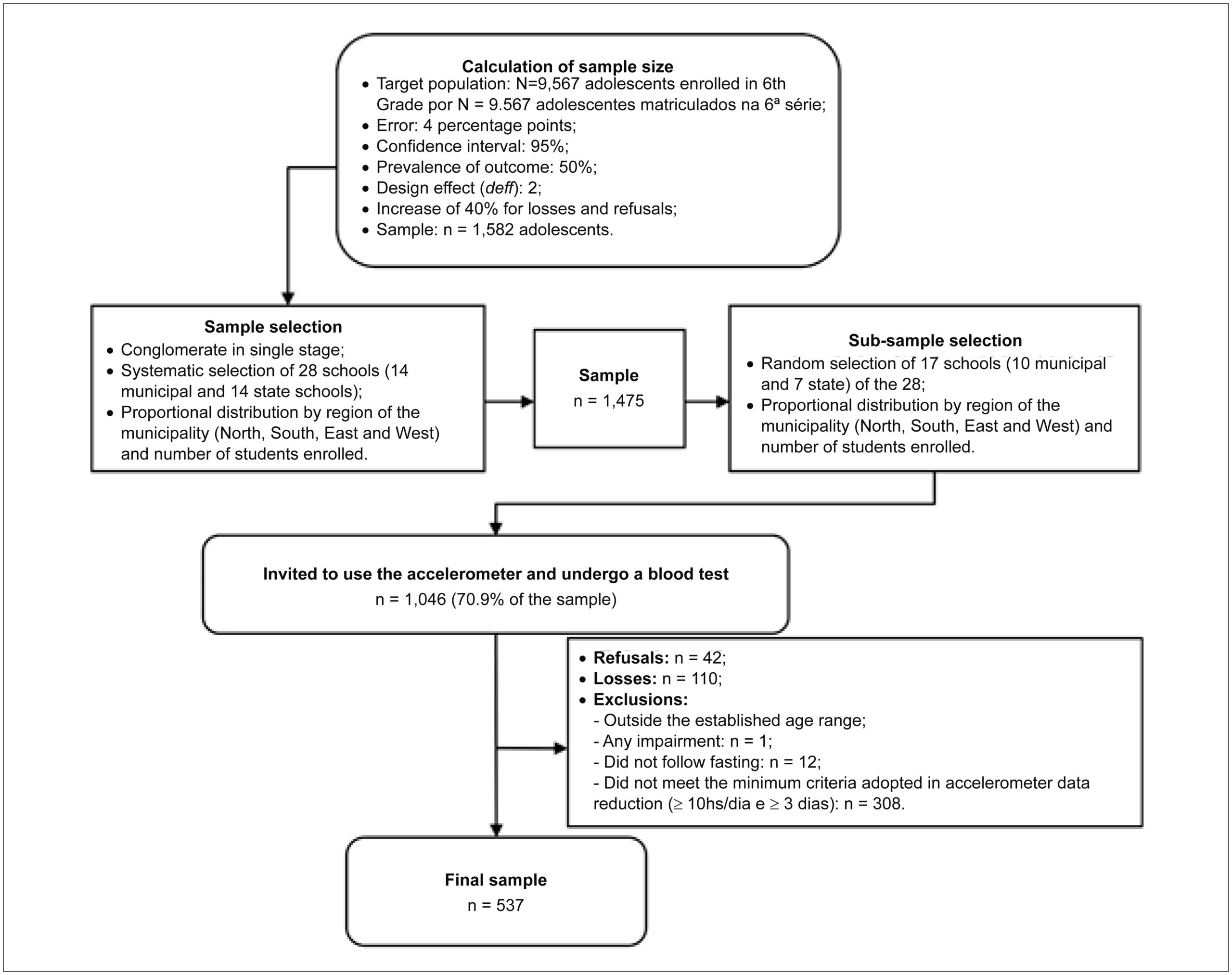
This is a cross-sectional study of 537 adolescents (52.3% girls), aged between 10 and 14 years, enrolled in public schools in the city of João Pessoa, Paraíba state, Brazil. The number of daily breaks (>100 counts/minutes) in sedentary time was measured by Actigraph GT3X+ accelerometers. The following cardiometabolic markers were analyzed: systolic and diastolic blood pressure (mmHg), fasting blood glucose levels, total cholesterol, triglycerides, HDL-c, LDL-c (all in mg/dL) and body mass index (BMI) (kg/m). Linear regression was used to analyze the association between the number of breaks and cardiometabolic markers and whether this association was moderated by nutritional status and excessive time in sedentary behavior. The significance level of p<0.05 was adopted for all analyses.

Results:

The number of daily breaks was negatively associated with BMI (boys – ß = −0.083; 95%CI: −0.132; −0.034 and girls – ß = −0.115; 95%CI: −0.169; −0.061), but not with the remaining cardiometabolic markers. The number of breaks per day was negatively associated with BMI (ß = −0.069; 95% CI: −0.102; −0.035), but not with the other cardiometabolic markers and this association was not moderated by the adolescents’ nutritional status (p=0.221), or by excessive time in sedentary behavior (p=0.176).

Conclusions:

Including breaks in sedentary time seems to contribute to lower BMI values in adolescents.

  • Adiposity
  • Adolescent
  • Blood Arterial
  • Cardiometabolic Markers
  • Cholesterol
  • Glucose
  • Sedentarism
  • Sedentary Behavior
  • Triglycerides
Read Full Article
Creative Commons Attribution (CC BY) Creative Commons license
06/09/2021 DOI: 10.36660/abc.20200047
Figure 1
ABC
Original Article

Individual and Combined Performance of Indicators of Overall and Central Obesity to Estimate Coronary Risk in ELSA-Brasil Participants

Rogério Tosta de Almeida et al. Sheila Maria Alvim Matos Estela M. L. Aquino

Abstract

Background:

Anthropometric indicators have been used in clinical practice and epidemiological studies for screening of health risk factors.

Objectives:

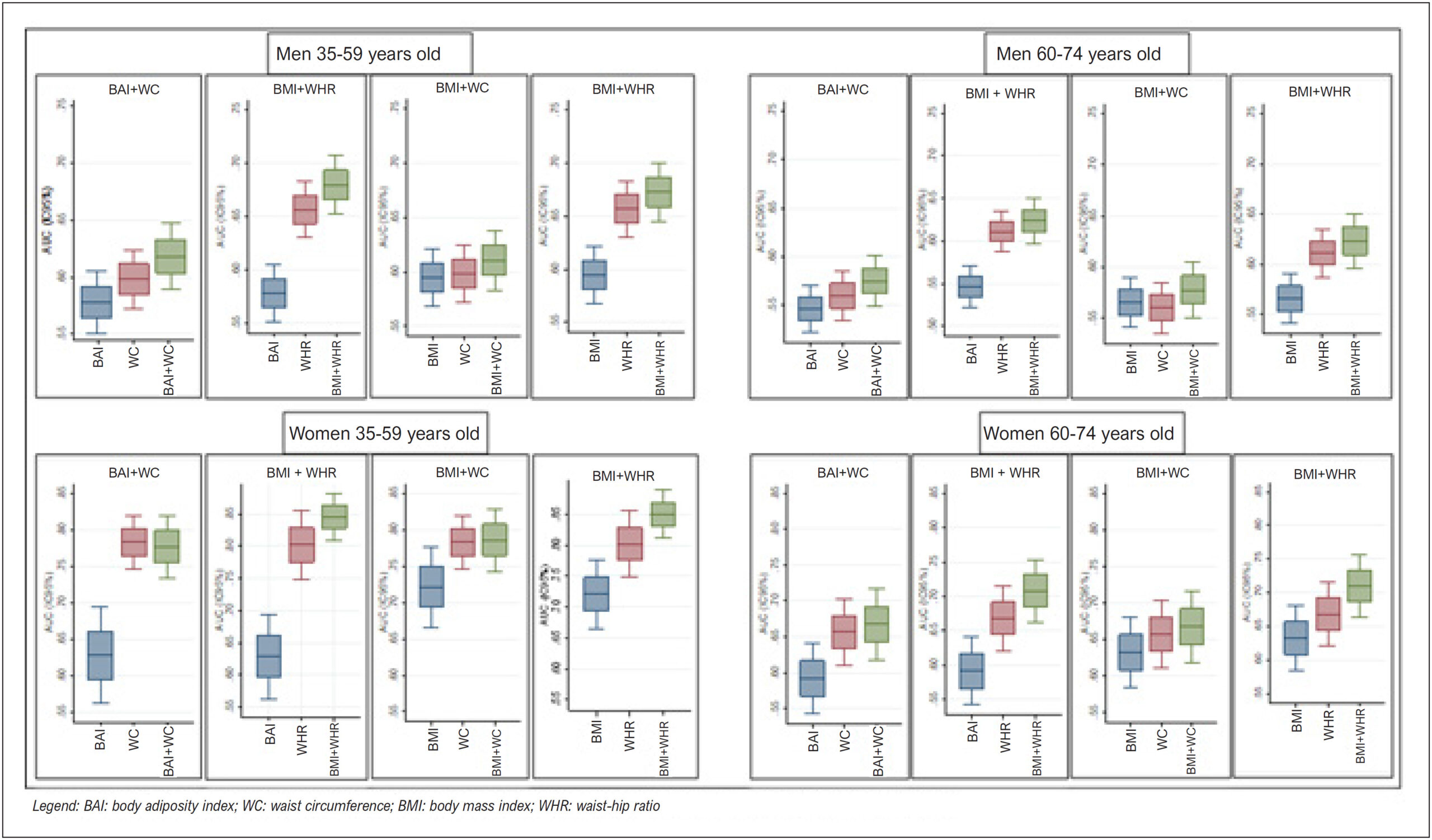
To evaluate the individual discriminatory power of body adiposity index (BAI), body mass index (BMI), waist circumference (WC) and waist-hip-ratio (WHR) to identify individuals at risk for coronary heart disease and to evaluate whether combinations of anthropometric indicators of overall obesity with indicators of central obesity improve predictive ability in adults.

Methods:

A total of 15,092 participants (54.4% women) aged 35-74years were assessed at baseline of the ELSA-Brasil study. Individuals at risk for coronary heart disease were identified using the Framingham risk score and divided into very-high risk (VHR 20%) and high risk (HR10%). Measures of diagnostic accuracy and area under the ROC curves (AUC) were analyzed. Associations were tested using Poisson regression analysis with robust variance, according to age and sex. Statistical significance was set at 5%.

Results:

WHR showed the highest discriminatory power for VHR20% in all groups, with higher predictive ability in women (AUC: 0.802; 95%CI: 0.748-0.856 vs 0.657; 95%CI: 0.630-0.683 in the age range of 35-59 years, and AUC: 0.668; 95%CI: 0.621-0.715 vs 0.611; 95%CI: 0.587-0.635 in the age range of 60-74 years). BAI + WHR and BMI + WHR had the highest predictive power in men and women, respectively. Combinations of indicators of overall obesity with indicators of central obesity were more strongly associated with VHR20% and HR10% in all subgroups.

Conclusion:

Combined indicators had greater predictive ability than indicators taken individually. BAI+ WHR and BMI + WHR were the best estimators of coronary risk in men and women, respectively, and WHR had the best individual performance.

  • Adiposity
  • Anthropometry
  • body mass index
  • Cardiovascular disease
  • Epidemiology
  • Obesity
  • Risk Factors
  • Waist Circumference
Read Full Article
Creative Commons Attribution (CC BY) Creative Commons license
30/07/2021 DOI: 10.36660/abc.20200360 Views 1
Figure 1
IJCS
Original Article

Cardiac Remodeling in Obesity-Resistance Model is not Related to Collagen I and III Protein Expression

Scarlet Marques de Oliveira et al. Jéssica Leite Garcia Danielle Fernandes Vileigas Dijon Henrique Salomé de Campos … Fabiane Valentini Francisqueti-Ferron Artur Junio Togneri Ferron Danielle Cristina Tomaz da Silva-Bertani Carlos Roberto Padovani Camila Renata Corrêa Antonio Carlos Cicogna

Abstract

Background:

As some individuals present resistance to obesity development, experiments have been trying to understand their susceptibility to cardiometabolic diseases.

Objetive:

To evaluate if the cardiac remodeling was related to collagen protein expression change.

Methods:

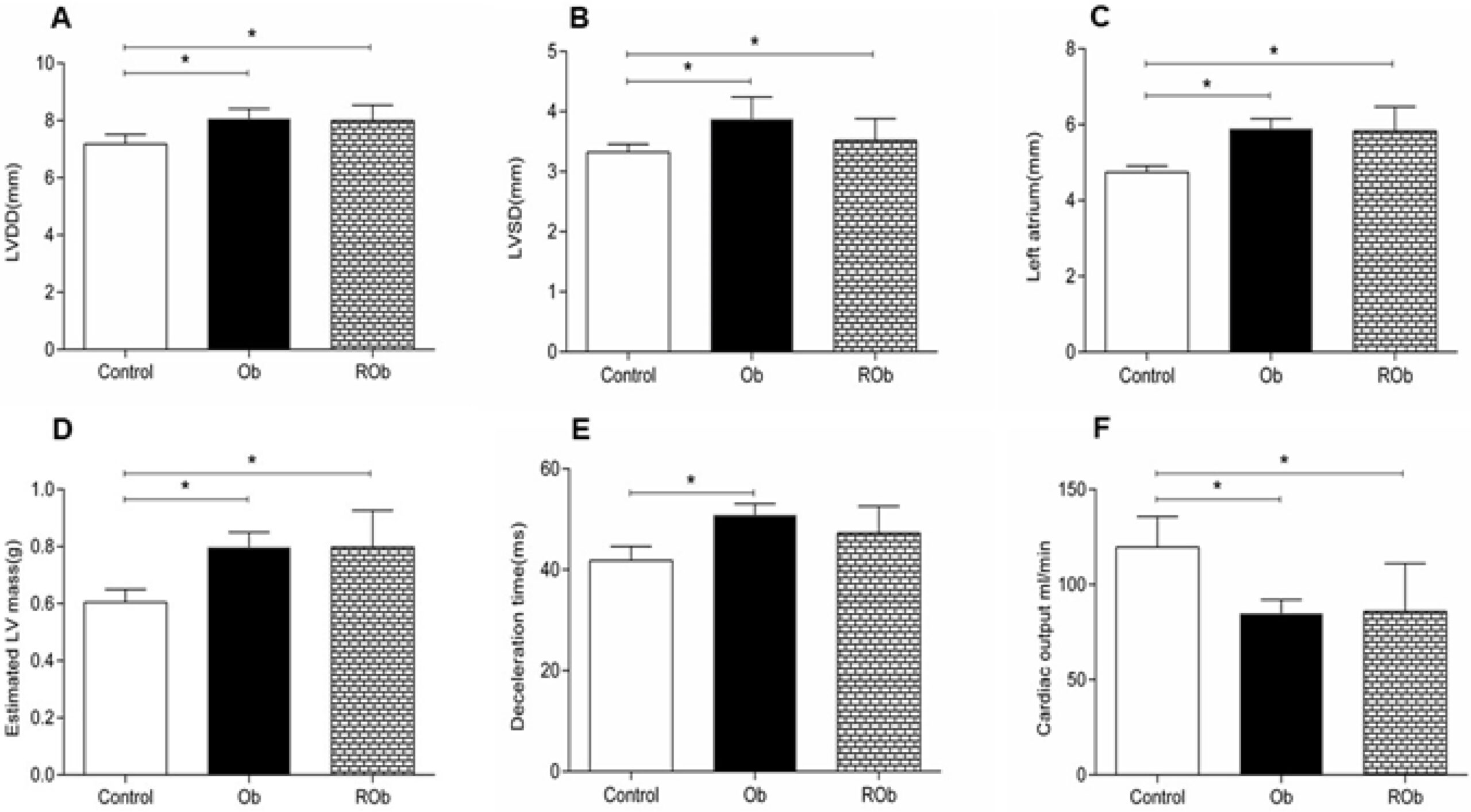
Male Wistar rats were randomized into two experimental groups: control diet (CD, n=15) or high-fat diet (HFD, n=15) for 30 weeks. Rats fed with HFD were ranked based on their adiposity indexes and classified as obese (Ob, n = 8) or obesity-resistant (ROb, n = 6). Rats that failed to present the normal characteristic of the control group while fed with CD were excluded (Control, n = 8). Nutritional profile, comorbidities (dyslipidemia, hypertension, glucose metabolism, hyperleptinemia), cardiac remodeling, and collagen protein expression were evaluated. The groups were compared by One-Way ANOVA, together the Tukey post hoc test, with p<0.05 considered significant.

Results:

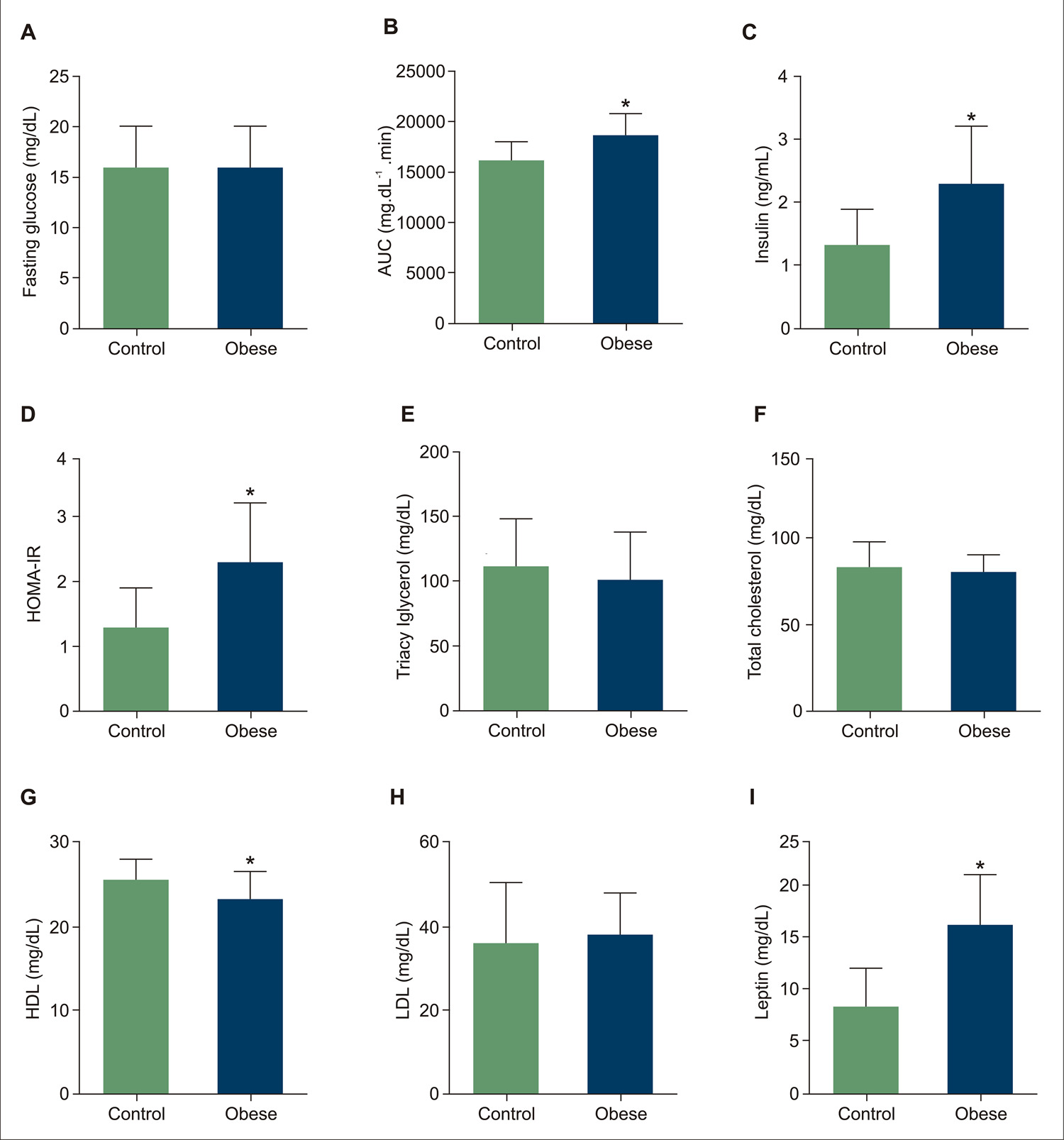
The Ob rats presented an increased adiposity index when compared to C and ROb. Both groups Ob and ROb presented increased low-density lipoprotein (LDL), insulin, homeostatic model assessment of insulin resistance (HOMA- IR) and systolic blood pressure (SBP), and low high-density lipoprotein (HDL) levels when compared to the control group. The levels of triglycerides, non-esterified fatty acid (NEFA), and leptin were lower in ROb as compared to Ob, but higher than the control group. The Ob and ROb groups presented cardiac remodeling, evidenced by echocardiographic and post-mortem analysis. The collagen protein expression did not differ among the groups.

Conclusion:

The ROb animals present cardiac remodeling that is not related to collagen type I and III protein expression change.

  • Adiposity
  • Diet
  • Obesity
Read Full Article
Creative Commons Attribution (CC BY) Creative Commons license
26/07/2021 DOI: 10.36660/ijcs.20200058 Views 2
Figure 1
ABC
Original Article

Sensitivity and Specificity of Cutoff Points of Resting Heart Rate from 6,794 Brazilian Adolescents: A Cross-Sectional Study

Breno Quintella Farah et al. Diego Giulliano Destro Christofaro Aluísio Andrade-Lima Antonio Henrique Germano-Soares … William Rodrigues Tebar Mauro Virgílio Gomes de Barros Raphael Mendes Ritti-Dias

Abstract

Background

Resting heart rate (RHR) may be a useful screening tool for cardiovascular risk. However, RHR cutoff points, an interesting clinical approach, have never been described in young populations.

Objective

To establish RHR cutoff points in Brazilian adolescents and to analyze whether cutoff points are associated with cardiovascular risk factors.

Methods

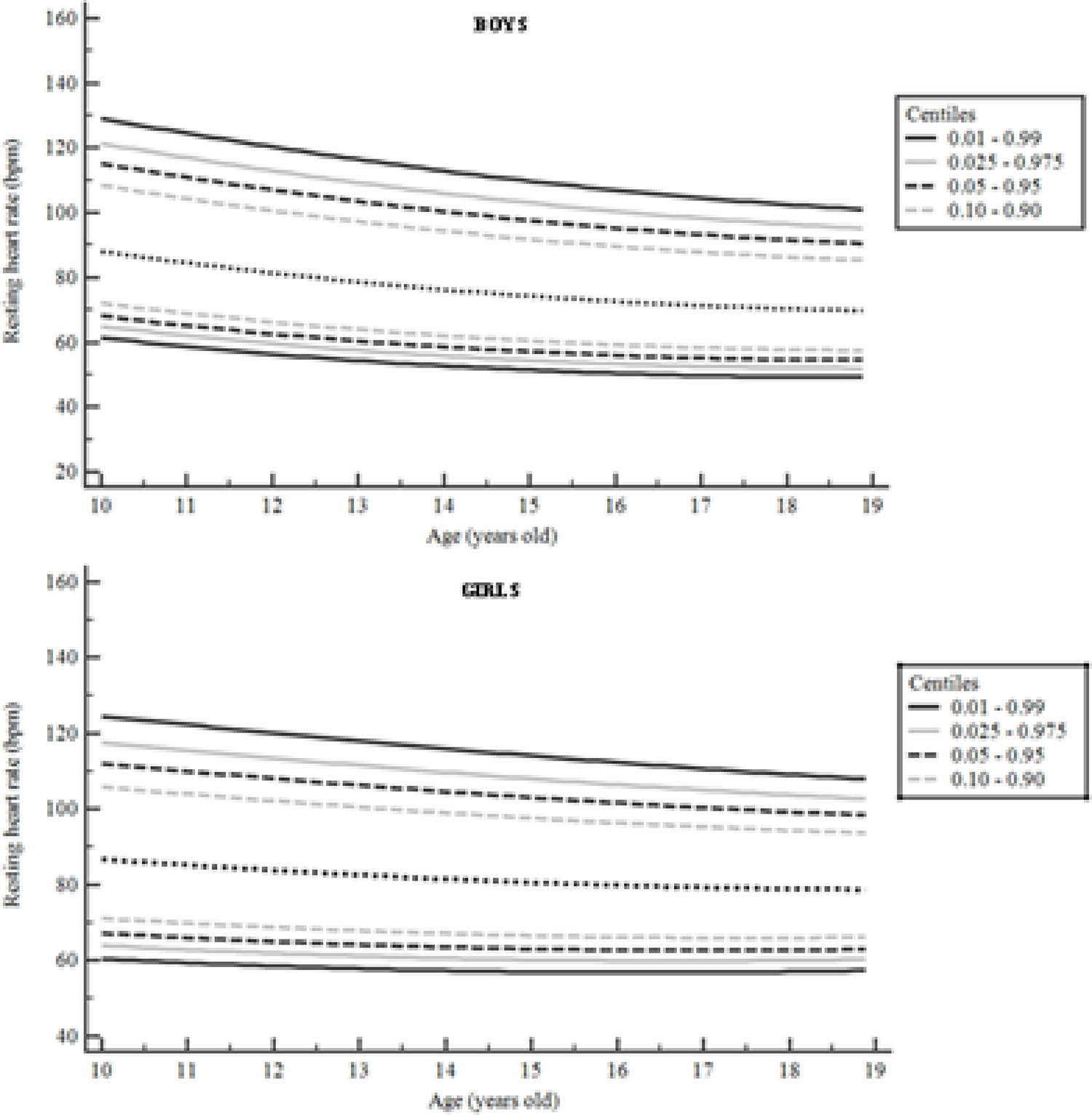
The sample was composed of 6,794 adolescents (10 to 19 years old). Blood pressure and RHR were assessed by oscillometric device. Body mass index and waist circumference were also assessed. Receiver operating characteristic curve was adopted to analyze the sensitivity and specificity, and associations of high RHR with cardiovascular risk factors were analyzed by binary logistic regression. A p value < 0.05 was considered statistically significant for all the analyses.

Results

Mean RHR values were higher among participants ages 10 to 14 years than 15 to 19 years, for boys (p < 0.001) and girls ( 92 bpm) and 15 to 19 years (> 82 bpm), as well as for girls ages 15 to 19 years (> 82 bpm) (p 0.05). Proposed RHR cutoff points were associated with abdominal obesity, overweight, and high blood pressure in boys in girls. RHR cutoff points were associated with the cluster of cardiovascular risk factors in adolescents ages 15 to 19 years.

Conclusion

The proposed RHR cutoff points were associated with cardiovascular risk factors in adolescents.

  • Adiposity
  • Adolescent
  • Blood Arterial
  • Cross-Sectional Studies
  • Epidemiology
  • Heart Rate
  • Obesity
  • Risk Factors
Read Full Article
Creative Commons Attribution (CC BY) Creative Commons license
26/07/2021 DOI: 10.36660/abc.20200111 Views 1
ABC
Editorial

Analysis of Sensitivity and Specificity of Cutoff Points for Resting Heart Rate in 6,794 Brazilian Adolescents: A Cross-Sectional Study

Luana Anaisse Azoubel et al. Erika Ribeiro Carneiro Nilviane Pires Allan Kardec Barros Carlos José Dias

Resting heart rate (RHR) is an accessible measure that may reflect the balance between the sympathetic and parasympathetic nervous system. Elevated RHR levels are associated with cardiovascular events in adults and cardiovascular risk factors, such as overweight, abdominal obesity and high blood pressure have been associated with high RHR. Therefore, obtaining a cutoff point for the RHR in children and adolescents is essential for better screening and subsequent clinical follow-up.

Furthermore, the early identification and screening of cardiovascular changes and cardiac autonomic modulation can be reflected by simple measures such as the RHR, since sedentary adolescents with abdominal obesity have lower heart rate variability (HRV) and, consequently, greater sympathetic stimulation, maintaining the RHR high and increasing the risk of developing heart damage throughout life.

[…]

  • Adiposity
  • Adolescent
  • Blood Pressure
  • Cross-sectional studies/methods
  • Epidemiology
  • Heart Rate/physiology
  • Obesity
Read Full Article
Creative Commons Attribution (CC BY) Creative Commons license
26/07/2021 DOI: 10.36660/abc.20210512 Views 1
ABC
Editorial

Do Microvascular Reactivity Studies Contribute to Clinical Practice?

Claudio Leinig Pereira da Cunha

We appraise in this publication the article “Microvascular Reactivity in Hypertensive Patients with High Body Adiposity”, by D’El-Rei et al. This is a complex investigation, assessing patients with Arterial Hypertension undergoing treatment, with the inclusion of several models for obesity assessment and several hemodynamic and circulatory parameters, which are studied in this scenario. Microvascular reactivity was evaluated using the Laser Speckle Contrast Image method in combination with Post-occlusive Reactive Hyperemia, therefore studying the endothelial function in this patient population.

Endothelial cells constitute an organ that is distributed throughout the body, comprising a dynamic interface with all other organs. The endothelium mediates vasomotor tone, regulates cell and nutrient traffic, maintains body fluidity, contributes to the balance between pro- and anti-inflammatory mediators, modulates procoagulant and anticoagulant activity, participates in the formation of new blood vessels, orchestrates organ development, participates in immunity, interacts with circulating blood cells and undergoes programmed cell death.

[…]

  • Adiposity
  • Biomarkers
  • Cardiovascular Diseases
  • Endothelium/function
  • Hypertension
  • Obesity
  • Oxidative Stress
Read Full Article
Creative Commons Attribution (CC BY) Creative Commons license
07/12/2020 DOI: 10.36660/abc.20200574 Views 1
Figure 1
ABC
Original Article

Neck Circumference and 10-Year Cardiovascular Risk at the Baseline of the ELSA-Brasil Study: Difference by Sex

Acácia Antônia Gomes de Oliveira Silva et al. Larissa Fortunato de Araujo Maria de Fátima Haueisen Sander Diniz Paulo Andrade Lotufo … Isabela Martins Bensenor Sandhi Maria Barreto Luana Giatti

Abstract

Background:

Neck circumference (NC), an indirect measure of upper-body subcutaneous adipose tissue, has been pointed out as an independent predictor of cardiometabolic diseases.

Objectives:

To assess the association between NC and 10-year cardiovascular risk in men and in women.

Methods:

Cross-sectional analysis of 13,920 participants of the (baseline) Longitudinal Study of Adult Health (ELSA-Brasil). The association between NC (used as continuous variable and grouped into quartiles) and the 10-year cardiovascular risk was estimated by the Framingham Global Risk Score and analyzed by generalized linear models after adjustments for sociodemographic characteristics, health behaviors, body mass index and waist circumference. The significance level adopted was 5%.

Results:

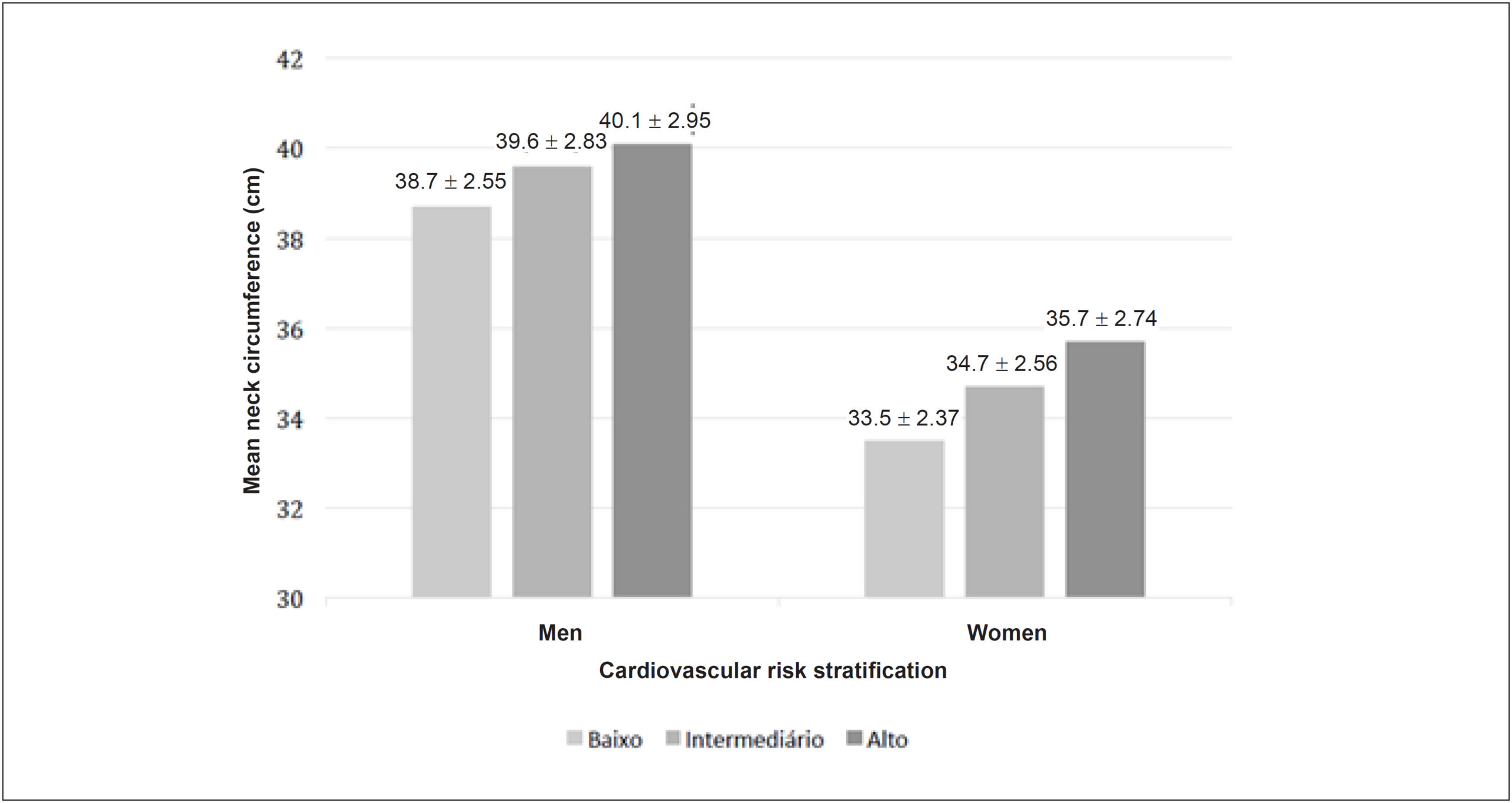
Mean NC was 39.5 cm (SD± 3.6) in men and 34.0 cm (SD±2.9) in women. After adjustments, a one-centimeter increase in NC was associated with an increment of 3% (95%CI1.02-1.03) and 5% (95% 1.04-1.05) in the arithmetic mean of the 10-year CVD risk in men and women, respectively. Men and women in the last quartile showed an increment of 18% (95%CI 1.13-1.24) and 35% (95%CI 1.28-1.43), respectively in the arithmetic mean of the 10-year CVD risk, after adjustments.

Conclusions:

We found a positive, independent association between NC and the 10-year cardiovascular disease risk. NC may contribute to the prediction of cardiovascular risk, over and above traditional anthropometric measures.

  • Adiposity
  • Cardiovacular Risk
  • Cardiovascular Diseases
  • Gender
  • Risk Factors
Read Full Article
Creative Commons Attribution (CC BY) Creative Commons license
07/12/2020 DOI: 10.36660/abc.20190289 Views 3
Figure 1
ABC
Original Article

Microvascular Reactivity in Hypertensive Patients with High Body Adiposity

Jenifer d'El-Rei et al. Michelle Rabello Cunha Samanta de Souza Mattos Bianca Cristina Marques … Viviane Prangiel de Menezes Ana Rosa Cunha Érica Monteiro França Wille Oigman Mario Fritsch Neves

Abstract

Background:

Several anthropometric indexes have been proposed to determine the association between overweight and cardiovascular risk factors.

Objective:

To evaluate the relationship between body adiposity and microvascular reactivity in hypertensive patients under antihypertensive therapy.

Methods:

Treated hypertensive patients aged 40 to 70 were submitted to evaluation of anthropometric indexes: conicity (CI), body adiposity (BAI), visceral adiposity (VAI) and waist-to-height ratio (WHtR). Participants were divided by the terciles of fat percentage (%F) obtained by bioelectrical impedance. The patients underwent microvascular reactivity test (Laser Speckle Contrast Image) and pulse wave velocity (PWV) measurement. The p value <0.05 was considered statistically significant.

Results:

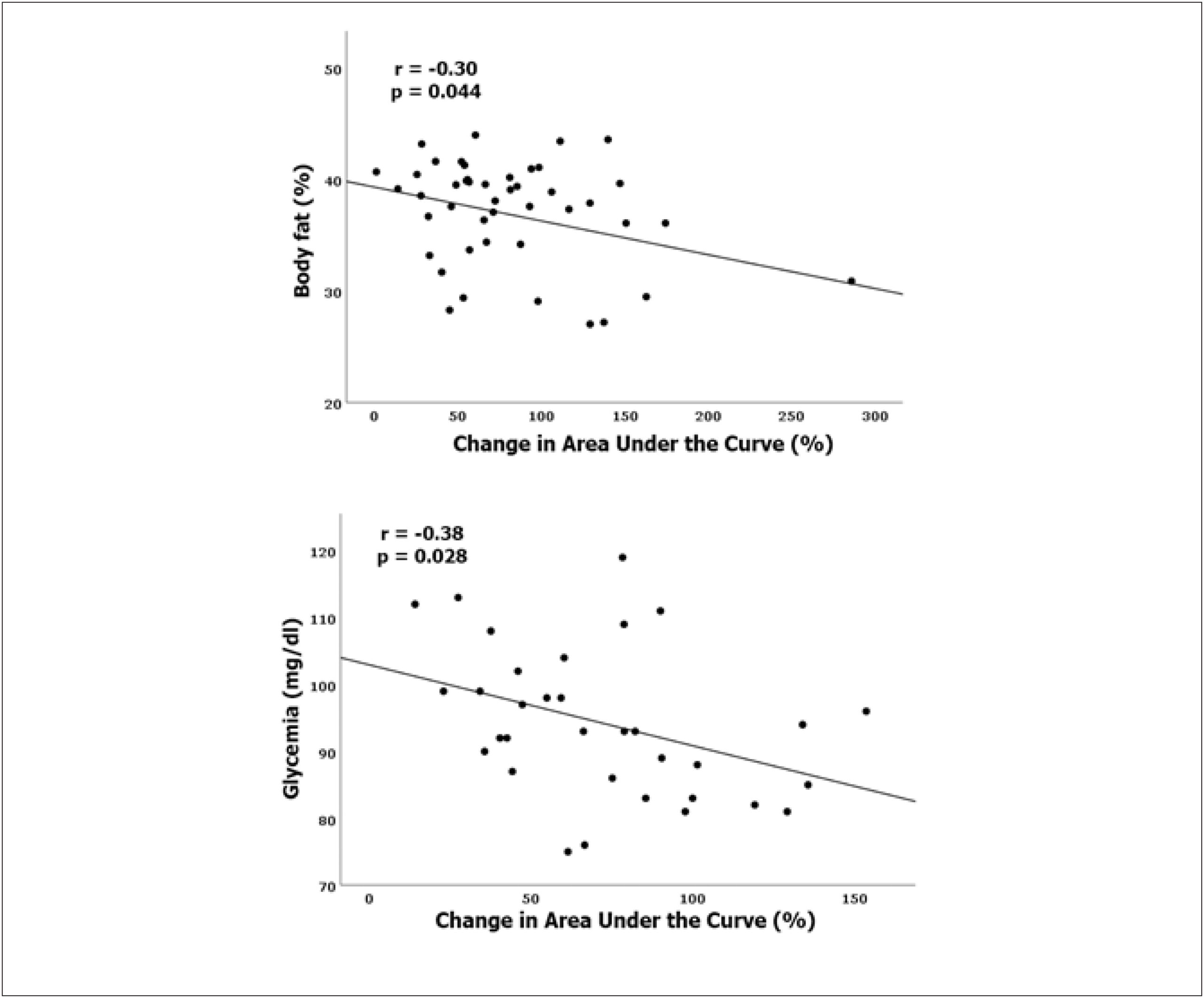
The variation of the area under the curve (AUC) of the skin perfusion was lower in the upper tercile (97±57% vs. 67±36%; p=0.027). %F showed significant correlation with WHtR (r=0.77; p<0.001), VAI (r=0.41; p=0.018), CI (r=0.60; p<0.001), BAI (r=0.65; p<0.001) in men and only with WHtR (r=0.55; p<0.001) and BAI (r=0.60; p<0.001) in women. In linear regression, AUC was independently associated with %F (β=−3.15; p=0.04) in women and with blood glucose (β=−1.15; p=0.02) in men. There was no difference in PWV measurements.

Conclusion:

Anthropometric indices were more associated with %F in men. Higher body adiposity was associated with lower microvascular reactivity, which was more evident in women. There was no difference in arterial stiffness, which may have been influenced by antihypertensive treatment.

  • Adiposity
  • Capillary Permeability
  • Endothelium
  • Hypertension/drug effects
Read Full Article
Creative Commons Attribution (CC BY) Creative Commons license
07/12/2020 DOI: 10.36660/abc.20190364
Figure 1
IJCS
Original Article

Correlation between Epicardial Fat Thickness and Clinical and Anthropometric Variables in an Elderly Population

Joaquim Castanheira et al. Cristiana Nunes Telmo Pereira

Abstract

Background

Epicardial fat (EF) thickness is a marker of visceral adiposity and consequently considered an important predictive marker of cardiovascular and metabolic risk.

Objective

To describe echocardiographic features of the heart in an elderly population and to study the correlation between EF thickness and clinical and anthropometric variables.

Methods

A sample of 34 individuals (25 women) aged between 65 and 92 years, who attended a private institution in the central region of Continental Portugal, was analyzed. A standardized sociodemographic questionnaire was applied, and anthropometric assessment, echocardiography and blood pressure measurement were performed in all subjects. A correlational analysis of EF thickness with anthropometric and clinical parameters was performed. The association between variables was tested by Pearson’s correlation and point-biserial correlation. A value of p < 0.05 was defined as statistically significant.

Results

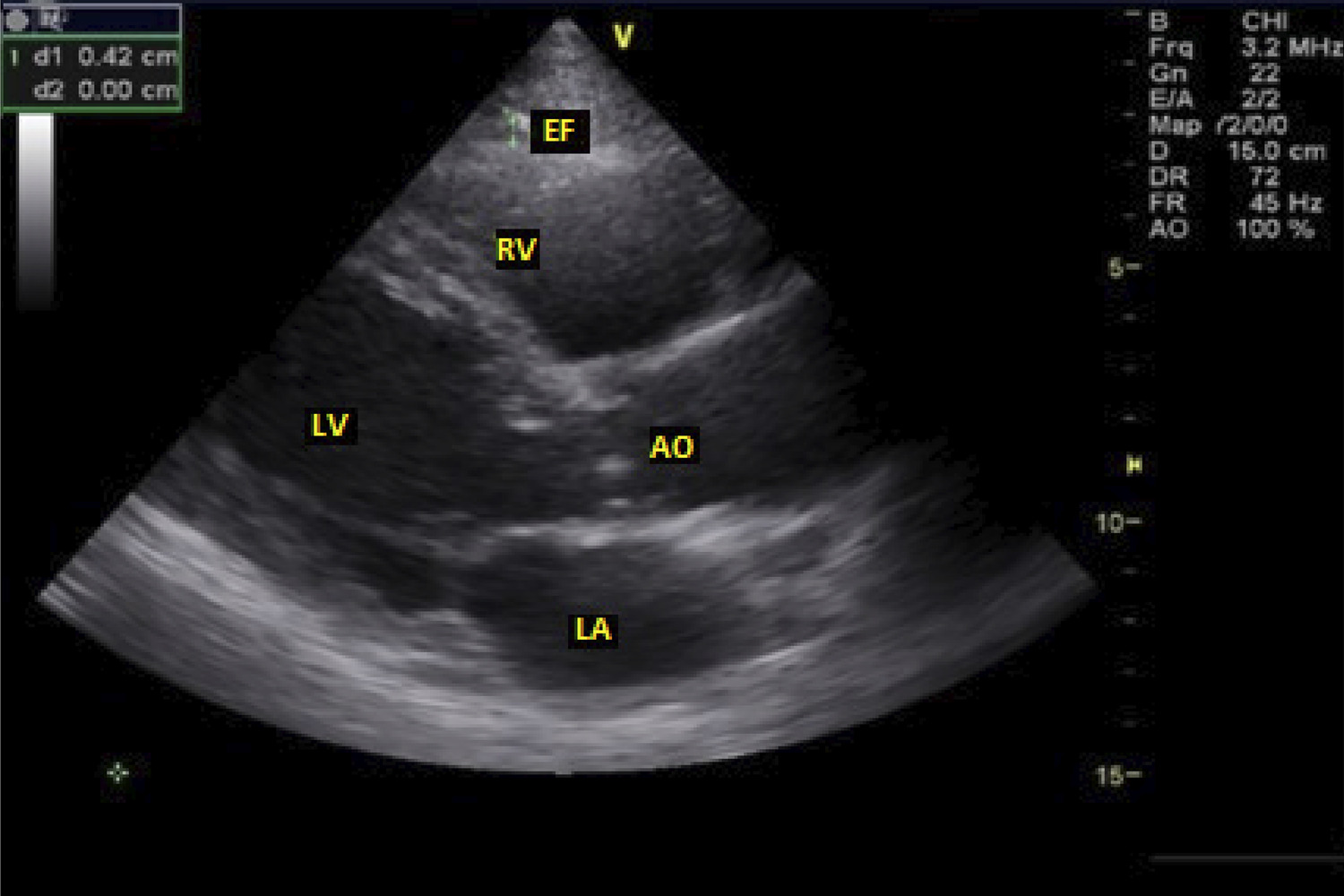
EF thickness was higher in males (6.0 ± 1.4 mm vs 5.2 ± 0.9 mm in females), and ranged from 4 to 9 mm. There were statistically significant correlations between EF thickness and weight (r = 0.4; p = 0.02), body surface area (r = 0.4; p = 0.02), lean mass (r = 0.4; p = 0.03), calf circumference (r = 0.5; p = 0.01) and left ventricular end-diastolic diameter (r = 0.3; p = 0.04).

Conclusion

EF thickness was higher in males and was significantly correlated with anthropometric parameters of adiposity and left ventricular end-diastolic diameter. Int J Cardiovasc Sci. 2020; [online].ahead print, PP.0-0

  • Adiposity
  • aging
  • Anthropometry
  • Blood Pressure
  • Diabetes Mellitus
  • Echocardiography/methods
  • Epicardial Fat
  • Hypertension
  • Risk Factors
Read Full Article
Creative Commons Attribution (CC BY) Creative Commons license
06/11/2020 DOI: 10.36660/ijcs.20190179 Views 1
Figure 1
ABC
Original Article

Decreased Collagen Type I is Associated with Increased Metalloproteinase-2 Activity and Protein Expression of Leptin in the Myocardium of Obese Rats

Danielle Cristina Tomaz da Silva-Bertani et al. Danielle Fernandes Vileigas Gustavo Augusto Ferreira Mota Sérgio Luiz Borges de Souza … Loreta Casquel De Tomasi Dijon Henrique Salomé de Campos Adriana Fernandes de Deus Paula Paccielli Freire Carlos Augusto Barnabe Alves Carlos Roberto Padovani Antonio Carlos Cicogna

Abstract

Background

Obesity is a risk factor for medical complications, including the cardiovascular system. There is limited information on collagen in the heart in obesity. Our previous study showed decreased protein levels of myocardial collagen type I in obese rats fed a high-fat diet for 34 weeks. However, the mechanisms responsible for low levels are not fully elucidated.

Objective

The purpose of this study was to test the hypothesis that the reduction in collagen type I is associated with increased metalloproteinase-2 (MMP-2) activity, which is linked to elevated leptin in the myocardium of obese rats.

Methods

Thirty-day-old male Wistar rats were randomized into two groups, control (standard diet) and obese (high-fat diet), and fed for 34 weeks. The general animal characteristics and metabolic and endocrine profiles were evaluated. Myocardial protein expressions of collagen I, leptin, tissue inhibitors of metalloproteinases (TIMP), and MMP-2 activity were assessed. Pearson correlation was employed to determine the associations between variables. The level of significance was 5%.

Results

The obese animals had increased adiposity index compared to control. Comorbidities such as glucose intolerance, hyperinsulinemia, insulin resistance, hyperleptinemia, and hypertension were observed in obese rats. Obesity reduced collagen I, TIMP-1, and TIMP-2, and it increased leptin and MMP-2 in the myocardium. There was a negative correlation between collagen I and MMP-2 and a positive correlation between leptin and MMP-2.

Conclusion

The hypothesis was confirmed; the reduction in collagen type I is associated with increased MMP-2 activity and leptin expression in the myocardium of obese rats. (Arq Bras Cardiol. 2020; 115(1):61-70)

  • Adiposity
  • Cardiovascular Diseases/physiopathology
  • Collagen Type 1
  • Leptin
  • Metaloproteinase-2
  • Obesity
  • Rats
  • Tissue Inhibitor of Metalloproteinases
Read Full Article
Creative Commons Attribution (CC BY) Creative Commons license
07/08/2020 DOI: 10.36660/abc.20180143
IJCS
Original Article

Lipoprotein(a) levels in children and adolescents: Ouro Preto Study

Ana Paula C Cândido et al. Alekson Mendonça-Mendes Débora RC Cândido Roney LC Nicolato George LL Machado-Coelho

Abstract

Background

Lipoprotein (a) is a cardiovascular risk factor in adult. Studies have shown the presence of this emergent risk factor in school children, which may contribute to the development of atherosclerosis in adulthood.

Objective

To evaluate the association between lipoprotein (a) and cardiovascular risk factors in school children.

Methods

Lipoprotein (a) levels were measured in 320 school children (6-14 years) selected from a population survey carried out in Ouro Preto (southeast of Brazil). Demographic (sex and age), biochemical (total cholesterol, high-density lipoprotein-cholesterol, low-density lipoprotein-cholesterol, triglycerides, and glucose), anthropometric (body mass index, waist circumference, body fat percentage), clinical (arterial blood pressure, pubertal stage and birth weight) and economic (family income) parameters, as well as family history (obese and/or hypertensive parents) were analyzed. Non-parametric analysis was used to evaluate lipoprotein (a) levels in each subgroup. Variables with p≤0.20 in the univariate analysis were included in binary regression logistic model. Differences with p < 0.05 were considered significant.

Results

Lipoprotein (a) levels were associated with total cholesterol (p=0.04), body fat (p=0.009), and mother´s systolic (p=0.02) and diastolic blood pressure (p=0.04). In a logistic regression analysis, children with high lipoprotein (a) levels and body fat, and children born from hypertensive mothers were, respectively, at 3.2(p=0.01) and 1.4 (p=0.03) times higher risk than other children. In clustering these factors, elevated lipoprotein (a) was 2.6 times more likely to be seen in school children with high body fat and born hypertensive mothers.

Conclusions

Lipoprotein (a) was correlated with cardiovascular risk factors in children and adolescents. Persistence of these risk factors in childhood suggests a contribution of elevated lipoprotein (a) to future cardiovascular disease. (Int J Cardiovasc Sci. 2020; [online].ahead print, PP.0-0)

  • Adiposity
  • Adolescents
  • Bod Fat
  • body mass index
  • Children
  • Cholesterol
  • Epidemiology
  • Hypertension
  • Lipoproteins
Read Full Article
Creative Commons Attribution (CC BY) Creative Commons license
17/04/2020 DOI: 10.36660/ijcs.20190107 Views 2
Figure 1
ABC
Original Article

Association of Dietary Patterns with Excess Weight and Body Adiposity in Brazilian Children: The Pase-Brasil Study

Naruna Pereira Rocha et al. Luana Cupertino Milagres Mariana De Santis Filgueiras Lara Gomes Suhett … Mariane Alves Silva Fernanda Martins de Albuquerque Andréia Queiroz Ribeiro Sarah Aparecida Vieira Juliana Farias de Novaes

Abstract

Background:

Obesity is a multifactorial disease and a serious public health problem. Some of the associated factors are modifiable and, among them, the diet is highlighted.

Objective:

To evaluate the association of dietary patterns of schoolchildren with obesity and body adiposity.

Methods:

A cross-sectional study was carried out with 378 children aged 8 and 9 years, enrolled in urban schools in the city of Viçosa, Minas Gerais, Brazil. A semi-structured questionnaire was applied to the children and their caregivers on sociodemographic characteristics and life habits. Three 24-hour food recalls were used to identify dietary patterns; the Principal Component Analysis was employed. Weight and height were measured for the calculation of the body mass index (BMI) of the children and their mothers, waist circumference and neck circumference. Body composition was also evaluated through dual-energy X-ray absorptiometry (DXA). For all performed tests, the level of significance was set at 5%.

Results:

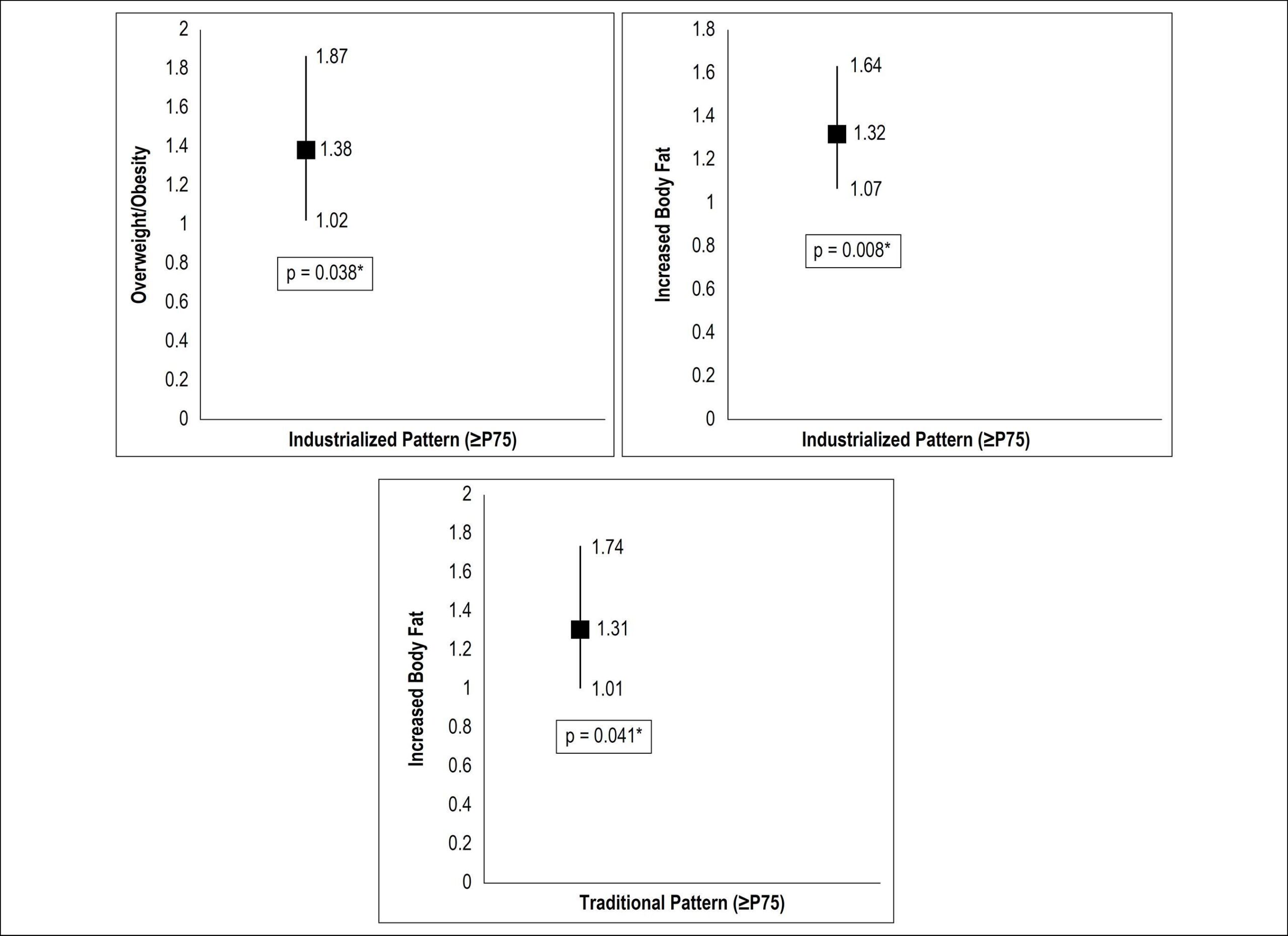
Five dietary patterns (DP) were identified: “unhealthy”, “snacks”, “traditional”, “industrialized” and “healthy”. There was an association between excess weight (prevalence ratio [PR]: 1.38, 95% confidence interval [95%CI]: 1.02 to 1.87) and body fat (PR: 1.32, 95%CI : 1.07 to 1.64) with industrialized DP. There was an association between excess body fat (PR: 1.31, 95%CI: 1.01 to 1.74) and lower adherence to traditional DP. The other patterns were not associated with obesity and body adiposity.

Conclusion:

Children with excess weight and body adiposity showed greater adherence to the industrialized DP and lower adherence to the traditional DP. We suggest that early assessments of dietary habits should be undertaken for monitoring and modifying these habits when necessary.

  • Adiposity
  • Child
  • Epidemiology
  • Factor Analysis, Statistical
  • Feeding Behavior
  • Hyperphagia
  • Obesity
Read Full Article
Creative Commons Attribution (CC BY) Creative Commons license
10/07/2019 DOI: 10.5935/abc.20190113
ABC
Original Article

Women with Polycystic Ovarian Syndrome Exhibit Reduced Baroreflex Sensitivity That May Be Associated with Increased Body Fat

Stella Vieira Philbois et al. Ada Clarice Gastaldi Tábata de Paula Facioli Ana Carolina Sanches Felix … Rosana Maria dos Reis Thauane Hanna Fares Hugo Celso Dutra de Souza

Abstract

Background:

Polycystic ovarian syndrome (PCOS) women have a high prevalence of obesity and alterations in cardiovascular autonomic control, mainly modifications in heart rate variability (HRV) autonomic modulation. However, there are few studies about other autonomic control parameters, such as blood pressure variability (BPV) and baroreflex sensitivity (BRS). In addition, there are still doubts about the obesity real contribution in altering autonomic control in these women.

Objective:

To investigate BPV and BRS autonomic modulation alterations in PCOS women, as well as, to evaluate whether these alterations are due PCOS or increased body fat.

Methods:

We studied 30 eutrophic volunteers [body mass index (BMI) < 25 kg/m2] without PCOS (control group) and 60 volunteers with PCOS divided into: eutrophic (BMI < 25 kg/m2, N = 30) and obese women (BMI > 30 kg/m2, N = 30). All volunteers were submitted to anthropometric evaluation, hemodynamic and cardiorespiratory parameters record at rest and during physical exercise, analysis of HRV, BPV and spontaneous BRS. The differences in p less than 5% (p < 0.05) were considered statistically significant.

Results:

Related to eutrophics groups, there were no differences in autonomic parameters evaluated. The comparison between the PCOS groups showed that both PCOS groups did not differ in the BPV analysis. Although, the obese PCOS group presented lower values of spontaneous BRS and HRV, in low frequency and high frequency oscillations in absolute units.

Conclusion:

Our results suggest that obesity did little to alter HRV in women with PCOS, but it may influence the spontaneous BRS.

  • Adiposity
  • Autonomic Nervous System
  • Body Fat Distribution
  • Heart Rate
  • Hypertension
  • Obesity
  • Polycystic Ovary Syndrome/physiopathology
Read Full Article
Creative Commons Attribution (CC BY) Creative Commons license
28/02/2019 DOI: 10.5935/abc.20190031 Views 1
Figure 1
ABC
Original Article

Cardiac, Metabolic and Molecular Profiles of Sedentary Rats in the Initial Moment of Obesity

Bruno Barcellos Jacobsen et al. Ana Paula Lima Leopoldo Jóctan Pimentel Cordeiro Dijon Henrique Salomé de Campos … André Ferreira do Nascimento Mário Mateus Sugizaki Antônio Carlos Cicogna Carlos Roberto Padovani André Soares Leopoldo

Abstract

Background:

Different types of high-fat and/or high-energy diets have been used to induce obesity in rodents. However, few studies have reported on the effects observed at the initial stage of obesity induced by high-fat feeding on cardiac functional and structural remodelling.

Objective:

To characterize the initial moment of obesity and investigate both metabolic and cardiac parameters. In addition, the role of Ca2+ handling in short-term exposure to obesity was verified.

Methods:

Thirty-day-old male Wistar rats were randomized into two groups (n = 19 each): control (C; standard diet) and high-fat diet (HF, unsaturated high-fat diet). The initial moment of obesity was defined by weekly measurement of body weight (BW) complemented by adiposity index (AI). Cardiac remodelling was assessed by morphological, histological, echocardiographic and papillary muscle analysis. Ca2+ handling proteins were determined by Western Blot.

Results:

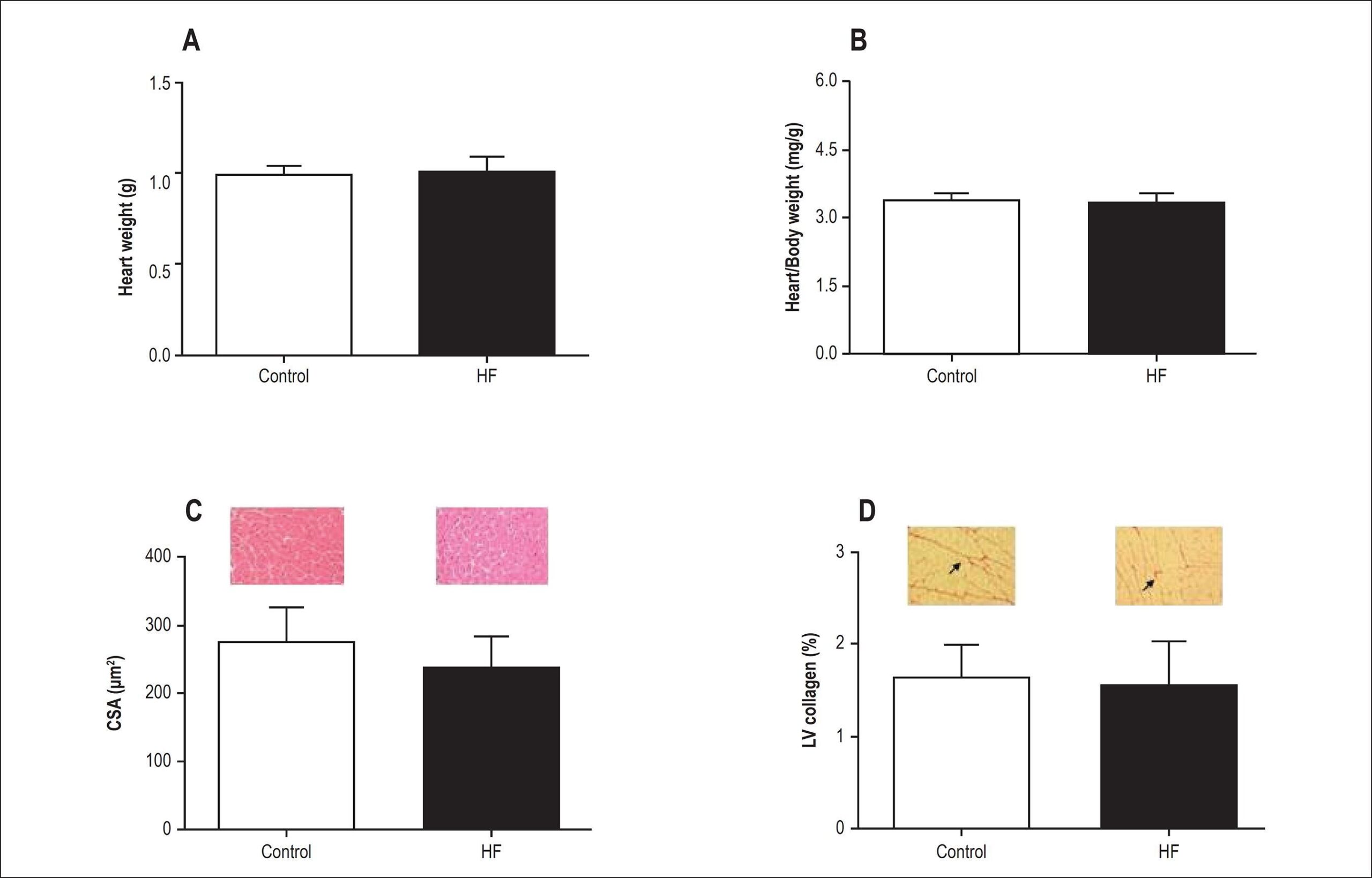
The initial moment of obesity occurred at the 3rd week. Compared with C rats, the HF rats had higher final BW (4%), body fat (20%), AI (14.5%), insulin levels (39.7%), leptin (62.4%) and low-density lipoprotein cholesterol (15.5%) but did not exhibit alterations in systolic blood pressure. Echocardiographic evaluation did not show alterations in cardiac parameters. In the HF group, muscles were observed to increase their +dT/dt (C: 52.6 ± 9.0 g/mm2/s and HF: 68.0 ± 17.0 g/mm2/s; p < 0.05). In addition, there was no changes in the cardiac expression of Ca2+ handling proteins.

Conclusion:

The initial moment of obesity promotes alterations to hormonal and lipid profiles without cardiac damage or changes in Ca2+ handling.

  • Adiposity
  • Calcium
  • Cardiac function
  • Diet
  • Hight-Fat
  • Obesity
  • Rats
Read Full Article
Creative Commons Attribution (CC BY) Creative Commons license
19/10/2017 DOI: 10.5935/abc.20170151 Views 1
ABC
Artigo Original

Association between inflammatory markers and cardiovascular risk factors in women from Kolkata, W.B, India

Debdutta Ganguli et al. Nilanjan Das Indranil Saha Krishna Rao Sanapala … Debnath Chaudhuri Saurabh Ghosh Sanjit Dey

BACKGROUND: Recent research has focused on the use of inflammatory biomarkers in the prediction of cardiovascular risk. However, information is scant regarding the association between these inflammatory markers with other cardiovascular risk factors in Asian Indians, particularly in women. OBJECTIVE: To explore the association between inflammatory markers such as high-sensitivity C-reactive protein (hs-CRP) and white blood cell (WBC) count and cardiovascular risk factors such as overall and central adiposity, blood pressure, lipid and lipoprotein variables and fasting glucose. METHODS: We conducted a cross-sectional analysis on 100 women aged 35-80 years. Participants were selected following cluster sampling methodology from 12 different randomly selected urban wards of Kolkata Municipal Corporation. RESULTS: Hs-CRP has a significant association with body mass index (BMI) ( p < 0.001) and waist circumference (WC) (p = 0.002). Significant inverse associations were observed between high-density lipoprotein cholesterol (HDL-C) and both inflammatory markers, hs-CRP (p = 0.031) and WBC count, (p = 0.014). Apolipoprotein A1 (Apo A1) was also negatively associated with hs-CRP. WBC count has significant correlation with fasting glucose and total cholesterol (TC) /HDL-C ratio. Using logistic regression, adjusting for age, BMI (odds ratio/OR, 1.186; confidence interval/CI, 1.046-1.345; p=0.008) and WC (OR, 1.045; CI, 1.005-1.087; p=0.027) were the covariates significantly associated with hs-CRP. CONCLUSION: In the present study, risk factors like BMI, WC, and HDL-C and apo A1 show significant association with hs-CRP. WBC count was significantly correlated with HDL-C, fasting glucose, TC/HDL-C ratio in women.

  • Adiposity
  • Dyslipidemias
  • India
  • Inflammation
  • Leukocyte Count
  • reactive protein C
  • Risk Factors
  • Women
Read Full Article
Creative Commons Attribution (CC BY) Creative Commons license
22/12/2010 DOI: 10.1590/S0066-782X2010005000165
ABC
Artigo Original

Body composition, biochemical and clinical changes of adolescents with excessive adiposity

Hiara Miguel Stanciola Serrano et al. Gisele Queiroz Carvalho Patrícia Feliciano Pereira Maria do Carmo Gouveia Peluzio … Sylvia do Carmo Castro Franceschini Silvia Eloiza Priore

BACKGROUND: Adolescents with excess body fat and eutrophic had the same metabolic changes expected in obese individuals. OBJECTIVE: To evaluate body composition, anthropometric changes, biochemical and clinical characteristics of female adolescents. METHODS: A total of 113 adolescents from public schools in Viçosa, MG, divided into three groups: group 1 – consisting of eutrophic adolescents with excess body fat; group 2 – eutrophic with body fat within normal limits; and group 3 – with excess weight and body fat. Weight, height, waist and hip circumference, blood pressure were measured. The body mass index (BMI) and waist-hip ratio were calculated. The percentage of body fat was obtained by bioelectrical impedance horizontally, following its own protocol for this evaluation. The assessment of the percentage of body fat and biochemistry was performed after 12 hours of fasting, and analyzed the lipid profile, blood glucose and insulin, homocysteine, leptin and C-reactive protein. Insulin resistance was calculated by HOMA index. RESULTS: The group of eutrophic adolescents, with higher adiposity, behaved in relation to blood pressure, HDL and glucose levels, similarly to adolescents who are overweight. It can be seen that the HOMA index, insulin and leptin increased with increasing body fat. More than half of adolescents had total cholesterol and CRP levels above recommended levels. The most obvious metabolic disorder related to the lipid profile for both groups studied. CONCLUSION: Excess adiposity in normal weight adolescents may be related to clinical and biochemical changes similar to those found in adolescents who are overweight.

  • Adiposity
  • Adolescent
  • Body Composition
  • body weight changes
  • Obesity
Read Full Article
Creative Commons Attribution (CC BY) Creative Commons license
13/08/2010 DOI: 10.1590/S0066-782X2010005000109 Views 1
Proposal of cut points for the indication of abdominal obesity among adolescents
ABC
Artigo Original

Proposal of cut points for the indication of abdominal obesity among adolescents

Rômulo Araújo Fernandes et al. Diego Giulliano Destro Chritofaro Jamile Sanches Codogno Camila Buonani … Denise Rodrigues Bueno Arli Ramos de Oliveira Clara Suemi da Costa Rosa Ismael Forte Freitas Júnior

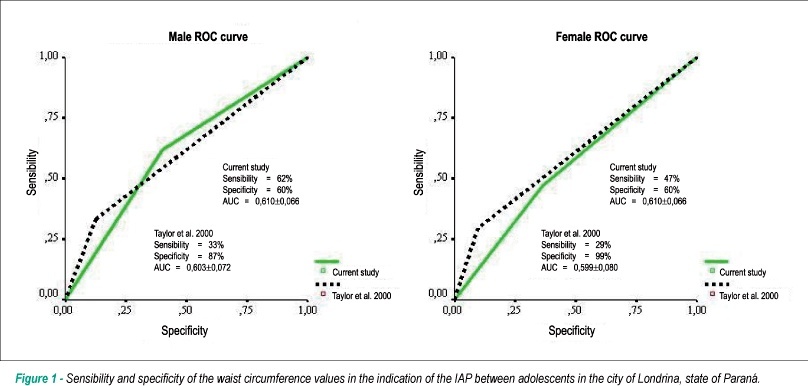
BACKGROUND: The absence of critical values for the cardiovascular risk identification among Brazilian adolescents represents an important limitation. OBJECTIVES: To prepare critical values for the waist circumference and to analyze its efficiency in indicating increased values of the arterial pressure. METHODS: Transversal study that evaluated 1,145 adolescents, from 11 to 17 years old (536 of the male sex and 609 of the female), their body weight values, stature, resistance, reactance, tricipital cutaneous fold, waist circumference and arterial pressure (n = 334) were collected. The abdominal obesity was indicated by waist circumference values. RESULTS: The obese adolescents presented higher waist circumference values and, independently of the gender and age group, there was a significant relation between the waist circumference values and all the adiposity indicators adopted in the study. The proposed critical values presented higher sensibility in indicating increased values of the arterial pressure. CONCLUSIONS: The critical values proposed for the waist circumference were more sensitive in the indication of increased values of the blood pressure. However, other studies to investigate their efficacy in the indication of other clinical and laboratorial parameters are still needed.

  • abdominal circunference
  • Adiposity
  • Adolescent
  • Hypertension
  • Overweight
  • Risk Factors
Read Full Article
Creative Commons Attribution (CC BY) Creative Commons license
05/05/2010 DOI: 10.1590/S0066-782X2009001200008
ABC
Artigo Original

Influence of overall and abdominal adiposity on C-reactive protein levels in elderly women

Jeffer Eidi Sasaki et al. Maressa Priscila Krause Mirnaluci P. R. Gama Tatiane Hallage … Cosme Franklin Buzzachera Maria Gisele dos Santos Sergio Gregorio da Silva

OBJECTIVE: To investigate how overall and abdominal adiposity, measured by waist circumference (WC), body mass index (BMI), and sum of skinfolds (sigmaSK), affect plasma C-reactive protein levels (CRP) in elderly women. METHODS: Study sample consisted of 387 women older than 60 years (mean age 68.9; standard deviation 5.9 years). BMI, WC, sigmaSK, and CRP levels were all measured. One-way ANOVA was performed to detect differences in study variables among the CRP levels investigated. Logistic regression analysis was used to determine the influence of body fat measurements on CRP levels. The significance level was set at p < 0.05. RESULTS: The analysis of variance showed that mean WC was lower in women with normal CRP levels, as compared to those with high CRP levels. Logistic regression analysis examined the influence of BMI, WC, and sigmaSK quartiles on CRP levels, yielding the following results: only WC was predictive of elevated CRP levels, its highest quartile (cut-off point of 94.0 cm) showing levels nearly two times higher than its lowest quartile (odds ratio = 2.23; 95% confidence interval = 1.92-4.18; p = 0.012). CONCLUSION: The results of this study indicate that abdominal adiposity is a strong predictor of elevated CRP levels.

  • Abdominal Fat
  • Adipose Tissue
  • Adiposity
  • C-Reactive Protein
  • Risk Factors
Read Full Article
Creative Commons Attribution (CC BY) Creative Commons license
18/04/2008 DOI: 10.1590/S0066-782X2007001600004 Views 1

Could not load more articles. Please try again.

How to cite this article

EndNote RIS

Electronic Document Format (Vancouver)

Bertolami MC. Gender differences in Body Adiposity and Endothelial Dysfunction in Overweight and Obese Individuals with Suboptimal Vitamin D Status. International Journal of Cardiovascular Sciences 2026;39:e20260094.

Electronic Document Format (ABNT)

Bertolami, Marcelo Chiara. Gender differences in Body Adiposity and Endothelial Dysfunction in Overweight and Obese Individuals with Suboptimal Vitamin D Status. International Journal of Cardiovascular Sciences, v. 39, e20260094, Aug. 2026.

Electronic Document Format (APA)

Bertolami, M. C. (2026). Gender differences in Body Adiposity and Endothelial Dysfunction in Overweight and Obese Individuals with Suboptimal Vitamin D Status. International Journal of Cardiovascular Sciences, 39, e20260094.

Electronic Document Format (ISO)

Bertolami, Marcelo Chiara. Gender differences in Body Adiposity and Endothelial Dysfunction in Overweight and Obese Individuals with Suboptimal Vitamin D Status. International Journal of Cardiovascular Sciences [online]. 2026, vol. 39, [cited 2026-10-15], e20260094. Available from: <https://journals.cardiol.br/en/article/gender-differences-in-body-adiposity-and-endothelial-dysfunction-in-overweight-and-obese-individuals-with-suboptimal-vitamin-d-status/>. ISSN 2359-4802

EndNote RIS

Electronic Document Format (Vancouver)

Faria ACC, Cunha MR, Moreira CL, Mattos SS, Faria CCCO, Faria LCCO, Oigman W, et al. Body Adiposity and Endothelial Dysfunction Assessed By Laser Speckle Contrast Imaging in Obese and Overweight Individuals With Suboptimal Vitamin D Status: Sex Differences. International Journal of Cardiovascular Sciences 2026;39:e20250173.

Electronic Document Format (ABNT)

Faria, Adriana de Castro Carvalho; Cunha, Michelle Rabello; Moreira, Caroline Lyra; Mattos, Samanta Souza; Faria, Clara Castro Carvalho Oliveira; Faria, Leticia Castro Carvalho Oliveira; Oigman, Wille; Neves, Mario Fritsch. Body Adiposity and Endothelial Dysfunction Assessed By Laser Speckle Contrast Imaging in Obese and Overweight Individuals With Suboptimal Vitamin D Status: Sex Differences. International Journal of Cardiovascular Sciences, v. 39, e20250173, Jun. 2026.

Electronic Document Format (APA)

Faria, A. C. C., Cunha, M. R., Moreira, C. L., Mattos, S. S., Faria, C. C. C. O., Faria, L. C. C. O., Oigman, W., & Neves, M. F. (2026). Body Adiposity and Endothelial Dysfunction Assessed By Laser Speckle Contrast Imaging in Obese and Overweight Individuals With Suboptimal Vitamin D Status: Sex Differences. International Journal of Cardiovascular Sciences, 39, e20250173.

Electronic Document Format (ISO)

Faria, Adriana de Castro Carvalho and Cunha, Michelle Rabello and Moreira, Caroline Lyra and Mattos, Samanta Souza and Faria, Clara Castro Carvalho Oliveira and Faria, Leticia Castro Carvalho Oliveira and Oigman, Wille and Neves, Mario Fritsch. Body Adiposity and Endothelial Dysfunction Assessed By Laser Speckle Contrast Imaging in Obese and Overweight Individuals With Suboptimal Vitamin D Status: Sex Differences. International Journal of Cardiovascular Sciences [online]. 2026, vol. 39, [cited 2026-10-15], e20250173. Available from: <https://journals.cardiol.br/en/article/body-adiposity-and-endothelial-dysfunction-assessed-by-laser-speckle-contrast-imaging-in-obese-and-overweight-individuals-with-suboptimal-vitamin-d-status-sex-differences/>. ISSN 2359-4802

EndNote RIS

Electronic Document Format (Vancouver)

Vale MDM, Ribeiro CT, Knobloch IS, Schwartz IVD, Sperb-Ludwig F, Souza GC. Influence of Insertion/Deletion Polymorphism of the Angiotensin Converting Enzyme Gene on Adiposity and Cardiac Function in Patients with Heart Failure. Arquivos Brasileiros de Cardiologia 2025;122(1):e20240204.

Electronic Document Format (ABNT)

Vale, Marla Darlene Machado; Ribeiro, Édina Caroline Ternus; Knobloch, Ingrid da Silveira; Schwartz, Ida Vanessa Doederlein; Sperb-Ludwig, Fernanda; Souza, Gabriela Corrêa. Influence of Insertion/Deletion Polymorphism of the Angiotensin Converting Enzyme Gene on Adiposity and Cardiac Function in Patients with Heart Failure. Arquivos Brasileiros de Cardiologia, v. 122, n. 1, e20240204, Jan. 2025.

Electronic Document Format (APA)

Vale, M. D. M., Ribeiro, C. T., Knobloch, I. S., Schwartz, I. V. D., Sperb-Ludwig, F., & Souza, G. C. (2025). Influence of Insertion/Deletion Polymorphism of the Angiotensin Converting Enzyme Gene on Adiposity and Cardiac Function in Patients with Heart Failure. Arquivos Brasileiros de Cardiologia, 122(1), e20240204.

Electronic Document Format (ISO)

Vale, Marla Darlene Machado and Ribeiro, Édina Caroline Ternus and Knobloch, Ingrid da Silveira and Schwartz, Ida Vanessa Doederlein and Sperb-Ludwig, Fernanda and Souza, Gabriela Corrêa. Influence of Insertion/Deletion Polymorphism of the Angiotensin Converting Enzyme Gene on Adiposity and Cardiac Function in Patients with Heart Failure. Arquivos Brasileiros de Cardiologia [online]. 2025, vol. 122, n. 1, [cited 2026-10-15], e20240204. Available from: <https://journals.cardiol.br/en/article/influence-of-insertion-deletion-polymorphism-of-the-angiotensin-converting-enzyme-gene-on-adiposity-and-cardiac-function-in-patients-with-heart-failure/>. ISSN 0066-782X

EndNote RIS

Electronic Document Format (Vancouver)

Mill JG. Obesity and Risk of Hypertension: A Growing Problem in Children and Adolescents. Arquivos Brasileiros de Cardiologia 2023;120(2):e20220940.

Electronic Document Format (ABNT)

Mill, José Geraldo. Obesity and Risk of Hypertension: A Growing Problem in Children and Adolescents. Arquivos Brasileiros de Cardiologia, v. 120, n. 2, e20220940, Mar. 2023.

Electronic Document Format (APA)

Mill, J. G. (2023). Obesity and Risk of Hypertension: A Growing Problem in Children and Adolescents. Arquivos Brasileiros de Cardiologia, 120(2), e20220940.

Electronic Document Format (ISO)

Mill, José Geraldo. Obesity and Risk of Hypertension: A Growing Problem in Children and Adolescents. Arquivos Brasileiros de Cardiologia [online]. 2023, vol. 120, n. 2, [cited 2026-10-15], e20220940. Available from: <https://journals.cardiol.br/en/article/obesity-and-risk-of-hypertension-a-growing-problem-in-children-and-adolescents/>. ISSN 0066-782X

EndNote RIS

Electronic Document Format (Vancouver)

Lima LR, Okamura AB, Carvalho KMB, Dutra ES, Gonçalves VSS. Hypertension and Associated Lipid, Glucose, and Adiposity Parameters in School-Aged Adolescents in the Federal District, Brazil. Arquivos Brasileiros de Cardiologia 2022;118(4):719-26.

Electronic Document Format (ABNT)

Lima, Letícia Rocha; Okamura, Aline Bassetto; Carvalho, Kênia Mara Baiocchi de; Dutra, Eliane Said; Gonçalves, Vivian Siqueira Santos. Hypertension and Associated Lipid, Glucose, and Adiposity Parameters in School-Aged Adolescents in the Federal District, Brazil. Arquivos Brasileiros de Cardiologia, v. 118, n. 4, p. 719-726, Feb. 2022.

Electronic Document Format (APA)

Lima, L. R., Okamura, A. B., Carvalho, K. M. B. , Dutra, E. S., & Gonçalves, V. S. S. (2022). Hypertension and Associated Lipid, Glucose, and Adiposity Parameters in School-Aged Adolescents in the Federal District, Brazil. Arquivos Brasileiros de Cardiologia, 118(4), 719-726.

Electronic Document Format (ISO)

Lima, Letícia Rocha and Okamura, Aline Bassetto and Carvalho, Kênia Mara Baiocchi de and Dutra, Eliane Said and Gonçalves, Vivian Siqueira Santos. Hypertension and Associated Lipid, Glucose, and Adiposity Parameters in School-Aged Adolescents in the Federal District, Brazil. Arquivos Brasileiros de Cardiologia [online]. 2022, vol. 118, n. 4, [cited 2026-10-15], pp. 719-726. Available from: <https://journals.cardiol.br/en/article/hypertension-and-associated-lipid-glucose-and-adiposity-parameters-in-school-aged-adolescents-in-the-federal-district-brazil/>. ISSN 0066-782X

EndNote RIS

Electronic Document Format (Vancouver)

Alencar AKN, Wang H, Oliveira GMM, Sun X, Zapata-Sudo G, Groban L. Crossroads between Estrogen Loss, Obesity, and Heart Failure with Preserved Ejection Fraction. Arquivos Brasileiros de Cardiologia 2021;117(6):1191-20.

Electronic Document Format (ABNT)

Alencar, Allan Kardec Nogueira de; Wang, Hao; Oliveira, Gláucia Maria Moraes de; Sun, Xuming; Zapata-Sudo, Gisele; Groban, Leanne. Crossroads between Estrogen Loss, Obesity, and Heart Failure with Preserved Ejection Fraction. Arquivos Brasileiros de Cardiologia, v. 117, n. 6, p. 1191-1201, Oct. 2021.

Electronic Document Format (APA)

Alencar, A. K. N. , Wang, H., Oliveira, G. M. M. , Sun, X., Zapata-Sudo, G., & Groban, L. (2021). Crossroads between Estrogen Loss, Obesity, and Heart Failure with Preserved Ejection Fraction. Arquivos Brasileiros de Cardiologia, 117(6), 1191-1201.

Electronic Document Format (ISO)

Alencar, Allan Kardec Nogueira de and Wang, Hao and Oliveira, Gláucia Maria Moraes de and Sun, Xuming and Zapata-Sudo, Gisele and Groban, Leanne. Crossroads between Estrogen Loss, Obesity, and Heart Failure with Preserved Ejection Fraction. Arquivos Brasileiros de Cardiologia [online]. 2021, vol. 117, n. 6, [cited 2026-10-15], pp. 1191-1201. Available from: <https://journals.cardiol.br/en/article/crossroads-between-estrogen-loss-obesity-and-heart-failure-with-preserved-ejection-fraction/>. ISSN 0066-782X

EndNote RIS

Electronic Document Format (Vancouver)

Quirino NMML, Prazeres Filho A, Barbosa AO, Mendonça G, Farias Júnior JC. Breaks in Sedentary Time and Cardiometabolic Markers in Adolescents. Arquivos Brasileiros de Cardiologia 2021;117(2):352-6.

Electronic Document Format (ABNT)

Quirino, Natália Maria Mesquita de Lima; Prazeres Filho, Alcides; Barbosa, Arthur Oliveira; Mendonça, Gerfeson; Farias Júnior, José Cazuza de. Breaks in Sedentary Time and Cardiometabolic Markers in Adolescents. Arquivos Brasileiros de Cardiologia, v. 117, n. 2, p. 352-362, Sep. 2021.

Electronic Document Format (APA)

Quirino, N. M. M. L., Prazeres Filho, A., Barbosa, A. O., Mendonça, G., & Farias Júnior, J. C. (2021). Breaks in Sedentary Time and Cardiometabolic Markers in Adolescents. Arquivos Brasileiros de Cardiologia, 117(2), 352-362.

Electronic Document Format (ISO)

Quirino, Natália Maria Mesquita de Lima and Prazeres Filho, Alcides and Barbosa, Arthur Oliveira and Mendonça, Gerfeson and Farias Júnior, José Cazuza de. Breaks in Sedentary Time and Cardiometabolic Markers in Adolescents. Arquivos Brasileiros de Cardiologia [online]. 2021, vol. 117, n. 2, [cited 2026-10-15], pp. 352-362. Available from: <https://journals.cardiol.br/en/article/breaks-in-sedentary-time-and-cardiometabolic-markers-in-adolescents/>. ISSN 0066-782X

EndNote RIS

Electronic Document Format (Vancouver)

Almeida RT, Matos SMA, Aquino EML. Individual and Combined Performance of Indicators of Overall and Central Obesity to Estimate Coronary Risk in ELSA-Brasil Participants. Arquivos Brasileiros de Cardiologia 2021;117(4):701-12.

Electronic Document Format (ABNT)

Almeida, Rogério Tosta de; Matos, Sheila Maria Alvim; Aquino, Estela M. L.. Individual and Combined Performance of Indicators of Overall and Central Obesity to Estimate Coronary Risk in ELSA-Brasil Participants. Arquivos Brasileiros de Cardiologia, v. 117, n. 4, p. 701-712, Jul. 2021.

Electronic Document Format (APA)

Almeida, R. T. , Matos, S. M. A., & Aquino, E. M. L. (2021). Individual and Combined Performance of Indicators of Overall and Central Obesity to Estimate Coronary Risk in ELSA-Brasil Participants. Arquivos Brasileiros de Cardiologia, 117(4), 701-712.

Electronic Document Format (ISO)

Almeida, Rogério Tosta de and Matos, Sheila Maria Alvim and Aquino, Estela M. L.. Individual and Combined Performance of Indicators of Overall and Central Obesity to Estimate Coronary Risk in ELSA-Brasil Participants. Arquivos Brasileiros de Cardiologia [online]. 2021, vol. 117, n. 4, [cited 2026-10-15], pp. 701-712. Available from: <https://journals.cardiol.br/en/article/individual-and-combined-performance-of-indicators-of-overall-and-central-obesity-to-estimate-coronary-risk-in-elsa-brasil-participants/>. ISSN 0066-782X

EndNote RIS

Electronic Document Format (Vancouver)

Oliveira SM, Garcia JL, Vileigas DF, Campos DHS, Francisqueti-Ferron FV, Ferron AJT, Silva-Bertani DCT, et al. Cardiac Remodeling in Obesity-Resistance Model is not Related to Collagen I and III Protein Expression. International Journal of Cardiovascular Sciences 2021;34(6):656-64.

Electronic Document Format (ABNT)

Oliveira, Scarlet Marques de; Garcia, Jéssica Leite; Vileigas, Danielle Fernandes; Campos, Dijon Henrique Salomé de; Francisqueti-Ferron, Fabiane Valentini; Ferron, Artur Junio Togneri; Silva-Bertani, Danielle Cristina Tomaz da; Padovani, Carlos Roberto; Corrêa, Camila Renata; Cicogna, Antonio Carlos. Cardiac Remodeling in Obesity-Resistance Model is not Related to Collagen I and III Protein Expression. International Journal of Cardiovascular Sciences, v. 34, n. 6, p. 656-664, Jul. 2021.

Electronic Document Format (APA)

Oliveira, S. M. , Garcia, J. L., Vileigas, D. F., Campos, D. H. S. , Francisqueti-Ferron, F. V., Ferron, A. J. T., Silva-Bertani, D. C. T. , Padovani, C. R., Corrêa, C. R., & Cicogna, A. C. (2021). Cardiac Remodeling in Obesity-Resistance Model is not Related to Collagen I and III Protein Expression. International Journal of Cardiovascular Sciences, 34(6), 656-664.

Electronic Document Format (ISO)

Oliveira, Scarlet Marques de and Garcia, Jéssica Leite and Vileigas, Danielle Fernandes and Campos, Dijon Henrique Salomé de and Francisqueti-Ferron, Fabiane Valentini and Ferron, Artur Junio Togneri and Silva-Bertani, Danielle Cristina Tomaz da and Padovani, Carlos Roberto and Corrêa, Camila Renata and Cicogna, Antonio Carlos. Cardiac Remodeling in Obesity-Resistance Model is not Related to Collagen I and III Protein Expression. International Journal of Cardiovascular Sciences [online]. 2021, vol. 34, n. 6, [cited 2026-10-15], pp. 656-664. Available from: <https://journals.cardiol.br/en/article/cardiac-remodeling-in-obesity-resistance-model-is-not-related-to-collagen-i-and-iii-protein-expression/>. ISSN 2359-4802

EndNote RIS

Electronic Document Format (Vancouver)

Farah BQ, Christofaro DGD, Andrade-Lima A, Germano-Soares AH, Tebar WR, Barros MVG, Ritti-Dias RM, et al. Sensitivity and Specificity of Cutoff Points of Resting Heart Rate from 6,794 Brazilian Adolescents: A Cross-Sectional Study. Arquivos Brasileiros de Cardiologia 2021;117(1):74-81.

Electronic Document Format (ABNT)

Farah, Breno Quintella; Christofaro, Diego Giulliano Destro; Andrade-Lima, Aluísio; Germano-Soares, Antonio Henrique; Tebar, William Rodrigues; Barros, Mauro Virgílio Gomes de; Ritti-Dias, Raphael Mendes. Sensitivity and Specificity of Cutoff Points of Resting Heart Rate from 6,794 Brazilian Adolescents: A Cross-Sectional Study. Arquivos Brasileiros de Cardiologia, v. 117, n. 1, p. 74-81, Jul. 2021.

Electronic Document Format (APA)

Farah, B. Q., Christofaro, D. G. D., Andrade-Lima, A., Germano-Soares, A. H., Tebar, W. R., Barros, M. V. G. , & Ritti-Dias, R. M. (2021). Sensitivity and Specificity of Cutoff Points of Resting Heart Rate from 6,794 Brazilian Adolescents: A Cross-Sectional Study. Arquivos Brasileiros de Cardiologia, 117(1), 74-81.

Electronic Document Format (ISO)

Farah, Breno Quintella and Christofaro, Diego Giulliano Destro and Andrade-Lima, Aluísio and Germano-Soares, Antonio Henrique and Tebar, William Rodrigues and Barros, Mauro Virgílio Gomes de and Ritti-Dias, Raphael Mendes. Sensitivity and Specificity of Cutoff Points of Resting Heart Rate from 6,794 Brazilian Adolescents: A Cross-Sectional Study. Arquivos Brasileiros de Cardiologia [online]. 2021, vol. 117, n. 1, [cited 2026-10-15], pp. 74-81. Available from: <https://journals.cardiol.br/en/article/sensitivity-and-specificity-of-cutoff-points-of-resting-heart-rate-from-6794-brazilian-adolescents-a-cross-sectional-study/>. ISSN 0066-782X

EndNote RIS

Electronic Document Format (Vancouver)

Azoubel LA, Carneiro ER, Pires N, Barros AK, Dias CJ. Analysis of Sensitivity and Specificity of Cutoff Points for Resting Heart Rate in 6,794 Brazilian Adolescents: A Cross-Sectional Study. Arquivos Brasileiros de Cardiologia 2021;117(1):82-3.

Electronic Document Format (ABNT)

Azoubel, Luana Anaisse; Carneiro, Erika Ribeiro; Pires, Nilviane; Barros, Allan Kardec; Dias, Carlos José. Analysis of Sensitivity and Specificity of Cutoff Points for Resting Heart Rate in 6,794 Brazilian Adolescents: A Cross-Sectional Study. Arquivos Brasileiros de Cardiologia, v. 117, n. 1, p. 82-83, Jul. 2021.

Electronic Document Format (APA)

Azoubel, L. A., Carneiro, E. R., Pires, N., Barros, A. K., & Dias, C. J. (2021). Analysis of Sensitivity and Specificity of Cutoff Points for Resting Heart Rate in 6,794 Brazilian Adolescents: A Cross-Sectional Study. Arquivos Brasileiros de Cardiologia, 117(1), 82-83.

Electronic Document Format (ISO)

Azoubel, Luana Anaisse and Carneiro, Erika Ribeiro and Pires, Nilviane and Barros, Allan Kardec and Dias, Carlos José. Analysis of Sensitivity and Specificity of Cutoff Points for Resting Heart Rate in 6,794 Brazilian Adolescents: A Cross-Sectional Study. Arquivos Brasileiros de Cardiologia [online]. 2021, vol. 117, n. 1, [cited 2026-10-15], pp. 82-83. Available from: <https://journals.cardiol.br/en/article/analysis-of-sensitivity-and-specificity-of-cutoff-points-for-resting-heart-rate-in-6794-brazilian-adolescents-a-cross-sectional-study/>. ISSN 0066-782X

EndNote RIS

Electronic Document Format (Vancouver)

Cunha CLP. Do Microvascular Reactivity Studies Contribute to Clinical Practice?. Arquivos Brasileiros de Cardiologia 2020;115(5):905-6.

Electronic Document Format (ABNT)

Cunha, Claudio Leinig Pereira da. Do Microvascular Reactivity Studies Contribute to Clinical Practice?. Arquivos Brasileiros de Cardiologia, v. 115, n. 5, p. 905-906, Dec. 2020.

Electronic Document Format (APA)

Cunha, C. L. P. (2020). Do Microvascular Reactivity Studies Contribute to Clinical Practice?. Arquivos Brasileiros de Cardiologia, 115(5), 905-906.

Electronic Document Format (ISO)

Cunha, Claudio Leinig Pereira da. Do Microvascular Reactivity Studies Contribute to Clinical Practice?. Arquivos Brasileiros de Cardiologia [online]. 2020, vol. 115, n. 5, [cited 2026-10-15], pp. 905-906. Available from: <https://journals.cardiol.br/en/article/do-microvascular-reactivity-studies-contribute-to-clinical-practice/>. ISSN 0066-782X

EndNote RIS

Electronic Document Format (Vancouver)

Silva AAGO, Araujo LF, Diniz MFHS, Lotufo PA, Bensenor IM, Barreto SM, Giatti L, et al. Neck Circumference and 10-Year Cardiovascular Risk at the Baseline of the ELSA-Brasil Study: Difference by Sex. Arquivos Brasileiros de Cardiologia 2020;115(5):840-8.

Electronic Document Format (ABNT)

Silva, Acácia Antônia Gomes de Oliveira; Araujo, Larissa Fortunato de; Diniz, Maria de Fátima Haueisen Sander; Lotufo, Paulo Andrade; Bensenor, Isabela Martins; Barreto, Sandhi Maria; Giatti, Luana. Neck Circumference and 10-Year Cardiovascular Risk at the Baseline of the ELSA-Brasil Study: Difference by Sex. Arquivos Brasileiros de Cardiologia, v. 115, n. 5, p. 840-848, Dec. 2020.

Electronic Document Format (APA)

Silva, A. A. G. O., Araujo, L. F. , Diniz, M. F. H. S., Lotufo, P. A., Bensenor, I. M., Barreto, S. M., & Giatti, L. (2020). Neck Circumference and 10-Year Cardiovascular Risk at the Baseline of the ELSA-Brasil Study: Difference by Sex. Arquivos Brasileiros de Cardiologia, 115(5), 840-848.

Electronic Document Format (ISO)

Silva, Acácia Antônia Gomes de Oliveira and Araujo, Larissa Fortunato de and Diniz, Maria de Fátima Haueisen Sander and Lotufo, Paulo Andrade and Bensenor, Isabela Martins and Barreto, Sandhi Maria and Giatti, Luana. Neck Circumference and 10-Year Cardiovascular Risk at the Baseline of the ELSA-Brasil Study: Difference by Sex. Arquivos Brasileiros de Cardiologia [online]. 2020, vol. 115, n. 5, [cited 2026-10-15], pp. 840-848. Available from: <https://journals.cardiol.br/en/article/neck-circumference-and-10-year-cardiovascular-risk-at-the-baseline-of-the-elsa-brasil-study-difference-by-sex/>. ISSN 0066-782X

EndNote RIS

Electronic Document Format (Vancouver)

d’El-Rei J, Cunha MR, Mattos SS, Marques BC, Menezes VP, Cunha AR, França M, et al. Microvascular Reactivity in Hypertensive Patients with High Body Adiposity. Arquivos Brasileiros de Cardiologia 2020;115(5):896-904.

Electronic Document Format (ABNT)

d’El-Rei, Jenifer; Cunha, Michelle Rabello; Mattos, Samanta de Souza; Marques, Bianca Cristina; Menezes, Viviane Prangiel de; Cunha, Ana Rosa; França, Érica Monteiro; Oigman, Wille; Neves, Mario Fritsch. Microvascular Reactivity in Hypertensive Patients with High Body Adiposity. Arquivos Brasileiros de Cardiologia, v. 115, n. 5, p. 896-904, Dec. 2020.

Electronic Document Format (APA)

d’El-Rei, J., Cunha, M. R., Mattos, S. S., Marques, B. C., Menezes, V. P. , Cunha, A. R., França, M., Oigman, W., & Neves, M. F. (2020). Microvascular Reactivity in Hypertensive Patients with High Body Adiposity. Arquivos Brasileiros de Cardiologia, 115(5), 896-904.

Electronic Document Format (ISO)

d’El-Rei, Jenifer and Cunha, Michelle Rabello and Mattos, Samanta de Souza and Marques, Bianca Cristina and Menezes, Viviane Prangiel de and Cunha, Ana Rosa and França, Érica Monteiro and Oigman, Wille and Neves, Mario Fritsch. Microvascular Reactivity in Hypertensive Patients with High Body Adiposity. Arquivos Brasileiros de Cardiologia [online]. 2020, vol. 115, n. 5, [cited 2026-10-15], pp. 896-904. Available from: <https://journals.cardiol.br/en/article/microvascular-reactivity-in-hypertensive-patients-with-high-body-adiposity/>. ISSN 0066-782X

EndNote RIS

Electronic Document Format (Vancouver)

Castanheira J, Nunes C, Pereira T. Correlation between Epicardial Fat Thickness and Clinical and Anthropometric Variables in an Elderly Population. International Journal of Cardiovascular Sciences 2020;34(2):136-4.

Electronic Document Format (ABNT)

Castanheira, Joaquim; Nunes, Cristiana; Pereira, Telmo. Correlation between Epicardial Fat Thickness and Clinical and Anthropometric Variables in an Elderly Population. International Journal of Cardiovascular Sciences, v. 34, n. 2, p. 136-146, Nov. 2020.

Electronic Document Format (APA)

Castanheira, J., Nunes, C., & Pereira, T. (2020). Correlation between Epicardial Fat Thickness and Clinical and Anthropometric Variables in an Elderly Population. International Journal of Cardiovascular Sciences, 34(2), 136-146.

Electronic Document Format (ISO)

Castanheira, Joaquim and Nunes, Cristiana and Pereira, Telmo. Correlation between Epicardial Fat Thickness and Clinical and Anthropometric Variables in an Elderly Population. International Journal of Cardiovascular Sciences [online]. 2020, vol. 34, n. 2, [cited 2026-10-15], pp. 136-146. Available from: <https://journals.cardiol.br/en/article/correlation-between-epicardial-fat-thickness-and-clinical-and-anthropometric-variables-in-an-elderly-population/>. ISSN 2359-4802

EndNote RIS

Electronic Document Format (Vancouver)

Silva-Bertani DCT, Vileigas DF, Mota GAF, Souza SLB, Tomasi LCD, Campos DHS, Deus AF, et al. Decreased Collagen Type I is Associated with Increased Metalloproteinase-2 Activity and Protein Expression of Leptin in the Myocardium of Obese Rats. Arquivos Brasileiros de Cardiologia 2020;115(1):61-70.

Electronic Document Format (ABNT)

Silva-Bertani, Danielle Cristina Tomaz da; Vileigas, Danielle Fernandes; Mota, Gustavo Augusto Ferreira; Souza, Sérgio Luiz Borges de; Tomasi, Loreta Casquel De; Campos, Dijon Henrique Salomé de; Deus, Adriana Fernandes de; Freire, Paula Paccielli; Alves, Carlos Augusto Barnabe; Padovani, Carlos Roberto; Cicogna, Antonio Carlos. Decreased Collagen Type I is Associated with Increased Metalloproteinase-2 Activity and Protein Expression of Leptin in the Myocardium of Obese Rats. Arquivos Brasileiros de Cardiologia, v. 115, n. 1, p. 61-70, Aug. 2020.

Electronic Document Format (APA)

Silva-Bertani, D. C. T. , Vileigas, D. F., Mota, G. A. F., Souza, S. L. B. , Tomasi, L. C. D., Campos, D. H. S. , Deus, A. F. , Freire, P. P., Alves, C. A. B., Padovani, C. R., & Cicogna, A. C. (2020). Decreased Collagen Type I is Associated with Increased Metalloproteinase-2 Activity and Protein Expression of Leptin in the Myocardium of Obese Rats. Arquivos Brasileiros de Cardiologia, 115(1), 61-70.

Electronic Document Format (ISO)

Silva-Bertani, Danielle Cristina Tomaz da and Vileigas, Danielle Fernandes and Mota, Gustavo Augusto Ferreira and Souza, Sérgio Luiz Borges de and Tomasi, Loreta Casquel De and Campos, Dijon Henrique Salomé de and Deus, Adriana Fernandes de and Freire, Paula Paccielli and Alves, Carlos Augusto Barnabe and Padovani, Carlos Roberto and Cicogna, Antonio Carlos. Decreased Collagen Type I is Associated with Increased Metalloproteinase-2 Activity and Protein Expression of Leptin in the Myocardium of Obese Rats. Arquivos Brasileiros de Cardiologia [online]. 2020, vol. 115, n. 1, [cited 2026-10-15], pp. 61-70. Available from: <https://journals.cardiol.br/en/article/decreased-collagen-type-i-is-associated-with-increased-metalloproteinase-2-activity-and-protein-expression-of-leptin-in-the-myocardium-of-obese-rats/>. ISSN 0066-782X

EndNote RIS

Electronic Document Format (Vancouver)

Cândido APC, Mendonça-Mendes A, Cândido DR, Nicolato RL, Machado-Coelho GL. Lipoprotein(a) levels in children and adolescents: Ouro Preto Study. International Journal of Cardiovascular Sciences 2020;34(1):10-8.

Electronic Document Format (ABNT)

Cândido, Ana Paula C; Mendonça-Mendes, Alekson; Cândido, Débora RC; Nicolato, Roney LC; Machado-Coelho, George LL. Lipoprotein(a) levels in children and adolescents: Ouro Preto Study. International Journal of Cardiovascular Sciences, v. 34, n. 1, p. 10-18, Apr. 2020.

Electronic Document Format (APA)

Cândido, A. P. C., Mendonça-Mendes, A., Cândido, D. R., Nicolato, R. L., & Machado-Coelho, G. L. (2020). Lipoprotein(a) levels in children and adolescents: Ouro Preto Study. International Journal of Cardiovascular Sciences, 34(1), 10-18.

Electronic Document Format (ISO)

Cândido, Ana Paula C and Mendonça-Mendes, Alekson and Cândido, Débora RC and Nicolato, Roney LC and Machado-Coelho, George LL. Lipoprotein(a) levels in children and adolescents: Ouro Preto Study. International Journal of Cardiovascular Sciences [online]. 2020, vol. 34, n. 1, [cited 2026-10-15], pp. 10-18. Available from: <https://journals.cardiol.br/en/article/lipoproteina-levels-in-children-and-adolescents-ouro-preto-study/>. ISSN 2359-4802

EndNote RIS

Electronic Document Format (Vancouver)

Rocha NP, Milagres LC, Filgueiras MDS, Suhett LG, Silva MA, Albuquerque FM, Ribeiro AQ, et al. Association of Dietary Patterns with Excess Weight and Body Adiposity in Brazilian Children: The Pase-Brasil Study. Arquivos Brasileiros de Cardiologia 2019;113(1):52-9.

Electronic Document Format (ABNT)

Rocha, Naruna Pereira; Milagres, Luana Cupertino; Filgueiras, Mariana De Santis; Suhett, Lara Gomes; Silva, Mariane Alves; Albuquerque, Fernanda Martins de; Ribeiro, Andréia Queiroz; Vieira, Sarah Aparecida; Novaes, Juliana Farias de. Association of Dietary Patterns with Excess Weight and Body Adiposity in Brazilian Children: The Pase-Brasil Study. Arquivos Brasileiros de Cardiologia, v. 113, n. 1, p. 52-59, Jul. 2019.

Electronic Document Format (APA)

Rocha, N. P., Milagres, L. C., Filgueiras, M. D. S., Suhett, L. G., Silva, M. A., Albuquerque, F. M. , Ribeiro, A. Q., Vieira, S. A., & Novaes, J. F. (2019). Association of Dietary Patterns with Excess Weight and Body Adiposity in Brazilian Children: The Pase-Brasil Study. Arquivos Brasileiros de Cardiologia, 113(1), 52-59.

Electronic Document Format (ISO)

Rocha, Naruna Pereira and Milagres, Luana Cupertino and Filgueiras, Mariana De Santis and Suhett, Lara Gomes and Silva, Mariane Alves and Albuquerque, Fernanda Martins de and Ribeiro, Andréia Queiroz and Vieira, Sarah Aparecida and Novaes, Juliana Farias de. Association of Dietary Patterns with Excess Weight and Body Adiposity in Brazilian Children: The Pase-Brasil Study. Arquivos Brasileiros de Cardiologia [online]. 2019, vol. 113, n. 1, [cited 2026-10-15], pp. 52-59. Available from: <https://journals.cardiol.br/en/article/association-of-dietary-patterns-with-excess-weight-and-body-adiposity-in-brazilian-children-the-pase-brasil-study/>. ISSN 0066-782X

EndNote RIS

Electronic Document Format (Vancouver)

Philbois SV, Gastaldi AC, Facioli TP, Felix ACS, Reis RM, Fares TH, Souza HCD, et al. Women with Polycystic Ovarian Syndrome Exhibit Reduced Baroreflex Sensitivity That May Be Associated with Increased Body Fat. Arquivos Brasileiros de Cardiologia 2019;112(4):424-9.

Electronic Document Format (ABNT)

Philbois, Stella Vieira; Gastaldi, Ada Clarice; Facioli, Tábata de Paula; Felix, Ana Carolina Sanches; Reis, Rosana Maria dos; Fares, Thauane Hanna; Souza, Hugo Celso Dutra de. Women with Polycystic Ovarian Syndrome Exhibit Reduced Baroreflex Sensitivity That May Be Associated with Increased Body Fat. Arquivos Brasileiros de Cardiologia, v. 112, n. 4, p. 424-429, Feb. 2019.

Electronic Document Format (APA)

Philbois, S. V., Gastaldi, A. C., Facioli, T. P., Felix, A. C. S., Reis, R. M. , Fares, T. H., & Souza, H. C. D. (2019). Women with Polycystic Ovarian Syndrome Exhibit Reduced Baroreflex Sensitivity That May Be Associated with Increased Body Fat. Arquivos Brasileiros de Cardiologia, 112(4), 424-429.

Electronic Document Format (ISO)

Philbois, Stella Vieira and Gastaldi, Ada Clarice and Facioli, Tábata de Paula and Felix, Ana Carolina Sanches and Reis, Rosana Maria dos and Fares, Thauane Hanna and Souza, Hugo Celso Dutra de. Women with Polycystic Ovarian Syndrome Exhibit Reduced Baroreflex Sensitivity That May Be Associated with Increased Body Fat. Arquivos Brasileiros de Cardiologia [online]. 2019, vol. 112, n. 4, [cited 2026-10-15], pp. 424-429. Available from: <https://journals.cardiol.br/en/article/women-with-polycystic-ovarian-syndrome-exhibit-reduced-baroreflex-sensitivity-that-may-be-associated-with-increased-body-fat/>. ISSN 0066-782X

EndNote RIS

Electronic Document Format (Vancouver)

Jacobsen BB, Leopoldo APL, Cordeiro JP, Campos DHS, Nascimento AF, Sugizaki MM, Cicogna AC, et al. Cardiac, Metabolic and Molecular Profiles of Sedentary Rats in the Initial Moment of Obesity. Arquivos Brasileiros de Cardiologia 2017;109(5):432-9.

Electronic Document Format (ABNT)

Jacobsen, Bruno Barcellos; Leopoldo, Ana Paula Lima; Cordeiro, Jóctan Pimentel; Campos, Dijon Henrique Salomé de; Nascimento, André Ferreira do; Sugizaki, Mário Mateus; Cicogna, Antônio Carlos; Padovani, Carlos Roberto; Leopoldo, André Soares. Cardiac, Metabolic and Molecular Profiles of Sedentary Rats in the Initial Moment of Obesity. Arquivos Brasileiros de Cardiologia, v. 109, n. 5, p. 432-439, Oct. 2017.

Electronic Document Format (APA)

Jacobsen, B. B., Leopoldo, A. P. L., Cordeiro, J. P., Campos, D. H. S. , Nascimento, A. F. , Sugizaki, M. M., Cicogna, A. C., Padovani, C. R., & Leopoldo, A. S. (2017). Cardiac, Metabolic and Molecular Profiles of Sedentary Rats in the Initial Moment of Obesity. Arquivos Brasileiros de Cardiologia, 109(5), 432-439.

Electronic Document Format (ISO)

Jacobsen, Bruno Barcellos and Leopoldo, Ana Paula Lima and Cordeiro, Jóctan Pimentel and Campos, Dijon Henrique Salomé de and Nascimento, André Ferreira do and Sugizaki, Mário Mateus and Cicogna, Antônio Carlos and Padovani, Carlos Roberto and Leopoldo, André Soares. Cardiac, Metabolic and Molecular Profiles of Sedentary Rats in the Initial Moment of Obesity. Arquivos Brasileiros de Cardiologia [online]. 2017, vol. 109, n. 5, [cited 2026-10-15], pp. 432-439. Available from: <https://journals.cardiol.br/en/article/cardiac-metabolic-and-molecular-profiles-of-sedentary-rats-in-the-initial-moment-of-obesity/>. ISSN 0066-782X

EndNote RIS

Electronic Document Format (Vancouver)

Ganguli D, Das N, Saha I, Sanapala KR, Chaudhuri D, Ghosh S, Dey S, et al. Association between inflammatory markers and cardiovascular risk factors in women from Kolkata, W.B, India. Arquivos Brasileiros de Cardiologia 2010;96(1):38-46.

Electronic Document Format (ABNT)

Ganguli, Debdutta; Das, Nilanjan; Saha, Indranil; Sanapala, Krishna Rao; Chaudhuri, Debnath; Ghosh, Saurabh; Dey, Sanjit. Association between inflammatory markers and cardiovascular risk factors in women from Kolkata, W.B, India. Arquivos Brasileiros de Cardiologia, v. 96, n. 1, p. 38-46, Dec. 2010.

Electronic Document Format (APA)

Ganguli, D., Das, N., Saha, I., Sanapala, K. R., Chaudhuri, D., Ghosh, S., & Dey, S. (2010). Association between inflammatory markers and cardiovascular risk factors in women from Kolkata, W.B, India. Arquivos Brasileiros de Cardiologia, 96(1), 38-46.

Electronic Document Format (ISO)

Ganguli, Debdutta and Das, Nilanjan and Saha, Indranil and Sanapala, Krishna Rao and Chaudhuri, Debnath and Ghosh, Saurabh and Dey, Sanjit. Association between inflammatory markers and cardiovascular risk factors in women from Kolkata, W.B, India. Arquivos Brasileiros de Cardiologia [online]. 2010, vol. 96, n. 1, [cited 2026-10-15], pp. 38-46. Available from: <https://journals.cardiol.br/en/article/association-between-inflammatory-markers-and-cardiovascular-risk-factors-in-women-from-kolkata-w-b-india/>. ISSN 0066-782X

EndNote RIS

Electronic Document Format (Vancouver)

Serrano HMS, Carvalho GQ, Pereira PF, Peluzio MCG, Franceschini SCC, Priore SE. Body composition, biochemical and clinical changes of adolescents with excessive adiposity. Arquivos Brasileiros de Cardiologia 2010;95(4):464-72.

Electronic Document Format (ABNT)

Serrano, Hiara Miguel Stanciola; Carvalho, Gisele Queiroz; Pereira, Patrícia Feliciano; Peluzio, Maria do Carmo Gouveia; Franceschini, Sylvia do Carmo Castro; Priore, Silvia Eloiza. Body composition, biochemical and clinical changes of adolescents with excessive adiposity. Arquivos Brasileiros de Cardiologia, v. 95, n. 4, p. 464-472, Aug. 2010.

Electronic Document Format (APA)

Serrano, H. M. S., Carvalho, G. Q., Pereira, P. F., Peluzio, M. C. G., Franceschini, S. C. C., & Priore, S. E. (2010). Body composition, biochemical and clinical changes of adolescents with excessive adiposity. Arquivos Brasileiros de Cardiologia, 95(4), 464-472.

Electronic Document Format (ISO)

Serrano, Hiara Miguel Stanciola and Carvalho, Gisele Queiroz and Pereira, Patrícia Feliciano and Peluzio, Maria do Carmo Gouveia and Franceschini, Sylvia do Carmo Castro and Priore, Silvia Eloiza. Body composition, biochemical and clinical changes of adolescents with excessive adiposity. Arquivos Brasileiros de Cardiologia [online]. 2010, vol. 95, n. 4, [cited 2026-10-15], pp. 464-472. Available from: <https://journals.cardiol.br/en/article/body-composition-biochemical-and-clinical-changes-of-adolescents-with-excessive-adiposity/>. ISSN 0066-782X

EndNote RIS

Electronic Document Format (Vancouver)

Fernandes RA, Chritofaro DGD, Codogno JS, Buonani C, Bueno DR, Oliveira AR, Rosa CSC, et al. Proposal of cut points for the indication of abdominal obesity among adolescents. Arquivos Brasileiros de Cardiologia 2010;93(6):603-9.

Electronic Document Format (ABNT)

Fernandes, Rômulo Araújo; Chritofaro, Diego Giulliano Destro; Codogno, Jamile Sanches; Buonani, Camila; Bueno, Denise Rodrigues; Oliveira, Arli Ramos de; Rosa, Clara Suemi da Costa; Freitas Júnior, Ismael Forte. Proposal of cut points for the indication of abdominal obesity among adolescents. Arquivos Brasileiros de Cardiologia, v. 93, n. 6, p. 603-609, May. 2010.

Electronic Document Format (APA)

Fernandes, R. A., Chritofaro, D. G. D., Codogno, J. S., Buonani, C., Bueno, D. R., Oliveira, A. R. , Rosa, C. S. C., & Freitas Júnior, I. F. (2010). Proposal of cut points for the indication of abdominal obesity among adolescents. Arquivos Brasileiros de Cardiologia, 93(6), 603-609.

Electronic Document Format (ISO)

Fernandes, Rômulo Araújo and Chritofaro, Diego Giulliano Destro and Codogno, Jamile Sanches and Buonani, Camila and Bueno, Denise Rodrigues and Oliveira, Arli Ramos de and Rosa, Clara Suemi da Costa and Freitas Júnior, Ismael Forte. Proposal of cut points for the indication of abdominal obesity among adolescents. Arquivos Brasileiros de Cardiologia [online]. 2010, vol. 93, n. 6, [cited 2026-10-15], pp. 603-609. Available from: <https://journals.cardiol.br/en/article/proposal-of-cut-points-for-the-indication-of-abdominal-obesity-among-adolescents/>. ISSN 0066-782X

EndNote RIS

Electronic Document Format (Vancouver)

Sasaki JE, Krause MP, Gama MPR, Hallage T, Buzzachera CF, Santos MG, Silva SG, et al. Influence of overall and abdominal adiposity on C-reactive protein levels in elderly women. Arquivos Brasileiros de Cardiologia 2008;89(4):231-6.

Electronic Document Format (ABNT)

Sasaki, Jeffer Eidi; Krause, Maressa Priscila; Gama, Mirnaluci P. R.; Hallage, Tatiane; Buzzachera, Cosme Franklin; Santos, Maria Gisele dos; Silva, Sergio Gregorio da. Influence of overall and abdominal adiposity on C-reactive protein levels in elderly women. Arquivos Brasileiros de Cardiologia, v. 89, n. 4, p. 231-236, Apr. 2008.

Electronic Document Format (APA)

Sasaki, J. E., Krause, M. P., Gama, M. P. R., Hallage, T., Buzzachera, C. F., Santos, M. G. , & Silva, S. G. (2008). Influence of overall and abdominal adiposity on C-reactive protein levels in elderly women. Arquivos Brasileiros de Cardiologia, 89(4), 231-236.

Electronic Document Format (ISO)

Sasaki, Jeffer Eidi and Krause, Maressa Priscila and Gama, Mirnaluci P. R. and Hallage, Tatiane and Buzzachera, Cosme Franklin and Santos, Maria Gisele dos and Silva, Sergio Gregorio da. Influence of overall and abdominal adiposity on C-reactive protein levels in elderly women. Arquivos Brasileiros de Cardiologia [online]. 2008, vol. 89, n. 4, [cited 2026-10-15], pp. 231-236. Available from: <https://journals.cardiol.br/en/article/influence-of-overall-and-abdominal-adiposity-on-c-reactive-protein-levels-in-elderly-women/>. ISSN 0066-782X

  • About ABC Family
  • Internal Regulation
  • Editorial Board
  • Brazilian Society of Cardiology (SBC)

Issues

SBC Guidelines

  • Videos
  • Podcasts
  • News