ABC Family Arquivos Brasileiros de Cardiologia International Journal of Cardiovascular Sciences ABC Heart Failure & Cardiomyopathy ABC Imagem Cardiovascular
Português English
ABC Family
Português English
  • About
    • About ABC Family
    • Internal Regulation
    • Editorial Board
    • Brazilian Society of Cardiology (SBC)
  • Issues
  • SBC Guidelines
  • Content
    • Videos
    • Podcasts
    • News
  • About
    • About ABC Family
    • Internal Regulation
    • Editorial Board
    • Brazilian Society of Cardiology (SBC)
  • Issues
  • SBC Guidelines
  • Content
    • Videos
    • Podcasts
    • News

ABC Family

  • ABC Family
  • Arquivos Brasileiros de Cardiologia
  • International Journal of Cardiovascular Sciences
  • ABC Heart Failure & Cardiomyopathy
  • ABC Imagem Cardiovascular
Search in

No content found.

Journals
Ordering
Article types
Others

  1. Home
  2. Keyword: Diet
ABC
Special Article

Cardiovascular Statistics – Brazil 2026

Gláucia Maria Moraes de Oliveira et al. Luisa Campos Caldeira Brant Carisi Anne Polanczyk Deborah Carvalho Malta … Andreia Biolo Bruno Ramos Nascimento Maria de Fatima Marinho de Souza Andrea Rocha De Lorenzo Antonio Aurélio de Paiva Fagundes Júnior Arthur Gus Manfro Beatriz D. Schaan Christina Grüne de Souza e Silva Fábio Morato de Castilho Fernando Henpin Yue Cesena Gabriel Porto Soares Gesner Francisco Xavier Junior Jose Augusto Soares Barreto Filho Lucia Campos Pellanda Luciana Nicolau Aranha Luis Eduardo Paim Rohde Luiz Guilherme Passaglia Marcelo Martins Pinto-Filho M. Julia Machline-Carrion Marcio Sommer Bittencourt Octavio M. Pontes Neto Paolo Blanco Villela Paulo Henrique Godoy Renato Azeredo Teixeira Ricardo Stein Roney Orismar Sampaio Thais Rocha Salim Thomas A. Gaziano Pablo Perel Gregory A. Roth Antonio Luiz Pinho Ribeiro

Cardiovascular Statistics – Brazil was established to provide a periodic, comprehensive, evidence-based assessment of cardiovascular health in Brazil and to support clinical practice, research, public health planning, and policy development. Developed under the auspices of the Brazilian Society of Cardiology, the initiative brings together a multidisciplinary network of investigators from academic institutions across the country who are responsible for reviewing, analyzing, and interpreting data from multiple complementary sources. Since its first edition in 2020, Cardiovascular Statistics – Brazil has sought not only to quantify the burden of cardiovascular diseases (CVDs) and their risk factors but also to identify temporal trends, regional disparities, gaps in care, and emerging challenges for the Brazilian health system. The project is modeled on international initiatives such as the American Heart Association’s Heart Disease and Stroke Statistics Update, while incorporating data sources and perspectives that reflect Brazil’s unique epidemiological, demographic, and healthcare characteristics.

(…)

  • Atrial Fibrillation
  • Atrial flutter
  • Brazil
  • Cardiomyopathies
  • Cardiovascular Diseases
  • Cerebrovascular Disorders
  • chronic renal insufficiency
  • Congenital Heart Defects
  • Coronary Disease
  • Diabetes Mellitus
  • Diet
  • Dyslipidemias
  • Exercise
  • Heart Failure
  • Heart Valve Diseases
  • Hypertension
  • Obesity
  • Overweight
  • Statistics
  • Tobacco Use Disorder
Read Full Article
Creative Commons Attribution (CC BY) Creative Commons license
07/10/2026 DOI: 10.36660/abc.20260832i Views 1
Lifestyle and Hypertension in Brazil and Spain
IJCS
Original Article

Lifestyle and Hypertension in Brazil and Spain

Giovanna Lucieri Alonso Costa et al. Jurema Correa Mota Marina Ururahy Soriano de Sousa Flavio Kapczinski … Jose Cervera-Martínez Vicent Balanzá-Martínez Raquel B. De Boni

Abstract

Background:

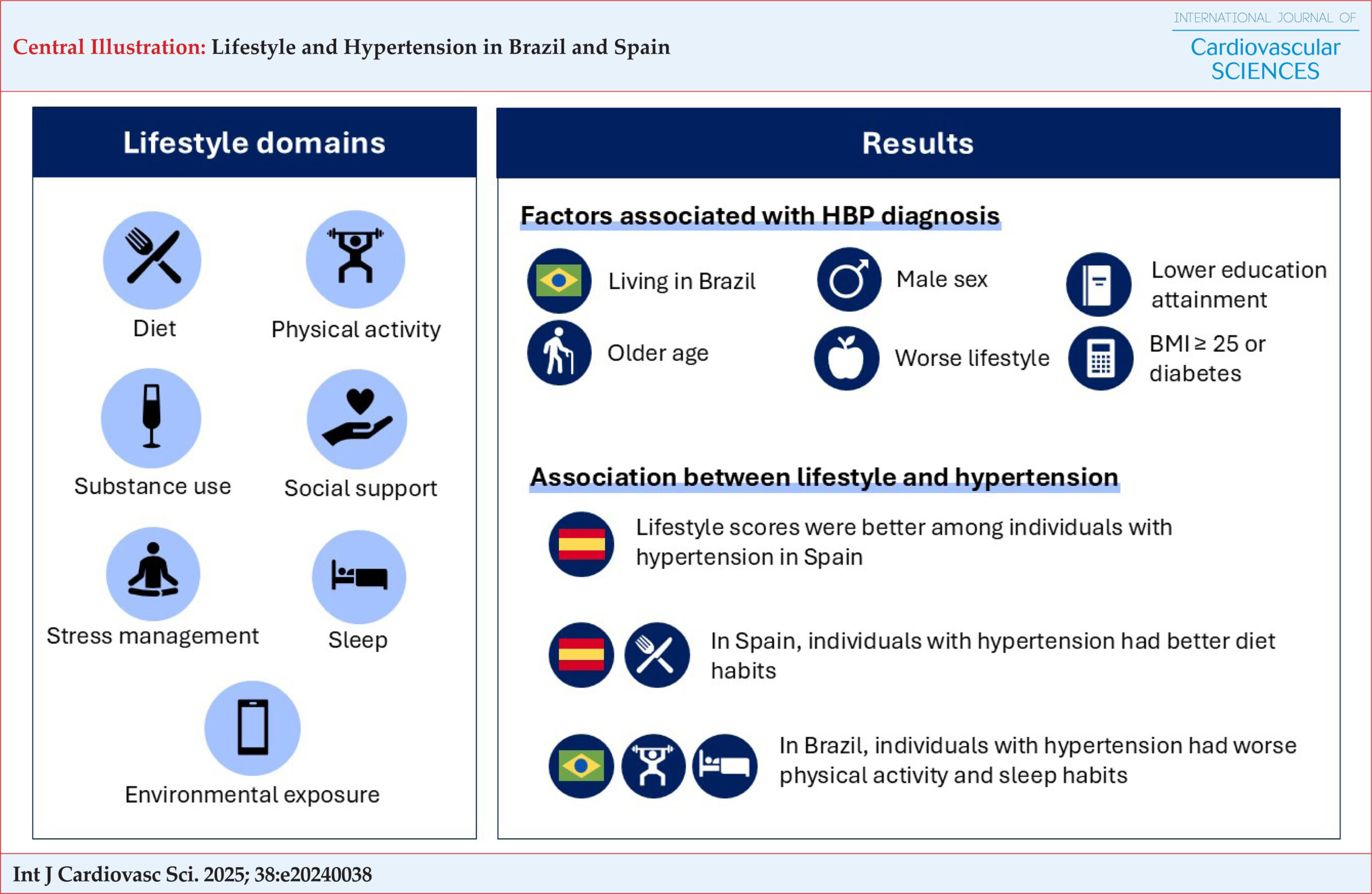
Hypertension is the main risk factor for cardiovascular mortality worldwide. Lifestyle medicine (LM) assesses health through seven domains (diet, physical activity, substance use, sleep, social support, stress management, and environmental exposure), which also include risk factors for hypertension.

Purpose:

To evaluate the association between lifestyle and hypertension in Brazil and Spain.

Methods:

Secondary analysis of data from two web surveys conducted in 2020 in Brazil and Spain, which assessed lifestyle through a multidimensional scale. We enrolled 5224 individuals of both genders, aged > 18 years, living in Brazil and Spain, and with Internet access. The main outcome was a self-reported hypertension diagnosis. We calculated the absolute and relative frequency of the independent variables and evaluated the factors associated with hypertension in logistic regression models.

Results:

76.2% of participants were women, 57.9% were > 42 years old, and 66.9% had finished higher education. Over the last 12 months, 19.6% of Brazilians and 9.2% of Spanish reported diagnosis/treatment of hypertension. Male and older groups living in Brazil, with lower education and worse lifestyles, were more likely to report hypertension. General lifestyle score was not associated with hypertension in Brazil, while hypertensive individuals had better scores in Spain (p < 0.001). Hypertensive individuals had worse lifestyle scores in physical activity (p < 0.05) and sleep (p < 0.05) in Brazil and better diet scores in Spain (p < 0.001). Environmental exposure was better among hypertensive individuals in both countries (p < 0.001). Our results point to cultural and socioeconomic differences between both countries.

Conclusion:

LM is an important strategy for the prevention/treatment of chronic diseases such as hypertension

  • COVID-19
  • Diet
  • Hypertension
  • Life Style
Read Full Article
Creative Commons Attribution (CC BY) Creative Commons license
24/03/2025 DOI: 10.36660/ijcs.20240038 Views 2
Dietary Adequacy of Individuals with Cardiovascular Disease According to Clinical Guidelines in the Brazilian Cardioprotective Nutritional (BALANCE)
ABC
Original Article

Dietary Adequacy of Individuals with Cardiovascular Disease According to Clinical Guidelines in the Brazilian Cardioprotective Nutritional (BALANCE)

Luciana Brito et al. Viviane Sahade Aline Marcadenti Camila Ragne Torreglosa … Bernardete Weber Ângela Cristine Bersch-Ferreira Isa Galvão Rodrigues Antônio Carlos Sobral Sousa Adriana Barros Gomes Josilene Maria Ferreira Pinheiro Sandra Mary Lima Vasconcelos Daniele Maria de Oliveira Carlos José Albuquerque de Figueiredo Neto Clenise de Farias Dantas Carla Daltro

Abstract

Background

Achieving nutritional goals established by scientific societies is a constant challenge and not always achieved.

Objective

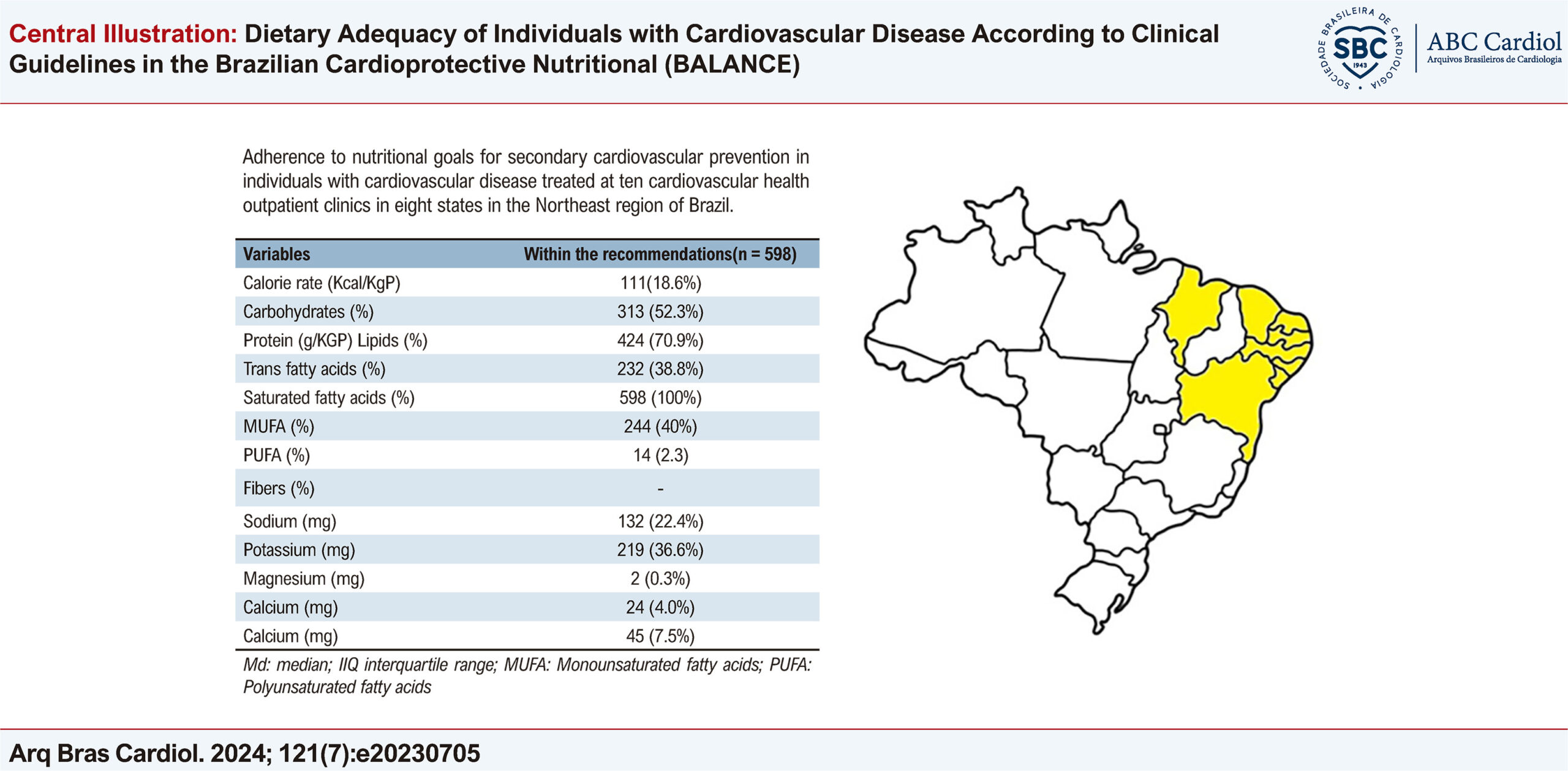
To investigate the dietary adequacy of individuals with cardiovascular disease (CVD), participants in the Cardioprotective Brazilian Food Program residing in the Northeast region of Brazil, according to the recommendations of the Brazilian Society of Cardiology (SBC).

Methods

Cross-sectional analysis with data from the study implementing the Brazilian Cardioprotective Diet (DICA BR), which evaluated individuals with CVD treated in specialized cardiovascular health centers in eight states in the Northeast region. Food consumption was obtained by 24-hour dietary records and dietary adequacy followed SBC recommendations. Values of p < 0.05 were considered significant.

Results

647 patients were studied, with a mean (standard deviation) age of 63.1 (9.4) years, 50.2% of whom were female. When evaluating food intake, a low adequacy of carbohydrates (52.3%), proteins (70.9%), lipids (38.8%), and fiber (22.4%) was observed. It was observed that the majority of women consumed a low-protein diet (59.2%) and the elderly had a greater inadequacy in carbohydrate consumption (52.6%). Regarding sodium intake, men had a higher intake (72.9%), while the elderly showed a 13% reduction. Furthermore, it was shown that men ate more fiber (28.1%) and individuals with higher education had a high consumption of saturated fatty acids (70.5%).

Conclusions

Most individuals did not achieve the recommended dietary therapy goals for secondary cardiovascular prevention. The findings of the present study reinforce the need to implement structured strategies to encourage healthy eating habits in these individuals.

  • Atherosclerosis
  • Cardiovascular Diseases
  • Diet
  • Eating
  • Secondary Prevention
Read Full Article
Creative Commons Attribution (CC BY) Creative Commons license
26/08/2024 DOI: 10.36660/abc.20230705i Views 2
Figure 1
ABC
Original Article

High-Fat Diet and Heart: What is the Real Impact of Resistance Exercise Training?

André Rodrigues Lourenço Dias et al. Andrey Jorge Serra

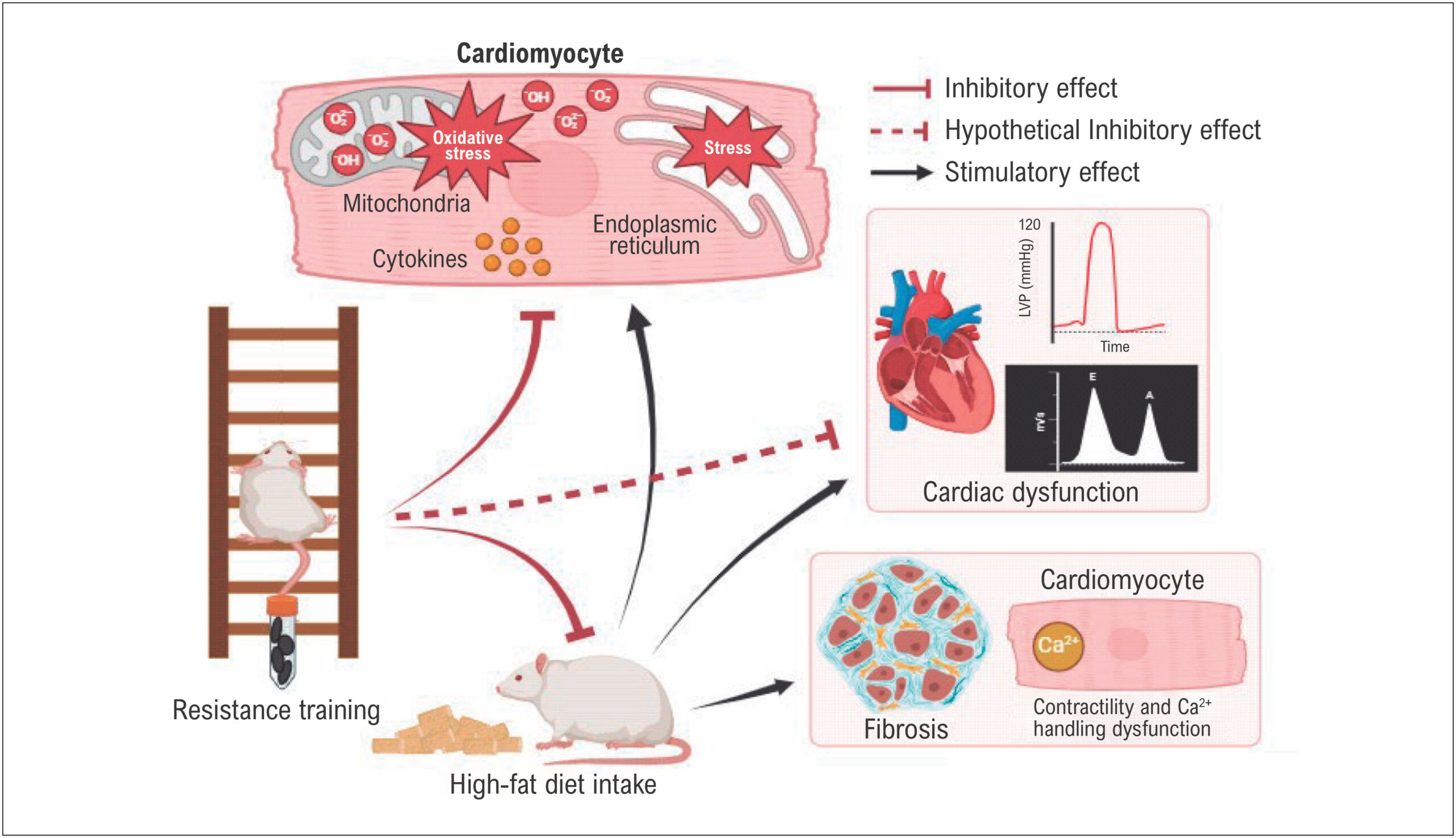
Long-term consumption of a high-fat diet (HFD) causes macrophage infiltration in the myocardium, which begins to secrete cytokines involved in cardiac inflammation. In this regard, interleukin-1β (IL-1β) plays a key role. Elevated levels of IL-1β trigger mitochondrial production of reactive oxygen species (ROS). The burst of ROS in the myocardium contributes to the development of diastolic dysfunction and heart failure with preserved ejection fraction in an experimental HFD model.

A current systematic review by Portes et al. has shown that resistance training (RT) can mitigate a variety of harmful effects of HFD on the heart. The article by Portes et al. reviewed original articles carried out in HFD rodents subjected to an RT program of at least four weeks comparing non-trained animals. Five studies were considered eligible, and ladder climbing with external load was the RT method applied.– Another three studies have found a reduction in body mass in animals subjected to RT,,, indicating that one pathway through which RT may promote cardioprotection may be reducing HFD. However, none of these studies reported food intake.,, A single study by Kim et al. assessed weekly food intake in middle-aged rats, who demonstrated that RT could upregulate proteins linked to mitochondrial biogenesis and reduce markers of sarcoplasmic reticulum stress without affecting HFD intake and body mass.

[…]

  • Atrial Remodeling
  • Diet
  • Exercises
  • Fats/metabolism
  • Heart/physiopatology
  • Physical Endurance
Read Full Article
Creative Commons Attribution (CC BY) Creative Commons license
10/05/2024 DOI: 10.36660/abc.20240091i
Adequacy of Fatty Acids Consumption Among Individuals in Secondary Cardiovascular Prevention
ABC
Original Article

Adequacy of Fatty Acids Consumption Among Individuals in Secondary Cardiovascular Prevention

Aline Marcadenti et al. Rachel H. Vieira Machado Renato Hideo Nakagawa Santos Caio Cesar dos Santos Kasai … Cristiane Kovacs Annie Bello Cristina H. de Matos Renata Torres Abib Bertacco Gabriela C. Souza Gabriela da S. Schirmann Francisca Eugenia Zaina Nagano Soraia Poloni Raquel Milani El Kik Naoel Hassan Feres Isa G. Rodrigues Antônio Carlos Sobral Sousa Josilene M. F. Pinheiro Sandra Mary Lima Vasconcelos Daniele Maria de Oliveira Carlos Viviane Sahade Souza Adriana Barros Gomes José Albuquerque de Figueiredo Neto Emilio Hideyuki Moriguchi Maria Cristina Izar Sônia Lopes Pinto Josefina Bressan Simone Raimondi de Souza Magali C. Kumbier Celme Barroncas Passos de Araújo Camila R. Torreglosa Bernardete Weber Ângela Cristine Bersch-Ferreira

Background:

Adhering to a diet adequate in macronutrients is crucial for the secondary prevention of cardiovascular diseases.

Objective:

To assess the prevalence of adherence to recommendations for the consumption of dietary fatty acids for the prevention and treatment of cardiovascular diseases and to estimate whether the presence of certain cardiovascular risk factors would be associated with adherence.

Methods:

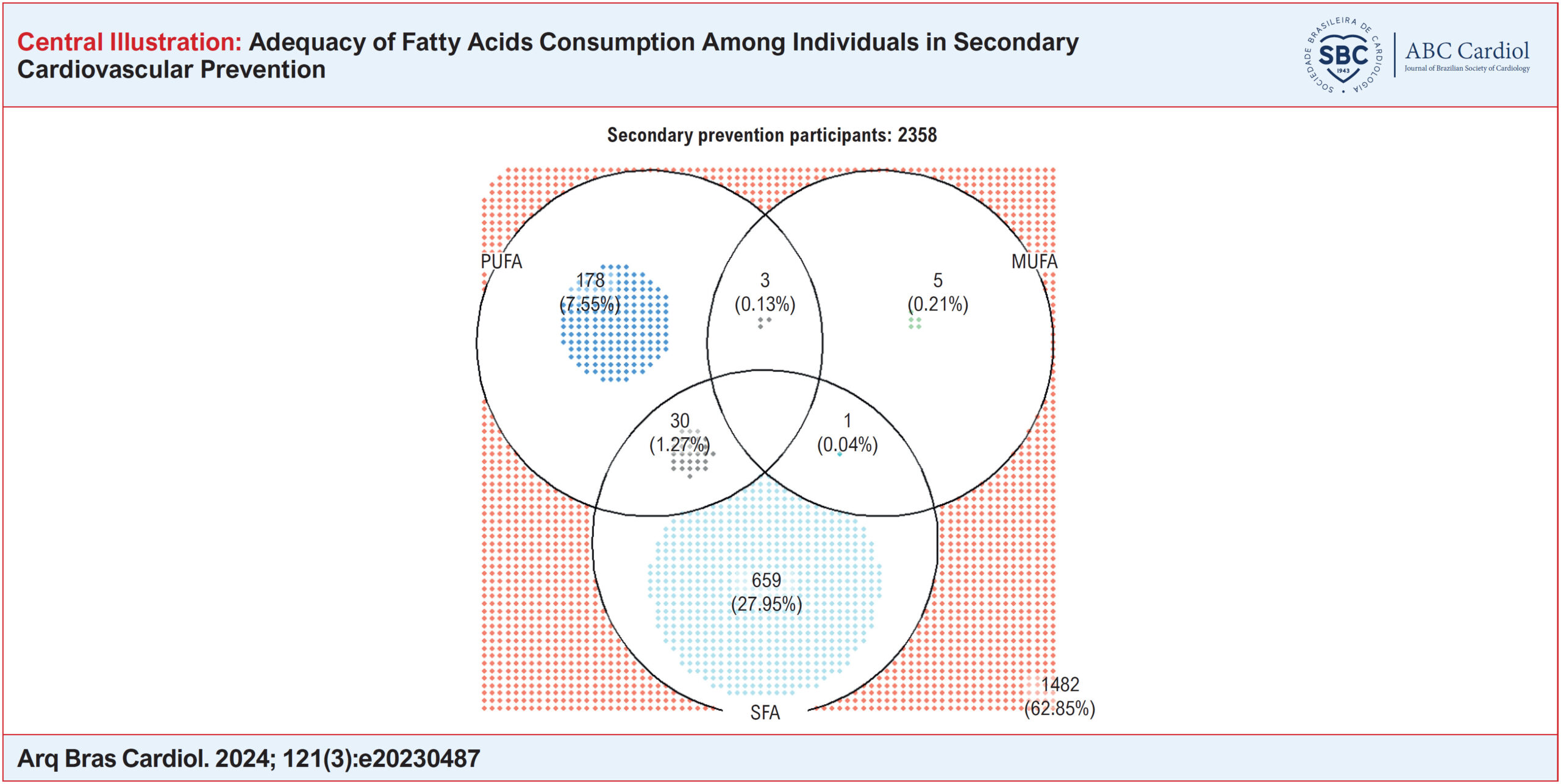
Cross-sectional study using baseline data from 2,358 participants included in the “Brazilian Cardioprotective Nutritional Program Trial”. Dietary intake and cardiovascular risk factors were assessed. Adequate intake of polyunsaturated fatty acids (PUFA) was considered as ≥10% of total daily energy intake; for monounsaturated fatty acids (MUFA), 20%; and for saturated fatty acids (SFA), <7% according to the Brazilian Society of Cardiology. A significance level of 5% was considered in the statistical analysis.

Results:

No participant adhered to all recommendations simultaneously, and more than half (1,482 [62.9%]) did not adhere to any recommendation. Adherence exclusively to the SFA recommendation was the most prevalent, fulfilled by 659 (28%) participants, followed by adherence exclusively to the PUFA (178 [7.6%]) and MUFA (5 [0.2%]) recommendations. There was no association between the number of comorbidities and adherence to nutritional recommendations (p = 0.269). Participants from the Brazilian Northeast region showed a higher proportion of adherence to SFA consumption recommendations (38.42%) and lower adherence to PUFA intake (3.52%) (p <0.001) compared to other regions.

Conclusions:

Among the evaluated sample, there was low adherence to nutritional recommendations for dietary fatty acid consumption.

  • Cardiovascular disease
  • Diet
  • Fatty Acids
  • Secondary Prevention
Read Full Article
Creative Commons Attribution (CC BY) Creative Commons license
05/04/2024 DOI: 10.36660/abc.20230487i Views 1
IJCS
Editorial

Ultra-Processed Foods Consumption and Cardiovascular Health

Annie Seixas Bello Moreira et al. Débora Pinto Gapanowicz

Ultra-processed foods, as defined by the NOVA classification, are industrial formulations made from substances extracted or derived from food, containing little to no whole food in their composition. These foods are typically enhanced with flavorings, colorings, emulsifiers, and other additives that alter the sensory attributes of the final product. The ingredients and processes used in the ultra- processed foods manufacture aim to create low-cost, hyper-palatable, and convenient products that have the potential to replace fresh or minimally processed foods.

Ultra-processed foods already constitute more than half of the total dietary energy consumed in high-income countries like USA, and between one-fifth and one-third in middle-income countries such as Brazil. These foods are not ‘real food’ and they are typically high in energy density, sugar, unhealthy fats, and salt, but low in dietary fiber, protein, vitamins, and minerals.

[…]

  • Cardiovascular Diseases
  • Diet
  • Feeding Behavior
  • Food, Ultraprocessed
Read Full Article
Creative Commons Attribution (CC BY) Creative Commons license
25/08/2023 DOI: 10.36660/ijcs.20230096
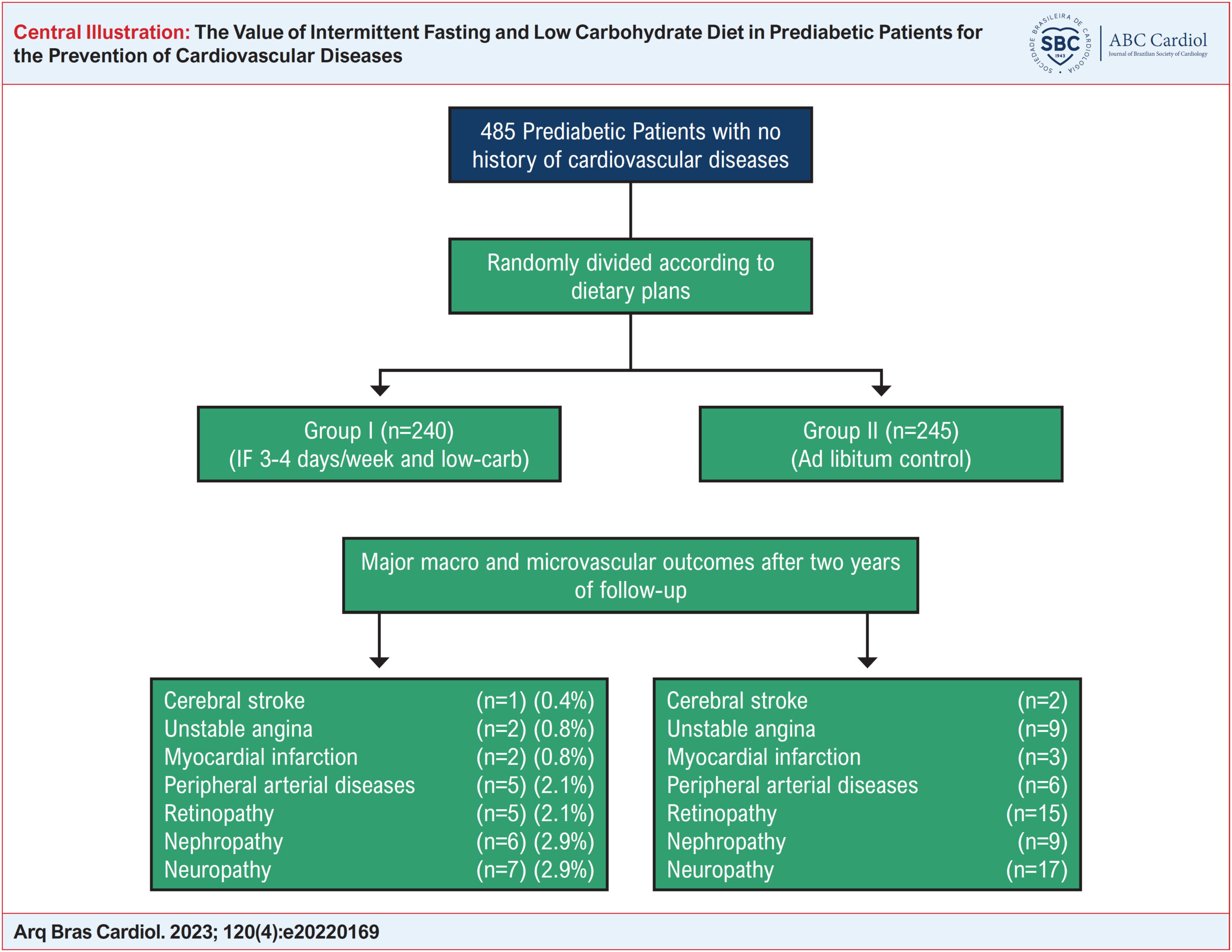
The Value of Intermittent Fasting and Low Carbohydrate Diet in Prediabetic Patients for the Prevention of Cardiovascular Diseases
ABC
Original Article

The Value of Intermittent Fasting and Low Carbohydrate Diet in Prediabetic Patients for the Prevention of Cardiovascular Diseases

Mohamed Khalfallah et al. Basma Elnagar Shaimaa S. Soliman Ahmad Eissa Amany Allaithy

Abstract

Background:

Prediabetic patients are at increased risk for cardiovascular diseases and the development of microvascular and macrovascular complications. Intermittent fasting (IF) and low-carbohydrate diet (LCD) are promising dietary plans.

Objectives:

Our aims to analyze the benefits of IF combined with LCD on microvascular and macrovascular outcomes in prediabetic patients.

Methods:

The study included 485 prediabetic patients with no history of cardiovascular diseases divided into group I: (n = 240 patients) who underwent IF (16 h IF 3-4 days per week) combined with LCD (<130 g of carbohydrate per day), and group II: (n = 245 patients) with ad libitum calorie intake. The two groups were followed-up for two years for assessment of micro and macrovascular complications. A p-value < 0.05 was considered statistically significant.

Result:

There was a significant reduction in body weight, body mass index, waist circumference, body fat percentage and glycated hemoglobin in group I. The incidence of progression from prediabetes to diabetes was significantly lower in group I (2.1% vs. 6.9% in group II, p = 0.010). In addition, a significant increase in the incidence of microvascular and macrovascular complications was observed in group II, including retinopathy, neuropathy and unstable angina. Multivariate regression analysis revealed that increased body weight, fasting glucose, glycated hemoglobin and low-density lipoprotein were independent risk factors impacting microvascular and macrovascular outcomes.

Conclusions:

In prediabetic patients, IF, combined with LCD, was associated with lower progression to diabetes mellitus and lower incidence of microvascular and macrovascular complications.

  • Cardiovascular Diseases
  • Diet
  • Fasting
  • Prediabetic State
Read Full Article
Creative Commons Attribution (CC BY) Creative Commons license
07/04/2023 DOI: 10.36660/abc.20220606 Views 1
IJCS
Editorial

The Present and Future of the Cardioprotective Food Model for the Brazilian Population

Thais de Rezende Bessa Guerra

In recent decades, researchers have found important changes in the health pattern and food consumption of the Brazilian population. These changes have been associated with chronic non-communicable diseases, especially cardiovascular disease.

The Global Burden of Disease Study (2019), which analyzed data on chronic non-communicable diseases in 204 countries and territories between 1990 and 2019, estimated that cardiovascular disease, which is attributable to modifiable risk factors such as cholesterol level, is the main health care burden worldwide. High LDL cholesterol and its associated mortality remain a major threat to public health. The report recommends that national health systems focus on new approaches that can reverse these trends, since there is an urgent need to implement effective policies and interventions to achieve a 30% reduction in premature mortality from non-communicable diseases.

[…]

  • Cardiotonic Agents/administration and dosage
  • Cardiovascular Diseases/prevention and control
  • Diet
  • Diet, Food and Nutrition/habits
  • Epidemiology
  • Public Health
  • Quality of life
Read Full Article
Creative Commons Attribution (CC BY) Creative Commons license
10/03/2023 DOI: 10.36660/ijcs.20210254 Views 1
IJCS
Editorial

Diet Quality and Cardiovascular Health

Annie Seixas Bello Moreira et al. Débora Pinto Gapanowicz

The association between diet quality and cardiovascular health has been extensively investigated over the last few years. The Global Burden of Disease Study showed that, in 2017, dietary risk factors such as high intake of sodium, low intake of whole grains, and low intake of fruits were responsible for 11 million deaths across 195 countries.

Petersen et al. reviewed different ways to evaluate diet quality, which is a term used to quantify how healthy a particular dietary pattern is. It is clear that assessing and encouraging individual dietary components such as specific foods, nutrients, or bioactive compounds alone is not enough. Therefore, the totality of the diet is being increasingly assessed, since it has a greater impact on health outcomes.

[…]

  • Cardiovascular Diseases
  • Diet
  • Disease Prevention
Read Full Article
Creative Commons Attribution (CC BY) Creative Commons license
27/01/2023 DOI: 10.36660/ijcs.20220215 Views 1
IJCS
Editorial

Abdominal Subcutaneous Adipose Tissue, Diet, and Risk of Cardiovascular Disease: What do we Know?

Camila Weschenfelder et al. Penny M. Kris-Etherton

Excess adiposity increases the risk of cardiovascular disease (CVD) due to dyslipidemia, systemic inflammation and other risk factors. The distribution of body fat depots, and central adiposity in particular, is related to cardiometabolic diseases. The different adipose tissue depots in the body, ie, epicardial adipose tissue, visceral adipose tissue (VAT) and subcutaneous adipose tissue (SAT), have different biochemical characteristics and produce unique biologically active molecules that affect normal and pathological processes related to CVD risk. , Abdominal SAT is classified as superficial or deep. Deep subcutaneous adipose tissue (DSAT) has a higher ratio of saturated to monounsaturated fatty acids, and, consequently, is more saturated than superficial subcutaneous adipose tissue (SSAT). Despite being in the subcutaneous compartment, DSAT differs from VAT because of differences in gene transcription, having different metabolic functions than SSAT.

In Acute Coronary Syndrome (ACS) patients, coronary plaque instability is related to abnormal abdominal fat distribution. Analyses of the abdominal fat distribution of ACS patients have demonstrated that both VAT and SAT are positively correlated with vessel and plaque volumes, but not with plaque tissue components, the fibrous and lipid content of plaque. However, considering coronary plaque characteristics, a higher VAT/SAT ratio was independently associated with a higher percentage of plaque lipid content, with a lower percentage of fibrous volumes and a thinner fibrous cap thickness, characteristics that define greater plaque rupture vulnerability and a high risk for coronary events.

[…]

  • Abdominal Subcutaneous Fat
  • Acute coronary syndrome
  • Diet
  • Inflammation
  • Metabolic Syndrome
  • Obesity, Abdominal
  • Risk Factors/prevention and control
Read Full Article
Creative Commons Attribution (CC BY) Creative Commons license
14/01/2022 DOI: 10.36660/ijcs.20210233 Views 2
ABC
Editorial

Searching Naturally Occurring Compounds to Treat Hypertension

Diego Santos Souza et al. Danilo Roman-Campos

Cardiovascular diseases (CDs) are the major cause of death worldwide. Impressively, approximately 17.9 million people died from CDs in 2019, representing almost 32% of global deaths. Also, nearly three-quarters of deaths due to CDs occur in low- and middle-income countries, which is a risk factor for Brazilians. There are several underlying mechanisms involved in CDs, and hypertension is a significant contributor. Today, it is thought that about 1.28 billion adults aged 30-79 years have hypertension in the world. Furthermore, it has been estimated that 60–70% of hypertension in adults is attributable to obesity, associated with insulin resistance, dyslipidemia and metabolic syndrome. Also, almost 50% of adults with hypertension are unaware of its condition, and only 20% have hypertension under control.

According to the American College of Cardiology and the American Heart Association, Normal Blood pressure (BP) is considering when Systolic Blood Pressure (SBP) is <120 mm Hg and < 80 mm Hg for diastolic blood pressure (DBP). Elevated BP is considered when SBP is 120-129, and DBP is 140 mm Hg, respectively, or DBP is 80-89 mm Hg or >90 mm Hg, respectively. These values follow the most recent Brazilian guideline to diagnostic hypertension.

[…]

  • Biological Products
  • Cardiovascular Diseases
  • Diet
  • Hypertension
  • Mortality
  • Prevention and Control
  • Rats
  • Sauromatum Gluttatum/therapeutic use
Read Full Article
Creative Commons Attribution (CC BY) Creative Commons license
03/12/2021 DOI: 10.36660/abc.20210869 Views 1
ABC
Editorial

How Can We Favorably Modulate Serum Uric Acid?

Luiza Antoniazzi et al. Laís Ferreira Dias

The study “Impact of Serum Uric Acid Concentration on the Risk of Cardiovascular Disease: A Cohort Study Conducted in Northern China”, carried out with a cohort of middle-aged Chinese, discusses the influence of uric acid on cardiovascular outcomes. The study showed that serum uric acid was a risk factor for cardiovascular disease in middle-aged and elderly people in northern China.

Findings about this association are controversial. It has been proven in previous studies. –

[…]

  • Diet
  • Heredity
  • Hyperruricemia, Prevention and Control
  • Hypertension
  • middle aged
  • Risk Factors
  • Uric Acid/therapeutic use
Read Full Article
Creative Commons Attribution (CC BY) Creative Commons license
25/10/2021 DOI: 10.36660/abc.20210739 Views 1
IJCS
Original Article

Association between Deep Subcutaneous Adipose Tissue Estimated by DAAT Index and Dietary Intake in Patients with Acute Coronary Syndrome

Elana Stein et al. Sandra Barbiero Vera Lucia Portal Victória da Luz Aline Marcadenti

Abstract

Background:

Abdominal obesity has been associated with cardiovascular disease and may be modulated by dietary intake. The deep abdominal subcutaneous adipose tissue (dSAT) is a body fat compartment that can be estimated by using mathematical formulas.

Objectives:

To evaluate the association between dSAT estimated by the Deep-Abdominal-Adipose-Tissue (DAAT) index and dietary intake in patients with acute coronary syndrome (ACS).

Methods:

This is a cross-sectional study conducted with patients ≥ 18 years of age admitted to a tertiary hospital. Sociodemographic, clinical, and anthropometric (body weight [kg], height [m], waist, hip and neck circumferences [cm]) data were evaluated. A food frequency questionnaire was applied to identify each patient’s nutrient intake. The DAAT index was calculated according to specific formulas for men and women. Possible association between food intake and the DAAT index was evaluated by multiple linear regression. The level of significance adopted was 0.05.

Results:

This study evaluated 138 patients, with a mean age of 61.2±10.8 years. Prevalence of obesity was 29.4% in men and 37.7% in women. Regarding waist circumference, 83% of the women showed values considered to be very high. The DAAT index was significantly higher in men when compared to woman (P < 0.0001) and proved to be positively correlated with proteins (r= 0.22, P= 0.01) and monounsaturated fatty acid (r= 0.18, P= 0.04) intake in the entire sample. After adjustment for sex, alcohol consumption, and levels of physical activity, the DAAT index was associated with the female sex (B= −129.84, P <0.001) and a sedentary lifestyle (B= 57.99, P <0.001).

Conclusion:

dSAT estimated by the DAAT index was not associated with dietary intake in patients with ACS.

  • Abdominal Obesity
  • Cardiovascular Diseases
  • Diet
  • Myocardial Infarction
  • subcutaneous fat
Read Full Article
Creative Commons Attribution (CC BY) Creative Commons license
26/07/2021 DOI: 10.36660/ijcs.20200334 Views 1
Figure 1
IJCS
Original Article

Cardiac Remodeling in Obesity-Resistance Model is not Related to Collagen I and III Protein Expression

Scarlet Marques de Oliveira et al. Jéssica Leite Garcia Danielle Fernandes Vileigas Dijon Henrique Salomé de Campos … Fabiane Valentini Francisqueti-Ferron Artur Junio Togneri Ferron Danielle Cristina Tomaz da Silva-Bertani Carlos Roberto Padovani Camila Renata Corrêa Antonio Carlos Cicogna

Abstract

Background:

As some individuals present resistance to obesity development, experiments have been trying to understand their susceptibility to cardiometabolic diseases.

Objetive:

To evaluate if the cardiac remodeling was related to collagen protein expression change.

Methods:

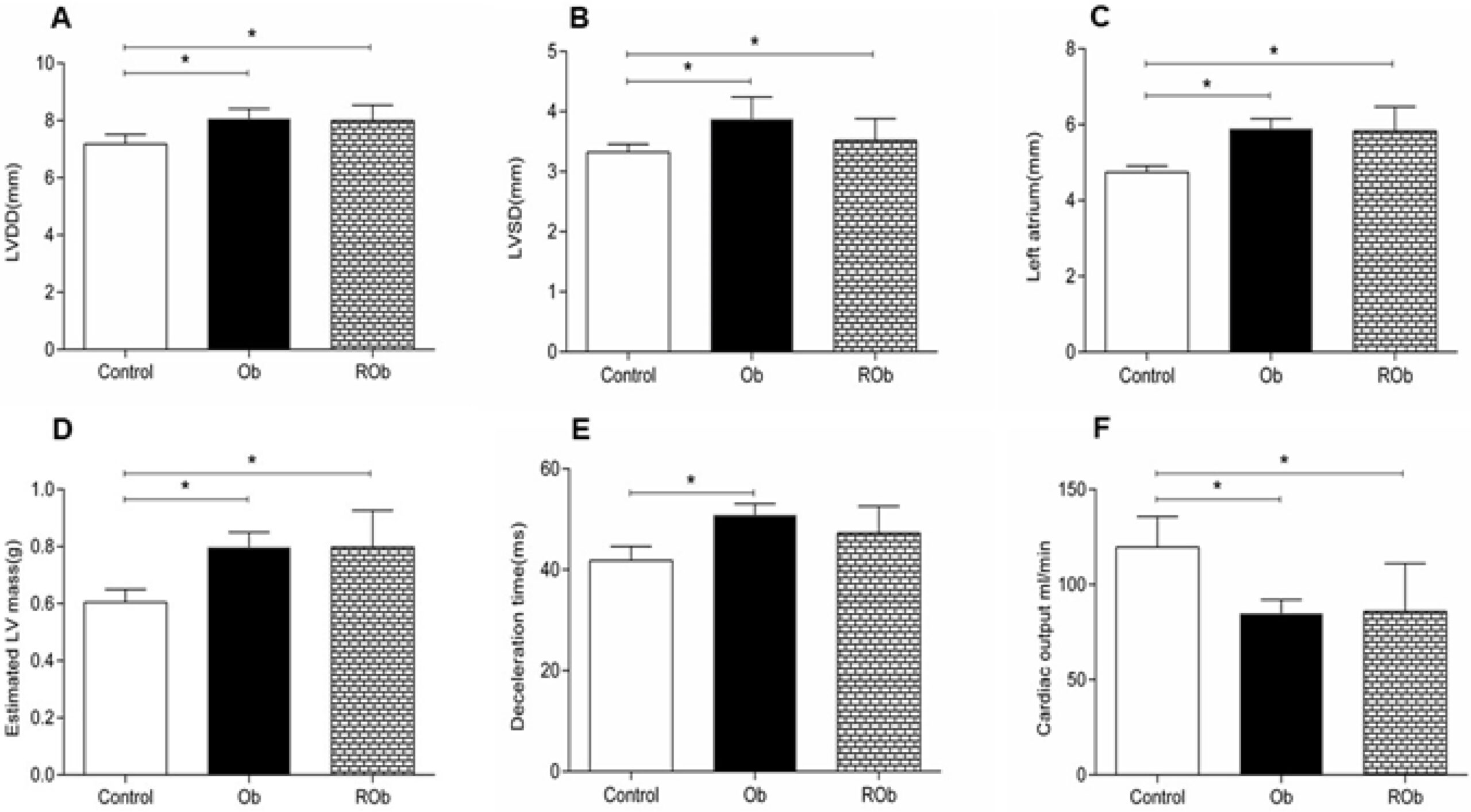
Male Wistar rats were randomized into two experimental groups: control diet (CD, n=15) or high-fat diet (HFD, n=15) for 30 weeks. Rats fed with HFD were ranked based on their adiposity indexes and classified as obese (Ob, n = 8) or obesity-resistant (ROb, n = 6). Rats that failed to present the normal characteristic of the control group while fed with CD were excluded (Control, n = 8). Nutritional profile, comorbidities (dyslipidemia, hypertension, glucose metabolism, hyperleptinemia), cardiac remodeling, and collagen protein expression were evaluated. The groups were compared by One-Way ANOVA, together the Tukey post hoc test, with p<0.05 considered significant.

Results:

The Ob rats presented an increased adiposity index when compared to C and ROb. Both groups Ob and ROb presented increased low-density lipoprotein (LDL), insulin, homeostatic model assessment of insulin resistance (HOMA- IR) and systolic blood pressure (SBP), and low high-density lipoprotein (HDL) levels when compared to the control group. The levels of triglycerides, non-esterified fatty acid (NEFA), and leptin were lower in ROb as compared to Ob, but higher than the control group. The Ob and ROb groups presented cardiac remodeling, evidenced by echocardiographic and post-mortem analysis. The collagen protein expression did not differ among the groups.

Conclusion:

The ROb animals present cardiac remodeling that is not related to collagen type I and III protein expression change.

  • Adiposity
  • Diet
  • Obesity
Read Full Article
Creative Commons Attribution (CC BY) Creative Commons license
26/07/2021 DOI: 10.36660/ijcs.20200058 Views 2
IJCS
Editorial

Impact of Continuing Education on the Quality of Blood Pressure Measurement

Erika Campana et al. Bruno Daniel Ferrari

Cardiovascular diseases are the leading cause of death worldwide, and a key risk factor for these diseases—hypertension—is unquestionably the most prevalent disease in the population. Cardiovascular semiology is extremely important in the setting of hypertension (HTN), since the determination of blood pressure values through established indirect measurement techniques plays an essential role in initiating further diagnostic investigation, prompting treatment, and allowing monitoring of patients with HTN. The environment in which measurement is performed; the patient’s dietary habits, use of tobacco and alcohol, and engagement in physical activity before measurement; the adequacy of cuff size in relation to the limb; and proper cuff positioning are among the several important aspects which may interfere with measurement reliability. In this context, assessing the technical knowledge of healthcare providers is critical to preventing diagnostic errors.

Differences in magnitude between office BP and mean daytime BP can be attributed both to the environment and to the technical quality of blood pressure measurement by the examiner. Beckett et al. obtained an average of three manual BP readings from 481 hypertensive patients in family practices. The average clinic BP (151/83 mmHg) was significantly (P<0.001) higher than the daytime mean BP measured by ambulatory blood pressure monitoring (ABPM) (142/80 mmHg).

[…]

  • Blood Pressure
  • Cardiovascular Diseases, mortality
  • Diet
  • Hypertension/complications
  • Physical activity
  • Quality of life
Read Full Article
Creative Commons Attribution (CC BY) Creative Commons license
01/02/2021 DOI: 10.36660/ijcs.20200275
Figure 1
ABC
Original Article

Intermittent Fasting Attenuates Exercise Training-Induced Cardiac Remodeling

Priscilla Gois Basilio et al. Ana Priscila Cayres de Oliveira Ana Carolini Ferreira de Castro Marianna Rabelo de Carvalho … Alessandro Moura Zagatto Paula Felippe Martinez Marina Politi Okoshi Katashi Okoshi Gabriel Elias Ota Filipe Abdalla dos Reis Silvio Assis de Oliveira-Junior

Abstract

Background

The effects of non-pharmacological interventions such as calorie restriction and exercise training on health and prevention of cardiovascular diseases have been investigated in clinical and experimental studies.

Objective

To analyze the influence of intermittent fasting and exercise training on functional fitness, glycemia and cardiac remodeling.

Methods

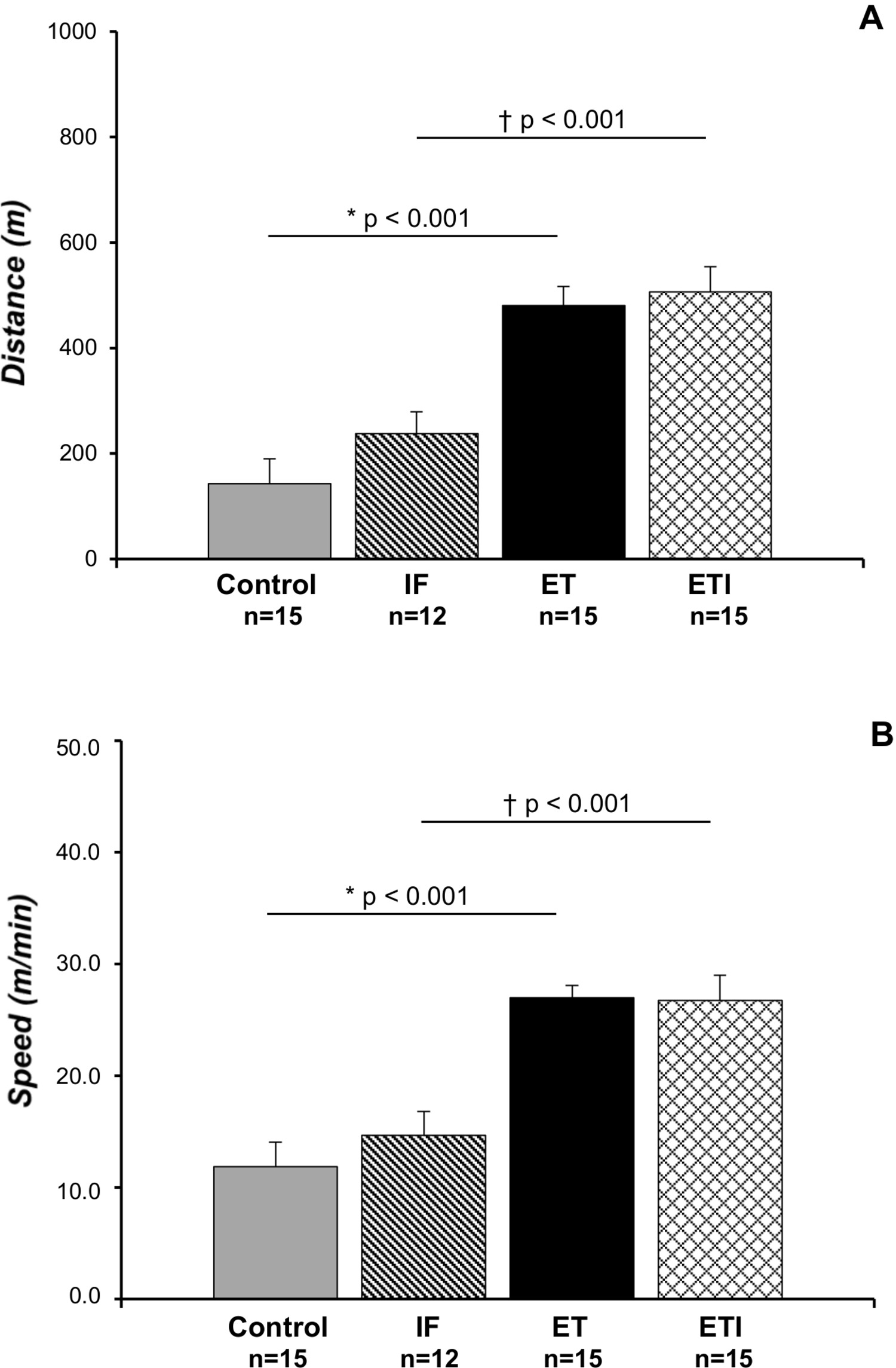
Wistar rats (n=60) were randomly divided into four groups: control, exercise training (ET), intermittent fasting (IF) and exercise training plus intermittent fasting (ETI). Over 12 weeks, control and ET animals were fed daily a standard commercial diet ad libitum , while IF and ETI animals were fed every other day. In addition, the ET and ETI groups were submitted to a running protocol on a treadmill. After this period, functional fitness, nutritional parameters and blood glucose levels were analyzed. In addition to heart morphology, myocardial protein expression of extracellular signal-regulated kinase (ERK) and c-Jun N-terminal kinase (JNK) was assessed by Western-blot. The results were analyzed using two-way ANOVA and Student-Newman-Keuls test. The level of significance considered was 5%.

Results

Exercise training increased functional fitness in the ET and ETI groups and promoted cardiac fibrosis. The combination of intermittent fasting and exercise training resulted in a smaller area under the blood glucose curve and reduced cardiomyocyte cross-sectional area and interstitial collagen fraction in the ETI group compared to ET. ERK and JNK expression levels were similar among groups (p>0.05).

Conclusions

Intermittent fasting is associated with improved glucose tolerance and attenuates cardiac remodeling induced by exercise training (Arq Bras Cardiol. 2020; 115(2):184-193)

  • Calorie Restriction
  • Diet
  • Exercise
  • Glucose
  • Health Promotion
  • Running
  • Ventricular Remodeling
Read Full Article
Creative Commons Attribution (CC BY) Creative Commons license
28/08/2020 DOI: 10.36660/abc.20190349
ABC
Original Article

The Olympic Experimental Gymnasium Program and its Association with the Prevalence of Cardiovascular Risk Factors in Adolescents: A Cross-Sectional Study

Carlos Scherr et al. Lucas Helal Filipe Ferrari Luciano Juaçaba Belém … Leonardo Correa Castro Fabiano Ludmila Talita Pinheiro Ricardo Stein

Abstract

Background:

Cardiovascular disease (CVD) is the leading cause of death worldwide. Physical activity (PA) and appropriate diet, if adopted in childhood and adolescence, may reduce the CVD burden in later life. The Olympic Experimental Gymnasium (OEG) project was implemented to increase the PA levels of students by means of regular physical exercise and healthy eating habits.

Objectives:

To estimate and compare the prevalence of CVD risk factors in OEG schools versus regular schools (RSch) and to examine associations between the school environment and CVD risk factors.

Methods:

In this cross-sectional study with a comparator group, adolescents aged 12-13 years attending three OEG schools (n = 719) and three RSch (n = 394) were evaluated after one year of the ongoing program to estimate the prevalence of overweight, pre-hypertension/hypertension, altered glycemia, and lipid profile. An α level of 0.05 was set for statistical analysis.

Results:

RSch students had higher odds to have high blood pressure (OR 1.86, 1.36-2.54) and to be overweight (OR 1.49, 1.13-1.98) than OEG students. Glucose levels were not altered in most cases regardless of school type, and no differences were found in lipid profile. In the sensitivity analysis stratified by gender, girls from RSch were more likely to have high body mass index than boys.

Conclusions:

Exposure of adolescents to the OEG policies was positively associated with an important reduction in CVD risk factors, including high blood pressure and overweight.

  • Adolescent
  • Cardiovascular Diseases, mortality
  • Child
  • Diet
  • Dyslipidemias
  • Exercise
  • Hypertension
  • Life Style
  • Overweight
Read Full Article
Creative Commons Attribution (CC BY) Creative Commons license
08/04/2019 DOI: 10.5935/abc.20190067 Views 1
Figure 1
ABC
Original Article

Cardiac, Metabolic and Molecular Profiles of Sedentary Rats in the Initial Moment of Obesity

Bruno Barcellos Jacobsen et al. Ana Paula Lima Leopoldo Jóctan Pimentel Cordeiro Dijon Henrique Salomé de Campos … André Ferreira do Nascimento Mário Mateus Sugizaki Antônio Carlos Cicogna Carlos Roberto Padovani André Soares Leopoldo

Abstract

Background:

Different types of high-fat and/or high-energy diets have been used to induce obesity in rodents. However, few studies have reported on the effects observed at the initial stage of obesity induced by high-fat feeding on cardiac functional and structural remodelling.

Objective:

To characterize the initial moment of obesity and investigate both metabolic and cardiac parameters. In addition, the role of Ca2+ handling in short-term exposure to obesity was verified.

Methods:

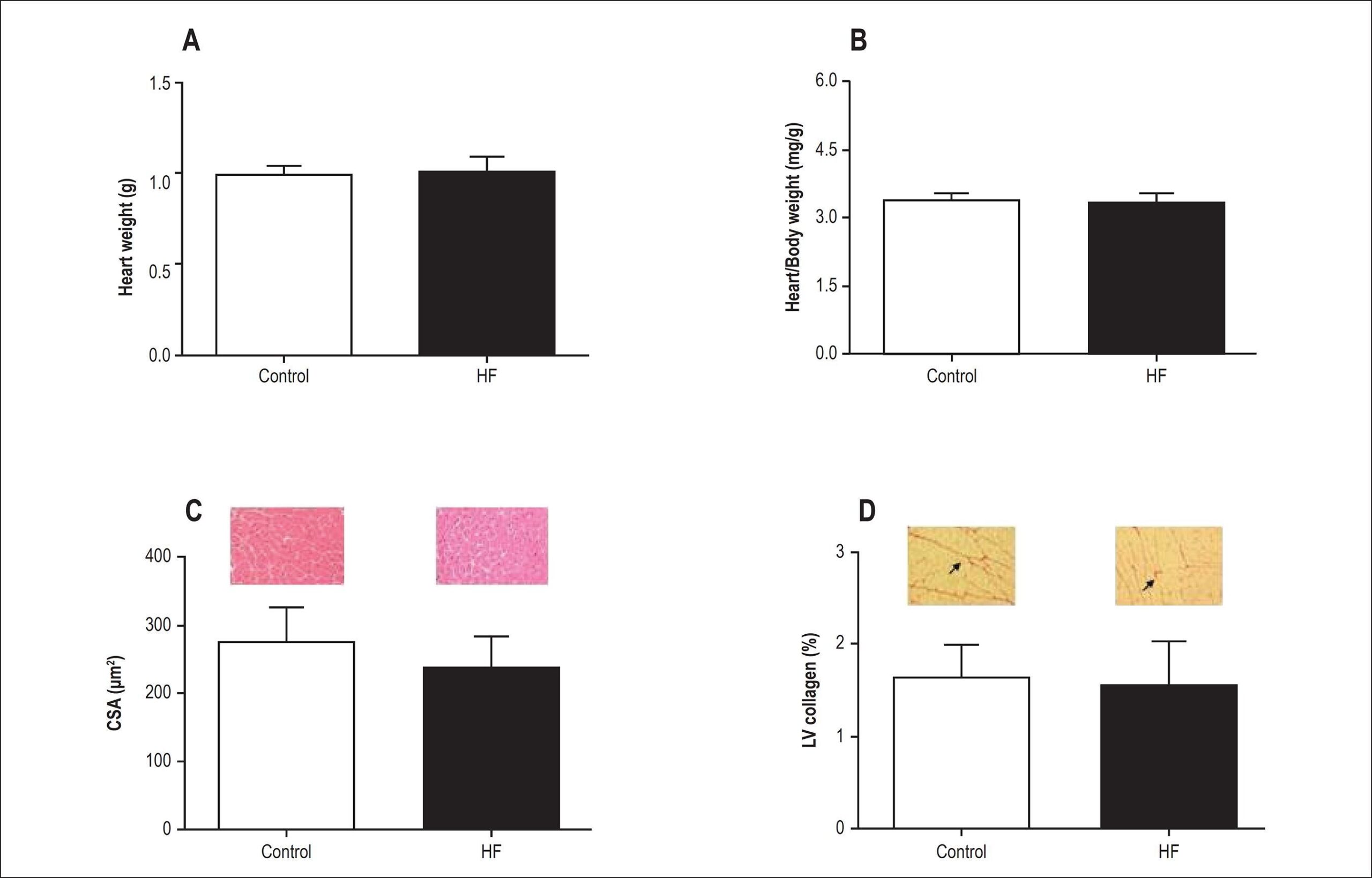
Thirty-day-old male Wistar rats were randomized into two groups (n = 19 each): control (C; standard diet) and high-fat diet (HF, unsaturated high-fat diet). The initial moment of obesity was defined by weekly measurement of body weight (BW) complemented by adiposity index (AI). Cardiac remodelling was assessed by morphological, histological, echocardiographic and papillary muscle analysis. Ca2+ handling proteins were determined by Western Blot.

Results:

The initial moment of obesity occurred at the 3rd week. Compared with C rats, the HF rats had higher final BW (4%), body fat (20%), AI (14.5%), insulin levels (39.7%), leptin (62.4%) and low-density lipoprotein cholesterol (15.5%) but did not exhibit alterations in systolic blood pressure. Echocardiographic evaluation did not show alterations in cardiac parameters. In the HF group, muscles were observed to increase their +dT/dt (C: 52.6 ± 9.0 g/mm2/s and HF: 68.0 ± 17.0 g/mm2/s; p < 0.05). In addition, there was no changes in the cardiac expression of Ca2+ handling proteins.

Conclusion:

The initial moment of obesity promotes alterations to hormonal and lipid profiles without cardiac damage or changes in Ca2+ handling.

  • Adiposity
  • Calcium
  • Cardiac function
  • Diet
  • Hight-Fat
  • Obesity
  • Rats
Read Full Article
Creative Commons Attribution (CC BY) Creative Commons license
19/10/2017 DOI: 10.5935/abc.20170151 Views 1
Figure 1
IJCS
Original Article

Assessment of Bioactive Compounds, Physicochemical Composition, and In Vitro Antioxidant Activity of Eggplant Flour

Mauara Scorsatto et al. Aline de Castro Pimentel Antonio Jorge Ribeiro da Silva Kebba Sabally … Glorimar Rosa Gláucia Maria Moraes de Oliveira

Abstract

Background:

The eggplant (Solanum melongena) is a fruit of world consumption. Its processing in the form of flour is a way to avoid losses and to take advantage of its nutritional characteristics.

Objective:

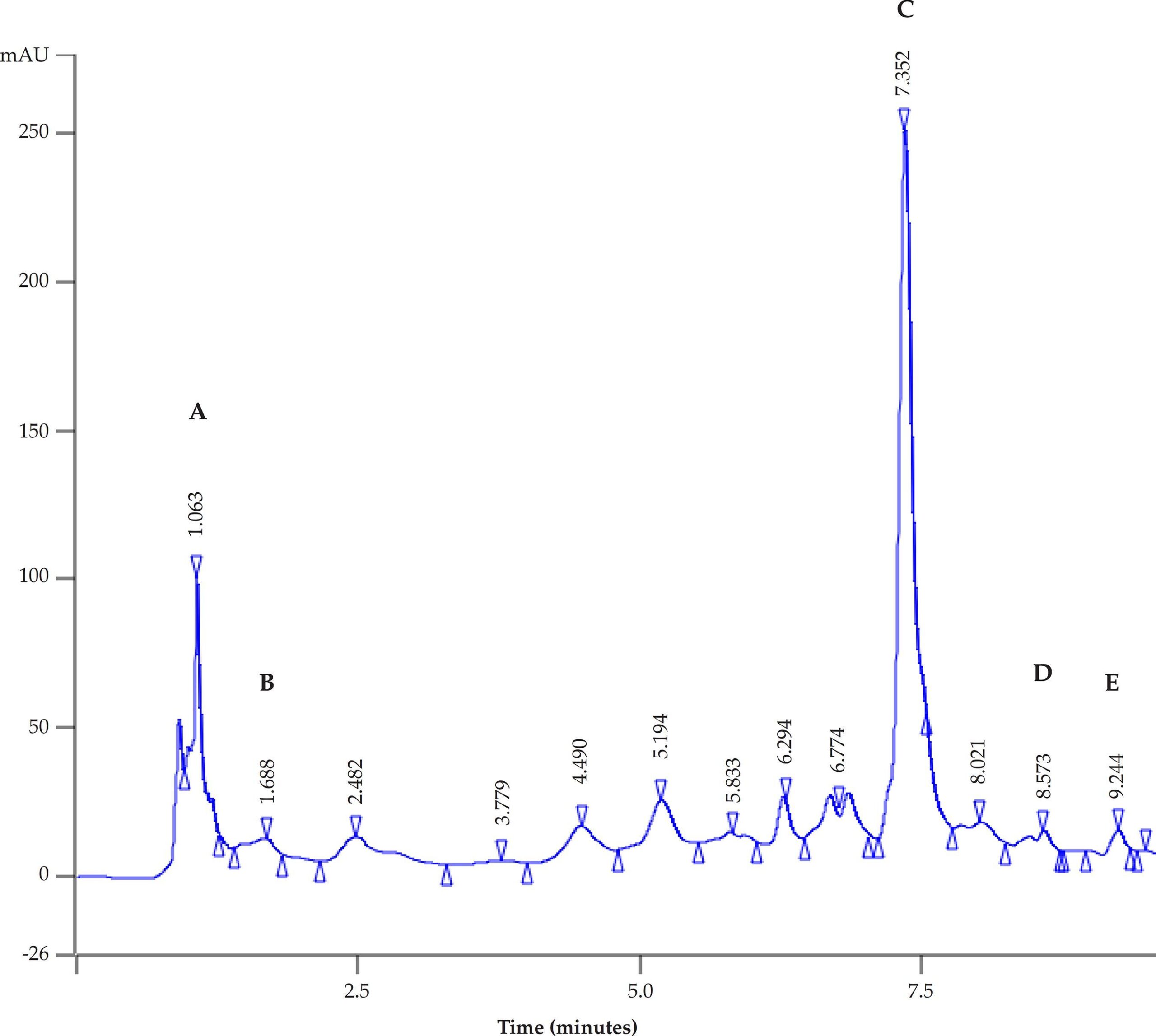
This study assessed the physicochemical composition (moisture, proteins, lipids, crude fiber, carbohydrates, minerals, niacin, saponins, titratable acidity, dietary fiber, and total phenols) of eggplant flour prepared from the whole fruit dehydrated in an oven.

Methods:

In vitro antioxidant activity was assessed using the following methods: 2.2-diphenyl-1-picrylhydrazyl radical (DPPH); Ferric Reducing/Antioxidant Power (FRAP); and analysis of polyphenols using HPLC (chlorogenic acid, caffeic acid, ferulic acid, and rutin).

Results:

It was possible to observe: 23.09% carbohydrates; 13.34% proteins; 1.85% lipids; 39.19% total fibers; 1,540 mg/100 g total soluble phenolic compounds; 840 mg/100 g saponins; minerals (potassium, magnesium, copper, iron, zinc, manganese); and niacin. In vitro antioxidant activity was observed through DPPH (455.6 mg ascorbic acid/100 g) and FRAP (486.8 mg ascorbic acid/100 g). The HPLC method determined the presence of ascorbic acid, tyrosine, and phenolic acids (chlorogenic acid, caffeic acid, and ferulic acid).

Conclusion:

The eggplant flour had great fiber content in addition to good content of phenolic compounds and saponins with important antioxidant capacity observed through in vitro assays. As a result, eggplant flour is a good addition to the diet of the population, since it can bring potential health benefits.

  • Antioxidants
  • Diet
  • Hyperlipidemias
  • Nutrition
  • Phenolic Compounds
  • Solanum Melongena
Read Full Article
Creative Commons Attribution (CC BY) Creative Commons license
01/01/2017 DOI: 10.5935/2359-4802.20170046 Views 2
Figure 1
ABC
Original Article

Impact of Light Salt Substitution for Regular Salt on Blood Pressure of Hypertensive Patients

Carolina Lôbo de Almeida Barros et al. Ana Luiza Lima Sousa Brunella Mendonça Chinem Rafaela Bernardes Rodrigues … Thiago Souza Veiga Jardim Sérgio Baiocchi Carneiro Weimar Kunz Sebba Barroso de Souza Paulo César Brandão Veiga Jardim

Background:

Studies have shown sodium restriction to have a beneficial effect on blood pressure (BP) of hypertensive patients.

Objective:

To evaluate the impact of light salt substitution for regular salt on BP of hypertensive patients.

Methods:

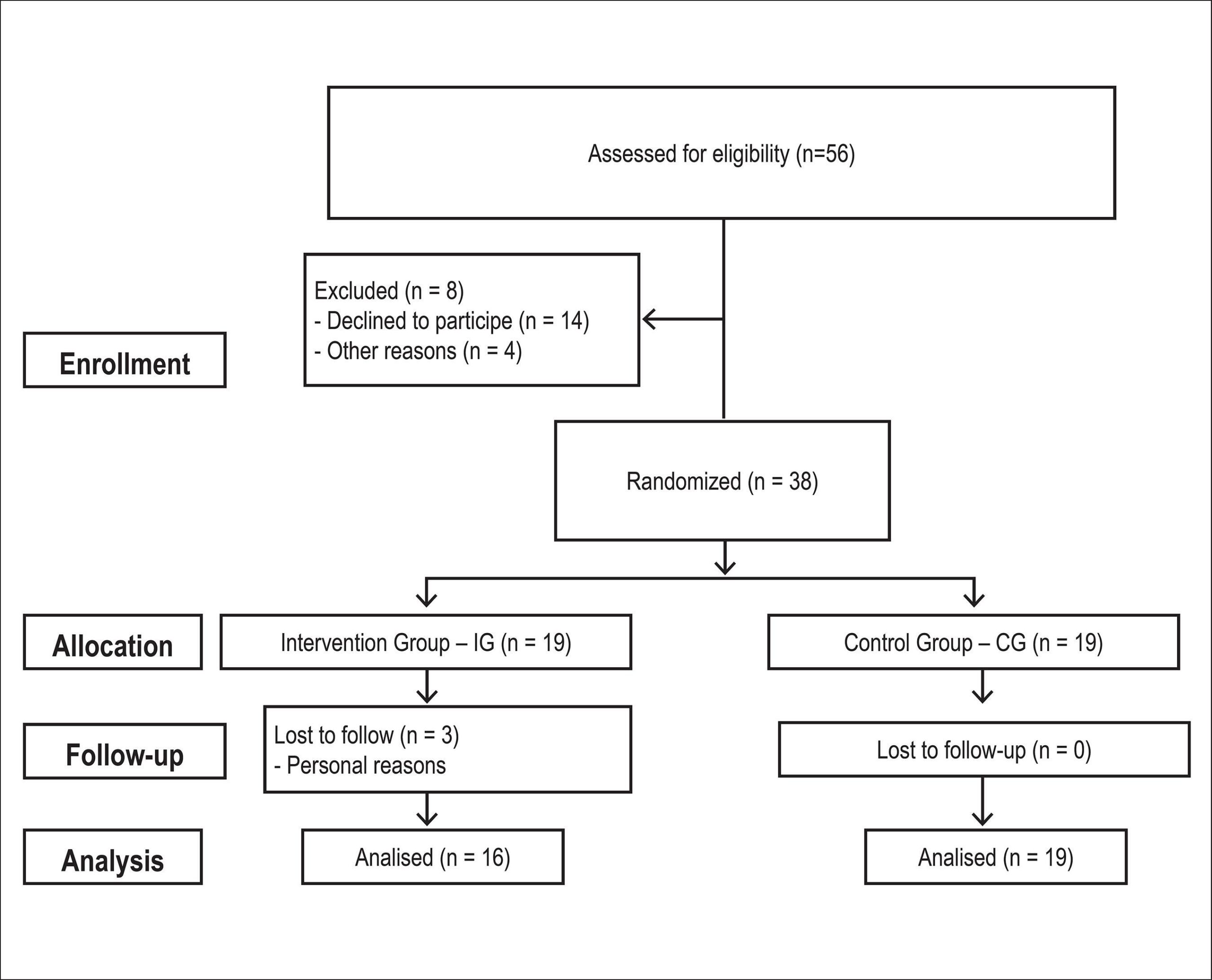
Uncontrolled hypertensive patients of both sexes, 20 to 65 years-old, on stable doses of antihypertensive drugs were randomized into Intervention Group (IG – receiving light salt) and Control Group (CG – receiving regular salt). Systolic BP (SBP) and diastolic BP (DBP) were analyzed by using casual BP measurements and Home Blood Pressure Monitoring (HBPM), and sodium and potassium excretion was assessed on 24-hour urine samples. The patients received 3 g of salt for daily consumption for 4 weeks.

Results:

The study evaluated 35 patients (65.7% women), 19 allocated to the IG and 16 to the CG. The mean age was 55.5 ± 7.4 years. Most participants had completed the Brazilian middle school (up to the 8th grade; n = 28; 80.0%), had a family income of up to US$ 600 (n = 17; 48.6%) and practiced regular physical activity (n = 19; 54.3%). Two patients (5.7%) were smokers and 40.0% consumed alcohol regularly (n = 14). The IG showed a significant reduction in both SBP and DBP on the casual measurements and HBPM (p < 0.05) and in sodium excretion (p = 0.016). The CG showed a significant reduction only in casual SBP (p = 0.032).

Conclusions:

The light salt substitution for regular salt significantly reduced BP of hypertensive patients.

  • Blood Pressure
  • Diet
  • Hypertension
  • Sodium
Read Full Article
Creative Commons Attribution (CC BY) Creative Commons license
18/11/2014 DOI: 10.5935/abc.20140174 Views 1
Figure 1
ABC
Artigo Original

Dietary Interventions and Blood Pressure in Latin America – Systematic Review and Meta-Analysis

Caroline Cantalejo Mazzaro et al. Flávia Caroline Klostermann Bruna Olandoski Erbano Nicolle Amboni Schio … Luiz César Guarita-Souza Marcia Olandoski José Rocha Faria-Neto Cristina Pellegrino Baena

Background:

High blood pressure is the major risk factor for cardiovascular disease. Low blood pressure control rates in Latin American populations emphasize the need for gathering evidence on effective therapies.

Objective:

To evaluate the effects of dietary interventions on blood pressure in Latin American populations.

Methods:

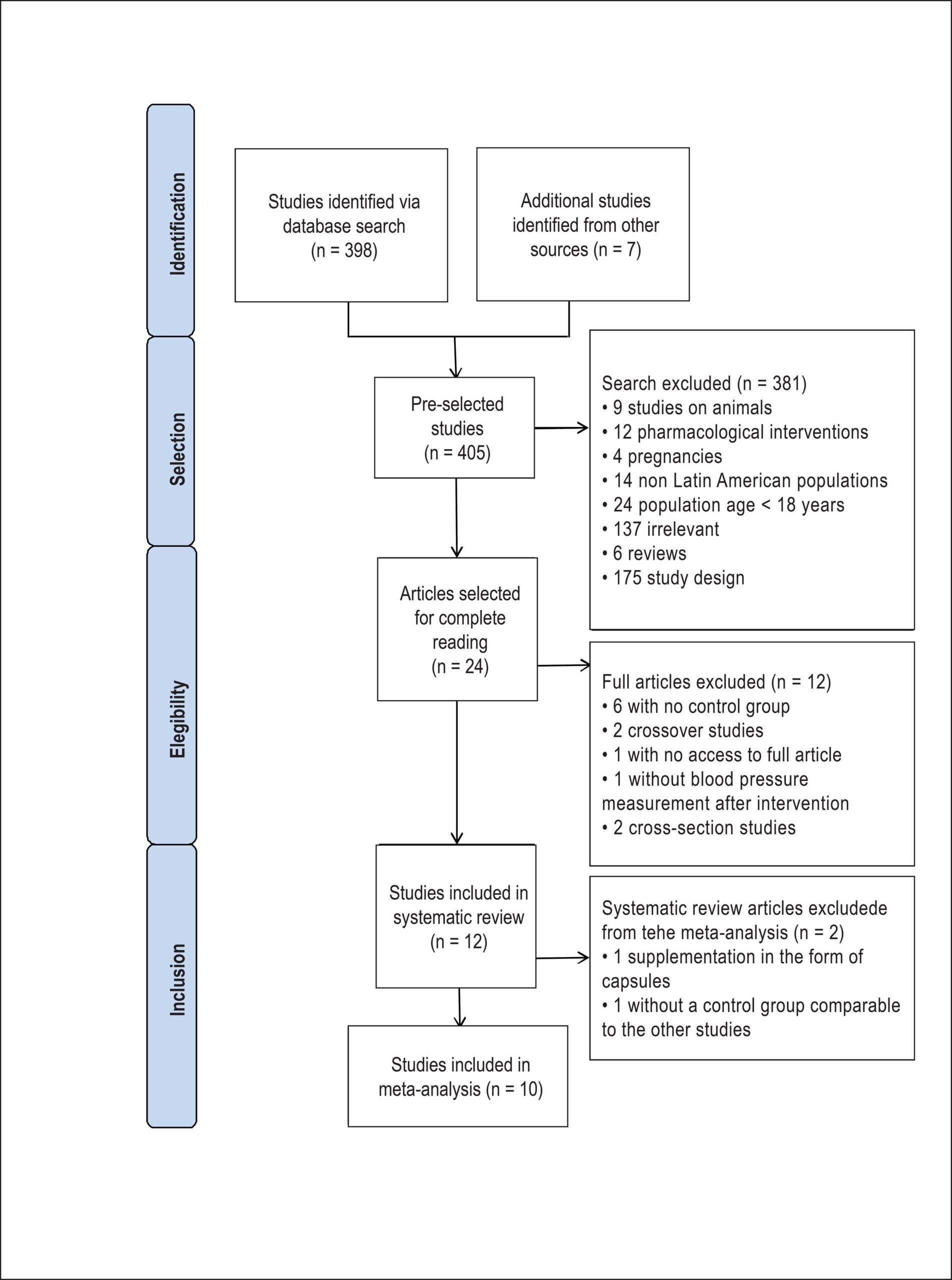
Systematic review. Electronic databases (MEDLINE/PubMed, Embase, Cochrane Library, CINAHL, Web of Science, Scopus, SciELO, LILACS and VHL) were searched and manual search for studies published up to April 2013 was performed. Parallel studies about dietary interventions in Latin American adult populations assessing arterial blood pressure (mm Hg) before and after intervention were included.

Results:

Of the 405 studies identified, 10 randomized controlled trials were included and divided into 3 subgroups according to the proposed dietary intervention. There was a non-significant reduction in systolic blood pressure in the subgroups of mineral replacement (-4.82; 95% CI: -11.36 to 1.73) and complex pattern diets (-3.17; 95% CI: -7.62 to 1.28). Regarding diastolic blood pressure, except for the hyperproteic diet subgroup, all subgroups showed a significant reduction in blood pressure: -4.66 mmHg (95% CI: -9.21 to -0.12) and -4.55 mmHg (95% CI: -7.04 to -2.06) for mineral replacement and complex pattern diets, respectively.

Conclusion:

Available evidence on the effects of dietary changes on blood pressure in Latin American populations indicates a homogeneous effect of those interventions, although not significant for systolic blood pressure. Samples were small and the quality of the studies was generally low. Larger studies are required to build robust evidence.

  • Arterial Pressure
  • Diet
  • Hypertension
  • Latin America
  • Meta-Analysis
  • Review
Read Full Article
Creative Commons Attribution (CC BY) Creative Commons license
01/03/2014 DOI: 10.5935/abc.20140037 Views 2
Nutritional intervention and the impact on adherence to treatment in patients with metabolic syndrome
ABC
Artigo Original

Nutritional intervention and the impact on adherence to treatment in patients with metabolic syndrome

Fernanda Michielin Busnello et al. Luiz Carlos Bodanese Lúcia Campos Pellanda Zilda Elizabeth de Albuquerque Santos

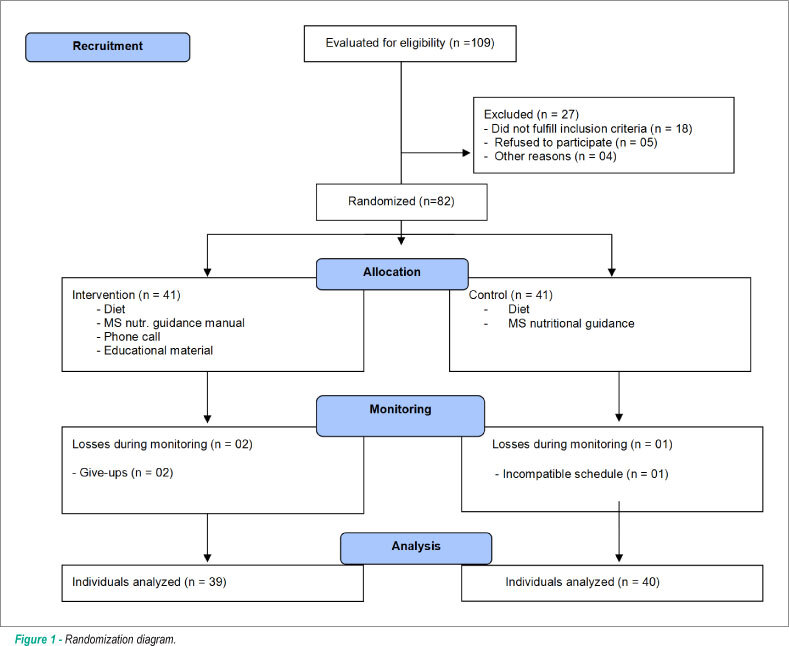
BACKGROUND: Metabolic syndrome is associated with increased risk of cardiovascular events disease and type 2 diabetes. Treatment includes modifications on life style, diet and physical activity. Treatment adherence plays a crucial role in the successful treatment of this disease. OBJECTIVE: To evaluate two models of dietary intervention, and the relationship with adherence to treatment and impact on clinical improvement of patients with metabolic syndrome. METHODS: Randomized clinical trial, lasting four months. Participants were randomized assigned to the intervention or control group. Both groups were instructed to follow a diet for 4 months. Subjects in the intervention group additionally received an intervention package, with metabolic syndrome manual book, telephone counseling and nutrition education leaflets. In both groups nutritional anamnesis, anthropometric assessment, dietary assessment, individualized dietary and biochemical tests were done. RESULTS: Patients who arrived more motivated were those who has the greatest reduction in the values of body mass index, which decreased from 31.7 kg/m² (SD ± 3.9) to 30.9 kg/m² (SD ± 3.8), reduction in waist circumference was 108.1 cm (SD ± 9.8) to 105.9 cm (SD ± 9.5). The statistically significant associations were in the correlation between body mass index, blood glucose and triglycerides, reducing the consumption of whole milk, increased consumption of whole grains and skimmed milk and between the increase in vegetable intake and reducing triglycerides. CONCLUSION: Both groups showed significant improvement in all clinical parameters that was significantly associated with the previous motivation. Patients who arrived more motivated were those who responded better to treatment.

  • Diet
  • Metabolic Syndrome
  • Patient Compliance
Read Full Article
Creative Commons Attribution (CC BY) Creative Commons license
01/07/2011 DOI: 10.1590/S0066-782X2011005000077
Nutritional and cardiovascular profiles of normotensive and hypertensive rats kept on a high fat diet
ABC
Artigo Original

Nutritional and cardiovascular profiles of normotensive and hypertensive rats kept on a high fat diet

Silvio A. Oliveira Júnior et al. Katashi Okoshi Ana Paula Lima-Leopoldo André S. Leopoldo … Dijon H.S. Campos Paula F. Martinez Marina P. Okoshi Carlos R. Padovani Maeli Dal Pai-Silva Antonio C. Cicogna

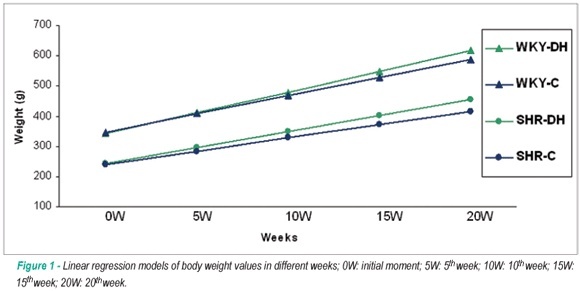
BACKGROUND: Although a high fat diet (HFD) promotes nutritional and heart disorders, few studies have assessed its influence in normotensive Wistar-Kyoto rats (WKY) and spontaneously hypertensive rats (SHR). OBJECTIVE: To evaluate and compare the nutritional and cardiovascular profiles of WKY and SHR on a high fat diet. METHODS: 20 WKY and 20 SHR were divided into four groups: Control-WKY (C-WKY), HFD-WKY, Control-SHR (C-SHR) and HFD-SHR. The C and HFD groups received, respectively, a normocaloric diet and a HFD for 20 weeks. The following features were evaluated: body weight (BW), adiposity, blood glucose, serum lipids, with measurements of total cholesterol and triacylglycerol levels, insulin and leptin. The cardiovascular study included the systolic blood pressure (SBP), a cardiopulmonary anatomical evaluation, an echocardiography and heart histology. RESULTS: The SHR had BW, adiposity, glucose, cholesterol, triacylglycerol, leptin and insulin levels lower than the WKY. In SHR, the caloric intake increased with HFD. In WKY, the HFD increased energy efficiency, adiposity and blood leptin, and reduced glucose. In the cardiovascular assessment, the SHR had SBP, pulmonary moisture, myocardial hypertrophy and interstitial fibrosis higher than the WKY (p <0.01); the cardiac function was similar in both strains. The HFD reduced the ventricular systolic diameter in the WKY and increased the mitral E/A ratio, the diastolic thickness of the interventricular septum and the posterior wall, as well as the interstitial fibrosis of the left ventricle. (Arq Bras Cardiol 2009; 93(5) : 487-494) CONCLUSION: Although it had not significantly affected the nutritional profile of the SHR, the treatment increased cardiac remodeling and precipitated the emergence of ventricular diastolic dysfunction. In WKY, the diet increased adiposity and leptinemia, and promoted non-significant cardiovascular changes.

  • Diet
  • Hyperlipidemias
  • Hypertension
  • Rats
  • Ventricular Remodeling
Read Full Article
Creative Commons Attribution (CC BY) Creative Commons license
11/01/2010 DOI: 10.1590/S0066-782X2009001100014 Views 2
ABC
Editorial

Diet prescription in chronic heart failure: why don't we do it?

Adriana Lopes Latado

EDITORIAL

Diet prescription in chronic heart failure: why don’t we do it?

[…]

  • Diet
  • Heart Failure
  • Prescriptions
Read Full Article
Creative Commons Attribution (CC BY) Creative Commons license
06/01/2010 DOI: 10.1590/S0066-782X2009001100003 Views 2

Could not load more articles. Please try again.

How to cite this article

EndNote RIS

Electronic Document Format (Vancouver)

Oliveira GMM, Brant LCC, Polanczyk CA, Malta DC, Biolo A, Nascimento BR, Souza MFM, et al. Cardiovascular Statistics – Brazil 2026. Arquivos Brasileiros de Cardiologia 2026;:e20260832.

Electronic Document Format (ABNT)

Oliveira, Gláucia Maria Moraes de; Brant, Luisa Campos Caldeira; Polanczyk, Carisi Anne; Malta, Deborah Carvalho; Biolo, Andreia; Nascimento, Bruno Ramos; Souza, Maria de Fatima Marinho de; Lorenzo, Andrea Rocha De; Fagundes Júnior, Antonio Aurélio de Paiva; Manfro, Arthur Gus; Schaan, Beatriz D.; Silva, Christina Grüne de Souza e; Castilho, Fábio Morato de; Cesena, Fernando Henpin Yue; Soares, Gabriel Porto; Xavier Junior, Gesner Francisco; Barreto Filho, Jose Augusto Soares; Pellanda, Lucia Campos; Aranha, Luciana Nicolau; Rohde, Luis Eduardo Paim; Passaglia, Luiz Guilherme; Pinto-Filho, Marcelo Martins; Machline-Carrion, M. Julia; Bittencourt, Marcio Sommer; Pontes Neto, Octavio M.; Villela, Paolo Blanco; Godoy, Paulo Henrique; Teixeira, Renato Azeredo; Stein, Ricardo; Sampaio, Roney Orismar; Salim, Thais Rocha; Gaziano, Thomas A.; Perel, Pablo; Roth, Gregory A.; Ribeiro, Antonio Luiz Pinho. Cardiovascular Statistics – Brazil 2026. Arquivos Brasileiros de Cardiologia, e20260832, Oct. 2026.

Electronic Document Format (APA)

Oliveira, G. M. M. , Brant, L. C. C., Polanczyk, C. A., Malta, D. C., Biolo, A., Nascimento, B. R., Souza, M. F. M. , Lorenzo, A. R. D., Fagundes Júnior, A. A. P., Manfro, A. G., Schaan, B. D., Silva, C. G. S. , Castilho, F. M. , Cesena, F. H. Y., Soares, G. P., Xavier Junior, G. F., Barreto Filho, J. A. S., Pellanda, L. C., Aranha, L. N., Rohde, L. E. P., Passaglia, L. G., Pinto-Filho, M. M., Machline-Carrion, M. J., Bittencourt, M. S., Pontes Neto, O. M., Villela, P. B., Godoy, P. H., Teixeira, R. A., Stein, R., Sampaio, R. O., Salim, T. R., Gaziano, T. A., Perel, P., Roth, G. A., & Ribeiro, A. L. P. (2026). Cardiovascular Statistics – Brazil 2026. Arquivos Brasileiros de Cardiologia, , e20260832.

Electronic Document Format (ISO)

Oliveira, Gláucia Maria Moraes de and Brant, Luisa Campos Caldeira and Polanczyk, Carisi Anne and Malta, Deborah Carvalho and Biolo, Andreia and Nascimento, Bruno Ramos and Souza, Maria de Fatima Marinho de and Lorenzo, Andrea Rocha De and Fagundes Júnior, Antonio Aurélio de Paiva and Manfro, Arthur Gus and Schaan, Beatriz D. and Silva, Christina Grüne de Souza e and Castilho, Fábio Morato de and Cesena, Fernando Henpin Yue and Soares, Gabriel Porto and Xavier Junior, Gesner Francisco and Barreto Filho, Jose Augusto Soares and Pellanda, Lucia Campos and Aranha, Luciana Nicolau and Rohde, Luis Eduardo Paim and Passaglia, Luiz Guilherme and Pinto-Filho, Marcelo Martins and Machline-Carrion, M. Julia and Bittencourt, Marcio Sommer and Pontes Neto, Octavio M. and Villela, Paolo Blanco and Godoy, Paulo Henrique and Teixeira, Renato Azeredo and Stein, Ricardo and Sampaio, Roney Orismar and Salim, Thais Rocha and Gaziano, Thomas A. and Perel, Pablo and Roth, Gregory A. and Ribeiro, Antonio Luiz Pinho. Cardiovascular Statistics – Brazil 2026. Arquivos Brasileiros de Cardiologia [online]. 2026, [cited 2026-10-14], e20260832. Available from: <https://journals.cardiol.br/en/article/cardiovascular-statistics-brazil-2026/>. ISSN 0066-782X

EndNote RIS

Electronic Document Format (Vancouver)

Costa GLA, Mota JC, Sousa MUS, Kapczinski F, Cervera-Martínez J, Balanzá-Martínez V, Boni RBD, et al. Lifestyle and Hypertension in Brazil and Spain. International Journal of Cardiovascular Sciences 2025;38:e20240038.

Electronic Document Format (ABNT)

Costa, Giovanna Lucieri Alonso; Mota, Jurema Correa; Sousa, Marina Ururahy Soriano de; Kapczinski, Flavio; Cervera-Martínez, Jose; Balanzá-Martínez, Vicent; Boni, Raquel B. De. Lifestyle and Hypertension in Brazil and Spain. International Journal of Cardiovascular Sciences, v. 38, e20240038, Mar. 2025.

Electronic Document Format (APA)

Costa, G. L. A., Mota, J. C., Sousa, M. U. S. , Kapczinski, F., Cervera-Martínez, J., Balanzá-Martínez, V., & Boni, R. B. D. (2025). Lifestyle and Hypertension in Brazil and Spain. International Journal of Cardiovascular Sciences, 38, e20240038.

Electronic Document Format (ISO)

Costa, Giovanna Lucieri Alonso and Mota, Jurema Correa and Sousa, Marina Ururahy Soriano de and Kapczinski, Flavio and Cervera-Martínez, Jose and Balanzá-Martínez, Vicent and Boni, Raquel B. De. Lifestyle and Hypertension in Brazil and Spain. International Journal of Cardiovascular Sciences [online]. 2025, vol. 38, [cited 2026-10-14], e20240038. Available from: <https://journals.cardiol.br/en/article/lifestyle-and-hypertension-in-brazil-and-spain/>. ISSN 2359-4802

EndNote RIS

Electronic Document Format (Vancouver)

Brito L, Sahade V, Marcadenti A, Torreglosa CR, Weber B, Bersch-Ferreira C, Rodrigues IG, et al. Dietary Adequacy of Individuals with Cardiovascular Disease According to Clinical Guidelines in the Brazilian Cardioprotective Nutritional (BALANCE). Arquivos Brasileiros de Cardiologia 2024;121(7):e20230705.

Electronic Document Format (ABNT)

Brito, Luciana; Sahade, Viviane; Marcadenti, Aline; Torreglosa, Camila Ragne; Weber, Bernardete; Bersch-Ferreira, Ângela Cristine; Rodrigues, Isa Galvão; Sousa, Antônio Carlos Sobral; Gomes, Adriana Barros; Pinheiro, Josilene Maria Ferreira; Vasconcelos, Sandra Mary Lima; Carlos, Daniele Maria de Oliveira; Figueiredo Neto, José Albuquerque de; Dantas, Clenise de Farias; Daltro, Carla. Dietary Adequacy of Individuals with Cardiovascular Disease According to Clinical Guidelines in the Brazilian Cardioprotective Nutritional (BALANCE). Arquivos Brasileiros de Cardiologia, v. 121, n. 7, e20230705, Aug. 2024.

Electronic Document Format (APA)

Brito, L., Sahade, V., Marcadenti, A., Torreglosa, C. R., Weber, B., Bersch-Ferreira, C., Rodrigues, I. G., Sousa, A. C. S., Gomes, A. B., Pinheiro, J. M. F., Vasconcelos, S. M. L., Carlos, D. M. O., Figueiredo Neto, J. A. , Dantas, C. F., & Daltro, C. (2024). Dietary Adequacy of Individuals with Cardiovascular Disease According to Clinical Guidelines in the Brazilian Cardioprotective Nutritional (BALANCE). Arquivos Brasileiros de Cardiologia, 121(7), e20230705.

Electronic Document Format (ISO)

Brito, Luciana and Sahade, Viviane and Marcadenti, Aline and Torreglosa, Camila Ragne and Weber, Bernardete and Bersch-Ferreira, Ângela Cristine and Rodrigues, Isa Galvão and Sousa, Antônio Carlos Sobral and Gomes, Adriana Barros and Pinheiro, Josilene Maria Ferreira and Vasconcelos, Sandra Mary Lima and Carlos, Daniele Maria de Oliveira and Figueiredo Neto, José Albuquerque de and Dantas, Clenise de Farias and Daltro, Carla. Dietary Adequacy of Individuals with Cardiovascular Disease According to Clinical Guidelines in the Brazilian Cardioprotective Nutritional (BALANCE). Arquivos Brasileiros de Cardiologia [online]. 2024, vol. 121, n. 7, [cited 2026-10-14], e20230705. Available from: <https://journals.cardiol.br/en/article/dietary-adequacy-of-individuals-with-cardiovascular-disease-according-to-clinical-guidelines-in-the-brazilian-cardioprotective-nutritional-balance/>. ISSN 0066-782X

EndNote RIS

Electronic Document Format (Vancouver)

Dias ARL, Serra AJ. High-Fat Diet and Heart: What is the Real Impact of Resistance Exercise Training?. Arquivos Brasileiros de Cardiologia 2024;121(4):e20240091.

Electronic Document Format (ABNT)

Dias, André Rodrigues Lourenço; Serra, Andrey Jorge. High-Fat Diet and Heart: What is the Real Impact of Resistance Exercise Training?. Arquivos Brasileiros de Cardiologia, v. 121, n. 4, e20240091, May. 2024.

Electronic Document Format (APA)

Dias, A. R. L., & Serra, A. J. (2024). High-Fat Diet and Heart: What is the Real Impact of Resistance Exercise Training?. Arquivos Brasileiros de Cardiologia, 121(4), e20240091.

Electronic Document Format (ISO)

Dias, André Rodrigues Lourenço and Serra, Andrey Jorge. High-Fat Diet and Heart: What is the Real Impact of Resistance Exercise Training?. Arquivos Brasileiros de Cardiologia [online]. 2024, vol. 121, n. 4, [cited 2026-10-14], e20240091. Available from: <https://journals.cardiol.br/en/article/high-fat-diet-and-heart-what-is-the-real-impact-of-resistance-exercise-training/>. ISSN 0066-782X

EndNote RIS

Electronic Document Format (Vancouver)

Marcadenti A, Machado RHV, Santos RHN, Kasai CCS, Kovacs C, Bello A, Matos CH, et al. Adequacy of Fatty Acids Consumption Among Individuals in Secondary Cardiovascular Prevention. Arquivos Brasileiros de Cardiologia 2024;121(3):e20230487.

Electronic Document Format (ABNT)

Marcadenti, Aline; Machado, Rachel H. Vieira; Santos, Renato Hideo Nakagawa; Kasai, Caio Cesar dos Santos; Kovacs, Cristiane; Bello, Annie; Matos, Cristina H. de; Bertacco, Renata Torres Abib; Souza, Gabriela C.; Schirmann, Gabriela da S.; Nagano, Francisca Eugenia Zaina; Poloni, Soraia; Kik, Raquel Milani El; Feres, Naoel Hassan; Rodrigues, Isa G.; Sousa, Antônio Carlos Sobral; Pinheiro, Josilene M. F.; Vasconcelos, Sandra Mary Lima; Carlos, Daniele Maria de Oliveira; Souza, Viviane Sahade; Gomes, Adriana Barros; Figueiredo Neto, José Albuquerque de; Moriguchi, Emilio Hideyuki; Izar, Maria Cristina; Pinto, Sônia Lopes; Bressan, Josefina; Souza, Simone Raimondi de; Kumbier, Magali C.; Araújo, Celme Barroncas Passos de; Torreglosa, Camila R.; Weber, Bernardete; Bersch-Ferreira, Ângela Cristine. Adequacy of Fatty Acids Consumption Among Individuals in Secondary Cardiovascular Prevention. Arquivos Brasileiros de Cardiologia, v. 121, n. 3, e20230487, Apr. 2024.

Electronic Document Format (APA)

Marcadenti, A., Machado, R. H. V., Santos, R. H. N., Kasai, C. C. S., Kovacs, C., Bello, A., Matos, C. H. , Bertacco, R. T. A., Souza, G. C., Schirmann, G. S., Nagano, F. E. Z., Poloni, S., Kik, R. M. E., Feres, N. H., Rodrigues, I. G., Sousa, A. C. S., Pinheiro, J. M. F., Vasconcelos, S. M. L., Carlos, D. M. O., Souza, V. S., Gomes, A. B., Figueiredo Neto, J. A. , Moriguchi, E. H., Izar, M. C., Pinto, S. L., Bressan, J., Souza, S. R. , Kumbier, M. C., Araújo, C. B. P. , Torreglosa, C. R., Weber, B., & Bersch-Ferreira, C. (2024). Adequacy of Fatty Acids Consumption Among Individuals in Secondary Cardiovascular Prevention. Arquivos Brasileiros de Cardiologia, 121(3), e20230487.

Electronic Document Format (ISO)

Marcadenti, Aline and Machado, Rachel H. Vieira and Santos, Renato Hideo Nakagawa and Kasai, Caio Cesar dos Santos and Kovacs, Cristiane and Bello, Annie and Matos, Cristina H. de and Bertacco, Renata Torres Abib and Souza, Gabriela C. and Schirmann, Gabriela da S. and Nagano, Francisca Eugenia Zaina and Poloni, Soraia and Kik, Raquel Milani El and Feres, Naoel Hassan and Rodrigues, Isa G. and Sousa, Antônio Carlos Sobral and Pinheiro, Josilene M. F. and Vasconcelos, Sandra Mary Lima and Carlos, Daniele Maria de Oliveira and Souza, Viviane Sahade and Gomes, Adriana Barros and Figueiredo Neto, José Albuquerque de and Moriguchi, Emilio Hideyuki and Izar, Maria Cristina and Pinto, Sônia Lopes and Bressan, Josefina and Souza, Simone Raimondi de and Kumbier, Magali C. and Araújo, Celme Barroncas Passos de and Torreglosa, Camila R. and Weber, Bernardete and Bersch-Ferreira, Ângela Cristine. Adequacy of Fatty Acids Consumption Among Individuals in Secondary Cardiovascular Prevention. Arquivos Brasileiros de Cardiologia [online]. 2024, vol. 121, n. 3, [cited 2026-10-14], e20230487. Available from: <https://journals.cardiol.br/en/article/adequacy-of-fatty-acids-consumption-among-individuals-in-secondary-cardiovascular-prevention/>. ISSN 0066-782X

EndNote RIS

Electronic Document Format (Vancouver)

Moreira ASB, Gapanowicz DP. Ultra-Processed Foods Consumption and Cardiovascular Health. International Journal of Cardiovascular Sciences 2023;36:e20230096.

Electronic Document Format (ABNT)

Moreira, Annie Seixas Bello; Gapanowicz, Débora Pinto. Ultra-Processed Foods Consumption and Cardiovascular Health. International Journal of Cardiovascular Sciences, v. 36, e20230096, Aug. 2023.

Electronic Document Format (APA)

Moreira, A. S. B., & Gapanowicz, D. P. (2023). Ultra-Processed Foods Consumption and Cardiovascular Health. International Journal of Cardiovascular Sciences, 36, e20230096.

Electronic Document Format (ISO)

Moreira, Annie Seixas Bello and Gapanowicz, Débora Pinto. Ultra-Processed Foods Consumption and Cardiovascular Health. International Journal of Cardiovascular Sciences [online]. 2023, vol. 36, [cited 2026-10-14], e20230096. Available from: <https://journals.cardiol.br/en/article/ultra-processed-foods-consumption-and-cardiovascular-health/>. ISSN 2359-4802

EndNote RIS

Electronic Document Format (Vancouver)

Khalfallah M, Elnagar B, Soliman SS, Eissa A, Allaithy A. The Value of Intermittent Fasting and Low Carbohydrate Diet in Prediabetic Patients for the Prevention of Cardiovascular Diseases. Arquivos Brasileiros de Cardiologia 2023;120(4):e20220606.

Electronic Document Format (ABNT)

Khalfallah, Mohamed; Elnagar, Basma; Soliman, Shaimaa S.; Eissa, Ahmad; Allaithy, Amany. The Value of Intermittent Fasting and Low Carbohydrate Diet in Prediabetic Patients for the Prevention of Cardiovascular Diseases. Arquivos Brasileiros de Cardiologia, v. 120, n. 4, e20220606, Apr. 2023.

Electronic Document Format (APA)

Khalfallah, M., Elnagar, B., Soliman, S. S., Eissa, A., & Allaithy, A. (2023). The Value of Intermittent Fasting and Low Carbohydrate Diet in Prediabetic Patients for the Prevention of Cardiovascular Diseases. Arquivos Brasileiros de Cardiologia, 120(4), e20220606.

Electronic Document Format (ISO)

Khalfallah, Mohamed and Elnagar, Basma and Soliman, Shaimaa S. and Eissa, Ahmad and Allaithy, Amany. The Value of Intermittent Fasting and Low Carbohydrate Diet in Prediabetic Patients for the Prevention of Cardiovascular Diseases. Arquivos Brasileiros de Cardiologia [online]. 2023, vol. 120, n. 4, [cited 2026-10-14], e20220606. Available from: <https://journals.cardiol.br/en/article/the-value-of-intermittent-fasting-and-low-carbohydrate-diet-in-prediabetic-patients-for-the-prevention-of-cardiovascular-diseases/>. ISSN 0066-782X

EndNote RIS

Electronic Document Format (Vancouver)

Guerra TRB. The Present and Future of the Cardioprotective Food Model for the Brazilian Population. International Journal of Cardiovascular Sciences 2023;34(6):632-3.

Electronic Document Format (ABNT)

Guerra, Thais de Rezende Bessa. The Present and Future of the Cardioprotective Food Model for the Brazilian Population. International Journal of Cardiovascular Sciences, v. 34, n. 6, p. 632-633, Mar. 2023.

Electronic Document Format (APA)

Guerra, T. R. B. (2023). The Present and Future of the Cardioprotective Food Model for the Brazilian Population. International Journal of Cardiovascular Sciences, 34(6), 632-633.

Electronic Document Format (ISO)

Guerra, Thais de Rezende Bessa. The Present and Future of the Cardioprotective Food Model for the Brazilian Population. International Journal of Cardiovascular Sciences [online]. 2023, vol. 34, n. 6, [cited 2026-10-14], pp. 632-633. Available from: <https://journals.cardiol.br/en/article/the-present-and-future-of-the-cardioprotective-food-model-for-the-brazilian-population/>. ISSN 2359-4802

EndNote RIS

Electronic Document Format (Vancouver)

Moreira ASB, Gapanowicz DP. Diet Quality and Cardiovascular Health. International Journal of Cardiovascular Sciences 2023;36:e20220215.

Electronic Document Format (ABNT)

Moreira, Annie Seixas Bello; Gapanowicz, Débora Pinto. Diet Quality and Cardiovascular Health. International Journal of Cardiovascular Sciences, v. 36, e20220215, Jan. 2023.

Electronic Document Format (APA)

Moreira, A. S. B., & Gapanowicz, D. P. (2023). Diet Quality and Cardiovascular Health. International Journal of Cardiovascular Sciences, 36, e20220215.

Electronic Document Format (ISO)

Moreira, Annie Seixas Bello and Gapanowicz, Débora Pinto. Diet Quality and Cardiovascular Health. International Journal of Cardiovascular Sciences [online]. 2023, vol. 36, [cited 2026-10-14], e20220215. Available from: <https://journals.cardiol.br/en/article/diet-quality-and-cardiovascular-health/>. ISSN 2359-4802

EndNote RIS

Electronic Document Format (Vancouver)

Weschenfelder C, Kris-Etherton PM. Abdominal Subcutaneous Adipose Tissue, Diet, and Risk of Cardiovascular Disease: What do we Know?. International Journal of Cardiovascular Sciences 2022;35(1):46-7.

Electronic Document Format (ABNT)

Weschenfelder, Camila; Kris-Etherton, Penny M.. Abdominal Subcutaneous Adipose Tissue, Diet, and Risk of Cardiovascular Disease: What do we Know?. International Journal of Cardiovascular Sciences, v. 35, n. 1, p. 46-47, Jan. 2022.

Electronic Document Format (APA)

Weschenfelder, C., & Kris-Etherton, P. M. (2022). Abdominal Subcutaneous Adipose Tissue, Diet, and Risk of Cardiovascular Disease: What do we Know?. International Journal of Cardiovascular Sciences, 35(1), 46-47.

Electronic Document Format (ISO)

Weschenfelder, Camila and Kris-Etherton, Penny M.. Abdominal Subcutaneous Adipose Tissue, Diet, and Risk of Cardiovascular Disease: What do we Know?. International Journal of Cardiovascular Sciences [online]. 2022, vol. 35, n. 1, [cited 2026-10-14], pp. 46-47. Available from: <https://journals.cardiol.br/en/article/abdominal-subcutaneous-adipose-tissue-diet-and-risk-of-cardiovascular-disease-what-do-we-know/>. ISSN 2359-4802

EndNote RIS

Electronic Document Format (Vancouver)

Souza DS, Roman-Campos D. Searching Naturally Occurring Compounds to Treat Hypertension. Arquivos Brasileiros de Cardiologia 2021;117(6):1104-5.

Electronic Document Format (ABNT)

Souza, Diego Santos; Roman-Campos, Danilo. Searching Naturally Occurring Compounds to Treat Hypertension. Arquivos Brasileiros de Cardiologia, v. 117, n. 6, p. 1104-1105, Dec. 2021.

Electronic Document Format (APA)

Souza, D. S., & Roman-Campos, D. (2021). Searching Naturally Occurring Compounds to Treat Hypertension. Arquivos Brasileiros de Cardiologia, 117(6), 1104-1105.

Electronic Document Format (ISO)

Souza, Diego Santos and Roman-Campos, Danilo. Searching Naturally Occurring Compounds to Treat Hypertension. Arquivos Brasileiros de Cardiologia [online]. 2021, vol. 117, n. 6, [cited 2026-10-14], pp. 1104-1105. Available from: <https://journals.cardiol.br/en/article/searching-naturally-occurring-compounds-to-treat-hypertension/>. ISSN 0066-782X

EndNote RIS

Electronic Document Format (Vancouver)

Antoniazzi L, Dias LF. How Can We Favorably Modulate Serum Uric Acid?. Arquivos Brasileiros de Cardiologia 2021;117(4):676-7.

Electronic Document Format (ABNT)

Antoniazzi, Luiza; Dias, Laís Ferreira. How Can We Favorably Modulate Serum Uric Acid?. Arquivos Brasileiros de Cardiologia, v. 117, n. 4, p. 676-677, Oct. 2021.

Electronic Document Format (APA)

Antoniazzi, L., & Dias, L. F. (2021). How Can We Favorably Modulate Serum Uric Acid?. Arquivos Brasileiros de Cardiologia, 117(4), 676-677.

Electronic Document Format (ISO)

Antoniazzi, Luiza and Dias, Laís Ferreira. How Can We Favorably Modulate Serum Uric Acid?. Arquivos Brasileiros de Cardiologia [online]. 2021, vol. 117, n. 4, [cited 2026-10-14], pp. 676-677. Available from: <https://journals.cardiol.br/en/article/how-can-we-favorably-modulate-serum-uric-acid/>. ISSN 0066-782X

EndNote RIS

Electronic Document Format (Vancouver)

Stein E, Barbiero S, Portal VL, Luz V, Marcadenti A. Association between Deep Subcutaneous Adipose Tissue Estimated by DAAT Index and Dietary Intake in Patients with Acute Coronary Syndrome. International Journal of Cardiovascular Sciences 2021;35(1):39-45.

Electronic Document Format (ABNT)

Stein, Elana; Barbiero, Sandra; Portal, Vera Lucia; Luz, Victória da; Marcadenti, Aline. Association between Deep Subcutaneous Adipose Tissue Estimated by DAAT Index and Dietary Intake in Patients with Acute Coronary Syndrome. International Journal of Cardiovascular Sciences, v. 35, n. 1, p. 39-45, Jul. 2021.

Electronic Document Format (APA)

Stein, E., Barbiero, S., Portal, V. L., Luz, V. , & Marcadenti, A. (2021). Association between Deep Subcutaneous Adipose Tissue Estimated by DAAT Index and Dietary Intake in Patients with Acute Coronary Syndrome. International Journal of Cardiovascular Sciences, 35(1), 39-45.

Electronic Document Format (ISO)

Stein, Elana and Barbiero, Sandra and Portal, Vera Lucia and Luz, Victória da and Marcadenti, Aline. Association between Deep Subcutaneous Adipose Tissue Estimated by DAAT Index and Dietary Intake in Patients with Acute Coronary Syndrome. International Journal of Cardiovascular Sciences [online]. 2021, vol. 35, n. 1, [cited 2026-10-14], pp. 39-45. Available from: <https://journals.cardiol.br/en/article/association-between-deep-subcutaneous-adipose-tissue-estimated-by-daat-index-and-dietary-intake-in-patients-with-acute-coronary-syndrome/>. ISSN 2359-4802

EndNote RIS

Electronic Document Format (Vancouver)

Oliveira SM, Garcia JL, Vileigas DF, Campos DHS, Francisqueti-Ferron FV, Ferron AJT, Silva-Bertani DCT, et al. Cardiac Remodeling in Obesity-Resistance Model is not Related to Collagen I and III Protein Expression. International Journal of Cardiovascular Sciences 2021;34(6):656-64.

Electronic Document Format (ABNT)

Oliveira, Scarlet Marques de; Garcia, Jéssica Leite; Vileigas, Danielle Fernandes; Campos, Dijon Henrique Salomé de; Francisqueti-Ferron, Fabiane Valentini; Ferron, Artur Junio Togneri; Silva-Bertani, Danielle Cristina Tomaz da; Padovani, Carlos Roberto; Corrêa, Camila Renata; Cicogna, Antonio Carlos. Cardiac Remodeling in Obesity-Resistance Model is not Related to Collagen I and III Protein Expression. International Journal of Cardiovascular Sciences, v. 34, n. 6, p. 656-664, Jul. 2021.

Electronic Document Format (APA)

Oliveira, S. M. , Garcia, J. L., Vileigas, D. F., Campos, D. H. S. , Francisqueti-Ferron, F. V., Ferron, A. J. T., Silva-Bertani, D. C. T. , Padovani, C. R., Corrêa, C. R., & Cicogna, A. C. (2021). Cardiac Remodeling in Obesity-Resistance Model is not Related to Collagen I and III Protein Expression. International Journal of Cardiovascular Sciences, 34(6), 656-664.

Electronic Document Format (ISO)

Oliveira, Scarlet Marques de and Garcia, Jéssica Leite and Vileigas, Danielle Fernandes and Campos, Dijon Henrique Salomé de and Francisqueti-Ferron, Fabiane Valentini and Ferron, Artur Junio Togneri and Silva-Bertani, Danielle Cristina Tomaz da and Padovani, Carlos Roberto and Corrêa, Camila Renata and Cicogna, Antonio Carlos. Cardiac Remodeling in Obesity-Resistance Model is not Related to Collagen I and III Protein Expression. International Journal of Cardiovascular Sciences [online]. 2021, vol. 34, n. 6, [cited 2026-10-14], pp. 656-664. Available from: <https://journals.cardiol.br/en/article/cardiac-remodeling-in-obesity-resistance-model-is-not-related-to-collagen-i-and-iii-protein-expression/>. ISSN 2359-4802

EndNote RIS

Electronic Document Format (Vancouver)

Campana E, Ferrari BD. Impact of Continuing Education on the Quality of Blood Pressure Measurement. International Journal of Cardiovascular Sciences 2021;34(1):8-9.

Electronic Document Format (ABNT)

Campana, Erika; Ferrari, Bruno Daniel. Impact of Continuing Education on the Quality of Blood Pressure Measurement. International Journal of Cardiovascular Sciences, v. 34, n. 1, p. 8-9, Jan. 2021.

Electronic Document Format (APA)

Campana, E., & Ferrari, B. D. (2021). Impact of Continuing Education on the Quality of Blood Pressure Measurement. International Journal of Cardiovascular Sciences, 34(1), 8-9.

Electronic Document Format (ISO)

Campana, Erika and Ferrari, Bruno Daniel. Impact of Continuing Education on the Quality of Blood Pressure Measurement. International Journal of Cardiovascular Sciences [online]. 2021, vol. 34, n. 1, [cited 2026-10-14], pp. 8-9. Available from: <https://journals.cardiol.br/en/article/impact-of-continuing-education-on-the-quality-of-blood-pressure-measurement/>. ISSN 2359-4802

EndNote RIS

Electronic Document Format (Vancouver)

Basilio PG, Oliveira APC, Castro ACF, Carvalho MR, Zagatto AM, Martinez PF, Okoshi MP, et al. Intermittent Fasting Attenuates Exercise Training-Induced Cardiac Remodeling. Arquivos Brasileiros de Cardiologia 2020;115(2):184-93.

Electronic Document Format (ABNT)

Basilio, Priscilla Gois; Oliveira, Ana Priscila Cayres de; Castro, Ana Carolini Ferreira de; Carvalho, Marianna Rabelo de; Zagatto, Alessandro Moura; Martinez, Paula Felippe; Okoshi, Marina Politi; Okoshi, Katashi; Ota, Gabriel Elias; Reis, Filipe Abdalla dos; Oliveira-Junior, Silvio Assis de. Intermittent Fasting Attenuates Exercise Training-Induced Cardiac Remodeling. Arquivos Brasileiros de Cardiologia, v. 115, n. 2, p. 184-193, Aug. 2020.

Electronic Document Format (APA)

Basilio, P. G., Oliveira, A. P. C. , Castro, A. C. F. , Carvalho, M. R. , Zagatto, A. M., Martinez, P. F., Okoshi, M. P., Okoshi, K., Ota, G. E., Reis, F. A. , & Oliveira-Junior, S. A. (2020). Intermittent Fasting Attenuates Exercise Training-Induced Cardiac Remodeling. Arquivos Brasileiros de Cardiologia, 115(2), 184-193.

Electronic Document Format (ISO)

Basilio, Priscilla Gois and Oliveira, Ana Priscila Cayres de and Castro, Ana Carolini Ferreira de and Carvalho, Marianna Rabelo de and Zagatto, Alessandro Moura and Martinez, Paula Felippe and Okoshi, Marina Politi and Okoshi, Katashi and Ota, Gabriel Elias and Reis, Filipe Abdalla dos and Oliveira-Junior, Silvio Assis de. Intermittent Fasting Attenuates Exercise Training-Induced Cardiac Remodeling. Arquivos Brasileiros de Cardiologia [online]. 2020, vol. 115, n. 2, [cited 2026-10-14], pp. 184-193. Available from: <https://journals.cardiol.br/en/article/intermittent-fasting-attenuates-exercise-training-induced-cardiac-remodeling/>. ISSN 0066-782X

EndNote RIS

Electronic Document Format (Vancouver)

Scherr C, Helal L, Ferrari F, Belém LJ, Fabiano LCC, Pinheiro LT, Stein R, et al. The Olympic Experimental Gymnasium Program and its Association with the Prevalence of Cardiovascular Risk Factors in Adolescents: A Cross-Sectional Study. Arquivos Brasileiros de Cardiologia 2019;112(6):775-81.

Electronic Document Format (ABNT)

Scherr, Carlos; Helal, Lucas; Ferrari, Filipe; Belém, Luciano Juaçaba; Fabiano, Leonardo Correa Castro; Pinheiro, Ludmila Talita; Stein, Ricardo. The Olympic Experimental Gymnasium Program and its Association with the Prevalence of Cardiovascular Risk Factors in Adolescents: A Cross-Sectional Study. Arquivos Brasileiros de Cardiologia, v. 112, n. 6, p. 775-781, Apr. 2019.

Electronic Document Format (APA)

Scherr, C., Helal, L., Ferrari, F., Belém, L. J., Fabiano, L. C. C., Pinheiro, L. T., & Stein, R. (2019). The Olympic Experimental Gymnasium Program and its Association with the Prevalence of Cardiovascular Risk Factors in Adolescents: A Cross-Sectional Study. Arquivos Brasileiros de Cardiologia, 112(6), 775-781.

Electronic Document Format (ISO)

Scherr, Carlos and Helal, Lucas and Ferrari, Filipe and Belém, Luciano Juaçaba and Fabiano, Leonardo Correa Castro and Pinheiro, Ludmila Talita and Stein, Ricardo. The Olympic Experimental Gymnasium Program and its Association with the Prevalence of Cardiovascular Risk Factors in Adolescents: A Cross-Sectional Study. Arquivos Brasileiros de Cardiologia [online]. 2019, vol. 112, n. 6, [cited 2026-10-14], pp. 775-781. Available from: <https://journals.cardiol.br/en/article/the-olympic-experimental-gymnasium-program-and-its-association-with-the-prevalence-of-cardiovascular-risk-factors-in-adolescents-a-cross-sectional-study/>. ISSN 0066-782X

EndNote RIS

Electronic Document Format (Vancouver)

Jacobsen BB, Leopoldo APL, Cordeiro JP, Campos DHS, Nascimento AF, Sugizaki MM, Cicogna AC, et al. Cardiac, Metabolic and Molecular Profiles of Sedentary Rats in the Initial Moment of Obesity. Arquivos Brasileiros de Cardiologia 2017;109(5):432-9.

Electronic Document Format (ABNT)

Jacobsen, Bruno Barcellos; Leopoldo, Ana Paula Lima; Cordeiro, Jóctan Pimentel; Campos, Dijon Henrique Salomé de; Nascimento, André Ferreira do; Sugizaki, Mário Mateus; Cicogna, Antônio Carlos; Padovani, Carlos Roberto; Leopoldo, André Soares. Cardiac, Metabolic and Molecular Profiles of Sedentary Rats in the Initial Moment of Obesity. Arquivos Brasileiros de Cardiologia, v. 109, n. 5, p. 432-439, Oct. 2017.

Electronic Document Format (APA)

Jacobsen, B. B., Leopoldo, A. P. L., Cordeiro, J. P., Campos, D. H. S. , Nascimento, A. F. , Sugizaki, M. M., Cicogna, A. C., Padovani, C. R., & Leopoldo, A. S. (2017). Cardiac, Metabolic and Molecular Profiles of Sedentary Rats in the Initial Moment of Obesity. Arquivos Brasileiros de Cardiologia, 109(5), 432-439.

Electronic Document Format (ISO)

Jacobsen, Bruno Barcellos and Leopoldo, Ana Paula Lima and Cordeiro, Jóctan Pimentel and Campos, Dijon Henrique Salomé de and Nascimento, André Ferreira do and Sugizaki, Mário Mateus and Cicogna, Antônio Carlos and Padovani, Carlos Roberto and Leopoldo, André Soares. Cardiac, Metabolic and Molecular Profiles of Sedentary Rats in the Initial Moment of Obesity. Arquivos Brasileiros de Cardiologia [online]. 2017, vol. 109, n. 5, [cited 2026-10-14], pp. 432-439. Available from: <https://journals.cardiol.br/en/article/cardiac-metabolic-and-molecular-profiles-of-sedentary-rats-in-the-initial-moment-of-obesity/>. ISSN 0066-782X

EndNote RIS

Electronic Document Format (Vancouver)

Scorsatto M, Pimentel AC, Silva AJR, Sabally K, Rosa G, Oliveira GMM. Assessment of Bioactive Compounds, Physicochemical Composition, and In Vitro Antioxidant Activity of Eggplant Flour. International Journal of Cardiovascular Sciences 2017;30(3):235-42.

Electronic Document Format (ABNT)

Scorsatto, Mauara; Pimentel, Aline de Castro; Silva, Antonio Jorge Ribeiro da; Sabally, Kebba; Rosa, Glorimar; Oliveira, Gláucia Maria Moraes de. Assessment of Bioactive Compounds, Physicochemical Composition, and In Vitro Antioxidant Activity of Eggplant Flour. International Journal of Cardiovascular Sciences, v. 30, n. 3, p. 235-242, Dec. 2016.

Electronic Document Format (APA)

Scorsatto, M., Pimentel, A. C., Silva, A. J. R. , Sabally, K., Rosa, G., & Oliveira, G. M. M. (2017). Assessment of Bioactive Compounds, Physicochemical Composition, and In Vitro Antioxidant Activity of Eggplant Flour. International Journal of Cardiovascular Sciences, 30(3), 235-242.

Electronic Document Format (ISO)

Scorsatto, Mauara and Pimentel, Aline de Castro and Silva, Antonio Jorge Ribeiro da and Sabally, Kebba and Rosa, Glorimar and Oliveira, Gláucia Maria Moraes de. Assessment of Bioactive Compounds, Physicochemical Composition, and In Vitro Antioxidant Activity of Eggplant Flour. International Journal of Cardiovascular Sciences [online]. 2017, vol. 30, n. 3, [cited 2026-10-14], pp. 235-242. Available from: <https://journals.cardiol.br/en/article/assessment-of-bioactive-compounds-physicochemical-composition-and-in-vitro-antioxidant-activity-of-eggplant-flour/>. ISSN 2359-4802

EndNote RIS

Electronic Document Format (Vancouver)

Barros CLA, Sousa ALL, Chinem BM, Rodrigues RB, Jardim TSV, Carneiro SB, Souza WKSB, et al. Impact of Light Salt Substitution for Regular Salt on Blood Pressure of Hypertensive Patients. Arquivos Brasileiros de Cardiologia 2014;104(2):128-35.

Electronic Document Format (ABNT)

Barros, Carolina Lôbo de Almeida; Sousa, Ana Luiza Lima; Chinem, Brunella Mendonça; Rodrigues, Rafaela Bernardes; Jardim, Thiago Souza Veiga; Carneiro, Sérgio Baiocchi; Souza, Weimar Kunz Sebba Barroso de; Jardim, Paulo César Brandão Veiga. Impact of Light Salt Substitution for Regular Salt on Blood Pressure of Hypertensive Patients. Arquivos Brasileiros de Cardiologia, v. 104, n. 2, p. 128-135, Nov. 2014.

Electronic Document Format (APA)

Barros, C. L. A., Sousa, A. L. L., Chinem, B. M., Rodrigues, R. B., Jardim, T. S. V., Carneiro, S. B., Souza, W. K. S. B. , & Jardim, P. C. B. V. (2014). Impact of Light Salt Substitution for Regular Salt on Blood Pressure of Hypertensive Patients. Arquivos Brasileiros de Cardiologia, 104(2), 128-135.

Electronic Document Format (ISO)

Barros, Carolina Lôbo de Almeida and Sousa, Ana Luiza Lima and Chinem, Brunella Mendonça and Rodrigues, Rafaela Bernardes and Jardim, Thiago Souza Veiga and Carneiro, Sérgio Baiocchi and Souza, Weimar Kunz Sebba Barroso de and Jardim, Paulo César Brandão Veiga. Impact of Light Salt Substitution for Regular Salt on Blood Pressure of Hypertensive Patients. Arquivos Brasileiros de Cardiologia [online]. 2014, vol. 104, n. 2, [cited 2026-10-14], pp. 128-135. Available from: <https://journals.cardiol.br/en/article/impact-of-light-salt-substitution-for-regular-salt-on-blood-pressure-of-hypertensive-patients/>. ISSN 0066-782X

EndNote RIS

Electronic Document Format (Vancouver)

Mazzaro CC, Klostermann FC, Erbano BO, Schio NA, Guarita-Souza LC, Olandoski M, Faria-Neto JR, et al. Dietary Interventions and Blood Pressure in Latin America – Systematic Review and Meta-Analysis. Arquivos Brasileiros de Cardiologia 2014;102(4):345-54.

Electronic Document Format (ABNT)

Mazzaro, Caroline Cantalejo; Klostermann, Flávia Caroline; Erbano, Bruna Olandoski; Schio, Nicolle Amboni; Guarita-Souza, Luiz César; Olandoski, Marcia; Faria-Neto, José Rocha; Baena, Cristina Pellegrino. Dietary Interventions and Blood Pressure in Latin America – Systematic Review and Meta-Analysis. Arquivos Brasileiros de Cardiologia, v. 102, n. 4, p. 345-354, Feb. 2014.

Electronic Document Format (APA)

Mazzaro, C. C., Klostermann, F. C., Erbano, B. O., Schio, N. A., Guarita-Souza, L. C., Olandoski, M., Faria-Neto, J. R., & Baena, C. P. (2014). Dietary Interventions and Blood Pressure in Latin America – Systematic Review and Meta-Analysis. Arquivos Brasileiros de Cardiologia, 102(4), 345-354.

Electronic Document Format (ISO)

Mazzaro, Caroline Cantalejo and Klostermann, Flávia Caroline and Erbano, Bruna Olandoski and Schio, Nicolle Amboni and Guarita-Souza, Luiz César and Olandoski, Marcia and Faria-Neto, José Rocha and Baena, Cristina Pellegrino. Dietary Interventions and Blood Pressure in Latin America – Systematic Review and Meta-Analysis. Arquivos Brasileiros de Cardiologia [online]. 2014, vol. 102, n. 4, [cited 2026-10-14], pp. 345-354. Available from: <https://journals.cardiol.br/article/dietary-interventions-and-blood-pressure-in-latin-america-systematic-review-and-meta-analysis/>. ISSN 0066-782X

EndNote RIS

Electronic Document Format (Vancouver)

Busnello FM, Bodanese LC, Pellanda LC, Santos ZEA. Nutritional intervention and the impact on adherence to treatment in patients with metabolic syndrome. Arquivos Brasileiros de Cardiologia 2011;97(3):217-24.

Electronic Document Format (ABNT)

Busnello, Fernanda Michielin; Bodanese, Luiz Carlos; Pellanda, Lúcia Campos; Santos, Zilda Elizabeth de Albuquerque. Nutritional intervention and the impact on adherence to treatment in patients with metabolic syndrome. Arquivos Brasileiros de Cardiologia, v. 97, n. 3, p. 217-224, Jun. 2011.

Electronic Document Format (APA)

Busnello, F. M., Bodanese, L. C., Pellanda, L. C., & Santos, Z. E. A. (2011). Nutritional intervention and the impact on adherence to treatment in patients with metabolic syndrome. Arquivos Brasileiros de Cardiologia, 97(3), 217-224.

Electronic Document Format (ISO)

Busnello, Fernanda Michielin and Bodanese, Luiz Carlos and Pellanda, Lúcia Campos and Santos, Zilda Elizabeth de Albuquerque. Nutritional intervention and the impact on adherence to treatment in patients with metabolic syndrome. Arquivos Brasileiros de Cardiologia [online]. 2011, vol. 97, n. 3, [cited 2026-10-14], pp. 217-224. Available from: <https://journals.cardiol.br/en/article/nutritional-intervention-and-the-impact-on-adherence-to-treatment-in-patients-with-metabolic-syndrome/>. ISSN 0066-782X

EndNote RIS

Electronic Document Format (Vancouver)

Oliveira Júnior SA, Okoshi K, Lima-Leopoldo AP, Leopoldo AS, Campos DH, Martinez PF, Okoshi MP, et al. Nutritional and cardiovascular profiles of normotensive and hypertensive rats kept on a high fat diet. Arquivos Brasileiros de Cardiologia 2010;93(5):526-33.

Electronic Document Format (ABNT)

Oliveira Júnior, Silvio A.; Okoshi, Katashi; Lima-Leopoldo, Ana Paula; Leopoldo, André S.; Campos, Dijon H.S.; Martinez, Paula F.; Okoshi, Marina P.; Padovani, Carlos R.; Pai-Silva, Maeli Dal; Cicogna, Antonio C.. Nutritional and cardiovascular profiles of normotensive and hypertensive rats kept on a high fat diet. Arquivos Brasileiros de Cardiologia, v. 93, n. 5, p. 526-533, Jan. 2010.

Electronic Document Format (APA)

Oliveira Júnior, S. A., Okoshi, K., Lima-Leopoldo, A. P., Leopoldo, A. S., Campos, D. H., Martinez, P. F., Okoshi, M. P., Padovani, C. R., Pai-Silva, M. D., & Cicogna, A. C. (2010). Nutritional and cardiovascular profiles of normotensive and hypertensive rats kept on a high fat diet. Arquivos Brasileiros de Cardiologia, 93(5), 526-533.

Electronic Document Format (ISO)

Oliveira Júnior, Silvio A. and Okoshi, Katashi and Lima-Leopoldo, Ana Paula and Leopoldo, André S. and Campos, Dijon H.S. and Martinez, Paula F. and Okoshi, Marina P. and Padovani, Carlos R. and Pai-Silva, Maeli Dal and Cicogna, Antonio C.. Nutritional and cardiovascular profiles of normotensive and hypertensive rats kept on a high fat diet. Arquivos Brasileiros de Cardiologia [online]. 2010, vol. 93, n. 5, [cited 2026-10-14], pp. 526-533. Available from: <https://journals.cardiol.br/en/article/nutritional-and-cardiovascular-profiles-of-normotensive-and-hypertensive-rats-kept-on-a-high-fat-diet/>. ISSN 0066-782X

EndNote RIS

Electronic Document Format (Vancouver)

Latado AL. Diet prescription in chronic heart failure: why don’t we do it?. Arquivos Brasileiros de Cardiologia 2010;93(5):454-5.

Electronic Document Format (ABNT)

Latado, Adriana Lopes. Diet prescription in chronic heart failure: why don’t we do it?. Arquivos Brasileiros de Cardiologia, v. 93, n. 5, p. 454-455, Jan. 2010.

Electronic Document Format (APA)

Latado, A. L. (2010). Diet prescription in chronic heart failure: why don’t we do it?. Arquivos Brasileiros de Cardiologia, 93(5), 454-455.

Electronic Document Format (ISO)

Latado, Adriana Lopes. Diet prescription in chronic heart failure: why don’t we do it?. Arquivos Brasileiros de Cardiologia [online]. 2010, vol. 93, n. 5, [cited 2026-10-14], pp. 454-455. Available from: <https://journals.cardiol.br/en/article/diet-prescription-in-chronic-heart-failure-why-dont-we-do-it/>. ISSN 0066-782X

  • About ABC Family
  • Internal Regulation
  • Editorial Board
  • Brazilian Society of Cardiology (SBC)

Issues

SBC Guidelines

  • Videos
  • Podcasts
  • News