ABC Family Arquivos Brasileiros de Cardiologia International Journal of Cardiovascular Sciences ABC Heart Failure & Cardiomyopathy ABC Imagem Cardiovascular
Português English
ABC Family
Português English
  • About
    • About ABC Family
    • Internal Regulation
    • Editorial Board
    • Brazilian Society of Cardiology (SBC)
  • Issues
  • SBC Guidelines
  • Content
    • Videos
    • Podcasts
    • News
  • About
    • About ABC Family
    • Internal Regulation
    • Editorial Board
    • Brazilian Society of Cardiology (SBC)
  • Issues
  • SBC Guidelines
  • Content
    • Videos
    • Podcasts
    • News

ABC Family

  • ABC Family
  • Arquivos Brasileiros de Cardiologia
  • International Journal of Cardiovascular Sciences
  • ABC Heart Failure & Cardiomyopathy
  • ABC Imagem Cardiovascular
Search in

No content found.

Journals
Ordering
Article types
Others

  1. Home
  2. Keyword: chagasic cardiomyopathy
IJCS
Editorial

Achievements, Challenges and Opportunities in MicroRNAs and Chagas Disease

Giovani Carlo Veríssimo da Costa

MicroRNAs (miRNAs) were discovered in 1993 in studies of the nematode Caenorhabditis elegans and since then, these molecules have been of considerable importance in clinical practice for their use as potential biomarkers of different health and disease conditions.

In cell biology, the miRNAs play an important role in the physiological and pathological regulation of various biological processes and act as post-transcriptional regulators by binding to messenger RNA and preventing its translation or promoting molecular cleavage.–miRNAs regulate different degenerative processes, cancer and immunological diseases. The increase and extracellular circulation reinforce the importance of these molecules as molecular biomarkers for prognosis, diagnosis, evolution, monitoring and therapy.–

[…]

  • biomarker
  • Chagas disease
  • chagasic cardiomyopathy
  • Diagnosis
  • microRNA
Read Full Article
Creative Commons Attribution (CC BY) Creative Commons license
04/03/2024 DOI: 10.36660/ijcs.20230160 Views 2
Figure 1
ABC
Original Article

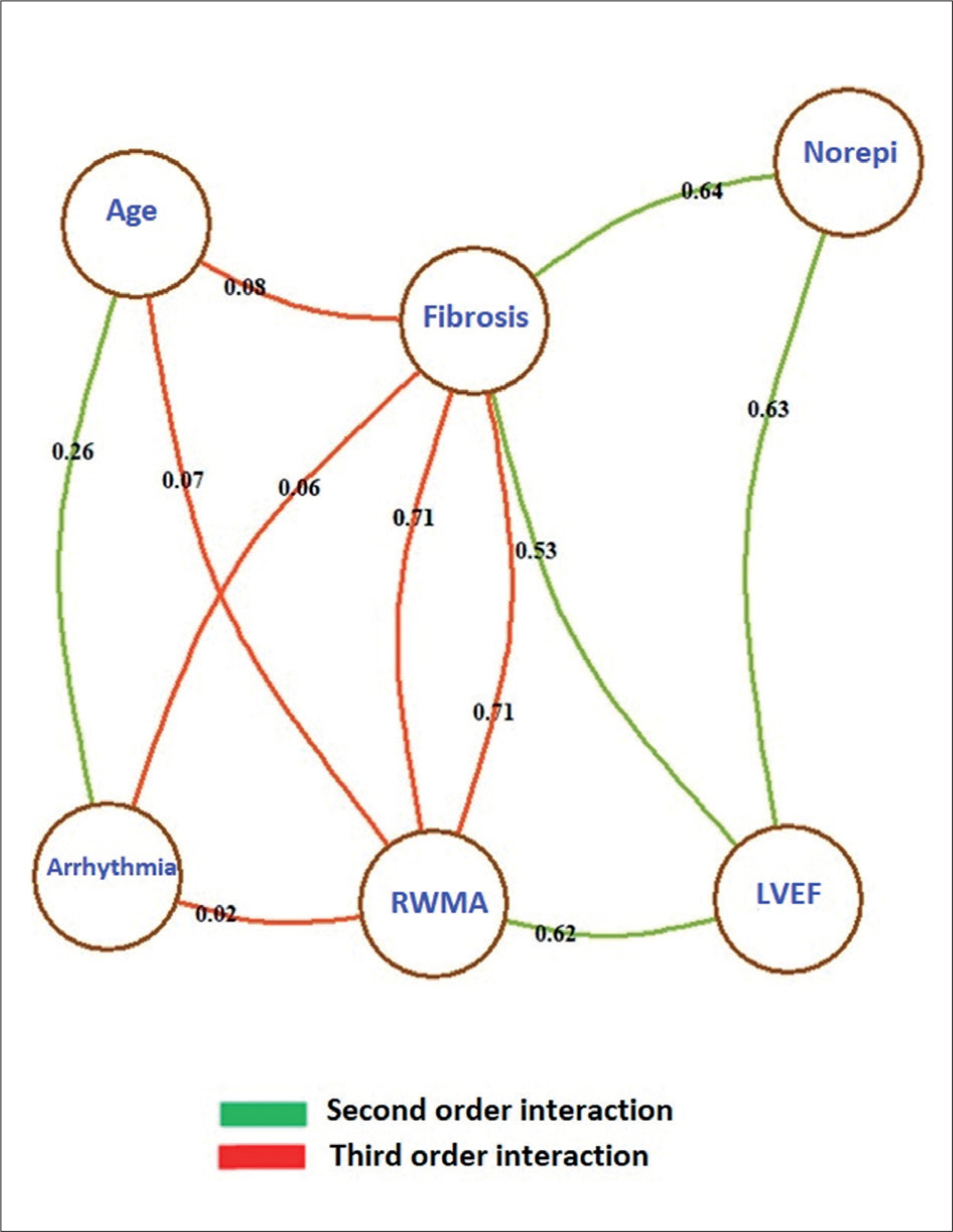
Relationship between Urinary Norepinephrine, Fibrosis, and Arrhythmias in Chronic Chagas Heart Disease with Preserved or Mildly Reduced Ejection Fraction

Eduardo Marinho Tassi et al. Emília Matos do Nascimento Marcelo Abramoff Continentino Basilio de Bragança Pereira Roberto Coury Pedrosa

Abstract

Background:

In Chronic Chagas Cardiomyopathy (CCC), studies are needed to identify arrhythmogenic risk factors in patients in which moderate to severe ventricular dysfunction is not present.

Objective:

To verify the correlation between frequent ventricular arrhythmias (PVC), left ventricular ejection fraction (LVEF), extension of fibrosis by cardiac magnetic resonance (CMR), and urinary norepinephrine measurement (NOREPI) in CCC with preserved or mildly compromised LVEF.

Methods:

The presence of ventricular extrasystoles > 30/h was analyzed on Holter. At CMR, LVEF and quantification of fibrosis mass were evaluated. The dosage of NOREPI was performed using the Muskiet method. The correlation coefficient matrix was calculated to measure the predictive ability of the variables to predict another variable, with p < 0.05 being considered significant.

Results:

A total of 59 patients were included. The mean age was 57.9 + 10.94 years. PVC was detected in 28 patients. The fibrosis variable was inversely proportional to LVEF (R of −0.61) and NOREPI (R of −0.68). Also, the variable PVC was inversely proportional to LVEF (R of −0.33) and NOREPI (R of −0.27). On the other hand, LVEF was directly proportional to NOREPI (R of 0.83).

Conclusion:

In this sample, in patients with CCC with preserved or slightly reduced LVEF, integrity of the autonomic nervous system is observed in hearts with little fibrosis and higher LVEF despite the presence of traditional risk factors for sudden cardiac death. There is correlation between the levels of NOREPI, LVEF, and myocardial fibrosis, but not with PVC.

  • Autonomic Denervation
  • Cardiac Arrythmias
  • chagasic cardiomyopathy
  • Myocardial fibrosis
  • Norepinephrine
Read Full Article
Creative Commons Attribution (CC BY) Creative Commons license
11/07/2022 DOI: 10.36660/abc.20210400
ABC
Editorial

The Importance of Understanding the Progression of Myocardial Fibrosis in Chronic Chagas Cardiomyopathy

Carlos E. Rochitte

Myocardial fibrosis is one of the most important biological markers of Chagas’ cardiomyopathy and is directly related to the severity of the cardiomyopathy and the stage of the disease. In addition, myocardial fibrosis has prognostic value for major cardiovascular events, with a strong and close relationship with arrhythmic events in these patients.–

Cardiac magnetic resonance (CMR) is the reference imaging method for myocardial fibrosis detection and quantification in many cardiomyopathies, including Chagas cardiomyopathy. Initial studies included patients with Chagas cardiomyopathy at different stages of the disease and clearly demonstrated that the higher the disease severity the larger the amount of myocardial fibrosis. Based on these data and on the natural history of the disease, with progression of left ventricle dysfunction, one could safely infer that myocardial fibrosis progresses with time for any given patient. However, the longitudinal data using CMR in patients with Chagas disease was not available until the publication of the original article in this issue of ABC Cardiol by Santos et al. This is the first study to include data on myocardial fibrosis from two consecutive CMR of the same patient with a relatively long follow-up of 5.4 years. The authors demonstrated an impressive 43% increase of myocardial fibrosis over the follow-up period, which indicates a mean of 7.9% increase per year of myocardial fibrosis detected by CMR.

[…]

  • Chagas Diseases
  • chagasic cardiomyopathy
  • Diagnostic Imaging/methods
  • Endomyocardial Fibrosis
  • Heart Failure
  • Imaging Resonance Magnetic/methods
Read Full Article
Creative Commons Attribution (CC BY) Creative Commons license
03/12/2021 DOI: 10.36660/abc.20210897 Views 1
Figure 1
ABC
Original Article

Correlation between Cardiomegaly on Chest X-Ray and Left Ventricular Diameter on Echocardiography in Patients with Chagas Disease

Matheus Rassi Fernandes Ramos et al. Henrique Turin Moreira Gustavo Jardim Volpe Minna Romano … Benedito Carlos Maciel André Schmidt Anis Rassi Junior Jose Antônio Marin Neto

Abstract

Background

Cardiomegaly on chest X-ray is an independent predictor of death in individuals with chronic Chagas cardiomyopathy (CCC). However, the correlation between increased cardiothoracic ratio (CTR) on chest X-ray and left ventricular end-diastolic diameter (LVEDD) on echocardiography is not well established in this population.

Objectives

To assess the relationship between chest X-ray and LVEDD on echocardiography in patients with Chagas disease and its applicability to the Rassi score.

Methods

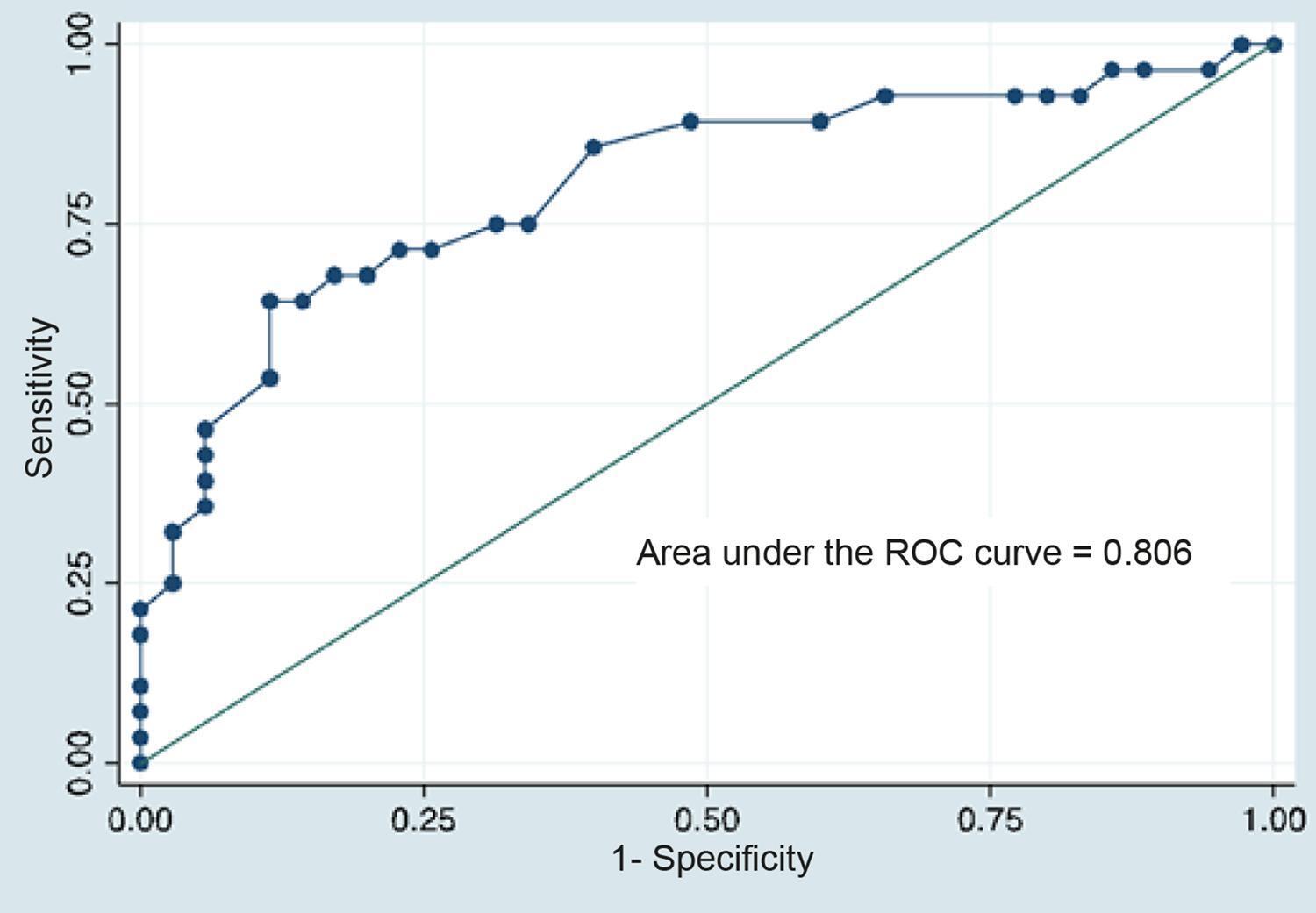
Retrospective study on 63 Chagas disease outpatients who underwent chest X-ray and echocardiography. Cardiomegaly on chest X-ray was defined as a CTR>0.5. LVEDD was analyzed as a continuous variable. ROC curve was used to evaluate the ability of LVEDD in detecting cardiomegaly by chest X-ray, with a cut-off point defined by the highest sum of sensitivity and specificity.

Results

Median age 61 years [interquartile range 48-68], 56% were women. CCC was detected in 58 patients, five patients had the indeterminate form of Chagas disease. Cardiomegaly was detected in 28 patients. The area under the ROC curve for LVEDD was 0.806 (95%CI: 0.692-0.919). The optimal cut-off for LVEDD was 60 mm (sensitivity = 64%, specificity = 89%). The use of LVEDD on echocardiography as a surrogate for CTR on chest X-ray changed the Rassi score values of 14 patients, with a reduction in the presumed risk in 10 of them.

Conclusion

LVEDD on echocardiography is an appropriate, highly specific parameter to distinguish between the presence and absence of cardiomegaly on chest X-ray in Chagas disease. (Arq Bras Cardiol. 2021; 116(1):68-74)

  • Cardiomegaly
  • Chagas Disease/physiopathology
  • chagasic cardiomyopathy
  • Heart block
  • X-Rays
Read Full Article
Creative Commons Attribution (CC BY) Creative Commons license
03/02/2021 DOI: 10.36660/abc.20190673 Views 1
ABC
Artigo Original

Clinical and therapeutics aspects of heart failure due to Chagas disease

Julio Cesar Vieira Braga et al. Francisco Reis Roque Aras Nei Dantas Costa … Claudilson Bastos Renata Silva Alana Soares Ademir Moura Júnior Silvana Ásfora Adriana Lopes Latado

OBJECTIVE: Describe the clinical and therapeutic characteristics of patients with heart failure (HF) secondary to chronic chagasic cardiomyopathy and evaluate if these characteristics are different from those found in other etiologies. METHODS: A prospective analysis of the patients treated between August 2003 and June 2004 at a HF referral outpatient clinic was conducted. RESULTS: Three hundred and fifty six patients diagnosed with HF were included in the study. Chagasic cardiomyopathy was the most common etiology (48% of the cases). Other etiologies included hypertensive cardiomyopathy in 19% of the patients, idiopathic dilated in 11% and ischemic in 9%. Patients with HF secondary to chagasic cardiomyopathy were more frequently from non-white ethnic groups (88 vs. 75%; p = 0.002), had a family history of Chagas disease (57 vs. 21%; p = 0.001), had the disease for a longer length of time (71 vs. 56 months; p = 0.034), had lower levels of education (4.4 ± 4.1 vs. 5.7 ± 4.2 years of study; p = 0.004), had a lower heart rate (69 ± 12 vs. 73 ± 13; p = 0.03) and a lower systolic blood pressure (121 ± 25 vs. 129 ± 28 mmHg; p = 0.006). There was also a higher incidence of the use of amiodarone (22 vs. 13%; p = 0.036) and artificial pacemakers (15 vs. 1%; p = 0.001). There was a lower usage of beta-blockers (39 vs. 59%; p = 0.001). CONCLUSION: In this sample of HF outpatients, in a state with a high prevalence of Chagas disease, chagasic cardiomyopathy was the most common etiology and they presented some unique clinical and therapeutic characteristics in comparison to other heart failure patients.

  • chagasic cardiomyopathy
  • Epidemiology
  • Heart Failure
Read Full Article
Creative Commons Attribution (CC BY) Creative Commons license
25/04/2006 DOI: 10.1590/S0066-782X2006000400010 Views 2
Characteristics and identification of sites of chagasic ventricular tachycardia by endocardial mapping
ABC
Original Article

Characteristics and identification of sites of chagasic ventricular tachycardia by endocardial mapping

Maria Zildany P. Távora et al. Niraj Mehta Rose M. F. L. Silva Fernando A. A. Gondim … Vanderlei M. Hara Angelo A. V. de Paola

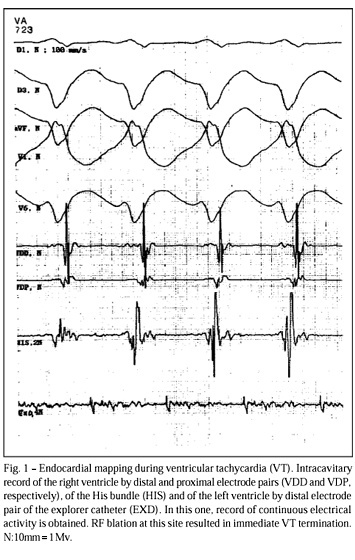
OBJECTIVE: To study electrophysiological characteristics that enable the identification and ablation of sites of chagasic tachycardia. METHODS: Thirty-one patients with chronic Chagas’ heart disease and sustained ventricular tachycardia (SVT) underwent electrophysiological study to map and ablate that arrhythmia. Fifteen patients had hemodinamically stable SVT reproducible by programmed ventricular stimulation, 9 men and 6 women with ages ranging from 37 to 67 years and ejection fraction varying from 0.17 to 0.64. Endocardial mapping was performed during SVT in all patients. Radiofrequency (RF) current was applied to sites of presystolic activity of at least 30 ms. Entrainment was used to identify reentrant circuits. In both successful and unsuccessful sites of RF current application, electrogram and entrainment were analyzed. RESULTS: Entrainment was obtained during all mapped SVT. In 70.5% of the sites we observed concealed entrainment and ventricular tachycardia termination in the first 15 seconds of RF current application. In the unsuccessful sites, significantly earlier electrical activity was seen than in the successful ones. Concealed entrainment was significantly associated with ventricular tachycardia termination. Bystander areas were not observed. CONCLUSION: The reentrant mechanism was responsible for the genesis of all tachycardias. In 70.5% of the studied sites, the endocardial participation of the slow conducting zone of reentrant circuits was shown. Concealed entrainment was the main electrophysiological parameter associated with successful RF current application. There was no electrophysiological evidence of bystander regions in the mapped circuits of SVT.

  • Catheter Ablation
  • chagasic cardiomyopathy
  • Ventricular tachycardia
Read Full Article
Creative Commons Attribution (CC BY) Creative Commons license
08/01/2002 DOI: 10.1590/S0066-782X1999000400006

How to cite this article

EndNote RIS

Electronic Document Format (Vancouver)

Costa GCV. Achievements, Challenges and Opportunities in MicroRNAs and Chagas Disease. International Journal of Cardiovascular Sciences 2024;37:e20230160.

Electronic Document Format (ABNT)

Costa, Giovani Carlo Veríssimo da. Achievements, Challenges and Opportunities in MicroRNAs and Chagas Disease. International Journal of Cardiovascular Sciences, v. 37, e20230160, Mar. 2024.

Electronic Document Format (APA)

Costa, G. C. V. (2024). Achievements, Challenges and Opportunities in MicroRNAs and Chagas Disease. International Journal of Cardiovascular Sciences, 37, e20230160.

Electronic Document Format (ISO)

Costa, Giovani Carlo Veríssimo da. Achievements, Challenges and Opportunities in MicroRNAs and Chagas Disease. International Journal of Cardiovascular Sciences [online]. 2024, vol. 37, [cited 2026-10-14], e20230160. Available from: <https://journals.cardiol.br/en/article/achievements-challenges-and-opportunities-in-micrornas-and-chagas-disease/>. ISSN 2359-4802

EndNote RIS

Electronic Document Format (Vancouver)

Tassi EM, Nascimento EM, Continentino MA, Pereira BB, Pedrosa RC. Relationship between Urinary Norepinephrine, Fibrosis, and Arrhythmias in Chronic Chagas Heart Disease with Preserved or Mildly Reduced Ejection Fraction. Arquivos Brasileiros de Cardiologia 2022;119(1):3-11.

Electronic Document Format (ABNT)

Tassi, Eduardo Marinho; Nascimento, Emília Matos do; Continentino, Marcelo Abramoff; Pereira, Basilio de Bragança; Pedrosa, Roberto Coury. Relationship between Urinary Norepinephrine, Fibrosis, and Arrhythmias in Chronic Chagas Heart Disease with Preserved or Mildly Reduced Ejection Fraction. Arquivos Brasileiros de Cardiologia, v. 119, n. 1, p. 3-11, Jul. 2022.

Electronic Document Format (APA)

Tassi, E. M., Nascimento, E. M. , Continentino, M. A., Pereira, B. B., & Pedrosa, R. C. (2022). Relationship between Urinary Norepinephrine, Fibrosis, and Arrhythmias in Chronic Chagas Heart Disease with Preserved or Mildly Reduced Ejection Fraction. Arquivos Brasileiros de Cardiologia, 119(1), 3-11.

Electronic Document Format (ISO)

Tassi, Eduardo Marinho and Nascimento, Emília Matos do and Continentino, Marcelo Abramoff and Pereira, Basilio de Bragança and Pedrosa, Roberto Coury. Relationship between Urinary Norepinephrine, Fibrosis, and Arrhythmias in Chronic Chagas Heart Disease with Preserved or Mildly Reduced Ejection Fraction. Arquivos Brasileiros de Cardiologia [online]. 2022, vol. 119, n. 1, [cited 2026-10-14], pp. 3-11. Available from: <https://journals.cardiol.br/en/article/relationship-between-urinary-norepinephrine-fibrosis-and-arrhythmias-in-chronic-chagas-heart-disease-with-preserved-or-mildly-reduced-ejection-fraction/>. ISSN 0066-782X

EndNote RIS

Electronic Document Format (Vancouver)

Rochitte CE. The Importance of Understanding the Progression of Myocardial Fibrosis in Chronic Chagas Cardiomyopathy. Arquivos Brasileiros de Cardiologia 2021;117(6):1091-2.

Electronic Document Format (ABNT)

Rochitte, Carlos E.. The Importance of Understanding the Progression of Myocardial Fibrosis in Chronic Chagas Cardiomyopathy. Arquivos Brasileiros de Cardiologia, v. 117, n. 6, p. 1091-1092, Dec. 2021.

Electronic Document Format (APA)

Rochitte, C. E. (2021). The Importance of Understanding the Progression of Myocardial Fibrosis in Chronic Chagas Cardiomyopathy. Arquivos Brasileiros de Cardiologia, 117(6), 1091-1092.

Electronic Document Format (ISO)

Rochitte, Carlos E.. The Importance of Understanding the Progression of Myocardial Fibrosis in Chronic Chagas Cardiomyopathy. Arquivos Brasileiros de Cardiologia [online]. 2021, vol. 117, n. 6, [cited 2026-10-14], pp. 1091-1092. Available from: <https://journals.cardiol.br/en/article/the-importance-of-understanding-the-progression-of-myocardial-fibrosis-in-chronic-chagas-cardiomyopathy/>. ISSN 0066-782X

EndNote RIS

Electronic Document Format (Vancouver)

Ramos MRF, Moreira HT, Volpe GJ, Romano M, Maciel BC, Schmidt A, Rassi Junior A, et al. Correlation between Cardiomegaly on Chest X-Ray and Left Ventricular Diameter on Echocardiography in Patients with Chagas Disease. Arquivos Brasileiros de Cardiologia 2021;116(1):68-74.

Electronic Document Format (ABNT)

Ramos, Matheus Rassi Fernandes; Moreira, Henrique Turin; Volpe, Gustavo Jardim; Romano, Minna; Maciel, Benedito Carlos; Schmidt, André; Rassi Junior, Anis; Marin Neto, Jose Antônio. Correlation between Cardiomegaly on Chest X-Ray and Left Ventricular Diameter on Echocardiography in Patients with Chagas Disease. Arquivos Brasileiros de Cardiologia, v. 116, n. 1, p. 68-74, Feb. 2021.

Electronic Document Format (APA)

Ramos, M. R. F., Moreira, H. T., Volpe, G. J., Romano, M., Maciel, B. C., Schmidt, A., Rassi Junior, A., & Marin Neto, J. A. (2021). Correlation between Cardiomegaly on Chest X-Ray and Left Ventricular Diameter on Echocardiography in Patients with Chagas Disease. Arquivos Brasileiros de Cardiologia, 116(1), 68-74.

Electronic Document Format (ISO)

Ramos, Matheus Rassi Fernandes and Moreira, Henrique Turin and Volpe, Gustavo Jardim and Romano, Minna and Maciel, Benedito Carlos and Schmidt, André and Rassi Junior, Anis and Marin Neto, Jose Antônio. Correlation between Cardiomegaly on Chest X-Ray and Left Ventricular Diameter on Echocardiography in Patients with Chagas Disease. Arquivos Brasileiros de Cardiologia [online]. 2021, vol. 116, n. 1, [cited 2026-10-14], pp. 68-74. Available from: <https://journals.cardiol.br/en/article/correlation-between-cardiomegaly-on-chest-x-ray-and-left-ventricular-diameter-on-echocardiography-in-patients-with-chagas-disease/>. ISSN 0066-782X

EndNote RIS

Electronic Document Format (Vancouver)

Braga JCV, Reis F, Aras R, Costa ND, Bastos C, Silva R, Soares A, et al. Clinical and therapeutics aspects of heart failure due to Chagas disease. Arquivos Brasileiros de Cardiologia 2006;86(4):297-302.

Electronic Document Format (ABNT)

Braga, Julio Cesar Vieira; Reis, Francisco; Aras, Roque; Costa, Nei Dantas; Bastos, Claudilson; Silva, Renata; Soares, Alana; Moura Júnior, Ademir; Ásfora, Silvana; Latado, Adriana Lopes. Clinical and therapeutics aspects of heart failure due to Chagas disease. Arquivos Brasileiros de Cardiologia, v. 86, n. 4, p. 297-302, Apr. 2006.

Electronic Document Format (APA)

Braga, J. C. V., Reis, F., Aras, R., Costa, N. D., Bastos, C., Silva, R., Soares, A., Moura Júnior, A., Ásfora, S., & Latado, A. L. (2006). Clinical and therapeutics aspects of heart failure due to Chagas disease. Arquivos Brasileiros de Cardiologia, 86(4), 297-302.

Electronic Document Format (ISO)

Braga, Julio Cesar Vieira and Reis, Francisco and Aras, Roque and Costa, Nei Dantas and Bastos, Claudilson and Silva, Renata and Soares, Alana and Moura Júnior, Ademir and Ásfora, Silvana and Latado, Adriana Lopes. Clinical and therapeutics aspects of heart failure due to Chagas disease. Arquivos Brasileiros de Cardiologia [online]. 2006, vol. 86, n. 4, [cited 2026-10-14], pp. 297-302. Available from: <https://journals.cardiol.br/en/article/clinical-and-therapeutics-aspects-of-heart-failure-due-to-chagas-disease/>. ISSN 0066-782X

EndNote RIS

Electronic Document Format (Vancouver)

Távora MZP, Mehta N, Silva RMFL, Gondim FAA, Hara VM, Paola AAV. Characteristics and identification of sites of chagasic ventricular tachycardia by endocardial mapping. Arquivos Brasileiros de Cardiologia 2002;72(4):463-74.

Electronic Document Format (ABNT)

Távora, Maria Zildany P.; Mehta, Niraj; Silva, Rose M. F. L.; Gondim, Fernando A. A.; Hara, Vanderlei M.; Paola, Angelo A. V. de. Characteristics and identification of sites of chagasic ventricular tachycardia by endocardial mapping. Arquivos Brasileiros de Cardiologia, v. 72, n. 4, p. 463-474, Jan. 2002.

Electronic Document Format (APA)

Távora, M. Z. P., Mehta, N., Silva, R. M. F. L., Gondim, F. A. A., Hara, V. M., & Paola, A. A. V. (2002). Characteristics and identification of sites of chagasic ventricular tachycardia by endocardial mapping. Arquivos Brasileiros de Cardiologia, 72(4), 463-474.

Electronic Document Format (ISO)

Távora, Maria Zildany P. and Mehta, Niraj and Silva, Rose M. F. L. and Gondim, Fernando A. A. and Hara, Vanderlei M. and Paola, Angelo A. V. de. Characteristics and identification of sites of chagasic ventricular tachycardia by endocardial mapping. Arquivos Brasileiros de Cardiologia [online]. 2002, vol. 72, n. 4, [cited 2026-10-14], pp. 463-474. Available from: <https://journals.cardiol.br/en/article/characteristics-and-identification-of-sites-of-chagasic-ventricular-tachycardia-by-endocardial-mapping/>. ISSN 0066-782X

  • About ABC Family
  • Internal Regulation
  • Editorial Board
  • Brazilian Society of Cardiology (SBC)

Issues

SBC Guidelines

  • Videos
  • Podcasts
  • News