ABC Family Arquivos Brasileiros de Cardiologia International Journal of Cardiovascular Sciences ABC Heart Failure & Cardiomyopathy ABC Imagem Cardiovascular
Português English
ABC Family
Português English
  • About
    • About ABC Family
    • Internal Regulation
    • Editorial Board
    • Brazilian Society of Cardiology (SBC)
  • Issues
  • SBC Guidelines
  • Content
    • Videos
    • Podcasts
    • News
  • About
    • About ABC Family
    • Internal Regulation
    • Editorial Board
    • Brazilian Society of Cardiology (SBC)
  • Issues
  • SBC Guidelines
  • Content
    • Videos
    • Podcasts
    • News

ABC Family

  • ABC Family
  • Arquivos Brasileiros de Cardiologia
  • International Journal of Cardiovascular Sciences
  • ABC Heart Failure & Cardiomyopathy
  • ABC Imagem Cardiovascular
Search in

No content found.

Journals
Ordering
Article types
Others

  1. Home
  2. Keyword: Saphenous Vein
ABC
Editorial

The Role of the Naples Prognostic Score in the Evaluation of SVG Patency Following CABG Surgery

Mustafa Ozan Gürsoy et al. Hakan Güneş

Cardiovascular diseases are responsible for approximately one-third of deaths worldwide, and ischemic heart disease is the most common form. Coronary artery bypass grafting (CABG) is a common procedure performed in the management of coronary artery disease, but the lower patency rates of grafts are the major limitations during the short and long-term follow-up. The graft failure ranges from 10%–50%, depending upon the type of conduit used, with the highest incidence found in saphenous vein grafts (SVGs).

Inflammatory mediators play essential roles in the development of atherosclerosis and have been extensively studied in various cardiac and noncardiac disorders., The Naples Prognostic Score (NPS) is a novel score developed according to the inflammatory and nutritional status that has been frequently studied in oncology, especially gastrointestinal cancers. It has also been proposed as an inflammatory biomarker and potential predictor of risk and prognosis in patients with coronary artery disease, including ST-elevation myocardial infarction (STEMI). NPS may provide information about a patient’s inflammatory and nutritional condition, including lymphocyte-to-monocyte ratio (LMR), neutrophil-to-lymphocyte ratio (NLR), total cholesterol (TC), and serum alpha levels. TC and serum albumin reflect the body’s nutritional status, whereas NLR and LMR represent its immunoinflammatory condition. This permits a more thorough assessment of the patient’s physical state.

[…]

  • Permeability
  • Prognosis
  • Saphenous Vein
Read Full Article
Creative Commons Attribution (CC BY) Creative Commons license
16/06/2025 DOI: 10.36660/abc.20250182i Views 1
Relationship Between the Naples Prognostic Score and Saphenous Vein Graft Disease after Coronary Artery Bypass Grafting Surgery
ABC
Original Article

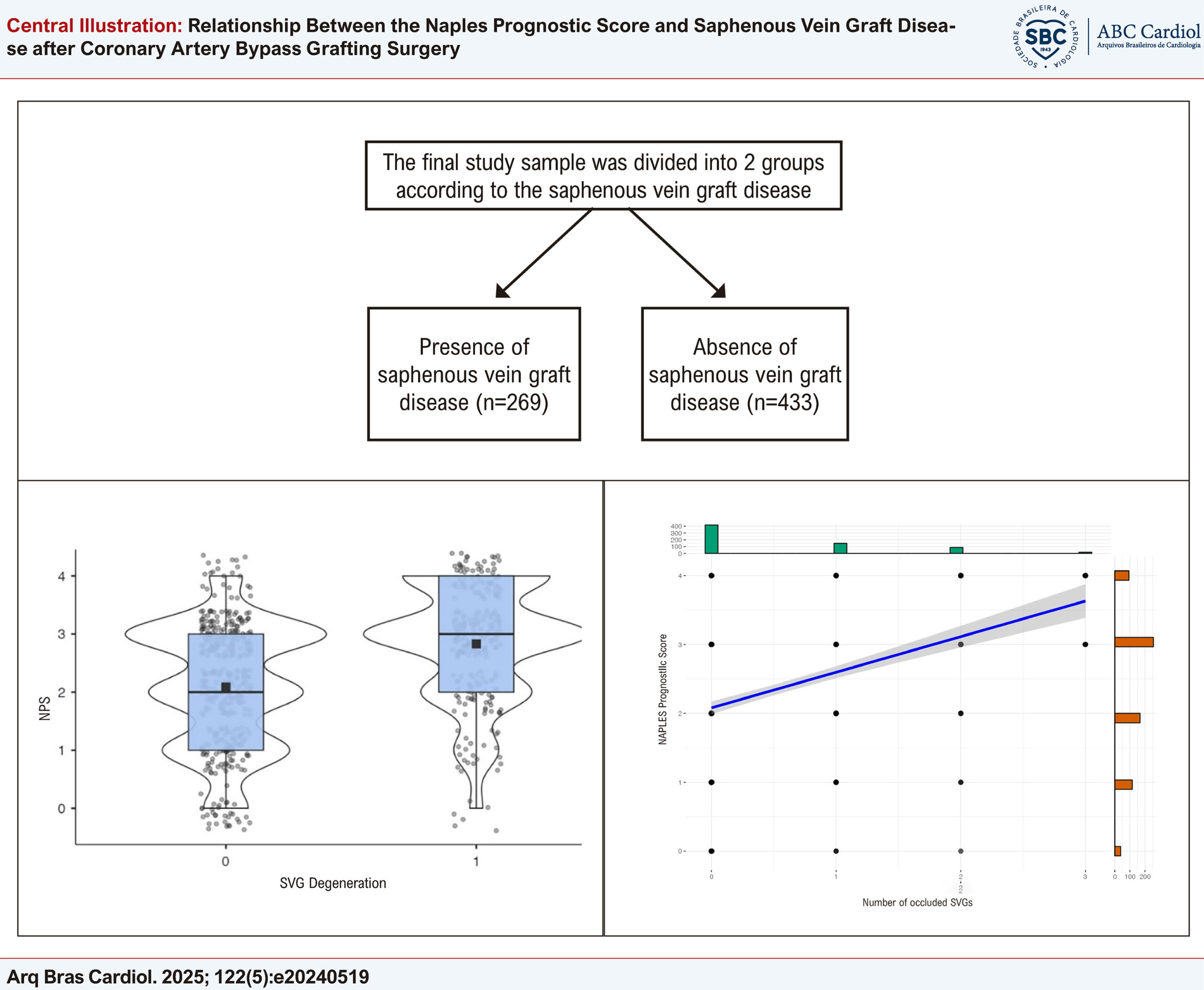
Relationship Between the Naples Prognostic Score and Saphenous Vein Graft Disease after Coronary Artery Bypass Grafting Surgery

Ahmet Karaduman et al. Cemalettin Yılmaz Muhammet Mucahit Tiryaki İsmail Balaban … Mustafa Ferhat Keten Tuba Unkun Servet İzci Suleyman Çağan Efe Elnur Alizade

Abstract

Background

Saphenous vein graft (SVG) patency remains a challenge in cases of coronary artery disease following coronary artery bypass grafting (CABG) surgery. The Naples prognostic score (NPS) constitutes a novel scoring system designed to assess both nutritional status and inflammation.

Objectives

Our study aimed to explore the association between the NPS and SVG disease in patients with a previous history of CABG surgery.

Methods

A total of 702 patients who had undergone CABG surgery and underwent coronary angiography were reviewed retrospectively. SVG disease was defined as the presence of ≥50% stenosis in at least one SVG. Patients were categorized into two groups based on the presence or absence of SVG disease. Values of p<0.05 were accepted as statistically significant.

Results

The study population consisted of 702 patients, with 269 (38.3%) having degenerative SVGs and 433 (61.7%) without degenerative SVGs. The NPS was higher in the group with saphenous vein degeneration and emerged as a significant predictor of SVG disease (OR: 1.596, 95% CI: 1.198-2.125, p=0.001). Additionally, hypertension (OR: 2.344, 95% CI: 1.137-4.833, p=0.02), chronic kidney disease (OR: 3.337, 95% CI: 1.554-7.168, p=0.002), statin usage (OR: 0.434, 95% CI: 0.239-0.789, p=0.006), time interval since CABG (OR: 1.138, 95% CI: 1.213-1.432, p<0.001), and number of SVGs (OR: 2.708, 95% CI: 1.902-3.855, p<0.001) were significant predictors of SVG disease.

Conclusion

The NPS, a useful tool for assessing inflammation and nutritional status, could provide valuable information about the patency of SVGs following CABG surgery. Patients with elevated NPS after CABG should undergo careful monitoring for the development of SVG disease.

  • Atherosclerosis
  • Inflammation
  • Myocardial Revascularization
  • Saphenous Vein
Read Full Article
Creative Commons Attribution (CC BY) Creative Commons license
02/06/2025 DOI: 10.36660/abc.20240519i Views 2
ABC
Letter to the Editor

Percutaneous Coronary Intervention Induced-No-reflow in Saphenous Vein Grafts

Yücel Kanal

Dear Editor,

I have read with interest the study titled “The Predictive Value of the Inflammatory Prognostic Index for Detecting No-Reflow in ST-Elevation Myocardial Infarction Patients”, published in your journal. I would like to contribute to the study by providing some insights.

[…]

  • No-Reflow Phenomenon
  • Percutaneous Coronary Intervention
  • Saphenous Vein
Read Full Article
Creative Commons Attribution (CC BY) Creative Commons license
23/09/2024 DOI: 10.36660/abc.20240317i Views 1
Central Illustration
IJCS
Original Article

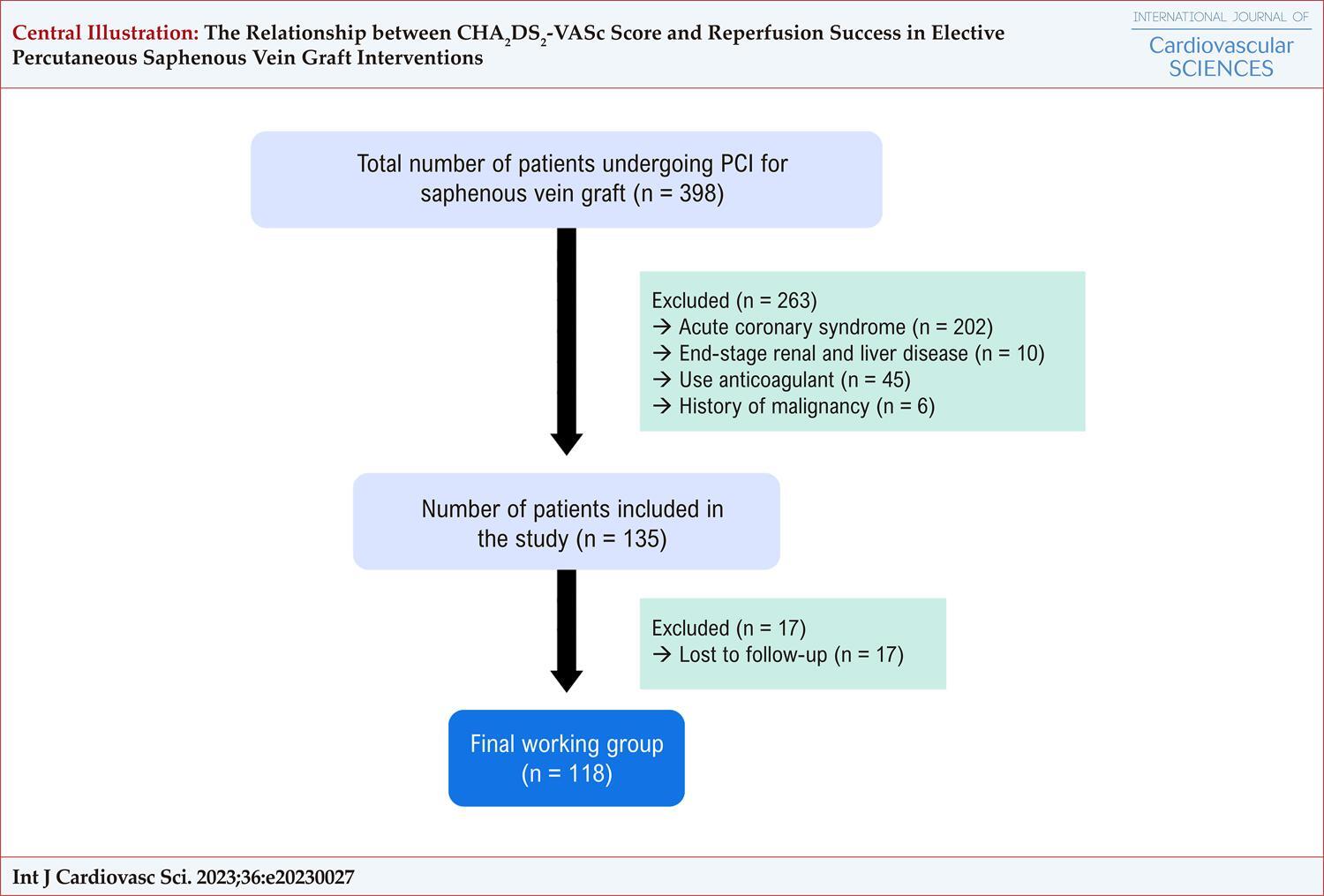
The Relationship between CHA2DS2-VASc Score and Reperfusion Success in Elective Percutaneous Saphenous Vein Graft Interventions

Yücel Kanal et al. Kevser Gülcihan Balci Nezaket Merye Yaman Ídris Yakut … Mustafa Bilal Ozbay Orhan Maden

Abstract

Background

Patients with degenerated saphenous vein grafts (SVG) have a higher risk of developing no-reflow. The CHA2DS2-VASc score was established as a no-reflow predictor in patients with acute coronary syndrome (ACS).

Objectives

In our study, we aimed to assess the association between CHA2DS2-VASc score and no-reflow after the procedure and short-term mortality in patients with SVG who underwent elective percutaneous coronary intervention (PCI).

Methods

Our retrospective study comprised 118 patients who were divided into two groups according to the occurrence of the no-reflow phenomenon. The groups were compared on the basis of demographic characteristics, angiographic parameters, CHA2DS2-VASc scores, and outcome. A logistic regression analysis was additionally performed to determine the predictors of no-reflow. A p value of < 0.05 was considered statistically significant.

Results

Mean age of the participants was 66.4 ± 9.2 years, and 25.4% of them were female. Apart from the history of diabetes (p = 0.032), demographic data, blood parameters, ejection fraction, total stent length and diameter, medication use, median CHA2DS2-VASc score, and adverse cardiac events did not differ between the groups. In univariate logistic regression analysis, the presence of diabetes and stent length appeared to be associated with no-reflow, but not in multivariate analysis. The median CHA2DS2-VASc score was higher in non-survivors at 1-year follow-up (4.5 versus 3, p = 0.047).

Conclusions

In our study, we did not observe a significant relationship between no-reflow and CHA2DS2-VASc score. Larger studies are needed to reveal the indicators of improved post-intervention reperfusion in elective SVG PCI.

  • Coronary Artery Disease
  • No-Reflow
  • Percutaneous Coronary Intervention
  • Saphenous Vein
Read Full Article
Creative Commons Attribution (CC BY) Creative Commons license
09/10/2023 DOI: 10.36660/ijcs.20230027 Views 1
ABC
Editorial

Can We Pretreat Vein Grafts with Adiponectin to Improve Their Patency?

Maria Cristina de Oliveira Izar et al. Francisco A. H. Fonseca

Saphenous vein graft remains an option for patients with multivessel coronary artery disease,, mainly in individuals with type 2 diabetes. Although artery bypass should offer better patency rates than venous grafts, in many situations, complete revascularization cannot be achieved using solely arterial grafts. Venous graft failure has been associated with cardiovascular outcomes, including mortality., Therefore, there is a need to improve vein graft patency. The mechanisms involved in graft failure include intimal hyperplasia, smooth muscle cell proliferation, and endothelial dysfunction, among others., There have been some attempts to improve the preservation of saphenous vein grafts before implantation.

In the experimental study by Zhou et al. the authors used autologous jugular veins implanted as carotid interposition grafts in Sprague Dawley rats. Two groups received adiponectin (2.5 μg and 7.5 μg) applied externally to the vein bypass grafts, suspended in a 30% Pluronic-F127 gel. The other two groups (controls) received vehicle or no treatment (bypass only). At day 3, cell proliferation was significantly lower in adiponectin-treated versus control and vehicle-gel-treated grafts, both in intima and adventitia, whereas expression of VCAM-1 and ICAM-1 was significantly down-regulated in the adiponectin-treated vein grafts in week four. In addition, the treatment of vein grafts with adiponectin-loaded gels reduced intimal, media, and adventitia thickness when compared with the control and vehicle-gel-treated vein grafts at day 28.

[…]

  • Adiponectin/therapeutic use
  • Capillary Permeability
  • Coronary Artery Disease
  • Rats
  • Saphenous Vein
Read Full Article
Creative Commons Attribution (CC BY) Creative Commons license
03/12/2021 DOI: 10.36660/abc.20210902 Views 1
Figure 1
ABC
Image

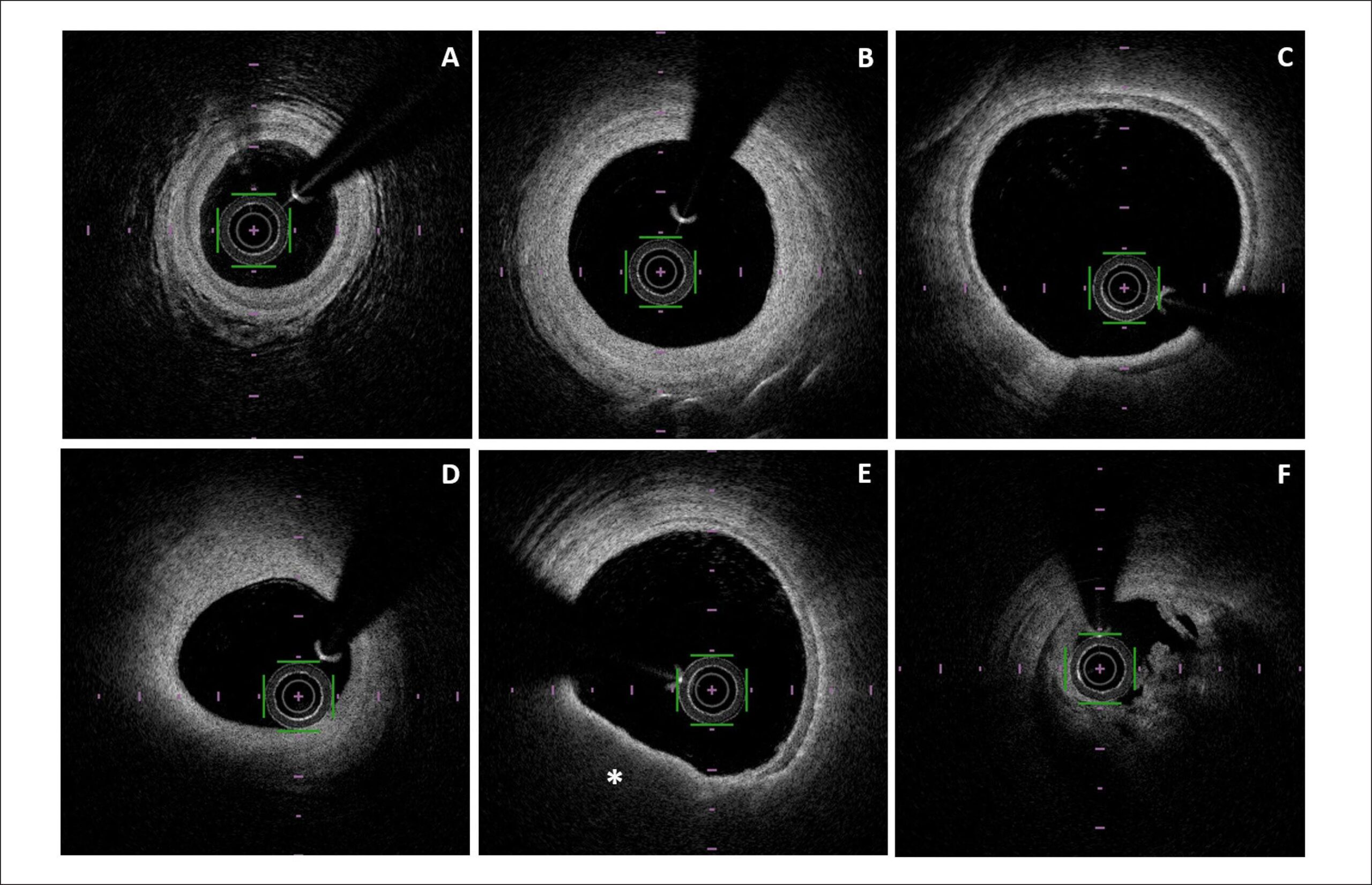
Focal Arterialization and Neoatherosclerosis of a Saphenous Vein Graft. Improving our Understanding of Late Graft Failures

Rene Hameau D. et al. Nicolas Veas P. Manuel Mendez L. Gonzalo Martinez R.

A 76 year-old man with a past medical history of type 2 Diabetes, stage 3 chronic kidney disease and previous multivessel coronary artery bypass surgery 10 years before was admitted with an acute coronary syndrome. Coronary angiogram showed an occluded saphenous vein graft (SVG) to first diagonal. After restoring flow by means of thrombus aspiration, optical coherence tomography (OCT) runs were required. Localized and widely patent segments of the graft showed a clear three-layer configuration, suggestive of SVG focal arterialization. Proximally, predominantly red thrombus determined a critical stenosis and a thin cap fibroatheroma was evident in an arterialized segment of the graft contiguous to the thrombotic lesion. Conversely, the rest of the SVG kept its venous appearance and had three different areas of stenosis ().

[…]

  • Atherosclerosis
  • Myocardial Revascularization
  • Saphenous Vein
  • Tomography, Optical Coherence
Read Full Article
Creative Commons Attribution (CC BY) Creative Commons license
01/11/2016 DOI: 10.5935/abc.20160172 Views 1
Novel no-touch technique of harvesting the saphenous vein for coronary artery bypass grafting
ABC
Artigo Original

Novel no-touch technique of harvesting the saphenous vein for coronary artery bypass grafting

Fabio de Rueda et al. Domingos Souza Ricardo de Carvalho Lima Alexandre Menezes … Benny Johansson Michael Dashwood Emmanuel Thé Mário Gesteira Mozart Escobar Frederico Vasconcelos

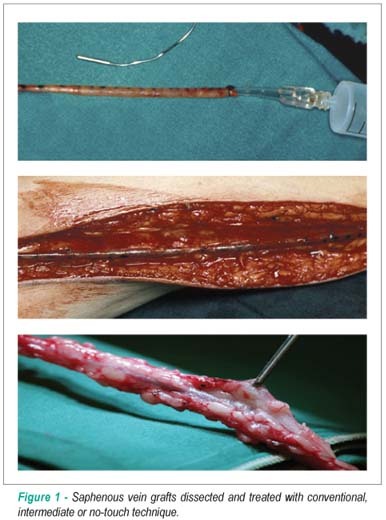
BACKGROUND: Optimization of the saphenous vein for myocardial revascularization. OBJECTIVE: To present the no-touch technique of the saphenous vein preparation. This technique consists of harvesting the vein with a pedicle of surrounding tissue, which protects the vein from spasms, obviating the need for distension. METHODS: A prospective, randomized study with 156 patients who underwent artery bypass grafting was performed comparing three saphenous vein harvesting techniques: conventional, intermediate, and no-touch. A morphological study of the endothelium was carried out using scanning microscopy. An angiographic assessment of the vein graft patency was performed at a mean follow-up time of 18 months. Also, an immunohistochemical assessment was carried out to identify the endothelial enzyme nitric oxide synthase (eNOS) in the vein wall RESULTS: The preservation of the endothelial cell integrity was greater in the no-touch technique than in the other procedures. At angiographic follow-up, the patency for the no-touch group was 95.4%, 88.9% for the grafts of the conventional technique group, and 86.2% for the grafts performed in the intermediate technique group. The immunohistochemical assessment revealed eNOS in all three layers of the vein wall in the no-touch group and reduction of this enzyme in the conventional group. CONCLUSION: The endothelial integrity and eNOS activity were better preserved when using the no-touch technique for vein graft harvesting. The mechanical protection provided by the cushion of surrounding tissue in the no-touch group, the vasorelaxation and thromboresistant activities of nitric oxide may be responsible for the reduction of vasospasms and improved patency rate.

  • Endothelium, Vascular
  • Myocardial Revascularization
  • Saphenous Vein
Read Full Article
Creative Commons Attribution (CC BY) Creative Commons license
26/06/2008 DOI: 10.1590/S0066-782X2008000600002 Views 2

How to cite this article

EndNote RIS

Electronic Document Format (Vancouver)

Gürsoy MO, Güneş H. The Role of the Naples Prognostic Score in the Evaluation of SVG Patency Following CABG Surgery. Arquivos Brasileiros de Cardiologia 2025;122(5):e20250182.

Electronic Document Format (ABNT)

Gürsoy, Mustafa Ozan; Güneş, Hakan. The Role of the Naples Prognostic Score in the Evaluation of SVG Patency Following CABG Surgery. Arquivos Brasileiros de Cardiologia, v. 122, n. 5, e20250182, Jun. 2025.

Electronic Document Format (APA)

Gürsoy, M. O., & Güneş, H. (2025). The Role of the Naples Prognostic Score in the Evaluation of SVG Patency Following CABG Surgery. Arquivos Brasileiros de Cardiologia, 122(5), e20250182.

Electronic Document Format (ISO)

Gürsoy, Mustafa Ozan and Güneş, Hakan. The Role of the Naples Prognostic Score in the Evaluation of SVG Patency Following CABG Surgery. Arquivos Brasileiros de Cardiologia [online]. 2025, vol. 122, n. 5, [cited 2026-10-14], e20250182. Available from: <https://journals.cardiol.br/en/article/the-role-of-the-naples-prognostic-score-in-the-evaluation-of-svg-patency-following-cabg-surgery/>. ISSN 0066-782X

EndNote RIS

Electronic Document Format (Vancouver)

Karaduman A, Yılmaz C, Tiryaki MM, Balaban , Keten MF, Unkun T, İzci S, et al. Relationship Between the Naples Prognostic Score and Saphenous Vein Graft Disease after Coronary Artery Bypass Grafting Surgery. Arquivos Brasileiros de Cardiologia 2025;122(5):e20240519.

Electronic Document Format (ABNT)

Karaduman, Ahmet; Yılmaz, Cemalettin; Tiryaki, Muhammet Mucahit; Balaban, İsmail; Keten, Mustafa Ferhat; Unkun, Tuba; İzci, Servet; Efe, Suleyman Çağan; Alizade, Elnur. Relationship Between the Naples Prognostic Score and Saphenous Vein Graft Disease after Coronary Artery Bypass Grafting Surgery. Arquivos Brasileiros de Cardiologia, v. 122, n. 5, e20240519, Jun. 2025.

Electronic Document Format (APA)

Karaduman, A., Yılmaz, C., Tiryaki, M. M., Balaban, , Keten, M. F., Unkun, T., İzci, S., Efe, S. , & Alizade, E. (2025). Relationship Between the Naples Prognostic Score and Saphenous Vein Graft Disease after Coronary Artery Bypass Grafting Surgery. Arquivos Brasileiros de Cardiologia, 122(5), e20240519.

Electronic Document Format (ISO)

Karaduman, Ahmet and Yılmaz, Cemalettin and Tiryaki, Muhammet Mucahit and Balaban, İsmail and Keten, Mustafa Ferhat and Unkun, Tuba and İzci, Servet and Efe, Suleyman Çağan and Alizade, Elnur. Relationship Between the Naples Prognostic Score and Saphenous Vein Graft Disease after Coronary Artery Bypass Grafting Surgery. Arquivos Brasileiros de Cardiologia [online]. 2025, vol. 122, n. 5, [cited 2026-10-14], e20240519. Available from: <https://journals.cardiol.br/en/article/relationship-between-the-naples-prognostic-score-and-saphenous-vein-graft-disease-after-coronary-artery-bypass-grafting-surgery/>. ISSN 0066-782X

EndNote RIS

Electronic Document Format (Vancouver)

Kanal Y. Percutaneous Coronary Intervention Induced-No-reflow in Saphenous Vein Grafts. Arquivos Brasileiros de Cardiologia 2024;121(8):e20240317.

Electronic Document Format (ABNT)

Kanal, Yücel. Percutaneous Coronary Intervention Induced-No-reflow in Saphenous Vein Grafts. Arquivos Brasileiros de Cardiologia, v. 121, n. 8, e20240317, Sep. 2024.

Electronic Document Format (APA)

Kanal, Y. (2024). Percutaneous Coronary Intervention Induced-No-reflow in Saphenous Vein Grafts. Arquivos Brasileiros de Cardiologia, 121(8), e20240317.

Electronic Document Format (ISO)

Kanal, Yücel. Percutaneous Coronary Intervention Induced-No-reflow in Saphenous Vein Grafts. Arquivos Brasileiros de Cardiologia [online]. 2024, vol. 121, n. 8, [cited 2026-10-14], e20240317. Available from: <https://journals.cardiol.br/en/article/percutaneous-coronary-intervention-induced-no-reflow-in-saphenous-vein-grafts/>. ISSN 0066-782X

EndNote RIS

Electronic Document Format (Vancouver)

Kanal Y, Balci KG, Yaman NM, Yakut , Ozbay MB, Maden O. The Relationship between CHA2DS2-VASc Score and Reperfusion Success in Elective Percutaneous Saphenous Vein Graft Interventions. International Journal of Cardiovascular Sciences 2023;36:e20230027.

Electronic Document Format (ABNT)

Kanal, Yücel; Balci, Kevser Gülcihan; Yaman, Nezaket Merye; Yakut, Ídris; Ozbay, Mustafa Bilal; Maden, Orhan. The Relationship between CHA2DS2-VASc Score and Reperfusion Success in Elective Percutaneous Saphenous Vein Graft Interventions. International Journal of Cardiovascular Sciences, v. 36, e20230027, Oct. 2023.

Electronic Document Format (APA)

Kanal, Y., Balci, K. G., Yaman, N. M., Yakut, , Ozbay, M. B., & Maden, O. (2023). The Relationship between CHA2DS2-VASc Score and Reperfusion Success in Elective Percutaneous Saphenous Vein Graft Interventions. International Journal of Cardiovascular Sciences, 36, e20230027.

Electronic Document Format (ISO)

Kanal, Yücel and Balci, Kevser Gülcihan and Yaman, Nezaket Merye and Yakut, Ídris and Ozbay, Mustafa Bilal and Maden, Orhan. The Relationship between CHA2DS2-VASc Score and Reperfusion Success in Elective Percutaneous Saphenous Vein Graft Interventions. International Journal of Cardiovascular Sciences [online]. 2023, vol. 36, [cited 2026-10-14], e20230027. Available from: <https://journals.cardiol.br/en/article/the-relationship-between-cha2ds2-vasc-score-and-reperfusion-success-in-elective-percutaneous-saphenous-vein-graft-interventions/>. ISSN 2359-4802

EndNote RIS

Electronic Document Format (Vancouver)

Izar MCO, Fonseca FAH. Can We Pretreat Vein Grafts with Adiponectin to Improve Their Patency?. Arquivos Brasileiros de Cardiologia 2021;117(6):1189-90.

Electronic Document Format (ABNT)

Izar, Maria Cristina de Oliveira; Fonseca, Francisco A. H.. Can We Pretreat Vein Grafts with Adiponectin to Improve Their Patency?. Arquivos Brasileiros de Cardiologia, v. 117, n. 6, p. 1189-1190, Dec. 2021.

Electronic Document Format (APA)

Izar, M. C. O., & Fonseca, F. A. H. (2021). Can We Pretreat Vein Grafts with Adiponectin to Improve Their Patency?. Arquivos Brasileiros de Cardiologia, 117(6), 1189-1190.

Electronic Document Format (ISO)

Izar, Maria Cristina de Oliveira and Fonseca, Francisco A. H.. Can We Pretreat Vein Grafts with Adiponectin to Improve Their Patency?. Arquivos Brasileiros de Cardiologia [online]. 2021, vol. 117, n. 6, [cited 2026-10-14], pp. 1189-1190. Available from: <https://journals.cardiol.br/en/article/can-we-pretreat-vein-grafts-with-adiponectin-to-improve-their-patency/>. ISSN 0066-782X

EndNote RIS

Electronic Document Format (Vancouver)

D. RH, P. NV, L. MM, R. GM. Focal Arterialization and Neoatherosclerosis of a Saphenous Vein Graft. Improving our Understanding of Late Graft Failures. Arquivos Brasileiros de Cardiologia 2016;107(5):495-6.

Electronic Document Format (ABNT)

D., Rene Hameau; P., Nicolas Veas; L., Manuel Mendez; R., Gonzalo Martinez. Focal Arterialization and Neoatherosclerosis of a Saphenous Vein Graft. Improving our Understanding of Late Graft Failures. Arquivos Brasileiros de Cardiologia, v. 107, n. 5, p. 495-496, Oct. 2016.

Electronic Document Format (APA)

D., R. H., P., N. V., L., M. M., & R., G. M. (2016). Focal Arterialization and Neoatherosclerosis of a Saphenous Vein Graft. Improving our Understanding of Late Graft Failures. Arquivos Brasileiros de Cardiologia, 107(5), 495-496.

Electronic Document Format (ISO)

D., Rene Hameau and P., Nicolas Veas and L., Manuel Mendez and R., Gonzalo Martinez. Focal Arterialization and Neoatherosclerosis of a Saphenous Vein Graft. Improving our Understanding of Late Graft Failures. Arquivos Brasileiros de Cardiologia [online]. 2016, vol. 107, n. 5, [cited 2026-10-14], pp. 495-496. Available from: <https://journals.cardiol.br/en/article/focal-arterialization-and-neoatherosclerosis-of-a-saphenous-vein-graft-improving-our-understanding-of-late-graft-failures/>. ISSN 0066-782X

EndNote RIS

Electronic Document Format (Vancouver)

Rueda F, Souza D, Lima RC, Menezes A, Johansson B, Dashwood M, Thé E, et al. Novel no-touch technique of harvesting the saphenous vein for coronary artery bypass grafting. Arquivos Brasileiros de Cardiologia 2008;90(6):388-95.

Electronic Document Format (ABNT)

Rueda, Fabio de; Souza, Domingos; Lima, Ricardo de Carvalho; Menezes, Alexandre; Johansson, Benny; Dashwood, Michael; Thé, Emmanuel; Gesteira, Mário; Escobar, Mozart; Vasconcelos, Frederico. Novel no-touch technique of harvesting the saphenous vein for coronary artery bypass grafting. Arquivos Brasileiros de Cardiologia, v. 90, n. 6, p. 388-395, Jun. 2008.

Electronic Document Format (APA)

Rueda, F. , Souza, D., Lima, R. C., Menezes, A., Johansson, B., Dashwood, M., Thé, E., Gesteira, M., Escobar, M., & Vasconcelos, F. (2008). Novel no-touch technique of harvesting the saphenous vein for coronary artery bypass grafting. Arquivos Brasileiros de Cardiologia, 90(6), 388-395.

Electronic Document Format (ISO)

Rueda, Fabio de and Souza, Domingos and Lima, Ricardo de Carvalho and Menezes, Alexandre and Johansson, Benny and Dashwood, Michael and Thé, Emmanuel and Gesteira, Mário and Escobar, Mozart and Vasconcelos, Frederico. Novel no-touch technique of harvesting the saphenous vein for coronary artery bypass grafting. Arquivos Brasileiros de Cardiologia [online]. 2008, vol. 90, n. 6, [cited 2026-10-14], pp. 388-395. Available from: <https://journals.cardiol.br/en/article/novel-no-touch-technique-of-harvesting-the-saphenous-vein-for-coronary-artery-bypass-grafting/>. ISSN 0066-782X

  • About ABC Family
  • Internal Regulation
  • Editorial Board
  • Brazilian Society of Cardiology (SBC)

Issues

SBC Guidelines

  • Videos
  • Podcasts
  • News