ABC Family Arquivos Brasileiros de Cardiologia International Journal of Cardiovascular Sciences ABC Heart Failure & Cardiomyopathy ABC Imagem Cardiovascular
Português English
ABC Family
Português English
  • About
    • About ABC Family
    • Internal Regulation
    • Editorial Board
    • Brazilian Society of Cardiology (SBC)
  • Issues
  • SBC Guidelines
  • Content
    • Videos
    • Podcasts
    • News
  • About
    • About ABC Family
    • Internal Regulation
    • Editorial Board
    • Brazilian Society of Cardiology (SBC)
  • Issues
  • SBC Guidelines
  • Content
    • Videos
    • Podcasts
    • News

ABC Family

  • ABC Family
  • Arquivos Brasileiros de Cardiologia
  • International Journal of Cardiovascular Sciences
  • ABC Heart Failure & Cardiomyopathy
  • ABC Imagem Cardiovascular
Search in

No content found.

Journals
Ordering
Article types
Others

  1. Home
  2. Keyword: Chagas disease
ABC
Editorial

Artificial Intelligence Attack! The Rising Importance of Chagas Disease

Roberto Coury Pedrosa

Chagas disease (Chd) is a chronic condition with primarily cardiac sequelae that can persist and worsen many years after the initial infection, with a serious impact on healthcare systems. The PAHO estimated that 90% of new infections go undiagnosed, and about 70% of those infected are unaware of their condition. Additionally, less than 1% of the estimated population at risk has been tested. As a result, this leads to a delay in diagnosis, which increases morbidity and mortality from its complications, highlighting a clear need to expand access to diagnosis from a public health perspective. To mitigate this impact, Chd was included in the Millennium Development Goals and the Sustainable Development Goals of the 2030 Agenda for Sustainable Development (UN, 2018).

The gold standard for diagnosing Chd is serological testing for T. cruzi antibodies. The biggest challenge in Chd remains predicting which patients will develop the cardiac form, a leading cause of heart failure, especially in rural areas of Brazil. Notably, electrocardiography is an accessible and low-cost tool that can detect early signs of cardiac involvement in Chd. In recent years, AI-ECG (Electrocardiogram with artificial intelligence) models have been shown to diagnose cardiac conditions accurately; many have been trained and tested primarily on data from high-income countries. Furthermore, these models have been evaluated retrospectively on large historical datasets, with relatively few prospective external validation studies. These gaps in AI-ECG research need to be addressed.

[…]

  • Artificial Intelligence
  • Chagas disease
  • Electrocardiography
  • Public Health
  • screening
Read Full Article
Creative Commons Attribution (CC BY) Creative Commons license
20/07/2026 DOI: 10.36660/abc.20260409i Views 4
Figure 1
ABC
Research Letter

16-Year Evolution of Acute Orally Transmitted Chagas Disease: Report of an Autochthonous Case Progressing to Chagasic Cardiomyopathy

Monica Regina Hosannah Silva e Silva et al. Jorge Augusto de Oliveira Guerra Jessica Vanina Ortiz Matheus Martins Monteiro … Katia do Nascimento Couceiro Maria das Graças Vale Barbosa Guerra João Marcos Bemfica Barbosa Ferreira

Introduction

Chagas disease (CD) is caused by Trypanosoma cruzi, a protozoan with a complex life cycle found in dozens of species of triatomine insects (kissing bugs) and mammals. The World Health Organization (WHO) included CD among the neglected tropical diseases in 2006.

Humans can become infected through contact with insect feces containing T. cruzi or through other mechanisms, including the ingestion of contaminated food. The clinical presentation of CD varies between its two phases: acute and chronic. In the acute phase, individuals are usually oligosymptomatic, presenting with nonspecific signs and symptoms. However, a minority may develop more severe manifestations such as hepatosplenomegaly, myocarditis, or meningoencephalitis. The chronic phase comprises three well-defined clinical forms: indeterminate, cardiac, and digestive.–

[…]

  • Chagas Cardiomyopathy
  • Chagas disease
  • Heart Failure
Read Full Article
Creative Commons Attribution (CC BY) Creative Commons license
17/07/2026 DOI: 10.36660/abc.20250817i Views 1
Artificial Intelligence-Enhanced Electrocardiography Analysis for Diagnosing Chagas Disease
ABC
Original Article

Artificial Intelligence-Enhanced Electrocardiography Analysis for Diagnosing Chagas Disease

Isabella Moreira Gonzalez Fonseca et al. Maria Carmo Pereira Nunes Craig Sable Renata Fonseca Mendoza … Fred Luciano Neves Santos Paulo Rodrigues Gomes Adson Patrik Vieira Carvalho Bernardo Fonseca Mendoza Noilson Lazaro Souza José Augusto de Almeida Barbosa Clareci Silva Cardoso Bruno Ramos Nascimento Antonio L. P. Ribeiro

Abstract

Background:

Chagas disease affects millions worldwide and remains a leading cause of cardiomyopathy in Latin America. Early diagnosis remains challenging in endemic regions. Artificial intelligence (AI)-based electrocardiography (ECG) analysis may offer a low-cost strategy for large-scale screening in resource-limited settings.

Objectives:

To evaluate the performance of an AI-ECG algorithm combined with clinical data for detecting Chagas disease in a community-based screening program conducted in a highly endemic region in Northeastern Brazil.

Methods:

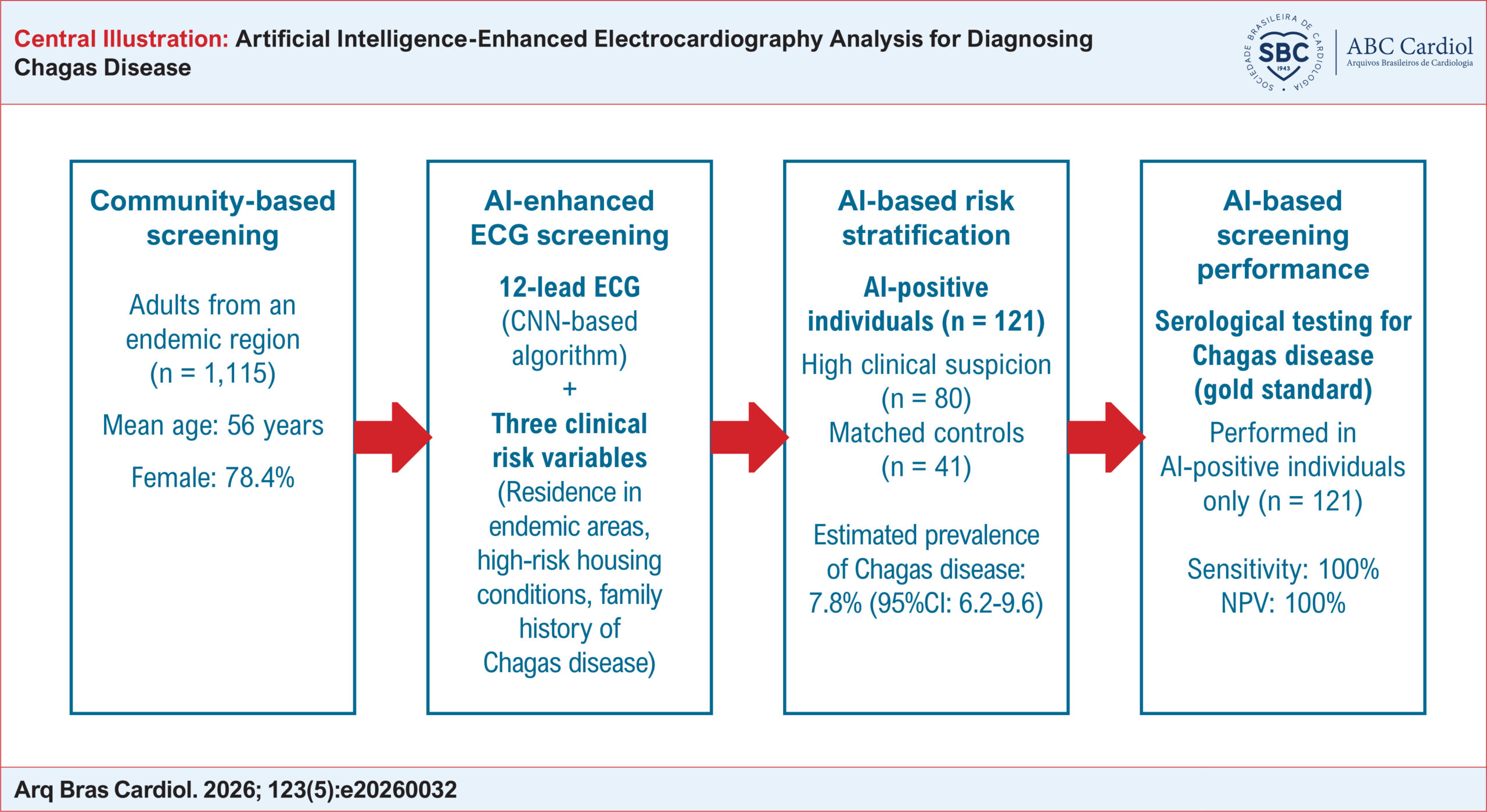
In August 2024, 1,115 adults underwent standardized 12-lead ECG acquisition during a field campaign in Feira de Santana, Bahia, Northeast Brazil. A previously trained AI model analyzed ECG tracings and incorporated three clinical variables: i) prior residence in triatomine-infested areas, ii) poor housing conditions, and iii) family history of Chagas disease. Individuals flagged as AI-positive were classified as suspected cases. Suspected cases and matched controls (2:1) underwent point-of-care serological testing.

Results:

The algorithm flagged 121 individuals (10.9%), corresponding to an estimated AI-based prevalence of Chagas disease of 7.8% (95%CI: 6.2-9.6). Among the 112 individuals who completed serological testing, 13 tested positive, all within the AI-positive suspected group; no seropositive cases were identified among controls. Sensitivity was 100% (95%CI: 69-100), specificity 40% (95%CI: 30-50), negative predictive value 100% (95%CI: 91-100), and positive predictive value 12% (95%CI: 11-14), with a diagnostic odds ratio of 6.6.

Conclusions:

An AI-ECG algorithm combined with simple clinical variables demonstrated excellent sensitivity for the detection of Chagas disease and may represent a valuable triage tool in endemic, resource-constrained settings.

  • Artificial Intelligence
  • Chagas disease
  • Electrocardiography
  • Mass Screening
Read Full Article
Creative Commons Attribution (CC BY) Creative Commons license
17/07/2026 DOI: 10.36660/abc.20260032i Views 1
Figure 1
ABC
Editorial

Permanent Artificial Cardiac Pacemaker in the Treatment of Bradyarrhythmias Caused by Chagas Disease

Roberto Costa

Government programs aimed at eliminating vector-borne transmission of Chagas disease have had a strong impact on the prevalence of cardiac bradyarrhythmias secondary to this etiology and, consequently, on the number of pacemaker implants performed in Brazil.– Data from the Brazilian Pacemaker Registry show that in 1995, of the 6,542 initial pacemaker implants reported, 30.2% were related to patients with Chagas disease. The proportion of patients with Chagas disease, however, decreased over time, and seven years later, when the 2002 data were presented, of the 11,347 initial implants reported, Chagas disease was reported as the etiology in 25.0% of cases. The total figures for the first 10 years of this century showed that Chagas disease accounted for 17.8% of initial pacemaker implants, falling to 11.7% in the latest publication of data from the Brazilian Pacemaker Registry, referring to the period from 2009 to 2014. Among the initial implants of conventional pacemakers performed at the Heart Institute-HC-FMUSP in the last six years (01/01/2020 to 31/12/2025), of the 2689 patients operated on, only 236 (8.8%) had Chagas disease as the etiology of their bradyarrhythmia, according to clinical and demographic data of consecutive patients undergoing procedures for implantation of electronic cardiac devices from 01/01/2020 to 31/12/2025 at Incor-HC-FMUSP.

A comparative analysis of the demographic and clinical data of 25,648 individuals with Chagas disease and 31,984 with degenerative heart disease who underwent conventional pacemaker implantation between 1995 and 2003 showed similarities between these two groups of individuals regarding sex distribution, with 47.8% women among those with Chagas disease and 48.5% in the degenerative disease group (p=0.186). On the other hand, a significant difference was observed when evaluating the average age of these two populations, with 58.6 ± 15.3 years for Chagas disease and 73.5 ± 12.6 for the degenerative disease group (p=0.001).

[…]

  • Artificial Pacemaker
  • Chagas disease
  • Mortality
  • Prevalence
  • Risk Factors
Read Full Article
Creative Commons Attribution (CC BY) Creative Commons license
05/06/2026 DOI: 10.36660/abc.20260180i Views 1
Implantation of Pacemakers in Patients with Chagas disease: A Case-Control Study of Associated Contextual Factors and Prognosis
ABC
Original Article

Implantation of Pacemakers in Patients with Chagas disease: A Case-Control Study of Associated Contextual Factors and Prognosis

Sâmara Fernandes Leite et al. Maria Carmo Pereira Nunes Cesar Augusto Taconeli Mathaus Henrique Reis Silva … Dardiane Santos Cruz Lea Campos Oliveira Ester Cerdeira Sabino Marco Paulo Tomáz Barbosa Antonio Luis Pinho Ribeiro Ariela Mota Ferreira Desirée Sant’Ana Haikal

Abstract

Background

Chronic Chagas cardiomyopathy (CCC) is the most severe manifestation of Chagas disease and may present with bradyarrhythmias requiring pacemaker (PM) implantation.

Objective

1. To identify contextual factors associated with PM implantation among individuals with CCC. 2. To assess the prognosis (death) in these groups over a 4-year follow-up period.

Method

1. Nested case-control study within the SaMi-Trop cohort. We matched cases (patients with CCC who had a PM implanted between waves 1 and 2 of the study) with controls at a 1:3 ratio, considering equivalence in baseline cardiac severity. Independent variables related to the municipal context were considered. Binary logistic regression was conducted. 2. Survival analysis to evaluate the prognosis of these groups, adjusted for clinical variables (Cox regression), considering death as the outcome. Conclusions were based on a significance level of 5%.

Results

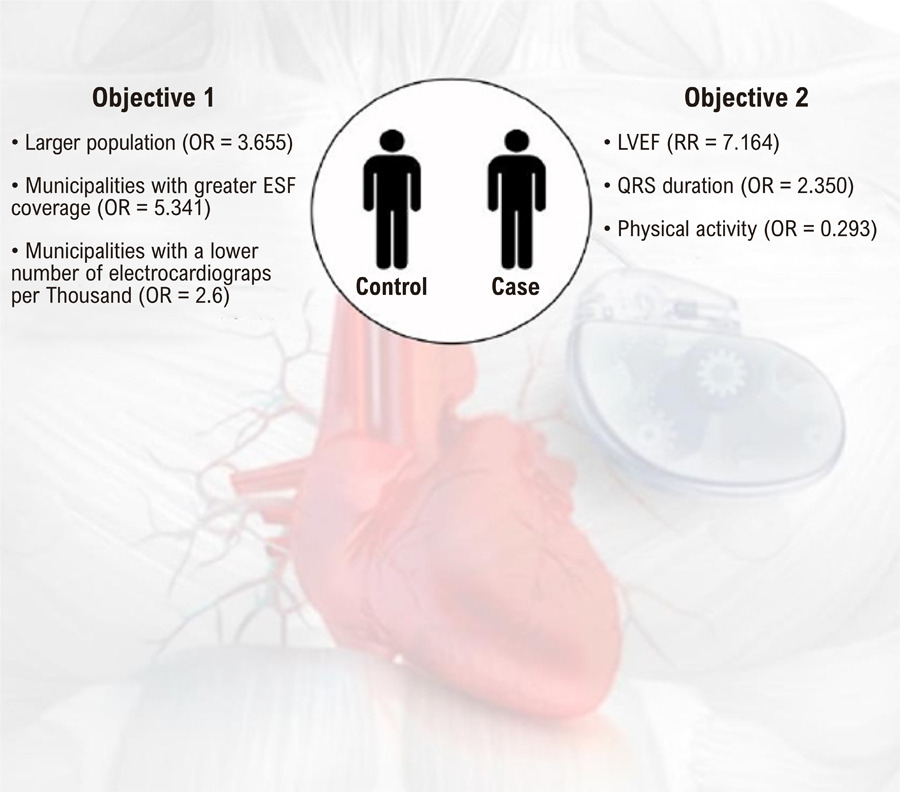
The study included 46 cases and 138 controls. The odds of PM implantation were higher among individuals residing in municipalities with: larger population (odds ratio [OR]: 3.6; 95% confidence interval [CI]: 1.3 to 9.6), higher coverage of the Family Health Strategy (OR: 5.3; 95% CI: 1.8 to 15.8), and with a lower number of electrocardiographs per thousand inhabitants (OR: 2.6; 95% CI: 1.0 to 6.6). Considering 4 years of follow-up, death was observed in 32.6% of cases and 21.2% of controls. Only ejection fraction affected survival (relative risk: 7.2; 95% CI: 3.6 to 14.2).

Conclusion

Contextual factors interfered with PM implantation. However, PM implantation did not influence death over 4 years of follow-up, which was associated only with ejection fraction.

  • Artificial Pacemaker
  • Chagas Cardiomyopathy
  • Chagas disease
  • Mortality
  • Survival
Read Full Article
Creative Commons Attribution (CC BY) Creative Commons license
20/03/2026 DOI: 10.36660/abc.20250003i Views 2
ABC
Editorial

Acute Heart Failure Due to Chagas Disease: Still a Challenge in the 21st Century

Roberto M. Saraiva et al. Luciana F. Portela Andréa R. Costa

Although new Chagas disease (CD) cases have decreased in the last decades through control of vector-borne and blood transfusion transmission, around 3,7 million Brazilians still live chronically affected by this disease. As around 30-40% of this population presents the cardiac form (CCC), and heart failure (HF) is present in about 10% of those with CCC, CD is a major cause of HF in endemic countries, ranging from 4% to 50%.– The paper by Silva et al. adds important updated epidemiological information that 8.7% of the patients admitted due to acute HF in a large Brazilian multicenter registry between 2011 and 2018 had CCC. Therefore, even nowadays, it is still imperative to include CD in the diagnosis workup of patients with HF of unknown etiology. Another important aspect of the HF due to CD is that it presents higher mortality,, and stroke incidence than HF related to other etiologies. The paper by Silva et al confirmed that among those admitted due to acute HF, patients with CD had a higher rate of the composite of death or heart transplant during hospital stay and a higher cumulative incidence of death after 3, 6, and 12 months after discharge.

The worst outcome in CD may be related to specific characteristics of the disease, including a progressive fibrosing myocarditis with a cumulative increase in myocardial fibrosis over time, more frequent cardioembolic phenomena, more frequent life-threatening arrhythmias, and worse hemodynamics and left ventricular (LV) systolic function. In fact, Silva et al. described a lower systolic blood pressure and LV ejection fraction among patients with CD. Another aspect described by Silva et al is that signs of right-sided HF were more frequent in patients with CCC.

[…]

  • Chagas disease
  • Heart Failure
  • Prognosis
Read Full Article
Creative Commons Attribution (CC BY) Creative Commons license
14/07/2025 DOI: 10.36660/abc.20250332i Views 3
Acute Heart Failure in Patients with Chagas Cardiomyopathy: Results of the I Brazilian Heart Failure Registry (BREATHE)
ABC
Original Article

Acute Heart Failure in Patients with Chagas Cardiomyopathy: Results of the I Brazilian Heart Failure Registry (BREATHE)

Pedro Gabriel Melo de Barros e Silva et al. Denilson Campos Albuquerque Renato Delascio Lopes Paulo Roberto Nogueira … Aguinaldo F Freitas Jr Carlos Vieira Nascimento Charles Mady Elizabete Silva dos Santos Mauro Esteves Hernandes Maria Alayde Mendonça Rivera João David de Souza Neto Alvaro Rabelo Manoel Fernandes Canesin Helder Reis Anderson da Costa Armstrong Conrado Hoffmann Renato Hideo Nakagawa Santos Isabella de Andrade Jesuino Luis Eduardo Rohde Lidia Zytinsky Moura Fabiana Goulart Marcondes-Braga Evandro Tinoco Mesquita José Albuquerque de Figueiredo Neto Ricardo Mourilhe-Rocha Luís Beck-da-Silva Mucio Tavares Oliveira Junior Marcus Vinicius Simões

Abstract

Background

Although the clinical features of chronic Chagas’ cardiomyopathy (CCC) have been well established, clinical data about the patients are scarce.

Objectives

The current analysis reports the results of the I Brazilian Heart Failure Registry (BREATHE) assessing baseline characteristics and clinical outcomes of patients with acute heart failure due to CCC.

Methods

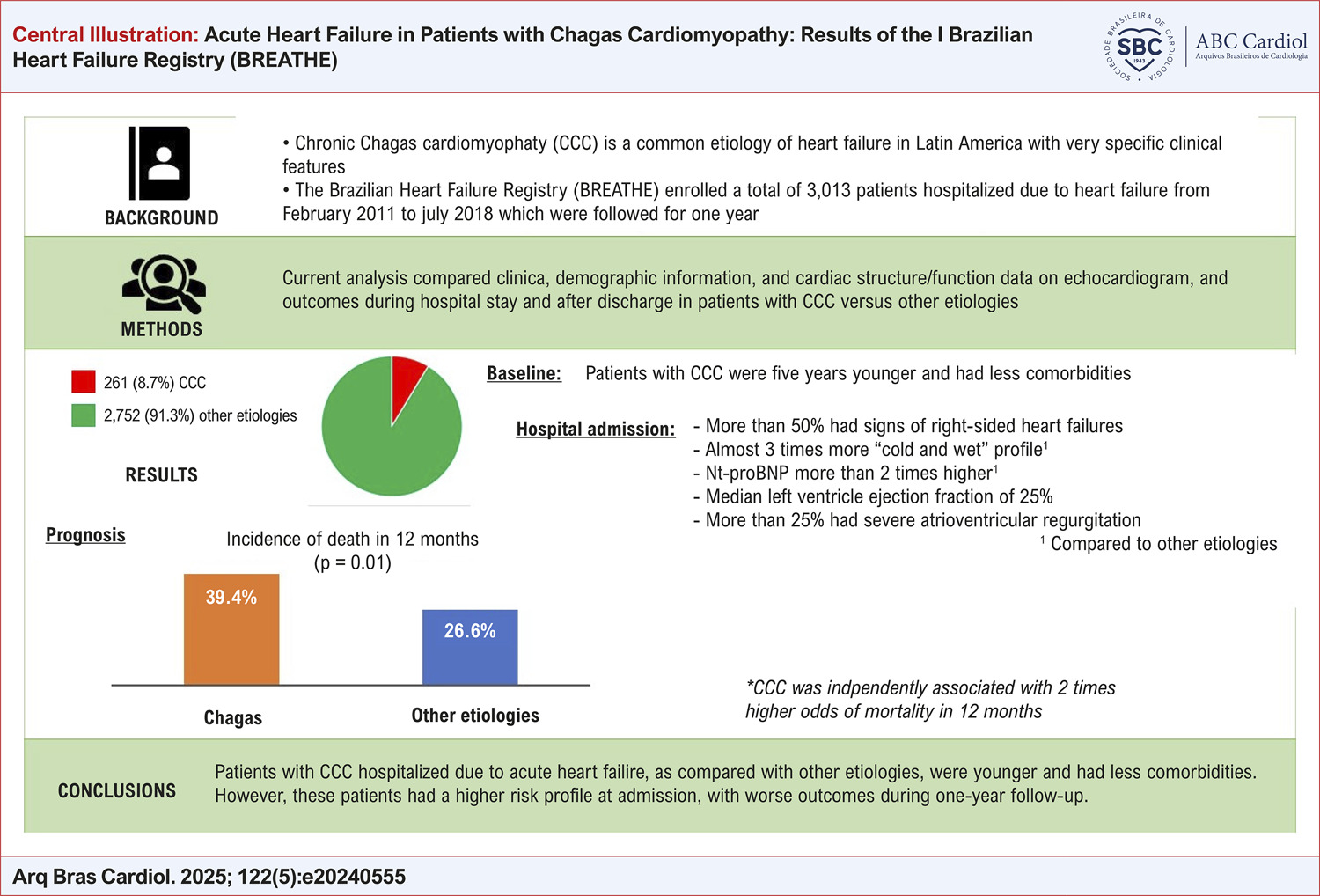
BREATHE enrolled a total of 3,013 adult patients hospitalized with acute heart failure. We analyzed comparatively 261 (8.7%) patients with chronic CCC and 2,752 (91.3%) patients with other etiologies. Clinical and demographic information, cardiac structure/function data on echocardiogram and outcomes during the hospital stay and after discharge were assessed in both groups. Uni and multivariate tests were performed and a p-value <0.05 was considered statistically significant.

Results

Patients with CCC presented lower systolic blood pressure (108.3 ± 26.1 vs 128.3 ± 30.3 mmHg, p<0.001) and left ventricle ejection fraction (25.4 [19 – 36]% vs 37 [27 – 54] %, p<0.001) with higher rates of jugular vein distension (54.8% vs 38.9%, p<0.001), hepatomegaly (47.9% vs 25.6%, p<0.001), and “cold and wet” clinical hemodynamic profile (27.2% vs 10.6%, p<0.001). Patients with CCC presented higher rate of the composite death or heart transplantation (17.4% vs. 11.1%, p=0.004), and higher cumulative incidence of death after 3 months (16.5% vs 10.8%, p=0.017), 6 months (25.3% vs 17.2%, p=0.006), and 12 months (39.4% vs 26.6%, p<0.001). Besides, CCC was independently associated with 12-month mortality risk with odds ratio = 2.02 (95% IC: 1.47-2.77).

Conclusion

Patients with CCC, hospitalized due to acute heart failure, in comparison to other etiologies, presented a higher risk profile that was associated with a poorer outcome during hospital stay and after discharge.

  • Chagas Cardiomyopathy
  • Chagas disease
  • Dilated Cardiomyopathy
  • Heart Failure
Read Full Article
Creative Commons Attribution (CC BY) Creative Commons license
06/06/2025 DOI: 10.36660/abc.20240555i Views 1
Decreased Insulin Levels in Patients with Acute Chagas Disease from Brazilian Amazon treated with Benznidazole
ABC
Original Article

Decreased Insulin Levels in Patients with Acute Chagas Disease from Brazilian Amazon treated with Benznidazole

João Marcos Barbosa-Ferreira et al. Jessica Vanina Ortiz Fernanda Gallinaro Pessoa Maria das Graças Vale Barbosa … Jorge Augusto de Oliveira Guerra Kátia do Nascimento Couceiro Mônica Regina Hosannah Silva e Silva Matheus Martins Monteiro Keila Cardoso Barbosa Fonseca Felix Alvarez Ramires Barbara Maria Ianni Charles Mady Fábio Fernandes

Abstract

Background

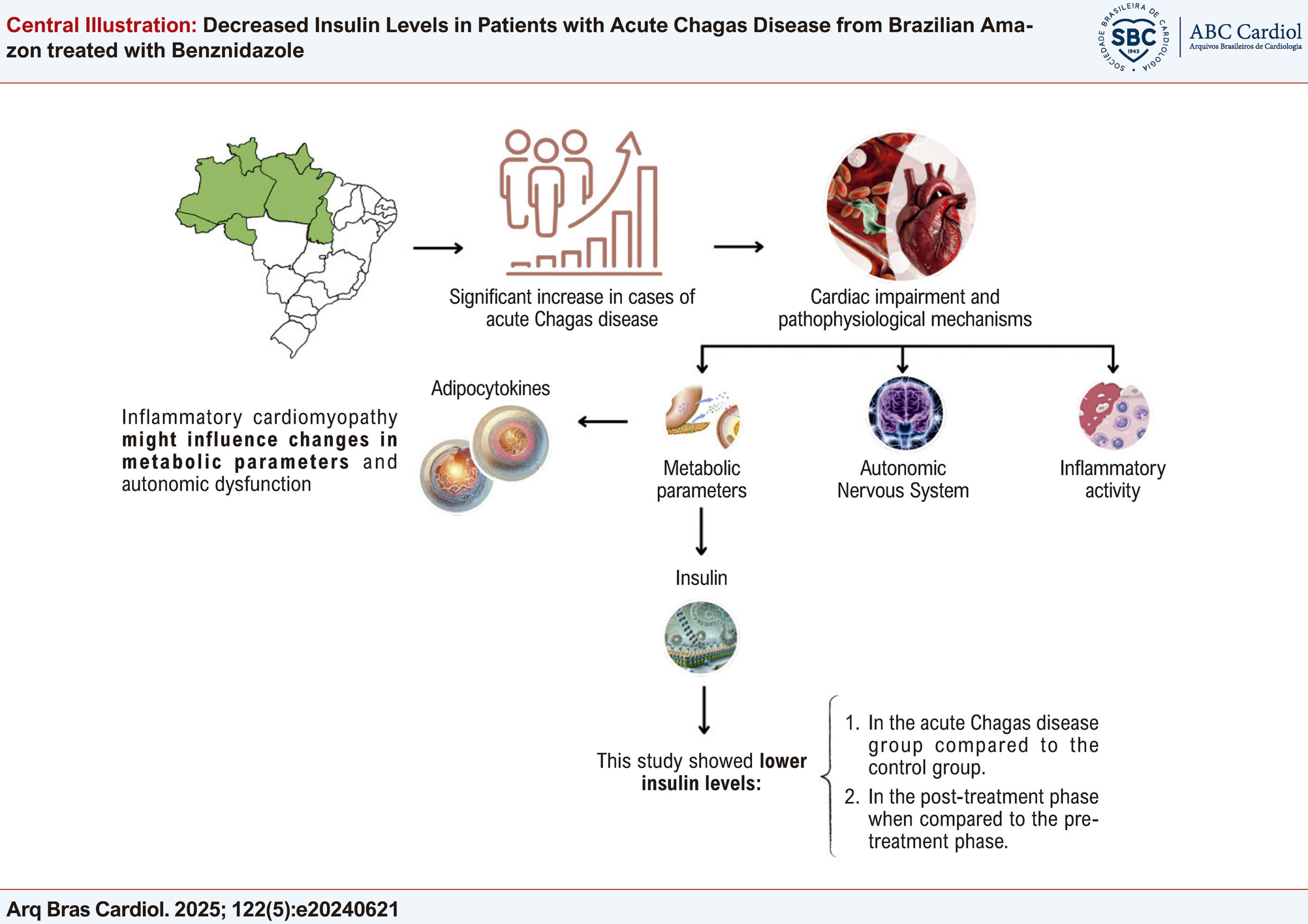
In the Amazon region, there has been a significant increase in the number of acute Chagas disease (ACD) leading to electrocardiographic and echocardiographic abnormalities. The main pathophysiological mechanisms involved in Chagas cardiomyopathy (CCM) are microvascular dysfunction, Autonomic Nervous System (ANS) dysfunction, direct parasite aggression, and inflammatory activity. Chagas disease (CD) is a perfect example of inflammatory cardiomyopathy that might influence changes in metabolic parameters and ANS. Studies on the measurement of adipocytokines and insulin levels in humans with ACD are scarce.

Objective

To evaluate adiponectin, leptin and insulin levels before and after the treatment of ACD with benznidazole and to correlate with ANS and cardiac function.

Methods

Twenty-eight subjects were divided into groups: control group (CG), with 15 subjects, and ACD group, with 13 subjects. All subjects underwent a standard 12-lead ECG, comprehensive transthoracic echocardiographic, evaluation of autonomic function and serum adiponectin, insulin and leptin levels. A level of significance of 5% (p-value < 0,05) was used.

Results

Insulin levels were lower in the ACD group both before and after the treatment when compared to the control group and lower in the post-treatment phase when compared to the pre-treatment phase. Adipocytokine, leptin and adiponectin levels showed no differences between groups.

Conclusion

Insulin levels were lower in the ACD group both before and after the treatment when compared to the control group and lower in the post-treatment phase when compared to the pre-treatment phase. There was no significant correlation between adipocytokine and insulin levels with cardiac function and the ANS parameters.

  • Adipokines
  • Amazonian Ecosystem
  • Chagas Cardiomyopathy
  • Chagas disease
  • Insulin
Read Full Article
Creative Commons Attribution (CC BY) Creative Commons license
26/05/2025 DOI: 10.36660/abc.20240621i Views 1
ABC
Editorial

Cardiac Implantable Electronic Devices in Chagasic and Non-Chagasic Patients: A Critical Look at the Prognosis

Fernanda Almeida Andrade

Factors that may explain the results

One possible explanation for the lack of significant difference in prognosis between patients with and without Chagas disease may be related to improvements in clinical management and the structuring of health care for this population over the past few years., The study was conducted in a tertiary referral center, with likely access to cutting-edge technology and specialized monitoring. Specialized outpatient follow-up programs and adherence to recommended treatments may have reduced the disparities in outcomes between the two groups.

Furthermore, the study analyzed patient data across three different eras, which allowed for the assessment of possible changes over time. The fact that there were no differences in mortality between chagasic and non-chagasic patients in each of these eras reinforces the idea that progress in treatment, both clinical and surgical, may have diluted the adverse prognostic impact previously attributed to ChC.,

[…]

  • Artificial Pacemaker
  • Cardiac Resynchronization Therapy
  • Chagas disease
  • Dilated Cardiomyopathy
Read Full Article
Creative Commons Attribution (CC BY) Creative Commons license
02/12/2024 DOI: 10.36660/abc.20240629i Views 2
Figure 1
IJCS
Editorial

Chagas Disease and Maternal Mortality: An Overlooked Link in a Neglected Disease in Brazil

Maria Alayde Mendonça Rivera et al. Ivan Romero Rivera Glaucia Maria Moraes de Oliveira Ana G. Múnera Echeverri Walkiria Avila

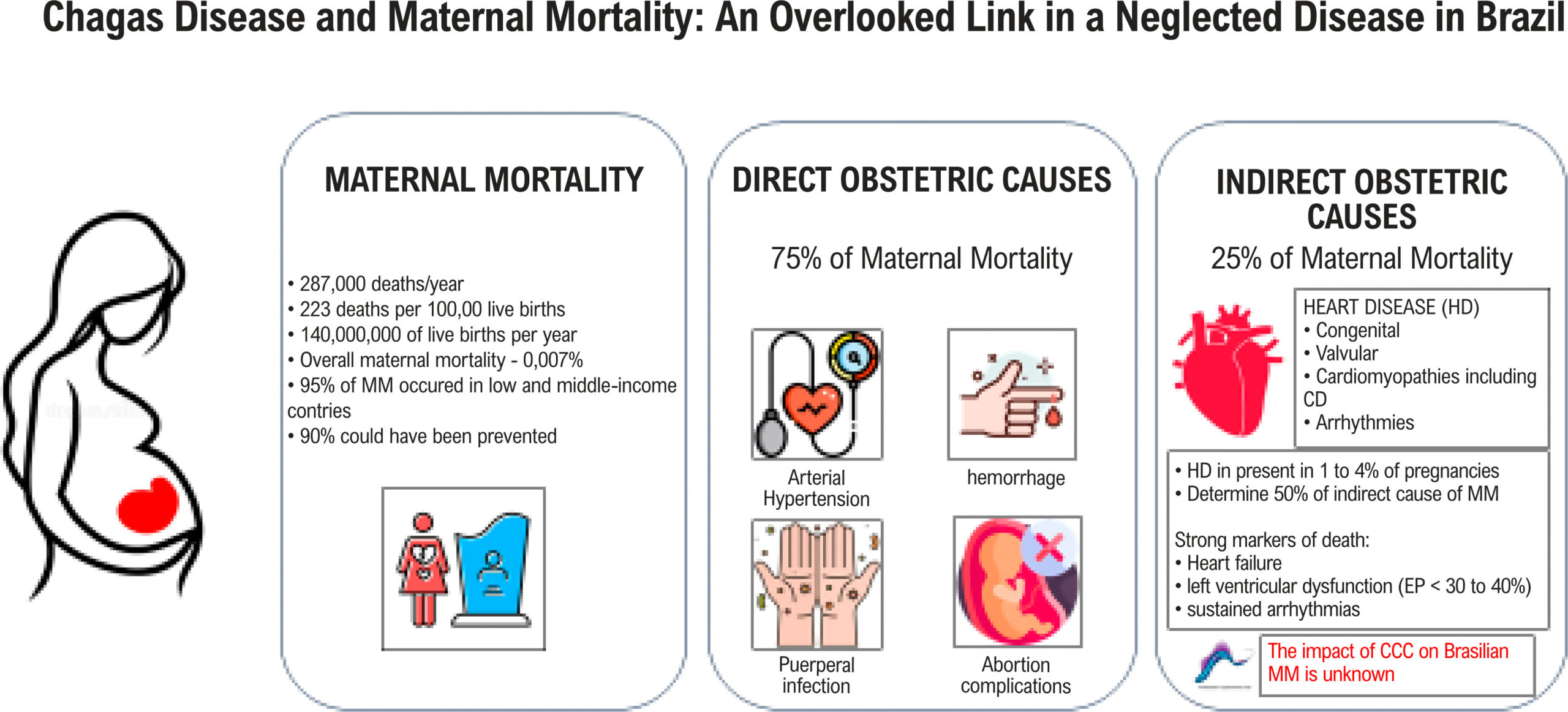
Maternal mortality (MM), defined as the death of a woman during pregnancy, childbirth, or within 42 days postpartum, is a key indicator of maternal health and the quality of care provided by the health care system to prevent and manage complications during this period.

In 2020, there were 287,000 maternal deaths worldwide, resulting in a maternal mortality ratio (MMR) of 223 deaths per 100,000 live births. According to the World Health Organization (WHO), 95% of these deaths will occur in low- and middle-income countries, and 90% will be preventable.

[…]

  • Cardiovascular Diseases
  • Chagas disease
  • Maternal mortality
  • Pregnancy
Read Full Article
Creative Commons Attribution (CC BY) Creative Commons license
04/11/2024 DOI: 10.36660/ijcs.20240148 Views 1
ABC
Editorial

Chronic Chagasic Cardiomyopathy: Influence of Physical Exercise

Gustavo Augusto Ferreira Mota et al. Mariana Gatto Vitor Loureiro da Silva Paula Felippe Martinez Marina Politi Okoshi

Chronic Chagas cardiomyopathy results from infection with Trypanosoma cruzi, transmitted by triatomine insects. The disease, endemic in Latin America, affects millions of individuals worldwide. In recent decades, the increase in migration has elevated the number of infected people in non-endemic regions from Europe and the United States. Chagas disease remains a neglected disease, characterized by difficulty in early diagnosis and poorly understood pathogenesis.

T. cruzi infects cardiomyocytes, immune cells, and fibroblasts, activating an inflammatory response that can reduce the parasite load and cause the death of infected cells. The parasite induces the production of chemokines and cytokines that increase the microbicidal capacity of macrophages and stimulate nitric oxide synthases and the production of reactive oxygen species. CD4 and CD8 T lymphocytes also participate in the inflammatory response with the production of IFN-γ and degranulation of cytotoxic T lymphocytes that lysis compromised cells.

[…]

  • Cardiomyopathies
  • Chagas disease
  • Exercise
  • Functional Status
  • Inflammation
  • Myocardial Perfusion Imaging
Read Full Article
Creative Commons Attribution (CC BY) Creative Commons license
27/09/2024 DOI: 10.36660/abc.20240507i Views 1
Causality and Severity of Adverse Reactions and Biochemical Changes to Benznidazole Treatment in Patients with Chronic Chagas Disease
ABC
Original Article

Causality and Severity of Adverse Reactions and Biochemical Changes to Benznidazole Treatment in Patients with Chronic Chagas Disease

Alanna Carla da Costa Belmino et al. Emanuela Kelly Silva Sousa José Damião da Silva Filho Eduardo Arrais Rocha … Francisca Mylena Melgaço Nunes Tiago Lima Sampaio Leones Fernandes Evangelista Bruna Ribeiro Duque Isabel Cristina da Silva Araújo José Igor de Oliveira Jacó Maria de Fátima Oliveira

Abstract

Background

Chagas disease (CD) is a serious public health problem in Latin America. Benznidazole (BNZ) is used for the treatment of CD and, despite its wide use, little information is available about its toxicity and mechanisms of adverse drug reactions (ADR).

Objectives

To identify and classify clinical and laboratory adverse reactions caused by BNZ in terms of causality and severity.

Methods

Prospective cohort study from January 2018 to December 2021. Treatment follow-up included visits and biochemical tests (complete blood count, liver and kidney function tests) before, during and after treatment. ADR were classified according to causality and severity. In the statistical analysis, the significance level was set at p<0.05.

Results

Forty patients with chronic CD were included. A high prevalence of ADR was observed 161 ADR in 30 patients [90%]; of these, 104 (64.6%) were classified as possible and 57 (35.4%) as probable. The ADR were classified as moderate and mild. Of the 40 patients, nine (22.5%) discontinued treatment. ADR associated with treatment discontinuation and interventions were those that affected the dermatological system, central and peripheral nervous system and sense organs such as ageusia. Mild hematological and biochemical changes such as lymphopenia were observed after 30 days of treatment.

Conclusion

Many patients were able to complete the treatment even with ADR, which can be attributed to the successful follow-up strategy with symptomatic treatment and counseling, leading to patient’s awareness of symptoms and treatment adherence.

  • Chagas disease
  • Drug-Related Side Effects and Adverse Reactions
  • Laboratory Examinations and Diagnostics
Read Full Article
Creative Commons Attribution (CC BY) Creative Commons license
16/09/2024 DOI: 10.36660/abc.20230787i Views 2
ABC
Editorial

Why Treat Chronic Forms of Chagas Disease with Benznidazole if Adverse Reactions are Very Frequent?

Alejandro Marcel Hasslocher-Moreno

After the successful control of vector and transfusion transmission of Chagas disease (CD) in Brazil and other endemic countries in Latin America, the current challenge is the control of congenital transmission of the disease. However, we still have a large contingent of people infected with Trypanosoma cruzi in the chronic form, estimated at around 3.7 million individuals in Brazil alone, with approximately 590,000 of them being women of childbearing age.

Two treatment guidelines for CD were produced by the Pan American Health Organization and the Brazilian Ministry of Health in 2018., These guidelines define the degrees of recommendation for trypanocidal treatment, with an emphasis on newborns, children and adolescents, women of childbearing age, and adults with the indeterminate clinical form up to 50 years of age. Studies in these populations have proven the efficacy of etiological treatment in the chronic form of CD, which leads to a cure in children, impacts vertical transmission, and reduces the risk of progression of the disease to the cardiac form.–

[…]

  • Chagas disease
  • Drug Eruptions
  • Therapeutics
Read Full Article
Creative Commons Attribution (CC BY) Creative Commons license
16/09/2024 DOI: 10.36660/abc.20240426i
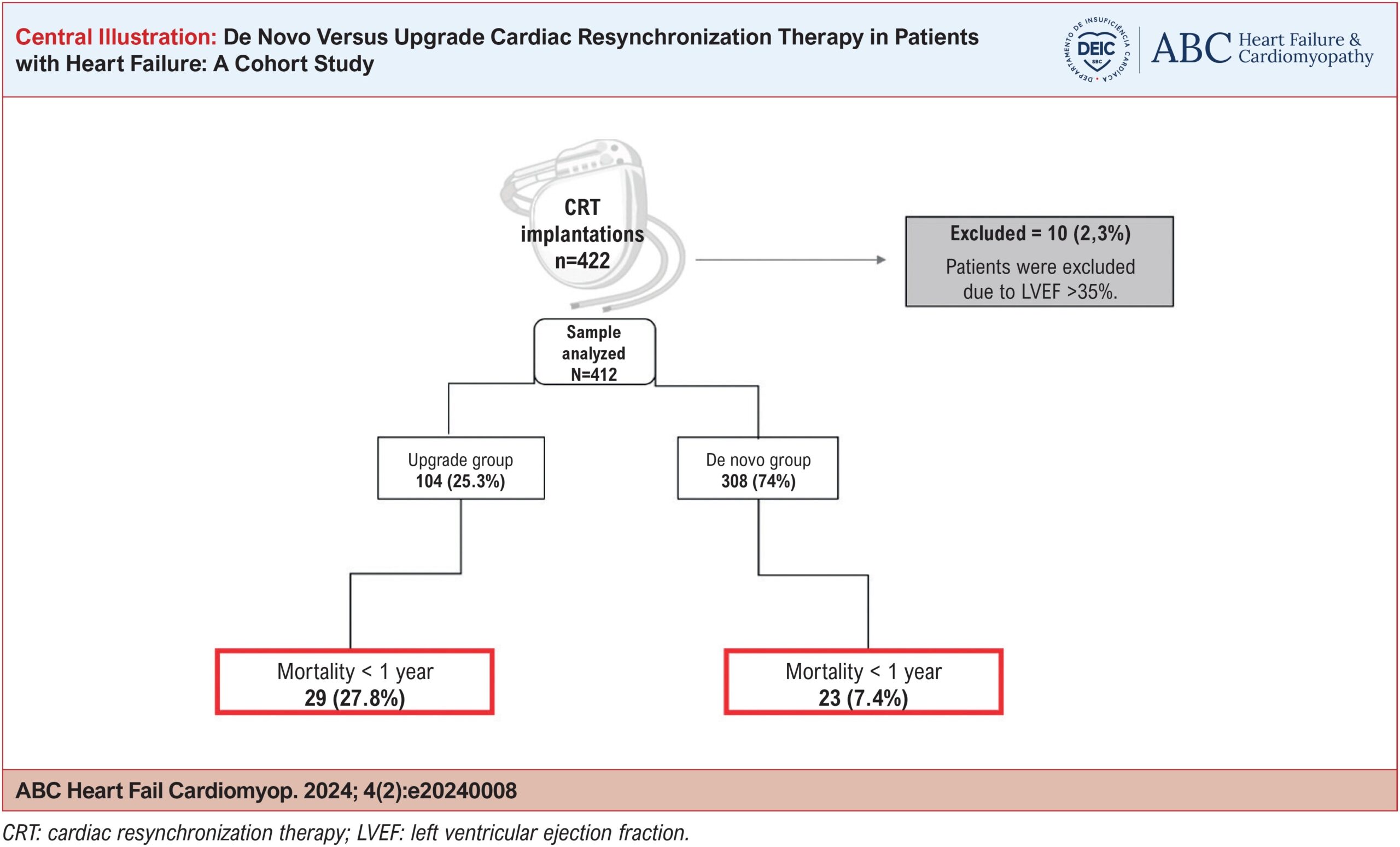
De Novo Versus Upgrade Cardiac Resynchronization Therapy in Patients with Heart Failure: A Cohort Study
ABCHF
Original Article

De Novo Versus Upgrade Cardiac Resynchronization Therapy in Patients with Heart Failure: A Cohort Study

William Carvalho et al. Luíz Carlos Santana Passos Tainá Teixeira Viana Gustavo Pinheiro Santana … Jackson Pedro Barros-Pereira Fernanda Pinheiro Martin Tapioca Caio Rebouças Fonseca Cafezeiro

Abstract

Background:

Cardiac resynchronization therapy (CRT) is beneficial for patients with heart failure (HF) who have left bundle branch block. However, the benefits of CRT in patients with prior cardiac stimulation remain uncertain.

Objective:

Compare short-term mortality between upgrade and de novo CRT implantation.

Methods:

This prospective cohort study included patients with HF indicated for CRT with left ventricular ejection fraction (LVEF) below 35%. Overall survival was assessed using the Kaplan–Meier method, and multivariate analysis was performed using a Cox regression model.

Results:

A total of 412 patients were evaluated, with a mean follow-up of 59 ± 8 months. Of these, 104 patients were in the upgrade group, while 308 patients were included in the de novo group. Chagas disease was the most prevalent cause of HF, accounting for 148 cases (36%). While the de novo group progressed with an increase in LVEF (from 25% ± 6.7% to 28% ± 16.3%, p = 0.005), patients who underwent upgrade did not show a statistically significant difference in LVEF at 6 months (from 27.5% ± 6.9% to 27.5% ± 15.5%, p = 0.6). Overall mortality at 1 year was 122 cases (29.6%). In multivariate analysis, only LVEF and CRT upgrade remained independently associated with the outcome (hazard ratio: 0.93, confidence interval: 0.90 to 0.97, p = 0.001 and hazard ratio: 2.90, confidence interval: 1.21 to 7.10, p = 0.002, respectively).

Conclusion:

In this population with HF, the upgrade group was associated with higher 1-year mortality when compared with the de novo group.

  • Chagas Cardiomyopathy
  • Chagas disease
  • Heart Failure
  • Implantable Defibrillators
Read Full Article
Creative Commons Attribution (CC BY) Creative Commons license
31/08/2024 DOI: 10.36660/abchf.20240008i Views 1
ABC
Editorial

Revisiting ICD Use in Chagas Cardiomyopathy: Current Evidence and Future Directions

André Carmo et al. Antônio Luiz Pinho Ribeiro

Chagas cardiomyopathy (ChC) is a chronic infectious heart disease that has recently been considered an infectious arrhythmogenic cardiomyopathy according to the HRS statement on this subject. After an acute phase, patients become chronically infected, displaying a wide range of presentations concerning heart disease, including heart failure, stroke, conduction abnormalities, atrial fibrillation, and ventricular arrhythmia. Sudden death is a mode of death of most patients with ChC, and implantable cardioverter-defibrillator (ICD) has been used as a preferred therapy, at least for secondary prevention, following recommendations similar to those of other cardiovascular diseases.

All information on the use of ICD in ChC comes from observational studies and, regarding death rates, two meta-analyses have evaluated this topic in different populations. The first meta-analysis, conducted by our group, found an annual mortality rate of 9.7% (95% CI: 5.7 to 13.7) in a population with ICD implanted exclusively for secondary prevention. The second meta-analysis, evaluating a mixed population of primary and secondary prevention, revealed a pooled annual all-cause mortality rate of 9.0%. These findings highlight the significant mortality risk in patients with ChC who have ICDs, emphasizing the importance of careful monitoring and management in this population.

[…]

  • Chagas Cardiomyopathy
  • Chagas disease
  • Defibrillators, Implantable / trends
  • Heart Failure
  • Stroke
Read Full Article
Creative Commons Attribution (CC BY) Creative Commons license
26/08/2024 DOI: 10.36660/abc.20240423i Views 1
Figure 1
IJCS
Review Article

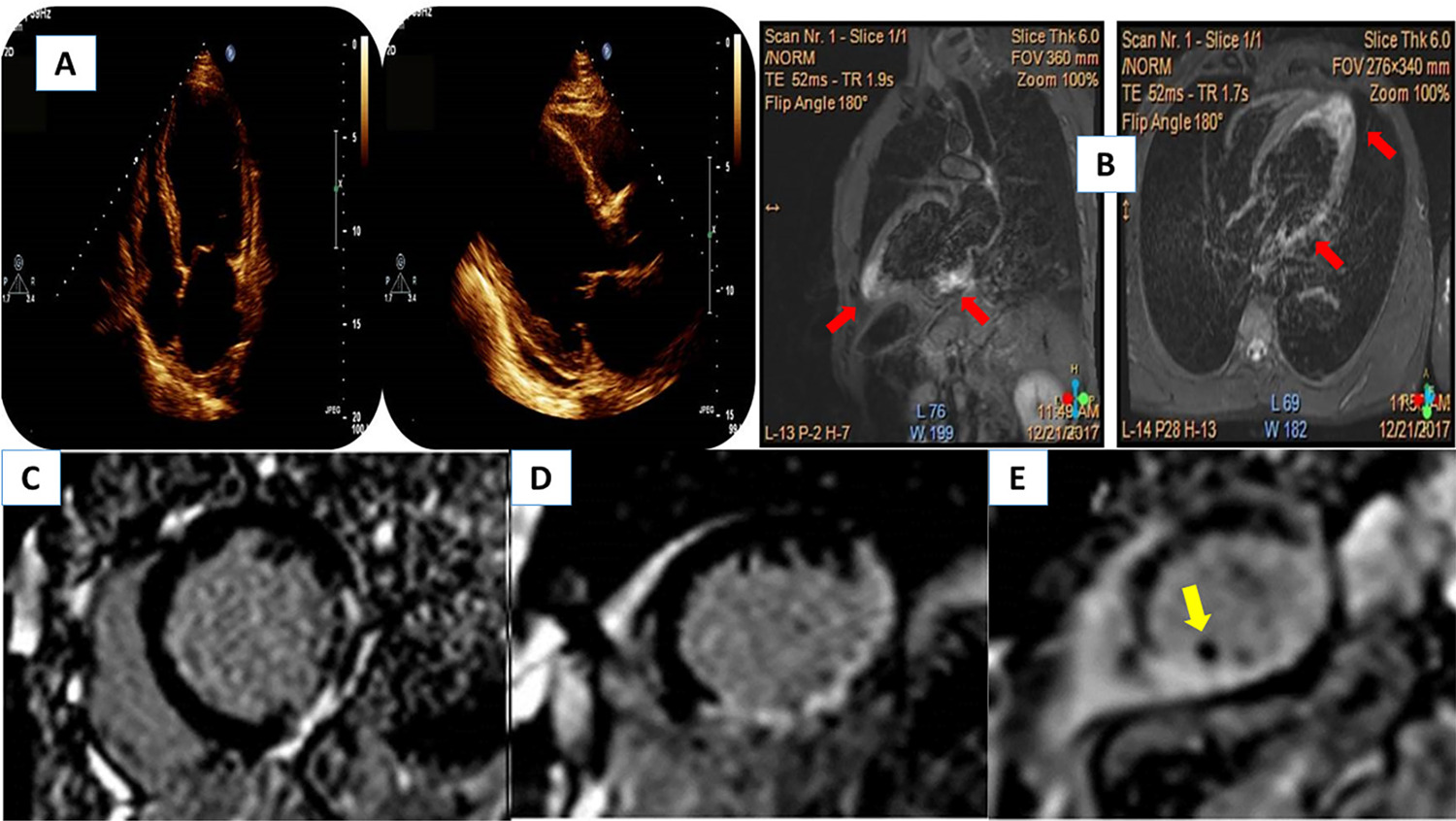
Multimodality Imaging of Chagas Heart Disease: Review and Case Presentation

Amalia Peix et al. Raul Araujo Veronica Gomez Aylen Perez Barreda … Maurizio Dondi Anita Brink Erika Minoshima Diana Paez

Abstract

Chagas disease (CD) is a neglected tropical disease (NTD) caused by Trypanosoma cruzi, a hemoflagellate protozoa. CD is diagnosed by epidemiologic history and two positive serological tests. The infection has two main clinical phases: acute, early after acquiring the infection, and chronic. The electrocardiogram (ECG) is the first tool to diagnose chronic Chagas heart disease after CD serological diagnosis. In addition, the different cardiac imaging modalities, including chest X-ray, echocardiography, single photon emission computed tomography (SPECT), computed tomography (CT), and magnetic resonance, play a crucial role in detecting the cardiac involvement, establishing the prognosis, stratifying patient risk, and addressing the management of CD patients. In this review of the current literature, we summarize the epidemiology, pathophysiology, and clinical presentation of CD. We also discuss the indications, advantages, and limitations of the different cardiac imaging modalities. We also present some case examples, where cardiac imaging proved helpful in cardiac CD (CCD). The early mortality and substantial disability caused by CD represents a health, social and economic burden, particularly in the Latin America. To harness the full potential of medical imaging for the effective management of patients with CD, a comprehensive approach is essential. This involves a concerted effort to invest in the education of medical providers and to facilitate widespread access to diagnostic tools. Accessible and timely diagnosis is crucial for initiating prompt and targeted interventions. Finally, continuous investment in research is vital to advance our understanding of CD and develop innovative solutions for improved patient care.

  • Cardiac Imaging Techniques
  • Chagas disease
  • Radionuclide Imaging
Read Full Article
Creative Commons Attribution (CC BY) Creative Commons license
19/08/2024 DOI: 10.36660/ijcs.20240114 Views 1
Figure 1
IJCS
Review Article

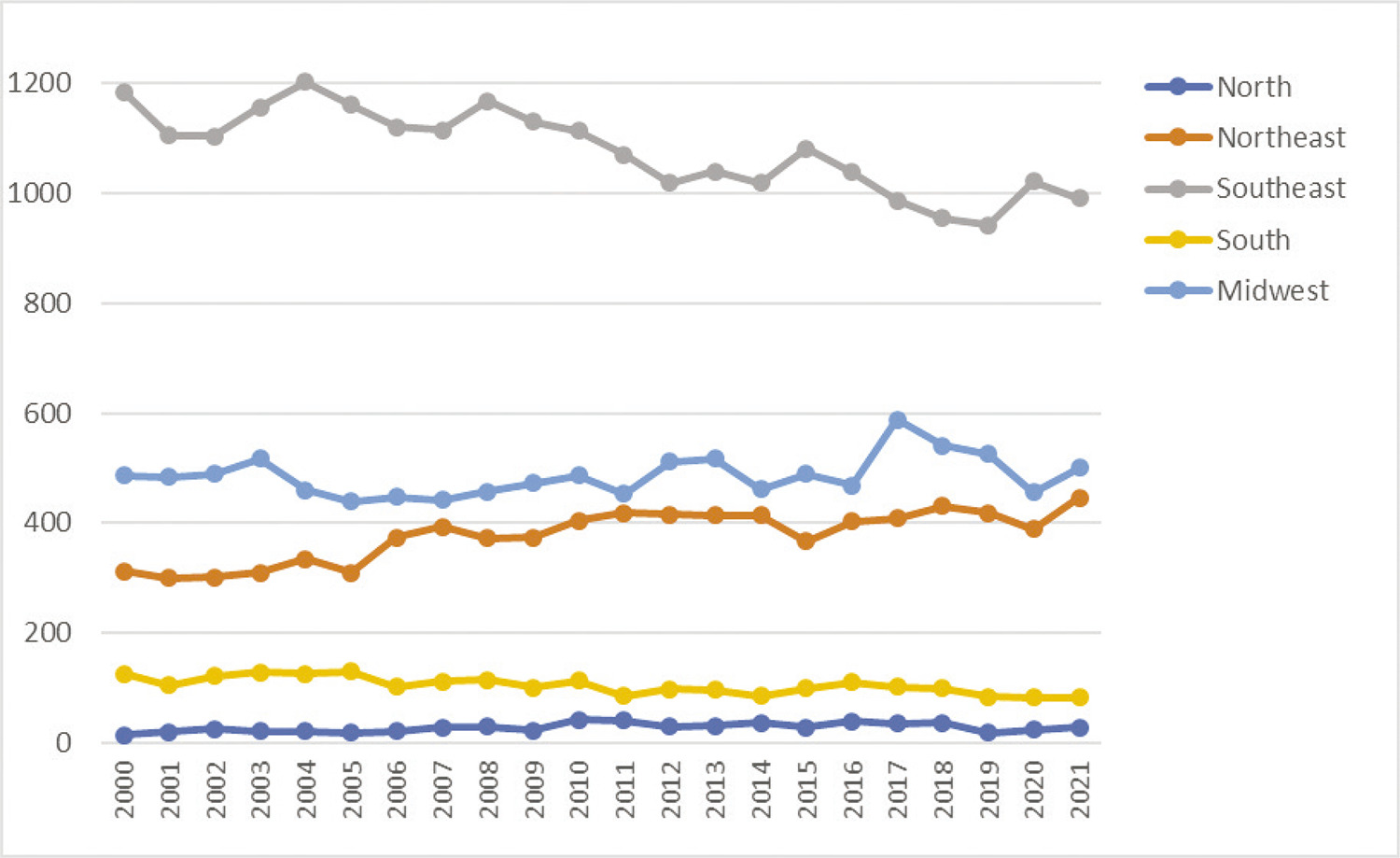
Maternal Deaths by Chagas’ Disease in Brazil

Danielle Kaiser de Souza et al. Vinicius Medina Lopes Ana Luiza Cafe-Lopes Maria das Dores Medina-Lopes

Abstract

Introduction

Chagas’ Disease is responsible for a high rate of morbimortality in Brazil however its real relevance on the maternal mortality is unknown.

Objective

The aim of this study is to review the literature on the impact of Chagas’ Disease on the Brazilian maternal mortality during the pregnancy-puerperal cycle.

Method

A review of literature was conducted to identify publications about maternal mortality and Chagas’ Disease. Documents were also searched in the websites of the Brazilian Ministry of Health, World Health Organization (WHO), System of Information about Mortality (SIM) and Brazilian Society of Cardiology (SBC). Manuscripts, master’s degree and PhD thesis, consensus, epidemiologic bulletins and manuals were analyzed.

Results

Initially were found 1326 paper, however just 14 answered the objective. Five epidemiologic bulletins, 4 manuals of Ministry of Health, 3 consensuses of SBC, 1 book and 3 master’s degree thesis were also used. There is no description of the number of deaths of pregnant women per year caused by complications of Chagas’ Disease in the data of the Ministry of Health and in the SIM. According to the data found, one third of pregnant women with Chagas’ Disease are cardiac patients and the mortality among them is 3.5%, therefore is expected a mortality of about 1% in the pregnant-puerperal cycle. There is evidence of underreporting of maternal mortality among chagasic pregnant women.

Conclusion

The maternal mortality caused by Chagas’ Disease is not known, therefore more studies about it are necessary, in all clinical forms of the disease.

  • Chagas disease
  • Maternal mortality
  • Pregnancy Complications
  • Trypanosoma cruzi
Read Full Article
Creative Commons Attribution (CC BY) Creative Commons license
19/08/2024 DOI: 10.36660/ijcs.20240009 Views 1
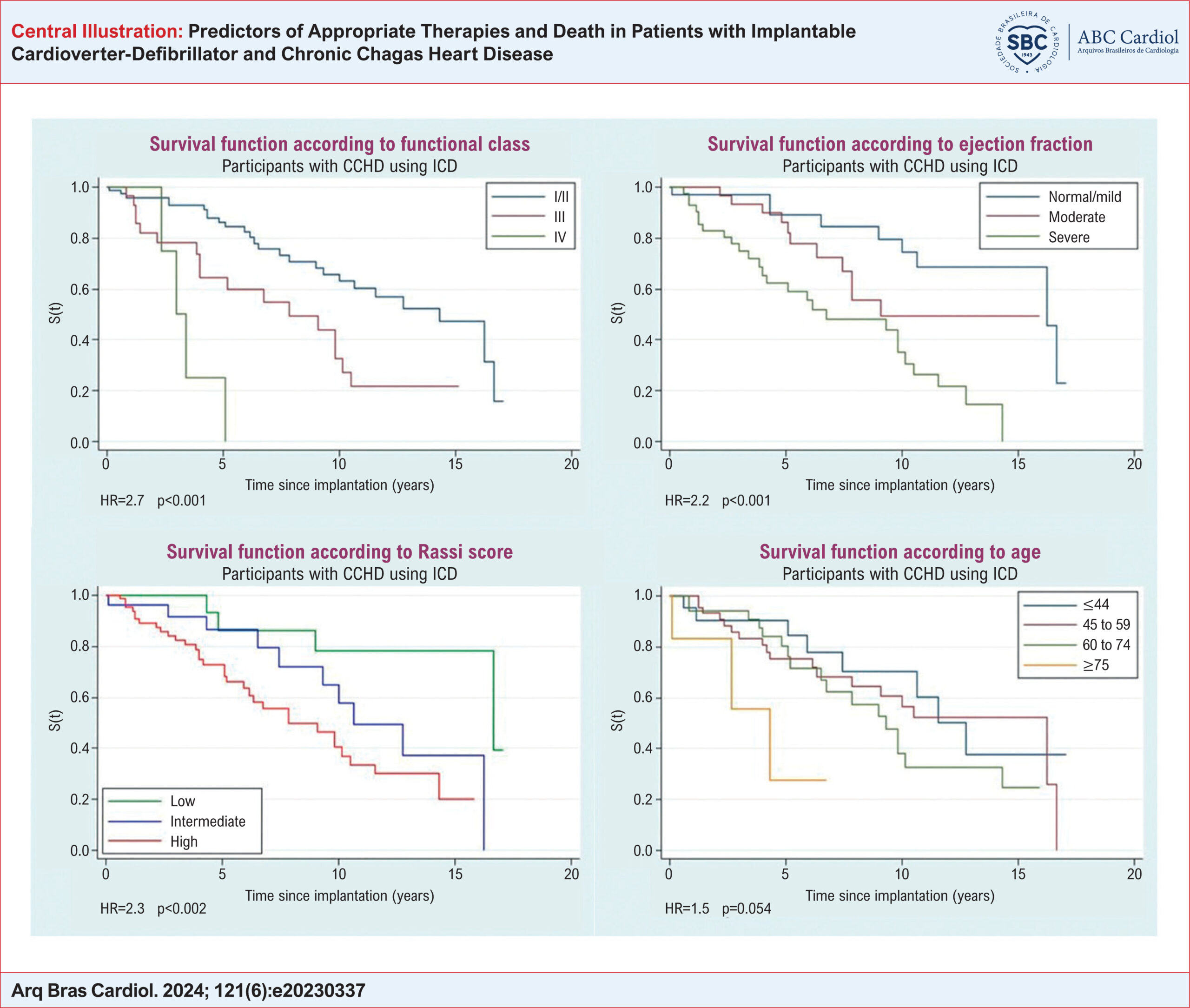
Predictors of Appropriate Therapies and Death in Patients with Implantable Cardioverter-Defibrillator and Chronic Chagas Heart Disease
ABC
Original Article

Predictors of Appropriate Therapies and Death in Patients with Implantable Cardioverter-Defibrillator and Chronic Chagas Heart Disease

Francisca Tatiana Moreira Pereira et al. Eduardo Arrais Rocha Davi Sales Pereira Gondim Rosa Livia Freitas de Almeida Roberto da Justa Pires Neto

Abstract

Background:

There are few retrospective and prospective studies on implantable cardioverter-defibrillators (ICD) in primary and secondary prevention of sudden death in chronic Chagas heart disease (CCHD).

Objectives:

To describe the long-term evolution of patients with CCHD and ICD and to identify and analyze predictors of mortality and appropriate device therapy in this population.

Methods:

This was a historical prospective study with 117 patients with ICD and CCHD. Devices were implanted from January 2003 to December 2021. Predictors of appropriate therapies and long-term mortality were identified and analyzed. The level of statistical significance was p < 0.05.

Results:

Patients (n = 117) had a median follow-up of 61 months (25 to 121 months); they were predominantly male (74%), with a median age of 55 years (48 to 64 years). There were 43.6% appropriate shocks, 26.5% antitachycardia pacing (ATP), and 51% appropriate therapies. During follow-up, 46 patients (39.7%) died. Mortality was 6.2% person-years (95% confidence interval [CI]: 4.6 to 8.3), with 2 sudden deaths during follow-up. Secondary prevention (hazard ratio [HR] 2.1; 95% CI: 1.1 to 4.3; p = 0.029) and ejection fraction less than 30% (HR 1.8; 95% CI: 1.1 to 3.1; p < 0.05) were predictors of appropriate therapies. Intermediate Rassi score showed a strong association with the occurrence of ATP alone (p = 0.015). Functional class IV (p = 0.007), left ventricular ejection fraction < 30 (p = 0.010), and age above 75 years (p = 0.042) were predictors of total mortality.

Conclusion:

ICDs in CCHD showed a high incidence of appropriate activation, especially in patients with secondary prevention, low left ventricular ejection fraction, and intermediate Rassi score. Patients with congestive heart failure, elevated functional class, and age over 75 years showed elevated mortality.

  • Chagas disease
  • Implantable Defibrillators
  • Sudden Death
Read Full Article
Creative Commons Attribution (CC BY) Creative Commons license
19/08/2024 DOI: 10.36660/abc.20230337i Views 1
Figure 1
ABCHF
Image

Giant Megacolon in Chagasic Cardiomyopathy: A Challenging Combination

Anderson Oliveira Estevan et al. Aguinaldo Freitas Jr.

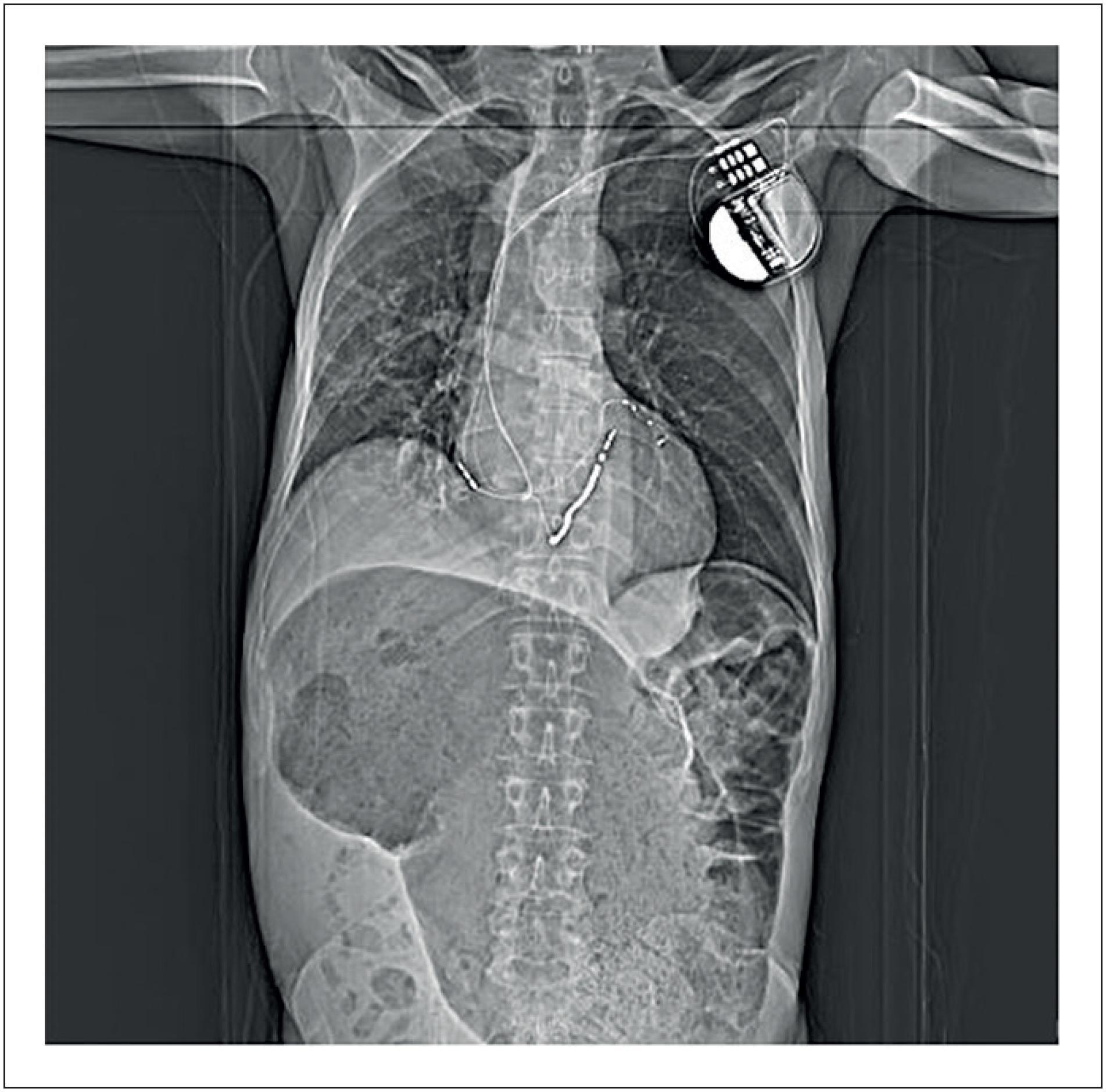
This case concerns a 62-year-old man diagnosed with chagasic cardiomyopathy, presenting with a dilated and arrhythmogenic form, showing significant ventricular dysfunction, and currently undergoing cardiac resynchronization therapy with a previously implanted implantable cardioverter defibrillator. In the outpatient setting prior to admission, the patient’s medical records indicate recurrent ventricular arrhythmias and multiple appropriate shocks from the device over recent years.

Upon admission to the emergency department, the patient complained of severe asthenia, abdominal pain, postprandial vomiting, and choking persisting for a week. His current medication regimen included losartan 100 mg/day, carvedilol 50 mg/day, spironolactone 25 mg/day, empagliflozin 25 mg/day, furosemide 80 mg/day, acetylsalicylic acid 100 mg/day, and atorvastatin 40 mg/day. During the physical examination upon admission, a significant drop in general condition, cachexia, blood pressure of 84×57 mmHg, and heart rate of 93 bpm were observed. In addition to hypotension, cold extremities and prolonged capillary refill time were noted. There were no peripheral edema, jugular distension or pulmonary congestion. In addition, there was significant abdominal distension and pain on palpation. Based on the patient’s clinical history and physical examination findings, a diagnosis of acute obstructive abdomen and decompensated heart failure (HF) with an L-profile was determined.

[…]

  • Chagas Cardiomyopathy
  • Chagas disease
  • Megacolon
Read Full Article
Creative Commons Attribution (CC BY) Creative Commons license
22/07/2024 DOI: 10.36660/abchf.20240011i Views 2
ABC
Editorial

Chagas Disease Reactivation after Heart Transplant: Importance of New Predictors

Roberto M. Saraiva et al. Andréa R. Costa

Chronic Chagas disease (CD) affects around 3.7 million Brazilians according to the most recent estimative. As around 30-40% of this population present with the cardiac form, it comes as no surprise that CD is the third most frequent etiology among patients undergoing heart transplant in Brazil. As induction and/or maintenance immunosuppressive therapy carry the risk of CD reactivation (CDR), heart transplant safety could be questioned in CD. However, the experience in Brazil established heart transplants as the leading alternative treatment for CD patients with end-stage heart failure. In fact, the post-transplant survival of patients with CD in Brazil is 76%, 71%, and, 46% after 6 months, five, and 10 years, respectively, and better than the survival of heart transplant recipients with either ischemic or idiopathic cardiomyopathies.,

CDR incidence after heart transplant varies from 19.6% to 90%. CDR can induce symptoms of acute CD (fever, anemia, jaundice), myocarditis, panniculitis, meningoencephalitis, and brain abscess. Myocarditis is the most frequent complication and may present severe symptoms compatible with heart failure, cardiac arrhythmia, and even cardiogenic shock. Fortunately, CDR properly diagnosed and treated results in less than 1% mortality.

[…]

  • Chagas disease
  • Latent Infection
  • Risk Factors
Read Full Article
Creative Commons Attribution (CC BY) Creative Commons license
15/07/2024 DOI: 10.36660/abc.20240284i Views 1
Absolute Lymphocyte Count: a Predictor of Positive Serum PCR for Trypanosoma cruzi in Patients with Chagas Disease Undergoing Heart Transplantation
ABC
Original Article

Absolute Lymphocyte Count: a Predictor of Positive Serum PCR for Trypanosoma cruzi in Patients with Chagas Disease Undergoing Heart Transplantation

Plínio José Whitaker Wolf et al. Marco Aurelio Finger João Manoel Rossi Neto Carolina Casadei Santos … Victor Bemfica de Mello Mattos Raphael Rossi Lucas Petri Damiani

Abstract

Background

It is unknown whether lymphopenia is a risk factor for the reactivation of Chagas disease in heart transplantation (HTx), as recently described in the reactivation of cytomegalovirus in transplant patients.

Objective

To evaluate whether lymphopenia in the perioperative period of heart transplantation is related to early Trypanosoma cruzi parasitemia.

Methods

This observational, retrospective study analyzed a sample from January 2014 to January 2023). Parasitemia was evaluated in the first 3 months after HTx using serum polymerase chain reaction (PCR) and compared with the total lymphocyte count in the perioperative period of HTx using receiver operating characteristic curves. Baseline characteristics were compared with PCR for Chagas using independent Cox proportional hazards models. A significance level of 5% was adopted.

Results

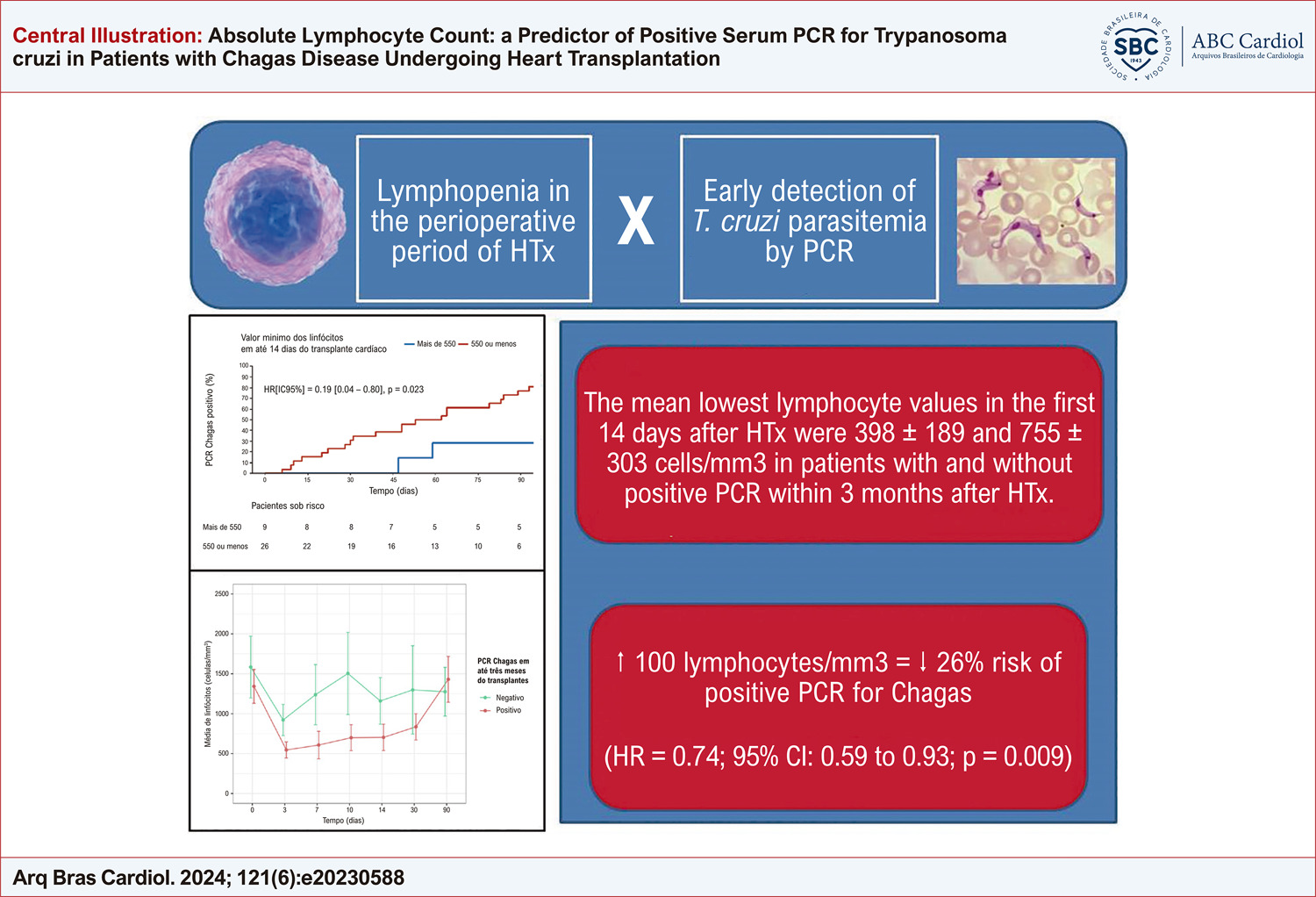
The sample (n = 35) had a mean age of 52.5 ± 8.1 years, and 22 patients (62.8%) had positive PCR for Chagas. The mean lowest lymphocyte values in the first 14 days after HTx were 398 ± 189 and 755 ± 303 cells/mm3 in patients with and without parasitemia, respectively, within 3 months after HTx (area under the curve = 0.857; 95% confidence interval: 0.996 to 0.718, sensitivity and specificity of 83.3% and 86.4%). A cutoff value of less than 550 lymphocytes/mm3 was determined as a risk factor for the presence of parasitemia. Patients with lymphocytes < 550 units/mm3 in the first 14 days after HTx presented positive PCR in 80% of cases. For every increase of 100 lymphocytes/mm3, the risk of PCR positivity was reduced by 26% (hazard rate ratio = 0.74; 95% confidence interval: 0.59 to 0.93, p = 0.009).

Conclusion

There was an association between lymphopenia in the perioperative period of HTx and early T. cruzi parasitemia detected by PCR.

  • Chagas disease
  • Heart Transplantation
  • Immunosuppression Therapy
  • Lymphopenia
Read Full Article
Creative Commons Attribution (CC BY) Creative Commons license
15/07/2024 DOI: 10.36660/abc.20230588i Views 2
ABC
Letter to the Editor

Effects of Immunosuppression in Heart Transplant Patients Due to Chagas Disease

Lúcio Moreira Fontenele et al. Nayara Ribeiro Máximo de Almeida Breno Rennan de Souza Carvalho Egidio Bezerra da Silva Neto … Brenda dos Santos Teixeira Johnnatas Mikael Lopes

Cardiac involvement in Chagas Disease (CD) represents the most severe form of the disease, occurring in 30 to 40% of infected patients. Patients with heart failure of chagasic origin are often refractory to drug treatment, requiring assessment of the need for heart transplantation (CT). After carrying out the CT, it is necessary patient’s immunosuppression to ensure a greater chance of graft acceptance and vitality, on the other hand, immunosuppression is a contributing factor to CD relapse, which could directly compromise the graft or even worsen other health parameters of the patient, directly impacting mortality in the next 5 years after transplant. Many of the cardiac therapies implemented in CD come from therapies studied in heart diseases of other origins, requiring more therapeutic research in populations of individuals with CD.

The article entitled Survival of Survival of Heart Transplant Patients with Chagas’ Disease Under Different Antiproliferative Immunosuppressive Regimens presents a theme of extreme importance for the scenario of care for individuals with Chagas, especially concerning harmful outcomes such as death and reactivation of the disease.

[…]

  • Chagas disease
  • Heart Transplantation
  • Immunosuppresion
Read Full Article
Creative Commons Attribution (CC BY) Creative Commons license
20/05/2024 DOI: 10.36660/abc.20230798i Views 1
Association of Sympathetic Denervation, Myocardial Hypoperfusion, and Fibrosis with Ventricular Arrhythmias in Chronic Chagas Cardiomyopathy
ABCIC
Original Article

Association of Sympathetic Denervation, Myocardial Hypoperfusion, and Fibrosis with Ventricular Arrhythmias in Chronic Chagas Cardiomyopathy

Adriana Soares Xavier de Brito et al. Renata Junqueira Moll-Bernardes Martha Valéria Tavares Pinheiro Gabriel Camargo … Fabio Paiva Rossini Siqueira Adriana Pereira Glavam Sergio Altino Almeida Fernanda Souza Nogueira Sardinha Mendes Paulo Henrique Rosado-de-Castro Andrea Silvestre Sousa

Abstract

Background:

Chronic Chagas cardiomyopathy (CCC) manifests as heart failure, thromboembolic events, and sudden cardiac death (SCD). Although SCD may be the presenting event, there is still no recommendation for early cardioverter/defibrillator implantation in current guidelines.

Objective:

To evaluate the correlation between autonomic denervation, myocardial hypoperfusion, fibrosis, and ventricular arrhythmias in patients in the early stages of CCC.

Methods:

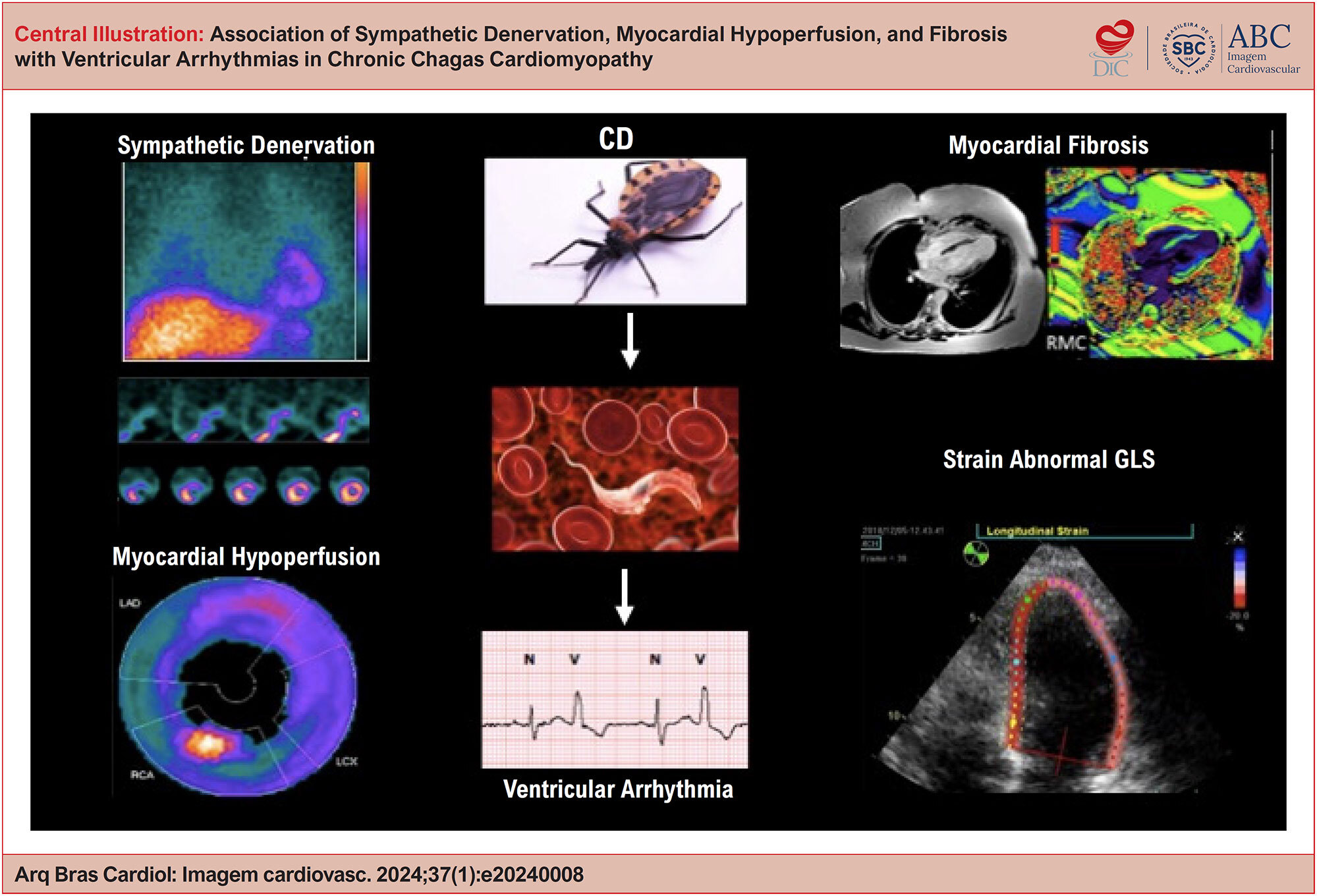
Cross-sectional study of 29 patients with CCC and preserved left ventricular function who underwent SPECT with iodine-123-meta-iodobenzylguanidine (123I-mIBG), myocardial perfusion SPECT with technetium-99m sestamibi (99mTc-MIBI), and cardiac magnetic resonance (CMR) with gadolinium, divided into two groups according to on 24h Holter findings: arrhythmia (> 6 ventricular premature complexes/hour and/or nonsustained ventricular tachycardia; n = 15) or no-arrhythmia (< 6 ventricular premature complexes/hour and no ventricular tachycardia; n = 14).

Results:

Significant correlations were observed between parameters of the three cardiovascular imaging modalities and the presence of ventricular arrhythmia. Denervation on mIBG correlated moderately with diffuse fibrosis, represented by ECV on CMR (r = 0.55, P = 0.002). Hypoperfusion by MIBI-SPECT correlated with fibrosis by both LGE (r = 0.66, P = 0.005) and extracelluar volume (ECV) (r = 0.56, P = 0.002). We also observed a moderate correlation between the extent of myocardial areas with denervation and hypoperfusion (r = 0.48, P = 0.007).

Conclusion:

The presence of autonomic denervation, myocardial hypoperfusion, and fibrosis was associated with ventricular arrhythmia in the early stages of CCC. A combination of these parameters can improve stratification of SCD risk in these patients.

  • Cardiac Arrhythmias
  • Chagas disease
  • Sympathetic Denervation
Read Full Article
Creative Commons Attribution (CC BY) Creative Commons license
28/03/2024 DOI: 10.36660/abcimg.20240008i Views 2
IJCS
Editorial

Achievements, Challenges and Opportunities in MicroRNAs and Chagas Disease

Giovani Carlo Veríssimo da Costa

MicroRNAs (miRNAs) were discovered in 1993 in studies of the nematode Caenorhabditis elegans and since then, these molecules have been of considerable importance in clinical practice for their use as potential biomarkers of different health and disease conditions.

In cell biology, the miRNAs play an important role in the physiological and pathological regulation of various biological processes and act as post-transcriptional regulators by binding to messenger RNA and preventing its translation or promoting molecular cleavage.–miRNAs regulate different degenerative processes, cancer and immunological diseases. The increase and extracellular circulation reinforce the importance of these molecules as molecular biomarkers for prognosis, diagnosis, evolution, monitoring and therapy.–

[…]

  • biomarker
  • Chagas disease
  • chagasic cardiomyopathy
  • Diagnosis
  • microRNA
Read Full Article
Creative Commons Attribution (CC BY) Creative Commons license
04/03/2024 DOI: 10.36660/ijcs.20230160 Views 2

Could not load more articles. Please try again.

How to cite this article

EndNote RIS

Electronic Document Format (Vancouver)

Pedrosa RC. Artificial Intelligence Attack! The Rising Importance of Chagas Disease. Arquivos Brasileiros de Cardiologia 2026;123(5):e20260409.

Electronic Document Format (ABNT)

Pedrosa, Roberto Coury. Artificial Intelligence Attack! The Rising Importance of Chagas Disease. Arquivos Brasileiros de Cardiologia, v. 123, n. 5, e20260409, Jul. 2026.

Electronic Document Format (APA)

Pedrosa, R. C. (2026). Artificial Intelligence Attack! The Rising Importance of Chagas Disease. Arquivos Brasileiros de Cardiologia, 123(5), e20260409.

Electronic Document Format (ISO)

Pedrosa, Roberto Coury. Artificial Intelligence Attack! The Rising Importance of Chagas Disease. Arquivos Brasileiros de Cardiologia [online]. 2026, vol. 123, n. 5, [cited 2026-10-14], e20260409. Available from: <https://journals.cardiol.br/en/article/artificial-intelligence-attack-the-rising-importance-of-chagas-disease/>. ISSN 0066-782X

EndNote RIS

Electronic Document Format (Vancouver)

Silva MRH, Guerra JAO, Ortiz JV, Monteiro MM, Couceiro KN, Guerra MGVB, Ferreira JMBB, et al. 16-Year Evolution of Acute Orally Transmitted Chagas Disease: Report of an Autochthonous Case Progressing to Chagasic Cardiomyopathy. Arquivos Brasileiros de Cardiologia 2026;123(5):e20250817.

Electronic Document Format (ABNT)

Silva, Monica Regina Hosannah e; Guerra, Jorge Augusto de Oliveira; Ortiz, Jessica Vanina; Monteiro, Matheus Martins; Couceiro, Katia do Nascimento; Guerra, Maria das Graças Vale Barbosa; Ferreira, João Marcos Bemfica Barbosa. 16-Year Evolution of Acute Orally Transmitted Chagas Disease: Report of an Autochthonous Case Progressing to Chagasic Cardiomyopathy. Arquivos Brasileiros de Cardiologia, v. 123, n. 5, e20250817, Jul. 2026.

Electronic Document Format (APA)

Silva, M. R. H. , Guerra, J. A. O., Ortiz, J. V., Monteiro, M. M., Couceiro, K. N., Guerra, M. G. V. B., & Ferreira, J. M. B. B. (2026). 16-Year Evolution of Acute Orally Transmitted Chagas Disease: Report of an Autochthonous Case Progressing to Chagasic Cardiomyopathy. Arquivos Brasileiros de Cardiologia, 123(5), e20250817.

Electronic Document Format (ISO)

Silva, Monica Regina Hosannah e and Guerra, Jorge Augusto de Oliveira and Ortiz, Jessica Vanina and Monteiro, Matheus Martins and Couceiro, Katia do Nascimento and Guerra, Maria das Graças Vale Barbosa and Ferreira, João Marcos Bemfica Barbosa. 16-Year Evolution of Acute Orally Transmitted Chagas Disease: Report of an Autochthonous Case Progressing to Chagasic Cardiomyopathy. Arquivos Brasileiros de Cardiologia [online]. 2026, vol. 123, n. 5, [cited 2026-10-14], e20250817. Available from: <https://journals.cardiol.br/en/article/16-year-evolution-of-acute-orally-transmitted-chagas-disease-report-of-an-autochthonous-case-progressing-to-chagasic-cardiomyopathy/>. ISSN 0066-782X

EndNote RIS

Electronic Document Format (Vancouver)

Fonseca IMG, Nunes MCP, Sable C, Mendoza RF, Santos FLN, Gomes PR, Carvalho APV, et al. Artificial Intelligence-Enhanced Electrocardiography Analysis for Diagnosing Chagas Disease. Arquivos Brasileiros de Cardiologia 2026;123(5):e20260032.

Electronic Document Format (ABNT)

Fonseca, Isabella Moreira Gonzalez; Nunes, Maria Carmo Pereira; Sable, Craig; Mendoza, Renata Fonseca; Santos, Fred Luciano Neves; Gomes, Paulo Rodrigues; Carvalho, Adson Patrik Vieira; Mendoza, Bernardo Fonseca; Souza, Noilson Lazaro; Barbosa, José Augusto de Almeida; Cardoso, Clareci Silva; Nascimento, Bruno Ramos; Ribeiro, Antonio L. P.. Artificial Intelligence-Enhanced Electrocardiography Analysis for Diagnosing Chagas Disease. Arquivos Brasileiros de Cardiologia, v. 123, n. 5, e20260032, Jul. 2026.

Electronic Document Format (APA)

Fonseca, I. M. G., Nunes, M. C. P., Sable, C., Mendoza, R. F., Santos, F. L. N., Gomes, P. R., Carvalho, A. P. V., Mendoza, B. F., Souza, N. L., Barbosa, J. A. A., Cardoso, C. S., Nascimento, B. R., & Ribeiro, A. L. P. (2026). Artificial Intelligence-Enhanced Electrocardiography Analysis for Diagnosing Chagas Disease. Arquivos Brasileiros de Cardiologia, 123(5), e20260032.

Electronic Document Format (ISO)

Fonseca, Isabella Moreira Gonzalez and Nunes, Maria Carmo Pereira and Sable, Craig and Mendoza, Renata Fonseca and Santos, Fred Luciano Neves and Gomes, Paulo Rodrigues and Carvalho, Adson Patrik Vieira and Mendoza, Bernardo Fonseca and Souza, Noilson Lazaro and Barbosa, José Augusto de Almeida and Cardoso, Clareci Silva and Nascimento, Bruno Ramos and Ribeiro, Antonio L. P.. Artificial Intelligence-Enhanced Electrocardiography Analysis for Diagnosing Chagas Disease. Arquivos Brasileiros de Cardiologia [online]. 2026, vol. 123, n. 5, [cited 2026-10-14], e20260032. Available from: <https://journals.cardiol.br/en/article/artificial-intelligence-enhanced-electrocardiography-analysis-for-diagnosing-chagas-disease/>. ISSN 0066-782X

EndNote RIS

Electronic Document Format (Vancouver)

Costa R. Permanent Artificial Cardiac Pacemaker in the Treatment of Bradyarrhythmias Caused by Chagas Disease. Arquivos Brasileiros de Cardiologia 2026;123(2):e20260180.

Electronic Document Format (ABNT)

Costa, Roberto. Permanent Artificial Cardiac Pacemaker in the Treatment of Bradyarrhythmias Caused by Chagas Disease. Arquivos Brasileiros de Cardiologia, v. 123, n. 2, e20260180, Jun. 2026.

Electronic Document Format (APA)

Costa, R. (2026). Permanent Artificial Cardiac Pacemaker in the Treatment of Bradyarrhythmias Caused by Chagas Disease. Arquivos Brasileiros de Cardiologia, 123(2), e20260180.

Electronic Document Format (ISO)

Costa, Roberto. Permanent Artificial Cardiac Pacemaker in the Treatment of Bradyarrhythmias Caused by Chagas Disease. Arquivos Brasileiros de Cardiologia [online]. 2026, vol. 123, n. 2, [cited 2026-10-14], e20260180. Available from: <https://journals.cardiol.br/en/article/permanent-artificial-cardiac-pacemaker-in-the-treatment-of-bradyarrhythmias-caused-by-chagas-disease/>. ISSN 0066-782X

EndNote RIS

Electronic Document Format (Vancouver)

Leite SF, Nunes MCP, Taconeli CA, Silva MHR, Cruz DS, Oliveira LC, Sabino EC, et al. Implantation of Pacemakers in Patients with Chagas disease: A Case-Control Study of Associated Contextual Factors and Prognosis. Arquivos Brasileiros de Cardiologia 2026;123(2):e20250003.

Electronic Document Format (ABNT)

Leite, Sâmara Fernandes; Nunes, Maria Carmo Pereira; Taconeli, Cesar Augusto; Silva, Mathaus Henrique Reis; Cruz, Dardiane Santos; Oliveira, Lea Campos; Sabino, Ester Cerdeira; Barbosa, Marco Paulo Tomáz; Ribeiro, Antonio Luis Pinho; Ferreira, Ariela Mota; Haikal, Desirée Sant’Ana. Implantation of Pacemakers in Patients with Chagas disease: A Case-Control Study of Associated Contextual Factors and Prognosis. Arquivos Brasileiros de Cardiologia, v. 123, n. 2, e20250003, Mar. 2026.

Electronic Document Format (APA)

Leite, S. F., Nunes, M. C. P., Taconeli, C. A., Silva, M. H. R., Cruz, D. S., Oliveira, L. C., Sabino, E. C., Barbosa, M. P. T., Ribeiro, A. L. P., Ferreira, A. M., & Haikal, D. S. (2026). Implantation of Pacemakers in Patients with Chagas disease: A Case-Control Study of Associated Contextual Factors and Prognosis. Arquivos Brasileiros de Cardiologia, 123(2), e20250003.

Electronic Document Format (ISO)

Leite, Sâmara Fernandes and Nunes, Maria Carmo Pereira and Taconeli, Cesar Augusto and Silva, Mathaus Henrique Reis and Cruz, Dardiane Santos and Oliveira, Lea Campos and Sabino, Ester Cerdeira and Barbosa, Marco Paulo Tomáz and Ribeiro, Antonio Luis Pinho and Ferreira, Ariela Mota and Haikal, Desirée Sant’Ana. Implantation of Pacemakers in Patients with Chagas disease: A Case-Control Study of Associated Contextual Factors and Prognosis. Arquivos Brasileiros de Cardiologia [online]. 2026, vol. 123, n. 2, [cited 2026-10-14], e20250003. Available from: <https://journals.cardiol.br/en/article/implantation-of-pacemakers-in-patients-with-chagas-disease-a-case-control-study-of-associated-contextual-factors-and-prognosis/>. ISSN 0066-782X

EndNote RIS

Electronic Document Format (Vancouver)

Saraiva RM, Portela LF, Costa AR. Acute Heart Failure Due to Chagas Disease: Still a Challenge in the 21st Century. Arquivos Brasileiros de Cardiologia 2025;122(5):e20250332.

Electronic Document Format (ABNT)

Saraiva, Roberto M.; Portela, Luciana F.; Costa, Andréa R.. Acute Heart Failure Due to Chagas Disease: Still a Challenge in the 21st Century. Arquivos Brasileiros de Cardiologia, v. 122, n. 5, e20250332, Jul. 2025.

Electronic Document Format (APA)

Saraiva, R. M., Portela, L. F., & Costa, A. R. (2025). Acute Heart Failure Due to Chagas Disease: Still a Challenge in the 21st Century. Arquivos Brasileiros de Cardiologia, 122(5), e20250332.

Electronic Document Format (ISO)

Saraiva, Roberto M. and Portela, Luciana F. and Costa, Andréa R.. Acute Heart Failure Due to Chagas Disease: Still a Challenge in the 21st Century. Arquivos Brasileiros de Cardiologia [online]. 2025, vol. 122, n. 5, [cited 2026-10-14], e20250332. Available from: <https://journals.cardiol.br/en/article/acute-heart-failure-due-to-chagas-disease-still-a-challenge-in-the-21st-century/>. ISSN 0066-782X

EndNote RIS

Electronic Document Format (Vancouver)

Silva PGMB, Albuquerque DC, Lopes RD, Nogueira PR, Freitas Jr AF, Nascimento CV, Mady C, et al. Acute Heart Failure in Patients with Chagas Cardiomyopathy: Results of the I Brazilian Heart Failure Registry (BREATHE). Arquivos Brasileiros de Cardiologia 2025;122(5):e20240555.

Electronic Document Format (ABNT)

Silva, Pedro Gabriel Melo de Barros e; Albuquerque, Denilson Campos; Lopes, Renato Delascio; Nogueira, Paulo Roberto; Freitas Jr, Aguinaldo F; Nascimento, Carlos Vieira; Mady, Charles; Santos, Elizabete Silva dos; Hernandes, Mauro Esteves; Rivera, Maria Alayde Mendonça; Souza Neto, João David de; Rabelo, Alvaro; Canesin, Manoel Fernandes; Reis, Helder; Armstrong, Anderson da Costa; Hoffmann, Conrado; Santos, Renato Hideo Nakagawa; Jesuino, Isabella de Andrade; Rohde, Luis Eduardo; Moura, Lidia Zytinsky; Marcondes-Braga, Fabiana Goulart; Mesquita, Evandro Tinoco; Figueiredo Neto, José Albuquerque de; Mourilhe-Rocha, Ricardo; Beck-da-Silva, Luís; Oliveira Junior, Mucio Tavares; Simões, Marcus Vinicius. Acute Heart Failure in Patients with Chagas Cardiomyopathy: Results of the I Brazilian Heart Failure Registry (BREATHE). Arquivos Brasileiros de Cardiologia, v. 122, n. 5, e20240555, Jun. 2025.

Electronic Document Format (APA)

Silva, P. G. M. B. , Albuquerque, D. C., Lopes, R. D., Nogueira, P. R., Freitas Jr, A. F., Nascimento, C. V., Mady, C., Santos, E. S. , Hernandes, M. E., Rivera, M. A. M., Souza Neto, J. D. , Rabelo, A., Canesin, M. F., Reis, H., Armstrong, A. C., Hoffmann, C., Santos, R. H. N., Jesuino, I. A., Rohde, L. E., Moura, L. Z., Marcondes-Braga, F. G., Mesquita, E. T., Figueiredo Neto, J. A. , Mourilhe-Rocha, R., Beck-da-Silva, L., Oliveira Junior, M. T., & Simões, M. V. (2025). Acute Heart Failure in Patients with Chagas Cardiomyopathy: Results of the I Brazilian Heart Failure Registry (BREATHE). Arquivos Brasileiros de Cardiologia, 122(5), e20240555.

Electronic Document Format (ISO)

Silva, Pedro Gabriel Melo de Barros e and Albuquerque, Denilson Campos and Lopes, Renato Delascio and Nogueira, Paulo Roberto and Freitas Jr, Aguinaldo F and Nascimento, Carlos Vieira and Mady, Charles and Santos, Elizabete Silva dos and Hernandes, Mauro Esteves and Rivera, Maria Alayde Mendonça and Souza Neto, João David de and Rabelo, Alvaro and Canesin, Manoel Fernandes and Reis, Helder and Armstrong, Anderson da Costa and Hoffmann, Conrado and Santos, Renato Hideo Nakagawa and Jesuino, Isabella de Andrade and Rohde, Luis Eduardo and Moura, Lidia Zytinsky and Marcondes-Braga, Fabiana Goulart and Mesquita, Evandro Tinoco and Figueiredo Neto, José Albuquerque de and Mourilhe-Rocha, Ricardo and Beck-da-Silva, Luís and Oliveira Junior, Mucio Tavares and Simões, Marcus Vinicius. Acute Heart Failure in Patients with Chagas Cardiomyopathy: Results of the I Brazilian Heart Failure Registry (BREATHE). Arquivos Brasileiros de Cardiologia [online]. 2025, vol. 122, n. 5, [cited 2026-10-14], e20240555. Available from: <https://journals.cardiol.br/en/article/acute-heart-failure-in-patients-with-chagas-cardiomyopathy-results-of-the-i-brazilian-heart-failure-registry-breathe/>. ISSN 0066-782X

EndNote RIS

Electronic Document Format (Vancouver)

Barbosa-Ferreira JM, Ortiz JV, Pessoa FG, Barbosa MGV, Guerra JAO, Couceiro KN, Silva MRH, et al. Decreased Insulin Levels in Patients with Acute Chagas Disease from Brazilian Amazon treated with Benznidazole. Arquivos Brasileiros de Cardiologia 2025;122(5):e20240621.

Electronic Document Format (ABNT)

Barbosa-Ferreira, João Marcos; Ortiz, Jessica Vanina; Pessoa, Fernanda Gallinaro; Barbosa, Maria das Graças Vale; Guerra, Jorge Augusto de Oliveira; Couceiro, Kátia do Nascimento; Silva, Mônica Regina Hosannah e; Monteiro, Matheus Martins; Fonseca, Keila Cardoso Barbosa; Ramires, Felix Alvarez; Ianni, Barbara Maria; Mady, Charles; Fernandes, Fábio. Decreased Insulin Levels in Patients with Acute Chagas Disease from Brazilian Amazon treated with Benznidazole. Arquivos Brasileiros de Cardiologia, v. 122, n. 5, e20240621, May. 2025.

Electronic Document Format (APA)

Barbosa-Ferreira, J. M., Ortiz, J. V., Pessoa, F. G., Barbosa, M. G. V., Guerra, J. A. O., Couceiro, K. N., Silva, M. R. H. , Monteiro, M. M., Fonseca, K. C. B., Ramires, F. A., Ianni, B. M., Mady, C., & Fernandes, F. (2025). Decreased Insulin Levels in Patients with Acute Chagas Disease from Brazilian Amazon treated with Benznidazole. Arquivos Brasileiros de Cardiologia, 122(5), e20240621.

Electronic Document Format (ISO)

Barbosa-Ferreira, João Marcos and Ortiz, Jessica Vanina and Pessoa, Fernanda Gallinaro and Barbosa, Maria das Graças Vale and Guerra, Jorge Augusto de Oliveira and Couceiro, Kátia do Nascimento and Silva, Mônica Regina Hosannah e and Monteiro, Matheus Martins and Fonseca, Keila Cardoso Barbosa and Ramires, Felix Alvarez and Ianni, Barbara Maria and Mady, Charles and Fernandes, Fábio. Decreased Insulin Levels in Patients with Acute Chagas Disease from Brazilian Amazon treated with Benznidazole. Arquivos Brasileiros de Cardiologia [online]. 2025, vol. 122, n. 5, [cited 2026-10-14], e20240621. Available from: <https://journals.cardiol.br/en/article/decreased-insulin-levels-in-patients-with-acute-chagas-disease-from-brazilian-amazon-treated-with-benznidazole/>. ISSN 0066-782X

EndNote RIS

Electronic Document Format (Vancouver)

Andrade FA. Cardiac Implantable Electronic Devices in Chagasic and Non-Chagasic Patients: A Critical Look at the Prognosis. Arquivos Brasileiros de Cardiologia 2024;121(9):e20240629.

Electronic Document Format (ABNT)

Andrade, Fernanda Almeida. Cardiac Implantable Electronic Devices in Chagasic and Non-Chagasic Patients: A Critical Look at the Prognosis. Arquivos Brasileiros de Cardiologia, v. 121, n. 9, e20240629, Dec. 2024.

Electronic Document Format (APA)

Andrade, F. A. (2024). Cardiac Implantable Electronic Devices in Chagasic and Non-Chagasic Patients: A Critical Look at the Prognosis. Arquivos Brasileiros de Cardiologia, 121(9), e20240629.

Electronic Document Format (ISO)

Andrade, Fernanda Almeida. Cardiac Implantable Electronic Devices in Chagasic and Non-Chagasic Patients: A Critical Look at the Prognosis. Arquivos Brasileiros de Cardiologia [online]. 2024, vol. 121, n. 9, [cited 2026-10-14], e20240629. Available from: <https://journals.cardiol.br/en/article/cardiac-implantable-electronic-devices-in-chagasic-and-non-chagasic-patients-a-critical-look-at-the-prognosis/>. ISSN 0066-782X

EndNote RIS

Electronic Document Format (Vancouver)

Rivera MAM, Rivera IR, Oliveira GMM, Echeverri AGM, Avila W. Chagas Disease and Maternal Mortality: An Overlooked Link in a Neglected Disease in Brazil. International Journal of Cardiovascular Sciences 2024;37:e20240148.

Electronic Document Format (ABNT)

Rivera, Maria Alayde Mendonça; Rivera, Ivan Romero; Oliveira, Glaucia Maria Moraes de; Echeverri, Ana G. Múnera; Avila, Walkiria. Chagas Disease and Maternal Mortality: An Overlooked Link in a Neglected Disease in Brazil. International Journal of Cardiovascular Sciences, v. 37, e20240148, Nov. 2024.

Electronic Document Format (APA)

Rivera, M. A. M., Rivera, I. R., Oliveira, G. M. M. , Echeverri, A. G. M., & Avila, W. (2024). Chagas Disease and Maternal Mortality: An Overlooked Link in a Neglected Disease in Brazil. International Journal of Cardiovascular Sciences, 37, e20240148.

Electronic Document Format (ISO)

Rivera, Maria Alayde Mendonça and Rivera, Ivan Romero and Oliveira, Glaucia Maria Moraes de and Echeverri, Ana G. Múnera and Avila, Walkiria. Chagas Disease and Maternal Mortality: An Overlooked Link in a Neglected Disease in Brazil. International Journal of Cardiovascular Sciences [online]. 2024, vol. 37, [cited 2026-10-14], e20240148. Available from: <https://journals.cardiol.br/en/article/chagas-disease-and-maternal-mortality-an-overlooked-link-in-a-neglected-disease-in-brazil/>. ISSN 2359-4802

EndNote RIS

Electronic Document Format (Vancouver)

Mota GAF, Gatto M, Silva VL, Martinez PF, Okoshi MP. Chronic Chagasic Cardiomyopathy: Influence of Physical Exercise. Arquivos Brasileiros de Cardiologia 2024;121(8):e20240507.

Electronic Document Format (ABNT)

Mota, Gustavo Augusto Ferreira; Gatto, Mariana; Silva, Vitor Loureiro da; Martinez, Paula Felippe; Okoshi, Marina Politi. Chronic Chagasic Cardiomyopathy: Influence of Physical Exercise. Arquivos Brasileiros de Cardiologia, v. 121, n. 8, e20240507, Sep. 2024.

Electronic Document Format (APA)

Mota, G. A. F., Gatto, M., Silva, V. L. , Martinez, P. F., & Okoshi, M. P. (2024). Chronic Chagasic Cardiomyopathy: Influence of Physical Exercise. Arquivos Brasileiros de Cardiologia, 121(8), e20240507.

Electronic Document Format (ISO)

Mota, Gustavo Augusto Ferreira and Gatto, Mariana and Silva, Vitor Loureiro da and Martinez, Paula Felippe and Okoshi, Marina Politi. Chronic Chagasic Cardiomyopathy: Influence of Physical Exercise. Arquivos Brasileiros de Cardiologia [online]. 2024, vol. 121, n. 8, [cited 2026-10-14], e20240507. Available from: <https://journals.cardiol.br/en/article/chronic-chagasic-cardiomyopathy-influence-of-physical-exercise/>. ISSN 0066-782X

EndNote RIS

Electronic Document Format (Vancouver)

Belmino ACC, Sousa EKS, Silva Filho JD, Rocha EA, Nunes FMM, Sampaio TL, Evangelista LF, et al. Causality and Severity of Adverse Reactions and Biochemical Changes to Benznidazole Treatment in Patients with Chronic Chagas Disease. Arquivos Brasileiros de Cardiologia 2024;121(8):e20230787.

Electronic Document Format (ABNT)

Belmino, Alanna Carla da Costa; Sousa, Emanuela Kelly Silva; Silva Filho, José Damião da; Rocha, Eduardo Arrais; Nunes, Francisca Mylena Melgaço; Sampaio, Tiago Lima; Evangelista, Leones Fernandes; Duque, Bruna Ribeiro; Araújo, Isabel Cristina da Silva; Jacó, José Igor de Oliveira; Oliveira, Maria de Fátima. Causality and Severity of Adverse Reactions and Biochemical Changes to Benznidazole Treatment in Patients with Chronic Chagas Disease. Arquivos Brasileiros de Cardiologia, v. 121, n. 8, e20230787, Sep. 2024.

Electronic Document Format (APA)

Belmino, A. C. C., Sousa, E. K. S., Silva Filho, J. D. , Rocha, E. A., Nunes, F. M. M., Sampaio, T. L., Evangelista, L. F., Duque, B. R., Araújo, I. C. S., Jacó, J. I. O., & Oliveira, M. F. (2024). Causality and Severity of Adverse Reactions and Biochemical Changes to Benznidazole Treatment in Patients with Chronic Chagas Disease. Arquivos Brasileiros de Cardiologia, 121(8), e20230787.

Electronic Document Format (ISO)

Belmino, Alanna Carla da Costa and Sousa, Emanuela Kelly Silva and Silva Filho, José Damião da and Rocha, Eduardo Arrais and Nunes, Francisca Mylena Melgaço and Sampaio, Tiago Lima and Evangelista, Leones Fernandes and Duque, Bruna Ribeiro and Araújo, Isabel Cristina da Silva and Jacó, José Igor de Oliveira and Oliveira, Maria de Fátima. Causality and Severity of Adverse Reactions and Biochemical Changes to Benznidazole Treatment in Patients with Chronic Chagas Disease. Arquivos Brasileiros de Cardiologia [online]. 2024, vol. 121, n. 8, [cited 2026-10-14], e20230787. Available from: <https://journals.cardiol.br/en/article/causality-and-severity-of-adverse-reactions-and-biochemical-changes-to-benznidazole-treatment-in-patients-with-chronic-chagas-disease/>. ISSN 0066-782X

EndNote RIS

Electronic Document Format (Vancouver)

Hasslocher-Moreno AM. Why Treat Chronic Forms of Chagas Disease with Benznidazole if Adverse Reactions are Very Frequent?. Arquivos Brasileiros de Cardiologia 2024;121(8):e20240426.

Electronic Document Format (ABNT)

Hasslocher-Moreno, Alejandro Marcel. Why Treat Chronic Forms of Chagas Disease with Benznidazole if Adverse Reactions are Very Frequent?. Arquivos Brasileiros de Cardiologia, v. 121, n. 8, e20240426, Sep. 2024.

Electronic Document Format (APA)

Hasslocher-Moreno, A. M. (2024). Why Treat Chronic Forms of Chagas Disease with Benznidazole if Adverse Reactions are Very Frequent?. Arquivos Brasileiros de Cardiologia, 121(8), e20240426.

Electronic Document Format (ISO)

Hasslocher-Moreno, Alejandro Marcel. Why Treat Chronic Forms of Chagas Disease with Benznidazole if Adverse Reactions are Very Frequent?. Arquivos Brasileiros de Cardiologia [online]. 2024, vol. 121, n. 8, [cited 2026-10-14], e20240426. Available from: <https://journals.cardiol.br/en/article/why-treat-chronic-forms-of-chagas-disease-with-benznidazole-if-adverse-reactions-are-very-frequent/>. ISSN 0066-782X

EndNote RIS

Electronic Document Format (Vancouver)

Carvalho W, Passos LCS, Viana TT, Santana GP, Barros-Pereira JP, Tapioca FPM, Cafezeiro CRF, et al. De Novo Versus Upgrade Cardiac Resynchronization Therapy in Patients with Heart Failure: A Cohort Study. ABC Heart Fail Cardiomyop 2024;4(2):e20240008.

Electronic Document Format (ABNT)

Carvalho, William; Passos, Luíz Carlos Santana; Viana, Tainá Teixeira; Santana, Gustavo Pinheiro; Barros-Pereira, Jackson Pedro; Tapioca, Fernanda Pinheiro Martin; Cafezeiro, Caio Rebouças Fonseca. De Novo Versus Upgrade Cardiac Resynchronization Therapy in Patients with Heart Failure: A Cohort Study. ABC Heart Fail Cardiomyop, v. 4, n. 2, e20240008, Nov. 2023.

Electronic Document Format (APA)

Carvalho, W., Passos, L. C. S., Viana, T. T., Santana, G. P., Barros-Pereira, J. P., Tapioca, F. P. M., & Cafezeiro, C. R. F. (2024). De Novo Versus Upgrade Cardiac Resynchronization Therapy in Patients with Heart Failure: A Cohort Study. ABC Heart Fail Cardiomyop, 4(2), e20240008.

Electronic Document Format (ISO)

Carvalho, William and Passos, Luíz Carlos Santana and Viana, Tainá Teixeira and Santana, Gustavo Pinheiro and Barros-Pereira, Jackson Pedro and Tapioca, Fernanda Pinheiro Martin and Cafezeiro, Caio Rebouças Fonseca. De Novo Versus Upgrade Cardiac Resynchronization Therapy in Patients with Heart Failure: A Cohort Study. ABC Heart Fail Cardiomyop [online]. 2024, vol. 4, n. 2, [cited 2026-10-14], e20240008. Available from: <https://journals.cardiol.br/en/article/de-novo-versus-upgrade-cardiac-resynchronization-therapy-in-patients-with-heart-failure-a-cohort-study/>

EndNote RIS

Electronic Document Format (Vancouver)

Carmo A, Ribeiro ALP. Revisiting ICD Use in Chagas Cardiomyopathy: Current Evidence and Future Directions. Arquivos Brasileiros de Cardiologia 2024;121(6):e20240423.

Electronic Document Format (ABNT)

Carmo, André; Ribeiro, Antônio Luiz Pinho. Revisiting ICD Use in Chagas Cardiomyopathy: Current Evidence and Future Directions. Arquivos Brasileiros de Cardiologia, v. 121, n. 6, e20240423, Aug. 2024.

Electronic Document Format (APA)

Carmo, A., & Ribeiro, A. L. P. (2024). Revisiting ICD Use in Chagas Cardiomyopathy: Current Evidence and Future Directions. Arquivos Brasileiros de Cardiologia, 121(6), e20240423.

Electronic Document Format (ISO)

Carmo, André and Ribeiro, Antônio Luiz Pinho. Revisiting ICD Use in Chagas Cardiomyopathy: Current Evidence and Future Directions. Arquivos Brasileiros de Cardiologia [online]. 2024, vol. 121, n. 6, [cited 2026-10-14], e20240423. Available from: <https://journals.cardiol.br/en/article/revisiting-icd-use-in-chagas-cardiomyopathy-current-evidence-and-future-directions/>. ISSN 0066-782X

EndNote RIS

Electronic Document Format (Vancouver)

Peix A, Araujo R, Gomez V, Barreda AP, Dondi M, Brink A, Minoshima E, et al. Multimodality Imaging of Chagas Heart Disease: Review and Case Presentation. International Journal of Cardiovascular Sciences 2024;37:e20240114.

Electronic Document Format (ABNT)

Peix, Amalia; Araujo, Raul; Gomez, Veronica; Barreda, Aylen Perez; Dondi, Maurizio; Brink, Anita; Minoshima, Erika; Paez, Diana. Multimodality Imaging of Chagas Heart Disease: Review and Case Presentation. International Journal of Cardiovascular Sciences, v. 37, e20240114, Aug. 2024.

Electronic Document Format (APA)

Peix, A., Araujo, R., Gomez, V., Barreda, A. P., Dondi, M., Brink, A., Minoshima, E., & Paez, D. (2024). Multimodality Imaging of Chagas Heart Disease: Review and Case Presentation. International Journal of Cardiovascular Sciences, 37, e20240114.

Electronic Document Format (ISO)

Peix, Amalia and Araujo, Raul and Gomez, Veronica and Barreda, Aylen Perez and Dondi, Maurizio and Brink, Anita and Minoshima, Erika and Paez, Diana. Multimodality Imaging of Chagas Heart Disease: Review and Case Presentation. International Journal of Cardiovascular Sciences [online]. 2024, vol. 37, [cited 2026-10-14], e20240114. Available from: <https://journals.cardiol.br/en/article/multimodality-imaging-of-chagas-heart-disease-review-and-case-presentation/>. ISSN 2359-4802

EndNote RIS

Electronic Document Format (Vancouver)

Souza DK, Lopes VM, Cafe-Lopes AL, Medina-Lopes MD. Maternal Deaths by Chagas’ Disease in Brazil. International Journal of Cardiovascular Sciences 2024;37:e20240009.

Electronic Document Format (ABNT)

Souza, Danielle Kaiser de; Lopes, Vinicius Medina; Cafe-Lopes, Ana Luiza; Medina-Lopes, Maria das Dores. Maternal Deaths by Chagas’ Disease in Brazil. International Journal of Cardiovascular Sciences, v. 37, e20240009, Aug. 2024.

Electronic Document Format (APA)

Souza, D. K. , Lopes, V. M., Cafe-Lopes, A. L., & Medina-Lopes, M. D. (2024). Maternal Deaths by Chagas’ Disease in Brazil. International Journal of Cardiovascular Sciences, 37, e20240009.

Electronic Document Format (ISO)

Souza, Danielle Kaiser de and Lopes, Vinicius Medina and Cafe-Lopes, Ana Luiza and Medina-Lopes, Maria das Dores. Maternal Deaths by Chagas’ Disease in Brazil. International Journal of Cardiovascular Sciences [online]. 2024, vol. 37, [cited 2026-10-14], e20240009. Available from: <https://journals.cardiol.br/en/article/maternal-deaths-by-chagas-disease-in-brazil/>. ISSN 2359-4802

EndNote RIS

Electronic Document Format (Vancouver)

Pereira FTM, Rocha EA, Gondim DSP, Almeida RLF, Pires Neto RJ. Predictors of Appropriate Therapies and Death in Patients with Implantable Cardioverter-Defibrillator and Chronic Chagas Heart Disease. Arquivos Brasileiros de Cardiologia 2024;121(6):e20230337.

Electronic Document Format (ABNT)

Pereira, Francisca Tatiana Moreira; Rocha, Eduardo Arrais; Gondim, Davi Sales Pereira; Almeida, Rosa Livia Freitas de; Pires Neto, Roberto da Justa. Predictors of Appropriate Therapies and Death in Patients with Implantable Cardioverter-Defibrillator and Chronic Chagas Heart Disease. Arquivos Brasileiros de Cardiologia, v. 121, n. 6, e20230337, Aug. 2024.

Electronic Document Format (APA)

Pereira, F. T. M., Rocha, E. A., Gondim, D. S. P., Almeida, R. L. F. , & Pires Neto, R. J. (2024). Predictors of Appropriate Therapies and Death in Patients with Implantable Cardioverter-Defibrillator and Chronic Chagas Heart Disease. Arquivos Brasileiros de Cardiologia, 121(6), e20230337.

Electronic Document Format (ISO)

Pereira, Francisca Tatiana Moreira and Rocha, Eduardo Arrais and Gondim, Davi Sales Pereira and Almeida, Rosa Livia Freitas de and Pires Neto, Roberto da Justa. Predictors of Appropriate Therapies and Death in Patients with Implantable Cardioverter-Defibrillator and Chronic Chagas Heart Disease. Arquivos Brasileiros de Cardiologia [online]. 2024, vol. 121, n. 6, [cited 2026-10-14], e20230337. Available from: <https://journals.cardiol.br/en/article/predictors-of-appropriate-therapies-and-death-in-patients-with-implantable-cardioverter-defibrillator-and-chronic-chagas-heart-disease/>. ISSN 0066-782X

EndNote RIS

Electronic Document Format (Vancouver)

Estevan AO, Freitas Jr. A. Giant Megacolon in Chagasic Cardiomyopathy: A Challenging Combination. ABC Heart Fail Cardiomyop 2024;4(2):e20240011.

Electronic Document Format (ABNT)

Estevan, Anderson Oliveira; Freitas Jr., Aguinaldo. Giant Megacolon in Chagasic Cardiomyopathy: A Challenging Combination. ABC Heart Fail Cardiomyop, v. 4, n. 2, e20240011, Jul. 2024.

Electronic Document Format (APA)

Estevan, A. O., & Freitas Jr., A. (2024). Giant Megacolon in Chagasic Cardiomyopathy: A Challenging Combination. ABC Heart Fail Cardiomyop, 4(2), e20240011.

Electronic Document Format (ISO)

Estevan, Anderson Oliveira and Freitas Jr., Aguinaldo. Giant Megacolon in Chagasic Cardiomyopathy: A Challenging Combination. ABC Heart Fail Cardiomyop [online]. 2024, vol. 4, n. 2, [cited 2026-10-14], e20240011. Available from: <https://journals.cardiol.br/en/article/giant-megacolon-in-chagasic-cardiomyopathy-a-challenging-combination/>

EndNote RIS

Electronic Document Format (Vancouver)

Saraiva RM, Costa AR. Chagas Disease Reactivation after Heart Transplant: Importance of New Predictors. Arquivos Brasileiros de Cardiologia 2024;121(6):e20240284.

Electronic Document Format (ABNT)

Saraiva, Roberto M.; Costa, Andréa R.. Chagas Disease Reactivation after Heart Transplant: Importance of New Predictors. Arquivos Brasileiros de Cardiologia, v. 121, n. 6, e20240284, Jul. 2024.

Electronic Document Format (APA)

Saraiva, R. M., & Costa, A. R. (2024). Chagas Disease Reactivation after Heart Transplant: Importance of New Predictors. Arquivos Brasileiros de Cardiologia, 121(6), e20240284.

Electronic Document Format (ISO)

Saraiva, Roberto M. and Costa, Andréa R.. Chagas Disease Reactivation after Heart Transplant: Importance of New Predictors. Arquivos Brasileiros de Cardiologia [online]. 2024, vol. 121, n. 6, [cited 2026-10-14], e20240284. Available from: <https://journals.cardiol.br/en/article/chagas-disease-reactivation-after-heart-transplant-importance-of-new-predictors/>. ISSN 0066-782X

EndNote RIS

Electronic Document Format (Vancouver)

Wolf PJW, Finger MA, Rossi Neto JM, Santos CC, Mattos VBM, Rossi R, Damiani LP, et al. Absolute Lymphocyte Count: a Predictor of Positive Serum PCR for Trypanosoma cruzi in Patients with Chagas Disease Undergoing Heart Transplantation. Arquivos Brasileiros de Cardiologia 2024;121(6):e20230588.

Electronic Document Format (ABNT)

Wolf, Plínio José Whitaker; Finger, Marco Aurelio; Rossi Neto, João Manoel; Santos, Carolina Casadei; Mattos, Victor Bemfica de Mello; Rossi, Raphael; Damiani, Lucas Petri. Absolute Lymphocyte Count: a Predictor of Positive Serum PCR for Trypanosoma cruzi in Patients with Chagas Disease Undergoing Heart Transplantation. Arquivos Brasileiros de Cardiologia, v. 121, n. 6, e20230588, Jul. 2024.

Electronic Document Format (APA)

Wolf, P. J. W., Finger, M. A., Rossi Neto, J. M., Santos, C. C., Mattos, V. B. M., Rossi, R., & Damiani, L. P. (2024). Absolute Lymphocyte Count: a Predictor of Positive Serum PCR for Trypanosoma cruzi in Patients with Chagas Disease Undergoing Heart Transplantation. Arquivos Brasileiros de Cardiologia, 121(6), e20230588.

Electronic Document Format (ISO)

Wolf, Plínio José Whitaker and Finger, Marco Aurelio and Rossi Neto, João Manoel and Santos, Carolina Casadei and Mattos, Victor Bemfica de Mello and Rossi, Raphael and Damiani, Lucas Petri. Absolute Lymphocyte Count: a Predictor of Positive Serum PCR for Trypanosoma cruzi in Patients with Chagas Disease Undergoing Heart Transplantation. Arquivos Brasileiros de Cardiologia [online]. 2024, vol. 121, n. 6, [cited 2026-10-14], e20230588. Available from: <https://journals.cardiol.br/en/article/absolute-lymphocyte-count-a-predictor-of-positive-serum-pcr-for-trypanosoma-cruzi-in-patients-with-chagas-disease-undergoing-heart-transplantation/>. ISSN 0066-782X

EndNote RIS

Electronic Document Format (Vancouver)

Fontenele LM, Almeida NRM, Carvalho BRS, Silva Neto EB, Teixeira BS, Lopes JM. Effects of Immunosuppression in Heart Transplant Patients Due to Chagas Disease. Arquivos Brasileiros de Cardiologia 2024;121(4):e20230798.

Electronic Document Format (ABNT)

Fontenele, Lúcio Moreira; Almeida, Nayara Ribeiro Máximo de; Carvalho, Breno Rennan de Souza; Silva Neto, Egidio Bezerra da; Teixeira, Brenda dos Santos; Lopes, Johnnatas Mikael. Effects of Immunosuppression in Heart Transplant Patients Due to Chagas Disease. Arquivos Brasileiros de Cardiologia, v. 121, n. 4, e20230798, May. 2024.

Electronic Document Format (APA)

Fontenele, L. M., Almeida, N. R. M. , Carvalho, B. R. S., Silva Neto, E. B. , Teixeira, B. S., & Lopes, J. M. (2024). Effects of Immunosuppression in Heart Transplant Patients Due to Chagas Disease. Arquivos Brasileiros de Cardiologia, 121(4), e20230798.

Electronic Document Format (ISO)

Fontenele, Lúcio Moreira and Almeida, Nayara Ribeiro Máximo de and Carvalho, Breno Rennan de Souza and Silva Neto, Egidio Bezerra da and Teixeira, Brenda dos Santos and Lopes, Johnnatas Mikael. Effects of Immunosuppression in Heart Transplant Patients Due to Chagas Disease. Arquivos Brasileiros de Cardiologia [online]. 2024, vol. 121, n. 4, [cited 2026-10-14], e20230798. Available from: <https://journals.cardiol.br/en/article/effects-of-immunosuppression-in-heart-transplant-patients-due-to-chagas-disease/>. ISSN 0066-782X

EndNote RIS

Electronic Document Format (Vancouver)

Brito ASX, Moll-Bernardes RJ, Pinheiro MVT, Camargo G, Siqueira FPR, Glavam AP, Almeida SA, et al. Association of Sympathetic Denervation, Myocardial Hypoperfusion, and Fibrosis with Ventricular Arrhythmias in Chronic Chagas Cardiomyopathy. ABC Imagem Cardiovascular 2024;37(1):e20240008.

Electronic Document Format (ABNT)

Brito, Adriana Soares Xavier de; Moll-Bernardes, Renata Junqueira; Pinheiro, Martha Valéria Tavares; Camargo, Gabriel; Siqueira, Fabio Paiva Rossini; Glavam, Adriana Pereira; Almeida, Sergio Altino; Mendes, Fernanda Souza Nogueira Sardinha; Rosado-de-Castro, Paulo Henrique; Sousa, Andrea Silvestre. Association of Sympathetic Denervation, Myocardial Hypoperfusion, and Fibrosis with Ventricular Arrhythmias in Chronic Chagas Cardiomyopathy. ABC Imagem Cardiovascular, v. 37, n. 1, e20240008, Mar. 2024.

Electronic Document Format (APA)

Brito, A. S. X. , Moll-Bernardes, R. J., Pinheiro, M. V. T., Camargo, G., Siqueira, F. P. R., Glavam, A. P., Almeida, S. A., Mendes, F. S. N. S., Rosado-de-Castro, P. H., & Sousa, A. S. (2024). Association of Sympathetic Denervation, Myocardial Hypoperfusion, and Fibrosis with Ventricular Arrhythmias in Chronic Chagas Cardiomyopathy. ABC Imagem Cardiovascular, 37(1), e20240008.

Electronic Document Format (ISO)

Brito, Adriana Soares Xavier de and Moll-Bernardes, Renata Junqueira and Pinheiro, Martha Valéria Tavares and Camargo, Gabriel and Siqueira, Fabio Paiva Rossini and Glavam, Adriana Pereira and Almeida, Sergio Altino and Mendes, Fernanda Souza Nogueira Sardinha and Rosado-de-Castro, Paulo Henrique and Sousa, Andrea Silvestre. Association of Sympathetic Denervation, Myocardial Hypoperfusion, and Fibrosis with Ventricular Arrhythmias in Chronic Chagas Cardiomyopathy. ABC Imagem Cardiovascular [online]. 2024, vol. 37, n. 1, [cited 2026-10-14], e20240008. Available from: <https://journals.cardiol.br/en/article/association-of-sympathetic-denervation-myocardial-hypoperfusion-and-fibrosis-with-ventricular-arrhythmias-in-chronic-chagas-cardiomyopathy/>. ISSN 2318-8219

EndNote RIS

Electronic Document Format (Vancouver)

Costa GCV. Achievements, Challenges and Opportunities in MicroRNAs and Chagas Disease. International Journal of Cardiovascular Sciences 2024;37:e20230160.

Electronic Document Format (ABNT)

Costa, Giovani Carlo Veríssimo da. Achievements, Challenges and Opportunities in MicroRNAs and Chagas Disease. International Journal of Cardiovascular Sciences, v. 37, e20230160, Mar. 2024.

Electronic Document Format (APA)

Costa, G. C. V. (2024). Achievements, Challenges and Opportunities in MicroRNAs and Chagas Disease. International Journal of Cardiovascular Sciences, 37, e20230160.

Electronic Document Format (ISO)

Costa, Giovani Carlo Veríssimo da. Achievements, Challenges and Opportunities in MicroRNAs and Chagas Disease. International Journal of Cardiovascular Sciences [online]. 2024, vol. 37, [cited 2026-10-14], e20230160. Available from: <https://journals.cardiol.br/en/article/achievements-challenges-and-opportunities-in-micrornas-and-chagas-disease/>. ISSN 2359-4802

  • About ABC Family
  • Internal Regulation
  • Editorial Board
  • Brazilian Society of Cardiology (SBC)

Issues

SBC Guidelines

  • Videos
  • Podcasts
  • News