ABC Family Arquivos Brasileiros de Cardiologia International Journal of Cardiovascular Sciences ABC Heart Failure & Cardiomyopathy ABC Imagem Cardiovascular
Português English
ABC Family
Português English
  • About
    • About ABC Family
    • Internal Regulation
    • Editorial Board
    • Brazilian Society of Cardiology (SBC)
  • Issues
  • SBC Guidelines
  • Content
    • Videos
    • Podcasts
    • News
  • About
    • About ABC Family
    • Internal Regulation
    • Editorial Board
    • Brazilian Society of Cardiology (SBC)
  • Issues
  • SBC Guidelines
  • Content
    • Videos
    • Podcasts
    • News

ABC Family

  • ABC Family
  • Arquivos Brasileiros de Cardiologia
  • International Journal of Cardiovascular Sciences
  • ABC Heart Failure & Cardiomyopathy
  • ABC Imagem Cardiovascular
Search in

No content found.

Journals
Ordering
Article types
Others

  1. Home
  2. Keyword: Pulse Wave Analysis
Evaluation of Pulse Wave Velocity using Transthoracic Echocardiography in Children with Bicuspid Aortic Valve
ABC
Original Article

Evaluation of Pulse Wave Velocity using Transthoracic Echocardiography in Children with Bicuspid Aortic Valve

Kerem Ertaş et al. Özlem Gül

Abstract

Background

Increased aortic stiffness in patients with bicuspid aortic valve (BAV) may significantly affect morbidity and mortality.

Objective

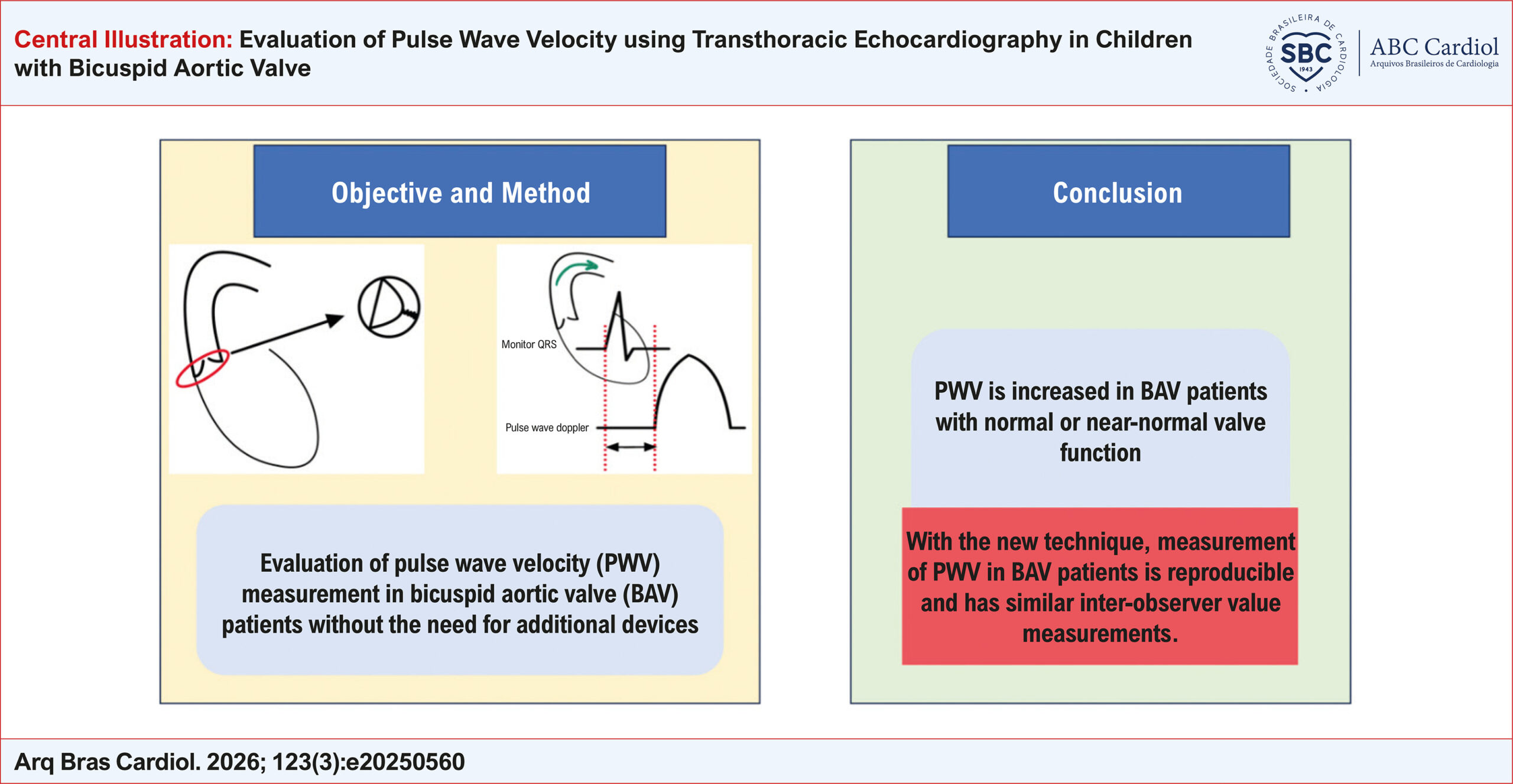
We aimed to evaluate aortic elasticity properties and the usability of the new technique by measuring pulse wave velocity (PWV) with a transthoracic echocardiography device in patients with BAV.

Methods

Fifty patients with BAV and 50 healthy children with similar demographic characteristics were included in this study. Patients with BAV were grouped according to fused cusp morphology. Valve function was normal or near normal in the patients with BAV included in the study. All patients’ left ventricular function, aortic root diameter, and aortic elasticity characteristics were evaluated. A p-value <0.05 was considered significant.

Results

PWV was significantly higher in the BAV group (p=0.000). Aortic elasticity parameters obtained from ascending aorta diameters were similar between the groups. Ascending aorta diameters were significantly higher in the BAV group. There was a correlation between PWV, ascending aortic diameter, vena contracta in aortic regurgitation, and peak aortic velocity. PWV inter- and intraobserver reliability alpha values were 0.92 and 0.84, respectively.

Conclusions

In the pediatric BAV group with normal or near-normal valve function, although aortic elasticity parameters were normal with conventional measurements based on ascending aorta diameters, PWV measurements with the same device were significantly higher without the need for an additional apparatus or program, and aortic stiffness increased in the BAV group. PWV measurement by echocardiography is a reliable and reproducible technique.

  • Bicuspid Aortic Valve Disease
  • Child
  • Pulse Wave Analysis
Read Full Article
Creative Commons Attribution (CC BY) Creative Commons license
12/06/2026 DOI: 10.36660/abc.20250560i Views 1
Short-term Oral Nitrite Administration Decreases Arterial Stiffness in Both Trained and Sedentary Wistar Rats
ABC
Original Article

Short-term Oral Nitrite Administration Decreases Arterial Stiffness in Both Trained and Sedentary Wistar Rats

Thiago Pereira Souza et al. Lidieli Pazin Tardelli Rafael Antunes Nicoletti André Mourão Jacomini … Gabriel Francisco de Mello Martins Lucas Cézar Pinheiro José Eduardo Tanus-Santos Sandra Lia do Amaral Anderson Saranz Zago

Abstract

Background

Nitric Oxide (NO) plays an important role in blood pressure (BP) regulation, acting directly on peripheral vascular resistance through vasodilation. Physical training (via eNOS/NO) and intake of nitrite have been considered major stimuli to increase NO.

Objective

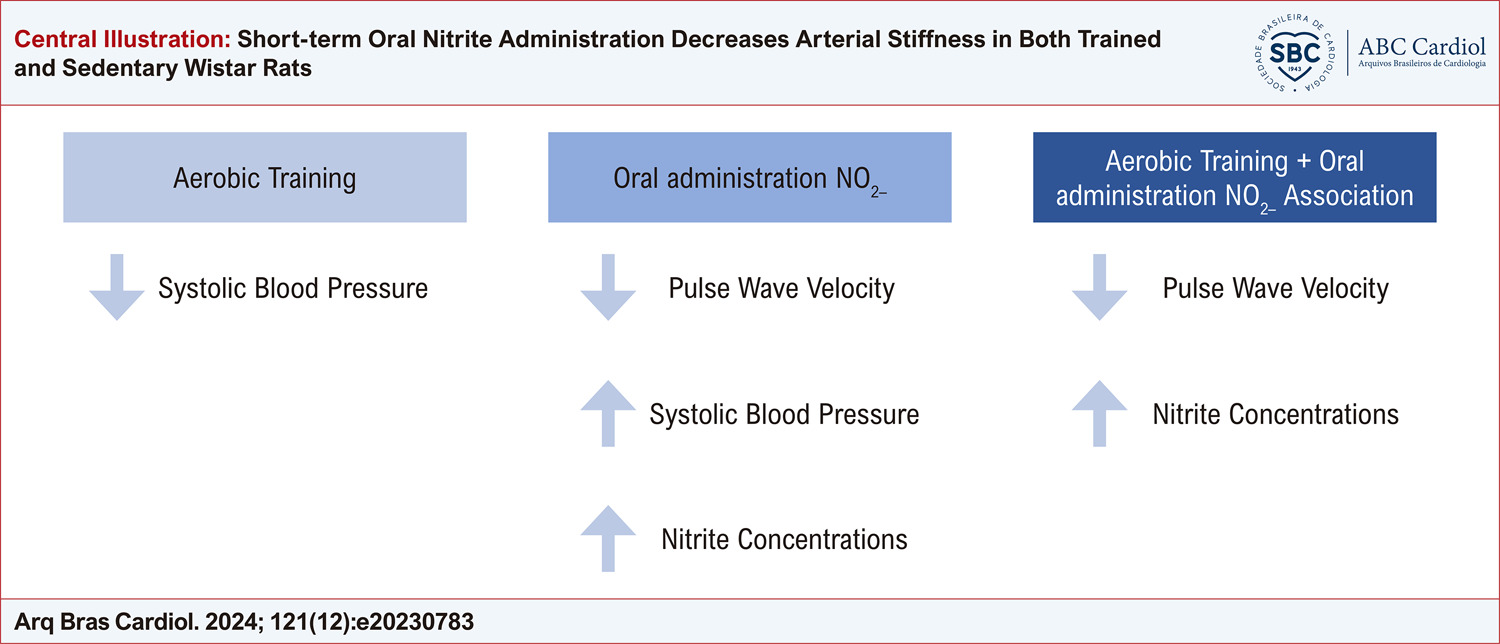
We examined the effects of oral nitrite administration and aerobic exercise training on BP and arterial stiffness in Wistar rats.

Methods

Thirty-nine (39) young male Wistar rats were divided into the following groups (n = 9 or 10 per group): Sedentary-Control (SC), Sedentary-Nitrite (SN), Trained-Control (TC), and Trained-Nitrite (TN). They were submitted to aerobic physical training on treadmills for 8 weeks (50-60% of physical capacity, 1h/day, 5 days/week) or kept sedentary. In the last 6 days of training, oral nitrite was administered (15 mg/Kg by gavage). BP, arterial stiffness, and plasma and tissue nitrite concentrations were assessed after the training and oral nitrite administration period. The significant level was defined as p < 0.05.

Results

Oral administration of nitrite was effective in reducing arterial stiffness values (TN, -23%; and SN, -15%). Both groups that had only one type of intervention showed lower systolic BP compared with control (TC vs. SC, -14.23; and SN vs. SC, – 12.46).

Conclusion

We conclude that short-term oral administration for 6 days and an aerobic physical training program promote several hemodynamic benefits in male Wistar rats, such as improvements in arterial stiffness and BP. These responses suggest that physical training and sodium nitrite supplementation can be alternatives for the prevention and treatment of hypertension.

  • Exercise
  • Hypertension
  • Nitric Oxide
  • Nitrites
  • Pulse Wave Analysis
Read Full Article
Creative Commons Attribution (CC BY) Creative Commons license
13/12/2024 DOI: 10.36660/abc.20230783i Views 1
Pulse Wave Velocity of 8.2 m/s as a Threshold Associated with Cardiovascular Target Organ Damage Presence
ABC
Original Article

Pulse Wave Velocity of 8.2 m/s as a Threshold Associated with Cardiovascular Target Organ Damage Presence

Sayuri Inuzuka et al. Priscila Valverde de Oliveria Vitorino Adriana Sebba Barroso Fabrício Galdino Magalhães … Andrea Cristina Sousa Robson Pierre Pacífico Alves Filho Victoria Alves Melo Luiz Fernando de Oliveira Ana Luiza Lima Sousa Paulo Cesar B. Veiga Jardim Antonio Coca Weimar Kunz Sebba Barroso

Abstract

Background

Previous studies have established normal and reference values for Pulse Wave Velocity (PWV). However, the PWV value that has the strongest association with cardiovascular biomarkers remains poorly understood.

Objective

This study aimed to determine the PWV value more likely to be associated with left ventricular hypertrophy (LVH), increased intima-media thickness (IMT), and presence of carotid plaques in patients with hypertension.

Methods

This cross-sectional study included 119 patients. Analysis of receiver operating characteristic (ROC) curves was performed for each cardiovascular biomarker. Statistical significance was set at p < 0.05.

Results

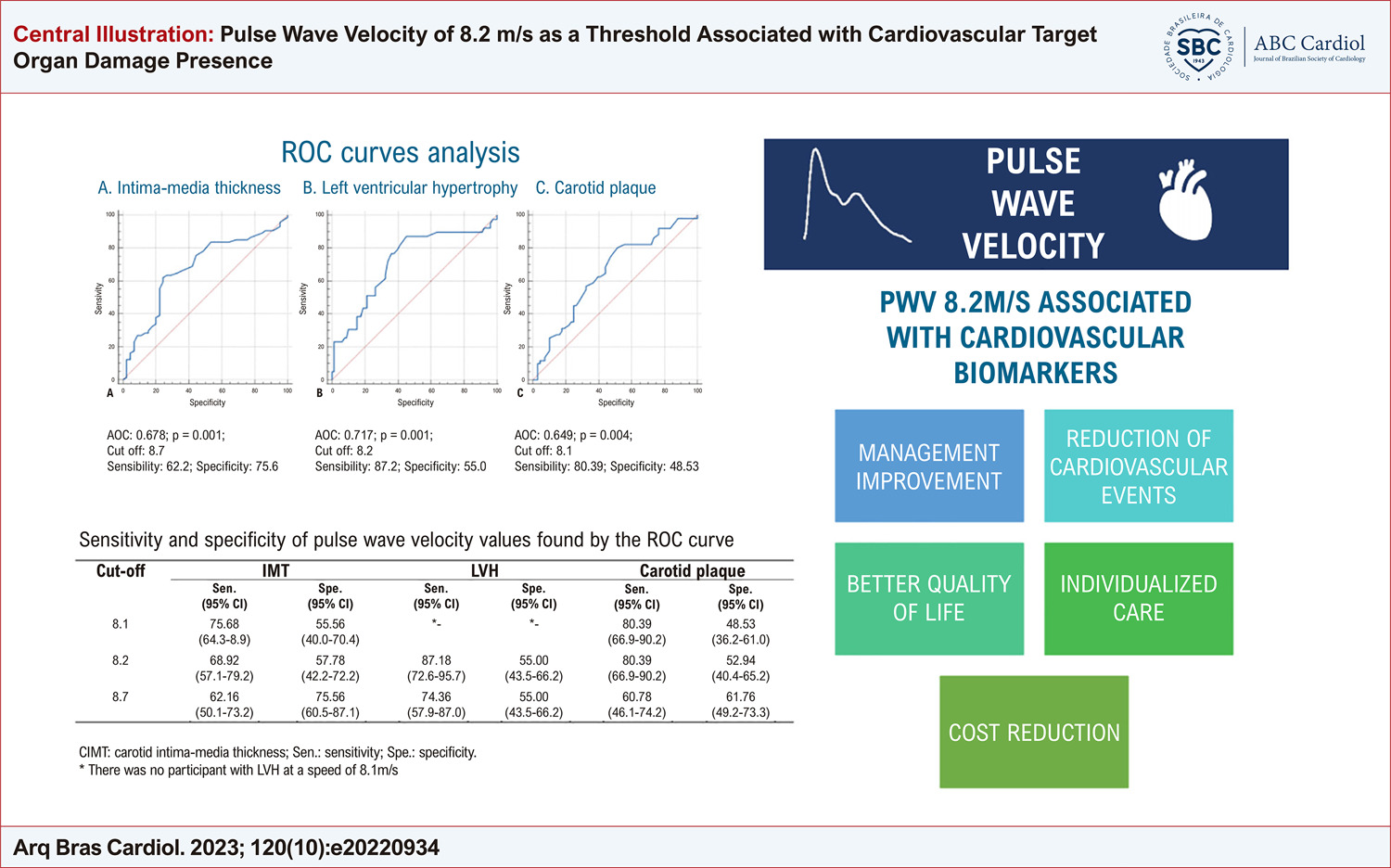
According to the ROC curve analysis, the PWV values were 8.1 m/s, 8.2 m/s, and 8.7 for the LVH, IMT, and presence of carotid plaques, respectively. A PWV value of 8.2 m/s was identified as the best parameter to determine the three TOD biomarkers. PWV above 8.2 m/s was associated with increased CIMT (p = 0.004) and the presence of carotid plaques (p = 0.003) and LVH (p<0.001). PWV above 8.2 showed greater sensitivity for increased CIMT (AUC = 0.678, sensitivity = 62.2), LVH (AUC = 0.717, sensitivity = 87.2), and the presence of plaques (AUC = 0.649, sensitivity = 74.51) in the ROC curve analysis.

Conclusion

The PWV value 8.2 m/s was more sensitive in early identifying the existence of cardiovascular biomarkers of TOD.

  • Arterial Pressure
  • Hypertension
  • Pulse Wave Analysis
  • Vascular Stiffness
Read Full Article
Creative Commons Attribution (CC BY) Creative Commons license
30/10/2023 DOI: 10.36660/abc.20220934 Views 1
ABC
Editorial

Pulse Wave Velocity: Is It Time to Reduce the Cutoff Point?

Marcelo Antônio Oliveira Santos-Veloso

Systemic arterial hypertension (SAH) is Brazil’s most prevalent chronic non-communicable disease, commonly aggravated by metabolic disorders, such as diabetes mellitus, dyslipidemia, and obesity. Due to its silent course, research into subclinical injuries in the early stages is essential to establish measures to prevent cardiovascular complications. Risk identification with sensitive markers enables early therapy, reducing morbidity and mortality associated with cardiovascular diseases.

Pulse wave velocity (PWV) is the gold standard for identifying arteriosclerosis. There is a dose-response relationship between increased PWV and the occurrence of major cardiovascular outcomes, such as acute coronary syndrome, cerebrovascular syndromes, and death.

[…]

  • Diagnostic Techniques, Cardiovascular
  • Hypertension
  • Pulse Wave Analysis
Read Full Article
Creative Commons Attribution (CC BY) Creative Commons license
30/10/2023 DOI: 10.36660/abc.20230666 Views 2
Figure 1
IJCS
Original Article

Comparison of Angiotensin Receptor Blockers and Angiotensin-Converting Enzyme Inhibitors in the Management of Arterial Stiffness and Target Organ Damage in Patients with Hypertension

Gilberto Campos Guimarães Filho et al. Reila Campos Guimarães de Araújo Karynne Borges Cabral Cácia Régia de Paula

Abstract

Background

Arterial stiffness and hypertension are strong predictors of cardiovascular disease and mortality. Angiotensin-converting enzyme inhibitors (ACEI) and angiotensin receptor blockers (ARB) are first-line antihypertensive agents in reducing blood pressure and arterial stiffness.

Objective

The objective of this study was to compare the effects of ACEI and ARB in reducing arterial stiffness and preventing target organ damage in patients with hypertension.

Methods

This observational study included 654 participants who attend routine consultations at an outpatient hypertension clinic in 2 university hospitals. Patients were interviewed, and they underwent central and peripheral blood pressure measurements. Doppler echocardiography, carotid ultrasound, biochemical tests, and anthropometric parameters were carried out. Shapiro-Wilk, chi-square, and Fisher’s exact test were used. A significance level of 5% was adopted.

Results

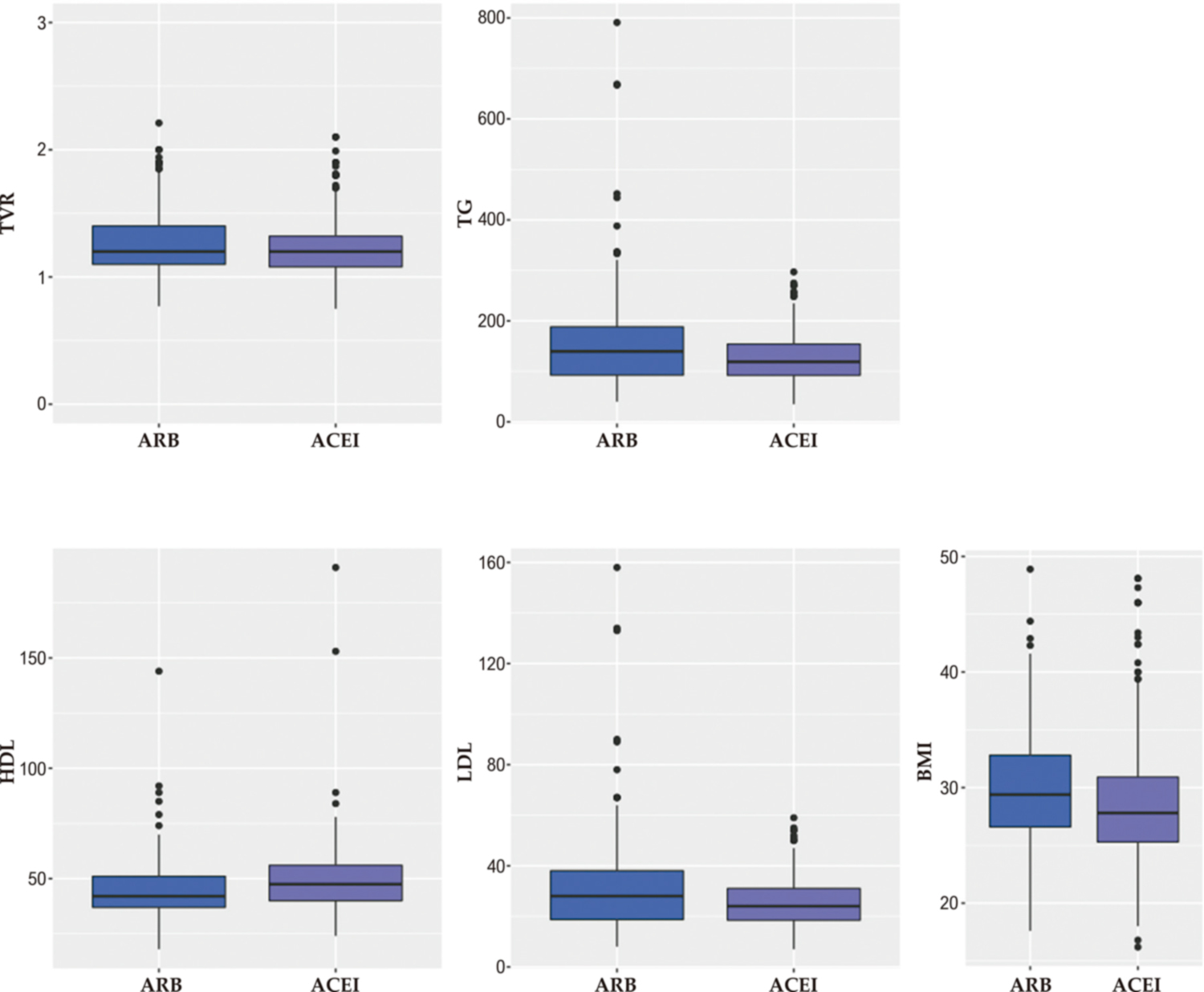
A total of 659 participants were evaluated in the study (398 from the ARB group and 256 from the ACEI group). Age, body mass index (BMI), central and peripheral blood pressure measurements, pulse wave velocity (PWV), left ventricular mass index, and carotid intima-media thickness did not show differences between the groups (p > 0.05). After linear regression analysis, the ACEI group had lower values of total vascular resistance (TVR) (p = 0.003) and augmentation pressure (p = 0.008), when compared to the ARB group.

Conclusion

This study showed that the ACEI group had a greater reduction in augmentation pressure and PWV. There were no differences between the groups regarding the improvement of outcomes related to central arterial pressure, PWV, and cardiac and vascular target organ damage.

  • Angiotensin Receptor Antagonists
  • Angiotensin-Converting Enzyme Inhibitors
  • Hypertension
  • Pulse Wave Analysis
  • Vascular Stiffness
Read Full Article
Creative Commons Attribution (CC BY) Creative Commons license
25/08/2023 DOI: 10.36660/ijcs.20220162 Views 1
Figure 1
ABC
Original Article

SAGE Score in Normotensive and Pre-Hypertensive Patients: A Proof of Concept

Rayne Ramos Fagundes Rigonatto et al. Priscila Valverde Oliveira Vitorino Adriana Camargo Oliveira Ana Luiza Lima Sousa … Paulo César Brandão Veiga Jardim Pedro Miguel Guimarães Marques Cunha Eduardo Costa Duarte Barbosa Panagiotis Xaplanteris Charalambos Vlachopoulos Weimar Kunz Sebba Barroso

Abstract

Background

The SAGE score was developed to detect individuals at risk for increased pulse wave velocity (PWV). So far, studies have been focused on hypertensive patients.

Objective

To assess the ability of the score to detect non-hypertensive and pre-hypertensive patients at risk for increased PWV.

Methods

Retrospective cross-sectional study of analysis of central blood pressure data and calculation of the SAGE score of non-hypertensive and pre-hypertensive patients. Each score point was analyzed for sensitivity, specificity, positive and negative predictive values, using the cut-off point for positive diagnosis a PVW ≥ 10m/s, ≥9.08 m/s (75thpercentile) and ≥7.30 m/s (50thpercentile). A p<0.05 was considered statistically significant.

Results

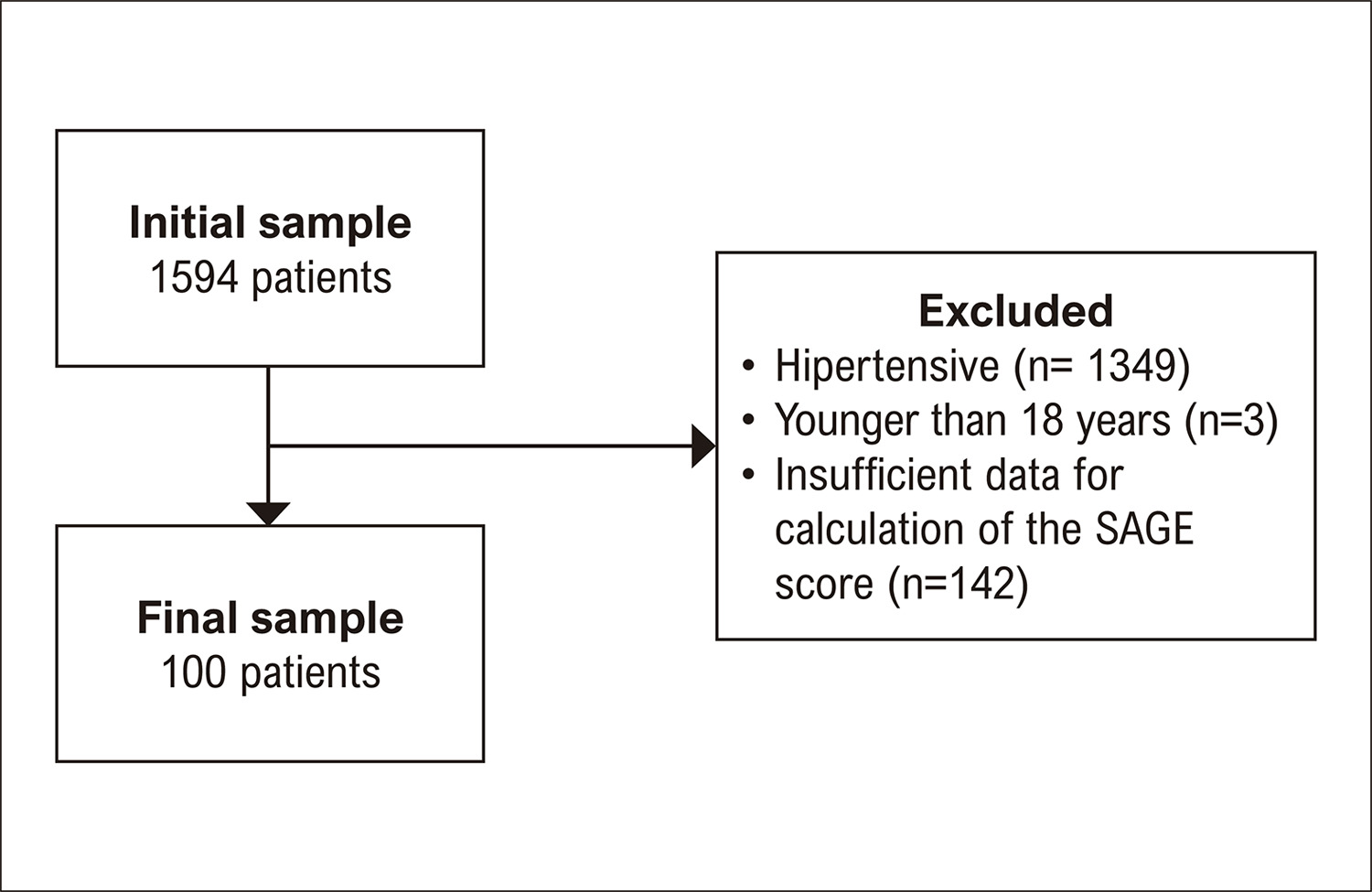
The sample was composed of 100 normotensive and pre-hypertensive individuals, with mean age of 52.64 ± 14.94 years and median PWV of 7.30 m/s (6.03 – 9.08). The SAGE score was correlated with age (r=0.938, p<0.001), glycemia (r=0.366, p<0.001) and glomerular filtration rate (r=-0.658, p<0.001). The area under the ROC curve was 0.968 (p<0.001) for PWV ≥ 10 m/s, 0.977 (p<0.001) for PWV ≥ 9.08 m/s and 0.967 (p<0.001) for PWV ≥ 7.30 m/s. The score 7 showed a specificity of 95.40% and sensitivity of 100% for PWV≥10 m/s. The cut-off point would be of five for a PWV≥9.08 m/s (sensitivity =96.00%, specificity = 94.70%), and two for a PWV ≥ 7.30 m/s.

Conclusion

The SAGE score could identify individuals at higher risk of arterial stiffness, using different PWV cutoff points. However, the development of a specific score for normotensive and pre-hypertensive subjects is needed.

  • Biomarkers
  • Hypertension
  • Pulse Wave Analysis
  • Risk Factors
  • Vascular Stiffness
Read Full Article
Creative Commons Attribution (CC BY) Creative Commons license
27/02/2023 DOI: 10.36660/abc.20220291 Views 1
Figure 1
ABC
Review Article

Vascular Aging and Arterial Stiffness

Adriana Camargo Oliveira et al. Pedro Miguel Guimarães Marques Cunha Priscila Valverde de Oliveria Vitorino Ana Luiza Lima Souza … Gilcimar Divino Deus Audes Feitosa Eduardo Costa Duarte Barbosa Marco Mota Gomes Paulo Cesar B. Veiga Jardim Weimar Kunz Sebba Barroso

Abstract

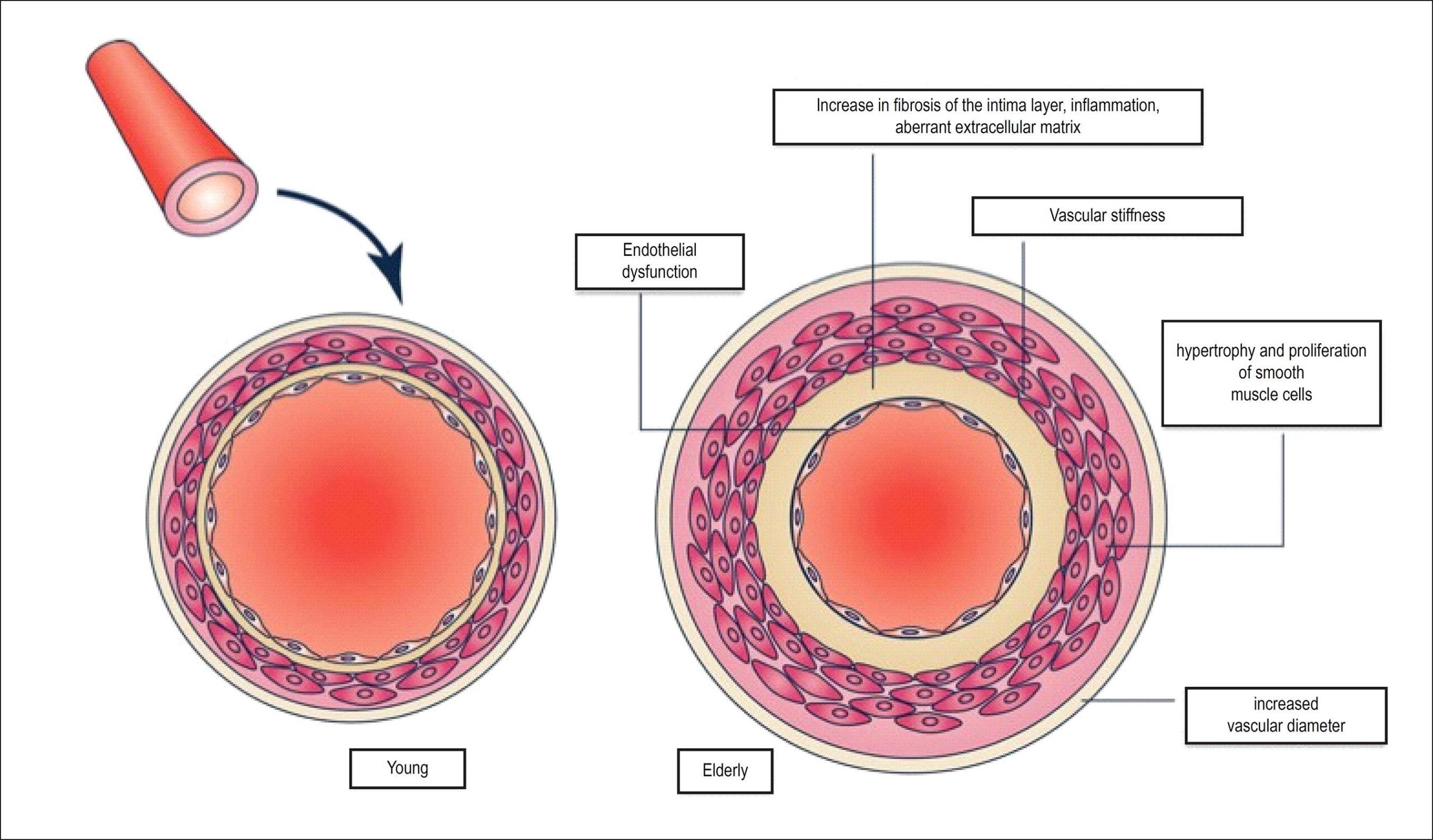
Biological aging occurs as a result of the interaction between genetics, chronological age and external factors. It is the basis for new concepts of vascular aging, whose progression is determined by the difference between biological and chronological age. From the structural point of view, the effects of vascular aging are more evident in the tunica media of large elastic arteries, marked by increased arterial stiffness, lumen dilation and wall thickness. These effects are described in the continuum of cardiovascular aging (proposed by Dzau in 2010), in which the progressive steps of microvasculature lesions of the heart, kidney and brain are initiated from the aging process. The increase of arterial stiffness can be detected by several non-invasive methods. Cardiovascular events have been traditionally described using scores that combine conventional risk factors for atherosclerosis. In the classic cardiovascular continuum (Dzau, 2006), to determine the exact contribution of each risk factor is challenging; however, since arterial stiffness reflects both early and cumulative damage of these cardiovascular risk factors, it is an indicator of the actual damage to the arterial wall. This article provides a general overview of pathophysiological mechanisms, arterial structural changes, and hemodynamic consequences of arterial stiffness; non-invasive methods for the assessment of arterial stiffness and of central blood pressure; the cardiovascular aging continuum, and the application of arterial stiffness in cardiovascular risk stratification.

  • Heart Disease Risk Factors
  • Hypertension
  • Pulse Wave Analysis
  • Vascular Remodeling
  • Vascular Stiffness
Read Full Article
Creative Commons Attribution (CC BY) Creative Commons license
21/10/2022 DOI: 10.36660/abc.20210708 Views 2
ABC
Editorial

Waist Circumference: A Parameter of Vascular Health

Erika Maria Gonçalves Campana et al. Andréa Araujo Brandão

Obesity plays a central role in chronic noncommunicable diseases due to its high prevalence and strong correlation with risk factors like hypertension, dyslipidemia, diabetes mellitus, and morbidity and mortality. In particular, abdominal obesity has been renowned as an emerging risk factor for an inflammatory and prothrombotic state, which is associated with an increased prevalence of hypertension and increased risk of cardiovascular (CV) events. These data are of utmost importance in the scenario of increasing prevalence of obesity not only in adults, but also among children and adolescents., Results of a study conducted in Rio de Janeiro showed an unfavorable relationship of elevated blood pressure (BP) and excess weight in adolescents with increased BP levels and anthropometric and metabolic variables in young adults.

Over the last years, the understanding of the CV continuum has grown, and CV disease has been seen in the context of vascular damage. In this sense, endothelial dysfunction, which results in atherosclerotic disease and its complications, involves the tunica media of large arteries, affected by an accelerated aging of the vessel, resulting in early arterial stiffness and arteriosclerosis, which in turn contributes to CV morbidity and mortality.–

[…]

  • Atherosclerosis
  • Blood Pressure
  • Cardiovascular Diseases/complications
  • Dyslipidemias
  • Outcome Assessment (Health Care)
  • Pulse Wave Analysis
  • Vascular Stiffness
  • Waist Circumference
Read Full Article
Creative Commons Attribution (CC BY) Creative Commons license
05/08/2022 DOI: 10.36660/abc.20220508
ABC
Original Article

Correlation among Waist Circumference and Central Measures of Blood Pressure

Gilberto Campos Guimarães Filho et al. Lucas Tavares Silva Ruth Mellina Castro e Silva

Abstract

Background:

Arterial stiffness is a strong predictor of cardiovascular disease (CVD). Body fat measures such as waist circumference (WC) have been associated with CVD in adulthood.

Objectives:

The objective of this study was to evaluate the association of arterial stiffness, measured by applanation tonometry-Sphygmocor, with WC.

Methods:

Observational study with 240 participants who make routine consultations at the outpatient clinic of a university hospital. Participants were interviewed and had central blood pressure measurements (CBPM), anthropometric parameters, abdominal fat and visceral fat measured. Paired and unpaired t and chi-square tests were used. A significance level of 5% was adopted.

Results:

Of the 240 participants, 51.82% were male with a mean age of 59.71(±14.81) years and a mean WC of 99.87 (11.54) cm. Mean CBPM values were: Central arterial pressure (CAP) = 130.23 (91-223) mmHg, pulse wave velocity (PWV) = 9.8 (5.28-19.6)m/s and Augmentation Index [Amplification Index (AI)] = 29.45 (-14-60). PWV and CAP were highly correlated with WC with p<0.001 and p=0.02, respectively; however, the same positive correlation was not found between WC and AI (p=0.06).

Conclusion:

The present study showed a positive association between WC and arterial stiffness, through the femoral carotid pulse wave velocity (cf-PWV) and AI, being stronger with cf-PWV, suggesting the evaluation of the effect of WC in vascular health as a method of aid in the early treatment of CVD and in the prevention of clinical outcomes.

  • Atherosclerosis
  • Blood Pressure
  • Cardiovascular Diseases
  • health care
  • outcome assessment
  • Pulse Wave Analysis
  • Vascular Stiffness
  • Waist Circumference
Read Full Article
Creative Commons Attribution (CC BY) Creative Commons license
03/06/2022 DOI: 10.36660/abc.20210432
ABC
Original Article

Arterial Stiffness and Left Ventricular Myocardial Function in Children with a Well-Functioning Bicuspid Aortic Valve

Pelin Kosger et al. Tugcem Akin Hikmet Kiztanir Birsen Ucar

Abstract

Background:

Arterial stiffness is an important predictor factor of aortopathy and myocardial remodeling in patients with a bicuspid aortic valve and it might be increased in childhood.

Objective:

To assess the arterial stiffness and left ventricular myocardial function in children with a well-functioning bicuspid aortic valve.

Methods:

Forty-four children with a bicuspid aortic valve and 41 healthy peers with a tricuspid aortic valve were included in this case-control study. Diameters and the related z-scores of the aortic root and ascending aorta were obtained. As for the left ventricular myocardial function, along with the mitral inflow velocities and M-Mode parameters, myocardial velocities and time intervals were assessed with tissue Doppler imaging. A pulse wave analysis was performed by oscillometric device (Mobil-o-Graph). A p value <0.05 was considered significant.

Results:

The left ventricular mass index, mitral inflow A velocity, diameter and z-score of the ascending aorta, and myocardial performance index were significantly higher in patients (p=0.04, p=0.02,p=0.04, p<0.001,and p0.05).

Conclusion:

According to the oscillometric pulse wave analysis, the children with a well-functioning bicuspid aortic valve had similar arterial stiffness to that of the healthy peers. The ascending aorta diameter was established as an independent predictor of left ventricular myocardial function. Arterial stiffness may not be a severe risk factor in pediatric patients without marked ascending aorta dilation.

  • Aortic Stiffness
  • Child
  • Dilatation, Pathologic
  • Myocardial
  • Pulse Wave Analysis
  • Ventricular Function, Left
Read Full Article
Creative Commons Attribution (CC BY) Creative Commons license
20/09/2021 DOI: 10.36660/abc.20200657 Views 1
Figure 1
ABC
Original Article

Arterial Stiffness Changes in Severe Aortic Stenosis Patients Submitted to Valve Replacement Surgery

Renata Raimundo et al. Francisca Saraiva Raquel Moreira Soraia Moreira … Ana Filipa Ferreira Rui J. Cerqueira Mario Jorge Amorim Paulo Pinho António Sousa Barros André P. Lourenço Adelino Leite-Moreira

Abstract

Background:

Little is known about the impact of severe aortic stenosis (AS) in aortic stiffness and if there is any change after removing AS barrier with aortic valve replacement (AVR) surgery.

Objective:

To estimate carotid-femoral pulse wave velocity (PWV) changes after AVR surgery and to define PWV predictors in severe AS patients.

Methods:

Single-center retrospective cohort, including patients with severe AS who underwent AVR surgery with bioprostheses, between February 2017 and January 2019 and performed PWV measurements (Complior®) before and after the procedure (2±1 months). Before and after AVR, PWV values were compared through paired tests. The associations of PWV with clinical data were studied and linear regression models were applied to estimate pre and postoperative PWV independent predictors. The significance level was set at 5%.

Results:

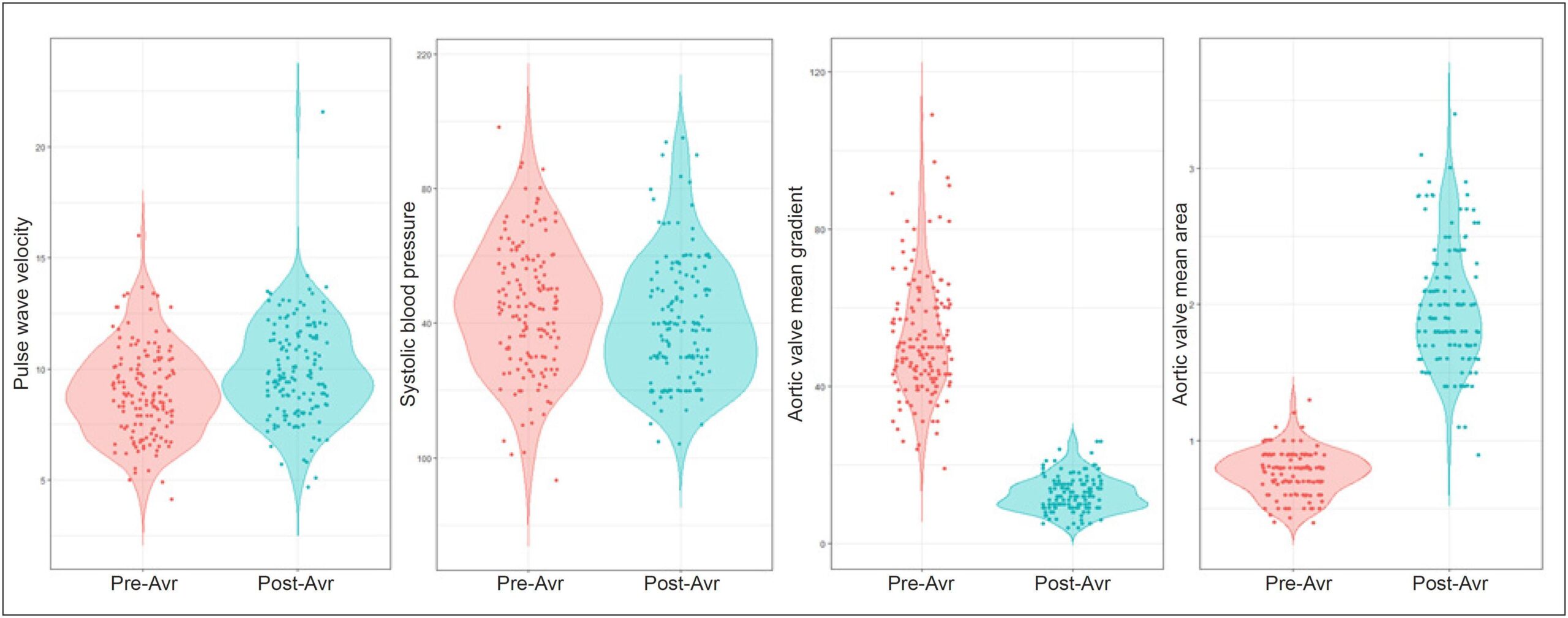
We included 150 patients in the sample, with mean age of 72±8 years, and 51% being males. We found a statistically significant increase in PWV values after surgery (9.0±2.1 m/s vs. 9.9±2.2, p<0.001, before and after AVR, respectively) and an inverse association with AS severity variables. In the linear regression model, age and systolic blood pressure (SBP) were established as independent predictors of higher pre- and postoperative PWV, while higher mean valvular gradient emerged as a determinant of lower pre-AVR PWV.

Conclusion:

We documented an inverse correlation of arterial stiffness with the severity of AS in patients with AS, and a significant increase in PWV values after AVR surgery. Advanced age and higher SBP were associated with higher PWV values, although arterial function measurements were within the normal range. (Arq Bras Cardiol. 2021; 116(3):475-482)

  • Aortic Valve Replacement/methods
  • Aortic valve stenosis / surgery
  • aortic valve surgery
  • Pulse Wave Analysis
Read Full Article
Creative Commons Attribution (CC BY) Creative Commons license
23/04/2021 DOI: 10.36660/abc.20190577
ABC
Editorial

Arterial Stiffness in Aortic Stenosis

Henrique Murad

The paper “Arterial Stiffness Changes in Severe Aortic Stenosis Patients Submitted to Valve Replacement Surgery” has important information on the behavior of arterial stiffness before and after aortic valve replacement.

They studied 150 patients with severe aortic stenosis submitted to aortic valve replacement with bioprosthesis. They used a noninvasive method, carotid-femoral pressure wave velocity (PWV) measured through Complior Analyse, to study arterial stiffness. Other methods could have been used, such as invasive pressure catheter measurements, MRI and peripheral cuff sensors, but PWV is the gold standard.

[…]

  • Aortic Valve Replacement/methods
  • Aortic valve stenosis / surgery
  • aortic valve surgery
  • Blood Pressure
  • Pulse Wave Analysis
Read Full Article
Creative Commons Attribution (CC BY) Creative Commons license
23/04/2021 DOI: 10.36660/abc.20201234
IJCS
Editorial

Study of Arterial Stiffness – Based on Scientific Evidence, What are the Current Tools for the Study of Arterial Stiffness?

Ronaldo Rodrigues

One of the biggest challenges in modern medicine is the early identification of patients with higher cardiovascular risks. The early identification of vascular damage in hypertensive patients is a challenge for cardiologists around the world in their attempt to reduce the risk of cardiovascular complications in patients.

We know how important it is today to measure the thickness of the carotid intima-media complex through ultrasound examination in order to identify a greater or lesser cardiovascular risk. Arterial stiffness has proven to be a marker of arterial disease, which is why it has become an important parameter for the assessment of cardiovascular risk. It is also well-known that ventricular ejection generates a pressure wave that travels through the heart at a certain speed, which is known as the pulse wave velocity (PWV). The study of PWV in the carotid and femoral arteries is considered the gold standard in the assessment of arterial stiffness.

[…]

  • Blood Pressure
  • Carotid Intima-Media Thickness
  • Elasticity: Circulatory System
  • Pulse Wave Analysis
  • Vascular Stiffness
Read Full Article
Creative Commons Attribution (CC BY) Creative Commons license
01/02/2021 DOI: 10.36660/ijcs.20200282 Views 1
ABC
Editorial

Parameters of Central Hemodynamics as New Biomarkers of Cardiovascular Risk

José Fernando Vilela-Martin

Historically, the importance of the arterial pulse wave was already observed by the Egyptians and the Chinese, before Christ. The knowledge of peripheral hemodynamics showed great progress after the introduction of non-invasive blood pressure (BP) measurement using the sphygmomanometer about 120 years ago and, to date, brachial BP represents an excellent predictor of cardiovascular morbidity and mortality. However, changes in macro and microcirculation cannot be completely observed only by peripheral BP measurement. Thus, structural and functional vascular changes can be better assessed by central hemodynamic parameters, represented by central BP, augmentation index and pulse wave velocity (PWV), , with OPV being the gold standard in the assessment of arterial stiffness. The reference prognostic value of central hemodynamics was clinically demonstrated by the CAFE study (Conduit Artery Function Evaluation Study), which showed that a greater reduction in central BP compared to peripheral BP resulted in a greater reduction in cardiovascular events.

In turn, other studies associated the role of PWV with the presence of cardiovascular and cerebrovascular lesions, so this topic was included in the European guidelines for hypertension in 2007. PWV was first used as a clinical index of arterial elasticity in 1922, but its determination too long to be applied to clinical practice because its registration and calculation were difficult to obtain. Aortic stiffness, measured by carotid-femoral PWV, has been the most used in epidemiological studies. Obtaining PWV in the carotid-femoral segment is simple, non-invasive, reproducible, widely accepted and clinically relevant, as it includes the aorta, an important segment in relation to the pathophysiological effects of arterial stiffness. Currently, PWV can be considered a biomarker of cardiovascular risk and is a predictor of cardiovascular events and mortality. ,

[…]

  • Blood Pressure
  • Hemodynamic
  • Hypertension
  • Pulse Wave Analysis
  • Risk Factors
  • Vascular Diseases/prevention and control
Read Full Article
Creative Commons Attribution (CC BY) Creative Commons license
18/01/2021 DOI: 10.36660/abc.20201218 Views 1
ABC
Editorial

Short Editorial: Hydrotherapy Reduces Arterial Stiffness in Pregnant Women with Chronic Hypertension

Celso Amodeo

Increased pulse pressure is associated with aging. This is mainly caused by increased systolic pressure, but also by decreased diastolic pressure. Diastolic blood pressure below 50 mmHg has been related to increased cardiovascular risk.

With the development of devices that allow the indirect estimation of central pressure from the aortic root and analysis of arterial stiffness (another marker of cardiovascular risk), many studies have shown that changes in vascular dynamics are detected earlier using central measurements compared with peripheral blood pressure measurements.

[…]

  • Blood Pressure
  • Hydrotherapy/methods
  • Hypertension
  • Pre-Eclampsia
  • Pregnant Women/complicações
  • Pulse Wave Analysis
  • Vascular Stiffness
Read Full Article
Creative Commons Attribution (CC BY) Creative Commons license
29/05/2020 DOI: 10.36660/abc.20200251 Views 1
Figure 1
IJCS
Original Article

Determinants of Arterial Stiffness and Vascular Aging in the Older Adult

Telmo Pereira et al. Tatiana Costa

Abstract

Background:

Arterial stiffness (AS) is recognized as an important and independent risk factor for cardiovascular diseases (CVD).

Objective:

This study was aimed at identifying the main determinants of AS in the elderly.

Design and Methods:

This was an observational, cross-sectional study of elderly participants. Blood pressure (BP) and parameters of arterial function were measured using a validated device. Clinical and demographic data, global cardiovascular risk, health-related quality of life, dietary profile and cognition data were evaluated. Blood samples were collected for biochemical profiling of the participants. Handgrip strength test was performed. Student’s t-test and the χ2 or Fisher exact tests were used for between-group comparisons as adequate. Correlational analysis was performed with the Pearson correlation coefficients and linear regression analysis. A two-tailed p < 0.05 was considered significant.

Results:

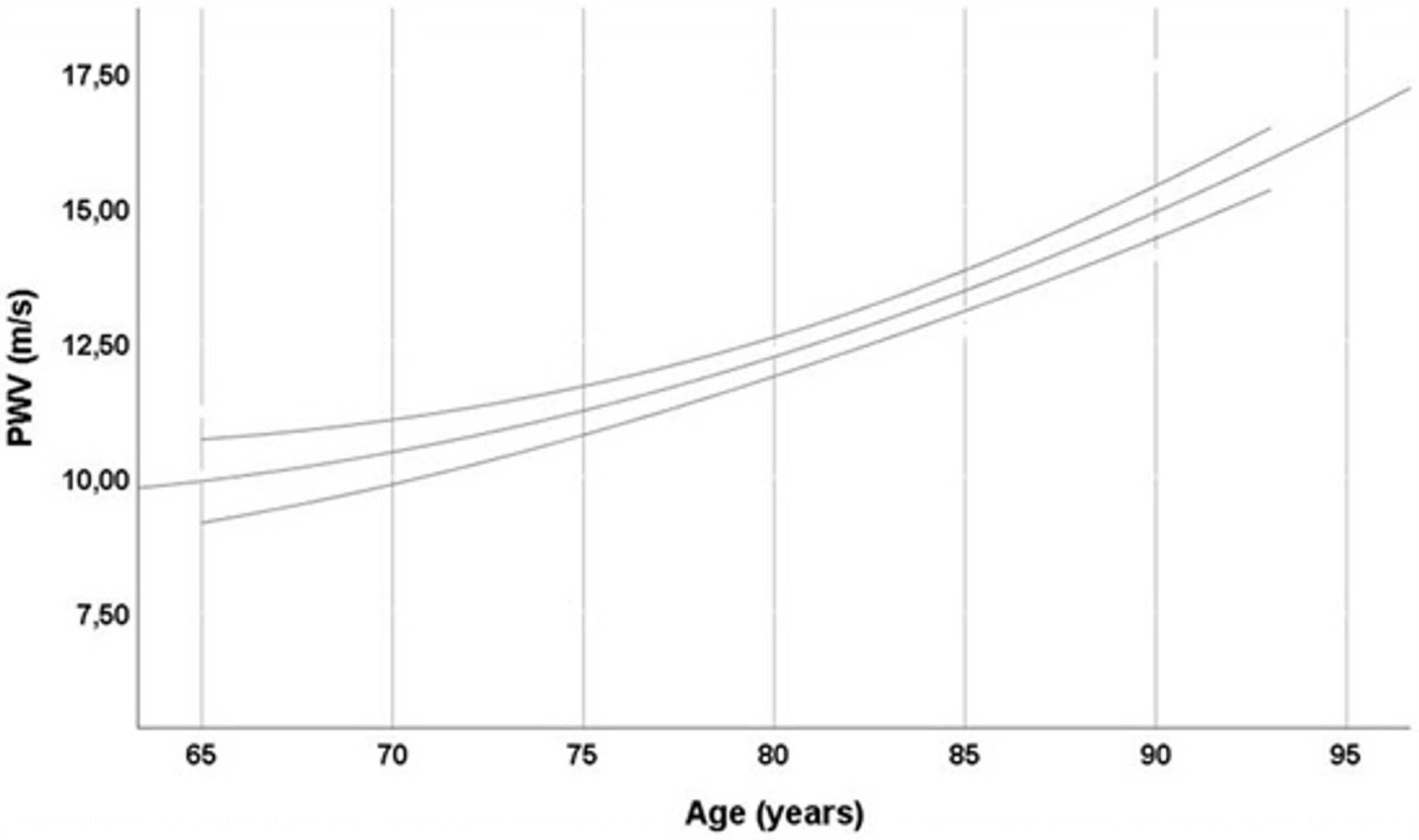
Fifty-four participants (81.8 ± 8.8 years; 65-94 years) were included in the study. Central BP was 132.7 ± 23.7 mmHg and 51.5 ± 15.7 mmHg, respectively, for aortic systolic and pulse pressures. Mean pulse wave velocity (PWV) was 12.9 ± 2.1 m/s and augmentation index 30.1 ± 12.9%. The proportion of participants with abnormal AS (increased PWV) was 27.8%. Participants with abnormal AS had higher brachial and central BP, higher BMI and higher abdominal fat. Functionality and nutritional status were worse in participants with abnormal AS. Regression analysis indicated age, brachial and central BP and vascular resistance as main determinants of AS.

Conclusions:

Abnormal AS is a common finding in the elderly and is highly associated with hypertension, functional decline and impairment of kidney function.

  • Cardiovascular Diseases
  • Comorbidity
  • Hypertension
  • Pulse Wave Analysis
  • Risk Factors
  • Vascular Stiffness
Read Full Article
Creative Commons Attribution (CC BY) Creative Commons license
03/02/2020 DOI: 10.36660/ijcs.20190068
ABC
Editorial

Postural Changes and their Influence on Functional Behavior of the Great Arteries

Luiz Aparecido Bortolotto

The large arteries, especially the aorta, are known to play a major role in the circulation of blood flow both during ventricular ejection and during diastole, thus providing the blood supply required by the organs. Additionally, the damping function exercised by the aorta plays a fundamental role in central hemodynamics, providing adequate ventricular-arterial coupling during the cardiac cycle.The loss of this function due to increased arterial stiffness plays a role in the development of hypertension and left ventricular hypertrophy and has been associated with the development of atherosclerosis and myocardial ischemia. Noninvasive methods for assessing the function of large arteries, such as pulse wave velocity (PWV) measurement, have provided a better understanding of the correlations of arterial stiffness with cardiovascular disease, and have been used as prognostic markers in different populations.However, due to methodological limitations, all studies have been performed in the supine position, and the impact of postural changes, especially orthostasis, has not been evaluated on these vascular properties. Thus, the study by Elias Neto et al. published in this issue, as the first to evaluate the effect of orthostasis on the aortic functional properties in normotensive and hypertensive individuals not treated by the aortic PWV measurement in humans, provides important information to understand the role of these properties in the physiological adaptation of central hemodynamics in relation to the gravity effects. The authors evaluated nearly 100 individuals with no evident cardiovascular disease by measuring carotid-femoral PWV performed in the supine and standing positions after the 70° tilt test and demonstrated a significant and sustained increase in PWV throughout the tilt test, in both young and older individuals. Interestingly, although there was a direct and significant association between baseline and post-orthostasis PWV values and systolic blood pressure (SBP ), SBP remained unaltered or showed a slight decrease during the tilt test and, therefore, the increase in PWV during inclination occurred by other mechanisms of circulatory adaptation, including an increase in peripheral arterial resistance (indirectly suggested by the observed increase in mean BP ) and changes in circulatory dynamics promoted by the gravitational force, which are related to the differential structural and geometric characteristics of the aorta throughout its trajectory. In a study with a smaller number of individuals and another methodology for PWV assessment, the authors also found an increase in PWV with the tilt test and attributed this increase to increased hydrostatic pressure and greater sympathetic activity.

Due to gravitational effect, blood flow increases in the more distal arterial segments, which have smaller diameter and less elasticity, causing an increase in PWV and also in BP in the infradiaphragmatic territories. The consequence of this increase in carotid-femoral PWV would be the early return of the retrograde wave to the heart, increasing pulse pressure at the aortic root, which could contribute to maintaining a more adequate cerebral blood flow with the biped position assumed by humans. It is noteworthy that this same mechanism of early wave reflection in the aortic root is one of the main factors responsible for SBP increase in the elderly, as a consequence of the increase in arterial stiffness observed with aging. Evaluating the results of the study by Elias Neto et al., the PWV of young individuals after orthostasis showed values similar to those found in the elderly in the dorsal position, corroborating the role of increased PWV with increased retrograde wave in the individual’s adaptation to the orthostatic position.

[…]

  • aging
  • Aorta/physiopathology
  • Blood Flow
  • Gravitation
  • Hypertension
  • Hypertrophy,Left Ventricular
  • Pulse Wave Analysis
  • Stending Position
Read Full Article
Creative Commons Attribution (CC BY) Creative Commons license
02/12/2019 DOI: 10.36660/abc.20190691 Views 2
Figure 1
ABC
Original Article

Influences on the Functional Behavior of Great Arteries during Orthostasis

Jorge Elias Neto et al. Albano Ferreira Guilherme Futuro Luiz Carlos dos Santos … Nevelton Heringer Filho Fernando Gomes Jose Geraldo Mill

Abstract

Background:

Arterial compliance reduction has been associated with aging and hypertension in supine position. However, the dynamic effects of orthostatism on aortic distensibility has not been defined.

Objective:

We sought to determine the orthostatic influence and the interference of age, blood pressure (BP) and heart rate (HR) on the great arteries during gravitational stress.

Methods:

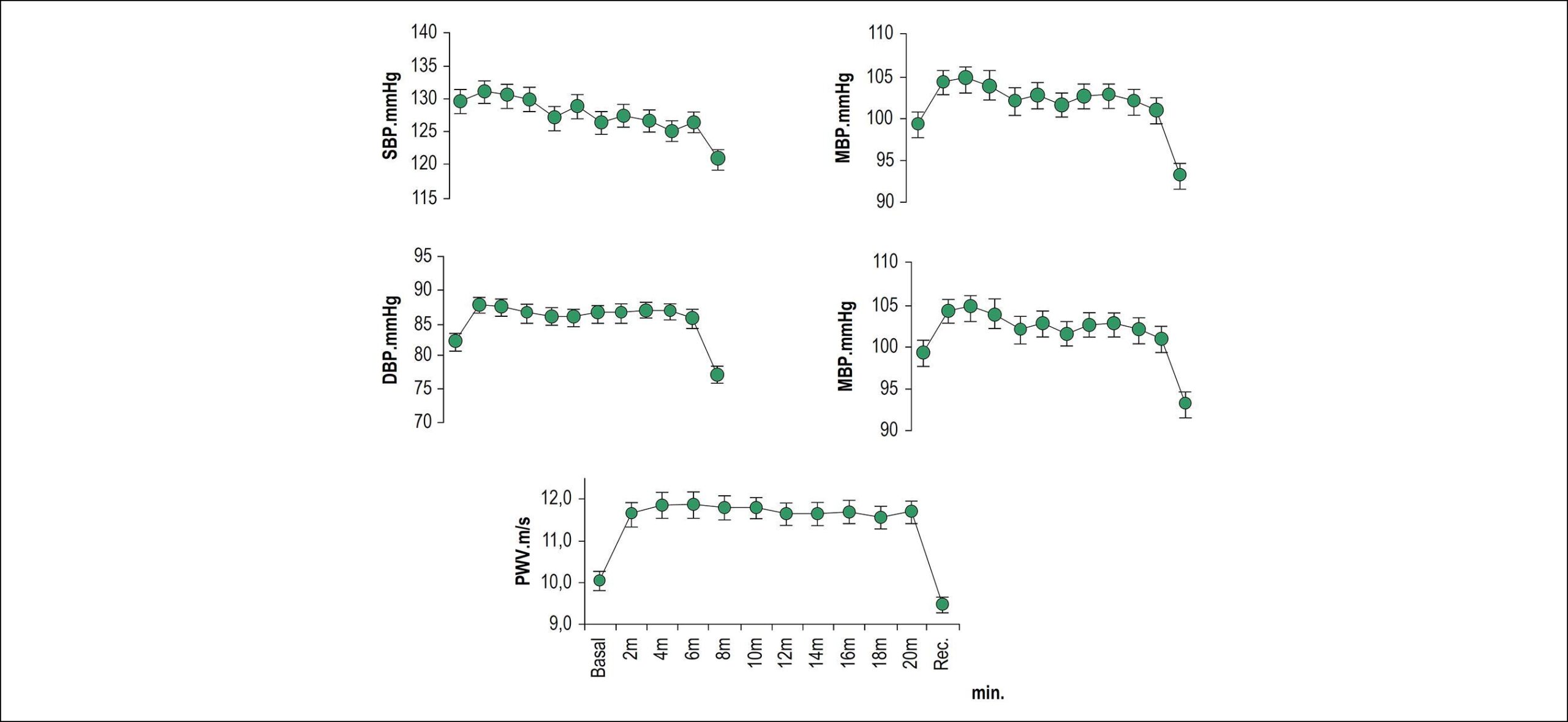
Ninety-three healthy volunteers (age 42 ± 16 years). Carotid-femoral pulse wave velocity (PWV) assumed as aortic stiffness was assessed in supine position (basal phase), during tilt test (TT) (orthostatic phase) and after return to supine position (recovery phase). Simultaneously with PWV acquisition, measures of BP and HR rate were recorded.

Results:

PWV during TT increased significantly compared to the basal and recovery phases (11.7 ± 2.5 m/s vs. 10.1 ± 2.3 m/s and 9.5 ± 2.0 m/s). Systolic BP (r = 0.55, r = 0.46 and r = 0.39) and age (r = 0.59, r = 0.63 and r = 0.39) correlated with PWV in all phases. The significance level for all tests was established as α = 0.05.

Conclusion:

We conclude that there is a permanent increase in PWV during orthostatic position that was returned to basal level at the recovery phase. This dynamic pattern of PWV response, during postural changes, can be explained by an increase in hydrostatic pressure at the level of abdominal aorta which with smaller radius and an increased elastic modulus, propagates the pulse in a faster way. Considering that it could increase central pulse reflection during the orthostatic position, we speculate that this mechanism may play a role in the overall adaptation of humans to gravitational stress.

  • aging
  • Gravitation
  • Hypertension
  • Pulse Wave Analysis
  • Standing Position
  • Switch Arterial
Read Full Article
Creative Commons Attribution (CC BY) Creative Commons license
09/09/2019 DOI: 10.5935/abc.20190182 Views 1
Figure 1
IJCS
Original Article

Assessment of Central Blood Pressure and Arterial Stiffness in Practicing Long-Distance Walking Race

Edison Nunes Pereira et al. Priscila Valverde de Oliveira Vitorino Weimar Kunz Sebba Barroso de Souza Mariana Cardoso Pinheiro … Ana Luiza Lima Sousa Paulo Cesar Brandão Veiga Jardim Jeeziane Marcelino Rezende Antonio Coca

Abstract

Background:

An ecological hiking occurs yearly in Brazil. It is a unique event because of its distance (310 km) and dynamics (mean of 62 km/day for 5 days with mean pace of 7.6 km/h). Although beneficial effects of moderate-intensity exercises are well-known, the effects of intense and long-duration exercise still require study.

Objective:

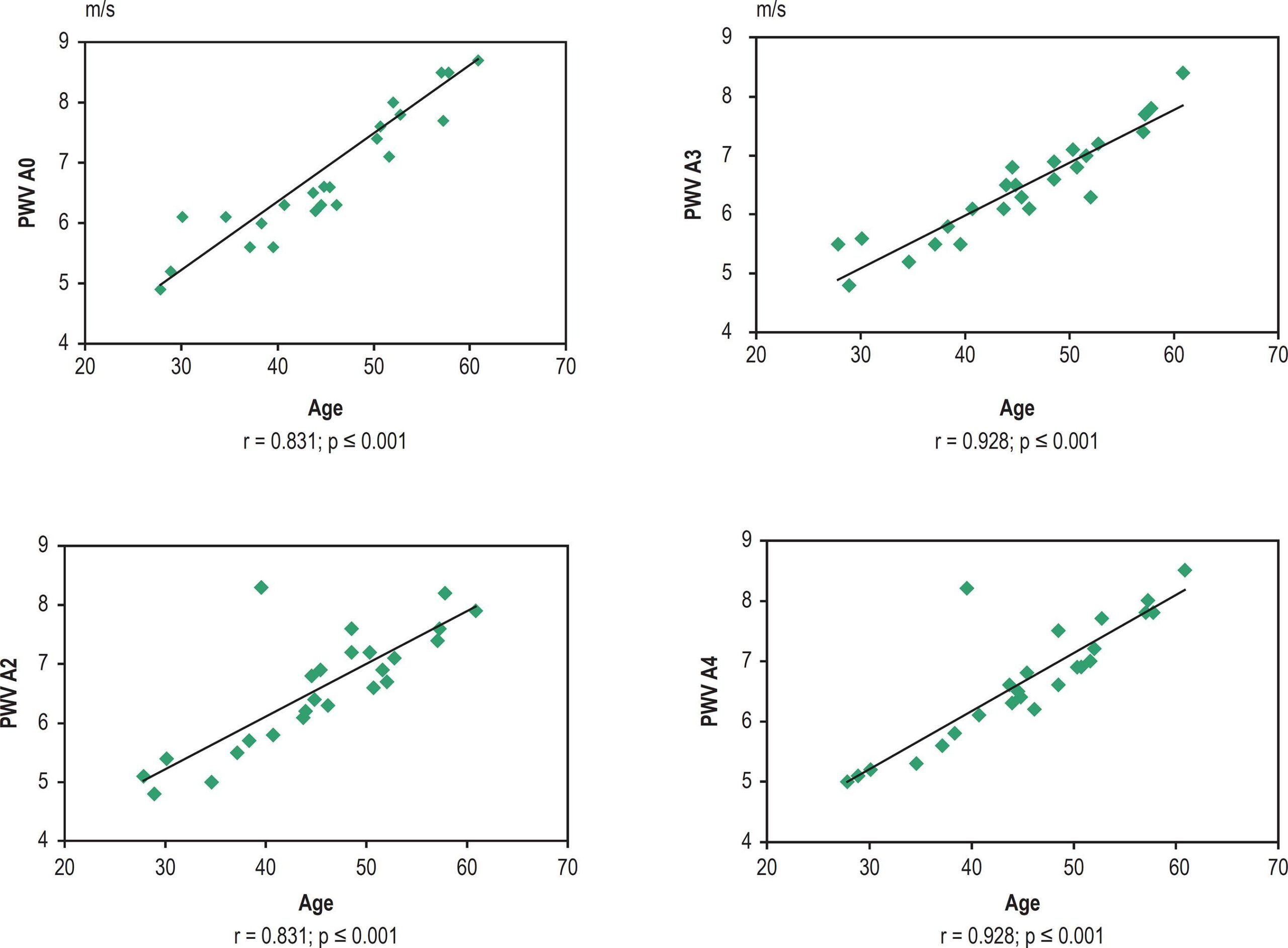
To evaluate the effects of mixed walking/running race on various blood pressure (BP) parameters 30 days before (A0), on the 2nd (A2), 3rd (A3), and 4th (A4) days after completing the day’s stage.

Methods:

Central systolic (cSBP) and diastolic BP (cDBP), peripheral systolic (pSBP) and diastolic BP (pDBP), central pulse pressure (cPP), peripheral pulse pressure (pPP), amplified pulse pressure (aPP), corrected augmentation index (AIx75%) and pulse wave velocity (PWV) were measured using an oscillometric Mobil-O-Graph® (IEM, Stolberg, Germany) in 25 male athletes (mean age of 45.3 ± 9.1 years). A p value < 0.05 was considered a statistically-significant difference.

Results:

cSBP decreased from A0 to A2 (109.5 to 118.1 mmHg) and from A0 to A3 (109.5 to 102.5 mmHg); pPP decrease from A0 to A2 (49.2 to 38.2 mmHg) and from A0 to A4 (49.2 to 41.2 mmHg); aPP decrease from A0 to A1 (15.6 to 9.5 mmHg), from A0 to A2 (15.6 to 8.0 mmHg) and from A0 to A3 (15.6 to 11.2 mmHg). PWV correlated with age.

Conclusions:

Blood pressure dropped on the first days of the race and returned to close to baseline values at the end. PWV correlates strongly with age. This type of exercise promotes effects on BP and PWV similar to those seen in long-duration, high-intensity sports. These changes in trained healthy individuals do not seem to increase cardiovascular risks. This was the first study to assess the effects of this type of exercise on the cardiovascular system.

  • Blood Pressure
  • Exercise
  • Hypertension
  • Pulse Wave Analysis
  • Vascular Stiffness
  • walking
Read Full Article
Creative Commons Attribution (CC BY) Creative Commons license
21/09/2017 DOI: 10.5935/2359-4802.20170076 Views 1
Figure 1
ABC
Review Article

Vascular Aging and Arterial Stiffness

Luana de Rezende Mikael et al. Anelise Machado Gomes de Paiva Marco Mota Gomes Ana Luiza Lima Sousa … Paulo César Brandão Veiga Jardim Priscila Valverde de Oliveira Vitorino Maicon Borges Euzébio Wátila de Moura Sousa Weimar Kunz Sebba Barroso

Abstract

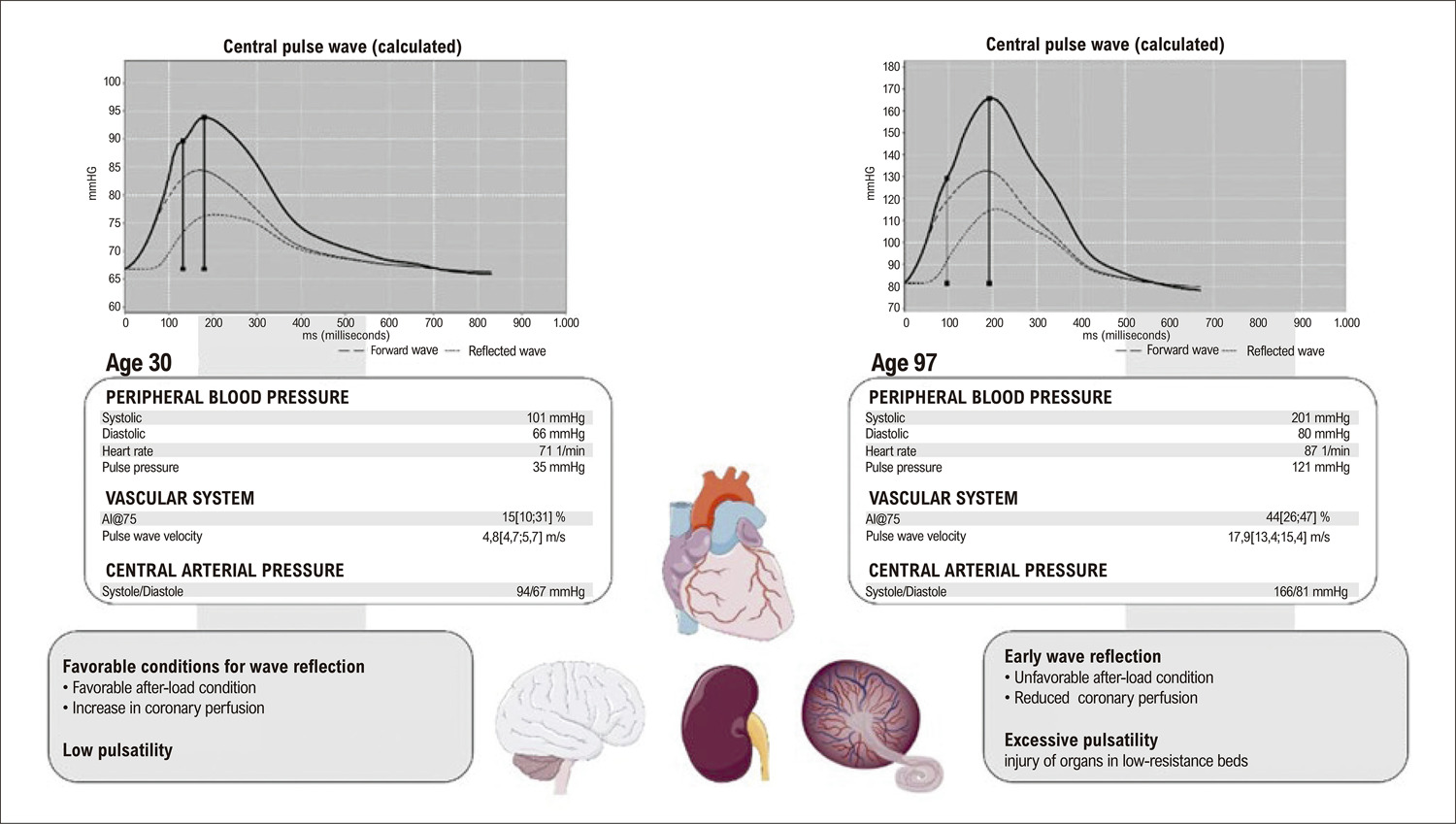
Cardiovascular diseases (CVD) account annually for almost one third of all deaths worldwide. Among the CVD, systemic arterial hypertension (SAH) is related to more than half of those outcomes. Type 2 diabetes mellitus is an independent risk factor for SAH because it causes functional and structural damage to the arterial wall, leading to stiffness. Several studies have related oxidative stress, production of free radicals, and neuroendocrine and genetic changes to the physiopathogenesis of vascular aging. Indirect ways to analyze that aging process have been widely studied, pulse wave velocity (PWV) being considered gold standard to assess arterial stiffness, because there is large epidemiological evidence of its predictive value for cardiovascular events, and it requires little technical knowledge to be performed. A pulse wave is generated during each cardiac contraction and travels along the arterial bed until finding peripheral resistance or any bifurcation point, determining the appearance of a reflected wave. In young individuals, arteries tend to be more elastic, therefore, the reflected wave occurs later in the cardiac cycle, reaching the heart during diastole. In older individuals, however, the reflected wave occurs earlier, reaching the heart during systole. Because PWV is an important biomarker of vascular damage, highly valuable in determining the patient’s global cardiovascular risk, we chose to review the articles on vascular aging in the context of cardiovascular risk factors and the tools available to the early identification of that damage.

  • Blood Pressure
  • Hypertension
  • Pulse Wave Analysis
  • Vascular Remodeling
  • Vascular Stiffness
Read Full Article
Creative Commons Attribution (CC BY) Creative Commons license
29/06/2017 DOI: 10.5935/abc.20170091 Views 2
Figure 1
ABC
Anatomopathological Session

Case 5/2016 – A 56-Year-old Man Hospitalized for Unstable Angina, who Presented Recurrence of Precordial Pain and Cardiac Arrest with Pulseless Electrical Activity

Desiderio Favarato et al. Paulo Sampaio Gutierrez

Clinical aspects

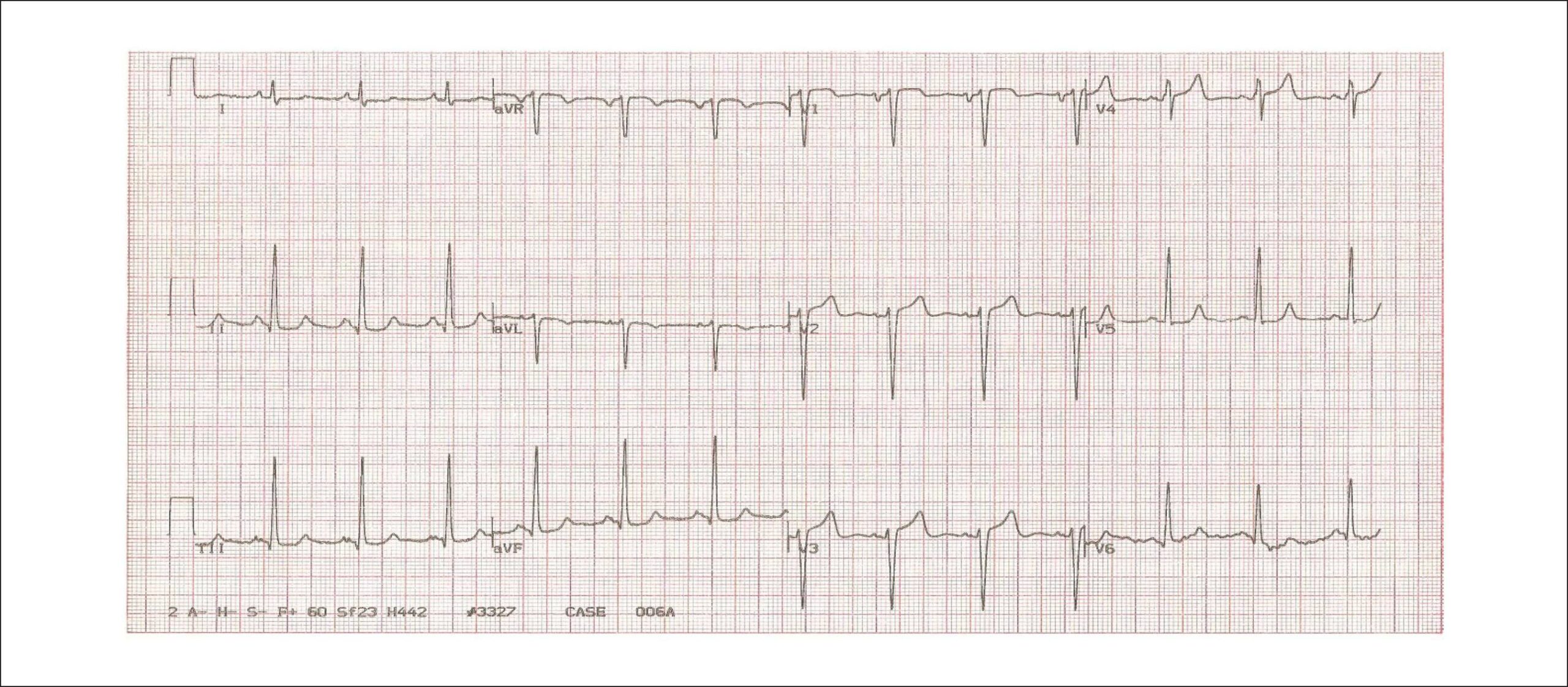
This is a 56-year-old man with a recent onset of angina and three-vessel lesions on coronary cineangiography, who presented with dyspnea and, a few hours later, cardiorespiratory arrest with intense ST segment elevation.

Angina is the initial manifestation in half of the patients with coronary artery disease. Even when stable, i.e., without changes in the triggering events or intensity, a duration of the episodes longer than 3 months doubles the risk of cardiovascular events.,

[…]

  • Angina, Unstable
  • Chest Pain
  • Heart Arrest
  • Myocardial Infarction
  • Pulse Wave Analysis
Read Full Article
Creative Commons Attribution (CC BY) Creative Commons license
01/11/2016 DOI: 10.5935/abc.20160175 Views 1
ABC
Original Article

Determinants of Functional and Structural Properties of Large Arteries in Healthy Individuals

Elaine Cristina Tolezani et al. Valéria Costa-Hong Gustavo Correia Alfredo José Mansur … Luciano Ferreira Drager Luiz Aparecido Bortolotto

Background:

Changes in the properties of large arteries correlate with higher cardiovascular risk. Recent guidelines have included the assessment of those properties to detect subclinical disease. Establishing reference values for the assessment methods as well as determinants of the arterial parameters and their correlations in healthy individuals is important to stratify patients.

Objective:

To assess, in healthy adults, the distribution of the values of pulse wave velocity, diameter, intima-media thickness and relative distensibility of the carotid artery, in addition to assessing the demographic and clinical determinants of those parameters and their correlations.

Methods:

This study evaluated 210 individuals (54% women; mean age, 44 ± 13 years) with no evidence of cardiovascular disease. The carotid-femoral pulse wave velocity was measured with a Complior® device. The functional and structural properties of the carotid artery were assessed by using radiofrequency ultrasound.

Results:

The means of the following parameters were: pulse wave velocity, 8.7 ± 1.5 m/s; diameter, 6,707.9 ± 861.6 μm; intima-media thickness, 601 ± 131 μm; relative distensibility, 5.3 ± 2.1%. No significant difference related to sex or ethnicity was observed. On multiple linear logistic regression, the factors independently related to the vascular parameters were: pulse wave velocity, to age (p < 0.01) and triglycerides (p = 0.02); intima-media thickness, to age (p < 0.01); diameter, to creatinine (p = 0.03) and age (p = 0.02); relative distensibility, to age (p < 0.01) and systolic and diastolic blood pressures (p = 0.02 and p = 0.01, respectively). Pulse wave velocity showed a positive correlation with intima media thickness (p < 0.01) and with relative distensibility (p < 0.01), while diameter showed a positive correlation with distensibility (p = 0.03).

Conclusion:

In healthy individuals, age was the major factor related to aortic stiffness, while age and diastolic blood pressure related to the carotid functional measure. The carotid artery structure was directly related to aortic stiffness, which was inversely related to the carotid artery functional property.

  • Arterial Pressure
  • Arteries
  • Carotid Intima-Media Thickness
  • Pulse Wave Analysis
  • Vascular Stiffness
Read Full Article
Creative Commons Attribution (CC BY) Creative Commons license
29/08/2014 DOI: 10.5935/abc.20140124 Views 1

How to cite this article

EndNote RIS

Electronic Document Format (Vancouver)

Ertaş K, Gül . Evaluation of Pulse Wave Velocity using Transthoracic Echocardiography in Children with Bicuspid Aortic Valve. Arquivos Brasileiros de Cardiologia 2026;123(3):e20250560.

Electronic Document Format (ABNT)

Ertaş, Kerem; Gül, Özlem. Evaluation of Pulse Wave Velocity using Transthoracic Echocardiography in Children with Bicuspid Aortic Valve. Arquivos Brasileiros de Cardiologia, v. 123, n. 3, e20250560, Jun. 2026.

Electronic Document Format (APA)

Ertaş, K., & Gül, (2026). Evaluation of Pulse Wave Velocity using Transthoracic Echocardiography in Children with Bicuspid Aortic Valve. Arquivos Brasileiros de Cardiologia, 123(3), e20250560.

Electronic Document Format (ISO)

Ertaş, Kerem and Gül, Özlem. Evaluation of Pulse Wave Velocity using Transthoracic Echocardiography in Children with Bicuspid Aortic Valve. Arquivos Brasileiros de Cardiologia [online]. 2026, vol. 123, n. 3, [cited 2026-10-14], e20250560. Available from: <https://journals.cardiol.br/en/article/evaluation-of-pulse-wave-velocity-using-transthoracic-echocardiography-in-children-with-bicuspid-aortic-valve/>. ISSN 0066-782X

EndNote RIS

Electronic Document Format (Vancouver)

Souza TP, Tardelli LP, Nicoletti RA, Jacomini AM, Martins GFM, Pinheiro LC, Tanus-Santos JE, et al. Short-term Oral Nitrite Administration Decreases Arterial Stiffness in Both Trained and Sedentary Wistar Rats. Arquivos Brasileiros de Cardiologia 2024;121(12):e20230783.

Electronic Document Format (ABNT)

Souza, Thiago Pereira; Tardelli, Lidieli Pazin; Nicoletti, Rafael Antunes; Jacomini, André Mourão; Martins, Gabriel Francisco de Mello; Pinheiro, Lucas Cézar; Tanus-Santos, José Eduardo; Amaral, Sandra Lia do; Zago, Anderson Saranz. Short-term Oral Nitrite Administration Decreases Arterial Stiffness in Both Trained and Sedentary Wistar Rats. Arquivos Brasileiros de Cardiologia, v. 121, n. 12, e20230783, Dec. 2024.

Electronic Document Format (APA)

Souza, T. P., Tardelli, L. P., Nicoletti, R. A., Jacomini, A. M., Martins, G. F. M., Pinheiro, L. C., Tanus-Santos, J. E., Amaral, S. L. , & Zago, A. S. (2024). Short-term Oral Nitrite Administration Decreases Arterial Stiffness in Both Trained and Sedentary Wistar Rats. Arquivos Brasileiros de Cardiologia, 121(12), e20230783.

Electronic Document Format (ISO)

Souza, Thiago Pereira and Tardelli, Lidieli Pazin and Nicoletti, Rafael Antunes and Jacomini, André Mourão and Martins, Gabriel Francisco de Mello and Pinheiro, Lucas Cézar and Tanus-Santos, José Eduardo and Amaral, Sandra Lia do and Zago, Anderson Saranz. Short-term Oral Nitrite Administration Decreases Arterial Stiffness in Both Trained and Sedentary Wistar Rats. Arquivos Brasileiros de Cardiologia [online]. 2024, vol. 121, n. 12, [cited 2026-10-14], e20230783. Available from: <https://journals.cardiol.br/en/article/short-term-oral-nitrite-administration-decreases-arterial-stiffness-in-both-trained-and-sedentary-wistar-rats/>. ISSN 0066-782X

EndNote RIS

Electronic Document Format (Vancouver)

Inuzuka S, Vitorino PVO, Barroso AS, Magalhães FG, Sousa AC, Alves Filho RPP, Melo VA, et al. Pulse Wave Velocity of 8.2 m/s as a Threshold Associated with Cardiovascular Target Organ Damage Presence. Arquivos Brasileiros de Cardiologia 2023;120(10):e20220934.

Electronic Document Format (ABNT)

Inuzuka, Sayuri; Vitorino, Priscila Valverde de Oliveria; Barroso, Adriana Sebba; Magalhães, Fabrício Galdino; Sousa, Andrea Cristina; Alves Filho, Robson Pierre Pacífico; Melo, Victoria Alves; Oliveira, Luiz Fernando de; Sousa, Ana Luiza Lima; Jardim, Paulo Cesar B. Veiga; Coca, Antonio; Barroso, Weimar Kunz Sebba. Pulse Wave Velocity of 8.2 m/s as a Threshold Associated with Cardiovascular Target Organ Damage Presence. Arquivos Brasileiros de Cardiologia, v. 120, n. 10, e20220934, Oct. 2023.

Electronic Document Format (APA)

Inuzuka, S., Vitorino, P. V. O., Barroso, A. S., Magalhães, F. G., Sousa, A. C., Alves Filho, R. P. P., Melo, V. A., Oliveira, L. F. , Sousa, A. L. L., Jardim, P. C. B. V., Coca, A., & Barroso, W. K. S. (2023). Pulse Wave Velocity of 8.2 m/s as a Threshold Associated with Cardiovascular Target Organ Damage Presence. Arquivos Brasileiros de Cardiologia, 120(10), e20220934.

Electronic Document Format (ISO)

Inuzuka, Sayuri and Vitorino, Priscila Valverde de Oliveria and Barroso, Adriana Sebba and Magalhães, Fabrício Galdino and Sousa, Andrea Cristina and Alves Filho, Robson Pierre Pacífico and Melo, Victoria Alves and Oliveira, Luiz Fernando de and Sousa, Ana Luiza Lima and Jardim, Paulo Cesar B. Veiga and Coca, Antonio and Barroso, Weimar Kunz Sebba. Pulse Wave Velocity of 8.2 m/s as a Threshold Associated with Cardiovascular Target Organ Damage Presence. Arquivos Brasileiros de Cardiologia [online]. 2023, vol. 120, n. 10, [cited 2026-10-14], e20220934. Available from: <https://journals.cardiol.br/en/article/pulse-wave-velocity-of-8-2-m-s-as-a-threshold-associated-with-cardiovascular-target-organ-damage-presence/>. ISSN 0066-782X

EndNote RIS

Electronic Document Format (Vancouver)

Santos-Veloso MAO. Pulse Wave Velocity: Is It Time to Reduce the Cutoff Point?. Arquivos Brasileiros de Cardiologia 2023;120(10):e20230666.

Electronic Document Format (ABNT)

Santos-Veloso, Marcelo Antônio Oliveira. Pulse Wave Velocity: Is It Time to Reduce the Cutoff Point?. Arquivos Brasileiros de Cardiologia, v. 120, n. 10, e20230666, Oct. 2023.

Electronic Document Format (APA)

Santos-Veloso, M. A. O. (2023). Pulse Wave Velocity: Is It Time to Reduce the Cutoff Point?. Arquivos Brasileiros de Cardiologia, 120(10), e20230666.

Electronic Document Format (ISO)

Santos-Veloso, Marcelo Antônio Oliveira. Pulse Wave Velocity: Is It Time to Reduce the Cutoff Point?. Arquivos Brasileiros de Cardiologia [online]. 2023, vol. 120, n. 10, [cited 2026-10-14], e20230666. Available from: <https://journals.cardiol.br/en/article/pulse-wave-velocity-is-it-time-to-reduce-the-cutoff-point/>. ISSN 0066-782X

EndNote RIS

Electronic Document Format (Vancouver)

Guimarães Filho GC, Araújo RCG, Cabral KB, Paula CR. Comparison of Angiotensin Receptor Blockers and Angiotensin-Converting Enzyme Inhibitors in the Management of Arterial Stiffness and Target Organ Damage in Patients with Hypertension. International Journal of Cardiovascular Sciences 2023;36:e20220162.

Electronic Document Format (ABNT)

Guimarães Filho, Gilberto Campos; Araújo, Reila Campos Guimarães de; Cabral, Karynne Borges; Paula, Cácia Régia de. Comparison of Angiotensin Receptor Blockers and Angiotensin-Converting Enzyme Inhibitors in the Management of Arterial Stiffness and Target Organ Damage in Patients with Hypertension. International Journal of Cardiovascular Sciences, v. 36, e20220162, Aug. 2023.

Electronic Document Format (APA)

Guimarães Filho, G. C., Araújo, R. C. G. , Cabral, K. B., & Paula, C. R. (2023). Comparison of Angiotensin Receptor Blockers and Angiotensin-Converting Enzyme Inhibitors in the Management of Arterial Stiffness and Target Organ Damage in Patients with Hypertension. International Journal of Cardiovascular Sciences, 36, e20220162.

Electronic Document Format (ISO)

Guimarães Filho, Gilberto Campos and Araújo, Reila Campos Guimarães de and Cabral, Karynne Borges and Paula, Cácia Régia de. Comparison of Angiotensin Receptor Blockers and Angiotensin-Converting Enzyme Inhibitors in the Management of Arterial Stiffness and Target Organ Damage in Patients with Hypertension. International Journal of Cardiovascular Sciences [online]. 2023, vol. 36, [cited 2026-10-14], e20220162. Available from: <https://journals.cardiol.br/en/article/comparison-of-angiotensin-receptor-blockers-and-angiotensin-converting-enzyme-inhibitors-in-the-management-of-arterial-stiffness-and-target-organ-damage-in-patients-with-hypertension/>. ISSN 2359-4802

EndNote RIS

Electronic Document Format (Vancouver)

Rigonatto RRF, Vitorino PVO, Oliveira AC, Sousa ALL, Jardim PCBV, Cunha PMGM, Barbosa ECD, et al. SAGE Score in Normotensive and Pre-Hypertensive Patients: A Proof of Concept. Arquivos Brasileiros de Cardiologia 2023;120(2):e20200291.

Electronic Document Format (ABNT)

Rigonatto, Rayne Ramos Fagundes; Vitorino, Priscila Valverde Oliveira; Oliveira, Adriana Camargo; Sousa, Ana Luiza Lima; Jardim, Paulo César Brandão Veiga; Cunha, Pedro Miguel Guimarães Marques; Barbosa, Eduardo Costa Duarte; Xaplanteris, Panagiotis; Vlachopoulos, Charalambos; Barroso, Weimar Kunz Sebba. SAGE Score in Normotensive and Pre-Hypertensive Patients: A Proof of Concept. Arquivos Brasileiros de Cardiologia, v. 120, n. 2, e20200291, Feb. 2023.

Electronic Document Format (APA)

Rigonatto, R. R. F., Vitorino, P. V. O., Oliveira, A. C., Sousa, A. L. L., Jardim, P. C. B. V., Cunha, P. M. G. M., Barbosa, E. C. D., Xaplanteris, P., Vlachopoulos, C., & Barroso, W. K. S. (2023). SAGE Score in Normotensive and Pre-Hypertensive Patients: A Proof of Concept. Arquivos Brasileiros de Cardiologia, 120(2), e20200291.

Electronic Document Format (ISO)

Rigonatto, Rayne Ramos Fagundes and Vitorino, Priscila Valverde Oliveira and Oliveira, Adriana Camargo and Sousa, Ana Luiza Lima and Jardim, Paulo César Brandão Veiga and Cunha, Pedro Miguel Guimarães Marques and Barbosa, Eduardo Costa Duarte and Xaplanteris, Panagiotis and Vlachopoulos, Charalambos and Barroso, Weimar Kunz Sebba. SAGE Score in Normotensive and Pre-Hypertensive Patients: A Proof of Concept. Arquivos Brasileiros de Cardiologia [online]. 2023, vol. 120, n. 2, [cited 2026-10-14], e20200291. Available from: <https://journals.cardiol.br/en/article/sage-score-in-normotensive-and-pre-hypertensive-patients-a-proof-of-concept/>. ISSN 0066-782X

EndNote RIS

Electronic Document Format (Vancouver)

Oliveira AC, Cunha PMGM, Vitorino PVO, Souza ALL, Deus GD, Feitosa A, Barbosa ECD, et al. Vascular Aging and Arterial Stiffness. Arquivos Brasileiros de Cardiologia 2022;119(4):604-15.

Electronic Document Format (ABNT)

Oliveira, Adriana Camargo; Cunha, Pedro Miguel Guimarães Marques; Vitorino, Priscila Valverde de Oliveria; Souza, Ana Luiza Lima; Deus, Gilcimar Divino; Feitosa, Audes; Barbosa, Eduardo Costa Duarte; Gomes, Marco Mota; Jardim, Paulo Cesar B. Veiga; Barroso, Weimar Kunz Sebba. Vascular Aging and Arterial Stiffness. Arquivos Brasileiros de Cardiologia, v. 119, n. 4, p. 604-615, Oct. 2022.

Electronic Document Format (APA)

Oliveira, A. C., Cunha, P. M. G. M., Vitorino, P. V. O., Souza, A. L. L., Deus, G. D., Feitosa, A., Barbosa, E. C. D., Gomes, M. M., Jardim, P. C. B. V., & Barroso, W. K. S. (2022). Vascular Aging and Arterial Stiffness. Arquivos Brasileiros de Cardiologia, 119(4), 604-615.

Electronic Document Format (ISO)

Oliveira, Adriana Camargo and Cunha, Pedro Miguel Guimarães Marques and Vitorino, Priscila Valverde de Oliveria and Souza, Ana Luiza Lima and Deus, Gilcimar Divino and Feitosa, Audes and Barbosa, Eduardo Costa Duarte and Gomes, Marco Mota and Jardim, Paulo Cesar B. Veiga and Barroso, Weimar Kunz Sebba. Vascular Aging and Arterial Stiffness. Arquivos Brasileiros de Cardiologia [online]. 2022, vol. 119, n. 4, [cited 2026-10-14], pp. 604-615. Available from: <https://journals.cardiol.br/en/article/vascular-aging-and-arterial-stiffness-2/>. ISSN 0066-782X

EndNote RIS

Electronic Document Format (Vancouver)

Campana EMG, Brandão AA. Waist Circumference: A Parameter of Vascular Health. Arquivos Brasileiros de Cardiologia 2022;119(2):265-6.

Electronic Document Format (ABNT)

Campana, Erika Maria Gonçalves; Brandão, Andréa Araujo. Waist Circumference: A Parameter of Vascular Health. Arquivos Brasileiros de Cardiologia, v. 119, n. 2, p. 265-266, Aug. 2022.

Electronic Document Format (APA)

Campana, E. M. G., & Brandão, A. A. (2022). Waist Circumference: A Parameter of Vascular Health. Arquivos Brasileiros de Cardiologia, 119(2), 265-266.

Electronic Document Format (ISO)

Campana, Erika Maria Gonçalves and Brandão, Andréa Araujo. Waist Circumference: A Parameter of Vascular Health. Arquivos Brasileiros de Cardiologia [online]. 2022, vol. 119, n. 2, [cited 2026-10-14], pp. 265-266. Available from: <https://journals.cardiol.br/en/article/waist-circumference-a-parameter-of-vascular-health/>. ISSN 0066-782X

EndNote RIS

Electronic Document Format (Vancouver)

Guimarães Filho GC, Silva LT, Silva RMC. Correlation among Waist Circumference and Central Measures of Blood Pressure. Arquivos Brasileiros de Cardiologia 2022;119(2):257-64.

Electronic Document Format (ABNT)

Guimarães Filho, Gilberto Campos; Silva, Lucas Tavares; Silva, Ruth Mellina Castro e. Correlation among Waist Circumference and Central Measures of Blood Pressure. Arquivos Brasileiros de Cardiologia, v. 119, n. 2, p. 257-264, Jun. 2022.

Electronic Document Format (APA)

Guimarães Filho, G. C., Silva, L. T., & Silva, R. M. C. (2022). Correlation among Waist Circumference and Central Measures of Blood Pressure. Arquivos Brasileiros de Cardiologia, 119(2), 257-264.

Electronic Document Format (ISO)

Guimarães Filho, Gilberto Campos and Silva, Lucas Tavares and Silva, Ruth Mellina Castro e. Correlation among Waist Circumference and Central Measures of Blood Pressure. Arquivos Brasileiros de Cardiologia [online]. 2022, vol. 119, n. 2, [cited 2026-10-14], pp. 257-264. Available from: <https://journals.cardiol.br/en/article/correlation-among-waist-circumference-and-central-measures-of-blood-pressure/>. ISSN 0066-782X

EndNote RIS

Electronic Document Format (Vancouver)

Kosger P, Akin T, Kiztanir H, Ucar B. Arterial Stiffness and Left Ventricular Myocardial Function in Children with a Well-Functioning Bicuspid Aortic Valve. Arquivos Brasileiros de Cardiologia 2021;117(6):1126-33.

Electronic Document Format (ABNT)

Kosger, Pelin; Akin, Tugcem; Kiztanir, Hikmet; Ucar, Birsen. Arterial Stiffness and Left Ventricular Myocardial Function in Children with a Well-Functioning Bicuspid Aortic Valve. Arquivos Brasileiros de Cardiologia, v. 117, n. 6, p. 1126-1133, Sep. 2021.

Electronic Document Format (APA)

Kosger, P., Akin, T., Kiztanir, H., & Ucar, B. (2021). Arterial Stiffness and Left Ventricular Myocardial Function in Children with a Well-Functioning Bicuspid Aortic Valve. Arquivos Brasileiros de Cardiologia, 117(6), 1126-1133.

Electronic Document Format (ISO)

Kosger, Pelin and Akin, Tugcem and Kiztanir, Hikmet and Ucar, Birsen. Arterial Stiffness and Left Ventricular Myocardial Function in Children with a Well-Functioning Bicuspid Aortic Valve. Arquivos Brasileiros de Cardiologia [online]. 2021, vol. 117, n. 6, [cited 2026-10-14], pp. 1126-1133. Available from: <https://journals.cardiol.br/en/article/arterial-stiffness-and-left-ventricular-myocardial-function-in-children-with-a-well-functioning-bicuspid-aortic-valve/>. ISSN 0066-782X

EndNote RIS

Electronic Document Format (Vancouver)

Raimundo R, Saraiva F, Moreira R, Moreira S, Ferreira AF, Cerqueira RJ, Amorim MJ, et al. Arterial Stiffness Changes in Severe Aortic Stenosis Patients Submitted to Valve Replacement Surgery. Arquivos Brasileiros de Cardiologia 2021;116(3):475-82.

Electronic Document Format (ABNT)

Raimundo, Renata; Saraiva, Francisca; Moreira, Raquel; Moreira, Soraia; Ferreira, Ana Filipa; Cerqueira, Rui J.; Amorim, Mario Jorge; Pinho, Paulo; Barros, António Sousa; Lourenço, André P.; Leite-Moreira, Adelino. Arterial Stiffness Changes in Severe Aortic Stenosis Patients Submitted to Valve Replacement Surgery. Arquivos Brasileiros de Cardiologia, v. 116, n. 3, p. 475-482, Apr. 2021.

Electronic Document Format (APA)

Raimundo, R., Saraiva, F., Moreira, R., Moreira, S., Ferreira, A. F., Cerqueira, R. J., Amorim, M. J., Pinho, P., Barros, A. S., Lourenço, A. P., & Leite-Moreira, A. (2021). Arterial Stiffness Changes in Severe Aortic Stenosis Patients Submitted to Valve Replacement Surgery. Arquivos Brasileiros de Cardiologia, 116(3), 475-482.

Electronic Document Format (ISO)

Raimundo, Renata and Saraiva, Francisca and Moreira, Raquel and Moreira, Soraia and Ferreira, Ana Filipa and Cerqueira, Rui J. and Amorim, Mario Jorge and Pinho, Paulo and Barros, António Sousa and Lourenço, André P. and Leite-Moreira, Adelino. Arterial Stiffness Changes in Severe Aortic Stenosis Patients Submitted to Valve Replacement Surgery. Arquivos Brasileiros de Cardiologia [online]. 2021, vol. 116, n. 3, [cited 2026-10-14], pp. 475-482. Available from: <https://journals.cardiol.br/en/article/arterial-stiffness-changes-in-severe-aortic-stenosis-patients-submitted-to-valve-replacement-surgery/>. ISSN 0066-782X

EndNote RIS

Electronic Document Format (Vancouver)

Murad H. Arterial Stiffness in Aortic Stenosis. Arquivos Brasileiros de Cardiologia 2021;116(3):483-4.

Electronic Document Format (ABNT)

Murad, Henrique. Arterial Stiffness in Aortic Stenosis. Arquivos Brasileiros de Cardiologia, v. 116, n. 3, p. 483-484, Apr. 2021.

Electronic Document Format (APA)

Murad, H. (2021). Arterial Stiffness in Aortic Stenosis. Arquivos Brasileiros de Cardiologia, 116(3), 483-484.

Electronic Document Format (ISO)

Murad, Henrique. Arterial Stiffness in Aortic Stenosis. Arquivos Brasileiros de Cardiologia [online]. 2021, vol. 116, n. 3, [cited 2026-10-14], pp. 483-484. Available from: <https://journals.cardiol.br/en/article/arterial-stiffness-in-aortic-stenosis/>. ISSN 0066-782X

EndNote RIS

Electronic Document Format (Vancouver)

Rodrigues R. Study of Arterial Stiffness – Based on Scientific Evidence, What are the Current Tools for the Study of Arterial Stiffness?. International Journal of Cardiovascular Sciences 2021;34(1):30-1.

Electronic Document Format (ABNT)

Rodrigues, Ronaldo. Study of Arterial Stiffness – Based on Scientific Evidence, What are the Current Tools for the Study of Arterial Stiffness?. International Journal of Cardiovascular Sciences, v. 34, n. 1, p. 30-31, Jan. 2021.

Electronic Document Format (APA)

Rodrigues, R. (2021). Study of Arterial Stiffness – Based on Scientific Evidence, What are the Current Tools for the Study of Arterial Stiffness?. International Journal of Cardiovascular Sciences, 34(1), 30-31.

Electronic Document Format (ISO)

Rodrigues, Ronaldo. Study of Arterial Stiffness – Based on Scientific Evidence, What are the Current Tools for the Study of Arterial Stiffness?. International Journal of Cardiovascular Sciences [online]. 2021, vol. 34, n. 1, [cited 2026-10-14], pp. 30-31. Available from: <https://journals.cardiol.br/en/article/study-of-arterial-stiffness-based-on-scientific-evidence-what-are-the-current-tools-for-the-study-of-arterial-stiffness/>. ISSN 2359-4802

EndNote RIS

Electronic Document Format (Vancouver)

Vilela-Martin JF. Parameters of Central Hemodynamics as New Biomarkers of Cardiovascular Risk. Arquivos Brasileiros de Cardiologia 2021;115(6):1133-4.

Electronic Document Format (ABNT)

Vilela-Martin, José Fernando. Parameters of Central Hemodynamics as New Biomarkers of Cardiovascular Risk. Arquivos Brasileiros de Cardiologia, v. 115, n. 6, p. 1133-1134, Jan. 2021.

Electronic Document Format (APA)

Vilela-Martin, J. F. (2021). Parameters of Central Hemodynamics as New Biomarkers of Cardiovascular Risk. Arquivos Brasileiros de Cardiologia, 115(6), 1133-1134.

Electronic Document Format (ISO)

Vilela-Martin, José Fernando. Parameters of Central Hemodynamics as New Biomarkers of Cardiovascular Risk. Arquivos Brasileiros de Cardiologia [online]. 2021, vol. 115, n. 6, [cited 2026-10-14], pp. 1133-1134. Available from: <https://journals.cardiol.br/en/article/parameters-of-central-hemodynamics-as-new-biomarkers-of-cardiovascular-risk/>. ISSN 0066-782X

EndNote RIS

Electronic Document Format (Vancouver)

Amodeo C. Short Editorial: Hydrotherapy Reduces Arterial Stiffness in Pregnant Women with Chronic Hypertension. Arquivos Brasileiros de Cardiologia 2020;114(4):655.

Electronic Document Format (ABNT)

Amodeo, Celso. Short Editorial: Hydrotherapy Reduces Arterial Stiffness in Pregnant Women with Chronic Hypertension. Arquivos Brasileiros de Cardiologia, v. 114, n. 4, p. 655-655, May. 2020.

Electronic Document Format (APA)

Amodeo, C. (2020). Short Editorial: Hydrotherapy Reduces Arterial Stiffness in Pregnant Women with Chronic Hypertension. Arquivos Brasileiros de Cardiologia, 114(4), 655-655.

Electronic Document Format (ISO)

Amodeo, Celso. Short Editorial: Hydrotherapy Reduces Arterial Stiffness in Pregnant Women with Chronic Hypertension. Arquivos Brasileiros de Cardiologia [online]. 2020, vol. 114, n. 4, [cited 2026-10-14], pp. 655-655. Available from: <https://journals.cardiol.br/en/article/short-editorial-hydrotherapy-reduces-arterial-stiffness-in-pregnant-women-with-chronic-hypertension/>. ISSN 0066-782X

EndNote RIS

Electronic Document Format (Vancouver)

Pereira T, Costa T. Determinants of Arterial Stiffness and Vascular Aging in the Older Adult. International Journal of Cardiovascular Sciences 2020;33(4):349-56.

Electronic Document Format (ABNT)

Pereira, Telmo; Costa, Tatiana. Determinants of Arterial Stiffness and Vascular Aging in the Older Adult. International Journal of Cardiovascular Sciences, v. 33, n. 4, p. 349-356, Feb. 2020.

Electronic Document Format (APA)

Pereira, T., & Costa, T. (2020). Determinants of Arterial Stiffness and Vascular Aging in the Older Adult. International Journal of Cardiovascular Sciences, 33(4), 349-356.

Electronic Document Format (ISO)

Pereira, Telmo and Costa, Tatiana. Determinants of Arterial Stiffness and Vascular Aging in the Older Adult. International Journal of Cardiovascular Sciences [online]. 2020, vol. 33, n. 4, [cited 2026-10-14], pp. 349-356. Available from: <https://journals.cardiol.br/en/article/determinants-of-arterial-stiffness-and-vascular-aging-in-the-older-adult/>. ISSN 2359-4802

EndNote RIS

Electronic Document Format (Vancouver)

Bortolotto LA. Postural Changes and their Influence on Functional Behavior of the Great Arteries. Arquivos Brasileiros de Cardiologia 2019;113(6):1082-3.

Electronic Document Format (ABNT)

Bortolotto, Luiz Aparecido. Postural Changes and their Influence on Functional Behavior of the Great Arteries. Arquivos Brasileiros de Cardiologia, v. 113, n. 6, p. 1082-1083, Dec. 2019.

Electronic Document Format (APA)

Bortolotto, L. A. (2019). Postural Changes and their Influence on Functional Behavior of the Great Arteries. Arquivos Brasileiros de Cardiologia, 113(6), 1082-1083.

Electronic Document Format (ISO)

Bortolotto, Luiz Aparecido. Postural Changes and their Influence on Functional Behavior of the Great Arteries. Arquivos Brasileiros de Cardiologia [online]. 2019, vol. 113, n. 6, [cited 2026-10-14], pp. 1082-1083. Available from: <https://journals.cardiol.br/en/article/postural-changes-and-their-influence-on-functional-behavior-of-the-great-arteries/>. ISSN 0066-782X

EndNote RIS

Electronic Document Format (Vancouver)

Elias Neto J, Ferreira A, Futuro G, Santos LC, Heringer Filho N, Gomes F, Mill JG, et al. Influences on the Functional Behavior of Great Arteries during Orthostasis. Arquivos Brasileiros de Cardiologia 2019;113(6):1072-81.

Electronic Document Format (ABNT)

Elias Neto, Jorge; Ferreira, Albano; Futuro, Guilherme; Santos, Luiz Carlos dos; Heringer Filho, Nevelton; Gomes, Fernando; Mill, Jose Geraldo. Influences on the Functional Behavior of Great Arteries during Orthostasis. Arquivos Brasileiros de Cardiologia, v. 113, n. 6, p. 1072-1081, Sep. 2019.

Electronic Document Format (APA)

Elias Neto, J., Ferreira, A., Futuro, G., Santos, L. C. , Heringer Filho, N., Gomes, F., & Mill, J. G. (2019). Influences on the Functional Behavior of Great Arteries during Orthostasis. Arquivos Brasileiros de Cardiologia, 113(6), 1072-1081.

Electronic Document Format (ISO)

Elias Neto, Jorge and Ferreira, Albano and Futuro, Guilherme and Santos, Luiz Carlos dos and Heringer Filho, Nevelton and Gomes, Fernando and Mill, Jose Geraldo. Influences on the Functional Behavior of Great Arteries during Orthostasis. Arquivos Brasileiros de Cardiologia [online]. 2019, vol. 113, n. 6, [cited 2026-10-14], pp. 1072-1081. Available from: <https://journals.cardiol.br/en/article/influences-on-the-functional-behavior-of-great-arteries-during-orthostasis/>. ISSN 0066-782X

EndNote RIS

Electronic Document Format (Vancouver)

Pereira EN, Vitorino PVO, Souza WKSB, Pinheiro MC, Sousa ALL, Jardim PCBV, Rezende JM, et al. Assessment of Central Blood Pressure and Arterial Stiffness in Practicing Long-Distance Walking Race. International Journal of Cardiovascular Sciences 2017;30(6):510-6.

Electronic Document Format (ABNT)

Pereira, Edison Nunes; Vitorino, Priscila Valverde de Oliveira; Souza, Weimar Kunz Sebba Barroso de; Pinheiro, Mariana Cardoso; Sousa, Ana Luiza Lima; Jardim, Paulo Cesar Brandão Veiga; Rezende, Jeeziane Marcelino; Coca, Antonio. Assessment of Central Blood Pressure and Arterial Stiffness in Practicing Long-Distance Walking Race. International Journal of Cardiovascular Sciences, v. 30, n. 6, p. 510-516, Sep. 2017.

Electronic Document Format (APA)

Pereira, E. N., Vitorino, P. V. O., Souza, W. K. S. B. , Pinheiro, M. C., Sousa, A. L. L., Jardim, P. C. B. V., Rezende, J. M., & Coca, A. (2017). Assessment of Central Blood Pressure and Arterial Stiffness in Practicing Long-Distance Walking Race. International Journal of Cardiovascular Sciences, 30(6), 510-516.

Electronic Document Format (ISO)

Pereira, Edison Nunes and Vitorino, Priscila Valverde de Oliveira and Souza, Weimar Kunz Sebba Barroso de and Pinheiro, Mariana Cardoso and Sousa, Ana Luiza Lima and Jardim, Paulo Cesar Brandão Veiga and Rezende, Jeeziane Marcelino and Coca, Antonio. Assessment of Central Blood Pressure and Arterial Stiffness in Practicing Long-Distance Walking Race. International Journal of Cardiovascular Sciences [online]. 2017, vol. 30, n. 6, [cited 2026-10-14], pp. 510-516. Available from: <https://journals.cardiol.br/en/article/assessment-of-central-blood-pressure-and-arterial-stiffness-in-practicing-long-distance-walking-race/>. ISSN 2359-4802

EndNote RIS

Electronic Document Format (Vancouver)

Mikael LR, Paiva AMG, Gomes MM, Sousa ALL, Jardim PCBV, Vitorino PVO, Euzébio MB, et al. Vascular Aging and Arterial Stiffness. Arquivos Brasileiros de Cardiologia 2017;109(3):253-8.

Electronic Document Format (ABNT)

Mikael, Luana de Rezende; Paiva, Anelise Machado Gomes de; Gomes, Marco Mota; Sousa, Ana Luiza Lima; Jardim, Paulo César Brandão Veiga; Vitorino, Priscila Valverde de Oliveira; Euzébio, Maicon Borges; Sousa, Wátila de Moura; Barroso, Weimar Kunz Sebba. Vascular Aging and Arterial Stiffness. Arquivos Brasileiros de Cardiologia, v. 109, n. 3, p. 253-258, Jun. 2017.

Electronic Document Format (APA)

Mikael, L. R., Paiva, A. M. G. , Gomes, M. M., Sousa, A. L. L., Jardim, P. C. B. V., Vitorino, P. V. O., Euzébio, M. B., Sousa, W. M., & Barroso, W. K. S. (2017). Vascular Aging and Arterial Stiffness. Arquivos Brasileiros de Cardiologia, 109(3), 253-258.

Electronic Document Format (ISO)

Mikael, Luana de Rezende and Paiva, Anelise Machado Gomes de and Gomes, Marco Mota and Sousa, Ana Luiza Lima and Jardim, Paulo César Brandão Veiga and Vitorino, Priscila Valverde de Oliveira and Euzébio, Maicon Borges and Sousa, Wátila de Moura and Barroso, Weimar Kunz Sebba. Vascular Aging and Arterial Stiffness. Arquivos Brasileiros de Cardiologia [online]. 2017, vol. 109, n. 3, [cited 2026-10-14], pp. 253-258. Available from: <https://journals.cardiol.br/article/vascular-aging-and-arterial-stiffness/>. ISSN 0066-782X

EndNote RIS

Electronic Document Format (Vancouver)

Favarato D, Gutierrez PS. Case 5/2016 – A 56-Year-old Man Hospitalized for Unstable Angina, who Presented Recurrence of Precordial Pain and Cardiac Arrest with Pulseless Electrical Activity. Arquivos Brasileiros de Cardiologia 2016;107(5):485-90.

Electronic Document Format (ABNT)

Favarato, Desiderio; Gutierrez, Paulo Sampaio. Case 5/2016 – A 56-Year-old Man Hospitalized for Unstable Angina, who Presented Recurrence of Precordial Pain and Cardiac Arrest with Pulseless Electrical Activity. Arquivos Brasileiros de Cardiologia, v. 107, n. 5, p. 485-490, Oct. 2016.

Electronic Document Format (APA)

Favarato, D., & Gutierrez, P. S. (2016). Case 5/2016 – A 56-Year-old Man Hospitalized for Unstable Angina, who Presented Recurrence of Precordial Pain and Cardiac Arrest with Pulseless Electrical Activity. Arquivos Brasileiros de Cardiologia, 107(5), 485-490.

Electronic Document Format (ISO)

Favarato, Desiderio and Gutierrez, Paulo Sampaio. Case 5/2016 – A 56-Year-old Man Hospitalized for Unstable Angina, who Presented Recurrence of Precordial Pain and Cardiac Arrest with Pulseless Electrical Activity. Arquivos Brasileiros de Cardiologia [online]. 2016, vol. 107, n. 5, [cited 2026-10-14], pp. 485-490. Available from: <https://journals.cardiol.br/en/article/case-5-2016-a-56-year-old-man-hospitalized-for-unstable-angina-who-presented-recurrence-of-precordial-pain-and-cardiac-arrest-with-pulseless-electrical-activity/>. ISSN 0066-782X

EndNote RIS

Electronic Document Format (Vancouver)

Tolezani EC, Costa-Hong V, Correia G, Mansur AJ, Drager LF, Bortolotto LA. Determinants of Functional and Structural Properties of Large Arteries in Healthy Individuals. Arquivos Brasileiros de Cardiologia 2014;103(5):426-32.

Electronic Document Format (ABNT)

Tolezani, Elaine Cristina; Costa-Hong, Valéria; Correia, Gustavo; Mansur, Alfredo José; Drager, Luciano Ferreira; Bortolotto, Luiz Aparecido. Determinants of Functional and Structural Properties of Large Arteries in Healthy Individuals. Arquivos Brasileiros de Cardiologia, v. 103, n. 5, p. 426-432, Aug. 2014.

Electronic Document Format (APA)

Tolezani, E. C., Costa-Hong, V., Correia, G., Mansur, A. J., Drager, L. F., & Bortolotto, L. A. (2014). Determinants of Functional and Structural Properties of Large Arteries in Healthy Individuals. Arquivos Brasileiros de Cardiologia, 103(5), 426-432.

Electronic Document Format (ISO)

Tolezani, Elaine Cristina and Costa-Hong, Valéria and Correia, Gustavo and Mansur, Alfredo José and Drager, Luciano Ferreira and Bortolotto, Luiz Aparecido. Determinants of Functional and Structural Properties of Large Arteries in Healthy Individuals. Arquivos Brasileiros de Cardiologia [online]. 2014, vol. 103, n. 5, [cited 2026-10-14], pp. 426-432. Available from: <https://journals.cardiol.br/en/article/determinants-of-functional-and-structural-properties-of-large-arteries-in-healthy-individuals/>. ISSN 0066-782X

  • About ABC Family
  • Internal Regulation
  • Editorial Board
  • Brazilian Society of Cardiology (SBC)

Issues

SBC Guidelines

  • Videos
  • Podcasts
  • News