ABC Family Arquivos Brasileiros de Cardiologia International Journal of Cardiovascular Sciences ABC Heart Failure & Cardiomyopathy ABC Imagem Cardiovascular
Português English
ABC Family
Português English
  • About
    • About ABC Family
    • Internal Regulation
    • Editorial Board
    • Brazilian Society of Cardiology (SBC)
  • Issues
  • SBC Guidelines
  • Content
    • Videos
    • Podcasts
    • News
  • About
    • About ABC Family
    • Internal Regulation
    • Editorial Board
    • Brazilian Society of Cardiology (SBC)
  • Issues
  • SBC Guidelines
  • Content
    • Videos
    • Podcasts
    • News

ABC Family

  • ABC Family
  • Arquivos Brasileiros de Cardiologia
  • International Journal of Cardiovascular Sciences
  • ABC Heart Failure & Cardiomyopathy
  • ABC Imagem Cardiovascular
Search in

No content found.

Journals
Ordering
Article types
Others

  1. Home
  2. Keyword: Menopause
The Silent Shift of Menopause: The Intersection between Salivary Glands, Oral Cavity Status, and Cardiovascular Health
ABC
Review Article

The Silent Shift of Menopause: The Intersection between Salivary Glands, Oral Cavity Status, and Cardiovascular Health

Silvia Vanessa Lourenço et al. Giovanna Piacenza Florezi Cibele Pelissari Flavio Carneiro Hojaij … José Pinhata Otoch José Antonio Franchini Ramires

Abstract

Background:

Menopause represents a major biological transition in a woman’s life, defined by the cessation of ovarian function and a marked decline in estrogen levels. Although its systemic consequences, including osteoporosis and increased cardiovascular risk, are well established, its impact on oral health remains insufficiently recognized by both medical and dental professionals.

Objective:

To examine the influence of menopause on women’s oral health, emphasizing key pathophysiological mechanisms, clinical manifestations, and interdisciplinary strategies for prevention and management.

Methods:

A narrative review was conducted using articles retrieved from the PubMed database published between 2000 and 2025. The following keywords were used: “menopause,” “oral health,” “hormonal changes,” “cardiovascular disease,” “xerostomia,” “salivary glands,” “periodontitis,” and “postmenopausal women.”

Results:

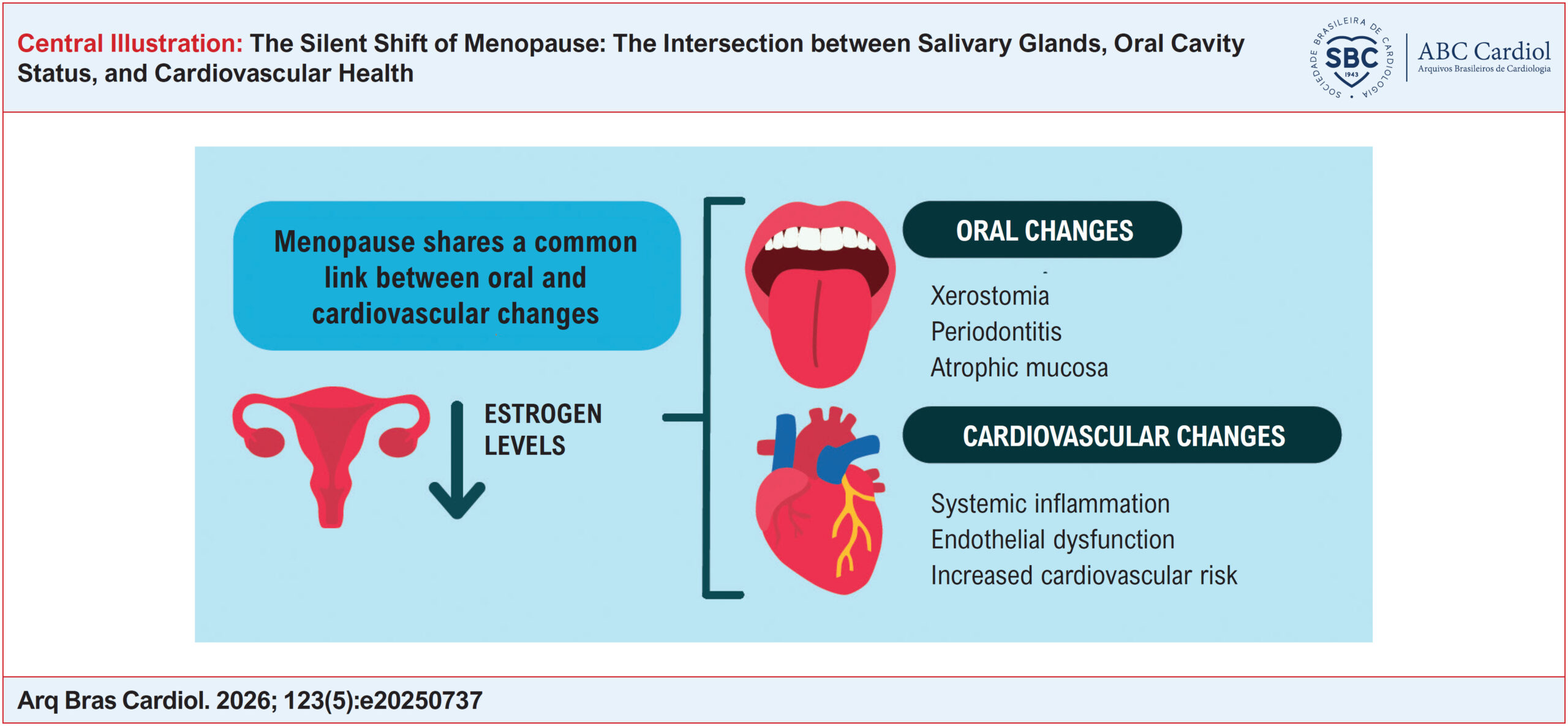
Hormonal changes during menopause are associated with a range of oral manifestations, including xerostomia, burning mouth syndrome, periodontal disease, and taste alterations. Estrogen deficiency appears to contribute to reduced salivary flow, mucosal atrophy, and an increased inflammatory response in periodontal tissues. Emerging evidence also suggests an association between oral health during menopause and cardiovascular disease, among other systemic conditions. However, important knowledge gaps persist regarding clinical management and interdisciplinary care for menopausal women.

Conclusion:

Oral health during menopause reflects a complex interplay of hormonal, systemic, and behavioral factors. Because of increasing life expectancy worldwide, oral health education and research programs should prioritize this topic. Strengthening awareness and fostering multidisciplinary collaboration are essential to improving health outcomes in midlife women.
  • Menopause
  • Oral Health
  • Saliva
  • Salivary Glands
  • Vascular Health
Read Full Article
Creative Commons Attribution (CC BY) Creative Commons license
22/06/2026 DOI: 10.36660/abc.20250737i Views 1
ABC
Editorial

Herbal Therapy in Post-Menopause

Rosana dos Santos e Silva Martin et al. Luis Cuadrado Martin

Traditional Chinese medicine and its modern products have shown potential in treating atherosclerosis. The possible mechanisms include regulation of blood lipids, anti-lipid peroxidation, anti-polymerization, anticoagulation, and pro-fibrinolysis, inhibition of smooth muscle cell proliferation, and protection of vascular endothelial function. Ginseng derivatives are being used in menopause treatment and andropause treatment.

The paper “Chronic Treatment with Panax ginseng and Angelica keiskei Decreases Blood Pressure and Improves Endothelial Function in Ovariectomized Rats”, published in this journal, obtained improvement in blood pressure in ovariectomized rats treated by Panax ginseng and Angelica keiskei This effect was associated with amelioration of endothelial function.

[…]

  • high blood pressure
  • Menopause
  • Traditional Chinese Medicine
Read Full Article
Creative Commons Attribution (CC BY) Creative Commons license
10/11/2025 DOI: 10.36660/abc.20250502i Views 1
Chronic Treatment with Panax ginseng and Angelica keiskei Decreases Blood Pressure and Improves Endothelial Function in Ovariectomized Rats
ABC
Original Article

Chronic Treatment with Panax ginseng and Angelica keiskei Decreases Blood Pressure and Improves Endothelial Function in Ovariectomized Rats

Nayara Formenton da Silva et al. Luis Henrique Oliveira de Moraes Camila Pereira Sabadini Rita Cristina Cotta Alcântara … Patrícia Corrêa Dias Gerson Jhonatan Rodrigues

Abstract

Background

Menopause is a natural physiological process that can impact various systems and organs, often leading to increased blood pressure. The combination of Panax ginseng and Angelica keiskei (Pg + Ak) is a formulation known to improve vascular function.

Objective

This study aimed to evaluate the in vivo effects of these combined plants on cardiovascular parameters in female rats experiencing menopause induced by ovariectomy.

Methods

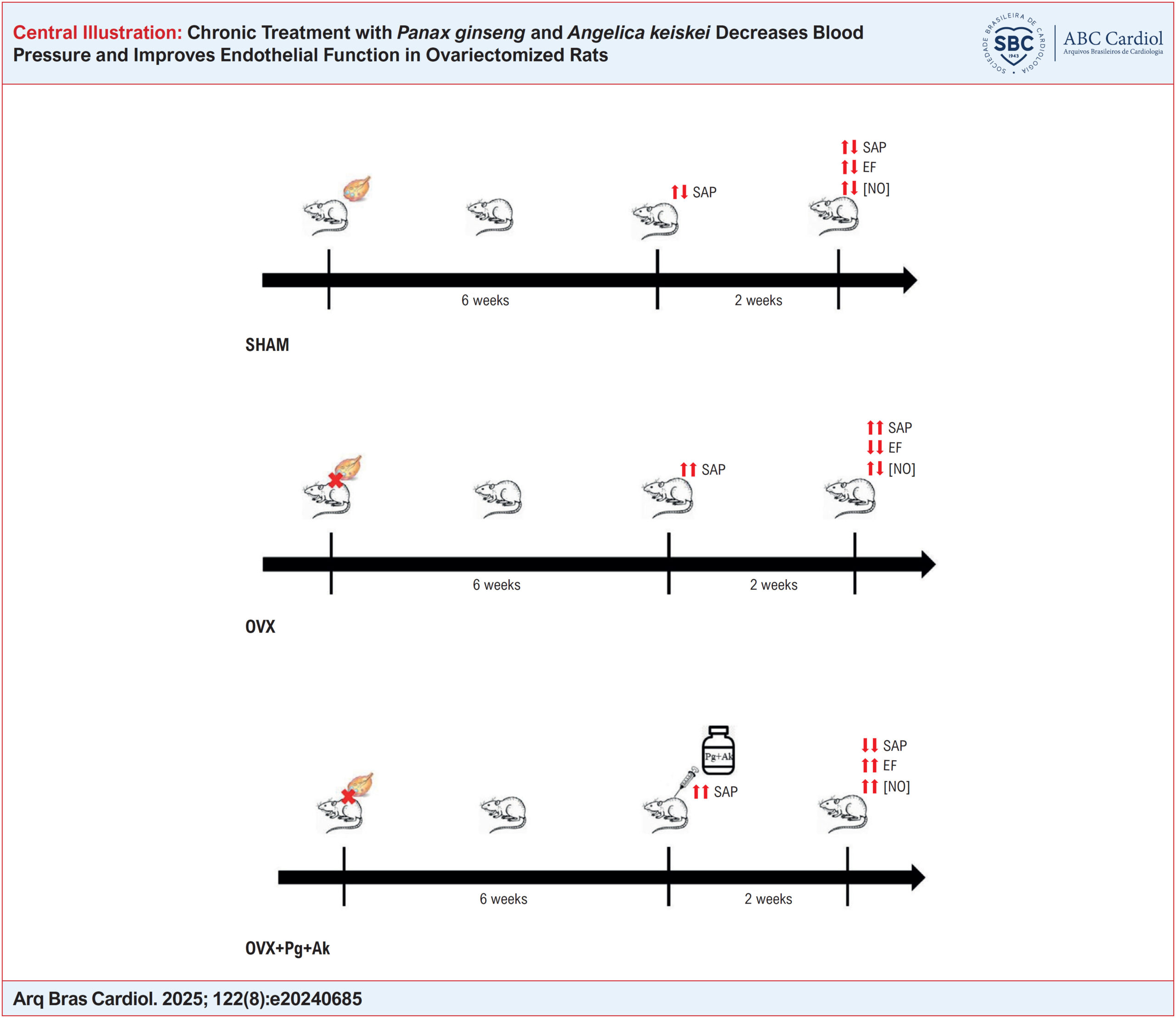
Twenty-four 70-day-old female Wistar rats were randomly assigned to three groups: sham-operated (Sham), ovariectomized (OVX), and ovariectomized with Pg + Ak treatment (OVX + Pg + Ak). The rats in the Pg + Ak treatment group received an intraperitoneal injection of 100 mg/kg/day for two weeks. Blood pressure was measured using tail plethysmography, and endothelial function was assessed through vascular reactivity tests.

Results

At the end of the treatment, mean blood pressure in the SH group was lower than in the control group (OVX), and the Pg + Ak treatment improved the endothelial dysfunction caused by ovariectomy. This was evident in the restored endothelium-dependent vasodilation in the aortic rings of the OVX rats treated with Pg + Ak compared to untreated OVX rats.

Conclusions

Our findings suggest that the Pg + Ak combination effectively reduces blood pressure and reverses endothelial dysfunction in ovariectomized rats.

  • Herbal Medicine
  • Hypertension
  • Menopause
  • Ovariectomy
  • Panax
Read Full Article
Creative Commons Attribution (CC BY) Creative Commons license
19/09/2025 DOI: 10.36660/abc.20240685i
ABC
Editorial

Overcoming Women’s Lifelong Hormonal Rollercoaster: A Turning Point for Cardiovascular Prevention

M. Julia Machline-Carrion

Although cardiovascular diseases (CVD), especially coronary artery disease and stroke, are the leading cause of death and disability in Brazil, both in women and men, , addressing cardiovascular (CV) prevention implies a comprehensive approach to the inherent differences related to sex. In this sense, understanding, for instance, the role of hypertension, a major risk factor for coronary artery disease and stroke in Brazilian women, in the context of this population’s specificities is key.

Hypertensive disorders, including pregnancy-induced hypertension (occurring in 6-7% of pregnancies) and preeclampsia/eclampsia (occurring in up to 10% of pregnancies), are important CV risk factors , that should be accounted for when assessing women’s CV risk.

[…]

  • Estrogen Replacement Therapy/adverse effects
  • Menopause
  • Prevention and Control
  • Progestins/adverse effects
  • Risk Factors
  • Women
Read Full Article
Creative Commons Attribution (CC BY) Creative Commons license
13/05/2022 DOI: 10.36660/abc.20220259
Figure 1
ABC
Review Article

Crossroads between Estrogen Loss, Obesity, and Heart Failure with Preserved Ejection Fraction

Allan Kardec Nogueira de Alencar et al. Hao Wang Gláucia Maria Moraes de Oliveira Xuming Sun … Gisele Zapata-Sudo Leanne Groban

Abstract

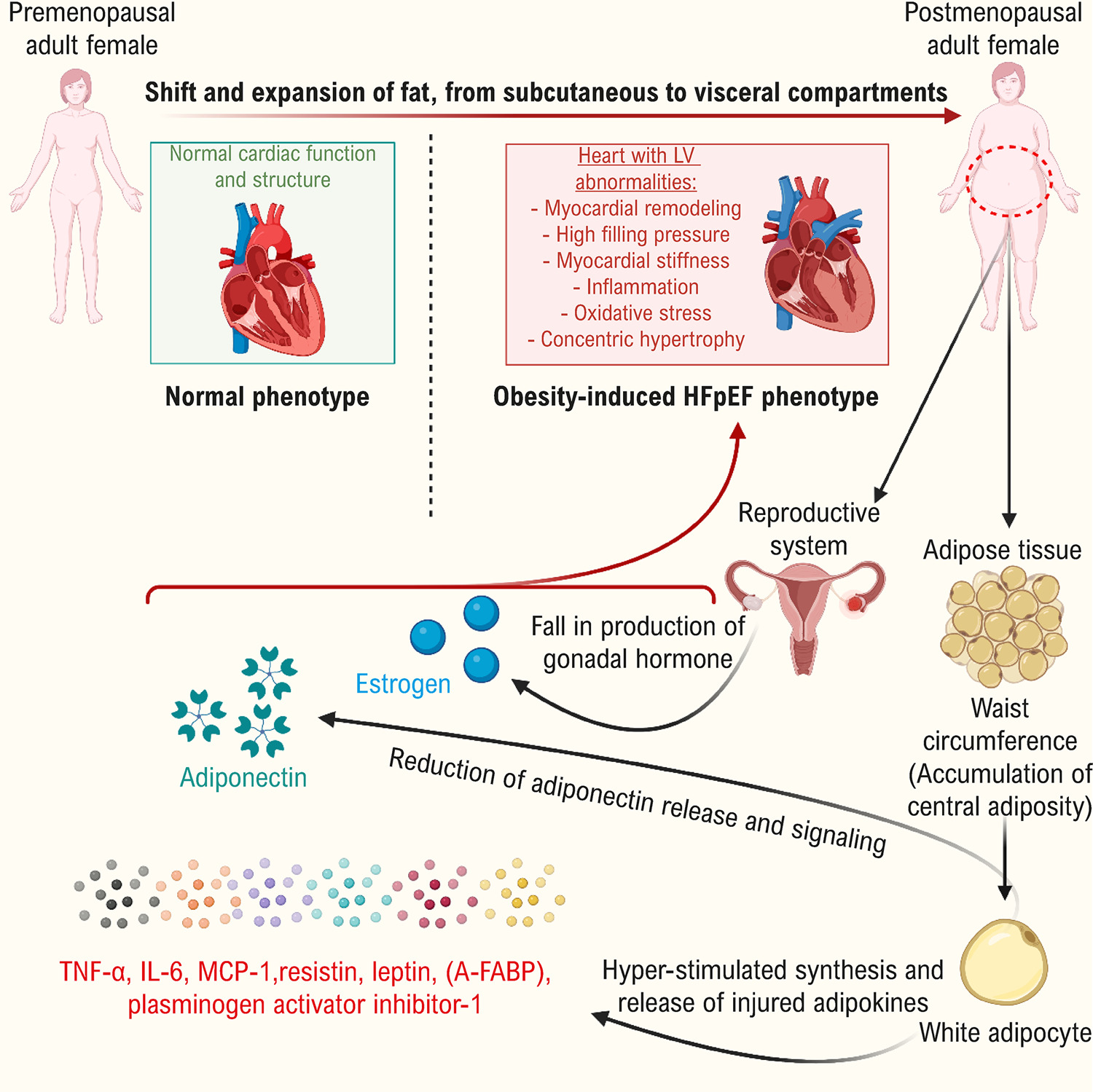
The prevalence of obesity and heart failure with preserved ejection fraction (HFpEF) increases significantly in postmenopausal women. Although obesity is a risk factor for left ventricular diastolic dysfunction (LVDD), the mechanisms that link the cessation of ovarian hormone production, and particularly estrogens, to the development of obesity, LVDD, and HFpEF in aging females are unclear. Clinical, and epidemiologic studies show that postmenopausal women with abdominal obesity (defined by waist circumference) are at greater risk for developing HFpEF than men or women without abdominal obesity. The study presents a review of clinical data that support a mechanistic link between estrogen loss plus obesity and left ventricular remodeling with LVDD. It also seeks to discuss potential cell and molecular mechanisms for estrogen-mediated protection against adverse adipocyte cell types, tissue depots, function, and metabolism that may contribute to LVDD and HFpEF.

  • Adiposity
  • body mass index
  • Echocardiography/methods
  • Estrogens
  • Heart Failure
  • Menopause
  • Obesity
  • Overweight
  • Stroke Volume
Read Full Article
Creative Commons Attribution (CC BY) Creative Commons license
08/10/2021 DOI: 10.36660/abc.20200855
DD Genotype and Atherosclerosis in Overweight Menopausal Women
IJCS
Original Article

DD Genotype and Atherosclerosis in Overweight Menopausal Women

José Ramón Lanz-Luces et al. Fernando Alves Costa Luis Fernando Escobar Guzman Antonio Ricardo de Toledo Gagliardi … José Antonio Lanz-Luces José Daniel Lanz-Souquett Leandro Menezes Alves da Costa

Abstract

Background

Sex-specific pathology of coronary artery disease (CAD) has not been recognized. Women with obstructive or nonobstructive CAD associated with traditional risk factors have similar events; no studies have explored both populations in association with genetic markers.

Objective

To evaluate the DD genotype in overweight menopausal women and its association with CAD and traditional risk factors.

Method

This cross-sectional study included 356 menopausal women who underwent coronary angiography as CAD assessment. The patients’ DNA was extracted and polymorphisms were detected with a single polymerase chain reaction assay. Two groups were formed based on luminal lesions (normal [n = 134] or pathological [n = 222]) with a cutoff value > 30%, considering overweight and age. The chi-square test, Student’s t-test, and multivariate logistic regression were performed as appropriate (p < 0.05) using the following variables: overweight, diabetes, hypertension, dyslipidemia, smoking status, sedentary lifestyle, and a family history of CAD.

Results

The mean age of the sample was 63 8 years, and the mean BMI was 28 5 kg/m2. The DD genotype was slightly more prevalent in the pathological group (30.2% vs. 21.6%, p = 0.079), but this significantly changed when BMI > 25 was considered (33% vs. 18%, p = 0.012). In multivariate analysis with two threshold levels (> 50 and > 60 years), diabetes was significantly associated with CAD in both models (p = 0.021 vs. 0.009) but the genotype was only associated with younger age (p = 0.034).

Conclusion

These data support an association between atherosclerosis and the renin–angiotensin system in overweight menopausal women that is dependent on the age at which the ischemic event occurs.

  • Coronary Artery Disease
  • DD Genotype
  • genetic markers
  • Menopause
  • Overweight
Read Full Article
Creative Commons Attribution (CC BY) Creative Commons license
16/07/2021 DOI: 10.36660/ijcs.20200400 Views 2
ABC
Editorial

The Impact Of Exercise On Inflammation, Oxidative Stress And Remodelling In Cardiac Muscle

Fernando Mendes et al. Diana Martins

Aging is naturally connected with a decline, in some if not all physiological functions, namely loss of bone mass density (BMD) and strength associated with the loss of muscle mass.–

This muscle loss happens mainly due to an imbalance between muscle protein synthesis and muscle protein breakdown. The increase of catabolic factors such as oxidative stress and inflammation contribute significantly to the above process. Nevertheless, the weakening of strength and muscle loss is not linear, occurring differently in all sexes. Other factors such as a decline in hormonal levels due to menopause phenomenon are thought to be also implicated in this process. In fact, some authors proposed that, in females, an accelerated loss of muscle mass and strength arises at an earlier age than in males, around the time of menopause. A good body of evidence supports that the decline in muscle mass may be in line with the estrogen decrease that typifies menopausal years.

[…]

  • collagen
  • Coronary Artery Disease
  • Dyslipidemias
  • Exercise
  • Inflammation
  • Menopause
  • Mice
  • Oxidative Stress
  • Physical activity
Read Full Article
Creative Commons Attribution (CC BY) Creative Commons license
10/02/2020 DOI: 10.36660/abc.20190735 Views 1
Figure 1
ABC
Original Article

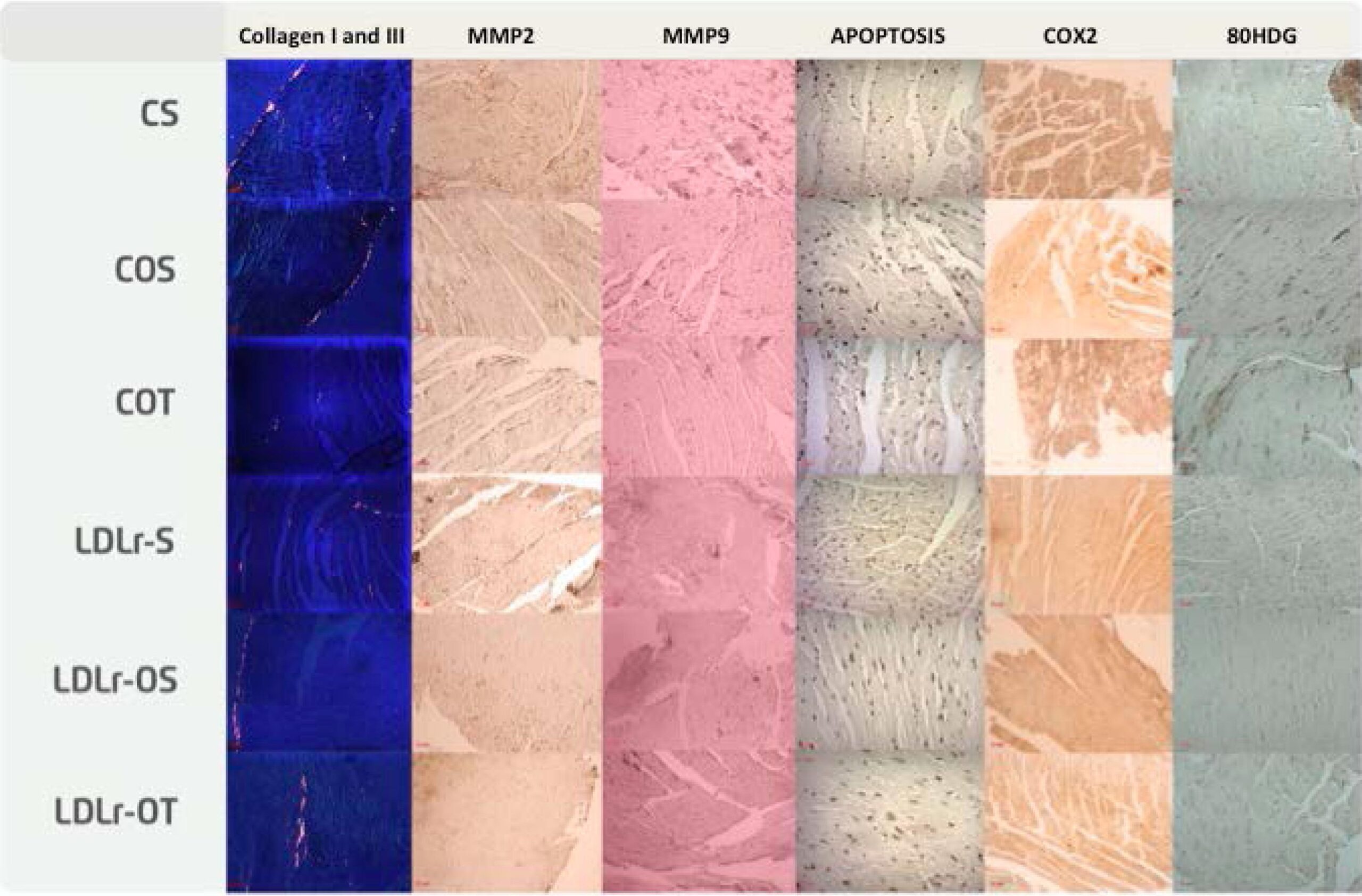
Effects of Physical Training on the Myocardium of Oxariectomized LDLr Knockout Mice: MMP 2/9, Collagen I/III, Inflammation and Oxidative Stress

Ledimar Brianezi et al. Elisabete Ornelas Flávia de Sousa Gehrke Fernando Luiz Affonso Fonseca … Beatriz da Costa Aguiar Alves Luiz Vinicius de Alcantara Sousa Jessica Souza Laura Beatriz Mesiano Maifrino

Abstract

Background:

The emergence of coronary heart disease is increased with menopause, physical inactivity and with dyslipidemia. Physical training is known to promote the improvement of cardiovascular functions.

Objective:

To investigate the effects of aerobic physical training on the left ventricle in ovariectomized LDL knockout mice.

Methods:

Thirty animals were divided into 6 groups (n = 5): Sedentary non-ovariectomized control; Sedentary ovariectomized control; Trained ovariectomized control; Sedentary non-ovariectomized LDL-knockout, sedentary ovariectomized LDL-knockout and trained ovariectomized LDL-knockout. We analyzed the average parameters of apparent density of collagen fibers types I and III, and metalloproteinase type 2 and type 9, were considered significant p < 0.05.

Results:

The results showed that the proposed exercise protocol altered the volume of type I collagen fibers, altered collagen remodeling parameters (MMP-2), and also reduced the 8-hydroxy-2’-deoxyguanosine (8OHdG) oxidative stress parameter.

Conclusion:

Moderate intensity aerobic training acts on collagen fiber volume, on collagen remodeling with the reduction of oxidative stress in the left ventricles of ovariectomized LDL-knockout mice.

  • collagen
  • Coronary Artery Disease
  • Dyslipidemias
  • Exercise
  • Inflammation
  • Menopause
  • Mice
  • Motor Activity
  • Oxidative Stress
Read Full Article
Creative Commons Attribution (CC BY) Creative Commons license
21/10/2019 DOI: 10.5935/abc.20190223 Views 1
Figure 1
ABC
Original Article

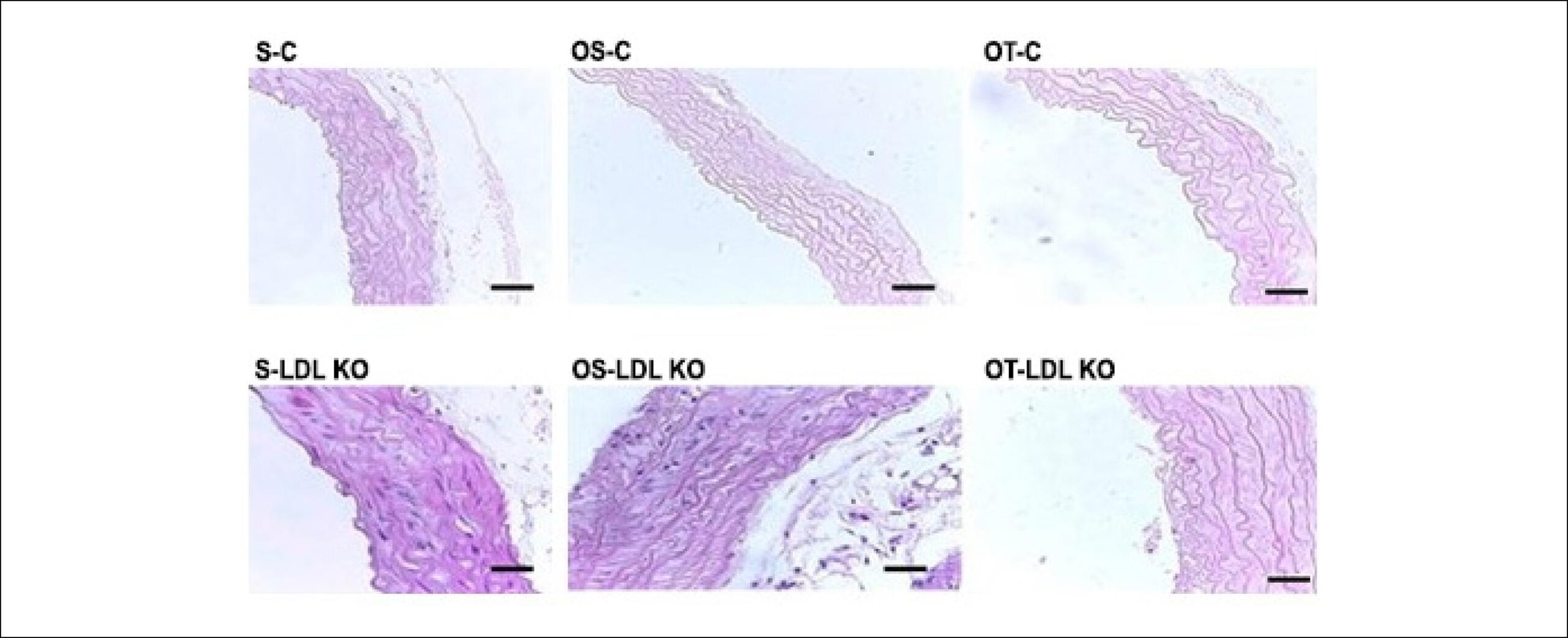
Evaluation of Collagen Fibers, MMP2, MMP9, 8-OHdG and Apoptosis in the Aorta of Ovariectomized LDL Knockout Mice Submitted to Aerobic Exercise

Laura Beatriz M. Maifrino et al. Nathalia E. A. de Lima Mara R. Marques Clever G. Cardoso … Lidiane B. de Souza Tabata de Carvalho Tomé Hananiah Tardivo Quintana Flavia de Oliveira Beatriz da Costa Aguiar Alves Reis Fernando Luiz Affonso Fonseca

Abstract

Background:

In menopause, there is greater cellular exposure to oxidative stress, related to the decreased antioxidative effects of estrogen. These metabolic changes favor the progression of cardiovascular diseases, such as atherosclerosis. Abnormal function of the aorta – the most important artery – is associated with many cardiovascular diseases. Collagen, especially types I and III, is one of the most important aortic wall components and it can be affected by many factors, including menopause. The 8-OHdG is one of the main markers of DNA oxidative damage induced by reactive oxygen species (ROS).

Objective:

We aimed to investigate effects of moderate aerobic training on the ascending aorta of LDL-knockout (LDL-KO) and ovariectomized female mice.

Methods:

A total of 15 C57BL/6 mice and 15 LDL-KO mice were divided into experimental groups. The thickness and volume density of types I and III collagen fibers were performed by morphoquantitative analysis, whereas the MMP-2 and MMP-9 and 8-OHdG were detected by immunohistochemistry and apoptosis was detected by the TUNEL assay. The significance level for all tests was p < 0.05.

Results:

Exercise causes an increase in the thickness of the aorta in LDL-KO groups, particularly accentuated in the ovariectomized groups. The type I collagen fibers showed an increase in volume density influenced by training in both Control groups and in the LDL-KO group. Type III collagen density decreased in both groups. The MMP-2 showed moderade immunostaining in the tunica media in LDL-KO groups, which did not occur in the control groups and the MMP-9 stained irregularly in all tissues. The marker 8-OhdG was stronger in the exercise training groups. Additionally, the ovariectomy, the exercise training and the LDL-KO treatments increased apoptosis.

Conclusion:

These results suggest that moderate-intensity aerobic exercise in ovariectomized mice associated to an increase in LDL rate possibly increases oxidative stress and apoptosis induction.

  • Cardiovascuar Diseases
  • Cholesterol, LDL
  • Exercise
  • Fibrillar Collagens/analysis
  • Menopause
  • Ovariectomy
  • Rats
Read Full Article
Creative Commons Attribution (CC BY) Creative Commons license
17/12/2018 DOI: 10.5935/abc.20180263 Views 1
IJCS
Original Article

Metabolic Syndrome and Insulin Resistance by HOMA-IR in Menopause

Érika Joseth Nogueira da Cruz Fonseca et al. Tânia Pavão Oliveira Rocha Iara Antônia Lustosa Nogueira Jorgileia Braga de Melo … Bianca Lima e Silva Elenice Jardim Lopes Claudiana Batalha Serra Maria Vaneide Gomes Andrade Surama Maria Bandeira de Sousa José Albuquerque de Figueredo Neto

Abstract

Background:

Metabolic syndrome is an important cardiovascular risk factor, and its prevalence increases after menopause. However, it is still uncertain whether menopause is an independent risk factor for metabolic syndrome. One of the pathophysiological basis for metabolic syndrome is insulin resistance, which can be calculated by the Homeostatic Model Assessment-Insulin Resistance (HOMA-IR) method, and the association between insulin resistance and menopause is little known.

Objective:

To evaluate the association between metabolic syndrome and insulin resistance in menopausal women.

Method:

Descriptive study, which evaluated 150 women, aged 40 to 65, treated at a Gynecology Outpatient Clinic of a tertiary public hospital, from May to December of 2013. The sample was divided into two groups: Group I, comprising women in the premenopausal period and Group II, comprising women in the post-menopausal period. The presence of metabolic syndrome and its components were evaluated, as well as occurrence of insulin resistance in both groups. The association of menopausal status and the assessed variables was assessed using the Mann-Whitney, Chi-square and Fisher’s exact tests. The significance level was set at 5%. The statistical analysis was performed using STATA 12.0.

Results:

Metabolic syndrome and its components were more prevalent in postmenopausal women. Postmenopausal women also had a higher prevalence of insulin resistance, but no statistical association was observed between the findings.

Conclusion:

The menopausal status was not significantly associated with metabolic syndrome and insulin resistance. Insulin resistance was considered an independent risk factor for the development of metabolic syndrome only in the postmenopausal group.

  • Cardiovascular Diseases
  • Climacteric
  • Insulin Resistance
  • Menopause
  • Metabolic Syndrome
Read Full Article
Creative Commons Attribution (CC BY) Creative Commons license
01/01/2018 DOI: 10.5935/2359-4802.20180009 Views 1
Pulmonary artery pressure, gender, menopause, and pregnancy in schistosomiasis-associated pulmonary hypertension
ABC
Artigo Original

Pulmonary artery pressure, gender, menopause, and pregnancy in schistosomiasis-associated pulmonary hypertension

Anderson C. Armstrong et al. Ângela M. P. Bandeira Luis C. L. Correia Humberto C. O. Melo … Carlos A. M. Silveira Eugênio Albuquerque Jeová C. Moraes Jr Antônio M. L. Silva João A. C. Lima Dário C. Sobral Filho

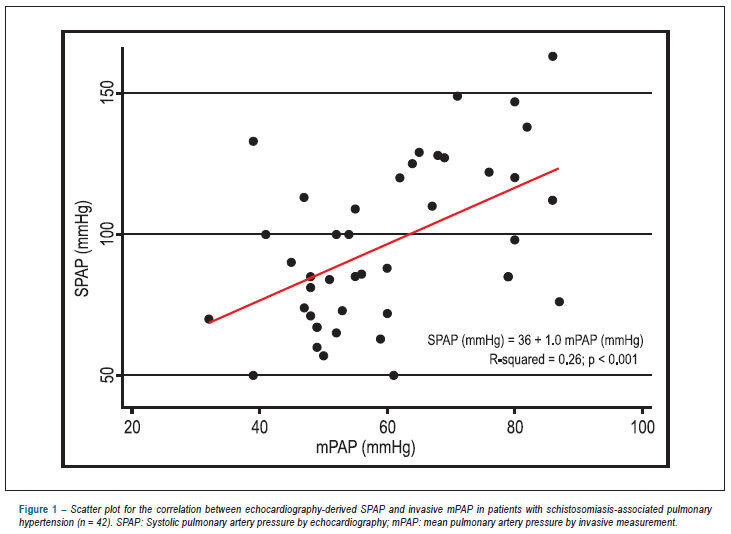
BACKGROUND: Schistosomiasis-associated pulmonary arterial hypertension (SPAH) is a major concern worldwide. However, the role of gender-specific contributing factors in SPAH is unknown. OBJECTIVE: We investigated how systolic pulmonary artery pressure (SPAP) values and the presence of severe SPAP relate to gender, menopausal status, and pregnancy history in SPAH patients. METHODS: Seventy-nine patients diagnosed with SPAH from 2000 to 2009 were assessed and 66 were enrolled in the study. Information about age, menopausal status, pregnancy, echocardiography-derived SPAP, and invasive mean pulmonary artery pressure (mPAP) was collected from medical records. The relation between values of SPAP and mPAP and their agreement for severe disease were assessed. Regression models assessed the association of gender, menopausal status, and pregnancy history with SPAP values and the presence of severe SPAP. RESULTS: Moderate correlation and good agreement for severe disease were found between mPAP and SPAP. Mean SPAP values were similar for men and women. A trend toward higher values of SPAP was found for non-menopausal women compared to men. Higher SPAP values were found for menopausal compared to non-menopausal women; the values were non-significant after adjustment for age. Pregnancy history had no association with SPAP. Menopause and positive pregnancy had no association with severe SPAP. CONCLUSION: In SPAH patients, neither gender, nor menopausal status, nor pregnancy history showed independent correlation with SPAP values assessed by echocardiography.

  • Echocardiography, Doppler
  • Hypertension Pulmonary
  • Menopause
  • Pregnancy
  • Schistosomiasis
Read Full Article
Creative Commons Attribution (CC BY) Creative Commons license
02/07/2013 DOI: 10.5935/abc.20130130 Views 1
Aerobic training does not alter blood pressure in menopausal women with metabolic syndrome
ABC
Artigo Original

Aerobic training does not alter blood pressure in menopausal women with metabolic syndrome

Aluísio Henrique Rodrigues de Andrade Lima et al. Henrique Eduardo Couto Glêbia Alexa Cardoso Lidiane Tavares Toscano … Alexandre Sérgio Silva Maria Paula Gonçalves Mota

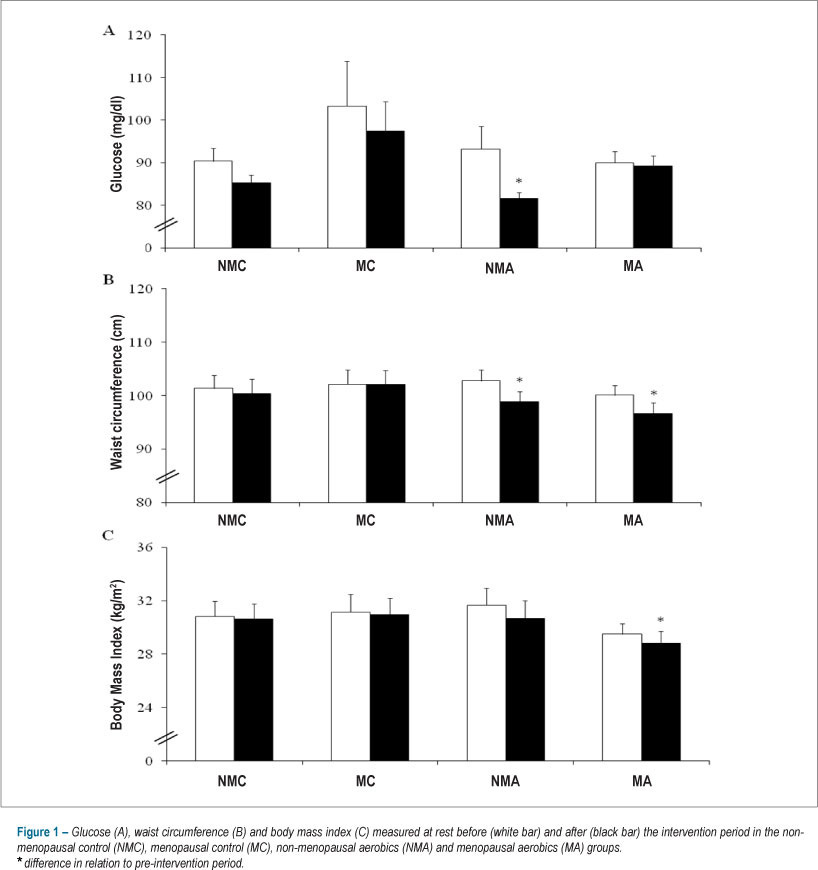
BACKGROUND: Arterial Hypertension (AH) is an aggravating condition for Metabolic Syndrome (MS), as well as being aggravated by it. Menopause can make hypertension treatment more difficult, as it favors the worsening of MS components. Although there is evidence that exercise training reduces blood pressure, whether menopause and SM affect the exercise-induced benefits is yet to be elucidated. OBJECTIVE: To compare the effects of aerobic training on blood pressure in non-menopausal and menopausal women with MS METHODS: A total of 44 women were recruited and divided into four groups: non-menopausal control (NMC: 39.5 ± 3.6 years, n = 11); menopausal control (MC: 54.9 ± 5.9 years, n = 12), non-menopausal aerobics (NMA: 43.1 ± 6.8 years, n = 11) and menopausal aerobics (MA: 52.1 ± 5 years, n = 10). The exercise groups performed aerobic training for three months, five times a week, at an intensity between 60% and 70% of heart rate reserve. The resting blood pressure and blood pressure response after 60 minutes of exercise were measured before and after the training period. The two-way ANOVA test was used, considering a p value 0.05). CONCLUSION: Three months of aerobic training improved MS components, but did not alter resting blood pressure or the BP response after an acute exercise session in women with MS.

  • Blood Pressure
  • Exercise
  • Menopause
  • Metabolic x Syndrome
  • Women
Read Full Article
Creative Commons Attribution (CC BY) Creative Commons license
18/10/2012 DOI: 10.1590/S0066-782X2012005000092
ABC
Artigo Original

Metabolic syndrome and menopause: cross-sectional study in gynecology clinic

José Albuquerque de Figueiredo Neto et al. Eduardo Durans Figuerêdo José Bonifácio Barbosa Fabrício de Flores Barbosa … Geny Rose Cardoso Costa Vinícius José da Silva Nina Rachel Vilela de Abreu Haickel Nina

BACKGROUND: In Brazil, there are few studies of the metabolic syndrome in the general population, and even fewer studies that establish a correlation between metabolic syndrome and climacteric. OBJECTIVE: To determine the prevalence of metabolic syndrome and its components among climacteric women. METHODS: Cross-sectional study with 323 climacteric women, divided into two groups: pre and post-menopausal. They were examined for the presence of metabolic syndrome, according to the criteria of National Cholesterol Education Program’s (NCEP) and International Diabetes Federation (IDF). It was possible to notice the association between the variables under study and the metabolic syndrome by conducting a univariate analysis and a multivariate analysis. A p-value < 0.05 was considered statistically significant. RESULTS: The prevalence of metabolic syndrome during the climacteric was 34.7% (NCEP) and 49.8% (IDF). The most frequent components of the metabolic syndrome were low HDL-cholesterol, hypertension, abdominal obesity, hypertriglyceridemia and diabetes in both criteria. The multivariate analysis showed that age was the most important risk factor for the development of metabolic syndrome (p < 0.001), which was present in 44.4% (NCEP) and 61.5% (IDF) of postmenopausal women compared to 24% (NCEP) and 37% (IDF) of premenopausal women. CONCLUSION: The prevalence of metabolic syndrome was higher in postmenopausal women than in premenopausal women. The main risk factor for the increase in this prevalence was age. Menopause, when it is analyzed alone, did not constitute a risk factor for metabolic syndrome.

  • Cardiovascular Diseases
  • Menopause
  • Metabolic Syndrome
  • Prevalence
Read Full Article
Creative Commons Attribution (CC BY) Creative Commons license
23/07/2010 DOI: 10.1590/S0066-782X2010005000094 Views 2
Nutritional status and lipid profile of postmenopausal women with coronary heart disease
ABC
Artigo Original

Nutritional status and lipid profile of postmenopausal women with coronary heart disease

Aparecida de Oliveira et al. Jorge Mancini Filho

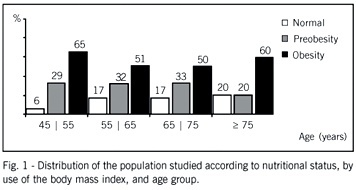
OBJECTIVE: To assess the nutritional status and lipid profile of postmenopausal women with coronary heart disease. METHODS: A retrospective cross-sectional study was conducted with information obtained from the medical records of 217 women on the occasion of their first visit to the InCor Nutrition Outpatient Care Clinic. The data referred to the patients’ nutritional status, body mass index, use of lipid-lowering medication, and serum lipid levels (cholesterol and fractions). RESULTS: The mean age was 60.98 ± 9.23 years, and obesity prevailed in 56% of the patients. The use of lipid-lowering drugs was observed in 73% of the population. In regard to lipid profile, 56% had adequate serum levels of HDL-C. The nutritional status was inadequate due to the prevalence of obesity, which results in the appearance of other chronic diseases, such as dyslipidemias. Although the dosages of the lipid-lowering drugs used were not assessed, their use by the population studied did not seem to be favorable, because high levels of total cholesterol and LDL-C were observed, and those high levels in that condition are strongly related to the occurrence of cardiovascular diseases. CONCLUSION: Multidisciplinary action in the form of programs to promote women’s health is required, comprising preventive aspects related to coronary heart disease, to improve the quality of life in that population.

  • coronary heart disease
  • dyslipidemia
  • Menopause
Read Full Article
Creative Commons Attribution (CC BY) Creative Commons license
03/05/2005 DOI: 10.1590/S0066-782X2005000400010 Views 1
Lipid peroxidation and nitric oxide inactivation in postmenopausal women
ABC
Original Article

Lipid peroxidation and nitric oxide inactivation in postmenopausal women

Isabela Rosier Olimpio Pereira et al. Marcelo Chiara Bertolami André Arpad Faludi Maria Fernanda Campos … Simone Ferderbar Emersom Silva Lima José Mendes Aldrighi Dulcineia Saes Parra Abdalla

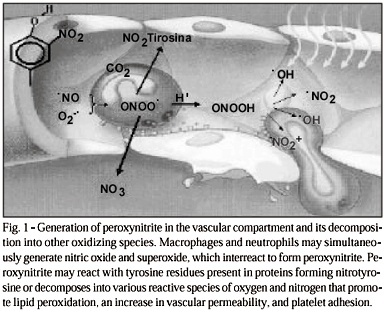
OBJECTIVE: To assess the effect of endogenous estrogens on the bioavailability of nitric oxide (·NO) and in the formation of lipid peroxidation products in pre- and postmenopausal women. METHODS: NOx and S-nitrosothiols were determined by gaseous phase chemiluminescence, nitrotyrosine was determined by ELISA, COx (cholesterol oxides) by gas chromatography, and cholesteryl linoleate hydroperoxides (CE18:2-OOH), trilinolein (TG18:2-OOH), and phospholipids (PC-OOH) by HPLC in samples of plasma. RESULTS: The concentrations of NOx, nitrotyrosine, COx, CE18:2-OOH, and PC-OOH were higher in the postmenopausal period (33.8±22.3 mM; 230±130 nM; 55±19 ng/mL; 17±8.7 nM; 2775±460 nM, respectively) as compared with those in the premenopausal period (21.1±7.3 mM; 114±41 nM; 31±13 ng/mL; 6±1.4 nM; 1635±373 nM). In contrast, the concentration of S-nitrosothiols was lower in the postmenopausal period (91±55 nM) as compared with that in the premenopausal p in the premenopausal period (237±197 nM). CONCLUSION: In the postmenopausal period, an increase in nitrotyrosine and a reduction of S-nitrosothiol formation, as well as an increase of COx, CE18:2-OOH and PC-OOH formation occurs. Therefore, •NO inactivation and the increase in lipid peroxidation may contribute to endothelial dysfunction and to the greater risk for atherosclerosis in postmenopausal women.

  • lipid peroxidation
  • Menopause
  • Nitric Oxide
Read Full Article
Creative Commons Attribution (CC BY) Creative Commons license
19/05/2003 DOI: 10.1590/S0066-782X2003000400005

How to cite this article

EndNote RIS

Electronic Document Format (Vancouver)

Lourenço SV, Florezi GP, Pelissari C, Hojaij FC, Otoch JP, Ramires JAF. The Silent Shift of Menopause: The Intersection between Salivary Glands, Oral Cavity Status, and Cardiovascular Health. Arquivos Brasileiros de Cardiologia 2026;123(5):e20250737.

Electronic Document Format (ABNT)

Lourenço, Silvia Vanessa; Florezi, Giovanna Piacenza; Pelissari, Cibele; Hojaij, Flavio Carneiro; Otoch, José Pinhata; Ramires, José Antonio Franchini. The Silent Shift of Menopause: The Intersection between Salivary Glands, Oral Cavity Status, and Cardiovascular Health. Arquivos Brasileiros de Cardiologia, v. 123, n. 5, e20250737, Jun. 2026.

Electronic Document Format (APA)

Lourenço, S. V., Florezi, G. P., Pelissari, C., Hojaij, F. C., Otoch, J. P., & Ramires, J. A. F. (2026). The Silent Shift of Menopause: The Intersection between Salivary Glands, Oral Cavity Status, and Cardiovascular Health. Arquivos Brasileiros de Cardiologia, 123(5), e20250737.

Electronic Document Format (ISO)

Lourenço, Silvia Vanessa and Florezi, Giovanna Piacenza and Pelissari, Cibele and Hojaij, Flavio Carneiro and Otoch, José Pinhata and Ramires, José Antonio Franchini. The Silent Shift of Menopause: The Intersection between Salivary Glands, Oral Cavity Status, and Cardiovascular Health. Arquivos Brasileiros de Cardiologia [online]. 2026, vol. 123, n. 5, [cited 2026-10-14], e20250737. Available from: <https://journals.cardiol.br/en/article/the-silent-shift-of-menopause-the-intersection-between-salivary-glands-oral-cavity-status-and-cardiovascular-health/>. ISSN 0066-782X

EndNote RIS

Electronic Document Format (Vancouver)

Martin RSS, Martin LC. Herbal Therapy in Post-Menopause. Arquivos Brasileiros de Cardiologia 2025;122(8):e20250502.

Electronic Document Format (ABNT)

Martin, Rosana dos Santos e Silva; Martin, Luis Cuadrado. Herbal Therapy in Post-Menopause. Arquivos Brasileiros de Cardiologia, v. 122, n. 8, e20250502, Nov. 2025.

Electronic Document Format (APA)

Martin, R. S. S., & Martin, L. C. (2025). Herbal Therapy in Post-Menopause. Arquivos Brasileiros de Cardiologia, 122(8), e20250502.

Electronic Document Format (ISO)

Martin, Rosana dos Santos e Silva and Martin, Luis Cuadrado. Herbal Therapy in Post-Menopause. Arquivos Brasileiros de Cardiologia [online]. 2025, vol. 122, n. 8, [cited 2026-10-14], e20250502. Available from: <https://journals.cardiol.br/en/article/herbal-therapy-in-post-menopause/>. ISSN 0066-782X

EndNote RIS

Electronic Document Format (Vancouver)

Silva NF, Moraes LHO, Sabadini CP, Alcântara RCC, Dias PC, Rodrigues GJ. Chronic Treatment with Panax ginseng and Angelica keiskei Decreases Blood Pressure and Improves Endothelial Function in Ovariectomized Rats. Arquivos Brasileiros de Cardiologia 2025;122(8):e20240685.

Electronic Document Format (ABNT)

Silva, Nayara Formenton da; Moraes, Luis Henrique Oliveira de; Sabadini, Camila Pereira; Alcântara, Rita Cristina Cotta; Dias, Patrícia Corrêa; Rodrigues, Gerson Jhonatan. Chronic Treatment with Panax ginseng and Angelica keiskei Decreases Blood Pressure and Improves Endothelial Function in Ovariectomized Rats. Arquivos Brasileiros de Cardiologia, v. 122, n. 8, e20240685, Sep. 2025.

Electronic Document Format (APA)

Silva, N. F. , Moraes, L. H. O. , Sabadini, C. P., Alcântara, R. C. C., Dias, P. C., & Rodrigues, G. J. (2025). Chronic Treatment with Panax ginseng and Angelica keiskei Decreases Blood Pressure and Improves Endothelial Function in Ovariectomized Rats. Arquivos Brasileiros de Cardiologia, 122(8), e20240685.

Electronic Document Format (ISO)

Silva, Nayara Formenton da and Moraes, Luis Henrique Oliveira de and Sabadini, Camila Pereira and Alcântara, Rita Cristina Cotta and Dias, Patrícia Corrêa and Rodrigues, Gerson Jhonatan. Chronic Treatment with Panax ginseng and Angelica keiskei Decreases Blood Pressure and Improves Endothelial Function in Ovariectomized Rats. Arquivos Brasileiros de Cardiologia [online]. 2025, vol. 122, n. 8, [cited 2026-10-14], e20240685. Available from: <https://journals.cardiol.br/en/article/chronic-treatment-with-panax-ginseng-and-angelica-keiskei-decreases-blood-pressure-and-improves-endothelial-function-in-ovariectomized-rats/>. ISSN 0066-782X

EndNote RIS

Electronic Document Format (Vancouver)

Machline-Carrion MJ. Overcoming Women’s Lifelong Hormonal Rollercoaster: A Turning Point for Cardiovascular Prevention. Arquivos Brasileiros de Cardiologia 2022;118(5):914-5.

Electronic Document Format (ABNT)

Machline-Carrion, M. Julia. Overcoming Women’s Lifelong Hormonal Rollercoaster: A Turning Point for Cardiovascular Prevention. Arquivos Brasileiros de Cardiologia, v. 118, n. 5, p. 914-915, May. 2022.

Electronic Document Format (APA)

Machline-Carrion, M. J. (2022). Overcoming Women’s Lifelong Hormonal Rollercoaster: A Turning Point for Cardiovascular Prevention. Arquivos Brasileiros de Cardiologia, 118(5), 914-915.

Electronic Document Format (ISO)

Machline-Carrion, M. Julia. Overcoming Women’s Lifelong Hormonal Rollercoaster: A Turning Point for Cardiovascular Prevention. Arquivos Brasileiros de Cardiologia [online]. 2022, vol. 118, n. 5, [cited 2026-10-14], pp. 914-915. Available from: <https://journals.cardiol.br/en/article/overcoming-womens-lifelong-hormonal-rollercoaster-a-turning-point-for-cardiovascular-prevention/>. ISSN 0066-782X

EndNote RIS

Electronic Document Format (Vancouver)

Alencar AKN, Wang H, Oliveira GMM, Sun X, Zapata-Sudo G, Groban L. Crossroads between Estrogen Loss, Obesity, and Heart Failure with Preserved Ejection Fraction. Arquivos Brasileiros de Cardiologia 2021;117(6):1191-20.

Electronic Document Format (ABNT)

Alencar, Allan Kardec Nogueira de; Wang, Hao; Oliveira, Gláucia Maria Moraes de; Sun, Xuming; Zapata-Sudo, Gisele; Groban, Leanne. Crossroads between Estrogen Loss, Obesity, and Heart Failure with Preserved Ejection Fraction. Arquivos Brasileiros de Cardiologia, v. 117, n. 6, p. 1191-1201, Oct. 2021.

Electronic Document Format (APA)

Alencar, A. K. N. , Wang, H., Oliveira, G. M. M. , Sun, X., Zapata-Sudo, G., & Groban, L. (2021). Crossroads between Estrogen Loss, Obesity, and Heart Failure with Preserved Ejection Fraction. Arquivos Brasileiros de Cardiologia, 117(6), 1191-1201.

Electronic Document Format (ISO)

Alencar, Allan Kardec Nogueira de and Wang, Hao and Oliveira, Gláucia Maria Moraes de and Sun, Xuming and Zapata-Sudo, Gisele and Groban, Leanne. Crossroads between Estrogen Loss, Obesity, and Heart Failure with Preserved Ejection Fraction. Arquivos Brasileiros de Cardiologia [online]. 2021, vol. 117, n. 6, [cited 2026-10-14], pp. 1191-1201. Available from: <https://journals.cardiol.br/en/article/crossroads-between-estrogen-loss-obesity-and-heart-failure-with-preserved-ejection-fraction/>. ISSN 0066-782X

EndNote RIS

Electronic Document Format (Vancouver)

Lanz-Luces JR, Costa FA, Guzman LFE, Gagliardi ART, Lanz-Luces JA, Lanz-Souquett JD, Costa LMA, et al. DD Genotype and Atherosclerosis in Overweight Menopausal Women. International Journal of Cardiovascular Sciences 2021;34(4):411-9.

Electronic Document Format (ABNT)

Lanz-Luces, José Ramón; Costa, Fernando Alves; Guzman, Luis Fernando Escobar; Gagliardi, Antonio Ricardo de Toledo; Lanz-Luces, José Antonio; Lanz-Souquett, José Daniel; Costa, Leandro Menezes Alves da. DD Genotype and Atherosclerosis in Overweight Menopausal Women. International Journal of Cardiovascular Sciences, v. 34, n. 4, p. 411-419, Jul. 2021.

Electronic Document Format (APA)

Lanz-Luces, J. R., Costa, F. A., Guzman, L. F. E., Gagliardi, A. R. T., Lanz-Luces, J. A., Lanz-Souquett, J. D., & Costa, L. M. A. (2021). DD Genotype and Atherosclerosis in Overweight Menopausal Women. International Journal of Cardiovascular Sciences, 34(4), 411-419.

Electronic Document Format (ISO)

Lanz-Luces, José Ramón and Costa, Fernando Alves and Guzman, Luis Fernando Escobar and Gagliardi, Antonio Ricardo de Toledo and Lanz-Luces, José Antonio and Lanz-Souquett, José Daniel and Costa, Leandro Menezes Alves da. DD Genotype and Atherosclerosis in Overweight Menopausal Women. International Journal of Cardiovascular Sciences [online]. 2021, vol. 34, n. 4, [cited 2026-10-14], pp. 411-419. Available from: <https://journals.cardiol.br/en/article/dd-genotype-and-atherosclerosis-in-overweight-menopausal-women/>. ISSN 2359-4802

EndNote RIS

Electronic Document Format (Vancouver)

Mendes F, Martins D. The Impact Of Exercise On Inflammation, Oxidative Stress And Remodelling In Cardiac Muscle. Arquivos Brasileiros de Cardiologia 2020;114(1):106-8.

Electronic Document Format (ABNT)

Mendes, Fernando; Martins, Diana. The Impact Of Exercise On Inflammation, Oxidative Stress And Remodelling In Cardiac Muscle. Arquivos Brasileiros de Cardiologia, v. 114, n. 1, p. 106-108, Feb. 2020.

Electronic Document Format (APA)

Mendes, F., & Martins, D. (2020). The Impact Of Exercise On Inflammation, Oxidative Stress And Remodelling In Cardiac Muscle. Arquivos Brasileiros de Cardiologia, 114(1), 106-108.

Electronic Document Format (ISO)

Mendes, Fernando and Martins, Diana. The Impact Of Exercise On Inflammation, Oxidative Stress And Remodelling In Cardiac Muscle. Arquivos Brasileiros de Cardiologia [online]. 2020, vol. 114, n. 1, [cited 2026-10-14], pp. 106-108. Available from: <https://journals.cardiol.br/en/article/the-impact-of-exercise-on-inflammation-oxidative-stress-and-remodelling-in-cardiac-muscle/>. ISSN 0066-782X

EndNote RIS

Electronic Document Format (Vancouver)

Brianezi L, Ornelas E, Gehrke FS, Fonseca FLA, Alves BCA, Sousa LVA, Souza J, et al. Effects of Physical Training on the Myocardium of Oxariectomized LDLr Knockout Mice: MMP 2/9, Collagen I/III, Inflammation and Oxidative Stress. Arquivos Brasileiros de Cardiologia 2019;114(1):100-5.

Electronic Document Format (ABNT)

Brianezi, Ledimar; Ornelas, Elisabete; Gehrke, Flávia de Sousa; Fonseca, Fernando Luiz Affonso; Alves, Beatriz da Costa Aguiar; Sousa, Luiz Vinicius de Alcantara; Souza, Jessica; Maifrino, Laura Beatriz Mesiano. Effects of Physical Training on the Myocardium of Oxariectomized LDLr Knockout Mice: MMP 2/9, Collagen I/III, Inflammation and Oxidative Stress. Arquivos Brasileiros de Cardiologia, v. 114, n. 1, p. 100-105, Oct. 2019.

Electronic Document Format (APA)

Brianezi, L., Ornelas, E., Gehrke, F. S., Fonseca, F. L. A., Alves, B. C. A., Sousa, L. V. A., Souza, J., & Maifrino, L. B. M. (2019). Effects of Physical Training on the Myocardium of Oxariectomized LDLr Knockout Mice: MMP 2/9, Collagen I/III, Inflammation and Oxidative Stress. Arquivos Brasileiros de Cardiologia, 114(1), 100-105.

Electronic Document Format (ISO)

Brianezi, Ledimar and Ornelas, Elisabete and Gehrke, Flávia de Sousa and Fonseca, Fernando Luiz Affonso and Alves, Beatriz da Costa Aguiar and Sousa, Luiz Vinicius de Alcantara and Souza, Jessica and Maifrino, Laura Beatriz Mesiano. Effects of Physical Training on the Myocardium of Oxariectomized LDLr Knockout Mice: MMP 2/9, Collagen I/III, Inflammation and Oxidative Stress. Arquivos Brasileiros de Cardiologia [online]. 2019, vol. 114, n. 1, [cited 2026-10-14], pp. 100-105. Available from: <https://journals.cardiol.br/en/article/effects-of-physical-training-on-the-myocardium-of-oxariectomized-ldlr-knockout-mice-mmp-2-9-collagen-i-iii-inflammation-and-oxidative-stress/>. ISSN 0066-782X

EndNote RIS

Electronic Document Format (Vancouver)

Maifrino LBM, Lima NEA, Marques MR, Cardoso CG, Souza LB, Tomé TC, Quintana HT, et al. Evaluation of Collagen Fibers, MMP2, MMP9, 8-OHdG and Apoptosis in the Aorta of Ovariectomized LDL Knockout Mice Submitted to Aerobic Exercise. Arquivos Brasileiros de Cardiologia 2018;112(2):180-8.

Electronic Document Format (ABNT)

Maifrino, Laura Beatriz M.; Lima, Nathalia E. A. de; Marques, Mara R.; Cardoso, Clever G.; Souza, Lidiane B. de; Tomé, Tabata de Carvalho; Quintana, Hananiah Tardivo; Oliveira, Flavia de; Reis, Beatriz da Costa Aguiar Alves; Fonseca, Fernando Luiz Affonso. Evaluation of Collagen Fibers, MMP2, MMP9, 8-OHdG and Apoptosis in the Aorta of Ovariectomized LDL Knockout Mice Submitted to Aerobic Exercise. Arquivos Brasileiros de Cardiologia, v. 112, n. 2, p. 180-188, Dec. 2018.

Electronic Document Format (APA)

Maifrino, L. B. M., Lima, N. E. A. , Marques, M. R., Cardoso, C. G., Souza, L. B. , Tomé, T. C., Quintana, H. T., Oliveira, F. , Reis, B. C. A. A., & Fonseca, F. L. A. (2018). Evaluation of Collagen Fibers, MMP2, MMP9, 8-OHdG and Apoptosis in the Aorta of Ovariectomized LDL Knockout Mice Submitted to Aerobic Exercise. Arquivos Brasileiros de Cardiologia, 112(2), 180-188.

Electronic Document Format (ISO)

Maifrino, Laura Beatriz M. and Lima, Nathalia E. A. de and Marques, Mara R. and Cardoso, Clever G. and Souza, Lidiane B. de and Tomé, Tabata de Carvalho and Quintana, Hananiah Tardivo and Oliveira, Flavia de and Reis, Beatriz da Costa Aguiar Alves and Fonseca, Fernando Luiz Affonso. Evaluation of Collagen Fibers, MMP2, MMP9, 8-OHdG and Apoptosis in the Aorta of Ovariectomized LDL Knockout Mice Submitted to Aerobic Exercise. Arquivos Brasileiros de Cardiologia [online]. 2018, vol. 112, n. 2, [cited 2026-10-14], pp. 180-188. Available from: <https://journals.cardiol.br/en/article/evaluation-of-collagen-fibers-mmp2-mmp9-8-ohdg-and-apoptosis-in-the-aorta-of-ovariectomized-ldl-knockout-mice-submitted-to-aerobic-exercise/>. ISSN 0066-782X

EndNote RIS

Electronic Document Format (Vancouver)

Fonseca JNC, Rocha TPO, Nogueira IAL, Melo JB, Silva BL, Lopes EJ, Serra CB, et al. Metabolic Syndrome and Insulin Resistance by HOMA-IR in Menopause. International Journal of Cardiovascular Sciences 2018;31(3):201-8.

Electronic Document Format (ABNT)

Fonseca, Érika Joseth Nogueira da Cruz; Rocha, Tânia Pavão Oliveira; Nogueira, Iara Antônia Lustosa; Melo, Jorgileia Braga de; Silva, Bianca Lima e; Lopes, Elenice Jardim; Serra, Claudiana Batalha; Andrade, Maria Vaneide Gomes; Sousa, Surama Maria Bandeira de; Figueredo Neto, José Albuquerque de. Metabolic Syndrome and Insulin Resistance by HOMA-IR in Menopause. International Journal of Cardiovascular Sciences, v. 31, n. 3, p. 201-208, Dec. 2017.

Electronic Document Format (APA)

Fonseca, J. N. C., Rocha, T. P. O., Nogueira, I. A. L., Melo, J. B. , Silva, B. L. , Lopes, E. J., Serra, C. B., Andrade, M. V. G., Sousa, S. M. B. , & Figueredo Neto, J. A. (2018). Metabolic Syndrome and Insulin Resistance by HOMA-IR in Menopause. International Journal of Cardiovascular Sciences, 31(3), 201-208.

Electronic Document Format (ISO)

Fonseca, Érika Joseth Nogueira da Cruz and Rocha, Tânia Pavão Oliveira and Nogueira, Iara Antônia Lustosa and Melo, Jorgileia Braga de and Silva, Bianca Lima e and Lopes, Elenice Jardim and Serra, Claudiana Batalha and Andrade, Maria Vaneide Gomes and Sousa, Surama Maria Bandeira de and Figueredo Neto, José Albuquerque de. Metabolic Syndrome and Insulin Resistance by HOMA-IR in Menopause. International Journal of Cardiovascular Sciences [online]. 2018, vol. 31, n. 3, [cited 2026-10-14], pp. 201-208. Available from: <https://journals.cardiol.br/en/article/metabolic-syndrome-and-insulin-resistance-by-homa-ir-in-menopause/>. ISSN 2359-4802

EndNote RIS

Electronic Document Format (Vancouver)

Armstrong AC, Bandeira MP, Correia LCL, Melo HCO, Silveira CAM, Albuquerque E, Moraes Jr JC, et al. Pulmonary artery pressure, gender, menopause, and pregnancy in schistosomiasis-associated pulmonary hypertension. Arquivos Brasileiros de Cardiologia 2013;101(2):154-9.

Electronic Document Format (ABNT)

Armstrong, Anderson C.; Bandeira, Ângela M. P.; Correia, Luis C. L.; Melo, Humberto C. O.; Silveira, Carlos A. M.; Albuquerque, Eugênio; Moraes Jr, Jeová C.; Silva, Antônio M. L.; Lima, João A. C.; Sobral Filho, Dário C.. Pulmonary artery pressure, gender, menopause, and pregnancy in schistosomiasis-associated pulmonary hypertension. Arquivos Brasileiros de Cardiologia, v. 101, n. 2, p. 154-159, Jul. 2013.

Electronic Document Format (APA)

Armstrong, A. C., Bandeira, M. P., Correia, L. C. L., Melo, H. C. O., Silveira, C. A. M., Albuquerque, E., Moraes Jr, J. C., Silva, A. M. L., Lima, J. A. C., & Sobral Filho, D. C. (2013). Pulmonary artery pressure, gender, menopause, and pregnancy in schistosomiasis-associated pulmonary hypertension. Arquivos Brasileiros de Cardiologia, 101(2), 154-159.

Electronic Document Format (ISO)

Armstrong, Anderson C. and Bandeira, Ângela M. P. and Correia, Luis C. L. and Melo, Humberto C. O. and Silveira, Carlos A. M. and Albuquerque, Eugênio and Moraes Jr, Jeová C. and Silva, Antônio M. L. and Lima, João A. C. and Sobral Filho, Dário C.. Pulmonary artery pressure, gender, menopause, and pregnancy in schistosomiasis-associated pulmonary hypertension. Arquivos Brasileiros de Cardiologia [online]. 2013, vol. 101, n. 2, [cited 2026-10-14], pp. 154-159. Available from: <https://journals.cardiol.br/en/article/pulmonary-artery-pressure-gender-menopause-and-pregnancy-in-schistosomiasis-associated-pulmonary-hypertension/>. ISSN 0066-782X

EndNote RIS

Electronic Document Format (Vancouver)

Lima AHRA, Couto HE, Cardoso GA, Toscano LT, Silva AS, Mota MPG. Aerobic training does not alter blood pressure in menopausal women with metabolic syndrome. Arquivos Brasileiros de Cardiologia 2012;99(5):979-87.

Electronic Document Format (ABNT)

Lima, Aluísio Henrique Rodrigues de Andrade; Couto, Henrique Eduardo; Cardoso, Glêbia Alexa; Toscano, Lidiane Tavares; Silva, Alexandre Sérgio; Mota, Maria Paula Gonçalves. Aerobic training does not alter blood pressure in menopausal women with metabolic syndrome. Arquivos Brasileiros de Cardiologia, v. 99, n. 5, p. 979-987, Oct. 2012.

Electronic Document Format (APA)

Lima, A. H. R. A., Couto, H. E., Cardoso, G. A., Toscano, L. T., Silva, A. S., & Mota, M. P. G. (2012). Aerobic training does not alter blood pressure in menopausal women with metabolic syndrome. Arquivos Brasileiros de Cardiologia, 99(5), 979-987.

Electronic Document Format (ISO)

Lima, Aluísio Henrique Rodrigues de Andrade and Couto, Henrique Eduardo and Cardoso, Glêbia Alexa and Toscano, Lidiane Tavares and Silva, Alexandre Sérgio and Mota, Maria Paula Gonçalves. Aerobic training does not alter blood pressure in menopausal women with metabolic syndrome. Arquivos Brasileiros de Cardiologia [online]. 2012, vol. 99, n. 5, [cited 2026-10-14], pp. 979-987. Available from: <https://journals.cardiol.br/en/article/aerobic-training-does-not-alter-blood-pressure-in-menopausal-women-with-metabolic-syndrome/>. ISSN 0066-782X

EndNote RIS

Electronic Document Format (Vancouver)

Figueiredo Neto JA, Figuerêdo ED, Barbosa JB, Barbosa FF, Costa GRC, Nina VJS, Nina RVAH, et al. Metabolic syndrome and menopause: cross-sectional study in gynecology clinic. Arquivos Brasileiros de Cardiologia 2010;95(3):339-45.

Electronic Document Format (ABNT)

Figueiredo Neto, José Albuquerque de; Figuerêdo, Eduardo Durans; Barbosa, José Bonifácio; Barbosa, Fabrício de Flores; Costa, Geny Rose Cardoso; Nina, Vinícius José da Silva; Nina, Rachel Vilela de Abreu Haickel. Metabolic syndrome and menopause: cross-sectional study in gynecology clinic. Arquivos Brasileiros de Cardiologia, v. 95, n. 3, p. 339-345, Jul. 2010.

Electronic Document Format (APA)

Figueiredo Neto, J. A. , Figuerêdo, E. D., Barbosa, J. B., Barbosa, F. F., Costa, G. R. C., Nina, V. J. S., & Nina, R. V. A. H. (2010). Metabolic syndrome and menopause: cross-sectional study in gynecology clinic. Arquivos Brasileiros de Cardiologia, 95(3), 339-345.

Electronic Document Format (ISO)

Figueiredo Neto, José Albuquerque de and Figuerêdo, Eduardo Durans and Barbosa, José Bonifácio and Barbosa, Fabrício de Flores and Costa, Geny Rose Cardoso and Nina, Vinícius José da Silva and Nina, Rachel Vilela de Abreu Haickel. Metabolic syndrome and menopause: cross-sectional study in gynecology clinic. Arquivos Brasileiros de Cardiologia [online]. 2010, vol. 95, n. 3, [cited 2026-10-14], pp. 339-345. Available from: <https://journals.cardiol.br/en/article/metabolic-syndrome-and-menopause-cross-sectional-study-in-gynecology-clinic/>. ISSN 0066-782X

EndNote RIS

Electronic Document Format (Vancouver)

Oliveira A, Mancini Filho J. Nutritional status and lipid profile of postmenopausal women with coronary heart disease. Arquivos Brasileiros de Cardiologia 2005;84(4):325-9.

Electronic Document Format (ABNT)

Oliveira, Aparecida de; Mancini Filho, Jorge. Nutritional status and lipid profile of postmenopausal women with coronary heart disease. Arquivos Brasileiros de Cardiologia, v. 84, n. 4, p. 325-329, May. 2005.

Electronic Document Format (APA)

Oliveira, A. , & Mancini Filho, J. (2005). Nutritional status and lipid profile of postmenopausal women with coronary heart disease. Arquivos Brasileiros de Cardiologia, 84(4), 325-329.

Electronic Document Format (ISO)

Oliveira, Aparecida de and Mancini Filho, Jorge. Nutritional status and lipid profile of postmenopausal women with coronary heart disease. Arquivos Brasileiros de Cardiologia [online]. 2005, vol. 84, n. 4, [cited 2026-10-14], pp. 325-329. Available from: <https://journals.cardiol.br/article/nutritional-status-and-lipid-profile-of-postmenopausal-women-with-coronary-heart-disease/>. ISSN 0066-782X

EndNote RIS

Electronic Document Format (Vancouver)

Pereira IRO, Bertolami MC, Faludi AA, Campos MF, Ferderbar S, Lima ES, Aldrighi JM, et al. Lipid peroxidation and nitric oxide inactivation in postmenopausal women. Arquivos Brasileiros de Cardiologia 2003;80(4):415-23.

Electronic Document Format (ABNT)

Pereira, Isabela Rosier Olimpio; Bertolami, Marcelo Chiara; Faludi, André Arpad; Campos, Maria Fernanda; Ferderbar, Simone; Lima, Emersom Silva; Aldrighi, José Mendes; Abdalla, Dulcineia Saes Parra. Lipid peroxidation and nitric oxide inactivation in postmenopausal women. Arquivos Brasileiros de Cardiologia, v. 80, n. 4, p. 415-423, May. 2003.

Electronic Document Format (APA)

Pereira, I. R. O., Bertolami, M. C., Faludi, A. A., Campos, M. F., Ferderbar, S., Lima, E. S., Aldrighi, J. M., & Abdalla, D. S. P. (2003). Lipid peroxidation and nitric oxide inactivation in postmenopausal women. Arquivos Brasileiros de Cardiologia, 80(4), 415-423.

Electronic Document Format (ISO)

Pereira, Isabela Rosier Olimpio and Bertolami, Marcelo Chiara and Faludi, André Arpad and Campos, Maria Fernanda and Ferderbar, Simone and Lima, Emersom Silva and Aldrighi, José Mendes and Abdalla, Dulcineia Saes Parra. Lipid peroxidation and nitric oxide inactivation in postmenopausal women. Arquivos Brasileiros de Cardiologia [online]. 2003, vol. 80, n. 4, [cited 2026-10-14], pp. 415-423. Available from: <https://journals.cardiol.br/en/article/lipid-peroxidation-and-nitric-oxide-inactivation-in-postmenopausal-women/>. ISSN 0066-782X

  • About ABC Family
  • Internal Regulation
  • Editorial Board
  • Brazilian Society of Cardiology (SBC)

Issues

SBC Guidelines

  • Videos
  • Podcasts
  • News