ABC Family Arquivos Brasileiros de Cardiologia International Journal of Cardiovascular Sciences ABC Heart Failure & Cardiomyopathy ABC Imagem Cardiovascular
Português English
ABC Family
Português English
  • About
    • About ABC Family
    • Internal Regulation
    • Editorial Board
    • Brazilian Society of Cardiology (SBC)
  • Issues
  • SBC Guidelines
  • Content
    • Videos
    • Podcasts
    • News
  • About
    • About ABC Family
    • Internal Regulation
    • Editorial Board
    • Brazilian Society of Cardiology (SBC)
  • Issues
  • SBC Guidelines
  • Content
    • Videos
    • Podcasts
    • News

ABC Family

  • ABC Family
  • Arquivos Brasileiros de Cardiologia
  • International Journal of Cardiovascular Sciences
  • ABC Heart Failure & Cardiomyopathy
  • ABC Imagem Cardiovascular
Search in

No content found.

Journals
Ordering
Article types
Others

  1. Home
  2. Keyword: Magnetic Resonance Imaging/methods
ABC
Editorial

Aortic Stiffness by Cardiac Magnetic Resonance: Prognostic tool or Bystander?

Sérgio Figueiredo Câmara et al. Henrique Barbosa Ribeiro

Arterial stiffness increases with age and may relate to higher rates of cardiovascular events, including mortality. – This predictive capacity has been demonstrated in various longitudinal cohorts, including ‘healthy’ community population studies and those with diabetes, hypertension, chronic kidney disease, and established coronary artery disease. , There are several ways to measure arterial stiffness, such as doppler-ultrasound, carotid-femoral tonometer, and cardiac magnetic resonance (CMR). CMR provides information regarding cardiac function, perfusion, and myocardial scarring in a single exam and may also be the preferred method for assessing arterial stiffness using aortic pulse wave velocity (PWV). – While the association between aortic stiffness and myocardial ischemia has been demonstrated, as well as the prognostic value of aortic stiffness using CMR, there is limited data regarding the prognostic value of PWV by CMR in elderly patients in whom cardiovascular diseases (CVD) account for the vast majority of mortality causes.

In this issue of the journal, Kaolawanich and Boonyasirinant evaluated the occurrence of major adverse cardiac and cerebrovascular events (MACCE), including cardiac mortality, nonfatal myocardial infarction, hospitalization for heart failure, late revascularization (>180 days after CMR) and ischemic stroke in elderly patients (> 70 years) with suspected or confirmed CAD undergoing adenosine stress CMR including PWV. The main objective was to determine the prognostic value of aortic stiffness using CMR-based PWV in elderly patients with CAD. Two hundred sixty-three consecutive patients (55% female; 77±5 years) between 2010 and 2014 were included with a median follow-up of 59.6 months and a mean PWV of 13.98 ± 9.00 m/s. A higher PWV (>13.98 m/s) was associated with greater MACCE rates (HR 1.75; 95% CI 1.05 – 2.94; p=0.03), as compared to non-elevated PWV (<13.98 m/s). By multivariable analysis, diastolic blood pressure, left ventricular ejection fraction (LVEF), myocardial ischemia and elevated PWV were independent predictors of MACCE at long-term follow-up (p<0.05 for all). PWV had an incremental prognostic value concerning clinical history, LVEF and ischemia (increased global chi-square = 7.25; p=0.01). In this evaluation, elderly patients with elevated PWV also had a higher prevalence of hypertension, diabetes mellitus and higher systolic blood pressure than those with non-elevated PWV, consistent with prior studies in younger populations.

[…]
  • Aortic Stiffness
  • Diagnostic Imaging
  • Magnetic Resonance Imaging/methods
  • Prognosis
  • Pulse Wave Analysis/methods
  • Vascular Stiffness
Read Full Article
Creative Commons Attribution (CC BY) Creative Commons license
13/05/2022 DOI: 10.36660/abc.20220231 Views 1
ABCIC
Review Manuscript

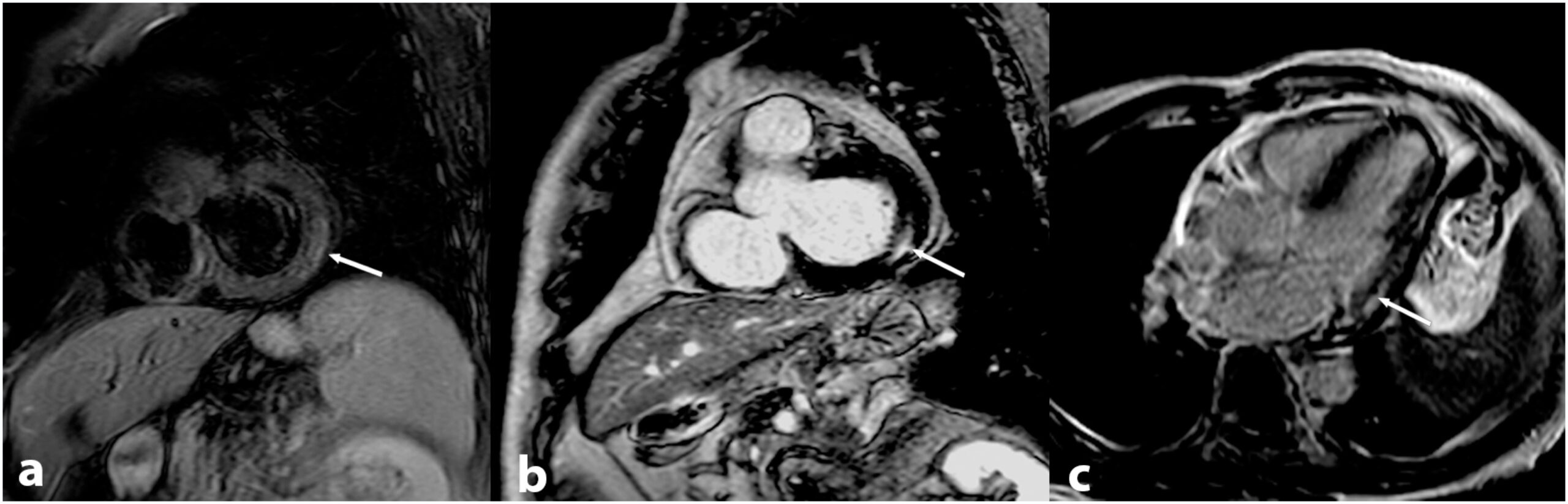
Current Role of Cardiac Magnetic Resonance Imaging in Hypertrophic Cardiomyopathy

Fábio Vieira Fernandes et al. Juliana Hiromi Silva Matsumoto Bello Afonso Akio Shiozaki Roberto Caldeira Cury

[…]

  • Cardiomyopathy, Hypertrophic, Familial
  • Echocardiography/methods
  • Electrocardiography/methods
  • Endomyocardial Fibrosis
  • Heart Failure
  • Magnetic Resonance Imaging/methods
Read Full Article
Creative Commons Attribution (CC BY) Creative Commons license
04/02/2022 DOI: 10.5935/2318-8219.20180048
Figure 1
ABC
Original Article

Cardiac Fibrosis and Changes in Left Ventricle Function in Patients with Chronic Chagas Heart Disease

João Bosco de Figueiredo Santos et al. Ilan Gottlieb Eduardo Marinho Tassi Gabriel Cordeiro Camargo … Jacob Atié Sérgio Salles Xavier Roberto Coury Pedrosa Roberto Magalhães Saraiva

Abstract

Background

Chagas heart disease (CHD) is a slow progressing condition with fibrosis as the main histopathological finding.

Objectives

To study if cardiac fibrosis increases over time and correlates with increase in left ventricular (LV) size and reduction of ejection fraction (EF) in chronic CHD.

Methods

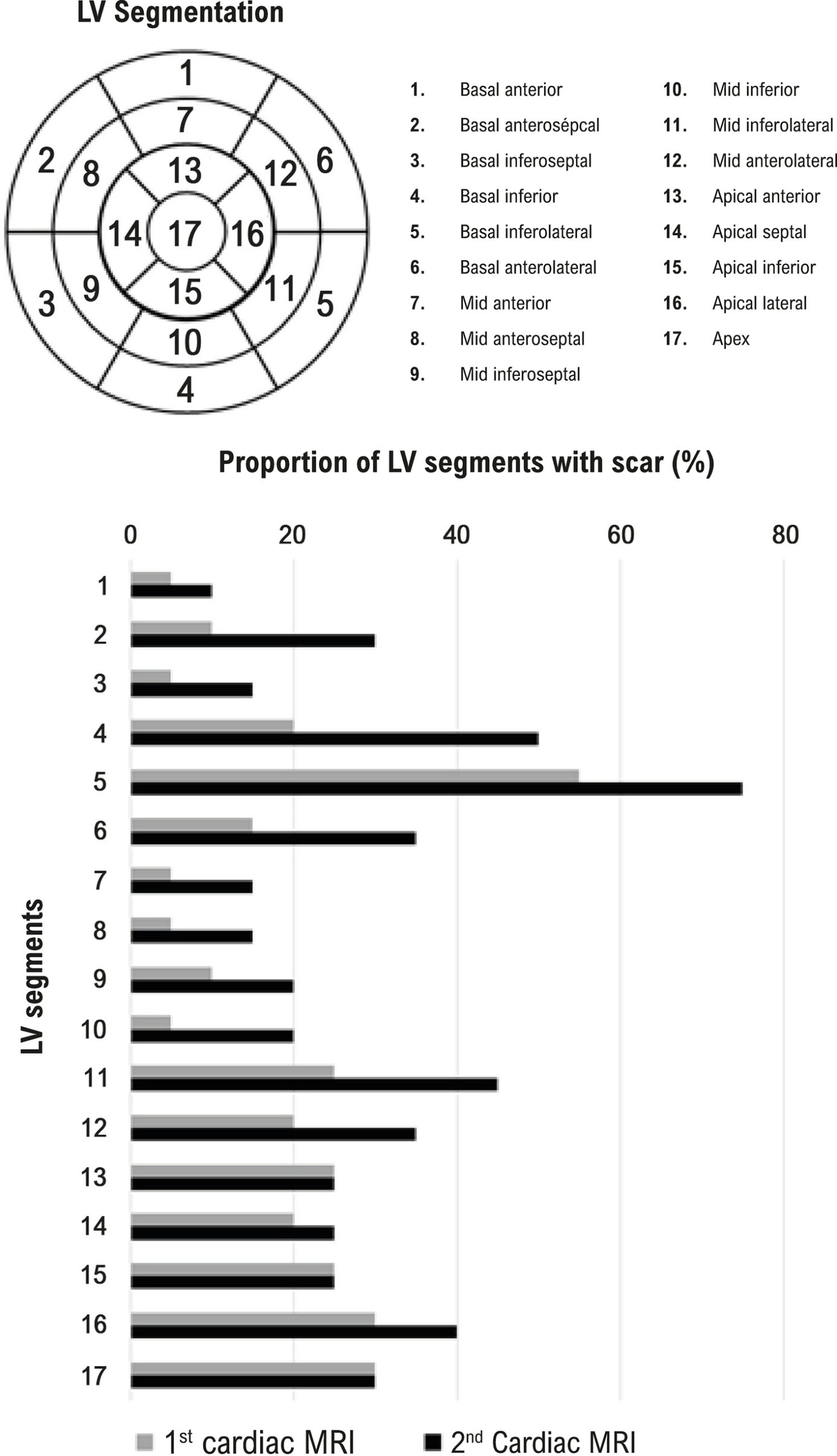
Retrospective study that included 20 individuals (50% men; 60±10 years) with chronic CHD who underwent two cardiac magnetic resonance imaging (MRI) with late gadolinium enhancement with a minimum interval of four years between tests. LV volume, EF, and fibrosis mass were determined by cardiac MRI. Associations of fibrosis mass at the first cardiac MRI and changes in LV volume and EF at the second cardiac MRI were tested using logistic regression analysis. P values <0.05 were considered significant.

Results

Patients were classified as follows: A (n=13; changes typical of CHD in the electrocardiogram and normal global and segmental LV systolic function) and B1 (n=7; LV wall motion abnormality and EF≥45%). Mean time between cardiac MRI studies was 5.4±0.5 years. LV fibrosis (in %LV mass) increased from 12.6±7.9% to 18.0±14.1% between MRI studies (p=0.02). Cardiac fibrosis mass at baseline was associated with decrease in >5 absolute units in LV EF from the first to the second MRI (OR 1.48, 95% CI 1.03-2.13, p=0.03). LV fibrosis mass was larger and increased between MRI studies in the group that presented decrease in LV EF between the tests.

Conclusions

Even patients at an initial stage of CHD show an increase in myocardial fibrosis over time, and the presence of LV fibrosis at baseline is associated with a decrease in LV systolic function.

  • Chagas Cardiomyopathy
  • Chagas disease
  • Diagnostic Imaging
  • Electrocardiography/methods
  • Endomyocardial Fibrosis
  • Magnetic Resonance Imaging/methods
  • Ventricular Dysfunction, Left
Read Full Article
Creative Commons Attribution (CC BY) Creative Commons license
08/10/2021 DOI: 10.36660/abc.20200597
ABC
Editorial

Cardiovascular Imaging in Congenital Heart Diseases: Why not Leverage New Imaging Modalities?

Vitor Guerra

Worldwide, we are living in an era burdened by congenital heart diseases (CHD). If we take a snapshot in 2018, there were 2,944,932 live births in Brazil (Tabnet, DATASUS). Considering the incidence of CHD, about 9 per 1000 live births, which has been stable across countries and populations, we would expect around 26,000 new patients with some form of CHD in our country. On the other hand, worldwide survival rate for CHD in the last 3 decades has been close to 98%. Having said that, CHD continues to be a public health problem worldwide.

In the last four centuries, the specialty of pediatric cardiology has grown tremendously, achieving several milestones in clinical and surgical scenarios, mostly due the incredible advances in cardiovascular imaging diagnostic tools. This allows non-invasive diagnosis in all ages from fetal life until adulthood. The relatively new modality of cardiac magnetic resonance imaging (CMR) provides clinically useful information in various situations in patients with CHD. Current guidelines for diagnosis and management include echocardiogram, CMR and cardiac catheterization for the majority of CHD patients.

[…]

  • Cardiac Catheterization
  • Heart Defects, Congenital/surgery
  • Magnetic Resonance Imaging/methods
  • Procedures and Techniques Diagnostic
Read Full Article
Creative Commons Attribution (CC BY) Creative Commons license
01/03/2021 DOI: 10.36660/abc.20201347
Figure 1
IJCS
Review Article

Cardiac Magnetic Resonance in the Assessment of Chagas Disease and its Complications

Ariane Binoti Pacheco et al. Rodrigo de Jesus Louzeiro Melo Carlos Eduardo Rochitte

Abstract

The well-known occurrence of Chagas disease in endemic areas has become a worldwide problem, and cardiac magnetic resonance allows the early detection of cardiac involvement and complications of this disease. Cardiac magnetic resonance is a useful tool in all phases of Chagas disease, and new promising techniques using T1 mapping and extracellular volume measurements are able to detect cardiac involvement even earlier than conventional techniques.

  • Chagas Cardiomyopathy/complications
  • Chagas Diseases/complications
  • Endemic Diseases
  • Extracellular Volume
  • Fibrosis
  • Gadolinium /radiation effects
  • Heart Failure
  • Magnetic Resonance Imaging/methods
  • T1 Mapping
Read Full Article
Creative Commons Attribution (CC BY) Creative Commons license
25/11/2020 DOI: 10.36660/ijcs.20200250
Figure 1
ABC
Case Report

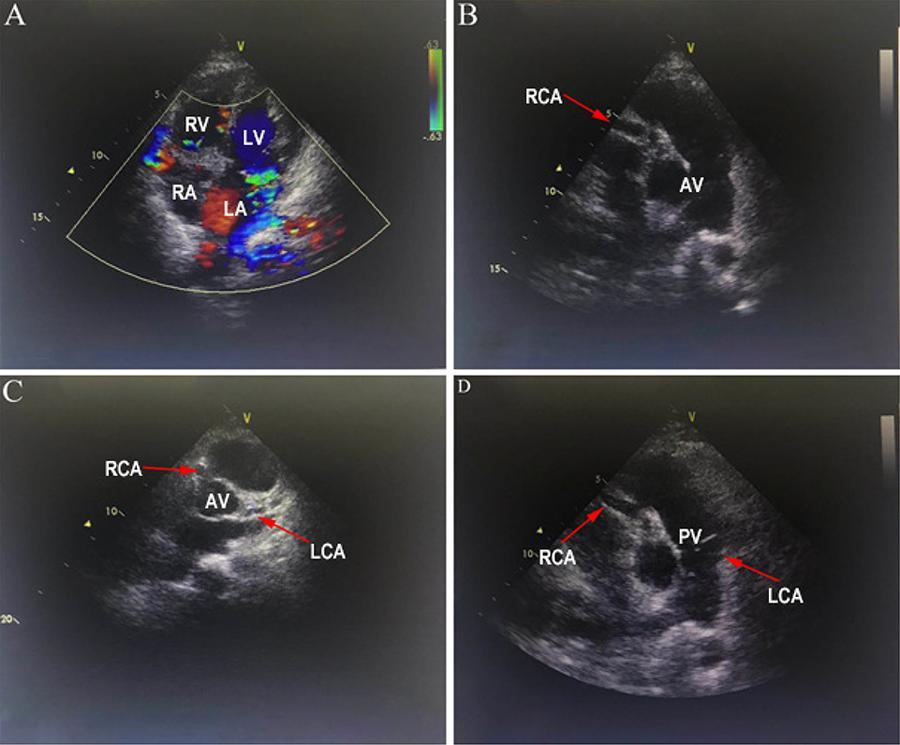
Image Diagnosis: An Anomalous Origin of Left Coronary Artery from the Pulmonary Artery

Haisong Bu et al. Tianli Zhao

Introduction

Anomalous origin of the left coronary artery from the pulmonary artery (ALCAPA) is a rare congenital anomaly with a mortality of 90% by 1 year of age without surgical intervention. Nowadays the procedure of choice for correction of ALCAPA depends on the establishment of a dual coronary artery system by direct reimplantation of the anomalous left coronary artery (LCA) into the ascending aorta. However, anatomic variations of the origin of the anomalous LCA often make this aim difficult to achieve, especially in patients undergoing reoperation.

Chronic ischemic mitral regurgitation (MR) develops as a consequence of coronary artery disease in the absence of primary leaflet abnormalities or chordal pathology: ischemic cardiopathy causes remodeling of left ventricular geometry, displacement of papillary muscles, leaflet tethering and annular dilatation, leading to functional mitral insufficiency. The outcome of these patients represents a challenging problem for both cardiologists and cardiac surgeons. In fact, the role of mitral valve surgery (MVS) associated with coronary artery revascularization is still debated.

[…]

  • Diagnostic Imaging
  • Echocardiography/methods
  • Heart Defects,Congenital/surgery
  • Insufficiency Mitral Valve/surgery
  • Magnetic Resonance Imaging/methods
  • Myocardial Ischemia
  • Pulmonary Artery/abnormalities
Read Full Article
Creative Commons Attribution (CC BY) Creative Commons license
18/05/2020 DOI: 10.36660/abc.20180207 Views 1
ABC
Letter to the Editor

Recommendation of Early Surgery in Primary Mitral Regurgitation: Pros and Cons

Levent Cerit

To the Editor,

I have read the article entitled “Recommendation of Early Surgery in Primary Mitral Regurgitation: Pros and Cons” by Rosa et al. with great interest, recently published in Arquivos Brasileiros de Cardiologia 2016; 107: 173-5. The investigators reported that currently, the recommendation of mitral surgery for asymptomatic patients is very controversial, since the indication of valvular intervention for symptoms, left ventricular dysfunction and dilatation, recent onset atrial fibrillation or pulmonary arterial hypertension is well consolidated in literature.

[…]

  • Echocardiography
  • Magnetic Resonance Imaging/methods
  • Mitral Valve Insufficiency / surgery
Read Full Article
Creative Commons Attribution (CC BY) Creative Commons license
01/01/2017 DOI: 10.5935/abc.20160188

How to cite this article

EndNote RIS

Electronic Document Format (Vancouver)

Câmara SF, Ribeiro HB. Aortic Stiffness by Cardiac Magnetic Resonance: Prognostic tool or Bystander?. Arquivos Brasileiros de Cardiologia 2022;118(5):972-3.

Electronic Document Format (ABNT)

Câmara, Sérgio Figueiredo; Ribeiro, Henrique Barbosa. Aortic Stiffness by Cardiac Magnetic Resonance: Prognostic tool or Bystander?. Arquivos Brasileiros de Cardiologia, v. 118, n. 5, p. 972-973, May. 2022.

Electronic Document Format (APA)

Câmara, S. F., & Ribeiro, H. B. (2022). Aortic Stiffness by Cardiac Magnetic Resonance: Prognostic tool or Bystander?. Arquivos Brasileiros de Cardiologia, 118(5), 972-973.

Electronic Document Format (ISO)

Câmara, Sérgio Figueiredo and Ribeiro, Henrique Barbosa. Aortic Stiffness by Cardiac Magnetic Resonance: Prognostic tool or Bystander?. Arquivos Brasileiros de Cardiologia [online]. 2022, vol. 118, n. 5, [cited 2026-10-14], pp. 972-973. Available from: <https://journals.cardiol.br/en/article/aortic-stiffness-by-cardiac-magnetic-resonance-prognostic-tool-or-bystander/>. ISSN 0066-782X

EndNote RIS

Electronic Document Format (Vancouver)

Fernandes FV, Bello JHSM, Shiozaki AA, Cury RC. Current Role of Cardiac Magnetic Resonance Imaging in Hypertrophic Cardiomyopathy. Arquivos Brasileiros de Cardiologia Imagem cardiovascular 2022;31(4):277-83.

Electronic Document Format (ABNT)

Fernandes, Fábio Vieira; Bello, Juliana Hiromi Silva Matsumoto; Shiozaki, Afonso Akio; Cury, Roberto Caldeira. Current Role of Cardiac Magnetic Resonance Imaging in Hypertrophic Cardiomyopathy. Arquivos Brasileiros de Cardiologia Imagem cardiovascular, v. 31, n. 4, p. 277-283, Feb. 2022.

Electronic Document Format (APA)

Fernandes, F. V., Bello, J. H. S. M., Shiozaki, A. A., & Cury, R. C. (2022). Current Role of Cardiac Magnetic Resonance Imaging in Hypertrophic Cardiomyopathy. Arquivos Brasileiros de Cardiologia Imagem cardiovascular, 31(4), 277-283.

Electronic Document Format (ISO)

Fernandes, Fábio Vieira and Bello, Juliana Hiromi Silva Matsumoto and Shiozaki, Afonso Akio and Cury, Roberto Caldeira. Current Role of Cardiac Magnetic Resonance Imaging in Hypertrophic Cardiomyopathy. Arquivos Brasileiros de Cardiologia Imagem cardiovascular [online]. 2022, vol. 31, n. 4, [cited 2026-10-14], pp. 277-283. Available from: <https://journals.cardiol.br/en/article/current-role-of-cardiac-magnetic-resonance-imaging-in-hypertrophic-cardiomyopathy/>. ISSN 2318-8219

EndNote RIS

Electronic Document Format (Vancouver)

Santos JBF, Gottlieb I, Tassi EM, Camargo GC, Atié J, Xavier SS, Pedrosa RC, et al. Cardiac Fibrosis and Changes in Left Ventricle Function in Patients with Chronic Chagas Heart Disease. Arquivos Brasileiros de Cardiologia 2021;117(6):1081-90.

Electronic Document Format (ABNT)

Santos, João Bosco de Figueiredo; Gottlieb, Ilan; Tassi, Eduardo Marinho; Camargo, Gabriel Cordeiro; Atié, Jacob; Xavier, Sérgio Salles; Pedrosa, Roberto Coury; Saraiva, Roberto Magalhães. Cardiac Fibrosis and Changes in Left Ventricle Function in Patients with Chronic Chagas Heart Disease. Arquivos Brasileiros de Cardiologia, v. 117, n. 6, p. 1081-1090, Oct. 2021.

Electronic Document Format (APA)

Santos, J. B. F., Gottlieb, I., Tassi, E. M., Camargo, G. C., Atié, J., Xavier, S. S., Pedrosa, R. C., & Saraiva, R. M. (2021). Cardiac Fibrosis and Changes in Left Ventricle Function in Patients with Chronic Chagas Heart Disease. Arquivos Brasileiros de Cardiologia, 117(6), 1081-1090.

Electronic Document Format (ISO)

Santos, João Bosco de Figueiredo and Gottlieb, Ilan and Tassi, Eduardo Marinho and Camargo, Gabriel Cordeiro and Atié, Jacob and Xavier, Sérgio Salles and Pedrosa, Roberto Coury and Saraiva, Roberto Magalhães. Cardiac Fibrosis and Changes in Left Ventricle Function in Patients with Chronic Chagas Heart Disease. Arquivos Brasileiros de Cardiologia [online]. 2021, vol. 117, n. 6, [cited 2026-10-14], pp. 1081-1090. Available from: <https://journals.cardiol.br/en/article/cardiac-fibrosis-and-changes-in-left-ventricle-function-in-patients-with-chronic-chagas-heart-disease/>. ISSN 0066-782X

EndNote RIS

Electronic Document Format (Vancouver)

Guerra V. Cardiovascular Imaging in Congenital Heart Diseases: Why not Leverage New Imaging Modalities?. Arquivos Brasileiros de Cardiologia 2021;116(2):313-4.

Electronic Document Format (ABNT)

Guerra, Vitor. Cardiovascular Imaging in Congenital Heart Diseases: Why not Leverage New Imaging Modalities?. Arquivos Brasileiros de Cardiologia, v. 116, n. 2, p. 313-314, Feb. 2021.

Electronic Document Format (APA)

Guerra, V. (2021). Cardiovascular Imaging in Congenital Heart Diseases: Why not Leverage New Imaging Modalities?. Arquivos Brasileiros de Cardiologia, 116(2), 313-314.

Electronic Document Format (ISO)

Guerra, Vitor. Cardiovascular Imaging in Congenital Heart Diseases: Why not Leverage New Imaging Modalities?. Arquivos Brasileiros de Cardiologia [online]. 2021, vol. 116, n. 2, [cited 2026-10-14], pp. 313-314. Available from: <https://journals.cardiol.br/en/article/cardiovascular-imaging-in-congenital-heart-diseases-why-not-leverage-new-imaging-modalities/>. ISSN 0066-782X

EndNote RIS

Electronic Document Format (Vancouver)

Pacheco AB, Melo RJL, Rochitte CE. Cardiac Magnetic Resonance in the Assessment of Chagas Disease and its Complications. International Journal of Cardiovascular Sciences 2020;33(6):705-12.

Electronic Document Format (ABNT)

Pacheco, Ariane Binoti; Melo, Rodrigo de Jesus Louzeiro; Rochitte, Carlos Eduardo. Cardiac Magnetic Resonance in the Assessment of Chagas Disease and its Complications. International Journal of Cardiovascular Sciences, v. 33, n. 6, p. 705-712, Nov. 2020.

Electronic Document Format (APA)

Pacheco, A. B., Melo, R. J. L., & Rochitte, C. E. (2020). Cardiac Magnetic Resonance in the Assessment of Chagas Disease and its Complications. International Journal of Cardiovascular Sciences, 33(6), 705-712.

Electronic Document Format (ISO)

Pacheco, Ariane Binoti and Melo, Rodrigo de Jesus Louzeiro and Rochitte, Carlos Eduardo. Cardiac Magnetic Resonance in the Assessment of Chagas Disease and its Complications. International Journal of Cardiovascular Sciences [online]. 2020, vol. 33, n. 6, [cited 2026-10-14], pp. 705-712. Available from: <https://journals.cardiol.br/en/article/cardiac-magnetic-resonance-in-the-assessment-of-chagas-disease-and-its-complications/>. ISSN 2359-4802

EndNote RIS

Electronic Document Format (Vancouver)

Bu H, Zhao T. Image Diagnosis: An Anomalous Origin of Left Coronary Artery from the Pulmonary Artery. Arquivos Brasileiros de Cardiologia 2020;114(4 suppl 1):4-7.

Electronic Document Format (ABNT)

Bu, Haisong; Zhao, Tianli. Image Diagnosis: An Anomalous Origin of Left Coronary Artery from the Pulmonary Artery. Arquivos Brasileiros de Cardiologia, v. 114, n. 4 suppl 1, p. 4-7, May. 2020.

Electronic Document Format (APA)

Bu, H., & Zhao, T. (2020). Image Diagnosis: An Anomalous Origin of Left Coronary Artery from the Pulmonary Artery. Arquivos Brasileiros de Cardiologia, 114(4 suppl 1), 4-7.

Electronic Document Format (ISO)

Bu, Haisong and Zhao, Tianli. Image Diagnosis: An Anomalous Origin of Left Coronary Artery from the Pulmonary Artery. Arquivos Brasileiros de Cardiologia [online]. 2020, vol. 114, n. 4 suppl 1, [cited 2026-10-14], pp. 4-7. Available from: <https://journals.cardiol.br/en/article/image-diagnosis-an-anomalous-origin-of-left-coronary-artery-from-the-pulmonary-artery/>. ISSN 0066-782X

EndNote RIS

Electronic Document Format (Vancouver)

Cerit L. Recommendation of Early Surgery in Primary Mitral Regurgitation: Pros and Cons. Arquivos Brasileiros de Cardiologia 2017;108(1):93-4.

Electronic Document Format (ABNT)

Cerit, Levent. Recommendation of Early Surgery in Primary Mitral Regurgitation: Pros and Cons. Arquivos Brasileiros de Cardiologia, v. 108, n. 1, p. 93-94, Dec. 2016.

Electronic Document Format (APA)

Cerit, L. (2017). Recommendation of Early Surgery in Primary Mitral Regurgitation: Pros and Cons. Arquivos Brasileiros de Cardiologia, 108(1), 93-94.

Electronic Document Format (ISO)

Cerit, Levent. Recommendation of Early Surgery in Primary Mitral Regurgitation: Pros and Cons. Arquivos Brasileiros de Cardiologia [online]. 2017, vol. 108, n. 1, [cited 2026-10-14], pp. 93-94. Available from: <https://journals.cardiol.br/en/article/recommendation-of-early-surgery-in-primary-mitral-regurgitation-pros-and-cons/>. ISSN 0066-782X

  • About ABC Family
  • Internal Regulation
  • Editorial Board
  • Brazilian Society of Cardiology (SBC)

Issues

SBC Guidelines

  • Videos
  • Podcasts
  • News