ABC Family Arquivos Brasileiros de Cardiologia International Journal of Cardiovascular Sciences ABC Heart Failure & Cardiomyopathy ABC Imagem Cardiovascular
Português English
ABC Family
Português English
  • About
    • About ABC Family
    • Internal Regulation
    • Editorial Board
    • Brazilian Society of Cardiology (SBC)
  • Issues
  • SBC Guidelines
  • Content
    • Videos
    • Podcasts
    • News
  • About
    • About ABC Family
    • Internal Regulation
    • Editorial Board
    • Brazilian Society of Cardiology (SBC)
  • Issues
  • SBC Guidelines
  • Content
    • Videos
    • Podcasts
    • News

ABC Family

  • ABC Family
  • Arquivos Brasileiros de Cardiologia
  • International Journal of Cardiovascular Sciences
  • ABC Heart Failure & Cardiomyopathy
  • ABC Imagem Cardiovascular
Search in

No content found.

Journals
Ordering
Article types
Others

  1. Home
  2. Keyword: Artificial Intelligence
Artificial Intelligence in Carotid Ultrasonography: Current Status and Future Directions
ABCIC
Review Article

Artificial Intelligence in Carotid Ultrasonography: Current Status and Future Directions

Gustavo Paglioli Dannenhauer et al. Simone Nascimento dos Santos Ana Claudia Gomes Pereira Petisco Claudia Maria Vilas Freire … Ana Cristina Lopes Albricker Fanilda Souto Barros

Abstract

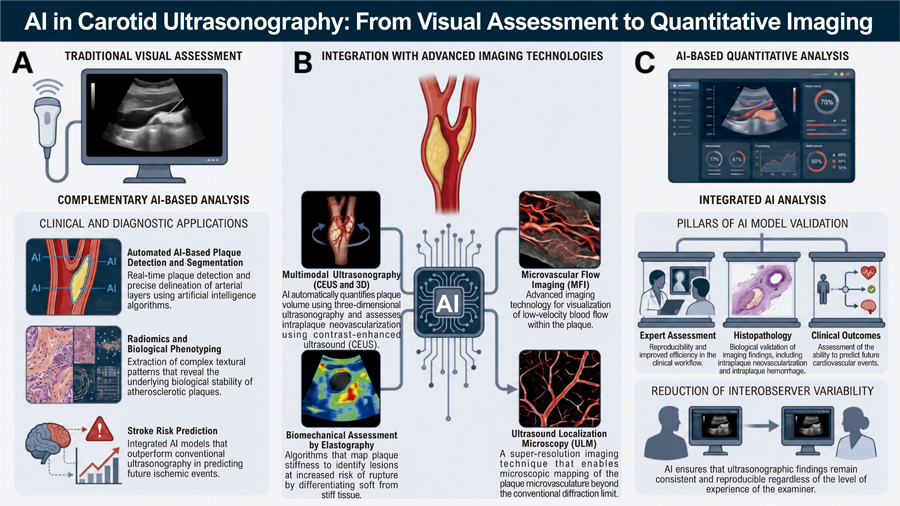
To review the current applications of artificial intelligence (AI) in carotid ultrasonography and its future perspectives. This narrative review was based on recent studies addressing machine learning, deep learning, radiomics, and integration with advanced ultrasound modalities, including contrast-enhanced ultrasound (CEUS), elastography, three-dimensional ultrasound, microvascular flow imaging (MFI), and ultrafast ultrasound. Carotid assessment has evolved from an approach focused primarily on the degree of luminal stenosis to a more comprehensive evaluation encompassing plaque burden, morphology, composition, and vulnerability. AI algorithms have been applied to automated plaque detection, image segmentation, plaque stability classification, radiomic feature extraction, and prediction of ischemic events. When combined with advanced imaging techniques, these models may improve reproducibility, reduce operator dependence, and reveal quantitative patterns that conventional visual assessment may not detect. Despite promising results, important challenges remain regarding image standardization, external validation, model explainability, and prospective clinical impacts. AI has the potential to transform carotid ultrasonography into a multiparametric tool for personalized medicine. Its clinical implementation will depend on robust validation, integration into clinical workflows, and demonstration of incremental value over conventional ultrasonography.
  • Artificial Intelligence
  • Atherosclerotic Plaque
  • Carotid Arteries Ultrasonography
Read Full Article
Creative Commons Attribution (CC BY) Creative Commons license
21/09/2026 DOI: 10.36660/abcimg.20260089i Views 1
Central Illustration
ABCHF
Original Article

Global Mapping of Research on Artificial Intelligence Applied to Myocarditis

Guilherme Cesar Fernandes de Oliveira da Costa et al. Jose Gregorio Valero Rodriguez Giulia Fernandes de Oliveira da Costa Adriana Munford Lima Pimentel Evandro Tinoco Mesquita

Abstract

Background

Myocarditis remains a diagnostic challenge, and interest in using artificial intelligence to support noninvasive diagnostic evaluation has grown rapidly. Although the literature at the intersection of artificial intelligence and myocarditis has expanded substantially, it remains fragmented and lacks comprehensive synthesis.

Objectives

To map the global scientific output on the application of artificial intelligence to myocarditis by identifying leading contributors, collaboration patterns, and emerging thematic trends.

Methods

We conducted a bibliometric analysis of articles on artificial intelligence applied to myocarditis indexed in the Web of Science Core Collection. The R package bibliometrix and VOSviewer were used to perform bibliometric network and thematic analyses.

Results

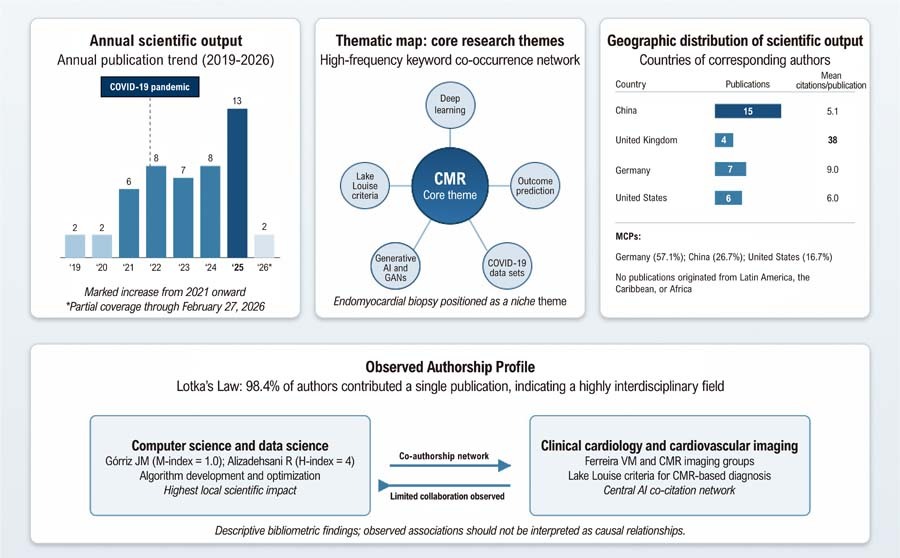
A total of 47 articles were included. Scientific output increased markedly after 2021, coinciding with the COVID-19 pandemic, and peaked in 2025. China led in publication volume, whereas the United Kingdom and Germany achieved the greatest citation impact. No publications originated from Latin America, the Caribbean, or Africa. International collaboration networks remain fragmented. Keyword and thematic analyses identified the integration of deep learning with cardiovascular magnetic resonance imaging as the principal motor theme, reflecting a shift away from traditional endomyocardial biopsy. The most highly cited authors were primarily computer and data scientists.

Conclusions

Research at the intersection of artificial intelligence and myocarditis is an emerging field undergoing methodological consolidation, with growth accelerated by the COVID-19 pandemic. Cardiovascular magnetic resonance imaging has become the primary data source for artificial intelligence-based applications. The principal challenge appears to be translational, underscoring the need for stronger collaboration between algorithm developers and clinicians. The successful integration of these models into routine clinical practice will likely depend on multidisciplinary collaboration and validation across diverse, multicenter populations.

  • Artificial Intelligence
  • Deep Learning
  • Machine Learning
  • Myocarditis
Read Full Article
Creative Commons Attribution (CC BY) Creative Commons license
21/08/2026 DOI: 10.36660/abchf.20260016i Views 1
Artificial Intelligence Applied to Electrocardiogram-Based Cardiovascular Risk Assessment: A Systematic Review
ABC
Review Article

Artificial Intelligence Applied to Electrocardiogram-Based Cardiovascular Risk Assessment: A Systematic Review

Maria Clara Mantoan Pinheiro et al. Lívia Felberg Isadora Cristine Reis Sguizzato Bozzi Antônio Luiz Pinho Ribeiro Gabriela Miana de Mattos Paixão

Abstract

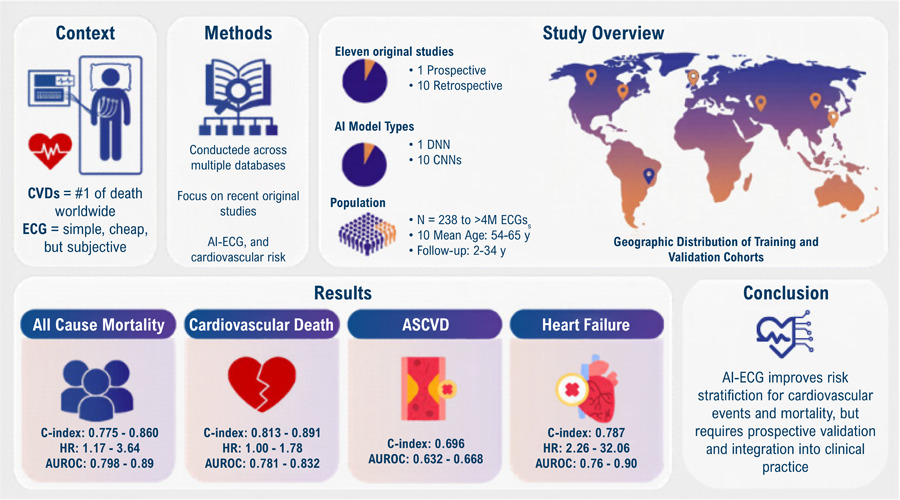
Cardiovascular diseases (CVDs) are the leading cause of mortality worldwide, underscoring the need for effective risk prediction and early detection. Although the electrocardiogram (ECG) is a widely available and low-cost diagnostic tool, its traditional interpretation is limited by subjectivity. Artificial intelligence (AI) has emerged as a promising approach, capable of extracting hidden prognostic information from ECG signals. This systematic review aimed to assess original studies applying AI techniques to ECGs for cardiovascular risk prediction and mortality. Original studies that used ECG signals as the sole input variable for AI models, focusing on cardiovascular risk outcomes, were included. A systematic search was conducted in different databases, and data were synthesized narratively. Eleven studies were included, predominantly retrospective cohorts applying convolutional neural networks (CNNs) to predict cardiovascular risk or mortality. The sample primarily consisted of adult populations in high-income countries. Primary outcomes included all-cause mortality, cardiovascular death, and major adverse cardiovascular events (MACE). Reported AUROC values ranged from 0.63 to 0.961 in training sets, with some models outperforming traditional risk scores. AI-ECG models demonstrated the potential to detect subclinical disease, enabling early risk stratification even in normal ECGs. However, challenges remain regarding population diversity, model interpretability, and prospective validation. The application of AI to ECG analysis represents a promising advancement in personalized cardiovascular risk assessment. Nonetheless, further research is needed to ensure the safety, effectiveness, and equitable clinical integration of these technologies.

  • Artificial Intelligence
  • Electrocardiography
  • Heart Disease Risk Factors
Read Full Article
Creative Commons Attribution (CC BY) Creative Commons license
03/08/2026 DOI: 10.36660/abc.20250790i
Figure 1
ABC
Editorial

Scientific Publishing in the era of Artificial Intelligence: Integrity and Responsibility

Mário Martins Oliveira et al. Gláucia Maria Moraes de Oliveira

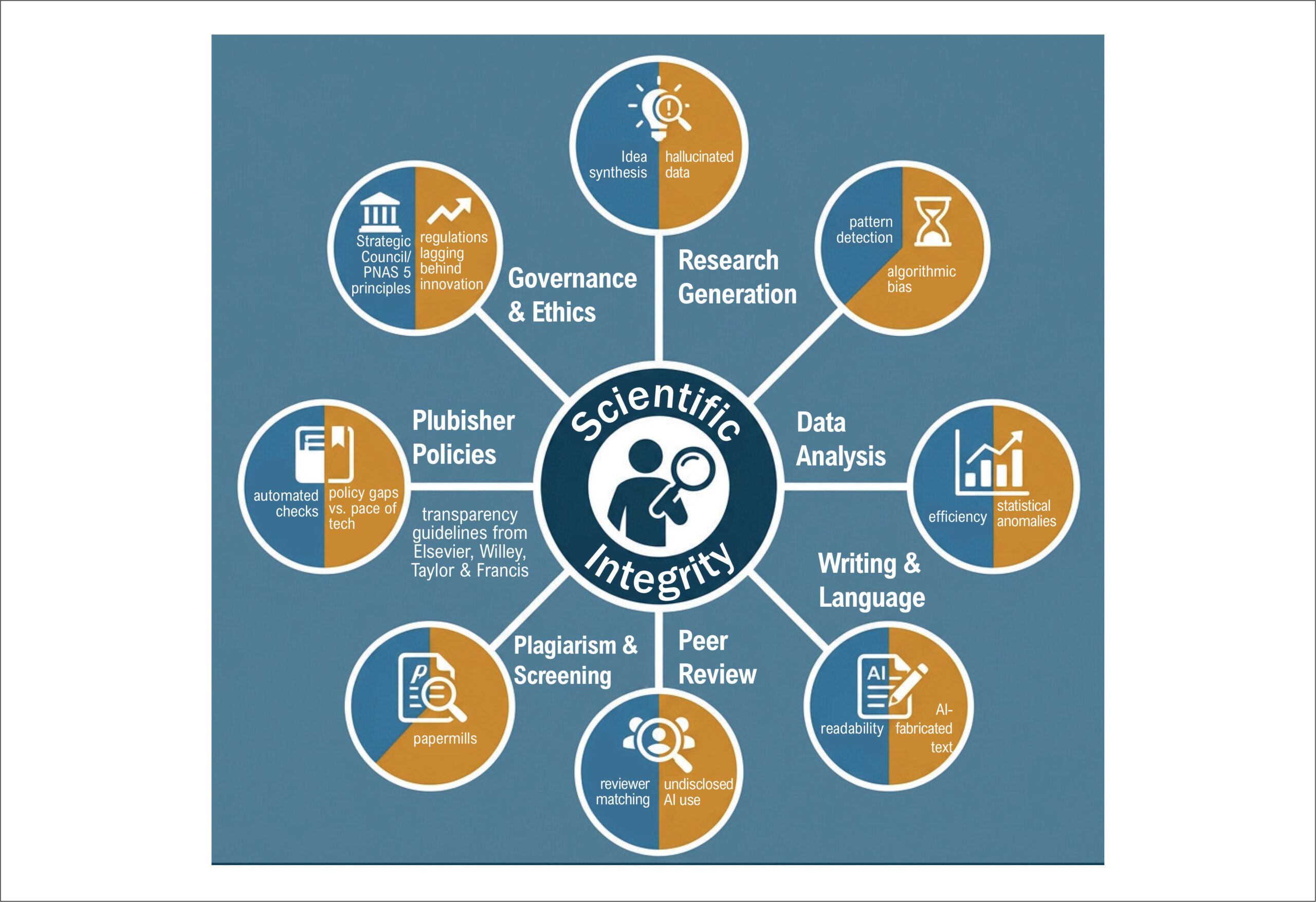
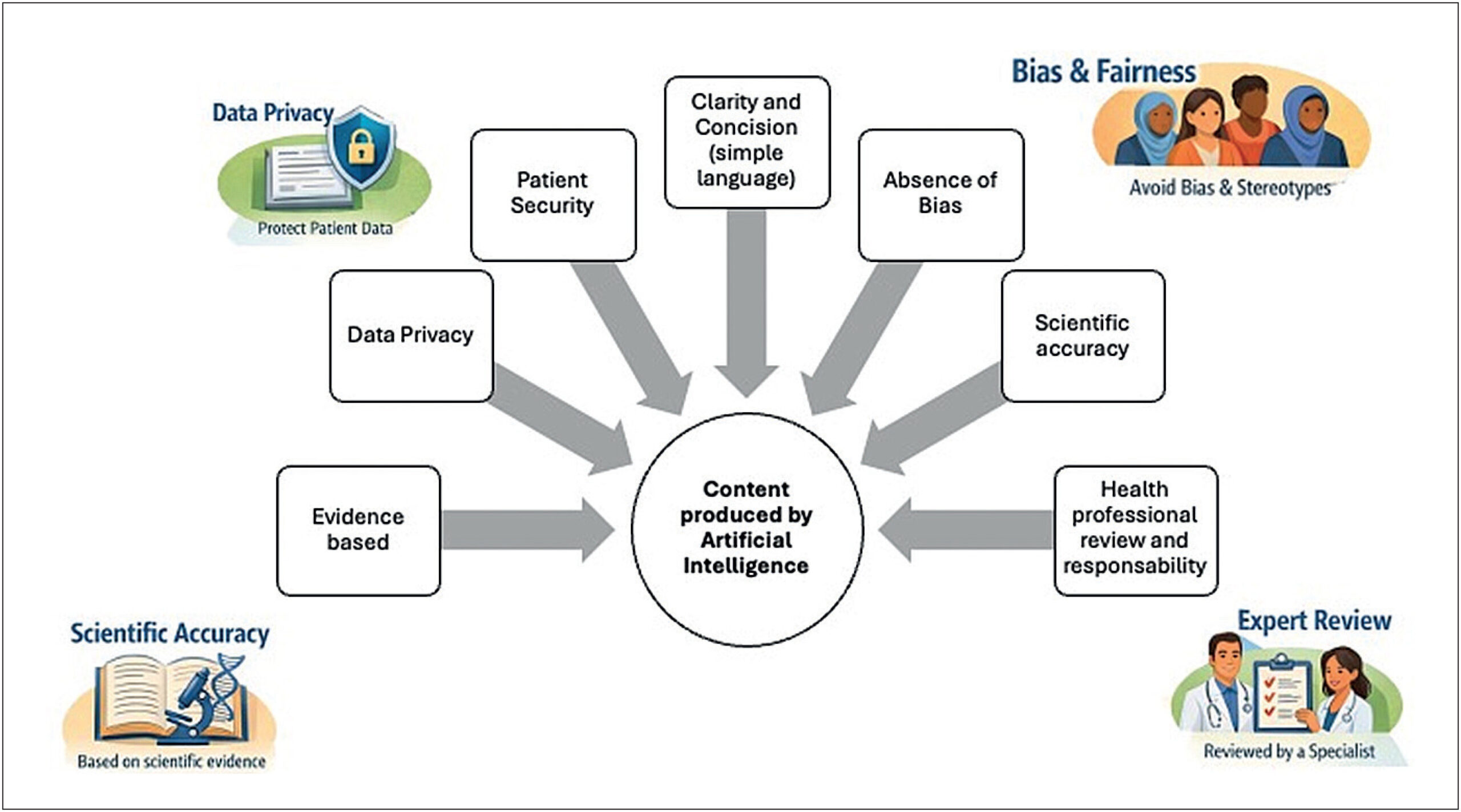
Artificial Intelligence (AI) is transforming the scientific process across all stages, making it an innovative tool, used globally, influencing research generation, experimental design, data analysis, writing, and all complex dynamics of peer review and dissemination of results.

While the entire scientific community is incorporating AI as part of the research process to enhance efficiency, the development of regulations and adequate algorithms to monitor the quality, truthfulness, and integrity of data science is becoming a critical matter of discussion, regarding the fundamental role of scientific communication.

[…]

  • Artificial Intelligence
  • Editorial Policies
  • Scientific Communication and Diffusion
  • Scientific Publication Ethics
Read Full Article
Creative Commons Attribution (CC BY) Creative Commons license
27/07/2026 DOI: 10.36660/abc.20260338i Views 1
Figure 1
IJCS
Editorial

AI-Enhanced ECGs for the Diagnosis of HFpEF: A Promising Frontier, But Not Yet a Standalone Solution

Humberto Villacorta

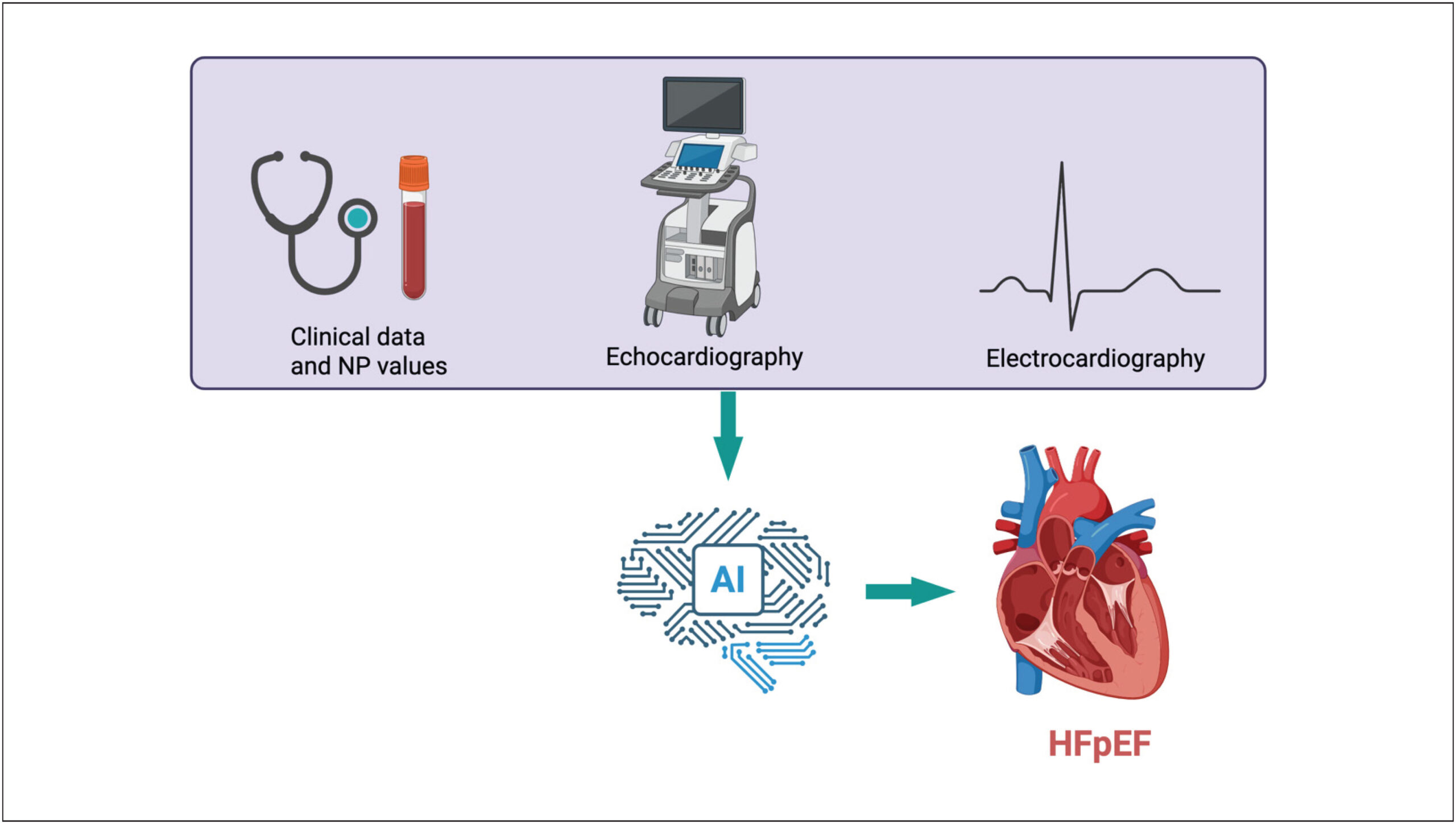
Heart Failure with preserved Ejection Fraction (HFpEF) is among the most challenging syndromes in contemporary cardiology. Despite accounting for nearly half of all heart failure cases, HFpEF remains chronically underdiagnosed and is associated with significant morbidity and mortality., The diagnosis of HFpEF is challenging and relies on clinical history, natriuretic peptide measurements, and echocardiography. Diagnostic scores have been developed that integrate these three key elements., Echocardiography is indispensable for identifying structural and functional criteria, but its availability and cost make population-level screening impractical in many healthcare systems. In addition, in many places, a comprehensive echocardiogram is not performed. Likewise, natriuretic peptides are not always available. Therefore, new solutions to facilitate diagnosis are welcome.

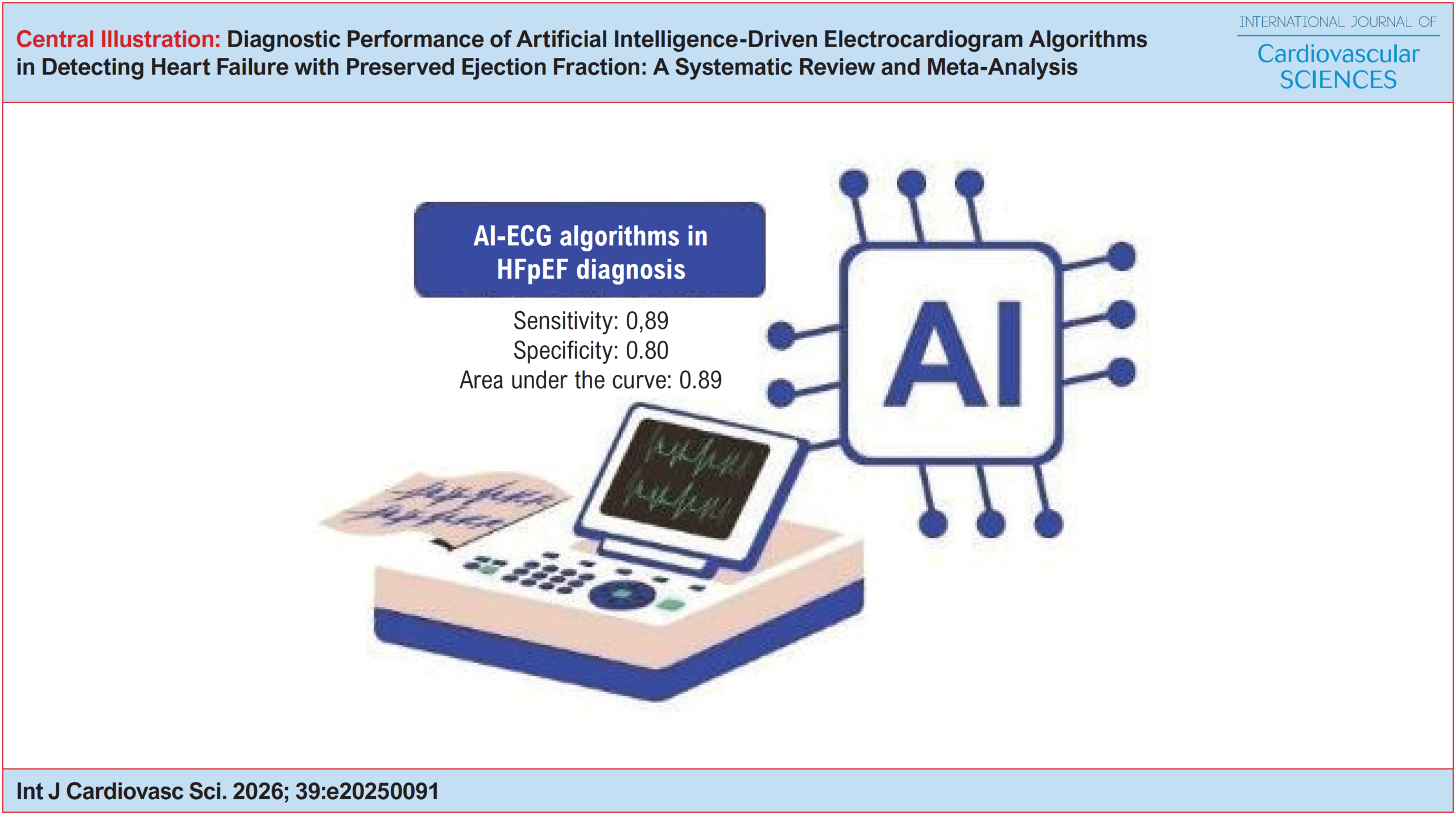
In this context, the systematic review and meta-analysis presented in this issue of International Journal of Cardiovascular Sciences, provide important insights into an increasingly discussed alternative: Artificial Intelligence-enhanced Electrocardiography (AI-ECG). Drawing from more than 170,000 patients across three observational studies, the authors report a pooled sensitivity of 0.89, specificity of 0.80, and an AUC of 0.89 for AI-ECG in detecting HFpEF. These findings suggest that deep learning models can extract subtle electrical signatures associated with diastolic dysfunction – signals that may be visually imperceptible on standard ECGs. The appeal is clear: the ECG is universal, inexpensive, rapid, and deeply embedded in clinical workflows. If Artificial Intelligence could reliably identify patients requiring echocardiographic confirmation, screening strategies might be revolutionized.

[…]

  • Artificial Intelligence
  • Diagnosis
  • Electrocardiography
  • Heart Failure
  • Insuficiência Cardíaca Diastólica
Read Full Article
Creative Commons Attribution (CC BY) Creative Commons license
27/07/2026 DOI: 10.36660/ijcs.20250272 Views 2
ABC
Letter to the Editor

Technology-Based Cardiac Rehabilitation and Exercise Capacity in Coronary Artery Disease: An Artificial Intelligence Analysis

Benil Nesli Ata

I read with great interest the article by Saklica et al. entitled “The Impact of Technology-Based Cardiac Rehabilitation on Exercise Capacity and Adherence in Patients with Coronary Artery Disease: An Artificial Intelligence Analysis,” recently published in Arquivos Brasileiros de Cardiologia. The study addresses an important and timely topic by examining the potential role of technology-supported cardiac rehabilitation programs and exploring the integration of artificial intelligence (AI)–based analyses in the evaluation of rehabilitation outcomes. Considering the persistent global underutilization of cardiac rehabilitation programs, studies exploring innovative and accessible rehabilitation strategies are of clear clinical importance.

One methodological aspect that warrants further consideration is the assessment of exercise capacity. In the present study, functional improvement was evaluated using the incremental shuttle walk test (ISWT). Although the ISWT is a practical and validated field test frequently used in rehabilitation settings, it remains a submaximal and effort-dependent measure. In patients with coronary artery disease, cardiopulmonary exercise testing (CPET) is generally regarded as the reference standard for evaluating exercise capacity because it provides objective physiological parameters such as peak oxygen uptake and ventilatory thresholds. The inclusion of CPET-derived variables could therefore have offered a more comprehensive evaluation of cardiopulmonary adaptations and strengthened the interpretation of the observed improvements in functional capacity.

[…]

  • Artificial Intelligence
  • Cardiac Rehabilitation
  • Coronary Artery Disease
  • digital health
  • Exercise
Read Full Article
Creative Commons Attribution (CC BY) Creative Commons license
20/07/2026 DOI: 10.36660/abc.20260179i Views 2
ABC
Editorial

Artificial Intelligence Attack! The Rising Importance of Chagas Disease

Roberto Coury Pedrosa

Chagas disease (Chd) is a chronic condition with primarily cardiac sequelae that can persist and worsen many years after the initial infection, with a serious impact on healthcare systems. The PAHO estimated that 90% of new infections go undiagnosed, and about 70% of those infected are unaware of their condition. Additionally, less than 1% of the estimated population at risk has been tested. As a result, this leads to a delay in diagnosis, which increases morbidity and mortality from its complications, highlighting a clear need to expand access to diagnosis from a public health perspective. To mitigate this impact, Chd was included in the Millennium Development Goals and the Sustainable Development Goals of the 2030 Agenda for Sustainable Development (UN, 2018).

The gold standard for diagnosing Chd is serological testing for T. cruzi antibodies. The biggest challenge in Chd remains predicting which patients will develop the cardiac form, a leading cause of heart failure, especially in rural areas of Brazil. Notably, electrocardiography is an accessible and low-cost tool that can detect early signs of cardiac involvement in Chd. In recent years, AI-ECG (Electrocardiogram with artificial intelligence) models have been shown to diagnose cardiac conditions accurately; many have been trained and tested primarily on data from high-income countries. Furthermore, these models have been evaluated retrospectively on large historical datasets, with relatively few prospective external validation studies. These gaps in AI-ECG research need to be addressed.

[…]

  • Artificial Intelligence
  • Chagas disease
  • Electrocardiography
  • Public Health
  • screening
Read Full Article
Creative Commons Attribution (CC BY) Creative Commons license
20/07/2026 DOI: 10.36660/abc.20260409i Views 4
Artificial Intelligence-Enhanced Electrocardiography Analysis for Diagnosing Chagas Disease
ABC
Original Article

Artificial Intelligence-Enhanced Electrocardiography Analysis for Diagnosing Chagas Disease

Isabella Moreira Gonzalez Fonseca et al. Maria Carmo Pereira Nunes Craig Sable Renata Fonseca Mendoza … Fred Luciano Neves Santos Paulo Rodrigues Gomes Adson Patrik Vieira Carvalho Bernardo Fonseca Mendoza Noilson Lazaro Souza José Augusto de Almeida Barbosa Clareci Silva Cardoso Bruno Ramos Nascimento Antonio L. P. Ribeiro

Abstract

Background:

Chagas disease affects millions worldwide and remains a leading cause of cardiomyopathy in Latin America. Early diagnosis remains challenging in endemic regions. Artificial intelligence (AI)-based electrocardiography (ECG) analysis may offer a low-cost strategy for large-scale screening in resource-limited settings.

Objectives:

To evaluate the performance of an AI-ECG algorithm combined with clinical data for detecting Chagas disease in a community-based screening program conducted in a highly endemic region in Northeastern Brazil.

Methods:

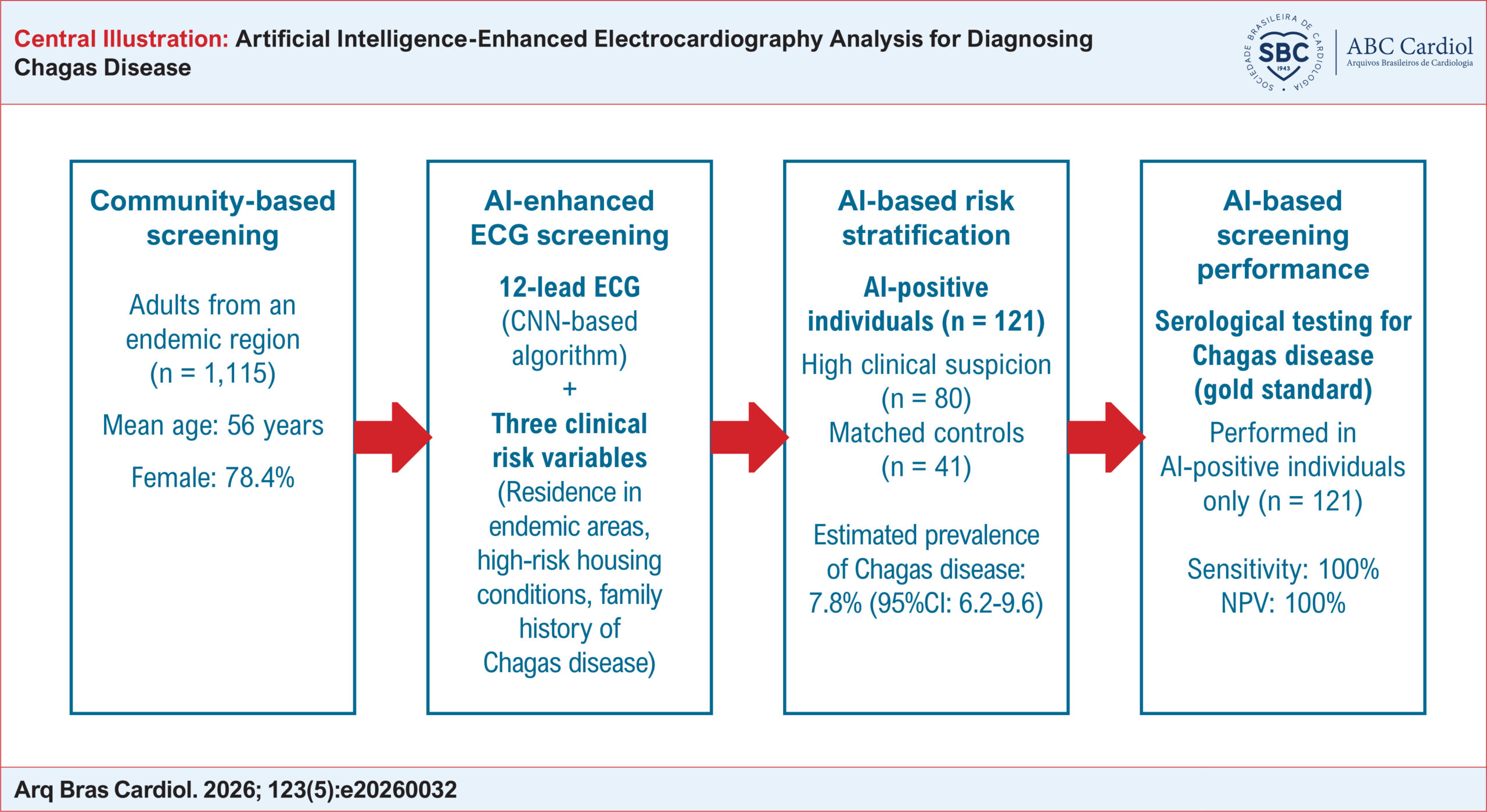
In August 2024, 1,115 adults underwent standardized 12-lead ECG acquisition during a field campaign in Feira de Santana, Bahia, Northeast Brazil. A previously trained AI model analyzed ECG tracings and incorporated three clinical variables: i) prior residence in triatomine-infested areas, ii) poor housing conditions, and iii) family history of Chagas disease. Individuals flagged as AI-positive were classified as suspected cases. Suspected cases and matched controls (2:1) underwent point-of-care serological testing.

Results:

The algorithm flagged 121 individuals (10.9%), corresponding to an estimated AI-based prevalence of Chagas disease of 7.8% (95%CI: 6.2-9.6). Among the 112 individuals who completed serological testing, 13 tested positive, all within the AI-positive suspected group; no seropositive cases were identified among controls. Sensitivity was 100% (95%CI: 69-100), specificity 40% (95%CI: 30-50), negative predictive value 100% (95%CI: 91-100), and positive predictive value 12% (95%CI: 11-14), with a diagnostic odds ratio of 6.6.

Conclusions:

An AI-ECG algorithm combined with simple clinical variables demonstrated excellent sensitivity for the detection of Chagas disease and may represent a valuable triage tool in endemic, resource-constrained settings.

  • Artificial Intelligence
  • Chagas disease
  • Electrocardiography
  • Mass Screening
Read Full Article
Creative Commons Attribution (CC BY) Creative Commons license
17/07/2026 DOI: 10.36660/abc.20260032i Views 1
IJCS
Editorial

Ethical Use of Artificial Intelligence: Guidelines for Peer Review

Cristiano Marciano Duarte et al. Claudio Tinoco Mesquita

Introduction

Peer review is a key component to the success of scientific articles. High-quality peer review ensures reliable information, improves the efficiency of communication, and facilitates the interpretation of findings for better applicability of the data presented in studies. Recently, with the increasing availability of artificial intelligence (AI) tools, especially large language models (LLMs), several scientific journals have published policies and guidelines regarding their use in the peer review process. LLMs are generative AI tools capable of producing text, figures, and other forms of content based on the datasets on which they have been trained. Their use in scientific publications has gained prominence in improving the quality of scientific writing, translating texts, reformatting references, and supporting peer review. There are still no clear guidelines on the use of LLMs in peer review. In 2024, Li et al. reviewed the editorial practices of 100 high-impact medical journals and found that 78% had clear guidelines on the use of AI in peer review. Among these, 59% (46 journals) explicitly prohibited the use of AI in generating reports, whereas 32 journals (41%) allow its use in a limited manner, provided that confidentiality was maintained and copyright protected. The objective of this article was to present a review on this topic and to propose a rationale for implementing AI in accordance with best practices in ethics and scientific integrity.

[…]

  • Artificial Intelligence
  • Peer review
  • Scientific Publication Ethics
Read Full Article
Creative Commons Attribution (CC BY) Creative Commons license
10/07/2026 DOI: 10.36660/ijcs.20250294 Views 2
Artificial Intelligence–Driven Detection, Characterization, and Risk Stratification in Patients with Severe Tricuspid Regurgitation
ABC
Original Article

Artificial Intelligence–Driven Detection, Characterization, and Risk Stratification in Patients with Severe Tricuspid Regurgitation

Luna Varela do Carmo et al. Auristela Isabel de Oliveira Ramos Dorival Julio Della Togna Eduardo da Silva Farias Dimytri Alexandre de Alvim Siqueira

Abstract

Background:

Tricuspid regurgitation (TR) is prevalent and challenging to manage. There is a high mortality rate associated with isolated surgery and late referral for intervention. Additionally, there has been a recent expansion of transcatheter therapies. In Brazil, there is a lack of data and validation of prognostic tools.

Objective:

To investigate and define clinical, laboratory, and echocardiographic data from patients with severe TR based on variables collected through the training of an artificial intelligence (AI) model.

Methods:

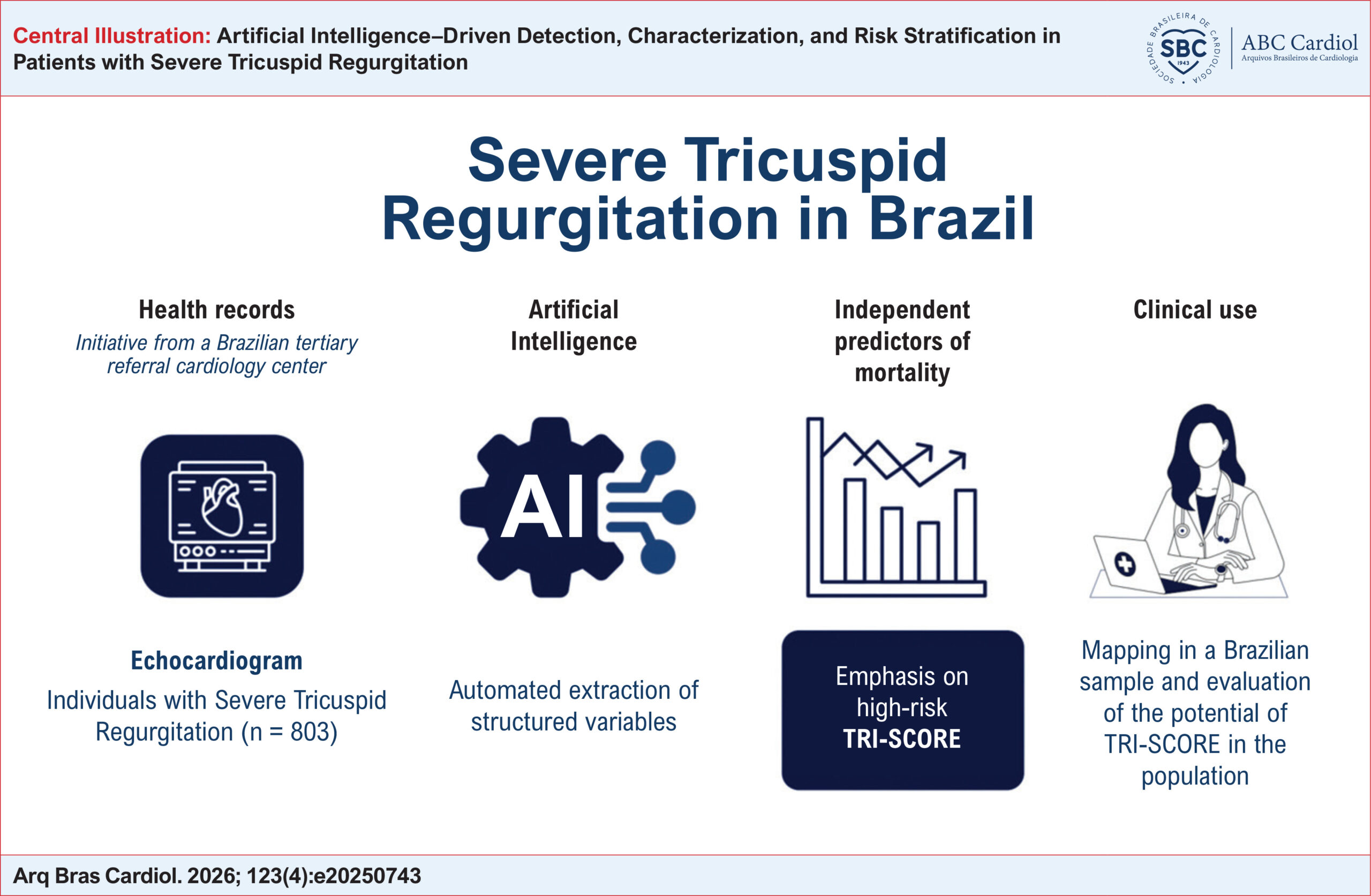
This observational, single-center, non-interventional, retrospective study was based on 71,911 echocardiographic reports performed between 2021 and 2024. A natural language processing (NLP) model was developed in Python to identify cases of severe TR, extract variables, and perform automated calculation of the TRI-SCORE and EuroSCORE II, which were subsequently reviewed. A two-tailed p-value < 0.05 was considered statistically significant.

Results:

A total of 803 patients with severe TR were identified. The mean age was 68.8 ± 13.5 years, and 64.1% were female. Hypertension (71.7%) and atrial fibrillation (69.4%) were the most prevalent comorbidities. Secondary etiology predominated (96.8%), mainly associated with mitral valve disease (68.5%). Surgical risk was high (medians: EuroSCORE II = 13.4%; TRI-SCORE = 7). Mortality was 17.1%. In the secondary mortality analysis, multivariable regression identified independent predictors, such as high-risk TRI-SCORE (relative risk [RR] 2.19; 95% CI 1.14-4.21) and increased creatinine (RR 3.13; 95% CI 1.91-5.14).

Conclusions:

In the largest Brazilian cohort of severe TR, constructed with the aid of AI, the disease demonstrated high clinical and prognostic complexity. The application of NLP to large echocardiographic databases proved to be efficient and may support multicenter studies.

  • Artificial Intelligence
  • Heart Failure
  • Heart Valve Diseases
  • Tricuspid Valve Insufficiency
Read Full Article
Creative Commons Attribution (CC BY) Creative Commons license
06/07/2026 DOI: 10.36660/abc.20250743i Views 1
Artificial Intelligence-Derived ECG-Age as a Predictor of Mortality and Cardiovascular Events: A Systematic Review and Meta-Analysis
ABC
Original Article

Artificial Intelligence-Derived ECG-Age as a Predictor of Mortality and Cardiovascular Events: A Systematic Review and Meta-Analysis

Isadora Cristine Reis Sguizzato Bozzi et al. Maria Clara de Araujo Gontijo Lima Antonio Luiz Pinho Ribeiro Gabriela Miana de Mattos Paixão

Abstract

Background

Artificial intelligence (AI)-derived electrocardiographic age (ECG-age) and the difference between ECG-age and chronological age (delta-age) are emerging biomarkers of cardiovascular aging and adverse outcomes, but their prognostic value remains unclear.

Objectives

We performed a systematic review and meta-analysis to evaluate associations between AI-derived ECG-age or delta-age and clinical outcomes.

Methods

Nine databases were searched through May 1, 2025. Eligible studies evaluated mortality or cardiovascular events and reported measures of association. Pooled hazard ratios (pHRs) with 95% confidence intervals (CIs) were calculated via fixed- or random-effects models, with statistical significance set at p < 0.05. The protocol was registered in PROSPERO (CRD420251042467).

Results

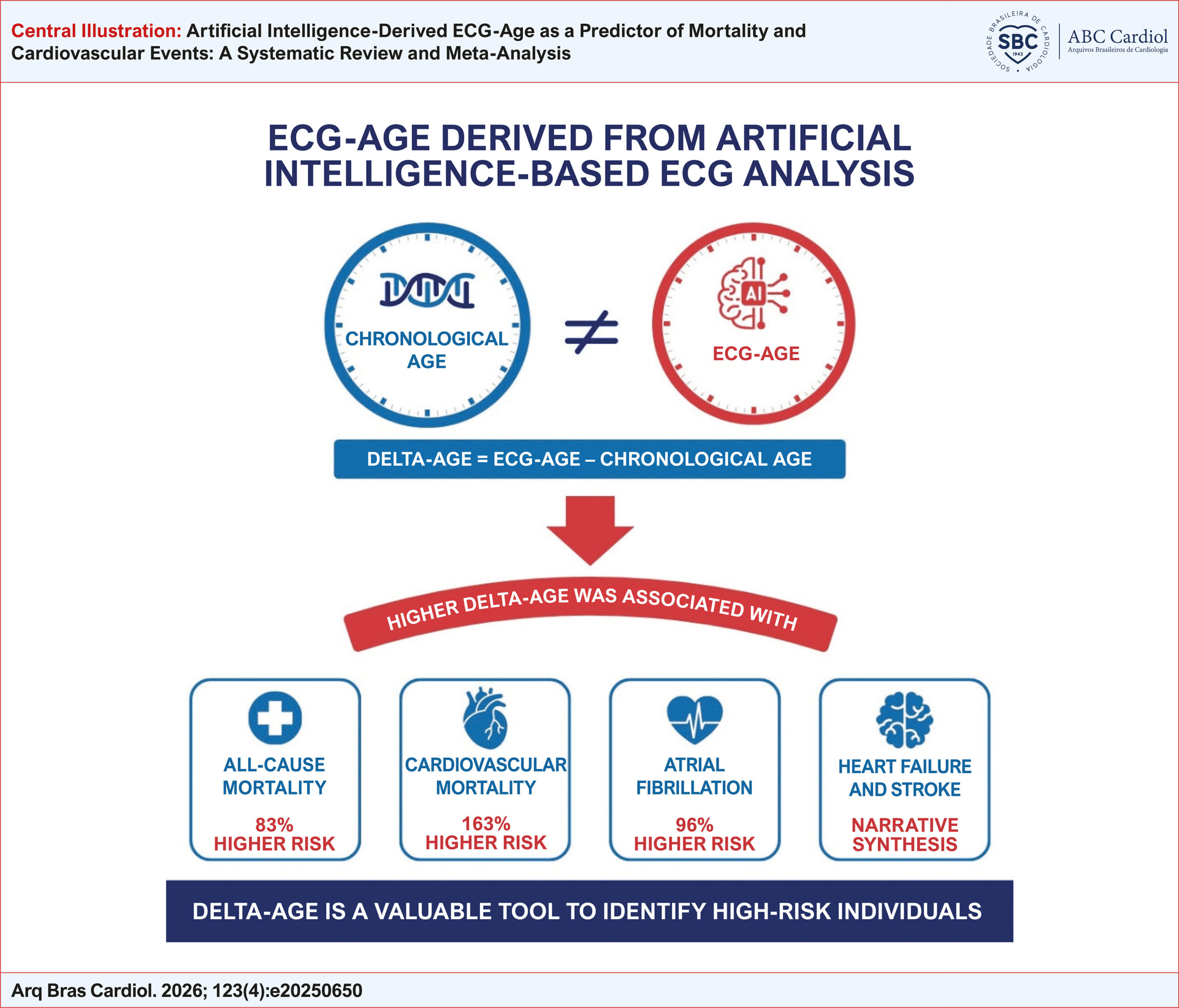
Ten studies (2021–2025) with over 550,000 participants from East Asia, the Americas, and the UK were included. Most used convolutional neural networks to estimate ECG-age; delta-age was calculated as ECG-age minus chronological age. Elevated delta-age was associated with increased all-cause mortality (pHR = 1.83, 95% CI: 1.45–2.32) and cardiovascular mortality (pHR = 2.63, 95% CI: 1.93–3.58). Three studies reported increased risk of atrial fibrillation (pHR = 1.96, 95% CI: 1.43–2.69), although data were limited and heterogeneous. Descriptive analyses suggested that greater delta-age predicts incident heart failure and stroke.

Conclusions

AI-derived ECG-age, particularly delta-age, is associated with all-cause and cardiovascular mortality, supporting its role as a noninvasive biomarker of cardiovascular aging. Evidence for atrial fibrillation is suggestive but limited. Standardized algorithms, robust external validation, and prospective multicenter studies are needed to confirm clinical utility and integrate ECG-age into risk stratification, even in asymptomatic individuals.

  • Artificial Intelligence
  • Deep Learning
  • Electrocardiography
  • Machine Learning
  • Prognosis
Read Full Article
Creative Commons Attribution (CC BY) Creative Commons license
12/06/2026 DOI: 10.36660/abc.20250650i
Figure 1
ABC
Editorial

Validating Artificial Intelligence before the Bedside: ChatGPT-4 vs Mini in Guideline-Based Hypertension Content

Cláudio Tinoco Mesquita et al. Fernanda Azevedo Silva Ana Beatriz Costa do Couto

The rapid integration of artificial intelligence (AI) into medical practice is a reality. From clinical decision support and study design to chatbot tools and the production of educational materials, large language models (LLMs) are increasingly used in daily practice. In this context, studies like the study of Ataídes et al., evaluating the performance of LLM-based materials, are crucial.

Hypertension is one of the leading causes of premature death; therefore, the World Health Organization (WHO) invests in prevention campaigns. It is a disease that affects multiple organs, causing a major impact on the entire body. The condition is defined by a systolic blood pressure (BP) of 140 mmHg or higher, or a diastolic BP of 90 mmHg, according to Brazilian Society of Cardiology guidelines. The number of individuals diagnosed with hypertension increases each year, and studies indicate that the population’s eating habits are characterized by high consumption of ultra-processed foods.

[…]

  • Artificial Intelligence
  • ChatGPT
  • Clinical Guidelines
  • Hypertension
  • validation
Read Full Article
Creative Commons Attribution (CC BY) Creative Commons license
05/06/2026 DOI: 10.36660/abc.20260254i Views 4
Diagnostic Performance of Artificial Intelligence-Driven Electrocardiogram Algorithms in Detecting Heart Failure with Preserved Ejection Fraction: A Systematic Review and Meta-Analysis
IJCS
Original Article

Diagnostic Performance of Artificial Intelligence-Driven Electrocardiogram Algorithms in Detecting Heart Failure with Preserved Ejection Fraction: A Systematic Review and Meta-Analysis

Gustavo Barbosa David et al. Nicolas Ramos Ramon Huntermann Juan Peres de Oliveira … Maria Eduarda Molinari Caroline de Oliveira Fischer Bacca

Abstract

Background:

Heart failure with preserved ejection fraction (HFpEF) is a highly prevalent syndrome associated with substantial morbidity and mortality. Accurate diagnosis is often challenging and costly. Recently, artificial intelligence-based electrocardiogram (AI-ECG) algorithms have emerged to make the diagnosis of HFpEF less expensive and more accessible. However, there is a lack of data regarding their accuracy.

Objective:

We aimed to conduct a systematic review and meta-analysis to evaluate the diagnostic performance of AI-ECG algorithms in detecting HFpEF.

Methods:

We searched PubMed, Embase, and Cochrane databases for studies evaluating AI-ECG algorithms in diagnosing HFpEF. We extracted true-positive, true-negative, false-positive, and false-negative events to estimate pooled sensitivity, specificity with 95% confidence intervals (CI), and area under the curve. Statistical analysis was performed using R under a random-effects model. Heterogeneity was assessed with I² statistics.

Results:

We included three studies comprising 171,073 patients (66.86% with HFpEF), in which an AI-ECG was evaluated alongside echocardiography, with a left ventricular ejection fraction of ≥ 50%. The patients’ mean age was 65.86 ± 4.5 years, and 48.12% were male. AI-ECG algorithms demonstrated a sensitivity of 0.89 (95% CI: 0.64 to 0.97), specificity of 0.80 (95% CI: 0.65 to 0.89), and an area under the receiver operating characteristic curve of 0.89 (95% CI: 0.85 to 0.92).

Conclusion:

AI-ECG algorithms demonstrate moderate to high sensitivity, specificity, and accuracy in diagnosing HFpEF, supporting their potential for routine screening and early detection.

  • Artificial Intelligence
  • Diagnosis
  • Diastolic Heart Failure
  • Electrocardiography
Read Full Article
Creative Commons Attribution (CC BY) Creative Commons license
01/06/2026 DOI: 10.36660/ijcs.20250091
The Use of Artificial Intelligence in the Diagnosis of Cardiac Amyloidosis: Integrative Review
ABCIC
Review Article

The Use of Artificial Intelligence in the Diagnosis of Cardiac Amyloidosis: Integrative Review

Nilson Batista Lemos et al. Gabriela Aparecida Moreira Araújo Marcelo Dantas Tavares de Melo

Abstract

Fundamento:

Cardiac amyloidosis is a rare form of infiltrative cardiomyopathy characterized by the deposition of proteins in the myocardium, resulting in increased wall thickness, impaired ventricular function, and possible progression to heart failure. Diagnosis is challenging due to the low prevalence of the disease and the nonspecific nature of its clinical manifestations. The application of artificial intelligence (AI) to the analysis of medical tests emerges as a promising strategy for early detection, more accurate diagnosis, and timely initiation of treatment.

Methods:

An integrative literature review was conducted on the use of AI in the diagnosis of cardiac amyloidosis. Articles published between 2019 and 2024 were searched in the PubMed, Scopus, Web of Science, Embase, and Cochrane Library databases.

Results:

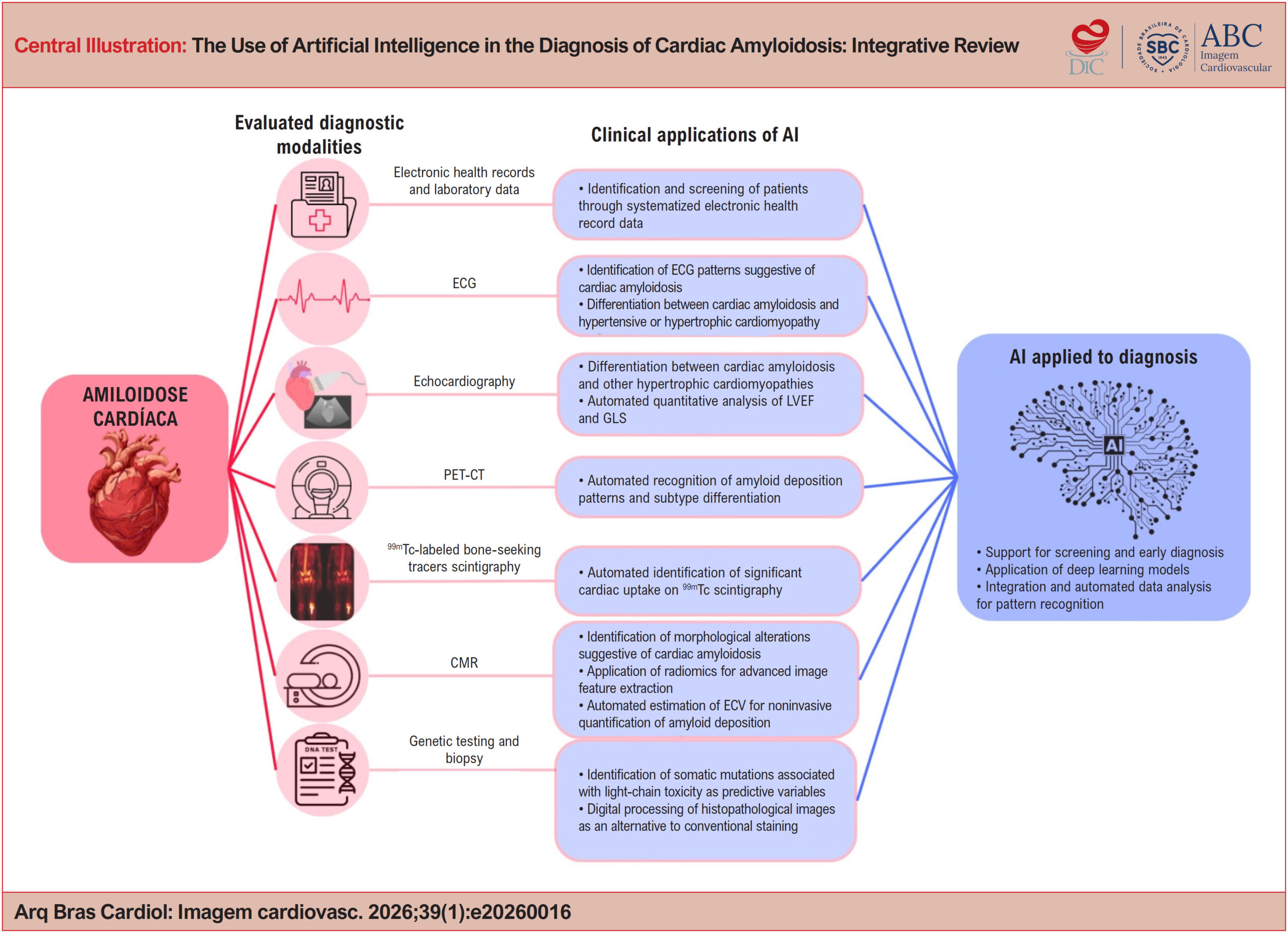
Of the 420 articles initially identified, 21 met the eligibility criteria and were included in the final analysis. A predominance of retrospective observational studies applying machine learning models was observed. Among the diagnostic modalities evaluated in association with AI, electrocardiography and echocardiography were the most frequently studied tests.

Conclusion:

AI demonstrates high potential to improve the screening and diagnosis of cardiac amyloidosis when applied to the analysis of clinical and imaging tests. The findings of this review indicate that AI may accelerate the diagnostic process, reduce the need for invasive procedures, and optimize the use of health care resources. However, to expand its integration into clinical practice and enhance its generalizability, further model refinement and validation in more diverse populations are required.

  • Amyloidosis
  • Artificial Intelligence
  • Diagnosis
Read Full Article
Creative Commons Attribution (CC BY) Creative Commons license
25/05/2026 DOI: 10.36660/abcimg.20260016i Views 1
Figure 1
IJCS
Editorial

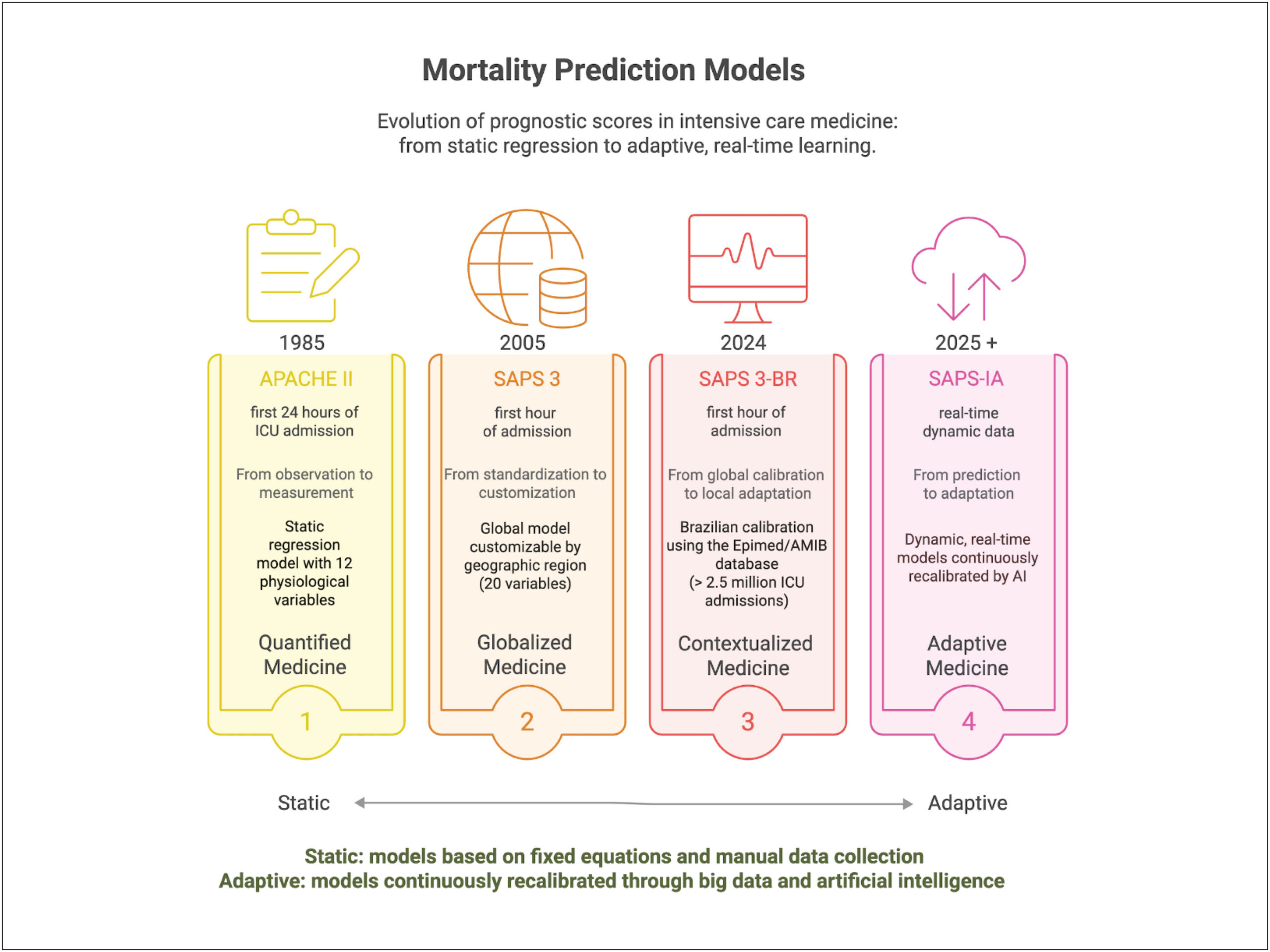
Forty Years of Silent Revolutions in ICUs: From Clinical Records to Intelligent and Predictive Surveillance

Rubens Carmo Costa-Filho et al. Hugo Caire Castro Faria-Neto

Introduction

In the mid-1980s, as modern intensive care medicine was still consolidating as a specialty, a conceptual challenge emerged that would redefine critical care: how to objectively and comparably quantify the severity of illness across different patients and units. In 1985, William A. Knaus et al. published the Acute Physiology and Chronic Health Evaluation II (APACHE II). This landmark model translated clinical observations into a mathematical framework capable of estimating hospital mortality based on 12 physiological and chronic health variables collected during the first 24 hours of ICU admission.

At that time, computing power was limited, and data were collected manually, the technological ceiling of that era.

[…]

  • APACHE
  • Artificial Intelligence
  • Critical Care
  • Prognosis
  • Simplified Acute Physiology Score
Read Full Article
Creative Commons Attribution (CC BY) Creative Commons license
27/04/2026 DOI: 10.36660/ijcs.20250255 Views 1
How Artificial Intelligence Can Transform Women's Healthcare Across All Life Stages
IJCS
Review Article

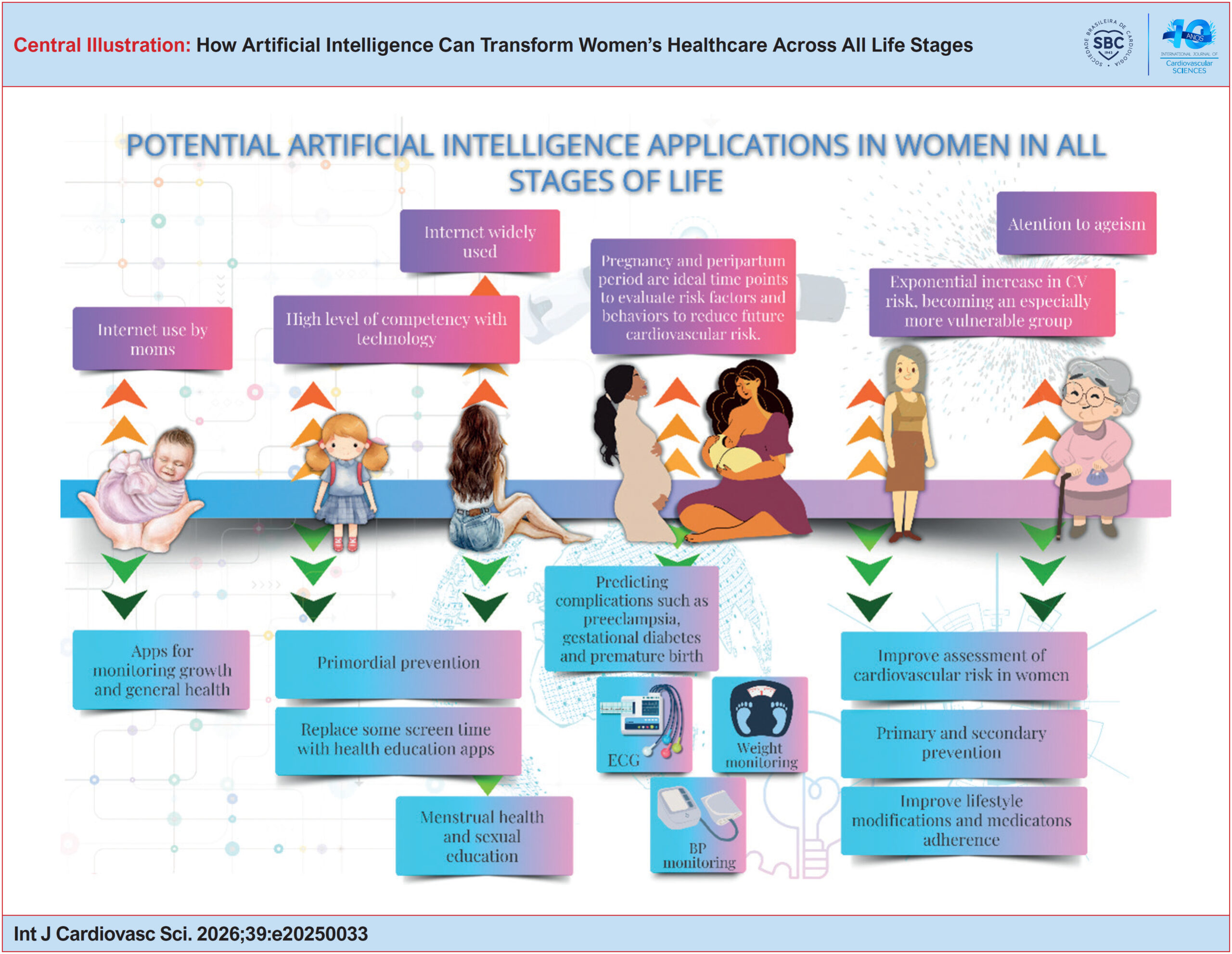
How Artificial Intelligence Can Transform Women's Healthcare Across All Life Stages

Larissa Neto Espíndola et al. Elise Sant’Ana Isaías Gláucia Maria Moraes de Oliveira Alexandra Monteiro

Abstract

Artificial intelligence (AI) has been driving significant transformations in healthcare by enhancing diagnostics, personalizing treatments, and optimizing clinical workflows. In women’s health, it offers innovative approaches for prevention, early detection, and management of various conditions throughout life — from adolescence to old age.

Over the past decade, advances in machine learning algorithms, neural networks, and natural language processing have enabled the analysis of large volumes of clinical data with previously unimaginable precision and speed. However, the integration of AI into women’s healthcare remains underutilized, representing a valuable opportunity to reduce social inequalities that influence adverse health outcomes.

However, the use of AI in women’s healthcare raises important ethical concerns, particularly the need to protect patients’ sensitive data, avoid algorithmic biases that may perpetuate stigma or inequality, and ensure safe, equitable, and responsible implementation. Ethical governance — with national and international guidelines and regulations — is essential to ensure that AI benefits all women, including vulnerable and underrepresented populations, without exacerbating existing disparities.

This manuscript aims to synthesize the main applications of AI in women’s health across different life stages, identifying advances, opportunities, and challenges in this context. Given the complexity and multidisciplinary nature of the topic, we conducted a scoping review – an appropriate methodology for exploring emerging and still underdeveloped fields. In addition to scientific databases, we included a complementary search in digital health app libraries to identify technological solutions already implemented or under development for women’s health.

  • Artificial Intelligence
  • Cardiovascular disease
  • digital health
  • eHealth
  • women's healthcare
Read Full Article
Creative Commons Attribution (CC BY) Creative Commons license
27/04/2026 DOI: 10.36660/ijcs.20250033 Views 2
Fundamentals of Acute Pericarditis: State of the Art
ABC
Review Article

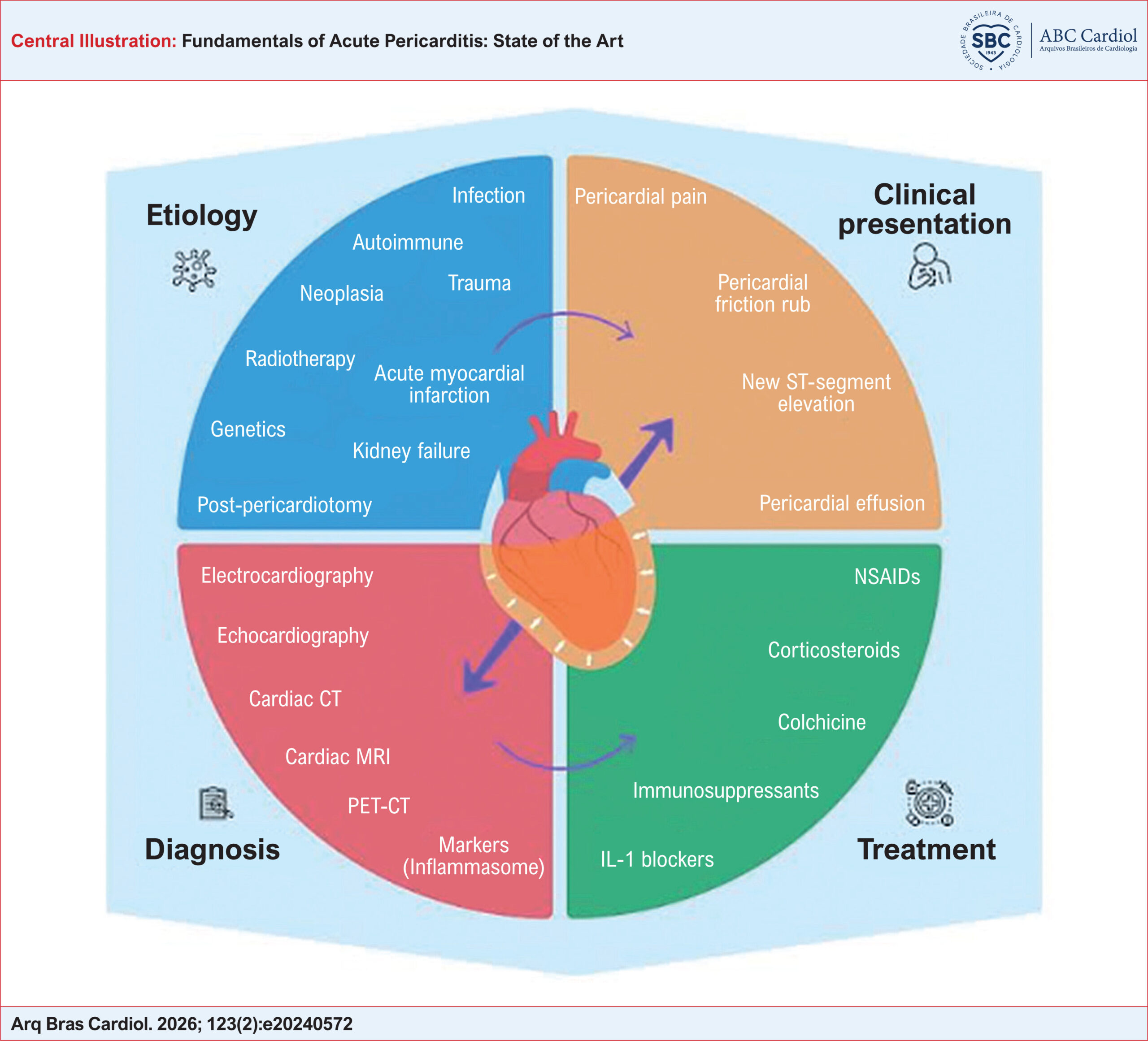
Fundamentals of Acute Pericarditis: State of the Art

Gabriel de Moraes Mangas et al. Jose Gregorio Valero Rodriguez João Alexandre Ranzeiro de Bragança dos Santos Flavia Nunes Benicio de Souza … Luis Felipe Leite da Silva Giovane Leal de Azevedo Junior Alberto Chivaca Neusa Perina de Jesus Jessen Ângelo Oliveira Evandro Tinoco Mesquita

Abstract

Acute pericarditis is an inflammation of the pericardium, the lining that surrounds the heart. It is the most common inflammatory heart condition. The disease frequently affects young adults and can manifest with varying severity. Pericarditis can have diverse causes, including viral infections, autoimmune diseases, post-infarction conditions, and, more recently, SARS-CoV-2 infections or COVID-19 vaccines. In developing countries, especially in Africa, tuberculosis is the leading cause of pericarditis, often associated with HIV. Diagnosis is based on clinical criteria, such as chest pain and electrocardiographic changes, and it can be supported by imaging studies such as echocardiography, cardiac magnetic resonance imaging, and computed tomography. Identification of etiology is crucial to personalized treatment, although the specific cause is often unidentified. New research has highlighted the role of the NLRP3 inflammasome in the pathophysiology of pericarditis, which may pave the way for new therapies. Furthermore, technological advancements and artificial intelligence are discussed as promising tools to improve the management of pericarditis.

  • Acute Pericarditis
  • Artificial Intelligence
  • Diagnosis
  • Inflammation
  • Treatment
Read Full Article
Creative Commons Attribution (CC BY) Creative Commons license
17/04/2026 DOI: 10.36660/abc.20240572i Views 3
Assessment of ChatGPT-4.0 versus ChatGPT-Mini in Generating Guideline-Based Hypertension Content
ABC
Original Article

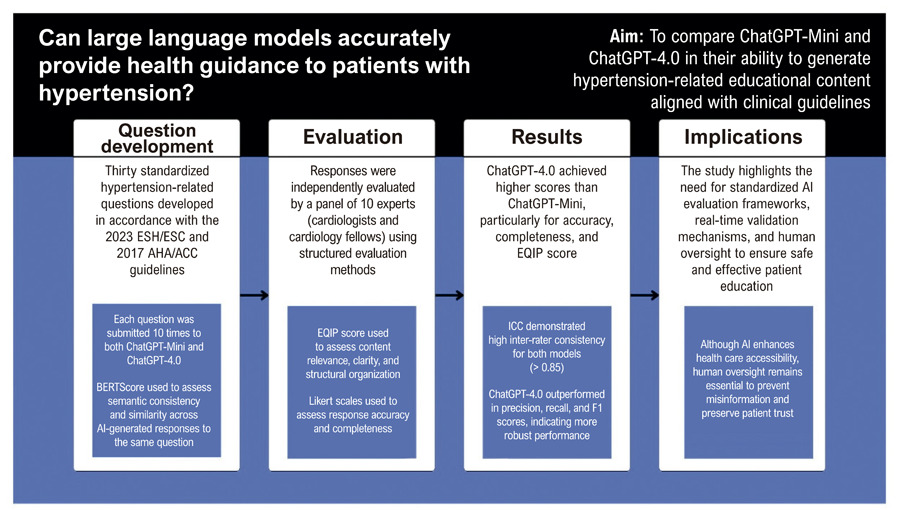
Assessment of ChatGPT-4.0 versus ChatGPT-Mini in Generating Guideline-Based Hypertension Content

Rômullo José Costa Ataídes et al. Marcos Adriano Garcia Campos João Vítor Perez de Souza Rafael Cardoso Rocha … Almir Alamino Lacalle Ciro Bezerra Vieira Thiago Artioli Tiago Cordeiro Medeiros Erito Marques de Souza Filho Ronaldo Gismondi Érika Maria Gonçalves Campana Francisco José Romeo Victor Razuk João Ricardo Nickenig Vissoci Renato Delascio Lopes

Abstract

Background

Artificial intelligence (AI) language models are increasingly used to generate patient education materials. However, their accuracy, completeness, and adherence to clinical guidelines remain uncertain.

Objectives

To compare ChatGPT-Mini and ChatGPT-4.0 in the generation of hypertension education content with respect to accuracy, completeness, structural quality using the Ensuring Quality Information for Patients (EQIP), response consistency, and alignment with established guidelines.

Methods

A standardized set of 31 hypertension-related questions was submitted to both models. Outputs were independently evaluated by 10 blinded clinicians using a modified EQIP score, a 5-point accuracy scale, and a 3-point completeness scale. Response consistency was assessed using BERTScore. Between-model comparisons were performed using the two-sided Wilcoxon rank-sum test (p < 0.05). Effect sizes were reported as Hodges–Lehmann (HL) median differences and Cliff’s delta (δ), both with 95% CIs. Inter-rater reliability was estimated using the intraclass correlation coefficient (ICC; two-way random effects model, absolute agreement).

Results

Central tendency measures favored ChatGPT-4.0, although differences were small. Median scores were as follows: accuracy, 4.10 (3.70-4.20) versus 3.73 (3.60-4.05); completeness, 1.26 (1.17-1.41) versus 1.10 (0.96-1.23); and total EQIP score, 19.5 (18.0-25.0) versus 18.5 (16.0-23.0) for ChatGPT-4.0 and ChatGPT-Mini, respectively. HL median differences were small, with 95% CIs crossing zero (accuracy: +0.37, −0.25 to +0.50; completeness: +0.16, −0.06 to +0.36; EQIP: +1.0, −1.0 to +6.0). Cliff’s δ values were consistently small and positive across primary outcomes, indicating only modest stochastic dominance of ChatGPT-4.0. Identification clarity tended to be higher with ChatGPT-4.0, whereas response consistency measured by BERTScore F1 was generally higher for ChatGPT-Mini (> 0.92 versus 0.885-0.932). Inter-rater reliability was good to excellent across all measures (ICC > 0.80).

Conclusions

ChatGPT-4.0 demonstrated small, non-significant improvements in accuracy, completeness, and structural quality compared with ChatGPT-Mini. Effect sizes were modest, and all 95% CIs included zero. ChatGPT-Mini produced more consistent responses. These findings underscore the importance of routinely reporting effect sizes with 95% CIs and support the use of standardized evaluation methods and real-time validation frameworks for AI-generated medical education content.

  • Artificial Intelligence
  • Hypertension
  • Patient Education as Topic
Read Full Article
Creative Commons Attribution (CC BY) Creative Commons license
16/03/2026 DOI: 10.36660/abc.20250498i Views 1
ABC
Editorial

Pursuing Pragmatic Risk Prediction in Heart Failure

Tiago A. Vaz et al. Nadine Clausell

Risk stratification for acute heart failure (AHF) pursues a delicate balance: models must be accurate enough to guide decisions, yet simple and affordable for widespread use. In this issue of Arquivos Brasileiros de Cardiologia, Ferreira et al. present the ML-HF Score, a machine-learning tool designed to predict in-hospital mortality in AHF that applies a classic philosophy in medical data science, exemplified by Robert Detrano’s seminal 1989 study in coronary artery disease using algorithms that outperform existing methods.,

A testament to the importance of validation in real-world populations, Detrano’s work demonstrated that carefully selected, inexpensive clinical and non-invasive features could achieve diagnostic accuracy comparable to more complex approaches. The resulting dataset, later archived in the UCI Machine Learning Repository, became a cornerstone for benchmarking algorithms, proving that better models can be built with fewer, more accessible resources, provided they are validated across diverse populations.–

[…]

  • Artificial Intelligence
  • Heart Failure
Read Full Article
Creative Commons Attribution (CC BY) Creative Commons license
19/01/2026 DOI: 10.36660/abc.20250685i Views 1
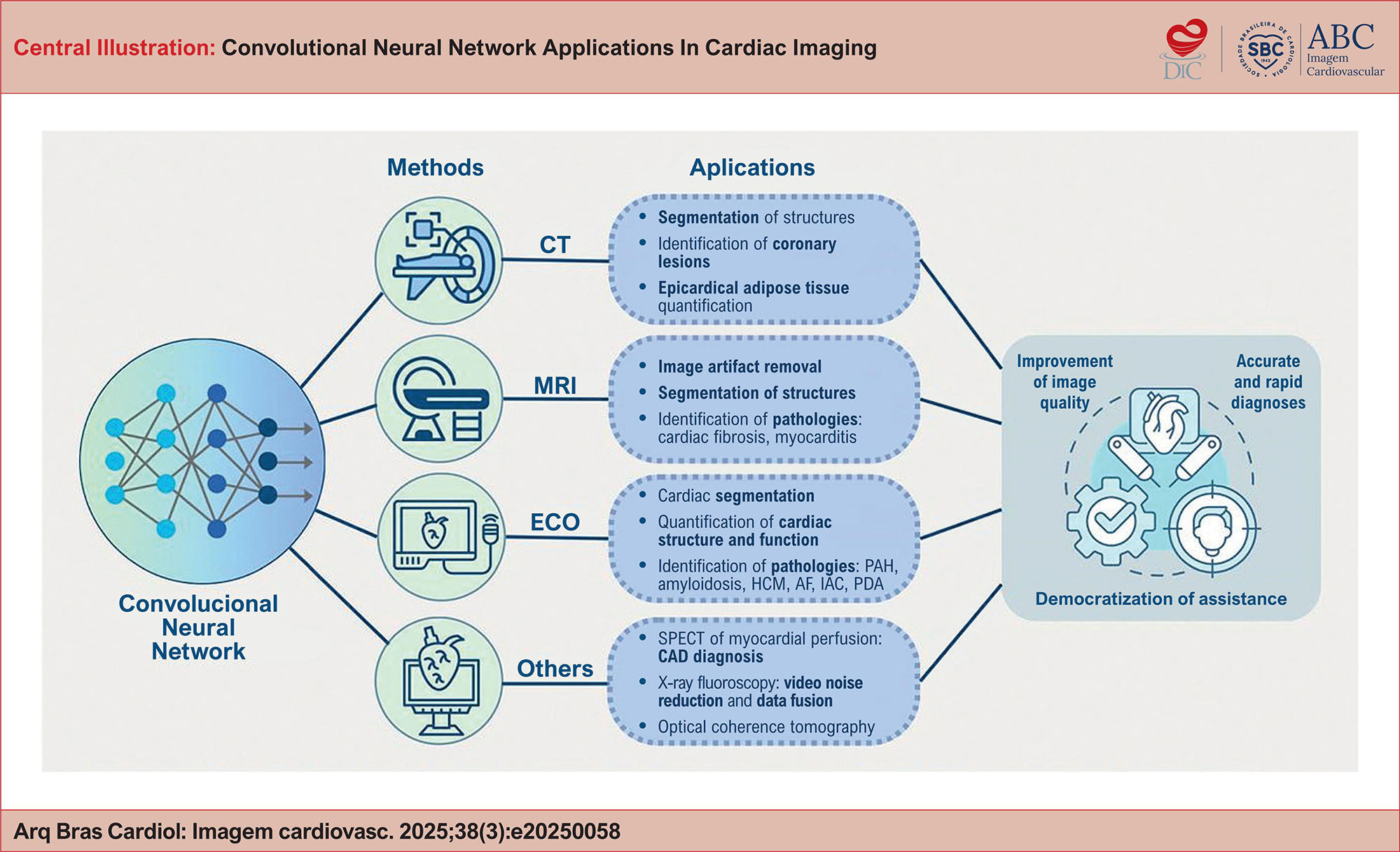
Convolutional Neural Network Applications In Cardiac Imaging
ABCIC
Review Article

Convolutional Neural Network Applications In Cardiac Imaging

Luiz Henrique Cartaxo Fernandes et al. José Lucas Formiga Dantas Marilia Graziela Vieira de Macena Lima Glaudir Donato Marcelo Dantas Tavares de Melo

Abstract

Neural networks are computer models that mimic the workings of the human brain, learning from large volumes of data to perform increasingly complex tasks. This is done by means of interconnected artificial neurons that propagate information from raw layers to refined layers, sometimes of a weighted nature, weaving in the classification or identification of non-linear patterns. The Convolutional Neural Network (CNN) is a specialized deep learning architecture designed to extract and analyze spatial patterns within images, enabling applications in diagnostic decision-making and longitudinal clinical monitoring. Its use in Computed Tomography and Magnetic Resonance Imaging through cardiac image segmentation makes it possible to quickly and efficiently define cardiac structures, playing an important role in the reconstruction of three-dimensional images and in supporting preoperative procedures. In addition, compared to other forms of conventional analysis, it guarantees objective interpretations and superior image quality, based on the removal of artifacts from the studied segment. Echocardiograms have shown good results in identifying pathologies such as pulmonary hypertension, amyloidosis, hypertrophic cardiomyopathy and congenital diseases, and studies on the automation of these exams have shown an opening for what could be a dissemination framework in more remote areas where manual operators are not available. Consequently, CNN-based approaches have the potential to streamline cardiovascular imaging workflows, minimize inter-observer variability, and expand diagnostic capabilities to underserved and remote regions with limited access to specialized care.

  • Artificial Intelligence
  • Cardiac Imaging Techniques
  • Computer Neural Networks
Read Full Article
Creative Commons Attribution (CC BY) Creative Commons license
17/11/2025 DOI: 10.36660/abcimg.20250058i Views 2
ABC
Editorial

Applicability of Machine Learning Algorithms in the Diagnosis of Arrhythmias – How Long Until The Machine Starts Teaching Us?

Marcelo Martins Pinto Filho

The electrocardiogram (ECG), in clinical use since the early 1900s, remains a beloved tool for cardiologists, clinicians, and medical students. It is arguably the most important bedside instrument in cardiology, essential for managing arrhythmias and acute ischemic syndromes, as well as guiding electrophysiologic care. Still, advances in electrocardiography interpretation have been only modest in the last hundred years. Devices have become more portable, digital, and capable of longer recordings, but core interpretive principles remain rooted in early 20th-century methods. In recent years, this has been reshaped by the rise of computational technologies, especially artificial intelligence (AI). Tools such as deep neural networks (DNNs) and machine learning models (MLMs) are enabling a new era in ECG analysis, the AI-enhanced electrocardiography (AI-enhanced ECG).

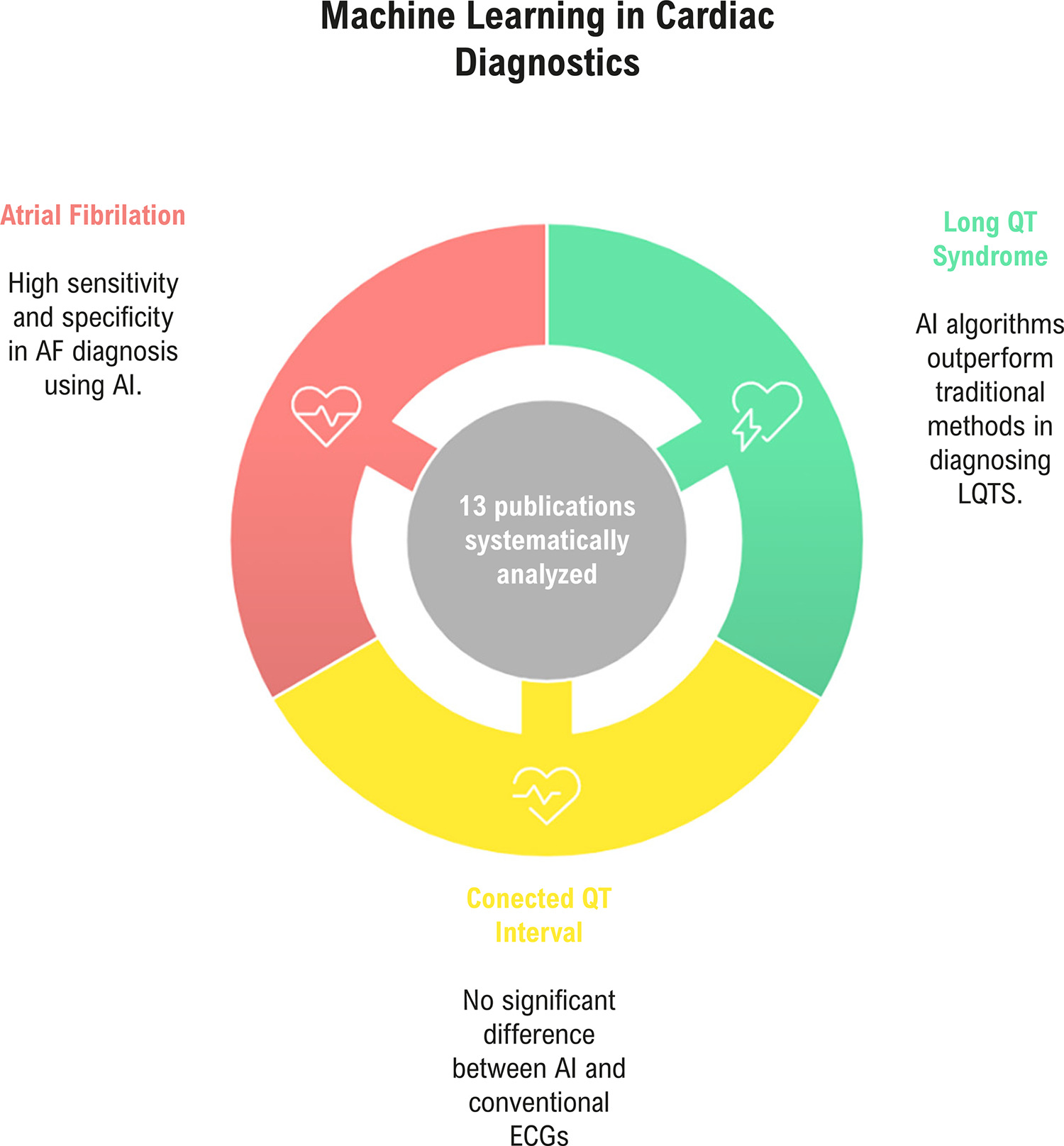
In this issue of the ABC Cardiol, Guimarães do Nascimento et al. report on a systematic review of studies evaluating the applicability of AI-enhanced ECG in the diagnosis of cardiac arrhythmias. They included studies of different methodologies that addressed the role of AI-enhanced ECG in the detection of long-QT syndrome (LQTS) (one study), corrected QT interval (cQTi) (one study), and atrial fibrillation (AF) (eleven studies).

[…]

  • Artificial Intelligence
  • Cardiac, Arrhythmia
  • electrocardiogram
  • Machine Learning
  • Neural Network
Read Full Article
Creative Commons Attribution (CC BY) Creative Commons license
19/09/2025 DOI: 10.36660/abc.20250405i Views 2
ABC
Viewpoint

Artificial Intelligence Assistance in the Peer Review Analysis of Medical Articles: Advantages, Disadvantages, and Ethical Considerations

André Zimerman et al. Andre d’Avila

AI talks about the role of AI as a reviewer of medical papers:

The peer review process is a cornerstone of scientific integrity, particularly in the field of medicine, where rigorous evaluation ensures that published research is credible, reproducible, and safe for clinical application. However, the growing volume of medical articles submitted for publication, coupled with the complexity of modern research, has strained the traditional peer review system.

The use of AI in the peer review of medical articles represents a transformative opportunity to address the mounting challenges of academic publishing in a field where accuracy, timeliness, and reliability are paramount. However, alongside its potential benefits, AI introduces significant drawbacks and notable challenges. This essay examines the benefits and shortcomings of AI in the peer review analysis of medical articles, as well as the ethical implications of its integration.

[…]

  • Artificial Intelligence
  • Ethics
  • Peer review
  • Publications
Read Full Article
Creative Commons Attribution (CC BY) Creative Commons license
01/09/2025 DOI: 10.36660/abc.20250315i Views 2
Applicability of Machine Learning Algorithms in Diagnosis of Atrial Fibrillation and LQTS by Electrocardiogram Interpretation: A Systematic Review
ABC
Original Article

Applicability of Machine Learning Algorithms in Diagnosis of Atrial Fibrillation and LQTS by Electrocardiogram Interpretation: A Systematic Review

Paulo Cainan Guimarães do Nascimento et al. Matthews Silva Martins Alex Cleber Improta-Caria Roque Aras Junior

Abstract

Background

Machine Learning (ML) is a type of algorithm that autonomously learns to recognize complex patterns. In the diagnostic context of cardiac arrhythmias, these algorithms have shown significant advancements due to their ability to provide automated interpretation and pattern recognition in electrocardiograms (ECGs).

Objective

To analyze and identify the applicability, validity, and feasibility of ML algorithm models in the diagnostic process of cardiac arrhythmias through automated electrocardiogram interpretation.

Methods

This systematic literature review was reported according to the PRISMA guidelines. The searches were conducted in the Cochrane Library, EMBASE, LILACS, and PubMed between February 2022 and November 2022. The study period encompasses articles published between 2017 and 2022.

Results

The database search yielded 119 results, covering three subthemes: Long QT Syndrome (LQTS), corrected QT interval (QTc), and atrial fibrillation (AF). AF was the most prevalent theme. The sample sizes were quite variable. The outcomes were mostly satisfactory. In the diagnosis of LQTS using Artificial Intelligence (AI), the algorithm outperformed conventional methods in diagnostic distinction. In the evaluation of QTc, there was no difference between the AI-integrated ECG and the conventional ECG. In the diagnosis of AF, the algorithms, models, and devices demonstrated high sensitivity and specificity, along with greater accuracy.

Conclusion

ML models in the diagnostic process of cardiac arrhythmias are feasible and rapidly developing. They demonstrate accuracy values between 96.4% and 98.2%, sensitivity between 92.8% and 99.4%, and specificity between 95% and 98.1%, particularly in the diagnosis of atrial fibrillation.

  • Artificial Intelligence
  • Cardiac Arrhythmias
  • Electrocardiography
  • Machine Learning
  • Neural Network
Read Full Article
Creative Commons Attribution (CC BY) Creative Commons license
01/09/2025 DOI: 10.36660/abc.20240843i Views 1
ABC
Editorial

Will You Tell Them When They Are Wrong? Automation Bias and Artificial Intelligence in Medicine

Marcio Sommer Bittencourt

The use of decision support tools and automation in medical practice is not new. Early tools employed simple regression models to reduce heterogeneity and offer more structured care. In cardiology, initial examples of decision support tools included the Framingham risk scores for primary prevention risk stratification and automated sliding scale dose adjustments for heparin or warfarin. Since then, automation processes have become more sophisticated and are now widespread in many routine aspects of medical practice. In cardiology, these include automated preliminary interpretations of electrocardiography (ECG) tracings as well as automated measurements and image analysis in echocardiography, nuclear medicine, and cardiac magnetic resonance imaging. Other automated clinical decision support systems help reduce prescribing errors by alerting clinicians to drug-drug interactions or incorrect dosages, for example. With recent advances in artificial intelligence (AI), expectations for the future of such tools have grown dramatically. Yet, the potential negative implications of these technologies have received considerably less attention.

Clinical decision support systems can improve medical decision-making and patient outcomes. However, these systems are not flawless and may produce incorrect outputs. Most studies assessing their performance rely on conventional medical metrics such as sensitivity, specificity, accuracy, and area under the receiver operating characteristic curve. Yet, it is far more important to evaluate the real-world impact of these tools, particularly in light of how clinicians interact with them. This is especially relevant given that the European Union Artificial Intelligence Act mandates human oversight for high-risk AI systems. The issue becomes even more critical with the widespread use of generative AI chatbots, as the current generation of complex AI tools has led to a growing trend of overreliance on imperfect automation.

[…]

  • Artificial Intelligence
  • Bias
  • Cardiology
Read Full Article
Creative Commons Attribution (CC BY) Creative Commons license
14/07/2025 DOI: 10.36660/abc.20250300i Views 2

Could not load more articles. Please try again.

How to cite this article

EndNote RIS

Electronic Document Format (Vancouver)

Dannenhauer GP, Santos SN, Petisco ACGP, Freire CMV, Albricker ACL, Barros FS. Artificial Intelligence in Carotid Ultrasonography: Current Status and Future Directions. ABC Imagem Cardiovascular 2026;39(3):e20260089.

Electronic Document Format (ABNT)

Dannenhauer, Gustavo Paglioli; Santos, Simone Nascimento dos; Petisco, Ana Claudia Gomes Pereira; Freire, Claudia Maria Vilas; Albricker, Ana Cristina Lopes; Barros, Fanilda Souto. Artificial Intelligence in Carotid Ultrasonography: Current Status and Future Directions. ABC Imagem Cardiovascular, v. 39, n. 3, e20260089, Sep. 2026.

Electronic Document Format (APA)

Dannenhauer, G. P., Santos, S. N. , Petisco, A. C. G. P., Freire, C. M. V., Albricker, A. C. L., & Barros, F. S. (2026). Artificial Intelligence in Carotid Ultrasonography: Current Status and Future Directions. ABC Imagem Cardiovascular, 39(3), e20260089.

Electronic Document Format (ISO)

Dannenhauer, Gustavo Paglioli and Santos, Simone Nascimento dos and Petisco, Ana Claudia Gomes Pereira and Freire, Claudia Maria Vilas and Albricker, Ana Cristina Lopes and Barros, Fanilda Souto. Artificial Intelligence in Carotid Ultrasonography: Current Status and Future Directions. ABC Imagem Cardiovascular [online]. 2026, vol. 39, n. 3, [cited 2026-10-14], e20260089. Available from: <https://journals.cardiol.br/en/article/artificial-intelligence-in-carotid-ultrasonography-current-status-and-future-directions/>. ISSN 2318-8219

EndNote RIS

Electronic Document Format (Vancouver)

Costa GCFO, Rodriguez JGV, Costa GFO, Pimentel AML, Mesquita ET. Global Mapping of Research on Artificial Intelligence Applied to Myocarditis. ABC Heart Fail Cardiomyop 2026;6:e20260016.

Electronic Document Format (ABNT)

Costa, Guilherme Cesar Fernandes de Oliveira da; Rodriguez, Jose Gregorio Valero; Costa, Giulia Fernandes de Oliveira da; Pimentel, Adriana Munford Lima; Mesquita, Evandro Tinoco. Global Mapping of Research on Artificial Intelligence Applied to Myocarditis. ABC Heart Fail Cardiomyop, v. 6, e20260016, Aug. 2026.

Electronic Document Format (APA)

Costa, G. C. F. O. , Rodriguez, J. G. V., Costa, G. F. O. , Pimentel, A. M. L., & Mesquita, E. T. (2026). Global Mapping of Research on Artificial Intelligence Applied to Myocarditis. ABC Heart Fail Cardiomyop, 6, e20260016.

Electronic Document Format (ISO)

Costa, Guilherme Cesar Fernandes de Oliveira da and Rodriguez, Jose Gregorio Valero and Costa, Giulia Fernandes de Oliveira da and Pimentel, Adriana Munford Lima and Mesquita, Evandro Tinoco. Global Mapping of Research on Artificial Intelligence Applied to Myocarditis. ABC Heart Fail Cardiomyop [online]. 2026, vol. 6, [cited 2026-10-14], e20260016. Available from: <https://journals.cardiol.br/en/article/global-mapping-of-research-on-artificial-intelligence-applied-to-myocarditis/>

EndNote RIS

Electronic Document Format (Vancouver)

Pinheiro MCM, Felberg L, Bozzi ICRS, Ribeiro ALP, Paixão GMM. Artificial Intelligence Applied to Electrocardiogram-Based Cardiovascular Risk Assessment: A Systematic Review. Arquivos Brasileiros de Cardiologia 2026;123(7):e20250790.

Electronic Document Format (ABNT)

Pinheiro, Maria Clara Mantoan; Felberg, Lívia; Bozzi, Isadora Cristine Reis Sguizzato; Ribeiro, Antônio Luiz Pinho; Paixão, Gabriela Miana de Mattos. Artificial Intelligence Applied to Electrocardiogram-Based Cardiovascular Risk Assessment: A Systematic Review. Arquivos Brasileiros de Cardiologia, v. 123, n. 7, e20250790, Aug. 2026.

Electronic Document Format (APA)

Pinheiro, M. C. M., Felberg, L., Bozzi, I. C. R. S., Ribeiro, A. L. P., & Paixão, G. M. M. (2026). Artificial Intelligence Applied to Electrocardiogram-Based Cardiovascular Risk Assessment: A Systematic Review. Arquivos Brasileiros de Cardiologia, 123(7), e20250790.

Electronic Document Format (ISO)

Pinheiro, Maria Clara Mantoan and Felberg, Lívia and Bozzi, Isadora Cristine Reis Sguizzato and Ribeiro, Antônio Luiz Pinho and Paixão, Gabriela Miana de Mattos. Artificial Intelligence Applied to Electrocardiogram-Based Cardiovascular Risk Assessment: A Systematic Review. Arquivos Brasileiros de Cardiologia [online]. 2026, vol. 123, n. 7, [cited 2026-10-14], e20250790. Available from: <https://journals.cardiol.br/en/article/artificial-intelligence-applied-to-electrocardiogram-based-cardiovascular-risk-assessment-a-systematic-review/>. ISSN 0066-782X

EndNote RIS

Electronic Document Format (Vancouver)

Oliveira MM, Oliveira GMM. Scientific Publishing in the era of Artificial Intelligence: Integrity and Responsibility. Arquivos Brasileiros de Cardiologia 2026;123(8):e20260338.

Electronic Document Format (ABNT)

Oliveira, Mário Martins; Oliveira, Gláucia Maria Moraes de. Scientific Publishing in the era of Artificial Intelligence: Integrity and Responsibility. Arquivos Brasileiros de Cardiologia, v. 123, n. 8, e20260338, Jul. 2026.

Electronic Document Format (APA)

Oliveira, M. M., & Oliveira, G. M. M. (2026). Scientific Publishing in the era of Artificial Intelligence: Integrity and Responsibility. Arquivos Brasileiros de Cardiologia, 123(8), e20260338.

Electronic Document Format (ISO)

Oliveira, Mário Martins and Oliveira, Gláucia Maria Moraes de. Scientific Publishing in the era of Artificial Intelligence: Integrity and Responsibility. Arquivos Brasileiros de Cardiologia [online]. 2026, vol. 123, n. 8, [cited 2026-10-14], e20260338. Available from: <https://journals.cardiol.br/en/article/scientific-publishing-in-the-era-of-artificial-intelligence-integrity-and-responsibility/>. ISSN 0066-782X

EndNote RIS

Electronic Document Format (Vancouver)

Villacorta H. AI-Enhanced ECGs for the Diagnosis of HFpEF: A Promising Frontier, But Not Yet a Standalone Solution. International Journal of Cardiovascular Sciences 2026;39:e20250272.

Electronic Document Format (ABNT)

Villacorta, Humberto. AI-Enhanced ECGs for the Diagnosis of HFpEF: A Promising Frontier, But Not Yet a Standalone Solution. International Journal of Cardiovascular Sciences, v. 39, e20250272, Jul. 2026.

Electronic Document Format (APA)

Villacorta, H. (2026). AI-Enhanced ECGs for the Diagnosis of HFpEF: A Promising Frontier, But Not Yet a Standalone Solution. International Journal of Cardiovascular Sciences, 39, e20250272.

Electronic Document Format (ISO)

Villacorta, Humberto. AI-Enhanced ECGs for the Diagnosis of HFpEF: A Promising Frontier, But Not Yet a Standalone Solution. International Journal of Cardiovascular Sciences [online]. 2026, vol. 39, [cited 2026-10-14], e20250272. Available from: <https://journals.cardiol.br/en/article/ai-enhanced-ecgs-for-the-diagnosis-of-hfpef-a-promising-frontier-but-not-yet-a-standalone-solution/>. ISSN 2359-4802

EndNote RIS

Electronic Document Format (Vancouver)

Ata BN. Technology-Based Cardiac Rehabilitation and Exercise Capacity in Coronary Artery Disease: An Artificial Intelligence Analysis. Arquivos Brasileiros de Cardiologia 2026;123(5):e20260179.

Electronic Document Format (ABNT)

Ata, Benil Nesli. Technology-Based Cardiac Rehabilitation and Exercise Capacity in Coronary Artery Disease: An Artificial Intelligence Analysis. Arquivos Brasileiros de Cardiologia, v. 123, n. 5, e20260179, Jul. 2026.

Electronic Document Format (APA)

Ata, B. N. (2026). Technology-Based Cardiac Rehabilitation and Exercise Capacity in Coronary Artery Disease: An Artificial Intelligence Analysis. Arquivos Brasileiros de Cardiologia, 123(5), e20260179.

Electronic Document Format (ISO)

Ata, Benil Nesli. Technology-Based Cardiac Rehabilitation and Exercise Capacity in Coronary Artery Disease: An Artificial Intelligence Analysis. Arquivos Brasileiros de Cardiologia [online]. 2026, vol. 123, n. 5, [cited 2026-10-14], e20260179. Available from: <https://journals.cardiol.br/en/article/technology-based-cardiac-rehabilitation-and-exercise-capacity-in-coronary-artery-disease-an-artificial-intelligence-analysis/>. ISSN 0066-782X

EndNote RIS

Electronic Document Format (Vancouver)

Pedrosa RC. Artificial Intelligence Attack! The Rising Importance of Chagas Disease. Arquivos Brasileiros de Cardiologia 2026;123(5):e20260409.

Electronic Document Format (ABNT)

Pedrosa, Roberto Coury. Artificial Intelligence Attack! The Rising Importance of Chagas Disease. Arquivos Brasileiros de Cardiologia, v. 123, n. 5, e20260409, Jul. 2026.

Electronic Document Format (APA)

Pedrosa, R. C. (2026). Artificial Intelligence Attack! The Rising Importance of Chagas Disease. Arquivos Brasileiros de Cardiologia, 123(5), e20260409.

Electronic Document Format (ISO)

Pedrosa, Roberto Coury. Artificial Intelligence Attack! The Rising Importance of Chagas Disease. Arquivos Brasileiros de Cardiologia [online]. 2026, vol. 123, n. 5, [cited 2026-10-14], e20260409. Available from: <https://journals.cardiol.br/en/article/artificial-intelligence-attack-the-rising-importance-of-chagas-disease/>. ISSN 0066-782X

EndNote RIS

Electronic Document Format (Vancouver)

Fonseca IMG, Nunes MCP, Sable C, Mendoza RF, Santos FLN, Gomes PR, Carvalho APV, et al. Artificial Intelligence-Enhanced Electrocardiography Analysis for Diagnosing Chagas Disease. Arquivos Brasileiros de Cardiologia 2026;123(5):e20260032.

Electronic Document Format (ABNT)

Fonseca, Isabella Moreira Gonzalez; Nunes, Maria Carmo Pereira; Sable, Craig; Mendoza, Renata Fonseca; Santos, Fred Luciano Neves; Gomes, Paulo Rodrigues; Carvalho, Adson Patrik Vieira; Mendoza, Bernardo Fonseca; Souza, Noilson Lazaro; Barbosa, José Augusto de Almeida; Cardoso, Clareci Silva; Nascimento, Bruno Ramos; Ribeiro, Antonio L. P.. Artificial Intelligence-Enhanced Electrocardiography Analysis for Diagnosing Chagas Disease. Arquivos Brasileiros de Cardiologia, v. 123, n. 5, e20260032, Jul. 2026.

Electronic Document Format (APA)

Fonseca, I. M. G., Nunes, M. C. P., Sable, C., Mendoza, R. F., Santos, F. L. N., Gomes, P. R., Carvalho, A. P. V., Mendoza, B. F., Souza, N. L., Barbosa, J. A. A., Cardoso, C. S., Nascimento, B. R., & Ribeiro, A. L. P. (2026). Artificial Intelligence-Enhanced Electrocardiography Analysis for Diagnosing Chagas Disease. Arquivos Brasileiros de Cardiologia, 123(5), e20260032.

Electronic Document Format (ISO)

Fonseca, Isabella Moreira Gonzalez and Nunes, Maria Carmo Pereira and Sable, Craig and Mendoza, Renata Fonseca and Santos, Fred Luciano Neves and Gomes, Paulo Rodrigues and Carvalho, Adson Patrik Vieira and Mendoza, Bernardo Fonseca and Souza, Noilson Lazaro and Barbosa, José Augusto de Almeida and Cardoso, Clareci Silva and Nascimento, Bruno Ramos and Ribeiro, Antonio L. P.. Artificial Intelligence-Enhanced Electrocardiography Analysis for Diagnosing Chagas Disease. Arquivos Brasileiros de Cardiologia [online]. 2026, vol. 123, n. 5, [cited 2026-10-14], e20260032. Available from: <https://journals.cardiol.br/en/article/artificial-intelligence-enhanced-electrocardiography-analysis-for-diagnosing-chagas-disease/>. ISSN 0066-782X

EndNote RIS

Electronic Document Format (Vancouver)

Duarte CM, Mesquita CT. Ethical Use of Artificial Intelligence: Guidelines for Peer Review. International Journal of Cardiovascular Sciences 2026;39:e2025294.

Electronic Document Format (ABNT)

Duarte, Cristiano Marciano; Mesquita, Claudio Tinoco. Ethical Use of Artificial Intelligence: Guidelines for Peer Review. International Journal of Cardiovascular Sciences, v. 39, e2025294, Jul. 2026.

Electronic Document Format (APA)

Duarte, C. M., & Mesquita, C. T. (2026). Ethical Use of Artificial Intelligence: Guidelines for Peer Review. International Journal of Cardiovascular Sciences, 39, e2025294.

Electronic Document Format (ISO)

Duarte, Cristiano Marciano and Mesquita, Claudio Tinoco. Ethical Use of Artificial Intelligence: Guidelines for Peer Review. International Journal of Cardiovascular Sciences [online]. 2026, vol. 39, [cited 2026-10-14], e2025294. Available from: <https://journals.cardiol.br/en/article/ethical-use-of-artificial-intelligence-guidelines-for-peer-review/>. ISSN 2359-4802

EndNote RIS

Electronic Document Format (Vancouver)

Carmo LV, Ramos AIO, Togna DJD, Farias ES, Siqueira DAA. Artificial Intelligence–Driven Detection, Characterization, and Risk Stratification in Patients with Severe Tricuspid Regurgitation. Arquivos Brasileiros de Cardiologia 2026;123(4):e20250743.

Electronic Document Format (ABNT)

Carmo, Luna Varela do; Ramos, Auristela Isabel de Oliveira; Togna, Dorival Julio Della; Farias, Eduardo da Silva; Siqueira, Dimytri Alexandre de Alvim. Artificial Intelligence–Driven Detection, Characterization, and Risk Stratification in Patients with Severe Tricuspid Regurgitation. Arquivos Brasileiros de Cardiologia, v. 123, n. 4, e20250743, Jul. 2026.

Electronic Document Format (APA)

Carmo, L. V. , Ramos, A. I. O., Togna, D. J. D., Farias, E. S., & Siqueira, D. A. A. (2026). Artificial Intelligence–Driven Detection, Characterization, and Risk Stratification in Patients with Severe Tricuspid Regurgitation. Arquivos Brasileiros de Cardiologia, 123(4), e20250743.

Electronic Document Format (ISO)

Carmo, Luna Varela do and Ramos, Auristela Isabel de Oliveira and Togna, Dorival Julio Della and Farias, Eduardo da Silva and Siqueira, Dimytri Alexandre de Alvim. Artificial Intelligence–Driven Detection, Characterization, and Risk Stratification in Patients with Severe Tricuspid Regurgitation. Arquivos Brasileiros de Cardiologia [online]. 2026, vol. 123, n. 4, [cited 2026-10-14], e20250743. Available from: <https://journals.cardiol.br/en/article/artificial-intelligence-driven-detection-characterization-and-risk-stratification-in-patients-with-severe-tricuspid-regurgitation/>. ISSN 0066-782X

EndNote RIS

Electronic Document Format (Vancouver)

Bozzi ICRS, Lima MCAG, Ribeiro ALP, Paixão GMM. Artificial Intelligence-Derived ECG-Age as a Predictor of Mortality and Cardiovascular Events: A Systematic Review and Meta-Analysis. Arquivos Brasileiros de Cardiologia 2026;123(4):e20250650.

Electronic Document Format (ABNT)

Bozzi, Isadora Cristine Reis Sguizzato; Lima, Maria Clara de Araujo Gontijo; Ribeiro, Antonio Luiz Pinho; Paixão, Gabriela Miana de Mattos. Artificial Intelligence-Derived ECG-Age as a Predictor of Mortality and Cardiovascular Events: A Systematic Review and Meta-Analysis. Arquivos Brasileiros de Cardiologia, v. 123, n. 4, e20250650, Jun. 2026.

Electronic Document Format (APA)

Bozzi, I. C. R. S., Lima, M. C. A. G., Ribeiro, A. L. P., & Paixão, G. M. M. (2026). Artificial Intelligence-Derived ECG-Age as a Predictor of Mortality and Cardiovascular Events: A Systematic Review and Meta-Analysis. Arquivos Brasileiros de Cardiologia, 123(4), e20250650.

Electronic Document Format (ISO)

Bozzi, Isadora Cristine Reis Sguizzato and Lima, Maria Clara de Araujo Gontijo and Ribeiro, Antonio Luiz Pinho and Paixão, Gabriela Miana de Mattos. Artificial Intelligence-Derived ECG-Age as a Predictor of Mortality and Cardiovascular Events: A Systematic Review and Meta-Analysis. Arquivos Brasileiros de Cardiologia [online]. 2026, vol. 123, n. 4, [cited 2026-10-14], e20250650. Available from: <https://journals.cardiol.br/en/article/artificial-intelligence-derived-ecg-age-as-a-predictor-of-mortality-and-cardiovascular-events-a-systematic-review-and-meta-analysis/>. ISSN 0066-782X

EndNote RIS

Electronic Document Format (Vancouver)

Mesquita CT, Silva FA, Couto ABC. Validating Artificial Intelligence before the Bedside: ChatGPT-4 vs Mini in Guideline-Based Hypertension Content. Arquivos Brasileiros de Cardiologia 2026;123(2):e20260254.

Electronic Document Format (ABNT)

Mesquita, Cláudio Tinoco; Silva, Fernanda Azevedo; Couto, Ana Beatriz Costa do. Validating Artificial Intelligence before the Bedside: ChatGPT-4 vs Mini in Guideline-Based Hypertension Content. Arquivos Brasileiros de Cardiologia, v. 123, n. 2, e20260254, Jun. 2026.

Electronic Document Format (APA)

Mesquita, C. T., Silva, F. A., & Couto, A. B. C. (2026). Validating Artificial Intelligence before the Bedside: ChatGPT-4 vs Mini in Guideline-Based Hypertension Content. Arquivos Brasileiros de Cardiologia, 123(2), e20260254.

Electronic Document Format (ISO)

Mesquita, Cláudio Tinoco and Silva, Fernanda Azevedo and Couto, Ana Beatriz Costa do. Validating Artificial Intelligence before the Bedside: ChatGPT-4 vs Mini in Guideline-Based Hypertension Content. Arquivos Brasileiros de Cardiologia [online]. 2026, vol. 123, n. 2, [cited 2026-10-14], e20260254. Available from: <https://journals.cardiol.br/en/article/validating-artificial-intelligence-before-the-bedside-chatgpt-4-vs-mini-in-guideline-based-hypertension-content/>. ISSN 0066-782X

EndNote RIS

Electronic Document Format (Vancouver)

David GB, Ramos N, Huntermann R, Oliveira JP, Molinari ME, Bacca COF. Diagnostic Performance of Artificial Intelligence-Driven Electrocardiogram Algorithms in Detecting Heart Failure with Preserved Ejection Fraction: A Systematic Review and Meta-Analysis. International Journal of Cardiovascular Sciences 2026;39:e20250091.

Electronic Document Format (ABNT)

David, Gustavo Barbosa; Ramos, Nicolas; Huntermann, Ramon; Oliveira, Juan Peres de; Molinari, Maria Eduarda; Bacca, Caroline de Oliveira Fischer. Diagnostic Performance of Artificial Intelligence-Driven Electrocardiogram Algorithms in Detecting Heart Failure with Preserved Ejection Fraction: A Systematic Review and Meta-Analysis. International Journal of Cardiovascular Sciences, v. 39, e20250091, May. 2026.

Electronic Document Format (APA)

David, G. B., Ramos, N., Huntermann, R., Oliveira, J. P. , Molinari, M. E., & Bacca, C. O. F. (2026). Diagnostic Performance of Artificial Intelligence-Driven Electrocardiogram Algorithms in Detecting Heart Failure with Preserved Ejection Fraction: A Systematic Review and Meta-Analysis. International Journal of Cardiovascular Sciences, 39, e20250091.

Electronic Document Format (ISO)

David, Gustavo Barbosa and Ramos, Nicolas and Huntermann, Ramon and Oliveira, Juan Peres de and Molinari, Maria Eduarda and Bacca, Caroline de Oliveira Fischer. Diagnostic Performance of Artificial Intelligence-Driven Electrocardiogram Algorithms in Detecting Heart Failure with Preserved Ejection Fraction: A Systematic Review and Meta-Analysis. International Journal of Cardiovascular Sciences [online]. 2026, vol. 39, [cited 2026-10-14], e20250091. Available from: <https://journals.cardiol.br/en/article/diagnostic-performance-of-artificial-intelligence-driven-electrocardiogram-algorithms-in-detecting-heart-failure-with-preserved-ejection-fraction-a-systematic-review-and-meta-analysis/>. ISSN 2359-4802

EndNote RIS

Electronic Document Format (Vancouver)

Lemos NB, Araújo GAM, Melo MDT. The Use of Artificial Intelligence in the Diagnosis of Cardiac Amyloidosis: Integrative Review. ABC Imagem Cardiovascular 2026;39(1):e20260016.

Electronic Document Format (ABNT)

Lemos, Nilson Batista; Araújo, Gabriela Aparecida Moreira; Melo, Marcelo Dantas Tavares de. The Use of Artificial Intelligence in the Diagnosis of Cardiac Amyloidosis: Integrative Review. ABC Imagem Cardiovascular, v. 39, n. 1, e20260016, May. 2026.

Electronic Document Format (APA)

Lemos, N. B., Araújo, G. A. M., & Melo, M. D. T. (2026). The Use of Artificial Intelligence in the Diagnosis of Cardiac Amyloidosis: Integrative Review. ABC Imagem Cardiovascular, 39(1), e20260016.

Electronic Document Format (ISO)

Lemos, Nilson Batista and Araújo, Gabriela Aparecida Moreira and Melo, Marcelo Dantas Tavares de. The Use of Artificial Intelligence in the Diagnosis of Cardiac Amyloidosis: Integrative Review. ABC Imagem Cardiovascular [online]. 2026, vol. 39, n. 1, [cited 2026-10-14], e20260016. Available from: <https://journals.cardiol.br/en/article/the-use-of-artificial-intelligence-in-the-diagnosis-of-cardiac-amyloidosis-integrative-review/>. ISSN 2318-8219

EndNote RIS

Electronic Document Format (Vancouver)

Costa-Filho RC, Faria-Neto HCC. Forty Years of Silent Revolutions in ICUs: From Clinical Records to Intelligent and Predictive Surveillance. International Journal of Cardiovascular Sciences 2026;39:e20250255.

Electronic Document Format (ABNT)

Costa-Filho, Rubens Carmo; Faria-Neto, Hugo Caire Castro. Forty Years of Silent Revolutions in ICUs: From Clinical Records to Intelligent and Predictive Surveillance. International Journal of Cardiovascular Sciences, v. 39, e20250255, Apr. 2026.

Electronic Document Format (APA)

Costa-Filho, R. C., & Faria-Neto, H. C. C. (2026). Forty Years of Silent Revolutions in ICUs: From Clinical Records to Intelligent and Predictive Surveillance. International Journal of Cardiovascular Sciences, 39, e20250255.

Electronic Document Format (ISO)

Costa-Filho, Rubens Carmo and Faria-Neto, Hugo Caire Castro. Forty Years of Silent Revolutions in ICUs: From Clinical Records to Intelligent and Predictive Surveillance. International Journal of Cardiovascular Sciences [online]. 2026, vol. 39, [cited 2026-10-14], e20250255. Available from: <https://journals.cardiol.br/en/article/forty-years-of-silent-revolutions-in-icus-from-clinical-records-to-intelligent-and-predictive-surveillance/>. ISSN 2359-4802

EndNote RIS

Electronic Document Format (Vancouver)

Espíndola LN, Isaías ES, Oliveira GMM, Monteiro A. How Artificial Intelligence Can Transform Women’s Healthcare Across All Life Stages. International Journal of Cardiovascular Sciences 2026;39:e20250033.

Electronic Document Format (ABNT)

Espíndola, Larissa Neto; Isaías, Elise Sant’Ana; Oliveira, Gláucia Maria Moraes de; Monteiro, Alexandra. How Artificial Intelligence Can Transform Women’s Healthcare Across All Life Stages. International Journal of Cardiovascular Sciences, v. 39, e20250033, Apr. 2026.

Electronic Document Format (APA)

Espíndola, L. N., Isaías, E. S., Oliveira, G. M. M. , & Monteiro, A. (2026). How Artificial Intelligence Can Transform Women’s Healthcare Across All Life Stages. International Journal of Cardiovascular Sciences, 39, e20250033.

Electronic Document Format (ISO)

Espíndola, Larissa Neto and Isaías, Elise Sant’Ana and Oliveira, Gláucia Maria Moraes de and Monteiro, Alexandra. How Artificial Intelligence Can Transform Women’s Healthcare Across All Life Stages. International Journal of Cardiovascular Sciences [online]. 2026, vol. 39, [cited 2026-10-14], e20250033. Available from: <https://journals.cardiol.br/en/article/how-artificial-intelligence-can-transform-womens-healthcare-across-all-life-stages/>. ISSN 2359-4802

EndNote RIS

Electronic Document Format (Vancouver)

Mangas GM, Rodriguez JGV, Santos JARB, Souza FNB, Silva LFL, Azevedo Junior GL, Chivaca A, et al. Fundamentals of Acute Pericarditis: State of the Art. Arquivos Brasileiros de Cardiologia 2026;123(2):e20240572.

Electronic Document Format (ABNT)

Mangas, Gabriel de Moraes; Rodriguez, Jose Gregorio Valero; Santos, João Alexandre Ranzeiro de Bragança dos; Souza, Flavia Nunes Benicio de; Silva, Luis Felipe Leite da; Azevedo Junior, Giovane Leal de; Chivaca, Alberto; Jessen, Neusa Perina de Jesus; Oliveira, Ângelo; Mesquita, Evandro Tinoco. Fundamentals of Acute Pericarditis: State of the Art. Arquivos Brasileiros de Cardiologia, v. 123, n. 2, e20240572, Apr. 2026.

Electronic Document Format (APA)

Mangas, G. M., Rodriguez, J. G. V., Santos, J. A. R. B. , Souza, F. N. B. , Silva, L. F. L. , Azevedo Junior, G. L. , Chivaca, A., Jessen, N. P. J., Oliveira, , & Mesquita, E. T. (2026). Fundamentals of Acute Pericarditis: State of the Art. Arquivos Brasileiros de Cardiologia, 123(2), e20240572.

Electronic Document Format (ISO)

Mangas, Gabriel de Moraes and Rodriguez, Jose Gregorio Valero and Santos, João Alexandre Ranzeiro de Bragança dos and Souza, Flavia Nunes Benicio de and Silva, Luis Felipe Leite da and Azevedo Junior, Giovane Leal de and Chivaca, Alberto and Jessen, Neusa Perina de Jesus and Oliveira, Ângelo and Mesquita, Evandro Tinoco. Fundamentals of Acute Pericarditis: State of the Art. Arquivos Brasileiros de Cardiologia [online]. 2026, vol. 123, n. 2, [cited 2026-10-14], e20240572. Available from: <https://journals.cardiol.br/en/article/fundamentals-of-acute-pericarditis-state-of-the-art/>. ISSN 0066-782X

EndNote RIS

Electronic Document Format (Vancouver)

Ataídes RJC, Campos MAG, Souza JVP, Rocha RC, Lacalle AA, Vieira CB, Artioli T, et al. Assessment of ChatGPT-4.0 versus ChatGPT-Mini in Generating Guideline-Based Hypertension Content. Arquivos Brasileiros de Cardiologia 2026;123(2):e20250498.

Electronic Document Format (ABNT)

Ataídes, Rômullo José Costa; Campos, Marcos Adriano Garcia; Souza, João Vítor Perez de; Rocha, Rafael Cardoso; Lacalle, Almir Alamino; Vieira, Ciro Bezerra; Artioli, Thiago; Medeiros, Tiago Cordeiro; Souza Filho, Erito Marques de; Gismondi, Ronaldo; Campana, Érika Maria Gonçalves; Romeo, Francisco José; Razuk, Victor; Vissoci, João Ricardo Nickenig; Lopes, Renato Delascio. Assessment of ChatGPT-4.0 versus ChatGPT-Mini in Generating Guideline-Based Hypertension Content. Arquivos Brasileiros de Cardiologia, v. 123, n. 2, e20250498, Mar. 2026.

Electronic Document Format (APA)

Ataídes, R. J. C., Campos, M. A. G., Souza, J. V. P. , Rocha, R. C., Lacalle, A. A., Vieira, C. B., Artioli, T., Medeiros, T. C., Souza Filho, E. M. , Gismondi, R., Campana, M. G., Romeo, F. J., Razuk, V., Vissoci, J. R. N., & Lopes, R. D. (2026). Assessment of ChatGPT-4.0 versus ChatGPT-Mini in Generating Guideline-Based Hypertension Content. Arquivos Brasileiros de Cardiologia, 123(2), e20250498.

Electronic Document Format (ISO)

Ataídes, Rômullo José Costa and Campos, Marcos Adriano Garcia and Souza, João Vítor Perez de and Rocha, Rafael Cardoso and Lacalle, Almir Alamino and Vieira, Ciro Bezerra and Artioli, Thiago and Medeiros, Tiago Cordeiro and Souza Filho, Erito Marques de and Gismondi, Ronaldo and Campana, Érika Maria Gonçalves and Romeo, Francisco José and Razuk, Victor and Vissoci, João Ricardo Nickenig and Lopes, Renato Delascio. Assessment of ChatGPT-4.0 versus ChatGPT-Mini in Generating Guideline-Based Hypertension Content. Arquivos Brasileiros de Cardiologia [online]. 2026, vol. 123, n. 2, [cited 2026-10-14], e20250498. Available from: <https://journals.cardiol.br/en/article/assessment-of-chatgpt-4-0-versus-chatgpt-mini-in-generating-guideline-based-hypertension-content/>. ISSN 0066-782X

EndNote RIS

Electronic Document Format (Vancouver)

Vaz TA, Clausell N. Pursuing Pragmatic Risk Prediction in Heart Failure. Arquivos Brasileiros de Cardiologia 2026;122(11):e20250685.

Electronic Document Format (ABNT)

Vaz, Tiago A.; Clausell, Nadine. Pursuing Pragmatic Risk Prediction in Heart Failure. Arquivos Brasileiros de Cardiologia, v. 122, n. 11, e20250685, Jan. 2026.

Electronic Document Format (APA)

Vaz, T. A., & Clausell, N. (2026). Pursuing Pragmatic Risk Prediction in Heart Failure. Arquivos Brasileiros de Cardiologia, 122(11), e20250685.

Electronic Document Format (ISO)

Vaz, Tiago A. and Clausell, Nadine. Pursuing Pragmatic Risk Prediction in Heart Failure. Arquivos Brasileiros de Cardiologia [online]. 2026, vol. 122, n. 11, [cited 2026-10-14], e20250685. Available from: <https://journals.cardiol.br/en/article/pursuing-pragmatic-risk-prediction-in-heart-failure/>. ISSN 0066-782X

EndNote RIS

Electronic Document Format (Vancouver)

Fernandes LHC, Dantas JLF, Lima MGVM, Donato G, Melo MDT. Convolutional Neural Network Applications In Cardiac Imaging. ABC Imagem Cardiovascular 2025;38(3):e20250058.

Electronic Document Format (ABNT)

Fernandes, Luiz Henrique Cartaxo; Dantas, José Lucas Formiga; Lima, Marilia Graziela Vieira de Macena; Donato, Glaudir; Melo, Marcelo Dantas Tavares de. Convolutional Neural Network Applications In Cardiac Imaging. ABC Imagem Cardiovascular, v. 38, n. 3, e20250058, Nov. 2025.

Electronic Document Format (APA)

Fernandes, L. H. C., Dantas, J. L. F., Lima, M. G. V. M., Donato, G., & Melo, M. D. T. (2025). Convolutional Neural Network Applications In Cardiac Imaging. ABC Imagem Cardiovascular, 38(3), e20250058.

Electronic Document Format (ISO)

Fernandes, Luiz Henrique Cartaxo and Dantas, José Lucas Formiga and Lima, Marilia Graziela Vieira de Macena and Donato, Glaudir and Melo, Marcelo Dantas Tavares de. Convolutional Neural Network Applications In Cardiac Imaging. ABC Imagem Cardiovascular [online]. 2025, vol. 38, n. 3, [cited 2026-10-14], e20250058. Available from: <https://journals.cardiol.br/en/article/convolutional-neural-network-applications-in-cardiac-imaging/>. ISSN 2318-8219

EndNote RIS

Electronic Document Format (Vancouver)

Pinto Filho MM. Applicability of Machine Learning Algorithms in the Diagnosis of Arrhythmias – How Long Until The Machine Starts Teaching Us?. Arquivos Brasileiros de Cardiologia 2025;122(8):e20250405.

Electronic Document Format (ABNT)

Pinto Filho, Marcelo Martins. Applicability of Machine Learning Algorithms in the Diagnosis of Arrhythmias – How Long Until The Machine Starts Teaching Us?. Arquivos Brasileiros de Cardiologia, v. 122, n. 8, e20250405, Sep. 2025.

Electronic Document Format (APA)

Pinto Filho, M. M. (2025). Applicability of Machine Learning Algorithms in the Diagnosis of Arrhythmias – How Long Until The Machine Starts Teaching Us?. Arquivos Brasileiros de Cardiologia, 122(8), e20250405.

Electronic Document Format (ISO)

Pinto Filho, Marcelo Martins. Applicability of Machine Learning Algorithms in the Diagnosis of Arrhythmias – How Long Until The Machine Starts Teaching Us?. Arquivos Brasileiros de Cardiologia [online]. 2025, vol. 122, n. 8, [cited 2026-10-14], e20250405. Available from: <https://journals.cardiol.br/en/article/applicability-of-machine-learning-algorithms-in-the-diagnosis-of-arrhythmias-how-long-until-the-machine-starts-teaching-us/>. ISSN 0066-782X

EndNote RIS

Electronic Document Format (Vancouver)

Zimerman A, d’Avila A. Artificial Intelligence Assistance in the Peer Review Analysis of Medical Articles: Advantages, Disadvantages, and Ethical Considerations. Arquivos Brasileiros de Cardiologia 2025;122(8):e20250315.

Electronic Document Format (ABNT)

Zimerman, André; d’Avila, Andre. Artificial Intelligence Assistance in the Peer Review Analysis of Medical Articles: Advantages, Disadvantages, and Ethical Considerations. Arquivos Brasileiros de Cardiologia, v. 122, n. 8, e20250315, Aug. 2025.

Electronic Document Format (APA)

Zimerman, A., & d’Avila, A. (2025). Artificial Intelligence Assistance in the Peer Review Analysis of Medical Articles: Advantages, Disadvantages, and Ethical Considerations. Arquivos Brasileiros de Cardiologia, 122(8), e20250315.

Electronic Document Format (ISO)

Zimerman, André and d’Avila, Andre. Artificial Intelligence Assistance in the Peer Review Analysis of Medical Articles: Advantages, Disadvantages, and Ethical Considerations. Arquivos Brasileiros de Cardiologia [online]. 2025, vol. 122, n. 8, [cited 2026-10-14], e20250315. Available from: <https://journals.cardiol.br/en/article/artificial-intelligence-assistance-in-the-peer-review-analysis-of-medical-articles-advantages-disadvantages-and-ethical-considerations/>. ISSN 0066-782X

EndNote RIS

Electronic Document Format (Vancouver)

Nascimento PCG, Martins MS, Improta-Caria AC, Aras Junior R. Applicability of Machine Learning Algorithms in Diagnosis of Atrial Fibrillation and LQTS by Electrocardiogram Interpretation: A Systematic Review. Arquivos Brasileiros de Cardiologia 2025;122(8):e20240843.

Electronic Document Format (ABNT)

Nascimento, Paulo Cainan Guimarães do; Martins, Matthews Silva; Improta-Caria, Alex Cleber; Aras Junior, Roque. Applicability of Machine Learning Algorithms in Diagnosis of Atrial Fibrillation and LQTS by Electrocardiogram Interpretation: A Systematic Review. Arquivos Brasileiros de Cardiologia, v. 122, n. 8, e20240843, Aug. 2025.

Electronic Document Format (APA)

Nascimento, P. C. G. , Martins, M. S., Improta-Caria, A. C., & Aras Junior, R. (2025). Applicability of Machine Learning Algorithms in Diagnosis of Atrial Fibrillation and LQTS by Electrocardiogram Interpretation: A Systematic Review. Arquivos Brasileiros de Cardiologia, 122(8), e20240843.

Electronic Document Format (ISO)

Nascimento, Paulo Cainan Guimarães do and Martins, Matthews Silva and Improta-Caria, Alex Cleber and Aras Junior, Roque. Applicability of Machine Learning Algorithms in Diagnosis of Atrial Fibrillation and LQTS by Electrocardiogram Interpretation: A Systematic Review. Arquivos Brasileiros de Cardiologia [online]. 2025, vol. 122, n. 8, [cited 2026-10-14], e20240843. Available from: <https://journals.cardiol.br/en/article/applicability-of-machine-learning-algorithms-in-diagnosis-of-atrial-fibrillation-and-lqts-by-electrocardiogram-interpretation-a-systematic-review/>. ISSN 0066-782X

EndNote RIS

Electronic Document Format (Vancouver)

Bittencourt MS. Will You Tell Them When They Are Wrong? Automation Bias and Artificial Intelligence in Medicine. Arquivos Brasileiros de Cardiologia 2025;122(5):e20250300.

Electronic Document Format (ABNT)

Bittencourt, Marcio Sommer. Will You Tell Them When They Are Wrong? Automation Bias and Artificial Intelligence in Medicine. Arquivos Brasileiros de Cardiologia, v. 122, n. 5, e20250300, Jul. 2025.

Electronic Document Format (APA)

Bittencourt, M. S. (2025). Will You Tell Them When They Are Wrong? Automation Bias and Artificial Intelligence in Medicine. Arquivos Brasileiros de Cardiologia, 122(5), e20250300.

Electronic Document Format (ISO)

Bittencourt, Marcio Sommer. Will You Tell Them When They Are Wrong? Automation Bias and Artificial Intelligence in Medicine. Arquivos Brasileiros de Cardiologia [online]. 2025, vol. 122, n. 5, [cited 2026-10-14], e20250300. Available from: <https://journals.cardiol.br/en/article/will-you-tell-them-when-they-are-wrong-automation-bias-and-artificial-intelligence-in-medicine/>. ISSN 0066-782X

  • About ABC Family
  • Internal Regulation
  • Editorial Board
  • Brazilian Society of Cardiology (SBC)

Issues

SBC Guidelines

  • Videos
  • Podcasts
  • News