Effects of Copaiba Oil in Peripheral Markers of Oxidative Stress in a Model of Cor Pulmonale in Rats
Abstract
Background
To date, copaiba oil’s systemic effects have never documented in Cor pulmonale induced by monocrotaline.
Objectives
To investigate copaiba oil’s effects in peripheral markers of oxidative stress in rats with Cor pulmonale.
Methods
Male Wistar rats (170±20g, n=7/group) were divided into four groups: control (CO), monocrotaline (MCT), copaiba oil (O), and monocrotaline+copaiba oil (MCT-O). MCT (60 mg/kg i.p.) was administered, and after one week, treatment with copaiba oil (400 mg/kg/day-gavage-14 days) was begun. Echocardiography was performed and, later, trunk blood collection was performed for oxidative stress evaluations. Statistical analysis: two-way ANOVA with Student-Newman-Keuls post-hoc test. P values<0.05 were considered significant.
Results
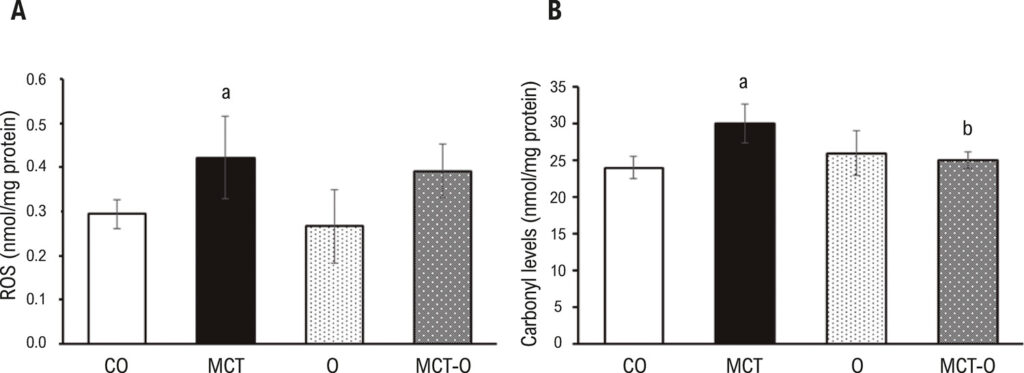
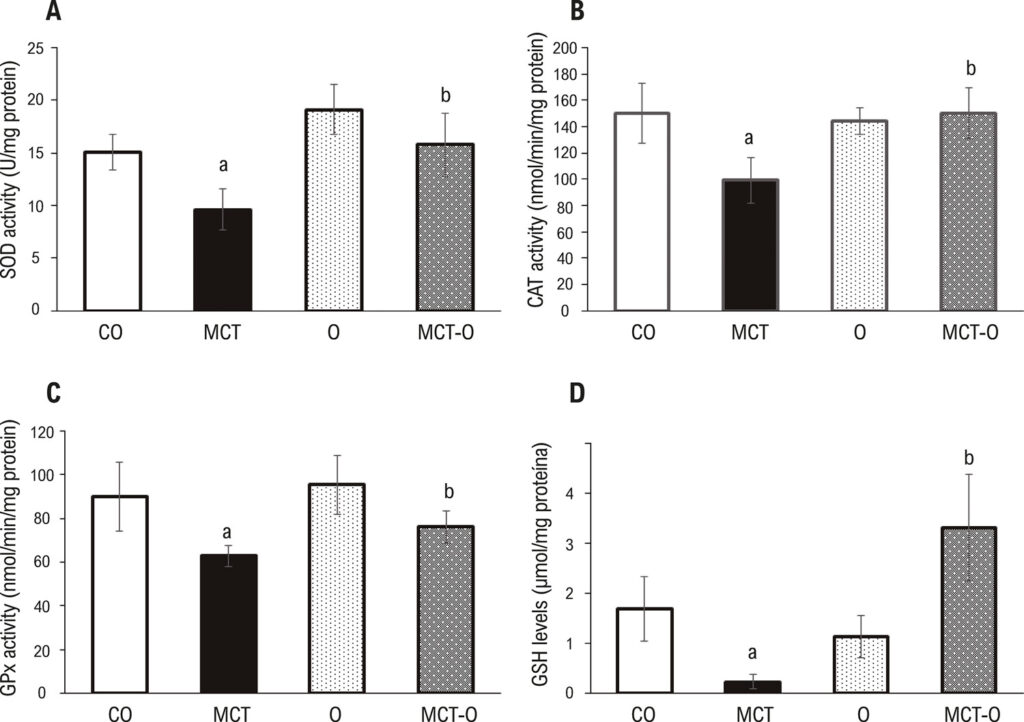
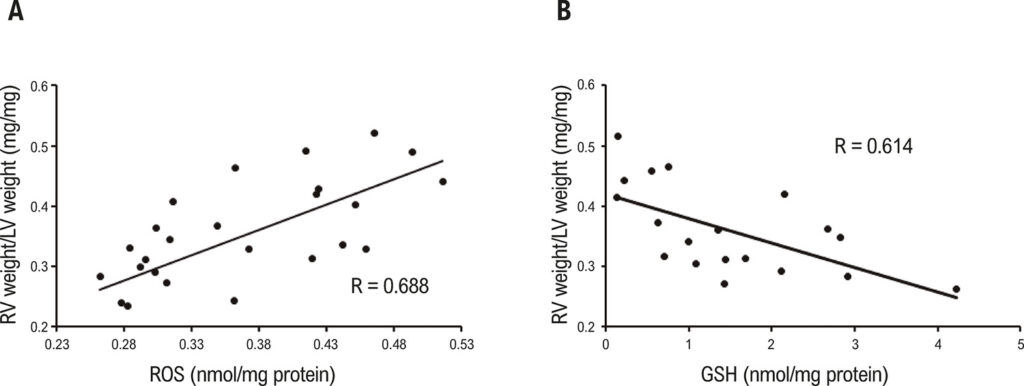
Copaiba oil reduced pulmonary vascular resistance and right ventricle (RV) hypertrophy (Fulton index (mg/mg): MCT-O=0.39±0.03; MCT=0.49±0.01), and improved RV systolic function (RV shortening fraction, %) in the MCT-O group (17.8±8.2) as compared to the MCT group (9.4±3.1; p<0.05). Moreover, in the MCT-O group, reactive oxygen species and carbonyl levels were reduced, and antioxidant parameters were increased in the peripheral blood (p<0.05). Conclusions: Our results suggest that copaiba oil has an interesting systemic antioxidant effect, which is reflected in the improvements in function and RV morphometry in this Cor pulmonale model. Cor pulmonale attenuation promoted by copaiba oil coincided with a reduction in systemic oxidative stress.
Images
Image gallery fullscreen viewer
Comments are moderated by the editorial team before publication. Discussions should be evidence-based and use scientific language. Conflicts of interest should be declared.