
| ABC
ABC Family Arquivos Brasileiros de Cardiologia International Journal of Cardiovascular Sciences ABC Heart Failure & Cardiomyopathy ABC Imagem Cardiovascular
Português English
ABC Family | ABC
Português English
  • About
    • About the Journal
    • Internal Regulation
    • Editors Section
    • Editorial Board
    • History
    • SBC Award
  • Instructions to Authors
    • Guidelines for Publication
    • Editorial Policy
    • Ethics Policy
    • Policy on the Use of Artificial Intelligence
    • Mandatory Publication Form
    • Publication Fee
  • Issues
  • SBC Guidelines
  • Abstracts
    • How to Publish an Abstract Supplement?
    • Supplements from the Brazilian Congress of Cardiology
  • About
    • About the Journal
    • Internal Regulation
    • Editors Section
    • Editorial Board
    • History
    • SBC Award
  • Instructions to Authors
    • Guidelines for Publication
    • Editorial Policy
    • Ethics Policy
    • Policy on the Use of Artificial Intelligence
    • Mandatory Publication Form
    • Publication Fee
  • Issues
  • SBC Guidelines
  • Abstracts
    • How to Publish an Abstract Supplement?
    • Supplements from the Brazilian Congress of Cardiology

ABC Family

  • ABC Family
  • Arquivos Brasileiros de Cardiologia
  • International Journal of Cardiovascular Sciences
  • ABC Heart Failure & Cardiomyopathy
  • ABC Imagem Cardiovascular
Search in

No content found.

Journals
Ordering
Article types
Others

  1. Home
  2. ABC
  3. Issues
  4. 2021, Volume 116, Number 2
Editorial

Cardiovascular Imaging in Congenital Heart Diseases: Why not Leverage New Imaging Modalities?

Vitor Guerra

Worldwide, we are living in an era burdened by congenital heart diseases (CHD). If we take a snapshot in 2018, there were 2,944,932 live births in Brazil (Tabnet, DATASUS). Considering the incidence of CHD, about 9 per 1000 live births, which has been stable across countries and populations, we would expect around 26,000 new patients with some form of CHD in our country. On the other hand, worldwide survival rate for CHD in the last 3 decades has been close to 98%. Having said that, CHD continues to be a public health problem worldwide.

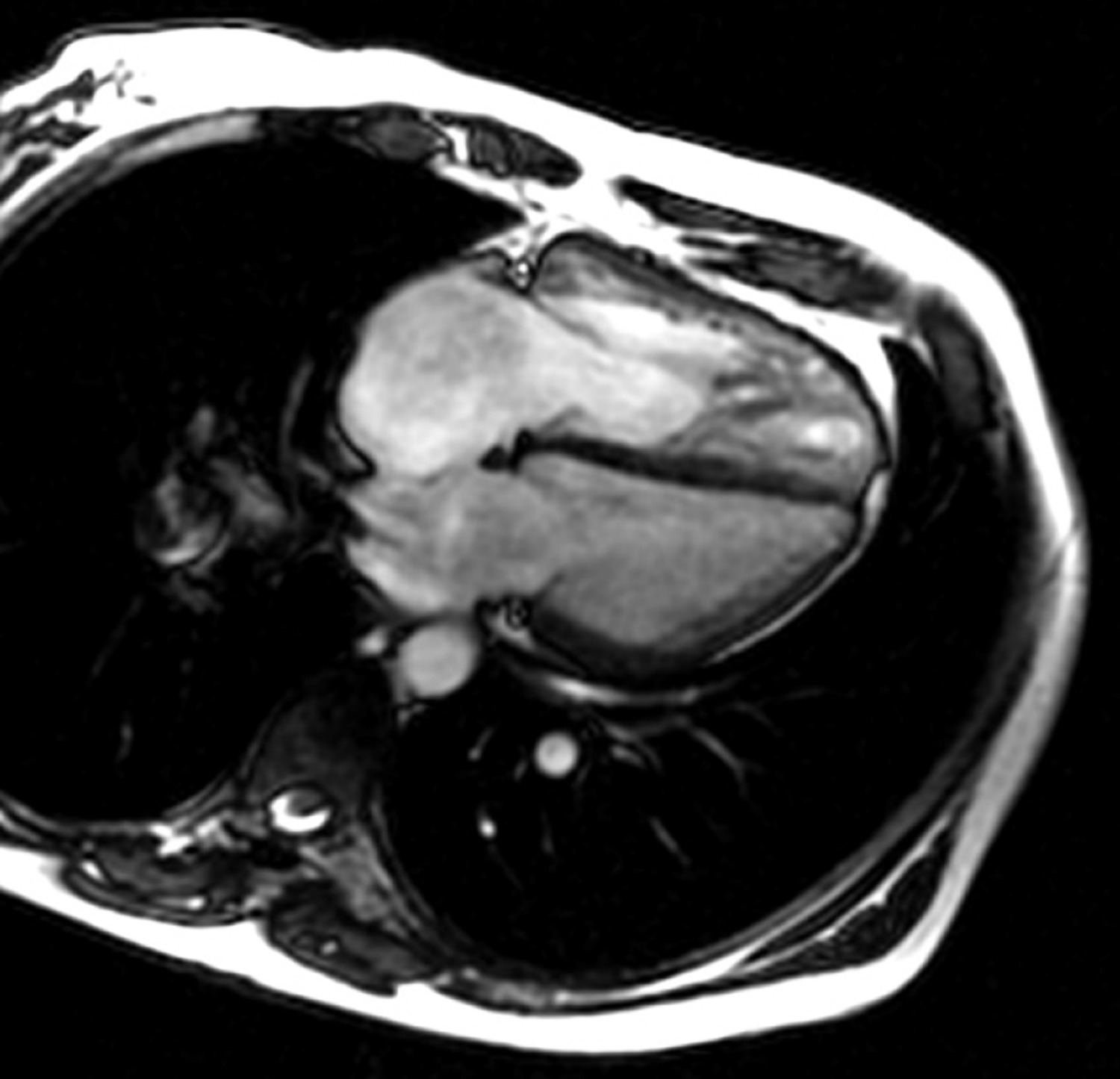
In the last four centuries, the specialty of pediatric cardiology has grown tremendously, achieving several milestones in clinical and surgical scenarios, mostly due the incredible advances in cardiovascular imaging diagnostic tools. This allows non-invasive diagnosis in all ages from fetal life until adulthood. The relatively new modality of cardiac magnetic resonance imaging (CMR) provides clinically useful information in various situations in patients with CHD. Current guidelines for diagnosis and management include echocardiogram, CMR and cardiac catheterization for the majority of CHD patients.

[…]

  • Cardiac Catheterization
  • Heart Defects, Congenital/surgery
  • Magnetic Resonance Imaging/methods
  • Procedures and Techniques Diagnostic
Read Full Article
Creative Commons Attribution (CC BY) Creative Commons license
01/03/2021 DOI: 10.36660/abc.20201347
Editorial

To Dip or not to Dip Blood Pressure in Chronic Obstructive Pulmonary Disease: That is the Question!

Sofia F. Furlan et al. Luciano F. Drager

Chronic obstructive pulmonary disease (COPD) is a major health problem worldwide. It is characterized as a chronic inflammatory lung disease that causes obstructed airflow from the lungs. It is typically caused by long-term exposure to cigarette smoke, but household air pollution, ambient particulate matter, ozone, and occupational particulates, including coal dust, also contribute to COPD. According to the Global Burden of Disease, 544.9 million people worldwide had a chronic respiratory disease in 2017, which represents an increase of 39.8% compared with 1990. Among the respiratory diseases, COPD remained the most prevalent disease-specific condition in 2017, accounting for 55.1% of chronic respiratory disease prevalence among men and 54.8% among women globally. More importantly, most chronic respiratory disease-attributable deaths and disability-adjusted life years were due to COPD.

Consistent evidence has indicated that COPD is associated with increased cardiovascular risk, which is an important cause of death in COPD patients., Systemic inflammation, chronic hypoxia, sympathetic activation, lung hyperinflation, secondary erythrocytosis, and loss of pulmonary vascular surface are responsible for increasing the rate of conditions such as pulmonary hypertension, right ventricular dysfunction, arrhythmias, ischemic coronary disease, among others. More recently, the association between COPD and hypertension has gained increasing attention. In a Danish cohort of more than 70,000 COPD patients, 47.6% of the patients had hypertension (the most common comorbidity in these patients). Although it is not clear whether COPD increases the incidence of hypertension, uncontrolled blood pressure (BP) is associated with poor prognosis in patients with COPD. These findings pave the way for additional characterization of the impact of COPD on BP variability.

[…]

  • Cardiovascular Diseases
  • Dipper
  • monitoring
  • Non-Dipper
  • Prognosis
  • Pulmonary Disease, Chronic Obstructive
  • Quality of life
Read Full Article
Creative Commons Attribution (CC BY) Creative Commons license
01/03/2021 DOI: 10.36660/abc.20201379
Figure 1
Original Article

Association between Statin Therapy and Lower Incidence of Hyperglycemia in Patients Hospitalized with Acute Coronary Syndromes

Remo Holanda de Mendonça Furtado et al. Paulo Rizzo Genestreti Talia F. Dalçóquio Luciano Moreira Baracioli … Felipe Galego Lima André Franci Roberto R. C. V. Giraldez Fernando R. Menezes Aline Gehlen Ferrari Viviane Moreira Lima Cesar A. C. Pereira Carlos Alberto Kenji Nakashima Rocio Salsoso Lucas Colombo Godoy José C. Nicolau

Abstract

Background

Increased risk of new-onset diabetes with statins challenges the long-term safety of this drug class. However, few reports have analyzed this issue during acute coronary syndromes (ACS).

Objective

To explore the association between early initiation of statin therapy and blood glucose levels in patients admitted with ACS.

Methods

This was a retrospective analysis of patients hospitalized with ACS. Statin-naïve patients were included and divided according to their use or not of statins within the first 24 hours of hospitalization. The primary endpoint was incidence of in-hospital hyperglycemia (defined as peak blood glucose > 200 mg/dL). Multivariable linear and logistic regression models were used to adjust for confounders, and a propensity-score matching model was developed to further compare both groups of interest. A p-value of less than 0.05 was considered statistically significant.

Results

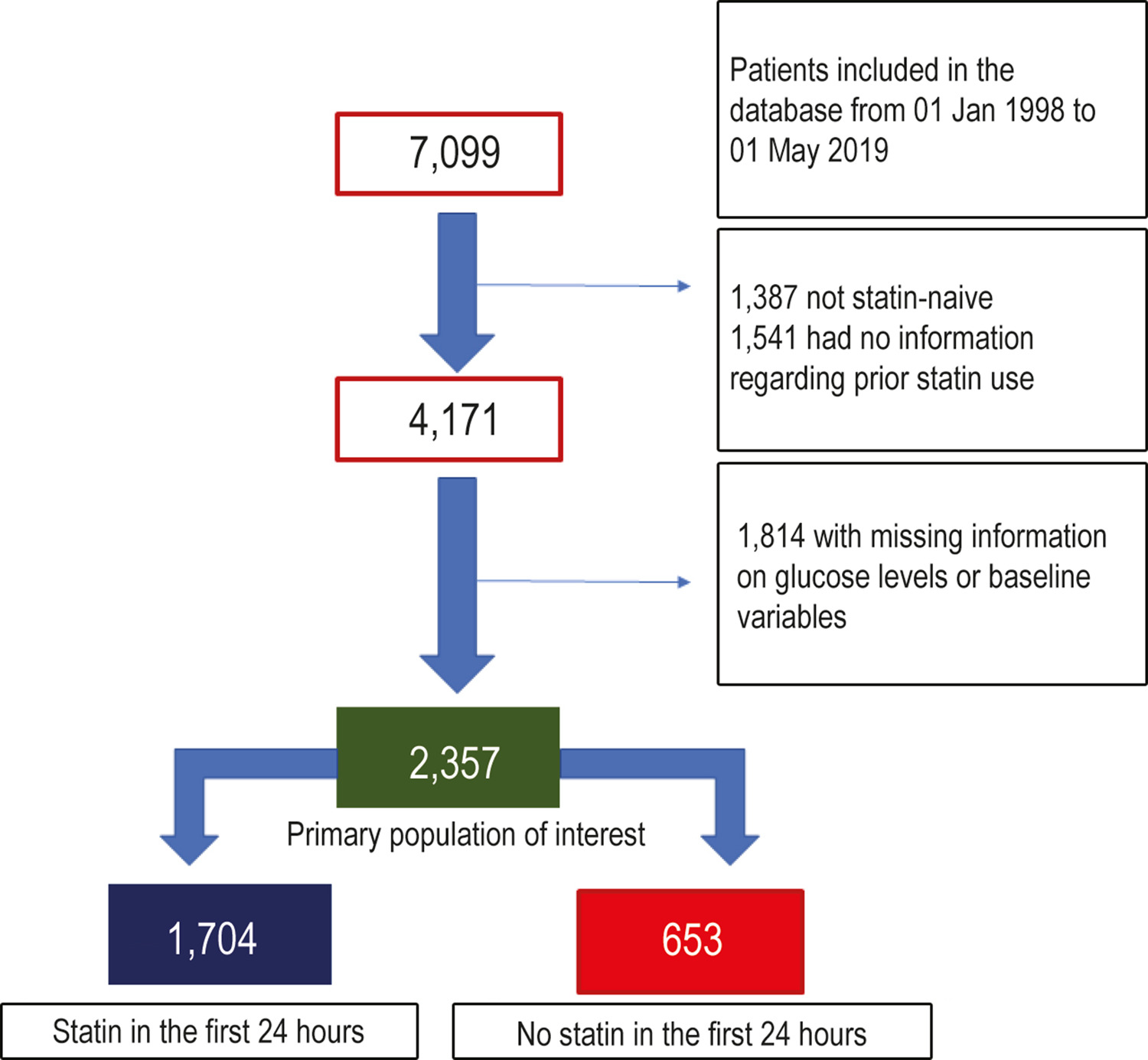
A total of 2,357 patients were included, 1,704 of them allocated in the statin group and 653 in the non-statin group. After adjustments, statin use in the first 24 hours was associated with a lower incidence of in-hospital hyperglycemia (adjusted OR=0.61, 95% CI 0.46-0.80; p < 0.001) and lower need for insulin therapy (adjusted OR = 0.56, 95% CI 0.41-0.76; p < 0.001). These associations remained similar in the propensity-score matching models, as well as after several sensitivity analyses, such as after excluding patients who developed cardiogenic shock, severe infection or who died during index-hospitalization.

Conclusions

Among statin-naïve patients admitted with ACS, early statin therapy was independently associated with lower incidence of in-hospital hyperglycemia. (Arq Bras Cardiol. 2021; 116(2):285-294)

  • Acute coronary syndrome
  • Blood Glucose
  • Hidroxymethylglutaryl-CoA-Reductase Inhibition
  • Myocardial Infarction
  • Statins
Read Full Article
Creative Commons Attribution (CC BY) Creative Commons license
01/03/2021 DOI: 10.36660/abc.20200128
Original Article

The Role of Stress Echocardiography in the Early Detection of Diastolic Dysfunction in Non-Severe Chronic Obstructive Pulmonary Disease Patients

Zheyna Cherneva et al. Radostina Cherneva

Abstract

Background

Exertional dyspnea is a common complaint of patients with heart failure with preserved ejection fraction (HFpEF) and chronic obstructive pulmonary disease (COPD). HFpEF is common in COPD and is an independent risk factor for disease progression and exacerbation. Early detection, therefore, has great clinical relevance.

Objectives

The aim of the study is to detect the frequency of masked HFpEF in non-severe COPD patients with exertional dyspnea, free of overt cardiovascular disease, and to analyze the correlation between masked HFpEF and the cardiopulmonary exercise testing (CPET) parameters.

Methods

We applied the CPET in 104 non-severe COPD patients with exertional dyspnea, free of overt cardiovascular disease. Echocardiography was performed before and at peak CPET. Cut-off values for stress-induced left and right ventricular diastolic dysfunction (LVDD/ RVDD) were E/e’>15; E/e’>6, respectively. Correlation analysis was done between CPET parameters and stress E/e’. A p-value <0.05 was considered significant.

Results

64% of the patients had stress-induced LVDD; 78% had stress-induced RVDD. Both groups with stress LVDD and RVDD achieved lower load, lower V’O2 and O2-pulse, besides showing reduced ventilatory efficiency (higher VE/VCO2 slopes). None of the CPET parameters were correlated to stress-induced left or right E/e’.

Conclusion

There is a high prevalence of stress-induced diastolic dysfunction in non-severe COPD patients with exertional dyspnea, free of overt cardiovascular disease. None of the CPET parameters correlates to stress-induced E/e’. This demands the performance of Exercise stress echocardiography (ESE) and CPET for the early detection and proper management of masked HFpEF in this population. (Arq Bras Cardiol. 2021; 116(2):259-265)

  • Echocardiography,Stress/methods
  • Heart Failure,Diastolic
  • Pulmonary Disease,Chronic Obstructive
  • Respiratory Funstion Tests
  • Stroke Volume
Read Full Article
Creative Commons Attribution (CC BY) Creative Commons license
01/03/2021 DOI: 10.36660/abc.20190623 Views 1
Figure 1
Original Article

Current Use of Pediatric Cardiac Magnetic Resonance Imaging in Brazil

Marcelo Felipe Kozak et al. Jorge Yussef Afiune Lars Grosse-Wortmann

Abstract

Background

Data on the use of cardiac magnetic resonance imaging (CMR) on children in Brazil is lacking.

Objectives

This study sought to provide information on current pediatric CMR practices in Brazil.

Methods

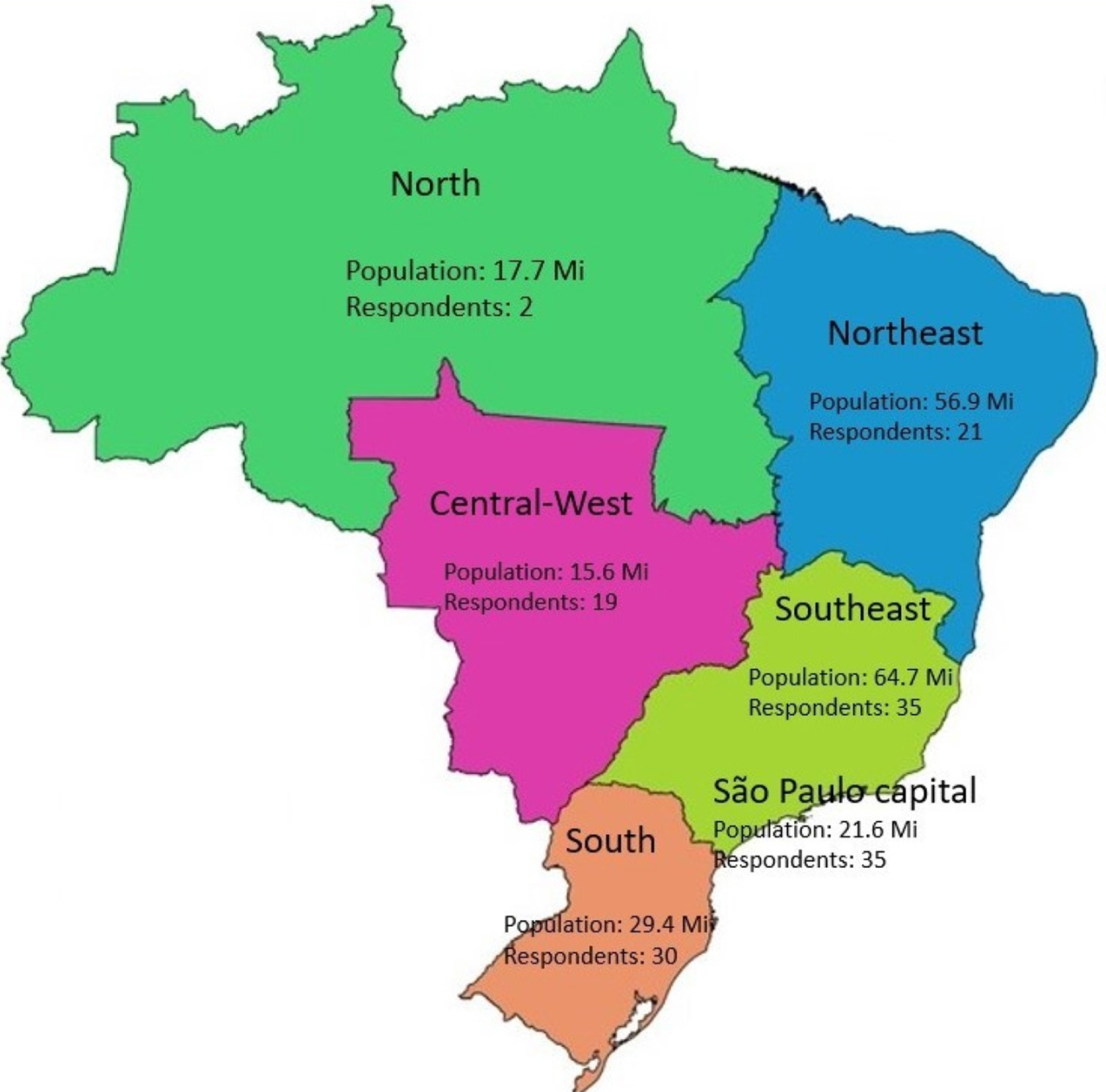
A questionnaire was sent out to referring physicians around the country. It covered information on the respondents, their CMR practices, the clinical context of the patients, and barriers to CMR use among children. For statistical analysis, two-sided p < 0.05 was considered significant.

Results

The survey received 142 replies. CMR was reported to be available to 79% of the respondents, of whom, 52% rarely or never use CMR. The most common indications were found to be cardiomyopathies (84%), status of post-tetralogy of Fallot repair (81%), and aortic arch malformations (53%). Exam complexity correlated with CMR-to-surgery ratio (Rho = 0.48, 95% CI = 0.32-0.62, p < 0.0001) and with the number of CMR exams (Rho = 0.52, 95% CI = 0.38-0.64, p < 0.0001). Further, a high CMR complexity score was associated with pediatric cardiologists conducting the exams (OR 2.14, 95% CI 1.2-3.89, p < 0.01). The main barriers to a more frequent use of CMR were its high cost (65%), the need for sedation (60%), and an insufficient number of qualified professionals (55%).

Conclusion

Pediatric CMR is not used frequently in Brazil. The presence of a pediatric cardiologist who can perform CMR exams is associated with CMR use on more complex patients. Training pediatric CMR specialists and educating referring providers are important steps toward a broader use of CMR in Brazil. (Arq Bras Cardiol. 2021; 116(2):305-312)

  • Cardiac Catheterization
  • Diagnostic Techniques Procedures
  • Heart Defects,Congenital/surgery
  • Magnetic Resonance Imaging
  • Pediatrics
Read Full Article
Creative Commons Attribution (CC BY) Creative Commons license
01/03/2021 DOI: 10.36660/abc.20190860 Views 1
Figure 1
Research Letter

Cardiopulmonary Transplantation: When to Indicate?

Paulo Manuel Pêgo Fernandes et al. Gabriela Favaro Faria Flávio Pola dos Reis Luís Gustavo Abdalla … José Eduardo Afonso Junior Fernando Bacal

Introduction

Cardiopulmonary transplantation (CPT) peaked in the late 1980s and early 1990s, with almost 300 transplants performed each year worldwide. With the advances in the treatment of heart and lung failure, this number has dropped considerably, and in 2017 only 62 CPTs were performed worldwide., There is a huge discussion about the profile of patients who can benefit from CPT and the best time for its indication.

[…]

  • Atrial Fibrillation
  • Heart–Lung Transplantation/trends
  • Hypertenson Pulmonary
  • Lithiasis
  • Pulmonary embolism
  • Stroke
Read Full Article
Creative Commons Attribution (CC BY) Creative Commons license
01/03/2021 DOI: 10.36660/abc.20200536
Figure 1
Original Article

Galectin-3 Associated with Severe Forms and Long-term Mortality in Patients with Chagas Disease

Fábio Fernandes et al. Carlos Henrique Valente Moreira Lea Campos Oliveira Marcela Souza-Basqueira … Barbara Maria Ianni Claudia di Lorenzo Felix José Alvarez Ramires Luciano Nastari Edecio Cunha-Neto Antonio L. Ribeiro Renato Delascio Lopes Sheila M. Keating Ester Cerdeira Sabino Charles Mady

Abstract

Background

The histopathological characteristics of Chagas disease (ChD) are: presence of myocarditis, destruction of heart fibers, and myocardial fibrosis. Galectin-3 (Gal-3) is a biomarker involved in the mechanism of fibrosis and inflammation that may be useful for risk stratification of individuals with ChD.

Objectives

We sought to evaluate whether high Gal-3 levels are associated with severe forms of Chagas cardiomyopathy (CC) and whether they are predictive of mortality.

Methods

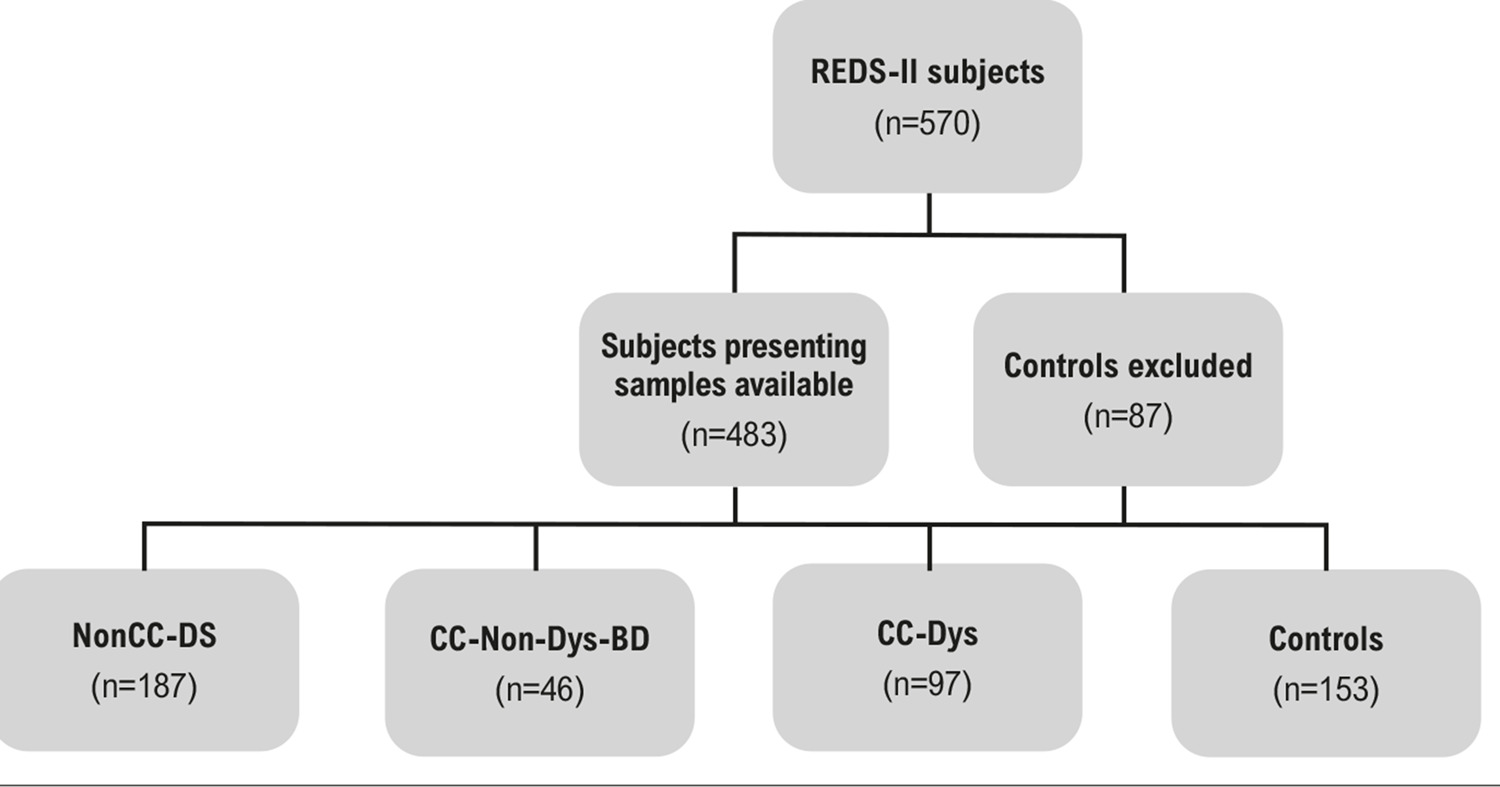
We studied anti-T. cruzi positive blood donors (BD): Non-CC-BD (187 BD without CC with normal electrocardiogram [ECG] and left ventricular ejection fraction [LVEF]); CC-Non-Dys-BD (46 BD with CC with abnormal ECG but normal LVEF); and 153 matched serum-negative controls. This cohort was composed of 97 patients with severe CC (CC-Dys). We used Kruskall-Wallis and Spearman’s correlation to test hypothesis of associations, assuming a two-tailed p<0.05 as significant.

Results

The Gal-3 level was 12.3 ng/mL for Non-CC-BD, 12.0 ng/mL for CC-Non-Dys-BD, 13.8 ng/mL for controls, and 15.4 ng/mL for CC-Dys. LVEF<50 was associated with higher Gal-3 levels (p=0.0001). In our linear regression adjusted model, we found association between Gal-3 levels and echocardiogram parameters in T. cruzi-seropositive subjects. In CC-Dys patients, we found a significant association of higher Gal-3 levels (≥15.3 ng/mL) and subsequent death or heart transplantation in a 5-year follow-up (Hazard ratio – HR 3.11; 95%CI 1.21–8.04; p=0.019).

Conclusions

In ChD patients, higher Gal-3 levels were significantly associated with severe forms of the disease and more long-term mortality, which means it may be a useful means to identify high-risk patients. (Arq Bras Cardiol. 2021; 116(2):248-256)

  • Biomarkers
  • Chagas Cardiomyopathy
  • Chagas disease
  • Electrocardiography/methods
  • Galectin 3
  • Heart Failure
  • Mortality
Read Full Article
Creative Commons Attribution (CC BY) Creative Commons license
01/03/2021 DOI: 10.36660/abc.20190403 Views 1
Figure 1
Original Article

Long-Term Clinical and Hemodynamic Outcomes after Heart Transplantation in Patients Pre-Treated with Sildenafil

Sofia Lázaro Mendes et al. Nadia Moreira Manuel Batista Ana Rita Ferreira … Ana Vera Marinho David Prieto Rui Baptista Susana Costa Fatima Franco Mariano Pego Manuel de Jesus Antunes

Abstract

Background

Elevated pulmonary vascular resistance remains a major problem for heart transplant (HT) candidate selection.

Objective

This study sought at assess the effect of pre-HT sildenafil administration in patients with fixed pulmonary hypertension.

Methods

This retrospective, single-center study included 300 consecutive, HT candidates treated between 2003 and 2013, in which 95 patients had fixed PH, and of these, 30 patients were treated with sildenafil and eventually received a transplant, forming Group A. Group B included 205 patients without PH who underwent HT. Pulmonary hemodynamics were evaluated before HT, as well as 1 week after and 1 year after HT. Survival was compared between the groups. In this study, a p value < 0.05 was considered statistically significant.

Results

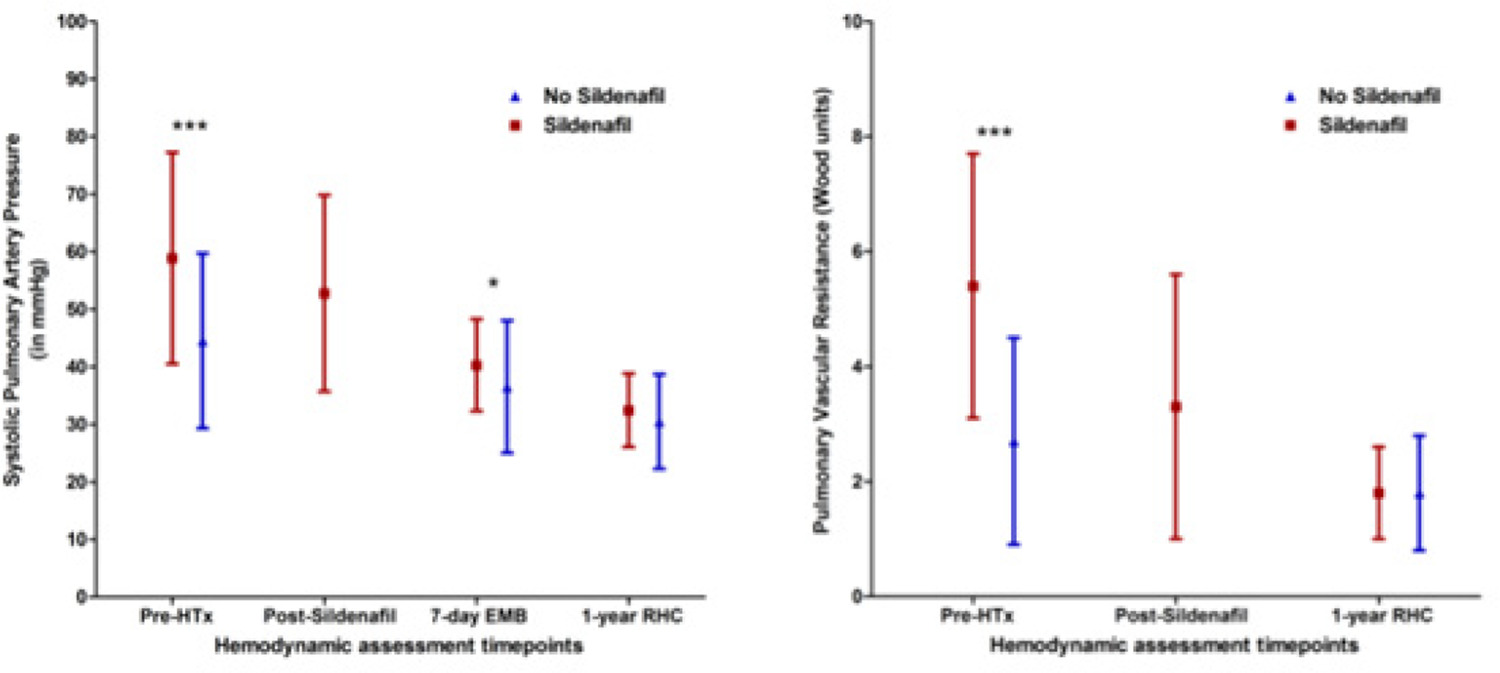
After treatment with sildenafil but before HT, PVR (-39%) and sPAP (-10%) decreased significantly. sPAP decreased after HT in both groups, but it remained significantly higher in group A vs. group B (40.3 ± 8.0 mmHg vs 36.5 ± 11.5 mmHg, p=0.022). One year after HT, sPAP was 32.4 ± 6.3 mmHg in group A vs 30.5 ± 8.2 mmHg in group B (p=0.274). The survival rate after HT at 30 days (97% in group A versus 96% in group B), at 6 months (87% versus 93%) and at one year (80% vs 91%) were not statistically significant (Log-rank p=0.063). After this first year, the attrition rate was similar among both groups (conditional survival after 1 year, Log-rank p=0.321).

Conclusion

In patients with severe PH pre-treated with sildenafil, early post-operative hemodynamics and prognosis are numerically worse than in patients without PH, but after 1 year, the medium to long-term mortality proved to be similar. (Arq Bras Cardiol. 2021; 116(2):219-226)

  • Heart Transplantation
  • Hypertension Pulmonary
  • Phosphodiesterase 5 Inhibitors
  • Sildenafil Citrate
  • Vascular Resistance
  • Ventricular Dysfunction Right
Read Full Article
Creative Commons Attribution (CC BY) Creative Commons license
01/03/2021 DOI: 10.36660/abc.20190047
Editorial

Sildenafil as an Eligible Heart Transplantation Therapy for Advanced Heart Failure Associated with Fixed Pulmonary Hypertension

Pedro Schwartzmann

Heart transplantation (HTx) has been associated to significant improvements in survival and quality of life in patients with advanced heart failure (HF). Despite a considerable increase in the indication of left ventricular assistant devices, HTx still remains the gold-standard approach in this clinical context. Even though it is considered the gold-standard treatment for advanced HF, several reasons have impaired the widespread utilization of the HTx. There is limited availability of donors compared with the growing potential recipients. Moreover, the longer life expectancy of the patients due to better HF pharmacotherapy has been challenging the age-related contraindication for the procedure, as well as the presence of more comorbidities linked to aging.

Another point to be observed related to HTx candidacy is pulmonary hypertension (PH), which is present in more than 60% of HF patients with reduced ejection fraction (HFrEF) and over 54% of patients with HF and preserved ejection fraction (HFpEF) and also might account for up to 50% of post-HTx complications. An elevated pulmonary vascular resistance (PVR) > 2.5 Wood units is linked to a nearly 30% increase in mortality within the first-month post-transplant. This HF-associated PH is considered to be the result of the passive effect of increased left ventricular end-diastolic pressure along with vasoreactivity secondary to vasoconstriction and arterial pulmonary remodeling., When not reversible with a vasodilator challenge, it has been strongly associated with right ventricular dysfunction, HF hospitalizations, worsening in quality of life, and reduced survival. The International Society for Heart and Lung Transplantation guidelines consider the presence of severe pre-transplant PH as a relative contraindication to heart transplantation.

[…]

  • Heart Failure, Pulmonary Hypertension
  • Heart Transplantaion
  • Sildenafil Citrate/therapeutic use
Read Full Article
Creative Commons Attribution (CC BY) Creative Commons license
01/03/2021 DOI: 10.36660/abc.20200631 Views 1
Editorial

Association of Cardiac Injury with Mortality in Hospitalized Patients with COVID-19

Edson Romano

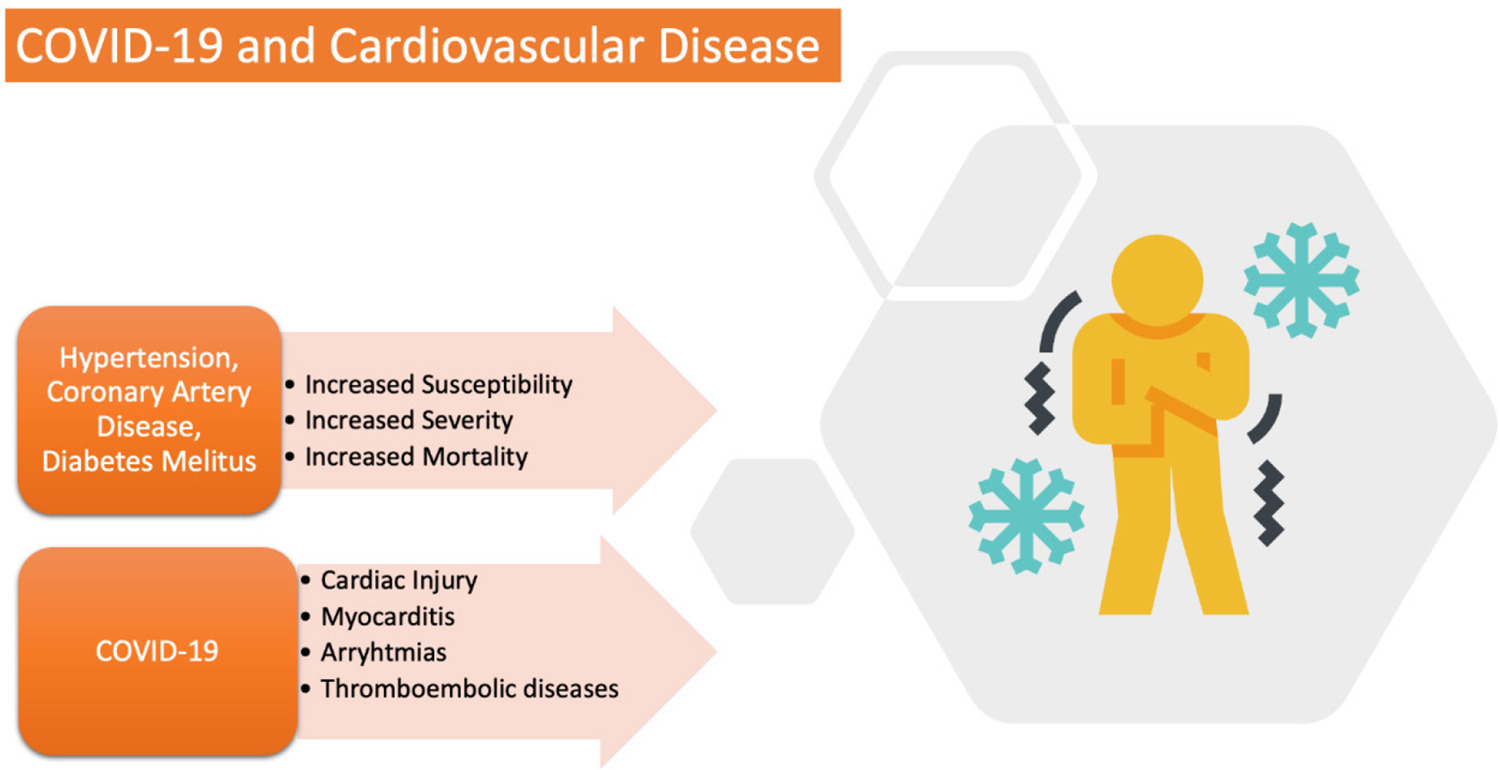
Covid-19 disease emerged in December 2019 in Wuhan City, Hubei Province, China. It is caused by the new coronavirus called severe acute respiratory syndrome coronavirus 2 (SARS-CoV-2), the seventh coronavirus identified to date, which is different from other coronaviruses that cause pneumonia and common cold.Due to the greater and faster transmissibility, a pandemic was declared by the World Health Organization on 11 March 2020.

Since then, several studies worldwide have been conducted and published with the aim of determining the risk factors for developing the disease, as well as its complications, degrees of severity, treatment, morbidity, and mortality.

[…]

  • Coronavirus, Betacoronavirus, SARS CoV-2, Infection
  • COVID-19
  • Hospitalization
  • Morbidity
  • Myocardial Infarction
  • Myocarditis
Read Full Article
Creative Commons Attribution (CC BY) Creative Commons license
01/03/2021 DOI: 10.36660/abc.20201284 Views 2
Figure 1
Editorial

Vaccinating Patients with Heart Disease Against COVID-19: The Reasons for Priority

Wolney de Andrade Martins et al. Gláucia Maria Moraes de Oliveira Andréa Araujo Brandão Ricardo Mourilhe-Rocha … Evandro Tinoco Mesquita José Francisco Kerr Saraiva Fernando Bacal Marcelo Antônio Cartaxo Queiroga Lopes

The COVID-19 pandemic

The World Health Organization recognized COVID-19 as a pandemic on March 11, 2020. Since then, this public health emergency has become the leading cause of death in the world and has made addressing it an unquestionable priority. At the time of writing this editorial, we counted 86 969 386 confirmed cases and 1 915 657 deaths from COVID-19 worldwide, of which, 8 013 708 cases in Brazil resulted in 201 460 deaths.According to projections by the Institute for Health Metrics and Evaluation (IHME),Brazil will have 248 476 deaths from COVID-19 on April 4, 2021. By March 19, 2021, 242 738 [232 202 – 255 044] deaths are estimated, and those numbers could be reduced to 241 668 [231 337 – 253 770], with the quick administration of vaccines, and to 223 910 [215 565 – 233 360], with a 95% level of face mask use in public. The magnitude of the number of cases and deaths from a single disease in such a short time is worrisome. Now, when there is a growth in the number of new cases and hospitalizations, starting to vaccinate will have an impact on reducing deaths and hospitalizations in a short interval. Despite the efforts of the scientific community, there is no specific treatment to block viral replication. In this sense, vaccination programs are powerful allies. In addition, due to the remarkable progress of science, we already have this resource.

Brazil, through its Unified Health System (SUS), has been known for the successful implementation of vaccination programs for its population. The institution of a public policy to vaccinate within the SUS principles, which are universality, integrality, and equity, is urgent. However, because of the antivaccine movements that have emerged worldwide, a strong effort to obtain the population’s adhesion is required. In the past, in the Vaccine Revolt experienced by Oswaldo Cruz, we have successfully faced that disbelief. Let us be inspired by that episode to overcome this serious health crisis.

[…]

  • Betacoronavirus, Pandemics
  • Cardiovascular Diseases
  • Coronavirus infections
  • Coronavirus, COVID-19
  • Health Policy
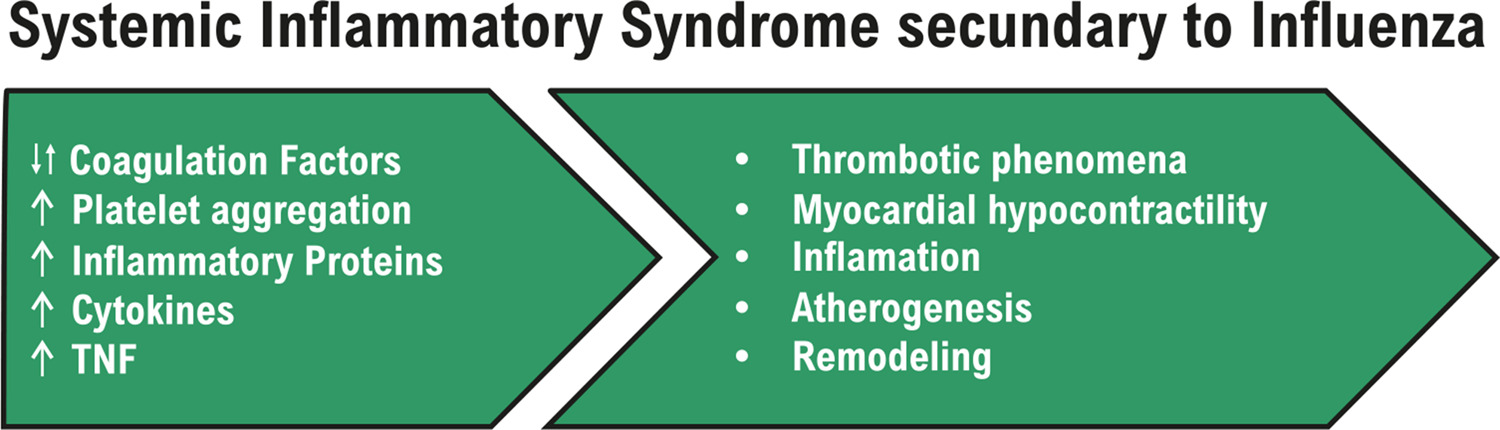
  • Influenza, Human
  • Vaccination
  • Vaccines
Read Full Article
Creative Commons Attribution (CC BY) Creative Commons license
01/03/2021 DOI: 10.36660/abc.20210012 Views 1
Figure 1
Research Letter

COVID-19 Chain of Survival 2020

Sergio Timerman et al. Helio Penna Guimarães Carlos Eduardo Rochitte Thatiane Facholi Polastri Marcelo Antônio Cartaxo Queiroga Lopes

Abstract

The term Chain of Survival provides a useful metaphor for the elements involved in the COVID-19 management. The 5 links of the COVID-19 Chain of Survival are:

A strong Chain of Survival can improve the chances of survival and recovery for victims of COVID-19.

[…]

  • Betacoronavirus, Evidence Based Medicine
  • Coronavirus
  • COVID-19
  • Medical Care
  • Survival
Read Full Article
Creative Commons Attribution (CC BY) Creative Commons license
01/03/2021 DOI: 10.36660/abc.20201171 Views 1
Figure 1
Original Article

Effects of Doxorubicin on Heme Biosynthesis and Metabolism in Cardiomyocyte

Zuoyan Wang et al. Junyi Gao Haobo Teng Jianjun Peng

Abstract

Background

Doxorubicin is associated with cardiotoxicity and late cardiac morbidity. Heme is related to cellular oxidative stress. However, its specific regulation in cardiomyocytes under doxorubicin effects has not yet been documented.

Objective

This study seeks to evaluate the changing profiles of rate-limiting enzymes in the heme metabolism pathway under the effect of doxorubicin.

Methods

H9c2 cardiomyocytes were incubated with doxorubicin at different concentrations (1,2,5,10μM respectively). The real-time PCR and Western Blot were used to determine the mRNA and protein expression for four pivotal enzymes (ALAS1, ALAS2, HOX-1, and HOX-2) regulating cellular heme metabolism, as well as the levels of heme were detected by ELISA. p<0.01 was considered significant.

Results

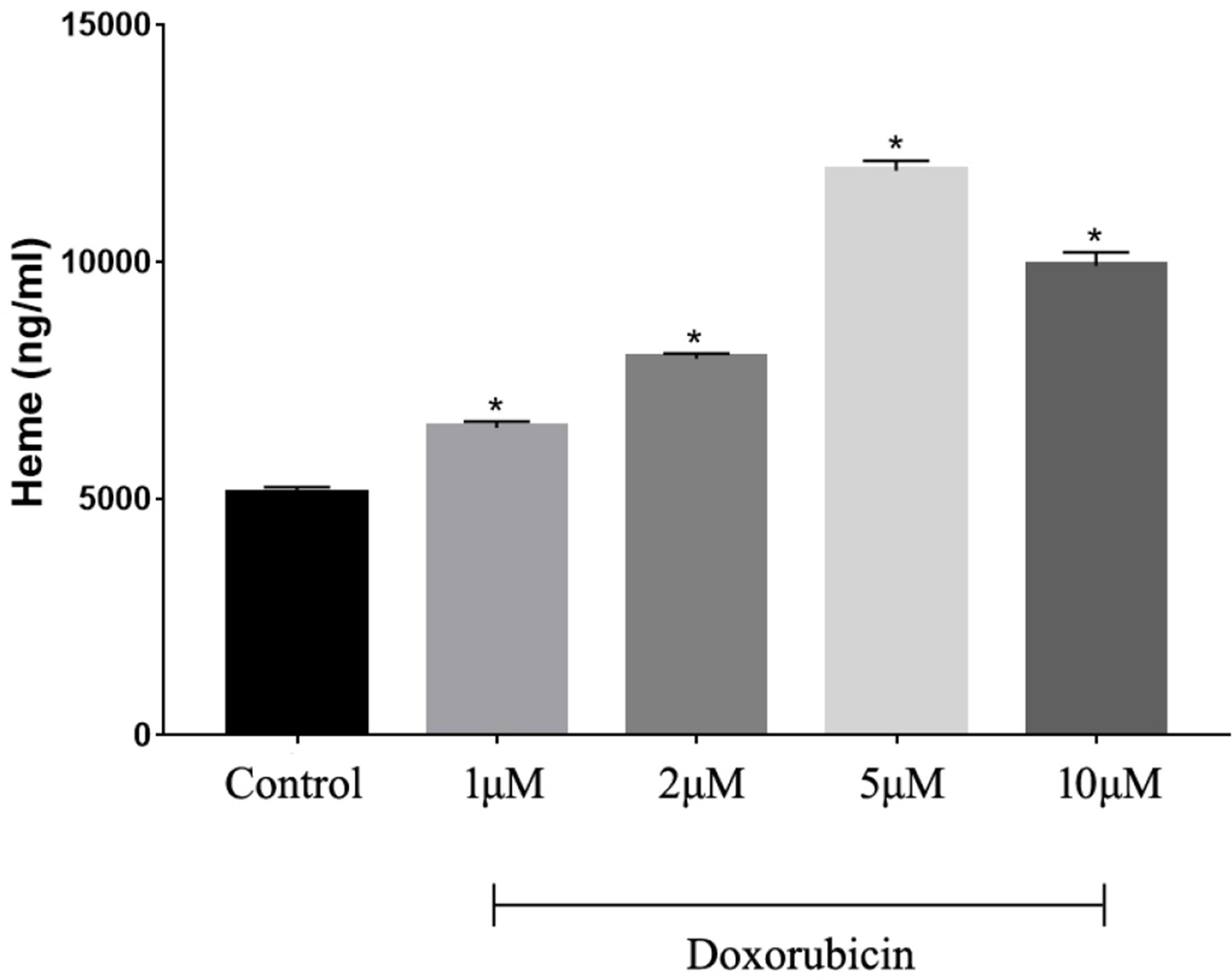
This study observed a dose-dependent changing pattern in heme levels in H9c2 cells with the highest level at the 5μM concentration for doxorubicin, which occurred synchronously with the highest upregulation level of ALAS1, as well as the degradative enzymes, HOX-1, and HOX-2 in mRNA and protein expression. By contrast, ALAS2, contrary to the increasing concentrations of doxorubicin, was found to be progressively down-regulated.

Conclusion

The increase in ALAS1 expression may play a potential role in the heme level elevation when H9c2 cardiomyocyte was exposed to doxorubicin and may be a potential therapeutic target for doxorubicin-induced myocardial toxicity. (Arq Bras Cardiol. 2021; 116(2):315-322)

  • ALAS
  • Biosynthesis
  • Cardiotoxicity
  • Doxorubicin
  • Heme
  • Myocites, Cardiac
Read Full Article
Creative Commons Attribution (CC BY) Creative Commons license
01/03/2021 DOI: 10.36660/abc.20190437 Views 3
Editorial

Is There a Second Wind for Glycoprotein IIb/IIIa Inhibitors in Elderly Diabetic Females with ST-Elevation Myocardial Infarction, or are We on Thin Ice?

Ana Teresa Timóteo

The standard of care in patients undergoing primary percutaneous coronary intervention (PCI) is double antiplatelet therapy (DAPT), with a combination of aspirin and a P2Y12 inhibitor. Prasugrel and ticagrelor are the preferred P2Y12 inhibitors because they have a more rapid onset of action, greater potency, and are superior to clopidogrel in terms of clinical outcomes. They should be maintained over 12 months unless there are contraindications, such as excessive risk of bleeding. The choice of treatment should be a balanced decision, considering the ischemic and bleeding risks. Most of the trials evaluating glycoprotein (Gp) IIb/IIIa inhibitors in ST-elevation myocardial infarction (STEMI) patients treated with primary PCI pre-date the era of routine oral DAPT pre-treatment, particularly in the setting of potent oral platelet inhibitors. At that time, they demonstrated a reduction in the incidence of ischemic events, but at the expense of a consistent increase in major bleeding. Presently, there is no compelling evidence for an additional benefit of the routine use of a Gp IIb/IIIa strategy in primary PCI patients that receive DAPT treatment, particularly with ticagrelor. The use of Gp IIb/IIIa inhibitors should be considered for bailout therapy in the event of angiographic evidence of a large thrombus, slow- or no-reflow, and other thrombotic complications, although this strategy has not been addressed in randomized controlled trials. Also, intracoronary administration is not superior to its intravenous use.

Elderly patients are at high-risk of bleeding and other complications from acute therapies, not only because of their age, but because they have more often renal dysfunction and more co-morbidities. Diabetes is also a frequent comorbidity in STEMI patients. Diabetic patients have more diffuse atherosclerotic disease and are at higher risk of death and complications, including repeated revascularization after PCI. In fact, diabetic patients who have suffered a myocardial infarction have a worse prognosis, and the presence of diabetes amplifies the risk of any cardiovascular event, as shown in many previous studies of acute coronary syndrome treatment.,, However, in the current context of the use of oral P2Y12 inhibitors, there is no indication that antithrombotic pharmacotherapy should differ between diabetics and patients without diabetes undergoing revascularization.,

[…]

  • Diabetes Mellitus
  • Elderly
  • Glycoprotein IIb/IIIa inhibitors
  • Hemorrhage
  • Myocardial Infarction
  • Platelet Agregation
  • Women
Read Full Article
Creative Commons Attribution (CC BY) Creative Commons license
01/03/2021 DOI: 10.36660/abc.20200494 Views 1
Editorial

Influence of Doxorubicin Treatment on Heme Metabolism in Cardiomyoblasts: An In Vitro Study

Mariana Gatto et al. Gustavo Augusto Ferreira Mota

The last decades have been marked with potential advances in cancer diagnosis and therapy, leading to a decrease in mortality and increased patient survival. Doxorubicin is a drug that belongs to the anthracycline family, a class of anticancer drugs extracted from streptomycin. Although the mechanism of action of this drug in cancer is complex, it is known that it interferes with the synthesis of DNA and RNA in addition to inducing the production of free radicals that damage the cell membrane and DNA. However, many of the chemotherapeutic agents used in the neoplasms treatment protocols induce several side effects, including cardiac toxicity and negative repercussions in the vascular system such as thrombolytic ischemia, arterial hypertension, ventricular dysfunction and heart failure., The cardiotoxic effect of doxorubicin is dose-dependent, and the primary mechanism of toxicity is the induction of oxidative stress in the myocardium, with high production of reactive oxygen (ROS) and nitrogen (RNS) species that trigger DNA damage and deregulation of various processes intracellular.

The heme molecule mediates the iron availability and is essential for numerous biological processes in aerobic organisms. In the cardiovascular system, it plays a crucial role in antioxidant defense, signal transduction, oxygen transport, hemoglobin storage, and mitochondrial electron transport. Four mitochondrial and four cytoplasmic enzymes participate in heme metabolism. For heme synthesis, glycine and succinyl coenzyme A are condensed into δ-aminolevulinic acid (ALA) by the enzymes aminolevulinic acid synthases (ALAS), known as ALAS1 and ALAS2. The degradation of heme is carried out by enzymes called heme oxygenase (HOX), which produces carbon monoxide, biliverdin, and iron. HOX-1 isoenzyme regulates normal physiological conditions while HOX-2 isoenzyme protects the cells from oxidative stress. On the other hand, experimental studies have shown that elevated heme protein levels are related to increased oxidative stress and toxicity in cardiomyocytes., However, few studies in the literature verified the influence of anthracyclines on heme protein metabolism in cardiomyocytes.

[…]

  • Anthracyclines
  • Doxorubicin/therapeutic use
  • Heme
  • Hemoglobin E/metabolism
  • Myocytes, Cardiac
Read Full Article
Creative Commons Attribution (CC BY) Creative Commons license
01/03/2021 DOI: 10.36660/abc.20200662 Views 1
Figure 1
Review Article

Atrial Fibrillation (Part 2) – Catheter Ablation

Eduardo B. Saad et al. Andre d’Avila

Abstract

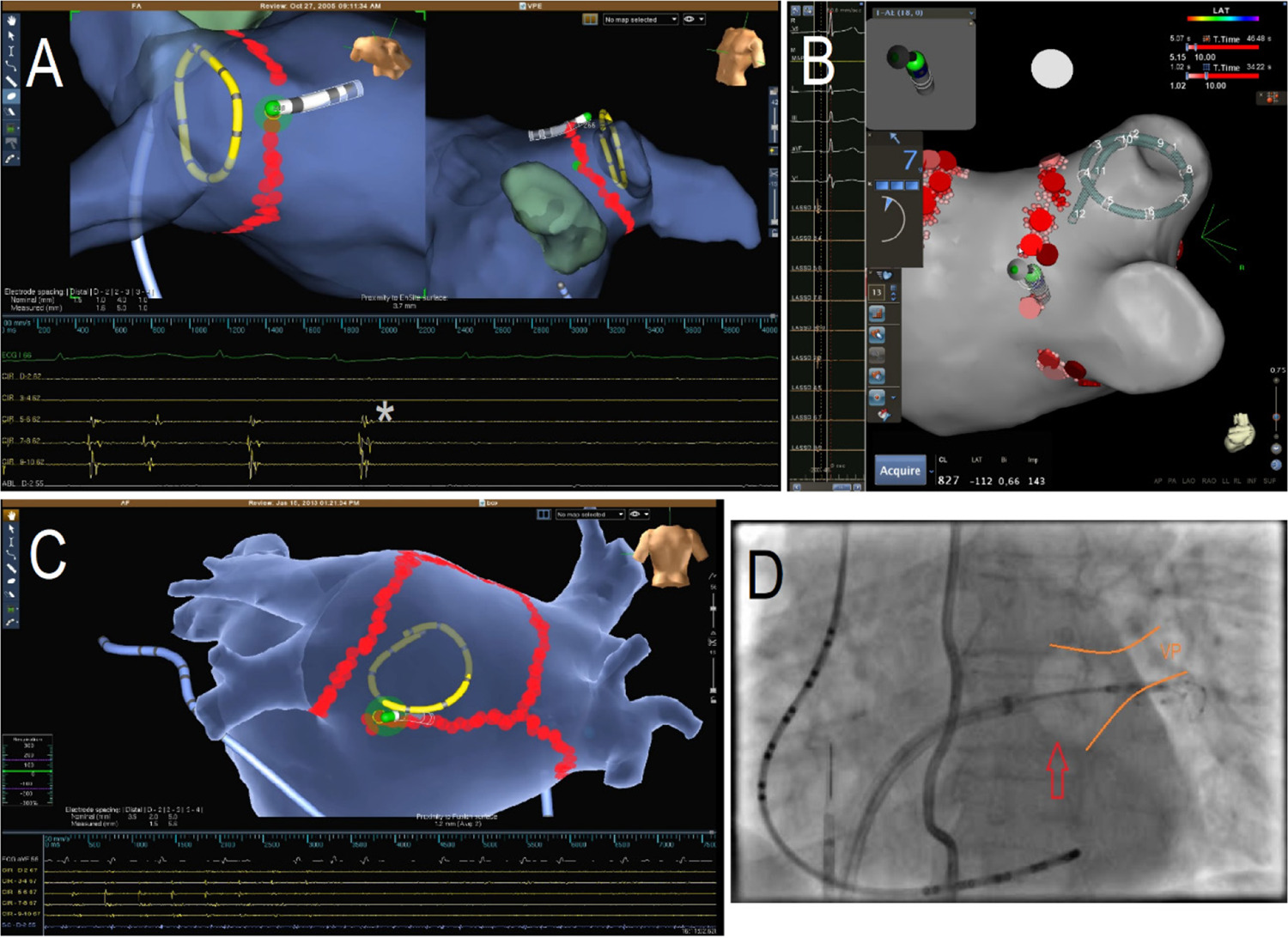
More than 20 years since its initial use, catheter ablation has become a routinely performed procedure for the treatment of patients with atrial fibrillation (AF). Initially based on the electrical isolation of pulmonary veins in patients with paroxysmal AF, subsequent advances in the understanding of pathophysiology led to additional techniques not only to achieve better results, but also to treat patients with persistent forms of arrhythmia, as well as patients with structural heart disease and heart failure.

  • Arrhythmias Cardiac
  • Catheter Ablation/methods
  • Echocardiography/methods
  • Fibrilation Atrial
Read Full Article
Creative Commons Attribution (CC BY) Creative Commons license
01/03/2021 DOI: 10.36660/abc.20200477
Research Letter

Why not Think about Non-Invasive Brain Stimulation to Control Blood Pressure?

Fernando Zanela da Silva Arêas et al. Guilherme Peixoto Tinoco Arêas

In 2007, Ridding and Rothwellasked in their editorial: “Is there a future for the therapeutic use of transcranial magnetic stimulation?”, drawing attention to the number of studies and hypotheses being built around non-invasive brain stimulation (NIBS). In fact, at the time, the focus of the use of NIBS was on neurological and psychiatric diseases. As the understanding of the physiology of the nervous system on the cardiovascular system was broadened, other ideas emerged. In their hypothesis, Cogiamanian et al. (2010)drew attention to the possibility of treating arterial hypertension using NIBS – repetitive transcranial magnetic stimulation (rTMS) and transcranial direct current stimulation (tDCS). From 2010 to the present, many questions have been answered about the real effects of NIBS, through experimental and clinical research. , The understanding we have today of the physiological effects that brain stimulation techniques have on neuronal cells and associating them with the complex neural control of the cardiovascular system, we ask ourselves: is there a possibility of this effective treatment approach for systemic arterial hypertension? If we think about the low cost, easy patient adherence, few side effects, it seems reasonable for us the need for studies that investigate this possible approach. For some years now, the relationship between the pathophysiological mechanisms of arterial hypertension and the central and peripheral nervous system has been further studied and thinking of the descending blood pressure (BP) control and regulation mechanisms, various areas of the brain (sensory motor cortex, pre-cortex – frontal medial and the insular cortex) control several functions such as: modulation of the autonomic response, somatic vasomotor mechanisms, variations in BP, among others.

Studies have shown that NBIS can influence cardiac autonomic behavior, through the variability of the R intervals of the electrocardiogram, favoring the increase in cardiac sympathetic or parasympathetic activity, depending directly on the applied stimulus.Apparently, anodic stimulation applied to the motor control area increases the sympathetic tone, while anodic stimulation in the temporal lobe increases the parasympathetic tone (Insular cortex). , However, little has been explored in response to NIBS on arterial sympathetic activity. It is well known that BP is controlled by cardiac output (heart rate and stroke volume) and by the arterial resistance system. The central action of cardiac and peripheral modulation by the autonomic system through NIBS can be a non-pharmacological feasibility in BP control, with great plausibility. The direct action on pressure reduction was only verified when deep brain stimulation was performed in the periventricular/periaqueductal gray matter region in humans.However, in studies with tDCS carried out in normotensive individuals, it failed to show any hypotensive effect.A light at the end of the tunnel for the effect of NIBS on BP was verified in a study using tDCS in athletes. Higher post-aerobic exercise hypotension was found when tDCS was applied before exercise in athletes, with no effect on sedentary individuals.However, the short, medium and long-term effect of NIBS in hypertensive individuals, mainly due to idiopathic causes, needs to be better verified.

[…]

  • Blood Pressure
  • Transcranial Direct Current Stimulation
  • Transcranial Magnetic Non-Invasive/methods
  • Transcranial Magnetic Stimulation
Read Full Article
Creative Commons Attribution (CC BY) Creative Commons license
01/03/2021 DOI: 10.36660/abc.20200639
Editorial

Beyond CHA2DS2-VASc for Predicting the Risk of Thromboembolism and Stroke – Not That Simple!

M. Julia Machline-Carrion

Ischemic stroke can result from a variety of causes, such as atherosclerosis of the cerebral circulation, occlusion of cerebral small vessels, and cardiac embolism. Of these causes, cardioembolic stroke has a particular significance because cardiac embolism causes more severe strokes than other ischemic stroke subtypes. In about 20% of patients who have had ischemic stroke, a major risk cardiac source, such as atrial fibrillation (AF) and/or left ventricular thrombi, is identified. Thus, assessing the presence of AF, and the risk of thromboembolism associated to cardiac lesions play a key role in stroke prevention.

Age, male gender, hypertension, diabetes mellitus, valvular heart disease, congestive heart failure, coronary heart disease, chronic kidney disease, inflammatory disorders, sleep apnea, and tobacco use have all been established as risk factors for both AF and stroke. However, it may be that other atrial factors besides AF can result in thromboembolism, and in some cases, AF may be a lagging marker of these other thrombogenic atrial abnormalities. AF often occurs in the setting of atrial abnormalities such as mechanical dysfunction in the left atrial appendage. These abnormalities of atrial substrate have recently been associated with stroke risk independently of AF. The CHA2DS2-VASc (congestive heart failure, hypertension, age ≥ 75 years, diabetes mellitus, stroke or transient ischemic attack (TIA), vascular disease, age 65 to 74 years, sex category) score is a validated tool to predict the risk of stroke and systemic emboli in patients with non-valvular atrial fibrillation and has been widely used to guide clinical practice.–

[…]

  • Atherosclerosis
  • Atrial Fibrillation
  • Cerebrovascular Circulation
  • diabetes
  • Embolism and Thrombosis
  • Hypertension
  • Risk Factors
  • Stroke
Read Full Article
Creative Commons Attribution (CC BY) Creative Commons license
01/03/2021 DOI: 10.36660/abc.20201296 Views 1
Figure 1
Research Letter

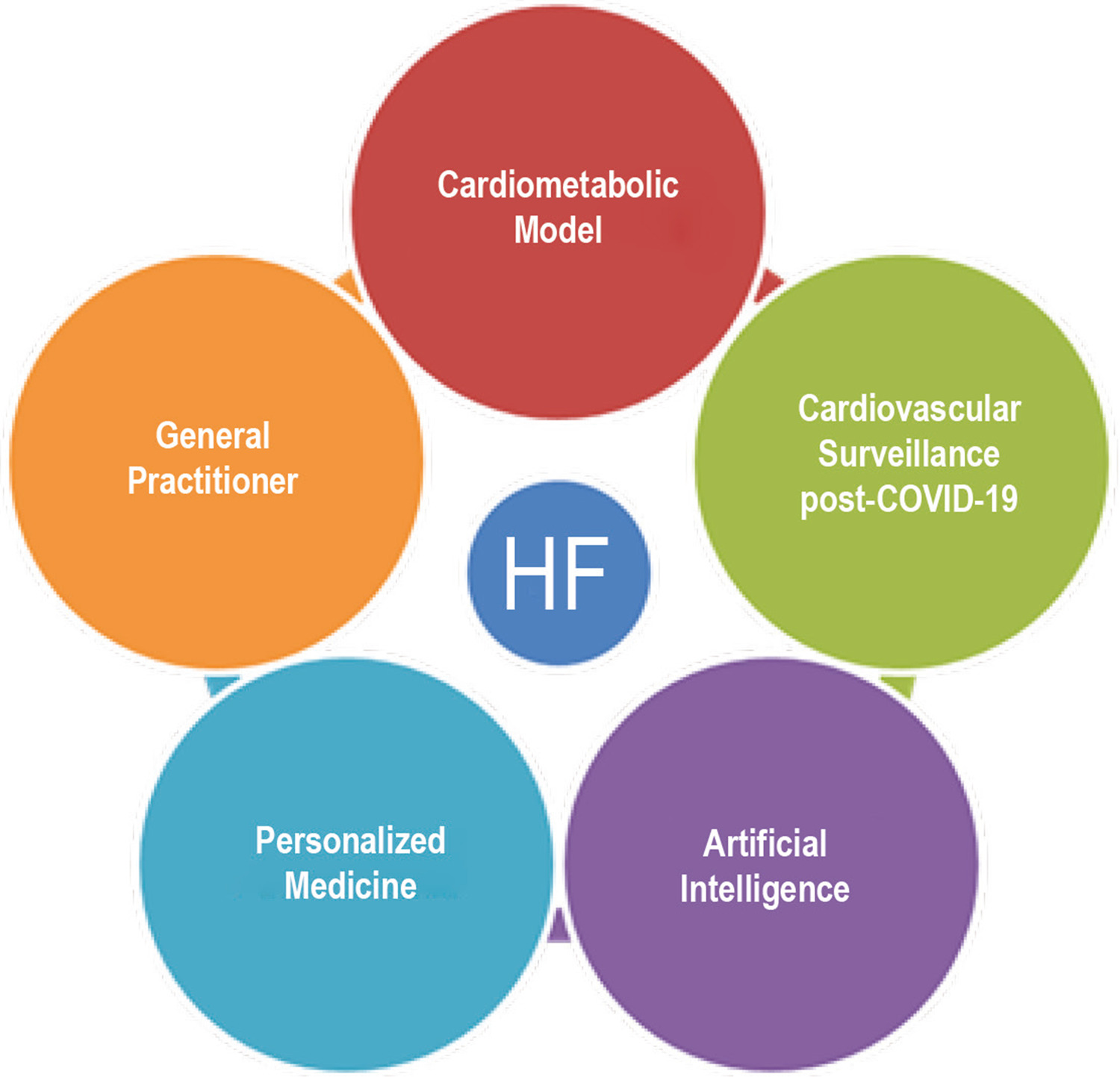
The Challenges of Heart Failure Yesterday, Today and Tomorrow and the 20 Years of DEIC

Evandro Tinoco Mesquita et al. Ana Paula Mendes Lidia Moura José Albuquerque de Figueiredo Neto … Fabiana G. Marcondes-Braga Fernando Bacal Maria da Consolação Vieira Moreira Nadine Oliveira Clausell

The Department of Heart Failure of the Brazilian Society of Cardiology (DEIC) completes 20 years in 2020 and represents a robust legacy of scientific activities and associations of Brazilian cardiology.

Its foundation represented an important milestone in the fight against heart failure (HF), a complex progressive and often fatal clinical syndrome. HF should be addressed in a multidisciplinary way, supported by translational science and good practices (clinical guidelines and protocols), involving patients, families, caregivers, managers and the whole society, in view of its social impacts in Brazil and in the world.

[…]

  • Demographic Aging
  • Guidelines
  • Heart Failure/trends
  • Scientific Production
  • Translational Medical Research
Read Full Article
Creative Commons Attribution (CC BY) Creative Commons license
01/03/2021 DOI: 10.36660/abc.20201200 Views 1
Figure 1
Original Article

Outcomes in Coronary No-Reflow Phenomenon Patients and the Relationship between Kidney Injury Molecule-1 and Coronary No-Reflow Phenomenon

Mustafa Ahmet Huyut et al. Aylin Hatice Yamac

Abstract

Background

Coronary no-reflow phenomenon (CNP) is associated with an increased risk of major cardiovascular adverse events (MACE).

Objective

This study aimed to evaluate the relationship between serum Kidney Injury Molecule-1 (KIM-1) levels and CNP in patients with acute ST-segment elevation myocardial infarction (STEMI).

Methods

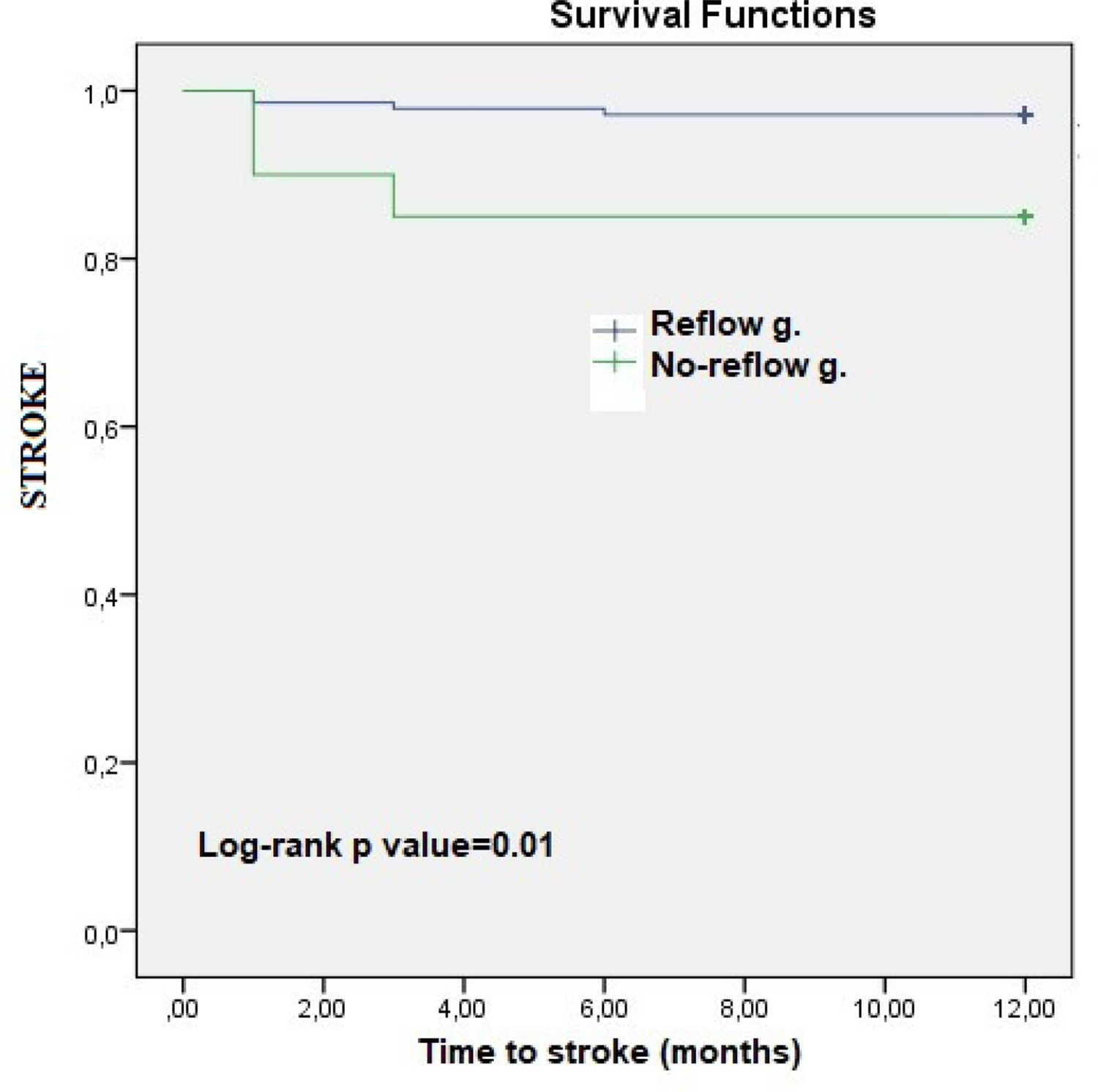
This study included a total of 160 patients (113 males and 47 females; mean age: 61.65±12.14 years) who were diagnosed with STEMI. The patients were divided into two groups, the reflow group (RG) (n=140) and the no-reflow group (NRG) (n=20). Patients were followed during one year. A p-value of <0.05 was considered significant.

Results

CNP was observed in 12.50% of the patients. Serum KIM-1 was significantly higher in the NRG than in the RG (20.26±7,32 vs. 13.45±6.40, p<0.001). Body mass index (BMI) was significantly higher in the NRG than in the RG (29.41 (28.48-31.23) vs. 27.56 (25.44-31.03), p=0.047). Heart rate (HR) was significantly lower in the NRG than in the RG (61.6±8.04 vs. 80.37±14.61, p<0.001). The European System for Cardiac Operative Risk Evaluation II (EuroSCORE II) was significantly higher in the NRG than in the RG (3.06±2.22 vs. 2.36±2.85, p=0.016). The incidence of stroke was significantly higher in the NRG than in the RG (15% vs. 2.90%, p=0.013). The baseline KIM-1 level (OR=1.19, 95% CI:1.07 to 1.34, p=0.002) and HR (OR=0.784, 95% CI:0.69 to 0.88, p<0.001) were the independent predictors of CNP.

Conclusion

In conclusion, baseline serum KIM-1 concentrations and lower HR are independently associated with CNP in STEMI patients and the incidence of stroke was significantly higher in the NRG in the one-year follow-up. (Arq Bras Cardiol. 2021; 116(2):238-247)

  • Cardiovascular Diseassses
  • Coronary Thrombosis
  • Heart Rate
  • Myocardial Infarction Stroke
  • Percutaneous Coronary Intervention
Read Full Article
Creative Commons Attribution (CC BY) Creative Commons license
01/03/2021 DOI: 10.36660/abc.20190656
Figure 1
Original Article

Increased Home Death Due to Cardiopulmonary Arrest in Times of COVID-19 Pandemic

Nathalia Sernizon Guimarães et al. Taciana Malheiros Lima Carvalho Jackson Machado-Pinto Roger Lage … Renata Mascarenhas Bernardes Alex Sander Sena Peres Mariana Amaral Raposo Ricardo Machado Carvalhais Renan Avelino Mancini Gabriella Yuka Shiomatsu Bruna Carvalho Oliveira Valéria de Melo Rodrigues Maria do Carmo Barros de Melo Unaí Tupinambás

Abstract

Background

Cardiovascular diseases constitute an important group of causes of death in the country. Ischemic heart diseases that are the main causes of cardiopulmonary arrest, leading to an impact on the mortality of the cardiovascular diseases in the health system.

Objective

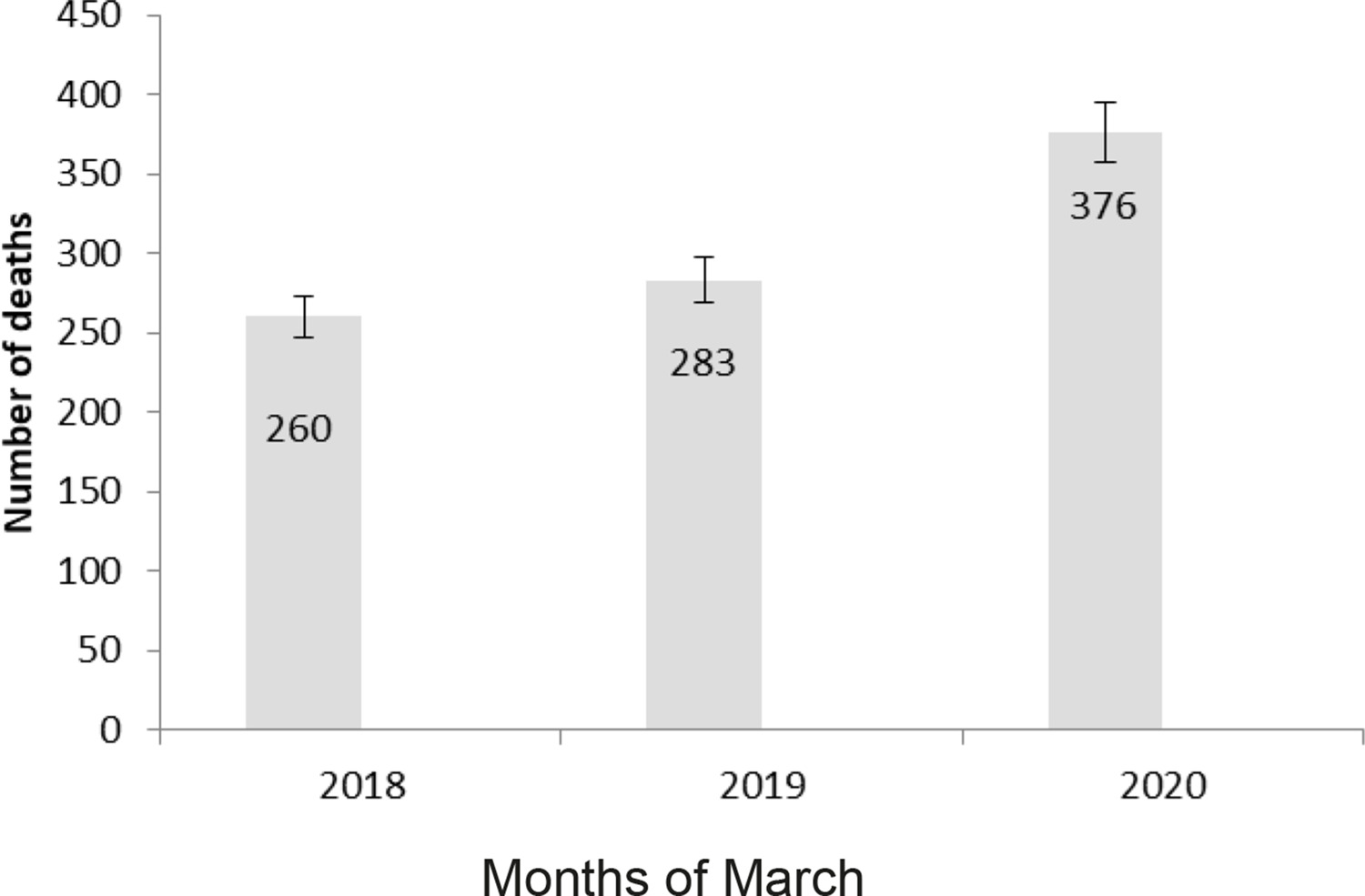
Assess the number of home deaths by cardiopulmonary arrest notified by the Mobile Emergency Medical Service (SAMU) in March 2018, 2019 and 2020.

Methods

Observational study carried out from the analysis of cardiopulmonary arrest mortality data of citizens assisted by SAMU in Belo Horizonte, Minas Gerais, Brazil. Social and clinical characteristics and occurrence information of the patients were analyzed. The mortality rate due to cardiopulmonary arrest in relation to the total number of attendances was assessed. A significance level of 95% was considered.

Results

There was increase of home deaths due to cardiopulmonary arrest in March 2020 compared to March 2018 (p<0.001) and March 2019 (p=0.050). Of the deaths reported in 2020, 63.8% of the patients were aged 60 years or older, 63.7% of the occurrences were performed in the afternoon and approximately 87% of the cardiopulmonary arrest notified had associated clinical comorbidities, with systemic arterial hypertension and heart failure represented by 22.87% and 13.03% of the reported cases, respectively. The majority of the evaluated sample of this study did not have any medical care follow-up (88.7%).

Conclusion

Considering the increase in the number of the deaths, we suggest reflections and readjustments regarding the monitoring of chronic non-transmissible diseases during a pandemic, as well as improvements in death surveillance. (Arq Bras Cardiol. 2021; 116(2):266-271)

  • Betacoronavirus
  • COVID-19
  • Deaths
  • Emergency Medical Services
  • Heart Arrest
  • Pandemics
Read Full Article
Creative Commons Attribution (CC BY) Creative Commons license
01/03/2021 DOI: 10.36660/abc.20200547 Views 1
Figure 1
Image

Radiologic-Electrocardiography Correlation in Wellens Syndrome

Eduardo Kaiser Ururahy Nunes Fonseca et al. Nevelton Heringer Filho Marcelo L. Montemor Luiz Francisco Rodrigues de Ávila Carlos Eduardo Rochitte

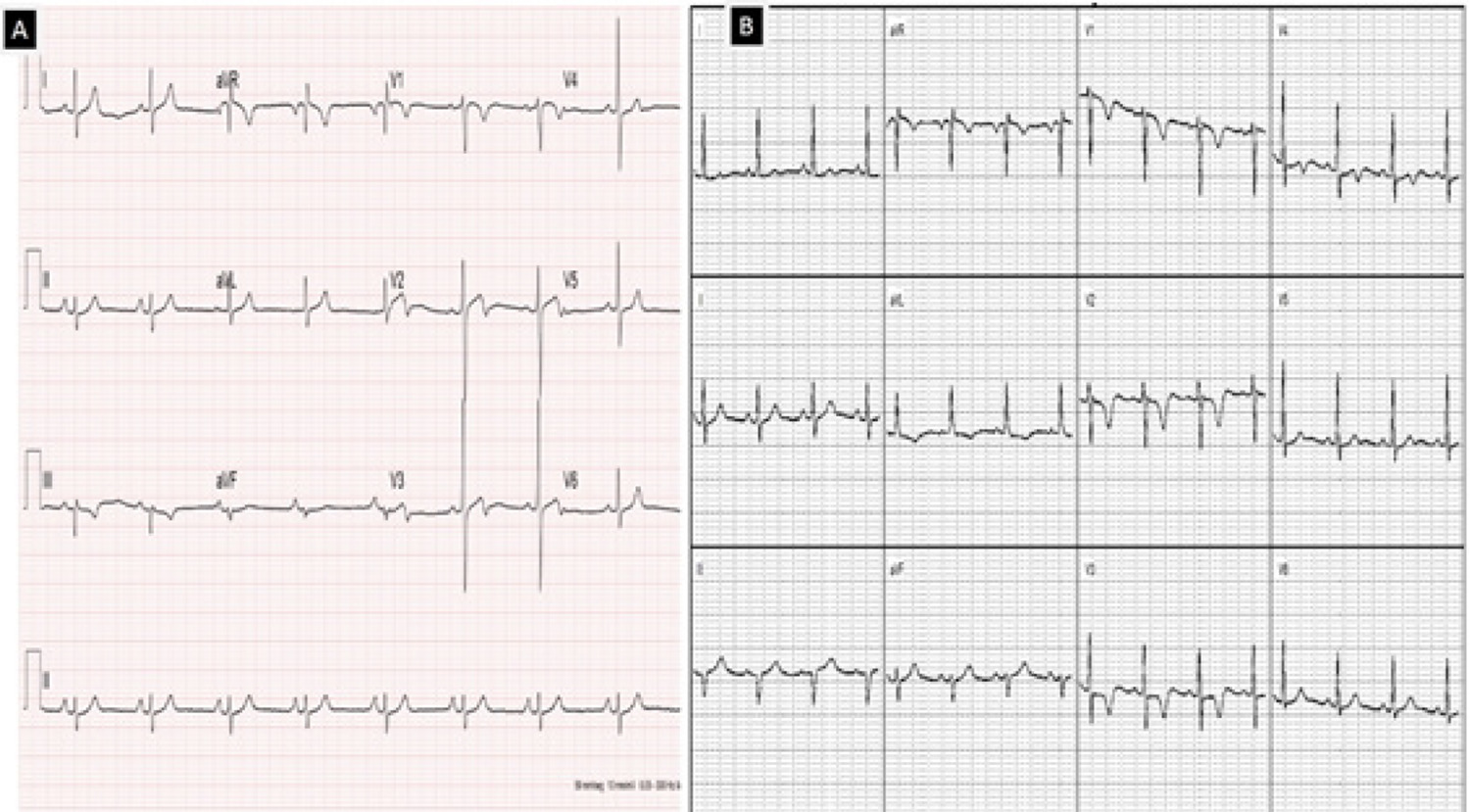
Wellens Syndrome, also known as “Anterior Descending Coronary T-wave syndrome”, was described in 1982 by Dr. Henrick Joan Joost (Hein) Wellens, a Dutch physician who also contributed to the characterization of the reentry mechanism in Wolff–Parkinson–White syndrome (WPWS).

Originally described during hospital admission (60% at admission and 40% at the follow-up) of patients with unstable angina, it was characterized by the occurrence of 2 electrocardiographic patterns, with pattern A in 25% of patients and B in 75% of patients.

[…]

  • Computed Tomography Angiography
  • Coronary Angiography
  • Coronary Vessels
  • Electrocardiography
  • Myocardial Infarction
Read Full Article
Creative Commons Attribution (CC BY) Creative Commons license
01/03/2021 DOI: 10.36660/abc.20200200 Views 1
Figure 1
Research Letter

Emerging Topics in Heart Failure: Sodium-Glucose Co-Transporter 2 Inhibitors (SGLT2i) in HF

Edimar Alcides Bocchi et al. Andréa Biolo Lidia Zytynski Moura José Albuquerque Figueiredo Neto … Carlos Eduardo Lucena Montenegro Denilson Campos de Albuquerque

Possible Mechanisms of Action

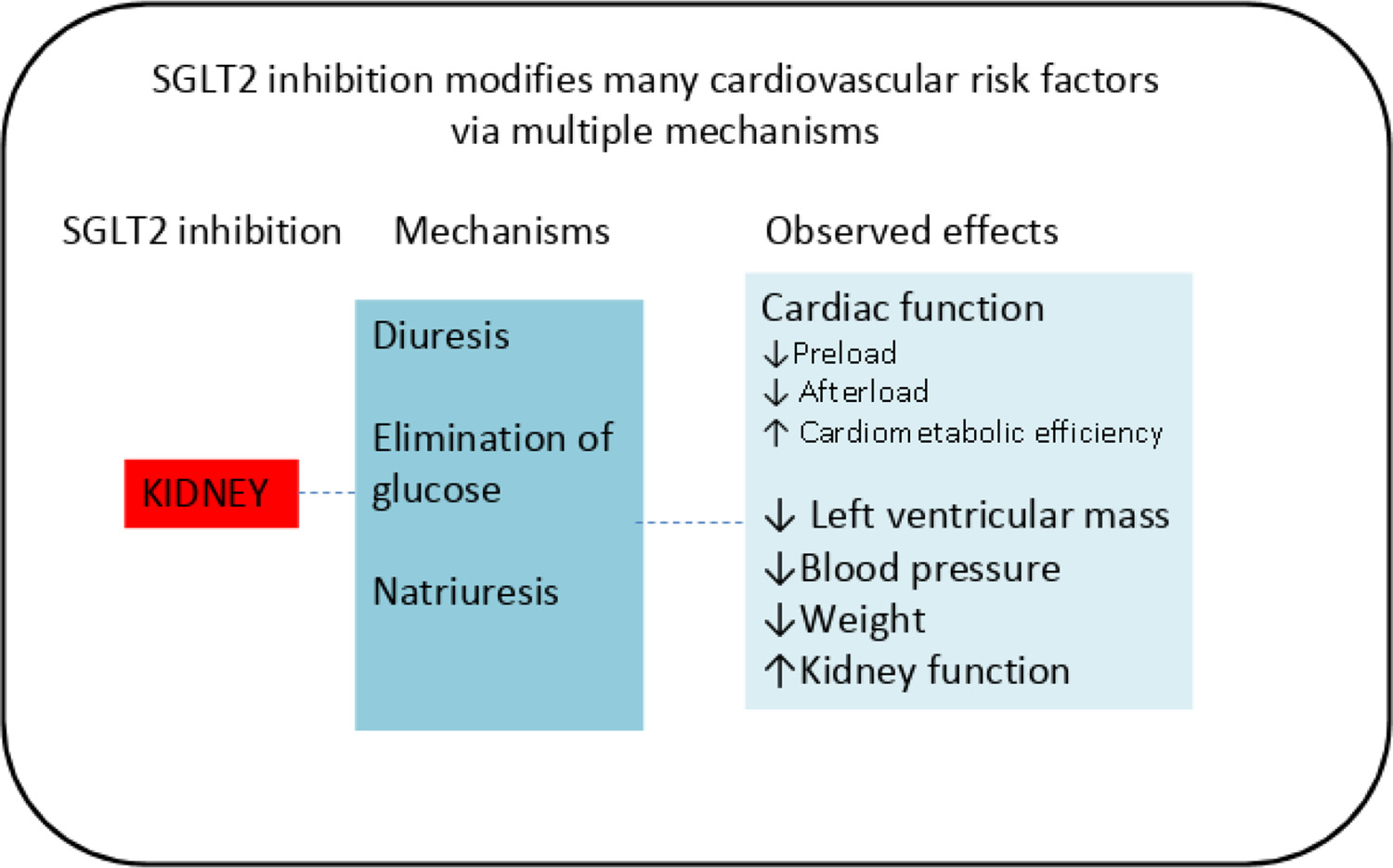
Sodium-glucose co-transporter 2 inhibitors (SGLT2i) inhibit glucose reabsorption in proximal convoluted tubules, resulting in glycosuria and reduced blood glucose levels. However, this effect does not seem to explain the benefits of SGLT2i in patients with heart failure (HF).,

Its benefits also do not seem to be directly related to its effects on classic cardiovascular risk factors (SAH, DM, DLP), since outcome reduction in the EMPA-REG study was not dependent on the baseline metabolic/hemodynamic profile of the patients or their variation throughout the study.

[…]

  • Heart Failure
  • SGLT2i
Read Full Article
Creative Commons Attribution (CC BY) Creative Commons license
01/03/2021 DOI: 10.36660/abc.20210031 Views 1
Figure 1
Editorial

Out-Of-Hospital Cardiac Arrest during the Coronavirus Disease 2019 (COVID-19) Pandemic in Brazil: The Hidden Mortality

Claudio Tinoco Mesquita

Abstract

The world changed in just a few months after the emergence of the novel coronavirus disease 2019 (COVID-19), caused by a beta coronavirus named severe acute respiratory syndrome coronavirus 2 (SARS-CoV-2). COVID-19 was declared a pandemic by the World Health Organization (WHO) on March 11, 2020. Brazil currently has the world’s second-highest COVID-19 death toll, second only to the USA. The COVID-19 pandemic is spreading fast in the world with more than 181 countries affected. This editorial refers to the article published in Arquivos Brasileiros de Cardiologia: “Increase in home deaths due to cardiorespiratory arrest in times of COVID-19 pandemic.”1 Their main results show a gradual increase in the rate of out-of-hospital cardiac arrest during the Coronavirus disease 2019 (COVID-19) pandemic in the city of Belo Horizonte, Minas Gerais, Brazil. Their data demonstrate a proportional increase of 33% of home deaths in March 2020 compared to previous periods. Their study is the first Brazilian paper to demonstrate the same trend observed in other countries.

  • Betacoronavirus
  • Cardiovascular Diseases, Pneumopathies
  • Covid-19/complications
  • Heart Arrest
  • Mortality
  • Pandemics
  • Risk Factors, Elderly
Read Full Article
Creative Commons Attribution (CC BY) Creative Commons license
01/03/2021 DOI: 10.36660/abc.20210041 Views 1

Could not load more articles. Please try again.

How to cite this article

EndNote RIS

Electronic Document Format (Vancouver)

Guerra V. Cardiovascular Imaging in Congenital Heart Diseases: Why not Leverage New Imaging Modalities?. Arquivos Brasileiros de Cardiologia 2021;116(2):313-4.

Electronic Document Format (ABNT)

Guerra, Vitor. Cardiovascular Imaging in Congenital Heart Diseases: Why not Leverage New Imaging Modalities?. Arquivos Brasileiros de Cardiologia, v. 116, n. 2, p. 313-314, Feb. 2021.

Electronic Document Format (APA)

Guerra, V. (2021). Cardiovascular Imaging in Congenital Heart Diseases: Why not Leverage New Imaging Modalities?. Arquivos Brasileiros de Cardiologia, 116(2), 313-314.

Electronic Document Format (ISO)

Guerra, Vitor. Cardiovascular Imaging in Congenital Heart Diseases: Why not Leverage New Imaging Modalities?. Arquivos Brasileiros de Cardiologia [online]. 2021, vol. 116, n. 2, [cited 2026-10-14], pp. 313-314. Available from: <https://journals.cardiol.br/en/article/cardiovascular-imaging-in-congenital-heart-diseases-why-not-leverage-new-imaging-modalities/>. ISSN 0066-782X

EndNote RIS

Electronic Document Format (Vancouver)

Furlan SF, Drager LF. To Dip or not to Dip Blood Pressure in Chronic Obstructive Pulmonary Disease: That is the Question!. Arquivos Brasileiros de Cardiologia 2021;116(2):303-4.

Electronic Document Format (ABNT)

Furlan, Sofia F.; Drager, Luciano F.. To Dip or not to Dip Blood Pressure in Chronic Obstructive Pulmonary Disease: That is the Question!. Arquivos Brasileiros de Cardiologia, v. 116, n. 2, p. 303-304, Feb. 2021.

Electronic Document Format (APA)

Furlan, S. F., & Drager, L. F. (2021). To Dip or not to Dip Blood Pressure in Chronic Obstructive Pulmonary Disease: That is the Question!. Arquivos Brasileiros de Cardiologia, 116(2), 303-304.

Electronic Document Format (ISO)

Furlan, Sofia F. and Drager, Luciano F.. To Dip or not to Dip Blood Pressure in Chronic Obstructive Pulmonary Disease: That is the Question!. Arquivos Brasileiros de Cardiologia [online]. 2021, vol. 116, n. 2, [cited 2026-10-14], pp. 303-304. Available from: <https://journals.cardiol.br/en/article/to-dip-or-not-to-dip-blood-pressure-in-chronic-obstructive-pulmonary-disease-that-is-the-question/>. ISSN 0066-782X

EndNote RIS

Electronic Document Format (Vancouver)

Furtado RHM, Genestreti PR, Dalçóquio TF, Baracioli LM, Lima FG, Franci A, Giraldez RRCV, et al. Association between Statin Therapy and Lower Incidence of Hyperglycemia in Patients Hospitalized with Acute Coronary Syndromes. Arquivos Brasileiros de Cardiologia 2021;116(2):285-94.

Electronic Document Format (ABNT)

Furtado, Remo Holanda de Mendonça; Genestreti, Paulo Rizzo; Dalçóquio, Talia F.; Baracioli, Luciano Moreira; Lima, Felipe Galego; Franci, André; Giraldez, Roberto R. C. V.; Menezes, Fernando R.; Ferrari, Aline Gehlen; Lima, Viviane Moreira; Pereira, Cesar A. C.; Nakashima, Carlos Alberto Kenji; Salsoso, Rocio; Godoy, Lucas Colombo; Nicolau, José C.. Association between Statin Therapy and Lower Incidence of Hyperglycemia in Patients Hospitalized with Acute Coronary Syndromes. Arquivos Brasileiros de Cardiologia, v. 116, n. 2, p. 285-294, Feb. 2021.

Electronic Document Format (APA)

Furtado, R. H. M., Genestreti, P. R., Dalçóquio, T. F., Baracioli, L. M., Lima, F. G., Franci, A., Giraldez, R. R. C. V., Menezes, F. R., Ferrari, A. G., Lima, V. M., Pereira, C. A. C., Nakashima, C. A. K., Salsoso, R., Godoy, L. C., & Nicolau, J. C. (2021). Association between Statin Therapy and Lower Incidence of Hyperglycemia in Patients Hospitalized with Acute Coronary Syndromes. Arquivos Brasileiros de Cardiologia, 116(2), 285-294.

Electronic Document Format (ISO)

Furtado, Remo Holanda de Mendonça and Genestreti, Paulo Rizzo and Dalçóquio, Talia F. and Baracioli, Luciano Moreira and Lima, Felipe Galego and Franci, André and Giraldez, Roberto R. C. V. and Menezes, Fernando R. and Ferrari, Aline Gehlen and Lima, Viviane Moreira and Pereira, Cesar A. C. and Nakashima, Carlos Alberto Kenji and Salsoso, Rocio and Godoy, Lucas Colombo and Nicolau, José C.. Association between Statin Therapy and Lower Incidence of Hyperglycemia in Patients Hospitalized with Acute Coronary Syndromes. Arquivos Brasileiros de Cardiologia [online]. 2021, vol. 116, n. 2, [cited 2026-10-14], pp. 285-294. Available from: <https://journals.cardiol.br/en/article/association-between-statin-therapy-and-lower-incidence-of-hyperglycemia-in-patients-hospitalized-with-acute-coronary-syndromes/>. ISSN 0066-782X

EndNote RIS

Electronic Document Format (Vancouver)

Cherneva Z, Cherneva R. The Role of Stress Echocardiography in the Early Detection of Diastolic Dysfunction in Non-Severe Chronic Obstructive Pulmonary Disease Patients. Arquivos Brasileiros de Cardiologia 2021;116(2):259-65.

Electronic Document Format (ABNT)

Cherneva, Zheyna; Cherneva, Radostina. The Role of Stress Echocardiography in the Early Detection of Diastolic Dysfunction in Non-Severe Chronic Obstructive Pulmonary Disease Patients. Arquivos Brasileiros de Cardiologia, v. 116, n. 2, p. 259-265, Feb. 2021.

Electronic Document Format (APA)

Cherneva, Z., & Cherneva, R. (2021). The Role of Stress Echocardiography in the Early Detection of Diastolic Dysfunction in Non-Severe Chronic Obstructive Pulmonary Disease Patients. Arquivos Brasileiros de Cardiologia, 116(2), 259-265.

Electronic Document Format (ISO)

Cherneva, Zheyna and Cherneva, Radostina. The Role of Stress Echocardiography in the Early Detection of Diastolic Dysfunction in Non-Severe Chronic Obstructive Pulmonary Disease Patients. Arquivos Brasileiros de Cardiologia [online]. 2021, vol. 116, n. 2, [cited 2026-10-14], pp. 259-265. Available from: <https://journals.cardiol.br/en/article/the-role-of-stress-echocardiography-in-the-early-detection-of-diastolic-dysfunction-in-non-severe-chronic-obstructive-pulmonary-disease-patients/>. ISSN 0066-782X

EndNote RIS

Electronic Document Format (Vancouver)

Kozak MF, Afiune JY, Grosse-Wortmann L. Current Use of Pediatric Cardiac Magnetic Resonance Imaging in Brazil. Arquivos Brasileiros de Cardiologia 2021;116(2):305-12.

Electronic Document Format (ABNT)

Kozak, Marcelo Felipe; Afiune, Jorge Yussef; Grosse-Wortmann, Lars. Current Use of Pediatric Cardiac Magnetic Resonance Imaging in Brazil. Arquivos Brasileiros de Cardiologia, v. 116, n. 2, p. 305-312, Feb. 2021.

Electronic Document Format (APA)

Kozak, M. F., Afiune, J. Y., & Grosse-Wortmann, L. (2021). Current Use of Pediatric Cardiac Magnetic Resonance Imaging in Brazil. Arquivos Brasileiros de Cardiologia, 116(2), 305-312.

Electronic Document Format (ISO)

Kozak, Marcelo Felipe and Afiune, Jorge Yussef and Grosse-Wortmann, Lars. Current Use of Pediatric Cardiac Magnetic Resonance Imaging in Brazil. Arquivos Brasileiros de Cardiologia [online]. 2021, vol. 116, n. 2, [cited 2026-10-14], pp. 305-312. Available from: <https://journals.cardiol.br/en/article/current-use-of-pediatric-cardiac-magnetic-resonance-imaging-in-brazil/>. ISSN 0066-782X

EndNote RIS

Electronic Document Format (Vancouver)

Fernandes PMP, Faria GF, Reis FP, Abdalla LG, Afonso Junior JE, Bacal F. Cardiopulmonary Transplantation: When to Indicate?. Arquivos Brasileiros de Cardiologia 2021;116(2):346-8.

Electronic Document Format (ABNT)

Fernandes, Paulo Manuel Pêgo; Faria, Gabriela Favaro; Reis, Flávio Pola dos; Abdalla, Luís Gustavo; Afonso Junior, José Eduardo; Bacal, Fernando. Cardiopulmonary Transplantation: When to Indicate?. Arquivos Brasileiros de Cardiologia, v. 116, n. 2, p. 346-348, Feb. 2021.

Electronic Document Format (APA)

Fernandes, P. M. P., Faria, G. F., Reis, F. P. , Abdalla, L. G., Afonso Junior, J. E., & Bacal, F. (2021). Cardiopulmonary Transplantation: When to Indicate?. Arquivos Brasileiros de Cardiologia, 116(2), 346-348.

Electronic Document Format (ISO)

Fernandes, Paulo Manuel Pêgo and Faria, Gabriela Favaro and Reis, Flávio Pola dos and Abdalla, Luís Gustavo and Afonso Junior, José Eduardo and Bacal, Fernando. Cardiopulmonary Transplantation: When to Indicate?. Arquivos Brasileiros de Cardiologia [online]. 2021, vol. 116, n. 2, [cited 2026-10-14], pp. 346-348. Available from: <https://journals.cardiol.br/en/article/cardiopulmonary-transplantation-when-to-indicate/>. ISSN 0066-782X

EndNote RIS

Electronic Document Format (Vancouver)

Fernandes F, Moreira CHV, Oliveira LC, Souza-Basqueira M, Ianni BM, Lorenzo C, Ramires FJA, et al. Galectin-3 Associated with Severe Forms and Long-term Mortality in Patients with Chagas Disease. Arquivos Brasileiros de Cardiologia 2021;116(2):248-56.

Electronic Document Format (ABNT)

Fernandes, Fábio; Moreira, Carlos Henrique Valente; Oliveira, Lea Campos; Souza-Basqueira, Marcela; Ianni, Barbara Maria; Lorenzo, Claudia di; Ramires, Felix José Alvarez; Nastari, Luciano; Cunha-Neto, Edecio; Ribeiro, Antonio L.; Lopes, Renato Delascio; Keating, Sheila M.; Sabino, Ester Cerdeira; Mady, Charles. Galectin-3 Associated with Severe Forms and Long-term Mortality in Patients with Chagas Disease. Arquivos Brasileiros de Cardiologia, v. 116, n. 2, p. 248-256, Feb. 2021.

Electronic Document Format (APA)

Fernandes, F., Moreira, C. H. V., Oliveira, L. C., Souza-Basqueira, M., Ianni, B. M., Lorenzo, C. , Ramires, F. J. A., Nastari, L., Cunha-Neto, E., Ribeiro, A. L., Lopes, R. D., Keating, S. M., Sabino, E. C., & Mady, C. (2021). Galectin-3 Associated with Severe Forms and Long-term Mortality in Patients with Chagas Disease. Arquivos Brasileiros de Cardiologia, 116(2), 248-256.

Electronic Document Format (ISO)

Fernandes, Fábio and Moreira, Carlos Henrique Valente and Oliveira, Lea Campos and Souza-Basqueira, Marcela and Ianni, Barbara Maria and Lorenzo, Claudia di and Ramires, Felix José Alvarez and Nastari, Luciano and Cunha-Neto, Edecio and Ribeiro, Antonio L. and Lopes, Renato Delascio and Keating, Sheila M. and Sabino, Ester Cerdeira and Mady, Charles. Galectin-3 Associated with Severe Forms and Long-term Mortality in Patients with Chagas Disease. Arquivos Brasileiros de Cardiologia [online]. 2021, vol. 116, n. 2, [cited 2026-10-14], pp. 248-256. Available from: <https://journals.cardiol.br/en/article/galectin-3-associated-with-severe-forms-and-long-term-mortality-in-patients-with-chagas-disease/>. ISSN 0066-782X

EndNote RIS

Electronic Document Format (Vancouver)

Mendes SL, Moreira N, Batista M, Ferreira AR, Marinho AV, Prieto D, Baptista R, et al. Long-Term Clinical and Hemodynamic Outcomes after Heart Transplantation in Patients Pre-Treated with Sildenafil. Arquivos Brasileiros de Cardiologia 2021;116(2):219-26.

Electronic Document Format (ABNT)

Mendes, Sofia Lázaro; Moreira, Nadia; Batista, Manuel; Ferreira, Ana Rita; Marinho, Ana Vera; Prieto, David; Baptista, Rui; Costa, Susana; Franco, Fatima; Pego, Mariano; Antunes, Manuel de Jesus. Long-Term Clinical and Hemodynamic Outcomes after Heart Transplantation in Patients Pre-Treated with Sildenafil. Arquivos Brasileiros de Cardiologia, v. 116, n. 2, p. 219-226, Feb. 2021.

Electronic Document Format (APA)

Mendes, S. L., Moreira, N., Batista, M., Ferreira, A. R., Marinho, A. V., Prieto, D., Baptista, R., Costa, S., Franco, F., Pego, M., & Antunes, M. J. (2021). Long-Term Clinical and Hemodynamic Outcomes after Heart Transplantation in Patients Pre-Treated with Sildenafil. Arquivos Brasileiros de Cardiologia, 116(2), 219-226.

Electronic Document Format (ISO)

Mendes, Sofia Lázaro and Moreira, Nadia and Batista, Manuel and Ferreira, Ana Rita and Marinho, Ana Vera and Prieto, David and Baptista, Rui and Costa, Susana and Franco, Fatima and Pego, Mariano and Antunes, Manuel de Jesus. Long-Term Clinical and Hemodynamic Outcomes after Heart Transplantation in Patients Pre-Treated with Sildenafil. Arquivos Brasileiros de Cardiologia [online]. 2021, vol. 116, n. 2, [cited 2026-10-14], pp. 219-226. Available from: <https://journals.cardiol.br/en/article/long-term-clinical-and-hemodynamic-outcomes-after-heart-transplantation-in-patients-pre-treated-with-sildenafil/>. ISSN 0066-782X

EndNote RIS

Electronic Document Format (Vancouver)

Schwartzmann P. Sildenafil as an Eligible Heart Transplantation Therapy for Advanced Heart Failure Associated with Fixed Pulmonary Hypertension. Arquivos Brasileiros de Cardiologia 2021;116(2):227-8.

Electronic Document Format (ABNT)

Schwartzmann, Pedro. Sildenafil as an Eligible Heart Transplantation Therapy for Advanced Heart Failure Associated with Fixed Pulmonary Hypertension. Arquivos Brasileiros de Cardiologia, v. 116, n. 2, p. 227-228, Feb. 2021.

Electronic Document Format (APA)

Schwartzmann, P. (2021). Sildenafil as an Eligible Heart Transplantation Therapy for Advanced Heart Failure Associated with Fixed Pulmonary Hypertension. Arquivos Brasileiros de Cardiologia, 116(2), 227-228.

Electronic Document Format (ISO)

Schwartzmann, Pedro. Sildenafil as an Eligible Heart Transplantation Therapy for Advanced Heart Failure Associated with Fixed Pulmonary Hypertension. Arquivos Brasileiros de Cardiologia [online]. 2021, vol. 116, n. 2, [cited 2026-10-14], pp. 227-228. Available from: <https://journals.cardiol.br/en/article/sildenafil-as-an-eligible-heart-transplantation-therapy-for-advanced-heart-failure-associated-with-fixed-pulmonary-hypertension/>. ISSN 0066-782X

EndNote RIS

Electronic Document Format (Vancouver)

Romano E. Association of Cardiac Injury with Mortality in Hospitalized Patients with COVID-19. Arquivos Brasileiros de Cardiologia 2021;116(2):283-4.

Electronic Document Format (ABNT)

Romano, Edson. Association of Cardiac Injury with Mortality in Hospitalized Patients with COVID-19. Arquivos Brasileiros de Cardiologia, v. 116, n. 2, p. 283-284, Feb. 2021.

Electronic Document Format (APA)

Romano, E. (2021). Association of Cardiac Injury with Mortality in Hospitalized Patients with COVID-19. Arquivos Brasileiros de Cardiologia, 116(2), 283-284.

Electronic Document Format (ISO)

Romano, Edson. Association of Cardiac Injury with Mortality in Hospitalized Patients with COVID-19. Arquivos Brasileiros de Cardiologia [online]. 2021, vol. 116, n. 2, [cited 2026-10-14], pp. 283-284. Available from: <https://journals.cardiol.br/en/article/association-of-cardiac-injury-with-mortality-in-hospitalized-patients-with-covid-19/>. ISSN 0066-782X

EndNote RIS

Electronic Document Format (Vancouver)

Martins WA, Oliveira GMM, Brandão AA, Mourilhe-Rocha R, Mesquita ET, Saraiva JFK, Bacal F, et al. Vaccinating Patients with Heart Disease Against COVID-19: The Reasons for Priority. Arquivos Brasileiros de Cardiologia 2021;116(2):213-8.

Electronic Document Format (ABNT)

Martins, Wolney de Andrade; Oliveira, Gláucia Maria Moraes de; Brandão, Andréa Araujo; Mourilhe-Rocha, Ricardo; Mesquita, Evandro Tinoco; Saraiva, José Francisco Kerr; Bacal, Fernando; Lopes, Marcelo Antônio Cartaxo Queiroga. Vaccinating Patients with Heart Disease Against COVID-19: The Reasons for Priority. Arquivos Brasileiros de Cardiologia, v. 116, n. 2, p. 213-218, Feb. 2021.

Electronic Document Format (APA)

Martins, W. A., Oliveira, G. M. M. , Brandão, A. A., Mourilhe-Rocha, R., Mesquita, E. T., Saraiva, J. F. K., Bacal, F., & Lopes, M. A. C. Q. (2021). Vaccinating Patients with Heart Disease Against COVID-19: The Reasons for Priority. Arquivos Brasileiros de Cardiologia, 116(2), 213-218.

Electronic Document Format (ISO)

Martins, Wolney de Andrade and Oliveira, Gláucia Maria Moraes de and Brandão, Andréa Araujo and Mourilhe-Rocha, Ricardo and Mesquita, Evandro Tinoco and Saraiva, José Francisco Kerr and Bacal, Fernando and Lopes, Marcelo Antônio Cartaxo Queiroga. Vaccinating Patients with Heart Disease Against COVID-19: The Reasons for Priority. Arquivos Brasileiros de Cardiologia [online]. 2021, vol. 116, n. 2, [cited 2026-10-14], pp. 213-218. Available from: <https://journals.cardiol.br/en/article/vaccinating-patients-with-heart-disease-against-covid-19-the-reasons-for-priority/>. ISSN 0066-782X

EndNote RIS

Electronic Document Format (Vancouver)

Timerman S, Guimarães HP, Rochitte CE, Polastri TF, Lopes MACQ. COVID-19 Chain of Survival 2020. Arquivos Brasileiros de Cardiologia 2021;116(2):351-4.

Electronic Document Format (ABNT)

Timerman, Sergio; Guimarães, Helio Penna; Rochitte, Carlos Eduardo; Polastri, Thatiane Facholi; Lopes, Marcelo Antônio Cartaxo Queiroga. COVID-19 Chain of Survival 2020. Arquivos Brasileiros de Cardiologia, v. 116, n. 2, p. 351-354, Feb. 2021.

Electronic Document Format (APA)

Timerman, S., Guimarães, H. P., Rochitte, C. E., Polastri, T. F., & Lopes, M. A. C. Q. (2021). COVID-19 Chain of Survival 2020. Arquivos Brasileiros de Cardiologia, 116(2), 351-354.

Electronic Document Format (ISO)

Timerman, Sergio and Guimarães, Helio Penna and Rochitte, Carlos Eduardo and Polastri, Thatiane Facholi and Lopes, Marcelo Antônio Cartaxo Queiroga. COVID-19 Chain of Survival 2020. Arquivos Brasileiros de Cardiologia [online]. 2021, vol. 116, n. 2, [cited 2026-10-14], pp. 351-354. Available from: <https://journals.cardiol.br/en/article/covid-19-chain-of-survival-2020/>. ISSN 0066-782X

EndNote RIS

Electronic Document Format (Vancouver)

Wang Z, Gao J, Teng H, Peng J. Effects of Doxorubicin on Heme Biosynthesis and Metabolism in Cardiomyocyte. Arquivos Brasileiros de Cardiologia 2021;116(2):315-22.

Electronic Document Format (ABNT)

Wang, Zuoyan; Gao, Junyi; Teng, Haobo; Peng, Jianjun. Effects of Doxorubicin on Heme Biosynthesis and Metabolism in Cardiomyocyte. Arquivos Brasileiros de Cardiologia, v. 116, n. 2, p. 315-322, Feb. 2021.

Electronic Document Format (APA)

Wang, Z., Gao, J., Teng, H., & Peng, J. (2021). Effects of Doxorubicin on Heme Biosynthesis and Metabolism in Cardiomyocyte. Arquivos Brasileiros de Cardiologia, 116(2), 315-322.

Electronic Document Format (ISO)

Wang, Zuoyan and Gao, Junyi and Teng, Haobo and Peng, Jianjun. Effects of Doxorubicin on Heme Biosynthesis and Metabolism in Cardiomyocyte. Arquivos Brasileiros de Cardiologia [online]. 2021, vol. 116, n. 2, [cited 2026-10-14], pp. 315-322. Available from: <https://journals.cardiol.br/en/article/effects-of-doxorubicin-on-heme-biosynthesis-and-metabolism-in-cardiomyocyte/>. ISSN 0066-782X

EndNote RIS

Electronic Document Format (Vancouver)

Timóteo AT. Is There a Second Wind for Glycoprotein IIb/IIIa Inhibitors in Elderly Diabetic Females with ST-Elevation Myocardial Infarction, or are We on Thin Ice?. Arquivos Brasileiros de Cardiologia 2021;116(2):236-7.

Electronic Document Format (ABNT)

Timóteo, Ana Teresa. Is There a Second Wind for Glycoprotein IIb/IIIa Inhibitors in Elderly Diabetic Females with ST-Elevation Myocardial Infarction, or are We on Thin Ice?. Arquivos Brasileiros de Cardiologia, v. 116, n. 2, p. 236-237, Feb. 2021.

Electronic Document Format (APA)

Timóteo, A. T. (2021). Is There a Second Wind for Glycoprotein IIb/IIIa Inhibitors in Elderly Diabetic Females with ST-Elevation Myocardial Infarction, or are We on Thin Ice?. Arquivos Brasileiros de Cardiologia, 116(2), 236-237.

Electronic Document Format (ISO)

Timóteo, Ana Teresa. Is There a Second Wind for Glycoprotein IIb/IIIa Inhibitors in Elderly Diabetic Females with ST-Elevation Myocardial Infarction, or are We on Thin Ice?. Arquivos Brasileiros de Cardiologia [online]. 2021, vol. 116, n. 2, [cited 2026-10-14], pp. 236-237. Available from: <https://journals.cardiol.br/en/article/is-there-a-second-wind-for-glycoprotein-iib-iiia-inhibitors-in-elderly-diabetic-females-with-st-elevation-myocardial-infarction-or-are-we-on-thin-ice/>. ISSN 0066-782X

EndNote RIS

Electronic Document Format (Vancouver)

Gatto M, Mota GAF. Influence of Doxorubicin Treatment on Heme Metabolism in Cardiomyoblasts: An In Vitro Study. Arquivos Brasileiros de Cardiologia 2021;116(2):323-4.

Electronic Document Format (ABNT)

Gatto, Mariana; Mota, Gustavo Augusto Ferreira. Influence of Doxorubicin Treatment on Heme Metabolism in Cardiomyoblasts: An In Vitro Study. Arquivos Brasileiros de Cardiologia, v. 116, n. 2, p. 323-324, Feb. 2021.

Electronic Document Format (APA)

Gatto, M., & Mota, G. A. F. (2021). Influence of Doxorubicin Treatment on Heme Metabolism in Cardiomyoblasts: An In Vitro Study. Arquivos Brasileiros de Cardiologia, 116(2), 323-324.

Electronic Document Format (ISO)

Gatto, Mariana and Mota, Gustavo Augusto Ferreira. Influence of Doxorubicin Treatment on Heme Metabolism in Cardiomyoblasts: An In Vitro Study. Arquivos Brasileiros de Cardiologia [online]. 2021, vol. 116, n. 2, [cited 2026-10-14], pp. 323-324. Available from: <https://journals.cardiol.br/en/article/influence-of-doxorubicin-treatment-on-heme-metabolism-in-cardiomyoblasts-an-in-vitro-study/>. ISSN 0066-782X

EndNote RIS

Electronic Document Format (Vancouver)

Saad EB, d’Avila A. Atrial Fibrillation (Part 2) – Catheter Ablation. Arquivos Brasileiros de Cardiologia 2021;116(2):334-43.

Electronic Document Format (ABNT)

Saad, Eduardo B.; d’Avila, Andre. Atrial Fibrillation (Part 2) – Catheter Ablation. Arquivos Brasileiros de Cardiologia, v. 116, n. 2, p. 334-343, Feb. 2021.

Electronic Document Format (APA)

Saad, E. B., & d’Avila, A. (2021). Atrial Fibrillation (Part 2) – Catheter Ablation. Arquivos Brasileiros de Cardiologia, 116(2), 334-343.

Electronic Document Format (ISO)

Saad, Eduardo B. and d’Avila, Andre. Atrial Fibrillation (Part 2) – Catheter Ablation. Arquivos Brasileiros de Cardiologia [online]. 2021, vol. 116, n. 2, [cited 2026-10-14], pp. 334-343. Available from: <https://journals.cardiol.br/en/article/atrial-fibrillation-part-2-catheter-ablation/>. ISSN 0066-782X

EndNote RIS

Electronic Document Format (Vancouver)

Arêas FZS, Arêas GPT. Why not Think about Non-Invasive Brain Stimulation to Control Blood Pressure?. Arquivos Brasileiros de Cardiologia 2021;116(2):349-50.

Electronic Document Format (ABNT)

Arêas, Fernando Zanela da Silva; Arêas, Guilherme Peixoto Tinoco. Why not Think about Non-Invasive Brain Stimulation to Control Blood Pressure?. Arquivos Brasileiros de Cardiologia, v. 116, n. 2, p. 349-350, Feb. 2021.

Electronic Document Format (APA)

Arêas, F. Z. S., & Arêas, G. P. T. (2021). Why not Think about Non-Invasive Brain Stimulation to Control Blood Pressure?. Arquivos Brasileiros de Cardiologia, 116(2), 349-350.

Electronic Document Format (ISO)

Arêas, Fernando Zanela da Silva and Arêas, Guilherme Peixoto Tinoco. Why not Think about Non-Invasive Brain Stimulation to Control Blood Pressure?. Arquivos Brasileiros de Cardiologia [online]. 2021, vol. 116, n. 2, [cited 2026-10-14], pp. 349-350. Available from: <https://journals.cardiol.br/en/article/why-not-think-about-non-invasive-brain-stimulation-to-control-blood-pressure/>. ISSN 0066-782X

EndNote RIS

Electronic Document Format (Vancouver)

Machline-Carrion MJ. Beyond CHA2DS2-VASc for Predicting the Risk of Thromboembolism and Stroke – Not That Simple!. Arquivos Brasileiros de Cardiologia 2021;116(2):332-3.

Electronic Document Format (ABNT)

Machline-Carrion, M. Julia. Beyond CHA2DS2-VASc for Predicting the Risk of Thromboembolism and Stroke – Not That Simple!. Arquivos Brasileiros de Cardiologia, v. 116, n. 2, p. 332-333, Feb. 2021.

Electronic Document Format (APA)

Machline-Carrion, M. J. (2021). Beyond CHA2DS2-VASc for Predicting the Risk of Thromboembolism and Stroke – Not That Simple!. Arquivos Brasileiros de Cardiologia, 116(2), 332-333.

Electronic Document Format (ISO)

Machline-Carrion, M. Julia. Beyond CHA2DS2-VASc for Predicting the Risk of Thromboembolism and Stroke – Not That Simple!. Arquivos Brasileiros de Cardiologia [online]. 2021, vol. 116, n. 2, [cited 2026-10-14], pp. 332-333. Available from: <https://journals.cardiol.br/en/article/beyond-cha2ds2-vasc-for-predicting-the-risk-of-thromboembolism-and-stroke-not-that-simple/>. ISSN 0066-782X

EndNote RIS

Electronic Document Format (Vancouver)

Mesquita ET, Mendes AP, Moura L, Figueiredo Neto JA, Marcondes-Braga FG, Bacal F, Moreira MCV, et al. The Challenges of Heart Failure Yesterday, Today and Tomorrow and the 20 Years of DEIC. Arquivos Brasileiros de Cardiologia 2021;116(2):359-62.

Electronic Document Format (ABNT)

Mesquita, Evandro Tinoco; Mendes, Ana Paula; Moura, Lidia; Figueiredo Neto, José Albuquerque de; Marcondes-Braga, Fabiana G.; Bacal, Fernando; Moreira, Maria da Consolação Vieira; Clausell, Nadine Oliveira. The Challenges of Heart Failure Yesterday, Today and Tomorrow and the 20 Years of DEIC. Arquivos Brasileiros de Cardiologia, v. 116, n. 2, p. 359-362, Feb. 2021.

Electronic Document Format (APA)

Mesquita, E. T., Mendes, A. P., Moura, L., Figueiredo Neto, J. A. , Marcondes-Braga, F. G., Bacal, F., Moreira, M. C. V., & Clausell, N. O. (2021). The Challenges of Heart Failure Yesterday, Today and Tomorrow and the 20 Years of DEIC. Arquivos Brasileiros de Cardiologia, 116(2), 359-362.

Electronic Document Format (ISO)

Mesquita, Evandro Tinoco and Mendes, Ana Paula and Moura, Lidia and Figueiredo Neto, José Albuquerque de and Marcondes-Braga, Fabiana G. and Bacal, Fernando and Moreira, Maria da Consolação Vieira and Clausell, Nadine Oliveira. The Challenges of Heart Failure Yesterday, Today and Tomorrow and the 20 Years of DEIC. Arquivos Brasileiros de Cardiologia [online]. 2021, vol. 116, n. 2, [cited 2026-10-14], pp. 359-362. Available from: <https://journals.cardiol.br/en/article/the-challenges-of-heart-failure-yesterday-today-and-tomorrow-and-the-20-years-of-deic/>. ISSN 0066-782X

EndNote RIS

Electronic Document Format (Vancouver)

Huyut MA, Yamac AH. Outcomes in Coronary No-Reflow Phenomenon Patients and the Relationship between Kidney Injury Molecule-1 and Coronary No-Reflow Phenomenon. Arquivos Brasileiros de Cardiologia 2021;116(2):238-47.

Electronic Document Format (ABNT)

Huyut, Mustafa Ahmet; Yamac, Aylin Hatice. Outcomes in Coronary No-Reflow Phenomenon Patients and the Relationship between Kidney Injury Molecule-1 and Coronary No-Reflow Phenomenon. Arquivos Brasileiros de Cardiologia, v. 116, n. 2, p. 238-247, Feb. 2021.

Electronic Document Format (APA)

Huyut, M. A., & Yamac, A. H. (2021). Outcomes in Coronary No-Reflow Phenomenon Patients and the Relationship between Kidney Injury Molecule-1 and Coronary No-Reflow Phenomenon. Arquivos Brasileiros de Cardiologia, 116(2), 238-247.

Electronic Document Format (ISO)

Huyut, Mustafa Ahmet and Yamac, Aylin Hatice. Outcomes in Coronary No-Reflow Phenomenon Patients and the Relationship between Kidney Injury Molecule-1 and Coronary No-Reflow Phenomenon. Arquivos Brasileiros de Cardiologia [online]. 2021, vol. 116, n. 2, [cited 2026-10-14], pp. 238-247. Available from: <https://journals.cardiol.br/en/article/outcomes-in-coronary-no-reflow-phenomenon-patients-and-the-relationship-between-kidney-injury-molecule-1-and-coronary-no-reflow-phenomenon/>. ISSN 0066-782X

EndNote RIS

Electronic Document Format (Vancouver)

Guimarães NS, Carvalho TML, Machado-Pinto J, Lage R, Bernardes RM, Peres ASS, Raposo MA, et al. Increased Home Death Due to Cardiopulmonary Arrest in Times of COVID-19 Pandemic. Arquivos Brasileiros de Cardiologia 2021;116(2):266-71.

Electronic Document Format (ABNT)

Guimarães, Nathalia Sernizon; Carvalho, Taciana Malheiros Lima; Machado-Pinto, Jackson; Lage, Roger; Bernardes, Renata Mascarenhas; Peres, Alex Sander Sena; Raposo, Mariana Amaral; Carvalhais, Ricardo Machado; Mancini, Renan Avelino; Shiomatsu, Gabriella Yuka; Oliveira, Bruna Carvalho; Rodrigues, Valéria de Melo; Melo, Maria do Carmo Barros de; Tupinambás, Unaí. Increased Home Death Due to Cardiopulmonary Arrest in Times of COVID-19 Pandemic. Arquivos Brasileiros de Cardiologia, v. 116, n. 2, p. 266-271, Feb. 2021.

Electronic Document Format (APA)

Guimarães, N. S., Carvalho, T. M. L., Machado-Pinto, J., Lage, R., Bernardes, R. M., Peres, A. S. S., Raposo, M. A., Carvalhais, R. M., Mancini, R. A., Shiomatsu, G. Y., Oliveira, B. C., Rodrigues, V. M., Melo, M. C. B. , & Tupinambás, U. (2021). Increased Home Death Due to Cardiopulmonary Arrest in Times of COVID-19 Pandemic. Arquivos Brasileiros de Cardiologia, 116(2), 266-271.

Electronic Document Format (ISO)

Guimarães, Nathalia Sernizon and Carvalho, Taciana Malheiros Lima and Machado-Pinto, Jackson and Lage, Roger and Bernardes, Renata Mascarenhas and Peres, Alex Sander Sena and Raposo, Mariana Amaral and Carvalhais, Ricardo Machado and Mancini, Renan Avelino and Shiomatsu, Gabriella Yuka and Oliveira, Bruna Carvalho and Rodrigues, Valéria de Melo and Melo, Maria do Carmo Barros de and Tupinambás, Unaí. Increased Home Death Due to Cardiopulmonary Arrest in Times of COVID-19 Pandemic. Arquivos Brasileiros de Cardiologia [online]. 2021, vol. 116, n. 2, [cited 2026-10-14], pp. 266-271. Available from: <https://journals.cardiol.br/en/article/increased-home-death-due-to-cardiopulmonary-arrest-in-times-of-covid-19-pandemic/>. ISSN 0066-782X

EndNote RIS

Electronic Document Format (Vancouver)

Fonseca EKUN, Heringer Filho N, Montemor ML, Ávila LFR, Rochitte CE. Radiologic-Electrocardiography Correlation in Wellens Syndrome. Arquivos Brasileiros de Cardiologia 2021;116(2):363-6.

Electronic Document Format (ABNT)

Fonseca, Eduardo Kaiser Ururahy Nunes; Heringer Filho, Nevelton; Montemor, Marcelo L.; Ávila, Luiz Francisco Rodrigues de; Rochitte, Carlos Eduardo. Radiologic-Electrocardiography Correlation in Wellens Syndrome. Arquivos Brasileiros de Cardiologia, v. 116, n. 2, p. 363-366, Feb. 2021.

Electronic Document Format (APA)

Fonseca, E. K. U. N., Heringer Filho, N., Montemor, M. L., Ávila, L. F. R. , & Rochitte, C. E. (2021). Radiologic-Electrocardiography Correlation in Wellens Syndrome. Arquivos Brasileiros de Cardiologia, 116(2), 363-366.

Electronic Document Format (ISO)

Fonseca, Eduardo Kaiser Ururahy Nunes and Heringer Filho, Nevelton and Montemor, Marcelo L. and Ávila, Luiz Francisco Rodrigues de and Rochitte, Carlos Eduardo. Radiologic-Electrocardiography Correlation in Wellens Syndrome. Arquivos Brasileiros de Cardiologia [online]. 2021, vol. 116, n. 2, [cited 2026-10-14], pp. 363-366. Available from: <https://journals.cardiol.br/en/article/radiologic-electrocardiography-correlation-in-wellens-syndrome/>. ISSN 0066-782X

EndNote RIS

Electronic Document Format (Vancouver)

Bocchi EA, Biolo A, Moura LZ, Figueiredo Neto JA, Montenegro CEL, Albuquerque DC. Emerging Topics in Heart Failure: Sodium-Glucose Co-Transporter 2 Inhibitors (SGLT2i) in HF. Arquivos Brasileiros de Cardiologia 2021;116(2):355-8.

Electronic Document Format (ABNT)

Bocchi, Edimar Alcides; Biolo, Andréa; Moura, Lidia Zytynski; Figueiredo Neto, José Albuquerque; Montenegro, Carlos Eduardo Lucena; Albuquerque, Denilson Campos de. Emerging Topics in Heart Failure: Sodium-Glucose Co-Transporter 2 Inhibitors (SGLT2i) in HF. Arquivos Brasileiros de Cardiologia, v. 116, n. 2, p. 355-358, Feb. 2021.

Electronic Document Format (APA)

Bocchi, E. A., Biolo, A., Moura, L. Z., Figueiredo Neto, J. A., Montenegro, C. E. L., & Albuquerque, D. C. (2021). Emerging Topics in Heart Failure: Sodium-Glucose Co-Transporter 2 Inhibitors (SGLT2i) in HF. Arquivos Brasileiros de Cardiologia, 116(2), 355-358.

Electronic Document Format (ISO)

Bocchi, Edimar Alcides and Biolo, Andréa and Moura, Lidia Zytynski and Figueiredo Neto, José Albuquerque and Montenegro, Carlos Eduardo Lucena and Albuquerque, Denilson Campos de. Emerging Topics in Heart Failure: Sodium-Glucose Co-Transporter 2 Inhibitors (SGLT2i) in HF. Arquivos Brasileiros de Cardiologia [online]. 2021, vol. 116, n. 2, [cited 2026-10-14], pp. 355-358. Available from: <https://journals.cardiol.br/en/article/emerging-topics-in-heart-failure-sodium-glucose-co-transporter-2-inhibitors-sglt2i-in-hf/>. ISSN 0066-782X

EndNote RIS

Electronic Document Format (Vancouver)

Mesquita CT. Out-Of-Hospital Cardiac Arrest during the Coronavirus Disease 2019 (COVID-19) Pandemic in Brazil: The Hidden Mortality. Arquivos Brasileiros de Cardiologia 2021;116(2):272-4.

Electronic Document Format (ABNT)

Mesquita, Claudio Tinoco. Out-Of-Hospital Cardiac Arrest during the Coronavirus Disease 2019 (COVID-19) Pandemic in Brazil: The Hidden Mortality. Arquivos Brasileiros de Cardiologia, v. 116, n. 2, p. 272-274, Feb. 2021.

Electronic Document Format (APA)

Mesquita, C. T. (2021). Out-Of-Hospital Cardiac Arrest during the Coronavirus Disease 2019 (COVID-19) Pandemic in Brazil: The Hidden Mortality. Arquivos Brasileiros de Cardiologia, 116(2), 272-274.

Electronic Document Format (ISO)

Mesquita, Claudio Tinoco. Out-Of-Hospital Cardiac Arrest during the Coronavirus Disease 2019 (COVID-19) Pandemic in Brazil: The Hidden Mortality. Arquivos Brasileiros de Cardiologia [online]. 2021, vol. 116, n. 2, [cited 2026-10-14], pp. 272-274. Available from: <https://journals.cardiol.br/en/article/out-of-hospital-cardiac-arrest-during-the-coronavirus-disease-2019-covid-19-pandemic-in-brazil-the-hidden-mortality/>. ISSN 0066-782X

Sede – Rio de Janeiro
Av. Marechal Câmara, 160
3º andar – Sala: 330 – Centro
Rio de Janeiro – CEP: 20020-907
Tel.: (55 +21) 3478-2700
ou (21) 99386-3961
E-mail: revista@cardiol.br

Sede – São Paulo
Alameda Santos, 705 – 11º andar
Cerqueira César | São Paulo
CEP: 01419-001
Tel.: (55 +11) 3411-5500
E-mail: revista@cardiol.br

  • About the Journal
  • Internal Regulation
  • Editors Section
  • Editorial Board
  • History
  • SBC Award

  • Guidelines for Publication
  • Editorial Policy
  • Ethics Policy
  • Policy on the Use of Artificial Intelligence
  • Mandatory Publication Form
  • Publication Fee

Issues

SBC Guidelines

  • How to Publish an Abstract Supplement?
  • Supplements from the Brazilian Congress of Cardiology