ABC Family Arquivos Brasileiros de Cardiologia International Journal of Cardiovascular Sciences ABC Heart Failure & Cardiomyopathy ABC Imagem Cardiovascular
Português English
ABC Family
Português English
  • About
    • About ABC Family
    • Internal Regulation
    • Editorial Board
    • Brazilian Society of Cardiology (SBC)
  • Issues
  • SBC Guidelines
  • Content
    • Videos
    • Podcasts
    • News
  • About
    • About ABC Family
    • Internal Regulation
    • Editorial Board
    • Brazilian Society of Cardiology (SBC)
  • Issues
  • SBC Guidelines
  • Content
    • Videos
    • Podcasts
    • News

ABC Family

  • ABC Family
  • Arquivos Brasileiros de Cardiologia
  • International Journal of Cardiovascular Sciences
  • ABC Heart Failure & Cardiomyopathy
  • ABC Imagem Cardiovascular
Search in

No content found.

Journals
Ordering
Article types
Others

  1. Home
  2. Keyword: Hemorrhage
Chocolate Consumption Does Not Reduce the Risk of Cardiovascular Events and Increases the Risk of Gastrointestinal Bleeding One Year After the First Myocardial Infarction
IJCS
Original Article

Chocolate Consumption Does Not Reduce the Risk of Cardiovascular Events and Increases the Risk of Gastrointestinal Bleeding One Year After the First Myocardial Infarction

Daniel Medeiros Moreira et al. Lara Marcon Dandolini Tammuz Fattah Rodrigo de Moura Joaquim Roberto Leo da Silva

Abstract

Background

Coronary artery disease is the leading cause of death worldwide, with high social and financial costs. Although previous studies have demonstrated the potential of chocolate to reduce coronary events, data on its effects in patients who have suffered an acute myocardial infarction (AMI) are lacking.

Objective

To evaluate the impact of chocolate consumption on the incidence of events in patients with AMI followed for one year.

Methods

A subanalysis of the Catarina Heart study, which evaluated patients hospitalized with a diagnosis of the first AMI, was conducted. During hospitalization, patients were asked about their chocolate consumption before the event. The incidence of events was compared between consumers and non-consumers of chocolate before the AMI. The analyzed outcomes included major adverse cardiovascular events (MACE), all-cause mortality, cardiovascular mortality, reinfarction, stroke, in-stent restenosis, acute stent thrombosis, gastrointestinal bleeding, and bleeding requiring transfusion. Cox regression models were applied, and p < 0.05 was considered statistically significant.

Results

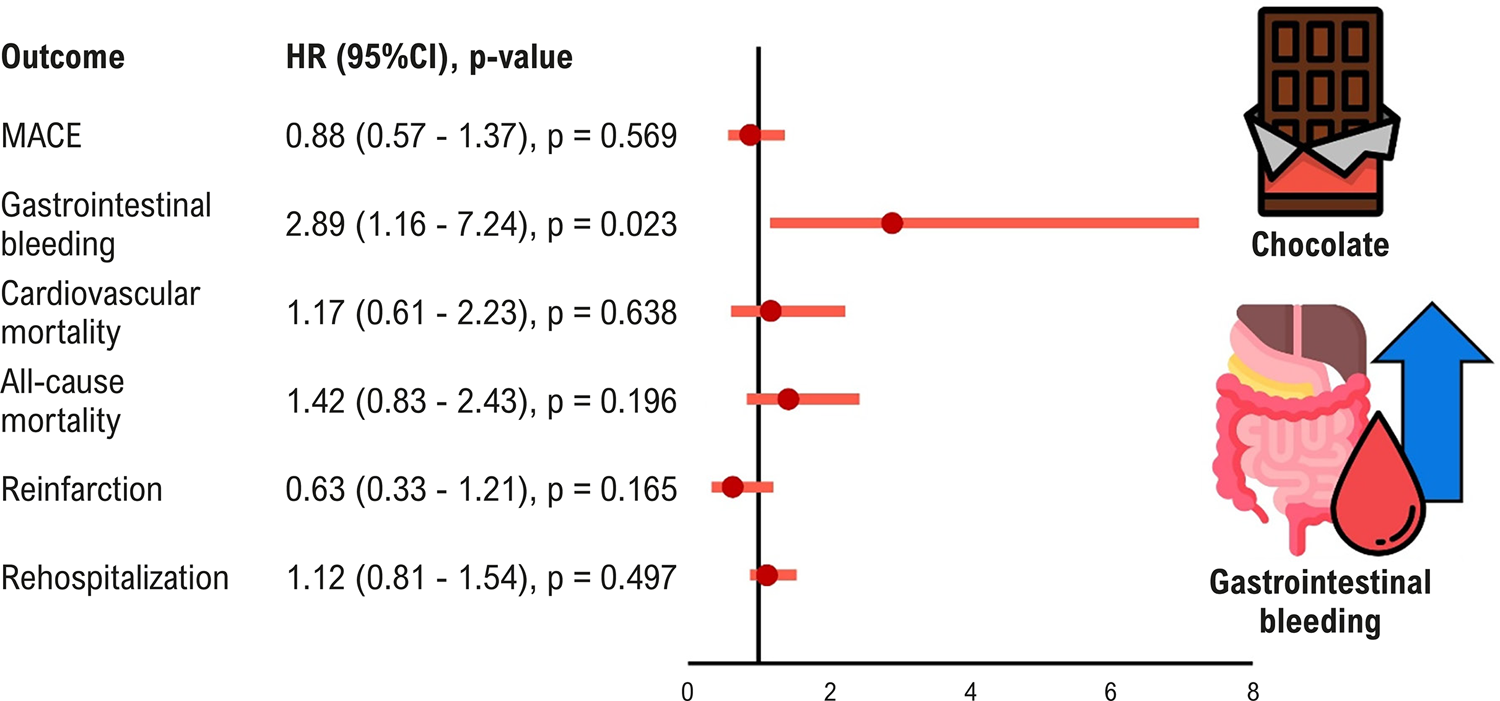
A total of 1404 patients were analyzed, of whom 490 (34.9%) consumed chocolate. Chocolate consumption neither reduced the risk of MACE (hazard ratio [HR] = 0.88 [0.57 – 1.37], p = 0.569) nor showed benefits in other outcomes, such as cardiovascular mortality, reinfarction, or stroke. However, its consumption was significantly associated with an increased risk of gastrointestinal bleeding (HR = 2.89 [1.16 – 7.24], p = 0.023) without increasing the risk of bleeding requiring transfusion or acute stent thrombosis.

Conclusion

Chocolate consumption before AMI did not reduce major cardiovascular events and was associated with an increased risk of gastrointestinal bleeding.
  • Chocolate
  • Coronary Artery Disease
  • Hemorrhage
  • Infarction
Read Full Article
Creative Commons Attribution (CC BY) Creative Commons license
13/10/2025 DOI: 10.36660/ijcs.20250006 Views 1
Effectiveness and Safety of Edoxaban in the Routine Clinical Care of Atrial Fibrillation Patients in Brazil: Prospective 1-Year Follow-Up Study – EdoBRA
ABC
Original Article

Effectiveness and Safety of Edoxaban in the Routine Clinical Care of Atrial Fibrillation Patients in Brazil: Prospective 1-Year Follow-Up Study – EdoBRA

Dalton Bertolim Precoma et al. Rafael Paletta da Silva Luiz Carlos Santana Passos Conrado Roberto Hoffman Filho … Fábio Serra Silveira José Tarcísio Medeiros de Vasconcelos Sérgio Luiz Zimmermann Artur Haddad Herdy Alessandra Ritter Daniely Freitas-Alves José Francisco Kerr Saraiva

Abstract

Background

Edoxaban, an orally administered anticoagulant, has been shown to be safe and effective in preventing stroke in atrial fibrillation (AF) patients. Given its widespread use since approval, evaluating edoxaban’s real-world performance in the Brazilian clinical context is crucial.

Objective

The study aimed to report the one-year safety and effectiveness of edoxaban in AF patients in Brazil.

Methods

EdoBRA is a multi-center, prospective, observational investigation conducted across 30 Brazilian research sites. Bleeding events were considered as safety measures and cardiovascular events were considered for effectiveness measures. Descriptive analyses were performed. Kaplan-Meier curves were generated for time-to-event analysis and a 95% confidence interval was used as appropriate.

Results

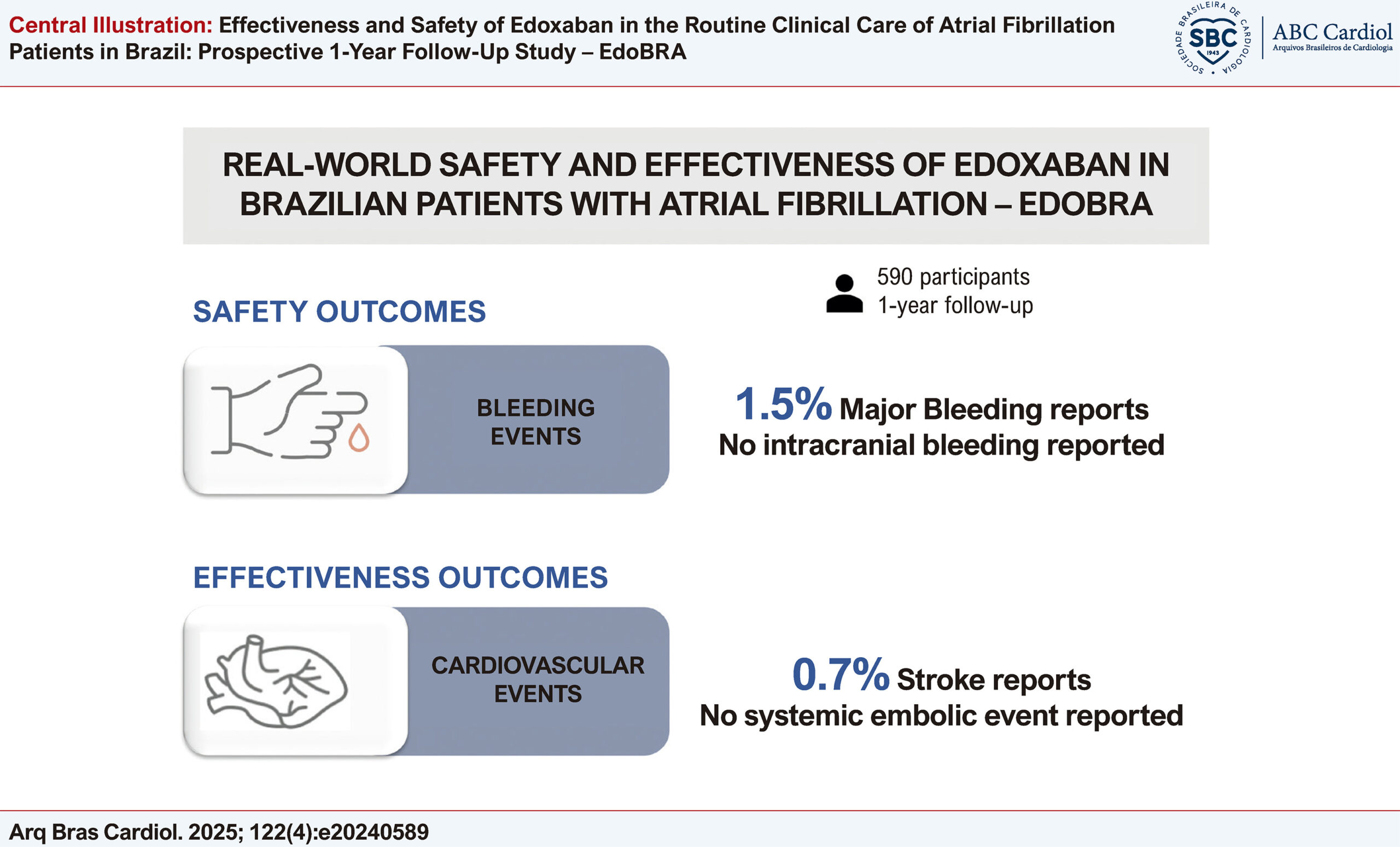
Among the 705 enrolled participants, 590 were included in the analysis for having at least one follow-up or one reported event. Mean (±SD) CHA2DS2-VASc risk score was 3 (3.3 ± 1.6) and the mean HAS-BLED risk score was 2 (1.8 ± 1.2). During the one-year follow-up period, nine major bleedings events were reported, including five cases of gastrointestinal bleeding (IP 0.85 [95% CI =0.82; 0.88]). Among the cardiovascular events recorded (N = 68), there were four stroke events (IP 0.68 [CI 95% 0.65;0.71]), one transient ischemic attack (IP 0.17 [CI 95% (0.16;0.18]) and 1 event was Venous Thromboembolic Events (IP 0.17 [CI 95% (0.16;0.18]). No systemic embolic event was exhibited by any patient.

Conclusion

In an elderly population with several comorbidities routinely treated with edoxaban for AF, the rates of cardiovascular event and major bleeding were low.

  • Anticoagulants
  • Atrial Fibrillation
  • Hemorrhage
  • Stroke
Read Full Article
Creative Commons Attribution (CC BY) Creative Commons license
14/04/2025 DOI: 10.36660/abc.20240589i Views 1
Incidence and Predictors of Clinical Outcomes in Patients with Valvular and Nonvalvular Atrial Fibrillation Using Vitamin K Antagonists
ABC
Original Article

Incidence and Predictors of Clinical Outcomes in Patients with Valvular and Nonvalvular Atrial Fibrillation Using Vitamin K Antagonists

Idelzuita Leandro Liporace et al. Gustavo Bernardes F. Oliveira Lucas Bassolli de Oliveira Alves Nadia Marchiori Galassi … Andreia Dias Jeronimo Fernanda Maria Lopes Gregory Y. H. Lip Álvaro Avezum

Abstract

Background

Vitamin K antagonists (VKA) represent an important therapeutic strategy offered by the Brazilian Unified Public Health System to patients with atrial fibrillation (AF). However, predictors of relevant clinical outcomes are understudied in the real world.

Objective

To determine the incidence and independent predictors of clinical outcomes in patients with valvular and nonvalvular AF treated with VKA.

Methods

This prospective cohort included patients with valvular and nonvalvular AF receiving VKA for ≥ 1 year. The primary outcomes were cardiovascular death, thromboembolic events, and major and clinically relevant non-major bleeding, separately and as a composite outcome. The outcomes were independently adjudicated. P values < 0.05 were considered statistically significant.

Results

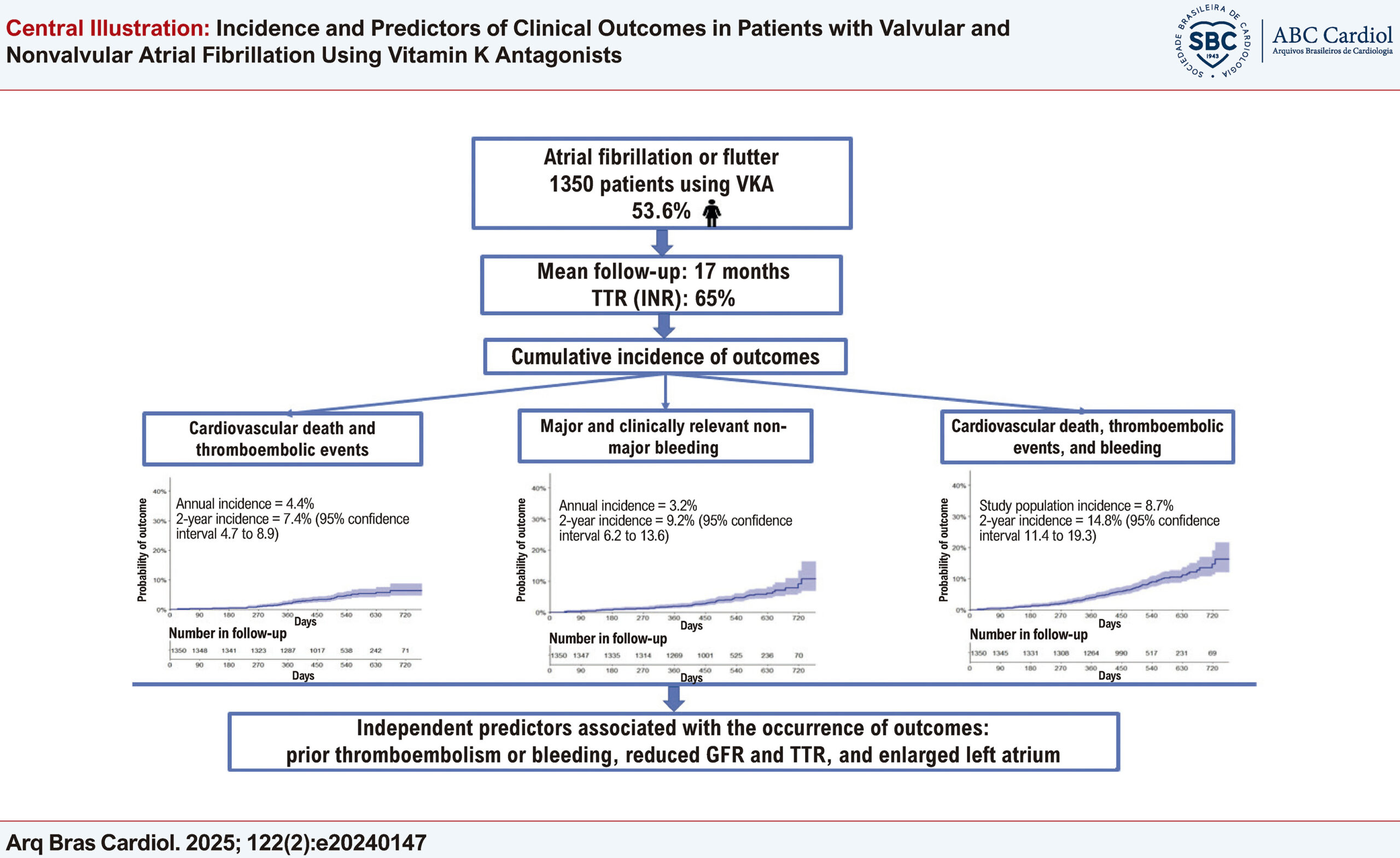
The study included 1,350 patients, with a mean age of 69.2 (± 11.8) years, 53.6% female, followed up for 17 (15 – 19) months. The annual incidence of thromboembolic events and cardiovascular death was 4.4%, and predictors were prior thromboembolism (hazard ratio [HR] 2.12; 95% confidence interval [CI] 1.22 – 3.67), time in therapeutic range (TTR) < 50% (HR 1.98; 95% CI 1.16 – 3.37), and glomerular filtration rate (GFR) < 45 mL/min/1.73 m2 (HR 2.76; 95% CI 4.82 – 1.58). The rate of major and clinically relevant non-major bleeding was 3.24% per year (95% CI 2.47 – 4.14), and predictors were prior bleeding (HR 2.60; 95% CI 1.47 – 4.61) and mechanical prosthesis (HR 1.91; 95% CI 1.15 – 3.15). The composite outcome was 8.7% per year, and predictors were prior bleeding (HR 1.70; 95% CI 1.07 – 2.70), TTR 44 mm (HR 1.97; 95% CI 3.26 – 1.19).

Conclusions

Prior thromboembolism or bleeding, reduced GFR and TTR levels, and enlarged left atrium were predictors of clinical outcomes in patients with AF treated with VKA.

  • Atrial Fibrillation
  • Hemorrhage
  • Stroke
  • Thromboembolism
  • Warfarin
Read Full Article
Creative Commons Attribution (CC BY) Creative Commons license
10/02/2025 DOI: 10.36660/abc.20240147i Views 2
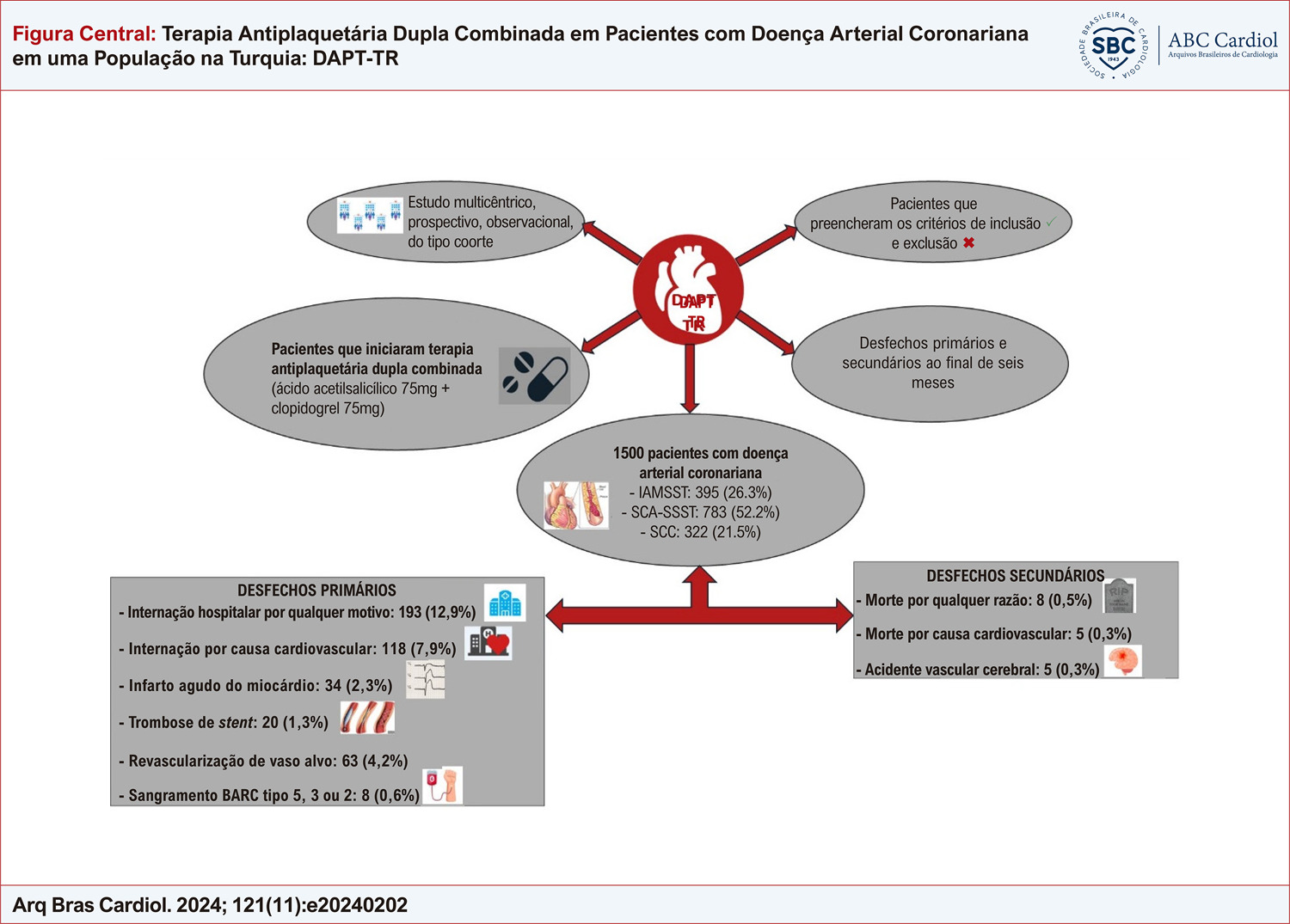
Fixed-Dose Antiplatelet Dual Combination in Patients with Coronary Artery Disease in Turkish Population: DAPT-TR
ABC
Original Article

Fixed-Dose Antiplatelet Dual Combination in Patients with Coronary Artery Disease in Turkish Population: DAPT-TR

Ahmet Öz et al. Kenan Toprak Ertan Aydin İbrahim Saraç … Mustafa Doğduş Selçuk Opan Mustafa Yenerçağ Mustafa Begenc Tascanov Ömer Kümet Miraç Karaağaç Murat Özmen Bektaş Murat Ömer Kertmen Özkan Bekler Sinan İnci Mustafa Ahmet Huyut Ahmet Özderya Fahri Er Mustafa Duran İsa Ardahanlı Mehmet Memduh Baş Tuncay Güzel Gökhan Ceyhun İbrahim Halil Özdemir Mehmet Burak Özen Ramazan Gündüz Aslan Erdoğan İlyas Çetin Veysel Özgür Barış Çağrı Yayla Medeni Karaduman Lütfü Aşkın Lütfü Bekar Okan Tanrıverdi Eyüp Özkan Emrah Yeşil Serhat Çalışkan Zülfiye Kuzu Berat Uğuz Ferit Böyük Ayşegül Ülgen Kunak Selda Murat Serkan Asil Özkan Kayhan Emrah Erdoğan Ramazan Duz Fahrettin Katkat Tuba Ekin Ersin İbişoğlu Bilge Nazar Ateş Burak Ayça Asım Oktay Ergene Mehdi Zoghi

Abstract

Background

Dual antiplatelet therapy (DAPT) is the treatment of choice for patients with acute and chronic coronary syndromes as it reduces mortality and prevents recurrent thrombotic complications. The assessment of both ischaemic burden and bleeding risk is crucial in deciding which DAPT to choose and how long it should be continued.

Objectives

The aim of our study was to perform prospective clinical follow-up of patients receiving fixed-dose combination therapy (ASA 75 mg + clopidogrel 75 mg). Our study is a multicentric, cross-sectional, observational, cohort study.

Methods

A total of 1500 patients who were started on fixed-dose combination DAPT for acute or chronic coronary syndrome were included in the study. Primary endpoints were hospitalization for any reason, hospitalization for cardiovascular cause, acute myocardial infarction, stent thrombosis, target vessel revascularization and bleeding; the secondary endpoints were death for any reason or cardiovascular cause and stroke. The significance level adopted in the statistical analysis was 5%.

Results

Median age was 63 years; 78.5% of the patients were receiving DAPT treatment for acute coronary syndrome. The rates of hospitalization for cardiovascular reasons, acute myocardial infartion, stent thrombosis and target-vessel revascularization were 7.9%, 2.3%, 1.3% and 4.2%, respectively. While the rate of BARC type 1 bleeding was 3.3%, the rate of BARC type 5, 3, or 2 bleeding was 0.6%. The secondary endpoints which were death from any cause, cardiovascular death and stroke were 0.5%, 0.3% and 0.3%, respectively. Conclusion: Our study shows that fixed-dose combination therapy is effective and safe in appropriately selected patients with acute or chronic coronary syndromes.

  • Dual Anti-Platelet Therapy
  • Hemorrhage
  • Thrombosis
Read Full Article
Creative Commons Attribution (CC BY) Creative Commons license
25/11/2024 DOI: 10.36660/abc.20240202i
IJCS
Editorial

Atrial Fibrillation and Hemodialysis – Should we Anticoagulate These Patients? Ischemic Versus Hemorrhagic Risk

Iara Atié Malan

Atrial fibrillation (AF) is the most common sustained arrhythmia worldwide, and it is a very frequent cause of increased morbidity and mortality in adults. This arrhythmia favors the formation of thrombi, which can lead to systemic embolism, such as ischemic stroke.

To identify patients with thromboembolic risk, the most used score is the CHA2DS2VASC, which takes the following factors in consideration: heart failure, arterial hypertension, age, diabetes, previous stroke, vascular disease, and sex. It is worth emphasizing that this score does not take renal function or dialysis treatment into consideration.

[…]

  • Anticoagulants
  • Atrial Fibrillation
  • Heart Disease, Ischemic
  • Hemorrhage
  • renal dialysis
  • Stroke
Read Full Article
Creative Commons Attribution (CC BY) Creative Commons license
28/11/2022 DOI: 10.36660/ijcs.20220171
ABC
Editorial

Anticoagulation Therapy with Warfarin: A Reality of Brazilian Public Health that Lacks Structure for Better Control

Martino Martinelli Filho

The increase in longevity in recent decades has led to a progressive increase in the prevalence of atrial fibrillation (AF) worldwide. ,

As a result, anticoagulation therapy has become increasingly indicated in preventing thromboembolic events. The need for continuous use drove the preference for oral anticoagulants, historically represented by antivitamin K (VKA) drugs and, more recently, by new anticoagulants (anti-factor X). Among these, a VKA, warfarin, is the most prominent for its low cost.

[…]

  • Anticoagulants / therapeutic use
  • Atrial Fibrillation
  • Hemorrhage
  • Stroke
  • Thromboembolism
  • Warfarin/adverse effects
Read Full Article
Creative Commons Attribution (CC BY) Creative Commons license
05/09/2022 DOI: 10.36660/abc.20220504 Views 1
Figure 1
IJCS
Original Article

Hemorrhagic Versus Ischemic Risk in Patients with Atrial Fibrillation on Hemodialysis

Mariana Sousa et al. Gonçalo Cruz Sara Vilela Catarina Cardoso … Pedro Bravo José Paulo Santos Cristina Santos Jorge Silva

Abstract

Background

Hemodialysis (HD) patients with atrial fibrillation (AF) have a particularly high risk of stroke and bleeding, but no high-quality evidence-based recommendations exist to properly manage these patients.

Objectives

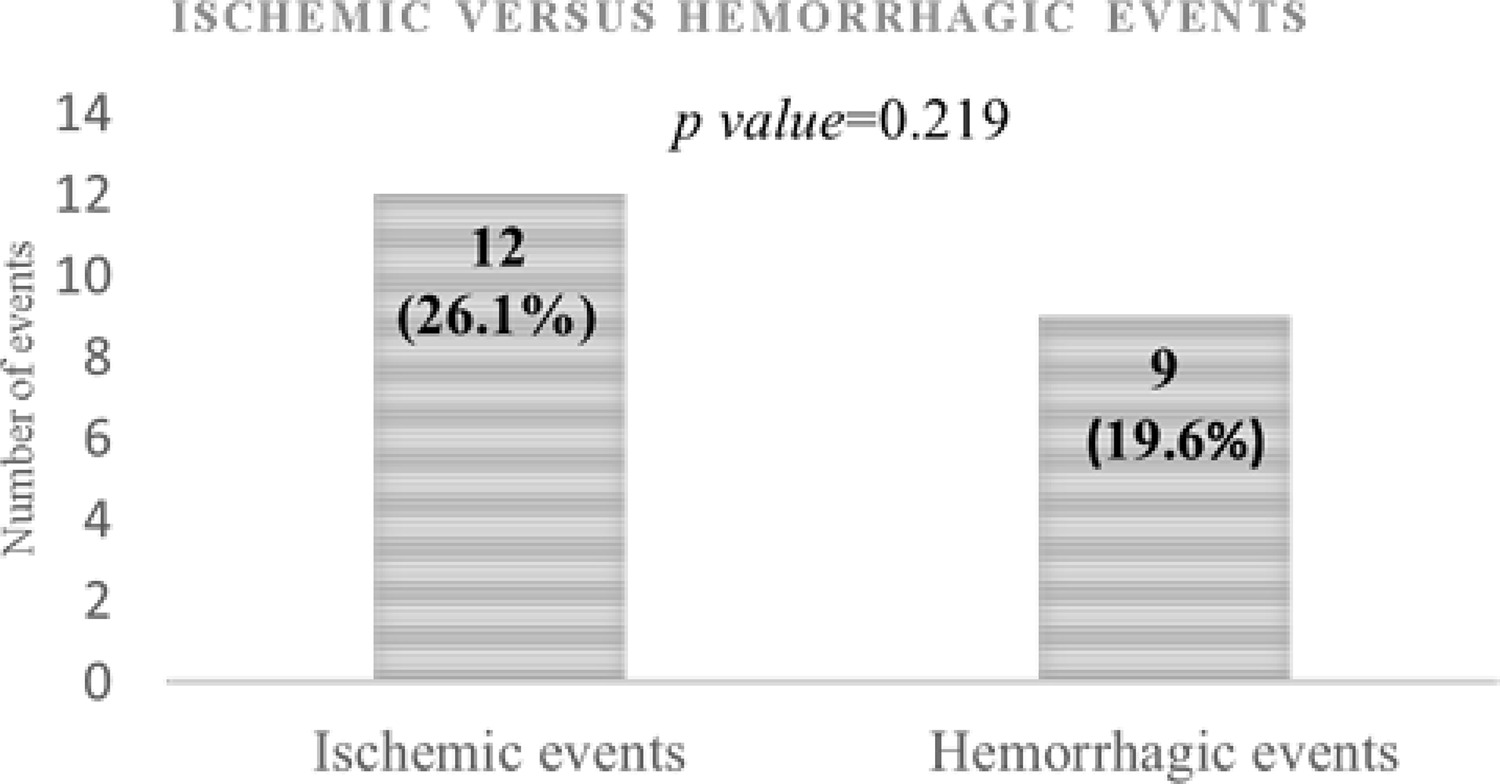
We aim to evaluate the ischemic versus the hemorrhagic risk in a HD population with AF.

Methods

We selected incident patients that started hemodialysis between 2011 and 2015. All patients that had AF before HD, or developed AF during the follow-up, were included. Both CHA2DS2 -VASC and HAS-BLED scores were calculated at the time of beginning of HD or AF diagnosis and correlated with the outcomes using a logistic regression model. The outcomes were hemorrhagic events, ischemic events and death related to any of these events. A p-value < 0.05 was set as statistically significant.

Results

Forty-six patients were included. Most of them had had AF before they started hemodialysis. Twenty-two patients were on oral anticoagulation (OAC). There was no significant difference between the incidence of ischemic and hemorrhagic events, regardless of the use of OAC. Previous stroke, transient ischemic attack, and thromboembolic event significantly increased the risk of an ischemic event (OR 6.78, p=0.028).

Conclusions

In this population, we did not observe any difference between the incidence of ischemic and hemorrhagic events, which was also true in patients with OAC. Therefore, the benefit of OAC in such patients remains questionable. However, patients with previous stroke, transient ischemic attack, or thromboembolic event seem to have a higher risk of new ischemic events and might benefit from anticoagulation.

  • Atrial Fibrillation
  • Hemorrhage
  • Ischemic
  • renal dialysis
Read Full Article
Creative Commons Attribution (CC BY) Creative Commons license
19/08/2022 DOI: 10.36660/ijcs.20210252
ABC
Editorial

Tackling Bleeding – One Appendage at a Time

Stefano Garzon et al. Willterson Carlos Bandeira

Atrial fibrillation (AF) is the most common cardiac arrhythmia, affecting approximately 80% of the population aged 80 years or older. It increases the risk of cardioembolic stroke 5-fold across all ages and is related to more than 20% of strokes in patients above 80 years. Embolic strokes are often more severe than other strokes, and anticoagulants are the cornerstone of the treatment, paramount to reducing cardioembolic risk in this population. However, the decision to start oral anticoagulants is not always straightforward and requires assessing both embolic and bleeding risks. Embolic risk in patients with AF is usually assessed using standardized scoring systems such as the CHA2DS2-VASc score, but it can be further refined using other clinical data such as left atrial size and duration of AF. Bleeding risk is usually assessed using the HAS-BLED score, with severe bleedings being more common in older patients. For that reason, physicians are often fearful of starting anticoagulation in older patients, even though current evidence shows that it is usually safe to use oral anticoagulants in most of these patients. However, major bleeding can occur in up to 3% of patients using oral anticoagulants, requiring the interruption of the treatment.

Over 90% of all left atrial thrombi originate in the LAA, and the risk reduction with LAA occlusion is comparable to anticoagulation. For this reason, percutaneous LAA occlusion has emerged as an alternative treatment for patients with either contra-indications to oral anticoagulation or an embolic event while using oral anticoagulants. There is growing evidence that LAA occlusion is safe and feasible in most patients,– and this initial multi-centric experience of LAA occlusion using the plug-based device LAmbre in Brazil shows similar results to current medical literature. In this study, 74.6% of all patients have had either a major bleeding episode using oral anticoagulants or a stroke despite oral anticoagulation. Patients were at high embolic and bleeding risks, with a mean CHA2DS2-VASc score of 4.6 ± 1.7 and a mean HAS-BLED score of 3.4 ± 1.1. The procedure’s success rate was 100%, with no deaths or strokes at a mean follow-up of 18 ± 12 months.

[…]

  • Anticoagulants / therapeutic use
  • Arrhythmias Cardiac
  • Atrial Appendage
  • Atrial Fibrillation
  • Hemorrhage
  • Stroke
Read Full Article
Creative Commons Attribution (CC BY) Creative Commons license
11/07/2022 DOI: 10.36660/abc.20220351
Figure 1
ABC
Original Article

Quality of Oral Anticoagulation in Atrial Fibrillation Patients at a Tertiary Hospital in Brazil

Karina Nogueira Dias Secco Malagutte et al. Caroline Ferreira da Silva Mazeto Pupo da Silveira Fabrício Moreira Reis Daniele Andreza Antonelli Rossi … João Carlos Hueb Katashi Okoshi Hélio Rubens de Carvalho Nunes Luis Cuadrado Martin Rodrigo Bazan Silméia Garcia Zanati Bazan

Abstract

Background

Atrial fibrillation (AF) affects 0.5% to 2.0% of the general population and is usually associated with cardiac structural diseases, hemodynamic damage, and thromboembolic complications. Oral anticoagulation prevents thromboembolic events and is monitored by the international normalized ratio (INR).

Objectives

To evaluate INR stability in nonvalvular AF patients treated with warfarin anticoagulation, to evaluate thromboembolic or hemorrhagic complications, and to identify the group at higher risk for thromboembolic or hemorrhagic events.

Methods

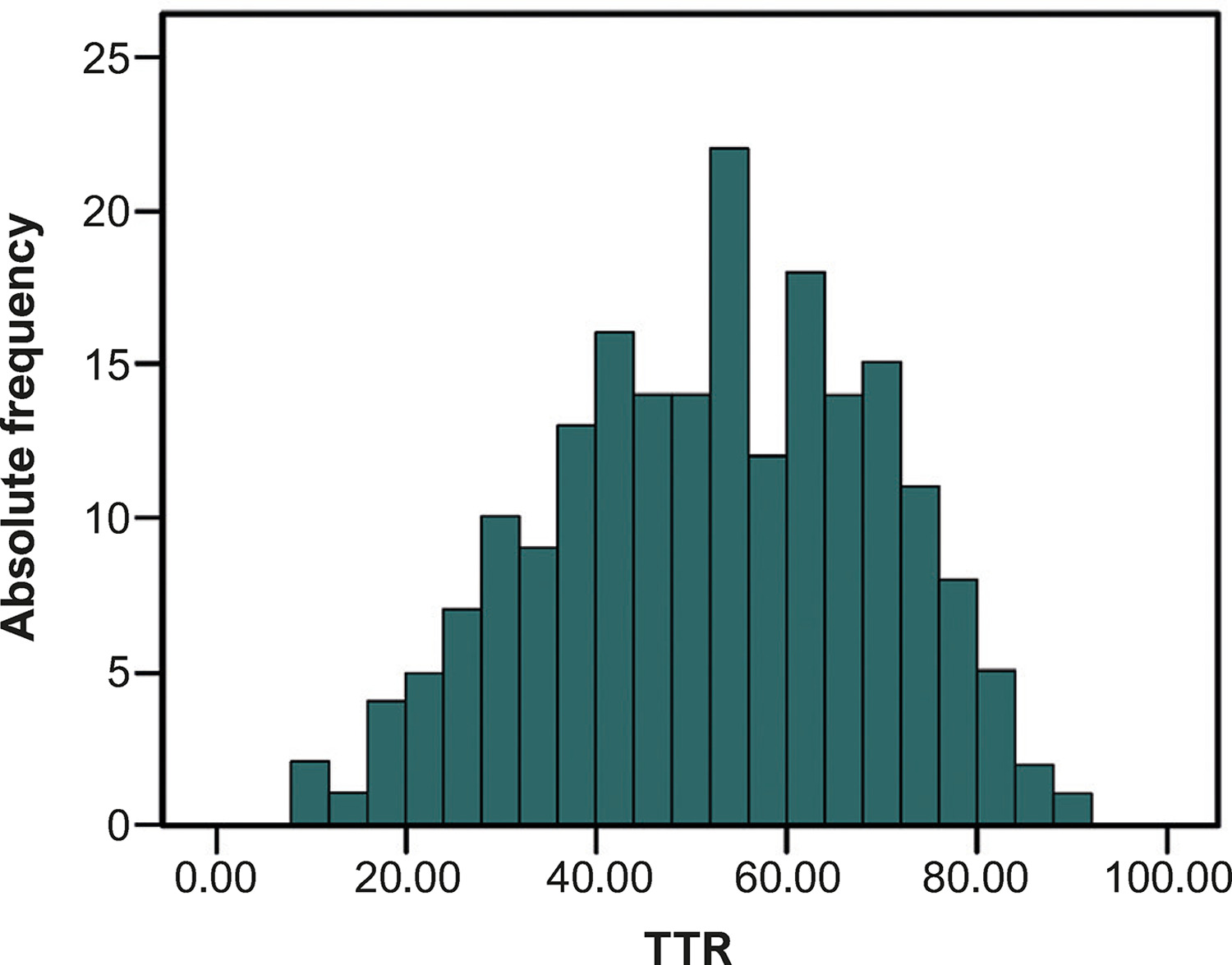
Data from the medical records of 203 patients who received medical care at a tertiary hospital in Brazil were reviewed, and the time in therapeutic range (TTR) was calculated using the Rosendaal method. The possible TTR influencing factors were then analyzed, and the relationship between the TTR and thromboembolic or hemorrhagic events was calculated. The level of significance was 5%.

Results

The mean TTR was 52.2%. Patients with INR instability in the adaptation phase had a lower mean TTR (46.8%) than those without instability (53.9%). Among the studied patients, 6.9% suffered hemorrhagic events, and 8.4% had a stroke. The higher risk group for stroke and bleeding consisted of patients with INR instability in the adaptation phase.

Conclusions

The quality of anticoagulation in this tertiary hospital in Brazil is similar to that in centers in developing countries. Patients with greater INR instability in the adaptation phase evolved to a lower mean TTR during follow-up, had a 4.94-fold greater chance of stroke, and had a 3.35-fold greater chance of bleeding. Thus, for this patient group, individualizing the choice of anticoagulation therapy would be advised, considering the cost-benefit ratio.

  • Atrial Fibrillation
  • Hemorrhage
  • Stroke
  • Warfarin
Read Full Article
Creative Commons Attribution (CC BY) Creative Commons license
27/06/2022 DOI: 10.36660/abc.20210805 Views 2
ABC
Editorial

Thrombolysis in Pulmonary Embolism: Octagenarians Deserve More Attention!

Hugo Hyung Bok Yoo

Pulmonary embolism (PE) is a common cardiovascular disease that may be life threatening, and its incidence increases with age. It is the third most common cause of cardiovascular mortality and is also responsible for 100,000 to 180,000 deaths per year. Right-sided heart failure and recurrences are the main causes of death associated with PE. Most deaths occur within the first hour of patients presenting hemodynamic instability. Therefore, the prognostic of those patients depends on rapid treatment.,

To determine a suitable therapeutic management approach in patients with PE, the appropriate risk stratification is decisive in order to begin effective treatment as early as possible and to prevent death. Thus, patients at a low-risk of mortality may be candidates for home anticoagulant treatment or early hospital discharge. Patients at intermediate risk may require antithrombotic therapy and close clinical observation to escalate the treatment regime in case of clinical impairment, whereas patients at high-risk should proceed to prompt revascularization either by pharmacologic or percutaneous catheter-directed or surgical treatment.

[…]

  • Aged, 80 and Over
  • Anticoagulants / therapeutic use
  • Heart Failure / mortality
  • Hemorrhage
  • Pulmonary embolism
  • Thrombolytic Therapy
Read Full Article
Creative Commons Attribution (CC BY) Creative Commons license
21/02/2022 DOI: 10.36660/abc.20210912
Figure 1
IJCS
Original Article

Predictors of Hospitalization in Vitamin K Antagonist Users Presenting with Bleeding at the Emergency Department

Alan Fabiani Chiaparini et al. Paola Stefania Bohrer Rabaioli João Vitor Slaviero Cinthia Scatolin Tem-Pass … Hugo Antonio Fontana Filho Iran Castro Eduardo Dytz Almeida Tiago Luiz Luz Leiria

Abstract

Background

Vitamin K antagonists (VKA) are indicated for the prevention of thromboembolic events and reduction of mortality in patients with atrial fibrillation and patients with valvular prostheses. However, their use is associated with bleeding complications and hospitalizations. Predictors of hospital admission for bleeding in these patients are poorly known.

Objectives

To define the predictors for hospitalization of VKA users who seek emergency care due to bleeding.

Methods

Single-center, cross-sectional study, with retrospective analysis of electronic medical records from 03/01/2012 to 02/27/2017. Clinical and laboratory variables were compared between patients who were hospitalized and those who were not. A logistic regression model as used, in which the variables were included using the Backward stepwise method, with a p value of 0.05 as the input criterion, a removal value of 0.20 and a confidence interval of 95%. The p-value was considered statistically significant when <0.05.

Results

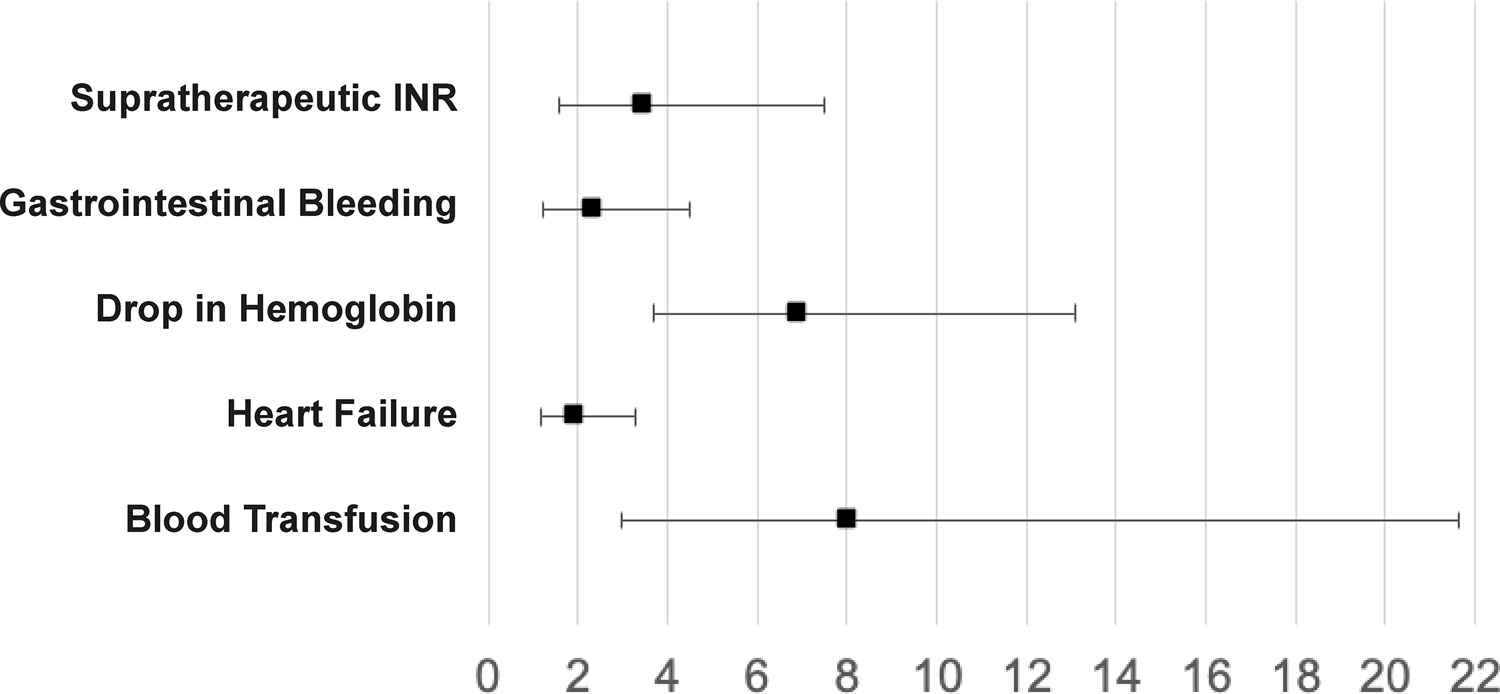
A total of 510 patients with bleeding were included, of whom 158 were hospitalized. Predictors of hospitalization were: INR at supratherapeutic levels (OR 3.45; P <0.01; 95% CI 1.58 – 7.51), gastrointestinal bleeding (OR 2.36; P <0.01; CI 95% 1.24 – 4.50), drop in hemoglobin (OR 6.93; P <0.01; 95% CI 3.67 – 13.07), heart failure (OR 1.96; P 0.01; 95% CI 1.16 – 3.30) and need for blood transfusion (OR 8.03; P <0.01; 95% CI 2.98 – 21.64).

Conclusion

Drop in hemoglobin, heart failure, INR at supratherapeutic levels, gastrointestinal bleeding and need for blood transfusion were associated with hospitalization. Identification of these factors in the initial evaluation would help to define which patients will demand more intensive care.

  • Emergencies
  • Hemorrhage
  • Platelet Aggregation
  • Warfarin
Read Full Article
Creative Commons Attribution (CC BY) Creative Commons license
03/09/2021 DOI: 10.36660/ijcs.20200320 Views 2
ABC
Original Article

Heyde’s Syndrome: Therapeutic Strategies and Long-Term Follow-Up

Vitor Emer Egypto Rosa et al. Henrique Barbosa Ribeiro João Ricardo Cordeiro Fernandes Antonio de Santis … Guilherme Sobreira Spina Milena Ribeiro Paixão Lucas José Tachotti Pires Marcelo Bettega Tarso Augusto Duenhas Accorsi Roney Orismar Sampaio Flávio Tarasoutchi

Abstract

Background

Heyde’s syndrome is the association of severe aortic stenosis with episodes of gastrointestinal bleeding due to angiodysplastic lesion. Little is known about the factors associated with new episodes of bleeding and long-term outcomes. Furthermore, most data are restricted to case reports and small case series.

Objective

To assess the clinical, laboratory and echocardiography profile of patients with Heyde’s syndrome who underwent valve intervention or drug therapy.

Methods

Prospective cohort of 24 consecutive patients from 2005 to 2018. Clinical, laboratory and echocardiography data were assessed, as well as those related to valve intervention and outcomes after diagnosis. A P <0.05 was used to indicate statistical significance.

Results

Half of the 24 patients presented with bleeding requiring blood transfusion on admission. Angiodysplasias were more frequently found in the ascending colon (62%). Valve intervention (surgical or transcatheter) was performed in 70.8% of the patients, and 29.2% remained on drug therapy. News episodes of bleeding occurred in 25% of the cases, and there was no difference between clinical and intervention groups (28.6 vs 23.5%, p = 1.00; respectively). Mortality at 2-year and 5-year was 16% and 25%, with no difference between the groups (log-rank p = 0.185 and 0.737, respectively).

Conclusions

Patients with Heyde’s syndrome had a high rate of bleeding requiring blood transfusion on admission, suggesting that it is a severe disease with high mortality risk. No difference was found between clinical and intervention group regarding the rate of rebleeding and late mortality.

  • Angiodysplasia
  • Aortic Stenosis
  • Echocardiography/methods
  • Hemorrhage
  • Mortality
  • Thoracic Surgery
Read Full Article
Creative Commons Attribution (CC BY) Creative Commons license
02/07/2021 DOI: 10.36660/abc.20200371
Figure 1
IJCS
Case Report

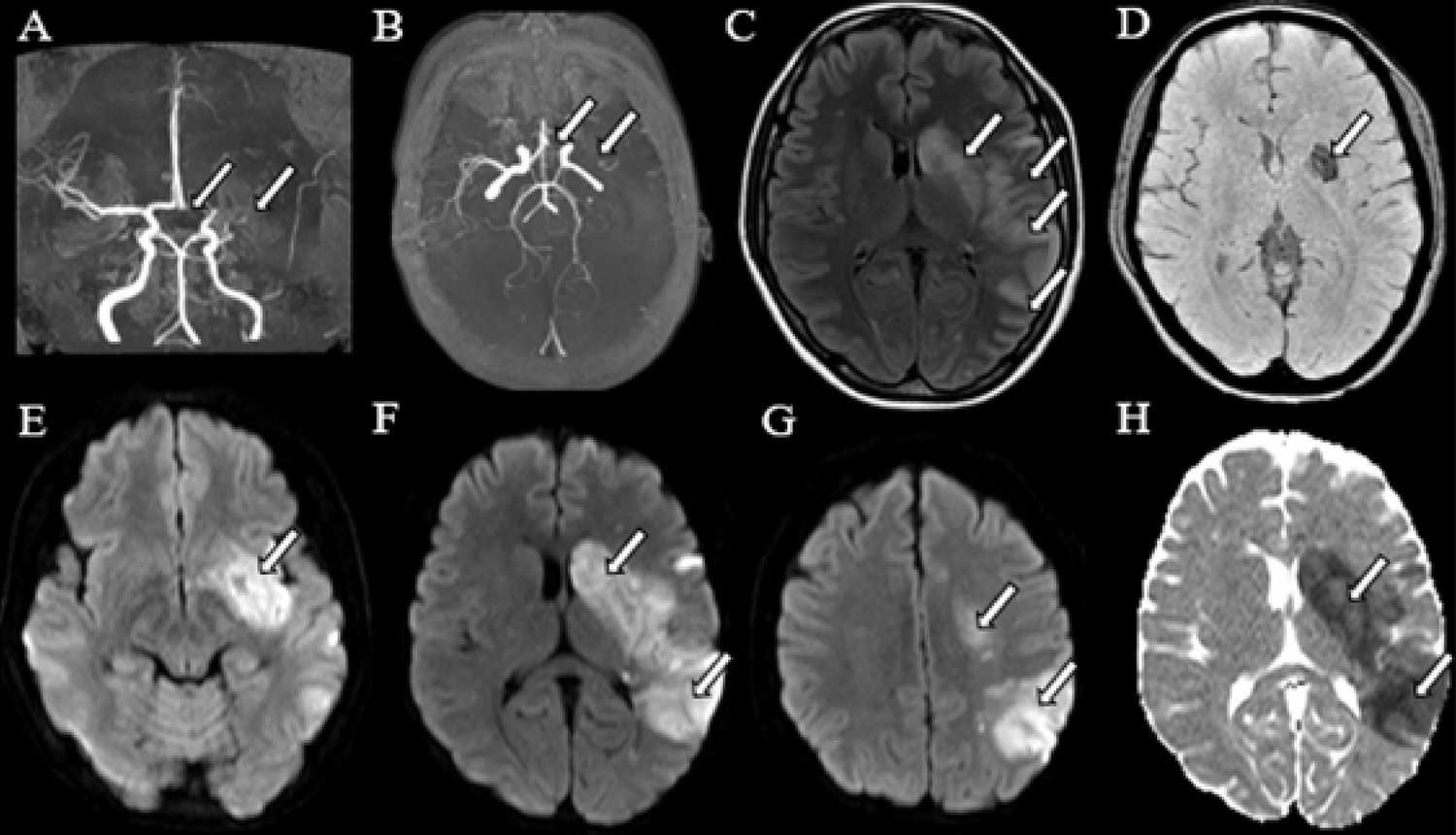
Vascular Spectrum of Imaging Findings in COVID-19: Ischemic, Hemorrhagic, and Thromboembolic Complications

Pedro Neves Paiva de Castro et al. Lucia Antunes Chagas Eduardo Wajnberg Roberto Santos … Pedro Cougo Dequitier Carvalho Machado

Abstract

Ischemic strokes secondary to occlusion of large vessels have been described in patients with COVID-19. Also, venous thrombosis and pulmonary thromboembolism have been related to the disease. Vascular occlusion may be associated with a prothrombotic state due to COVID-19-related coagulopathy and endotheliopathy. Intracranial hemorrhagic lesions can additionally be seen in these patients. The causative mechanism of hemorrhage could be associated with anticoagulant therapy or factors such as coagulopathy and endotheliopathy. We report on cases of ischemic, thrombotic, and hemorrhagic complications in six patients diagnosed with SARS-CoV-2 infection. Chest computed tomography (CT) showed typical SARS-CoV-2 pneumonia findings in all the cases, which were all confirmed by either serology or reverse transcription polymerase chain reaction (RT-PCR) tests.

  • Covid-19/complications
  • Diagnostic Imaging/methods
  • Hemorrhage
  • Pneumonia
  • Spectrum Analysis/methods
  • Thromboembolism/complications
Read Full Article
Creative Commons Attribution (CC BY) Creative Commons license
23/06/2021 DOI: 10.36660/ijcs.20210009 Views 2
IJCS
Case Report

Kounis Syndrome: Case Report in Goiânia/BR

Marília Pereira et al. Gabriela Lima Vieitas Anna Ilona Hunkar Freitas Karoly Gyula Olivas Hunkar

Abstract

22-year-old male patient with no heart disease, who was given an ambulatory medication with analgesics due to an acute renal crisis. After the drug administration, the patient presented dyspnea, cyanosis, and hemoptysis. There was suspicion of anaphylactic shock, which was treated, but there was no improvement in the clinical condition. The patient was referred to the Intensive Care Unit, where tests were performed showing elevated cardiac enzymes and Immunoglobulin E and Computed Tomography of Thoracic revealed alveolar hemorrhage. He developed clinical worsening and died after sepsis. The final diagnosis was of kounis syndrome due to the hypersensitivity reaction to the analgesics introduced in the patient, generating an acute coronary syndrome (ACS). The purpose of this case report was to highlight a syndrome that is little reported because it is not part of the differential diagnosis routines of ACS, but it generates important complications.

  • Acute coronary syndrome
  • Biomarkers
  • Diagnostic Imaging
  • Heart/drug effects
  • Hemorrhage
  • Immunoglobulins
  • Kounis Syndrome
  • Sepsis
  • Tramadol
Read Full Article
Creative Commons Attribution (CC BY) Creative Commons license
17/06/2021 DOI: 10.36660/ijcs.20200019 Views 1
ABC
Editorial

Is There a Second Wind for Glycoprotein IIb/IIIa Inhibitors in Elderly Diabetic Females with ST-Elevation Myocardial Infarction, or are We on Thin Ice?

Ana Teresa Timóteo

The standard of care in patients undergoing primary percutaneous coronary intervention (PCI) is double antiplatelet therapy (DAPT), with a combination of aspirin and a P2Y12 inhibitor. Prasugrel and ticagrelor are the preferred P2Y12 inhibitors because they have a more rapid onset of action, greater potency, and are superior to clopidogrel in terms of clinical outcomes. They should be maintained over 12 months unless there are contraindications, such as excessive risk of bleeding. The choice of treatment should be a balanced decision, considering the ischemic and bleeding risks. Most of the trials evaluating glycoprotein (Gp) IIb/IIIa inhibitors in ST-elevation myocardial infarction (STEMI) patients treated with primary PCI pre-date the era of routine oral DAPT pre-treatment, particularly in the setting of potent oral platelet inhibitors. At that time, they demonstrated a reduction in the incidence of ischemic events, but at the expense of a consistent increase in major bleeding. Presently, there is no compelling evidence for an additional benefit of the routine use of a Gp IIb/IIIa strategy in primary PCI patients that receive DAPT treatment, particularly with ticagrelor. The use of Gp IIb/IIIa inhibitors should be considered for bailout therapy in the event of angiographic evidence of a large thrombus, slow- or no-reflow, and other thrombotic complications, although this strategy has not been addressed in randomized controlled trials. Also, intracoronary administration is not superior to its intravenous use.

Elderly patients are at high-risk of bleeding and other complications from acute therapies, not only because of their age, but because they have more often renal dysfunction and more co-morbidities. Diabetes is also a frequent comorbidity in STEMI patients. Diabetic patients have more diffuse atherosclerotic disease and are at higher risk of death and complications, including repeated revascularization after PCI. In fact, diabetic patients who have suffered a myocardial infarction have a worse prognosis, and the presence of diabetes amplifies the risk of any cardiovascular event, as shown in many previous studies of acute coronary syndrome treatment.,, However, in the current context of the use of oral P2Y12 inhibitors, there is no indication that antithrombotic pharmacotherapy should differ between diabetics and patients without diabetes undergoing revascularization.,

[…]

  • Diabetes Mellitus
  • Elderly
  • Glycoprotein IIb/IIIa inhibitors
  • Hemorrhage
  • Myocardial Infarction
  • Platelet Agregation
  • Women
Read Full Article
Creative Commons Attribution (CC BY) Creative Commons license
01/03/2021 DOI: 10.36660/abc.20200494 Views 1
ABC
Brief Communication

Thrombocytopenia-Related Problems in Patients with Concomitant Atrial Fibrillation Requiring Antithrombotic Prevention: A Retrospective Cohort Study

Renato De Vecchis et al. Andrea Paccone Silvia Soreca

Abstract

Low-dose edoxaban and enoxaparin sodium have been the subject of a retrospective comparison implemented with the propensity score technique in order to mitigate the effects of the differences in the basal clinical features of two cohorts and minimize the risk of bias.

Subsequently, using a Cox proportional-hazards model, the association of each type of therapy with the risk of the composite of all-cause death, stroke/transient ischemic attack, hospitalizations and major bleeding events was assessed. For this analysis, a p-value < 0.05 was considered statistically significant. Therapy with enoxaparin and liver cirrhosis as causing thrombocytopenia were associated with increased risk of the composite endpoint (enoxaparin: hazard ratio (HR): 3.31; 95% CI: 1.54 to 7.13; p = 0.0023; liver cirrhosis, HR: 1.04; 95% CI: 1.002 to 1.089; p = 0.0410). Conversely, edoxaban therapy was significantly associated with decreased risk of the composite endpoint (HR: 0.071; 95% CI: 0.013 to 0.373; p = 0.0019). Based on this retrospective analysis, edoxaban at low doses would appear as an effective and safe pharmacological tool for the prophylaxis of cardioembolic events in patients with AF and thrombocytopenia.

  • Anticoagulants
  • Atrial Fibrillation
  • Cohort Studies
  • Edoxaban
  • Enoxaparine
  • Hemorrhage
  • Heparin/therapeutic use
  • Liver Cirrhosis
  • Stroke
  • Thrombocytopenia
Read Full Article
Creative Commons Attribution (CC BY) Creative Commons license
23/10/2020 DOI: 10.36660/abc.20190599 Views 2
IJCS
Editorial

Antiplatelet Therapy for Elderly Patients: When Less May Be More

Roberto Esporcatte et al. Fernando Oswaldo Dias Rangel

In the last two decades, double antiplatelet therapy, together with percutaneous coronary intervention (PCI), has become a cornerstone of acute coronary syndrome (ACS) treatment and its use is recommended as early as possible, although there are many unanswered questions about the efficacy and safety of loading dose (LD), best moment of administration, clinical scenarios and, especially, its use in elderly patients. Despite the fact that elderly patients represent approximately 30% of the population admitted for ACS, they are virtually excluded from large clinical trials, receive fewer diagnostic and therapeutic approaches and have more ischemic and hemorrhagic complications.

[…]

  • Acute coronary syndrome
  • Aged
  • Hemorrhage
  • Platelet Aggregation Inhibitors/therapeutic use
Read Full Article
Creative Commons Attribution (CC BY) Creative Commons license
19/08/2019 DOI: 10.5935/2359-4802.20190070 Views 2
Figure 1
IJCS
Original Article

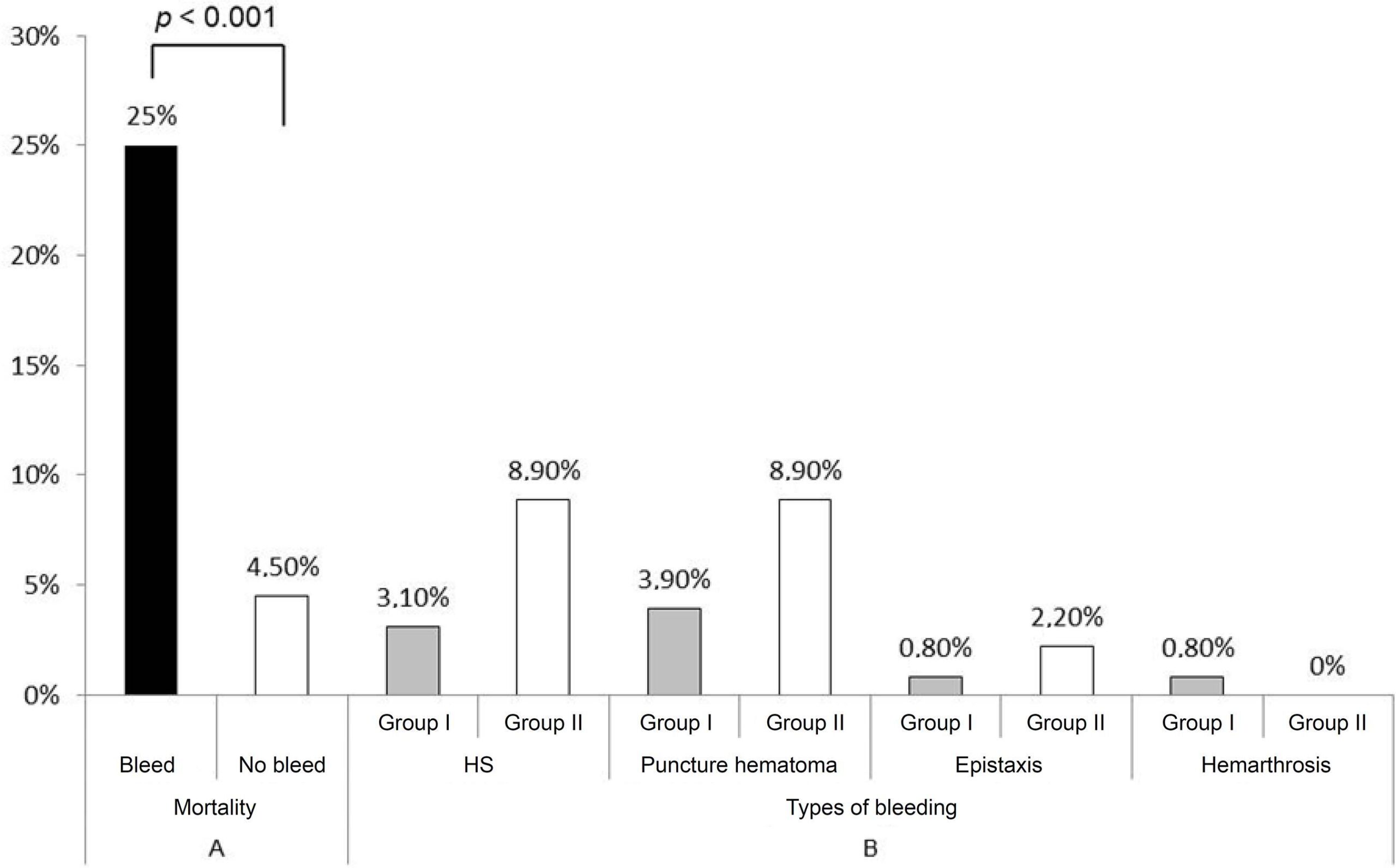
Is There Safety in the Use of Clopidogrel Loading Dose in Patients Over 75 Years of Age with Acute Coronary Syndrome?

Alexandre de Matos Soeiro et al. Guilherme Casale Maria Antonieta Albanez Albuquerque de Medeiros Lopes Lucas Colombo Godoy … Aline Siqueira Bossa Bruno Biselli Tatiana de Carvalho Andreucci Torres Leal Maria Carolina Feres de Almeida Soeiro Carlos V Serrano Jr. Múcio Tavares Oliveira Jr.

Abstract

Background:

There is limited evidence in the literature regarding the administration of clopidogrel to acute coronary syndrome (ACS) in patients over 75 years of age. Most studies excluded this age group, making the subject controversial due to the increased risk of bleeding in this population.

Objective:

This is a retrospective, unicentric, and observational study aimed at assessing whether the administration of clopidogrel loading dose increases bleeding rates in patients over 75 years of age.

Methods:

Patients were divided into two groups: group I: 75 mg of clopidogrel; group II: 300-to 600-mg loading dose of clopidogrel. A total of 174 patients (129 in group I and 45 in group II) were included between May 2010 and May 2015. Statistical analysis: The primary outcome was bleeding (major and/or minor). The secondary outcome was combined events (cardiogenic shock, reinfarction, death, stroke and bleeding). The comparison between groups was performed through Q-square and T-test. The multivariate analysis was performed by logistic regression, being considered significant p < 0.05.

Results:

Comparisons between groups I and II showed differences in the prevalence of diabetes (46.5% vs. 24.4%, p = 0.01), arterial hypertension (90.7% vs. 75, p = 0.01), dyslipidemia (62% vs. 42.2%, p = 0.021), ST segment elevation (11.6% vs. 26.6%, p = 0.016) and coronary intervention percutaneous (16.5% vs. 62.2%, p < 0.0001), respectively. In the multivariate analysis, significant differences were observed between groups I and II in relation to the occurrence of bleeding (8.5% vs. 20%, OR = 0.173, 95% CI: 0.049 – 0.614, p = 0.007).

Conclusion:

A loading dose of 300 mg or more of clopidogrel.

  • Acute Coronary Syndrome / complications
  • Aged
  • Hemorrhage
  • Platelet Aggregation Inhibitors/therapeutic use
  • Treatment Outcome
Read Full Article
Creative Commons Attribution (CC BY) Creative Commons license
15/04/2019 DOI: 10.5935/2359-4802.20190031 Views 2
Figure 1
ABC
Editorial

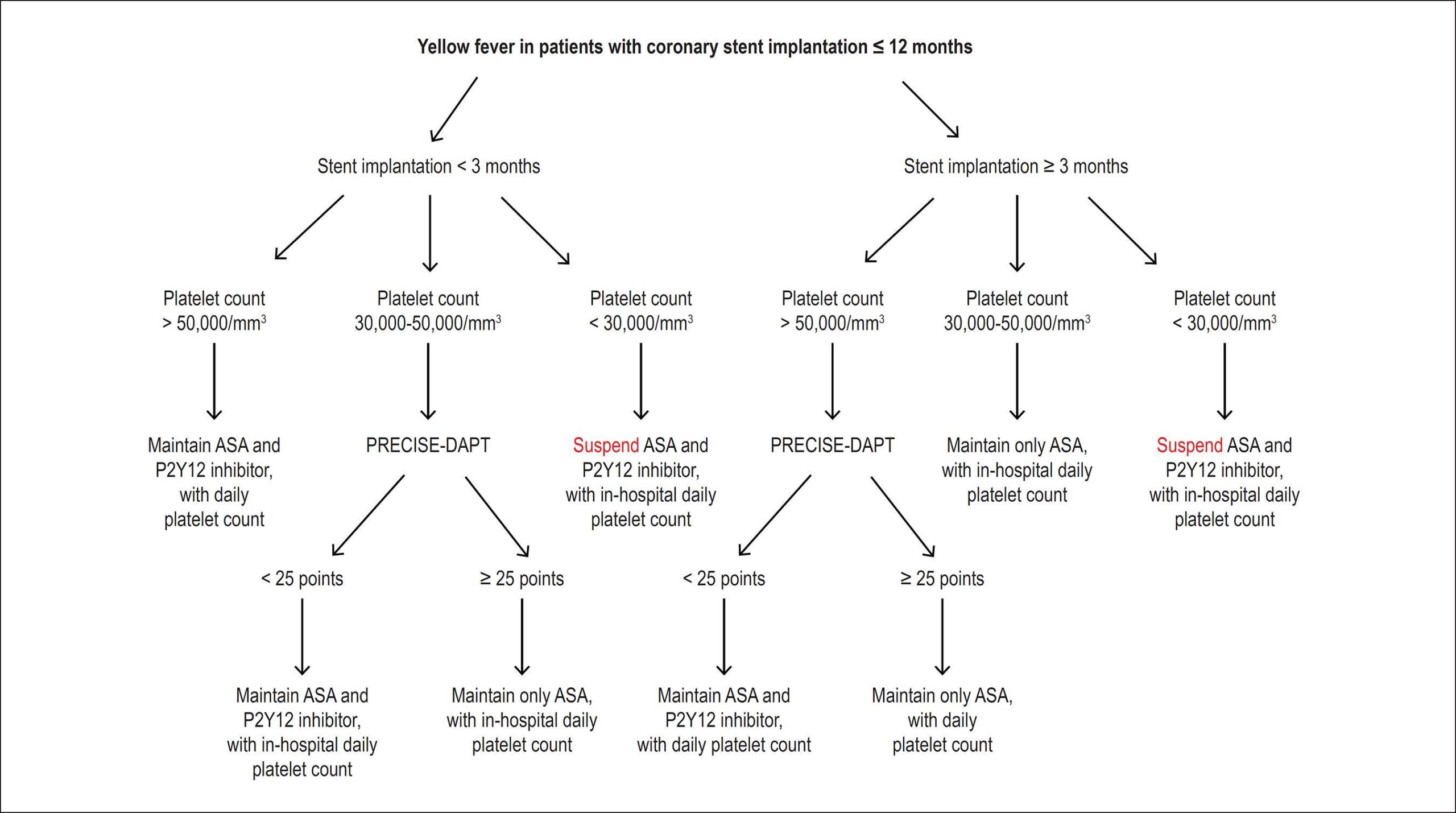
Yellow Fever and Cardiovascular Disease: An Intersection of Epidemics

Gláucia Maria Moraes de Oliveira et al. Roberto Muniz Ferreira

Arboviral diseases are an important public health problem, especially in tropical and subtropical countries, such as Brazil, where viruses of the family Flaviviridae, responsible for dengue fever, zika and yellow fever (YF), and of the family Togaviridae, which cause chikungunya, predominate. In recent years, the number of cases has increased because of several factors, of which environmental changes, such as deforestation and climate changes, disorderly occupation of cities with low hygiene-sanitary conditions, in addition to the increased mobility of international travelers, stand out. Such factors have allowed the colonization of new areas by vectors, mainly Aedes aegypti, which can be found in 80% of the Brazilian territory.,

Dengue virus, which has four different serotypes, has accounted for isolated epidemics or for co-infections in 1984-1985, 1997-1999 and 2004-2007. Chikungunya, whose virus originated in Africa, succeeded the dengue fever in Brazil in 2014, with similar clinical and laboratory presentation, hindering the differential diagnosis. In 2015, the first cases of zika were reported in Brazil. summarizes the clinical manifestations of those arboviral diseases.–

[…]

  • Aedes, Liver Failure
  • Bradycardia
  • Drug-Eluting Stents / adverse effects
  • Hemorrhage
  • Kidney Failure, Chronic
  • Tropical Ecosystem, Arbovirus Infections
  • Yellow Fever
Read Full Article
Creative Commons Attribution (CC BY) Creative Commons license
01/03/2018 DOI: 10.5935/abc.20180041
Figure 1
ABC
Original Article

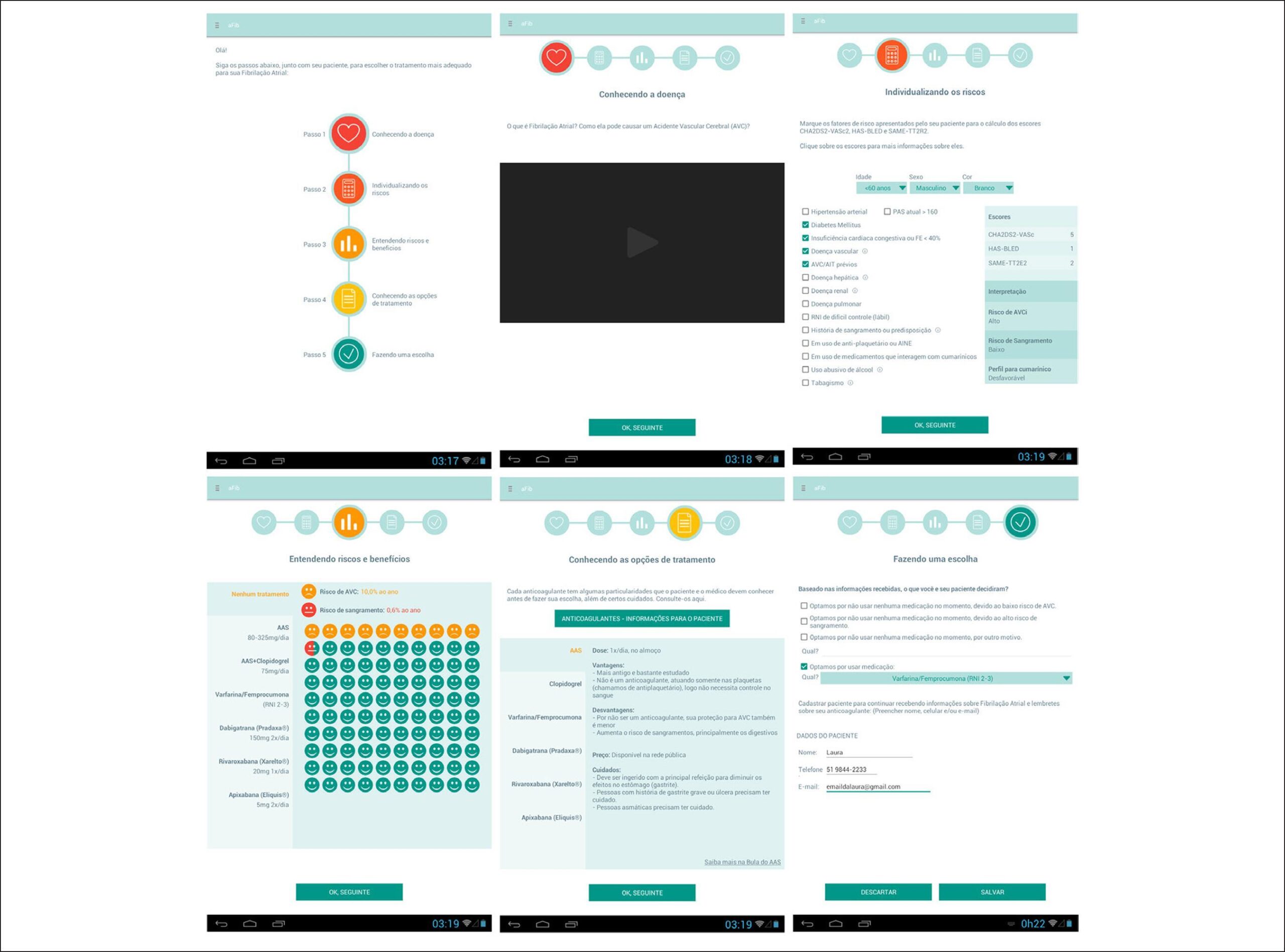
Oral Anticoagulation in Atrial Fibrillation: Development and Evaluation of a Mobile Health Application to Support Shared Decision-Making

Laura Siga Stephan et al. Eduardo Dytz Almeida Raphael Boesche Guimarães Antonio Gaudie Ley … Rodrigo Gonçalves Mathias Maria Valéria Assis Tiago Luiz Luz Leiria

Abstract

Background:

Atrial fibrillation is responsible for one in four strokes, which may be prevented by oral anticoagulation, an underused therapy around the world. Considering the challenges imposed by this sort of treatment, mobile health support for shared decision-making may improve patients’ knowledge and optimize the decisional process.

Objective:

To develop and evaluate a mobile application to support shared decision about thromboembolic prophylaxis in atrial fibrillation.

Methods:

We developed an application to be used during the clinical visit, including a video about atrial fibrillation, risk calculators, explanatory graphics and information on the drugs available for treatment. In the pilot phase, 30 patients interacted with the application, which was evaluated qualitatively and by a disease knowledge questionnaire and a decisional conflict scale.

Results:

The number of correct answers in the questionnaire about the disease was significantly higher after the interaction with the application (from 4.7 ± 1.8 to 7.2 ± 1.0, p < 0.001). The decisional conflict scale, administered after selecting the therapy with the app support, resulted in an average of 11 ± 16/100 points, indicating a low decisional conflict.

Conclusions:

The use of a mobile application during medical visits on anticoagulation in atrial fibrillation improves disease knowledge, enabling a shared decision with low decisional conflict. Further studies are needed to confirm if this finding can be translated into clinical benefit.

  • Anticoagulants / therapeutic use
  • Atrial Fibrillation
  • Hemorrhage
  • medication adherence
  • Stroke
  • Telemedicine
Read Full Article
Creative Commons Attribution (CC BY) Creative Commons license
01/02/2018 DOI: 10.5935/abc.20170181 Views 3
Figure 1
IJCS
Original Article

Use of HAS-BLED Score in an Anticoagulation Outpatient Clinic of a Tertiary Hospital

Rafael Coimbra Ferreira Beltrame et al. Franciele Taís Bandeira Giasson André Luís Ferreira Azeredo da Silva Bruna Sessim Gomes … Luís Carlos Amon Marina Bergamini Blaya Rafael Selbach Scheffel Fernando Pivatto Júnior

Abstract

Background:

HAS-BLED score was developed to assess 1-year major bleeding risk in patients anticoagulated with vitamin K antagonists (VKA) due to atrial fibrillation (AF).

Objective:

Of this study was to assess the ability of HAS-BLED score and its components to predict major bleeding in patients treated in an anticoagulation outpatient clinic of a tertiary hospital.

Methods:

A retrospective cohort study on AF patients treated with VKA was conducted. Logistic regression analysis was performed to evaluate the ability of individual score components to predict major bleeding. The significance level adopted in all tests was 5%.

Results:

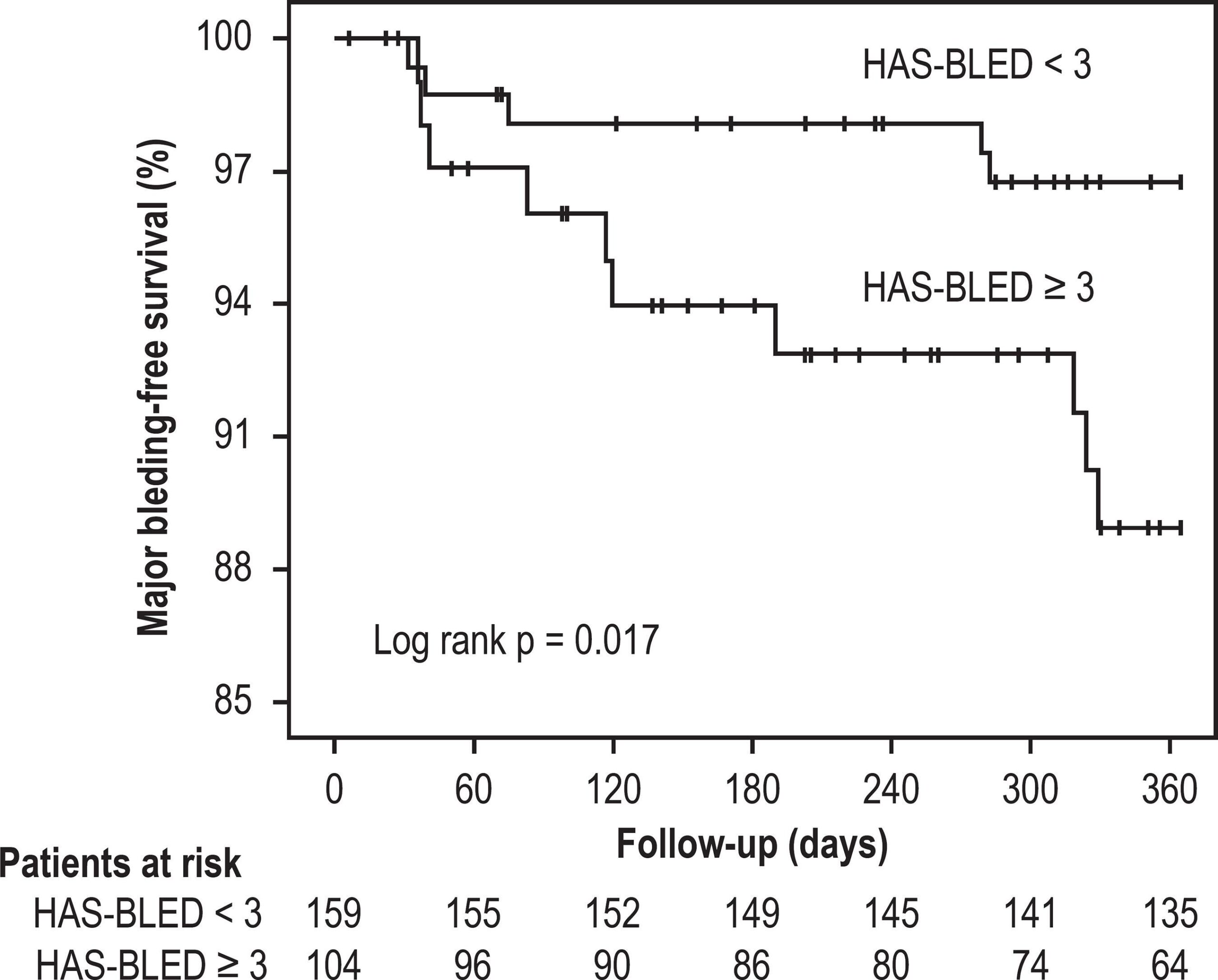
We studied 263 patients with a mean age of 71.1 ± 10.5 years over a period of 237.6 patients-year. Median HAS-BLED score was 2 (1-3). The overall incidence of major bleeding was 5.7%, and it was higher among high-risk HAS-BLED score patients than in low risk patients (9.6 vs. 3.1%; p = 0.052). Area under the ROC curve was 0.70 (p = 0.01). Cut-off point ≥ 3 showed sensibility of 66.7%, specificity of 62.1%, positive predictive value of 9.6% and negative predictive value of 96.9%. Major bleeding-free survival was lower in high-risk group (p = 0.017). In multivariate analysis, concurrent antiplatelet use was the only independent predictor of major bleeding among score components (OR 5.13, 95%CI: 1.55-17.0; p = 0.007).

Conclusion:

HAS-BLED score was able to predict major bleeding in this cohort of AF patients. Among score components, special attention should be given for concomitant antiplatelet use, which was independently associated to this outcome. Antiplatelets in AF patients under VKA anticoagulation should be used in selected patients with favorable risk-benefit assessment.

  • Atrial Fibrillation
  • Hemorrhage
  • hospital
  • outpatient clinics
Read Full Article
Creative Commons Attribution (CC BY) Creative Commons license
25/09/2017 DOI: 10.5935/2359-4802.20170081 Views 1
Figure 1
ABC
Original Article

Thromboembolism and bleeding risk scores and predictors of cardiac death in a population with atrial fibrillation

Rose Mary Ferreira Lisboa da Silva et al. Pollyana Ardavicius e Silva Marcos Correia Lima Lívia Tanure Sant'Anna … Túlio Corrêa Silva Pedro Henrique Vilela Moreira Robert Moreira Gandra Túlio Ramos Cavalcanti Plínio Henrique Vaz Mourão

Abstract

Background:

Atrial fibrillation (AF) is a common arrhythmia, with risk of systemic embolism and death. It presents rheumatic etiology in up to 32% of developing countries, whose anticoagulation and evolution data are scarce.

Objectives:

to determine the predictors of cardiac death considering the clinical profile, thromboembolism and bleeding scores of patients with AF of a single center, with high prevalence of rheumatic heart disease.

Methods:

302 patients with AF were studied, mean age 58.1 years; 161 women; 96 pts with rheumatic etiology. Patients underwent clinical and laboratory evaluation, measurement of risk scores and the mean follow-up of 12.8 months.

Results:

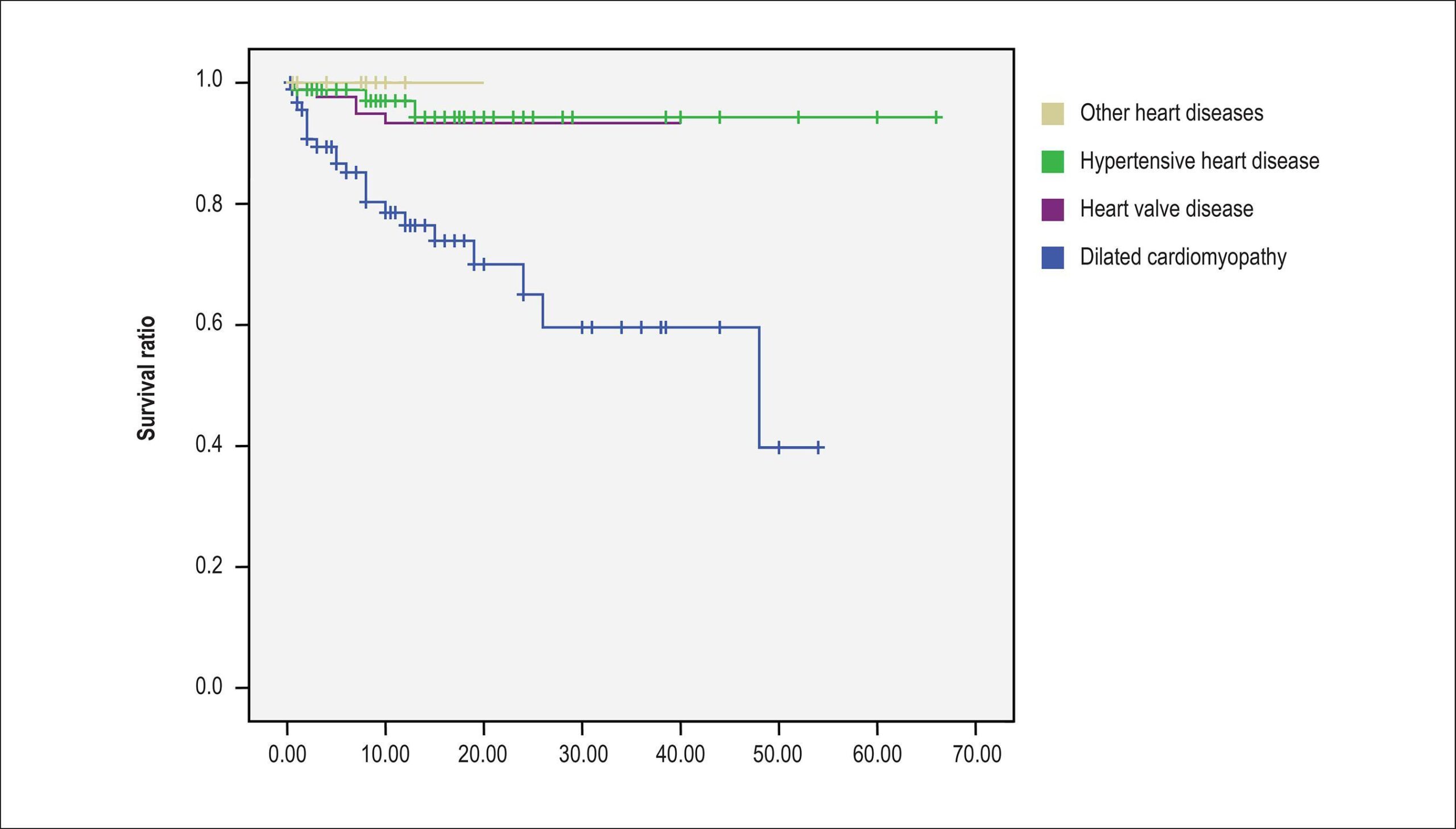
174 were using warfarin. The averages of the HAS-BLED and ATRIA scores were 1.4 and 1.2, respectively. Percent time in therapeutic range of international normalized ratio was 45.8%. Thirty patients (9.9%) had cardiac death and 41 had some type of bleeding due to warfarin. By univariate analysis, there was statistical significance between cardiac death and permanent AF, blood pressure, systolic dysfunction, R2CHADS2, CCS, EHRA and HAS-BLED. There was no association with valvular AF. By multivariate analysis, systemic arterial and pulmonary artery pressures, classification CCS and systolic dysfunction showed statistical significance.

Conclusions:

There was no association between cardiac death and valvular AF. Independent predictors of cardiac death were low measures of blood pressure, higher score CCS classification and the presence of systolic ventricular dysfunction.

  • Atrial Fibrillation/complications
  • Cardiovascular Diseases, mortality
  • Hemorrhage
  • Thromboembolism/complications
Read Full Article
Creative Commons Attribution (CC BY) Creative Commons license
25/05/2017 DOI: 10.5935/abc.20170064 Views 1
Figure 1
ABC
Original Article

Fondaparinux versus Enoxaparin – Which is the Best Anticoagulant for Acute Coronary Syndrome? – Brazilian Registry Data

Alexandre de Matos Soeiro et al. Pedro Gabriel Melo de Barros e Silva Eduardo Alberto de Castro Roque Aline Siqueira Bossa … Maria Cristina César Sheila Aparecida Simões Mariana Yumi Okada Tatiana de Carvalho Andreucci Torres Leal Fátima Cristina Monteiro Pedroti Múcio Tavares de Oliveira Jr.

Abstract

Background:

Recent studies have shown fondaparinux’s superiority over enoxaparin in patients with non-ST elevation acute coronary syndrome (ACS), especially in relation to bleeding reduction. The description of this finding in a Brazilian registry has not yet been documented.

Objective:

To compare fondaparinux versus enoxaparin in in-hospital prognosis of non-ST elevation ACS.

Methods:

Multicenter retrospective observational study. A total of 2,282 patients were included (335 in the fondaparinux group, and 1,947 in the enoxaparin group) between May 2010 and May 2015. Demographic, medication intake and chosen coronary treatment data were obtained. Primary outcome was mortality from all causes. Secondary outcome was combined events (cardiogenic shock, reinfarction, death, stroke and bleeding). Comparison between the groups were done through Chi-Square test and T test. Multivariate analysis was done through logistic regression, with significance values defined as p < 0.05.

Results:

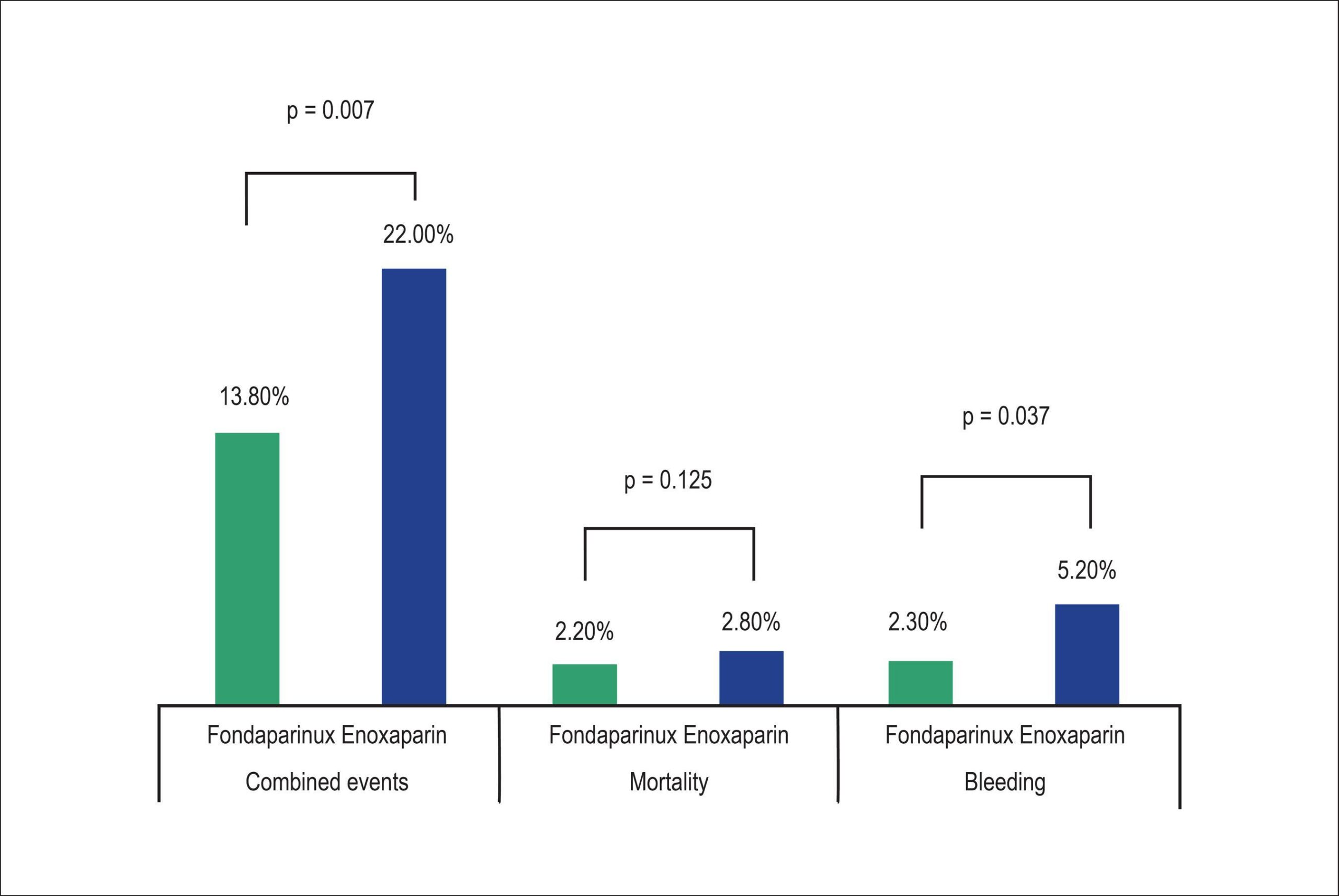
With regards to treatment, we observed the performance of a percutaneous coronary intervention in 40.2% in the fondaparinux group, and in 35.1% in the enoxaparin group (p = 0.13). In the multivariate analysis, we observed significant differences between fondaparinux and enoxaparin groups in relation to combined events (13.8% vs. 22%. OR = 2.93, p = 0.007) and bleeding (2.3% vs. 5.2%, OR = 4.55, p = 0.037), respectively.

Conclusion:

Similarly to recently published data in international literature, fondaparinux proved superior to enoxaparin for the Brazilian population, with significant reduction of combined events and bleeding.

  • Acute coronary syndrome
  • Anticoagulants / therapeutic use
  • Enoxaparin / therapeutic use
  • Hemorrhage
  • Myocardial Infarction
  • Percutaneous Coronary Intervention
Read Full Article
Creative Commons Attribution (CC BY) Creative Commons license
29/08/2016 DOI: 10.5935/abc.20160127
Figure 1
ABC
Original Article

Comparison of ACUITY and CRUSADE Scores in Predicting Major Bleeding during Acute Coronary Syndrome

Luis C. L. Correia et al. Felipe Ferreira Felipe Kalil André Silva … Luisa Pereira Manuela Carvalhal Maurício Cerqueira Fernanda Lopes Nicole de Sá Márcia Noya-Rabelo

Background:

The ACUITY and CRUSADE scores are validated models for prediction of major bleeding events in acute coronary syndrome (ACS). However, the comparative performances of these scores are not known.

Objective:

To compare the accuracy of ACUITY and CRUSADE in predicting major bleeding events during ACS.

Methods:

This study included 519 patients consecutively admitted for unstable angina, non-ST-elevation or ST-elevation myocardial infarction. The scores were calculated based on admission data. We considered major bleeding events during hospitalization and not related to cardiac surgery, according to the Bleeding Academic Research Consortium (BARC) criteria (type 3 or 5: hemodynamic instability, need for transfusion, drop in hemoglobin ≥ 3 g, and intracranial, intraocular or fatal bleeding).

Results:

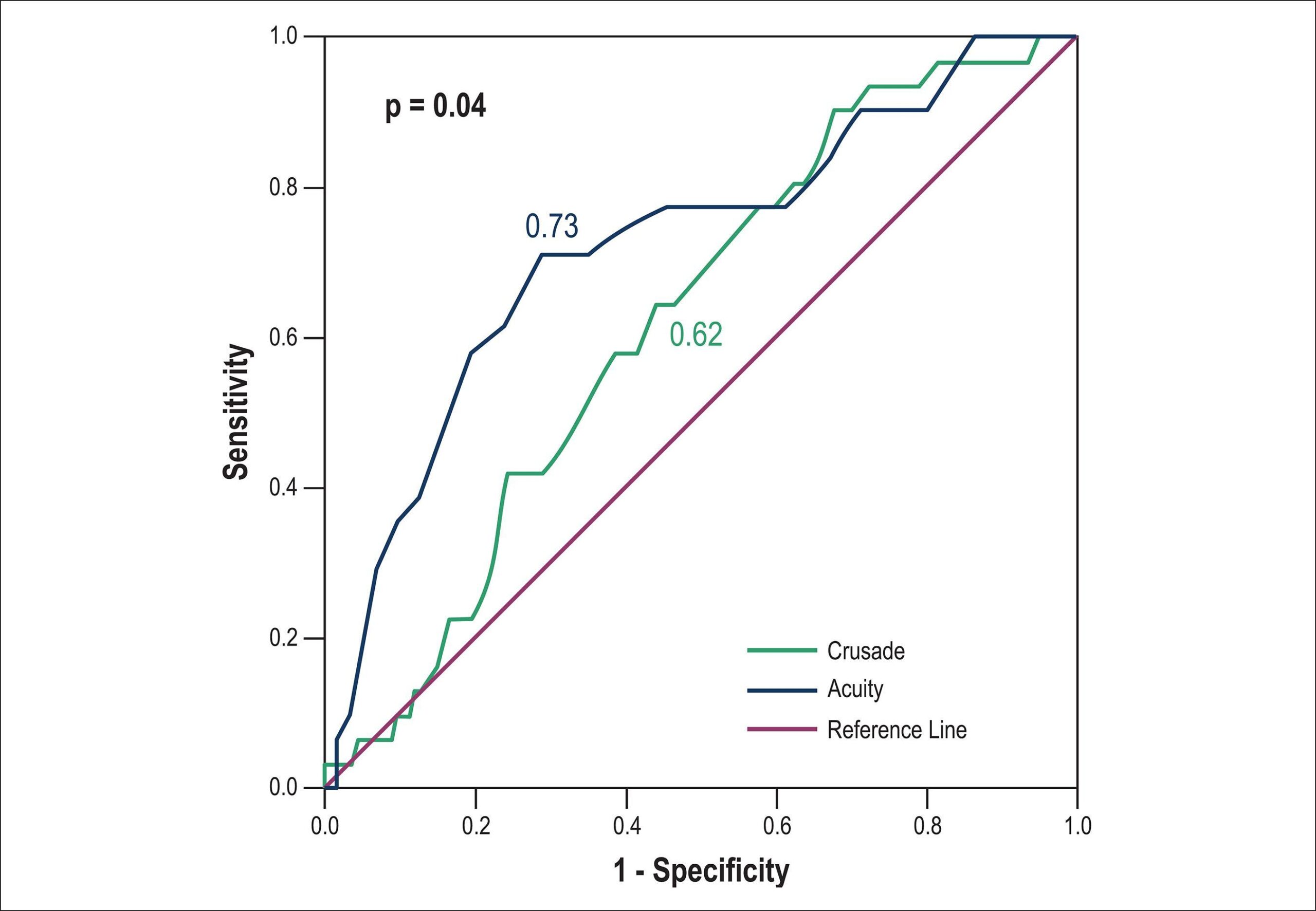
Major bleeding was observed in 31 patients (23 caused by femoral puncture, 5 digestive, 3 in other sites), an incidence of 6%. While both scores were associated with bleeding, ACUITY demonstrated better C-statistics (0.73, 95% CI = 0.63 – 0.82) as compared with CRUSADE (0.62, 95% CI = 0.53 – 0.71; p = 0.04). The best performance of ACUITY was also reflected by a net reclassification improvement of + 0.19 (p = 0.02) over CRUSADE’s definition of low or high risk. Exploratory analysis suggested that the presence of the variables ‘age’ and ‘type of ACS’ in ACUITY was the main reason for its superiority.

Conclusion:

The ACUITY Score is a better predictor of major bleeding when compared with the CRUSADE Score in patients hospitalized for ACS.

  • Acute Coronary Syndrome / complications
  • Angina, Unstable / complications
  • Hemorrhage
  • Patient Acuity
Read Full Article
Creative Commons Attribution (CC BY) Creative Commons license
02/06/2015 DOI: 10.5935/abc.20150058 Views 2

Could not load more articles. Please try again.

How to cite this article

EndNote RIS

Electronic Document Format (Vancouver)

Moreira DM, Dandolini LM, Fattah T, Joaquim RM, Silva RL. Chocolate Consumption Does Not Reduce the Risk of Cardiovascular Events and Increases the Risk of Gastrointestinal Bleeding One Year After the First Myocardial Infarction. International Journal of Cardiovascular Sciences 2025;38:e20250006.

Electronic Document Format (ABNT)

Moreira, Daniel Medeiros; Dandolini, Lara Marcon; Fattah, Tammuz; Joaquim, Rodrigo de Moura; Silva, Roberto Leo da. Chocolate Consumption Does Not Reduce the Risk of Cardiovascular Events and Increases the Risk of Gastrointestinal Bleeding One Year After the First Myocardial Infarction. International Journal of Cardiovascular Sciences, v. 38, e20250006, Oct. 2025.

Electronic Document Format (APA)

Moreira, D. M., Dandolini, L. M., Fattah, T., Joaquim, R. M., & Silva, R. L. (2025). Chocolate Consumption Does Not Reduce the Risk of Cardiovascular Events and Increases the Risk of Gastrointestinal Bleeding One Year After the First Myocardial Infarction. International Journal of Cardiovascular Sciences, 38, e20250006.

Electronic Document Format (ISO)

Moreira, Daniel Medeiros and Dandolini, Lara Marcon and Fattah, Tammuz and Joaquim, Rodrigo de Moura and Silva, Roberto Leo da. Chocolate Consumption Does Not Reduce the Risk of Cardiovascular Events and Increases the Risk of Gastrointestinal Bleeding One Year After the First Myocardial Infarction. International Journal of Cardiovascular Sciences [online]. 2025, vol. 38, [cited 2026-10-15], e20250006. Available from: <https://journals.cardiol.br/en/article/chocolate-consumption-does-not-reduce-the-risk-of-cardiovascular-events-and-increases-the-risk-of-gastrointestinal-bleeding-one-year-after-the-first-myocardial-infarction/>. ISSN 2359-4802

EndNote RIS

Electronic Document Format (Vancouver)

Precoma DB, Silva RP, Passos LCS, Hoffman Filho CR, Silveira FS, Vasconcelos JTM, Zimmermann SL, et al. Effectiveness and Safety of Edoxaban in the Routine Clinical Care of Atrial Fibrillation Patients in Brazil: Prospective 1-Year Follow-Up Study – EdoBRA. Arquivos Brasileiros de Cardiologia 2025;122(4):e20240589.

Electronic Document Format (ABNT)

Precoma, Dalton Bertolim; Silva, Rafael Paletta da; Passos, Luiz Carlos Santana; Hoffman Filho, Conrado Roberto; Silveira, Fábio Serra; Vasconcelos, José Tarcísio Medeiros de; Zimmermann, Sérgio Luiz; Herdy, Artur Haddad; Ritter, Alessandra; Freitas-Alves, Daniely; Saraiva, José Francisco Kerr. Effectiveness and Safety of Edoxaban in the Routine Clinical Care of Atrial Fibrillation Patients in Brazil: Prospective 1-Year Follow-Up Study – EdoBRA. Arquivos Brasileiros de Cardiologia, v. 122, n. 4, e20240589, Apr. 2025.

Electronic Document Format (APA)

Precoma, D. B., Silva, R. P. , Passos, L. C. S., Hoffman Filho, C. R., Silveira, F. S., Vasconcelos, J. T. M. , Zimmermann, S. L., Herdy, A. H., Ritter, A., Freitas-Alves, D., & Saraiva, J. F. K. (2025). Effectiveness and Safety of Edoxaban in the Routine Clinical Care of Atrial Fibrillation Patients in Brazil: Prospective 1-Year Follow-Up Study – EdoBRA. Arquivos Brasileiros de Cardiologia, 122(4), e20240589.

Electronic Document Format (ISO)

Precoma, Dalton Bertolim and Silva, Rafael Paletta da and Passos, Luiz Carlos Santana and Hoffman Filho, Conrado Roberto and Silveira, Fábio Serra and Vasconcelos, José Tarcísio Medeiros de and Zimmermann, Sérgio Luiz and Herdy, Artur Haddad and Ritter, Alessandra and Freitas-Alves, Daniely and Saraiva, José Francisco Kerr. Effectiveness and Safety of Edoxaban in the Routine Clinical Care of Atrial Fibrillation Patients in Brazil: Prospective 1-Year Follow-Up Study – EdoBRA. Arquivos Brasileiros de Cardiologia [online]. 2025, vol. 122, n. 4, [cited 2026-10-15], e20240589. Available from: <https://journals.cardiol.br/en/article/effectiveness-and-safety-of-edoxaban-in-the-routine-clinical-care-of-atrial-fibrillation-patients-in-brazil-prospective-1-year-follow-up-study-edobra/>. ISSN 0066-782X

EndNote RIS

Electronic Document Format (Vancouver)

Liporace IL, Oliveira GBF, Alves LBO, Galassi NM, Jeronimo AD, Lopes FM, Lip GYH, et al. Incidence and Predictors of Clinical Outcomes in Patients with Valvular and Nonvalvular Atrial Fibrillation Using Vitamin K Antagonists. Arquivos Brasileiros de Cardiologia 2025;122(2):e20240147.

Electronic Document Format (ABNT)

Liporace, Idelzuita Leandro; Oliveira, Gustavo Bernardes F.; Alves, Lucas Bassolli de Oliveira; Galassi, Nadia Marchiori; Jeronimo, Andreia Dias; Lopes, Fernanda Maria; Lip, Gregory Y. H.; Avezum, Álvaro. Incidence and Predictors of Clinical Outcomes in Patients with Valvular and Nonvalvular Atrial Fibrillation Using Vitamin K Antagonists. Arquivos Brasileiros de Cardiologia, v. 122, n. 2, e20240147, Feb. 2025.

Electronic Document Format (APA)

Liporace, I. L., Oliveira, G. B. F., Alves, L. B. O., Galassi, N. M., Jeronimo, A. D., Lopes, F. M., Lip, G. Y. H., & Avezum, (2025). Incidence and Predictors of Clinical Outcomes in Patients with Valvular and Nonvalvular Atrial Fibrillation Using Vitamin K Antagonists. Arquivos Brasileiros de Cardiologia, 122(2), e20240147.

Electronic Document Format (ISO)

Liporace, Idelzuita Leandro and Oliveira, Gustavo Bernardes F. and Alves, Lucas Bassolli de Oliveira and Galassi, Nadia Marchiori and Jeronimo, Andreia Dias and Lopes, Fernanda Maria and Lip, Gregory Y. H. and Avezum, Álvaro. Incidence and Predictors of Clinical Outcomes in Patients with Valvular and Nonvalvular Atrial Fibrillation Using Vitamin K Antagonists. Arquivos Brasileiros de Cardiologia [online]. 2025, vol. 122, n. 2, [cited 2026-10-15], e20240147. Available from: <https://journals.cardiol.br/en/article/incidence-and-predictors-of-clinical-outcomes-in-patients-with-valvular-and-nonvalvular-atrial-fibrillation-using-vitamin-k-antagonists/>. ISSN 0066-782X

EndNote RIS

Electronic Document Format (Vancouver)

Öz A, Toprak K, Aydin E, Saraç , Doğduş M, Opan S, Yenerçağ M, et al. Fixed-Dose Antiplatelet Dual Combination in Patients with Coronary Artery Disease in Turkish Population: DAPT-TR. Arquivos Brasileiros de Cardiologia 2024;121(11):e20240202.

Electronic Document Format (ABNT)

Öz, Ahmet; Toprak, Kenan; Aydin, Ertan; Saraç, İbrahim; Doğduş, Mustafa; Opan, Selçuk; Yenerçağ, Mustafa; Tascanov, Mustafa Begenc; Kümet, Ömer; Karaağaç, Miraç; Özmen, Murat; Murat, Bektaş; Kertmen, Ömer; Bekler, Özkan; İnci, Sinan; Huyut, Mustafa Ahmet; Özderya, Ahmet; Er, Fahri; Duran, Mustafa; Ardahanlı, İsa; Baş, Mehmet Memduh; Güzel, Tuncay; Ceyhun, Gökhan; Özdemir, İbrahim Halil; Özen, Mehmet Burak; Gündüz, Ramazan; Erdoğan, Aslan; Çetin, İlyas; Barış, Veysel Özgür; Yayla, Çağrı; Karaduman, Medeni; Aşkın, Lütfü; Bekar, Lütfü; Tanrıverdi, Okan; Özkan, Eyüp; Yeşil, Emrah; Çalışkan, Serhat; Kuzu, Zülfiye; Uğuz, Berat; Böyük, Ferit; Kunak, Ayşegül Ülgen; Murat, Selda; Asil, Serkan; Kayhan, Özkan; Erdoğan, Emrah; Duz, Ramazan; Katkat, Fahrettin; Ekin, Tuba; İbişoğlu, Ersin; Ateş, Bilge Nazar; Ayça, Burak; Ergene, Asım Oktay; Zoghi, Mehdi. Fixed-Dose Antiplatelet Dual Combination in Patients with Coronary Artery Disease in Turkish Population: DAPT-TR. Arquivos Brasileiros de Cardiologia, v. 121, n. 11, e20240202, Nov. 2024.

Electronic Document Format (APA)

Öz, A., Toprak, K., Aydin, E., Saraç, , Doğduş, M., Opan, S., Yenerçağ, M., Tascanov, M. B., Kümet, , Karaağaç, M., Özmen, M., Murat, B., Kertmen, , Bekler, , İnci, S., Huyut, M. A., Özderya, A., Er, F., Duran, M., Ardahanlı, , Baş, M. M., Güzel, T., Ceyhun, G., Özdemir, H., Özen, M. B., Gündüz, R., Erdoğan, A., Çetin, , Barış, V. , Yayla, , Karaduman, M., Aşkın, L., Bekar, L., Tanrıverdi, O., Özkan, E., Yeşil, E., Çalışkan, S., Kuzu, Z., Uğuz, B., Böyük, F., Kunak, A. , Murat, S., Asil, S., Kayhan, , Erdoğan, E., Duz, R., Katkat, F., Ekin, T., İbişoğlu, E., Ateş, B. N., Ayça, B., Ergene, A. O., & Zoghi, M. (2024). Fixed-Dose Antiplatelet Dual Combination in Patients with Coronary Artery Disease in Turkish Population: DAPT-TR. Arquivos Brasileiros de Cardiologia, 121(11), e20240202.

Electronic Document Format (ISO)

Öz, Ahmet and Toprak, Kenan and Aydin, Ertan and Saraç, İbrahim and Doğduş, Mustafa and Opan, Selçuk and Yenerçağ, Mustafa and Tascanov, Mustafa Begenc and Kümet, Ömer and Karaağaç, Miraç and Özmen, Murat and Murat, Bektaş and Kertmen, Ömer and Bekler, Özkan and İnci, Sinan and Huyut, Mustafa Ahmet and Özderya, Ahmet and Er, Fahri and Duran, Mustafa and Ardahanlı, İsa and Baş, Mehmet Memduh and Güzel, Tuncay and Ceyhun, Gökhan and Özdemir, İbrahim Halil and Özen, Mehmet Burak and Gündüz, Ramazan and Erdoğan, Aslan and Çetin, İlyas and Barış, Veysel Özgür and Yayla, Çağrı and Karaduman, Medeni and Aşkın, Lütfü and Bekar, Lütfü and Tanrıverdi, Okan and Özkan, Eyüp and Yeşil, Emrah and Çalışkan, Serhat and Kuzu, Zülfiye and Uğuz, Berat and Böyük, Ferit and Kunak, Ayşegül Ülgen and Murat, Selda and Asil, Serkan and Kayhan, Özkan and Erdoğan, Emrah and Duz, Ramazan and Katkat, Fahrettin and Ekin, Tuba and İbişoğlu, Ersin and Ateş, Bilge Nazar and Ayça, Burak and Ergene, Asım Oktay and Zoghi, Mehdi. Fixed-Dose Antiplatelet Dual Combination in Patients with Coronary Artery Disease in Turkish Population: DAPT-TR. Arquivos Brasileiros de Cardiologia [online]. 2024, vol. 121, n. 11, [cited 2026-10-15], e20240202. Available from: <https://journals.cardiol.br/en/article/fixed-dose-antiplatelet-dual-combination-in-patients-with-coronary-artery-disease-in-turkish-population-dapt-tr/>. ISSN 0066-782X

EndNote RIS

Electronic Document Format (Vancouver)

Malan IA. Atrial Fibrillation and Hemodialysis – Should we Anticoagulate These Patients? Ischemic Versus Hemorrhagic Risk. International Journal of Cardiovascular Sciences 2022;35(6):757-9.

Electronic Document Format (ABNT)

Malan, Iara Atié. Atrial Fibrillation and Hemodialysis – Should we Anticoagulate These Patients? Ischemic Versus Hemorrhagic Risk. International Journal of Cardiovascular Sciences, v. 35, n. 6, p. 757-759, Nov. 2022.

Electronic Document Format (APA)

Malan, I. A. (2022). Atrial Fibrillation and Hemodialysis – Should we Anticoagulate These Patients? Ischemic Versus Hemorrhagic Risk. International Journal of Cardiovascular Sciences, 35(6), 757-759.

Electronic Document Format (ISO)

Malan, Iara Atié. Atrial Fibrillation and Hemodialysis – Should we Anticoagulate These Patients? Ischemic Versus Hemorrhagic Risk. International Journal of Cardiovascular Sciences [online]. 2022, vol. 35, n. 6, [cited 2026-10-15], pp. 757-759. Available from: <https://journals.cardiol.br/en/article/atrial-fibrillation-and-hemodialysis-should-we-anticoagulate-these-patients-ischemic-versus-hemorrhagic-risk/>. ISSN 2359-4802

EndNote RIS

Electronic Document Format (Vancouver)

Martinelli Filho M. Anticoagulation Therapy with Warfarin: A Reality of Brazilian Public Health that Lacks Structure for Better Control. Arquivos Brasileiros de Cardiologia 2022;119(3):370-1.

Electronic Document Format (ABNT)

Martinelli Filho, Martino. Anticoagulation Therapy with Warfarin: A Reality of Brazilian Public Health that Lacks Structure for Better Control. Arquivos Brasileiros de Cardiologia, v. 119, n. 3, p. 370-371, Sep. 2022.

Electronic Document Format (APA)

Martinelli Filho, M. (2022). Anticoagulation Therapy with Warfarin: A Reality of Brazilian Public Health that Lacks Structure for Better Control. Arquivos Brasileiros de Cardiologia, 119(3), 370-371.

Electronic Document Format (ISO)

Martinelli Filho, Martino. Anticoagulation Therapy with Warfarin: A Reality of Brazilian Public Health that Lacks Structure for Better Control. Arquivos Brasileiros de Cardiologia [online]. 2022, vol. 119, n. 3, [cited 2026-10-15], pp. 370-371. Available from: <https://journals.cardiol.br/en/article/anticoagulation-therapy-with-warfarin-a-reality-of-brazilian-public-health-that-lacks-structure-for-better-control/>. ISSN 0066-782X

EndNote RIS

Electronic Document Format (Vancouver)

Sousa M, Cruz G, Vilela S, Cardoso C, Bravo P, Santos JP, Santos C, et al. Hemorrhagic Versus Ischemic Risk in Patients with Atrial Fibrillation on Hemodialysis. International Journal of Cardiovascular Sciences 2022;35(6):749-56.

Electronic Document Format (ABNT)

Sousa, Mariana; Cruz, Gonçalo; Vilela, Sara; Cardoso, Catarina; Bravo, Pedro; Santos, José Paulo; Santos, Cristina; Silva, Jorge. Hemorrhagic Versus Ischemic Risk in Patients with Atrial Fibrillation on Hemodialysis. International Journal of Cardiovascular Sciences, v. 35, n. 6, p. 749-756, Aug. 2022.

Electronic Document Format (APA)

Sousa, M., Cruz, G., Vilela, S., Cardoso, C., Bravo, P., Santos, J. P., Santos, C., & Silva, J. (2022). Hemorrhagic Versus Ischemic Risk in Patients with Atrial Fibrillation on Hemodialysis. International Journal of Cardiovascular Sciences, 35(6), 749-756.

Electronic Document Format (ISO)

Sousa, Mariana and Cruz, Gonçalo and Vilela, Sara and Cardoso, Catarina and Bravo, Pedro and Santos, José Paulo and Santos, Cristina and Silva, Jorge. Hemorrhagic Versus Ischemic Risk in Patients with Atrial Fibrillation on Hemodialysis. International Journal of Cardiovascular Sciences [online]. 2022, vol. 35, n. 6, [cited 2026-10-15], pp. 749-756. Available from: <https://journals.cardiol.br/en/article/hemorrhagic-versus-ischemic-risk-in-patients-with-atrial-fibrillation-on-hemodialysis/>. ISSN 2359-4802

EndNote RIS

Electronic Document Format (Vancouver)

Garzon S, Bandeira WC. Tackling Bleeding – One Appendage at a Time. Arquivos Brasileiros de Cardiologia 2022;119(1):57-8.

Electronic Document Format (ABNT)

Garzon, Stefano; Bandeira, Willterson Carlos. Tackling Bleeding – One Appendage at a Time. Arquivos Brasileiros de Cardiologia, v. 119, n. 1, p. 57-58, Jul. 2022.

Electronic Document Format (APA)

Garzon, S., & Bandeira, W. C. (2022). Tackling Bleeding – One Appendage at a Time. Arquivos Brasileiros de Cardiologia, 119(1), 57-58.

Electronic Document Format (ISO)

Garzon, Stefano and Bandeira, Willterson Carlos. Tackling Bleeding – One Appendage at a Time. Arquivos Brasileiros de Cardiologia [online]. 2022, vol. 119, n. 1, [cited 2026-10-15], pp. 57-58. Available from: <https://journals.cardiol.br/en/article/tackling-bleeding-one-appendage-at-a-time/>. ISSN 0066-782X

EndNote RIS

Electronic Document Format (Vancouver)

Malagutte KNDS, Silveira CFSMP, Reis FM, Rossi DAA, Hueb JC, Okoshi K, Nunes HRC, et al. Quality of Oral Anticoagulation in Atrial Fibrillation Patients at a Tertiary Hospital in Brazil. Arquivos Brasileiros de Cardiologia 2022;119(3):363-9.

Electronic Document Format (ABNT)

Malagutte, Karina Nogueira Dias Secco; Silveira, Caroline Ferreira da Silva Mazeto Pupo da; Reis, Fabrício Moreira; Rossi, Daniele Andreza Antonelli; Hueb, João Carlos; Okoshi, Katashi; Nunes, Hélio Rubens de Carvalho; Martin, Luis Cuadrado; Bazan, Rodrigo; Bazan, Silméia Garcia Zanati. Quality of Oral Anticoagulation in Atrial Fibrillation Patients at a Tertiary Hospital in Brazil. Arquivos Brasileiros de Cardiologia, v. 119, n. 3, p. 363-369, Jun. 2022.

Electronic Document Format (APA)

Malagutte, K. N. D. S., Silveira, C. F. S. M. P. , Reis, F. M., Rossi, D. A. A., Hueb, J. C., Okoshi, K., Nunes, H. R. C., Martin, L. C., Bazan, R., & Bazan, S. G. Z. (2022). Quality of Oral Anticoagulation in Atrial Fibrillation Patients at a Tertiary Hospital in Brazil. Arquivos Brasileiros de Cardiologia, 119(3), 363-369.

Electronic Document Format (ISO)

Malagutte, Karina Nogueira Dias Secco and Silveira, Caroline Ferreira da Silva Mazeto Pupo da and Reis, Fabrício Moreira and Rossi, Daniele Andreza Antonelli and Hueb, João Carlos and Okoshi, Katashi and Nunes, Hélio Rubens de Carvalho and Martin, Luis Cuadrado and Bazan, Rodrigo and Bazan, Silméia Garcia Zanati. Quality of Oral Anticoagulation in Atrial Fibrillation Patients at a Tertiary Hospital in Brazil. Arquivos Brasileiros de Cardiologia [online]. 2022, vol. 119, n. 3, [cited 2026-10-15], pp. 363-369. Available from: <https://journals.cardiol.br/en/article/quality-of-oral-anticoagulation-in-atrial-fibrillation-patients-at-a-tertiary-hospital-in-brazil/>. ISSN 0066-782X

EndNote RIS

Electronic Document Format (Vancouver)

Yoo HHB. Thrombolysis in Pulmonary Embolism: Octagenarians Deserve More Attention!. Arquivos Brasileiros de Cardiologia 2022;118(1):75-6.

Electronic Document Format (ABNT)

Yoo, Hugo Hyung Bok. Thrombolysis in Pulmonary Embolism: Octagenarians Deserve More Attention!. Arquivos Brasileiros de Cardiologia, v. 118, n. 1, p. 75-76, Feb. 2022.

Electronic Document Format (APA)

Yoo, H. H. B. (2022). Thrombolysis in Pulmonary Embolism: Octagenarians Deserve More Attention!. Arquivos Brasileiros de Cardiologia, 118(1), 75-76.

Electronic Document Format (ISO)

Yoo, Hugo Hyung Bok. Thrombolysis in Pulmonary Embolism: Octagenarians Deserve More Attention!. Arquivos Brasileiros de Cardiologia [online]. 2022, vol. 118, n. 1, [cited 2026-10-15], pp. 75-76. Available from: <https://journals.cardiol.br/en/article/thrombolysis-in-pulmonary-embolism-octagenarians-deserve-more-attention/>. ISSN 0066-782X

EndNote RIS

Electronic Document Format (Vancouver)

Chiaparini AF, Rabaioli PSB, Slaviero JV, Tem-Pass CS, Fontana Filho HA, Castro I, Almeida ED, et al. Predictors of Hospitalization in Vitamin K Antagonist Users Presenting with Bleeding at the Emergency Department. International Journal of Cardiovascular Sciences 2021;35(1):88-94.

Electronic Document Format (ABNT)

Chiaparini, Alan Fabiani; Rabaioli, Paola Stefania Bohrer; Slaviero, João Vitor; Tem-Pass, Cinthia Scatolin; Fontana Filho, Hugo Antonio; Castro, Iran; Almeida, Eduardo Dytz; Leiria, Tiago Luiz Luz. Predictors of Hospitalization in Vitamin K Antagonist Users Presenting with Bleeding at the Emergency Department. International Journal of Cardiovascular Sciences, v. 35, n. 1, p. 88-94, Sep. 2021.

Electronic Document Format (APA)

Chiaparini, A. F., Rabaioli, P. S. B., Slaviero, J. V., Tem-Pass, C. S., Fontana Filho, H. A., Castro, I., Almeida, E. D., & Leiria, T. L. L. (2021). Predictors of Hospitalization in Vitamin K Antagonist Users Presenting with Bleeding at the Emergency Department. International Journal of Cardiovascular Sciences, 35(1), 88-94.

Electronic Document Format (ISO)

Chiaparini, Alan Fabiani and Rabaioli, Paola Stefania Bohrer and Slaviero, João Vitor and Tem-Pass, Cinthia Scatolin and Fontana Filho, Hugo Antonio and Castro, Iran and Almeida, Eduardo Dytz and Leiria, Tiago Luiz Luz. Predictors of Hospitalization in Vitamin K Antagonist Users Presenting with Bleeding at the Emergency Department. International Journal of Cardiovascular Sciences [online]. 2021, vol. 35, n. 1, [cited 2026-10-15], pp. 88-94. Available from: <https://journals.cardiol.br/en/article/predictors-of-hospitalization-in-vitamin-k-antagonist-users-presenting-with-bleeding-at-the-emergency-department/>. ISSN 2359-4802

EndNote RIS

Electronic Document Format (Vancouver)

Rosa VEE, Ribeiro HB, Fernandes JRC, Santis A, Spina GS, Paixão MR, Pires LJT, et al. Heyde’s Syndrome: Therapeutic Strategies and Long-Term Follow-Up. Arquivos Brasileiros de Cardiologia 2021;117(3):512-7.

Electronic Document Format (ABNT)

Rosa, Vitor Emer Egypto; Ribeiro, Henrique Barbosa; Fernandes, João Ricardo Cordeiro; Santis, Antonio de; Spina, Guilherme Sobreira; Paixão, Milena Ribeiro; Pires, Lucas José Tachotti; Bettega, Marcelo; Accorsi, Tarso Augusto Duenhas; Sampaio, Roney Orismar; Tarasoutchi, Flávio. Heyde’s Syndrome: Therapeutic Strategies and Long-Term Follow-Up. Arquivos Brasileiros de Cardiologia, v. 117, n. 3, p. 512-517, Jul. 2021.

Electronic Document Format (APA)

Rosa, V. E. E., Ribeiro, H. B., Fernandes, J. R. C., Santis, A. , Spina, G. S., Paixão, M. R., Pires, L. J. T., Bettega, M., Accorsi, T. A. D., Sampaio, R. O., & Tarasoutchi, F. (2021). Heyde’s Syndrome: Therapeutic Strategies and Long-Term Follow-Up. Arquivos Brasileiros de Cardiologia, 117(3), 512-517.

Electronic Document Format (ISO)

Rosa, Vitor Emer Egypto and Ribeiro, Henrique Barbosa and Fernandes, João Ricardo Cordeiro and Santis, Antonio de and Spina, Guilherme Sobreira and Paixão, Milena Ribeiro and Pires, Lucas José Tachotti and Bettega, Marcelo and Accorsi, Tarso Augusto Duenhas and Sampaio, Roney Orismar and Tarasoutchi, Flávio. Heyde’s Syndrome: Therapeutic Strategies and Long-Term Follow-Up. Arquivos Brasileiros de Cardiologia [online]. 2021, vol. 117, n. 3, [cited 2026-10-15], pp. 512-517. Available from: <https://journals.cardiol.br/en/article/heydes-syndrome-therapeutic-strategies-and-long-term-follow-up/>. ISSN 0066-782X

EndNote RIS

Electronic Document Format (Vancouver)

Castro PNP, Chagas LA, Wajnberg E, Santos R, Cougo P, Machado DC. Vascular Spectrum of Imaging Findings in COVID-19: Ischemic, Hemorrhagic, and Thromboembolic Complications. International Journal of Cardiovascular Sciences 2021;35(4):546-5.

Electronic Document Format (ABNT)

Castro, Pedro Neves Paiva de; Chagas, Lucia Antunes; Wajnberg, Eduardo; Santos, Roberto; Cougo, Pedro; Machado, Dequitier Carvalho. Vascular Spectrum of Imaging Findings in COVID-19: Ischemic, Hemorrhagic, and Thromboembolic Complications. International Journal of Cardiovascular Sciences, v. 35, n. 4, p. 546-556, Jun. 2021.

Electronic Document Format (APA)

Castro, P. N. P. , Chagas, L. A., Wajnberg, E., Santos, R., Cougo, P., & Machado, D. C. (2021). Vascular Spectrum of Imaging Findings in COVID-19: Ischemic, Hemorrhagic, and Thromboembolic Complications. International Journal of Cardiovascular Sciences, 35(4), 546-556.

Electronic Document Format (ISO)

Castro, Pedro Neves Paiva de and Chagas, Lucia Antunes and Wajnberg, Eduardo and Santos, Roberto and Cougo, Pedro and Machado, Dequitier Carvalho. Vascular Spectrum of Imaging Findings in COVID-19: Ischemic, Hemorrhagic, and Thromboembolic Complications. International Journal of Cardiovascular Sciences [online]. 2021, vol. 35, n. 4, [cited 2026-10-15], pp. 546-556. Available from: <https://journals.cardiol.br/en/article/vascular-spectrum-of-imaging-findings-in-covid-19-ischemic-hemorrhagic-and-thromboembolic-complications/>. ISSN 2359-4802

EndNote RIS

Electronic Document Format (Vancouver)

Pereira M, Vieitas GL, Freitas AIH, Hunkar KGO. Kounis Syndrome: Case Report in Goiânia/BR. International Journal of Cardiovascular Sciences 2021;34(5 Supl 1):135-8.

Electronic Document Format (ABNT)

Pereira, Marília; Vieitas, Gabriela Lima; Freitas, Anna Ilona Hunkar; Hunkar, Karoly Gyula Olivas. Kounis Syndrome: Case Report in Goiânia/BR. International Journal of Cardiovascular Sciences, v. 34, n. 5 Supl 1, p. 135-138, Jun. 2021.

Electronic Document Format (APA)

Pereira, M., Vieitas, G. L., Freitas, A. I. H., & Hunkar, K. G. O. (2021). Kounis Syndrome: Case Report in Goiânia/BR. International Journal of Cardiovascular Sciences, 34(5 Supl 1), 135-138.

Electronic Document Format (ISO)

Pereira, Marília and Vieitas, Gabriela Lima and Freitas, Anna Ilona Hunkar and Hunkar, Karoly Gyula Olivas. Kounis Syndrome: Case Report in Goiânia/BR. International Journal of Cardiovascular Sciences [online]. 2021, vol. 34, n. 5 Supl 1, [cited 2026-10-15], pp. 135-138. Available from: <https://journals.cardiol.br/en/article/kounis-syndrome-case-report-in-goiania-br/>. ISSN 2359-4802

EndNote RIS

Electronic Document Format (Vancouver)

Timóteo AT. Is There a Second Wind for Glycoprotein IIb/IIIa Inhibitors in Elderly Diabetic Females with ST-Elevation Myocardial Infarction, or are We on Thin Ice?. Arquivos Brasileiros de Cardiologia 2021;116(2):236-7.

Electronic Document Format (ABNT)

Timóteo, Ana Teresa. Is There a Second Wind for Glycoprotein IIb/IIIa Inhibitors in Elderly Diabetic Females with ST-Elevation Myocardial Infarction, or are We on Thin Ice?. Arquivos Brasileiros de Cardiologia, v. 116, n. 2, p. 236-237, Feb. 2021.

Electronic Document Format (APA)

Timóteo, A. T. (2021). Is There a Second Wind for Glycoprotein IIb/IIIa Inhibitors in Elderly Diabetic Females with ST-Elevation Myocardial Infarction, or are We on Thin Ice?. Arquivos Brasileiros de Cardiologia, 116(2), 236-237.

Electronic Document Format (ISO)

Timóteo, Ana Teresa. Is There a Second Wind for Glycoprotein IIb/IIIa Inhibitors in Elderly Diabetic Females with ST-Elevation Myocardial Infarction, or are We on Thin Ice?. Arquivos Brasileiros de Cardiologia [online]. 2021, vol. 116, n. 2, [cited 2026-10-15], pp. 236-237. Available from: <https://journals.cardiol.br/en/article/is-there-a-second-wind-for-glycoprotein-iib-iiia-inhibitors-in-elderly-diabetic-females-with-st-elevation-myocardial-infarction-or-are-we-on-thin-ice/>. ISSN 0066-782X

EndNote RIS

Electronic Document Format (Vancouver)

Vecchis RD, Paccone A, Soreca S. Thrombocytopenia-Related Problems in Patients with Concomitant Atrial Fibrillation Requiring Antithrombotic Prevention: A Retrospective Cohort Study. Arquivos Brasileiros de Cardiologia 2020;115(4):717-8.

Electronic Document Format (ABNT)

Vecchis, Renato De; Paccone, Andrea; Soreca, Silvia. Thrombocytopenia-Related Problems in Patients with Concomitant Atrial Fibrillation Requiring Antithrombotic Prevention: A Retrospective Cohort Study. Arquivos Brasileiros de Cardiologia, v. 115, n. 4, p. 717-718, Oct. 2020.

Electronic Document Format (APA)

Vecchis, R. D., Paccone, A., & Soreca, S. (2020). Thrombocytopenia-Related Problems in Patients with Concomitant Atrial Fibrillation Requiring Antithrombotic Prevention: A Retrospective Cohort Study. Arquivos Brasileiros de Cardiologia, 115(4), 717-718.

Electronic Document Format (ISO)

Vecchis, Renato De and Paccone, Andrea and Soreca, Silvia. Thrombocytopenia-Related Problems in Patients with Concomitant Atrial Fibrillation Requiring Antithrombotic Prevention: A Retrospective Cohort Study. Arquivos Brasileiros de Cardiologia [online]. 2020, vol. 115, n. 4, [cited 2026-10-15], pp. 717-718. Available from: <https://journals.cardiol.br/en/article/thrombocytopenia-related-problems-in-patients-with-concomitant-atrial-fibrillation-requiring-antithrombotic-prevention-a-retrospective-cohort-study/>. ISSN 0066-782X

EndNote RIS

Electronic Document Format (Vancouver)

Esporcatte R, Rangel FOD. Antiplatelet Therapy for Elderly Patients: When Less May Be More. International Journal of Cardiovascular Sciences 2019;32(5):457-9.

Electronic Document Format (ABNT)

Esporcatte, Roberto; Rangel, Fernando Oswaldo Dias. Antiplatelet Therapy for Elderly Patients: When Less May Be More. International Journal of Cardiovascular Sciences, v. 32, n. 5, p. 457-459, Aug. 2019.

Electronic Document Format (APA)

Esporcatte, R., & Rangel, F. O. D. (2019). Antiplatelet Therapy for Elderly Patients: When Less May Be More. International Journal of Cardiovascular Sciences, 32(5), 457-459.

Electronic Document Format (ISO)

Esporcatte, Roberto and Rangel, Fernando Oswaldo Dias. Antiplatelet Therapy for Elderly Patients: When Less May Be More. International Journal of Cardiovascular Sciences [online]. 2019, vol. 32, n. 5, [cited 2026-10-15], pp. 457-459. Available from: <https://journals.cardiol.br/en/article/antiplatelet-therapy-for-elderly-patients-when-less-may-be-more/>. ISSN 2359-4802

EndNote RIS

Electronic Document Format (Vancouver)

Soeiro AM, Casale G, Lopes MAAAM, Godoy LC, Bossa AS, Biselli B, Leal TCAT, et al. Is There Safety in the Use of Clopidogrel Loading Dose in Patients Over 75 Years of Age with Acute Coronary Syndrome?. International Journal of Cardiovascular Sciences 2019;32(5):449-56.

Electronic Document Format (ABNT)

Soeiro, Alexandre de Matos; Casale, Guilherme; Lopes, Maria Antonieta Albanez Albuquerque de Medeiros; Godoy, Lucas Colombo; Bossa, Aline Siqueira; Biselli, Bruno; Leal, Tatiana de Carvalho Andreucci Torres; Soeiro, Maria Carolina Feres de Almeida; Serrano Jr., Carlos V; Oliveira Jr., Múcio Tavares. Is There Safety in the Use of Clopidogrel Loading Dose in Patients Over 75 Years of Age with Acute Coronary Syndrome?. International Journal of Cardiovascular Sciences, v. 32, n. 5, p. 449-456, Apr. 2019.

Electronic Document Format (APA)

Soeiro, A. M., Casale, G., Lopes, M. A. A. A. M., Godoy, L. C., Bossa, A. S., Biselli, B., Leal, T. C. A. T., Soeiro, M. C. F. A., Serrano Jr., C. V., & Oliveira Jr., M. T. (2019). Is There Safety in the Use of Clopidogrel Loading Dose in Patients Over 75 Years of Age with Acute Coronary Syndrome?. International Journal of Cardiovascular Sciences, 32(5), 449-456.

Electronic Document Format (ISO)

Soeiro, Alexandre de Matos and Casale, Guilherme and Lopes, Maria Antonieta Albanez Albuquerque de Medeiros and Godoy, Lucas Colombo and Bossa, Aline Siqueira and Biselli, Bruno and Leal, Tatiana de Carvalho Andreucci Torres and Soeiro, Maria Carolina Feres de Almeida and Serrano Jr., Carlos V and Oliveira Jr., Múcio Tavares. Is There Safety in the Use of Clopidogrel Loading Dose in Patients Over 75 Years of Age with Acute Coronary Syndrome?. International Journal of Cardiovascular Sciences [online]. 2019, vol. 32, n. 5, [cited 2026-10-15], pp. 449-456. Available from: <https://journals.cardiol.br/en/article/is-there-safety-in-the-use-of-clopidogrel-loading-dose-in-patients-over-75-years-of-age-with-acute-coronary-syndrome/>. ISSN 2359-4802

EndNote RIS

Electronic Document Format (Vancouver)

Oliveira GMM, Ferreira RM. Yellow Fever and Cardiovascular Disease: An Intersection of Epidemics. Arquivos Brasileiros de Cardiologia 2018;110(3):207-10.

Electronic Document Format (ABNT)

Oliveira, Gláucia Maria Moraes de; Ferreira, Roberto Muniz. Yellow Fever and Cardiovascular Disease: An Intersection of Epidemics. Arquivos Brasileiros de Cardiologia, v. 110, n. 3, p. 207-210, Feb. 2018.

Electronic Document Format (APA)

Oliveira, G. M. M. , & Ferreira, R. M. (2018). Yellow Fever and Cardiovascular Disease: An Intersection of Epidemics. Arquivos Brasileiros de Cardiologia, 110(3), 207-210.

Electronic Document Format (ISO)

Oliveira, Gláucia Maria Moraes de and Ferreira, Roberto Muniz. Yellow Fever and Cardiovascular Disease: An Intersection of Epidemics. Arquivos Brasileiros de Cardiologia [online]. 2018, vol. 110, n. 3, [cited 2026-10-15], pp. 207-210. Available from: <https://journals.cardiol.br/en/article/yellow-fever-and-cardiovascular-disease-an-intersection-of-epidemics/>. ISSN 0066-782X

EndNote RIS

Electronic Document Format (Vancouver)

Stephan LS, Almeida ED, Guimarães RB, Ley AG, Mathias RG, Assis MV, Leiria TLL, et al. Oral Anticoagulation in Atrial Fibrillation: Development and Evaluation of a Mobile Health Application to Support Shared Decision-Making. Arquivos Brasileiros de Cardiologia 2018;110(1):7-15.

Electronic Document Format (ABNT)

Stephan, Laura Siga; Almeida, Eduardo Dytz; Guimarães, Raphael Boesche; Ley, Antonio Gaudie; Mathias, Rodrigo Gonçalves; Assis, Maria Valéria; Leiria, Tiago Luiz Luz. Oral Anticoagulation in Atrial Fibrillation: Development and Evaluation of a Mobile Health Application to Support Shared Decision-Making. Arquivos Brasileiros de Cardiologia, v. 110, n. 1, p. 7-15, Jan. 2018.

Electronic Document Format (APA)

Stephan, L. S., Almeida, E. D., Guimarães, R. B., Ley, A. G., Mathias, R. G., Assis, M. V., & Leiria, T. L. L. (2018). Oral Anticoagulation in Atrial Fibrillation: Development and Evaluation of a Mobile Health Application to Support Shared Decision-Making. Arquivos Brasileiros de Cardiologia, 110(1), 7-15.

Electronic Document Format (ISO)

Stephan, Laura Siga and Almeida, Eduardo Dytz and Guimarães, Raphael Boesche and Ley, Antonio Gaudie and Mathias, Rodrigo Gonçalves and Assis, Maria Valéria and Leiria, Tiago Luiz Luz. Oral Anticoagulation in Atrial Fibrillation: Development and Evaluation of a Mobile Health Application to Support Shared Decision-Making. Arquivos Brasileiros de Cardiologia [online]. 2018, vol. 110, n. 1, [cited 2026-10-15], pp. 7-15. Available from: <https://journals.cardiol.br/en/article/oral-anticoagulation-in-atrial-fibrillation-development-and-evaluation-of-a-mobile-health-application-to-support-shared-decision-making/>. ISSN 0066-782X

EndNote RIS

Electronic Document Format (Vancouver)

Beltrame RCF, Giasson FTB, Silva ALFA, Gomes BS, Amon LC, Blaya MB, Scheffel RS, et al. Use of HAS-BLED Score in an Anticoagulation Outpatient Clinic of a Tertiary Hospital. International Journal of Cardiovascular Sciences 2017;30(6):517-25.

Electronic Document Format (ABNT)

Beltrame, Rafael Coimbra Ferreira; Giasson, Franciele Taís Bandeira; Silva, André Luís Ferreira Azeredo da; Gomes, Bruna Sessim; Amon, Luís Carlos; Blaya, Marina Bergamini; Scheffel, Rafael Selbach; Pivatto Júnior, Fernando. Use of HAS-BLED Score in an Anticoagulation Outpatient Clinic of a Tertiary Hospital. International Journal of Cardiovascular Sciences, v. 30, n. 6, p. 517-525, Sep. 2017.

Electronic Document Format (APA)

Beltrame, R. C. F., Giasson, F. T. B., Silva, A. L. F. A. , Gomes, B. S., Amon, L. C., Blaya, M. B., Scheffel, R. S., & Pivatto Júnior, F. (2017). Use of HAS-BLED Score in an Anticoagulation Outpatient Clinic of a Tertiary Hospital. International Journal of Cardiovascular Sciences, 30(6), 517-525.

Electronic Document Format (ISO)

Beltrame, Rafael Coimbra Ferreira and Giasson, Franciele Taís Bandeira and Silva, André Luís Ferreira Azeredo da and Gomes, Bruna Sessim and Amon, Luís Carlos and Blaya, Marina Bergamini and Scheffel, Rafael Selbach and Pivatto Júnior, Fernando. Use of HAS-BLED Score in an Anticoagulation Outpatient Clinic of a Tertiary Hospital. International Journal of Cardiovascular Sciences [online]. 2017, vol. 30, n. 6, [cited 2026-10-15], pp. 517-525. Available from: <https://journals.cardiol.br/en/article/use-of-has-bled-score-in-an-anticoagulation-outpatient-clinic-of-a-tertiary-hospital/>. ISSN 2359-4802

EndNote RIS

Electronic Document Format (Vancouver)

Silva RMFL, Silva PA, Lima MC, Sant’Anna LT, Silva TC, Moreira PHV, Gandra RM, et al. Thromboembolism and bleeding risk scores and predictors of cardiac death in a population with atrial fibrillation. Arquivos Brasileiros de Cardiologia 2017;109(1):05-13.

Electronic Document Format (ABNT)

Silva, Rose Mary Ferreira Lisboa da; Silva, Pollyana Ardavicius e; Lima, Marcos Correia; Sant’Anna, Lívia Tanure; Silva, Túlio Corrêa; Moreira, Pedro Henrique Vilela; Gandra, Robert Moreira; Cavalcanti, Túlio Ramos; Mourão, Plínio Henrique Vaz. Thromboembolism and bleeding risk scores and predictors of cardiac death in a population with atrial fibrillation. Arquivos Brasileiros de Cardiologia, v. 109, n. 1, p. 05-13, May. 2017.

Electronic Document Format (APA)

Silva, R. M. F. L. , Silva, P. A. , Lima, M. C., Sant’Anna, L. T., Silva, T. C., Moreira, P. H. V., Gandra, R. M., Cavalcanti, T. R., & Mourão, P. H. V. (2017). Thromboembolism and bleeding risk scores and predictors of cardiac death in a population with atrial fibrillation. Arquivos Brasileiros de Cardiologia, 109(1), 05-13.

Electronic Document Format (ISO)

Silva, Rose Mary Ferreira Lisboa da and Silva, Pollyana Ardavicius e and Lima, Marcos Correia and Sant’Anna, Lívia Tanure and Silva, Túlio Corrêa and Moreira, Pedro Henrique Vilela and Gandra, Robert Moreira and Cavalcanti, Túlio Ramos and Mourão, Plínio Henrique Vaz. Thromboembolism and bleeding risk scores and predictors of cardiac death in a population with atrial fibrillation. Arquivos Brasileiros de Cardiologia [online]. 2017, vol. 109, n. 1, [cited 2026-10-15], pp. 05-13. Available from: <https://journals.cardiol.br/en/article/thromboembolism-and-bleeding-risk-scores-and-predictors-of-cardiac-death-in-a-population-with-atrial-fibrillation/>. ISSN 0066-782X

EndNote RIS

Electronic Document Format (Vancouver)

Soeiro AM, Silva PGMB, Roque EAC, Bossa AS, César MC, Simões SA, Okada MY, et al. Fondaparinux versus Enoxaparin – Which is the Best Anticoagulant for Acute Coronary Syndrome? – Brazilian Registry Data. Arquivos Brasileiros de Cardiologia 2016;107(3):239-44.

Electronic Document Format (ABNT)

Soeiro, Alexandre de Matos; Silva, Pedro Gabriel Melo de Barros e; Roque, Eduardo Alberto de Castro; Bossa, Aline Siqueira; César, Maria Cristina; Simões, Sheila Aparecida; Okada, Mariana Yumi; Leal, Tatiana de Carvalho Andreucci Torres; Pedroti, Fátima Cristina Monteiro; Oliveira Jr., Múcio Tavares de. Fondaparinux versus Enoxaparin – Which is the Best Anticoagulant for Acute Coronary Syndrome? – Brazilian Registry Data. Arquivos Brasileiros de Cardiologia, v. 107, n. 3, p. 239-244, Aug. 2016.

Electronic Document Format (APA)

Soeiro, A. M., Silva, P. G. M. B. , Roque, E. A. C., Bossa, A. S., César, M. C., Simões, S. A., Okada, M. Y., Leal, T. C. A. T., Pedroti, F. C. M., & Oliveira Jr., M. T. (2016). Fondaparinux versus Enoxaparin – Which is the Best Anticoagulant for Acute Coronary Syndrome? – Brazilian Registry Data. Arquivos Brasileiros de Cardiologia, 107(3), 239-244.

Electronic Document Format (ISO)

Soeiro, Alexandre de Matos and Silva, Pedro Gabriel Melo de Barros e and Roque, Eduardo Alberto de Castro and Bossa, Aline Siqueira and César, Maria Cristina and Simões, Sheila Aparecida and Okada, Mariana Yumi and Leal, Tatiana de Carvalho Andreucci Torres and Pedroti, Fátima Cristina Monteiro and Oliveira Jr., Múcio Tavares de. Fondaparinux versus Enoxaparin – Which is the Best Anticoagulant for Acute Coronary Syndrome? – Brazilian Registry Data. Arquivos Brasileiros de Cardiologia [online]. 2016, vol. 107, n. 3, [cited 2026-10-15], pp. 239-244. Available from: <https://journals.cardiol.br/en/article/fondaparinux-versus-enoxaparin-which-is-the-best-anticoagulant-for-acute-coronary-syndrome-brazilian-registry-data/>. ISSN 0066-782X

EndNote RIS

Electronic Document Format (Vancouver)

Correia LCL, Ferreira F, Kalil F, Silva A, Pereira L, Carvalhal M, Cerqueira M, et al. Comparison of ACUITY and CRUSADE Scores in Predicting Major Bleeding during Acute Coronary Syndrome. Arquivos Brasileiros de Cardiologia 2015;105(1):20-7.

Electronic Document Format (ABNT)

Correia, Luis C. L.; Ferreira, Felipe; Kalil, Felipe; Silva, André; Pereira, Luisa; Carvalhal, Manuela; Cerqueira, Maurício; Lopes, Fernanda; Sá, Nicole de; Noya-Rabelo, Márcia. Comparison of ACUITY and CRUSADE Scores in Predicting Major Bleeding during Acute Coronary Syndrome. Arquivos Brasileiros de Cardiologia, v. 105, n. 1, p. 20-27, Jun. 2015.

Electronic Document Format (APA)

Correia, L. C. L., Ferreira, F., Kalil, F., Silva, A., Pereira, L., Carvalhal, M., Cerqueira, M., Lopes, F., Sá, N. , & Noya-Rabelo, M. (2015). Comparison of ACUITY and CRUSADE Scores in Predicting Major Bleeding during Acute Coronary Syndrome. Arquivos Brasileiros de Cardiologia, 105(1), 20-27.

Electronic Document Format (ISO)

Correia, Luis C. L. and Ferreira, Felipe and Kalil, Felipe and Silva, André and Pereira, Luisa and Carvalhal, Manuela and Cerqueira, Maurício and Lopes, Fernanda and Sá, Nicole de and Noya-Rabelo, Márcia. Comparison of ACUITY and CRUSADE Scores in Predicting Major Bleeding during Acute Coronary Syndrome. Arquivos Brasileiros de Cardiologia [online]. 2015, vol. 105, n. 1, [cited 2026-10-15], pp. 20-27. Available from: <https://journals.cardiol.br/en/article/comparison-of-acuity-and-crusade-scores-in-predicting-major-bleeding-during-acute-coronary-syndrome/>. ISSN 0066-782X

  • About ABC Family
  • Internal Regulation
  • Editorial Board
  • Brazilian Society of Cardiology (SBC)

Issues

SBC Guidelines

  • Videos
  • Podcasts
  • News