ABC Family Arquivos Brasileiros de Cardiologia International Journal of Cardiovascular Sciences ABC Heart Failure & Cardiomyopathy ABC Imagem Cardiovascular
Português English
ABC Family
Português English
  • About
    • About ABC Family
    • Internal Regulation
    • Editorial Board
    • Brazilian Society of Cardiology (SBC)
  • Issues
  • SBC Guidelines
  • Content
    • Videos
    • Podcasts
    • News
  • About
    • About ABC Family
    • Internal Regulation
    • Editorial Board
    • Brazilian Society of Cardiology (SBC)
  • Issues
  • SBC Guidelines
  • Content
    • Videos
    • Podcasts
    • News

ABC Family

  • ABC Family
  • Arquivos Brasileiros de Cardiologia
  • International Journal of Cardiovascular Sciences
  • ABC Heart Failure & Cardiomyopathy
  • ABC Imagem Cardiovascular
Search in

No content found.

Journals
Ordering
Article types
Others

  1. Home
  2. Keyword: Atrial Fibrillation
ABC
Special Article

Cardiovascular Statistics – Brazil 2026

Gláucia Maria Moraes de Oliveira et al. Luisa Campos Caldeira Brant Carisi Anne Polanczyk Deborah Carvalho Malta … Andreia Biolo Bruno Ramos Nascimento Maria de Fatima Marinho de Souza Andrea Rocha De Lorenzo Antonio Aurélio de Paiva Fagundes Júnior Arthur Gus Manfro Beatriz D. Schaan Christina Grüne de Souza e Silva Fábio Morato de Castilho Fernando Henpin Yue Cesena Gabriel Porto Soares Gesner Francisco Xavier Junior Jose Augusto Soares Barreto Filho Lucia Campos Pellanda Luciana Nicolau Aranha Luis Eduardo Paim Rohde Luiz Guilherme Passaglia Marcelo Martins Pinto-Filho M. Julia Machline-Carrion Marcio Sommer Bittencourt Octavio M. Pontes Neto Paolo Blanco Villela Paulo Henrique Godoy Renato Azeredo Teixeira Ricardo Stein Roney Orismar Sampaio Thais Rocha Salim Thomas A. Gaziano Pablo Perel Gregory A. Roth Antonio Luiz Pinho Ribeiro

Cardiovascular Statistics – Brazil was established to provide a periodic, comprehensive, evidence-based assessment of cardiovascular health in Brazil and to support clinical practice, research, public health planning, and policy development. Developed under the auspices of the Brazilian Society of Cardiology, the initiative brings together a multidisciplinary network of investigators from academic institutions across the country who are responsible for reviewing, analyzing, and interpreting data from multiple complementary sources. Since its first edition in 2020, Cardiovascular Statistics – Brazil has sought not only to quantify the burden of cardiovascular diseases (CVDs) and their risk factors but also to identify temporal trends, regional disparities, gaps in care, and emerging challenges for the Brazilian health system. The project is modeled on international initiatives such as the American Heart Association’s Heart Disease and Stroke Statistics Update, while incorporating data sources and perspectives that reflect Brazil’s unique epidemiological, demographic, and healthcare characteristics.

(…)

  • Atrial Fibrillation
  • Atrial flutter
  • Brazil
  • Cardiomyopathies
  • Cardiovascular Diseases
  • Cerebrovascular Disorders
  • chronic renal insufficiency
  • Congenital Heart Defects
  • Coronary Disease
  • Diabetes Mellitus
  • Diet
  • Dyslipidemias
  • Exercise
  • Heart Failure
  • Heart Valve Diseases
  • Hypertension
  • Obesity
  • Overweight
  • Statistics
  • Tobacco Use Disorder
Read Full Article
Creative Commons Attribution (CC BY) Creative Commons license
07/10/2026 DOI: 10.36660/abc.20260832i Views 1
A Predictive Model for Pulmonary Embolism in Patients with Atrial Fibrillation Based on Thromboelastography and Coagulation Parameters
ABC
Original Article

A Predictive Model for Pulmonary Embolism in Patients with Atrial Fibrillation Based on Thromboelastography and Coagulation Parameters

Xingqi Huang et al. Jianmei Liu

Abstract

Background

Patients with atrial fibrillation (AF) face an elevated risk of pulmonary embolism (PE), yet existing prediction tools demonstrate limited accuracy.

Objectives

This study aimed to develop and validate a novel predictive model integrating thromboelastography (TEG) parameters with conventional coagulation markers for PE risk assessment in AF patients.

Methods

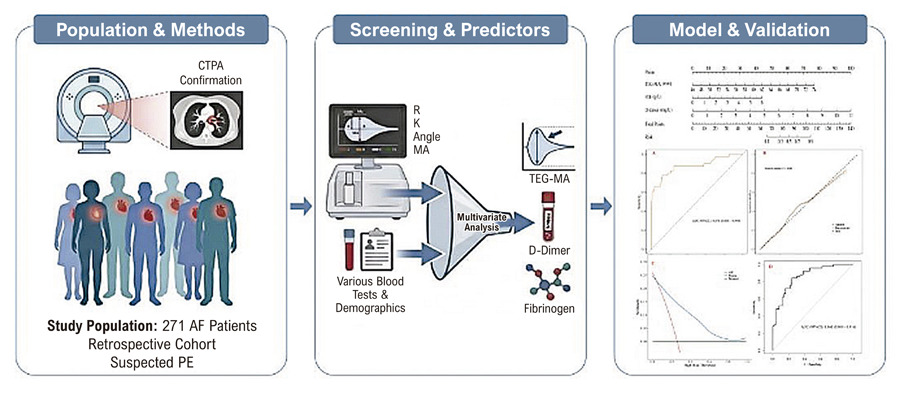
We conducted a retrospective study of 271 hospitalized AF patients who underwent CTPA for suspected PE (41 with PE, 230 without). The mean age was 76.5 years, 56.5% were male, and hypertension was the most common comorbidity (67.5%). PE diagnosis was confirmed by computed tomography pulmonary angiography. Baseline characteristics, TEG parameters (including reaction time, maximum amplitude [MA], and α-angle), and standard coagulation markers (D-dimer, fibrinogen) were analyzed. Statistical significance was defined as a two-sided P-value < 0.05. Multivariate logistic regression identified independent predictors, which were incorporated into a nomogram. Model performance was evaluated using receiver operating characteristic (ROC) analysis, calibration curves, and decision curve analysis (DCA).

Results

The prevalence of PE was 15.1%. Patients with PE exhibited significantly higher TEG-MA, D-dimer, and fibrinogen levels compared to the non-PE group (all P<0.05). Multivariate analysis identified these three markers as independent predictors. The nomogram demonstrated excellent discrimination (AUC=0.878, 95% CI:0.806-0.949), with 87.8% sensitivity and 78.0% specificity at the optimal cutoff. The model showed good calibration (Hosmer-Lemeshow p=0.965) and significant clinical utility.

Conclusion

The TEG-based nomogram combining MA, D-dimer, and fibrinogen provides accurate, bedside-accessible PE risk stratification for AF patients. This tool may facilitate early identification of high-risk individuals and guide clinical decision-making regarding anticoagulation therapy. Further prospective studies are warranted to validate these findings.

  • Atrial Fibrillation
  • Pulmonary embolism
  • Thrombelastography
Read Full Article
Creative Commons Attribution (CC BY) Creative Commons license
28/08/2026 DOI: 10.36660/abc.20250683i Views 3
Figure 1
ABCIC
Image

Beyond the Appendage: Left Atrial Wall Thrombosis in Rheumatic Mitral Stenosis

Bernardo Resende et al. Tomás Carlos Rogério Teixeira Lino Gonçalves

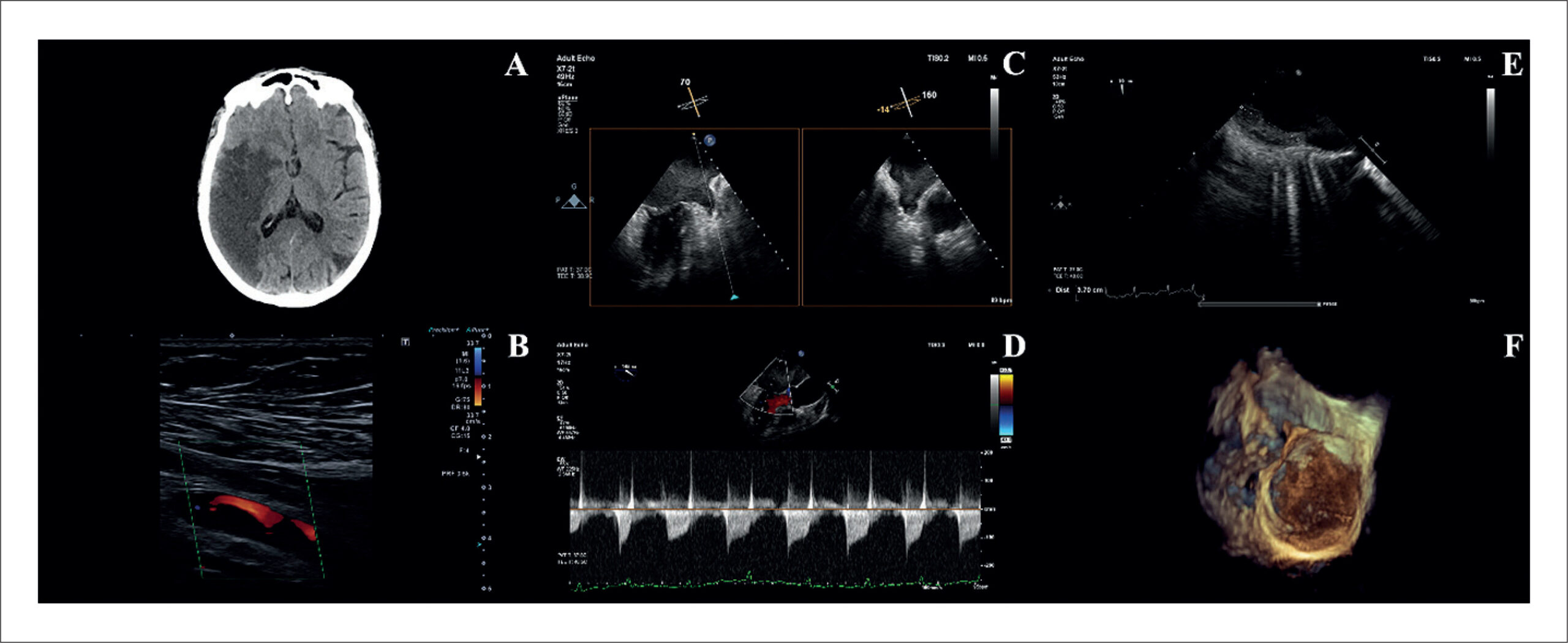
A 61-year-old woman with a history of rheumatic valvular heart disease and permanent atrial fibrillation (AF), chronically anticoagulated with rivaroxaban, presented with acute ischemic stroke and bilateral upper-limb ischemia. Neuroimaging revealed an acute infarction in the right middle cerebral artery territory and a subacute infarction in the left posterior cerebral artery territory (). Doppler ultrasound confirmed arterial occlusion in both upper limbs ().

Transesophageal echocardiography demonstrated marked left atrial (LA) enlargement, dense spontaneous echocardiographic contrast within the left atrial appendage (LAA), and reduced appendage flow velocities, without evidence of an organized thrombus (). The mitral valve exhibited features consistent with chronic rheumatic disease, with an estimated valve area of 1.0 cm² (). Notably, two- and three-dimensional imaging identified a large mural thrombus adherent to the LA wall, extending along the lateral and posterior walls and measuring approximately 4 × 0.8 cm (; Supplementary Videos 1-3).

[…]

  • Atrial Fibrillation
  • Echocardiography
  • Mitral Valve Stenosis
Read Full Article
Creative Commons Attribution (CC BY) Creative Commons license
14/08/2026 DOI: 10.36660/abcimg.20260069i Views 3
Figure 1
ABC
Letter to the Editor

Non-dihydropyridine Calcium Channel Blockers in Atrial Fibrillation with Mildly Reduced Ejection Fraction: Caution is Still Advised

Jefferson Luis Vieira et al. Carlos Eduardo Lucena Montenegro

Conclusion

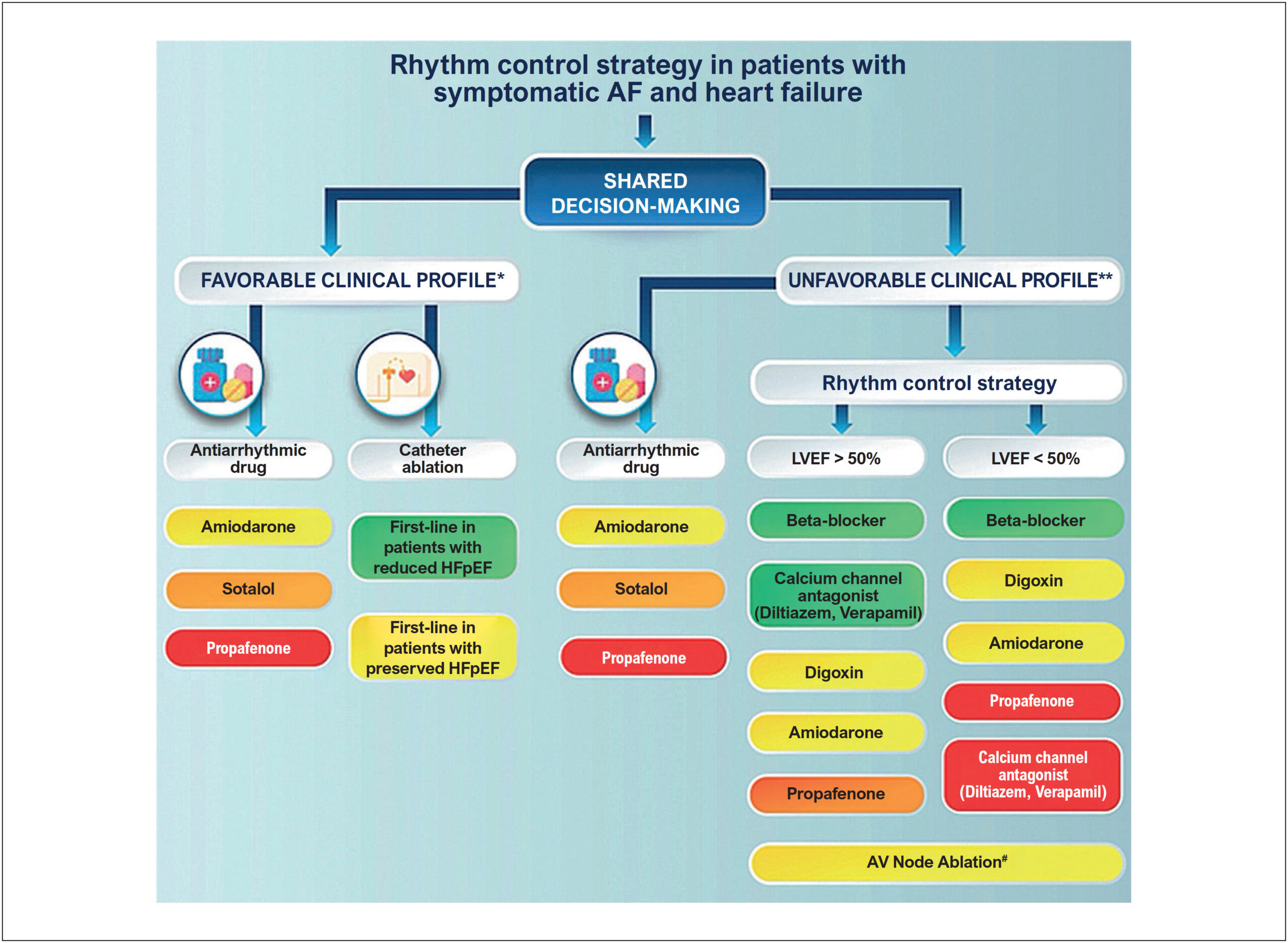
Given the lack of robust safety and benefit data for NDHP-CCBs in patients with HFmrEF and the existence of prognostically aligned alternatives, the current recommendation may be interpreted permissively and lead to potentially detrimental practices. Furthermore, the Second Universal Definition of Heart Failure provides additional conceptual support for this proposal by recognizing that patients with mildly reduced EF constitute a distinct biological phenotype and by discouraging therapeutic reasoning based solely on arbitrary LVEF thresholds. We advocate that the guideline explicitly reinforce the non-recommendation of verapamil/diltiazem when LVEF <50%, until specific studies in HFmrEF validate their safety and prognostic neutrality.

[…]

  • Atrial Fibrillation
  • calcium channel blockers
  • Heart Failure
Read Full Article
Creative Commons Attribution (CC BY) Creative Commons license
10/08/2026 DOI: 10.36660/abc.20260195i Views 1
Figure 1
ABC
Editorial

The Fascination of the Wolff-Parkinson-White Syndrome

Pedro Brugada

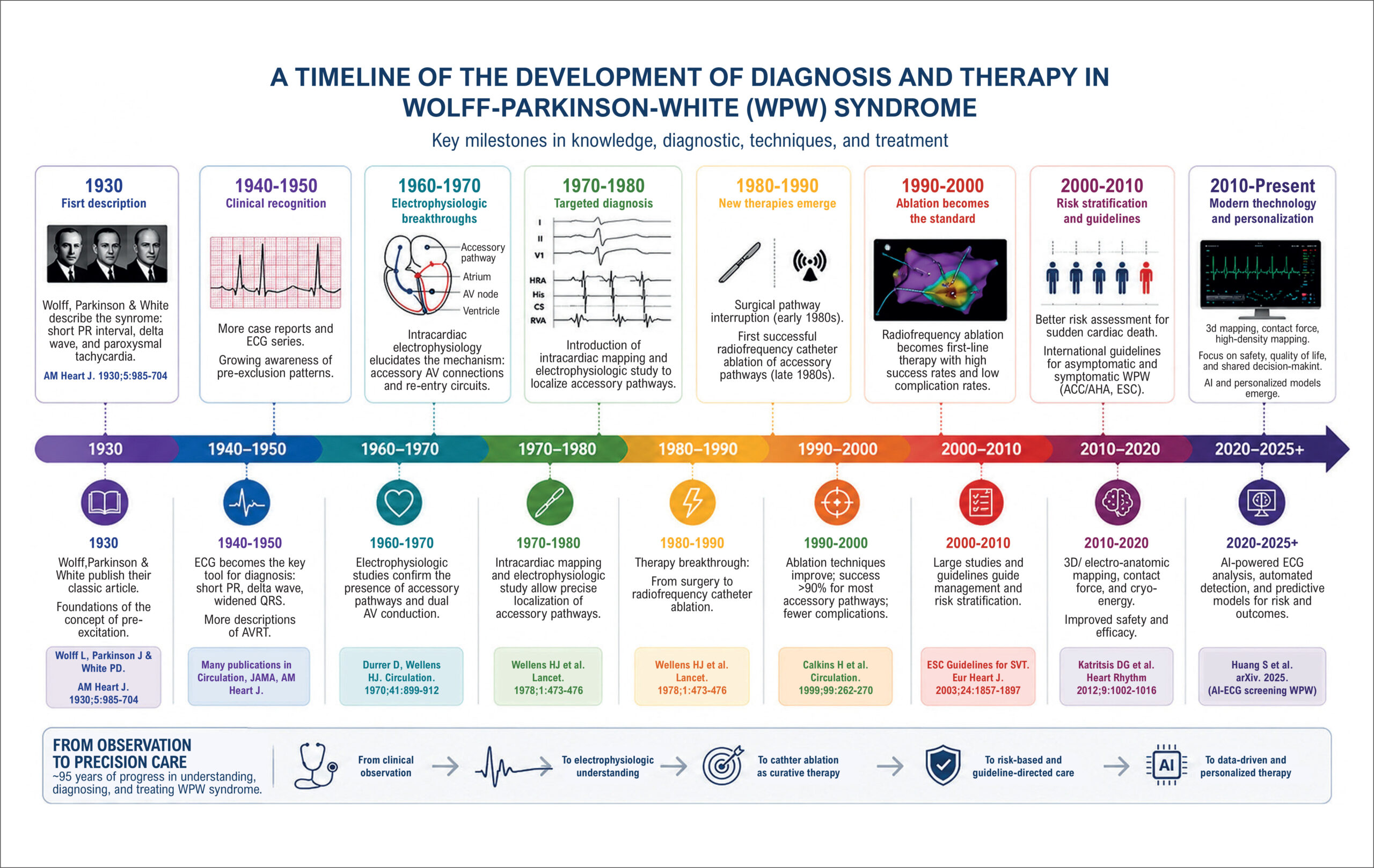
Almost a century after its initial description, the yearly number of publications dealing with the Wolff-Parkinson-White syndrome (WPW) continues to increase (). A fascinating phenomenon if one considers that already for quite a few years, we have at our disposal techniques to ablate and cure the disease. One could expect an attitude like “problem solved” thanks to ablation, and that interest in the disease would markedly decrease. illustrates the progress made since 1930. Each new publication still brings important information, and so is today with the study by Souza Mario and coworkers.

In a large cohort of patients with an accessory atrio-ventricular pathway, the authors found that older age and a left lateral location of the accessory pathway were associated with a significant occurrence of spontaneous atrial fibrillation, reaching 18.6% in the age group older than 60 years, thus almost one in five patients. Regretfully, data on the presence of overt (manifest) versus concealed accessory pathways were not available.

[…]

  • Arrhythmias
  • Atrial Fibrillation
  • Wolff-Parkinson White Syndrome
Read Full Article
Creative Commons Attribution (CC BY) Creative Commons license
03/08/2026 DOI: 10.36660/abc.20260471i Views 1
Impact of Catheter Ablation on LVEF in Patients with Atrial Fibrillation and Heart Failure with Reduced Ejection Fraction: A Systematic Review
ABC
Review Article

Impact of Catheter Ablation on LVEF in Patients with Atrial Fibrillation and Heart Failure with Reduced Ejection Fraction: A Systematic Review

Antonio Maria Zacarias Araújo Monteiro et al. Maria Giovanna da Cruz Tocantins Jéssica Batista Souza Renan de Jesus da Silva Albuquerque … João Vitor Ferreira de Oliveira Roni Oliveira Pinheiro Ster Marques de Lima Silva

Abstract

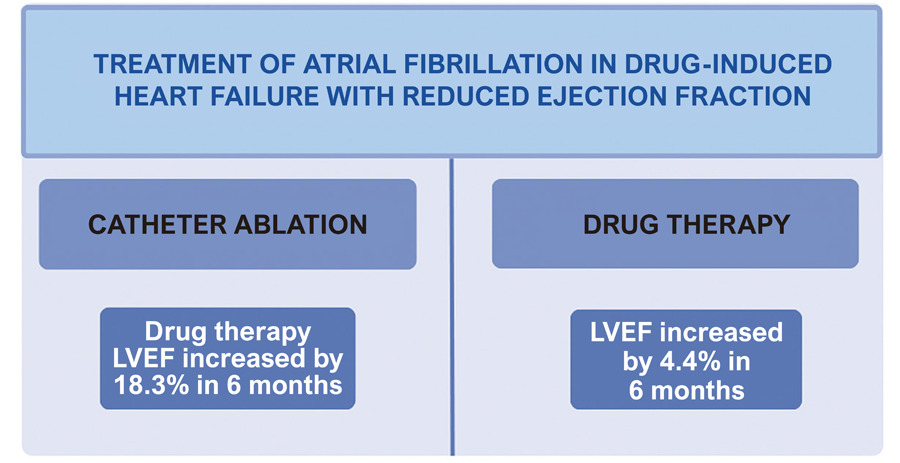
Atrial fibrillation (AF) is a condition that frequently affects patients with heart failure with reduced ejection fraction (HFrEF) and is associated with worsening left ventricular ejection fraction (LVEF) and unfavorable clinical outcomes. Catheter ablation has been proposed as a strategy to restore sinus rhythm; however, its effects on LVEF remain heterogeneous in the literature. To evaluate the impact of catheter ablation, compared with medical therapy, on LVEF in patients with AF and HFrEF. A systematic review of randomized clinical trials was conducted in accordance with the PRISMA guidelines. The primary outcome was improvement in LVEF, while secondary outcomes included cardiovascular mortality, all-cause mortality, and hospitalizations due to heart failure. Other exploratory outcomes were also considered. The included randomized clinical trials demonstrated improvement in LVEF among patients undergoing catheter ablation compared with those receiving medical therapy. In the CAMERA-MRI study, an absolute increase of 18.3% in LVEF was observed after six months. In the CASTLE-AF trial, catheter ablation was also associated with a lower incidence of cardiovascular mortality and heart failure hospitalizations. In the absence of a meta-analysis, no quantitative synthesis of the effects was performed. The available evidence from individual randomized trials suggests that catheter ablation may be associated with improvement in LVEF and more favorable clinical outcomes in patients with AF and HFrEF. However, given the lack of quantitative synthesis, these findings should be interpreted with caution.

  • Atrial Fibrillation
  • Catheter Ablation
  • Drug Therapy
  • Heart Failure
Read Full Article
Creative Commons Attribution (CC BY) Creative Commons license
24/07/2026 DOI: 10.36660/abc.20260117i Views 1
ABC
Editorial

The Electrocardiogram as a Window into Atrial Pathology: Insights from a Large Brazilian Cohort on Atrial Cardiomyopathy and Stroke

M. Julia Machline-Carrion

Stroke remains one of the foremost causes of death and disability globally, with ischemic events accounting for approximately 87% of cases. Despite exhaustive etiological investigation, up to 25% of ischemic strokes remain unexplained — the so-called cryptogenic stroke — a designation that carries significant implications for secondary prevention, given an average recurrence rate of 3–6% per year., Atrial fibrillation (AF) has long been the dominant cardioembolic risk factor in this setting; however, mounting evidence suggests that structural and functional atrial abnormalities — collectively encompassed by the concept of atrial cardiomyopathy (AC) — may drive thromboembolic events through an independent pathway, even in the absence of overt arrhythmia. The 2024 updated consensus statement from EHRA, HRS, APHRS, and LAHRS consolidates a staging system for AC integrating biomarkers, atrial geometry, and electrophysiological parameters, firmly establishing AC as a pathological entity distinct from — though intimately associated with — AF. In this context, the 12-lead electrocardiogram (ECG) — simple, inexpensive, and universally available — offers a practical approach to AC detection through two established markers: prolonged P-wave duration (>120 ms) and elevated P-wave terminal force in lead V1 (PTFV1 >4,000 μV·ms). Prior studies from the Cardiovascular Health Study (CHS), the Multi-Ethnic Study of Atherosclerosis (MESA), and the Atherosclerosis Risk in Communities (ARIC) cohort demonstrated that these markers independently predict ischemic stroke;– yet their relevance in Latin American populations, with a distinct cardiovascular and sociodemographic profile, had remained an important evidence gap.

In this issue of Arquivos Brasileiros de Cardiologia, the study by Lêu et al. addresses this gap with notable rigour. Drawing upon the CODE-BH dataset — a subset of the Clinical Outcomes in Digital Electrocardiography (CODE) cohort, one of the world’s largest annotated digital ECG databases — the authors assembled a retrospective cohort of 245,588 patients aged ≥40 years in sinus rhythm, who underwent ECGs in Belo Horizonte between 2006 and 2018. Electrocardiographic data were probabilistically linked to the Brazilian Unified Health System (SUS) databases — the Mortality Information System (SIM) and the Hospital Information System (SIH) — enabling ascertainment of stroke-related deaths and hospitalizations, cardiovascular mortality, incident AF, and acute coronary syndrome over a mean follow-up of 3.5 years. After incremental adjustment for age, sex, cardiovascular risk factors, and left ventricular hypertrophy, both prolonged P-wave duration (HR 1.24; 95% CI 1.12–1.36) and elevated PTFV1 (HR 1.20; 95% CI 1.05–1.38) were independently associated with the composite endpoint of stroke-related death or hospitalization. Prolonged P-wave duration was further associated with cardiovascular mortality and incident AF, whilst elevated PTFV1 was linked to all-cause and cardiovascular mortality.

[…]

  • Atrial Fibrillation
  • Data Insights
  • Population Health
  • Stroke Prevention
Read Full Article
Creative Commons Attribution (CC BY) Creative Commons license
20/07/2026 DOI: 10.36660/abc.20260270i Views 3
Clinical Outcomes Following PM Implantation: A 3-Year Comparative Study of Sick Sinus Syndrome and Atrioventricular Block
ABC
Original Article

Clinical Outcomes Following PM Implantation: A 3-Year Comparative Study of Sick Sinus Syndrome and Atrioventricular Block

Fuat Polat et al. Haşim Tüner Veysi Can Sait Terzi

Abstract

Background

Permanent pacemaker implantation is an established treatment for both sick sinus syndrome (SSS) and atrioventricular block (AVB), yet limited data exist comparing long-term clinical outcomes and cardiac remodeling patterns between these distinct bradyarrhythmic etiologies.

Objectives

To compare three-year clinical outcomes and cardiac structural changes between SSS and AVB patients following permanent pacemaker implantation.

Methods

This retrospective observational study enrolled 192 adult patients (65 SSS, 127 AVB) who underwent pacemaker implantation between January 2018 and December 2020. Demographic data, echocardiographic parameters, pacemaker-recorded data, and clinical outcomes were assessed at baseline, one month, six months, one year, and three years. Primary outcomes included changes in cardiac structure and function, symptomatic improvement, new-onset atrial fibrillation, rehospitalization, and all-cause mortality.

Results

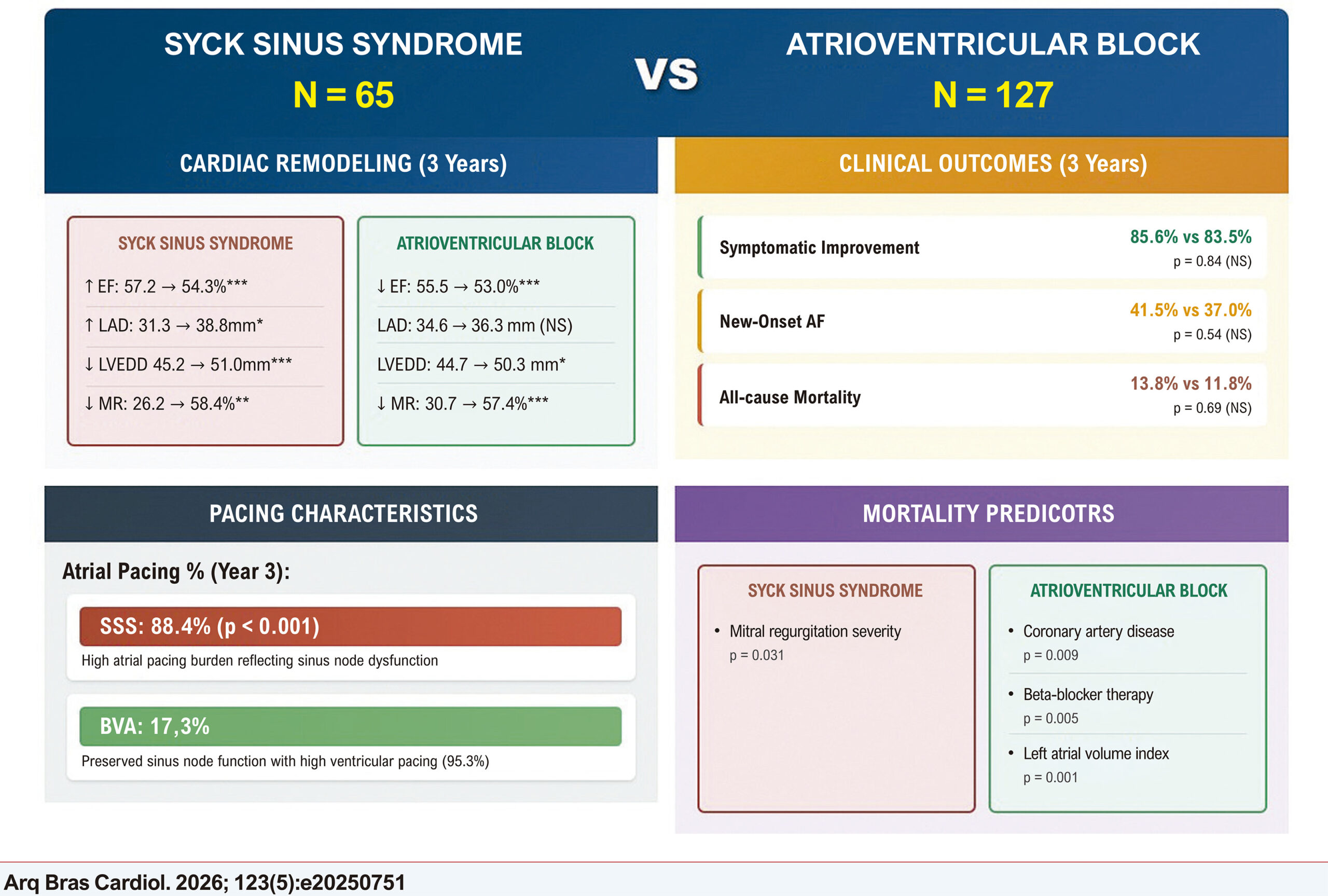
Both groups demonstrated significant declines in left ventricular ejection fraction over three years (SSS: 57.2±6.0% to 54.3±8.3%, p<0.001; AVB: 55.5±7.0% to 53.0±6.8%, p<0.001). Despite similar ventricular dysfunction progression, distinct remodeling patterns emerged: SSS patients exhibited significant increases in left atrial diameter (31.3 to 38.8 mm, p=0.040), left ventricular end-diastolic diameter (45.2 to 51.0 mm, p90%). Symptomatic improvement was comparable (SSS: 85.6% vs. AVB: 83.5%, p=0.84), as were new-onset atrial fibrillation (41.5% vs. 37.0%, p=0.54), rehospitalization (50.8% vs. 58.3%, p=0.38), and all-cause mortality (13.8% vs. 11.8%, p=0.69). Mortality predictors differed: mitral regurgitation severity in SSS versus coronary artery disease, beta-blocker therapy, and left atrial volume in AVB patients.

Conclusions

Despite similar symptomatic benefits and clinical outcomes, SSS and AVB patients demonstrate distinct cardiac remodeling patterns and different mortality predictors, supporting the need for etiology-specific follow-up strategies in pacemaker recipients.

  • Artificial Pacemaker
  • Atrial Fibrillation
  • Atrioventricular block
  • Sick Sinus Syndrome
Read Full Article
Creative Commons Attribution (CC BY) Creative Commons license
17/07/2026 DOI: 10.36660/abc.20250751i Views 2
Association Between Atrial Fibrillation Occurrence and Wolff-Parkinson-White Syndrome: Is Prediction Possible?
ABC
Original Article

Association Between Atrial Fibrillation Occurrence and Wolff-Parkinson-White Syndrome: Is Prediction Possible?

Afonso Dalmazio Souza Mario et al. Eduardo Pelegrineti Targueta Francisco Carlos da Costa Darrieux Alexandra Regia Dantas Brigido … Alberto Pereira Ferraz Muhieddine Omar Chokr Cristiano F. Pisani Mauricio Ibrahim Scanavacca

Abstract

Background:

Patients with Wolff-Parkinson-White (WPW) syndrome frequently develop atrial fibrillation (AF); however, the factors associated with the occurrence of AF remain incompletely defined.

Objectives:

To evaluate the prevalence and associated factors of clinical AF and electrophysiological study (EPS)-induced AF in a large consecutive cohort of patients with WPW undergoing accessory pathway (AP) ablation.

Methods:

This retrospective analysis included 845 consecutive patients with WPW who underwent AP ablation at a single tertiary referral center. A standardized EPS protocol was applied throughout the study period. Study outcomes included clinical AF (documented by medical history or monitoring before EPS), EPS-induced AF, and any AF (composite outcome). Multivariable logistic regression models were used to estimate adjusted odds ratio (ORa) with 95% CIs. Statistical significance was set at p < 0.05.

Results:

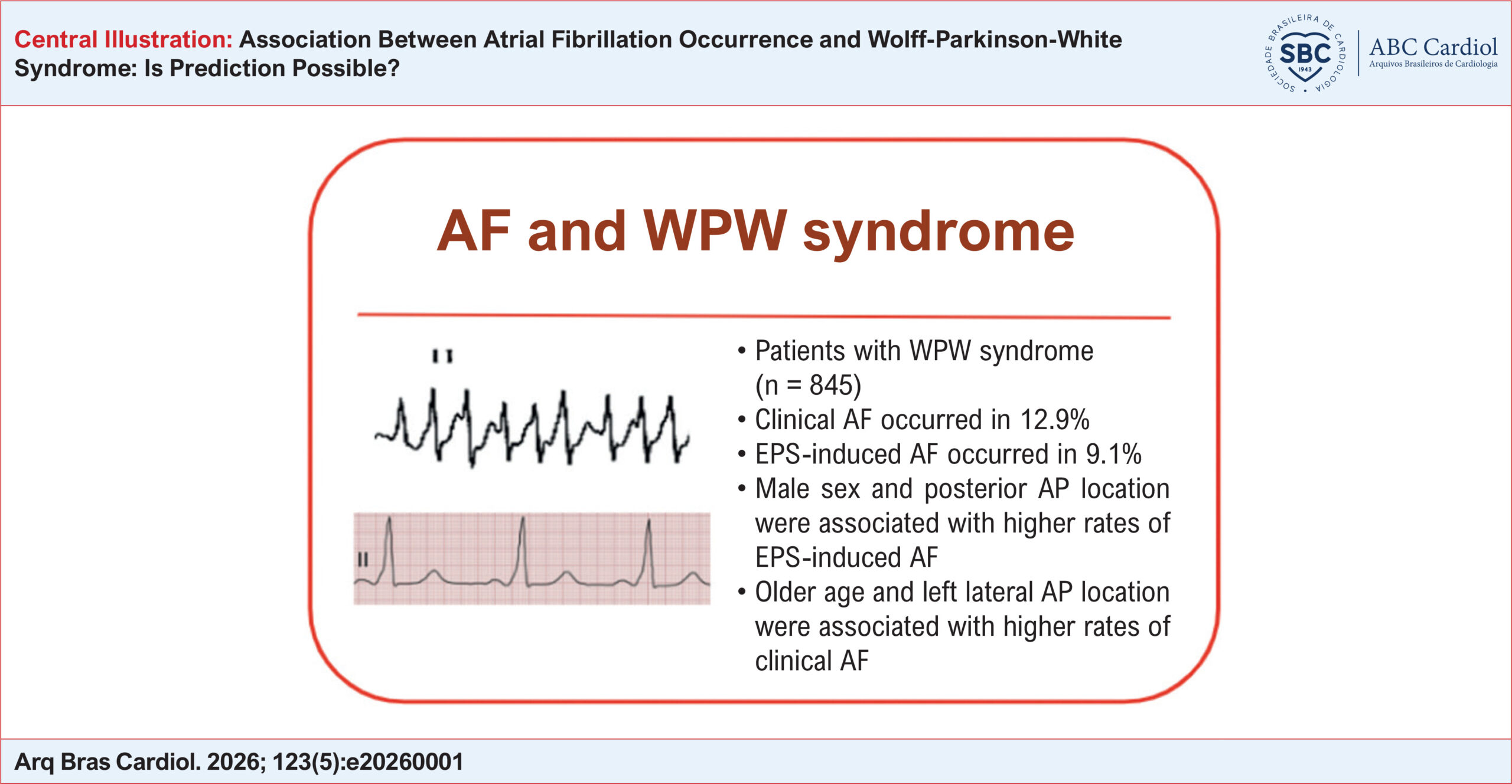
Mean age was 33.2 ± 15.9 years, and 486 of 845 patients (57.5%) were male. Multiple APs were identified in 31 patients (3.7%). The most common AP locations were left lateral (327/845, 38.7%) and posterior (323/845, 38.2%). Clinical AF was present in 109 patients (12.9%), EPS-induced AF in 77 (9.1%), and any AF in 168 (19.9%). In multivariable analyses, a left lateral AP was independently associated with clinical AF (ORa, 2.31; 95% CI, 1.53-3.49; p < 0.001), whereas a posterior AP was associated with EPS-induced AF (ORa, 1.78; 95% CI, 1.07-2.91; p = 0.025). Female sex was associated with lower odds of EPS-induced AF (ORa, 0.56; 95% CI, 0.34-0.93; p = 0.025). Increasing age was independently associated with clinical AF (per-year ORa, 1.018; p = 0.007) and any AF (per-year ORa, 1.014; p = 0.009).

Conclusion:

In this large cohort of patients with WPW undergoing AP ablation, left lateral AP location and older age were independently associated with a higher prevalence of clinical AF. In contrast, posterior AP location and male sex were associated with a greater likelihood of EPS-induced AF.

  • Atrial Fibrillation
  • Cardiac Arrhythmias
  • electrophysiology
  • Wolff-Parkinson White Syndrome
Read Full Article
Creative Commons Attribution (CC BY) Creative Commons license
17/07/2026 DOI: 10.36660/abc.20260001i Views 1
ABC
Letter to the Editor

Pulsed Field Ablation in Brazil: What the Registry Tells Us, and What It Does Not

Fatih Aydin

The article Brazilian Registry of Pulsed Field Catheter Ablation for the Treatment of Patients with Atrial Fibrillation, recently published in this journal by May et al., is a timely and genuinely important contribution. Documenting the initial 394 pulsed field ablation (PFA) procedures across 60 centers and 60 operators is no small task, and the authors deserve credit for organizing a voluntary, multicenter effort this early in the technology’s domestic adoption. The absence of major complications and the demonstration of a steep, short learning curve are reassuring findings for centers still considering whether to adopt PFA.

That said, a few aspects of the registry warrant further discussion.

[…]

  • Atrial Fibrillation
  • Brazil
Read Full Article
Creative Commons Attribution (CC BY) Creative Commons license
22/06/2026 DOI: 10.36660/abc.20260176i Views 2
ABCIC
Editorial

Functional Mitral Regurgitation of Atrial Origin: Search for Diagnostic Criteria

Minna Moreira Dias Romano

Identifying the various mechanisms of Mitral Regurgitation (MR) is essential for understanding the disease, prognosis, and planning structural therapeutic approaches. Recently, several studies on valvular heart disease have recognized functional MR. This condition is associated with the impact of cardiac geometry on mitral valve function, rather than primary valvular injury such as rheumatic, degenerative, infectious (endocarditis), or congenital diseases.

Furthermore, within the group of patients with functional MR, a subgroup has been identified that does not present Left Ventricular (LV) dilation or dysfunction. In this subgroup, the likely mechanism of MR is chronic enlargement of the Left Atrium (LA) and the mitral annulus, commonly associated with atrial fibrillation. Preliminary studies suggest associated left atrial dysfunction, which can be measured through tissue mechanics analysis. These factors likely contribute to the reduction of the coaptation surface of the mitral leaflet edges.

[…]

  • Atrial Fibrillation
  • Echocardiography
  • Mitral Valve Insufficiency
Read Full Article
Creative Commons Attribution (CC BY) Creative Commons license
10/04/2026 DOI: 10.36660/abcimg.20260008i Views 2
ABC
Editorial

Pulsed Field Ablation for Atrial Fibrillation: Early Experience in Brazil

Gabriela Miana de Mattos Paixão et al. Isadora Cristine Reis Sguizzato Bozzi

Atrial fibrillation (AF) is the most common sustained cardiac arrhythmia in clinical practice and represents a significant public health burden because it is independently associated with impaired quality of life, increased risk of stroke, and all-cause mortality(1). The incidence and prevalence of AF are growing worldwide, driven mainly by population aging and the rising prevalence of cardiovascular comorbidities. Together, these findings explain the economic impact of AF and its role as a growing healthcare challenge.

Catheter ablation is a well-established rhythm-control strategy for AF, with pulmonary vein isolation as its central component, since pulmonary vein–related triggers were recognized. Over more than two decades, advances in electroanatomic mapping, catheter technology, and energy delivery have improved the safety and long-term outcomes of radiofrequency and cryoballoon ablation. Despite these advances, single-procedure success remains limited, and complications related to collateral thermal injury can occur. Pulsed field ablation (PFA) has recently emerged as a novel, nonthermal ablation modality based on electroporation, induced by rapid electrical pulses that selectively ablate myocardial tissue while minimizing injury to adjacent structures such as the esophagus and phrenic nerve. Early clinical studies and real-world registries have demonstrated a favorable safety profile and efficacy comparable to thermal ablation.– However, optimizing protocols and obtaining robust long-term outcome data remain necessary, especially in low- and middle-income countries such as Brazil.

[…]

  • Atrial Fibrillation
  • Cardiac Arrhythmias
  • Irreversible Electroporation Therapy
Read Full Article
Creative Commons Attribution (CC BY) Creative Commons license
16/03/2026 DOI: 10.36660/abc.20250893i Views 1
Long-Term Clinical Outcomes of Catheter Ablation in Hypertrophic Cardiomyopathy and Atrial Fibrillation: A Systematic Review and Meta-Analysis
IJCS
Original Article

Long-Term Clinical Outcomes of Catheter Ablation in Hypertrophic Cardiomyopathy and Atrial Fibrillation: A Systematic Review and Meta-Analysis

Acácio Fernandes Cardoso et al. Fernanda Cristina Poscai Ribeiro Luiz Claudio Behrmann Martins Glaucylara Reis Geovanini … Cynthia Aparecida da Silva Rocha Nemer Luiz Pichara Áleff Mascarenhas da Silva

Abstract

Background:

Patients with hypertrophic cardiomyopathy (HCM) are at increased risk of atrial fibrillation (AF). However, the benefits of catheter ablation (CA) for reducing adverse clinical outcomes in this population are not well established.

Objective:

To assess the long-term impact of CA on clinical outcomes in patients with HCM and AF through a systematic review and meta-analysis.

Methods:

Controlled studies of patients with HCM and AF undergoing CA were identified through PubMed/MEDLINE, Embase, LILACS, and Cochrane. Meta-analysis employed a random-effects model in R Studio, version 4.3.2, with p < 0.05 considered significant.

Results:

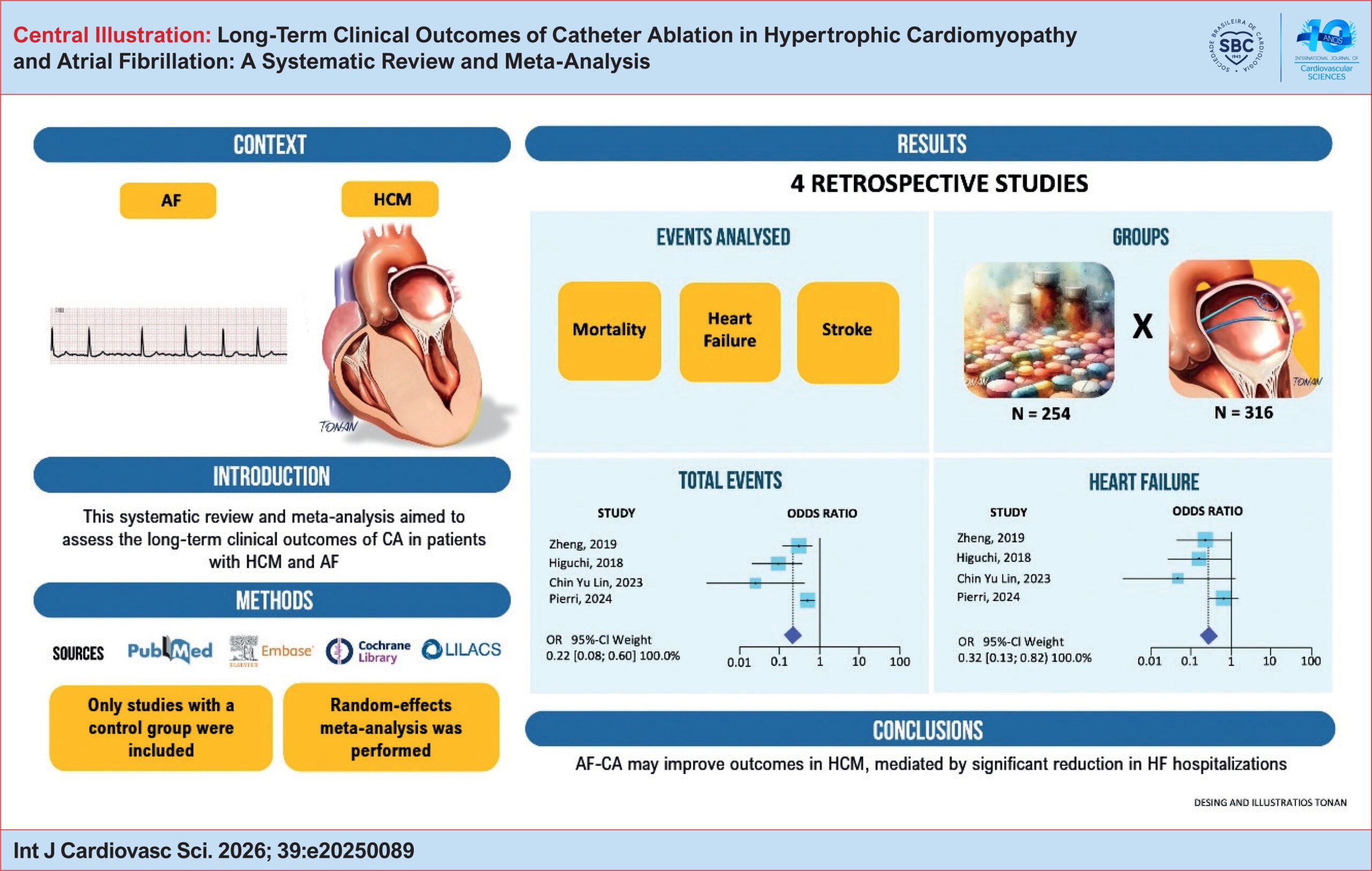
Four retrospective cohort studies met inclusion criteria, all with long follow-up period (5.52 ± 0.91 years). Arrhythmia-free survival after multiple CA ranged from 36.3% to 82%. Combined event analysis (mortality, stroke, and heart failure) yielded odds ratio 0.22 (95% confidence interval 0.08 to 0.60; p < 0.05; I² = 64%). In individual analysis, only heart failure hospitalizations were significantly lower in the CA group (odds ratio 0.32; 95% confidence interval 0.13 to 0.82; p = 0.01).

Conclusions:

This study suggests that CA may improve clinical outcomes in patients with HCM and AF, particularly by improving heart failure hospitalizations. Studies with greater methodological rigor are needed to prove this hypothesis, since only four studies were included in this systematic review.

  • Atrial Fibrillation
  • Catheter Ablation
  • Heart Failure
  • Hypertrophic Cardiomyopathy
Read Full Article
Creative Commons Attribution (CC BY) Creative Commons license
02/03/2026 DOI: 10.36660/ijcs.20250089 Views 6
ABC
Original Article

Brazilian Registry of Pulsed Field Catheter Ablation for the Treatment of Patients with Atrial Fibrillation

Bruna Miers May et al. Nilson Araujo Junior Silvia Helena Cardoso Boghossian Jacob Atie … Washington A. Maciel Carina Abigail Hardy Alexander Romeno Janner Dal Forno Eduardo B. Saad Claudio Munhoz Angelo Amato Vincenzo de Paola Mauricio Scanavacca Andre Zimerman José Tarcísio Medeiros de Vasconcelos André d’Avila

Abstract

Background:

Pulsed field ablation (PFA), a new catheter-based, non-thermal ablation technique, enhances the safety and efficacy of catheter ablation of atrial fibrillation (AF) compared to conventional thermal methods. While widely adopted in Europe and the United States, its application in Brazil is recent and remains undocumented.

Objective:

This study reports the initial multicenter Brazilian experience with the pulse field ablation to treat patients with AF, emphasizing its rapid adoption and short learning curve.

Methods:

A retrospective analysis of 394 consecutive procedures, performed by 60 operators across multiple Brazilian centers, was conducted. Data encompassed patient demographics, procedural metrics, imaging modalities, and ablation outcomes. A sub-analysis compared high-volume operators (n=139 procedures) with others (n=255). All statistical tests were two-tailed, with a p-value threshold of <0.05 for statistical significance.

Results:

Paroxysmal AF was predominant (62%), with pulmonary vein isolation (PVI) only as the primary lesion set in 54%. General anesthesia was near-universal (98%), and no major complications occurred. High-volume centers had significantly shorter procedure and ablation times (82 ± 27 vs. 131 ± 76 minutes; p<0.001 and 33 ± 14 vs. 50 ± 33 minutes; p<0.001, respectively), alongside fewer additional lesions after remapping (7% vs. 30%; p<0.001), suggesting a rapid learning curve.

Conclusion:

Pulsed field ablation demonstrates high acute efficacy, safety, and ease of adoption in Brazil, with a notably short learning curve, as evidenced by the efficiency of high-volume operators. Long-term outcome studies are warranted.

  • Atrial Fibrillation
  • Brazil
  • Catheter Ablation
Read Full Article
Creative Commons Attribution (CC BY) Creative Commons license
02/03/2026 DOI: 10.36660/abc.20250416i Views 1
Severe Esophageal Complications Following Atrial Fibrillation Ablation: Should We Still Be Concerned?
ABC
Review Article

Severe Esophageal Complications Following Atrial Fibrillation Ablation: Should We Still Be Concerned?

Anibal Pires Borges et al. Carlos Kalil Josep Brugada José Plutarco Gutiérrez Yanez … Pablo da Costa Soliz Marco Aurelio Lumertz Saffi Anderson Donelli da Silveira Maurício Pimentel

Abstract

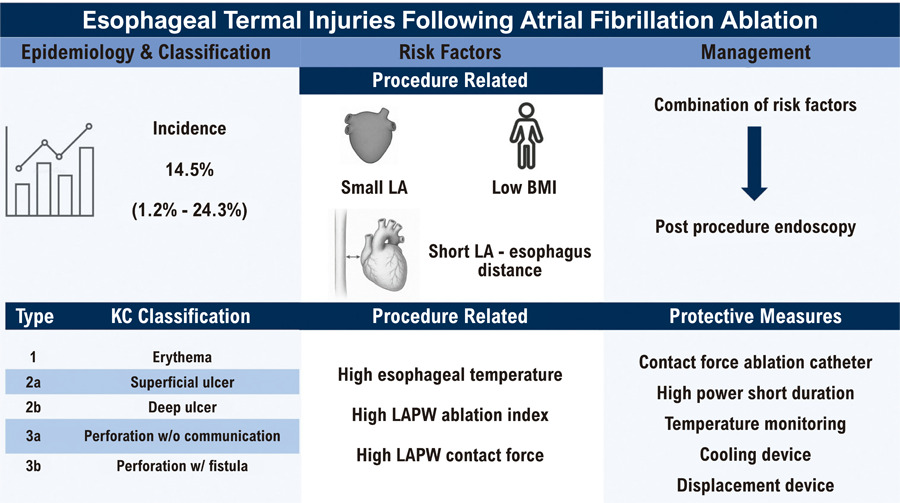
Atrial fibrillation (AF) ablation has been increasingly employed as an effective strategy for rhythm control, leading to a reduction in arrhythmia burden, improved quality of life, and, in selected cases, decreased mortality. However, as an invasive procedure, it carries inherent risks. Severe esophageal complications-such as esophageal perforation or atrioesophageal fistula- though rare (with an incidence ranging from 0.025% to 0.113%), are associated with significant morbidity and mortality. Multiple risk factors for esophageal injury have been identified, including both patient-related and procedure-related characteristics. To mitigate these risks during radiofrequency (RF) ablation, several preventive measures have been adopted, including the use of contact force catheters, high-power short-duration energy applications, and protective strategies such as esophageal temperature monitoring, displacement devices, and cooling techniques. Deep esophageal lesions detected through surveillance endoscopy are considered potential precursors to more serious complications and, therefore, warrant close attention. Enhanced monitoring of patients with such lesions may be crucial for enabling early diagnosis and timely intervention to prevent the progression to more severe complications. While pulsed field ablation therapy, which poses a lower risk to the esophagus and other surrounding structures, is not yet widely available, the implementation of robust monitoring strategies can significantly improve clinical outcomes and enhance patient safety in the context of RF AF ablation.

  • Atrial Fibrillation
  • esophageal fistula
  • postoperative complications
Read Full Article
Creative Commons Attribution (CC BY) Creative Commons license
16/01/2026 DOI: 10.36660/abc.20250290i
ABC
Editorial

Esophageal Temperature Monitoring during Atrial Fibrillation Ablation: Evolving Evidence and New Perspectives

Silvia Helena Cardoso Boghossian

Radiofrequency (RF) ablation of atrial fibrillation (AF) is a widely used therapeutic strategy, with increasing efficacy and technical sophistication. However, the procedure is not without risks, with atrioesophageal fistula being a rare but extremely serious complication. In this context, luminal esophageal temperature (LET) monitoring has emerged as an additional protective measure, although its effectiveness has been the subject of controversy in the literature.

The study “Esophageal Temperature Monitoring during Atrial Fibrillation Ablation: A Randomized Study” presents relevant and timely evidence regarding the clinical impact of LET, especially in comparing single-sensor versus multi-sensor probes during AF ablation. It is a methodologically robust, randomized study that significantly contributes to refining safety practices in this procedure.

[…]

  • Atrial Fibrillation
  • Esophagus
  • Radiofrequency Ablation
  • Temperature
Read Full Article
Creative Commons Attribution (CC BY) Creative Commons license
29/09/2025 DOI: 10.36660/abc.20250471i Views 1
ABC
Editorial

Atrial Fibrillation Ablation: Are We Still Looking for the Best Shot?

Lucas Simonetto Faganello et al. Mauricio Pimentel

Atrial fibrillation (AF) is independently associated with increased risks of mortality, stroke, heart failure, impaired quality of life, and cognitive decline. Rhythm control has proven superior to rate control in reducing cardiovascular outcomes, with catheter ablation demonstrating greater efficacy than antiarrhythmic drug therapy.– Continuous advances in techniques and technologies have progressively established ablation as a cornerstone in the management of AF.

In recent years, 3D mapping and point-by-point ablation have evolved significantly with the introduction of contact force-sensing catheters and the development of lesion quality metrics, such as the Ablation Index and Lesion Size Index. These improvements have translated into better outcomes, reduced procedure times, and enhanced safety.– Pulmonary vein isolation remains the cornerstone of invasive AF treatment, with radiofrequency (RF) point-by-point ablation still being the most widely used technique despite the emergence of alternative energy sources. Procedural success relies on delivering continuous, irreversible, and transmural lesions encircling the pulmonary veins while sparing adjacent structures, such as the esophagus and phrenic nerve.

[…]

  • Ablation
  • Atrial Fibrillation
Read Full Article
Creative Commons Attribution (CC BY) Creative Commons license
25/08/2025 DOI: 10.36660/abc.20250396i Views 1
ABC
Letter to the Editor

Predictors of Atrial Arrhythmia Recurrence after Catheter Ablation: Socioeconomic Impact in Low to Middle-Income Countries

Marwan Shawki et al. Thalys Sampaio Rodrigues Levindo Jose Garcia Quarto

To the Editor,

We read with great interest the article by Ternes et al., recently published in the Arquivos Brasileiros de Cardiologia, with its accompanying insightful editorial., This multicentre prospective cohort study of consecutive patients across three centres in Brazil provided valuable insights into the predictors of atrial arrhythmia recurrence following first-time catheter ablation. It highlighted its clinical setting in a middle-income country and reported outcomes similar to those in high-income countries. However, the results must be interpreted cautiously, and some points merit further discussion.

[…]

  • Atrial Fibrillation
  • Catheter Ablation
  • Socioeconomic Disparities in Health
Read Full Article
Creative Commons Attribution (CC BY) Creative Commons license
25/08/2025 DOI: 10.36660/abc.20250248i Views 1
Pulsed Field Ablation Versus Very High-Power Short-Duration Radiofrequency Ablation in Atrial Fibrillation: A Systematic Review and Meta-Analysis
ABC
Original Article

Pulsed Field Ablation Versus Very High-Power Short-Duration Radiofrequency Ablation in Atrial Fibrillation: A Systematic Review and Meta-Analysis

Asad Iqbal et al. Wellgner Fernandes Oliveira Amador Martin Cevallos-Cueva Maaz Ahmad … Juan Alejandro Pinilla Alarcón Radamés Vieira Diniz

Abstract

Background

Pulmonary vein isolation (PVI) is a cornerstone treatment for atrial fibrillation (AF). Pulsed-field ablation (PFA) and very high-power short-duration (vHPSD) radiofrequency (RF) ablation are emerging technologies, but their comparative efficacy and safety remain unclear.

Objectives

To assess the efficacy and safety of PFA compared to vHPSD RF ablation for AF.

Methods

A systematic search of PubMed, Embase, Web of Science, and Cochrane databases identified studies comparing PFA and vHPSD ablation. Outcomes included PVI success, skin-to-skin procedure time, fluoroscopy time, freedom from atrial arrhythmias, and complications such as cardiac tamponade, stroke, and vascular access events. Continuous outcomes were analyzed using mean differences (MD), while binary outcomes were assessed with risk ratios (RR) and 95% confidence intervals (CI). A significance threshold of p < 0.05 was considered for statistical analyses. This study is registered in PROSPERO (CRD42024619301).

Results

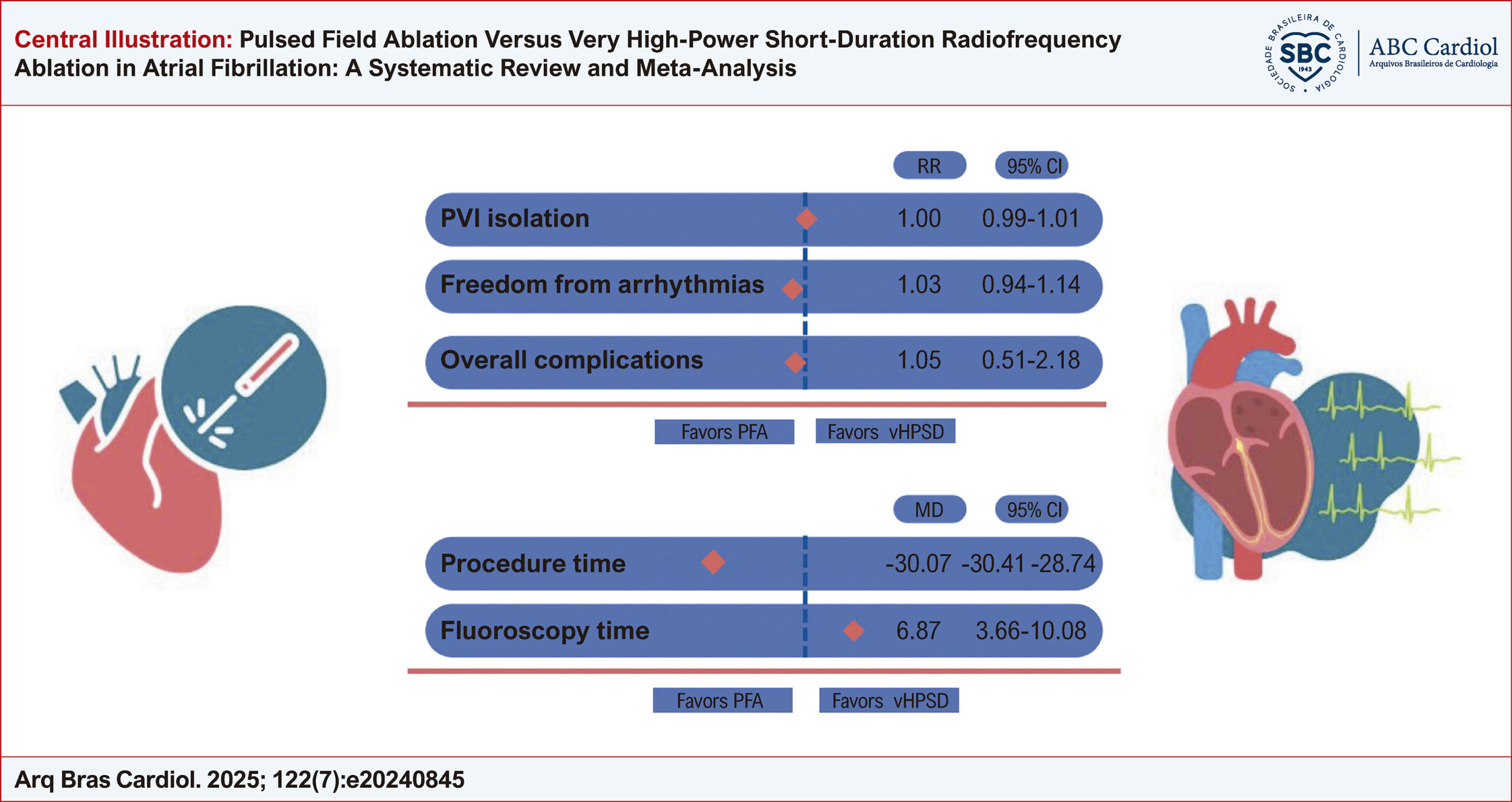
Four observational studies with 605 patients were included, of whom 315 (52%) underwent PFA. PFA and vHPSD achieved similar PVI success (RR 1.00; 95% CI 0.99–1.01; p = 1). PFA reduced procedure time (MD -30.07 min; 95% CI -31.41 to -28.74; p<0.01) but increased fluoroscopy time (MD 6.87 min; 95% CI 3.66–10.08; p<0.01). Freedom from atrial arrhythmias was comparable (RR 1.03; 95% CI 0.94–1.14; p=0.5). Complication rates, including cardiac tamponade, stroke, and vascular access issues, showed no significant differences between groups.

Conclusion

PFA significantly shortens procedure time but requires longer fluoroscopy compared to vHPSD. Both techniques exhibit comparable efficacy for PVI and arrhythmia freedom, with similar safety profiles.

  • Atrial Fibrillation
  • Catheter Ablation
  • Efficacy
  • Safety
Read Full Article
Creative Commons Attribution (CC BY) Creative Commons license
18/08/2025 DOI: 10.36660/abc.20240845i Views 3
ABC
Editorial

Exploring the Naples Prognostic Score: A Key to Predicting New-Onset Atrial Fibrillation in STEMI Cases

Paulo Magno Martins Dourado

In the ever-evolving landscape of cardiac care, the Naples Prognostic Score (NPS) has emerged as a promising tool for predicting the onset of atrial fibrillation (AF) in patients experiencing ST-segment elevation myocardial infarction (STEMI). This innovative scoring system offers insights into patient outcomes and empowers healthcare providers to make real-time, informed decisions. Understanding and utilizing this score can enhance patient management and improve survival rates. Let us explore how the NPS transforms the approach to STEMI and AF prediction.

AF following STEMI is a rising concern in the field of cardiovascular medicine. The post-MI landscape presents myriad challenges, with AF significantly amplifying the risk of adverse outcomes for patients. A recent study highlighting the NPS brings new hope in the quest to predict and manage complications effectively after myocardial infarction. Recognizing the potential for early detection of new-onset AF (NOAF) —a condition associated with increased morbidity and mortality—enhances the quality of care delivered to STEMI patients undergoing primary percutaneous coronary intervention.

[…]

  • Atrial Fibrillation
  • Prognosis
  • ST Elevation Myocardial Infarction
Read Full Article
Creative Commons Attribution (CC BY) Creative Commons license
04/08/2025 DOI: 10.36660/abc.20250518i Views 2
Esophageal Temperature Monitoring during Atrial Fibrillation Ablation: A Randomized Study
ABC
Original Article

Esophageal Temperature Monitoring during Atrial Fibrillation Ablation: A Randomized Study

Daniel Moreira Costa Moura et al. Renner Augusto Raposo Pereira Cristiano Faria Pisani Tan Chen Wu … Muhieddine Omar Chokr Carina Abigail Hardy Sissy Lara de Melo Francisco Carlos da Costa Darrieux Denise Tessariol Hachul Mauricio Ibrahim Scanavacca

Abstract

Background

Pulmonary vein isolation (PVI) for atrial fibrillation (AF) ablation carries a risk of esophageal thermal injury (ETI), which can lead to severe complications.

Objective

To evaluate three luminal esophageal temperature (LET) monitoring strategies and assess their effectiveness in reducing the incidence of ETI.

Methods

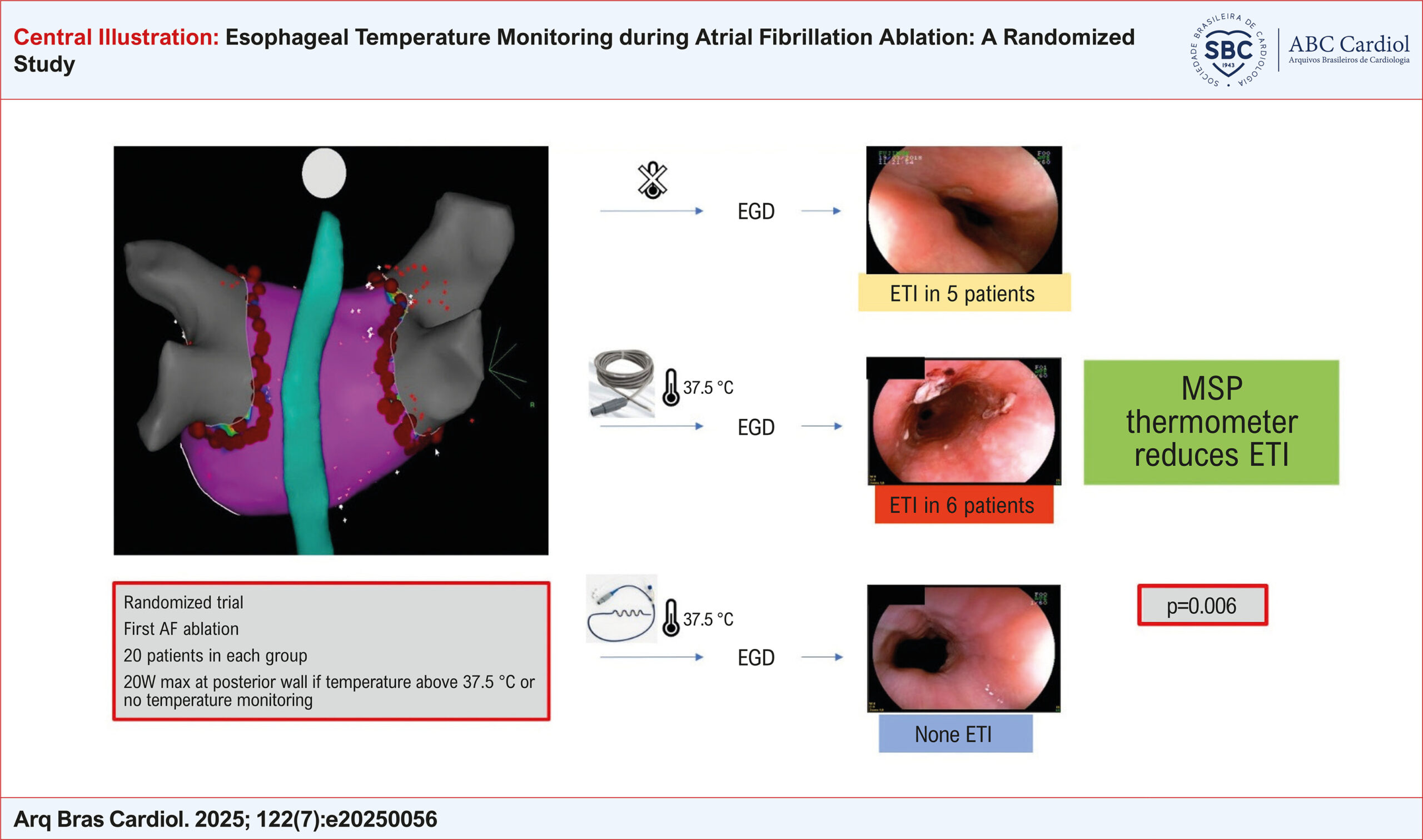
Patients with AF were randomized into three PVI groups according to the temperature monitoring strategy: no LET monitoring (Group 1), LET monitoring with a single-sensor probe (SSP) thermometer (Group 2), and LET monitoring with a multisensor probe (MSP) thermometer (Group 3). In Group 1, AF ablation was performed at a fixed power of 20 W on the left atrial posterior wall. In Groups 2 and 3, AF ablation power was titrated based on LET measurements, with a cutoff temperature of 37.5 °C. Each group included 20 patients. A two-sided p-value <0.05 was considered statistically significant. The trial was registered on ClinicalTrials.gov (#NCT03645070) and International Clinical Trials Registry Platform (#RBR-2yvgyf).

Results

All patients underwent PVI and esophagogastroduodenoscopy. No ETI was observed in patients monitored with an MSP thermometer. In contrast, five patients without LET monitoring and six patients monitored with an SSP thermometer developed ETI (p=0.006). Higher temperatures were recorded with an MSP thermometer (37.9 vs. 38.45 °C, p=0.018). There were no significant differences in PVI duration or total radiofrequency application time (p=0.250 and p=0.253, respectively).

Conclusions

LET monitoring with an MSP thermometer during PVI significantly reduces the incidence of ETI compared to no monitoring or SSP monitoring. Implementing advanced LET monitoring strategies may enhance patient safety without compromising procedural efficiency.

  • Atrial Fibrillation
  • Clinical Trial
  • esophageal fistula
  • Radiofrequency Ablation
Read Full Article
Creative Commons Attribution (CC BY) Creative Commons license
01/08/2025 DOI: 10.36660/abc.20250056i Views 1
ABC
Editorial

Challenges in Performing Real-World Evidence Studies in Low-Middle Income Countries: the EdoBRA Study

Ayrton Roberto Massaro

In 1991, Wolf et al. on the Framingham study demonstrated that atrial fibrillation (AF) constitutes an independent risk factor for ischemic stroke. Hart et al., in a meta-analysis, confirmed warfarin’s effectiveness in lowering stroke risk by 64% in AF patients. A slight increase in major extracranial hemorrhage was observed, which did not impact overall efficacy. Unpredictable pharmacokinetics, interactions, and INR monitoring needs have limited warfarin use. In low-middle income countries (LMICs) like Brazil, socio-economic disparities affected warfarin use in AF patients.

Direct oral anticoagulants (DOACs) were introduced to overcome the barriers associated with warfarin. All DOACs showed strong stroke prevention compared to warfarin. Edoxaban in the ENGAGE AF-TIMI 48 trial was non-inferior to warfarin in safety and superior in preventing hemorrhagic strokes. Latin American patients showed higher hemorrhage and mortality rates compared to other regions. In addition, considerations of cost, renal monitoring, DOACs in AF subpopulations, and reversal agents for hemorrhage highlight the importance of tailoring therapy based on patient-specific risks.

[…]

  • Atrial Fibrillation
  • Factor Xa Inhibitors
  • Stroke
Read Full Article
Creative Commons Attribution (CC BY) Creative Commons license
28/07/2025 DOI: 10.36660/abc.20250353i Views 3
ABC
Editorial

Moving from the "Check the Pulse" Era To "Check the ECG" in the Prevention of Thromboembolic Events in Atrial Fibrillation

Tan Chen Wu

Atrial fibrillation (AF) and chronic kidney disease (CKD) share common risk factors and often co-exist: 20% of patients with CKD have symptomatic AF, whereas around 50% of patients with AF will have some degree of renal impairment. Patients with both conditions have a five-fold increased risk of stroke, three-fold increased risk of congestive heart failure, higher cardiovascular morbidity, and all-cause mortality compared with patients who only have either AF or CKD. The incidence rates of AF in a large nationwide database from Taiwan were 5.0, 7.3, and 12.1 events per 1000 patient-years in the general population, the CKD cohort, and the end-stage kidney disease cohort, respectively. The risk of stroke or systemic embolismincreased by 7% for every 10 mL/min decline in eGFR. Early detection of AF may reduce the risk of stroke and other AF-related complications using oral anticoagulant therapy or left atrial appendage closure procedure..

In the first physician-based survey jointly conducted by European Heart Rhythm Association (EHRA) and European Renal Association (ERA)/European Dialysis and Transplantation Association (EDTA) in 2020 to gain insight into the management of AF in patients with CKD, when asked about screening for AF among CKD patient, overall, 132/295 respondents (44.7%) would routinely screen for the presence of AF in all CKD patients at their first presentation, 68/295 (23.1%) would screen for AF only in selected CKD patients, and 95/295 respondents (32.2%) would not screen for AF among CKD patients. Compared with ERA/EDTA respondents, EHRA respondents would more frequently screen for AF only in selected CKD patients (28.5% vs. 16.8%, p = 0.017 at their first presentation and 36.7% vs. 25.0%, p = 0.031 during follow-up). Therefore, there is a low utilization of screening for AF among CKD patients, most likely in patients with symptoms or a history of arrhythmia. More ERA/EDTA respondents would screen for AF among patients on dialysis or those with a functioning kidney transplant compared with EHRA respondents. The most common screening techniques were a single 12-lead electrocardiogram (ECG) recording (240/288 respondents, 83.3%) or ≥24-h Holter monitoring (181/288, 62.8%). The ERA/EDTA respondents still more frequently chose pulse palpation (67.4%), whereas the EHRA respondents more frequently opted for a cardiac rhythm monitoring strategy using a handheld device, telemetry, Holter monitoring, an implantable cardiac monitor, or cardiac implantable electronic device memory readings.

[…]

  • Atrial Fibrillation
  • chronic renal insufficiency
  • Dialysis
  • Equipment and Supplies
  • Triage
Read Full Article
Creative Commons Attribution (CC BY) Creative Commons license
20/06/2025 DOI: 10.36660/abc.20250193i Views 1
Figure 1
ABCIC
Review Article

My Approach to Intracardiac Echocardiography During Atrial Fibrillation Ablation

Simone Nascimento dos Santos et al. Benhur Davi Henz Maria Eduarda Leite da Silva Luiz Roberto Leite da Silva

Abstract

Atrial fibrillation (AF) is the most common arrhythmia encountered in clinical practice and is associated with serious complications such as stroke and heart failure. The prevalence of AF is increasing significantly due to population aging and related comorbidities. In addition, advances in technology — particularly the detection of AF through wearable devices such as smartwatches — have enabled earlier diagnosis. Intracardiac echocardiography (ICE) is a valuable imaging modality in electrophysiology and hemodynamic labs and is well-supported by the literature.– Since the early studies conducted at the Mayo Clinic,, ICE has rapidly become an indispensable tool for assessing cardiac anatomy. ICE enables real-time visualization of catheter positioning, tissue contact, its relationship to arrhythmogenic substrates and ablation targets, lesion formation, and procedural complications. Several recent studies have demonstrated the benefits of ICE in complex ablations, including reduced procedure times and complication rates, such as lower risks of cardiac tamponade and mortality, along with higher success rates (Central Illustration).– ICE-guided procedures are increasingly used in clinical practice across a variety of settings. They are considered feasible, safe, and associated with decreased fluoroscopy exposure — or even complete fluoroless procedures, as implemented by several groups in Brazil and worldwide.,– This article provides a step-by-step “My Approach to” guide on how to perform ICE during AF ablation.

  • Atrial Fibrillation
  • Catheter Ablation
  • Intracardiac Echocardiography
Read Full Article
Creative Commons Attribution (CC BY) Creative Commons license
17/06/2025 DOI: 10.36660/abcimg.20250021i Views 3

Could not load more articles. Please try again.

How to cite this article

EndNote RIS

Electronic Document Format (Vancouver)

Oliveira GMM, Brant LCC, Polanczyk CA, Malta DC, Biolo A, Nascimento BR, Souza MFM, et al. Cardiovascular Statistics – Brazil 2026. Arquivos Brasileiros de Cardiologia 2026;:e20260832.

Electronic Document Format (ABNT)

Oliveira, Gláucia Maria Moraes de; Brant, Luisa Campos Caldeira; Polanczyk, Carisi Anne; Malta, Deborah Carvalho; Biolo, Andreia; Nascimento, Bruno Ramos; Souza, Maria de Fatima Marinho de; Lorenzo, Andrea Rocha De; Fagundes Júnior, Antonio Aurélio de Paiva; Manfro, Arthur Gus; Schaan, Beatriz D.; Silva, Christina Grüne de Souza e; Castilho, Fábio Morato de; Cesena, Fernando Henpin Yue; Soares, Gabriel Porto; Xavier Junior, Gesner Francisco; Barreto Filho, Jose Augusto Soares; Pellanda, Lucia Campos; Aranha, Luciana Nicolau; Rohde, Luis Eduardo Paim; Passaglia, Luiz Guilherme; Pinto-Filho, Marcelo Martins; Machline-Carrion, M. Julia; Bittencourt, Marcio Sommer; Pontes Neto, Octavio M.; Villela, Paolo Blanco; Godoy, Paulo Henrique; Teixeira, Renato Azeredo; Stein, Ricardo; Sampaio, Roney Orismar; Salim, Thais Rocha; Gaziano, Thomas A.; Perel, Pablo; Roth, Gregory A.; Ribeiro, Antonio Luiz Pinho. Cardiovascular Statistics – Brazil 2026. Arquivos Brasileiros de Cardiologia, e20260832, Oct. 2026.

Electronic Document Format (APA)

Oliveira, G. M. M. , Brant, L. C. C., Polanczyk, C. A., Malta, D. C., Biolo, A., Nascimento, B. R., Souza, M. F. M. , Lorenzo, A. R. D., Fagundes Júnior, A. A. P., Manfro, A. G., Schaan, B. D., Silva, C. G. S. , Castilho, F. M. , Cesena, F. H. Y., Soares, G. P., Xavier Junior, G. F., Barreto Filho, J. A. S., Pellanda, L. C., Aranha, L. N., Rohde, L. E. P., Passaglia, L. G., Pinto-Filho, M. M., Machline-Carrion, M. J., Bittencourt, M. S., Pontes Neto, O. M., Villela, P. B., Godoy, P. H., Teixeira, R. A., Stein, R., Sampaio, R. O., Salim, T. R., Gaziano, T. A., Perel, P., Roth, G. A., & Ribeiro, A. L. P. (2026). Cardiovascular Statistics – Brazil 2026. Arquivos Brasileiros de Cardiologia, , e20260832.

Electronic Document Format (ISO)

Oliveira, Gláucia Maria Moraes de and Brant, Luisa Campos Caldeira and Polanczyk, Carisi Anne and Malta, Deborah Carvalho and Biolo, Andreia and Nascimento, Bruno Ramos and Souza, Maria de Fatima Marinho de and Lorenzo, Andrea Rocha De and Fagundes Júnior, Antonio Aurélio de Paiva and Manfro, Arthur Gus and Schaan, Beatriz D. and Silva, Christina Grüne de Souza e and Castilho, Fábio Morato de and Cesena, Fernando Henpin Yue and Soares, Gabriel Porto and Xavier Junior, Gesner Francisco and Barreto Filho, Jose Augusto Soares and Pellanda, Lucia Campos and Aranha, Luciana Nicolau and Rohde, Luis Eduardo Paim and Passaglia, Luiz Guilherme and Pinto-Filho, Marcelo Martins and Machline-Carrion, M. Julia and Bittencourt, Marcio Sommer and Pontes Neto, Octavio M. and Villela, Paolo Blanco and Godoy, Paulo Henrique and Teixeira, Renato Azeredo and Stein, Ricardo and Sampaio, Roney Orismar and Salim, Thais Rocha and Gaziano, Thomas A. and Perel, Pablo and Roth, Gregory A. and Ribeiro, Antonio Luiz Pinho. Cardiovascular Statistics – Brazil 2026. Arquivos Brasileiros de Cardiologia [online]. 2026, [cited 2026-10-14], e20260832. Available from: <https://journals.cardiol.br/en/article/cardiovascular-statistics-brazil-2026/>. ISSN 0066-782X

EndNote RIS

Electronic Document Format (Vancouver)

Huang X, Liu J. A Predictive Model for Pulmonary Embolism in Patients with Atrial Fibrillation Based on Thromboelastography and Coagulation Parameters. Arquivos Brasileiros de Cardiologia 2026;123(8):e20250683.

Electronic Document Format (ABNT)

Huang, Xingqi; Liu, Jianmei. A Predictive Model for Pulmonary Embolism in Patients with Atrial Fibrillation Based on Thromboelastography and Coagulation Parameters. Arquivos Brasileiros de Cardiologia, v. 123, n. 8, e20250683, Aug. 2026.

Electronic Document Format (APA)

Huang, X., & Liu, J. (2026). A Predictive Model for Pulmonary Embolism in Patients with Atrial Fibrillation Based on Thromboelastography and Coagulation Parameters. Arquivos Brasileiros de Cardiologia, 123(8), e20250683.

Electronic Document Format (ISO)

Huang, Xingqi and Liu, Jianmei. A Predictive Model for Pulmonary Embolism in Patients with Atrial Fibrillation Based on Thromboelastography and Coagulation Parameters. Arquivos Brasileiros de Cardiologia [online]. 2026, vol. 123, n. 8, [cited 2026-10-14], e20250683. Available from: <https://journals.cardiol.br/en/article/a-predictive-model-for-pulmonary-embolism-in-patients-with-atrial-fibrillation-based-on-thromboelastography-and-coagulation-parameters/>. ISSN 0066-782X

EndNote RIS

Electronic Document Format (Vancouver)

Resende B, Carlos T, Teixeira R, Gonçalves L. Beyond the Appendage: Left Atrial Wall Thrombosis in Rheumatic Mitral Stenosis. ABC Imagem Cardiovascular 2026;39(3):e20260069.

Electronic Document Format (ABNT)

Resende, Bernardo; Carlos, Tomás; Teixeira, Rogério; Gonçalves, Lino. Beyond the Appendage: Left Atrial Wall Thrombosis in Rheumatic Mitral Stenosis. ABC Imagem Cardiovascular, v. 39, n. 3, e20260069, Aug. 2026.

Electronic Document Format (APA)

Resende, B., Carlos, T., Teixeira, R., & Gonçalves, L. (2026). Beyond the Appendage: Left Atrial Wall Thrombosis in Rheumatic Mitral Stenosis. ABC Imagem Cardiovascular, 39(3), e20260069.

Electronic Document Format (ISO)

Resende, Bernardo and Carlos, Tomás and Teixeira, Rogério and Gonçalves, Lino. Beyond the Appendage: Left Atrial Wall Thrombosis in Rheumatic Mitral Stenosis. ABC Imagem Cardiovascular [online]. 2026, vol. 39, n. 3, [cited 2026-10-14], e20260069. Available from: <https://journals.cardiol.br/en/article/beyond-the-appendage-left-atrial-wall-thrombosis-in-rheumatic-mitral-stenosis/>. ISSN 2318-8219

EndNote RIS

Electronic Document Format (Vancouver)

Vieira JL, Montenegro CEL. Non-dihydropyridine Calcium Channel Blockers in Atrial Fibrillation with Mildly Reduced Ejection Fraction: Caution is Still Advised. Arquivos Brasileiros de Cardiologia 2026;123(6):e20260195.

Electronic Document Format (ABNT)

Vieira, Jefferson Luis; Montenegro, Carlos Eduardo Lucena. Non-dihydropyridine Calcium Channel Blockers in Atrial Fibrillation with Mildly Reduced Ejection Fraction: Caution is Still Advised. Arquivos Brasileiros de Cardiologia, v. 123, n. 6, e20260195, Aug. 2026.

Electronic Document Format (APA)

Vieira, J. L., & Montenegro, C. E. L. (2026). Non-dihydropyridine Calcium Channel Blockers in Atrial Fibrillation with Mildly Reduced Ejection Fraction: Caution is Still Advised. Arquivos Brasileiros de Cardiologia, 123(6), e20260195.

Electronic Document Format (ISO)

Vieira, Jefferson Luis and Montenegro, Carlos Eduardo Lucena. Non-dihydropyridine Calcium Channel Blockers in Atrial Fibrillation with Mildly Reduced Ejection Fraction: Caution is Still Advised. Arquivos Brasileiros de Cardiologia [online]. 2026, vol. 123, n. 6, [cited 2026-10-14], e20260195. Available from: <https://journals.cardiol.br/en/article/non-dihydropyridine-calcium-channel-blockers-in-atrial-fibrillation-with-mildly-reduced-ejection-fraction-caution-is-still-advised/>. ISSN 0066-782X

EndNote RIS

Electronic Document Format (Vancouver)

Brugada P. The Fascination of the Wolff-Parkinson-White Syndrome. Arquivos Brasileiros de Cardiologia 2026;123(5):e20260471.

Electronic Document Format (ABNT)

Brugada, Pedro. The Fascination of the Wolff-Parkinson-White Syndrome. Arquivos Brasileiros de Cardiologia, v. 123, n. 5, e20260471, Aug. 2026.

Electronic Document Format (APA)

Brugada, P. (2026). The Fascination of the Wolff-Parkinson-White Syndrome. Arquivos Brasileiros de Cardiologia, 123(5), e20260471.

Electronic Document Format (ISO)

Brugada, Pedro. The Fascination of the Wolff-Parkinson-White Syndrome. Arquivos Brasileiros de Cardiologia [online]. 2026, vol. 123, n. 5, [cited 2026-10-14], e20260471. Available from: <https://journals.cardiol.br/en/article/the-fascination-of-the-wolff-parkinson-white-syndrome/>. ISSN 0066-782X

EndNote RIS

Electronic Document Format (Vancouver)

Monteiro AMZA, Tocantins MGC, Souza JB, Albuquerque RJS, Oliveira JVF, Pinheiro RO, Silva SML, et al. Impact of Catheter Ablation on LVEF in Patients with Atrial Fibrillation and Heart Failure with Reduced Ejection Fraction: A Systematic Review. Arquivos Brasileiros de Cardiologia 2026;123(6):e20260117.

Electronic Document Format (ABNT)

Monteiro, Antonio Maria Zacarias Araújo; Tocantins, Maria Giovanna da Cruz; Souza, Jéssica Batista; Albuquerque, Renan de Jesus da Silva; Oliveira, João Vitor Ferreira de; Pinheiro, Roni Oliveira; Silva, Ster Marques de Lima. Impact of Catheter Ablation on LVEF in Patients with Atrial Fibrillation and Heart Failure with Reduced Ejection Fraction: A Systematic Review. Arquivos Brasileiros de Cardiologia, v. 123, n. 6, e20260117, Jul. 2026.

Electronic Document Format (APA)

Monteiro, A. M. Z. A., Tocantins, M. G. C., Souza, J. B., Albuquerque, R. J. S., Oliveira, J. V. F. , Pinheiro, R. O., & Silva, S. M. L. (2026). Impact of Catheter Ablation on LVEF in Patients with Atrial Fibrillation and Heart Failure with Reduced Ejection Fraction: A Systematic Review. Arquivos Brasileiros de Cardiologia, 123(6), e20260117.

Electronic Document Format (ISO)

Monteiro, Antonio Maria Zacarias Araújo and Tocantins, Maria Giovanna da Cruz and Souza, Jéssica Batista and Albuquerque, Renan de Jesus da Silva and Oliveira, João Vitor Ferreira de and Pinheiro, Roni Oliveira and Silva, Ster Marques de Lima. Impact of Catheter Ablation on LVEF in Patients with Atrial Fibrillation and Heart Failure with Reduced Ejection Fraction: A Systematic Review. Arquivos Brasileiros de Cardiologia [online]. 2026, vol. 123, n. 6, [cited 2026-10-14], e20260117. Available from: <https://journals.cardiol.br/en/article/impact-of-catheter-ablation-on-lvef-in-patients-with-atrial-fibrillation-and-heart-failure-with-reduced-ejection-fraction-a-systematic-review/>. ISSN 0066-782X

EndNote RIS

Electronic Document Format (Vancouver)

Machline-Carrion MJ. The Electrocardiogram as a Window into Atrial Pathology: Insights from a Large Brazilian Cohort on Atrial Cardiomyopathy and Stroke. Arquivos Brasileiros de Cardiologia 2026;123(3):e20260270.

Electronic Document Format (ABNT)

Machline-Carrion, M. Julia. The Electrocardiogram as a Window into Atrial Pathology: Insights from a Large Brazilian Cohort on Atrial Cardiomyopathy and Stroke. Arquivos Brasileiros de Cardiologia, v. 123, n. 3, e20260270, Jul. 2026.

Electronic Document Format (APA)

Machline-Carrion, M. J. (2026). The Electrocardiogram as a Window into Atrial Pathology: Insights from a Large Brazilian Cohort on Atrial Cardiomyopathy and Stroke. Arquivos Brasileiros de Cardiologia, 123(3), e20260270.

Electronic Document Format (ISO)

Machline-Carrion, M. Julia. The Electrocardiogram as a Window into Atrial Pathology: Insights from a Large Brazilian Cohort on Atrial Cardiomyopathy and Stroke. Arquivos Brasileiros de Cardiologia [online]. 2026, vol. 123, n. 3, [cited 2026-10-14], e20260270. Available from: <https://journals.cardiol.br/en/article/the-electrocardiogram-as-a-window-into-atrial-pathology-insights-from-a-large-brazilian-cohort-on-atrial-cardiomyopathy-and-stroke/>. ISSN 0066-782X

EndNote RIS

Electronic Document Format (Vancouver)

Polat F, Tüner H, Can V, Terzi S. Clinical Outcomes Following PM Implantation: A 3-Year Comparative Study of Sick Sinus Syndrome and Atrioventricular Block. Arquivos Brasileiros de Cardiologia 2026;123(5):e20250751.

Electronic Document Format (ABNT)

Polat, Fuat; Tüner, Haşim; Can, Veysi; Terzi, Sait. Clinical Outcomes Following PM Implantation: A 3-Year Comparative Study of Sick Sinus Syndrome and Atrioventricular Block. Arquivos Brasileiros de Cardiologia, v. 123, n. 5, e20250751, Jul. 2026.

Electronic Document Format (APA)

Polat, F., Tüner, H., Can, V., & Terzi, S. (2026). Clinical Outcomes Following PM Implantation: A 3-Year Comparative Study of Sick Sinus Syndrome and Atrioventricular Block. Arquivos Brasileiros de Cardiologia, 123(5), e20250751.

Electronic Document Format (ISO)

Polat, Fuat and Tüner, Haşim and Can, Veysi and Terzi, Sait. Clinical Outcomes Following PM Implantation: A 3-Year Comparative Study of Sick Sinus Syndrome and Atrioventricular Block. Arquivos Brasileiros de Cardiologia [online]. 2026, vol. 123, n. 5, [cited 2026-10-14], e20250751. Available from: <https://journals.cardiol.br/en/article/clinical-outcomes-following-pm-implantation-a-3-year-comparative-study-of-sick-sinus-syndrome-and-atrioventricular-block/>. ISSN 0066-782X

EndNote RIS

Electronic Document Format (Vancouver)

Mario ADS, Targueta EP, Darrieux FCC, Brigido ARD, Ferraz AP, Chokr MO, Pisani CF, et al. Association Between Atrial Fibrillation Occurrence and Wolff-Parkinson-White Syndrome: Is Prediction Possible?. Arquivos Brasileiros de Cardiologia 2026;123(5):e20260001.

Electronic Document Format (ABNT)

Mario, Afonso Dalmazio Souza; Targueta, Eduardo Pelegrineti; Darrieux, Francisco Carlos da Costa; Brigido, Alexandra Regia Dantas; Ferraz, Alberto Pereira; Chokr, Muhieddine Omar; Pisani, Cristiano F.; Scanavacca, Mauricio Ibrahim. Association Between Atrial Fibrillation Occurrence and Wolff-Parkinson-White Syndrome: Is Prediction Possible?. Arquivos Brasileiros de Cardiologia, v. 123, n. 5, e20260001, Jul. 2026.

Electronic Document Format (APA)

Mario, A. D. S., Targueta, E. P., Darrieux, F. C. C., Brigido, A. R. D., Ferraz, A. P., Chokr, M. O., Pisani, C. F., & Scanavacca, M. I. (2026). Association Between Atrial Fibrillation Occurrence and Wolff-Parkinson-White Syndrome: Is Prediction Possible?. Arquivos Brasileiros de Cardiologia, 123(5), e20260001.

Electronic Document Format (ISO)

Mario, Afonso Dalmazio Souza and Targueta, Eduardo Pelegrineti and Darrieux, Francisco Carlos da Costa and Brigido, Alexandra Regia Dantas and Ferraz, Alberto Pereira and Chokr, Muhieddine Omar and Pisani, Cristiano F. and Scanavacca, Mauricio Ibrahim. Association Between Atrial Fibrillation Occurrence and Wolff-Parkinson-White Syndrome: Is Prediction Possible?. Arquivos Brasileiros de Cardiologia [online]. 2026, vol. 123, n. 5, [cited 2026-10-14], e20260001. Available from: <https://journals.cardiol.br/en/article/association-between-atrial-fibrillation-occurrence-and-wolff-parkinson-white-syndrome-is-prediction-possible/>. ISSN 0066-782X

EndNote RIS

Electronic Document Format (Vancouver)

Aydin F. Pulsed Field Ablation in Brazil: What the Registry Tells Us, and What It Does Not. Arquivos Brasileiros de Cardiologia 2026;123(5):e20260176.

Electronic Document Format (ABNT)

Aydin, Fatih. Pulsed Field Ablation in Brazil: What the Registry Tells Us, and What It Does Not. Arquivos Brasileiros de Cardiologia, v. 123, n. 5, e20260176, Jun. 2026.

Electronic Document Format (APA)

Aydin, F. (2026). Pulsed Field Ablation in Brazil: What the Registry Tells Us, and What It Does Not. Arquivos Brasileiros de Cardiologia, 123(5), e20260176.

Electronic Document Format (ISO)

Aydin, Fatih. Pulsed Field Ablation in Brazil: What the Registry Tells Us, and What It Does Not. Arquivos Brasileiros de Cardiologia [online]. 2026, vol. 123, n. 5, [cited 2026-10-14], e20260176. Available from: <https://journals.cardiol.br/en/article/pulsed-field-ablation-in-brazil-what-the-registry-tells-us-and-what-it-does-not/>. ISSN 0066-782X

EndNote RIS

Electronic Document Format (Vancouver)

Romano MMD. Functional Mitral Regurgitation of Atrial Origin: Search for Diagnostic Criteria. ABC Imagem Cardiovascular 2026;39(1):e20260008.

Electronic Document Format (ABNT)

Romano, Minna Moreira Dias. Functional Mitral Regurgitation of Atrial Origin: Search for Diagnostic Criteria. ABC Imagem Cardiovascular, v. 39, n. 1, e20260008, Apr. 2026.

Electronic Document Format (APA)

Romano, M. M. D. (2026). Functional Mitral Regurgitation of Atrial Origin: Search for Diagnostic Criteria. ABC Imagem Cardiovascular, 39(1), e20260008.

Electronic Document Format (ISO)

Romano, Minna Moreira Dias. Functional Mitral Regurgitation of Atrial Origin: Search for Diagnostic Criteria. ABC Imagem Cardiovascular [online]. 2026, vol. 39, n. 1, [cited 2026-10-14], e20260008. Available from: <https://journals.cardiol.br/en/article/functional-mitral-regurgitation-of-atrial-origin-search-for-diagnostic-criteria/>. ISSN 2318-8219

EndNote RIS

Electronic Document Format (Vancouver)

Paixão GMM, Bozzi ICRS. Pulsed Field Ablation for Atrial Fibrillation: Early Experience in Brazil. Arquivos Brasileiros de Cardiologia 2026;123(1):e20250893.

Electronic Document Format (ABNT)

Paixão, Gabriela Miana de Mattos; Bozzi, Isadora Cristine Reis Sguizzato. Pulsed Field Ablation for Atrial Fibrillation: Early Experience in Brazil. Arquivos Brasileiros de Cardiologia, v. 123, n. 1, e20250893, Mar. 2026.

Electronic Document Format (APA)

Paixão, G. M. M., & Bozzi, I. C. R. S. (2026). Pulsed Field Ablation for Atrial Fibrillation: Early Experience in Brazil. Arquivos Brasileiros de Cardiologia, 123(1), e20250893.

Electronic Document Format (ISO)

Paixão, Gabriela Miana de Mattos and Bozzi, Isadora Cristine Reis Sguizzato. Pulsed Field Ablation for Atrial Fibrillation: Early Experience in Brazil. Arquivos Brasileiros de Cardiologia [online]. 2026, vol. 123, n. 1, [cited 2026-10-14], e20250893. Available from: <https://journals.cardiol.br/en/article/pulsed-field-ablation-for-atrial-fibrillation-early-experience-in-brazil/>. ISSN 0066-782X

EndNote RIS

Electronic Document Format (Vancouver)

Cardoso AF, Ribeiro FCP, Martins LCB, Geovanini GR, Rocha CAS, Pichara NL, Silva M, et al. Long-Term Clinical Outcomes of Catheter Ablation in Hypertrophic Cardiomyopathy and Atrial Fibrillation: A Systematic Review and Meta-Analysis. International Journal of Cardiovascular Sciences 2026;39:e20250089.

Electronic Document Format (ABNT)

Cardoso, Acácio Fernandes; Ribeiro, Fernanda Cristina Poscai; Martins, Luiz Claudio Behrmann; Geovanini, Glaucylara Reis; Rocha, Cynthia Aparecida da Silva; Pichara, Nemer Luiz; Silva, Áleff Mascarenhas da. Long-Term Clinical Outcomes of Catheter Ablation in Hypertrophic Cardiomyopathy and Atrial Fibrillation: A Systematic Review and Meta-Analysis. International Journal of Cardiovascular Sciences, v. 39, e20250089, Mar. 2026.

Electronic Document Format (APA)

Cardoso, A. F., Ribeiro, F. C. P., Martins, L. C. B., Geovanini, G. R., Rocha, C. A. S., Pichara, N. L., & Silva, M. (2026). Long-Term Clinical Outcomes of Catheter Ablation in Hypertrophic Cardiomyopathy and Atrial Fibrillation: A Systematic Review and Meta-Analysis. International Journal of Cardiovascular Sciences, 39, e20250089.

Electronic Document Format (ISO)

Cardoso, Acácio Fernandes and Ribeiro, Fernanda Cristina Poscai and Martins, Luiz Claudio Behrmann and Geovanini, Glaucylara Reis and Rocha, Cynthia Aparecida da Silva and Pichara, Nemer Luiz and Silva, Áleff Mascarenhas da. Long-Term Clinical Outcomes of Catheter Ablation in Hypertrophic Cardiomyopathy and Atrial Fibrillation: A Systematic Review and Meta-Analysis. International Journal of Cardiovascular Sciences [online]. 2026, vol. 39, [cited 2026-10-14], e20250089. Available from: <https://journals.cardiol.br/en/article/long-term-clinical-outcomes-of-catheter-ablation-in-hypertrophic-cardiomyopathy-and-atrial-fibrillation-a-systematic-review-and-meta-analysis/>. ISSN 2359-4802

EndNote RIS

Electronic Document Format (Vancouver)

May BM, Araujo Junior N, Boghossian SHC, Atie J, Maciel WA, Hardy CA, Forno ARJD, et al. Brazilian Registry of Pulsed Field Catheter Ablation for the Treatment of Patients with Atrial Fibrillation. Arquivos Brasileiros de Cardiologia 2026;123(1):e20250416.

Electronic Document Format (ABNT)

May, Bruna Miers; Araujo Junior, Nilson; Boghossian, Silvia Helena Cardoso; Atie, Jacob; Maciel, Washington A.; Hardy, Carina Abigail; Forno, Alexander Romeno Janner Dal; Saad, Eduardo B.; Munhoz, Claudio; Paola, Angelo Amato Vincenzo de; Scanavacca, Mauricio; Zimerman, Andre; Vasconcelos, José Tarcísio Medeiros de; d’Avila, André. Brazilian Registry of Pulsed Field Catheter Ablation for the Treatment of Patients with Atrial Fibrillation. Arquivos Brasileiros de Cardiologia, v. 123, n. 1, e20250416, Mar. 2026.

Electronic Document Format (APA)

May, B. M., Araujo Junior, N., Boghossian, S. H. C., Atie, J., Maciel, W. A., Hardy, C. A., Forno, A. R. J. D., Saad, E. B., Munhoz, C., Paola, A. A. V. , Scanavacca, M., Zimerman, A., Vasconcelos, J. T. M. , & d’Avila, A. (2026). Brazilian Registry of Pulsed Field Catheter Ablation for the Treatment of Patients with Atrial Fibrillation. Arquivos Brasileiros de Cardiologia, 123(1), e20250416.

Electronic Document Format (ISO)

May, Bruna Miers and Araujo Junior, Nilson and Boghossian, Silvia Helena Cardoso and Atie, Jacob and Maciel, Washington A. and Hardy, Carina Abigail and Forno, Alexander Romeno Janner Dal and Saad, Eduardo B. and Munhoz, Claudio and Paola, Angelo Amato Vincenzo de and Scanavacca, Mauricio and Zimerman, Andre and Vasconcelos, José Tarcísio Medeiros de and d’Avila, André. Brazilian Registry of Pulsed Field Catheter Ablation for the Treatment of Patients with Atrial Fibrillation. Arquivos Brasileiros de Cardiologia [online]. 2026, vol. 123, n. 1, [cited 2026-10-14], e20250416. Available from: <https://journals.cardiol.br/en/article/brazilian-registry-of-pulsed-field-catheter-ablation-for-the-treatment-of-patients-with-atrial-fibrillation/>. ISSN 0066-782X

EndNote RIS

Electronic Document Format (Vancouver)

Borges AP, Kalil C, Brugada J, Yanez JPG, Soliz PC, Saffi MAL, Silveira AD, et al. Severe Esophageal Complications Following Atrial Fibrillation Ablation: Should We Still Be Concerned?. Arquivos Brasileiros de Cardiologia 2026;122(11):e20250290.

Electronic Document Format (ABNT)

Borges, Anibal Pires; Kalil, Carlos; Brugada, Josep; Yanez, José Plutarco Gutiérrez; Soliz, Pablo da Costa; Saffi, Marco Aurelio Lumertz; Silveira, Anderson Donelli da; Pimentel, Maurício. Severe Esophageal Complications Following Atrial Fibrillation Ablation: Should We Still Be Concerned?. Arquivos Brasileiros de Cardiologia, v. 122, n. 11, e20250290, Jan. 2026.

Electronic Document Format (APA)

Borges, A. P., Kalil, C., Brugada, J., Yanez, J. P. G., Soliz, P. C., Saffi, M. A. L., Silveira, A. D. , & Pimentel, M. (2026). Severe Esophageal Complications Following Atrial Fibrillation Ablation: Should We Still Be Concerned?. Arquivos Brasileiros de Cardiologia, 122(11), e20250290.

Electronic Document Format (ISO)

Borges, Anibal Pires and Kalil, Carlos and Brugada, Josep and Yanez, José Plutarco Gutiérrez and Soliz, Pablo da Costa and Saffi, Marco Aurelio Lumertz and Silveira, Anderson Donelli da and Pimentel, Maurício. Severe Esophageal Complications Following Atrial Fibrillation Ablation: Should We Still Be Concerned?. Arquivos Brasileiros de Cardiologia [online]. 2026, vol. 122, n. 11, [cited 2026-10-14], e20250290. Available from: <https://journals.cardiol.br/en/article/severe-esophageal-complications-following-atrial-fibrillation-ablation-should-we-still-be-concerned/>. ISSN 0066-782X

EndNote RIS

Electronic Document Format (Vancouver)

Boghossian SHC. Esophageal Temperature Monitoring during Atrial Fibrillation Ablation: Evolving Evidence and New Perspectives. Arquivos Brasileiros de Cardiologia 2025;122(7):e20250471.

Electronic Document Format (ABNT)

Boghossian, Silvia Helena Cardoso. Esophageal Temperature Monitoring during Atrial Fibrillation Ablation: Evolving Evidence and New Perspectives. Arquivos Brasileiros de Cardiologia, v. 122, n. 7, e20250471, Sep. 2025.

Electronic Document Format (APA)

Boghossian, S. H. C. (2025). Esophageal Temperature Monitoring during Atrial Fibrillation Ablation: Evolving Evidence and New Perspectives. Arquivos Brasileiros de Cardiologia, 122(7), e20250471.

Electronic Document Format (ISO)

Boghossian, Silvia Helena Cardoso. Esophageal Temperature Monitoring during Atrial Fibrillation Ablation: Evolving Evidence and New Perspectives. Arquivos Brasileiros de Cardiologia [online]. 2025, vol. 122, n. 7, [cited 2026-10-14], e20250471. Available from: <https://journals.cardiol.br/en/article/esophageal-temperature-monitoring-during-atrial-fibrillation-ablation-evolving-evidence-and-new-perspectives/>. ISSN 0066-782X

EndNote RIS

Electronic Document Format (Vancouver)

Faganello LS, Pimentel M. Atrial Fibrillation Ablation: Are We Still Looking for the Best Shot?. Arquivos Brasileiros de Cardiologia 2025;122(7):e20250396.

Electronic Document Format (ABNT)

Faganello, Lucas Simonetto; Pimentel, Mauricio. Atrial Fibrillation Ablation: Are We Still Looking for the Best Shot?. Arquivos Brasileiros de Cardiologia, v. 122, n. 7, e20250396, Aug. 2025.

Electronic Document Format (APA)

Faganello, L. S., & Pimentel, M. (2025). Atrial Fibrillation Ablation: Are We Still Looking for the Best Shot?. Arquivos Brasileiros de Cardiologia, 122(7), e20250396.

Electronic Document Format (ISO)

Faganello, Lucas Simonetto and Pimentel, Mauricio. Atrial Fibrillation Ablation: Are We Still Looking for the Best Shot?. Arquivos Brasileiros de Cardiologia [online]. 2025, vol. 122, n. 7, [cited 2026-10-14], e20250396. Available from: <https://journals.cardiol.br/en/article/atrial-fibrillation-ablation-are-we-still-looking-for-the-best-shot/>. ISSN 0066-782X

EndNote RIS

Electronic Document Format (Vancouver)

Shawki M, Rodrigues TS, Quarto LJG. Predictors of Atrial Arrhythmia Recurrence after Catheter Ablation: Socioeconomic Impact in Low to Middle-Income Countries. Arquivos Brasileiros de Cardiologia 2025;122(7):e20250248.

Electronic Document Format (ABNT)

Shawki, Marwan; Rodrigues, Thalys Sampaio; Quarto, Levindo Jose Garcia. Predictors of Atrial Arrhythmia Recurrence after Catheter Ablation: Socioeconomic Impact in Low to Middle-Income Countries. Arquivos Brasileiros de Cardiologia, v. 122, n. 7, e20250248, Aug. 2025.

Electronic Document Format (APA)

Shawki, M., Rodrigues, T. S., & Quarto, L. J. G. (2025). Predictors of Atrial Arrhythmia Recurrence after Catheter Ablation: Socioeconomic Impact in Low to Middle-Income Countries. Arquivos Brasileiros de Cardiologia, 122(7), e20250248.

Electronic Document Format (ISO)

Shawki, Marwan and Rodrigues, Thalys Sampaio and Quarto, Levindo Jose Garcia. Predictors of Atrial Arrhythmia Recurrence after Catheter Ablation: Socioeconomic Impact in Low to Middle-Income Countries. Arquivos Brasileiros de Cardiologia [online]. 2025, vol. 122, n. 7, [cited 2026-10-14], e20250248. Available from: <https://journals.cardiol.br/en/article/predictors-of-atrial-arrhythmia-recurrence-after-catheter-ablation-socioeconomic-impact-in-low-to-middle-income-countries/>. ISSN 0066-782X

EndNote RIS

Electronic Document Format (Vancouver)

Iqbal A, Amador WFO, Cevallos-Cueva M, Ahmad M, Alarcón JAP, Diniz RV. Pulsed Field Ablation Versus Very High-Power Short-Duration Radiofrequency Ablation in Atrial Fibrillation: A Systematic Review and Meta-Analysis. Arquivos Brasileiros de Cardiologia 2025;122(7):e20240845.

Electronic Document Format (ABNT)

Iqbal, Asad; Amador, Wellgner Fernandes Oliveira; Cevallos-Cueva, Martin; Ahmad, Maaz; Alarcón, Juan Alejandro Pinilla; Diniz, Radamés Vieira. Pulsed Field Ablation Versus Very High-Power Short-Duration Radiofrequency Ablation in Atrial Fibrillation: A Systematic Review and Meta-Analysis. Arquivos Brasileiros de Cardiologia, v. 122, n. 7, e20240845, Aug. 2025.

Electronic Document Format (APA)

Iqbal, A., Amador, W. F. O., Cevallos-Cueva, M., Ahmad, M., Alarcón, J. A. P., & Diniz, R. V. (2025). Pulsed Field Ablation Versus Very High-Power Short-Duration Radiofrequency Ablation in Atrial Fibrillation: A Systematic Review and Meta-Analysis. Arquivos Brasileiros de Cardiologia, 122(7), e20240845.

Electronic Document Format (ISO)

Iqbal, Asad and Amador, Wellgner Fernandes Oliveira and Cevallos-Cueva, Martin and Ahmad, Maaz and Alarcón, Juan Alejandro Pinilla and Diniz, Radamés Vieira. Pulsed Field Ablation Versus Very High-Power Short-Duration Radiofrequency Ablation in Atrial Fibrillation: A Systematic Review and Meta-Analysis. Arquivos Brasileiros de Cardiologia [online]. 2025, vol. 122, n. 7, [cited 2026-10-14], e20240845. Available from: <https://journals.cardiol.br/en/article/pulsed-field-ablation-versus-very-high-power-short-duration-radiofrequency-ablation-in-atrial-fibrillation-a-systematic-review-and-meta-analysis/>. ISSN 0066-782X

EndNote RIS

Electronic Document Format (Vancouver)

Dourado PMM. Exploring the Naples Prognostic Score: A Key to Predicting New-Onset Atrial Fibrillation in STEMI Cases. Arquivos Brasileiros de Cardiologia 2025;122(6):e20250218.

Electronic Document Format (ABNT)

Dourado, Paulo Magno Martins. Exploring the Naples Prognostic Score: A Key to Predicting New-Onset Atrial Fibrillation in STEMI Cases. Arquivos Brasileiros de Cardiologia, v. 122, n. 6, e20250218, Aug. 2025.

Electronic Document Format (APA)

Dourado, P. M. M. (2025). Exploring the Naples Prognostic Score: A Key to Predicting New-Onset Atrial Fibrillation in STEMI Cases. Arquivos Brasileiros de Cardiologia, 122(6), e20250218.

Electronic Document Format (ISO)

Dourado, Paulo Magno Martins. Exploring the Naples Prognostic Score: A Key to Predicting New-Onset Atrial Fibrillation in STEMI Cases. Arquivos Brasileiros de Cardiologia [online]. 2025, vol. 122, n. 6, [cited 2026-10-14], e20250218. Available from: <https://journals.cardiol.br/en/article/exploring-the-naples-prognostic-score-a-key-to-predicting-new-onset-atrial-fibrillation-in-stemi-cases/>. ISSN 0066-782X

EndNote RIS

Electronic Document Format (Vancouver)

Moura DMC, Pereira RAR, Pisani CF, Wu TC, Chokr MO, Hardy CA, Melo SL, et al. Esophageal Temperature Monitoring during Atrial Fibrillation Ablation: A Randomized Study. Arquivos Brasileiros de Cardiologia 2025;122(7):e20250056.

Electronic Document Format (ABNT)

Moura, Daniel Moreira Costa; Pereira, Renner Augusto Raposo; Pisani, Cristiano Faria; Wu, Tan Chen; Chokr, Muhieddine Omar; Hardy, Carina Abigail; Melo, Sissy Lara de; Darrieux, Francisco Carlos da Costa; Hachul, Denise Tessariol; Scanavacca, Mauricio Ibrahim. Esophageal Temperature Monitoring during Atrial Fibrillation Ablation: A Randomized Study. Arquivos Brasileiros de Cardiologia, v. 122, n. 7, e20250056, Jul. 2025.

Electronic Document Format (APA)

Moura, D. M. C., Pereira, R. A. R., Pisani, C. F., Wu, T. C., Chokr, M. O., Hardy, C. A., Melo, S. L. , Darrieux, F. C. C., Hachul, D. T., & Scanavacca, M. I. (2025). Esophageal Temperature Monitoring during Atrial Fibrillation Ablation: A Randomized Study. Arquivos Brasileiros de Cardiologia, 122(7), e20250056.

Electronic Document Format (ISO)

Moura, Daniel Moreira Costa and Pereira, Renner Augusto Raposo and Pisani, Cristiano Faria and Wu, Tan Chen and Chokr, Muhieddine Omar and Hardy, Carina Abigail and Melo, Sissy Lara de and Darrieux, Francisco Carlos da Costa and Hachul, Denise Tessariol and Scanavacca, Mauricio Ibrahim. Esophageal Temperature Monitoring during Atrial Fibrillation Ablation: A Randomized Study. Arquivos Brasileiros de Cardiologia [online]. 2025, vol. 122, n. 7, [cited 2026-10-14], e20250056. Available from: <https://journals.cardiol.br/en/article/esophageal-temperature-monitoring-during-atrial-fibrillation-ablation-a-randomized-study/>. ISSN 0066-782X

EndNote RIS

Electronic Document Format (Vancouver)

Massaro AR. Challenges in Performing Real-World Evidence Studies in Low-Middle Income Countries: the EdoBRA Study. Arquivos Brasileiros de Cardiologia 2025;122(4):e20250353.

Electronic Document Format (ABNT)

Massaro, Ayrton Roberto. Challenges in Performing Real-World Evidence Studies in Low-Middle Income Countries: the EdoBRA Study. Arquivos Brasileiros de Cardiologia, v. 122, n. 4, e20250353, Jul. 2025.

Electronic Document Format (APA)

Massaro, A. R. (2025). Challenges in Performing Real-World Evidence Studies in Low-Middle Income Countries: the EdoBRA Study. Arquivos Brasileiros de Cardiologia, 122(4), e20250353.

Electronic Document Format (ISO)

Massaro, Ayrton Roberto. Challenges in Performing Real-World Evidence Studies in Low-Middle Income Countries: the EdoBRA Study. Arquivos Brasileiros de Cardiologia [online]. 2025, vol. 122, n. 4, [cited 2026-10-14], e20250353. Available from: <https://journals.cardiol.br/en/article/challenges-in-performing-real-world-evidence-studies-in-low-middle-income-countries-the-edobra-study/>. ISSN 0066-782X

EndNote RIS

Electronic Document Format (Vancouver)

Wu TC. Moving from the “Check the Pulse” Era To “Check the ECG” in the Prevention of Thromboembolic Events in Atrial Fibrillation. Arquivos Brasileiros de Cardiologia 2025;122(3):e20250193.

Electronic Document Format (ABNT)

Wu, Tan Chen. Moving from the “Check the Pulse” Era To “Check the ECG” in the Prevention of Thromboembolic Events in Atrial Fibrillation. Arquivos Brasileiros de Cardiologia, v. 122, n. 3, e20250193, Jun. 2025.

Electronic Document Format (APA)

Wu, T. C. (2025). Moving from the “Check the Pulse” Era To “Check the ECG” in the Prevention of Thromboembolic Events in Atrial Fibrillation. Arquivos Brasileiros de Cardiologia, 122(3), e20250193.

Electronic Document Format (ISO)

Wu, Tan Chen. Moving from the “Check the Pulse” Era To “Check the ECG” in the Prevention of Thromboembolic Events in Atrial Fibrillation. Arquivos Brasileiros de Cardiologia [online]. 2025, vol. 122, n. 3, [cited 2026-10-14], e20250193. Available from: <https://journals.cardiol.br/en/article/moving-from-the-check-the-pulse-era-to-check-the-ecg-in-the-prevention-of-thromboembolic-events-in-atrial-fibrillation/>. ISSN 0066-782X

EndNote RIS

Electronic Document Format (Vancouver)

Santos SN, Henz BD, Silva MEL, Silva LRL. My Approach to Intracardiac Echocardiography During Atrial Fibrillation Ablation. ABC Imagem Cardiovascular 2025;38(2):e20250021.

Electronic Document Format (ABNT)

Santos, Simone Nascimento dos; Henz, Benhur Davi; Silva, Maria Eduarda Leite da; Silva, Luiz Roberto Leite da. My Approach to Intracardiac Echocardiography During Atrial Fibrillation Ablation. ABC Imagem Cardiovascular, v. 38, n. 2, e20250021, Jun. 2025.

Electronic Document Format (APA)

Santos, S. N. , Henz, B. D., Silva, M. E. L. , & Silva, L. R. L. (2025). My Approach to Intracardiac Echocardiography During Atrial Fibrillation Ablation. ABC Imagem Cardiovascular, 38(2), e20250021.

Electronic Document Format (ISO)

Santos, Simone Nascimento dos and Henz, Benhur Davi and Silva, Maria Eduarda Leite da and Silva, Luiz Roberto Leite da. My Approach to Intracardiac Echocardiography During Atrial Fibrillation Ablation. ABC Imagem Cardiovascular [online]. 2025, vol. 38, n. 2, [cited 2026-10-14], e20250021. Available from: <https://journals.cardiol.br/en/article/my-approach-to-intracardiac-echocardiography-during-atrial-fibrillation-ablation/>. ISSN 2318-8219

  • About ABC Family
  • Internal Regulation
  • Editorial Board
  • Brazilian Society of Cardiology (SBC)

Issues

SBC Guidelines

  • Videos
  • Podcasts
  • News