ABC Family Arquivos Brasileiros de Cardiologia International Journal of Cardiovascular Sciences ABC Heart Failure & Cardiomyopathy ABC Imagem Cardiovascular
Português English
ABC Family
Português English
  • About
    • About ABC Family
    • Internal Regulation
    • Editorial Board
    • Brazilian Society of Cardiology (SBC)
  • Issues
  • SBC Guidelines
  • Content
    • Videos
    • Podcasts
    • News
  • About
    • About ABC Family
    • Internal Regulation
    • Editorial Board
    • Brazilian Society of Cardiology (SBC)
  • Issues
  • SBC Guidelines
  • Content
    • Videos
    • Podcasts
    • News

ABC Family

  • ABC Family
  • Arquivos Brasileiros de Cardiologia
  • International Journal of Cardiovascular Sciences
  • ABC Heart Failure & Cardiomyopathy
  • ABC Imagem Cardiovascular
Search in

No content found.

Journals
Ordering
Article types
Others

  1. Home
  2. Keyword: Blood Glucose
Associations between Normal-Weight Obesity and Disturbances in the Lipid Profile of Young Adults
ABC
Original Article

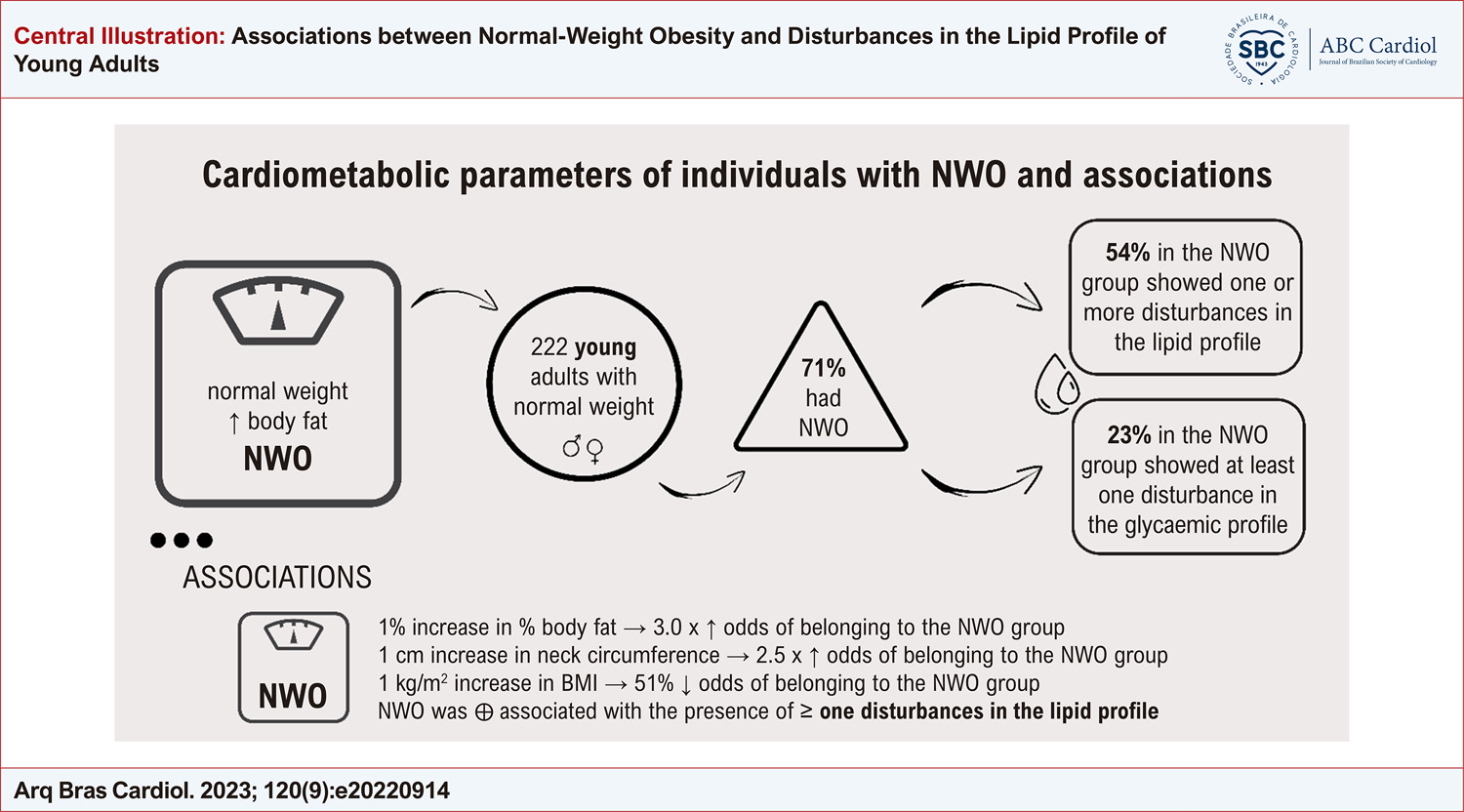
Associations between Normal-Weight Obesity and Disturbances in the Lipid Profile of Young Adults

Anna Flavia Ferreira Passos et al. Acsa de Castro Santos Alexandre Siqueira Guedes Coelho Cristiane Cominetti

Abstract

Background

Normal-weight obesity (NWO) is characterized by normal body mass index (BMI) but high body fat percentage (%BF) that increases the risks of cardiometabolic comorbidities. Accurate assessment and interpretation of body composition data are necessary to reduce these risks.

Objectives

To compare the cardiometabolic profile of individuals with NWO and normal %BF and evaluate the associated risk factors.

Methods

A cross-sectional study was conducted with 222 Brazilian adults from a university community, of whom 157 had NWO and 65 had normal BMI and %BF (non-NWO). All participants reported being asymptomatic and without underlying health conditions. Socioeconomic, lifestyle, food intake, anthropometry, body composition measures (using dual-energy radiological absorptiometry), and lipid and glycemic profiles were evaluated. A p < 0.05 was established as significant.

Results

The median age of the participants was 23 years (interquartile range: 21 to 25), and most were female (67.1%). No significant differences were found in blood pressure, age, or physical activity levels between the NWO and non-NWO groups. However, the frequency of lipid profile disturbances was higher in the NWO group (54%) compared to the non-NWO group (34%) (p < 0.006). Neck circumference, %BF, and lipid profile disturbances were positively associated with NWO.

Conclusion

Individuals with NWO have a worse cardiometabolic profile than those without NWO, and this condition is associated with important biomarkers. Addressing these outcomes is important for preventing long-term cardiometabolic complications. Accurate assessment and interpretation of body composition data, regardless of BMI, are crucial in this scenario.
  • Apolipoproteins
  • Blood Glucose
  • Body Composition
  • Cardiovascular Diseases
  • Dyslipidemias
Read Full Article
Creative Commons Attribution (CC BY) Creative Commons license
23/10/2023 DOI: 10.36660/abc.20220914 Views 2
ABC
Original Article

Hypertension and Associated Lipid, Glucose, and Adiposity Parameters in School-Aged Adolescents in the Federal District, Brazil

Letícia Rocha Lima et al. Aline Bassetto Okamura Kênia Mara Baiocchi de Carvalho Eliane Said Dutra Vivian Siqueira Santos Gonçalves

Abstract

Background

The prevalence of hypertension and other metabolic disorders has increased in young individuals. However, no representative studies have been conducted in the population of the Federal District, Brazil.

Objective

To estimate the prevalence of hypertension and its association with lipid, glucose, and adiposity markers in school-aged adolescents living in the Federal District.

Methods

This cross-sectional study included participants of the Study of Cardiovascular Risks in Adolescents (Portuguese acronym, ERICA). Blood pressure, blood glucose, glycated hemoglobin, insulin, homeostatic model assessment for insulin resistance (HOMA-IR), triglycerides, total cholesterol, high-density lipoprotein, low-density lipoprotein, body mass index (BMI), waist circumference, and economic, demographic, and sexual maturity variables were assessed. The data were analyzed in Stata, and the analysis was divided into different stages: descriptive, crude, and adjusted. Significant results were set at p < 0.05.

Results

In total, 1,200 adolescents were included, and their mean age was 14.8 years. The prevalence of hypertension was 8% (95% confidence interval: 6.3; 9.9). Most parameters were associated with blood pressure in crude analysis. In adjusted analysis, glucose, lipid, and adiposity markers maintained the associations, and the highest magnitudes were those of BMI and HOMA-IR.

Conclusion

The study revealed a high prevalence of hypertension in adolescents living in the Federal District, and blood pressure levels were associated with other markers of lipid, glucose, and adiposity profile. The findings indicate the relevance of health surveillance for planning effective actions aimed at reversing this situation and preventing new cases.

  • Adiposity
  • Adolescent
  • Blood Glucose
  • Hypertension
  • Lipids
Read Full Article
Creative Commons Attribution (CC BY) Creative Commons license
07/02/2022 DOI: 10.36660/abc.20201240 Views 1
Figure 1
ABC
Original Article

Association between Statin Therapy and Lower Incidence of Hyperglycemia in Patients Hospitalized with Acute Coronary Syndromes

Remo Holanda de Mendonça Furtado et al. Paulo Rizzo Genestreti Talia F. Dalçóquio Luciano Moreira Baracioli … Felipe Galego Lima André Franci Roberto R. C. V. Giraldez Fernando R. Menezes Aline Gehlen Ferrari Viviane Moreira Lima Cesar A. C. Pereira Carlos Alberto Kenji Nakashima Rocio Salsoso Lucas Colombo Godoy José C. Nicolau

Abstract

Background

Increased risk of new-onset diabetes with statins challenges the long-term safety of this drug class. However, few reports have analyzed this issue during acute coronary syndromes (ACS).

Objective

To explore the association between early initiation of statin therapy and blood glucose levels in patients admitted with ACS.

Methods

This was a retrospective analysis of patients hospitalized with ACS. Statin-naïve patients were included and divided according to their use or not of statins within the first 24 hours of hospitalization. The primary endpoint was incidence of in-hospital hyperglycemia (defined as peak blood glucose > 200 mg/dL). Multivariable linear and logistic regression models were used to adjust for confounders, and a propensity-score matching model was developed to further compare both groups of interest. A p-value of less than 0.05 was considered statistically significant.

Results

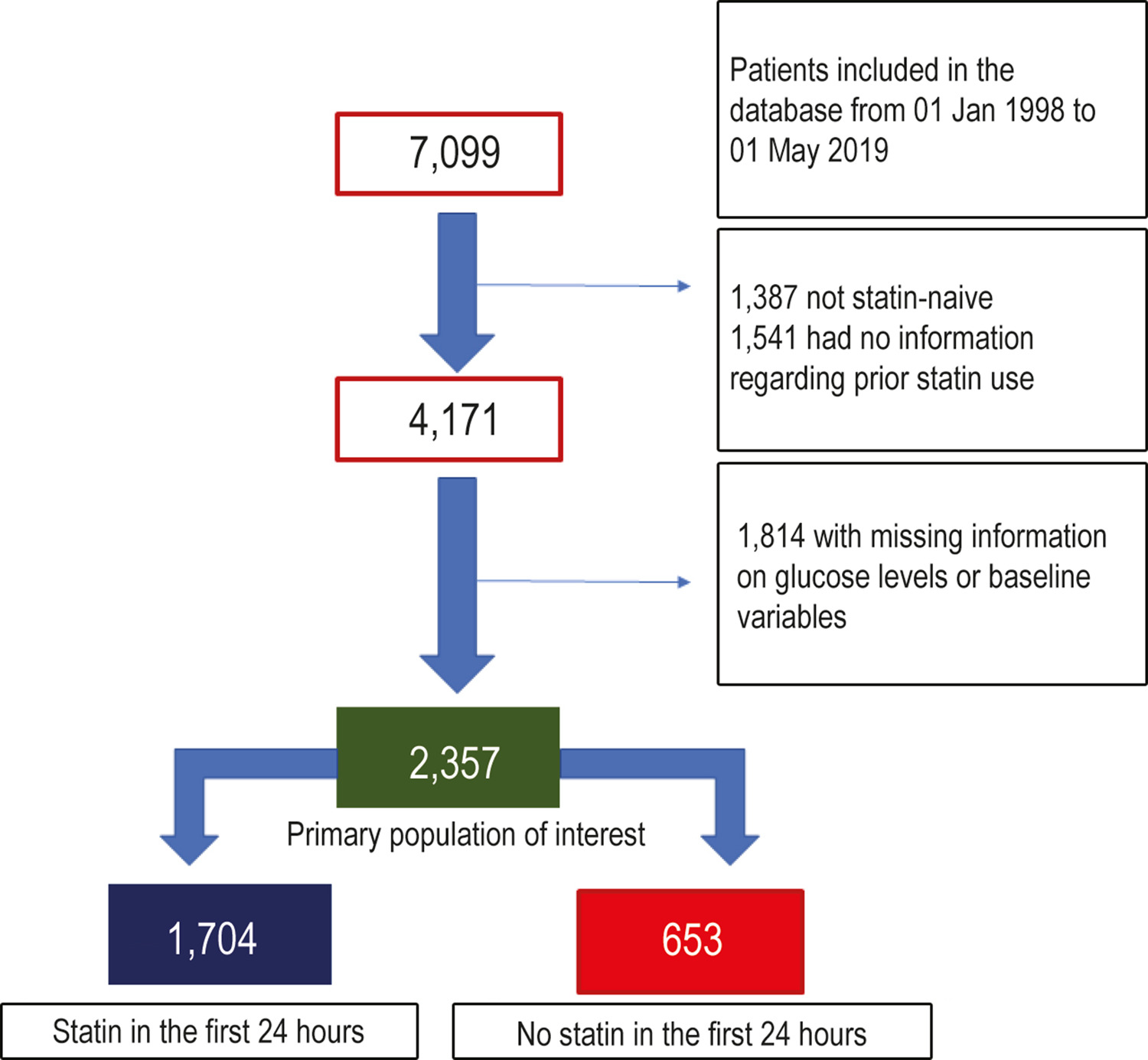
A total of 2,357 patients were included, 1,704 of them allocated in the statin group and 653 in the non-statin group. After adjustments, statin use in the first 24 hours was associated with a lower incidence of in-hospital hyperglycemia (adjusted OR=0.61, 95% CI 0.46-0.80; p < 0.001) and lower need for insulin therapy (adjusted OR = 0.56, 95% CI 0.41-0.76; p < 0.001). These associations remained similar in the propensity-score matching models, as well as after several sensitivity analyses, such as after excluding patients who developed cardiogenic shock, severe infection or who died during index-hospitalization.

Conclusions

Among statin-naïve patients admitted with ACS, early statin therapy was independently associated with lower incidence of in-hospital hyperglycemia. (Arq Bras Cardiol. 2021; 116(2):285-294)

  • Acute coronary syndrome
  • Blood Glucose
  • Hidroxymethylglutaryl-CoA-Reductase Inhibition
  • Myocardial Infarction
  • Statins
Read Full Article
Creative Commons Attribution (CC BY) Creative Commons license
01/03/2021 DOI: 10.36660/abc.20200128
Figure 1
ABC
Original Article

Changes in Cardiac Autonomic Modulation in Women with Breast Cancer Using Aromatase Inhibitors and the Relation with Biochemical Variables

Luana Almeida Gonzaga et al. Thais Reis Silva de Paulo Juliana Viezel Laís Manata Vanzella … Ismael Forte Freitas Jr. Luiz Carlos Marques Vanderlei

Abstract

Background:

The use of autonomic modulation as a predictor of cardiovascular risk in women with breast cancer is important.

Objective:

To evaluate the cardiac autonomic modulation of postmenopausal women using aromatase inhibitors for breast cancer treatment, as well as its relation with the following biochemical variables.

Methods:

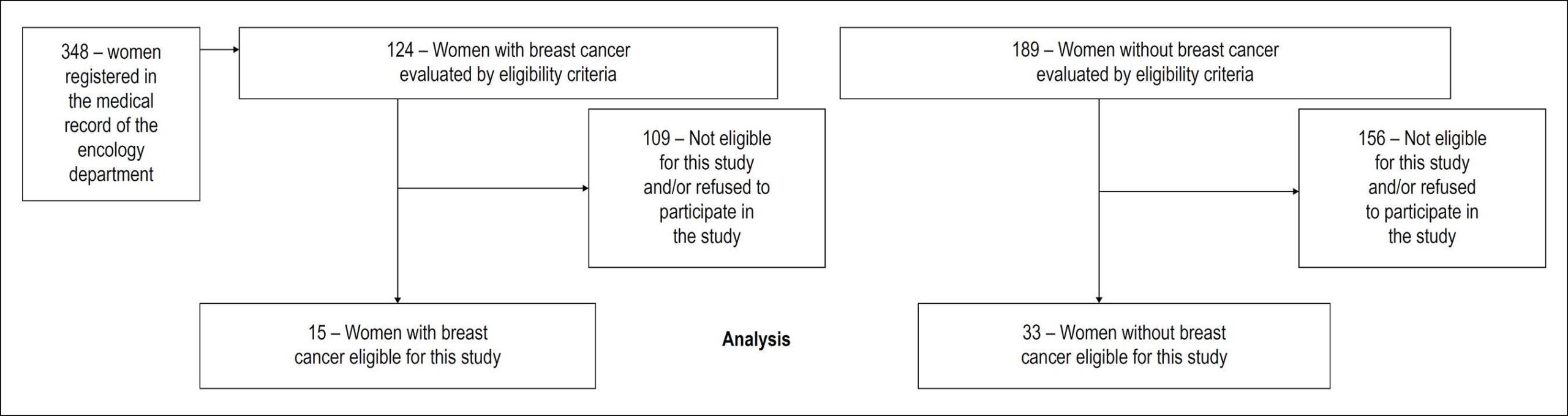
Postmenopausal women who did not have breast cancer (n = 33) and postmenopausal women with breast cancer (n = 15). For evaluation of the autonomic modulation the heart rate was recorded beat-to-beat for 30 minutes and the series of RR intervals obtained were used to calculate the following heart rate variability indices: Mean RR ms, SDNN (standard deviation of all normal RR intervals, expressed in milliseconds) ms, Mean HR, RMSSD (square root of the mean of the squared differences between adjacent normal RR interval) ms, NN50 (number of pairs of successive NNs that differ by more than 50 ms) count, pNN50% (proportion of NN50 divided by total number of NNs), RRtri (RR triangular), TINN (triangular interpolation of NN interval) ms, SD1 ms, SD2 ms, LF ms2, HF ms2, LH/HF ms2. The values of biochemical variables (fasting glycemia, triglycerides, HDL-cholesterol, and C-reactive protein) were analyzed by blood sample.

Results:

Lower values of heart rate variability indices were observed in postmenopausal women with breast cancer in relation to postmenopausal women who did not have breast cancer: Mean RR (p = 0.03); SDNN (p = 0.03); RMSSD (p = 0.03); NN50 count (p = 0.03); pNN50 % (p = 0.03); RRtri (p = 0.02); SD1 (p = 0.01); SD2 (p = 0.02); LF ms2 (p = 0.01); HF ms2 (p = 0.03).There was an inversely proportional correlation between the indices SDNN, SD2, and HFms2 with triglycerides (SDNN p = 0.04; SD2 p = 0.04; HF ms2 p = 0.04). No statistically significant correlations were found between heart rate variability indices and others variables. Statistical significance was set at 5% for all analyses.

Conclusion:

Women with breast cancer present reduced autonomic modulation and in these women of heart rate variability indices are inversely correlated with triglyceride values.

  • Aromatase Inhibitors
  • Blood Glucose
  • Breast Neoplasms
  • Cardiovascular Dieases/prevention and control
  • Cholesterol
  • Estrogen Replacement Therapy/adverse effects
Read Full Article
Creative Commons Attribution (CC BY) Creative Commons license
28/02/2019 DOI: 10.5935/abc.20190036 Views 1
Figure 1
ABC
Original Article

Relationship Between Neck Circumference and Epicardial Fat Thickness in a Healthy Male Population

Uğur Küçük et al. Hilal Olgun Küçük Ferhat Cüce Sevket Balta

Abstract

Background:

Epicardial fat is an upper body visceral fat depot that may play a significant role in the development of adverse metabolic and cardiovascular risk profiles. There is a significant direct relationship between the amount of epicardial fat and general body adiposity (body mass index, BMI), but data regarding subcutaneous adiposity is limited.

Objective:

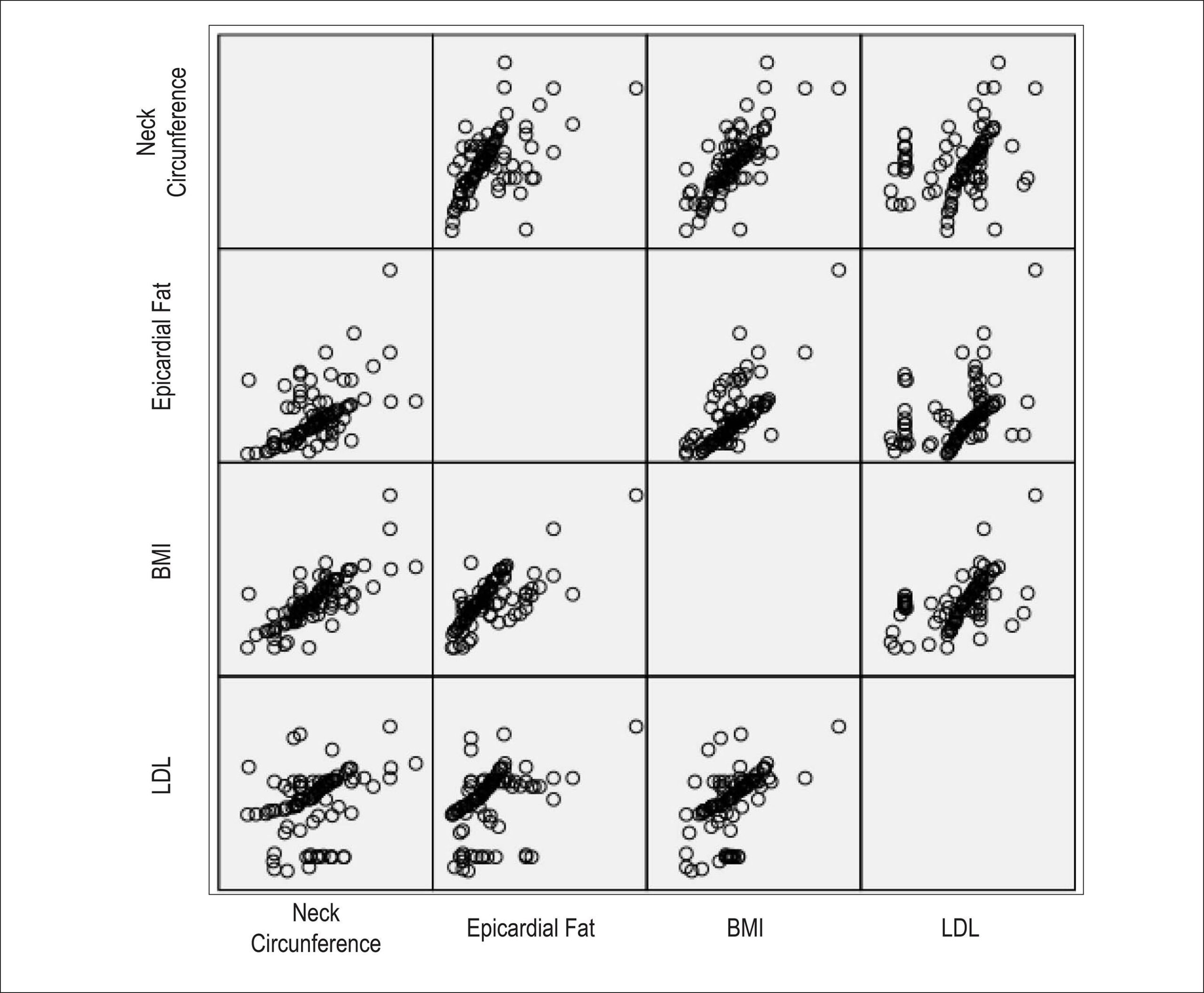
We conducted a study to determine the association between neck circumference and epicardial fat thickness in healthy young male individuals, and assess their individual correlations with general body adiposity and cardiometabolic risk factors.

Methods:

One hundred consecutive male patients aged 18 years or older with no known major medical conditions were included in the study. All participants underwent detailed physical examination including measurement of blood pressure, weight, height, waist/hip ratio, and neck circumference. Blood was collected to determine fasting glucose and lipid parameters. A standard echocardiographic examination was performed with additional epicardial fat thickness determination.

Results:

Among 100 study participants, neck circumference correlated significantly with weight, waist circumference, BMI, blood glucose, serum total cholesterol, low-density (LDL)-cholesterol, and triglycerides levels. No significant correlation was found between neck circumference and high-density lipoprotein (HDL)-cholesterol levels. Neck circumference correlated moderately and positively with echocardiographic epicardial fat thickness.

Conclusion:

Among patients with low cardiometabolic risk, increased neck circumference was associated with increased epicardial fat thickness.

  • Blood Glucose
  • Blood Pressure
  • body mass index
  • Cardiovascular Diseases
  • Echocardiography, Diagnosis
  • Intra-Abdominal Fat
  • Neck
Read Full Article
Creative Commons Attribution (CC BY) Creative Commons license
08/08/2016 DOI: 10.5935/abc.20160112
Figure 1
ABC
Original Article

Diabetes Mellitus and Glucose as Predictors of Mortality in Primary Coronary Percutaneous Intervention

Renato Budzyn David et al. Eduardo Dytz Almeida Larissa Vargas Cruz Juliana Cañedo Sebben … Ivan Petry Feijó Karine Elisa Schwarzer Schmidt Luísa Martins Avena Carlos Antonio Mascia Gottschall Alexandre Schaan de Quadros

Background:

Diabetes mellitus and admission blood glucose are important risk factors for mortality in ST segment elevation myocardial infarction patients, but their relative and individual role remains on debate.

Objective:

To analyze the influence of diabetes mellitus and admission blood glucose on the mortality of ST segment elevation myocardial infarction patients submitted to primary coronary percutaneous intervention.

Methods:

Prospective cohort study including every ST segment elevation myocardial infarction patient submitted to primary coronary percutaneous intervention in a tertiary cardiology center from December 2010 to May 2012. We collected clinical, angiographic and laboratory data during hospital stay, and performed a clinical follow-up 30 days after the ST segment elevation myocardial infarction. We adjusted the multivariate analysis of the studied risk factors using the variables from the GRACE score.

Results:

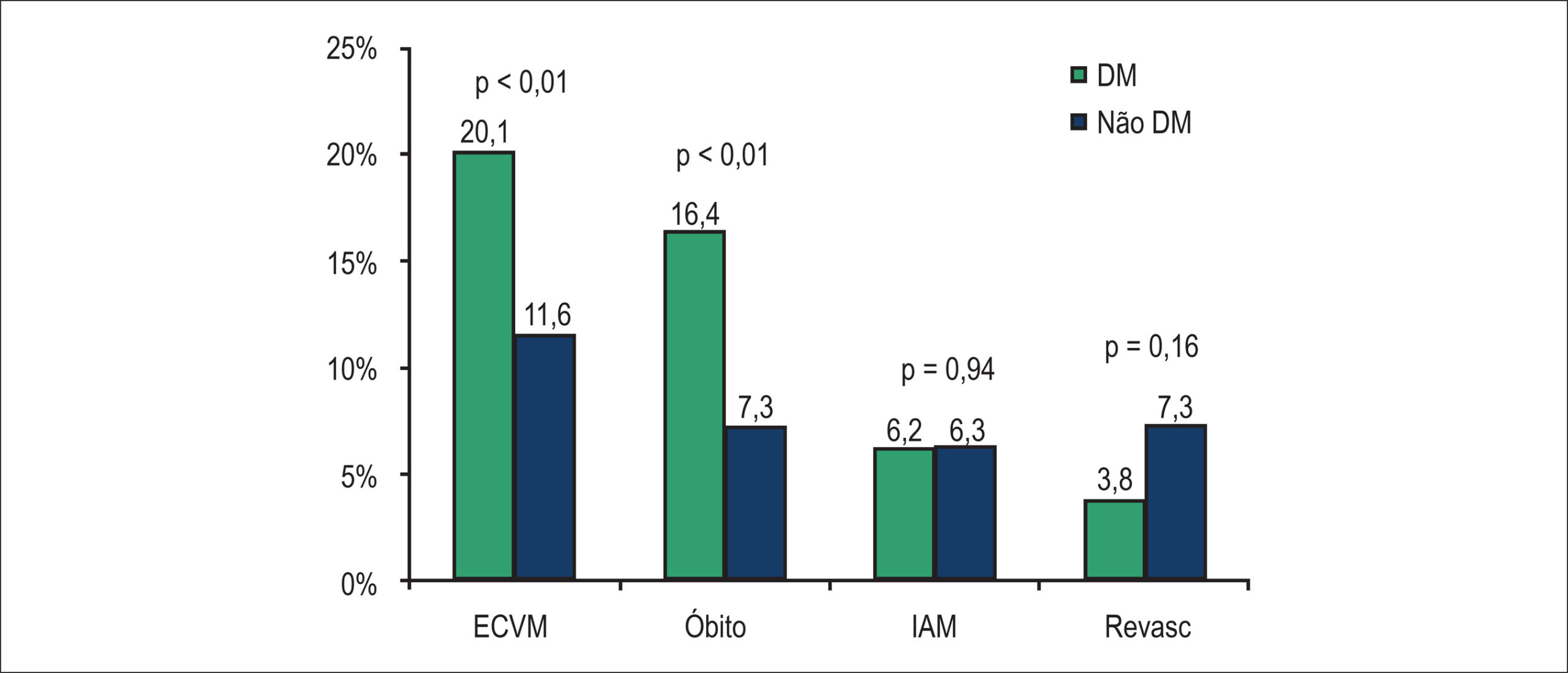
Among the 740 patients included, reported diabetes mellitus prevalence was 18%. On the univariate analysis, both diabetes mellitus and admission blood glucose were predictors of death in 30 days. However, after adjusting for potential confounders in the multivariate analysis, the diabetes mellitus relative risk was no longer significant (relative risk: 2.41, 95% confidence interval: 0.76 – 7.59; p-value: 0.13), whereas admission blood glucose remained and independent predictor of death in 30 days (relative risk: 1.05, 95% confidence interval: 1.02 – 1.09; p-value ≤ 0.01).

Conclusion:

In ST segment elevation myocardial infarction patients submitted to primary coronary percutaneous intervention, the admission blood glucose was a more accurate and robust independent predictor of death than the previous diagnosis of diabetes. This reinforces the important role of inflammation on the outcomes of this group of patients.

  • Biological Markers
  • Blood Glucose
  • Diabetes Mellitus
  • Myocardial Infarction
  • Percutaneous Coronary Intervention
Read Full Article
Creative Commons Attribution (CC BY) Creative Commons license
12/09/2014 DOI: 10.5935/abc.20140130 Views 1
Prognostic value of fasting glucose levels in elderly patients with acute coronary syndrome
ABC
Artigo Original

Prognostic value of fasting glucose levels in elderly patients with acute coronary syndrome

Adriane Monserrat Ramos et al. Lucia Campos Pellanda Pedro Lima Vieira Daniel Pinto Ribeiro … Eduardo Menti Vera Lúcia Portal

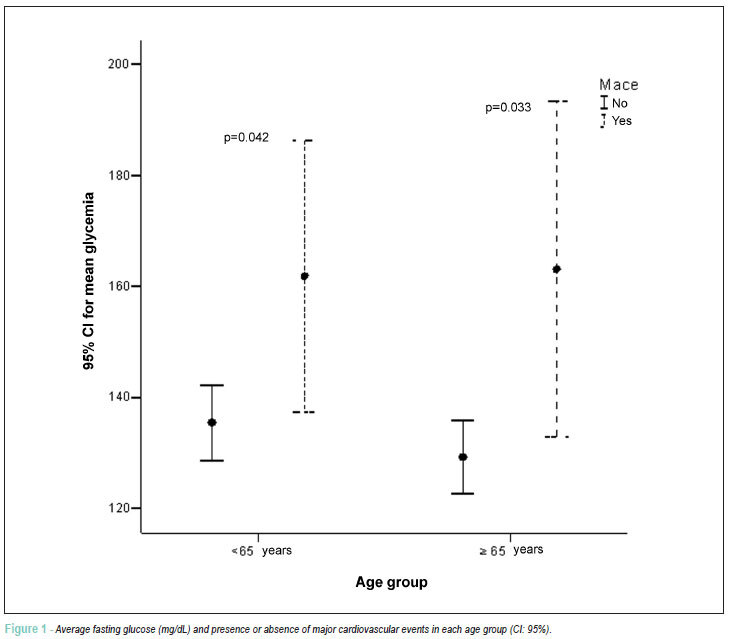
BACKGROUND: The fasting plasma glucose (FPG) test is a predictor of complications after Acute Coronary Syndrome (ACS). However, its prognostic value is not yet fully established in different age groups. OBJECTIVE: To evaluate the role of admission fasting plasma glucose (FPG) as a predictor of 30 days after ACS, and the association of hyperglycemia with major cardiovascular events (MACE): death, reinfarction and coronary artery bypass grafting, in two different age groups (65 year-old patients). METHODS: Contemporary cohort of patients hospitalized for ACS in the Institute of Cardiology of Rio Grande do Sul (Southern Brazil). In the first 24 hours of admission, patients answered a questionnaire with clinical information and had peripheral blood collected for measurement of FPG. Patients were followed up during hospitalization and for 30 days for the presence of MACE. Statistical analyses were performed using the SPSS 15.0 with the chi-square or Fisher Exact test (categorical variables) and the Student t test (numerical variables). Multivariate analysis was performed. RESULTS: 580 patients were included in the study. Mean age was 61.2 (±12.3) years, with 38.6% of the patients (224) >65 years old, and 67.7% (393) were male. Multivariable analysis showed that, after 30 days of follow-up, only FPG (OR= 1.01, 95% CI:1.00-1.01, P= 0.001) was associated with MACE in both age groups. CONCLUSION: Admission FPG was an independent predictor for MACE in the early phase of ACS.

  • Acute coronary syndrome
  • Age of Onset
  • Blood Glucose
  • Prognosis
Read Full Article
Creative Commons Attribution (CC BY) Creative Commons license
23/04/2012 DOI: 10.1590/S0066-782X2012000300002 Views 1
Perioperative blood glucose level and postoperative complications in pediatric cardiac surgery
ABC
Artigo Original

Perioperative blood glucose level and postoperative complications in pediatric cardiac surgery

Rodrigo Leal Alves et al. Macius Pontes Cerqueira Nadja Cecília de Castro Kraychete Guilherme Oliveira Campos … Marcelo de Jesus Martins Norma Sueli Pinheiro Módolo

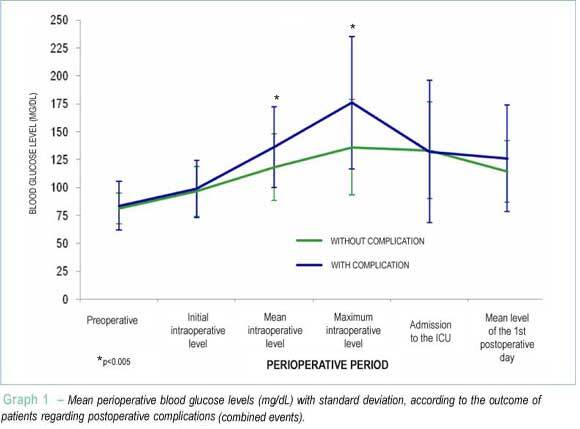
BACKGROUND: Anesthesia for pediatric cardiac surgery is systematically performed in severely ill patients under abnormal physiological conditions. In the intraoperative period, there are significant variations in blood volume, body temperature, plasma composition, and tissue blood flow, in addition to activation of inflammation, with important consequences. Serial measurements of blood glucose levels can indicate states of exacerbation of the neuroendocrine-metabolic response to trauma, serving as prognostic markers of morbidity in that population. OBJECTIVE: To correlate perioperative blood glucose levels of children undergoing cardiac surgery with the occurrence of postoperative complications, and to compare intraoperative blood glucose levels according to perioperative conditions. METHODS: Information regarding the surgical/anesthetic procedure and perioperative conditions of patients was collected from the medical records. The mean perioperative blood glucose levels in the groups of patients with and without postoperative complications and the frequencies of perioperative conditions were compared by use of odds ratio and non-parametric univariate analyses. RESULTS: Higher intraoperative blood glucose levels were observed in individuals who had postoperative complications. Prematurity, age group, type of anesthesia, and character of the procedure did not influence the mean intraoperative blood glucose level. The use of extracorporeal circulation (ECC) was associated with higher blood glucose levels during surgery. In procedures with ECC, higher blood glucose levels were observed in individuals who had infectious and cardiovascular complications. In surgeries without ECC, that association was observed with infectious and hematological complications. CONCLUSION: Higher intraoperative blood glucose levels are associated with higher morbidity in the postoperative period of pediatric cardiac surgery.

  • Blood Glucose
  • Heart Defects, Congenital
  • postoperative complications
  • Thoracic Surgery
Read Full Article
Creative Commons Attribution (CC BY) Creative Commons license
07/10/2011 DOI: 10.1590/S0066-782X2011005000097
Imaging assessment of visceral adipose tissue area and its correlations with metabolic alterations
ABC
Artigo Original

Imaging assessment of visceral adipose tissue area and its correlations with metabolic alterations

Anna Karla Carneiro Roriz et al. Adriana Lima Mello Juliana Fontes Guimarães Fabiana Cajuhy dos Santos … Jairza Maria Barreto Medeiros Lílian Ramos Sampaio

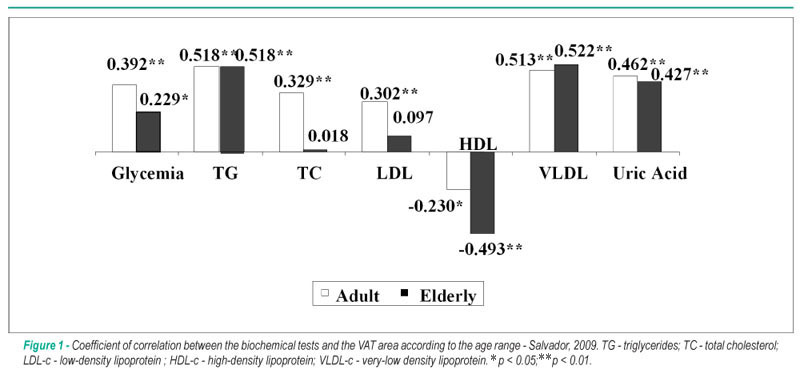
BACKGROUND: Androgenic obesity is associated with a higher risk of metabolic disorders, thus favoring the occurrence of cardiovascular diseases and other morbidities. OBJECTIVE: To verify the influence of the visceral adipose tissue (VAT) area, measured by computed tomography (CT), on the metabolic alterations in adult and elderly individuals. METHODS: CT results and lipoprotein levels, total cholesterol and fractions, triglycerides, glycemia and uric acid levels, were obtained from 194 individuals stratified by sex, age group and body mass and analyzed using the tests of correlation and means. RESULTS: The elderly individuals presented higher VAT area, glycemia, uric acid and total cholesterol levels. The most important correlations were observed between VAT area, triglycerides (TG) and VLDL-c (r > 0.5; p < 0.01), in both age groups. The mean VAT area was always higher when TG and glycemia levels were altered, in both age groups. CONCLUSION: Most tests showed a strong correlation with VAT area, which was considered as risk for metabolic alterations. In elderly individuals, the risk VAT area seems to be higher than that of adult individuals.

  • Abdominal Fat
  • Blood Glucose
  • Computed Tomography
  • Lipoproteins
  • uric acid
Read Full Article
Creative Commons Attribution (CC BY) Creative Commons license
10/12/2010 DOI: 10.1590/S0066-782X2010005000159 Views 1
Methods to identify the anaerobic threshold for type-2 diabetic and non-diabetic subjects
ABC
Artigo Original

Methods to identify the anaerobic threshold for type-2 diabetic and non-diabetic subjects

Herbert G. Simões et al. Sérgio R. Moreira Robert J. Moffatt Carmen S. G. Campbell

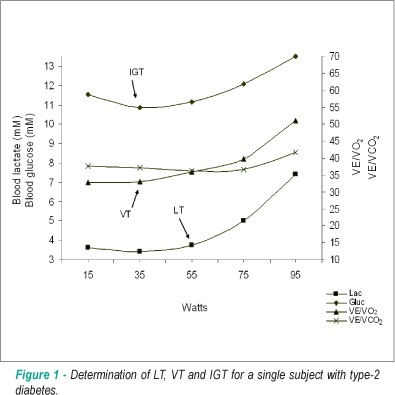
BACKGROUND: In spite of Anaerobic Threshold (AT) to be widely used on exercise evaluation for different populations, there are few studies comparing methods to identify AT for individuals with type-2 diabetes. OBJECTIVE: To compare methods of AT determination on type-2 diabetics (T2D) and non-diabetic (ND) subjects and verify the acid-base balance as related to AT intensity. METHODS: T2D (n=10; 54.5±9.5 yr; 30.1±5.0 kg/m²) and younger ND (n=10; 36.6±12.8 yr; 23.9±5.0 kg/m²) performed an incremental test (IT) on a cycle ergometer. The over-proportional increase in VE/VO2 and blood lactate ([lac]) identified the ventilatory (VT) and lactate thresholds (LT) respectively. The workload corresponding to the lower blood glucose ([gluc]) during test identified the individual glucose threshold (IGT). The AT was also determined by polynomial adjustment of the VE/Workload and [lac]/Workload responses to identify exercise intensities above which an over-proportional increase in VE and [lac] did occur and were named VT VE/W and LT[lac]/W. RESULTS: The workload (Watts-W) corresponding to LT, VT, IGT, LT Lac/W and VT VE/W of diabetics (85.0±32.1; 88.0±31.7; 86.0±33.8; 82.0±20.9 and 90.2±22.2W) and non-diabetics (139.0±39.0; 133.0±42.7; 140.8±36.4; 122.7±44.3 and 133.0±39.1W) differed between groups (p<0.001), but not within groups. Thus it was evidenced an agreement among the studied methods. The pH and pCO2 were significantly decreased in parallel to the increase in [lac], pO2 and VE at supra AT intensities. CONCLUSION: The AT intensities, as determined by different methods both for diabetics and non-diabetic individuals, were in agreement to each other and identified exercise intensities above which the acid-basic balance is disrupted.

  • acid-basic equilibrium
  • Anaerobic Threshold
  • Blood Glucose
  • Clinical Protocols
Read Full Article
Creative Commons Attribution (CC BY) Creative Commons license
22/09/2010 DOI: 10.1590/S0066-782X2010000100012
Prevalence of metabolic syndrome in an elderly community: comparison between three diagnostic methods
ABC
Artigo Original

Prevalence of metabolic syndrome in an elderly community: comparison between three diagnostic methods

Julio Cesar Rigo et al. José Luiz Vieira Roberta Rigo Dalacorte César Luis Reichert

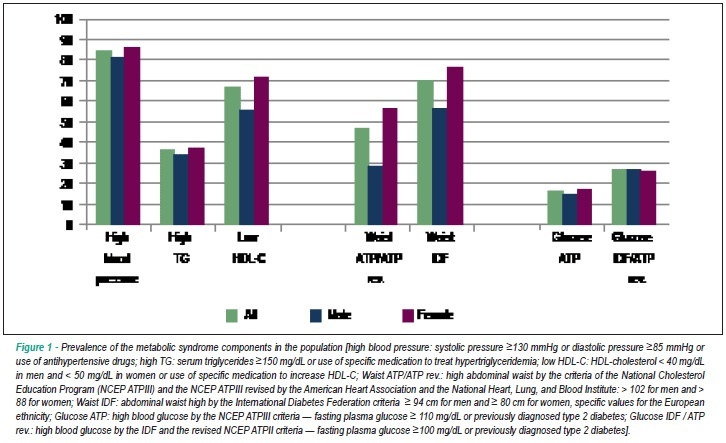
BACKGROUND: The prevalence of the metabolic syndrome (MS) has shown wide variation in different studies, depending on the population sample and the diagnostic criteria used. The prevalence of MS tends to be higher with the diagnostic criteria of the International Diabetes Federation (IDF). OBJECTIVE: To compare the prevalence of MS using different criteria in an elderly community. METHODS: This was a cross-sectional population-based study conducted in the city of Novo Hamburgo – RS – Brazil, in which 378 elderly individuals, aged 60 years or over (252 women and 126 men) participated. The prevalence of MS was estimated using the National Cholesterol Education Program – Adult Treatment Panel III (NCEP ATPIII) (2001), the revised NCEP ATPIII (2005) and the IDF diagnostic criteria. RESULTS: The prevalence of MS increased progressively as we used the NCEP ATP III, the revised NCEP ATP III and the IDF criteria, with values of 50.3%, 53.4% and 56.9% respectively. The progressive increase in the prevalence of MS using the three criteria occurred in both genders, with a higher prevalence among women, with rates of 57.1%, 59.9% and 63.5% with the NCEP ATP III, the revised NCEP ATP III, and the IDF criteria, respectively. CONCLUSION: The use of the IDF criteria resulted in a higher prevalence of MS in comparison to the prevalence found with the NCEP ATP III criteria and the revised NCEP ATP III criteria. The prevalence of MS was higher among women, regardless of the criteria used.

  • abdominal circumference
  • Aged
  • Blood Glucose
  • Blood Pressure
  • Cholesterol
  • Metabolic Syndrome
  • Prevalence
  • Risk Factors
Read Full Article
Creative Commons Attribution (CC BY) Creative Commons license
13/10/2009 DOI: 10.1590/S0066-782X2009000800004
Effect of frequency of physical exercise on glycemic control and body composition in type 2 diabetic patients
ABC
Artigo Original

Effect of frequency of physical exercise on glycemic control and body composition in type 2 diabetic patients

Denise Maria Martins Vancea et al. José Nelson Vancea Maria Izabel Fernandes Pires Marco Antonio Reis … Rafael Brandão Moura Sergio Atala Dib

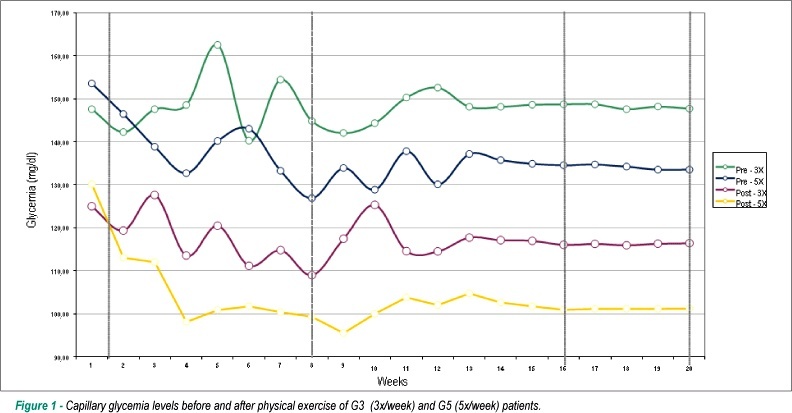
BACKGROUND: Diabetes and cardiovascular disease have emerged as key threats to human health, and the risk is increased in individuals with visceral obesity. The consensus is that physical exercise should be part of the treatment of diabetes mellitus (DM). OBJECTIVE: To compare the influence of guided and structured physical exercise programs (SPEP), three to five times per week, during a period of 20 weeks, on glycemic control and body composition of type 2 diabetic patients (DM2). METHODS: The research was conducted at the Universidade Federal de São Paulo (Federal University School of Medicine in São Paulo). At the clinical visit, patients from the Control Group (CG) n=17, mean age 55.8 years, were encouraged to engage in a physical exercise program. Patients from Group 3x (G3), n=14, mean age 57.4 years, were to engage in 1 hour of physical exercise, 3x/week, and Group 5x (G5), n=9, mean age 58.8 years, followed the same protocol but 5x/week. Mean of 5 years since diagnosis in all groups. Classes consisted of a 5-minute warm-up, 30-minute treadmill walk at 70% of maximum heart rate, and 10-minute relaxation. BMI, abdominal circumference (AC), percentage of body fat (BF), capillary glycemia (CG), fasting glycemia (FG), and glycated hemoglobin (HbA1c) were assessed. RESULTS: A comparison was made between the baseline time point (B) and the 20th week (20th). BMI in G3 (B:29.5±2.9 vs. 20th: 28.3 ± 2.2 Kg/sqm, p=0.005) and G5 (B:29.7±4.4 vs. 20th: 29.1 ± 4.3 Kg/sqm, p=0.025); abdominal circumference in G5 (B:100.5±11.9 vs. 20th: 933 ± 11.7 cm, p=0.001); BF in G3 (B:31±5.1 vs 20th: 26±5%, p=0.001) and G5 (B:32.4 ± 5.4 vs. 20th: 30.3 ± 6.9%, p=0.001); FG, G5 (B:150.8 ± 47.5 vs. 20th: 109.2± 30.5 mg/dL, p=0.034), showed statistically significant differences. CG did not show statistically significant differences for these variables. CG showed a tendency to drop after physical exercise in G5. HbA1c showed no statistically significant differences in the three groups. CONCLUSION: G5 did better than G3 in most parameters assessed. However, results failed to show a decrease of HbA1c in DM2 patients.

  • Blood Glucose
  • body compostion
  • Control
  • Diabetes Mellitus, Type 2
  • Exercise
Read Full Article
Creative Commons Attribution (CC BY) Creative Commons license
04/02/2009 DOI: 10.1590/S0066-782X2009000100005

How to cite this article

EndNote RIS

Electronic Document Format (Vancouver)

Passos AFF, Santos AC, Coelho ASG, Cominetti C. Associations between Normal-Weight Obesity and Disturbances in the Lipid Profile of Young Adults. Arquivos Brasileiros de Cardiologia 2023;120(9):e20220914.

Electronic Document Format (ABNT)

Passos, Anna Flavia Ferreira; Santos, Acsa de Castro; Coelho, Alexandre Siqueira Guedes; Cominetti, Cristiane. Associations between Normal-Weight Obesity and Disturbances in the Lipid Profile of Young Adults. Arquivos Brasileiros de Cardiologia, v. 120, n. 9, e20220914, Oct. 2023.

Electronic Document Format (APA)

Passos, A. F. F., Santos, A. C., Coelho, A. S. G., & Cominetti, C. (2023). Associations between Normal-Weight Obesity and Disturbances in the Lipid Profile of Young Adults. Arquivos Brasileiros de Cardiologia, 120(9), e20220914.

Electronic Document Format (ISO)

Passos, Anna Flavia Ferreira and Santos, Acsa de Castro and Coelho, Alexandre Siqueira Guedes and Cominetti, Cristiane. Associations between Normal-Weight Obesity and Disturbances in the Lipid Profile of Young Adults. Arquivos Brasileiros de Cardiologia [online]. 2023, vol. 120, n. 9, [cited 2026-10-14], e20220914. Available from: <https://journals.cardiol.br/en/article/associations-between-normal-weight-obesity-and-disturbances-in-the-lipid-profile-of-young-adults/>. ISSN 0066-782X

EndNote RIS

Electronic Document Format (Vancouver)

Lima LR, Okamura AB, Carvalho KMB, Dutra ES, Gonçalves VSS. Hypertension and Associated Lipid, Glucose, and Adiposity Parameters in School-Aged Adolescents in the Federal District, Brazil. Arquivos Brasileiros de Cardiologia 2022;118(4):719-26.

Electronic Document Format (ABNT)

Lima, Letícia Rocha; Okamura, Aline Bassetto; Carvalho, Kênia Mara Baiocchi de; Dutra, Eliane Said; Gonçalves, Vivian Siqueira Santos. Hypertension and Associated Lipid, Glucose, and Adiposity Parameters in School-Aged Adolescents in the Federal District, Brazil. Arquivos Brasileiros de Cardiologia, v. 118, n. 4, p. 719-726, Feb. 2022.

Electronic Document Format (APA)

Lima, L. R., Okamura, A. B., Carvalho, K. M. B. , Dutra, E. S., & Gonçalves, V. S. S. (2022). Hypertension and Associated Lipid, Glucose, and Adiposity Parameters in School-Aged Adolescents in the Federal District, Brazil. Arquivos Brasileiros de Cardiologia, 118(4), 719-726.

Electronic Document Format (ISO)

Lima, Letícia Rocha and Okamura, Aline Bassetto and Carvalho, Kênia Mara Baiocchi de and Dutra, Eliane Said and Gonçalves, Vivian Siqueira Santos. Hypertension and Associated Lipid, Glucose, and Adiposity Parameters in School-Aged Adolescents in the Federal District, Brazil. Arquivos Brasileiros de Cardiologia [online]. 2022, vol. 118, n. 4, [cited 2026-10-14], pp. 719-726. Available from: <https://journals.cardiol.br/en/article/hypertension-and-associated-lipid-glucose-and-adiposity-parameters-in-school-aged-adolescents-in-the-federal-district-brazil/>. ISSN 0066-782X

EndNote RIS

Electronic Document Format (Vancouver)

Furtado RHM, Genestreti PR, Dalçóquio TF, Baracioli LM, Lima FG, Franci A, Giraldez RRCV, et al. Association between Statin Therapy and Lower Incidence of Hyperglycemia in Patients Hospitalized with Acute Coronary Syndromes. Arquivos Brasileiros de Cardiologia 2021;116(2):285-94.

Electronic Document Format (ABNT)

Furtado, Remo Holanda de Mendonça; Genestreti, Paulo Rizzo; Dalçóquio, Talia F.; Baracioli, Luciano Moreira; Lima, Felipe Galego; Franci, André; Giraldez, Roberto R. C. V.; Menezes, Fernando R.; Ferrari, Aline Gehlen; Lima, Viviane Moreira; Pereira, Cesar A. C.; Nakashima, Carlos Alberto Kenji; Salsoso, Rocio; Godoy, Lucas Colombo; Nicolau, José C.. Association between Statin Therapy and Lower Incidence of Hyperglycemia in Patients Hospitalized with Acute Coronary Syndromes. Arquivos Brasileiros de Cardiologia, v. 116, n. 2, p. 285-294, Feb. 2021.

Electronic Document Format (APA)

Furtado, R. H. M., Genestreti, P. R., Dalçóquio, T. F., Baracioli, L. M., Lima, F. G., Franci, A., Giraldez, R. R. C. V., Menezes, F. R., Ferrari, A. G., Lima, V. M., Pereira, C. A. C., Nakashima, C. A. K., Salsoso, R., Godoy, L. C., & Nicolau, J. C. (2021). Association between Statin Therapy and Lower Incidence of Hyperglycemia in Patients Hospitalized with Acute Coronary Syndromes. Arquivos Brasileiros de Cardiologia, 116(2), 285-294.

Electronic Document Format (ISO)

Furtado, Remo Holanda de Mendonça and Genestreti, Paulo Rizzo and Dalçóquio, Talia F. and Baracioli, Luciano Moreira and Lima, Felipe Galego and Franci, André and Giraldez, Roberto R. C. V. and Menezes, Fernando R. and Ferrari, Aline Gehlen and Lima, Viviane Moreira and Pereira, Cesar A. C. and Nakashima, Carlos Alberto Kenji and Salsoso, Rocio and Godoy, Lucas Colombo and Nicolau, José C.. Association between Statin Therapy and Lower Incidence of Hyperglycemia in Patients Hospitalized with Acute Coronary Syndromes. Arquivos Brasileiros de Cardiologia [online]. 2021, vol. 116, n. 2, [cited 2026-10-14], pp. 285-294. Available from: <https://journals.cardiol.br/en/article/association-between-statin-therapy-and-lower-incidence-of-hyperglycemia-in-patients-hospitalized-with-acute-coronary-syndromes/>. ISSN 0066-782X

EndNote RIS

Electronic Document Format (Vancouver)

Gonzaga LA, Paulo TRS, Viezel J, Vanzella LM, Freitas Jr. IF, Vanderlei LCM. Changes in Cardiac Autonomic Modulation in Women with Breast Cancer Using Aromatase Inhibitors and the Relation with Biochemical Variables. Arquivos Brasileiros de Cardiologia 2019;112(5):555-63.

Electronic Document Format (ABNT)

Gonzaga, Luana Almeida; Paulo, Thais Reis Silva de; Viezel, Juliana; Vanzella, Laís Manata; Freitas Jr., Ismael Forte; Vanderlei, Luiz Carlos Marques. Changes in Cardiac Autonomic Modulation in Women with Breast Cancer Using Aromatase Inhibitors and the Relation with Biochemical Variables. Arquivos Brasileiros de Cardiologia, v. 112, n. 5, p. 555-563, Feb. 2019.

Electronic Document Format (APA)

Gonzaga, L. A., Paulo, T. R. S. , Viezel, J., Vanzella, L. M., Freitas Jr., I. F., & Vanderlei, L. C. M. (2019). Changes in Cardiac Autonomic Modulation in Women with Breast Cancer Using Aromatase Inhibitors and the Relation with Biochemical Variables. Arquivos Brasileiros de Cardiologia, 112(5), 555-563.

Electronic Document Format (ISO)

Gonzaga, Luana Almeida and Paulo, Thais Reis Silva de and Viezel, Juliana and Vanzella, Laís Manata and Freitas Jr., Ismael Forte and Vanderlei, Luiz Carlos Marques. Changes in Cardiac Autonomic Modulation in Women with Breast Cancer Using Aromatase Inhibitors and the Relation with Biochemical Variables. Arquivos Brasileiros de Cardiologia [online]. 2019, vol. 112, n. 5, [cited 2026-10-14], pp. 555-563. Available from: <https://journals.cardiol.br/en/article/changes-in-cardiac-autonomic-modulation-in-women-with-breast-cancer-using-aromatase-inhibitors-and-the-relation-with-biochemical-variables/>. ISSN 0066-782X

EndNote RIS

Electronic Document Format (Vancouver)

Küçük U, Küçük HO, Cüce F, Balta S. Relationship Between Neck Circumference and Epicardial Fat Thickness in a Healthy Male Population. Arquivos Brasileiros de Cardiologia 2016;107(3):266-70.

Electronic Document Format (ABNT)

Küçük, Uğur; Küçük, Hilal Olgun; Cüce, Ferhat; Balta, Sevket. Relationship Between Neck Circumference and Epicardial Fat Thickness in a Healthy Male Population. Arquivos Brasileiros de Cardiologia, v. 107, n. 3, p. 266-270, Aug. 2016.

Electronic Document Format (APA)

Küçük, U., Küçük, H. O., Cüce, F., & Balta, S. (2016). Relationship Between Neck Circumference and Epicardial Fat Thickness in a Healthy Male Population. Arquivos Brasileiros de Cardiologia, 107(3), 266-270.

Electronic Document Format (ISO)

Küçük, Uğur and Küçük, Hilal Olgun and Cüce, Ferhat and Balta, Sevket. Relationship Between Neck Circumference and Epicardial Fat Thickness in a Healthy Male Population. Arquivos Brasileiros de Cardiologia [online]. 2016, vol. 107, n. 3, [cited 2026-10-14], pp. 266-270. Available from: <https://journals.cardiol.br/en/article/relationship-between-neck-circumference-and-epicardial-fat-thickness-in-a-healthy-male-population/>. ISSN 0066-782X

EndNote RIS

Electronic Document Format (Vancouver)

David RB, Almeida ED, Cruz LV, Sebben JC, Feijó IP, Schmidt KES, Avena LM, et al. Diabetes Mellitus and Glucose as Predictors of Mortality in Primary Coronary Percutaneous Intervention. Arquivos Brasileiros de Cardiologia 2014;103(4):323-30.

Electronic Document Format (ABNT)

David, Renato Budzyn; Almeida, Eduardo Dytz; Cruz, Larissa Vargas; Sebben, Juliana Cañedo; Feijó, Ivan Petry; Schmidt, Karine Elisa Schwarzer; Avena, Luísa Martins; Gottschall, Carlos Antonio Mascia; Quadros, Alexandre Schaan de. Diabetes Mellitus and Glucose as Predictors of Mortality in Primary Coronary Percutaneous Intervention. Arquivos Brasileiros de Cardiologia, v. 103, n. 4, p. 323-330, Sep. 2014.

Electronic Document Format (APA)

David, R. B., Almeida, E. D., Cruz, L. V., Sebben, J. C., Feijó, I. P., Schmidt, K. E. S., Avena, L. M., Gottschall, C. A. M., & Quadros, A. S. (2014). Diabetes Mellitus and Glucose as Predictors of Mortality in Primary Coronary Percutaneous Intervention. Arquivos Brasileiros de Cardiologia, 103(4), 323-330.

Electronic Document Format (ISO)

David, Renato Budzyn and Almeida, Eduardo Dytz and Cruz, Larissa Vargas and Sebben, Juliana Cañedo and Feijó, Ivan Petry and Schmidt, Karine Elisa Schwarzer and Avena, Luísa Martins and Gottschall, Carlos Antonio Mascia and Quadros, Alexandre Schaan de. Diabetes Mellitus and Glucose as Predictors of Mortality in Primary Coronary Percutaneous Intervention. Arquivos Brasileiros de Cardiologia [online]. 2014, vol. 103, n. 4, [cited 2026-10-14], pp. 323-330. Available from: <https://journals.cardiol.br/en/article/diabetes-mellitus-and-glucose-as-predictors-of-mortality-in-primary-coronary-percutaneous-intervention/>. ISSN 0066-782X

EndNote RIS

Electronic Document Format (Vancouver)

Ramos AM, Pellanda LC, Vieira PL, Ribeiro DP, Menti E, Portal VL. Prognostic value of fasting glucose levels in elderly patients with acute coronary syndrome. Arquivos Brasileiros de Cardiologia 2012;98(3):203-10.

Electronic Document Format (ABNT)

Ramos, Adriane Monserrat; Pellanda, Lucia Campos; Vieira, Pedro Lima; Ribeiro, Daniel Pinto; Menti, Eduardo; Portal, Vera Lúcia. Prognostic value of fasting glucose levels in elderly patients with acute coronary syndrome. Arquivos Brasileiros de Cardiologia, v. 98, n. 3, p. 203-210, Apr. 2012.

Electronic Document Format (APA)

Ramos, A. M., Pellanda, L. C., Vieira, P. L., Ribeiro, D. P., Menti, E., & Portal, V. L. (2012). Prognostic value of fasting glucose levels in elderly patients with acute coronary syndrome. Arquivos Brasileiros de Cardiologia, 98(3), 203-210.

Electronic Document Format (ISO)

Ramos, Adriane Monserrat and Pellanda, Lucia Campos and Vieira, Pedro Lima and Ribeiro, Daniel Pinto and Menti, Eduardo and Portal, Vera Lúcia. Prognostic value of fasting glucose levels in elderly patients with acute coronary syndrome. Arquivos Brasileiros de Cardiologia [online]. 2012, vol. 98, n. 3, [cited 2026-10-14], pp. 203-210. Available from: <https://journals.cardiol.br/en/article/prognostic-value-of-fasting-glucose-levels-in-elderly-patients-with-acute-coronary-syndrome/>. ISSN 0066-782X

EndNote RIS

Electronic Document Format (Vancouver)

Alves RL, Cerqueira MP, Kraychete NCC, Campos GO, Martins MJ, Módolo NSP. Perioperative blood glucose level and postoperative complications in pediatric cardiac surgery. Arquivos Brasileiros de Cardiologia 2011;97(5):372-9.

Electronic Document Format (ABNT)

Alves, Rodrigo Leal; Cerqueira, Macius Pontes; Kraychete, Nadja Cecília de Castro; Campos, Guilherme Oliveira; Martins, Marcelo de Jesus; Módolo, Norma Sueli Pinheiro. Perioperative blood glucose level and postoperative complications in pediatric cardiac surgery. Arquivos Brasileiros de Cardiologia, v. 97, n. 5, p. 372-379, Oct. 2011.

Electronic Document Format (APA)

Alves, R. L., Cerqueira, M. P., Kraychete, N. C. C., Campos, G. O., Martins, M. J., & Módolo, N. S. P. (2011). Perioperative blood glucose level and postoperative complications in pediatric cardiac surgery. Arquivos Brasileiros de Cardiologia, 97(5), 372-379.

Electronic Document Format (ISO)

Alves, Rodrigo Leal and Cerqueira, Macius Pontes and Kraychete, Nadja Cecília de Castro and Campos, Guilherme Oliveira and Martins, Marcelo de Jesus and Módolo, Norma Sueli Pinheiro. Perioperative blood glucose level and postoperative complications in pediatric cardiac surgery. Arquivos Brasileiros de Cardiologia [online]. 2011, vol. 97, n. 5, [cited 2026-10-14], pp. 372-379. Available from: <https://journals.cardiol.br/en/article/perioperative-blood-glucose-level-and-postoperative-complications-in-pediatric-cardiac-surgery/>. ISSN 0066-782X

EndNote RIS

Electronic Document Format (Vancouver)

Roriz AKC, Mello AL, Guimarães JF, Santos FC, Medeiros JMB, Sampaio LR. Imaging assessment of visceral adipose tissue area and its correlations with metabolic alterations. Arquivos Brasileiros de Cardiologia 2010;95(6):698-704.

Electronic Document Format (ABNT)

Roriz, Anna Karla Carneiro; Mello, Adriana Lima; Guimarães, Juliana Fontes; Santos, Fabiana Cajuhy dos; Medeiros, Jairza Maria Barreto; Sampaio, Lílian Ramos. Imaging assessment of visceral adipose tissue area and its correlations with metabolic alterations. Arquivos Brasileiros de Cardiologia, v. 95, n. 6, p. 698-704, Dec. 2010.

Electronic Document Format (APA)

Roriz, A. K. C., Mello, A. L., Guimarães, J. F., Santos, F. C. , Medeiros, J. M. B., & Sampaio, L. R. (2010). Imaging assessment of visceral adipose tissue area and its correlations with metabolic alterations. Arquivos Brasileiros de Cardiologia, 95(6), 698-704.

Electronic Document Format (ISO)

Roriz, Anna Karla Carneiro and Mello, Adriana Lima and Guimarães, Juliana Fontes and Santos, Fabiana Cajuhy dos and Medeiros, Jairza Maria Barreto and Sampaio, Lílian Ramos. Imaging assessment of visceral adipose tissue area and its correlations with metabolic alterations. Arquivos Brasileiros de Cardiologia [online]. 2010, vol. 95, n. 6, [cited 2026-10-14], pp. 698-704. Available from: <https://journals.cardiol.br/en/article/imaging-assessment-of-visceral-adipose-tissue-area-and-its-correlations-with-metabolic-alterations/>. ISSN 0066-782X

EndNote RIS

Electronic Document Format (Vancouver)

Simões HG, Moreira SR, Moffatt RJ, Campbell CSG. Methods to identify the anaerobic threshold for type-2 diabetic and non-diabetic subjects. Arquivos Brasileiros de Cardiologia 2010;94(1):71-8.

Electronic Document Format (ABNT)

Simões, Herbert G.; Moreira, Sérgio R.; Moffatt, Robert J.; Campbell, Carmen S. G.. Methods to identify the anaerobic threshold for type-2 diabetic and non-diabetic subjects. Arquivos Brasileiros de Cardiologia, v. 94, n. 1, p. 71-78, Sep. 2010.

Electronic Document Format (APA)

Simões, H. G., Moreira, S. R., Moffatt, R. J., & Campbell, C. S. G. (2010). Methods to identify the anaerobic threshold for type-2 diabetic and non-diabetic subjects. Arquivos Brasileiros de Cardiologia, 94(1), 71-78.

Electronic Document Format (ISO)

Simões, Herbert G. and Moreira, Sérgio R. and Moffatt, Robert J. and Campbell, Carmen S. G.. Methods to identify the anaerobic threshold for type-2 diabetic and non-diabetic subjects. Arquivos Brasileiros de Cardiologia [online]. 2010, vol. 94, n. 1, [cited 2026-10-14], pp. 71-78. Available from: <https://journals.cardiol.br/en/article/methods-to-identify-the-anaerobic-threshold-for-type-2-diabetic-and-non-diabetic-subjects/>. ISSN 0066-782X

EndNote RIS

Electronic Document Format (Vancouver)

Rigo JC, Vieira JL, Dalacorte RR, Reichert CL. Prevalence of metabolic syndrome in an elderly community: comparison between three diagnostic methods. Arquivos Brasileiros de Cardiologia 2009;93(2):85-91.

Electronic Document Format (ABNT)

Rigo, Julio Cesar; Vieira, José Luiz; Dalacorte, Roberta Rigo; Reichert, César Luis. Prevalence of metabolic syndrome in an elderly community: comparison between three diagnostic methods. Arquivos Brasileiros de Cardiologia, v. 93, n. 2, p. 85-91, Oct. 2009.

Electronic Document Format (APA)

Rigo, J. C., Vieira, J. L., Dalacorte, R. R., & Reichert, C. L. (2009). Prevalence of metabolic syndrome in an elderly community: comparison between three diagnostic methods. Arquivos Brasileiros de Cardiologia, 93(2), 85-91.

Electronic Document Format (ISO)

Rigo, Julio Cesar and Vieira, José Luiz and Dalacorte, Roberta Rigo and Reichert, César Luis. Prevalence of metabolic syndrome in an elderly community: comparison between three diagnostic methods. Arquivos Brasileiros de Cardiologia [online]. 2009, vol. 93, n. 2, [cited 2026-10-14], pp. 85-91. Available from: <https://journals.cardiol.br/en/article/prevalence-of-metabolic-syndrome-in-an-elderly-community-comparison-between-three-diagnostic-methods/>. ISSN 0066-782X

EndNote RIS

Electronic Document Format (Vancouver)

Vancea DMM, Vancea JN, Pires MIF, Reis MA, Moura RB, Dib SA. Effect of frequency of physical exercise on glycemic control and body composition in type 2 diabetic patients. Arquivos Brasileiros de Cardiologia 2009;92(1):23-30.

Electronic Document Format (ABNT)

Vancea, Denise Maria Martins; Vancea, José Nelson; Pires, Maria Izabel Fernandes; Reis, Marco Antonio; Moura, Rafael Brandão; Dib, Sergio Atala. Effect of frequency of physical exercise on glycemic control and body composition in type 2 diabetic patients. Arquivos Brasileiros de Cardiologia, v. 92, n. 1, p. 23-30, Feb. 2009.

Electronic Document Format (APA)

Vancea, D. M. M., Vancea, J. N., Pires, M. I. F., Reis, M. A., Moura, R. B., & Dib, S. A. (2009). Effect of frequency of physical exercise on glycemic control and body composition in type 2 diabetic patients. Arquivos Brasileiros de Cardiologia, 92(1), 23-30.

Electronic Document Format (ISO)

Vancea, Denise Maria Martins and Vancea, José Nelson and Pires, Maria Izabel Fernandes and Reis, Marco Antonio and Moura, Rafael Brandão and Dib, Sergio Atala. Effect of frequency of physical exercise on glycemic control and body composition in type 2 diabetic patients. Arquivos Brasileiros de Cardiologia [online]. 2009, vol. 92, n. 1, [cited 2026-10-14], pp. 23-30. Available from: <https://journals.cardiol.br/en/article/effect-of-frequency-of-physical-exercise-on-glycemic-control-and-body-composition-in-type-2-diabetic-patients/>. ISSN 0066-782X

  • About ABC Family
  • Internal Regulation
  • Editorial Board
  • Brazilian Society of Cardiology (SBC)

Issues

SBC Guidelines

  • Videos
  • Podcasts
  • News