ABC Family Arquivos Brasileiros de Cardiologia International Journal of Cardiovascular Sciences ABC Heart Failure & Cardiomyopathy ABC Imagem Cardiovascular
Português English
ABC Family
Português English
  • About
    • About ABC Family
    • Internal Regulation
    • Editorial Board
    • Brazilian Society of Cardiology (SBC)
  • Issues
  • SBC Guidelines
  • Content
    • Videos
    • Podcasts
    • News
  • About
    • About ABC Family
    • Internal Regulation
    • Editorial Board
    • Brazilian Society of Cardiology (SBC)
  • Issues
  • SBC Guidelines
  • Content
    • Videos
    • Podcasts
    • News

ABC Family

  • ABC Family
  • Arquivos Brasileiros de Cardiologia
  • International Journal of Cardiovascular Sciences
  • ABC Heart Failure & Cardiomyopathy
  • ABC Imagem Cardiovascular
Search in

No content found.

Journals
Ordering
Article types
Others

  1. Home
  2. Keyword: monitoring
ABC
Editorial

To Dip or not to Dip Blood Pressure in Chronic Obstructive Pulmonary Disease: That is the Question!

Sofia F. Furlan et al. Luciano F. Drager

Chronic obstructive pulmonary disease (COPD) is a major health problem worldwide. It is characterized as a chronic inflammatory lung disease that causes obstructed airflow from the lungs. It is typically caused by long-term exposure to cigarette smoke, but household air pollution, ambient particulate matter, ozone, and occupational particulates, including coal dust, also contribute to COPD. According to the Global Burden of Disease, 544.9 million people worldwide had a chronic respiratory disease in 2017, which represents an increase of 39.8% compared with 1990. Among the respiratory diseases, COPD remained the most prevalent disease-specific condition in 2017, accounting for 55.1% of chronic respiratory disease prevalence among men and 54.8% among women globally. More importantly, most chronic respiratory disease-attributable deaths and disability-adjusted life years were due to COPD.

Consistent evidence has indicated that COPD is associated with increased cardiovascular risk, which is an important cause of death in COPD patients., Systemic inflammation, chronic hypoxia, sympathetic activation, lung hyperinflation, secondary erythrocytosis, and loss of pulmonary vascular surface are responsible for increasing the rate of conditions such as pulmonary hypertension, right ventricular dysfunction, arrhythmias, ischemic coronary disease, among others. More recently, the association between COPD and hypertension has gained increasing attention. In a Danish cohort of more than 70,000 COPD patients, 47.6% of the patients had hypertension (the most common comorbidity in these patients). Although it is not clear whether COPD increases the incidence of hypertension, uncontrolled blood pressure (BP) is associated with poor prognosis in patients with COPD. These findings pave the way for additional characterization of the impact of COPD on BP variability.

[…]
  • Cardiovascular Diseases
  • Dipper
  • monitoring
  • Non-Dipper
  • Prognosis
  • Pulmonary Disease, Chronic Obstructive
  • Quality of life
Read Full Article
Creative Commons Attribution (CC BY) Creative Commons license
01/03/2021 DOI: 10.36660/abc.20201379
ABC
Original Article

Evaluation of Dipper and Non-dipper Blood Pressure Patterns and Quality of Life Among Patients with Chronic Obstructive Pulmonary Disease

Meryem Askın et al. Esra Meltem Koc Kaan Sozmen Muzaffer Onur Turan … Zeki Soypacacı Saliha Aksun

Abstract

Background

Non-dipper blood pressure is defined by less than a 10% reduction in nighttime blood pressure, and it is associated with cardiovascular disease. Inflammation is thought to play a role in the pathogenesis of both chronic obstructive pulmonary disease (COPD) and non-dipper blood pressure pattern, and both diseases are associated with lower quality of life.

Objective

The aim of this study was to investigate the effects of non-dipper blood pressure pattern in patients with COPD.

Methods

A cross-sectional study was carried out with 142 patients with COPD. The Saint George Respiratory Questionnaire and the Euro Quality of Life Scale were used to collect data. To understand arterial stiffness, the augmentation index and pulse wave velocity were measured, and 24-hour ambulatory blood pressure monitoring was subsequently performed. A multivariable logistic regression model was used to understand the relationship between different independent variables and blood pressure pattern. P values lower than 0.05 were considered statistically significant.

Results

As a result, 76.1% (n = 108) of the patients had non-dipper blood pressure pattern. Non-dipper patients had higher C-reactive protein (OR:1.123; 95% CI:1.016;1.242), augmentation index (OR: 1.057; 95% CI: 1.011;1.105) and Saint George Respiratory Questionnaire total score (OR: 1.021; 95% CI: 1.001;1.042) than dipper patients. Also, as the number of people living at home increased, non-dipper blood pressure pattern was found to be more frequent (OR: 1.339; 95% CI: 1.009;1.777).

Conclusion

Non-dipper blood pressure pattern may increase cardiovascular risk by triggering inflammation and may adversely affect the prognosis of COPD by lowering the disease-related quality of life. (Arq Bras Cardiol. 2020; [online].ahead print, PP.0-0)

  • Dipper, No-Dipper
  • monitoring
  • Prognosis
  • Pulmonary Disease, Chronic Obstructive
  • Quality of life
Read Full Article
Creative Commons Attribution (CC BY) Creative Commons license
18/01/2021 DOI: 10.36660/abc.20190536 Views 1
Use of intracardiac echocardiography in the electrophysiology laboratory
ABC
Atualização

Use of intracardiac echocardiography in the electrophysiology laboratory

Eduardo B. Saad et al. Ieda Prata Costa Luiz Eduardo M. Camanho

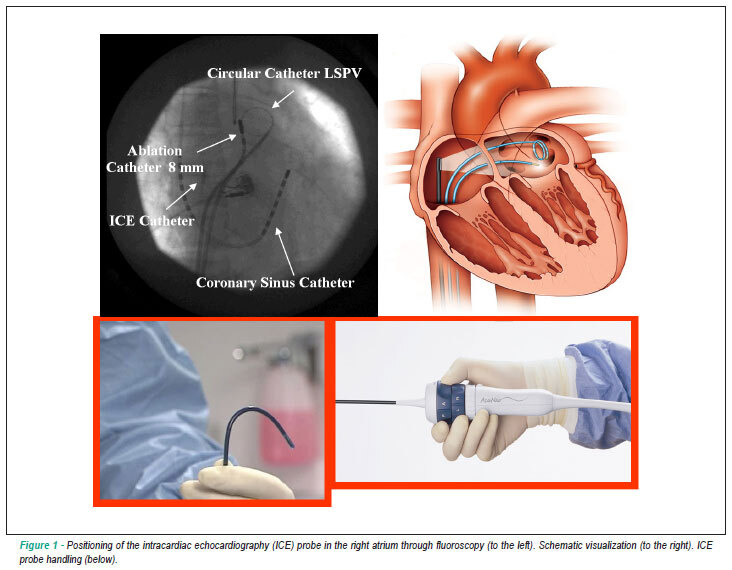
The intracardiac echocardiography (ICE) offers a detailed visualization of the cardiac structures, in association with hemodynamic information, allowing the precise and real-time positioning of the catheters, decreasing the time of exposure to fluoroscopy and the monitoring of acute complications during the electrophysiological procedure (i.e., formation of thrombi, pericardial effusion, cardiac tamponade), Consequently, its use has progressively increased, mainly in the ablation of atrial fibrillation and ventricular arrhythmias. It has shown to be very useful in the ablation of atrial fibrillation by providing anatomic data on the left atrium and pulmonary veins, helping in transseptal punctures, locating the ostium and antrum of the pulmonary veins, monitoring tissue injury during radiofrequency (RF) use, preventing esophageal injury by monitoring the injuries caused by RF on the left atrial posterior wall and assessing the pulmonary vein flow.

  • Doppler
  • Echocardiography
  • monitoring
Read Full Article
Creative Commons Attribution (CC BY) Creative Commons license
04/02/2011 DOI: 10.1590/S0066-782X2011000100019 Views 1

How to cite this article

EndNote RIS

Electronic Document Format (Vancouver)

Furlan SF, Drager LF. To Dip or not to Dip Blood Pressure in Chronic Obstructive Pulmonary Disease: That is the Question!. Arquivos Brasileiros de Cardiologia 2021;116(2):303-4.

Electronic Document Format (ABNT)

Furlan, Sofia F.; Drager, Luciano F.. To Dip or not to Dip Blood Pressure in Chronic Obstructive Pulmonary Disease: That is the Question!. Arquivos Brasileiros de Cardiologia, v. 116, n. 2, p. 303-304, Feb. 2021.

Electronic Document Format (APA)

Furlan, S. F., & Drager, L. F. (2021). To Dip or not to Dip Blood Pressure in Chronic Obstructive Pulmonary Disease: That is the Question!. Arquivos Brasileiros de Cardiologia, 116(2), 303-304.

Electronic Document Format (ISO)

Furlan, Sofia F. and Drager, Luciano F.. To Dip or not to Dip Blood Pressure in Chronic Obstructive Pulmonary Disease: That is the Question!. Arquivos Brasileiros de Cardiologia [online]. 2021, vol. 116, n. 2, [cited 2026-10-14], pp. 303-304. Available from: <https://journals.cardiol.br/en/article/to-dip-or-not-to-dip-blood-pressure-in-chronic-obstructive-pulmonary-disease-that-is-the-question/>. ISSN 0066-782X

EndNote RIS

Electronic Document Format (Vancouver)

Askın M, Koc EM, Sozmen K, Turan MO, Soypacacı Z, Aksun S. Evaluation of Dipper and Non-dipper Blood Pressure Patterns and Quality of Life Among Patients with Chronic Obstructive Pulmonary Disease. Arquivos Brasileiros de Cardiologia 2021;116(2):295-302.

Electronic Document Format (ABNT)

Askın, Meryem; Koc, Esra Meltem; Sozmen, Kaan; Turan, Muzaffer Onur; Soypacacı, Zeki; Aksun, Saliha. Evaluation of Dipper and Non-dipper Blood Pressure Patterns and Quality of Life Among Patients with Chronic Obstructive Pulmonary Disease. Arquivos Brasileiros de Cardiologia, v. 116, n. 2, p. 295-302, Jan. 2021.

Electronic Document Format (APA)

Askın, M., Koc, E. M., Sozmen, K., Turan, M. O., Soypacacı, Z., & Aksun, S. (2021). Evaluation of Dipper and Non-dipper Blood Pressure Patterns and Quality of Life Among Patients with Chronic Obstructive Pulmonary Disease. Arquivos Brasileiros de Cardiologia, 116(2), 295-302.

Electronic Document Format (ISO)

Askın, Meryem and Koc, Esra Meltem and Sozmen, Kaan and Turan, Muzaffer Onur and Soypacacı, Zeki and Aksun, Saliha. Evaluation of Dipper and Non-dipper Blood Pressure Patterns and Quality of Life Among Patients with Chronic Obstructive Pulmonary Disease. Arquivos Brasileiros de Cardiologia [online]. 2021, vol. 116, n. 2, [cited 2026-10-14], pp. 295-302. Available from: <https://journals.cardiol.br/en/article/evaluation-of-dipper-and-non-dipper-blood-pressure-patterns-and-quality-of-life-among-patients-with-chronic-obstructive-pulmonary-disease/>. ISSN 0066-782X

EndNote RIS

Electronic Document Format (Vancouver)

Saad EB, Costa IP, Camanho LEM. Use of intracardiac echocardiography in the electrophysiology laboratory. Arquivos Brasileiros de Cardiologia 2011;96(1):e11-7.

Electronic Document Format (ABNT)

Saad, Eduardo B.; Costa, Ieda Prata; Camanho, Luiz Eduardo M.. Use of intracardiac echocardiography in the electrophysiology laboratory. Arquivos Brasileiros de Cardiologia, v. 96, n. 1, p. e11-e17, Feb. 2011.

Electronic Document Format (APA)

Saad, E. B., Costa, I. P., & Camanho, L. E. M. (2011). Use of intracardiac echocardiography in the electrophysiology laboratory. Arquivos Brasileiros de Cardiologia, 96(1), e11-e17.

Electronic Document Format (ISO)

Saad, Eduardo B. and Costa, Ieda Prata and Camanho, Luiz Eduardo M.. Use of intracardiac echocardiography in the electrophysiology laboratory. Arquivos Brasileiros de Cardiologia [online]. 2011, vol. 96, n. 1, [cited 2026-10-14], pp. e11-e17. Available from: <https://journals.cardiol.br/en/article/use-of-intracardiac-echocardiography-in-the-electrophysiology-laboratory/>. ISSN 0066-782X

  • About ABC Family
  • Internal Regulation
  • Editorial Board
  • Brazilian Society of Cardiology (SBC)

Issues

SBC Guidelines

  • Videos
  • Podcasts
  • News