ABC Family Arquivos Brasileiros de Cardiologia International Journal of Cardiovascular Sciences ABC Heart Failure & Cardiomyopathy ABC Imagem Cardiovascular
Português English
ABC Family
Português English
  • About
    • About ABC Family
    • Internal Regulation
    • Editorial Board
    • Brazilian Society of Cardiology (SBC)
  • Issues
  • SBC Guidelines
  • Content
    • Videos
    • Podcasts
    • News
  • About
    • About ABC Family
    • Internal Regulation
    • Editorial Board
    • Brazilian Society of Cardiology (SBC)
  • Issues
  • SBC Guidelines
  • Content
    • Videos
    • Podcasts
    • News

ABC Family

  • ABC Family
  • Arquivos Brasileiros de Cardiologia
  • International Journal of Cardiovascular Sciences
  • ABC Heart Failure & Cardiomyopathy
  • ABC Imagem Cardiovascular
Search in

No content found.

Journals
Ordering
Article types
Others

  1. Home
  2. Keyword: Guidelines
Figure 1
IJCS
Guideline

iCARDIO Alliance Global Implementation Guidelines for the Management of Obesity 2025

Stefan D. Anker et al. Linong Ji Tammy Kindel Andrew J.S. Coats … Dike Ojji Adriana Puente Barragán Peter Rossing Shelley Zieroth Shaaf Ahmad Shariq Usman Geeta Appannah Alison L. Bailey Ahmed Bennis Andrea Brandao Javed Butler Melanie J Davies Lubomira Fabryova Yuan-Lin Guo Hidetaka Itoh Uday M. Jadhav Carel W. Le Roux Fausto J. Pinto Julio Rosenstock Banshi Saboo Hani Sabbour Mangesh Tiwaskar Karol E. Watson Kwang Wei Tham Fernando Stuardo Wyss Walter P. Abhayaratna William T. Abraham Wael Al Mahmeed Alessia Argirò John J. Atherton Danielle Belardo Raquel Campuzano Nandini Chatterjee Vijay Chopra Marc-André Cornier Sarah Davies Clemencia de Rueda Panadero Anastase Dzudie Ty J. Gluckman Muhammad Shahzeb Khan Kamlesh Khunti Yuri Lopatin Zhiyi Ma Okechukwu S. Ogah Abraham Oomman Emilio S. Peralta Lopez Ping Li Paul Poirier Julie Redfern Giuseppe M.C. Rosano Donna Ryan Amit Saraf Sameh Shaheen Subodh Verma Stephan von Haehling Yuhui Zhang Martha Gulati Naveed Sattar Jose Luis Zamorano

Abstract

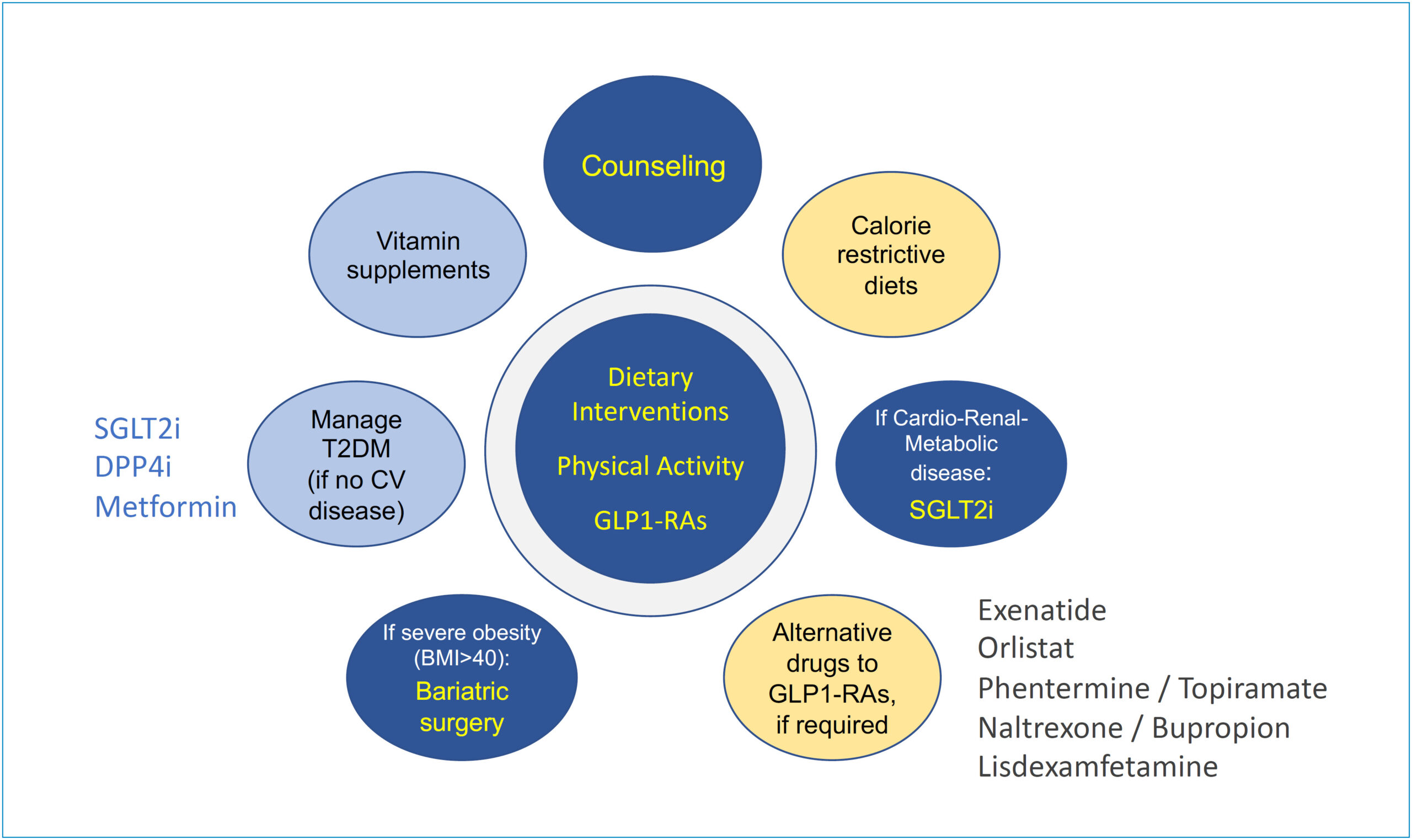
There are a number of guidelines on how to manage obesity, but inconsistencies in healthcare access, varying infrastructure, resource constraints and diverse local practices restrict their global applicability. This underscores the need for universal recommendations that address the unique challenges faced by patients and healthcare providers worldwide. Our Global Guidelines emphasize the incorporation of novel therapies, while integrating standards of care with the most up-to-date evidence to enable clinicians to optimize obesity management. Context-specific recommendations tailored to individual patient needs are highlighted, providing a thorough evaluation of the risks, benefits, and overall value of each therapy, aiming to establish a standard of care that improves patient outcomes and reduces the burden of hospitalization in this susceptible population. These Global Guidelines provide evidence-based recommendations that represent a group consensus considering the many other published guidelines that have reviewed many of the issues discussed here, but they also make new recommendations where new evidence has recently emerged, and – most importantly – also provide recommendations on several issues where resource limitations may put constraints on the care provided to patients living with obesity. Such “economic adjustment” recommendations aim to guide situations when “Resources are somewhat limited” or when “Resources are severely limited”. Hence, this document presents a comprehensive update to obesity management guidelines, thereby aiming to provide a unified strategy for the pharmacological, non-pharmacological, and invasive management of this significant global health challenge that is applicable to the needs of healthcare around the globe.
  • CARDIO Alliance
  • cardiometabolic disease
  • Guidelines
  • Obesity
Read Full Article
Creative Commons Attribution (CC BY) Creative Commons license
01/06/2026 DOI: 10.36660/ijcs.20260056 Views 1
IJCS
Editorial

Cardiovascular Rehabilitation at Distance: A New Moment

Ricardo Vivacqua Cardoso Costa

Cardiovascular rehabilitation consists of a non-pharmacological intervention process in individuals with metabolic, pulmonary, or cardiovascular disorders, aiming at reducing symptoms, quality of life improvement, and the possible increase in life expectancy.

It consists, predominantly, in the practice of regular, individualized physical exercises, in addition to guidance concerning other risk factors, including physical inactivity, as well as nutritional and psychological support, intending to slow down and cause possible regression of the patient’s pathology.,

[…]

  • Betacoronavirus
  • Cardiac Rehabilitation
  • COVID-1
  • Exercise Tolerance
  • Guidelines
  • Pandemia
  • Physical Exertion
  • physical therapy modalities
  • Telerehabilitation
Read Full Article
Creative Commons Attribution (CC BY) Creative Commons license
12/05/2021 DOI: 10.36660/ijcs.20210022 Views 1
Figure 1
ABC
Research Letter

The Challenges of Heart Failure Yesterday, Today and Tomorrow and the 20 Years of DEIC

Evandro Tinoco Mesquita et al. Ana Paula Mendes Lidia Moura José Albuquerque de Figueiredo Neto … Fabiana G. Marcondes-Braga Fernando Bacal Maria da Consolação Vieira Moreira Nadine Oliveira Clausell

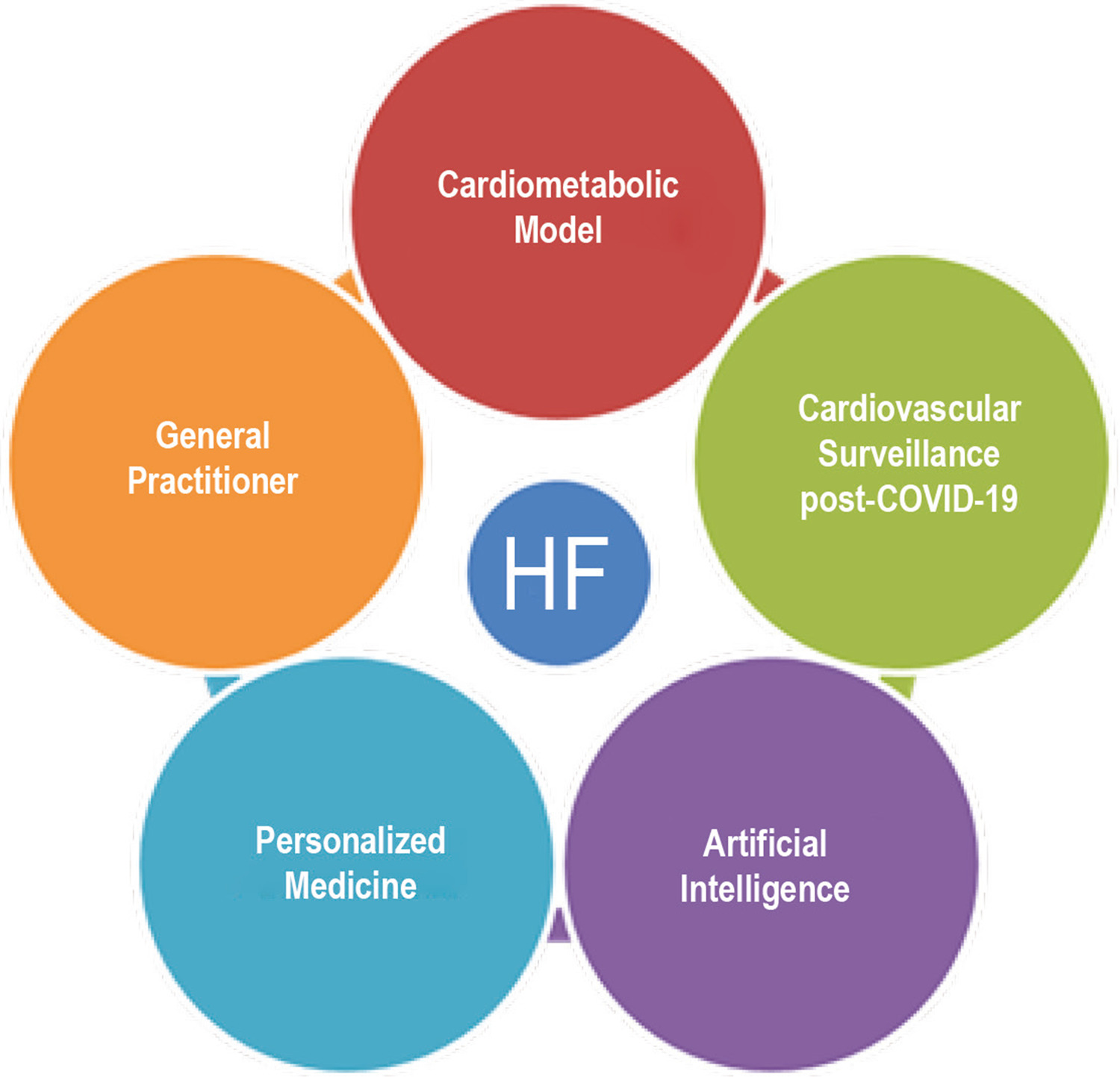
The Department of Heart Failure of the Brazilian Society of Cardiology (DEIC) completes 20 years in 2020 and represents a robust legacy of scientific activities and associations of Brazilian cardiology.

Its foundation represented an important milestone in the fight against heart failure (HF), a complex progressive and often fatal clinical syndrome. HF should be addressed in a multidisciplinary way, supported by translational science and good practices (clinical guidelines and protocols), involving patients, families, caregivers, managers and the whole society, in view of its social impacts in Brazil and in the world.

[…]

  • Demographic Aging
  • Guidelines
  • Heart Failure/trends
  • Scientific Production
  • Translational Medical Research
Read Full Article
Creative Commons Attribution (CC BY) Creative Commons license
01/03/2021 DOI: 10.36660/abc.20201200 Views 1
ABC
Special Article

III SBC Guidelines on the Analysis and Issuance of Electrocardiographic Reports – Executive Summary

Carlos Alberto Pastore et al. Nelson Samesima Horacio Gomes Pereira-Filho

Abstract

The third version of the guidelines covers recently described topics, such as ion channel diseases, acute ischemic changes, the electrocardiogram in athletes, and analysis of ventricular repolarization. It sought to revise the criteria for overloads, conduction disorders, and analysis of data for internet transmission.

  • Abstracts
  • Electrocardiography
  • Guidelines
  • Outcome Assessment (Health Care)
Read Full Article
Creative Commons Attribution (CC BY) Creative Commons license
01/11/2016 DOI: 10.5935/abc.20160173
Assessment of the adherence of cardiologists to guidelines for the treatment of atrial fibrillation
ABC
Artigo Original

Assessment of the adherence of cardiologists to guidelines for the treatment of atrial fibrillation

Cézar R. van der Sand et al. Tiago Luiz Luz Leiria Renato Abdala Karam Kalil

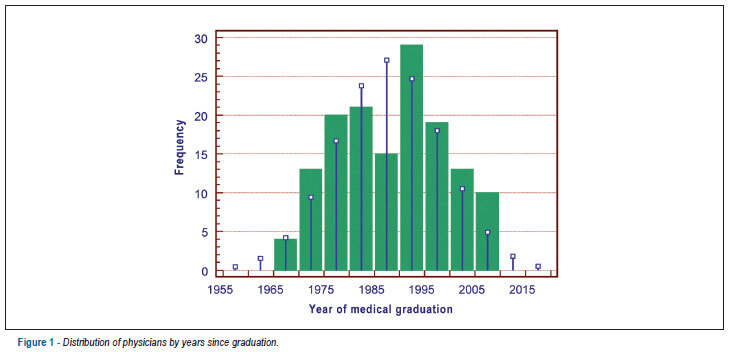
BACKGROUND: No local studies evaluating the knowledge of cardiologists on the management of atrial fibrillation (AF) and their adherence to these guidelines are available. OBJECTIVE: To evaluate the knowledge of cardiologists on the guidelines and clinical practices for the treatment of AF, correlating it to the time since medical graduation. METHODS: Cross-sectional study randomly including cardiologists affiliated to the Society of Cardiology of the State of Rio Grande do Sul (Sociedade de Cardiologia do Estado do Rio Grande do Sul – SOCERGS). The physicians were divided into two groups, according to time since graduation: those graduated for more (G1) or less (G2) than 25 years. RESULTS: Of the 859 SOCERGS members, 150 were interviewed, and six refused to participate in the study. G1 comprised 71 physicians, and G2, 73. Differences were observed in regard to the following variables: use of betablockers as the first-choice drug for the control of AF response in 59.2% (G1) vs 91.8% (G2) (p<0.0001); use of digoxin as the preferred drug for the control of AF response in 19.7% (G1) vs 0% (G2) (p< 0.0001); warfarin as the preferred anticoagulant in 71.8% (G1) vs 93.2% (G2) (p=0.009); application of a risk score for anticoagulation in 73.2% (G1) vs 87.7% (G2) (p=0.02). In questions regarding the knowledge about the Brazilian Society of Cardiology's guideline for AF, the overall percentage of right answers was 82.3%. CONCLUSION: Most of the clinical measures regarding the management of AF comply with the guidelines, and the clinical practice differs according with the time since graduation.

  • Anticoagulants
  • Atrial Fibrillation
  • Guidelines
Read Full Article
Creative Commons Attribution (CC BY) Creative Commons license
23/07/2013 DOI: 10.5935/abc.20130148 Views 1
Impact on hypertension reclassification by Ambulatory Blood Pressure Monitoring (ABPM) according to the V Brazilian Guidelines on ABPM
ABC
Artigo Original

Impact on hypertension reclassification by Ambulatory Blood Pressure Monitoring (ABPM) according to the V Brazilian Guidelines on ABPM

Daniel Forestiero et al. Juliana Lustoza Mauad Camila Forestiero Mario Lins Peixoto … Fabio Peixoto Ganassin Carolina Gonzaga Antonio Carlos Cordeiro Gabriel Doreto Rodrigues Tiago Bueno da Silveira Celso Amodeo

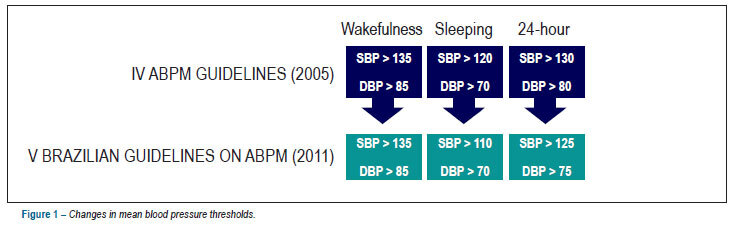
BACKGROUND: New recommendations on reference values for normal test results in ambulatory blood pressure monitoring (ABPM) were proposed by the V Brazilian Guidelines on Ambulatory Blood Pressure Monitoring, based mainly on the IDACO study. Objectives: This epidemiological study is aimed at evaluating the impact of adopting these new standards in an arterial hypertension referral center. METHODS: The results of 1,567 ABPM tests carried out between 2005 and 2010 were analyzed; 481 patients were excluded from the sample for not meeting minimum quality criteria of the test. Reference values from the IV Brazilian Guidelines on ABPM (2005) were used for the classification of these tests regarding the abnormality and compared with the changes proposed by the V Brazilian Guidelines on ABPM (2011). Statistical analysis was performed by Pearson’s chi-square method and p values < 0.05 were considered statistically significant. RESULTS: For the 1,086 tests evaluated, there was a significant difference in the proportion of patients with altered ABPM results, especially for the variable systolic pressure in the sleeping period: 49% when adopting the cutoff values of 2005 and 71% when adopting the values of 2011, with statistical significance, p < 0.0001. CONCLUSIONS: The recommendations of the new guidelines had a great impact on the hypertension classification by ABPM test results in the study population. The question of thresholds of these tests for therapeutic targets of patients known to be hypertensive is still open and requires further studies, preferably national ones, for better definition of the subject.

  • Blood Pressure Monitoring, Ambulatory
  • Guidelines
  • Hypertension
Read Full Article
Creative Commons Attribution (CC BY) Creative Commons license
11/03/2013 DOI: 10.5935/abc.20130031
ST-Elevation myocardial infarction network: systematization in 205 cases reduced clinical events in the public health care system
ABC
Artigo Original

ST-Elevation myocardial infarction network: systematization in 205 cases reduced clinical events in the public health care system

Ana Christina Vellozo Caluza et al. Adriano H. Barbosa Iran Gonçalves Carlos Alexandre L. de Oliveira … Lívia Nascimento de Matos Claus Zeefried Antonio Célio C. Moreno Elcio Tarkieltaub Cláudia Maria R. Alves Antonio Carlos Carvalho

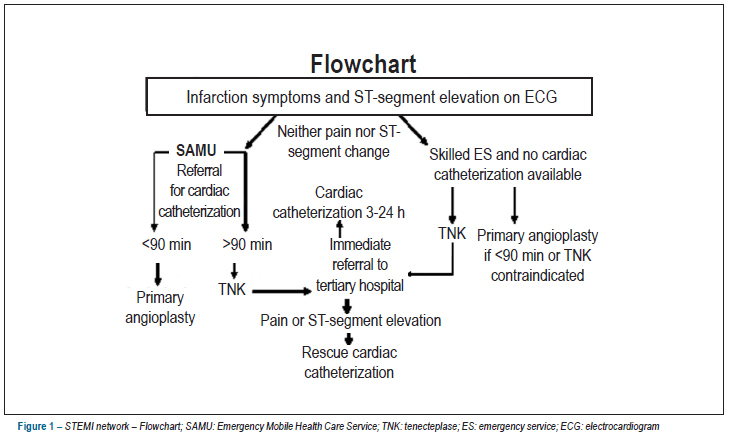
BACKGROUND: The major cause of death in the city of São Paulo (SP) is cardiac events. At its periphery, in-hospital mortality in acute myocardial infarction is estimated to range between 15% and 20% due to difficulties inherent in large metropoles. OBJECTIVE:To describe in-hospital mortality in ST-segment elevation acute myocardial infarction (STEMI) of patients admitted via ambulance or peripheral hospitals, which are part of a structured training network (STEMI Network). METHODS: Health care teams of four emergency services (Ermelino Matarazzo, Campo Limpo, Tatuapé and Saboya) of the periphery of the city of São Paulo and advanced ambulances of the Emergency Mobile Health Care Service (abbreviation in Portuguese, SAMU) were trained to use tenecteplase or to refer for primary angioplasty. A central office for electrocardiogram reading was used. After thrombolysis, the patient was sent to a tertiary reference hospital to undergo cardiac catheterization immediately (in case of failed thrombolysis) or in 6 to 24 hours, if the patient was stable. Quantitative and qualitative variables were assessed by use of uni- and multivariate analysis. RESULTS: From January 2010 to June 2011, 205 consecutive patients used the STEMI Network, and the findings were as follows: 87 anterior wall infarctions; 11 left bundle-branch blocks; 14 complete atrioventricular blocks; and 14 resuscitations after initial cardiorespiratory arrest. In-hospital mortality was 6.8% (14 patients), most of which due to cardiogenic shock, one hemorrhagic cerebrovascular accident, and one bleeding. CONCLUSION: The organization in the public health care system of a network for the treatment of STEMI, involving diagnosis, reperfusion, immediate transfer, and tertiary reference hospital, resulted in immediate improvement of STEMI outcomes.

  • Emergencies
  • Guidelines
  • Myocardial Infarction
  • Quality of Health Care
Read Full Article
Creative Commons Attribution (CC BY) Creative Commons license
09/11/2012 DOI: 10.1590/S0066-782X2012005000100 Views 1
ABC
Letter to the Editor

Hormone replacement therapy: is it recommended by SBC guidelines or not?

Flávio Danni Fuchs

LETTER TO THE EDITOR

[…]

  • Guidelines
  • hormone replacement therapy
Read Full Article
Creative Commons Attribution (CC BY) Creative Commons license
13/04/2011 DOI: 10.1590/S0066-782X2010001500019 Views 2
Tilt test: from the necessary to the indispensable
ABC
Artigo Original

Tilt test: from the necessary to the indispensable

Paula Gonçalves Macedo et al. Luiz R. Leite Leopoldo Santos-Neto Denise Hachul

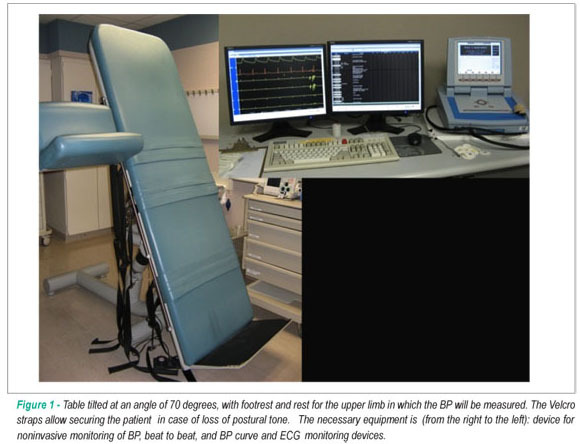
The head-up tilt test (HUTT) is widely used for investigation of syncope and presyncope, since it allows diagnosing different types of dysautonomia. The main cause of syncope is the vasovagal syndrome, the most common diagnosis among patients with HUTT indication. The test has been used for nearly 20 years, but many doctors are unaware of the methodology. After the cardiac causes of syncope are ruled out, the appropriate indication of the test and instructions to patients are important to ensure that the test will be carried out in a safe and relaxed manner. There are controversies in the literature over the diagnostic capacity and reliability of results. Studies with various protocols may explain the variability of results. This review describes the guidelines-recommended methodology and indications, complications, limitations and perspectives of this test.

  • Guidelines
  • Syncope
  • Tilt test
  • vasovagal syndrome
Read Full Article
Creative Commons Attribution (CC BY) Creative Commons license
21/01/2011 DOI: 10.1590/S0066-782X2011005000006
Implementing clinical guidelines on acute myocardial infarction care in an emergency service
ABC
Artigo Original

Implementing clinical guidelines on acute myocardial infarction care in an emergency service

Claudia Caminha Escosteguy et al. Alfredo Brasil Teixeira Margareth Crisostomo Portela Artur Eduardo Cotrim Guimarães … Sheyla Maria Lemos Lima Vanja Maria Bessa Ferreira Claudia Brito

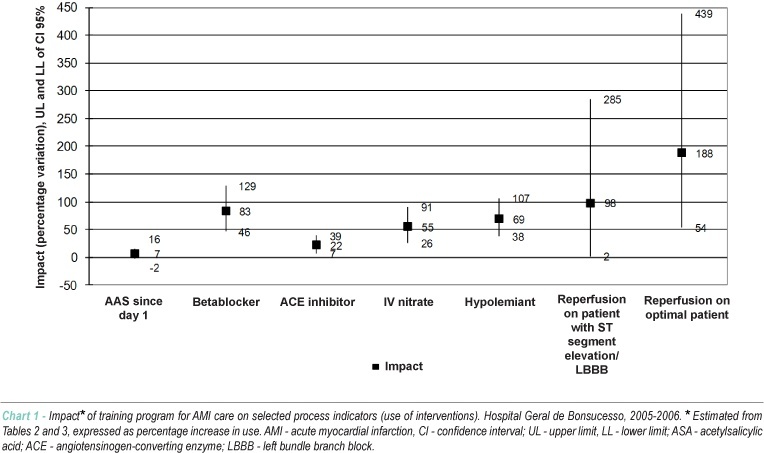
BACKGROUND: The implementation of clinical guidelines on acute myocardial infarction (AMI) care produces better results. OBJECTIVE: To present a multidisciplinary program to implement these guidelines in a large public emergency center and check its impact. METHODS: Evaluation study on health services, with “before and after” type design, to assess the indicators of quality of AMI care before and after implementation of training strategies and to facilitate emergency teams’ acceptance of clinical guidelines. This includes the development of educational and awareness-raising materials and continued supervision. Relative risk estimate (RR) and confidence intervals (95%). RESULTS: Pre-program group, 78 cases of AMI; post-program group, 66 cases of AMI. Most cases were treated only in the emergency room, due to small number of vacancies in the coronary care unit. We observed a significant increase (p<0.05) in the use of various interventions evaluated (process indicators): beta-blockers, 83%; angiotensin-converting enzyme inhibitors, 22%; lipid-lowering agents, 69%; intravenous nitrate, 55%; coronary reperfusion in acute myocardial infarction with ST-segment elevation, 98%. The use of aspirin from the first day of the IAM reached 95.5% of cases. The loss of opportunity of coronary reperfusion in patients with this indication, reduced from 71.4% to 17.6% post-training. CONCLUSION: The program achieved a significant impact and its propagation to other units may contribute to better assist IAM in the public health system.

  • Emergencies
  • Guidelines
  • Health Management
  • Myocardial Infarction
  • Practice guidelines
  • Quality of Health Care
Read Full Article
Creative Commons Attribution (CC BY) Creative Commons license
12/11/2010 DOI: 10.1590/S0066-782X2010005000142 Views 1
ABC
Artigo Original

Translation and validation into portuguese Language of the Medication Regimen Complexity Index

Ana Carolina Melchiors et al. Cassyano Januário Correr Fernando Fernández-Llimos

BACKGROUND: The complexity of pharmacotherapy is a result of a multiplicity of prescribed regimen factors, including the number of different drugs in the regimen, the number of dosage units per dose, the total number of prescribed doses per day and administration instructions. The Medication Regimen Complexity Index (MRCI) is a specific, reliable and valid tool used to measure the complexity of pharmacotherapy, originally developed in English language. OBJECTIVE: Transcultural translation and validation of this tool into Brazilian Portuguese. METHODS: A cross-sectional study was developed with 95 type-2 diabetes patients, receiving multiple medications. The validation process included translation into Portuguese, back-translation and pre-test of the tool, creating a new version called the Pharmacotherapy Complexity Index (PCI). The psychometric parameters were assessed, including convergent validity, discriminant validity and reliability (interclass and test-retest correlation). RESULTS: The complexity of pharmacotherapy measured by the MRCI-Brazil had an average score of 15.7 points (SD=8.36). MRCI-Brazil showed significant correlation with the number of medications (r=0.86; p<0.001) and age of patients (r=0.28, p=0.005). Interrater reliability analysis found an intra-class correlation (ICC) of 0.99 (p<0.001) and test-retest correlation was of 0.997 (p<0.001). CONCLUSION: The results have shown that the Brazilian version of the MRCI presents adequate validity and reliability, and may be useful in clinical practice and research involving the analysis of the drug regimen complexity.

  • Drug Therapy
  • Guidelines
  • Patient Compliance
Read Full Article
Creative Commons Attribution (CC BY) Creative Commons license
18/04/2008 DOI: 10.1590/S0066-782X2007001600001
Do Brazilian physicians follow the Brazilian guidelines on hypertension?
ABC
Artigo Original

Do Brazilian physicians follow the Brazilian guidelines on hypertension?

Décio Mion Junior et al. Giovanio Vieira da Silva Josiane Lima de Gusmão Carlos Alberto Machado … Celso Amodeo Fernando Nobre José Nery Praxedes Marco Antonio Mota

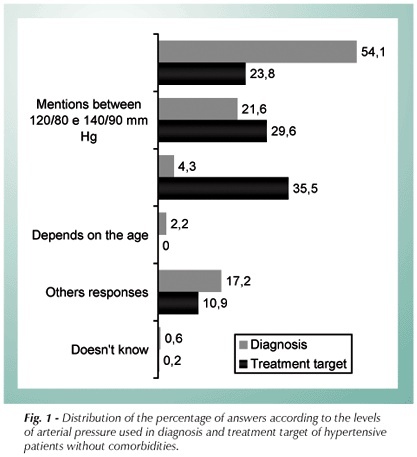
OBJECTIVE: To evaluate whether procedures adopted by Brazilian physicians in the diagnosis and treatment of hypertension are in compliance with those advocated by the IV Brazilian Hypertension Guidelines. METHOD: Survey carried out by means of telephone interviews with Brazilian physicians. The survey featured application of a questionnaire aimed to assess receipt of and compliance with the guidelines, and to evaluate various aspects regarding the treatment of hypertensive patients. RESULTS: 68.3% of the respondents had received the guidelines and answered the questionnaire in full. The total sample consisted of 483 physicians – 47% cardiologists, 31.7% internists, and 21.3% nephrologists. The survey showed high compliance with certain guideline topics such as more than one measurement at different times for the diagnosis of hypertension (94%), and providing guidance regarding lifestyle changes as a therapeutic strategy. As to arterial pressure levels used for diagnosis and therapeutic target, compliance with guideline recommendations lacks uniformity. The survey showed a clear preference for pressure levels lower than those recommended, especially in patients with comorbidities. Attempts to assess cardiovascular risk also proved to be low. Only 64.7% of the respondents reported that they seek to determine the presence of diabetes mellitus, and 56.4% check for dyslipidemia. The majority (59.3%) mentioned diuretics as the preferred drug class for initial drug treatment of hypertension. CONCLUSION: We concluded that there is only partial compliance with Brazilian Hypertension Guidelines and that certain factors should be taken into consideration when drawing up future guidelines, such as: improved distribution; standardization of values for diagnosis and therapeutic target; more extensive coverage of ways for physicians to approach hypertensive patients to better evaluate their overall cardiovascular risk.

  • Epidemiology
  • Guidelines
Read Full Article
Creative Commons Attribution (CC BY) Creative Commons license
22/03/2007 DOI: 10.1590/S0066-782X2007000200013 Views 1

How to cite this article

EndNote RIS

Electronic Document Format (Vancouver)

Anker SD, Ji L, Kindel T, Coats AJ, Ojji D, Barragán AP, Rossing P, et al. iCARDIO Alliance Global Implementation Guidelines for the Management of Obesity 2025. International Journal of Cardiovascular Sciences 2026;39:e20260056.

Electronic Document Format (ABNT)

Anker, Stefan D.; Ji, Linong; Kindel, Tammy; Coats, Andrew J.S.; Ojji, Dike; Barragán, Adriana Puente; Rossing, Peter; Zieroth, Shelley; Ahmad, Shaaf; Usman, Shariq; Appannah, Geeta; Bailey, Alison L.; Bennis, Ahmed; Brandao, Andrea; Butler, Javed; Davies, Melanie J; Fabryova, Lubomira; Guo, Yuan-Lin; Itoh, Hidetaka; Jadhav, Uday M.; Roux, Carel W. Le; Pinto, Fausto J.; Rosenstock, Julio; Saboo, Banshi; Sabbour, Hani; Tiwaskar, Mangesh; Watson, Karol E.; Tham, Kwang Wei; Wyss, Fernando Stuardo; Abhayaratna, Walter P.; Abraham, William T.; Mahmeed, Wael Al; Argirò, Alessia; Atherton, John J.; Belardo, Danielle; Campuzano, Raquel; Chatterjee, Nandini; Chopra, Vijay; Cornier, Marc-André; Davies, Sarah; Panadero, Clemencia de Rueda; Dzudie, Anastase; Gluckman, Ty J.; Khan, Muhammad Shahzeb; Khunti, Kamlesh; Lopatin, Yuri; Ma, Zhiyi; Ogah, Okechukwu S.; Oomman, Abraham; Lopez, Emilio S. Peralta; Li, Ping; Poirier, Paul; Redfern, Julie; Rosano, Giuseppe M.C.; Ryan, Donna; Saraf, Amit; Shaheen, Sameh; Verma, Subodh; Haehling, Stephan von; Zhang, Yuhui; Gulati, Martha; Sattar, Naveed; Zamorano, Jose Luis. iCARDIO Alliance Global Implementation Guidelines for the Management of Obesity 2025. International Journal of Cardiovascular Sciences, v. 39, e20260056, May. 2026.

Electronic Document Format (APA)

Anker, S. D., Ji, L., Kindel, T., Coats, A. J., Ojji, D., Barragán, A. P., Rossing, P., Zieroth, S., Ahmad, S., Usman, S., Appannah, G., Bailey, A. L., Bennis, A., Brandao, A., Butler, J., Davies, M. J., Fabryova, L., Guo, Y., Itoh, H., Jadhav, U. M., Roux, C. W. L., Pinto, F. J., Rosenstock, J., Saboo, B., Sabbour, H., Tiwaskar, M., Watson, K. E., Tham, K. W., Wyss, F. S., Abhayaratna, W. P., Abraham, W. T., Mahmeed, W. A., Argirò, A., Atherton, J. J., Belardo, D., Campuzano, R., Chatterjee, N., Chopra, V., Cornier, M., Davies, S., Panadero, C. R., Dzudie, A., Gluckman, T. J., Khan, M. S., Khunti, K., Lopatin, Y., Ma, Z., Ogah, O. S., Oomman, A., Lopez, E. S. P., Li, P., Poirier, P., Redfern, J., Rosano, G. M., Ryan, D., Saraf, A., Shaheen, S., Verma, S., Haehling, S. , Zhang, Y., Gulati, M., Sattar, N., & Zamorano, J. L. (2026). iCARDIO Alliance Global Implementation Guidelines for the Management of Obesity 2025. International Journal of Cardiovascular Sciences, 39, e20260056.

Electronic Document Format (ISO)

Anker, Stefan D. and Ji, Linong and Kindel, Tammy and Coats, Andrew J.S. and Ojji, Dike and Barragán, Adriana Puente and Rossing, Peter and Zieroth, Shelley and Ahmad, Shaaf and Usman, Shariq and Appannah, Geeta and Bailey, Alison L. and Bennis, Ahmed and Brandao, Andrea and Butler, Javed and Davies, Melanie J and Fabryova, Lubomira and Guo, Yuan-Lin and Itoh, Hidetaka and Jadhav, Uday M. and Roux, Carel W. Le and Pinto, Fausto J. and Rosenstock, Julio and Saboo, Banshi and Sabbour, Hani and Tiwaskar, Mangesh and Watson, Karol E. and Tham, Kwang Wei and Wyss, Fernando Stuardo and Abhayaratna, Walter P. and Abraham, William T. and Mahmeed, Wael Al and Argirò, Alessia and Atherton, John J. and Belardo, Danielle and Campuzano, Raquel and Chatterjee, Nandini and Chopra, Vijay and Cornier, Marc-André and Davies, Sarah and Panadero, Clemencia de Rueda and Dzudie, Anastase and Gluckman, Ty J. and Khan, Muhammad Shahzeb and Khunti, Kamlesh and Lopatin, Yuri and Ma, Zhiyi and Ogah, Okechukwu S. and Oomman, Abraham and Lopez, Emilio S. Peralta and Li, Ping and Poirier, Paul and Redfern, Julie and Rosano, Giuseppe M.C. and Ryan, Donna and Saraf, Amit and Shaheen, Sameh and Verma, Subodh and Haehling, Stephan von and Zhang, Yuhui and Gulati, Martha and Sattar, Naveed and Zamorano, Jose Luis. iCARDIO Alliance Global Implementation Guidelines for the Management of Obesity 2025. International Journal of Cardiovascular Sciences [online]. 2026, vol. 39, [cited 2026-10-14], e20260056. Available from: <https://journals.cardiol.br/en/article/icardio-alliance-global-implementation-guidelines-for-the-management-of-obesity-2025/>. ISSN 2359-4802

EndNote RIS

Electronic Document Format (Vancouver)

Costa RVC. Cardiovascular Rehabilitation at Distance: A New Moment. International Journal of Cardiovascular Sciences 2021;34(6):642-3.

Electronic Document Format (ABNT)

Costa, Ricardo Vivacqua Cardoso. Cardiovascular Rehabilitation at Distance: A New Moment. International Journal of Cardiovascular Sciences, v. 34, n. 6, p. 642-643, May. 2021.

Electronic Document Format (APA)

Costa, R. V. C. (2021). Cardiovascular Rehabilitation at Distance: A New Moment. International Journal of Cardiovascular Sciences, 34(6), 642-643.

Electronic Document Format (ISO)

Costa, Ricardo Vivacqua Cardoso. Cardiovascular Rehabilitation at Distance: A New Moment. International Journal of Cardiovascular Sciences [online]. 2021, vol. 34, n. 6, [cited 2026-10-14], pp. 642-643. Available from: <https://journals.cardiol.br/en/article/cardiovascular-rehabilitation-at-distance-a-new-moment/>. ISSN 2359-4802

EndNote RIS

Electronic Document Format (Vancouver)

Mesquita ET, Mendes AP, Moura L, Figueiredo Neto JA, Marcondes-Braga FG, Bacal F, Moreira MCV, et al. The Challenges of Heart Failure Yesterday, Today and Tomorrow and the 20 Years of DEIC. Arquivos Brasileiros de Cardiologia 2021;116(2):359-62.

Electronic Document Format (ABNT)

Mesquita, Evandro Tinoco; Mendes, Ana Paula; Moura, Lidia; Figueiredo Neto, José Albuquerque de; Marcondes-Braga, Fabiana G.; Bacal, Fernando; Moreira, Maria da Consolação Vieira; Clausell, Nadine Oliveira. The Challenges of Heart Failure Yesterday, Today and Tomorrow and the 20 Years of DEIC. Arquivos Brasileiros de Cardiologia, v. 116, n. 2, p. 359-362, Feb. 2021.

Electronic Document Format (APA)

Mesquita, E. T., Mendes, A. P., Moura, L., Figueiredo Neto, J. A. , Marcondes-Braga, F. G., Bacal, F., Moreira, M. C. V., & Clausell, N. O. (2021). The Challenges of Heart Failure Yesterday, Today and Tomorrow and the 20 Years of DEIC. Arquivos Brasileiros de Cardiologia, 116(2), 359-362.

Electronic Document Format (ISO)

Mesquita, Evandro Tinoco and Mendes, Ana Paula and Moura, Lidia and Figueiredo Neto, José Albuquerque de and Marcondes-Braga, Fabiana G. and Bacal, Fernando and Moreira, Maria da Consolação Vieira and Clausell, Nadine Oliveira. The Challenges of Heart Failure Yesterday, Today and Tomorrow and the 20 Years of DEIC. Arquivos Brasileiros de Cardiologia [online]. 2021, vol. 116, n. 2, [cited 2026-10-14], pp. 359-362. Available from: <https://journals.cardiol.br/en/article/the-challenges-of-heart-failure-yesterday-today-and-tomorrow-and-the-20-years-of-deic/>. ISSN 0066-782X

EndNote RIS

Electronic Document Format (Vancouver)

Pastore CA, Samesima N, Pereira-Filho HG. III SBC Guidelines on the Analysis and Issuance of Electrocardiographic Reports – Executive Summary. Arquivos Brasileiros de Cardiologia 2016;107(5):392-40.

Electronic Document Format (ABNT)

Pastore, Carlos Alberto; Samesima, Nelson; Pereira-Filho, Horacio Gomes. III SBC Guidelines on the Analysis and Issuance of Electrocardiographic Reports – Executive Summary. Arquivos Brasileiros de Cardiologia, v. 107, n. 5, p. 392-402, Oct. 2016.

Electronic Document Format (APA)

Pastore, C. A., Samesima, N., & Pereira-Filho, H. G. (2016). III SBC Guidelines on the Analysis and Issuance of Electrocardiographic Reports – Executive Summary. Arquivos Brasileiros de Cardiologia, 107(5), 392-402.

Electronic Document Format (ISO)

Pastore, Carlos Alberto and Samesima, Nelson and Pereira-Filho, Horacio Gomes. III SBC Guidelines on the Analysis and Issuance of Electrocardiographic Reports – Executive Summary. Arquivos Brasileiros de Cardiologia [online]. 2016, vol. 107, n. 5, [cited 2026-10-14], pp. 392-402. Available from: <https://journals.cardiol.br/en/article/iii-sbc-guidelines-on-the-analysis-and-issuance-of-electrocardiographic-reports-executive-summary/>. ISSN 0066-782X

EndNote RIS

Electronic Document Format (Vancouver)

Sand CR, Leiria TLL, Kalil RAK. Assessment of the adherence of cardiologists to guidelines for the treatment of atrial fibrillation. Arquivos Brasileiros de Cardiologia 2013;101(2):127-33.

Electronic Document Format (ABNT)

Sand, Cézar R. van der; Leiria, Tiago Luiz Luz; Kalil, Renato Abdala Karam. Assessment of the adherence of cardiologists to guidelines for the treatment of atrial fibrillation. Arquivos Brasileiros de Cardiologia, v. 101, n. 2, p. 127-133, Jul. 2013.

Electronic Document Format (APA)

Sand, C. R. , Leiria, T. L. L., & Kalil, R. A. K. (2013). Assessment of the adherence of cardiologists to guidelines for the treatment of atrial fibrillation. Arquivos Brasileiros de Cardiologia, 101(2), 127-133.

Electronic Document Format (ISO)

Sand, Cézar R. van der and Leiria, Tiago Luiz Luz and Kalil, Renato Abdala Karam. Assessment of the adherence of cardiologists to guidelines for the treatment of atrial fibrillation. Arquivos Brasileiros de Cardiologia [online]. 2013, vol. 101, n. 2, [cited 2026-10-14], pp. 127-133. Available from: <https://journals.cardiol.br/en/article/assessment-of-the-adherence-of-cardiologists-to-guidelines-for-the-treatment-of-atrial-fibrillation/>. ISSN 0066-782X

EndNote RIS

Electronic Document Format (Vancouver)

Forestiero D, Mauad JL, Forestiero C, Peixoto ML, Ganassin FP, Gonzaga C, Cordeiro AC, et al. Impact on hypertension reclassification by Ambulatory Blood Pressure Monitoring (ABPM) according to the V Brazilian Guidelines on ABPM. Arquivos Brasileiros de Cardiologia 2013;100(2):175-9.

Electronic Document Format (ABNT)

Forestiero, Daniel; Mauad, Juliana Lustoza; Forestiero, Camila; Peixoto, Mario Lins; Ganassin, Fabio Peixoto; Gonzaga, Carolina; Cordeiro, Antonio Carlos; Rodrigues, Gabriel Doreto; Silveira, Tiago Bueno da; Amodeo, Celso. Impact on hypertension reclassification by Ambulatory Blood Pressure Monitoring (ABPM) according to the V Brazilian Guidelines on ABPM. Arquivos Brasileiros de Cardiologia, v. 100, n. 2, p. 175-179, Mar. 2013.

Electronic Document Format (APA)

Forestiero, D., Mauad, J. L., Forestiero, C., Peixoto, M. L., Ganassin, F. P., Gonzaga, C., Cordeiro, A. C., Rodrigues, G. D., Silveira, T. B. , & Amodeo, C. (2013). Impact on hypertension reclassification by Ambulatory Blood Pressure Monitoring (ABPM) according to the V Brazilian Guidelines on ABPM. Arquivos Brasileiros de Cardiologia, 100(2), 175-179.

Electronic Document Format (ISO)

Forestiero, Daniel and Mauad, Juliana Lustoza and Forestiero, Camila and Peixoto, Mario Lins and Ganassin, Fabio Peixoto and Gonzaga, Carolina and Cordeiro, Antonio Carlos and Rodrigues, Gabriel Doreto and Silveira, Tiago Bueno da and Amodeo, Celso. Impact on hypertension reclassification by Ambulatory Blood Pressure Monitoring (ABPM) according to the V Brazilian Guidelines on ABPM. Arquivos Brasileiros de Cardiologia [online]. 2013, vol. 100, n. 2, [cited 2026-10-14], pp. 175-179. Available from: <https://journals.cardiol.br/en/article/impact-on-hypertension-reclassification-by-ambulatory-blood-pressure-monitoring-abpm-according-to-the-v-brazilian-guidelines-on-abpm/>. ISSN 0066-782X

EndNote RIS

Electronic Document Format (Vancouver)

Caluza ACV, Barbosa AH, Gonçalves I, Oliveira CAL, Matos LN, Zeefried C, Moreno ACC, et al. ST-Elevation myocardial infarction network: systematization in 205 cases reduced clinical events in the public health care system. Arquivos Brasileiros de Cardiologia 2012;99(5):1040-8.

Electronic Document Format (ABNT)

Caluza, Ana Christina Vellozo; Barbosa, Adriano H.; Gonçalves, Iran; Oliveira, Carlos Alexandre L. de; Matos, Lívia Nascimento de; Zeefried, Claus; Moreno, Antonio Célio C.; Tarkieltaub, Elcio; Alves, Cláudia Maria R.; Carvalho, Antonio Carlos. ST-Elevation myocardial infarction network: systematization in 205 cases reduced clinical events in the public health care system. Arquivos Brasileiros de Cardiologia, v. 99, n. 5, p. 1040-1048, Nov. 2012.

Electronic Document Format (APA)

Caluza, A. C. V., Barbosa, A. H., Gonçalves, I., Oliveira, C. A. L. , Matos, L. N. , Zeefried, C., Moreno, A. C. C., Tarkieltaub, E., Alves, C. M. R., & Carvalho, A. C. (2012). ST-Elevation myocardial infarction network: systematization in 205 cases reduced clinical events in the public health care system. Arquivos Brasileiros de Cardiologia, 99(5), 1040-1048.

Electronic Document Format (ISO)

Caluza, Ana Christina Vellozo and Barbosa, Adriano H. and Gonçalves, Iran and Oliveira, Carlos Alexandre L. de and Matos, Lívia Nascimento de and Zeefried, Claus and Moreno, Antonio Célio C. and Tarkieltaub, Elcio and Alves, Cláudia Maria R. and Carvalho, Antonio Carlos. ST-Elevation myocardial infarction network: systematization in 205 cases reduced clinical events in the public health care system. Arquivos Brasileiros de Cardiologia [online]. 2012, vol. 99, n. 5, [cited 2026-10-14], pp. 1040-1048. Available from: <https://journals.cardiol.br/en/article/st-elevation-myocardial-infarction-network-systematization-in-205-cases-reduced-clinical-events-in-the-public-health-care-system/>. ISSN 0066-782X

EndNote RIS

Electronic Document Format (Vancouver)

Fuchs FD. Hormone replacement therapy: is it recommended by SBC guidelines or not?. Arquivos Brasileiros de Cardiologia 2011;95(5):674.

Electronic Document Format (ABNT)

Fuchs, Flávio Danni. Hormone replacement therapy: is it recommended by SBC guidelines or not?. Arquivos Brasileiros de Cardiologia, v. 95, n. 5, p. 674-674, Apr. 2011.

Electronic Document Format (APA)

Fuchs, F. D. (2011). Hormone replacement therapy: is it recommended by SBC guidelines or not?. Arquivos Brasileiros de Cardiologia, 95(5), 674-674.

Electronic Document Format (ISO)

Fuchs, Flávio Danni. Hormone replacement therapy: is it recommended by SBC guidelines or not?. Arquivos Brasileiros de Cardiologia [online]. 2011, vol. 95, n. 5, [cited 2026-10-14], pp. 674-674. Available from: <https://journals.cardiol.br/en/article/hormone-replacement-therapy-is-it-recommended-by-sbc-guidelines-or-not/>. ISSN 0066-782X

EndNote RIS

Electronic Document Format (Vancouver)

Macedo PG, Leite LR, Santos-Neto L, Hachul D. Tilt test: from the necessary to the indispensable. Arquivos Brasileiros de Cardiologia 2011;96(3):246-54.

Electronic Document Format (ABNT)

Macedo, Paula Gonçalves; Leite, Luiz R.; Santos-Neto, Leopoldo; Hachul, Denise. Tilt test: from the necessary to the indispensable. Arquivos Brasileiros de Cardiologia, v. 96, n. 3, p. 246-254, Jan. 2011.

Electronic Document Format (APA)

Macedo, P. G., Leite, L. R., Santos-Neto, L., & Hachul, D. (2011). Tilt test: from the necessary to the indispensable. Arquivos Brasileiros de Cardiologia, 96(3), 246-254.

Electronic Document Format (ISO)

Macedo, Paula Gonçalves and Leite, Luiz R. and Santos-Neto, Leopoldo and Hachul, Denise. Tilt test: from the necessary to the indispensable. Arquivos Brasileiros de Cardiologia [online]. 2011, vol. 96, n. 3, [cited 2026-10-14], pp. 246-254. Available from: <https://journals.cardiol.br/en/article/tilt-test-from-the-necessary-to-the-indispensable/>. ISSN 0066-782X

EndNote RIS

Electronic Document Format (Vancouver)

Escosteguy CC, Teixeira AB, Portela MC, Guimarães AEC, Lima SML, Ferreira VMB, Brito C, et al. Implementing clinical guidelines on acute myocardial infarction care in an emergency service. Arquivos Brasileiros de Cardiologia 2010;96(1):18-25.

Electronic Document Format (ABNT)

Escosteguy, Claudia Caminha; Teixeira, Alfredo Brasil; Portela, Margareth Crisostomo; Guimarães, Artur Eduardo Cotrim; Lima, Sheyla Maria Lemos; Ferreira, Vanja Maria Bessa; Brito, Claudia. Implementing clinical guidelines on acute myocardial infarction care in an emergency service. Arquivos Brasileiros de Cardiologia, v. 96, n. 1, p. 18-25, Nov. 2010.

Electronic Document Format (APA)

Escosteguy, C. C., Teixeira, A. B., Portela, M. C., Guimarães, A. E. C., Lima, S. M. L., Ferreira, V. M. B., & Brito, C. (2010). Implementing clinical guidelines on acute myocardial infarction care in an emergency service. Arquivos Brasileiros de Cardiologia, 96(1), 18-25.

Electronic Document Format (ISO)

Escosteguy, Claudia Caminha and Teixeira, Alfredo Brasil and Portela, Margareth Crisostomo and Guimarães, Artur Eduardo Cotrim and Lima, Sheyla Maria Lemos and Ferreira, Vanja Maria Bessa and Brito, Claudia. Implementing clinical guidelines on acute myocardial infarction care in an emergency service. Arquivos Brasileiros de Cardiologia [online]. 2010, vol. 96, n. 1, [cited 2026-10-14], pp. 18-25. Available from: <https://journals.cardiol.br/en/article/implementing-clinical-guidelines-on-acute-myocardial-infarction-care-in-an-emergency-service/>. ISSN 0066-782X

EndNote RIS

Electronic Document Format (Vancouver)

Melchiors AC, Correr CJ, Fernández-Llimos F. Translation and validation into portuguese Language of the Medication Regimen Complexity Index. Arquivos Brasileiros de Cardiologia 2008;89(4):210-8.

Electronic Document Format (ABNT)

Melchiors, Ana Carolina; Correr, Cassyano Januário; Fernández-Llimos, Fernando. Translation and validation into portuguese Language of the Medication Regimen Complexity Index. Arquivos Brasileiros de Cardiologia, v. 89, n. 4, p. 210-218, Apr. 2008.

Electronic Document Format (APA)

Melchiors, A. C., Correr, C. J., & Fernández-Llimos, F. (2008). Translation and validation into portuguese Language of the Medication Regimen Complexity Index. Arquivos Brasileiros de Cardiologia, 89(4), 210-218.

Electronic Document Format (ISO)

Melchiors, Ana Carolina and Correr, Cassyano Januário and Fernández-Llimos, Fernando. Translation and validation into portuguese Language of the Medication Regimen Complexity Index. Arquivos Brasileiros de Cardiologia [online]. 2008, vol. 89, n. 4, [cited 2026-10-14], pp. 210-218. Available from: <https://journals.cardiol.br/en/article/translation-and-validation-into-portuguese-language-of-the-medication-regimen-complexity-index/>. ISSN 0066-782X

EndNote RIS

Electronic Document Format (Vancouver)

Mion Junior D, Silva GV, Gusmão JL, Machado CA, Amodeo C, Nobre F, Praxedes JN, et al. Do Brazilian physicians follow the Brazilian guidelines on hypertension?. Arquivos Brasileiros de Cardiologia 2007;88(2):212-7.

Electronic Document Format (ABNT)

Mion Junior, Décio; Silva, Giovanio Vieira da; Gusmão, Josiane Lima de; Machado, Carlos Alberto; Amodeo, Celso; Nobre, Fernando; Praxedes, José Nery; Mota, Marco Antonio. Do Brazilian physicians follow the Brazilian guidelines on hypertension?. Arquivos Brasileiros de Cardiologia, v. 88, n. 2, p. 212-217, Mar. 2007.

Electronic Document Format (APA)

Mion Junior, D., Silva, G. V. , Gusmão, J. L. , Machado, C. A., Amodeo, C., Nobre, F., Praxedes, J. N., & Mota, M. A. (2007). Do Brazilian physicians follow the Brazilian guidelines on hypertension?. Arquivos Brasileiros de Cardiologia, 88(2), 212-217.

Electronic Document Format (ISO)

Mion Junior, Décio and Silva, Giovanio Vieira da and Gusmão, Josiane Lima de and Machado, Carlos Alberto and Amodeo, Celso and Nobre, Fernando and Praxedes, José Nery and Mota, Marco Antonio. Do Brazilian physicians follow the Brazilian guidelines on hypertension?. Arquivos Brasileiros de Cardiologia [online]. 2007, vol. 88, n. 2, [cited 2026-10-14], pp. 212-217. Available from: <https://journals.cardiol.br/en/article/do-brazilian-physicians-follow-the-brazilian-guidelines-on-hypertension/>. ISSN 0066-782X

  • About ABC Family
  • Internal Regulation
  • Editorial Board
  • Brazilian Society of Cardiology (SBC)

Issues

SBC Guidelines

  • Videos
  • Podcasts
  • News