ABC Family Arquivos Brasileiros de Cardiologia International Journal of Cardiovascular Sciences ABC Heart Failure & Cardiomyopathy ABC Imagem Cardiovascular
Português English
ABC Family
Português English
  • About
    • About ABC Family
    • Internal Regulation
    • Editorial Board
    • Brazilian Society of Cardiology (SBC)
  • Issues
  • SBC Guidelines
  • Content
    • Videos
    • Podcasts
    • News
  • About
    • About ABC Family
    • Internal Regulation
    • Editorial Board
    • Brazilian Society of Cardiology (SBC)
  • Issues
  • SBC Guidelines
  • Content
    • Videos
    • Podcasts
    • News

ABC Family

  • ABC Family
  • Arquivos Brasileiros de Cardiologia
  • International Journal of Cardiovascular Sciences
  • ABC Heart Failure & Cardiomyopathy
  • ABC Imagem Cardiovascular
Search in

No content found.

Journals
Ordering
Article types
Others

  1. Home
  2. Keyword: Health Policy
Geographic Variation in Door-to-Needle Time among Patients with STEMI from the Metropolitan Region of Rio de Janeiro: Results of the EQUITY-MI Cohort
ABC
Original Article

Geographic Variation in Door-to-Needle Time among Patients with STEMI from the Metropolitan Region of Rio de Janeiro: Results of the EQUITY-MI Cohort

Eric Costa de Almeida et al. Felipe Neves Albuquerque Esmeralci Ferreira Roberto Pozzan … Pedro Pimenta de Mello Spineti Pâmela Sousa Monteiro Williana Oliveira de Araújo Rhayana Vitória da Rosa Silva Carla Maciel Caminhas Thales Cardoso Whately João Gabriel Monteiro Junqueira Denilson Campos de Albuquerque

Abstract

Background

There is a gap in information regarding the reperfusion strategies used and the evolution of patients with ST-segment elevation myocardial infarction (STEMI) in the state of Rio de Janeiro.

Objective

To assess thrombolysis time in the diverse regions of the state capital and metropolitan area of Rio de Janeiro, as well as the outcome of post-infarction heart failure.

Methods

EQUITY-MI is a prospective cohort study of patients diagnosed with STEMI and referred to a single reperfusion center. Continuous variables were analyzed using the Kruskal–Wallis test, and categorical variables were analyzed using the chi-square test. In order to estimate the effect of door-to-needle time (DNT), generalized linear regression models with gamma distribution and log link function were applied, in addition to quantile regression to estimate the effect at the 25%, 50%, and 75% quantiles, both adjusted for sex, age, race, and education level. The significance level applied was 0.05.

Results

The study included 457 patients, with a mean age of 60.4 years, 79% of whom received thrombolysis, with a median DNT of 77 minutes, and 20.9% were thrombolyzed within 30 minutes, with no statistical difference between regions (p = 0.23). The Baixada Fluminense region presented the highest adjusted mean DNT (165.9 minutes), with a time difference compared to the North Zone (0.61; 0.44 to 0.87; p = 0.003) and West Zone (0.69; 0.51 to 0.96; p = 0.022). It also presented the highest DNT in all intervals (Q25, Q50, Q75). After infarction, 63.5% of patients presented heart failure.

Conclusion

There was a general delay in DNT for patients included in the EQUITY-MI study, with worse systematic performance in the Baixada Fluminense region, in addition to a high incidence of post-infarction heart failure.
  • Health Policy
  • Mortality
  • Myocardial Infarction
  • Myocardial Reperfusion
  • Thrombolytic Therapy
Read Full Article
Creative Commons Attribution (CC BY) Creative Commons license
27/02/2026 DOI: 10.36660/abc.20250401i Views 24
ABC
Editorial

Aiming for Health Equity: Why Does Diversity in Brazilian Medical Research Matter?

Christina Grüne de Souza e Silva

Over 35 years ago, Brazilian citizens earned their constitutional right to health. Guided by the fundamental principles of universality and equity, health access and actions provided by the Brazilian Unified Health System (Sistema Único de Saúde – SUS) are ever-since responsibilities of the State and should be, therefore, guaranteed by economic and social policies.

Since its creation, SUS has experienced significant improvements in disease prevention and health promotion. A dramatic drop in infant mortality and a significant increase in life expectancy are a couple of major outcomes that reflect the expansion in Brazilians’ population access to comprehensive health care. However, disparities across geographical regions and income groups persist, especially for vulnerable populations such as the quilombolas.

[…]

  • Diabetes Mellitus
  • Health Policy
  • Obesity
  • Risk Factors
  • Social Vulnerability
Read Full Article
Creative Commons Attribution (CC BY) Creative Commons license
13/01/2025 DOI: 10.36660/abc.20240731i Views 2
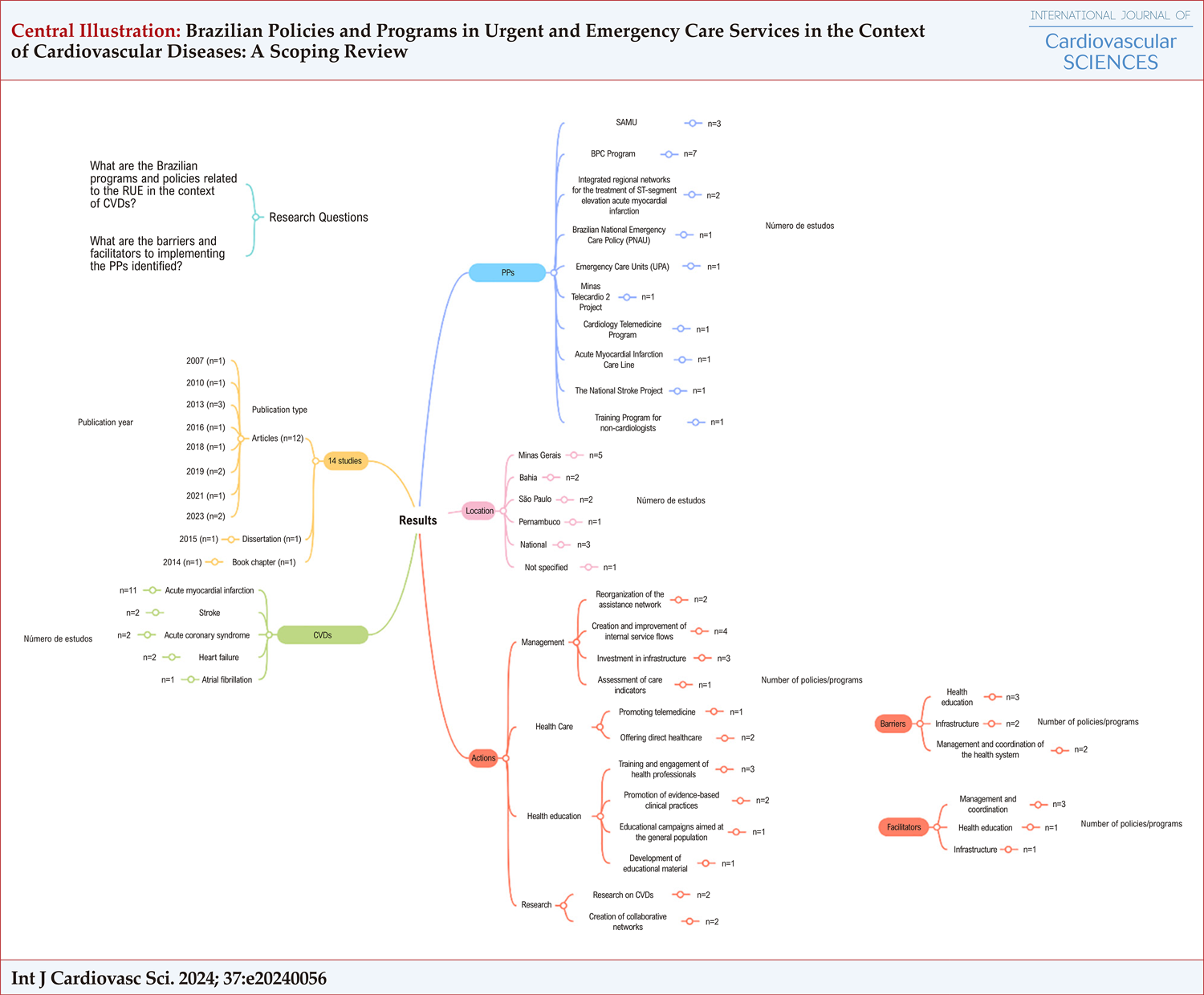
Brazilian Policies and Programs in Urgent and Emergency Care Services in the Context of Cardiovascular Diseases: A Scoping Review
IJCS
Original Article

Brazilian Policies and Programs in Urgent and Emergency Care Services in the Context of Cardiovascular Diseases: A Scoping Review

Liza Yurie Teruya Uchimura et al. Cintia de Freitas Oliveira Mabel Fernandes Figueiró Camila Pereira Pinto Toth … Camila Roncon de Lima Patricia Vendramim

Abstract

Introduction

Cardiovascular diseases (CVD) are a major cause of mortality in Brazil, requiring the improvement of healthcare mechanisms that can promote rapid and effective care for patients.

Objectives

To identify and characterize Brazilian policies and programs (PP) regarding urgency and emergency care in the context of CVD.

Method

The scoping review followed recommendations from the Joanna Briggs Institute (JBI). The search for studies was conducted across seven databases. The screening and eligibility steps were performed by reviewers independently, with conflicts resolved by consensus or consultation with a third reviewer. The data extraction was done in a spreadsheet and the information was analyzed and grouped by content similarity.

Results

Through the analysis of 14 studies, a systematic and contextualized understanding was gained regarding 10 PPs implemented in the urgency and emergency network (RUE) for individuals with CVDs. SAMU emerged as the most extensively studied PP, predominantly in the state of Minas Gerais. The diseases most commonly addressed in these studies included acute myocardial infarction (featured in 80% of publications), stroke, acute coronary syndrome, heart failure, and atrial fibrillation. These PP have demonstrated significant improvements in clinical outcomes, particularly in reducing morbidity and mortality rates. The studies also revealed important insights into barriers and drivers related to infrastructure, health education, and system management and coordination.

Conclusion

The evidence gathered provides significant contributions to guide future policy development and improve decision-making in clinical management for cardiologists.

  • Cardiology
  • Cardiovascular Diseases
  • Emergencies
  • Health Policy
Read Full Article
Creative Commons Attribution (CC BY) Creative Commons license
19/08/2024 DOI: 10.36660/ijcs.20240056 Views 1
Figure 1
ABC
Editorial

Vaccinating Patients with Heart Disease Against COVID-19: The Reasons for Priority

Wolney de Andrade Martins et al. Gláucia Maria Moraes de Oliveira Andréa Araujo Brandão Ricardo Mourilhe-Rocha … Evandro Tinoco Mesquita José Francisco Kerr Saraiva Fernando Bacal Marcelo Antônio Cartaxo Queiroga Lopes

The COVID-19 pandemic

The World Health Organization recognized COVID-19 as a pandemic on March 11, 2020. Since then, this public health emergency has become the leading cause of death in the world and has made addressing it an unquestionable priority. At the time of writing this editorial, we counted 86 969 386 confirmed cases and 1 915 657 deaths from COVID-19 worldwide, of which, 8 013 708 cases in Brazil resulted in 201 460 deaths.According to projections by the Institute for Health Metrics and Evaluation (IHME),Brazil will have 248 476 deaths from COVID-19 on April 4, 2021. By March 19, 2021, 242 738 [232 202 – 255 044] deaths are estimated, and those numbers could be reduced to 241 668 [231 337 – 253 770], with the quick administration of vaccines, and to 223 910 [215 565 – 233 360], with a 95% level of face mask use in public. The magnitude of the number of cases and deaths from a single disease in such a short time is worrisome. Now, when there is a growth in the number of new cases and hospitalizations, starting to vaccinate will have an impact on reducing deaths and hospitalizations in a short interval. Despite the efforts of the scientific community, there is no specific treatment to block viral replication. In this sense, vaccination programs are powerful allies. In addition, due to the remarkable progress of science, we already have this resource.

Brazil, through its Unified Health System (SUS), has been known for the successful implementation of vaccination programs for its population. The institution of a public policy to vaccinate within the SUS principles, which are universality, integrality, and equity, is urgent. However, because of the antivaccine movements that have emerged worldwide, a strong effort to obtain the population’s adhesion is required. In the past, in the Vaccine Revolt experienced by Oswaldo Cruz, we have successfully faced that disbelief. Let us be inspired by that episode to overcome this serious health crisis.

[…]

  • Betacoronavirus, Pandemics
  • Cardiovascular Diseases
  • Coronavirus infections
  • Coronavirus, COVID-19
  • Health Policy
  • Influenza, Human
  • Vaccination
  • Vaccines
Read Full Article
Creative Commons Attribution (CC BY) Creative Commons license
01/03/2021 DOI: 10.36660/abc.20210012 Views 1
IJCS
Original Article

Pre-hospital Care for Suspected Stroke Patients, Cared for by Mobile Emergency Care Units in Northern Minas Gerais

Lorenn Lages Gusmão et al. Israel Junior Borges do Nascimento Gabriel Almeida Silqueira Rocha João Antonio de Queiroz Oliveira … Geisiane Sousa Braga Machado Izabella de Oliveira Antunes Romeu Vale Sant’anna Breno Franco Silveira Fernandes Ubiratam Lopes Correia Antonio Luiz Pinho Ribeiro Milena S. Marcolino

Abstract

Background

Stroke management require rapid identification, assessment, and transport of patients to qualified health care centers. However, there is little description in the literature on the multiple challenges associated with the pre-hospital transport of suspected stroke patients.

Objective

To characterize the pre-hospital care provided to suspected stroke patients by the Brazilian Emergency Medical Service (SAMU in Portuguese), by means of a descriptive case study.

Methods

This is a descriptive study of a series of cases. Data from the SAMU regarding the responses to emergency calls from suspected stroke patients were collected. Independent reviewers confirmed the diagnostic hypothesis and all discordances were assessed using kappa statistics. Clinical data and transport times were described as frequency and proportion or central tendency and dispersion measures. Normality of continuous variable distribution was assessed using the Kolmogorov-Smirnov test. The Mann-Whitney U test was used for comparison of medians, with a 5% significance level.

Results

During the studied period, 556 suspected stroke patients were treated. The kappa index was 0.82 (95% CI 0.737 to 0.919) CI. In 74.7% of the cases, the symptom onset time was not recorded. The median time elapsed between the call for emergency services and the ambulance arrival was 18 minutes, and the median transport time was 38 minutes. A total of 34% of the patients were taken to referral hospitals for stroke.

Conclusion

This study revealed a low level of knowledge regarding the need to determine the exact time of symptom onset of suspected stroke patients. Also, the study showed the low rate of patients taken to referral hospitals. (Int J Cardiovasc Sci. 2021; [online].ahead print, PP.0-0)

  • Epidemiology
  • Health Policy
  • Health Programs and Plans
  • Preventive Health Services
  • Public Health
  • Stroke
Read Full Article
Creative Commons Attribution (CC BY) Creative Commons license
26/02/2021 DOI: 10.36660/ijcs.20190199 Views 1
ABC
Editorial

Economic Burden of Cardiovascular Diseases in Brazil: Are Telemedicine and Structured Telephone Support the Solution?

Suzana Alves da Silva et al. Pedro Paulo Magalhães Chrispim Yang Ting Ju Ary Ribeiro

The study by Stevens et al. results from a project of Delloite Consulting, financed by Novartis and aimed at estimating the economic burden that heart failure, acute myocardial infarction, atrial fibrillation and systemic arterial hypertension (SAH) impose on Latin American countries, and at assessing the cost-effectiveness of telemedicine and structured telephone support as interventions that can relieve it. The publication in this issue of the Arquivos Brasileiros de Cardiologia focused on presenting the results of the assessment in the Brazilian scenario.

This study provided us with the opportunity to reflect on important questions related to quality, interpretation and applicability of economic studies. Such studies have gained increasing relevance in the incorporation/disincorporation of technologies and the development of health policies and programs to improve healthcare quality. In addition, they are often used in other countries to support decision-making processes, although that is not a routine in Brazil.

[…]

  • Cardiovascular Diseases
  • Cost-Effectiveness-Evaluation
  • Health Policy
  • Quality Management
  • Telemedicine/trends
  • Telephone/trends
Read Full Article
Creative Commons Attribution (CC BY) Creative Commons license
01/07/2018 DOI: 10.5935/abc.20180136
ABC
Artigo Original

Analysis of Brazilian Public Health System values for complete percutaneous myocardial revascularization in multi-arterial patients

George César Ximenes Meireles et al. Marcos Kiyoshi Sumita Antonio Artur da Cruz Forte Desidério Favarato … Rodrigo Costa Quintão Luciano Maurício de Abreu Filho

BACKGROUND: The Brazilian Public Health System (SUS, acronym in Portuguese) establishes that coronary angioplasty with the double implant stent must not exceed 20% of the angioplasties, resulting in the need of assigning most of the procedures in patients with multiarterial disease. OBJECTIVE: The objective of the present study was to assess the paid values by the SUS in order to obtain the complete percutaneous myocardial revascularization in the SUS patients with the multiarterial disease, related to the number of necessary procedures and of implanted stents. METHODS: A total of 141 patients with multiarterial coronary disease, submitted to a successful complete revascularization, were included by the stent implant with coronariography in a 6-month period of post-implant. The complete revascularization was defined as the percutaneous treatment of all stenosis > 70% in vessels with diameter > 2 mm. For the costs analysis, the values from the Sistema de Informações Hospitalares (SIH) of the SUS table were considered as R$ 2,263.77, for the procedure; and R$ 2,034.23, per implanted stent. RESULTS: In the period from 7/2006 to 12/2007, 416 stents were implanted in 141 patients. The mean age was of 59.7 ± 9.9 years old, prevailing the male sex (68.1%). The number of vessels was 356 and the lesions number corresponded to 416. In order to obtain the complete revascularization by the coronary stent implant, it was necessary to stagger in up to four procedures. The mean time between the 1st and 2nd, 2nd and 3rd and 3rd and 4th angioplasties was of 45.8 ± 37.7; 55.4 ± 55.3 and 33.5 ± 19.1 days, respectively. CONCLUSION: The complete percutaneous revascularization in patients from the SUS with the multiarterial coronary disease, carried out in most of them staggered, causes considerable elevation of public expenses due to the increase of procedures’ number.

  • Coronary Artery Disease
  • Health Policy
  • Myocardial Revascularization
  • Stents
Read Full Article
Creative Commons Attribution (CC BY) Creative Commons license
05/03/2010 DOI: 10.1590/S0066-782X2010005000008 Views 2
ABC
Artigo Original

Increased mortality and morbidity due to acute myocardial infarction in a public hospital, in Feira de Santana, Bahia

Graça Maria Tavares de Melo Ferreira et al. Luis Cláudio Correia Helena Reis Carlos Brandão Ferreira Filho … Francisco Freitas Guilherme Melo Ferreira Ivan Júnior Nelson Oliveira Armênio Costa Guimarães

BACKGROUND: Factors related to socioeconomic status and health care quality and management may influence mortality and morbidity rates due to acute myocardial infarction (AMI). OBJECTIVE: To compare mortality and morbidity in patients with AMI hospitalized in public and private hospitals. METHODS: An observational study, with comparison groups. Clinical evaluation on admission, and recording of diagnostic, therapeutic and evolution data until discharge or death. Comparison of clinical characteristics by univariate analysis followed by bivariate analysis, evaluating the combination of predictors with death and morbidity (Killip> I), SPSS, version 13.0. RESULTS: 150 patients were evaluated, 63 (42.0%) of private hospitals and 87 (58.0%) of public hospitals, with 63.1% and 62.1% of males, aged 61.1 ± 13.8 and 60.0 ± 11.6 years, respectively. The mortality from AMI was 19.5% in public hospitals vs 4.8% in private hospitals (p = 0.001), and morbidity (Killip class> I) was 34.3% in public hospitals vs 15.0% in private hospitals (p = 0.012). There was a significant difference between public and private patients, due to lower family income and education (70.1% with one to two salaries vs 19.0%, p <0.001, and 49.4% of illiterates vs 6.3%, p 1 hour: 76.9% vs 48.6%, p = 0.003); and a longer period of time before being medicated (AMT > 15 minutes: 47.1% vs 8.0%; p <0.001); ICU for 8% of the patients in public hospitals vs 94% in private hospitals; and thrombolysis for 20.6% vs 54.0%, respectively (p <0.001). CONCLUSION: Mortality and morbidity were greater among public patients, which presented more serious conditions, arrived later at the hospital and received lower quality treatment.

  • health inequalities
  • Health Policy
  • lethality
  • Morbidity
  • Myocardial Infarction
Read Full Article
Creative Commons Attribution (CC BY) Creative Commons license
13/10/2009 DOI: 10.1590/S0066-782X2009000800006 Views 1

How to cite this article

EndNote RIS

Electronic Document Format (Vancouver)

Almeida EC, Albuquerque FN, Ferreira E, Pozzan R, Spineti PPM, Monteiro PS, Araújo WO, et al. Geographic Variation in Door-to-Needle Time among Patients with STEMI from the Metropolitan Region of Rio de Janeiro: Results of the EQUITY-MI Cohort. Arquivos Brasileiros de Cardiologia 2026;122(12):e20250401.

Electronic Document Format (ABNT)

Almeida, Eric Costa de; Albuquerque, Felipe Neves; Ferreira, Esmeralci; Pozzan, Roberto; Spineti, Pedro Pimenta de Mello; Monteiro, Pâmela Sousa; Araújo, Williana Oliveira de; Silva, Rhayana Vitória da Rosa; Caminhas, Carla Maciel; Whately, Thales Cardoso; Junqueira, João Gabriel Monteiro; Albuquerque, Denilson Campos de. Geographic Variation in Door-to-Needle Time among Patients with STEMI from the Metropolitan Region of Rio de Janeiro: Results of the EQUITY-MI Cohort. Arquivos Brasileiros de Cardiologia, v. 122, n. 12, e20250401, Feb. 2026.

Electronic Document Format (APA)

Almeida, E. C. , Albuquerque, F. N., Ferreira, E., Pozzan, R., Spineti, P. P. M., Monteiro, P. S., Araújo, W. O. , Silva, R. V. R., Caminhas, C. M., Whately, T. C., Junqueira, J. G. M., & Albuquerque, D. C. (2026). Geographic Variation in Door-to-Needle Time among Patients with STEMI from the Metropolitan Region of Rio de Janeiro: Results of the EQUITY-MI Cohort. Arquivos Brasileiros de Cardiologia, 122(12), e20250401.

Electronic Document Format (ISO)

Almeida, Eric Costa de and Albuquerque, Felipe Neves and Ferreira, Esmeralci and Pozzan, Roberto and Spineti, Pedro Pimenta de Mello and Monteiro, Pâmela Sousa and Araújo, Williana Oliveira de and Silva, Rhayana Vitória da Rosa and Caminhas, Carla Maciel and Whately, Thales Cardoso and Junqueira, João Gabriel Monteiro and Albuquerque, Denilson Campos de. Geographic Variation in Door-to-Needle Time among Patients with STEMI from the Metropolitan Region of Rio de Janeiro: Results of the EQUITY-MI Cohort. Arquivos Brasileiros de Cardiologia [online]. 2026, vol. 122, n. 12, [cited 2026-10-14], e20250401. Available from: <https://journals.cardiol.br/en/article/geographic-variation-in-door-to-needle-time-among-patients-with-stemi-from-the-metropolitan-region-of-rio-de-janeiro-results-of-the-equity-mi-cohort/>. ISSN 0066-782X

EndNote RIS

Electronic Document Format (Vancouver)

Silva CGS. Aiming for Health Equity: Why Does Diversity in Brazilian Medical Research Matter?. Arquivos Brasileiros de Cardiologia 2025;121(11):e20240731.

Electronic Document Format (ABNT)

Silva, Christina Grüne de Souza e. Aiming for Health Equity: Why Does Diversity in Brazilian Medical Research Matter?. Arquivos Brasileiros de Cardiologia, v. 121, n. 11, e20240731, Jan. 2025.

Electronic Document Format (APA)

Silva, C. G. S. (2025). Aiming for Health Equity: Why Does Diversity in Brazilian Medical Research Matter?. Arquivos Brasileiros de Cardiologia, 121(11), e20240731.

Electronic Document Format (ISO)

Silva, Christina Grüne de Souza e. Aiming for Health Equity: Why Does Diversity in Brazilian Medical Research Matter?. Arquivos Brasileiros de Cardiologia [online]. 2025, vol. 121, n. 11, [cited 2026-10-14], e20240731. Available from: <https://journals.cardiol.br/en/article/aiming-for-health-equity-why-does-diversity-in-brazilian-medical-research-matter/>. ISSN 0066-782X

EndNote RIS

Electronic Document Format (Vancouver)

Uchimura LYT, Oliveira CF, Figueiró MF, Toth CPP, Lima CR, Vendramim P. Brazilian Policies and Programs in Urgent and Emergency Care Services in the Context of Cardiovascular Diseases: A Scoping Review. International Journal of Cardiovascular Sciences 2024;37:e20240056.

Electronic Document Format (ABNT)

Uchimura, Liza Yurie Teruya; Oliveira, Cintia de Freitas; Figueiró, Mabel Fernandes; Toth, Camila Pereira Pinto; Lima, Camila Roncon de; Vendramim, Patricia. Brazilian Policies and Programs in Urgent and Emergency Care Services in the Context of Cardiovascular Diseases: A Scoping Review. International Journal of Cardiovascular Sciences, v. 37, e20240056, Aug. 2024.

Electronic Document Format (APA)

Uchimura, L. Y. T., Oliveira, C. F., Figueiró, M. F., Toth, C. P. P., Lima, C. R. , & Vendramim, P. (2024). Brazilian Policies and Programs in Urgent and Emergency Care Services in the Context of Cardiovascular Diseases: A Scoping Review. International Journal of Cardiovascular Sciences, 37, e20240056.

Electronic Document Format (ISO)

Uchimura, Liza Yurie Teruya and Oliveira, Cintia de Freitas and Figueiró, Mabel Fernandes and Toth, Camila Pereira Pinto and Lima, Camila Roncon de and Vendramim, Patricia. Brazilian Policies and Programs in Urgent and Emergency Care Services in the Context of Cardiovascular Diseases: A Scoping Review. International Journal of Cardiovascular Sciences [online]. 2024, vol. 37, [cited 2026-10-14], e20240056. Available from: <https://journals.cardiol.br/en/article/brazilian-policies-and-programs-in-urgent-and-emergency-care-services-in-the-context-of-cardiovascular-diseases-a-scoping-review/>. ISSN 2359-4802

EndNote RIS

Electronic Document Format (Vancouver)

Martins WA, Oliveira GMM, Brandão AA, Mourilhe-Rocha R, Mesquita ET, Saraiva JFK, Bacal F, et al. Vaccinating Patients with Heart Disease Against COVID-19: The Reasons for Priority. Arquivos Brasileiros de Cardiologia 2021;116(2):213-8.

Electronic Document Format (ABNT)

Martins, Wolney de Andrade; Oliveira, Gláucia Maria Moraes de; Brandão, Andréa Araujo; Mourilhe-Rocha, Ricardo; Mesquita, Evandro Tinoco; Saraiva, José Francisco Kerr; Bacal, Fernando; Lopes, Marcelo Antônio Cartaxo Queiroga. Vaccinating Patients with Heart Disease Against COVID-19: The Reasons for Priority. Arquivos Brasileiros de Cardiologia, v. 116, n. 2, p. 213-218, Feb. 2021.

Electronic Document Format (APA)

Martins, W. A., Oliveira, G. M. M. , Brandão, A. A., Mourilhe-Rocha, R., Mesquita, E. T., Saraiva, J. F. K., Bacal, F., & Lopes, M. A. C. Q. (2021). Vaccinating Patients with Heart Disease Against COVID-19: The Reasons for Priority. Arquivos Brasileiros de Cardiologia, 116(2), 213-218.

Electronic Document Format (ISO)

Martins, Wolney de Andrade and Oliveira, Gláucia Maria Moraes de and Brandão, Andréa Araujo and Mourilhe-Rocha, Ricardo and Mesquita, Evandro Tinoco and Saraiva, José Francisco Kerr and Bacal, Fernando and Lopes, Marcelo Antônio Cartaxo Queiroga. Vaccinating Patients with Heart Disease Against COVID-19: The Reasons for Priority. Arquivos Brasileiros de Cardiologia [online]. 2021, vol. 116, n. 2, [cited 2026-10-14], pp. 213-218. Available from: <https://journals.cardiol.br/en/article/vaccinating-patients-with-heart-disease-against-covid-19-the-reasons-for-priority/>. ISSN 0066-782X

EndNote RIS

Electronic Document Format (Vancouver)

Gusmão LL, Nascimento IJB, Rocha GAS, Oliveira JAQ, Machado GSB, Antunes IO, Sant’anna RV, et al. Pre-hospital Care for Suspected Stroke Patients, Cared for by Mobile Emergency Care Units in Northern Minas Gerais. International Journal of Cardiovascular Sciences 2021;34(3):245-52.

Electronic Document Format (ABNT)

Gusmão, Lorenn Lages; Nascimento, Israel Junior Borges do; Rocha, Gabriel Almeida Silqueira; Oliveira, João Antonio de Queiroz; Machado, Geisiane Sousa Braga; Antunes, Izabella de Oliveira; Sant’anna, Romeu Vale; Fernandes, Breno Franco Silveira; Correia, Ubiratam Lopes; Ribeiro, Antonio Luiz Pinho; Marcolino, Milena S.. Pre-hospital Care for Suspected Stroke Patients, Cared for by Mobile Emergency Care Units in Northern Minas Gerais. International Journal of Cardiovascular Sciences, v. 34, n. 3, p. 245-252, Feb. 2021.

Electronic Document Format (APA)

Gusmão, L. L., Nascimento, I. J. B. , Rocha, G. A. S., Oliveira, J. A. Q., Machado, G. S. B., Antunes, I. O., Sant’anna, R. V., Fernandes, B. F. S., Correia, U. L., Ribeiro, A. L. P., & Marcolino, M. S. (2021). Pre-hospital Care for Suspected Stroke Patients, Cared for by Mobile Emergency Care Units in Northern Minas Gerais. International Journal of Cardiovascular Sciences, 34(3), 245-252.

Electronic Document Format (ISO)

Gusmão, Lorenn Lages and Nascimento, Israel Junior Borges do and Rocha, Gabriel Almeida Silqueira and Oliveira, João Antonio de Queiroz and Machado, Geisiane Sousa Braga and Antunes, Izabella de Oliveira and Sant’anna, Romeu Vale and Fernandes, Breno Franco Silveira and Correia, Ubiratam Lopes and Ribeiro, Antonio Luiz Pinho and Marcolino, Milena S.. Pre-hospital Care for Suspected Stroke Patients, Cared for by Mobile Emergency Care Units in Northern Minas Gerais. International Journal of Cardiovascular Sciences [online]. 2021, vol. 34, n. 3, [cited 2026-10-14], pp. 245-252. Available from: <https://journals.cardiol.br/en/article/pre-hospital-care-for-suspected-stroke-patients-cared-for-by-mobile-emergency-care-units-in-northern-minas-gerais/>. ISSN 2359-4802

EndNote RIS

Electronic Document Format (Vancouver)

Silva SA, Chrispim PPM, Ju YT, Ribeiro A. Economic Burden of Cardiovascular Diseases in Brazil: Are Telemedicine and Structured Telephone Support the Solution?. Arquivos Brasileiros de Cardiologia 2018;111(1):37-8.

Electronic Document Format (ABNT)

Silva, Suzana Alves da; Chrispim, Pedro Paulo Magalhães; Ju, Yang Ting; Ribeiro, Ary. Economic Burden of Cardiovascular Diseases in Brazil: Are Telemedicine and Structured Telephone Support the Solution?. Arquivos Brasileiros de Cardiologia, v. 111, n. 1, p. 37-38, Jun. 2018.

Electronic Document Format (APA)

Silva, S. A. , Chrispim, P. P. M., Ju, Y. T., & Ribeiro, A. (2018). Economic Burden of Cardiovascular Diseases in Brazil: Are Telemedicine and Structured Telephone Support the Solution?. Arquivos Brasileiros de Cardiologia, 111(1), 37-38.

Electronic Document Format (ISO)

Silva, Suzana Alves da and Chrispim, Pedro Paulo Magalhães and Ju, Yang Ting and Ribeiro, Ary. Economic Burden of Cardiovascular Diseases in Brazil: Are Telemedicine and Structured Telephone Support the Solution?. Arquivos Brasileiros de Cardiologia [online]. 2018, vol. 111, n. 1, [cited 2026-10-14], pp. 37-38. Available from: <https://journals.cardiol.br/en/article/economic-burden-of-cardiovascular-diseases-in-brazil-are-telemedicine-and-structured-telephone-support-the-solution/>. ISSN 0066-782X

EndNote RIS

Electronic Document Format (Vancouver)

Meireles GCX, Sumita MK, Forte AAC, Favarato D, Quintão RC, Abreu Filho LM. Analysis of Brazilian Public Health System values for complete percutaneous myocardial revascularization in multi-arterial patients. Arquivos Brasileiros de Cardiologia 2010;94(3):300-5.

Electronic Document Format (ABNT)

Meireles, George César Ximenes; Sumita, Marcos Kiyoshi; Forte, Antonio Artur da Cruz; Favarato, Desidério; Quintão, Rodrigo Costa; Abreu Filho, Luciano Maurício de. Analysis of Brazilian Public Health System values for complete percutaneous myocardial revascularization in multi-arterial patients. Arquivos Brasileiros de Cardiologia, v. 94, n. 3, p. 300-305, Mar. 2010.

Electronic Document Format (APA)

Meireles, G. C. X., Sumita, M. K., Forte, A. A. C., Favarato, D., Quintão, R. C., & Abreu Filho, L. M. (2010). Analysis of Brazilian Public Health System values for complete percutaneous myocardial revascularization in multi-arterial patients. Arquivos Brasileiros de Cardiologia, 94(3), 300-305.

Electronic Document Format (ISO)

Meireles, George César Ximenes and Sumita, Marcos Kiyoshi and Forte, Antonio Artur da Cruz and Favarato, Desidério and Quintão, Rodrigo Costa and Abreu Filho, Luciano Maurício de. Analysis of Brazilian Public Health System values for complete percutaneous myocardial revascularization in multi-arterial patients. Arquivos Brasileiros de Cardiologia [online]. 2010, vol. 94, n. 3, [cited 2026-10-14], pp. 300-305. Available from: <https://journals.cardiol.br/en/article/analysis-of-brazilian-public-health-system-values-for-complete-percutaneous-myocardial-revascularization-in-multi-arterial-patients/>. ISSN 0066-782X

EndNote RIS

Electronic Document Format (Vancouver)

Ferreira GMTM, Correia LC, Reis H, Ferreira Filho CB, Freitas F, Ferreira GM, Ivan Júnior , et al. Increased mortality and morbidity due to acute myocardial infarction in a public hospital, in Feira de Santana, Bahia. Arquivos Brasileiros de Cardiologia 2009;93(2):97-104.

Electronic Document Format (ABNT)

Ferreira, Graça Maria Tavares de Melo; Correia, Luis Cláudio; Reis, Helena; Ferreira Filho, Carlos Brandão; Freitas, Francisco; Ferreira, Guilherme Melo; Ivan Júnior, ; Oliveira, Nelson; Guimarães, Armênio Costa. Increased mortality and morbidity due to acute myocardial infarction in a public hospital, in Feira de Santana, Bahia. Arquivos Brasileiros de Cardiologia, v. 93, n. 2, p. 97-104, Oct. 2009.

Electronic Document Format (APA)

Ferreira, G. M. T. M., Correia, L. C., Reis, H., Ferreira Filho, C. B., Freitas, F., Ferreira, G. M., Ivan Júnior, , Oliveira, N., & Guimarães, A. C. (2009). Increased mortality and morbidity due to acute myocardial infarction in a public hospital, in Feira de Santana, Bahia. Arquivos Brasileiros de Cardiologia, 93(2), 97-104.

Electronic Document Format (ISO)

Ferreira, Graça Maria Tavares de Melo and Correia, Luis Cláudio and Reis, Helena and Ferreira Filho, Carlos Brandão and Freitas, Francisco and Ferreira, Guilherme Melo and Ivan Júnior and Oliveira, Nelson and Guimarães, Armênio Costa. Increased mortality and morbidity due to acute myocardial infarction in a public hospital, in Feira de Santana, Bahia. Arquivos Brasileiros de Cardiologia [online]. 2009, vol. 93, n. 2, [cited 2026-10-14], pp. 97-104. Available from: <https://journals.cardiol.br/en/article/increased-mortality-and-morbidity-due-to-acute-myocardial-infarction-in-a-public-hospital-in-feira-de-santana-bahia/>. ISSN 0066-782X

  • About ABC Family
  • Internal Regulation
  • Editorial Board
  • Brazilian Society of Cardiology (SBC)

Issues

SBC Guidelines

  • Videos
  • Podcasts
  • News