ABC Family Arquivos Brasileiros de Cardiologia International Journal of Cardiovascular Sciences ABC Heart Failure & Cardiomyopathy ABC Imagem Cardiovascular
Português English
ABC Family
Português English
  • About
    • About ABC Family
    • Internal Regulation
    • Editorial Board
    • Brazilian Society of Cardiology (SBC)
  • Issues
  • SBC Guidelines
  • Content
    • Videos
    • Podcasts
    • News
  • About
    • About ABC Family
    • Internal Regulation
    • Editorial Board
    • Brazilian Society of Cardiology (SBC)
  • Issues
  • SBC Guidelines
  • Content
    • Videos
    • Podcasts
    • News

ABC Family

  • ABC Family
  • Arquivos Brasileiros de Cardiologia
  • International Journal of Cardiovascular Sciences
  • ABC Heart Failure & Cardiomyopathy
  • ABC Imagem Cardiovascular
Search in

No content found.

Journals
Ordering
Article types
Others

  1. Home
  2. Keyword: Emergency Medical Services
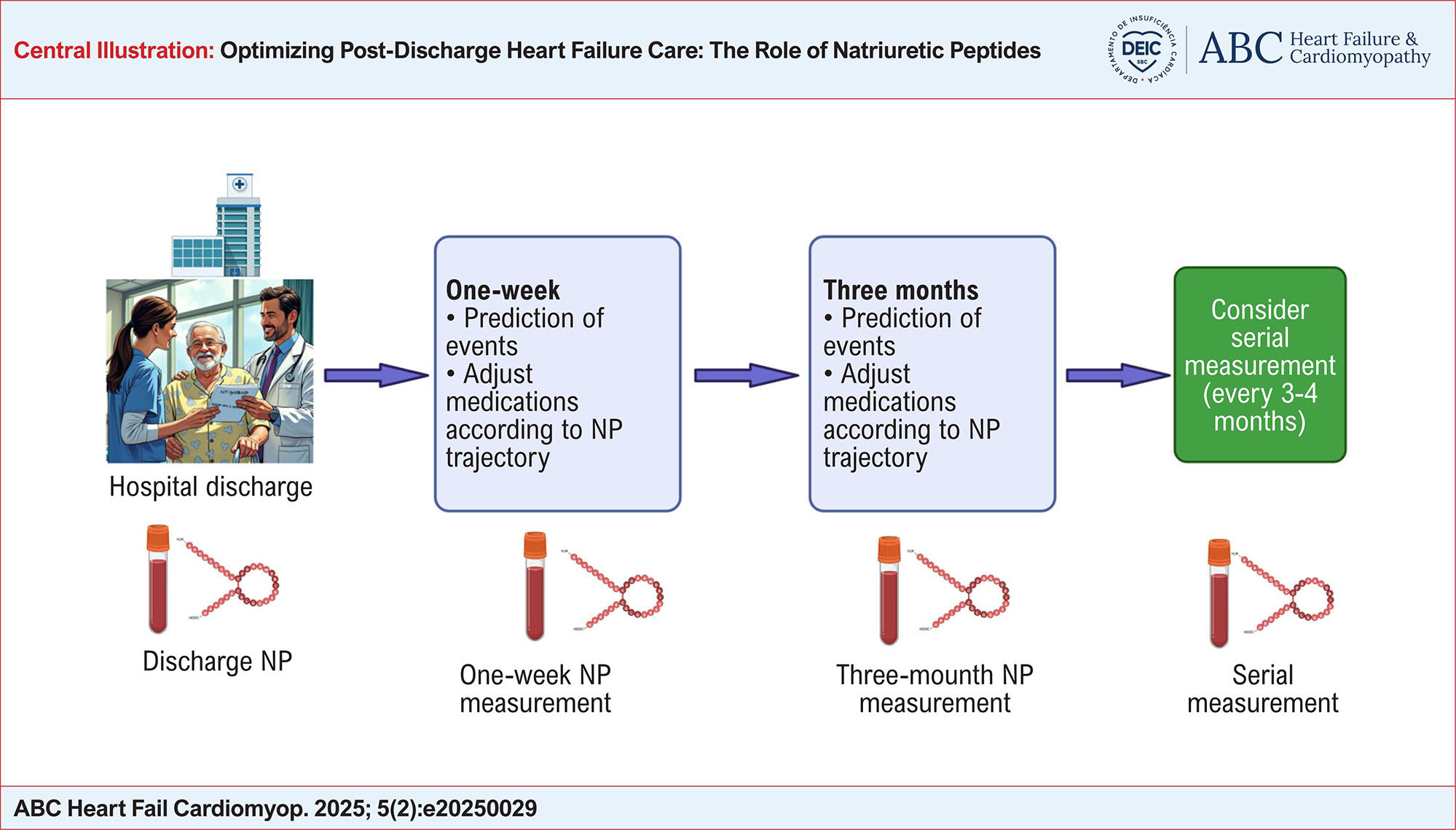
Optimizing Post-Discharge Heart Failure Care: The Role of Natriuretic Peptides
ABCHF
Review Article

Optimizing Post-Discharge Heart Failure Care: The Role of Natriuretic Peptides

Humberto Villacorta et al. Aline Sterque Villacorta

Abstract

Heart failure (HF) remains a leading cause of hospitalization, mortality, and health-care burden worldwide. The post-discharge period following acute decompensated heart failure (ADHF) is characterized by a heightened risk of rehospitalization and death, particularly during the first 90 days, known as the “vulnerable phase.” Effective strategies for risk stratification and therapy optimization during this phase are crucial to improve outcomes.

Natriuretic peptides (NPs), including B-type natriuretic peptide (BNP) and its N-terminal fragment (NT-proBNP), are well-established biomarkers of myocardial stress. Beyond their diagnostic role, NPs have emerged as powerful prognostic tools for post-discharge risk assessment and as potential guides for therapy titration. Elevated NP levels at discharge and persistently high concentrations one week post-discharge strongly predict adverse outcomes. Evidence from the STRONG-HF trial demonstrated that early, intensive follow-up incorporating NP monitoring and rapid guideline-directed medical therapy (GDMT) up-titration significantly reduced mortality and rehospitalization. Serial NP measurements further enhance risk stratification by capturing dynamic changes over time. Although trials such as GUIDE-IT showed mixed results for NP-guided therapy using fixed targets, patients achieving lower NP levels consistently demonstrated better outcomes.

In conclusion, NPs provide incremental prognostic value beyond clinical assessment in the vulnerable post-discharge phase and throughout long-term management. Early and serial NP monitoring can identify high-risk patients and support GDMT optimization. Future research should refine timing, thresholds, and integration of NP-guided strategies into multimodal risk models to enhance personalized HF care and improve global patient outcomes.

  • Diagnosis
  • Dyspnea
  • Emergency Medical Services
  • Heart Failure
  • Natriuretic Peptides
Read Full Article
Creative Commons Attribution (CC BY) Creative Commons license
19/12/2025 DOI: 10.36660/abchf.20250029i Views 1
Relevant Aspects of Natriuretic Peptides in the Etiology of Dyspnea in the Emergency Room: Evidence, Indications, Confounding Factors, and Cost-Effectiveness
ABCHF
Review Article

Relevant Aspects of Natriuretic Peptides in the Etiology of Dyspnea in the Emergency Room: Evidence, Indications, Confounding Factors, and Cost-Effectiveness

Humberto Villacorta

Abstract

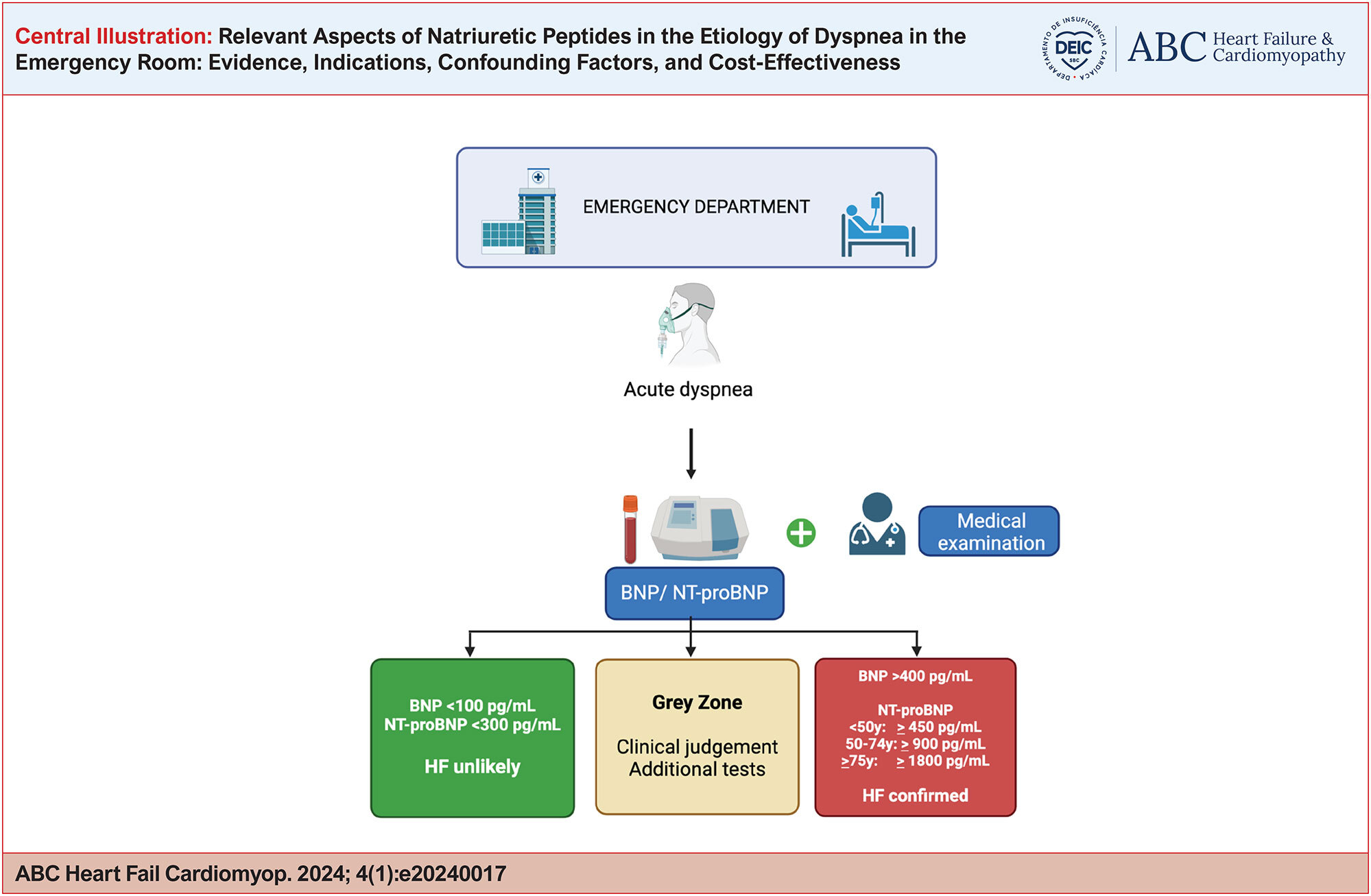
Natriuretic peptides are hormones released by the heart after acute or chronic aggression. They are produced exclusively by the heart and are, therefore, specific cardiac biomarkers. Recent pivotal studies have confirmed that they are useful in the diagnostic assessment of patients with dyspnea in the emergency room, with a high predictive value in ruling out acute heart failure, and they are indicated when there are doubts in clinical examination. They are also useful as prognostic markers and in monitoring response to treatment. Multiple studies have demonstrated that they are cost-effective in the emergency room. However, it is important to underscore that they should always be used in conjunction with clinical examination, and they have the limitation of reduced accuracy in some subgroups, due to the influence of some clinical variables, such as age, renal function, atrial fibrillation, and obesity. The use of cutoff values stratified by age group and machine learning techniques minimize the influence of confounding factors.

  • Diagnosis
  • Dyspnea
  • Emergency Medical Services
  • Heart Failure
  • Natriuretic Peptides
Read Full Article
Creative Commons Attribution (CC BY) Creative Commons license
11/07/2024 DOI: 10.36660/abchf.20240017i Views 2
Figure 1
ABCHF
Viewpoint

Can Palliative Care for Heart Failure be Indicated in the Emergency Department?

Louise Freire et al. Diane Xavier de Ávila Estêvão Lanna Figueiredo

Introduction

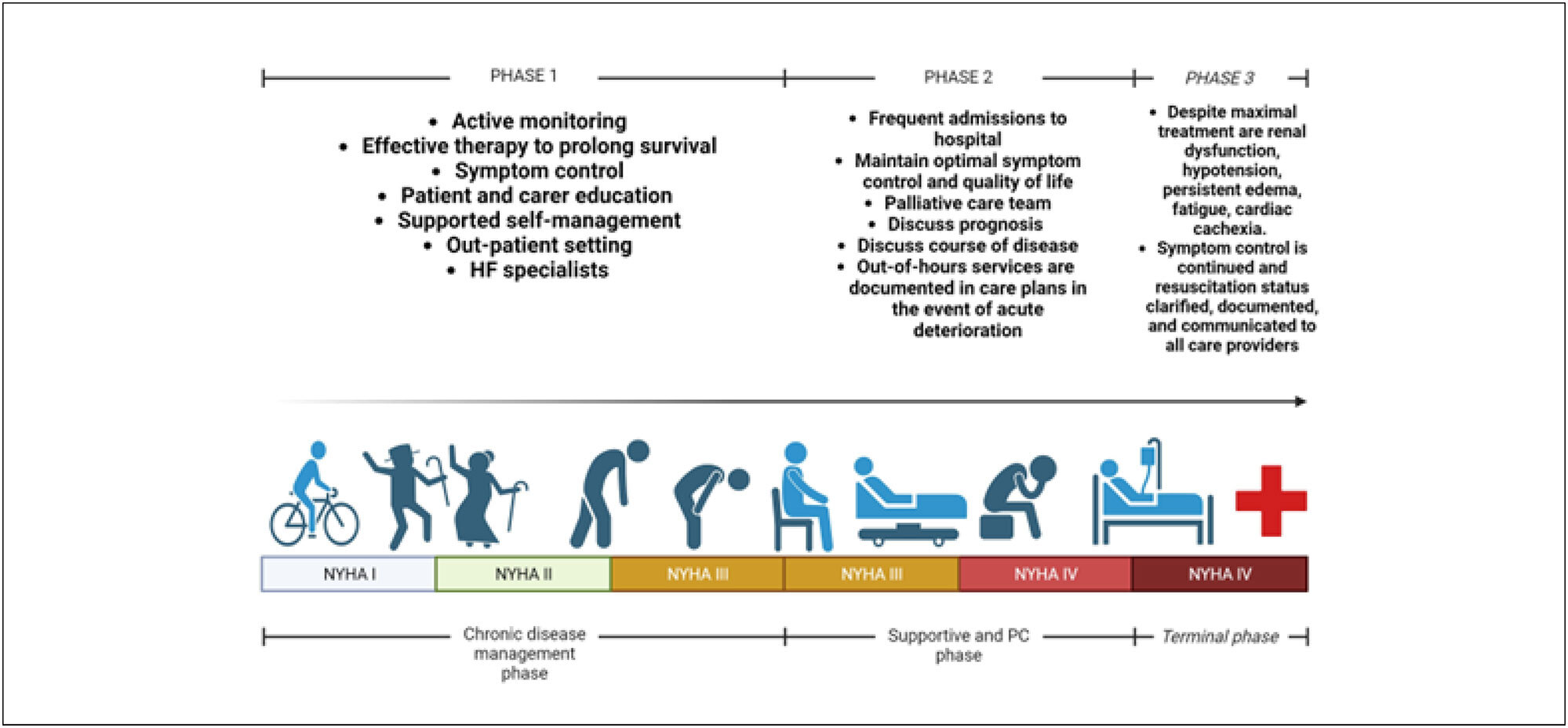
Heart failure (HF) is a progressive disease marked by a pattern of gradual decline interspersed with episodes of acute deterioration. This often culminates in either sudden death or hospitalization.– Discussing its trajectory, especially in emergency decompensations, can be challenging when physicians predict these situations using palliative care (PC) principles and practices.,

The World Health Organization defines PC as a patient and family-centered approach aimed to enhance the overall quality of life (QoL) by proactively addressing, preventing, and alleviating suffering. This prioritizes relief of pain and management of distressing symptoms, upholds life’s value, and recognizes the natural process of dying. PC also provides a support system, empowering patients to live as fully and actively as possible until the end of life (EoL).,

[…]

  • Emergency Medical Services
  • Heart Failure
  • Palliative Care
Read Full Article
Creative Commons Attribution (CC BY) Creative Commons license
20/12/2023 DOI: 10.36660/abchf.20230068 Views 1
Central Illustration
ABC
Original Article

Outcomes after Clinical and Traumatic Out-of-Hospital Cardiac Arrest

Daiana Terra Nacer et al. Regina Márcia Cardoso de Sousa Anna Leticia Miranda

Abstract

Background

Data on out-of-hospital cardiac arrest are still scarce, very varied, and indicate a poor prognosis for traumatic events.

Objectives

To describe the out-of-hospital/in-hospital survival, survival time, and neurological conditions of those treated by advanced life support units and submitted to cardiopulmonary resuscitation and compare the results of clinical and traumatic cardiac arrests.

Methods

This is a cohort study carried out in three stages; in the first two, data were collected from the Mobile Emergency Care Service forms and medical records; then, the Brain Performance Category Scale was applied in the third stage. The sample consisted of resuscitated victims aged ≥18 years. Fisher’s and log-rank tests were used to compare the causes, considering a significance level of 5%.

Results

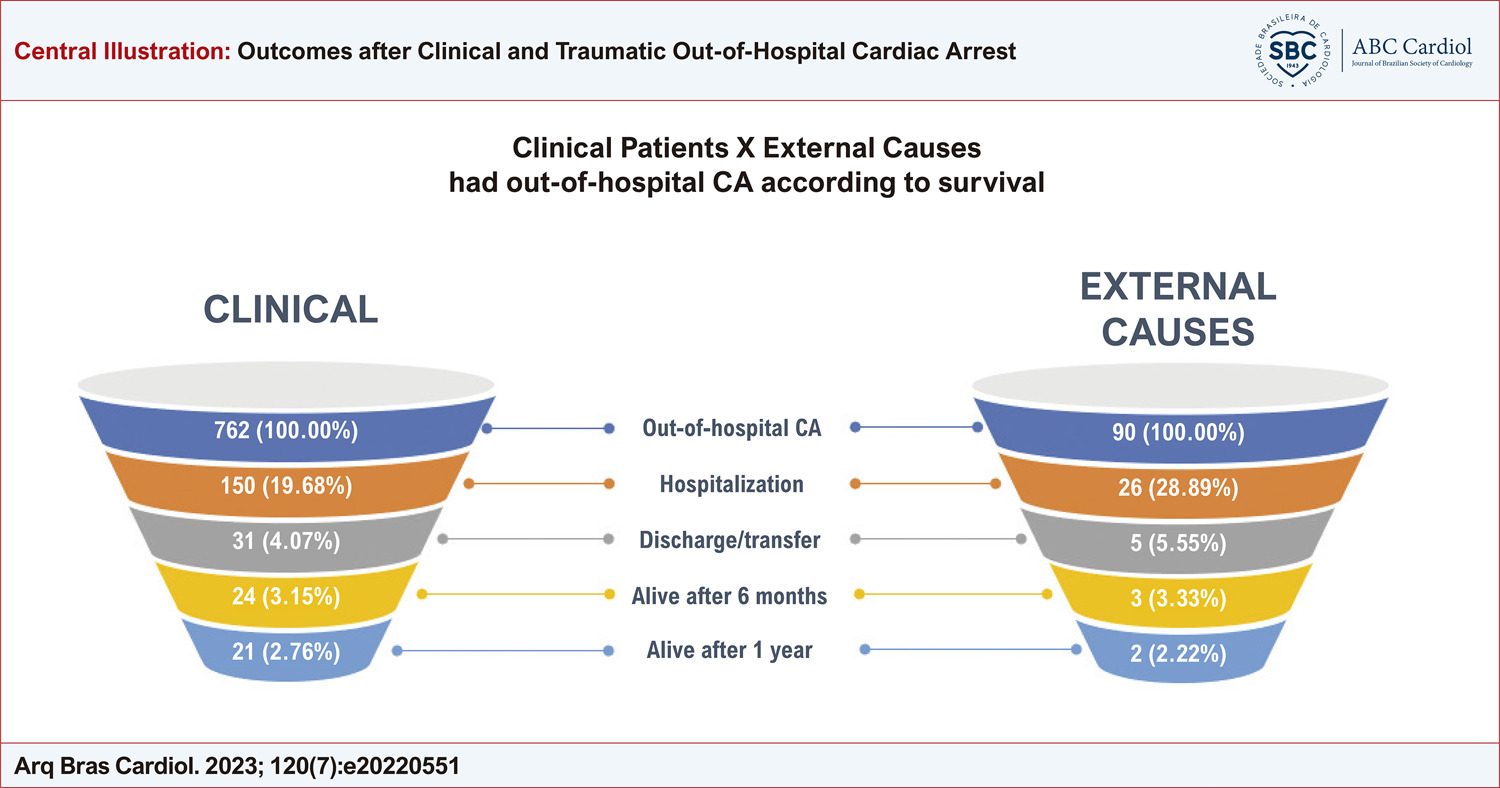
852 patients were analyzed; 20.66% were hospitalized, 4.23% survived until transfer or discharge, and 58.33% had a favorable outcome one year after arrest. There was an association between pre/in-hospital survival and the nature of the occurrence (p=0.026), but there was no difference between the survival curves (p=0.6).

Conclusions

Survival of hospitalization after out-of-hospital cardiac arrest was low; however, most who survived to be discharged achieved a favorable outcome after one year. The survival time of those hospitalized after clinical and traumatic events were similar, but pre-hospital survival was higher among trauma patients.

  • Cardiopulmonary Resuscitation
  • Emergency Medical Services
  • Heart Arrest
  • Out-of-Hospital Cardiac Arrest
  • Survivorship
Read Full Article
Creative Commons Attribution (CC BY) Creative Commons license
24/07/2023 DOI: 10.36660/abc.20220551 Views 1
ABC
Editorial

Having Symptoms of an Acute Myocardial Infarction? Call Your Emergency Medical Service Immediately!

Daniel Ferreira

Timely reperfusion of the occluded coronary arteries is critical to saving at-risk ischemic myocardial cells in acute ST-elevation myocardial infarction (STEMI). This fact led to the concept of “Time is Muscle” related to acute myocardial infarction (AMI) management.

Independently of what reperfusion strategy is chosen (lytics or percutaneous coronary intervention (PCI)), the time from symptom onset to successful reperfusion is critical to the patient’s short- and long-term prognosis.,

[…]

  • Emergency Medical Services
  • Hospitalization
  • Mortality
  • Myocardial Infarction
Read Full Article
Creative Commons Attribution (CC BY) Creative Commons license
25/11/2022 DOI: 10.36660/abc.20220692 Views 1
Figure 1
ABC
Original Article

Assessment of the Impact of the Implementation of a Pre-Hospital Ambulance System on Acute Myocardial Infarction Mortality in a Developing Country

Rodrigo Costa Pereira Vieira et al. Milena Soriano Marcolino Luis Gustavo Silva e Silva Daniella Nunes Pereira … Bruno Ramos Nascimento Alzira de Oliveira Jorge Antonio Luiz P Ribeiro

Abstract

Background

The effective management of patients with acute myocardial infarction (AMI) is time-dependent.

Objectives

To assess the impacts of the implementation of prehospital care on admission rates and mortality associated with AMI.

Methods

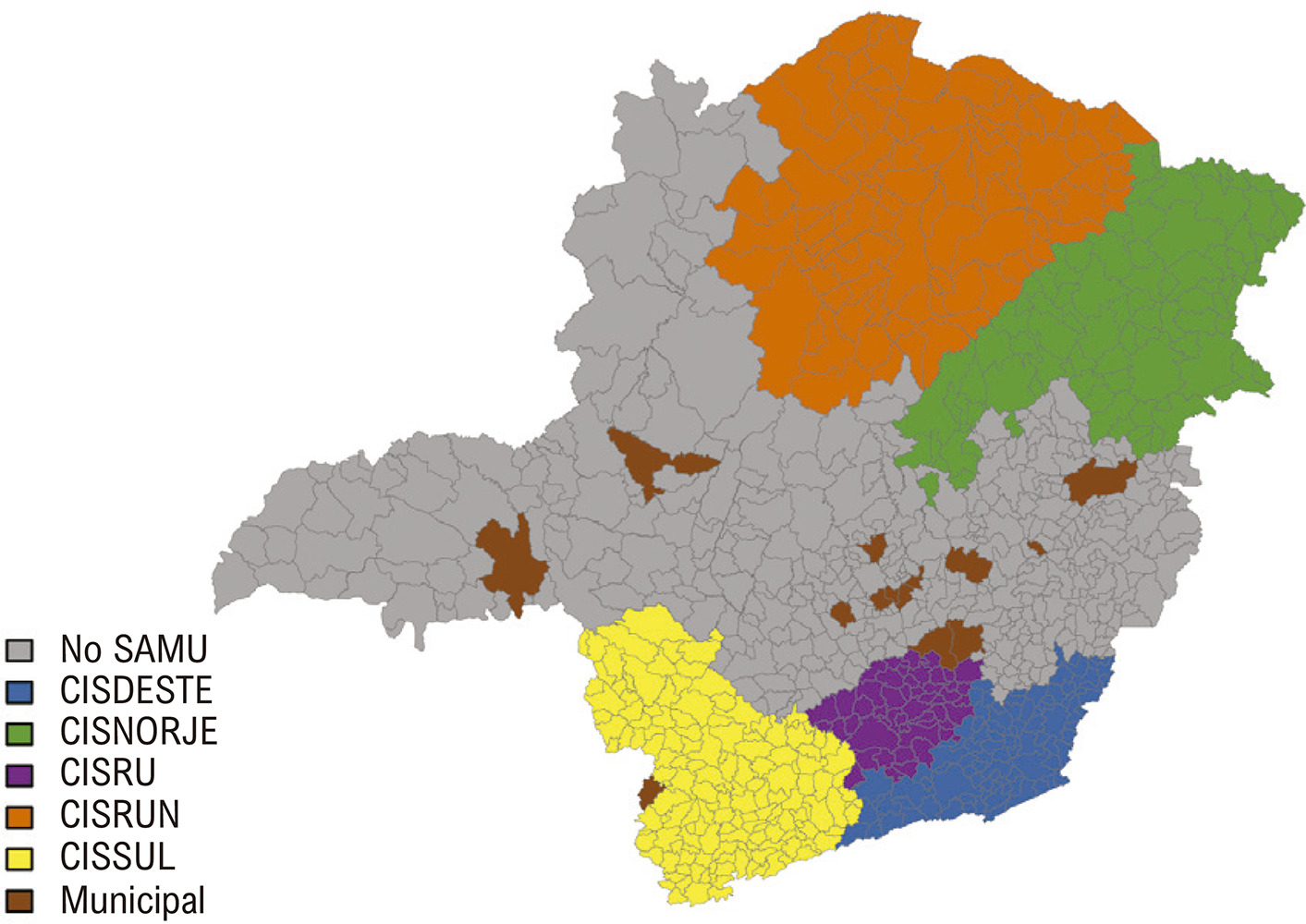
Retrospective, ecological study, which assessed data from the Brazilian Universal Health System, from all 853 municipalities of Minas Gerais, from 2008 to 2016. Excessive skewness of general and in-hospital mortality rates was smoothed using the empirical Bayes method. This study assessed the relationship between Mobile Emergency Care Service (SAMU) in each municipality and the following 3 outcomes: mortality rate due to AMI, AMI in-hospital mortality, and AMI hospitalization rate, using the Poisson hierarchical model. Rates were corrected by age structure and detrended by seasonality and temporal influences. A confidence interval of 95% was adopted.

Results

AMI mortality rates decreased throughout the study, on average 2% per year, with seasonal variation. AMI in-hospital mortality also showed a decreasing trend, from 13.81% in 2008 to 11.43% in 2016. SAMU implementation was associated with decreased AMI mortality (odds ratio [OR] = 0.967, 95% confidence interval [CI] 0.936 to 0.998) and AMI in-hospital mortality (OR = 0.914, 95% CI 0.845 to 0.986), with no relation with hospitalizations (OR = 1.003, 95% CI 0.927 to 1.083).

Conclusion

SAMU implementation was associated with a modest but significant decrease in AMI in-hospital mortality. This finding reinforces the key role of prehospital care in AMI care and the need for investments on this service to improve clinical outcomes in low- and middle-income countries.

  • Acute Myocardial Infarction
  • Emergency Medical Services
  • Hospital Mortality
Read Full Article
Creative Commons Attribution (CC BY) Creative Commons license
15/09/2022 DOI: 10.36660/abc.20210953 Views 1
Figure 1
IJCS
Original Article

How much do the Patients with Acute Myocardial Infarction Know about Chest Pain, Thrombolytic Therapy, and Other Factors Affecting the Treatment Time in the Emergency Room?

Banu Ozmen et al. Cenk Conkbayir Refika Hural Didem Melis Oztas … Murat Ugurlucan Barış Okcun Zerrin Yiğit

Abstract

Background:

Treatment time in the emergency room for acute myocardial infarction is very important and can be life-saving if one understands the importance of a patient’s chest pain.

Objetice:

The aim of this study is to evaluate how much patients entering the emergency room due to acute myocardial infection (AMI) know about chest pain and thrombolytic therapy.

Materials and Methods:

One hundred fifty patients (126 males,14 females) from three different institutes with complaints of chest pain were randomly chosen to participate in this study. The mean age of the patients was 55.4 ± 11.2 years (71+33). Patients were asked to fill out a questionnaire consisting of 70 questions within the first seven days. All differences in categorical variables were computed using the χ2-test and Fisher Exact test. A two-tailed hypothesis was used in all statistical evaluations, and p<0.05 was considered significant.

Results:

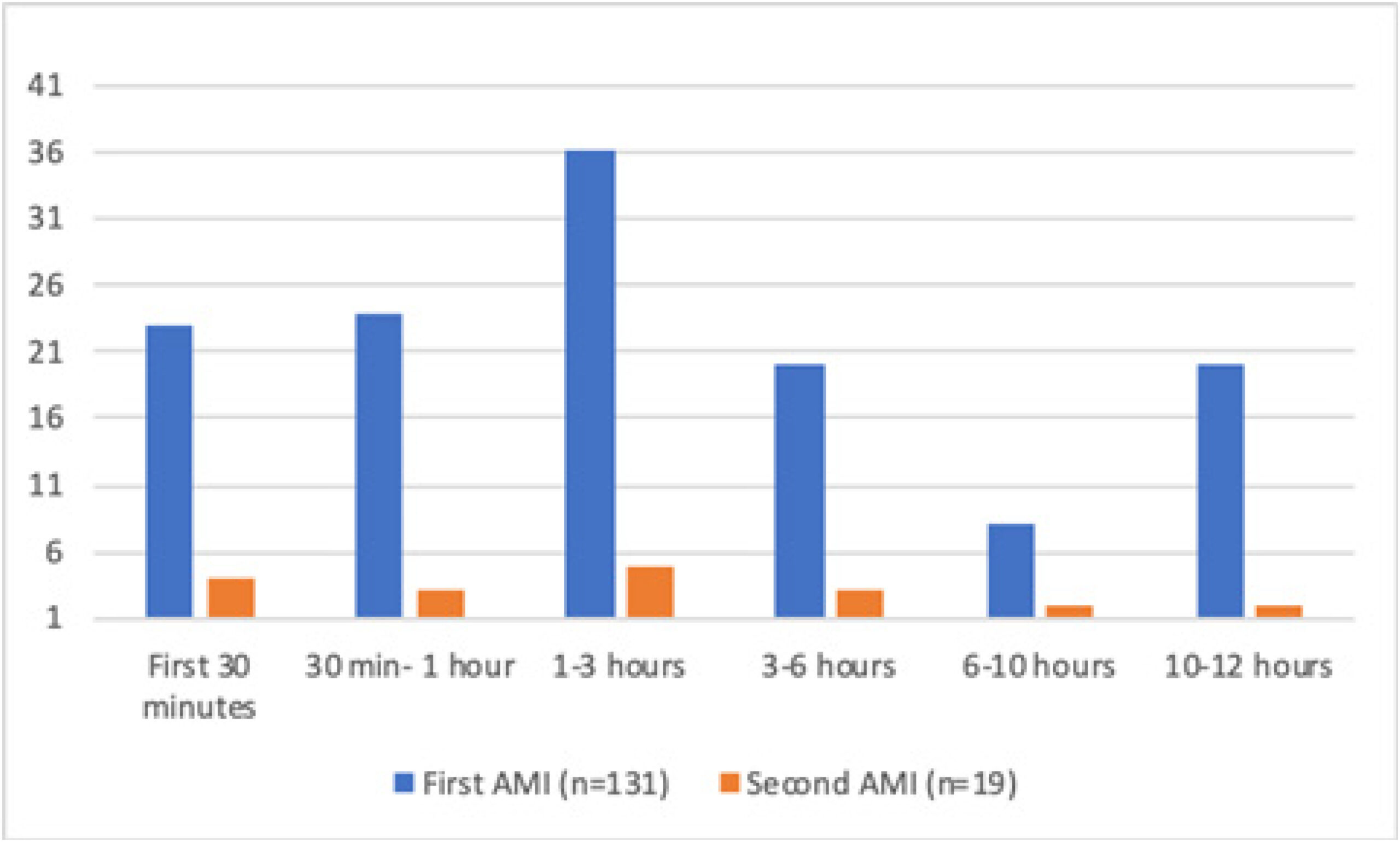
It was observed that 17% of the patients came to the hospital within the first 30 minutes; 18.3% of them came to the hospital between 30 minutes and 1 hour; 27.5% of them came to the hospital between 1 hour and 3 hours; and 21.4% of them came to the hospital more than 6 hours after symptoms began. It was also observed that 68% of the patients were not aware of the AMI, and 96% of them had no prior knowledge of antithrombolytic therapy.

Conclusion:

Because the majority of the patients did not have enough information about AMI, a training program should be implemented to ensure that people to come to the hospital earlier. (Int J Cardiovasc Sci. 2021; [online].ahead print, PP.0-0)

  • Chest Pain
  • Coronary Artery Disease
  • Emergency Medical Services
  • Myocardial Infarction
  • Thrombolytic Therapy
Read Full Article
Creative Commons Attribution (CC BY) Creative Commons license
30/04/2021 DOI: 10.36660/ijcs.20200187 Views 1
Figure 1
ABC
Original Article

Increased Home Death Due to Cardiopulmonary Arrest in Times of COVID-19 Pandemic

Nathalia Sernizon Guimarães et al. Taciana Malheiros Lima Carvalho Jackson Machado-Pinto Roger Lage … Renata Mascarenhas Bernardes Alex Sander Sena Peres Mariana Amaral Raposo Ricardo Machado Carvalhais Renan Avelino Mancini Gabriella Yuka Shiomatsu Bruna Carvalho Oliveira Valéria de Melo Rodrigues Maria do Carmo Barros de Melo Unaí Tupinambás

Abstract

Background

Cardiovascular diseases constitute an important group of causes of death in the country. Ischemic heart diseases that are the main causes of cardiopulmonary arrest, leading to an impact on the mortality of the cardiovascular diseases in the health system.

Objective

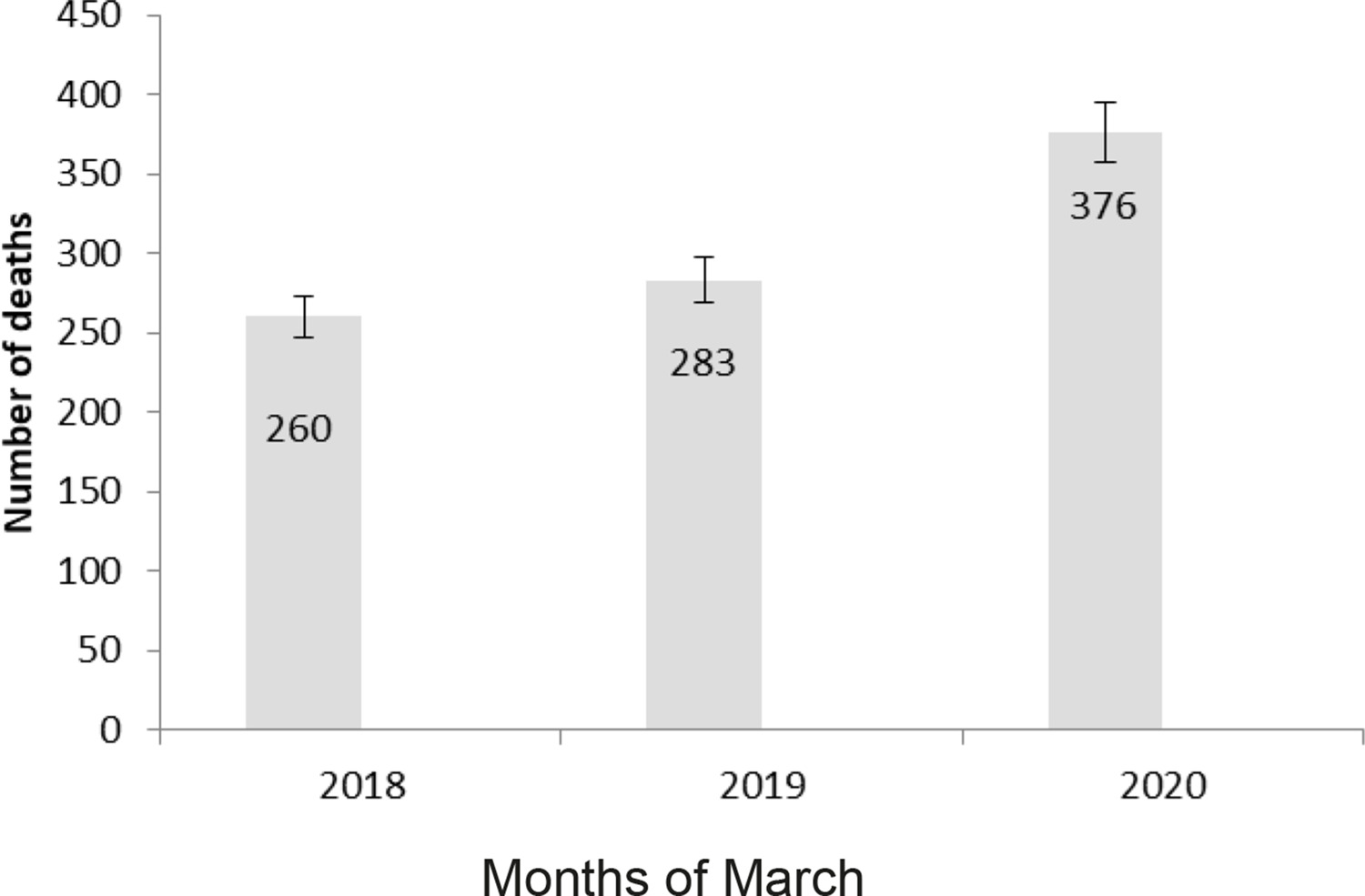
Assess the number of home deaths by cardiopulmonary arrest notified by the Mobile Emergency Medical Service (SAMU) in March 2018, 2019 and 2020.

Methods

Observational study carried out from the analysis of cardiopulmonary arrest mortality data of citizens assisted by SAMU in Belo Horizonte, Minas Gerais, Brazil. Social and clinical characteristics and occurrence information of the patients were analyzed. The mortality rate due to cardiopulmonary arrest in relation to the total number of attendances was assessed. A significance level of 95% was considered.

Results

There was increase of home deaths due to cardiopulmonary arrest in March 2020 compared to March 2018 (p<0.001) and March 2019 (p=0.050). Of the deaths reported in 2020, 63.8% of the patients were aged 60 years or older, 63.7% of the occurrences were performed in the afternoon and approximately 87% of the cardiopulmonary arrest notified had associated clinical comorbidities, with systemic arterial hypertension and heart failure represented by 22.87% and 13.03% of the reported cases, respectively. The majority of the evaluated sample of this study did not have any medical care follow-up (88.7%).

Conclusion

Considering the increase in the number of the deaths, we suggest reflections and readjustments regarding the monitoring of chronic non-transmissible diseases during a pandemic, as well as improvements in death surveillance. (Arq Bras Cardiol. 2021; 116(2):266-271)

  • Betacoronavirus
  • COVID-19
  • Deaths
  • Emergency Medical Services
  • Heart Arrest
  • Pandemics
Read Full Article
Creative Commons Attribution (CC BY) Creative Commons license
01/03/2021 DOI: 10.36660/abc.20200547 Views 1
Figure 1
ABC
Original Article

Pulmonary Vascular Volume Estimated by Automated Software is a Mortality Predictor after Acute Pulmonary Embolism

Leonardo Soriano et al. Marcel Koenigkam Santos Danilo Tadeu Wada Kelvin Vilalva … Talita Tavares Castro Oliver Weinheimer Valdair Francisco Muglia Antonio Pazin Filho Carlos Henrique Miranda

Abstract

Background:

Acute pulmonary embolism (APE) has a variable clinical outcome. Computed tomography pulmonary angiography (CTPA) is the gold standard for this diagnosis.

Objective:

To evaluate if the pulmonary vascular volume (PVV) quantified by automated software is a mortality predictor after APE.

Methods:

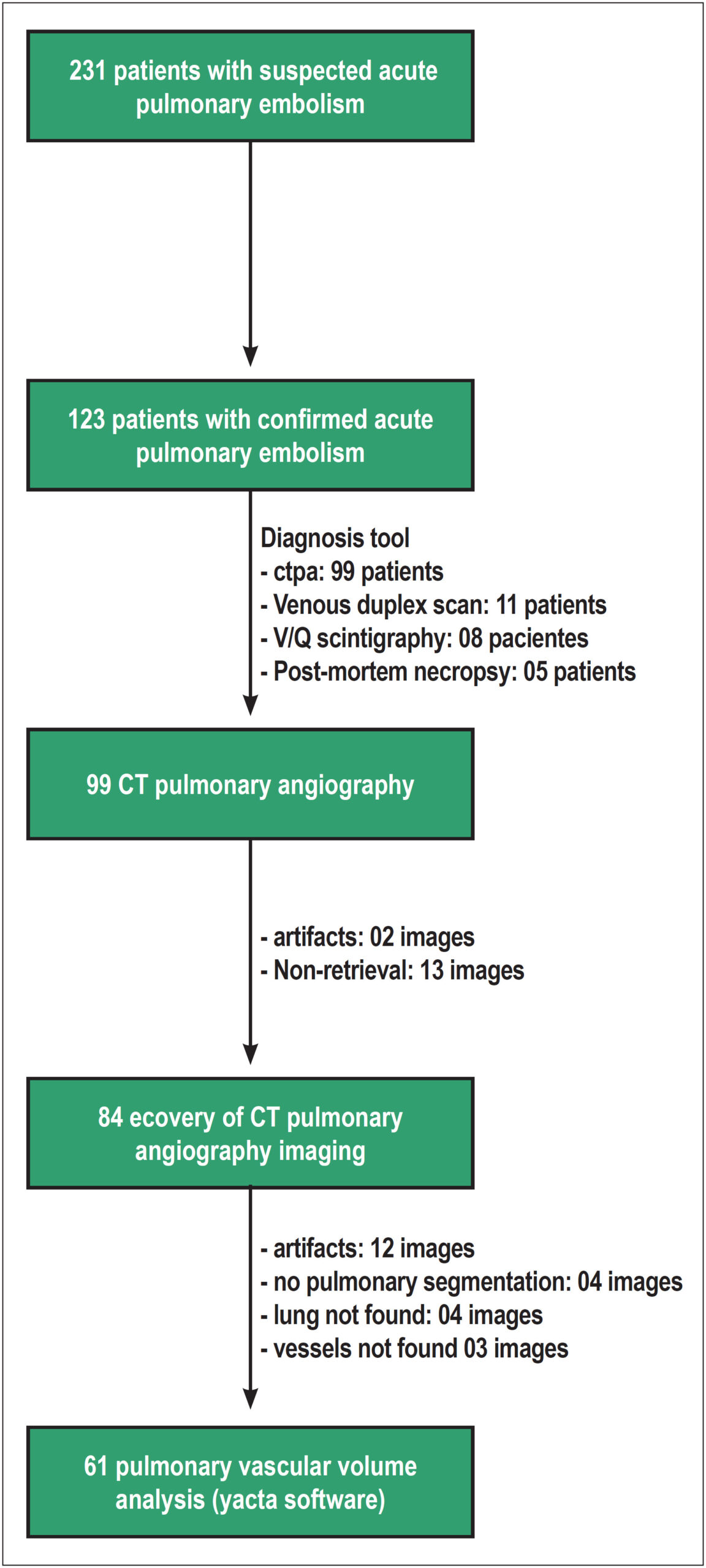
Retrospective cohort study where the CTPA imaging of 61 patients with APE was reanalyzed. Pulmonary vascular volume (PVV) and pulmonary volume (PV) were automatically estimated using the Yacta software. We calculated the adjusted PVV by the ratio: PVV(cm3)/PV(liters). Classical prognostic CTPA parameters (clot load index, right ventricle/left ventricle diameter ratio, pulmonary artery/aorta diameter ratio, ventricular septal bowing, pulmonary infarction and reflux of contrast into the hepatic vein) were assessed. The outcome assessed was one-month mortality. We considered a p-value <0.05 as statistically significant.

Results:

Seven deaths (11%) occurred at one month among these 61 patients. PVV<23cm3/L was an independent predictor of one-month mortality in the univariate [odds ratio (OR): 26; 95% confidence interval (CI): 3-244; p=0.004] and multivariate analyses [adjusted OR: 19; 95%CI: 1.3-270; p=0.03]. The classical CTPA parameters were not associated with one-month mortality in this sample. The PVV<23cm3/L showed a sensitivity of 86%, a specificity of 82%, a negative predictive value of 94% and a positive predictive value of 64% to identify the patients who died.

Conclusion:

PVV<23cm3/L was an independent predictor of one-month mortality after APE. This parameter showed better prognostic performance than other classical CTPA findings. (Arq Bras Cardiol. 2020; 115(5):809-818)

  • Diagnostic Imaging
  • Emergency Medical Services
  • Mortality
  • Prognosis
  • Pulmonary Circulation
  • Pulmonary embolism
  • Tomography Computed
Read Full Article
Creative Commons Attribution (CC BY) Creative Commons license
07/12/2020 DOI: 10.36660/abc.20190392 Views 2
ABC
Editorial

The Unapparent Non-COVID Consequences of the COVID-19 Pandemic

Gilson Feitosa

The world has been facing a COVID-19 pandemics of enormous proportion. Most places were unprepared to cope with this situation and considering its occurrence in the current scenario of fast, widespread and occasionally unfiltered information, the considerable growth of fear has affected most people worldwide. Mainly considering the rapid contamination of people in the hospitals and in the communities, as announced by the news, and potentialized by pictures of unassisted patients waiting outside the medical facilities, due to the lack of adequate support.

This apocalyptic scenario was seen in many places that were considered as adequately equipped for the regular treatment of ordinary health problems. All attention was diverted to provide installations and equipment to take care of the COVID-19 affected patients and their relatives.

[…]

  • Betacoronavirus
  • Cardiology
  • COVID-19
  • Emergency Medical Services
  • Hospitalization
  • Oncology
  • Pandemics
Read Full Article
Creative Commons Attribution (CC BY) Creative Commons license
07/12/2020 DOI: 10.36660/abc.20200935 Views 1
Figure 1
ABC
Original Article

Repercussions of the COVID-19 Pandemic on the Care Practices of a Tertiary Hospital

André Luiz Cerqueira Almeida et al. Thyago Monteiro do Espírito Santo Maurício Silva Santana Mello Alexandre Viana Cedro … Nilson Lima Lopes Ana Paloma Martins Rocha Ribeiro João Gustavo Cerqueira Mota Rodrigo Serapião Mendes Paulo André Abreu Almeida Murilo Araújo Ferreira Diego Moreira Arruda Adriana Aguiar Pepe Santos Vinícius Guedes Rios Maria Rosa Nascimento Dantas Viviane Almeida Silva Marcos Gomes da Silva Patrick Harrison Santana Sampaio André Raimundo Guimarães Edval Gomes Santos Jr

Abstract

Background

We still do not have information regarding the impact of the COVID-19 pandemic on medical care activity in Brazil.

Objective

To describe the repercussions of the COVID-19 pandemic on the care routine of a tertiary hospital, which is a regional reference in cardiology and oncology.

Methods

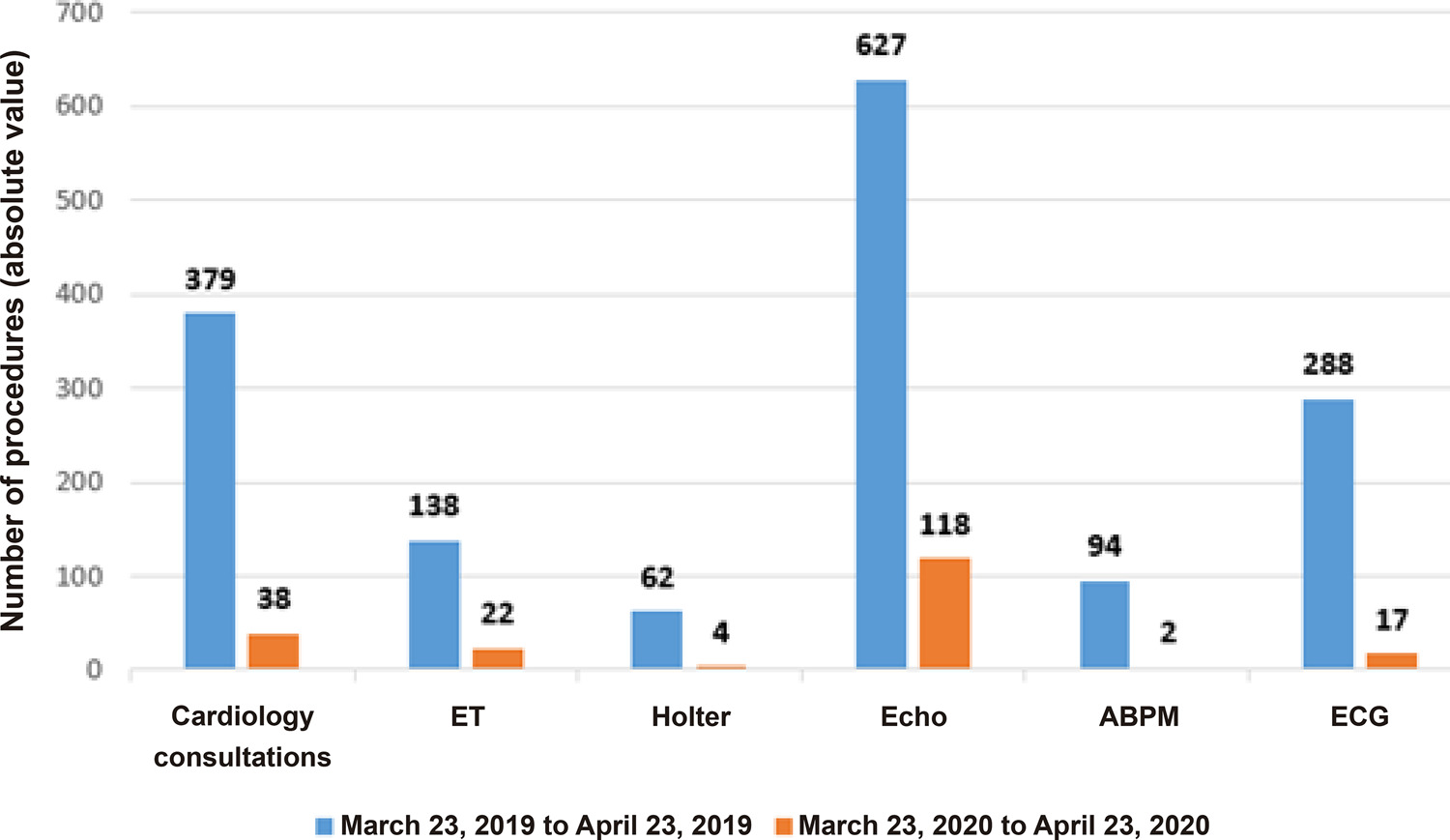
Cross-sectional cohort study. We conducted a survey of medical visits from March 23, 2020 (when local commerce was closed) to April 23, 2020 (P20), in comparison with the same period in 2019 (P19).

Results

We found decreases in the number of cardiology consultations, exercise tests, Holter, ambulatory blood pressure monitoring, electrocardiogram, and echocardiogram (90%, 84%, 94%, 92%, 94%, and 81%, respectively). In relation to cardiac surgery and cardiac catheterization, there were 48% and 60% decreases, respectively. There was an increase in the number of percutaneous transluminal coronary angioplasties (33%) and definitive pacemaker implantations (29%). There were 97 admissions to the ICU during P19, in contrast with 78 during P20, a 20% decrease. Visits to the cardiac emergency room (45%) and admissions to the cardiology ward (36%) also decreased. The decrease in oncology consultations was 30%. Chemotherapy sessions decreased from 1,944 to 1,066 (45%), and radiotherapy sessions decreased by 19%.

Conclusion

COVID-19 has led to a considerable decrease in the number of consultations in outpatient clinics for cardiology, oncology, and other specialties. There was a concerning decrease in the number of cardiac surgeries, chemotherapy sessions, and radiotherapy sessions during the initial weeks of the pandemic. The number of people seeking care in the cardiac emergency room and the number of admissions to the cardiology ward and ICU also decreased, generating concern regarding the evolution and prognosis of these patients with pathologies other than COVID-19 during this pandemic time. (Arq Bras Cardiol. 2020; [online].ahead print, PP.0-0)

  • Coronavirus, Betacoronavirus, Oncology
  • COVID-19
  • Emergency Medical Services
  • Hospitalization
  • Pandemics
Read Full Article
Creative Commons Attribution (CC BY) Creative Commons license
21/09/2020 DOI: 10.36660/abc.20200436 Views 1
Figure 1
IJCS
Original Article

Risk Stratification in Chest Pain: Impact on the Diagnosis of Acute Coronary Syndrome

Ana Paula Paz Reis et al. Karen Brasil Ruschel Maria Antonieta P. de Moraes Karlyse Belli … Marco Lumertz Saffi Jaqueline Eilert Fagundes

Abstract

Background

The implementation of institutional protocols in the emergency department (ED) for risk stratification in patients with chest pain has been recommended.

Objective

To assess the sensitivity, specificity and predictive value of an institutional risk stratification protocol for chest pain suggestive of acute coronary syndrome (ACS).

Method

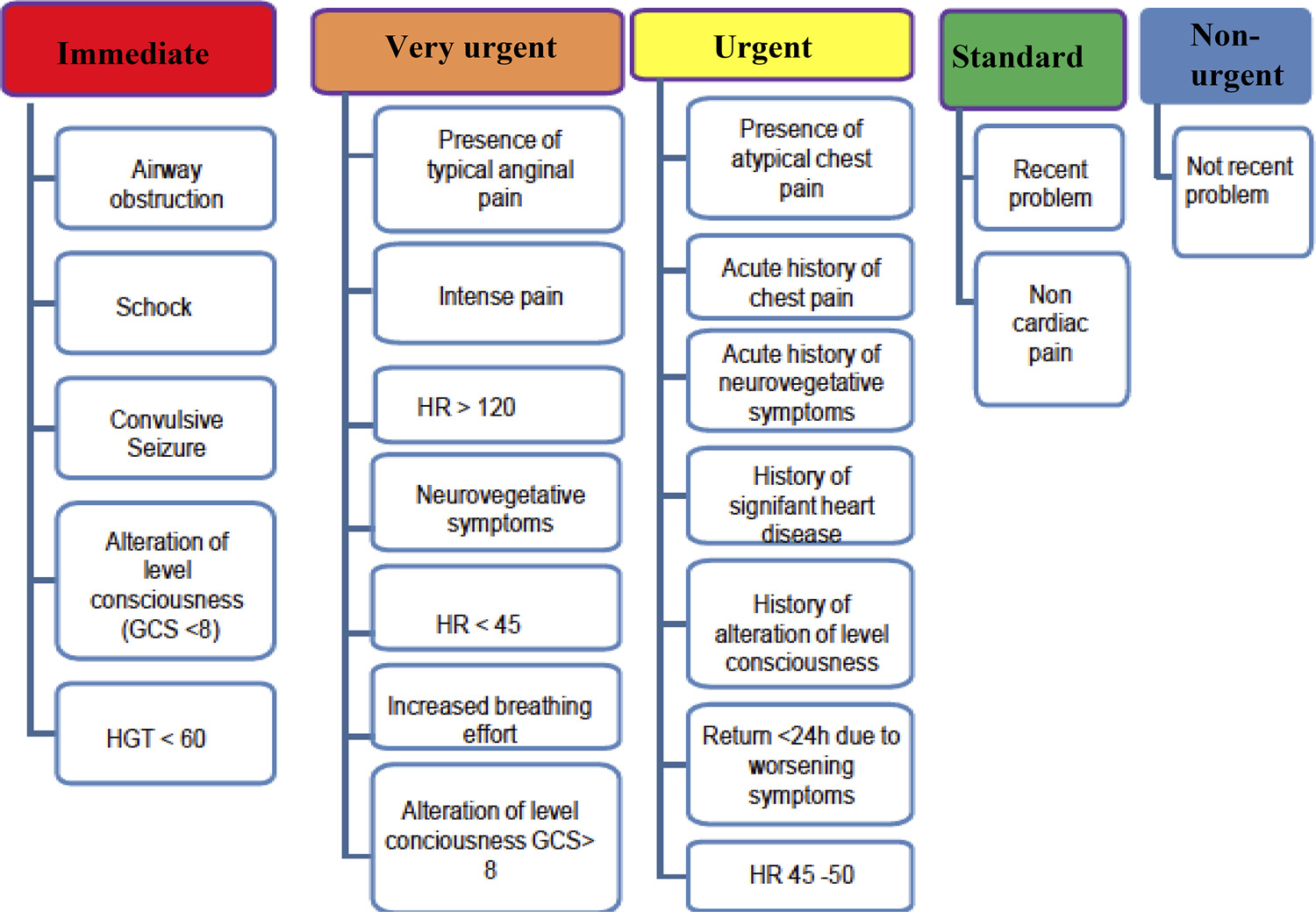
Cross-sectional study conducted based on the computerized records of patients treated with the use of a chest pain protocol adapted from the Manchester protocol. The level of risk was stratified by applying five colors representing the respective levels. Each color represents a level of severity and a maximum waiting time for receiving medical care. Red and orange were considered to be high priority, while patients with yellow, green or blue indications were considered to represent a low priority. To compare the type of diagnosis and the classification of priority for receiving care, the Pearson’s chi-square test was used, considering a significance level of p< 0.05 for all tests.

Results

The records of 1,074 patients admitted to the cardiology ED were analyzed. Men (54%), with a mean age of 60 ± 15 years, with complaints of chest pain (44%) of moderate intensity (80%) were predominant the study. Of these patients, 19% were classified as high priority, while 81% were considered to represent a low priority. ACS was confirmed in 23% of the patients, with 34% of them being classified as high priority and 66% as low priority. The sensitivity of the risk stratification protocol for chest pain was 33.7% and the specificity was 86.0%, with a positive and negative predictive value of 41.7% and 81.3%, respectively.

Conclusion

The Institutional risk stratification protocol for chest pain suggestive of ACS presented satisfactory specificity and a low degree of sensitivity. Int J Cardiovasc Sci. 2020; [online].ahead print, PP.0-0

  • Acute coronary syndrome
  • Chest Pain
  • Emergency Medical Services
  • Risk Assessment
  • Risk Factors
  • Sensitivity and Specifity
Read Full Article
Creative Commons Attribution (CC BY) Creative Commons license
28/08/2020 DOI: 10.36660/ijcs.20190178
IJCS
Original Article

Telecardiology on the Diagnostic Support of Chest Pain in Twenty-Two Emergency Care Units (UPA 24h) in The State of Rio de Janeiro

Simone Farah et al. Bruno Rustum Andréa Rogério Casemiro da Silva Alexandra Monteiro

Abstract

Background:

Telecardiology may be a useful support in diagnosis and management of chest pain.

Objective:

Evaluate the application of telecardiology to support the differential diagnosis of chest pain in patients admitted to Emergency Care Units.

Method:

Observational, retrospective and documental study of 5,816 patients admitted with supposedly cardiological chest pain in twenty two Emergency Care Units in the state of Rio de Janeiro. Data were tabulated and analyzed by Excel® software, using simple descriptive statistics, from the database of the Cardiology Consultancy Nucleus.

Results:

Diagnostic disagreement was found in 1,593 (27.39%) cases. Of these, 1,477 (92.72%) were diagnosed locally as non-ST-elevation myocardial infarction (non-STEMI), 74 (4.64%) as acute myocardial infarction with ST-segment elevation (STEMI), 40 (2.52%) as acute pulmonary edema (APE) and 2 (0.12%) as tachyarrhythmia. Intensive care referral was requested to 100% of these patients. After telecardiology, the diagnoses were: 385 (24.17%) unstable angina, 289 (18.14%) congestive heart failure, 212 (13.31%) APE, 174 (10.92%) STEMI, 152 (9.54%) hypertensive emergency, 113 (7.09%) acute chronic renal failure, 89 (5.59%) non-STEMI, 89 (5.59%) pneumonia, 39 (2.45%) sepsis, 26 (1.63 %) myopericarditis, 20 (1.26%) tachyarrhythmia and 5 (0.31%) orovalvar disease. The outcome after telecardiology was 1,178 discharges (73.94%), 338 (21.21%) referrals, 62 (3.90%) deaths and 15 (0.95%) unknown.

Conclusion:

Telecardiology was effective in chest pain diagnosis and management, optimizing hospital admission in the public health system.

  • Chest Pain/diagnostic imaging
  • Electrocardiography/methods
  • Emergency Medical Services
  • Myocardial Infarction
  • Telemedicine/methods
Read Full Article
Creative Commons Attribution (CC BY) Creative Commons license
21/01/2019 DOI: 10.5935/2359-4802.20180099 Views 1
ABC
Editorial

The Importance of the Prehospital Phase in ST Elevation Myocardial Infarction

Gláucia Maria Moraes de Oliveira et al. Paolo Blanco Villela

Notwithstanding the decline which has been observed in recent years, circulatory diseases continue to be the leading cause of death in Brazil. In spite of recent advances in clinical and interventional treatment,, ischemic heart disease (IHD) was responsible for 116,333 deaths in 2016, of which 80% were due to acute manifestations, principally in the form of acute myocardial infarction (AMI).

In treating AMI patients, especially those with ST-segment elevation, the pre-hospital phase of care plays a crucial role in short- and long-term prognosis. Two data related to this phase deserve our attention. First, we may observe delays in reaching healthcare services. In 80% of cases, these delays last for more than two hours starting from the moment symptoms begin to manifest., Second, it stands out that 50% of deaths resulting from AMI were recorded precisely during the pre-hospital phase.,

[…]

  • Cardiovascular Diseases, mortality
  • Emergency Medical Services
  • Epidemiology
  • Healthcare Inequality
  • Patient Acceptance of Healthcare
  • Patient Transportation
Read Full Article
Creative Commons Attribution (CC BY) Creative Commons license
01/10/2018 DOI: 10.5935/abc.20180209 Views 2
Figure 1
ABC
Original Article

Independent Predictors of Late Presentation in Patients with ST-Segment Elevation Myocardial Infarction

Juliane Araujo Rodrigues et al. Karina Melleu Márcia Moura Schmidt Carlos Antonio Mascia Gottschall … Maria Antonieta Pereira de Moraes Alexandre Schaan de Quadros

Abstract

Background:

In patients with acute ST-segment elevation myocardial infarction (STEMI), the time elapsed from symptom onset to receiving medical care is one of the main mortality predictors.

Objective:

To identify independent predictors of late presentation in patients STEMI representative of daily clinical practice.

Methods:

All patients admitted with a diagnosis of STEMI in a reference center between December 2009 and November 2014 were evaluated and prospectively followed during hospitalization and for 30 days after discharge. Late presentation was defined as a time interval > 6 hours from chest pain onset until hospital arrival. Multiple logistic regression analysis was used to identify independent predictors of late presentation. Values of p < 0.05 were considered statistically significant.

Results:

A total of 1,297 patients were included, with a mean age of 60.7 ± 11.6 years, of which 71% were males, 85% Caucasians, 72% had a mean income lower than five minimum wages and 66% had systemic arterial hypertension. The median time of clinical presentation was 3.00 [1.40-5.48] hours, and approximately one-quarter of the patients had a late presentation, with their mortality being significantly higher. The independent predictors of late presentation were Black ethnicity, low income and diabetes mellitus, and a history of previous heart disease was a protective factor.

Conclusion:

Black ethnicity, low income and diabetes mellitus are independent predictors of late presentation in STEMI. The identification of subgroups of patients prone to late presentation may help to stimulate prevention policies for these high-risk individuals.

  • Emergency Medical Services
  • First Aid
  • ST Elevation Myocardial Infarction
  • Time Factors
Read Full Article
Creative Commons Attribution (CC BY) Creative Commons license
21/09/2018 DOI: 10.5935/abc.20180178 Views 1
IJCS
Original Article

Knock on the Right Door. How we are Treating the Patient with Acute Myocardial Infarction

Clóvis Hoepfner et al. Edilson Roma Jessé Vinicius Lana Ana Luysa Santin … Ana Lavratti Borga Ana Cláudia Yamamoto Juliana Vicente Techentin

Abstract

Background:

To reduce mortality of acute myocardial infarction, medical care must be provided within the first hours of the event.

Objective: To identify the “front door” to medical care of acute coronary patients and the time elapsed between patients’ admission and performance of myocardial reperfusion in the public health system of the city of Joinville, Brazil.

Methods:

The study was a retrospective analysis of the medical records of 112 consecutive patients diagnosed with acute myocardial infarction by coronary angiography. We identified the place of the first medical contact and calculated the time between admission to this place and admission to the referral hospital, as well as the time until coronary angiography, with or without percutaneous transluminal angioplasty. A descriptive analysis of data was made using mean and standard deviation, and a p < 0.05 was set as statistically significant.

Results:

Only 16 (14.3%) patients were admitted through the cardiology referral unit. Door-to-angiography time was shorter than 90 minutes in 50 (44.2%) patients and longer than 270 minutes in 39 (34.5%) patients. No statistically significant difference was observed in door-to-angiography time between patients transported directly to the referral hospital and those transferred from other health units (p<0.240). Considering the time between pain onset and angiography, only 3 (2.9%) patients may have benefited from myocardial reperfusion performed within less than 240 minutes.

Conclusion:

Management of patients with acute myocardial infarction is not in conformity with current guidelines for the treatment of this condition. The structure of the healthcare system should be urgently modified so that users in need of emergency services receive adequate care in accordance with local conditions.

  • Emergency Medical Services
  • Failure to Rescue, Health Care
  • Guidelines Adherence
  • Myocardial Infarction
  • Unified Health System
Read Full Article
Creative Commons Attribution (CC BY) Creative Commons license
23/08/2018 DOI: 10.5935/2359-4802.20180056 Views 1
Figure 1
ABC
Original Article

Satisfaction of Emergency Physicians with the Care Provided to Patients with Cardiovascular Diseases in the Northern Region of Minas Gerais

Milena Soriano Marcolino et al. João Antonio de Queiroz Oliveira Grace Kelly Matos e Silva Thatiane Dantas Dias … Barbara Campos Abreu Marino André Pires Antunes Antonio Luiz Ribeiro Clareci Silva Cardoso

Abstract

Background:

The dissatisfaction of health professionals in emergency services has a negative influence on both the quality of care provided for acute myocardial infarction (AMI) patients and the retention of those professionals.

Objective:

To assess physicians’ satisfaction with the structure of care and diagnosis at the emergency services in the Northern Region of Minas Gerais before the implementation of the AMI system of care.

Methods:

This cross-sectional study included physicians from the emergency units of the ambulance service (SAMU) and level II, III and IV regional hospitals. Satisfaction was assessed by using the CARDIOSATIS-Team scale. The median score for each item, the overall scale and the domains were calculated and then compared by groups using the non-parametric Mann-Whitney test. Correlation between time since graduation and satisfaction level was assessed using Spearman correlation. A p value < 0.05 was considered significant.

Results:

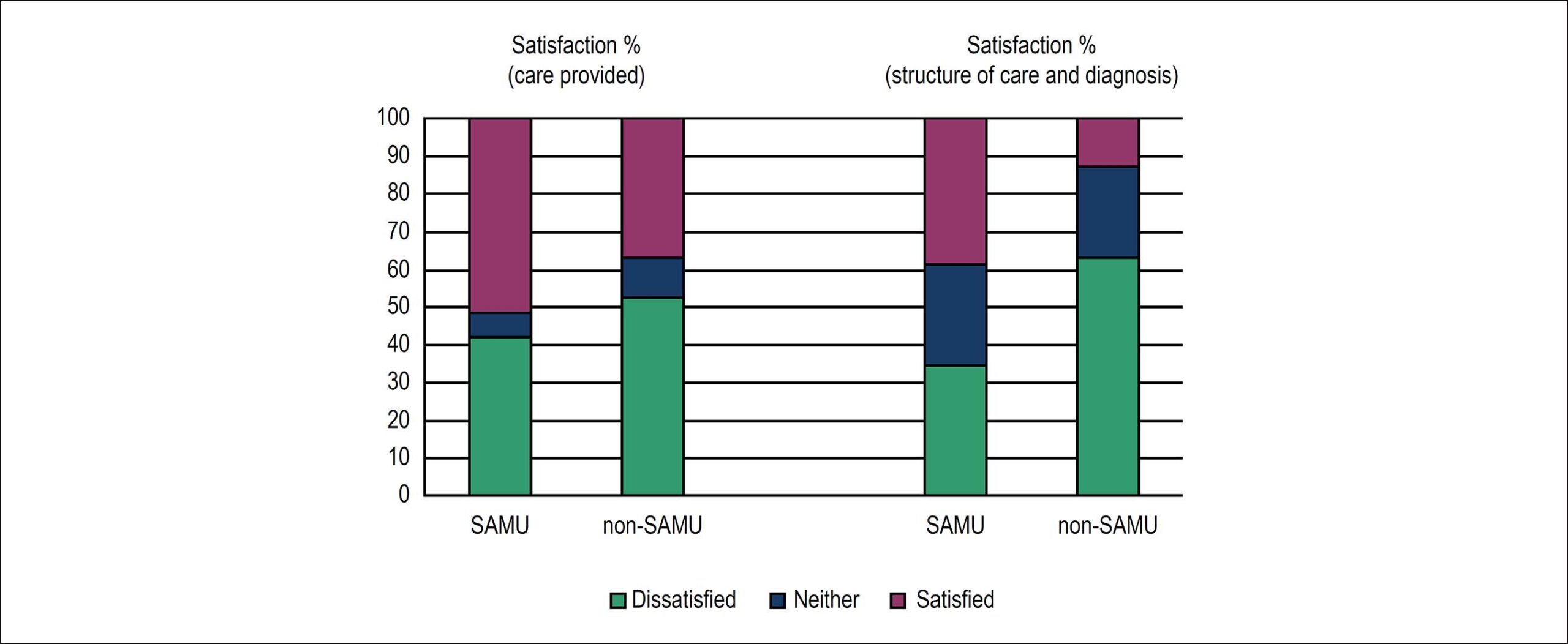
Of the 137 physicians included in the study, 46% worked at SAMU. Most of the interviewees showed overall dissatisfaction with the structure of care, and the median score for the overall scale was 2.0 [interquartile range (IQR) 2.0-4.0]. Most SAMU physicians expressed their dissatisfaction with the care provided (54%), the structure for managing cardiovascular diseases (52%), and the technology available for diagnosis (54%). The evaluation of the overall satisfaction evidenced that the dissatisfaction of SAMU physicians was lower when compared to that of hospital emergency physicians. Level III/IV hospital physicians expressed greater overall satisfaction when compared to level II hospital physicians.

Conclusion:

This study showed the overall dissatisfaction of the emergency physicians in the region assessed with the structure of care for cardiovascular emergencies.

  • Acute coronary syndrome
  • Cardiovascular Diseases
  • Emergency Medical Services
  • Epidemiology
  • Health Profile
  • Myocardial Infartion
  • Quality Indicators, Health Care
Read Full Article
Creative Commons Attribution (CC BY) Creative Commons license
01/08/2018 DOI: 10.5935/abc.20180143 Views 1
ABC
Editorial

Are We Taking Good Care of Our Patients and Physicians?

Gilson Soares Feitosa

The thorough and well-structured analysis by Marcolino et al. in the article “Satisfaction of emergency physicians with the care provided to patients with cardiovascular diseases in the Extended Northern Region of Minas Gerais”, published in this Arquivos Brasileiros de Cardiologia issue, highlights important problems to be addressed in the Brazilian medical healthcare.

Although circumscribed to a region, that study would most probably reproduce the reality of several other Brazilian regions, some even with a higher human development index. The dissatisfactions brought up in that study can be easily observed in the daily medical practice in almost all Brazilian cities, notably emergency care in general, and emergency cardiovascular care in particular. In the later, the issue is compounded by the frequent need for combining good and prompt care to yield effectiveness.

[…]

  • Ambulatory Care
  • Cardiovascular Diseases
  • Emergency Medical Services
  • Inservice Training
  • Medical Assistance
  • Medical Education / manpower
Read Full Article
Creative Commons Attribution (CC BY) Creative Commons license
01/08/2018 DOI: 10.5935/abc.20180115
IJCS
Original Article

Correlation between Clinical and Educational Factors and Delayed Hospital Arrival in Myocardial Infarction

Andressa Sardá Maiochi Takagui et al. Daniel Medeiros Moreira Ana Teresa Glaser Carvalho Thays Fraga Duarte … Roberto Léo da Silva Tammuz Fattah

Abstract

Background:

Acute myocardial infarction is one of the main causes of morbidity and mortality in the world, and one of the factors with the greatest prognostic impact is early specialist care, but there are still many factors that delay patient’s arrival at the hospital.

Objective:

To correlate social, educational, cognitive and clinical factors with time to hospital arrival after the onset of acute myocardial infarction’s first symptoms.

Methods:

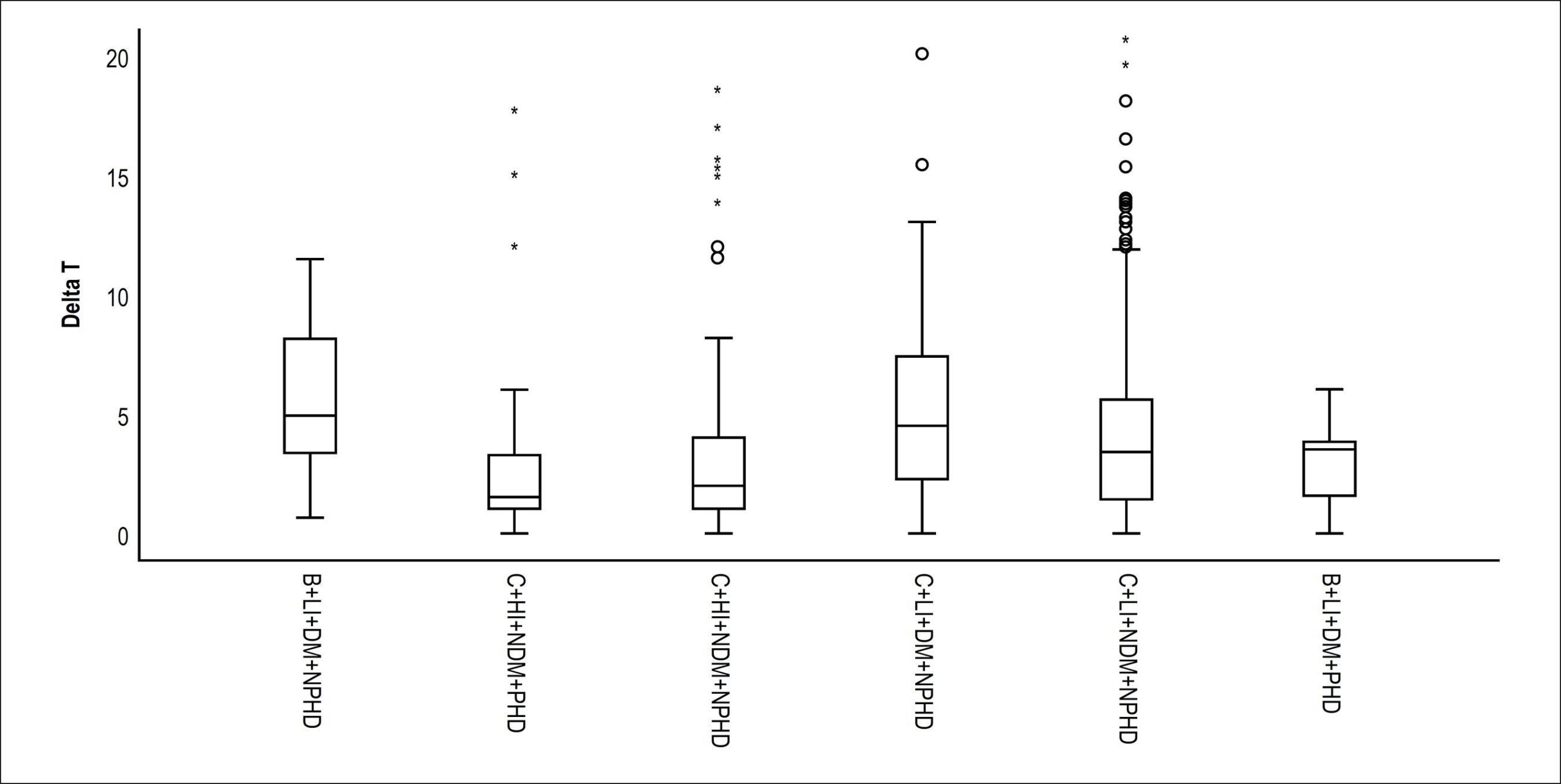
Time interval to search for medical care was measured by patient’s report of the onset of infarction’s first symptoms and hospital admission verified through electronic medical data of the emergency service. The correlation between delta-T and other variables was performed through Kendall’s correlation. Values of p < 0.05 were considered statistically significant.

Results:

There was no correlation between delta-T and scholarity, or between delta – T and Mini Mental State Examination performance, as well as no association between the presence of hypertension, diabetes mellitus, dyslipidemia, family history, sedentary lifestyle or smoking with arrival time at the hospital. Comparisons between delta-T and marital status were also not statistically significant. Transfer from another health service and city of origin were the most determinant delay factors in our population’s arrival at the hospital.

Conclusion:

The present study suggests that, in our population, educational, social and cognitive factors are not directly related to the delay in arriving at the hospital.

  • Chest Pain
  • Emergency Medical Services
  • Indicators of Morbidity and Mortality
  • Myocardial Infarction
  • Myocardial Ischemia
  • Risk Factors
Read Full Article
Creative Commons Attribution (CC BY) Creative Commons license
01/01/2018 DOI: 10.5935/2359-4802.20170093
Figure 1
ABC
Original Article

Zero Calcium Score as a Filter for Further Testing in Patients Admitted to the Coronary Care Unit with Chest Pain

Luis Cláudio Lemos Correia et al. Fábio P. Esteves Manuela Carvalhal Thiago Menezes Barbosa de Souza … Nicole de Sá Vitor Calixto de Almeida Correia Felipe Kalil Beirão Alexandre Fernanda Lopes Felipe Ferreira Márcia Noya-Rabelo

Abstract

Background:

The accuracy of zero coronary calcium score as a filter in patients with chest pain has been demonstrated at the emergency room and outpatient clinics, populations with low prevalence of coronary artery disease (CAD).

Objective:

To test the gatekeeping role of zero calcium score in patients with chest pain admitted to the coronary care unit (CCU), where the pretest probability of CAD is higher than that of other populations.

Methods:

Patients underwent computed tomography for calcium scoring, and obstructive CAD was defined by a minimum 70% stenosis on invasive angiography.

Results:

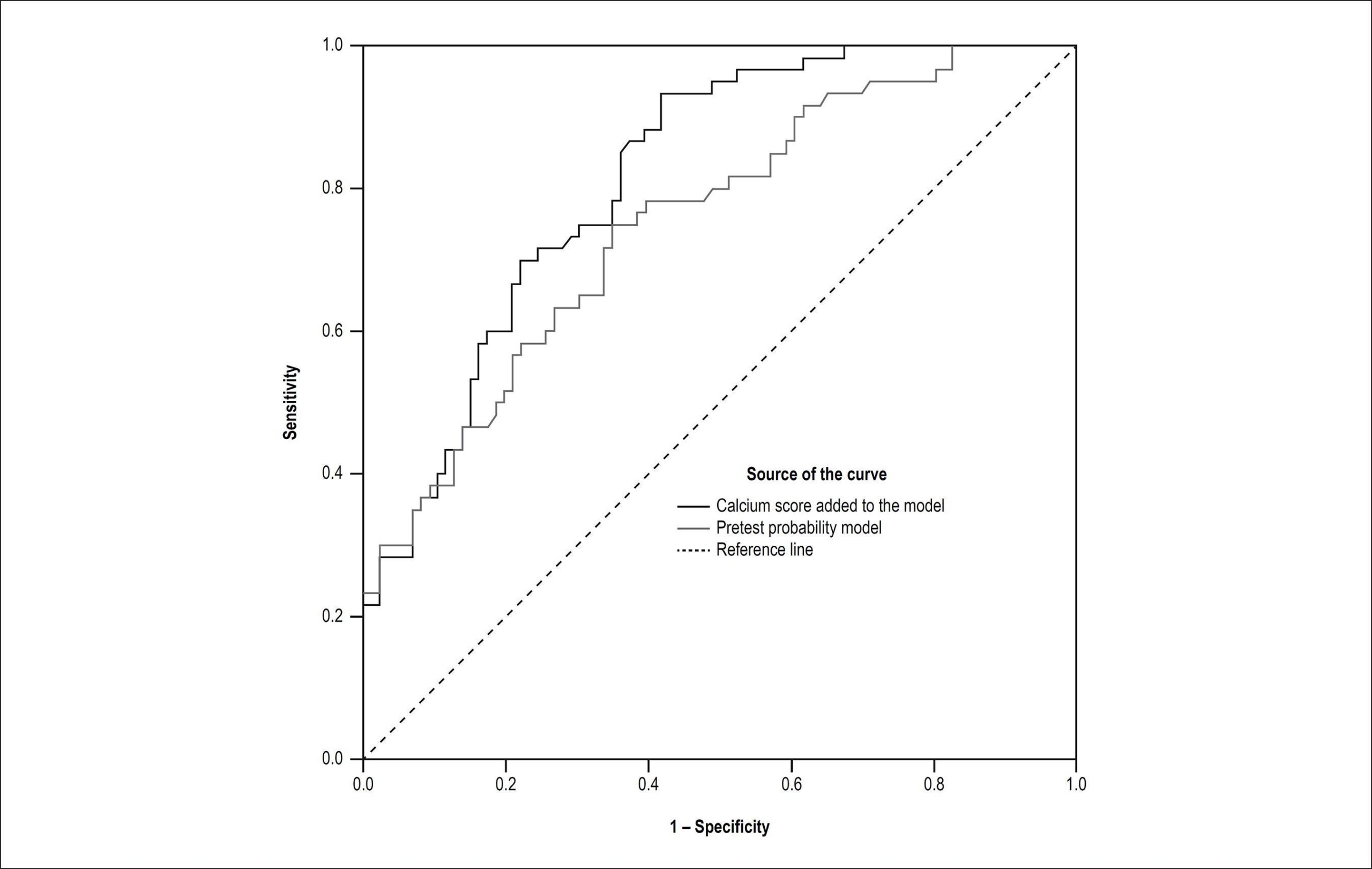
In 146 patients studied, the prevalence of CAD was 41%. A zero calcium score was present in 35% of the patients. The sensitivity and specificity of zero calcium score yielded a negative likelihood ratio of 0.16. After logistic regression adjustment for pretest probability, zero calcium score was independently associated with lower odds of CAD (OR = 0.12, 95%CI = 0.04-0.36), increasing the area under the ROC curve of the clinical model from 0.76 to 0.82 (p = 0.006). Zero calcium score provided a net reclassification improvement of 0.20 (p = 0.0018) over the clinical model when using a pretest probability threshold of 10% for discharging without further testing. In patients with pretest probability < 50%, zero calcium score had a negative predictive value of 95% (95%CI = 83%-99%), with a number needed to test of 2.1 for obtaining one additional discharge.

Conclusion:

Zero calcium score substantially reduces the pretest probability of obstructive CAD in patients admitted to the CCU with acute chest pain. (Arq Bras Cardiol. 2017; [online].ahead print, PP.0-0)

  • Acute Coronary Syndrome / diagnosis
  • Chest Pain, Calcinosis / diagnosis
  • Emergency Medical Services
  • Predictive Value of Tests
Read Full Article
Creative Commons Attribution (CC BY) Creative Commons license
12/06/2017 DOI: 10.5935/abc.20170076 Views 3
IJCS
Original Article

Inadequacies of Sphygmomanometers Used in Emergency Care Services in a Large Capital City in Brazil

Kleisson Antonio Pontes Maia et al. Marcus Vinícius Bolívar Malachias Isabela Viana de Paiva Rafael da Mota Mariano Rodrigo Viana de Paiva

Abstract

Background:

Hypertension is the main risk factor for cardiovascular diseases. Technical quality of sphygmomanometers is a prerequisite for the correct measurement of arterial pressure.

Objectives:

To evaluate sphygmomanometers available in emergency services in the city of Belo Horizonte, Brazil.

Methods:

We performed a cross-sectional, observational, non-interventional study to evaluate characteristics of the sphygmomanometers available in adult emergency services of public and private hospitals in the city of Belo Horizonte, Brazil. We evaluated 337 sphygmomanometers of 25 hospitals – 15 (of 16) public hospitals and 10 (of 12) private hospitals.

Results:

Twenty-six percent (88/337) of devices were considered inadequate regarding the INMETRO (National Institute of Metrology, Quality and Technology) standards, 39.2% (132/337) for calibration dates, and 54% (188/337) for the mismatching between cuff’s and device’s brands. In 13 of 25 hospitals (52%), there were no spare cuffs in different sizes for different arm circumferences. Higher adequacy was found for aneroid and mercury sphygmomanometers used in private hospitals (p = 0.038 and p < 0.001, respectively) and electronic devices used in public hospitals (p < 0.001) compared with others.

Conclusion:

Seventy-eight percent of sphygmomanometers available in emergency services had technical inadequacies, and half of these services had no spare cuffs in different sizes available. These findings serve as a warning of the conditions of the equipment used in healthcare services provided to the general population in Brazil.

  • Emergency Medical Services
  • Equipment Failure
  • Hospitals, Private
  • Hospitals, Public
  • Hypertension
  • Sphygmomanometers
Read Full Article
Creative Commons Attribution (CC BY) Creative Commons license
01/01/2017 DOI: 10.5935/2359-4802.20170028 Views 1
Predictors of hospitalization in patients with syncope assisted in specialized cardiology hospital
ABC
Artigo Original

Predictors of hospitalization in patients with syncope assisted in specialized cardiology hospital

Leonardo Marques Fischer et al. João Pedro Passos Dutra Augusto Mantovani Gustavo Glotz de Lima Tiago Luiz Luz Leiria

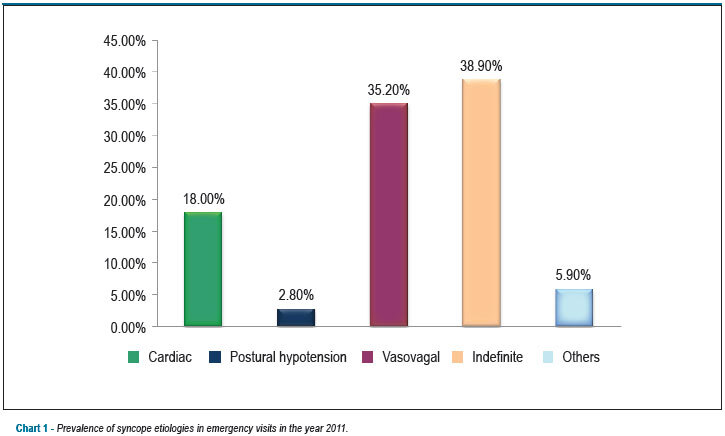
BACKGROUND: Risk stratification of a syncopal episode is necessary to better differentiate patients needing hospitalization of those who can be safely set home from the emergency department. Currently there are no strict guidelines from our Brazilian medical societies to guide the cardiologist that evaluate patients in an emergency setting. OBJECTIVES: To analyze the criteria adopted for defining the need for hospitalization and compare them with the predictors of high risk for adverse outcome defined by the OESIL score that is already validated in the medical literature for assessing syncope. METHODS: A cross-sectional study of patients diagnosed with syncope during emergency department evaluation at our institution in the year 2011. RESULTS: Of the 46,476 emergency visits made in that year, 216 were due to syncope. Of the 216 patients analyzed, 39% were hospitalized. The variables associated with the need of hospital admission were – having health care insurance, previous known cardiovascular disease, no history of prior stroke, previous syncope and abnormal electrocardiograms during the presentation. In comparison with those not admitted OESIL scores of 0-1 were associated with a greater chance of emergency discharge; 2-3 scores showed greater association with the need of hospitalization. A score > 2 OESIL provided an odds ratio 7.8 times higher for hospitalization compared to score 0 (p <0.001, 95% CI:4,03-15,11). In approximately 39% no etiological cause for syncope was found and in 18% cardiac cause was identified. CONCLUSIONS: Factors such as cardiovascular disease, prior history of syncope, health insurance, no previous stroke and abnormal electrocardiograms, were the criteria used by doctors to indicate hospital admission. There was a good correlation between the clinical judgment and the OESIL criteria for high risk described in literature.

  • Emergency Medical Services
  • Hospitalization
  • Risk Factors
  • Syncope
Read Full Article
Creative Commons Attribution (CC BY) Creative Commons license
22/10/2013 DOI: 10.5935/abc.20130206
Implementation of the myocardial infarction system of care in city of Belo Horizonte, Brazil
ABC
Artigo Original

Implementation of the myocardial infarction system of care in city of Belo Horizonte, Brazil

Milena Soriano Marcolino et al. Luisa Campos Caldeira Brant Janaina Guimarães de Araujo Bruno Ramos Nascimento … Luiz Ricardo de Ataide Castro Paula Martins Lucas Lodi-Junqueira Antonio Luiz Ribeiro

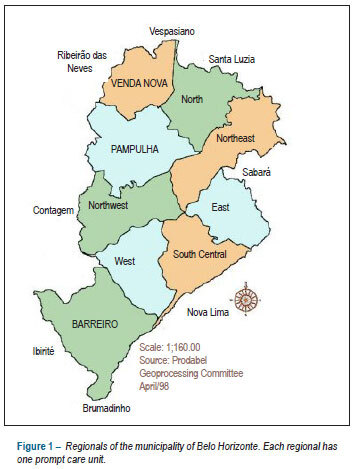
BACKGROUND:The creation of an acute myocardial infarction (AMI) management systems is aimed at optimizing the management of patients from early diagnosis to proper and timely treatment. OBJECTIVE: To assess the implantation of an AMI management system in the municipality of Belo Horizonte, state of Minas Gerais, and its impact on in-hospital mortality due to AMI. METHODS: The AMI management system was implanted in the municipality of Belo Horizonte between 2010 and 2011, aiming at increasing the access of patients of the public health system to the treatment recommended by the existing guidelines. The teams at the prompt care units were trained, and the system of tele-electrocardiography was implanted in those units. The primary outcomes of this retrospective observational study were the number of admissions and in-hospital mortality due to AMI, from 2009 to 2011. RESULTS: In the period studied, 294 professionals were trained and 563 electrocardiograms (ECGs) transmitted from prompt care units to coronary units. A significant reduction was observed in the in-hospital mortality rate (12.3% in 2009 versus 7.1% in 2011, p < 0.001), while the number of admissions due to AMI remained stable. The mean cost of admission increased (mean R$ 2,480.00 versus R$ 3,501.00; p < 0.001), the proportion of admissions including intensive care unit stay increased (32.4% in 2009 versus 66.1% in 2011; p < 0.001), and the number of patients admitted to tertiary hospitals increased (47.0% versus 69.6%; p < 0.001). CONCLUSION: The AMI management system implantation increased the access of the population to proper treatment, thus reducing in-hospital mortality due to AMI.

  • Emergency Medical Services
  • Intensive Care Units
  • Myocardial Infarction
Read Full Article
Creative Commons Attribution (CC BY) Creative Commons license
02/04/2013 DOI: 10.5935/abc.20130054 Views 1
Initial evaluation of the Mobile Emergency Medical Services in the city of Porto Alegre, Brazil
ABC
Artigo Original

Initial evaluation of the Mobile Emergency Medical Services in the city of Porto Alegre, Brazil

Gladis Semensato et al. Leandro Zimerman Luis Eduardo Rohde

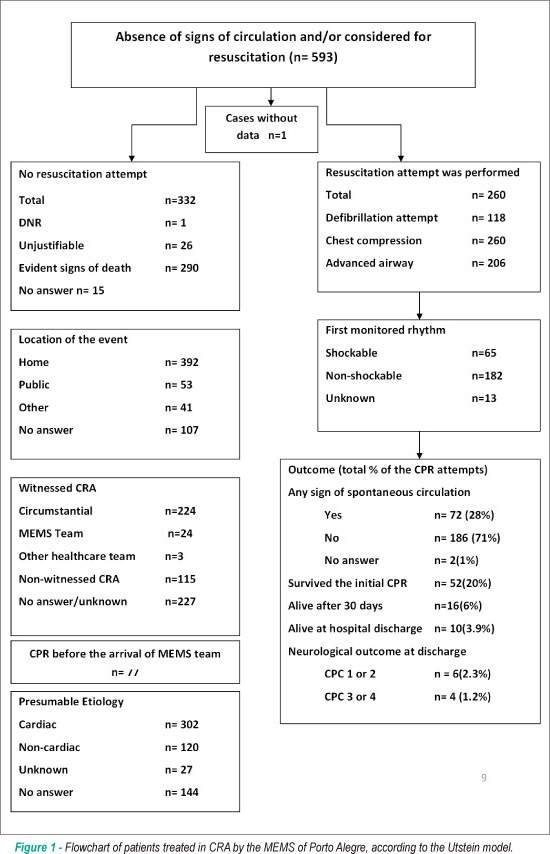
BACKGROUND: Little is known about the immediate outcomes of the Mobile Emergency Medical Services (SAMU) in Brazil. OBJECTIVE: To evaluate clinical predictors of survival of patients in cardiorespiratory arrest (CRA) in the nonhospital environment treated by the SAMU in the city of Porto Alegre. METHODS: The present study has a prospective and observational design. The evaluated outcomes were 30-day survival and hospital discharge, in addition to the Cerebral Performance Category (CPC) score I-II. RESULTS: From January to October 2008, a total of 593 patients in nontraumatic CRA were treated and 260 cardiopulmonary resuscitation (CPR) attempts were made. There was an initial successful outcome in 52 (20.0%) cases, with 16 patients (6.0%) alive on the 30th day and 10 being discharged from the hospital (3.9%), of which 6 (2.3%) presented CPC I-II score. The CPR at home was inversely associated with 30-day survival (p = 0.001) and hospital discharge survival (p = 0.02). An initial “shockable” rhythm (p = 0.008) was associated with 30-day survival. The response-time and collapse-time intervals until CPR start were significantly shorter in 30-day survivors. At multivariate analysis, independent 30-day mortality predictors were an initial shockable rhythm (odds ratio [OR] = 0.28 and 95% confidence interval [95%CI] = 0.10 – 0.81; p = 0.02) and CPR at home (OR = 3.0 and 95CI% = 1.04 – 8.7; p = 0.04). CONCLUSION: The pre-hospital care of CRA in the city of Porto Alegre has limited results; however, they are comparable to the results from other international locations. It is necessary to reinforce each link of the survival chain to improve pre-hospital care, aiming at improving clinically relevant outcomes.

  • air ambulance
  • Ambulances
  • Cardiopulmonary Resuscitation
  • Emergency Medical Services
  • Heart Arrest
Read Full Article
Creative Commons Attribution (CC BY) Creative Commons license
25/02/2011 DOI: 10.1590/S0066-782X2011005000019 Views 1

Could not load more articles. Please try again.

How to cite this article

EndNote RIS

Electronic Document Format (Vancouver)

Villacorta H, Villacorta AS. Optimizing Post-Discharge Heart Failure Care: The Role of Natriuretic Peptides. ABC Heart Fail Cardiomyop 2025;5(2):e20250029.

Electronic Document Format (ABNT)

Villacorta, Humberto; Villacorta, Aline Sterque. Optimizing Post-Discharge Heart Failure Care: The Role of Natriuretic Peptides. ABC Heart Fail Cardiomyop, v. 5, n. 2, e20250029, Dec. 2025.

Electronic Document Format (APA)

Villacorta, H., & Villacorta, A. S. (2025). Optimizing Post-Discharge Heart Failure Care: The Role of Natriuretic Peptides. ABC Heart Fail Cardiomyop, 5(2), e20250029.

Electronic Document Format (ISO)

Villacorta, Humberto and Villacorta, Aline Sterque. Optimizing Post-Discharge Heart Failure Care: The Role of Natriuretic Peptides. ABC Heart Fail Cardiomyop [online]. 2025, vol. 5, n. 2, [cited 2026-10-14], e20250029. Available from: <https://journals.cardiol.br/en/article/optimizing-post-discharge-heart-failure-care-the-role-of-natriuretic-peptides/>

EndNote RIS

Electronic Document Format (Vancouver)

Villacorta H. Relevant Aspects of Natriuretic Peptides in the Etiology of Dyspnea in the Emergency Room: Evidence, Indications, Confounding Factors, and Cost-Effectiveness. ABC Heart Fail Cardiomyop 2024;4(1):e20240017.

Electronic Document Format (ABNT)

Villacorta, Humberto. Relevant Aspects of Natriuretic Peptides in the Etiology of Dyspnea in the Emergency Room: Evidence, Indications, Confounding Factors, and Cost-Effectiveness. ABC Heart Fail Cardiomyop, v. 4, n. 1, e20240017, Jul. 2024.

Electronic Document Format (APA)

Villacorta, H. (2024). Relevant Aspects of Natriuretic Peptides in the Etiology of Dyspnea in the Emergency Room: Evidence, Indications, Confounding Factors, and Cost-Effectiveness. ABC Heart Fail Cardiomyop, 4(1), e20240017.

Electronic Document Format (ISO)

Villacorta, Humberto. Relevant Aspects of Natriuretic Peptides in the Etiology of Dyspnea in the Emergency Room: Evidence, Indications, Confounding Factors, and Cost-Effectiveness. ABC Heart Fail Cardiomyop [online]. 2024, vol. 4, n. 1, [cited 2026-10-14], e20240017. Available from: <https://journals.cardiol.br/en/article/relevant-aspects-of-natriuretic-peptides-in-the-etiology-of-dyspnea-in-the-emergency-room-evidence-indications-confounding-factors-and-cost-effectiveness/>

EndNote RIS

Electronic Document Format (Vancouver)

Freire L, Ávila DX, Figueiredo EL. Can Palliative Care for Heart Failure be Indicated in the Emergency Department?. ABC: Heart Failure & Cardiomyopathy 2023;3(2):e20230068.

Electronic Document Format (ABNT)

Freire, Louise; Ávila, Diane Xavier de; Figueiredo, Estêvão Lanna. Can Palliative Care for Heart Failure be Indicated in the Emergency Department?. ABC: Heart Failure & Cardiomyopathy, v. 3, n. 2, e20230068, Dec. 2023.

Electronic Document Format (APA)

Freire, L., Ávila, D. X. , & Figueiredo, E. L. (2023). Can Palliative Care for Heart Failure be Indicated in the Emergency Department?. ABC: Heart Failure & Cardiomyopathy, 3(2), e20230068.

Electronic Document Format (ISO)

Freire, Louise and Ávila, Diane Xavier de and Figueiredo, Estêvão Lanna. Can Palliative Care for Heart Failure be Indicated in the Emergency Department?. ABC: Heart Failure & Cardiomyopathy [online]. 2023, vol. 3, n. 2, [cited 2026-10-14], e20230068. Available from: <https://journals.cardiol.br/en/article/can-palliative-care-for-heart-failure-be-indicated-in-the-emergency-department/>

EndNote RIS

Electronic Document Format (Vancouver)

Nacer DT, Sousa RMC, Miranda AL. Outcomes after Clinical and Traumatic Out-of-Hospital Cardiac Arrest. Arquivos Brasileiros de Cardiologia 2023;120(7):e20220551.

Electronic Document Format (ABNT)

Nacer, Daiana Terra; Sousa, Regina Márcia Cardoso de; Miranda, Anna Leticia. Outcomes after Clinical and Traumatic Out-of-Hospital Cardiac Arrest. Arquivos Brasileiros de Cardiologia, v. 120, n. 7, e20220551, Jul. 2023.

Electronic Document Format (APA)

Nacer, D. T., Sousa, R. M. C. , & Miranda, A. L. (2023). Outcomes after Clinical and Traumatic Out-of-Hospital Cardiac Arrest. Arquivos Brasileiros de Cardiologia, 120(7), e20220551.

Electronic Document Format (ISO)

Nacer, Daiana Terra and Sousa, Regina Márcia Cardoso de and Miranda, Anna Leticia. Outcomes after Clinical and Traumatic Out-of-Hospital Cardiac Arrest. Arquivos Brasileiros de Cardiologia [online]. 2023, vol. 120, n. 7, [cited 2026-10-14], e20220551. Available from: <https://journals.cardiol.br/en/article/outcomes-after-clinical-and-traumatic-out-of-hospital-cardiac-arrest/>. ISSN 0066-782X

EndNote RIS

Electronic Document Format (Vancouver)

Ferreira D. Having Symptoms of an Acute Myocardial Infarction? Call Your Emergency Medical Service Immediately!. Arquivos Brasileiros de Cardiologia 2022;119(5):764-5.

Electronic Document Format (ABNT)

Ferreira, Daniel. Having Symptoms of an Acute Myocardial Infarction? Call Your Emergency Medical Service Immediately!. Arquivos Brasileiros de Cardiologia, v. 119, n. 5, p. 764-765, Nov. 2022.

Electronic Document Format (APA)

Ferreira, D. (2022). Having Symptoms of an Acute Myocardial Infarction? Call Your Emergency Medical Service Immediately!. Arquivos Brasileiros de Cardiologia, 119(5), 764-765.

Electronic Document Format (ISO)

Ferreira, Daniel. Having Symptoms of an Acute Myocardial Infarction? Call Your Emergency Medical Service Immediately!. Arquivos Brasileiros de Cardiologia [online]. 2022, vol. 119, n. 5, [cited 2026-10-14], pp. 764-765. Available from: <https://journals.cardiol.br/en/article/having-symptoms-of-an-acute-myocardial-infarction-call-your-emergency-medical-service-immediately/>. ISSN 0066-782X

EndNote RIS

Electronic Document Format (Vancouver)

Vieira RCP, Marcolino MS, Silva LG, Pereira DN, Nascimento BR, Jorge AO, Ribeiro ALP, et al. Assessment of the Impact of the Implementation of a Pre-Hospital Ambulance System on Acute Myocardial Infarction Mortality in a Developing Country. Arquivos Brasileiros de Cardiologia 2022;119(5):756-63.

Electronic Document Format (ABNT)

Vieira, Rodrigo Costa Pereira; Marcolino, Milena Soriano; Silva, Luis Gustavo e; Pereira, Daniella Nunes; Nascimento, Bruno Ramos; Jorge, Alzira de Oliveira; Ribeiro, Antonio Luiz P. Assessment of the Impact of the Implementation of a Pre-Hospital Ambulance System on Acute Myocardial Infarction Mortality in a Developing Country. Arquivos Brasileiros de Cardiologia, v. 119, n. 5, p. 756-763, Sep. 2022.

Electronic Document Format (APA)

Vieira, R. C. P., Marcolino, M. S., Silva, L. G. , Pereira, D. N., Nascimento, B. R., Jorge, A. O., & Ribeiro, A. L. P. (2022). Assessment of the Impact of the Implementation of a Pre-Hospital Ambulance System on Acute Myocardial Infarction Mortality in a Developing Country. Arquivos Brasileiros de Cardiologia, 119(5), 756-763.

Electronic Document Format (ISO)

Vieira, Rodrigo Costa Pereira and Marcolino, Milena Soriano and Silva, Luis Gustavo e and Pereira, Daniella Nunes and Nascimento, Bruno Ramos and Jorge, Alzira de Oliveira and Ribeiro, Antonio Luiz P. Assessment of the Impact of the Implementation of a Pre-Hospital Ambulance System on Acute Myocardial Infarction Mortality in a Developing Country. Arquivos Brasileiros de Cardiologia [online]. 2022, vol. 119, n. 5, [cited 2026-10-14], pp. 756-763. Available from: <https://journals.cardiol.br/en/article/assessment-of-the-impact-of-the-implementation-of-a-pre-hospital-ambulance-system-on-acute-myocardial-infarction-mortality-in-a-developing-country/>. ISSN 0066-782X

EndNote RIS

Electronic Document Format (Vancouver)

Ozmen B, Conkbayir C, Hural R, Oztas DM, Ugurlucan M, Okcun B, Yiğit Z, et al. How much do the Patients with Acute Myocardial Infarction Know about Chest Pain, Thrombolytic Therapy, and Other Factors Affecting the Treatment Time in the Emergency Room?. International Journal of Cardiovascular Sciences 2021;34(5):557-65.

Electronic Document Format (ABNT)

Ozmen, Banu; Conkbayir, Cenk; Hural, Refika; Oztas, Didem Melis; Ugurlucan, Murat; Okcun, Barış; Yiğit, Zerrin. How much do the Patients with Acute Myocardial Infarction Know about Chest Pain, Thrombolytic Therapy, and Other Factors Affecting the Treatment Time in the Emergency Room?. International Journal of Cardiovascular Sciences, v. 34, n. 5, p. 557-565, Apr. 2021.

Electronic Document Format (APA)

Ozmen, B., Conkbayir, C., Hural, R., Oztas, D. M., Ugurlucan, M., Okcun, B., & Yiğit, Z. (2021). How much do the Patients with Acute Myocardial Infarction Know about Chest Pain, Thrombolytic Therapy, and Other Factors Affecting the Treatment Time in the Emergency Room?. International Journal of Cardiovascular Sciences, 34(5), 557-565.

Electronic Document Format (ISO)

Ozmen, Banu and Conkbayir, Cenk and Hural, Refika and Oztas, Didem Melis and Ugurlucan, Murat and Okcun, Barış and Yiğit, Zerrin. How much do the Patients with Acute Myocardial Infarction Know about Chest Pain, Thrombolytic Therapy, and Other Factors Affecting the Treatment Time in the Emergency Room?. International Journal of Cardiovascular Sciences [online]. 2021, vol. 34, n. 5, [cited 2026-10-14], pp. 557-565. Available from: <https://journals.cardiol.br/en/article/how-much-do-the-patients-with-acute-myocardial-infarction-know-about-chest-pain-thrombolytic-therapy-and-other-factors-affecting-the-treatment-time-in-the-emergency-room/>. ISSN 2359-4802

EndNote RIS

Electronic Document Format (Vancouver)

Guimarães NS, Carvalho TML, Machado-Pinto J, Lage R, Bernardes RM, Peres ASS, Raposo MA, et al. Increased Home Death Due to Cardiopulmonary Arrest in Times of COVID-19 Pandemic. Arquivos Brasileiros de Cardiologia 2021;116(2):266-71.

Electronic Document Format (ABNT)

Guimarães, Nathalia Sernizon; Carvalho, Taciana Malheiros Lima; Machado-Pinto, Jackson; Lage, Roger; Bernardes, Renata Mascarenhas; Peres, Alex Sander Sena; Raposo, Mariana Amaral; Carvalhais, Ricardo Machado; Mancini, Renan Avelino; Shiomatsu, Gabriella Yuka; Oliveira, Bruna Carvalho; Rodrigues, Valéria de Melo; Melo, Maria do Carmo Barros de; Tupinambás, Unaí. Increased Home Death Due to Cardiopulmonary Arrest in Times of COVID-19 Pandemic. Arquivos Brasileiros de Cardiologia, v. 116, n. 2, p. 266-271, Feb. 2021.

Electronic Document Format (APA)

Guimarães, N. S., Carvalho, T. M. L., Machado-Pinto, J., Lage, R., Bernardes, R. M., Peres, A. S. S., Raposo, M. A., Carvalhais, R. M., Mancini, R. A., Shiomatsu, G. Y., Oliveira, B. C., Rodrigues, V. M., Melo, M. C. B. , & Tupinambás, U. (2021). Increased Home Death Due to Cardiopulmonary Arrest in Times of COVID-19 Pandemic. Arquivos Brasileiros de Cardiologia, 116(2), 266-271.

Electronic Document Format (ISO)

Guimarães, Nathalia Sernizon and Carvalho, Taciana Malheiros Lima and Machado-Pinto, Jackson and Lage, Roger and Bernardes, Renata Mascarenhas and Peres, Alex Sander Sena and Raposo, Mariana Amaral and Carvalhais, Ricardo Machado and Mancini, Renan Avelino and Shiomatsu, Gabriella Yuka and Oliveira, Bruna Carvalho and Rodrigues, Valéria de Melo and Melo, Maria do Carmo Barros de and Tupinambás, Unaí. Increased Home Death Due to Cardiopulmonary Arrest in Times of COVID-19 Pandemic. Arquivos Brasileiros de Cardiologia [online]. 2021, vol. 116, n. 2, [cited 2026-10-14], pp. 266-271. Available from: <https://journals.cardiol.br/en/article/increased-home-death-due-to-cardiopulmonary-arrest-in-times-of-covid-19-pandemic/>. ISSN 0066-782X

EndNote RIS

Electronic Document Format (Vancouver)

Soriano L, Santos MK, Wada DT, Vilalva K, Castro TT, Weinheimer O, Muglia VF, et al. Pulmonary Vascular Volume Estimated by Automated Software is a Mortality Predictor after Acute Pulmonary Embolism. Arquivos Brasileiros de Cardiologia 2020;115(5):809-18.

Electronic Document Format (ABNT)

Soriano, Leonardo; Santos, Marcel Koenigkam; Wada, Danilo Tadeu; Vilalva, Kelvin; Castro, Talita Tavares; Weinheimer, Oliver; Muglia, Valdair Francisco; Pazin Filho, Antonio; Miranda, Carlos Henrique. Pulmonary Vascular Volume Estimated by Automated Software is a Mortality Predictor after Acute Pulmonary Embolism. Arquivos Brasileiros de Cardiologia, v. 115, n. 5, p. 809-818, Dec. 2020.

Electronic Document Format (APA)

Soriano, L., Santos, M. K., Wada, D. T., Vilalva, K., Castro, T. T., Weinheimer, O., Muglia, V. F., Pazin Filho, A., & Miranda, C. H. (2020). Pulmonary Vascular Volume Estimated by Automated Software is a Mortality Predictor after Acute Pulmonary Embolism. Arquivos Brasileiros de Cardiologia, 115(5), 809-818.

Electronic Document Format (ISO)

Soriano, Leonardo and Santos, Marcel Koenigkam and Wada, Danilo Tadeu and Vilalva, Kelvin and Castro, Talita Tavares and Weinheimer, Oliver and Muglia, Valdair Francisco and Pazin Filho, Antonio and Miranda, Carlos Henrique. Pulmonary Vascular Volume Estimated by Automated Software is a Mortality Predictor after Acute Pulmonary Embolism. Arquivos Brasileiros de Cardiologia [online]. 2020, vol. 115, n. 5, [cited 2026-10-14], pp. 809-818. Available from: <https://journals.cardiol.br/en/article/pulmonary-vascular-volume-estimated-by-automated-software-is-a-mortality-predictor-after-acute-pulmonary-embolism/>. ISSN 0066-782X

EndNote RIS

Electronic Document Format (Vancouver)

Feitosa G. The Unapparent Non-COVID Consequences of the COVID-19 Pandemic. Arquivos Brasileiros de Cardiologia 2020;115(5):871-2.

Electronic Document Format (ABNT)

Feitosa, Gilson. The Unapparent Non-COVID Consequences of the COVID-19 Pandemic. Arquivos Brasileiros de Cardiologia, v. 115, n. 5, p. 871-872, Dec. 2020.

Electronic Document Format (APA)

Feitosa, G. (2020). The Unapparent Non-COVID Consequences of the COVID-19 Pandemic. Arquivos Brasileiros de Cardiologia, 115(5), 871-872.

Electronic Document Format (ISO)

Feitosa, Gilson. The Unapparent Non-COVID Consequences of the COVID-19 Pandemic. Arquivos Brasileiros de Cardiologia [online]. 2020, vol. 115, n. 5, [cited 2026-10-14], pp. 871-872. Available from: <https://journals.cardiol.br/en/article/the-unapparent-non-covid-consequences-of-the-covid-19-pandemic/>. ISSN 0066-782X

EndNote RIS

Electronic Document Format (Vancouver)

Almeida ALC, Santo TME, Mello MSS, Cedro AV, Lopes NL, Ribeiro APMR, Mota JGC, et al. Repercussions of the COVID-19 Pandemic on the Care Practices of a Tertiary Hospital. Arquivos Brasileiros de Cardiologia 2020;115(5):862-70.

Electronic Document Format (ABNT)

Almeida, André Luiz Cerqueira; Santo, Thyago Monteiro do Espírito; Mello, Maurício Silva Santana; Cedro, Alexandre Viana; Lopes, Nilson Lima; Ribeiro, Ana Paloma Martins Rocha; Mota, João Gustavo Cerqueira; Mendes, Rodrigo Serapião; Almeida, Paulo André Abreu; Ferreira, Murilo Araújo; Arruda, Diego Moreira; Santos, Adriana Aguiar Pepe; Rios, Vinícius Guedes; Dantas, Maria Rosa Nascimento; Silva, Viviane Almeida; Silva, Marcos Gomes da; Sampaio, Patrick Harrison Santana; Guimarães, André Raimundo; Santos Jr, Edval Gomes. Repercussions of the COVID-19 Pandemic on the Care Practices of a Tertiary Hospital. Arquivos Brasileiros de Cardiologia, v. 115, n. 5, p. 862-870, Sep. 2020.

Electronic Document Format (APA)

Almeida, A. L. C., Santo, T. M. E., Mello, M. S. S., Cedro, A. V., Lopes, N. L., Ribeiro, A. P. M. R., Mota, J. G. C., Mendes, R. S., Almeida, P. A. A., Ferreira, M. A., Arruda, D. M., Santos, A. A. P., Rios, V. G., Dantas, M. R. N., Silva, V. A., Silva, M. G. , Sampaio, P. H. S., Guimarães, A. R., & Santos Jr, E. G. (2020). Repercussions of the COVID-19 Pandemic on the Care Practices of a Tertiary Hospital. Arquivos Brasileiros de Cardiologia, 115(5), 862-870.

Electronic Document Format (ISO)

Almeida, André Luiz Cerqueira and Santo, Thyago Monteiro do Espírito and Mello, Maurício Silva Santana and Cedro, Alexandre Viana and Lopes, Nilson Lima and Ribeiro, Ana Paloma Martins Rocha and Mota, João Gustavo Cerqueira and Mendes, Rodrigo Serapião and Almeida, Paulo André Abreu and Ferreira, Murilo Araújo and Arruda, Diego Moreira and Santos, Adriana Aguiar Pepe and Rios, Vinícius Guedes and Dantas, Maria Rosa Nascimento and Silva, Viviane Almeida and Silva, Marcos Gomes da and Sampaio, Patrick Harrison Santana and Guimarães, André Raimundo and Santos Jr, Edval Gomes. Repercussions of the COVID-19 Pandemic on the Care Practices of a Tertiary Hospital. Arquivos Brasileiros de Cardiologia [online]. 2020, vol. 115, n. 5, [cited 2026-10-14], pp. 862-870. Available from: <https://journals.cardiol.br/en/article/repercussions-of-the-covid-19-pandemic-on-the-care-practices-of-a-tertiary-hospital/>. ISSN 0066-782X

EndNote RIS

Electronic Document Format (Vancouver)

Reis APP, Ruschel KB, Moraes MAP, Belli K, Saffi ML, Fagundes JE. Risk Stratification in Chest Pain: Impact on the Diagnosis of Acute Coronary Syndrome. International Journal of Cardiovascular Sciences 2020;34(1):67-73.

Electronic Document Format (ABNT)

Reis, Ana Paula Paz; Ruschel, Karen Brasil; Moraes, Maria Antonieta P. de; Belli, Karlyse; Saffi, Marco Lumertz; Fagundes, Jaqueline Eilert. Risk Stratification in Chest Pain: Impact on the Diagnosis of Acute Coronary Syndrome. International Journal of Cardiovascular Sciences, v. 34, n. 1, p. 67-73, Aug. 2020.

Electronic Document Format (APA)

Reis, A. P. P., Ruschel, K. B., Moraes, M. A. P. , Belli, K., Saffi, M. L., & Fagundes, J. E. (2020). Risk Stratification in Chest Pain: Impact on the Diagnosis of Acute Coronary Syndrome. International Journal of Cardiovascular Sciences, 34(1), 67-73.

Electronic Document Format (ISO)

Reis, Ana Paula Paz and Ruschel, Karen Brasil and Moraes, Maria Antonieta P. de and Belli, Karlyse and Saffi, Marco Lumertz and Fagundes, Jaqueline Eilert. Risk Stratification in Chest Pain: Impact on the Diagnosis of Acute Coronary Syndrome. International Journal of Cardiovascular Sciences [online]. 2020, vol. 34, n. 1, [cited 2026-10-14], pp. 67-73. Available from: <https://journals.cardiol.br/en/article/risk-stratification-in-chest-pain-impact-on-the-diagnosis-of-acute-coronary-syndrome/>. ISSN 2359-4802

EndNote RIS

Electronic Document Format (Vancouver)

Farah S, Andréa BR, Silva RC, Monteiro A. Telecardiology on the Diagnostic Support of Chest Pain in Twenty-Two Emergency Care Units (UPA 24h) in The State of Rio de Janeiro. International Journal of Cardiovascular Sciences 2019;32(2):158-62.

Electronic Document Format (ABNT)

Farah, Simone; Andréa, Bruno Rustum; Silva, Rogério Casemiro da; Monteiro, Alexandra. Telecardiology on the Diagnostic Support of Chest Pain in Twenty-Two Emergency Care Units (UPA 24h) in The State of Rio de Janeiro. International Journal of Cardiovascular Sciences, v. 32, n. 2, p. 158-162, Jan. 2019.

Electronic Document Format (APA)

Farah, S., Andréa, B. R., Silva, R. C. , & Monteiro, A. (2019). Telecardiology on the Diagnostic Support of Chest Pain in Twenty-Two Emergency Care Units (UPA 24h) in The State of Rio de Janeiro. International Journal of Cardiovascular Sciences, 32(2), 158-162.

Electronic Document Format (ISO)

Farah, Simone and Andréa, Bruno Rustum and Silva, Rogério Casemiro da and Monteiro, Alexandra. Telecardiology on the Diagnostic Support of Chest Pain in Twenty-Two Emergency Care Units (UPA 24h) in The State of Rio de Janeiro. International Journal of Cardiovascular Sciences [online]. 2019, vol. 32, n. 2, [cited 2026-10-14], pp. 158-162. Available from: <https://journals.cardiol.br/en/article/telecardiology-on-the-diagnostic-support-of-chest-pain-in-twenty-two-emergency-care-units-upa-24h-in-the-state-of-rio-de-janeiro/>. ISSN 2359-4802

EndNote RIS

Electronic Document Format (Vancouver)

Oliveira GMM, Villela PB. The Importance of the Prehospital Phase in ST Elevation Myocardial Infarction. Arquivos Brasileiros de Cardiologia 2018;111(4):594-5.

Electronic Document Format (ABNT)

Oliveira, Gláucia Maria Moraes de; Villela, Paolo Blanco. The Importance of the Prehospital Phase in ST Elevation Myocardial Infarction. Arquivos Brasileiros de Cardiologia, v. 111, n. 4, p. 594-595, Sep. 2018.

Electronic Document Format (APA)

Oliveira, G. M. M. , & Villela, P. B. (2018). The Importance of the Prehospital Phase in ST Elevation Myocardial Infarction. Arquivos Brasileiros de Cardiologia, 111(4), 594-595.

Electronic Document Format (ISO)

Oliveira, Gláucia Maria Moraes de and Villela, Paolo Blanco. The Importance of the Prehospital Phase in ST Elevation Myocardial Infarction. Arquivos Brasileiros de Cardiologia [online]. 2018, vol. 111, n. 4, [cited 2026-10-14], pp. 594-595. Available from: <https://journals.cardiol.br/en/article/the-importance-of-the-prehospital-phase-in-st-elevation-myocardial-infarction/>. ISSN 0066-782X

EndNote RIS

Electronic Document Format (Vancouver)

Rodrigues JA, Melleu K, Schmidt MM, Gottschall CAM, Moraes MAP, Quadros AS. Independent Predictors of Late Presentation in Patients with ST-Segment Elevation Myocardial Infarction. Arquivos Brasileiros de Cardiologia 2018;111(4):587-93.

Electronic Document Format (ABNT)

Rodrigues, Juliane Araujo; Melleu, Karina; Schmidt, Márcia Moura; Gottschall, Carlos Antonio Mascia; Moraes, Maria Antonieta Pereira de; Quadros, Alexandre Schaan de. Independent Predictors of Late Presentation in Patients with ST-Segment Elevation Myocardial Infarction. Arquivos Brasileiros de Cardiologia, v. 111, n. 4, p. 587-593, Sep. 2018.

Electronic Document Format (APA)

Rodrigues, J. A., Melleu, K., Schmidt, M. M., Gottschall, C. A. M., Moraes, M. A. P. , & Quadros, A. S. (2018). Independent Predictors of Late Presentation in Patients with ST-Segment Elevation Myocardial Infarction. Arquivos Brasileiros de Cardiologia, 111(4), 587-593.

Electronic Document Format (ISO)

Rodrigues, Juliane Araujo and Melleu, Karina and Schmidt, Márcia Moura and Gottschall, Carlos Antonio Mascia and Moraes, Maria Antonieta Pereira de and Quadros, Alexandre Schaan de. Independent Predictors of Late Presentation in Patients with ST-Segment Elevation Myocardial Infarction. Arquivos Brasileiros de Cardiologia [online]. 2018, vol. 111, n. 4, [cited 2026-10-14], pp. 587-593. Available from: <https://journals.cardiol.br/en/article/independent-predictors-of-late-presentation-in-patients-with-st-segment-elevation-myocardial-infarction/>. ISSN 0066-782X

EndNote RIS

Electronic Document Format (Vancouver)

Hoepfner C, Roma E, Lana JV, Santin AL, Borga AL, Yamamoto AC, Techentin JV, et al. Knock on the Right Door. How we are Treating the Patient with Acute Myocardial Infarction. International Journal of Cardiovascular Sciences 2018;31(5):520-6.

Electronic Document Format (ABNT)

Hoepfner, Clóvis; Roma, Edilson; Lana, Jessé Vinicius; Santin, Ana Luysa; Borga, Ana Lavratti; Yamamoto, Ana Cláudia; Techentin, Juliana Vicente. Knock on the Right Door. How we are Treating the Patient with Acute Myocardial Infarction. International Journal of Cardiovascular Sciences, v. 31, n. 5, p. 520-526, Aug. 2018.

Electronic Document Format (APA)

Hoepfner, C., Roma, E., Lana, J. V., Santin, A. L., Borga, A. L., Yamamoto, A. C., & Techentin, J. V. (2018). Knock on the Right Door. How we are Treating the Patient with Acute Myocardial Infarction. International Journal of Cardiovascular Sciences, 31(5), 520-526.

Electronic Document Format (ISO)

Hoepfner, Clóvis and Roma, Edilson and Lana, Jessé Vinicius and Santin, Ana Luysa and Borga, Ana Lavratti and Yamamoto, Ana Cláudia and Techentin, Juliana Vicente. Knock on the Right Door. How we are Treating the Patient with Acute Myocardial Infarction. International Journal of Cardiovascular Sciences [online]. 2018, vol. 31, n. 5, [cited 2026-10-14], pp. 520-526. Available from: <https://journals.cardiol.br/en/article/knock-on-the-right-door-how-we-are-treating-the-patient-with-acute-myocardial-infarction/>. ISSN 2359-4802

EndNote RIS

Electronic Document Format (Vancouver)

Marcolino MS, Oliveira JAQ, Silva GKM, Dias TD, Marino BCA, Antunes AP, Ribeiro AL, et al. Satisfaction of Emergency Physicians with the Care Provided to Patients with Cardiovascular Diseases in the Northern Region of Minas Gerais. Arquivos Brasileiros de Cardiologia 2018;111(2):151-9.

Electronic Document Format (ABNT)

Marcolino, Milena Soriano; Oliveira, João Antonio de Queiroz; Silva, Grace Kelly Matos e; Dias, Thatiane Dantas; Marino, Barbara Campos Abreu; Antunes, André Pires; Ribeiro, Antonio Luiz; Cardoso, Clareci Silva. Satisfaction of Emergency Physicians with the Care Provided to Patients with Cardiovascular Diseases in the Northern Region of Minas Gerais. Arquivos Brasileiros de Cardiologia, v. 111, n. 2, p. 151-159, Jul. 2018.

Electronic Document Format (APA)

Marcolino, M. S., Oliveira, J. A. Q., Silva, G. K. M. , Dias, T. D., Marino, B. C. A., Antunes, A. P., Ribeiro, A. L., & Cardoso, C. S. (2018). Satisfaction of Emergency Physicians with the Care Provided to Patients with Cardiovascular Diseases in the Northern Region of Minas Gerais. Arquivos Brasileiros de Cardiologia, 111(2), 151-159.

Electronic Document Format (ISO)

Marcolino, Milena Soriano and Oliveira, João Antonio de Queiroz and Silva, Grace Kelly Matos e and Dias, Thatiane Dantas and Marino, Barbara Campos Abreu and Antunes, André Pires and Ribeiro, Antonio Luiz and Cardoso, Clareci Silva. Satisfaction of Emergency Physicians with the Care Provided to Patients with Cardiovascular Diseases in the Northern Region of Minas Gerais. Arquivos Brasileiros de Cardiologia [online]. 2018, vol. 111, n. 2, [cited 2026-10-14], pp. 151-159. Available from: <https://journals.cardiol.br/en/article/satisfaction-of-emergency-physicians-with-the-care-provided-to-patients-with-cardiovascular-diseases-in-the-northern-region-of-minas-gerais/>. ISSN 0066-782X

EndNote RIS

Electronic Document Format (Vancouver)

Feitosa GS. Are We Taking Good Care of Our Patients and Physicians?. Arquivos Brasileiros de Cardiologia 2018;111(2):160-1.

Electronic Document Format (ABNT)

Feitosa, Gilson Soares. Are We Taking Good Care of Our Patients and Physicians?. Arquivos Brasileiros de Cardiologia, v. 111, n. 2, p. 160-161, Jul. 2018.

Electronic Document Format (APA)

Feitosa, G. S. (2018). Are We Taking Good Care of Our Patients and Physicians?. Arquivos Brasileiros de Cardiologia, 111(2), 160-161.

Electronic Document Format (ISO)

Feitosa, Gilson Soares. Are We Taking Good Care of Our Patients and Physicians?. Arquivos Brasileiros de Cardiologia [online]. 2018, vol. 111, n. 2, [cited 2026-10-14], pp. 160-161. Available from: <https://journals.cardiol.br/article/are-we-taking-good-care-of-our-patients-and-physicians/>. ISSN 0066-782X

EndNote RIS

Electronic Document Format (Vancouver)

Takagui ASM, Moreira DM, Carvalho ATG, Duarte TF, Silva RL, Fattah T. Correlation between Clinical and Educational Factors and Delayed Hospital Arrival in Myocardial Infarction. International Journal of Cardiovascular Sciences 2018;31(2):107-13.

Electronic Document Format (ABNT)

Takagui, Andressa Sardá Maiochi; Moreira, Daniel Medeiros; Carvalho, Ana Teresa Glaser; Duarte, Thays Fraga; Silva, Roberto Léo da; Fattah, Tammuz. Correlation between Clinical and Educational Factors and Delayed Hospital Arrival in Myocardial Infarction. International Journal of Cardiovascular Sciences, v. 31, n. 2, p. 107-113, Dec. 2017.

Electronic Document Format (APA)

Takagui, A. S. M., Moreira, D. M., Carvalho, A. T. G., Duarte, T. F., Silva, R. L. , & Fattah, T. (2018). Correlation between Clinical and Educational Factors and Delayed Hospital Arrival in Myocardial Infarction. International Journal of Cardiovascular Sciences, 31(2), 107-113.

Electronic Document Format (ISO)

Takagui, Andressa Sardá Maiochi and Moreira, Daniel Medeiros and Carvalho, Ana Teresa Glaser and Duarte, Thays Fraga and Silva, Roberto Léo da and Fattah, Tammuz. Correlation between Clinical and Educational Factors and Delayed Hospital Arrival in Myocardial Infarction. International Journal of Cardiovascular Sciences [online]. 2018, vol. 31, n. 2, [cited 2026-10-14], pp. 107-113. Available from: <https://journals.cardiol.br/en/article/correlation-between-clinical-and-educational-factors-and-delayed-hospital-arrival-in-myocardial-infarction/>. ISSN 2359-4802

EndNote RIS

Electronic Document Format (Vancouver)

Correia LCL, Esteves FP, Carvalhal M, Souza TMB, Sá N, Correia VCA, Alexandre FKB, et al. Zero Calcium Score as a Filter for Further Testing in Patients Admitted to the Coronary Care Unit with Chest Pain. Arquivos Brasileiros de Cardiologia 2017;109(2):97-102.

Electronic Document Format (ABNT)

Correia, Luis Cláudio Lemos; Esteves, Fábio P.; Carvalhal, Manuela; Souza, Thiago Menezes Barbosa de; Sá, Nicole de; Correia, Vitor Calixto de Almeida; Alexandre, Felipe Kalil Beirão; Lopes, Fernanda; Ferreira, Felipe; Noya-Rabelo, Márcia. Zero Calcium Score as a Filter for Further Testing in Patients Admitted to the Coronary Care Unit with Chest Pain. Arquivos Brasileiros de Cardiologia, v. 109, n. 2, p. 97-102, Jun. 2017.

Electronic Document Format (APA)

Correia, L. C. L., Esteves, F. P., Carvalhal, M., Souza, T. M. B. , Sá, N. , Correia, V. C. A., Alexandre, F. K. B., Lopes, F., Ferreira, F., & Noya-Rabelo, M. (2017). Zero Calcium Score as a Filter for Further Testing in Patients Admitted to the Coronary Care Unit with Chest Pain. Arquivos Brasileiros de Cardiologia, 109(2), 97-102.

Electronic Document Format (ISO)

Correia, Luis Cláudio Lemos and Esteves, Fábio P. and Carvalhal, Manuela and Souza, Thiago Menezes Barbosa de and Sá, Nicole de and Correia, Vitor Calixto de Almeida and Alexandre, Felipe Kalil Beirão and Lopes, Fernanda and Ferreira, Felipe and Noya-Rabelo, Márcia. Zero Calcium Score as a Filter for Further Testing in Patients Admitted to the Coronary Care Unit with Chest Pain. Arquivos Brasileiros de Cardiologia [online]. 2017, vol. 109, n. 2, [cited 2026-10-14], pp. 97-102. Available from: <https://journals.cardiol.br/en/article/zero-calcium-score-as-a-filter-for-further-testing-in-patients-admitted-to-the-coronary-care-unit-with-chest-pain/>. ISSN 0066-782X

EndNote RIS

Electronic Document Format (Vancouver)

Maia KAP, Malachias MVB, Paiva IV, Mariano RM, Paiva RV. Inadequacies of Sphygmomanometers Used in Emergency Care Services in a Large Capital City in Brazil. International Journal of Cardiovascular Sciences 2017;30(2):100-8.

Electronic Document Format (ABNT)

Maia, Kleisson Antonio Pontes; Malachias, Marcus Vinícius Bolívar; Paiva, Isabela Viana de; Mariano, Rafael da Mota; Paiva, Rodrigo Viana de. Inadequacies of Sphygmomanometers Used in Emergency Care Services in a Large Capital City in Brazil. International Journal of Cardiovascular Sciences, v. 30, n. 2, p. 100-108, Dec. 2016.

Electronic Document Format (APA)

Maia, K. A. P., Malachias, M. V. B., Paiva, I. V. , Mariano, R. M., & Paiva, R. V. (2017). Inadequacies of Sphygmomanometers Used in Emergency Care Services in a Large Capital City in Brazil. International Journal of Cardiovascular Sciences, 30(2), 100-108.

Electronic Document Format (ISO)

Maia, Kleisson Antonio Pontes and Malachias, Marcus Vinícius Bolívar and Paiva, Isabela Viana de and Mariano, Rafael da Mota and Paiva, Rodrigo Viana de. Inadequacies of Sphygmomanometers Used in Emergency Care Services in a Large Capital City in Brazil. International Journal of Cardiovascular Sciences [online]. 2017, vol. 30, n. 2, [cited 2026-10-14], pp. 100-108. Available from: <https://journals.cardiol.br/en/article/inadequacies-of-sphygmomanometers-used-in-emergency-care-services-in-a-large-capital-city-in-brazil/>. ISSN 2359-4802

EndNote RIS

Electronic Document Format (Vancouver)

Fischer LM, Dutra JPP, Mantovani A, Lima GG, Leiria TLL. Predictors of hospitalization in patients with syncope assisted in specialized cardiology hospital. Arquivos Brasileiros de Cardiologia 2013;101(6):480-6.

Electronic Document Format (ABNT)

Fischer, Leonardo Marques; Dutra, João Pedro Passos; Mantovani, Augusto; Lima, Gustavo Glotz de; Leiria, Tiago Luiz Luz. Predictors of hospitalization in patients with syncope assisted in specialized cardiology hospital. Arquivos Brasileiros de Cardiologia, v. 101, n. 6, p. 480-486, Oct. 2013.

Electronic Document Format (APA)

Fischer, L. M., Dutra, J. P. P., Mantovani, A., Lima, G. G. , & Leiria, T. L. L. (2013). Predictors of hospitalization in patients with syncope assisted in specialized cardiology hospital. Arquivos Brasileiros de Cardiologia, 101(6), 480-486.

Electronic Document Format (ISO)

Fischer, Leonardo Marques and Dutra, João Pedro Passos and Mantovani, Augusto and Lima, Gustavo Glotz de and Leiria, Tiago Luiz Luz. Predictors of hospitalization in patients with syncope assisted in specialized cardiology hospital. Arquivos Brasileiros de Cardiologia [online]. 2013, vol. 101, n. 6, [cited 2026-10-14], pp. 480-486. Available from: <https://journals.cardiol.br/en/article/predictors-of-hospitalization-in-patients-with-syncope-assisted-in-specialized-cardiology-hospital/>. ISSN 0066-782X

EndNote RIS

Electronic Document Format (Vancouver)

Marcolino MS, Brant LCC, Araujo JG, Nascimento BR, Castro LRA, Martins P, Lodi-Junqueira L, et al. Implementation of the myocardial infarction system of care in city of Belo Horizonte, Brazil. Arquivos Brasileiros de Cardiologia 2013;100(4):307-14.

Electronic Document Format (ABNT)

Marcolino, Milena Soriano; Brant, Luisa Campos Caldeira; Araujo, Janaina Guimarães de; Nascimento, Bruno Ramos; Castro, Luiz Ricardo de Ataide; Martins, Paula; Lodi-Junqueira, Lucas; Ribeiro, Antonio Luiz. Implementation of the myocardial infarction system of care in city of Belo Horizonte, Brazil. Arquivos Brasileiros de Cardiologia, v. 100, n. 4, p. 307-314, Apr. 2013.

Electronic Document Format (APA)

Marcolino, M. S., Brant, L. C. C., Araujo, J. G. , Nascimento, B. R., Castro, L. R. A., Martins, P., Lodi-Junqueira, L., & Ribeiro, A. L. (2013). Implementation of the myocardial infarction system of care in city of Belo Horizonte, Brazil. Arquivos Brasileiros de Cardiologia, 100(4), 307-314.

Electronic Document Format (ISO)

Marcolino, Milena Soriano and Brant, Luisa Campos Caldeira and Araujo, Janaina Guimarães de and Nascimento, Bruno Ramos and Castro, Luiz Ricardo de Ataide and Martins, Paula and Lodi-Junqueira, Lucas and Ribeiro, Antonio Luiz. Implementation of the myocardial infarction system of care in city of Belo Horizonte, Brazil. Arquivos Brasileiros de Cardiologia [online]. 2013, vol. 100, n. 4, [cited 2026-10-14], pp. 307-314. Available from: <https://journals.cardiol.br/en/article/implementation-of-the-myocardial-infarction-system-of-care-in-city-of-belo-horizonte-brazil/>. ISSN 0066-782X

EndNote RIS

Electronic Document Format (Vancouver)

Semensato G, Zimerman L, Rohde LE. Initial evaluation of the Mobile Emergency Medical Services in the city of Porto Alegre, Brazil. Arquivos Brasileiros de Cardiologia 2011;96(3):196-204.

Electronic Document Format (ABNT)

Semensato, Gladis; Zimerman, Leandro; Rohde, Luis Eduardo. Initial evaluation of the Mobile Emergency Medical Services in the city of Porto Alegre, Brazil. Arquivos Brasileiros de Cardiologia, v. 96, n. 3, p. 196-204, Feb. 2011.

Electronic Document Format (APA)

Semensato, G., Zimerman, L., & Rohde, L. E. (2011). Initial evaluation of the Mobile Emergency Medical Services in the city of Porto Alegre, Brazil. Arquivos Brasileiros de Cardiologia, 96(3), 196-204.

Electronic Document Format (ISO)

Semensato, Gladis and Zimerman, Leandro and Rohde, Luis Eduardo. Initial evaluation of the Mobile Emergency Medical Services in the city of Porto Alegre, Brazil. Arquivos Brasileiros de Cardiologia [online]. 2011, vol. 96, n. 3, [cited 2026-10-14], pp. 196-204. Available from: <https://journals.cardiol.br/en/article/initial-evaluation-of-the-mobile-emergency-medical-services-in-the-city-of-porto-alegre-brazil/>. ISSN 0066-782X

  • About ABC Family
  • Internal Regulation
  • Editorial Board
  • Brazilian Society of Cardiology (SBC)

Issues

SBC Guidelines

  • Videos
  • Podcasts
  • News