ABC Family Arquivos Brasileiros de Cardiologia International Journal of Cardiovascular Sciences ABC Heart Failure & Cardiomyopathy ABC Imagem Cardiovascular
Português English
ABC Family
Português English
  • About
    • About ABC Family
    • Internal Regulation
    • Editorial Board
    • Brazilian Society of Cardiology (SBC)
  • Issues
  • SBC Guidelines
  • Content
    • Videos
    • Podcasts
    • News
  • About
    • About ABC Family
    • Internal Regulation
    • Editorial Board
    • Brazilian Society of Cardiology (SBC)
  • Issues
  • SBC Guidelines
  • Content
    • Videos
    • Podcasts
    • News

ABC Family

  • ABC Family
  • Arquivos Brasileiros de Cardiologia
  • International Journal of Cardiovascular Sciences
  • ABC Heart Failure & Cardiomyopathy
  • ABC Imagem Cardiovascular
Search in

No content found.

Journals
Ordering
Article types
Others

  1. Home
  2. Keyword: Embolism and Thrombosis
ABC
Editorial

Beyond CHA2DS2-VASc for Predicting the Risk of Thromboembolism and Stroke – Not That Simple!

M. Julia Machline-Carrion

Ischemic stroke can result from a variety of causes, such as atherosclerosis of the cerebral circulation, occlusion of cerebral small vessels, and cardiac embolism. Of these causes, cardioembolic stroke has a particular significance because cardiac embolism causes more severe strokes than other ischemic stroke subtypes. In about 20% of patients who have had ischemic stroke, a major risk cardiac source, such as atrial fibrillation (AF) and/or left ventricular thrombi, is identified. Thus, assessing the presence of AF, and the risk of thromboembolism associated to cardiac lesions play a key role in stroke prevention.

Age, male gender, hypertension, diabetes mellitus, valvular heart disease, congestive heart failure, coronary heart disease, chronic kidney disease, inflammatory disorders, sleep apnea, and tobacco use have all been established as risk factors for both AF and stroke. However, it may be that other atrial factors besides AF can result in thromboembolism, and in some cases, AF may be a lagging marker of these other thrombogenic atrial abnormalities. AF often occurs in the setting of atrial abnormalities such as mechanical dysfunction in the left atrial appendage. These abnormalities of atrial substrate have recently been associated with stroke risk independently of AF. The CHA2DS2-VASc (congestive heart failure, hypertension, age ≥ 75 years, diabetes mellitus, stroke or transient ischemic attack (TIA), vascular disease, age 65 to 74 years, sex category) score is a validated tool to predict the risk of stroke and systemic emboli in patients with non-valvular atrial fibrillation and has been widely used to guide clinical practice.–

[…]

  • Atherosclerosis
  • Atrial Fibrillation
  • Cerebrovascular Circulation
  • diabetes
  • Embolism and Thrombosis
  • Hypertension
  • Risk Factors
  • Stroke
Read Full Article
Creative Commons Attribution (CC BY) Creative Commons license
01/03/2021 DOI: 10.36660/abc.20201296 Views 1
ABC
Editorial

Ventricular Repolarization as a Tool to Monitor Electrical Activity of the Heart

Carlos Alberto Pastore

The centennial ECG is still an excellent tool to assess electrical activity of the heart. ECG has been renovated over the last decades to keep pace with evolution in other areas of knowledge, such as genetics, molecular biology and electrophysiology.

Our experience has demonstrated that, among the large diagnostic arsenal available to investigate heart diseases, the electrocardiogram, this simple, practical, remote and quick tool, is capable of accurately monitoring the extent and severity of cardiac involvement in various scenarios.

[…]

  • Betacoronavirus
  • Cardiac Arrhythmias
  • Coronavirus
  • Covid-19/complications
  • Embolism and Thrombosis
  • Pandemics
Read Full Article
Creative Commons Attribution (CC BY) Creative Commons license
07/12/2020 DOI: 10.36660/abc.20201009 Views 2
Figure 1
IJCS
Viewpoint

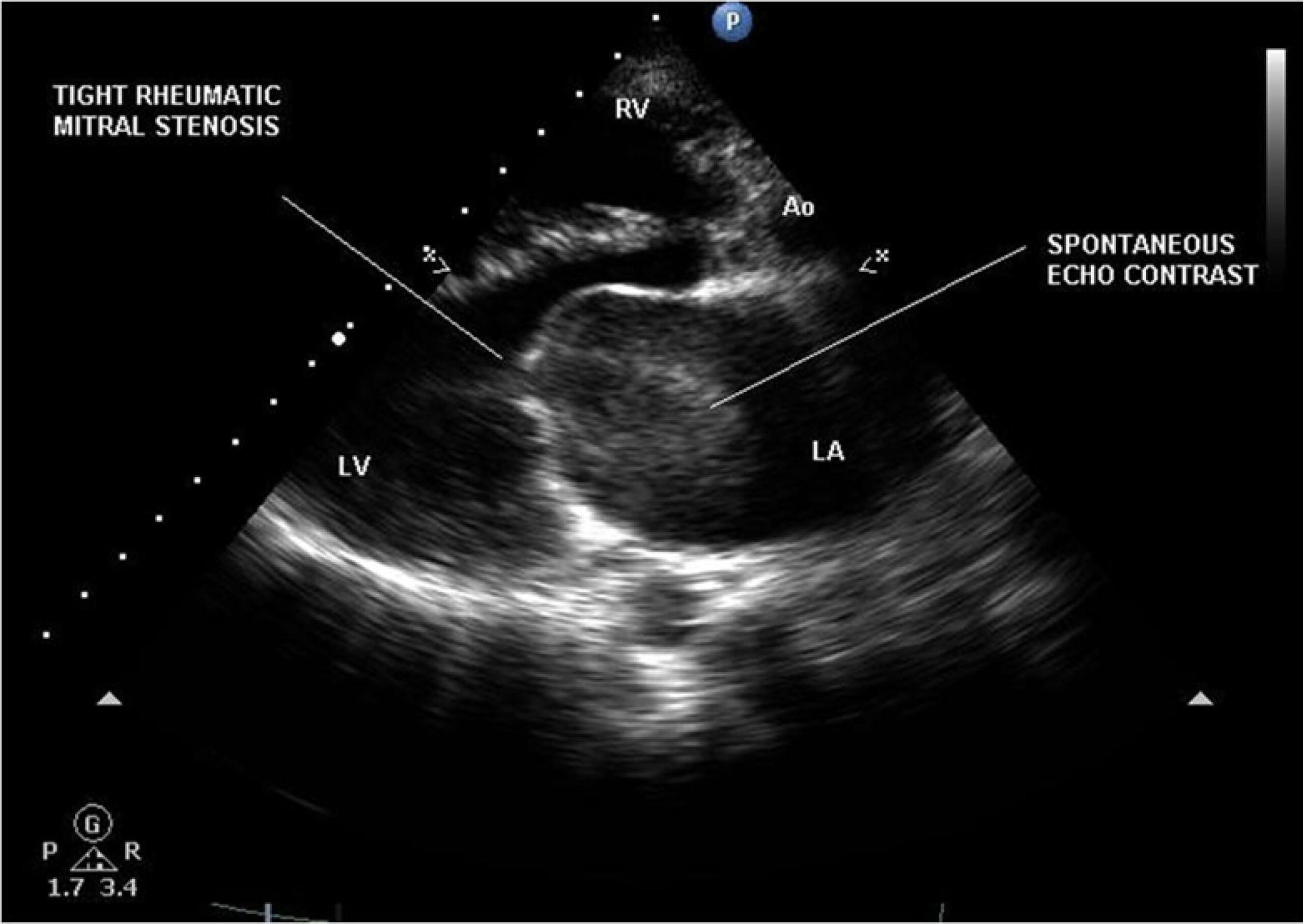
Remoras and Spontaneous Echocardiographic Contrast

Charles André

Abstract

The term “Remora” (hindrance) – re (again)/mora (delay) -originally designated a family of fishes – the suckerfishes. In ancient Greece and Rome and up to the early 19th century, these fishes were believed to slow down ships by attaching to them. Medicine adopted the term “remora” to describe fluid/blood stasis. Intracardiac blood stasis, or remora, especially in the left atrial appendage, is associated with thrombogenesis and responsible for cardioembolic phenomena. The slow and swirling movement of blood causes the appearance of spontaneous echocardiographic contrast (SEC). I briefly narrate the Naval Battle of Actium, whose result was mythically attributed to the remora fishes, and make a short review of remoras. I also describe Laennec’s discussion about intracardiac blood stasis and give a short account of SEC, its original descriptions and importance.

  • Atrial Appendage
  • Cypriniformes (remoras)
  • Diagnostic Imaging
  • Echocardiography/history
  • Embolism and Thrombosis
  • History, Ancient
  • Ultrasonography/history
Read Full Article
Creative Commons Attribution (CC BY) Creative Commons license
01/01/2018 DOI: 10.5935/2359-4802.20180054
ABC
Editorial

Factors in Deciding between Novel and Traditional Oral Anticoagulants to Prevent Embolism in Atrial Fibrillation Patients

Maurício Scanavacca et al. Francisco Darrieux

Atrial fibrillation (AF) is the sustained arrhythmia most frequently found in clinical practice. Its prevalence is expected to increase in the coming decades. Its occurrence implies a reduction in the quality of life and an increase in mortality, mainly due to stroke and systemic thromboembolism (TE). The stroke originating from AF carries a higher risk of severe complications, such as permanent disability and prolonged hospitalization, as compared to that of other etiologies.–

Since the discovery of vitamin K (VitK) antagonists more than 50 years ago, they have become the most effective treatment to prevent stroke and TE in patients with AF. However, because of the risk of hemorrhagic complications they pose, only patients with persistent AF considered of very high risk, previous embolic accidents, mechanical valvular prostheses, and those undergoing electrical cardioversion used to receive that treatment in an initial phase. Between the 1980 and 1990 decades, major clinical controlled studies determining the importance of stroke prevention in non-valvular AF were carried out, providing scientific support to the current clinical use of VitK antagonists. The greater benefit of the VitK antagonists as compared to placebo (a mean 64% reduction in relative risk) has been undoubtedly demonstrated, as has been the modest or even absent role of acetylsalicylic acid in stroke prevention in that population.

[…]

  • Anticoagulants
  • Atrial Fibrillation
  • Embolism and Thrombosis
  • Prevention
  • Stroke
Read Full Article
Creative Commons Attribution (CC BY) Creative Commons license
01/01/2016 DOI: 10.5935/abc.20160010 Views 2

How to cite this article

EndNote RIS

Electronic Document Format (Vancouver)

Machline-Carrion MJ. Beyond CHA2DS2-VASc for Predicting the Risk of Thromboembolism and Stroke – Not That Simple!. Arquivos Brasileiros de Cardiologia 2021;116(2):332-3.

Electronic Document Format (ABNT)

Machline-Carrion, M. Julia. Beyond CHA2DS2-VASc for Predicting the Risk of Thromboembolism and Stroke – Not That Simple!. Arquivos Brasileiros de Cardiologia, v. 116, n. 2, p. 332-333, Feb. 2021.

Electronic Document Format (APA)

Machline-Carrion, M. J. (2021). Beyond CHA2DS2-VASc for Predicting the Risk of Thromboembolism and Stroke – Not That Simple!. Arquivos Brasileiros de Cardiologia, 116(2), 332-333.

Electronic Document Format (ISO)

Machline-Carrion, M. Julia. Beyond CHA2DS2-VASc for Predicting the Risk of Thromboembolism and Stroke – Not That Simple!. Arquivos Brasileiros de Cardiologia [online]. 2021, vol. 116, n. 2, [cited 2026-10-14], pp. 332-333. Available from: <https://journals.cardiol.br/en/article/beyond-cha2ds2-vasc-for-predicting-the-risk-of-thromboembolism-and-stroke-not-that-simple/>. ISSN 0066-782X

EndNote RIS

Electronic Document Format (Vancouver)

Pastore CA. Ventricular Repolarization as a Tool to Monitor Electrical Activity of the Heart. Arquivos Brasileiros de Cardiologia 2020;115(5):914-5.

Electronic Document Format (ABNT)

Pastore, Carlos Alberto. Ventricular Repolarization as a Tool to Monitor Electrical Activity of the Heart. Arquivos Brasileiros de Cardiologia, v. 115, n. 5, p. 914-915, Dec. 2020.

Electronic Document Format (APA)

Pastore, C. A. (2020). Ventricular Repolarization as a Tool to Monitor Electrical Activity of the Heart. Arquivos Brasileiros de Cardiologia, 115(5), 914-915.

Electronic Document Format (ISO)

Pastore, Carlos Alberto. Ventricular Repolarization as a Tool to Monitor Electrical Activity of the Heart. Arquivos Brasileiros de Cardiologia [online]. 2020, vol. 115, n. 5, [cited 2026-10-14], pp. 914-915. Available from: <https://journals.cardiol.br/en/article/ventricular-repolarization-as-a-tool-to-monitor-electrical-activity-of-the-heart/>. ISSN 0066-782X

EndNote RIS

Electronic Document Format (Vancouver)

André C. Remoras and Spontaneous Echocardiographic Contrast. International Journal of Cardiovascular Sciences 2018;31(6):662-6.

Electronic Document Format (ABNT)

André, Charles. Remoras and Spontaneous Echocardiographic Contrast. International Journal of Cardiovascular Sciences, v. 31, n. 6, p. 662-666, Dec. 2017.

Electronic Document Format (APA)

André, C. (2018). Remoras and Spontaneous Echocardiographic Contrast. International Journal of Cardiovascular Sciences, 31(6), 662-666.

Electronic Document Format (ISO)

André, Charles. Remoras and Spontaneous Echocardiographic Contrast. International Journal of Cardiovascular Sciences [online]. 2018, vol. 31, n. 6, [cited 2026-10-14], pp. 662-666. Available from: <https://journals.cardiol.br/en/article/remoras-and-spontaneous-echocardiographic-contrast/>. ISSN 2359-4802

EndNote RIS

Electronic Document Format (Vancouver)

Scanavacca M, Darrieux F. Factors in Deciding between Novel and Traditional Oral Anticoagulants to Prevent Embolism in Atrial Fibrillation Patients. Arquivos Brasileiros de Cardiologia 2016;106(1):1-3.

Electronic Document Format (ABNT)

Scanavacca, Maurício; Darrieux, Francisco. Factors in Deciding between Novel and Traditional Oral Anticoagulants to Prevent Embolism in Atrial Fibrillation Patients. Arquivos Brasileiros de Cardiologia, v. 106, n. 1, p. 1-3, Dec. 2015.

Electronic Document Format (APA)

Scanavacca, M., & Darrieux, F. (2016). Factors in Deciding between Novel and Traditional Oral Anticoagulants to Prevent Embolism in Atrial Fibrillation Patients. Arquivos Brasileiros de Cardiologia, 106(1), 1-3.

Electronic Document Format (ISO)

Scanavacca, Maurício and Darrieux, Francisco. Factors in Deciding between Novel and Traditional Oral Anticoagulants to Prevent Embolism in Atrial Fibrillation Patients. Arquivos Brasileiros de Cardiologia [online]. 2016, vol. 106, n. 1, [cited 2026-10-14], pp. 1-3. Available from: <https://journals.cardiol.br/en/article/factors-in-deciding-between-novel-and-traditional-oral-anticoagulants-to-prevent-embolism-in-atrial-fibrillation-patients/>. ISSN 0066-782X

  • About ABC Family
  • Internal Regulation
  • Editorial Board
  • Brazilian Society of Cardiology (SBC)

Issues

SBC Guidelines

  • Videos
  • Podcasts
  • News