ABC Family Arquivos Brasileiros de Cardiologia International Journal of Cardiovascular Sciences ABC Heart Failure & Cardiomyopathy ABC Imagem Cardiovascular
Português English
ABC Family
Português English
  • About
    • About ABC Family
    • Internal Regulation
    • Editorial Board
    • Brazilian Society of Cardiology (SBC)
  • Issues
  • SBC Guidelines
  • Content
    • Videos
    • Podcasts
    • News
  • About
    • About ABC Family
    • Internal Regulation
    • Editorial Board
    • Brazilian Society of Cardiology (SBC)
  • Issues
  • SBC Guidelines
  • Content
    • Videos
    • Podcasts
    • News

ABC Family

  • ABC Family
  • Arquivos Brasileiros de Cardiologia
  • International Journal of Cardiovascular Sciences
  • ABC Heart Failure & Cardiomyopathy
  • ABC Imagem Cardiovascular
Search in

No content found.

Journals
Ordering
Article types
Others

  1. Home
  2. Keyword: Atrial flutter
ABC
Special Article

Cardiovascular Statistics – Brazil 2026

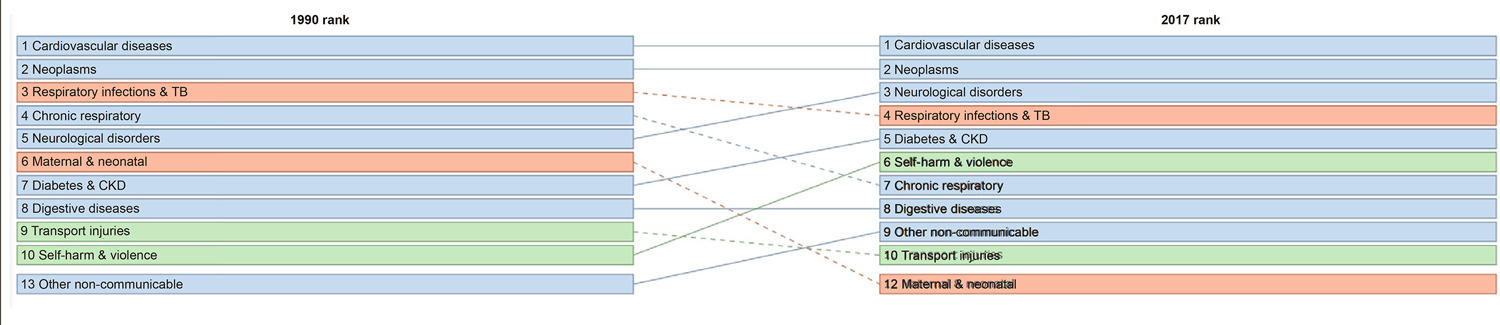
Gláucia Maria Moraes de Oliveira et al. Luisa Campos Caldeira Brant Carisi Anne Polanczyk Deborah Carvalho Malta … Andreia Biolo Bruno Ramos Nascimento Maria de Fatima Marinho de Souza Andrea Rocha De Lorenzo Antonio Aurélio de Paiva Fagundes Júnior Arthur Gus Manfro Beatriz D. Schaan Christina Grüne de Souza e Silva Fábio Morato de Castilho Fernando Henpin Yue Cesena Gabriel Porto Soares Gesner Francisco Xavier Junior Jose Augusto Soares Barreto Filho Lucia Campos Pellanda Luciana Nicolau Aranha Luis Eduardo Paim Rohde Luiz Guilherme Passaglia Marcelo Martins Pinto-Filho M. Julia Machline-Carrion Marcio Sommer Bittencourt Octavio M. Pontes Neto Paolo Blanco Villela Paulo Henrique Godoy Renato Azeredo Teixeira Ricardo Stein Roney Orismar Sampaio Thais Rocha Salim Thomas A. Gaziano Pablo Perel Gregory A. Roth Antonio Luiz Pinho Ribeiro

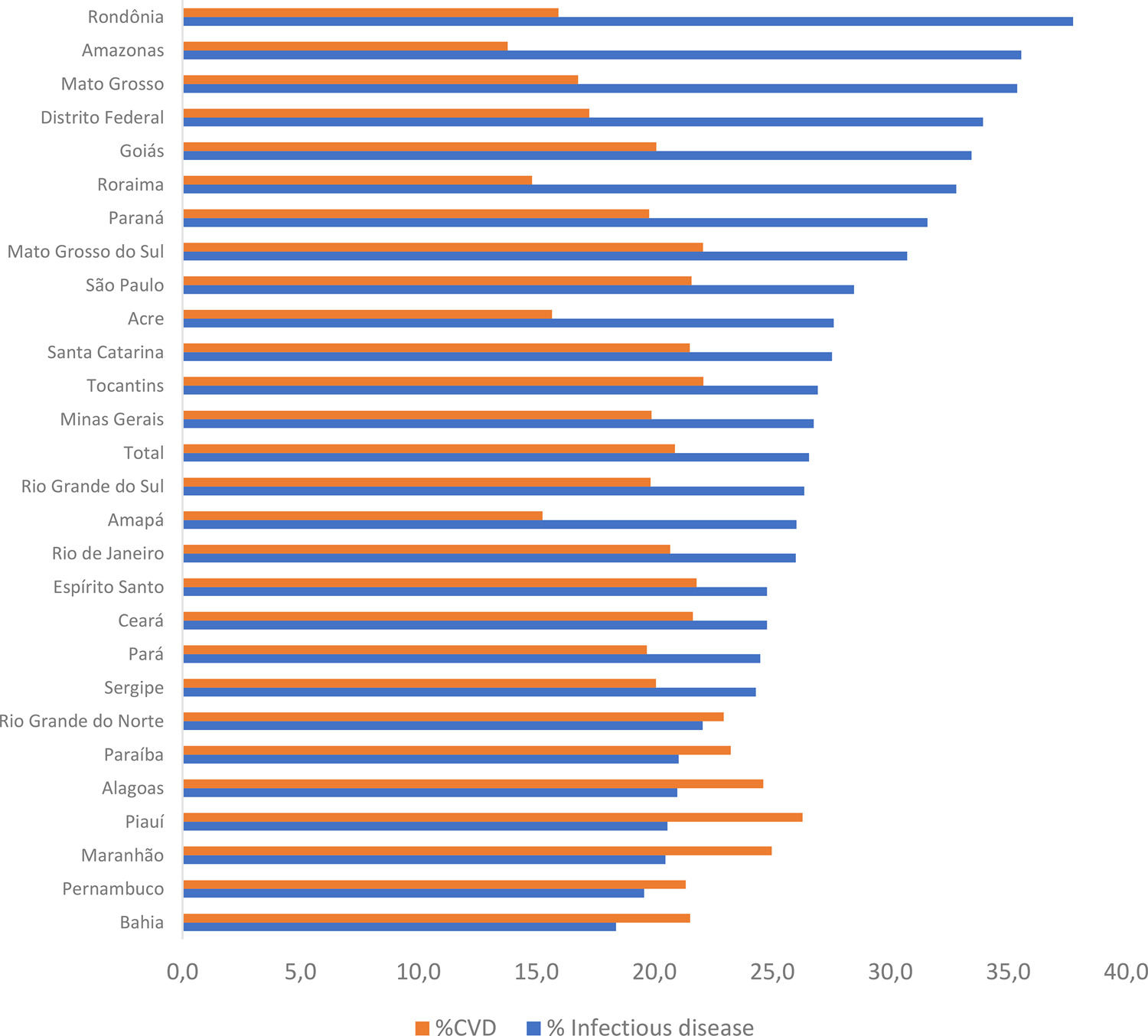
Cardiovascular Statistics – Brazil was established to provide a periodic, comprehensive, evidence-based assessment of cardiovascular health in Brazil and to support clinical practice, research, public health planning, and policy development. Developed under the auspices of the Brazilian Society of Cardiology, the initiative brings together a multidisciplinary network of investigators from academic institutions across the country who are responsible for reviewing, analyzing, and interpreting data from multiple complementary sources. Since its first edition in 2020, Cardiovascular Statistics – Brazil has sought not only to quantify the burden of cardiovascular diseases (CVDs) and their risk factors but also to identify temporal trends, regional disparities, gaps in care, and emerging challenges for the Brazilian health system. The project is modeled on international initiatives such as the American Heart Association’s Heart Disease and Stroke Statistics Update, while incorporating data sources and perspectives that reflect Brazil’s unique epidemiological, demographic, and healthcare characteristics.

(…)

  • Atrial Fibrillation
  • Atrial flutter
  • Brazil
  • Cardiomyopathies
  • Cardiovascular Diseases
  • Cerebrovascular Disorders
  • chronic renal insufficiency
  • Congenital Heart Defects
  • Coronary Disease
  • Diabetes Mellitus
  • Diet
  • Dyslipidemias
  • Exercise
  • Heart Failure
  • Heart Valve Diseases
  • Hypertension
  • Obesity
  • Overweight
  • Statistics
  • Tobacco Use Disorder
Read Full Article
Creative Commons Attribution (CC BY) Creative Commons license
07/10/2026 DOI: 10.36660/abc.20260832i Views 1
Chart 1-1
ABC
Special Article

Cardiovascular Statistics – Brazil 2023

Gláucia Maria Moraes de Oliveira et al. Luisa Campos Caldeira Brant Carisi Anne Polanczyk Deborah Carvalho Malta … Andreia Biolo Bruno Ramos Nascimento Maria de Fatima Marinho de Souza Andrea Rocha De Lorenzo Antonio Aurélio de Paiva Fagundes Júnior Beatriz D. Schaan Christina Grüne de Souza e Silva Fábio Morato de Castilho Fernando Henpin Yue Cesena Gabriel Porto Soares Gesner Francisco Xavier Junior Jose Augusto Soares Barreto Filho Luiz Guilherme Passaglia Marcelo Martins Pinto Filho M. Julia Machline-Carrion Marcio Sommer Bittencourt Octavio M. Pontes Neto Paolo Blanco Villela Renato Azeredo Teixeira Ricardo Stein Roney Orismar Sampaio Thomaz A. Gaziano Pablo Perel Gregory A. Roth Antonio Luiz Pinho Ribeiro

ABOUT THESE STATISTICS

The publication Cardiovascular Statistics – Brazil aims to provide an annual compilation of data and research on the epidemiology of CVDs in Brazil. The report integrates official statistics from the Brazilian Ministry of Health and other governmental entities alongside data from the GBD project, coordinated by the IHME at the University of Washington. Additionally, it incorporates data derived from various sources and scientific studies, including cohorts and registries, that relate to CVDs and their associated risk factors. This publication is intended for a wide range of individuals, including researchers, clinicians, patients, healthcare policymakers, media professionals, the general public, and other interested parties seeking extensive national data about heart disease and stroke. Volunteer researchers from various Brazilian universities and research institutions carry out the project. The group is led by a five-member steering committee (ALPR, CAP, DCM, GMMO, and LCCB). The Brazilian Society of Cardiology fully supports this initiative, and the project receives collaborative support from the GBD Brazil Networkand an International Committee (GAR, PP, and TAG) from both the IHME/University of Washington (GAR) and the World Heart Federation (PP and TAG).

[…]

  • Atrial Fibrillation
  • Atrial flutter
  • Brazil
  • Cardiomyopathies
  • Cardiovascular Diseases
  • Cerebrovascular Disorders
  • Coronary Disease
  • Diabetes Mellitus
  • Dyslipidemias
  • Exercise
  • Heart Failure
  • Heart Valve Diseases
  • Hypertension
  • Obesity
  • Overweight
  • Statistics
  • Tobacco Use Disorder
Read Full Article
Creative Commons Attribution (CC BY) Creative Commons license
17/06/2024 DOI: 10.36660/abc.20240079 Views 1
ABC
Editorial

Analysis of Atrial Fibrillation Prevalence and Cardiovascular Health in Cohort Derived from the ELSA-Brasil Project

Henrique Tria Bianco

This interesting study of prevalence analyzed the association between atrial fibrillation (AF) and atrial flutter (AFL) with cardiovascular health status, in a cohort derived from the ELSA-BRASIL project, in an observational, cross-sectional design. A total of 13,141 participants were included in this analysis. Biomarker metrics and epidemiological data were entered with subsequent association analysis in an adjusted model and logistic regression for the variables of interest.

The mechanisms of association between AF and cerebrovascular accident (CVA) risk are well known. AF is associated with abnormal blood stasis that involves atrial hypocontractility, atrial structural remodeling, platelet activation and the coagulation cascade, promoting thrombus formation and ischemia., Thus, AF is an independent predictor of ischemic diseases, notably stroke. The estimated lifetime risk of AF is between 22% and 26%., Metrics to assess the impact of this association are constantly published in documents, such as the recommendations of the American Heart Association Strategic Planning Task Force Goals and Metrics Committee, which developed continuous and long-term monitoring strategies. Within a general concept, cardiovascular health must contain clinical and behavioral aspects, such as an adequate lifestyle (no smoking, avoiding obesity), concomitant with the correction and adequacy of metabolic biomarkers, such as cholesterol and triglyceride levels; blood glucose; and adequate blood pressure control. Thus, this committee proposed a challenge to reach these goals: “By 2020, improve the cardiovascular health of all Americans by 20%, reducing deaths from cardiovascular disease and stroke by 20%”. So, identifying individuals at risk for developing AF is a clinical imperative, as modifying some variables can reduce the incidence of this condition.,

[…]

  • Atrial Fibrillation
  • Atrial flutter
  • Risk Factors
Read Full Article
Creative Commons Attribution (CC BY) Creative Commons license
25/11/2022 DOI: 10.36660/abc.20220676 Views 1
ABC
Editorial

PRKAG2 Cardiomyopathy

Eduardo Back Sternick

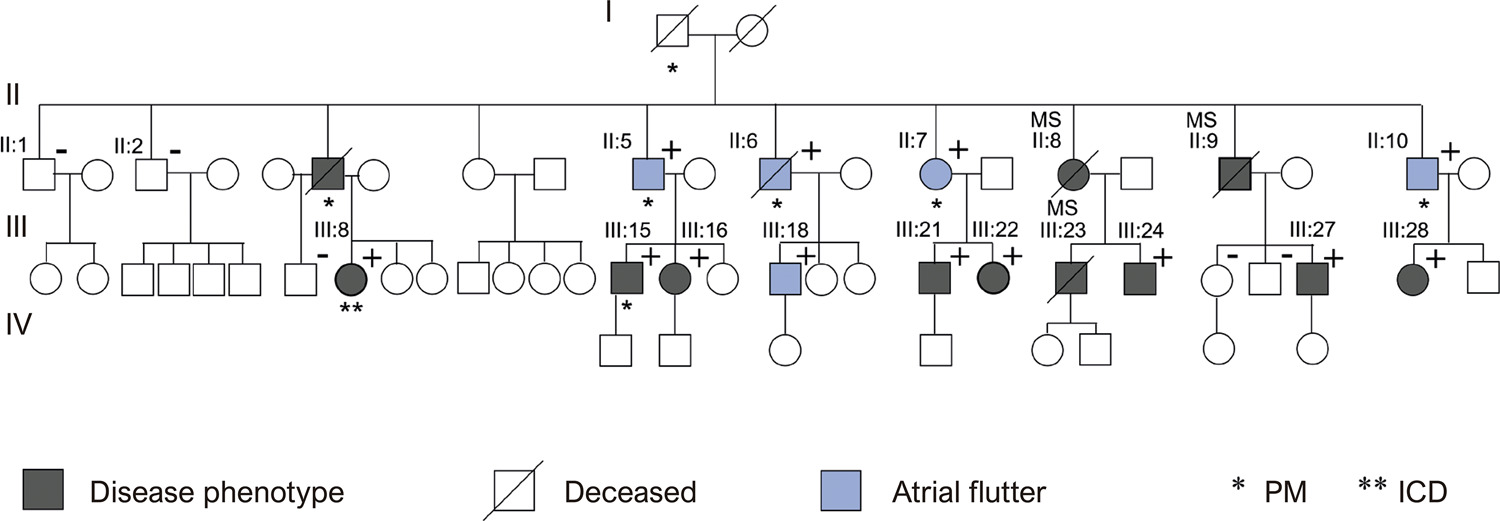
Magalhães et al. assessed atrial flutter’s clinical, electrocardiographic, and electrophysiologic characteristics in patients with and without PRKAG2 cardiomyopathy. Although genetic sequencing was not carried out in their control patients, the absence of clinical features of this pathology is acceptable evidence of a non-carrier state. In humans, mutations in the PRKAG2 gene result in a highly penetrant phenotype. It is dominated by the cardiac features of left ventricular hypertrophy, ventricular pre-excitation, atrial tachyarrhythmia, cardiac conduction disease, and myocardial glycogen storage. It would be very unlikely to find a patient with a positive genotype for PRKAG2 in the setting of a negative phenotype.

Our group pioneered the study of PRKAG2 cardiomyopathy in Brazil. The first patient was assessed in 1994, a 36-years old male, with mild hypertension, with recurrent episodes of common atrial flutter. The electrocardiogram showed ventricular pre-excitation, enlarged P waves, a significant increase in the QRS voltage, and sinus bradycardia. Of 8 brothers, six had very similar electrocardiographic findings. Their mother had had a pacemaker implanted at the age of 42. The echocardiogram showed a non-obstructive form of asymmetric left ventricular hypertrophy and mild left atrial enlargement. There were sufficient elements to allow a presumptive diagnosis of a phenocopy of hypertrophic cardiomyopathy! In 1994, however, we were not able to make the diagnosis. The mutations of the PRKAG2 gene had yet to be reported in 1994, but it would be 7 years later. Then, in 2004, we undertook genetic sequencing of the patients. We presented our experience during the NASPE Congress of 2005. Our research received the first prize in clinical arrhythmia during the Brazilian Congress of Cardiac Arrhythmias of 2004.

[…]

  • Arrhythmias Cardiac
  • Atrial flutter
  • Atrioventricular block
  • Cardiomyopathy, Hypertrophic
  • Glycogen Storage Disease
  • Hypertrophy Left Ventricular
Read Full Article
Creative Commons Attribution (CC BY) Creative Commons license
25/11/2022 DOI: 10.36660/abc.20220694 Views 1
ABC
Original Article

Cardiovascular Health and Atrial Fibrillation or Flutter: A Cross-Sectional Study from ELSA-Brasil

Itamar S. Santos et al. Paulo A. Lotufo Alessandra C. Goulart Luisa C. C. Brant … Marcelo M Pinto Filho Alexandre C. Pereira Sandhi M. Barreto Antonio L. P. Ribeiro G Neil Thomas Gregory Y. H. Lip Isabela M. Bensenor NIHR Global Health Research Group on Atrial Fibrillation Management Ajini Arasalingam Abi Beane Isabela M Bensenor Peter Brocklehurst Kar Keung Cheng Wahbi El-Bouri Mei Feng Alessandra C Goulart Sheila Greenfield Yutao Guo Mahesan Guruparan Gustavo Gusso Tiffany E Gooden Rashan Haniffa Lindsey Humphreys Kate Jolly Sue Jowett Balachandran Kumarendran Emma Lancashire Deirdre A Lane Xuewen Li Gregory Y.H. Lip (Co-PI) Yan-guang Li Trudie Lobban Paulo A Lotufo Semira Manseki-Holland David J Moore Krishnarajah Nirantharakumar Rodrigo D Olmos Elisabete Paschoal Paskaran Pirasanth Uruthirakumar Powsiga Carla Romagnolli Itamar S Santos Alena Shantsila Vethanayagam Antony Sheron Kanesamoorthy Shribavan Isabelle Szmigin Kumaran Subaschandren Rajendra Surenthirakumaran Meihui Tai G Neil Thomas (Co-PI) Ana C Varella Hao Wang Jingya Wang Hui Zhang Jiaoyue Zhong

Abstract

Background

The association between ideal cardiovascular health (ICVH) status and atrial fibrillation or flutter (AFF) diagnosis has been less studied compared to other cardiovascular diseases.

Objective

To analyze the association between AFF diagnosis and ICVH metrics and scores in the Brazilian Longitudinal Study of Adult Health (ELSA-Brasil).

Methods

This study analyzed data from 13,141 participants with complete data. Electrocardiographic tracings were coded according to the Minnesota Coding System, in a centralized reading center. ICVH metrics (diet, physical activity, body mass index, smoking, blood pressure, fasting plasma glucose, and total cholesterol) and scores were calculated as proposed by the American Heart Association. Crude and adjusted binary logistic regression models were built to analyze the association of ICVH metrics and scores with AFF diagnosis. Significance level was set at 0.05.

Results

The sample had a median age of 55 years and 54.4% were women. In adjusted models, ICVH scores were not significantly associated with prevalent AFF diagnosis (odds ratio [OR]:0.96; 95% confidence interval [95% CI]:0.80-1.16; p=0.70). Ideal blood pressure (OR:0.33; 95% CI:0.15–0.74; p=0.007) and total cholesterol (OR:1.88; 95% CI:1.19–2.98; p=0.007) profiles were significantly associated with AFF diagnosis.

Conclusions

No significant associations were identified between global ICVH scores and AFF diagnosis after multivariable adjustment in our analyses, at least partially due to the antagonistic associations of AFF with blood pressure and total cholesterol ICVH metrics. Our results suggest that estimating the prevention of AFF burden using global ICVH scores may not be adequate, and ICVH metrics should be considered in separate.

  • Atrial Fibrillation
  • Atrial flutter
  • Epidemiology
  • Stroke
Read Full Article
Creative Commons Attribution (CC BY) Creative Commons license
15/09/2022 DOI: 10.36660/abc.20210970 Views 1
Figure 1
ABC
Original Article

Atrial Flutter in PRKAG2 Syndrome: Clinical and Electrophysiological Characteristics

Eduardo Faria Soares de Magalhães et al. Luiz Pereira de Magalhães Jussara de Oliveira Pinheiro Alex Teixeira Guabiru Roque Aras

Abstract

Background

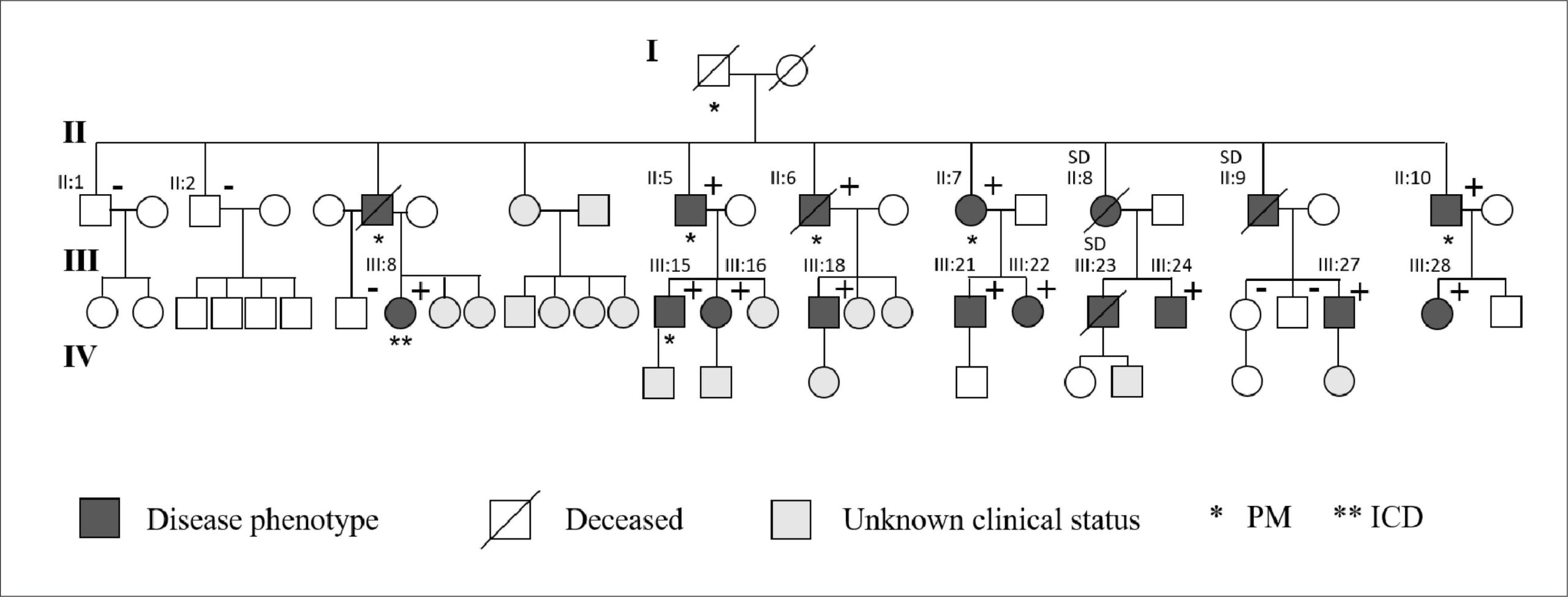
PRKAG2 syndrome is a rare autosomal dominant disease, a phenocopy of hypertrophic cardiomyopathy characterized by intracellular glycogen accumulation. Clinical manifestations include ventricular preexcitation, cardiac conduction disorder, ventricular hypertrophy, and atrial arrhythmias.

Objective

To compare the clinical and electrophysiological characteristics observed in patients with atrial flutter, with and without PRKAG2 syndrome.

Methods

An observational study comparing patients with atrial flutter: group A consisted of five patients with PRKAG2 syndrome from a family, and group B consisted of 25 patients without phenotype of PRKAG2 syndrome. The level of significance was 5%.

Results

All patients in group A had ventricular preexcitation and right branch block, and four had pacemakers (80%). Patients in group A were younger (39±5.4 vs 58.6±17.6 years, p=0.021), had greater interventricular septum (median=18 vs 10 mm; p<0.001) and posterior wall thickness (median=14 vs 10 mm; p=0.001). In group A, four patients were submitted to an electrophysiological study, showing a fasciculoventricular pathway, and atrial flutter ablation was performed in tree. All patients in group B were submitted to ablation of atrial flutter, with no evidence of accessory pathway. Group B had a higher prevalence of hypertension, diabetes mellitus, coronary artery disease and sleep apnea, with no statistically significant difference.

Conclusion

Patients with PRKAG2 syndrome presented atrial flutter at an earlier age and had fewer comorbidities when compared to patients with atrial flutter without mutation phenotype. The occurrence of atrial flutter in young individuals, especially in the presence of ventricular preexcitation and familial ventricular hypertrophy, should raise the suspicion of PRKAG2 syndrome.

  • Atrial flutter
  • Atrioventricular block
  • Cardiac Arrhythmias
  • Cardiomyopathy, Hypertrophic
  • Glycogen Storage Disease
  • Hypertrophy Left Ventricular
Read Full Article
Creative Commons Attribution (CC BY) Creative Commons license
06/09/2022 DOI: 10.36660/abc.20210792 Views 1
Figure 1
ABC
Research Letter

Long-Term Cardiac Complications of PRKAG2 Syndrome

Luiz Pereira de Magalhães et al. Eduardo Faria Soares de Magalhães Jussara de Oliveira Pinheiro Alex Teixeira Guabiru … Francisco José Farias Borges dos Reis Roque Aras

Introduction

The PRKAG2 syndrome is a rare autosomal dominant inherited disease caused by mutations in the gene encoding the γ regulatory subunit of AMP-activated protein kinase., It has been associated with abnormal glycogen accumulation in cardiomyocytes, predisposing to ventricular hypertrophy, arrhythmias, and sudden death. Gollob et al. were the first to describe the mutation in 2001, calling attention to the need for differential diagnosis with hypertrophic cardiomyopathy., Although the prevalence of PRKAG2 syndrome is not established, the number of reported cases may be increasing due to wider availability of genotyping. Despite that, possible prognostic factors have not yet been described in the literature. Given the possible severity of clinical presentations and the scarcity of data regarding the natural history, our objectives were to evaluate the clinical course of patients with PRKAG2 syndrome over time and analyze the incidence of long-term cardiac complications.

[…]

  • Atrial flutter
  • Atrioventricular block
  • Hypertrophy Left Ventricular
  • Pacemaker, Artificial
Read Full Article
Creative Commons Attribution (CC BY) Creative Commons license
21/02/2022 DOI: 10.36660/abc.20210062 Views 2
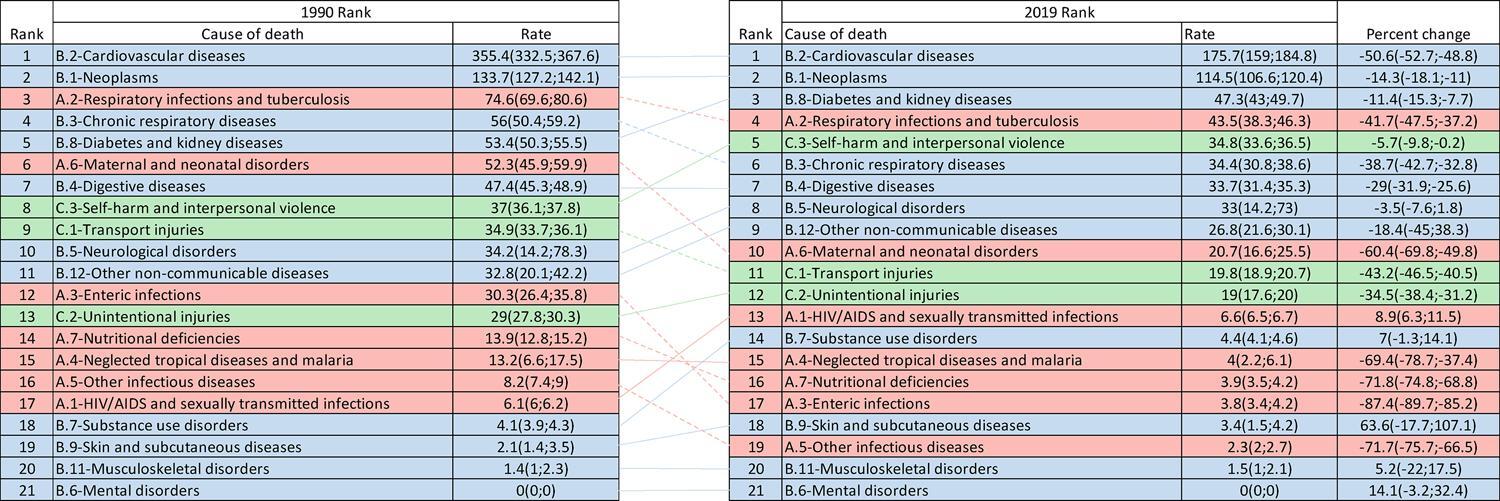
Chart 1-1
ABC
Special Article

Cardiovascular Statistics – Brazil 2021

Gláucia Maria Moraes de Oliveira et al. Luisa Campos Caldeira Brant Carisi Anne Polanczyk Deborah Carvalho Malta … Andreia Biolo Bruno Ramos Nascimento Maria de Fatima Marinho de Souza Andrea Rocha De Lorenzo Antonio Aurélio de Paiva Fagundes Júnior Beatriz D. Schaan Fábio Morato de Castilho Fernando Henpin Yue Cesena Gabriel Porto Soares Gesner Francisco Xavier Junior Jose Augusto Soares Barreto Filho Luiz Guilherme Passaglia Marcelo Martins Pinto Filho M. Julia Machline-Carrion Marcio Sommer Bittencourt Octavio M. Pontes Neto Paolo Blanco Villela Renato Azeredo Teixeira Roney Orismar Sampaio Thomaz A. Gaziano Pablo Perel Gregory A. Roth Antonio Luiz Pinho Ribeiro

About these statistics

This is the 2021 edition of the Cardiovascular Statistics – Brazil , a multi-institutional effort to periodically provide updated information on the epidemiology of heart diseases and stroke in Brazil. The report incorporates official statistics provided by the Brazilian Ministry of Health and other government agencies, by the GBD project led by the IHME of the University of Washington, as well as data generated by other sources and scientific studies, such as cohorts and registries, on CVDs and their risk factors. The document is directed to researchers, clinicians, patients, healthcare policy makers, media professionals, the public, and others who seek comprehensive national data available on heart disease and stroke.

[…]

  • Atrial Fibrillation
  • Atrial flutter
  • Brazil
  • Cardiomyopathies
  • Cardiovascular Diseases
  • Coronary Disease
  • Heart Failure
  • Heart Valve Diseases
  • Statistics
Read Full Article
Creative Commons Attribution (CC BY) Creative Commons license
21/02/2022 DOI: 10.36660/abc.20211012 Views 1
ABCIC
Case Report

Arrhythmogenic Right Ventricular Dysplasia with Right Atrial Thrombus

Clara Bernardy dos Santos et al. Angela Bolonhez Otavio Mangili

Abstract

Arrhythmogenic right ventricular dysplasia is an autosomal dominant genetic disease characterized by the progressive replacement of the myocardium with fibrous fat tissue. It is clinically characterized by arrhythmia, heart failure, syncope and, in some cases, sudden death. We report the case of a patient with such pathology, at an advanced stage, with atrial flutter and thrombus formation in the right atrial appendage, whose therapeutic option was anticoagulation and subsequent electrical cardioversion.

  • Arrhythmogenic right ventricular dysplasia;
  • Atrial flutter
  • Heart Transplantation
  • Thrombosis
Read Full Article
Creative Commons Attribution (CC BY) Creative Commons license
14/01/2022 DOI: 10.5935/2318-8219.20190053
Figure 1
ABC
Image

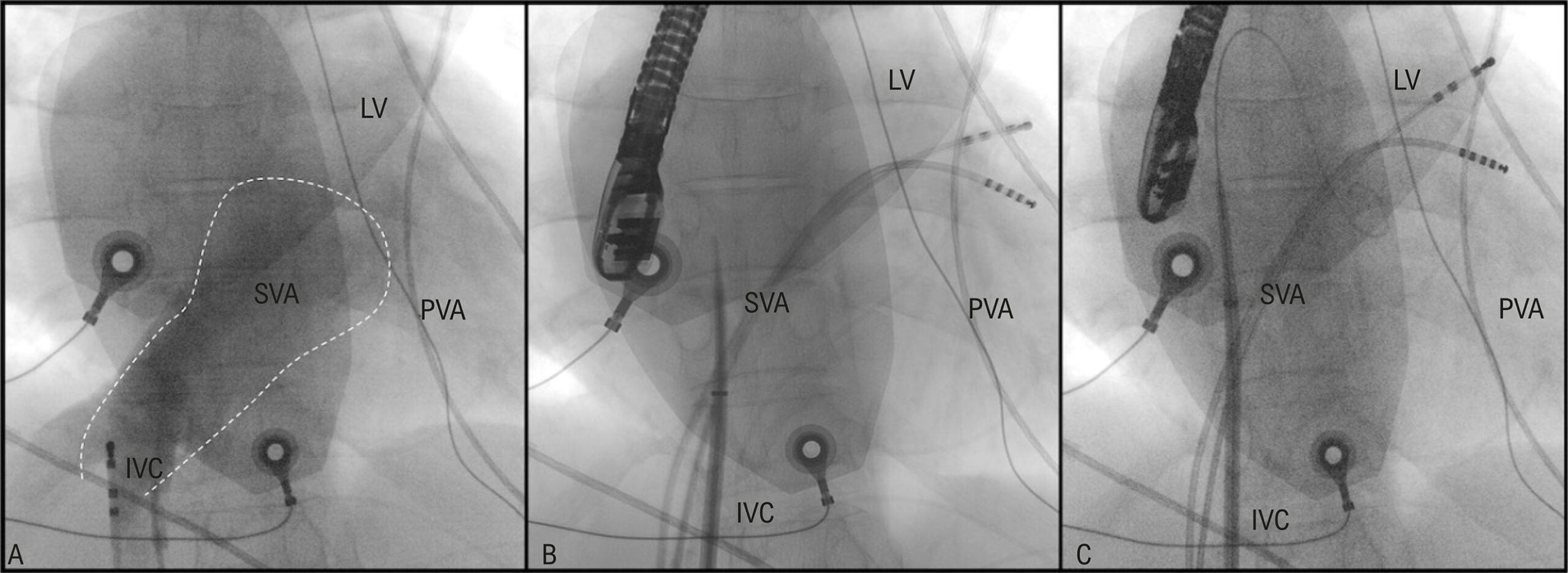
Transbaffle Puncture Using Multimodality Imaging and 3-D Mapping with CT Image Integration in a Patient with Atrial Flutter Post-Senning Procedure

Andreia Palma et al. Pedro A. Sousa Patrícia V. Silva António Pires

The complex post-surgical anatomy after the Senning procedure presents several challenges for catheter ablation. Transbaffle approach allows access to the pulmonary venous atrium and better catheter manipulation. However, this modified transseptal puncture can be challenging to perform.

The authors present the case of a 29-year-old woman who underwent a Senning procedure for dextro-transposition of the great arteries. The patient had recurrent episodes of atrial flutter despite adequate antiarrhythmic therapy and was referred for catheter ablation.

[…]

  • Arterial Switch Operation
  • Atrial flutter
  • Catheter Ablation
  • Senning Surgery
  • Transeptal Puncture
Read Full Article
Creative Commons Attribution (CC BY) Creative Commons license
26/07/2021 DOI: 10.36660/abc.20201267
Figure 1
ABCIC
Case Report

Cardiac Intimal Sarcoma: A Rare Cardiac Tumor Entity

Rhavena Brasil de Andrade et al. Carlos José Mota de Lima Ingrid Alves de Freitas Larissa Chagas Corrêa … Danielli Oliveira da Costa Lino Ana Carolina Brito de Alcantâra

Introduction

Malignant cardiac neoplasia is a rare entity with an extremely low incidence that has a nonspecific clinical presentation that may mimic other conditions. It can present arrhythmias and complications such as ischemia due to coronary flow obstruction.

More than 75% of primary cardiac tumors are benign. Of the 25% of malignant tumors, 75% are sarcomas.– Primary cardiac tumors can have a primary or metastatic origin and are diagnosed by imaging methods. Primary tumors occur more frequently in the left chamber, especially in the atrial myxoma, while metastatic tumors originate from malignant melanomas, which occur more frequently in the right chambers.

[…]

  • Atrial flutter
  • Heart
  • Heart Diseases
  • Sarcoma
Read Full Article
Creative Commons Attribution (CC BY) Creative Commons license
16/06/2021 DOI: 10.47593/2675-312X/20213401eabc118 Views 2
Chart 1-1
ABC
Special Article

Cardiovascular Statistics – Brazil 2020

Gláucia Maria Moraes de Oliveira et al. Luisa Campos Caldeira Brant Carisi Anne Polanczyk Andreia Biolo … Bruno Ramos Nascimento Deborah Carvalho Malta Maria de Fatima Marinho de Souza Gabriel Porto Soares Gesner Francisco Xavier Junior M. Julia Machline-Carrion Marcio Sommer Bittencourt Octavio M. Pontes Neto Odilson Marcos Silvestre Renato Azeredo Teixeira Roney Orismar Sampaio Thomaz A. Gaziano Gregory A. Roth Antonio Luiz Pinho Ribeiro

About these Statistics

Brazil is a continental country of extreme diversity regarding climate and environmental conditions, population density, economic development, and racial and cultural features. One of the 10 richest economies of the world, it is also one of the most unequal countries: according to the World Bank, Brazil ranks among the 10 countries with the highest Gini index, a measurement of inequality in income distribution ( ). Brazil has one of the largest public health systems with universal coverage, the SUS, which covers the whole Brazilian population, estimated at 210 million inhabitants in 2019 ( ), the year in which SUS was the exclusive health system for 76% of that population ( ). Indeed, SUS co-exists with a private health system that includes health plans and insurance, and private health professionals. Established by the Brazilian Constitution of 1988, the implementation and expansion of SUS have allowed Brazil to rapidly address the changing health needs of the population, with dramatic upscaling of health services coverage and increase in life expectancy in just 3 decades. , The Family Health Program, launched in 1994, is a leading initiative in the national strategy to reduce CVD mortality based on primary health care, covering almost 123 million individuals (63% of the Brazilian population) in 2015.However, despite its successes, the analysis of future scenarios suggests the urgent need to address lingering geographical inequalities, insufficient funding, and issues related to access to care and its quality. ,

[…]

  • Atrial Fibrillation
  • Atrial flutter
  • Brazil
  • Cardiomyopathies Heart Failure
  • Cardiovascular Diseases
  • Coronary Disease
  • Heart Valve Diseases
  • Statistics
Read Full Article
Creative Commons Attribution (CC BY) Creative Commons license
28/09/2020 DOI: 10.36660/abc.20200812 Views 1
ABC
Original Article

Atrial High-Rate Episodes and Their Association with Cerebral Ischemic Events in Chagasic Patients

Emanoela Lima Freitas et al. Elieusa e Silva Sampaio Márcia Maria Carneiro Oliveira Lucas Hollanda Oliveira … Marcos Sergio da Silva Guimarães Jussara de Oliveira Pinheiro Luís Pereira de Magalhães Guisela Steffen Bonadie Albuquerque Cristiano Macedo Roque Aras

Abstract

Background

Atrial high-rate episodes (AHREs) are associated with an increased risk of cerebral ischemic events; however, there are no studies related to the presence of AHREs and cerebral ischemic events in Chagasic patients.

Objective

To investigate the association between the presence of AHREs ≥ 6 minutes and cerebral ischemic events in Chagasic patients.

Methods

Cohort study with Chagasic patients with implantable electronic cardiac devices (IECDs), followed at the Arrhythmia Outpatient Clinic of a University Hospital, in the city of Salvador, state of Bahia, Brazil, between May 2016 and June 2017.. Patients diagnosed with atrial flutter / atrial fibrillation, with unicameral IECD and using oral anticoagulation were excluded. AHREs with atrial frequency ≥ 190 beats per minute and duration ≥ 6 minutes (min) were considered, and cerebral ischemic events were identified by computed tomography (CT) of the skull.

Results

The 67 research participants (67.2% females, mean age 63.6 ± 9.2 years) were followed for 98 ± 28.8 days and 11.9% of the patients had AHREs ≥ 6 min. Skull CT showed silent cerebral ischemic events in 16.4% of the patients, 63.6% of whom had AHREs ≥ 6 min in the analysis of IECDs. Advanced age [OR 1.12 (95% CI 1.03-1.21; p=0.009] and the presence of AHREs ≥ 6 minutes [OR 96.2 (95% CI 9.4-987.4; p <0.001)] were independent predictors for ischemic events.

Conclusion

AHREs detected by IECDs were associated with the presence of silent cerebral ischemic events in Chagasic patients. (Arq Bras Cardiol. 2020; [online].ahead print, PP.0-0)

  • Atrial flutter
  • Brain Ischemia
  • Cerebral Infarction
  • Chagas Disease/complications
  • Pacemaker, Artificial
  • Tomography, Computed/methods
Read Full Article
Creative Commons Attribution (CC BY) Creative Commons license
11/09/2020 DOI: 10.36660/abc.20190647 Views 2
ABC
Editorial

Short Editorial: Risk of Atrial Fibrillation after Ablation of Cavotricuspid Isthmus-Dependent Atrial Flutter: Is Combined Ablation of Atrial Fibrillation Worthwhile?

Alvaro Valentim Lima Sarabanda

Cavotricuspid isthmus (CTI)-dependent atrial flutter (AFL) is a common cardiac arrhythmia that can cause significant symptoms and is associated with an increased risk of stroke and the development or worsening of heart failure. The anatomic/electrophysiological substrate underlying AFL is a combination of slow conduction in the isthmus of atrial tissue between the tricuspid annulus and the inferior vena cava and conduction block along the crista terminalis and Eustachian ridge, enabling the emergence and perpetuation of a macro-reentrant circuit in the right atrium.,

Because of the well-defined anatomic/electrophysiological substrate and the unsatisfactory results of antiarrhythmic drug therapy in treating AFL, radiofrequency catheter ablation, by means of creating a linear lesion from the tricuspid annulus to the inferior vena cava (cavotricuspid isthmus) under fluoroscopic and electrocardiographic guidance, is an established interventional procedure, with a low risk of complications (1% or less) and success rates over 90%.,

[…]

  • Arrhythmias Cardiac
  • Atrial Fibrillation/prevention and control
  • Atrial flutter
  • Conduction
  • Isthmus Cavo-Tricuspid
  • Radiofrequency Ablation
Read Full Article
Creative Commons Attribution (CC BY) Creative Commons license
01/06/2020 DOI: 10.36660/abc.20200316 Views 1
Figure 1
ABC
Original Article

Risk of Atrial Fibrillation after Ablation of Cavotricuspid Isthmus-Dependent Atrial Flutter: Is Combined Ablation of Atrial Fibrillation Worthwhile?

Isabella Bianco et al. Gabriel Odozynski da Silva Alexander Romeno Janner Dal Forno Helcio Garcia Nascimento … Andrei Lewandowski Elayne Pereira André d’Avila

Abstract

Background

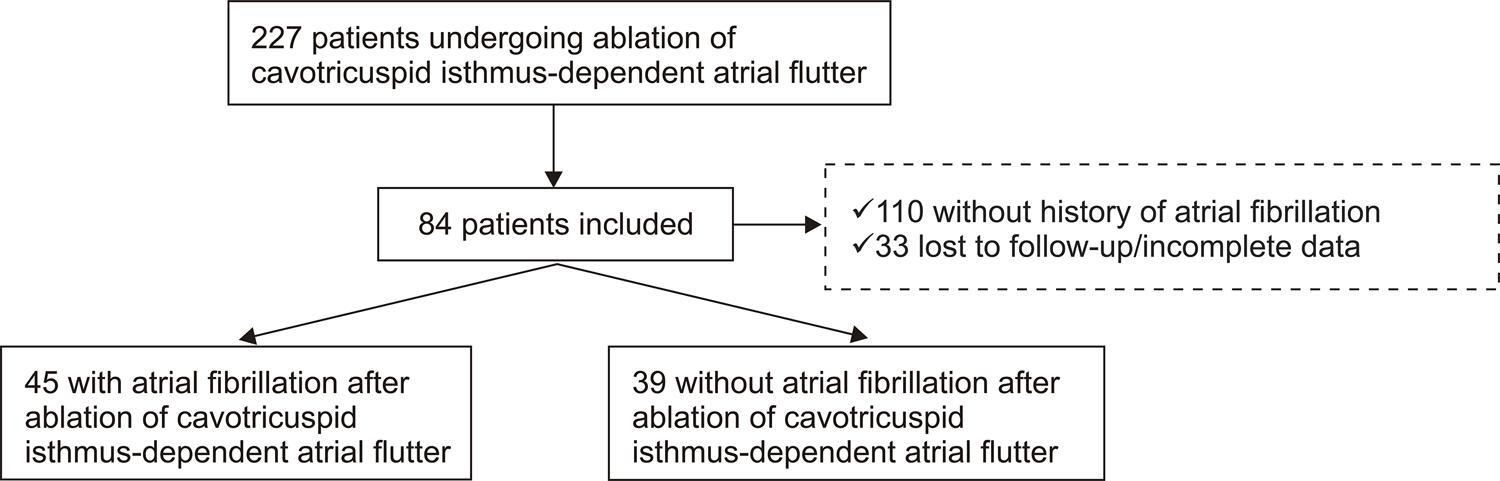
Simultaneous ablation of atrial fibrillation (AF) and cavotricuspid isthmus (CTI)-dependent atrial flutter can be performed when both arrythmias had been recorded before the procedure. However, the best approach has not been defined in case of patients referred for ablation with CTI-dependent atrial flutter, without history of AF.

Objectives

To assess the prevalence and to identify predictors of the first episode of AF after ablation of CTI-dependent atrial flutter in patients without history of AF.

Methods

Retrospective cohort of patients with CTI-dependent atrial flutter without history of AF undergoing catheter ablation. Clinical characteristics were compared between patients who developed AF and those who did not have AF after the procedure. Significance level was set at 5%. In the analysis of predicting factors, the primary outcome was occurrence of AF after CTI-dependent atrial flutter ablation.

Results

Of a total of 227 patients undergoing ablation of CTI-dependent atrial flutter (110 with history of AF and 33 without adequate follow-up), 84 were included, and 45 (53.6%) developed post-ablation AF. The HATCH and CHA2DS2-VASC scores were not different between the groups. Recurrence rate of CTI-dependent atrial flutter and complication rate were 11.5% and 1.2%, respectively, after ablation.

Conclusions

Although ablation of CTI-dependent atrial flutter is a safe and effective procedure, 50% of the patients developed AF after the procedure. However, the role of combined ablation (CTI-dependent atrial flutter plus AF) aiming at preventing AF is still uncertain. (Arq Bras Cardiol. 2020; [online].ahead print, PP.0-0)

  • Arial Fibrillation/prevention
  • Arrhythmias Cardiac
  • Atrial flutter
  • Conduction
  • Isthmus Cavo-Tricuspid
  • Radiofrequency Ablation
Read Full Article
Creative Commons Attribution (CC BY) Creative Commons license
30/03/2020 DOI: 10.36660/abc.20190238
Figure 1
ABC
Original Article

Uninterrupted Use of Oral Anticoagulants for the Ablation of Atrial Flutter: A Single Center Cohort of 154 Patients

Tiago Luiz Luz Leiria et al. Alexandre Kreling Medeiros Eduardo Dytz Almeida Antonio Lessa Gaudie Ley … Catarine Benta Lopes dos Santos Roberto Toffani Sant'Anna Marcelo Lapa Kruse Leonardo Martins Pires Gustavo Glotz de Lima

Abstract

Background:

The uninterrupted use of oral anticoagulation (OAC) with vitamin K antagonists (VKAs) for electrophysiology procedures has been more and more recommended. The clinical practice in our service recommends the continuous use of these drugs for atrial flutter ablation. There is little evidence as to the uninterrupted use of non-vitamin K antagonist oral anticoagulants (NOACs) in this scenario.

Objective:

To compare the rates of complications related with the uninterrupted use of different types of oral anticoagulants in patients referred to atrial flutter (AFL) ablation.

Methods:

Historical, single-center cohort of ablation procedures by AFL conducted from November 2012 to April 2016. The primary outcome was the occurrence of hemorrhagic or embolic complication during the procedure. The secondary outcome was the occurrence of stroke or transient ischemic attack (TIA) in follow-up. The statistical significance level was 5%.

Results:

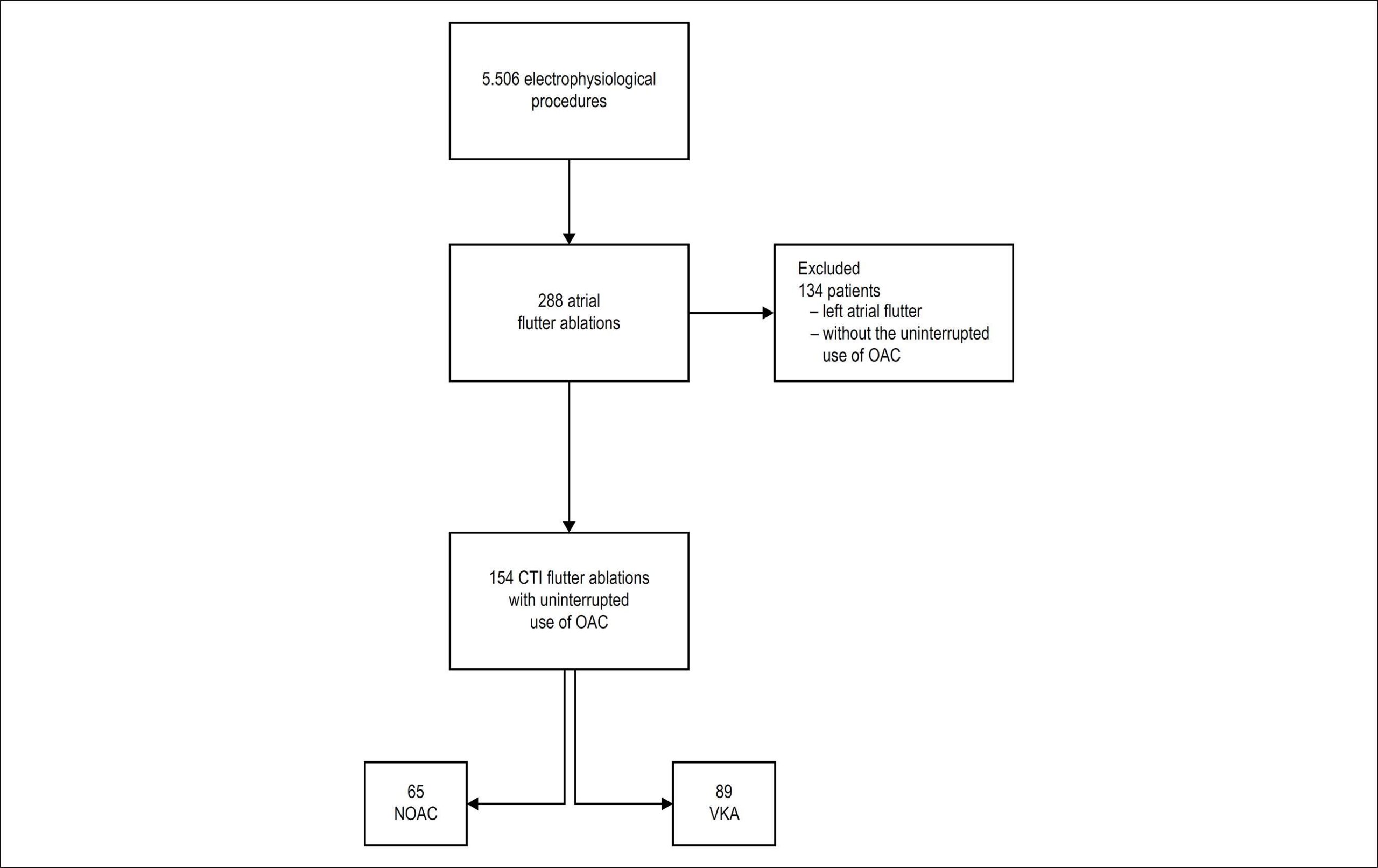
There were 288 ablations per AFL; 154 were carried out with the uninterrupted use of OAC (57.8% with VKA and 42.2% with NOAC). Mean age was 57 ± 13 years. The rate of hemorrhagic complication during the procedure was 3% in each group (p = NS). The rate of stroke/TIA was, respectively, of 56/1,000 people-year in the VKA group against zero/1,000 people-year in the NOAC group (p = 0.02).

Conclusion:

In our population there were no hemorrhagic complications regarding the procedure of OAC use uninterruptedly, including NOACs. There was higher occurrence of stroke/TIA in the follow-up of the group of patients undergoing VKAs; however, this difference may not only be a result of the type of OAC used.

  • Anticoagulants
  • Atrial flutter
  • Catheter Ablation
  • Thromboembolism
  • Vitamin K
Read Full Article
Creative Commons Attribution (CC BY) Creative Commons license
19/02/2018 DOI: 10.5935/abc.20180001
Figure 1
ABC
Anatomopathological Session

Case 1/2017 – 26-Year-old Male with Rapidly Progressive Heart Failure

Laís Costa Marques et al. Rogério Silva de Paula Ivna Lobo Camilo Vera Demarchi Aiello

Clinical aspects

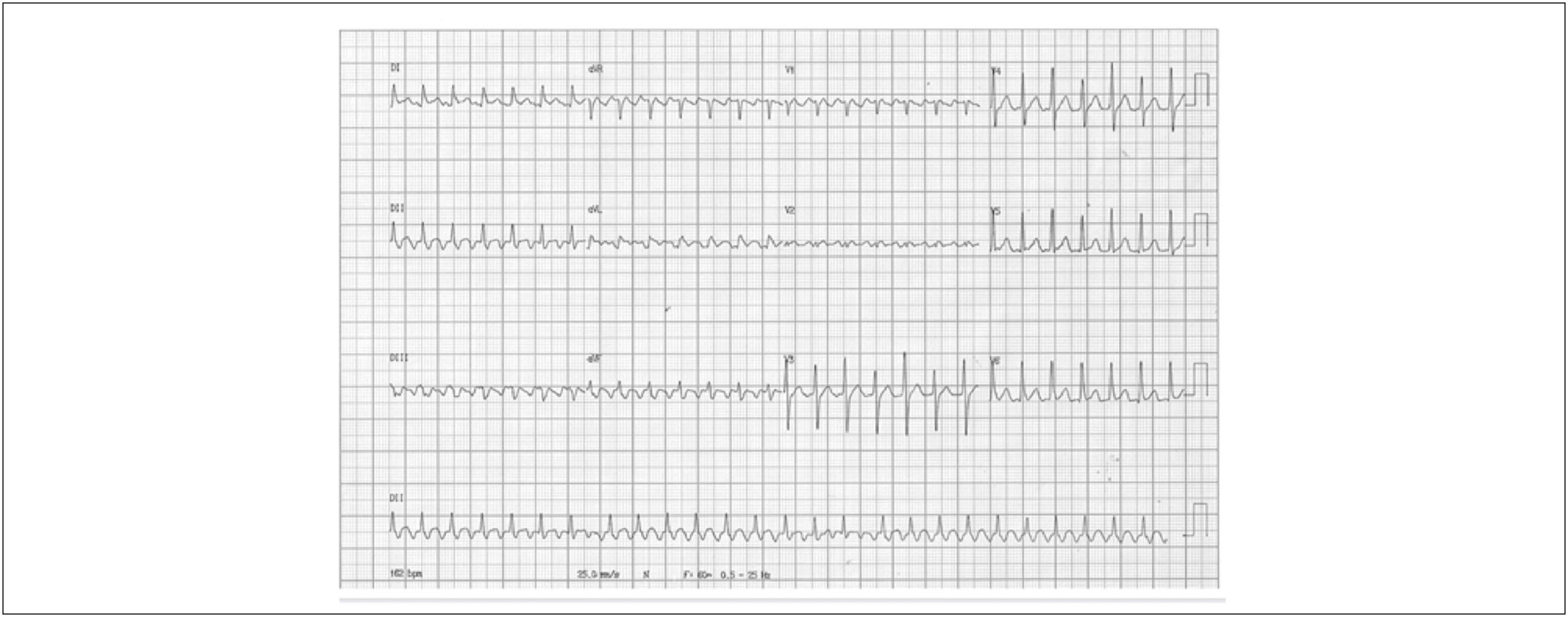
The patient was a 26-year-old male, reporting prophylaxis for rheumatic fever from the age of 12 years to 17 years, who, at the age of 24 years, developed dyspnea on heavy exertion, which improved with medication. However, after two years, dyspnea worsening and edema occurred (April 19, 2013).

The clinical and laboratory assessments before the referral revealed cardiopathy with ventricular dilatation. The echocardiogram evidenced left ventricular systolic and diastolic diameters of 60 mm and 44 mm, respectively, and ejection fraction of 51%. His serology for Chagas disease was negative, and his coronary angiography, normal. On physical examination, a third cardiac sound and a systolic murmur (++/6+) over the mitral area were heard. The ECG showed atrial flutter, atrioventricular block with probable ASDB, and heart rate of 40 bpm.

[…]

  • Atrial flutter
  • Cardiomyopathy, Dilated
  • Heart Failure
  • Street Drugs
Read Full Article
Creative Commons Attribution (CC BY) Creative Commons license
01/02/2017 DOI: 10.5935/abc.20170018 Views 1
Use of bipolar radiofrequency for the treatment of atrial fibrillation during cardiac surgery
ABC
Artigo Original

Use of bipolar radiofrequency for the treatment of atrial fibrillation during cardiac surgery

Leonardo Secchin Canale et al. Alexandre Siciliano Colafranceschi Andrey José Monteiro Marialda Coimbra … Clara Weksler Ernesto Koehler Bruno Miranda Marques Marco Antonio Mattos Fernando Eugênio dos Santos Cruz Filho Roberto Luiz Menssing da Silva Sá

BACKGROUND: Atrial fibrillation with tissue ablation device through bipolar radiofrequency in conjunction with cardiac surgery has proven to be an effective method to treat this arrhythmia. OBJECTIVE: Describe the initial experience of the Instituto Nacional de Cardiologia in the surgical treatment of atrial fibrillation using bipolar radiofrequency device in patients undergoing cardiac surgery, reporting the results of postoperative follow-up of one year. METHODS: Between January 2008 and March 2009, 47 consecutive patients (36 women), with mean age of 53.7 ± 10.6 years, with atrial fibrillation for a mean period of 34.6 months (3-192 months) underwent surgical ablation of this arrhythmia, through bipolar radiofrequency during the procedure which led to the indication of surgery. Eight of them showed intermittent atrial fibrillation and 39, continued. Eighty-one percent underwent valve surgery as the main procedure. This is a one-year postoperative retrospective, observational evaluation of clinical variables and 24-h Holter. RESULTS: Out of the 47 patients, 40 survived one year. Out of these, 33 underwent 24 h Holter, at an average interval of 401 days after the surgery. The following rhythm distribution was found: 24 (73.0%) sinus, five (15.0%) atrial fibrillation, three (9.0%) atrial Flutter and one (3.0%) junctional rhythm. Two cerebrovascular accidents were observed, one of which was associated with supraventricular arrhythmia. CONCLUSION: Surgical ablation of atrial fibrillation with bipolar radiofrequency device concomitant with cardiac surgery is an effective method for treating this arrhythmia.

  • Ablation Techniques
  • Arrhythmias,Cardiac
  • Atrial Fibrillation
  • Atrial flutter
  • Thoracic Surgery
Read Full Article
Creative Commons Attribution (CC BY) Creative Commons license
29/04/2011 DOI: 10.1590/S0066-782X2011005000051 Views 1
Predictors of atrial fibrillation after ablation of typical atrial flutter
ABC
Artigo Original

Predictors of atrial fibrillation after ablation of typical atrial flutter

Sissy Lara de Melo et al. Maurício Scanavacca Cristiano Pisani Rodrigo Nascimento … Francisco Darrieux Denise Hachul Carina Hardy Eduardo Sosa

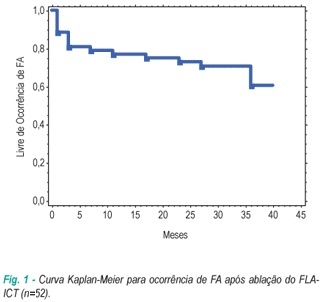
BACKGROUND: The occurrence of atrial fibrillation (AF) after successful ablation of cavotricuspid isthmus-dependent atrial flutter (CTI-AFL) is an important medical event, but predictors of this event are still controversial. OBJECTIVE: To determine the incidence of AF and its predictors in patients undergoing ablation of cavotricuspid isthmus-dependent atrial flutter (CTI-AFL). METHODS: Fifty two patients with CTI-AFL underwent ablation from January 2003 to March 2004, in Instituto do Coração (InCor), Hospital das Clínicas da Faculdade de Medicina da Universidade de São Paulo. RESULTS: During the mean follow-up period of 26.2 ± 9.2 months, 16 (30.8%) patients presented AF. The univariate analysis revealed two clinical variables as predictive of the occurrence of AF after ablation of CTI-AFL for three years or longer (RR: 3.00; p = 0.020). In the multivariate analysis, these factors were independent variables associated with the occurrence of AF after ablation of CTI-AFL. CONCLUSION: AF is frequently observed during the follow-up of patients undergoing ablation of CTI-AFL. Persistent CTI-AFL and history of arrhythmia for more than three years are predictors of the occurrence of AF during the clinical follow-up.

  • Atrial Fibrillation
  • Atrial flutter
  • Catheter Ablation
Read Full Article
Creative Commons Attribution (CC BY) Creative Commons license
06/01/2010 DOI: 10.1590/S0066-782X2009001100008 Views 1
Ablation of typical atrial flutter: a prospective randomized study of cooled-tip versus 8-mm-tip catheters
ABC
Artigo Original

Ablation of typical atrial flutter: a prospective randomized study of cooled-tip versus 8-mm-tip catheters

Sissy L. Melo et al. Mauricio I. Scanavacca Francisco C. C. Darrieux Denise T. Hachul Eduardo A. Sosa

OBJECTIVES: Both ablation catheters with closed irrigated system and 8mm tip-catheters have been shown to be more effective for typical atrial flutter radiofrequency (RF) ablation when compared to conventional 4 mm tip catheter. Considering the differences in complexity and costs of both systems, a prospective study was designed to compare the efficacy and safety of cooled-tip and 8mm-tip catheters for atrial flutter ablation. METHODS: Fifty-two consecutive patients underwent RF ablation of cavotricupsid isthmus (CTI) for the treatment of typical atrial flutter, using catheter with closed irrigation system (n=26) or 8 mm-tip catheter (n=26). The RF pulses were applied point-by-point for 60 seconds, with power limited at 50 w for the irrigated catheter and by temperature control (60ºC / 70 w) for the 8mm catheter. RESULTS: The CTI block was successfully performed in 98.1%. Four patients in the irrigated group needed to switch to the other group. There was no significant difference with regard to ablation parameters, such as total time of RF ablation (591.1±309.0s vs 486.2±250.8s), total procedure duration (86.4±23.6 vs 78.1±22.5min) and time of fluoroscopy (17.0±6.7 vs 15.4±4.6min). During follow-up of 10.6 months in average, one patient in the irrigated group had recurrence of typical atrial flutter. CONCLUSION: Efficacy and safety of CTI ablation was comparable between both techniques (irrigated catheter and 8mm-tip catheter). The complexity of irrigated catheter makes it less competitive.

  • Atrial flutter
  • Catheter Ablation
  • Catheterization
  • electrodes
Read Full Article
Creative Commons Attribution (CC BY) Creative Commons license
21/05/2007 DOI: 10.1590/S0066-782X2007000300004 Views 1
ABC
Artigo Original

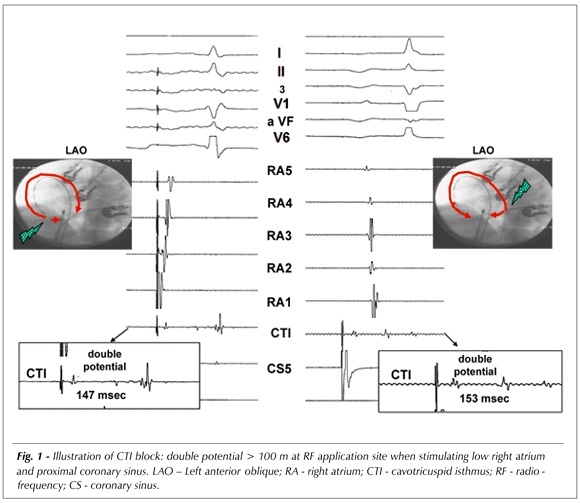
Type I atrial flutter radiofrequency ablation. Importance of bidirectional line of block in the inferior vena cava tricuspide annulus isthmus

Mauricio Scanavacca et al. Eduardo Sosa José Luis Velarde André D'Ávila … Denise Hachul Basileu Reolão Osvaldo Sanches Márcio Silva Francisco Darrieux

PURPOSE: To determine the clinical importance of a bi-directional line of block demonstration in the inferior vena cava-tricuspid annulus isthmus as an end-point for radiofrequency (RF) atrial flutter (FL) ablation. METHODS: Forty consecutive patients (51±11 years) with type I FL were divided in 2 groups: GI (30 patients) anatomic, non-electrophysiologic isthmus ablation technique (interruption and non-induction FL criteria); and GII (10 patients) anatomic with electrophysiologic evaluation of bi-directional isthmus conduction. The isthmus activation was analyzed before and after anatomic RF ablation with a cateter exploring each side of the line of block, depending on the conduction evaluation (anterograde or retrograde). RESULTS: FL was interrupted and not reinduced in 26/30 (86.6%) GI patients and in 10 (100%) GII patients (p= 0.5558). During follow-up FL recurred in 30% of the patients in both groups. In GII, 6 patients with bi-directional block remained assymptomatic, whereas 3 patients with unidirectional block presented recurrence (p= 0.012). CONCLUSION: Electrophysiologic demonstration of bi-directional line of block in the isthmus is related to long-term success and should be the criterion for interruption of type I atrial FL RF ablation.

  • Atrial flutter
  • radiofrequency catheter ablation
  • Supraventricular Tachycardia
Read Full Article
Creative Commons Attribution (CC BY) Creative Commons license
31/01/2007 DOI: 10.1590/S0066-782X1998001100011 Views 1
ABC
Artigo Original

High dose of amiodarone in a short-term period reduces the incidence of postoperative atrial fibrillation and atrial flutter

Rafael Vieira Alcalde et al. João Carlos Guaragna Luiz Carlos Bodanese Iran Castro … Eliana Sussenbach Roberta Noer Marco Antônio Goldani Flávia Feier João Batista Petracco

OBJECTIVE: To investigate wheter oral amiodarone administered before surgery for a short period in high dose would reduce the incidence of postoperative atrial fibrillation or atrial flutter and reduces the lenght of hospital stay. METHODS: In the double-blind, randomized study, 93 patients were given either oral amiodarone (46 patients) or placebo (47 patients). Therapy consisted of 600mg of amiodarone three times a day, started at mininum 30 hours and at maximum 56 hours before surgery. RESULTS: Postoperative atrial fibrillation or atrial flutter occurred in 8 of 46 patients in the amiodarone group (17.4%) and 19 of the 47 patients in the placebo group (40.4%) (p=0.027). The mean dose of amiodarone was 2.8g. Patients in the amiodarone group were hospitalized for 8.9±3.1 days and patients in the placebo group were hospitalized for 11.4± 8.7 days (p=0.07). The hospital lenght were significantly prolonged in patients who developed atrial arrhythmias after surgery, despite the treatment received.(p<0.001). CONCLUSION: This new alternative way of using amiodarone in high dose and in a short-term period before surgery reduce the incidence of postoperative atrial fibrillation or atrial flutter in coronary artery bypass graft surgery.

  • Amiodarone
  • Atrial Fibrillation
  • Atrial flutter
  • coronary artery bypass graft surgery
Read Full Article
Creative Commons Attribution (CC BY) Creative Commons license
16/10/2006 DOI: 10.1590/S0066-782X2006001600002 Views 1
ABC
Artigo Original

Catheter ablation of atrial flutter. Electrophysiological characterization of posterior and septal isthmus block

José Marcos Moreira et al. Sílvio Roberto Borges Alessi André Gustavo da Silva Rezende Luis Alberto Renjel Prudêncio Angelo Amato Vincenzo de Paola

PURPOSE: Evaluate the different types of conduction blocks obtained between inferior vena cava-tricuspid annulus (posterior isthmus) and between tricuspid annulus-coronary sinus ostium (septal isthmus) after radiofrequency (RF) catheter ablation of atrial flutter (AFL) METHODS: In 16 procedures, 14 patients (pts), 9 male, with type I AFL underwent RF ablation. Atrial activation around tricuspid annulus was performed with a 10-bipole “Halo” catheter (H1-2; H19-20). In sinus rhythm, isthmus conduction was evaluated during proximal coronary sinus (PCS) and low lateral right atrium (H1-2) pacing, before and after linear ablation. According to the wave front of impulse propagation we assessed absence of block (bidirectional conduction); incomplete block (bidirectional conduction with delay in one front of impulse propagation) and complete block (absence of conduction). The PCS/H1-2 interval was measured before and after ablation. RESULTS: Complete isthmus block was achieved in 7 (44%) and incomplete block in 4 (25%) procedures. Conduction block was not achieved in 5 procedures. At a mean follow-up of 12 months, there were no recurrences in the pts with complete block, whereas AFL recurred in the 6 pts with incomplete or no conduction block (p<0.001). Pts with complete block had deltaPCS/H1-2 interval (74.0 ± 26.0ms) greater than incomplete (30.5 ± 7.5ms) or absent block (p<0.05). CONCLUSION: The verification of complete isthmus conduction block with atrial multipolar mapping is an effective strategy to assess electrophysiological success and absence of late recurrence in common atrial flutter ablation.

  • Atrial flutter
  • Catheter Ablation
  • radiofrequency
Read Full Article
Creative Commons Attribution (CC BY) Creative Commons license
07/12/2000 DOI: 10.1590/S0066-782X1998000700008 Views 1

How to cite this article

EndNote RIS

Electronic Document Format (Vancouver)

Oliveira GMM, Brant LCC, Polanczyk CA, Malta DC, Biolo A, Nascimento BR, Souza MFM, et al. Cardiovascular Statistics – Brazil 2026. Arquivos Brasileiros de Cardiologia 2026;:e20260832.

Electronic Document Format (ABNT)

Oliveira, Gláucia Maria Moraes de; Brant, Luisa Campos Caldeira; Polanczyk, Carisi Anne; Malta, Deborah Carvalho; Biolo, Andreia; Nascimento, Bruno Ramos; Souza, Maria de Fatima Marinho de; Lorenzo, Andrea Rocha De; Fagundes Júnior, Antonio Aurélio de Paiva; Manfro, Arthur Gus; Schaan, Beatriz D.; Silva, Christina Grüne de Souza e; Castilho, Fábio Morato de; Cesena, Fernando Henpin Yue; Soares, Gabriel Porto; Xavier Junior, Gesner Francisco; Barreto Filho, Jose Augusto Soares; Pellanda, Lucia Campos; Aranha, Luciana Nicolau; Rohde, Luis Eduardo Paim; Passaglia, Luiz Guilherme; Pinto-Filho, Marcelo Martins; Machline-Carrion, M. Julia; Bittencourt, Marcio Sommer; Pontes Neto, Octavio M.; Villela, Paolo Blanco; Godoy, Paulo Henrique; Teixeira, Renato Azeredo; Stein, Ricardo; Sampaio, Roney Orismar; Salim, Thais Rocha; Gaziano, Thomas A.; Perel, Pablo; Roth, Gregory A.; Ribeiro, Antonio Luiz Pinho. Cardiovascular Statistics – Brazil 2026. Arquivos Brasileiros de Cardiologia, e20260832, Oct. 2026.

Electronic Document Format (APA)

Oliveira, G. M. M. , Brant, L. C. C., Polanczyk, C. A., Malta, D. C., Biolo, A., Nascimento, B. R., Souza, M. F. M. , Lorenzo, A. R. D., Fagundes Júnior, A. A. P., Manfro, A. G., Schaan, B. D., Silva, C. G. S. , Castilho, F. M. , Cesena, F. H. Y., Soares, G. P., Xavier Junior, G. F., Barreto Filho, J. A. S., Pellanda, L. C., Aranha, L. N., Rohde, L. E. P., Passaglia, L. G., Pinto-Filho, M. M., Machline-Carrion, M. J., Bittencourt, M. S., Pontes Neto, O. M., Villela, P. B., Godoy, P. H., Teixeira, R. A., Stein, R., Sampaio, R. O., Salim, T. R., Gaziano, T. A., Perel, P., Roth, G. A., & Ribeiro, A. L. P. (2026). Cardiovascular Statistics – Brazil 2026. Arquivos Brasileiros de Cardiologia, , e20260832.

Electronic Document Format (ISO)

Oliveira, Gláucia Maria Moraes de and Brant, Luisa Campos Caldeira and Polanczyk, Carisi Anne and Malta, Deborah Carvalho and Biolo, Andreia and Nascimento, Bruno Ramos and Souza, Maria de Fatima Marinho de and Lorenzo, Andrea Rocha De and Fagundes Júnior, Antonio Aurélio de Paiva and Manfro, Arthur Gus and Schaan, Beatriz D. and Silva, Christina Grüne de Souza e and Castilho, Fábio Morato de and Cesena, Fernando Henpin Yue and Soares, Gabriel Porto and Xavier Junior, Gesner Francisco and Barreto Filho, Jose Augusto Soares and Pellanda, Lucia Campos and Aranha, Luciana Nicolau and Rohde, Luis Eduardo Paim and Passaglia, Luiz Guilherme and Pinto-Filho, Marcelo Martins and Machline-Carrion, M. Julia and Bittencourt, Marcio Sommer and Pontes Neto, Octavio M. and Villela, Paolo Blanco and Godoy, Paulo Henrique and Teixeira, Renato Azeredo and Stein, Ricardo and Sampaio, Roney Orismar and Salim, Thais Rocha and Gaziano, Thomas A. and Perel, Pablo and Roth, Gregory A. and Ribeiro, Antonio Luiz Pinho. Cardiovascular Statistics – Brazil 2026. Arquivos Brasileiros de Cardiologia [online]. 2026, [cited 2026-10-14], e20260832. Available from: <https://journals.cardiol.br/en/article/cardiovascular-statistics-brazil-2026/>. ISSN 0066-782X

EndNote RIS

Electronic Document Format (Vancouver)

Oliveira GMM, Brant LCC, Polanczyk CA, Malta DC, Biolo A, Nascimento BR, Souza MFM, et al. Cardiovascular Statistics – Brazil 2023. Arquivos Brasileiros de Cardiologia 2024;121(2):e20240079.

Electronic Document Format (ABNT)

Oliveira, Gláucia Maria Moraes de; Brant, Luisa Campos Caldeira; Polanczyk, Carisi Anne; Malta, Deborah Carvalho; Biolo, Andreia; Nascimento, Bruno Ramos; Souza, Maria de Fatima Marinho de; Lorenzo, Andrea Rocha De; Fagundes Júnior, Antonio Aurélio de Paiva; Schaan, Beatriz D.; Silva, Christina Grüne de Souza e; Castilho, Fábio Morato de; Cesena, Fernando Henpin Yue; Soares, Gabriel Porto; Xavier Junior, Gesner Francisco; Barreto Filho, Jose Augusto Soares; Passaglia, Luiz Guilherme; Pinto Filho, Marcelo Martins; Machline-Carrion, M. Julia; Bittencourt, Marcio Sommer; Pontes Neto, Octavio M.; Villela, Paolo Blanco; Teixeira, Renato Azeredo; Stein, Ricardo; Sampaio, Roney Orismar; Gaziano, Thomaz A.; Perel, Pablo; Roth, Gregory A.; Ribeiro, Antonio Luiz Pinho. Cardiovascular Statistics – Brazil 2023. Arquivos Brasileiros de Cardiologia, v. 121, n. 2, e20240079, Jun. 2024.

Electronic Document Format (APA)

Oliveira, G. M. M. , Brant, L. C. C., Polanczyk, C. A., Malta, D. C., Biolo, A., Nascimento, B. R., Souza, M. F. M. , Lorenzo, A. R. D., Fagundes Júnior, A. A. P., Schaan, B. D., Silva, C. G. S. , Castilho, F. M. , Cesena, F. H. Y., Soares, G. P., Xavier Junior, G. F., Barreto Filho, J. A. S., Passaglia, L. G., Pinto Filho, M. M., Machline-Carrion, M. J., Bittencourt, M. S., Pontes Neto, O. M., Villela, P. B., Teixeira, R. A., Stein, R., Sampaio, R. O., Gaziano, T. A., Perel, P., Roth, G. A., & Ribeiro, A. L. P. (2024). Cardiovascular Statistics – Brazil 2023. Arquivos Brasileiros de Cardiologia, 121(2), e20240079.

Electronic Document Format (ISO)

Oliveira, Gláucia Maria Moraes de and Brant, Luisa Campos Caldeira and Polanczyk, Carisi Anne and Malta, Deborah Carvalho and Biolo, Andreia and Nascimento, Bruno Ramos and Souza, Maria de Fatima Marinho de and Lorenzo, Andrea Rocha De and Fagundes Júnior, Antonio Aurélio de Paiva and Schaan, Beatriz D. and Silva, Christina Grüne de Souza e and Castilho, Fábio Morato de and Cesena, Fernando Henpin Yue and Soares, Gabriel Porto and Xavier Junior, Gesner Francisco and Barreto Filho, Jose Augusto Soares and Passaglia, Luiz Guilherme and Pinto Filho, Marcelo Martins and Machline-Carrion, M. Julia and Bittencourt, Marcio Sommer and Pontes Neto, Octavio M. and Villela, Paolo Blanco and Teixeira, Renato Azeredo and Stein, Ricardo and Sampaio, Roney Orismar and Gaziano, Thomaz A. and Perel, Pablo and Roth, Gregory A. and Ribeiro, Antonio Luiz Pinho. Cardiovascular Statistics – Brazil 2023. Arquivos Brasileiros de Cardiologia [online]. 2024, vol. 121, n. 2, [cited 2026-10-14], e20240079. Available from: <https://journals.cardiol.br/en/article/cardiovascular-statistics-brazil-2023/>. ISSN 0066-782X

EndNote RIS

Electronic Document Format (Vancouver)

Bianco HT. Analysis of Atrial Fibrillation Prevalence and Cardiovascular Health in Cohort Derived from the ELSA-Brasil Project. Arquivos Brasileiros de Cardiologia 2022;119(5):732-3.

Electronic Document Format (ABNT)

Bianco, Henrique Tria. Analysis of Atrial Fibrillation Prevalence and Cardiovascular Health in Cohort Derived from the ELSA-Brasil Project. Arquivos Brasileiros de Cardiologia, v. 119, n. 5, p. 732-733, Nov. 2022.

Electronic Document Format (APA)

Bianco, H. T. (2022). Analysis of Atrial Fibrillation Prevalence and Cardiovascular Health in Cohort Derived from the ELSA-Brasil Project. Arquivos Brasileiros de Cardiologia, 119(5), 732-733.

Electronic Document Format (ISO)

Bianco, Henrique Tria. Analysis of Atrial Fibrillation Prevalence and Cardiovascular Health in Cohort Derived from the ELSA-Brasil Project. Arquivos Brasileiros de Cardiologia [online]. 2022, vol. 119, n. 5, [cited 2026-10-14], pp. 732-733. Available from: <https://journals.cardiol.br/en/article/analysis-of-atrial-fibrillation-prevalence-and-cardiovascular-health-in-cohort-derived-from-the-elsa-brasil-project/>. ISSN 0066-782X

EndNote RIS

Electronic Document Format (Vancouver)

Sternick EB. PRKAG2 Cardiomyopathy. Arquivos Brasileiros de Cardiologia 2022;119(5):689-90.

Electronic Document Format (ABNT)

Sternick, Eduardo Back. PRKAG2 Cardiomyopathy. Arquivos Brasileiros de Cardiologia, v. 119, n. 5, p. 689-690, Nov. 2022.

Electronic Document Format (APA)

Sternick, E. B. (2022). PRKAG2 Cardiomyopathy. Arquivos Brasileiros de Cardiologia, 119(5), 689-690.

Electronic Document Format (ISO)

Sternick, Eduardo Back. PRKAG2 Cardiomyopathy. Arquivos Brasileiros de Cardiologia [online]. 2022, vol. 119, n. 5, [cited 2026-10-14], pp. 689-690. Available from: <https://journals.cardiol.br/en/article/prkag2-cardiomyopathy/>. ISSN 0066-782X

EndNote RIS

Electronic Document Format (Vancouver)

Santos IS, Lotufo PA, Goulart AC, Brant LCC, Pinto Filho MM, Pereira AC, Barreto SM, et al. Cardiovascular Health and Atrial Fibrillation or Flutter: A Cross-Sectional Study from ELSA-Brasil. Arquivos Brasileiros de Cardiologia 2022;119(5):724-31.

Electronic Document Format (ABNT)

Santos, Itamar S.; Lotufo, Paulo A.; Goulart, Alessandra C.; Brant, Luisa C. C.; Pinto Filho, Marcelo M; Pereira, Alexandre C.; Barreto, Sandhi M.; Ribeiro, Antonio L. P.; Thomas, G Neil; Lip, Gregory Y. H.; Bensenor, Isabela M.; Management, NIHR Global Health Research Group on Atrial Fibrillation; Arasalingam, Ajini; Beane, Abi; Bensenor, Isabela M; Brocklehurst, Peter; Cheng, Kar Keung; El-Bouri, Wahbi; Feng, Mei; Goulart, Alessandra C; Greenfield, Sheila; Guo, Yutao; Guruparan, Mahesan; Gusso, Gustavo; Gooden, Tiffany E; Haniffa, Rashan; Humphreys, Lindsey; Jolly, Kate; Jowett, Sue; Kumarendran, Balachandran; Lancashire, Emma; Lane, Deirdre A; Li, Xuewen; (Co-PI), Gregory Y.H. Lip; Li, Yan-guang; Lobban, Trudie; Lotufo, Paulo A; Manseki-Holland, Semira; Moore, David J; Nirantharakumar, Krishnarajah; Olmos, Rodrigo D; Paschoal, Elisabete; Pirasanth, Paskaran; Powsiga, Uruthirakumar; Romagnolli, Carla; Santos, Itamar S; Shantsila, Alena; Sheron, Vethanayagam Antony; Shribavan, Kanesamoorthy; Szmigin, Isabelle; Subaschandren, Kumaran; Surenthirakumaran, Rajendra; Tai, Meihui; (Co-PI), G Neil Thomas; Varella, Ana C; Wang, Hao; Wang, Jingya; Zhang, Hui; Zhong, Jiaoyue. Cardiovascular Health and Atrial Fibrillation or Flutter: A Cross-Sectional Study from ELSA-Brasil. Arquivos Brasileiros de Cardiologia, v. 119, n. 5, p. 724-731, Sep. 2022.

Electronic Document Format (APA)

Santos, I. S., Lotufo, P. A., Goulart, A. C., Brant, L. C. C., Pinto Filho, M. M., Pereira, A. C., Barreto, S. M., Ribeiro, A. L. P., Thomas, G. N., Lip, G. Y. H., Bensenor, I. M., Management, N. G. H. R. G. A. F., Arasalingam, A., Beane, A., Bensenor, I. M., Brocklehurst, P., Cheng, K. K., El-Bouri, W., Feng, M., Goulart, A. C., Greenfield, S., Guo, Y., Guruparan, M., Gusso, G., Gooden, T. E., Haniffa, R., Humphreys, L., Jolly, K., Jowett, S., Kumarendran, B., Lancashire, E., Lane, D. A., Li, X., (Co-PI), G. Y. L., Li, Y., Lobban, T., Lotufo, P. A., Manseki-Holland, S., Moore, D. J., Nirantharakumar, K., Olmos, R. D., Paschoal, E., Pirasanth, P., Powsiga, U., Romagnolli, C., Santos, I. S., Shantsila, A., Sheron, V. A., Shribavan, K., Szmigin, I., Subaschandren, K., Surenthirakumaran, R., Tai, M., (Co-PI), G. N. T., Varella, A. C., Wang, H., Wang, J., Zhang, H., & Zhong, J. (2022). Cardiovascular Health and Atrial Fibrillation or Flutter: A Cross-Sectional Study from ELSA-Brasil. Arquivos Brasileiros de Cardiologia, 119(5), 724-731.

Electronic Document Format (ISO)

Santos, Itamar S. and Lotufo, Paulo A. and Goulart, Alessandra C. and Brant, Luisa C. C. and Pinto Filho, Marcelo M and Pereira, Alexandre C. and Barreto, Sandhi M. and Ribeiro, Antonio L. P. and Thomas, G Neil and Lip, Gregory Y. H. and Bensenor, Isabela M. and Management, NIHR Global Health Research Group on Atrial Fibrillation and Arasalingam, Ajini and Beane, Abi and Bensenor, Isabela M and Brocklehurst, Peter and Cheng, Kar Keung and El-Bouri, Wahbi and Feng, Mei and Goulart, Alessandra C and Greenfield, Sheila and Guo, Yutao and Guruparan, Mahesan and Gusso, Gustavo and Gooden, Tiffany E and Haniffa, Rashan and Humphreys, Lindsey and Jolly, Kate and Jowett, Sue and Kumarendran, Balachandran and Lancashire, Emma and Lane, Deirdre A and Li, Xuewen and (Co-PI), Gregory Y.H. Lip and Li, Yan-guang and Lobban, Trudie and Lotufo, Paulo A and Manseki-Holland, Semira and Moore, David J and Nirantharakumar, Krishnarajah and Olmos, Rodrigo D and Paschoal, Elisabete and Pirasanth, Paskaran and Powsiga, Uruthirakumar and Romagnolli, Carla and Santos, Itamar S and Shantsila, Alena and Sheron, Vethanayagam Antony and Shribavan, Kanesamoorthy and Szmigin, Isabelle and Subaschandren, Kumaran and Surenthirakumaran, Rajendra and Tai, Meihui and (Co-PI), G Neil Thomas and Varella, Ana C and Wang, Hao and Wang, Jingya and Zhang, Hui and Zhong, Jiaoyue. Cardiovascular Health and Atrial Fibrillation or Flutter: A Cross-Sectional Study from ELSA-Brasil. Arquivos Brasileiros de Cardiologia [online]. 2022, vol. 119, n. 5, [cited 2026-10-14], pp. 724-731. Available from: <https://journals.cardiol.br/en/article/cardiovascular-health-and-atrial-fibrillation-or-flutter-a-cross-sectional-study-from-elsa-brasil/>. ISSN 0066-782X

EndNote RIS

Electronic Document Format (Vancouver)

Magalhães EFS, Magalhães LP, Pinheiro JO, Guabiru AT, Aras R. Atrial Flutter in PRKAG2 Syndrome: Clinical and Electrophysiological Characteristics. Arquivos Brasileiros de Cardiologia 2022;119(5):681-8.

Electronic Document Format (ABNT)

Magalhães, Eduardo Faria Soares de; Magalhães, Luiz Pereira de; Pinheiro, Jussara de Oliveira; Guabiru, Alex Teixeira; Aras, Roque. Atrial Flutter in PRKAG2 Syndrome: Clinical and Electrophysiological Characteristics. Arquivos Brasileiros de Cardiologia, v. 119, n. 5, p. 681-688, Sep. 2022.

Electronic Document Format (APA)

Magalhães, E. F. S. , Magalhães, L. P. , Pinheiro, J. O., Guabiru, A. T., & Aras, R. (2022). Atrial Flutter in PRKAG2 Syndrome: Clinical and Electrophysiological Characteristics. Arquivos Brasileiros de Cardiologia, 119(5), 681-688.

Electronic Document Format (ISO)

Magalhães, Eduardo Faria Soares de and Magalhães, Luiz Pereira de and Pinheiro, Jussara de Oliveira and Guabiru, Alex Teixeira and Aras, Roque. Atrial Flutter in PRKAG2 Syndrome: Clinical and Electrophysiological Characteristics. Arquivos Brasileiros de Cardiologia [online]. 2022, vol. 119, n. 5, [cited 2026-10-14], pp. 681-688. Available from: <https://journals.cardiol.br/en/article/atrial-flutter-in-prkag2-syndrome-clinical-and-electrophysiological-characteristics/>. ISSN 0066-782X

EndNote RIS

Electronic Document Format (Vancouver)

Magalhães LP, Magalhães EFS, Pinheiro JO, Guabiru AT, Reis FJFB, Aras R. Long-Term Cardiac Complications of PRKAG2 Syndrome. Arquivos Brasileiros de Cardiologia 2022;118(1):106-9.

Electronic Document Format (ABNT)

Magalhães, Luiz Pereira de; Magalhães, Eduardo Faria Soares de; Pinheiro, Jussara de Oliveira; Guabiru, Alex Teixeira; Reis, Francisco José Farias Borges dos; Aras, Roque. Long-Term Cardiac Complications of PRKAG2 Syndrome. Arquivos Brasileiros de Cardiologia, v. 118, n. 1, p. 106-109, Feb. 2022.

Electronic Document Format (APA)

Magalhães, L. P. , Magalhães, E. F. S. , Pinheiro, J. O., Guabiru, A. T., Reis, F. J. F. B. , & Aras, R. (2022). Long-Term Cardiac Complications of PRKAG2 Syndrome. Arquivos Brasileiros de Cardiologia, 118(1), 106-109.

Electronic Document Format (ISO)

Magalhães, Luiz Pereira de and Magalhães, Eduardo Faria Soares de and Pinheiro, Jussara de Oliveira and Guabiru, Alex Teixeira and Reis, Francisco José Farias Borges dos and Aras, Roque. Long-Term Cardiac Complications of PRKAG2 Syndrome. Arquivos Brasileiros de Cardiologia [online]. 2022, vol. 118, n. 1, [cited 2026-10-14], pp. 106-109. Available from: <https://journals.cardiol.br/en/article/long-term-cardiac-complications-of-prkag2-syndrome/>. ISSN 0066-782X

EndNote RIS

Electronic Document Format (Vancouver)

Oliveira GMM, Brant LCC, Polanczyk CA, Malta DC, Biolo A, Nascimento BR, Souza MFM, et al. Cardiovascular Statistics – Brazil 2021. Arquivos Brasileiros de Cardiologia 2022;118(1):115-373.

Electronic Document Format (ABNT)

Oliveira, Gláucia Maria Moraes de; Brant, Luisa Campos Caldeira; Polanczyk, Carisi Anne; Malta, Deborah Carvalho; Biolo, Andreia; Nascimento, Bruno Ramos; Souza, Maria de Fatima Marinho de; Lorenzo, Andrea Rocha De; Fagundes Júnior, Antonio Aurélio de Paiva; Schaan, Beatriz D.; Castilho, Fábio Morato de; Cesena, Fernando Henpin Yue; Soares, Gabriel Porto; Xavier Junior, Gesner Francisco; Barreto Filho, Jose Augusto Soares; Passaglia, Luiz Guilherme; Pinto Filho, Marcelo Martins; Machline-Carrion, M. Julia; Bittencourt, Marcio Sommer; Pontes Neto, Octavio M.; Villela, Paolo Blanco; Teixeira, Renato Azeredo; Sampaio, Roney Orismar; Gaziano, Thomaz A.; Perel, Pablo; Roth, Gregory A.; Ribeiro, Antonio Luiz Pinho. Cardiovascular Statistics – Brazil 2021. Arquivos Brasileiros de Cardiologia, v. 118, n. 1, p. 115-373, Feb. 2022.

Electronic Document Format (APA)

Oliveira, G. M. M. , Brant, L. C. C., Polanczyk, C. A., Malta, D. C., Biolo, A., Nascimento, B. R., Souza, M. F. M. , Lorenzo, A. R. D., Fagundes Júnior, A. A. P., Schaan, B. D., Castilho, F. M. , Cesena, F. H. Y., Soares, G. P., Xavier Junior, G. F., Barreto Filho, J. A. S., Passaglia, L. G., Pinto Filho, M. M., Machline-Carrion, M. J., Bittencourt, M. S., Pontes Neto, O. M., Villela, P. B., Teixeira, R. A., Sampaio, R. O., Gaziano, T. A., Perel, P., Roth, G. A., & Ribeiro, A. L. P. (2022). Cardiovascular Statistics – Brazil 2021. Arquivos Brasileiros de Cardiologia, 118(1), 115-373.

Electronic Document Format (ISO)

Oliveira, Gláucia Maria Moraes de and Brant, Luisa Campos Caldeira and Polanczyk, Carisi Anne and Malta, Deborah Carvalho and Biolo, Andreia and Nascimento, Bruno Ramos and Souza, Maria de Fatima Marinho de and Lorenzo, Andrea Rocha De and Fagundes Júnior, Antonio Aurélio de Paiva and Schaan, Beatriz D. and Castilho, Fábio Morato de and Cesena, Fernando Henpin Yue and Soares, Gabriel Porto and Xavier Junior, Gesner Francisco and Barreto Filho, Jose Augusto Soares and Passaglia, Luiz Guilherme and Pinto Filho, Marcelo Martins and Machline-Carrion, M. Julia and Bittencourt, Marcio Sommer and Pontes Neto, Octavio M. and Villela, Paolo Blanco and Teixeira, Renato Azeredo and Sampaio, Roney Orismar and Gaziano, Thomaz A. and Perel, Pablo and Roth, Gregory A. and Ribeiro, Antonio Luiz Pinho. Cardiovascular Statistics – Brazil 2021. Arquivos Brasileiros de Cardiologia [online]. 2022, vol. 118, n. 1, [cited 2026-10-14], pp. 115-373. Available from: <https://journals.cardiol.br/en/article/cardiovascular-statistics-brazil-2021/>. ISSN 0066-782X

EndNote RIS

Electronic Document Format (Vancouver)

Santos CB, Bolonhez A, Mangili O. Arrhythmogenic Right Ventricular Dysplasia with Right Atrial Thrombus. Arquivos Brasileiros de Cardiologia Imagem cardiovascular 2022;32(4):341-3.

Electronic Document Format (ABNT)

Santos, Clara Bernardy dos; Bolonhez, Angela; Mangili, Otavio. Arrhythmogenic Right Ventricular Dysplasia with Right Atrial Thrombus. Arquivos Brasileiros de Cardiologia Imagem cardiovascular, v. 32, n. 4, p. 341-343, Jan. 2022.

Electronic Document Format (APA)

Santos, C. B. , Bolonhez, A., & Mangili, O. (2022). Arrhythmogenic Right Ventricular Dysplasia with Right Atrial Thrombus. Arquivos Brasileiros de Cardiologia Imagem cardiovascular, 32(4), 341-343.

Electronic Document Format (ISO)

Santos, Clara Bernardy dos and Bolonhez, Angela and Mangili, Otavio. Arrhythmogenic Right Ventricular Dysplasia with Right Atrial Thrombus. Arquivos Brasileiros de Cardiologia Imagem cardiovascular [online]. 2022, vol. 32, n. 4, [cited 2026-10-14], pp. 341-343. Available from: <https://journals.cardiol.br/en/article/arrhythmogenic-right-ventricular-dysplasia-with-right-atrial-thrombus/>. ISSN 2318-8219

EndNote RIS

Electronic Document Format (Vancouver)

Palma A, Sousa PA, Silva PV, Pires A. Transbaffle Puncture Using Multimodality Imaging and 3-D Mapping with CT Image Integration in a Patient with Atrial Flutter Post-Senning Procedure. Arquivos Brasileiros de Cardiologia 2021;117(1):153-6.

Electronic Document Format (ABNT)

Palma, Andreia; Sousa, Pedro A.; Silva, Patrícia V.; Pires, António. Transbaffle Puncture Using Multimodality Imaging and 3-D Mapping with CT Image Integration in a Patient with Atrial Flutter Post-Senning Procedure. Arquivos Brasileiros de Cardiologia, v. 117, n. 1, p. 153-156, Jul. 2021.

Electronic Document Format (APA)

Palma, A., Sousa, P. A., Silva, P. V., & Pires, A. (2021). Transbaffle Puncture Using Multimodality Imaging and 3-D Mapping with CT Image Integration in a Patient with Atrial Flutter Post-Senning Procedure. Arquivos Brasileiros de Cardiologia, 117(1), 153-156.

Electronic Document Format (ISO)

Palma, Andreia and Sousa, Pedro A. and Silva, Patrícia V. and Pires, António. Transbaffle Puncture Using Multimodality Imaging and 3-D Mapping with CT Image Integration in a Patient with Atrial Flutter Post-Senning Procedure. Arquivos Brasileiros de Cardiologia [online]. 2021, vol. 117, n. 1, [cited 2026-10-14], pp. 153-156. Available from: <https://journals.cardiol.br/en/article/transbaffle-puncture-using-multimodality-imaging-and-3-d-mapping-with-ct-image-integration-in-a-patient-with-atrial-flutter-post-senning-procedure/>. ISSN 0066-782X

EndNote RIS

Electronic Document Format (Vancouver)

Andrade RB, Lima CJM, Freitas IA, Corrêa LC, Lino DOC, Alcantâra ACB. Cardiac Intimal Sarcoma: A Rare Cardiac Tumor Entity. ABC Imagem Cardiovascular 2021;34(1):eabc118.

Electronic Document Format (ABNT)

Andrade, Rhavena Brasil de; Lima, Carlos José Mota de; Freitas, Ingrid Alves de; Corrêa, Larissa Chagas; Lino, Danielli Oliveira da Costa; Alcantâra, Ana Carolina Brito de. Cardiac Intimal Sarcoma: A Rare Cardiac Tumor Entity. ABC Imagem Cardiovascular, v. 34, n. 1, eabc118, Jun. 2021.

Electronic Document Format (APA)

Andrade, R. B. , Lima, C. J. M. , Freitas, I. A. , Corrêa, L. C., Lino, D. O. C., & Alcantâra, A. C. B. (2021). Cardiac Intimal Sarcoma: A Rare Cardiac Tumor Entity. ABC Imagem Cardiovascular, 34(1), eabc118.

Electronic Document Format (ISO)

Andrade, Rhavena Brasil de and Lima, Carlos José Mota de and Freitas, Ingrid Alves de and Corrêa, Larissa Chagas and Lino, Danielli Oliveira da Costa and Alcantâra, Ana Carolina Brito de. Cardiac Intimal Sarcoma: A Rare Cardiac Tumor Entity. ABC Imagem Cardiovascular [online]. 2021, vol. 34, n. 1, [cited 2026-10-14], eabc118. Available from: <https://journals.cardiol.br/en/article/cardiac-intimal-sarcoma-a-rare-cardiac-tumor-entity/>. ISSN 2318-8219

EndNote RIS

Electronic Document Format (Vancouver)

Oliveira GMM, Brant LCC, Polanczyk CA, Biolo A, Nascimento BR, Malta DC, Souza MFM, et al. Cardiovascular Statistics – Brazil 2020. Arquivos Brasileiros de Cardiologia 2020;115(3):308-439.

Electronic Document Format (ABNT)

Oliveira, Gláucia Maria Moraes de; Brant, Luisa Campos Caldeira; Polanczyk, Carisi Anne; Biolo, Andreia; Nascimento, Bruno Ramos; Malta, Deborah Carvalho; Souza, Maria de Fatima Marinho de; Soares, Gabriel Porto; Xavier Junior, Gesner Francisco; Machline-Carrion, M. Julia; Bittencourt, Marcio Sommer; Pontes Neto, Octavio M.; Silvestre, Odilson Marcos; Teixeira, Renato Azeredo; Sampaio, Roney Orismar; Gaziano, Thomaz A.; Roth, Gregory A.; Ribeiro, Antonio Luiz Pinho. Cardiovascular Statistics – Brazil 2020. Arquivos Brasileiros de Cardiologia, v. 115, n. 3, p. 308-439, Sep. 2020.

Electronic Document Format (APA)

Oliveira, G. M. M. , Brant, L. C. C., Polanczyk, C. A., Biolo, A., Nascimento, B. R., Malta, D. C., Souza, M. F. M. , Soares, G. P., Xavier Junior, G. F., Machline-Carrion, M. J., Bittencourt, M. S., Pontes Neto, O. M., Silvestre, O. M., Teixeira, R. A., Sampaio, R. O., Gaziano, T. A., Roth, G. A., & Ribeiro, A. L. P. (2020). Cardiovascular Statistics – Brazil 2020. Arquivos Brasileiros de Cardiologia, 115(3), 308-439.

Electronic Document Format (ISO)

Oliveira, Gláucia Maria Moraes de and Brant, Luisa Campos Caldeira and Polanczyk, Carisi Anne and Biolo, Andreia and Nascimento, Bruno Ramos and Malta, Deborah Carvalho and Souza, Maria de Fatima Marinho de and Soares, Gabriel Porto and Xavier Junior, Gesner Francisco and Machline-Carrion, M. Julia and Bittencourt, Marcio Sommer and Pontes Neto, Octavio M. and Silvestre, Odilson Marcos and Teixeira, Renato Azeredo and Sampaio, Roney Orismar and Gaziano, Thomaz A. and Roth, Gregory A. and Ribeiro, Antonio Luiz Pinho. Cardiovascular Statistics – Brazil 2020. Arquivos Brasileiros de Cardiologia [online]. 2020, vol. 115, n. 3, [cited 2026-10-14], pp. 308-439. Available from: <https://journals.cardiol.br/en/article/cardiovascular-statistics-brazil-2020/>. ISSN 0066-782X

EndNote RIS

Electronic Document Format (Vancouver)

Freitas EL, Sampaio ES, Oliveira MMC, Oliveira LH, Guimarães MSS, Pinheiro JO, Magalhães LP, et al. Atrial High-Rate Episodes and Their Association with Cerebral Ischemic Events in Chagasic Patients. Arquivos Brasileiros de Cardiologia 2020;115(6):1072-9.

Electronic Document Format (ABNT)

Freitas, Emanoela Lima; Sampaio, Elieusa e Silva; Oliveira, Márcia Maria Carneiro; Oliveira, Lucas Hollanda; Guimarães, Marcos Sergio da Silva; Pinheiro, Jussara de Oliveira; Magalhães, Luís Pereira de; Albuquerque, Guisela Steffen Bonadie; Macedo, Cristiano; Aras, Roque. Atrial High-Rate Episodes and Their Association with Cerebral Ischemic Events in Chagasic Patients. Arquivos Brasileiros de Cardiologia, v. 115, n. 6, p. 1072-1079, Sep. 2020.

Electronic Document Format (APA)

Freitas, E. L., Sampaio, E. S., Oliveira, M. M. C., Oliveira, L. H., Guimarães, M. S. S., Pinheiro, J. O., Magalhães, L. P. , Albuquerque, G. S. B., Macedo, C., & Aras, R. (2020). Atrial High-Rate Episodes and Their Association with Cerebral Ischemic Events in Chagasic Patients. Arquivos Brasileiros de Cardiologia, 115(6), 1072-1079.

Electronic Document Format (ISO)

Freitas, Emanoela Lima and Sampaio, Elieusa e Silva and Oliveira, Márcia Maria Carneiro and Oliveira, Lucas Hollanda and Guimarães, Marcos Sergio da Silva and Pinheiro, Jussara de Oliveira and Magalhães, Luís Pereira de and Albuquerque, Guisela Steffen Bonadie and Macedo, Cristiano and Aras, Roque. Atrial High-Rate Episodes and Their Association with Cerebral Ischemic Events in Chagasic Patients. Arquivos Brasileiros de Cardiologia [online]. 2020, vol. 115, n. 6, [cited 2026-10-14], pp. 1072-1079. Available from: <https://journals.cardiol.br/en/article/atrial-high-rate-episodes-and-their-association-with-cerebral-ischemic-events-in-chagasic-patients/>. ISSN 0066-782X

EndNote RIS

Electronic Document Format (Vancouver)

Sarabanda AVL. Short Editorial: Risk of Atrial Fibrillation after Ablation of Cavotricuspid Isthmus-Dependent Atrial Flutter: Is Combined Ablation of Atrial Fibrillation Worthwhile?. Arquivos Brasileiros de Cardiologia 2020;114(5):783-5.

Electronic Document Format (ABNT)

Sarabanda, Alvaro Valentim Lima. Short Editorial: Risk of Atrial Fibrillation after Ablation of Cavotricuspid Isthmus-Dependent Atrial Flutter: Is Combined Ablation of Atrial Fibrillation Worthwhile?. Arquivos Brasileiros de Cardiologia, v. 114, n. 5, p. 783-785, May. 2020.

Electronic Document Format (APA)

Sarabanda, A. V. L. (2020). Short Editorial: Risk of Atrial Fibrillation after Ablation of Cavotricuspid Isthmus-Dependent Atrial Flutter: Is Combined Ablation of Atrial Fibrillation Worthwhile?. Arquivos Brasileiros de Cardiologia, 114(5), 783-785.

Electronic Document Format (ISO)

Sarabanda, Alvaro Valentim Lima. Short Editorial: Risk of Atrial Fibrillation after Ablation of Cavotricuspid Isthmus-Dependent Atrial Flutter: Is Combined Ablation of Atrial Fibrillation Worthwhile?. Arquivos Brasileiros de Cardiologia [online]. 2020, vol. 114, n. 5, [cited 2026-10-14], pp. 783-785. Available from: <https://journals.cardiol.br/en/article/short-editorial-risk-of-atrial-fibrillation-after-ablation-of-cavotricuspid-isthmus-dependent-atrial-flutter-is-combined-ablation-of-atrial-fibrillation-worthwhile/>. ISSN 0066-782X

EndNote RIS

Electronic Document Format (Vancouver)

Bianco I, Silva GO, Forno ARJD, Nascimento HG, Lewandowski A, Pereira E, d’Avila A, et al. Risk of Atrial Fibrillation after Ablation of Cavotricuspid Isthmus-Dependent Atrial Flutter: Is Combined Ablation of Atrial Fibrillation Worthwhile?. Arquivos Brasileiros de Cardiologia 2020;114(5):775-82.

Electronic Document Format (ABNT)

Bianco, Isabella; Silva, Gabriel Odozynski da; Forno, Alexander Romeno Janner Dal; Nascimento, Helcio Garcia; Lewandowski, Andrei; Pereira, Elayne; d’Avila, André. Risk of Atrial Fibrillation after Ablation of Cavotricuspid Isthmus-Dependent Atrial Flutter: Is Combined Ablation of Atrial Fibrillation Worthwhile?. Arquivos Brasileiros de Cardiologia, v. 114, n. 5, p. 775-782, Mar. 2020.

Electronic Document Format (APA)

Bianco, I., Silva, G. O. , Forno, A. R. J. D., Nascimento, H. G., Lewandowski, A., Pereira, E., & d’Avila, A. (2020). Risk of Atrial Fibrillation after Ablation of Cavotricuspid Isthmus-Dependent Atrial Flutter: Is Combined Ablation of Atrial Fibrillation Worthwhile?. Arquivos Brasileiros de Cardiologia, 114(5), 775-782.

Electronic Document Format (ISO)

Bianco, Isabella and Silva, Gabriel Odozynski da and Forno, Alexander Romeno Janner Dal and Nascimento, Helcio Garcia and Lewandowski, Andrei and Pereira, Elayne and d’Avila, André. Risk of Atrial Fibrillation after Ablation of Cavotricuspid Isthmus-Dependent Atrial Flutter: Is Combined Ablation of Atrial Fibrillation Worthwhile?. Arquivos Brasileiros de Cardiologia [online]. 2020, vol. 114, n. 5, [cited 2026-10-14], pp. 775-782. Available from: <https://journals.cardiol.br/en/article/risk-of-atrial-fibrillation-after-ablation-of-cavotricuspid-isthmus-dependent-atrial-flutter-is-combined-ablation-of-atrial-fibrillation-worthwhile/>. ISSN 0066-782X

EndNote RIS

Electronic Document Format (Vancouver)

Leiria TLL, Medeiros AK, Almeida ED, Ley ALG, Santos CBL, Sant’Anna RT, Kruse ML, et al. Uninterrupted Use of Oral Anticoagulants for the Ablation of Atrial Flutter: A Single Center Cohort of 154 Patients. Arquivos Brasileiros de Cardiologia 2018;110(2):151-6.

Electronic Document Format (ABNT)

Leiria, Tiago Luiz Luz; Medeiros, Alexandre Kreling; Almeida, Eduardo Dytz; Ley, Antonio Lessa Gaudie; Santos, Catarine Benta Lopes dos; Sant’Anna, Roberto Toffani; Kruse, Marcelo Lapa; Pires, Leonardo Martins; Lima, Gustavo Glotz de. Uninterrupted Use of Oral Anticoagulants for the Ablation of Atrial Flutter: A Single Center Cohort of 154 Patients. Arquivos Brasileiros de Cardiologia, v. 110, n. 2, p. 151-156, Feb. 2018.

Electronic Document Format (APA)

Leiria, T. L. L., Medeiros, A. K., Almeida, E. D., Ley, A. L. G., Santos, C. B. L. , Sant’Anna, R. T., Kruse, M. L., Pires, L. M., & Lima, G. G. (2018). Uninterrupted Use of Oral Anticoagulants for the Ablation of Atrial Flutter: A Single Center Cohort of 154 Patients. Arquivos Brasileiros de Cardiologia, 110(2), 151-156.

Electronic Document Format (ISO)

Leiria, Tiago Luiz Luz and Medeiros, Alexandre Kreling and Almeida, Eduardo Dytz and Ley, Antonio Lessa Gaudie and Santos, Catarine Benta Lopes dos and Sant’Anna, Roberto Toffani and Kruse, Marcelo Lapa and Pires, Leonardo Martins and Lima, Gustavo Glotz de. Uninterrupted Use of Oral Anticoagulants for the Ablation of Atrial Flutter: A Single Center Cohort of 154 Patients. Arquivos Brasileiros de Cardiologia [online]. 2018, vol. 110, n. 2, [cited 2026-10-14], pp. 151-156. Available from: <https://journals.cardiol.br/en/article/uninterrupted-use-of-oral-anticoagulants-for-the-ablation-of-atrial-flutter-a-single-center-cohort-of-154-patients/>. ISSN 0066-782X

EndNote RIS

Electronic Document Format (Vancouver)

Marques LC, Paula RS, Camilo IL, Aiello VD. Case 1/2017 – 26-Year-old Male with Rapidly Progressive Heart Failure. Arquivos Brasileiros de Cardiologia 2017;108(2):173-8.

Electronic Document Format (ABNT)

Marques, Laís Costa; Paula, Rogério Silva de; Camilo, Ivna Lobo; Aiello, Vera Demarchi. Case 1/2017 – 26-Year-old Male with Rapidly Progressive Heart Failure. Arquivos Brasileiros de Cardiologia, v. 108, n. 2, p. 173-183, Jan. 2017.

Electronic Document Format (APA)

Marques, L. C., Paula, R. S. , Camilo, I. L., & Aiello, V. D. (2017). Case 1/2017 – 26-Year-old Male with Rapidly Progressive Heart Failure. Arquivos Brasileiros de Cardiologia, 108(2), 173-183.

Electronic Document Format (ISO)

Marques, Laís Costa and Paula, Rogério Silva de and Camilo, Ivna Lobo and Aiello, Vera Demarchi. Case 1/2017 – 26-Year-old Male with Rapidly Progressive Heart Failure. Arquivos Brasileiros de Cardiologia [online]. 2017, vol. 108, n. 2, [cited 2026-10-14], pp. 173-183. Available from: <https://journals.cardiol.br/en/article/case-1-2017-26-year-old-male-with-rapidly-progressive-heart-failure/>. ISSN 0066-782X

EndNote RIS

Electronic Document Format (Vancouver)

Canale LS, Colafranceschi AS, Monteiro AJ, Coimbra M, Weksler C, Koehler E, Marques BM, et al. Use of bipolar radiofrequency for the treatment of atrial fibrillation during cardiac surgery. Arquivos Brasileiros de Cardiologia 2011;96(6):456-64.

Electronic Document Format (ABNT)

Canale, Leonardo Secchin; Colafranceschi, Alexandre Siciliano; Monteiro, Andrey José; Coimbra, Marialda; Weksler, Clara; Koehler, Ernesto; Marques, Bruno Miranda; Mattos, Marco Antonio; Cruz Filho, Fernando Eugênio dos Santos; Sá, Roberto Luiz Menssing da Silva. Use of bipolar radiofrequency for the treatment of atrial fibrillation during cardiac surgery. Arquivos Brasileiros de Cardiologia, v. 96, n. 6, p. 456-464, Apr. 2011.

Electronic Document Format (APA)

Canale, L. S., Colafranceschi, A. S., Monteiro, A. J., Coimbra, M., Weksler, C., Koehler, E., Marques, B. M., Mattos, M. A., Cruz Filho, F. E. S., & Sá, R. L. M. S. (2011). Use of bipolar radiofrequency for the treatment of atrial fibrillation during cardiac surgery. Arquivos Brasileiros de Cardiologia, 96(6), 456-464.

Electronic Document Format (ISO)

Canale, Leonardo Secchin and Colafranceschi, Alexandre Siciliano and Monteiro, Andrey José and Coimbra, Marialda and Weksler, Clara and Koehler, Ernesto and Marques, Bruno Miranda and Mattos, Marco Antonio and Cruz Filho, Fernando Eugênio dos Santos and Sá, Roberto Luiz Menssing da Silva. Use of bipolar radiofrequency for the treatment of atrial fibrillation during cardiac surgery. Arquivos Brasileiros de Cardiologia [online]. 2011, vol. 96, n. 6, [cited 2026-10-14], pp. 456-464. Available from: <https://journals.cardiol.br/en/article/use-of-bipolar-radiofrequency-for-the-treatment-of-atrial-fibrillation-during-cardiac-surgery/>. ISSN 0066-782X

EndNote RIS

Electronic Document Format (Vancouver)

Melo SL, Scanavacca M, Pisani C, Nascimento R, Darrieux F, Hachul D, Hardy C, et al. Predictors of atrial fibrillation after ablation of typical atrial flutter. Arquivos Brasileiros de Cardiologia 2010;93(5):484-9.

Electronic Document Format (ABNT)

Melo, Sissy Lara de; Scanavacca, Maurício; Pisani, Cristiano; Nascimento, Rodrigo; Darrieux, Francisco; Hachul, Denise; Hardy, Carina; Sosa, Eduardo. Predictors of atrial fibrillation after ablation of typical atrial flutter. Arquivos Brasileiros de Cardiologia, v. 93, n. 5, p. 484-489, Jan. 2010.

Electronic Document Format (APA)

Melo, S. L. , Scanavacca, M., Pisani, C., Nascimento, R., Darrieux, F., Hachul, D., Hardy, C., & Sosa, E. (2010). Predictors of atrial fibrillation after ablation of typical atrial flutter. Arquivos Brasileiros de Cardiologia, 93(5), 484-489.

Electronic Document Format (ISO)

Melo, Sissy Lara de and Scanavacca, Maurício and Pisani, Cristiano and Nascimento, Rodrigo and Darrieux, Francisco and Hachul, Denise and Hardy, Carina and Sosa, Eduardo. Predictors of atrial fibrillation after ablation of typical atrial flutter. Arquivos Brasileiros de Cardiologia [online]. 2010, vol. 93, n. 5, [cited 2026-10-14], pp. 484-489. Available from: <https://journals.cardiol.br/en/article/predictors-of-atrial-fibrillation-after-ablation-of-typical-atrial-flutter/>. ISSN 0066-782X

EndNote RIS

Electronic Document Format (Vancouver)

Melo SL, Scanavacca MI, Darrieux FCC, Hachul DT, Sosa EA. Ablation of typical atrial flutter: a prospective randomized study of cooled-tip versus 8-mm-tip catheters. Arquivos Brasileiros de Cardiologia 2007;88(3):273-8.

Electronic Document Format (ABNT)

Melo, Sissy L.; Scanavacca, Mauricio I.; Darrieux, Francisco C. C.; Hachul, Denise T.; Sosa, Eduardo A.. Ablation of typical atrial flutter: a prospective randomized study of cooled-tip versus 8-mm-tip catheters. Arquivos Brasileiros de Cardiologia, v. 88, n. 3, p. 273-278, May. 2007.

Electronic Document Format (APA)

Melo, S. L., Scanavacca, M. I., Darrieux, F. C. C., Hachul, D. T., & Sosa, E. A. (2007). Ablation of typical atrial flutter: a prospective randomized study of cooled-tip versus 8-mm-tip catheters. Arquivos Brasileiros de Cardiologia, 88(3), 273-278.

Electronic Document Format (ISO)

Melo, Sissy L. and Scanavacca, Mauricio I. and Darrieux, Francisco C. C. and Hachul, Denise T. and Sosa, Eduardo A.. Ablation of typical atrial flutter: a prospective randomized study of cooled-tip versus 8-mm-tip catheters. Arquivos Brasileiros de Cardiologia [online]. 2007, vol. 88, n. 3, [cited 2026-10-14], pp. 273-278. Available from: <https://journals.cardiol.br/en/article/ablation-of-typical-atrial-flutter-a-prospective-randomized-study-of-cooled-tip-versus-8-mm-tip-catheters/>. ISSN 0066-782X

EndNote RIS

Electronic Document Format (Vancouver)

Scanavacca M, Sosa E, Velarde JL, D’Ávila A, Hachul D, Reolão B, Sanches O, et al. Type I atrial flutter radiofrequency ablation. Importance of bidirectional line of block in the inferior vena cava tricuspide annulus isthmus. Arquivos Brasileiros de Cardiologia 2007;71(5):705-11.

Electronic Document Format (ABNT)

Scanavacca, Mauricio; Sosa, Eduardo; Velarde, José Luis; D’Ávila, André; Hachul, Denise; Reolão, Basileu; Sanches, Osvaldo; Silva, Márcio; Darrieux, Francisco. Type I atrial flutter radiofrequency ablation. Importance of bidirectional line of block in the inferior vena cava tricuspide annulus isthmus. Arquivos Brasileiros de Cardiologia, v. 71, n. 5, p. 705-711, Jan. 2007.

Electronic Document Format (APA)

Scanavacca, M., Sosa, E., Velarde, J. L., D’Ávila, A., Hachul, D., Reolão, B., Sanches, O., Silva, M., & Darrieux, F. (2007). Type I atrial flutter radiofrequency ablation. Importance of bidirectional line of block in the inferior vena cava tricuspide annulus isthmus. Arquivos Brasileiros de Cardiologia, 71(5), 705-711.

Electronic Document Format (ISO)

Scanavacca, Mauricio and Sosa, Eduardo and Velarde, José Luis and D’Ávila, André and Hachul, Denise and Reolão, Basileu and Sanches, Osvaldo and Silva, Márcio and Darrieux, Francisco. Type I atrial flutter radiofrequency ablation. Importance of bidirectional line of block in the inferior vena cava tricuspide annulus isthmus. Arquivos Brasileiros de Cardiologia [online]. 2007, vol. 71, n. 5, [cited 2026-10-14], pp. 705-711. Available from: <https://journals.cardiol.br/en/article/type-i-atrial-flutter-radiofrequency-ablation-importance-of-bidirectional-line-of-block-in-the-inferior-vena-cava-tricuspide-annulus-isthmus/>. ISSN 0066-782X

EndNote RIS

Electronic Document Format (Vancouver)

Alcalde RV, Guaragna JC, Bodanese LC, Castro I, Sussenbach E, Noer R, Goldani MA, et al. High dose of amiodarone in a short-term period reduces the incidence of postoperative atrial fibrillation and atrial flutter. Arquivos Brasileiros de Cardiologia 2006;87(3):236-40.

Electronic Document Format (ABNT)

Alcalde, Rafael Vieira; Guaragna, João Carlos; Bodanese, Luiz Carlos; Castro, Iran; Sussenbach, Eliana; Noer, Roberta; Goldani, Marco Antônio; Feier, Flávia; Petracco, João Batista. High dose of amiodarone in a short-term period reduces the incidence of postoperative atrial fibrillation and atrial flutter. Arquivos Brasileiros de Cardiologia, v. 87, n. 3, p. 236-240, Oct. 2006.

Electronic Document Format (APA)

Alcalde, R. V., Guaragna, J. C., Bodanese, L. C., Castro, I., Sussenbach, E., Noer, R., Goldani, M. A., Feier, F., & Petracco, J. B. (2006). High dose of amiodarone in a short-term period reduces the incidence of postoperative atrial fibrillation and atrial flutter. Arquivos Brasileiros de Cardiologia, 87(3), 236-240.

Electronic Document Format (ISO)

Alcalde, Rafael Vieira and Guaragna, João Carlos and Bodanese, Luiz Carlos and Castro, Iran and Sussenbach, Eliana and Noer, Roberta and Goldani, Marco Antônio and Feier, Flávia and Petracco, João Batista. High dose of amiodarone in a short-term period reduces the incidence of postoperative atrial fibrillation and atrial flutter. Arquivos Brasileiros de Cardiologia [online]. 2006, vol. 87, n. 3, [cited 2026-10-14], pp. 236-240. Available from: <https://journals.cardiol.br/en/article/high-dose-of-amiodarone-in-a-short-term-period-reduces-the-incidence-of-postoperative-atrial-fibrillation-and-atrial-flutter/>. ISSN 0066-782X

EndNote RIS

Electronic Document Format (Vancouver)

Moreira JM, Alessi SRB, Rezende AGS, Prudêncio LAR, Paola AAV. Catheter ablation of atrial flutter. Electrophysiological characterization of posterior and septal isthmus block. Arquivos Brasileiros de Cardiologia 2000;71(1):37-4.

Electronic Document Format (ABNT)

Moreira, José Marcos; Alessi, Sílvio Roberto Borges; Rezende, André Gustavo da Silva; Prudêncio, Luis Alberto Renjel; Paola, Angelo Amato Vincenzo de. Catheter ablation of atrial flutter. Electrophysiological characterization of posterior and septal isthmus block. Arquivos Brasileiros de Cardiologia, v. 71, n. 1, p. 37-47, Dec. 2000.

Electronic Document Format (APA)

Moreira, J. M., Alessi, S. R. B., Rezende, A. G. S., Prudêncio, L. A. R., & Paola, A. A. V. (2000). Catheter ablation of atrial flutter. Electrophysiological characterization of posterior and septal isthmus block. Arquivos Brasileiros de Cardiologia, 71(1), 37-47.

Electronic Document Format (ISO)

Moreira, José Marcos and Alessi, Sílvio Roberto Borges and Rezende, André Gustavo da Silva and Prudêncio, Luis Alberto Renjel and Paola, Angelo Amato Vincenzo de. Catheter ablation of atrial flutter. Electrophysiological characterization of posterior and septal isthmus block. Arquivos Brasileiros de Cardiologia [online]. 2000, vol. 71, n. 1, [cited 2026-10-14], pp. 37-47. Available from: <https://journals.cardiol.br/en/article/catheter-ablation-of-atrial-flutter-electrophysiological-characterization-of-posterior-and-septal-isthmus-block/>. ISSN 0066-782X

  • About ABC Family
  • Internal Regulation
  • Editorial Board
  • Brazilian Society of Cardiology (SBC)

Issues

SBC Guidelines

  • Videos
  • Podcasts
  • News