ABC Family Arquivos Brasileiros de Cardiologia International Journal of Cardiovascular Sciences ABC Heart Failure & Cardiomyopathy ABC Imagem Cardiovascular
Português English
ABC Family
Português English
  • About
    • About ABC Family
    • Internal Regulation
    • Editorial Board
    • Brazilian Society of Cardiology (SBC)
  • Issues
  • SBC Guidelines
  • Content
    • Videos
    • Podcasts
    • News
  • About
    • About ABC Family
    • Internal Regulation
    • Editorial Board
    • Brazilian Society of Cardiology (SBC)
  • Issues
  • SBC Guidelines
  • Content
    • Videos
    • Podcasts
    • News

ABC Family

  • ABC Family
  • Arquivos Brasileiros de Cardiologia
  • International Journal of Cardiovascular Sciences
  • ABC Heart Failure & Cardiomyopathy
  • ABC Imagem Cardiovascular
Search in

No content found.

Journals
Ordering
Article types
Others

  1. Home
  2. Keyword: Cardiovascular disease
Normal Reference Values for Cardiovascular Magnetic Resonance: An Analytical–Comparative Review with Emphasis on the Brazilian Population
ABC
Original Article

Normal Reference Values for Cardiovascular Magnetic Resonance: An Analytical–Comparative Review with Emphasis on the Brazilian Population

Jorge A. Torreão et al. Isabela Bispo Santos da Silva Costa Antonildes N. Assunção-Jr Ilan Gottlieb … Leonardo Sara da Silva Tiago Senra Tiago Augusto Magalhães Marly Uellendahl Hugo Bizetto Zampa Gabriela Liberato Walther Yoshiharu Ishikawa Henrique Trad Marcelo Hadlich Otavio Coelho-Filho Roberto Sasdelli Neto Juliano Lara Fernandes Luiz Francisco Rodrigues de Ávila Ibraim Masciarelli F. Pinto Paulo R. Schvartzman Carlos E. Rochitte

ABSTRACT

Background:

Cardiovascular magnetic resonance (CMR) is the reference standard for morphofunctional cardiac assessment. In Brazil, the application of international normal reference values faces challenges related to population admixture, technical heterogeneity among centers, and the absence of national standardization, all of which may affect diagnostic accuracy.

Objectives:

To compare normal reference values for morphofunctional parameters obtained by CMR between a multicenter international review and a Brazilian publication, discussing concordance, methodological differences, and implications for Brazilian clinical practice.

Methods:

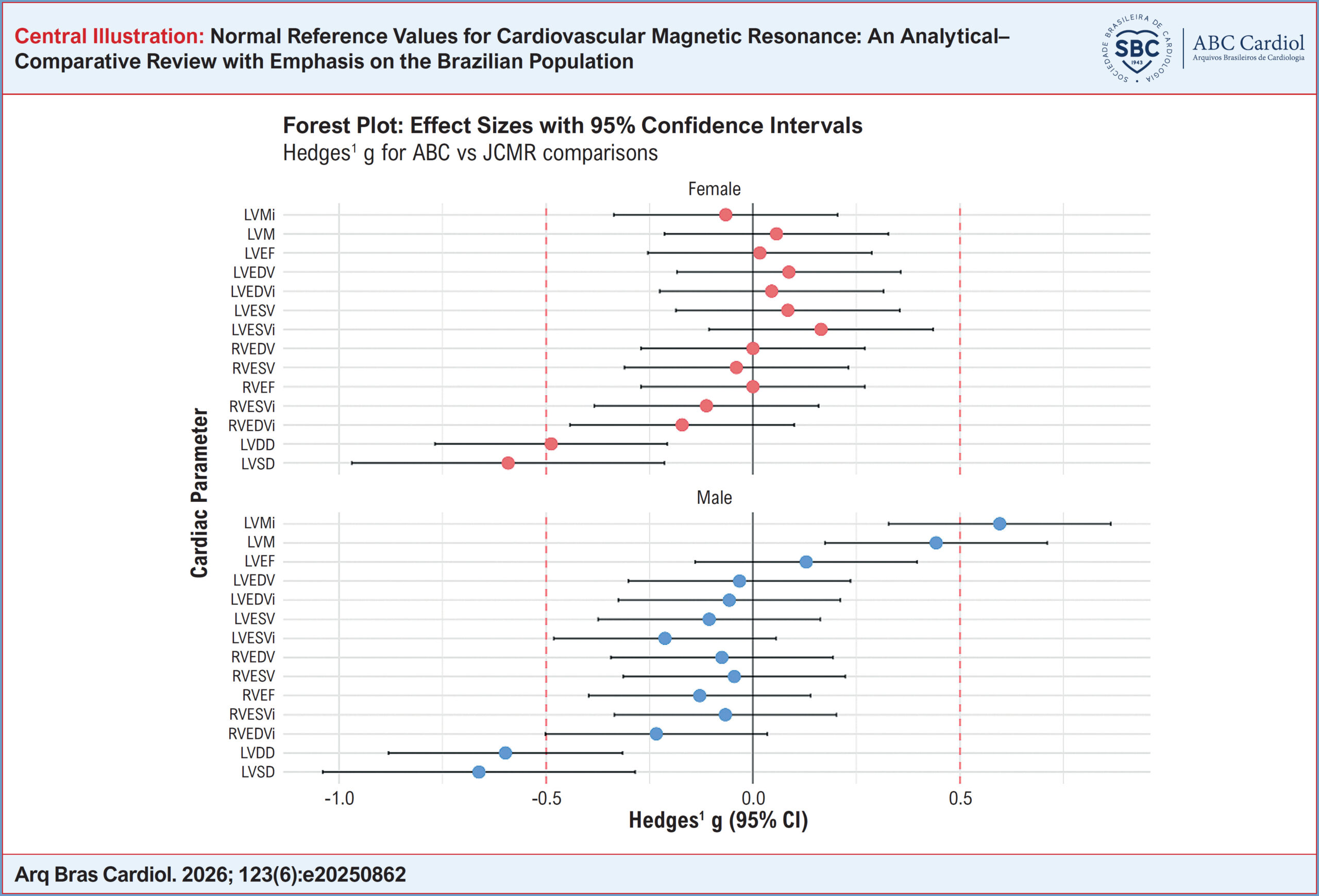
An analytical–comparative review was performed using summarized data from an international reference-value review and a Brazilian study. Means and standard deviations of key ventricular variables were compared, with assessment of 95% CI overlap, Welch’s t-test, and effect size (Hedges’ g). Standard-deviation–based cut-off points were proposed for grading abnormality.

Results:

Overall concordance between means was observed for most variables. Statistically significant differences occurred in a few parameters, mainly ventricular diameters and left ventricular mass, with small to moderate effect sizes. Discrepancies were largely attributed to methodological differences in measurement and indexation.

Conclusions:

International normal reference values may be used in Brazilian clinical practice, provided they are adjusted for body surface area and interpreted in light of local particularities. Standardization of protocols and national multicenter studies are needed to strengthen regional validation. Keywords: Normal Values, Cardiac Magnetic Resonance, Reference Interval.
  • Cardiovascular disease
  • Magnetic Resonance Imaging
  • Reference Values
Read Full Article
Creative Commons Attribution (CC BY) Creative Commons license
03/08/2026 DOI: 10.36660/abc.20250862i Views 1
Figure 1
ABC
Research Letter

Female Infertility: Cardiovascular Disease Risk Factor or Marker of a Population at Cardiovascular Risk?

Maria Alayde Mendonça Rivera et al. Ivan Romero Rivera Glaucia Maria Moraes de Oliveira

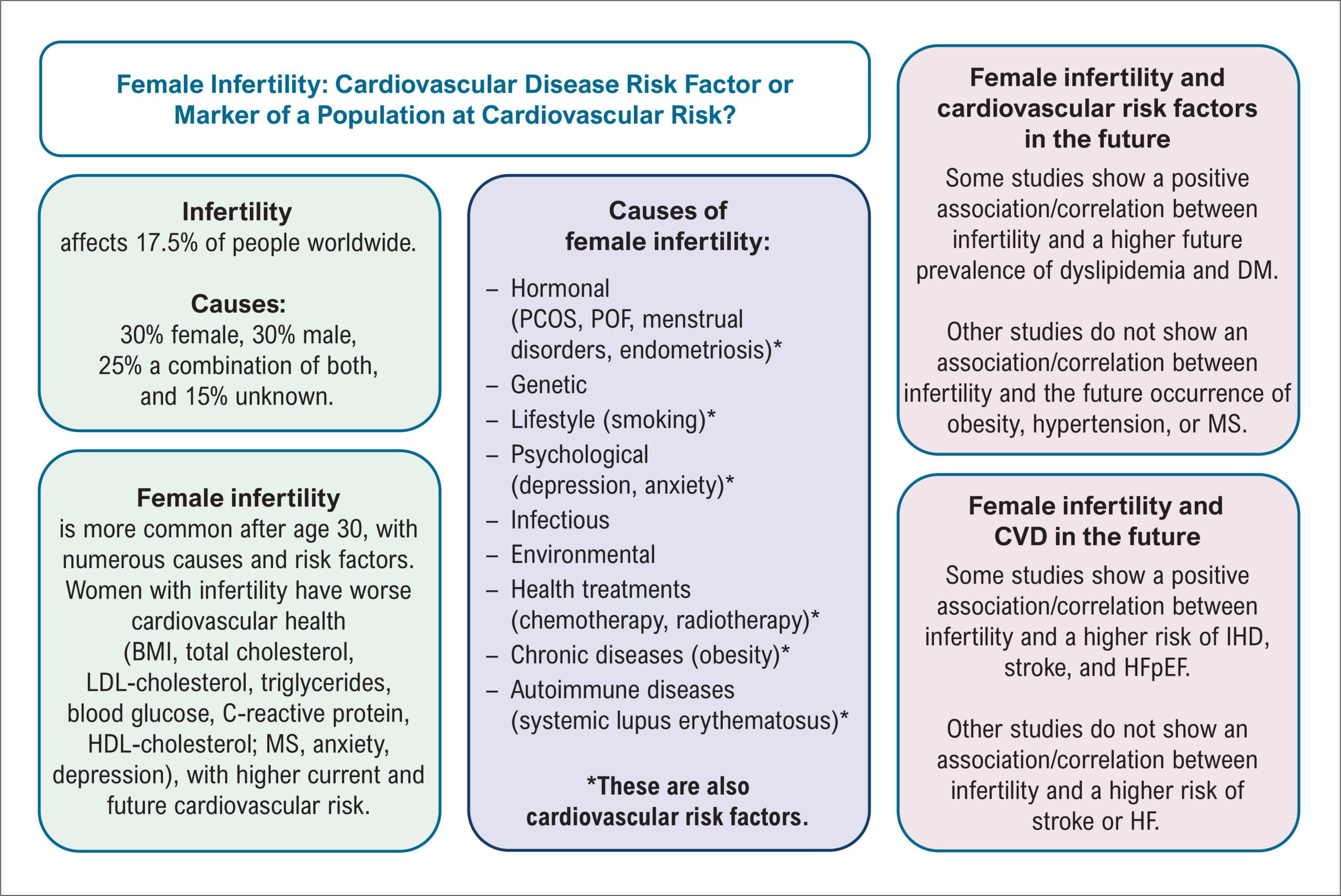
According to the World Health Organization, approximately 17.5% of the adult population (1 in every 6 people in the world) suffers from infertility, defined as the inability to conceive after 12 months of regular unprotected sexual intercourse. The prevalence varies little between regions, with similar rates in high-, middle-, and low-income countries, constituting a global public health problem.

Approximately 85% of infertile couples have an identifiable cause for infertility, whereas the remaining 15% have unexplained infertility. As shown in the , infertility can be attributed to numerous causes and risk factors, the treatment of which can eventually contribute to the couple’s fertility.

[…]

  • Cardiovascular disease
  • female sex
  • Infertility
  • Risk Factor
Read Full Article
Creative Commons Attribution (CC BY) Creative Commons license
17/07/2026 DOI: 10.36660/abc.20250250i Views 1
How Artificial Intelligence Can Transform Women's Healthcare Across All Life Stages
IJCS
Review Article

How Artificial Intelligence Can Transform Women's Healthcare Across All Life Stages

Larissa Neto Espíndola et al. Elise Sant’Ana Isaías Gláucia Maria Moraes de Oliveira Alexandra Monteiro

Abstract

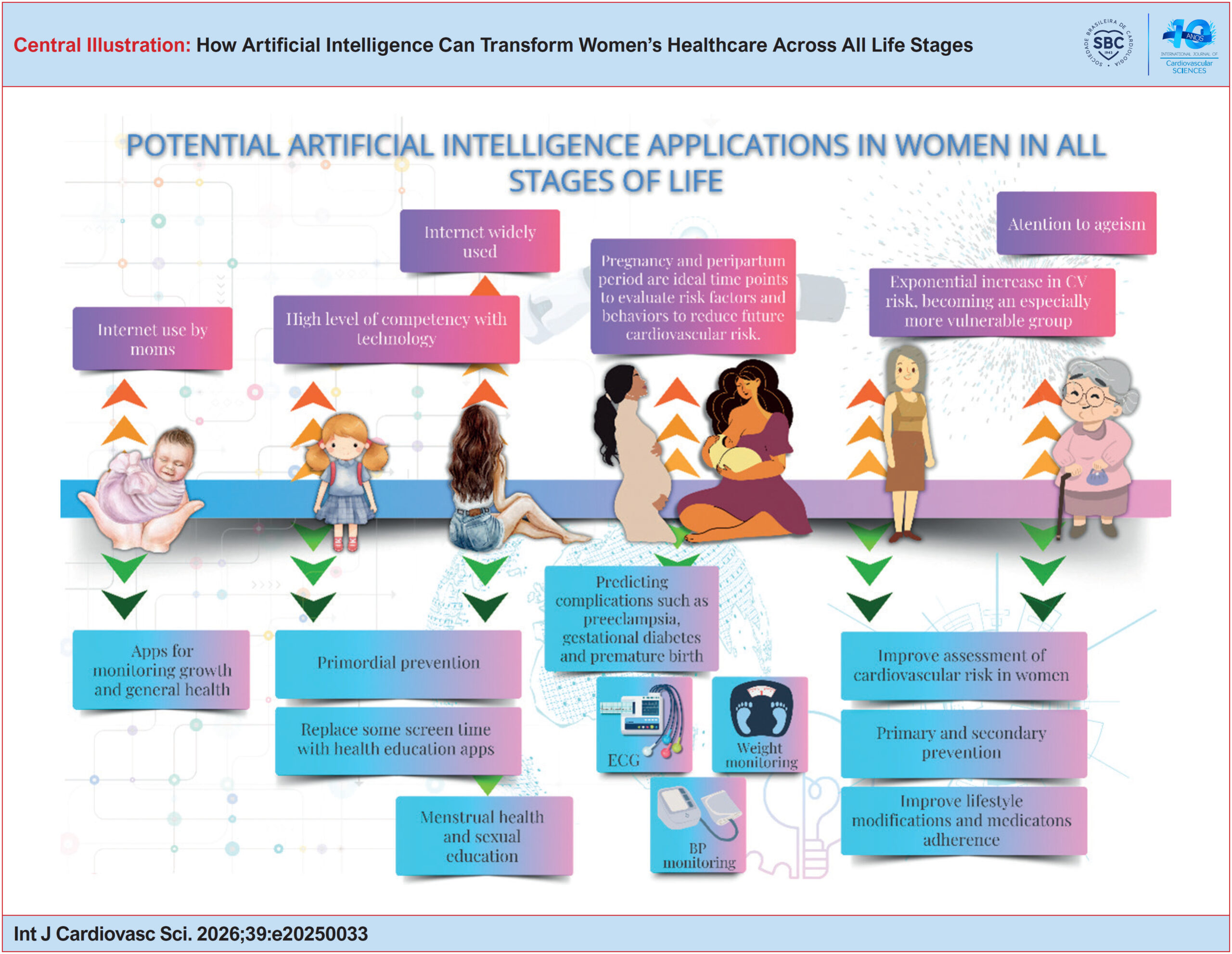
Artificial intelligence (AI) has been driving significant transformations in healthcare by enhancing diagnostics, personalizing treatments, and optimizing clinical workflows. In women’s health, it offers innovative approaches for prevention, early detection, and management of various conditions throughout life — from adolescence to old age.

Over the past decade, advances in machine learning algorithms, neural networks, and natural language processing have enabled the analysis of large volumes of clinical data with previously unimaginable precision and speed. However, the integration of AI into women’s healthcare remains underutilized, representing a valuable opportunity to reduce social inequalities that influence adverse health outcomes.

However, the use of AI in women’s healthcare raises important ethical concerns, particularly the need to protect patients’ sensitive data, avoid algorithmic biases that may perpetuate stigma or inequality, and ensure safe, equitable, and responsible implementation. Ethical governance — with national and international guidelines and regulations — is essential to ensure that AI benefits all women, including vulnerable and underrepresented populations, without exacerbating existing disparities.

This manuscript aims to synthesize the main applications of AI in women’s health across different life stages, identifying advances, opportunities, and challenges in this context. Given the complexity and multidisciplinary nature of the topic, we conducted a scoping review – an appropriate methodology for exploring emerging and still underdeveloped fields. In addition to scientific databases, we included a complementary search in digital health app libraries to identify technological solutions already implemented or under development for women’s health.

  • Artificial Intelligence
  • Cardiovascular disease
  • digital health
  • eHealth
  • women's healthcare
Read Full Article
Creative Commons Attribution (CC BY) Creative Commons license
27/04/2026 DOI: 10.36660/ijcs.20250033 Views 2
ABC
Original Article

Study on Urinary Caffeine and Caffeine Metabolite Levels in American Adults with Coronary Heart Disease: A Cross-Sectional NHANES Study (2009-2014)

Qianqian Li et al. Gan Ke Mengdie Liu Yanjun Chen … Ye Luo Liangxian Qiu

Abstract

Background:

In recent years, the impact of diet and lifestyle on coronary heart disease (CHD) has garnered significant attention. Caffeine, a common dietary component, and its metabolites may influence cardiovascular health.

Objective:

This study aimed to investigate the association between urinary levels of caffeine and its metabolites and the incidence of CHD as well as to assess how these associations vary across different population groups.

Methods:

Data from the NHANES database (2009-2014) were analyzed using multivariable logistic regression models and smooth curve fitting techniques. Participants were categorized into a control group (n = 5,005) and a CHD group (n = 222) based on CHD status. Urinary levels of caffeine and its metabolites were measured and recorded. Multivariable logistic regression was used to evaluate the association between urinary caffeine/metabolite levels and CHD incidence, while smooth curve fitting was employed to explore potential nonlinear relationships. A significance level of 5% was used to determine statistical significance.

Results:

Higher urinary paraxanthine levels were associated with a lower risk of CHD. In contrast, elevated urinary caffeine levels were positively associated with CHD incidence among Mexican Americans, an association not observed in other racial/ethnic groups.

Conclusion:

Lower urinary paraxanthine levels may reflect a reduced risk of CHD, while higher urinary caffeine levels could indicate an increased CHD risk in specific populations.

  • caffeine
  • Cardiovascular disease
  • Coffee Metabolites
  • Race
Read Full Article
Creative Commons Attribution (CC BY) Creative Commons license
01/12/2025 DOI: 10.36660/abc.20240425i Views 2
Figure 1
IJCS
Editorial

Recognizing the reality of cardiovascular diseases

Rodrigo Gopar-Nieto

The vast majority of cardiovascular research emphasizes the high burden of heart diseases and the preponderance of these diseases in mortality., Efforts to learn how major cardiovascular diseases are managed have been led by the countries with the greatest economic power. However, a large part of the world’s population has been forgotten, because the realities of life in developing countries make it impossible to apply all the recommendations. As a result, adverse cardiovascular outcomes remain common, reducing quality of life and life expectancy. In the following paragraphs, I will comment on chronic coronary syndromes, specifically on the efforts made by physicians in India to adapt the management of this disease to their resources and situation.

The underlying pathophysiology of chronic coronary syndromes is myocardial ischemia caused by alterations in coronary flow, mostly due to atherosclerosis, and they are part of a continuum in which atheromatous plaques can become complicated and unstable, causing acute coronary syndromes. To speak of chronic coronary syndromes is not only to refer to a phenomenon at the coronary level but also to consider the associated risk factors. The most common risk factors are hypertension, diabetes, dyslipidemia, smoking, and physical inactivity. However, other non-conventional factors such as exposure to pollutants, social deprivation, occupational stress, hormonal changes, environmental noise, and the area of the world in which we live must also be emphasized. All these phenomena can cause alterations in coronary flow, either by atheroma plaque or by alteration of the microcirculation. For the diagnosis of these diseases, many studies are required, such as electrocardiograms, echocardiograms, cardiac scintigraphy, magnetic resonance imaging, coronary artery tomography, or invasive coronary angiography. Initial treatment is medical, but in many cases, a revascularization strategy will be necessary, either by surgery or percutaneous coronary intervention.

[…]

  • Cardiovascular disease
  • Myocardial Infarction
  • Stable Angina
Read Full Article
Creative Commons Attribution (CC BY) Creative Commons license
03/03/2025 DOI: 10.36660/ijcs.20240234 Views 1
ABC
Editorial

Sleep Duration, Genetics, and Atherosclerosis: Challenges and Opportunities

Ana Vitoria Vitoreti Martins et al. Larissa T. Krul Luciano F. Drager

Atherosclerosis, the unifying mechanism for most of the non-fatal and fatal myocardial infarction and stroke events, is a multifactorial process that has been increasing in prevalence worldwide. Traditional risk factors for atherosclerosis have been extensively studied, but recent evidence pointed out that they explained approximately only 40-50% of the variability of markers of arterial damage and atherosclerosis. Therefore, growing interest has been devoted to exploring the relative role of the “nontraditional’ risk factors. One of the promising candidates is sleep disorders. Indeed, the relationship between sleep and cardiovascular health has been increasingly explored in the literature., While most of the evidence relies on the impact of obstructive sleep apnea (OSA) on atherosclerosis, the potential atherogenic effects of extremes of sleep duration has been recently investigated,, considering its positive association with poor cardiovascular outcomes. Interestingly, previous evidence consistently showed that not only short but long sleep duration (usually defined as >8 or >9hs) increased the risk for these events, confirming a U-shaped association between sleep duration and cardiovascular outcomes. This previous evidence paves the way for exploring potential mechanisms by which sleep duration extremes may increase cardiovascular risk.

In this edition of the Arquivos Brasileiros de Cardiologia, Xu et al. evaluated the association between sleep duration and the risk of atherosclerosis using a Mendelian randomization (MR) approach with data from genome-wide association studies (GWAS). Two large cohorts from Europe were included for analysis. The main results indicated that contrary to the initial hypothesis, there is no significant causal association between sleep duration and atherosclerosis. The study concluded that genetically predicted sleep duration does not affect the risk of atherosclerosis and suggested further research to explore this relationship in greater detail. Strengths of the study include the large sample size and the use of a MR study. This strategy allows for avoiding common biases observed in observational studies. However, important limitations deserve appropriate comments precluding definitive conclusions in this important research area: 1) a subjective question defined sleep duration. It is not uncommon to find misperceptions about the real sleep duration; 2) the chosen Single Nucleotide Polymorphism (SNPs) only partially explain the variability of subjective sleep duration in this investigation. This fact may contribute to lower statistical power in identifying situations with poor correlations; 3) ‘atherosclerosis’ was identified by using the International Classification of Diseases (ICD) rather than objective measurements. There is certainly an underreport of the real burden of atherosclerosis in this population; 4) other sleep disorders (highlighting the role of OSA) are consistently associated with prevalent and incident markers of atherosclerosis– but were not studied in the present investigation; 5) the applicability of the results to non-European populations deserve further investigations.

[…]

  • Atherosclerosis
  • Cardiovascular disease
  • Genetics
  • Sleep
Read Full Article
Creative Commons Attribution (CC BY) Creative Commons license
22/11/2024 DOI: 10.36660/abc.20240593i Views 1
Adequacy of Fatty Acids Consumption Among Individuals in Secondary Cardiovascular Prevention
ABC
Original Article

Adequacy of Fatty Acids Consumption Among Individuals in Secondary Cardiovascular Prevention

Aline Marcadenti et al. Rachel H. Vieira Machado Renato Hideo Nakagawa Santos Caio Cesar dos Santos Kasai … Cristiane Kovacs Annie Bello Cristina H. de Matos Renata Torres Abib Bertacco Gabriela C. Souza Gabriela da S. Schirmann Francisca Eugenia Zaina Nagano Soraia Poloni Raquel Milani El Kik Naoel Hassan Feres Isa G. Rodrigues Antônio Carlos Sobral Sousa Josilene M. F. Pinheiro Sandra Mary Lima Vasconcelos Daniele Maria de Oliveira Carlos Viviane Sahade Souza Adriana Barros Gomes José Albuquerque de Figueiredo Neto Emilio Hideyuki Moriguchi Maria Cristina Izar Sônia Lopes Pinto Josefina Bressan Simone Raimondi de Souza Magali C. Kumbier Celme Barroncas Passos de Araújo Camila R. Torreglosa Bernardete Weber Ângela Cristine Bersch-Ferreira

Background:

Adhering to a diet adequate in macronutrients is crucial for the secondary prevention of cardiovascular diseases.

Objective:

To assess the prevalence of adherence to recommendations for the consumption of dietary fatty acids for the prevention and treatment of cardiovascular diseases and to estimate whether the presence of certain cardiovascular risk factors would be associated with adherence.

Methods:

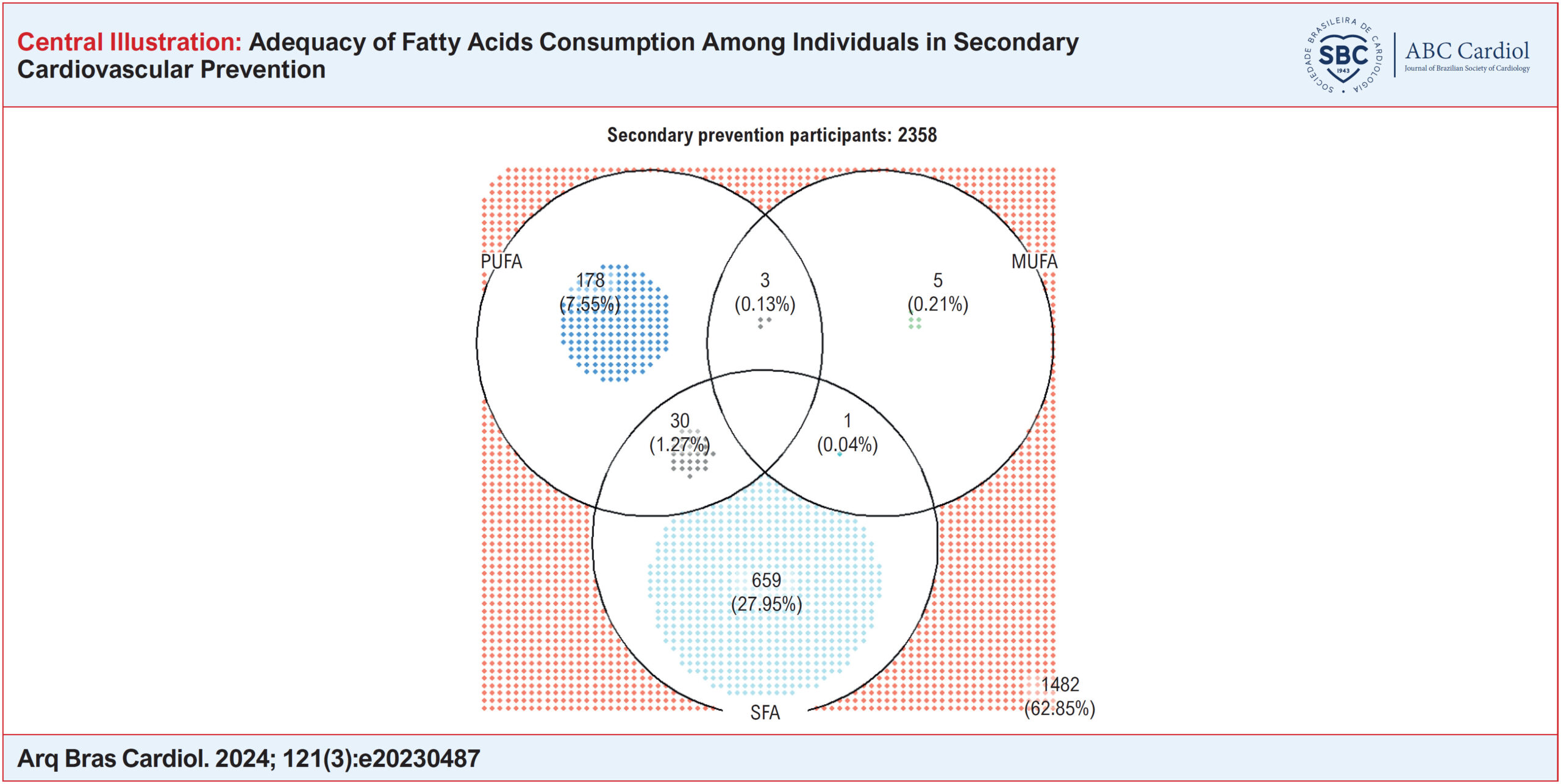
Cross-sectional study using baseline data from 2,358 participants included in the “Brazilian Cardioprotective Nutritional Program Trial”. Dietary intake and cardiovascular risk factors were assessed. Adequate intake of polyunsaturated fatty acids (PUFA) was considered as ≥10% of total daily energy intake; for monounsaturated fatty acids (MUFA), 20%; and for saturated fatty acids (SFA), <7% according to the Brazilian Society of Cardiology. A significance level of 5% was considered in the statistical analysis.

Results:

No participant adhered to all recommendations simultaneously, and more than half (1,482 [62.9%]) did not adhere to any recommendation. Adherence exclusively to the SFA recommendation was the most prevalent, fulfilled by 659 (28%) participants, followed by adherence exclusively to the PUFA (178 [7.6%]) and MUFA (5 [0.2%]) recommendations. There was no association between the number of comorbidities and adherence to nutritional recommendations (p = 0.269). Participants from the Brazilian Northeast region showed a higher proportion of adherence to SFA consumption recommendations (38.42%) and lower adherence to PUFA intake (3.52%) (p <0.001) compared to other regions.

Conclusions:

Among the evaluated sample, there was low adherence to nutritional recommendations for dietary fatty acid consumption.

  • Cardiovascular disease
  • Diet
  • Fatty Acids
  • Secondary Prevention
Read Full Article
Creative Commons Attribution (CC BY) Creative Commons license
05/04/2024 DOI: 10.36660/abc.20230487i Views 1
Figure 1
ABC
Original Article

Socioeconomic Indicators and Mortality from Ischemic Heart Disease and Cerebrovascular Disease in Brazil from 2000 to 2019

José Lucas Bichara et al. Luiz Antônio Bastos Paolo Blanco Villela Gláucia Maria Moraes de Oliveira

Abstract

Background:

Previous studies have identified inequalities in the variation of mortality rates from ischemic heart disease (IHD) and cerebrovascular disease (CBVD) when comparing regions with different levels of socioeconomic development indicators.

Objective:

To analyze the variation in IHD and CBVD mortality rates and economic development, evaluated by the sociodemographic index (SDI) and social vulnerability index (SVI) in Brazil over a period of 20 years.

Methods:

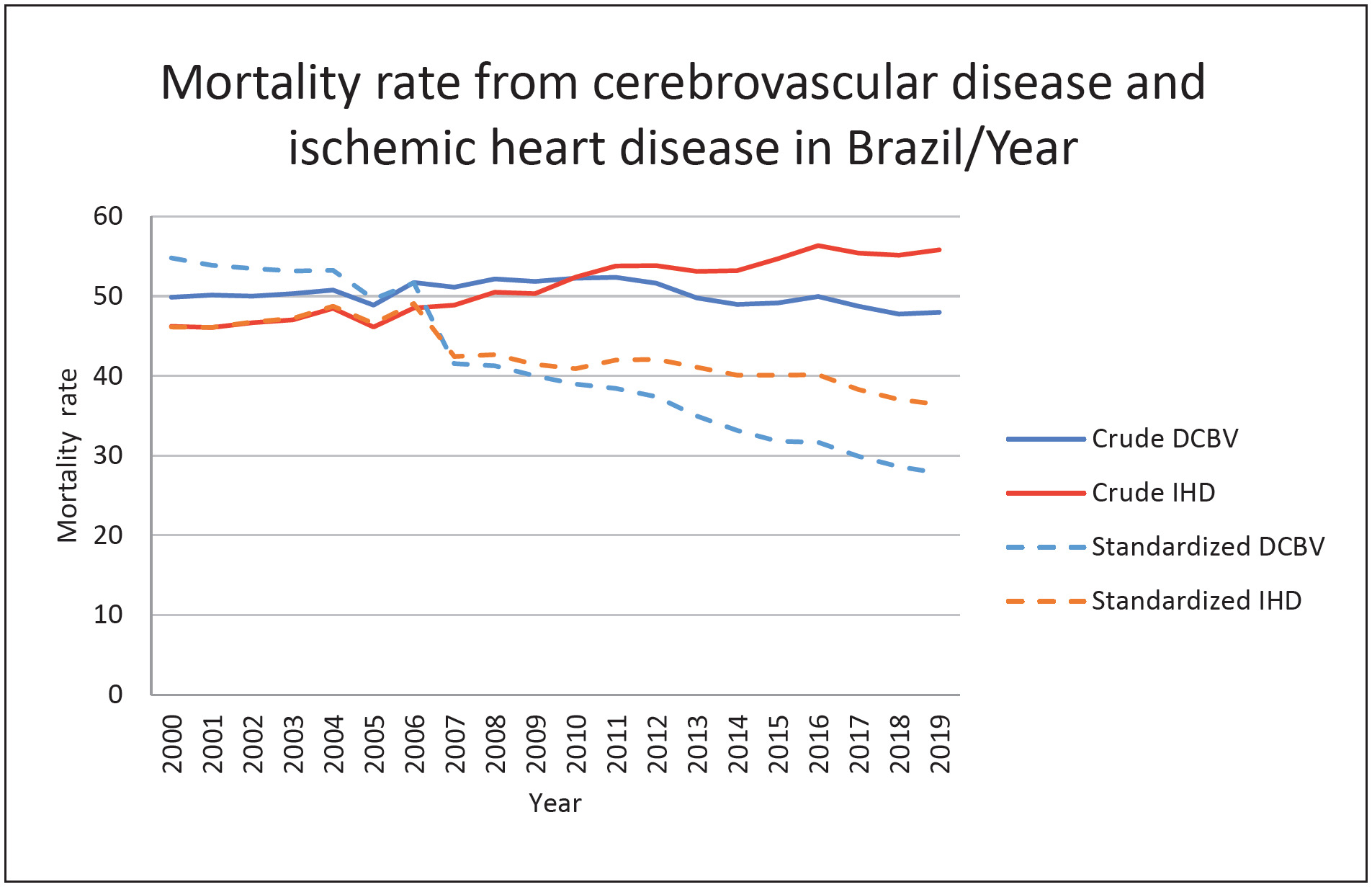
Ecological study of time series of crude and standardized mortality rates (direct method, based on the Brazilian population in year 2000) from IHD and CBVD by sex and Federative Unit (FU) between 2000 and 2019, compared using the SDI and SVI.

Results:

There was an improvement in SDI and SVI concomitantly to a reduction in age-standardized mortality rate from IHD and CBVD in the country; however, this occurred unevenly across the FUs. The FUs with the best socioeconomic indicators had the greatest reduction in mortality rates.

Discussion:

The variations in mortality rates from IHD and CBVD, compared using variations in socioeconomic development, are aligned with those from previous studies, but the present study goes further by including the indicators SDI and SVI in the comparison. The limitations include the observational nature of the study, the use of databases, and the vulnerability to ecological bias.

Conclusion:

The observed data raise the hypothesis that the improvement in socioeconomic conditions is one of the factors responsible for the reduction in mortality rates from IHD and CBVD.

  • Cardiovascular disease
  • Cerebrovascular Disorders
  • Epidemiology
  • Myocardial Ischemia
Read Full Article
Creative Commons Attribution (CC BY) Creative Commons license
10/11/2023 DOI: 10.36660/abc.20220832 Views 1
ABC
Editorial

Triglycerides-Glucose İndex and Coronary Slow Flow: A New Diagnostic Tool?

Maria Cristina Costa de Almeida et al. Marildes Luiza de Castro

Cardiovascular disease (CVD) is the primary cause of death and disability worldwide, accounting for the majority of deaths from noncommunicable diseases. Important risk factors such as smoking, diabetes mellitus (DM), hypertension, or dyslipidemia draw more attention from physicians. However, individuals can develop subclinical atherosclerosis even if they do not have traditional cardiovascular risk factors or symptoms since it is a slowly progressive disease, with arteries affected by thickening, stiffness, loss of elasticity, and increased wall fragility to stenosis and lumen occlusion.

Insulin resistance (IR) may be one of the potential mechanisms of the development of CVD, being recognized as an indicator of systemic inflammation and metabolic disorders closely related to atherosclerotic CVD. Moreover, it is considered a high-risk factor for DM and CVD.

[…]

  • Cardiovascular disease
  • Coronary Slow Flow
  • Insulin Resistance
  • Triglyceride-Glucose Index
Read Full Article
Creative Commons Attribution (CC BY) Creative Commons license
04/08/2023 DOI: 10.36660/abc.20230373
IJCS
Editorial

Cardiac Involvement in COVID-19: A Matter Close to the Heart, Beyond the Acute Illness

Gláucia Maria Moraes de Oliveira et al. Fausto J. Pinto

Human infection with the SARS-CoV-2 virus and COVID-19 have been ravaging the entire world since December 2019. As of February 17, 2023, records from the World Health Organization point to more than 756 million confirmed cases and approximately 6,845,000 deaths. In Brazil, until this date, approximately 36,961,000 cases have been reported, with about 698,000 deaths. Among the deaths, the main comorbidities reported are heart disease (40%), diabetes (28%), obesity (10%), neurological diseases (5%), kidney diseases (5%), and pneumopathies (5%). Furthermore, 70% of patients who died were 60 years old or older, and males were prevalent in 60% of the cases.

The impact on mortality is well documented in the acute phase of this disease. Moraes et al., in this systematic review of literature, consolidate the findings described as myocarditis, ventricular dysfunction, cardiogenic shock, takotsubo cardiomyopathy, and sudden cardiac death due to association with ventricular arrhythmias. However, other outcomes linked to more significant morbidity are still not completely understood. In other words, what can and what should we expect from recovered cases?

[…]

  • Cardiovascular disease
  • Coronavirus
  • COVID-19
  • Long COVID
  • Long term
  • Post-acute sequelae of COVID-19
Read Full Article
Creative Commons Attribution (CC BY) Creative Commons license
21/04/2023 DOI: 10.36660/ijcs.20230024 Views 2
ABC
Research Letter

Serving Two Masters: Resolving the Dilemma between Individual Patient Data Meta-Analysis and Aggregate Data Meta-Analysis from Statin Trials

Lucas Tramujas et al. Fernando Azevedo Medrado Júnior Alexandre Biasi Cavalcanti Carlos Eduardo Pompilio

Introduction

Elevated levels of low-density lipoprotein-cholesterol (LDL-C) have been established as an important risk factor for the development of atherosclerosis. As a corollary of this reasoning, an LDL-centric approach has emerged based on statins and other medications able to reduce LDL-C and cardiovascular risk.

The Cholesterol Treatment Trialists’ Collaboration, an individual patient data meta-analysis, found a log-linear relationship between the degree of LDL-C reduction and cardiovascular events. According to this, expert guidelines for preventing cardiovascular diseases recommend statin use for primary and secondary prevention.

[…]

  • Cardiovascular disease
  • Cholesterol
  • Meta-Analysis
Read Full Article
Creative Commons Attribution (CC BY) Creative Commons license
21/04/2023 DOI: 10.36660/abc.20220539
Figure 1
ABC
Original Article

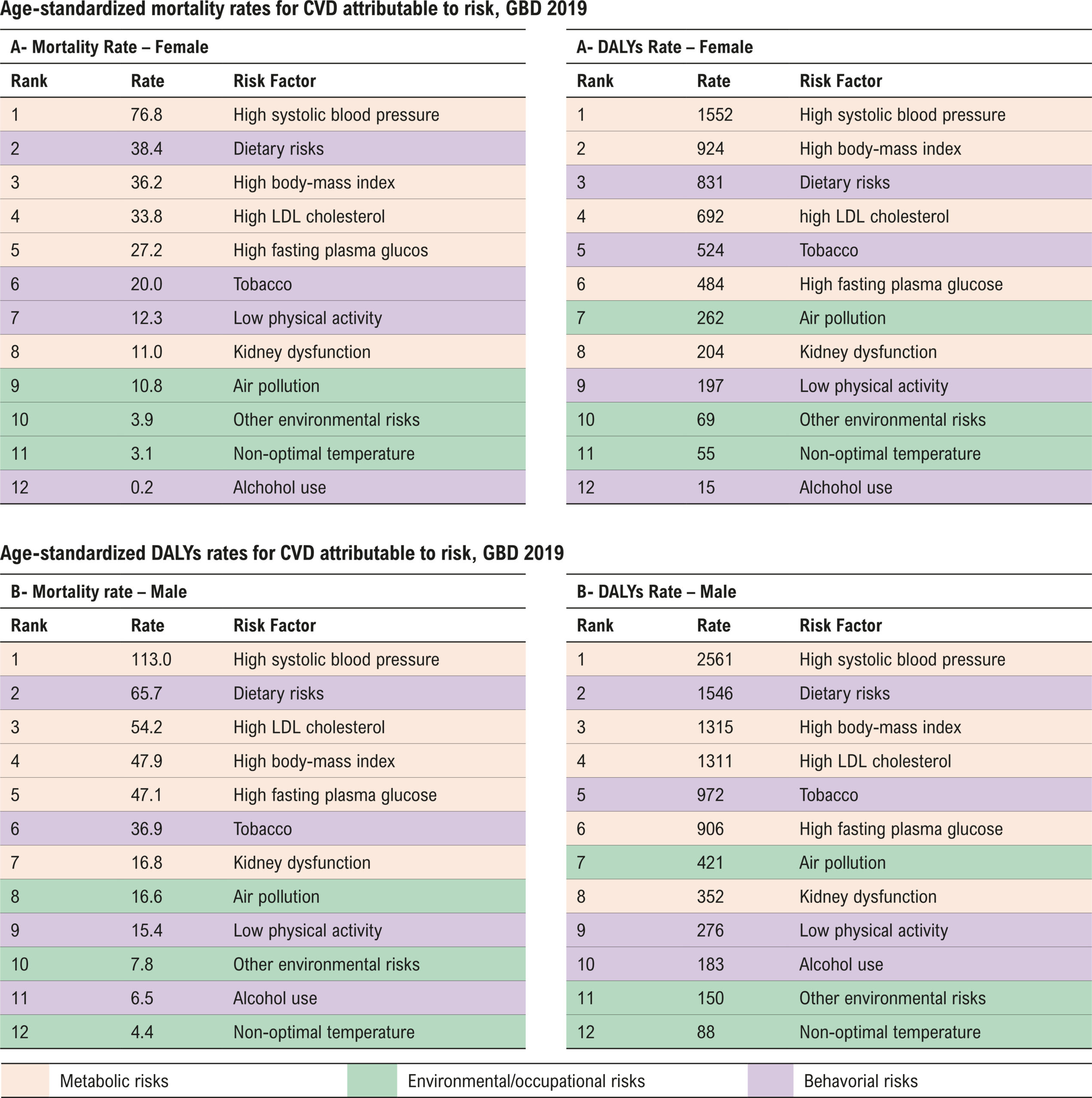
Burden of Cardiovascular Diseases Attributable to Risk Factors in Portuguese-Speaking Countries: Data from the “Global Burden of Disease 2019” Study

Bruno Ramos Nascimento et al. Luisa Campos Caldeira Brant André Dias Nassar Naback Guilherme Augusto Veloso … Carisi Anne Polanczyk Antonio Luiz Pinho Ribeiro Deborah Carvalho Malta Albano Vicente Lopes Ferreira Gláucia Maria Moraes de Oliveira

Abstract

Background:

The impact of risk factors (RF) on morbidity and mortality from cardiovascular disease (CVD) for most Portuguese-speaking countries (PSC) is little known.

Objectives:

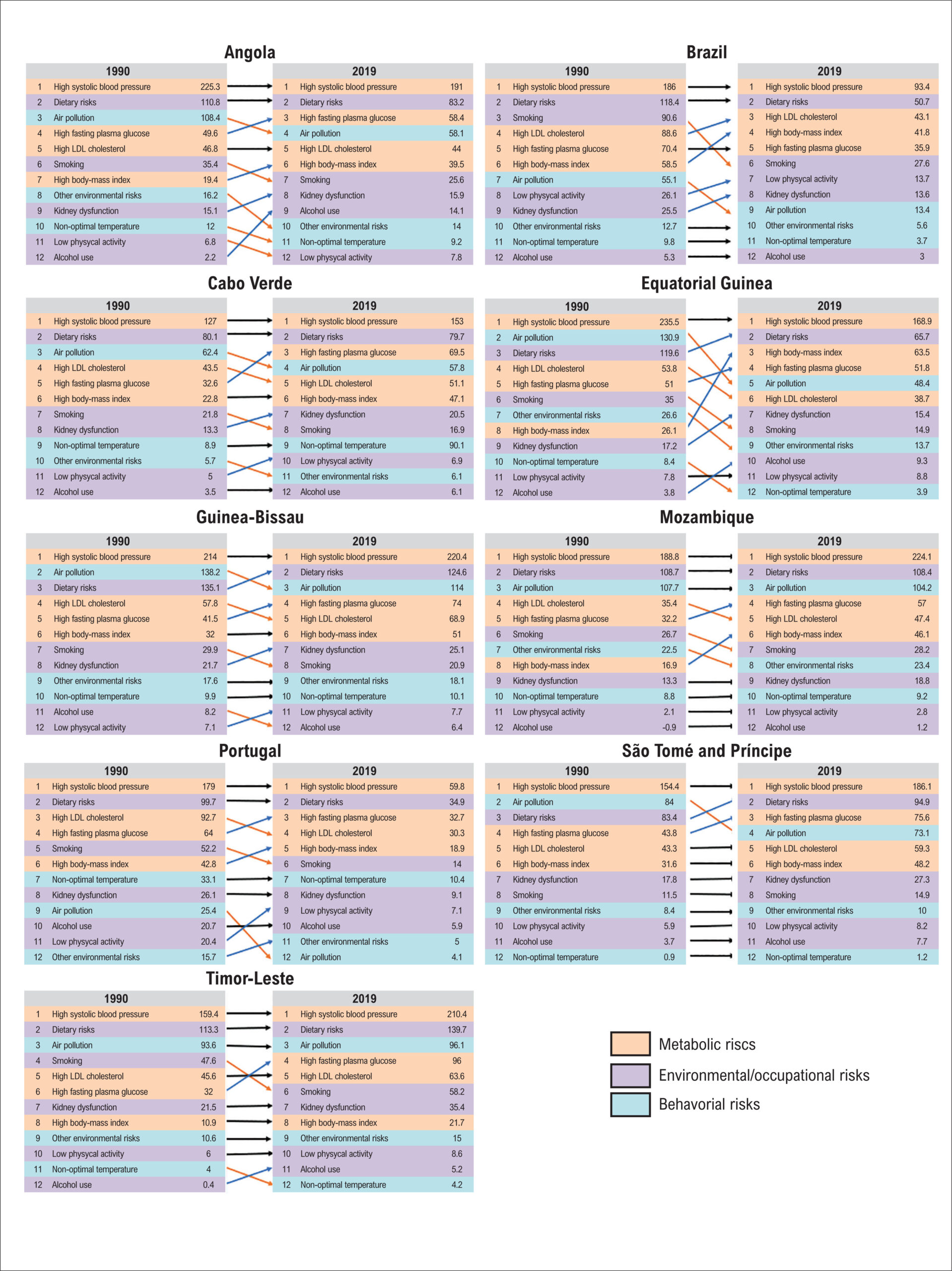
We aimed to analyze the morbidity and mortality from CVD attributable to RF and its variation, from 1990 to 2019, in PSC, based on estimates from the Global Burden of Disease (GBD) 2019 study.

Methods:

We evaluated changes in cardiovascular RF, mortality rates and age-standardized disability-adjusted life years (DALYs) between 1990 and 2019. The correlation between percentage changes in mortality rates and the sociodemographic index (SDI) of each PSC was evaluated by the Spearman method. A p-value <0.05 was considered statistically significant.

Results:

Elevated systolic blood pressure (SBP) was the main RF for mortality and DALYs for CVD for all PSC. Mortality from CVD showed a downward trend in 2019, more accentuated in Portugal (-66.6%, 95%CI -71.0 – -61.2) and in Brazil (-49.8%, 95%CI -52.5 – -47.1). There was a trend towards an inverse correlation between SDI and the percent change in mortality, which was significant for dietary risks (r=-0.70, p=0.036), high LDL cholesterol (r=-0.77, p=0.015) and high SBP (r=-0.74, p=0.023).

Conclusions:

In addition to SBP, dietary and metabolic RF justified a greater variation in the burden of CVD correlated with SDI in the PSC, suggesting the need to adopt health policies adapted to the reality of each country, aiming to reduce their impact on population.

  • Cardiovascular disease
  • Community of Portuguese- Speaking Countries
  • Epidemiology
  • Global Burden of Disease
  • Risk Factors
Read Full Article
Creative Commons Attribution (CC BY) Creative Commons license
10/06/2022 DOI: 10.36660/abc.20210680 Views 2
ABC
Letter to the Editor

Prevalence and Associated Factors of SARS caused by Covid-19 in Adults and Aged People with Chronic Cardiovascular Disease: A Critical Analysis

Fernanda Gunha Ignácio et al. Fernanda Pinzon Ribeiro Aline Oenning Baggio Chaiana Esmeraldino Mendes Marcon

Dear Editor,

The study by Paiva et al. evaluated the incidence of patients infected with the COVID-19 virus, associated with cardiovascular diseases (CVD), in Brazil. It is concluded that the high prevalence of severe acute respiratory syndrome (SARS) in adults and in the elderly is related to sociodemographic and clinical characteristics, signs and symptoms. In view of that, the importance of primary health care is reiterated – in order to maintain regular medical visits aiming at controlling the disease and symptoms, while the presence of cardiovascular comorbidities increases in severe COVID-19 cases.

[…]

  • Cardiovascular disease
  • Coronavirus
  • COVID-19
  • Pandemic
  • Risk Factors
Read Full Article
Creative Commons Attribution (CC BY) Creative Commons license
29/04/2022 DOI: 10.36660/abc.20210807 Views 2
Figure 1
ABCIC
Original Article

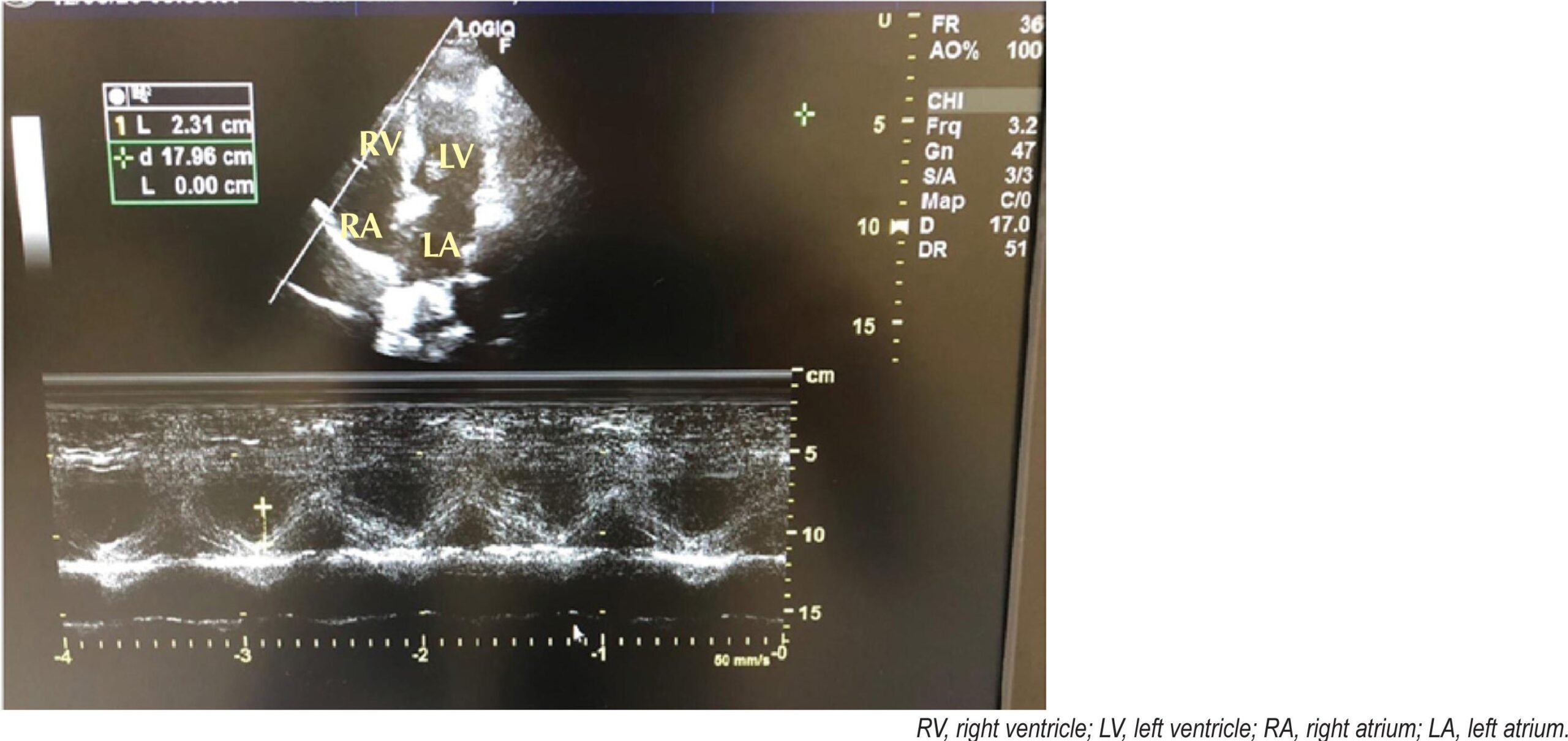
Tricuspid Annular Plane Systolic Excursion and Mitral Annular Systolic Excursion: Correlation with Left Ventricular Diastolic Function

André Américo Bedenko Martins et al. Leonardo Yoshida Osaku Ana Cristina Camarozano Cintia Rocha Fortes de Sá … Daniela de Castro Carmo Jerônimo Antonio Fortunato Rubens Zenóbio Darwich Liz Andréa Villela Baroncini

Abstract

Introduction:

Tricuspid annular plane systolic excursion and mitral annular systolic excursion are parameters used to assess the systolic function of the right ventricle and left ventricle, respectively. Little is known about its relationship with left ventricular diastolic function.

Objective:

To assess whether the values of mitral annular systolic excursion and tricuspid annular plane systolic excursion correlate with parameters used in the evaluation of left ventricular diastolic function.

Method:

Observational cross-sectional study. Two hundred nine individuals were selected, 116 women, with both ventricles normal systolic function. The analyzes were performed for men and women, through Pearson correlation coefficient and Sperman correlation coefficient. Tricuspid annular plane systolic excursion, mitral annular systolic excursion, atrial volumes and left ventricular diastolic function parameters on transthoracic echocardiogram were obtained.

Results:

In women, mitral annular systolic excursion was positively correlated with lateral e ‘(Sperman correlation coefficient of 0.22; p=0.016) and tricuspid annular plane systolic excursion was positively correlated with E / A ratio (Sperman correlation coefficient of 0.23; p=0.037), lateral e’ (Sperman correlation coefficient of 0.28; p=0.012), and septal e’ (Sperman correlation coefficient of 0.28; p=0.012), and negatively with the E/e’ ratio (Pearson correlation coefficient of -0.27; p=0.018), and A wave (Pearson correlation coefficient of -0.29; p=0.009). In men, only mitral annular systolic excursion correlated positively with E wave (Pearson correlation coefficient of 0.21; p=0.037), lateral e’ (Sperman correlation coefficient of 0.34; p <0.001) and the septal e’ (Sperman correlation coefficient of 0.26; p=0.008). There was no correlation between mitral annular systolic excursion and tricuspid annular plane systolic excursion and atrial volumes. Hypertension and diabetes mellitus influenced tricuspid annular plane systolic excursion and mitral annular systolic excursion values correlated to E and A waves, E/A ratio, septal and lateral e’ waves, and E/e’ ratio.

Conclusion:

In the present study, mitral annular systolic excursion and tricuspid annular plane systolic excursion values showed a significant correlation with some parameters of left ventricular diastolic function, with stronger evidence on female sex.

  • Cardiac function
  • Cardiovascular disease
  • COVID-19
  • Echocardiography
  • SARS-CoV-2
Read Full Article
Creative Commons Attribution (CC BY) Creative Commons license
30/03/2022 DOI: 10.47593/2675-312X/20223501eabc245 Views 1
Figure 1
ABCIC
Artigo Original

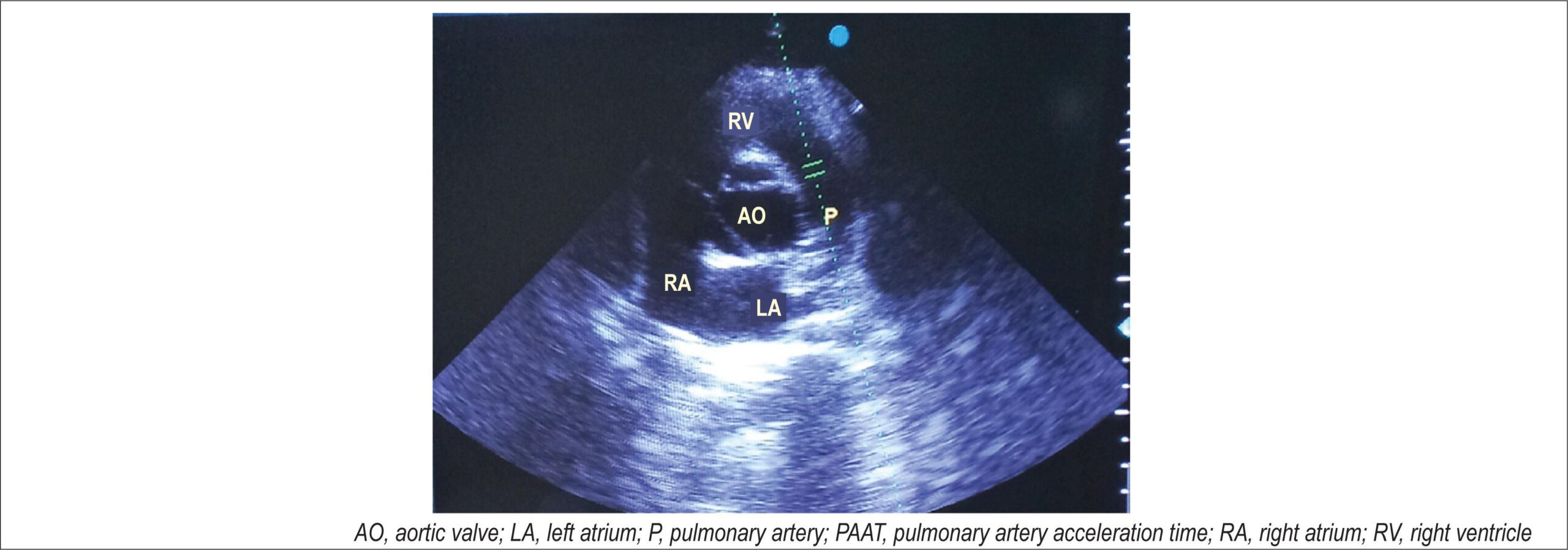
Right Ventricular Outflow Tract Acceleration Time: Correlation with Left Ventricular Diastolic Function, Sex, And Age

Renan Macedo Coimbra et al. Ana Cristina Camarozano Cintia Rocha Fortes de Sá Daniela de Castro Carmo … Jerônimo Antonio Fortunato Rubens Zenóbio Darwich Liz Andréa Villela Baroncini

Abstract

Background:

Pulmonary artery acceleration time (PAAT) can be used as a parameter in the evaluation of pulmonary hypertension and aids left ventricular diastolic function (LVDF) analyses.

Objective:

To assess whether there is a correlation between PAAT and LVDF parameters in individuals with a preserved left ventricular systolic function and by sex, age, and cardiovascular risk factors.

Methods:

Observational cross-sectional study. One hundred nineteen patients were selected (59 women [49.6%]). The subjects underwent transthoracic echocardiography including measurements of PAAT, E and A waves and E/A ratio, e’ septal and e’ lateral waves and E/e’ ratio, pulmonary artery systolic pressure (PASP), and left atrial volume.

Results:

In female patients, a positive correlation (Spearman’s correlation coefficient – Spearman correlation coefficient [SCC]) was found between the PAAT value and the lateral e’ (SCC, 0.47; p = 0.002), with the E/A ratio (SCC, 0.32; p = 0.04), and with septal e’ (SCC, 0.36; p = 0.023), and a negative correlation between PAAT and PASP (SCC, -0.43; p = 0.034). In men, no correlation was found between PAAT and any parameters. Lower PAAT values were found in women with systemic arterial hypertension (hypertension) than in women without hypertension (0.13 ± 0.03 s versus 0.16 ± 0.03 s; p = 0.015).

Conclusion:

The present study showed a significant correlation between PAAT and some LVDF parameters in female patients only. Hypertension was correlated with lower PAAT values in women.

  • Cardiac function
  • Cardiovascular disease
  • COVID-19
  • Echocardiography
  • SARS-CoV-2
Read Full Article
Creative Commons Attribution (CC BY) Creative Commons license
30/03/2022 DOI: 10.47593/2675-312X/20223501eabc242 Views 1
ABCIC
Original Article

Transthoracic Echocardiography Findings of Hospitalized Patients with COVID-19: Results from the Brazilian Echocardiography Registry During the COVID-19 Pandemic (ECOVID)

Silvio Henrique Barberato et al. Rafael Borsoi Fabio Roston Hudson Laerte Machado Miranda … Pedro Patriota Maria Estefânia Bosco Otto Adenalva Lima de Souza Beck Anderson da Costa Armstrong João Marcos Bemfica Barbosa Ana Cristina Camarozano Wermellinger Letícia Braga Paciello da Silva Marcos Valério Coimbra Resende Marcelo Luiz Campos Vieira Marcelo Miglioranza Miguel Morita Fernandes da Silva

Abstract

Background

Transthoracic echocardiography (TTE) may play a crucial role in the evaluation of cardiac manifestations of coronavirus disease 2019 (COVID-19).

Objective

We aimed to report the prevalence of the main echocardiographic abnormalities of hospitalized COVID-19 patients.

Methods

We performed a prospective multicenter observational study in patients with COVID-19 who underwent TTE during hospitalization. Patients with pre-existing heart failure, coronary artery disease, or atrial fibrillation were categorized as having previous cardiovascular disease (CVD). Clinical and echocardiographic data about cardiac structure and function were collected.

Results

We evaluated 310 patients with COVID-19 (mean age, 62±16 years; 61% men; 53% with arterial hypertension; 33% with diabetes; and 23% with previous CVD). Overall, 65% of the patients required intensive care unit support. The most prevalent echocardiographic abnormalities were LV hypertrophy (29%), pulmonary hypertension (25%), left ventricular (LV) systolic dysfunction (16.5%), right ventricular (RV) systolic dysfunction (15.9%), grade II/III LV diastolic dysfunction (11%), and LV regional wall motion abnormality (11%). Pericardial effusion was uncommon (7% of cases). LV hypertrophy (25% vs. 45%, p=0.001), LV systolic dysfunction (11% vs. 36%, p<0.001), regional wall motion abnormalities (6% vs. 29%, p<0.001), grade II/III LV diastolic dysfunction (9% vs. 19%, p=0.03), and pulmonary hypertension (22% vs. 36%, p=0.019) were less common in patients without previous CVD. RV systolic dysfunction occurred at similar frequencies in patients with versus without previous CVD (13% vs. 25%, p=0.07).

Conclusions

Among patients hospitalized with COVID-19, abnormal echocardiographic findings were common, but less so among those without previous CVD. RV systolic dysfunction appeared to affect similar proportions of patients with versus without previous CVD.

  • Cardiac function
  • Cardiovascular disease
  • COVID-19
  • Echocardiography
  • SARS-CoV-2
Read Full Article
Creative Commons Attribution (CC BY) Creative Commons license
25/03/2022 DOI: 10.47593/2675-312X/20213404eabc256 Views 1
Figure 1
IJCS
Editorial

Science Gender Gap: Are We in theRight Path?

Gláucia Maria Moraes de Oliveira et al. Marge Tenorio Alessandra de Sá Earp Siqueira

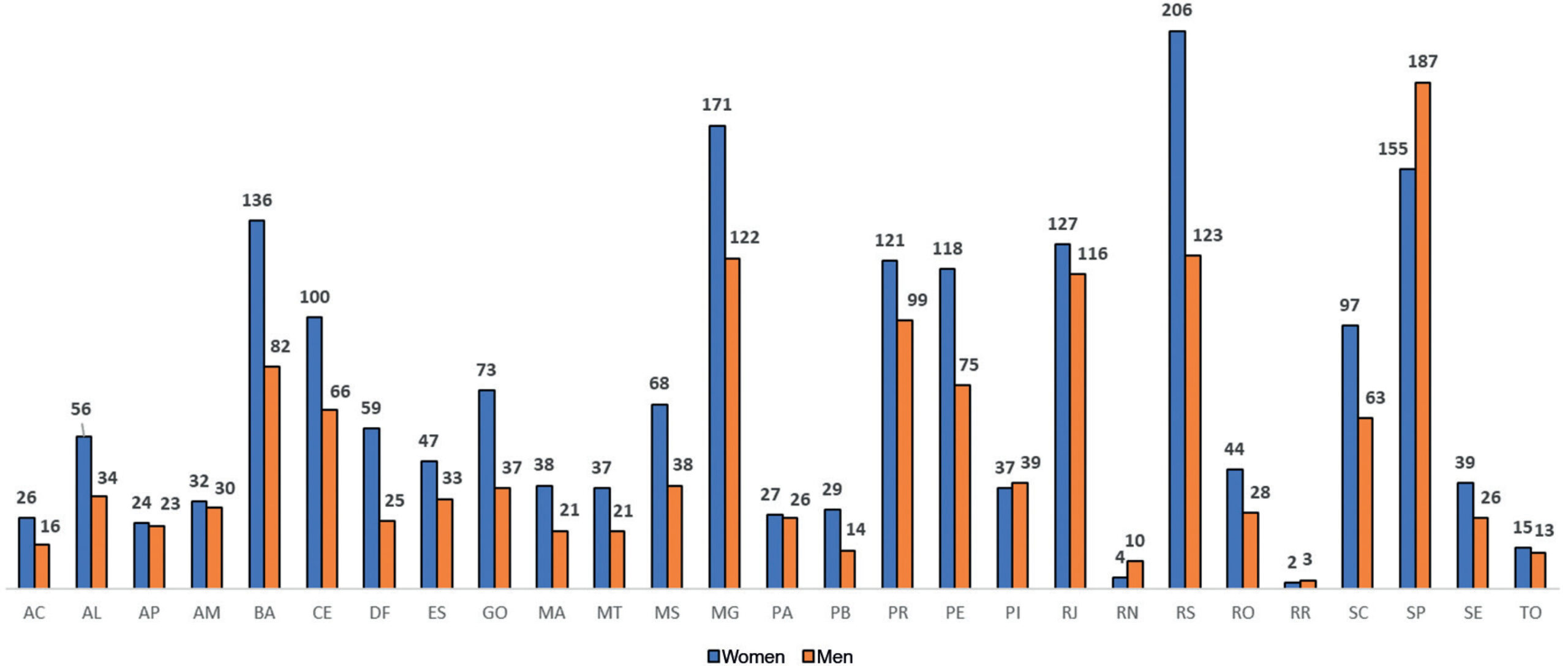
Women are entering the medical and scientific community in growing numbers, reaching and even surpassing their male counterparts in medical schools. However, a settled imbalance between men and women is still a reality in the international cardiology community despite these recent advances. The female presence in Brazilian medical schools was barely noticed until the 1960s; in the following years, there was a gradual increase in the number of women in the medical field, mainly in the first decade of the 21st century (59 % in 2020). In a 2020 demographic analysis of the Brazilian Federal Council of Medicine , men still predominated, accounting for 53.4% of all doctors in the country. Nevertheless, in the age-range below 30-years-old, women are the majority, accounting for 58.5%; the percentage of female doctors is inversely proportional to the increase in the age group, with only 21% of women in the age group above 70 years old.

In the USA, women represent less than 15% of the cardiology workforce and less than 5% of interventional cardiologists, while in Europe, women account for only one-third of cardiologists, and 18% of women are interventionists. Currently, Brazil has nearly 500 thousand doctors, 17,802 thousand cardiologists, of which 31.1% are females, and mostly concentrated in the southeast region. In 2018, only 215 (8.6%) of a total of 2,062 cardiovascular surgeons and 7.5% of 970 interventional cardiologists were women. The Brazilian Society of Cardiology had two female presidents; and the Cardiovascular Surgery Society, the Interventional Cardiology, and the Federation of Portuguese Language Cardiology Societies had one female president. Also, in the last five years, only one fifth of the speakers in the annual congress of the Brazilian Cardiology Society were women.

[…]

  • Cardiologists
  • Cardiovascular disease
  • COVID-19
  • Ethics
  • Gender Identity
  • Pandemic
  • Women
Read Full Article
Creative Commons Attribution (CC BY) Creative Commons license
09/03/2022 DOI: 10.36660/ijcs.20220029
IJCS
Editorial

Challenges in Telemedicine: Even When the Road is Hard, Never Give up

Erito Marques de Souza Filho et al. Alexandra Monteiro

“Even when the road is hard, never give up” – Tupac Shakur and The Outlawz

The above quote is from the hit song “Baby Don’t Cry” immortalized by Tupac and The Outlawz. The song is about a young woman who faces challenges and receives encouragement to persevere and not give up. In a similar way, telemedicine faces several challenges on an arduous path. In this way, imbued with a tenacious spirit, its users have had remarkable experiences. In the current issue of the International Journal of Cardiovascular Sciences, Esmerio and colleagues presented a successful application of a telecardiology service. They emphasized that the work contributed to reducing the distance between patients and specialized professionals, and they highlighted a high level of satisfaction for both patients and health Professionals. Experiences like this represent the relevant role of telemedicine in providing quality health services and generating value. However, these tools still face important challenges that need to be overcome.

[…]

  • Bioethic
  • Brazil
  • Cardiovascular disease
  • Distance Education
  • Telehealth
  • Telemedicine/ethics, Telemedicine/methods
  • Telemedicine/trends
  • Women
  • Working
Read Full Article
Creative Commons Attribution (CC BY) Creative Commons license
09/03/2022 DOI: 10.36660/ijcs.20220014
Figure 1
ABC
Editorial

Special Considerations in the Prevention of Cardiovascular Disease in Women

Gláucia Maria Moraes de Oliveira et al. Nanette Kasss Wenger

Cardiovascular Diseases (CVD) are the major cause of death and disability in Brazil, in women and men. According to the GBD 2019 Study estimates, among CVDs, IHD was the number 1 cause of death in Brazil, followed by Stroke. IHD was responsible for 12.03% (II95 10.66%-12.88%) and 12.2% (II95 11 .5%-12.77%) , of deaths and 4.78 %(II95 4.08%-5.47%) and 6.48% (II95 5.92%-7.05%) of Disability Adjusted Life Years (DALYs) , in women and men, respectively. Deaths and DALYs from Stroke were higher in women than in men, 10.39% (II95 9.25-11.11%) and 8.41% (II95 7.84%-8.83%) of the deaths and 4.62% (II 4.01%-5.18%) and 4.19% of DALYs (3.82%-4.53%), respectively.

In 2019, in Brazil, the incidence rate of IHD (mainly myocardial infarction) standardized by age was 78 (II 95%, 69-88) per 100,000 in women and 148 (II 95%, 130-166) per 100,000 in men. Regarding chronic IHD (previous AMI, stable angina or ischemic heart failure), the age-standardized prevalence rate was 1,046 (II 95%, 905-1,209) per 100,000 women and 2,534 (II 95%, 2,170-2,975) per 100,000 men. The PNS 2013, a household-based epidemiological survey with nationally representative interviews, using the “WHO/Rose Angina Questionnaire,” reported that the prevalence of mild angina (grade I) was 9.1% (95%CI 8.5 – 9.7) and 5.9% (5.3 – 6.4), in women and men respectively. Regarding moderate/severe angina (grade II), in the 2019 PNS, it was also 5.5% more frequent in women than in men. 3.3%.

[…]

  • Cardiovascular disease
  • Prevention
  • Women
Read Full Article
Creative Commons Attribution (CC BY) Creative Commons license
07/03/2022 DOI: 10.36660/abc.20220028
ABC
Original Article

The Impact of COVID-19 on Diagnosis of Heart Disease in Latin America an INCAPS COVID Sub-analysis

Rodrigo Julio Cerci et al. João Vicente Vitola Diana Paez Alejandro Zuluaga … Marcio Sommer Bittencourt Lilia M. Sierra-Galan Patricia Carrascosa Roxana Campisi Claudia Gutierrez-Villamil Amalia Peix Duane Chambers Mayra Sánches Velez Carla M. G. Alvarado Ana C. F. Ventura Alejandro Maldonado Alfredo P. Castanos Teresa C. Diaz Yariela Herrera Manuel C. Vasquez Ana A. Arrieta Fernando Mut Cole Hirschfeld Eli Malkovskiy Benjamin Goebel Yosef Cohen Michael Randazzo Leslee J. Shaw Michelle C. Williams Todd C. Villines Nathan Better Sharmila Dorbala Paolo Raggi Thomas N. B. Pascual Yaroslav Pynda Maurizio Dondi Andrew J. Einstein

Abstract

Background

The COVID-19 pandemic has disrupted the delivery of care for cardiovascular diseases in Latin America. However, the effect of the pandemic on the cardiac diagnostic procedure volumes has not been quantified.

Objective

To assess (1) the impact of COVID-19 on cardiac diagnostic volumes in Latin America and (2) determine its relationship with COVID-19 case incidence and social distancing measures.

Methods

The International Atomic Energy Agency conducted a worldwide survey assessing changes in cardiac diagnostic volumes resulting from COVID-19. Cardiac diagnostic volumes were obtained from participating sites for March and April 2020 and compared to March 2019. Social distancing data were collected from Google COVID-19 community mobility reports and COVID-19 incidence per country from the Our World in Data.

Results

Surveys were conducted in 194 centers performing cardiac diagnostic procedures, in 19 countries in Latin America. Procedure volumes decreased 36% from March 2019 to March 2020, and 82% from March 2019 to April 2020. The greatest decreases occurred in echocardiogram stress tests (91%), exercise treadmill tests (88%), and computed tomography calcium scores (87%), with slight variations between sub-regions of Latin America. Changes in social distancing patterns (p < 0.001) were more strongly associated with volume reduction than COVID-19 incidence (p = 0.003).

Conclusions

COVID-19 was associated with a significant reduction in cardiac diagnostic procedures in Latin America, which was more related to social distancing than to the COVID-19 incidence. Better balance and timing of social distancing measures and planning to maintain access to medical care is warranted during a pandemic surge, especially in regions with high cardiovascular mortality.

  • Cardiac Testing
  • Cardiovascular disease
  • Coronavirus
  • COVID-19
  • Global Health
Read Full Article
Creative Commons Attribution (CC BY) Creative Commons license
07/02/2022 DOI: 10.36660/abc.20210388 Views 2
ABC
Original Article

Screening for Familial Hypercholesterolemia in Small Towns: Experience from 11 Brazilian Towns in the Hipercolbrasil Program

Cinthia Elim Jannes et al. Júnea Paolucci Paiva Silvino Pãmela Rodrigues de Souza Silva Isabella Ramos Lima … Mauricio Teruo Tada Theo Gremen Mimary Oliveira Raul D. Santos José Eduardo Krieger Alexandre da Costa Pereira

Abstract

Background

Familial hypercholesterolemia (FH) is a genetic disease characterized by elevated serum levels of low-density lipoprotein cholesterol (LDL-C), and it is associated with the occurrence of early cardiovascular disease. In Brazil, HipercolBrasil, which is currently the largest FH cascade screening program, has already identified more than 2000 individuals with causal genetic variants for FH. The standard approach is based on cascade screening of referred index cases, individuals with hypercholesterolemia and clinical suspicion of FH.

Objectives

To perform targeted screening of 11 small Brazilian cities with a suspected high prevalence of people with FH.

Methods

The selection of cities occurred in 3 ways: 1) cities in which a founder effect was suspected (4 cities); 2) cities in a region with high rates of early myocardial infarction as described by the National Health System database (2 cities); and 3) cities that are geographically close to other cities with a high prevalence of individuals with FH (5 cities). Statistical significance was considered as p value < 0.05.

Results

One hundred and five index cases and 409 first-degree relatives were enrolled. The yield of such approach of 4.67 relatives per index case was significantly better (p < 0.0001) than the general HipercolBrasil rate (1.59). We identified 36 IC with a pathogenic or likely pathogenic variant for FH and 240 affected first-degree relatives.

Conclusion

Our data suggest that, once detected, specific geographical regions warrant a target approach for identification of clusters of individuals with FH.

  • Cardiovascular disease
  • Familial hypercholesterolemia
  • Genetic Testing
Read Full Article
Creative Commons Attribution (CC BY) Creative Commons license
07/02/2022 DOI: 10.36660/abc.20201371
ABCIC
Original Article

Longitudinal Strain and Ischemic Stroke in the Absence of Known Heart Disease

Jeova Cordeiro de Morais Junior et al. Nayane Carolina Pertile Salvioni Dannyl Roosevelt de Vasconcelos Lima Crissvânia Firmino Confessor … Alexsandro Paulo Costa Galdino Junior Lara Sodré Cardoso Antônio Marconi Leandro da Silva Joao Lima Anderson da Costa Armstrong Luis Claudio Lemos Correia

Abstract

Background

Stroke is prevalent worldwide, and early recognition of subclinical cardiovascular (CV) disease could predict a first ischemic stroke (IS) episode. Speckle-tracking echocardiography (STE) allows the detection of early subclinical myocardial dysfunction.

Aim

To examine the association between myocardial deformation, evaluated by STE, and first episode of IS in a sample of otherwise healthy patients.

Methods

We included individuals between 40–80 years old, with a first incidence of IS, with no known CV disease, matched to healthy controls by sex, age, and hypertension at a 1:2 ratio. STE was used to assess LV global longitudinal strain (GLS), and traditional echocardiography was performed. Univariate and multivariable analyses were performed to assess the relationship among stroke, CV risk factors, and echocardiography-derived parameters.

Results

A total of 29 cases and 62 controls were included. The mean age of the patients was 60 ± 12 y/o, and 54% were males. Smoking was more prevalent in cases compared to controls (34% vs. 9%; p = 0.001), and there were no significant differences in the other examined risk factors. Cases had less myocardial deformation compared to controls (GLS: -16.7% ± 3.4% vs. -19.2 ± 2.8%; p < 0.001), and there was no significant difference regarding traditional echocardiography parameters. After adjusting for smoking and hyperlipidemia, GLS maintained an independent association with stroke (OR = 1.3; 95% CI, 1.1–1.6; p = 0.005). The area under the ROC curve for stroke significantly increased after adding GLS to smoking (0.65 to 0.78, p = 0.009).

Conclusion

GLS has a consistent and independent association with a first IS episode in middle-aged adults with generally normal hearts. Therefore, GLS may be a useful risk marker in this population.

  • Cardiovascular disease
  • Echocardiography
  • Stroke
Read Full Article
Creative Commons Attribution (CC BY) Creative Commons license
17/12/2021 DOI: 10.47593/2675-312X/20203304eabc101 Views 2
ABCIC
Original Article

Echocardiography and Analysis of Subclinical Cardiovascular Diseases in Indigenous People Living in Different Degrees of Urbanization: Project of Atherosclerosis Among Indigenous Populations (Pai)

Pedro Vinícius Amorim de Medeiros Patriota et al. Ana Marice T. Ladeia Juracy Marques Ricardo Khoury … Aldina Barral Alvaro A. Cruz Luis Claudio L. Correia Manoel Barral-Netto Joao A. C. Lima Anderson C. Armstrong

Abstract

Background

The urbanization process impacts the burden of cardiovascular disease (CVD). Indigenous populations can undergo a devastating epidemiological transition.

Objective

The present study aimed to describe the Project of Atherosclerosis among Indigenous Populations (PAI) study protocol for assessing echocardiographic images and subclinical CVD in indigenous populations according to the degree of urbanization and report its preliminary results.

Methods

The PAI is a cross-sectional study that includes volunteers aged 30–70 years among Brazilian indigenous groups exposed to low and advanced stages of urbanization (Fulni-ô and Truká, respectively) and an urban control group. Individuals with known CVD or who were on hemodialysis were excluded. The pilot study began in Fulni-ô territory in September 2016. The participants underwent clinical and laboratory evaluations, electrocardiography, carotid artery ultrasound, and a comprehensive echocardiography protocol including global longitudinal strain (GLS) assessed by speckle tracking. The preliminary results are described by participant sex in univariate analysis.

Results

The pilot study evaluated the protocol used in 55 Fulni-ô individuals (mean age, 48.7 ± 12.0 years; 80% women). Traditional risk factors such as hypertension, diabetes, and dyslipidemia were found in 40%, 36%, and 54% of participants, respectively, without significant statistical differences between the sexes. Tobacco use was extremely prevalent, reported in 91% of participants. Most echocardiographic parameters were within the normal range; however, mean GLS was 17.3 ± 3.4% (p = 0.73 between sexes).

Conclusion

We described the PAI study protocol for assessing subclinical CVD and risk factors in indigenous populations by urbanization stage. Its preliminary results suggest a high prevalence of these factors in the indigenous population exposed to a lower degree of urbanization.

  • Cardiovascular disease
  • Indigenous Population
  • Urbanization
Read Full Article
Creative Commons Attribution (CC BY) Creative Commons license
17/12/2021 DOI: 10.47593/2675-312X/20203304eabc78 Views 2
Figure 1
ABCIC
Original Article

Analysis of the maintenance process and useful life of echocardiography equipment: An experience in a teaching hospital

Gabriel Peres Mazzoni et al. André Timóteo Sapalo André Schmidt Benedito Carlos Maciel Minna Moreira Dias Romano

Abstract

Introduction

Echocardiography is a diagnostic tool that is increasingly used in clinical practice in different medical scenarios; however, the preventive (PM) or corrective maintenance (CM) care and processes for this equipment are still poorly standardized. To describe the maintenance process currently implemented for echocardiographic equipment (ECHO) in a medium-sized laboratory in a tertiary-level public teaching hospital. The description of the process includes damage characterization and MP and MC implementation.

Methods

This was a descriptive and exploratory single-center observational study. Data on the maintenance process of echocardiographic equipment were obtained from electronic files from the hospital’s equipment management system between 2003 and 2018.

Results

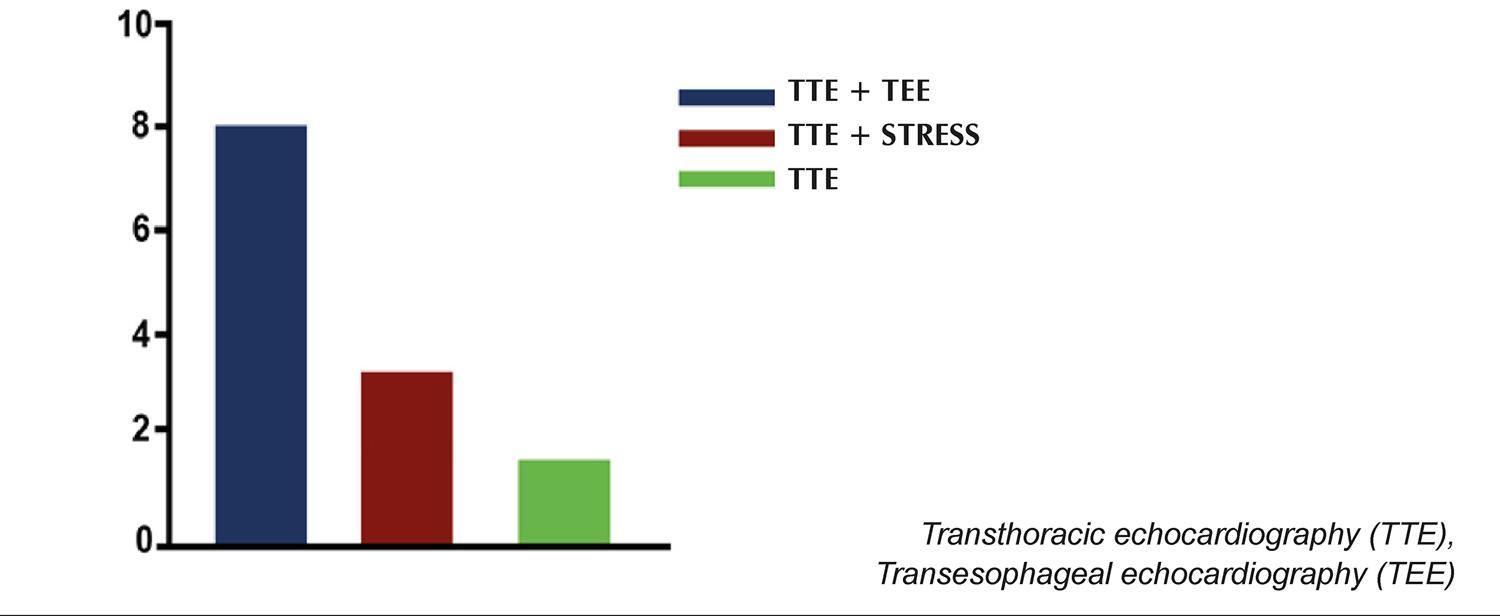
Together with the description of the equipment maintenance process, the ten most common types of malfunctions were identified, including software (23.8%), parts (23.1%), and power outage and accessory damage (13.8%). The implementation of the PM process significantly decreased the maintenance costs (USD 44,472.10 vs USD 25,807.59, p = 0.029). Even after the MP, the CM costs related to transesophageal echocardiography equipment (TEE) (USD 7,789.17) were higher than those with other equipment modalities (USD 3,184.37 for transthoracic echocardiography equipment (TTE) and USD 1,813.00 for stress testing).

Conclusion

The maintenance process for ECHO equipment was described. ECHO equipment damage has high costs, especially in special modalities such as TEE. PM significantly reduced maintenance costs.

  • Cardiac function
  • Cardiovascular disease
  • COVID-19
  • Echocardiography
  • SARS-CoV-2
Read Full Article
Creative Commons Attribution (CC BY) Creative Commons license
16/12/2021 DOI: 10.47593/2675-312X/20213404eabc258 Views 1

Could not load more articles. Please try again.

How to cite this article

EndNote RIS

Electronic Document Format (Vancouver)

Torreão JA, Costa IBSS, Assunção-Jr AN, Gottlieb I, Silva LS, Senra T, Magalhães TA, et al. Normal Reference Values for Cardiovascular Magnetic Resonance: An Analytical–Comparative Review with Emphasis on the Brazilian Population. Arquivos Brasileiros de Cardiologia 2026;123(6):e20250862.

Electronic Document Format (ABNT)

Torreão, Jorge A.; Costa, Isabela Bispo Santos da Silva; Assunção-Jr, Antonildes N.; Gottlieb, Ilan; Silva, Leonardo Sara da; Senra, Tiago; Magalhães, Tiago Augusto; Uellendahl, Marly; Zampa, Hugo Bizetto; Liberato, Gabriela; Ishikawa, Walther Yoshiharu; Trad, Henrique; Hadlich, Marcelo; Coelho-Filho, Otavio; Sasdelli Neto, Roberto; Fernandes, Juliano Lara; Ávila, Luiz Francisco Rodrigues de; Pinto, Ibraim Masciarelli F.; Schvartzman, Paulo R.; Rochitte, Carlos E.. Normal Reference Values for Cardiovascular Magnetic Resonance: An Analytical–Comparative Review with Emphasis on the Brazilian Population. Arquivos Brasileiros de Cardiologia, v. 123, n. 6, e20250862, Aug. 2026.

Electronic Document Format (APA)

Torreão, J. A., Costa, I. B. S. S., Assunção-Jr, A. N., Gottlieb, I., Silva, L. S. , Senra, T., Magalhães, T. A., Uellendahl, M., Zampa, H. B., Liberato, G., Ishikawa, W. Y., Trad, H., Hadlich, M., Coelho-Filho, O., Sasdelli Neto, R., Fernandes, J. L., Ávila, L. F. R. , Pinto, I. M. F., Schvartzman, P. R., & Rochitte, C. E. (2026). Normal Reference Values for Cardiovascular Magnetic Resonance: An Analytical–Comparative Review with Emphasis on the Brazilian Population. Arquivos Brasileiros de Cardiologia, 123(6), e20250862.

Electronic Document Format (ISO)

Torreão, Jorge A. and Costa, Isabela Bispo Santos da Silva and Assunção-Jr, Antonildes N. and Gottlieb, Ilan and Silva, Leonardo Sara da and Senra, Tiago and Magalhães, Tiago Augusto and Uellendahl, Marly and Zampa, Hugo Bizetto and Liberato, Gabriela and Ishikawa, Walther Yoshiharu and Trad, Henrique and Hadlich, Marcelo and Coelho-Filho, Otavio and Sasdelli Neto, Roberto and Fernandes, Juliano Lara and Ávila, Luiz Francisco Rodrigues de and Pinto, Ibraim Masciarelli F. and Schvartzman, Paulo R. and Rochitte, Carlos E.. Normal Reference Values for Cardiovascular Magnetic Resonance: An Analytical–Comparative Review with Emphasis on the Brazilian Population. Arquivos Brasileiros de Cardiologia [online]. 2026, vol. 123, n. 6, [cited 2026-10-14], e20250862. Available from: <https://journals.cardiol.br/en/article/normal-reference-values-for-cardiovascular-magnetic-resonance-an-analytical-comparative-review-with-emphasis-on-the-brazilian-population/>. ISSN 0066-782X

EndNote RIS

Electronic Document Format (Vancouver)

Rivera MAM, Rivera IR, Oliveira GMM. Female Infertility: Cardiovascular Disease Risk Factor or Marker of a Population at Cardiovascular Risk?. Arquivos Brasileiros de Cardiologia 2026;123(5):e20250250.

Electronic Document Format (ABNT)

Rivera, Maria Alayde Mendonça; Rivera, Ivan Romero; Oliveira, Glaucia Maria Moraes de. Female Infertility: Cardiovascular Disease Risk Factor or Marker of a Population at Cardiovascular Risk?. Arquivos Brasileiros de Cardiologia, v. 123, n. 5, e20250250, Jul. 2026.

Electronic Document Format (APA)

Rivera, M. A. M., Rivera, I. R., & Oliveira, G. M. M. (2026). Female Infertility: Cardiovascular Disease Risk Factor or Marker of a Population at Cardiovascular Risk?. Arquivos Brasileiros de Cardiologia, 123(5), e20250250.

Electronic Document Format (ISO)

Rivera, Maria Alayde Mendonça and Rivera, Ivan Romero and Oliveira, Glaucia Maria Moraes de. Female Infertility: Cardiovascular Disease Risk Factor or Marker of a Population at Cardiovascular Risk?. Arquivos Brasileiros de Cardiologia [online]. 2026, vol. 123, n. 5, [cited 2026-10-14], e20250250. Available from: <https://journals.cardiol.br/en/article/female-infertility-cardiovascular-disease-risk-factor-or-marker-of-a-population-at-cardiovascular-risk/>. ISSN 0066-782X

EndNote RIS

Electronic Document Format (Vancouver)

Espíndola LN, Isaías ES, Oliveira GMM, Monteiro A. How Artificial Intelligence Can Transform Women’s Healthcare Across All Life Stages. International Journal of Cardiovascular Sciences 2026;39:e20250033.

Electronic Document Format (ABNT)

Espíndola, Larissa Neto; Isaías, Elise Sant’Ana; Oliveira, Gláucia Maria Moraes de; Monteiro, Alexandra. How Artificial Intelligence Can Transform Women’s Healthcare Across All Life Stages. International Journal of Cardiovascular Sciences, v. 39, e20250033, Apr. 2026.

Electronic Document Format (APA)

Espíndola, L. N., Isaías, E. S., Oliveira, G. M. M. , & Monteiro, A. (2026). How Artificial Intelligence Can Transform Women’s Healthcare Across All Life Stages. International Journal of Cardiovascular Sciences, 39, e20250033.

Electronic Document Format (ISO)

Espíndola, Larissa Neto and Isaías, Elise Sant’Ana and Oliveira, Gláucia Maria Moraes de and Monteiro, Alexandra. How Artificial Intelligence Can Transform Women’s Healthcare Across All Life Stages. International Journal of Cardiovascular Sciences [online]. 2026, vol. 39, [cited 2026-10-14], e20250033. Available from: <https://journals.cardiol.br/en/article/how-artificial-intelligence-can-transform-womens-healthcare-across-all-life-stages/>. ISSN 2359-4802

EndNote RIS

Electronic Document Format (Vancouver)

Li Q, Ke G, Liu M, Chen Y, Luo Y, Qiu L. Study on Urinary Caffeine and Caffeine Metabolite Levels in American Adults with Coronary Heart Disease: A Cross-Sectional NHANES Study (2009-2014). Arquivos Brasileiros de Cardiologia 2025;122(9):e20240425.

Electronic Document Format (ABNT)

Li, Qianqian; Ke, Gan; Liu, Mengdie; Chen, Yanjun; Luo, Ye; Qiu, Liangxian. Study on Urinary Caffeine and Caffeine Metabolite Levels in American Adults with Coronary Heart Disease: A Cross-Sectional NHANES Study (2009-2014). Arquivos Brasileiros de Cardiologia, v. 122, n. 9, e20240425, Nov. 2025.

Electronic Document Format (APA)

Li, Q., Ke, G., Liu, M., Chen, Y., Luo, Y., & Qiu, L. (2025). Study on Urinary Caffeine and Caffeine Metabolite Levels in American Adults with Coronary Heart Disease: A Cross-Sectional NHANES Study (2009-2014). Arquivos Brasileiros de Cardiologia, 122(9), e20240425.

Electronic Document Format (ISO)

Li, Qianqian and Ke, Gan and Liu, Mengdie and Chen, Yanjun and Luo, Ye and Qiu, Liangxian. Study on Urinary Caffeine and Caffeine Metabolite Levels in American Adults with Coronary Heart Disease: A Cross-Sectional NHANES Study (2009-2014). Arquivos Brasileiros de Cardiologia [online]. 2025, vol. 122, n. 9, [cited 2026-10-14], e20240425. Available from: <https://journals.cardiol.br/en/article/study-on-urinary-caffeine-and-caffeine-metabolite-levels-in-american-adults-with-coronary-heart-disease-a-cross-sectional-nhanes-study-2009-2014/>. ISSN 0066-782X

EndNote RIS

Electronic Document Format (Vancouver)

Gopar-Nieto R. Recognizing the reality of cardiovascular diseases. International Journal of Cardiovascular Sciences 2025;38:e20240234.

Electronic Document Format (ABNT)

Gopar-Nieto, Rodrigo. Recognizing the reality of cardiovascular diseases. International Journal of Cardiovascular Sciences, v. 38, e20240234, Mar. 2025.

Electronic Document Format (APA)

Gopar-Nieto, R. (2025). Recognizing the reality of cardiovascular diseases. International Journal of Cardiovascular Sciences, 38, e20240234.

Electronic Document Format (ISO)

Gopar-Nieto, Rodrigo. Recognizing the reality of cardiovascular diseases. International Journal of Cardiovascular Sciences [online]. 2025, vol. 38, [cited 2026-10-14], e20240234. Available from: <https://journals.cardiol.br/en/article/recognizing-the-reality-of-cardiovascular-diseases/>. ISSN 2359-4802

EndNote RIS

Electronic Document Format (Vancouver)

Martins AVV, Krul LT, Drager LF. Sleep Duration, Genetics, and Atherosclerosis: Challenges and Opportunities. Arquivos Brasileiros de Cardiologia 2024;121(9):e20240593.

Electronic Document Format (ABNT)

Martins, Ana Vitoria Vitoreti; Krul, Larissa T.; Drager, Luciano F.. Sleep Duration, Genetics, and Atherosclerosis: Challenges and Opportunities. Arquivos Brasileiros de Cardiologia, v. 121, n. 9, e20240593, Nov. 2024.

Electronic Document Format (APA)

Martins, A. V. V., Krul, L. T., & Drager, L. F. (2024). Sleep Duration, Genetics, and Atherosclerosis: Challenges and Opportunities. Arquivos Brasileiros de Cardiologia, 121(9), e20240593.

Electronic Document Format (ISO)

Martins, Ana Vitoria Vitoreti and Krul, Larissa T. and Drager, Luciano F.. Sleep Duration, Genetics, and Atherosclerosis: Challenges and Opportunities. Arquivos Brasileiros de Cardiologia [online]. 2024, vol. 121, n. 9, [cited 2026-10-14], e20240593. Available from: <https://journals.cardiol.br/en/article/sleep-duration-genetics-and-atherosclerosis-challenges-and-opportunities/>. ISSN 0066-782X

EndNote RIS

Electronic Document Format (Vancouver)

Marcadenti A, Machado RHV, Santos RHN, Kasai CCS, Kovacs C, Bello A, Matos CH, et al. Adequacy of Fatty Acids Consumption Among Individuals in Secondary Cardiovascular Prevention. Arquivos Brasileiros de Cardiologia 2024;121(3):e20230487.

Electronic Document Format (ABNT)

Marcadenti, Aline; Machado, Rachel H. Vieira; Santos, Renato Hideo Nakagawa; Kasai, Caio Cesar dos Santos; Kovacs, Cristiane; Bello, Annie; Matos, Cristina H. de; Bertacco, Renata Torres Abib; Souza, Gabriela C.; Schirmann, Gabriela da S.; Nagano, Francisca Eugenia Zaina; Poloni, Soraia; Kik, Raquel Milani El; Feres, Naoel Hassan; Rodrigues, Isa G.; Sousa, Antônio Carlos Sobral; Pinheiro, Josilene M. F.; Vasconcelos, Sandra Mary Lima; Carlos, Daniele Maria de Oliveira; Souza, Viviane Sahade; Gomes, Adriana Barros; Figueiredo Neto, José Albuquerque de; Moriguchi, Emilio Hideyuki; Izar, Maria Cristina; Pinto, Sônia Lopes; Bressan, Josefina; Souza, Simone Raimondi de; Kumbier, Magali C.; Araújo, Celme Barroncas Passos de; Torreglosa, Camila R.; Weber, Bernardete; Bersch-Ferreira, Ângela Cristine. Adequacy of Fatty Acids Consumption Among Individuals in Secondary Cardiovascular Prevention. Arquivos Brasileiros de Cardiologia, v. 121, n. 3, e20230487, Apr. 2024.

Electronic Document Format (APA)

Marcadenti, A., Machado, R. H. V., Santos, R. H. N., Kasai, C. C. S., Kovacs, C., Bello, A., Matos, C. H. , Bertacco, R. T. A., Souza, G. C., Schirmann, G. S., Nagano, F. E. Z., Poloni, S., Kik, R. M. E., Feres, N. H., Rodrigues, I. G., Sousa, A. C. S., Pinheiro, J. M. F., Vasconcelos, S. M. L., Carlos, D. M. O., Souza, V. S., Gomes, A. B., Figueiredo Neto, J. A. , Moriguchi, E. H., Izar, M. C., Pinto, S. L., Bressan, J., Souza, S. R. , Kumbier, M. C., Araújo, C. B. P. , Torreglosa, C. R., Weber, B., & Bersch-Ferreira, C. (2024). Adequacy of Fatty Acids Consumption Among Individuals in Secondary Cardiovascular Prevention. Arquivos Brasileiros de Cardiologia, 121(3), e20230487.

Electronic Document Format (ISO)

Marcadenti, Aline and Machado, Rachel H. Vieira and Santos, Renato Hideo Nakagawa and Kasai, Caio Cesar dos Santos and Kovacs, Cristiane and Bello, Annie and Matos, Cristina H. de and Bertacco, Renata Torres Abib and Souza, Gabriela C. and Schirmann, Gabriela da S. and Nagano, Francisca Eugenia Zaina and Poloni, Soraia and Kik, Raquel Milani El and Feres, Naoel Hassan and Rodrigues, Isa G. and Sousa, Antônio Carlos Sobral and Pinheiro, Josilene M. F. and Vasconcelos, Sandra Mary Lima and Carlos, Daniele Maria de Oliveira and Souza, Viviane Sahade and Gomes, Adriana Barros and Figueiredo Neto, José Albuquerque de and Moriguchi, Emilio Hideyuki and Izar, Maria Cristina and Pinto, Sônia Lopes and Bressan, Josefina and Souza, Simone Raimondi de and Kumbier, Magali C. and Araújo, Celme Barroncas Passos de and Torreglosa, Camila R. and Weber, Bernardete and Bersch-Ferreira, Ângela Cristine. Adequacy of Fatty Acids Consumption Among Individuals in Secondary Cardiovascular Prevention. Arquivos Brasileiros de Cardiologia [online]. 2024, vol. 121, n. 3, [cited 2026-10-14], e20230487. Available from: <https://journals.cardiol.br/en/article/adequacy-of-fatty-acids-consumption-among-individuals-in-secondary-cardiovascular-prevention/>. ISSN 0066-782X

EndNote RIS

Electronic Document Format (Vancouver)

Bichara JL, Bastos LA, Villela PB, Oliveira GMM. Socioeconomic Indicators and Mortality from Ischemic Heart Disease and Cerebrovascular Disease in Brazil from 2000 to 2019. Arquivos Brasileiros de Cardiologia 2023;120(8):e20220832.

Electronic Document Format (ABNT)

Bichara, José Lucas; Bastos, Luiz Antônio; Villela, Paolo Blanco; Oliveira, Gláucia Maria Moraes de. Socioeconomic Indicators and Mortality from Ischemic Heart Disease and Cerebrovascular Disease in Brazil from 2000 to 2019. Arquivos Brasileiros de Cardiologia, v. 120, n. 8, e20220832, Nov. 2023.

Electronic Document Format (APA)

Bichara, J. L., Bastos, L. A., Villela, P. B., & Oliveira, G. M. M. (2023). Socioeconomic Indicators and Mortality from Ischemic Heart Disease and Cerebrovascular Disease in Brazil from 2000 to 2019. Arquivos Brasileiros de Cardiologia, 120(8), e20220832.

Electronic Document Format (ISO)

Bichara, José Lucas and Bastos, Luiz Antônio and Villela, Paolo Blanco and Oliveira, Gláucia Maria Moraes de. Socioeconomic Indicators and Mortality from Ischemic Heart Disease and Cerebrovascular Disease in Brazil from 2000 to 2019. Arquivos Brasileiros de Cardiologia [online]. 2023, vol. 120, n. 8, [cited 2026-10-14], e20220832. Available from: <https://journals.cardiol.br/en/article/socioeconomic-indicators-and-mortality-from-ischemic-heart-disease-and-cerebrovascular-disease-in-brazil-from-2000-to-2019/>. ISSN 0066-782X

EndNote RIS

Electronic Document Format (Vancouver)

Almeida MCC, Castro ML. Triglycerides-Glucose İndex and Coronary Slow Flow: A New Diagnostic Tool?. Arquivos Brasileiros de Cardiologia 2023;120(6):e20230373.

Electronic Document Format (ABNT)

Almeida, Maria Cristina Costa de; Castro, Marildes Luiza de. Triglycerides-Glucose İndex and Coronary Slow Flow: A New Diagnostic Tool?. Arquivos Brasileiros de Cardiologia, v. 120, n. 6, e20230373, Aug. 2023.

Electronic Document Format (APA)

Almeida, M. C. C. , & Castro, M. L. (2023). Triglycerides-Glucose İndex and Coronary Slow Flow: A New Diagnostic Tool?. Arquivos Brasileiros de Cardiologia, 120(6), e20230373.

Electronic Document Format (ISO)

Almeida, Maria Cristina Costa de and Castro, Marildes Luiza de. Triglycerides-Glucose İndex and Coronary Slow Flow: A New Diagnostic Tool?. Arquivos Brasileiros de Cardiologia [online]. 2023, vol. 120, n. 6, [cited 2026-10-14], e20230373. Available from: <https://journals.cardiol.br/en/article/triglycerides-glucose-index-and-coronary-slow-flow-a-new-diagnostic-tool/>. ISSN 0066-782X

EndNote RIS

Electronic Document Format (Vancouver)

Oliveira GMM, Pinto FJ. Cardiac Involvement in COVID-19: A Matter Close to the Heart, Beyond the Acute Illness. International Journal of Cardiovascular Sciences 2023;36:e20230024.

Electronic Document Format (ABNT)

Oliveira, Gláucia Maria Moraes de; Pinto, Fausto J.. Cardiac Involvement in COVID-19: A Matter Close to the Heart, Beyond the Acute Illness. International Journal of Cardiovascular Sciences, v. 36, e20230024, Apr. 2023.

Electronic Document Format (APA)

Oliveira, G. M. M. , & Pinto, F. J. (2023). Cardiac Involvement in COVID-19: A Matter Close to the Heart, Beyond the Acute Illness. International Journal of Cardiovascular Sciences, 36, e20230024.

Electronic Document Format (ISO)

Oliveira, Gláucia Maria Moraes de and Pinto, Fausto J.. Cardiac Involvement in COVID-19: A Matter Close to the Heart, Beyond the Acute Illness. International Journal of Cardiovascular Sciences [online]. 2023, vol. 36, [cited 2026-10-14], e20230024. Available from: <https://journals.cardiol.br/en/article/cardiac-involvement-in-covid-19-a-matter-close-to-the-heart-beyond-the-acute-illness/>. ISSN 2359-4802

EndNote RIS

Electronic Document Format (Vancouver)

Tramujas L, Medrado Júnior FA, Cavalcanti AB, Pompilio CE. Serving Two Masters: Resolving the Dilemma between Individual Patient Data Meta-Analysis and Aggregate Data Meta-Analysis from Statin Trials. Arquivos Brasileiros de Cardiologia 2023;120(4):e20220539.

Electronic Document Format (ABNT)

Tramujas, Lucas; Medrado Júnior, Fernando Azevedo; Cavalcanti, Alexandre Biasi; Pompilio, Carlos Eduardo. Serving Two Masters: Resolving the Dilemma between Individual Patient Data Meta-Analysis and Aggregate Data Meta-Analysis from Statin Trials. Arquivos Brasileiros de Cardiologia, v. 120, n. 4, e20220539, Apr. 2023.

Electronic Document Format (APA)

Tramujas, L., Medrado Júnior, F. A., Cavalcanti, A. B., & Pompilio, C. E. (2023). Serving Two Masters: Resolving the Dilemma between Individual Patient Data Meta-Analysis and Aggregate Data Meta-Analysis from Statin Trials. Arquivos Brasileiros de Cardiologia, 120(4), e20220539.

Electronic Document Format (ISO)

Tramujas, Lucas and Medrado Júnior, Fernando Azevedo and Cavalcanti, Alexandre Biasi and Pompilio, Carlos Eduardo. Serving Two Masters: Resolving the Dilemma between Individual Patient Data Meta-Analysis and Aggregate Data Meta-Analysis from Statin Trials. Arquivos Brasileiros de Cardiologia [online]. 2023, vol. 120, n. 4, [cited 2026-10-14], e20220539. Available from: <https://journals.cardiol.br/en/article/serving-two-masters-resolving-the-dilemma-between-individual-patient-data-meta-analysis-and-aggregate-data-meta-analysis-from-statin-trials/>. ISSN 0066-782X

EndNote RIS

Electronic Document Format (Vancouver)

Nascimento BR, Brant LCC, Naback ADN, Veloso GA, Polanczyk CA, Ribeiro ALP, Malta DC, et al. Burden of Cardiovascular Diseases Attributable to Risk Factors in Portuguese-Speaking Countries: Data from the “Global Burden of Disease 2019” Study. Arquivos Brasileiros de Cardiologia 2022;118(6):1028-4.

Electronic Document Format (ABNT)

Nascimento, Bruno Ramos; Brant, Luisa Campos Caldeira; Naback, André Dias Nassar; Veloso, Guilherme Augusto; Polanczyk, Carisi Anne; Ribeiro, Antonio Luiz Pinho; Malta, Deborah Carvalho; Ferreira, Albano Vicente Lopes; Oliveira, Gláucia Maria Moraes de. Burden of Cardiovascular Diseases Attributable to Risk Factors in Portuguese-Speaking Countries: Data from the “Global Burden of Disease 2019” Study. Arquivos Brasileiros de Cardiologia, v. 118, n. 6, p. 1028-1048, Jun. 2022.

Electronic Document Format (APA)

Nascimento, B. R., Brant, L. C. C., Naback, A. D. N., Veloso, G. A., Polanczyk, C. A., Ribeiro, A. L. P., Malta, D. C., Ferreira, A. V. L., & Oliveira, G. M. M. (2022). Burden of Cardiovascular Diseases Attributable to Risk Factors in Portuguese-Speaking Countries: Data from the “Global Burden of Disease 2019” Study. Arquivos Brasileiros de Cardiologia, 118(6), 1028-1048.

Electronic Document Format (ISO)

Nascimento, Bruno Ramos and Brant, Luisa Campos Caldeira and Naback, André Dias Nassar and Veloso, Guilherme Augusto and Polanczyk, Carisi Anne and Ribeiro, Antonio Luiz Pinho and Malta, Deborah Carvalho and Ferreira, Albano Vicente Lopes and Oliveira, Gláucia Maria Moraes de. Burden of Cardiovascular Diseases Attributable to Risk Factors in Portuguese-Speaking Countries: Data from the “Global Burden of Disease 2019” Study. Arquivos Brasileiros de Cardiologia [online]. 2022, vol. 118, n. 6, [cited 2026-10-14], pp. 1028-1048. Available from: <https://journals.cardiol.br/en/article/burden-of-cardiovascular-diseases-attributable-to-risk-factors-in-portuguese-speaking-countries-data-from-the-global-burden-of-disease-2019-study/>. ISSN 0066-782X

EndNote RIS

Electronic Document Format (Vancouver)

Ignácio FG, Ribeiro FP, Baggio AO, Marcon CEM. Prevalence and Associated Factors of SARS caused by Covid-19 in Adults and Aged People with Chronic Cardiovascular Disease: A Critical Analysis. Arquivos Brasileiros de Cardiologia 2022;118(4):787-8.

Electronic Document Format (ABNT)

Ignácio, Fernanda Gunha; Ribeiro, Fernanda Pinzon; Baggio, Aline Oenning; Marcon, Chaiana Esmeraldino Mendes. Prevalence and Associated Factors of SARS caused by Covid-19 in Adults and Aged People with Chronic Cardiovascular Disease: A Critical Analysis. Arquivos Brasileiros de Cardiologia, v. 118, n. 4, p. 787-788, Apr. 2022.

Electronic Document Format (APA)

Ignácio, F. G., Ribeiro, F. P., Baggio, A. O., & Marcon, C. E. M. (2022). Prevalence and Associated Factors of SARS caused by Covid-19 in Adults and Aged People with Chronic Cardiovascular Disease: A Critical Analysis. Arquivos Brasileiros de Cardiologia, 118(4), 787-788.

Electronic Document Format (ISO)

Ignácio, Fernanda Gunha and Ribeiro, Fernanda Pinzon and Baggio, Aline Oenning and Marcon, Chaiana Esmeraldino Mendes. Prevalence and Associated Factors of SARS caused by Covid-19 in Adults and Aged People with Chronic Cardiovascular Disease: A Critical Analysis. Arquivos Brasileiros de Cardiologia [online]. 2022, vol. 118, n. 4, [cited 2026-10-14], pp. 787-788. Available from: <https://journals.cardiol.br/en/article/prevalence-and-associated-factors-of-sars-caused-by-covid-19-in-adults-and-aged-people-with-chronic-cardiovascular-disease-a-critical-analysis/>. ISSN 0066-782X

EndNote RIS

Electronic Document Format (Vancouver)

Martins AAB, Osaku LY, Camarozano AC, Sá CRF, Carmo DC, Fortunato JA, Darwich RZ, et al. Tricuspid Annular Plane Systolic Excursion and Mitral Annular Systolic Excursion: Correlation with Left Ventricular Diastolic Function. ABC Imagem Cardiovascular 2022;35(1):eabc245.

Electronic Document Format (ABNT)

Martins, André Américo Bedenko; Osaku, Leonardo Yoshida; Camarozano, Ana Cristina; Sá, Cintia Rocha Fortes de; Carmo, Daniela de Castro; Fortunato, Jerônimo Antonio; Darwich, Rubens Zenóbio; Baroncini, Liz Andréa Villela. Tricuspid Annular Plane Systolic Excursion and Mitral Annular Systolic Excursion: Correlation with Left Ventricular Diastolic Function. ABC Imagem Cardiovascular, v. 35, n. 1, eabc245, Mar. 2022.

Electronic Document Format (APA)

Martins, A. A. B., Osaku, L. Y., Camarozano, A. C., Sá, C. R. F. , Carmo, D. C., Fortunato, J. A., Darwich, R. Z., & Baroncini, L. A. V. (2022). Tricuspid Annular Plane Systolic Excursion and Mitral Annular Systolic Excursion: Correlation with Left Ventricular Diastolic Function. ABC Imagem Cardiovascular, 35(1), eabc245.

Electronic Document Format (ISO)

Martins, André Américo Bedenko and Osaku, Leonardo Yoshida and Camarozano, Ana Cristina and Sá, Cintia Rocha Fortes de and Carmo, Daniela de Castro and Fortunato, Jerônimo Antonio and Darwich, Rubens Zenóbio and Baroncini, Liz Andréa Villela. Tricuspid Annular Plane Systolic Excursion and Mitral Annular Systolic Excursion: Correlation with Left Ventricular Diastolic Function. ABC Imagem Cardiovascular [online]. 2022, vol. 35, n. 1, [cited 2026-10-14], eabc245. Available from: <https://journals.cardiol.br/en/article/tricuspid-annular-plane-systolic-excursion-and-mitral-annular-systolic-excursion-correlation-with-left-ventricular-diastolic-function/>. ISSN 2318-8219

EndNote RIS

Electronic Document Format (Vancouver)

Coimbra RM, Camarozano AC, Sá CRF, Carmo DC, Fortunato JA, Darwich RZ, Baroncini LAV, et al. Right Ventricular Outflow Tract Acceleration Time: Correlation with Left Ventricular Diastolic Function, Sex, And Age. ABC Imagem Cardiovascular 2022;35(1):eabc242.

Electronic Document Format (ABNT)

Coimbra, Renan Macedo; Camarozano, Ana Cristina; Sá, Cintia Rocha Fortes de; Carmo, Daniela de Castro; Fortunato, Jerônimo Antonio; Darwich, Rubens Zenóbio; Baroncini, Liz Andréa Villela. Right Ventricular Outflow Tract Acceleration Time: Correlation with Left Ventricular Diastolic Function, Sex, And Age. ABC Imagem Cardiovascular, v. 35, n. 1, eabc242, Mar. 2022.

Electronic Document Format (APA)

Coimbra, R. M., Camarozano, A. C., Sá, C. R. F. , Carmo, D. C., Fortunato, J. A., Darwich, R. Z., & Baroncini, L. A. V. (2022). Right Ventricular Outflow Tract Acceleration Time: Correlation with Left Ventricular Diastolic Function, Sex, And Age. ABC Imagem Cardiovascular, 35(1), eabc242.

Electronic Document Format (ISO)

Coimbra, Renan Macedo and Camarozano, Ana Cristina and Sá, Cintia Rocha Fortes de and Carmo, Daniela de Castro and Fortunato, Jerônimo Antonio and Darwich, Rubens Zenóbio and Baroncini, Liz Andréa Villela. Right Ventricular Outflow Tract Acceleration Time: Correlation with Left Ventricular Diastolic Function, Sex, And Age. ABC Imagem Cardiovascular [online]. 2022, vol. 35, n. 1, [cited 2026-10-14], eabc242. Available from: <https://journals.cardiol.br/en/article/right-ventricular-outflow-tract-acceleration-time-correlation-with-left-ventricular-diastolic-function-sex-and-age/>. ISSN 2318-8219

EndNote RIS

Electronic Document Format (Vancouver)

Barberato SH, Borsoi R, Roston F, Miranda HLM, Patriota P, Otto MEB, Beck ALS, et al. Transthoracic Echocardiography Findings of Hospitalized Patients with COVID-19: Results from the Brazilian Echocardiography Registry During the COVID-19 Pandemic (ECOVID). Arquivos Brasileiros de Cardiologia Imagem cardiovascular 2022;34(4):eabc256.

Electronic Document Format (ABNT)

Barberato, Silvio Henrique; Borsoi, Rafael; Roston, Fabio; Miranda, Hudson Laerte Machado; Patriota, Pedro; Otto, Maria Estefânia Bosco; Beck, Adenalva Lima de Souza; Armstrong, Anderson da Costa; Barbosa, João Marcos Bemfica; Wermellinger, Ana Cristina Camarozano; Silva, Letícia Braga Paciello da; Resende, Marcos Valério Coimbra; Vieira, Marcelo Luiz Campos; Miglioranza, Marcelo; Silva, Miguel Morita Fernandes da. Transthoracic Echocardiography Findings of Hospitalized Patients with COVID-19: Results from the Brazilian Echocardiography Registry During the COVID-19 Pandemic (ECOVID). Arquivos Brasileiros de Cardiologia Imagem cardiovascular, v. 34, n. 4, eabc256, Mar. 2022.

Electronic Document Format (APA)

Barberato, S. H., Borsoi, R., Roston, F., Miranda, H. L. M., Patriota, P., Otto, M. E. B., Beck, A. L. S., Armstrong, A. C., Barbosa, J. M. B., Wermellinger, A. C. C., Silva, L. B. P. , Resende, M. V. C., Vieira, M. L. C., Miglioranza, M., & Silva, M. M. F. (2022). Transthoracic Echocardiography Findings of Hospitalized Patients with COVID-19: Results from the Brazilian Echocardiography Registry During the COVID-19 Pandemic (ECOVID). Arquivos Brasileiros de Cardiologia Imagem cardiovascular, 34(4), eabc256.

Electronic Document Format (ISO)

Barberato, Silvio Henrique and Borsoi, Rafael and Roston, Fabio and Miranda, Hudson Laerte Machado and Patriota, Pedro and Otto, Maria Estefânia Bosco and Beck, Adenalva Lima de Souza and Armstrong, Anderson da Costa and Barbosa, João Marcos Bemfica and Wermellinger, Ana Cristina Camarozano and Silva, Letícia Braga Paciello da and Resende, Marcos Valério Coimbra and Vieira, Marcelo Luiz Campos and Miglioranza, Marcelo and Silva, Miguel Morita Fernandes da. Transthoracic Echocardiography Findings of Hospitalized Patients with COVID-19: Results from the Brazilian Echocardiography Registry During the COVID-19 Pandemic (ECOVID). Arquivos Brasileiros de Cardiologia Imagem cardiovascular [online]. 2022, vol. 34, n. 4, [cited 2026-10-14], eabc256. Available from: <https://journals.cardiol.br/en/article/transthoracic-echocardiography-findings-of-hospitalized-patients-with-covid-19-results-from-the-brazilian-echocardiography-registry-during-the-covid-19-pandemic-ecovid/>. ISSN 2318-8219

EndNote RIS

Electronic Document Format (Vancouver)

Oliveira GMM, Tenorio M, Siqueira ASE. Science Gender Gap: Are We in theRight Path?. International Journal of Cardiovascular Sciences 2022;35(2):148-51.

Electronic Document Format (ABNT)

Oliveira, Gláucia Maria Moraes de; Tenorio, Marge; Siqueira, Alessandra de Sá Earp. Science Gender Gap: Are We in theRight Path?. International Journal of Cardiovascular Sciences, v. 35, n. 2, p. 148-151, Mar. 2022.

Electronic Document Format (APA)

Oliveira, G. M. M. , Tenorio, M., & Siqueira, A. S. E. (2022). Science Gender Gap: Are We in theRight Path?. International Journal of Cardiovascular Sciences, 35(2), 148-151.

Electronic Document Format (ISO)

Oliveira, Gláucia Maria Moraes de and Tenorio, Marge and Siqueira, Alessandra de Sá Earp. Science Gender Gap: Are We in theRight Path?. International Journal of Cardiovascular Sciences [online]. 2022, vol. 35, n. 2, [cited 2026-10-14], pp. 148-151. Available from: <https://journals.cardiol.br/en/article/science-gender-gap-are-we-in-theright-path/>. ISSN 2359-4802

EndNote RIS

Electronic Document Format (Vancouver)

Souza Filho EM, Monteiro A. Challenges in Telemedicine: Even When the Road is Hard, Never Give up. International Journal of Cardiovascular Sciences 2022;35(2):159-60.

Electronic Document Format (ABNT)

Souza Filho, Erito Marques de; Monteiro, Alexandra. Challenges in Telemedicine: Even When the Road is Hard, Never Give up. International Journal of Cardiovascular Sciences, v. 35, n. 2, p. 159-160, Mar. 2022.

Electronic Document Format (APA)

Souza Filho, E. M. , & Monteiro, A. (2022). Challenges in Telemedicine: Even When the Road is Hard, Never Give up. International Journal of Cardiovascular Sciences, 35(2), 159-160.

Electronic Document Format (ISO)

Souza Filho, Erito Marques de and Monteiro, Alexandra. Challenges in Telemedicine: Even When the Road is Hard, Never Give up. International Journal of Cardiovascular Sciences [online]. 2022, vol. 35, n. 2, [cited 2026-10-14], pp. 159-160. Available from: <https://journals.cardiol.br/en/article/challenges-in-telemedicine-even-when-the-road-is-hard-never-give-up/>. ISSN 2359-4802

EndNote RIS

Electronic Document Format (Vancouver)

Oliveira GMM, Wenger NK. Special Considerations in the Prevention of Cardiovascular Disease in Women. Arquivos Brasileiros de Cardiologia 2022;118(2):374-7.

Electronic Document Format (ABNT)

Oliveira, Gláucia Maria Moraes de; Wenger, Nanette Kasss. Special Considerations in the Prevention of Cardiovascular Disease in Women. Arquivos Brasileiros de Cardiologia, v. 118, n. 2, p. 374-377, Mar. 2022.

Electronic Document Format (APA)

Oliveira, G. M. M. , & Wenger, N. K. (2022). Special Considerations in the Prevention of Cardiovascular Disease in Women. Arquivos Brasileiros de Cardiologia, 118(2), 374-377.

Electronic Document Format (ISO)

Oliveira, Gláucia Maria Moraes de and Wenger, Nanette Kasss. Special Considerations in the Prevention of Cardiovascular Disease in Women. Arquivos Brasileiros de Cardiologia [online]. 2022, vol. 118, n. 2, [cited 2026-10-14], pp. 374-377. Available from: <https://journals.cardiol.br/en/article/special-considerations-in-the-prevention-of-cardiovascular-disease-in-women/>. ISSN 0066-782X

EndNote RIS

Electronic Document Format (Vancouver)

Cerci RJ, Vitola JV, Paez D, Zuluaga A, Bittencourt MS, Sierra-Galan LM, Carrascosa P, et al. The Impact of COVID-19 on Diagnosis of Heart Disease in Latin America an INCAPS COVID Sub-analysis. Arquivos Brasileiros de Cardiologia 2022;118(4):745-53.

Electronic Document Format (ABNT)

Cerci, Rodrigo Julio; Vitola, João Vicente; Paez, Diana; Zuluaga, Alejandro; Bittencourt, Marcio Sommer; Sierra-Galan, Lilia M.; Carrascosa, Patricia; Campisi, Roxana; Gutierrez-Villamil, Claudia; Peix, Amalia; Chambers, Duane; Velez, Mayra Sánches; Alvarado, Carla M. G.; Ventura, Ana C. F.; Maldonado, Alejandro; Castanos, Alfredo P.; Diaz, Teresa C.; Herrera, Yariela; Vasquez, Manuel C.; Arrieta, Ana A.; Mut, Fernando; Hirschfeld, Cole; Malkovskiy, Eli; Goebel, Benjamin; Cohen, Yosef; Randazzo, Michael; Shaw, Leslee J.; Williams, Michelle C.; Villines, Todd C.; Better, Nathan; Dorbala, Sharmila; Raggi, Paolo; Pascual, Thomas N. B.; Pynda, Yaroslav; Dondi, Maurizio; Einstein, Andrew J.. The Impact of COVID-19 on Diagnosis of Heart Disease in Latin America an INCAPS COVID Sub-analysis. Arquivos Brasileiros de Cardiologia, v. 118, n. 4, p. 745-753, Feb. 2022.

Electronic Document Format (APA)

Cerci, R. J., Vitola, J. V., Paez, D., Zuluaga, A., Bittencourt, M. S., Sierra-Galan, L. M., Carrascosa, P., Campisi, R., Gutierrez-Villamil, C., Peix, A., Chambers, D., Velez, M. S., Alvarado, C. M. G., Ventura, A. C. F., Maldonado, A., Castanos, A. P., Diaz, T. C., Herrera, Y., Vasquez, M. C., Arrieta, A. A., Mut, F., Hirschfeld, C., Malkovskiy, E., Goebel, B., Cohen, Y., Randazzo, M., Shaw, L. J., Williams, M. C., Villines, T. C., Better, N., Dorbala, S., Raggi, P., Pascual, T. N. B., Pynda, Y., Dondi, M., & Einstein, A. J. (2022). The Impact of COVID-19 on Diagnosis of Heart Disease in Latin America an INCAPS COVID Sub-analysis. Arquivos Brasileiros de Cardiologia, 118(4), 745-753.

Electronic Document Format (ISO)

Cerci, Rodrigo Julio and Vitola, João Vicente and Paez, Diana and Zuluaga, Alejandro and Bittencourt, Marcio Sommer and Sierra-Galan, Lilia M. and Carrascosa, Patricia and Campisi, Roxana and Gutierrez-Villamil, Claudia and Peix, Amalia and Chambers, Duane and Velez, Mayra Sánches and Alvarado, Carla M. G. and Ventura, Ana C. F. and Maldonado, Alejandro and Castanos, Alfredo P. and Diaz, Teresa C. and Herrera, Yariela and Vasquez, Manuel C. and Arrieta, Ana A. and Mut, Fernando and Hirschfeld, Cole and Malkovskiy, Eli and Goebel, Benjamin and Cohen, Yosef and Randazzo, Michael and Shaw, Leslee J. and Williams, Michelle C. and Villines, Todd C. and Better, Nathan and Dorbala, Sharmila and Raggi, Paolo and Pascual, Thomas N. B. and Pynda, Yaroslav and Dondi, Maurizio and Einstein, Andrew J.. The Impact of COVID-19 on Diagnosis of Heart Disease in Latin America an INCAPS COVID Sub-analysis. Arquivos Brasileiros de Cardiologia [online]. 2022, vol. 118, n. 4, [cited 2026-10-14], pp. 745-753. Available from: <https://journals.cardiol.br/en/article/the-impact-of-covid-19-on-diagnosis-of-heart-disease-in-latin-america-an-incaps-covid-sub-analysis/>. ISSN 0066-782X

EndNote RIS

Electronic Document Format (Vancouver)

Jannes CE, Silvino JPP, Silva PRS, Lima IR, Tada MT, Oliveira TGM, Santos RD, et al. Screening for Familial Hypercholesterolemia in Small Towns: Experience from 11 Brazilian Towns in the Hipercolbrasil Program. Arquivos Brasileiros de Cardiologia 2022;118(4):669-77.

Electronic Document Format (ABNT)

Jannes, Cinthia Elim; Silvino, Júnea Paolucci Paiva; Silva, Pãmela Rodrigues de Souza; Lima, Isabella Ramos; Tada, Mauricio Teruo; Oliveira, Theo Gremen Mimary; Santos, Raul D.; Krieger, José Eduardo; Pereira, Alexandre da Costa. Screening for Familial Hypercholesterolemia in Small Towns: Experience from 11 Brazilian Towns in the Hipercolbrasil Program. Arquivos Brasileiros de Cardiologia, v. 118, n. 4, p. 669-677, Feb. 2022.

Electronic Document Format (APA)

Jannes, C. E., Silvino, J. P. P., Silva, P. R. S., Lima, I. R., Tada, M. T., Oliveira, T. G. M., Santos, R. D., Krieger, J. E., & Pereira, A. C. (2022). Screening for Familial Hypercholesterolemia in Small Towns: Experience from 11 Brazilian Towns in the Hipercolbrasil Program. Arquivos Brasileiros de Cardiologia, 118(4), 669-677.

Electronic Document Format (ISO)

Jannes, Cinthia Elim and Silvino, Júnea Paolucci Paiva and Silva, Pãmela Rodrigues de Souza and Lima, Isabella Ramos and Tada, Mauricio Teruo and Oliveira, Theo Gremen Mimary and Santos, Raul D. and Krieger, José Eduardo and Pereira, Alexandre da Costa. Screening for Familial Hypercholesterolemia in Small Towns: Experience from 11 Brazilian Towns in the Hipercolbrasil Program. Arquivos Brasileiros de Cardiologia [online]. 2022, vol. 118, n. 4, [cited 2026-10-14], pp. 669-677. Available from: <https://journals.cardiol.br/en/article/screening-for-familial-hypercholesterolemia-in-small-towns-experience-from-11-brazilian-towns-in-the-hipercolbrasil-program/>. ISSN 0066-782X

EndNote RIS

Electronic Document Format (Vancouver)

Morais Junior JC, Salvioni NCP, Lima DRV, Confessor CF, Galdino Junior APC, Cardoso LS, Silva AML, et al. Longitudinal Strain and Ischemic Stroke in the Absence of Known Heart Disease. Arquivos Brasileiros de Cardiologia Imagem cardiovascular 2021;33(4):1-7.

Electronic Document Format (ABNT)

Morais Junior, Jeova Cordeiro de; Salvioni, Nayane Carolina Pertile; Lima, Dannyl Roosevelt de Vasconcelos; Confessor, Crissvânia Firmino; Galdino Junior, Alexsandro Paulo Costa; Cardoso, Lara Sodré; Silva, Antônio Marconi Leandro da; Lima, Joao; Armstrong, Anderson da Costa; Correia, Luis Claudio Lemos. Longitudinal Strain and Ischemic Stroke in the Absence of Known Heart Disease. Arquivos Brasileiros de Cardiologia Imagem cardiovascular, v. 33, n. 4, p. 1-7, Dec. 2021.

Electronic Document Format (APA)

Morais Junior, J. C. , Salvioni, N. C. P., Lima, D. R. V., Confessor, C. F., Galdino Junior, A. P. C., Cardoso, L. S., Silva, A. M. L. , Lima, J., Armstrong, A. C., & Correia, L. C. L. (2021). Longitudinal Strain and Ischemic Stroke in the Absence of Known Heart Disease. Arquivos Brasileiros de Cardiologia Imagem cardiovascular, 33(4), 1-7.

Electronic Document Format (ISO)

Morais Junior, Jeova Cordeiro de and Salvioni, Nayane Carolina Pertile and Lima, Dannyl Roosevelt de Vasconcelos and Confessor, Crissvânia Firmino and Galdino Junior, Alexsandro Paulo Costa and Cardoso, Lara Sodré and Silva, Antônio Marconi Leandro da and Lima, Joao and Armstrong, Anderson da Costa and Correia, Luis Claudio Lemos. Longitudinal Strain and Ischemic Stroke in the Absence of Known Heart Disease. Arquivos Brasileiros de Cardiologia Imagem cardiovascular [online]. 2021, vol. 33, n. 4, [cited 2026-10-14], pp. 1-7. Available from: <https://journals.cardiol.br/en/article/longitudinal-strain-and-ischemic-stroke-in-the-absence-of-known-heart-disease/>. ISSN 2318-8219

EndNote RIS

Electronic Document Format (Vancouver)

Patriota PVAM, Ladeia AMT, Marques J, Khoury R, Barral A, Cruz AA, Correia LCL, et al. Echocardiography and Analysis of Subclinical Cardiovascular Diseases in Indigenous People Living in Different Degrees of Urbanization: Project of Atherosclerosis Among Indigenous Populations (Pai). Arquivos Brasileiros de Cardiologia Imagem cardiovascular 2021;33(4):1-8.

Electronic Document Format (ABNT)

Patriota, Pedro Vinícius Amorim de Medeiros; Ladeia, Ana Marice T.; Marques, Juracy; Khoury, Ricardo; Barral, Aldina; Cruz, Alvaro A.; Correia, Luis Claudio L.; Barral-Netto, Manoel; Lima, Joao A. C.; Armstrong, Anderson C.. Echocardiography and Analysis of Subclinical Cardiovascular Diseases in Indigenous People Living in Different Degrees of Urbanization: Project of Atherosclerosis Among Indigenous Populations (Pai). Arquivos Brasileiros de Cardiologia Imagem cardiovascular, v. 33, n. 4, p. 1-8, Dec. 2021.

Electronic Document Format (APA)

Patriota, P. V. A. M., Ladeia, A. M. T., Marques, J., Khoury, R., Barral, A., Cruz, A. A., Correia, L. C. L., Barral-Netto, M., Lima, J. A. C., & Armstrong, A. C. (2021). Echocardiography and Analysis of Subclinical Cardiovascular Diseases in Indigenous People Living in Different Degrees of Urbanization: Project of Atherosclerosis Among Indigenous Populations (Pai). Arquivos Brasileiros de Cardiologia Imagem cardiovascular, 33(4), 1-8.

Electronic Document Format (ISO)

Patriota, Pedro Vinícius Amorim de Medeiros and Ladeia, Ana Marice T. and Marques, Juracy and Khoury, Ricardo and Barral, Aldina and Cruz, Alvaro A. and Correia, Luis Claudio L. and Barral-Netto, Manoel and Lima, Joao A. C. and Armstrong, Anderson C.. Echocardiography and Analysis of Subclinical Cardiovascular Diseases in Indigenous People Living in Different Degrees of Urbanization: Project of Atherosclerosis Among Indigenous Populations (Pai). Arquivos Brasileiros de Cardiologia Imagem cardiovascular [online]. 2021, vol. 33, n. 4, [cited 2026-10-14], pp. 1-8. Available from: <https://journals.cardiol.br/en/article/echocardiography-and-analysis-of-subclinical-cardiovascular-diseases-in-indigenous-people-living-in-different-degrees-of-urbanization-project-of-atherosclerosis-among-indigenous-populations-pai/>. ISSN 2318-8219

EndNote RIS

Electronic Document Format (Vancouver)

Mazzoni GP, Sapalo AT, Schmidt A, Maciel BC, Romano MMD. Analysis of the maintenance process and useful life of echocardiography equipment: An experience in a teaching hospital. Arquivos Brasileiros de Cardiologia Imagem cardiovascular 2021;34(4):eabc258.

Electronic Document Format (ABNT)

Mazzoni, Gabriel Peres; Sapalo, André Timóteo; Schmidt, André; Maciel, Benedito Carlos; Romano, Minna Moreira Dias. Analysis of the maintenance process and useful life of echocardiography equipment: An experience in a teaching hospital. Arquivos Brasileiros de Cardiologia Imagem cardiovascular, v. 34, n. 4, eabc258, Dec. 2021.

Electronic Document Format (APA)

Mazzoni, G. P., Sapalo, A. T., Schmidt, A., Maciel, B. C., & Romano, M. M. D. (2021). Analysis of the maintenance process and useful life of echocardiography equipment: An experience in a teaching hospital. Arquivos Brasileiros de Cardiologia Imagem cardiovascular, 34(4), eabc258.

Electronic Document Format (ISO)

Mazzoni, Gabriel Peres and Sapalo, André Timóteo and Schmidt, André and Maciel, Benedito Carlos and Romano, Minna Moreira Dias. Analysis of the maintenance process and useful life of echocardiography equipment: An experience in a teaching hospital. Arquivos Brasileiros de Cardiologia Imagem cardiovascular [online]. 2021, vol. 34, n. 4, [cited 2026-10-14], eabc258. Available from: <https://journals.cardiol.br/en/article/analysis-of-the-maintenance-process-and-useful-life-of-echocardiography-equipment-an-experience-in-a-teaching-hospital/>. ISSN 2318-8219

  • About ABC Family
  • Internal Regulation
  • Editorial Board
  • Brazilian Society of Cardiology (SBC)

Issues

SBC Guidelines

  • Videos
  • Podcasts
  • News