ABC Family Arquivos Brasileiros de Cardiologia International Journal of Cardiovascular Sciences ABC Heart Failure & Cardiomyopathy ABC Imagem Cardiovascular
Português English
ABC Family
Português English
  • About
    • About ABC Family
    • Internal Regulation
    • Editorial Board
    • Brazilian Society of Cardiology (SBC)
  • Issues
  • SBC Guidelines
  • Content
    • Videos
    • Podcasts
    • News
  • About
    • About ABC Family
    • Internal Regulation
    • Editorial Board
    • Brazilian Society of Cardiology (SBC)
  • Issues
  • SBC Guidelines
  • Content
    • Videos
    • Podcasts
    • News

ABC Family

  • ABC Family
  • Arquivos Brasileiros de Cardiologia
  • International Journal of Cardiovascular Sciences
  • ABC Heart Failure & Cardiomyopathy
  • ABC Imagem Cardiovascular
Search in

No content found.

Journals
Ordering
Article types
Others

  1. Home
  2. Keyword: Vascular Stiffness
ABC
Editorial

Arterial Stiffness and Functional Impairment in Post-COVID-19 Syndrome: A Multifactorial Puzzle

Mario Fritsch Neves et al. Michelle Rabello Cunha

The cross-sectional study presented in the manuscript “Arterial Stiffness, Clinical-Functional Outcomes, and Quality of Life in Post-COVID-19 Patients: A Cross-Sectional Study” contributes to our understanding of the persistent sequelae of SARS-CoV-2 infection. The authors demonstrate that individuals in the post-COVID-19 period, compared to healthy controls, have higher pulse wave velocity (PWV) values, the primary marker of arterial stiffness. They also report a higher augmentation index (AIx@75), which does not directly indicate arterial stiffness but is a parameter reflecting pulse wave reflection; this can be influenced by arterial stiffness as well as by other confounding factors. These findings are consistent with global evidence, such as the multicenter CARTESIAN study, which identified early vascular aging in survivors of the disease, with a particularly pronounced impact on women.

An intriguing aspect of the manuscript is the observation that, although PWV is elevated in the post-COVID group, the adjusted analysis suggests that this increase was predominantly driven by age and systolic blood pressure, rather than by the post-COVID-19 condition independently. On the other hand, some studies indicate that the deleterious effect of the virus on markers of arterial stiffness and endothelial function may persist for months after the acute phase has resolved.,

[…]

  • Post-Acute COVID-19 Syndrome
  • Vascular Stiffness
Read Full Article
Creative Commons Attribution (CC BY) Creative Commons license
10/08/2026 DOI: 10.36660/abc.20260519i
Arterial Stiffness, Clinical-Functional Outcomes, and Quality of Life in Post-COVID-19 Patients: A Cross-Sectional Study
ABC
Original Article

Arterial Stiffness, Clinical-Functional Outcomes, and Quality of Life in Post-COVID-19 Patients: A Cross-Sectional Study

Bruna Cavon Luna et al. Ana Cristina Lamezon Emilton Lima Junior Lêda Maria Rabelo Silvia Valderramas

Abstract

Background

Arterial remodeling leading to increased arterial stiffness involves mechanisms such as oxidative stress, reactive oxygen species production, neuroendocrine alterations, and genetic predisposition. These processes are also involved in the pathophysiology of COVID-19. However, the relationship between arterial stiffness, hemodynamic parameters, and clinical-functional outcomes in post-COVID-19 patients has not yet been adequately investigated.

Objectives

To investigate arterial stiffness, central and peripheral hemodynamic parameters, functional performance, quality of life, fatigue, dyspnea, and sleep quality in post-COVID-19 patients.

Methods

This cross-sectional study was conducted with individuals in the post-COVID-19 group (PCG) and matched individuals in the control group (n = 32). Arterial stiffness was assessed using pulse wave velocity (PWV) and the augmentation index corrected to a heart rate of 75 bpm (AIx@75). Functional performance was evaluated using the five-times sit-to-stand test, handgrip strength, quality of life (assessed with the 12-Item Short Form Survey), fatigue (assessed with the Brazilian version of the Fatigue Severity Scale), dyspnea (assessed with the modified Medical Research Council scale), and sleep quality.

Results

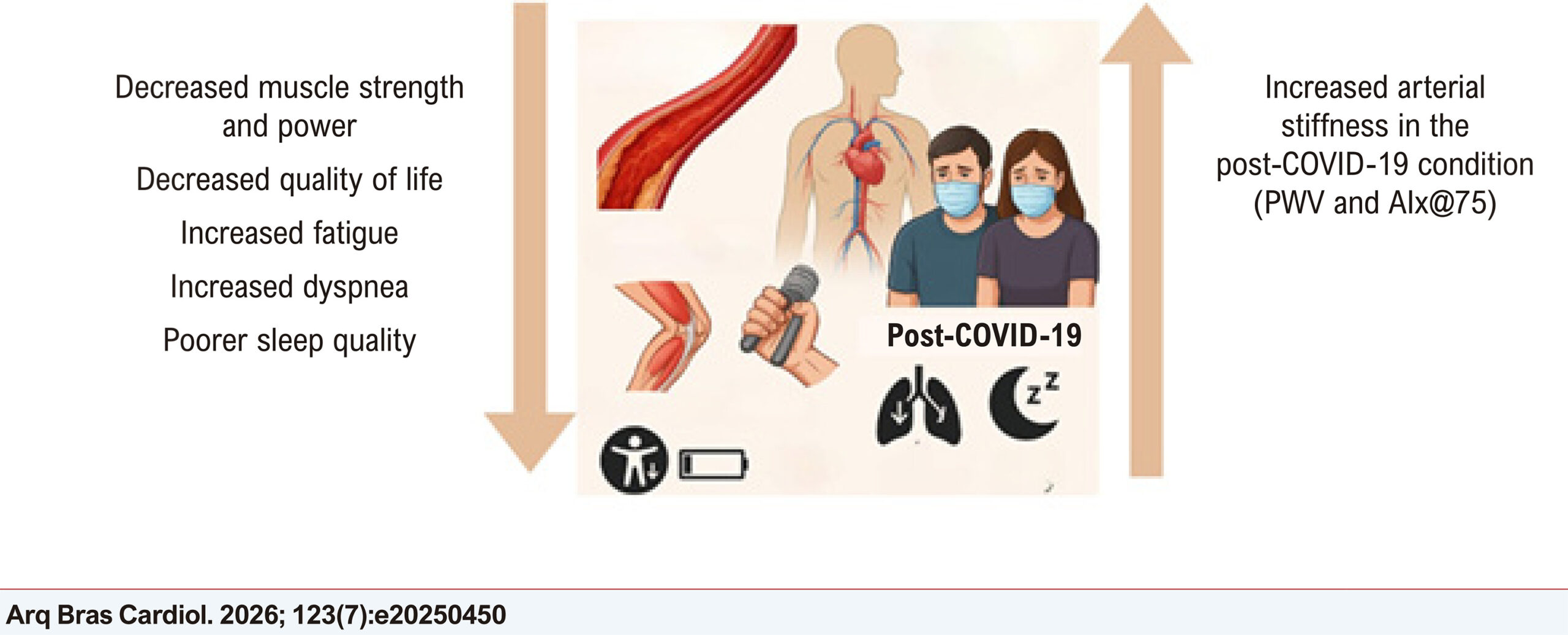
The PCG showed higher PWV values (Δ = 0.80 m/s; 95%CI, 0.08 to 1.52; p = 0.03) and AIx@75 (Δ = 8.34; 95%CI, 2.02 to 14.66; p = 0.01) as well as higher levels of central and peripheral blood pressure. Worse functional performance was observed (Δ = 4.39 s; 95%CI, 2.70 to 6.08; p < 0.01), along with poorer quality of life in the physical component (Δ = −9.35; 95%CI, −12.45 to −6.25; p < 0.01). Fatigue, dyspnea, and sleep quality outcomes were also significantly worse in the PCG. In the adjusted analysis, PWV was independently associated with age and systolic blood pressure, but not with post-COVID-19 status.

Conclusion

Post-COVID-19 patients exhibit greater arterial stiffness, hemodynamic alterations, and poorer clinical-functional performance. However, arterial stiffness appears to be predominantly determined by hemodynamic factors and aging rather than by post-COVID-19 status independently, suggesting that the observed functional impairment results from multifactorial mechanisms.

  • COVID-19
  • Hemodynamics
  • Physical Functional Performance
  • Vascular Stiffness
Read Full Article
Creative Commons Attribution (CC BY) Creative Commons license
03/08/2026 DOI: 10.36660/abc.20250450i Views 1
ABC
Editorial

Nitrite Supplementation Attenuates Vascular Stiffness Independently of Physical Exercise

Alex Yuiti Ogura et al. Claudiane Maria Barbosa Silvio Assis de Oliveira-Junior

Exercise training is considered one of the most efficient non-pharmacological measures for reducing blood pressure and increasing the redox state in blood vessel walls. Indeed, regular exercise training can cause endothelial relaxation by increasing nitric oxide (NO) levels, with or without a reduction in the amount of reactive oxygen species (ROS). Excessive production and/or accumulation of ROS can result in redox imbalance, with decreased NO bioavailability and consequent endothelial dysfunction., In this regard, reduced NO release is one of the critical factors for the development of systemic arterial hypertension.,

Importantly, NO is a diatomic gaseous signaling molecule that is water-soluble and can freely pass through the cell membrane. This peptide is essential in the regulation of several physiological actions in the body, being of utmost importance for vasodilation, immune response, neurotransmission, apoptosis, and genetic regulation. When released, NO diffuses from endothelial cells to vascular smooth muscle cells, promoting relaxation and vasodilation. Through this mechanism, NO can reduce vascular peripheral resistance and, consequently, decrease blood pressure. In the endogenous context, NO production results from the oxidation and cleavage of the guanidine group of L-arginine, with the release of NO and L-citrulline. Then, free NO is easily transformed into nitrite and nitrate, the current products are later recycled into NO and other forms of nitrogen oxidation, through the nitrate/nitrite/NO pathway.

[…]

  • Exercise
  • Nitrites
  • Vascular Remodeling
  • Vascular Stiffness
Read Full Article
Creative Commons Attribution (CC BY) Creative Commons license
14/02/2025 DOI: 10.36660/abc.20240836i Views 1
Osteoprotegerin and Vascular Dysfunction in Patients with Stage 3 Chronic Kidney Disease and Those without Renal Dysfunction: A Case-Control Study
ABC
Original Article

Osteoprotegerin and Vascular Dysfunction in Patients with Stage 3 Chronic Kidney Disease and Those without Renal Dysfunction: A Case-Control Study

Thalita de Oliveira Matos et al. Priscila Valverde de Oliveira Vitorino Rogerio Orlow Átila de Oliveira Melo … Diogo da Silva Amorim Gleidson Junio Oliveira Sousa Vanda Jorgetti Ana Luiza Lima Sousa Rodrigo Bezerra Weimar Kunz Sebba Barroso

Abstract

Background

Osteoprotegerin (OPG) is a marker of vascular calcification and cardiovascular risk in patients with chronic kidney disease (CKD).

Objective

This study aimed to compare and correlate OPG values with flow-mediated dilation (FMD) and pulse wave velocity (PWV) measurements in patients in stage 3 CKD and those without renal dysfunction.

Methods

This case-control study was conducted in a specialized hypertension center in 2022. A total of 79 patients over 18 years of age participated in the study. The case group consisted of 30 patients with moderate renal dysfunction (CKD stage 3) and the control group included 49 individuals with glomerular filtration rate ≥ 60 mL/min/1.73 m2. The significance level adopted in the statistical analysis was 5%.

Results

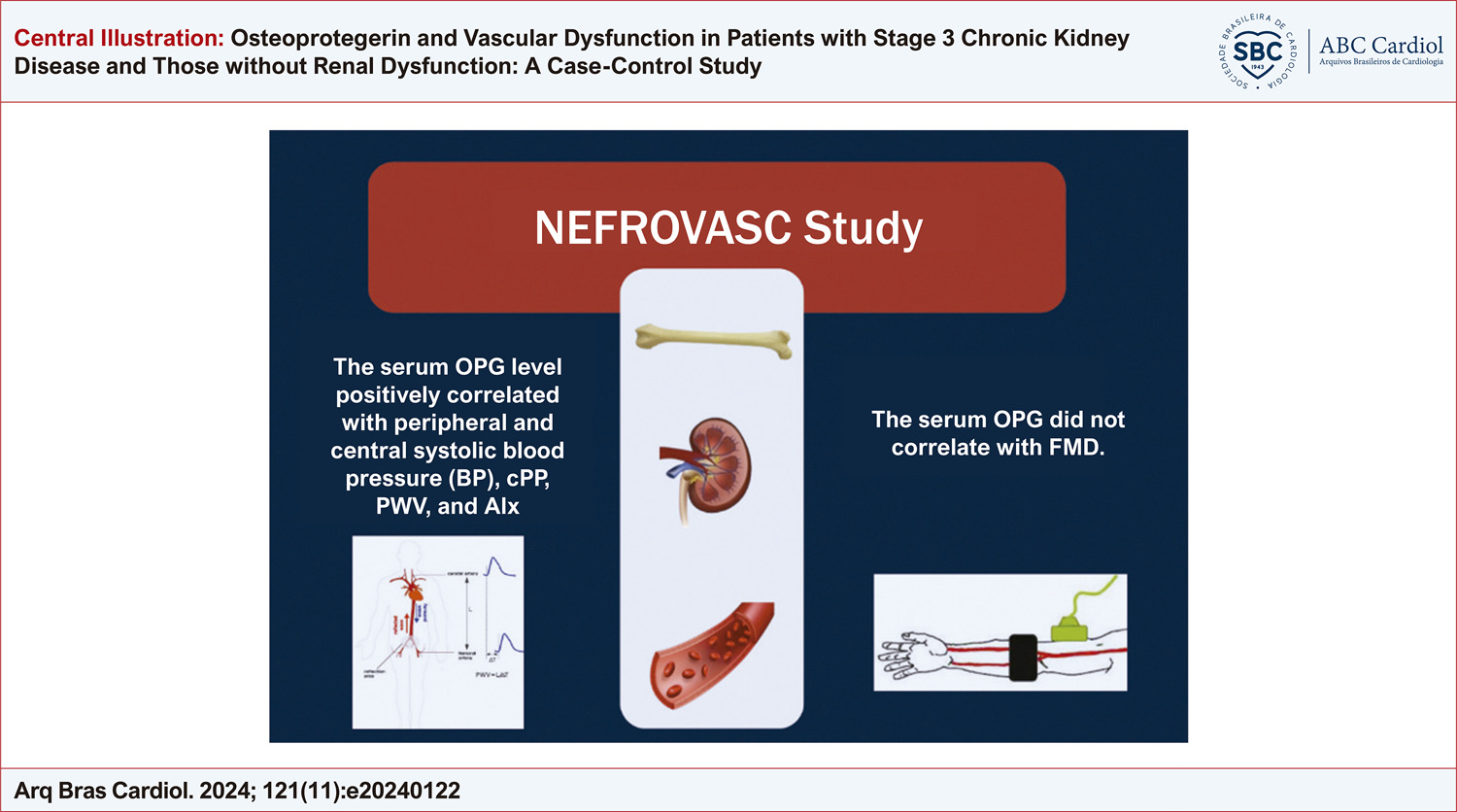
Central pulse pressure (cPP), PWV, and augmentation index (AIx) were higher in patients with renal dysfunction. The serum OPG level positively correlated with peripheral and central systolic blood pressure, cPP, PWV, and AIx. Conversely, the serum OPG did not correlate with FMD.

Conclusions

OPG and PWV are possible biomarkers of vascular dysfunction that are altered in patients with moderate renal dysfunction. Despite limitations of this study, including that it was a case-control study conducted at a single center, it has the potential, as a proof of concept, to generate the hypothesis of OPG and PWV as biomarkers of early vascular damage in this population.

  • Cardiovascular Diseases
  • chronic renal insufficiency
  • Osteoprotegerin
  • Vascular Calcification
  • vascular endothelium
  • Vascular Stiffness
Read Full Article
Creative Commons Attribution (CC BY) Creative Commons license
25/11/2024 DOI: 10.36660/abc.20240122i Views 2
Figure 1
ABC
Brief Communication

Intrarater Reliability and Agreement of Blood Pressure, Arterial Stiffness, and Heart Rate Variability Assessments in Patients With Parkinson’s Disease

Verônica de Fátima Souza Lima et al. Rafael Yokoyama Fecchio Maria Elisa Pimentel Piemonte Marilia de Almeida Correia … Hélcio Kanegusuku Raphael Mendes Ritti-Dias

Abstract

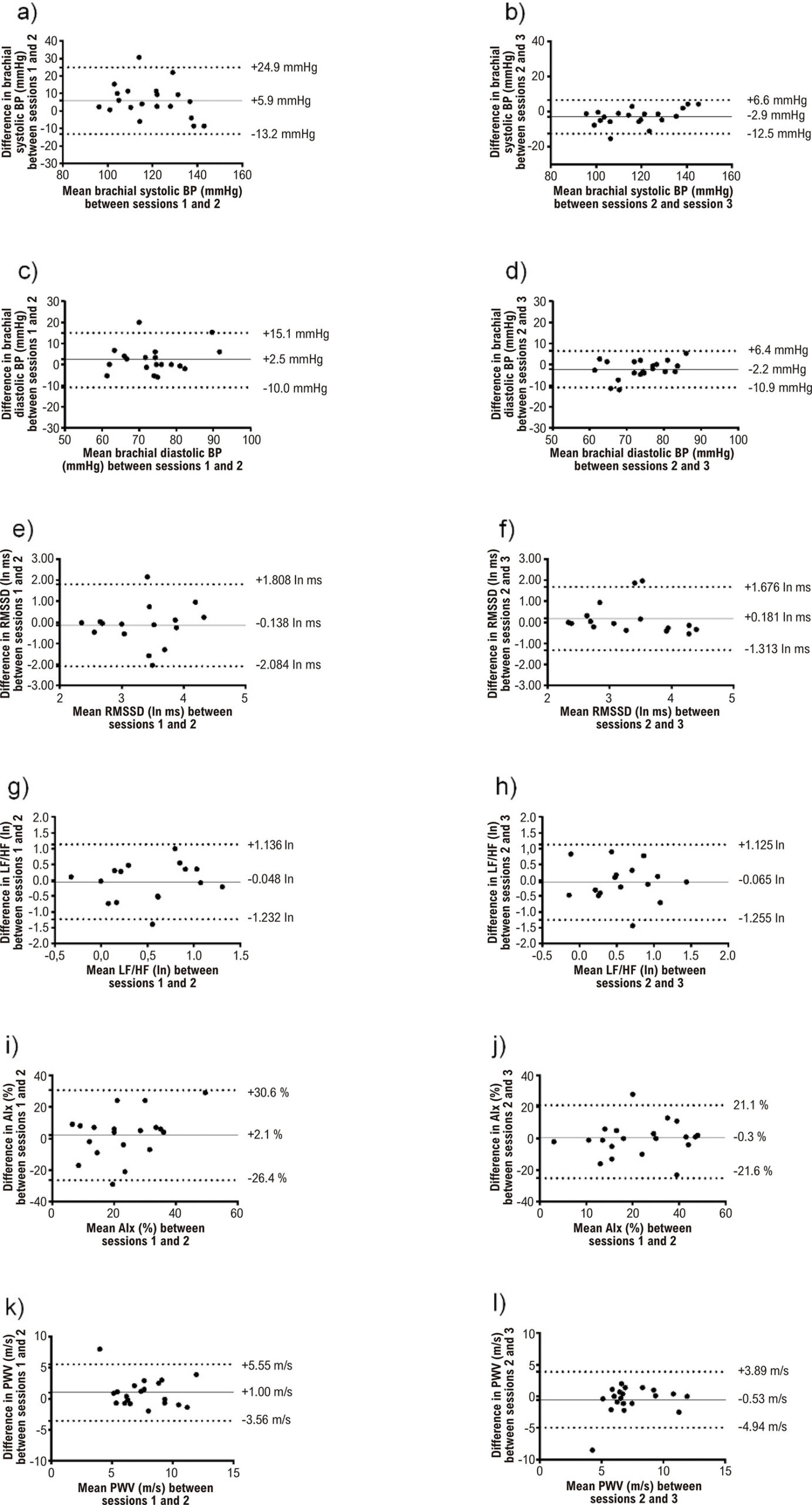
To assess the intrarater reliability and agreement of blood pressure (BP), arterial stiffness, and heart rate variability (HRV) assessments in patients with Parkinson`s disease (PD). Twenty patients with PD visited the laboratory three times, during which brachial and central BP (auscultatory and applanation tonometry, respectively), arterial stiffness (carotid-femoral pulse wave velocity and augmentation index), and HRV assessments were performed at rest. Brachial and central systolic BP presented greater values on visit 1 when compared to visits 2 and 3 (122±13 vs. 116±16 vs. 120±15, p=0.029). There were no significant differences (p>0.05) among the experimental visits for other parameters. Brachial and central BP showed an intraclass correlation coefficient (ICC) above 0.842 and a standard error of measurement (SEM) lower than 5.0%. Bland–Altman plots indicated low agreement between visits 1 and 2 and good agreement between visits 2 and 3. Arterial stiffness indices exhibited ICC values between 0.781 and 0.886, and SEM ranged from 7.3% to 25.2%. Bland–Altman plots indicated moderate to good agreement among visits for arterial stiffness parameters. HRV indices presented ICC values ranging from 0.558 to 0.854 and SEM values ranging from 5.1% to 76.0%. Bland–Altman plots indicated moderate agreement among visits for HRV parameters. In PD patients, brachial and central BP present low intrarater reliability and agreement between visits 1 and 2 and good intrarater reliability and agreement between visits 2 and 3. In general, arterial stiffness and HRV assessments present acceptable intrarater reliability and agreement among visits, except for cardiac sympathovagal balance.

  • Blood Pressure
  • Heart Rate
  • Parkinson Disease
  • Vascular Stiffness
Read Full Article
Creative Commons Attribution (CC BY) Creative Commons license
11/11/2024 DOI: 10.36660/abc.20240132i Views 1
ABC
Editorial

Atrial Cardiomyopathy and Hypertension: Connections between Arterial Stiffness and Subclinical Atrial Arrhythmias

Ronaldo Altenburg Gismondi et al. Mario Fritsch Neves

Systemic arterial hypertension (SAH) is the primary risk factor for cardiovascular disease, promoting activation of the renin-angiotensin-aldosterone system (RAAS), endothelial dysfunction, arterial stiffness, fibrosis, and myocardial hypertrophy. Prospective studies show that the consequences include left ventricular hypertrophy (LVH), left atrial (LA) overload, and a higher risk of atrial fibrillation (AF). In the classic Framingham study, hypertension was an independent predictor of AF and, on its own, accounted for more cases of this arrhythmia than any other risk factor.

The recognition of a “pre-AF” phase, where atrial functional changes have not yet translated into dilation or clinically manifest AF, is of utmost importance in modern cardiology, as early recognition allows for therapeutic interventions before the condition evolves into an established disease. Functional and structural changes in the LA are predictors of atrial arrhythmias during rhythm monitoring, and these, in turn, are predictors of a higher risk of AF.,

[…]

  • Cardiac Arrhythmias
  • Hypertension
  • Vascular Stiffness
Read Full Article
Creative Commons Attribution (CC BY) Creative Commons license
11/11/2024 DOI: 10.36660/abc.20240598i Views 1
Association between Arterial Stiffness and Higher Burden of Atrial Arrhythmia in Elderly Hypertensive Patients without Atrial Fibrillation
ABC
Original Article

Association between Arterial Stiffness and Higher Burden of Atrial Arrhythmia in Elderly Hypertensive Patients without Atrial Fibrillation

João Gabriel B. Lage et al. Alexandre L. Bortolotto Luiz A. Bortolotto Renata G. S. Verardino … Gabrielle D. Pessente David C. S. Le Bihan Rodrigo B. M. Barretto Fernanda M. Consolim-Colombo Denise T. Hachul Luciana Sacilotto Tan C. Wu Sávia C. P. Bueno Esteban W. R. Rivarola César J. Gruppi Silvio A. Barbosa Juliana B. S. Alves Wilson Mathias Maurício I. Scanavacca Francisco C.C. Darrieux

Abstract

Background:

Increased arterial stiffness is currently an independent risk factor for atrial fibrillation, but the pathophysiological mechanisms of this arrhythmia remain an area of knowledge gap to be explored.

Objectives:

To investigate the existence of an association between arterial stiffness and the density of premature atrial contractions (PACs) in hypertensive individuals without atrial fibrillation.

Methods:

Cross-sectional study with hypertensive patients without diagnosed atrial fibrillation, who were studied with speckle-tracking echocardiography to assess left atrial (LA) strain and carotid-femoral pulse wave velocity (cfPWV) to assess arterial stiffness. All patients underwent 24h-ECG Holter and laboratory tests. Significance level was set at p<0.05.

Results:

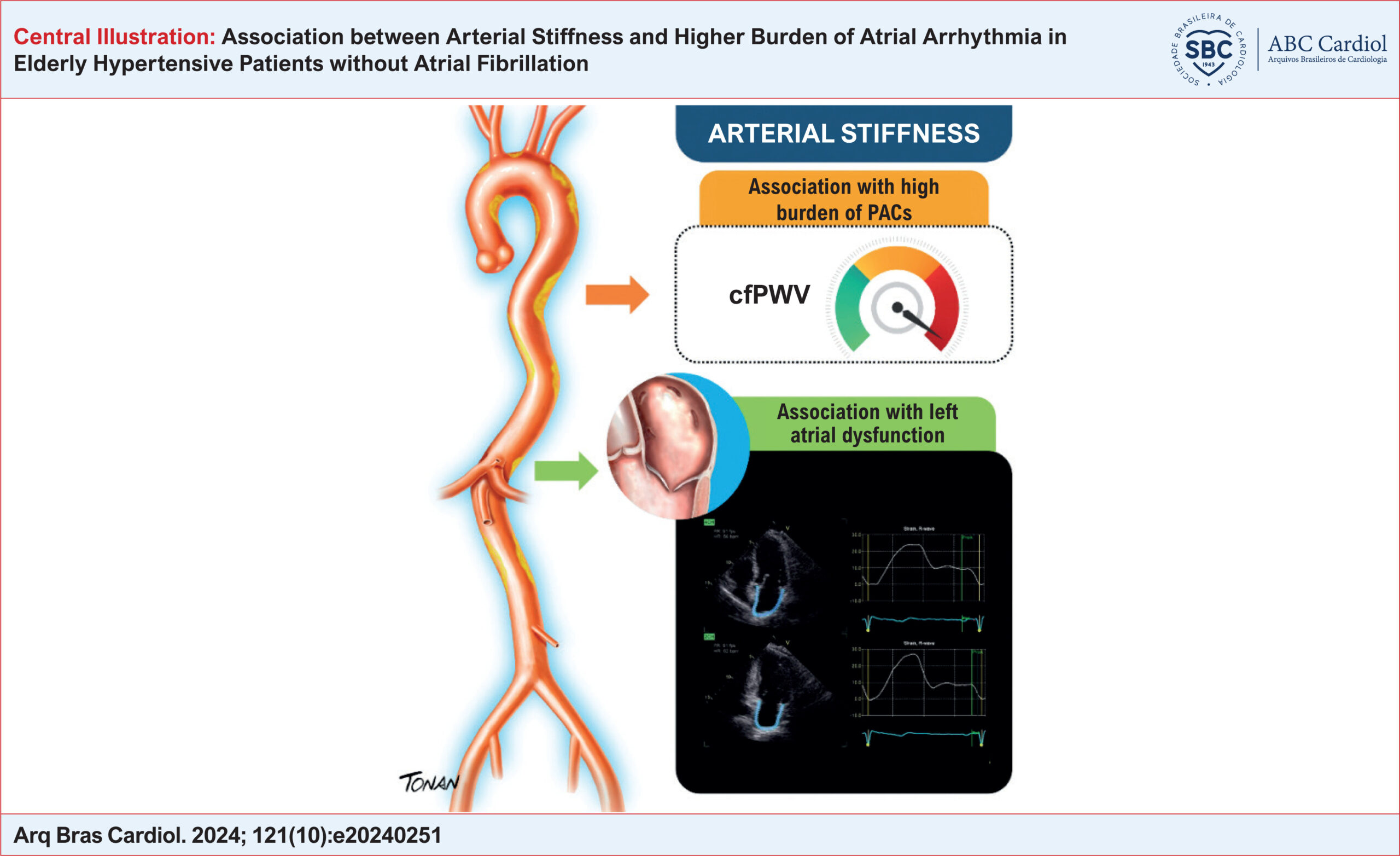
Seventy participants from a single centre without overt cardiovascular disease were included. The cfPWV was correlated with higher density of PACs in 24h-Holter monitoring, independently of LV mass index (1.48 [1.08-2.03], p-value 0.005). Increased cfPWV was correlated with decreased LA strain values, with Spearman correlation coefficients of −0.27 (p-value 0.027) and −0.29 (p-value 0.018) for reservoir and conduit 2D Strain, respectively.

Conclusions:

In this study with hypertensive patients, it was possible to demonstrate an association between arterial stiffness and higher density of atrial arrhythmias. Furthermore, arterial stiffness was associated with lower left atrial strain values for reservoir and conduit functions.

  • Cardiomyopathies
  • Left Atrial Function
  • Vascular Stiffness
Read Full Article
Creative Commons Attribution (CC BY) Creative Commons license
18/10/2024 DOI: 10.36660/abc.20240251i Views 1
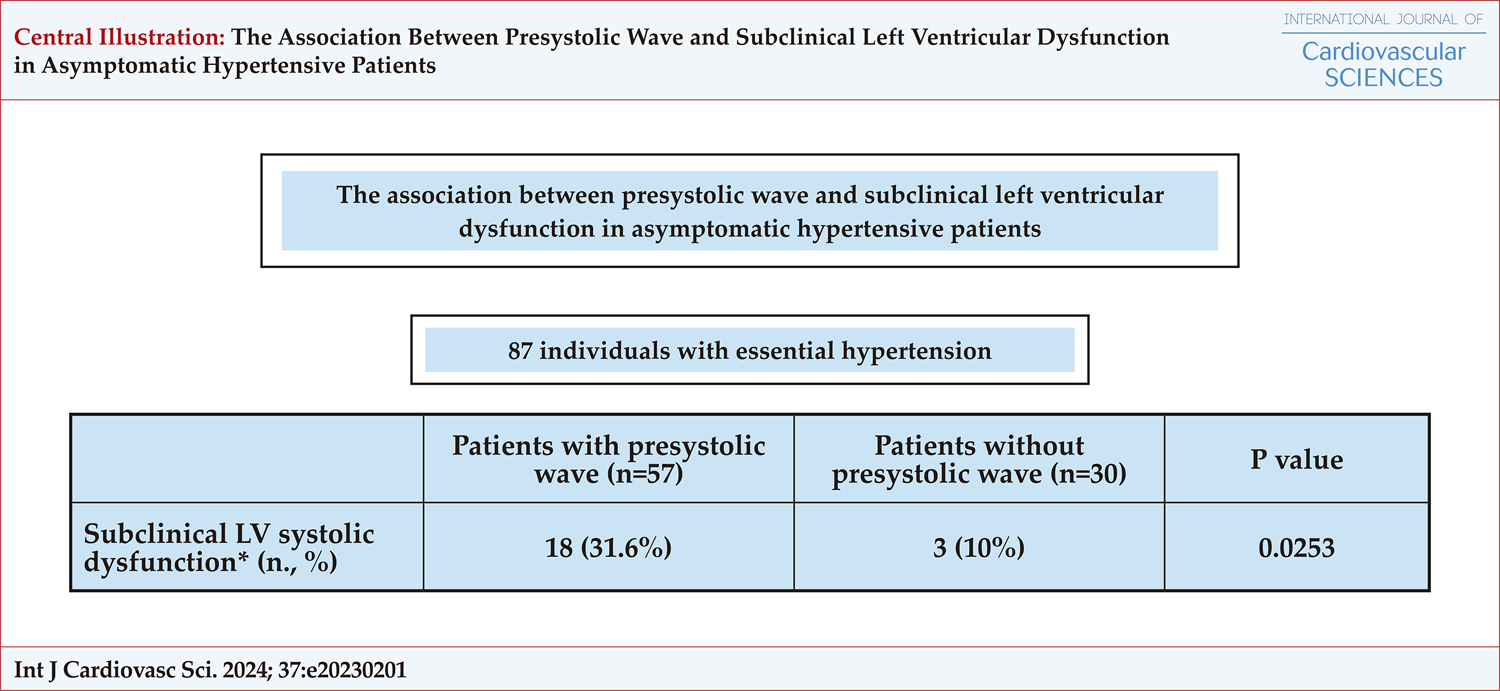
The Association Between Presystolic Wave and Subclinical Left Ventricular Dysfunction in Asymptomatic Hypertensive Patients: Speckle-Tracking Echocardiographic Study
IJCS
Original Article

The Association Between Presystolic Wave and Subclinical Left Ventricular Dysfunction in Asymptomatic Hypertensive Patients: Speckle-Tracking Echocardiographic Study

Mohamed Yahia et al. Mahmoud Soliman Mohamed Hashem

Abstract

Background

Presystolic waves are often found during Doppler evaluation of the left ventricular outflow tract (LVOT) in hypertensive individuals. LV stiffness and altered LV compliance are potential mechanisms for presystolic waves.

Objectives

This study’s objective was to examine the relationship between presystolic wave and subclinical left ventricular (LV) impairment in asymptomatic individuals with essential hypertension.

Methods

This observational research comprised 87 individuals with essential hypertension. All patients had two-dimensional and Doppler echocardiography performed. Based on the existence or absence of a presystolic wave, patients were separated into two groups. Using speckle-tracking echocardiography, subclinical LV systolic impairment was identified. Data were analyzed using IBM SPSS version 20.0. The significance level adopted in the statistical analysis was 5%.

Results

The mean age of the studied patients was 51 ± 9 years, with a male percentage of 57.4%. Among them, 57 patients (65%) had a presystolic wave, and 30 (35%) did not. Left ventricular mass index (LVMI) was greater in patients with a presystolic wave in comparison with patients without it (105.8 ± 16.1 g/m2 versus 99.8 ± 9.47 g/m2, p-value = 0.03). Left atrial volume index (LAVI) was higher in patients with a presystolic wave in comparison with patients without it (28.9 ± 5.25 ml/m2 versus 26.3 ± 2.74 ml/m2, p-value = 0.016). Patients with presystolic wave demonstrated LV diastolic dysfunction more than patients without it (p-value = 0.024). Left ventricular global longitudinal strain (LVGLS) was lower in patients with a presystolic wave in comparison with patients without it (-20.2 ± 2.55 versus -21.7 ± 2.27 % with p-value = 0.008). Patients with presystolic wave demonstrated more subclinical LV systolic dysfunction than patients without it (p-value = 0.025).

Conclusion

The presystolic wave was linked to subclinical LV impairment. The existence of a presystolic wave may indicate hypertensive people who are at risk of developing overt heart failure.

  • Echocardiography
  • Essential Hypertension
  • Vascular Stiffness
Read Full Article
Creative Commons Attribution (CC BY) Creative Commons license
09/08/2024 DOI: 10.36660/ijcs.20230201
ABC
Editorial

Aortic Stiffness and the Response to Phosphodiesterase-5 Inhibitors in Patients Receiving Treatment for Erectile Dysfunction: Predictive Role or an Epiphenomenon?

Eduardo Tibiriça

Erectile dysfunction (ED), a health problem with multifactorial pathogenesis and high prevalence, is directly correlated with patient age and is related to endothelial dysfunction and an increased risk of cardiovascular disease (CVD). Vascular endothelial dysfunction is currently considered to be the link between vasculogenic ED and cardiometabolic diseases, including hypertension, diabetes, and atherosclerosis., The association between ED and CVD has long been recognized, and studies suggest that ED may be an independent marker of CVD risk, including the presence of subclinical coronary artery disease in otherwise asymptomatic men.

In this context, the general use of type 5 phosphodiesterase inhibitors (iPDE-5) has led more patients with ED to seek medical help, providing an excellent opportunity for the identification and correction of possible cardiovascular risk factors. In addition to functional and structural vascular alterations in the systemic circulation that occur during ED, local microcirculatory disturbances and fibrosis are thought to contribute to the pathogenesis of ED., Moreover, penile endothelium-dependent microvascular function has been shown to improve after continuous use of sildenafil in hypertensive patients with ED.

[…]

  • erectile dysfunction
  • Phosphodiesterase 5 Inhibitors
  • Vascular Stiffness
Read Full Article
Creative Commons Attribution (CC BY) Creative Commons license
22/04/2024 DOI: 10.36660/abc.20240092i Views 1
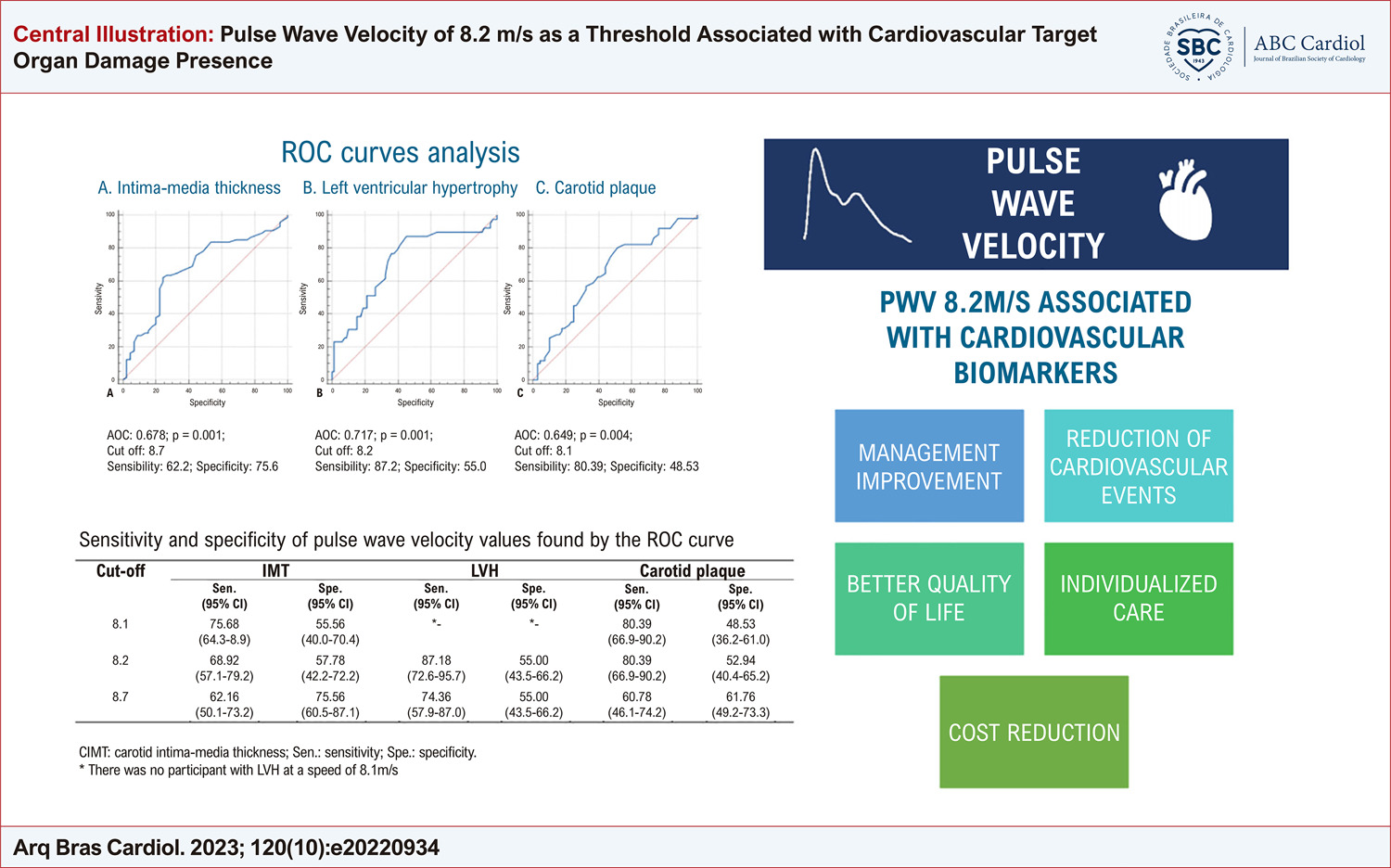
Pulse Wave Velocity of 8.2 m/s as a Threshold Associated with Cardiovascular Target Organ Damage Presence
ABC
Original Article

Pulse Wave Velocity of 8.2 m/s as a Threshold Associated with Cardiovascular Target Organ Damage Presence

Sayuri Inuzuka et al. Priscila Valverde de Oliveria Vitorino Adriana Sebba Barroso Fabrício Galdino Magalhães … Andrea Cristina Sousa Robson Pierre Pacífico Alves Filho Victoria Alves Melo Luiz Fernando de Oliveira Ana Luiza Lima Sousa Paulo Cesar B. Veiga Jardim Antonio Coca Weimar Kunz Sebba Barroso

Abstract

Background

Previous studies have established normal and reference values for Pulse Wave Velocity (PWV). However, the PWV value that has the strongest association with cardiovascular biomarkers remains poorly understood.

Objective

This study aimed to determine the PWV value more likely to be associated with left ventricular hypertrophy (LVH), increased intima-media thickness (IMT), and presence of carotid plaques in patients with hypertension.

Methods

This cross-sectional study included 119 patients. Analysis of receiver operating characteristic (ROC) curves was performed for each cardiovascular biomarker. Statistical significance was set at p < 0.05.

Results

According to the ROC curve analysis, the PWV values were 8.1 m/s, 8.2 m/s, and 8.7 for the LVH, IMT, and presence of carotid plaques, respectively. A PWV value of 8.2 m/s was identified as the best parameter to determine the three TOD biomarkers. PWV above 8.2 m/s was associated with increased CIMT (p = 0.004) and the presence of carotid plaques (p = 0.003) and LVH (p<0.001). PWV above 8.2 showed greater sensitivity for increased CIMT (AUC = 0.678, sensitivity = 62.2), LVH (AUC = 0.717, sensitivity = 87.2), and the presence of plaques (AUC = 0.649, sensitivity = 74.51) in the ROC curve analysis.

Conclusion

The PWV value 8.2 m/s was more sensitive in early identifying the existence of cardiovascular biomarkers of TOD.

  • Arterial Pressure
  • Hypertension
  • Pulse Wave Analysis
  • Vascular Stiffness
Read Full Article
Creative Commons Attribution (CC BY) Creative Commons license
30/10/2023 DOI: 10.36660/abc.20220934 Views 1
Figure 1
IJCS
Original Article

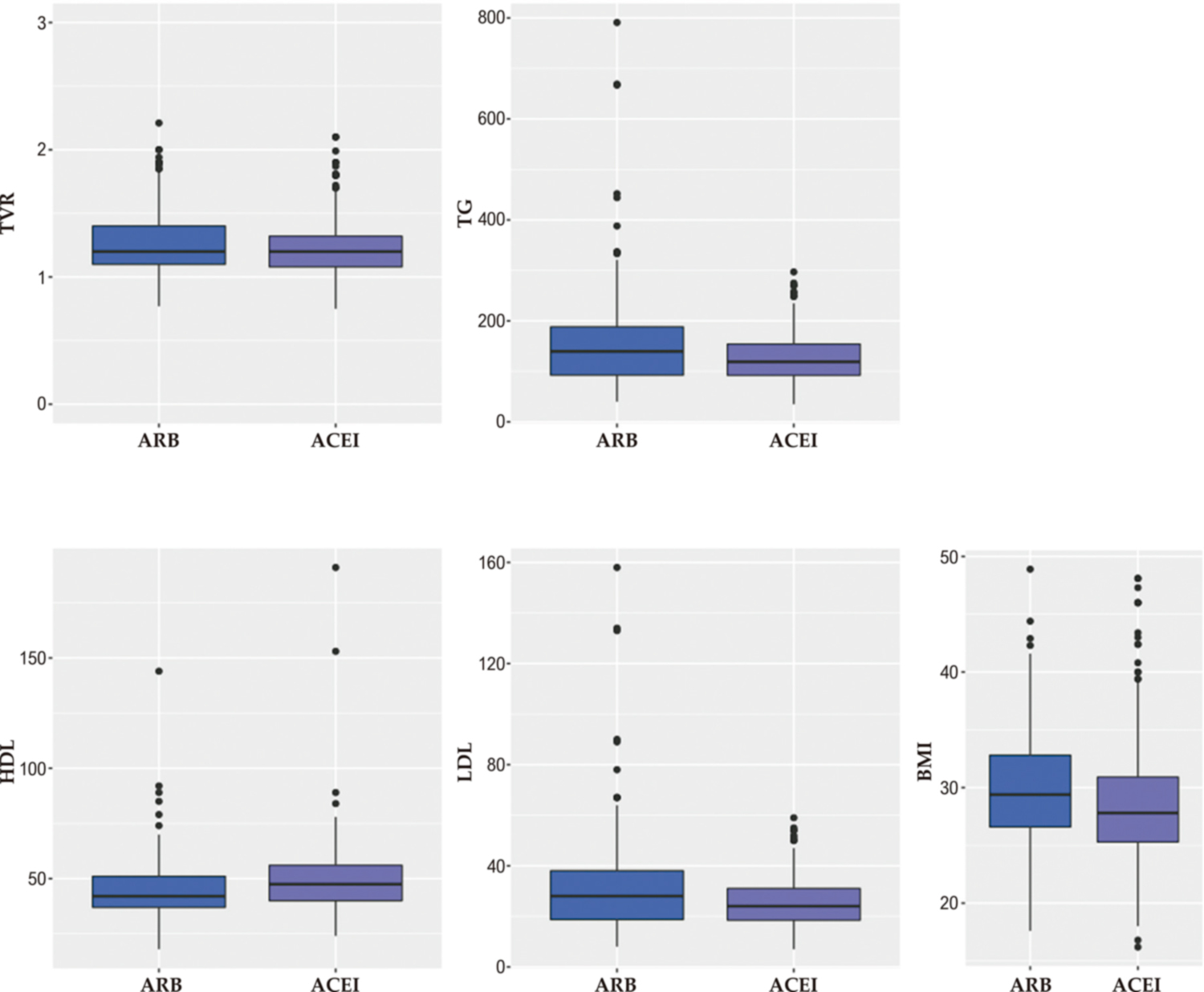
Comparison of Angiotensin Receptor Blockers and Angiotensin-Converting Enzyme Inhibitors in the Management of Arterial Stiffness and Target Organ Damage in Patients with Hypertension

Gilberto Campos Guimarães Filho et al. Reila Campos Guimarães de Araújo Karynne Borges Cabral Cácia Régia de Paula

Abstract

Background

Arterial stiffness and hypertension are strong predictors of cardiovascular disease and mortality. Angiotensin-converting enzyme inhibitors (ACEI) and angiotensin receptor blockers (ARB) are first-line antihypertensive agents in reducing blood pressure and arterial stiffness.

Objective

The objective of this study was to compare the effects of ACEI and ARB in reducing arterial stiffness and preventing target organ damage in patients with hypertension.

Methods

This observational study included 654 participants who attend routine consultations at an outpatient hypertension clinic in 2 university hospitals. Patients were interviewed, and they underwent central and peripheral blood pressure measurements. Doppler echocardiography, carotid ultrasound, biochemical tests, and anthropometric parameters were carried out. Shapiro-Wilk, chi-square, and Fisher’s exact test were used. A significance level of 5% was adopted.

Results

A total of 659 participants were evaluated in the study (398 from the ARB group and 256 from the ACEI group). Age, body mass index (BMI), central and peripheral blood pressure measurements, pulse wave velocity (PWV), left ventricular mass index, and carotid intima-media thickness did not show differences between the groups (p > 0.05). After linear regression analysis, the ACEI group had lower values of total vascular resistance (TVR) (p = 0.003) and augmentation pressure (p = 0.008), when compared to the ARB group.

Conclusion

This study showed that the ACEI group had a greater reduction in augmentation pressure and PWV. There were no differences between the groups regarding the improvement of outcomes related to central arterial pressure, PWV, and cardiac and vascular target organ damage.

  • Angiotensin Receptor Antagonists
  • Angiotensin-Converting Enzyme Inhibitors
  • Hypertension
  • Pulse Wave Analysis
  • Vascular Stiffness
Read Full Article
Creative Commons Attribution (CC BY) Creative Commons license
25/08/2023 DOI: 10.36660/ijcs.20220162 Views 1
Figure 1
ABCHF
Original Article

Correlation between Pulse Pressure and Sub-maximal Functional Capacity in Patients with Heart Failure with Preserved Ejection Fraction

Gustavo Matas Kern et al. Luiz Claudio Danzmann Leticia Kunst Ludmila Limpias Terrazas Binkowski Carla Alessandra Smiderle

ABSTRACT

Background:

Heart failure with preserved ejection fraction (HFpEF) is characterized by diastolic dysfunction, as well as alterations in ventricular filling and remodelling. This change in diastolic function without reduced ejection fraction is manifested as exercise intolerance, and arterial stiffness, measured by pulse pressure, is considered an independent predictor of functional capacity.

Objective:

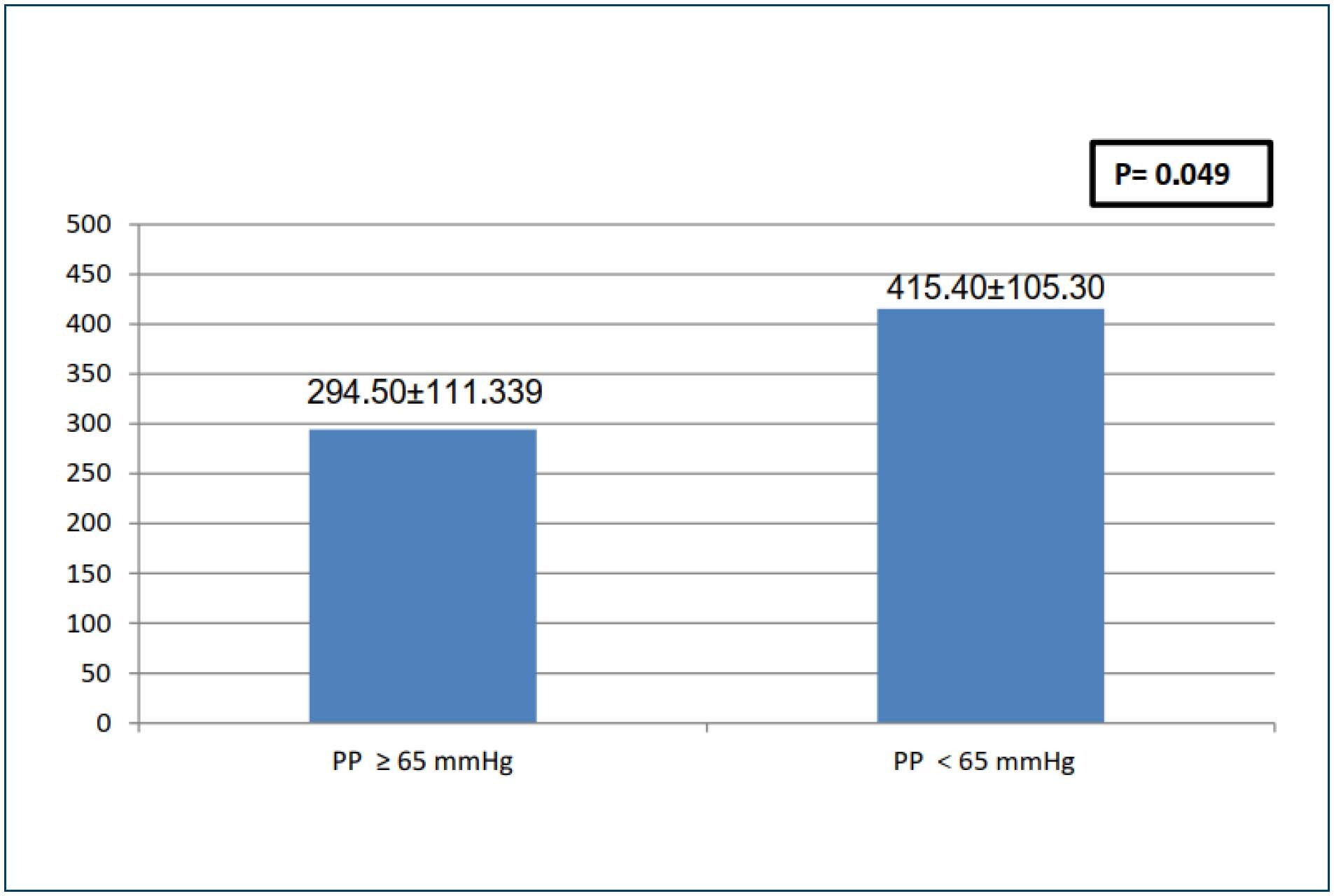
To evaluate the correlation between sub-maximal functional capacity and pulse pressure (PP) in patients with HFpEF.

Methods:

Patients with HFpEF performed the 6-minute walk test (6MWT) in a 45-meter hallway at the University Hospital. Patients were instructed to walk at a speed consistent with their daily activities. Their vital signs were monitored, and the Borg scale was applied for symptoms such as dyspnea and fatigue. Blood pressure was measured at rest. PP was estimated using the formula PP = systolic blood pressure − diastolic blood pressure, with 65 mmHg as the cutoff point.

Results:

We observed a difference of 120.5 ± 43.97 meters between the mean distances walked during the 6MWT between the groups with increased and normal PP (294.5 ± 111.3 m versus 415.4 ± 105.3 m, p = 0.01). Pearson’s test demonstrated a slight inverse correlation between PP values and the distance walked by patients during the 6MWT (r = −0.4, p = 0.049).

Conclusion:

There was a reduction in sub-maximal capacity in patients with increased PP, as shown by the slight inverse correlation between PP and distance walked during the 6MWT.

  • Blood Pressure
  • Heart Failure
  • Vascular Stiffness
Read Full Article
Creative Commons Attribution (CC BY) Creative Commons license
17/08/2023 DOI: 10.36660/abchf.20220097 Views 2
Figure 1
ABC
Review Article

Effects of High-Intensity Interval Training on Central Blood Pressure: A Systematic Review and Meta-Analysis

Gustavo Henrique de Oliveira et al. Rogério Toshiro Passos Okawa Caroline Ferraz Simões João Carlos Locatelli … Victor Hugo de Souza Mendes Higor Barbosa Reck Wendell Arthur Lopes

Abstract

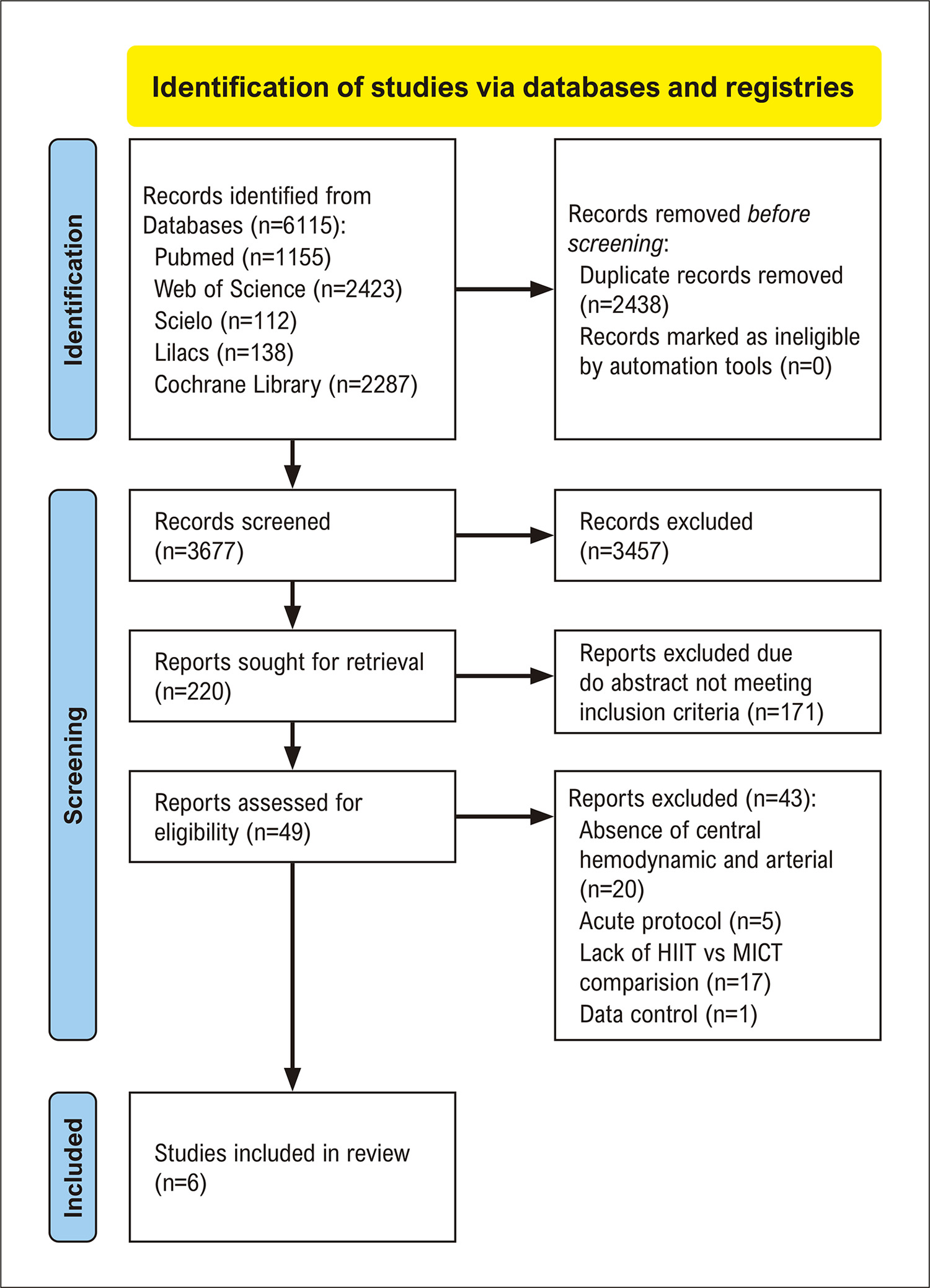
Central blood pressure (cBP) is considered an independent predictor of organ damage, cardiovascular events and all-cause mortality. Evidence has shown that high intensity interval training (HIIT) is superior to moderate-intensity continuous training (MICT) for improving cardiorespiratory fitness and vascular function. However, the effects of these aerobic training modalities on cBP have not yet been properly reviewed.This meta-analysis aims to investigate to effects of HIIT versus MICT on cBP.We conducted a meta-analysis of randomized controlled trials that compared HIIT versus MICT on cBP. Primary outcomes were measures of central systolic blood pressure (cSBP) and central diastolic blood pressure (cDBP). Peripheral systolic blood pressure (pSBP) and diastolic blood pressure (pDBP), pulse wave velocity (PWV) and maximal oxygen uptake (VO2max) were analyzed as second outcomes. Meta-analysis of mean differences (MD) was conducted using the random effects model.Our study included 163 patients enrolled in six trials. We found that HIIT was superior to MICT in reducing the cSBP (MD = -3.12 mmHg, 95% CI: -4.75 to -1.50, p = 0.0002) and SBP (MD = -2.67 mmHg, 95% CI: -5.18 to -0.16, p = 0.04), and increasing VO2max(MD = 2.49 mL/kg/min, 95% CI: 1.25 to 3.73, p = 0.001). However, no significant differences were reported for cDBP, DBP and PWV.HIIT was superior to MICT in reducing the cSBP, which suggests its potential role as a non-pharmacological therapy for high blood pressure.

  • Blood Pressure
  • Endurance Training
  • Hemodynamics
  • High-Intensity Interval Training
  • Vascular Stiffness
Read Full Article
Creative Commons Attribution (CC BY) Creative Commons license
21/04/2023 DOI: 10.36660/abc.20220398 Views 1
Figure 1
ABC
Original Article

SAGE Score in Normotensive and Pre-Hypertensive Patients: A Proof of Concept

Rayne Ramos Fagundes Rigonatto et al. Priscila Valverde Oliveira Vitorino Adriana Camargo Oliveira Ana Luiza Lima Sousa … Paulo César Brandão Veiga Jardim Pedro Miguel Guimarães Marques Cunha Eduardo Costa Duarte Barbosa Panagiotis Xaplanteris Charalambos Vlachopoulos Weimar Kunz Sebba Barroso

Abstract

Background

The SAGE score was developed to detect individuals at risk for increased pulse wave velocity (PWV). So far, studies have been focused on hypertensive patients.

Objective

To assess the ability of the score to detect non-hypertensive and pre-hypertensive patients at risk for increased PWV.

Methods

Retrospective cross-sectional study of analysis of central blood pressure data and calculation of the SAGE score of non-hypertensive and pre-hypertensive patients. Each score point was analyzed for sensitivity, specificity, positive and negative predictive values, using the cut-off point for positive diagnosis a PVW ≥ 10m/s, ≥9.08 m/s (75thpercentile) and ≥7.30 m/s (50thpercentile). A p<0.05 was considered statistically significant.

Results

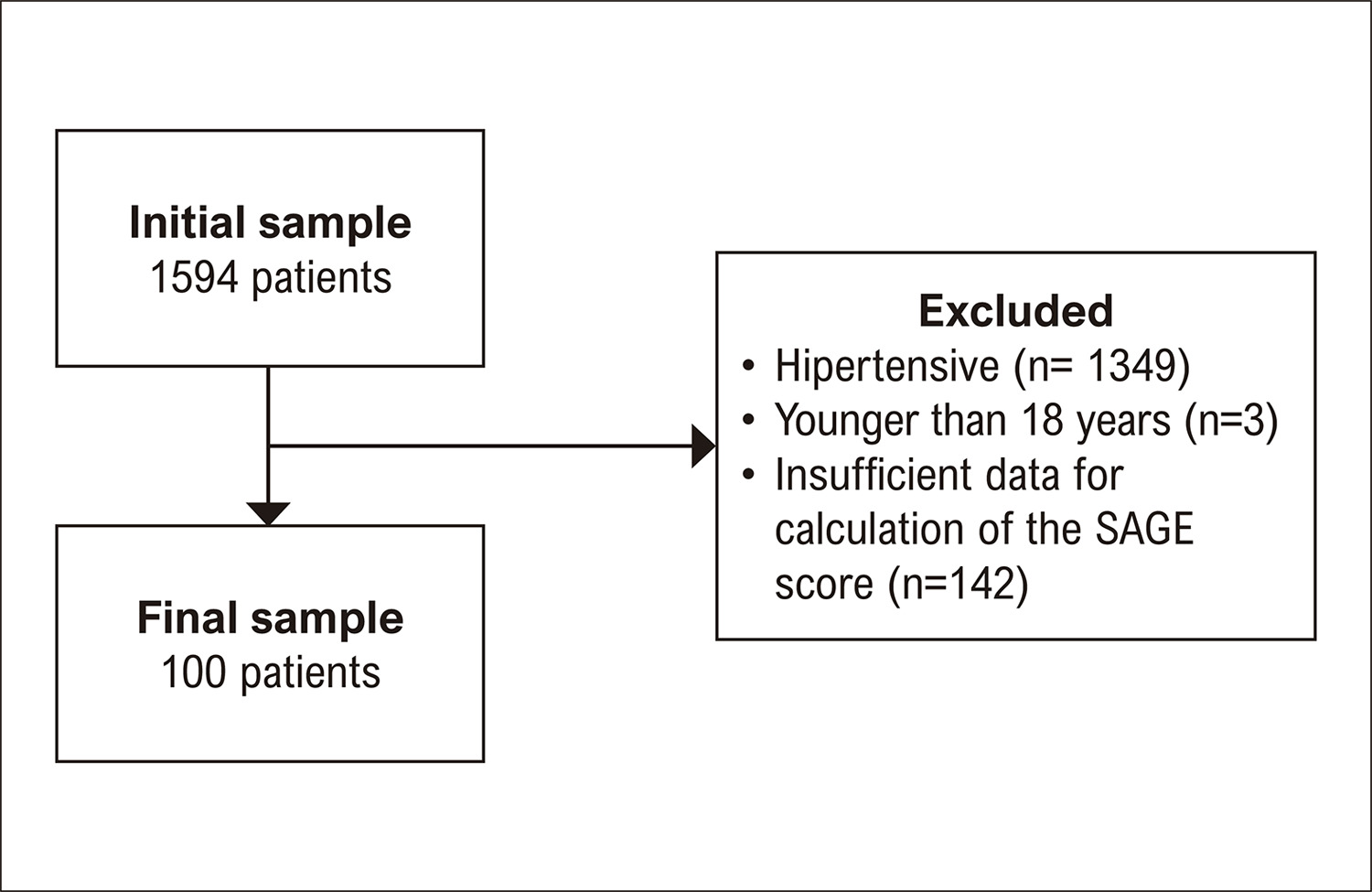
The sample was composed of 100 normotensive and pre-hypertensive individuals, with mean age of 52.64 ± 14.94 years and median PWV of 7.30 m/s (6.03 – 9.08). The SAGE score was correlated with age (r=0.938, p<0.001), glycemia (r=0.366, p<0.001) and glomerular filtration rate (r=-0.658, p<0.001). The area under the ROC curve was 0.968 (p<0.001) for PWV ≥ 10 m/s, 0.977 (p<0.001) for PWV ≥ 9.08 m/s and 0.967 (p<0.001) for PWV ≥ 7.30 m/s. The score 7 showed a specificity of 95.40% and sensitivity of 100% for PWV≥10 m/s. The cut-off point would be of five for a PWV≥9.08 m/s (sensitivity =96.00%, specificity = 94.70%), and two for a PWV ≥ 7.30 m/s.

Conclusion

The SAGE score could identify individuals at higher risk of arterial stiffness, using different PWV cutoff points. However, the development of a specific score for normotensive and pre-hypertensive subjects is needed.

  • Biomarkers
  • Hypertension
  • Pulse Wave Analysis
  • Risk Factors
  • Vascular Stiffness
Read Full Article
Creative Commons Attribution (CC BY) Creative Commons license
27/02/2023 DOI: 10.36660/abc.20220291 Views 1
ABC
Editorial

SAGE Score and Pulse Wave Velocity in Non-Hypertensive Individuals

Alfredo José Mansur

An important step of physical examination is the evaluation of arterial pulses. On inspection, palpation and auscultation we are able to study the characteristics of the arterial pulses – symmetry, rate, rhythm, rigidity of arterial wall (mainly in carotid arteries), pulse pressure, contour, velocity of ascension of the ulse wave, thrill, bruits and murmurs. Current day technology made possible to register graphically the pulse wave and to make serial evaluations of arterial rigidity by studying central and peripheral blood pressure, central and peripheral pulse pressure, pulse wave velocity e augmentation index. , An increase in arterial rigidity leads to increase in the pulse wave velocity and the interaction between the forward pulse wave with the backward reflexion is observed in the augmentation index. Anatomical and functional changes of the arteries is one of the mechanisms involved in senescence and may constitute per se a cardiovascular risk factor. Studies of arterial rigidity were performed in patients with arterial hypertension. Indeed, the study of arterial rigidity is also interesting in samples of individuals without hypertension.

In the study researchers reported a study devised to evaluate clinical (age, peripheral systolic arterial pressure) and metabolic (serum glucose, estimated glomerular filtration rate) characteristics in a previously published score (SAGE) relative to variables of arterial rigidity evaluated non-invasively in a sample of 100 participants with normal blood pressure (n=80) or pre-hypertensive (n=20) out of a large sample of 1594 patients; diagnosis of arterial hypertension (n=1349) was an exclusion criteria for this analysis. The maximal score value is 17. The distribution of the score in this study sample ranged between 0 and 3 (64% of the sample). Median of pulse wave velocity in this study sample was 7,3 m.seg-1. The increase in cut off value of pulse wave velocity (percentis 50% – 7,3 m.seg-1e 75% – 9,8 m.seg-1) was associated with an increase in positive and negative predictive values on the basis of scores SAGE observed in the study sample. In participants with pulse wave velocity higher than 10 m.seg-1the most frequent score was 7. The authors concluded that the SAGE score might be useful to screening non hypertensive subjects with higher risk of increase in arterial rigidity. Additional studies might be of help of therapeutic interventions in these clinical scenarios, including follow-up studies provided appropriate reproducibility of the measurements.

[…]

  • Aging/physiology
  • Carotid Arteries
  • Circadian Rhythm
  • Hypertension
  • Oxidative Stress
  • Pulse Wave Analysis/methods, trends
  • Risk Factors
  • Vascular Calcification
  • Vascular Stiffness
Read Full Article
Creative Commons Attribution (CC BY) Creative Commons license
27/02/2023 DOI: 10.36660/abc.20220881 Views 1
Figure 1
ABC
Review Article

Vascular Aging and Arterial Stiffness

Adriana Camargo Oliveira et al. Pedro Miguel Guimarães Marques Cunha Priscila Valverde de Oliveria Vitorino Ana Luiza Lima Souza … Gilcimar Divino Deus Audes Feitosa Eduardo Costa Duarte Barbosa Marco Mota Gomes Paulo Cesar B. Veiga Jardim Weimar Kunz Sebba Barroso

Abstract

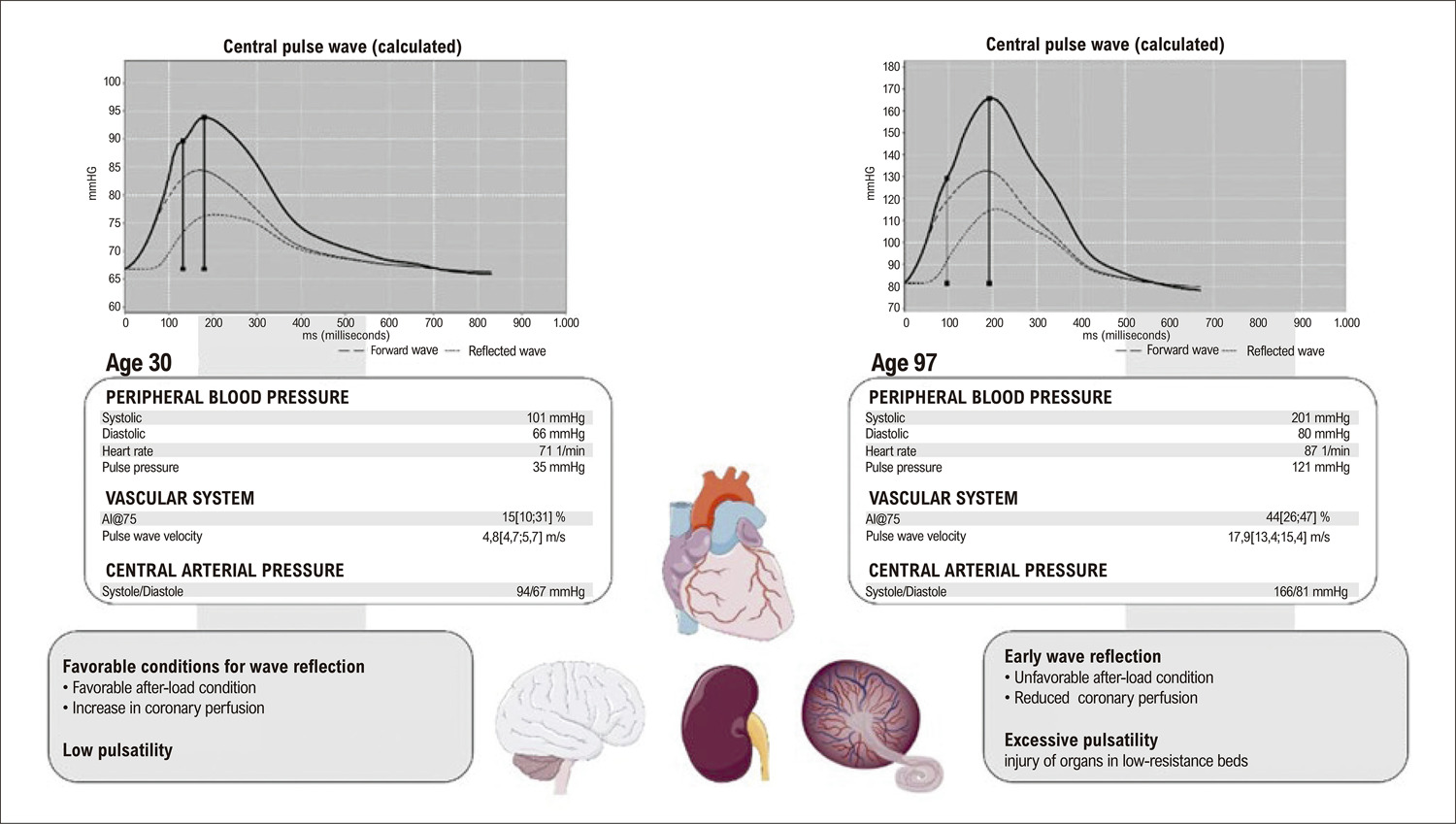
Biological aging occurs as a result of the interaction between genetics, chronological age and external factors. It is the basis for new concepts of vascular aging, whose progression is determined by the difference between biological and chronological age. From the structural point of view, the effects of vascular aging are more evident in the tunica media of large elastic arteries, marked by increased arterial stiffness, lumen dilation and wall thickness. These effects are described in the continuum of cardiovascular aging (proposed by Dzau in 2010), in which the progressive steps of microvasculature lesions of the heart, kidney and brain are initiated from the aging process. The increase of arterial stiffness can be detected by several non-invasive methods. Cardiovascular events have been traditionally described using scores that combine conventional risk factors for atherosclerosis. In the classic cardiovascular continuum (Dzau, 2006), to determine the exact contribution of each risk factor is challenging; however, since arterial stiffness reflects both early and cumulative damage of these cardiovascular risk factors, it is an indicator of the actual damage to the arterial wall. This article provides a general overview of pathophysiological mechanisms, arterial structural changes, and hemodynamic consequences of arterial stiffness; non-invasive methods for the assessment of arterial stiffness and of central blood pressure; the cardiovascular aging continuum, and the application of arterial stiffness in cardiovascular risk stratification.

  • Heart Disease Risk Factors
  • Hypertension
  • Pulse Wave Analysis
  • Vascular Remodeling
  • Vascular Stiffness
Read Full Article
Creative Commons Attribution (CC BY) Creative Commons license
21/10/2022 DOI: 10.36660/abc.20210708 Views 2
ABC
Editorial

Waist Circumference: A Parameter of Vascular Health

Erika Maria Gonçalves Campana et al. Andréa Araujo Brandão

Obesity plays a central role in chronic noncommunicable diseases due to its high prevalence and strong correlation with risk factors like hypertension, dyslipidemia, diabetes mellitus, and morbidity and mortality. In particular, abdominal obesity has been renowned as an emerging risk factor for an inflammatory and prothrombotic state, which is associated with an increased prevalence of hypertension and increased risk of cardiovascular (CV) events. These data are of utmost importance in the scenario of increasing prevalence of obesity not only in adults, but also among children and adolescents., Results of a study conducted in Rio de Janeiro showed an unfavorable relationship of elevated blood pressure (BP) and excess weight in adolescents with increased BP levels and anthropometric and metabolic variables in young adults.

Over the last years, the understanding of the CV continuum has grown, and CV disease has been seen in the context of vascular damage. In this sense, endothelial dysfunction, which results in atherosclerotic disease and its complications, involves the tunica media of large arteries, affected by an accelerated aging of the vessel, resulting in early arterial stiffness and arteriosclerosis, which in turn contributes to CV morbidity and mortality.–

[…]

  • Atherosclerosis
  • Blood Pressure
  • Cardiovascular Diseases/complications
  • Dyslipidemias
  • Outcome Assessment (Health Care)
  • Pulse Wave Analysis
  • Vascular Stiffness
  • Waist Circumference
Read Full Article
Creative Commons Attribution (CC BY) Creative Commons license
05/08/2022 DOI: 10.36660/abc.20220508
Figure 1
ABC
Original Article

The Association of TWEAK with Coronary Artery Calcification in Patients with Chronic Kidney Disease

Mustafa Adem Tatlisu et al. Adem Atici Fatma Betul Ozcan Mehmet Çelik … Eray Kirac Omer Faruk Baycan Mustafa Caliskan

Abstract

Background

The soluble tumor necrosis factor-like weak inducer of apoptosis (sTWEAK) is a member of the TNF superfamily that plays a critical role in proliferation and inflammation in the arterial circulation.

Objectives

This prospective study aimed to show the relationship between the sTWEAK levels and coronary artery calcification (CAC) in patients with chronic kidney disease (CKD).

Methods

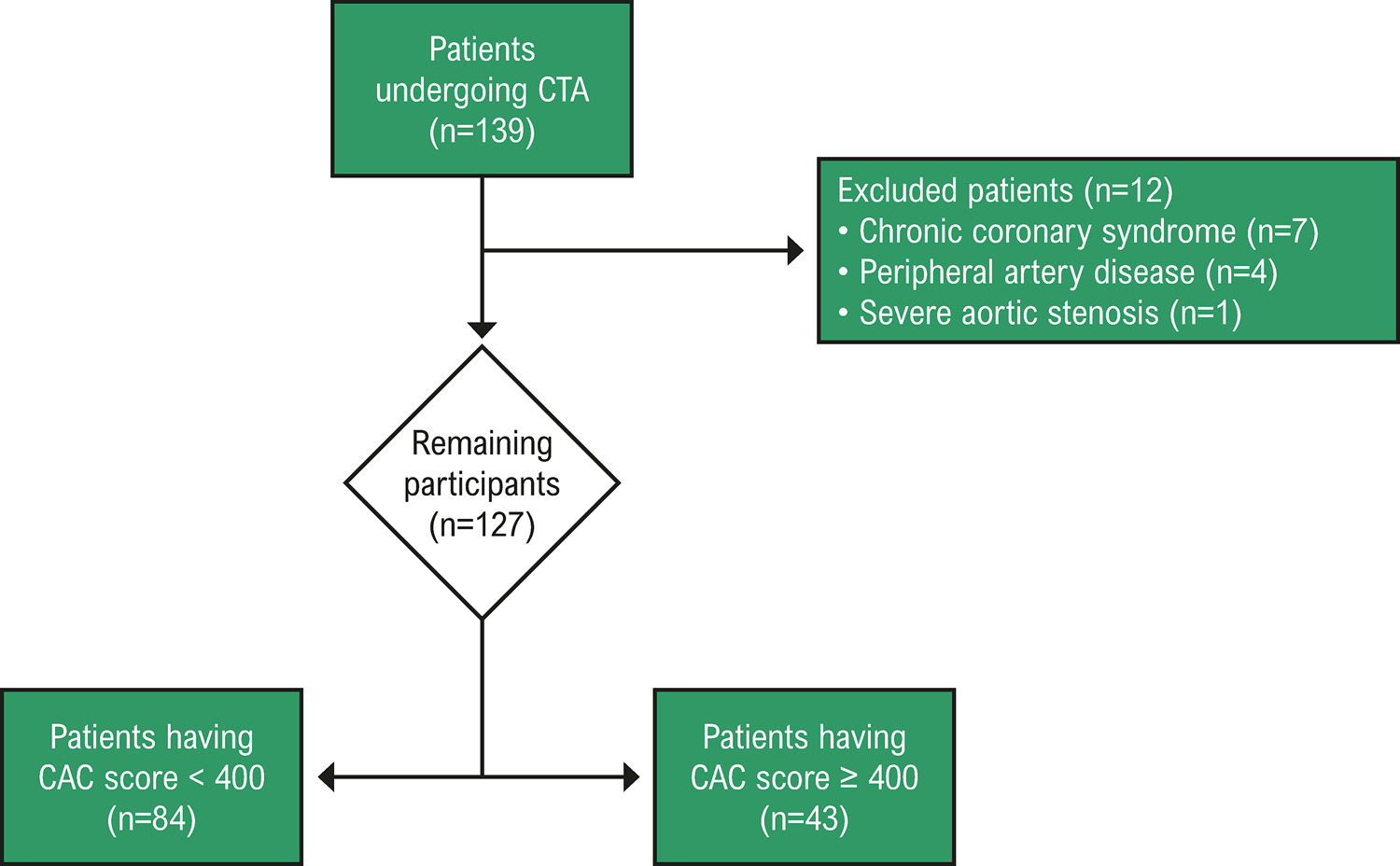
This prospective study included 139 consecutive patients undergoing computed coronary angiography for any reason except for acute coronary syndromes from August 2020 to February 2021. A total of 12 patients were excluded from the study due to exclusion criteria. Patients were divided into two groups with regard to having a CAC score of less than 400 (n=84) and 400 or more (n=43). Significance was assumed at a 2-sided p<0.05.

Results

As the CAC score increased, sTWEAK levels presented a statistically significant decrease, and a strong relationship between sTWEAK levels and the CAC score (r: -0.779, p<0.001) was observed. The ROC analysis revealed that the optimal cut-off level of sTWEAK for predicting the CAC score of 400 was 761 pg/mL with a sensitivity of 71% and a specificity of 73% (AUC: 0.78; 95% CI:0.70-0.85; p < 0.001)

Conclusions

Even though the large-scale studies showed a positive correlation between eGFR and the sTWEAK levels, some studies found the increased sTWEAK levels to be associated with mortality and the severity of the coronary artery system in patients with CKD. Our results support our hypothesis that the sTWEAK level shows coronary calcification rather than other types of atherosclerotic plaques.

  • Atherosclerosis
  • Cardiovascular Diseases
  • Coronary Artery Disease
  • renal Insufficiency,Chronic
  • Vascular Stiffness
Read Full Article
Creative Commons Attribution (CC BY) Creative Commons license
10/06/2022 DOI: 10.36660/abc.20210599
ABC
Original Article

Correlation among Waist Circumference and Central Measures of Blood Pressure

Gilberto Campos Guimarães Filho et al. Lucas Tavares Silva Ruth Mellina Castro e Silva

Abstract

Background:

Arterial stiffness is a strong predictor of cardiovascular disease (CVD). Body fat measures such as waist circumference (WC) have been associated with CVD in adulthood.

Objectives:

The objective of this study was to evaluate the association of arterial stiffness, measured by applanation tonometry-Sphygmocor, with WC.

Methods:

Observational study with 240 participants who make routine consultations at the outpatient clinic of a university hospital. Participants were interviewed and had central blood pressure measurements (CBPM), anthropometric parameters, abdominal fat and visceral fat measured. Paired and unpaired t and chi-square tests were used. A significance level of 5% was adopted.

Results:

Of the 240 participants, 51.82% were male with a mean age of 59.71(±14.81) years and a mean WC of 99.87 (11.54) cm. Mean CBPM values were: Central arterial pressure (CAP) = 130.23 (91-223) mmHg, pulse wave velocity (PWV) = 9.8 (5.28-19.6)m/s and Augmentation Index [Amplification Index (AI)] = 29.45 (-14-60). PWV and CAP were highly correlated with WC with p<0.001 and p=0.02, respectively; however, the same positive correlation was not found between WC and AI (p=0.06).

Conclusion:

The present study showed a positive association between WC and arterial stiffness, through the femoral carotid pulse wave velocity (cf-PWV) and AI, being stronger with cf-PWV, suggesting the evaluation of the effect of WC in vascular health as a method of aid in the early treatment of CVD and in the prevention of clinical outcomes.

  • Atherosclerosis
  • Blood Pressure
  • Cardiovascular Diseases
  • health care
  • outcome assessment
  • Pulse Wave Analysis
  • Vascular Stiffness
  • Waist Circumference
Read Full Article
Creative Commons Attribution (CC BY) Creative Commons license
03/06/2022 DOI: 10.36660/abc.20210432
ABC
Editorial

Aortic Stiffness by Cardiac Magnetic Resonance: Prognostic tool or Bystander?

Sérgio Figueiredo Câmara et al. Henrique Barbosa Ribeiro

Arterial stiffness increases with age and may relate to higher rates of cardiovascular events, including mortality. – This predictive capacity has been demonstrated in various longitudinal cohorts, including ‘healthy’ community population studies and those with diabetes, hypertension, chronic kidney disease, and established coronary artery disease. , There are several ways to measure arterial stiffness, such as doppler-ultrasound, carotid-femoral tonometer, and cardiac magnetic resonance (CMR). CMR provides information regarding cardiac function, perfusion, and myocardial scarring in a single exam and may also be the preferred method for assessing arterial stiffness using aortic pulse wave velocity (PWV). – While the association between aortic stiffness and myocardial ischemia has been demonstrated, as well as the prognostic value of aortic stiffness using CMR, there is limited data regarding the prognostic value of PWV by CMR in elderly patients in whom cardiovascular diseases (CVD) account for the vast majority of mortality causes.

In this issue of the journal, Kaolawanich and Boonyasirinant evaluated the occurrence of major adverse cardiac and cerebrovascular events (MACCE), including cardiac mortality, nonfatal myocardial infarction, hospitalization for heart failure, late revascularization (>180 days after CMR) and ischemic stroke in elderly patients (> 70 years) with suspected or confirmed CAD undergoing adenosine stress CMR including PWV. The main objective was to determine the prognostic value of aortic stiffness using CMR-based PWV in elderly patients with CAD. Two hundred sixty-three consecutive patients (55% female; 77±5 years) between 2010 and 2014 were included with a median follow-up of 59.6 months and a mean PWV of 13.98 ± 9.00 m/s. A higher PWV (>13.98 m/s) was associated with greater MACCE rates (HR 1.75; 95% CI 1.05 – 2.94; p=0.03), as compared to non-elevated PWV (<13.98 m/s). By multivariable analysis, diastolic blood pressure, left ventricular ejection fraction (LVEF), myocardial ischemia and elevated PWV were independent predictors of MACCE at long-term follow-up (p<0.05 for all). PWV had an incremental prognostic value concerning clinical history, LVEF and ischemia (increased global chi-square = 7.25; p=0.01). In this evaluation, elderly patients with elevated PWV also had a higher prevalence of hypertension, diabetes mellitus and higher systolic blood pressure than those with non-elevated PWV, consistent with prior studies in younger populations.

[…]

  • Aortic Stiffness
  • Diagnostic Imaging
  • Magnetic Resonance Imaging/methods
  • Prognosis
  • Pulse Wave Analysis/methods
  • Vascular Stiffness
Read Full Article
Creative Commons Attribution (CC BY) Creative Commons license
13/05/2022 DOI: 10.36660/abc.20220231 Views 1
ABC
Editorial

Chronological Age or Biological Age, Mainly a Matter of Lifestyle

Paulo César B. Veiga Jardim et al. Thiago de Souza Veiga Jardim

Despite the significant global socioeconomic disparities, the world’s population has grown exponentially, and the average life continues to increase significantly.–

If at the beginning of the 19th century, life expectancy in Europe was around 35 years, at present, only the African continent has populations with an average life expectancy of fewer than 60 years.–

[…]

  • Aged
  • body mass index
  • Genetics
  • Healthy Aging
  • Life Style
  • Obesity
  • Sedentarism
  • Spirituality
  • Stress
  • Vascular Stiffness
Read Full Article
Creative Commons Attribution (CC BY) Creative Commons license
20/09/2021 DOI: 10.36660/abc.20210732
Figure 1
ABC
Original Article

Association of Body Composition with Arterial Stiffness in Long-lived People

Flávia Veríssimo Melo e Silva et al. Franciellen Bruschi Almonfrey Cinthia Medice Nishide de Freitas Flávia Kurebayashi Fonte … Mariana Bellaguarda de Castro Sepulvida Clineu de Mello Almada-Filho Maysa Seabra Cendoroglo Egli Belinazzi Quadrado Celso Amodeo Rui Povoa Roberto Dischinger Miranda

Abstract

Background

Arterial stiffness, obesity and sarcopenia correlate with each other and with cardiac outcomes in younger adults. However, there is little evidence of the association between body composition and markers of central arteries stiffness in long-lived people.

Objective

To evaluate the relationship between arterial stiffness and body composition in functionally independent long-lived individuals.

Methods

This is a cross-sectional analysis of the association between markers of arterial stiffness and body composition among participants in a longitudinal cohort of elderly individuals aged 80 years or older who were functionally independent and lived in the community . Body composition measurements were performed using dual energy X-ray absorptiometry (DEXA) and central circulation parameters (CCP) obtained by a non-invasive oscillometric method through the Mobil-O-Graph 24h PWA Monitor® device. The central parameters evaluated were: pulse wave velocity (PWV), augmentation Index (AIx), pulse pressure amplification index (PPAi) and central pulse pressure (cPP). These were correlated to total lean mass (LM) and appendicular lean mass (aLM), body fat percentage, and Baumgartner’s Index (BI). The level of significance was set at 5% for all tests.

Results

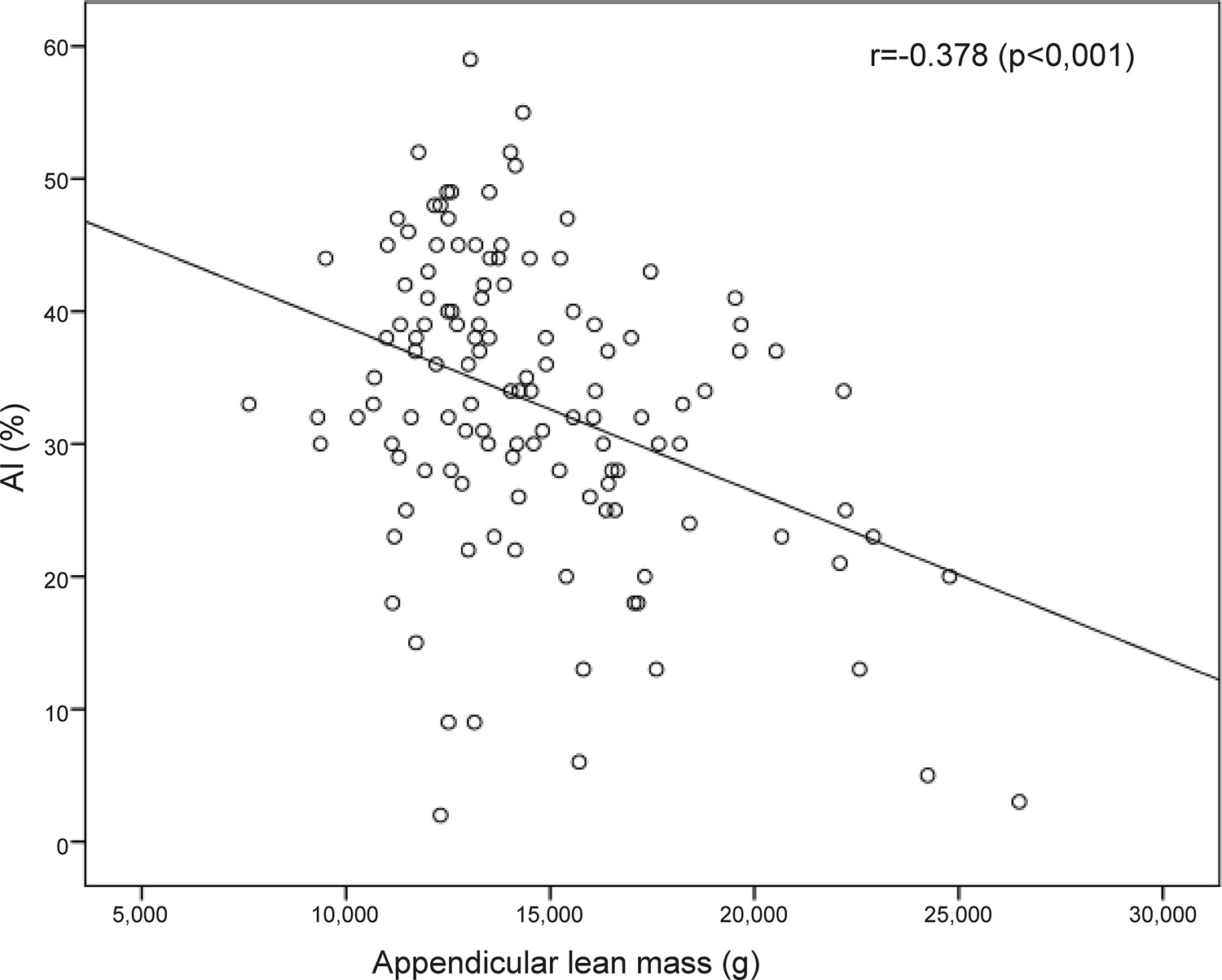
Data from 124 elderly people with a mean age of 87.1 years (SD ± 4.3 years) were analyzed, with 74.2% of women and 57.3% of white. There was a statistically significant inverse correlation of AIx with LM (r = -0.391, p <0.001), aLM (r = -0.378, p <0.001), and BI (r = -0.258, p = 0.004). Also, cPP had an inversely proportional association with LM (r = -0.268, p = 0.003), aLM (r = -0.288, p = 0.001), and BI (r = -0.265, p = 0.003). When assessing the relationship between fat mass and CCP, a statistically significant direct relationship was observed only between AIx and body fat percentage (r = 0.197, p = 0.029).

Conclusion

In long-lived people, body fat percentage is directly associated with arterial stiffness and inversely associated with the amount of LM. These findings may be associated with increased cardiovascular risk.

  • Aged
  • Body Composition
  • DEXA
  • fats
  • Vascular Stiffness
Read Full Article
Creative Commons Attribution (CC BY) Creative Commons license
16/07/2021 DOI: 10.36660/abc.20190774 Views 1
Figure 1
ABCHF
Brief Communication

The Challenge of HFpEF Diagnosis in Brazil

Luiz Cláudio Danzmann et al. Evgeny Belyavskiy Antônio José Lagoeiro Jorge Evandro Tinoco Mesquita Marco Antonio Rodrigues Torres

Abstract

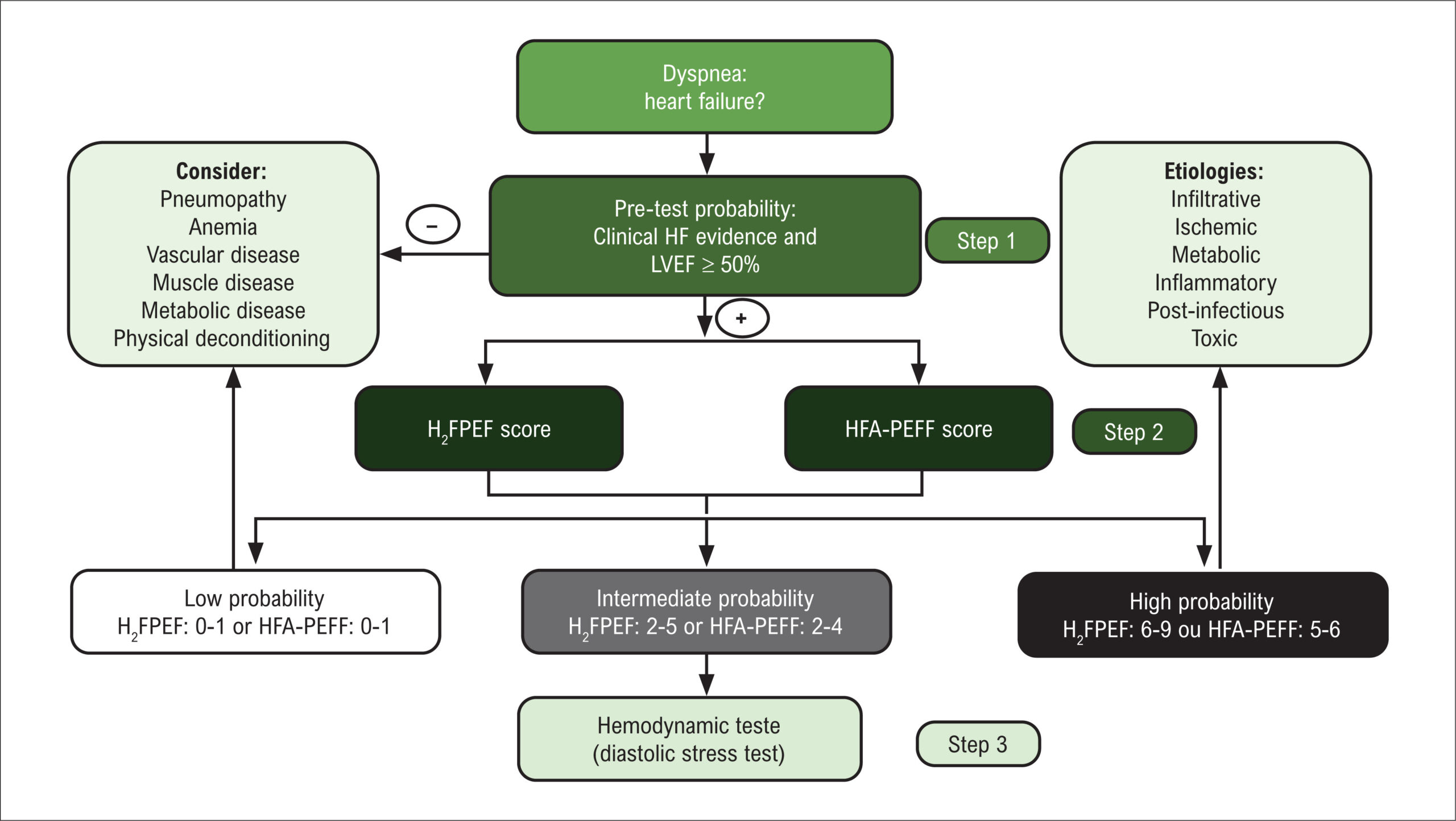
Heart failure with preserved ejection fraction (HFpEF) is highly prevalent in Brazil and worldwide. However, the recent diagnostic criteria for this condition are complex and difficult to apply in the Brazilian health system. This review proposes adapting the modern diagnostic criteria to the needs of each patient, from the primary care to the most complex one, using a system of three steps of complexity and highlighting the importance of searching specific disease etiology.

  • Comorbidity
  • Diagnostic Imaging
  • Dyspmea
  • Echocardiography/methods
  • Fatigue
  • Heart Failure/ophysiopathology
  • Stroke Volume
  • Vascular Stiffness
Read Full Article
Creative Commons Attribution (CC BY) Creative Commons license
06/07/2021 DOI: 10.36660/abchf.20210011 Views 1
IJCS
Editorial

Study of Arterial Stiffness – Based on Scientific Evidence, What are the Current Tools for the Study of Arterial Stiffness?

Ronaldo Rodrigues

One of the biggest challenges in modern medicine is the early identification of patients with higher cardiovascular risks. The early identification of vascular damage in hypertensive patients is a challenge for cardiologists around the world in their attempt to reduce the risk of cardiovascular complications in patients.

We know how important it is today to measure the thickness of the carotid intima-media complex through ultrasound examination in order to identify a greater or lesser cardiovascular risk. Arterial stiffness has proven to be a marker of arterial disease, which is why it has become an important parameter for the assessment of cardiovascular risk. It is also well-known that ventricular ejection generates a pressure wave that travels through the heart at a certain speed, which is known as the pulse wave velocity (PWV). The study of PWV in the carotid and femoral arteries is considered the gold standard in the assessment of arterial stiffness.

[…]

  • Blood Pressure
  • Carotid Intima-Media Thickness
  • Elasticity: Circulatory System
  • Pulse Wave Analysis
  • Vascular Stiffness
Read Full Article
Creative Commons Attribution (CC BY) Creative Commons license
01/02/2021 DOI: 10.36660/ijcs.20200282 Views 1

Could not load more articles. Please try again.

How to cite this article

EndNote RIS

Electronic Document Format (Vancouver)

Neves MF, Cunha MR. Arterial Stiffness and Functional Impairment in Post-COVID-19 Syndrome: A Multifactorial Puzzle. Arquivos Brasileiros de Cardiologia 2026;123(7):e20260519.

Electronic Document Format (ABNT)

Neves, Mario Fritsch; Cunha, Michelle Rabello. Arterial Stiffness and Functional Impairment in Post-COVID-19 Syndrome: A Multifactorial Puzzle. Arquivos Brasileiros de Cardiologia, v. 123, n. 7, e20260519, Aug. 2026.

Electronic Document Format (APA)

Neves, M. F., & Cunha, M. R. (2026). Arterial Stiffness and Functional Impairment in Post-COVID-19 Syndrome: A Multifactorial Puzzle. Arquivos Brasileiros de Cardiologia, 123(7), e20260519.

Electronic Document Format (ISO)

Neves, Mario Fritsch and Cunha, Michelle Rabello. Arterial Stiffness and Functional Impairment in Post-COVID-19 Syndrome: A Multifactorial Puzzle. Arquivos Brasileiros de Cardiologia [online]. 2026, vol. 123, n. 7, [cited 2026-10-14], e20260519. Available from: <https://journals.cardiol.br/en/article/arterial-stiffness-and-functional-impairment-in-post-covid-19-syndrome-a-multifactorial-puzzle/>. ISSN 0066-782X

EndNote RIS

Electronic Document Format (Vancouver)

Luna BC, Lamezon AC, Lima Junior E, Rabelo LM, Valderramas S. Arterial Stiffness, Clinical-Functional Outcomes, and Quality of Life in Post-COVID-19 Patients: A Cross-Sectional Study. Arquivos Brasileiros de Cardiologia 2026;123(7):e20250450.

Electronic Document Format (ABNT)

Luna, Bruna Cavon; Lamezon, Ana Cristina; Lima Junior, Emilton; Rabelo, Lêda Maria; Valderramas, Silvia. Arterial Stiffness, Clinical-Functional Outcomes, and Quality of Life in Post-COVID-19 Patients: A Cross-Sectional Study. Arquivos Brasileiros de Cardiologia, v. 123, n. 7, e20250450, Aug. 2026.

Electronic Document Format (APA)

Luna, B. C., Lamezon, A. C., Lima Junior, E., Rabelo, L. M., & Valderramas, S. (2026). Arterial Stiffness, Clinical-Functional Outcomes, and Quality of Life in Post-COVID-19 Patients: A Cross-Sectional Study. Arquivos Brasileiros de Cardiologia, 123(7), e20250450.

Electronic Document Format (ISO)

Luna, Bruna Cavon and Lamezon, Ana Cristina and Lima Junior, Emilton and Rabelo, Lêda Maria and Valderramas, Silvia. Arterial Stiffness, Clinical-Functional Outcomes, and Quality of Life in Post-COVID-19 Patients: A Cross-Sectional Study. Arquivos Brasileiros de Cardiologia [online]. 2026, vol. 123, n. 7, [cited 2026-10-14], e20250450. Available from: <https://journals.cardiol.br/en/article/arterial-stiffness-clinical-functional-outcomes-and-quality-of-life-in-post-covid-19-patients-a-cross-sectional-study/>. ISSN 0066-782X

EndNote RIS

Electronic Document Format (Vancouver)

Ogura AY, Barbosa CM, Oliveira-Junior SA. Nitrite Supplementation Attenuates Vascular Stiffness Independently of Physical Exercise. Arquivos Brasileiros de Cardiologia 2025;121(12):e20240836.

Electronic Document Format (ABNT)

Ogura, Alex Yuiti; Barbosa, Claudiane Maria; Oliveira-Junior, Silvio Assis de. Nitrite Supplementation Attenuates Vascular Stiffness Independently of Physical Exercise. Arquivos Brasileiros de Cardiologia, v. 121, n. 12, e20240836, Feb. 2025.

Electronic Document Format (APA)

Ogura, A. Y., Barbosa, C. M., & Oliveira-Junior, S. A. (2025). Nitrite Supplementation Attenuates Vascular Stiffness Independently of Physical Exercise. Arquivos Brasileiros de Cardiologia, 121(12), e20240836.

Electronic Document Format (ISO)

Ogura, Alex Yuiti and Barbosa, Claudiane Maria and Oliveira-Junior, Silvio Assis de. Nitrite Supplementation Attenuates Vascular Stiffness Independently of Physical Exercise. Arquivos Brasileiros de Cardiologia [online]. 2025, vol. 121, n. 12, [cited 2026-10-14], e20240836. Available from: <https://journals.cardiol.br/en/article/nitrite-supplementation-attenuates-vascular-stiffness-independently-of-physical-exercise/>. ISSN 0066-782X

EndNote RIS

Electronic Document Format (Vancouver)

Matos TO, Vitorino PVO, Orlow R, Melo O, Amorim DS, Sousa GJO, Jorgetti V, et al. Osteoprotegerin and Vascular Dysfunction in Patients with Stage 3 Chronic Kidney Disease and Those without Renal Dysfunction: A Case-Control Study. Arquivos Brasileiros de Cardiologia 2024;121(11):e20240122.

Electronic Document Format (ABNT)

Matos, Thalita de Oliveira; Vitorino, Priscila Valverde de Oliveira; Orlow, Rogerio; Melo, Átila de Oliveira; Amorim, Diogo da Silva; Sousa, Gleidson Junio Oliveira; Jorgetti, Vanda; Sousa, Ana Luiza Lima; Bezerra, Rodrigo; Barroso, Weimar Kunz Sebba. Osteoprotegerin and Vascular Dysfunction in Patients with Stage 3 Chronic Kidney Disease and Those without Renal Dysfunction: A Case-Control Study. Arquivos Brasileiros de Cardiologia, v. 121, n. 11, e20240122, Nov. 2024.

Electronic Document Format (APA)

Matos, T. O., Vitorino, P. V. O., Orlow, R., Melo, O., Amorim, D. S., Sousa, G. J. O., Jorgetti, V., Sousa, A. L. L., Bezerra, R., & Barroso, W. K. S. (2024). Osteoprotegerin and Vascular Dysfunction in Patients with Stage 3 Chronic Kidney Disease and Those without Renal Dysfunction: A Case-Control Study. Arquivos Brasileiros de Cardiologia, 121(11), e20240122.

Electronic Document Format (ISO)

Matos, Thalita de Oliveira and Vitorino, Priscila Valverde de Oliveira and Orlow, Rogerio and Melo, Átila de Oliveira and Amorim, Diogo da Silva and Sousa, Gleidson Junio Oliveira and Jorgetti, Vanda and Sousa, Ana Luiza Lima and Bezerra, Rodrigo and Barroso, Weimar Kunz Sebba. Osteoprotegerin and Vascular Dysfunction in Patients with Stage 3 Chronic Kidney Disease and Those without Renal Dysfunction: A Case-Control Study. Arquivos Brasileiros de Cardiologia [online]. 2024, vol. 121, n. 11, [cited 2026-10-14], e20240122. Available from: <https://journals.cardiol.br/en/article/osteoprotegerin-and-vascular-dysfunction-in-patients-with-stage-3-chronic-kidney-disease-and-those-without-renal-dysfunction-a-case-control-study/>. ISSN 0066-782X

EndNote RIS

Electronic Document Format (Vancouver)

Lima VFS, Fecchio RY, Piemonte MEP, Correia MA, Kanegusuku H, Ritti-Dias RM. Intrarater Reliability and Agreement of Blood Pressure, Arterial Stiffness, and Heart Rate Variability Assessments in Patients With Parkinson’s Disease. Arquivos Brasileiros de Cardiologia 2024;121(10):e20240132.

Electronic Document Format (ABNT)

Lima, Verônica de Fátima Souza; Fecchio, Rafael Yokoyama; Piemonte, Maria Elisa Pimentel; Correia, Marilia de Almeida; Kanegusuku, Hélcio; Ritti-Dias, Raphael Mendes. Intrarater Reliability and Agreement of Blood Pressure, Arterial Stiffness, and Heart Rate Variability Assessments in Patients With Parkinson’s Disease. Arquivos Brasileiros de Cardiologia, v. 121, n. 10, e20240132, Nov. 2024.

Electronic Document Format (APA)

Lima, V. F. S., Fecchio, R. Y., Piemonte, M. E. P., Correia, M. A., Kanegusuku, H., & Ritti-Dias, R. M. (2024). Intrarater Reliability and Agreement of Blood Pressure, Arterial Stiffness, and Heart Rate Variability Assessments in Patients With Parkinson’s Disease. Arquivos Brasileiros de Cardiologia, 121(10), e20240132.

Electronic Document Format (ISO)

Lima, Verônica de Fátima Souza and Fecchio, Rafael Yokoyama and Piemonte, Maria Elisa Pimentel and Correia, Marilia de Almeida and Kanegusuku, Hélcio and Ritti-Dias, Raphael Mendes. Intrarater Reliability and Agreement of Blood Pressure, Arterial Stiffness, and Heart Rate Variability Assessments in Patients With Parkinson’s Disease. Arquivos Brasileiros de Cardiologia [online]. 2024, vol. 121, n. 10, [cited 2026-10-14], e20240132. Available from: <https://journals.cardiol.br/en/article/intrarater-reliability-and-agreement-of-blood-pressure-arterial-stiffness-and-heart-rate-variability-assessments-in-patients-with-parkinsons-disease/>. ISSN 0066-782X

EndNote RIS

Electronic Document Format (Vancouver)

Gismondi RA, Neves MF. Atrial Cardiomyopathy and Hypertension: Connections between Arterial Stiffness and Subclinical Atrial Arrhythmias. Arquivos Brasileiros de Cardiologia 2024;121(10):e20240598.

Electronic Document Format (ABNT)

Gismondi, Ronaldo Altenburg; Neves, Mario Fritsch. Atrial Cardiomyopathy and Hypertension: Connections between Arterial Stiffness and Subclinical Atrial Arrhythmias. Arquivos Brasileiros de Cardiologia, v. 121, n. 10, e20240598, Nov. 2024.

Electronic Document Format (APA)

Gismondi, R. A., & Neves, M. F. (2024). Atrial Cardiomyopathy and Hypertension: Connections between Arterial Stiffness and Subclinical Atrial Arrhythmias. Arquivos Brasileiros de Cardiologia, 121(10), e20240598.

Electronic Document Format (ISO)

Gismondi, Ronaldo Altenburg and Neves, Mario Fritsch. Atrial Cardiomyopathy and Hypertension: Connections between Arterial Stiffness and Subclinical Atrial Arrhythmias. Arquivos Brasileiros de Cardiologia [online]. 2024, vol. 121, n. 10, [cited 2026-10-14], e20240598. Available from: <https://journals.cardiol.br/en/article/atrial-cardiomyopathy-and-hypertension-connections-between-arterial-stiffness-and-subclinical-atrial-arrhythmias/>. ISSN 0066-782X

EndNote RIS

Electronic Document Format (Vancouver)

Lage JGB, Bortolotto AL, Bortolotto LA, Verardino RGS, Pessente GD, Bihan DCSL, Barretto RBM, et al. Association between Arterial Stiffness and Higher Burden of Atrial Arrhythmia in Elderly Hypertensive Patients without Atrial Fibrillation. Arquivos Brasileiros de Cardiologia 2024;121(10):e20240251.

Electronic Document Format (ABNT)

Lage, João Gabriel B.; Bortolotto, Alexandre L.; Bortolotto, Luiz A.; Verardino, Renata G. S.; Pessente, Gabrielle D.; Bihan, David C. S. Le; Barretto, Rodrigo B. M.; Consolim-Colombo, Fernanda M.; Hachul, Denise T.; Sacilotto, Luciana; Wu, Tan C.; Bueno, Sávia C. P.; Rivarola, Esteban W. R.; Gruppi, César J.; Barbosa, Silvio A.; Alves, Juliana B. S.; Mathias, Wilson; Scanavacca, Maurício I.; Darrieux, Francisco C.C.. Association between Arterial Stiffness and Higher Burden of Atrial Arrhythmia in Elderly Hypertensive Patients without Atrial Fibrillation. Arquivos Brasileiros de Cardiologia, v. 121, n. 10, e20240251, Oct. 2024.

Electronic Document Format (APA)

Lage, J. G. B., Bortolotto, A. L., Bortolotto, L. A., Verardino, R. G. S., Pessente, G. D., Bihan, D. C. S. L., Barretto, R. B. M., Consolim-Colombo, F. M., Hachul, D. T., Sacilotto, L., Wu, T. C., Bueno, S. C. P., Rivarola, E. W. R., Gruppi, C. J., Barbosa, S. A., Alves, J. B. S., Mathias, W., Scanavacca, M. I., & Darrieux, F. C. (2024). Association between Arterial Stiffness and Higher Burden of Atrial Arrhythmia in Elderly Hypertensive Patients without Atrial Fibrillation. Arquivos Brasileiros de Cardiologia, 121(10), e20240251.

Electronic Document Format (ISO)

Lage, João Gabriel B. and Bortolotto, Alexandre L. and Bortolotto, Luiz A. and Verardino, Renata G. S. and Pessente, Gabrielle D. and Bihan, David C. S. Le and Barretto, Rodrigo B. M. and Consolim-Colombo, Fernanda M. and Hachul, Denise T. and Sacilotto, Luciana and Wu, Tan C. and Bueno, Sávia C. P. and Rivarola, Esteban W. R. and Gruppi, César J. and Barbosa, Silvio A. and Alves, Juliana B. S. and Mathias, Wilson and Scanavacca, Maurício I. and Darrieux, Francisco C.C.. Association between Arterial Stiffness and Higher Burden of Atrial Arrhythmia in Elderly Hypertensive Patients without Atrial Fibrillation. Arquivos Brasileiros de Cardiologia [online]. 2024, vol. 121, n. 10, [cited 2026-10-14], e20240251. Available from: <https://journals.cardiol.br/en/article/association-between-arterial-stiffness-and-higher-burden-of-atrial-arrhythmia-in-elderly-hypertensive-patients-without-atrial-fibrillation/>. ISSN 0066-782X

EndNote RIS

Electronic Document Format (Vancouver)

Yahia M, Soliman M, Hashem M. The Association Between Presystolic Wave and Subclinical Left Ventricular Dysfunction in Asymptomatic Hypertensive Patients: Speckle-Tracking Echocardiographic Study. International Journal of Cardiovascular Sciences 2024;37:e20230201.

Electronic Document Format (ABNT)

Yahia, Mohamed; Soliman, Mahmoud; Hashem, Mohamed. The Association Between Presystolic Wave and Subclinical Left Ventricular Dysfunction in Asymptomatic Hypertensive Patients: Speckle-Tracking Echocardiographic Study. International Journal of Cardiovascular Sciences, v. 37, e20230201, Aug. 2024.

Electronic Document Format (APA)

Yahia, M., Soliman, M., & Hashem, M. (2024). The Association Between Presystolic Wave and Subclinical Left Ventricular Dysfunction in Asymptomatic Hypertensive Patients: Speckle-Tracking Echocardiographic Study. International Journal of Cardiovascular Sciences, 37, e20230201.

Electronic Document Format (ISO)

Yahia, Mohamed and Soliman, Mahmoud and Hashem, Mohamed. The Association Between Presystolic Wave and Subclinical Left Ventricular Dysfunction in Asymptomatic Hypertensive Patients: Speckle-Tracking Echocardiographic Study. International Journal of Cardiovascular Sciences [online]. 2024, vol. 37, [cited 2026-10-14], e20230201. Available from: <https://journals.cardiol.br/en/article/the-association-between-presystolic-wave-and-subclinical-left-ventricular-dysfunction-in-asymptomatic-hypertensive-patients-speckle-tracking-echocardiographic-study/>. ISSN 2359-4802

EndNote RIS

Electronic Document Format (Vancouver)

Tibiriça E. Aortic Stiffness and the Response to Phosphodiesterase-5 Inhibitors in Patients Receiving Treatment for Erectile Dysfunction: Predictive Role or an Epiphenomenon?. Arquivos Brasileiros de Cardiologia 2024;121(3):e20240092.

Electronic Document Format (ABNT)

Tibiriça, Eduardo. Aortic Stiffness and the Response to Phosphodiesterase-5 Inhibitors in Patients Receiving Treatment for Erectile Dysfunction: Predictive Role or an Epiphenomenon?. Arquivos Brasileiros de Cardiologia, v. 121, n. 3, e20240092, Apr. 2024.

Electronic Document Format (APA)

Tibiriça, E. (2024). Aortic Stiffness and the Response to Phosphodiesterase-5 Inhibitors in Patients Receiving Treatment for Erectile Dysfunction: Predictive Role or an Epiphenomenon?. Arquivos Brasileiros de Cardiologia, 121(3), e20240092.

Electronic Document Format (ISO)

Tibiriça, Eduardo. Aortic Stiffness and the Response to Phosphodiesterase-5 Inhibitors in Patients Receiving Treatment for Erectile Dysfunction: Predictive Role or an Epiphenomenon?. Arquivos Brasileiros de Cardiologia [online]. 2024, vol. 121, n. 3, [cited 2026-10-14], e20240092. Available from: <https://journals.cardiol.br/en/article/aortic-stiffness-and-the-response-to-phosphodiesterase-5-inhibitors-in-patients-receiving-treatment-for-erectile-dysfunction-predictive-role-or-an-epiphenomenon/>. ISSN 0066-782X

EndNote RIS

Electronic Document Format (Vancouver)

Inuzuka S, Vitorino PVO, Barroso AS, Magalhães FG, Sousa AC, Alves Filho RPP, Melo VA, et al. Pulse Wave Velocity of 8.2 m/s as a Threshold Associated with Cardiovascular Target Organ Damage Presence. Arquivos Brasileiros de Cardiologia 2023;120(10):e20220934.

Electronic Document Format (ABNT)

Inuzuka, Sayuri; Vitorino, Priscila Valverde de Oliveria; Barroso, Adriana Sebba; Magalhães, Fabrício Galdino; Sousa, Andrea Cristina; Alves Filho, Robson Pierre Pacífico; Melo, Victoria Alves; Oliveira, Luiz Fernando de; Sousa, Ana Luiza Lima; Jardim, Paulo Cesar B. Veiga; Coca, Antonio; Barroso, Weimar Kunz Sebba. Pulse Wave Velocity of 8.2 m/s as a Threshold Associated with Cardiovascular Target Organ Damage Presence. Arquivos Brasileiros de Cardiologia, v. 120, n. 10, e20220934, Oct. 2023.

Electronic Document Format (APA)

Inuzuka, S., Vitorino, P. V. O., Barroso, A. S., Magalhães, F. G., Sousa, A. C., Alves Filho, R. P. P., Melo, V. A., Oliveira, L. F. , Sousa, A. L. L., Jardim, P. C. B. V., Coca, A., & Barroso, W. K. S. (2023). Pulse Wave Velocity of 8.2 m/s as a Threshold Associated with Cardiovascular Target Organ Damage Presence. Arquivos Brasileiros de Cardiologia, 120(10), e20220934.

Electronic Document Format (ISO)

Inuzuka, Sayuri and Vitorino, Priscila Valverde de Oliveria and Barroso, Adriana Sebba and Magalhães, Fabrício Galdino and Sousa, Andrea Cristina and Alves Filho, Robson Pierre Pacífico and Melo, Victoria Alves and Oliveira, Luiz Fernando de and Sousa, Ana Luiza Lima and Jardim, Paulo Cesar B. Veiga and Coca, Antonio and Barroso, Weimar Kunz Sebba. Pulse Wave Velocity of 8.2 m/s as a Threshold Associated with Cardiovascular Target Organ Damage Presence. Arquivos Brasileiros de Cardiologia [online]. 2023, vol. 120, n. 10, [cited 2026-10-14], e20220934. Available from: <https://journals.cardiol.br/en/article/pulse-wave-velocity-of-8-2-m-s-as-a-threshold-associated-with-cardiovascular-target-organ-damage-presence/>. ISSN 0066-782X

EndNote RIS

Electronic Document Format (Vancouver)

Guimarães Filho GC, Araújo RCG, Cabral KB, Paula CR. Comparison of Angiotensin Receptor Blockers and Angiotensin-Converting Enzyme Inhibitors in the Management of Arterial Stiffness and Target Organ Damage in Patients with Hypertension. International Journal of Cardiovascular Sciences 2023;36:e20220162.

Electronic Document Format (ABNT)

Guimarães Filho, Gilberto Campos; Araújo, Reila Campos Guimarães de; Cabral, Karynne Borges; Paula, Cácia Régia de. Comparison of Angiotensin Receptor Blockers and Angiotensin-Converting Enzyme Inhibitors in the Management of Arterial Stiffness and Target Organ Damage in Patients with Hypertension. International Journal of Cardiovascular Sciences, v. 36, e20220162, Aug. 2023.

Electronic Document Format (APA)

Guimarães Filho, G. C., Araújo, R. C. G. , Cabral, K. B., & Paula, C. R. (2023). Comparison of Angiotensin Receptor Blockers and Angiotensin-Converting Enzyme Inhibitors in the Management of Arterial Stiffness and Target Organ Damage in Patients with Hypertension. International Journal of Cardiovascular Sciences, 36, e20220162.

Electronic Document Format (ISO)

Guimarães Filho, Gilberto Campos and Araújo, Reila Campos Guimarães de and Cabral, Karynne Borges and Paula, Cácia Régia de. Comparison of Angiotensin Receptor Blockers and Angiotensin-Converting Enzyme Inhibitors in the Management of Arterial Stiffness and Target Organ Damage in Patients with Hypertension. International Journal of Cardiovascular Sciences [online]. 2023, vol. 36, [cited 2026-10-14], e20220162. Available from: <https://journals.cardiol.br/en/article/comparison-of-angiotensin-receptor-blockers-and-angiotensin-converting-enzyme-inhibitors-in-the-management-of-arterial-stiffness-and-target-organ-damage-in-patients-with-hypertension/>. ISSN 2359-4802

EndNote RIS

Electronic Document Format (Vancouver)

Kern GM, Danzmann LC, Kunst L, Binkowski LLT, Smiderle CA. Correlation between Pulse Pressure and Sub-maximal Functional Capacity in Patients with Heart Failure with Preserved Ejection Fraction. ABC: Heart Failure & Cardiomyopathy 2023;3(2):e20220097.

Electronic Document Format (ABNT)

Kern, Gustavo Matas; Danzmann, Luiz Claudio; Kunst, Leticia; Binkowski, Ludmila Limpias Terrazas; Smiderle, Carla Alessandra. Correlation between Pulse Pressure and Sub-maximal Functional Capacity in Patients with Heart Failure with Preserved Ejection Fraction. ABC: Heart Failure & Cardiomyopathy, v. 3, n. 2, e20220097, Aug. 2023.

Electronic Document Format (APA)

Kern, G. M., Danzmann, L. C., Kunst, L., Binkowski, L. L. T., & Smiderle, C. A. (2023). Correlation between Pulse Pressure and Sub-maximal Functional Capacity in Patients with Heart Failure with Preserved Ejection Fraction. ABC: Heart Failure & Cardiomyopathy, 3(2), e20220097.

Electronic Document Format (ISO)

Kern, Gustavo Matas and Danzmann, Luiz Claudio and Kunst, Leticia and Binkowski, Ludmila Limpias Terrazas and Smiderle, Carla Alessandra. Correlation between Pulse Pressure and Sub-maximal Functional Capacity in Patients with Heart Failure with Preserved Ejection Fraction. ABC: Heart Failure & Cardiomyopathy [online]. 2023, vol. 3, n. 2, [cited 2026-10-14], e20220097. Available from: <https://journals.cardiol.br/en/article/correlation-between-pulse-pressure-and-sub-maximal-functional-capacity-in-patients-with-heart-failure-with-preserved-ejection-fraction/>

EndNote RIS

Electronic Document Format (Vancouver)

Oliveira GH, Okawa RTP, Simões CF, Locatelli JC, Mendes VHS, Reck HB, Lopes WA, et al. Effects of High-Intensity Interval Training on Central Blood Pressure: A Systematic Review and Meta-Analysis. Arquivos Brasileiros de Cardiologia 2023;120(4):e20220398.

Electronic Document Format (ABNT)

Oliveira, Gustavo Henrique de; Okawa, Rogério Toshiro Passos; Simões, Caroline Ferraz; Locatelli, João Carlos; Mendes, Victor Hugo de Souza; Reck, Higor Barbosa; Lopes, Wendell Arthur. Effects of High-Intensity Interval Training on Central Blood Pressure: A Systematic Review and Meta-Analysis. Arquivos Brasileiros de Cardiologia, v. 120, n. 4, e20220398, Apr. 2023.

Electronic Document Format (APA)

Oliveira, G. H. , Okawa, R. T. P., Simões, C. F., Locatelli, J. C., Mendes, V. H. S., Reck, H. B., & Lopes, W. A. (2023). Effects of High-Intensity Interval Training on Central Blood Pressure: A Systematic Review and Meta-Analysis. Arquivos Brasileiros de Cardiologia, 120(4), e20220398.

Electronic Document Format (ISO)

Oliveira, Gustavo Henrique de and Okawa, Rogério Toshiro Passos and Simões, Caroline Ferraz and Locatelli, João Carlos and Mendes, Victor Hugo de Souza and Reck, Higor Barbosa and Lopes, Wendell Arthur. Effects of High-Intensity Interval Training on Central Blood Pressure: A Systematic Review and Meta-Analysis. Arquivos Brasileiros de Cardiologia [online]. 2023, vol. 120, n. 4, [cited 2026-10-14], e20220398. Available from: <https://journals.cardiol.br/en/article/effects-of-high-intensity-interval-training-on-central-blood-pressure-a-systematic-review-and-meta-analysis/>. ISSN 0066-782X

EndNote RIS

Electronic Document Format (Vancouver)

Rigonatto RRF, Vitorino PVO, Oliveira AC, Sousa ALL, Jardim PCBV, Cunha PMGM, Barbosa ECD, et al. SAGE Score in Normotensive and Pre-Hypertensive Patients: A Proof of Concept. Arquivos Brasileiros de Cardiologia 2023;120(2):e20200291.

Electronic Document Format (ABNT)

Rigonatto, Rayne Ramos Fagundes; Vitorino, Priscila Valverde Oliveira; Oliveira, Adriana Camargo; Sousa, Ana Luiza Lima; Jardim, Paulo César Brandão Veiga; Cunha, Pedro Miguel Guimarães Marques; Barbosa, Eduardo Costa Duarte; Xaplanteris, Panagiotis; Vlachopoulos, Charalambos; Barroso, Weimar Kunz Sebba. SAGE Score in Normotensive and Pre-Hypertensive Patients: A Proof of Concept. Arquivos Brasileiros de Cardiologia, v. 120, n. 2, e20200291, Feb. 2023.

Electronic Document Format (APA)

Rigonatto, R. R. F., Vitorino, P. V. O., Oliveira, A. C., Sousa, A. L. L., Jardim, P. C. B. V., Cunha, P. M. G. M., Barbosa, E. C. D., Xaplanteris, P., Vlachopoulos, C., & Barroso, W. K. S. (2023). SAGE Score in Normotensive and Pre-Hypertensive Patients: A Proof of Concept. Arquivos Brasileiros de Cardiologia, 120(2), e20200291.

Electronic Document Format (ISO)

Rigonatto, Rayne Ramos Fagundes and Vitorino, Priscila Valverde Oliveira and Oliveira, Adriana Camargo and Sousa, Ana Luiza Lima and Jardim, Paulo César Brandão Veiga and Cunha, Pedro Miguel Guimarães Marques and Barbosa, Eduardo Costa Duarte and Xaplanteris, Panagiotis and Vlachopoulos, Charalambos and Barroso, Weimar Kunz Sebba. SAGE Score in Normotensive and Pre-Hypertensive Patients: A Proof of Concept. Arquivos Brasileiros de Cardiologia [online]. 2023, vol. 120, n. 2, [cited 2026-10-14], e20200291. Available from: <https://journals.cardiol.br/en/article/sage-score-in-normotensive-and-pre-hypertensive-patients-a-proof-of-concept/>. ISSN 0066-782X

EndNote RIS

Electronic Document Format (Vancouver)

Mansur AJ. SAGE Score and Pulse Wave Velocity in Non-Hypertensive Individuals. Arquivos Brasileiros de Cardiologia 2023;120(2):e20220881.

Electronic Document Format (ABNT)

Mansur, Alfredo José. SAGE Score and Pulse Wave Velocity in Non-Hypertensive Individuals. Arquivos Brasileiros de Cardiologia, v. 120, n. 2, e20220881, Feb. 2023.

Electronic Document Format (APA)

Mansur, A. J. (2023). SAGE Score and Pulse Wave Velocity in Non-Hypertensive Individuals. Arquivos Brasileiros de Cardiologia, 120(2), e20220881.

Electronic Document Format (ISO)

Mansur, Alfredo José. SAGE Score and Pulse Wave Velocity in Non-Hypertensive Individuals. Arquivos Brasileiros de Cardiologia [online]. 2023, vol. 120, n. 2, [cited 2026-10-14], e20220881. Available from: <https://journals.cardiol.br/en/article/sage-score-and-pulse-wave-velocity-in-non-hypertensive-individuals/>. ISSN 0066-782X

EndNote RIS

Electronic Document Format (Vancouver)

Oliveira AC, Cunha PMGM, Vitorino PVO, Souza ALL, Deus GD, Feitosa A, Barbosa ECD, et al. Vascular Aging and Arterial Stiffness. Arquivos Brasileiros de Cardiologia 2022;119(4):604-15.

Electronic Document Format (ABNT)

Oliveira, Adriana Camargo; Cunha, Pedro Miguel Guimarães Marques; Vitorino, Priscila Valverde de Oliveria; Souza, Ana Luiza Lima; Deus, Gilcimar Divino; Feitosa, Audes; Barbosa, Eduardo Costa Duarte; Gomes, Marco Mota; Jardim, Paulo Cesar B. Veiga; Barroso, Weimar Kunz Sebba. Vascular Aging and Arterial Stiffness. Arquivos Brasileiros de Cardiologia, v. 119, n. 4, p. 604-615, Oct. 2022.

Electronic Document Format (APA)

Oliveira, A. C., Cunha, P. M. G. M., Vitorino, P. V. O., Souza, A. L. L., Deus, G. D., Feitosa, A., Barbosa, E. C. D., Gomes, M. M., Jardim, P. C. B. V., & Barroso, W. K. S. (2022). Vascular Aging and Arterial Stiffness. Arquivos Brasileiros de Cardiologia, 119(4), 604-615.

Electronic Document Format (ISO)

Oliveira, Adriana Camargo and Cunha, Pedro Miguel Guimarães Marques and Vitorino, Priscila Valverde de Oliveria and Souza, Ana Luiza Lima and Deus, Gilcimar Divino and Feitosa, Audes and Barbosa, Eduardo Costa Duarte and Gomes, Marco Mota and Jardim, Paulo Cesar B. Veiga and Barroso, Weimar Kunz Sebba. Vascular Aging and Arterial Stiffness. Arquivos Brasileiros de Cardiologia [online]. 2022, vol. 119, n. 4, [cited 2026-10-14], pp. 604-615. Available from: <https://journals.cardiol.br/en/article/vascular-aging-and-arterial-stiffness-2/>. ISSN 0066-782X

EndNote RIS

Electronic Document Format (Vancouver)

Campana EMG, Brandão AA. Waist Circumference: A Parameter of Vascular Health. Arquivos Brasileiros de Cardiologia 2022;119(2):265-6.

Electronic Document Format (ABNT)

Campana, Erika Maria Gonçalves; Brandão, Andréa Araujo. Waist Circumference: A Parameter of Vascular Health. Arquivos Brasileiros de Cardiologia, v. 119, n. 2, p. 265-266, Aug. 2022.

Electronic Document Format (APA)

Campana, E. M. G., & Brandão, A. A. (2022). Waist Circumference: A Parameter of Vascular Health. Arquivos Brasileiros de Cardiologia, 119(2), 265-266.

Electronic Document Format (ISO)

Campana, Erika Maria Gonçalves and Brandão, Andréa Araujo. Waist Circumference: A Parameter of Vascular Health. Arquivos Brasileiros de Cardiologia [online]. 2022, vol. 119, n. 2, [cited 2026-10-14], pp. 265-266. Available from: <https://journals.cardiol.br/en/article/waist-circumference-a-parameter-of-vascular-health/>. ISSN 0066-782X

EndNote RIS

Electronic Document Format (Vancouver)

Tatlisu MA, Atici A, Ozcan FB, Çelik M, Kirac E, Baycan OF, Caliskan M, et al. The Association of TWEAK with Coronary Artery Calcification in Patients with Chronic Kidney Disease. Arquivos Brasileiros de Cardiologia 2022;119(3):436-45.

Electronic Document Format (ABNT)

Tatlisu, Mustafa Adem; Atici, Adem; Ozcan, Fatma Betul; Çelik, Mehmet; Kirac, Eray; Baycan, Omer Faruk; Caliskan, Mustafa. The Association of TWEAK with Coronary Artery Calcification in Patients with Chronic Kidney Disease. Arquivos Brasileiros de Cardiologia, v. 119, n. 3, p. 436-445, Jun. 2022.

Electronic Document Format (APA)

Tatlisu, M. A., Atici, A., Ozcan, F. B., Çelik, M., Kirac, E., Baycan, O. F., & Caliskan, M. (2022). The Association of TWEAK with Coronary Artery Calcification in Patients with Chronic Kidney Disease. Arquivos Brasileiros de Cardiologia, 119(3), 436-445.

Electronic Document Format (ISO)

Tatlisu, Mustafa Adem and Atici, Adem and Ozcan, Fatma Betul and Çelik, Mehmet and Kirac, Eray and Baycan, Omer Faruk and Caliskan, Mustafa. The Association of TWEAK with Coronary Artery Calcification in Patients with Chronic Kidney Disease. Arquivos Brasileiros de Cardiologia [online]. 2022, vol. 119, n. 3, [cited 2026-10-14], pp. 436-445. Available from: <https://journals.cardiol.br/en/article/the-association-of-tweak-with-coronary-artery-calcification-in-patients-with-chronic-kidney-disease/>. ISSN 0066-782X

EndNote RIS

Electronic Document Format (Vancouver)

Guimarães Filho GC, Silva LT, Silva RMC. Correlation among Waist Circumference and Central Measures of Blood Pressure. Arquivos Brasileiros de Cardiologia 2022;119(2):257-64.

Electronic Document Format (ABNT)

Guimarães Filho, Gilberto Campos; Silva, Lucas Tavares; Silva, Ruth Mellina Castro e. Correlation among Waist Circumference and Central Measures of Blood Pressure. Arquivos Brasileiros de Cardiologia, v. 119, n. 2, p. 257-264, Jun. 2022.

Electronic Document Format (APA)

Guimarães Filho, G. C., Silva, L. T., & Silva, R. M. C. (2022). Correlation among Waist Circumference and Central Measures of Blood Pressure. Arquivos Brasileiros de Cardiologia, 119(2), 257-264.

Electronic Document Format (ISO)

Guimarães Filho, Gilberto Campos and Silva, Lucas Tavares and Silva, Ruth Mellina Castro e. Correlation among Waist Circumference and Central Measures of Blood Pressure. Arquivos Brasileiros de Cardiologia [online]. 2022, vol. 119, n. 2, [cited 2026-10-14], pp. 257-264. Available from: <https://journals.cardiol.br/en/article/correlation-among-waist-circumference-and-central-measures-of-blood-pressure/>. ISSN 0066-782X

EndNote RIS

Electronic Document Format (Vancouver)

Câmara SF, Ribeiro HB. Aortic Stiffness by Cardiac Magnetic Resonance: Prognostic tool or Bystander?. Arquivos Brasileiros de Cardiologia 2022;118(5):972-3.

Electronic Document Format (ABNT)

Câmara, Sérgio Figueiredo; Ribeiro, Henrique Barbosa. Aortic Stiffness by Cardiac Magnetic Resonance: Prognostic tool or Bystander?. Arquivos Brasileiros de Cardiologia, v. 118, n. 5, p. 972-973, May. 2022.

Electronic Document Format (APA)

Câmara, S. F., & Ribeiro, H. B. (2022). Aortic Stiffness by Cardiac Magnetic Resonance: Prognostic tool or Bystander?. Arquivos Brasileiros de Cardiologia, 118(5), 972-973.

Electronic Document Format (ISO)

Câmara, Sérgio Figueiredo and Ribeiro, Henrique Barbosa. Aortic Stiffness by Cardiac Magnetic Resonance: Prognostic tool or Bystander?. Arquivos Brasileiros de Cardiologia [online]. 2022, vol. 118, n. 5, [cited 2026-10-14], pp. 972-973. Available from: <https://journals.cardiol.br/en/article/aortic-stiffness-by-cardiac-magnetic-resonance-prognostic-tool-or-bystander/>. ISSN 0066-782X

EndNote RIS

Electronic Document Format (Vancouver)

Jardim PCBV, Jardim TSV. Chronological Age or Biological Age, Mainly a Matter of Lifestyle. Arquivos Brasileiros de Cardiologia 2021;117(3):463-4.

Electronic Document Format (ABNT)

Jardim, Paulo César B. Veiga; Jardim, Thiago de Souza Veiga. Chronological Age or Biological Age, Mainly a Matter of Lifestyle. Arquivos Brasileiros de Cardiologia, v. 117, n. 3, p. 463-464, Sep. 2021.

Electronic Document Format (APA)

Jardim, P. C. B. V., & Jardim, T. S. V. (2021). Chronological Age or Biological Age, Mainly a Matter of Lifestyle. Arquivos Brasileiros de Cardiologia, 117(3), 463-464.

Electronic Document Format (ISO)

Jardim, Paulo César B. Veiga and Jardim, Thiago de Souza Veiga. Chronological Age or Biological Age, Mainly a Matter of Lifestyle. Arquivos Brasileiros de Cardiologia [online]. 2021, vol. 117, n. 3, [cited 2026-10-14], pp. 463-464. Available from: <https://journals.cardiol.br/en/article/chronological-age-or-biological-age-mainly-a-matter-of-lifestyle/>. ISSN 0066-782X

EndNote RIS

Electronic Document Format (Vancouver)

Silva FVM, Almonfrey FB, Freitas CMN, Fonte FK, Sepulvida MBC, Almada-Filho CM, Cendoroglo MS, et al. Association of Body Composition with Arterial Stiffness in Long-lived People. Arquivos Brasileiros de Cardiologia 2021;117(3):457-62.

Electronic Document Format (ABNT)

Silva, Flávia Veríssimo Melo e; Almonfrey, Franciellen Bruschi; Freitas, Cinthia Medice Nishide de; Fonte, Flávia Kurebayashi; Sepulvida, Mariana Bellaguarda de Castro; Almada-Filho, Clineu de Mello; Cendoroglo, Maysa Seabra; Quadrado, Egli Belinazzi; Amodeo, Celso; Povoa, Rui; Miranda, Roberto Dischinger. Association of Body Composition with Arterial Stiffness in Long-lived People. Arquivos Brasileiros de Cardiologia, v. 117, n. 3, p. 457-462, Jul. 2021.

Electronic Document Format (APA)

Silva, F. V. M. , Almonfrey, F. B., Freitas, C. M. N. , Fonte, F. K., Sepulvida, M. B. C., Almada-Filho, C. M., Cendoroglo, M. S., Quadrado, E. B., Amodeo, C., Povoa, R., & Miranda, R. D. (2021). Association of Body Composition with Arterial Stiffness in Long-lived People. Arquivos Brasileiros de Cardiologia, 117(3), 457-462.

Electronic Document Format (ISO)

Silva, Flávia Veríssimo Melo e and Almonfrey, Franciellen Bruschi and Freitas, Cinthia Medice Nishide de and Fonte, Flávia Kurebayashi and Sepulvida, Mariana Bellaguarda de Castro and Almada-Filho, Clineu de Mello and Cendoroglo, Maysa Seabra and Quadrado, Egli Belinazzi and Amodeo, Celso and Povoa, Rui and Miranda, Roberto Dischinger. Association of Body Composition with Arterial Stiffness in Long-lived People. Arquivos Brasileiros de Cardiologia [online]. 2021, vol. 117, n. 3, [cited 2026-10-14], pp. 457-462. Available from: <https://journals.cardiol.br/en/article/association-of-body-composition-with-arterial-stiffness-in-long-lived-people/>. ISSN 0066-782X

EndNote RIS

Electronic Document Format (Vancouver)

Danzmann LC, Belyavskiy E, Jorge AJL, Mesquita ET, Torres MAR. The Challenge of HFpEF Diagnosis in Brazil. ABC: Heart Failure & Cardiomyopathy 2021;1(1):63-6.

Electronic Document Format (ABNT)

Danzmann, Luiz Cláudio; Belyavskiy, Evgeny; Jorge, Antônio José Lagoeiro; Mesquita, Evandro Tinoco; Torres, Marco Antonio Rodrigues. The Challenge of HFpEF Diagnosis in Brazil. ABC: Heart Failure & Cardiomyopathy, v. 1, n. 1, p. 63-66, Jul. 2021.

Electronic Document Format (APA)

Danzmann, L. C., Belyavskiy, E., Jorge, A. J. L., Mesquita, E. T., & Torres, M. A. R. (2021). The Challenge of HFpEF Diagnosis in Brazil. ABC: Heart Failure & Cardiomyopathy, 1(1), 63-66.

Electronic Document Format (ISO)

Danzmann, Luiz Cláudio and Belyavskiy, Evgeny and Jorge, Antônio José Lagoeiro and Mesquita, Evandro Tinoco and Torres, Marco Antonio Rodrigues. The Challenge of HFpEF Diagnosis in Brazil. ABC: Heart Failure & Cardiomyopathy [online]. 2021, vol. 1, n. 1, [cited 2026-10-14], pp. 63-66. Available from: <https://journals.cardiol.br/en/article/the-challenge-of-hfpef-diagnosis-in-brazil/>

EndNote RIS

Electronic Document Format (Vancouver)

Rodrigues R. Study of Arterial Stiffness – Based on Scientific Evidence, What are the Current Tools for the Study of Arterial Stiffness?. International Journal of Cardiovascular Sciences 2021;34(1):30-1.

Electronic Document Format (ABNT)

Rodrigues, Ronaldo. Study of Arterial Stiffness – Based on Scientific Evidence, What are the Current Tools for the Study of Arterial Stiffness?. International Journal of Cardiovascular Sciences, v. 34, n. 1, p. 30-31, Jan. 2021.

Electronic Document Format (APA)

Rodrigues, R. (2021). Study of Arterial Stiffness – Based on Scientific Evidence, What are the Current Tools for the Study of Arterial Stiffness?. International Journal of Cardiovascular Sciences, 34(1), 30-31.

Electronic Document Format (ISO)

Rodrigues, Ronaldo. Study of Arterial Stiffness – Based on Scientific Evidence, What are the Current Tools for the Study of Arterial Stiffness?. International Journal of Cardiovascular Sciences [online]. 2021, vol. 34, n. 1, [cited 2026-10-14], pp. 30-31. Available from: <https://journals.cardiol.br/en/article/study-of-arterial-stiffness-based-on-scientific-evidence-what-are-the-current-tools-for-the-study-of-arterial-stiffness/>. ISSN 2359-4802

  • About ABC Family
  • Internal Regulation
  • Editorial Board
  • Brazilian Society of Cardiology (SBC)

Issues

SBC Guidelines

  • Videos
  • Podcasts
  • News