ABC Family Arquivos Brasileiros de Cardiologia International Journal of Cardiovascular Sciences ABC Heart Failure & Cardiomyopathy ABC Imagem Cardiovascular
Português English
ABC Family
Português English
  • About
    • About ABC Family
    • Internal Regulation
    • Editorial Board
    • Brazilian Society of Cardiology (SBC)
  • Issues
  • SBC Guidelines
  • Content
    • Videos
    • Podcasts
    • News
  • About
    • About ABC Family
    • Internal Regulation
    • Editorial Board
    • Brazilian Society of Cardiology (SBC)
  • Issues
  • SBC Guidelines
  • Content
    • Videos
    • Podcasts
    • News

ABC Family

  • ABC Family
  • Arquivos Brasileiros de Cardiologia
  • International Journal of Cardiovascular Sciences
  • ABC Heart Failure & Cardiomyopathy
  • ABC Imagem Cardiovascular
Search in

No content found.

Journals
Ordering
Article types
Others

  1. Home
  2. Keyword: Congenital Heart Defects
ABC
Special Article

Cardiovascular Statistics – Brazil 2026

Gláucia Maria Moraes de Oliveira et al. Luisa Campos Caldeira Brant Carisi Anne Polanczyk Deborah Carvalho Malta … Andreia Biolo Bruno Ramos Nascimento Maria de Fatima Marinho de Souza Andrea Rocha De Lorenzo Antonio Aurélio de Paiva Fagundes Júnior Arthur Gus Manfro Beatriz D. Schaan Christina Grüne de Souza e Silva Fábio Morato de Castilho Fernando Henpin Yue Cesena Gabriel Porto Soares Gesner Francisco Xavier Junior Jose Augusto Soares Barreto Filho Lucia Campos Pellanda Luciana Nicolau Aranha Luis Eduardo Paim Rohde Luiz Guilherme Passaglia Marcelo Martins Pinto-Filho M. Julia Machline-Carrion Marcio Sommer Bittencourt Octavio M. Pontes Neto Paolo Blanco Villela Paulo Henrique Godoy Renato Azeredo Teixeira Ricardo Stein Roney Orismar Sampaio Thais Rocha Salim Thomas A. Gaziano Pablo Perel Gregory A. Roth Antonio Luiz Pinho Ribeiro

Cardiovascular Statistics – Brazil was established to provide a periodic, comprehensive, evidence-based assessment of cardiovascular health in Brazil and to support clinical practice, research, public health planning, and policy development. Developed under the auspices of the Brazilian Society of Cardiology, the initiative brings together a multidisciplinary network of investigators from academic institutions across the country who are responsible for reviewing, analyzing, and interpreting data from multiple complementary sources. Since its first edition in 2020, Cardiovascular Statistics – Brazil has sought not only to quantify the burden of cardiovascular diseases (CVDs) and their risk factors but also to identify temporal trends, regional disparities, gaps in care, and emerging challenges for the Brazilian health system. The project is modeled on international initiatives such as the American Heart Association’s Heart Disease and Stroke Statistics Update, while incorporating data sources and perspectives that reflect Brazil’s unique epidemiological, demographic, and healthcare characteristics.

(…)

  • Atrial Fibrillation
  • Atrial flutter
  • Brazil
  • Cardiomyopathies
  • Cardiovascular Diseases
  • Cerebrovascular Disorders
  • chronic renal insufficiency
  • Congenital Heart Defects
  • Coronary Disease
  • Diabetes Mellitus
  • Diet
  • Dyslipidemias
  • Exercise
  • Heart Failure
  • Heart Valve Diseases
  • Hypertension
  • Obesity
  • Overweight
  • Statistics
  • Tobacco Use Disorder
Read Full Article
Creative Commons Attribution (CC BY) Creative Commons license
07/10/2026 DOI: 10.36660/abc.20260832i Views 1
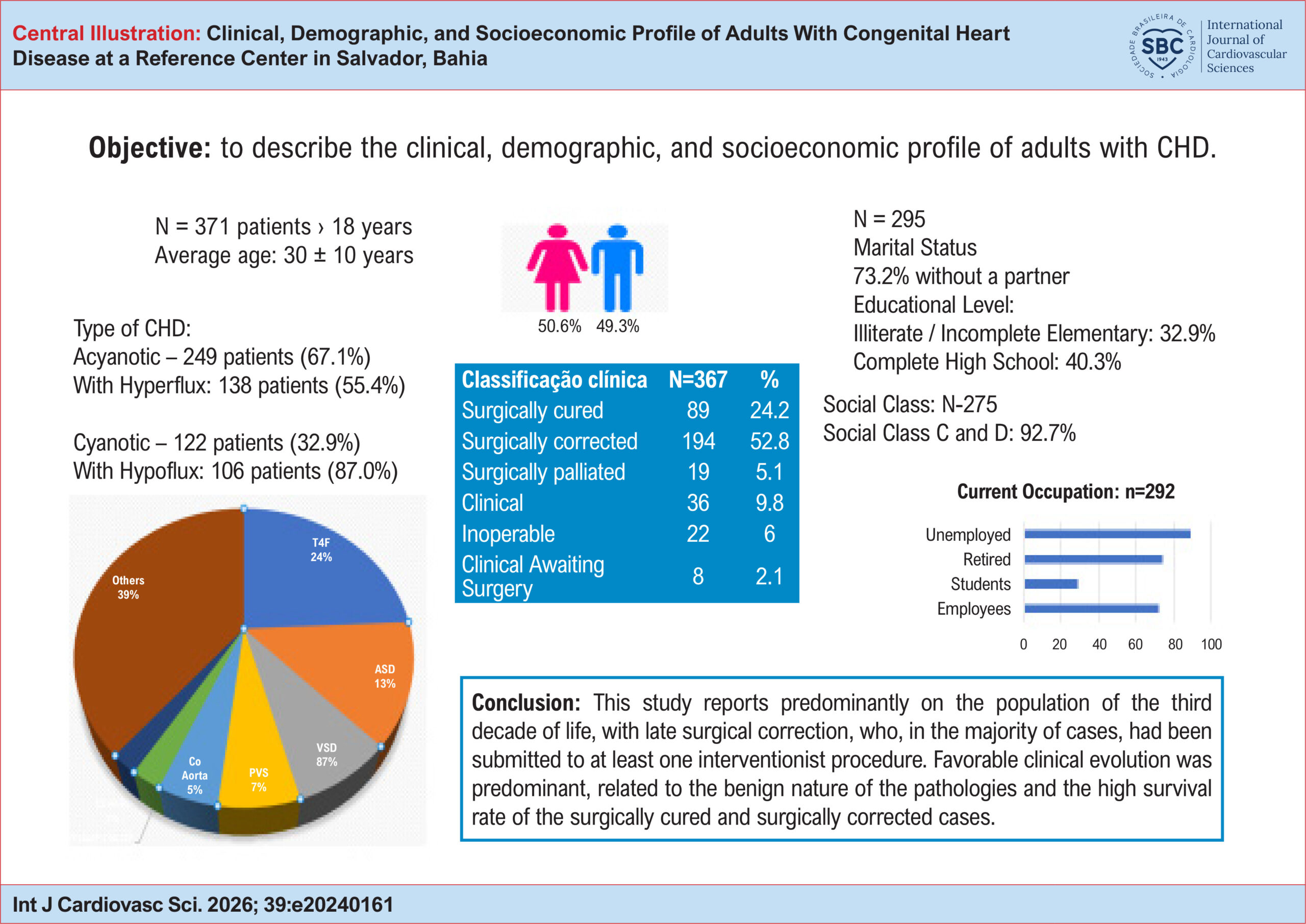
Clinical, Demographic, and Socioeconomic Profile of Adults With Congenital Heart Disease at a Reference Center in Salvador, Bahia
IJCS
Original Article

Clinical, Demographic, and Socioeconomic Profile of Adults With Congenital Heart Disease at a Reference Center in Salvador, Bahia

Anabel Goes Costa et al. Nilzo Augusto Mendes Ribeiro Adriano Dias Dourado Maria Lucia Duarte Ana Marice Ladeia

Abstract

Background:

Congenital heart disease (CHD) in adults has become an area of growing interest in cardiology due to the increased survival of these patients.

Objective:

to describe the clinical, demographic, and socioeconomic profile of adults with CHD.

Methods:

Cross-sectional study with 371 patients over 18 years of age, followed up at the adult CHD outpatient clinic of Santa Izabel Hospital. A questionnaire was applied to collect demographic and socioeconomic data, and a form with clinical aspects was completed. The chi-square test was used to compare frequencies between groups, with a significance level of p < 0.05.

Results:

Mean age was 30 ± 10 years, 188 (50.6%) women, brown race (61.0%), 216 (73.2%) single, 72 employed patients (24.6%). In this study, 249 patients (67.1%) were acyanotic, 138 (55.4%) showed a hyperflow, 90 (24.3%) had tetralogy of Fallot (T4F), 49 (13.2%) had ostium secundum atrial septal defect (ASD), and 30 (8.1%) had ventricular septal defect (VSD). Median age upon surgery was 8.2 years. Patients were classified as: surgically corrected, 194 (52.8%); surgically cured, 89 (24.2%); awaiting surgery, 8 (2.1%); clinical, 36 (9.8%); inoperable, 22 (6.0%); and surgically palliated, 19 (2.1%). Most were in New York Heart Association (NYHA) functional class I (64.5%). Among women, 50 (72.5%) were pregnant, with a neonatal morbidity and mortality rate of 14.0%. Pulmonary hypertension occurred in 17(4.6%) of the patients.

Conclusion:

Our study found a predominant population in the third decade of life, with late surgical correction, good clinical evolution related to the benign nature of the pathologies, and greater survival of surgically cured or corrected cases.

  • Adult
  • Congenital Heart Defects
  • Socioeconomic Factors
Read Full Article
Creative Commons Attribution (CC BY) Creative Commons license
10/07/2026 DOI: 10.36660/ijcs.20240161
ABC
Editorial

The New Frontier of Point-of-Care Ultrasound: Lung Ultrasound in Congenital Heart Disease

Maria Estefânia Bosco Otto

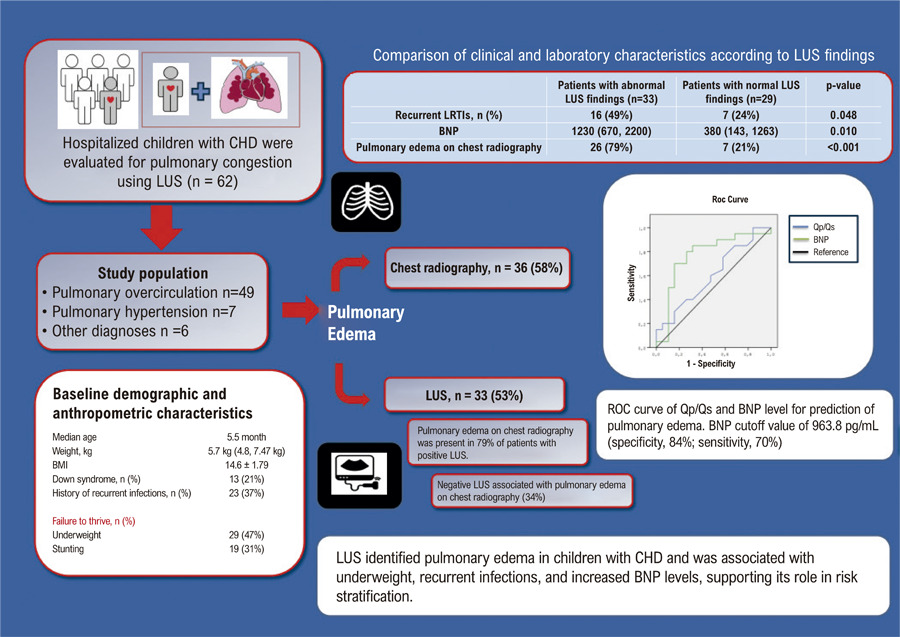
The bedside assessment of pulmonary congestion is undergoing conceptual consolidation: lung ultrasound (LUS) has evolved from being merely an “adjunct” tool to assuming a central role in the identification of extravascular fluid and aeration patterns, with important diagnostic, prognostic, and therapeutic implications. The article by Donmez et al. directly discusses the role of LUS in the assessment of pulmonary edema in children with congenital heart disease (CHD). In a retrospective cohort of 62 children, the study observed pulmonary edema in 53% by LUS and in 58% by radiography. Furthermore, the presence of edema by LUS was associated with clinically relevant variables in the clinical picture, such as recurrent respiratory infections, low weight, and elevated BNP levels. These findings reinforce that LUS adds objective and reproducible information to the care of children, in a context where clinical examination can be hampered by low cooperation and bedside radiography may have reduced accuracy due to positioning limitations and technical quality.

In adults with heart failure, the usefulness of LUS for pulmonary congestion is supported by several clinical studies demonstrating high diagnostic performance and correlation with outcomes. B-lines reflect increased extravascular fluid and, when diffusely present, reclassify the differential diagnosis of dyspnea. Comparison between LUS, biomarkers, and clinical assessment in an outpatient setting has shown that the burden of B-lines can detect subclinical congestion and anticipate the possibility of decompensation., In an acute setting, the systematic implementation of LUS improves diagnostic accuracy for decompensated heart failure, and prognostic studies associate congestion detected by LUS with worse short- and long-term outcomes. Reviews and perspective papers in cardiology have highlighted LUS as a rapid, reproducible, and low-cost diagnostic modality.

[…]

  • Congenital Heart Defects
  • Lung
  • Pediatrics
  • Point-of-Care Systems
  • Pulmonary Edema
  • Ultrasonography
Read Full Article
Creative Commons Attribution (CC BY) Creative Commons license
22/05/2026 DOI: 10.36660/abc.20260163i Views 2
Improving Pulmonary Edema Assessment in Pediatric Congenital Heart Disease: The Role of Lung Ultrasonography
ABC
Original Article

Improving Pulmonary Edema Assessment in Pediatric Congenital Heart Disease: The Role of Lung Ultrasonography

Yasemin Nuran Donmez et al. Derya Bako Safak Alpat Dilek Giray Serdar Epcacan

Abstract

Background

Pulmonary edema is a clinically significant complication in children with congenital heart disease (CHD). It occurs more frequently in complex cases and is associated with prolonged hospital stays. Early identification is essential because of its direct impact on clinical outcomes.

Objectives

To evaluate lung ultrasonography (LUS) as a diagnostic tool for pulmonary edema and to identify associated clinical and laboratory factors in children with CHD.

Methods

Children with CHD who underwent LUS between September 2020 and September 2023 were included. LUS findings were compared with clinical data, chest radiography results, and B-type natriuretic peptide (BNP) levels. Patients were classified according to pathophysiological category (pulmonary overflow, pulmonary hypertension, or other).

Results

A total of 62 children were evaluated, with a median age of 5.5 months (interquartile range, 4-10.1 months). Pulmonary overflow was identified in 49 patients (79%), pulmonary hypertension in seven (11.3%), and other pathophysiological conditions in six (9.7%). The median BNP level was 815.5 pg/mL. Pulmonary edema was detected in 36 patients (58%) by chest radiography and in 33 patients (53%) by LUS. A significant overlap was observed, as 79% of patients with positive LUS findings also demonstrated edema on chest radiography (p < 0.001). In contrast, only 34.5% of patients with negative LUS findings had radiographic evidence of edema. Pulmonary edema was significantly associated with recurrent lower respiratory tract infections, underweight status, body mass index below –2 standard deviations, and increased BNP levels. Multivariate logistic regression analysis identified failure to thrive as an independent predictor of pulmonary edema. Chest radiography findings remained the primary factor associated with pulmonary edema.

Conclusion

LUS is a reliable, radiation-free modality for detecting pulmonary edema in children with CHD. Identification of associated risk factors may facilitate early recognition of vulnerable patients and support timely, appropriate clinical interventions.

  • Congenital Heart Defects
  • Heart Failure
  • Pulmonary Edema
  • Thoracic Radiography
Read Full Article
Creative Commons Attribution (CC BY) Creative Commons license
11/05/2026 DOI: 10.36660/abc.20250322i Views 1
ABC
Editorial

The Role of Low-Cost 3D Printing for Education in Congenital Heart Diseases

Vítor Ramos

Three-dimensional (3D) printing has emerged as a transformative technology in the management of congenital heart disease (CHD), offering new possibilities for anatomical visualization, procedural planning, and education.– By converting standard imaging datasets into tangible physical models, clinicians and trainees gain intuitive spatial insight into complex cardiac malformations that are often difficult to interpret using two-dimensional images alone.,

However, sustaining a 3D printing program requires careful financial planning. Costs related to infrastructure, equipment, materials, and dedicated personnel can limit long-term feasibility., Encouragingly, the increasing availability of free software and low-cost materials has significantly reduced financial barriers, making these workflows more accessible to institutions with limited resources.

[…]

  • Congenital Heart Defects
  • Education
  • Three-Dimensional Printing
Read Full Article
Creative Commons Attribution (CC BY) Creative Commons license
16/03/2026 DOI: 10.36660/abc.20250805i Views 1
Development of 3D-Printed Congenital Heart Disease Models Using Feasible Low-Cost Workflow – A Potential Tool to Improve Pediatric Cardiology Education
ABC
Original Article

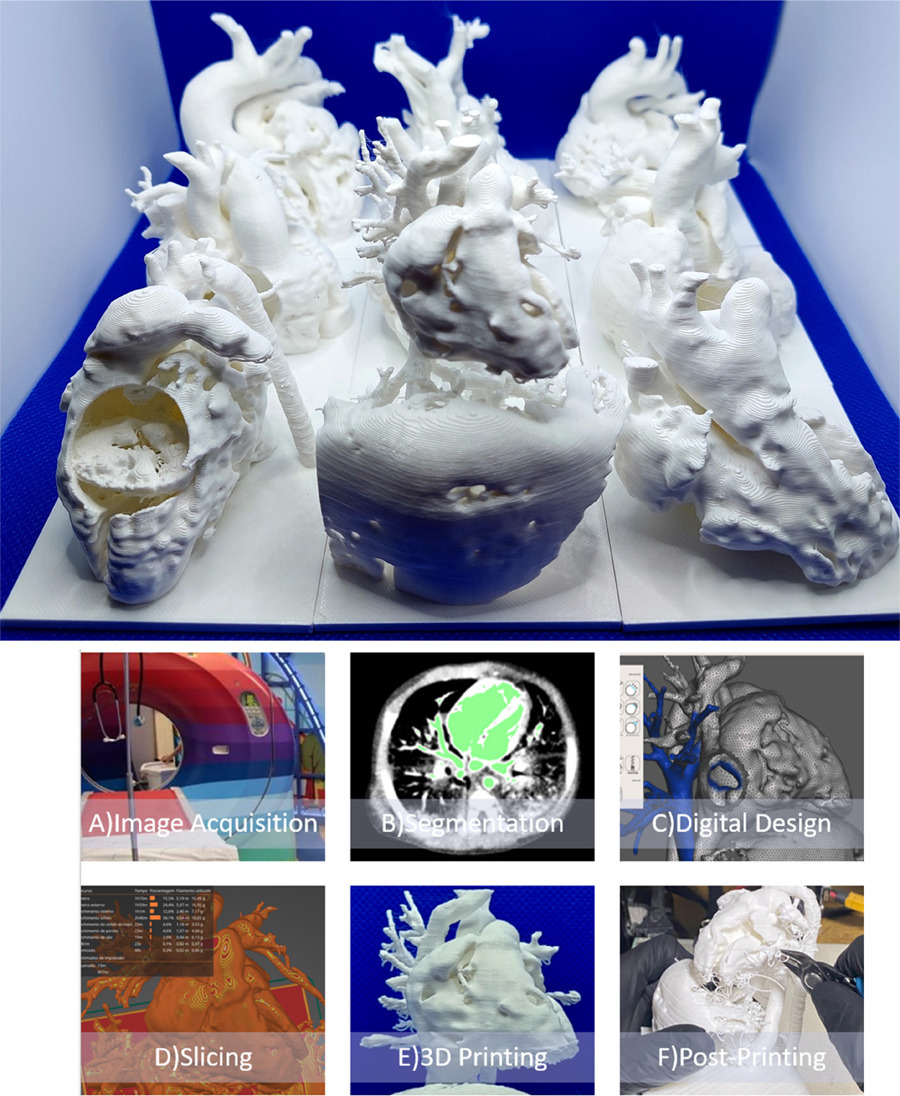
Development of 3D-Printed Congenital Heart Disease Models Using Feasible Low-Cost Workflow – A Potential Tool to Improve Pediatric Cardiology Education

Francisco Candido Monteiro Cajueiro et al. Ulisses Alexandre Croti Raimundo Francisco de Amorim Júnior Mariana Ribeiro Rodero Cardoso … Carlos Henrique Costa Carlos Henrique De Marchi Bruna Cury Borim Moacir Fernandes de Godoy Milton Benevides de Freitas Airton Camacho Moscardini

Abstract

Background

Congenital heart diseases (CHD) require an in-depth anatomopathological understanding. 3D printing is a promising educational tool for creating physical prototypes from imaging data, but costs are a major issue.

Objective

This study aimed to describe a feasible low-cost workflow for the development of 3D-printed (3DP) CHD models and create a shareable educational set.

Methods

Data from cardiac tomography images were used, following the steps of image acquisition, segmentation, digital design, slicing, 3D printing, and post-printing. Valvar structures were created from echocardiographic data using the cartographic heightmap technique and inserted into prototypes. 3DP models were evaluated by an expert team, enhanced, and applied to medical residents during an educational session. Free software, a desktop 3D printer, and low-cost materials were used.

Results

Twelve 3DP models were developed, including ventricular septal defect with patent ductus arteriosus, atrial septal defect, Tetralogy of Fallot, transposition of the great arteries, atrioventricular septal defect, coarctation of the Aorta, hypoplastic left heart syndrome, tricuspid atresia, pulmonary atresia, total anomalous pulmonary venous connection, Truncus arteriosus, and interrupted aortic arch. All residents (100%) agreed that prototypes were “faithful to the anatomy”, “visually appealing”, “motivated the study”, and “allowed better spatial conceptualization”. They related 3DP CHD models “are an important pedagogical resource” and can potentially benefit the education of “undergraduate students” (100%), “interdisciplinary team” (100%), “cardiologists, surgeons and residents” (100%), and “families” (93%).

Conclusion

Development of 3DP CHD models using a low-cost workflow is feasible. Models developed are freely available for download and printing, intending to promote education to all interested in CHD.

  • Cardiology
  • Congenital Heart Defects
  • Three-Dimensional Printing
Read Full Article
Creative Commons Attribution (CC BY) Creative Commons license
05/02/2026 DOI: 10.36660/abc.20250419i Views 2
Figure 1
ABCIC
Case Report

Acute Thrombosis During Ductus Arteriosus Stenting Successfully Treated with Balloon Angioplasty and In Situ Alteplase Infusion: Case Report

Jonathan Guimarães Lombardi et al. Paulo Correia Calamita Mayra Rosana Palmeira Barreto Luiza Silveira Neves Ficht Giulliano Gardenghi

Introduction

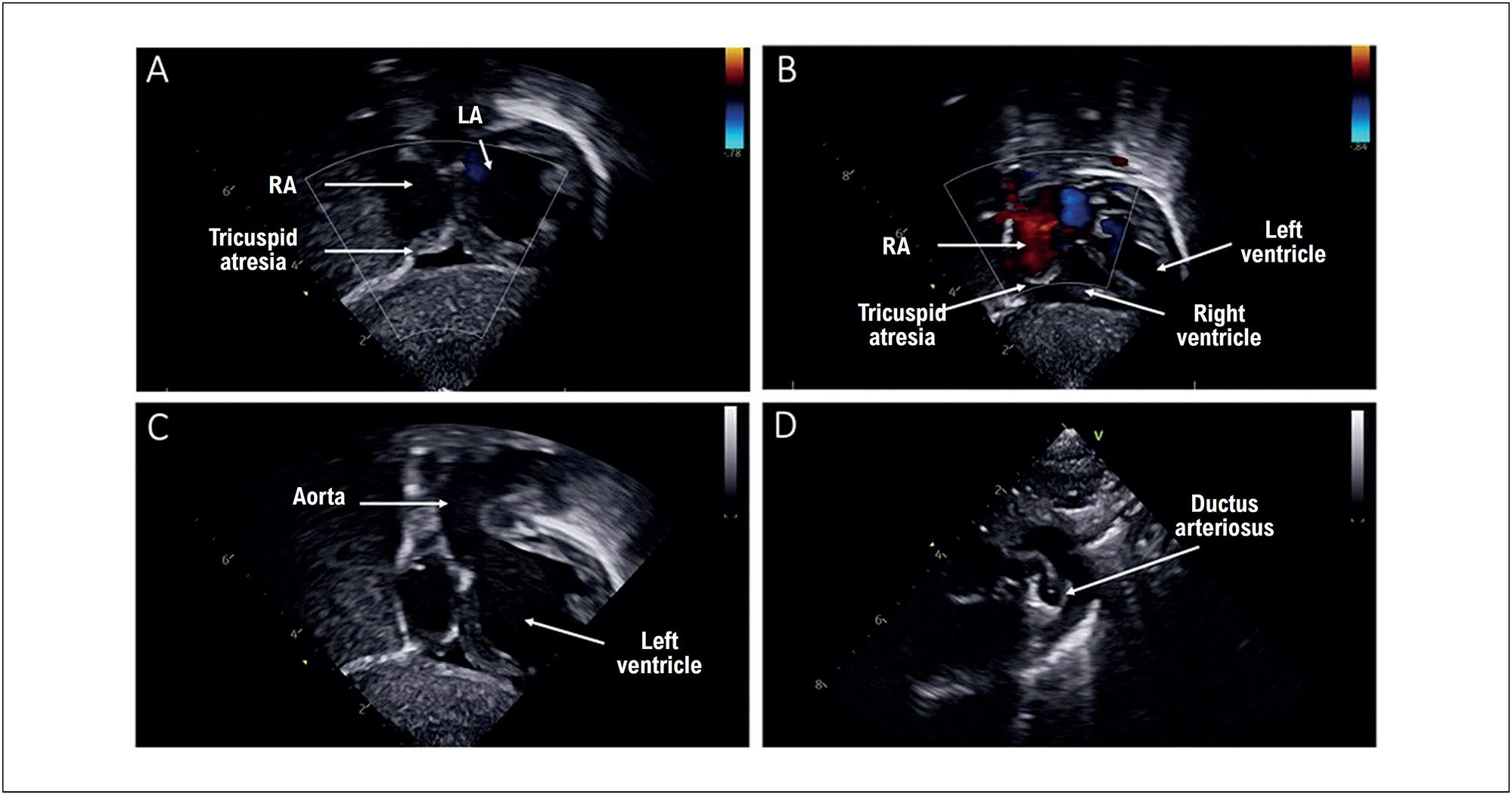
Tricuspid atresia with pulmonary atresia is a rare congenital heart defect, representing about 1% to 3% of all congenital heart diseases. Tricuspid atresia is subdivided into type I (normal position of the great arteries) and type II (transposition of the great arteries), with type 1A characterized by the presence of associated pulmonary atresia or stenosis. Pulmonary blood flow in these patients is dependent on the patency of the ductus arteriosus, making its maintenance essential in the neonatal period.

The treatment of tricuspid atresia follows a staged surgical approach, aiming for a Fontan circulation as the final goal. In the neonatal period, the focus is to ensure adequate pulmonary blood flow through hemodynamic or surgical interventions, including systemic-pulmonary shunts or ductal interventions.

[…]

  • Congenital Heart Defects
  • Ductus Arteriosus
  • Percutaneous Coronary Intervention
  • Thrombosis
  • Tricuspid Atresia
Read Full Article
Creative Commons Attribution (CC BY) Creative Commons license
03/02/2026 DOI: 10.36660/abcimg.20250084i Views 2
Figure 1
ABCIC
Case Report

Challenges and Implications of Uncorrected Atrioventricular Septal Defect in Adults: A Complex Case Report

Saulo Rodrigo Cunha et al. Rafael Felipe Minotto Fernanda Pandolfo Fernando Colares Barros … Pedro Tregnago Barcellos Ana Carolina Martins Mazzuca Eduardo Gatti Pianca

Case report

Male patient, 18 years old, admitted to a tertiary care hospital presenting with fever, cough, and dyspnea for the past seven days. According to the patient’s mother, he sought medical attention on the second day of symptoms at an urgent care clinic, where he was prescribed ibuprofen and azithromycin to take at home. Due to lack of improvement, he sought hospital care.

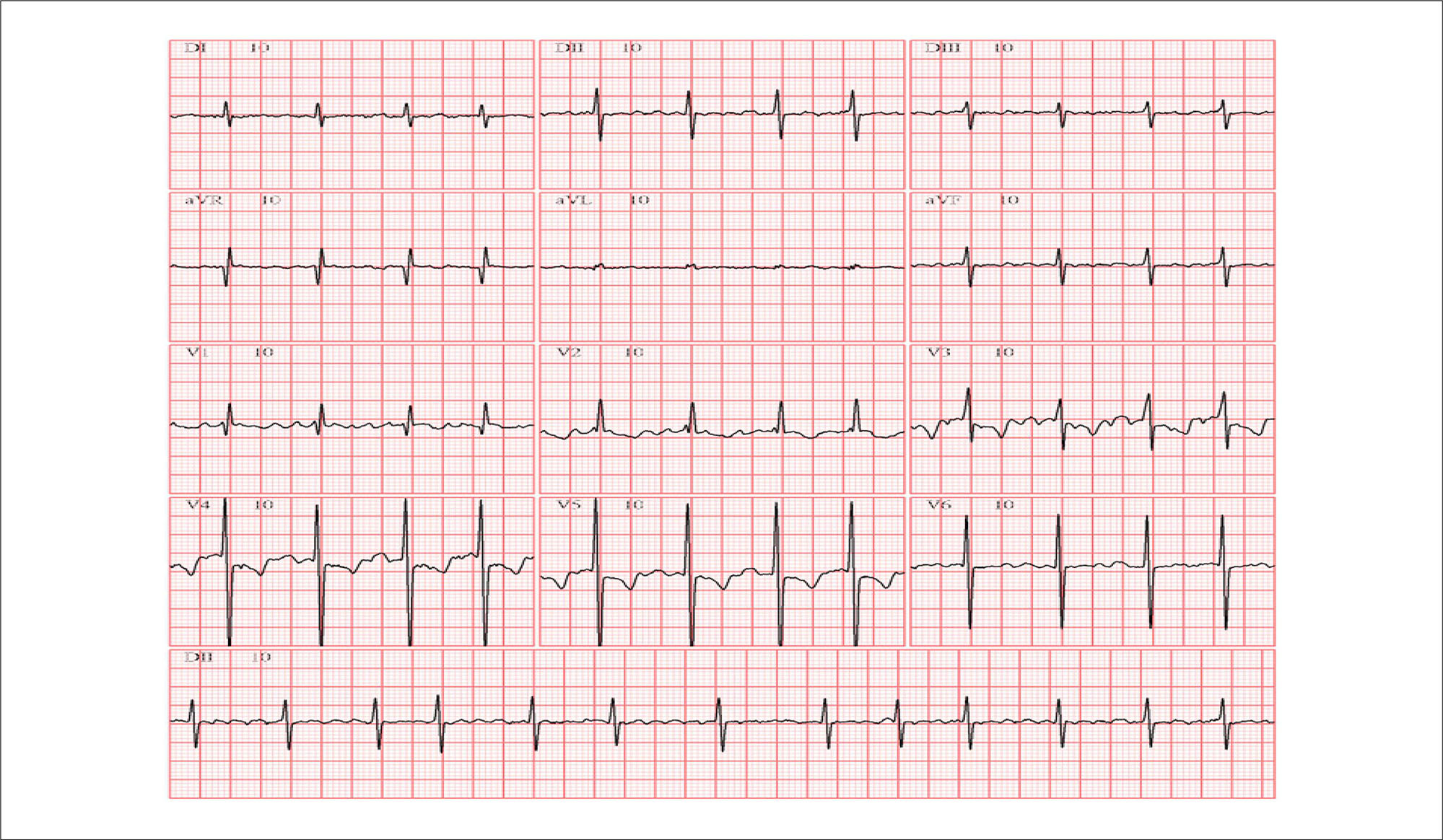
Medical history includes congenital heart disease, specifically a surgically uncorrected AVSD, as he had lost follow-up at the reference hospital since childhood. On physical exam, he appeared in fair condition, with a productive cough, rapid breathing, and cyanosis around the lips and extremities. Hemodynamically stable, with blood pressure of 125 × 86 mmHg, heart rate of 105 bpm in atrial fibrillation rhythm, and oxygen saturation of 69% on room air.

[…]

  • Adult
  • Atrial Heart Septal Defects
  • Congenital Heart Defects
Read Full Article
Creative Commons Attribution (CC BY) Creative Commons license
03/12/2025 DOI: 10.36660/abcimg.20250014i
Figure 1
ABC
Viewpoint

Adult Congenital Heart Disease. Follow-Up Pattern of Care

Fernando Amaral et al. Geraldo Luiz Figueiredo Rafael B. Pavão Paulo Henrique Manso … Luis Gustavo Gali Danilo Tadao Wada André Schmidt

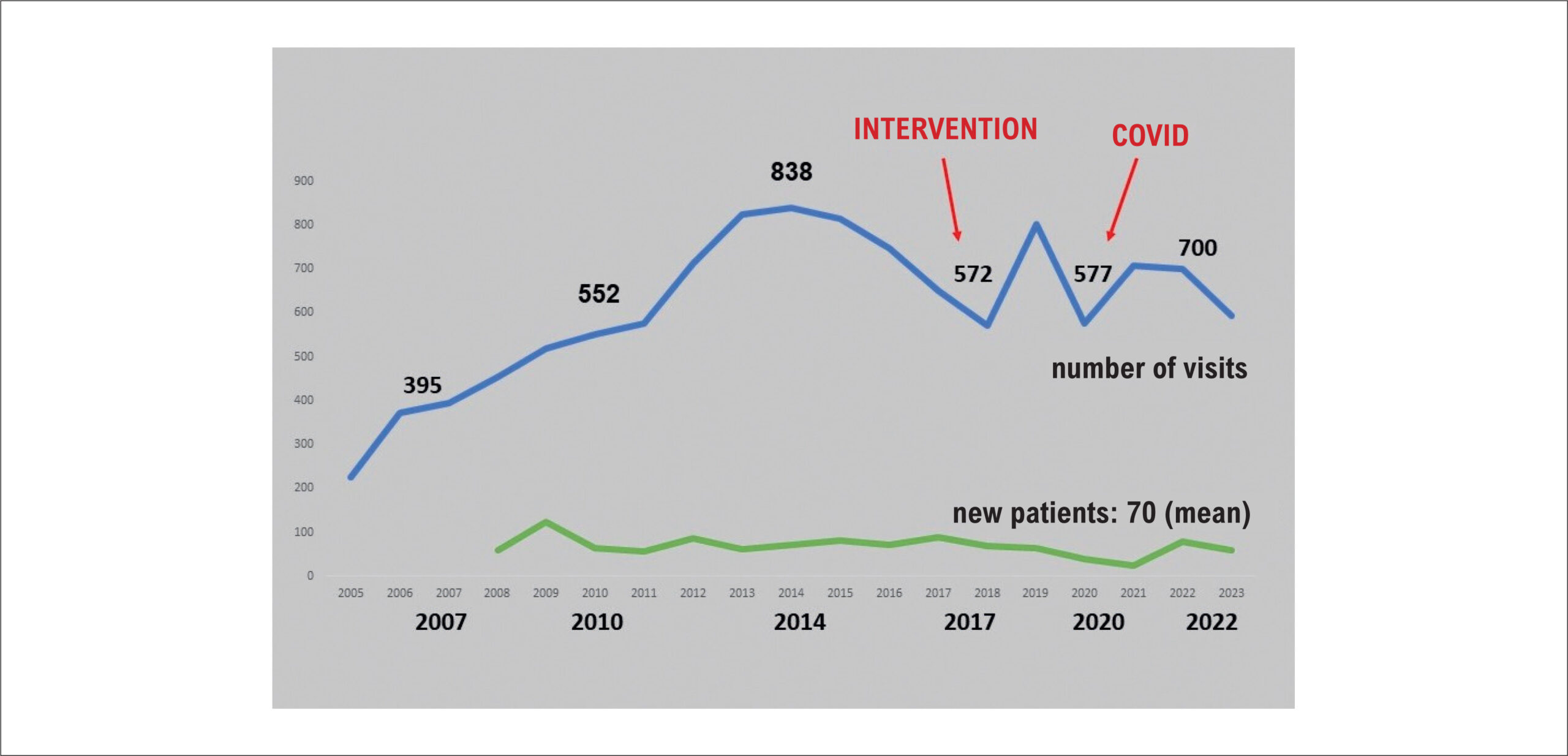
After an early experience reported in this Journal in 2010 and a more detailed analysis published in 2020, there are now over 1600 patients registered in our outpatient clinic. This acquired eighteen years’ experience allowed us to face several situations related to the unit dynamics and to individual patient problems, which we believe might be useful for those particularly in charge of the new emerging unities and also for those already established. Adult congenital heart disease (ACHD) patients have a prevalence of 4 to 6/1.000 individuals, and most of them have the peculiar profile of a long-standing disease frequently started at birth and often submitted to a cardiovascular intervention. Dr Joseph Perloff, in a landmark article in 1973, emphasized that ACHD patients would never be cured and sequelae and residua after invasive treatment should be expected in most of them. In fact, over the subsequent years, studies have shown that the incidence of residual lesions is almost uniform, justifying routine surveillance, except for a minority of individuals with very simple lesions. As discharge is rare, the number of patients is expected to increase progressively, which might interfere with proper care. Four topics seem to be crucial for us regarding follow-up and are briefly reminded below.

[…]

  • Adult
  • Assistência Ambulatorial
  • Congenital Heart Defects
Read Full Article
Creative Commons Attribution (CC BY) Creative Commons license
01/12/2025 DOI: 10.36660/abc.20250173i Views 2
Figure 1
ABC
Editorial

The REBECGA Registry: A Landmark in the Care of Pregnant Women with Heart Disease in Brazil

Imara Correia de Queiroz Barbosa et al. Gláucia Maria Moraes de Oliveira

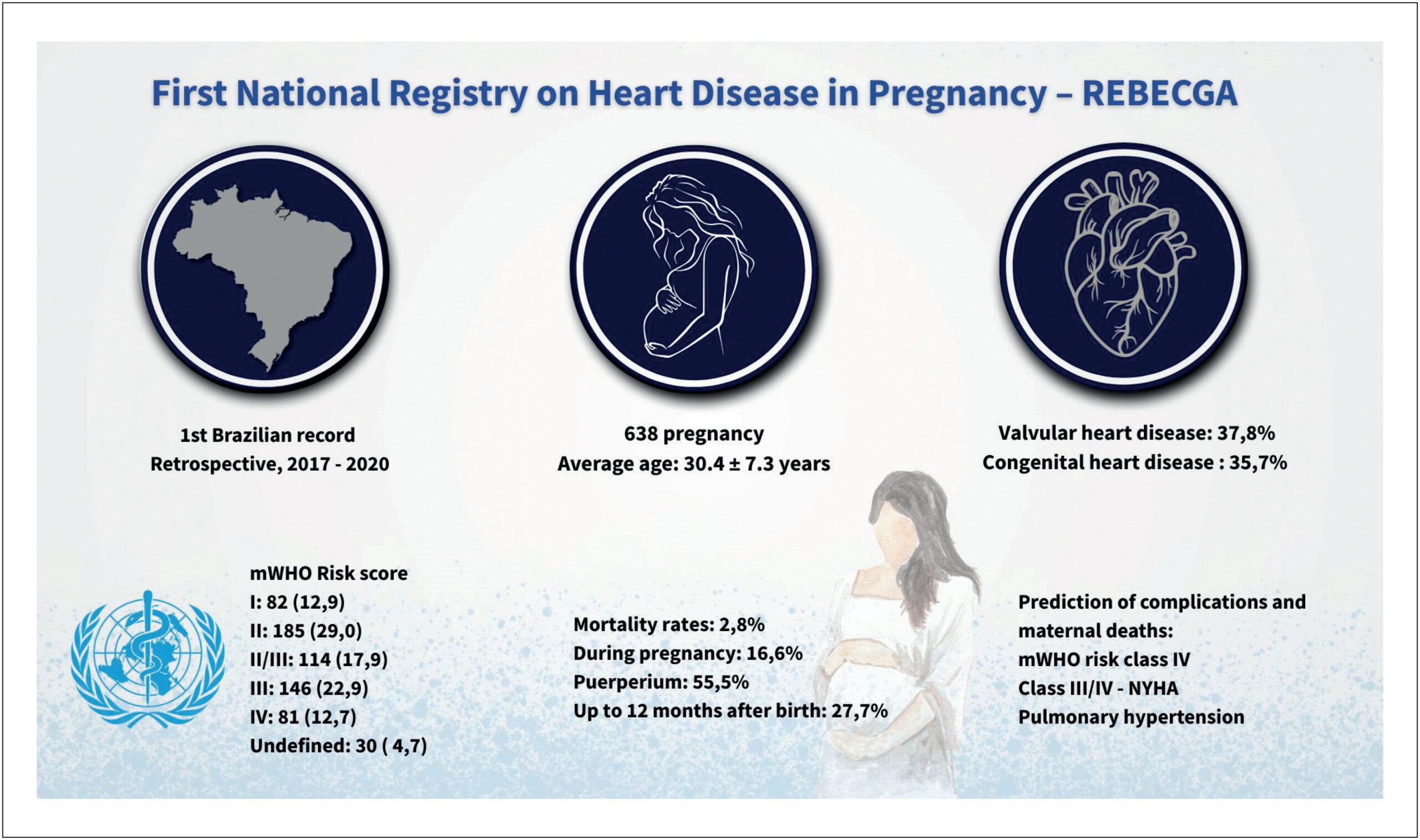
Pregnancy is a major life event for almost every woman. It has been estimated that 1-4% of pregnant women have some form of congenital or acquired cardiac disease, the main non-obstetric cause of maternal mortality worldwide.– Although many women with heart disease tolerate the hemodynamic changes of pregnancy, others may face significant immediate or late risks of pregnancy, including volume overload, arrhythmias, progressive cardiac dysfunction, and death.,

There is a growing prevalence of heart disease during pregnancy, driven by two main factors: advances in the treatment of congenital heart disease (CHD), which have allowed more children to survive into adulthood and consider pregnancy, and the trend of delayed childbearing.,, As maternal age increases, so does the prevalence of comorbidities such as hypertension, diabetes, and hypercholesterolemia, contributing to a higher incidence of acquired heart disease complicating pregnancy.,

[…]

  • Cardiovascular Diseases
  • Congenital Heart Defects
  • Maternal mortality
  • Pregnancy
Read Full Article
Creative Commons Attribution (CC BY) Creative Commons license
19/09/2025 DOI: 10.36660/abc.20250370i Views 1
Challenges and Opportunities in Teaching and Training Pediatric Cardiac Critical Care in Developing Countries: A Narrative Review
IJCS
Review Article

Challenges and Opportunities in Teaching and Training Pediatric Cardiac Critical Care in Developing Countries: A Narrative Review

Carolina Vieira de Campos et al. Carlos Roberto Ribeiro Carvalho

Abstract

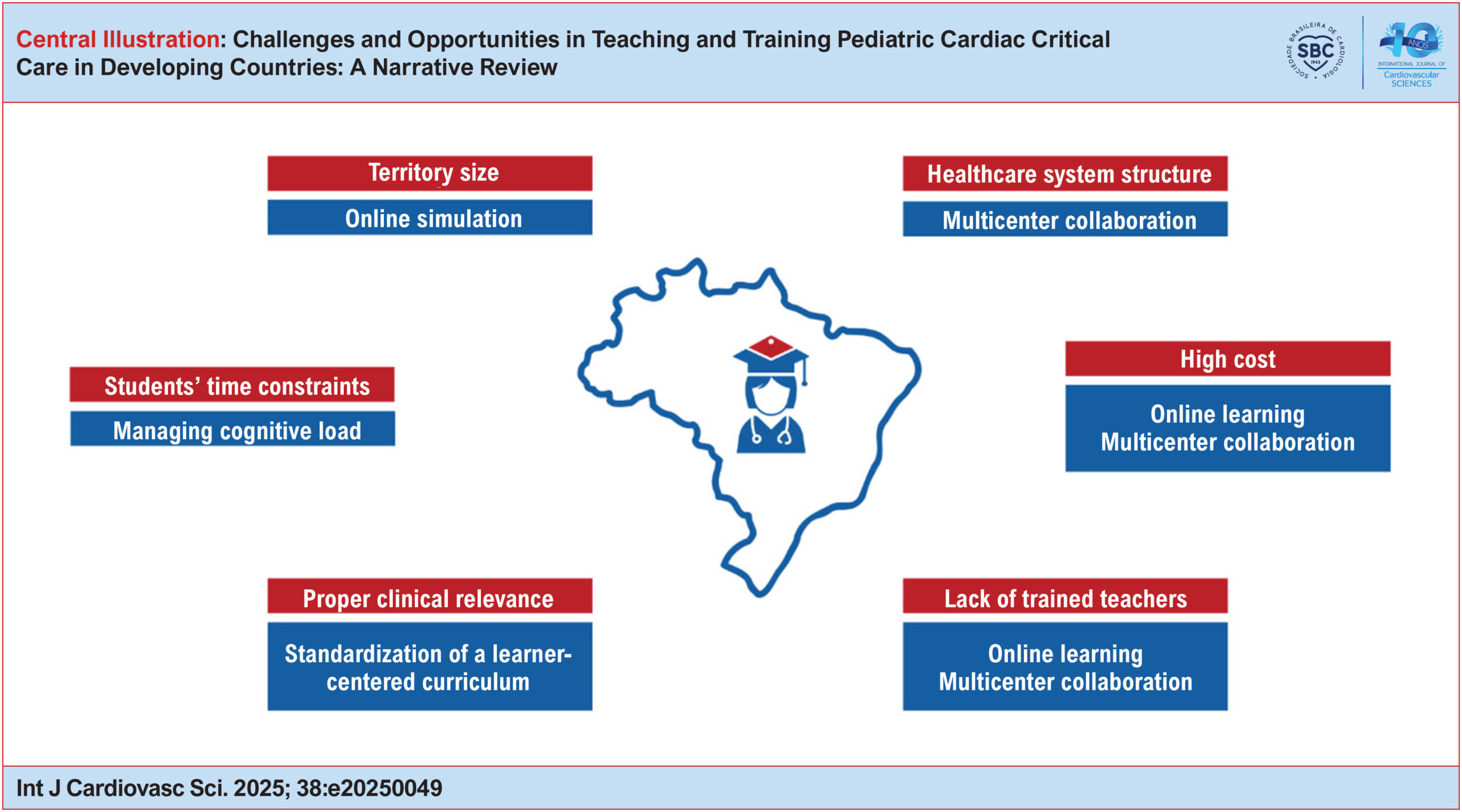
Congenital heart disease (CHD) is a public health issue in developing countries. Effective teaching and training are vital for healthcare professionals to provide adequate care for critically ill cardiac children, but there are many obstacles to adequately training a cohort of healthcare professionals in low- and middle-income countries (LMIC), where education practice is not always aligned with current education evidence. Work overload, time constraints, language, and the healthcare structure itself hinder standardization of an optimal training process for this highly complex scenario. This narrative review aims to explore how current teaching methodologies may help overcome challenges in pediatric cardiac critical care (PCCC) education, thus helping clinical practice, with a special focus on developing countries and the Brazilian scenario.

  • Congenital Heart Defects
  • Critical Care
  • Medical Education
  • Teaching
  • Telemedicine
Read Full Article
Creative Commons Attribution (CC BY) Creative Commons license
01/09/2025 DOI: 10.36660/ijcs.20250049 Views 1
Figure 1
ABC
Image

Silent Giant: Right Coronary Artery Ectasia with a Hidden Fistula to the Coronary Sinus in an Asymptomatic Patient

Inês Ferreira Neves et al. André Ferreira Inês Almeida Tânia Branco Mano Lídia de Sousa

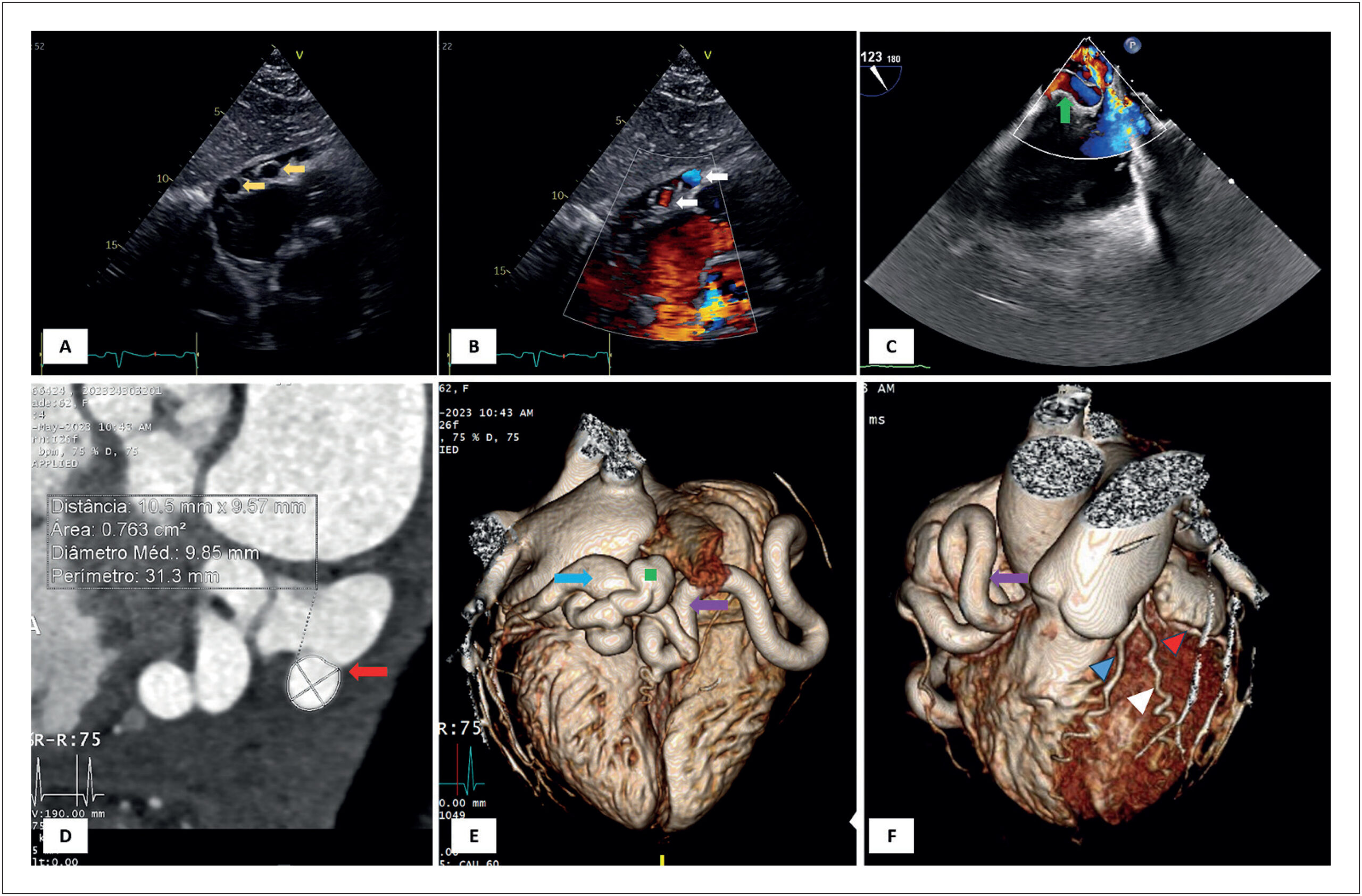
A 62-year-old woman, asymptomatic and without significant medical history, was referred to a routine transthoracic echocardiogram (TTE). The TTE had no abnormal findings but showed, in subcostal view, three round images adjacent to the lateral wall of the right atrium. Color Doppler showed that these were apparently vascularized (, panels A and B, supplemental and ). A transesophageal echocardiogram showed a giant right coronary artery (RCA), apparently originating from the RCA ostium, with turbulent flow inside (, panel C, supplemental ). It was not possible to observe shunts or fistulae in this imaging modality. Given the suspicion of a fistula to the RCA, computed tomography coronary angiography was performed, showing an ectatic RCA with a normal origin, a diameter of 10,5 mm, and a tortuous trajectory, with fistulation to the coronary sinus in its final segment ( panels D to F). Right heart catheterization demonstrated a non-significant left-to-right shunt (Qp: Qs ratio of 1.60). Cardiac magnetic resonance imaging (MRI) had no evidence of perfusion defects during hyperemia, thus excluding the coronary “steal phenomenon”. After a multidisciplinary team discussion, since the patient was asymptomatic and the fistula had no hemodynamic significance, no invasive treatment was performed at this time.

Coronary arteriovenous fistulas are rare, with an incidence of 0.002%., The majority of these are congenital and asymptomatic at presentation. Coronary steal can lead to several complications, including ischemia., The treatment approach remains controversial. The presence of symptoms, significant left-right shunt, and large fistula are the most frequent indications for percutaneous or surgical approach.,

[…]

  • Arteriovenous Fistula
  • Congenital Heart Defects
  • Coronary sinus
  • Coronary Vessels
Read Full Article
Creative Commons Attribution (CC BY) Creative Commons license
28/07/2025 DOI: 10.36660/abc.20240574i
Impact of 3D Printing on Cardiac Surgery in Congenital Heart Diseases: A Systematic Review and Meta-Analysis
ABC
Original Article

Impact of 3D Printing on Cardiac Surgery in Congenital Heart Diseases: A Systematic Review and Meta-Analysis

Davi Shunji Yahiro et al. Mariana de Paula Cruz Brenda Ficheira Coelho Ribeiro Luiza Meireles Teixeira … Maria Fernanda Ribeiro Mendes de Oliveira Aurea Lúcia Alves de Azevedo Grippa de Souza Ana Flávia Malheiros Torbey Juliana Serafim da Silveira Claudio Tinoco Mesquita

Abstract

Background

Congenital heart disease (CHD) poses significant challenges in surgical management due to the complexity of cardiac anatomy. Three-dimensional (3D) printing has emerged as a promising tool in preoperative planning, intraoperative guidance, and medical education for CHD surgeries.

Objectives

We aimed to systematically review the literature on the utilization and benefits of 3D printing technology in CHD surgical interventions.

Methods

A systematic search was conducted across PubMed and EMBASE for studies published up to February of 2024. We included controlled and uncontrolled studies investigating the surgical role of 3D printing in CHD patients. We conducted a single-arm meta-analysis estimating the proportion of change in treatment planning due to the use of 3D printed-models. Moreover, studies that compared 3D printing to conventional care were included into the meta-analysis. A p-value < 0.05 was considered statistically significant.

Results

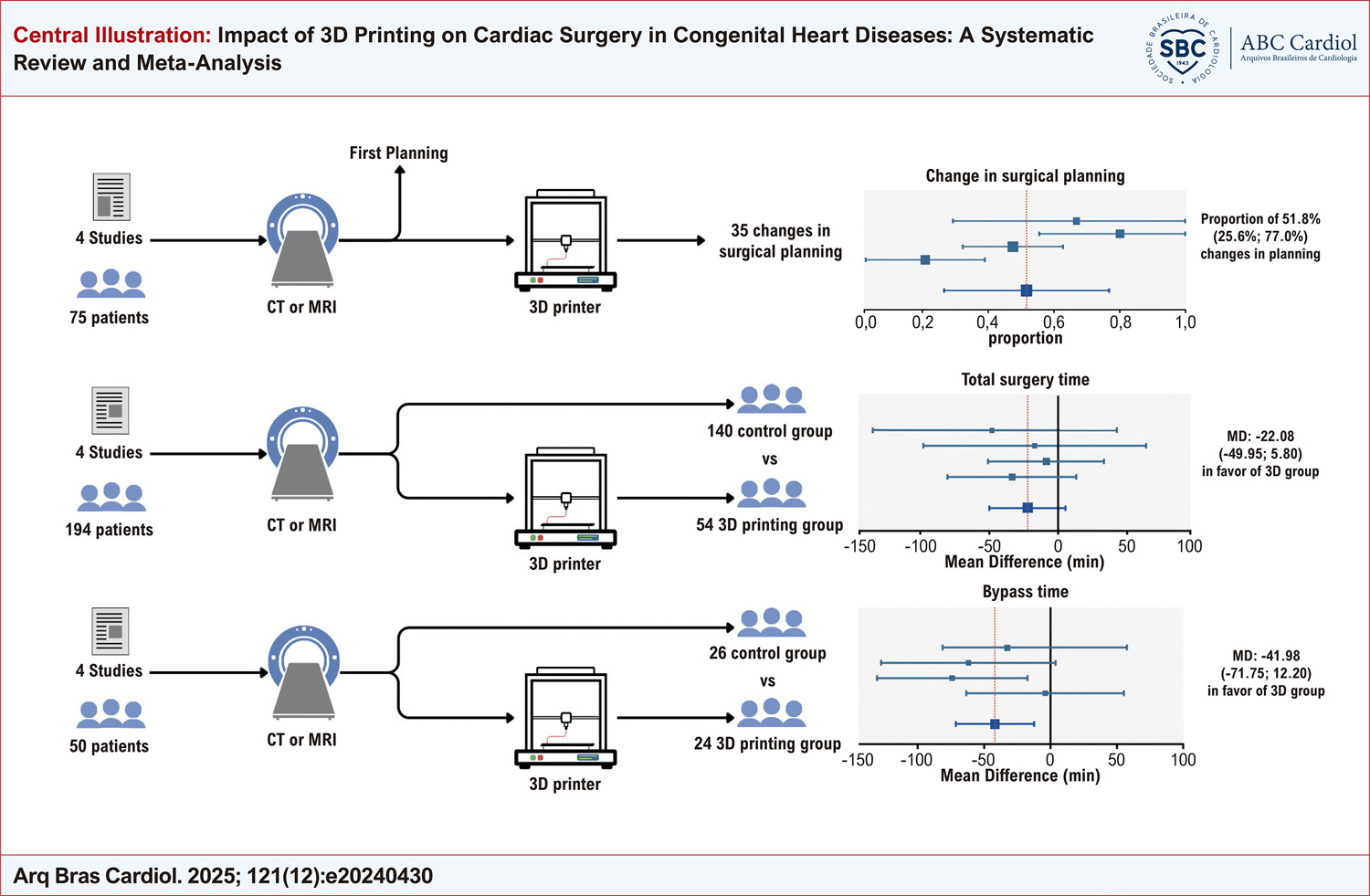
A total of 21 studies met the inclusion criteria, comprising 444 patients undergoing CHD surgeries with 3D printing assistance. Preoperative planning aided by 3D models led to changing surgical decisions in 35 of 75 cases (51.8%; 95% CI 26.6-77.0%, I2=80.68%, p=0.001) and reduced total operative time in 22.25 minutes in favor of the 3D printing group (95%CI 49.95; 5.80 min, I2=0%, p=0.817) but without statistical significance. Albeit in a smaller sample, other endpoints (mechanical ventilation and ICU time) demonstrated some benefit from the technology but without statistical significance.

Conclusions

By providing personalized anatomical models, 3D printing may facilitate surgical planning and execution. More studies are needed to investigate the effects of 3D printing on reducing intervention, hospitalization, and mechanical ventilation times.

  • Congenital Heart Defects
  • Precision Medicine
  • Preoperative Care
  • Three-Dimensional Printing
Read Full Article
Creative Commons Attribution (CC BY) Creative Commons license
14/02/2025 DOI: 10.36660/abc.20240430i
ABC
Editorial

The Role of 3D Printing in Cardiac Surgery for Congenital Heart Diseases

Vitor Ramos

3D printing is revolutionizing various industries, enabling the creation of intricate, customized physical models by layering materials such as silicone or polymers based on digital designs. Among its diverse applications, healthcare has seen significant advancements with this technology.

In cardiology, the adoption of 3D modeling has lagged compared to other fields, primarily due to the challenge of depicting the heart’s complex, dynamic nature. This pattern mirrors the initial slow integration of computed tomography and magnetic resonance imaging into cardiac care — technologies that were first widely used in non-cardiac specialties before transforming cardiovascular diagnosis and management., Over the last decade, however, 3D printing has emerged as a transformative tool in cardiac surgery, enhancing visualization, preoperative planning, and patient outcomes.

[…]

  • Congenital Heart Defects
  • Thoracic Surgery
  • Three-Dimensional Printing
Read Full Article
Creative Commons Attribution (CC BY) Creative Commons license
10/02/2025 DOI: 10.36660/abc.20240798i Views 3
Examining the Role of Exercise Training in Enhancing Life for Adult Congenital Heart Disease: Systematic Review
ABC
Original Article

Examining the Role of Exercise Training in Enhancing Life for Adult Congenital Heart Disease: Systematic Review

Tugba Siyah et al. Naciye Vardar Yagli Ilker Ertugrul Hayrettin Hakan Aykan Melda Saglam

Abstract

Background

Current guidelines advise exercise for most congenital heart disease patients (CHD). However, physical activity remains low in CHD individuals, with limited research on exercise’s effects in adults.

Objectives

The aim of this study is to evaluate the safety and efficacy of exercise training on exercise capacity and quality of life in adult congenital heart disease (ACHD) patients.

Methods

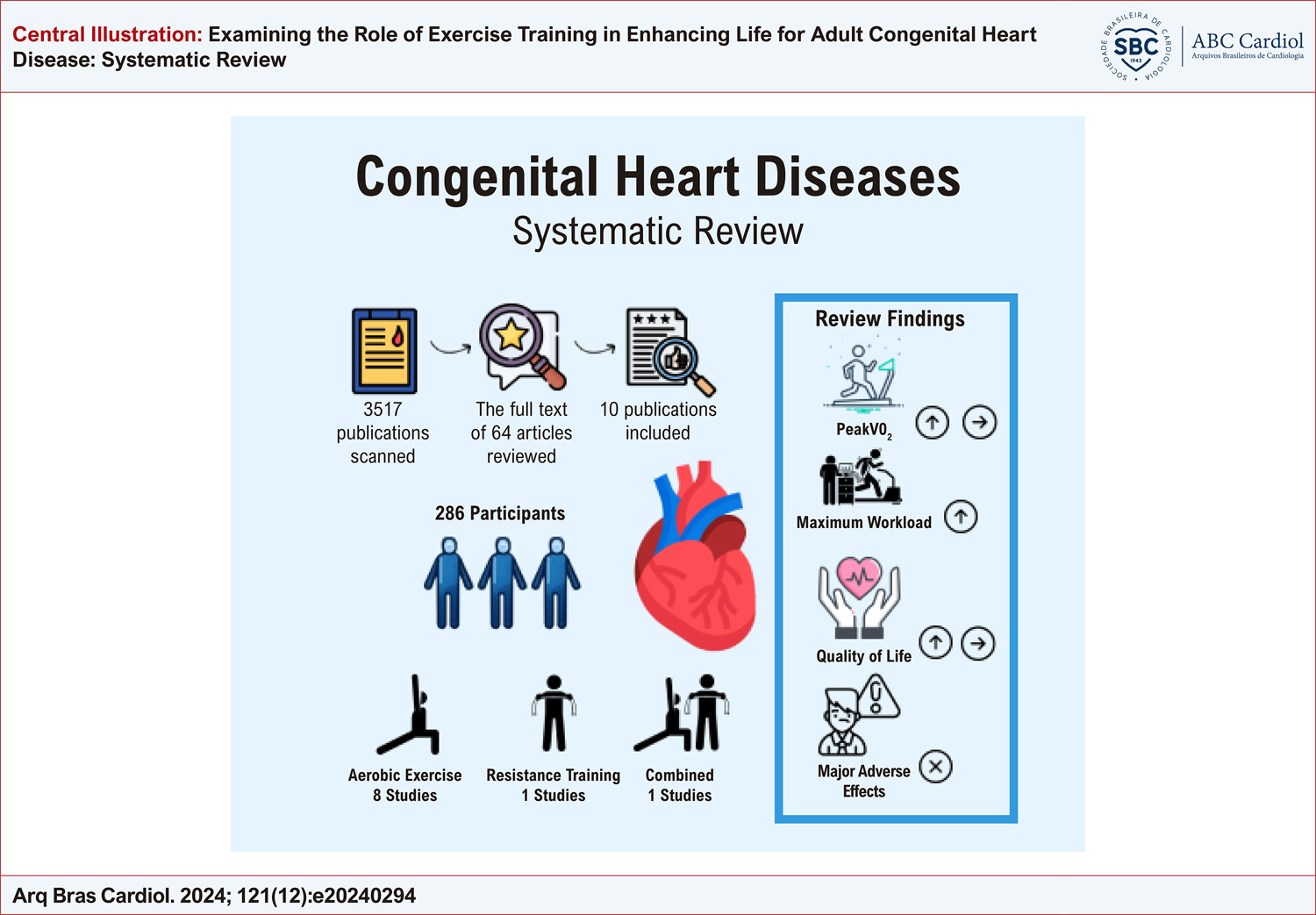
We searched PubMed/Medline, Cochrane Library, Web of Science, and Scopus through December 2022 for randomized controlled trials assessing aerobic and resistance training effects on exercise capacity and quality of life in ACHD. Out of 3,517 citations, ten eligible articles were included.

Results

Meta-analysis of the included randomized controlled trials (286 participants) found no significant change in peak oxygen consumption or quality of life in ACHD with exercise training (pooled mean difference = 0.33 ml/kg/min [95% CI, -0.88 to 1.54 ml/kg/min]; p = 0.60; I2= 3%). However, the increase in maximum workload was significant (pooled mean difference = 8.86 watts [95% CI, 0.78 to 16.93], p = 0.03, I2 = 0%).

Conclusions

Our review confirms that exercise training increases the maximum workload in ACHD patients. However, the lack of a standardized protocol among exercise interventions in this population may have contributed to the absence of a significant change in peak VO2 and quality of life observed in the conducted studies. The heterogeneity of exercise programs could be a contributing factor to the inconsistency of the results. In this context, the implementation of standardized exercise protocols in future research, particularly with larger sample sizes, is crucial to enhance the comparability of outcomes. Well-designed randomized controlled trials studying structured exercise training in ACHD patients will provide clearer insights.

  • Congenital Heart Defects
  • Endurance Training
  • Exercise
  • Quality of life
Read Full Article
Creative Commons Attribution (CC BY) Creative Commons license
13/12/2024 DOI: 10.36660/abc.20240294i Views 1
Figure 1
ABCIC
Original Article

Prevalence of Fetal Heart Disease in Pregnant Women Referred to a Specialized Service Due to Cardiac Abnormalities on Morphological Ultrasound

Andressa Pinto Michael et al. Marcelo França Soares Roque Antonio Foresti Marco Otilio Duarte Rodrigues Sandra Mara Witkowski

Abstract

Background:

Congenital Heart Disease (CHD) is a malformation of the heart and/or great vessels and is the third leading cause of neonatal death. It can be detected in utero by Morphological Ultrasound/Morphology Scan (MUS) and confirmed by Fetal Echocardiography (FE).

Objective:

This study aims to determine whether heart disease identified by MUS in pregnant women at a maternal referral center in a southern Brazilian city is confirmed by FE.

Methods:

This observational, descriptive, and retrospective study was conducted from March 2019 to January 2023. It focused on pregnant women in the public health system, treated through the Unified Health System (SUS) at a maternal referral center in a southern Brazilian city, who had cardiac abnormalities detected on MUS and confirmed by FE.

Results:

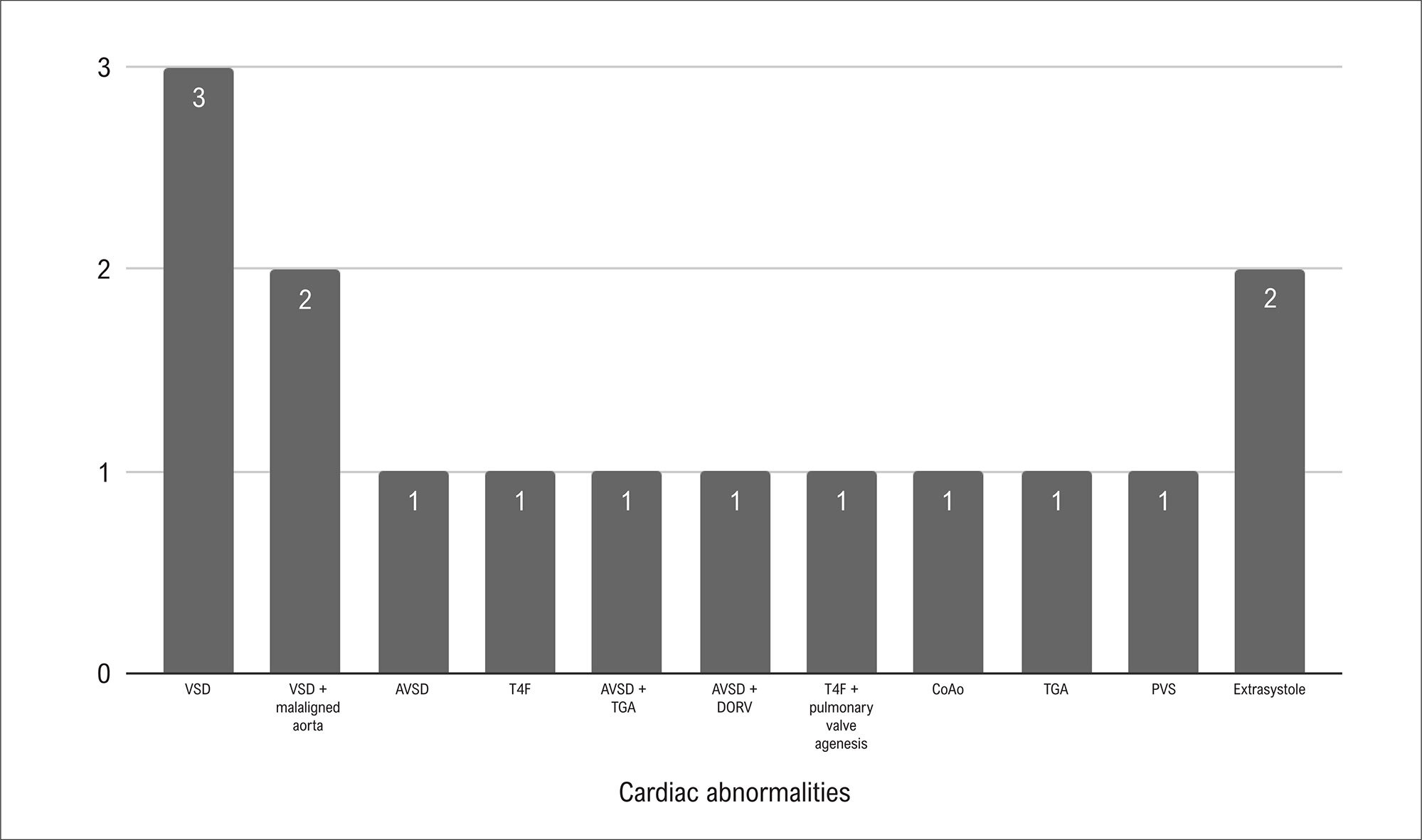
Among the 37 pregnant women with suspected cardiac abnormalities on MUS, 15 cases were confirmed by FE, yielding a diagnostic agreement rate of 21.62% (n = 8) between the two exams. Ventricular Septal Defect (VSD) was the most prevalent heart defect, accounting for 20% of isolated cases. Of the 15 cases with cardiac alterations on FE, two were transferred to a specialized hospital and five died.

Conclusion:

Fetal cardiac abnormalities were confirmed in fewer than half of the women referred following MUS, with concordance between exams in only eight cases. Continuous training in MUS reduces costs and inconvenience. Professionals qualified in FE are essential for the early diagnosis of CHD, improving care, and reducing infant mortality.

  • Congenital Heart Defects
  • Echocardiography
  • Prenatal Ultrasonography
Read Full Article
Creative Commons Attribution (CC BY) Creative Commons license
09/12/2024 DOI: 10.36660/abcimg.20240102i
Figure 1
IJCS
Original Article

Strengthening the Concept of Burden in Congenital Heart Diseases as a Contributor in Achieving Sustainable Development Goals: A Bibliometric Study

Adilia M. P. Sciarra et al. Fernando Batigalia Daniel L. Cobo Ulisses A. Croti

Abstract

Introduction

Since more children with congenital heart disease (CHD) are surviving, policy changes are needed to improve their survival and quality of life. Global data and a literature review were systematically analyzed using The Global, Regional, and National Burden of CHDs, Global Burden of Disease (GBD) Study, published in The Lancet Child & Adolescent Health, which provided estimates of mortality from CHD.

Objective

To outline studies with CHDs and the concept of burden as a possible contributor to the achievement of sustainable development goals (SDGs) over time.

Methods

Bibliographic references and related authors (2005 to 2022) were researched and analyzed. Web of Science (WoS), Clarivate Analytics, was chosen as the source database to outline the results through bibliometric analysis, which is characterized by a quantitative and statistical technique to understand and measure new issues, as well as identify some trends in current research, regarding the issue of burden in CHDs.

Results

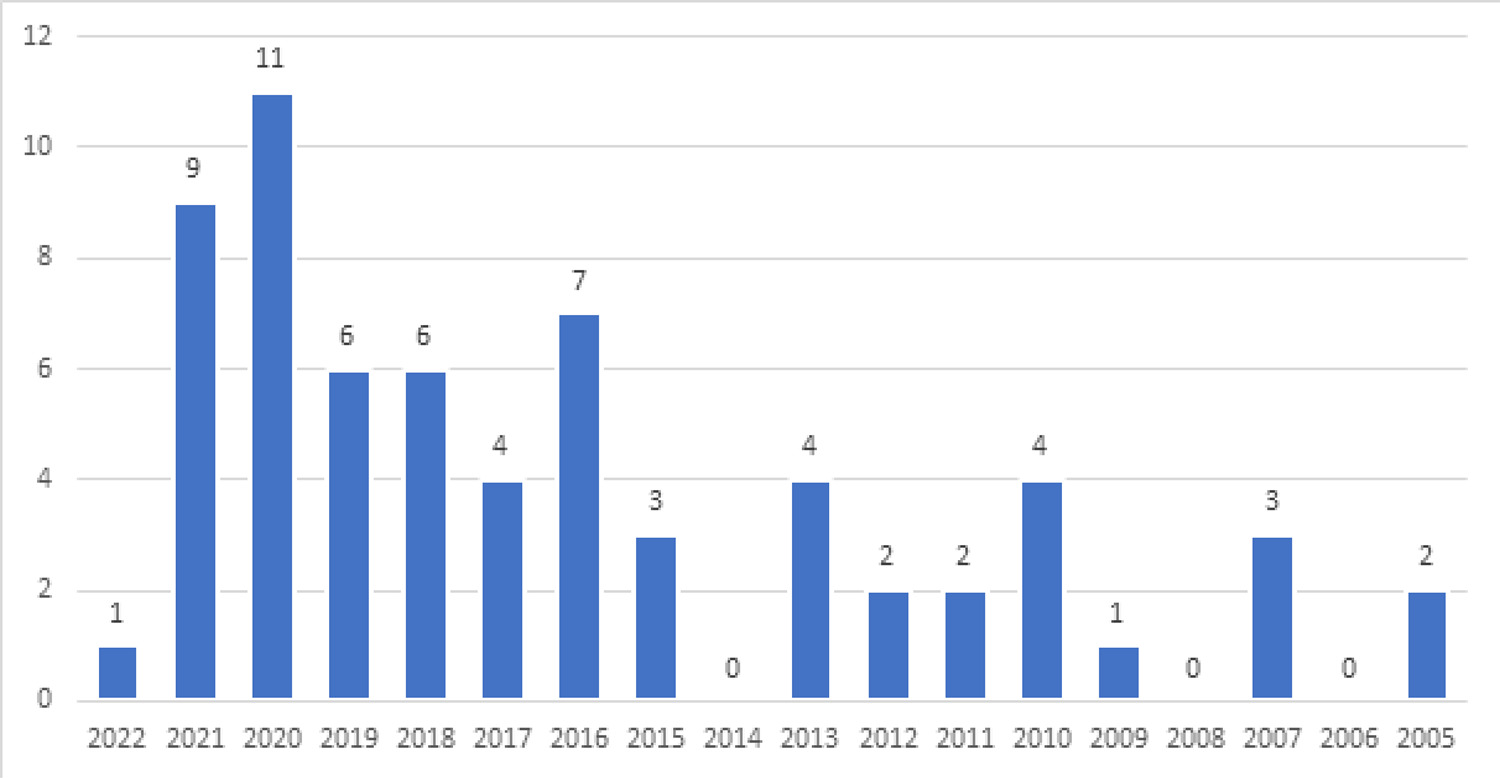
Sixty-five selected publications were found according to the bibliographic survey using the keywords “Burden CHDs.” Afterwards, bibliometric analysis was performed, filtering the following results: years of publication; countries/regions; authors and number of citations; citation analysis; WoS index; types of documents; and research areas. The results are presented as figures.

Conclusion

The concept of burden addressing the issue of CHD has been used with great propriety for the development of goals for care of CHDs, mainly in the last decade, highlighting the year 2020.

  • Chronology
  • Congenital Heart Defects
  • Global Burden of Disease
Read Full Article
Creative Commons Attribution (CC BY) Creative Commons license
15/07/2024 DOI: 10.36660/ijcs.20230069
Figure 1
ABCIC
Case Report

Stent Implantation in the Right Ventricular Outflow Tract to Pulmonary Artery in a Child with Pentalogy of Cantrell: Case Report

Jonathan Guimarães Lombardi et al. Paulo Correia Calamita Laura Moreira Tannus Mayra Rosana Palmeira Barreto … Luiza Emylce Pelá Rosado Giulliano Gardenghi

Introduction

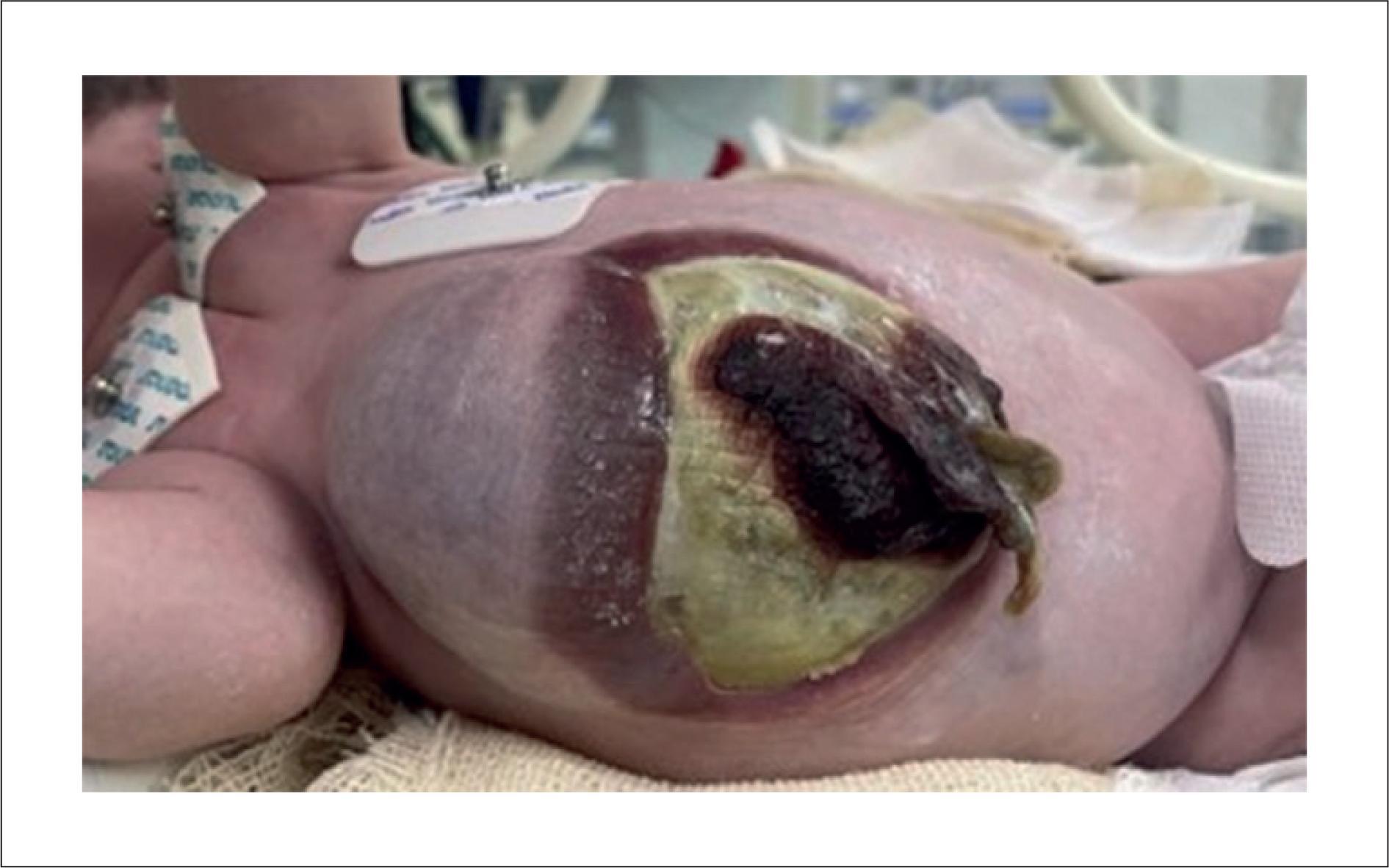
Pentalogy of Cantrell is a syndrome that was first described in 1958. It is characterized by 5 main malformations: defect in the lower sternum, defect in the anterior pericardium, defect in the upper abdomen, deficiency of the anterior diaphragm, and heart defects. The syndrome is rare, with an incidence of 1 in 65,000 live births. It is characterized by midline defects resulting from defective development of the septum transversum. Other congenital heart lesions associated with pentalogy of Cantrell may include atrial septal defect, pulmonary valve stenosis, tetralogy of Fallot, dextrocardia, anomalous pulmonary venous connection, tricuspid atresia, and truncus arteriosus. Children with pentalogy of Cantrell constitute a population with high morbidity and mortality. In this case report, we demonstrate a hemodynamic procedure performed in a patient with this rare congenital anomaly.

[…]

  • Catheterization
  • Congenital Heart Defects
  • Treatment Outcome
Read Full Article
Creative Commons Attribution (CC BY) Creative Commons license
06/06/2024 DOI: 10.36660/abcimg.20240029i Views 2
Figure 1
ABC
Image

Spatio-Temporal Image Correlation: Three-Dimensional Imaging for Fetal Cardiac Screening and Congenital Heart Disease Assessment

André Malho et al. Renato Silveira Ximenes Nathalie Jeanne Bravo-Valenzuela Edward Araujo Júnior

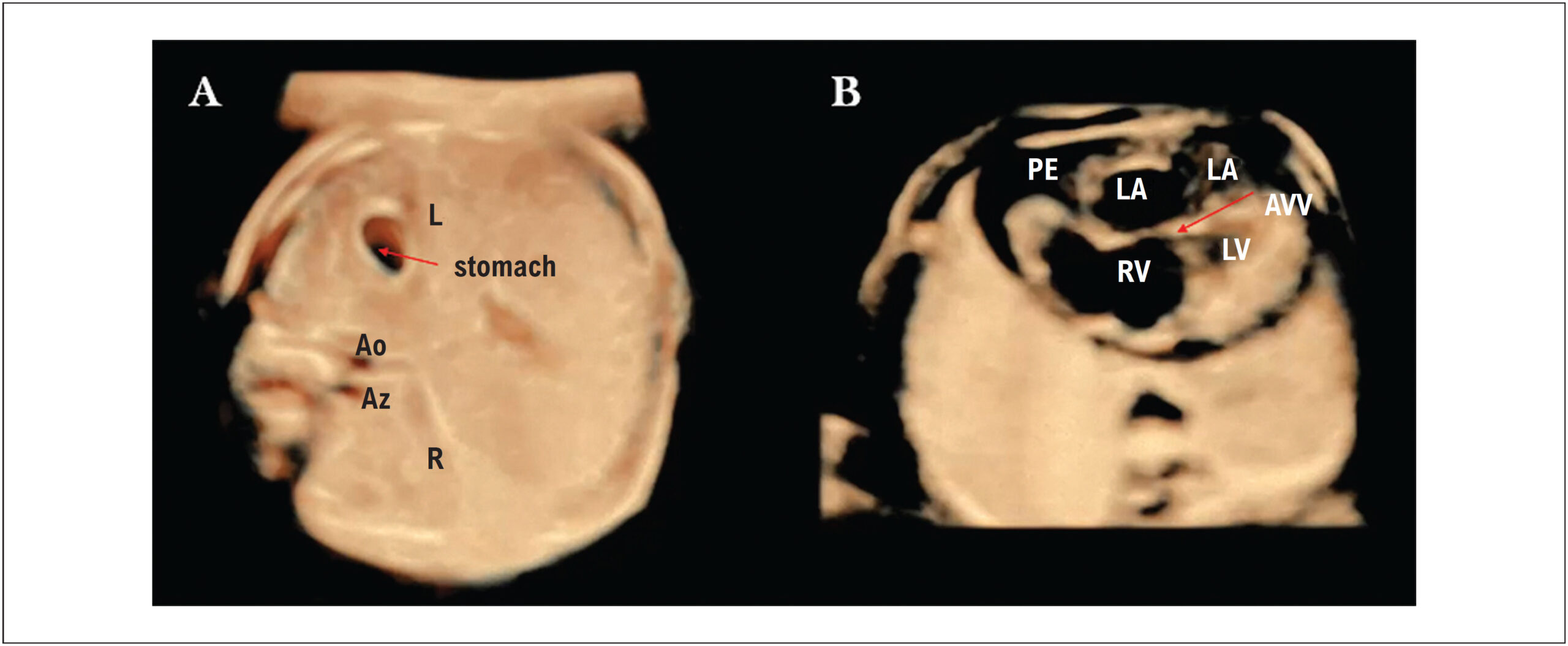
Heart defects are among the most common congenital malformations, occurring in 4 to 12 per 1,000 live births, depending on the population studied. Congenital heart disease (CHD) is an important cause of mortality related to birth defects. Therefore, prenatal diagnosis of CHD is crucial to improve the prognosis associated with this disease. In this scenario, the development of prenatal cardiac ultrasound screening programs serves as crucial tools that have increased the early detection of CHD. These programs achieve this by adding the ventricular outflow tract and superior mediastinum views (three vessels – 3V and 3V with trachea) to the standard four-chamber (4C) view when scanning the cardiac ultrasound.

The development of advanced imaging technologies, such as three- and four-dimensional (3D/4D) ultrasound and Spatio-Temporal Image Correlation (STIC), has improved the quality of ultrasound images of the fetal heart with a positive impact on the diagnosis of cardiac malformations. The 4D-STIC technology allows the capture of thousands of cardiac images using a 3D volumetric transducer by a single 7.5 to 15-second slow-motion scan of the 4C view of the fetal heart. The acquired 3D/4D volumes contain a “block” of information of the complete cardiac cycle that can be stored for later off-line navigation of the fetal heart, allowing detailed analysis of cardiac anatomy by the sonographer, or sent via Internet link for analysis by experts in tertiary centers.

[…]

  • Congenital Heart Defects
  • fetal heart
  • Three-Dimensional Imaging
  • Ultrasonography
Read Full Article
Creative Commons Attribution (CC BY) Creative Commons license
29/04/2024 DOI: 10.36660/abc.20230580i Views 1
IJCS
Editorial

Is Pulse Oximetry a Reliable Method for Screening for Critical Congenital Heart Disease in Asymptomatic Neonates at 35 Weeks or More of Gestation?

Thais Salim et al. Gabriel Porto Soares

Congenital cardiovascular malformations (CCVMs) are structural abnormalities of the heart or blood vessels present during fetal life and at birth. From 2010 to 2017, the incidence of CCVMs was estimated at 9.4 cases per 1,000 live births in countries in Southeast Asia and the Northern Hemisphere. During the same period, rates in Brazil ranged from 9.7 (in the northern region) to 62.8 (in the southeastern region) per 1,000 live births, and similar values have been reported by the Global Burden of Disease. Variability in the incidence of CCVMs is explained by diagnostic challenges arising from its broad clinical spectrum, which ranges from asymptomatic to symptomatic heart disease with associated risk of mortality. Approximately 25% of all patients with CCVMs are considered critical and require intervention within the first year of life because of the life-threatening nature of CCVMs and the significant dependence on hospital-based medical care.,

Congenital malformations are the second leading cause of death in children under 1 year of age and the third leading cause of death in people under 20 years of age in the last decade in Brazil.,, Among these malformations, CCVMs account for nearly 50% of malformation-related deaths.,,, Despite their high incidence and significant impact on mortality, CCVMs are deemed preventable causes of death since early therapeutic intervention could alter their outcome. The high mortality rate of CCVMs is due to the lack of prenatal and perinatal diagnoses, which hinders or delays effective treatment and results in death.,,-

[…]

  • Congenital Heart Defects
  • Echocardiography
  • Newborn Infant
  • Oximetry
Read Full Article
Creative Commons Attribution (CC BY) Creative Commons license
26/04/2024 DOI: 10.36660/ijcs.20240030 Views 2
Three-Dimensional Model Printing in Congenital Heart Disease
ABCIC
Review Article

Three-Dimensional Model Printing in Congenital Heart Disease

Milton Benevides Freitas et al. Jose Luiz Figueiredo Francisco Candido Cajueiro Rafaela Melo Lima … Marcio Handerson Freitas Cristiane Maria Teixeira

Abstract

Introduction:

Three-dimensional (3D) printing refers to a set of methods used to create solid 3D objects, based on digital files. The use of 3D models can improve understanding and knowledge about congenital heart diseases. Their usefulness has been demonstrated in preoperative planning, simulation of interventional procedures, and in surgical decision-making. The objective of this study is to offer a review of the literature on the various rapid prototyping methods and their applicability in medical practice, especially in congenital heart diseases.

Methods:

This is a literature review study. Data for discussion were collected by consulting the following electronic database: LILACS, MEDLINE, SCOPUS, and the Scientific Electronic Library Online.

Results:

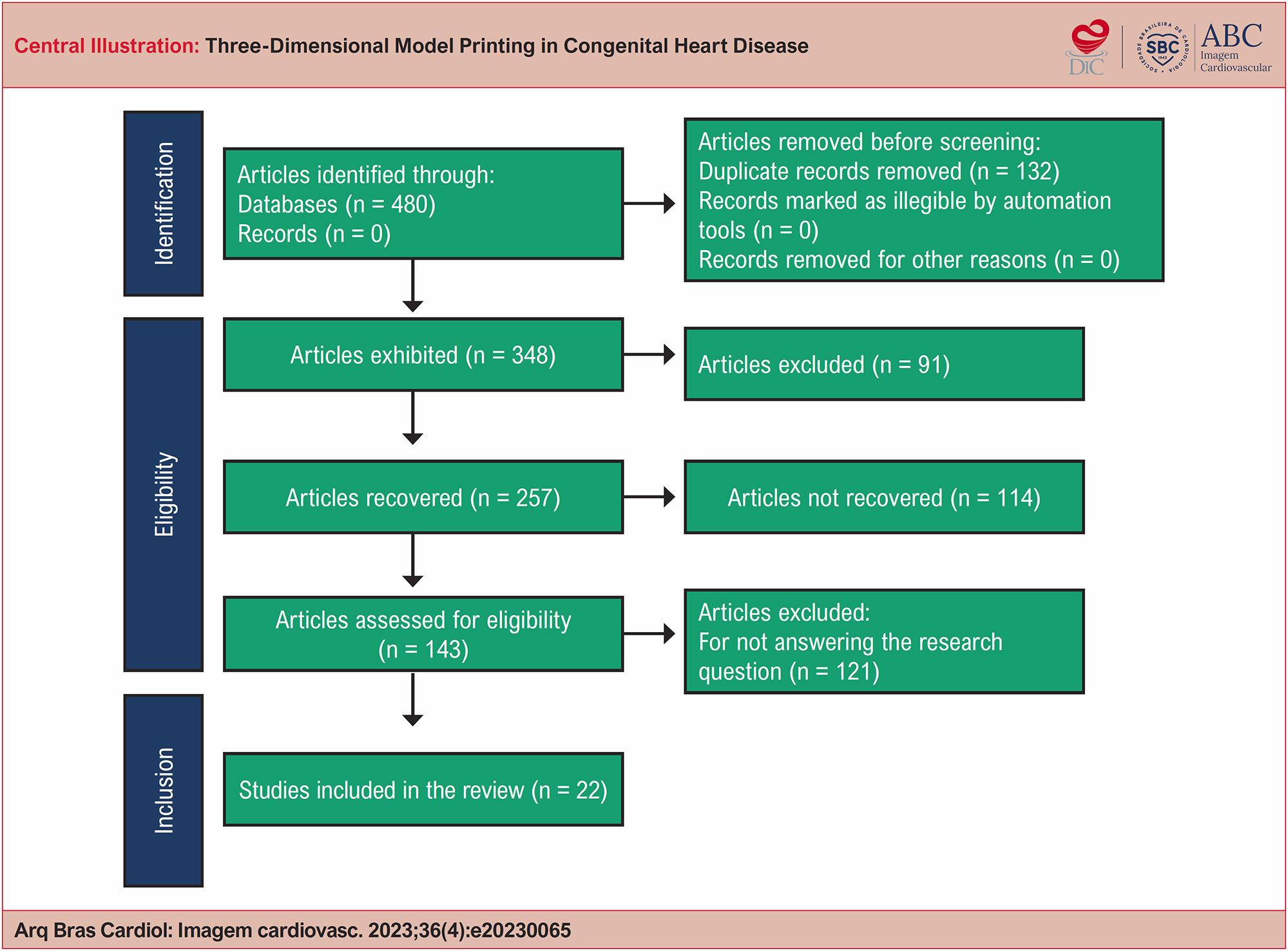
During the period evaluated by the study, a total of 480 articles were published addressing the topic of 3D printing (TDP) for heart disease, with 196 articles related to TDP for congenital heart disease. Of these, 22 were included in this study.

Conclusion:

TDP is a technology that is still under construction. It has the potential to assist physicians and surgical teams in therapeutic decision-making, to promote learning for students in specialization and postgraduate studies, to contribute to surgical skills training, and to clarify information for family members.

  • Cardiology
  • Congenital Heart Defects
  • Thoracic Surgery
  • Three-Dimensional Printing
Read Full Article
Creative Commons Attribution (CC BY) Creative Commons license
21/12/2023 DOI: 10.36660/abcimg.20230065i
Risk Factors for Surgical Site Infection in Patients Undergoing Pediatric Cardiac Surgery
ABC
Original Article

Risk Factors for Surgical Site Infection in Patients Undergoing Pediatric Cardiac Surgery

Anna Christina de Lima Ribeiro et al. Rinaldo Focaccia Siciliano Antonio Augusto Lopes Tania Mara Varejão Strabelli

Abstract

Background

Surgical site infection is an important complication after pediatric cardiac surgery, associated with increased morbidity and mortality.

Objectives

We sought to identify risk factors for surgical site infection after pediatric cardiac surgeries.

Methods

A case-control study included patients aged between 1 year and 19 years and 11 months of age, submitted to cardiac surgery performed at a tertiary cardiac center from January 1 st , 2011, through December 31, 2018. Charts were reviewed for pre-, intra, and postoperative variables. We identified two randomly selected control patients with the same pathophysiological diagnosis and underwent surgery within thirty days of each index case. Univariate and multivariate logistic regression analyses were performed to identify risk factors. Statistical significance was defined as p<0.05.

Results

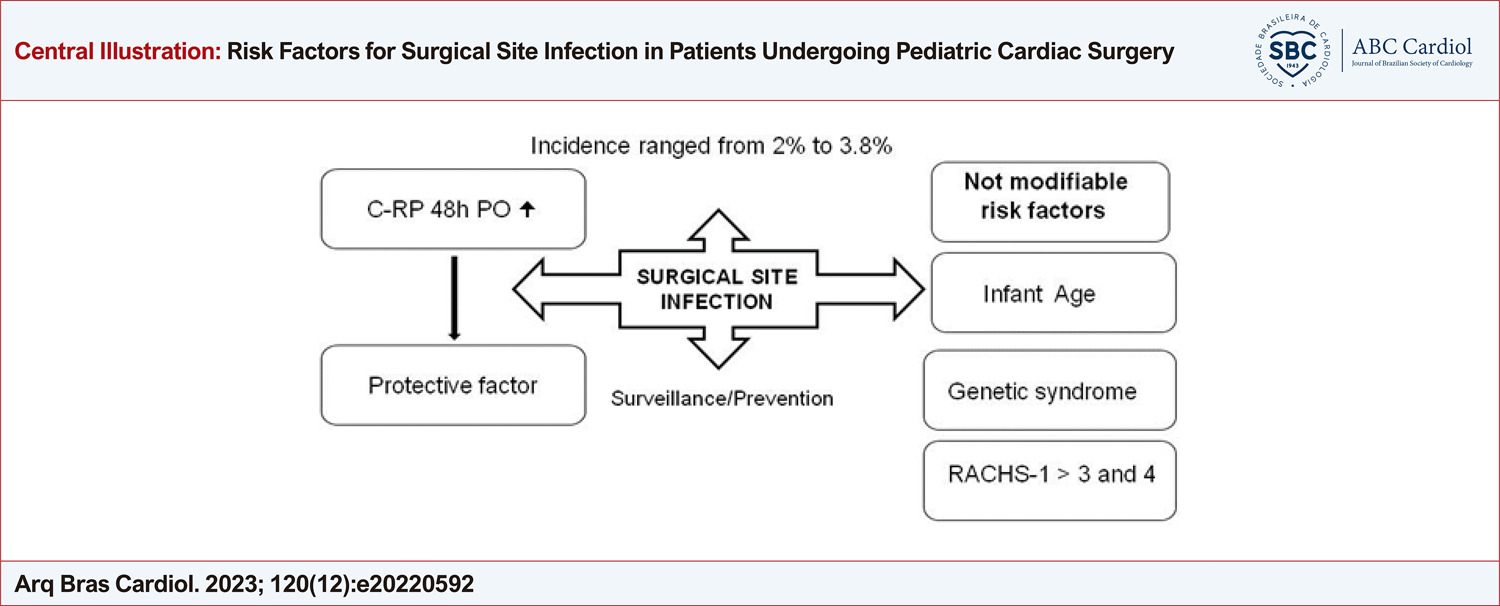
Sixty-six cases and 123 controls were included. Surgical site infection incidence ranged from 2% to 3.8%. The following risk factors were identified: Infant age (OR 3.19, 95% CI 1.26 to 8.66, p=0.014), presence of genetic syndrome (OR 6.20, CI 95% 1.70 to 21.65, p=0.004), categories 3 and 4 of RACHS-1 (OR 8.40, CI 95% 3.30 to 21.34, p<0.001), 48 h C-reactive protein level range was detected as a protective factor for this infection (OR 0.85, 95% CI 0.73 to 0.98, p=0.023).

Conclusions

The risk factors defined in this study could not be modified. Therefore, additional surveillance and new preventive strategies need to be implemented to reduce the incidence of surgical site infection. The increased CRP in the postoperative period was a protective factor that needs further understanding.

  • Cardiac Surgical Procedures
  • Congenital Heart Defects
  • postoperative complications
  • Risk Factors
  • Surgical Wound Infection
Read Full Article
Creative Commons Attribution (CC BY) Creative Commons license
18/12/2023 DOI: 10.36660/abc.20220592
Figure 1
ABCIC
Case Report

Criss-Cross Heart: A Case Report

Mateus Oliveira Potratz et al. Lorrayne Zonatele Garbo Kamila Pompermaier Pessimilio André Silveira Loss … Crislane Belisario Ambrozim Ana Luiza Teixeira Albert Lima Danielle Lopes Rocha

Abstract

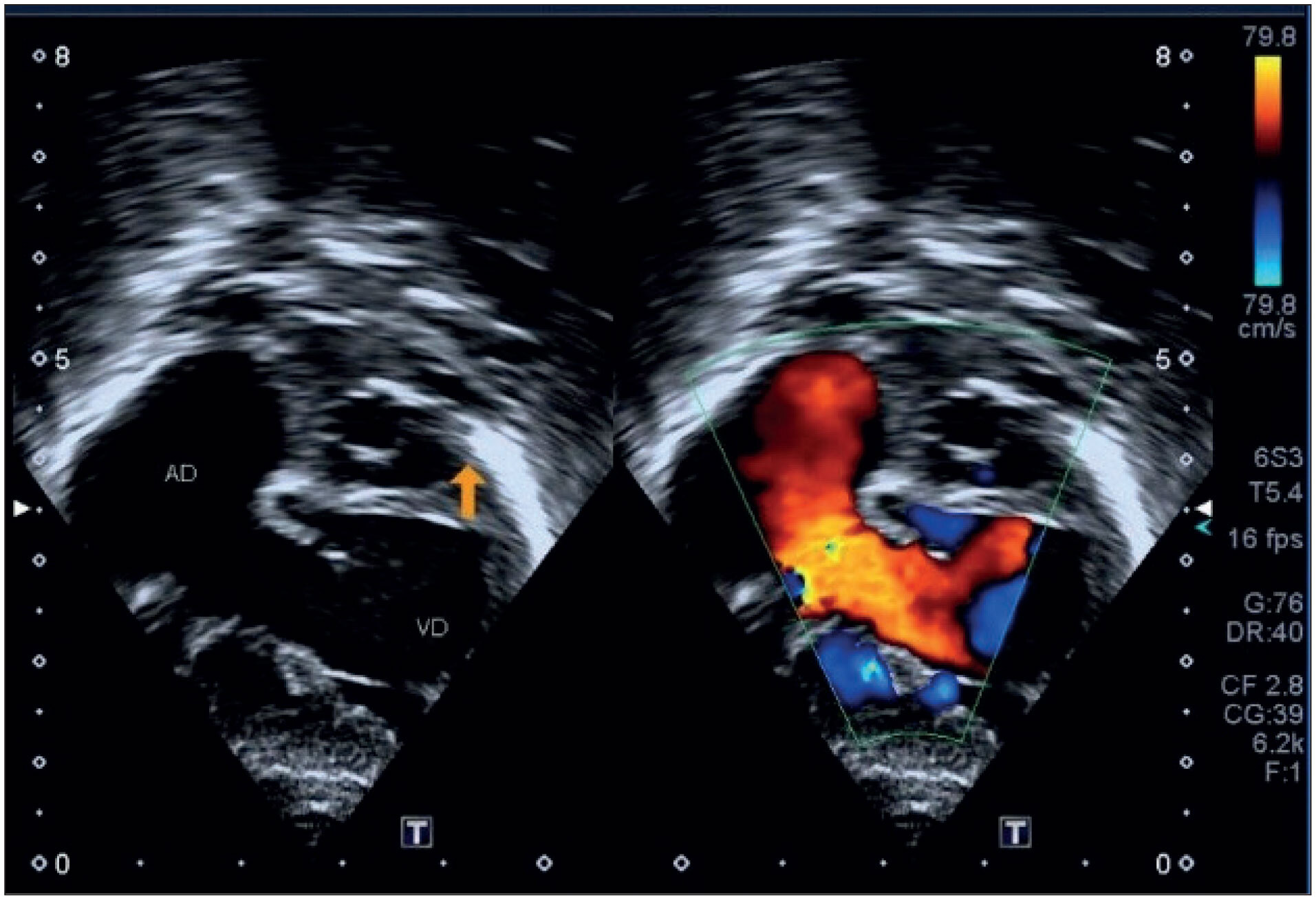
Criss-cross heart was first described in 1974. It is a rare congenital heart malformation that occurs in 8 cases per 1,000,000 children, and represents only 0.1% of congenital malformations. The diagnostic methods of choice are transthoracic echocardiography, cardiac magnetic resonance (CMR), computed tomography angiography (CT) and, sometimes, cardiac catheterization. This report describes the case of a newborn with a criss-cross heart in addition to double-outlet right ventricle (RV), with poorly positioned vessels, in addition to atrial septal defect (ASD), interventricular septal defect, tricuspid valve dysplasia and persistent left superior vena cava. The exact etiology of this malformation is not known, but it seems to occur due to rotation of the ventricles in their longitudinal axis, not accompanied by rotation of the atrial and atrioventricular (AV) valves. This movement produces abnormal ventricular inlets, determining that the RV be positioned on a superior plane and the left ventricle on an inferior plane. Although the exact cause of this anomaly is still unknown, it is believed that a genetic abnormality may be leading to these cases: mutation of the Cx43 gene. Diagnosis of the case concerned was given by transthoracic echocardiography and computed CT of the aorta and pulmonary arteries, which showed, in addition to the criss-cross heart, other abnormalities, such as double-outlet RV, large ASD and ventricular septal defect (VSD).

  • Congenital Heart Defects
  • Crisscross Heart
  • Heart Ventricles
Read Full Article
Creative Commons Attribution (CC BY) Creative Commons license
31/03/2023 DOI: 10.36660/abcimg.2023282i Views 1
Figure 1
ABCIC
Case Report

Left Ventricular-to-right Atrial Shunt (Gerbode Defect) Associated with Interventricular Communication in a 42-year-old Patient

Andressa Sardá Maiochi Takagui et al. Thales Cantelle Baggio Mariana Baretta Savariz Giulia Theilacker Thalia Elisa Baggio

Introduction

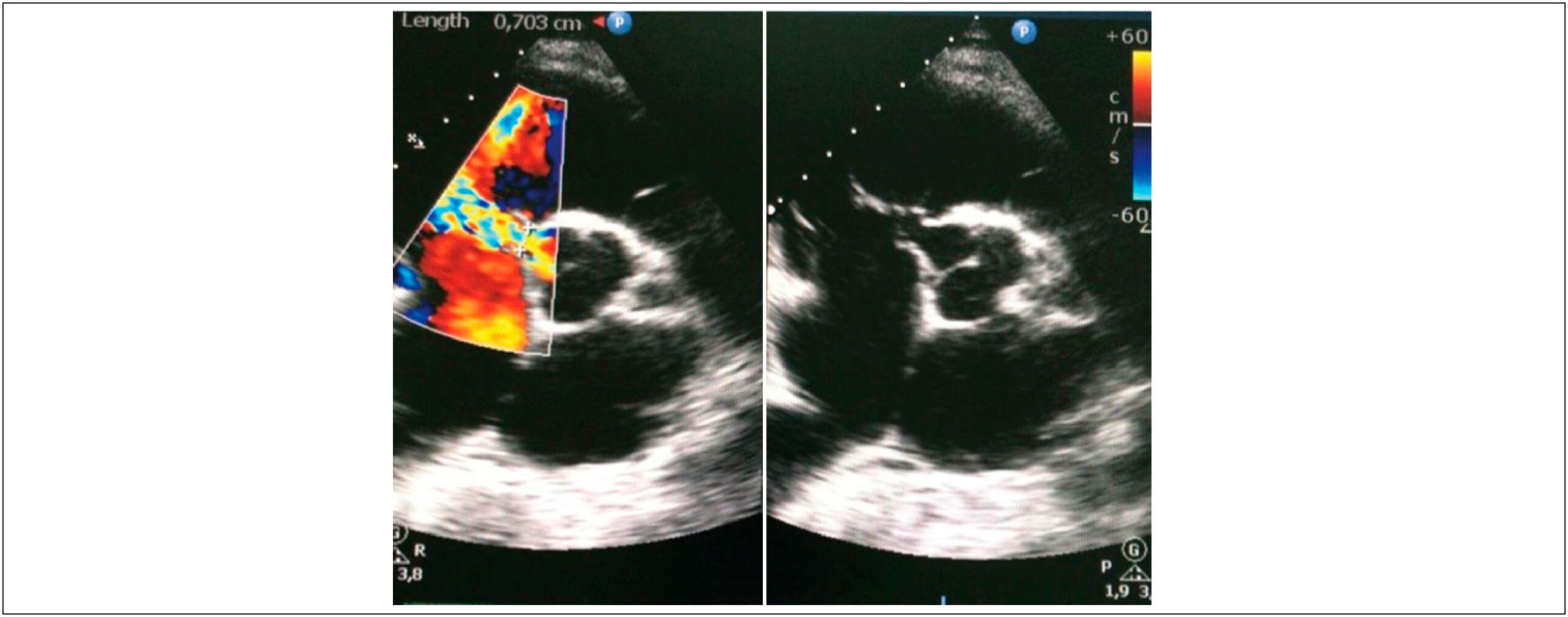
The Gerbode defect, a rare ventricular septal anomaly characterized by communication between the left ventricle (LV) and the right atrium (RA), represents approximately 0.08% of intracardiac shunts and less than 1% of congenital heart defects. Although it classically has a congenital etiology, secondary causes of infective endocarditis, myocardial infarction (MI), and iatrogenesis have been reported. The Gerbode defect was first described in 1857, and its first successful surgical treatment was reported by Kirby at the Hospital of the University of Pennsylvania.

Here, we report an unusual case of congenital Gerbode defect in a 42-year-old patient whose diagnosis was challenging due to the presence of an additional shunt at the ventricular level.

[…]

  • Congenital Heart Defects
  • Heart Septal Defects, Ventricular
  • Ventricular septal defects
Read Full Article
Creative Commons Attribution (CC BY) Creative Commons license
16/06/2021 DOI: 10.47593/2675-312X/20213401eabc142 Views 1

Could not load more articles. Please try again.

How to cite this article

EndNote RIS

Electronic Document Format (Vancouver)

Oliveira GMM, Brant LCC, Polanczyk CA, Malta DC, Biolo A, Nascimento BR, Souza MFM, et al. Cardiovascular Statistics – Brazil 2026. Arquivos Brasileiros de Cardiologia 2026;:e20260832.

Electronic Document Format (ABNT)

Oliveira, Gláucia Maria Moraes de; Brant, Luisa Campos Caldeira; Polanczyk, Carisi Anne; Malta, Deborah Carvalho; Biolo, Andreia; Nascimento, Bruno Ramos; Souza, Maria de Fatima Marinho de; Lorenzo, Andrea Rocha De; Fagundes Júnior, Antonio Aurélio de Paiva; Manfro, Arthur Gus; Schaan, Beatriz D.; Silva, Christina Grüne de Souza e; Castilho, Fábio Morato de; Cesena, Fernando Henpin Yue; Soares, Gabriel Porto; Xavier Junior, Gesner Francisco; Barreto Filho, Jose Augusto Soares; Pellanda, Lucia Campos; Aranha, Luciana Nicolau; Rohde, Luis Eduardo Paim; Passaglia, Luiz Guilherme; Pinto-Filho, Marcelo Martins; Machline-Carrion, M. Julia; Bittencourt, Marcio Sommer; Pontes Neto, Octavio M.; Villela, Paolo Blanco; Godoy, Paulo Henrique; Teixeira, Renato Azeredo; Stein, Ricardo; Sampaio, Roney Orismar; Salim, Thais Rocha; Gaziano, Thomas A.; Perel, Pablo; Roth, Gregory A.; Ribeiro, Antonio Luiz Pinho. Cardiovascular Statistics – Brazil 2026. Arquivos Brasileiros de Cardiologia, e20260832, Oct. 2026.

Electronic Document Format (APA)

Oliveira, G. M. M. , Brant, L. C. C., Polanczyk, C. A., Malta, D. C., Biolo, A., Nascimento, B. R., Souza, M. F. M. , Lorenzo, A. R. D., Fagundes Júnior, A. A. P., Manfro, A. G., Schaan, B. D., Silva, C. G. S. , Castilho, F. M. , Cesena, F. H. Y., Soares, G. P., Xavier Junior, G. F., Barreto Filho, J. A. S., Pellanda, L. C., Aranha, L. N., Rohde, L. E. P., Passaglia, L. G., Pinto-Filho, M. M., Machline-Carrion, M. J., Bittencourt, M. S., Pontes Neto, O. M., Villela, P. B., Godoy, P. H., Teixeira, R. A., Stein, R., Sampaio, R. O., Salim, T. R., Gaziano, T. A., Perel, P., Roth, G. A., & Ribeiro, A. L. P. (2026). Cardiovascular Statistics – Brazil 2026. Arquivos Brasileiros de Cardiologia, , e20260832.

Electronic Document Format (ISO)

Oliveira, Gláucia Maria Moraes de and Brant, Luisa Campos Caldeira and Polanczyk, Carisi Anne and Malta, Deborah Carvalho and Biolo, Andreia and Nascimento, Bruno Ramos and Souza, Maria de Fatima Marinho de and Lorenzo, Andrea Rocha De and Fagundes Júnior, Antonio Aurélio de Paiva and Manfro, Arthur Gus and Schaan, Beatriz D. and Silva, Christina Grüne de Souza e and Castilho, Fábio Morato de and Cesena, Fernando Henpin Yue and Soares, Gabriel Porto and Xavier Junior, Gesner Francisco and Barreto Filho, Jose Augusto Soares and Pellanda, Lucia Campos and Aranha, Luciana Nicolau and Rohde, Luis Eduardo Paim and Passaglia, Luiz Guilherme and Pinto-Filho, Marcelo Martins and Machline-Carrion, M. Julia and Bittencourt, Marcio Sommer and Pontes Neto, Octavio M. and Villela, Paolo Blanco and Godoy, Paulo Henrique and Teixeira, Renato Azeredo and Stein, Ricardo and Sampaio, Roney Orismar and Salim, Thais Rocha and Gaziano, Thomas A. and Perel, Pablo and Roth, Gregory A. and Ribeiro, Antonio Luiz Pinho. Cardiovascular Statistics – Brazil 2026. Arquivos Brasileiros de Cardiologia [online]. 2026, [cited 2026-10-14], e20260832. Available from: <https://journals.cardiol.br/en/article/cardiovascular-statistics-brazil-2026/>. ISSN 0066-782X

EndNote RIS

Electronic Document Format (Vancouver)

Costa AG, Ribeiro NAM, Dourado AD, Duarte ML, Ladeia AM. Clinical, Demographic, and Socioeconomic Profile of Adults With Congenital Heart Disease at a Reference Center in Salvador, Bahia. International Journal of Cardiovascular Sciences 2026;39:e20240161.

Electronic Document Format (ABNT)

Costa, Anabel Goes; Ribeiro, Nilzo Augusto Mendes; Dourado, Adriano Dias; Duarte, Maria Lucia; Ladeia, Ana Marice. Clinical, Demographic, and Socioeconomic Profile of Adults With Congenital Heart Disease at a Reference Center in Salvador, Bahia. International Journal of Cardiovascular Sciences, v. 39, e20240161, Jul. 2026.

Electronic Document Format (APA)

Costa, A. G., Ribeiro, N. A. M., Dourado, A. D., Duarte, M. L., & Ladeia, A. M. (2026). Clinical, Demographic, and Socioeconomic Profile of Adults With Congenital Heart Disease at a Reference Center in Salvador, Bahia. International Journal of Cardiovascular Sciences, 39, e20240161.

Electronic Document Format (ISO)

Costa, Anabel Goes and Ribeiro, Nilzo Augusto Mendes and Dourado, Adriano Dias and Duarte, Maria Lucia and Ladeia, Ana Marice. Clinical, Demographic, and Socioeconomic Profile of Adults With Congenital Heart Disease at a Reference Center in Salvador, Bahia. International Journal of Cardiovascular Sciences [online]. 2026, vol. 39, [cited 2026-10-14], e20240161. Available from: <https://journals.cardiol.br/en/article/clinical-demographic-and-socioeconomic-profile-of-adults-with-congenital-heart-disease-at-a-reference-center-in-salvador-bahia/>. ISSN 2359-4802

EndNote RIS

Electronic Document Format (Vancouver)

Otto MEB. The New Frontier of Point-of-Care Ultrasound: Lung Ultrasound in Congenital Heart Disease. Arquivos Brasileiros de Cardiologia 2026;123(3):e20260163.

Electronic Document Format (ABNT)

Otto, Maria Estefânia Bosco. The New Frontier of Point-of-Care Ultrasound: Lung Ultrasound in Congenital Heart Disease. Arquivos Brasileiros de Cardiologia, v. 123, n. 3, e20260163, May. 2026.

Electronic Document Format (APA)

Otto, M. E. B. (2026). The New Frontier of Point-of-Care Ultrasound: Lung Ultrasound in Congenital Heart Disease. Arquivos Brasileiros de Cardiologia, 123(3), e20260163.

Electronic Document Format (ISO)

Otto, Maria Estefânia Bosco. The New Frontier of Point-of-Care Ultrasound: Lung Ultrasound in Congenital Heart Disease. Arquivos Brasileiros de Cardiologia [online]. 2026, vol. 123, n. 3, [cited 2026-10-14], e20260163. Available from: <https://journals.cardiol.br/en/article/the-new-frontier-of-point-of-care-ultrasound-lung-ultrasound-in-congenital-heart-disease/>. ISSN 0066-782X

EndNote RIS

Electronic Document Format (Vancouver)

Donmez YN, Bako D, Alpat S, Giray D, Epcacan S. Improving Pulmonary Edema Assessment in Pediatric Congenital Heart Disease: The Role of Lung Ultrasonography. Arquivos Brasileiros de Cardiologia 2026;123(3):e20250322.

Electronic Document Format (ABNT)

Donmez, Yasemin Nuran; Bako, Derya; Alpat, Safak; Giray, Dilek; Epcacan, Serdar. Improving Pulmonary Edema Assessment in Pediatric Congenital Heart Disease: The Role of Lung Ultrasonography. Arquivos Brasileiros de Cardiologia, v. 123, n. 3, e20250322, May. 2026.

Electronic Document Format (APA)

Donmez, Y. N., Bako, D., Alpat, S., Giray, D., & Epcacan, S. (2026). Improving Pulmonary Edema Assessment in Pediatric Congenital Heart Disease: The Role of Lung Ultrasonography. Arquivos Brasileiros de Cardiologia, 123(3), e20250322.

Electronic Document Format (ISO)

Donmez, Yasemin Nuran and Bako, Derya and Alpat, Safak and Giray, Dilek and Epcacan, Serdar. Improving Pulmonary Edema Assessment in Pediatric Congenital Heart Disease: The Role of Lung Ultrasonography. Arquivos Brasileiros de Cardiologia [online]. 2026, vol. 123, n. 3, [cited 2026-10-14], e20250322. Available from: <https://journals.cardiol.br/en/article/improving-pulmonary-edema-assessment-in-pediatric-congenital-heart-disease-the-role-of-lung-ultrasonography/>. ISSN 0066-782X

EndNote RIS

Electronic Document Format (Vancouver)

Ramos V. The Role of Low-Cost 3D Printing for Education in Congenital Heart Diseases. Arquivos Brasileiros de Cardiologia 2026;123(1):e20250805.

Electronic Document Format (ABNT)

Ramos, Vítor. The Role of Low-Cost 3D Printing for Education in Congenital Heart Diseases. Arquivos Brasileiros de Cardiologia, v. 123, n. 1, e20250805, Mar. 2026.

Electronic Document Format (APA)

Ramos, V. (2026). The Role of Low-Cost 3D Printing for Education in Congenital Heart Diseases. Arquivos Brasileiros de Cardiologia, 123(1), e20250805.

Electronic Document Format (ISO)

Ramos, Vítor. The Role of Low-Cost 3D Printing for Education in Congenital Heart Diseases. Arquivos Brasileiros de Cardiologia [online]. 2026, vol. 123, n. 1, [cited 2026-10-14], e20250805. Available from: <https://journals.cardiol.br/en/article/the-role-of-low-cost-3d-printing-for-education-in-congenital-heart-diseases/>. ISSN 0066-782X

EndNote RIS

Electronic Document Format (Vancouver)

Cajueiro FCM, Croti UA, Amorim Júnior RF, Cardoso MRR, Costa CH, Marchi CHD, Borim BC, et al. Development of 3D-Printed Congenital Heart Disease Models Using Feasible Low-Cost Workflow – A Potential Tool to Improve Pediatric Cardiology Education. Arquivos Brasileiros de Cardiologia 2026;123(1):e20250419.

Electronic Document Format (ABNT)

Cajueiro, Francisco Candido Monteiro; Croti, Ulisses Alexandre; Amorim Júnior, Raimundo Francisco de; Cardoso, Mariana Ribeiro Rodero; Costa, Carlos Henrique; Marchi, Carlos Henrique De; Borim, Bruna Cury; Godoy, Moacir Fernandes de; Freitas, Milton Benevides de; Moscardini, Airton Camacho. Development of 3D-Printed Congenital Heart Disease Models Using Feasible Low-Cost Workflow – A Potential Tool to Improve Pediatric Cardiology Education. Arquivos Brasileiros de Cardiologia, v. 123, n. 1, e20250419, Feb. 2026.

Electronic Document Format (APA)

Cajueiro, F. C. M., Croti, U. A., Amorim Júnior, R. F. , Cardoso, M. R. R., Costa, C. H., Marchi, C. H. D., Borim, B. C., Godoy, M. F. , Freitas, M. B. , & Moscardini, A. C. (2026). Development of 3D-Printed Congenital Heart Disease Models Using Feasible Low-Cost Workflow – A Potential Tool to Improve Pediatric Cardiology Education. Arquivos Brasileiros de Cardiologia, 123(1), e20250419.

Electronic Document Format (ISO)

Cajueiro, Francisco Candido Monteiro and Croti, Ulisses Alexandre and Amorim Júnior, Raimundo Francisco de and Cardoso, Mariana Ribeiro Rodero and Costa, Carlos Henrique and Marchi, Carlos Henrique De and Borim, Bruna Cury and Godoy, Moacir Fernandes de and Freitas, Milton Benevides de and Moscardini, Airton Camacho. Development of 3D-Printed Congenital Heart Disease Models Using Feasible Low-Cost Workflow – A Potential Tool to Improve Pediatric Cardiology Education. Arquivos Brasileiros de Cardiologia [online]. 2026, vol. 123, n. 1, [cited 2026-10-14], e20250419. Available from: <https://journals.cardiol.br/en/article/development-of-3d-printed-congenital-heart-disease-models-using-feasible-low-cost-workflow-a-potential-tool-to-improve-pediatric-cardiology-education/>. ISSN 0066-782X

EndNote RIS

Electronic Document Format (Vancouver)

Lombardi JG, Calamita PC, Barreto MRP, Ficht LSN, Gardenghi G. Acute Thrombosis During Ductus Arteriosus Stenting Successfully Treated with Balloon Angioplasty and In Situ Alteplase Infusion: Case Report. ABC Imagem Cardiovascular 2026;38(4):e20250084.

Electronic Document Format (ABNT)

Lombardi, Jonathan Guimarães; Calamita, Paulo Correia; Barreto, Mayra Rosana Palmeira; Ficht, Luiza Silveira Neves; Gardenghi, Giulliano. Acute Thrombosis During Ductus Arteriosus Stenting Successfully Treated with Balloon Angioplasty and In Situ Alteplase Infusion: Case Report. ABC Imagem Cardiovascular, v. 38, n. 4, e20250084, Feb. 2026.

Electronic Document Format (APA)

Lombardi, J. G., Calamita, P. C., Barreto, M. R. P., Ficht, L. S. N., & Gardenghi, G. (2026). Acute Thrombosis During Ductus Arteriosus Stenting Successfully Treated with Balloon Angioplasty and In Situ Alteplase Infusion: Case Report. ABC Imagem Cardiovascular, 38(4), e20250084.

Electronic Document Format (ISO)

Lombardi, Jonathan Guimarães and Calamita, Paulo Correia and Barreto, Mayra Rosana Palmeira and Ficht, Luiza Silveira Neves and Gardenghi, Giulliano. Acute Thrombosis During Ductus Arteriosus Stenting Successfully Treated with Balloon Angioplasty and In Situ Alteplase Infusion: Case Report. ABC Imagem Cardiovascular [online]. 2026, vol. 38, n. 4, [cited 2026-10-14], e20250084. Available from: <https://journals.cardiol.br/en/article/acute-thrombosis-during-ductus-arteriosus-stenting-successfully-treated-with-balloon-angioplasty-and-in-situ-alteplase-infusion-case-report/>. ISSN 2318-8219

EndNote RIS

Electronic Document Format (Vancouver)

Cunha SR, Minotto RF, Pandolfo F, Barros FC, Barcellos PT, Mazzuca ACM, Pianca EG, et al. Challenges and Implications of Uncorrected Atrioventricular Septal Defect in Adults: A Complex Case Report. ABC Imagem Cardiovascular 2025;38(3):e20250014.

Electronic Document Format (ABNT)

Cunha, Saulo Rodrigo; Minotto, Rafael Felipe; Pandolfo, Fernanda; Barros, Fernando Colares; Barcellos, Pedro Tregnago; Mazzuca, Ana Carolina Martins; Pianca, Eduardo Gatti. Challenges and Implications of Uncorrected Atrioventricular Septal Defect in Adults: A Complex Case Report. ABC Imagem Cardiovascular, v. 38, n. 3, e20250014, Dec. 2025.

Electronic Document Format (APA)

Cunha, S. R., Minotto, R. F., Pandolfo, F., Barros, F. C., Barcellos, P. T., Mazzuca, A. C. M., & Pianca, E. G. (2025). Challenges and Implications of Uncorrected Atrioventricular Septal Defect in Adults: A Complex Case Report. ABC Imagem Cardiovascular, 38(3), e20250014.

Electronic Document Format (ISO)

Cunha, Saulo Rodrigo and Minotto, Rafael Felipe and Pandolfo, Fernanda and Barros, Fernando Colares and Barcellos, Pedro Tregnago and Mazzuca, Ana Carolina Martins and Pianca, Eduardo Gatti. Challenges and Implications of Uncorrected Atrioventricular Septal Defect in Adults: A Complex Case Report. ABC Imagem Cardiovascular [online]. 2025, vol. 38, n. 3, [cited 2026-10-14], e20250014. Available from: <https://journals.cardiol.br/en/article/challenges-and-implications-of-uncorrected-atrioventricular-septal-defect-in-adults-a-complex-case-report/>. ISSN 2318-8219

EndNote RIS

Electronic Document Format (Vancouver)

Amaral F, Figueiredo GL, Pavão RB, Manso PH, Gali LG, Wada DT, Schmidt A, et al. Adult Congenital Heart Disease. Follow-Up Pattern of Care. Arquivos Brasileiros de Cardiologia 2025;122(9):e20250173.

Electronic Document Format (ABNT)

Amaral, Fernando; Figueiredo, Geraldo Luiz; Pavão, Rafael B.; Manso, Paulo Henrique; Gali, Luis Gustavo; Wada, Danilo Tadao; Schmidt, André. Adult Congenital Heart Disease. Follow-Up Pattern of Care. Arquivos Brasileiros de Cardiologia, v. 122, n. 9, e20250173, Nov. 2025.

Electronic Document Format (APA)

Amaral, F., Figueiredo, G. L., Pavão, R. B., Manso, P. H., Gali, L. G., Wada, D. T., & Schmidt, A. (2025). Adult Congenital Heart Disease. Follow-Up Pattern of Care. Arquivos Brasileiros de Cardiologia, 122(9), e20250173.

Electronic Document Format (ISO)

Amaral, Fernando and Figueiredo, Geraldo Luiz and Pavão, Rafael B. and Manso, Paulo Henrique and Gali, Luis Gustavo and Wada, Danilo Tadao and Schmidt, André. Adult Congenital Heart Disease. Follow-Up Pattern of Care. Arquivos Brasileiros de Cardiologia [online]. 2025, vol. 122, n. 9, [cited 2026-10-14], e20250173. Available from: <https://journals.cardiol.br/en/article/adult-congenital-heart-disease-follow-up-pattern-of-care/>. ISSN 0066-782X

EndNote RIS

Electronic Document Format (Vancouver)

Barbosa ICQ, Oliveira GMM. The REBECGA Registry: A Landmark in the Care of Pregnant Women with Heart Disease in Brazil. Arquivos Brasileiros de Cardiologia 2025;122(8):e20250370.

Electronic Document Format (ABNT)

Barbosa, Imara Correia de Queiroz; Oliveira, Gláucia Maria Moraes de. The REBECGA Registry: A Landmark in the Care of Pregnant Women with Heart Disease in Brazil. Arquivos Brasileiros de Cardiologia, v. 122, n. 8, e20250370, Sep. 2025.

Electronic Document Format (APA)

Barbosa, I. C. Q., & Oliveira, G. M. M. (2025). The REBECGA Registry: A Landmark in the Care of Pregnant Women with Heart Disease in Brazil. Arquivos Brasileiros de Cardiologia, 122(8), e20250370.

Electronic Document Format (ISO)

Barbosa, Imara Correia de Queiroz and Oliveira, Gláucia Maria Moraes de. The REBECGA Registry: A Landmark in the Care of Pregnant Women with Heart Disease in Brazil. Arquivos Brasileiros de Cardiologia [online]. 2025, vol. 122, n. 8, [cited 2026-10-14], e20250370. Available from: <https://journals.cardiol.br/en/article/the-rebecga-registry-a-landmark-in-the-care-of-pregnant-women-with-heart-disease-in-brazil/>. ISSN 0066-782X

EndNote RIS

Electronic Document Format (Vancouver)

Campos CV, Carvalho CRR. Challenges and Opportunities in Teaching and Training Pediatric Cardiac Critical Care in Developing Countries: A Narrative Review. International Journal of Cardiovascular Sciences 2025;38:e20250049.

Electronic Document Format (ABNT)

Campos, Carolina Vieira de; Carvalho, Carlos Roberto Ribeiro. Challenges and Opportunities in Teaching and Training Pediatric Cardiac Critical Care in Developing Countries: A Narrative Review. International Journal of Cardiovascular Sciences, v. 38, e20250049, Aug. 2025.

Electronic Document Format (APA)

Campos, C. V. , & Carvalho, C. R. R. (2025). Challenges and Opportunities in Teaching and Training Pediatric Cardiac Critical Care in Developing Countries: A Narrative Review. International Journal of Cardiovascular Sciences, 38, e20250049.

Electronic Document Format (ISO)

Campos, Carolina Vieira de and Carvalho, Carlos Roberto Ribeiro. Challenges and Opportunities in Teaching and Training Pediatric Cardiac Critical Care in Developing Countries: A Narrative Review. International Journal of Cardiovascular Sciences [online]. 2025, vol. 38, [cited 2026-10-14], e20250049. Available from: <https://journals.cardiol.br/en/article/challenges-and-opportunities-in-teaching-and-training-pediatric-cardiac-critical-care-in-developing-countries-a-narrative-review/>. ISSN 2359-4802

EndNote RIS

Electronic Document Format (Vancouver)

Neves IF, Ferreira A, Almeida I, Mano TB, Sousa L. Silent Giant: Right Coronary Artery Ectasia with a Hidden Fistula to the Coronary Sinus in an Asymptomatic Patient. Arquivos Brasileiros de Cardiologia 2025;122(6):e20240574.

Electronic Document Format (ABNT)

Neves, Inês Ferreira; Ferreira, André; Almeida, Inês; Mano, Tânia Branco; Sousa, Lídia de. Silent Giant: Right Coronary Artery Ectasia with a Hidden Fistula to the Coronary Sinus in an Asymptomatic Patient. Arquivos Brasileiros de Cardiologia, v. 122, n. 6, e20240574, Jul. 2025.

Electronic Document Format (APA)

Neves, I. F., Ferreira, A., Almeida, I., Mano, T. B., & Sousa, L. (2025). Silent Giant: Right Coronary Artery Ectasia with a Hidden Fistula to the Coronary Sinus in an Asymptomatic Patient. Arquivos Brasileiros de Cardiologia, 122(6), e20240574.

Electronic Document Format (ISO)

Neves, Inês Ferreira and Ferreira, André and Almeida, Inês and Mano, Tânia Branco and Sousa, Lídia de. Silent Giant: Right Coronary Artery Ectasia with a Hidden Fistula to the Coronary Sinus in an Asymptomatic Patient. Arquivos Brasileiros de Cardiologia [online]. 2025, vol. 122, n. 6, [cited 2026-10-14], e20240574. Available from: <https://journals.cardiol.br/en/article/silent-giant-right-coronary-artery-ectasia-with-a-hidden-fistula-to-the-coronary-sinus-in-an-asymptomatic-patient/>. ISSN 0066-782X

EndNote RIS

Electronic Document Format (Vancouver)

Yahiro DS, Cruz MP, Ribeiro BFC, Teixeira LM, Oliveira MFRM, Souza ALAAG, Torbey AFM, et al. Impact of 3D Printing on Cardiac Surgery in Congenital Heart Diseases: A Systematic Review and Meta-Analysis. Arquivos Brasileiros de Cardiologia 2025;121(12):e20240430.

Electronic Document Format (ABNT)

Yahiro, Davi Shunji; Cruz, Mariana de Paula; Ribeiro, Brenda Ficheira Coelho; Teixeira, Luiza Meireles; Oliveira, Maria Fernanda Ribeiro Mendes de; Souza, Aurea Lúcia Alves de Azevedo Grippa de; Torbey, Ana Flávia Malheiros; Silveira, Juliana Serafim da; Mesquita, Claudio Tinoco. Impact of 3D Printing on Cardiac Surgery in Congenital Heart Diseases: A Systematic Review and Meta-Analysis. Arquivos Brasileiros de Cardiologia, v. 121, n. 12, e20240430, Feb. 2025.

Electronic Document Format (APA)

Yahiro, D. S., Cruz, M. P., Ribeiro, B. F. C., Teixeira, L. M., Oliveira, M. F. R. M. , Souza, A. L. A. A. G. , Torbey, A. F. M., Silveira, J. S. , & Mesquita, C. T. (2025). Impact of 3D Printing on Cardiac Surgery in Congenital Heart Diseases: A Systematic Review and Meta-Analysis. Arquivos Brasileiros de Cardiologia, 121(12), e20240430.

Electronic Document Format (ISO)

Yahiro, Davi Shunji and Cruz, Mariana de Paula and Ribeiro, Brenda Ficheira Coelho and Teixeira, Luiza Meireles and Oliveira, Maria Fernanda Ribeiro Mendes de and Souza, Aurea Lúcia Alves de Azevedo Grippa de and Torbey, Ana Flávia Malheiros and Silveira, Juliana Serafim da and Mesquita, Claudio Tinoco. Impact of 3D Printing on Cardiac Surgery in Congenital Heart Diseases: A Systematic Review and Meta-Analysis. Arquivos Brasileiros de Cardiologia [online]. 2025, vol. 121, n. 12, [cited 2026-10-14], e20240430. Available from: <https://journals.cardiol.br/en/article/impact-of-3d-printing-on-cardiac-surgery-in-congenital-heart-diseases-a-systematic-review-and-meta-analysis/>. ISSN 0066-782X

EndNote RIS

Electronic Document Format (Vancouver)

Ramos V. The Role of 3D Printing in Cardiac Surgery for Congenital Heart Diseases. Arquivos Brasileiros de Cardiologia 2025;121(12):e20240798.

Electronic Document Format (ABNT)

Ramos, Vitor. The Role of 3D Printing in Cardiac Surgery for Congenital Heart Diseases. Arquivos Brasileiros de Cardiologia, v. 121, n. 12, e20240798, Feb. 2025.

Electronic Document Format (APA)

Ramos, V. (2025). The Role of 3D Printing in Cardiac Surgery for Congenital Heart Diseases. Arquivos Brasileiros de Cardiologia, 121(12), e20240798.

Electronic Document Format (ISO)

Ramos, Vitor. The Role of 3D Printing in Cardiac Surgery for Congenital Heart Diseases. Arquivos Brasileiros de Cardiologia [online]. 2025, vol. 121, n. 12, [cited 2026-10-14], e20240798. Available from: <https://journals.cardiol.br/en/article/the-role-of-3d-printing-in-cardiac-surgery-for-congenital-heart-diseases/>. ISSN 0066-782X

EndNote RIS

Electronic Document Format (Vancouver)

Siyah T, Yagli NV, Ertugrul I, Aykan HH, Saglam M. Examining the Role of Exercise Training in Enhancing Life for Adult Congenital Heart Disease: Systematic Review. Arquivos Brasileiros de Cardiologia 2024;121(12):e20240294.

Electronic Document Format (ABNT)

Siyah, Tugba; Yagli, Naciye Vardar; Ertugrul, Ilker; Aykan, Hayrettin Hakan; Saglam, Melda. Examining the Role of Exercise Training in Enhancing Life for Adult Congenital Heart Disease: Systematic Review. Arquivos Brasileiros de Cardiologia, v. 121, n. 12, e20240294, Dec. 2024.

Electronic Document Format (APA)

Siyah, T., Yagli, N. V., Ertugrul, I., Aykan, H. H., & Saglam, M. (2024). Examining the Role of Exercise Training in Enhancing Life for Adult Congenital Heart Disease: Systematic Review. Arquivos Brasileiros de Cardiologia, 121(12), e20240294.

Electronic Document Format (ISO)

Siyah, Tugba and Yagli, Naciye Vardar and Ertugrul, Ilker and Aykan, Hayrettin Hakan and Saglam, Melda. Examining the Role of Exercise Training in Enhancing Life for Adult Congenital Heart Disease: Systematic Review. Arquivos Brasileiros de Cardiologia [online]. 2024, vol. 121, n. 12, [cited 2026-10-14], e20240294. Available from: <https://journals.cardiol.br/en/article/examining-the-role-of-exercise-training-in-enhancing-life-for-adult-congenital-heart-disease-systematic-review/>. ISSN 0066-782X

EndNote RIS

Electronic Document Format (Vancouver)

Michael AP, Soares MF, Foresti RA, Rodrigues MOD, Witkowski SM. Prevalence of Fetal Heart Disease in Pregnant Women Referred to a Specialized Service Due to Cardiac Abnormalities on Morphological Ultrasound. ABC Imagem Cardiovascular 2024;37(4):e20240102.

Electronic Document Format (ABNT)

Michael, Andressa Pinto; Soares, Marcelo França; Foresti, Roque Antonio; Rodrigues, Marco Otilio Duarte; Witkowski, Sandra Mara. Prevalence of Fetal Heart Disease in Pregnant Women Referred to a Specialized Service Due to Cardiac Abnormalities on Morphological Ultrasound. ABC Imagem Cardiovascular, v. 37, n. 4, e20240102, Dec. 2024.

Electronic Document Format (APA)

Michael, A. P., Soares, M. F., Foresti, R. A., Rodrigues, M. O. D., & Witkowski, S. M. (2024). Prevalence of Fetal Heart Disease in Pregnant Women Referred to a Specialized Service Due to Cardiac Abnormalities on Morphological Ultrasound. ABC Imagem Cardiovascular, 37(4), e20240102.

Electronic Document Format (ISO)

Michael, Andressa Pinto and Soares, Marcelo França and Foresti, Roque Antonio and Rodrigues, Marco Otilio Duarte and Witkowski, Sandra Mara. Prevalence of Fetal Heart Disease in Pregnant Women Referred to a Specialized Service Due to Cardiac Abnormalities on Morphological Ultrasound. ABC Imagem Cardiovascular [online]. 2024, vol. 37, n. 4, [cited 2026-10-14], e20240102. Available from: <https://journals.cardiol.br/en/article/prevalence-of-fetal-heart-disease-in-pregnant-women-referred-to-a-specialized-service-due-to-cardiac-abnormalities-on-morphological-ultrasound/>. ISSN 2318-8219

EndNote RIS

Electronic Document Format (Vancouver)

Sciarra AMP, Batigalia F, Cobo DL, Croti UA. Strengthening the Concept of Burden in Congenital Heart Diseases as a Contributor in Achieving Sustainable Development Goals: A Bibliometric Study. International Journal of Cardiovascular Sciences 2024;37:e20230069.

Electronic Document Format (ABNT)

Sciarra, Adilia M. P.; Batigalia, Fernando; Cobo, Daniel L.; Croti, Ulisses A.. Strengthening the Concept of Burden in Congenital Heart Diseases as a Contributor in Achieving Sustainable Development Goals: A Bibliometric Study. International Journal of Cardiovascular Sciences, v. 37, e20230069, Jul. 2024.

Electronic Document Format (APA)

Sciarra, A. M. P., Batigalia, F., Cobo, D. L., & Croti, U. A. (2024). Strengthening the Concept of Burden in Congenital Heart Diseases as a Contributor in Achieving Sustainable Development Goals: A Bibliometric Study. International Journal of Cardiovascular Sciences, 37, e20230069.

Electronic Document Format (ISO)

Sciarra, Adilia M. P. and Batigalia, Fernando and Cobo, Daniel L. and Croti, Ulisses A.. Strengthening the Concept of Burden in Congenital Heart Diseases as a Contributor in Achieving Sustainable Development Goals: A Bibliometric Study. International Journal of Cardiovascular Sciences [online]. 2024, vol. 37, [cited 2026-10-14], e20230069. Available from: <https://journals.cardiol.br/en/article/strengthening-the-concept-of-burden-in-congenital-heart-diseases-as-a-contributor-in-achieving-sustainable-development-goals-a-bibliometric-study/>. ISSN 2359-4802

EndNote RIS

Electronic Document Format (Vancouver)

Lombardi JG, Calamita PC, Tannus LM, Barreto MRP, Rosado LEP, Gardenghi G. Stent Implantation in the Right Ventricular Outflow Tract to Pulmonary Artery in a Child with Pentalogy of Cantrell: Case Report. ABC Imagem Cardiovascular 2024;37(2):e20240029.

Electronic Document Format (ABNT)

Lombardi, Jonathan Guimarães; Calamita, Paulo Correia; Tannus, Laura Moreira; Barreto, Mayra Rosana Palmeira; Rosado, Luiza Emylce Pelá; Gardenghi, Giulliano. Stent Implantation in the Right Ventricular Outflow Tract to Pulmonary Artery in a Child with Pentalogy of Cantrell: Case Report. ABC Imagem Cardiovascular, v. 37, n. 2, e20240029, Jun. 2024.

Electronic Document Format (APA)

Lombardi, J. G., Calamita, P. C., Tannus, L. M., Barreto, M. R. P., Rosado, L. E. P., & Gardenghi, G. (2024). Stent Implantation in the Right Ventricular Outflow Tract to Pulmonary Artery in a Child with Pentalogy of Cantrell: Case Report. ABC Imagem Cardiovascular, 37(2), e20240029.

Electronic Document Format (ISO)

Lombardi, Jonathan Guimarães and Calamita, Paulo Correia and Tannus, Laura Moreira and Barreto, Mayra Rosana Palmeira and Rosado, Luiza Emylce Pelá and Gardenghi, Giulliano. Stent Implantation in the Right Ventricular Outflow Tract to Pulmonary Artery in a Child with Pentalogy of Cantrell: Case Report. ABC Imagem Cardiovascular [online]. 2024, vol. 37, n. 2, [cited 2026-10-14], e20240029. Available from: <https://journals.cardiol.br/en/article/stent-implantation-in-the-right-ventricular-outflow-tract-to-pulmonary-artery-in-a-child-with-pentalogy-of-cantrell-case-report/>. ISSN 2318-8219

EndNote RIS

Electronic Document Format (Vancouver)

Malho A, Ximenes RS, Bravo-Valenzuela NJ, Araujo Júnior E. Spatio-Temporal Image Correlation: Three-Dimensional Imaging for Fetal Cardiac Screening and Congenital Heart Disease Assessment. Arquivos Brasileiros de Cardiologia 2024;121(4):e20230580.

Electronic Document Format (ABNT)

Malho, André; Ximenes, Renato Silveira; Bravo-Valenzuela, Nathalie Jeanne; Araujo Júnior, Edward. Spatio-Temporal Image Correlation: Three-Dimensional Imaging for Fetal Cardiac Screening and Congenital Heart Disease Assessment. Arquivos Brasileiros de Cardiologia, v. 121, n. 4, e20230580, Apr. 2024.

Electronic Document Format (APA)

Malho, A., Ximenes, R. S., Bravo-Valenzuela, N. J., & Araujo Júnior, E. (2024). Spatio-Temporal Image Correlation: Three-Dimensional Imaging for Fetal Cardiac Screening and Congenital Heart Disease Assessment. Arquivos Brasileiros de Cardiologia, 121(4), e20230580.

Electronic Document Format (ISO)

Malho, André and Ximenes, Renato Silveira and Bravo-Valenzuela, Nathalie Jeanne and Araujo Júnior, Edward. Spatio-Temporal Image Correlation: Three-Dimensional Imaging for Fetal Cardiac Screening and Congenital Heart Disease Assessment. Arquivos Brasileiros de Cardiologia [online]. 2024, vol. 121, n. 4, [cited 2026-10-14], e20230580. Available from: <https://journals.cardiol.br/en/article/spatio-temporal-image-correlation-three-dimensional-imaging-for-fetal-cardiac-screening-and-congenital-heart-disease-assessment/>. ISSN 0066-782X

EndNote RIS

Electronic Document Format (Vancouver)

Salim T, Soares GP. Is Pulse Oximetry a Reliable Method for Screening for Critical Congenital Heart Disease in Asymptomatic Neonates at 35 Weeks or More of Gestation?. International Journal of Cardiovascular Sciences 2024;37:e20240030.

Electronic Document Format (ABNT)

Salim, Thais; Soares, Gabriel Porto. Is Pulse Oximetry a Reliable Method for Screening for Critical Congenital Heart Disease in Asymptomatic Neonates at 35 Weeks or More of Gestation?. International Journal of Cardiovascular Sciences, v. 37, e20240030, Apr. 2024.

Electronic Document Format (APA)

Salim, T., & Soares, G. P. (2024). Is Pulse Oximetry a Reliable Method for Screening for Critical Congenital Heart Disease in Asymptomatic Neonates at 35 Weeks or More of Gestation?. International Journal of Cardiovascular Sciences, 37, e20240030.

Electronic Document Format (ISO)

Salim, Thais and Soares, Gabriel Porto. Is Pulse Oximetry a Reliable Method for Screening for Critical Congenital Heart Disease in Asymptomatic Neonates at 35 Weeks or More of Gestation?. International Journal of Cardiovascular Sciences [online]. 2024, vol. 37, [cited 2026-10-14], e20240030. Available from: <https://journals.cardiol.br/en/article/is-pulse-oximetry-a-reliable-method-for-screening-for-critical-congenital-heart-disease-in-asymptomatic-neonates-at-35-weeks-or-more-of-gestation/>. ISSN 2359-4802

EndNote RIS

Electronic Document Format (Vancouver)

Freitas MB, Figueiredo JL, Cajueiro FC, Lima RM, Freitas MH, Teixeira CM. Three-Dimensional Model Printing in Congenital Heart Disease. ABC Imagem Cardiovascular 2023;36(4):e20230065.

Electronic Document Format (ABNT)

Freitas, Milton Benevides; Figueiredo, Jose Luiz; Cajueiro, Francisco Candido; Lima, Rafaela Melo; Freitas, Marcio Handerson; Teixeira, Cristiane Maria. Three-Dimensional Model Printing in Congenital Heart Disease. ABC Imagem Cardiovascular, v. 36, n. 4, e20230065, Dec. 2023.

Electronic Document Format (APA)

Freitas, M. B., Figueiredo, J. L., Cajueiro, F. C., Lima, R. M., Freitas, M. H., & Teixeira, C. M. (2023). Three-Dimensional Model Printing in Congenital Heart Disease. ABC Imagem Cardiovascular, 36(4), e20230065.

Electronic Document Format (ISO)

Freitas, Milton Benevides and Figueiredo, Jose Luiz and Cajueiro, Francisco Candido and Lima, Rafaela Melo and Freitas, Marcio Handerson and Teixeira, Cristiane Maria. Three-Dimensional Model Printing in Congenital Heart Disease. ABC Imagem Cardiovascular [online]. 2023, vol. 36, n. 4, [cited 2026-10-14], e20230065. Available from: <https://journals.cardiol.br/en/article/three-dimensional-model-printing-in-congenital-heart-disease/>. ISSN 2318-8219

EndNote RIS

Electronic Document Format (Vancouver)

Ribeiro ACL, Siciliano RF, Lopes AA, Strabelli TMV. Risk Factors for Surgical Site Infection in Patients Undergoing Pediatric Cardiac Surgery. Arquivos Brasileiros de Cardiologia 2023;120(12):e20220592.

Electronic Document Format (ABNT)

Ribeiro, Anna Christina de Lima; Siciliano, Rinaldo Focaccia; Lopes, Antonio Augusto; Strabelli, Tania Mara Varejão. Risk Factors for Surgical Site Infection in Patients Undergoing Pediatric Cardiac Surgery. Arquivos Brasileiros de Cardiologia, v. 120, n. 12, e20220592, Dec. 2023.

Electronic Document Format (APA)

Ribeiro, A. C. L., Siciliano, R. F., Lopes, A. A., & Strabelli, T. M. V. (2023). Risk Factors for Surgical Site Infection in Patients Undergoing Pediatric Cardiac Surgery. Arquivos Brasileiros de Cardiologia, 120(12), e20220592.

Electronic Document Format (ISO)

Ribeiro, Anna Christina de Lima and Siciliano, Rinaldo Focaccia and Lopes, Antonio Augusto and Strabelli, Tania Mara Varejão. Risk Factors for Surgical Site Infection in Patients Undergoing Pediatric Cardiac Surgery. Arquivos Brasileiros de Cardiologia [online]. 2023, vol. 120, n. 12, [cited 2026-10-14], e20220592. Available from: <https://journals.cardiol.br/en/article/risk-factors-for-surgical-site-infection-in-patients-undergoing-pediatric-cardiac-surgery/>. ISSN 0066-782X

EndNote RIS

Electronic Document Format (Vancouver)

Potratz MO, Garbo LZ, Pessimilio KP, Loss AS, Ambrozim CB, Lima ALTA, Rocha DL, et al. Criss-Cross Heart: A Case Report. ABC Imagem Cardiovascular 2023;36(1):e282.

Electronic Document Format (ABNT)

Potratz, Mateus Oliveira; Garbo, Lorrayne Zonatele; Pessimilio, Kamila Pompermaier; Loss, André Silveira; Ambrozim, Crislane Belisario; Lima, Ana Luiza Teixeira Albert; Rocha, Danielle Lopes. Criss-Cross Heart: A Case Report. ABC Imagem Cardiovascular, v. 36, n. 1, e282, Mar. 2023.

Electronic Document Format (APA)

Potratz, M. O., Garbo, L. Z., Pessimilio, K. P., Loss, A. S., Ambrozim, C. B., Lima, A. L. T. A., & Rocha, D. L. (2023). Criss-Cross Heart: A Case Report. ABC Imagem Cardiovascular, 36(1), e282.

Electronic Document Format (ISO)

Potratz, Mateus Oliveira and Garbo, Lorrayne Zonatele and Pessimilio, Kamila Pompermaier and Loss, André Silveira and Ambrozim, Crislane Belisario and Lima, Ana Luiza Teixeira Albert and Rocha, Danielle Lopes. Criss-Cross Heart: A Case Report. ABC Imagem Cardiovascular [online]. 2023, vol. 36, n. 1, [cited 2026-10-14], e282. Available from: <https://journals.cardiol.br/en/article/criss-cross-heart-a-case-report/>. ISSN 2318-8219

EndNote RIS

Electronic Document Format (Vancouver)

Takagui ASM, Baggio TC, Savariz MB, Theilacker G, Baggio TE. Left Ventricular-to-right Atrial Shunt (Gerbode Defect) Associated with Interventricular Communication in a 42-year-old Patient. ABC Imagem Cardiovascular 2021;34(1):eabc142.

Electronic Document Format (ABNT)

Takagui, Andressa Sardá Maiochi; Baggio, Thales Cantelle; Savariz, Mariana Baretta; Theilacker, Giulia; Baggio, Thalia Elisa. Left Ventricular-to-right Atrial Shunt (Gerbode Defect) Associated with Interventricular Communication in a 42-year-old Patient. ABC Imagem Cardiovascular, v. 34, n. 1, eabc142, Jun. 2021.

Electronic Document Format (APA)

Takagui, A. S. M., Baggio, T. C., Savariz, M. B., Theilacker, G., & Baggio, T. E. (2021). Left Ventricular-to-right Atrial Shunt (Gerbode Defect) Associated with Interventricular Communication in a 42-year-old Patient. ABC Imagem Cardiovascular, 34(1), eabc142.

Electronic Document Format (ISO)

Takagui, Andressa Sardá Maiochi and Baggio, Thales Cantelle and Savariz, Mariana Baretta and Theilacker, Giulia and Baggio, Thalia Elisa. Left Ventricular-to-right Atrial Shunt (Gerbode Defect) Associated with Interventricular Communication in a 42-year-old Patient. ABC Imagem Cardiovascular [online]. 2021, vol. 34, n. 1, [cited 2026-10-14], eabc142. Available from: <https://journals.cardiol.br/en/article/left-ventricular-to-right-atrial-shunt-gerbode-defect-associated-with-interventricular-communication-in-a-42-year-old-patient/>. ISSN 2318-8219

  • About ABC Family
  • Internal Regulation
  • Editorial Board
  • Brazilian Society of Cardiology (SBC)

Issues

SBC Guidelines

  • Videos
  • Podcasts
  • News