ABC Family Arquivos Brasileiros de Cardiologia International Journal of Cardiovascular Sciences ABC Heart Failure & Cardiomyopathy ABC Imagem Cardiovascular
Português English
ABC Family
Português English
  • About
    • About ABC Family
    • Internal Regulation
    • Editorial Board
    • Brazilian Society of Cardiology (SBC)
  • Issues
  • SBC Guidelines
  • Content
    • Videos
    • Podcasts
    • News
  • About
    • About ABC Family
    • Internal Regulation
    • Editorial Board
    • Brazilian Society of Cardiology (SBC)
  • Issues
  • SBC Guidelines
  • Content
    • Videos
    • Podcasts
    • News

ABC Family

  • ABC Family
  • Arquivos Brasileiros de Cardiologia
  • International Journal of Cardiovascular Sciences
  • ABC Heart Failure & Cardiomyopathy
  • ABC Imagem Cardiovascular
Search in

No content found.

Journals
Ordering
Article types
Others

  1. Home
  2. Keyword: Cholesterol
Figure 1
ABC
Brief Communication

A Prospective Study of Lipid Profile in Incident Patients on Peritoneal Dialysis

Luiza K. R. P. Araújo et al. Dayana B. Dias Monique F. M. Santana Benedito J. Pereira … Hugo Abensur Rosa Moyses Marisa Passarelli Rosilene M. Elias

Introduction

Dyslipidemia is a common metabolic complication in patients with chronic kidney disease (CKD). Although the underlying mechanisms are not fully understood, oxidative stress, inflammation, and insulin resistance are thought to contribute to accelerated atherosclerosis.

Peritoneal dialysis (PD) is a home-based therapy for patients with advanced CKD. In this modality, glucose is the predominant osmotic agent in the dialysate, leading to systemic metabolic effects., Patients undergoing PD tend to have a more atherogenic lipid profile than those receiving conservative treatment or hemodialysis. This atherogenic profile is generated both by protein loss in the dialysate and by the use of high-glucose dialysis solutions that stimulate cytokines promoting chronic inflammation.

[…]

  • Cholesterol
  • Chronic Kidney Failure
  • Dyslipidemias
Read Full Article
Creative Commons Attribution (CC BY) Creative Commons license
10/08/2026 DOI: 10.36660/abc.20260013i Views 1
Figure 1
ABC
Editorial

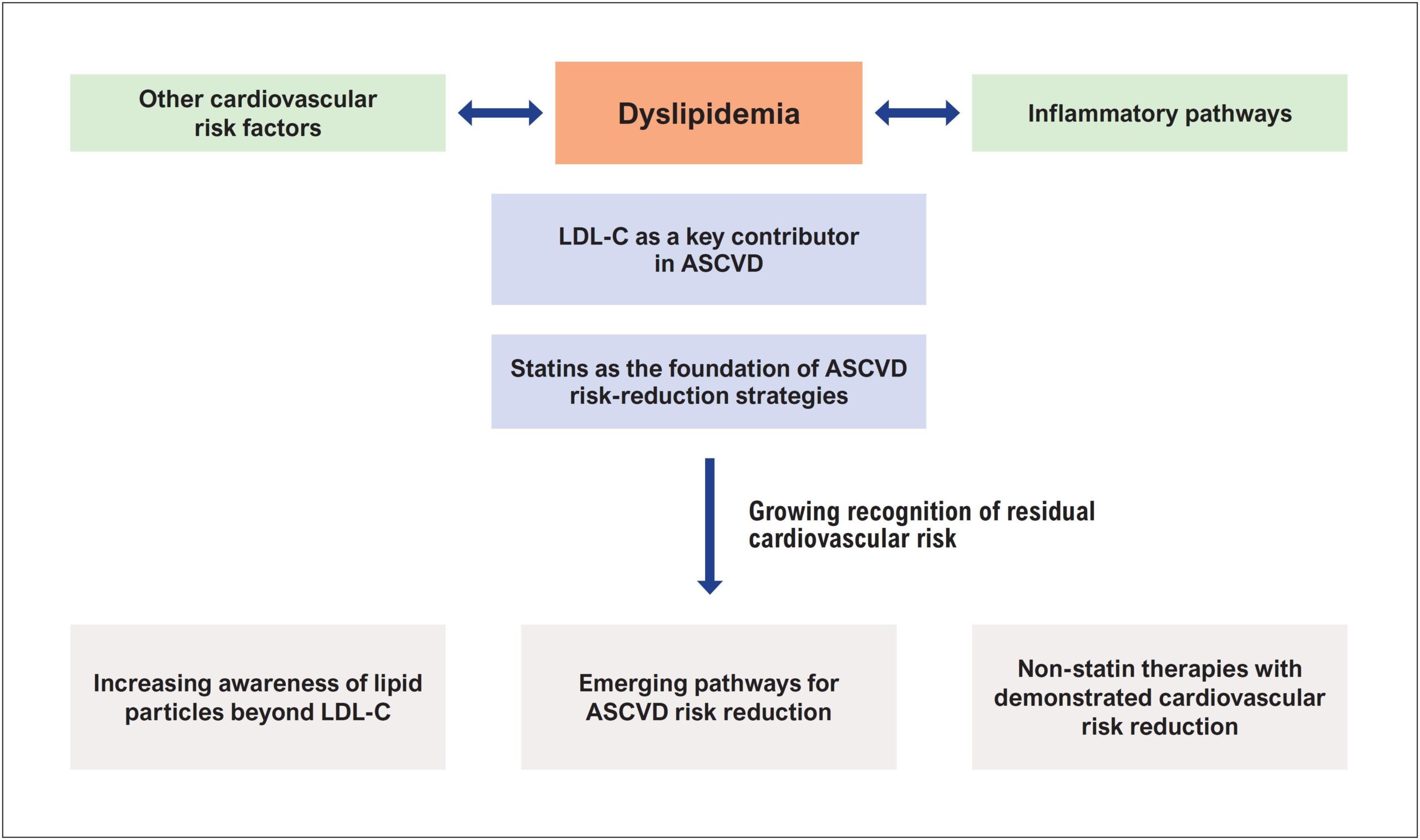
From Cholesterol Metabolism to Comprehensive Lipid Management and Crosstalk of Inflammation: Expanding the Frontiers of Cardiovascular Prevention

Eduardo Vilela et al. Nuno Bettencourt

Lipids and cardiovascular disease (CVD)

Lipid metabolism involves a wide range of complex pathways that play key roles in both normal physiology and disease. Lipids are essential for maintaining cell membrane integrity and supporting energy balance and metabolic homeostasis. Among them, cholesterol has drawn particular attention for its strong association with CVD.–

While cholesterol is vital for several physiological functions — such as those related to nervous system structure and steroid hormone production — its role in the development of CVD has also been extensively studied., CVD, and particularly atherosclerotic CVD (ASCVD), remains a leading global health burden, and advances in our understanding of lipid metabolism have significantly shaped prevention strategies over the past decades.,,

[…]

  • Cholesterol
  • Heart Disease Risk Factors
  • Inflammation
Read Full Article
Creative Commons Attribution (CC BY) Creative Commons license
26/09/2025 DOI: 10.36660/abc.20250386i Views 2
ABC
Editorial

Beyond Cholesterol and Triglycerides in the Lipid Clinic: The Challenging Task of Identifying Lysosomal Acid Lipase Deficiency

Marjorie H. Mizuta et al. Raul D. Santos

Lysosomal acid lipase deficiency (LAL-D) is a rare, autosomal recessive genetic disorder. Biallelic pathogenic variants within the LIPA gene result in a deficiency of the lysosomal acid lipase (LAL) enzyme, which is crucial for the hydrolysis of cholesteryl esters (CE) via the endocytic pathway. This enzymatic defect consequently leads to the lysosomal accumulation of CE and triglycerides. The phenotype of LAL-D varies significantly depending on the specific genetic variation. Specifically, null allelic variants, characterized by the absence of residual enzymatic function, manifest as Wolman’s disease, while variants with some residual LAL enzymatic activity result in cholesterol ester storage disease (CESD). Notably, identifying individuals with LAL-D poses a significant challenge, given the phenotypic heterogeneity of the disease, which can potentially overlap with various differential diagnoses.

Wolman’s disease usually manifests in infancy. The clinical presentation includes vomiting, steatorrhea, and abdominal distension within the first few days of life. Hepatosplenomegaly may occur due to lipid deposition in the liver and spleen, and hepatic steatosis can lead to liver failure. The accumulation of CE and triglycerides in the gastrointestinal tract leads to intestinal wall thickening, which in turn causes malabsorption and subsequent malnutrition. Calcification of the adrenal glands is a classic feature of the disease and can lead to adrenal cortical insufficiency. Individuals with Wolman’s disease rarely survive beyond their first year of life, primarily due to severe malnutrition, liver failure, and adrenal cortical insufficiency. Although enzyme replacement therapy is considered, life expectancy remains limited due to the disease’s severity. Hematopoietic stem cell transplantation represents another therapeutic option; however, further studies are necessary due to conflicting findings reported in the literature.,

[…]

  • Cholesterol
  • Triglycerides
  • Wolman's disease
Read Full Article
Creative Commons Attribution (CC BY) Creative Commons license
25/08/2025 DOI: 10.36660/abc.20250359i Views 1
Cascade Screening in Adolescents with Lipid Disorders Suggestive of Familial Hypercholesterolemia: Findings from the ERICA Study in Curitiba
ABC
Original Article

Cascade Screening in Adolescents with Lipid Disorders Suggestive of Familial Hypercholesterolemia: Findings from the ERICA Study in Curitiba

Vivian Freitas Rezende Bento et al. Tatiana Lorena da Luz Kaestner Amauri de Vargas Junior Renan Barbosa Lopes … Fernando Pinotti Scariot Leiza Loiane Hollas Marcia Olandoski Cristina Pellegrino Baena Katia Vergetti Bloch José Rocha Faria Neto

Abstract

Background

Familial hypercholesterolemia (FH) is a common genetic cause of premature coronary heart disease due to prolonged exposure to high levels of LDL cholesterol (LDL-C). Its prevalence in the heterozygous form ranges from 1:200 to 1:500, and early diagnosis is fundamental for treatment and risk reduction. Cascade screening is recommended upon the identification of index cases.

Objectives

To assess the prevalence of lipid disorders suggestive of FH in students aged 12 to 17 years participating in the ERICA study in Curitiba and to determine the prevalence of FH based on clinical and laboratory criteria in these adolescents and their first-degree relatives undergoing cascade screening.

Methods

Using data from the ERICA study, adolescents with LDL-C levels > 160 mg/dL or non-HDL cholesterol > 190 mg/dL were identified, along with their first-degree relatives. The clinical diagnosis of the study participants was based on the DUTCH MedPed criteria. Statistical significance was defined as P < 0.05.

Results

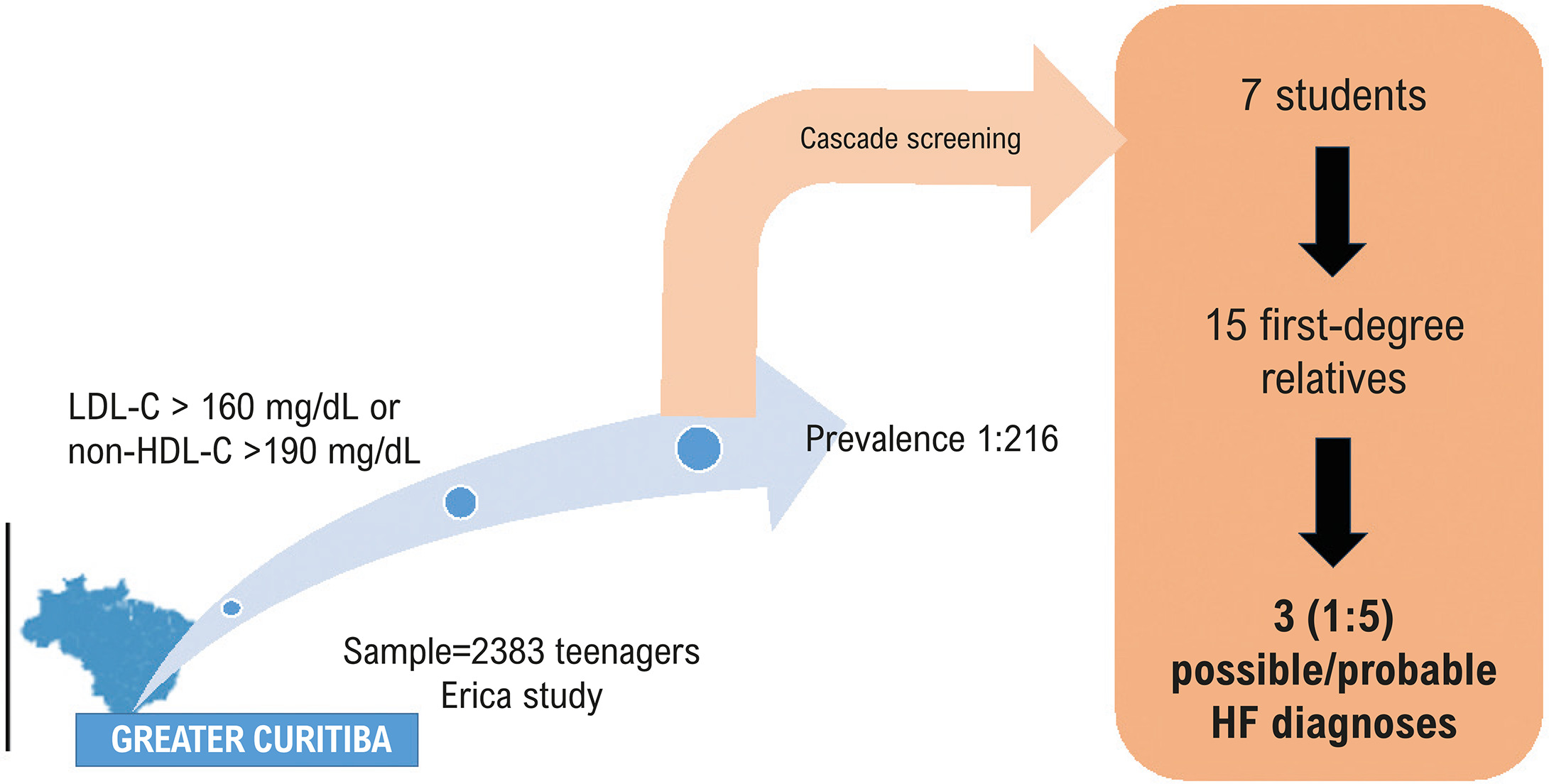
Eleven adolescents with lipid disorders suggestive of FH were identified among the 2,383 evaluated (1:216). Of these, 7 students and 15 first-degree relatives were assessed. None of the adolescents had a diagnosis of possible FH confirmed by the clinical score. However, 3 family members (20%) were diagnosed with possible/probable FH.

Conclusion

Although the clinical score application did not confirm any cases among adolescents with lipid disorders suggestive of FH, indicating a limitation of the diagnostic method in this population, cascade screening identified potential cases in first-degree relatives.

  • Cholesterol
  • Dyslipidemias
  • Familial hypercholesterolemia
Read Full Article
Creative Commons Attribution (CC BY) Creative Commons license
31/03/2025 DOI: 10.36660/abc.20240468i Views 1
ABC
Editorial

Adherence, Compliance and Persistency in High Cholesterol Treatment

Tania L. R. Martinez

Lack of adherence to cholesterol-lowering medications remains a critical issue in managing cardiovascular risk. Despite advancements in treatment, many patients fail to follow their prescribed regimens, leading to increased risks of heart attack, stroke, and other cardiovascular events. As described in the study, adherence challenges in the Brazilian population illustrate a global problem. However, there are several promising strategies for increasing adherence, including the active involvement of pharmacists and the distribution of medications in larger volumes through public or private healthcare systems.

Medication adherence, or the degree to which patients follow their prescribed regimens, is fundamental to achieving optimal health outcomes in chronic conditions like high cholesterol. Compliance is the consistency with which patients take their medication over time, while persistence refers to how long they continue treatment without interruption. Cholesterol-lowering drugs, particularly statins, are widely used to reduce cardiovascular risk, but non-adherence remains a barrier to their full effectiveness.

[…]

  • adherence
  • Cholesterol
  • compliance
  • Persistence
  • Treatment
Read Full Article
Creative Commons Attribution (CC BY) Creative Commons license
20/01/2025 DOI: 10.36660/abc.20240652i
Uncontrolled Cholesterol in Individuals with Severe Hypercholesterolemia in a Health Evaluation Program in Brazil
ABC
Original Article

Uncontrolled Cholesterol in Individuals with Severe Hypercholesterolemia in a Health Evaluation Program in Brazil

Raul D. Santos et al. Nea Miwa Kashiwagi Fernando Yue Cesena Silvia Regina Lamas Assis … Josué Nieri Carlos Andre Minanni Marcelo Franken Otavio Berwanger

Abstract

Background

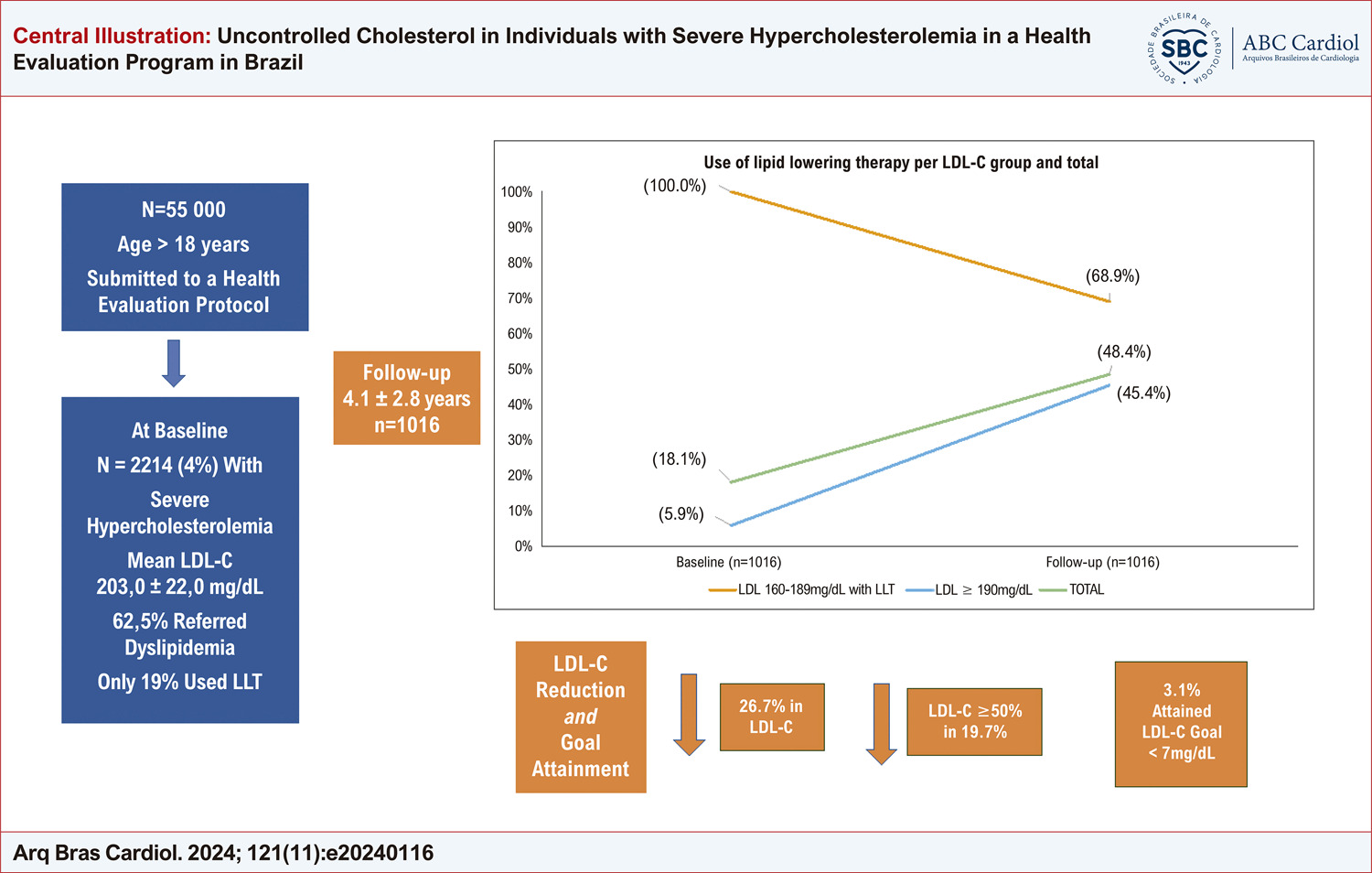
Individuals with severe hypercholesterolemia (SH) are considered at high atherosclerosis risk and should be intensively treated with lipid-lowering drugs aiming for an LDL-C reduction of≥50% and a goal of <70 mg/dL.

Objectives

This study aimed to evaluate cholesterol control in individuals with SH (LDL-C ≥ 190 mg/dL or 160-189 mg/dL using lipid-lowering drugs) followed in a health evaluation program.

Methods

55,000 individuals were evaluated, of which 2,214 (4%) had SH, and 1,016 (45.8%) had repeated assessments. Achievement of recommended LDL-C goals was the primary study endpoint. A p-value < 0.05 was considered significant.

Results

Mean age (± SD) was 44.9±8.8 years, 84.2% were men, and 0.5% reported previous myocardial infarction. Mean LDL-C was 203.0±22.0 mg/dL, and although 62.5% referred dyslipidemia, only 19% were using lipid-lowering drugs (5.9% in cases with LDL-C ≥ 190 mg/dL). During a 4.1±2.8-year follow-up, use of lipid-lowering drugs increased from 18.1% to 48.4% (p<0.00001), 5.9% to 45.4% in those with LDL-C ≥ 190 mg/dL (p< 0.00001) though 31% of cases with LDL-C 160-189 mg/dL stopped taking medications. Overall, there was a mean 26.7% reduction in LDL-C (p 190 mg/dL and 160-189 mg/dL respectively. Only 3.1% reached LDL-C < 70 mg/dL (2.7% in those with LDL-C ≥ 190 and 5.3% in those with 160-189 mg/dL).

Conclusions

A serious gap was found between treatment recommendations and reality in individuals at high atherosclerosis risk due to SH.

  • Cholesterol
  • Heart Disease Risk Factors
  • Hypercholesterolemia
Read Full Article
Creative Commons Attribution (CC BY) Creative Commons license
22/11/2024 DOI: 10.36660/abc.20240116i Views 1
ABC
Research Letter

Serving Two Masters: Resolving the Dilemma between Individual Patient Data Meta-Analysis and Aggregate Data Meta-Analysis from Statin Trials

Lucas Tramujas et al. Fernando Azevedo Medrado Júnior Alexandre Biasi Cavalcanti Carlos Eduardo Pompilio

Introduction

Elevated levels of low-density lipoprotein-cholesterol (LDL-C) have been established as an important risk factor for the development of atherosclerosis. As a corollary of this reasoning, an LDL-centric approach has emerged based on statins and other medications able to reduce LDL-C and cardiovascular risk.

The Cholesterol Treatment Trialists’ Collaboration, an individual patient data meta-analysis, found a log-linear relationship between the degree of LDL-C reduction and cardiovascular events. According to this, expert guidelines for preventing cardiovascular diseases recommend statin use for primary and secondary prevention.

[…]

  • Cardiovascular disease
  • Cholesterol
  • Meta-Analysis
Read Full Article
Creative Commons Attribution (CC BY) Creative Commons license
21/04/2023 DOI: 10.36660/abc.20220539
IJCS
Original Article

HDL-Cholesterol in Children and Adolescents with Congenital Heart Disease

Matheus Alves Pacheco et al. Silvia Meyer Cardoso Michele Honicky Yara Maria Franco Moreno … Luiz Rodrigo Augustemak de Lima Camila Souza Marcos Isabela de Carlos Back

Abstract

Background

Children and adolescents with congenital heart disease may be more likely to develop atherogenic cardiovascular diseases in adulthood. Therefore, the early identification of risk factors and intervention in childhood may be crucial for a good quality of life and longevity.

Objectives

To describe the distribution of high-density lipoprotein-cholesterol (HDL-c) levels and its association with socioeconomic, clinical and cardiovascular risk factors in children and adolescents with congenital heart disease.

Methods

Cross-sectional study with children and adolescents aged between 5 and 18 years, with congenital heart disease. Socioeconomic, clinical and cardiovascular risk factors were evaluated. HDL-c concentrations were evaluated by the direct method and categorized as desirable (>45 mg/dL), borderline (40-45 mg/dL) and low (<40 mg/dL). We also assessed the “undesirable” levels, consisting of the sum of “borderline” and “low” values for comparative purposes. The multivariate logistic regression analysis was used to evaluate the factor associated with undesirable HDL-c levels. A p<0.05 value was adopted as statistically significant.

Results

Mean HDL-c was 51.2 mg/dL (SD 12.6), with a prevalence of 33.2% of undesirable HDL-c. In the multivariate analysis, C-reactive protein levels ≥ 3mg/dL (OR 3.26; 95% CI 1.32-8.04), age ≥ 10 years old (OR: 2.11; 95% CI 1.12-3.99) and undesirable levels of triglycerides (OR 2.21; 95% CI 1.13-4.75) were associated with undesirable HDL-c.

Conclusion

In this sample of children and adolescents with congenital heart disease, almost one third presented low or borderline HDL-c levels. Age ≥10 years, C-reactive protein and triglycerides were associated with undesirable HDL-c levels. These factors should be considered in the prevention of cerebrovascular diseases in adulthood in this population.

  • Adolescent
  • Atherosclerosis
  • Child
  • Cholesterol
  • Congenital/genetics
  • dyslipidemia
  • HDL-Cholesterol/genetics
  • Heart Defects
  • Risk Factors
Read Full Article
Creative Commons Attribution (CC BY) Creative Commons license
19/08/2022 DOI: 10.36660/ijcs.20210106
ABC
Viewpoint

Translational Medicine and Implementation Science: How to Transform What We Know Into What We Do

Protásio Lemos da Luz et al. Francisco Rafael Martins Laurindo

Basis of preventive medicine: a healthy lifestyle

When medical knowledge is to be applied to the general population, the concept of healthy lifestyle should be highlighted, especially in terms of preventive medicine.

Most cardiovascular events, such as myocardial infarction and death, are associated with risk factors such as dyslipidemia, smoking, hypertension and diabetes. Genetic factors are less representative. Another example is the Whitehall study, conducted with British civil servants, that showed that servants in lower grades of employments had a mortality rate three to four times higher than of those in the higher grades. The basis of preventive medicine is related to a healthy lifestyle, including a diet composed predominantly of fruit, vegetable and fish, and low intake of meat and carbohydrates. At least 150 minutes per week of aerobic and strength exercises are strongly recommended, including for protection of cognitive functions and Alzheimer prevention.

[…]

  • Atherosclerosis
  • Cardiovascular Diseases, mortality
  • Cholesterol
  • Exercises
  • Genome Human
  • Hydroxymethylglutaryl-CoA Reductase Inhibitors / therapeutic use
  • Preventive Medicine
  • Quality of life
  • Translational Medical Research
Read Full Article
Creative Commons Attribution (CC BY) Creative Commons license
05/08/2022 DOI: 10.36660/abc.20211029
ABC
Editorial

A New Risk Predictor in Acute Myocardial Infarction. Is There Still Room for One More?

Dalton Bertolim Précoma

Cardiology is one of the specialties that traditionally uses scientific evidence in daily practice, both in risk stratification and diagnosis, therapy and prognosis. One of the most discussed topics is atherosclerosis and inflammation, arousing great interest in the continuous knowledge acquired over the last two centuries. Several authors stand out in this historical context, for example, Rudolf Virchow in the 19th century who described the association of atherosclerosis with inflammation; Marchand in 1904, who suggested the relationship between atherosclerosis and the process of clogging of the arteries and in 1908, Ignatowski who observed the relationship between dietary cholesterol and atherosclerosis. Over the last 100 years, many articles have elucidated the pathophysiological sequence that we know today. Understanding atherosclerotic plaque formation and evolution through complex molecular mechanisms and innate and adaptive immunity, which culminate in acute myocardial infarction (AMI), is well established.– In 1974, Friedman GD et al., described the role of leukocyte count in the prognosis of AMI, and subsequently, other studies highlighted the importance of these cells in the deterioration and recovery of infarcted myocardium.– In the same line of investigation, Coste MER et al. investigated cytokines in patients with ST-segment elevation myocardial infarction (STEMI) and the relationship with ventricular function. They observed a balance of pro-inflammatory and anti-inflammatory cytokines, except for IL-6, suggesting a residual inflammatory risk.

In addition to these aspects related to atherosclerotic plaque and inflammatory activity in AMI, another process related to these so-called immuno-inflammatory cells, such as platelets, leukocytes, neutrophils, and lymphocytes, initially gained prominence in the field of oncology when described as a reliable prognostic marker in the progression of various malignant tumors, by the so-called “systemic immuno-inflammation index” (IIIS). The systematic review and meta-analysis by Zhong et al. emphasize the importance of this index in predicting survival since high rates were associated with a worse prognosis in solid tumors. In addition to neoplasms, other factors alter IIIS, such as age, obesity, type 2 diabetes, emotional stress, exogenous steroids, endogenous sex hormones, hematological disorders, stroke, pulmonary embolism, and trauma.

[…]
  • Atherosclerosis
  • Cardiovascular Diseases
  • Cholesterol
  • inflammation mediators
  • Myocardial Infarction/complications
  • Plaque, Atherosclertic
  • Risk Factors
Read Full Article
Creative Commons Attribution (CC BY) Creative Commons license
11/07/2022 DOI: 10.36660/abc.20220367
Figure 1
ABC
Original Article

Breaks in Sedentary Time and Cardiometabolic Markers in Adolescents

Natália Maria Mesquita de Lima Quirino et al. Alcides Prazeres Filho Arthur Oliveira Barbosa Gerfeson Mendonça José Cazuza de Farias Júnior

Abstract

Background:

The interruption of the time spent in sedentary behavior (breaks) has been associated with better levels of cardiometabolic indicators in the adult population, but in adolescents, further investigations are still needed to confirm these findings.

Objectives:

To analyze the association of the number of breaks per day in sedentary behaviors with cardiometabolic markers and whether it was moderated by nutritional status and excessive time on sedentary behavior in adolescents.

Methods:

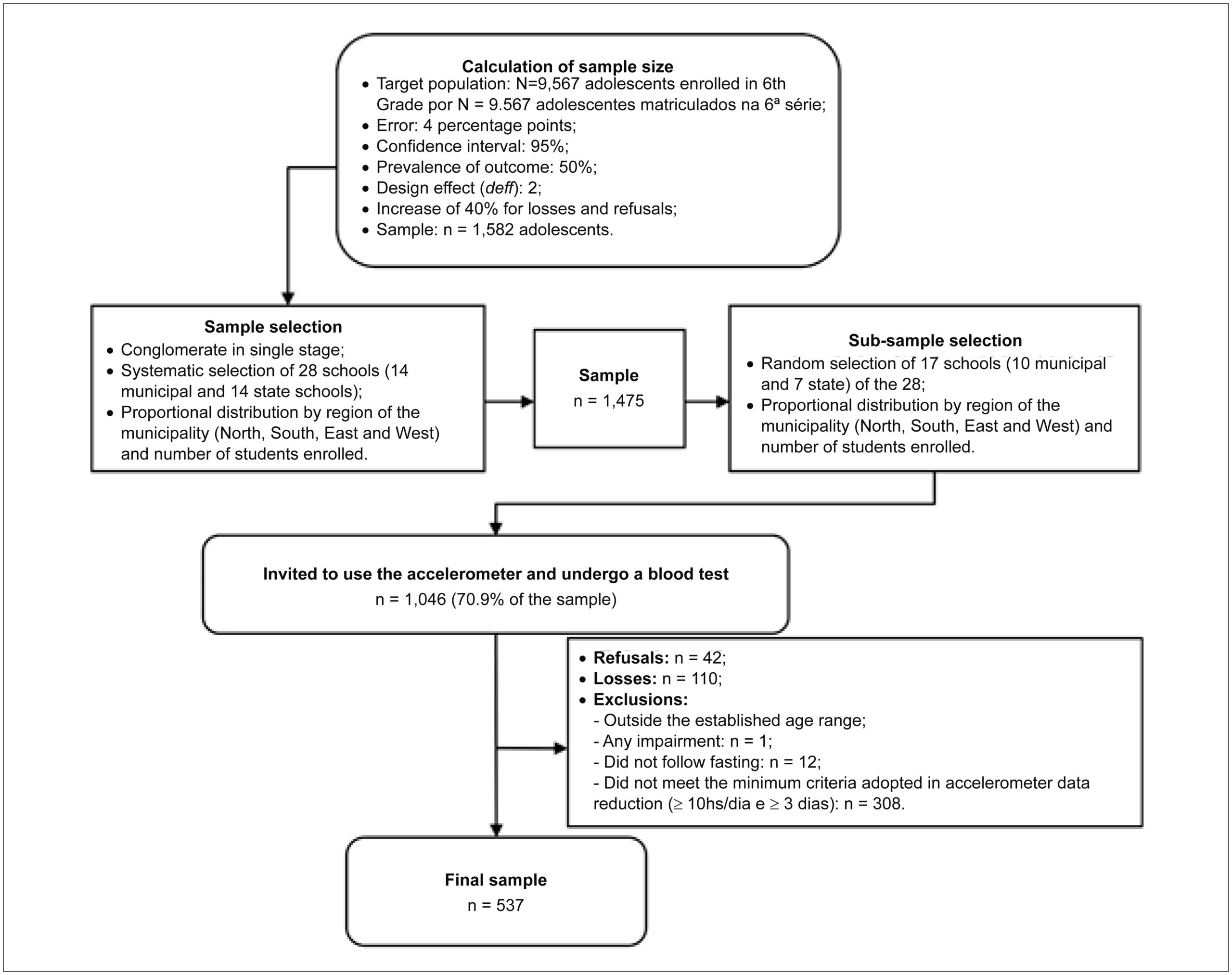
This is a cross-sectional study of 537 adolescents (52.3% girls), aged between 10 and 14 years, enrolled in public schools in the city of João Pessoa, Paraíba state, Brazil. The number of daily breaks (>100 counts/minutes) in sedentary time was measured by Actigraph GT3X+ accelerometers. The following cardiometabolic markers were analyzed: systolic and diastolic blood pressure (mmHg), fasting blood glucose levels, total cholesterol, triglycerides, HDL-c, LDL-c (all in mg/dL) and body mass index (BMI) (kg/m). Linear regression was used to analyze the association between the number of breaks and cardiometabolic markers and whether this association was moderated by nutritional status and excessive time in sedentary behavior. The significance level of p<0.05 was adopted for all analyses.

Results:

The number of daily breaks was negatively associated with BMI (boys – ß = −0.083; 95%CI: −0.132; −0.034 and girls – ß = −0.115; 95%CI: −0.169; −0.061), but not with the remaining cardiometabolic markers. The number of breaks per day was negatively associated with BMI (ß = −0.069; 95% CI: −0.102; −0.035), but not with the other cardiometabolic markers and this association was not moderated by the adolescents’ nutritional status (p=0.221), or by excessive time in sedentary behavior (p=0.176).

Conclusions:

Including breaks in sedentary time seems to contribute to lower BMI values in adolescents.

  • Adiposity
  • Adolescent
  • Blood Arterial
  • Cardiometabolic Markers
  • Cholesterol
  • Glucose
  • Sedentarism
  • Sedentary Behavior
  • Triglycerides
Read Full Article
Creative Commons Attribution (CC BY) Creative Commons license
06/09/2021 DOI: 10.36660/abc.20200047
Figure 1
ABC
Original Article

Cardiovascular Risk Estimates in Ten Years in the Brazilian Population, a Population-Based Study

Deborah Carvalho Malta et al. Pedro Cisalpino Pinheiro Renato Azeredo Teixeira Isis Eloah Machado … Filipe Malta dos Santos Antônio Luiz Pinho Ribeiro

Abstract

Background:

Cardiovascular diseases are the leading cause of morbidity and mortality, resulting in high health costs and significant economic losses. The Framingham score has been widely used to stratify the cardiovascular risk of the individuals, identifying those at higher risk for the implementation of prevention measures directed to this group.

Objective:

To estimate cardiovascular risk at 10 years in the adult Brazilian population.

Methods:

Cross-sectional study using laboratory data from a subsample of the National Health Survey. To calculate cardiovascular risk, the Framingham score stratified by sex was used.

Results:

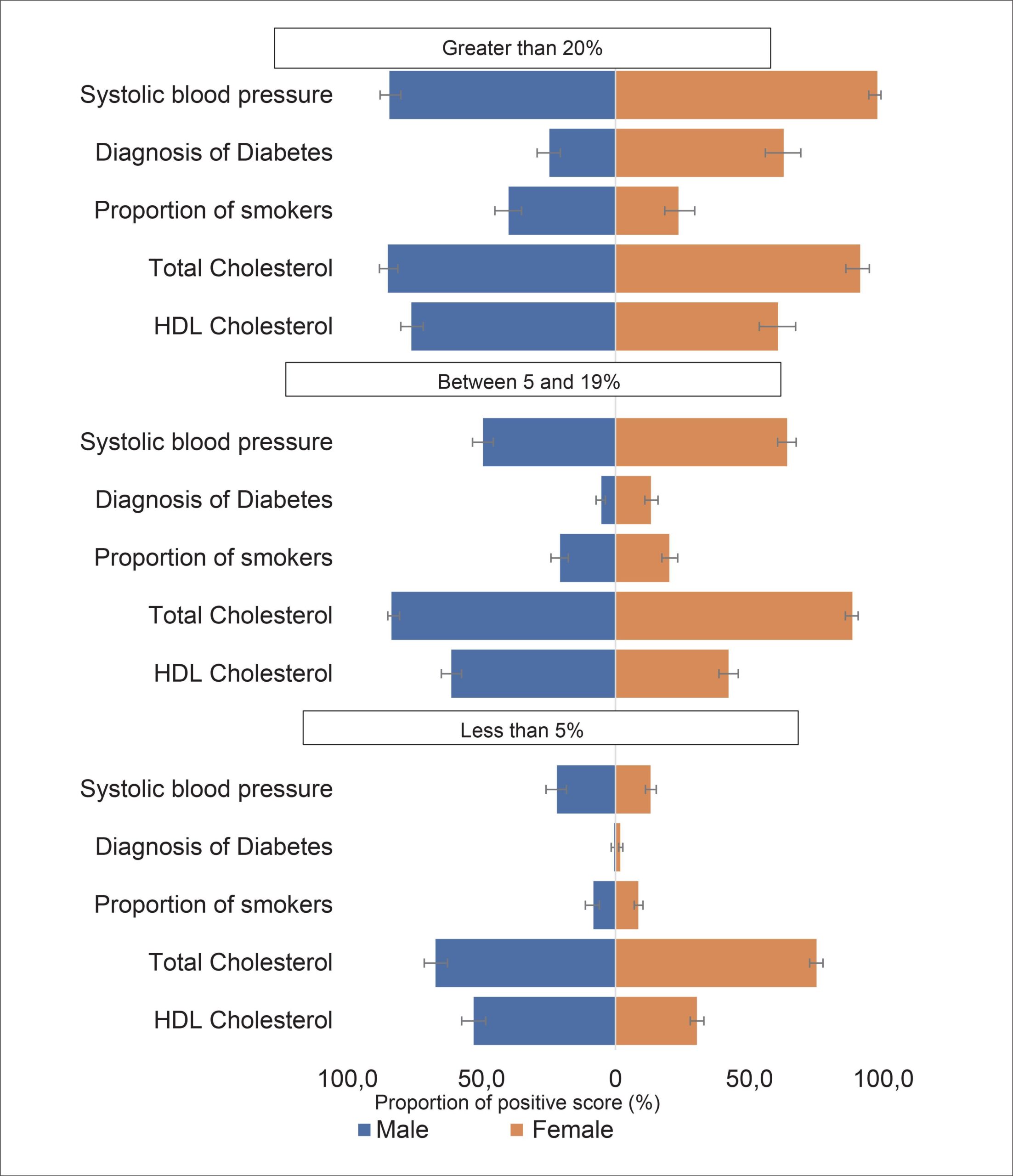
Most women (58.4%) had low cardiovascular risk, 32.9% had medium risk and 8.7% had high risk. Among men, 36.5% had low cardiovascular risk, 41.9% had medium risk and 21.6% had high risk. The risk increased with age and was high in the low-educated population. The proportion of the components of the Framingham model, by risk and sex, shows that, among women at high risk, the indicators that mostly contributed to cardiovascular risk were: systolic blood pressure, total cholesterol, HDL, diabetes and tobacco. Among men, systolic blood pressure, total cholesterol, HDL, tobacco and diabetes.

Conclusion:

The study estimates, for the first time in Brazil, the risk of developing cardiovascular disease in ten years. The risk score is useful to support the prevention practices of these diseases, considering the clinical and epidemiological context.

  • Atherosclerosis
  • Cardiovascular Diseases
  • Cholesterol
  • Diabetes Mellitus
  • Epidemiology
  • Hypertension
  • Risk Factors
Read Full Article
Creative Commons Attribution (CC BY) Creative Commons license
23/04/2021 DOI: 10.36660/abc.20190861
Figure 1
ABC
Original Article

Statins Prescriptions and Lipid Levels in a Tertiary Public Hospital

André Schmidt et al. Henrique Turin Moreira Gustavo Jardim Volpe Vamberto B. Foschini … Thiago Florentino Lascala Minna Moreira Dias Romano Marcus Vinícius Simões José Ernesto dos Santos Benedito Carlos Maciel José Antonio Marin Neto

Abstract

Background:

The development of a new class of medications that are highly capable of reducing LDL-cholesterol renewed the interest in the characterization of familial hypercholesterolemia patients. Nevertheless, little is known about the lipid profile of patients in tertiary healthcare centers in Brazil in order to better estimate the real occurrence of familial hypercholesterolemia, with initial suspect of LDL-cholesterol levels above 190 mg/d/L.

Objectives:

This study evaluated the lipid profile (total cholesterol and LDL-cholesterol) in ambulatory patients from a general tertiary public hospital.

Methods:

Retrospective study comparing prescriptions of statins and lipid profile results. The significance level was established in 5%.

Results:

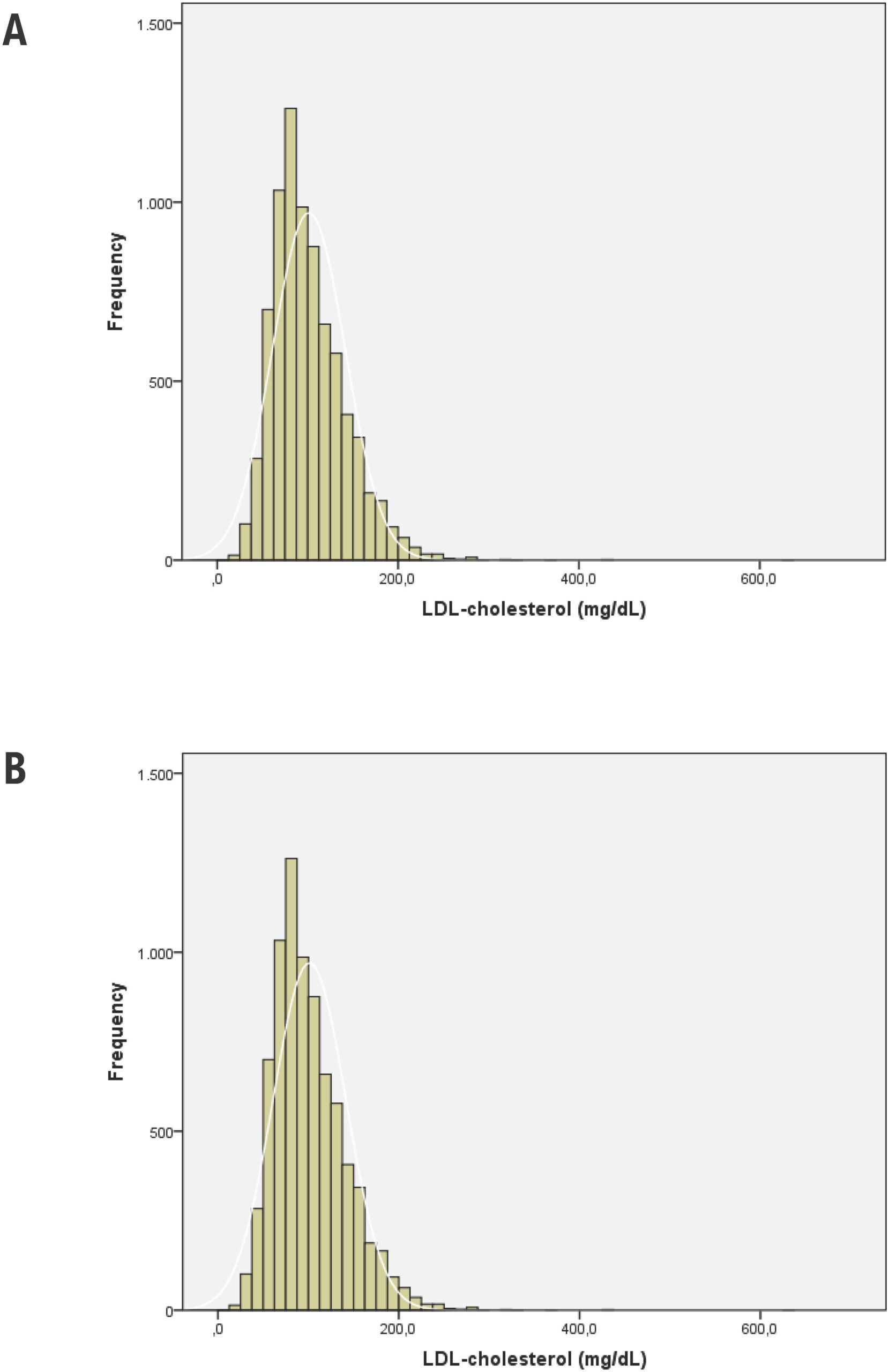
In one year, 9,594 individuals received statin prescriptions, of whom 51.5% were females and the mean age was 63.7±12.9 years-old (18 to 100 years-old). Thirty-two medical specialties prescribed statins. Cardiology was responsible for 43% of the total. Nearly 15% of those patients with a prescription did not have a recent total cholesterol result and 1,746 (18%) did not have a recent LDL-cholesterol measurement. The occurrence of the latter between 130 and 190 mg/dL was present in 1,643 (17.1%) individuals, and 228 (2.4%) patients had an LDL-cholesterol ≥190mg/dL among those using statins at distinct doses. Only two statins were used: simvastatin and atorvastatin. The first was prescribed in 77.6% of the prescriptions.

Conclusion:

In this cross-sectional cohort at a tertiary general hospital, statins have been widely prescribed but with little success in achieving recognized levels of control. There is probably a significant number of FH individuals in this cohort that need to be properly diagnosed in order to receive adequate treatment due to its prognostic implications.

  • Cholesterol
  • Dyipidemias
  • Hydroxymethylglutaryl CO-Reductase Inhibitors
  • Hyperpoprotein Type II Hypercholesterolemia Familial/therapy
  • Lipid profile
  • Public Hospital
Read Full Article
Creative Commons Attribution (CC BY) Creative Commons license
16/04/2021 DOI: 10.36660/abc.20190513
Figure 1
ABC
Research Letter

Statins and COVID-19: To Suspend or Not to Suspend? That is the Question!

Filipe Ferrari et al. Raul D. Santos

Introduction

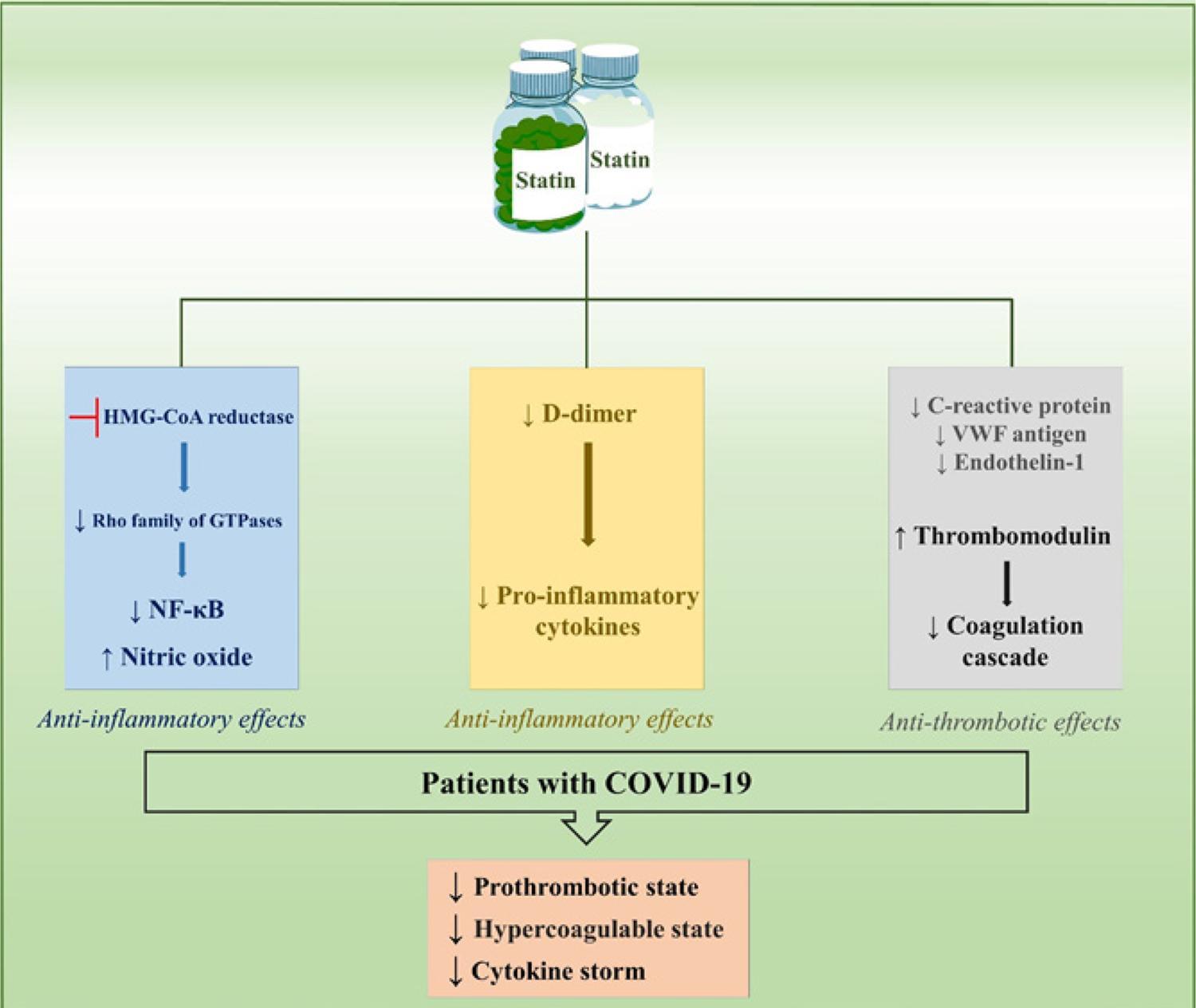
In the midst of so many uncertainties that permeate the new coronavirus disease 2019 (COVID-19), the evidence relating the presence of dyslipidemia to disease severity and consequent prognostic implications are still scarce. In May 2020, a retrospective Chinese study investigated the association between changes in cholesterol levels and prognosis in approximately 600 patients with COVID-19, who were paired by age and sex with healthy controls. First, it was observed that low-density lipoprotein cholesterol (LDL-C) and total cholesterol levels were significantly lower in patients with COVID-19. Second, there was a trend for LDL-C and total cholesterol levels to decrease as the severity of infection increased (mild, severe, and critical, respectively). In that study, high-density lipoprotein cholesterol (HDL-C) levels were also decreased in severe cases. Similar data were observed by Fan et al.,where levels of LDL-C were inversely associated with the severity of COVID-19. These data suggested a possible relation between low cholesterol levels and worsening of COVID-19 infection. In addition, experimental studies have shown that statins might increase the abundance of the angiotensin-converting enzyme 2 (ACE2), which could in part contribute to the entry of the virus into the cell and increase the risk of infectivity.

Based on these previous findings, it was hypothesized that use of lipid-lowering therapies like statins could aggravate COVID-19 infection. However, it is known that serum cholesterol levels may drop in patients with active viral or bacterial infections,, since LDL and HDL have a role in the immune system. On the other hand, hyperlipidemia can compromise the immune response and further exacerbate the inflammatory status of COVID-19 patients, increasing cardiovascular risk.So, the question that ensues is, should statins be suspended or not in patients with COVID-19?

[…]

  • Betacoronavirus
  • Cholesterol
  • Coronavirus
  • COVID-19
  • Dydroxymethylglutaryl-CoA Reductase Inhibitors
  • Dyslipidemias
  • Infection
  • Lipoproteins
  • Pandemics
Read Full Article
Creative Commons Attribution (CC BY) Creative Commons license
03/02/2021 DOI: 10.36660/abc.20200949 Views 2
Figure 1
ABC
Case Report

Spontaneous Coronary Artery Dissection in a Patient with Cerebrotendinous Xanthomatosis

Maria Júlia Silveira Souto et al. Marcos Antônio Almeida-Santos Eduardo José Pereira Ferreira Luiz Flávio Galvão Gonçalves … Joselina Luzia Menezes Oliveira Antônio Carlos Sobral Sousa

Introduction

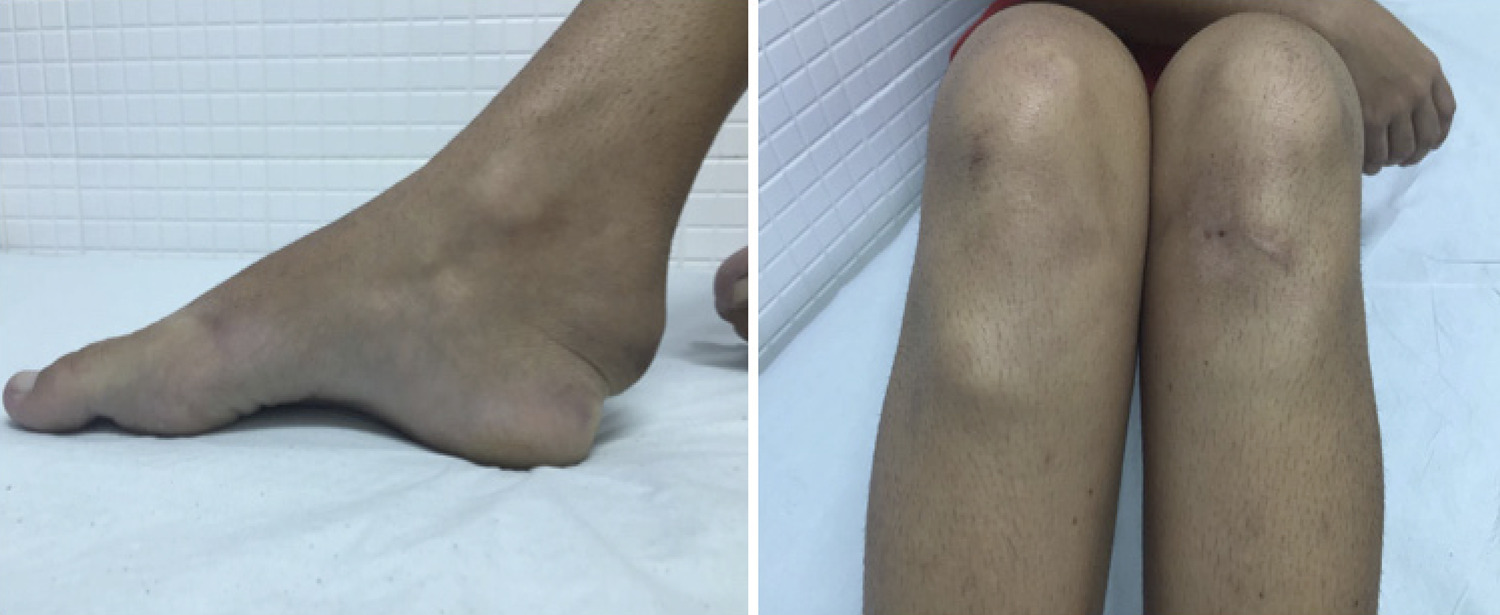
Cerebrotendinous xanthomatosis (CTX) is an autosomal recessive disease characterized by the formation of xanthomatous lesions in many tissues, particularly the brain and tendons. The disorder is a consequence of the reduced production of bile acids, predominantly chenodeoxycholic acid (CDCA), and an increased formation of cholestanol. Common clinical manifestations include infant-onset diarrhea and juvenile-onset bilateral cataract, usually followed by tendon xanthomas and progressive neurological dysfunction. The final diagnosis is based on biochemical abnormalities, including elevated plasma cholestanol level and increased levels of bile alcohol in urine associated with a diminished biliary concentration of CDCA. The treatment is based on oral supplementation of CDCA, which, if initiated early, can prevent major clinical problems, as it produces a reduction in cholestanol synthesis and plasma levels.

Cardiovascular impairment in patients with CTX is mostly associated with premature atherosclerosis. Blood lipid analysis in patients with CTX revealed dramatically high levels of 27-hydroxycholesterol and low levels of high-density lipoprotein cholesterol (HDL), which place these patients at a high risk of cardiovascular disease.

[…]

  • Chenodeoxycholic Acid/adverse effects
  • Child, Adolescent
  • Cholestanol
  • Cholesterol
  • Diagnosis Imaging
  • Xanthomatosis Cerebrotendinous
Read Full Article
Creative Commons Attribution (CC BY) Creative Commons license
14/09/2020 DOI: 10.36660/abc.20190456 Views 1
Figure 1
IJCS
Original Article

Treatment Eligibility and Therapeutic Responses of an Ecuadorian Population at High Cardiovascular Risk Based on the ATP III Guidelines

Isabel Hernández et al. Andrea Estrella Jorge Salazar Yan Duarte … Edmundo Torres Camilo López Santiago Terán Alejandra Mendoza Enrique Terán

Abstract

Background

The Adult Treatment Panel III (ATPIII) guidelines aim to reduce cardiovascular morbidity and mortality. In Ecuador, 20% of people have high LDL cholesterol levels, and 39% have high triglyceride levels.

Objective

To analyze lipid-lowering regimens in Ecuadorian patients and determine the achievement rate of the ATPIII goals for lipid profile.

Methods

Using a retrospective analysis, 385 subjects older than 30 years, who received pharmacological treatment for dyslipidemia for at least three months was randomly selected from institutions at two large cities in Ecuador. Data were collected from patients’ medical records and analyzed by chi-square test or paired t-test; p-values less than 0.05 were considered significant.

Results

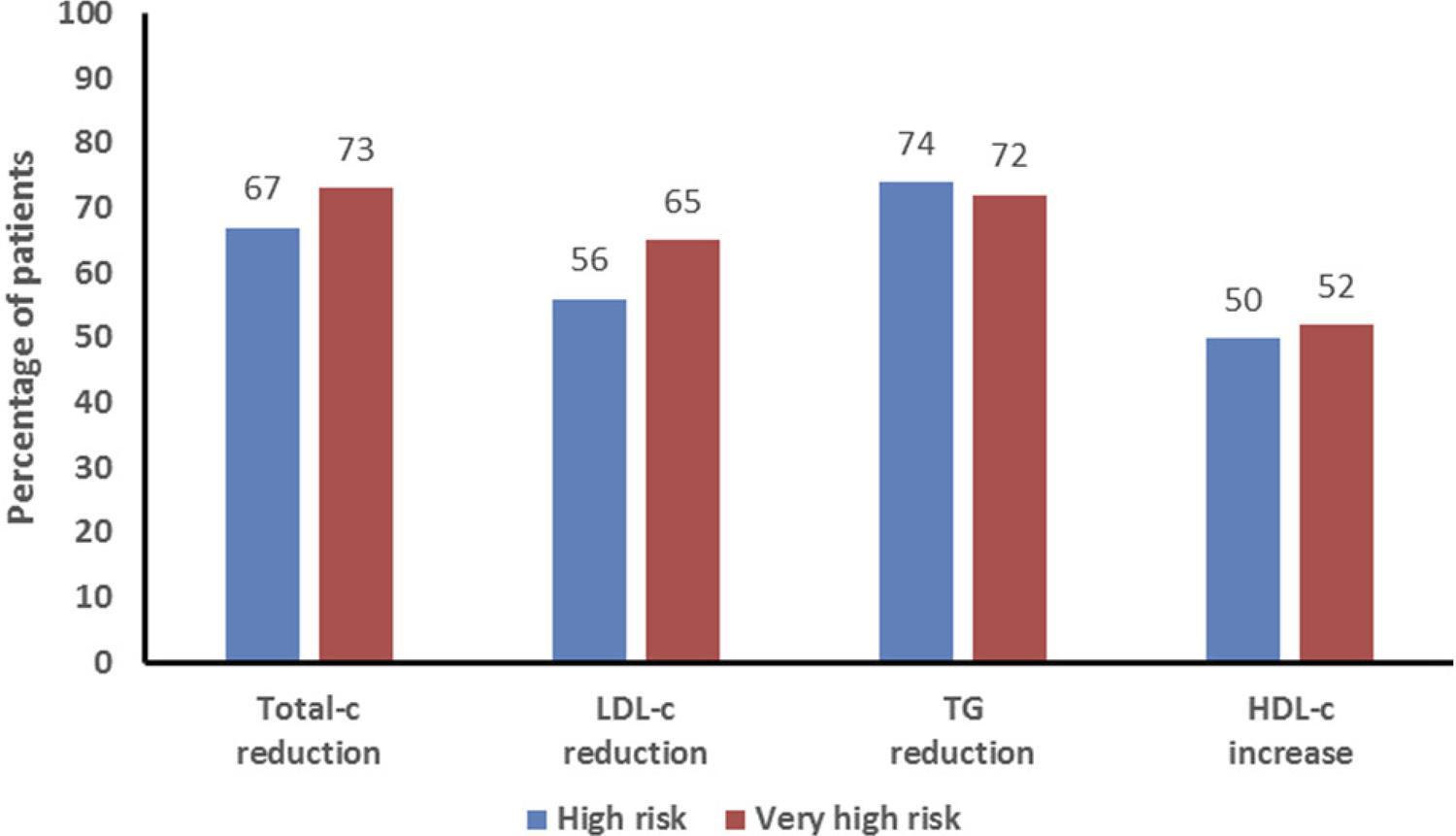
Baseline total cholesterol values were above 200 mg/dL in 75% of subjects, LDL-c values above 129 mg/dL in 83% of subjects and triglycerides values above 150 mg/dL in 79% of subjects. Most (n = 253, 95.8%) patients at very high cardiovascular risk were taking statins, 50% of them atorvastatin. Considering the ATPIII guidelines’ goals, only 24 subjects (19%) at high CV risk achieved an LDL-c < 100 mg/dl, while a significantly lower percentage (p = 0.04) of patients at very high risk reached an LDL-c < 70mg/dl (11%; n = 30).

Conclusion

These data indicate a low rate of compliance with the ATPIII guidelines, independent of the medication used or duration of the treatment. This may be attributed to the prescription of low doses of medication and a therapy targeting isolated lipid fractions rather than a complete lipid profile. (Int J Cardiovasc Sci. 2020; 33(4):371-376)

  • Cardiovascular Diseases/prevention and control
  • Cholesterol
  • dyslipidemia
  • Lifestyle
  • Patient Compliance
  • Sedentarism
  • Tabaquism
  • Triglicerides
Read Full Article
Creative Commons Attribution (CC BY) Creative Commons license
07/08/2020 DOI: 10.36660/ijcs.20190010 Views 1
Figure 1
ABC
Original Article

Quercetin Ameliorates Lipid and Apolipoprotein Profile in High-Dose Glucocorticoid Treated Rats

Hoda Derakhshanian et al. Mahmoud Djalali Abolghassem Djazayery Mohammad Hassan Javanbakht … Mahnaz Zarei Azita Hekmatdoost Ghazaleh Eslamian Seyyedeh Somayyeh Mirhashemi Ahmad Reza Dehpour

Abstract

Background

Glucocorticoids (GCs) are widely prescribed for the treatment of numerous clinical disorders due to their anti-inflammatory and immune-modulatory properties and one of the most common untoward effects of these drugs is dyslipidemia.

Objective

To evaluate the effect of quercetin, a plant-derived flavonoid, on the lipid profile of high-dose glucocorticoid treated rats.

Methods

A total of 32 Sprague-Dawley rats, were randomly distributed among four groups (8 rats per group) and treated for 6 weeks with one of the following: (i) normal saline; (ii) 40 mg/kg methylprednisolone sodium succinate (MP); (iii) MP + 50 mg/kg quercetin; (iv) MP + 150 mg/kg quercetin. MP was injected subcutaneously, and quercetin was administered by oral gavage 3 days a week. At the end of the study, the animals’ lipid profile was measured by enzymatic kits. Data were analyzed and statistical significance was set at p<0.05.

Results

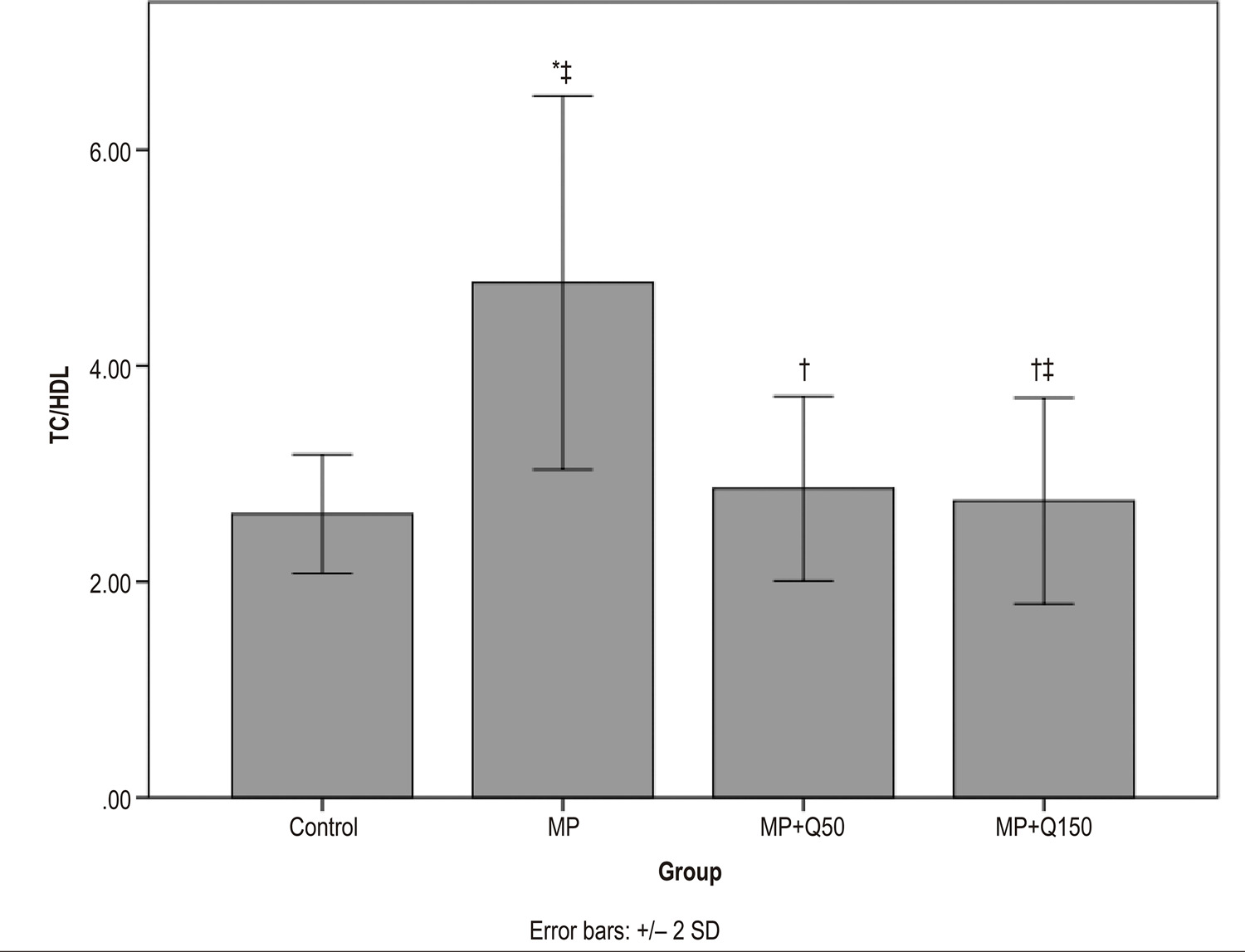
The mean serum total cholesterol (TC), triglyceride (TG) and LDL levels were drastically increased in GC-treated animals compared with the control group. Both doses of quercetin (50 and 150 mg/kg) ameliorated TC (43% and 45%), LDL (56% and 56%) and TG (46% and 55% respectively). Apo B/A1 ratio decreased more than 20% following quercetin intake and the decline in TC/HDL, TG/HL, LDL/HDL ratios were significant.

Conclusions

These data suggest that quercetin intake with both doses of 50 and 150 mg/kg could be considered as a protective agent for glucocorticoid-induced dyslipidemia. (Arq Bras Cardiol. 2020; 115(1):102-108.)

  • Anti-Inflammatory Agents
  • Cholesterol
  • Dyslipidemias
  • Glucocorticoids
  • Quercetin
  • Rats, Sprague-Dawley
  • Triglycerides
Read Full Article
Creative Commons Attribution (CC BY) Creative Commons license
07/08/2020 DOI: 10.36660/abc.20180397 Views 1
IJCS
Original Article

Lipoprotein(a) levels in children and adolescents: Ouro Preto Study

Ana Paula C Cândido et al. Alekson Mendonça-Mendes Débora RC Cândido Roney LC Nicolato George LL Machado-Coelho

Abstract

Background

Lipoprotein (a) is a cardiovascular risk factor in adult. Studies have shown the presence of this emergent risk factor in school children, which may contribute to the development of atherosclerosis in adulthood.

Objective

To evaluate the association between lipoprotein (a) and cardiovascular risk factors in school children.

Methods

Lipoprotein (a) levels were measured in 320 school children (6-14 years) selected from a population survey carried out in Ouro Preto (southeast of Brazil). Demographic (sex and age), biochemical (total cholesterol, high-density lipoprotein-cholesterol, low-density lipoprotein-cholesterol, triglycerides, and glucose), anthropometric (body mass index, waist circumference, body fat percentage), clinical (arterial blood pressure, pubertal stage and birth weight) and economic (family income) parameters, as well as family history (obese and/or hypertensive parents) were analyzed. Non-parametric analysis was used to evaluate lipoprotein (a) levels in each subgroup. Variables with p≤0.20 in the univariate analysis were included in binary regression logistic model. Differences with p < 0.05 were considered significant.

Results

Lipoprotein (a) levels were associated with total cholesterol (p=0.04), body fat (p=0.009), and mother´s systolic (p=0.02) and diastolic blood pressure (p=0.04). In a logistic regression analysis, children with high lipoprotein (a) levels and body fat, and children born from hypertensive mothers were, respectively, at 3.2(p=0.01) and 1.4 (p=0.03) times higher risk than other children. In clustering these factors, elevated lipoprotein (a) was 2.6 times more likely to be seen in school children with high body fat and born hypertensive mothers.

Conclusions

Lipoprotein (a) was correlated with cardiovascular risk factors in children and adolescents. Persistence of these risk factors in childhood suggests a contribution of elevated lipoprotein (a) to future cardiovascular disease. (Int J Cardiovasc Sci. 2020; [online].ahead print, PP.0-0)

  • Adiposity
  • Adolescents
  • Bod Fat
  • body mass index
  • Children
  • Cholesterol
  • Epidemiology
  • Hypertension
  • Lipoproteins
Read Full Article
Creative Commons Attribution (CC BY) Creative Commons license
17/04/2020 DOI: 10.36660/ijcs.20190107 Views 2
Figure 1
ABC
Original Article

High-Lard and High-Cholesterol Diet, but not High-Lard Diet, Leads to Metabolic Disorders in a Modified Dyslipidemia Model

Lidiane B. Muniz et al. Aline M. Alves-Santos Fabricio Camargo Danieli Brolo Martins … Mara Rubia N. Celes Maria Margareth V. Naves

Abstract

Background:

In view of the increased global prevalence of cardiovascular and hepatic diseases, the diet lipid content and its relationship with the accumulation of fat in hepatocytes have been investigated as key factors in preventing these diseases.

Objective:

To evaluate the metabolic effects of a high-lard diet supplemented or not with cholesterol on a modified dyslipidemia model.

Methods:

We divided 24 adult male Wistar rats into three groups: standard diet (STD – 4% lipids), high-lard diet (HLD – 21% lard), and high-lard and high-cholesterol diet (HL/HCD – 20% lard, 1% cholesterol, 0.1% cholic acid). After six weeks of treatment, blood and liver were collected for biochemical (serum lipid profile and liver enzymes) and morphological analyses. Statistical analysis included one-way analysis of variance (ANOVA), followed by Tukey test for mean comparisons, and a 5% probability was considered statistically significant.

Results:

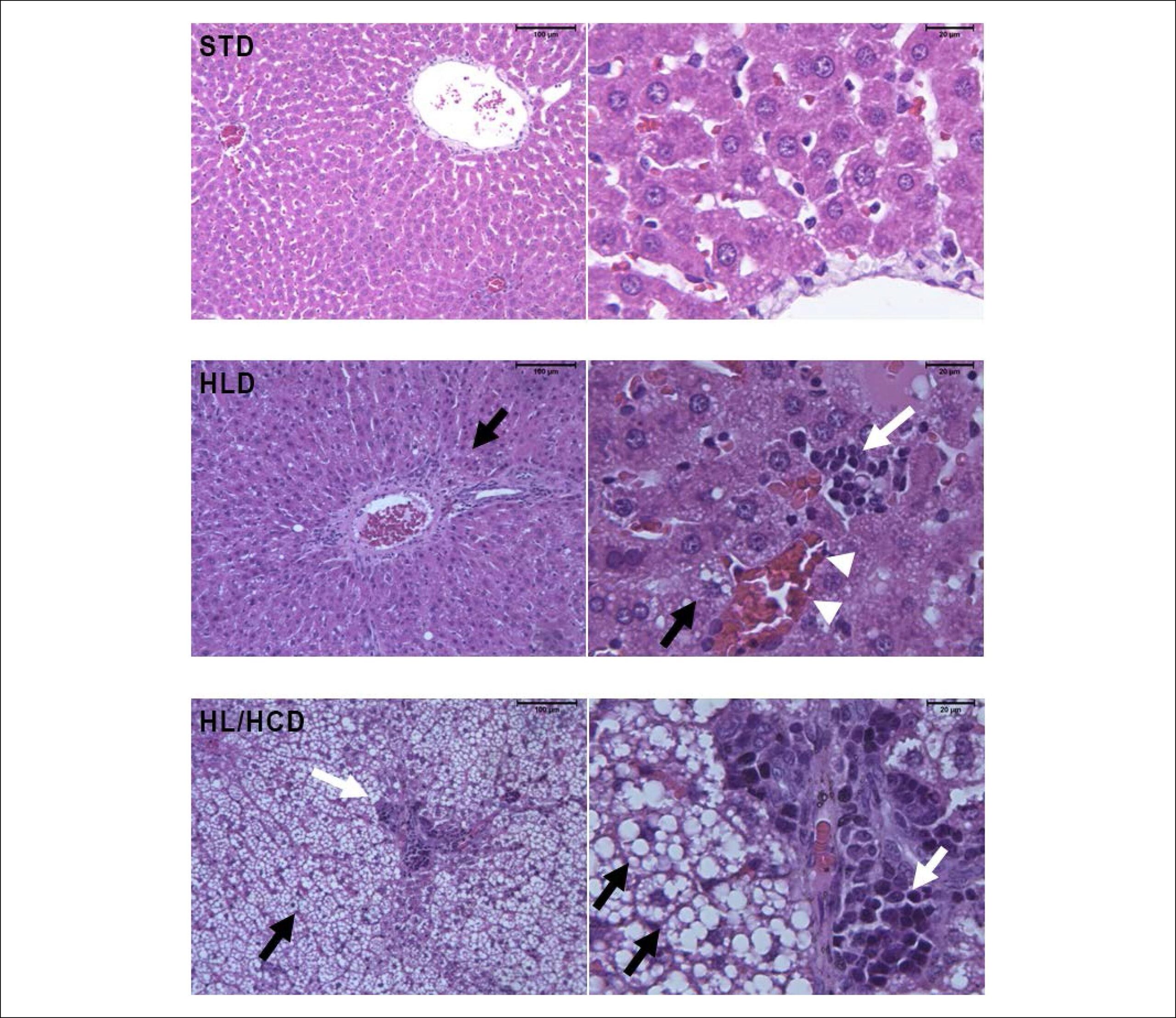
Animals fed HL/HCD showed increased total cholesterol, triacylglycerol, LDL-c, non-HDL-c, alanine aminotransferase (ALT), and aspartate aminotransferase (AST) serum levels compared to those fed STD. In addition, the HL/HCD animals presented higher relative liver weight, with moderate macrovesicular hepatic steatosis and inflammatory infiltrate.

Conclusion:

A high-fat diet with lard (20%) and cholesterol (1%) triggered dyslipidemia with severe liver damage in rats in a shorter experimental time than the previously reported models. The high-lard diet without supplementation of cholesterol led to body weight gain, but not to dyslipidemia.

  • Cholesterol
  • Dietary Fats
  • Fatty Liver
  • Inflammation
  • Lipid Metabolism
  • Rats
Read Full Article
Creative Commons Attribution (CC BY) Creative Commons license
29/08/2019 DOI: 10.5935/abc.20190149 Views 1
ABC
Editorial

Is There Any Cardiovascular Concern Regarding the Use of Aromatase Inhibitors in Breast Cancer?

Tatiana F. G. Galvão

Breast cancer is the most frequent malignancy in women worldwide, and the second leading cause of cancer mortality. Due to advances in prevention, early detection and treatment, breast cancer mortality has decreased by nearly 40% during the last four decades. However, this optimistic scenario has been counterbalanced by an increasing risk from cardiovascular disease (CVD) in breast cancer survivors. Indeed, CVD is a leading cause of mortality in breast cancer survivors.– The mechanisms by which these patients are at increased cardiovascular risk are multiple ones, including the effects of cancer itself (inflammation, oxidative stress, prothrombotic status, autonomic dysfunction, etc.) or due to the side effects related to chemotherapy and radiotherapy (metabolic dysfunction, cardiotoxicity). Some of these pathways may have prognostic significance: a previous investigation showed that autonomic modulation in breast cancer patients is an independent predictor of cardiovascular risk.

In this issue of the Arquivos Brasileiros de Cardiologia, the study “Changes in Cardiac Autonomic Modulation in Women with Breast Cancer Using Aromatase Inhibitors and the Relation with Biochemical Variables” was aimed to explore not breast cancer but the associations of one of its treatments (namely aromatase inhibitors, AI) with markers of autonomic dysfunction, as well as metabolic and inflammatory parameters in postmenopausal women. The rationale for exploring this specific therapy was based on a recent meta-analysis showing that prolonged AI use had a marginally effect of having a CVD event (odds ratio: 1.18, 95% CI = 1.00-1.40) as compared to placebo.

[…]

  • Aromatase Inhibitors
  • Blood Glicose
  • Breast Neoplasms
  • Cardiovascular Diseases / prevention & control
  • Cholesterol
  • Estrogen Replacement
Read Full Article
Creative Commons Attribution (CC BY) Creative Commons license
06/06/2019 DOI: 10.5935/abc.20190092 Views 2
Figure 1
IJCS
Review Article

Nuts and Cardiovascular Diseases: Focus on Brazil Nuts

Ana Carla Tavares da Silva et al. Ludmila F. M. F. Cardozo Beatriz Oliveira da Cruz Denise Mafra Milena Barcza Stockler-Pinto

Abstract

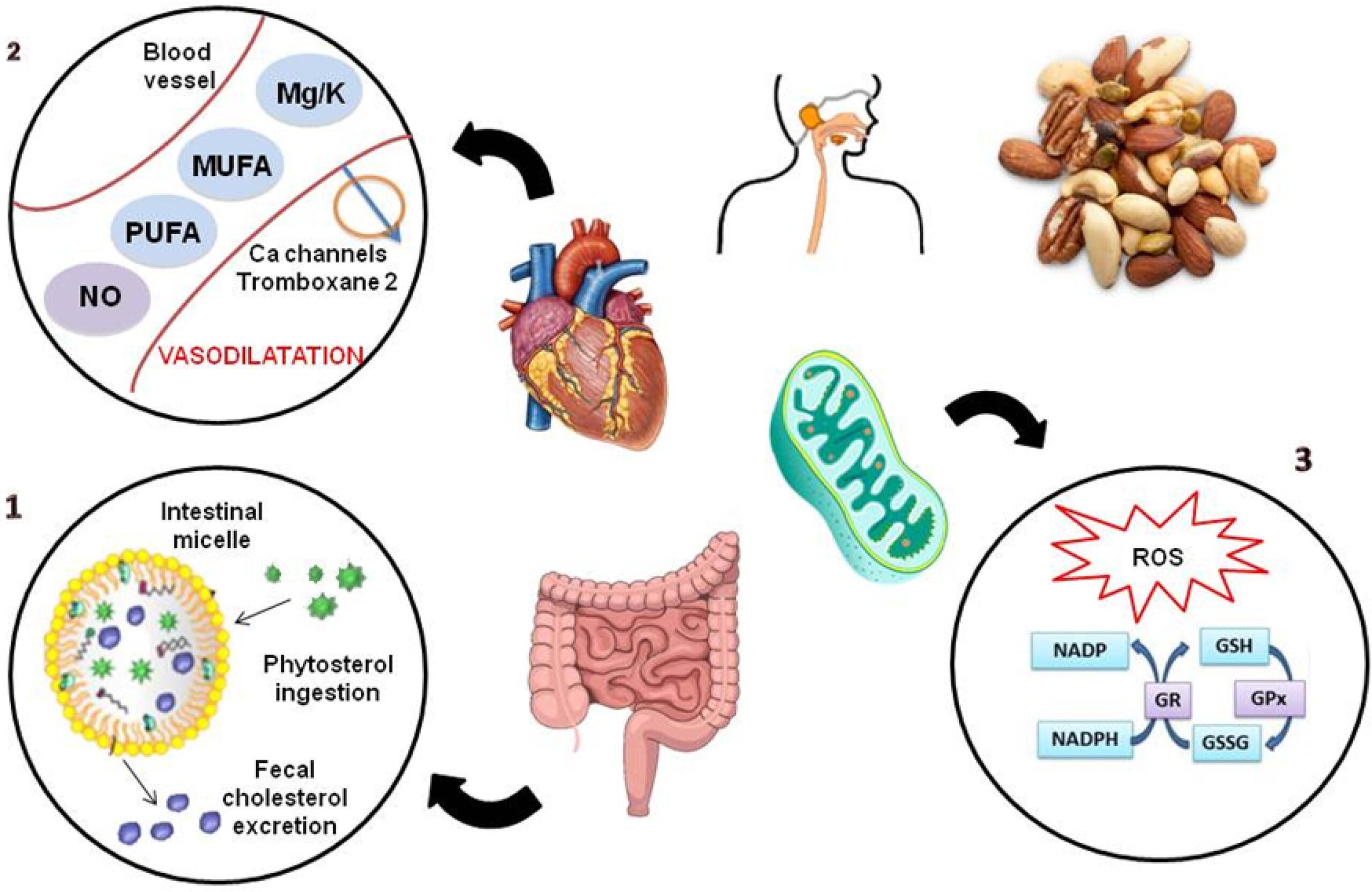
Cardiovascular diseases (CVD) are the main cause of death globally and most CVD can be prevented by addressing their risk factors, such as an unhealthy diet. Many authors have studied the benefits of nut consumption on CVD. Nuts contain high amounts of vegetable protein, unsaturated fatty acids, dietary fibers, vitamins, minerals and many other bioactive compounds, like phytosterols and phenolic compounds, which are able to reduce cholesterol levels and promote antioxidant and anti-inflammatory effects, thereby reducing cardiovascular risks. This review aims to describe studies involving the consumption of nuts, including Brazil nuts and CVD risk factors with positive results in the improvement of lipid profile, glucose metabolism, vascular function, and inflammatory and oxidative stress biomarkers.

  • Anti-Inflammatory Agents
  • Anti-Oxidants
  • Cardiovascular Diseases
  • Cholesterol
  • Diet, High-Protein
  • Nuts
  • Seeds
Read Full Article
Creative Commons Attribution (CC BY) Creative Commons license
01/04/2019 DOI: 10.5935/2359-4802.20190016
ABC
Editorial

Abdominal Adiposity and Intima-Media Carotid Thickness: An Association

Mário Sérgio Soares de Azeredo Coutinho

Atherosclerosis is the main cause of morbidity and mortality in adults in Brazil and worldwide. Classical risk factors have shown its causal association from randomized experimental studies, such with cholesterol and hypertension. Other risk factors, including abdominal adiposity, show positive associations with atherosclerosis-related outcomes.

The ELSA-Brazil observational study began collecting data in 2008 with clinical, epidemiological and laboratorial variables of 15,105 public servants aged 35 to 74 years. Several articles on these data have already been published and have brought relevant information about the association between risk factors and varied outcomes. In the present issue, Michaela Eickemberg et al. present data from a cross-sectional study that explores different measures of abdominal adiposity and its association with carotid intima-media thickness (C-IMT) measurement.

[…]

  • Carotid Artery Diseases/mortality
  • Cholesterol
  • Hypertension
  • Media-Carotidea
  • Obesity, Abdominal
  • Risk Factors
Read Full Article
Creative Commons Attribution (CC BY) Creative Commons license
01/03/2019 DOI: 10.5935/abc.20190023 Views 1
Figure 1
ABC
Original Article

Changes in Cardiac Autonomic Modulation in Women with Breast Cancer Using Aromatase Inhibitors and the Relation with Biochemical Variables

Luana Almeida Gonzaga et al. Thais Reis Silva de Paulo Juliana Viezel Laís Manata Vanzella … Ismael Forte Freitas Jr. Luiz Carlos Marques Vanderlei

Abstract

Background:

The use of autonomic modulation as a predictor of cardiovascular risk in women with breast cancer is important.

Objective:

To evaluate the cardiac autonomic modulation of postmenopausal women using aromatase inhibitors for breast cancer treatment, as well as its relation with the following biochemical variables.

Methods:

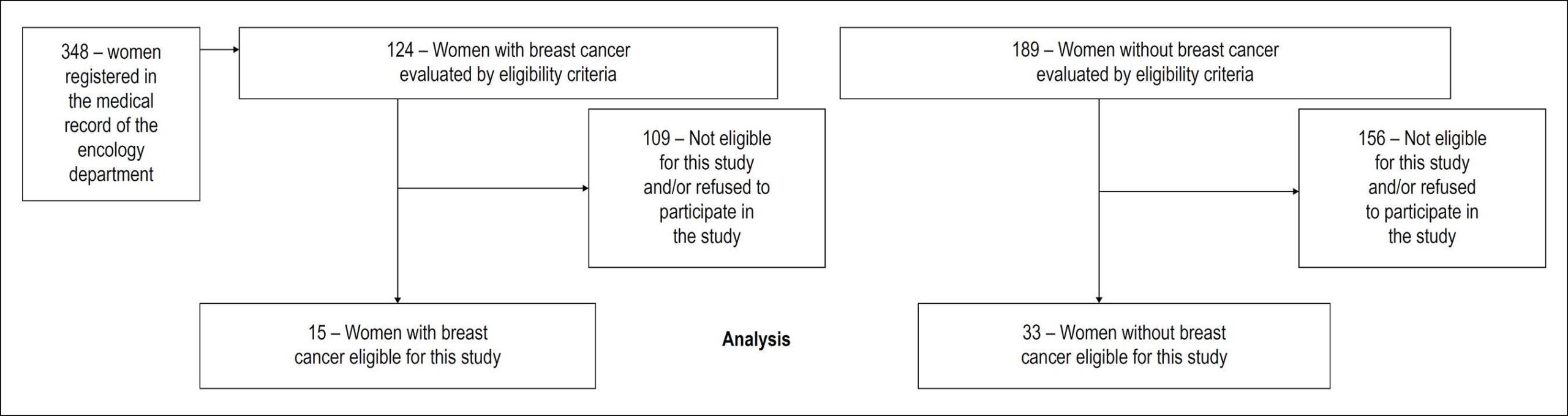
Postmenopausal women who did not have breast cancer (n = 33) and postmenopausal women with breast cancer (n = 15). For evaluation of the autonomic modulation the heart rate was recorded beat-to-beat for 30 minutes and the series of RR intervals obtained were used to calculate the following heart rate variability indices: Mean RR ms, SDNN (standard deviation of all normal RR intervals, expressed in milliseconds) ms, Mean HR, RMSSD (square root of the mean of the squared differences between adjacent normal RR interval) ms, NN50 (number of pairs of successive NNs that differ by more than 50 ms) count, pNN50% (proportion of NN50 divided by total number of NNs), RRtri (RR triangular), TINN (triangular interpolation of NN interval) ms, SD1 ms, SD2 ms, LF ms2, HF ms2, LH/HF ms2. The values of biochemical variables (fasting glycemia, triglycerides, HDL-cholesterol, and C-reactive protein) were analyzed by blood sample.

Results:

Lower values of heart rate variability indices were observed in postmenopausal women with breast cancer in relation to postmenopausal women who did not have breast cancer: Mean RR (p = 0.03); SDNN (p = 0.03); RMSSD (p = 0.03); NN50 count (p = 0.03); pNN50 % (p = 0.03); RRtri (p = 0.02); SD1 (p = 0.01); SD2 (p = 0.02); LF ms2 (p = 0.01); HF ms2 (p = 0.03).There was an inversely proportional correlation between the indices SDNN, SD2, and HFms2 with triglycerides (SDNN p = 0.04; SD2 p = 0.04; HF ms2 p = 0.04). No statistically significant correlations were found between heart rate variability indices and others variables. Statistical significance was set at 5% for all analyses.

Conclusion:

Women with breast cancer present reduced autonomic modulation and in these women of heart rate variability indices are inversely correlated with triglyceride values.

  • Aromatase Inhibitors
  • Blood Glucose
  • Breast Neoplasms
  • Cardiovascular Dieases/prevention and control
  • Cholesterol
  • Estrogen Replacement Therapy/adverse effects
Read Full Article
Creative Commons Attribution (CC BY) Creative Commons license
28/02/2019 DOI: 10.5935/abc.20190036 Views 1
ABC
Viewpoint

Flexibilization of Fasting for Laboratory Determination of the Lipid Profile in Brazil: Science or Convenience?

Caio Maurício Mendes de Cordova et al. Caroline Galgowski

A statement endorsed by medical specialty associations has been published in our country recommending the flexibilization of fasting before blood drawing for the laboratory determination of the lipid profile encompassing total cholesterol (TC), high-density lipoprotein cholesterol (HDL-c), triglycerides (TG) content and the corresponding calculation of non-HDL-cholesterol (TC – HDL-c). It was considered that non-fasting results do not clinically differ from fasting ones, and prospective studies and meta-analyses have consistently demonstrated that non-HDL-C at a non-fasting state would be at least as good as LDL-c in the prediction of CVD. It was also recommended that when TG > 4.52 mmol/L the formula proposed by Martin et al. should be used for LDL-c estimation.

The statement was based on the European Consensus on the matter published by Nordestgaard et al. However, the automatic application of this approach in Brazil deserves deeper consideration, considering the impact that it may cause on patient care. Furthermore, it is far from a consensus among clinical laboratory scientists and professionals in the country, as it became evident during the 44th Brazilian Congress of Clinical Analysis held last June 11-14th, 2017, and the 51st Brazilian Congress of Clinical Pathology and Laboratory Medicine, held last September 26-29th, 2017.

[…]

  • Cholesterol
  • Cholesterol, HDL
  • Cholesterol, LDL
  • Fasting
  • Lipids
  • Triglycerides
Read Full Article
Creative Commons Attribution (CC BY) Creative Commons license
01/11/2018 DOI: 10.5935/abc.20180174 Views 1

Could not load more articles. Please try again.

How to cite this article

EndNote RIS

Electronic Document Format (Vancouver)

Araújo LKRP, Dias DB, Santana MFM, Pereira BJ, Abensur H, Moyses R, Passarelli M, et al. A Prospective Study of Lipid Profile in Incident Patients on Peritoneal Dialysis. Arquivos Brasileiros de Cardiologia 2026;123(7):e20260013.

Electronic Document Format (ABNT)

Araújo, Luiza K. R. P.; Dias, Dayana B.; Santana, Monique F. M.; Pereira, Benedito J.; Abensur, Hugo; Moyses, Rosa; Passarelli, Marisa; Elias, Rosilene M.. A Prospective Study of Lipid Profile in Incident Patients on Peritoneal Dialysis. Arquivos Brasileiros de Cardiologia, v. 123, n. 7, e20260013, Aug. 2026.

Electronic Document Format (APA)

Araújo, L. K. R. P., Dias, D. B., Santana, M. F. M., Pereira, B. J., Abensur, H., Moyses, R., Passarelli, M., & Elias, R. M. (2026). A Prospective Study of Lipid Profile in Incident Patients on Peritoneal Dialysis. Arquivos Brasileiros de Cardiologia, 123(7), e20260013.

Electronic Document Format (ISO)

Araújo, Luiza K. R. P. and Dias, Dayana B. and Santana, Monique F. M. and Pereira, Benedito J. and Abensur, Hugo and Moyses, Rosa and Passarelli, Marisa and Elias, Rosilene M.. A Prospective Study of Lipid Profile in Incident Patients on Peritoneal Dialysis. Arquivos Brasileiros de Cardiologia [online]. 2026, vol. 123, n. 7, [cited 2026-10-14], e20260013. Available from: <https://journals.cardiol.br/en/article/a-prospective-study-of-lipid-profile-in-incident-patients-on-peritoneal-dialysis/>. ISSN 0066-782X

EndNote RIS

Electronic Document Format (Vancouver)

Vilela E, Bettencourt N. From Cholesterol Metabolism to Comprehensive Lipid Management and Crosstalk of Inflammation: Expanding the Frontiers of Cardiovascular Prevention. Arquivos Brasileiros de Cardiologia 2025;122(7):e20250386.

Electronic Document Format (ABNT)

Vilela, Eduardo; Bettencourt, Nuno. From Cholesterol Metabolism to Comprehensive Lipid Management and Crosstalk of Inflammation: Expanding the Frontiers of Cardiovascular Prevention. Arquivos Brasileiros de Cardiologia, v. 122, n. 7, e20250386, Sep. 2025.

Electronic Document Format (APA)

Vilela, E., & Bettencourt, N. (2025). From Cholesterol Metabolism to Comprehensive Lipid Management and Crosstalk of Inflammation: Expanding the Frontiers of Cardiovascular Prevention. Arquivos Brasileiros de Cardiologia, 122(7), e20250386.

Electronic Document Format (ISO)

Vilela, Eduardo and Bettencourt, Nuno. From Cholesterol Metabolism to Comprehensive Lipid Management and Crosstalk of Inflammation: Expanding the Frontiers of Cardiovascular Prevention. Arquivos Brasileiros de Cardiologia [online]. 2025, vol. 122, n. 7, [cited 2026-10-14], e20250386. Available from: <https://journals.cardiol.br/en/article/from-cholesterol-metabolism-to-comprehensive-lipid-management-and-crosstalk-of-inflammation-expanding-the-frontiers-of-cardiovascular-prevention/>. ISSN 0066-782X

EndNote RIS

Electronic Document Format (Vancouver)

Mizuta MH, Santos RD. Beyond Cholesterol and Triglycerides in the Lipid Clinic: The Challenging Task of Identifying Lysosomal Acid Lipase Deficiency. Arquivos Brasileiros de Cardiologia 2025;122(7):e20250359.

Electronic Document Format (ABNT)

Mizuta, Marjorie H.; Santos, Raul D.. Beyond Cholesterol and Triglycerides in the Lipid Clinic: The Challenging Task of Identifying Lysosomal Acid Lipase Deficiency. Arquivos Brasileiros de Cardiologia, v. 122, n. 7, e20250359, Aug. 2025.

Electronic Document Format (APA)

Mizuta, M. H., & Santos, R. D. (2025). Beyond Cholesterol and Triglycerides in the Lipid Clinic: The Challenging Task of Identifying Lysosomal Acid Lipase Deficiency. Arquivos Brasileiros de Cardiologia, 122(7), e20250359.

Electronic Document Format (ISO)

Mizuta, Marjorie H. and Santos, Raul D.. Beyond Cholesterol and Triglycerides in the Lipid Clinic: The Challenging Task of Identifying Lysosomal Acid Lipase Deficiency. Arquivos Brasileiros de Cardiologia [online]. 2025, vol. 122, n. 7, [cited 2026-10-14], e20250359. Available from: <https://journals.cardiol.br/en/article/beyond-cholesterol-and-triglycerides-in-the-lipid-clinic-the-challenging-task-of-identifying-lysosomal-acid-lipase-deficiency/>. ISSN 0066-782X

EndNote RIS

Electronic Document Format (Vancouver)

Bento VFR, Kaestner TLL, Vargas Junior A, Lopes RB, Scariot FP, Hollas LL, Olandoski M, et al. Cascade Screening in Adolescents with Lipid Disorders Suggestive of Familial Hypercholesterolemia: Findings from the ERICA Study in Curitiba. Arquivos Brasileiros de Cardiologia 2025;122(3):e20240468.

Electronic Document Format (ABNT)

Bento, Vivian Freitas Rezende; Kaestner, Tatiana Lorena da Luz; Vargas Junior, Amauri de; Lopes, Renan Barbosa; Scariot, Fernando Pinotti; Hollas, Leiza Loiane; Olandoski, Marcia; Baena, Cristina Pellegrino; Bloch, Katia Vergetti; Faria Neto, José Rocha. Cascade Screening in Adolescents with Lipid Disorders Suggestive of Familial Hypercholesterolemia: Findings from the ERICA Study in Curitiba. Arquivos Brasileiros de Cardiologia, v. 122, n. 3, e20240468, Mar. 2025.

Electronic Document Format (APA)

Bento, V. F. R., Kaestner, T. L. L., Vargas Junior, A. , Lopes, R. B., Scariot, F. P., Hollas, L. L., Olandoski, M., Baena, C. P., Bloch, K. V., & Faria Neto, J. R. (2025). Cascade Screening in Adolescents with Lipid Disorders Suggestive of Familial Hypercholesterolemia: Findings from the ERICA Study in Curitiba. Arquivos Brasileiros de Cardiologia, 122(3), e20240468.

Electronic Document Format (ISO)

Bento, Vivian Freitas Rezende and Kaestner, Tatiana Lorena da Luz and Vargas Junior, Amauri de and Lopes, Renan Barbosa and Scariot, Fernando Pinotti and Hollas, Leiza Loiane and Olandoski, Marcia and Baena, Cristina Pellegrino and Bloch, Katia Vergetti and Faria Neto, José Rocha. Cascade Screening in Adolescents with Lipid Disorders Suggestive of Familial Hypercholesterolemia: Findings from the ERICA Study in Curitiba. Arquivos Brasileiros de Cardiologia [online]. 2025, vol. 122, n. 3, [cited 2026-10-14], e20240468. Available from: <https://journals.cardiol.br/en/article/cascade-screening-in-adolescents-with-lipid-disorders-suggestive-of-familial-hypercholesterolemia-findings-from-the-erica-study-in-curitiba/>. ISSN 0066-782X

EndNote RIS

Electronic Document Format (Vancouver)

Martinez TLR. Adherence, Compliance and Persistency in High Cholesterol Treatment. Arquivos Brasileiros de Cardiologia 2025;121(11):e20240652.

Electronic Document Format (ABNT)

Martinez, Tania L. R.. Adherence, Compliance and Persistency in High Cholesterol Treatment. Arquivos Brasileiros de Cardiologia, v. 121, n. 11, e20240652, Jan. 2025.

Electronic Document Format (APA)

Martinez, T. L. R. (2025). Adherence, Compliance and Persistency in High Cholesterol Treatment. Arquivos Brasileiros de Cardiologia, 121(11), e20240652.

Electronic Document Format (ISO)

Martinez, Tania L. R.. Adherence, Compliance and Persistency in High Cholesterol Treatment. Arquivos Brasileiros de Cardiologia [online]. 2025, vol. 121, n. 11, [cited 2026-10-14], e20240652. Available from: <https://journals.cardiol.br/en/article/adherence-compliance-and-persistency-in-high-cholesterol-treatment/>. ISSN 0066-782X

EndNote RIS

Electronic Document Format (Vancouver)

Santos RD, Kashiwagi NM, Cesena FY, Assis SRL, Nieri J, Minanni CA, Franken M, et al. Uncontrolled Cholesterol in Individuals with Severe Hypercholesterolemia in a Health Evaluation Program in Brazil. Arquivos Brasileiros de Cardiologia 2024;121(11):e20240116.

Electronic Document Format (ABNT)

Santos, Raul D.; Kashiwagi, Nea Miwa; Cesena, Fernando Yue; Assis, Silvia Regina Lamas; Nieri, Josué; Minanni, Carlos Andre; Franken, Marcelo; Berwanger, Otavio. Uncontrolled Cholesterol in Individuals with Severe Hypercholesterolemia in a Health Evaluation Program in Brazil. Arquivos Brasileiros de Cardiologia, v. 121, n. 11, e20240116, Nov. 2024.

Electronic Document Format (APA)

Santos, R. D., Kashiwagi, N. M., Cesena, F. Y., Assis, S. R. L., Nieri, J., Minanni, C. A., Franken, M., & Berwanger, O. (2024). Uncontrolled Cholesterol in Individuals with Severe Hypercholesterolemia in a Health Evaluation Program in Brazil. Arquivos Brasileiros de Cardiologia, 121(11), e20240116.

Electronic Document Format (ISO)

Santos, Raul D. and Kashiwagi, Nea Miwa and Cesena, Fernando Yue and Assis, Silvia Regina Lamas and Nieri, Josué and Minanni, Carlos Andre and Franken, Marcelo and Berwanger, Otavio. Uncontrolled Cholesterol in Individuals with Severe Hypercholesterolemia in a Health Evaluation Program in Brazil. Arquivos Brasileiros de Cardiologia [online]. 2024, vol. 121, n. 11, [cited 2026-10-14], e20240116. Available from: <https://journals.cardiol.br/en/article/uncontrolled-cholesterol-in-individuals-with-severe-hypercholesterolemia-in-a-health-evaluation-program-in-brazil/>. ISSN 0066-782X

EndNote RIS

Electronic Document Format (Vancouver)

Tramujas L, Medrado Júnior FA, Cavalcanti AB, Pompilio CE. Serving Two Masters: Resolving the Dilemma between Individual Patient Data Meta-Analysis and Aggregate Data Meta-Analysis from Statin Trials. Arquivos Brasileiros de Cardiologia 2023;120(4):e20220539.

Electronic Document Format (ABNT)

Tramujas, Lucas; Medrado Júnior, Fernando Azevedo; Cavalcanti, Alexandre Biasi; Pompilio, Carlos Eduardo. Serving Two Masters: Resolving the Dilemma between Individual Patient Data Meta-Analysis and Aggregate Data Meta-Analysis from Statin Trials. Arquivos Brasileiros de Cardiologia, v. 120, n. 4, e20220539, Apr. 2023.

Electronic Document Format (APA)

Tramujas, L., Medrado Júnior, F. A., Cavalcanti, A. B., & Pompilio, C. E. (2023). Serving Two Masters: Resolving the Dilemma between Individual Patient Data Meta-Analysis and Aggregate Data Meta-Analysis from Statin Trials. Arquivos Brasileiros de Cardiologia, 120(4), e20220539.

Electronic Document Format (ISO)

Tramujas, Lucas and Medrado Júnior, Fernando Azevedo and Cavalcanti, Alexandre Biasi and Pompilio, Carlos Eduardo. Serving Two Masters: Resolving the Dilemma between Individual Patient Data Meta-Analysis and Aggregate Data Meta-Analysis from Statin Trials. Arquivos Brasileiros de Cardiologia [online]. 2023, vol. 120, n. 4, [cited 2026-10-14], e20220539. Available from: <https://journals.cardiol.br/en/article/serving-two-masters-resolving-the-dilemma-between-individual-patient-data-meta-analysis-and-aggregate-data-meta-analysis-from-statin-trials/>. ISSN 0066-782X

EndNote RIS

Electronic Document Format (Vancouver)

Pacheco MA, Cardoso SM, Honicky M, Moreno YMF, Lima LRA, Marcos CS, Back IC, et al. HDL-Cholesterol in Children and Adolescents with Congenital Heart Disease. International Journal of Cardiovascular Sciences 2022;35(6):784-93.

Electronic Document Format (ABNT)

Pacheco, Matheus Alves; Cardoso, Silvia Meyer; Honicky, Michele; Moreno, Yara Maria Franco; Lima, Luiz Rodrigo Augustemak de; Marcos, Camila Souza; Back, Isabela de Carlos. HDL-Cholesterol in Children and Adolescents with Congenital Heart Disease. International Journal of Cardiovascular Sciences, v. 35, n. 6, p. 784-793, Aug. 2022.

Electronic Document Format (APA)

Pacheco, M. A., Cardoso, S. M., Honicky, M., Moreno, Y. M. F., Lima, L. R. A. , Marcos, C. S., & Back, I. C. (2022). HDL-Cholesterol in Children and Adolescents with Congenital Heart Disease. International Journal of Cardiovascular Sciences, 35(6), 784-793.

Electronic Document Format (ISO)

Pacheco, Matheus Alves and Cardoso, Silvia Meyer and Honicky, Michele and Moreno, Yara Maria Franco and Lima, Luiz Rodrigo Augustemak de and Marcos, Camila Souza and Back, Isabela de Carlos. HDL-Cholesterol in Children and Adolescents with Congenital Heart Disease. International Journal of Cardiovascular Sciences [online]. 2022, vol. 35, n. 6, [cited 2026-10-14], pp. 784-793. Available from: <https://journals.cardiol.br/en/article/hdl-cholesterol-in-children-and-adolescents-with-congenital-heart-disease/>. ISSN 2359-4802

EndNote RIS

Electronic Document Format (Vancouver)

Luz PL, Laurindo FRM. Translational Medicine and Implementation Science: How to Transform What We Know Into What We Do. Arquivos Brasileiros de Cardiologia 2022;119(2):342-5.

Electronic Document Format (ABNT)

Luz, Protásio Lemos da; Laurindo, Francisco Rafael Martins. Translational Medicine and Implementation Science: How to Transform What We Know Into What We Do. Arquivos Brasileiros de Cardiologia, v. 119, n. 2, p. 342-345, Aug. 2022.

Electronic Document Format (APA)

Luz, P. L. , & Laurindo, F. R. M. (2022). Translational Medicine and Implementation Science: How to Transform What We Know Into What We Do. Arquivos Brasileiros de Cardiologia, 119(2), 342-345.

Electronic Document Format (ISO)

Luz, Protásio Lemos da and Laurindo, Francisco Rafael Martins. Translational Medicine and Implementation Science: How to Transform What We Know Into What We Do. Arquivos Brasileiros de Cardiologia [online]. 2022, vol. 119, n. 2, [cited 2026-10-14], pp. 342-345. Available from: <https://journals.cardiol.br/en/article/translational-medicine-and-implementation-science-how-to-transform-what-we-know-into-what-we-do/>. ISSN 0066-782X

EndNote RIS

Electronic Document Format (Vancouver)

Précoma DB. A New Risk Predictor in Acute Myocardial Infarction. Is There Still Room for One More?. Arquivos Brasileiros de Cardiologia 2022;119(1):23-4.

Electronic Document Format (ABNT)

Précoma, Dalton Bertolim. A New Risk Predictor in Acute Myocardial Infarction. Is There Still Room for One More?. Arquivos Brasileiros de Cardiologia, v. 119, n. 1, p. 23-24, Jul. 2022.

Electronic Document Format (APA)

Précoma, D. B. (2022). A New Risk Predictor in Acute Myocardial Infarction. Is There Still Room for One More?. Arquivos Brasileiros de Cardiologia, 119(1), 23-24.

Electronic Document Format (ISO)

Précoma, Dalton Bertolim. A New Risk Predictor in Acute Myocardial Infarction. Is There Still Room for One More?. Arquivos Brasileiros de Cardiologia [online]. 2022, vol. 119, n. 1, [cited 2026-10-14], pp. 23-24. Available from: <https://journals.cardiol.br/en/article/a-new-risk-predictor-in-acute-myocardial-infarction-is-there-still-room-for-one-more/>. ISSN 0066-782X

EndNote RIS

Electronic Document Format (Vancouver)

Quirino NMML, Prazeres Filho A, Barbosa AO, Mendonça G, Farias Júnior JC. Breaks in Sedentary Time and Cardiometabolic Markers in Adolescents. Arquivos Brasileiros de Cardiologia 2021;117(2):352-6.

Electronic Document Format (ABNT)

Quirino, Natália Maria Mesquita de Lima; Prazeres Filho, Alcides; Barbosa, Arthur Oliveira; Mendonça, Gerfeson; Farias Júnior, José Cazuza de. Breaks in Sedentary Time and Cardiometabolic Markers in Adolescents. Arquivos Brasileiros de Cardiologia, v. 117, n. 2, p. 352-362, Sep. 2021.

Electronic Document Format (APA)

Quirino, N. M. M. L., Prazeres Filho, A., Barbosa, A. O., Mendonça, G., & Farias Júnior, J. C. (2021). Breaks in Sedentary Time and Cardiometabolic Markers in Adolescents. Arquivos Brasileiros de Cardiologia, 117(2), 352-362.

Electronic Document Format (ISO)

Quirino, Natália Maria Mesquita de Lima and Prazeres Filho, Alcides and Barbosa, Arthur Oliveira and Mendonça, Gerfeson and Farias Júnior, José Cazuza de. Breaks in Sedentary Time and Cardiometabolic Markers in Adolescents. Arquivos Brasileiros de Cardiologia [online]. 2021, vol. 117, n. 2, [cited 2026-10-14], pp. 352-362. Available from: <https://journals.cardiol.br/en/article/breaks-in-sedentary-time-and-cardiometabolic-markers-in-adolescents/>. ISSN 0066-782X

EndNote RIS

Electronic Document Format (Vancouver)

Malta DC, Pinheiro PC, Teixeira RA, Machado IE, Santos FM, Ribeiro ALP. Cardiovascular Risk Estimates in Ten Years in the Brazilian Population, a Population-Based Study. Arquivos Brasileiros de Cardiologia 2021;116(3):423-31.

Electronic Document Format (ABNT)

Malta, Deborah Carvalho; Pinheiro, Pedro Cisalpino; Teixeira, Renato Azeredo; Machado, Isis Eloah; Santos, Filipe Malta dos; Ribeiro, Antônio Luiz Pinho. Cardiovascular Risk Estimates in Ten Years in the Brazilian Population, a Population-Based Study. Arquivos Brasileiros de Cardiologia, v. 116, n. 3, p. 423-431, Apr. 2021.

Electronic Document Format (APA)

Malta, D. C., Pinheiro, P. C., Teixeira, R. A., Machado, I. E., Santos, F. M. , & Ribeiro, A. L. P. (2021). Cardiovascular Risk Estimates in Ten Years in the Brazilian Population, a Population-Based Study. Arquivos Brasileiros de Cardiologia, 116(3), 423-431.

Electronic Document Format (ISO)

Malta, Deborah Carvalho and Pinheiro, Pedro Cisalpino and Teixeira, Renato Azeredo and Machado, Isis Eloah and Santos, Filipe Malta dos and Ribeiro, Antônio Luiz Pinho. Cardiovascular Risk Estimates in Ten Years in the Brazilian Population, a Population-Based Study. Arquivos Brasileiros de Cardiologia [online]. 2021, vol. 116, n. 3, [cited 2026-10-14], pp. 423-431. Available from: <https://journals.cardiol.br/en/article/cardiovascular-risk-estimates-in-ten-years-in-the-brazilian-population-a-population-based-study/>. ISSN 0066-782X

EndNote RIS

Electronic Document Format (Vancouver)

Schmidt A, Moreira HT, Volpe GJ, Foschini VB, Lascala TF, Romano MMD, Simões MV, et al. Statins Prescriptions and Lipid Levels in a Tertiary Public Hospital. Arquivos Brasileiros de Cardiologia 2021;116(4):736-41.

Electronic Document Format (ABNT)

Schmidt, André; Moreira, Henrique Turin; Volpe, Gustavo Jardim; Foschini, Vamberto B.; Lascala, Thiago Florentino; Romano, Minna Moreira Dias; Simões, Marcus Vinícius; Santos, José Ernesto dos; Maciel, Benedito Carlos; Marin Neto, José Antonio. Statins Prescriptions and Lipid Levels in a Tertiary Public Hospital. Arquivos Brasileiros de Cardiologia, v. 116, n. 4, p. 736-741, Apr. 2021.

Electronic Document Format (APA)

Schmidt, A., Moreira, H. T., Volpe, G. J., Foschini, V. B., Lascala, T. F., Romano, M. M. D., Simões, M. V., Santos, J. E. , Maciel, B. C., & Marin Neto, J. A. (2021). Statins Prescriptions and Lipid Levels in a Tertiary Public Hospital. Arquivos Brasileiros de Cardiologia, 116(4), 736-741.

Electronic Document Format (ISO)

Schmidt, André and Moreira, Henrique Turin and Volpe, Gustavo Jardim and Foschini, Vamberto B. and Lascala, Thiago Florentino and Romano, Minna Moreira Dias and Simões, Marcus Vinícius and Santos, José Ernesto dos and Maciel, Benedito Carlos and Marin Neto, José Antonio. Statins Prescriptions and Lipid Levels in a Tertiary Public Hospital. Arquivos Brasileiros de Cardiologia [online]. 2021, vol. 116, n. 4, [cited 2026-10-14], pp. 736-741. Available from: <https://journals.cardiol.br/en/article/statins-prescriptions-and-lipid-levels-in-a-tertiary-public-hospital/>. ISSN 0066-782X

EndNote RIS

Electronic Document Format (Vancouver)

Ferrari F, Santos RD. Statins and COVID-19: To Suspend or Not to Suspend? That is the Question!. Arquivos Brasileiros de Cardiologia 2021;116(1):147-52.

Electronic Document Format (ABNT)

Ferrari, Filipe; Santos, Raul D.. Statins and COVID-19: To Suspend or Not to Suspend? That is the Question!. Arquivos Brasileiros de Cardiologia, v. 116, n. 1, p. 147-152, Feb. 2021.

Electronic Document Format (APA)

Ferrari, F., & Santos, R. D. (2021). Statins and COVID-19: To Suspend or Not to Suspend? That is the Question!. Arquivos Brasileiros de Cardiologia, 116(1), 147-152.

Electronic Document Format (ISO)

Ferrari, Filipe and Santos, Raul D.. Statins and COVID-19: To Suspend or Not to Suspend? That is the Question!. Arquivos Brasileiros de Cardiologia [online]. 2021, vol. 116, n. 1, [cited 2026-10-14], pp. 147-152. Available from: <https://journals.cardiol.br/en/article/statins-and-covid-19-to-suspend-or-not-to-suspend-that-is-the-question/>. ISSN 0066-782X

EndNote RIS

Electronic Document Format (Vancouver)

Souto MJS, Almeida-Santos MA, Ferreira EJP, Gonçalves LFG, Oliveira JLM, Sousa ACS. Spontaneous Coronary Artery Dissection in a Patient with Cerebrotendinous Xanthomatosis. Arquivos Brasileiros de Cardiologia 2020;115(1 suppl 1):18-21.

Electronic Document Format (ABNT)

Souto, Maria Júlia Silveira; Almeida-Santos, Marcos Antônio; Ferreira, Eduardo José Pereira; Gonçalves, Luiz Flávio Galvão; Oliveira, Joselina Luzia Menezes; Sousa, Antônio Carlos Sobral. Spontaneous Coronary Artery Dissection in a Patient with Cerebrotendinous Xanthomatosis. Arquivos Brasileiros de Cardiologia, v. 115, n. 1 suppl 1, p. 18-21, Sep. 2020.

Electronic Document Format (APA)

Souto, M. J. S., Almeida-Santos, M. A., Ferreira, E. J. P., Gonçalves, L. F. G., Oliveira, J. L. M., & Sousa, A. C. S. (2020). Spontaneous Coronary Artery Dissection in a Patient with Cerebrotendinous Xanthomatosis. Arquivos Brasileiros de Cardiologia, 115(1 suppl 1), 18-21.

Electronic Document Format (ISO)

Souto, Maria Júlia Silveira and Almeida-Santos, Marcos Antônio and Ferreira, Eduardo José Pereira and Gonçalves, Luiz Flávio Galvão and Oliveira, Joselina Luzia Menezes and Sousa, Antônio Carlos Sobral. Spontaneous Coronary Artery Dissection in a Patient with Cerebrotendinous Xanthomatosis. Arquivos Brasileiros de Cardiologia [online]. 2020, vol. 115, n. 1 suppl 1, [cited 2026-10-14], pp. 18-21. Available from: <https://journals.cardiol.br/en/article/spontaneous-coronary-artery-dissection-in-a-patient-with-cerebrotendinous-xanthomatosis/>. ISSN 0066-782X

EndNote RIS

Electronic Document Format (Vancouver)

Hernández I, Estrella A, Salazar J, Duarte Y, Torres E, López C, Terán S, et al. Treatment Eligibility and Therapeutic Responses of an Ecuadorian Population at High Cardiovascular Risk Based on the ATP III Guidelines. International Journal of Cardiovascular Sciences 2020;33(4):371-6.

Electronic Document Format (ABNT)

Hernández, Isabel; Estrella, Andrea; Salazar, Jorge; Duarte, Yan; Torres, Edmundo; López, Camilo; Terán, Santiago; Mendoza, Alejandra; Terán, Enrique. Treatment Eligibility and Therapeutic Responses of an Ecuadorian Population at High Cardiovascular Risk Based on the ATP III Guidelines. International Journal of Cardiovascular Sciences, v. 33, n. 4, p. 371-376, Aug. 2020.

Electronic Document Format (APA)

Hernández, I., Estrella, A., Salazar, J., Duarte, Y., Torres, E., López, C., Terán, S., Mendoza, A., & Terán, E. (2020). Treatment Eligibility and Therapeutic Responses of an Ecuadorian Population at High Cardiovascular Risk Based on the ATP III Guidelines. International Journal of Cardiovascular Sciences, 33(4), 371-376.

Electronic Document Format (ISO)

Hernández, Isabel and Estrella, Andrea and Salazar, Jorge and Duarte, Yan and Torres, Edmundo and López, Camilo and Terán, Santiago and Mendoza, Alejandra and Terán, Enrique. Treatment Eligibility and Therapeutic Responses of an Ecuadorian Population at High Cardiovascular Risk Based on the ATP III Guidelines. International Journal of Cardiovascular Sciences [online]. 2020, vol. 33, n. 4, [cited 2026-10-14], pp. 371-376. Available from: <https://journals.cardiol.br/en/article/treatment-eligibility-and-therapeutic-responses-of-an-ecuadorian-population-at-high-cardiovascular-risk-based-on-the-atp-iii-guidelines/>. ISSN 2359-4802

EndNote RIS

Electronic Document Format (Vancouver)

Derakhshanian H, Djalali M, Djazayery A, Javanbakht MH, Zarei M, Hekmatdoost A, Eslamian G, et al. Quercetin Ameliorates Lipid and Apolipoprotein Profile in High-Dose Glucocorticoid Treated Rats. Arquivos Brasileiros de Cardiologia 2020;115(1):102-8.

Electronic Document Format (ABNT)

Derakhshanian, Hoda; Djalali, Mahmoud; Djazayery, Abolghassem; Javanbakht, Mohammad Hassan; Zarei, Mahnaz; Hekmatdoost, Azita; Eslamian, Ghazaleh; Mirhashemi, Seyyedeh Somayyeh; Dehpour, Ahmad Reza. Quercetin Ameliorates Lipid and Apolipoprotein Profile in High-Dose Glucocorticoid Treated Rats. Arquivos Brasileiros de Cardiologia, v. 115, n. 1, p. 102-108, Aug. 2020.

Electronic Document Format (APA)

Derakhshanian, H., Djalali, M., Djazayery, A., Javanbakht, M. H., Zarei, M., Hekmatdoost, A., Eslamian, G., Mirhashemi, S. S., & Dehpour, A. R. (2020). Quercetin Ameliorates Lipid and Apolipoprotein Profile in High-Dose Glucocorticoid Treated Rats. Arquivos Brasileiros de Cardiologia, 115(1), 102-108.

Electronic Document Format (ISO)

Derakhshanian, Hoda and Djalali, Mahmoud and Djazayery, Abolghassem and Javanbakht, Mohammad Hassan and Zarei, Mahnaz and Hekmatdoost, Azita and Eslamian, Ghazaleh and Mirhashemi, Seyyedeh Somayyeh and Dehpour, Ahmad Reza. Quercetin Ameliorates Lipid and Apolipoprotein Profile in High-Dose Glucocorticoid Treated Rats. Arquivos Brasileiros de Cardiologia [online]. 2020, vol. 115, n. 1, [cited 2026-10-14], pp. 102-108. Available from: <https://journals.cardiol.br/en/article/quercetin-ameliorates-lipid-and-apolipoprotein-profile-in-high-dose-glucocorticoid-treated-rats/>. ISSN 0066-782X

EndNote RIS

Electronic Document Format (Vancouver)

Cândido APC, Mendonça-Mendes A, Cândido DR, Nicolato RL, Machado-Coelho GL. Lipoprotein(a) levels in children and adolescents: Ouro Preto Study. International Journal of Cardiovascular Sciences 2020;34(1):10-8.

Electronic Document Format (ABNT)

Cândido, Ana Paula C; Mendonça-Mendes, Alekson; Cândido, Débora RC; Nicolato, Roney LC; Machado-Coelho, George LL. Lipoprotein(a) levels in children and adolescents: Ouro Preto Study. International Journal of Cardiovascular Sciences, v. 34, n. 1, p. 10-18, Apr. 2020.

Electronic Document Format (APA)

Cândido, A. P. C., Mendonça-Mendes, A., Cândido, D. R., Nicolato, R. L., & Machado-Coelho, G. L. (2020). Lipoprotein(a) levels in children and adolescents: Ouro Preto Study. International Journal of Cardiovascular Sciences, 34(1), 10-18.

Electronic Document Format (ISO)

Cândido, Ana Paula C and Mendonça-Mendes, Alekson and Cândido, Débora RC and Nicolato, Roney LC and Machado-Coelho, George LL. Lipoprotein(a) levels in children and adolescents: Ouro Preto Study. International Journal of Cardiovascular Sciences [online]. 2020, vol. 34, n. 1, [cited 2026-10-14], pp. 10-18. Available from: <https://journals.cardiol.br/en/article/lipoproteina-levels-in-children-and-adolescents-ouro-preto-study/>. ISSN 2359-4802

EndNote RIS

Electronic Document Format (Vancouver)

Muniz LB, Alves-Santos AM, Camargo F, Martins DB, Celes MRN, Naves MMV. High-Lard and High-Cholesterol Diet, but not High-Lard Diet, Leads to Metabolic Disorders in a Modified Dyslipidemia Model. Arquivos Brasileiros de Cardiologia 2019;113(5):896-902.

Electronic Document Format (ABNT)

Muniz, Lidiane B.; Alves-Santos, Aline M.; Camargo, Fabricio; Martins, Danieli Brolo; Celes, Mara Rubia N.; Naves, Maria Margareth V.. High-Lard and High-Cholesterol Diet, but not High-Lard Diet, Leads to Metabolic Disorders in a Modified Dyslipidemia Model. Arquivos Brasileiros de Cardiologia, v. 113, n. 5, p. 896-902, Aug. 2019.

Electronic Document Format (APA)

Muniz, L. B., Alves-Santos, A. M., Camargo, F., Martins, D. B., Celes, M. R. N., & Naves, M. M. V. (2019). High-Lard and High-Cholesterol Diet, but not High-Lard Diet, Leads to Metabolic Disorders in a Modified Dyslipidemia Model. Arquivos Brasileiros de Cardiologia, 113(5), 896-902.

Electronic Document Format (ISO)

Muniz, Lidiane B. and Alves-Santos, Aline M. and Camargo, Fabricio and Martins, Danieli Brolo and Celes, Mara Rubia N. and Naves, Maria Margareth V.. High-Lard and High-Cholesterol Diet, but not High-Lard Diet, Leads to Metabolic Disorders in a Modified Dyslipidemia Model. Arquivos Brasileiros de Cardiologia [online]. 2019, vol. 113, n. 5, [cited 2026-10-14], pp. 896-902. Available from: <https://journals.cardiol.br/en/article/high-lard-and-high-cholesterol-diet-but-not-high-lard-diet-leads-to-metabolic-disorders-in-a-modified-dyslipidemia-model/>. ISSN 0066-782X

EndNote RIS

Electronic Document Format (Vancouver)

Galvão TFG. Is There Any Cardiovascular Concern Regarding the Use of Aromatase Inhibitors in Breast Cancer?. Arquivos Brasileiros de Cardiologia 2019;112(5):489-90.

Electronic Document Format (ABNT)

Galvão, Tatiana F. G.. Is There Any Cardiovascular Concern Regarding the Use of Aromatase Inhibitors in Breast Cancer?. Arquivos Brasileiros de Cardiologia, v. 112, n. 5, p. 489-490, Jun. 2019.

Electronic Document Format (APA)

Galvão, T. F. G. (2019). Is There Any Cardiovascular Concern Regarding the Use of Aromatase Inhibitors in Breast Cancer?. Arquivos Brasileiros de Cardiologia, 112(5), 489-490.

Electronic Document Format (ISO)

Galvão, Tatiana F. G.. Is There Any Cardiovascular Concern Regarding the Use of Aromatase Inhibitors in Breast Cancer?. Arquivos Brasileiros de Cardiologia [online]. 2019, vol. 112, n. 5, [cited 2026-10-14], pp. 489-490. Available from: <https://journals.cardiol.br/en/article/is-there-any-cardiovascular-concern-regarding-the-use-of-aromatase-inhibitors-in-breast-cancer/>. ISSN 0066-782X

EndNote RIS

Electronic Document Format (Vancouver)

Silva ACT, Cardozo LFMF, Cruz BO, Mafra D, Stockler-Pinto MB. Nuts and Cardiovascular Diseases: Focus on Brazil Nuts. International Journal of Cardiovascular Sciences 2019;32(3):274-82.

Electronic Document Format (ABNT)

Silva, Ana Carla Tavares da; Cardozo, Ludmila F. M. F.; Cruz, Beatriz Oliveira da; Mafra, Denise; Stockler-Pinto, Milena Barcza. Nuts and Cardiovascular Diseases: Focus on Brazil Nuts. International Journal of Cardiovascular Sciences, v. 32, n. 3, p. 274-282, Mar. 2019.

Electronic Document Format (APA)

Silva, A. C. T. , Cardozo, L. F. M. F., Cruz, B. O. , Mafra, D., & Stockler-Pinto, M. B. (2019). Nuts and Cardiovascular Diseases: Focus on Brazil Nuts. International Journal of Cardiovascular Sciences, 32(3), 274-282.

Electronic Document Format (ISO)

Silva, Ana Carla Tavares da and Cardozo, Ludmila F. M. F. and Cruz, Beatriz Oliveira da and Mafra, Denise and Stockler-Pinto, Milena Barcza. Nuts and Cardiovascular Diseases: Focus on Brazil Nuts. International Journal of Cardiovascular Sciences [online]. 2019, vol. 32, n. 3, [cited 2026-10-14], pp. 274-282. Available from: <https://journals.cardiol.br/en/article/nuts-and-cardiovascular-diseases-focus-on-brazil-nuts/>. ISSN 2359-4802

EndNote RIS

Electronic Document Format (Vancouver)

Coutinho MSSA. Abdominal Adiposity and Intima-Media Carotid Thickness: An Association. Arquivos Brasileiros de Cardiologia 2019;112(3):228-9.

Electronic Document Format (ABNT)

Coutinho, Mário Sérgio Soares de Azeredo. Abdominal Adiposity and Intima-Media Carotid Thickness: An Association. Arquivos Brasileiros de Cardiologia, v. 112, n. 3, p. 228-229, Feb. 2019.

Electronic Document Format (APA)

Coutinho, M. S. S. A. (2019). Abdominal Adiposity and Intima-Media Carotid Thickness: An Association. Arquivos Brasileiros de Cardiologia, 112(3), 228-229.

Electronic Document Format (ISO)

Coutinho, Mário Sérgio Soares de Azeredo. Abdominal Adiposity and Intima-Media Carotid Thickness: An Association. Arquivos Brasileiros de Cardiologia [online]. 2019, vol. 112, n. 3, [cited 2026-10-14], pp. 228-229. Available from: <https://journals.cardiol.br/en/article/abdominal-adiposity-and-intima-media-carotid-thickness-an-association/>. ISSN 0066-782X

EndNote RIS

Electronic Document Format (Vancouver)

Gonzaga LA, Paulo TRS, Viezel J, Vanzella LM, Freitas Jr. IF, Vanderlei LCM. Changes in Cardiac Autonomic Modulation in Women with Breast Cancer Using Aromatase Inhibitors and the Relation with Biochemical Variables. Arquivos Brasileiros de Cardiologia 2019;112(5):555-63.

Electronic Document Format (ABNT)

Gonzaga, Luana Almeida; Paulo, Thais Reis Silva de; Viezel, Juliana; Vanzella, Laís Manata; Freitas Jr., Ismael Forte; Vanderlei, Luiz Carlos Marques. Changes in Cardiac Autonomic Modulation in Women with Breast Cancer Using Aromatase Inhibitors and the Relation with Biochemical Variables. Arquivos Brasileiros de Cardiologia, v. 112, n. 5, p. 555-563, Feb. 2019.

Electronic Document Format (APA)

Gonzaga, L. A., Paulo, T. R. S. , Viezel, J., Vanzella, L. M., Freitas Jr., I. F., & Vanderlei, L. C. M. (2019). Changes in Cardiac Autonomic Modulation in Women with Breast Cancer Using Aromatase Inhibitors and the Relation with Biochemical Variables. Arquivos Brasileiros de Cardiologia, 112(5), 555-563.

Electronic Document Format (ISO)

Gonzaga, Luana Almeida and Paulo, Thais Reis Silva de and Viezel, Juliana and Vanzella, Laís Manata and Freitas Jr., Ismael Forte and Vanderlei, Luiz Carlos Marques. Changes in Cardiac Autonomic Modulation in Women with Breast Cancer Using Aromatase Inhibitors and the Relation with Biochemical Variables. Arquivos Brasileiros de Cardiologia [online]. 2019, vol. 112, n. 5, [cited 2026-10-14], pp. 555-563. Available from: <https://journals.cardiol.br/en/article/changes-in-cardiac-autonomic-modulation-in-women-with-breast-cancer-using-aromatase-inhibitors-and-the-relation-with-biochemical-variables/>. ISSN 0066-782X

EndNote RIS

Electronic Document Format (Vancouver)

Cordova CMM, Galgowski C. Flexibilization of Fasting for Laboratory Determination of the Lipid Profile in Brazil: Science or Convenience?. Arquivos Brasileiros de Cardiologia 2018;111(5):747-9.

Electronic Document Format (ABNT)

Cordova, Caio Maurício Mendes de; Galgowski, Caroline. Flexibilization of Fasting for Laboratory Determination of the Lipid Profile in Brazil: Science or Convenience?. Arquivos Brasileiros de Cardiologia, v. 111, n. 5, p. 747-749, Oct. 2018.

Electronic Document Format (APA)

Cordova, C. M. M. , & Galgowski, C. (2018). Flexibilization of Fasting for Laboratory Determination of the Lipid Profile in Brazil: Science or Convenience?. Arquivos Brasileiros de Cardiologia, 111(5), 747-749.

Electronic Document Format (ISO)

Cordova, Caio Maurício Mendes de and Galgowski, Caroline. Flexibilization of Fasting for Laboratory Determination of the Lipid Profile in Brazil: Science or Convenience?. Arquivos Brasileiros de Cardiologia [online]. 2018, vol. 111, n. 5, [cited 2026-10-14], pp. 747-749. Available from: <https://journals.cardiol.br/en/article/flexibilization-of-fasting-for-laboratory-determination-of-the-lipid-profile-in-brazil-science-or-convenience/>. ISSN 0066-782X

  • About ABC Family
  • Internal Regulation
  • Editorial Board
  • Brazilian Society of Cardiology (SBC)

Issues

SBC Guidelines

  • Videos
  • Podcasts
  • News