ABC Family Arquivos Brasileiros de Cardiologia International Journal of Cardiovascular Sciences ABC Heart Failure & Cardiomyopathy ABC Imagem Cardiovascular
Português English
ABC Family
Português English
  • About
    • About ABC Family
    • Internal Regulation
    • Editorial Board
    • Brazilian Society of Cardiology (SBC)
  • Issues
  • SBC Guidelines
  • Content
    • Videos
    • Podcasts
    • News
  • About
    • About ABC Family
    • Internal Regulation
    • Editorial Board
    • Brazilian Society of Cardiology (SBC)
  • Issues
  • SBC Guidelines
  • Content
    • Videos
    • Podcasts
    • News

ABC Family

  • ABC Family
  • Arquivos Brasileiros de Cardiologia
  • International Journal of Cardiovascular Sciences
  • ABC Heart Failure & Cardiomyopathy
  • ABC Imagem Cardiovascular
Search in

No content found.

Journals
Ordering
Article types
Others

  1. Home
  2. Keyword: Feeding Behavior
IJCS
Editorial

Ultra-Processed Foods Consumption and Cardiovascular Health

Annie Seixas Bello Moreira et al. Débora Pinto Gapanowicz

Ultra-processed foods, as defined by the NOVA classification, are industrial formulations made from substances extracted or derived from food, containing little to no whole food in their composition. These foods are typically enhanced with flavorings, colorings, emulsifiers, and other additives that alter the sensory attributes of the final product. The ingredients and processes used in the ultra- processed foods manufacture aim to create low-cost, hyper-palatable, and convenient products that have the potential to replace fresh or minimally processed foods.

Ultra-processed foods already constitute more than half of the total dietary energy consumed in high-income countries like USA, and between one-fifth and one-third in middle-income countries such as Brazil. These foods are not ‘real food’ and they are typically high in energy density, sugar, unhealthy fats, and salt, but low in dietary fiber, protein, vitamins, and minerals.

[…]

  • Cardiovascular Diseases
  • Diet
  • Feeding Behavior
  • Food, Ultraprocessed
Read Full Article
Creative Commons Attribution (CC BY) Creative Commons license
25/08/2023 DOI: 10.36660/ijcs.20230096
Figure 1
ABC
Original Article

Sedentary Behavior, Dietary Habits, and Cardiometabolic Risk in Physically Active Children and Adolescents

Paula Adriana dos Santos de Fontes et al. Jordana Herzog Siqueira Haysla Xavier Martins Polyana Romano Oliosa … Divanei Zaniqueli José Geraldo Mill Rafael de Oliveira Alvim

Abstract

Background

Sedentary behavior has been associated with several cardiometabolic risk factors during childhood. However, little is known about the impact of sedentary behavior on the health and eating habits of physically active children and adolescents.

Objective

To evaluate the association between sedentary behavior and cardiometabolic risk factors and eating habits in physically active children and adolescents.

Methods

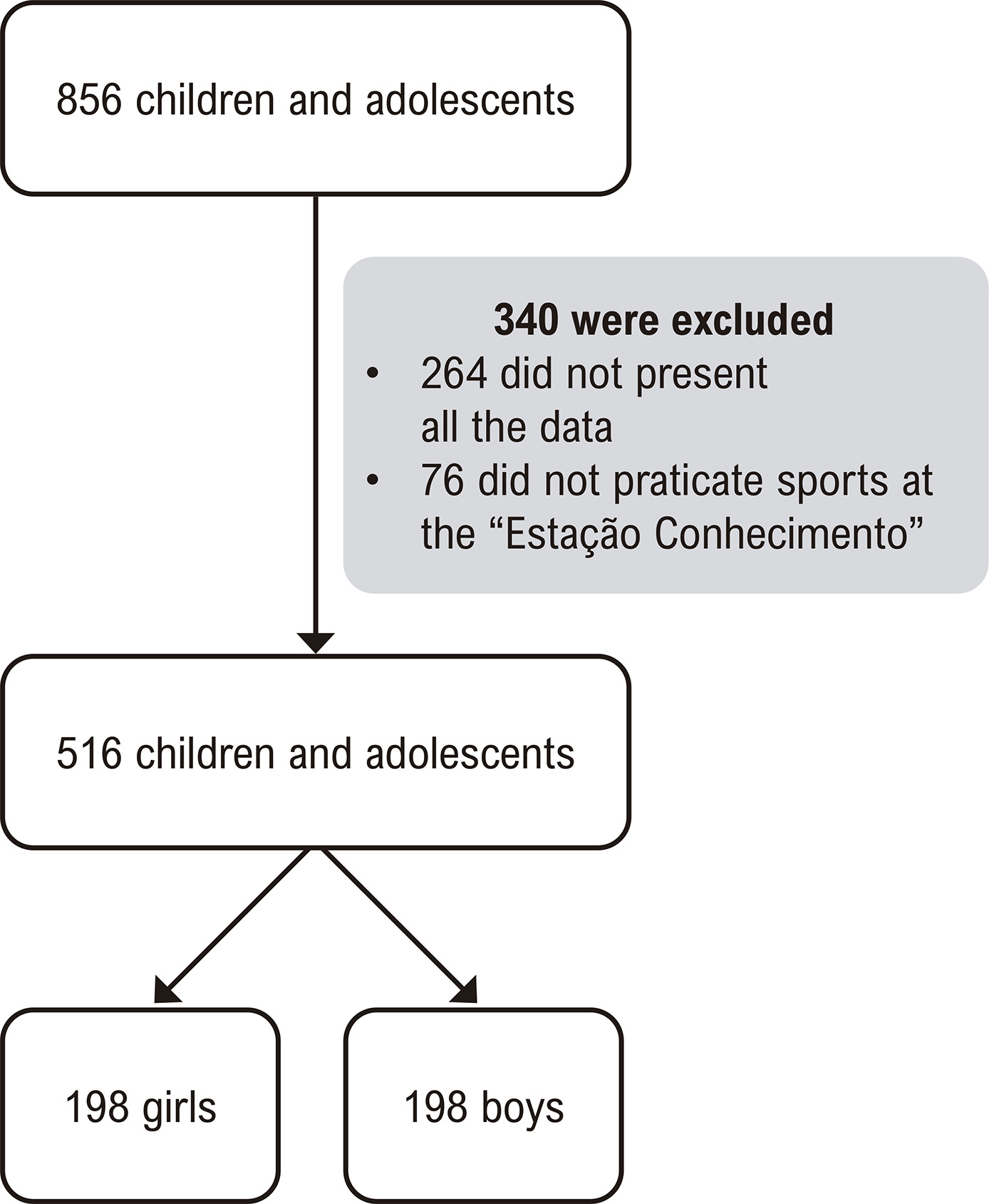
This cross-sectional study was conducted, including 516 physically active children and adolescents (10 to 18 years old; both sexes) enrolled in the social project “Estação Conhecimento-Vale” were evaluated. Biochemical and lifestyle variables (questionnaire) were collected. Sedentary behavior was determined indirectly (questionnaire), by using sitting time ≥ 3 hours per day as a cutoff point. A p-value < 0.05 was considered statistically significant for all tests.

Results

Sedentary behavior was not associated with overweight/obesity (odds ratio = 0.72 [95% confidence interval (CI): 0.325-1.389]), hypertriglyceridemia (odds ratio = 0.63 [95% CI: 0.306-1.297]), low HDL cholesterol (odds ratio = 0.57 [95% CI: 0.323-1.019]), or high non-HDL cholesterol (odds ratio = 0.63 [95% CI: 0.283-1.389]). However, children and adolescents with sedentary behavior were more likely to regularly consume food in front of the television (odds ratio = 1.96 [95% CI: 1.114-3.456]) and to consume at least one ultra-processed food per day (odds ratio = 2.42 [95% CI: 1.381-4.241]). In addition, they were less likely to consume fruit regularly (odds ratio = 0.52 [95% CI: 0.278-0.967]).

Conclusion

There was no association between sedentary behavior and cardiometabolic risk factors in physically active children and adolescents. However, sedentary behavior was associated with inadequate eating habits. Thus, we may suggest that the regular engagement in physical activity may attenuate the deleterious effects of sedentary behavior on the cardiometabolic parameters of children and adolescents.

  • Cardiometabolic Risk Factors
  • Child
  • Feeding Behavior
  • Sedentary Behavior
Read Full Article
Creative Commons Attribution (CC BY) Creative Commons license
03/02/2023 DOI: 10.36660/abc.20220357 Views 1
Figure 1
ABC
Original Article

Association of Dietary Patterns with Excess Weight and Body Adiposity in Brazilian Children: The Pase-Brasil Study

Naruna Pereira Rocha et al. Luana Cupertino Milagres Mariana De Santis Filgueiras Lara Gomes Suhett … Mariane Alves Silva Fernanda Martins de Albuquerque Andréia Queiroz Ribeiro Sarah Aparecida Vieira Juliana Farias de Novaes

Abstract

Background:

Obesity is a multifactorial disease and a serious public health problem. Some of the associated factors are modifiable and, among them, the diet is highlighted.

Objective:

To evaluate the association of dietary patterns of schoolchildren with obesity and body adiposity.

Methods:

A cross-sectional study was carried out with 378 children aged 8 and 9 years, enrolled in urban schools in the city of Viçosa, Minas Gerais, Brazil. A semi-structured questionnaire was applied to the children and their caregivers on sociodemographic characteristics and life habits. Three 24-hour food recalls were used to identify dietary patterns; the Principal Component Analysis was employed. Weight and height were measured for the calculation of the body mass index (BMI) of the children and their mothers, waist circumference and neck circumference. Body composition was also evaluated through dual-energy X-ray absorptiometry (DXA). For all performed tests, the level of significance was set at 5%.

Results:

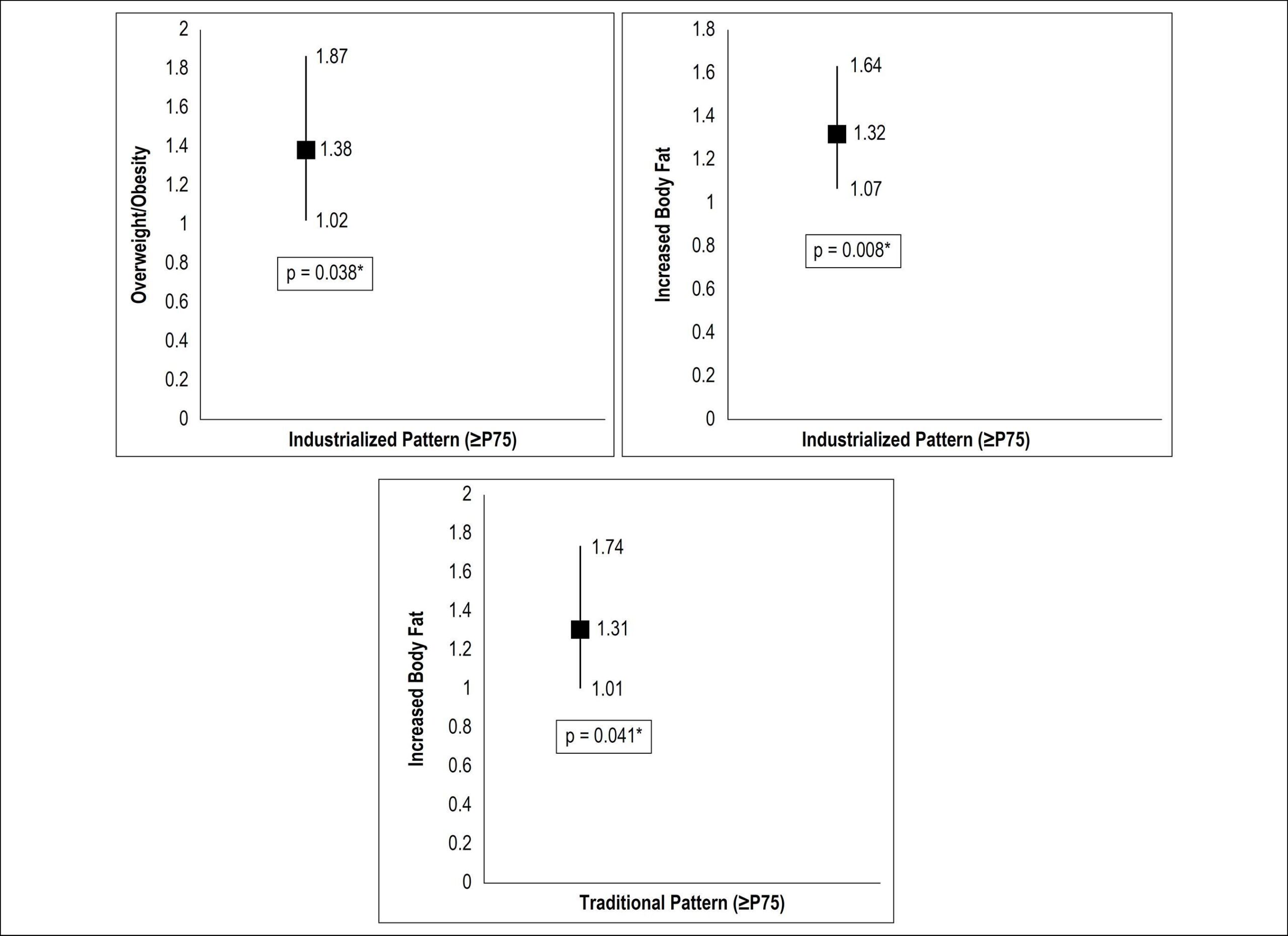
Five dietary patterns (DP) were identified: “unhealthy”, “snacks”, “traditional”, “industrialized” and “healthy”. There was an association between excess weight (prevalence ratio [PR]: 1.38, 95% confidence interval [95%CI]: 1.02 to 1.87) and body fat (PR: 1.32, 95%CI : 1.07 to 1.64) with industrialized DP. There was an association between excess body fat (PR: 1.31, 95%CI: 1.01 to 1.74) and lower adherence to traditional DP. The other patterns were not associated with obesity and body adiposity.

Conclusion:

Children with excess weight and body adiposity showed greater adherence to the industrialized DP and lower adherence to the traditional DP. We suggest that early assessments of dietary habits should be undertaken for monitoring and modifying these habits when necessary.

  • Adiposity
  • Child
  • Epidemiology
  • Factor Analysis, Statistical
  • Feeding Behavior
  • Hyperphagia
  • Obesity
Read Full Article
Creative Commons Attribution (CC BY) Creative Commons license
10/07/2019 DOI: 10.5935/abc.20190113

How to cite this article

EndNote RIS

Electronic Document Format (Vancouver)

Moreira ASB, Gapanowicz DP. Ultra-Processed Foods Consumption and Cardiovascular Health. International Journal of Cardiovascular Sciences 2023;36:e20230096.

Electronic Document Format (ABNT)

Moreira, Annie Seixas Bello; Gapanowicz, Débora Pinto. Ultra-Processed Foods Consumption and Cardiovascular Health. International Journal of Cardiovascular Sciences, v. 36, e20230096, Aug. 2023.

Electronic Document Format (APA)

Moreira, A. S. B., & Gapanowicz, D. P. (2023). Ultra-Processed Foods Consumption and Cardiovascular Health. International Journal of Cardiovascular Sciences, 36, e20230096.

Electronic Document Format (ISO)

Moreira, Annie Seixas Bello and Gapanowicz, Débora Pinto. Ultra-Processed Foods Consumption and Cardiovascular Health. International Journal of Cardiovascular Sciences [online]. 2023, vol. 36, [cited 2026-10-14], e20230096. Available from: <https://journals.cardiol.br/en/article/ultra-processed-foods-consumption-and-cardiovascular-health/>. ISSN 2359-4802

EndNote RIS

Electronic Document Format (Vancouver)

Fontes PAS, Siqueira JH, Martins HX, Oliosa PR, Zaniqueli D, Mill JG, Alvim RO, et al. Sedentary Behavior, Dietary Habits, and Cardiometabolic Risk in Physically Active Children and Adolescents. Arquivos Brasileiros de Cardiologia 2023;120(2):e20220357.

Electronic Document Format (ABNT)

Fontes, Paula Adriana dos Santos de; Siqueira, Jordana Herzog; Martins, Haysla Xavier; Oliosa, Polyana Romano; Zaniqueli, Divanei; Mill, José Geraldo; Alvim, Rafael de Oliveira. Sedentary Behavior, Dietary Habits, and Cardiometabolic Risk in Physically Active Children and Adolescents. Arquivos Brasileiros de Cardiologia, v. 120, n. 2, e20220357, Feb. 2023.

Electronic Document Format (APA)

Fontes, P. A. S. , Siqueira, J. H., Martins, H. X., Oliosa, P. R., Zaniqueli, D., Mill, J. G., & Alvim, R. O. (2023). Sedentary Behavior, Dietary Habits, and Cardiometabolic Risk in Physically Active Children and Adolescents. Arquivos Brasileiros de Cardiologia, 120(2), e20220357.

Electronic Document Format (ISO)

Fontes, Paula Adriana dos Santos de and Siqueira, Jordana Herzog and Martins, Haysla Xavier and Oliosa, Polyana Romano and Zaniqueli, Divanei and Mill, José Geraldo and Alvim, Rafael de Oliveira. Sedentary Behavior, Dietary Habits, and Cardiometabolic Risk in Physically Active Children and Adolescents. Arquivos Brasileiros de Cardiologia [online]. 2023, vol. 120, n. 2, [cited 2026-10-14], e20220357. Available from: <https://journals.cardiol.br/en/article/sedentary-behavior-dietary-habits-and-cardiometabolic-risk-in-physically-active-children-and-adolescents/>. ISSN 0066-782X

EndNote RIS

Electronic Document Format (Vancouver)

Rocha NP, Milagres LC, Filgueiras MDS, Suhett LG, Silva MA, Albuquerque FM, Ribeiro AQ, et al. Association of Dietary Patterns with Excess Weight and Body Adiposity in Brazilian Children: The Pase-Brasil Study. Arquivos Brasileiros de Cardiologia 2019;113(1):52-9.

Electronic Document Format (ABNT)

Rocha, Naruna Pereira; Milagres, Luana Cupertino; Filgueiras, Mariana De Santis; Suhett, Lara Gomes; Silva, Mariane Alves; Albuquerque, Fernanda Martins de; Ribeiro, Andréia Queiroz; Vieira, Sarah Aparecida; Novaes, Juliana Farias de. Association of Dietary Patterns with Excess Weight and Body Adiposity in Brazilian Children: The Pase-Brasil Study. Arquivos Brasileiros de Cardiologia, v. 113, n. 1, p. 52-59, Jul. 2019.

Electronic Document Format (APA)

Rocha, N. P., Milagres, L. C., Filgueiras, M. D. S., Suhett, L. G., Silva, M. A., Albuquerque, F. M. , Ribeiro, A. Q., Vieira, S. A., & Novaes, J. F. (2019). Association of Dietary Patterns with Excess Weight and Body Adiposity in Brazilian Children: The Pase-Brasil Study. Arquivos Brasileiros de Cardiologia, 113(1), 52-59.

Electronic Document Format (ISO)

Rocha, Naruna Pereira and Milagres, Luana Cupertino and Filgueiras, Mariana De Santis and Suhett, Lara Gomes and Silva, Mariane Alves and Albuquerque, Fernanda Martins de and Ribeiro, Andréia Queiroz and Vieira, Sarah Aparecida and Novaes, Juliana Farias de. Association of Dietary Patterns with Excess Weight and Body Adiposity in Brazilian Children: The Pase-Brasil Study. Arquivos Brasileiros de Cardiologia [online]. 2019, vol. 113, n. 1, [cited 2026-10-14], pp. 52-59. Available from: <https://journals.cardiol.br/en/article/association-of-dietary-patterns-with-excess-weight-and-body-adiposity-in-brazilian-children-the-pase-brasil-study/>. ISSN 0066-782X

  • About ABC Family
  • Internal Regulation
  • Editorial Board
  • Brazilian Society of Cardiology (SBC)

Issues

SBC Guidelines

  • Videos
  • Podcasts
  • News