ABC Family Arquivos Brasileiros de Cardiologia International Journal of Cardiovascular Sciences ABC Heart Failure & Cardiomyopathy ABC Imagem Cardiovascular
Português English
ABC Family
Português English
  • About
    • About ABC Family
    • Internal Regulation
    • Editorial Board
    • Brazilian Society of Cardiology (SBC)
  • Issues
  • SBC Guidelines
  • Content
    • Videos
    • Podcasts
    • News
  • About
    • About ABC Family
    • Internal Regulation
    • Editorial Board
    • Brazilian Society of Cardiology (SBC)
  • Issues
  • SBC Guidelines
  • Content
    • Videos
    • Podcasts
    • News

ABC Family

  • ABC Family
  • Arquivos Brasileiros de Cardiologia
  • International Journal of Cardiovascular Sciences
  • ABC Heart Failure & Cardiomyopathy
  • ABC Imagem Cardiovascular
Search in

No content found.

Journals
Ordering
Article types
Others

  1. Home
  2. Keyword: Eating
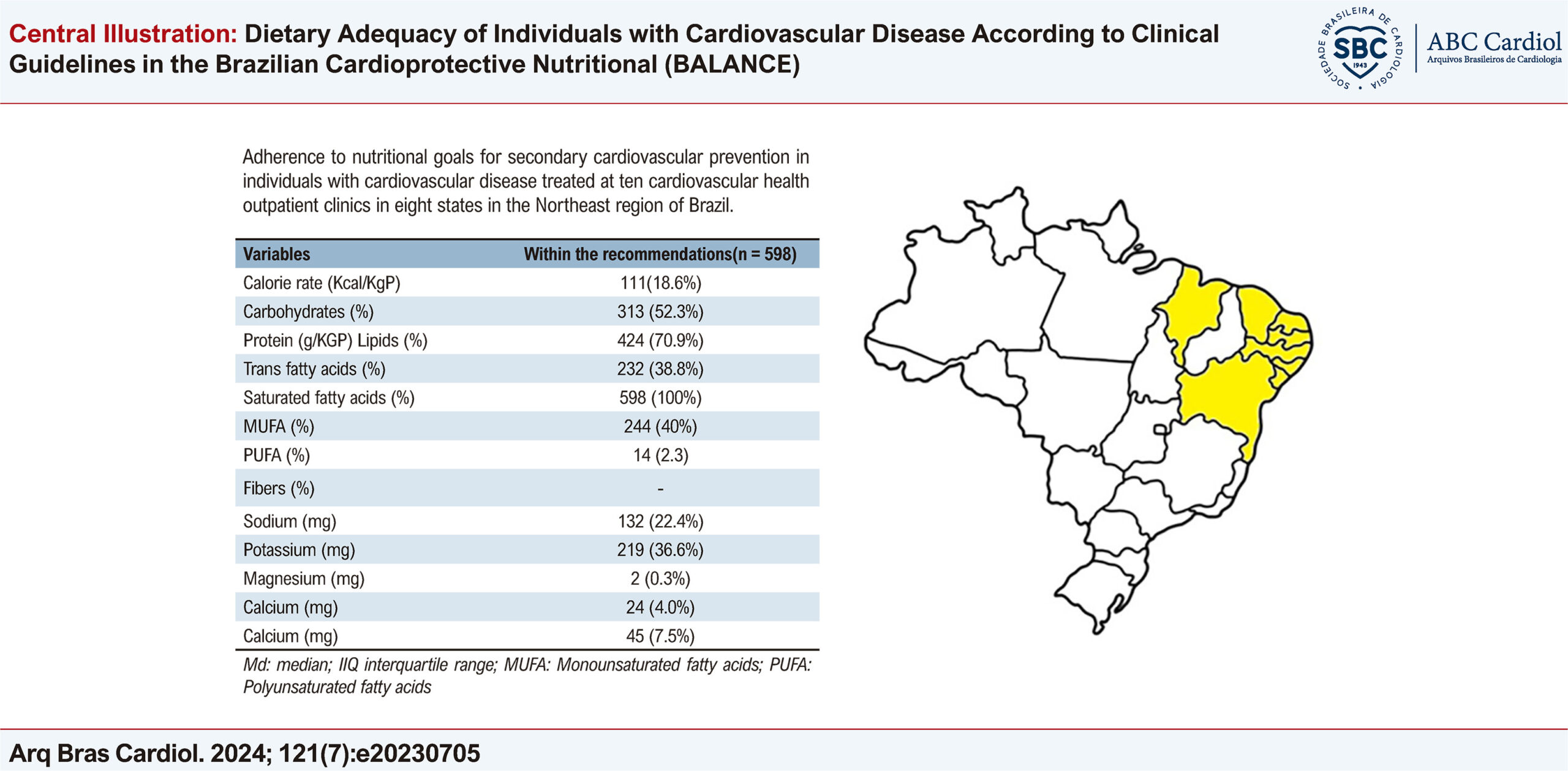
Dietary Adequacy of Individuals with Cardiovascular Disease According to Clinical Guidelines in the Brazilian Cardioprotective Nutritional (BALANCE)
ABC
Original Article

Dietary Adequacy of Individuals with Cardiovascular Disease According to Clinical Guidelines in the Brazilian Cardioprotective Nutritional (BALANCE)

Luciana Brito et al. Viviane Sahade Aline Marcadenti Camila Ragne Torreglosa … Bernardete Weber Ângela Cristine Bersch-Ferreira Isa Galvão Rodrigues Antônio Carlos Sobral Sousa Adriana Barros Gomes Josilene Maria Ferreira Pinheiro Sandra Mary Lima Vasconcelos Daniele Maria de Oliveira Carlos José Albuquerque de Figueiredo Neto Clenise de Farias Dantas Carla Daltro

Abstract

Background

Achieving nutritional goals established by scientific societies is a constant challenge and not always achieved.

Objective

To investigate the dietary adequacy of individuals with cardiovascular disease (CVD), participants in the Cardioprotective Brazilian Food Program residing in the Northeast region of Brazil, according to the recommendations of the Brazilian Society of Cardiology (SBC).

Methods

Cross-sectional analysis with data from the study implementing the Brazilian Cardioprotective Diet (DICA BR), which evaluated individuals with CVD treated in specialized cardiovascular health centers in eight states in the Northeast region. Food consumption was obtained by 24-hour dietary records and dietary adequacy followed SBC recommendations. Values of p < 0.05 were considered significant.

Results

647 patients were studied, with a mean (standard deviation) age of 63.1 (9.4) years, 50.2% of whom were female. When evaluating food intake, a low adequacy of carbohydrates (52.3%), proteins (70.9%), lipids (38.8%), and fiber (22.4%) was observed. It was observed that the majority of women consumed a low-protein diet (59.2%) and the elderly had a greater inadequacy in carbohydrate consumption (52.6%). Regarding sodium intake, men had a higher intake (72.9%), while the elderly showed a 13% reduction. Furthermore, it was shown that men ate more fiber (28.1%) and individuals with higher education had a high consumption of saturated fatty acids (70.5%).

Conclusions

Most individuals did not achieve the recommended dietary therapy goals for secondary cardiovascular prevention. The findings of the present study reinforce the need to implement structured strategies to encourage healthy eating habits in these individuals.
  • Atherosclerosis
  • Cardiovascular Diseases
  • Diet
  • Eating
  • Secondary Prevention
Read Full Article
Creative Commons Attribution (CC BY) Creative Commons license
26/08/2024 DOI: 10.36660/abc.20230705i Views 2
ABC
Editorial

Fatty Acids Intake in Cardiovascular Prevention: The Incessant Search for Adequacy

Elisa Maia dos Santos et al. Grazielle Vilas Bôas Huguenin

Cardiovascular diseases (CVD) are currently the leading cause of mortality worldwide. Several risk factors contribute to its development and among the modifiable ones, the main ones are related to lifestyle behaviors, such as smoking, physical activity, and diet. In individuals undergoing secondary cardiovascular prevention, promoting a healthy lifestyle is a strategy for reducing the recurrence of events.– However, gaps in adherence to a healthy lifestyle in secondary prevention may be related to the low integration between behavior change and traditional models of outpatient care.

Nutrition plays a central role in the primary and secondary prevention of CVD, but relatively recently, food has been considered as a treatment, and not just as a complement to established medical and pharmacological therapy. Diet, in particular, has a significant impact on the management of the main modifiable risk factors for CVD such as obesity, dyslipidemia, diabetes, and hypertension.

[…]

  • Eating
  • Fatty Acids
  • Secondary Prevention
Read Full Article
Creative Commons Attribution (CC BY) Creative Commons license
20/05/2024 DOI: 10.36660/abc.20240208i Views 1
Figure 1
IJCS
Original Article

Food Consumption and Health Outcomes in Women During the COVID-19 Pandemic

Mariana Barbosa Lopes et al. Luciana Nicolau Aranha Lara Ribeiro Pinto Paula Critina Moreira dos Santos Lino … Ronir Raggio Luiz Gláucia Maria Moraes de Oliveira Glorimar Rosa

Abstract

Background

The COVID-19 pandemic has changed food consumption.

Objective

Evaluate the association between metabolic phenotypes, changes in food consumption during the pandemic, and health outcomes in obese women.

Methods

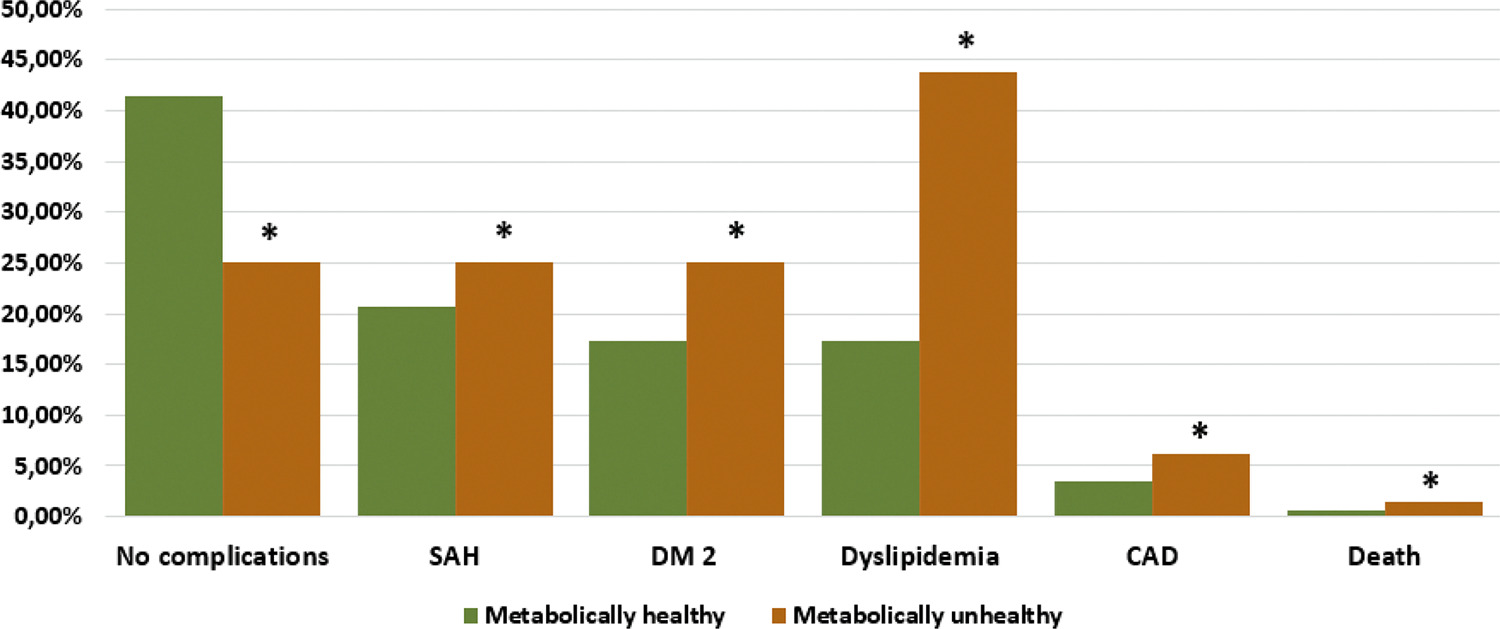
Cross-sectional observational study including 491 women without previous diagnosis of chronic diseases, evaluated according to metabolic phenotype. During the pandemic, a subsample was re-evaluated by online questionnaires via Google Forms. Analyzed anthropometric, biochemical, and dietary data as well as health outcomes (coronary artery disease, type 2 diabetes, hypertension, dyslipidemia or death). Information on mortality was collected from the Internal Affairs Office of the State of Rio de Janeiro and the Health Department of the State of Rio de Janeiro. Statistical analysis was performed using the statistical program SPSS 21, with Mann-Whitney test, Pearson’s chi-squared, Spearman correlation, and binary logistic regression, at a significance level of 5%.

Results

The anthropometric, glucose, and lipid profiles showed significant differences between the metabolically healthy and metabolically unhealthy groups (p = 0.00). Before the pandemic, women in the metabolically unhealthy group had higher dietary intakes of lipids (p = 0.01), saturated fat (p = 0.01) and sodium (p = 0.04), during the pandemic, they consumed more energy (p = 0.04), lipids (p = 0.02), saturated fat (p = 0.02), proteins (p = 0.03) and sodium from ultra-processed foods (p = 0.03). Consequently, health outcomes were more prevalent in the metabolically unhealthy group (p = 0.00).

Conclusion

Observed that metabolically healthy women had qualitatively better food intake and fewer health outcomes throughout the study.

  • Eating
  • Inflammation
  • Metabolic Syndrome
  • Obesity
Read Full Article
Creative Commons Attribution (CC BY) Creative Commons license
17/07/2023 DOI: 10.36660/ijcs.20220066 Views 2
IJCS
Original Article

Diet Quality and Associated Factors in Atherosclerotic Cardiovascular Disease Patients with and without Diabetes at a Specialized Outpatient Clinic in the City of Pelotas, Brazil

Fernanda Vighi Dobke et al. Aline Longo Bruna Luiza Paulina Ribas Bernardete Weber … Eduardo Gehling Bertoldi Lúcia Rota Borges Renata Torres Abib Bertacco

Abstract

Background

In most cases, atherosclerotic cardiovascular disease (ACVD) is preventable through primary prevention and control of traditional risk factors, such as smoking cessation, regular physical activity, and adherence to healthy dietary patterns. The assessment of diet quality of ACVD patients would be important for a dietary intervention.

Objectives

This study aimed to evaluate diet quality of ACVD patients and its association with clinical conditions.

Methods

This cross-sectional study was nested within a randomized clinical trial entitled “Programa Alimentar Cardioprotetor Brasileiro.” Baseline data of 80 patients from Pelotas, Brazil, were obtained. Food consumption was assessed using 24-h food recall and the Revised Diet Quality Index (IQD-R). Data on smoking status and comorbidities were reported by the patients during medical history taking. To analyze the associations between IQD-R and clinical variables, unpaired Student’s t-test or the analysis of variance was performed. The significance level was 5%.

Results

Most of the sample consisted of men (66.5%), elderly individuals (52.50%), patients with hypertension (78.75%), dyslipidemia (58.75%), and overweight (73.75%). The average IQD-R score was 56.7 ± 12.6 points. Better quality of diet was observed for patients with diabetes compared to those without diabetes (61.1 ± 11.8 versus 54.0 ± 12.6 points; p=0.014).

Conclusion

There is a need to improve diet quality of ACVD patients. Patients ACVD and diabetes had better diet quality compared to those without diabetes.

  • Atherosclerose
  • Cardiovascular Diseases, mortality
  • Diabetes Mellitus
  • Diet Surveys
  • Eating
  • Epidemiology
  • Hypertension
  • Prevention and Control
  • Risk Factors
Read Full Article
Creative Commons Attribution (CC BY) Creative Commons license
26/09/2022 DOI: 10.36660/ijcs.20200323 Views 2
Figure 1
ABC
Original Article

Eating Behavior of Older Adults with and Without Diabetes: The Vigitel Survey, Brazil, 2016

Daniela de Assumpção et al. Ana Maria Pita Ruiz Flavia Silva Arbex Borim Anita Liberalesso Neri … Deborah Carvalho Malta Priscila Maria Stolses Bergamo Francisco

Abstract

Background

A healthy diet is a protection factor against type 2 diabetes and plays an important role in the treatment of the disease, as well as associated comorbidities.

Objective

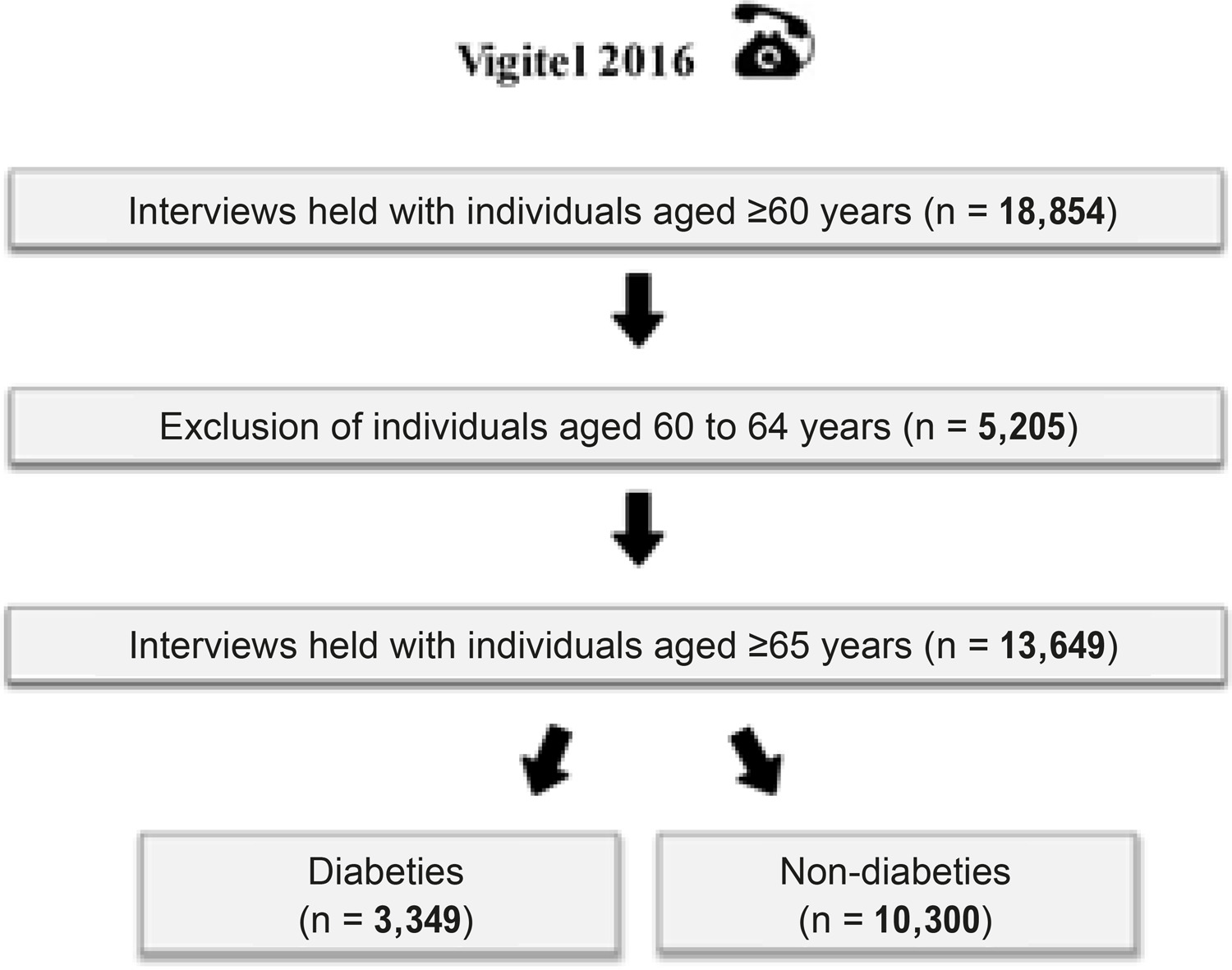
Characterize the eating habits of older adults (≥ 65 years) with and without diabetes residing in capital cities and the Federal District of Brazil.

Methods

A cross-sectional study was conducted using data from the Surveillance of Risk and Protection Factors for Chronic Diseases Through a Telephone Survey (Vigitel, 2016). The prevalence of diabetes mellitus was estimated according to sociodemographic variables, physical inactivity level, self-rated health status and body mass index. Dietary habits were assessed based on the frequency (weekly and daily) of consumption of healthy and unhealthy foods and the replacement of food by snacks. Differences were determined using Pearson’s chi-square test (Rao-Scott), with the significance level set at 5%.

Results

A total of 13,649 older adults were interviewed. The prevalence of self-reported diabetes was 27.2% (95% CI: 25.5; 29.0). Compared to non-diabetics, diabetic individuals had a higher consumption of raw vegetables (32.1% vs. 26.5%/3-4 days/week) and lower consumption of chicken (3.8% vs. 6.4%/hardly ever/never), fruit juice (24.0% vs. 29.6%) and sweets (6.8% vs. 16.2%) ≥ 5 days/week. Compared to non-diabetics, diabetic individuals consumed more skim milk (51.5% vs. 44.6%) and diet soda (60.0% vs. 17.3%) ≥ 5 days/week, raw vegetables (9.1% vs. 2.5%/at dinner) and sweets (37.7% vs. 20.5%/twice/day) 3-4 days/week.

Conclusion

The observed differences emphasize the need for healthy eating interventions for all older adults, as well as specific counseling for those with diabetes.

  • Aged
  • Diabetes Mellitus
  • Eating
  • Health Surveys
Read Full Article
Creative Commons Attribution (CC BY) Creative Commons license
07/03/2022 DOI: 10.36660/abc.20201204 Views 1
ABC
Artigo Original

Assessment of food intake in infants between 0 and 24 months with congenital heart disease

Tais Cleto Lopes Vieira et al. Marlene Trigo Rosiris Roco Alonso Regina Helena Cunha Ribeiro … Maria Regina Alves Cardoso Antonio Carlos Alves Cardoso Maria Aparecida Alves Cardoso

BACKGROUND: Children with congenital heart disease are usually malnourished and present some degree of functional and/or structural impairment of organs. There is also deficiency in nutrient intake, due to the control of fluids required by some patients which restrains the nutrient intake of some cardiac children. OBJECTIVE: To assess the food intake of children with congenital heart disease hospitalized in the pediatric heart unit of a “Public Teaching Hospital”. METHODS: The intake of food and nutrients was calculated based on the food consumed during three days (direct weighting method) and the calories and nutrients were calculated using the Virtual Nutri software. RESULTS: The intake of calories per kilogram of body weight, of daily proteins, sodium and vitamin A was within the recommended levels (p < 0.05). However, the intake of daily calories, fats, fiber, potassium and iron was below the recommended levels (p < 0.05) and the intake of proteins per kilogram, carbohydrates, calcium and vitamin C was above the recommended levels (p < 0.05). CONCLUSION: Children with congenital cardiopathy have inadequate diets, and therefore, need nutritional guidance to foster adequate dietary intake and the resulting improvement in growth and weight and height development, guaranteeing better quality of life to the patients.

  • Child
  • Congenital
  • Eating
  • Feeding
  • Heart Defects
Read Full Article
Creative Commons Attribution (CC BY) Creative Commons license
18/04/2008 DOI: 10.1590/S0066-782X2007001600002 Views 2

How to cite this article

EndNote RIS

Electronic Document Format (Vancouver)

Brito L, Sahade V, Marcadenti A, Torreglosa CR, Weber B, Bersch-Ferreira C, Rodrigues IG, et al. Dietary Adequacy of Individuals with Cardiovascular Disease According to Clinical Guidelines in the Brazilian Cardioprotective Nutritional (BALANCE). Arquivos Brasileiros de Cardiologia 2024;121(7):e20230705.

Electronic Document Format (ABNT)

Brito, Luciana; Sahade, Viviane; Marcadenti, Aline; Torreglosa, Camila Ragne; Weber, Bernardete; Bersch-Ferreira, Ângela Cristine; Rodrigues, Isa Galvão; Sousa, Antônio Carlos Sobral; Gomes, Adriana Barros; Pinheiro, Josilene Maria Ferreira; Vasconcelos, Sandra Mary Lima; Carlos, Daniele Maria de Oliveira; Figueiredo Neto, José Albuquerque de; Dantas, Clenise de Farias; Daltro, Carla. Dietary Adequacy of Individuals with Cardiovascular Disease According to Clinical Guidelines in the Brazilian Cardioprotective Nutritional (BALANCE). Arquivos Brasileiros de Cardiologia, v. 121, n. 7, e20230705, Aug. 2024.

Electronic Document Format (APA)

Brito, L., Sahade, V., Marcadenti, A., Torreglosa, C. R., Weber, B., Bersch-Ferreira, C., Rodrigues, I. G., Sousa, A. C. S., Gomes, A. B., Pinheiro, J. M. F., Vasconcelos, S. M. L., Carlos, D. M. O., Figueiredo Neto, J. A. , Dantas, C. F., & Daltro, C. (2024). Dietary Adequacy of Individuals with Cardiovascular Disease According to Clinical Guidelines in the Brazilian Cardioprotective Nutritional (BALANCE). Arquivos Brasileiros de Cardiologia, 121(7), e20230705.

Electronic Document Format (ISO)

Brito, Luciana and Sahade, Viviane and Marcadenti, Aline and Torreglosa, Camila Ragne and Weber, Bernardete and Bersch-Ferreira, Ângela Cristine and Rodrigues, Isa Galvão and Sousa, Antônio Carlos Sobral and Gomes, Adriana Barros and Pinheiro, Josilene Maria Ferreira and Vasconcelos, Sandra Mary Lima and Carlos, Daniele Maria de Oliveira and Figueiredo Neto, José Albuquerque de and Dantas, Clenise de Farias and Daltro, Carla. Dietary Adequacy of Individuals with Cardiovascular Disease According to Clinical Guidelines in the Brazilian Cardioprotective Nutritional (BALANCE). Arquivos Brasileiros de Cardiologia [online]. 2024, vol. 121, n. 7, [cited 2026-10-14], e20230705. Available from: <https://journals.cardiol.br/en/article/dietary-adequacy-of-individuals-with-cardiovascular-disease-according-to-clinical-guidelines-in-the-brazilian-cardioprotective-nutritional-balance/>. ISSN 0066-782X

EndNote RIS

Electronic Document Format (Vancouver)

Santos EM, Huguenin GVB. Fatty Acids Intake in Cardiovascular Prevention: The Incessant Search for Adequacy. Arquivos Brasileiros de Cardiologia 2024;121(3):e20240208.

Electronic Document Format (ABNT)

Santos, Elisa Maia dos; Huguenin, Grazielle Vilas Bôas. Fatty Acids Intake in Cardiovascular Prevention: The Incessant Search for Adequacy. Arquivos Brasileiros de Cardiologia, v. 121, n. 3, e20240208, May. 2024.

Electronic Document Format (APA)

Santos, E. M. , & Huguenin, G. V. B. (2024). Fatty Acids Intake in Cardiovascular Prevention: The Incessant Search for Adequacy. Arquivos Brasileiros de Cardiologia, 121(3), e20240208.

Electronic Document Format (ISO)

Santos, Elisa Maia dos and Huguenin, Grazielle Vilas Bôas. Fatty Acids Intake in Cardiovascular Prevention: The Incessant Search for Adequacy. Arquivos Brasileiros de Cardiologia [online]. 2024, vol. 121, n. 3, [cited 2026-10-14], e20240208. Available from: <https://journals.cardiol.br/en/article/fatty-acids-intake-in-cardiovascular-prevention-the-incessant-search-for-adequacy/>. ISSN 0066-782X

EndNote RIS

Electronic Document Format (Vancouver)

Lopes MB, Aranha LN, Pinto LR, Lino PCMS, Luiz RR, Oliveira GMM, Rosa G, et al. Food Consumption and Health Outcomes in Women During the COVID-19 Pandemic. International Journal of Cardiovascular Sciences 2023;36:e20220066.

Electronic Document Format (ABNT)

Lopes, Mariana Barbosa; Aranha, Luciana Nicolau; Pinto, Lara Ribeiro; Lino, Paula Critina Moreira dos Santos; Luiz, Ronir Raggio; Oliveira, Gláucia Maria Moraes de; Rosa, Glorimar. Food Consumption and Health Outcomes in Women During the COVID-19 Pandemic. International Journal of Cardiovascular Sciences, v. 36, e20220066, Jul. 2023.

Electronic Document Format (APA)

Lopes, M. B., Aranha, L. N., Pinto, L. R., Lino, P. C. M. S., Luiz, R. R., Oliveira, G. M. M. , & Rosa, G. (2023). Food Consumption and Health Outcomes in Women During the COVID-19 Pandemic. International Journal of Cardiovascular Sciences, 36, e20220066.

Electronic Document Format (ISO)

Lopes, Mariana Barbosa and Aranha, Luciana Nicolau and Pinto, Lara Ribeiro and Lino, Paula Critina Moreira dos Santos and Luiz, Ronir Raggio and Oliveira, Gláucia Maria Moraes de and Rosa, Glorimar. Food Consumption and Health Outcomes in Women During the COVID-19 Pandemic. International Journal of Cardiovascular Sciences [online]. 2023, vol. 36, [cited 2026-10-14], e20220066. Available from: <https://journals.cardiol.br/en/article/food-consumption-and-health-outcomes-in-women-during-the-covid-19-pandemic/>. ISSN 2359-4802

EndNote RIS

Electronic Document Format (Vancouver)

Dobke FV, Longo A, Ribas BLP, Weber B, Bertoldi EG, Borges LR, Bertacco RTA, et al. Diet Quality and Associated Factors in Atherosclerotic Cardiovascular Disease Patients with and without Diabetes at a Specialized Outpatient Clinic in the City of Pelotas, Brazil. International Journal of Cardiovascular Sciences 2022;36:e20200323.

Electronic Document Format (ABNT)

Dobke, Fernanda Vighi; Longo, Aline; Ribas, Bruna Luiza Paulina; Weber, Bernardete; Bertoldi, Eduardo Gehling; Borges, Lúcia Rota; Bertacco, Renata Torres Abib. Diet Quality and Associated Factors in Atherosclerotic Cardiovascular Disease Patients with and without Diabetes at a Specialized Outpatient Clinic in the City of Pelotas, Brazil. International Journal of Cardiovascular Sciences, v. 36, e20200323, Sep. 2022.

Electronic Document Format (APA)

Dobke, F. V., Longo, A., Ribas, B. L. P., Weber, B., Bertoldi, E. G., Borges, L. R., & Bertacco, R. T. A. (2022). Diet Quality and Associated Factors in Atherosclerotic Cardiovascular Disease Patients with and without Diabetes at a Specialized Outpatient Clinic in the City of Pelotas, Brazil. International Journal of Cardiovascular Sciences, 36, e20200323.

Electronic Document Format (ISO)

Dobke, Fernanda Vighi and Longo, Aline and Ribas, Bruna Luiza Paulina and Weber, Bernardete and Bertoldi, Eduardo Gehling and Borges, Lúcia Rota and Bertacco, Renata Torres Abib. Diet Quality and Associated Factors in Atherosclerotic Cardiovascular Disease Patients with and without Diabetes at a Specialized Outpatient Clinic in the City of Pelotas, Brazil. International Journal of Cardiovascular Sciences [online]. 2022, vol. 36, [cited 2026-10-14], e20200323. Available from: <https://journals.cardiol.br/en/article/diet-quality-and-associated-factors-in-atherosclerotic-cardiovascular-disease-patients-with-and-without-diabetes-at-a-specialized-outpatient-clinic-in-the-city-of-pelotas-brazil/>. ISSN 2359-4802

EndNote RIS

Electronic Document Format (Vancouver)

Assumpção D, Ruiz AMP, Borim FSA, Neri AL, Malta DC, Francisco PMSB. Eating Behavior of Older Adults with and Without Diabetes: The Vigitel Survey, Brazil, 2016. Arquivos Brasileiros de Cardiologia 2022;118(2):388-97.

Electronic Document Format (ABNT)

Assumpção, Daniela de; Ruiz, Ana Maria Pita; Borim, Flavia Silva Arbex; Neri, Anita Liberalesso; Malta, Deborah Carvalho; Francisco, Priscila Maria Stolses Bergamo. Eating Behavior of Older Adults with and Without Diabetes: The Vigitel Survey, Brazil, 2016. Arquivos Brasileiros de Cardiologia, v. 118, n. 2, p. 388-397, Mar. 2022.

Electronic Document Format (APA)

Assumpção, D. , Ruiz, A. M. P., Borim, F. S. A., Neri, A. L., Malta, D. C., & Francisco, P. M. S. B. (2022). Eating Behavior of Older Adults with and Without Diabetes: The Vigitel Survey, Brazil, 2016. Arquivos Brasileiros de Cardiologia, 118(2), 388-397.

Electronic Document Format (ISO)

Assumpção, Daniela de and Ruiz, Ana Maria Pita and Borim, Flavia Silva Arbex and Neri, Anita Liberalesso and Malta, Deborah Carvalho and Francisco, Priscila Maria Stolses Bergamo. Eating Behavior of Older Adults with and Without Diabetes: The Vigitel Survey, Brazil, 2016. Arquivos Brasileiros de Cardiologia [online]. 2022, vol. 118, n. 2, [cited 2026-10-14], pp. 388-397. Available from: <https://journals.cardiol.br/en/article/eating-behavior-of-older-adults-with-and-without-diabetes-the-vigitel-survey-brazil-2016/>. ISSN 0066-782X

EndNote RIS

Electronic Document Format (Vancouver)

Vieira TCL, Trigo M, Alonso RR, Ribeiro RHC, Cardoso MRA, Cardoso ACA, Cardoso MAA, et al. Assessment of food intake in infants between 0 and 24 months with congenital heart disease. Arquivos Brasileiros de Cardiologia 2008;89(4):219-24.

Electronic Document Format (ABNT)

Vieira, Tais Cleto Lopes; Trigo, Marlene; Alonso, Rosiris Roco; Ribeiro, Regina Helena Cunha; Cardoso, Maria Regina Alves; Cardoso, Antonio Carlos Alves; Cardoso, Maria Aparecida Alves. Assessment of food intake in infants between 0 and 24 months with congenital heart disease. Arquivos Brasileiros de Cardiologia, v. 89, n. 4, p. 219-224, Apr. 2008.

Electronic Document Format (APA)

Vieira, T. C. L., Trigo, M., Alonso, R. R., Ribeiro, R. H. C., Cardoso, M. R. A., Cardoso, A. C. A., & Cardoso, M. A. A. (2008). Assessment of food intake in infants between 0 and 24 months with congenital heart disease. Arquivos Brasileiros de Cardiologia, 89(4), 219-224.

Electronic Document Format (ISO)

Vieira, Tais Cleto Lopes and Trigo, Marlene and Alonso, Rosiris Roco and Ribeiro, Regina Helena Cunha and Cardoso, Maria Regina Alves and Cardoso, Antonio Carlos Alves and Cardoso, Maria Aparecida Alves. Assessment of food intake in infants between 0 and 24 months with congenital heart disease. Arquivos Brasileiros de Cardiologia [online]. 2008, vol. 89, n. 4, [cited 2026-10-14], pp. 219-224. Available from: <https://journals.cardiol.br/en/article/assessment-of-food-intake-in-infants-between-0-and-24-months-with-congenital-heart-disease/>. ISSN 0066-782X

  • About ABC Family
  • Internal Regulation
  • Editorial Board
  • Brazilian Society of Cardiology (SBC)

Issues

SBC Guidelines

  • Videos
  • Podcasts
  • News