ABC Family Arquivos Brasileiros de Cardiologia International Journal of Cardiovascular Sciences ABC Heart Failure & Cardiomyopathy ABC Imagem Cardiovascular
Português English
ABC Family
Português English
  • About
    • About ABC Family
    • Internal Regulation
    • Editorial Board
    • Brazilian Society of Cardiology (SBC)
  • Issues
  • SBC Guidelines
  • Content
    • Videos
    • Podcasts
    • News
  • About
    • About ABC Family
    • Internal Regulation
    • Editorial Board
    • Brazilian Society of Cardiology (SBC)
  • Issues
  • SBC Guidelines
  • Content
    • Videos
    • Podcasts
    • News

ABC Family

  • ABC Family
  • Arquivos Brasileiros de Cardiologia
  • International Journal of Cardiovascular Sciences
  • ABC Heart Failure & Cardiomyopathy
  • ABC Imagem Cardiovascular
Search in

No content found.

Journals
Ordering
Article types
Others

  1. Home
  2. Keyword: middle aged
Middle-Aged Women and Post-Myocardial Infarction Mortality: A Vulnerable Group? Real-World Evidence from a Brazilian Public Health System Cohort
ABC
Original Article

Middle-Aged Women and Post-Myocardial Infarction Mortality: A Vulnerable Group? Real-World Evidence from a Brazilian Public Health System Cohort

Edson Marcos Campos Lessa Júnior et al. Carolina Perin Maia da Silva Tatiana Lorena da Luz Kaestner Cecília Rubini Rocha … Gabriela Redivo Stroher Gabriele da Silva Giovanni Augusto de Oliveira Baccin Marcia Olandoski Andre Bernardi José Rocha Faria Neto

Abstract

Background

Cardiovascular diseases are the leading cause of death in Brazil, with acute myocardial infarction (MI) accounting for a significant share of these fatalities. Women tend to experience MI at older ages and in the presence of more comorbidities — factors that may negatively impact prognosis. Locally generated evidence is essential to guide targeted strategies within the public health care system.

Objective

To assess the influence of age and sex on post-MI mortality among patients treated within the Brazilian Unified Health System.

Methods

This retrospective cohort study included patients residing in Curitiba who were hospitalized for MI (International Classification of Diseases, 10th Revision code I21) between 2008 and 2015. Mortality data were obtained from the Brazilian Mortality Information System. In-hospital mortality, as well as mortality at 6 and 12 months and at the end of follow-up, were analyzed. Age (both as a continuous and categorical variable) and sex, as well as their interaction, were included in the analysis. Statistical significance was set at 5% (p < 0.05).

Results

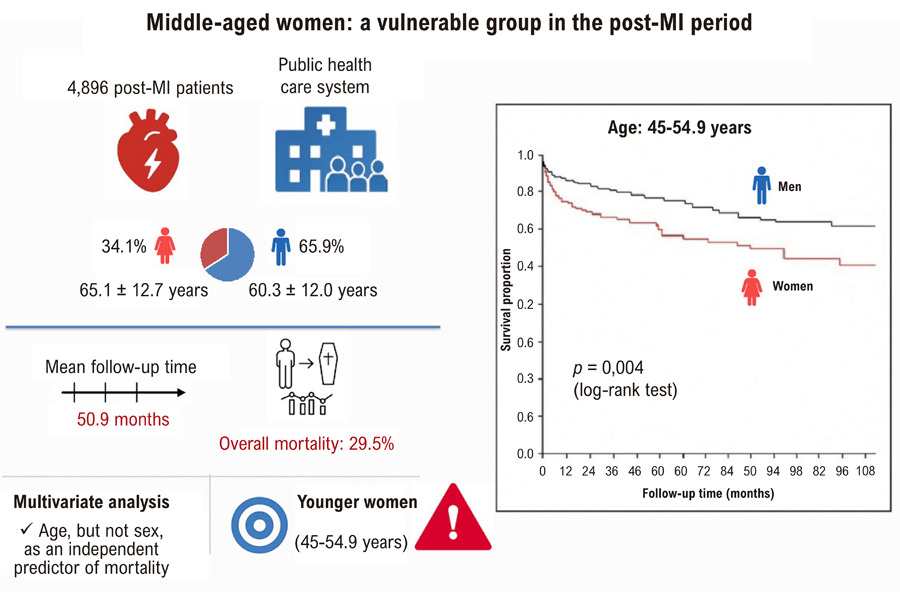
The sample included 4,896 patients (mean age 62 ± 12.4 years; 34.1% women), with an average follow-up of 50.9 months. Overall mortality was 29.5%. On average, women experienced MI 5 years later than men (65.1 vs. 60.3 years; p < 0.001) and had higher follow-up mortality (p < 0.001). However, in the multivariate analysis, only age remained significantly associated with mortality. Age-stratified analysis revealed a higher risk of death among women aged 45-54.9 years (p = 0.004).

Conclusion

Older age contributes to the worse post-MI prognosis observed among women compared to men. However, women in early middle age showed an increased risk of death, representing a potentially vulnerable group requiring specific attention.

  • Infarction
  • middle aged
  • Mortality
Read Full Article
Creative Commons Attribution (CC BY) Creative Commons license
15/12/2025 DOI: 10.36660/abc.20250296i
The Association of Blood Pressure Defined by the 2017 ACC/AHA Guidelines and Cardiovascular Disease Risk for Middle-Aged and Elderly People in China: A Cohort Study
ABC
Original Article

The Association of Blood Pressure Defined by the 2017 ACC/AHA Guidelines and Cardiovascular Disease Risk for Middle-Aged and Elderly People in China: A Cohort Study

Qingyang Lu et al. Haijing Xie Xuefeng Gao

Abstract

Background

Cardiovascular disease (CVD) is a series of diseases affecting the heart or blood vessels.

Objectives

To assess the relationship between blood pressure (BP) levels defined by the 2017 American College of Cardiology/American Heart Association (ACC/AHA) guideline and CVD/atherosclerotic cardiovascular disease (ASCVD) risk for middle-aged and elderly people in China.

Methods

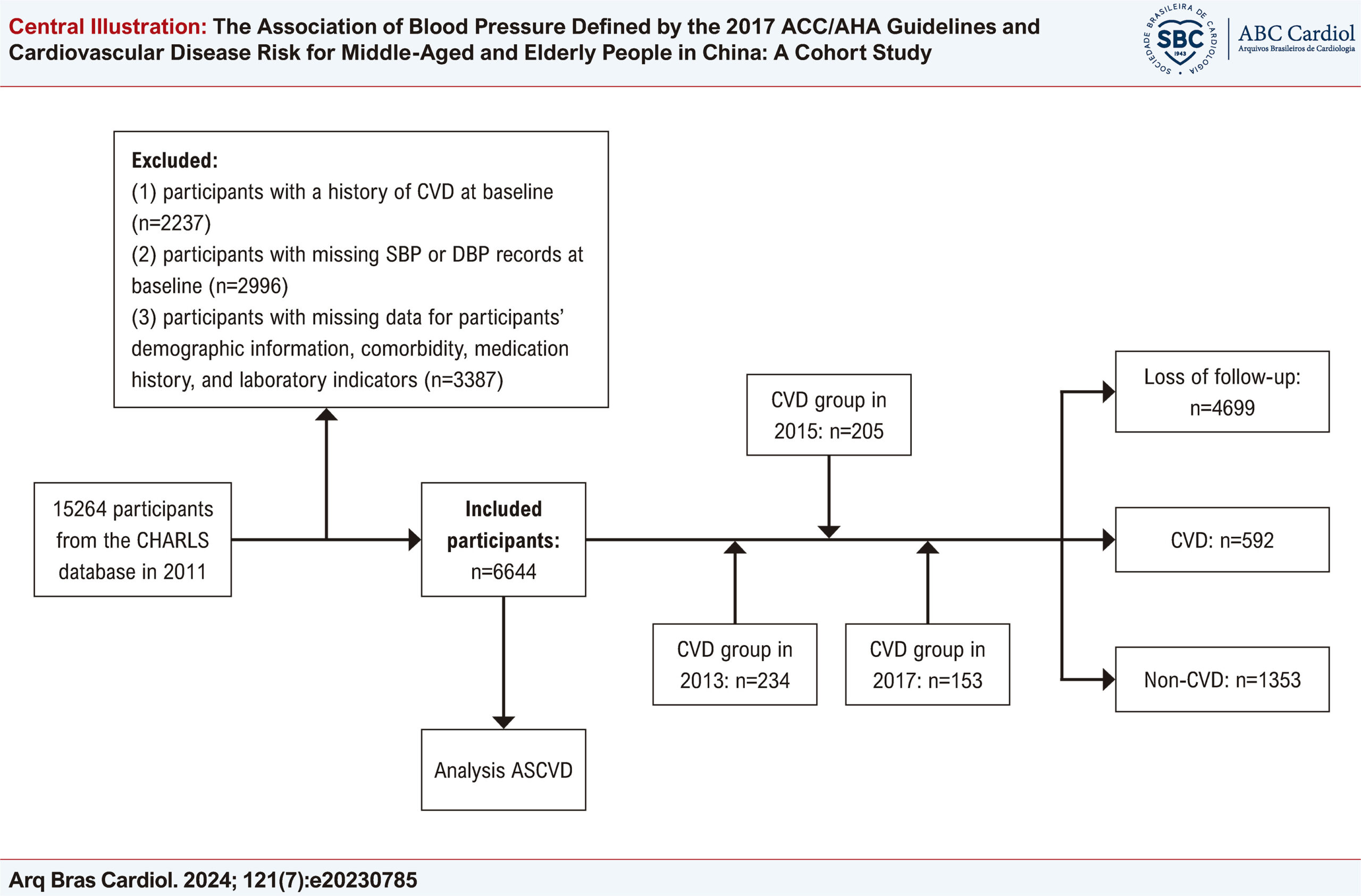
A total of 6,644 middle-aged and elderly people from the China Health and Retirement Longitudinal Study (CHARLS) were finally included. According to the 2017 ACC/AHA guideline, all subjects were divided into four groups: normal BP, elevated BP, stage 1 hypertension, and stage 2 hypertension. The outcome of this study was considered as the risk of CVD and ASCVD. Univariate and multivariate COX regression models were adopted to examine the relationship of the 2017 ACC/AHA BP classification with the risk of CVD. Univariate and multivariate logistic regression models were used to investigate the association between BP levels and ASCVD risk. Subgroup analyses based on age, gender, and use of antihypertensive drugs were performed. P<0.05 was accepted as statistically significant.

Results

After adjusting all covariates, compared to middle-aged and elderly patients with normal BP, we found that patients with stage 1/2 hypertension were associated with a higher risk of CVD, separately. Simultaneously, we also observed a positive association between individuals with elevated BP, stage 1 hypertension, stage 2 hypertension, and higher ASCVD risk in the fully adjusted model. The result of subgroup analyses implied that the relationship between stage 1/2 hypertension and CVD/ high ASCVD was robust in different ages and genders, and participants without using antihypertensive drugs.

Conclusion

BP classification under the 2017 ACC/AHA BP guidelines may apply to the Chinese population.

  • Aged
  • Cardiovascular Diseases
  • Hypertension
  • middle aged
Read Full Article
Creative Commons Attribution (CC BY) Creative Commons license
23/08/2024 DOI: 10.36660/abc.20230785i Views 1
ABC
Editorial

How Can We Favorably Modulate Serum Uric Acid?

Luiza Antoniazzi et al. Laís Ferreira Dias

The study “Impact of Serum Uric Acid Concentration on the Risk of Cardiovascular Disease: A Cohort Study Conducted in Northern China”, carried out with a cohort of middle-aged Chinese, discusses the influence of uric acid on cardiovascular outcomes. The study showed that serum uric acid was a risk factor for cardiovascular disease in middle-aged and elderly people in northern China.

Findings about this association are controversial. It has been proven in previous studies. –

[…]

  • Diet
  • Heredity
  • Hyperruricemia, Prevention and Control
  • Hypertension
  • middle aged
  • Risk Factors
  • Uric Acid/therapeutic use
Read Full Article
Creative Commons Attribution (CC BY) Creative Commons license
25/10/2021 DOI: 10.36660/abc.20210739 Views 1
ABC
Editorial

Brazilian Population Presents Prevalence of Atrial Fibrillation Similar to Higher Income Countries, and a Low Use of Anticoagulation Therapy

Desiderio Favarato

Atrial fibrillation (AF) is the most incident arrhythmia and its frequency is increasing as a greater proportion of people over 60 years of age have been become a worldwide tendency.

There is an exponential increase of AF with the advancing of age from 50-59 years, of 5 fold in 60 – 69 years, of 7 fold in 70 – 79 years, and of 9 fold over 80 years.

[…]

  • Arrhythmias Cardiac
  • Atrial Fibrillation
  • Epidemiology
  • middle aged
  • Prevalence
  • Rate, Survival
  • Risk Factors
  • Young Adult
Read Full Article
Creative Commons Attribution (CC BY) Creative Commons license
20/09/2021 DOI: 10.36660/abc.20210562 Views 1
Exercise Testing, Family History, and Subclinical Atherosclerosis Markers for Cardiovascular Risk Reclassification in Middle-Aged Women
IJCS
Original Article

Exercise Testing, Family History, and Subclinical Atherosclerosis Markers for Cardiovascular Risk Reclassification in Middle-Aged Women

Ricardo Quental Coutinho et al. Ulisses Ramos Montarroyos Isly Maria Lucena de Barros Maria José Bezerra Guimarães … Ana Paula Dornelas Leão Laura Olinda Bregieiro Fernandes Costa Ana Kelley de Lima Medeiros Maria de Fátima Monteiro Moacir de Novaes Lima Ferreira William Azem Chalela Rodrigo Pinto Pedrosa

Abstract

Background

Cardiovascular diseases are the main cause of death in women and the accuracy of currently available risk scores is questionable.

Objective

To reclassify the risk estimated by the Framingham Risk Score (FRS) in asymptomatic middle-aged women by incorporating family history, exercise testing variables, and subclinical atherosclerosis markers.

Methods

This cross-sectional study included 509 women (age range, 46-65 years) without cardiovascular symptoms. Those at low or intermediate risk by the FRS were reclassified to a higher level considering premature family history of acute myocardial infarction and/or sudden death; four variables from exercise testing; and two variables related to subclinical atherosclerosis markers. The homogeneity of these variables according to the FRS was verified by Pearson chi-square test (p<0.05).

Results

According to the FRS, 80.2%, 6.2%, and 13.6% of the women were classified as low (10%) risks, respectively. The intermediate-risk stratum showed the highest increase (from 6.2% to 33.3%) with addition of family history; followed by addition of chronotropic index <80% (to 24.2%); functional capacity 0 (20.6%); decreased one-minute heart rate recovery ≤12 bpm (15.2%); carotid intima-media thickness >1 mm and/or carotid plaque (13.8%) and ST-segment depression (9.0%). The high-risk stratum increased to 14.4% with the addition of reduced heart rate recovery and to 17.1% with the coronary calcium score.

Conclusion

Incorporation of premature family history of cardiovascular events, exercise testing abnormal parameters, and subclinical atherosclerosis markers into the FRS led to risk reclassification in 3.0-29.7% of asymptomatic middle-aged women, mainly by an increase from low to intermediate risk.

  • Atherosclerosis
  • Estrogens
  • Exercise Test
  • Heredity
  • Hypertension
  • middle aged
  • Myocardial Infarction
  • Obesity
  • Risk Factor
  • Sudden Death
  • Women
Read Full Article
Creative Commons Attribution (CC BY) Creative Commons license
16/07/2021 DOI: 10.36660/ijcs.20200414 Views 1
Effects of age and aerobic fitness on heart rate recovery in adult men
ABC
Artigo Original

Effects of age and aerobic fitness on heart rate recovery in adult men

Gabriela Alves Trevizani et al. Paulo Roberto Benchimol-Barbosa Jurandir Nadal

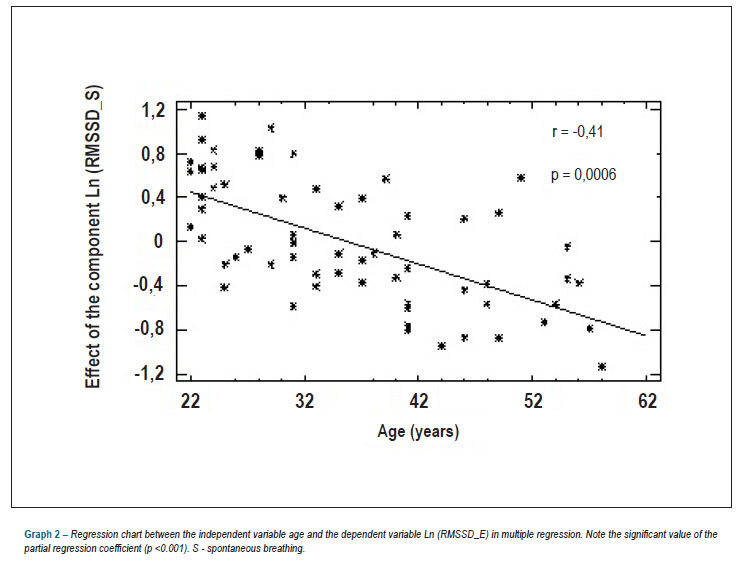
BACKGROUND: Physiological aging leads to cardiac autonomic dysfunction, which is associated with the onset and worsening of cardiovascular disease and an increased risk of death. Currently, physical exercise is considered a cardioprotective strategy and more research is needed on its benefit on cardiac autonomic function. OBJECTIVE: To evaluate the autonomic control of heart rate in healthy young and middle-aged volunteers with different levels of aerobic fitness. METHODS: The study included 68 volunteers, stratified for age and level of aerobic fitness. Based on aerobic fitness assessed by the submaximal exercise test, subjects were separated into two groups, good fitness and poor fitness. Assessment of cardiac autonomic control was performed based on measurements of heart rate variability at rest and heart rate recovery post-exercise. Analysis of variance with two factors was used to compare the variables investigated. RESULTS: The heart rate variability is significantly lower in middle-aged volunteers than in young individuals, regardless of the aerobic fitness level (p <0.01). Higher levels of aerobic fitness in middle-aged volunteers are associated with earlier post-effort vagal reentry – rate of HR decline after 1min30s: 39.6% good aerobic fitness vs. poor 28.4% (p < 0.01). CONCLUSION: Better levels of aerobic fitness act beneficially on the autonomic control of post-exercise heart rate, preserving the vagal reentry velocity in healthy middle-aged volunteers. However, it does not attenuate the decrease in heart rate variability due to the natural aging process.

  • Autonomic Nervous System
  • Exercise
  • Heart Rate
  • middle aged
  • physical fitness
  • Young Adult
Read Full Article
Creative Commons Attribution (CC BY) Creative Commons license
26/07/2012 DOI: 10.1590/S0066-782X2012005000069

How to cite this article

EndNote RIS

Electronic Document Format (Vancouver)

Lessa Júnior EMC, Silva CPM, Kaestner TLL, Rocha CR, Stroher GR, Silva G, Baccin GAO, et al. Middle-Aged Women and Post-Myocardial Infarction Mortality: A Vulnerable Group? Real-World Evidence from a Brazilian Public Health System Cohort. Arquivos Brasileiros de Cardiologia 2025;122(10):e20250296.

Electronic Document Format (ABNT)

Lessa Júnior, Edson Marcos Campos; Silva, Carolina Perin Maia da; Kaestner, Tatiana Lorena da Luz; Rocha, Cecília Rubini; Stroher, Gabriela Redivo; Silva, Gabriele da; Baccin, Giovanni Augusto de Oliveira; Olandoski, Marcia; Bernardi, Andre; Faria Neto, José Rocha. Middle-Aged Women and Post-Myocardial Infarction Mortality: A Vulnerable Group? Real-World Evidence from a Brazilian Public Health System Cohort. Arquivos Brasileiros de Cardiologia, v. 122, n. 10, e20250296, Dec. 2025.

Electronic Document Format (APA)

Lessa Júnior, E. M. C., Silva, C. P. M. , Kaestner, T. L. L., Rocha, C. R., Stroher, G. R., Silva, G. , Baccin, G. A. O., Olandoski, M., Bernardi, A., & Faria Neto, J. R. (2025). Middle-Aged Women and Post-Myocardial Infarction Mortality: A Vulnerable Group? Real-World Evidence from a Brazilian Public Health System Cohort. Arquivos Brasileiros de Cardiologia, 122(10), e20250296.

Electronic Document Format (ISO)

Lessa Júnior, Edson Marcos Campos and Silva, Carolina Perin Maia da and Kaestner, Tatiana Lorena da Luz and Rocha, Cecília Rubini and Stroher, Gabriela Redivo and Silva, Gabriele da and Baccin, Giovanni Augusto de Oliveira and Olandoski, Marcia and Bernardi, Andre and Faria Neto, José Rocha. Middle-Aged Women and Post-Myocardial Infarction Mortality: A Vulnerable Group? Real-World Evidence from a Brazilian Public Health System Cohort. Arquivos Brasileiros de Cardiologia [online]. 2025, vol. 122, n. 10, [cited 2026-10-14], e20250296. Available from: <https://journals.cardiol.br/en/article/middle-aged-women-and-post-myocardial-infarction-mortality-a-vulnerable-group-real-world-evidence-from-a-brazilian-public-health-system-cohort/>. ISSN 0066-782X

EndNote RIS

Electronic Document Format (Vancouver)

Lu Q, Xie H, Gao X. The Association of Blood Pressure Defined by the 2017 ACC/AHA Guidelines and Cardiovascular Disease Risk for Middle-Aged and Elderly People in China: A Cohort Study. Arquivos Brasileiros de Cardiologia 2024;121(7):e20230785.

Electronic Document Format (ABNT)

Lu, Qingyang; Xie, Haijing; Gao, Xuefeng. The Association of Blood Pressure Defined by the 2017 ACC/AHA Guidelines and Cardiovascular Disease Risk for Middle-Aged and Elderly People in China: A Cohort Study. Arquivos Brasileiros de Cardiologia, v. 121, n. 7, e20230785, Aug. 2024.

Electronic Document Format (APA)

Lu, Q., Xie, H., & Gao, X. (2024). The Association of Blood Pressure Defined by the 2017 ACC/AHA Guidelines and Cardiovascular Disease Risk for Middle-Aged and Elderly People in China: A Cohort Study. Arquivos Brasileiros de Cardiologia, 121(7), e20230785.

Electronic Document Format (ISO)

Lu, Qingyang and Xie, Haijing and Gao, Xuefeng. The Association of Blood Pressure Defined by the 2017 ACC/AHA Guidelines and Cardiovascular Disease Risk for Middle-Aged and Elderly People in China: A Cohort Study. Arquivos Brasileiros de Cardiologia [online]. 2024, vol. 121, n. 7, [cited 2026-10-14], e20230785. Available from: <https://journals.cardiol.br/en/article/the-association-of-blood-pressure-defined-by-the-2017-acc-aha-guidelines-and-cardiovascular-disease-risk-for-middle-aged-and-elderly-people-in-china-a-cohort-study/>. ISSN 0066-782X

EndNote RIS

Electronic Document Format (Vancouver)

Antoniazzi L, Dias LF. How Can We Favorably Modulate Serum Uric Acid?. Arquivos Brasileiros de Cardiologia 2021;117(4):676-7.

Electronic Document Format (ABNT)

Antoniazzi, Luiza; Dias, Laís Ferreira. How Can We Favorably Modulate Serum Uric Acid?. Arquivos Brasileiros de Cardiologia, v. 117, n. 4, p. 676-677, Oct. 2021.

Electronic Document Format (APA)

Antoniazzi, L., & Dias, L. F. (2021). How Can We Favorably Modulate Serum Uric Acid?. Arquivos Brasileiros de Cardiologia, 117(4), 676-677.

Electronic Document Format (ISO)

Antoniazzi, Luiza and Dias, Laís Ferreira. How Can We Favorably Modulate Serum Uric Acid?. Arquivos Brasileiros de Cardiologia [online]. 2021, vol. 117, n. 4, [cited 2026-10-14], pp. 676-677. Available from: <https://journals.cardiol.br/en/article/how-can-we-favorably-modulate-serum-uric-acid/>. ISSN 0066-782X

EndNote RIS

Electronic Document Format (Vancouver)

Favarato D. Brazilian Population Presents Prevalence of Atrial Fibrillation Similar to Higher Income Countries, and a Low Use of Anticoagulation Therapy. Arquivos Brasileiros de Cardiologia 2021;117(3):435-6.

Electronic Document Format (ABNT)

Favarato, Desiderio. Brazilian Population Presents Prevalence of Atrial Fibrillation Similar to Higher Income Countries, and a Low Use of Anticoagulation Therapy. Arquivos Brasileiros de Cardiologia, v. 117, n. 3, p. 435-436, Sep. 2021.

Electronic Document Format (APA)

Favarato, D. (2021). Brazilian Population Presents Prevalence of Atrial Fibrillation Similar to Higher Income Countries, and a Low Use of Anticoagulation Therapy. Arquivos Brasileiros de Cardiologia, 117(3), 435-436.

Electronic Document Format (ISO)

Favarato, Desiderio. Brazilian Population Presents Prevalence of Atrial Fibrillation Similar to Higher Income Countries, and a Low Use of Anticoagulation Therapy. Arquivos Brasileiros de Cardiologia [online]. 2021, vol. 117, n. 3, [cited 2026-10-14], pp. 435-436. Available from: <https://journals.cardiol.br/en/article/brazilian-population-presents-prevalence-of-atrial-fibrillation-similar-to-higher-income-countries-and-a-low-use-of-anticoagulation-therapy/>. ISSN 0066-782X

EndNote RIS

Electronic Document Format (Vancouver)

Coutinho RQ, Montarroyos UR, Barros IML, Guimarães MJB, Leão APD, Costa LOBF, Medeiros AKL, et al. Exercise Testing, Family History, and Subclinical Atherosclerosis Markers for Cardiovascular Risk Reclassification in Middle-Aged Women. International Journal of Cardiovascular Sciences 2021;34(4):383-92.

Electronic Document Format (ABNT)

Coutinho, Ricardo Quental; Montarroyos, Ulisses Ramos; Barros, Isly Maria Lucena de; Guimarães, Maria José Bezerra; Leão, Ana Paula Dornelas; Costa, Laura Olinda Bregieiro Fernandes; Medeiros, Ana Kelley de Lima; Monteiro, Maria de Fátima; Ferreira, Moacir de Novaes Lima; Chalela, William Azem; Pedrosa, Rodrigo Pinto. Exercise Testing, Family History, and Subclinical Atherosclerosis Markers for Cardiovascular Risk Reclassification in Middle-Aged Women. International Journal of Cardiovascular Sciences, v. 34, n. 4, p. 383-392, Jul. 2021.

Electronic Document Format (APA)

Coutinho, R. Q., Montarroyos, U. R., Barros, I. M. L. , Guimarães, M. J. B., Leão, A. P. D., Costa, L. O. B. F., Medeiros, A. K. L., Monteiro, M. F., Ferreira, M. N. L., Chalela, W. A., & Pedrosa, R. P. (2021). Exercise Testing, Family History, and Subclinical Atherosclerosis Markers for Cardiovascular Risk Reclassification in Middle-Aged Women. International Journal of Cardiovascular Sciences, 34(4), 383-392.

Electronic Document Format (ISO)

Coutinho, Ricardo Quental and Montarroyos, Ulisses Ramos and Barros, Isly Maria Lucena de and Guimarães, Maria José Bezerra and Leão, Ana Paula Dornelas and Costa, Laura Olinda Bregieiro Fernandes and Medeiros, Ana Kelley de Lima and Monteiro, Maria de Fátima and Ferreira, Moacir de Novaes Lima and Chalela, William Azem and Pedrosa, Rodrigo Pinto. Exercise Testing, Family History, and Subclinical Atherosclerosis Markers for Cardiovascular Risk Reclassification in Middle-Aged Women. International Journal of Cardiovascular Sciences [online]. 2021, vol. 34, n. 4, [cited 2026-10-14], pp. 383-392. Available from: <https://journals.cardiol.br/en/article/exercise-testing-family-history-and-subclinical-atherosclerosis-markers-for-cardiovascular-risk-reclassification-in-middle-aged-women/>. ISSN 2359-4802

EndNote RIS

Electronic Document Format (Vancouver)

Trevizani GA, Benchimol-Barbosa PR, Nadal J. Effects of age and aerobic fitness on heart rate recovery in adult men. Arquivos Brasileiros de Cardiologia 2012;99(3):802-10.

Electronic Document Format (ABNT)

Trevizani, Gabriela Alves; Benchimol-Barbosa, Paulo Roberto; Nadal, Jurandir. Effects of age and aerobic fitness on heart rate recovery in adult men. Arquivos Brasileiros de Cardiologia, v. 99, n. 3, p. 802-810, Jul. 2012.

Electronic Document Format (APA)

Trevizani, G. A., Benchimol-Barbosa, P. R., & Nadal, J. (2012). Effects of age and aerobic fitness on heart rate recovery in adult men. Arquivos Brasileiros de Cardiologia, 99(3), 802-810.

Electronic Document Format (ISO)

Trevizani, Gabriela Alves and Benchimol-Barbosa, Paulo Roberto and Nadal, Jurandir. Effects of age and aerobic fitness on heart rate recovery in adult men. Arquivos Brasileiros de Cardiologia [online]. 2012, vol. 99, n. 3, [cited 2026-10-14], pp. 802-810. Available from: <https://journals.cardiol.br/en/article/effects-of-age-and-aerobic-fitness-on-heart-rate-recovery-in-adult-men/>. ISSN 0066-782X

  • About ABC Family
  • Internal Regulation
  • Editorial Board
  • Brazilian Society of Cardiology (SBC)

Issues

SBC Guidelines

  • Videos
  • Podcasts
  • News