ABC Family Arquivos Brasileiros de Cardiologia International Journal of Cardiovascular Sciences ABC Heart Failure & Cardiomyopathy ABC Imagem Cardiovascular
Português English
ABC Family
Português English
  • About
    • About ABC Family
    • Internal Regulation
    • Editorial Board
    • Brazilian Society of Cardiology (SBC)
  • Issues
  • SBC Guidelines
  • Content
    • Videos
    • Podcasts
    • News
  • About
    • About ABC Family
    • Internal Regulation
    • Editorial Board
    • Brazilian Society of Cardiology (SBC)
  • Issues
  • SBC Guidelines
  • Content
    • Videos
    • Podcasts
    • News

ABC Family

  • ABC Family
  • Arquivos Brasileiros de Cardiologia
  • International Journal of Cardiovascular Sciences
  • ABC Heart Failure & Cardiomyopathy
  • ABC Imagem Cardiovascular
Search in

No content found.

Journals
Ordering
Article types
Others

  1. Home
  2. Keyword: Obesity, Abdominal
Figure 1
IJCS
Original Article

Analysis of the Influence of Abdominal Obesity on Systemic Arterial Hypertension and on the Lipid Profile on Cardiometabolic Risk Stratification in Adult Women

Iury Matheus Lima Cavalcanti et al. Cristian Rodrigues do Nascimento Pedro Pereira Tenório Tiago Ferreira da Silva Araújo

Abstract

Background:

Obesity is a public health problem and has been associated with the development of metabolic disorders that have a strong relationship with the onset of cardiovascular diseases (CVD).

Objective:

The objective was to analyze the influence of abdominal obesity (AO) on systemic arterial hypertension (SAH) and on the lipid profile in cardiovascular risk stratification in adult women.

Methods:

Altogether, 91 women participated in the research. Lifestyle information was collected, in addition to the analysis of clinical measures of cardiovascular risk and biochemical parameters. Unpaired Student’s t-test, logistic regression, and Pearson’s correlation were performed for data analysis, with a value of p <0.05 considered significant.

Results:

The prevalence of AO was 62.6%. Logistic regression showed that AO increased the chance of developing SAH by 2.9-fold. The same behavior was observed in the TG/HDL-c lipid ratio (3.93 ± 0.3 vs. 2.16 ± 0.2), representing an 82% increase in obese women. The present study also demonstrated that the best anthropometric parameter to analyze cardiovascular risk in the studied population was the waist/height ratio (AUC = 0.707).

Conclusions:

It can therefore be concluded that AO plays a significant role in the development of SAH and changes in lipid values that predict increased cardiovascular risk, configuring a strong influence factor for CVD.
  • Adult
  • Cardiovascular Diseases
  • Hyperlipidemias
  • Hypertension
  • Lipidic Metabolism
  • Metabolic Syndrome
  • Obesity, Abdominal
  • risk stratification
  • Women
Read Full Article
Creative Commons Attribution (CC BY) Creative Commons license
01/04/2022 DOI: 10.36660/ijcs.20200415 Views 1
IJCS
Editorial

Abdominal Subcutaneous Adipose Tissue, Diet, and Risk of Cardiovascular Disease: What do we Know?

Camila Weschenfelder et al. Penny M. Kris-Etherton

Excess adiposity increases the risk of cardiovascular disease (CVD) due to dyslipidemia, systemic inflammation and other risk factors. The distribution of body fat depots, and central adiposity in particular, is related to cardiometabolic diseases. The different adipose tissue depots in the body, ie, epicardial adipose tissue, visceral adipose tissue (VAT) and subcutaneous adipose tissue (SAT), have different biochemical characteristics and produce unique biologically active molecules that affect normal and pathological processes related to CVD risk. , Abdominal SAT is classified as superficial or deep. Deep subcutaneous adipose tissue (DSAT) has a higher ratio of saturated to monounsaturated fatty acids, and, consequently, is more saturated than superficial subcutaneous adipose tissue (SSAT). Despite being in the subcutaneous compartment, DSAT differs from VAT because of differences in gene transcription, having different metabolic functions than SSAT.

In Acute Coronary Syndrome (ACS) patients, coronary plaque instability is related to abnormal abdominal fat distribution. Analyses of the abdominal fat distribution of ACS patients have demonstrated that both VAT and SAT are positively correlated with vessel and plaque volumes, but not with plaque tissue components, the fibrous and lipid content of plaque. However, considering coronary plaque characteristics, a higher VAT/SAT ratio was independently associated with a higher percentage of plaque lipid content, with a lower percentage of fibrous volumes and a thinner fibrous cap thickness, characteristics that define greater plaque rupture vulnerability and a high risk for coronary events.

[…]

  • Abdominal Subcutaneous Fat
  • Acute coronary syndrome
  • Diet
  • Inflammation
  • Metabolic Syndrome
  • Obesity, Abdominal
  • Risk Factors/prevention and control
Read Full Article
Creative Commons Attribution (CC BY) Creative Commons license
14/01/2022 DOI: 10.36660/ijcs.20210233 Views 2
ABC
Editorial

Anti-Inflammatory Effects of Atorvastatin Therapy in Metabolic Syndrome

Silvio A. Oliveira-Junior et al. Marianna R. Carvalho Maria Lua M Mendonça Paula F. Martinez

Metabolic Syndrome (MS) is a condition characterized by abdominal obesity accompanied by high fasting glucose levels, insulin resistance, arterial hypertension, and dyslipidemia. It configures a critical risk factor for developing other clinical conditions, primarily type 2 diabetes mellitus (DM2) and cardiovascular diseases. , Also, MS has been associated with endothelial dysfunction, characterized by changes in arterial vascular architecture, especially in the endothelium and capillary basement membrane, causing microvascular complications. Endothelial basement membrane remodeling commonly includes erosion and vascular thrombosis processes in individuals with MS.

Endothelial dysfunction pathogenesis is a multifactorial event and may include chronic inflammation resulting from leukocytes activation and increased production of reactive oxygen species, which are commonly associated with MS. The pro-inflammatory phenotype related to MS makes the vasculature highly vulnerable to tumor necrosis factor-alpha (TNF-α), C-reactive protein, interleukin-6 (IL-6), and interleukin-8 (IL-8)-induced inflammatory processes. , High levels of these pro-inflammatory markers are commonly associated with MS. – Likewise, low-density lipoproteins (LDL) oxidation resulting from lipid peroxidation has immunogenic and pro-inflammatory effects, based on the recruitment and accumulation of pro-inflammatory cells. These effects may sustain endothelial dysfunction that is associated with smooth muscle cell proliferation and perivascular adipose tissue hypertrophy, events commonly observed during the endothelial remodeling process.

[…]

  • Atorvastatin/drug therapy
  • Diabetes Mellitus
  • Endothelium/etiology
  • Hypertension
  • Inflammation
  • Metabolic Syndrome
  • Obesity, Abdominal
Read Full Article
Creative Commons Attribution (CC BY) Creative Commons license
25/10/2021 DOI: 10.36660/abc.20210720 Views 1
ABC
Editorial

Abdominal Adiposity and Intima-Media Carotid Thickness: An Association

Mário Sérgio Soares de Azeredo Coutinho

Atherosclerosis is the main cause of morbidity and mortality in adults in Brazil and worldwide. Classical risk factors have shown its causal association from randomized experimental studies, such with cholesterol and hypertension. Other risk factors, including abdominal adiposity, show positive associations with atherosclerosis-related outcomes.

The ELSA-Brazil observational study began collecting data in 2008 with clinical, epidemiological and laboratorial variables of 15,105 public servants aged 35 to 74 years. Several articles on these data have already been published and have brought relevant information about the association between risk factors and varied outcomes. In the present issue, Michaela Eickemberg et al. present data from a cross-sectional study that explores different measures of abdominal adiposity and its association with carotid intima-media thickness (C-IMT) measurement.

[…]

  • Carotid Artery Diseases/mortality
  • Cholesterol
  • Hypertension
  • Media-Carotidea
  • Obesity, Abdominal
  • Risk Factors
Read Full Article
Creative Commons Attribution (CC BY) Creative Commons license
01/03/2019 DOI: 10.5935/abc.20190023 Views 1
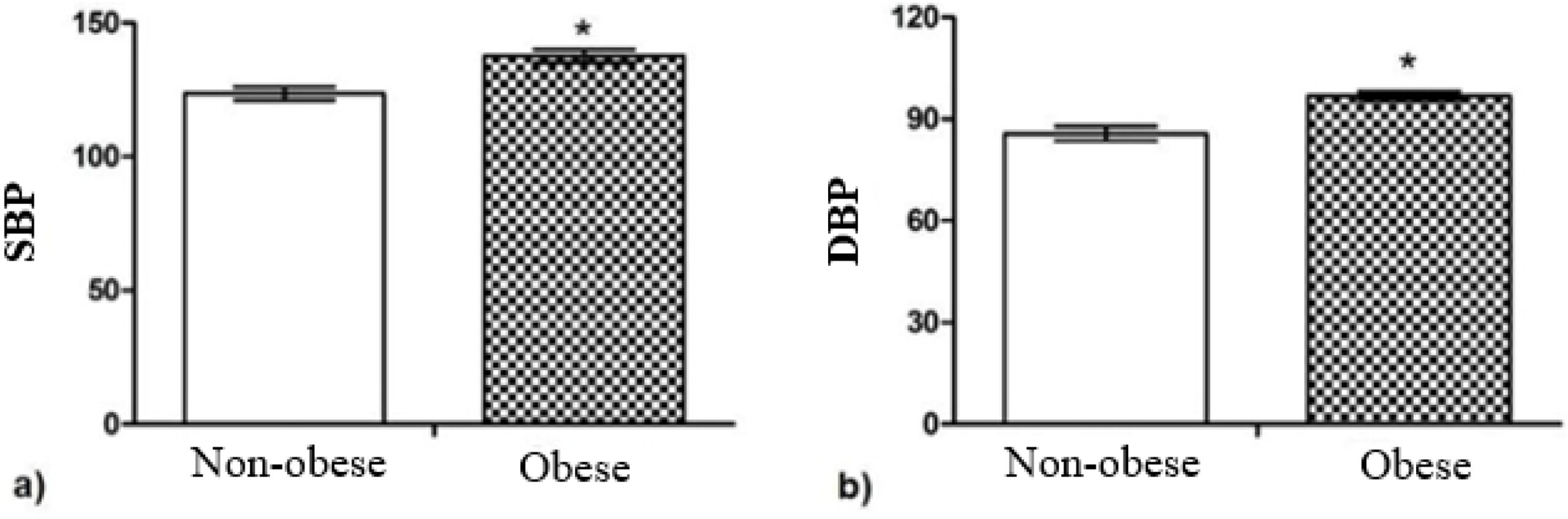
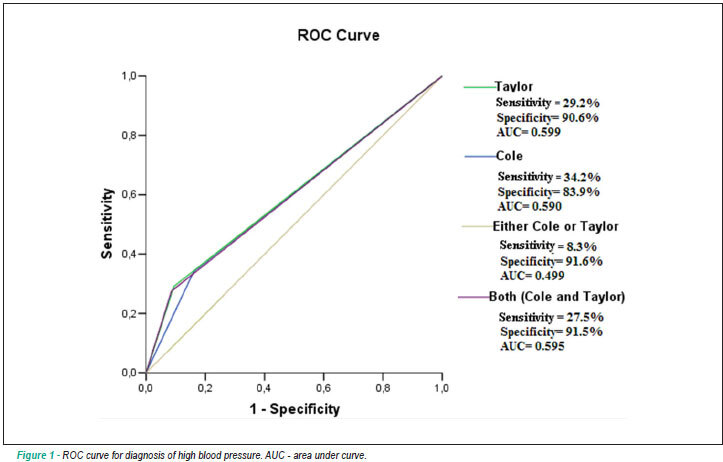
High blood pressure detection in adolescents by clustering overall and abdominal adiposity markers
ABC
Artigo Original

High blood pressure detection in adolescents by clustering overall and abdominal adiposity markers

Diego G. D Christofaro et al. Raphael M Ritti-Dias Rômulo A Fernandes Marcos D Polito … Selma M. de Andrade Jefferson R Cardoso Arli Ramos de Oliveira

BACKGROUND: Obesity is linked to high blood pressure (HBP) in childhood. However, the role of fat as a predictor of HBP in adolescents remains unknown. OBJECTIVE: To investigate the association between general and abdominal obesity with HBP and to identify the sensitivity and specificity of these indicators to detect HBP in adolescents. METHODS: The sample was composed of 1,021 adolescents aged 10-17 years. Subjects were classified as normal, overweight/obese, according to BMI measurements, and as non-obese and with abdominal obesity, according to waist circumference (WC) measurements. Systolic (SBP) and diastolic (DBP) blood pressure were assessed using an oscillometric device. Logistic regression and ROC curves were used in the statistical analysis. RESULTS: The overall prevalence of HBP was 11.8% (13.4% in boys and 10.2% in girls). The prevalence of HBP among general overweight/obese boys and girls was 10% and 11.1%, respectively. The prevalence of HBP among boys with abdominal obesity was 28.6%. For both genders, the odds ratio (OR) for HBP was higher in abdominal obesity than in general overweight/obesity (4.09 [OR95%CI = 2.57-6.51]) versus 1.83 [OR95%CI = 1.83-4.30]). The OR for HBP was higher when general overweight/obesity and abdominal obesity were clustered (OR = 4.35 [OR95%CI = 2.68-7.05]), than when identified by either general overweight/obesity or abdominal obesity alone (OR = 1.32 [OR95%CI = 0.65-2.68]). However, both types of obesity had low predictive power in HBP detection. CONCLUSION: General and abdominal obesity were associated to HBP, however, the sensitivity and specificity of these variables to detect HBP are low in Brazilian adolescents.

  • Adolescent
  • Blood Pressure
  • Obesity, Abdominal
  • Overweight
  • Waist Circumference
Read Full Article
Creative Commons Attribution (CC BY) Creative Commons license
29/04/2011 DOI: 10.1590/S0066-782X2011005000050 Views 1
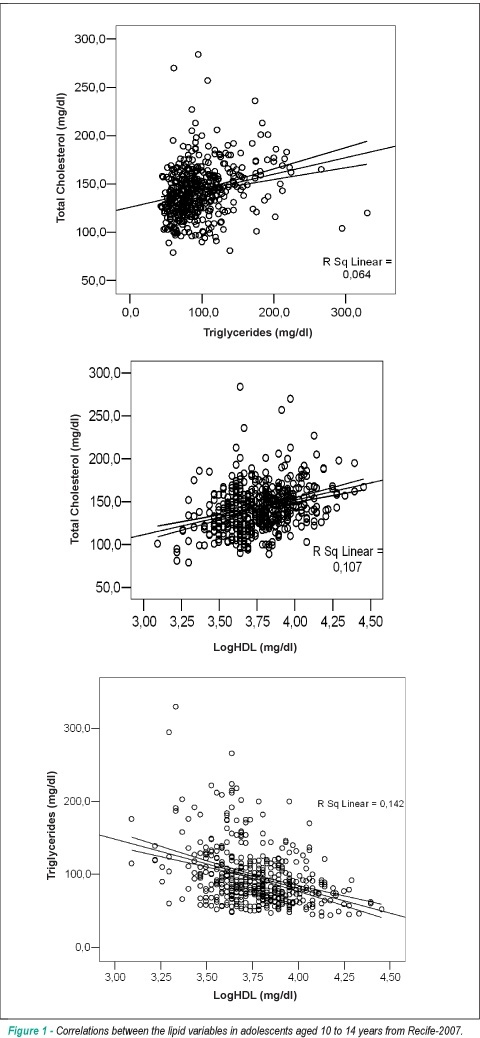
Lipid profile of schoolchildren from Recife, PE
ABC
Artigo Original

Lipid profile of schoolchildren from Recife, PE

Patrícia Brazil Pereira et al. Ilma Kruze Grande de Arruda Ana Márcia Tenório de Souza Cavalcanti Alcides da Silva Diniz

BACKGROUND: The occurrence of dyslipidemia is increasing in pediatric populations. Altered lipid profiles are related to a higher incidence of hypertension and atherosclerotic disease. OBJECTIVE: To evaluate the extent of dyslipidemia and investigate its association with overweight and abdominal obesity in adolescent students from Recife, Brazil. METHODS: Personal data, socioeconomic level, anthropometric measurements and lipid profile of 470 adolescents, aged 10 to 14 years, of both sexes, students at the Public School system in the city of Recife, state of Pernambuco, Brazil, were obtained. The statistical analysis was carried out using the Epi-info 6.04 and SPSS 13.0 software. The level of significance was set at 5%. RESULTS: The majority of the population was dyslipidemic (63.8%; 95%CI: 59.3 – 68.2), with hypoalphalipoproteinemia being the most prevalent dyslipidemia (56%; 95%CI: 51.3 – 60.5). Adolescents who were overweight or who had abdominal obesity presented higher levels of triglycerides and lower levels of HDL-cholesterol (p < 0.05). Levels of total cholesterol and fractions were not different between sexes. CONCLUSION: A high incidence of unfavorable lipid profile was shown in this series, demonstrating the necessity to measure the lipid profile as early as this age range. Healthy lifestyle measures should be encouraged in this population.

  • Adolescent
  • Brazil
  • Dyslipidemias
  • Hypertension
  • Life Style
  • Obesity, Abdominal
  • Recife
Read Full Article
Creative Commons Attribution (CC BY) Creative Commons license
08/10/2010 DOI: 10.1590/S0066-782X2010005000136
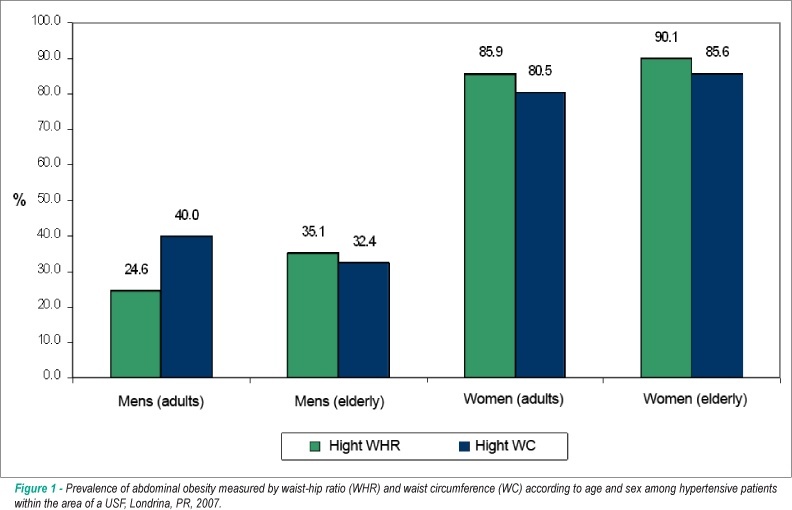
Prevalence of abdominal obesity in hypertensive patients registered in a Family Health Unit
ABC
Artigo Original

Prevalence of abdominal obesity in hypertensive patients registered in a Family Health Unit

Edmarlon Girotto et al. Selma Maffei de Andrade Marcos Aparecido Sarriá Cabrera

BACKGROUND: Abdominal obesity is an important cardiovascular risk factor and, along with dyslipidemia, impaired glucose tolerance and hypertension, it makes up the metabolic syndrome. OBJECTIVE: To investigate the prevalence of abdominal obesity and associated factors in hypertensive patients. METHODS: Cross-sectional study with hypertensive patients aged 20 to 79 registered in a Family Health Unit in the city of Londrina, Paraná. Abdominal obesity was found through waist-hip ratio (WHR) and waist circumference (WC) according to the cutoff points recommended by the World Health Organization (WHR > 1.0 and > WC 102 cm for men and WHR > WC 0.85 and > 88 cm for women). RESULTS: Among 378 respondents, the prevalence of abdominal obesity determined by WHR was 65.3% in adults and 68.1% in the elderly, and 87.9% in females and 30.2% in males (p <0.001). In women, WHR was associated with reports of high cholesterol, failure to perform regular physical activity, lack of paid work and low education. There was no association of WHR with any variables in males. High waist circumference was present in 66.8% of adults and 64.3% of elderly patients, also with differences between sexes (p <0.001). High waist circumference was associated, in women, to diabetes and to nonsmoking, and in men, to diabetes and to physical inactivity. CONCLUSION: These results show a high prevalence of abdominal obesity, especially among women, reinforcing the need for strategies to reduce abdominal obesity among hypertensive patients.

  • health centers
  • Hypertension
  • Obesity, Abdominal
  • Prevalence
Read Full Article
Creative Commons Attribution (CC BY) Creative Commons license
21/05/2010 DOI: 10.1590/S0066-782X2010005000049 Views 1

How to cite this article

EndNote RIS

Electronic Document Format (Vancouver)

Cavalcanti IML, Nascimento CR, Tenório PP, Araújo TFS. Analysis of the Influence of Abdominal Obesity on Systemic Arterial Hypertension and on the Lipid Profile on Cardiometabolic Risk Stratification in Adult Women. International Journal of Cardiovascular Sciences 2022;35(5):625-34.

Electronic Document Format (ABNT)

Cavalcanti, Iury Matheus Lima; Nascimento, Cristian Rodrigues do; Tenório, Pedro Pereira; Araújo, Tiago Ferreira da Silva. Analysis of the Influence of Abdominal Obesity on Systemic Arterial Hypertension and on the Lipid Profile on Cardiometabolic Risk Stratification in Adult Women. International Journal of Cardiovascular Sciences, v. 35, n. 5, p. 625-634, Mar. 2022.

Electronic Document Format (APA)

Cavalcanti, I. M. L., Nascimento, C. R. , Tenório, P. P., & Araújo, T. F. S. (2022). Analysis of the Influence of Abdominal Obesity on Systemic Arterial Hypertension and on the Lipid Profile on Cardiometabolic Risk Stratification in Adult Women. International Journal of Cardiovascular Sciences, 35(5), 625-634.

Electronic Document Format (ISO)

Cavalcanti, Iury Matheus Lima and Nascimento, Cristian Rodrigues do and Tenório, Pedro Pereira and Araújo, Tiago Ferreira da Silva. Analysis of the Influence of Abdominal Obesity on Systemic Arterial Hypertension and on the Lipid Profile on Cardiometabolic Risk Stratification in Adult Women. International Journal of Cardiovascular Sciences [online]. 2022, vol. 35, n. 5, [cited 2026-10-14], pp. 625-634. Available from: <https://journals.cardiol.br/en/article/analysis-of-the-influence-of-abdominal-obesity-on-systemic-arterial-hypertension-and-on-the-lipid-profile-on-cardiometabolic-risk-stratification-in-adult-women/>. ISSN 2359-4802

EndNote RIS

Electronic Document Format (Vancouver)

Weschenfelder C, Kris-Etherton PM. Abdominal Subcutaneous Adipose Tissue, Diet, and Risk of Cardiovascular Disease: What do we Know?. International Journal of Cardiovascular Sciences 2022;35(1):46-7.

Electronic Document Format (ABNT)

Weschenfelder, Camila; Kris-Etherton, Penny M.. Abdominal Subcutaneous Adipose Tissue, Diet, and Risk of Cardiovascular Disease: What do we Know?. International Journal of Cardiovascular Sciences, v. 35, n. 1, p. 46-47, Jan. 2022.

Electronic Document Format (APA)

Weschenfelder, C., & Kris-Etherton, P. M. (2022). Abdominal Subcutaneous Adipose Tissue, Diet, and Risk of Cardiovascular Disease: What do we Know?. International Journal of Cardiovascular Sciences, 35(1), 46-47.

Electronic Document Format (ISO)

Weschenfelder, Camila and Kris-Etherton, Penny M.. Abdominal Subcutaneous Adipose Tissue, Diet, and Risk of Cardiovascular Disease: What do we Know?. International Journal of Cardiovascular Sciences [online]. 2022, vol. 35, n. 1, [cited 2026-10-14], pp. 46-47. Available from: <https://journals.cardiol.br/en/article/abdominal-subcutaneous-adipose-tissue-diet-and-risk-of-cardiovascular-disease-what-do-we-know/>. ISSN 2359-4802

EndNote RIS

Electronic Document Format (Vancouver)

Oliveira-Junior SA, Carvalho MR, Mendonça MLM, Martinez PF. Anti-Inflammatory Effects of Atorvastatin Therapy in Metabolic Syndrome. Arquivos Brasileiros de Cardiologia 2021;117(4):748-9.

Electronic Document Format (ABNT)

Oliveira-Junior, Silvio A.; Carvalho, Marianna R.; Mendonça, Maria Lua M; Martinez, Paula F.. Anti-Inflammatory Effects of Atorvastatin Therapy in Metabolic Syndrome. Arquivos Brasileiros de Cardiologia, v. 117, n. 4, p. 748-749, Oct. 2021.

Electronic Document Format (APA)

Oliveira-Junior, S. A., Carvalho, M. R., Mendonça, M. L. M., & Martinez, P. F. (2021). Anti-Inflammatory Effects of Atorvastatin Therapy in Metabolic Syndrome. Arquivos Brasileiros de Cardiologia, 117(4), 748-749.

Electronic Document Format (ISO)

Oliveira-Junior, Silvio A. and Carvalho, Marianna R. and Mendonça, Maria Lua M and Martinez, Paula F.. Anti-Inflammatory Effects of Atorvastatin Therapy in Metabolic Syndrome. Arquivos Brasileiros de Cardiologia [online]. 2021, vol. 117, n. 4, [cited 2026-10-14], pp. 748-749. Available from: <https://journals.cardiol.br/en/article/anti-inflammatory-effects-of-atorvastatin-therapy-in-metabolic-syndrome/>. ISSN 0066-782X

EndNote RIS

Electronic Document Format (Vancouver)

Coutinho MSSA. Abdominal Adiposity and Intima-Media Carotid Thickness: An Association. Arquivos Brasileiros de Cardiologia 2019;112(3):228-9.

Electronic Document Format (ABNT)

Coutinho, Mário Sérgio Soares de Azeredo. Abdominal Adiposity and Intima-Media Carotid Thickness: An Association. Arquivos Brasileiros de Cardiologia, v. 112, n. 3, p. 228-229, Feb. 2019.

Electronic Document Format (APA)

Coutinho, M. S. S. A. (2019). Abdominal Adiposity and Intima-Media Carotid Thickness: An Association. Arquivos Brasileiros de Cardiologia, 112(3), 228-229.

Electronic Document Format (ISO)

Coutinho, Mário Sérgio Soares de Azeredo. Abdominal Adiposity and Intima-Media Carotid Thickness: An Association. Arquivos Brasileiros de Cardiologia [online]. 2019, vol. 112, n. 3, [cited 2026-10-14], pp. 228-229. Available from: <https://journals.cardiol.br/en/article/abdominal-adiposity-and-intima-media-carotid-thickness-an-association/>. ISSN 0066-782X

EndNote RIS

Electronic Document Format (Vancouver)

Christofaro DGD, Ritti-Dias RM, Fernandes RA, Polito MD, Andrade SM, Cardoso JR, Oliveira AR, et al. High blood pressure detection in adolescents by clustering overall and abdominal adiposity markers. Arquivos Brasileiros de Cardiologia 2011;96(6):465-70.

Electronic Document Format (ABNT)

Christofaro, Diego G. D; Ritti-Dias, Raphael M; Fernandes, Rômulo A; Polito, Marcos D; Andrade, Selma M. de; Cardoso, Jefferson R; Oliveira, Arli Ramos de. High blood pressure detection in adolescents by clustering overall and abdominal adiposity markers. Arquivos Brasileiros de Cardiologia, v. 96, n. 6, p. 465-470, Apr. 2011.

Electronic Document Format (APA)

Christofaro, D. G. D., Ritti-Dias, R. M., Fernandes, R. A., Polito, M. D., Andrade, S. M. , Cardoso, J. R., & Oliveira, A. R. (2011). High blood pressure detection in adolescents by clustering overall and abdominal adiposity markers. Arquivos Brasileiros de Cardiologia, 96(6), 465-470.

Electronic Document Format (ISO)

Christofaro, Diego G. D and Ritti-Dias, Raphael M and Fernandes, Rômulo A and Polito, Marcos D and Andrade, Selma M. de and Cardoso, Jefferson R and Oliveira, Arli Ramos de. High blood pressure detection in adolescents by clustering overall and abdominal adiposity markers. Arquivos Brasileiros de Cardiologia [online]. 2011, vol. 96, n. 6, [cited 2026-10-14], pp. 465-470. Available from: <https://journals.cardiol.br/en/article/high-blood-pressure-detection-in-adolescents-by-clustering-overall-and-abdominal-adiposity-markers/>. ISSN 0066-782X

EndNote RIS

Electronic Document Format (Vancouver)

Pereira PB, Arruda IKG, Cavalcanti AMTS, Diniz AS. Lipid profile of schoolchildren from Recife, PE. Arquivos Brasileiros de Cardiologia 2010;95(5):606-13.

Electronic Document Format (ABNT)

Pereira, Patrícia Brazil; Arruda, Ilma Kruze Grande de; Cavalcanti, Ana Márcia Tenório de Souza; Diniz, Alcides da Silva. Lipid profile of schoolchildren from Recife, PE. Arquivos Brasileiros de Cardiologia, v. 95, n. 5, p. 606-613, Oct. 2010.

Electronic Document Format (APA)

Pereira, P. B., Arruda, I. K. G. , Cavalcanti, A. M. T. S., & Diniz, A. S. (2010). Lipid profile of schoolchildren from Recife, PE. Arquivos Brasileiros de Cardiologia, 95(5), 606-613.

Electronic Document Format (ISO)

Pereira, Patrícia Brazil and Arruda, Ilma Kruze Grande de and Cavalcanti, Ana Márcia Tenório de Souza and Diniz, Alcides da Silva. Lipid profile of schoolchildren from Recife, PE. Arquivos Brasileiros de Cardiologia [online]. 2010, vol. 95, n. 5, [cited 2026-10-14], pp. 606-613. Available from: <https://journals.cardiol.br/en/article/lipid-profile-of-schoolchildren-from-recife-pe/>. ISSN 0066-782X

EndNote RIS

Electronic Document Format (Vancouver)

Girotto E, Andrade SM, Cabrera MAS. Prevalence of abdominal obesity in hypertensive patients registered in a Family Health Unit. Arquivos Brasileiros de Cardiologia 2010;94(6):754-62.

Electronic Document Format (ABNT)

Girotto, Edmarlon; Andrade, Selma Maffei de; Cabrera, Marcos Aparecido Sarriá. Prevalence of abdominal obesity in hypertensive patients registered in a Family Health Unit. Arquivos Brasileiros de Cardiologia, v. 94, n. 6, p. 754-762, May. 2010.

Electronic Document Format (APA)

Girotto, E., Andrade, S. M. , & Cabrera, M. A. S. (2010). Prevalence of abdominal obesity in hypertensive patients registered in a Family Health Unit. Arquivos Brasileiros de Cardiologia, 94(6), 754-762.

Electronic Document Format (ISO)

Girotto, Edmarlon and Andrade, Selma Maffei de and Cabrera, Marcos Aparecido Sarriá. Prevalence of abdominal obesity in hypertensive patients registered in a Family Health Unit. Arquivos Brasileiros de Cardiologia [online]. 2010, vol. 94, n. 6, [cited 2026-10-14], pp. 754-762. Available from: <https://journals.cardiol.br/en/article/prevalence-of-abdominal-obesity-in-hypertensive-patients-registered-in-a-family-health-unit/>. ISSN 0066-782X

  • About ABC Family
  • Internal Regulation
  • Editorial Board
  • Brazilian Society of Cardiology (SBC)

Issues

SBC Guidelines

  • Videos
  • Podcasts
  • News