ABC Family Arquivos Brasileiros de Cardiologia International Journal of Cardiovascular Sciences ABC Heart Failure & Cardiomyopathy ABC Imagem Cardiovascular
Português English
ABC Family
Português English
  • About
    • About ABC Family
    • Internal Regulation
    • Editorial Board
    • Brazilian Society of Cardiology (SBC)
  • Issues
  • SBC Guidelines
  • Content
    • Videos
    • Podcasts
    • News
  • About
    • About ABC Family
    • Internal Regulation
    • Editorial Board
    • Brazilian Society of Cardiology (SBC)
  • Issues
  • SBC Guidelines
  • Content
    • Videos
    • Podcasts
    • News

ABC Family

  • ABC Family
  • Arquivos Brasileiros de Cardiologia
  • International Journal of Cardiovascular Sciences
  • ABC Heart Failure & Cardiomyopathy
  • ABC Imagem Cardiovascular
Search in

No content found.

Journals
Ordering
Article types
Others

  1. Home
  2. Keyword: Fatty Acids
ABC
Editorial

Fatty Acids Intake in Cardiovascular Prevention: The Incessant Search for Adequacy

Elisa Maia dos Santos et al. Grazielle Vilas Bôas Huguenin

Cardiovascular diseases (CVD) are currently the leading cause of mortality worldwide. Several risk factors contribute to its development and among the modifiable ones, the main ones are related to lifestyle behaviors, such as smoking, physical activity, and diet. In individuals undergoing secondary cardiovascular prevention, promoting a healthy lifestyle is a strategy for reducing the recurrence of events.– However, gaps in adherence to a healthy lifestyle in secondary prevention may be related to the low integration between behavior change and traditional models of outpatient care.

Nutrition plays a central role in the primary and secondary prevention of CVD, but relatively recently, food has been considered as a treatment, and not just as a complement to established medical and pharmacological therapy. Diet, in particular, has a significant impact on the management of the main modifiable risk factors for CVD such as obesity, dyslipidemia, diabetes, and hypertension.

[…]

  • Eating
  • Fatty Acids
  • Secondary Prevention
Read Full Article
Creative Commons Attribution (CC BY) Creative Commons license
20/05/2024 DOI: 10.36660/abc.20240208i Views 1
Adequacy of Fatty Acids Consumption Among Individuals in Secondary Cardiovascular Prevention
ABC
Original Article

Adequacy of Fatty Acids Consumption Among Individuals in Secondary Cardiovascular Prevention

Aline Marcadenti et al. Rachel H. Vieira Machado Renato Hideo Nakagawa Santos Caio Cesar dos Santos Kasai … Cristiane Kovacs Annie Bello Cristina H. de Matos Renata Torres Abib Bertacco Gabriela C. Souza Gabriela da S. Schirmann Francisca Eugenia Zaina Nagano Soraia Poloni Raquel Milani El Kik Naoel Hassan Feres Isa G. Rodrigues Antônio Carlos Sobral Sousa Josilene M. F. Pinheiro Sandra Mary Lima Vasconcelos Daniele Maria de Oliveira Carlos Viviane Sahade Souza Adriana Barros Gomes José Albuquerque de Figueiredo Neto Emilio Hideyuki Moriguchi Maria Cristina Izar Sônia Lopes Pinto Josefina Bressan Simone Raimondi de Souza Magali C. Kumbier Celme Barroncas Passos de Araújo Camila R. Torreglosa Bernardete Weber Ângela Cristine Bersch-Ferreira

Background:

Adhering to a diet adequate in macronutrients is crucial for the secondary prevention of cardiovascular diseases.

Objective:

To assess the prevalence of adherence to recommendations for the consumption of dietary fatty acids for the prevention and treatment of cardiovascular diseases and to estimate whether the presence of certain cardiovascular risk factors would be associated with adherence.

Methods:

Cross-sectional study using baseline data from 2,358 participants included in the “Brazilian Cardioprotective Nutritional Program Trial”. Dietary intake and cardiovascular risk factors were assessed. Adequate intake of polyunsaturated fatty acids (PUFA) was considered as ≥10% of total daily energy intake; for monounsaturated fatty acids (MUFA), 20%; and for saturated fatty acids (SFA), <7% according to the Brazilian Society of Cardiology. A significance level of 5% was considered in the statistical analysis.

Results:

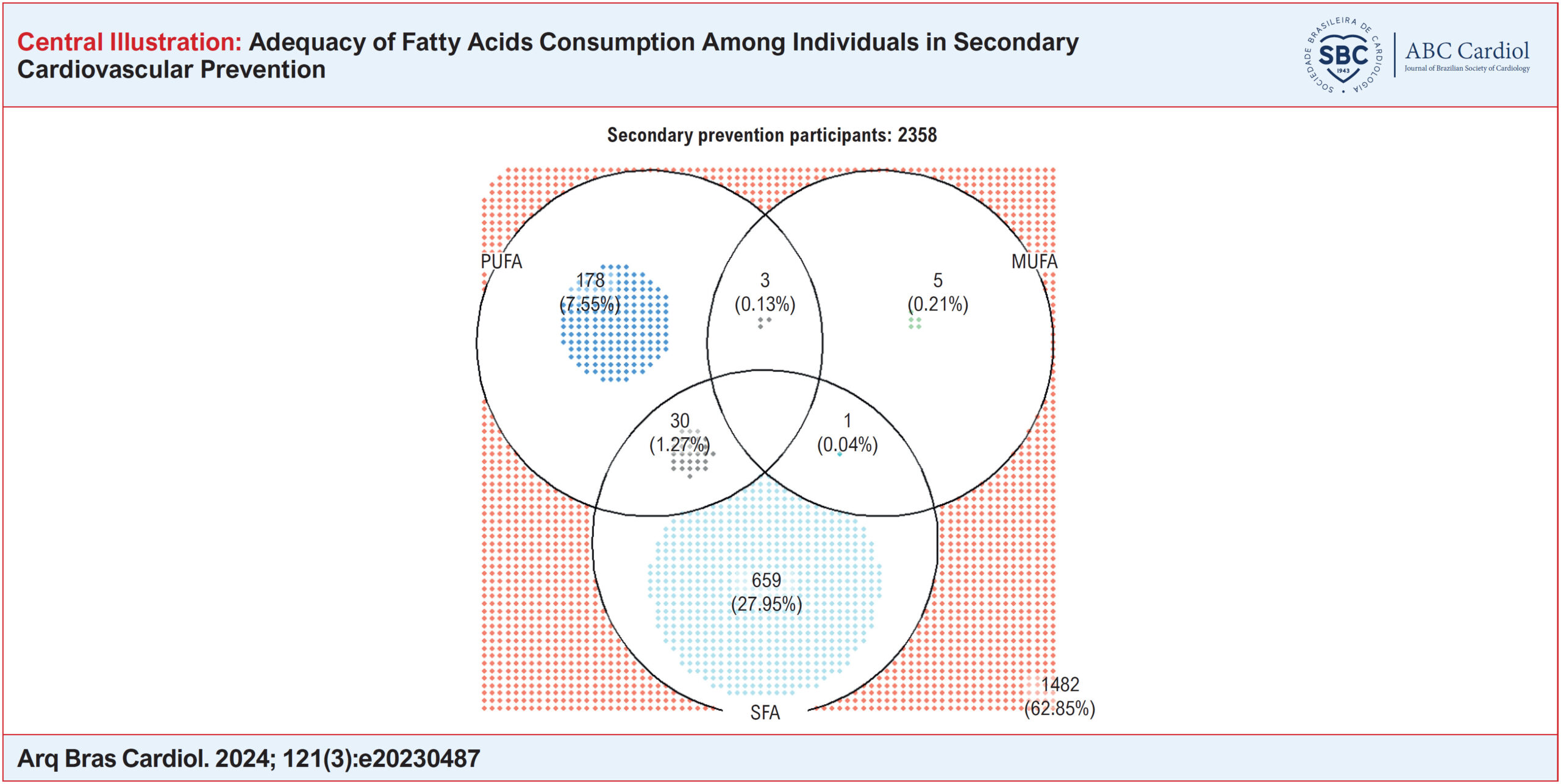
No participant adhered to all recommendations simultaneously, and more than half (1,482 [62.9%]) did not adhere to any recommendation. Adherence exclusively to the SFA recommendation was the most prevalent, fulfilled by 659 (28%) participants, followed by adherence exclusively to the PUFA (178 [7.6%]) and MUFA (5 [0.2%]) recommendations. There was no association between the number of comorbidities and adherence to nutritional recommendations (p = 0.269). Participants from the Brazilian Northeast region showed a higher proportion of adherence to SFA consumption recommendations (38.42%) and lower adherence to PUFA intake (3.52%) (p <0.001) compared to other regions.

Conclusions:

Among the evaluated sample, there was low adherence to nutritional recommendations for dietary fatty acid consumption.

  • Cardiovascular disease
  • Diet
  • Fatty Acids
  • Secondary Prevention
Read Full Article
Creative Commons Attribution (CC BY) Creative Commons license
05/04/2024 DOI: 10.36660/abc.20230487i Views 1
ABC
Editorial

Saturated Fatty Acids and Implications for Cardiovascular Disease

Matheus Augusto Callegari et al. Ricardo Luiz Damatto Priscila Portugal dos Santos

Cardiovascular diseases (CVD) are the leading cause of mortality, accounting for 17.9 million deaths in 2019, 32% of all global deaths. It is important to detect CVD early to start treatment. For this, there are several standard risk factors in CVD prediction, but interest in finding more sensitive and accurate biomarkers is intense. Gonçalinho et al. propose that the use of inflammation and endothelial dysfunction biomarkers may reflect CVD and predict worse prognosis, regardless of traditional risk factors. Most CVDs can be prevented by addressing behavioral risk factors like diet. Dietary fat intake is one of the major modifiable risk factors implicated in the causation of CVD. Gonçalinho et al. showed that stearic acid (SA) is associated with inflammatory biomarkers and endothelial dysfunction in individuals at cardiovascular risk.

To study the association of fatty acids (FA) with cardiovascular risk factors, Gonçalinho et al. used FA from membrane phospholipids of red blood cells (RBC) as a biomarker of FA status. This analysis has been used since these FAs can be incorporated from the serum lipoproteins. Additionally, it offers an advantage over analysis of plasma because RBC last on average 120 days compared to 3 weeks for plasma lipids, reflecting better long-term dietary FA intake. However, it is important to highlight that the cost of preparing RBC exceeds the plasmatic method and that there are different analytical strategies., Therefore, for FA from RBC membrane phospholipids to become a biomarker of the nutritional status of dietary FA in clinical practice, there remains a need for investigations of cost-effectiveness and method standardization.

[…]

  • Fatty Acids
  • Heart Disease Risk Factors
  • Lipoproteins
  • Palmitic Acid
  • Stearic Acids
Read Full Article
Creative Commons Attribution (CC BY) Creative Commons license
30/10/2023 DOI: 10.36660/abc.20230612 Views 1
Figure 1
ABC
Original Article

Stearic Acid, but not Palmitic Acid, is Associated with Inflammatory and Endothelial Dysfunction Biomarkers in Individuals at Cardiovascular Risk

Gustavo Henrique Ferreira Gonçalinho et al. Geni Rodrigues Sampaio Rosana Aparecida Manólio Soares-Freitas Nágila Raquel Teixeira Damasceno

Abstract

Background

Several studies have associated dietary saturated fatty acids (SFAs) with cardiovascular risk but there are still many controversies. Most of these studies have focused on the effects of palmitic acid on circulating lipids. Stearic acid usually shows a neutral effect on blood lipids, however, there is a lack of clinical studies assessing the link with inflammatory and endothelial dysfunction markers.

Objective

To evaluate the association of red blood cell (RBC) SFA (palmitic and stearic acids) with circulating inflammatory and endothelial dysfunction biomarkers.

Methods

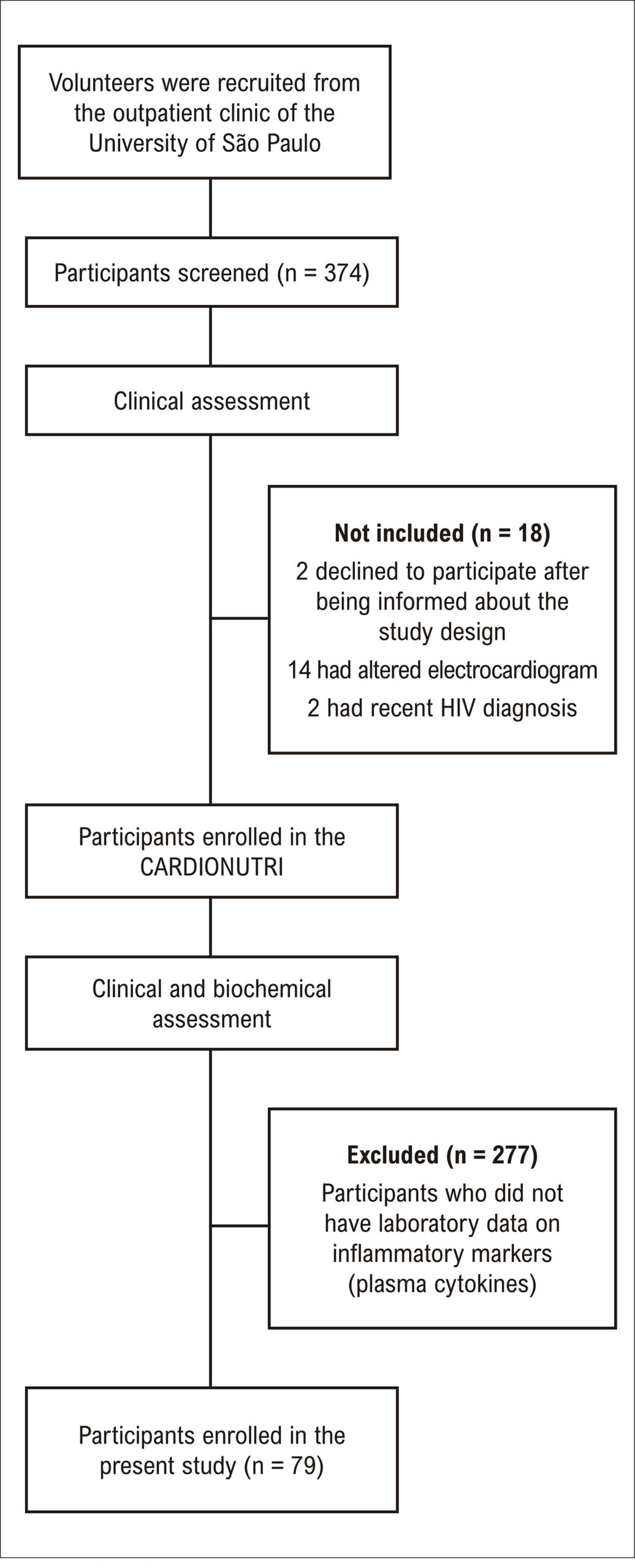
Cross-sectional study of 79 adults of both sexes with at least one cardiovascular risk factor but without previous events (acute myocardial infarction or stroke). Plasma biomarkers – lipids, glucometabolic markers, high-sensitivity C-reactive protein (hs-CRP), interleukin-6 (IL-6), interleukin-10 (IL-10), monocyte chemoattractant protein-1 (MCP-1), and tumor necrosis factor-α (TNF-α) – and RBC palmitic and stearic fatty acids were analyzed. The associations were assessed by correlation and multiple linear regression analyses, with statistical significance set at p < 0.05.

Results

Palmitic acid showed no significant associations with traditional cardiovascular risk factors or inflammatory markers. Stearic acid, on the other hand, was inversely correlated with blood cholesterol and triglycerides, but independently associated with hs-CRP, IL-6, and TNF-α.

Conclusion

Stearic acid is associated with inflammatory and endothelial dysfunction biomarkers in individuals with at least one cardiovascular risk factor.

  • Biomarkers
  • Cardiovascular Diseases
  • Endothelium
  • Fatty Acids
  • Inflammation
Read Full Article
Creative Commons Attribution (CC BY) Creative Commons license
01/09/2023 DOI: 10.36660/abc.20220598
Figure 1
IJCS
Original Article

Dietary Fat Intake and its Association with Adiposity and Inflammatory Markers in Individuals at Cardiometabolic Risk

Fernanda Santos Fortes et al. Alinne Paula de Almeida Carla de Oliveira Barbosa Rosa Brenda Kelly Souza Silveira … Nínive de Almeida Reis Helen Hermana Miranda Hermsdorff

Abstract

Background

Fatty acids are important components of diet that may influence the development of CVD.

Objective

To verify the relationship of dietary fatty acids with cardiometabolic markers in individuals at the cardiometabolic risk.

Methods

This cross-sectional study involved 282 subjects (116 M/166 F, 42 ± 16 years) attended the Cardiovascular Health Care Program, Universidade Federal de Viçosa (Brazil). Anthropometric and body composition measurements as well as metabolic and inflammatory markers were assessed by standard procedures. Demographic and lifestyle variables were obtained by semi-structured questionnaire. Food consumption was evaluated by 24h recall. Student’s t-test or Mann-Whitney-U test and chi-square test were used, considering the statistical significance level of 5% probability.

Results

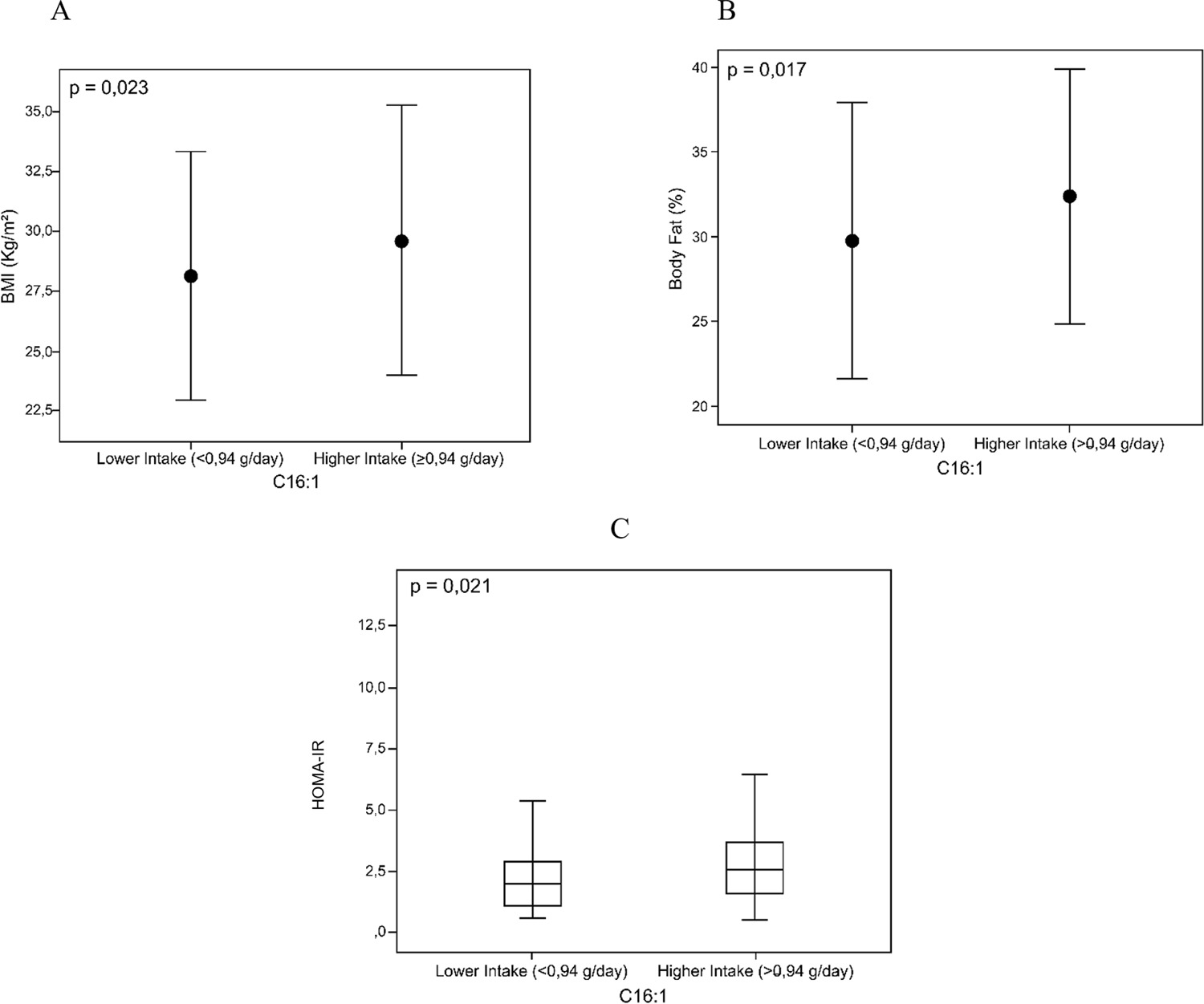
Individuals who eaten fat, fatty acids saturated and fatty acids polyunsaturated above recommendation (> 35, 7%, and 10% of caloric intake) were more likely to be overweight (p < 0.05). Those individuals with higher intake of medium-chain fatty saturated acids (≥ 1.05 g/d) had lower values (p < 0.05) of body mass index, waist circumference, waist-hip ratio and waist-height ratio and higher values (p < 0.05) of total leukocytes, C-reactive protein and total cholesterol, and LDL. Subjects with higher of palmitoleic acid intake (≥ 0.94 g/d) presented higher values of BMI, fat percentage and HOMA-IR (p < 0.05).

Conclusion

This cross-sectional study found different associations of dietary fat and cardiometabolic risk related to adiposity and inflammatory markers, according with chain-size and saturation, indicating the need the more detailed on the dietary assessment of obese patients to identify risk factors and established best strategies to control. (Int J Cardiovasc Sci. 2020; [online].ahead print, PP.0-0)

  • Biomarkers
  • Cardiovascular Diseases, Risk Factors
  • Fatty Acids
  • Metabolic Syndrome
  • Obesity/prevention and control
Read Full Article
Creative Commons Attribution (CC BY) Creative Commons license
09/03/2020 DOI: 10.36660/ijcs.20190066 Views 1
ABC
Original Article

Fatty Acid and Cholesterol Concentrations in Usually Consumed Fish in Brazil

Carlos Scherr et al. Ana Carolina Moron Gagliardi Marcio Hiroshi Miname Raul Dias Santos

Background:

Several studies have demonstrated clinical benefits of fish consumption for the cardiovascular system. These effects are attributed to the increased amounts of polyunsaturated fatty acids in these foods. However, the concentrations of fatty acids may vary according to region.

Objective:

The goal of this study was to determine the amount of,cholesterol and fatty acids in 10 Brazilian fishes and in a non-native farmed salmon usually consumed in Brazil.

Methods:

The concentrations of cholesterol and fatty acids, especially omega-3, were determined in grilled fishes. Each fish sample was divided in 3 sub-samples (chops) and each one was extracted from the fish to minimize possible differences in muscle and fat contents.

Results:

The largest cholesterol amount was found in white grouper (107.6 mg/100 g of fish) and the smallest in badejo (70 mg/100 g). Omega-3 amount varied from 0.01 g/100 g in badejo to 0.900 g/100 g in weakfish. Saturated fat varied from 0.687 g/100 g in seabass to 4.530 g/100 g in filhote. The salmon had the greatest concentration of polyunsaturated fats (3.29 g/100 g) and the highest content of monounsaturated was found in pescadinha (5.98 g/100 g).

Whiting and boyfriend had the best omega-6/omega 3 ratios respectively 2.22 and 1.19, however these species showed very little amounts of omega-3.

Conclusion:

All studied Brazilian fishes and imported salmon have low amounts of saturated fat and most of them also have low amounts of omega-3.

  • Cholesterol
  • Coronary Artery Disease / prevention & control
  • Dyslipidemias
  • Fatty Acids
  • Fishes
Read Full Article
Creative Commons Attribution (CC BY) Creative Commons license
21/11/2014 DOI: 10.5935/abc.20140176 Views 1
Influences of rich in saturated and unsaturated fatty acids diets in rat myocardium
ABC
Artigo Original

Influences of rich in saturated and unsaturated fatty acids diets in rat myocardium

Matheus Fécchio Pinotti et al. Maeli Dal-Pai Silva Mário Mateus Sugizaki Yeda Santana Diniz Novelli … Lea Sílvia Sant'ana Flávio Ferrari Aragon Carlos Roberto Padovani Ethel Lourenzi Barbosa Novelli Antonio Carlos Cicogna

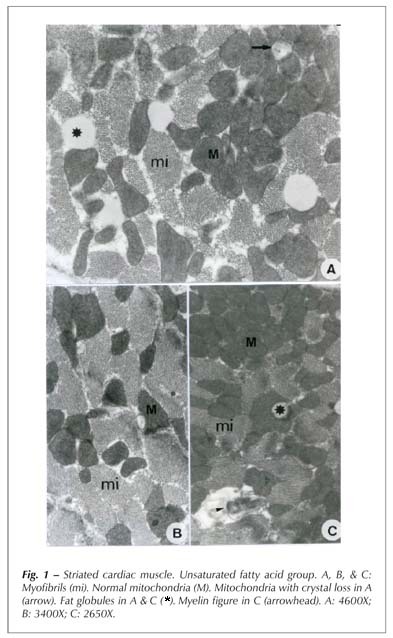
OBJECTIVES: To study the influence of saturated (SFA) and unsaturated fatty acid (UFA) rich diets on mechanical function, morphology and oxidative stress in rat myocardium. METHODS: Male, 60-day-old Wistar rats were fed a control (n=8), a SFA (n=8), or a UFA-rich diet (n=8) for sixty days. Mechanical function was studied in isolated left ventricle papillary muscle under isometric and isotonic contractions, in basal conditions (1.25mM calcium chloride) and after 5.2mM calcium chloride and beta-adrenergic stimuli with 1.0µM isoproterenol. Left ventricle fragments were used to study oxidative stress and morphology under light and electron microscopy. RESULTS: SFA and UFA-rich diets did not change myocardium mechanical function. Both diets caused oxidative stress, with high lipid hydroperoxide and low superoxide-dismutase concentrations. UFA rich diet decreased catalase expression and SFA rich diet decreased the amount of myocardial glutathione-peroxidase. Both diets promoted light ultrastructural injuries such as lipid deposits and cell membrane injuries. CONCLUSION: Results suggest that SFA and UFA rich diets do not alter isolated muscle mechanical function, but promote light myocardial morphological injuries and oxidative stress.

  • Diet
  • Fatty Acids
  • Myocardium
  • Oxidative Stress
  • Rats
Read Full Article
Creative Commons Attribution (CC BY) Creative Commons license
21/05/2007 DOI: 10.1590/S0066-782X2007000300015 Views 1

How to cite this article

EndNote RIS

Electronic Document Format (Vancouver)

Santos EM, Huguenin GVB. Fatty Acids Intake in Cardiovascular Prevention: The Incessant Search for Adequacy. Arquivos Brasileiros de Cardiologia 2024;121(3):e20240208.

Electronic Document Format (ABNT)

Santos, Elisa Maia dos; Huguenin, Grazielle Vilas Bôas. Fatty Acids Intake in Cardiovascular Prevention: The Incessant Search for Adequacy. Arquivos Brasileiros de Cardiologia, v. 121, n. 3, e20240208, May. 2024.

Electronic Document Format (APA)

Santos, E. M. , & Huguenin, G. V. B. (2024). Fatty Acids Intake in Cardiovascular Prevention: The Incessant Search for Adequacy. Arquivos Brasileiros de Cardiologia, 121(3), e20240208.

Electronic Document Format (ISO)

Santos, Elisa Maia dos and Huguenin, Grazielle Vilas Bôas. Fatty Acids Intake in Cardiovascular Prevention: The Incessant Search for Adequacy. Arquivos Brasileiros de Cardiologia [online]. 2024, vol. 121, n. 3, [cited 2026-10-14], e20240208. Available from: <https://journals.cardiol.br/en/article/fatty-acids-intake-in-cardiovascular-prevention-the-incessant-search-for-adequacy/>. ISSN 0066-782X

EndNote RIS

Electronic Document Format (Vancouver)

Marcadenti A, Machado RHV, Santos RHN, Kasai CCS, Kovacs C, Bello A, Matos CH, et al. Adequacy of Fatty Acids Consumption Among Individuals in Secondary Cardiovascular Prevention. Arquivos Brasileiros de Cardiologia 2024;121(3):e20230487.

Electronic Document Format (ABNT)

Marcadenti, Aline; Machado, Rachel H. Vieira; Santos, Renato Hideo Nakagawa; Kasai, Caio Cesar dos Santos; Kovacs, Cristiane; Bello, Annie; Matos, Cristina H. de; Bertacco, Renata Torres Abib; Souza, Gabriela C.; Schirmann, Gabriela da S.; Nagano, Francisca Eugenia Zaina; Poloni, Soraia; Kik, Raquel Milani El; Feres, Naoel Hassan; Rodrigues, Isa G.; Sousa, Antônio Carlos Sobral; Pinheiro, Josilene M. F.; Vasconcelos, Sandra Mary Lima; Carlos, Daniele Maria de Oliveira; Souza, Viviane Sahade; Gomes, Adriana Barros; Figueiredo Neto, José Albuquerque de; Moriguchi, Emilio Hideyuki; Izar, Maria Cristina; Pinto, Sônia Lopes; Bressan, Josefina; Souza, Simone Raimondi de; Kumbier, Magali C.; Araújo, Celme Barroncas Passos de; Torreglosa, Camila R.; Weber, Bernardete; Bersch-Ferreira, Ângela Cristine. Adequacy of Fatty Acids Consumption Among Individuals in Secondary Cardiovascular Prevention. Arquivos Brasileiros de Cardiologia, v. 121, n. 3, e20230487, Apr. 2024.

Electronic Document Format (APA)

Marcadenti, A., Machado, R. H. V., Santos, R. H. N., Kasai, C. C. S., Kovacs, C., Bello, A., Matos, C. H. , Bertacco, R. T. A., Souza, G. C., Schirmann, G. S., Nagano, F. E. Z., Poloni, S., Kik, R. M. E., Feres, N. H., Rodrigues, I. G., Sousa, A. C. S., Pinheiro, J. M. F., Vasconcelos, S. M. L., Carlos, D. M. O., Souza, V. S., Gomes, A. B., Figueiredo Neto, J. A. , Moriguchi, E. H., Izar, M. C., Pinto, S. L., Bressan, J., Souza, S. R. , Kumbier, M. C., Araújo, C. B. P. , Torreglosa, C. R., Weber, B., & Bersch-Ferreira, C. (2024). Adequacy of Fatty Acids Consumption Among Individuals in Secondary Cardiovascular Prevention. Arquivos Brasileiros de Cardiologia, 121(3), e20230487.

Electronic Document Format (ISO)

Marcadenti, Aline and Machado, Rachel H. Vieira and Santos, Renato Hideo Nakagawa and Kasai, Caio Cesar dos Santos and Kovacs, Cristiane and Bello, Annie and Matos, Cristina H. de and Bertacco, Renata Torres Abib and Souza, Gabriela C. and Schirmann, Gabriela da S. and Nagano, Francisca Eugenia Zaina and Poloni, Soraia and Kik, Raquel Milani El and Feres, Naoel Hassan and Rodrigues, Isa G. and Sousa, Antônio Carlos Sobral and Pinheiro, Josilene M. F. and Vasconcelos, Sandra Mary Lima and Carlos, Daniele Maria de Oliveira and Souza, Viviane Sahade and Gomes, Adriana Barros and Figueiredo Neto, José Albuquerque de and Moriguchi, Emilio Hideyuki and Izar, Maria Cristina and Pinto, Sônia Lopes and Bressan, Josefina and Souza, Simone Raimondi de and Kumbier, Magali C. and Araújo, Celme Barroncas Passos de and Torreglosa, Camila R. and Weber, Bernardete and Bersch-Ferreira, Ângela Cristine. Adequacy of Fatty Acids Consumption Among Individuals in Secondary Cardiovascular Prevention. Arquivos Brasileiros de Cardiologia [online]. 2024, vol. 121, n. 3, [cited 2026-10-14], e20230487. Available from: <https://journals.cardiol.br/en/article/adequacy-of-fatty-acids-consumption-among-individuals-in-secondary-cardiovascular-prevention/>. ISSN 0066-782X

EndNote RIS

Electronic Document Format (Vancouver)

Callegari MA, Damatto RL, Santos PP. Saturated Fatty Acids and Implications for Cardiovascular Disease. Arquivos Brasileiros de Cardiologia 2023;120(8):e20230612.

Electronic Document Format (ABNT)

Callegari, Matheus Augusto; Damatto, Ricardo Luiz; Santos, Priscila Portugal dos. Saturated Fatty Acids and Implications for Cardiovascular Disease. Arquivos Brasileiros de Cardiologia, v. 120, n. 8, e20230612, Oct. 2023.

Electronic Document Format (APA)

Callegari, M. A., Damatto, R. L., & Santos, P. P. (2023). Saturated Fatty Acids and Implications for Cardiovascular Disease. Arquivos Brasileiros de Cardiologia, 120(8), e20230612.

Electronic Document Format (ISO)

Callegari, Matheus Augusto and Damatto, Ricardo Luiz and Santos, Priscila Portugal dos. Saturated Fatty Acids and Implications for Cardiovascular Disease. Arquivos Brasileiros de Cardiologia [online]. 2023, vol. 120, n. 8, [cited 2026-10-14], e20230612. Available from: <https://journals.cardiol.br/en/article/saturated-fatty-acids-and-implications-for-cardiovascular-disease/>. ISSN 0066-782X

EndNote RIS

Electronic Document Format (Vancouver)

Gonçalinho GHF, Sampaio GR, Soares-Freitas RAM, Damasceno NRT. Stearic Acid, but not Palmitic Acid, is Associated with Inflammatory and Endothelial Dysfunction Biomarkers in Individuals at Cardiovascular Risk. Arquivos Brasileiros de Cardiologia 2023;120(8):e20220598.

Electronic Document Format (ABNT)

Gonçalinho, Gustavo Henrique Ferreira; Sampaio, Geni Rodrigues; Soares-Freitas, Rosana Aparecida Manólio; Damasceno, Nágila Raquel Teixeira. Stearic Acid, but not Palmitic Acid, is Associated with Inflammatory and Endothelial Dysfunction Biomarkers in Individuals at Cardiovascular Risk. Arquivos Brasileiros de Cardiologia, v. 120, n. 8, e20220598, Aug. 2023.

Electronic Document Format (APA)

Gonçalinho, G. H. F., Sampaio, G. R., Soares-Freitas, R. A. M., & Damasceno, N. R. T. (2023). Stearic Acid, but not Palmitic Acid, is Associated with Inflammatory and Endothelial Dysfunction Biomarkers in Individuals at Cardiovascular Risk. Arquivos Brasileiros de Cardiologia, 120(8), e20220598.

Electronic Document Format (ISO)

Gonçalinho, Gustavo Henrique Ferreira and Sampaio, Geni Rodrigues and Soares-Freitas, Rosana Aparecida Manólio and Damasceno, Nágila Raquel Teixeira. Stearic Acid, but not Palmitic Acid, is Associated with Inflammatory and Endothelial Dysfunction Biomarkers in Individuals at Cardiovascular Risk. Arquivos Brasileiros de Cardiologia [online]. 2023, vol. 120, n. 8, [cited 2026-10-14], e20220598. Available from: <https://journals.cardiol.br/en/article/stearic-acid-but-not-palmitic-acid-is-associated-with-inflammatory-and-endothelial-dysfunction-biomarkers-in-individuals-at-cardiovascular-risk/>. ISSN 0066-782X

EndNote RIS

Electronic Document Format (Vancouver)

Fortes FS, Almeida AP, Rosa COB, Silveira BKS, Reis NA, Hermsdorff HHM. Dietary Fat Intake and its Association with Adiposity and Inflammatory Markers in Individuals at Cardiometabolic Risk. International Journal of Cardiovascular Sciences 2020;33(5):447-56.

Electronic Document Format (ABNT)

Fortes, Fernanda Santos; Almeida, Alinne Paula de; Rosa, Carla de Oliveira Barbosa; Silveira, Brenda Kelly Souza; Reis, Nínive de Almeida; Hermsdorff, Helen Hermana Miranda. Dietary Fat Intake and its Association with Adiposity and Inflammatory Markers in Individuals at Cardiometabolic Risk. International Journal of Cardiovascular Sciences, v. 33, n. 5, p. 447-456, Mar. 2020.

Electronic Document Format (APA)

Fortes, F. S., Almeida, A. P. , Rosa, C. O. B., Silveira, B. K. S., Reis, N. A., & Hermsdorff, H. H. M. (2020). Dietary Fat Intake and its Association with Adiposity and Inflammatory Markers in Individuals at Cardiometabolic Risk. International Journal of Cardiovascular Sciences, 33(5), 447-456.

Electronic Document Format (ISO)

Fortes, Fernanda Santos and Almeida, Alinne Paula de and Rosa, Carla de Oliveira Barbosa and Silveira, Brenda Kelly Souza and Reis, Nínive de Almeida and Hermsdorff, Helen Hermana Miranda. Dietary Fat Intake and its Association with Adiposity and Inflammatory Markers in Individuals at Cardiometabolic Risk. International Journal of Cardiovascular Sciences [online]. 2020, vol. 33, n. 5, [cited 2026-10-14], pp. 447-456. Available from: <https://journals.cardiol.br/en/article/dietary-fat-intake-and-its-association-with-adiposity-and-inflammatory-markers-in-individuals-at-cardiometabolic-risk/>. ISSN 2359-4802

EndNote RIS

Electronic Document Format (Vancouver)

Scherr C, Gagliardi ACM, Miname MH, Santos RD. Fatty Acid and Cholesterol Concentrations in Usually Consumed Fish in Brazil. Arquivos Brasileiros de Cardiologia 2014;104(2):152-8.

Electronic Document Format (ABNT)

Scherr, Carlos; Gagliardi, Ana Carolina Moron; Miname, Marcio Hiroshi; Santos, Raul Dias. Fatty Acid and Cholesterol Concentrations in Usually Consumed Fish in Brazil. Arquivos Brasileiros de Cardiologia, v. 104, n. 2, p. 152-158, Nov. 2014.

Electronic Document Format (APA)

Scherr, C., Gagliardi, A. C. M., Miname, M. H., & Santos, R. D. (2014). Fatty Acid and Cholesterol Concentrations in Usually Consumed Fish in Brazil. Arquivos Brasileiros de Cardiologia, 104(2), 152-158.

Electronic Document Format (ISO)

Scherr, Carlos and Gagliardi, Ana Carolina Moron and Miname, Marcio Hiroshi and Santos, Raul Dias. Fatty Acid and Cholesterol Concentrations in Usually Consumed Fish in Brazil. Arquivos Brasileiros de Cardiologia [online]. 2014, vol. 104, n. 2, [cited 2026-10-14], pp. 152-158. Available from: <https://journals.cardiol.br/en/article/fatty-acid-and-cholesterol-concentrations-in-usually-consumed-fish-in-brazil/>. ISSN 0066-782X

EndNote RIS

Electronic Document Format (Vancouver)

Pinotti MF, Silva MD, Sugizaki MM, Novelli YSD, Sant’ana LS, Aragon FF, Padovani CR, et al. Influences of rich in saturated and unsaturated fatty acids diets in rat myocardium. Arquivos Brasileiros de Cardiologia 2007;88(3):346-53.

Electronic Document Format (ABNT)

Pinotti, Matheus Fécchio; Silva, Maeli Dal-Pai; Sugizaki, Mário Mateus; Novelli, Yeda Santana Diniz; Sant’ana, Lea Sílvia; Aragon, Flávio Ferrari; Padovani, Carlos Roberto; Novelli, Ethel Lourenzi Barbosa; Cicogna, Antonio Carlos. Influences of rich in saturated and unsaturated fatty acids diets in rat myocardium. Arquivos Brasileiros de Cardiologia, v. 88, n. 3, p. 346-353, May. 2007.

Electronic Document Format (APA)

Pinotti, M. F., Silva, M. D., Sugizaki, M. M., Novelli, Y. S. D., Sant’ana, L. S., Aragon, F. F., Padovani, C. R., Novelli, E. L. B., & Cicogna, A. C. (2007). Influences of rich in saturated and unsaturated fatty acids diets in rat myocardium. Arquivos Brasileiros de Cardiologia, 88(3), 346-353.

Electronic Document Format (ISO)

Pinotti, Matheus Fécchio and Silva, Maeli Dal-Pai and Sugizaki, Mário Mateus and Novelli, Yeda Santana Diniz and Sant’ana, Lea Sílvia and Aragon, Flávio Ferrari and Padovani, Carlos Roberto and Novelli, Ethel Lourenzi Barbosa and Cicogna, Antonio Carlos. Influences of rich in saturated and unsaturated fatty acids diets in rat myocardium. Arquivos Brasileiros de Cardiologia [online]. 2007, vol. 88, n. 3, [cited 2026-10-14], pp. 346-353. Available from: <https://journals.cardiol.br/en/article/influences-of-rich-in-saturated-and-unsaturated-fatty-acids-diets-in-rat-myocardium/>. ISSN 0066-782X

  • About ABC Family
  • Internal Regulation
  • Editorial Board
  • Brazilian Society of Cardiology (SBC)

Issues

SBC Guidelines

  • Videos
  • Podcasts
  • News