ABC Family Arquivos Brasileiros de Cardiologia International Journal of Cardiovascular Sciences ABC Heart Failure & Cardiomyopathy ABC Imagem Cardiovascular
Português English
ABC Family
Português English
  • About
    • About ABC Family
    • Internal Regulation
    • Editorial Board
    • Brazilian Society of Cardiology (SBC)
  • Issues
  • SBC Guidelines
  • Content
    • Videos
    • Podcasts
    • News
  • About
    • About ABC Family
    • Internal Regulation
    • Editorial Board
    • Brazilian Society of Cardiology (SBC)
  • Issues
  • SBC Guidelines
  • Content
    • Videos
    • Podcasts
    • News

ABC Family

  • ABC Family
  • Arquivos Brasileiros de Cardiologia
  • International Journal of Cardiovascular Sciences
  • ABC Heart Failure & Cardiomyopathy
  • ABC Imagem Cardiovascular
Search in

No content found.

Journals
Ordering
Article types
Others

  1. Home
  2. Keyword: Calcium
Figure 1
IJCS
Original Article

Evaluation of Cardiovascular Risks Associated with Calcium Use: A Systematic Review and Meta-Analysis

Paulo Henrique Gouveia et al. Joyce da Silva Guimarães Astrid Wiens

Abstract

Background

Calcium plays vital roles in both physiological and pathological processes, and its use as a therapeutic agent is primarily indicated for osteoporosis and osteopenia. It may increase cardiovascular risk, thereby increasing cardiovascular morbidity and mortality.

Objective

To synthesize the available evidence on cardiovascular risks in patients using calcium-based medications and supplements.

Methods

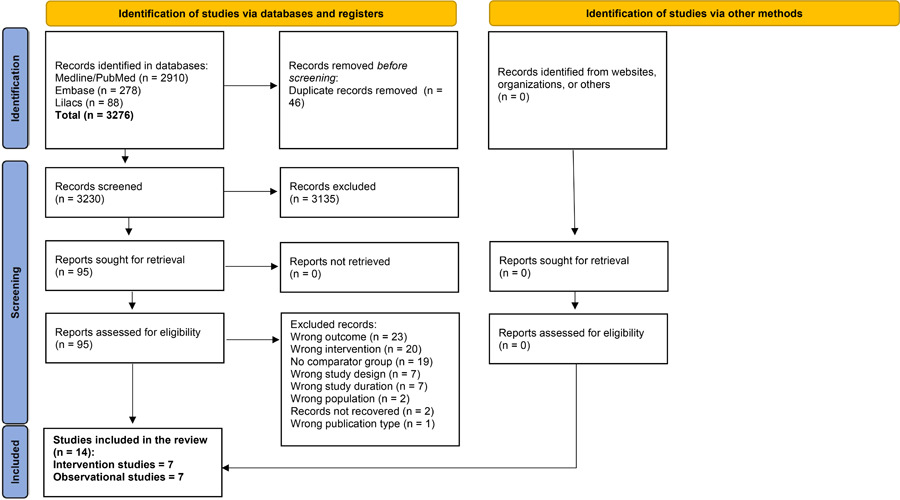
This systematic review and meta-analysis utilized three major international databases and included intervention studies and comparative observational studies with data on the intake of calcium-based medications or supplements in adult populations and associated cardiovascular outcomes. A p-value < 0.05 was considered for all analyses, and the certainty of evidence was assessed using the GRADE approach.

Results

A total of fourteen articles were included: three pivotal intervention studies, four post hoc analyses, and seven observational studies. The outcomes assessed were mortality from cardiovascular events, myocardial infarction, stroke, and coronary artery disease. Although an increased incidence of coronary artery disease was observed among users of calcium-based medications or supplements when considering only observational studies (RR 1.08; 95% CI 1.02–1.15), this finding was not confirmed in interventional studies. Therefore, further investigation is warranted. No increased risk of cardiovascular mortality, myocardial infarction, or stroke was observed. The quality of the evidence was considered low or very low for all outcomes due to the risk of bias and limitations inherent to the meta-analyses themselves.

Conclusions

Caution is recommended when interpreting the results, particularly in the development of clinical protocols. The importance of pharmacotherapeutic monitoring for patients using these medications is emphasized, and further research to explore additional outcomes is suggested.
  • Calcium
  • Calcium Compounds
  • Heart Disease Risk Factors
  • systematic review
Read Full Article
Creative Commons Attribution (CC BY) Creative Commons license
17/08/2026 DOI: 10.36660/ijcs.20250239
ABC
Editorial

Calcium Score, Non-Obstructive Coronary Artery Disease and Cardiovascular Events

Marcio Hiroshi Miname

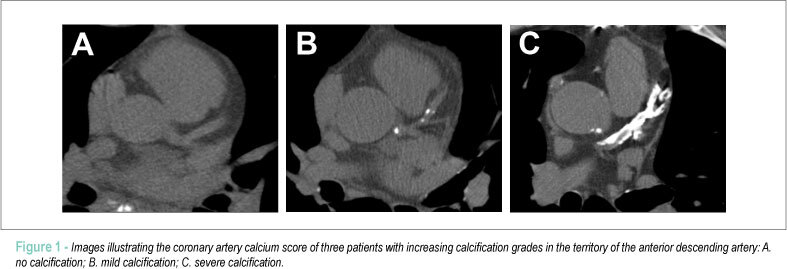
Cardiovascular disease is the leading cause of morbidity and mortality in Brazil, except for 2021, when the COVID-19 pandemic caused the infectious disease to take that position. Cardiovascular risk stratification for atherosclerotic events aims to identify individuals at higher risk and, consequently, those with the greatest potential benefit from pharmacological therapy to reduce these events. However, risk prediction equations still lack sufficient calibration and discrimination for the Brazilian population. This opens a precedent for the incorporation of other laboratory or imaging biomarkers to complement and optimize the accuracy of cardiovascular risk stratification. The coronary calcium score (CCS) has been extensively analyzed in different populations, and its association with atherosclerotic coronary events is robust, culminating in its incorporation into Brazilian and American dyslipidemia guidelines..

However, it should be noted that the CCS only reflects the calcified part of the atheromatous plaque, not allowing for the assessment of the degree of luminal stenosis, the total composition of the plaque, or the total atherosclerotic burden. Nevertheless, there is a correlation between higher CCS and higher plaque burden.

[…]

  • Atherosclerosis
  • Calcium
  • Coronary Artery Disease
Read Full Article
Creative Commons Attribution (CC BY) Creative Commons license
20/07/2026 DOI: 10.36660/abc.20260405i Views 2
Coronary Artery Calcium Score, Risk Factors, and Clinical Outcomes in Nonobstructive Coronary Artery Disease: A Long-Term Follow-Up Study
ABC
Original Article

Coronary Artery Calcium Score, Risk Factors, and Clinical Outcomes in Nonobstructive Coronary Artery Disease: A Long-Term Follow-Up Study

Protásio Lemos Da Luz et al. Desiderio Favarato Alexandre A.C. Abizaid Luiz Antônio Machado Cesar … Carlos Vicente Serrano Jr. Antônio Carlos Palandri Chagas Carlos E. Rochitte Marco A. Gutierrez

Abstract

Background:

The prognostic value of coronary artery calcium (CAC) score in nonobstructive coronary artery disease (NObCAD; stenosis < 50%) remains insufficiently characterized.

Objectives:

To investigate the association between CAC score, cardiovascular risk factors, and clinical outcomes in patients with NObCAD.

Methods:

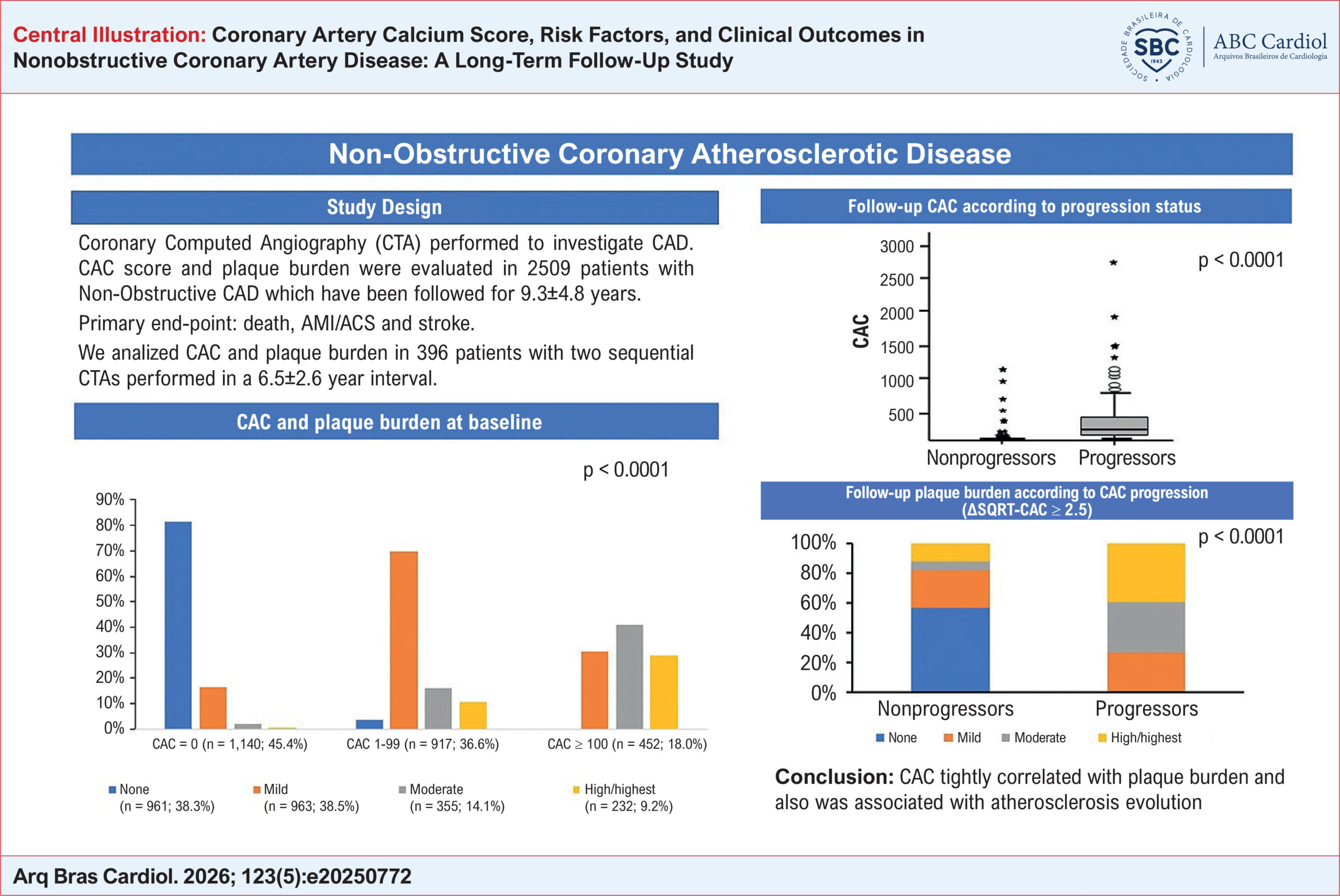
A total of 2,509 patients underwent coronary computed tomography angiography (CTA) and were followed for 8.9 ± 2.6 years. Plaque burden was classified according to CAD-RADS™ 2.0 into none, mild, moderate, and high/highest. The primary endpoint (PEP) was a composite of all-cause mortality, acute coronary syndrome/acute myocardial infarction, and stroke. Statistical significance was set at 5%.

Results:

CAC score was 0 in 45.4% of patients, 1-99 in 36.6%, and ≥ 100 in 18.0%. Correspondingly, 38.3% of patients had no coronary lesions, 38.5% had mild lesions, 14.1% had moderate lesions, and 9.2% had high/highest lesions. Among patients with CAC = 0, the absence of coronary lesions predominated (81.2%), whereas it was rare among those with CAC ≥ 100. The PEP occurred in 4.9% of patients, predominantly driven by all-cause mortality. Among the 396 patients with serial coronary CTA (mean interval: 6.5 ± 2.6 years), CAC progression (> 2.5 increase based on the square root method) was observed in 41.9%. Plaque burden increased in parallel. CAC score showed a positive association with plaque burden and cardiovascular risk factors.

Conclusions:

In NObCAD, CAC is present in more than half of patients and is associated with both plaque burden and cardiovascular risk factors. The incidence of PEP increases in proportion to risk factor burden and CAC levels. CAC and plaque burden progress concurrently over time, supporting the role of CAC as a surrogate marker of subclinical atherosclerosis progression.

  • Calcium
  • Coronary Artery Disease
  • Coronary Vessels
Read Full Article
Creative Commons Attribution (CC BY) Creative Commons license
17/07/2026 DOI: 10.36660/abc.20250772i Views 1
ABC
Editorial

The “Coming of Age” of Coronary Calcium Score?

António Miguel Ferreira et al. Rita Lima Nuno Bettencourt

The use of coronary artery calcium (CAC) score to guide the primary prevention of atherosclerosis and its manifestations has grown in popularity in recent years. Its advantages over the current paradigm of risk-factor-based calculators include better discrimination and greater predictive power, with the promise of better treatment decisions and timely implementation of personalized preventive measures.–

CAC results are usually expressed as an absolute value and as a percentile among individuals of the same age and sex. Importantly, conveying this information to patients seems to improve their adherence to lifestyle modifications and pharmacological therapy. One of the ways developed for making patients understand their risk is the concept of vascular age. Quite simply, an individual’s vascular age assessed by CAC score is the average age at which people of the same sex have a similar degree of coronary calcification. So, if a person’s vascular age is higher than their chronological age, this indicates a higher risk of cardiovascular events than one would suppose. For instance, a 50-year-old female smoker with a vascular age of 70 may realize that she needs to take preventive measures to reduce her risk. Conversely, when vascular age is lower than chronological age, it suggests a lower risk compared to their age group. Although vascular age provides a clear and relatable way to communicate cardiovascular risk to patients, it should be noted that it might convey the false notion that atherosclerosis is part of the natural aging process. It is not. Nevertheless, despite this imprecision, its clinical usefulness remains.

[…]

  • Age Factors
  • Atherosclerosis
  • Calcium
Read Full Article
Creative Commons Attribution (CC BY) Creative Commons license
24/11/2023 DOI: 10.36660/abc.20230708 Views 1
ABC
Editorial

Our Precious Calcium Score

Henrique Trad

Some things are strong, robust. In imaging in general, those are based on solid principles of physics that can resist the inequities of daily use. In computed tomography (CT), the main tissue densities are solid, measured in Hounsfield Units (HU), and some are really strong, calcium-strong, so to speak. Contrast resolution is an issue in CT imaging in general, mainly in the wide range of structures inside the water density spectrum. But the densities on both ends of the whole HU spectrum, i.e., air and fat on one side and bone and metal on the other, are depicted clearly. Also, they could be measured with a great deal of accuracy, and, as these images were mathematical in origin, there is a lot more than the eye can see that could be measured on a CT image, and there are several measurements that could be done on rather simple scans. But let’s revise this latter.

Measuring the amount of calcification in coronary arteries is rather old. It is termed coronary calcium score (CCS). It has been developed, tested and implemented, has had its clinical value shown, but still lacks consensus of use and insurance coverage in medical procedures around the world.– At first, it had to be done in electron beam tomography and then, with the new generation of CT scans. In this issue of Arquivos Brasileiros de Cardiologia, Souza et al. elegantly show how this CCS measurement has excellent correlation as done in the “usual” manner as well as from a standard chest CT. This was shown in the past, to a wide variety of scans and with good accuracy, some comparing with semiquantitative and visual methods, with a consensus of the Society of Cardiovascular Computed Tomography, including a recent great work from this same group of researchers. But now, crunching the numbers, the correlation is excellent, as has been shown by others before, and the suggestion is that we could accurately measure CCS, this important tool in coronary artery disease risk stratification, from a rather more common exam.

[…]

  • Calcium
  • Coronary Artery Disease
  • Plaque, Atherosclerotic
  • Propensity Score
  • Tomography, X-Ray/methods
  • Vascular Calcification
  • Vascular Stiffness
Read Full Article
Creative Commons Attribution (CC BY) Creative Commons license
28/09/2020 DOI: 10.36660/abc.20200854 Views 1
Figure 1
IJCS
Review Article

Vitamin D Deficiency and Cardiovascular Diseases

Antonio José Lagoeiro Jorge et al. Jamerson Reis Cordeiro Maria Luiza Garcia Rosa Diego Braga Campos Bianchi

Abstract

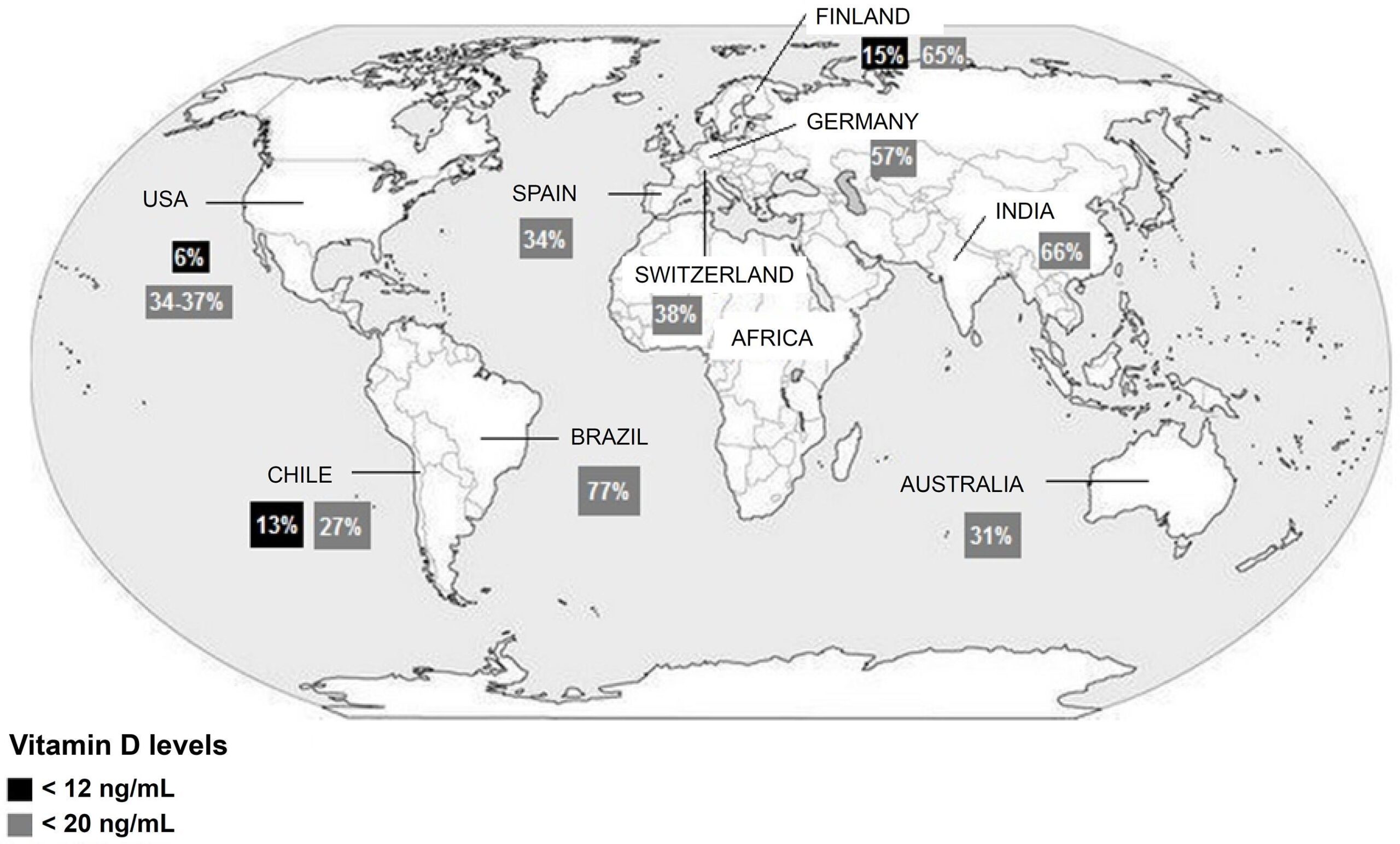
Vitamin D is considered a steroid hormone with a broad spectrum of action in the human body. Its action arises from the binding of its active metabolite (1α,25-dihydroxyvitamin D) to its receptor (VDR), which is present throughout the body, including vascular smooth muscle cells and cardiomyocytes. Initially, vitamin D deficiency was related only to changes in the musculoskeletal system, but in recent years, researchers have demonstrated its relationship with several pathologies related to other systems, such as cardiovascular diseases. The objective of this study is to review vitamin D’s pathophysiology, describe its relationship with cardiovascular diseases based on the most recent publications, and highlight the results of vitamin supplementation in the prevention of such pathologies.

  • Calcium
  • Cardiovascular Diseases
  • Phosphorus
  • Solar Radiation
  • Vitamin D Deficiency/physiopathology
Read Full Article
Creative Commons Attribution (CC BY) Creative Commons license
21/05/2018 DOI: 10.5935/2359-4802.20180025 Views 2
Figure 1
ABC
Original Article

Cardiac, Metabolic and Molecular Profiles of Sedentary Rats in the Initial Moment of Obesity

Bruno Barcellos Jacobsen et al. Ana Paula Lima Leopoldo Jóctan Pimentel Cordeiro Dijon Henrique Salomé de Campos … André Ferreira do Nascimento Mário Mateus Sugizaki Antônio Carlos Cicogna Carlos Roberto Padovani André Soares Leopoldo

Abstract

Background:

Different types of high-fat and/or high-energy diets have been used to induce obesity in rodents. However, few studies have reported on the effects observed at the initial stage of obesity induced by high-fat feeding on cardiac functional and structural remodelling.

Objective:

To characterize the initial moment of obesity and investigate both metabolic and cardiac parameters. In addition, the role of Ca2+ handling in short-term exposure to obesity was verified.

Methods:

Thirty-day-old male Wistar rats were randomized into two groups (n = 19 each): control (C; standard diet) and high-fat diet (HF, unsaturated high-fat diet). The initial moment of obesity was defined by weekly measurement of body weight (BW) complemented by adiposity index (AI). Cardiac remodelling was assessed by morphological, histological, echocardiographic and papillary muscle analysis. Ca2+ handling proteins were determined by Western Blot.

Results:

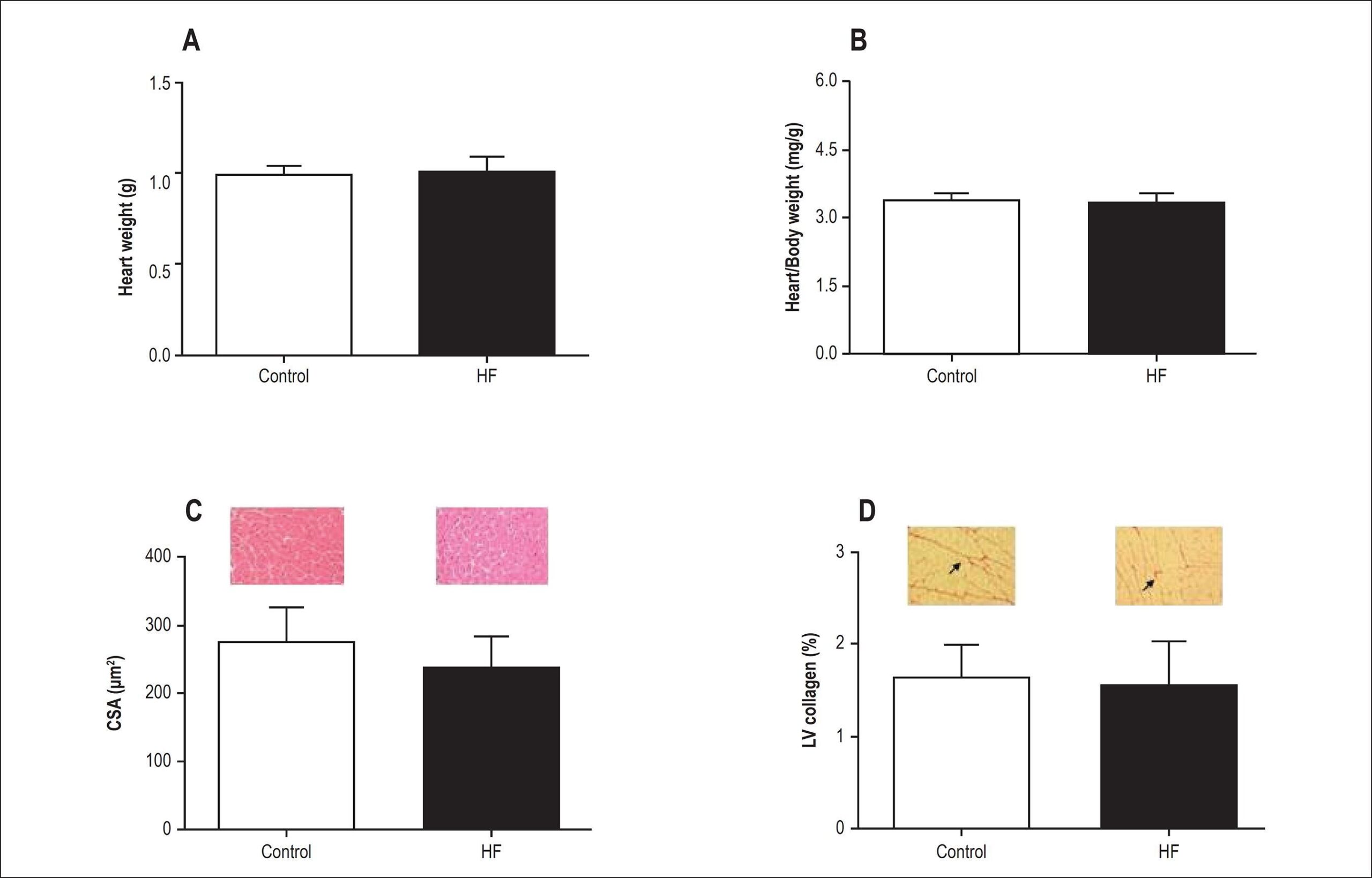
The initial moment of obesity occurred at the 3rd week. Compared with C rats, the HF rats had higher final BW (4%), body fat (20%), AI (14.5%), insulin levels (39.7%), leptin (62.4%) and low-density lipoprotein cholesterol (15.5%) but did not exhibit alterations in systolic blood pressure. Echocardiographic evaluation did not show alterations in cardiac parameters. In the HF group, muscles were observed to increase their +dT/dt (C: 52.6 ± 9.0 g/mm2/s and HF: 68.0 ± 17.0 g/mm2/s; p < 0.05). In addition, there was no changes in the cardiac expression of Ca2+ handling proteins.

Conclusion:

The initial moment of obesity promotes alterations to hormonal and lipid profiles without cardiac damage or changes in Ca2+ handling.

  • Adiposity
  • Calcium
  • Cardiac function
  • Diet
  • Hight-Fat
  • Obesity
  • Rats
Read Full Article
Creative Commons Attribution (CC BY) Creative Commons license
19/10/2017 DOI: 10.5935/abc.20170151 Views 1
Calcium score to evaluate chest pain in the emergency room
ABC
Brief Communication

Calcium score to evaluate chest pain in the emergency room

Henrique Lane Staniak et al. Márcio Sommer Bittencourt Rodolfo Sharovsky Isabela Benseñor … Rodrigo Diaz Olmos Paulo A. Lotufo

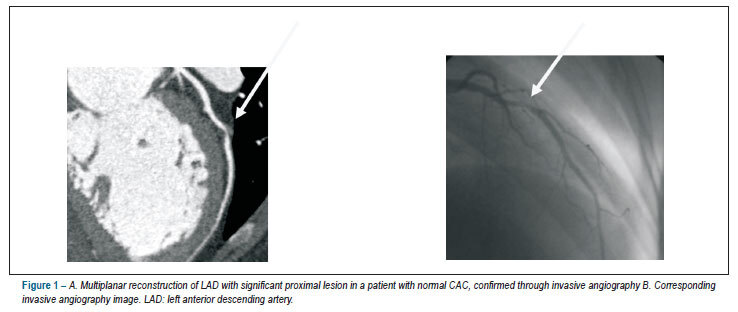
Some authors have suggested that a zero calcium score (CAC) can be used to rule out the diagnosis of acute coronary syndrome. Objective this study is to evaluate the diagnostic accuracy of a zero CAC when compared to the coronary computed tomography angiography (CCTA) at the emergency department. 135 symptomatic patients with no previous coronary heart disease (CHD) who presented to the emergency department were submitted to CAC and CCTA to rule out CHD. All patients had normal electrocardiogram and cardiac biomarkers and were TIMI risk score 0 to 2. The CCTA was considered positive if any obstructive lesion (> 50%) was identified. The mean age was 51.7 ± 13.6 years with 50.6% of men. Seventy-three (54.1%) patients had a calcium score of zero. Of them, 3 (4.1%) had an obstruction > 50 % and underwent invasive coronary angiography. Calcium score showed a sensitivity of 92.9%, specificity of 75.3%, positive and negative predictive values of, respectively, 62.9% and 95.9%. Positive and negative likelihood ratios were respectively of 3.7 and 0.09 to detect lesions greater than 50% in the CCTA. A negative likelihood ratio of 0.09 is very good to rule out most cases of significant coronary obstruction in epidemiologic studies. However, it is important to understand that in a clinical scenario, all evidence including history, clinical examination, data from eletrocardiogram and myocardial biomarkers have to be interpreted together. In our study, three cases with a zero CAC score had coronary obstruction higher than 50% at the CCTA.

  • Calcium
  • Chest Pain
  • Computed Tomography
  • Coronary Disease
Read Full Article
Creative Commons Attribution (CC BY) Creative Commons license
29/01/2013 DOI: 10.1590/S0066-782X2013000100014 Views 1
Coronary artery calcium score and coronary computed tomographic angiography for cardiovascular risk stratification
ABC
Review Article

Coronary artery calcium score and coronary computed tomographic angiography for cardiovascular risk stratification

Clerio F. Azevedo et al. Carlos E. Rochitte João A.C. Lima

Cardiovascular disease is the leading mortality cause worldwide. The capacity to identify among the asymptomatic individuals the subgroup at greater risk for developing cardiovascular events is fundamental in any strategy aimed at reducing the rate of cardiovascular events. The first step in cardiovascular risk stratification is the use of global risk scores, the Framingham risk score being the most frequently used. However, previous studies have shown that, although very useful, clinical scores, when used alone, have a limited capacity for stratifying cardiovascular risk in a significant part of the population. In that context, coronary artery calcium score (CACS) and coronary computed tomographic angiography might play an important role as complementary tools for risk stratification of asymptomatic patients. The CACS provides important prognostic information that is incremental to clinical scores based on traditional risk factors and other diagnostic modalities, such as C-reactive protein measurement. In addition, CACS has the potential to change and help the patients’ clinical management. On the other hand, coronary computed tomographic angiography provides a detailed assessment of the anatomy of the coronary arteries, allowing visualizing not only the lumen, but also the coronary arterial walls. Compared with conventional invasive coronary angiography, coronary computed tomographic angiography has excellent accuracy to identify and mainly exclude the presence of significant obstructive lesions. In addition, it proved to be able to provide incremental prognostic information to traditional risk factors and CACS.

  • Calcium
  • Coronary Angiography
  • Coronary Disease
  • Risk Assessment
  • Tomography
  • X-Ray Computed
Read Full Article
Creative Commons Attribution (CC BY) Creative Commons license
08/08/2012 DOI: 10.1590/S0066-782X2012000600012 Views 1
ABC
Artigo Original

Calcium score in the evaluation of atherosclerosis in patients with HIV/Aids

Verônica Soares Monteiro et al. Heloisa Ramos Lacerda Marly Uellendahl Tien Man Chang … Valéria Maria de Albuquerque Josefina Cláudia Zirpoli Ricardo Araes Ximenes Maria de Fátima Militão de Albuquerque Demócrito de Barros Miranda Filho Dário Sobral Filho

BACKGROUND: Antiretroviral therapy has dramatically increased life expectancy in patients with HIV/AIDS although atherosclerosis has been associated with long-standing therapy. OBJECTIVE: To investigate the prevalence of atherosclerosis in patients with AIDS undergoing antiretroviral therapy and the influence of different schemes and duration of treatment. METHODS: HIV/AIDS patients were approached during routine consultations. Those who had been on antiretroviral therapy for at least two years had their blood collected for analysis of lipid profile and fasting glycemia and underwent cardiac CT for quantification of calcium score within six days at the most. Atherosclerosis was defined as calcium score greater than zero (CAC > 0). Traditional risk factors, metabolic syndrome and Framingham score were analyzed. RESULTS: Fifty-three patients performed cardiac CT. Twenty-seven (50.94%) were male, mean age 43.4 years; 20.00% had hypertension, 3.77% diabetes, 67.92% hypercholesterolemia, 37.74% hypertriglyceridemia and 47.17% low HDL. Thirteen (24.53%) met criteria for metabolic syndrome and 96.23% were classified in Framingham score as “low risk.” Ten patients (18.87%) were smokers. Mean duration of antiretroviral treatment was 58.98 months. Coronary atherosclerosis occurred in 11 (20.75%) patients. Duration of antiretroviral therapy was not related to atherosclerosis (p = 0.41) and there were no significant differences between different antiretroviral regimens (p = 0.71). Among traditional risk factors, smoking (OR = 27.20; p = 0.023) and age (OR = 20.59; p = 0.033) were significant in the presence of atherosclerosis. There was a trend towards a positive association of atherosclerosis with hypercholesterolemia (OR = 8.30; p = 0.0668). CONCLUSION: Factors associated with atherosclerosis were age, smoking and hypercholesterolemia. Duration and type of antiretroviral therapy had no influence on the prevalence of atherosclerosis.

  • Acquired Immunodeficiency Syndrome
  • antiretroviral therapy, higly active
  • Atherosclerosis
  • Calcium
  • HIV
Read Full Article
Creative Commons Attribution (CC BY) Creative Commons license
30/09/2011 DOI: 10.1590/S0066-782X2011005000094 Views 1
Upregulation of mRNA myocardium calcium handling in rats submitted to exercise and food restriction
ABC
Artigo Original

Upregulation of mRNA myocardium calcium handling in rats submitted to exercise and food restriction

Mário Mateus Sugizaki et al. Ana Paula Lima Leopoldo Sandro José Conde Dijon Salome Campos … Ricardo Damato André Soares Leopoldo André Ferreira do Nascimento Silvio de Assis Oliveira Júnior Antonio Carlos Cicogna

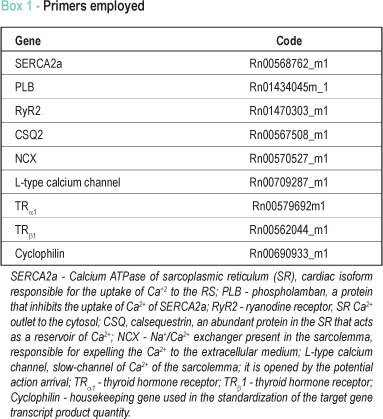
BACKGROUND: Chronic exercise and food restriction (FR) have directionally opposite changes in transcription of molecular structures of calcium handling and thyroid hormone (TH) status. OBJECTIVE: Evaluate the association of chronic exercise and FR on serum thyroid hormones and gene transcription of molecular structures of intracellular calcium transients and thyroid receptors in myocardium of rats. METHODS: Male Wistar Kyoto rats, divided into two groups: control (C, n = 7), FR (R50, n = 7), chronic exercise (EX, n = 7) and chronic exercise + FR (EX50, n = 7). FR was of 50% and exercise was swimming (1 hour/day, 5 days/week, during 12 weeks). Serum concentrations of T3, T4 and TSH were determined. The mRNA gene expression of the sarcoplasmatic reticulum calcium pump (SERCA2a), phospholamban (PLB), Na+/Ca+2 exchanger (NCX), calcium channel L-type (L-channel), ryanodine (RYR), calsequestrin (CQS) and HT receptor (TRα1 and TRβ1) of the myocardium was performed by PCR real-time. RESULTS: FR reduced serum levels of T4 and TSH and TRα1 mRNA and increased the expression of PLB, NCX and L-channel. Exercise increased the TRβ1 receptor, L-channel and NCX. The association of exercise and FR reduced plasma T4 and TSH, TRβ1 mRNA increase, SERCA2a, NCX and PLB, and there was a significant correlation of TRβ1 with CQS and NXC. CONCLUSION: Chronic exercise and food restriction increased the mRNA of transient Ca2+ proteins; however, TH-receptor axis cannot participate in the transcription of mRNA of myocardial calcium transient proteins.

  • Calcium
  • Caloric Restriction
  • carrier proteins
  • Exercise
  • Myocardium
  • Thyroid Hormones
Read Full Article
Creative Commons Attribution (CC BY) Creative Commons license
27/05/2011 DOI: 10.1590/S0066-782X2011005000066 Views 1

How to cite this article

EndNote RIS

Electronic Document Format (Vancouver)

Gouveia PH, Guimarães JS, Wiens A. Evaluation of Cardiovascular Risks Associated with Calcium Use: A Systematic Review and Meta-Analysis. International Journal of Cardiovascular Sciences 2026;39:e20250239.

Electronic Document Format (ABNT)

Gouveia, Paulo Henrique; Guimarães, Joyce da Silva; Wiens, Astrid. Evaluation of Cardiovascular Risks Associated with Calcium Use: A Systematic Review and Meta-Analysis. International Journal of Cardiovascular Sciences, v. 39, e20250239, Aug. 2026.

Electronic Document Format (APA)

Gouveia, P. H., Guimarães, J. S., & Wiens, A. (2026). Evaluation of Cardiovascular Risks Associated with Calcium Use: A Systematic Review and Meta-Analysis. International Journal of Cardiovascular Sciences, 39, e20250239.

Electronic Document Format (ISO)

Gouveia, Paulo Henrique and Guimarães, Joyce da Silva and Wiens, Astrid. Evaluation of Cardiovascular Risks Associated with Calcium Use: A Systematic Review and Meta-Analysis. International Journal of Cardiovascular Sciences [online]. 2026, vol. 39, [cited 2026-10-14], e20250239. Available from: <https://journals.cardiol.br/en/article/evaluation-of-cardiovascular-risks-associated-with-calcium-use-a-systematic-review-and-meta-analysis/>. ISSN 2359-4802

EndNote RIS

Electronic Document Format (Vancouver)

Miname MH. Calcium Score, Non-Obstructive Coronary Artery Disease and Cardiovascular Events. Arquivos Brasileiros de Cardiologia 2026;123(5):e20260405.

Electronic Document Format (ABNT)

Miname, Marcio Hiroshi. Calcium Score, Non-Obstructive Coronary Artery Disease and Cardiovascular Events. Arquivos Brasileiros de Cardiologia, v. 123, n. 5, e20260405, Jul. 2026.

Electronic Document Format (APA)

Miname, M. H. (2026). Calcium Score, Non-Obstructive Coronary Artery Disease and Cardiovascular Events. Arquivos Brasileiros de Cardiologia, 123(5), e20260405.

Electronic Document Format (ISO)

Miname, Marcio Hiroshi. Calcium Score, Non-Obstructive Coronary Artery Disease and Cardiovascular Events. Arquivos Brasileiros de Cardiologia [online]. 2026, vol. 123, n. 5, [cited 2026-10-14], e20260405. Available from: <https://journals.cardiol.br/en/article/calcium-score-non-obstructive-coronary-artery-disease-and-cardiovascular-events/>. ISSN 0066-782X

EndNote RIS

Electronic Document Format (Vancouver)

Luz PLD, Favarato D, Abizaid AA, Cesar LAM, Serrano Jr. CV, Chagas ACP, Rochitte CE, et al. Coronary Artery Calcium Score, Risk Factors, and Clinical Outcomes in Nonobstructive Coronary Artery Disease: A Long-Term Follow-Up Study. Arquivos Brasileiros de Cardiologia 2026;123(5):e20250772.

Electronic Document Format (ABNT)

Luz, Protásio Lemos Da; Favarato, Desiderio; Abizaid, Alexandre A.C.; Cesar, Luiz Antônio Machado; Serrano Jr., Carlos Vicente; Chagas, Antônio Carlos Palandri; Rochitte, Carlos E.; Gutierrez, Marco A.. Coronary Artery Calcium Score, Risk Factors, and Clinical Outcomes in Nonobstructive Coronary Artery Disease: A Long-Term Follow-Up Study. Arquivos Brasileiros de Cardiologia, v. 123, n. 5, e20250772, Jul. 2026.

Electronic Document Format (APA)

Luz, P. L. D., Favarato, D., Abizaid, A. A., Cesar, L. A. M., Serrano Jr., C. V., Chagas, A. C. P., Rochitte, C. E., & Gutierrez, M. A. (2026). Coronary Artery Calcium Score, Risk Factors, and Clinical Outcomes in Nonobstructive Coronary Artery Disease: A Long-Term Follow-Up Study. Arquivos Brasileiros de Cardiologia, 123(5), e20250772.

Electronic Document Format (ISO)

Luz, Protásio Lemos Da and Favarato, Desiderio and Abizaid, Alexandre A.C. and Cesar, Luiz Antônio Machado and Serrano Jr., Carlos Vicente and Chagas, Antônio Carlos Palandri and Rochitte, Carlos E. and Gutierrez, Marco A.. Coronary Artery Calcium Score, Risk Factors, and Clinical Outcomes in Nonobstructive Coronary Artery Disease: A Long-Term Follow-Up Study. Arquivos Brasileiros de Cardiologia [online]. 2026, vol. 123, n. 5, [cited 2026-10-14], e20250772. Available from: <https://journals.cardiol.br/en/article/coronary-artery-calcium-score-risk-factors-and-clinical-outcomes-in-nonobstructive-coronary-artery-disease-a-long-term-follow-up-study/>. ISSN 0066-782X

EndNote RIS

Electronic Document Format (Vancouver)

Ferreira AM, Lima R, Bettencourt N. The “Coming of Age” of Coronary Calcium Score?. Arquivos Brasileiros de Cardiologia 2023;120(10):e20230708.

Electronic Document Format (ABNT)

Ferreira, António Miguel; Lima, Rita; Bettencourt, Nuno. The “Coming of Age” of Coronary Calcium Score?. Arquivos Brasileiros de Cardiologia, v. 120, n. 10, e20230708, Nov. 2023.

Electronic Document Format (APA)

Ferreira, A. M., Lima, R., & Bettencourt, N. (2023). The “Coming of Age” of Coronary Calcium Score?. Arquivos Brasileiros de Cardiologia, 120(10), e20230708.

Electronic Document Format (ISO)

Ferreira, António Miguel and Lima, Rita and Bettencourt, Nuno. The “Coming of Age” of Coronary Calcium Score?. Arquivos Brasileiros de Cardiologia [online]. 2023, vol. 120, n. 10, [cited 2026-10-14], e20230708. Available from: <https://journals.cardiol.br/en/article/the-coming-of-age-of-coronary-calcium-score/>. ISSN 0066-782X

EndNote RIS

Electronic Document Format (Vancouver)

Trad H. Our Precious Calcium Score. Arquivos Brasileiros de Cardiologia 2020;115(3):501-2.

Electronic Document Format (ABNT)

Trad, Henrique. Our Precious Calcium Score. Arquivos Brasileiros de Cardiologia, v. 115, n. 3, p. 501-502, Sep. 2020.

Electronic Document Format (APA)

Trad, H. (2020). Our Precious Calcium Score. Arquivos Brasileiros de Cardiologia, 115(3), 501-502.

Electronic Document Format (ISO)

Trad, Henrique. Our Precious Calcium Score. Arquivos Brasileiros de Cardiologia [online]. 2020, vol. 115, n. 3, [cited 2026-10-14], pp. 501-502. Available from: <https://journals.cardiol.br/en/article/our-precious-calcium-score/>. ISSN 0066-782X

EndNote RIS

Electronic Document Format (Vancouver)

Jorge AJL, Cordeiro JR, Rosa MLG, Bianchi DBC. Vitamin D Deficiency and Cardiovascular Diseases. International Journal of Cardiovascular Sciences 2018;31(4):422-3.

Electronic Document Format (ABNT)

Jorge, Antonio José Lagoeiro; Cordeiro, Jamerson Reis; Rosa, Maria Luiza Garcia; Bianchi, Diego Braga Campos. Vitamin D Deficiency and Cardiovascular Diseases. International Journal of Cardiovascular Sciences, v. 31, n. 4, p. 422-432, May. 2018.

Electronic Document Format (APA)

Jorge, A. J. L., Cordeiro, J. R., Rosa, M. L. G., & Bianchi, D. B. C. (2018). Vitamin D Deficiency and Cardiovascular Diseases. International Journal of Cardiovascular Sciences, 31(4), 422-432.

Electronic Document Format (ISO)

Jorge, Antonio José Lagoeiro and Cordeiro, Jamerson Reis and Rosa, Maria Luiza Garcia and Bianchi, Diego Braga Campos. Vitamin D Deficiency and Cardiovascular Diseases. International Journal of Cardiovascular Sciences [online]. 2018, vol. 31, n. 4, [cited 2026-10-14], pp. 422-432. Available from: <https://journals.cardiol.br/en/article/vitamin-d-deficiency-and-cardiovascular-diseases/>. ISSN 2359-4802

EndNote RIS

Electronic Document Format (Vancouver)

Jacobsen BB, Leopoldo APL, Cordeiro JP, Campos DHS, Nascimento AF, Sugizaki MM, Cicogna AC, et al. Cardiac, Metabolic and Molecular Profiles of Sedentary Rats in the Initial Moment of Obesity. Arquivos Brasileiros de Cardiologia 2017;109(5):432-9.

Electronic Document Format (ABNT)

Jacobsen, Bruno Barcellos; Leopoldo, Ana Paula Lima; Cordeiro, Jóctan Pimentel; Campos, Dijon Henrique Salomé de; Nascimento, André Ferreira do; Sugizaki, Mário Mateus; Cicogna, Antônio Carlos; Padovani, Carlos Roberto; Leopoldo, André Soares. Cardiac, Metabolic and Molecular Profiles of Sedentary Rats in the Initial Moment of Obesity. Arquivos Brasileiros de Cardiologia, v. 109, n. 5, p. 432-439, Oct. 2017.

Electronic Document Format (APA)

Jacobsen, B. B., Leopoldo, A. P. L., Cordeiro, J. P., Campos, D. H. S. , Nascimento, A. F. , Sugizaki, M. M., Cicogna, A. C., Padovani, C. R., & Leopoldo, A. S. (2017). Cardiac, Metabolic and Molecular Profiles of Sedentary Rats in the Initial Moment of Obesity. Arquivos Brasileiros de Cardiologia, 109(5), 432-439.

Electronic Document Format (ISO)

Jacobsen, Bruno Barcellos and Leopoldo, Ana Paula Lima and Cordeiro, Jóctan Pimentel and Campos, Dijon Henrique Salomé de and Nascimento, André Ferreira do and Sugizaki, Mário Mateus and Cicogna, Antônio Carlos and Padovani, Carlos Roberto and Leopoldo, André Soares. Cardiac, Metabolic and Molecular Profiles of Sedentary Rats in the Initial Moment of Obesity. Arquivos Brasileiros de Cardiologia [online]. 2017, vol. 109, n. 5, [cited 2026-10-14], pp. 432-439. Available from: <https://journals.cardiol.br/en/article/cardiac-metabolic-and-molecular-profiles-of-sedentary-rats-in-the-initial-moment-of-obesity/>. ISSN 0066-782X

EndNote RIS

Electronic Document Format (Vancouver)

Staniak HL, Bittencourt MS, Sharovsky R, Benseñor I, Olmos RD, Lotufo PA. Calcium score to evaluate chest pain in the emergency room. Arquivos Brasileiros de Cardiologia 2013;100(1):90-3.

Electronic Document Format (ABNT)

Staniak, Henrique Lane; Bittencourt, Márcio Sommer; Sharovsky, Rodolfo; Benseñor, Isabela; Olmos, Rodrigo Diaz; Lotufo, Paulo A.. Calcium score to evaluate chest pain in the emergency room. Arquivos Brasileiros de Cardiologia, v. 100, n. 1, p. 90-93, Jan. 2013.

Electronic Document Format (APA)

Staniak, H. L., Bittencourt, M. S., Sharovsky, R., Benseñor, I., Olmos, R. D., & Lotufo, P. A. (2013). Calcium score to evaluate chest pain in the emergency room. Arquivos Brasileiros de Cardiologia, 100(1), 90-93.

Electronic Document Format (ISO)

Staniak, Henrique Lane and Bittencourt, Márcio Sommer and Sharovsky, Rodolfo and Benseñor, Isabela and Olmos, Rodrigo Diaz and Lotufo, Paulo A.. Calcium score to evaluate chest pain in the emergency room. Arquivos Brasileiros de Cardiologia [online]. 2013, vol. 100, n. 1, [cited 2026-10-14], pp. 90-93. Available from: <https://journals.cardiol.br/en/article/calcium-score-to-evaluate-chest-pain-in-the-emergency-room/>. ISSN 0066-782X

EndNote RIS

Electronic Document Format (Vancouver)

Azevedo CF, Rochitte CE, Lima JA. Coronary artery calcium score and coronary computed tomographic angiography for cardiovascular risk stratification. Arquivos Brasileiros de Cardiologia 2012;98(6):559-68.

Electronic Document Format (ABNT)

Azevedo, Clerio F.; Rochitte, Carlos E.; Lima, João A.C.. Coronary artery calcium score and coronary computed tomographic angiography for cardiovascular risk stratification. Arquivos Brasileiros de Cardiologia, v. 98, n. 6, p. 559-568, Aug. 2012.

Electronic Document Format (APA)

Azevedo, C. F., Rochitte, C. E., & Lima, J. A. (2012). Coronary artery calcium score and coronary computed tomographic angiography for cardiovascular risk stratification. Arquivos Brasileiros de Cardiologia, 98(6), 559-568.

Electronic Document Format (ISO)

Azevedo, Clerio F. and Rochitte, Carlos E. and Lima, João A.C.. Coronary artery calcium score and coronary computed tomographic angiography for cardiovascular risk stratification. Arquivos Brasileiros de Cardiologia [online]. 2012, vol. 98, n. 6, [cited 2026-10-14], pp. 559-568. Available from: <https://journals.cardiol.br/en/article/coronary-artery-calcium-score-and-coronary-computed-tomographic-angiography-for-cardiovascular-risk-stratification/>. ISSN 0066-782X

EndNote RIS

Electronic Document Format (Vancouver)

Monteiro VS, Lacerda HR, Uellendahl M, Chang TM, Albuquerque VM, Zirpoli JC, Ximenes RA, et al. Calcium score in the evaluation of atherosclerosis in patients with HIV/Aids. Arquivos Brasileiros de Cardiologia 2011;97(5):427-33.

Electronic Document Format (ABNT)

Monteiro, Verônica Soares; Lacerda, Heloisa Ramos; Uellendahl, Marly; Chang, Tien Man; Albuquerque, Valéria Maria de; Zirpoli, Josefina Cláudia; Ximenes, Ricardo Araes; Albuquerque, Maria de Fátima Militão de; Miranda Filho, Demócrito de Barros; Sobral Filho, Dário. Calcium score in the evaluation of atherosclerosis in patients with HIV/Aids. Arquivos Brasileiros de Cardiologia, v. 97, n. 5, p. 427-433, Sep. 2011.

Electronic Document Format (APA)

Monteiro, V. S., Lacerda, H. R., Uellendahl, M., Chang, T. M., Albuquerque, V. M. , Zirpoli, J. C., Ximenes, R. A., Albuquerque, M. F. M. , Miranda Filho, D. B., & Sobral Filho, D. (2011). Calcium score in the evaluation of atherosclerosis in patients with HIV/Aids. Arquivos Brasileiros de Cardiologia, 97(5), 427-433.

Electronic Document Format (ISO)

Monteiro, Verônica Soares and Lacerda, Heloisa Ramos and Uellendahl, Marly and Chang, Tien Man and Albuquerque, Valéria Maria de and Zirpoli, Josefina Cláudia and Ximenes, Ricardo Araes and Albuquerque, Maria de Fátima Militão de and Miranda Filho, Demócrito de Barros and Sobral Filho, Dário. Calcium score in the evaluation of atherosclerosis in patients with HIV/Aids. Arquivos Brasileiros de Cardiologia [online]. 2011, vol. 97, n. 5, [cited 2026-10-14], pp. 427-433. Available from: <https://journals.cardiol.br/en/article/calcium-score-in-the-evaluation-of-atherosclerosis-in-patients-with-hiv-aids/>. ISSN 0066-782X

EndNote RIS

Electronic Document Format (Vancouver)

Sugizaki MM, Leopoldo APL, Conde SJ, Campos DS, Damato R, Leopoldo AS, Nascimento AF, et al. Upregulation of mRNA myocardium calcium handling in rats submitted to exercise and food restriction. Arquivos Brasileiros de Cardiologia 2011;97(1):46-52.

Electronic Document Format (ABNT)

Sugizaki, Mário Mateus; Leopoldo, Ana Paula Lima; Conde, Sandro José; Campos, Dijon Salome; Damato, Ricardo; Leopoldo, André Soares; Nascimento, André Ferreira do; Oliveira Júnior, Silvio de Assis; Cicogna, Antonio Carlos. Upregulation of mRNA myocardium calcium handling in rats submitted to exercise and food restriction. Arquivos Brasileiros de Cardiologia, v. 97, n. 1, p. 46-52, May. 2011.

Electronic Document Format (APA)

Sugizaki, M. M., Leopoldo, A. P. L., Conde, S. J., Campos, D. S., Damato, R., Leopoldo, A. S., Nascimento, A. F. , Oliveira Júnior, S. A., & Cicogna, A. C. (2011). Upregulation of mRNA myocardium calcium handling in rats submitted to exercise and food restriction. Arquivos Brasileiros de Cardiologia, 97(1), 46-52.

Electronic Document Format (ISO)

Sugizaki, Mário Mateus and Leopoldo, Ana Paula Lima and Conde, Sandro José and Campos, Dijon Salome and Damato, Ricardo and Leopoldo, André Soares and Nascimento, André Ferreira do and Oliveira Júnior, Silvio de Assis and Cicogna, Antonio Carlos. Upregulation of mRNA myocardium calcium handling in rats submitted to exercise and food restriction. Arquivos Brasileiros de Cardiologia [online]. 2011, vol. 97, n. 1, [cited 2026-10-14], pp. 46-52. Available from: <https://journals.cardiol.br/en/article/upregulation-of-mrna-myocardium-calcium-handling-in-rats-submitted-to-exercise-and-food-restriction/>. ISSN 0066-782X

  • About ABC Family
  • Internal Regulation
  • Editorial Board
  • Brazilian Society of Cardiology (SBC)

Issues

SBC Guidelines

  • Videos
  • Podcasts
  • News