ABC Family Arquivos Brasileiros de Cardiologia International Journal of Cardiovascular Sciences ABC Heart Failure & Cardiomyopathy ABC Imagem Cardiovascular
Português English
ABC Family
Português English
  • About
    • About ABC Family
    • Internal Regulation
    • Editorial Board
    • Brazilian Society of Cardiology (SBC)
  • Issues
  • SBC Guidelines
  • Content
    • Videos
    • Podcasts
    • News
  • About
    • About ABC Family
    • Internal Regulation
    • Editorial Board
    • Brazilian Society of Cardiology (SBC)
  • Issues
  • SBC Guidelines
  • Content
    • Videos
    • Podcasts
    • News

ABC Family

  • ABC Family
  • Arquivos Brasileiros de Cardiologia
  • International Journal of Cardiovascular Sciences
  • ABC Heart Failure & Cardiomyopathy
  • ABC Imagem Cardiovascular
Search in

No content found.

Journals
Ordering
Article types
Others

  1. Home
  2. Keyword: Nutrition
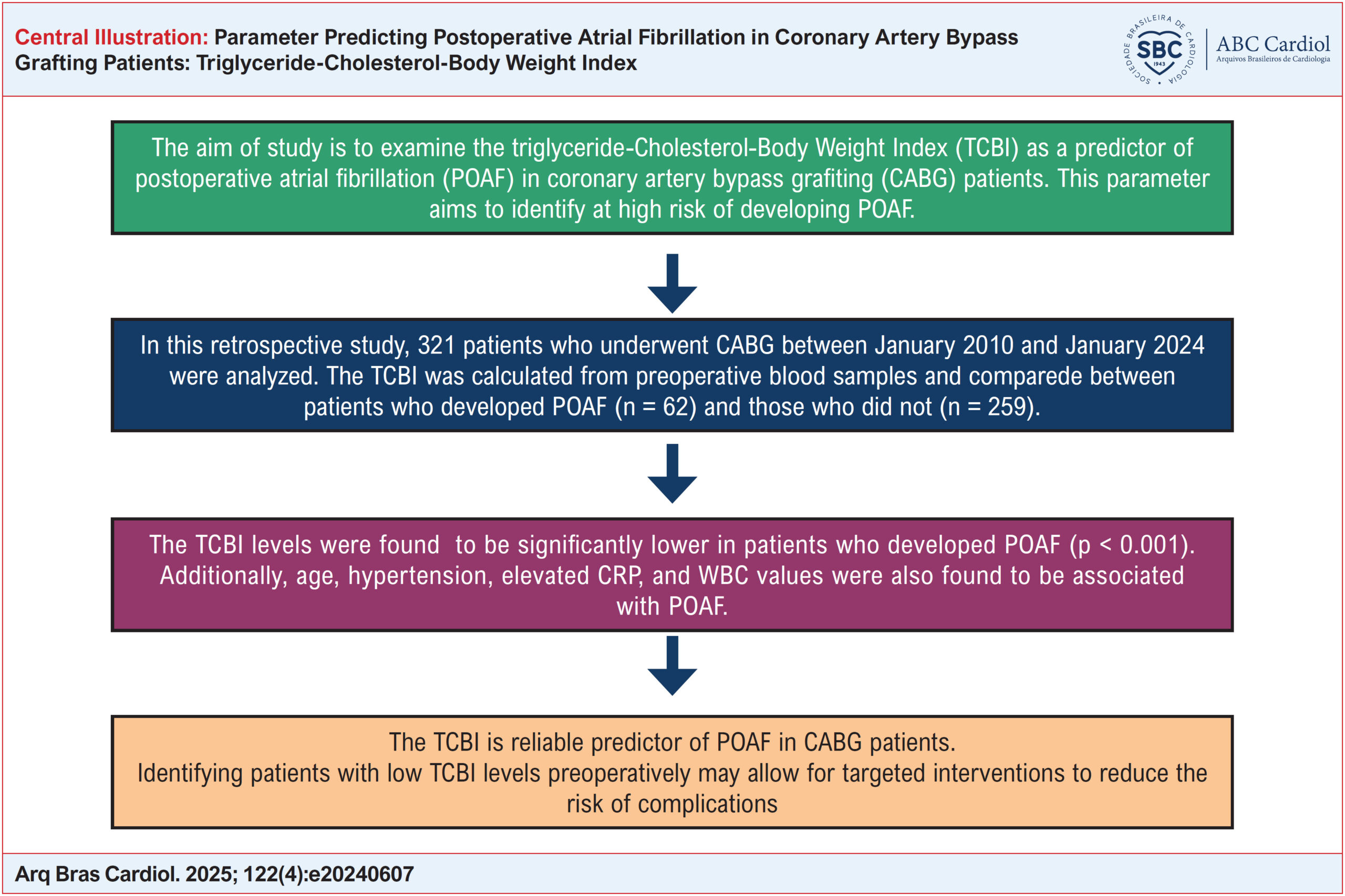
Parameter Predicting Postoperative Atrial Fibrillation in Coronary Artery Bypass Grafting Patients: Triglyceride-Cholesterol-Body Weight Index
ABC
Original Article

Parameter Predicting Postoperative Atrial Fibrillation in Coronary Artery Bypass Grafting Patients: Triglyceride-Cholesterol-Body Weight Index

İlhan Koyuncu et al. Emin Koyun

Abstract

Background:

Postoperative atrial fibrillation (POAF) is a common complication after cardiac surgery, particularly coronary artery bypass grafting (CABG). Despite advances in surgical techniques, POAF remains a significant cause of morbidity and mortality.

Objectives:

This study investigates the potential of the Triglyceride-Cholesterol-Body weight Index (TCBI) as a predictor of POAF, focusing on the impact of nutritional status on surgical outcomes.

Methods:

This retrospective study included 321 patients who underwent CABG surgery between January 2010 and January 2024. TCBI was calculated using preoperative blood samples and compared between those who developed POAF and those who did not. Statistical analyses, including Cox regression and ROC analysis, were performed to assess the predictive value of TCBI for POAF. P<0.05 was considered statistically significant.

Results:

Patients who developed POAF had significantly lower TCBI (1790.8 ± 689, 3413.3±1232, p<0.001, respectively) levels compared to those without POAF. Also, age (p<0.001), the frequency of hypertension (p=0.009), CRP (p=0.03), and WBC (p=0.02) values were also significantly higher in patients who developed POAF.TCBI was identified as an independent predictor of POAF (OR: 0.998, 95% CI: 0.997-0.999, p<0.001), with a cut-off value of 1932.4 predicting POAF with 75% sensitivity and 78% specificity.

Conclusion:

The TCBI is a reliable indicator for predicting POAF in CABG patients. Preoperative identification of patients with low TCBI could lead to targeted interventions, reducing postoperative complications and improving outcomes. Optimizing nutritional status before surgery may mitigate the risk of POAF.

  • coronary artery bypass grafting
  • Nutrition
  • Postoperative Atrial Fibrillation
  • Triglyceride-Cholesterol-Body Weight Index
Read Full Article
Creative Commons Attribution (CC BY) Creative Commons license
31/03/2025 DOI: 10.36660/abc.20240607i Views 2
Figure 1
IJCS
Review Article

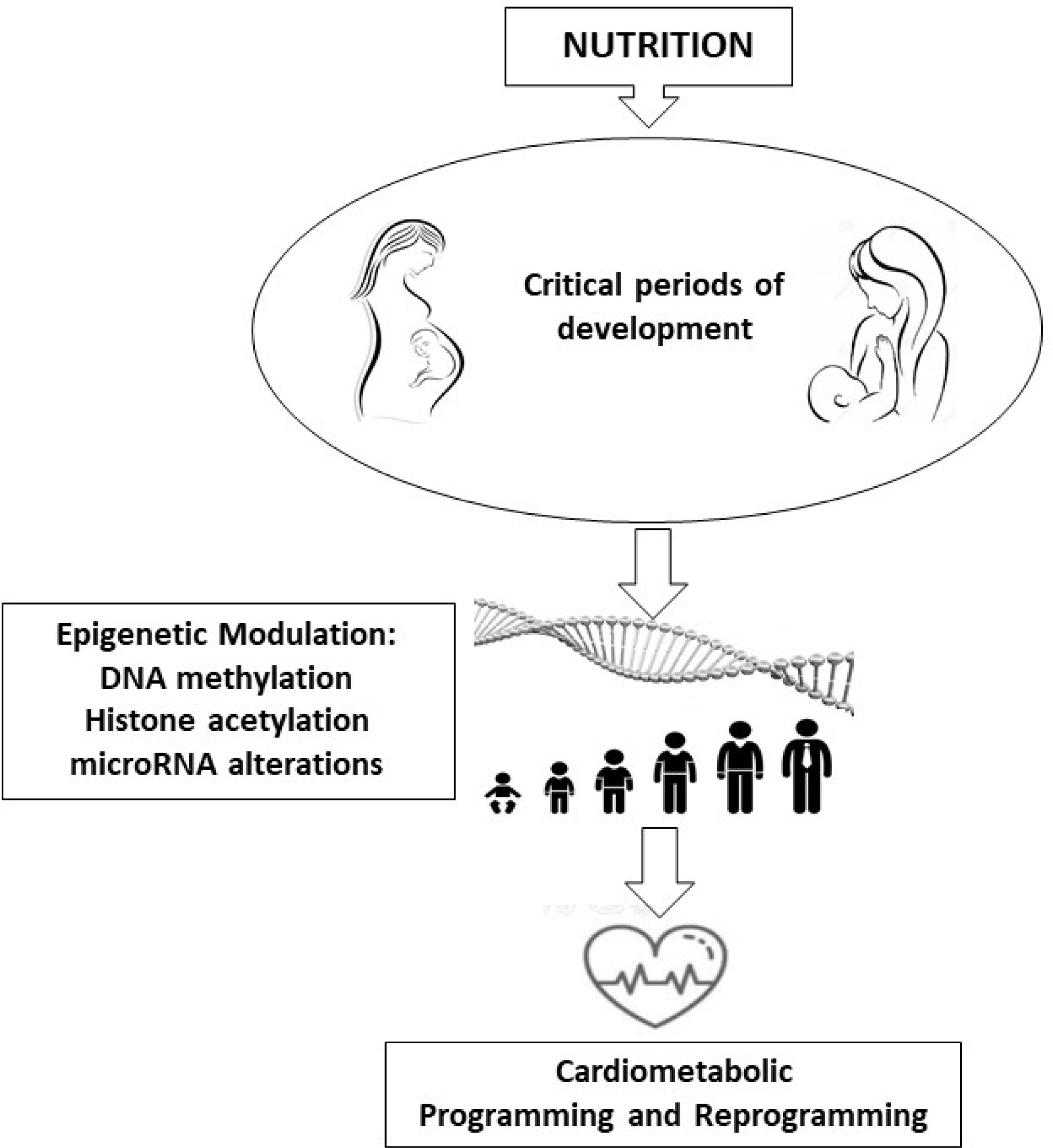
Nutrition and Cardiovascular Diseases: Programming and Reprogramming

Emiliana Barbosa Marques et al. Karyne Pollo de Souza Thaís Alvim-Silva Ivis Levy Fernandes Martins … Samuel Pedro Christianne Bretas Vieira Scaramello

Abstract

The Developmental Origin of Health and Disease (DOHaD) is an area of science dedicated to studying the processes by which insults during critical periods of mammals development leading to physiological changes resultig in diseases throughout life. Studies point to a complex interaction between nutritional status in early life and cardiovascular system homeostasis in which maternal malnutrition during gestation and/or lactation, as well as early weaning, are associated with development of cardiovascular diseases in adulthood. In this context, epigenetic changes, such as DNA methylation, histone acetylation, and change in microRNA expression have been considered molecular bases of cellular plasticity, which can also be gender-dependent. Experimental studies have demonstrated that interventions encompassing the consumption of functional food/bioactive compounds, as well as energetic and nutrients adjustments on the diet, may attenuate or even prevent consequences associated with plasticity of development, improving cardiovascular health. This review aimed to gather and discuss the findings within this context, published over the last ten years.

  • Cardiovascular Diseases
  • Epigenomics
  • Functional Food
  • Lactation
  • Nutrition
  • Pregnancy
Read Full Article
Creative Commons Attribution (CC BY) Creative Commons license
12/03/2021 DOI: 10.36660/ijcs.20200031 Views 2
Figure 1
IJCS
Original Article

Assessment of Bioactive Compounds, Physicochemical Composition, and In Vitro Antioxidant Activity of Eggplant Flour

Mauara Scorsatto et al. Aline de Castro Pimentel Antonio Jorge Ribeiro da Silva Kebba Sabally … Glorimar Rosa Gláucia Maria Moraes de Oliveira

Abstract

Background:

The eggplant (Solanum melongena) is a fruit of world consumption. Its processing in the form of flour is a way to avoid losses and to take advantage of its nutritional characteristics.

Objective:

This study assessed the physicochemical composition (moisture, proteins, lipids, crude fiber, carbohydrates, minerals, niacin, saponins, titratable acidity, dietary fiber, and total phenols) of eggplant flour prepared from the whole fruit dehydrated in an oven.

Methods:

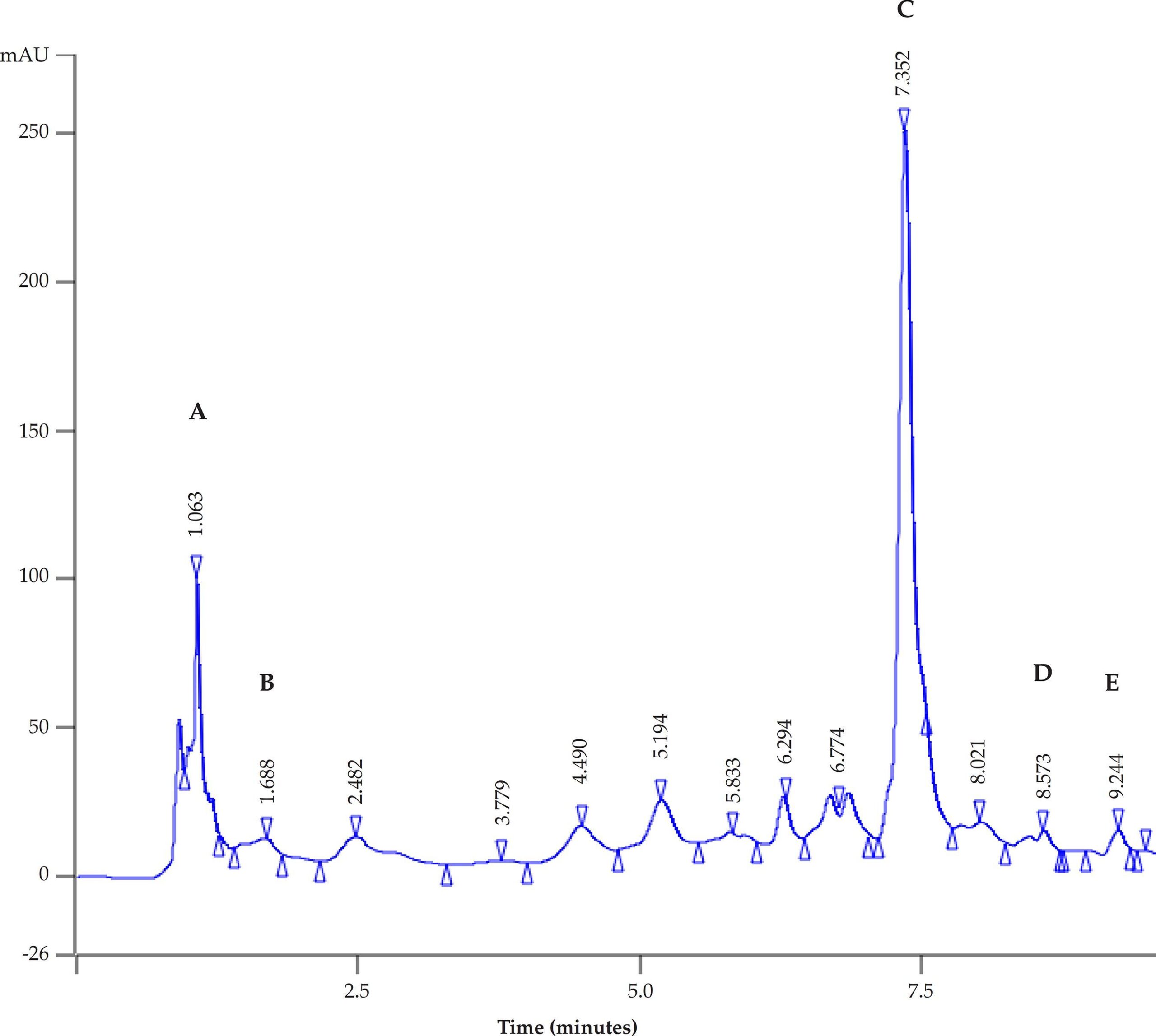
In vitro antioxidant activity was assessed using the following methods: 2.2-diphenyl-1-picrylhydrazyl radical (DPPH); Ferric Reducing/Antioxidant Power (FRAP); and analysis of polyphenols using HPLC (chlorogenic acid, caffeic acid, ferulic acid, and rutin).

Results:

It was possible to observe: 23.09% carbohydrates; 13.34% proteins; 1.85% lipids; 39.19% total fibers; 1,540 mg/100 g total soluble phenolic compounds; 840 mg/100 g saponins; minerals (potassium, magnesium, copper, iron, zinc, manganese); and niacin. In vitro antioxidant activity was observed through DPPH (455.6 mg ascorbic acid/100 g) and FRAP (486.8 mg ascorbic acid/100 g). The HPLC method determined the presence of ascorbic acid, tyrosine, and phenolic acids (chlorogenic acid, caffeic acid, and ferulic acid).

Conclusion:

The eggplant flour had great fiber content in addition to good content of phenolic compounds and saponins with important antioxidant capacity observed through in vitro assays. As a result, eggplant flour is a good addition to the diet of the population, since it can bring potential health benefits.

  • Antioxidants
  • Diet
  • Hyperlipidemias
  • Nutrition
  • Phenolic Compounds
  • Solanum Melongena
Read Full Article
Creative Commons Attribution (CC BY) Creative Commons license
01/01/2017 DOI: 10.5935/2359-4802.20170046 Views 2
ABC
Review Article

Cardiac Cachexia: Perspectives for Prevention and Treatment

Marina Politi Okoshi et al. Rafael Verardino Capalbo Fernando G Romeiro Katashi Okoshi

Abstract

Cachexia is a prevalent pathological condition associated with chronic heart failure. Its occurrence predicts increased morbidity and mortality independent of important clinical variables such as age, ventricular function, or heart failure functional class. The clinical consequences of cachexia are dependent on both weight loss and systemic inflammation, which accompany cachexia development. Skeletal muscle wasting is an important component of cachexia; it often precedes cachexia development and predicts poor outcome in heart failure. Cachexia clinically affects several organs and systems. It is a multifactorial condition where underlying pathophysiological mechanisms are not completely understood making it difficult to develop specific prevention and treatment therapies. Preventive strategies have largely focused on muscle mass preservation. Different treatment options have been described, mostly in small clinical studies or experimental settings. These include nutritional support, neurohormonal blockade, reducing intestinal bacterial translocation, anemia and iron deficiency treatment, appetite stimulants, immunomodulatory agents, anabolic hormones, and physical exercise regimens. Currently, nonpharmacological therapy such as nutritional support and physical exercise are considered central to cachexia prevention and treatment.

  • Anemia
  • Heart Failure
  • Muscle Wasting
  • Nutrition
  • Physical Exercise
  • Prognosis
Read Full Article
Creative Commons Attribution (CC BY) Creative Commons license
27/10/2016 DOI: 10.5935/abc.20160142
Heart Weight and Heart Weight/Body Weight Coefficient in Malnourished Adults
ABC
Original Article

Heart Weight and Heart Weight/Body Weight Coefficient in Malnourished Adults

Daniel Ferreira da Cunha et al. Selma Freire de Carvalho da Cunha Marlene Antônia dos Reis Vicente de Paula Antunes Teixeira

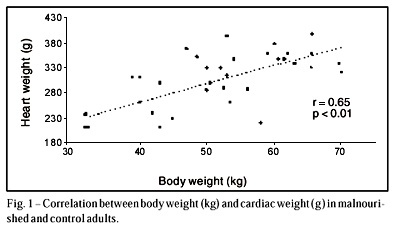
OBJECTIVE: To compare the heart weight and the heart weight/body weight coefficient of adults with and without chronic malnutrition. METHODS: In an initial case series of 210 autopsies performed in adults, we recorded body and heart weights and calculated the heart weight/body weight coefficients (HW/BW x 100). The exclusion criteria were as follows: positive serology for Chagas’ disease, edema, obesity, heart diseases, hepatopathies, nephropathies, and systemic arterial hypertension. Malnutrition was characterized as a body mass index <18.5kg/m². Differences with p<0.05 were considered significant. RESULTS: Individuals in the malnourished (n=15) and control (n=21) groups were statistically different, respectively, in regard to body mass index (15.9±1.7 versus 21.3±2.5kg/m²), heart weight (267.3±59.8 versus 329.1±50.4g), and the HW/BW coefficient (0.64±0.12 versus 0.57±0.09%). A positive and significant correlation was observed between heart weight and body mass index (r=0.52), and between heart weight and body weight (r=0.65). CONCLUSION: Malnourished individuals have lighter hearts and a greater HW/BW coefficient than non-malnourished individuals do. These findings indicate a possible preservation of the myocardium in relation to the intensity of weight loss associated with the probable relative increase in cardiac connective tissue and heart blood vessels.

  • cardiac hypotrophy
  • Heart
  • Nutrition
  • protein-calorie malnutrition
Read Full Article
Creative Commons Attribution (CC BY) Creative Commons license
31/01/2007 DOI: 10.1590/S0066-782X2002000400005 Views 1
ABC
Artigo Original

Additional cardiovascular risk factors associated with excess weigth in children and adolescents: the Belo Horizonte heart study

Robespierre Q. C. Ribeiro et al. Paulo A. Lotufo Joel A. Lamounier Reynaldo G. Oliveira … José Francisco Soares Denise Aparecida Botter

OBJECTIVE: To examine the association of overweight and obesity with physical activity, blood pressure (BP) and serum lipid profiles. METHODS: Epidemiologic investigation of 1,450 students, between the ages of 6 and 18, in the city of Belo Horizonte, MG. Data: weight, height, BP, skinfold thickness, waist circumference, physical activity, total cholesterol (TC), LDL-c, HDL-c, and dietary habits. RESULTS: The prevalence rates for overweight and obesity were 8.4% and 3.1%, respectively. In relation to the students in the lower quartile (Q1) of the distribution of subscapular skinfold, the students in the upper quartile (Q4) presented a 3.7 times higher risk (odds ratio) of having elevated TC levels. Overweight and obese students had a 3.6 times higher risk of having elevated systolic blood pressure, and a 2.7 times higher risk of elevated diastolic blood pressure when compared to normal weight students. The less active students in the Q1 of distribution of MET presented a 3.8 times higher risk of having elevated TC levels compared to those who were more active (Q4). CONCLUSION: Students who were overweight, obese or in the upper quartiles for other adiposity variables, as well as students with low levels of physical activity or a sedentary lifestyle presented higher blood pressure levels and a lipid profile indicative of an increased risk of developing atherosclerosis.

  • Adolescent
  • Blood Pressure
  • Child
  • Motor Activity
  • Nutrition
  • Obesity
Read Full Article
Creative Commons Attribution (CC BY) Creative Commons license
26/06/2006 DOI: 10.1590/S0066-782X2006000600002
Lipid profile and cardiovascular risk in two Amazonian populations
ABC
Original Article

Lipid profile and cardiovascular risk in two Amazonian populations

Claudine Maria Alves Feio et al. Francisco A. H. Fonseca Simone S. Rego Max N. B. Feio … Maria C. Elias Eduardo A. S. Costa Maria C. O. Izar Ângelo A. V. Paola Antonio C. C. Carvalho

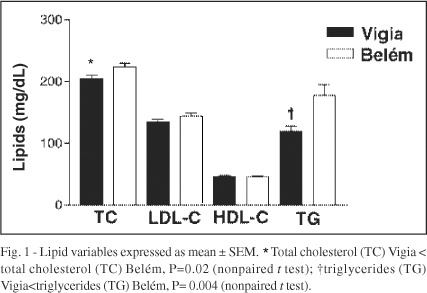
OBJECTIVE: To compare the lipid profiles and coronary heart disease risks of 2 Brazilian Amazonian populations as follows: a riverside population (village of Vigia) and an urban population (city of Belém in the state of Pará). METHODS: Fifty individuals controlled for age and sex were assessed in each region, and the major risk factors for coronary heart disease were analyzed. RESULTS: According to the National Cholesterol Education Program (NCEP III) and using the Framingham score, both populations had the same absolute risk of events (Vigia = 5.4 ± 1 vs Belém = 5.7 ± 1), although the population of Vigia had a lower consumption of saturated fat (P<0.0001), a greater consumption of mono- and polyunsaturated fat (P<0.03), in addition to lower values for body mass index (25.4± 0.6 vs 27.6 ± 0.7 kg/m², P<0.02), of biceps skin fold (18.6 ± 1.1 vs 27.5 ± 1.3 mm, P<0.0001), of triceps skin fold (28.7 ± 1.2 vs 37.3 ± 1.7 mm, P<0.002), and of total cholesterol (205 ± 5 vs 223 ± 6 mg/dL, P< 0.03) and triglycerides (119 ± 9 vs 177 ± 18 mg/dL, P<0.005). Both populations did not differ in regard to HDL-C (46 ± 1 vs 46 ± 1 mg/dL), LDL-C (135 ± 4 vs 144 ± 5 mg/dL) and blood pressure (SBP 124 ± 3 vs 128 ± 3 mmHg; DBP 80 ± 2 vs 82 ± 2 mmHg). CONCLUSION: The riverside and urban populations of Amazonia had similar cardiovascular risks. However, the marked difference in the variables studied suggests that different strategies of prevention should be applied.

  • Lipids
  • Nutrition
  • Risk Factors
Read Full Article
Creative Commons Attribution (CC BY) Creative Commons license
10/02/2004 DOI: 10.1590/S0066-782X2003001400006 Views 1

How to cite this article

EndNote RIS

Electronic Document Format (Vancouver)

Koyuncu , Koyun E. Parameter Predicting Postoperative Atrial Fibrillation in Coronary Artery Bypass Grafting Patients: Triglyceride-Cholesterol-Body Weight Index. Arquivos Brasileiros de Cardiologia 2025;122(4):e20240607.

Electronic Document Format (ABNT)

Koyuncu, İlhan; Koyun, Emin. Parameter Predicting Postoperative Atrial Fibrillation in Coronary Artery Bypass Grafting Patients: Triglyceride-Cholesterol-Body Weight Index. Arquivos Brasileiros de Cardiologia, v. 122, n. 4, e20240607, Mar. 2025.

Electronic Document Format (APA)

Koyuncu, , & Koyun, E. (2025). Parameter Predicting Postoperative Atrial Fibrillation in Coronary Artery Bypass Grafting Patients: Triglyceride-Cholesterol-Body Weight Index. Arquivos Brasileiros de Cardiologia, 122(4), e20240607.

Electronic Document Format (ISO)

Koyuncu, İlhan and Koyun, Emin. Parameter Predicting Postoperative Atrial Fibrillation in Coronary Artery Bypass Grafting Patients: Triglyceride-Cholesterol-Body Weight Index. Arquivos Brasileiros de Cardiologia [online]. 2025, vol. 122, n. 4, [cited 2026-10-14], e20240607. Available from: <https://journals.cardiol.br/en/article/parameter-predicting-postoperative-atrial-fibrillation-in-coronary-artery-bypass-grafting-patients-triglyceride-cholesterol-body-weight-index/>. ISSN 0066-782X

EndNote RIS

Electronic Document Format (Vancouver)

Marques EB, Souza KP, Alvim-Silva T, Martins ILF, Pedro S, Scaramello CBV. Nutrition and Cardiovascular Diseases: Programming and Reprogramming. International Journal of Cardiovascular Sciences 2021;34(2):197-210.

Electronic Document Format (ABNT)

Marques, Emiliana Barbosa; Souza, Karyne Pollo de; Alvim-Silva, Thaís; Martins, Ivis Levy Fernandes; Pedro, Samuel; Scaramello, Christianne Bretas Vieira. Nutrition and Cardiovascular Diseases: Programming and Reprogramming. International Journal of Cardiovascular Sciences, v. 34, n. 2, p. 197-210, Mar. 2021.

Electronic Document Format (APA)

Marques, E. B., Souza, K. P. , Alvim-Silva, T., Martins, I. L. F., Pedro, S., & Scaramello, C. B. V. (2021). Nutrition and Cardiovascular Diseases: Programming and Reprogramming. International Journal of Cardiovascular Sciences, 34(2), 197-210.

Electronic Document Format (ISO)

Marques, Emiliana Barbosa and Souza, Karyne Pollo de and Alvim-Silva, Thaís and Martins, Ivis Levy Fernandes and Pedro, Samuel and Scaramello, Christianne Bretas Vieira. Nutrition and Cardiovascular Diseases: Programming and Reprogramming. International Journal of Cardiovascular Sciences [online]. 2021, vol. 34, n. 2, [cited 2026-10-14], pp. 197-210. Available from: <https://journals.cardiol.br/en/article/nutrition-and-cardiovascular-diseases-programming-and-reprogramming/>. ISSN 2359-4802

EndNote RIS

Electronic Document Format (Vancouver)

Scorsatto M, Pimentel AC, Silva AJR, Sabally K, Rosa G, Oliveira GMM. Assessment of Bioactive Compounds, Physicochemical Composition, and In Vitro Antioxidant Activity of Eggplant Flour. International Journal of Cardiovascular Sciences 2017;30(3):235-42.

Electronic Document Format (ABNT)

Scorsatto, Mauara; Pimentel, Aline de Castro; Silva, Antonio Jorge Ribeiro da; Sabally, Kebba; Rosa, Glorimar; Oliveira, Gláucia Maria Moraes de. Assessment of Bioactive Compounds, Physicochemical Composition, and In Vitro Antioxidant Activity of Eggplant Flour. International Journal of Cardiovascular Sciences, v. 30, n. 3, p. 235-242, Dec. 2016.

Electronic Document Format (APA)

Scorsatto, M., Pimentel, A. C., Silva, A. J. R. , Sabally, K., Rosa, G., & Oliveira, G. M. M. (2017). Assessment of Bioactive Compounds, Physicochemical Composition, and In Vitro Antioxidant Activity of Eggplant Flour. International Journal of Cardiovascular Sciences, 30(3), 235-242.

Electronic Document Format (ISO)

Scorsatto, Mauara and Pimentel, Aline de Castro and Silva, Antonio Jorge Ribeiro da and Sabally, Kebba and Rosa, Glorimar and Oliveira, Gláucia Maria Moraes de. Assessment of Bioactive Compounds, Physicochemical Composition, and In Vitro Antioxidant Activity of Eggplant Flour. International Journal of Cardiovascular Sciences [online]. 2017, vol. 30, n. 3, [cited 2026-10-14], pp. 235-242. Available from: <https://journals.cardiol.br/en/article/assessment-of-bioactive-compounds-physicochemical-composition-and-in-vitro-antioxidant-activity-of-eggplant-flour/>. ISSN 2359-4802

EndNote RIS

Electronic Document Format (Vancouver)

Okoshi MP, Capalbo RV, Romeiro FG, Okoshi K. Cardiac Cachexia: Perspectives for Prevention and Treatment. Arquivos Brasileiros de Cardiologia 2016;108(1):74-80.

Electronic Document Format (ABNT)

Okoshi, Marina Politi; Capalbo, Rafael Verardino; Romeiro, Fernando G; Okoshi, Katashi. Cardiac Cachexia: Perspectives for Prevention and Treatment. Arquivos Brasileiros de Cardiologia, v. 108, n. 1, p. 74-80, Oct. 2016.

Electronic Document Format (APA)

Okoshi, M. P., Capalbo, R. V., Romeiro, F. G., & Okoshi, K. (2016). Cardiac Cachexia: Perspectives for Prevention and Treatment. Arquivos Brasileiros de Cardiologia, 108(1), 74-80.

Electronic Document Format (ISO)

Okoshi, Marina Politi and Capalbo, Rafael Verardino and Romeiro, Fernando G and Okoshi, Katashi. Cardiac Cachexia: Perspectives for Prevention and Treatment. Arquivos Brasileiros de Cardiologia [online]. 2016, vol. 108, n. 1, [cited 2026-10-14], pp. 74-80. Available from: <https://journals.cardiol.br/en/article/cardiac-cachexia-perspectives-for-prevention-and-treatment/>. ISSN 0066-782X

EndNote RIS

Electronic Document Format (Vancouver)

Cunha DF, Cunha SFC, Reis MA, Teixeira VPA. Heart Weight and Heart Weight/Body Weight Coefficient in Malnourished Adults. Arquivos Brasileiros de Cardiologia 2007;78(4):385-7.

Electronic Document Format (ABNT)

Cunha, Daniel Ferreira da; Cunha, Selma Freire de Carvalho da; Reis, Marlene Antônia dos; Teixeira, Vicente de Paula Antunes. Heart Weight and Heart Weight/Body Weight Coefficient in Malnourished Adults. Arquivos Brasileiros de Cardiologia, v. 78, n. 4, p. 385-387, Jan. 2007.

Electronic Document Format (APA)

Cunha, D. F. , Cunha, S. F. C. , Reis, M. A. , & Teixeira, V. P. A. (2007). Heart Weight and Heart Weight/Body Weight Coefficient in Malnourished Adults. Arquivos Brasileiros de Cardiologia, 78(4), 385-387.

Electronic Document Format (ISO)

Cunha, Daniel Ferreira da and Cunha, Selma Freire de Carvalho da and Reis, Marlene Antônia dos and Teixeira, Vicente de Paula Antunes. Heart Weight and Heart Weight/Body Weight Coefficient in Malnourished Adults. Arquivos Brasileiros de Cardiologia [online]. 2007, vol. 78, n. 4, [cited 2026-10-14], pp. 385-387. Available from: <https://journals.cardiol.br/en/article/heart-weight-and-heart-weight-body-weight-coefficient-in-malnourished-adults/>. ISSN 0066-782X

EndNote RIS

Electronic Document Format (Vancouver)

Ribeiro RQC, Lotufo PA, Lamounier JA, Oliveira RG, Soares JF, Botter DA. Additional cardiovascular risk factors associated with excess weigth in children and adolescents: the Belo Horizonte heart study. Arquivos Brasileiros de Cardiologia 2006;86(6):408-1.

Electronic Document Format (ABNT)

Ribeiro, Robespierre Q. C.; Lotufo, Paulo A.; Lamounier, Joel A.; Oliveira, Reynaldo G.; Soares, José Francisco; Botter, Denise Aparecida. Additional cardiovascular risk factors associated with excess weigth in children and adolescents: the Belo Horizonte heart study. Arquivos Brasileiros de Cardiologia, v. 86, n. 6, p. 408-418, Jun. 2006.

Electronic Document Format (APA)

Ribeiro, R. Q. C., Lotufo, P. A., Lamounier, J. A., Oliveira, R. G., Soares, J. F., & Botter, D. A. (2006). Additional cardiovascular risk factors associated with excess weigth in children and adolescents: the Belo Horizonte heart study. Arquivos Brasileiros de Cardiologia, 86(6), 408-418.

Electronic Document Format (ISO)

Ribeiro, Robespierre Q. C. and Lotufo, Paulo A. and Lamounier, Joel A. and Oliveira, Reynaldo G. and Soares, José Francisco and Botter, Denise Aparecida. Additional cardiovascular risk factors associated with excess weigth in children and adolescents: the Belo Horizonte heart study. Arquivos Brasileiros de Cardiologia [online]. 2006, vol. 86, n. 6, [cited 2026-10-14], pp. 408-418. Available from: <https://journals.cardiol.br/en/article/additional-cardiovascular-risk-factors-associated-with-excess-weigth-in-children-and-adolescents-the-belo-horizonte-heart-study/>. ISSN 0066-782X

EndNote RIS

Electronic Document Format (Vancouver)

Feio CMA, Fonseca FAH, Rego SS, Feio MNB, Elias MC, Costa EAS, Izar MCO, et al. Lipid profile and cardiovascular risk in two Amazonian populations. Arquivos Brasileiros de Cardiologia 2004;81(6):596-9.

Electronic Document Format (ABNT)

Feio, Claudine Maria Alves; Fonseca, Francisco A. H.; Rego, Simone S.; Feio, Max N. B.; Elias, Maria C.; Costa, Eduardo A. S.; Izar, Maria C. O.; Paola, Ângelo A. V.; Carvalho, Antonio C. C.. Lipid profile and cardiovascular risk in two Amazonian populations. Arquivos Brasileiros de Cardiologia, v. 81, n. 6, p. 596-599, Feb. 2004.

Electronic Document Format (APA)

Feio, C. M. A., Fonseca, F. A. H., Rego, S. S., Feio, M. N. B., Elias, M. C., Costa, E. A. S., Izar, M. C. O., Paola, A. V., & Carvalho, A. C. C. (2004). Lipid profile and cardiovascular risk in two Amazonian populations. Arquivos Brasileiros de Cardiologia, 81(6), 596-599.

Electronic Document Format (ISO)

Feio, Claudine Maria Alves and Fonseca, Francisco A. H. and Rego, Simone S. and Feio, Max N. B. and Elias, Maria C. and Costa, Eduardo A. S. and Izar, Maria C. O. and Paola, Ângelo A. V. and Carvalho, Antonio C. C.. Lipid profile and cardiovascular risk in two Amazonian populations. Arquivos Brasileiros de Cardiologia [online]. 2004, vol. 81, n. 6, [cited 2026-10-14], pp. 596-599. Available from: <https://journals.cardiol.br/en/article/lipid-profile-and-cardiovascular-risk-in-two-amazonian-populations/>. ISSN 0066-782X

  • About ABC Family
  • Internal Regulation
  • Editorial Board
  • Brazilian Society of Cardiology (SBC)

Issues

SBC Guidelines

  • Videos
  • Podcasts
  • News