ABC Family Arquivos Brasileiros de Cardiologia International Journal of Cardiovascular Sciences ABC Heart Failure & Cardiomyopathy ABC Imagem Cardiovascular
Português English
ABC Family
Português English
  • About
    • About ABC Family
    • Internal Regulation
    • Editorial Board
    • Brazilian Society of Cardiology (SBC)
  • Issues
  • SBC Guidelines
  • Content
    • Videos
    • Podcasts
    • News
  • About
    • About ABC Family
    • Internal Regulation
    • Editorial Board
    • Brazilian Society of Cardiology (SBC)
  • Issues
  • SBC Guidelines
  • Content
    • Videos
    • Podcasts
    • News

ABC Family

  • ABC Family
  • Arquivos Brasileiros de Cardiologia
  • International Journal of Cardiovascular Sciences
  • ABC Heart Failure & Cardiomyopathy
  • ABC Imagem Cardiovascular
Search in

No content found.

Journals
Ordering
Article types
Others

  1. Home
  2. Keyword: Patient Compliance
Risk of Adverse Health Outcomes in Patients with Poor Adherence to Cardiovascular Medication Treatment: A Systematic Review
ABC
Original Article

Risk of Adverse Health Outcomes in Patients with Poor Adherence to Cardiovascular Medication Treatment: A Systematic Review

Marcus Vinícius Bolívar Malachias et al. Sergio Emanuel Kaiser Denilson Campos de Albuquerque Andrea Araújo Brandão … Andrei Carvalho Sposito Lidia Zytysnky Moura Lucélia Batista Neves Cunha Magalhães Marco Antonio Mota-Gomes Nadine Clausell Paulo César Veiga Jardim Wilson Nadruz Bruno Monteiro Barros Leonardo Castro Luna Weimar Kunz Sebba Barroso

Abstract

Background

Cardiovascular diseases (CVD) remain the leading cause of mortality worldwide. Medication adherence is an important issue in managing chronic CVD, directly influencing outcomes and healthcare costs.

Objectives

This systematic review, supported by the Brazilian Society of Cardiology, evaluates the impact of poor adherence to cardiovascular medications on critical clinical outcomes such as death and cardiovascular events.

Methods

A comprehensive search was conducted across four databases, including Medline, Embase, Lilacs, and the Cochrane Library. The review included systematic reviews with meta-analyses that reported risk estimates for adherence to cardiovascular medications. Four systematic reviews, each incorporating observational studies, were selected.

Results

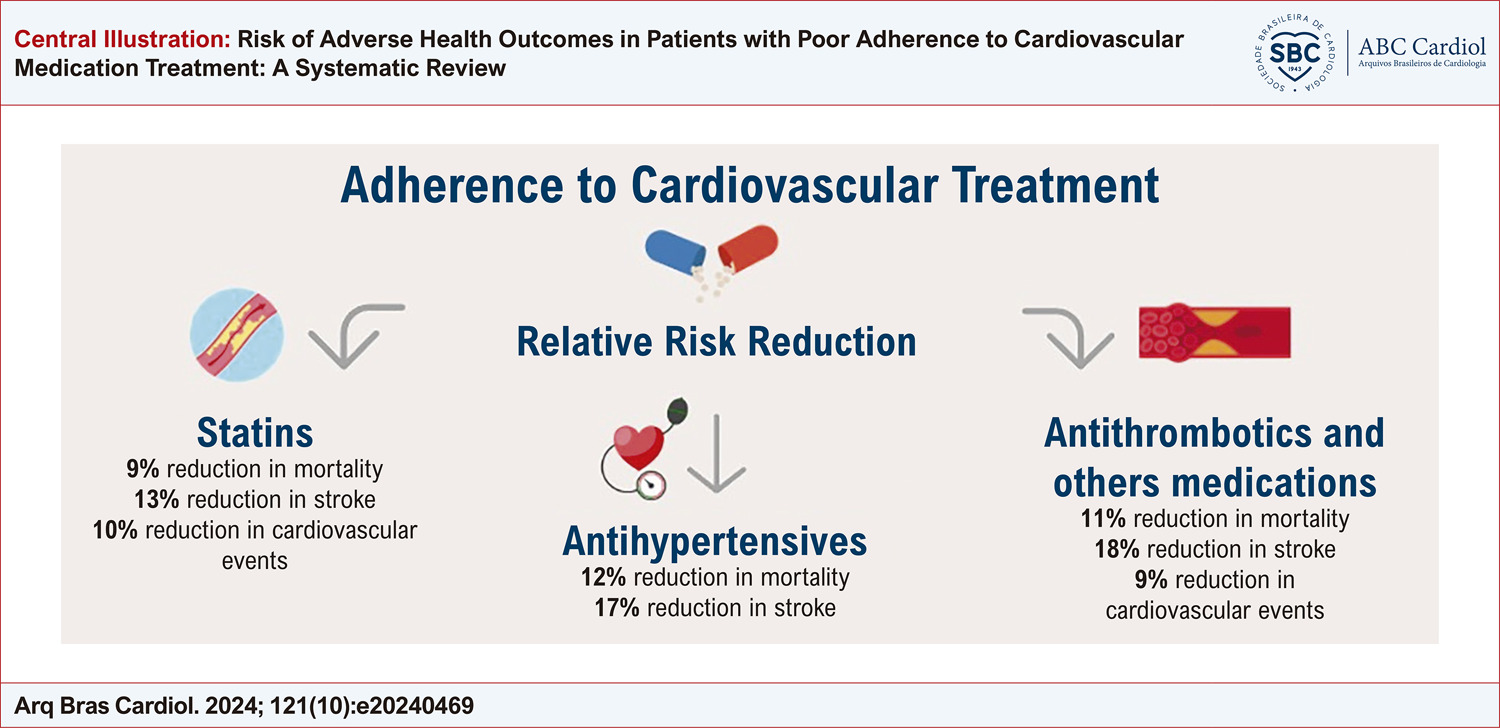
An increase in adherence to medications significantly reduces the risk of cardiovascular events, stroke, and all-cause death. Specifically, a 20% improvement in adherence to antihypertensive, lipid-lowering, and other cardiovascular medications correlated with reductions in cardiovascular events by 7%, 10%, and 9%, respectively; stroke by 17%, 13%, and 18%; and death by 12%, 9%, and 10%. The certainty of the evidence was moderate, suggesting that these effects are likely present. These findings emphasize the importance of enhancing medication adherence to improve clinical outcomes in CVD management.

Conclusions

Evidence has demonstrated reductions in hard endpoints in both primary and secondary prevention through the control of conditions such as hypertension and elevated LDL cholesterol concentrations, as well as the benefits of antiplatelet therapy in atherosclerotic disease. However, additional studies are needed to better elucidate the relationship between adherence to cardiovascular medications and the improvement of critical clinical outcomes.
  • Cardiovascular Diseases
  • medication adherence
  • Patient Compliance
Read Full Article
Creative Commons Attribution (CC BY) Creative Commons license
22/11/2024 DOI: 10.36660/abc.20240469i Views 2
IJCS
Editorial

Family Functioning and Congenital Heart Disease

Klébia Magalhães Pereira Castello Branco et al. Maria Verônica Câmara dos Santos

In the last decades, we have been watching a remarkable increase in survival of children with congenital heart disease (CHD), due to advances in surgical and medical management, leading to a significant growth in the number of adolescents and young adults with the disease. In developed countries, the number of adults with CHD surpasses the number of children with CHD.

Unfortunately, prolonged survival has been achieved at a high cost, as an expressive number of patients continue to suffer from significant medical, psychological and social issues. The knowledge that CHD brings an individual burden is not a new concept. In 1964, Glaser concluded that “Despite benefits derived from these remarkable therapeutic gains, children with CHD face many difficulties in their efforts toward social and emotional adjustment.”

[…]

  • Adolescent
  • family health
  • Heart Defects, Congenital
  • Patient Compliance
  • Quality of life
  • School Health Services
  • Social Cohesion
Read Full Article
Creative Commons Attribution (CC BY) Creative Commons license
10/03/2023 DOI: 10.36660/ijcs.20210194 Views 1
Figure 1
IJCS
Original Article

Treatment Eligibility and Therapeutic Responses of an Ecuadorian Population at High Cardiovascular Risk Based on the ATP III Guidelines

Isabel Hernández et al. Andrea Estrella Jorge Salazar Yan Duarte … Edmundo Torres Camilo López Santiago Terán Alejandra Mendoza Enrique Terán

Abstract

Background

The Adult Treatment Panel III (ATPIII) guidelines aim to reduce cardiovascular morbidity and mortality. In Ecuador, 20% of people have high LDL cholesterol levels, and 39% have high triglyceride levels.

Objective

To analyze lipid-lowering regimens in Ecuadorian patients and determine the achievement rate of the ATPIII goals for lipid profile.

Methods

Using a retrospective analysis, 385 subjects older than 30 years, who received pharmacological treatment for dyslipidemia for at least three months was randomly selected from institutions at two large cities in Ecuador. Data were collected from patients’ medical records and analyzed by chi-square test or paired t-test; p-values less than 0.05 were considered significant.

Results

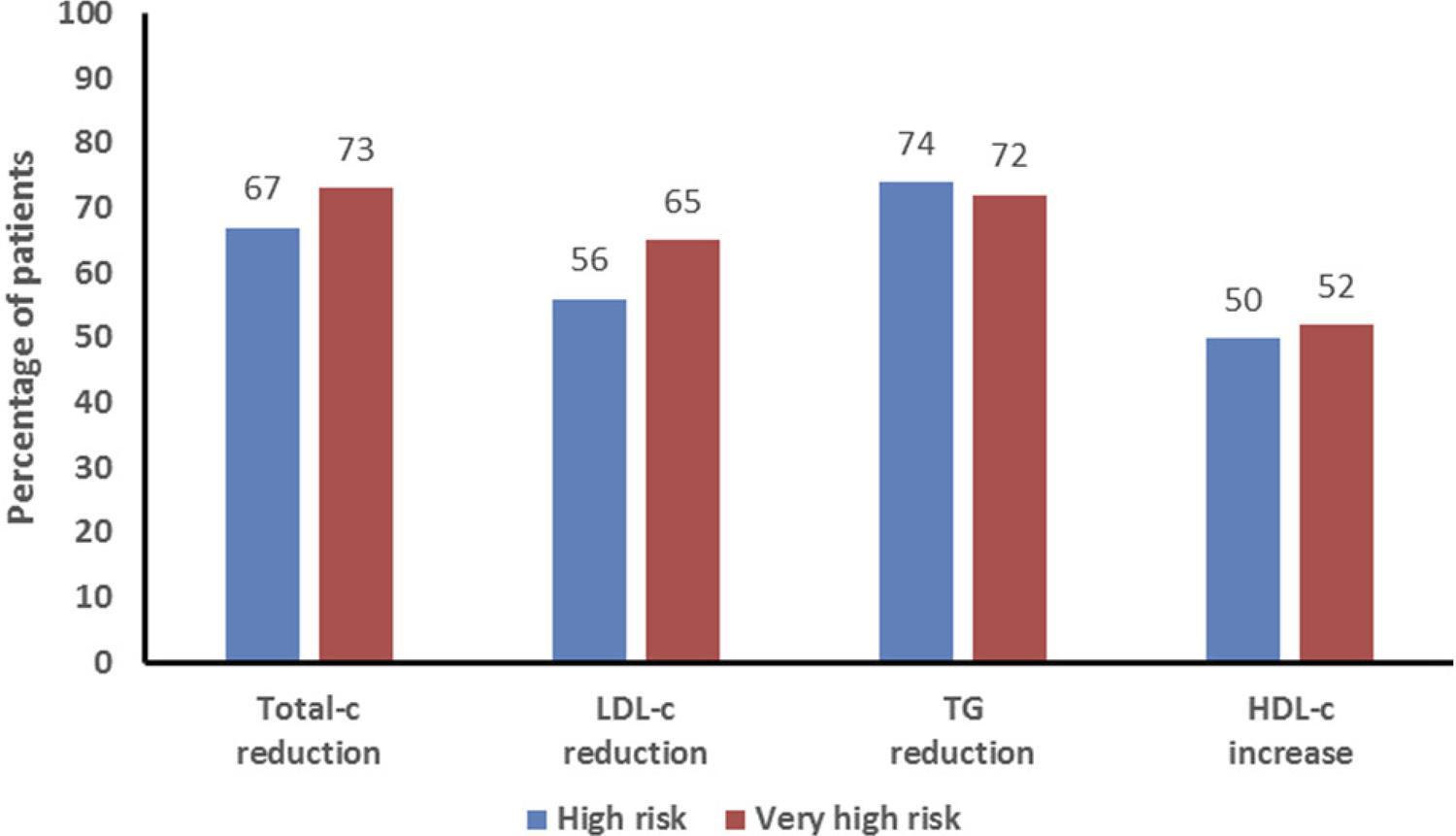
Baseline total cholesterol values were above 200 mg/dL in 75% of subjects, LDL-c values above 129 mg/dL in 83% of subjects and triglycerides values above 150 mg/dL in 79% of subjects. Most (n = 253, 95.8%) patients at very high cardiovascular risk were taking statins, 50% of them atorvastatin. Considering the ATPIII guidelines’ goals, only 24 subjects (19%) at high CV risk achieved an LDL-c < 100 mg/dl, while a significantly lower percentage (p = 0.04) of patients at very high risk reached an LDL-c < 70mg/dl (11%; n = 30).

Conclusion

These data indicate a low rate of compliance with the ATPIII guidelines, independent of the medication used or duration of the treatment. This may be attributed to the prescription of low doses of medication and a therapy targeting isolated lipid fractions rather than a complete lipid profile. (Int J Cardiovasc Sci. 2020; 33(4):371-376)

  • Cardiovascular Diseases/prevention and control
  • Cholesterol
  • dyslipidemia
  • Lifestyle
  • Patient Compliance
  • Sedentarism
  • Tabaquism
  • Triglicerides
Read Full Article
Creative Commons Attribution (CC BY) Creative Commons license
07/08/2020 DOI: 10.36660/ijcs.20190010 Views 1
IJCS
Editorial

Are we Improving Adherence to Cardiovascular Guidelines?

Luciana Nicolau Aranha et al. Gláucia Maria Moraes de Oliveira

Chronic noncommunicable diseases (NCDs) comprise the world’s leading group of causes of death, accounting for premature deaths, loss of quality of life, and adverse economic and social impacts. They represent about 70% of global deaths, close to 38 million deaths annually, significantly exceeding deaths from external causes and infectious diseases, such as COVID-19. Almost 45% of the deaths, more than 17 million, occur as a result of cardiovascular disease (CVD). The same happens in Brazil, where 72% of the deaths are due to NCDs, and about 30%, to CVD.

Dyslipidemia is a significant risk factor for CVD, particularly coronary artery disease (CAD) and stroke. Prospective and long-term epidemiological studies have shown that individuals with healthier lifestyles and fewer risk factors for CAD could improve their life expectancy by decreasing cardiovascular morbidity and mortality. The Framingham Offspring Study, which followed 3501 participants from 1987 to 2011, has demonstrated that low levels of high-density lipoprotein (HDL) or high levels of low-density lipoprotein (LDL) and triglycerides, alone or in any combination, are associated with increased risk for CVDs. Therefore, intervention measures are necessary to reduce morbidity and mortality, as well as the cost of hospitalization due to those diseases. In addition, improving the quality of life and health of the population is essential.

[…]

  • Cardiovascular Diseases/complications, Mortality
  • Cardiovascular Diseases/prevention and control
  • COVID-19
  • Dyslipidemias
  • Hydroxymethylglutaryl-CoA Reductase Inhibition/therapeutic use
  • Life Style
  • Patient Compliance
  • Tabagism
  • Triglycerides
Read Full Article
Creative Commons Attribution (CC BY) Creative Commons license
31/07/2020 DOI: 10.36660/ijcs.20200131 Views 1
ABC
Editorial

Evaluating Sodium Restriction in Heart Failure

Pedro Pimenta de Mello Spineti

Although salt and water retention plays a crucial role in heart failure (HF) pathophysiology, controversy still exists about dietary salt restriction in the treatment of HF patients. Small clinical studies have suggested that excessive sodium restriction (< 5 g of salt per day), as compared with normal-sodium diet (approximately 7 g of salt per day), may be associated with deleterious effects in patients with chronic HF, including increased neurohormonal activation, and higher hospitalization and mortality rates.,

A recent meta-analysis of nine studies involving 479 HF patients undergoing dietary sodium restriction was inconclusive for the recommendation of this strategy in hospitalized patients. None of the studies analyzed in the meta-analysis included hard endpoints such as all-cause death or cardiovascular mortality. However, a modest tendency for improvement of functional class was observed in outpatients undergoing sodium restriction intake. The author reinforces the need for randomized, prospective studies including large sample sizes, evaluating the effect of different regimens of sodium intake on relevant outcomes to build evidence base for detailed recommendations.

[…]

  • Diet Therapy
  • Diet-Sodium- Restricted/methods
  • Heart Failure/complications
  • Patient Compliance
  • Survey and Questionnaires
  • Treatment Adherence and Compliance
Read Full Article
Creative Commons Attribution (CC BY) Creative Commons license
01/02/2019 DOI: 10.5935/abc.20190017
ABC
Artigo Original

Development and validation of the Brazilian Portuguese version of the Cardiac Rehabilitation Barriers Scale

Gabriela Lima de Melo Ghisi et al. Rafaella Zulianello dos Santos Vanessa Schveitzer Aline Lange Barros … Thais Lunardi Recchia Paul Oh Magnus Benetti Sherry L. Grace

BACKGROUND: Cardiovascular diseases show high incidence and prevalence in Brazil; however, participation in Cardiac Rehabilitation (CR) is limited and has been poorly investigated in the country. The Cardiac Rehabilitation Barriers Scale (CRBS) was developed to assess the barriers to participation and adherence to CR. OBJECTIVE: To translate, cross-culturally adapt and psychometrically validate CRBS to Brazilian Portuguese. METHODS: Two independent initial translations were performed. After the reverse translation, both versions were reviewed by a committee. The new version was tested in 173 patients with coronary artery disease (48 women, mean age = 63 years). Of these, 139 (80.3%) participated in CR. Internal consistency was assessed by Cronbach’s alpha, test-retest reliability by intraclass correlation coefficient (ICC) and construct validity by factor analysis. T-tests were used to assess criterion validity between participants and non-participants in CR. The applied test results were evaluated regarding patient characteristics (gender, age, health status and educational level). RESULTS: The Brazilian Portuguese version of the CRBS had Cronbach’s alpha of 0.88, ICC of 0.68 and disclosed five factors, most of which showed to be internally consistent and all were defined by the items. The mean score for patients in CR was 1.29 (SD = 0.27) and 2.36 for ambulatory patients (SD = 0.50) (p <0.001). Criterion validity was also supported by significant differences in total scores by gender, age and educational level. CONCLUSION: The Brazilian Portuguese version of CRBS has shown adequate validity and reliability, which supports its use in future studies.

  • Cardiovascular Diseases
  • Patient Compliance
  • Patient Participation
  • questionnaires
  • Treatment Outcome
Read Full Article
Creative Commons Attribution (CC BY) Creative Commons license
15/03/2012 DOI: 10.1590/S0066-782X2012005000025 Views 1
Nutritional intervention and the impact on adherence to treatment in patients with metabolic syndrome
ABC
Artigo Original

Nutritional intervention and the impact on adherence to treatment in patients with metabolic syndrome

Fernanda Michielin Busnello et al. Luiz Carlos Bodanese Lúcia Campos Pellanda Zilda Elizabeth de Albuquerque Santos

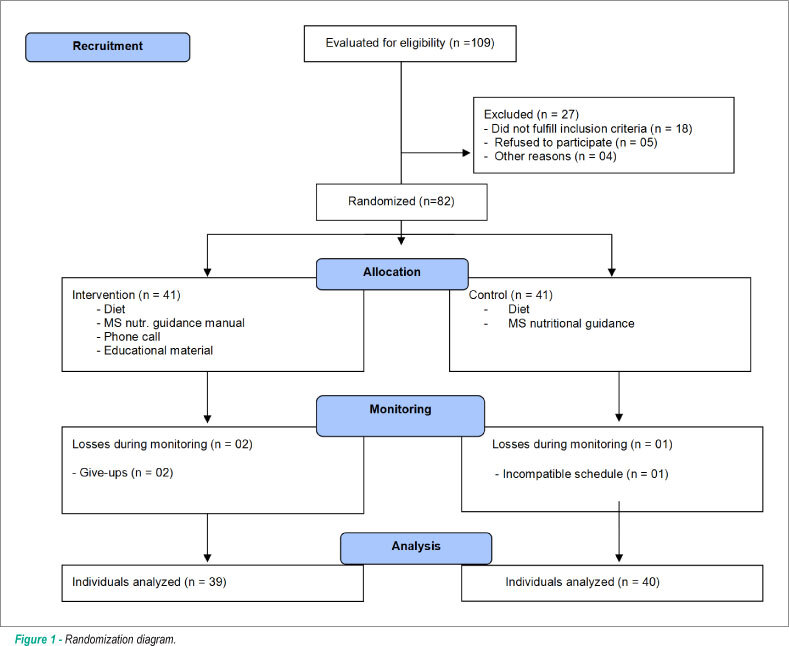
BACKGROUND: Metabolic syndrome is associated with increased risk of cardiovascular events disease and type 2 diabetes. Treatment includes modifications on life style, diet and physical activity. Treatment adherence plays a crucial role in the successful treatment of this disease. OBJECTIVE: To evaluate two models of dietary intervention, and the relationship with adherence to treatment and impact on clinical improvement of patients with metabolic syndrome. METHODS: Randomized clinical trial, lasting four months. Participants were randomized assigned to the intervention or control group. Both groups were instructed to follow a diet for 4 months. Subjects in the intervention group additionally received an intervention package, with metabolic syndrome manual book, telephone counseling and nutrition education leaflets. In both groups nutritional anamnesis, anthropometric assessment, dietary assessment, individualized dietary and biochemical tests were done. RESULTS: Patients who arrived more motivated were those who has the greatest reduction in the values of body mass index, which decreased from 31.7 kg/m² (SD ± 3.9) to 30.9 kg/m² (SD ± 3.8), reduction in waist circumference was 108.1 cm (SD ± 9.8) to 105.9 cm (SD ± 9.5). The statistically significant associations were in the correlation between body mass index, blood glucose and triglycerides, reducing the consumption of whole milk, increased consumption of whole grains and skimmed milk and between the increase in vegetable intake and reducing triglycerides. CONCLUSION: Both groups showed significant improvement in all clinical parameters that was significantly associated with the previous motivation. Patients who arrived more motivated were those who responded better to treatment.

  • Diet
  • Metabolic Syndrome
  • Patient Compliance
Read Full Article
Creative Commons Attribution (CC BY) Creative Commons license
01/07/2011 DOI: 10.1590/S0066-782X2011005000077
ABC
Artigo Original

Translation and validation into portuguese Language of the Medication Regimen Complexity Index

Ana Carolina Melchiors et al. Cassyano Januário Correr Fernando Fernández-Llimos

BACKGROUND: The complexity of pharmacotherapy is a result of a multiplicity of prescribed regimen factors, including the number of different drugs in the regimen, the number of dosage units per dose, the total number of prescribed doses per day and administration instructions. The Medication Regimen Complexity Index (MRCI) is a specific, reliable and valid tool used to measure the complexity of pharmacotherapy, originally developed in English language. OBJECTIVE: Transcultural translation and validation of this tool into Brazilian Portuguese. METHODS: A cross-sectional study was developed with 95 type-2 diabetes patients, receiving multiple medications. The validation process included translation into Portuguese, back-translation and pre-test of the tool, creating a new version called the Pharmacotherapy Complexity Index (PCI). The psychometric parameters were assessed, including convergent validity, discriminant validity and reliability (interclass and test-retest correlation). RESULTS: The complexity of pharmacotherapy measured by the MRCI-Brazil had an average score of 15.7 points (SD=8.36). MRCI-Brazil showed significant correlation with the number of medications (r=0.86; p<0.001) and age of patients (r=0.28, p=0.005). Interrater reliability analysis found an intra-class correlation (ICC) of 0.99 (p<0.001) and test-retest correlation was of 0.997 (p<0.001). CONCLUSION: The results have shown that the Brazilian version of the MRCI presents adequate validity and reliability, and may be useful in clinical practice and research involving the analysis of the drug regimen complexity.

  • Drug Therapy
  • Guidelines
  • Patient Compliance
Read Full Article
Creative Commons Attribution (CC BY) Creative Commons license
18/04/2008 DOI: 10.1590/S0066-782X2007001600001

How to cite this article

EndNote RIS

Electronic Document Format (Vancouver)

Malachias MVB, Kaiser SE, Albuquerque DC, Brandão AA, Sposito AC, Moura LZ, Magalhães LBNC, et al. Risk of Adverse Health Outcomes in Patients with Poor Adherence to Cardiovascular Medication Treatment: A Systematic Review. Arquivos Brasileiros de Cardiologia 2024;121(10):e20240469.

Electronic Document Format (ABNT)

Malachias, Marcus Vinícius Bolívar; Kaiser, Sergio Emanuel; Albuquerque, Denilson Campos de; Brandão, Andrea Araújo; Sposito, Andrei Carvalho; Moura, Lidia Zytysnky; Magalhães, Lucélia Batista Neves Cunha; Mota-Gomes, Marco Antonio; Clausell, Nadine; Jardim, Paulo César Veiga; Nadruz, Wilson; Barros, Bruno Monteiro; Luna, Leonardo Castro; Barroso, Weimar Kunz Sebba. Risk of Adverse Health Outcomes in Patients with Poor Adherence to Cardiovascular Medication Treatment: A Systematic Review. Arquivos Brasileiros de Cardiologia, v. 121, n. 10, e20240469, Nov. 2024.

Electronic Document Format (APA)

Malachias, M. V. B., Kaiser, S. E., Albuquerque, D. C. , Brandão, A. A., Sposito, A. C., Moura, L. Z., Magalhães, L. B. N. C., Mota-Gomes, M. A., Clausell, N., Jardim, P. C. V., Nadruz, W., Barros, B. M., Luna, L. C., & Barroso, W. K. S. (2024). Risk of Adverse Health Outcomes in Patients with Poor Adherence to Cardiovascular Medication Treatment: A Systematic Review. Arquivos Brasileiros de Cardiologia, 121(10), e20240469.

Electronic Document Format (ISO)

Malachias, Marcus Vinícius Bolívar and Kaiser, Sergio Emanuel and Albuquerque, Denilson Campos de and Brandão, Andrea Araújo and Sposito, Andrei Carvalho and Moura, Lidia Zytysnky and Magalhães, Lucélia Batista Neves Cunha and Mota-Gomes, Marco Antonio and Clausell, Nadine and Jardim, Paulo César Veiga and Nadruz, Wilson and Barros, Bruno Monteiro and Luna, Leonardo Castro and Barroso, Weimar Kunz Sebba. Risk of Adverse Health Outcomes in Patients with Poor Adherence to Cardiovascular Medication Treatment: A Systematic Review. Arquivos Brasileiros de Cardiologia [online]. 2024, vol. 121, n. 10, [cited 2026-10-14], e20240469. Available from: <https://journals.cardiol.br/en/article/risk-of-adverse-health-outcomes-in-patients-with-poor-adherence-to-cardiovascular-medication-treatment-a-systematic-review/>. ISSN 0066-782X

EndNote RIS

Electronic Document Format (Vancouver)

Branco KMPC, Santos MVC. Family Functioning and Congenital Heart Disease. International Journal of Cardiovascular Sciences 2023;34(6):608-9.

Electronic Document Format (ABNT)

Branco, Klébia Magalhães Pereira Castello; Santos, Maria Verônica Câmara dos. Family Functioning and Congenital Heart Disease. International Journal of Cardiovascular Sciences, v. 34, n. 6, p. 608-609, Mar. 2023.

Electronic Document Format (APA)

Branco, K. M. P. C., & Santos, M. V. C. (2023). Family Functioning and Congenital Heart Disease. International Journal of Cardiovascular Sciences, 34(6), 608-609.

Electronic Document Format (ISO)

Branco, Klébia Magalhães Pereira Castello and Santos, Maria Verônica Câmara dos. Family Functioning and Congenital Heart Disease. International Journal of Cardiovascular Sciences [online]. 2023, vol. 34, n. 6, [cited 2026-10-14], pp. 608-609. Available from: <https://journals.cardiol.br/en/article/family-functioning-and-congenital-heart-disease/>. ISSN 2359-4802

EndNote RIS

Electronic Document Format (Vancouver)

Hernández I, Estrella A, Salazar J, Duarte Y, Torres E, López C, Terán S, et al. Treatment Eligibility and Therapeutic Responses of an Ecuadorian Population at High Cardiovascular Risk Based on the ATP III Guidelines. International Journal of Cardiovascular Sciences 2020;33(4):371-6.

Electronic Document Format (ABNT)

Hernández, Isabel; Estrella, Andrea; Salazar, Jorge; Duarte, Yan; Torres, Edmundo; López, Camilo; Terán, Santiago; Mendoza, Alejandra; Terán, Enrique. Treatment Eligibility and Therapeutic Responses of an Ecuadorian Population at High Cardiovascular Risk Based on the ATP III Guidelines. International Journal of Cardiovascular Sciences, v. 33, n. 4, p. 371-376, Aug. 2020.

Electronic Document Format (APA)

Hernández, I., Estrella, A., Salazar, J., Duarte, Y., Torres, E., López, C., Terán, S., Mendoza, A., & Terán, E. (2020). Treatment Eligibility and Therapeutic Responses of an Ecuadorian Population at High Cardiovascular Risk Based on the ATP III Guidelines. International Journal of Cardiovascular Sciences, 33(4), 371-376.

Electronic Document Format (ISO)

Hernández, Isabel and Estrella, Andrea and Salazar, Jorge and Duarte, Yan and Torres, Edmundo and López, Camilo and Terán, Santiago and Mendoza, Alejandra and Terán, Enrique. Treatment Eligibility and Therapeutic Responses of an Ecuadorian Population at High Cardiovascular Risk Based on the ATP III Guidelines. International Journal of Cardiovascular Sciences [online]. 2020, vol. 33, n. 4, [cited 2026-10-14], pp. 371-376. Available from: <https://journals.cardiol.br/en/article/treatment-eligibility-and-therapeutic-responses-of-an-ecuadorian-population-at-high-cardiovascular-risk-based-on-the-atp-iii-guidelines/>. ISSN 2359-4802

EndNote RIS

Electronic Document Format (Vancouver)

Aranha LN, Oliveira GMM. Are we Improving Adherence to Cardiovascular Guidelines?. International Journal of Cardiovascular Sciences 2020;33(4):377-9.

Electronic Document Format (ABNT)

Aranha, Luciana Nicolau; Oliveira, Gláucia Maria Moraes de. Are we Improving Adherence to Cardiovascular Guidelines?. International Journal of Cardiovascular Sciences, v. 33, n. 4, p. 377-379, Jul. 2020.

Electronic Document Format (APA)

Aranha, L. N., & Oliveira, G. M. M. (2020). Are we Improving Adherence to Cardiovascular Guidelines?. International Journal of Cardiovascular Sciences, 33(4), 377-379.

Electronic Document Format (ISO)

Aranha, Luciana Nicolau and Oliveira, Gláucia Maria Moraes de. Are we Improving Adherence to Cardiovascular Guidelines?. International Journal of Cardiovascular Sciences [online]. 2020, vol. 33, n. 4, [cited 2026-10-14], pp. 377-379. Available from: <https://journals.cardiol.br/en/article/are-we-improving-adherence-to-cardiovascular-guidelines/>. ISSN 2359-4802

EndNote RIS

Electronic Document Format (Vancouver)

Spineti PPM. Evaluating Sodium Restriction in Heart Failure. Arquivos Brasileiros de Cardiologia 2019;112(2):171-2.

Electronic Document Format (ABNT)

Spineti, Pedro Pimenta de Mello. Evaluating Sodium Restriction in Heart Failure. Arquivos Brasileiros de Cardiologia, v. 112, n. 2, p. 171-172, Jan. 2019.

Electronic Document Format (APA)

Spineti, P. P. M. (2019). Evaluating Sodium Restriction in Heart Failure. Arquivos Brasileiros de Cardiologia, 112(2), 171-172.

Electronic Document Format (ISO)

Spineti, Pedro Pimenta de Mello. Evaluating Sodium Restriction in Heart Failure. Arquivos Brasileiros de Cardiologia [online]. 2019, vol. 112, n. 2, [cited 2026-10-14], pp. 171-172. Available from: <https://journals.cardiol.br/en/article/evaluating-sodium-restriction-in-heart-failure/>. ISSN 0066-782X

EndNote RIS

Electronic Document Format (Vancouver)

Ghisi GLM, Santos RZ, Schveitzer V, Barros AL, Recchia TL, Oh P, Benetti M, et al. Development and validation of the Brazilian Portuguese version of the Cardiac Rehabilitation Barriers Scale. Arquivos Brasileiros de Cardiologia 2012;98(4):344-52.

Electronic Document Format (ABNT)

Ghisi, Gabriela Lima de Melo; Santos, Rafaella Zulianello dos; Schveitzer, Vanessa; Barros, Aline Lange; Recchia, Thais Lunardi; Oh, Paul; Benetti, Magnus; Grace, Sherry L.. Development and validation of the Brazilian Portuguese version of the Cardiac Rehabilitation Barriers Scale. Arquivos Brasileiros de Cardiologia, v. 98, n. 4, p. 344-352, Mar. 2012.

Electronic Document Format (APA)

Ghisi, G. L. M., Santos, R. Z. , Schveitzer, V., Barros, A. L., Recchia, T. L., Oh, P., Benetti, M., & Grace, S. L. (2012). Development and validation of the Brazilian Portuguese version of the Cardiac Rehabilitation Barriers Scale. Arquivos Brasileiros de Cardiologia, 98(4), 344-352.

Electronic Document Format (ISO)

Ghisi, Gabriela Lima de Melo and Santos, Rafaella Zulianello dos and Schveitzer, Vanessa and Barros, Aline Lange and Recchia, Thais Lunardi and Oh, Paul and Benetti, Magnus and Grace, Sherry L.. Development and validation of the Brazilian Portuguese version of the Cardiac Rehabilitation Barriers Scale. Arquivos Brasileiros de Cardiologia [online]. 2012, vol. 98, n. 4, [cited 2026-10-14], pp. 344-352. Available from: <https://journals.cardiol.br/en/article/development-and-validation-of-the-brazilian-portuguese-version-of-the-cardiac-rehabilitation-barriers-scale/>. ISSN 0066-782X

EndNote RIS

Electronic Document Format (Vancouver)

Busnello FM, Bodanese LC, Pellanda LC, Santos ZEA. Nutritional intervention and the impact on adherence to treatment in patients with metabolic syndrome. Arquivos Brasileiros de Cardiologia 2011;97(3):217-24.

Electronic Document Format (ABNT)

Busnello, Fernanda Michielin; Bodanese, Luiz Carlos; Pellanda, Lúcia Campos; Santos, Zilda Elizabeth de Albuquerque. Nutritional intervention and the impact on adherence to treatment in patients with metabolic syndrome. Arquivos Brasileiros de Cardiologia, v. 97, n. 3, p. 217-224, Jun. 2011.

Electronic Document Format (APA)

Busnello, F. M., Bodanese, L. C., Pellanda, L. C., & Santos, Z. E. A. (2011). Nutritional intervention and the impact on adherence to treatment in patients with metabolic syndrome. Arquivos Brasileiros de Cardiologia, 97(3), 217-224.

Electronic Document Format (ISO)

Busnello, Fernanda Michielin and Bodanese, Luiz Carlos and Pellanda, Lúcia Campos and Santos, Zilda Elizabeth de Albuquerque. Nutritional intervention and the impact on adherence to treatment in patients with metabolic syndrome. Arquivos Brasileiros de Cardiologia [online]. 2011, vol. 97, n. 3, [cited 2026-10-14], pp. 217-224. Available from: <https://journals.cardiol.br/en/article/nutritional-intervention-and-the-impact-on-adherence-to-treatment-in-patients-with-metabolic-syndrome/>. ISSN 0066-782X

EndNote RIS

Electronic Document Format (Vancouver)

Melchiors AC, Correr CJ, Fernández-Llimos F. Translation and validation into portuguese Language of the Medication Regimen Complexity Index. Arquivos Brasileiros de Cardiologia 2008;89(4):210-8.

Electronic Document Format (ABNT)

Melchiors, Ana Carolina; Correr, Cassyano Januário; Fernández-Llimos, Fernando. Translation and validation into portuguese Language of the Medication Regimen Complexity Index. Arquivos Brasileiros de Cardiologia, v. 89, n. 4, p. 210-218, Apr. 2008.

Electronic Document Format (APA)

Melchiors, A. C., Correr, C. J., & Fernández-Llimos, F. (2008). Translation and validation into portuguese Language of the Medication Regimen Complexity Index. Arquivos Brasileiros de Cardiologia, 89(4), 210-218.

Electronic Document Format (ISO)

Melchiors, Ana Carolina and Correr, Cassyano Januário and Fernández-Llimos, Fernando. Translation and validation into portuguese Language of the Medication Regimen Complexity Index. Arquivos Brasileiros de Cardiologia [online]. 2008, vol. 89, n. 4, [cited 2026-10-14], pp. 210-218. Available from: <https://journals.cardiol.br/en/article/translation-and-validation-into-portuguese-language-of-the-medication-regimen-complexity-index/>. ISSN 0066-782X

  • About ABC Family
  • Internal Regulation
  • Editorial Board
  • Brazilian Society of Cardiology (SBC)

Issues

SBC Guidelines

  • Videos
  • Podcasts
  • News