ABC Family Arquivos Brasileiros de Cardiologia International Journal of Cardiovascular Sciences ABC Heart Failure & Cardiomyopathy ABC Imagem Cardiovascular
Português English
ABC Family
Português English
  • About
    • About ABC Family
    • Internal Regulation
    • Editorial Board
    • Brazilian Society of Cardiology (SBC)
  • Issues
  • SBC Guidelines
  • Content
    • Videos
    • Podcasts
    • News
  • About
    • About ABC Family
    • Internal Regulation
    • Editorial Board
    • Brazilian Society of Cardiology (SBC)
  • Issues
  • SBC Guidelines
  • Content
    • Videos
    • Podcasts
    • News

ABC Family

  • ABC Family
  • Arquivos Brasileiros de Cardiologia
  • International Journal of Cardiovascular Sciences
  • ABC Heart Failure & Cardiomyopathy
  • ABC Imagem Cardiovascular
Search in

No content found.

Journals
Ordering
Article types
Others

  1. Home
  2. Keyword: population
ABC
Letter to the Editor

A Simple Clinical Risk Score to Predict Post-Discharge Mortality in Chinese Patients Hospitalized with Heart Failure

Guillermo Alberto Arana Morales et al. Hugo Alpaca-Salvador Ricardo Salazar-Ramírez

We have read with great interest the article published by Wang et al. on the clinical risk score to predict mortality in Chinese patients hospitalized for heart failure (HF). The authors developed a scale with five variables to predict mortality from HF after hospital discharge within one year: age, female sex, New York Heart Association (NYHA) score >3, left atrial diameter, and body mass index; with good predictive ability. One limitation of the study is the design of random division into two groups, one for the development of the predictive model and the other to evaluate its performance, which, when drawn from the same cohort, have similar characteristics and therefore the predictive performance may be overestimated.

A very interesting aspect of the study is that it focuses on the evaluation of patients with HF at hospital discharge, uses simple, easily assessable predictive variables, and predicts mortality at one year. There are a variety of studies of prognostic scores for HF, in outpatient, hospitalized, or emergency patients, and they predict mortality during hospitalization, within the first 30 days, or a year; many of them with biases that limit their validity.

[…]
  • China
  • Heart Failure / mortality
  • Hospitalization
  • Latin America
  • population
Read Full Article
Creative Commons Attribution (CC BY) Creative Commons license
27/02/2023 DOI: 10.36660/abc.2022050
Figure 1
IJCS
Original Article

Atherosclerosis Complications in the Brazilian Population: An Ecological Time Series Study

Emerson de Jesus Silva et al. Francieudo da Silva Gomes Junior João Vitor Bezerra Firmiano Nilson Roberto da Silva … Wendel Aguiar Carlini Marcello Barbosa Otoni Gonçalves Guedes Matheus Rodrigues Lopes Johnnatas Mikael Lopes

Abstract

Background:

Atherosclerosis is a serious health problem, and several factors contribute to its occurrence. Longitudinal and qualified monitoring of primary health care (PHC) may contribute to the management of atherosclerosis and reduction of avoidable hospital admissions.

Objectives:

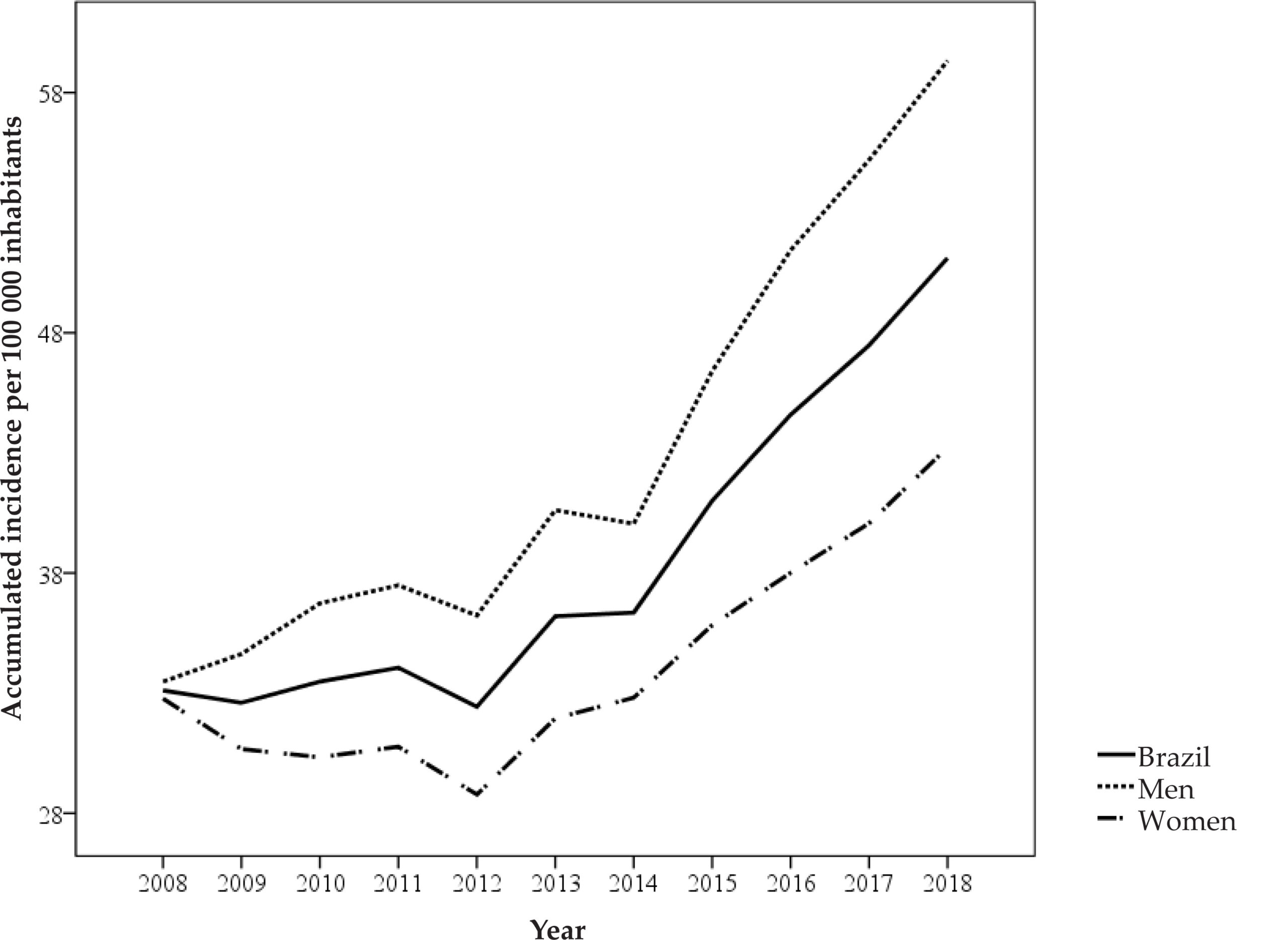
To estimate the trend in hospitalizations for atherosclerosis and the impact of PHC coverage on its evolution from 2008 to 2018 in Brazil.

Methods:

An ecological time series analytical study based on the outcomes of hospital admissions for atherosclerosis in Brazil. Time in years, PHC coverage, and Family Health Strategy (FHS) services were considered independent variables. A Prais–Winsten model was used to estimate the outcome trend, and α < 0.05 was adopted.

Results:

We observed a mean increase of 1.81 hospitalizations for atherosclerosis per 100 000 inhabitants annually (p = 0.002) in Brazil. This growth was evidenced in the Northeast (p < 0.001), Southeast (p = 0.003), and South (p < 0.001) regions, being stable in the North (p = 0.057) and Midwest (p = 0.62) regions. Men presented twice the growth in hospitalizations from the fifth decade of life on (p < 0.01). An inversely proportional relationship was observed for PHC coverage (B = -0.71; p < 0.001) and the proportion of FHS services (B = -0.59; p < 0.001) with the rate of admissions due to atherosclerosis in Brazil.

Conclusions:

Although hospitalizations for atherosclerotic complications are increasing in Brazil, they present regional and individual gender and age discrepancies, as well as a mitigating effect exerted by PHC coverage.

  • Atherosclerosis / complications
  • Brazil / epidemiology
  • Ecology
  • Ecosystem
  • Environmental Health
  • population
  • Time Series Studies
Read Full Article
Creative Commons Attribution (CC BY) Creative Commons license
09/03/2022 DOI: 10.36660/ijcs.20210117 Views 1
Figure 1
ABC
Original Article

An Equation for the Prediction of Oxygen Consumption in a Brazilian Population

Antonio Eduardo Monteiro de Almeida et al. Charles de Moraes Stefani João Agnaldo do Nascimento Narla Miranda de Almeida … Amilton da Cruz Santos Jorge Pinto Ribeiro (in memoriam) Ricardo Stein

Background:

The equations predicting maximal oxygen uptake (VO2max or peak) presently in use in cardiopulmonary exercise testing (CPET) softwares in Brazil have not been adequately validated. These equations are very important for the diagnostic capacity of this method.

Objective:

Build and validate a Brazilian Equation (BE) for prediction of VO2peak in comparison to the equation cited by Jones (JE) and the Wasserman algorithm (WA).

Methods:

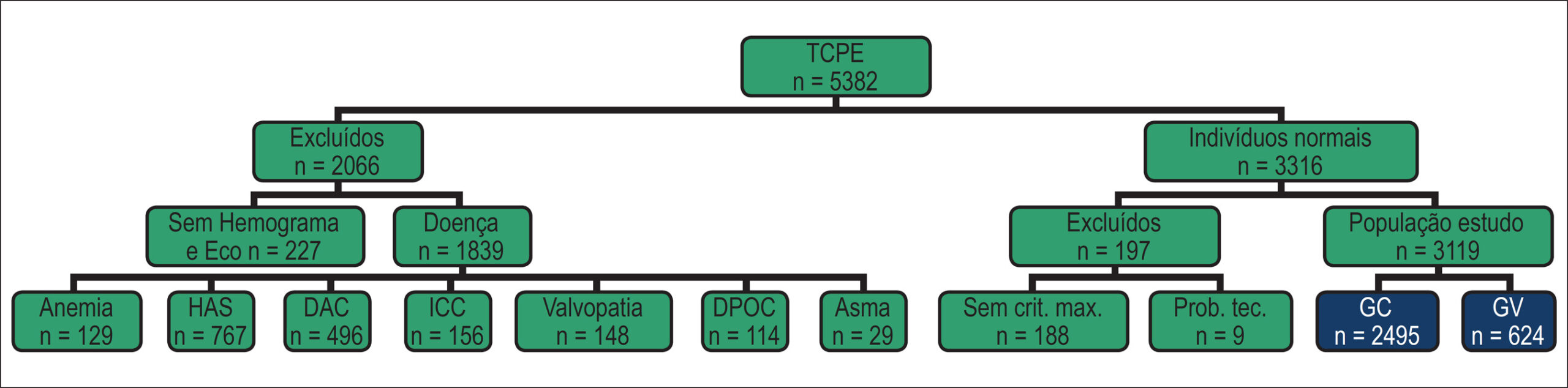
Treadmill evaluation was performed on 3119 individuals with CPET (breath by breath). The construction group (CG) of the equation consisted of 2495 healthy participants. The other 624 individuals were allocated to the external validation group (EVG). At the BE (derived from a multivariate regression model), age, gender, body mass index (BMI) and physical activity level were considered. The same equation was also tested in the EVG. Dispersion graphs and Bland-Altman analyses were built.

Results:

In the CG, the mean age was 42.6 years, 51.5% were male, the average BMI was 27.2, and the physical activity distribution level was: 51.3% sedentary, 44.4% active and 4.3% athletes. An optimal correlation between the BE and the CPET measured VO2peak was observed (0.807). On the other hand, difference came up between the average VO2peak expected by the JE and WA and the CPET measured VO2peak, as well as the one gotten from the BE (p = 0.001).

Conclusion:

BE presents VO2peak values close to those directly measured by CPET, while Jones and Wasserman differ significantly from the real VO2peak.

  • Brazil
  • Forecasting
  • Oxygen Consumption
  • population
  • Respiratory Function Tests
Read Full Article
Creative Commons Attribution (CC BY) Creative Commons license
12/09/2014 DOI: 10.5935/abc.20140137 Views 1
ABC
Review Article

Phenotypic characteristics of resistant hypertension in the Brazilian population

Ana Paula Cabral de Faria et al. Andréa Rodrigues Sabbatini Antonio Coca Heitor Moreno-Junior

Resistant hypertension (RH) is defined as blood pressure that remains above target in spite of the concurrent use of three or more classes of antihypertensive drugs at optimized doses (UCRH), with one of them being a diuretic. Moreover, patients whose blood pressure is controlled while using four or more antihypertensive medications are also considered controlled resistant hypertensive (CRH) subjects. Although this definition may be useful in terms of categorizing a larger group of resistant hypertensive individuals, as these two subgroups share high cardiovascular risk, some important clinical and pathophysiologic particularities need to be better evaluated, before considering resistant controlled and uncontrolled patients as part of the same group. We compared cardiovascular characteristics of these two subgroups with resistant hypertension. In spite of some similar features, the UCRH subgroup has cardiovascular phenotypes with worse prognosis, such as increased vascular stiffness and left ventricular hypertrophy, as well as more impaired endothelial function and lower nocturnal blood pressure dipping, among others. Considering these differences, the UCRH subgroup is associated with greater cardiovascular risk and may be considered as more resistant to antihypertensive treatment. In addition to the importance of better prevention and treatment of resistant hypertension by identifying early risk factors and optimizing drug therapy, some clinical implications must be considered when managing controlled and uncontrolled patients as similar to the resistant hypertension group.

  • antihypertensive agents
  • Brazil
  • Hypertension
  • population
  • Quality of life
  • Risk Factors
Read Full Article
Creative Commons Attribution (CC BY) Creative Commons license
10/05/2013 DOI: 10.5935/abc.20130100 Views 1
Influence of the self-reported skin color on the prevalence of metabolic syndrome in an urban Brazilian population
ABC
Artigo Original

Influence of the self-reported skin color on the prevalence of metabolic syndrome in an urban Brazilian population

Paulo José Bastos Barbosa et al. Ines Lessa Naomar de Almeida Filho Lucélia Batista N. Cunha Magalhães Jenny Araújo

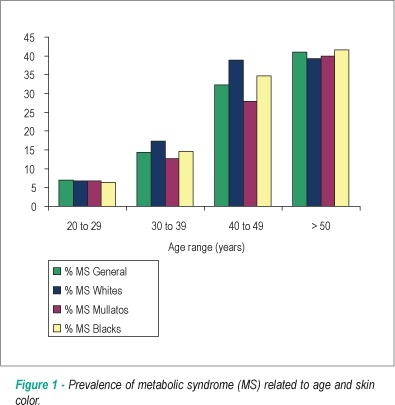
BACKGROUND: The metabolic syndrome (MS) has a high prevalence in different parts of the world, with variations between different ethnic groups. OBJECTIVE: This study aims at exploring the influence of the self-reported skin color on the prevalence of MS Methods: Cross-sectional study, carried out in a population subgroup (n=1,439 adults) in Salvador, Brazil. The self-reported skin color (white, mulatto or black) was used as well as the MS criterion of ATP-III. The Chi-square test for tendency was used to analyze the prevalence gradient between the groups and logistic regression, for association analysis. RESULTS: The general prevalence of MS, adjusted for potentially confounder variables, did not differ among whites (23.3%), mulattos (23.3%) and blacks (23.4%). The analysis by sex showed, among men, a reduction in the MS prevalence of whites (26.2%, 95%CI: 20.7-31.7), in comparison to blacks (17.5%, 95%CI: 12.3-22.8) and an intermediate prevalence among mulattos, 21.9%, 95%CI: 18.6-25.1, p tend. = 0.002. Among the women, the tendency was the opposite, being higher among the blacks, 27.0%, 95%CI: 22.2-31.8, and lower among the whites, 20.5%, 95%CI: 15.6-25.4, p tend. = 0.02. The multivariate analysis of the association between skin color and MS (white = group of reference) showed that the black color of the skin was a protective factor among black men, with a prevalence ratio (PR) = 0.60 (0.36-0.97), whereas it tended to be a risk factor among black women, with a PR = 1.33 (0.94-1.78). CONCLUSION: The prevalence of MA presented an inverse variation according to the color of skin between men and women. To be black was a protective factor among men and a risk factor among women.

  • Brazil
  • color
  • Metabolic Syndrome
  • population
  • Prevalence
  • Salvador (BA)
  • skin
Read Full Article
Creative Commons Attribution (CC BY) Creative Commons license
22/09/2010 DOI: 10.1590/S0066-782X2010000100007 Views 1
ABC
Artigo Original

Influence of genetic combinations on HDL-C levels in a Southern Brazilian population

Fabiana Michelsen de Andrade et al. Marilu Fiegenbaum Silvana de Almeida Mara Helena Hutz

BACKGROUND: Low HDL-C levels are important predictors of coronary disease, the first cause of death worldwide. Many factors affect HDL-C levels, such as polymorphisms of genes encoding for key proteins of the reverse cholesterol transport pathway. OBJECTIVE: To investigate the influence of seven polymorphisms of the CETP, APOA1, ABCA1 and SCARB1 genes on HDL-C levels in a southern Brazilian population. METHODS: The polymorphisms were investigated in a sample of 500 individuals of European descent, but HDL-C levels from only 360 individuals were adjusted for cofactors using multiple linear regressions in the association study. The sample was divided in tertiles according to adjusted HDL-C levels, and allele and haplotype frequencies were compared between the 1st and 3rd tertiles of adjusted HDL-C levels. RESULTS: When combinations of risk alleles were tested, the frequency of allele combinations in three genes (haplotype 1 of APOA1 gene, variant 2S of SCARB1 gene, and allele B1 of CETP gene) was significantly higher in the lower tertile of adjusted HDL-C (28.3%) than in the upper tertile (14.9%; p=0.008), which indicated that the presence of these variants increased 2.26 times the chances of having HDL-C levels below 39.8 mg/dl. CONCLUSION: These markers, when studied separately, are expected to have a small influence on the characteristic under analysis, but greater influence was detected when the markers were studied in combination. In a population of southern Brazilians, our data showed a significant influence of variant combinations of APOA1, SCARB1 and CETP genes on HDL-c levels.

  • Cholesterol
  • Polymorphism, Genetic
  • population
  • south region
Read Full Article
Creative Commons Attribution (CC BY) Creative Commons license
08/09/2010 DOI: 10.1590/S0066-782X2010005000121 Views 2
Prevalence of angina pectoris in Pelotas, south of Brazil
ABC
Artigo Original

Prevalence of angina pectoris in Pelotas, south of Brazil

Leonardo Alves et al. Juraci A. Cesar Bernardo L. Horta

BACKGROUND: Ischemic heart disease is the leading cause of death in the world and angina is its cardinal manifestation. OBJECTIVE: To determine the prevalence of angina and possible angina and its distribution by main demographic and socioeconomic characteristics among adults 40 years of age or older. METHODS: This is a population-based, cross-sectional study featuring residents of the urban area in Pelotas, a city located in the south of Brazil, from October through December 2007. A two-stage cluster sampling – census tracts and households – was used. The prevalence of angina and possible angina was defined according to the Rose questionnaire. These conditions were assessed by demographic and socioeconomic characteristics: age, sex, skin color, economic status, and schooling. Data were collected using standardized questionnaires in interviews with the individuals in their homes. The non-respondent rate was 6.8%. RESULTS: The prevalence of angina among the 1,680 individuals taking part in the study was 8.2% (95% CI: 6.7 – 9.6), while that of possible angina came to 12.3% (95% CI: 10.6 – 14.0). The prevalence of angina and possible angina was higher among women, black/brown-skinned individuals, low economic class individuals and subjects with the low schooling. The prevalence of angina was higher among older individuals, while possible angina was found not to be associated with age. CONCLUSION: The prevalence of angina and possible angina was found to be high, affecting approximately 20% of the population in Pelotas.

  • angina
  • Cross-Sectional Studies
  • population
  • Prevalence
Read Full Article
Creative Commons Attribution (CC BY) Creative Commons license
25/06/2010 DOI: 10.1590/S0066-782X2010005000075 Views 1
ABC
Artigo Original

Interleukin-1 receptor antagonist gene VNTR polymorphism is associated with coronary artery disease

Ahmet Arman et al. Ozer Soylu Ahmet Yildirim Andrzej Furman … Nesrin Ercelen Hakki Aydogan Ajda Coker Tuna Tezel

BACKGROUND: Coronary Artery Disease (CAD) is the atherosclerosis of coronary arteries that carry blood to the heart muscle. Atherosclerosis is an inflammatory disease. Cytokine gene variations such as those associated with the IL1 family are involved in the pathogenesis of atherosclerosis. OBJECTIVE: The purpose of this study was to determine the relationship between IL1 family polymorphisms (IL1RN VNTR, IL1B positions -511 and +3953) and CAD in Turkish population. METHODS: 427 individuals were submitted to coronary angiography and were grouped as 170 control subjects and 257 CAD patients. The CAD subjects were divided into two subgroups: 91 Single Vessel Disease (SVD) and 166 Multiple Vessel Disease (MVD) subjects. The genotypes of IL1RN and of IL1B (-511, +3953) were determined by polymerase chain reaction (PCR) followed by restriction digestion analysis. RESULTS: No significant difference was found in IL1RN and IL1B (-511 and +3953) genotype distributions between CAD and control subjects or MVD and control subjects. However, significant association was seen in IL1RN 2/2 genotype between SVD and control subjects (P= 0.016, x2: 10.289, OR: 2.94, 95% CI: 1.183-7.229). Similarly, no statistically significant difference was found in IL1RN and IL1B (-511 and +3953) allele frequencies between CAD and control subjects, MVD and control subjects or SVD and control subjects. CONCLUSION: No association was found in either allele frequency or genotype distribution of IL1RN and IL1B polymorphisms between CAD and the control groups. However; IL1RN 2/2 genotype may be a risk factor for SVD in the Turkish population.

  • coronary arteriosclerosis
  • Interleukin 1
  • mini-satellite repeats
  • population
  • Turkey
Read Full Article
Creative Commons Attribution (CC BY) Creative Commons license
05/01/2009 DOI: 10.1590/S0066-782X2008001700002 Views 1
ABC
Artigo Original

Echocardiographic reference values in a sample of asymptomatic adult Brazilian population

Lílian Cláudia Souza Ângelo et al. Marcelo Luiz Campos Vieira Sérgio Lamêgo Rodrigues Renato Lírio Morelato … Alexandre C. Pereira José Geraldo Mill José Eduardo Krieger

OBJECTIVE: To determine echocardiographic reference values for cardiac chambers, left ventricular mass, and left ventricular (LV) mass indexes in an asymptomatic adult population sample. METHODS: This was an observational study based on a randomly selected population sample from the city of Vitória, Brazil. Two hundred and ninety-five volunteers (61.7% women) with no past history of cardiovascular disease underwent transthoracic echocardiography. The following M-mode echocardiographic parameters were measured: ventricular diameters, interventricular septal thickness, LV posterior wall thickness, LV mass, left ventricular mass indexes, plus aortic and left atrial diameters. Values were expressed as mean and standard deviation and percentiles, with a 95% confidence interval. RESULTS: Echocardiographic values were slightly influenced by gender and age. Overall, cardiac measurements were higher in the male gender. LV posterior wall thickness, mass indexes corrected for height and diastolic diameter were influenced by age. The 95% percentiles of interventricular septum and LV posterior wall were 9.9 mm and 9.6 mm for men, respectively, and 9.3 mm for septum and posterior wall for women. CONCLUSION: The 95% percentile values of interventricular septum and posterior wall and, therefore, of both absolute and indexed left ventricular mass found in our study conducted in the Vitória population are lower than those reported in previous studies. In this framework, our results will be useful as a reference, since they are consistent with the new limits suggested in the literature for the echocardiographic diagnosis of left ventricular hypertrophy.

  • Echocardiography
  • population
  • random and systematic sampling
  • Reference Values
Read Full Article
Creative Commons Attribution (CC BY) Creative Commons license
25/09/2007 DOI: 10.1590/S0066-782X2007001500007

How to cite this article

EndNote RIS

Electronic Document Format (Vancouver)

Morales GAA, Alpaca-Salvador H, Salazar-Ramírez R. A Simple Clinical Risk Score to Predict Post-Discharge Mortality in Chinese Patients Hospitalized with Heart Failure. Arquivos Brasileiros de Cardiologia 2023;120(2):e20220250.

Electronic Document Format (ABNT)

Morales, Guillermo Alberto Arana; Alpaca-Salvador, Hugo; Salazar-Ramírez, Ricardo. A Simple Clinical Risk Score to Predict Post-Discharge Mortality in Chinese Patients Hospitalized with Heart Failure. Arquivos Brasileiros de Cardiologia, v. 120, n. 2, e20220250, Feb. 2023.

Electronic Document Format (APA)

Morales, G. A. A., Alpaca-Salvador, H., & Salazar-Ramírez, R. (2023). A Simple Clinical Risk Score to Predict Post-Discharge Mortality in Chinese Patients Hospitalized with Heart Failure. Arquivos Brasileiros de Cardiologia, 120(2), e20220250.

Electronic Document Format (ISO)

Morales, Guillermo Alberto Arana and Alpaca-Salvador, Hugo and Salazar-Ramírez, Ricardo. A Simple Clinical Risk Score to Predict Post-Discharge Mortality in Chinese Patients Hospitalized with Heart Failure. Arquivos Brasileiros de Cardiologia [online]. 2023, vol. 120, n. 2, [cited 2026-10-14], e20220250. Available from: <https://journals.cardiol.br/en/article/a-simple-clinical-risk-score-to-predict-post-discharge-mortality-in-chinese-patients-hospitalized-with-heart-failure-2/>. ISSN 0066-782X

EndNote RIS

Electronic Document Format (Vancouver)

Silva EJ, Gomes Junior FS, Firmiano JVB, Silva NR, Carlini WA, Guedes MBOG, Lopes MR, et al. Atherosclerosis Complications in the Brazilian Population: An Ecological Time Series Study. International Journal of Cardiovascular Sciences 2022;35(2):243-52.

Electronic Document Format (ABNT)

Silva, Emerson de Jesus; Gomes Junior, Francieudo da Silva; Firmiano, João Vitor Bezerra; Silva, Nilson Roberto da; Carlini, Wendel Aguiar; Guedes, Marcello Barbosa Otoni Gonçalves; Lopes, Matheus Rodrigues; Lopes, Johnnatas Mikael. Atherosclerosis Complications in the Brazilian Population: An Ecological Time Series Study. International Journal of Cardiovascular Sciences, v. 35, n. 2, p. 243-252, Mar. 2022.

Electronic Document Format (APA)

Silva, E. J., Gomes Junior, F. S., Firmiano, J. V. B., Silva, N. R. , Carlini, W. A., Guedes, M. B. O. G., Lopes, M. R., & Lopes, J. M. (2022). Atherosclerosis Complications in the Brazilian Population: An Ecological Time Series Study. International Journal of Cardiovascular Sciences, 35(2), 243-252.

Electronic Document Format (ISO)

Silva, Emerson de Jesus and Gomes Junior, Francieudo da Silva and Firmiano, João Vitor Bezerra and Silva, Nilson Roberto da and Carlini, Wendel Aguiar and Guedes, Marcello Barbosa Otoni Gonçalves and Lopes, Matheus Rodrigues and Lopes, Johnnatas Mikael. Atherosclerosis Complications in the Brazilian Population: An Ecological Time Series Study. International Journal of Cardiovascular Sciences [online]. 2022, vol. 35, n. 2, [cited 2026-10-14], pp. 243-252. Available from: <https://journals.cardiol.br/en/article/atherosclerosis-complications-in-the-brazilian-population-an-ecological-time-series-study/>. ISSN 2359-4802

EndNote RIS

Electronic Document Format (Vancouver)

Almeida AEM, Stefani CM, Nascimento JA, Almeida NM, Santos AC, memoriam) JPR, Stein R, et al. An Equation for the Prediction of Oxygen Consumption in a Brazilian Population. Arquivos Brasileiros de Cardiologia 2014;103(4):299-307.

Electronic Document Format (ABNT)

Almeida, Antonio Eduardo Monteiro de; Stefani, Charles de Moraes; Nascimento, João Agnaldo do; Almeida, Narla Miranda de; Santos, Amilton da Cruz; memoriam), Jorge Pinto Ribeiro (in; Stein, Ricardo. An Equation for the Prediction of Oxygen Consumption in a Brazilian Population. Arquivos Brasileiros de Cardiologia, v. 103, n. 4, p. 299-307, Sep. 2014.

Electronic Document Format (APA)

Almeida, A. E. M. , Stefani, C. M., Nascimento, J. A. , Almeida, N. M. , Santos, A. C., memoriam), J. P. R. , & Stein, R. (2014). An Equation for the Prediction of Oxygen Consumption in a Brazilian Population. Arquivos Brasileiros de Cardiologia, 103(4), 299-307.

Electronic Document Format (ISO)

Almeida, Antonio Eduardo Monteiro de and Stefani, Charles de Moraes and Nascimento, João Agnaldo do and Almeida, Narla Miranda de and Santos, Amilton da Cruz and memoriam), Jorge Pinto Ribeiro (in and Stein, Ricardo. An Equation for the Prediction of Oxygen Consumption in a Brazilian Population. Arquivos Brasileiros de Cardiologia [online]. 2014, vol. 103, n. 4, [cited 2026-10-14], pp. 299-307. Available from: <https://journals.cardiol.br/en/article/an-equation-for-the-prediction-of-oxygen-consumption-in-a-brazilian-population/>. ISSN 0066-782X

EndNote RIS

Electronic Document Format (Vancouver)

Faria APC, Sabbatini AR, Coca A, Moreno-Junior H. Phenotypic characteristics of resistant hypertension in the Brazilian population. Arquivos Brasileiros de Cardiologia 2013;100(6):579-82.

Electronic Document Format (ABNT)

Faria, Ana Paula Cabral de; Sabbatini, Andréa Rodrigues; Coca, Antonio; Moreno-Junior, Heitor. Phenotypic characteristics of resistant hypertension in the Brazilian population. Arquivos Brasileiros de Cardiologia, v. 100, n. 6, p. 579-582, May. 2013.

Electronic Document Format (APA)

Faria, A. P. C. , Sabbatini, A. R., Coca, A., & Moreno-Junior, H. (2013). Phenotypic characteristics of resistant hypertension in the Brazilian population. Arquivos Brasileiros de Cardiologia, 100(6), 579-582.

Electronic Document Format (ISO)

Faria, Ana Paula Cabral de and Sabbatini, Andréa Rodrigues and Coca, Antonio and Moreno-Junior, Heitor. Phenotypic characteristics of resistant hypertension in the Brazilian population. Arquivos Brasileiros de Cardiologia [online]. 2013, vol. 100, n. 6, [cited 2026-10-14], pp. 579-582. Available from: <https://journals.cardiol.br/en/article/phenotypic-characteristics-of-resistant-hypertension-in-the-brazilian-population/>. ISSN 0066-782X

EndNote RIS

Electronic Document Format (Vancouver)

Barbosa PJB, Lessa I, Almeida Filho N, Magalhães LBNC, Araújo J. Influence of the self-reported skin color on the prevalence of metabolic syndrome in an urban Brazilian population. Arquivos Brasileiros de Cardiologia 2010;94(1):34-40.

Electronic Document Format (ABNT)

Barbosa, Paulo José Bastos; Lessa, Ines; Almeida Filho, Naomar de; Magalhães, Lucélia Batista N. Cunha; Araújo, Jenny. Influence of the self-reported skin color on the prevalence of metabolic syndrome in an urban Brazilian population. Arquivos Brasileiros de Cardiologia, v. 94, n. 1, p. 34-40, Sep. 2010.

Electronic Document Format (APA)

Barbosa, P. J. B., Lessa, I., Almeida Filho, N. , Magalhães, L. B. N. C., & Araújo, J. (2010). Influence of the self-reported skin color on the prevalence of metabolic syndrome in an urban Brazilian population. Arquivos Brasileiros de Cardiologia, 94(1), 34-40.

Electronic Document Format (ISO)

Barbosa, Paulo José Bastos and Lessa, Ines and Almeida Filho, Naomar de and Magalhães, Lucélia Batista N. Cunha and Araújo, Jenny. Influence of the self-reported skin color on the prevalence of metabolic syndrome in an urban Brazilian population. Arquivos Brasileiros de Cardiologia [online]. 2010, vol. 94, n. 1, [cited 2026-10-14], pp. 34-40. Available from: <https://journals.cardiol.br/en/article/influence-of-the-self-reported-skin-color-on-the-prevalence-of-metabolic-syndrome-in-an-urban-brazilian-population/>. ISSN 0066-782X

EndNote RIS

Electronic Document Format (Vancouver)

Andrade FM, Fiegenbaum M, Almeida S, Hutz MH. Influence of genetic combinations on HDL-C levels in a Southern Brazilian population. Arquivos Brasileiros de Cardiologia 2010;95(4):430-5.

Electronic Document Format (ABNT)

Andrade, Fabiana Michelsen de; Fiegenbaum, Marilu; Almeida, Silvana de; Hutz, Mara Helena. Influence of genetic combinations on HDL-C levels in a Southern Brazilian population. Arquivos Brasileiros de Cardiologia, v. 95, n. 4, p. 430-435, Sep. 2010.

Electronic Document Format (APA)

Andrade, F. M. , Fiegenbaum, M., Almeida, S. , & Hutz, M. H. (2010). Influence of genetic combinations on HDL-C levels in a Southern Brazilian population. Arquivos Brasileiros de Cardiologia, 95(4), 430-435.

Electronic Document Format (ISO)

Andrade, Fabiana Michelsen de and Fiegenbaum, Marilu and Almeida, Silvana de and Hutz, Mara Helena. Influence of genetic combinations on HDL-C levels in a Southern Brazilian population. Arquivos Brasileiros de Cardiologia [online]. 2010, vol. 95, n. 4, [cited 2026-10-14], pp. 430-435. Available from: <https://journals.cardiol.br/en/article/influence-of-genetic-combinations-on-hdl-c-levels-in-a-southern-brazilian-population/>. ISSN 0066-782X

EndNote RIS

Electronic Document Format (Vancouver)

Alves L, Cesar JA, Horta BL. Prevalence of angina pectoris in Pelotas, south of Brazil. Arquivos Brasileiros de Cardiologia 2010;95(2):179-85.

Electronic Document Format (ABNT)

Alves, Leonardo; Cesar, Juraci A.; Horta, Bernardo L.. Prevalence of angina pectoris in Pelotas, south of Brazil. Arquivos Brasileiros de Cardiologia, v. 95, n. 2, p. 179-185, Jun. 2010.

Electronic Document Format (APA)

Alves, L., Cesar, J. A., & Horta, B. L. (2010). Prevalence of angina pectoris in Pelotas, south of Brazil. Arquivos Brasileiros de Cardiologia, 95(2), 179-185.

Electronic Document Format (ISO)

Alves, Leonardo and Cesar, Juraci A. and Horta, Bernardo L.. Prevalence of angina pectoris in Pelotas, south of Brazil. Arquivos Brasileiros de Cardiologia [online]. 2010, vol. 95, n. 2, [cited 2026-10-14], pp. 179-185. Available from: <https://journals.cardiol.br/en/article/prevalence-of-angina-pectoris-in-pelotas-south-of-brazil/>. ISSN 0066-782X

EndNote RIS

Electronic Document Format (Vancouver)

Arman A, Soylu O, Yildirim A, Furman A, Ercelen N, Aydogan H, Coker A, et al. Interleukin-1 receptor antagonist gene VNTR polymorphism is associated with coronary artery disease. Arquivos Brasileiros de Cardiologia 2009;91(5):293-8.

Electronic Document Format (ABNT)

Arman, Ahmet; Soylu, Ozer; Yildirim, Ahmet; Furman, Andrzej; Ercelen, Nesrin; Aydogan, Hakki; Coker, Ajda; Tezel, Tuna. Interleukin-1 receptor antagonist gene VNTR polymorphism is associated with coronary artery disease. Arquivos Brasileiros de Cardiologia, v. 91, n. 5, p. 293-298, Jan. 2009.

Electronic Document Format (APA)

Arman, A., Soylu, O., Yildirim, A., Furman, A., Ercelen, N., Aydogan, H., Coker, A., & Tezel, T. (2009). Interleukin-1 receptor antagonist gene VNTR polymorphism is associated with coronary artery disease. Arquivos Brasileiros de Cardiologia, 91(5), 293-298.

Electronic Document Format (ISO)

Arman, Ahmet and Soylu, Ozer and Yildirim, Ahmet and Furman, Andrzej and Ercelen, Nesrin and Aydogan, Hakki and Coker, Ajda and Tezel, Tuna. Interleukin-1 receptor antagonist gene VNTR polymorphism is associated with coronary artery disease. Arquivos Brasileiros de Cardiologia [online]. 2009, vol. 91, n. 5, [cited 2026-10-14], pp. 293-298. Available from: <https://journals.cardiol.br/en/article/interleukin-1-receptor-antagonist-gene-vntr-polymorphism-is-associated-with-coronary-artery-disease/>. ISSN 0066-782X

EndNote RIS

Electronic Document Format (Vancouver)

Ângelo LCS, Vieira MLC, Rodrigues SL, Morelato RL, Pereira AC, Mill JG, Krieger JE, et al. Echocardiographic reference values in a sample of asymptomatic adult Brazilian population. Arquivos Brasileiros de Cardiologia 2007;89(3):184-90.

Electronic Document Format (ABNT)

Ângelo, Lílian Cláudia Souza; Vieira, Marcelo Luiz Campos; Rodrigues, Sérgio Lamêgo; Morelato, Renato Lírio; Pereira, Alexandre C.; Mill, José Geraldo; Krieger, José Eduardo. Echocardiographic reference values in a sample of asymptomatic adult Brazilian population. Arquivos Brasileiros de Cardiologia, v. 89, n. 3, p. 184-190, Sep. 2007.

Electronic Document Format (APA)

Ângelo, L. C. S., Vieira, M. L. C., Rodrigues, S. L., Morelato, R. L., Pereira, A. C., Mill, J. G., & Krieger, J. E. (2007). Echocardiographic reference values in a sample of asymptomatic adult Brazilian population. Arquivos Brasileiros de Cardiologia, 89(3), 184-190.

Electronic Document Format (ISO)

Ângelo, Lílian Cláudia Souza and Vieira, Marcelo Luiz Campos and Rodrigues, Sérgio Lamêgo and Morelato, Renato Lírio and Pereira, Alexandre C. and Mill, José Geraldo and Krieger, José Eduardo. Echocardiographic reference values in a sample of asymptomatic adult Brazilian population. Arquivos Brasileiros de Cardiologia [online]. 2007, vol. 89, n. 3, [cited 2026-10-14], pp. 184-190. Available from: <https://journals.cardiol.br/en/article/echocardiographic-reference-values-in-a-sample-of-asymptomatic-adult-brazilian-population/>. ISSN 0066-782X

  • About ABC Family
  • Internal Regulation
  • Editorial Board
  • Brazilian Society of Cardiology (SBC)

Issues

SBC Guidelines

  • Videos
  • Podcasts
  • News